After a long hiatus, Tokyo-based french producer Dela comes back with Électrique, a new project paying tribute to hip-hop legends André 3000 and Big Boi, known together as OutKast. This new 7inch record includes three tracks of Électrique : Yosky Wosky Pisky Wisky, Dimanche Matin, and the bonus track Cergy.
Known for his laid-back, jazz influenced, dreamy rap instrumentals, Dela introduced his music to the world with his Atmosphere Airlines mixtapes and his albums Changes Of Atmosphere (2008) and Translation Lost (2011). A student of Q-Tip, Pete Rock and J-Dilla amongst others, Dela’s work foreshadowed today’s increasively popular lofi hip-hop / chillhop movement.
Side A features Yosky Wosky Pisky Wisky, a remix of Stankonia’s classic Humble Mumble, featuring Eykah Badu. Dela changes the mood of the original track, mixing samples and live instrumentation together to turn a salsa-breakbeat groove into a melody infused otherworldly super-funk.
On side B, Dela remixes Sole Sunday, a Goodie Mob featuring Outkast track, edited to feature only the two ATLiens and renamed Dimanche Matin. The beat is reminiscent of his early work, layering boom bap drums over a haunting saxophone melody. Also on side B, the bonus cut Cergy turns a Brazilian MPB sample into an ode to Dela’s hometown with the help of live drums, bass, electric keyboards and a few of his friends singing.
Cerca:other
Out Of Romford Records was one of the most underrated old school labels in the history of our scene. Relentlessly innovative and with a unique sound, it was always ahead of the game and perhaps it is only now that the true brilliance of each release can be really appreciated.
This EP contains the absolute classic “Chance To Dance” which back in the day eclipsed the other three tracks on the EP. But years go by, and now all 4 tracks can be re-evaluated. And what an amazing EP this is. Its both a product of its time, and totally timeless in its sound. The remastering has only served to enhance the brilliance of the entire EP. Not to be missed…
Ground Tactics returns to Midgar Sands for his second release on the IDM/Leftfield focused side catalogue of Midgar Records. Over the past five years, Midgar has developed its sound through inventive records by the likes of Wata Igarashi, Forest Drive West, Susumu Yokota, and Retina.it, among others. Having developed from a music producer into a sound alchemist and tuning fork practitioner, Ground Tactics (aka Colin Tobelem) is moving beyond sound, Ground Tactic’s treatments inspire the addition of symbolic values in life – devoted to the purpose of seeking deeper meaning and knowledge of one’s self, to serve in the process of humanity’s transcendence. In a world uniting for self-reflection as a necessary step to spark our precious virtues into Light, Reality Implant symbolizes the start of a techno-prophecy: introducing the coming of a new era in which multiple realities and timelines merge together.
Exciting new producer Yves Tomas releases on Rekids with ‘Pilot EP’ this May - a bold and versatile debut release exhibiting the artist’s broad range of influences.
Hailing from London but with roots in Bristol, Yves Tomas is a producer, vocalist and DJ brought up in the centre of UK club music. Since experimenting with music through his childhood and early teens he’s gone on to become an engineer, working in studios alongside some of the biggest names in grime and pop music. This has led to him developing his own unique style of electronic music as a reactionary expression to working in the meat grinder culture of mainstream music. He now joins Radio Slave
Rekids - a label known and respected for discovering many luminary figures in electronic music.
With its otherworldly melody and echoing effects, ‘Braindead’ is a downtempo track that remains beatless until the halfway mark, moving onto the beautifully arranged ‘MA1’ with its reverb-drenched breaks, quivering synths, and ever-evolving chopped and looped vocals. ‘River’ then incorporates elements of grime and jungle courtesy of its lively stabs, soulful chords and compelling rhythm built on punchy percussion. Taking things into a spiritual direction, Elephant & Snake’ meanders forward using
syncopated drums, washy chants and elevating organ keys before ‘Callout FM’ follows with its rattling snares, twisted arpeggios, and crystalline pads.
Nearing the end, ‘Pilot’ is a stripped-back affair with sporadic kicks, a fuzzy bassline, and vocoder vocals until digital bonus track ‘Birds Of The Barbican’ ties everything together by generating an uplifting atmosphere destined to elevate revellers for many years to come.
Ill considered are a group of musicians interacting with each other to create freely improvised music, based loosely around simple pre-written themes or composed on the spot. Deep grooves and plaintive melodies ranging from whispered chants to monstrous climaxes, the group react to the mood of the audience and the sonics of the room to create music that is unique to the moment. ILL CONSIDERED 8 was recorded during the band's European tour in the fall of 2018.
Volker.live ’s debut and final release
“My Love Will Set You Free” Final release? We see the question mark popping up over your head. Well yes, these four tracks are a time capsule, a historic cache which takes you back to one hot summer of 2019. When this care-free boy band formed and made it their goal to climb up the world’s stages to play an all-hardware live set & have f.u.n. while doing so. This endeavor went swimmingly. Festival gigs were pocketed and crowds intrigued. The stand-out track of their gigs was always “My Love Will Set You Free”, an acid-house stomper with uplifting, yet melancholic vocals from their friend ÆN.
Friends and neighbors were quick to re-interpret the song and the idea of a record took shape.
Lehult’s Lucky Charmz propels the listener into the void by upping the acidity. Closing in on a playtime of 10 minutes, we’re readily giving up our sense for time and space. Whirring drum hits meet feedbacking tape delay while riding the rock solid bass line.
Erobique liked the song so much, he quickly drew up two versions of his own. His “Disko Mix” oozes that saccharine, danceable magic mélange of days past. Warm keys, hand claps, and Aen’s intimate voice are stirred into an exquisite cocktail. You know that Carsten Meyer would never forget the umbrella on top. He’ll keep the cherry though.
The “Black Velvet Mix” closes the curtains for a slow dance. This is personal, it’s just between you and the song. Sub rosa.
In the meantime, Volker.live decided to follow separate paths of their adventure, but everyone agreed to release these songs into the world. May they serve as a reminder of what can be created out of care-free energy that’s driven by a deep connection to music. Please check out their other musical undertakings as Echoel and Goodmemory.live .
Now finally, the great "Music Exists"-series by Tokyo-based duo the Tenniscoats is completed. Apart from the regular 4 volumes, there is a heavy cardboard box, beautifully screenprinted and hand-numbered by senorburns, in 12 different color-combinations. Inside you'll find an extra-LP of bonus-tracks and alternative versions, "Music Exists disc 5", which only comes exclusively with this box. Like on the other LPs, you’ll hear heartbreaking songs, beautifully arranged with acoustic guitar, melodica, psychedelic keyboards and soundexperiments. Also included is a A3-Poster with a drawing by Ueno not used within the previous album-artworks.
Limited one-time pressing of only 500 copies worldwide. There is a small amount of full boxes with all 5 LPs and Poster available, for those, who don‘t have any of the albums so far.
Tenniscoats have devoted followers allover the world, but their releases were always hard to find outside of Japan. Except for their album "Tokinouta", which saw a very limited run on vinyl, and the seminal "Two Sunsets", their collaboration with the Pastels (and a small handfull of 7"s), there were never any vinyl-releases, and also the CDs were hard to get for any-one, who doesn't speak or read japanese.
So, this is the chance to dive deep into the beautiful, unique world of the Tenniscoats and their opus magnum "music exists".
"It may even be their greatest ever music, essential plus" Monorail Music, Glasgow
"Whatever's ailing you, Tokyo's Tenniscoats have got something for that" Boomkat, Manchester
"Aix" is an outstanding piece of work by Italian electro-acoustic savant Giuseppe Ielasi, originally released in 2009 on Taylor Deupree's 12k label, the follow-up to 2007’s "August" (12k) and Ielasi's first collaboration with Nicola Ratti as "Bellows", also out in 2007 (Kning Disk). Originally only released on CD (12k), the album got a very limited vinyl issue on Czech label Minority Records in 2010. Keplar presents this extraordinary and timeless collection of 9 evocative minimalist soundscapes on vinyl again after 10 years.
From the original press release in 2009:
"With Aix we see Ielasi building his layered, atmospheric music around rhythmic grids. Most of the time these are quite irregular and the pulses are not neccessarily stable or clear. Where his previous work approached sound in a linear fashion Aix imposes a strong vertical development with the aforementioned grid and a production consisting of ons and offs, employing as much improvisation as Ielasi’s previous work, but in a different way.
Despite the self-imposed grid structure, Aix relies heavily on randomization. Not in the traditional sense of sound placement but instead of the spatialization of sounds, echoes, reverbs and the stereo image. As a result, Aix has an amazing sense and clarity of space as the small fragments of sound breathe and find their own place in the mix, thanks to Ielasi’s sublime skills as a mixer and engineer.
Ielasi relied heavily on numerous short samples and combining them in ways that fell into his groove; some found from others' recordings and many more recorded during the past year. We hear fragments of percussive (acoustic) objects, drums, piano, trumpet, guitar, and, of course, synthetic textures. Although there is a distinct rhythmic pulse to Aix, Ielasi manages to mold it into something wonderfully languid and warm... and strangely inviting."
Composed and recorded by Giuseppe Ielasi in Aix-en-Provence, Autumn 2008. Remaster by Giuseppe Ielasi. Cover photograph "Construction, Barcelona" by Taylor Deupree. Layout by Dan Dudarec/Marco Ciceri.
For more than 20 years Giuseppe Ielasi has been releasing his recordings on labels like Erstwhile Records, Häpna, Kning Disk, Dekorder, 12k, Entr'acte or Editions Mego, as well as on his own label Senufo Editions.
The label Keplar has been on a long hiatus and is now back with its KeplarRev series presenting vinyl re-issues of essential electronic albums from the 90's and 00's, as well as new recordings by momentous electronic and ambient artists.
Repress
Leading lights of the neo ambient rhizome alongside Huerco S’ West Mineral label, Experiences Ltd has already amassed a cult following after just one release - ULLA’s ‘Tumbling Towards A Wall’, now returning to relay a sublime, probing debut of crackling, cross-continental communications from mdo, Ultrafog, and Nikolay Kozlov, aka Folder.
Weft from dematerialised ambient tropes spooled between their respective bases in Kansas City, Tokyo, and Samara in Russia, ‘New Path’ slots fuzzily into an expanding prism of contemporary ambient music which echoes the purpose and effect of the original thing via traces of ‘90s/‘00s experimental techno and minimalist rhythms. Their sound effectively recalls K. Leimer’s systems music as much as the Pole’s eerie dub malfunctions; running a lushly frayed and decentralised style that embraces a gently psychedelic sort of chaos and lysergic, hallucinatory vision in an up-to-the-moment way shared by the likes of Huerco. S and uon.
If original ambient was analogous to THC and LSD, and in the ‘90s MDMA, then the effect of Folder’s music, and that of their peers, adds the putative, lushly dissociative effect and non-linearity of Ketamine and psilocybin to that formula. As such ‘New Path’ attempts to follow new routes through your neurons, sparking at new junctures of style and form that better reflect and counter a current psychic state of stasis and anxious anticipation.
Coming from the label behind those cult ‘bblisss’ volumes of 2016-2018, listeners can trust their needs for relaxation and otherworldly curiosity will be sated by ’New Path’, as it courses from iridescent ambient noise in the titular opener, to the laminal diffractions of ‘Plasma’, and soothing textural abstraction of ‘Reset’, shoring up in ‘Node’ as though oceanic ambient currents have individually lead them to this bobbing buoy inthe middle of a noumenal ocean.
- A1: Harold Berty - Django
- A2: Ti L'afrique - Pop Soul Sega
- A3: Claudio - Qui Fine Arrive
- A4: Paul Labonne - Ti Malgache Ti Madras
- A5: Georges Gabriel - Pop Sega
- A6: The Features Of Life - Soul Sabattah
- B1: Roland Fatime - Silvie
- B2: Jean-Claude - Machin Sex
- B3: Joss Henri - Apollo Pop 76
- B4: Coulouce - Beau Pere
- B5: John Kenneth Nelson - Change To Maniere
- B6: Lelou Menwar - Capito
- B7: Daniel Delord - Maria
Killer 13-track compilation of 70's music from Mauritius that evolved from the original sega genre - the music of the slaves as well as their descendants, sung to protest against injustices in Mauritian society.
Created at the crossroads of Afro-Malagasy, the 70s strain fused Western and Indian cultures, pop, soul and funk arrangements, syncopated polyrhythms, saturated guitars, psychedelic organs and Creole vocals. Although the exact origins of sega remain unknown, it contains vocal and percussive practices that originated from Madagascar, Mozambique and East Africa. A social escape and a space for improvisation, satire and verbal jousting, it transcended everyday life and made room for the expression of conflicts and the transgression of taboos.
The main instrument of sega is the ravanne, a large tambourine-like drum made of a large wooden frame and goat skin. It is accompanied by the maravanne, a rectangular rattle filled with seeds, and other homemade forms of percussion. Eric Nelson a solo guitarist and arranger, set up the band Features Of Life which, in the mid 70’s, gave birth to a new sound. Fuzzy distorted guitars and funky beats invite each other to play over the unbridled beats created by fabulous drummer Raoul Lacariate.
The band accompanied a new wave of singers, including the atypical Joseph Roland Fatime aka Ti L’Afrique, a hyperbolic and hyperactive character, a fan of blues and James Brown who launched an explosive raw, and funky style of sega.
The 7' versions of Keep the Fire Burning and Funky Sensation by Gwen McCrae, two tracks synonymous with the soul, boogie, rare groove and modern disco scenes, are finally being reissued on Expansion Records. Keep the Fire Burning has been one of the most sought after records of the past decade, seamlessly bridging the gap between rare-groove and underground dance-music. What's more, recent price-hikes on online vinyl-distribution websites denote the way in which the market for this record has grown exponentially, a testament to its new-found popularity among the worldwide dance-music diaspora. Funky Sensation, moreover, possesses a timeless and universal groove, a song which has cemented itself as a darling of the boogie-scene, while gaining traction from the likes of Dam Funk and Nu Guinea. Furthermore, Funky Sensation is a traditionally popular record amongst the UK Soul scene, after seeing airtime on London Pirate-Radio stations during the 1980's. Keep the Fire Burning has since been sampled by Star Slimlinger, Marcus Gauntlett and the Hustlers Convention among others and has seen heavy rotation within the underground circuit, owing to its popularity among certain U.S and European DJ's such as Ron Trent, Marcellus Pittmann, and Sam Shepherd. Funky sensation is well-affiliated within the Hip-Hop scene, after providing the musical framework for songs produced by Africa Bambaata, Ghostface Killah and L.L Cool J to name a few. Original copies of this 7' single have exchanged hands for over £100.
Repress!
From his earlier work with pioneering London production outfits like Bugz In The Attic, DKD, Silhouette Brown, Blakai, Likwid Biskit, Neon Phusion and Agent K, to his recent releases and collaborations with Dego and the extended 2000black family, Kaidi Tatham is one of the most quietly influential British artists of his time.
2008's 'In Search of Hope' is the second solo album from Tatham and the first under his own name. It pushes the musical boundaries of electronic and dance music in a way that is still rarely heard today. While the album retains its contemporary London influences, it allowed Tatham to stretch out musically in a way he hadn't done on record before. The majority of the album's tracks aren't in the standard 4/4 time signature that most contemporary dance music follows, and some switch between a handful of different time signatures over the course of a few minutes. In a way, the album could be viewed as Tatham's mission statement and a sign of what was to come from him as an artist: uncompromisingly and unapologetically sophisticated modern black music. His face melting virtuosity never gets in the way of coherent groove, melody, harmony and arrangement. Originally released on Tokyo based label Freedom School and recorded on a modest set up at his flat in south London, 'In Search of Hope' has become a holy grail record for dance music fans and jazz heads alike. Its mythical status is spurred on by the fact that it was unavailable digitally, until now, with physical copies fetching astronomical prices online, especially considering how recently it was released compared to other records that reach similar prices.
On his third solo album, following the success of "Éternel été", the founder of the electro duo Nôze is exploring, through piano and synths, the encounter between poetry and song. In this new work he has set to music verses by William Shakespeare, Victor Hugo, Pablo Neruda and on three songs, those of the poet Marceline Desbordes-Valmore, a pioneer of romanticism who notably influenced Verlaine and Baudelaire.
But what does this Oh !, giving its title to Ezéchiel Pailhès' third solo album, stand for? Is it an Oh ! of surprise, admiration or pain? "It is rather the Oh ! found in romantic poetry" says the French composer and singer with his deep and sweet voice. "An interjection that refers to a form of lament", even though it can convey other emotions such as complaint, nostalgia, a sad delight or a longed-for solace.
In Tout va bien, his previous album released in 2017, Ezéchiel Pailhès had set two Shakespeare sonnets to music. One of them, "Eternal été" has become a great success, thanks to its lines tinged with spleen and bliss. "Poetry, and its musicality, have always been part of my universe. For this new album, I therefore wanted to explore further the adaptation of poems into songs. "Bien Certain" is, once again, taken from William Shakespeare. "Tu te rappelleras" comes from Pablo Neruda's collection La centaine d'amour. "Oh ! Pourquoi te cacher ?" is from Victor Hugo. As for "Sans l'oublier", "La sincère" and "J'avais froid", they were all written by Marceline Desbordes-Valmore, a 19th century French poetess, still fairly unknown".
With Oh !, Ezechiel Pailhès has become more of a singer than ever before, through seven songs and four instrumental compositions, with intimate and warm modulations, carried by hypnotic piano melodies, instruments with unusual timbre and a subtle electronic production that recalls his past productions with his former duo Nôze.
"I wanted to expand my music further into songs" Ezéchiel adds, "to work more with my voice as a solo instrument and to limit the overlapping of voices and choirs found in my previous records". Produced in his Montreuil home studio, Oh ! is nevertheless imbued with an emotion found in his previous albums, close to 'saudade' or a slight melancholy, sometimes enhanced by chosen texts that evoke the disappointment of love, the longing, the distance between two people, or even men's weakness. "These poems evoke themes that may seem far from the concerns of our times. Yet, they are timeless and eternal; they manage to convey emotions that can often be difficult to say or write."
Among the texts chosen for this new album, the verses of the poet Marceline Desbordes-Valmore (1786-1859) are on a par with William Shakespeare's sonnets or Pablo Neruda's poem found on the same record:
" Sans l'oublier, on peut fuir ce qu'on aime.
On peut bannir son nom de ses discours,
Et, de l'absence implorant le secours,
Se dérober à ce maître suprême,
Sans l'oublier ! "
(…)
" Sans oublier une voix triste et tendre,
Oh ! que de jours j'ai vus naître et finir !
Je la redoute encore dans l'avenir :
C'est une voix que l'on cesse d'entendre,
Sans l'oublier ! "
"Without forgetting, we can run away from what we love.
Banish their name from our conversations,
And, begging the absence for consolation,
Escape the grip of this supreme master,
Without forgetting! "
(…)
"Without forgetting a sad and gentle voice,
Oh, how many days have I seen rise and fall!
And still I fear from the future:
A voice that can no longer be heard,
Without forgetting! "
Although less known today than her male counterparts, Marceline Desbordes-Valmore marked her times and the Romantic movement through the quality of her texts and her formal inventions, which Balzac admired, and whose influence seems to have been decisive on Verlaine and Baudelaire.
"Marceline Desbordes-Valmore's poetry is highly musical," says Ezéchiel with admiration. "Her artistry with rhythm and repetition sounds very good and takes on a new dimension when set to music. She even meant for some of her texts to become songs"
- A1: Two Kingdoms
- A10: Le Chateau, Bleu Celeste
- A11: My Garden
- A12: Borders (Feat Sarah Linhares)
- A13: Projections (Feat Sarah Linhares)
- A14: Light & Shade (Feat Majin Blobfish)
- A15: Elevation
- A16: Natural Mystic (Feat Sarah Linhares)
- A17: Xxx
- A2: Knees Wet (Feat Sarah Linhares)
- A3: Overboard (Feat Sarah Linhares)
- A4: Alchemy
- A5: Alchemy (Feat Sarah Linhares)
- A6: Royal Seed
- A7: Home
- A8: Lucid Dream
- A9: A Part Of Me
Pacific Shore makes modern melancholy hip-hop-soul-jazz with love. The duo’s "road music” evokes a dreamlike and cinematic musical journey. In the studio and on stage, the duo shows that machines, live instruments, and vocals can make electronic music organic, warm, and alive.
Immersed in the studio for a while, the duo are back with the album "Two Kingdoms", their biggest project so far. Without complex, these 17 tracks transport us between vaporous pop/funk groove and hybrid experimentations. A lively, moving and poetic work in search of a certain sense of life on Earth.
As Ying and Yang the album is a combination of two interdependent chapters, we find the voice of their faithful friend and collaborator Sarah Linhares on the tracks Overboard, Knees Wet, Borders among others. As well as the very intriguing Majin Blobfish on Light & Shade and the appearance of a new voice from Pacific Shore on several titles: Two Kingdoms, Home, A Part of Me...
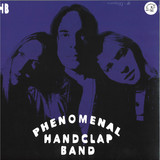
New York’s indie disco funk crew is back with a new album. And it’s the right moment: With new acts like Toro Y Moi, Sault, Parcels, The Internet around… the funky, disco, old school vibe is big in 2020. And The Phenomenal Handclap Band fits perfectly. Probably all these new artists are fans of the Phenomenals. Because The PHB popped up for the first time 10 years ago. Some top knotch musicians from NYC’s funk scene playing dirty discofunk. Some of the bandmembers played in Mark Ronson’s projects and in Amy Winehouse’s backing band. Head of the band: Daniel Collás. Their self-titled debut album on Gomma records 2010 made them many fans in the music scene. A nasty fusion of forward-thinking disco, psychedelic prog rock, and classic soul with a splash of yacht rock. Back then the band took the road, supporting Bryan Ferry and Franz Ferdinand, playing shows at Glastonbury, Wireless, and Latitude… as well as getting praise from Sir Paul McCartney about their album! After the album Collás began to produce other artists in Brooklyn. The band paused. Now they are back. With Daniel Collás in the centre, along with new members multi-instrumentalist Juliet Swango, and vocalist and synthesizer wizard Monika Heidemann. Their sound is still essentially analog dance music, with an emphasis on raw soul, vocal harmonies, African percussion, fuzzy guitars and analog synthesizers.
**LP FORMAT IS VERY LIMITED - PLEASE BE AWARE THAT UNFORTUNATELY THERE MAY BE CUTS TO ORDERS**
For Los Angeles' The Black Queen, the depths of isolation and loss have always functioned as a gateway to being born anew. Much has transpired since the band released their cold, cutting debut album Fever Daydream (a record that Revolver described as 'a haunting exploration of the darker side of pop music'). But throughout it all, the trio of Greg Puciato (former frontman of the now-defunct The Dillinger Escape Plan), Joshua Eustis (of Telefon Tel Aviv, Puscifer, and Nine Inch Nails), and Steven Alexander (a tech member for Nine Inch Nails, Ke$ha, and A Perfect Circle) have emerged as triumphant and intense as ever, documenting their journey via the synth-streaked industrial anthems of their sophomore release, Infinite Games.Formed in 2011 after a chance meeting between Puciato and Eustis backstage at a Dillinger show in which they both realized they were huge fansof each other's work, The Black Queen became a labor of love for its members to explore sounds and emotions that they couldn't quite fit into their full-time projects. Injecting a pained, twilit edge into slick new-wave tracks as fit for the dance floor as they are for some imagined dystopian skyline, the trio have managed to channel their scattered, eclectic influences into a surprisingly cohesive vision. 'We've got a pretty weird cross section,' Puciato says of the band's musical chemistry. 'We can go out for food and listen to Power Trip on the way there, then Baltimore club music on the way back, and then talk about how killer Maxwell's Embrya album was, and then get sidetracked and talk about the Celeste video game soundtrack, then all have to be quiet so that we can grab a voice recording of some weird sounding radio interference. It's all over the place and unusually far reaching,and there's a lot of passion for discovery.'After releasing their 2016 debut album Fever Daydream to critical acclaim however, the trio underwent several major upheavals that cast the project in a completely new light. Puciato's main project The Dillinger Escape Plan disbanded. Chris Cornell of Soundgarden killed himself while Puciato was on tour with him. Eustis put out music under his beloved Telefon Tel Aviv monikerfor the first time since his former bandmate Charles Cooper died in 2009. Thetrio's storage space was robbed. Puciato suffered a relapse into crippling anxiety and paranoia. Once again, in the face of tragedy, The Black Queen had to rebuild everything from the ground up.The first step was acquiring a new studio space, which immensely helped the band get back into the rhythm of freely collaborating with one another, and experimenting with sounds for as long (and as loud) as they wanted. The resulting album, Infinite Games, marks a massive leap forward for The Black Queen. Not only are the band's icy R&B instincts more sharply pronounced; they've also rendered their morbid electronics in more lush detail than ever before, filling out the corners of their songs with chilling ambient passages
that create a wide-screen backdrop for Puciato's eerie, tortured vocals. 'I think this album is actually hookier, but more insidious in that it reveals itself over time,' Puciato says about Infinite Games. His choice of words says something about the album's creeping, pitch-black approach to pop music.With this release, the group have also announced a new undertaking in the form of their new label, Federal Prisoner. Resisting the more marketing-centricapproach that feels standard at this point for the record label game, the goal of Federal Prisoner is to provide an outlet for projects that emerge naturally from The Black Queen's own creative endeavors and collaborations with otherartists. In a way, Federal Prisoner solidifies TBQ's commitment to creating music on their own terms, following the same organic sense of inspiration that led them to forming in the first place. As Puciato puts it, 'It's just an expression of passion and individualism in a way that opens more doors for us to create and to own what we create with minimal compromise. It's as much an act of refusal as it is a statement of intent.'Infinite Games, the second album from experimental Los Angeles synth-pop trio The Black Queen, comes out on September 28th
Tobias., Neel and Sebastian Muellaert as Wa Wu We collaborate with the Konstrukt label for their 12th release. Each producer with a unique and refreshing approach towards electronic music.
Tobias. is up first with a beautiful track that balances on the border of rationality and emotion. His abstract sonic narrative discloses through tightly organized rhythms and noisy percussion. Neel follows up with a cinematic composition that submerges us into otherworldly oddities that guides us slowly through his composition. WaWuWe's formally known as Sebastian Mullaert relieves the tension. The Swedish composer made a 13-minute long stirring and relaxing B-side track, blessing us with soothing energy for the mind, body and soul.
Following 2019’s New Atlantis LP under his experimental techno alias Efdemin, Phillip Sollmann’s Monophonie is a project dedicated to uniting different strands of utopian music. His approach: combining and recontextualizing rare historical instruments of sonic research of Hermann von Helmholtz (19th century) with the self-designed, microtonal instruments of Harry Partch and metal sound sculptures of Harry Bertoia.
The result is a psychedelic investigation into just intonation – alternative tuning systems that create unique sets of harmonics not found in conventional scales. Monophonie recasts these sounds into new rhythmic environments where epic kosmische, polyrhythms, acoustic techno and microtonal glow are interwoven into a rare music.
Over nine tracks, the album explores multiple forms of minimalism, from unwavering repetition to paired-down chords and sparse sonic environments. But it also seeks to expand the sound spectrum of Partch’s custom built organs and melodic percussion instruments as well as Bertoia’s sonambient singing metal rods into a atmospheric otherworldliness.
Monophonie was first composed in 2016 and premiered at Berlin’s Volksbühne theatre in 2017, before it went on to the renowned Ruhrtriennale and Kampnagel in Hamburg. It was performed by one of Germany’s premier neue musik collectives Ensemble Musikfabrik together with Sollmann himself on von Helmholtz’s original double siren, with set design by Michael Kleine and wardrobe by Peter Kisur of Honeysuckle Company.
The first collaboration between frequent Past Inside the Present contributor Slow Dancing Society (both as an artist and in-house engineer for other PITP releases) and the label's founder zake, present 'Mirrored'; a wonderful meditative exploration of glacial drones, atmospheric hum, and touches of restrained ambient techno.
Mirrored is a quietly powerful, contemplative album with a beautiful stillness at its center. Layered dronescopes are intertwined with murmuring electronic rhythms, hypnotic bass, and the occasional pneumatic beat resulting in a collection of pieces that radiates a glowing warmth.
ADULT. make a triumphant return after their 2018 album "This Behavior", dubbed "_one of the best records of their career_" by Ryan Lathan of Pop Matters. This chilling continuation takes the form of "Perception is/as/of Deception", an anxiety fueled cyclone of pandemonium that only ADULT. would know how to harness. While "This Behavior" was recorded in the isolated snowcovered woods of northern Michigan, "Perception is/as/of Deception" was given life in a temporary space the duo created by painting their windowless basement entirely black, with the sole intention to deprive their senses, question their perceptions, and witness the resulting ramifications. With over 23 years and a sprawling discography left in their wake, Adam Lee Miller and Nicola Kuperus have spent their entire career as ADULT. obscuring any defined genre or style. With a history as uncanny as ADULT., the pieces that making up "Perception is/as/of Deception" might be perceived as their most punk-infused and introspective work to date. The elements of frustration and apprehension that have consistently woven throughout their material are at full mast, although augmented by a strident and more "head-on" approach. Tracks like "Have I Started at the End" successfully maintain the duo's classic EBM signatures and synthesized aggression, cradled by a suspicious mantra that questions_.what's the point? "Why Always Why" offers a disorienting mutation of the heralded sounds of classic dance music, like a remix that escaped prison and is on the run. The dystopian anthem, "Total Total Damage", comes in full force with an frantic energy which jolts any bystanders to attention, with only the defiant chants of Kuperus' vocals outlining the ever-degenerating state of societal affairs. The dramatically glam synth parts scattered throughout the album, while at times ominous in nature, seem to also act as a merciful reminder that through the journey of "Perception is/as/of Deception", one can still enjoy the chaos. With the rampant sense of emptiness on the minds of many these days, there continues to be few attempts at scoring these common, unfortunate human qualities with pure sincerity. Thankfully, ADULT. has a long-standing reputation for creating the soundtrack for our insecurities, and "Perception is/as/of Deception" further solidifies their apprehensive position.
LTD. GREEN VINYL
ADULT. make a triumphant return after their 2018 album "This Behavior", dubbed "_one of the best records of their career_" by Ryan Lathan of Pop Matters. This chilling continuation takes the form of "Perception is/as/of Deception", an anxiety fueled cyclone of pandemonium that only ADULT. would know how to harness. While "This Behavior" was recorded in the isolated snowcovered woods of northern Michigan, "Perception is/as/of Deception" was given life in a temporary space the duo created by painting their windowless basement entirely black, with the sole intention to deprive their senses, question their perceptions, and witness the resulting ramifications. With over 23 years and a sprawling discography left in their wake, Adam Lee Miller and Nicola Kuperus have spent their entire career as ADULT. obscuring any defined genre or style. With a history as uncanny as ADULT., the pieces that making up "Perception is/as/of Deception" might be perceived as their most punk-infused and introspective work to date. The elements of frustration and apprehension that have consistently woven throughout their material are at full mast, although augmented by a strident and more "head-on" approach. Tracks like "Have I Started at the End" successfully maintain the duo's classic EBM signatures and synthesized aggression, cradled by a suspicious mantra that questions_.what's the point? "Why Always Why" offers a disorienting mutation of the heralded sounds of classic dance music, like a remix that escaped prison and is on the run. The dystopian anthem, "Total Total Damage", comes in full force with an frantic energy which jolts any bystanders to attention, with only the defiant chants of Kuperus' vocals outlining the ever-degenerating state of societal affairs. The dramatically glam synth parts scattered throughout the album, while at times ominous in nature, seem to also act as a merciful reminder that through the journey of "Perception is/as/of Deception", one can still enjoy the chaos. With the rampant sense of emptiness on the minds of many these days, there continues to be few attempts at scoring these common, unfortunate human qualities with pure sincerity. Thankfully, ADULT. has a long-standing reputation for creating the soundtrack for our insecurities, and "Perception is/as/of Deception" further solidifies their apprehensive position.
Mr Derek Carr needs very little introduction in Deep House circles these days. He’s a veritable underground powerhouse; cranking out one stellar record after the other, everything adhering to his cinematic, Detroit influenced style. He returns to Love Notes for a second time with The Anti Virus EP, which also serves as the milestone of Love Notes 20th release.
The A side has the strings and the aforementioned Detroit influences, and things get dark on the b-side, and even take in some dub influences on the B2. This is every bit as stellar as you’d expect Carr’s second release on Love Notes would be.
The Current Inside”, Marja Ahti's sophomore album for Hallow Ground, plays with the theme of currents - connecting and animating movements in the form of air, water and electricity. It approaches sound as a poetic medium, focusing both on the experience of sound as form and energy and on a loosely narrative arc, suggesting a riddle on the relations between the sounds. It implements alternative as well as intuitive tunings, analog and digital synthesis, recordings of sonorous spaces and vessels, electromagnetic fields transduced into audio, acoustic close-ups of elements in motion and other field recordings. Fluently connecting quite diverse sound sources, Ahti's music lingers in a zone between abstract sonorities and vaguely familiar acoustic environments.
The first half of the album consists of ”The Altitudes”, a piece commissioned by Ina GRM for Présences Électronique and Sonic Acts. It was inspired by descriptions of the layers of Earth's atmosphere. Imagining a movement through layers of air, the piece unfolds with a slow intensity, interweaving concrete sounds and closely tuned electronic sonorities. Traversing the altitudes, a landscape of entangled elements, masses and currents emerges. The air around us has weight and it presses against everything it touches. As gravity pulls it to Earth, it is sensed as pressure. The rotation of the planet, the angle of the sun at any new moment sets the elements in motion in a chain reaction.
The other side consists of four shorter pieces. ”The Currents” opens with a dance of trembling charged movements. ”Lost Lake” extracts resonant tones from a trail of close-up recordings of winter environments, while ”Fluctuating Streams” channels streaming air in different forms. The closing track, ”Sundial”, could be construed as the steady turning of the planetary angle towards the sun, unfolding through fragments of everyday activity against the backdrop of piercing, slowly twisting, suspended tone.
Marja Ahti (b. 1981) is a musician and composer based in Turku, Finland. Originally from Sweden, Ahti has been a part of the Finnish experimental music scene for more than ten years in different constellations. She is currently active in the duo Ahti & Ahti with her partner and as a member of the Himera artist/organizer collective. Her critically acclaimed 2019 solo debut, Vegetal Negatives, explored a new formal language and sonic palette inspired by a short text by René Daumal.
ALBUM: I came up with the album title after watching a YouTube video by the channel "Watch Mojo" entitled "The Top Ten Dead Music Genres". In this video, they claimed that Synthpop is dead. Since everybody said I was a Synthpop artist, I was astonished to discover that the genre I play is considered "dead". It's relatively tongue in cheek because I don't believe any musical genre is dead and everything can be revisited and everything evolves. That being said, this is an album in which, at least musically, I am working within the boundaries of this genre, while at the same time starting to experiment with other, more modern sounds and concepts. Thematically, I tackle various topics: dysfunctional childhoods (Shortcut), heroic love in a dystopian nightmare (Billions of Years), self-destructive behaviour (Drink and Drive), unrequited, criminal love (House Arrest) and many others.
BIOGRAPHY: Glitter, glam and good vibes from the heart of Berlin! Stephen Paul Taylor (SPT) is a Canadian artist who went viral in David Bowie's old stomping grounds and has played hundreds of concerts, festivals and weddings all over Europe. He makes Synthpop-Art-Punk with undertones of New Order and Talking Heads.
Taylor was in Post-Art Synth-Folk duo, Trike, for five years before branching off into his solo project in 2014. Trike won a $20K award from "The Gong Show" (in Vancouver) in 2011, toured 22 countries, recorded an album in Denmark and Belgium and played hundreds of shows. Taylor then went solo and began playing all over Europe, from Denmark rooftops to weddings in East Germany. He gained a name for himself after achieving viral status and has continued to play all over Europe ever since. Well known for being a street musician, he essentially quit playing in the street in 2018 and focused exclusively on playing on the stage
His music is a blend of both old and new. A strong beat pulses beneath the catchy melodies and captivating lyrics float atop the whole ensemble. His bittersweet words often contrast the happy melodies within the music. He tackles unique subjects that reflect the 'ennui' our our current cultural climate. His newest album "Synthpop is Dead" is an ironic interpretation of the notion of musical genres actually "dying". Did Synthpop actually die or did it evolve? His new album also touches on other themes, from our dependance on fossil fuels to our addiction to self-destructive activities, like drinking and driving. The album uses healthy doses of humour to hammer down its themes
A year after going solo, SPT went viral with his song "Shi*t's F*cked" (His channel has 7.5 million views on YouTube) and appeared on many TV shows and well-known media outlets, from RBB to Arte to Comedy Central. He was also featured on Germany's "Das Supertalent" in 2016. He has 1.5 million listens on Spotify. He's been on the radio in Italy, Latvia, Canada and Australia, to name a few. He was also signed with Budde publishing and his racord label, "SPT Records" is a subsidiary of "Shitkatapult Records"
Dieter Bolle said his "80's influenced" music was "sehr geile" (very beautiful). Electric Six frontman, Dick Valentine, said he's "a firecracker".
In 1981, Nick Robson wrote Stars. The song can pretty much be described as a slow, cosmic disco song. It has an unusual feel, and it comes as Oslo-based Neppås third release. This 12" holds the 12" mix, the 7" mix, and the original B-side Eye To Eye. The original 12" is as rare as they come, and here you get the original material, fully licenced, and remastered. The process of recording the material back in 1981 was not an easy one, as Nick Robson recalls:
"Fame by David Bowie is one of my favourite songs, period. I was 18 when i wrote Stars and i wanted to write something that was my version of Fame and quite honestly, as a tribute to the song. If you listen to the bass lines, there is a hint of similarity in the two. Even the lyric of Stars has a passing reference to Fame.
Stars was one of four songs recorded at Gary's Rock City studio to supply the first two singles and form the basis of the first album. The other three tracks were Eye To Eye, Boys and She'a Like Ice. Although all four tracks were finished, for one reason or another, Boys never made it to pressing and i walked away from the business to pursue a career in film.
Stars itself, was the most ardous and problematic track that i've ever recorded. It took around 14 days to finally get an agreed mix when the budget probably only ran to three days. Part of the reason for this is the enormous quantity of music tracks recorded in the song. In those days, we only had 24 recordable tracks available on the Otari, so once you had recorded 23 or less actually, you had to bounce down sub-mixes to a single track to free up another batch of tracks. I think that there are around 46 tracks of instruments alone on Stars so although that kind of track usage is not uncommon now, back then it was rare. It remains the single most expensive song i ever recorded. The B-side Eye To Eye, on the other hand, was written, recorded and mixed in one day."
BERZERKER LEGION was founded in 2016 by guitarists Tomas Elofsson (Hypocrisy) and Alwin Zuur (Asphyx) with a vision to create death metal of the most belligerent quality, they recruited a line-up of solid well-known musicians consisting of James Stewart (Vader) on drums, Jonny Pettersson (Wombbath) on vocals and Fredrik Isaksson (Dark Funeral) on bass to complete the Legion. Alwin Zuur (guitars/songwriter) comments: « During the recent years Tomas and I met each other at shows and festivals regularly. Much of our conversations were about music and styles. During these meetings we found out that we really had a lot of common musical interests . Music wise ‘Obliterate the Weak’ displays the perfect balance between brutality, melody and harmony. Being a fan of the early 90’s Swedish Gothenburg style, with bands like At The Gates, Eucharist, a Canorous Quintet, as well as being a die-hard fan of brutal old school death metal style with bands like Bolt Thrower, Obituary, I have always wanted to write songs showing a mix of such different death metal genres. The great musical cooperation between Tomas and me has made ‘Obliterate The Weak’ a variously solid diverse album where you can expect 11 songs of violent pounding riffing in a massive wall of sound mixed with immense melodies and thrilling harmonies.» Vocalist Jonny Pettersson explains the lyrical theme of ‘Obliterate the Weak’: « The lyrical concept is based around how religion is poisoning the world, and even after so many years of evolution, development , we still have huge parts of the world that believes in a fairytale, people who believe that this fairytale is worth going to war over, worth killing for and uses as an excuse for truly malevolent acts. These are weak minded sheep that will do anything in the name of whatever god they believe in. 'Obliterate the Weak' draws from the will to eradicate all forms of religion and tells a story of atrocities made in the name of a fiction. » Saying the album songs transpire massively produced invigorating heavy death metal is an understatement. BERZERKER LEGION knock out with warlike triumphant, powerfully addictive harmonies that will turn them into an unstoppable beast in a live situation and on record.
- A1: The Hours Descend - Hojo+Kraft
- A2: Crossing Over Forest, Laho Lake, South Estonia - Tuulikki Bartosik
- A3: The Regent's Canal - Lain Chambers
- A4: Highway Bridge Drain Pipes, Saskatoon, Canada - Kate Carr
- A5: Yellow Flowers! (Feat Darren Hayman) - For Now
- B1: Risør Harbour - Mark Vernon
- B2: Get Yer Kicks! - James Greer
- B3: Tokyo Spring Birdsong - Nick Luscombe
- B4: Mr Slush - D/Bam
- B5: Ng Geen Yun" – No Police Here! (Nathan Road, Hong Kong) - Gabriel Prokofiev
Fieldwave is the new compilation from Nonclassical that unearths new compositions with field recording at their heart. Curated by DJ and sonic adventurer Nick Luscombe (Late Junction, Musicity), it highlights a new wave of sonic artists incorporating natural sound into their work.
The idea for this new compilation series is to reflect a burgeoning area of sonic creativity that has gone from very niche to something much more commonplace. As a DJ at BBC Radio 3's Late Junction, Nick would receive music every day that contained some element of field recording. Many of the artists contained within have received airplay on Late Junction as well as on Late Junction and other experimental programmes. The release features sound artists Kate Carr, Mark Vernon and Hojo+Kraft, singer-songwriter Daren Hayman (Hefner), and accordionist Tuulikki Bartosik.
A unique body of work from one of the UK’s most exciting new bands featuring new single Fatboy Slim, fan favourite All Your Friends, 2 other stunning singles and a set of interludes from the studio.
The bands unique brand of guitar-led indie has seen them become the hottest ticket in their native Scotland with 3000 tickets gone in 6 seconds in Edinburgh, and over 7,000 tickets sold for their almost entirely sold out forthcoming UK tour
JK Group are a powerhouse nu-jazz band fronted by Melbourne saxophonist Josh Kelly, best known for his work with future soul-jazz collective, 30/70, and being the 2019 PBS Young Elder of Jazz.
They sit in the crossover of raw, live jazz and electronic/dance production. At times synth-heavy, effected and soundscapey, while at other times hard hitting groove laden with spiritual jazz overtones and no-holds-barred improvising. Their sound nods respectfully to classic
jazz traditions, whilst carving a path that unashamedly looks towards the future, embracing modern influences and production techniques.
The album received a 5* review from Melbourne's own Mike Gurrieri, and has garnered radio play on PBS, RRR, Worldwide FM, NTS and more. The debut LP 'The Young Ones' is due out on La Sape March 27th. (SAPE010).
'Objet Melodie' is a combination of real instruments, synthesizers, drum machines and samples, involving genres from different countries of the world.
It's like being on a surreal oasis, where music is eclectic but also meditative or just for a dance. Interconnecting with the whole planet, imagining or living in different countries and trying to relate with diverse cultures and experimentation.
Lorenzo-Giulio Morresi, 'Objet melodie' producer, combined real instruments like Roland TR-707, Roland JUNO-60, a Gibson Memphis guitar, marimbas and steel drums with percussions samples taken from his personal record collection.
The other musicians involved are Stefano Ubaldini who plays the intro in 'Rituel' with an amazing hand-made guitar called 'Slitar', inspired from an Indian Sitar made with a broken metal window he picked up in a London backyard.
Fabio Mina is playing flutes on several tracks, like the Hulusi from China and the Nose Flute from Hawaiian islands. Giuseppe Diamanti plays tenor sax outros.
'Objet melodie' is inspired by sounds, technologies and traditions from planet earth, with the hope of staying interconnected as much as we can.
Studio Mule drops “Anthologia”, the final chapter of a close look on the work of the Tokyo born DJ and producer Takayuki Shiraishi, a jack of all trades, that sways through Tokyo’s vast music scene since the late 70’s, a time when post punk grooves called the tune. As part of the band BGM he released in 1980 the album “Back Ground Music” on the legendary Osaka based underground label Vanity. Last October Studio Mule reissued BGM’s no wave, free funk mini-mal treasure. A few Month earlier Studio Mule already published “Missing Link”, a thrilling retrospect on Takayuki Shiraishi's unreleased material from the late 1980s, a creative period of which only a little ever saw the light of the day.
And now “Anthologia”, a record that is dedicated to his work during the years 1990 to 1996, a time span, in which Shiraishi moved on to produce house, downbeat and playful electronica. In 1995 he released the ambient/techno 12inch “Spectral Colours” on the R&S sublabel Apollo under the alias Planetoid. Two years later he manifested his techno leaning creativity under his given name on the album “Photon”, a record that helped launching Japan’s techno scene. It was followed by two more long players, that display his wide musical taste with ambient, house, breakbeat and other genre blending styles. Besides producing, Shiraishi was also a prominent figure of Tokyo’s club nightlife, DJing alongside Jeff Mills as well as Krautrock icons like Holger Czukay.
“Anthologia” features three unreleased tunes of this lapse of time, as well as highlights some work Shiraishi produced together with his friend Jun Sonohara as Musica Nova and a hidden gem he tuned in for the “Isolated Audio Players 1” compilation, published by the Tokyo based Pickin' Mushroom Recordings label in 2000.
The three unreleased tracks display his love for diversification. “Distant Thunder” is a drone driven ambient voyage, that slowly melds into a gentle rhythmic sensation driven by loose hi-hat patterns and a soft chord crescendo. On the opposite, “Lapis Lazuli” comes around as a mellow melodic downbeat trip enlarged with twisted rhythms and cosmic infiniteness. “A Voy-age” shows his love for house music with a grooving arrangement that comes close to the kinky house gems of contemporary producers like Lowtec. Also, the already known “Isolated Audio Players 1” compilation tune “Flicker” is located in the house spheres, delivering nervous jacking minimal vibes emerging from a precise produced dance of melodies, grooves and sound effects.
In comparison, the four Musica Nova tracks show again another side of Takayuki Shiraishi’s many musical talents. “Birds in Paradise” is an elegant triphop tranquilizer, while tunes like “Nocturnal Tribes” and “Green on Green” express his passion for electronic arrangements that think out of the box with airy melodies, slow-motion big beat rhythms, jazz particles and an overall cosmic sound complexion. The tune “Shifting Sand” goes the same direction, while adding esoteric reverberations and a touch of Drum and bass.
Together the eight tracks turn “Anthologia” into something more than just an anthology of Takayuki Shiraishi’s work. In association, all compositions work like an album that overwhelms with a reasoned story-arc, who slowly rises to a hypnotizing peak, from where all downswings to a calm finish, that makes you want to start all over again.
TRACKLIST A1. Reciclo A2. Se Proteja A3. Redescobrir A4. Rastros Raros A5. Pelo Sim, Pelo N–o B1. Cinzento B2. Nada Existe B3. Posto 9 B4. Só Penso Em Jazz B5. Lugares Distantes INFO Marcos Valle launches in LP the new album "Cinzento" (Deck). The record, due to its minimalist design, with little instrumentation and different grooves, refers to his 1973 "Previs–o do Tempo". "Cinzento" comes with new partnerships such as Moreno Veloso (on the track "Redescobrir"), Bem Gil ("Se Proteja"), Kassin ("Lugares Distantes"), Zélia Duncan ("Rastros Raros") and Domênico Lancelotti ("Pelo Sim, Pelo N–o"), among others. Renowned rapper Emicida collaborates on two songs, sharing vocals with Valle. The partnership between the musicians came about through a suggestion by journalist Marcus Preto. Once the connection was set, Valle went to know better the S–o Paulo-born musician work and sent him a melody. Hence the two prospered the collaboration that culminated, even, with the title track. Produced and arranged by Marcos Valle himself, "Cinzento" was recorded at the Tambor studio (Rio de Janeiro) and hits shelves on vinyl as a Polysom release.
Lonnie’s 1975 jazz-funk masterpiece is released on 180g black vinyl in a nice thick card gatefold sleeve. Former Miles Davis and Pharoah Sanders keyboardist Lonnie Liston Smith saw all his musical ideas coming together for this, his third album. The title track is one of the best-known jazz funk classics; its influence on several generations of clubbers cannot be underestimated. It is a glorious amalgamation of jazz players and the tenor voice of Lonnie’s brother Donald. However, the track’s success has resulted in the album becoming rather overlooked and its other six pieces underappreciated. ‘Desert Nights’ and ‘Voodoo Woman’ give vent to Lonnie’s improvisational skills over a modal base. ‘Summer Days’ and ‘My Love’ are based around Latin rhythms, with the latter proving another great vehicle for Donald Smith’s voice. Donald is also the singer on an inspired take on Horace Silver’s ‘Peace’. “One of dance music’s most significant records” – Gilles Peterson.
Jamaican artist Asha B, features on observational Roots Reggae and Grounation style vocals, with Dubs mixed by Alien Dread. The tracks were recorded at Asha B’s studio, late 2018. The vocal tracks were produced by Asha B and the vocal tracks & Dubs have been re-mixed by Alien Dread…
Asha B has been a regular session musician, not only in Jamaica, but also when he moved to the UK and has worked with most of the ‘Reggae Greats’, in particular, Jackie Mittoo, IJahMan-on tour & studio work and also studio work for many others, both JA & UK. Asha B has had several single releases to date, and also an album: Hard 2 Smile (Quartz Music - 2005).
2x12"
Having made initial waves on Cold Recordings and Osiris, Eric Baldwin returns now to Tectonic to release his eponymous album ’Cocktail Party Effect’, bringing his South London roots to Berlin for an all-weekender, under strobe lights.
Drawn by his appetite for powerful rhythmical forms and inspired by the likes of Daphne Oram, The Residents and Captain Beefheart - Eric takes uses background in sound design, knowledge of hacking VST software and adapted spring reverbs and other hardware, to create a truly unique vision of contemporary electronic music. It sits somewhere between Jeff Mills, Aphex Twin & Squarepusher - held together by a connective UK Bass Music spinal chord. A weird but intriguing beast.
We open the track with Japanese cocktail recipes, before moving into the only vocal track of the album, ‘Talking To Bricks’ featuring Bristol vocalist Redders on fine form - charged with disjointed energy and run ragged across a technologically charged dancehall style beat. The LP progresses through the rolling breaks and bleeps of ‘For The Memory Exchange’, into an IDM side-step in the shape of ‘Brutalism’, moving into the gentle, beautiful flickering glitches of ‘PDA’, before we get to the hyperactive twitching alien charge of ‘War On Codex’.
Taking a leap in another direction, we reach ‘Cause For Bad Shelving’, which sounds a bit like Squarepusher when he was on late 90s, immaculate form - taking the tempo up a few notches, while building melancholy. ‘Lack Of Wrong Format’ then gives us a moment to breathe, before diving into ‘Deerhorn’ which brings us right back to the dancefloor. Things are then turned inside out with the jittery wonder of ‘I Get It (Lost Banknote)’, redirected via the industrial clangs of ‘Low_Rise’, before rounding off our sonic adventure with the ponderous tones of ‘Loner’ - which leave you glowing and drifting off into space.
A bold album that’s just brim with a strong sense of originality, direction and grand narrative. From international dancefloors to post-clubbing ear-worms, Cocktail Party Effect is just getting started and you’ll be hearing his name more and more now.
Industries Of The Blend is the latest project from Dj Luna-C, and it a step back into the original sounds of 1990 and 1991 old skool. Slower bpm and all hardware lead to an entirely authentic sound for this EP, and that authenticity continues with the style of sleeve (Spined like an old Euro EP) and in the overall concept. Proper underground, original, rave music. For those who know.
Billy Bunter, the Fat Controller, Glowkid, Slipmatt, Dj Jedi, Dj Luna-C, Dj Brisk, Clayfighter, Jimni Cricket, Bustin, Sc@r, Doughboy, Saiyan, Dave Skywalker, Ponder and many others
Following up from The Twang’s 5th studio album release ‘If Confronted Just Go Mad’. The band are immortalising the first
four digital single releases with two ltd. edition 7" Singles!
Everytime- and Dream on one and It Feels Like (You’re Wasting My Time) and Tinseltown In The Rain on the other. Released on Jump The Cut Records on 17th January, 2020 with a full national radio campaign for the single Everyime these are sure to be a great collectibles
2011 album available on vinyl for the first time. Master percussionist Bonjo Iyabinghi Noah joins forces once again with dubmaster Adrian
Sherwood at the controls and a whole host of guest musicians, including contributions from dancehall pioneer Jazzwad and electronics from Adamski.
All the elements of a classic African Head Charge album are present: spaced out dub, tribal chants, ecstatic trance but updated with a rugged sound system undercarriage. Arguably some of the hardest hitting AHC rhythms laid down in the studio to date.
Cut as a double LP for maximum dynamics by King Kevin Metcalfe. Includes digital download card for full contents and double-sided poster insert containing new interview with Bonjo on the making of the record.
In 1981, London-based E.G. Records released the debut album from a young Ghanaian group called Edikanfo. Edikanfo quickly rose to international notoriety following the release of “The Pace Setters” because of the infectious, forward-looking highlife meets afro-funk synthesis the band committed to tape. But the album also caught an additional wind of publicity due to its producer, the already legendary British musician and sound conceptualist Brian Eno. During that time, Eno was researching and openly propagating West African musics. He often mentioned his love of Fela Kuti and called his own rhythm-driven experiments the search for a “vision of a psychedelic Africa.” He had recently been collaborating with The Talking Heads on their Avant-funk masterpiece “Remain in Light” and with The Talking Heads frontman David Byrne on “My Life in the Bush of Ghosts,” an album which foretold the sort of cross-pollination and global music interconnectivity that today we take for granted. Eno and Edikanfo’s work together at Studio One in Accra (Ghana) was yet another inspired morphing of soundworlds and processes and a significant touchstone for both artists. As Brian Eno recently noted: “the actual recording sessions were joyful - the band played with such verve that you couldn't resist.”
But just when the sky seemed the limit for Edikanfo, the coup d’état in Ghana on the last day of 1981, tragically put the brakes on the band’s quickly developing fortunes. For years after that, the country endured enforced curfews at night, which of course ultimately gutted the live music scene in Accra and elsewhere. Because of this and other financial setbacks, the band ceased activity and its members spread out in exile, all over the world. It clearly seemed as though the story of Edikanfo, one of Ghana’s greatest bands of that era, had come to a premature end.
Now, almost four decades later, Edikanfo has returned. And with its surviving members gearing up to reissue and tour their classic 1981 album, “The Pace Setters,” the band is once again excitedly pointed towards the future.
Portuguese- Italian Producer "Vhycepicks" up where he left off,
once again teaming up with the talentedvocalistYves Paqueton Kraak & Smaak's very own Boogie Angst imprint.
He's already got an impressive list of top DJ fans in the shape of
Pete Tong, Claptone, Gorgon CityandSatin Jackets, and it's no surprise given his clean, pop aesthetics and catchy dancefloor sensibilities.Indeed it has led to releases on some of today's most respected dance labels like Kitsune, Future Disco and Casablanca Sunset.
As well as collaborating on their previous single 'Duran Duran' together, Brazilian born soulful vocalist Yves Paquethas previously collaborated with the likes of Aeroplane,and scored #1 in the Belgian dance charts with The Subs. He provides the perfect foil to Vhyce'sbeats with just the tonic – a melodic toplineall about the good times, having a drink and getting high…
In addition to the original mix there's another special treat as stepping up to provide a stellar remix is none other than PrinsThomas, a true pioneer of 'space disco' and regular bandmate of nu disco royaltyLindstrømin their imaginatively titled project 'Lindstrom & PrinsThomas'.
Yes, he takes his arpsynth lines out for a spin and serves up a prime cut of good time, ethereal, dancefloor fire. With all the hallmarks of his crisp and upbeat spacey productions it's not one to miss out on.
For those who are all about the beats, fear not we got you covered as there's an instrumental safely stowed in there too …
The sickest French band, a trio called France, drums, bass and amplified hurdy-gurdy. They only performs live, in the middle of the audience - turned in to face each other - full on smoke machines and strobes. And they play only one ‘song’ for the duration of their hour-long set. And it’s the most transfixing live experience of intense physical and mental focus, and there is something of early rave too, the togetherness, the energy, the euphory. The distorted hurdy gurdy plugs France’s sound into the country’s history of folk music and popular festivities, of communal trance and immersive pleasure. The rhythmic basis is pretty much the same throughout the whole live. One doesn’t need to actually be tripping balls for the auditory illusions to start coming thick and fast. Those who’ve stayed for the whole duration of their performances know they’ve shared something. However disparate the phantom forms each might have discerned in the midst of the howls and groans. Gigs like this you leave feeling you’re not quite the same person who went in, even though you’d be hard-pressed to pinpoint precisely what has changed. Far Out Far West was the band’s first gig outside of their usual comfortable friendly circle and thus was perceived as a somewhat hostile environment. This was where they met the fellows of Les Potagers Nature who will later release France’s debut untitled album. One certainty remains at least, that there is still a France we can believe in. David McKenna (The Quietus). Sales Points: - New album from trio France - All previous releases now sold out and sought after - For fans of drone, rural trance, stoner, psychedelic - 131st release on Mental Groove Music, home of WRWTFWW
Nils Frahm, born in 1982, had an early introduction to music. During his childhood he was taught to play piano by Nahum Brodski a student of the last scholar of Tschaikowski. It was through this that Nils began to immerse himself in the styles of the classical pianists before him as well as contemporary composers. Today Nils Frahm works as an accomplished composer and producer in Berlin. In early 2008 he founded Durton Studio, where he has worked with Peter Broderick and Dustin O' Halloran amongst other fellow musicians.
The three instrumentals, which make up his debut release 'Wintermusik' are piano led pieces, coloured with occasional celeste and reed organ parts. The record's equal measures of sorrowful refrains and uplifting passages, combined with a real intimacy that makes for an album you'll want to return to again and again.
The songs were originally intended as a Christmas present for friends and family, hence its winter release via London-based cinematic music label Erased Tapes. As the curator of the Swedish boutique label Kning Disk's Piano Series, Peter Broderick invited Nils to record a new Nils Frahm, born in 1982, had an early introduction to music.
During his childhood he was taught to play piano by Nahum Brodski a student of the last scholar of Tschaikowski. It was through this that Nils began to immerse himself in the styles of the classical pianists before him as well as contemporary composers. Today Nils Frahm works as an accomplished composer and producer in Berlin. In early 2008 he founded Durton Studio, where he has worked with Peter Broderick and Dustin O' Halloran amongst other fellow musicians.
The three instrumentals, which make up his debut release 'Wintermusik' are piano led pieces, coloured with occasional celeste and reed organ parts. The record's equal measures of sorrowful refrains and uplifting passages, combined with a real intimacy that makes for an album you'll want to return to again and again. The songs were originally intended as a Christmas present for friends and family, hence its winter release via London-based cinematic music label Erased Tapes.
As the curator of the Swedish boutique label Kning Disk's Piano Series, Peter Broderick invited Nils to record a new album of piano improvisations the result is 'The Bells', which will now be released on Erased Tapes in the UK, Ireland and North America. Perhaps the most stunning aspect of what on the surface appears to be an entirely pre-planned and composed body of work comes with the discovery that these pieces were in fact improvised.
These two friends share a common affinity in that they both possess an absolute mastery of melody, composition and performance able to deliver with devastating effect. The modest Mr. Broderick states 'I remember thinking to myself as I lay there stunned, that I could spend ten years trying to write an amazing piece of piano music, and still it would never be half as good as these improvisations!'
Recorded in a rented, beautiful old church in the heart of Berlin over two nights, Nils 'just played' with the occasional instruction from Peter 'I spouted "Make a song using only the notes C, E, and G", or "Make a song that you could imagine me rapping over the top of" (Track 8 'My Things'). At one point I was even inside the piano, laying on the strings, asking him to make a song called 'Peter Is Dead In The Piano'. The resultant work 'The Bells' shares the same excitement and air of playfulness.
For a musician this early in his career, Frahm displays an incredibly developed sense of control and restraint in his work. As the recognition continues to grow for both, 'Wintermusik' and 'The Bells', we are pleased to announce that 2010 will also see his next album release on Erased Tapes.
When the world slipped into madness last month, the ESP Institute put most releases on the back-burner to await brighter days, but then we thought again; why not approach these odd circumstances the way we do most realities, positively and head-on? We’re committed to a community that builds new worlds — this is fundamental to our creative and spiritual relationship with Osaka-born, cosmos-straggling artist, Ground — and while temporarily we can’t physically congregate to uplift each other, its our responsibility as an institution to maintain a platform for prolific creative pioneers, our cherished cartographers of cognitive escape. 'Wakusei' is wonderfully confusing and disorienting music, a follow-up EP to 2018’s critically acclaimed album 'Sunizm', not created specifically for life under lockdown, but nonetheless aptly suited to help release angst, guide meditation, and assist in making this moment in history more interesting if not transcendental. Whereas 'Sunizm' relied on field recordings gathered from rainforests, percussions learned from imaginary ancient civilizations, and the somehow organic freneticism of a mission control meltdown, the aesthetic of 'Wakusei' reduces this abstract instrumentation one step further to a more base-level array of gurgling synth scraps, accelerating engine friction and static-bound phonetic mistakes, all scrubbed into dust by a Brillo pad of white noise. The cliché of “great art is born out of hard times” is not lost upon us — of course the world will look back to this turmoil and its residual contributions to culture — but we see today's art as an immediate coping mechanism, and artists like Ground helping to unlock and navigate internal utopias. We’re already indoors, let’s delve inside.
In 2015 US soul, boogie and disco legend Jay W. McGee teamed up with Hamburg producer, multi-talented musician and DJ Julian "Mzuzu" Romeike to record McGee's comeback album "Good Feeling". Even though both artists are from two totally different generations, they got on so well with each other after the official re-release of Jay W. McGee's classic 12inch "Turn Me On" on Légère Recordings two years before that they started to write and record together. After all, it was Julian "Mzuzu" Romeike himself who made Jay W. McGee return to the music business after nearly 15 years of silence.
The creative process did not stop with "Good Feeling": "We now have a brilliant combination of fresh songs. Many different accurate beats and of course Jay's incredible writing and singing skills," says Romeike. "I feel that it's a great combination of dedication, skills and talent which made this album possible. I work on some grooves and hooks for Jay, he picks the ones he likes and returns a proper song with vocals and arrangement. My production team, The Unbelievable Two, then work on the final mix."
"Smooth Crusing" hints towards McGee's classic late seventies sought after sounds like "When We Party" with the first "Uptwon, Downtown". The album also includes some reggae touches and smooth soul excursions. "It is such a big pleasure to work with these guys as everything works perfectly together," comments a happy Jay W. McGee. "It has all the ingredients for a classic album. It's funky and soulful, recorded in a unique modern style. We have a tribute to the good old funky music with 'Old School Love'. A lover's rock orientated tune with 'Chance I Have To Take' and some kind of up to date Afro-Disco-Soul with 'Bounce Back To Me'. And of course, 'Smooth Cruising' is full of funk!"
- A4: Opals (Andhim Remix)
- A5: New Gods (Ron Basejam Remix)
- B1: Satisfied (Soundbwoy Killah Remix)
- B2: Silver Linings (Dj Seinfeld's Drum Dream Remix)
- B3: When The Sun Bursts (Grandbrothers Remix)
- B4: Z (Laurence Guy Remix)
- A1: Opals (Analogue Dear Remix)
- A2: Daymarks
- A3: Kite Hill Theme (Freddie Joachim Remix)
- B5: Satisfied (Ambient Reprise)
Set for release on 17th April, Catching Flies presents 'Silver Linings Remixed', a remix album featuring versions of tracks from his debut album reimagined by DJ Seinfeld, Andhim, Soundbwoy Killah, Laurence Guy, Ron Basejam, Grandbrothers and more.
Support for 'Silver Linings Remixed' so far from Mixmag, DJ Mag, Crack Magazine, Pete Tong, Gilles Peterson, Mary Anne Hobbs, KCRW, Bonobo, Solomun, George Fitzgerald, Mall Grab, Hernan Cattaneo, Kolsch, Nick Warren & more.
George King began Catching Flies in late 2012, drawing inspiration from a wide-ranging palette of music including jazz, soul, hip-hop, house and electronica. His debut album 'Silver Linings' was released in July 2019 and was hailed as "a soundtrack to summertime" by The 405 and awarded Album of the Month by Future Music who described it as "a brilliantly eclectic record…a moving journey that will last long in the memory".
Clash Magazine praised the LP's "killer beats" and "artfully orchestrated introspection" whilst London In Stereo praised its "exceptional production". Other coverage for the album included
The Guardian, Complex, Dazed & Confused and Nowness, with radio support across BBC Radio 1, 6 Music, Worldwide FM and more. Artist support for 'Silver Linings' has come from the likes of Bonobo, Jungle (BBC Radio One Residency), Loyle Carner, George Fitzgerald and Lane 8.
a 1 Opals (Analogue Dear Remix) feat. Analogue Dear
c 3 Kite Hill Theme (Freddie Joachim Remix) [feat. Freddie Joachim]
[d] 4 Opals (Andhim Remix) [feat. Andhim]
[e] 5 New Gods (Ron Basejam Remix) [feat. Ron Basejam]
[f] 6 Satisfied (Soundbwoy Killah Remix) [feat. Soundbwoy Killah]
[g] 7 Silver Linings (DJ Seinfeld's Drum Dream Remix) [feat. DJ Seinfeld]
[h] 8 When The Sun Bursts (Grandbrothers Remix) [feat. Grandbrothers]
[i] 9 Z (Laurence Guy Remix) [feat. Laurence Guy]
Amsterdam might be susceptible to grey skies and rain as any other, but cup your ear to the music flowing out of the Dutch capital, and another story emerges. The Mauskovic Dance Band are a prime example of an act who have been dialing up the sunshine over the river Amstel in recent years.On Shadance Hall, their first release of 2020, they concoct a tantalising brew of no-wave, psych rock, cumbia, power dub and numerous other colourful shades of global grooves.
No stranger to Dekmantel as one of half of electro-grouping Bruxas, Nicola Mauskovic leads his percussive troupe through a heavy, trippy, disco fiesta with this, their first debut on Dekmantel Records.
The Mauskovic Dance Band’s epic sonic journey on Shadance Hall began deep in the Welsh valleys. Partnering dusty drum machines alongside phat layers of congas, assorted bric-a-brac of percussive tools, and distortion-soaked guitars, Mauskovic’s ensemble suspend the tempo and turn up the grooves. on this soundsystem-inspired, post-punk odyssey. The resulting soundsystem-inspired concoctions are a mixture of 130bpmbeats (‘Ventura Phase’), Jah Wobble-influenced bass rhythms (‘Squeeze Dogs’) and Carnival-ready soca-jams (‘Theorie Amerikaan’).
Taken back to Amsterdam’s famed Electric Monkey Studio (a favourite for Ghanian great Ebo Taylor and Dutch youngbloods Jungle By Night alike, Mauskovic teamed up with engineer Kasper Frenkel to mix down the record. Here the two acted as Mad Professors, experimenting with the recordings and making multiple versions of each track by creating tape loops, bouncing the audio back and forth and layering the resulting recordings in waves of reverb and echo. In classic dub style, the band ended up with dub edits, rich in space echo, reverb, crush, and dub-goodness, completing the second half of Shadance Hall like a funky palindrome. It rounds off an expressive EP steeped in musical history, bursting with inventiveness, projected at the listener as a maze of influences to get lost within.
- A1: Yoko, Ai To Kako (Mimikazari) (3 43)
- A2: Noriko, Ai To Omei (Utsukushiki Emono) (3 11)
- A3: Chie, Ai To Shinjitsu (Ame No Hi No Wana) (3 45)
- A4: Miyako, Ai To Tsuiseki (Koi No Wana) (2 53)
- A5: Nobuko, Ai To Tobo (Shi To Sora To) (5 15)
- B1: Miyako, Ai To Gisei (Aoi Kemonotachi) (4 11)
- B2: Misako, Ai To Kibo (Tobosha) (2 53)
- B3: Sakiko, Ai To Uragiri (Hitokui) (3 43)
- B4: Sanae, Ai To Kyofu (Konoha No Fune) (4 45)
Presented by Mitsuko & Svetlana Records, distributed by WRWTFWW Records.
A golden era gem from the master himself.
Archival reissue of long lost treasure from genius pianist and composer Masahiko Satoh whose resume includes hundreds of legendary albums and collaborations with Midori Takada (Lunar Cruise and Ton•Klami) among many others.
Very rare soundtrack of a 9-episode suspense drama that aired on TV in 1969 and 1970. Filled with exquisite jazz, soul-jazz, folk-jazz, and mystery-jazz, plus groovy affairs, classical moods, and 70s flair.
Highly recommended to Japanese jazz collectors, soundtrack collectors, Masahiko Sato collectors, lovers of rare gems and wearers of vintage trench coats.
All compositions and arrangements by Masahiko Sato
Masahiko Sato: piano, keyboard
Yoshiko Goto: vocal
Kiyoshi Sugimoto: guitar
Kunimitsu Inaba: bass
Yasuo Arakawa: bass
Akira Ishikawa: drums
Originally released in November 1970 as an LP on Toho Records (BL-1001)
UNCAGE’s label owner Marco Faraone drops his second album on Rekids, focusing on an unrestricted, unfiltered soundscape inspired by childhood, entitled ‘No Filter’.
Since his initial appearance on Radio Slave’s esteemed imprint in 2018, Italian artist and label boss Marco Faraone has continued to enthuse techno communities across the globe, playing at the likes of Awakenings, Caprices, Tomorrowland and Kappa FuturFestival. With previous releases on Ovum, Drumcode and Be As One, the Tuscany-born artist has garnered the support of Len Faki, Rodhad, Laurent Garnier and many more.
‘Force Deep’ and ‘Iconic’ give the senses a relaxed flush of ecstasy and lofi-esque rhythm, while tracks like ‘Night Ride’, ‘Addiction’ and ‘No Filter’ lean more on a stripped back, beat focused dub techno tip. ‘Frogface’, and ‘Time Equals Eternity’ then flurry with signature drum programming, and otherworldly synth stabs. Finally, ’Trust Me’, propel forward with after dark atmospheres, giving this versatile and luscious album that mainstay place amongst any unique techno set.
Theo Kottis’s celebrated ‘Turning Around’ and ‘Clear’ get a joint 12” vinyl release on 24 April on Skint Records, alongside the Gerd Janson remix of ‘Turning Around’ and an exclusive remix of ‘Clear’ by Hubie Davison.
‘Turning Around’ was one of 2019’s stand-out tracks, receiving top reviews, Annie Mac’s ‘Hottest Record in the World’, and played widely at festivals. One of the main supporters was Running Back label boss and “the DJ’s DJ” Gerd Janson who gives the uplifting disco workout a high-octane sheen, with a cascade of shimmering
beats and a poignant, powerful refrain.
On the B-Side is ‘Clear’, born out of a sample clearance issue which inspired TheoKottis to write an original piece of music that was ‘clear’ of samples. The end result is an exciting fusion of Italo disco and ‘80s synth-pop, complete with a euphoric vocal.
Exclusive to the vinyl release, acclaimed Irish-born and now London-based producer Hubie Davison delivers a deeper and tougher reworking, which is perfect for peak-time dance-floors. In Hubie’s words: There’s nothing better than being given a load of quality source material and license to have fun with it, and that’s exactly what happened here. I’ve been following Theo for a while now, so it was a joy to open the hood on ‘Clear’ and have a go at it. Having Gerd Janson on the other side makes it even better. Hopefully people enjoy these mixes as much as I do.”
UPSIDE DOWN SMILE WAS RECORDED AND PRODUCED BY EWA JUSTKA AND BY SELF-DESIGNED, SELF-MADE, SELFSELFSELF, ODD LOOKING SLIGHTLY DYSFUNCTIONAL SYNTHESISERS AND BY A TRANCE PURPLE KILLER ROLAND JP8080 AND BY HIS BROTHER VIRUS AND SOME OTHER ROLAND BROTHERS NO SISTERS INCLUDED DURING THE TIME WHEN EWA JUSTKA WHO CURRENTLY LIVES IN GLASGOW, GOVANHILL, ALLISON STREET, WHERE RECENTLY HER PASSPORT WAS STOLEN DUE TO THE BURGLARY, WHERE SHE LIVES IN JOY, ALTHOUGH SOMETIMES THE FLOOR GETS WET DUE TO THE LEAKING WINDOWS AND SOMETIMES ONE CAN FIND DEAD PIGEONS LAYING ON THE STAIRCASE BUT IT'S NICE AND COSY AND EWA JUSTKA HIGHLY INFLUENTIAL PERSON IN THE DEEP DARK TRANSISTOR LADDER CIRCUITS LIVES SINCE SHE IS STUDYING PHD AT EDINBURGH COLLEGE OF ART WHERE SHE THINKS A LOT ABOUT IMITATION IN SYNTHESISER DESIGN AND FILTERS AND VCOS AND FORMANTS AND ACID AND HARDCORE MUSIC AND TWIN T FILTERS AND OPERATIONAL AMPLIFIERS AND SHE TURNS KNOBS AND THINKS AND THE UPSIDE DOWN SMILE ALBUM WAS MADE IN THE DEPTH OF THOSE THOUGHTS QUITE OFTEN SAD THOUGHTS UPSIDE DOWN SMILE IS A BIT OF A CYNICAL SMILE BUT AN HONEST SMILE CYNICAL BUT HONEST UPSIDE DOWN SMILE IS A SMILE THROUGH TEARS BUT TEARS OF JOY SCOTTISH JOY UPSIDE DOWN SMILE IS UPSIDE DOWN ACID ONE COULD SAY UPSIDE DOWN SMILE COULD BE INTERPRETED AS A SAD SMILE BUT IT IS A SMILE IN THE END OF THE DAY
Inspired by the otherworldly Sounds of Horror Sci-fi Soundtracks, Filippo Diana is able to merge vintage, experimental- and library music into sth. contemporary & soul-shifting.
After his debut Release Nemesi, he's now joins Slow Motion for his first Mini-Album Musica per "Commenti Sonori". Slow, earthly rhythms churn from the inside, expelling a complex, abstract sound that is still very tangible to a dancers ear.
Thembisa’s Hot Soul Singers were formed in 1975 by promoter and producer Sam “Jiza Jiza” Mthembu. In the early years the trio was called the Thembisa Happy Queens and consisted of sisters Ntombifuthi and Nombuso Mabaso and Lindiwe Ndlovu. The trio would start out playing Jive, Zulu Disco and other popular sounds of the 70s . In 1979 they became the Hot Soul Singers and would begin a career in the emerging Disco scene which their group name was now more fitting for.
Their first single under the new name was a tribute to their producer Sam, and their first album “Together” would come 2 years later in 1981. It contained their Lamont Dozier rip off from a year earlier, and biggest hit to date “ Give Me My Love Back” which was playing in jukeboxes across the country. At this time the Hot Soul Singers were also gaining popularity due to their demand as an opening act for American groups. Sam’s ongoing pursuit to be a successful promoter also helped to ensure they were always in the headlines and playing shows. It would be in 1983 that the group would temporarily step away from a major label and go onto record their first Maxi single with the independent Raintree Records new Lyncell Imprint.
Like most places in the world the early 80s was a fast changing time in music for South Africa. Although the Maxi had a disco standard for years in other parts of the world it had only recently been popularized in South Africa. Thanks to the Brenda and the Big Dudes smash, Weekend Special, the maxi took over as the preferred format for pop music, replacing the cheaper but time restricting 7” single. Singles were being pushed to the limits in the early 80’s with running times of 4+ minutes a sides by some labels. The Maxi allowed for groups to extend their grooves onto a full side and later album art containing smiling musicians infant of cheesy backdrops became the norm. Synthesizers had been used in pop music for years already but the DX7 wouldn’t land in the country for another year. Drum machines were being used but had yet to fully replace live drummers like would happen in the years to come. The recording of this new single would require a full band resulting in it being one of the gems of the crossover period before the complete midi takeover. Durban’s Graham Handley was recording some of the best upcoming Disco sounds for labels like Heads Music and groups like Kabasa and Masike Mohapi and was tasked as engineer. Other known musicians in the session would be Jimmy Mgwandi from the group Image, who’s signature bass playing can be heard on both songs. A young Daniel Phakoe aka “sox” was also present and took care of the male parts of the vocal line. Both musicians have writing credits along with lead singer Nombuso. Other possibilities of musicians would be Thami Mduli aka Professor Rhythm who had been with the group since their early days as well as a young Chicco who was best friends with Jimmy at the time.
The single, which was packaged in a customized but simple company disco sleeve, went on to do quite well. Less than a year later they would feature on a track with Sunset which would lead to them singing with Sounds of Soweto records label. The group would enjoy the growing fame when tragedy struck in 1984. On their way to a show in Mpumalanga they were involved in a car accident which took the life of Nombuso and left her husband Sam with a leg injury he limps with to this day. Upon recovering Sam would organize a tribute concert at Soweto’s Jabulani Amphitheatre. Even though the tragedy left the group broken and without a member the band went back to work to record their second full length album. They worked with Mac Mathunjwa who had written Nombuso’s favourite song “Going Crazy”. This album would be released with two different names and covers. One took the former singer’s favourite song as the album name and used a photo consisting of all three girls where the other released under the name “ A Tribute” and would only have the remaining members on the cover.
Although the tragedy never halted the group, moving forward the trio of singers would see a few members change. Lindiwe would leave to join Freeway and then become Linda “Babe” Majika so by the time they were ready to record in1986, now with Teal records, the only original member was Ntombifuthi. She would also shortly leave the group and provide backing vocals to other artists including her old band mate Linda. The Hot Soul Singers would be kept alive by Jiza Jiza and go on to record 5 more albums before calling it quits in 1990 after a successful 15 year career. Today the only core member left is Sam Mthembu who still lives in Thembisa and is occasionally promoting live events. Even though he did produce a handful of artists back in the 70s, his most significant additions to the music industry were the Hot Soul Singers and his event promotions, which is what he is best known for and will most likely be the legacy of his career.
Limited to 800 copies Red Vinyl
Includes postcard and poster
The Die Young EP was released on the group’s own Cafeteria label, released early 1987. Michael Fury was inspired by James Joyce’s short story The Dead. Only previously available on a 4 track12” .This 7” version comprises 3 of those 4 tracks
Metro Trinity were a short lived Manchester based indie band that included Jon Male, later of Soul Family Sensation and Republica fame. Drummer Colin Rocks, bass player Tim Whiteley and Doves guitarist Jez Williams.
Metro Trinity only other release came on a split with the Inspiral Carpets on Dave Haslam’s Debris fanzine. Which featured the track “Stupid Friends”.
Andy Williams of Doves joined the band later on, but does not feature on this EP. The band split up shortly after.
Pilo returns to BNR in 2020 with the “A.R.E.A.” EP. Since his first release for the label in 2013 at a very young age, each subsequent record could be seen as a milestone of growth - the “A.R.E.A. EP” feels confident, produced with consummate skill, focusing on the LA-producers strongest themes and devices. This is not, however, the sort of “maturity” that sees things get boring, more restrained. Pilo’s drum is the beat of LA’s unhinged underground techno scene - they don’t do boring - and this drum is always banging.
A-side examples: “Acid by Mouth.” A stuttered kick and a gated, uncanny valley voice form the backbone for increasing layers of texture and percussion. It’s a rollercoaster, as viscerally satisfying on the way up as on the way down. Pilo’s production journey has been increasingly cinematic, and you can see the songs here - “Acid by Mouth” is suited for a Gaspar Noe nightclub scene, and you love to hear it as long as no one gets murdered. “Ruhig” is tribal, made for spaces with 4 story high ceilings and sparse but blinding flashes of light. You can hear steel beams buckling under pressure, a breath too close behind you. The workers of the factory in fit of madness started raving to the sounds of their own machines. They’ve been dancing, without pause, for years now.
The B-side opens with “Exit the Artificial.” Headbanging broken beat kick, aggressive Skinny Puppy snares, ghost voices in hallucinatory bursts too short to confirm to be real. The draw-distance of the stereo spread seems infinite - listen at the very edges and a whole other (ominous) world is taking place. The ghosts mock you in gated laughs by the end. “Adapt Tactics” leads you out - low tempo, hissy percussion, haunted again at the fringe. Things break down, reduced to grain - brain short-circuits, “will I feel like this forever?” It’s a warning - turn back, there’s nothing for you out there. You embrace the madness, and start Pilo’s “A.R.E.A.” EP again from the beginning.
'Banoffee Pies Records' drop their 12th release in the original series with a solo EP from New York based Tristan Arp. With a string of intricate music on the likes of Human Pitch and a recent LP entitled "Suggested Forms", which offers a wider exploration into his work, Tristan's passion for sound design echoes in this record.
All four tracks offer an environment somewhere between a feeling &
a dancefloor with obscure influences in polyrhythmic drum patterns and a clear combination of digital and analogue processing. "Swept Thru" opens proceedings with a spiral of rhythms and heavy percussion leaping in energy throughout, before the spooked out Vox takes control on "Oblique House" with deeper movements in a haunted club tune. The B side opens with the title track "Slip" in a powerful whirlwind arrangement of sub bending sounds before the final colour is added to the palette in "Circling Music'' with emotive jingles in a more retained and patient mood.
You can hear Tristan's other work within the Asa Tone project - a trio group well worth the trip, offering a deep variety of works exploring field recordings taken and formulated in Indonesia beneath a tree canopy deep in the jungle. This same energy and mood spills into this release. Music for feeling. Much love BP x
Mastered: Optimum, Pressed: MPO & Distributed by KUDOS.
Impromptu muscovite supergroup Lilipulu turn the needle neon with a quartet of unexpected killers for club cosmonauts, rainforest ravers, anxious insomniacs and giddy punks.
Unplanned, inspired and all the way live – the pin is glowing! Ever wondered why the Growing Bin releases sound so damn good? Well, it has more than a little to do with mastering magician Sergey Luginin, whose eagle-ears and technical know how have been a part of the process since GBR002. For the latest Glowing Pin powerplay, our man in Moscow joins some close friends on the other side of the console, letting the creative juices flow for ‘Four Amazing Tracks’. Luring Simple Symmetry brothers Sasha & Sergey and DJ & photographer Ivan Pustovalov into his studio with the promise of an afternoon stroll through the nearby Elk Forest, Sergey set the circuitry in motion and the quartet got lost in music. What begin with a plan for some simple edits and a woodland walk quickly became a full scale studio throw down, reimagining forgotten favourites amid a multi-instrumental stew of propulsive polyrhythms, low slung bass, cosmic synths and frazzled guitars. There’s techno-tribal hypnosis on the mind bending, brain blending A1, poetic post punk on the angular, janglier A2, outrageous Afro-cosmic on the freaky Floyd-in-Lagos B1 and languid ambience on the lysergic lullaby which closes the set. Recorded as they worked and presented in chronological order, this EP is a triumph of inspiration over perspiration - a snapshot of a moment which will last forever.
Patrick Ryder
Music With Soul returns with another genre-defying instant classic, expanding the limits of the Tropical Dance music universe.
Staying true to the label's essence, founder Alex Figueira places a high bet with this new release, introducing a brand new breed of traditional “Hindoestan” (Indian diaspora in Surinam) music and Cumbia. Taking the music of underground Surinam musician and empresario A. Bechan for an explorative excursion into the depths of the Colombian caribbean coast, this explosive combination raises the bar unquestionably. Equally weird, groovy and trippy, this 45 will turn any party upside down, regardless of any factors. The only problem you will encounter is what to play after. The solution is right on the other side. Just flip the record and give them the Instrumental version, featuring electric guitar, an alternative percussion set up and the beloved classic Juno-60 synthesizer in the leading role for another 4 minutes of dancefloor catharsis.
Alex Figueira, the man behind Music With Soul, Fumaça Preta & Conjunto Papa Upa, has teamed up with Maxado, Brazil's leading rocksteady vocalist, to create another impossible crossover, connecting the dots of the vast tropical music map that have remained appart for far too long.
What if the now-legendary producer Lee Perry had recorded & produced the nascent Wailers trio of Neville Livingston, Bob Marley and Peter Tosh, not in Kingston, the scorching hot Jamaican capital, but instead in Belém, an even hotter city, at the heart of the Brazilian Amazon.
Whilst Kingston's airwaves and street parties were dominated by the locally produced rocksteady, ska and reggae, Belém was dancing to it's own beat of carimbó and siriá.
Alex Figueira and Maxado, two avid fans of both musical traditions, entered the Barracão Sound Studio, Amsterdam's famed vintage recording studio, determined to find an answer to that hypothetical question. The result is not only tangible and unprecedented, but incredibly emotive & hypnotic too.
The chorus of "Quando Será" is unnervingly apt for our times tool, "Quando será que eu vou te ver?", or "When will I see you?" the song asks. Well until we see each other, Music With Soul offers some musical relief in the form of this collaborative song.
The B side offers a beautiful touching instrumental version, led by the impeccable flute rendition of Brazilian multi-instrumentalist Gabriel Milliet, a prominent member of the Brazilian music scene in Amsterdam and Alex's long time collaborator having shared the stage countless times in the past 3 years. His delicate phrasing will give you goosebumps.
Alex Figueira is well known as the man behind experimental tropical rock-outfit, Fumaça Preta, and more recently the psychedelic tropical dance band, Conjunto Papa Upa. Meanwhile, he has become a staple of the Amsterdam scene, having either played with, recorded or produced everyone from Mauskovic Dance Band to Altin Gün. São Paulo-based musician & singer composer Maxado made his mark fronting Firebug, Brazil's leading, if not only, rocksteady band, also featuring influential musician, producer and mix engineer Victor Rice. The two musicians met during Alex's first trip to Brazil, when he was already a massive Firebug fan, and quickly formed a firm friendship. Finally over the course of Maxado's first visit to Amsterdam, the pair had a crack at writing & recording together, quickly discovering that their chemistry extended to the studio. Now you can hear the first fruits of their blossoming musical relationship.
Following on from an excellent debut in 2019, with ‘Karoussel’, Mow Records unveils its second album. A further exploration of label head Mowgan’s penchant for house music and authentic African sounds, ‘Soya’ features percussion and vocals from Solo Sanou, an artist whose roots lie in Burkina Faso - though he’s based in Toulouse, where the album was recorded.
Comprised seven Afro house cuts that utilise organic instrumentation and Solo’s raw, emotive voice, the album is the second installment in a series of five long-players recorded by Mowgan in the space of a year. This new LP goes deep into the heart of Africa’s rich musical culture, delivering contagious rhythms, rousing atmospherics and a pure, organic, unadulterated sound that has been cultivated through electrifying jam sessions at Mowgan’s studio. Also featured on ‘Soya’ are Yoan Hernandez and Yaya Dembele who play guitar, Gauthier Djalate on bass, alongside Mamadou ‘Madou’ Dembele, a multi-instrumentalist who plays flute and ngoni, while also handling backing vocals with Adama Coulibaly aka Demsi and teaming up for a duet with Solo on ‘Badenya’. Another vocalist, Fanta, was intrinsic to this LP. The granddaughter of renowned Malian performer Kandia Kouyaté, Fanta appears on ‘Fatanya’ and is a crucial component of the album’s conception…
The story goes that Mowgan was making an album with Fanta when he realised he needed a percussionist. Fanta brought in Solo Sanou, who was very timid to begin with. Mowgan liked his style and decided to work on some music with Solo separately. As the relationship blossomed, and they recorded more music, Solo brought more and more instruments to Mowgan’s studio. During those sessions Mowgan gently encouraged Solo to try using his voice, eventually he did and, when he heard how good it sounded, ended up singing across the whole LP. So, the beauty of this album, beyond the wonderful instrumentation, is the fact that you’re hearing Solo Sanou sing for the very first time.
With all the songs recorded in his native languages, Bobo and Bambara, ‘Soya’ is an exhilarating blend of electronic production and African influences that emanates a feeling of authenticity throughout. From the opening cut ‘Adamine’, which is about Solo’s first meeting with Mowgan, to ‘Badenya’ which refers to family bonds - “There may be quarrels, but it will never catch fire,” Solo says.
There is social commentary, such as that featured on ‘Fantaya’, which is about poverty - “While some people worry about what they will eat at night, others have fun without worrying about them,” he says.
A soul-nourishing, vibrant and utterly contagious collection of raw, authentic Afro house, ‘Soya’ marks another step forward for Mow Records and a triumph for all the artists involved. Look out for further installments…
- A1: Ode To Saint Cecile - Mary Lou Williams
- A2: The Time Of This World Is At Hand - Billy Gault
- A3: Jean Marie - Sam Jones
- A4: Aida - Rene Mclean
- A5: Tipe Tizwe - Jim Mcneely
- A6: Magwaza - Johnny Dyani
- B1: De I Comahlee Ah - Jackie Mclean & Michael Carvin
- B2: Miss Priss - Ken Mcintyre
- B3: Dark Warrior - Khan Jamal
- B4: Camel Driver - Jackie Mclean & The Cosmic Brotherhood
- B5: Naima - Michael Carvin
Founded in 1972, SteepleChase Records is one of the most significant and prolific European jazz record labels. With a catalogue running to well over 200 titles, the Copenhagen-based imprint has recorded and released music from some of the greatest names in jazz, including Dexter Gordon, Andrew Hill, Jackie McLean, Horace Parlan, Chet Baker and Stan Getz.
Starting out by recording visiting Americans when they performed at the legendary Café Montmartre, founder Nils Winther was encouraged to start the label by none other than the great Jackie McLean, who was the first artist to release a record on the new imprint. From there, Steeplechase rapidly grew into one of the foremost labels to document European jazz with all its distinctive originality and style.
With a particular emphasis on recording front rank American artists who had chosen the expatriate life in Europe, Steeplechase was first in line to document the sounds of the greats as they developed in exile. Featuring in-demand tracks from the likes of Billy Gault, Johnny Dyani and Khan Jamal, and unearthing deep cuts from greats like Jackie McLean and Mary Lou Williams, our Spiritual Jazz 11: Steeplechase pays tribute to one of Europe's most important jazz labels.
Wan Chai Records is a Hong-Kong based label, specialized in rare Asian records and quality reissues.
For their first release, they wanted to highlight a promotional record released at 500 copies only in Hong-Kong for a famous Soda brand.
It was offered with a pack of bottles in 1977 and never been
released.
Produced and arranged by Noel Quinlan, this Album is a mix of
Funk and Soul covers. The result is an awesome LP including
groovy covers, from the classic Lowdown' by Bob Scaggs, to a
Funky I Shot The Sheriff' by Bob Marley with a deep Fender
Rhodes, and 12 other outstanding tracks.
Tripeo raises a voice for change on his new album “Green Is the New Red“ (BASLP03). “The great thing about (electronic) music is that it’s the most universal art form there is“, says the Dutch producer. “It transcends lingual and cultural barriers more than any other cultural expression and can be a catalyst for change.“
The sound of the coming revolution is manifold: Starting off with A1 “Hope in the Dark“, a soft melody unfolds. B2 “Shifting the Overtone Window“ stands out as the most bass-heavy track, with techno as its musical blueprint. Further into the album, C3 “Fridays For Future“, the artist openly states his sympathy with the global youth movement. His vision for the protest is lo-fi in sound and courageous in mood.
Never angry, this album creates urgency without uttering a word.
Infernal Sounds welcome back Taiko to the fold as they celebrate their 20th release on the label with a stinking 3-track EP from the Sheffield-based producer. Having previously featured on IFS009 with Darkimh on the track 'Unwarp', it's time for him to take centre stage and unleash this all-rounded release, showcasing exactly why he's one of the most sought after producers under the 140 spectrum. The 'Giant Big Man' EP delivers all of the known traits from Taiko's productions - a dynamic percussion, intricate use of vocal snips, laced with grimey undertones. The EP is pressed on 180g vinyl, and finished with a full sleeve design from returning illustrator, Emily Dayson.
Having received major support from the likes of Sicaria Sound, N-Type and Truth, amongst many other top drawer DJ's, this is a must-own piece of art to add to your collection.
"Small Worlds" (2004) a is 42-minute composition for improvising sextet by Austrian double bassist, composer and improviser Werner Dafeldecker. The score is written for any instrument and divides the players into two virtual trios whose constellations change every 3 minutes. No restrictions are made regarding material or playing techniques, the only specification is that in each 3-minute trio, one player has the role of the "dynamic leader" which means that no other player within the trio should play louder than the one on that leading position. Apart from that, the only other restriction concerns how pauses are to be made when two players interchange their positions within the trios.
According to Dafeldecker, the object of the piece is to provide a structure that doesn't curtail the qualities of the musicians, yet forces them to listen very closely to each other and make focused decisions about parameters that are often overlooked in completely free improvisation. Especially, the given structure avoids the emergence of certain clichés that are often present in Free Improvisation, while retaining a very high level of openness with regard to how the piece is performed.
The first published recording of "Small Worlds", by Australian ensemble Quiver, was released in 2017 on CDr by Tone List. This LP contains a recording made in 2004 at Taktlos Festival in Basel, Switzerland, that features the line-up that Dafeldecker originally had in mind when he wrote the piece: Burkhard Beins (percussion), Martin Brandlmayr (percussion), Werner Dafeldecker (double bass), Klaus Lang (organ), Michael Moser (cello), and John Tilbury (piano). Partly, this constellation later also played together in the long-running avant-garde group Polwechsel.
Edition of 300 in regular sleeve with three inserts: two featuring an extensive conversation between Werner Dafeldecker and Matthias Haenisch discussing "Small Worlds", Polwechsel and Free Improvisation in general (German and English), the third reproducing the score of the piece.
Originally released in 1979, Iceland is Richard Pinhas' third solo album and his first following the breakup of Heldon. While moving away from the maximalism of his old band, paring down Heldon's hybrid of otherworldly sci-fi imagery and pummeling psych-prog riffs, the journey through Iceland is decidedly more inward.
Consisting of longer, brooding synth-based pieces as well as short proto-industrial études and interstitial sketches, Iceland features Pinhas' delay-ridden electric guitar, pulsating machine rhythms and analog synthesizer washes - all vivid in texture and timbre, notwithstanding an undeniably chilling ambience.
This first-time vinyl reissue includes "Wintermusic," an immersive 25-minute bonus track recorded in 1983 and appearing here on vinyl for the first time. Pinhas' excursions channel the season's stillness and sublimity, its majesty and its threat. Without a doubt, one his finest moments.
Recommended for fans of Cluster, Mica Levi and Fripp & Eno.
Matière Mémoire presents the MMXX Series: In anticipation of the year 2020, Matière Mémoire asked 20 experimental/electronic artists to create an original 20 minutes piece and an artwork. Throughout this year, each quarter will see the release of 5 new vinyls.
Each record is limited to 500 copies and comes as a crystal clear vinyl featuring an original track of 20 minutes on one side, and a laser engraved artwork on the other. Each 12" is housed in a transparent sleeve printed with the MMXX logo, coming with a print of the artist artwork.
Participate in this series:
Franck Vigroux, John Duncan, Phill Niblock, Jim O’Rourke, Reinier Van Houdt, Stephen O’Malley, CM Von Hausswolff, Hampus Lindwall, Oren Ambarchi, Kevin Drumm, Bérangère Maximin, Kassel Jaeger, Daniel Menche, Charlemagne Palestine, Giueseppe Ielasi, Carlos Casas, Susanna Santos Silva, Joachim Nordwall, Karbé Dinel, Mauro Lanza
Sven Libaek's Inner Space is, simply put, one of the most legendary soundtrack recordings in the history of Australian music. Released in 1973, soundtracking a documentary series on underwater life by Ron & Valerie Taylor, it now stands proud as a key album of 'underwater music', one of the most rightly and righteously revered fields within soundtrack and library music circles.
Endlessly inventive, gorgeously melodic, at times oceanic, at times amphibian, at other times in some mysterious pelagic zone, Inner Space sits proudly alongside such classic underwater OST's and libraries as Egisto Macchi's Fauna Marina, the Sonoton Underwater Music series, the Ittologia and Biologia Marina twin-set, and Danielle Patucchi's Men Of The Sea, Alla Scoperti Del Mare and Uomini E Squali. Considered to be one of the unsung masters of Australian Film music, Sven Libaek composed for many Australian Films and TV series in 1960's and 70's. Inner Space is considered amongst his finest.
Featuring the best Australian jazz musicians including Don Burrows and John Sangster, they masterfully range from the incidental to the improvisational as they create a whirlpool of sublime aquatic jazz exotica. Notably, in 2004 the soundtrack had a second lease on life when several tracks were used in the Wes Anderson film.
'The life aquatic with Steve Zizzou'.
Substance, the second album by producer Moisture, sets out to deliver an immersive tech-noir fantasy of emotional and physical deconstruction. Inspired in part by William S. Burroughs 1959 novel Naked Lunch, the conceptual narrative of the album follows a humanoid subject through an urban landscape and the exploration of its depravations.
Sampling and filtering sounds from other music, movies and own field recordings, the tapestry of Substance is a three-dimensional world of hard industrial spaces and fluid organic matter. While it's conception is rooted equally in literature and film as well as music, one can draw comparisons in particular to Barry Adamsons 1989 album Moss Side Story, in that it also works as a chronological narrative; the tracks aligning to make a world of its own.
And while Adamson was aiming to create an imaginary soundscape of his native Manchester, the geography of Substance is based on the city of Malmö. Using field recordings from it's city streets, the album paints a rain soaked, neon-clad portrait of the city's hedonistic nightlife.
On the opening "The Marketplace" we are teleported to Bergsgatan at night (the track title a subtle nod towards Eden Ahbez 1960 song of the same name).
This introduction is similar in line with the experience Burroughs once had in 1957 upon entering Malmö for the first and only time, which he details briefly in Naked Lunch: "averted eyes and the cemetery in the middle of town (every town in Sweden seems to be built around a cemetery), and nothing to do in the afternoon (...)"
This image of Malmö portrayed with dread and loathing holds a longstanding narrative tradition over the cultural geography of the town. Yet it is often paired with an image of great promise and bohemian splendor, seemingly a paradox but often perversely intertwined. This duality has always been a vital mindset in the underground music scene of the town and its illegal after hours clubs. Substance is a work steeped in the grayscale prism of techno and its post-industrial fetischism. Yet in picking it apart, one can find elements of everything from post-punk, drum & bass, trip hop and new age.
The theme of depravation that soaks through Burroughs Naked Lunch seems oddly befitting to this side of Malmö (one wonders what the author would have made of it had he stayed longer) Through rhythmic excursions and the exploration of repetition, the tracks of Substance are arranged to convey this self-destructive longing for depravity. Michel Foucault's ideas on limit experiences serves as context for this peculiar form of endeavour, as he puts it: "the point of life which lies as close as possible to the impossibility of living, which lies at the limit or the extreme."
Just act like it didn’t happen…
Reznik & Mikesh crack open a fine vintage bottle of conspiracy with the scorching truth bomb ‘The Moon
Landing Was A Hoax’. Following their remix of Telepopmusik last year, the freshly-formed duo of
Keinemusik affiliates deliver such an acid weapon Justin Strauss insisted they release it after it caused
total Panorama Bar meltdown for him.
In case you missed the inaugural edit, ‘The Moon Landing Was A Hoax’ takes off with pure 303 bounces
before sharp vocal cuts pepper the mix leading to a heaven-opening breakdown. Total euphoria; it’s so
powerful it totally misses the lunar landscape and spins us back around our own planet faster and faster
with every emphatic layer. Reznik & Mikesh’s ‘Area 51 Infinite Mix’ adds three more minutes of feels,
creating this immense drama that sits somewhere between Chemical Brothers and Two Lone
Swordsmen.
It’s backed by a giant leap of a remix by Justin Strauss himself. Teaming up with Throne of Blood’s Max
Pask, they take it up through the gears, ramping the rolling acid tension until the last two minutes pays
out the euphoria jolt we’re waiting for. File under rocket-fuel.
There are no small steps elsewhere on this trip either; ‘The Nostromo Swerve’ goes intergalactic with
such tense, epic acid techno thunder it could dodge entire black holes while ‘Kiss My Axe’ goes all-out
Stingray-style electro with its gravity-defying breakbeat swing and sweeping layers of melancholy
synths. Total celestial immersion: in space, no one can hear you scream, dream or even make up
hoaxes… Happy landings.
Breaking onto the scene with a new label and new music, the Belgian based Cri Du Coeur has released a powerful 3 track EP, comprised of an original mix and 2 guest remixes named Diaphragm.
Teasing what more is to come from both him and his label, Diaphragm (Original Mix) is an eerie and fast-paced techno beat, designed to leave you breathless as the manipulation of volume builds suspense as it minimises and maximises the elements. Accompanied by 2 other high-calibre versions, the Truncate remix brings the DJ's recognisable touch to the stand-out hi-hats and overall hefty vibe of the track, while Kaiser's take is a little more abstract from the original; bringing pure transformational and industrial grit to the forefront.
- A1: My Baby Just Cares For Me
- A2: Love Me Or Leave Me
- A3: I Love You Porgy
- A4: Little Girl Blue
- A5: Mood Indigo
- B1: Blue Prelude
- B2: Stomping At The Savoy
- B3: You've Been Gone Too Long
- B4: That's Him Over There
- B5: He's Got The Whole World In His Hands
- B6: African Mailman
- C1: Wild Is The Wind
- C2: The Other Woman
- C3: Summertime
- C4: Exactly Like You
- C5: I Don't Want Him, You Can Have Him
- C6: Fine & Mellow
- D1: Work Song
- D2: Just Say I Love Him
- D3: Do Nothin' Till You Hear From Me
- D4: Something To Live For
- D5: Can't Get Out Of This Mood
- D6: Solitaire
Nina Simone was an exceptional artist. She was gifted with a precocious talent and she played music at home and in church. Nina originally counted on becoming the first black female classical pianist ; her plans were thwarted and that frustration no doubt permeated almost her entire career. Yet she became a diva capable of combining the jazz world with those of the classics and soul, and among other titles she recorded are some of the most vibrant and moving performances of Wild is the Wind or You Can Have Him, I don’t Want Him.
She was one of the greatest artists of her time, and her fervour and rigorous demands concerning the quality of her music took her to the highest summits, whether in her compositions or in her vocal and piano performances. For all that, she never forgot her condition as a black woman in the America of the Sixties, and her active commitment to defending the rights of the black minority was exemplary - and at times even excessive, for which she was often reproached.
She has left us some of the most beautiful chapters in jazz and soul music, among them the 23 titles that appear in this album.
In October 2018 DJ Rocca and Almunia member Leo Ceccanti joined forces to deliver “Rhythm Collision”, a three-track EP of jangling, sun-kissed grooves, psychedelic dub disco and Afro-Cosmic flavours on Really Swing. 18 months on, one of that set’s standout cuts has been given a new lease of life courtesy of fellow Italian producer Alessandro Pasini AKA Deep 88. Since making his debut a decade ago, Pasini has earned a reputation as one of house music’s understated heroes – an artist whose hardware driven, retro-futurist take on deep house tends towards the timeless, melodic and atmospheric. With a deep love of turn-of-the-90s dream house, Larry Heard productions and sun-baked chords, his dancefloor-focused productions have often been called Balearic.
It’s perhaps fitting then that his reworks of Rocca and Cecanti’s “Ever Changing Bubbles” are as Balearic as they come. His “Balearic Mix” sets the tone, with Pasini layering trippy, dubbed-out and ear-catching elements – Ceccanti’s eyes-closed electric guitar solos, jangling acoustic guitar chords, warm dub disco bass, echoing spoken word samples, fluttering flute solos, drowsy organ motifs and the pair’s delay-heavy vocals – atop a crunchy, head-nodding, live style beat. While it deviates from the duo’s original version, it inhabits a similar sonic space – albeit in a more dancefloor-friendly way. Pasini excels himself on the accompanying “Balearic Dub”, stripping the cut back to its raw essentials – drums, metronomic bass –while toughening up the percussion and adding delay-laden instrumental snippets. It’s warm, woozy and otherworldly, with echoing voices, tactile musical motifs and restless delay trails combining to create a suitably hazy and intoxicating mood. By the time the touchy-feely flute and acoustic guitars begin to dance across the sound space, you’ll be lost in the groove and too happy to notice.
BEHOLD! The inaugural long player from Wick Records - The Mystery Lights! In an era when the city kvetches that there are no good NYC bands, when half of the music scene has split for sunny California, the Mystery Lights are an anomaly. Not only did these bold young men reverse the direction - optimistically migrating east against the tide from the west coast, but they also immersed themselves in the action and diversity of New York City. Organically unfolding over the nights, months and years, the Lights' sound has evolved into a fuzz-fueled, hopped-up 21st Century take on '60s garage pebbles, and artful '70s punk, that is all their own.
If you've ever seen the Mystery Lights live, then you've experienced the otherworldly energy and conviction they exude on stage, compelling their rabid fans to emphatically entwine themselves into an electrified mob. This album is a testament to that. Recorded at The Daptone House Of Soul by (Grammy Award winning) engineer, Wayne Gordon - shortly after their debut single sold out - it marries the Lights' youthful, visceral energy with seasoned song-craft and musicianship far beyond their years.
The Mystery Lights are living proof that vital contemporary music, in this case real-deal rock 'n roll, can still be dreamed, constructed, and thankfully recorded in the Empire City.
The story of 'Get Tragic' can be traced way back to the relentless gigging off the back of their 2014 self-produced and self-titled record, when the heels finally fell off of Blood Red Shoes at the end of that same year. A near-decade of incessant road time and a non-stop pace of life finally took its toll, with the band stopping only to quickly hammer out 'another ten songs' to release as their next record, before ploughing straight back into touring. The pair exhausted themselves to the point of collapse. 'We didn't, at any point, have a breather,' says Steven Ansel (drums and vocals), 'We probably didn't see each other for about 10 days a year, tops, for six or seven years.' Understandably, such incessant close proximity led to implosion. 'We got the to the end of the fourth record and were like, 'F**k you, I never want to see you again','Steven adds, half-laughing, half-sighing.
Tyrone Davis is the all time great American soul singer who broke through in the late 60's and never really stopped recording. In 1968 he found a home in Dakar Records when a Texas DJ flipped his first release and started playing the Bside ‘Can I Change My Mind’. The song went to number 1 in the R&B charts and Top 5 in US Billboard charts. Other album highlights include ‘Knock on Wood’, ‘Slip Away’, and ‘Call on Me’ rooted in earthy, rough-edged traditions of Memp. This is an tunning 1969 debut album, reissued with original artwork.
LIMITED EDITION 300 ONLY WHITE VINYL
There was a terrible egregious shift in vibration the day the transmission arrived. It came to me in a dream, as was natural for these particular occurrences, and left no time for preparation. The sound was unmistakable, a low baritone that echoed wildly and reeked of ancient fumes. A deeply monumental and monolithic apparition stood before what appeared to be a crowd of hexagonal beings. The vibrations worked through them in an apparent communicatory way, though would be impossible to translate in any logical linguistic fashion. I don’t know how but I knew they were aware of me, though their disposition was imminent of their consciousness as being collective, rather than individual; and were largely unbothered by my presence.
Once the transmission had finished it was clear that there had been a tamper. The kind of which Id seen before, and had resulted in definite yet undefinable change in the fabric of reality.
I initially stumbled upon the odd and highly dangerous musical practices of Perhaps while on an assignment in Bermuda. There had been rumors of a local tribesman partaking in occult practices, of which I knew was native strictly to the Goat Bleeding Bad Men of the Congolese jungle. These rumors intrigued my journalistic nature, so I took the afternoon off in the hopes to possibly glean something that would be an easy pitch to a tabloid back home.
Upon arrival it was clear there was a strange foreign intervention within the community of the tribe, which was largely uninhabited upon first glance. Much of the surrounding foliage had been strung with the entrails of various animals and there were several disturbing fixtures composed of bones and various organs lining the commune. I managed to track down the tribesman, who appeared to be in some deep trance and was entirely unable to communicate, though seemed to be fixated on a single task: the drawing of a peculiar symbol. My researching the symbol resulted in only one hit, a piece of musical literature by a band Perhaps, who I later found to be recording in the area just weeks before.
It didn’t take long for me to become fully fixated on Perhaps, who were anything but coy about their whereabouts and metaphysical practices. Wherever they went a small commune followed, which was typically composed of deranged acid freaks, occultists, and Norweigian dairy farmers who had sold all their assets to follow the band after “hearing their music speak from the mountains”. After managing to crack into one of their camps that was stationed in an abandoned motel, I spoke with Jim Haney of Perhaps regarding their cultish practices, who gave little in way of detail but claimed to be working towards a deconstruction of reality through a linguistic utilization of vibration.
My stint with the cosmic beings through the telekinetic transmission had lead to one conclusion; that Perhaps have been in the works on something new. It seems as if they may have landed on the result which Haney had mentioned years ago. Through my continued interest I’ve procured the names of other members of this current project, which include: Sean Mcdermott, Tom Weeks, Ricky Petraglia, David Khoshtinat, Ben Talmi, Makoto Kawabata, Lucas Brode, Isiah Mitchell, Olivia Kieffer, Tyler Skoglund, Chang Chang. Though I can’t say exactly what is to come, it seems as if the ideas that were proposed during my initial meet may have been surpassed. Perhaps’ plans have begun to surface, and we are all at risk, for whatever that means. The great column and the vibrational prismic beings have shifted their attention to earthly matters, it would be foolhardy to not heed their warning. Though, self-preservation may be an impossibility.
Sam Hailstone Dec 24/ 2019
Bastard Jazz is proud to present the sophmore solo album by one of the gems of the New Zealand underground soul scene, Isaac Aesili. Woven through electronic soul, with threads of jazz, funk, R&B and house music, Isaac's 'Hidden Truths' is the stylistic unification of all his previous projects (Karl Marx, Funkommunity, Sorceress) into a dazzling and diverse body of work. Three years in the making, its depth is clear from the first listen, and is peppered with some of New Zealand's finest soul and jazz musical talent, including two stunning female feature vocalists from New Zealand; Ladi6 and Rachel Fraser.
The album opens with an ominous instrumental 'Mirror' setting a dark a tone for the album the start, shimmering with shades of Dilla swing snapping over metallic chords and a graceful trumpet solo that enters midway through. Wild feat. Ladi6' is a heavy downbeat future soul joint with stratospheric synths layered over driving beats that build alongside the elegant vocal weavings of New Zealand's first lady of soul, Ladi6, while 'Player' sees Isaac's unique vocals tell a tale of dangerous seduction within a synth funk-driven dancehall cum house music that feels like the Gap Band on a tropical vacation. 'Jungles' is a deep, native and ocean-like soundscape that begins with syncopated synths and beats that collide dramatically into a frantic, sweeping synth outro, followed up by'Realms' , an intricately crafted song that has sonic elements from techno-house that are other-worldly accompanied by live drums that flip after the breakdown into a swinging conclusion of the album's first half.
'Run Every Way' is an epic percussion-driven electronic blues that begins with a vocal chorus from Isaac that could just as easily be interpreted lyrically as a warning about climate change as it could an expression of the inner-self, while "Refugee" is also a heavily percussion orientated joint that fuses romantic classical strings with otherworldly synth stabs and Isaac's haunting vocals moving climactically into a tender coda conclusion. "Rain Gods" feat. Rachel Fraser is a heavenly pathway into Rachel's luxurious vocals with clever lyrics merging the soaring synths and looped bassline into a short yet memorable chorus'and 'Steps' is classic Isaac Aesili production including deep Rhodes chord changes, a knocking beat with layers of percussion, synths and horns providing a warm emotive accompaniment to Isaac's vocals. 'Last Minute' is a simple yet sophisticated jewel of space and time that concludes the vocal tracks of the album in a proper soulful style, and 'Maureen' rounds out the album as an expressive instrumental outrolude that features Isaac's trumpet.
Isaac Aesili is an Internationally acclaimed solo artist and the producer and creative force behind Funkommunity, Sorceress and Karlmarx. Isaac's original productions have been supported internationally by DJs such as Gilles Peterson (BBC Radio 6 Music), Benji B (BBC 1), and Lefto (Belgium, Worldwide FM). His trumpet playing features on many collaborations including 'Layer' by Julien Dyne (Wonderful Noise/BBE) and 'Midnight in Peckham' by Chaos in the CBD (Rhythm Section). A world-renowned musician on both trumpet and percussion, Isaac is a member of the Lord Echo band. His music fuses Soul, Funk, Jazz, Afro and Latin styles with R&B, Hip Hop and Electronic music. Isaac's much anticipated sophomore solo album "Hidden Truths" is out on Bastard Jazz (NYC) in 2020.
After releases on DVNTT as well as his own Larmes imprint, „Imperial Suite“ marks French producer Clarence Park’s first output on vinyl. As the title suggests, the sixth installment on Berlin based label Voidance Records really defines itself as a suite. 6 tracks depicting the misery that is mankind and merging into a flawless listening experience by using ambient, industrial and experimental tropes. „Imperial Suite“ will be out on vinyl and digitally on March 30th.
After a short mental trip to Japan, Camisole is back in France with the reissue of Kangourou by Nuts & Co. Inspired by Dadaism, ancient tribes and natural life they self-produced and released this album in 1982. The result is a blend of experimental synth-pop combined with some german spoken word and french madness.
For sure "Semite" with its shamanic percussions will get your attention but other synth oddities includes "La Vie des Animaux" , "Auf Dem Lande" and "Kangourou" too. If you're more into french arty synth-pop "Dancing","Nuit de Chine" and "Der Spiegel" will definitely convinced you.
Remastered and limited to 300 copies
The landmark 1980 album, representing a period of consolidation for Patrice Rushen. Her studio reputation as a go-to pianist and arranger among other artists and musicians was well established and was growing exponentially. Although never originally planning a career as a solo artist, she had built this side of her work through three Prestige albums and two sophisticated soul and disco albums for Elektra, 'Patrice' and 'Pizzazz'. "I was lucky to have a group of musicians that I knew well by the time of these recording sessions," remembers Patrice. "I had my pick of really incredible players because of all of the studio work I was doing. I also played with Lee Ritenour, Harvey Mason and others almost on a weekly basis at The Baked Potato club in L.A." Tracks include the singles 'Don't Blame Me', 'Look Up!' and 'Never Gonna Give You Up'. "'Never Gonna Give You Up' came out of playing ideas at home. Bassist Freddie Washington was living with my family while he tried to get a foothold in L.A.'s music scene and that groove came out of those jams. With 'The Dream', I had been listening to Minnie Riperton's 'Come To My Garden', one of my favourite albums. With Charles Stepney's arrangements, I saw that he didn't have to use large instrumentation to be orchestral in his approach. So, 'The Dream' was a homage to that kind of writing." "After 'Posh', we had a much better idea from the performance side what was important in our music and that informed my next album, 'Straight From The Heart'. We took a little break after 'Posh' was released, although I was still writing and working regularly on scores for film and TV. That had always been my main focus in my music."
- A1: Donde Esta The Donner Party?
- A2: How Many Contracts Do I Have, Linda?
- A3: Cannibal Cowgirl
- A4: How Many Fur Coats Do I Have, Edith?
- A5: Archetypal Unitized Seminar
- A6: How Many Head 'O Cattle Do I Have, Sally?
- A7: Gold Gush Epilogue
- B1: You Pay Rent On Your Brain
- B2: I Feel Like A Martian
- B3: Japanese Disease
- B4: I'm Hungry
Unreleased album from 1981, a collaborative project by David Behrman, Paul DeMarinis, Fern Friedman, Terri Hanlon and Anne Klingensmith recorded at Mills College in 1981.
Previously known only to cognoscenti through an obscure self-released three-track 7”, this is the first publication of the complete album, an outrageous confection that mixes art-song and theatrical monologue with live electronics. Starting life as a performance art piece described by the artists as ‘Western Performance Noir’, the record centres on a series of texts written by Friedman and Hanlon in which female narrators comically embody a series of iconic roles (The Recording Artist, The Former Movie Star, and The Rancher). Other lyrical themes include recurring references to the notorious cannibal pioneers, the Donner Party, an ironic take on Japanophilia, and the luscious “Archetypal Unitized Seminar,” a satirical poke at self-help culture, whose lyrics are rendered in Indian raga style to the accompaniment of electronic glissandi and toy noisemakers. Delivered by Friedman, Hanlon, Klingensmith and special guest Maggi Payne in forms ranging from spoken monologue to Country & Western waltz, the texts are accompanied by instrumental and electronic contributions by Behrman and DeMarinis. Musically, She’s More Wild is truly unique, demonstrating these two pioneers of live-electronic performance adapting their signature processes to something approaching a ‘pop’ format: we hear the gliding, frequency-sensitive electronics familiar from Behrman’s classic On the Other Ocean and the mutant hacked Speak n’ Spell heard on DeMarinis’ Songs Without Throats propelled by drum machines and twisted into song forms. Perhaps comparable only to the David Rosenboom and Jacqueline Humbert’s contemporaneous Daytime Viewing in its interweaving of performance art tactics, high-tech electronics and pop sensibilities, She’s More Wild is an essential document, both immediately gratifying and ultimately thought provoking.
Two years after the drop of his latest solo effort, 'Strangers', Budapest cross-dimensional vibes trader Imre Kiss clocks in on Dalmata Daniel with the eagerly awaited followup to his widescreen, sci-fi ready sonic adventures. Here again, the Hungarian producer - who's made a name for himself through discerning blends of kosmische-infused nostalgia and uplifting emotional apexes, takes us off to a world of sense-awakening wonders and hidden alien treasures, well supported in his quest by Den Haag's legend Intergalactic Gary, up on the flip with a heat-seeking belter of a remix.
Written during a tour across Japan, the title-track 'Oimachi' breaks things in on a punchy yet immersively emotional note, flexing out the blunt Casio arpeggios and muscular bass leads for what results in a soul-whelming, wildly enjoyable trip away from the gridlocked 4/4 paradigm. The further jagged and wonky 'Whipromance' extrudes a weirdo-friendly piece of stretchin' electronics from its squelchy gangue of acid subs and straightforward drumwork, all set against a refreshingly contemplative dawn of pastel-brushed pads and ample beat-free sequences that shall leave weary dancers in a daze.
Flip sides and here comes 'Soft Obsession' - a fine-tuned assembly of organic envelopes, plurally sourced sample library and that idiosyncratic sense of otherworldliness the name of Imre Kiss has become synonymous with. Opening the sunroof onto a luxuriantly arranged and incredibly deep forest of rhythmic folds and textures, this is the very kind of track to send you off to the zone on a one-way trip. Rounding off the journey in true Moebius-esque fashion, Intergalactic Gary lets his unmatched jockey know-how do the talk through a mind-expanding finisher that'll be sure to please both the lovers of stadium-sized epics and all-night-long chock-a-block sweatbox action.
/Baptiste Girou/
- A1: The Mover A K.a. Marc Acardipane - The Emperor Takes Place (Nina Kraviz Vdoh Remix)
- A2: Marshall Masters A K.a. Marc Acardipane Feat. Delirio & Da Tmc - Don't Touch That Stereo (Gabber Eleganza Impossible To Remix)
- B1: The Phuture Project A K.a. Marc Acardipane - Escape From 2017 (Dasha Rush Remix/Dirty Mental Mix)
- B2: Rave Creator A K.a. Marc Acardipane - Bleep Blaster (Solid Blake Remix
Remixes V1[12,56 €]
Remixes V3[11,72 €]
Remixes V4[11,72 €]
Remixes V5[12,56 €]
Remixes V6[11,35 €]
Repress
The Godfather of Hardcore, Marc Acardipane, needs no introduction. His outstanding releases over the past 30 years speak for themselves. He has been instrumental in helping to create electronic music history, with countless well-known productions which have been unsurpassed by any other artist of this calibre. His timeless masterpieces have been and always will be heard at hardcore raves spanning the circumference of the Planet. With "9 Is A Classic", "Slaves To The Rave", "Pitch-Hiker", "Stereo Murder" and "We Have Arrived", just to name a few, he clearly proves who's the boss. "The Most Famous Unknown" is a well compiled collection of Marc's music, which showcases a mere portion of what he has composed and produced since the early nineties! The vinyl and digital selection of "The Most Famous Unknown" features remixes by Body Sushi a.k.a. VTSS & Randomer, Dasha Rush, Gabber Eleganza feat. Delirio, Jasss, Kilbourne, Minimum Syndicat, Nina Kraviz, Perc, Solid Blake, Stranger, Umwelt and VTSS, which all deliver excellent interpretations of tracks they have chosen to revamp. All original tracks have been re-mastered to the highest possible standard of quality.
To coincide with the announcement, the pair have shared a video for the album’s title track directed by Sam Davis and Tom Andrew, who has previously received two UK Music Video Awards nominations for his work with Avery. Speaking about the video, Andrew explains, “We were keen to capture a visual representation of the tempo and atmospheric emotion of the track and make a video exploring the notion of collaboration. A super-motion approach allowed us to explore details of motion shared between two people, in tactile actions of aiding and supporting.” Cortini adds, “The video embodies the volatility and hidden nature of the music’s subject and meaning. A meaning that is ultimately personal and unique the listener/spectator.” Watch the clip .
Beginning as a collaborative experiment before the pair had even met, Avery and Cortini then worked remotely and free of concept or deadline over several years. The result, finally completed when both artists were touring with Nine Inch Nails in 2018, is a quietly powerful album rooted in trust, process and experimentation. The first fruits of their labour were unveiled last year when ‘Water’ and ‘Sun’ appeared online, subsequently released as a very limited 7” run that was sold at FYF Festival and Mount Analog in Los Angeles, and Phonica Records in London. Both tracks are included on the album.
“It was very much a shared process”, notes Avery. “I would like to credit Alessandro with his belief that music has a life of its own, as well as the importance he places on the first take... That even something that may be considered out-of-step by some should be respected. Some of the tracks were borne simply out of a tiny synth part, or a bit of tape hiss that we had recorded. And that approach taught me a lot. It’s a record that’s been worked on hard, but not laboured over.”
“I was a big fan of Daniel’s, and his work always spoke to me in a certain way,’’ explains Cortini. “Then, when we started working together, it just clicked. It’s very hard to explain, but I can always hear the love in his work, and that is true on this record. After our first collaboration, we just kept sending each other music and maintaining that dialogue. Next thing you know, we’re sitting in a hotel room in New York and had finished the record in three hours.”
The collaborative album follows Avery’s second record Song For Alpha, released in early 2018, and last year’s expanded edition B-sides & Remixes. Mixmag called the sophomore LP “A beautiful maturation of Avery’s work as a producer,” while The Guardian hailed its “Majestic, cavernous techno” and Loud & Quiet praised Avery as “A producer fast approaching the peak of his powers,” “This album cements Daniel Avery as one of the best,” wrote DIY. The London-based producer will perform at BBC Radio 3’s Unclassified Live on April 3rd, a new series of concerts in the Southbank Centre's Queen Elizabeth Hall presented by Unclassified host and presenter Elizabeth Alker and conducted by André de Ridder – tickets are available here. Avery has also just been announced in the first wave of acts for London festivals Re-Textured and the inaugural Wide Awake, taking place in April and June respectively.
Cortini released his most recent solo album Volume Massimo on Mute in July 2019, following Fine, the Italian artist’s final album under his SONOIO alias, which came out the previous year. The Quietus called the former “an album that showcases just how much Cortini‘s aesthetic has developed since his early days,” while Exclaim! hailed it “a melodic exploration of textures and layers … an instrumental masterpiece that adds to an already incredible body of work by the gifted and skilled composer.”
The outstanding 1971 debut by piano player and arranger Osmar Milito features his amazing cover of Herbie Hancock's Cantaloupe Island plus several classic Brazilian songs by Marcos Valle, Jorge Ben and Ivan Lins among others. Fierce samba jazz and bossa all the way through! The line-up of performing artists could hardly be more impressive: Quarteto Forma on vocals, Luis Ea, Marcos Valle, Pascoal Meirelles. This brilliant album is up there with the best work of Arthur Verocai and Marcos Valle. Presented in facsimile artwork and pressed on 180g vinyl
During the 90s, a walk around London’s Camden Market inevitably meant listening to the music with groove that the most popular DJs had made fashionable at the time: soul jazz instrumentals and Brazilian music targeting the club dancefloors. Among all those songs that ended up becoming classics of the scene was the amazing cover version of Herbie Hancock’s ‘Cantaloupe Island’ that Osmar Milito had recorded in 1971. This song was probably the main reason that made his LP for Som Livre one of the most sought after Brazilian records by collectors from all over the world. Now we finally have a new opportunity to enjoy this album, reissued on vinyl for the first time.
Along with the aforementioned version of Herbie Hancock’s song, this first album by piano player and arranger Osmar Milito is full of versions of Brazilian classics, from Marcos Valle to Jorge Ben or Ivan Lins. Fierce samba jazz and bossa all the way through! Note that Milito spent the first years of his career as a member of the backing band of big artists such as Elis Regina, Jorge Ben, Nara Leão... and after two years working with Sergio Mendes in the United States, he returned to Brazil and recorded his first LP.
The line-up of performing artists on this album could hardly be more impressive: Quarteto Forma on the vocals, Luis Eça, Marcos Valle, Pascoal Meirelles (what an amazing drummer he is!)... and both sides of the record hide a seamless sequence of solid tune after solid tune with similar doses of instrumental and vocal tracks. Just listen to the magnificent ‘Garra’, ‘Que bandeira’ or ‘Rita Jeep’, or the sweet samba that gives its name to the record, and you will see why this LP should be up there, next to the best works of Arthur Verocai and Marcos Valle.
We were first introduced to Marumo’s ‘Modish’ album via DJ Okapi's amazing resource the ‘Afrosynth’ blog, which archives South African bubblegum/disco from the 80s & early 90s. Aside from this blog, this music would otherwise remained unknown outside of South Africa, apart from the most hardcore of digger and record collector.
‘Modish’ was originally released on Spades Record in 1982 and was recorded by producer West Nkosi, who was a member of supergroup ‘Mahlathini & The Mahotella Queens’. He worked with the big hitters in South African music such as Ladysmith Black Mambazo, Teaspoon & The Waves, Patience Africa and many more. Marumo were made up of a group of musicians from the Athlone School for the blind in Bellville, close to Cape Town. The band members, John Mothopeng, Munich Sibiya, Simon Falatsi and Marks Mbuthuma, had previously played in the groups Batsumi, All Rounders and The Orations and came together to record this versatile album. It covers a wide number of genres from Sotho soul, Mbaqanga, disco-funk, gospel & spacey-synth slow jams.
Flash forward 30 or so years later and lost dead-stock copies of the album start to appear and Marumo’s music begins to be heard across the world in the DJ sets of Motor City Drum Ensemble, Invisible City Editions, Floating Points, DJ Okapi and others.
We included the afro-disco-funk beauty of 'Khomo Tsaka Deile Kae?’ on our Mr Bongo Record Club Volume Three compilation, but felt ‘Modish’ needed to be available and heard in it’s entirety. We hope you enjoy!
The consistently innovative Catch Recordings is back with a new EP from Leipzig based producer U+00C5. As always with this label, the music is right from the cutting electronic edge and finds this stylish producer blur the boundaries between ambient, dub and techno in evocative new ways.
Cult favourite U+00C5 is focussed on new musical forms, on modern sounds and redefining the European techno sound. He consistently pushes forwards and is a master of the interplay between hypnotic repetition and otherworldly abstractionism, all while drawing on dark ambient and drone. Once again here the producer who also works as Åmethyst is in fine form across all five tracks.
Atmospheric opener 'Blutdruck' is a deep techno roller that fizzes with a sense of post-industrial dystopia. The shadowy grooves are eventually backlit by subtle chords that bring real warmth and soul. The excellent 'Empfinden' is more high tempo but just as cavernous and absorbing thanks to the rolling rubber drums, distant synth drones and sci-fi motifs that add the all important details which keep your head as engaged as your heel.
The beautiful 'Taumel' is another slice of hypnotic and tunnelling techno embellished with gorgeous ambiance from the outer edges of our galaxy. 'Nichts Ist Wahr' closes things out with suspensory pads giving you the feeling that you are floating in space before the firmly rooted drums rumble on and take you into the next dimension.
This is another fascinating EP of club ready but seriously heady sounds from Catch Recordings.
With the original UK 7” of this release now as rare as hen’s teeth, and with the group having recently ‘reformed’ for one last album together, the Mr Bongo replica re-release of this 1990 masterpiece by Gang Starr couldn’t be more timely.
The now-legendary duo of DJ Premier and Guru dropped this at the height of hip-hop’s sampling of jazz, which had led to a creative leap forward for the genre. Yet while others plundered in the dark, this instant classic wore its influences on its sleeve and paid verbal homage to the musicians they were sampling. The “melodious funk” of “Thelonious Monk” gets namechecked, while the track samples two of his records, including 1958’s Bop gem ‘Light Blue’.
While both versions presented here have common elements, the ‘Movie Mix’ – so-named for the song’s appearance on the soundtrack to Spike Lee’s mythic jazz biopic ‘Mo’ Better Blues’ – goes in a few different directions to the ‘Video Mix’. Rather than just drop in an instrumental for the B-side, DJ Premier instead shows his versatility by switching up the base track (Kool & The Gang’s 1971 ‘Dujii’) and layering in other samples. In more ways than one, his virtuosity here echoes the improvisation of a jazz musician, akin to Denzel Washington’s Bleak in the movie.
Of course, he’s not the only show in town. The late Guru’s voice is as mellifluous as an instrument itself here, his potted history of the genre and the artists of jazz delivered with his own unmistakable cadence. Without this record, would he have gone on to make his ‘Jazzmatazz’ projects.
- A1: Marc Melià – Permanent Waves (04 26)
- A2: Pletnev – Marc O’polo (06 31)
- A3: Douglas Greed – Vancouver (04 11)
- A4: Middle Sky Boom – Missing Drive (05 13)
- B1: Thomass Jackson – Mithra (07 07)
- B2: Goldmoon - Bells (04 08)
- B3: Krikor – Sally Hardesty (05 34)
- C1: Morgan Blanc – Werde Der Du Bist (04 52)
- C2: Cora Novoa – Virtual Aesthetics (04 35)
- C3: Nsdos – Al-G (05 43)
- C4: Rebeka Warrior – Ich Komme Zurück (04 49)
- D1: Theus Mago – Idealistic Stone (07 33)
- D2: The Populists – Prehistoric Lemurs (05 19)
- D3: Acid Love Triangle – Instant Track (06 42)
Back in 2018, Lumière Noire celebrated its first anniversary with a compilation featuring thirteen exclusive tracks by an eclectic group of electronic musicians – a family portrait of sorts. A few months later, a second volume of From Above, compiled by the label's artistic director (and DJ) Chloé, once more brings thirteen established acts together with promising upstarts. The first compilation was the embodiment of the label policy advocating for both artistic excellence and a widening of electronic aesthetics – bopping from deviant house music to adventurous IDM and to the rigor of dancefloor techno, among other electronic explorations. Some of the artists featured are now closely associated with Lumière Noire, while others were more established performers such as Benedikt Frey, Lauer, Jonathan Fitoussi, Il Est Vilaine, Dave e Brun (half of Swayzak) and Frank Agrario, as well as upcoming artists such as C O N T R A (a side project by none other than Iñigo Vontier), Sutja Gutierrez, Théo Muller, Markus Gibb, Bajram Bili, and a sprinkling of UFOs circling the genre (Suuns' Ben Shemie, Drvg Cvltvre, and electro-acoustic combo Lumi). This group photo laid down a number of paths for a label in perpetual evolution.
Since then, the Parisian entity has continued to grow within the international electronic scene, releasing Local Suicide's Leopard Gum EP, Iñigo Vontier's first LP, and planning another slew of releases for 2020. The lineup for this second volume of From Above is once again equally intriguing, offering a crescendo-like track listing over a double LP format, which is a feat of sorts for a "Various Artists" compilation.
Marc Mélias' fascinating, unsettling Permanent Waves gets the proceedings going with a contemplative track that provides a serene opening to the odyssey on which From Above will be taking the listener. Pletnev continues on with the playful, hooky Marco O’Polo, a fundamentally techno track built over a seductive 90s-inspired breakbeat. Douglas Greed (whom Chloé remixed on BPitch a few years back, and had himself remixed track from her album Endless Revisions featuring Ben Shemie’s vocals), supplies Vancouver, a slice of ambiance à la Boards of Canada, supported by a gripping breakbeat. The rhythmic arpeggio of Israeli producer's Middle Sky Bloom makes his contribution a hypnotic, disconcerting slice of dark disco. Thomass Jackson, a safe bet in the new wave of the Latin-American electronic music blowing its sometimes hot, sometimes cold wind, proposes Mithra, a dancefloor incantation to the Antiquity's bull god. With Bells, Goldmoon delivers a track that is both melodic and nostalgic, tinged with rhythmic samples, Moog basses and solar backgrounds. Longtime friend of Chloé, Krikor, who has released two albums on L.I.E.S. Records (Pacific Alley and Saudi), offers a moment of respite with Sally Hardesty (a nod to fans of horror movies), a heavenly and bewitching track that, paradoxically, hints at the highly energetic second half of the compilation. Discovered with Confidences EP released on Lumière Noire, the young French producer Morgan Blanc asserts himself here with Werde Der Du Bist ("Become who you are"), a song with luminous chords and midtempo rhythms to start the second half of the compilation by raising the tension. Galician producer, DJ and designer Cora Novoa continues the rollercoaster's ascent with her Virtual Aesthetics, which once again brings those acid tones – this time without the vertigo. Equally corrosive, but tenser and more percussive, the uncategorizable NSDOS' AL-G attempts to give order to a chaotic electronic world full of violence and danger. Rebeka Warrior (half of the duo Kompromat alongside compatriot Vitalic), takes on a more nostalgic vibe with Ich Komme Zurück, a French/German techno chant evoking a secret dream of a track from a bygone era. Three years after the release by Lumière Noire of Moderna and Theus Mago's stroboscopic Dog Is Calling You, Theus Mago makes a solo comeback with Idealistic Stone, a most acid of club tracks, rattled by the modulations of the inevitable TB 303. French electro-rock saltwarth Yan Wagner's dancefloor alter ego The Populists' Prehistoric Lemurs gives an almost Orientalizing twist to Kraftwerk's techno-pop. To close things off, the collection's last track, the appropriately-named Instant Track by impromptu encounter between Hervé Carvalho (Acid Arab), Jacques Bon (Smallville) and Demian (Kompakt) Acid Love Triangle, releases the pressure with a long, bittersweet reverie that leaves the listener, at the end of these thirteen musical adventures, to rest languorously on an artificial and welcoming shore.
Max Graef and Julius Conrad are Ratgrave. ‘Rock’ is their
second album - ongoing transmissions of Electronic PFusion from Earth. It follows a stellar debut on Funkineven’s imprint Apron. The duo’s sound palette draws inspiration from 80's funk, soul, rock and electronic but through a contemporary lens from two versatile multiinstrumentalists.
In their own words: “Rock is the essence of energy and
vibration we felt in different styles of music, almost like a
parallel component connecting all things we like. In the
process of recording the new album we kept coming back
to this essence no matter what style the original idea was.
There was the raw and brutal energy of Jazz-Rock, a lot of
video game influences that somehow adhered this essence
just as well as quieter Pop and Psychedelic passages that
we recorded. Among other things we absorbed a lot of
heavy music during the time of the recording like Blue
Cheer, Black Sabbath, Frank Zappa or Jimi Hendrix and
realized while writing our own music how much impact
they had even on quieter songs. This is why ‘Rock’ felt like
the perfect title although the music ranges from P-Funk
and Spiritual Jazz to various styles of Pop and beyond.”
Max Graef has previously collaborated with Glenn Astro on
records for Ninja Tune and both artists have previously
released on Tartelet.
This marks the fourth official album on Black Focus, a
London label founded by Kamaal Williams.
4pp digipack. 180g vinyl LP in reverse board printed sleeve
with 3mm spine and digital download card.
Matt Karmil's fifth album is a meditative collection of woozy loops and soft focus house. STS371 is the follow-up to IDLE033, - - - -, ++++ and 2018's acclaimed Will. Matt Karmil is British born - growing up in the rural town of Salisbury, near Stonehenge. Suffering a prolonged illness as a child, he spent much time indoors whiling away the long hours by playing with a classical guitar. Eventually he was well enough to see the world that had almost left him behind, and he spent his early twenties as an international traveller, DJing, record collecting and working as a producer-engineer in London, Paris, Stockholm and Berlin. In 2012 he decided to settle on Cologne âÇ" a city famed for its excellent club scene and ultra-minimal take on techno via the collective of artists and producers around the Kompakt label. With a studio established in Cologne, Matt made his LP debut with the well received (but hard to Google) "----", combining dusty samples and elegant tape hiss with scuba-diving grooves and minimalist vibes. In the same year he released the jubilant club anthem 'So You Say' on Tim Sweeney's Beats In Space label and remixed John Talabot and Axel Boman's (Talaboman) single 'Sideral'. Recent years have seen a raft of new releases from Matt, remixing XPress 2 for Skint, the albums idle 033 and ++++, as well as 12"s for YumAc Records, Idle Hands, Endless Flight and Studio Barnhus, received with great reviews in publications from The Wire to Resident Advisor and beyond. 2016 also saw Matt much in demand for his skills in engineering, mixing and mastering, working extensively with Matias Aguayo for Crammed Discs, Kornel Kovacs for Studio Barnhus and Talaboman for R&S, among many others. At the invitation of artist Christine Sun Kim, Matt composed a sub-20Hz piece for Bounce House at Sound Live Tokyo 2015, while his video collaboration with Boston's MIT Media Lab, Time Moods, was premiered in late 2017.
"Available again for the first time since original release in 1974, Outernational Sounds proudly presents one of the deepest custom press jazz recordings of all – Jaman’s spiritualised and funky Sweet Heritage.
The history of jazz is often told as though it was principally a history of releases and recordings. On those terms, it’s easy to mistake a small recorded footprint for obscurity or silence. But that is to put the cart before the horse, for the true history of the jazz is the story of the music as it was played night after night in the clubs, bars, concert halls and backrooms of cities and towns across America and the world. Only a tiny fraction of this living tradition ever makes it onto a recording. The far greater part is embodied in the musicians and their music as they play it and live it. And even though 1974’s Sweet Heritage is James Edward Manuel’s only release, the pianist and educator better known as Jaman has undoubtedly lived it.
Brought up in Buffalo, New York, Jaman studied classical piano before beginning formal jazz studies under greats including Earl Bostic and Horace Parlan. Quickly becoming a respected regular on the club scene in Buffalo, Jaman held down innumerable residencies and worked with top local musicians – one of his early trios included the renowned bassist John Heard and drummer Clarence Becton, both of whom were poached one night by a visiting Jon Hendricks; sometime Sun Ra Arkestra bassist Juini Booth and regular Ahmad Jamal sideman Sabu Adeyola (also of Kamal & The Brothers) have graced his groups too. At famous night spots all over Buffalo’s East Side and on excursions to Manhattan’s storied jazz clubs, Jaman has shared the stage with some of the most illustrious names in jazz and blues: Big Joe Turner, Muddy Waters, Joe Henderson, Ruth Brown, Frank Morgan, Woody Shaw, Sonny Stitt, and too many others to mention. His eponymous group, Jaman, was formed in 1970; they toured the US and Canada steadily in the years that followed. He became, in short, one of Buffalo’s true jazz stalwarts, and so he remains.
But despite a life lived deep within the music, Jaman only recorded a single LP, 1974’s Sweet Heritage. Pressed in tiny quantities by the Mark Records custom service, and issued with a stock landscape cover, Sweet Heritage featured the regular Jaman group playing a mixture of covers and originals. The whole LP showcases an ensemble in compete control, and with the flying, spiritual sound of ‘Free Will’ and the upful, Latin-tinged ‘In The Fall of The Year’ – both Jaman originals – the album has since become a legendary collector’s classic. Unavailable since its original issue, Outernational Sounds is proud to present Jaman’s Sweet Heritage – the soulful and spiritualised sounds of a master at work."
Following the release of his highly praised debut album ‘Into Clouds’ at the start of 2019, prolific San Franciscan producer Luttrell returns with his second studio LP ‘Lucky Ones’; forthcoming on acclaimed UK imprint Anjunadeep, February 2020. Luttrell embarks on a North American tour in April 2020 with global dates to be announced.
Hailing from Ann Arbor MI DJ FLP makes his vinyl debut on new Vanity Press offshoot 3345 records. A 5 track vinyl that's suitable for play at either speed
- A1: Darıldım Darıldım - Akbaba İkilisi
- A2: Misket - Kına Gecesi Ensemble
- A3: Gönül Dağı - Mehtap Tuna
- A4: Topal - Sarı Zeki
- A5: Karanfilli Yar - Handan Yazgan
- A6: Yine Gönlüm Sende - Mehmet Karakoç
- A7: Mercanlar - Sultan Sümbül
- B1: Yaz Dostum - Gülcan Opel
- B2: Nar Tanesi - Mehtap Tuna
- B3: Dom Dom Kurşunu - Sarı Zeki
- B4: Mavilim Hangi Ellidir - Handan Yazgan
- B5: Sarı Yıldız - Kına Gecesi Ensemble
- B6: Asrın Bozuk Düzeni - Aşık Emrah
Uzelli Kaset was established in 1971 by Muammer and Yavuz Uzelli in Frankfurt, Germany. Their music resonated not only with the longing that Gastarbeiter (guest workers) felt for the homelands and families they had left behind and the melancholy brought by their difficult living and working conditions in Germany, but also with the joy that welled up at village weddings on their days off, and the long car or train journeys home. Reaching the remotest corners of Germany as well as Turkey, Uzelli Kaset was soon more than just a music company; it became a companion to Turkish workers living far from home. Not counting the handful of 8-track tapes and 14 LPs released in the early days, the catalog consisted entirely of cassettes.
When they opened their Istanbul office in 1977, Uzelli moved beyond production and became successful in the areas of reproduction, distribution and marketing. Taking the catalogs of other production companies under its umbrella, it continued its rapid growth.
The 90s became the CD decade, and because Uzelli Kaset had not released its catalog in CD format, hundreds of albums remained unavailable to an entire new generation. Because the albums had not been released in LP form either, musical explorers ran into the same problem. Remaining active and serving in various areas of the music industry, Uzelli carefully preserved its visual, audio and document archives, ensuring their survival to the present day.
After an immense amount of work, this catalog, which had long awaited discovery by new generations, was finally released in digital format. For record collectors seeking the spirit of those times, we also began offering this special selection of compilation albums in vinyl format. As we created this series, our goal was to guide listeners toward new discoveries, and open new pages for music lovers to explore. Leaving our rich, multifaceted catalog to genuine musicians, curators and artists, our desire became to approach the recordings of that period from a different perspective.
We are overjoyed to know that our continuing meticulous work will bear fruits whose taste and aroma have been long forgotten.
Uzelli
- A1: Light Spots On A Shark Body
- A2: Oxygen Injections/Seaspray Expressions
- A3: Free Swimming In Link Gel
- A4: Seaweed Covered Hi-Viz Aquanets
- A5: Stingray Motion Fx Logo
- B1: Finspray Of The Mako Shark
- B2: Z-Brushing Tidal Gold
- B3: Avatar Blue Logo Two
- B4: Blue-Green Algae Shadings
- B5: Intertidal Shadezones
- B6: Banshee Foam
Spencer Clark is back with a futuristic eco-friendly record. It’s life on earth as you never heard it.
The story goes like this: Spencer wanted to do a soundtrack for the yet to be made “Avatar 2”. And if you know Spencer’s work, you’ll know that he engaged on this mission reading material that influenced the rich and crazy imaginary world of “Avatar”. If you think about it a little bit, something like “Avatar” could have really come out from the mind of Spencer Clark.
But it didn’t. So, he dwelled around the idea of that soundtrack, working on what is now known as “Avatar Blue”. The record we now release is a selection he made from the 2CD released last year on his own Pacific City Sound Visions.*
Like many of Spencer’s other alias or incarnations, Star Searchers introduces the listener to a new world. Besides making sounds/soundtracks for alternative realities he cares about making a world for his music to live in. It’s never superficial or dedicated just to the act of imagination, Spencer creates sounds that sustain the reality he imagined. That’s why they’re so rich and consequential in the realization of music as a medium.
“Avatar Blue” is music but also literature. And cinema. Star Searchers’ sound creates an absorbent sound about what’s happening in aquatic life. It goes beyond the perception of what we’ve seen or what we’ve known, it’s a neo-future aquatic life, with a world building structure and sounds and narratives that go along with it.
All done with a sound-aesthetics that could be described as slowed-down-trance, that fits 1980s synth nostalgia and dreams of sci-fi to come.
*Note: The 2CD version is available as a digital download with a purchase of the album on selected stores.
Parasols (Ali Renault) applies ABS to the bpm with the new beat friendly ‘Diaz’; a slasher disco stalker prowling the lower east side of somewhere deep in your residual nightmares. Red Corner thwacks hard and dusky like a dustbin full of grit. Now your as giddy as the time you had your first bucket. The mutated commentary that underpins this clash of pans melts woozily into ‘Sacrifice’, which comes on all Baldelli inspired like some Rimini horror fest where Benetton and Timberlands frug it out amongst shadows in the Mediterranean dusk. Bursting with energy the finalimente of this accomplished brace of toons is possibly the standout, ‘Cessana Learning’ leers and lurches with weird gut belches that are both melodic and disorienting at the same time; shifting gears midpoint into some glorious electro chimes that will strike a chord with fans of other post techno luminaries such Ed DMX. Get some of this, enjoy flagellate and try to stay conscious!
Following their first 7" in 2018 Budabeats Records is proud the release the debut LP of pioneering Hungarian Afrobeat supergroup, the Mabon Dawud Republic.
The band started out as the Fela Kuti tribute band for the very first Felabration event in Budapest.
In the past two years they created an impressive repertoire of their own tunes. The rawness you can hear on their early recordings transformed into a more mature and sophisticated sound, still deeply rooted in the traditions of West-African music.
They even toured in Ghana where they had the chance to record with highlife legend Pat Thomas, as you can hear on 'Gyae Abrabi'.
On 'Na Lie' they are joined by Fela's original Egypt 80 band member, keyboard player and singer Dele Sosimi.
Other guest performances include Ghanaian vocalist and kologo player Stevo Atambire (on 'Mawadioh' and 'Talk to Me') and vocalist Abate Berihun (on 'Nanu Nanu Neye').
Following on from releases by the likes of Whitesquare, The Cyclist, DJ Octopus and Daniele Baldelli & Dario Piana, Tropical Animals head honcho Ricardo Baez steps up to provide a three track EP of refined, richly textured, deep and brooding cuts.
Undulating synths, introspective chords and a tapestry of rhythms flow from the Florence native, at times moving through the depths of lo-fi, crunching house at others delving into the realms of acid.
The Austrian electronic music label fortunea starts off the new decade
with a bang! This time they come up with a new EP by label fellow
Peletronic.
It’s called ‚Secret Escape‘ and begins with the raw and energetic title
track, that is driven by MPC-style melody chops and a grooving bassline. Definitely a lot of peak time potential here. The original track is accompanied by a remix of charismatic Australian dj- and producer Jad & The, who transforms it into an euphoric deep house weapon with funky breaks and analogue infused acid sequences.
The first track of the B-side is setting up a darker mood. It’s called „My
House Is Your House“ and comes up with spaced out elements that
complement each other into a late night/early morning club atmosphere.
Voice- and effect artefacts sprinkle through the listeners head, while kick and bassline are holding everything together. Jon Gravy makes the remix dutys on B2 and delivers a stomping alternative to the original. A funky reverberant guitar, a staccato male vocal and high pitched piano stabs gives you back these feellings of mid 1990s chicago house memories.
All in all a must have house record for this upcoming festival season.
Don’t miss out!
Support by Rainer Trüby, Mr. Ties, Ame, Tensnake, Robert Owens, Fred P, Kassian, Horse Meat Disco, Loz Goddard, Jeremy Glenn, Intr0beatz, Franck Roger, Carlo, Replika, Just Her, Sune, Orlando B, Reece Johnson
Two giants of Brazilian music back-to-back!
Jorge Ben can do it all - vocalist,songwriter, musician, producer and to many their ‘all-round’ favourite Brazilian artist. Jorge has had an amazing career, involved in music from the early 60's through to the current day, writing countless classic songs for him and other artists.
This awesome samba-disco-funk joint 'Waimea 55.000’’ is a lesser-known production, taken off a 7” B-side released on Som Livre in 1978. This is a gem which needed to be dusted off and given the
wider audience it deserves.
Baby Consuelo with her distinctive voice is one of Mr Bongo’s favourite Brazilian singers. The only female founding member of the mythical group Os Novos Baianos, Baby is a real innovator andpioneer, changing her persona and musical styles over the years, but still staying unique.
Here we have Baby at the start in raw psychedelic hippy mode,
giving a powerful vocal delivery where she manages to sound simultaneously badass and lovable. This early song was released in 1970 on RGE records on a compacto 7” credited to Baby Consuelo and additionally featured on OsNovos Bahianos’s debut album 'É Ferro Na Boneca!’ in the same year (re-issued on Mr Bongo in 2019).
- A1: Felix Kubin - Nachtflug Durch Die Weltenfalte
- A2: Lena Willikens & Sarah Szczesny / Phantom Con Ballett - Fragment 1
- A3: Esmark - Menge Ponge
- A4: Tintin Patrone - Con Papa` Nel Laboratorio
- A5: Asmus Tietchens - Der Heizer
- A6: Lena Willikens & Sarah Szczesny / Phantom Con Ballett - Fragment 2
- B1: Wolfgang Seidel & Ken Montgomery & Crystal Penalosa - Confluence
- B2: Phuong-Dan - About Rhythmus
- B3: Jessica Broscheit & Mark Boombastik - Anomaly
- B4: Carl & Sohn (Toben) - Yes
- B5: Rvds - Conrad Tanzt Im Regen
ERUPTION is an outburst of creaking energies, unconventional ideas, arhythmic thoughts, cacophonous images and musical phantasms. ERUPTION is also the name of the second album by Kluster, a band project of the musician and video artist Conrad Schnitzler, who died in 2011, together with his colleagues Dieter Moebius and Hans-Joachim Roedelius. ERUPTION was also the name of a two-day festival that took place in July 2018 at the Golden Pudel Club in Hamburg. For two days, artists and musicians from different generations and working in various fields met here, who were in one way or the other inspired by the comprehensive oeuvre Conrad Schnitzlers’, as well as by his free-spirited thoughts and actions. The result was a multi-faceted programme of concerts, performances, sound and video installations, which resulted in the release of these two special records on Pudel Produkte, the house-own label of the Golden Pudel Club. The single features a previously unreleased piece by Conrad Schnitzler & Ken Montgomery as well as a story told by Asmus Tietchens about his father and Schnitzler, who unwittingly crossed the Atlantic together on the steamboat Bornhofen in the late 1950s, one as an engineer, the other as a heater. The LP brings together the festival's invited artists, Schnitzler‘s contemporaries
such as Ken Montgomery, Wolfgang Seidel and Asmus Tietchens, as well as young artists who developed works especially for ERUPTION. Among them are Lena Willikens & Sarah Szczesny with fragments from their performance Phantom Con Ballet, the DJ Phuong-Dan who composed a musical collage from the poem About Rhythmus and rhythm studies by Schnitzler, a piece from the performance of Felix Kubin, who uses a light scanner and his modular synthesizer to convert graphic notation into sound, a theatrical sound piece by Carl & Sohn (also known as Les Trucs), the producer and DJ RVDS, who interacted with the piece Tanz im Regen by Conrad Schnitzler and many more. Initiated and curated by Nika Son, a musician and artist based in Hamburg
Dom Trojga bounces into 2020 with an EP beautifully crafted by one of Warsaw's finest young talents - 2shy. Best known for his work as one half of the burgeoning duo Private Press (of Indigo Area & REKIDS fame), Night Conclusion is his long-awaited solo debut. Citing late 90s US house luminaries and Polish underground hiphop as some of his main influences (WSP's deep classic Faktem Jest was an actual reference during mixing), 2shy combines deep sensibility, great skill and genuine vehemence across the four tracks, telling a story that blends right into the greater narrative of house music, while adding to it its very own emotional touch. To use other words, Night Conclusion is a tender slammer, and does it good for DJs, dancers, lovers and night-time dreamers alike. The label art is an acrylic painting by Micha? Ratajczak, whose work we admire greatly. We've only just begun - look out for more Dom Trojga!
Ferrum is a large-scale exploration of inharmonic timbres, oscillating between brutal grinding textures and intricate percussive singularities, created by digitally transforming recordings of various metallic objects.
Susanne Kirchmayr's new album takes a close personal look at the spectral richness of iron and other metals, in various shapes and sizes, recorded, processed and arranged to a carefully curated selection of musical miniatures. Some of the results are an obvious nod to her Electric Indigo DJ alias, music that could be played on the dance floor of an alien cargo ship, both highly familiar and foreign at the same time. Others offer almost steady-state like meditative qualities, vibrations from deep within, on a sub atomic level, full of light and motion on the tiniest possible scale. The limitation in material opens up a seemingly unlimited world of colours and rhythms, oscillating, resonating and highly immersive.
Ionisation is the first LP by Italian poet Adriano Spatola. Born in Yugoslavia in 1941, by the age of 23 he became a major force in the Italian avant-garde. “Towards Total Poetry,” Spatola’s critical study on the state of modern poetry, spells out his position: “to become a total medium, to escape all limitations to include theater, photography, music, painting, typography, cinematographic techniques, and every other aspect of culture, in a utopian ambition to return to origins.” Graphic poetry (cut-up zeroglyphs), volatile and beautiful prose (particularly his books The Porthole and Majakovskiiiiiiij), and of course sound poetry, represented here for the first time. Spatola was the editor of many underground publications: Baobab (a legendary audio-cassette magazine), Tam Tam, and Edition Geiger. Each of his pursuits spread the margins of the format, all done with a relentless, piercing curatorial eye.
Spatola has dark, drunken wit in spades. In his sound poems, an even more saturated persona is conjured. A desperate humor sneers through this LP, a humor that has surrendered to the severe joke of life long ago - lashing out on syllables and ingrown word games. Particularly, his classic “Aviation/Aviateur” (akin to his “Seduction/Seducteur,” & “Violacion/Violateur” etc.). Read by lesser performers, these pieces would falter and float by in the trough, though Spatola’s bull-like confidence tears through. “Poker Foundation” features the poet hysterically singing “the play of the words” over a classical radio piece, mocking and squawking against the string swells. Steve Lacy plays scissors, knife, and saxophone on “Hommage à Eric Satie,” a piece originally recorded for the luxurious Cramps LP boxset Futura. Collaborators Gian Paolo Roffi and Paul Vangelisti are also featured across the collection.
The LP concludes with the titular work “Ionisation,” recorded just days before his premature death in 1988. Feeling his sinking health, his belly in the quicksand, he prefaces the piece, “a funeral march for my body.” He proceeds to scrape and pound the microphone on his chest, face, and clothing. This thick pumping of Adriano’s torso rapping across the speakers abruptly stops after two minutes. A piercing moment.
I was born the day after Adriano died, which has some poetic meaning to me, naturally. I am indebted to him, his sickly sweet manner. The opportunity to publish these largely unknown sound works is an honor which brings a warmth to my torso. Much appreciation goes to Giovanni Fontana (poet and dear friend of Adriano), who helped produce this edition with me. “Every single word has been a tempest of gestures.“
Sean McCann, January 2020
Deliberately breaking all the rules Mr. Hornby once famously outlined regarding the creation of homemade (tape) compilations, Saroos’ members indeed had the term “mixtape” on their minds while working on their latest full-length – albeit in the hip-hop sense: a sonic snack box, interconnected shots from the hip, something that just came together and immediately felt right.
Whereas hip-hop folks nowadays often use the vacuous term “project” in order to steer clear of the ontological debate caused by the almost synonymous use of album/mixtape, Florian Zimmer, Christoph Brandner, and Max Punktezahl, otherwise busy with The Notwist, Driftmachine & Lali Puna, stick to the classics: their new 16-track project “OLU” (Off Label Use) is, officially, still an album. But it’s wild and vibrant like a mixtape, interwoven like its cover: a seamless burst of ideas, impulsively combined to form a split-screen snapshot of recent moments and momentums.
Re-appropriating the term “Off Label Use” – which actually means: using prescription drugs in ways that aren’t mentioned on the instruction leaflet – in their own “off-label” way, Saroos never sounded more loose-limbed and elastic. Whereas the trio’s earlier releases were rather conceptual and homogenous, “OLU” indeed has a more loose, spur-of-the-moment feel, a spontaneous force at its core. Checking the weighty sci-fi inspirations at the door, they use that Bomb Shelter-type of freedom to reinvent themselves at every turn, chasing sounds that happened to emerge in the group’s triangular energy field.
Kicking it off “with a killer, to grab attention” (Hornby/Cusack, after all), the massive reverb-stumblin’ adjustment between beats and bass of opening track “Quarantaine” cross-fades smoothly into “Humdrum Rolloff,” an early hint at the group’s off-label practices: the underwater creepers floating around here were really voices (mostly). From majestically built oriental sound-pieces (“Looney Suite Serenade”), synth-based “End House Mario” and a triptych of speaker-boxxxing gas lamp experimentations entitled “Cord Burn 1-3,” Saroos have rarely sounded this playful and unrestricted: there’s a new energy at work that welds all the different sonic playing fields together to create one continuous 40 minute mix.
For the B-side descent, “Tatsu Jam,” at less than 4 minutes still the longest cut, billows over the kind of sizzling hi-hats you’d expect to hear on real trap tapes from Hotlanta. A prelude to a bunch of quicker-paced instrumentals (“Scratch Pets”, “24h Love Gumbo”) and ambient sun showers, until the next “Plateau” (Mo’Wax vibes!) brings the beats to the fore once again (“Tomorrow’s Kudos”), and the ultimate “Whirligig” sounds like a mix of Oktoberfest 2020 and Johnston’s “Casper The Friendly Ghost” coming apart at the seams.
Whatever you wanna call it – album, LP, mixtape, project, who cares? –, it’s definitely a double A-side tour-de-force.
- A1: Holy Grail (Ft. Justin Timberlake)
- A2: Picasso Baby*
- A3: Tom Ford*
- A4: Fuckwithmeyouknowigotit (Ft. Rick Ross)
- B1: Oceans (Ft. Frank Ocean)
- B2: F.u.t.w.*
- B3: Somewhereinamerica
- B4: Crown
- C1: Heaven*
- C2: Versus*
- C3: Part Ii (On The Run)* (Ft. Beyonc)
- C4: Beach Is Better
- D1: Bbc** (Ft. Nas)
- D2: Jay Z Blue*
- D3: La Familia*
- D4: Nickels And Dimes
**Double LP - 180 GRAM** Already Platinum. Impeccable design. Although this is one of the more talked about records of his career, there's no doubt that this is a testament to JAY Z's diligence, entrepreneurship, and artistic vision. Picking up where Watch The Throne left off, Magna Carta Holy Grail is JAY Z's twelfth studio album, and a portrait of an emcee embracing fatherhood, marriage, and striking a balance between a past spent coming up and a future shuffling around the top. The LP also includes a limited edition flexi-disc postcard of exclusive non-album track ''Open Letter'' hidden under the artwork on the back cover. Production is helmed largely by J-Roc, Timbaland, Pharrell Williams, Hit-Boy and others, while featuring performances by Beyoncé, Rick Ross, Justin Timberlake, Frank Ocean, Nas, and more. With MCHG, JAY Z understands that hip hop is starting to enjoy the same clout as fine art and, even better, hip hop is alive, a part of the world, evolving, and not cordoned off in a museum. Play it forward and grab a copy now.
In September last year, Josh Tillman stopped by our Nashville headquarters on an otherwise ordinary Tuesday afternoon and surprised us all with a lunchtime solo, acoustic set before his sold-out Ryman Auditorium performance. We, of course, had our 1955 Scully Lathe warmed at the ready to capture the occasion.
As is typical for direct-to-acetate recordings in the Blue Room, Josh warmed up the room (and our engineers) with two songs before we started cutting the LP. He began with the debut performance of his newly penned 'Mr. Tillman' (foreshadowing its release as the first single on God's Favorite Customer 9 months later). We then used the second song as an opportunity to carve a 12' on-the-spot single of 'Now I'm Learning to Love the War,' which was promptly handed it to a lucky attendee for safe keeping. If you want to know more about that, you'll have to scour the depths of FJM's fan net.
Live at Third Man Records covers songs from all three Father John Misty albums out at the time of its recording, heard here stripped totally bare
Virgins)
Soma welcome the debut album from the ever-growing roster of youthful talent as Lewis Fautzi drops The Gare Album, named in homage to The Gare Club, Porto, where Lewis made his discovery of Techno. A bold 4 track single debut gave rise to the album process midway through 2013 and under the careful supervision of Soma, Lewis has provided a definitive peak in his sound cultivated on the back of years of studio work. A collection of deep, dark and twisted techno awaits.
A definite maturity in production shines through on this fantastic LP from Fautzi as he creates a cold and calculating output, clearly focused on the future. The Gare Album has allowed Fautzi to express himself fully through electronic music, a task that he has taken to whole-heartedly.
The Gare Album will be released on limited double LP.
Yokohama-based producer Foodman - aka 食品まつり or Shokuhin Matsuri - continues his expansive sonic voyage with his new EP Dokutsu, out on 6th March 2020. It follows his 2019 release ODOODO, which was issued on Diplo’s Mad Decent label. Dokutsu is the first release on Highball, a brand new label exporting forward-thinking music from Japan.
Foodman emerged from Japan’s nascent footwork scene, using the genre as a springboard for an escapist exploration into a dazzling array of sounds. He’s since earned the respect of influential fans including Diplo, Benny Blanco, Cashmere Cat and HOMESHAKE, while Pitchfork, Noisey, FACT and Tiny Mix Tapes have included his releases in various ‘best of the year’ lists since 2016.
Opening track Kazunoko sets the tone for what will follow. Its woozy rhythm is evocative of the off-kilter playfulness that’s become a hallmark of Foodman’s uncategorizable artistry. It’s also a sign of his inventiveness that he constantly adds fresh layers to the track without losing sight of its light-hearted, spacious feel.
Another of Foodman’s unorthodox traits is his ability to meld the frenetic with the soothing. Hirake Tobira is a case in point. Its production is hypnotic, while its central motif - endless twists and variations on a vocal sample - is sufficiently insistent to demand attention. Kachikachi reverses the trick with a thrilling rush, stuttering otherwise unobtrusive sounds.
Elsewhere the EP plays on sonics which have echoes of the familiar while remaining alien: the boss fight soundtrack of Oshiro, the clattering percussion that dominates Imo Hori, and the ambient psychedelia of Konomi.
Based in Yokohama, an hour south of Tokyo, Foodman’s multifaceted skills also encompass DJing and painting. His press image, shown above, is a self-portrait. From the stripped-back sketches of his 2012 set Shokuhin (released on Giant Claw’s Orange Milk label) to the richer textures of ODOODO, Foodman has subverted everything from Okinawan folk to J-Pop to D&B/classical fusion into his own otherworldly inventions.
in the labels 15th year history there only been a few reissues in the widely ramified discogra-phy. lydia lynch in 2006, hans-joachim roedelius in 2013, fumio itabashi in 2018 and soon skymark with his jazz album “primeiras impressões”.
the italian producer, composer, record collector and modern sun records label co-runner, that listens to the name marc friedli when he hands his tax report to the government, is no stranger to fans of modern brazil, disco, fusion, house, latin, jazz, funk, soul and all other organically swinging music that grooves classical and deep.
since 2007 he released a string of albums and ep’s on his own label as well as on imprints like neroli, mukatsuku records or rush hour, showing his impressive electric piano keyboard skills and unique communication on and with an array of vintage synthesizers like arp, proph-et, moog, roland or korg.
on his privately pressed, strictly limited to 150 copies album “primeiras impressões” he de-livered in 2013 nine gently jazzing tunes that process his experiences in the heat of the city of rio de janeiro.
they are intensely spiritual. they avoid ornamentation. and they bow before jazz history with a gentle respect, while adding an elegantly searching, thrillingly uplifting freshness to the genre with deep discreet minimal funk and light as a feather piano-melodies, as if the key-board were a saxophone.
Blaq Numbers welcomes back DJ Psychiatre for the 8th
instalment in its Blaq Tapes series. The French producer’s
Introspection EP boasts 5 cuts of modern and melodic Detroitleaning House with flashes of early Trance, talkbox Acid and
other psychedelia. Big hitters Goddard and Pedr (aka Pierre
Moritz) contribute two remixes to the release; the former
jumping on the ghostly, soulful breaks of “Sumthin About Luv”
while the latter reworks “Falling Endlessly” into a grooving
110bpm roller.
“Prostitute” (1988) is Toyah's most experimental and bold album, highlighting her oppression once married and outdated expectations long before today's woke narrative. Sonically it is also a radical departure comprising drums, vocal and guitar meshed with a scrapbook of samples and side two closing on a locked groove. The album was written and played entirely by Toyah and Steve Sidelynk who went on to record and play live with Madonna (Ray Of Light, Music), Seal and Richard Ashcroft, amongst many others.
Issued on vinyl for the first time since 1988, with a new inner sleeve, the album is pressed on 180 gram translucent yellow vinyl.
MIDTGAARD is danish Balearic DJ/ producer Anders Midtgaard. Sommerfugl (means Butterfly in danish) - the Original version was handed out to a few DJs in Ibiza last year. First up Italy's finest, Luca MOPLEN has in masterful style been re-working this piano driven groover that oozes summery flavour all over. The package here also comes with a great balearic re-rub from Denmarks Mike Salta (MFD) and the Original version. Support and kind words from the likes of Kenneth Bager (Music For Dreams), Francois Kevorkian, Phil Mison Colleen Cosmo Murphy, Willie Graff and many others.
First time on vinyl. Recorded for DC's Black Fire Records in 1976, Theatre West's music never made record until now. Selected works taken from the master tapes of James "Plunky" Branch (Oneness of JuJu, Experience Unlimited etc). Hailing from Ohio and resident in DC, Theatre West was made up of musicians from Slave, Gil Scott Heron's Midnight Band, The Fabulous Originals, Malone & Barnes and others. Serious jazz-funk-soul selections via the vaults of Plunky and Black Fire Records.
Starting from the assumption that polyrhythmic music is a political statement,
Wang inc. developed this 12” focusing on the stories of the past years taking place in the
central Mediterranean Sea. Stories of hope and despair, often tragic by the will of
powerful and egoistic people.
Each track describes a fase of the crossing of the Sicilian channel: Fuga is the escape from
the Libyan prisons, Gommone is the crossing on an inflatable raft that often finds a tragic
epilogue, Approdo is the battle between humanitarian aids and governments to find a
place of safe, Abbraccio is the tragic history of mother and son found at the bottom of the Mediterranean Sea still hugging each other.
It’s harsh techno, slow, with vivid images, lot’s of tension and bleak atmospheres. All titles are in
Italian because this story is part of the history of Italy.
nfernal Sounds welcome the return of the illusive Irish producer Darkimh, plating up the scorching 'Tell Me Nothin' EP' as the follow up to his #IFS009 release which hit shelves in 2018. The title track features Manchester MC T-Man (one part of Levelz), a collaboration in the works for some time, providing the ultimate weight deliverance to the dance floor, igniting rigorous energy as soon as the tune drops. Darkimh backs this stand out piece with two different flips - a more trapped out track in 'Gin Swing' and the surreal and spacious number, 'Boneclick'. All tracks are perfect for different vibes and different situations, whether it's at home on your own, out at a house party or ready to lay siege on the dance floor. The release features a full sleeve artwork piece - designed and photographed by Gabrial Deacon.
Having received major support from the likes of Commodo, Sicaria Sound, N-Type and Truth, amongst many other top drawer DJ's, this is a must-own piece of black crack - pressed on 180g vinyl.
Bristol-based multi-instrumentalist producer Memotone returns to Diskotopia for the stunning full-length LP Invisible Cities, undoubtedly his most accomplished work to date, effortlessly joining the dots between Martin Denny, Yasuaki Shimizu, Nurse With Wound, and Mark Isham…
Memotone is the principal alias for Bristol-based multi-instrumentalist, composer, and producer William Yates. As a solo artist, he has released on labels such as Black Acre, Bedouin, Project Mooncircle, and Brownswood either as Memotone or under his other alias Halfnelson. In addition to doing composition work for film and television, he works as a session musician for the likes of Dmitry Evgrafov, Connie Constance, and Phaeleh. He's also part of the Avon Terror Corps project helmed by Bokeh Versions, Giant Swan. Noods et al., and is a member of ATC-affiliated Pheasantry Society. His music has been championed on the radio, a key influential medium for Yates growing up, by the likes of Gilles Peterson, Mary Anne Hobbs, Tom Ravenscroft, Nick Luscombe, and more.
Drawing from Bristol's own sonic history, from the late 80s to the present, as well as the writing of Italo Calvino, Yates has put together 10 tracks on Invisible Cities that sit somewhere between neo-classical, ambient, fourth-world exotica, and post-krautrock. The mix of different timbres of live string and wind instruments, astute synthesizer touches, and skittish drum machine strokes creates an organic and ethereal energy deftly manipulated into a delicately interwoven narrative through Yates's production prowess. Already garnered support from the music press and radio DJs, the album will strongly appeal to a wide range of music lovers and fans of Ryuichi Sakamoto, Dorothy Ashby, Alberto Iglesias, Labradford, Delia Derbyshire, Peverelist, Toshifumi Hinata and more…
- A1: Grind Feat. Latashá
- A2: Til The World Blow Up Feat. Mike Dunn
- A3: Sauce
- B1: Facts
- B2: You Da Shit Girl Feat. Latashá
- B3: Can't Get Enough
- C1: On Everything
- C2: Worth It Feat. Cor.ece
- C3: No Shade Feat. Ramona Renea
- C4: Look @ U Feat. Moruf
- D1: Round The Way Feat. C. Rich
- D2: Day One (Oh Baby)
- D3: Home Feat. Ceeverything
Mavericks of the musical landscape, Brooklyn’s finest genre-defying duo Dave + Sam release their anticipated debut album ‘No Shade’ on Classic Music Company this spring, a thirteen-track narration of the 21st century experience, told through the eyes of vocalist Dave Giles II and production maestro Sam O.B. With the aim to package love, empowerment and socio-political commentary into a collection of tracks that never compromise on groove or soul, this enchanting album never loses sight of its message as it journeys from deep Chicago house and otherworldly melodies to funk-laden jams and adventurous studio experimentation.
Hinged tightly by the soulful nuances of Moodymann, Mos Def and Gil Scott Heron, Dave’s captivating spoken word delivery is purposeful and considered, as Sam weaves rhythms and grooves so deep you can get lost in them – the two musical narratives working in perfect harmony. Impassioned cuts like ‘Facts’, ‘Worth It’ and ‘Sauce’ leverage hip-hop’s tradition of battle rap against white supremacist rhetoric, a message that remains ever more relevant in today’s political climate. Title track ‘No Shade’, ‘Day One (Oh Baby)’ and ‘Can’t Get Enough’ allow stories of love and loss to unfold to the listener, while the stripped-back grooves of ‘Round The Way’ and ‘You Da Shit Girl’ add another dimension to the album. Featuring a number of collaborators such as Chicago legend Mike Dunn, powerhouse vocalist Ramona Renea and fellow Brooklyn natives Cor.Ece and LATASHÁ, ‘No Shade’ is an evocative, powerful and joyful experience when played in its entirety.
Recorded in Brooklyn’s Bedford Stuyvesant, a neighbourhood bearing the scars of over-policing and encroaching gentrification, the vibrancy of the community and its unyielding history of creative expression shines through on the album’s entirety. As products of such environments, Dave + Sam’s music is resilient, revolutionary and organic in equal parts. An homage to their mutual reverence for early Chicago house and the golden era of underground parties in New York, ‘No Shade’ is a riveting body of work ready for you to lose yourself in.
Cult label Groovepressure returns with its 17th release. A 4-track EP that is one of its best yet. A collaboration between label boss (and Memory Box head honcho) Robin Ball and regular Groovepressure cohorts A². Taking turns to remix each other’s tracks delivering a 4/4 and breakbeat track and remix each. This EP has all the Groovepressure trademarks. Mixing up techno, house, breakbeat and electro with a deep underground vibe. Music for your head and your feet.
First up A² “Delaycious” is an unreleased track from the vaults. A real gem made in the 90’s and thought lost until re-discovered recently on a dusty DAT. And on the flip side Robin’s stripped back teched up “Oh Yea”.
The Star Beams album is a bit of an enigma. When we first came across their epic dance-floor monster 'Disco Stomp’ it was on a Disco Calypso compilation, so we assumed it originated from the Caribbean. Years later we worked out how wrong we were and that this nugget was actually from South Africa and taken off an ultra scarce album on JAS Pride records from 1976. The next problem was tracking down an original copy and we don’t think we’ve ever seen our Bongo team member Gary Johnson as happy as the day he turned up clutching a copy under his arm. 'Play Disco Specials' was produced by Ray Nkwe who also worked with Mankunku Quartet and The Soul Jazzmen, with all writing credits on the album going to Ray, the recording credited to engineer Robin Ritchie and the artwork to Carol Knowles. Other than this, the personnel of the record remains a mystery, but sometimes a bit of mystery is a good thing. Aside from the disco-jazz-funk of 'Disco Stomp’, which has found it’s way into the DJ sets of Theo Parrish, 'Play Disco Specials’ will appeal to fans of The Star Beams South African contemporaries The Drive, Batsumi and Pacific Express.
Comprising producer-engineer Joel Krozer ((Clark (Warp), Smerz (XL Recordings), When Saints Go Machine (Escho)) and Brian Della Valle (singer-songwriter of Of The Valley) the Copenhagen based duo got together when Joel heard Brian recording in the studio below his. Their encounter led to a series of late-night recording sessions, together with collaborator Søren Holme, that quickly became the cornerstone of their partnership and the formation of Fluqx. Monolith is the exceptional debut album of Fluqx and offers state of the art production and highly creative Electronica tracks with that special something. The sound of Fluqx is distinct - a merging of deeply warped synthesizers, swirling textures and Brian’s affecting vocals. There is a versatile range of sounds and atmospheres across these twelve tracks - from the delicate arpeggios of ‘Carvings’ and ‘Ephemeral Objects’, to the massive drum sounds and cutting synth leads of ‘Monolith’ and ‘Hanami’. Della Valle’s warm falsetto navigates through this dynamic landscape with ease and hooks the listener in on tracks like ‘Feather’ and ‘Staring At The Sun’, whilst providing space to breathe on tracks like ‘Here‘ and ‘Golden Hour‘. Elsewhere, ambient, droney textures are at the forefront on ‘Mojave Booth’ and ‘Diamond Dust’, maintaining the dreamy, otherworldly nature of the Fluqx sound
Third time is a charm they say. But if the first 2 times were already so memorable, what more can you ask for?
Nebraska comes in with a bang for his third release on Heist after ‘Soften the Wireless’ EP in 2016 and ‘Metaphor to the floor’ in 2017. It’s hard to believe it has been 3 years since his last appearance on Heist, but with ‘Y’miss me baby?’, Nebraska takes back center stage with another releasefull of disco flavored electronics. Italian disco man-of-the-moment Giovanni Damico comes along for the ride and delivers a stunning 80’s flavoredremix.
It’s not to say that Nebraska (Alistair Gibbs) has been sitting still since 2017. He’s launched his own label ‘Friends & Relations’ where he explores his cut-and-paste style even more with some seriously cool disco dubs and other sonic adventures. Furthermore, he made a guest appearance on Aaron Dae and JKriv’s Razor ‘n tape Reserve. Apart from his regular musical explorations, he has also published a book (Surprise party every week) where we get a glimpse of how Gibbs sees the world.
His view is one of humor and positivity and one of creating new meaning through rearranging context. This is certainly true for his music and this new EP on Heist. The title track ‘Y’miss me baby?’ oozes funk with a clever combination of samples from different contexts put together to create something altogether new, yet familiar. The track has a real 80’s disco vibe to it and the vocoder adds even more to the ‘Zapp & Roger’ flavor of things. It’s a laidback track that feels like it was recorded on a gloomy Sunday evening with no pressure on anything and just room for fun.
The vibe takes a complete left-hand turn with ‘Dip and Flip’, a high energy house track that rattles, loops and bleeps into a full-on disco frenzy.
The b-side kicks off with Italian disco wizard Giovanni Damico remixing the title track. He’s had a great run recently with releases on Lumberjacks in Hell and more recently on Star Creature, where he’s found a home to explore his own view on modern day boogie. His ‘jam’ remix flips the track into a freeform arrangement where guitars, disco claps, delays and retro synth licks all work together for a great taste of Italian boogie.
The EP finishes off in true Nebraska style, with yet another curveball. ‘Xia long bao’ sounds like a lost Nick Holder track from the 90’s with its loopy island style Rhodes and lazy chanting. The choice of samples along with the catchy groove makes this a signature Nebraska track and a quality closer for this single.
We are super happy to have Nebraska back on Heist and with this amazing EP, you are certainly going to create smiles on your dancefloor of choice.
Yours Sincerely,
Lars & Maarten
Vermonische Melodien is a collection of compositions by DJ-producer M.RUX, made with old VERMONA machines from Eastern Germany. The nine Electronica tracks can’t conceal their influences from Exotica records of the 1960s as well as their fondness for vintage music technology. We hear voices singing lullabies (“Magische Time”), mumbling chopped up syllables (“Seelnatrax”) or reciting a Shakespeare quote (“Bakelit”) - are they real? Yes! But they are mostly generated by the world’s first speech synthesis hardware, the IBM 704 from 1954, and processed into off-key melodic beauty with vocoders. "I’ve always been curious about musical visions from the 1970s", says M.RUX about his inspiration for Vermonische Melodien. "Those nifty Vermona machines can today be seen as future machines from the 1970s. They seem almost mystical to me. Like relics from an epoch long ago… and I wanted to find out how music from that time could have sounded." On the album M.RUX uses, above all, equipment by Vermona, a brand from Eastern Germany manufacturing electronic musical instruments until 1990. The drum machine VERMONA ER-9 (1976) was the first instrument M.RUX ever possessed. It forms the rhythmical backbone of his studio on this record. The melodies on the other hand have mainly been played on a Vermona Formation-1, a suitcase synthesizer from 1980. Although these two machines are joined by countless other instruments and effect units, their particular soft sound is present in every single moment of this soothing album. "I also take a deep bow to the late Reinhard ‘Lacky’ Lakomy", M.RUX adds. "His releases were the first electronic instrumental records on the Amiga label which has been a huge influence for my work in general and this record in particular." M.RUX has appeared as a solo producer with his “In the Hold“ EP (2016) on his own YNFND imprint. Before that he had become famous for his edits which gently transform songs by Nina Simone, Townes Van Zandt, Tom Zé and many more into slow, dancefloor-ready gems. Pingipung is proud to present this first full-length album by M.RUX. He is not only a talented multiinstrumentalist and original producer but also a skillful remixer - as he has shown twice to the Pingipung audience in the last two years with his touches on Umeko Ando’s Ainu folklore songs
- A1: Why Spend The Dark Night With You?
- A10: On & Off The Beat
- A11: Chant
- A12: From One To Nine
- A2: Moondog Nocturne Suite (Part 1)
- A3: Moondog Nocturne Suite (Part 2)
- A4: Moondog Nocturne Suite (Part 3)
- A5: Avenue Of The Americas (51St Street)
- A6: 2 West 46Th Street
- A7: Lullaby (2 West 6Th Street)
- A8: Fog On The Hudson
- A9: Utsu
- B1: Untitled Chant #1
- B2: Untitled Chant #2
- B3: Untitled Chant #3
- B4: Untitled Percussion Solo #1
- B5: Untitled Percussion Solo #2
- B6: Untitled Percussion Solo #3
- B7: Untitled Chant #4
- B8: Untitled Percussion Solo In Traffic #1
- B9: Untitled Percussion Solo In Traffic #2
Stap me! When you think you've heard it all, someone comes up with more earth shattering music, restoring your faith in humanity (well, almost). Back in the early 2000s, after locating those first Moondog 78s, and adding them to the mix at Honest Jons, assembling the compilation that became The Viking of Sixth Avenue, was a kind of musical cloud nine - a voyage of discovery, attempting to chart the worlds that Moondog had created. Now it's Spring again - as winter encroaches - and Mississippi expose us to some never before heard material. It's killer grade, recorded by yet another genius, Tony Schwartz, the pioneering Folkways field recordist, the first man to record Louis Hardin, aka Moondog, who in the 1950s also recorded a day in the life of a dog canine variety and a New York cab driver, among many others.
Behold! A survey of Moondog’s earliest recorded works - many of them unreleased until now - through a collaboration by Mississippi Records and Lucia Records. From 1954 - 1962 field recordist Tony Schwartz frequently checked in with Moondog, his favorite street musician. Tony Schwartz made recordings of Moondog’s earliest compositions as they were coming into focus. Sometimes these recordings were made right on the street as Moondog busked, sometimes they were made in Schwartz’s studio, and sometimes they were made on NYC rooftops. The resulting recordings, many of which had never been released, were deposited at the Library Of Congress as part of the Tony Schwartz Collection in 2006 when Schwartz passed away, and this record was culled straight from these original tapes.
Side one kicks off with an unreleased version of Moondog’s classic composition “Why Spend The Dark Night With You?” followed by the first ever complete recording of his “Nocturne Suite,” a beautiful piece of classical music performed with members of the Royal Philharmonic. The side ends with the complete “On The Streets Of New York” 7” EP, which was released on Mars records in 1955 and subsequently re-released by Honest Jon’s Records in 2004 on their excellent Moondog anthology. Side B features sketches of Moondog compositions never released, many with the man himself howling and chanting over his homemade percussion set.
Moondog’s music is as universal as it gets - part classical music, part Native American, part European folk, and part something completely unique. Moondog is one of the towering figures of 20th century music. This record comes with liner notes featuring never before released interviews with Moodog by Tony Schwartz and is housed in an old school “tip on” cover. All tracks fully licensed from the Library of Congress.
Standards & Practices returns after an extended hiatus with its first release for 2020 and the label's first-ever compilation. Showcasing six exclusive tracks from a variety of musically like-minded allies both new and established, "Out Of Practice Vol. 1" finds some of the most talented artists currently working in electronic music refining their sound and pushing their craft in exciting new directions.
Stave and Grebenstein's "Rack 4", their first collaboration since 2018's acclaimed "Live From Frankfurter Strasse", kicks off the proceedings with a view into a bleak, dystopian sonic landscape, while Italian producer VSK, known for his excellent EPs on Mord and 47 (among others) delivers "Pendulum", one of his best tracks to date - a visceral, unrelenting, broken-beat behemoth. Closing side A is Chicago native Todd Mattei 's contribution, "Lake Charles", a beautifully textured Frippian soundscape.
Kristian Jabs, better known to most as Pessimist, opens side B with "Rut", a sleek, stripped-down, techno track that positively drips with moody atmospherics and tension. Overlook and Karim Maas's contribution, the dense and claustrophobic "Chalk", is an ultra-heavy breaks track with hoovers and enough sub-bass to shatter blocks of granite. "7th Recording 29", an ambient piece which represents Jonathan Krohn's first recorded collaboration with long-time friend and associate Benjamin Mjolsness since their work together in the group Male - closes the compilation.
Groovin Recordings proudly presents the official repress of "Spanish Hustle" by The Fatback Band. Side A features the main versions from the original 1976 US single, while on the B side no other than two mixes by the King of Disco, Mr. Joey Negro, including his main remix and the additional "Beats" version that is out for the first time.
Max D's latest LP is the first full length album on 1432 R. It's a milestone from the Future Times boss, who's been holding it down in his creative corner of electronic music for over a decade. The album opens fast and fierce with I Think Our Souls Are Other People, a storm of live percussion and widescreen drone. And then from track to track, it strips itself down, mellows itself out, and rides on hypnotic loops. Many Any Dolo Brush is something of a cameo from Max’s Dolo Percussion moniker, giving way to the first of three field recording miniatures that glue the album together and provide a sort of romantic center. Fly Around The Room is a true half-time float, with a melody that sits in your ear while drums zip past. Shoutout Seefeel, a 130 mind cleanser, is full of the namesake shoe gaze and thick hovering techno drums. Lullabiological features the keyboards of 1432 R's own Dawit Eklund, wandering off the deep end like some dream that can't be shaken. Cuz It's The Way rounds out the work with a groove made for the dance floor. Max D and 1432 R: we are always on some hopeful shit.
Kniteforce head honcho Luna-C once again teams up Kniteforce Radio manager and all round oddball the Lowercase for a follow up to their well received Heavy Beats EP. This time, moving on to a more 92/93 sound, and cleverly crafting an EP that has 4 tracks while also having 5 tracks. It will take a skilled Dj to work it out though! All 4 (5) tracks are proper old skool, built almost entirely on hardware, and lovingly crafted for the discerning hardcore ear!
Club / DJ Support
Billy Bunter, the Fat Controller, Glowkid, Slipmatt, Dj Jedi, Dj Luna-C, Dj Brisk, Clayfighter, Jimni Cricket, Bustin, Sc@r, Doughboy, Saiyan, Dave Skywalker, Ponder and many others
404 is a young collective based in Paris of 4 very different guys making music together. Last year they released a debut mini LP on Dusseldorf label Candomble and started performing live at Concrete and other prominent venues. This is their second release ever. Dark, improvised, smokey, claustrophobic techno of the highest psychedelic grade, bringing together elements of the « slow techno » sound, industrial textures and dub.
"No Secrets" - Carly Simon (voc, g, p); Jimmy Ryan (g,b); Bobby Keys (ts); Lowell George (g); Kirby Johnson (el-p); Peter Robinson (p); Bill Payne (org); Klaus Voorman (b); Andy Newmark, Jim Keltner (dr); a.o. & orchestra & backing vocals.
Carly Simon’s unquestionably best album, "No Secrets", was also her commercial breakthrough. It topped the Billboard charts for over five weeks, thus quickly gaining gold status, as did the single release of "You’re So Vain".
This song determined the album’s flippant tone, with its sexually unashamed autobiography (»You had me several years ago/When I was still quite naïve«) and its observations on the lifestyle of the jet set. But Simon’s sincerity also meant that her lyricism was double-edged. Now that she thinks she has found true love, she expresses her joy over her relationship to James Taylor with "The Right Thing To Do", another top ten hit.
On the other hand she was just as willing to recognize her own mistakes and regretted pointing her finger at other people. It was not just Simon’s frankness that made the album a success, but also Richard Perry’s simple, elegant pop-rock production, which lent Simon’s music a vitality it never known before.
Perry was mindful in particular of Simon’s vocals, making them more perceptive and stirring than in her other productions. And of course her fellow musicians, such as Paul and Linda McCartney, Mick Jagger, Klaus Voormann, Lowell George, Bobby Keys, Jim Keltner as well as her ex-husband James Taylor all contributed to the success of the album, which was awarded official platinum status by the Recording Industry Association of America.
This Speakers Corner LP was remastered using pure analogue components only, from the master tapes through to the cutting head.
All royalties and mechanical rights have been paid.
Recording: September-October, 1972 at Trident Studios, London by Robin Geoffrey Cable. Production: Richard Perry.
The compilation "Celestial Birds" reveals and focuses on the widely unkown electronic compositions of the AACM founder and jazz pianist MUHAL RICHARD ABRAMS. #5 in the Perihel Series, curated by zeitkratzer director REINHOLD FRIEDL.
Anybody interested in jazz knows that Chicago has always been an impressive hot spot for new talents – and still is. One essential landmark in the history and development of jazz was the founding of the AACM (Association for the Advancement of Creative Musicians) in May 1965. This non-profit organization was a melting pot (and starting point) for artists like ANTHONY BRAXTON, ROSCOE MITCHELL, GEORGE LEWIS or LESTER BOWIE and his ART ENSEMBLE OF CHICAGO but one of its actual founding members is known only to the deep connaisseurs: MUHAL RICHARD ABRAMS (1930 – 2017).
The autodidact pianist and composer left music school and university, deciding to learn music by himself.
From 1961 on, the EXPERIMENTAL BAND was his first ensemble, but it soon turned out that ABRAMS' interests went beyond jazz and that he was open to the avant-garde and new music and most of all: electronic music. Which led to a double problem: On the one hand, black musicians had almost no access to the rare electronic music studios located in and funded by universities or broadcasting corporations. On the other hand, there were strong reservations regarding electronic music in the black music community.
In his important book "A Power Stranger Than Itself – The AACM and American Experimental Music" GEORGE LEWIS writes that "the use of electronics … proved controversial and widely misunderstood in a world of jazz in which acoustic instruments became conflated with musical, and eventually, cultural and even racial authenticity." ABRAMS' response was to actually "hide" his electronic pieces on the B-sides of his albums, and this compilation focuses on some of his best electronic experiments: the 22-minute long epic "The Bird Song" from 1968 in its original version incl. the reverb that was removed on the later CD reissue on DELMARK, the synthesizer compositions "Conversations With The Three Of Me" (1989) and "Think All, Focus One"1995) plus " Spihumonesty" (1980) with a 2nd synthesizer played by GEORGE LEWIS and YOUSEF YANCEY on theremin.
"Celestial Birds" casts a new light on the underrated experimenter MUHAL RICHARD ABRAMS, his innovative approach to composition and pieces that lay dormant for way too long!
- A1: Pictures Of Japan (3 41)
- A2: Pictures Of Japan Ii (1 00)
- A3: Pictures Of Japan Iii (1 08)
- A4: Pictures Of Japan Iv (2 28)
- A5: Pictures Of Japan V (1 52)
- A6: Pictures Of Japan Vi (1 52)
- A7: Pictures Of Japan Vii (2 59)
- B1: Pictures Of Japan Viii (1 33)
- B2: Pictures Of Japan Ix (1 57)
- B3: Pictures Of Japan X (3 18)
- B4: Pictures Of Japan Xi (1 50)
- B5: Pictures Of Japan Xii (2 05)
- B6: Pictures Of Japan Xiii (2 46)
- B7: Pictures Of Japan Xiv (2 44)
The first Be With foray into the archives of revered German library institution Selected Sound is one of our favourites on the label - the super in-demand Japan from Victor Cavini, originally released in 1983.
Rare and sought-after for many years now, this is one of those cult library LPs that never turn up. With Daibutsu the giant Buddha of Kamakura’s presence gracing the hefty front cover, this is a record bursting with dope samples for adventurous producers: it’s koto-funk madness!
Victor Cavini was the library music pseudonym of prolific German composer and musician Gerhard Trede. He was known for exploring instruments and styles from around the world (he played over 50 different instruments himself) and Japan is
his collection of 14 musical sketches painted with traditional Japanese wind and string instruments. These are the sounds of traditional Japanese folk music re-interpreted through Western ears, with the occassional contemporary twist. Contemporary for 1983, of course.
These “Pictures of Japan” are hypnotic, sometimes frantic, but always beautiful. The first twelve tracks offer airy explorations of koto and flute, with other strings and percussion being added and then given their own space. Indeed “Pictures of Japan XII” is just drums.
And then “Pictures of Japan XIII” seems to come out of nowhere. But the subtle sleaze of its full band sound still doesn’t quite prepare you for the towering climax of “Pictures of Japan XIV”.
This is Japan’s undoubted standout piece, completely and wonderfully at odds with the rest of the album. It’s the reason this has become such a must-have record. It keeps the traditional Japanese instruments but combines them with shuffling funk breaks, electric bass high in the mix and a Godzilla-sized psychedelic fuzz guitar sound that might actually be a traditional reed flute pushed to its limits. Whatever it is, it sounds awesome.
Recalling both Rino de Filippi’s Oriente Oggi and Giancarlo Barigozzi’s Oriente, the track’s a real head-nod groove for b-boys and b-girls alike that sounds straight out of a late 70s Yakuza film. Indeed, if you were told The RZA or Onra had cooked this up in the lab this century, you’d be convinced. It’s crazy that this dates from 1983.
The audio for Japan has been sensitively remastered for vinyl by Be With regular Simon Francis to keep all the character of the original recordings. Richard Robinson has handled the careful restoration of the original Selected Sound sleeve. Essential.
- A1: Intro
- A2: If I Die 2Nite
- A3: Me Against The World (Feat Dramacydal)
- A4: So Many Tears
- A5: Temptations
- B1: Young Niggaz
- B2: Heavy In The Game (Feat Richie Rich)
- B3: Lord Knows
- C1: Dear Mama
- C2: It Ain't Easy
- C3: Can U Get Away
- D1: Old School
- D2: Fuck The World
- D3: Death Around The Corner
- D4: Outlaw (Feat Dramacydal)
"Me Against the World" is the third studio album by 2 Pac, released on 14th March, 1995 by Out Da Gutta/Interscope Records. Drawing lyrical inspiration from his impending prison sentence, troubles with the police, and poverty, the album is described as being 2 Pac’s most introspective album
Released while 2 pac was imprisoned, the album made an immediate impact on the charts, debuting at number one on the US Billboard 200. “Dear Mama” was released as the album’s first single in February 1995 and would be the album’s most successful single, topping the Hot Rap Singles chart, and peaking at the ninth spot on the Billboard Hot 100.
"Me Against the World" won best rap album at the 1996 Soul Train Music Awards. In 1996, at the 38th Grammy Awards, Me Against the World was nominated for Best Rap Album and the single “Dear Mama” was nominated for Best Rap Solo Performance.
Touted as “confessional,” “reflective,” and “soul-baring,” Me Against the World was as one of 2pac’s most positively reviewed albums,
with many calling it the magnum opus of his career.
The work is considered one of the greatest and most influential hip hop albums of all time. In 2008, the National Association of Recording Merchandisers, in conjunction with the Rock and Roll Hall of Fame, recognized 'Me Against the World' as one of the “most influential and popular albums,” ranking it number 170 on a list of 200 other albums by artists of various musical genres.
Presenting for the first time on vinyl - three tracks taken from one of the most obscure and fascinating scores by Stelvio Cipriani, recorded in 1980 for Joe D'Amato's exotic-erotic classic, ORGASMO NERO.
"Seq. 1" is an incredible afro- cosmic cinematic track, driven by superb conga work and other percussive instruments. Side B features the funkier "Seq. 3" (mid-tempo) and "Seq. 5" (downtempo) - both sexy and mysterious at the same time. Deep, obsessive atmospheres, blending together tropical colors, tribal vibes, and evocative moods.
Behold, we've got a new modular freak on board: Dhyan Moller. The Californian original of "Megadon" is here remixed by Heiko Laux for our 25th Anniversary. Followed by the massive production of "French Quiz" of Joel Mull & Heiko Laux. And to conclude our pack of productions which otherwise would have fallen into the cracks: Ray Kajioka & Heiko Laux show how happy mild cases of autism can turn out.
For years, Rhythm Buro and Zadig have maintained a special relationship. The French DJ and producer (real name Sylvain Peltier,) became involved with the Ukrainian institution when he headlined their first party in Kyiv back in 2014. In the few years since, both Sylvain and Rhythm Buro have developed into strong international brands that have become well-known and trusted. They are thus ready to present another form of collaboration: Zadig's debut record on the Kyiv-based label. "Takara-machi" EP is the sixth release in Rhythm Buro's catalogue, following previous releases by Haze, Na Nich, Cyspe and a few VAs on the imprint.
RB006 is particularly notable for its sonic diversity. Zadig, often known for his uncompromising and hard-hitting techno ventures, explores a deeper musical side here, and delves into his wide range of influences and inspirations. A good example of this is found in the manga series "Amer Beton", with the excellent soundtrack by Plaid, hence the Japanese name for the record's title track. At least three of the six tracks on the record follow this influence precisely and are rather cinematic: these are A and B sides' closing tracks; "Shores of Sorrow" and "Kuro & Shiro". Both of which play to a certain dreamy ambient field. The title track on B2 exemplifies Zadig's passion towards an old-school 100 bpm-ish tempo.
And then there's the more dancey side of the record. The EP's opener, "No-face" on A1, and its following tune on A2, "What We Become" are both a clear take, albeit more modern, to classic Detroit techno. Rich with melodies and 909 patterns, both A1 and A2 are conscious in their reference to Detroit, and pay homage to the master minds that spawned the genre in their studios 30 years ago and started it all. The B-side's opening track is another dance floor friendly stomper, although in a different way: "A World of Children" may be best labelled as "slower-electro". Its synth-heavy, almost naive essence, describe its name perfectly.
Despite its aforementioned diversity of sound and tempos, Zadig's "Takara-machi" EP still possesses and maintains a unique commonality and voice across the spectrum. It is dreamy, it is soulful, it puts substance over form. In other words, it has something the vast majority of today's techno palette is missing. Rhythm Buro doesn't miss the mark in unearthing and releasing pure quality for those who know and care.
The blending of Don and Phil Everly’s voices is truly one of the great sounds of post-war American popular music. Derived from Folk and traditional styles brought to the USA via immigrant communities, their seamless vocal harmonies had its precursors in mid-twentieth century duo / family Country music acts such as the Louvin Brothers, Delmore Brothers and many others. The Everlys, however, were able to bring the fraternal harmony approach into the mainstream pop market of the late 1950s by dint of their youth, good looks, and that other, far more elusive quality – timing. Recorded for the Cadence label in Nashville in 1957, their first album “The Everly Brothers” features the singles “Bye Bye Love” (US # 2, UK # 6) and “Wake Up Little Susie” (US # 1, UK # 2). Issued in a faithful reproduction of the original LP sleeve, the inner sleeve features annotation by Alan Robinson. The record is pressed on 180 gram white viny
Widely and rightly regarded as one of the best ever soul and funk bands, the now legendary Average White Band tore-up the rule book and conquered the US, UK & International charts with a series of soul and disco hits between 1974 and 1980. AWB’s repertoire has been a source of inspiration and influence for many R&B acts and they are one of the most sampled bands in history, remaining relevant today, continuing to reach new generations of younger audiences. Snoop Dogg, Fatboy Slim, Ice Cube, Puff Daddy, TLC, Rick Ross, will.i.am and Mark Ronson amongst countless others, have all borrowed sections of their grooves. ‘Put It Where You Want It’ is a re-packaged ‘spoiler’ version of their debut album ‘Show Your Hand’ released by MCA Records in 1974, on the back of the Band’s US #1 breakthrough album ‘AWB’. The album was re-designed and replaced the original opening track ‘The Jugglers’ with ‘How Can You Go Home?’. It was produced by AWB with Robin Turner.
Widely and rightly regarded as one of the best ever soul and funk bands, the now legendary Average White Band tore-up the rule book and conquered the US, UK & International charts with a series of soul and disco hits between 1974 and 1980. AWB’s repertoire has been a source of inspiration and influence for many R&B acts and they are one of the most sampled bands in history, remaining relevant today, continuing to reach new generations of younger audiences. Snoop Dogg, Fatboy Slim, Ice Cube, Puff Daddy, TLC, Rick Ross, will.i.am and Mark Ronson amongst countless others, have all borrowed sections of their grooves. ‘Soul Searching’ is the 4th album by AWB, originally released in 1976. The album reached #9 in the USA. ‘Soul Searching’ also includes the much-sampled classics ‘A Love Of Your Own’ and ‘Queen Of My Soul’, with the latter reaching #40 in the USA.
It was produced by Atlantic’s legendary producer, Arif Mardin.
Widely and rightly regarded as one of the best ever soul and funk bands, the now legendary Average White Band tore-up the rule book and conquered the US, UK & International charts with a series of soul and disco hits between 1974 and 1980. AWB’s repertoire has been a source of inspiration and influence for many R&B acts and they are one of the most sampled bands in history, remaining relevant today, continuing to reach new generations of younger audiences. Snoop Dogg, Fatboy Slim, Ice Cube, Puff Daddy, TLC, Rick Ross, will.i.am and Mark Ronson amongst countless others, have all borrowed sections of their grooves. ‘Person To Person’ is the 5th album by AWB, originally released at the end of 1976. The Double album was recorded live during their Sold-Out US Tour at Tower Theater and The Spectrum, Philadelphia and at The Syria Mosque, Pittsburgh; The Coliseum, Cleveland. It was produced by Atlantic’s legendary producer, Arif Mardin and reached #28 in the USA. ‘Person To Person’ includes an 18-minute funk/jam of ‘Pick Up The Pieces’ and a 9-minute extravaganza in ‘I Heard It Through The Grapevine’.
Container is the project of American noise veteran Ren Schofield, originally from Providence, Rhode Island, and now based in London. Container first appeared at the turn of the decade with a slew of freakish tapes for various small labels. In wake of thesereleases, Editions Mego offshoot Spectrum Spools –run by old friend John Elliott of the band Emeralds –took the punt to release his debut LP, a collection of mutated Techno tracks simply titled ‘LP’.
The record gained attention quickly in the Electronicmusic scene largely thanks to Schofield’s unique production style that separates him from forms of conventional dance music. Whilst the music of Container sits perfectly fine within the genre and is functional enough to blow apart the walls of any club, years on the US noise circuit have given Schofield’s brand of techno a rawness and direct intensity that stands out in the club and crosses over into other sub-sections of the underground.
His modest set up of Roland MC-909, a four-track porta studio and anarray of pedals allowed him to hone his scuzzy and bewildering beat music over the years, leading to three more well received, and literally titled, LP’s. Over this time period Container also released some EPs on Morphine, Liberation Technologies and Diagonal, did a variety of remixes for acts likeFour Tet, The Body, Panda Bear and Fucked Up plus maintained a healthy touring schedule that reached over every continent.
His exhilarating live show has hit pretty much every major electronic music festival andclub in Europe, as well as tours and gigs with a diverse range of acts such as Wolf Eyes, Zola Jesus, Daughters, Pharmakon and Ryley Walker.Almost a decade since his debut, Container arrives on ALTER with his first non-”LP” titled album called ‘Scramblers’. The title taken from both a Baltimore street drug and a Rhode Island Diner he used to eat at with his father.
Schofield elaborates: “The juxtaposition between these two Scramblers is a great one. I wanted to pay homage to a nice name that lends itself to both depraved and wholesome contexts and do my part to carry on the tradition.” The eight tracks have their origins in live performance and a more high-octane delivery is noticeable when compared with previous Container albums.
‘Mottle’ sits in a mysterious zone between the productions of EVOL and early Ruff Sqwad. Fierce electro cuts like ‘Trench’ and ‘Nozzle’ work alongside the nauseous slink of ‘Duster’, which in typical Container fashion morphs into a frenzy in no time.
A frenzy which may be linkedcosmically to the fact that ‘Scramblers’ was recorded, mixed and mastered in one day, reinforcing further his unorthodox and fun approach to club music.
Shanghai-based music producer HUAN HUAN (aka Diamond Lil) is releasing her first 12” EP “One Big Bug” in Ran Music’s sub-label Ran Groove in November. The EP includes 3 dance tracks with influences from Electro, Industrial and Techno music. There’s also a remix from her good friend Fishdoll. Being deeply involved in Shanghai’s club scene, HUAN HUAN’s debut EP is a re-interpretation of her aesthetic towards club music. Her usual deep and exquisite sounds have turned into a more minimalistic and industrial direction which you can hear in the classic Electro grooves, aggressive modern sub-frequency sound design and random industrial noise in the background. The listener can find the trail of the modern techno direction as well as feel the smell of an electro revival, together with Fishdoll’s contrasting flavor remix, presenting us this amazing EP.
HUAN HUAN(aka Diamond Lil) is an independent music producer and DJ living in Shanghai. She’s one of the most appearing figures in Shanghai’s club scene. As an excellent music producer, she produces music and remixes for many other artists in the scene. She’s good at creating deep atmospheric soundscapes with a cinematic feeling. Her delicate sounds are glued together into vibrating grooves, with the synth sounds from the 90s forming her secret weapon conquering people’s ear drums on dance floors. Benefiting from Shanghai’s advanced club scene, HUAN HUAN’s performance and music work have reached wider platforms and have caught the ears of many overseas acts and labels
Marcelle arrived via punk, post-punk, avant garde and dub and lives by the independent, forward-thinking spirit inherent in those scenes. "Everything Not Yet" is Marcelle’s ninth vinyl-only release for Jahmoni Music from Munich and follows on from last year’s ‘One Place For The First Time’ which swiftly sold-out and is now onto a repress. The 10" vinyl is released alongside her latest album "Saturate The Market, Now!" featuring a shorter album-cut of ‘Everything Not Yet’ among nine other tracks. So are you sitting comfortably? Well Marcelle would prefer if you weren’t. Because this is music for misfits to move to. The very opposite of business techno. A missive from a cult DJ with an enviable record collection and a fearless artist who couldn’t give a flying fuck about dance music norms. Saturate the market with pure energy – let’s do this!
Seb Wheeler, Mixmag
- A1: Africa Negra - Mino Bô Bé Quacueda
- A2: Africa Negra - Zimbabwe
- A3: Sangazuza - Sun Malé
- A4: Os Úntuès - Chi Bô Sá Migu Di Védê
- A5: Sum Alvarinho - M'konvètá Dédo
- B1: Conjunto Equador - Mad?
- B2: Tiny Das Neves - Cladênço Padê Cluço
- B3: Conjunto Mindelo - Taji Océdo
- B4: Africa Negra - Aninha
- C1: Pedro Lima - Nga Ba Compensadora
- C2: Sangazuza - Cortição
- C3: Os Úntuès - Piquina Piquina
- C4: Conjunto Equador - Meu Di Plôc?
- D1: Sum Alvarinho - Tólá Muandgi
- D2: Pedro Lima E Conjunto Os Leonenses - Esatela Licu
- D3: Agrupamento Da Ilha - Bô Gosa So Txi
"The two Portuguese-speaking African islands of Sao Tomé & Principe, located in the Gulf of Guinea, created an unique music called Puxa : a refined mixture of various musical components from both sides of the Atlantic Ocean. A blend of Semba, Merengue, Kompas, Soukouss, Coladeira patterns, often pushing forward with a voodoo-like energy, solid bass lines, delicate melodies and backing harmonies of the rich Sao Tomean melodic traditions. Very first compilation focusing on the golden age of these island’s sounds, the 16 tracks selected will surely set fire on all dance floors !
Léve-Léve is the first ever compilation devoted to music from São Tome and Principe, two small islands situated off the coast of Gabon in central Africa. The album unravels a story of liberation where the music of Africa, Europe and the Americas unify with a carefree spirit personified by a phrase the islanders use all the time: “léve, léve” (“take it easy”). With echoes of Angolan semba and merengue, of Brazilian afoxê, of coladeira from Cape Verde and dance music from the Caribbean, it is a sound fiercely proud of its island heritage, sung in local dialects and using distinctive local rhythms.
On this record you can hear the cultural and social history of São Tome and Principe, and how live music represented its beating heart. Once known as the “Chocolate Islands” (remarkably, these two tiny islands were the largest cocoa producers in the world, though now this title acts as a reminder of its colonial past), through the years leading up to independence from Portugal, music would be a fundamental voice of liberation and conviviality. Os Úntués were one of the first groups to make an impression, releasing a couple of 7 inches in Angola – the litmus test of success for any of the islands’ groups. They united unique rhythms and dances like socopé, puita and dança-congo – borne from the islands’ largely slave-descendant population – with the sound of pop music beamed in on the radio from Europe, even adding in a little bit of soukous and Brazilian instrumentation. Their main rivals were Conjunto Mindelo, who fused São Toméan rhythms with rebita, an Angolan style, to create high energy puxa, a truly original island rhythm.
From the mid-1970s, coinciding with independence from Portugal in 1975, the islands’ groups featured an even stronger African influence and nowhere was that more apparent than with Africa Negra. They would listen to the latest records from Gabon, Zaire and Cameroon, taking inspiration and trying out phrasing from the greats of Central African guitar playing, developing a devoted fan base off the islands, as well as on. A score of other bands would follow a similar musical path, with a few getting their dues overseas in Angola, Cape Verde, Portugal and across Africa.
Os Leonenses (led by the iconic Pedro Lima), Conjunto Sangazuza, Sum Alvarinho and Conjunto Ecuador were just some of the other bands that formed a lively home-grown music scene that lit up the islands’ bars and open-air shows from the 1950s through to the mid-90s. Regardless of class or age, they were responsible for keeping the population entertained come the weekend, with Sunday matinee shows the highlight of the week, the music not stopping from midday until midnight.
As a Portuguese island colony that was for many years populated with slaves brought from Africa, São Tome and Principe has much in common with other Lusophone countries and boasts a richly complex and idiosyncratic musical DNA. Whilst the musical tapestries of Angola and Cape Verde are well known, São Tome and Principe’s secrets were assigned to the islanders themselves. Until now."
Dublin's Minos makes his debut on DBA with a rich spread of rollers covering the techno and electro diaspora backed by a Claude Young remix. His influences are techno, IDM and metal, from Downwards to Jeff Mills and Drexciya via Slayer. Originally from a live music background, he was converted to techno after hearing Mills play at the now sadly defunct Twisted Pepper in Dublin, and 'Sorry I'm Late' EP will leaves little doubt that it's Detroit's own brand of high energy, sci-fi sounding techno that inspires his work.
Minos has steadily been making moves in Dublin's fertile underground scene for the past few years as both a DJ and producer. He first released music as Urizen on BRW Records and is a part of Dublin collective wherethetimegoes with a number of other local artists. Never one for sticking to the same method, his production setup utilises both analogue gear and software to create music that continues to build on techno's history while looking to the future.
Claude Young Jr. is universally acknowledged as one of the most respected producers and DJ's to come from the legendary home of techno, Detroit. His best known studio mixes include ... AX-033
Claude Young 'Thoughts Of Phutura' (only official mix compilation for Jeff Mills' Axis Records) and his legendary Claude Young DJ-Kicks Mix for K7!
First released on digital formats back in 2016, and here now given a richly deserved full vinyl release, 'Holy Science', the debut outing from Amirtha Kidambi and her New York based quartet The Elder Ones, is a work of dazzling singularity. Delicately yet unashamedly divulging its complex network of influences at every turn, 'Holy Science' simultaneously disperses of boundary and limitation, emerging as an album steeped in tradition yet located firmly in the futuristic present.
Amirtha Kidambi, the Elder Ones' leader, composer and vocalist, was a child of South Indian heritage, and she grew up immersed in the tradition of devotional singing, joining in with free-form, improvised Bhajans on regular Sundays. She began simultaneously accompanying her voice with the harmonium from the age of three.
These formative experiences continued to instruct and merge with her ongoing musical explorations as she went on to study Classical music, all the while ingesting the Punk, R&B and Rap that surrounded her. A particularly significant discovery was that of free and avant jazz, and in particular the music of Alice and John Coltrane, in whom Kidambi found clear echoes and parallels with those Bhajans and Ragas of her earliest musical awakenings.
All these influences collide on 'Holy Science', at times as explosive blasts of sky-opening thunder, at others as moments of soothing, meditative bliss. These holy bursts are enacted by Kidambi's assembled musicians and are given permission to explore the science of spiritual alchemy, plundering their individual and collective soul for the sake of musical expression, and all of the unpredictable and profound revelations such an approach might yield.
'Holy Science' is a work underpinned by traditions, be they the Bhajan spirituals, or the Jazz and Classical avant gardes, that are in their own manner, archetypal. But perhaps most importantly, all of these forms contain an inbuilt capacity for discovery and progression.
Amirtha Kidambi's musical pathway has been defined by a studied determination to occupy this specific space, the unbounded realm of improvisation and exploration, summoning the acquired instruments of experience, knowledge, culture and tradition to unlock secrets of the past, present and future. The most cherished music is often remarked upon as having a timeless quality – ancient, modern and futuristic, all at once. And so it is with 'Holy Science'.
- A1: Spooky - Frankie Greer Quartette
- A2: Early In The Morning - Bill Beau Trio
- A3: String Around My Heart - Eunice Haze
- A4: My Man - Phylis Hendricks
- A5: Kitchen Cookin - Eddie Buster Band
- B1: Coming Home Baby - Ronny Pellers Satin Sound
- B2: Under The Covers - The Kats
- B3: The Mustang (Pt 1&2) - The New Philadelphians
- B4: Evil Ways - The Lido
- B5: El Mexicano - Brazada
- C1: Title Town - Herb Crawford Jazz Ensemble
- C2: Louisville Assembly Plant - The Runningboards
- C3: Little Sister (Pt 1&2) - The Headliners
- C4: Body Wave - Victoria
- D1: Radiation Funk - Maxwell
- D2: Oh Linda - Starfoxx
- D3: Come On - Johnny Spinosa
- D4: Monkey Time - Johnny Spinosa
+ Bonus 7" 400 ltd!
Christina Aguilera, Donny Hathaway, and Gregory Porter. If you are curious to learn how these three names are connected with Movements Vol.10 then all you got to do is to keep on reading.
Those of you who have been enjoying Tramp Records' Movements series from the very beginning know that this series is not just about funk. It actually covers a wide spectrum of genres: early Rhythm & Blues, Soul-Jazz, Latin-Soul, heavy James Brown-style Funk, and mid-70's pre-Disco. The track listing is, as on all previous volumes, selected in chronological order.
For this, our 10th jubilee album, we go back in time more than 60 years. The Frankie Greer Quartet opens the set with their beautiful composition "Spooky". Just as sweet is "Early in the Morning" by the Bill Beau Trio which was recorded in 1958. What Eunice Haze, Phylis Hendricks and the Eddie Buster Band have in common is the fact that each of them has recorded only one 45rpm single in their musical career.
Johnny Spinosa's "Come On" is a fierce Rhythm 'n Blues monster of the highest order. The same goes for The New Philadelphians. No one would question if "The Mustang" was announced as an unreleased Blue Note recording by Lou Donaldson from 1968. Cleveland Eaton, who became one of the most versatile and best jazz bassists in 1970s, started out with his band The Kats in the late 1960s. "Under the Covers" was arranged by none other than Donny Hathaway (of "The Ghetto" fame) with who he has worked closely together in his early days.
Probably one of the finest and most sought after versions of "Coming Home Baby" out there has been recorded by a german dude and bis band, Ronny Pellers Satin Sound. Another excellent cover version is delivered by The Lido which should leave any latin-jazz fan speechless. "El Mexicano" is an inconspicuous little groover while the next two tunes by Herb Crawford's Jazz Ensemble and The Runningboards are more in the soul-jazz vein. Listen to the dummer on "Louisville Assembly Plant" who goes nuts!
Calum Gunn has spent the past few years becoming a key figure in the European electronic avant-garde. As well as releasing his own music through labels like Entr'acte, FLUF and Tsuku Boshi, the Berlin-based Gunn also helms Conditional Records, one of the most forward-thinking computer-music imprints to emerge in recent times.
Gunn's Addenda EP, his debut drop for Central Processing Unit, contains some of his most dynamic work to date. While his commitment to experimentalism remains, these four tracks represent a clear shift in focus for Gunn - namely that, for perhaps the first time in his career, he is making music that is club-friendly. A whole host of dancefloor innovators are recalled when listening to Addenda - particularly Autechre, Analord-era AFX and several of Mark Pritchard's projects as well as Gunn's contemporaries Rian Treanor and Renick Bell.
These tracks never sit still, their rhythms constantly evolving and turning themselves over. Addenda's first two cuts use metronomic hi-hats to keep these ever-changing grooves in check. With its thwacking kicks and snares, opener 'Esephony' enters the fray with the heft of an early Wiley riddim. Atop these drums we find squeaky half-melodies interlocking and breaking apart, meaning that the overall effect is not dissimilar to the tweaking beats that Pritchard came up with as part of Africa Hitech. 'Esephony' is followed by 'Moebu', another track that harks to grime through its fluttering lead synth. The way that this single-note line snakes above a slow, steady drum pulse pitches 'Moebu' halfway between Last Japan and rRoxymore.
Gunn increases the tempo in Addenda's second half. 'Ternenmarz' introduces itself with more blarts of bass, but whereas these were steady on 'Esephony' they now jump around unexpectedly. Gunn holds the erratic kicks in place with twittering hats and snares - indeed, when you factor in its gnarly synth lines, 'Ternenmarz' steers closer than any other cut here to the high-grade electro drops that CPU has made its name with. Closer 'Pins' supercharges the snap of 'Esephony' to 145 bpm before Gunn softens up the track with reverb-drenched synths that nod to the sombre post-grime of Mr. Mitch's Gobstopper Records.
With the Addenda EP, Calum Gunn has achieved something that proves elusive to so many producers - making club tracks that are at once innovative and immediate, their experimental tendencies serving to elevate their dancefloor impact.
RIYL: Rian Treanor, Africa Hitech, Autechre, Renick Bell, Brainwaltzera
Emerging this January with a duo of debut EPs, Black (Vegan Tinder Lord) and White (Hexxex) , Ϟᑢrəən ϟHAᗌ/W blends pummelling techno, industrial grit and experimental noise for a mood-spanning sound inspired by everything from Google Street View to visiting the dentist.
The Black EP gleans from the heavier end of the club music spectrum, plunging into a hardcore well of nosebleed kicks and synapse-frying synths that bang with raw dancefloor energy. The White EP pauses for reflection, transforming Screen Shadow's spiky reveries into tightly-woven technicolour dreamscapes.
Track highlights include the humour-spiced, pitch-shifted "Vegan Tinder Lord"— immortalised by its disembodied, Amnesia Scanner-esque voice — and the percussive, hardstyle-tinged assault course of "Scanna Hex". Inspired by the unpleasant act of a dentist drilling a tooth cavity, "Bodies" burrows deep into your brain, while the glitchy experimentalism of "Corridor" gets under your skin.
Across the two EPs, vocals are processed and reshaped into other sounds using the sculpture-primed Nord modulars. These '90s instruments have since been discontinued, but remain a staple in the Screen Shadow studio and the upcoming live setup.
Artwork and music go hand in hand, with logo designer Number III (Paul Nicholson, Aphex Twin logo designer ) cooking up the striking black and white imagery.
Exhilarating, previously unreleased recordings by Derek Bailey and his guests at Company Week in 1983: Jamie Muir, Evan Parker, Hugh Davies, Joëlle Léandre, John Corbett, Peter Brötzmann, Vinko Globokar, Ernst Reijseger and J.D. Parran.
What’s remarkable throughout this album is the respect and affection the musicians show for each other, exemplifying the dictionary definition of ‘company’ as ‘the fact or condition of being with another or others, especially in a way that provides friendship and enjoyment.’
It starts with Landslide, a brilliant, spiky, spluttering, twanging reunion of Music Improvisation Company members Evan Parker (tenor sax), Hugh Davies (electronics) and Jamie Muir (percussion). Next up, Seconde Choix, with Joëlle Léandre’s close-miked prepared bass and Bailey’s acoustic guitar seemingly heading in different directions before coming together miraculously in just four minutes.
The opening of First Choice, a duet between Bailey and Muir, is a revelation for those who moan that the guitarist plays too many notes. His patient and truly exquisite exploration of harmonics is beautifully counterpointed by Muir’s metallic percussion.
On Pile Ou Face (Heads Or Tails) Davies concentrates on his high register oscillators, carefully shadowed by Parker’s soprano until Léandre’s deft, springy pizzicato lures them into the playground. JD In Paradise is a surprisingly delicate wind quartet, with John Corbett’s trumpet, fragile and Don Cherry-like, punctuating the sinuous interplay between Peter Brötzmann and J.D. Parran (on sopranos, flutes and clarinet), while trombonist Vinko Globokar growls approvingly in the background.
Igor Stravinsky’s definition of music as the ‘jeu de notes’ comes to mind listening to Bailey’s duet with cellist Ernst Reijseger (executing fiendish double-stopped harmonics with staggering ease). Technical virtuosity has never sounded so effortless – it is, as its title Een Plezierig Stukje simply states, a fun piece.
On the closing La Horda, Bailey and Reijseger team up with the horns for what on paper looks like it could be rough and rowdy sextet but which turns out once more to be a thoughtful, spacious exchange of ideas, shapes and colours.
“Andy Bey is one of those few jazz vocalists who are so singularly personal and distinctive in style that they communicate the material they choose more in the manner of an instrumentalist than a vocalist. On these recordings from 1995, his first after 1974’s “Experience And Judgment”, he sings and accompanies himself on piano on a series of standards, including four by Duke Ellington (including “I Let A Song Go Our Of My Heart” and “In A Sentimental Mood”), two by George & Ira Gershwin (“Someone To Watch Over Me” and “Embraceable You”), Cole Porter’s “You’d Be So Nice To Come Home To”, Jerome Kern’s “Yesterdays”, and others by Ann Ronnell and Tadd Dameron. The setting is intimate and showcases his broad range from baritone to falsetto and his angular and often sparse piano accompaniment. This is the first time these recordings have been issued on vinyl.”
- A1: Three Sides & The Truth
- A2: Everydaelife
- A3: Own The Nite
- B1: Hot 4 Me (For U) (For U)
- B2: Faithful, Fearful
- B3: Lunchtime Gaze
- C1: Rodalies R1
- C2: Enllac (Luvfatuated Micx)
- C3: Purple Hindu
- D1: While You Slept (Despres De L'enllac) (Despres De L'enllac)
- D2: Regrets (Think About It) (Think About It)
- D3: We'll Find Each Other Again
Really love this album. This is probably some of Malcolm's best works, although it's hard to decipher as we like nearly everything he writes. As an album, it sounds like he's put everything he has into it, full of emotion and diversity. It's hard to say which track is our favorite but we are torn between Faithful Fearful and Regrets. Keep up the good work Malcolm as this is a masterpiece. Anyone who sleeps is missing out.
Syrian wedding singer turned global dance icon Omar Souleyman releases his 4th studio album Shlon via Mad Decent / Because Music.
On Shlon (Arabic for “how,” or literally “which color”), Omar Souleyman presents 6 new techno-meets-dabke songs of romance and love — singing poetry of a woman’s lips as sweet as Hillah’s dates on “Layle”; an intriguing woman he watches from afar whose kiss would be worth 10 million other kisses on “Shlon”; a lover ready to offer his beloved anything she wishes under the sun on “Shi Tridin” (“What Do You Wish For?”); a man in admiration of a woman with green eyes and blonde hair on “Abou Zlilif” (“Her Face is Like The Moon”); a song about love that will last forever on “Mawwal”, a traditional — all superimposed on complex techno arrangements by Hasan Alo, and based on the hi-speed Kurdish and Arabic dabke and baladi styles with the exception of “Mawwal” being presented in its traditionally slower pace. Shlon features double keyboard work from Hasan Alo, a fellow native of the Hasaka region in Northeastern Syria who has recently been active in the vibrant nightlife scene of Dubai. Azad Salih, a young Syrian man currently living in Mardin, Turkey, accompanies on saz, with the lyrics and love poetry written on the spot during the album’s recording session by longtime Omar collaborator Moussa Al Mardood - also currently based in Turkey.
Omar Souleyman, who has collaborated with Björk and Four Tet, began his career as a prolific wedding singer, releasing nearly 500 live albums before civil war broke out in his native Syria in 2011. He then moved to Turkey and in 2013 released his Four Tet-produced debut studio album Wenu Wenu via Ribbon/Domino, which NPR called, "...a jam so visceral, thrilling and intense as to make the mysterious matter of earthly borders seem hardly worth the time to contemplate." His 2015 sophomore album Bahdeni Nami (various producers including Four Tet, Gilles Peterson and Modeselektor) garnered widespread critical praise including The Guardian, who proclaimed "It's so fast that the only appropriate way to engage with it is to wriggle your limbs. Melodies are both abrasive and ebullient, chattering endlessly like raucous birdsong," and 2017’s To Syria, With Love via Mad Decent placing Omar firmly in the canon of global electronic music.
Souleyman has bolstered his growing status as a world and electronic music icon establishing an extensive international following after touring widely and performing at major festivals including Glastonbury, Bonnaroo, Pitchfork Paris and Roskilde. Since its founding in 2013, Souleyman has been an advocate for the charity "Our Heart Aches for Syria," which operates in collaboration with Doctors Without Borders. In that same year, he performed at the Nobel Peace Prize Concert in Norway.
We are very proud to presents this official and first ever reissue of The First Coming, by Twylyte ’81, an extremely rare and underrated Soul-Jazz album produced and released in 1981. Twylyte ’81 was a 3 pieces band composed of Frank Jones Jr., Alfred Brown Jr. and John
Belzaguy, who, except for John, have never recorded anything else than this incredible album. The First Coming is primarily standing out by a superb composition, mixing touch of Soul, Jazz, and Disco together. It secondly shines thanks to the amazing deep and spiritual
voice of the band leader, Frank Jones Jr., whose vocals style can sometime remind of John Lucien. Even more impressive is the fact that these 3 fellas were all less or close to 18 years old when composing and recording this beauty. As did others brilliant hidden projects such as Ted Coleman Band, or Minority Band, it was also useful for Twylyte ’81 to receive the support of JSR Records, a kind of non-profit label dedicated to help young bands and artists in recording and producing their own records. Here are a few words from Al Brown Jr. about this release: “After 38 years, I still have the euphoric feeling while listening to this album. I would say that this was one of my greatest achievements. I want to say "Thank you" Pascal Rioux and associates for sharing the group's vision with the rest of the world. I pray the listeners will feel a portion of what we tried to convey through these songs. When I first began this project, I thought it was just killing time. Being 17 years old at the time, I didn't see the music we worked on being recorded. We (Frank and I) were in a basement practicing each song. Who knew that this music would be recorded let alone picked up 38 years later? I still remember every beat, drum roll, every stop/start; everything. Wow, the nostalgia of it all. I wish this album much successful and I hope in the future I can perform this album live.
'Postlude' is the second release on Solitary Dancer's new imprint, Private Possessions. After having released on some of the world's most esteemed underground labels such as Dark Entries, Graded, and Optimo, Private Possessions was borne out of a desire to control all aspects of output pertaining to the development, creation, and dissemination of their music, video, and other media. Following their debut LP 'Rites Of Passage', 'Postlude' is a three-track affair which juxtaposes two of the album's floor-focussed cuts with an extended version of 'Test Dream'. The latter has been processed into a 15-minute "Devisualization" using degradation techniques that slowly destroys the piece over time, harkening the ever-changing lucidity and memories of our own dreams.
XXX starts 2020 fresh with catalog number XXX008. A diverse EP with four original tracks by Stijn Sadée, who had a killer release on Kitjen in 2018. It’s not the first time we see Stijn Sadée releasing on XXX, but this time he delivered a proper EP. Manfredas is on remix duty on the b-side. When Stijn was playing his live set on a festival in Amsterdam Manfredas saw him play. They clicked soundwise and a remix idea was born. Artwork was made by artist Thomas Sadée in collaboration with Stijn himself. Already played and supported by massimiliano pagliara, il est vilaine, nuno dos santos, dave harvey, curses and many others.
- A1: Gregorio Garcia Segura - Harlem Pop
- A2: Los Brandis Con Maria Nevada - Life's Song
- A3: Lin Barto - Sax Pop
- A4: Blas & His Friends - Supermarket
- A5: Jorge Enrique - Go Go
- A6: Roberto Serrano - Retorno
- A7: Rafael Martinez - Funny Comics
- A8: Orquesta A Latorre - Hotel Don Felipe
- A9: Orquesta Miramar - Pop Song
- A10: Conjunto Nueva Onda - A Su Aire
- A11: Ramon Gil - Mercurio
- A12: Mesie Bato - Violeta
- A13: Red-Key - Morning
- A14: Unidades - Caballo Salvaje
· This compilation features the rarest and unknown instrumental tracks of that Funky Groove early sound.
· Light music along with wind section and keyboard ready to hit the dance-floor, that we call Spanish-Grooves.
· Composers, musicians & arrangers like Gregorio García Segura, Rafael Martínez, Antonio Barco, Antonio Latorre, Jaime Botey, etc.
During the 70's, an important number of orchestras and dance bands popped up in our country but not many of them released their own songs or covers on vinyl, so we can’t say that our music library has bulky volumes, rather it’s just the opposite.
You have to dig deep in the catalogue of obscure record labels to find some quality pieces, which we will usually attribute to Tinglado 13, Conjunto Nueva Onda, The Matches, Conjunto Don Pelegrin, Rafael Martínez, Carlos de Ros, Salgado y su Grupo, Mesié Bató, Pedro González, Jorge Enrique.
Most orchestras played bossa nova, soul, some lounge and easy listening, and a usual mix of light music with wind section and keyboards, something like “spanish-soul” or “rhythm'n'blues-pasodoble”.
It was a time when the bands survived playing shows with a repertoire based, mostly, on Spanish popular songs and international hits.
Many artists recorded with nicknames, many others used licensed songs paying rights to the original authors and some orchestras changed their names when they pressed their records, in an attempt to appear modern or simply for pure commercial purposes, that's why it is difficult to trace accurately the musical path of many of these artists. This scene was especially intense in Aragon and Catalonia, where a bunch of labels emerged, often simply as platforms for bands to promote their own music.
This compilation aims to discover to a wider audience some of the most sought-after instrumental gems by discjokeys and disco music collectors, eager for soul, groove and hot sounds.
- A1: Red-Key - While New
- A2: Ray Martin - Supergama
- A3: J Tenafly - You
- A4: Nick Wilson - Sugestion
- A5: Blas & His Friends - Todo Tu
- A6: Conjunto Olivino - Cataluna Rag
- A7: El Conjunto De Rafael Martinez - Ritual Song
- B1: Conjunto Nueva Onda - Chacal Blues
- B2: Greg Segura Y Su Orquesta - Safari
- B3: Jorge Enrique - Siero Pop
- B4: Orquesta Miramar - Sagitario
- B5: Dany Roy & His Band - Intermision Pop
- B6: Sarr Incony - Afro Special
- B7: Mesie Bato - Amanecer
· This compilation features the rarest and unknown instrumental tracks of that Funky Groove early sound.
· Light music along with wind section and keyboard ready to hit the dance-floor, that we call Spanish-Grooves.
· Composers, musicians & arrangers like Gregorio García Segura, Rafael Martínez, Antonio Barco, Antonio Latorre, Jaime Botey, etc.
During the 70's, an important number of orchestras and dance bands popped up in our country but not many of them released their own songs or covers on vinyl, so we can’t say that our music library has bulky volumes, rather it’s just the opposite.
You have to dig deep in the catalogue of obscure record labels to find some quality pieces, which we will usually attribute to Tinglado 13, Conjunto Nueva Onda, The Matches, Conjunto Don Pelegrin, Rafael Martínez, Carlos de Ros, Salgado y su Grupo, Mesié Bató, Pedro González, Jorge Enrique. Most orchestras played bossa nova, soul, some lounge and easy listening, and a usual mix of light music with wind section and keyboards, something like “spanish-soul” or “rhythm'n'blues-pasodoble”.
It was a time when the bands survived playing shows with a repertoire based, mostly, on Spanish popular songs and international hits.
Many artists recorded with nicknames, many others used licensed songs paying rights to the original authors and some orchestras changed their names when they pressed their records, in an attempt to appear modern or simply for pure commercial purposes, that's why it is difficult to trace accurately the musical path of many of these artists. This scene was especially intense in Aragon and Catalonia, where a bunch of labels emerged, often simply as platforms for bands to promote their own music.
This compilation aims to discover to a wider audience some of the most sought-after instrumental gems by discjokeys and disco music collectors, eager for soul, groove and hot sounds.