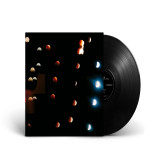
When first released Astro-Sounds From Beyond The Year 2000 promised an uncharted trip beyond the now generation! And it certainly delivered, as soon as the needle drops onto the opening track ‘Flameout’
we are in astral freak-out territory with cosmic strings phased beats & displaced fuzz guitars... Despite being released as a budget label’s take on the burgeoning psychedelic scene Astro Sounds, delivers the real deal.
This is thanks in no small part to the central role played by Wrecking Crew guitarist Jerry Cole. Cole had previously been the involved some L.A. session colleagues and cut his own psychedelic
album: The Inner Sounds of the Id by 'The Id' and was the perfect choice to front Astro Sounds which can be considered a development from the seminal sounds of the Id.
Astro Sounds has suffered from some unofficial releases that offer poor audio quality. This Vinyl Exotica re-issue is remastered from the original tapes and is presented on coloured vinyl
A band who have justifiably been championed across the world, Tokyo’s Melt-Banana have been responsible for some of the most complex punk rock ever made … that far outshines ninety-nine percent of most other bands out there. The band once described their live show as “Shooting machine gun and laser beam, chaos in order.” And I think that pretty much sums them up. — Olli Siebelt, BBC No wave without the self-conscious pretension, avant garde composition compressed into one-minute-or-less bursts, urgency, intricate destruction, pure glorious abandon. Melt-Banana play the same way that Repulsion, Naked City, The Ruins, or The Boredoms all make you want to scream and dance and kill your neighbors. This is not music that we are conditioned to accept. This is you delirious with joy scraping your five senses off the floor. —Matthew Moyer, Ink19 Melt-Banana are in a league of their own. There are other extreme hardcore bands out there who are experimental and unique but Melt-Banana are more than that. They area giants amongst infants. Masters amongst pupils. Kings amongst serfs. Nobody can do what they do and nobody can adequately use words to describe them. —Jeb, Crass Menagerie
Upchuck are experiencing a moment. The Atlanta punk collective just came off multiple tour runs with their good friend Faye Webster. Their Ty Segall-produced second album Bite The Hand That Feeds, with all its buzzsaw guitars and high-speed rippers and headbanging sludge, arrived in October. Later this year, they’ll make appearances at multiple festivals including Coachella. In the midst of relentlessly barreling ahead, the band and their label Famous Class are taking a beat to revisit how they got here. After working with Segall on Bite the Hand That Feeds, the band floated the notion that they wished they could hear what their collaborator could do with the songs on their 2022 debut album Sense Yourself. Holed up in his studio over Christmas with COVID and nothing else to do, Ty Segall began toying with Sense Yourself, sifting through folders of unlabeled stems to find the best guitar parts, emboldening the drum sound, and bringing greater clarity to KT’s vocals, all while bolstering the urgency of the band’s overall attack. With Segall’s new mix, Upchuck’s intense and righteous debut now impossibly overflows with even more fuzz and fury. In Segall, they found a kindred spirit whose studio approach made sense for just how hard they wanted this music to hit. “When we first went to record with Ty for Bite the Hand That Feeds, Mikey and I walked into the guitar room and Ty said, ‘Don’t touch the EQs.’ We looked at the amp and everything was on 10 except the master volume,” Hoff said. Previously, the band had been encouraged to capture the unvarnished sound of the studio. They’d toured with Segall’s band Fuzz, so everybody had the same goal while recording together: Capture the electricity of their intense live set. The band’s shows have a reputation for coming unglued, and there’s no greater document of that than Sense Yourself’s iconic album artwork. With no text, it’s a candid photo of a moment from a show shot on film without editing: blood streaked across KT’s face as they shout into the mic. In the middle of their EP release show, KT was in the pit as a fan started crowd surfing inside a shopping cart. A loose piece of metal near a wheel caught the singer right near the eyebrow and blood was everywhere, an instant piece of iconography snapped by probably every camera phone in the room. When Hoff revisits the message of this first album and Upchuck’s first songs, he thinks back to the year before the band even started when he and KT were hanging out. “We were sitting around talking for eight hours like ‘fuck, that's fucked up, that's fucked up.’” Upchuck became a vehicle for these five people to process how fucked up everything it is—to digest these formative hours-long conversations and put them to bludgeoning, intense rock music. The music is also fun as hell, and that’s part of the point. “There's a lot we need to do as people and a lot of things we need to fix in society but also like come on man like have your fun, wild out, have your drink,” KT says. “But be on your shit at the same time. Check your folk.”
Andrea has his roots in the independent musical scene in the first decade of the 2000s. In addition to his compositional and live experience as the first Nadàr Solo drummer, he is one half of the Turin duo Anthony Laszlo with Anthony Sasso, ex guitarist and singer of Milena Lovesick. Andrea Laszlo De Simone made his debut in 2012 when he released his first homemade album, Ecce Homo. Recorded at home by makeshift means and accompanied by the following videos: Solo un uomo, 11:43, I nostri piccoli occhi, Perdutamente.
At the beginning of 2014, he met some experienced musicians from Turin’s underground scene that later, after a few months in a rehearsal room, became his band: Damir Nefat (guitar/backing vocals), Dani C (bass guitar/backing vocals), Filippo Cornaglia (drums/backing vocals), Zevi Bordovach (keyboards/backing vocals) and Anthony Sasso (keyboards/backing vocals/percussions).
Anticipated by the individual tracks Uomo Donna, Vieni a salvarmi and La guerra dei baci on June 9, 2017 - for 42Records - Uomo Donna came out. It’s Andrea Laszlo De Simone’s first real album, a well received work by both audience and critics. It also was pointed as one of the best albums of 2017 by several national music magazines.
Uomo Donna is a complex, articulate and vital album that lives in its own time - where past, present and future coexist. It’s a time in which a sonic world takes shape blending classic and modern, Italian songs with psychedelia, Battisti and Radiohead, Modugno and Verdena, the Beatles and Tame Impala, the magical flight of Claudio Rocchi and the earthly flight of IOSONOUNCANE.
The album was self-produced and then post-produced by Andrea in collaboration with Giuseppe Lo Bue, a sound engineer from Bologna. The recordings were made between October 2014 and the end of 2016 with experimental techniques straddling digital and analogic.
After playing in some important Italian festivals as Siren Festival and TOdays -- that earned him a special mention in the live scores by Rolling Stones -- on October 28, 2017 the first Uomo Donna album tour started in the clubs of the major Italian cities.
On November 30th 2017, Andrea Laszlo De Simone presented his video, Sogno l'amore, during the Torino Film Festival as a short film, shot in Sicily and directed by Francesca Noto and Andrea Laszlo De Simone.
On March 15th 2018 the music video of Gli uomini hanno fame was released, the most political song of the album, an overlook through ferocious human emotions, an eleven and fifty minutes trip within human nature portrayed even in its most ferocious instincts. The music video was directed by Andrea Laszlo De Simone and the mysterious duo Sans. The official cycle of Uomo Donna ends on 31 December 2018 with the music video of Sparite Tutti created by the creative collective Irene&Irene.
2019 was a year of new goals for Andrea, in fact, the album Uomo Donna leaves national borders and got a special mention on social media by the famous American band The Lumineers which included Andrea Laszlo De Simone and Uomo Donna among the most interesting discoveries of the international musical underground and inserts Solo un Uomo in the Spotify playlist “Inspirations”. A few days later, Solo un Uomo was broadcasted by KEXP Radio. On November 4th Andrea and his band were chosen to open for The Lumineers’ only Italian show at Alcatraz, in Milan.
On November 8th Andrea released a brand new work, digitally and on vinyl for 42Records, Immensità, a ‘suite’ of four singles: Immensità, Conchiglie, Mistero and La Nostra Fine. Turned into a medium-length film using Immensità as the soundtrack.
Immensità was presented with four special sold out concerts in Rome, Turin, Padua and Milan. For these shows Andrea Laszlo De Simone was accompanied on stage by a mixed orchestra composed of synths, electronics, choirs, strings and woodwinds. Classic and modern instruments that are intertwined in a nine elements formation: an immersive concert, a contemporary version of chamber music.
In March 2020 Immensità was released also in France, UK, Canada, Belgium and the United States with Ekleroshock/ Hamburger Records (Roster: Benjamin Clementine, Polo & Pan, Limousine and many others). The response of the transalpine press and media, sector and not, was unexpected: major French newspapers and magazines - from Le Monde to Liberation, Vanity Fair and Les Inrockuptibles - dedicated entire pages and rave reviews to Immensità and Andrea Laszlo De Simone. The track Immensità entered, after a few days, at the fourteenth rank of Spotify’s Top viral 50 playlist and broadcasted on France Inter and Radio Nova.
“Immensità” is a complex cross media work of music and images. A project divided into four chapters (the songs) for nine tracks (each chapter has a prologue or a conclusion). A true suite, using the classic term that best describes an instrumental composition in several stages, that can be enjoyed in its entirety only by listening to vinyl or digitally in the innovative single track format, without pauses: a single symphony of 25 minutes and 6 seconds.
In September 2020, Dal giorno in cui sei nato tu was released on all italian platforms, a song dedicated to Andrea’s children, a real love letter in the form of a small speech, where he tries to give them the three keys to approaching life: fantasy, music and irony. Martino, 8 years old, replies to his father’s love letter by making the video accompanying the song, created in Super 8. It's the story of the world through the eyes of the child. It is also an homage to the new little girl in family, Lucia.
" The solo venture is expansive and easy on the ears. It's so serene yet expressive of big terrain and huge vistas of emotional landscapes of sound. He works off his own scale. Everything flows outwards. Effortlessly." - Irish Times Experimentation in early electronic music in the Sahara from the singular Mamman Sani. Dreamy organs and droning melodies reinterpret ancient folk tradition into a sublime fantastical soundscape. Never before released recordings from the very beginning - unreleased tracks from his first album, recordings of a short-lived trio, and a cover of an American folk ballad.
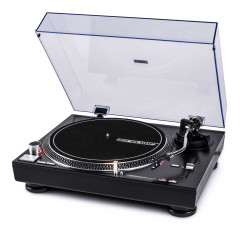
The RP-4000 MK2 is a solid DJ turntable for advanced users. The new MK2 version comes with several improvements, including a newly developed top panel and reworked metallic buttons with enhanced feel as well as a variety of functions. Precise motor control with 3 speeds: The precision-engineered die-cast platter is accelerated by a powerful motor with a high-torque direct drive of more than 1.8 kg/cm. The precise motor control with 3 speeds (33 1/3, 45 & 78 rpm) allows for the RP-4000 MK2 to play back any record. The pitch section with a selectable range of +/-8% and +/-16%, respectively, is suitable for the finest pitch adjustments. Statically balanced s-shaped tone arm: The RP-4000 MK2 features a statically balanced s-shaped tone arm with hydraulic lift and anti-skating mechanism. Via the universal connection for pick-up systems (SME) a large number of pick-up systems can be connected. Reverse function, pitch reset and extendible needle illumination: Additional features, such as reverse play and pitch reset, offer all DJs direct control of their turntable. With the push of a button the aluminium target light can be extended, so that the needle position can be seen in dark surroundings. Newly developed top panel and sturdy housing design: The new deep black metallic top panel construction is equipped with metallic buttons for start/stop, platter speed, pitch control, reverse function and tempo reset. The improved touch upon hit offers a clear haptic feedback. The sturdy construction with optimized damping features and shock-absorbing feet improve isolation from unwanted vibrations. With pick-up and headshell (made by Ortofon in Denmark): The RP-4000 MK2 comes with the high-quality OM Black pick-up, handmade by Ortofon in Denmark, pre-fitted to a headshell ready for immediate playback.
Technical data Turntable:
Type: direct drive turntable
Drive: quartz-driven high-torque direct drive
Motor: 8-pol., 3-phase, brushless DC motor
Turntable speeds: 3 speeds, manual (33 1/3, 45, 78 rpm)
Starting torque: > 1.8 kg/cm
Brake time: 50 dB (DIN-B)
Brake system: electronic brake
Platter:
Material: aluminium die-cast
Diameter: 332 mm
Tone arm:
Type: universal, statically balanced, s-shaped
Effective length: 230.5 mm
Overhang: 16 mm
Tracking angle error: < 3°
Applicable pick-up weight: 3.5 - 8.5 g (incl. headshell 13 - 18 g)
Anti-skating range: 0 - 7 g
Connections:
1x PHONO out (gold-plated), 1x GND
General:
Power supply: AC 115/230 V, 60/50 Hz (EU/US), AC 100 V, 50/60 Hz (JP)
Power consumption: 12 W
Dimensions: 450 (w) x 352 (d) x 144 (h) mm
Weight: appr. 9.8 kg
Included accessories:
Platter, OM Black pick-up system (by Ortofon), headshell, slipmat, counterweight, AC psu, instruction manual
Features
NEW in the MK2 version:
Newly developed top panel and reinforced housing construction
Reworked metallic buttons with improved feel & tactile response
Precision Pitch with selectable ranges of +/-8 % & +/-16 %
Tempo reset (Quartz Lock) feature
Superior finish in deep black metallic
Quartz-driven DJ turntable with high-torque direct drive
Designed for professional use
Powerful brushless DC motor with more than 1.8 kg/cm torque
Precise motor control with 3 speeds selectable (33 1/3, 45 & 78 rpm)
Reverse function: switch for forward/reverse playback
Precision-engineered die-cast aluminium platter with stable rotation
Statically balanced s-shaped tone arm with hydraulic lift and anti-skating mechanism
Universal connection for pick-up systems (SME)
Extendible needle illumination
Shock-absorbing feet for vibration isolation
Sturdy, heavy construction with optimized damping features
Prepared for dust cover (available as optional accessory)
Incl. slipmat, removable headshell and ready-mounted OM Black pick-up made by Ortofon
Unhinged Aussie grunge captured just as the Scientists were imploding/attempting to explode. Recorded over three days in February 1986, Weird Love is the band''s last ditch effort to bring their bad vibes to bedrooms the world over, a colossal failure and brilliant mistake that sounds best when blasting out of 1982 Corolla's blown Alpine tweeters.
Diplomat and Beagle are old studio partners from the early 90’s and have recently started to record together again, fusing their musical talents to make some next level hardcore rave.
Their last release was all the way back in 1993 on the label Bogwoppa, an EP titled ‘Small Hours’ under their group name Narc. This EP went onto cult status due to its futuristic and unique take on the sub-genre, changing hands for vast amounts on Discogs.
Featured on this EP is a remix of ‘Equatorial Bass’, a track from the original 1993 EP revamped for 2022.
Hit the turbo!
out of Stock
Last delivered 18 months ago available to reorder, subject to availability
BBE Music is thrilled to present J Jazz: Free and Modern Jazz From Japan 1954-1988, a
remarkable large-format book covering some of the deepest, rarest, and most innovative
jazz music released anywhere in the post-war era. Compiled by Tony Higgins and Mike
Peden, co-curators of BBE Music's acclaimed J Jazz Masterclass Series, the book also
features a foreword by Japanese jazz icon, Terumasa Hino.
This is the first time a book of this type has been published outside of Japan and the first
anywhere of this size and scale. It is a unique collection of over 500 albums of free and
modern jazz released in Japan during a period of radical transformation and constant
reinvention. An era that saw Japan return from the ravages of World War Two to become a
global economic power and emerge as both a technological leader and an international
cultural force.
Through a unique gallery of albums, J Jazz charts the development of jazz in Japan from the
first stirrings of the modern jazz scene in the mid to late 1950s and on through the hard bop
and modal jazz of the 1960s. It steers the reader into the radical directions of the 1970s when
free jazz, fusion, post-bop, and jazz-funk opened up a growing number of Japanese jazz
artists to a new global audience before consolidating in the mid to late 1980s with a musical
scene that laid the path for the contemporary jazz generation to follow.
Over 500 full-colour sleeves from many of the leading names in Japanese jazz sit alongside
rare and private pressings that tell a story of constant change and musical exploration. J
Jazz includes profiles of several leading record labels such as East Wind, Frasco, King
Records, and Nippon Columbia as well as critical independents such as Three Blind Mice,
ALM, and Aketa’s Disk.
J Jazz includes interviews with celebrated jazz photographer Tadayuki Naito, and pianist
Tohru Aizawa, bandleader on the totemic spiritual jazz album, Tachibana Vol 1, as well as
free-jazz record collector and jazz musician Mats Gustafsson.
The book also features a chapter on albums by non-Japanese artists that only received a
Japanese release, with collectible, rare, and obscure releases by figures such as Herbie
Hancock, Miles Davis, Mal Waldron, Steve Lacy, and Art Blakey. J Jazz includes Japanese
jazz charts from some of the world's leading jazz DJs including Gilles Peterson, Toshio
Matsuura, Paul Murphy, and Shuya and Yoshihiro Okino. Among the specialist content is a
feature on obi strips by record dealer and Japanese jazz expert, Yusuke Ogawa, plus a
special article on Japanese Blue Note albums.
Across its 300-plus pages, J Jazz includes a detailed introduction contextualising the music,
tracing the story of Japan's fascination with jazz back before the war. It also features
biographical information on many of the key artists involved in shaping the post-war
Japanese jazz scene including Sadao Watanabe, Toshiko Akiyoshi, Masabumi Kikuchi,
Masahiko Togashi, Terumasa Hino, Yosuke Yamashita, Fumio Itabashi, Masayuki
Takayanagi, Takeo Moriyama, Isao Suzuki, and many more
Atmosphere and gravity lean into each other. They are simultaneously expansive, and anchoring. They hold us, and lend a sense of perspective. They provide a stability and a knowingness which is essential in the absolute, and yet we can't help but find ourselves gazing upward, outward and reaching towards that which sits outside those things and ways we know. Selene is a record about that this lingering desire for that which sits beyond. It is work that seeks new perspectives snatched from familiar vistas, and it meditates on that sense of anchor and perspective. The work is also a speculative hymn to the visions of the celestial zones that spill ever outward. These visions, once merely what we could perceive with the naked eye are now so much more. Our minds eye is fed in equal parts by radio telecopy, filmic dreams and fiction renders of a place most of us will never know first-hand. This recording ties into a linage that reaches back, while stretching forward. It is just one story of so many, told across places, across cultures, across generations. It sits in the in-between of before and after, and in that moment invites us to situate ourselves and lean into it.
Ein Doppelalbum, das sich auf die 2012 mit 45 7" Singles erschienene Box-Set Compilation "Eccentric Soul: Omnibus" bezieht und zusammenfasst. "Minibus" versammelt 25 dieser Songs aus der amerikanischen Soul-Diaspora und verbindet die Punkte zwischen dem Harmony Group Sound, Funk, Disco und modernem Soul, 1966-1980. Deluxe Klappcover mit zahlreichen Notizen und Fotos illustriert.
Tickled Pink Glass Vinyl. Ein Doppelalbum, das sich auf die 2012 mit 45 7" Singles erschienene Box-Set Compilation "Eccentric Soul: Omnibus" bezieht und zusammenfasst. "Minibus" versammelt 25 dieser Songs aus der amerikanischen Soul-Diaspora und verbindet die Punkte zwischen dem Harmony Group Sound, Funk, Disco und modernem Soul, 1966-1980. Deluxe Klappcover mit zahlreichen Notizen und Fotos illustriert.
Die erste Singleauskopplung aus Jimi Tenors neuem Timmion-Album "Is There Love In Outer Space?" wirkt wie eine Wüstenbrise aus dem kosmischen Liederbuch des nigerianischen Keyboarders Mamman Sani aus den 1980er Jahren. Vielleicht ist es genau dieses Panorama, das Tenor und Cold Diamond & Mink uns vor Augen führen wollen, während wir die beiden Seiten dieser Vinyl-Single durchqueren. Spätestens das psychedelische Wüstenblues-Gitarrensolo versetzt uns auf eine kalte Sahara-Sanddüne, wo wir einen magischen Sonnenaufgang auf Mutter Erde beobachten, den nur wenige Menschen erleben dürfen. Dies ist die Art von Jam, bei der man die Augen schließen und sich von den Farblandschaften des Geistes erfüllen lassen kann. Die minimalen Gesangsparts wirken wie ein Willkommensgruß an die Sonne, die langsam am Horizont emporsteigt und bereit ist, ihre brennenden Arme um alle Dinge zu legen - lebende und tote gleichermaßen. Mit ihrem neuen gemeinsamen Projekt hauchen Jimi Tenor und Cold Diamond & Mink den bewährten Stilen des jeweils anderen eine neue Art von Leben ein und liefern eine natürliche Verschmelzung von kosmischer und rauer Soulmusik.
Die erste Singleauskopplung aus Jimi Tenors neuem Timmion-Album "Is There Love In Outer Space?" wirkt wie eine Wüstenbrise aus dem kosmischen Liederbuch des nigerianischen Keyboarders Mamman Sani aus den 1980er Jahren. Vielleicht ist es genau dieses Panorama, das Tenor und Cold Diamond & Mink uns vor Augen führen wollen, während wir die beiden Seiten dieser Vinyl-Single durchqueren. Spätestens das psychedelische Wüstenblues-Gitarrensolo versetzt uns auf eine kalte Sahara-Sanddüne, wo wir einen magischen Sonnenaufgang auf Mutter Erde beobachten, den nur wenige Menschen erleben dürfen. Dies ist die Art von Jam, bei der man die Augen schließen und sich von den Farblandschaften des Geistes erfüllen lassen kann. Die minimalen Gesangsparts wirken wie ein Willkommensgruß an die Sonne, die langsam am Horizont emporsteigt und bereit ist, ihre brennenden Arme um alle Dinge zu legen - lebende und tote gleichermaßen. Mit ihrem neuen gemeinsamen Projekt hauchen Jimi Tenor und Cold Diamond & Mink den bewährten Stilen des jeweils anderen eine neue Art von Leben ein und liefern eine natürliche Verschmelzung von kosmischer und rauer Soulmusik.
SIMON AND GARFUNKEL’S SWAN SONG: BRIDGE OVER TROUBLED WATER FEATURES METICULOUS PRODUCTION, GORGEOUS SONGWRITING, AND HEALING SPIRIT
Sourced from the Original Master Tapes and Limited to 4,000 Numbered Copies: Mobile Fidelity’s 180s SuperVinyl 33RPM LP Plays with Staggering Detail, Clarity, and Definition
1/4" / 15 IPS analogue master to DSD 256 to analogue console to lathe
Unifying, soothing, comforting: Simon and Garfunkel's Bridge over Troubled Water quickly became the album of an era upon release in 1970, the benchmark set serving as a beacon of hope and hymn of reassurance during a time marked by polarizing changes, social unrest, uncertain politics, and the dawn of a new era. These uplifting reasons — to say nothing about the gorgeous songwriting, meticulous production, and watershed performances — attest to why it is more relevant than ever in our current climate. Music, Bridge over Troubled Water simultaneously suggests and proves, heals all wounds and lifts all boats.
The seminal effort Rolling Stone named the 51st Greatest Album of All Time reaches illustrious sonic and emotional heights on Mobile Fidelity’s 180g SuperVinyl 33RPM LP. Pressed on MoFi SuperVinyl and strictly limited to 4,000 numbered copies, this ultra-hi-fi collector's edition brings you closer to music that picks up where the duo's Bookends leaves off. You'll enjoy deep-black backgrounds and pointillist details. Seemingly every note, breath, and movement is reproduced with exquisite accuracy, clarity, and balance. Each rotation benefits from SuperVinyl’s ultra-low noise floor and superb groove definition.
The best-selling record in the U.S. for several years running and winner of six Grammy Awards — including nods for Record of the Year, Album of the Year, Song of the Year, and Best Engineered Recording — Bridge over Troubled Water endures as a staple of accessible sophistication, angelic elegance, effortless singing, unhinged ambition, and therapeutic spirit. While it would turn out to be the final studio set for a duo surrounded by creative and personal disagreement, Simon and Garfunkel's collaborative ethos and soaring harmonies — combined with reflective narratives centred on the American experience, friendship, romance, and farewells — combine to turn the 11-track work into a paean to resolution, reconciliation, calm, and balance.
Home to the legendary title track graced by Garfunkel's pacifying solo lead vocals as well as the equally famous folk ballad "The Boxer," Peruvian-based "El Condor Pasa," upbeat "Cecilia," and rock ’n’ rolling "Baby Driver,” Bridge over Troubled Water remains as renowned for its musical diversity as its lyrical poignancy. Moving beyond the templates they'd perfected on four prior albums, Simon and Garfunkel embrace a then-unimaginable swath of styles. Rock, pop, gospel, country, R&B, South American, and jazz strains course throughout the songs, each sparked with bold experiments yet grounded in a well-orchestrated melange of melody, rhythm, and classicism that makes everything personal, familiar, and warm.
Not for nothing is Bridge over Troubled Water one of the finest-sounding albums ever made. Featuring instrumentation helmed by members of Los Angeles' fabled Wrecking Crew as well as multiple choral and string sections, songs took hundreds of hours to complete and involved pioneering recording techniques. Evoking both Phil Spector's live"Wall of Sound" approach as well as inventive effects, Bridge over Troubled Water is a triumph of texture, atmosphere, and architecture. Our audiophile edition brings the record's unique traits to the fore.
Whether the reverberation generated by Garfunkel's cassette recorder on "Cecilia," echoing drums captured in a corridor heard throughout "The Boxer," automobile noises peppering "Baby Driver," layer upon layer of voices dotting "The Only Boy Living in New York," or echo-chamber percussion on the title track, details comes through with stunning accuracy, clarity, and dimensionality. In every regard, Bridge over Troubled Water exudes genius.
An outstanding Pablo pressing (A++ sound) featuring jazz piano legend Duke Ellington at the helm of a small group session with Joe Pass on guitar, Ray Brown on bass, and Louie Bellson on drums, recorded in January 1973 and released in 1974. Considered a timeless classic, Duke's Big 4 is described by AllMusic as "One of Duke Ellington's finest small group sessions from his final decade ... Ellington's percussive style always sounded modern and here he comes up with consistently strong solos. ... Highly recommended."
THE 1968 ALBUM ON WHICH JOHNNY CASH BECAME A LEGEND: AT FOLSOM PRISON AMONG THE MOST IMPORTANT AND POTENT STATEMENTS OF THE 20TH CENTURY
Johnny Cash already knew his way around Folsom Prison when he and his band stepped inside the institution’s forbidding walls on the morning of January 13, 1968 to record At Folsom Prison. He’d played there two years prior. But this time was different.
Cash took the stage that day for two shows amid a darkening sociopolitical atmosphere and a raging war in Vietnam, as well as the knowledge his career and health hung on by a thread. The Arkansas native shared many of the long odds and abject failures of the inmates for which he performed. The songs he chose, and the conviction with which he delivered them, say as much. The point at which Cash transformed from a country star into a legendary artist, and a bold statement about the American prison state and its commitment to rehabilitation, the triple-platinum At Folsom Prison remains one the most important, potent, and fabled records of the 20th century.
You can hear it echo off the walls of the room; pulse through the itchiness of the Tennessee Three’s acoustic-based boom-chick rhythms; crackle in the announcements conveyed over the intercom; ring in the comedy of the off-cuff remarks and pair of novelty tunes; sense it in palpable energy that wells up within Cash and his audience. And you can experience it like never before via Cash’s knockout singing. The bedrock foundation of all his music, the singer’s baritone resonates with profound degrees of depth, pliability, and passion that underscore how much this appearance meant to him — and the extent he was living the narratives.
Indeed, every song on At Folsom Prison serves a purpose and speaks to the conditions — mental, emotional, physical, geographical, legal, social — the inmates confronted on a daily basis. Beginning with the explicit messages of the opening “Folsom Prison Blues,” Cash makes it clear he understands and shares many of their plights. Not for nothing did the myth of Cash having done hard time persist for decades once this record hit the streets. That’s how real it is, and how dedicated Cash remains to conveying every note with the same truth he invests in the impromptu comments he makes between and amid songs.
Listen to the sorrow, regret, pity, and loneliness of Merle Travis’ “Dark as the Dungeon,” Cash pulling syllables til they threaten to break and inhabiting the mood of bleak phrases such as “pleasures are few” and “the sun never shines.” Witness the isolation, dejection, and sadness punctuating the walking-blues “I Still Miss Someone,” matched in gravity by a solemn reading of “The Long Black Veil” — a traditional dirge that involves murder, cheating, and deception. Cash cuts even deeper on a heartbreaking solo rendition of “Send a Picture of Mother” and plainspoken version of Harlan Howard’s “The Wall,” detailing a suicide disguised as jailbreak through cliched-jaw deliveries that softly curse the impossible situation.
In chronicling temptations, mistakes, mortality, punishment, and life “inside” — for better or worse, the stories of the disenfranchised, forgotten, written-off, and unrepentant — At Folsom Prison also has a blast playing the outlaw role. Cash captures wild-eyed craziness and out-of-control mayhem on a revved-up take of “Cocaine Blues,” taking extra satisfaction in its dastardly tales by way of voice that shifts into character for the sheriff and judge. The gallows humor and racing drama of “25 Minutes to Go”; quicksilver accents and resigned acceptance of “I Got Stripes”; train-whistle blare and twangy locomotion of “Folsom Prison Blues” — all fight the law only to see the law win.
Cash remains deeply committed at every moment, and inseparably connected with the tortured souls removed from the goings-on of the outside world. No wonder all but two songs here stem from the day’s first performance that saw Cash, Luther Perkins, Marshall Grant, and company give everything. As does the Man in Black’s soon-to-be-wife, June Carter. The couple’s fiery duet on “Jackson” scorches; their combination of surrender and fortitude “Give My Love to Rose” puts us in the dying protagonist’s shoes.
And with the closing “Greystone Chapel,” famously penned by convict Glen Sherley, who watched it all happen under the watchful eye of guards, Cash separates the corporeal from the spiritual, relaying lessons about salvation and survival. Heady themes to which he’d return for the remainder of his illustrious career.
Meridian Brothers & El Grupo Renacimiento' excavates the forgotten sounds of the fantastical 1970s salsa dura group El Grupo Renacimiento. The group identifies as "B-class" salsa whose music explores human struggles in the urban city landscape, with themes such as police brutality, social marginalization, and addiction. Meridian Brothers collaborated with El Grupo Renacimiento in Bogota's Isaac Newton studios to capture their "fantasy salsa dura" sound. Although the group came out of myth, its members have been created in spirit. Embodied by Meridian Brothers and depicted in the graphic creations of illustrators Glenda Torrado and Mateo Rivano, the members of El Grupo Renacimiento have now come to life.
The Telescopes Radio Sessions collects together the essence of three live session recordings in 3 different countries over a three year period between 2016-2019. This is the third in a series of radio session releases from Tapete Records that have so far included The Monochrome Set and Comet Gain. More session releases are being lined up for the rest of the year and beyond - enjoy the sonics and stay tuned. Over the years I have read a lot on people’s impressions of The Telescopes. Some folk think it’s a collective, others imagine it used to be a band and feel nostalgia towards what they consider to be the original line-up (even though many had come before, during and since) and some people refer to it as currently a solo career. In a way this is all true and none of it is. When faced with these kind of questions, along with questions about the style of music that The Telescopes make I often say The Telescopes house has many rooms, which explains things perfectly for me but for people on the outside looking in it only serves to increase their confusion. For me, confusion isn’t such a bad thing. Everything is born into confusion, the sense we try and make of that chaos is interesting and excites me. The universe often disorientates, it sends me a jumble of thoughts and impressions coupled with a feeling of something I need to express… if I could only decipher the encryption. This is how The Telescopes music comes to be and it is also how The Telescopes came to me. I regard The Telescopes as an entity of it’s own that introduced itself in my darkest hour and I was chosen as its vessel. From the second it arrived I was obsessed to the point where there was nothing else. A bit like having an imaginary friend. As the obsession grew it began to infect others, everybody loved my imaginary friend and wanted a piece of it. As its success grew however, so did the corruption, until one day the entity fell silent. The silence lasted for years, I tried everything to reconnect but it was having none of it. I had been a bad caretaker, I had let the house become infested and I had lost my way. This epiphany served to remind me of simpler times when anything felt possible with this entity by my side. It had trusted me with something so simplistically profound and I had let it down. The realisation of this was a eureka moment. I am not The Telescopes, I never was and never will be, I am the caretaker, the lighthouse keeper and if a job is worth doing it is worth doing well. With this dawning, I felt a crack open up in the cosmic egg and a familiar confusion in my head. The entity had returned. It was time to start untangling its tangled threads once more, to make sense of what it was saying, this time without corruption. It’s all about listening. I listen to what my cosmic friend sends me and channel this expression into what you hear through your speakers. It may take one person to achieve this, it may take more. There is no set line up or instrumentation that can hold The Telescopes. Whatever it takes to hit the zone, whatever is available, absolute focus is imperative. Sometimes it takes sabotage to keep that line of vision intact, there is no room for preconceptions or complacency in making the music. The Telescopes music is the now
incarnate and a state of total being is necessary to achieve. From the outside looking in... again, it’s all about listening. What comes through your speakers is the only thing that matters. The music either reaches you or it doesn’t. Everything else may seem interesting or confusing but ultimately it is corruption. So if you’ve bought the record, read the sleeve notes and bought a ticket to see a live show, don’t be surprised if the line-up is or isn’t the same as the recording. The only thing that is for sure is that The Telescopes as an entity is speaking to you in its own voice in every scenario.
Of course the difference between albums and live shows is that you can play the record over and over again to the point where you know every line and every note that was played. Whereas with live events you are left with an impression that can only be replayed in your mind. It can be frustrating at times. When you are touring with a great line-up and feel like something exciting is happening, you want everyone to hear it, not just the people at the shows but the people that couldn’t make it on the night as well. There is no guarantee that there will be the same line-up at a live show as there is on the album. This is why live sessions are important, they document a side of things that is often fleeting. Here we have three sessions, all different people transmitting The Telescopes sound on each. Some are regulars, some dip in and out and some were just passing through. In each case The Telescopes chose them as their vessel and as the lighthouse keeper I did everything I could to help them on that journey while trying to be a good caretaker to the house of many rooms. The Telescopes have been invited in for many sessions over the years, the first two were for John Peel on BBC Radio 1. We also recorded a session for Marc Riley and Mark Radcliffe before their
celebrity when they had a show on BBC Radio Manchester. We could have compiled this album from those sessions, it was certainly considered but Tapete and myself believe this selection gives an exciting glimpse into that fleeting side of The Telescopes in a constant state of flux that is left mostly to myth and imagination. For those who listen to the records but have never had the chance to take in the live experience, welcome to the other side. For those that follow us live, here’s a little reminder and a keepsake. Infinite suns. Stephen Lawrie February 2024.
Galaxy Orange/Black Vinyl. Limited to 500 copies. Data Diamond is the sound of FOUR STROKE BARON at their most confidently unhinged. Originally conceived as two separate EPs (one purely electronic - Data, one heavy - Diamond) that would then meld together on one full length release, the idea morphed into what is now the succinct sucker punch of an album that is heading our way at speed. Heavily inspired by their own work on Data Diamond's predecessor, Classics, Witt and Vallarino got to work in their laboratory creating the most potent, concentrated form of FOUR STROKE BARON possible. Data Diamond - a dizzying sub-40 minute dive into the deranged psyches of its creators. The tracks on Data Diamond are lithe yet still allow enough room for idiosyncratic flourishes that mark this out as a true FOUR STROKE BARON opus. If Classics was a Man vs. Food belly busting plate of indulgence, Data Diamond is an upmarket Gordon Ramsay dish, served with a side of insanity. Finding a co-conspirator in Cynic's Paul Masvidal, the trio get somewhat psychedelic on the album's eponymous closing - and most expansive - track, which also features Vola's Adam Janzi on drums. Thematically, this is their most murderous anthology to date. Those who find themselves embroiled in these bloodthirsty tales include a Radio Shack CEO, an internationally acclaimed cyborg, an accidental trafficker of human body parts, and the leader of a death cult located in a convenience store. FOUR STROKE BARON's anomalous view of the world takes a particularly dark turn across the songs on Data Diamond, yet, as ever the macabre tragedies are dressed up with catchy melodies, pop hooks for days and a big shimmering bow of positivity.
After five long years, Balance and Composure return with Too Quick To Forgive--newly signed to Grammy-nominated producer Will Yip's label, Memory Music, the alt-rock darlings sound more assured and adventurous than ever across two vulnerable tracks. Too Quick To Forgive is a reflection on personal perseverance in the wake of confrontation, told through two distinctly different scenarios. "Savior Mode" finds frontman Jon Simmons baring his soul in a way that is unparalleled in their discography, while "Last To Know" is an emotionally-resonant highlight that leaves a lasting impact well after its final notes play out. Simmons' vulnerability and emotional delivery across both tracks cut through with unflinching precision courtesy of Andy Slaymaker (guitar), Matt Warner (bass), Erik Petersen (guitar), Dennis Wilson (drums), and who the band considers their 6th member--producer Will Yip. In the fall of 2022, the group got together at his Conshohocken, PA studio, Studio 4, with a few ideas that Yip helped turn into these otherworldly tracks. "It was all magic," Jon says. With a renewed sense of purpose, Balance and Composure will return to the stage for a series of Too Quick To Forgive release shows in some of the biggest rooms they've ever played.
‘EVERYTHING IS HERE’ is a journey through space and time, inspired by the more rarefied aspects of prog rock and the wistful side of psychedelia.
Fusing these influences with the accessibility of French electronic and the groove of R&B and disco, this album depicts the sweet dizziness of contemplation. Nostalgic, yet determined and modern in it’s genre blending, the first album of Kartell truly reveals what’s been underlining in his previous EP.
Taking influences in the space and dream pop aesthetic, the musical approach of the album embraces the 60’s and 70’s fascination for outer space, exotic locations, technologies and science fiction which was on the edge of becoming reality.
Nebulous textures and otherworldly sounds characteristic of space rock are infused throughout the record, while keeping a focus on making catchy songs, leaning on a minor-key groove and a pop yearning. It’s also a challenge and an artistic proposition to gather a wide range of genres to tell a story. Densely produced and cinematic, the album draws a truly living landscape where live bass, drums and guitars hold the line, evolving around hazy effects and synthesizer layers.
Die US-Progressive-Metal-Pioniere und Innovatoren PSYCHOTIC WALTZ machen endlich ihren gesamten fesselnden und zeitlosen Backkatalog weltweit über InsideOutMusic wieder verfügbar. In zwei Wiederveröffentlichungs-Schritten (Mai & Juli 2024) werden die klassischen ersten vier Alben der Band - "A Social Grace" (1990), "Into The Everflow" (1992), "Mosquito" (1994) und "Bleeding" (1996) - neu gemastert von Patrick W. Engel / Temple Of Disharmony als 2CD Digipaks mit viel seltenem oder bisher unveröffentlichtem Bonusmaterial sowie erweiterten Layouts erhältlich sein, und die Hauptalben werden zusätzlich als Ltd. Gatefold-LP-Editionen auf 180g-Vinyl neu aufgelegt. Eine zusätzliche Demo-Raritäten-Zusammenstellung (mit einem Teil des Bonusmaterials) mit dem Titel "To Chase The Stars (Demos 1987 - 1989)" wird ebenfalls als Ltd. Gatefold 2LP Edition erhältlich sein, was diese Re-Issue-Kampagne zu einem aufregenden und unverzichtbaren Projekt sowohl für langjährige Kenner der Band als auch für neuere Mitglieder der ständig wachsenden progressiven Musikgemeinde macht.
out of Stock
Last delivered 2 years ago available to reorder, subject to availability
Die US-Progressive-Metal-Pioniere und Innovatoren PSYCHOTIC WALTZ machen endlich ihren gesamten fesselnden und zeitlosen Backkatalog weltweit über InsideOutMusic wieder verfügbar. In zwei Wiederveröffentlichungs-Schritten (Mai & Juli 2024) werden die klassischen ersten vier Alben der Band - "A Social Grace" (1990), "Into The Everflow" (1992), "Mosquito" (1994) und "Bleeding" (1996) - neu gemastert von Patrick W. Engel / Temple Of Disharmony als 2CD Digipaks mit viel seltenem oder bisher unveröffentlichtem Bonusmaterial sowie erweiterten Layouts erhältlich sein, und die Hauptalben werden zusätzlich als Ltd. Gatefold-LP-Editionen auf 180g-Vinyl neu aufgelegt. Eine zusätzliche Demo-Raritäten-Zusammenstellung (mit einem Teil des Bonusmaterials) mit dem Titel "To Chase The Stars (Demos 1987 - 1989)" wird ebenfalls als Ltd. Gatefold 2LP Edition erhältlich sein, was diese Re-Issue-Kampagne zu einem aufregenden und unverzichtbaren Projekt sowohl für langjährige Kenner der Band als auch für neuere Mitglieder der ständig wachsenden progressiven Musikgemeinde macht.
out of Stock
Last delivered 2 years ago available to reorder, subject to availability
Deluxe black on white splatter 2LP edition (double LP with gatefold sleeve and printed inner sleeves!). Including original sleevenotes by Byron Coley and a new introductory essay from Dinosaur Jr. fan Henry Rollins! First issued in 2002 only in the States and Australia,
‘Ear Bleeding Country’ is the only career-spanning compilation of Dinosaur Jr. Dinosaur Jr. are one of the most successful and influential alternative guitar bands from America, and fronted by laconic singer/guitarist J. Mascis, they’ve enjoyed global success and inspired generations, from Grunge onwards.
The first six tracks are drawn from the band’s early career in the 1980s, when they recorded for independent labels like Homestead and SST. Among them are the classic single ‘Freak Scene’ and the follow- up cover of The Cure’s ‘Just Like Heaven’. Most of the compilation
samples the best of Dinosaur Jr.’s output after signing with Warner Bros in 1990, including hit singles such as ‘The Wagon’, ‘Whatever’s Cool With Me’, ‘Out There’, ‘Start Choppin’ and ‘Feel The Pain’. ‘Ear Bleeding Country’ ends with ‘Where’d You Go’, a track by J. Mascis’
post-Dinosaur Jr. band The Fog.
Stasis returns to De:tuned with 7 unreleased tracks from his archives for the 'Time Sensitive' LP. Legendary UK techno pioneer Steve Pickton compiles a stunning collection of DAT tape excerpts from the Otherworld studio sessions. Recorded between 1992-1996, this collection represents the peak of the Stasis sound. An in-depth masterclass of emotive techno and simply a must-have for any true techno enthusiast.
Mastered by Matt Colton at Metropolis. Al White created all the graphic work. A separate digital release will also be available at the usual digital shops. Stay tuned!
out of Stock
Last delivered 19 months ago available to reorder, subject to availability
This new edition of Soul Jazz Records" classic Delta Swamp Rock features a killer all-star line-up of seminal artists who all first blended rock, soul and country together to create a stunning new sound of southern American music in the 1970s. Featuring the Allman Brothers, Dan Penn, Leon Russell, Tony Joe White, Johnny Cash, Bobbie Gentry, Big Star, Link Wray, Area Code 615 and loads more!
The Shadow Ring (1992-2002) presents a comprehensive overview of the work produced by British musicians Graham Lambkin, Darren Harris, and later Tim Goss over the course of a decade. Throughout their legendary ten-year run, this shambolic rock outfit, formed by a group of teenagers in the port town Folkestone, were an enigmatic force on the international musical sub-underground. The group have left behind a mighty run of eight LPs, a handful of 7-inches, and a spate of raucous live shows and cryptic zine appearances on both sides of the Atlantic. Collected here for the first time are The Shadow Ring's live cuts, rarities, and complete commercial releases, spread out across eleven CDs and a DVD, accompanied by an nearly five-hundred-page book that includes a monographic biographical survey, more than one hundred color photos, a comprehensive discography with transcribed lyrics, and a selection of zine appearances, fliers, postcards, and other miscellanea. In aggregate, this significant collection not only plums the depths of the band and its attendant lore, but reveals a vivid minor history of mail-order networks, bedroom recording sessions, cross-USA couch-surfing, and encounters with fellow travelers such The Dead C, Harry Pussy, Charalambides, Richard Youngs and the No-Neck Blues Band. Where is the connecting thread between Ralf Wehowsky and Squirrel Nut Zippers? Inquire within. The roughly 200 songs in this set trace the band from its earliest days recording in Lambkin's parents' house (SHP Studios), through its brooding mid-period, garnering word-of-mouth notoriety that peaked with the trio turning down an invitation to tour with Pavement, to a string of increasingly uncompromising experiments with electronics, voice, and tape. Although the band's sound morphs considerably during this time period, from spartan beginnings using pots and pans as a drum set to their ultra-deconstructed latter-day approach, certain core sensibilities are apparent throughout: brash youthful rawness, wry and morbid lyricism, stripped-down angularity, and a penchant for atmospherics. This boxset, featuring every record and single, and buttressed by twenty-nine rarely-heard recordings, including proto-Shadow Ring projects such as the Cat & Bells Club and Footprint cassettes, and their unearthed final CD-R Darren Harris Reads Graham Lambkin, presents the first opportunity to hear this arc in full. The ebbs and flows of the band_their schoolboy beginnings, initial successes, first shows and tours, life milestones, and Lambkin's gradual development as a solo artist_are painstakingly detailed in a sizable band history-cum-Künstlerroman by Blank Forms artistic director Lawrence Kumpf, illustrated with candid photos, sketches, letters, newspaper clippings, and other ephemera. The music and videos can speak for themselves, but taken as a mass, this collection makes sense of the group's utter uncanniness without comprising one iota of their mystique, bringing something new to the table for completionists and the uninitiated alike.
LAKE's 2009 album Let's Build A Roof KLP213, produced by Northwest legend Karl Blau, is sweet, funky and nostalgic - a paragon of psychedelic pop. Originally, this landmark album had overlooked sonic anomalies now corrected by REMASTERING. Five bonus songs have been added to the DIGITAL ALBUM, creating a whole new Let's Build a Roof.Let's Build A Roof is LAKE's most popular album with many fan favorites, though every track is unique. After extensive touring in 2009, LAKE entered Dub Narcotic Studio (Olympia, Wash.) to record fresh with their live energy. In the studio they were able to fill out their jingly pop aesthetic, enhanced with the vintage sounds of instruments available at Dub Narcotic and the local community. Blazing synth solos, timpani, flutes, saxophones, cello, and marimba, are just some of the featured sounds on Let's Build a Roof.Some of the album's most requested songs: "Madagascar," a dubby, slow-groove track; "Christmas Island" a surfy Phil Spector-sounding song used as theme music for the television in show Adventure Time; and "Don't Give Up", an upbeat motivating dance song with Blau performing the hook on harmonized saxophones; "Gravel" is the first single and has that a driving intensity that we can all deeply relate to - trying to keep up.
Blue vinyl. Since forming in Western New York in 2016, Feeley and his musical partner Matt Cox have blurred the line between absurdism and existentialism, swirling ‘90s melodicism, new-millennium pop-punk energy, and heartfelt emo into a wry, smirking rock sound. Now, on their third album, Gangster of Love, the duo let their melting pot sonic palette go further than ever, exploring the outer edges of their musical spectrums. Produced by Sam Guaiana (Neck Deep, Bayside), Gangster of Love follows
2021’s SUP and 2018’s Tequila Sunrise and found the duo fleeing Buffalo for Los Angeles, where the push and pull between the two songwriters – the real magic at the heart of Super American – was allowed to flourish and grow in a brand-new environment
The Gothenburg, Sweden based psychedelic rock combo Hollow Ship returns with Animated Music, a new EP and the follow-up to their acclaimed 2020 debut LP Future Remains which was praised by ex Prog Magazine, Shindig! and Raven Sings the Blues. With the band’s unique rhythm-driven blend of psychedelic rock and prog, with traces of jazz and hard rock as well as a myriad of other influences, at he forefront Animated Music pushes the band further into the instrumental realm than before. A cinematic journey over the space of 20 minutes, the music was originally written as an aural companion to the band’s Space Motion show visuals before being reworked into the shape of the Animated Music EP. With the band’s upcoming second full-length due in the winter, Animated Music showcases the band’s instrumental storytelling at great effect, further establishing the band at the orefront of the Swedish psychedelic scene alongside luminaries such as Dungen and Goat. Animated Music is due out on May 31 via Swedish indie label PNKSLM Recordings (7ebra, Chemtrails, ShitKid etc) on limited edition splatter vinyl (limited to 500 units worldwide) and digitally.
Shit And Shine return to Riot Season where it all began with their debut 'You're Lucky To Have Friends Like Us' (2004) for their 20th anniversary.
Rum And Coke, is only available as a limited edition white vinyl LP (300 copies worldwide) with download code and hype sticker. The album also features vocals from Callum Howe (The Shits) and it’s Shit And Shine at their filthy/noisy best. NON-RETURNABLE.
Guitar/Vocals - Craig Clouse
Vocals - Callum Howe (The Shits)
Drums - He Who Will Remain a Mystery
Mastered by James Plotkin
‘Rum And Coke’ comes stumbling out the speakers with the week old stench of an alcoholic exiting his late night hideaway into the sunshine of a new day
Rum And Coke is the sound playing inside his fermented brain as he heads of in search of his next tipple
It’s grimey, it’s noisy. It’s a bit of a bastard.
Heavy, impenetrable layers of gnarled guitars, slurred vocals, pounding drums all wrapped in a blanket of thick sludge
Witchorious is a doom metal / stoner rock band from Paris, France. Founded in 2019, the trio is composed of Antoine Auclair (guitar / vocals), and brother and sister Paul (drums) and Lucie (bass / vocals) Gaget. Their first two singles “3 AM” and “Evil Creature” came out of darkness in 2020. Their music blends bluesy riffs inherited from Black Sabbath, aggressive sounds supported by fuzzy bass lines in the likes of Electric Wizard and Trouble, and intense atmospheres inspired by bands like Amenra, Cathedral, The Obsessed, YOB and Mastodon.
All this led by adventurous and solid drums, spawning modern chaotic doom metal songs with enraged vocals. Between screams and whispers, Antoine and Lucie’s voices have us travel from incantations to outpouring of despair. Each track on this debut album will immerse you in the darkness of your mind, where you will keep looking for answers.
The Slovak band Shallov releases their new track "Refrain" on the experimental label Weltschmerzen just one year after the release of "Coexist". Two tracks that both span more than 10 minutes in length, work together as one coherent audiovisual art piece and are out as an EP on 10" vinyl. Music videos do not only visually supplement both tracks but they are equally autonomous art pieces.
The visual feature of the music pieces is highlighted by the vinyl's cover painted by Slovak artist Michal Fízik. The previous back cover carries a photograph which served as an inspiration for the painting while the current back has been created via AI reinterpretation.
The musical component of Refrain is based on a repetition building into a hypnotic trance, gradually disintegrating so it eventually ends in a monumental climax. It contrasts the band's previous work as well as the track Coexist which uses rather neverending rhythmic variations, and a changeable vibe and atmosphere.
The concept of the visuals in Coexist is a result of a collective fusion between the theatre director Adam Dragun, Viktor Ori and dozens of other participating non-actors. The video depicts individualistic egoist actions shaping a contradicting and incomprehensible totality of the world which ultimately seems to be alienated to everybody.
Refrain is an introspective journey leading to the dissolution of the individualistic experience of human existence. The video's concept, direction and production was conducted by the visual artist and performer Jak Užovič who also tends to inter-media art and object installations.
As Shallov and Jak Užovič explain the track's conceptual background: "The idea of owning one's own body and mind is an unnatural way of looking at ourselves imposed by the dominant paradigm. It's a blind ideology - the view of a body as a machine or a commodity is incomplete and represents a materialistic utopia which is being systematically internalized. We're not a community that acts right or wrong, our intentions are determined by an ideology which pretends not to exist - our relations are relations of masters and slaves, of domination and exploitation. We are a society bound by these features and even though we refuse to admit it, the world presented to us is only a legend we're striving to keep alive at all costs, while believing that there is no alternative. Our quality doesn't stem magically from the inside, on the contrary, it's determined by the conditions within which we interpret it through collectively shared fictions. We don't get to know our consciousness through ourselves, but we recognize it through others as they create and form us."
Die britische Sängerin Becky Hill, die kürzlich zum dritten Mal in Folge für den BRIT Award als bester Dance Act nominiert wurde, veröffentlicht am 31. Mai ihr mit Spannung erwartetes, zweites Album „Believe Me Now“?. Mit 2 bereits gewonnen BRIT Awards, 13 Platin Singles und über 10 Milliarden Streams gehört Becky Hill seit Jahren zu den erfolgreichsten Sängerinnen und Songwriterinnen Großbritanniens. „Believe Me Now?“ enthält den #1 UK-Airplay-Hit ”Side Effects”, ”Disconnect” featuring Chase & Status, der auf Platz 6 der UK-Charts landete und mit Gold ausgezeichnet wurde, sowie die aktuelle Single ”Never Be Alone”, die mit Sonny Fodera aufgenommen wurde. Auf dem Album arbeitete Becky mit einer Reihe von Top-Produzenten zusammen, darunter PARISI, Mark Ralph, Toddla T, Maur, Solardo, MJ Cole, Jax Jones und Franky Wah, und enthält Einflüsse aus der Welt des Drum’n’Bass, House, Techno und Trance. Nach einem fulminanten Jahr 2023, in dem Becky Hill u.a. ein großartiges Glastonbury-Set spielte, eine Sommerresidency auf Ibiza hatte und den Start der zweiten Staffel ihres Podcasts „The Art Of Rave“ mit Gast Fatboy Slim feierte, wird 2024 das Jahr sein, in dem Becky Hill endgültig ihren Status als eine der einflussreichsten Stimmen der Dance Music festigt.
Data Diamond is the sound of FOUR STROKE BARON at their most confidently unhinged. Originally conceived as two separate EPs (one purely electronic - Data, one heavy - Diamond) that would then meld together on one full length release, the idea morphed into what is now the succinct sucker punch of an album that is heading our way at speed. Heavily inspired by their own work on Data Diamond’s predecessor, Classics, Witt and Vallarino got to work in their laboratory creating the most potent, concentrated form of FOUR STROKE BARON possible. Data Diamond - a dizzying sub-40 minute dive into the deranged psyches of its creators. The tracks on Data Diamond are lithe yet still allow enough room for idiosyncratic flourishes that mark this out as a true FOUR STROKE BARON opus. If Classics was a Man vs. Food belly busting plate of indulgence, Data Diamond is an upmarket Gordon Ramsay dish, served with a side of insanity. Finding a co-conspirator in Cynic’s Paul Masvidal, the trio get somewhat psychedelic on the album’s eponymous closing - and most expansive - track, which also features Vola’s Adam Janzi on drums. Thematically, this is their most murderous anthology to date. Those who find themselves embroiled in these bloodthirsty tales include a Radio Shack CEO, an internationally acclaimed cyborg, an accidental trafficker of human body parts, and the leader of a death cult located in a convenience store. FOUR STROKE BARON’s anomalous view of the world takes a particularly dark turn across the songs on Data Diamond, yet, as ever the macabre tragedies are dressed up with catchy melodies, pop hooks for days and a big shimmering bow of positivity.
Two years in the making, 25-year-old Angelica Garcia's album Cha Cha Palace is the result of an artist's need to SAY SOMETHING. The second song on the record, "Jícama" might only be a minute and 25 seconds in its entirety, but the message spans generations and is one that resonates deeply for Garcia with her Mexican and Salvadoran roots. Singing/shouting, "I see you, but you don't see me Jímaca, Jímaca, Guava Tree_I've been trying to tell ya, but you just don't see, like you I was born in this country," Garcia tells the reality for millions of Americans unapologetically and with passion.That feeling of being between places is something Garcia knows well having been raised between multigenerational, multicultural, homes with step-parents and half-siblings. Additionally, she made the journey from the West Coast to the East Coast and back again multiple times before finally settling down in Richmond, Virginia.She fondly recalls Mexican ranchera music always playing throughout her childhood. Ranchera was ingrained within the maternal side of her family with her Mother, Grandmother, Uncle & Aunt constantly singing the traditional music throughout the home of her Grandparents.Like Mitski, Lorde, Billie Eilish, and Rosalía, Garcia isn't afraid to tear pages out of her diary and express emotions that might be difficult and oftentimes daunting to share given today's social and political environment. Like her peers, she joins a new chapter of musicians who are connecting with their audiences on a level that lives outside the reaches of technology, trends, and social media, the daily experience of feeling torn between saying something and doing something, for being a voice and speaking with your voice, of being Latina while being American. And it's humanity and honesty that audiences are looking for and will find in spades throughout each note of Cha Cha Palace.
The Scientists' 1981 wild debut bewildered Perth, Australia's punters with its charging anthems centered on themes of young love and alienation. Obvious in its rebellion yet more pop than punk, the self-titled "Pink Album" deftly embodied the tough-yet-danceable outsider aura of The Ramones, and its unheard of, feverish clip shook the shores of the geographically confined Swan Coastal Plain of down under. Recorded just as the lineup of guitarist-vocalist Kim Salmon (The Cheap Nasties), drummer James Baker (The Victims) and bassist Ian Sharples were breaking up, the album stands as a testament to the contagious chops of Perth's swelling pool of musical talent, and to the promise of Salmon's unwavering vision that would become one of the most celebrated acts of the Aussie underground.
The Scientists' 1981 wild debut bewildered Perth, Australia's punters with its charging anthems centered on themes of young love and alienation. Obvious in its rebellion yet more pop than punk, the self-titled "Pink Album" deftly embodied the tough-yet-danceable outsider aura of The Ramones, and its unheard of, feverish clip shook the shores of the geographically confined Swan Coastal Plain of down under. Recorded just as the lineup of guitarist-vocalist Kim Salmon (The Cheap Nasties), drummer James Baker (The Victims) and bassist Ian Sharples were breaking up, the album stands as a testament to the contagious chops of Perth's swelling pool of musical talent, and to the promise of Salmon's unwavering vision that would become one of the most celebrated acts of the Aussie underground.