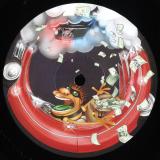
Hot Digits main guy Fingerman - a veritable of the UK nu-disco and disco re-edit scenes - is the man at the controls on the latest missive from the imprint's vinyl-focused Wax Digits offshoot. He's in prime form from the off, offering a deliciously chunky, effects-laden, dub disco style rework of a New York no-wave era 'downtown' disco classic. He doffs a cap to pal Chewy Rubs and their joint love of heavy, looped bass guitar lines on the stretched-out funk-goes-deep disco wonder that is 'Bestest Beat', before cunningly rearranging a more string-laden slab of disco-funk grandiosity on closing cut 'We Love It'. We certainly do, and there's a fair chance you will too.
After the sell-out sensation of the album 'Soul Drums’, the Steve White Trio return with a special 7” single, as they take on Deep Purple’s ‘Mandrake Root’. A fitting tribute to Jon Lord, with a Hammond-heavy groove, White shows his range and power from behind the kit. It is backed by the original ‘Sunburn’, written by Joel White and Chris Hague, who complete the brilliant Trio.
’Soul Drums’ was the inaugural release in the new Acid Jazz Jazz Sessions series earlier this year and, remarkably, the first album bearing the name Steve White. After a storied session career and long association with Paul Weller, as a member of the Style Council and as the heartbeat of Weller’s solo band on ‘Wildwood', 'Stanley Road', 'Heavy Soul’ and ‘As Is Now’, the Trio sees Steve return to his jazz and filmic influences, with a true modernist touch.
The 7” release coincides with a special appearance at the 100 Club on 17 September.
BERG AUDIO is happy to welcome back one of our favorite producers, Havantepe. In the past few years, the Turkish artist’s output has become rare, greatly increasing our excitement to finally share these masterfully crafted pieces on the label. The release includes a superb collaboration with Christopher Ledger, and a remix from one of Romania’s key artists, Cristi Cons – Artwork by Juli Jah.
After several years, revered dub techno craftsman Andrey Pushkarev finally return with a solo release - Simbioza. Taking its name from the Romanian word for symbiosis, this release is a testament to creative exchange, built entirely from collaborations with dear friends & artists that have crossed Pushkarev’s path numerous times during his 20 years long musical journey. While staying true to Andrey’s signature deep & dubby aesthetic, the release also includes the artist’s first drum and bass output, featuring Los Angeles based Svetti’s haunting & mesmerizing vocals. The EP will be released on the well regarded BERG AUDIO during the month of September 2025 - limited vinyl copies.
Needlewreckordz drops a heavyweight 7" for hip-hop and funk lovers with a great collision of source materials, making for sharp edits with undeniable groove. Opener 'Doin It (In The Park)' features a classic refrain from a Detroit jazz great, but layered over a funky groove that never quits. On the flip, 'Madness' slows the tempo with a more deep cut and rolling groove that brings slick r&b vocals that tug at the heart while bumping kicks and hip-hop fragments further flesh out the fun. Plenty of familiar touches dropped into irresistible grooves make this a gem for party-starting sessions.
With this seventh instalment of retweaked heat, Perro Bueno Edits once again prove that less is more when you know exactly what you're doing. Both refixes strike a sweet spot between respectful crate-digger sensibility and dancefloor punch while updating Afro-funk classics without sanding off their soul. 'TFOM' puffs out its chest with big, bold, playful horns leading the charge as Latin vocals bring some sunshine and funky bass keeps things moving. 'SMPP' slows the tempo, which means more room to luxuriate between the dumpy kicks and appreciate the sharp horns and organic percussion before some raw vocals bring a Brownian funk edge.
D. Diggler joins the Kontakt family with two smoked-out dub techno cuts, drifting through hazy chords, submerged delays and weighty low-end motion. On remix duties, Per Hammar turns in a deep and hypnotic remix, true to the sound of his release on Dirty Hands and Sushitech. Limited coloured vinyl.
Brooklyn-based producer and lathe-cut specialist P-Sol returns to his own imprint (as he does on an impressively frequent basis, frankly) with another irresistible double-sided 7". Both tunes continue to carve out his own soulful, sample-driven corner of hip-hop and r&b, starting with 'A Little Personal' with its elegant strings and classic boom-bap era drums topped with a silky smooth and loved-up vocal. The B-side, 'Pete's Soul' is a fitting tribute and nod to make great from this world and bumps gently but with a catchy vocal edge. Another heady crate-digger's delight from a man whose purple patch continues.
»Memorial« grew out of Nate Wooley’s work alongside Annea Lockwood recording the Columbia River, and in particular from a visit to Kettle Falls in northern Washington, once one of the river’s great salmon fishing and meeting grounds and a place of enormous importance to the Sinixt and other Indigenous peoples of the Upper Columbia. The falls disappeared from view following the construction of the Grand Coulee Dam in 1940, submerged beneath what is now Lake Roosevelt, yet beneath the still surface of the reservoir, a fast current continues to move across the buried cliffs. That tension between what remains and what can only be recovered through memory runs throughout »Memorial«.
In the essay accompanying the record, Wooley returns repeatedly to the idea of translation: the attempt to carry an experience from one form into another, from river to recording, memory to sound, landscape to music. He moves between Lockwood’s sound maps, John Ashbery’s rain falling on canal machinery, Ravel’s attempts to make water move through a piano, Christian Wolff’s »Stones«, and the Sinixt First Salmon Ceremony, where rocks struck together recall the sound of salmon once moving through the river in their thousands. These translations cannot restore what has been lost; however, they allow us to revisit what remains beneath in another form.
»Memorial« exists as an uncertainty, concerned with the distance between a place and its recording, between an event and what survives of it, and with the way listening itself becomes entangled with memory. Kettle Falls remains submerged, the river constrained and radically altered, but the water continues to move over the old rock beneath the reservoir. »Memorial« tries to listen for that persisting memory.
Alex Barbu – Paths Lead Inward marks Alex Barbu’s first release on Bosconi Records, following previous releases on Digital Finesse and Maeteria. Across four tracks, Paths Lead Inward explores the space between minimal, techno, deep house and psychedelic trance, combining stripped-back structures with hypnotic rhythms, dubby textures and subtle traces of Goa-inspired psychedelia.
The EP opens with A1. “Tokyo”, a straight-to-the-point dancefloor missile. A rolling bassline, delayed voices and a simple but highly effective rhythmic structure push the track towards trance territory, with hints of Goa psychedelia filtered through a minimal sensibility. Immediate, hypnotic and built to keep the floor moving.
A2. “2006” takes a darker and deeper turn. A dubbed-out minimal techno cut populated by subterranean sounds, blurred textures and distant voices. Its slow-burning atmosphere makes it particularly suited to the deeper, more intense moments of an afterhours set.
On the flip, B1. “Hello Everybody” brings a heavier deep-house pulse into the equation. Hypnotic arpeggios, deep vocal elements and a rolling groove give the track a physical, almost stomping quality, while maintaining the murky and psychedelic character running throughout the EP.
Closing the record, B2. “Blobfish” dives deepest of all. A heavy bassline anchors a strange and unsettling landscape of anxious breathing, dark textures and disorienting sounds. Hypnotic rather than aggressive, it gradually pulls the listener into an upside-down dimension — a proper late-night trip for losing yourself on the dancefloor.
Paths Lead Inward is not only about movement on the dancefloor, but about what happens underneath it. Four tracks that touch you deeper in the soul and make you reconnect with it.
TECHNO Records introduces Robert Johnstone, a Scottish producer whose music has travelled further than his name. Rooted in the physical drive and electronic vocabulary of the 1990s, the record feels like a contemporary extension of that classic language: functional, inventive and full of rhythmic accents, small traps and details that register fully at club volume.
Across both sides, TECH044 moves naturally between driving techno and more sensual house territory, combining direct club utility with playfulness and surprise. The record brings desire and sensuality back into a club context, entering into a dialogue with the history of the underground as a space of bodily and sexual freedom.
Robert Johnstone has spent years working outside public view, building a substantial catalogue while keeping his public profile sparse. The record speaks to DJs and collectors drawn to classic electronic forms shaped by an individual hand.
Bosconi Records reissues one of its most sought-after releases: BOSCO004 by the British duo 100Hz (Lee Renacre & James Chapman), a three-track EP seamlessly blending Robert Hood-style minimal Detroit techno with dubstep/techno crossover influences.
At the heart of the record is “The Field”, a rediscovered DJ-favorite driven by a deep, trippy groove and the magnetic vocals of Patrick Stanley (AKA “The Voice”), accompanied by the sleek, suspenseful atmospheric vibe of “Tension”. Rounding out the EP is “Cinqo”, a timeless 137 BPM avant-garde smasher originally released in 1995 on Format Records that bridges the gap between Benga, Tobias, and Marcel Dettmann.
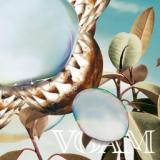
After a three year break, Blawan and Pariah’s Voam is back with “Piranha Pop”, a new EP from Rhyw. From the teeth rattling madness of “Suppli Crush” to the slinky oddness of the title track, these four tracks explore and push up against the outer fringes of techno music and mark a worthy follow up to his previous release on the label, 2022’s acclaimed “Honey Badger”.
Forty years of cassette releases, pressed for the first time on vinyl
First of two instalments exploring the previously unreleased sonic archives of one of Poland’s most enigmatic
living artists - with its first volume focused on his deep listening practice and spiritual reverie (recorded 1990–2013)
The last time Andrzej Dudek-Dürer took a banknote bearing the face of the Polish anarchist Jarosław Dąbrowski from his pocket to trade it for a pair of shoes was in 1969. He bought them for 120zł - the equivalent of 100€ today - and never replaced them since then. Only rebuilt them, year after year, drawing a needle and thread through the leather each time it split, closing one wound before the next one opened. It became a ritual of precision, stitching a record of another year into their soles.
That same year, in Wrocław, he arrived at a conclusion that would recalibrate everything that followed. Convinced he was the reincarnation of Albrecht Dürer, he adopted the surname Dudek-Dürer, stopped cutting his hair and began wearing the same garments every day. It was the first ritual of many, though he wouldn't have called it that yet. Look closely enough, over the decades, and it is always the same gesture, returning in different material: hair growing in a single unbroken strand, a needle drawing thread through leather, sitar strings pulled taut across a neck he built with his own hands and magnetic tape spooling forward inside the cassette boxes stacked against his walls.
None of this began in a vacuum. Dudek-Dürer emerged from the Wrocław neo-avant-garde, in a Polish art world where an exhibition could be cancelled overnight by the stroke of a censor's pen. In 1973, his exhibition Auto-crucifixion was shut down by the state, and for a time he found himself blocked from exhibiting his own art at all - the one force in his life that ever came close to cutting the thread.
He seemed to experience it differently. In 1974, after long, patient research into sitar craftsmanship, he built his first prototype with his brother, a knowledgeable luthier. In 1978, in a smoked-out jazz club, he took his first steps into sound recording with the unreleased album Jazz From Underground with his first band. By 1979, recognition started to travel further than he could.
Turning toward Far-Eastern philosophy, meditation and the idea of reincarnation was another language of freedom for him. It was a way of claiming an inner territory the state could not reach, a border it could not close. Mail Art served a parallel function, reaching further out: in a country that restricted travel and expression, sending and receiving art through the postal system became an act of quiet rebellion.
The body, in his understanding, is only an envelope readied for constant transformation. From this came Metaphysical Telepathy: during the years he could not leave Poland, he treated that confinement as a rehearsal room, sending his mind out ahead on the same thread his body would later follow. Living Sculpture grew from the same root with performances of stillness beside static art objects, until the boundary between the object and the man beside it simply dissolved. Camera Meditation extended the same instinct into photography: a shutter click flattening three dimensions into two so that a single instant could be held forever. Inspired by the pioneers of self-portrait photography like Robert Cornelius, he used it to document time itself, and kept explaining to me: "You know. This is not about vanity. This is about observing time passing.”
The isolation did not end suddenly. It ended the way his own philosophy had already predicted it would, from the inside first. Mail Art quietly solved the problem politics couldn't. Correspondence built during years of confinement slowly worked its way through doors the state itself had kept locked. Contacts made through folded paper and stamps became invitations. Ultimately, invitations became passports.
In 1983 he made his first trip outside Poland, to Germany, in search of the audio technology he couldn’t get his hands on before. In 1985, he was invited by the Indian embassy in Poland to give a sitar concert on an instrument he had spent a decade patiently stringing together - half sitar, half tanpura, built from patience and determination. After the collapse of the People's Republic of Poland, the travels kept unspooling: South Korea, then Mexico, then Australia, Canada, New Zealand, Singapore, Japan and the United States - each stop leaving behind its own small knot of tape, tied off and carried home.
In the decades since, recognition arrived at the same unhurried pace: he conducted workshops at UC Berkeley, served as vice-president for artistic affairs of the Union of Polish Art Photographers and the Union of Polish Visual Artists between 2010 and 2014 and received the Bronze Medal for Merit to Culture - Gloria Artis. His visual work gradually entered collections including the National Museums of Warsaw, the Stedelijk Museum, Tate Modern, MoMA and the Venice Biennale. His musical practice, by contrast, never found that kind of room - left to circulate quietly, sharing his cassette tapes directly, waiting for someone willing to follow it further.
It took months before I could find a way to reach Andrzej Dudek-Dürer - his presence online is very close to nonexistent. Surprisingly, LinkedIn turned out to be the only door still open, a faintly absurd irony given everything else about him. I packed the strict minimum for a three-day trip and an empty notebook and made my way to Wrocław. His headquarters sits in the neighbourhood of Grabyszyn: a two-storey pre-war house that has belonged to his family for generations. The man who opened the door was long-haired, long-bearded, in his trademark leather shoes and patched jeans. We sat in his living room, in front of a computer where decades of recordings sat organised in cryptically named files, surrounded by books and objects that had arrived one layer at a time, leaving room for only two chairs in the middle. His shoes sat by the door, rebuilt so many times they had become their own quiet sculpture. Cassette tapes filled boxes against the walls, almost unlabelled, each one a spool of thread holding decades of sound that had never once been asked for, until now.
I listened for hours: meditating in front of strangers on the porch of a Seoul temple until the tourists stopped taking photos and simply waited with him; a stand-off with border guards at the US–Mexico crossing over an instrument they couldn't identify and didn't trust; a session with the Stockhausen family that he still, decades later, describes like it happened last week. All of it interrupted, occasionally, by the smell of soup boiling and fresh bread warming on the ceramic stove. After two days, it felt like being handed the end of a very long thread and asked, gently, to keep following it. I left with a USB drive holding his full discography, signed with his unmistakable signature.
Astral Meditations From A Living Statue is a length of that thread, drawn out from the boxes stacked against his walls - recordings gathered from different rooms, different countries, different decades. This first record breathes slowly: incense-thick, meditative, built for stillness. A cutting-edge séance in outer space where machines learn how to dream.
It begins with the neo-classical improvisations of Andrzej, space-delayed, recorded at Klub Muzyki i Literatury in Wrocław in 2002. 'When..So' opens the curtains with a deep-rooted meditation accompanied by slow-decaying piano figures illuminated by a candle-lit spirit gathering.
Los Angeles, 1990: a dormant villa, a grand piano, the voice of Bonnie Barnett. 'Exception' is captured in a single room, in a single afternoon - voice and keys circling each other, neither one leading, until the silence between the notes starts to feel like the instrument.
'The Meta...' and 'Tired Of...', recorded at Studio Morandi in Ponte Nossa, Italy, in 1992, settle into a sitar drone built entirely from patience - overtones stacking and beating against each other, strung by a man who never once set foot in India. 'Mastery Of...' follows, recorded the same year at Studio Suski in Łomianki, pushing that same hum further still, until pitch dissolves into a spectral reverie. 'Transcendental Sound', from 2000, closes the first record in a slow bath of celestial frequency - better heard beside the shores of the Odra river.
More than fifty years after deciding that a life could become an artwork, Andrzej Dudek-Dürer continues to inhabit that decision. His shoes keep wearing thin against the earth's crust. His hair keeps growing, one strand at a time. His cassette tapes keep spooling in the dark of their boxes.
Now the thread finds its last shape: a single unbroken groove, spiralling inward from the outer edge to the label at the centre. Never cut - the way nothing else in his life ever was. Drop the needle and it will find that groove and follow it, the same way a needle once followed leather, once followed a border it couldn't cross, once followed string into an instrument that didn't exist until he built it. This record is the other end of a thread that has been travelling for fifty years. For the length of both sides, it rests here, in your hands. This is a timeless proof that the Lord of the New Age was never lost."
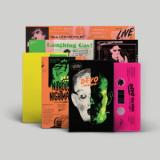
Futurismo are proud to present DEVO’s NITROUS NIGHTMARE, Halloween Live ‘75. Never before released, or heard in it’s entirety, this legendary live performance is presented here in it’s full chaotic glory on limited edition 2xLP and 2xCD. The live release all hardcore Devo fans have been waiting for, Nitrous Nightmare demonstrates a band harnessing their artistic greatness in the purest of forms. This mythic performance captures Devo perfecting some of their most iconic concepts in the raw. Expertly restored, this live recording makes for a thrilling experience, it also captures Devo as a lightening rod for hostility. On Halloween 1975, Devo took the stage at the WHK Auditorium in Cleveland, in a supporting capacity for jazz legend Sun Ra, to perform for a raucous crowd dressed in the finest of Halloween cliché. Already riding high on Nitrous Oxide and booze supplied by the sponsoring radio station, this unaware horde was expecting to see a slick cover band churning out renditions of Bad Company hits, only to be subjected to an act of subversive performance art that would send the growingly aggravated crowd into eventual meltdown. Physical threats ensued, but Devo played on. Acting as a live companion release to Futurismo’s much lauded Art Devo, the tracklist featured here showcases the origins of de-evolution theory in a live setting. These songs would become some of their most famous material, with this recording believed to be the very first time ‘Jocko Homo’ was performed in front of a live audience; the full 12 minute version documented here is sure to please fans, even if it displeased the urban hippies and horror masked onlookers that evening. Whilst Devo may have felt they were trapped inside a negative energy vortex during that era, it is clear in retrospect that the band was using this energy to carve out the genesis of a sonic and visual art that has truly stood the test of time. The music performed that evening would mutate culture for decades to come, long after the denizens of the auditorium packed away their cheap vampire costumes and returned to their day jobs. Spanning 2xLP’s of unreleased live material, most of which has never been heard before, this wondrous performance draws purely from that integral early history. Mixed and mastered directly from recordings kept in the bands personal vaults, this live collection showcases why Devo was, and still is, one of the most important bands in American history. De-evolution is real. The art of DEVO is real. Here is the evidence. This 2xLP is housed in a gloss laminated wide spined sleeve. It has a tracklist that has been sourced directly from the archives, and contains colour inner sleeves and a fold-out containing archival imagery and liner notes by Gerald V Casale.
A quiet intensity permeates Chantal Michelle’s music, like a veiled flame. Even at its most spare and delicate, an undulating tension unsettles the ear through wavering microtonal interference and uncanny spatial juxtaposition. She takes seriously the mandate of the composer to foster new relationships between various types of sounds, bringing together disparate field recordings, instrumental stems, and the sounds of circuitry in unheard configurations. Resolution is elusive, in its place a sense of oblong cyclicality and prickly uncertainty. When the veil is pulled back, we find more depth, more complexity, and more mystery.
Unit of Heart, Michelle’s second album of 2026, presents two interrelated pieces that highlight diverging compositional modes. Here she brings in two key collaborators: Patrick Shiroishi, who contributes flutes and saxophones throughout, and poet Funto Omojola, whose words and voice bookend the title composition. Both compositions unfold gradually, but where the album’s a-side “Sudden Oceans” presents a minimal tonal palette focused entirely on the subtle grain of wind instruments, “Unit of Heart” proceeds linearly, moving through passages of synthesizer, environmental recordings, and full-cheeked wails of saxophone. Both encourage a state of focused listening as the scope of the music deepens and widens.
“Sudden Oceans” allows the listener to hover in rippling currents of air, breath overlapping breath in a shimmering patchwork. All flutes and saxophones on the piece are played by Shiroishi, which are molded by Michelle into a pattern that resembles the flow of tidal waters, surging and receding moment to moment as the tonal density increases. Expansive and recursive, it reflects both the restorative awe and eerie disquiet of encountering the sublime. The first and last sounds we hear are the gentle rush of unmediated breath as Shiroishi connects and disconnects from his flute.
Michelle’s skill at presenting the familiar as preternatural comes to the fore on “Unit of Heart, ” one of her most ambitious works. Omojola’s voice begins with a melody that could be a lullaby, but as it’s bounced around the stereo field it takes on a haunted quality. Their poem, reprinted on the LP’s inner sleeve, hints at a similar type of transformation: “I mean this is where our mouth turns saliva into spears only a throat can recognize. ” Pads of downy synthesizer billow and are subsumed by a discordant ringing. The climactic section features atonal electronics and field recordings, first of water and then the evening call of insects, processed in such a way to transform them into pulsating bursts of noise. What we think we know about the world, what is elemental, can change with even the slightest adjustment of the lens.
With the stunning Planes In Reverse, Sascha Funke, the Berlin-born producer and DJ, and long-time member of the Kompakt family, releases his first album in almost a decade, since 2017’s Lotos Land. It’s a welcome return for one of the most eloquent and elegant producers in electronic and dance music, someone who’s always been able to say more with less, and the ten tracks here, moving effortlessly between techno, house, minimalism, disco house, and home listening tunes, are all gorgeously sculpted miniatures. With guest appearances from partner Julienne Dessagne (Fantastic Twins), with whom Funke has also worked in Saschienne, there’s something homely and family about it, too; a family of sounds, a home of tone. There’s also something consummate about Planes In Reverse, as though Sascha Funke has perfected the album format. There’s no flab here, no excess – it plays out like a perfectly designed experience, ten tracks, coming in under fifty minutes, an album where every moment matters.
It’s full of variety, but everything has the unmistakable Funke thumbprint, one that was developed during the late ‘90s / early ‘00s minimal techno and microhouse moment, but which was always open to other ideas and other sounds, too. Planes In Reverse came together quickly for Funke: “Last winter, I had two or three new tracks, which gave me a core feeling: ‘Ah, this could be the direction of something like an album.’ Sometimes it can be very easy that you wrap it up and then it becomes something coherent and solid. This happened within two or three months; it was very fast and direct.” Everything fell into place – the ten tracks revealed themselves, the album sat together as a whole, and the final piece of the puzzle was returning home again to Kompakt, who have supported Sascha Funke from the very start, releasing his first single, “Campus”, back in 1999.
Planes In Reverse opens stealthily with “What You See”, where rhythms percolate and bass prowls while gaseous textures fill the sonic spectrum. It’s also the first appearance of Fantastic Twins on the album; here, she speaks a hypnotic mantra, a prelude to the title track, where Dessagne has a pure pop moment, her voice ecstatic and vibrant. Indeed, Planes In Reverse plays out like thesis and antithesis ending in synthesis, the tracks nestling next to each other even as they shuttle between sounds, genres, perspectives. There are some beautiful moments dropped throughout Planes In Reverse – the heavenly textures that make the title track feel so cloud-bound; the glassy and orbital tones that drop from the skies through the disco house inspired “Karat”; the clamour and clatter of hyper-edited voices shuffling through “Splitter”; or the field recordings of Sascha’s son football training session that drop “Zockers” into a different place and space, slowly giving way to a beautifully paced electro-pop mantra. “In Germany,when the kids play a computer game, or when they play football, we describe it as zocken. They’re the players, they’re the Zockers.“ Funke explains.
Planes In Reverse winds down with the beautiful “Kruso”, where ticklish, loving arpeggios careen around the room, and drift-work chords shimmer and shuttle between your ears. It’s a perfect comedown to an album that feels breathes in and out at an organic pace, nothing above 130 BPM, everything sitting together just so. Indeed, that’s the feeling you take away from Planes In Reverse; it sums up the spirit of Sascha Funke productions perfectly, while also existing beautifully as its own world dreamt unto itself. It’s Sascha Funke down to the very essence. Nothing unnecessary, nothing extraneous: Pure Funke.
Twenty-five years after its original release, Markus Guentner's debut album In Moll returns in a special anniversary reissue on Black Knoll Editions, reaffirming its place as one of the defining ambient recordings of the early 21st century.
Released in 2001 during the formative years of Kompakt's influential Pop Ambient series, In Moll emerged from a period of rapid transformation in electronic music. New technologies, expanding digital networks, and shifting creative possibilities allowed artists to imagine entirely new sonic worlds. Amid this fertile landscape, Guentner's music stood apart. Combining delicate melodic fragments, slow-moving harmonies, and a remarkable sense of spatial depth, In Moll introduced a distinct artistic voice whose impact can still be felt a quarter-century later.
The album arrived shortly after Guentner's contributions to the inaugural Pop Ambient compilation, including the now-beloved "Regensburg 1," named after his Bavarian hometown. Those early recordings immediately captured the attention of Kompakt founders Michael Mayer and Wolfgang Voigt. Recalling his first encounter with the music, Mayer describes listening to a demo CDR with Voigt while wandering through Cologne late into the night, replaying the tracks for hours. "We knew that we had found something outrageously beautiful and we wanted the whole world to listen."
Across its running time, In Moll unfolds like a series of dreamlike landscapes, inviting the listener into a world that feels both familiar and strangely other. Bells, hisses, distant textures, and slow-moving bass tones drift through vast expanses of atmosphere while luminous synthesizer washes seem to blur the horizon in a fine digital mist. The album's transportive qualities are matched by a remarkable sense of compositional discipline. Every gesture feels deliberate, every texture carefully placed. Balancing warmth and melancholy with restraint, Guentner created a body of work that rewards both close listening and complete surrender.
Reflecting on the album twenty-five years later, Wolfgang Voigt describes Guentner as "one of the first, but also one of the most important ambient artists" associated with Kompakt, calling his music "an integral, timeless part of the long history of pop ambient." Music critic and former Pitchfork Editor-in-Chief Mark Richardson, who reviewed In Moll upon its original release, similarly noted that the album "marked the arrival of an important new voice," and today regards it as "one of the finest ambient releases of the decade."
The album's influence continues to extend far beyond its original audience. For many listeners, In Moll served as an entry point into a new understanding of what ambient music could be. Black Knoll boss Rafael Anton Irisarri first encountered the album shortly after its release in 2001. "It immediately opened a door to a world of music I didn't know existed," he recalls. "At a time when I was still discovering my own creative voice, Markus showed me entirely new possibilities for what electronic music could communicate." Simply put, "The Sight Below would not have existed without In Moll paving the way."
Far from a historical curiosity, In Moll continues to feel strikingly contemporary. What once sounded futuristic now feels timeless, its patient pacing, attention to detail, and sense of wonder remaining entirely intact. The album's enduring power lies not only in its influence, but in the curiosity it continues to inspire, inviting listeners to step inside its world and lose themselves within it.
To mark its twenty-fifth anniversary, Black Knoll Editions presents the most complete edition of In Moll to date. Newly remastered in full analog by Rafael Anton Irisarri, this expanded release pairs the original album with a newly reworked interpretation by Markus Guentner himself, revisiting the material through the lens of twenty-five years of artistic development. The anniversary edition also features a new visual presentation designed by Guentner, offering a visual counterpart to the album's continued evolution. Together, these recordings and visuals celebrate both the enduring legacy of In Moll and its ability to reveal new dimensions twenty-five years later.
This 25th Anniversary Edition on Black Knoll Editions celebrates a recording whose quiet impact has only grown with time, preserving a work that remains as evocative, singular, and essential today as it was in 2001.
Twenty-five years after its original release, Markus Guentner's debut album In Moll returns in a special anniversary reissue on Black Knoll Editions, reaffirming its place as one of the defining ambient recordings of the early 21st century.
Released in 2001 during the formative years of Kompakt's influential Pop Ambient series, In Moll emerged from a period of rapid transformation in electronic music. New technologies, expanding digital networks, and shifting creative possibilities allowed artists to imagine entirely new sonic worlds. Amid this fertile landscape, Guentner's music stood apart. Combining delicate melodic fragments, slow-moving harmonies, and a remarkable sense of spatial depth, In Moll introduced a distinct artistic voice whose impact can still be felt a quarter-century later.
The album arrived shortly after Guentner's contributions to the inaugural Pop Ambient compilation, including the now-beloved "Regensburg 1," named after his Bavarian hometown. Those early recordings immediately captured the attention of Kompakt founders Michael Mayer and Wolfgang Voigt. Recalling his first encounter with the music, Mayer describes listening to a demo CDR with Voigt while wandering through Cologne late into the night, replaying the tracks for hours. "We knew that we had found something outrageously beautiful and we wanted the whole world to listen."
Across its running time, In Moll unfolds like a series of dreamlike landscapes, inviting the listener into a world that feels both familiar and strangely other. Bells, hisses, distant textures, and slow-moving bass tones drift through vast expanses of atmosphere while luminous synthesizer washes seem to blur the horizon in a fine digital mist. The album's transportive qualities are matched by a remarkable sense of compositional discipline. Every gesture feels deliberate, every texture carefully placed. Balancing warmth and melancholy with restraint, Guentner created a body of work that rewards both close listening and complete surrender.
Reflecting on the album twenty-five years later, Wolfgang Voigt describes Guentner as "one of the first, but also one of the most important ambient artists" associated with Kompakt, calling his music "an integral, timeless part of the long history of pop ambient." Music critic and former Pitchfork Editor-in-Chief Mark Richardson, who reviewed In Moll upon its original release, similarly noted that the album "marked the arrival of an important new voice," and today regards it as "one of the finest ambient releases of the decade."
The album's influence continues to extend far beyond its original audience. For many listeners, In Moll served as an entry point into a new understanding of what ambient music could be. Black Knoll boss Rafael Anton Irisarri first encountered the album shortly after its release in 2001. "It immediately opened a door to a world of music I didn't know existed," he recalls. "At a time when I was still discovering my own creative voice, Markus showed me entirely new possibilities for what electronic music could communicate." Simply put, "The Sight Below would not have existed without In Moll paving the way."
Far from a historical curiosity, In Moll continues to feel strikingly contemporary. What once sounded futuristic now feels timeless, its patient pacing, attention to detail, and sense of wonder remaining entirely intact. The album's enduring power lies not only in its influence, but in the curiosity it continues to inspire, inviting listeners to step inside its world and lose themselves within it.
To mark its twenty-fifth anniversary, Black Knoll Editions presents the most complete edition of In Moll to date. Newly remastered in full analog by Rafael Anton Irisarri, this expanded release pairs the original album with a newly reworked interpretation by Markus Guentner himself, revisiting the material through the lens of twenty-five years of artistic development. The anniversary edition also features a new visual presentation designed by Guentner, offering a visual counterpart to the album's continued evolution. Together, these recordings and visuals celebrate both the enduring legacy of In Moll and its ability to reveal new dimensions twenty-five years later.
This 25th Anniversary Edition on Black Knoll Editions celebrates a recording whose quiet impact has only grown with time, preserving a work that remains as evocative, singular, and essential today as it was in 2001.
Immersive, roots-infused dub-reggae power from Jamaica meets heavyweight instrumentation from Denmark on a landmark collaborative album out now via Recall Reality.
Rooted in the rich traditions of classic Jamaican sound yet pulsing with a hypnotic, contemporary organic weight, Signs of the Time brings together the evocative vocal artistry of rising roots talent Azizzi Romeo and the master craftsmanship of Denmark's formidable instrumental 11 piece band Guiding Star Orchestra. Built for sound systems and vinyl purists alike, featuring lush tape saturation, spring reverbs, and spacious dub mixes.
Released on Recall Reality, the album is a masterclass in modern roots reggae and deep dub dynamics. Rather than relying on rigid digital presets, Signs of the Time champions warm analogue textures, sprawling horn arrangements, and rolling basslines that echo the golden age of Studio One, Joe Gibbs, Bunny Lee and Channel One while carving out an entirely fresh, meditative space for the listener.
Azizzi Romeo carries forward a legendary musical lineage as the son of the late roots icon Max Romeo, bringing a captivating blend of spiritual urgency, conscious lyricism, and soulful conviction to the microphone. His delivery cuts straight through the mix, offering profound reflections on modern society, unity, and resilience in a changing world.
Backing him are the Guiding Star Orchestra, renowned for their authentic analog production ethos, deep-crate sensibilities, and musicianship that treats the mixing board as an instrument in its own right. The result is a seamless symbiotic project where every bubbling organ skank, hypnotic drum drop, and reverberating tape delay serves the song's core message.
To bring the record home, producer CHLLNGR spent a week in the spring working alongside UK dub maestro in his London studio - Prince Fatty, who mixed the entire album. Fatty invited legendary drummer Winston "Horseman” Williams into the sessions, and Horseman percussion added the final glue to the record.
Track highlights:
"Signs of the Time": Azizzi is joined by his late father, the legendary Max Romeo, on a prophetic warning of what awaits the world if we don't soon unite in peace and love.
"Thanks and Praises": An anthem of gratitude for everything life brings, and of rising up even when others want to see us fail.
"Jah Jah Disciples": A meditation on following Jah, and the strength that faith gives in the midst of adversity.
Signs of the Time is available now on Vinyl LP and Digital streaming platforms via Recall Reality.
Although nearly two decades after its release the legendary album Eksel by D'Arcangelo has achieved cult status, it is worth remembering that it all started in the early 90s in Rome. The twin brothers Fabrizio and Marco D'Arcangelo sculpted this electronic IDM treasure with a minimalist arsenal of hardware and analog synthesizers, achieving a raw though sophisticated sound that immediately caught the attention of Aphex Twin & Grant Wilson Claridge, Rephlex record label heads themselves.
While in 1993 and 1994 a large part of the European scene was carried away by the faster, more commercial rhythms of hardcore or eurodance, the D'Arcangelo brothers preferred to look toward the mental landscapes and abstract textures coming out of Detroit and Warp Records. By fusing the machine-like coldness of electro with melancholic melodies and complex rhythm structures, the Italian duo became one of the undisputed pioneers of braindance music in Mediterranean Europe.
Looking back, Eksel—released on Rephlex in 2007—stood as a challenge to the listening habits of its time. Positioned between mental experimentation and dancefloor functionality, the album moves effortlessly between hypnotic club contexts and intimate, detail-rich home listening. Now twenty years later, its legacy continues to resonate among collectors and lovers of analog sound. Eksel stands as proof that electronic innovation extended far beyond the major hubs of London or Berlin, strengthening the dialogue between British IDM and the Italian school, and establishing D'Arcangelo as architects of a distinctive sound.
Marco D'Arcangelo looks back on the album's origins with characteristic wit: "Eksel was conceived to celebrate our 40th Birthday. At Rephlex, they thought we should include a Roman attribute, just to remind people of our so-called 'ancestry'—which isn't really anything, but being born in Rome did sound cool. The XL in Roman numerals is 40, spelled 'Eksel'. And funnily enough, this year we are turning 60 (oh my god!), and 60 in Roman numerals is LX, spelled 'Leks'."
For this release, the partnership brings together a range of elements into a cohesive and refined sonic language. D'Arcangelo seamlessly blend leftfield electronica, avant-garde techno, and glitch, shaping a forward-thinking sound. Vintage synthesizers intertwine with crisp programmed percussion, while melodic structures interact with classic 808 rhythms. This deluxe reissue also exclusively includes RFLX1902 and Electronic Lounge, two tracks from the same era never before pressed on vinyl. The result is a warm and reflective body of work, deeply rooted in electro's legacy, yet unmistakably oriented toward the future.
*Originally pressed in 2021 - this is a brand new master and cut.**
In partnership with Analogue Foundation, Oshu Records is proud to present the exclusive vinyl repress of "Laroyê" in a thick cardboard tip-on gatefold jacket on 2x 180g vinyl.
Acclaimed Hungarian, Berlin-based producer, composer and pianist Àbáse (AKA Szabolcs Bognár) returns, sharing a special, 5 anniversary remaster of his breakthrough project 'Laroyê'. Releasing on Friday 1 May via Bridge The Gap & Oshu Records, this sensitive exploration of Afro-Brazilian culture originally began as an audio diary, documenting Szabolcs’ travels and collaborations in Brazil through a collection of voice memos, fragmented beats, sketches and field recordings. As his journey progressed, and his collaborations and research deepened, the music project started to take on its own life:
"Laroyê evolved through weeks and months of research and collaborations into the album that it is now. That means that all the sessions were done in different apartments, small studios, often with borrowed equipment, which all adds to the character, but makes the creation of a coherent sound a challenge. Benjamin Tierney, Erik Breuer and Analogue Foundation did an incredible job with the mixes and with this new remaster. I truly believe that we are able to hear the tracks in a new light, with even more depth and clarity."
Coming from the West African Yoruban language, Àbáse stands for "collaboration" – a key element of the music perfectly encapsulated on 'Laroyê'. Recorded in Rio de Janeiro and Salvador, Àbáse spent five months working with diverse artists, from young talents to veterans of the Brazilian scene including Letieres Leite, Luciane Dom, Dofono d'Omolu, Afrojazz and more. The album explores the rich heritage of afro-brasilian culture through samba, MPB and Candomblé, mixing these with broken beat, hip hop and afrobeat, creating a contemporary homage to the classic Brazilian sound. Szabolcs shares:
"Despite already leading and managing musical projects that are close to my hearth, I always felt that one day I would like to start a solo project, where I could take full responsibility for the artistic direction and the music would reflect a truly personal vision. In 2017, I decided to take five months to fulfil a childhood dream and travel to Brazil to expand my creative horizon and expose myself to new influences."
An album standout is the bass-heavy, afro-brazilian ‘Agangatolú, which Àbáse describes as "best exemplifying the story and concept of Laroye as a collaborative effort - a research project exploring the rich heritage of Afro Brazilian culture through my own lens." The track features singers and percussion players Jadson Xabla and Gabriel Santana - two artists based out of one of the oldest terreiros (houses of worship) in Bahia, whilst drummer Jorge Dubman is an integral part of one of the most famous afrobeat bands from Salvador IFA. The contributions of one of Szabolcsoldest collaborators - Hungarian flautist Fanni Zahar - also made the track a full-circle moment.
On a quest for cosmic grooves of unity, Àbáses music pulls from an eclectic blend of global reference points, including modal jazz, Hungarian folk, West African, Brazilian, hiphop and underground electronic music. His work has drawn widespread critical acclaim from the likes of MOJO, Songlines, Soulection and The Guardian, and been supported by key tastemakers including Gilles Peterson, Jamz Supernova and BAMBII. As a keyboard player, Szabolcs has also collaborated with the likes of Wayne Snow, Dele Sosimi, Patti Smith, Emmanuel Wilkins, Gulty Simpson and Zeitgeist Freedom Energy Exchange.
'Laroyê' (2026 Remaster) will release on Friday 1st May via Bridge The Gap & Oshu Records.
With “Rides Again Again And Again” US born and London resident singer, songwriter, producer, arranger und multi-instrumentalist extraordinaire Shawn Lee releases the third part in a series of very personal albums.
“Returning to my ‘Rides Again’ project feels like a home coming of sorts-familiar yet completely different from how I remembered it,” Shawn Lee says. “This time out it felt really fresh and freewheeling. Discovering things which were already there but somehow had remained hidden just out of sight. The genius of JJ Cale provided a lot of inspiration for this album. I had to pay tribute with the song ‘JJ’ in his honour. I also wrote a song for my dad called ‘Helluva Way’ who sadly passed while I was finishing the album. Multiple US tours last year with Young Gun Silver Fox informed lyrics on several tunes particularly ‘Hot Food’ and ‘Plastic Forks and Paper Plates’. The latter features a motley cast of characters on the ‘hell yeahs and the outro sing -a-long. My wife Kiren, Andy ‘Young Gun’ Platts, his wife Jodie and daughter Frankie plus all the live members of YGSF band, Ederlezi, as well as Smith & Liddle and our tour manager Claire Darling all contributed to the cause on ‘Plastic Forks’. Songs about Evel Knievel, my dog Carla, Tacos and Abilene Kansas round out the album as-well as a few instrumentals to boot. Three albums into the ‘Rides Again’ trilogy and I feel like I’m just getting started. So saddle up partners and join me on this musical ride!”
Minutiae is the first full-length release form Stockholm’s Ināra Quartet, made up of brothers Kasper (guitar, banjo, mandolin) and Mauritz Agnas (bass, cello), Johan Graden (piano, harmonium, synths) and Mischa Grind (percussion). Drawing on wide performance and composition experience in free improvisation, jazz, and composed new music, the quartet have carved out a unique niche where radical approaches to rhythmic organisation and group interaction are wedded to immediately accessible, folkish melodic and harmonic material. Unfolding briskly across eight pop-song length tracks, Minutiae places these folk fragments under a microscope, expanding them into intricate patterns of group interplay by turns austere and lushly psychedelic.
The quartet’s layering of independent rhythms, pulses, and tempi suggests a range of precedents, from Ligeti’s ticking clock textures to the pulse music of John McGuire, the repeating asynchronous cycles of The Necks, and the intricate irregular crosshatching of Banda music. Rhythm, harmony and melody shade into one another within each of the instrumental layers that overlap to form the music’s rippling surface. At points guitar, bass, percussion, and keyboards can seem each to occupy their own world, each player moving independently according to their own internal tactus, but attention to the details of group interplay reveals carefully planned collective movement. On ‘Klapparen’, strummed acoustic guitar chords and clinking percussion accelerate and decelerate in unison, washed over by floating synth lines. At other points, the quartet as a whole suddenly shift direction like a This Heat tape edit. Check the opener ‘Box Pieces’, where a brief percussion tag cues an unexpected cut from frenetic layering of percussive attacks undergirded by slow moving synth and bass foundations to a rumbling, locked-in dirge.
The eight pieces span a range of tones, from plaintive abstraction to surging minimalism. Touches of whimsy relieve any threat of over-seriousness: witness the wacky electric guitar glissandi that open ‘Tilting’ or the lovely, almost Pascal Comelade-esque fairground wobbles that begin the wayward journey of ‘Cadence: not even,’ before it stumbles into a totally different zone of spacious Paul Bley balladry sprinkled with banjo plucks. Recorded across two days at Stockholm’s Atlantis studios, Minutiae’s minutiae truly sparkle thanks to the careful mixing work of Ghosted drummer extraordinaire Andreas Werliin. A wonderfully approachable document of the richness of the next generation of contemporary creative musicians from Sweden, Ināra Quartet’s debut also looks back to 70s touchstones like Archimedes Badkar in its joyful embrace of musical collectivity.
DJ Support: Vladimir Ivkovic, Calm, LefTo, Dawn Again, Dream Chimney, Alexis Le-Tan, Afterlife, Sofa Elsewhere, Kreggo, Froid Dub, Johan Blende, Sean Johnston, Fabio De Luca, Dr. Rob, Leo Mas, Mark Broadbent, Patch, Stefano Tucci, DJ Nova
Three years after dropping Rapido Super studio on Hell Yeah, Caramel 3000 has slowed things down even further for his new eight-track LP, Super Tempra. This playful work gets stranger but even more inviting than ever with his signature OB-6 synth and the Eurorack modular, oodles of springy reverb, delayed balafon and scattered spoken-words. Caramel 3000 splits his time between the muddy waters of the Barene, south of the Venice Lagoon, and the dim light of a studio in Anderlecht. When not cruising in his sun-bleached wooden boat, he cherishes in the little light that reaches him at his shelter in Anderlecht. Renata and Piero, the couple on the artwork, once passed through that studio. This irregular sonic fusion of this EP came out of that visit. It's a fantastical collage that dissolves the boundaries between devotion and daydream with syrupy choir voices and fragments of Nancy Fraser lectures drifting in and out like the plot of a half- remembered hallucination. Quotes from legendary Italian singer Ornella Vanoni, children’s percussion and mystic melodies are looped and modulated into slow-burning psych - outs.
After the ancient sci-fi dub of the opener, 'Corsa Nudi' pairs the occult with the primitive, 'Arena Deriva' melts to watery droplets and glacial waves, and 'Acqua Tofana' is polyrhythmic tribalism from another dimension. 'Lente Virtus' marries melodic innocence to trippy humid density and 'Soft-shell Crab' is a woozy kaleidoscope with the happy accidents left in. 'Cacciatore di Frodo' is a haunting apparition from the deep and 'Vittoria Foresta' suspends you between the earthly and the otherworldly. Super Tempra is half the speed but twice the depth and full of wonder.
Physically tethered to this reality, yet creatively unmoored from any earthly restraints, Holy Fawn freely slip in and out of metal, shoegaze, electronic, alternative, and rock as if inhabiting multiple states of sonic existence all at once. Blazing new trails both seen and unseen as well as heard and unheard (but always felt), the Arizona quartet—Ryan Osterman, Evan Phelps, Alexander Rieth, and Austin Reinholz—continue to cover uncharted territory on their second full-length offering, Dimensional Bleed.
The group emerged in 2018 as a critical and fan favorite with their debut LP, Death Spells. Stereogum said the music is “all so beautiful,” while Heavy Blog Is Heavy went as far as to christen it “a landmark.” Thrice and Deafheaven each invited the band on tour, and Lamb of God’s Randy Blythe was effusive in his praise.
In 2020, Holy Fawn shared The Black Moon EP, which the Phoenix New Times hailed as “a ferocious slab of twilight guitar crunch.” In the midst of the Global Pandemic, Holy Fawn carefully assembled what would become Dimensional Bleed. Due to the closure of their practice space and de facto headquarters, the bulk of creation and recording happened remotely. Ryan performed vocals and electronics at home, while Austin and Evan tracked and mixed out of Evan’s studio. This time around, they enlisted Mike Watts The Dillinger Escape Plan, Glassjaw, The Dear Hunter for mixing and additional production and Mike Kalajian for mastering.
It was through the first volume of the Musique Ambiante Française compilations that we met the hermit Dagerlöff. From a sanatorium and the depths of his own entrails, he delivered the aptly named From The Womb To The Tomb, which you may remember. Out of that dark period came a spark: the fleeting vision of a little girl running happily through a public garden struck Dagerlöff like a trigger. An urge to live, a visceral need for rebirth. From this epiphany came a vibrant ode to childhood and a return to innocence.
To give flesh to that vision, the artist withdrew from the world once more and, pushing his creativity to its limit, set out to recreate the sonic cocoon of his own youth. This debut album, “Solarpunk”, resurrects the magic of the Amblin productions (E.T., Gremlins, The Goonies, Young Sherlock Holmes…) where digital synth arpeggios embraced the warmth of orchestras, while summoning the epic energy of Japanese cartoon theme songs and the luminous aesthetic of Nintendo consoles.
Faitiche presents the debut solo album by cellist, sound artist, and composer Topu Lyo: “quiet scenes from tokyo” brings together sixteen miniatures for solo cello and tape echo that oscillate between abstracts drones and rhythmic pizzicato sketches – all recorded at Topu’s Tokyo apartment. The constant traffic noise from a nearby highway has become an accompanying soundtrack for his compositions and can be heard on the recordings. Topu’s playing is marked by a distinctive idiom oriented more towards abstract electronic studio effects than classical technique.
The artist spoke to Jan Jelinek about his work:
JJ: A solo cello album may seem like an odd fit for a label that has to date released only music that is electronic in the broadest sense. But I think “quiet scenes from tokyo” complements the Faitiche repertoire exceptionally well. Its sixteen miniatures showcase the cello in all its complexity: the bowed passages sometimes recall a tape feedback drone; the pizzicato playing conjures up the percussion recordings of Moondog; and the abstract textures might be mistaken for the product of a granular sampler rather than rapid finger work on the cello. I’m constantly surprised by just how rich and varied this album is – without ever losing the charm of its sketch-like quality. Could you say a few words about the making of your album – first of all, from a rather technical perspective: what production tools did you use, and why?
TL: My production tools were very sparse. Just a solo cello and my Roland 301 Space Echo, which I only used at the end, running everything through it during mixing, tape only. After years of working with electronics, pedals, and synthesizers, moving to Tokyo pushed me toward minimizing my setup. But my aesthetics shifted too, toward simplicity. I wanted to strip everything back to just the acoustic cello and see how far I could push it — replicating some of my favorite electronic effects through extended technique: slow portamento, LFOs, filters, detune, noise. I’d also been listening to a cassette of ocean sounds for years. When I moved to Tokyo I was horrified to find myself living directly across from a freeway. Eventually the freeway started sounding almost identical to the ocean — and that ended up playing a prominent part in the recording.
JJ: That’s super interesting: mimicking electronic production as a compositional idea for the cello! You say the sound of the freeway is crucial to the album: I, too, tend to interpret steady traffic noise as a positive soundscape – do we hear the freeway on the album? I can also hear other field recordings, for example on “a street car with announcements”. Can you say a bit about how these field recordings influence your playing?
TL: Yes, you can hear the freeway on the album! The freeway is most prominent in “old trees in lonely spring”, “yuyake koyake”, and “the moon” (you can clearly hear individual cars). When I first began recording I had my balcony door shut tightly, but after a while I began leaning into the highway sound and slowly opening the door little by little to control the amount of noise. “streetcar with announcements” was a moment I was recording and a car passed by making announcements in the background. I loved how it sounded! Same thing with “yuyake koyake”, and later I realized that every day at 5pm the same song plays to mark sunset, telling children it’s time to go home. Having this bedrock of sound puts less pressure on me to put music on top or to play more notes.
JJ: It’s astonishing how much this differs from what I’d imagined: I’d been picturing peaceful landscape recordings, but had never thought of a freeway. Which goes to show how open to interpretation traffic noises are. So the room by the freeway had a major influence on the album – how are you going to perform it live?
TL: The contrast between the freeway and the beautiful landscape in my head couldn’t have been starker. I too was imagining a beautiful landscape in which to create the album, but somehow it still worked out. I've been going back and forth a lot on live shows and I think the most honest way is to have it the most stripped down. I was thinking of using traffic samples etc., but I think the duet really comes from the background sounds from every unique venue/environment. So as it stands, I’ll just be doing acoustic solo cello.
We are finally ready to unveil one of the most exciting projects we have worked on in our label's history: a new release by legendary disco project Hudson People, best remembered for their essential classic "Trip to Your Mind" - which just received its anniversary issue on our label!
Now it's time for "Hold On" - a brand-new single featuring several mixes based on an original recording from the late 1980s, with the completely unheard yet incredibly soulful voice of singer Rickey Owens, whom composer and producer Reginald Hudson worked with at the time.
When we first got in touch with Reg Hudson several years ago, we were originally interested in releasing his "Shake It - Make It Loose" album, which he recorded with John Davis (later known as one of the real voices behind Milli Vanilli). While talking about John Davis (RIP) and other great GI singers such as Karl Keaton, Reginald Hudson immediately mentioned Rickey Owens as one of the best singers he had ever worked with.
Of course, we had never heard of him, as none of his music had ever been released. But when Hudson showed us some old demos and sent us the original DAT recordings, we were immediately hooked.
"Hold On" was recorded in or around 1988 with a simple drum machine and keyboard accompaniment - essentially a demo intended to be recorded properly in a better studio. But the vocal performance was simply stunning, complete with beautifully recorded ad-libs. Owens had a truly remarkable, clear voice with an incredible amount of soul. Luckily, Hudson had his old DAT tapes digitized several years ago, so the acapella recordings survived in excellent shape.
We immediately reached out to several producers to create reworks of the track. The 12" EP compiles some of the most club-friendly of these new mixes - but there is more to come…
First up is Thomas Redfern, a senior producer, professional studio musician and keyboardist from London, UK. His version is a catchy, funky yet deep House track that could easily become a favourite on dancefloors around the globe. Redfern also blessed us with a dub mix that takes things even deeper.
But it gets even catchier on side B of the vinyl. Tom Quick sped up the tempo, added filters and delivered a rework that could make fans of Chromeo, Daft Punk, Stardust and any late-'90s French House afficionado go completely nuts. Yes, we mean it! With a fresh twist on the original, the track has a massive club appeal that we hope both DJs and dancers will dig.
The vinyl single is completed by a mix from German legend DJ Friction, whose version is based on synth layers from the Tom Quick mix. Friction added new drums and bass, giving the track the distinctive modern electro boogie funk vibe he is known for. His mix brings to mind classics such as Shannon's "Let the Music Play" and works of Freestyle's Tony Butler.
The vinyl 12" with 4 mixes is released on The Outer Edge's brand-new sublabel, 1st Floor Records, which focuses on more dancefloor-oriented material. More mixes are available digitally and should not be missed.
PR Feedback:
„Killer“ – Gilles Peterson
„Disco, deep house and boogie all in there! Superb!“ – Groove City Radio
„Dope!!“ – DJ Craze
„The boogie mixes are so good!“ – Selvagem
„Awesome and Huge Package“ - Leon El Ray
„Wow, Trip to Your Mind is so good and this is a real grower“ - Ibiza Sonica
„Really liking the Balearic & Redfern Mix, thanks!“ – Mystic Bill
„Both Thomas Redfern mixes are ace!“ – Deeper Shades of House
“I am not sure which of us it is that's writing this page” - Jorge Luis Borges. There are places where a river runs through the story even when you cannot see it. Austin Cash grew up in the Arkansas Delta, and Nathan Smerage in the Chicago suburbs, their paths crossing years later in Fayetteville, Arkansas, where both became members of the Ozark Free Music Society, a loose congregation of musicians who made free and experimental music in non-traditional venues across the city. ‘River Season’ began as an impulsive text sent to Smerage in the summer of 2024, Cash suggesting they should make an album of guitar duets. Calling his bluff, Smerage returned a folder of recordings within a week. Cash had a handful of pieces of his own, originally written for an unreleased film about an Ozarks ceramicist. The songs began traveling back and forth between them by email, however, after opening for the Magic Tuber String Band and playing the compositions live for the first time together, realised the decision to record them live was the only true option. For four days, in the basement apartment where Cash lived, they recorded River Season live. The result is a meticulously composed collection of steel-string guitar music: part folk record, part road map.
Fahey and Ackerman are somewhere in the distance, alongside Bert Jansch, Nick Drake, Marisa Anderson, Nathan Salsburg, Loren Connors, and others. But River Season belongs to neither Arkansas nor Chicago entirely. Cash grew up in Arkansas before moving to Chicago, whereas Smerage grew up in Illinois before moving to Arkansas. River Season catches the two musicians at an intersection in their paths; it belongs to the stretches of road and rivers between them, real and imagined. "This new collaboration between Austin and Nathan is intimate and tonally diverse. Many of the tracks see Austin playing acoustic and Nathan on electric. The statements are succinct (all but two clock in under four minutes) and idiosyncratic. "Bell Harp" and "Painting Friend" are two stand out examples for me in which the textures of the electric/acoustic pairing play off each other in a way that I can't say I have encountered before." -Evan Morgan (Magic Tuber Stringband)
The chart-topping, multi-Platinum and Ivor Novello-winning Passenger returns with a new album ‘Wild Love’. Passenger - real name Mike Rosenberg - was inspired by recently (and unexpectedly) becoming a husband and father. ‘Wild Love’ captures the whirlwind of emotions as their relationship developed - the excitement, the upheaval, the trepidation and the joy. Passenger says, “Going from a working relationship to a romantic one is scary. The older you get, the more of the spikier sides of love you’ve seen. Things go sour for all sorts of reasons and with someone so close, the stakes are so much higher. ‘Wild Love’ is the title track because it sums up the theme of the album. Do you give in to your doubts and do nothing, or do you face your fears and go for it? I wrote the song as I was realising that the choice was obvious.” While the ‘Wild Love’ album charts the couple’s personal experiences - taking the plunge, cherished early memories together, the realisation that this new love could be one that lasts - the single ‘It Was Gonna Be You’ is an outlier from a previous chapter in his life, a story of discovering that relationships can rapidly unravel. It is set to a classic Passenger sound of bright, buoyant melody coloured with flourishes of piano and Americana-tinged guitar twangs. The uplifting, energised atmosphere of the ‘Wild Love’ album opens with its most direct moment, the infectious ode-to-change of the live favourite ‘Boomerang’. The title track and centrepiece ‘Wild Love’ will also be familiar from shows, a delicate piano-based country song which taps into the elation and fear that came as the couple’s relationship took shape. There are sonic surprises too, such as the way in which the frisky ‘Caution To The Wind’ draws on both ‘70s Elton John and the insistent keys of Bruce Hornsby and the Range’s ‘The Way It Is’, or the ‘80s synth embellishments on ‘Lightning Strikes’. A rare cover is also included with his take on Taylor Swift’s ‘Willow’, the song that soundtracked the couple’s blossoming love.
The chart-topping, multi-Platinum and Ivor Novello-winning Passenger returns with a new album ‘Wild Love’. Passenger - real name Mike Rosenberg - was inspired by recently (and unexpectedly) becoming a husband and father. ‘Wild Love’ captures the whirlwind of emotions as their relationship developed - the excitement, the upheaval, the trepidation and the joy. Passenger says, “Going from a working relationship to a romantic one is scary. The older you get, the more of the spikier sides of love you’ve seen. Things go sour for all sorts of reasons and with someone so close, the stakes are so much higher. ‘Wild Love’ is the title track because it sums up the theme of the album. Do you give in to your doubts and do nothing, or do you face your fears and go for it? I wrote the song as I was realising that the choice was obvious.” While the ‘Wild Love’ album charts the couple’s personal experiences - taking the plunge, cherished early memories together, the realisation that this new love could be one that lasts - the single ‘It Was Gonna Be You’ is an outlier from a previous chapter in his life, a story of discovering that relationships can rapidly unravel. It is set to a classic Passenger sound of bright, buoyant melody coloured with flourishes of piano and Americana-tinged guitar twangs. The uplifting, energised atmosphere of the ‘Wild Love’ album opens with its most direct moment, the infectious ode-to-change of the live favourite ‘Boomerang’. The title track and centrepiece ‘Wild Love’ will also be familiar from shows, a delicate piano-based country song which taps into the elation and fear that came as the couple’s relationship took shape. There are sonic surprises too, such as the way in which the frisky ‘Caution To The Wind’ draws on both ‘70s Elton John and the insistent keys of Bruce Hornsby and the Range’s ‘The Way It Is’, or the ‘80s synth embellishments on ‘Lightning Strikes’. A rare cover is also included with his take on Taylor Swift’s ‘Willow’, the song that soundtracked the couple’s blossoming love.
The modern day torch carriers of electric Brazilian jazz-funk. Fans of Azymuth, Marcos Resende, Antonio Adolfo and Cesar Mariano look no further !
Ultracooked infuses the Sao Paulo trio’s deep understanding of Brazilian music history with their consummate musicianship and infectious joy of playing. Their distinctly electric jazz-funk flavour rises to the top, as they pay homage to some of their musical heroes and teachers.
Where previous albums nodded to the lineage of Azymuth, Antonio Adolfo, Cesar Camargo Mariano and Marcos Resende, Ultracooked walks ! ! straight up to the greats and shakes their hands. Gilberto Gil and Caetano Veloso are here, with fresh versions of Espresso 2222 and Odara respectively. Garoto - the great choro guitarist and composer whose harmonic imagination quietly laid the ground for bossa nova - is here too, and honoured with a deconstructed reading of "Jorge do Fusa".
Recorded in the wake of the passing of both João Donato and Hermeto Pascoal, each has a song on the album named after them. Listen to Caixa Cubo and you can see why, their playfulness echoes Donato’s mischievous cheek, while their creative openness is clearly Hermeto inspired. But with both “Hermeto” and “Dontao” each featuring the sampled voice of the late masters themselves, the songs read more as conversations than eulogy. Caixa Cubo carry forward these legacies with care.
In good company, Zé Leônidas, who lit up 2023's Agora, returns to sing on "Expresso 2222", "Essa é Pra Tocar no Rádio" and "Cortejo", while guitarist Edson Woiski brings his sinewy sound to those Gil interpretations and to "Cabaré", before adding his voice to the closing chorus.
Ultracooked was produced by Caixa Cubo alongside Frederico Pacheco, who recorded and mixed the album at O&O Studios in São Paulo, with mastering by Casper Sutton at Gearbox Studios in London.
Bristol trio Jabu return with their first release for two years. Following on from their widely acclaimed third LP ‘A Soft and Gatherable Star’, this stand-alone double A-side Disco Mix 12” features four exclusive new tracks, while signposting fresh material currently being written, recorded and mixed for their forthcoming LP, due 2027.
If 2023 LP ‘Boiling Wells’ documented Jabu learning to be a live band, leaning into writing collectively in-the-moment, ‘A Soft and Gatherable Star’ took that record’s ad-hoc/mixtape blueprint, and fleshed out their transformation from an outfit rooted in hiphop and dubstep, to a guitar-based band with a unique take on dream-pop. It saw them described by The Face as “an experiential trio blending the raw edge of industrial dub with dreamy layers of ambient pop and shoegaze", and by The Wire as “like Mazzy Star remixed by The Mad Professor“.
Jabu have continued to grow in the space between releases, touring regularly for the first time, playing festivals such as Rewire and Le Guess Who?, and supporting the likes of Maria Somerville and AR Kane. Their extended live line-up now regularly incorporates those that contributed to ‘A Soft and Gatherable Star’, with new material often further developed as it gets passed back and forth between collaborators. Cellist Josh Horsley (Powders / Nightingale Floor) and multi-instrumentalist Will Yates (aka Memotone) both feature here, under the guiding hand of Birthmark’s mixing.
Titled after the rural, estuarine landscape bordering their Bristol hometown, ‘Severn Flood Plain’ sees the band pivot towards a more jagged and up-tempo, post-punk sound. It runs on a nagging drum machine pulse that feels closer to Joy Division than Sly Stone; while the echo-laced vocals and tremolo guitar phrasing hark back to the ‘50s slapback sound of Lee Hazlewood or Duane Eddy. Written and sung by Jasmine Butt, the lyrics describe a visit to a friend near the mouth of the Severn, and hint towards a darkness that can also be felt across that tidal landscape.
Dropping the pace to a languorous, sensual sprawl, ‘Where You Run To’ is plaintive and yearning, an opiated, ethereal flipside to ‘Severn Flood Plain’s more urgent, anxiety-laced opener. Alex Rendall’s vocals glide over a stripped, metronomic backdrop, eventually entwining with Memotone’s ghostly, processed clarinet.
If the band’s musical reference points appear to have shifted, their process remains indebted to dub and still very much rooted in the multicultural cross-pollination peculiar to their home city of Bristol. Both tracks are extended, with dub versions courtesy of Birthmark. The band sat in on those sessions, completing the circle that began with J’s on-stage mixing of their live sets. The strands provided by Will and Josh provide introspective counterpoint to the sound system leanings.
Jabu’s influences are threaded together as naturally here as on their long-running NTS radio show, ‘Music For Lovers’, which now occasionally guests on the Early Bird show slot. They are due to play World of Echo’s ‘Expected Music 2.0’ at London’s Walthamstow Trades Hall on 21st November with Loopsel, Insides, Giulio Erasmus, Thomas Bush, and Raime amongst others.
For those with an ear to the Afro-Latin scene in New York City, Doug Gomez is one of the main men. His infusion of those sounds into a deep house framework is sublime, always, and not least on this fourth instalment in his series for his Merecumbe Recordings label. 'Dis a Way of Life' is a collab with fellow heady house hero Trinidadian Deep, and is a spine-tingling affair with spiritual pads that stir your soul as rasta vocals add to the dubbed-out feels. 'Dance Activator' is more about movement, with supple drums swaying beneath jazzy synth expressions that ring out into an infinite sky. On the flip is the warm deep house bubbler 'Sonic Uprising' and a remix by Trinidadian Deep that turns up the colour and soul. Pure class.
Lower the drawbridge, raise the gates. Texas-based composer Graham Reynolds (A Scanner Darkly, Before Midnight, Hit Man) returns to the world of The Portcullis with a brand-new LP of music. This deluxe edition brings together the original album and The Portcullis Expansion Pack across two LPs, housed in a die-cut slipcase.
Following the original album’s release in May 2026, the Expansion Pack ventures deeper into a medieval world of knights and merchants, almoners and thieves. Percussive medieval textures, fretted guitars, brass fanfares, atmospheric strings and piano reshape dungeon synth into something vividly Reynolds’ own: an imagined soundtrack steeped in folklore, fantasy and adventure.
What began as an investigation into Reynolds’ family lineage, tracing his name back to Launceston Castle, has grown into a world extending beyond the record.
Released via Fire Records as part of the Weird Walk Record Cult, the deluxe edition arrives alongside an expanded dice game and a special Portcullis porter created with Skipton Brewing Company.
“One of the most unique and addictive albums of 2026 so far” - Loud and Quiet
“Of all the RPG-infused dungeon synth, medieval ambient records released this year, Graham Reynolds’ will be the finest.” - Loud And Quiet
“Ominous, stark environment that rumbles with sounds evocative of the natural world, in both its beauty and despair” - The New York Times
“A work of great scope, subtlety, and powerful suggestion. (…) Prepare yourself for an immersive experience, full of color and personality.” - Time Out
Do not adjust your tuning! Cowper emerges disc in hand from the liminal static, exposing us all to his peculiar brand of outsider club chaos. Boldly, slowly, Goa-ing into the fray, these three tracks chew your ear off in the sonic language of acid, trance and progressive house, churning and gurning their way deep into the darkness. In the time since the first dispatch of edit excellence, Cowper’s Between Stations has firmly established itself as an essential underground outpost, adding tape releases by Tolouse Low Trax, Zato and Miles J Paralysis to a growing catalogue of genre-fluid mayhem, consistently captured by his essential Noods Radio shows. Introducing itself with a gut punching kick and gurgling prog throb, the first track here is simultaneously upbeat and downcast, a glorious gloom-core ode to narcotic indulgence.
Extra-terrestrial pads and choral synth hark back to childhood days of Perfect Dark before a trance lead interrupts all remaining neural connections. When that snare lands in the second half we’re in fully fledged techno-pagan mode, red-faced and rushing right till the end. Assuming that even xenomorphs dance sometimes, this end of the world apocalypso is absolutely their jam. Track 2 tunnels further into the planetary core, 16bit woodblocks and bells sitting atop synthetic swells and hoover-ish vamps, before a hooning bassline drops like a sledgehammer on your unsuspecting ear drums. An unexpected, but very welcome left turn into mid track breakbeat provides a moment of airy reprise before we lock back into the cavern-shaking groove until the run out abates. For the encore, Cowper didgeri-doesus with the oscillating bass and molasses-apache break of a techno-tribal, prog-frog delicacy. Complete with the type of mantra vocal usually found on pound-bin trance or superspenny Dream House rarities, and a little acid-gwamph resonance abuse Josh Wink would be proud of, this chug-athon sounds a bit like Psychic TV tuning into Psy-trance, which is a very good thing indeed. Dark, dense and musky stuff that will drive a proper dance floor wild.
12 Inch Lovers - Celebrating 15 Years of Vinyl Culture!
Belgian vinyl-only event concept 12 Inch Lovers celebrates its 15th anniversary with two new additions to its established sampler series. Now entering its seventh year, the series reflects the music and atmosphere of the events, combining dancefloor favourites with carefully selected discoveries.
Samplers 13 & 14 bring together sought-after classics, hard-to-find gems and selected tracks and versions making their vinyl debut. Each volume features nine full-length tracks across two 12-inch records, making both releases essential additions for DJs and collectors alike.
Sampler 13 includes Sorry I Am Late by Kollektiv Turmstrasse, Marea (We've Lost Dancing) by Fred again.. & The Blessed Madonna, and Lifetimes by Slam feat. Tyrone Palmer. Further highlights include Tocadisco's Morumbi and the Martijn ten Velden Remix of Guitarra G.
Sampler 14 features Dreams by Deep Dish feat. Stevie Nicks, All That Matters by Kölsch feat. Troels Abrahamsen, and the NiCe7 Remix of It's Yours by Jon Cutler feat. E-Man. Belgian favourites Decoy & Roy with Inner Life and The Mackenzie with Higher In The Sky add to the selection.
Rooted in 15 years of vinyl-only events, these two compilations capture the distinctive sound of 12 Inch Lovers, offering lasting appeal for long-time fans, record collectors and DJs looking to bring proven classics back to the dancefloor.
Nothing But (Future) Classix, Straight From Vinyl!
Sampler 13 opens with Kollektiv Turmstrasse - Sorry I Am Late, the club track many will recognise from Solomun's legendary Boiler Room set in Tulum. Its unmistakable bassline sets the mood straight away. Next comes Skape D'Jear - Everything In You (Dedicated Clubba Mix), a
lesser-known house gem making its first appearance on vinyl.
Side B features Karmon feat. Terry Shand - Take My Hand, a melodic house track with a strong vocal performance that remains hard to find on vinyl. Tocadisco - Morumbi then takes things up a notch. With its driving percussion, this is a record that has blasted through the speakers of countless Belgian clubs and beyond.
Side C brings Fred again.. x The Blessed Madonna - Marea (We've Lost Dancing). A track about missing the shared experience of dancing, it became closely linked to the return to the dancefloor for many. Next, we head to Berlin with Kotai - Sucker DJ (Marcin "Highfish" Kozlowski Remix), a distinctive club classic that still holds its own. Daddy's Groove & Little Nancy - It's Not Right, But It's Okay closes this side with a groovy reworking of Whitney Houston's well-known song, now available on vinyl for the first time.
Side D captures the spirit of Ibiza with G Club presents Banda Sonora - Guitarra G (Martijn ten Velden Remix). Its recognisable guitar lines and gradual build make this a track to lose yourself in. This remix makes its vinyl debut here. Closing the sampler is Slam feat. Tyrone Palmer -
Lifetimes. Palmer's distinctive voice and the Scottish duo's outstanding production make this a record that still hits home after all these years.
Nine tracks across two 12-inch records, each in its full-length version. Much-loved classics, lesser-known gems and tracks making their vinyl debut. Selected with the same love for music that has driven 12 Inch Lovers' events for 15 years.
In a world that buckles and cracks under our calamitous weight, something at once old and beautiful, bitter and malign, stirs just a shade below what can be seen. It had dreamt of the end of things, and tasted there sweet emptiness, but now a new hominid stench has disturbed its slumber.
So keenly it ponders, un-lidding an eye, and within each potent coil desires fester, many and urgent. And so it untangles, and organises, and lurches upwards like a whale; bloated, rotten and desperate to breathe.
Emily and Joe have caught glimpses of that which lurks beneath. As each has struggled to make sense of what they have seen, they have been dragged inexorably into a frightening new reality; a shadow world of lurid horrors, where nothing is as it ought to be. Yet they have witnessed great beauty too, a joy stark and profound, and an addiction is growing.
iO Pan is about a love for that special era in the UK dance music scene that from the late 1980s onwards mixed funk, soul, hip-hop, electro, reggae, dub and Jamaican sound system culture together with the freshest dance music coming out of Chicago, Detroit, Belgium and Italy. A unique melting pot that would lead to some of the most original and groundbreaking musical movements the world has ever seen in Bleep, Breakbeat, Hardcore, Jungle and Dub Step.
iO Pan is an artist, musician and DJ who has presented live art at the Barbican Centre, the Open Data Institute, the Royal College of Art and Goldsmiths University.
As a musician, iO Pan has supported the Arctic Monkeys and worked with the Human League, and with the track ‘Forever’, reached number 5 in the Mixmag Ibiza chart.
As a DJ iO Pan was a resident for legendary Sheffield clubs Gatecrasher, The Leadmill and Plug throughout the 90s.
iO Pan now presents the full-length album When The Lid Opens on Sound Records whose roster includes KiF Productions, Benyayer, Yarni and Lara Jones.
Joe Davies back on Smallville, providing his skills to double the magic on the fly!
Soundscapes that will tickle your sweetspots. straight-but-quirky, far-out but still to the point – Joe is a master of his craft. His highly-acclaimed 2023 longplayer „Shields In Full Sunlight“ is still on the plates of oh-so-many heads out there, same for us. We are truly happy to present his latest vision of a cloudy night- all with Wonderful Tempo.
Comes with a stunning full cover artwork from Stefan Marx.
Early DJ Support: Massimiliano Pagliara, Paranoid London, Logan Fisher, Terry Farley, James Holroyd, Rocky (X Press 2), Francois K, Marcel Vogel, Sean Johnston, Austin Ato, Ron Basejam, Richard Rogers, Oliver Dollar, Crazy P and many more
Creating an international name for itself over the past decade as a sample pack label, Samples From Mars made its inevitable venture into the music world originally as a home for founder Teddy Stuart’s work. Long before making samples, Stuart garnered credits working as a grammy-nominated recording engineer in the hip hop world, and DJing / producing with Justin Strauss as A/JUS/TED, for labels such as DFA, Domino Records and Southern Fried Records. Now the label is set to release a variety of genres - house, disco, techno, ambient, all with a vintage tinge and a focus on high quality, analog production.
Enter Salt Queen. Visual artist and musician Magali van Caloen together with Samples From Mars founder, Teddy Stuart. Based in New York, the duo combine hardware dance aesthetics with dry, salty takes on familiar club moments into music that sits somewhere between funny, raw and unpredictable.
Salt Queen’s debut ‘ARE U OK’ is an acid-laced, deadpan spoken word track with an opening line that snaps any room to attention. A disorienting club encounter unfolds over Italo-inflected 808s and a relentless 303 bassline. There are no chords and no melodies - just a skeletal groove and an intimate voice circling the dancefloor. Drifting between concern and provocation, the vocal runs through cliché club conversations before destabilizing completely into a siren-laden crash out. The ‘Freak Nasty Club Mix’ ditches the plot and lets the hardware breathe, with a thick SH-101 bassline anchoring the first half before a sudden switch into an unrelenting acid pattern that refuses to settle. Two versions of the same wild night out.
The 2018 album Igor Stravinsky’s The Soldier’s Tale is the adaptation by Roger Waters (co-founder of Pink Floyd) on the 1918 same-titled theatrical work. Waters recorded this version with members of the Bridgehampton Chamber Music Festival at Bridgehampton Presbyterian Church.
The original theatre work is one “to be read, played, and danced” by three actors (the soldier, the devil, and a narrator) and dancers, accompanied by a septet of instruments. The libretto relates the parable of a soldier who trades his fiddle to the devil in return for unlimited economic gain. The music is scored for a septet of violin, double bass, clarinet, bassoon, cornet or trumpet), trombone, and percussion. The libretto is adapted by Roger Waters from the translation by Michael Flanders and Kitty Black, based on the original text by Charles-Ferdinand Ramus.
The Soldier's Tale is available as a limited edition of 1000 individually numbered copies on green vinyl and comes in a gatefold sleeve with linen laminate finish. The vinyl package includes a 4-page booklet with lyrics and pictures.
Hailed as one of the greatest guitarists of all time, Stevie Ray Vaughan's second album with his band Double Trouble did everything a second album should do. Couldn't Stand The Weather confirmed that Vaughan was no fluke and cemented his status as one of the modern blues giants.
This double album release of Couldn't Stand the Weather also includes original takes, outtakes and alternate takes of songs from the posthumously released The Sky Is Crying. In 1995, Q-Music wrote of the late Texan bluesman: 'Vaughan's post-Hendrix Stratocasting still sparkles... a reminder of the wit that often informed his phrasing and his willingness to torch the boundaries'.
Couldn't Stand The Weather is a limited edition of 3000 individually numbered copies on yellow marble vinyl.
A torrent of brilliance released from the fingertips. The art of the piano trio by a giant of arrangement.
In 1968, Norio Maeda, the genius arranger once described as being able to “write different scores with his right and left hands at the same time,” welcomed his close musical allies Takeshi Inomata and Tatsuro Takimoto and took on the piano head-on in his first piano trio work as a pianist. This album brings together the refined melodies of the new mainstream style that led the jazz scene at the time, experimental elements using prepared piano, and even a strikingly inventive recording approach in which as many as seven microphones were placed inside the piano. With the outstanding structural power of a composer and arranger and the sharp instincts of a performer woven together at a high level, this is an important work that deserves to be engraved in the history of Japanese jazz.
When Swingrowers released their debut in Sept 2012, electro swing was a bubbling cultural zeitgeist. This Italian band were among the earliest pioneers who helped shape the sound of the vintage-influenced genre. Their debut 12 track collection paved the way for the brilliant albums that followed and indeed for the ongoing popularity of the genre. A little rougher around the edges but with all the early promise on show, this album completes a 4 piece set for fans and collectors.
Swingrowers went on to release a further 3 studio albums, toured internationally, playing major festivals includingMontreux Jazz Festival, Glastonbury, Boomtown and Tokyo’s Blue Note Festival. Their music has to date amassedmore than 100 million streams worldwide on Spotify alonewith videos clocking up many millions more.
Pronounceditself is a revelation. It stood the test of time as one of the earliest complete and fully-realised Electro Swing albums that seamlessly blend 20’s and 30’s influences - violin, gypsy jazz guitar, saxophones and swing music - with polished contemporary production. Here, superb musicianship meets great songwriting meets a unique modern sound from Swing Hop to Drum n Bass with jazz-inflected vocals in English and Italian.
As we approach the 15 year anniversary, Pronounced is being released on wax for the first time.
This releasecompletes Swingrowers’ entire album discography on vinyl, joining existing editions of Remote, Outsidein and Hybrid.
For long-time fans, collectors and anyone who discovered electro swing through artists such as Caravan Palace and Parov Stelar, Pronounced is a chance to finally own the sound of a young band (and indeed an up-start young genre) at the very start of their career.
****COVER WITH AUGMENTED REALITY**** Argentinian producer Translate synthesises states of consciousness and perceptions into his semantics of sound, creating a distinct language of mental techno through hypnotic repetition, precision and deeply immersive atmospheres. His presence in this realm extends through his label Relativity, whose latest EP brings together tracks by Mike Parker and Oscar Mulero, while his own productions have appeared on Svreca’s Semantica Records. For his DIG release, Translate shifts into a broader spectrum, revealing a side of his production that has remained unexplored until now. DIG Curated captures this moment of a new sonic expansion between his signature hypnotic journeys and a stripped-down techno sound. Expansive opens the record with Translate’s distinct mental techno, pushed into an added psychedelic dimension. With a vast and trippy sound, the track steadily fills the space, inviting the dancers to go inward and simultaneously reach out into a collective morphic field. With Discursive, the coordinates shift, introducing a very stripped-down techno side of Translate’s production and a palette rarely heard from him before. Reduced to its essential elements, the track cuts directly through the floor with a functional groove, whilst retaining the tension embedded in his sonic DNA. On the B side, Fuse accelerates with fast-moving pads, mechanical drums and swerving loops that gradually lock the body into trance. Quirky textures spiral throughout, with robotic glitches sounding like organic beings. Coefficients closes the record by pulling the listener into rich bass and expanding loops over a cold melody that guides the final journey into a cosmic unfold. Hypnotic sci-fi vocals emerge from an interplanetary future, traversing space in search of earthly traces. The record ends suspended somewhere between the transmission and unknown, like a sonic threshold. Words by Lora Mateeva Animation/Artwork - Marcin Pospiech Master - Nihad Tule Graphist - Ferdinand Prat
Coming from deep within the city that brought us Master P’s legendary No Limit Dynasty and Lil Boosie comes an artist who uniquely encapsulates the crossing point between lowslung Hip Hop and forward thinking, emotive electronic music. 22-year-old New Orlean’s based Suicideyear AKA James Prudhomme brings his own Southern Gothic perspective to the table with new album ‘Color The Weather,’ set for release on July 6th via LuckyMe. Although not his debut album per se - 2015’s ‘Japan’ on OneOhTrix Point Never's Software label was a collection of previously released beats – ‘Color The Weather’ represents the first time Suicideyear has specifically sought to create a complete body of work, further developing different textures and sounds that were hinted on last year’s critically acclaimed ‘Hate Songs’ EP. Within these tracks lie the ghosts of Prudhomme’s past - a difficult childhood truncated in his teens by his family home burning down. When he left Baton Rouge for his new home in New Orleans he found himself further entrenched in the Southern Rap scene whilst he soaked up the avant-garde electronic music he found online. Balancing his tender instrumentation alongside some of the tightest drum programming in the game - these tracks twist and turn - new elements are built and destroyed constantly encompassing a huge emotional range. On the records’ two vocal features he expounds on this innovative and ambitious duality – Domino Records own Georgia filling the track with longing and hope whilst Prudhomme deconstructs the track around her. The Casey MQ featured ‘Said and Done’ goes further - the last third of the track slowing to a codeine induced haze paying a nod to the Chopped and Screwed sound of James youth. “Color The Weather is about the ability to build or form security after trauma/betrayal & building personal coping mechanisms to get through said traumas. Doing what it takes to control your life when powers are working against it. The total resilience of the human spirit.” James Prudhomme
“These songs were written just before and while in my first stint in rehab at 20 years old. They were recorded about 4 days after I got out. Broke, walking on freshly sober baby giraffe legs, I sold my car and moved back in with my mom to make that recording happen. At a time where I had no direction, the mission of capturing sonically the love that unraveled my heart at that age became my North Star. These songs have sat in the vault for 8 years, and somehow never managed to collect dust. Anytime I’d revisit them, the glow they carried upon conception still shined bright. For years I’ve known there would be a time to let them loose, and that time has finally come. It took nearly a decade of gaining life experience and perspective to truly appreciate the beauty of young love, courage in the face of unknowning at such a formative time in a lifespan, and belief in magic that can break your heart as quickly as it can mend it. I hope these songs can serve as a reminder of the lessons we all learn from early heartbreak and that belief, and even more so, a looking glass at how our hearts are capable of forever expanding to find love that’s true.”
— Briston Maroney
“These songs were written just before and while in my first stint in rehab at 20 years old. They were recorded about 4 days after I got out. Broke, walking on freshly sober baby giraffe legs, I sold my car and moved back in with my mom to make that recording happen. At a time where I had no direction, the mission of capturing sonically the love that unraveled my heart at that age became my North Star. These songs have sat in the vault for 8 years, and somehow never managed to collect dust. Anytime I’d revisit them, the glow they carried upon conception still shined bright. For years I’ve known there would be a time to let them loose, and that time has finally come. It took nearly a decade of gaining life experience and perspective to truly appreciate the beauty of young love, courage in the face of unknowning at such a formative time in a lifespan, and belief in magic that can break your heart as quickly as it can mend it. I hope these songs can serve as a reminder of the lessons we all learn from early heartbreak and that belief, and even more so, a looking glass at how our hearts are capable of forever expanding to find love that’s true.”
— Briston Maroney
Hiromasa Suzuki, the hidden force behind Hiroshi Suzuki’s ""Romance"" and Jiro Inagaki’s ""Breeze,"" gathered a superb lineup of musicians and perfected the crossover sound on this masterpiece.
Hiromasa Suzuki was a composer, arranger, and keyboardist who played an active role not only in jazz, but also across the wider Japanese music world, including kayoukyoku, film, television, and commercials. From the late 1960s through the mid-1970s, he was deeply involved in works by Terumasa Hino, Akira Ishikawa, Jiro Inagaki, and others during their most cutting-edge periods, fully demonstrating his remarkable skill. His innovation, always one step ahead of the times, reached a kind of culmination in this work, recorded in 1976. Featuring young Shuichi “Ponta” Murakami, Akira Okazawa, and Masayoshi Takanaka, this is a masterpiece of pre-fusion and crossover.
Scott Fagan’s new album Soon, 55 years in the making, revives songs from his lost 1971 Broadway rock opera.
Alongside songwriting partner Joe Kookoolis, Fagan conceived and wrote the rock opera, an age-old story of an artist forced to make a devil’s bargain between their principles and success, intending it to be the follow-up to his classic 1968 debut, South Atlantic Blues. But fate intervened. The production (which starred Fagan and a young Richard Gere) closed early, the album was shelved, never to be recorded or heard. Until now.
Recorded over seven days in July 2025 at the hallowed Sam Phillips Recording Service in Memphis with a crack rhythm section, the thirteen songs on Soon illustrate Fagan’s extraordinary facility and range as a singer and songwriter of great sensitivity, passion, and humour.
From its rousing gospel opener (“Let The World Begin Again”), through fiery, protest songs (“Faces Names and Places”, “Straight”), and tender-hearted ballads (“Child of Sympathy”, “To Touch the Sky”), the album is by turns, uplifting, mournful, righteous, giddy, soulful (title track, “Soon), and anthemic (closer, “Please Be Well”). This feels like an album of lost classics waiting to be rediscovered.
Scott Fagan has been waiting a long time for the world to hear these songs. The long, long wait is over, Soon.
Originally released in 2009, this massively in-demand record has been changing hands for anywhere between £50 and over £100 now finally available once again. You only need to check the width and depth of the DJ support tells you all you need to know.
DJ Support: A-Trak, Andy & Jaymo, Annie Mac, Brodinski, Cagedbaby, Damon Martin, DJ Mehdi, Erol Alkan, Filthy Dukes, Groove Armada, Hell, Jesse Rose, Joe Ransom, Kissy Sellout, Kris Menace, Pedro Winter, Riton, Rory Phillips, Seth Troxler, Severino, Shit Robot, Simian Mobile Disco, Thomas Schumacher, Trevor Jackson and The Whip
Retro Grade, (Serge Santiago and Tom Neville) an exciting act on the electronic music scene, revolutionising the world of Italo House with their release titled "Moda." This captivating track, infused with nostalgic vibes and infectious grooves, promises to transport listeners back to the heyday of '90s dance music while maintaining a fresh and contemporary sound.
"Moda" showcases Retro Grade's ability to seamlessly blend classic Italo House elements with modern production techniques. The track features pulsating bass lines, and euphoric synth melodies all meticulously crafted to create an irresistible sonic experience. From start to finish, "Moda" exudes an infectious energy that gets floors moving.
Not content with delivering a stellar original track, Retro Grade enlisted the talents of acclaimed artist Sound Klash to provide a mind-blowing Remix of "Moda." Sound Klash, known for this boundary-pushing approach to music production, puts his unique spin on the track, infusing it with his signature dubbed-out house sound. The result is an extraordinary reimagining that takes "Moda" to different heights, showcasing Sound Klash's unparalleled ability to reinvent and elevate electronic music.
"Moda" and its captivating Sound Klash Remix are set to make waves across the scene.
Futurismo are proud to present DEVO’s NITROUS NIGHTMARE, Halloween Live ‘75. Never before released, or heard in it’s entirety, this legendary live performance is presented here in it’s full chaotic glory on Super Limited edition Deluxe cassette format!
The live release all hardcore Devo fans have been waiting for, Nitrous Nightmare demonstrates a band harnessing their artistic greatness in the purest of forms. This mythic performance captures Devo perfecting some of their most iconic concepts in the raw. Expertly restored, this live recording makes for a thrilling experience, it also captures Devo as a lightening rod for hostility.
On Halloween 1975, Devo took the stage at the WHK Auditorium in Cleveland, in a supporting capacity for jazz legend Sun Ra, to perform for a raucous crowd dressed in the finest of Halloween cliché. Already riding high on Nitrous Oxide and booze supplied by the sponsoring radio station, this unaware horde was expecting to see a slick cover band churning out renditions of Bad Company hits, only to be subjected to an act of subversive performance art that would send the growingly aggravated crowd into eventual meltdown. Physical threats ensued, but Devo played on.
The choice of the title “Unwanted” creates a striking contrast with the elaborate variant designation of the pressing and immediately distinguishes the LP as a physical release; Arising Empire is handling the release, keeping Thrown in the label’s roster.
Musically, “Unwanted” continues the uncompromising direction Thrown already showcased with their 2026 singles: advance releases such as “critic” and “rehearsed” highlight the concise, hard-hitting song structures defined by distinctive riffs, forceful breakdowns and intense choruses. On the LP, Thrown brings these approaches together into a cohesive sequence of tracks that combine immediate aggression with catchy songwriting moments. The “Unwanted” LP on White Grey Blue Splatter vinyl thus rounds out the band’s current chapter of recorded output and underscores Thrown’s profile within the metal scene, while the singles already preview the album’s sonic character.
The choice of the title “Unwanted” creates a striking contrast with the elaborate variant designation of the pressing and immediately distinguishes the LP as a physical release; Arising Empire is handling the release, keeping Thrown in the label’s roster.
Musically, “Unwanted” continues the uncompromising direction Thrown already showcased with their 2026 singles: advance releases such as “critic” and “rehearsed” highlight the concise, hard-hitting song structures defined by distinctive riffs, forceful breakdowns and intense choruses. On the LP, Thrown brings these approaches together into a cohesive sequence of tracks that combine immediate aggression with catchy songwriting moments. The “Unwanted” LP on White Grey Blue Splatter vinyl thus rounds out the band’s current chapter of recorded output and underscores Thrown’s profile within the metal scene, while the singles already preview the album’s sonic character.
The choice of the title “Unwanted” creates a striking contrast with the elaborate variant designation of the pressing and immediately distinguishes the LP as a physical release; Arising Empire is handling the release, keeping Thrown in the label’s roster.
Musically, “Unwanted” continues the uncompromising direction Thrown already showcased with their 2026 singles: advance releases such as “critic” and “rehearsed” highlight the concise, hard-hitting song structures defined by distinctive riffs, forceful breakdowns and intense choruses. On the LP, Thrown brings these approaches together into a cohesive sequence of tracks that combine immediate aggression with catchy songwriting moments. The “Unwanted” LP on White Grey Blue Splatter vinyl thus rounds out the band’s current chapter of recorded output and underscores Thrown’s profile within the metal scene, while the singles already preview the album’s sonic character.
The choice of the title “Unwanted” creates a striking contrast with the elaborate variant designation of the pressing and immediately distinguishes the LP as a physical release; Arising Empire is handling the release, keeping Thrown in the label’s roster.
Musically, “Unwanted” continues the uncompromising direction Thrown already showcased with their 2026 singles: advance releases such as “critic” and “rehearsed” highlight the concise, hard-hitting song structures defined by distinctive riffs, forceful breakdowns and intense choruses. On the LP, Thrown brings these approaches together into a cohesive sequence of tracks that combine immediate aggression with catchy songwriting moments. The “Unwanted” LP on White Grey Blue Splatter vinyl thus rounds out the band’s current chapter of recorded output and underscores Thrown’s profile within the metal scene, while the singles already preview the album’s sonic character.
Zohar & Adam aren’t waiting for the future of music—they’re creating it. Osmosis is experimental, raw and impossible to box in, collapsing jazz, hip-hop, indie, electronic music and the sounds of the world around them into something entirely their own. Featuring Christian McBride, Steve Wilson, Skylar Tang and rapper Nory, the album connects generations without nostalgia and crosses genres without asking permission. In an era increasingly shaped by algorithms and artificial creation, Zohar & Adam are making a case for something radically human: instinct, improvisation, risk and the unpredictable chemistry that happens when real artists create together.
And the world is already paying attention. After opening for Marcus Miller before a sold-out audience at the Montreal Jazz Festival, Zohar & Adam head overseas for an 11-date European run before their debut album has even been released. But this is bigger than the arrival of a new album. Osmosis is the opening statement of a worldwide movement, one determined to put human creativity and artistic value back at the center of an ever-changing musical landscape. Zohar & Adam aren’t simply entering the conversation.
Scott Fagan’s new album Soon, 55 years in the making, revives songs from his lost 1971 Broadway rock opera.
Alongside songwriting partner Joe Kookoolis, Fagan conceived and wrote the rock opera, an age-old story of an artist forced to make a devil’s bargain between their principles and success, intending it to be the follow-up to his classic 1968 debut, South Atlantic Blues. But fate intervened. The production (which starred Fagan and a young Richard Gere) closed early, the album was shelved, never to be recorded or heard. Until now.
Recorded over seven days in July 2025 at the hallowed Sam Phillips Recording Service in Memphis with a crack rhythm section, the thirteen songs on Soon illustrate Fagan’s extraordinary facility and range as a singer and songwriter of great sensitivity, passion, and humour.
From its rousing gospel opener (“Let The World Begin Again”), through fiery, protest songs (“Faces Names and Places”, “Straight”), and tender-hearted ballads (“Child of Sympathy”, “To Touch the Sky”), the album is by turns, uplifting, mournful, righteous, giddy, soulful (title track, “Soon), and anthemic (closer, “Please Be Well”). This feels like an album of lost classics waiting to be rediscovered.
Scott Fagan has been waiting a long time for the world to hear these songs. The long, long wait is over, Soon.
Berlin-based producer and live act Volkan Akin lands on Secret Society with a brace of finely tuned minimal house sounds for the small hours. 'Famosus' is stripped back but not lacking in clout: the drums and bass are tightly coiled while the hits pop out of the mix as a soft acid line wiggles endlessly in the middle of the mix. Franco Cinelli remixes with a bolder sense of swing and trippy vocals that are like voices in your head. '2SHY4' is the other original and is dry, dusty tech house with jazzy chords softening the edges and bringing some warmth, then Thomas Melchior remixes with his masterful touch and distils everything into deft, hypnotic grooves.
In a cultural landscape trending toward mindless diversion, Your Old Droog has defied the odds, building a thriving career through musical depth and captivating songwriting. In pursuit of hip-hop immortality, the Brooklyn artist engages listeners with inventive metaphors, genuine reflections, and sophisticated rhyme architecture. Now, Your Old Droog is back with his tenth full length album, Bread & Butter. Recalling his humble immigrant family stretching caviar across slices of bread shortly after arriving from Ukraine, YOD has crafted a testament to making the best of any situation. This philosophy runs throughout Bread & Butter, as Droog chronicles the turbulence of rap success, ruminates on youthful memories, and dismisses unworthy challengers with clever precision. The project’s rich sonic texture is shaped by beats from Flying Lotus, Conductor Williams, Ohbliv, and more, while hip-hop luminaries Evidence, Oddisee, and Masta Ace make memorable appearances, along with South African star A-Reece and acclaimed singer Georgia Anne Muldrow. Grounded in resilience, perspective, and self-determination, Bread & Butter is an inspired statement from a truly distinct talent. Transforming personal history into universal truth, the album reaffirms Your Old Droog's place among the most thoughtful and compelling voices in modern hip hop.
Australian psychedelic rock band Druid Fluids return with Pareidolia, an ambitious second album exploring perception, superstition and the human instinct to find meaning in patterns, whether real or imagined.
Written and recorded in Adelaide at songwriter and producer Jamie Andrew’s home studio, Pareidolia unfolds across ten expansive and immersive tracks that push the possibilities of psychedelic music. Released by Australia's Third Eye Stimuli Records, the album arrives as a 2LP vinyl exclusive that includes a D-Side with bonus tracks taken from the recording sessions.
Psych-rock and melodic pop collide with krautrock rhythms, cinematic dreamscapes, classically inspired arrangements and experimental production. No two songs inhabit quite the same world, and the album never lingers in one room for long.
Influenced by the inventive songwriting of The Beatles, The Beach Boys and Frank Zappa, the atmospheric sophistication of AIR and contemporary psychedelia from Tame Impala, King Gizzard and Melody’s Echo Chamber, Druid Fluids balance vintage warmth with a distinctly modern sense of possibility.
Pareidolia is hypnotic, intimate and surreal. Melodies twist and reform, rhythms circle back upon themselves and subtle motifs appear like half-recognised symbols. Its labyrinthine passages and dream-logic imagery invite listeners into an immersive space where clarity and confusion remain in constant negotiation.
Pareidolia follows the band’s acclaimed 2023 debut, Then, Now, Again & Again, whose first vinyl pressing sold out worldwide. Since then, Druid Fluids have toured Europe and shared stages with The Brian Jonestown Massacre, Wolfmother, Psychedelic Porn Crumpets, The Murlocs and Amyl and the Sniffers.
Immersive, melodic and wonderfully unpredictable, Pareidolia is a psychedelic masterpiece that rewards repeat listening, revealing new details and hidden connections with every spin.
U//D welcomes Swedish maestro Arkajo to the label with Fourier Dust, a four-track EP built for deep dancefloors. Across the record, Arkajo moves through breakbeat techno, dark 2-step, broken techno and dubstep, with close friend and Naarm/Melbourne stalwart Pugilist rounding things out with a remix of “Chasm”.
A1, “Fourier Dust”, opens the record with a breaky techno groove driven by a ferocious acid bassline, razor-sharp percussion and deeply atmospheric pads. Tough, spacious and hypnotic, it sets the tone for the EP perfectly.
A2, “Illusion”, shifts into darker 2-step garage territory. Wobbling bass, submerged vocals and rolling percussion build throughout, with bongos keeping the groove moving as the track gets progressively deeper. There are clear echoes of the darker UK garage lineage of SP:MC and EL-B.
Flipping to the B-side, “Chasm” moves into techno-bass territory, pairing a wonky 4x4 groove with hypnotic, heavily dubbed vocals. The result feels both spacious and eerie, balancing club pressure with a distinctly psychedelic edge.
Closing the EP, Pugilist’s remix of “Chasm” takes things in a dubstep-leaning 2-step direction. Heavy rolling sub, signature dub stabs, swung percussion and the occasional wub give the remix serious weight — one designed to be felt properly on a big system.
A defining vocal trance classic of the late '90s, Lost Witness' "Happiness Happening" broke into the UK Top 20 and became a staple of the era's euphoric sound. This timeless favourite returns to vinyl, ready to light up the dancefloor once again.
TAR049 Krist - Tar 49 - TH Tar Hallow You've been exploring. You found the works of a conceptual, self-referential recording. A piece that fits directly into time; micro grooves who loop within a zero-time window. Time passes, but no real-world time has elapsed yet. All is made out of flashing, green or white lights. A1 - Krist - Abstract Life A2 - Krist - The White Light B1 - Krist - Outro B2 - Krist - Polaris B3 - Krist - The Green Light
Alek Lee and vocalist Margeeah come together for a boutique 7″ pressing limited to 200 copies, featuring two tracks blending soul, reggae, disco and dub. Lee, whose catalogue includes releases on Antinote and Isle of Jura, brings his background in slower, dub oriented productions to a collaboration built around Margeeah’s vocals and live instrumentation. The sound sits somewhere between Massive Attack’s Blue Lines and Grace Jones.
Margeeah comes from the Israelite community, whose musical history includes The Soul Messengers. Her debut album, Looking for Love, was recorded in 1983 with Kingdom Sounds, originally issued as a private press LP and reissued by Frederiksberg Records in 2025. Its musicians included Abshalom Ben Shlomo, associated with Sun Ra. Her vocal style spans soul, jazz, funk and reggae, with reference points including Roberta Flack and Doug & Jean Carn.
For this release, Lee records his own live drums and percussion for the first time, alongside his signature smoky melodica lines. The production develops the reggae elements of Margeeah’s singing, combining bass driven arrangements with live rhythms, spacious guitar lines and dubby approach.
On the A side, “The Music Inside”, Margeeah effortlessly projects Lee’s lyrics about optimism and the desire for inner and outer freedom. Built around a recurring vocal refrain, the track places her voice over a rooted reggae arrangement.
The B side, “Can You Feel It?”, moves seductively towards a slower disc-dub sound. Bass and drums provide the foundation, with the percussion developing from a restrained groove into a fuller live kit arrangement. Melodica and guitar weave around Margeeah’s lead vocal and the hypnotizing title phrase.
Twisted Teens - alias Caspian Halliwell und RJ Santos - gab es vor ihrem Debüt-LP aus dem Jahr 2024, das heute als The Orange Album bekannt ist, eigentlich gar nicht. Das Duo hatte unter dem Radar und abseits der Öffentlichkeit Musik von Cajun/Country bis hin zu Anarcho-Folk gemacht und dabei ein Leben als Nomaden geführt. Twisted Teens entstanden aus einem pandemiebedingten Inspirationsschub, der sie zusammenbrachte, um in passender Lo-Fi-Manier in Caspians Haus in New Orleans aufzunehmen. Ihr erstes Album wurde schnell zu einem modernen Klassiker des eingängigen, warmen Rocks, der Blues, Folk und Punk zu einer rohen und unwiderstehlichen Mischung vereint. Das Duo meldete sich 2026 stark zurück mit Blame the Clown - das sofort von Pitchfork und Paste begeistert gelobt wurde - und anschließend mit dem ebenso gefeierten Florida Water Blues, einer absurden Betrachtung ihrer Streifzüge rund um die Welt. Ihr drittes fesselndes und perfekt schräges Album aus dem Jahr 2026 ist eine Saga über Herzschmerz und verborgene Triumphe namens The Holy Cross Tigers. Die Songs sind Hymnen der Sehnsucht und unzähliger Enttäuschungen, angeheizt von allem Möglichen - von einer brutalen Trennung bis hin zu verräterischen Ex-Freunden. Trotz all dieser Leiden strahlt The Holy Cross Tigers eine gewisse Leuchtkraft aus, ein Gefühl von reflektiertem Licht, das sich gegen die Traurigkeit stemmt. Man kann sich sofort damit identifizieren - es fühlt sich an, als würden ein paar Freunde die Lasten des Lebens miteinander teilen, mit seltsamen und ekstatischen Ergebnissen, weil sie nach ihren eigenen Regeln handeln. Es ist eine übersteuerte Übertragung vom Rand des Herzschmerzes, einem Ort, an dem selbst die Glücklichen schon waren und von dem sie hoffentlich zurückgekehrt sind.
Twisted Teens - alias Caspian Halliwell und RJ Santos - gab es vor ihrem Debüt-LP aus dem Jahr 2024, das heute als The Orange Album bekannt ist, eigentlich gar nicht. Das Duo hatte unter dem Radar und abseits der Öffentlichkeit Musik von Cajun/Country bis hin zu Anarcho-Folk gemacht und dabei ein Leben als Nomaden geführt. Twisted Teens entstanden aus einem pandemiebedingten Inspirationsschub, der sie zusammenbrachte, um in passender Lo-Fi-Manier in Caspians Haus in New Orleans aufzunehmen. Ihr erstes Album wurde schnell zu einem modernen Klassiker des eingängigen, warmen Rocks, der Blues, Folk und Punk zu einer rohen und unwiderstehlichen Mischung vereint. Das Duo meldete sich 2026 stark zurück mit Blame the Clown - das sofort von Pitchfork und Paste begeistert gelobt wurde - und anschließend mit dem ebenso gefeierten Florida Water Blues, einer absurden Betrachtung ihrer Streifzüge rund um die Welt. Ihr drittes fesselndes und perfekt schräges Album aus dem Jahr 2026 ist eine Saga über Herzschmerz und verborgene Triumphe namens The Holy Cross Tigers. Die Songs sind Hymnen der Sehnsucht und unzähliger Enttäuschungen, angeheizt von allem Möglichen - von einer brutalen Trennung bis hin zu verräterischen Ex-Freunden. Trotz all dieser Leiden strahlt The Holy Cross Tigers eine gewisse Leuchtkraft aus, ein Gefühl von reflektiertem Licht, das sich gegen die Traurigkeit stemmt. Man kann sich sofort damit identifizieren - es fühlt sich an, als würden ein paar Freunde die Lasten des Lebens miteinander teilen, mit seltsamen und ekstatischen Ergebnissen, weil sie nach ihren eigenen Regeln handeln. Es ist eine übersteuerte Übertragung vom Rand des Herzschmerzes, einem Ort, an dem selbst die Glücklichen schon waren und von dem sie hoffentlich zurückgekehrt sind.
Really very exciting to introduce this new project by Dadada & Eden Burns.
Together they offer their first collaborative outing with „Your Gonna Lose Vol 1“ that contains fabulous (dance)music
mixxed up w/ some fun, social studies.
Four track deep and dub leaning house record from Tom Ellis, built for groove over drama. Tom Ellis, four cuts, house built from the low end up. Daily Red Cocktail, loose kick, chords buried in reverb. Tram 28 next, steadier, more direct, a track for the middle of a set rather than the top. Pink Street Morning goes dubwise, echoes stretched out over a thin bassline. She Broke My Bongo shuts it down with live sounding percussion, no filler. Straightforward deep house record, nothing flashy, does its job on a proper system. Solid.
Tiger Stripes continues the ‘A Tiger Never Loses Its Stripes’ EP series on Rekids, with part two arriving 30th October 2026. The EP follows part one, released earlier this month, and previews his upcoming sophomore album, his first in two decades, due out later this year.
First up, Tiger Stripes’ 'Strike' is a raw, heavy, swinging warehouse cut with stark lasers and a moody vocal refrain that will lock the floor into a steady march. 'ID' flips the script with funkier bass riffs and dub effects hanging above a lighter, funkier groove, but still locked into irresistible loops. There is a playful touch to 'Nothing To Do', too, where dusty drums, darker synths and prying bass motifs all shuffle and swing with confidence. The soulful 'Free As A Bird' closes with a delightfully dubby skip, lush chords, and expert sound design that brings immeasurable character alongside a well-worked vocal.
Founder of the Strange Idols label, Tiger Stripes has spent over two decades forging his own path with standout releases on Hot Creations, Kaoz Theory, Kwench Records, and more. After stepping back to focus on his indie-rock project Little Lies, he made a full return in 2024 and quickly recaptured the form that’s made him an international favourite.
Radio Slave’s Rekids was founded in 2006 and has since spawned successful offshoots with the Techno-focused Rekids Special Projects in 2017 and its newest sublabel, REK’D, in 2024. With Matt Edwards as the sole A&R, Rekids has been crucial in developing early artist careers and has become a haven for established acts in House and adjacent genres, recently featuring Harry Romero, Tal Fussman, DJ Minx, The Hacker, and many more.
Channeling his honed sample craft towards the ominous portent of modern times, Romare returns with his fifth album Oblivion, with the previous 3 out of 4 LP's appearing on Ninja Tune. Across a suite of downtempo, broken beat, bubbling grooves and brooding reveries Archie Fairhurst threads a narrative that wrestles with the big questions of the present moment — the tipping points of the planet and technology, the fight for social justice and the power structures that govern our existence. While his trademark source material continues to cast a long line back through recorded history, this is Romare at his most contextual.
Nothing is placed by accident. 'Machines' hums its throbbing 4/4 pulse along to a German language recital of Johann Wolfgang von Goethe's 'Blessed Longing' — an enduring reflection on the human condition that rings true from way back in the 19th Century when it was written. 'Computer Love' slinks into a sumptuous trip-hop lull laced with sci-fi flourishes sculpted from samples of old computer documentaries — a bittersweet romantic backdrop to our complicated situationship with the devices in our lives. 'Take Us' goes one step further on its hard-stepping boom-bap strut as a subtle tale of possession by screens unfolds around Romare's signature strain of technicolour mutant funk.
There is space for optimism in the message on Oblivion as well — the strength of the suffragettes as a benchmark for social justice and activism amidst the speakeasy slink of ‘Deeds, Not Words', and spring-loaded acid house joint 'Change' pointing to the need for positive action in the face of imminent calamity.
The artwork for the album follows Fairhurst's thought process, drawing on Edvard Munch's iconic 'The Scream' along with Philippe Halsman and Salvador Dali’s ‘Voluptuous Death’ to help render the ideas of the album visually.
The wild ride of Oblivion races towards a final beguiling opiate on 'The Last Lullaby' — the perfect sedative after the rush of information and emotion that comes with a full-length trip through Romare's vivid, uniquely creative world of sound.
Available in the following Territories: Wordwide minus Japan & Korea
NOTON is pleased to announce12 Conversations, a collaborative album by Ryuichi Sakamoto and Alva Noto to be released on 18 September 2026.
The partnership between the legendary musician and composer Ryuichi Sakamoto and the German artist Carsten Nicolai (aka Alva Noto) has produced some of the most distinctive and enduring works in contemporary electroacoustic music. Beginning with Vrioon in 2002, the artists spent more than two decades fusing and expanding their disciplines, with Sakamoto's evocative, sustain-drenched piano compositions finding their counterpart in Nicolai's skilful and sensitive electronic detailing.
Each successive project further deepened their artistic dialogue: from the five studio albums of the V.I.R.U.S. series (Vrioon, Insen, Revep, Utp_ with Ensemble Modern, and Summvs), to their score for Alejandro G. Iñárritu's The Revenant; Glass (2017), a wholly improvised performance inside Philip Johnson's iconic Connecticut landmark, in which the pair fixed contact microphones to the glass walls, playing the architecture itself as an instrument; and Two (2019), a document of their live performance at the Sydney Opera House.
Across these works, their distinct approaches achieved a rare synthesis, a brilliantly sustained dialogue between piano and electronics, Sakamoto's warmth and melodic finesse meeting Nicolai's abstract electronic formalism to invoke a mesmeric quietude as deeply satisfying in its melodic resolutions as in the merger of its filmic romanticism and meditative subtlety.
12 Conversations brings together musical exchanges recorded in November and December 2022. Rooted in the same creative period that gave rise to Sakamoto's final solo album 12, these recordings were not originally intended as a standalone release. It was only after the completion of 12 that Sakamoto and Nicolai decided to present these exchanges as a work in their own right.
The album reflects the vitality and curiosity that defined more than two decades of shared inspiration: fluid, exploratory, and forward-looking. Created with openness and trust, it captures a creative process in constant transformation - sounds expanding, altering, and evolving through attentive listening.
Conceived as the continuation of an artistic dialogue extending beyond the physical, 12 Conversations honours Sakamoto's wish that these encounters should exist beyond the archive, offering an enduring testament to one of contemporary music's most revered collaborations.
Carsten Nicolai writes:
"A heavy breath can be heard in the recordings. Yet this work is not about remembrance but continuation, vitality, curiosity, and the spirit of experimentation that shaped an artistic relationship over decades.
The twelve pieces we exchanged in November and December 2022 possess extraordinary density: sounds expanded, altered, recontextualized. Initially, every intervention felt almost inappropriate. Yet this was part of our openness and trust: adding, shifting and radically yet softly transforming.
Even in these final exchanges, plans for future projects continued to take shape, mindful of finite yet firmly believing in the power of new ideas. We chose the name Conversations, which has become a space of memory and vision, where past, present and future intertwine.
For a long time, releasing this music seemed impossible. The loss felt too sudden, and the emotional connection too profound. As time passed, it became clear that these twelve musical encounters should have life outside the archive. To honor Ryuichi's wish, these pieces are now being released as the continuation of a dialogue that extends beyond the physical."
The first single, Conversation 3, will be released on Tuesday, July 14, 2026. The second single, Conversation 6, will be be released on Wednesday, August 26, 2026.
12 Conversations will be available worldwide on vinyl, CD and digitally. A Japanese edition will be available on Ryuichi Sakamoto's commons.
Since emerging from Italy's underground over a decade ago, Ninos Du Brasil (Nicolò Fortuni and contemporary artist Nico Vascellari) have developed a potent sound that blends live batucada percussion, electronics, punk energy, and visceral vocals sung in an imagined language. Along the way, they've built a reputation for incredibly intense and unpredictable live performances.
This fifth full-length follows Antro Pop, released on Codalunga / Hospital Productions in 2021 in the middle of covid lockdowns with a canceled world tour leaving the world in wait. Out of that imposed hiatus Orden Micelial began to take shape.
The trademark Ninos elements remain intact: frenetic drumming, ritualistic chants, and relentless percussive intensity, while exploring new sonic territory. Most notably on "Innaya Som," the duo embrace a full-blown guitar-driven rock assault, revealing the hardcore roots that have always underwritten their music.
Recorded and produced by longtime collaborator Rocco Rampino, the album achieves a veritable wall of sound—dense and overwhelming, yet retaining remarkable clarity and separation throughout.
Part carnival rave, part punk freak-out, Orden Micelial finds Ninos Du Brasil expanding their mythology without losing any of the wild energy that has made them one of contemporary underground music's most distinctive acts.
fka boursin returns to Scissor & Thread with From Space Between, following his 2025 debut for the label, Listless Intertext. The Bristol producer continues to explore the more spacious edges of house music, drawing together dub, ambient detail and a loose rhythmic sensibility that has become increasingly characteristic of his work. From Space Between unfolds patiently with sounds appearing at the edges and gradually moving into focus. On the B-side Frank & Tony return with another Housebeat Dub, picking up the thread of their Listless Intertext rework. Francis Harris and Anthony Collins draw the original further into their own language of deep house, giving the rhythm more room and letting the dub elements stretch across the arrangement.
"A half-successful attempt at working with fewer elements in pursuit of a more minimalist approach," says Henry Murray aka fka boursin, "trying to find restraint and sit with gaps in the stereo image where previously I would have reflexively filled them with melodic content. Recorded whilst living alone in another country for a month, the track was borne out of meditations on living in and between unfamiliar places, seasons, languages, currencies, relationships, medications, economics, intentions, sanities, and spaces."
Portugal's Dextro returns for second EP of stylish deep techno on Mutual Rytm with ‘Planets And Stars’. Dextro’s tunes have long been a staple of Mutual Rytm label head SHDW's sets, with the esteemed veteran previously landing on the label with his ‘Covil Dos Abutres’ EP last year. His return with ‘Planets And Stars’ features a selection of his most requested IDs from recent times, with the Portuguese DJ/producers featuring as a longstanding favourite within the European underground since the 90s through his stripped-back, economical sound that is rooted in masterful design and intuitive grooves. He is a true studio craftsman, whether going deep or more destructive, and that range is on show here as he makes a splash for his sophomore outing. SHDW notes, “‘Planets And Stars’ feels like his most refined and focused work to date. It also further strengthens our relationship, rooted in a shared vision and values around music and how it should be presented.” The EP kicks off with the heavyweight ‘1000 Places’, a track that will rattle walls as eerie synth whispers and sonar blips snake through the mix. ‘Industria Acéfala’ is just as hypnotic with a deep blend of rolling bass and rooted kicks, while unsettling tension comes in the one-note synth loops and scratchy texture. ‘Planets and Stars’ provides an intergalactic trip with cosmic dust, conscious spoken words and an infinite horizon that has you gazing off into the distance. The all-consuming ‘Perpendicular’ is shadowy with impish motifs darting about the mix as watery droplets fall into cavernous kicks. ‘Winter Letter’ is the final 12”cut and is perfectly deep, linear techno with gorgeous ambient details that turn your thoughts inwards. Three digital bonuses expand the trip: ‘Torresmos com Pão’ is unsettling and sparse, ‘Historia da Vida’ ramps up the tension with oversized hi-hats and rising synth turbulence and finally ‘Ghost Particles’ has shimmering bell sounds evoking a spooky moon-lit church in the dead of night.
Following his acclaimed ARTIFACTUAL RHYTHM album, Alexander Flood returns to ARCo. with an outstanding remix package, assembling a cast of renowned producers whose names will be instantly familiar to discerning listeners. Each remixer brings their own unmistakable touch, resulting in a rich and diverse body of work that honours the original music while showcasing the individuality of every artist involved.
Contributing to this superb release are Alexander Flood himself, ARCo.'s very own Peacey, the unmistakable sounds of Close Counters, Atjazz, and Fred Everything. Also joining the remix roster are Oliver Knight, Crowd Control & Karl Swisher, and the ever-inventive jazz scientist Kaidi Tatham, each offering a distinctive interpretation that makes this an essential companion to the original album.
Grammy Award Nominated 'Solace' LP pressed on 180gram vinyl with a gatefold jacket.
It is through this seamless transcendence of styles that their own sonic realm has unfolded; a landscape painted with the club culture of yesteryear and a poignant yet infectious ability to be ever in the moment.
The Age newspaper called Solace "a triumphant record", writing that "Electronic music is often thought of as harsh and unlistenable, but Solace is delicate and incredibly sophisticated in its production. The lyrics hinge on one central theme of yearning, whether that be for change, company or space."
One of the biggest underground rave anthems of the early 90's produced by Gordon Matthewman (Dj Edge) and Doug Osbourne (Sourmash).
The track perfectly bridged the gap between early 90s UK rave, European hard trance, and sinister warehouse techno. It is instantly recognizable by its slow-building, intense tension, heavy pounding kick, and the stark, ominous, distorted synth stabs that cut through the eerie acid lines.
With its massive dancefloor appeal, it was quickly snapped up for major compilations, notably appearing on the highly influential Reactivate 8 compilation put out by React Records. Original vinyl pressings on the iconic XVX label remain highly sought after by old-school electronic music collectors worldwide. This is your chance to own this Rave Classic on an official Repress from the XVX Label.
Superkill Records' debut release introduces Seoul-based producer Baeyoon, whose four-track EP opens with "Doxa," already played out by Derrick May during one of his recent tours in Japan. Baeyoon's sound layers melancholic, romantic pads over heavy kicks and basslines, stacking intricate arpeggios and irregular drum work into a retro-futurist take on Detroit techno. That tension between soft and machine-driven is the EP's throughline — uplifting, colourful and true to its lineage.
Over 10 years ago, Leon Michels released his first full length record, Sounding Out The City. It was Michels' first full length record under the moniker El Michels Affair. At the time, the budding retro soul scene consisted of mostly organ quartets a la The Meters and of course, Sharon Jones & The Dap Kings were in the early days of their ascent to world domination. Leon Michels, who was 18 when recording Sounding Out The City began, had just released Thunder Chicken, the first record by his high school band The Mighty Imperials. At the time of SOTC, Michels was just discovering early rocksteady, afrobeat, and 60's garage rock, which inevitably crept its way into the songwriting. He purchased a Tascam 388, an 80's 1/4" reel to reel 8 track intended for home recordings, and began recording music in a 10x10 box with no windows that also doubled as his childhood bedroom. Along with fellow Mighty Imperials Nick Movshon, Homer Steinweiss, and Sean Solomon, and Michael Leonhart, Thomas Brenneck, and some of the musicians from The Dap Kings, Michels recorded the LP over a two year period. Upon it's release, it received some rave reviews and the small deep funk community ate it up, but due to the lack luster promotion and distribution the rest of the world was slow to catch on to the instrumental gems featured on SOTC, which Michels appropriately labelled as "cinematic soul". However, in 2005 it found it's way into the hands of the people who were organizing a series of concerts for Scion that paired bands with MC's. El Michels Affair was contacted about playing one show with Raekwon The Chef of Wu Tang Clan fame. The show was such a success it led to a tour, and then to another set of concerts that featured multiple members of the Wu-Tang Clan. This eventually led to the release of El Michels Affair's second record, "Enter the 37th Chamber" which introduced them to a much larger audience and has been their most successful release to date. Michels has since gone on to produce and co-produce numerous records for powerhouse soul artists like Lee Fields. He shares songwriting credits with Adele, Jay-Z, Ghostface Killah, Aloe Blacc, and has played on records by Ray LaMontagne, Lana Del Rey, The Black Keys and Dr. John.
The wait is over, Return To The 37th Chamber is El Michels Affair's highly anticipated follow up to 2009's underground cult classic Enter the 37th Chamber. Churning out classic records since then for the likes of Lee Fields, The Arcs, The Shacks, and tons more, it is clear that EMA's signature sound is stronger & sharper than ever. This time, in addition to re-interpreting the Wu compositions for a live band, EMA pays homage to the production and sonic fog that makes a RZA beat so recognizable. Producer and bandleader Leon Michels recorded the album completely analog, sometimes hitting 6 generations of tape before it was ready for mixing, giving the Return to The 37th Chamber it's own hazy sound. Adding to the unique fidelity, the record is laced with psychedelic flourishes, John Carpenter' synths, heavy metal guitars, triumpha0nt horns, and traditional Chinese instruments that make up for the lack of the Wu's superlative vocals. From start to finish it's a dark trip that walks the line between RZA's timeless hip-hop aesthetic and the cinematic soul EMA has become known for. El Michels Affair tackles some classics like 4th Chamber and Wu Tang Aint Nuthin to Fuck Wit, as well as some deeper cuts like Ol Dirty Bastard's Snakes, Raekwon's Verbal Intercourse, and Shaolin Brew, Wu-Tang's contribution to the St. Ide's Hip Hop endorsement campaign from 1994. This time El Michels brings some of the Big Crown family along for the ride. Lee Fields handles vocal duties on Snakes and is joined by Shannon Wise of The Shacks for their version of Tearz, which pays as much homage to the Wendy Rene sample as it does to the Wu-Tang Clan. Lady Wray makes an appearance on the cover of Method Man's hit, All I Need, lending her vocal prowess to what gave the Wu one of their biggest hits of all time. Interspersed throughout the record are some original interludes that are like the rug that ties the room together,' giving Return To The 37th Chamber a cinematic narrative that makes it a proper El Michels Affair record and not just a collection of covers. From the music to the presentation, this album is a perfect example of what can only be achieved through diversity. The end result is as much a kaleidoscope of influences and multiculturalism as the city it was recorded in. El Michels Affair is once again, sounding out the city' that raised them, pulling elements of art and culture from across the country and around the globe to create an album truly unique in it's own right.
Berlin’s Ayū returns to the label with a collection of trance-inflected fluorescent club tracks, where blissed intent meets direct club functionality.
With previous releases on Harmony Records and Kalahari Oyster Cult, Aju has steadily carved out a place within Europe’s contemporary trance underground, with remix support from the likes of Spray, D. Tiffany, Maara and Jeku.
A concise display of Aju’s range, the EP moves from rolling, chord-rich club workouts to vocal-led peak-time moments, unified by fluid grooves and an instinct for melodic tension.
Equal parts function and feeling, Aju’s latest refines an already distinctive club language.
To close out the year, Life In Patterns presents Spektrum II, the second installment in the compilation series curated by Ferdinger. This 16-track VA, scheduled to release in early December 2024, comes as a double vinyl with four digital bonus tracks and download codes.
Spektrum II ventures into the depths of dynamic techno, combining driving beats with intricate, groove-rich patterns. The compilation seamlessly shifts from deep, dubby tones to bright, euphoric moments, embodying the labels signature sound. Its a bold exploration of diverse sonic textures, blending harmonic and dissonant elements for an immersive listening experience.
From the co-writer of the iconic Hardcore Uproar, Suddi Raval arrives on Hello World Records with his debut EP — a five-track electronic journey that moves effortlessly between disco, electro, experimental electronics and analogue-fuelled psychedelia.
At the heart of the release is “Laser Beams and Mirror Balls”, the EP's titular track, reimagined by superstar DJ and producer Justin Robertson, who takes the neon-charged original and pushes it into new disco dimensions with his unmistakable production touch.
The journey begins with Robertson's remix before moving into the original French-vocalled version of “Laser Beams and Mirror Balls” — a hypnotic, pulsating slice of electronic disco that sets the tone for what follows.
On the flip side, “Oni Strangler” takes a darker, more hypnotic and exotic turn, drawing the listener deeper into Raval's richly textured electronic world. “Robot Computer” follows with a growling bass machine of electronic stabs, warped drones and relentless low-end energy.
Closing the EP is “Zub Sierra”, a spaced-out voyage through a dubbed-out otherworld before descending into deep, resonating electro synths — the kind of beautifully unpredictable analogue textures that only an analogue Odyssey can deliver.
Across all five tracks, Raval combines electro-flavoured rhythms with a kaleidoscope of electronic textures, forging pulsing basslines, hypnotic melodies and richly layered soundscapes. It's an EP that feels both rooted in the electronic music traditions that have influenced him and entirely of its own time.
Five tracks. One electronic journey. From laser beams and mirror balls to analogue odysseys and robot computers.
“Environments 3” is one of ‘the great lost albums’ by The Future Sound Of London and these sessions have taken on almost mythical status with the group’s fan base. It was initially due for release after the 1993 release of the UK Top 10 album hit “Lifeforms”, but that didn’t happen. Instead, much later in 2010, it came on CD and download. Only now is it being released on vinyl for the first time..
This release also comes after the success of the first two installments which have sold steadily across the different volumes over the years and still climbing. This third volume is a sparse, highly minimal, and vivid departure from their dense 1990s period, and cited as one of the standout ambient releases of its time with FSOL in fine creative form. Reviewers at the time noted he complete absence of the heavy, spacey atmospheres of Lifeforms or the dark chaos of Dead Cities with delicate textures and moody variety throughout. While mostly calm and meditative, certain cuts evoke a desolate, lonely, or gently industrial feel.
With nearly 20 albums & a similar amount of Eps & remixes, for labels such as Firescope, Exalt, Childhood Intelligence, Deeptrax, Fourier, Form@ out of Tokyo, Magnonic Signals and his own Spacetime Recordings, Darren Nye is one of the more prolific producers of the deep tech soul sound originated by B12, As One & Status in the early 90s Lunar Refraction is a 6 track exploration of intergalactic sounds, swirling pads, bubbling bass, analogue drum sounds & Detroit influenced synth riffs & stabs. Other influences shine through - the 70s Kosmiche Krautrock feel of Solar Drift, the Fingers style bass of Perception Shift & the ethereal acidic breakbeat What Is The Answer recalling early Plaid & Mo Wax era Stasis
Watch out for forthcoming radio show appearances on Kane FM & Soho Radio with Ross Allen. Radio spins from Colin Dale & Damo B.
Peter 'Baby' Ford's legendary Trelik Records taps up Martinez for some gently persuasive minimal and tech on this new Dream Scheme EP. First out of the blocks is 'Outta Da Sky' (Ethereal mix), which marries honours bell sounds and gently cascading synth with a weighty deep house groove and spoken words that bring things to life. 'Laughter Land' has more intent but is still a shimmering sound with soft edges and plenty of late-night warmth. 'Gravy Disputes' sounds like the problem to have but in fact plays out like a serene, playful groove that gives a little nod and a wink across the dance floor as it persuades you to start moving more seriously.
One of Staatseinde’s most iconic tracks finally lands on vinyl. Originally released in 2021 on a Hertz-Schrittmacher / Kernkrach cassette compilation, “Dans” now takes centre stage as the title track of a five-track EP built around it.
Fusing the physical urgency of EBM with futuristic electroid synth-punk and the restless spirit of the ’80s wave underground, the Dutch band channels its explosive live energy into a collision of pulsating rhythms and cosmic power electronics, once again defining the sound of the “New Dutch Wave” they spearhead.
A remix from the parallel musical universe of Estado de Bienestar rounds out the release, offering a fresh reinterpretation of “Dans”.
The first new material from Krash Slaughta since last autumn finds our man dropping a tuff 45 featuring two dope ATCQ remixes. And what else to call that but ATCK a.k.a. ‘A Tribe Called Krash’! First up is Scenario which gets a gritty guitar-led new beat making it sound closer to something by Gravediggaz at their noisiest (or even DMX) than the Afro-centric jazz-hope vibes of Native Tongues. Over on the flip, a co-production with, and tribute to, the now sadly departed Del the Soul Condor, takes Low End Theory’s Buggin’ Out and sticks with the jazzy vibes but swaps Buggin’s minimal double-bass dominated shenanigans for something rather more Latinate and Bonita Applebum-esque. Naturally these are as cheeky as they come so it’s a strickly limited affair. Don’t sleep…
We’ve always been careful not to call Balmat an ambient label, because we like having the freedom to move, to drift, to morph. But with our 11th release, we turn our ears—proudly, blissfully—to a strain of ambient at its most timeless. The appropriately titled Dreams & Whispers comes from Warsaw’s Bartosz Kruczyński, who has recorded under a number of guises, Earth Trax, as well as his own name. Over the years, he’s touched upon deep house, breakbeats, acid, techno, electro, IDM, and more; often, the throughline running through a given album is simply the refusal to remain in any one place for long—well, that, and his unusually nuanced ear for harmony and texture.
Those qualities come to the fore on Dreams & Whispers, which might be the most focused encapsulation of Kruczyński’s atmospheric sensibilities to date.. Across 14 stripped-down tracks for shimmer and pulse, Kruczyński evokes overlapping styles in ambient—warm vibraphones, taut arps, massing strings, lonesome delay chains —but always with his own twist. Fitting the album’s title, the album is loosely divided into two distinct moods: The A-side, “Dreams,” is charged with subtle movement, rhythms spreading out like rings around skipped stones, while the B-side, “Whispers,” plunges into a zone of shadows and hush. The two complementary moods flow into one another like the faces of a Moebius strip, yielding an album that’s intuitively shaped and rich in emotion.
With their sixth studio album, ASN reveal a project in full command of its identity. “Reverie Machine” moves confidently through the many shades of post-punk, grounding its sound in analogue textures while embracing the electronic foundations of dancefloor-oriented wave.
Founded by Libero Volpe in 2007, the project now features Lorenzo Ceccarelli on bass, Alessio Rossetti on guitars and Gianpaolo Cesarini on analogue synths. Together, they carry ASN’s original fascination with kosmische music, science fiction and distant futures into a fully realised interplay of synthesizers, guitars and bass.
Across the eight tracks that make up this outstanding album, dreamlike instrumental passages meet darker songs shaped by evocative vocals, allowing atmosphere and melody to guide the journey. Rooted in the ’80s yet driven by its own imagination, “Reverie Machine” brings these influences together with the assurance and depth of a band at its most mature.
"Now and Forever," the latest EP from Boo Williams, showcasing his unmistakable style once again. Known for his hypnotic grooves and infectious rhythms, Williams delivers a collection that embodies his signature sound. Each track on this EP captures the essence of deep house, blending intricate beats with soulful melodies. The production is polished, allowing the music to resonate authentically while inviting listeners to immerse themselves in the experience. "Now and Forever" reaffirms Boo Williams' position as a master of his craft, offering a captivating journey that will resonate with fans of electronic music. This EP is a testament to his talent and a must-listen for anyone seeking quality grooves.
East London's Rupert Ellis looks out into the stars on this astral-leaning tech house outing for the fledgling Ebullience label. There is plenty of bounce to the circular drums of 'The Beams', with fizzing rush of crystalline synth and sugar chords all getting you up on your toes. 'Deeper Blue' is a silky sound with a subtly optimistic feel in the chords and dreamy melodies, complemented by a spoken word that adds to the escapism. Lewis Taylor remixes 'The Beams' with a little more drive but still keeps things decidedly warm and soft-edged. Classy cruisers all round.
Manoeuvres drags you in with stunning percussion that runs throughout the track, but takes you on a Spacey journey with its synthy chords and solos that land you on a far away planet. Now you have landed on Planet ‘Nonna’ the tribe welcome you with a tracky Deep House track that lifts.
Up in the second half with the addition of some shakers and high hats, keeping you locked in. Patience – Feat Margomool. This track is nothing but stunning! An amalgamation of Nonna Fabs Deep musical vibes, production, and Margomools haunting vocal that laces everything up together. Perfect combination in force. If things couldn’t get any deeper, Nonna Fab’s ‘Found The Keys’ sounds like something that’s come straight out of Detroit, you can definitely see Theo Parish getting down to this!
RAWAX proudly presents DJ Hell "Geteert und Gefedert" (2xLP)
We feel very honored to re-issue DJ Hell's first groudbreaking album which came originally out on legendary Disko B in 1994! The 2026 version contains a new mastering , new tracklisting for optimized loudness and a new fantastic artwork.. Don't miss this beauty!
Phonica returns to reissuing rare underground dance music with a limited pressing of the sought after 'Electric Nite / Atmospheric' 12" by Yoogie Van Bellen and Christian Linder.
Originally released way back in 2001 on the Marc et Claude's label, the initial pressing has surged in value over the past few years due to its gradually increasing scarcity, no doubt due to its appearance in many underground sets. A lot of recent interest was caused by 'Electric Nite' being the final track in Jane Fitz's legendary set at Houghton 2025, which has been archived by Resident Advisor and has now had over 110,000 listens (!)
In fact, both 'Electric Nite' and 'Atmospheric' are longform psychedelic-tinged Techno/Trance beauties, perfect late night material for the more open-minded DJs and dancers out there.
Jamaica meets South Korea -- following his two BLESSYOU EPs, Turquoise and Journey Home, the Seoul-based artist returns with another stellar contribution, revisiting his early appreciation of reggae music: a 4-track EP by Korean producer and multi-instrumentalist Seungyoung Lee aka Mogwaa, immersing the listener in a rich blend of lovers rock, dub and reggae. The EP combines dreamy, dubbed-out atmospheres with warm basslines, lovers rock rhythms and subtle vocoder textures. Mogwaa approaches these Jamaican influences with a refined and distinctly personal aesthetic, creating a spacious and warm sound that feels both nostalgic and contemporary. Crucial for any contemporary music lover's record collection.
RAWAX WELCOMES WESTCOAST GODDESS TO THE FAMILY!
WE ARE VERY HAPPY TO PRESENT YOU THIS FANTASTIC ARTIST ON CHIWAX!
THIS BIG RELEASE WILL BE OUT END OF MAY. ENJOY THE TEASER AND WAIT
FOR THE VINYL TO ARRIVE SOON! HIGHLY RECOMMENDED!
Children of Zeus return with their third studio album ‘As The World Burns…’
Five years on from their highly-acclaimed sophomore album ‘Balance’, Manchester’s kings of hip hop soul, Tyler Daley and Konny Kon, bring us a brand new 16-track opus.
Sonically the duo continue their story where they left off; crafting an amalgamation of street soul, alternative r&b and boom bap hip hop, with a sprinkle of flavours taken from their original multi-genre pirate radio influences, and a dash of forward-thinking new sounds, ensuring all tracks are destined to become future classics.
The features are sparing but powerful, enlisting the talents of revered UK rapper Knucks (‘Before We Drown’), Colorado-native Young Old Soul (‘Dopamine’), MCR family K S R (‘Do You Want To Get High’, & Australian/Mauritian up & comer Anieszka (‘Water & Vibes’).
As with previous projects, this album is largely produced by the duo themselves, though there are guest productions from previous collaborators too, including Grammy Award-winner Beat Butcha, Grammy-nominated Teo, and broken beat pioneer K15, along with an assortment of new players making moves in the underground neo-soul & beats circuit.
Conceptually, this project continues on with the story to date. An eternal search for sunsets and soulfood, as a respite to the anxieties of the modern world; personally, professionally and globally. Assertive swagger is matched with brutal but sincere candidity. As ever, it encapsulates the rough with the smooth, with reflections on where they’ve been, where they’re at and where they’re headed. There’s no preaching to be found here; just an acceptance of things as they are, an embrace of the environment and people they were nurtured by, and a celebration of some of the finer things in life; slow jams, weed & rum, water & vibes. Raps for listeners, blunt heads, fly ladies and prisoners. All packaged together as another perfect sonic love letter to sound system culture. 50 minutes of big people music.
Since the release of their anthemic debut single ‘Still Standing’ a decade ago, to the subsequent EP ‘The Story So Far’, and their critically-lauded debut album ‘Travel Light’, the duo have received numerous accolades, including nominations for AIM Awards & Worldwide Awards both, along with tons of ‘Album of the Year’ nods care of Clash Magazine, Bandcamp, Complex, Wordplay and many more. This along with huge swathes of support from DJs, radio stations, press outlets, tastemakers, luminaries & fellow artists across the globe.
Children of Zeus have performed sessions for COLORS, Soulection (Apple Music), DJ AG, Boiler Room, BBC 6 Music and at the infamous Maida Vale studios for BBC 1Xtra as well as touring across Europe, Australia and South Africa. This is in addition to collaborating & touring with Mercury Award Winner’s Ezra Collective, including a Wembley Arena show. Other collaborations over the years have included Shy FX, Juls, Goldie, Black Milk, Kofi Stone and the late great Lenzman.
From the Broke ’n’ English / Hoodman-era, to the present day, Children of Zeus have been omnipresent in the fabric of British black music. Proud ambassadors of Manchester music, and of UK soul, it really is “Zeus to the world”.
Children of Zeus have been adorned with plenty of flowers over their career. The unbridled quality and poignance of the music and the message on display throughout this project will see the algorithmic needle move some more. It’s undoubtedly set to be a Zeus Summer. As the world burns…
Available on all digital platforms and physical formats, Friday September 4th 2026.
t 07: Do You Want To Get High? (feat. K S R ) - Children of Zeus03:26
t 07: Do You Want To Get High? (feat. K S R ) - Children of Zeus03:26
[t] 07: Do You Want To Get High? (feat. [ K S R ]) - Children of Zeus03:26
[t] 07: Do You Want To Get High? (feat. [ K S R ]) - Children of Zeus03:26
[g] B3 | Do You Want To Get High? (feat [ K S R ]) - Children of Zeus03:26
It's been almost a year exactly since the debut CJP Band 12' was released, Landing just in time for a few nausent plays at We Out Here 2025.
12 months and two more well received 12's later, Most notably of course by festival founder Gilles Peterson, the band find themselves making the short trip from their New Forest homes to the Tomorrow's Warriors stage on Saturday night for their We Out Here debut.
What better way to mark the occasion and round of the (calendar) year of releases with a tasty 7' that perfectly encapsulates festival vibes wherever they might be.
Taking the foot of the gas, For one release at least, Freedom delivers two sides of blissed out summer soul. Heavy drum breaks and the funkiest basslines of course still come as standard with a sweet vocal from guitarist Geoff Lai.
On the flip those trademark CJP strings glide over a stripped back instrumental version for the aptly named String Dub.
Tokyo Riddim Band continue their journey striding across times and cultures, this time with their colourful keyboardist and frontwoman Mimi Kobayashi breathing new life into a song she originally penned in 1981. ‘Lazy Love’ first featured on Mimi’s highly sought after Coconuts High LP, which she recorded in LA recruiting top session players to play alongside her. It was also included in Time Capsule’s 2024 compilation of Japanese reggae - Tokyo Riddim 1976-1985.
This soulful pop tune turned deep dub cut retains the romantic charm of the original, whilst the tasteful performances of the Tokyo Riddim Band and Ras Tavaris combined with Prince Fatty’s studio magic give the song a newly found depth.
London based Tokyo Riddim Band is a unique fusion of cultures, bringing together the vibrant energy of three generations of Japanese female musicians with the eclectic sounds of London. Their dynamic performances blend reggae drums, funky bass lines, and the smooth City Pop guitar, all magically dubbed-out live on stage. This is not just music; it's a cultural phenomenon, offering a fresh and exciting take on the reggae scene.
Kraak & Smaak formed in Leiden in pursuit of a particular blend of funk, disco and electronic soul, and over two decades and seven albums, Oscar de Jong, Wim Plug and Mark Kneppers have sharpened a sound that's unmistakably their own: warm, analogue, and always twisting old soul into something new. That sound has carried them from small European clubs to Coachella and American late night TV.
Their 2025 album Velvet Seas was written between Leiden and Los Angeles, and it shows: Californian light and a touch of psychedelia sit easily alongside deep funk and a cinematic reach. The record leaned on a wide circle of guests, among them IVAR, Berenice van Leer, Izo FitzRoy, Butter Bath, The Undercover Dream Lovers, iogi, Kosta G and Kainalu.
Velvet Seas Remixed hands the album's best moments to a curated set of international producers. British disco heritage, classic French touch, Brazilian disco funk, Melbourne club music and homegrown Dutch groove all take a turn, with each producer bending a familiar song toward their own instincts while keeping the album's character intact. Longer, extended versions and alternate mixes round out the full release, letting several of these tracks land in more than one form.
Naná Rizinni is a São Paulo-born drummer, producer, and composer whose work sits at the intersection of progressive electronics, jazz improvisation, and Brazilian rhythmic traditions. After relocating to London in 2020, Rizinni further expanded her distinctive sound, drawing on influences ranging from contemporary UK experimental jazz to forward-thinking electronic music. A respected collaborator and session musician in Brazil, she has performed with artists including Tiê, Johnny Hooker, Ana Cañas, and Thiago Pethit, and has appeared at major international festivals such as Lollapalooza, Rock in Rio, SXSW, and Primavera Sound.
Her new album,Epiblast, is a deeply personal and sonically adventurous statement. Written and co-produced with saxophonist and producer Mark Cake, the album explores themes of transformation, grief, new parenthood, and self-discovery through a rich blend of acoustic and electronic textures. Combining expansive sound design, intricate rhythmic interplay, modular synthesis, and Brazilian musical foundations, Epiblast draws comparisons to artists such as The Comet Is Coming, corto.alto, Mark Guiliana, and Richard Spaven while maintaining a unique voice of its own. Available on vinyl and digital formats, Epiblastshowcases Rizinni's most fully realized artistic vision to date and positions her as a compelling new voice within the global contemporary jazz and experimental music landscape.
Matthew Antico is the American techno head behind the PS11 alias and he has a fine array of outboard gear in his studio, as anyone who has seen his socials can attest. Here they are all hooked up and work in overdrive from the off as supple rhythms meet dance floor clout in deep underground caverns. 'Stratos' has that anxious, pent-up energy that never resolves, while 'Mile High' hits harder and more insistently but with molten dub chords. 'Mid Point' is a serene and spacious sound with a broken beat and widescreen outlook and 'Mariana Trench' sinks you into the darkness you would associate with the world's deepest ocean. 'Timble Snake' cranks up the suspense with tight loops and inky bass.
Sleep D and Mosam Howieson join forces for an EP that traverses peak-time pressure and deep hypnotic terrain.
Opening with ‘Syphon Filter’, a monstrous techno steam train that sparked the collaboration for the record, starting over five years ago. Industrial klanging to a banging beat. Simple and effective. Chugging along, ‘Inertia’ and ‘Mirror Pool’ offer respite with a psychedelic and emotive strain of techno.
Rounding out the release, Dutch producer Konduku reshapes one Mirror Pool into a stripped-back, fluid remix. Refracting the source material through his distinctive palette.
HVS is truly pleased to welcome Cash Kru and Tweeleaf to the label. Two of the hardest working kids in Jungle/Hardcore IMO. With a ton of quality releases under their belts, they just had to get pressed up, because these tunes are absolutely phat!
Cash Kru runs the Asionyta label out of Belgium along with Expo, F.T.C Project & Tweeleaf. Super wicked label putting out digital releases as well as lathe cuts, disks and cassettes. She has loads of top tunes on there, and not strictly Jungle either! She also runs the Devil Dubs label putting out very very quality Jungle. I highly recommend checking both out if you want some gritty, ruthless Drum & Bass.
Tweeleaf out of Pennsylvania (funny enough the same small town the rest of my family is from) also has releases out on both labels as well as his own, Interim Records, focusing on digi singles from him, all currently being sold at “Name Your Own Price” which is insane considering every release is excellent.
These tracks were made with a combo of DAW and emulated Amiga (more info on the center label) and all four are just Heavy as hell. I've been playing them out live a ton and every track crushes the dance floor. Someone always demands the rewind on “Militant Jazz” which is funny because the buildup is so long, but by the time it drops everyone loses it!
A1. starts off the EP on a more mellow tip with a vibey Soul Pride, Think & Amen mashup from CK. The switch up into the 2nd half phased out Amen is so seamless, it's a great way to get the EP going.
A2. goes straight into the ruffness with a relentless amen tune mixed up with some mysterious/jazzy chords/vox all summed together in PT2.
B1. is a remix of a tune of mine that never came out, but CK asked for the stems and did an amazing job with it. I love her choppage on this! Super tight and snappy and hits all the right notes for a destructive tune.
B2. ends the EP with one of the nastiest tunes to come out anywhere this year if I may say so. That Lemon D amen is just crazy, and that S950 time stretch stutter is chef's kiss. But you be the judge!!
UK underground heavyweight Ploy unleashes his second release on Dekmantel with a brand new four track EP. The release sees the dynamic producer continue to push the envelope with his own flavour of driving, sexy, Ploy house. Putting every ounce of his production prowess on show while proving yet again that Ploy is a force to be reckoned with both in the studio alike. Making tracks for DJs has always been the source of inspiration for Ploy and this is no different with each offering carrying its weight and then some. Straight up, no frills house music that oozes quality by doing the simple things well.
Kicking off the record is title track 'Glizzy', an arpeggiated tech house tool built for the hours that you lose yourself on the dancefloor. From the off Ploy puts his ear for percussive dynamism on show with the understated subtleties of this opener. Thematic sampling, nuanced arrangement and odd ball melodies combine to set Glizzy apart with a gentle nod to hot dog lovers worldwide.
The EP follows suit with A2 'Global Underground'. A contemporary progressive house roller, which rips through the atmosphere with melodic blasts, unrelenting groove, and a powerful bassline.
Offering an equally effective double B-side, B1 is 'Yesterday Now Tomorrow', which sees Ploy lean on his production mastery with entangled percussion and expertly dosed sampling. The result is a swinging heavy house burner that is truly greater than the sum of its parts.
Lastly on the EP is ‘SlowanDip’. A heavily swung, percussive chugger to warm up a dancefloor, paired with a bassline to test the system, this B2 closes out a stellar second showing on Dekmantel for Ploy.
The record arrives at the crest of festival season and is primed to soundtrack dancefloors around the world under the glistening Summer sun. Ploy has quickly carved out a reputation for his unmistakable, drum driven take on house music, and Glizzy only sharpens that identity further. Focused, effective and built with DJs firmly in mind, the EP captures an artist operating with total confidence, delivering four tracks that prove Ploy isn’t just part of the conversation, he’s pushing it forward.
In 2001, Shin’ichi Ogawa of Sugar Plant was working for the SAL Disc record label and came up with the idea of doing an E2-E4 tribute album with his friends. This album would come off the back of a Neil Young tribute album which might have seemed odd but these two artists, Neil Young and Ashra (Manuel Göttsching), would be played regularly as equals at after-parties that Shini’ichi would throw at his house. Longtime friend and collaborator, Taro Yoda, noted that the eclecticism of these after-parties were influenced by the variety of parties they were attending at the time, from the legendary Japanese open-air rave party Life Force to Cream at Amnesia in Ibiza. Taro was obsessed with European trance and left-field downtempo while the two members of Sugar Plant were into ’70s soul—especially Marvin Gaye and William DeVaughn and at the same time, they were listening to Phish and the Grateful Dead too. All three of them were of course inspired by the DJ’ing and selections of Larry Levan.
A- Side – Sugar Plant – “Just Be There” – Production began in my home studio. Since I was frequently attending a house party called “Life Force” (with DJ Nick the Record as the resident DJ) at the time, I thought deep house would be the perfect style for a Sugar Plant cover.
I looped a two-chord electric piano track and applied filters using plugins and outboard gear to create a “sound I could listen to forever.” I recorded the bass on guitar and converted it to an analog synth (Doepfer MS-404).
From there, I layered synths improvisationally, listening to the track over and over again to make fine adjustments. I think I worked on it for days, mostly late at night.
I recorded the guitar at the very end of the track. After playing it a few times ad lib without any set plan, I suddenly had the idea to add vocals during the bridge, so I set up a mic in my hallway and recorded them.
I think this track is packed with the emotions I felt when listening to “E2-E4” back then, as well as the vibe I experienced at that party. – Shin’ichi Ogawa
Planet Trip Records presents Sydney underground heroes Hugh B & Setwun’s first album, 2020’s Yeah Definitely, and its long-awaited follow-up, 2026’s Nah Maybe, as a deluxe vinyl LP package. Underpinned by the low-end heft of dub and soundsystem culture, their albums draw deeply from an expansive array of sensibilities: tones, textures and patterns shaped by post-punk and ambient music dovetail with abstract, sampledelic hip-hop drum loops. Meanwhile, Setwun’s mysterious neo-soul/modern R&B vocals glide on the beat. Punctuated by dialogue snippets, these songs feel like exploring the multiverse with an interdimensional boombox.
Yeah Definitely began as a batch of instrumentals. Having previously worked with an MPC, drum machines, instruments and Logic Audio, Hugh used a borrowed PC and Renoise, a tracker DAW associated with 21st-century jungle/drum & bass production. Afterwards, he sent them over to Setwun, who sketched vocals on top with ease.
If Yeah Definitely came together quickly, Nah Maybe was a longer process. Still inspired, Hugh B knocked out a second folder of beats with neon-lit city-pop references, slow-jam grooves, and elegant guitar figures. This time, however, something wasn’t clicking for Setwun. The only cure here would be the passage of time.
Over the next six years, Hugh and Setwun continued to collaborate while pursuing solo projects. Hugh released jungle, ambient house, dub and post-punk records through Planet Trip Records, Not Not Fun, and his OTIS Records label, while performing live, DJ, and leading the Modern Pop Ensemble. Similarly, Setwun, also a multi-instrumentalist, producer, and DJ, released a series of records that explore jazz, soul, house, and broken-beat electronica, forming a loose constellation for Mandarin Dreams and Extra Soul Perception. Alongside these efforts, he played shows and began performing with his backing band, The Soulstranauts.
Early in 2026, something clicked, and Setwun drafted vocals for the second batch of beats over an evening. Not long after, he invited Hugh to mix Nah Maybe, every bit as special as Yeah Definitely. By waiting for the right moment and putting themselves outside of their comfort zone, Hugh B and Setwun have bottled lightning twice. We’re very pleased to be able to share Yeah Definitely and Nah Maybe with you.
Cult Argentinian darkwave act Euroshima’s Gala sees a vinyl reissue courtesy of Dark Entries. Euroshima was formed in 1986 by Fabián Iribarne, José Wyszogrod, Ricardo Parrabere, and vocalist Wanda. Originally released in 1987 on Polygram, Gala was a success throughout South America. But to the band’s dismay, they received minimal support from the record label, which meant the album would linger in obscurity outside of the region. A CD issue via Twilight Records surfaced in 2020, but this is the album’s first reissue on vinyl.
Gala’s legendary status among cognoscenti is warranted. The album’s nine tracks display all the hallmarks of the best darkwave: spiky guitars, analog synth basslines, and wailing vocals. But Euroshima make their mark on the genre with impeccable songcraft and a honed sense of the uncanny. While the band themselves rejected the label of “gothic”, it’s hard to resist busting out the black eyeliner when listening to gems like the uptempo “Como Los Otro” or the churning album-closer “Mejor Callarlo”. Highly recommended for fans of Xmal Deutschland, Lebanon Hanover, pummeling TR-707’s, and doom-laden synths.
This reissue is co-presented with Twilight Records, responsible for the 2020 CD reissue of Gala. It has been remastered by George Horn at Fantasy Studios. Also included is a double sided insert with lyrics and photos, as well as a postcard featuring a photo of the band.
Doubt Records puts out a release from one of its own: Berlin-based modular live act O/Y whose debut album "Variations" set the tone for a sound moving between micro house, dub techno and downtempo. "Perpetuity Wing" continues that trajectory, threading dubbed-out chords and acid textures through three tracks built for deep, late rooms.
The Comfort enters the double digits of its catalogue with the label’s most ambitious release to date by Saudi Arabian artist Noboot, titled “Call and Pulsate”.
Fluid in genre yet wholeheartedly electro in spirit, Noboot’s creative output shapeshifts across the record: from four-to-the-floor acid-tinged propulsion to time-freezing illuminations, with neon-coloured synths, body-twisting low ends and piercing drum hits mutating throughout the album, and often within the tracks themselves.
Noboot’s capacity for sonic manipulation is on full display here with the pieces moving with a captivating direction and command. Sometimes gentle, sometimes dramatic, but always carried with a particular elegance and poise. To listen to the record from start to finish is to step into Noboot’s own conceptual world, one in which the artist has the confidence to take floor-oriented dance music and elevate it both in spirit and form.
There is composure and ambition in this approach. Tracks move the listener from one emotional state to another in the span of six minutes: not merely teasing transformation, but by fully taking the listener there. To deliver on that ambition requires control and idiosyncratic intuition. If “Desolated Delay” and “Timer Set” are striking examples of Noboot’s capacity for propulsion, “Meter Tired” shows the other side of their talent: the ability to make time feel briefly suspended in a weightless flux of cybernetic psychedelia.
To achieve this once or twice would already be impressive. To sustain it across an album of this scale is rare in electronic dance music, and makes The Comfort’s tenth release a defining moment in the label’s catalogue.
What makes a life well lived? Career, home, savings, family: these are the milestones that make adulthood legible as success. Friendship, meanwhile, is often treated as something that either endures or doesn’t, more a matter of luck than a relationship requiring its own devotion, maintenance, and care. When really, as the world becomes more isolated and artificial by the day, friendships may be the most important thing a person ever builds.
“A lot of times in life I feel like a late bloomer, like I'm still trying to get my shit together in a way that other people have already figured out,” says Chastity Belt drummer/vocalist Gretchen Grimm. “But then I reflect on my adulthood, and my top priority has largely been my friends, which I do not regret at all.” That priority feels like the guiding principle on the band’s sixth album, All My Friends. Not that they set out to make an album about friendship—during mixing the band's longtime collaborator and engineer, Samur Khouja, pointed out that a lot of the songs referenced the subject. Which makes a lot of sense.
Julia Shapiro (guitar/vocals), Lydia Lund (guitar/vocals), Hunter Truscott (bass/vocals), and Grimm have been making music together for 15 years. Friendship has sustained the Chastity Belt project as its members have grown alongside one another, both as people and as musicians. Across a resonant catalog, they’ve moved from the raucous wit of their early records toward the lush, introspective moods they’ve refined on each album since via trademark intertwining guitars, meticulous rhythms, and double exposure of melancholy and optimism.
All My Friends comprises songs recorded across multiple years, time zones, and studios, including Seahorse Sound in LA, Way Out in Woodinville, and a centuries-old house on the Greek island of Hydra. The oldest track dates back to around 2018; the newest were finished within the past year. These days, the band spans three cities (Los Angeles, Seattle, and Chicago); less writing/rehearsal time means songs are often worked out in the studio, relying on the spontaneity and instinct that comes from knowing one another so well. The result is rawer and less polished than their last couple of records, closer in spirit to the band’s roots.
2026 repress
Dino Sabatini welcomes Concrete Records owner Maurizio Cascella to Outis Music.
Together they created their Chiron EP, an important chapter on Outis, bringing Sabatini’s immersive hypno grooves and the captivating sonorities of Cascella together. The duo explores mythological and archetypal themes, intertwining the intensity of mental techno with dark and transcendental atmospheres.
Originally created in 1987 as an image album for a luxury Sanyo air-conditioner, Get at the Wave stands as one of the most surprising and enduring works of Japanese ambient music. Recorded using synthesizers and natural field recordings, the album was designed to transport listeners far from the heat and noise of urban life — into open water, gentle wind, and unhurried space. Takashi Kokubo's mastery as an acoustic environment designer is present in every texture, blending electronic composition with an almost physical sense of atmosphere and place. Intimate, expansive, and quietly radical, Get at the Wave is an essential document of kankyō ongaku - and one that sounds more necessary than ever. The remaster and artwork of this vinyl edition were made by the artist. Takashi Kokubo (born 1956) is one of Japan's most influential ambient composers and acoustic environment designers. A pioneer of kankyō ongaku since the mid-1980s, his sound design work has reached virtually every corner of Japanese daily life - from the national mobile phone earthquake alert to the sign tone for iD e-money and the melody call tone for NTT DoCoMo. In 2020, he was included in the Grammy-nominated compilation Kankyo Ongaku (Best Historical Album), cementing his place as a foundational figure in environmental music worldwide.
Mohammad Syfkhan is back with his second album for Nyahh Records. This collection of new recordings marks a hug milestone in Mohammad’s career as it’s the first album that features all original compositions. And with a full band! We had the great help of Syrian Cellist and composer Naseem Alatrash to help with the string arrangements. The resulting record is a beautiful journey into a timeless Middle Eastern and North African sound akin to the likes of Fairuz or Umm Kulthum with a fast Kurdish Dabke tempo.
I Love You Ireland is an incredibly personal album for Mohammad. The title alone, much like his debut ‘I Am Kurdish’ is as personal as it it’s political. To express such love for a place in music is saying, thank you for making me and family feel safe. Thank you for taking us in. A stand out track titled ‘Ah Yu Donia’ is Mohammad’s first real public moment of grieving for the loss of his son at the murderous hands of Isis. In this song he asks God why he was taken. Trying to figure the sense in the actions of fundamentalists. The strings sections are sad, but not morbid. Acting like a release or companion to the horrific reality of losing a child.
‘Al Huriya’ is Mohammad’s first attempt at using an Irish rhythm known as a Reel, as appose to his usual Middle Eastern rhythms. Again, this is a beautiful way for Mohammad to give thanks to all the musicians and supportive people his has met in Ireland since 2011.
WHO IS MOHAMMAD SYFKHAN
Mohammad Syfkhan is a Kurdish/Syrian Singer and Bouzouki player. He began
playing music in 1980 while he was in college studying nursing. When he got
his degree in 1983, Mohammad moved to the city of Raqqa, Syria where he
began working as a professional singer and started his own band, The Al-Rabie
Band which played concerts, parties, weddings and festivals all over Syria. The
Al-Rabie Band were a much sought-after group. Their live sets included Kurdish, Arabic, Turkish and some Western songs as well as Mohammad’s own original material.
Mohammad continued to play with his band while also working as a surgical
nurse until the war broke out in 2011. This unfortunately brought tragedy to
Mohammad’s family when one of his sons was killed by Isis thus threatening
the lives of the rest of his family. His family had no choice but to leave their
home and seek safety in Europe. Three of Mohammad’s sons were resettled in
Germany while Mohammad, his young daughter and wife were taken in by
Ireland. Mohammad has spoken at length of his confusion and despair with
fundamentalists and how their message is a far cry from the teachings of love
and understanding that he considers the true message of Islam.
Sentimental Ultra marks DJ HEARTSTRING’s debut proper on Steel City Dance Discs, and their first album project, releasing November 13th 2026. Starting life as a mixtape before a happy accident or two took it down a different path, the 15-track album finds the pair chasing not just peak-time euphoria and what they can conjure in a club setting, but everything around it, too. The befores and the afters. The soft and the supercharged. What life felt like when they were young. Featuring collaborations with SWIM, Spriitzz, BAUGRUPPE90, Sam Gellaitry, Saidah, DMA’S, KennyHoopla, Monk, 3NDLES5, David Jackson and secret act, they fold formative years influences such as indie rock, rap, ambient and breakbeat into their sought-after sound, and balance them with contemporary-coded ideas.
This blend of worlds is at the crux of the album’s concept visually as well. Sentimental Ultra is an exploration blurring the lines of hard and soft, taking inspiration from subculture communities around football hooliganism and skateboarding. The cover is shot by iconic British photographer Ewen Spencer, renowned for his work around Skins, The Streets and more. The collaboration has seen DJ HEARTSTRING land features in Numero Berlin, Notion Mag and other cross-cultural editorial platforms ahead of the album announcement.
To date, the project has already received various milestones across international radio, including Arielle Free’s Big Whopper for third single ‘Another Year Alone’ and DJ HEARTSTRING landing a coveted BBC R1 Residency in November. Adding to this is the slew of digital looks and accolades for DJ HEARTSTRING’s set recordings including their closing set at Soenda Festival earlier this year which is on 115k views since being published in May 2026, their Melbourne Boiler Room published in 2025 with +1 million views and their Belfast Boiler Room published in 2023 with +1.1 million views.
Since DJ HEARTSTRING’s 2021 debut, when they rollicked through the club door with their Destiny of the Moment and Eternal Euphoria EPs, alongside a slew of self-released, pop-and-R&B-indebted edits, DJ HEARTSTRING have followed their hearts and won over legions more with an emotional dance music style that’s fast become synonymous with their name.
There’ve been big releases such as 2025’s You Are The Sun, I Am The Sky EP, and buzzy collaborations with fellow synapse-igniters like SWIM, Narciss, southstar and S.C.D.D.’s KETTAMA. The past few years have also seen remixes for Charli XCX and Sam Smith, Romy, Sugababes and Empire of the Sun, sets everywhere from Berghain to London’s 3000-capacity Roundhouse, their own Teenage Dream parties and a must-listen contribution to the BBC Radio 1’s Essential Mix series, which showcased just some of the sonic inspirations behind their signature, like Eurodance and trance, plus heaps of DJ HEARTSTRING material.
And now, Sentimental Ultra arrives off the back of DJ HEARTSTRING’s busiest summer to date with landmark festival plays at Awakenings in the Netherlands, Lost Village and Maiden Voyage in the UK, We Love Green in France, Lost Paradise in Belgium, Movement Festival in Detroit and Arc Festival in Chicago. Hot off the heels of their festival run, the Berlin duo show no signs of slowing down with a 3-date Australia tour at the end of September whereby they sold a cumulative 15,500 tickets across Melbourne, Sydney and Perth shows, all on presales. In addition to some pop-up in key markets around album release including Ireland, Scotland, Berlin and London, the Sentimental Ultra official tour also encompasses a European hard ticket run including Belfast’s Telegraph Building (2,000 cap), Brussels’ Braindance (2,000 cap), Paris Phantom (3,400) and DJ HEARTSTRING’s biggest London show to date - Brixton Academy (5,000) - an apt follow-up after selling out Magazine (4,000 cap) weeks in advance in February 2026.
There’s plenty still in store, and plenty of places to catch them throughout the rest of what’s set to be a landmark year. Shows from Miami to Manchester (for the sold-out KETTAMA presents Steel City Dance Discs WHP takeover) to Dublin’s District X, a hometown Teenage Dreams event and 2 colossal ADE headlines at Dockyard and Sugar Factory - with more plans bubbling behind the scenes. DJ HEARTSTRING season is well and truly upon us.
RADYO BOMBERO - ABOUT THE LABEL
Radyo Bombero is the record label founded by acclaimed filmmaker, author, DJ and record collector Fatih Akin. Born out of his personal passion for vinyl and film music, the label will initially focus on soundtracks from his films: previously unavailable works will be released on vinyl for the first time, while out-of-print titles will return as carefully produced reissues. Its inaugural release is the soundtrack to Akin's new film Geister, scheduled for release in November 2026. Further projects are already in development.
ABOUT THE RELEASE
MALAKOFF KOWALSKI - GEISTER
ORIGINAL MOTION PICTURE SOUNDTRACK
Composed by Malakoff Kowalski, the soundtrack to Fatih Akin's Geister is the inaugural release on Radyo Bombero.
Born in the United States, raised in Hamburg and now based in Berlin, Kowalski is a composer, pianist and multi-instrumentalist whose work moves between film music, contemporary classical composition, theatre and pop. He composed the music for eleven films by Klaus Lemke, as well as for productions including Schweigend steht der Wald and Stasikomödie. His solo work has been released by MPS and Sony Classical, and he has collaborated with artists including 2raumwohnung, Igor Levit, Chilly Gonzales and Nils Frahm. His sound combines elegiac melodies with a warm, cinematic atmosphere and a subtle sense of unrest beneath the surface.
For Geister, this distinctive musical language meets Fatih Akin's vision of a deliberately anachronistic and romantic score: a tribute to Ennio Morricone's great love themes that plays a defining role in the film's tragic love story and atmosphere.
LP 1 contains Kowalski's complete original film score.
LP by JUGGLERZ opens up a second musical world, bringing together four productions by the internationally successful Jugglerz on a four-track 12-inch disc at 45 RPM: the film's title song Ya Mami, performed by Aya Samra; Mood by Cloudee, Milaa and Jugglerz; Tip by Jugglerz, Limitlezz, Maureen and Demarco; and Beirut Nights Riddim. The four tracks bring Arabic tarab and contemporary Levantine pop together with hip-hop, urban beats and dancehall rhythms.
FATIH AKIN ON RADYO BOMBERO
"Radyo Bombero is on the air. Don't miss a tune!
"
Music is - alongside cinema and literature - a fundamental source of inspiration for me. Having grown up in the 1980s, the way I listen to music has hardly changed: I buy records, listen to them carefully and then copy them onto a portable device. It used to be a Walkman, then an iPod - today it is my smartphone with my playlists.
I do not use Spotify or any other streaming services. Why that is, I do not know. In most other areas, I try to keep up with technological developments. Not with music. I like unpacking a record, cleaning it before listening, holding the sleeve in my hands and reading who worked in the studio, who wrote the music and where the record was made. These things interest me. And they lower my cortisol levels.
Music plays a major role in my films. It is not that, as a director, I want to impose my favourite music on the audience. The music must always serve the story. In Head-On, for example, it tells us something about the characters and their biographies. Crossing the Bridge - The Sound of Istanbul is the musical portrait of a city. Its music tells us about the people who live there: where they come from, the cultures they brought with them and how those cultures have merged with local traditions. The Cut was conceived as a Western, and the music had to help reinforce that idea.
Geister tells a tragic love story. The music was meant to be gloriously anachronistic. And romantic. Just like the light and colours, it had to shape the atmosphere of the film. My films are often about cinema itself, and Geister is no exception. Its music is a tribute to Ennio Morricone's great love themes.
In Malakoff Kowalski, I found the perfect creative partner. He immediately understood my idea and realised it brilliantly. That made it all the more painful when I was told by the music industry that there could be no soundtrack release for Geister because soundtracks were too expensive to produce and would simply sit on the shelves.
It is not as though I am a spoiled child who absolutely has to have a lollipop. But this music is simply too good to withhold from the audience. The idea that there would be no soundtrack release felt like a great injustice.
Then several friends and collaborators advised me to release the record myself. No sooner said than done. But Radyo Bombero is not a one-off project. Geister is only the beginning.
Finally, I have the opportunity to gradually release all the soundtracks from my films that have remained unavailable. Soundtracks that were previously released but have since gone out of print will also return as reissues.
Hainbach's soundtrack to Amrum is already in development, as is a double album featuring the unforgettable German pop songs from The Golden Glove. And, finally, a vinyl soundtrack to Head-On.
Fatih Akin
Metabolising 20-plus years gorging on the hardcore continuum, Luke J Murray returns to Sneaker Social Club with the first album under his Liquid DnB-Like Ambient Grime 2 alias. As the first self-titled EP in 2024 demonstrated, with this project Murray applies a hauntological supplement to his life-long diet of rave's codes and signals. These 11 tracks could be embraced as dank bangers in their own right, but the ghostly shroud that lingers is no accident. It's an evocative expression of the hinterland places that frame the pursuit of the dance as much as the energy spikes in front of the bass bins — a diaristic reflection on trudging puddle-peppered streets to find little black doors or staggering home, ears ringing, as dawn comes to chase down the street lights.
Haunted House, Garage & Grime walks the line between atmospheric scene building and straight-up beatdowns with a relaxed swagger. 'The Ginnel In SK4' paints a vivid picture of urban malaise with its bleak synth warps and punk-dub splashes, not a drum sequence in earshot. It's flanked by the Caustic Window-meets-Mark One 'The Flats On Belmont Way' on one side, and low-slung electro-creeper 'Hollywood Park' on the other. As the titles hint, this is music tangibly attached to very specific places locked in Murray's memory — unmistakably UK locations that reflect back the half-hollowed out echoes of late night soundtracks, glancing off red brick and pebble dash concrete at odd angles.
There is space on the album for full-chested amen tear-outs like 'Pete's Gone Mad With The Axe' , but for the most part the mood remains downcast and pensive. The sparse approach affords you space to tangibly hear the (not-so-silent) name-checked rain pattering in the background of 'The Crown Under The Viaduct, While Rainfalls Silently Into The River Mersey' , or imagine the crunch of litter and dead leaves underfoot that snakes its way through minimalist stepper 'Bowerfield Lane, After Dark'.
Murray's vision is sharply realised, and his stated inspirations slot logically into his shelves of ordered ideas drawn from disorderly memories. From Mark Leckey's O' Magic Power Of Bleakness to the Ghost Box records alumni, Hatcha's seminal Dubstep Allstars Vol. 1 and Laura Grace Ford's Savage Messiah book, Haunted House, Garage & Grime is the logical product of a deep thinker making tracks with decades of rave in his bones and the sense that it all means something, even if it's not always clear what.
This November, Brownswood Recordings will release Mek Do & Mend, the debut album from self-taught producer, multi-instrumentalist, composer and artist Wonky Logic. Although his name may not yet be familiar to everyone, Wonky Logic (AKA Dwayne Kilvington) has spent the past two decades quietly becoming one of the UK's most respected musical collaborators. His career has moved comfortably between London's jazz, electronic and contemporary music scenes, performing and recording with artists including Nala Sinephro, Yussef Dayes, Nightmares On Wax, Shabaka Hutchings and Emma-Jean Thackray. Alongside his work as a producer and composer, he's been musical director for projects with Eddie Chacon, John Carroll Kirby and I.G Culture's LCSM, scored the feature documentary Zandra With A Zed, contributed music to A24's The Smashing Machine, and continues to lead music workshops with young people, refugees and people experiencing incarceration.
Far more than a collection of compositions, Mek Do & Mend is a deeply personal reflection on the people, places and experiences that have shaped Kilvington throughout his life. It's the story of growing up on a Leeds council estate, where music became both a creative outlet and a way of understanding the world. Making music often meant working with whatever was available: a second-hand keyboard, a makeshift studio desk or ageing equipment that simply had to last a little longer. The title itself came from a conversation with his mother, capturing the resourcefulness that defined his upbringing and continued into the making of the album itself, which was written and produced to a tight deadline around touring, family life and Kilvington's work as a musician and educator.
Built from material spanning more than fifteen years, Mek Do & Mend brings together some of Wonky Logic's earliest compositions alongside brand new pieces written during the making of the record itself. Childhood ideas sit alongside music conceived only months before recording, creating an album that draws together a lifetime of writing rather than documenting a single moment. Running throughout are voice notes from family members, teachers, friends, mentors and collaborators—not simply as interludes, but as a reminder that no creative life is ever self-made. Rather than telling his own story outright, Kilvington invites listeners to discover him through the people who've shaped him: an aunt remembering him playing in church as a child, lifelong friends recalling early experiments making beats together, fellow musicians from different stages of his career and his mother describing him in her own words. Together they reveal the invisible network of relationships, philosophies, communities and experiences behind the music. "The album exists somewhere between being a biography and an autobiography," says Dwayne. "The biography is in the voice notes and how other people see me. The autobiography is in the music."
That same philosophy extends to the musicians who appear on the record. Every contributor has played a meaningful role in Wonky Logic's life beyond the studio. Long-time collaborator Luke Wynter, Steam Down drummer Benji Appiah, partner Vanessa Rani, Jonathan Enser, Joe Bristow, Brother Portrait and Nubiya Imani all feature not simply because of their musicianship, but because they form part of the album's story.
Across its fourteen tracks, Mek Do & Mend moves effortlessly between dynamic jazz arrangements, pulsating broken rhythms, delicate, twinkling piano passages, interstellar synth textures and elegant brass lines. Album opener and first single 'Strange Attractor' begins with a shimmering introduction before unfolding into an exhilarating surge of rhythm and momentum. Named after the mathematical concept of the same name, it serves as the conceptual point of origin for the album. Written when Kilvington was just seventeen, the composition reflects the idea that even the most unpredictable lives are guided by hidden patterns that often only become visible with time. Second single 'A Thousand Hands' features the unmistakable vocal tones of Brother Portrait, whose cerebral lyricism drifts over a low-slung, constantly shifting groove as woozy synth lines ebb and flow overhead. At its heart, the track celebrates the family, friends, mentors and collaborators whose often unseen influence shapes who we become, echoing the album's belief that every achievement is, in some way, a collective one. LP focus track 'BAME (Beyond All Marginalised Expectations)' is a lush, spiralling composition, brimming with both emotion and resolve. Reclaiming an acronym long imposed on racialised communities in the UK, the piece transforms it into a statement of possibility rather than limitation: a defiant rejection of stereotypes and a refusal to let identity be defined by other people's expectations.
The album itself only exists because other people believed in it. Isabel Gracefield made the RAK sessions possible, Rick David brought the record together with his characteristically thoughtful mix, and Gilles Peterson committed to releasing it on Brownswood before hearing any of the music. Away from the stage, Kilvington works with the charity Finding Rhythms, writing and producing original records with people experiencing incarceration, while also leading workshops with Arts Train and Dovetail Orchestra.
Recorded live in a single day in Studio One at RAK, Mek Do & Mend was mixed by Rick David through an analogue Cadac console before being mastered by Stuart Hawkes at Metropolis. The aim wasn't nostalgia or audiophile perfection, but to create a record people could return to throughout their lives, discovering something new with each listen.
As Dwayne puts it: "I don't want this body of work to be reduced to a jazz record. It's more like a novel about life told through music."
Following the critically acclaimed Fantômes… Futurs, praised by FIP, France Inter, Radio Nova, ARTE and International jazz press, double bassist and composer Kham Meslien returns with Vévés électriques, a deeply immersive second album where memory, landscape and improvisation merge into a singular sonic journey. Joined by Laurent Bardainne, Roger Raspail, Naïssam Jalal and David Neerman, Meslien expands the intimate language of his double bass with subtle loops and organic textures, weaving together echoes of Iceland, the Caribbean and imagined territories. Blending spiritual jazz, contemporary classical influences and ambient soundscapes, Vévés électriques is an invitation to drift beyond geography and into a profoundly personal exploration of emotion, identity and freedom.
Set upon an oil-smooth sea, an immense range of directions opens up before Kham Meslien for “Vévés Électriques”, his second album after “Fantômes… Futurs.”
With only his double bass and bow as vessel and sextant, a distant journey nevertheless begins to take shape. Vibrations and the striking of strings against wood quickly trace lines and winding paths across the surface of the water—so many routes to follow before leaving them behind, allowing the outward journey to become an inward voyage as well.
After an improvisation intended to shed light on the course ahead, isolated lands came into view: the shores of Iceland, the lands of the far north, places cut off from the rest of the world by vast expanses of water. Islands battered by a harsh climate that can only be endured by drawing warmth from deep within oneself.
Then the Caribbean arc appeared. The archipelago, a setting for joyful and unsettling experiences, takes Kham back to a childhood from which the passing years have carried him away. Rather than following the conventional channel of the music of these places, the West Indies emerge through memories whose colors are still vivid.
Through the morning mist, Roger Raspail’s percussion locks into the same frequencies of the groove. Double bass and struck skins then become companions on a road that intersects with Laurent Bardainne’s saxophone. Carrying a dreamlike message, David Neerman’s vibraphone also joins the narrative to write a few chapters of its own, while others are enchanted by the flute and voice of Naïssam Jalal, or struck by the metaphorical rhymes of rapper Rocé.
On the surface, through the themes along which the pieces navigate, landscapes slowly reveal themselves and change shape as the shore draws nearer or recedes. Straying from the marked course and allowing oneself to drift, breaking free from pure acoustic sound by adding loops first played live and then sampled, allows Kham to explore the depths. The depths of the ocean, as well as those of his soul. To enter a world of improvisation that reveals itself even as he explores it. Examined up close, feelings become shells to pick up and hold to one’s ear, so that they can be felt intensely until they take material form.
This sea, which had appeared peaceful, became the stage for a succession of stories and images, which then accumulated to give birth to a larger narrative.
Symbol Of The Land marks Dialog's first beat-driven album, broadening the duo’s vision of dubwise electronic music into a long-player shaped by collaboration and global exchange.
Over the last two years, Helsinki-based producers Samuel van Dijk and Rasmus Hedlund have been refining their voice within modern dub techno, testing their material on the road and inviting kindred spirits to their studio for real-life feedback loops. During these sessions, they built the album around live mixing, repeatedly re-recording elements as they work, committing effects and modulation before pushing digital processes back out into analogue voltage.
Across the record, the smoky tones of their regular collaborator, Jamaican singer Benji, plus the original voice of dub techno Paul St. Hilaire (aka Tikiman) fold into an open exchange of rhythm, space and sound. Their musings are housed by warm, patient grooves across a range of tempos and moods; from the blissed-out, reggae style on “Mellow Mood” to the wispy and esoteric “Constellation Of Stars”.
The album, which follows a string of well-loved releases on the duo’s own DOT Records, lands via Richard Akingbehin’s Kynant imprint, a label regularly dialling into the transcendent qualities of vocal dub techno.
Unfurling dank forest-floor minimalism straight out of the early-’00s Scandi prog playbook. Unhurried, groove-fwd and made of moss and mist. Deft precision and insectoid detail skitter underfoot.
Channelling the Swedish-Danish axis of Spiral Trax and Creamcrop Records like a true disciple. Pared right back and wound tight, the tension doesn’t let up for a second. Heavy on the low end and properly gloomy with it.
Disembodied vocals summon haunted spirits and divine feminine frequencies. Eerie and levitational, with plenty of late-nite throb.
Elsewhere, it evokes intrepid interstellar exploration and early synth experiments – one track sports a synth line that wouldn’t be out of place on a BBC Radiophonic Workshop retrospective. Gazing out at the infinite scale of the universe, cosmic dread melts into melancholy.
Deep under the canopy, where daylight daren’t follow.
credits
Tectonic Recordings presents Tectonic Sound: Vol. 2, the second instalment of the various artists series curated by label founder Pinch. Following the first Tectonic Sound collection, released in 2025 to mark the twentieth anniversary of the label, the series continues Tectonic’s forward-facing approach; bringing together artists from their wider family and connecting dots across the underground.
Longstanding figures of the UK Bass scene such as J:Kenzo and Roska sit alongside a new gen of artists including Ehua, Manami, Cimm, Denham Audio, Henry Greenleaf and SHXCXCHCXSH. Beatrice M. also returns following the release of their acclaimed debut album Sinking earlier this year, while Jay Carder and Sir Hiss make their first outings as solo artists on the label, after both appearing as collaborators on Sinking.
Pinch says: ““As Tectonic enters its third decade, the spirit and passion behind the music hold true to its roots. I love every single track on this compilation and how it shows off the various corners of the label's sound. Each artist has delivered something truly special!”
Each artist arrives with a distinct sound and history of their own, but across these twelve original tracks there’s a shared understanding of what Tectonic represents. Different strains of the UK bass continuum come together, creating a space where sounds collide, and new forms take shape.
Pinch leads the charge with ‘Hold On!’, an upfront, high-definition 4x4 propulsion tool that pairs rolling momentum with seismic bass pulses. Manami enters with ‘Turning Point’, further solidifying her newer direction, leaning into deep, dubbed-out territory with a sound that feels both vast and exploratory, while remaining heads-down and locked in. Henry Greenleaf steps in with ‘Whist’, an ominous and otherworldly offering, reminiscent of early dubstep productions that fell somewhere between the lines of dark garage, 2-step and grime.
Elsewhere, SHXCXCHCXSH’s ‘NexxxD’ and Sir Hiss’s ‘2TUFF’ form a middle climatic point of pure chaos, with Sir Hiss serving up a raw slab of gnarled grime waveforms and cascading claps. Beatrice M. & Cimm bring things back down with ‘Pad City’, a cool, meandering cut of shuffling house, while Lorem closes the compilation with ‘Console Corners’, exploring the outer rims of sound manipulation and deconstruction before tying it all together.
Since its formation in 2005, Tectonic has been a trailblazing force in electronic music, helping to define and continually redraw the boundaries of dubstep and its surrounding sounds. The compilation arrives in the middle of a serious run for the label. Earlier this year, Tectonic released Beatrice M.’s debut album Sinking, a major moment for the label that was embraced across the electronic music community. Pinch has also continued his long-running creative relationship with legendary grime MC Trim this year, following their joint 2025 EP No Caller ID, with recent single Striker.
Across Tectonic Sound Vol. 2, those different strands of Tectonic’s history and present day meet head-on. The music moves between familiar forms and stranger territory, with rhythms and frequencies refracting across the collection. It’s a record that feels cohesive without being uniform, reflecting a label whose sound has always been defined by forward movement.
Spring Back, Ball Forward is the Soda Gong debut from Jung dj, nom de plume of shapeshifting multi-instrumentalist Randy Riback. Following a series of uniformly great self-releases and cassettes on the dearly missed Lillerne Tapes, this collection observes the spacious and angular dynamics of 1990s Midwestern post-rock through the lens of the bedroom electronic music producer.
Perhaps surprisingly, amp worship lies at the center of the album: a fascination with the grain, pressure, and emotional charge of amplification and gain, refracted through the strange remove of digital amp modeling. Tubes, speakers, sag, and in-the-red textures are a critical part of the album’s expressive vocabulary, imparting density and colorful saturation while lending even its most weightless passages a vital sense of physical presence. Over the course of twelve tracks, wistful ambience gives way to blunt heaviness and roiling catharsis, underpinned by a palpable sense of loss and grief.
The album’s auspicious cast of collaborators further complicates its emotional terrain. Spoken contributions from Natalia Panzer and Angelina Nonaj occupy strikingly different registers: Panzer’s diffuse and oblique, drifting in and out of the music’s contours; Nonaj’s a vivid travelogue, grounding the record in place and lived experience. Elsewhere, Soda Gong veteran Mister Water Wet joins a small constellation of guests whose playing folds naturally into Riback’s arrangements, blurring the boundaries between computer and ensemble music.
For all of its attention to texture, process, and the material qualities of sound, Spring Back, Ball Forward is first and foremost an emotionally potent work, possessed of a directness that can feel rare within experimental electronic music. Riback draws from a rich and idiosyncratic musical vernacular, arriving at something deeply felt and difficult to place: a singular statement whose pathos exceeds the sum of its references.
The 2013 action-adventure game The Last Of Us was originally published in 2013 by Sony Computer Entertainment and was developed by Naughty Dog. The game is played in a third-person perspective and the player controls Joel, a smuggler who is escorting the teenager Ellie across a post-apocalyptic America. The game received critical acclaim, with praise for its narrative, gameplay, visuals, sound design, characterization, depiction of female characters. The Last Of Us became one of the best-selling video games, selling over 1.3 million units in its first week. The game won multiple Game of the Year awards and has been cited as one of the greatest video games ever made.
The Last Of Us also received acclaim for its score, which was made by composer Gustavo Santaolalla. Santaolalla is also known for his work on Brokeback Mountain and Babel, for which he both won the Academy Award for Best Original Score. The Argentinian composer also created the music for the series Jane The Virgin and Netflix’ Making A Murderer. His soundtrack to The Last Of Us was his first in the video game industry. In 2020, he also returned to compose the music to the sequel, The Last Of Us Part II.
The soundtrack of The Last Of Us: Season 1 is available as a limited edition of 4000 individually numbered copies on yellow marble vinyl. This 2LP is packaged in a deluxe gatefold sleeve with linen laminate finish. It includes printed innersleeves and an 8-page booklet with liner notes by writer and creative director Neil Druckmann.
Dutch-born and Singapore-based, Mike Risk has spent more than three decades immersed in house music. As a DJ, producer, promoter and agent, he has experienced the culture from multiple angles, building relationships and sharing dancefloors across Amsterdam, London, Ibiza, New York, Chicago, Singapore and beyond.
Now Is Forever is a full-circle moment. A statement. A celebration of a lifelong relationship with house music.
Mike first made his mark in the Dutch underground through Club Risk and later RiskSoundSystem, two platforms that helped shape nightlife culture in the Netherlands throughout the 1990s and 2000s. After decades spent championing the music of others, Now Is Forever is Mike adding his own chapter to the culture that shaped his life.
Created with longtime collaborator Greg van Bueren (Hardsoul) between Amsterdam and Singapore, the album is a deeply personal tribute to the music, people and places that shaped him. From the clubs of Amsterdam and London to the sounds of Chicago, New York and Detroit, it distils decades of dancefloors, record stores, studios and late-night conversations into one body of work.
From deep and soulful grooves to raw house cuts and acid-tinged late-night moments, Now Is Forever explores house music in its full spectrum. It reflects the way Mike has always approached a dancefloor as a DJ: not as a collection of tracks, but as a journey through the many moods and moments that make a greatnight unforgettable.
Featuring Mike Dunn, Bluey Robinson, Marc Evans and John Agesilas, the album brings together years of experience, inspiration and dedication. Crafted not out of commercial pressure but out of creative necessity, it is the product of pure love-for the culture, for the craft, for the music.
Now Is Forever is a past-forward record: rooted in the music, dancefloors and relationships that shaped Mike, while carrying their spirit firmly into the present. At its heart, it is about honouring the kid who first fell in love with house music-and never let go.
Because when you are truly lost in music, there is no past and no future. There is only now.
Next year the iconic anthem Cafe Del Mar will celebrate its 30th anniversary, a landmark that will be celebrated with a series of brand new remixes alongside the finest existing remixes in specially remastered versions.
Launching the series of vinyl releases in September is a remastered vinyl-only release of the original mix, as well as the best-known version of this classic track, the iconic Three ‘N One Remix.
Nearly 30 years ago, Paul M aka DJ Kid Paul recording as Energy 52 unleashed a record onto an unsuspecting public that would go on to define club culture for an entire generation of dance music enthusiasts. Named as an homage to the legendary Ibiza sunset spot, Café Del Mar broke down boundaries between the underground and
the mainstream, charting in the UK singles charts on three separate occasions and named as the “best tune ever” by Mixmag at the start of the new millennium. In terms of cultural and emotional impact in dance music, it’s hard to find a record that comes close.
Café Del Mar has come to represent the most euphoric and hedonistic pleasures of dancefloors - in Ibiza and all around the world - and has been remixed by some of the biggest names in the industry. Now, 30 years after its original release, Superstition Records will be putting out a new series of releases, with brand new remixes as well as remastered versions of some of the many remixes from across the last three decades. The vinyl-only remastered version of the original and Three ‘N One mixes will launch the series, with further details about the rest of the series announced in the coming weeks.
In 2021 Paul Van Dyk’s Café Del Mar remixes launched a series of vinyl and digital re-issues on the Superstition Records imprint after an almost 20 years hiatus. From 1993 until 2003 Superstition Records was a groundbreaking Techno, Tech-House and Trance Label and released some of the biggest and most revered records of the early German electronic scene.
"The third part of "The Nightstalker" Saga emerges from the depths of dystopia, the last part of a Childhood Intelligence original tale written/produced by Dan Piu & Gary Rich. After "The Tragedies Of A High-Tech World" (2020) and "Genetic Constitution" (2022), the final chapter "Flowers Of Agony" (2026) // Child 22 materializes through a 2x12 Lp. "Flowers Of Agony" presents yet another shade of the duo's analogue machine soul. Technoid brain dance electro from alien mysterious worlds. The album travels through various types of electro infused works, the live-arrangement dynamics and "The Nightstalker" Klangbild shines through each of the traxx, taking the listener through psychedelic cybernetic universes with strong techno force, bridging elements of the past works and taking them further into the future. Deep mind Influence intensifies the more listening time spent... This last chapter of a 3-Story Saga, is the essence, yet evolution of an analogue band, a 20 year friendship - the current zeitgeist & the partnership with Childhood Intelligence. For the future listener, we hope you might unravel the keys to this puzzle and find your own means to define and represent your true self in underground culture..."
On March 1 2025, Kim Deal hosted a once-in-a-lifetime sold-out performance at London’s historic Barbican, playing special orchestrated renditions of songs from her acclaimed debut solo album Nobody Loves You More, followed by tracks from The Breeders’ back catalog and earlier solo work. The evening, culminating with a heartfelt standing ovation, was documented in full, to be released as a live record entitled Live at the Barbican on November 13 — arriving almost two years after Nobody Loves You More’s initial release (on November 22, 2024) and rounding out its celebrations.
Live at the Barbican finds Deal backed by a 25-piece ensemble, marking the first time in a decades-long career, that she has played with an orchestra. The idea for the performance came to Deal while mixing her solo album in Hackney: “I invited myself! That’s how I came to play ‘Nobody Loves You More’ at the Barbican. Years ago, I had worked with Chris Sharp at the 4AD label and I knew he was currently at The Barbican. So, I reached out to Chris and said I have orchestration on this record. I would love to be able to perform these songs with an actual orchestra. And Chris said yes, we’d love to have you.”
Alongside the orchestra and Shards choir, Deal was also joined by a band composed of Mando Lopez (The Breeders), Susan Voelz (Poi Dog Pondering), Lindsay Glover, Nick White (Phoebe Bridgers), and Rob Bochnik (The Frames), as well as special guest Raymond McGinley (Teenage Fanclub). The live record was mixed at Studio Black Box and mastered by Heba Kadry.
Peach Discs sends their last record of 2026 to the pressing plant in the form of G-Zip's wigg(l)ed-out, tech'd-up, but very much tuned-in "The Mystic Dog" EP.
A new house-focused alias from Stephen Howe – who you may remember from his excellent "Mimesis" EP for Joe Delon's Welt Discos, or his abso-fucking-lutely everywhere remix of Oklou – the G-Zip sound sits in the centre of the Venn diagram between London's tech-house pump and the blissed/blessed relief of deep house.
Hats from early grime instrumentals, interviews in club smoking areas, compilation skit tracks, video essays and jazz interludes – "The Mystic Dog" EP is built from a library of samples that extend far beyond house, tracing a deeply personal line through Stephen's influences and inspirations both past and present. Meticulously sequenced synth lines sit atop tightly woven Digitakt grooves, all mangled together through FX boxes and the Mackie desk that sits at the heart of his Berlin studio.
The EP sets out its stall with "Juiced (Monomania Mix)." Written after Stephen's first visit to Open Ground and inspired by a standout set from Fumiya Tanaka, it pairs stomping, techy drums and phat bass with a restless collage of mono synth patches that donk, squiggle and gurgle throughout.
"Missing Track" leans into contrast as a staccato bassline rubs up against the tighter than tight percussion, before skyscraping synths enter the picture to respond to the rhythm section's call. Flipping the record puts us back into banger territory with "Talking About Drums", as the tuned percussion and heavier-than-heavy subs nail the track to the dancefloor. Until the halfway point that is, when post-dubstep-indebted synths briefly arc across the stereo field – a glistening glow-up amidst the locked-in groove.
Closer "Mystic Dog" showcases Stephen's knack for idiosyncratic melody, as a wonky modular sequence twists and turns across the track while smack-in-the-face drums offer a bashy counterpoint. A classic B2 track if ever there was one, and wicked way to round off the EP.
(Oh, and there's a cheeky alternative mix of "Juiced" as a digi bonus for the hip-house heads).
There's Something Going On is the second studio album by Babybird, originally released in 1998.
The album is almost unrelentingly dark and mysterious, in much the same manner as his earlier lo-fi productions. Indeed, two of the tracks here, "You Will Always Love Me" and "There's Something Going On," were recorded straight to four-track. Jones' voice echoes out of lyrical valleys. "Take Me Back" is a horrific tale of an obsessive relationship, with lyrics about eyeballs scratched with rusty nails and a creepy chant of "dead, dead, dead" ad infinitum. It's a conceit that starts with the very first track, "Bad Old Man," where Jones sings of wife-beaters and a drowning in a duck pond. Musically, the album is more of a lean toward the baroque than Ugly Beautiful. One might describe it as stark, disturbed chamber pop. Beautiful melodies appear quite majestically out of Jones' psychological studies. "It's Not Funny Anymore" is bittersweet and touching, with Jones reaching for the album's emotional core over weeping, organic keyboards.
"There's Something Going On" is the tender conclusion, suggesting that Jones knows there's a better way of life than obsession and self-torture. There's Something Going On is definitely Baby Bird's most subtle album, and it's a fascinating listen from start to finish.
There's Something Going On is available as a limited numbered edition of 750 copies on turquoise vinyl and contains an insert.
Leather-jacket krautrock? Indeed. Welcome to the world of Carrboro NC's Object Hours. These generous saviors consist of three Triangle scene lifers who all worship the riff but imagine what happens if the riff fell into the middle of your favorite CAN LP. Yes, it lives up to the hype.
"Solved By Walking" was recorded in the winter of 2025 at Betty's in the Chapel Hill woods, these are mighty rock slabs ready for all seasons. Rock believers have felt the ripples and knew the day was coming. Object Hours is a band that fits right in on stage alongside acts as varied as Kim Gordon and Tropical Fuck Storm, bringing the house down in these and similar moments. These are songs that groove, peel paint, sandblast, inspire unconscious movement, make your head bob - frequently all at the same time. These are the jams inspired by the time that you heard "Fun House" coming out of that dude's car with the windows down in the middle of the summer, the ones inspired by the kids who own 3 copies of "Daydream Nation," the ones who listen to the last 1:30 of Wire's "Too Late" over and over. This is the band that has a timer on stage so they don't keep each song playing for days on end, the band whose Bandcamp bio succinctly summarizes their approach thusly: "We try to keep songs under 25 minutes for your sake." Every word here should be inspiration for you to *want* and *need* to hear this record and every word here is true. Just you wait.
Real heads know and the rest of the heads are getting ready to find out. Get ready for Object Hours' "Solved By Walking".
Soul Jazz Records’ new ‘Inner Space’ collection is a mixture of Cosmic electronic music and proto-New Age sounds. The album features a wide range of European, British and American auteur electronic artists, including Hans-Joachim Roedelius, Steven Halpern, Michael Garrison, Ose, Klaus Schønning, Bernard Xolotl and others.
Their cosmic, exploratory music sits somewhere between the worlds of personal, inner space and galactic outer space. All of the music featured here was recorded in the 1970s and 1980s, much of it released on small bespoke private-press record labels, often owned by the artists themselves.
The album also features rare tracks from a number of Library Music artists, all of whom used electronic music to explore a variety of common celestial or Gaian themes – cosmology, spirituality, science, mother earth, wellness, technology, consciousness, exploration, healing and harmony – in their work. These include pieces by Sauveur Mallia, Keith Mansfield and Sven Torstenson.
Here on this album you will find the Sun Ra’s of New Age, the Picassos of Library Music and the Burroughs of space-related electronic music. Away from contemporary music fashions, these unique and highly individual artists remained free in their music to explore new ideas of sound and technological experimentation – together with the larger concepts of time, space and matter – a freedom rarely granted, and one that we celebrate here.
Irish techno producer, Kerrie, returns to Tresor Records on the 24th of October 2025 with her second EP for the label. Entitled Echoes Of The Live Wire, this collection captures the beauty and essence of live performance; a moment in time never to be repeated.
This fixing of time is also given a different meaning as the EP explores the ways in which intense moments in our lives, both joyful and painful, are crystallised into memory, both beautiful and haunting, lingering long after they've passed.
Layered meanings are employed throughout as Kerrie explores this idea: Live Wire draws connections between circuit boards and the human nervous system, whilst also toying with multiple meanings of the word “live”.
Echoes Of channels classic Detroit techno influences, resonating with the distant hum of memories that refuse to fade, while Moment To Memory is a beatless, floating piece which slowly builds to an ecstatic crescendo.
Digital bonus tracks Recircuit and Reclaim add further depth to the core metaphor: the former a driving, minimal yet building techno work-out, and the latter a cathartic and emotionally open track that delivers intensity with vulnerability.
Echoes Of The Live Wire reflects on memory as a complex, dual-sided force where joy and pain coexist with equal weight. Her creative process becomes a form of meditation and emotional processing, using machines to process, reflect, and let go. The result is a body of work that loops back on itself, telling a story of fleeting moments and their lasting emotional imprints.
With »The Future Is Futuristic«, the fifth album for Haleiwa (and third with Morr Music), Stockholm’s Mikko Singh draws from a deep well of nostalgic feeling, while making music that feels razor-sharp, on point, and full of hazy dream-pop pleasure. After 2019’s »Cloud Formations« and 2022’s »Hallway Waverider«, which imagined psychedelic post-shoegaze and mantric pop songs into being, »The Future Is Futuristic« feels like both consolidation and magnification; the noise-drenched songs feel thicker, heftier; the electronic interludes playful and kinetic; the rhythms boundless. It’s as though Singh has truly found his metier, his voice, a place from which he’s comfortable to indulge in the kind of home-recorded worldmaking that has always marked Haleiwa out as something special.
»The Future Is Futuristic« passes by in a rush of whiteout tones and scurrilous energy; the whole thing is over within half an hour, Singh ensuring his songs say exactly what they need to say – no more, no less – before bustling through into the next ecstatic pop moment, pushing the music further into the zone. While his music often has a similar, drenched quality to shoegaze, on »The Future Is Futuristic«, Singh seems to be settling in alongside other spirits – there are touches of the experimentation of both A.R. Kane and Flying Saucer Attack here; the more motoric tunes recall New Zealand’s Snapper; the glitchtronics have a City Centre Offices sensibility, while the sparkling folksiness of the melodies can recall Bristol bands like Light or AMP.
But it’s ultimately not about influence, beyond perhaps Haleiwa nestling alongside some like-minded souls in perceptive listeners’ minds. Instead, thrill to the rush of rhythms that float between jungle and punk on »Flourishing« and »96«, the latter a reference, from Singh, to moments of early revelation – »it’s about being thankful for having found punk rock and skateboarding at a young age, in 1996.« There’s also the hypnotic dream-rush of the opening »Smoke Will Rise«, the beautiful Cure-esque guitars swimming through »Sunset Street« and »Strange Notes«, the tumbling rhythms and heady, elated chord changes that grant lift-off to »Wave Chaos«… A real panoply of pleasures, in fact.
»The Future Is Futuristic« was recorded solely by Singh on four- and eight-track in his home studio, with a quick trip to Telefonstudion to record drums. Recording at home grants a certain intimacy to »The Future Is Futuristic«, even as the songs, at times, bliss their way off into the skies; there’s something both expansive and intimate about the music here, as though Singh is grappling immensities into intimacies. It also feels deeply personal for Singh, a summation of much of what he’s done over the years; as he says, simply and clearly, »The album is in my interpretation a mix between punk, electronic music, and dream pop.« The threads that connect these creative phenomena? Energy, texture, melody, tone, sensuality; pure pop pleasure.
Praised by Rolling Stone, NME and the New York Times on release — the1996 debut from the members who went on to form bright eyes & cursive. Back on vinyl for its 30th anniversary!
Blanket Warm is a genuine buried-treasure reissue: a record contemporary critics compared to the Rolling Stones, Guided by Voices, and Tindersticks, and one a new generation of listeners has rediscovered as a missing link to Neutral Milk Hotel and Sufjan Stevens’ chamber-folk.
Lullaby for the Working Class formed in Lincoln, Nebraska in the winter of 1994, when multi-instrumentalist Mike Mogis and singer-guitarist Ted Stevens began writing together. Working from two home-recorded demos — and without having played a single live show — the band signed to New Jersey’s Bar/None Records in 1995. Blanket Warm was recorded and mixed by the Mogis brothers between December 1994 and April 1996 at their own Whoopass Recording Studio in Lincoln. Bar/None issued the album on CD in September 1996, while the vinyl LP went out through Lumberjack/Saddle Creek imprint in a pressing of just 1,000 copies — long out of print, and the edition this reissue restores to the format.
The result splits the difference between rustic and ornate: acoustic guitar, banjo, mandolin, and upright bass sit alongside a chamber ensemble of violin, cello, clarinet, trumpet, and trombone. Critics at the time reached for an unusually wide range of comparisons — the Rolling Stones, Guided by Voices, Tindersticks, Van Morrison — united mainly by the sense that nothing else sounded quite like it. Ted Stevens’ plainspoken, image-driven lyrics and unhurried delivery anchor songs that unfold with more patience and more instrumental color than the alt-country and lo-fi indie rock the band got lumped in with on release.
POD & Edward Richards return for the third and final of their series of hand stamped vinyl with a very unique outing. In contrast to the slower tempo of the the Polar Phase and Temporal Loop Trascendance EP’s, the pair up the ante with a blend of bass music meets dub techno. With the addition of drummer Miles Henry, the sound transcends basic genre descriptions into a liminal space between live music and the repetitive machine form of electronic music. Miles contributes both acoustic kit and electronic drums to the title cut and Nautilus, and in his own words he seeks to capture the impossibility of playing like a machine. On the flip side Quadratic Illumination progressively builds, with layers of hardware synths atop a foundation of deep sub-bass, broken beat drums, and hints of electro. And to cap of proceedings there is an incredible remix by Evigt Mörker that embodies a sense of serene bliss, and is a near perfect end to not only this record, but to the series as a whole.
California’s beloved Brainstory returns with a new EP celebrating the end of an era. Shoebox Days is an homage to the time spent and the recordings made at their now defunct Long Beach studio, aptly named Shoebox. As the name suggests, the space was tiny and stuffed with gear. While charming, it was riddled with constraints. But, as has been proven time and time again, great art often comes from difficult circumstances, and this new 7 song EP is further proof. The first track, “The Watchers,” opens with an earworm horn melody that immediately pulls you in. The crunchy drums and G Funk bass tones put a bop on it, lush orchestration weaves in and out and sets a mellow vibe. “Blend,” one of only two vocal tracks on the EP, is a California sunshine soaked love song walking the lines of psych rock ballad and B side soul. ”Twin Kitchen” leans you right back into your seat, with Eric Hagstrom’s in-the-pocket drumming carrying the tune.
“Home Alone” is singer Kevin Martin’s ever so relatable tribute to time by himself, time by today’s standards as “disconnected,” but in reality, much more connected… The fellas let some of the jazz background take front stage on “Lone Traveler,” starting out with an air tight groove, and letting loose over it as the track progresses. “Gravity Hill” named after the famed California oddity begins the ending of the EP as Brainstory takes it deep and brings us with them. “Necessary Loss” serves as the closer to this gorgeous journey.
California’s beloved Brainstory returns with a new EP celebrating the end of an era. Shoebox Days is an homage to the time spent and the recordings made at their now defunct Long Beach studio, aptly named Shoebox. As the name suggests, the space was tiny and stuffed with gear. While charming, it was riddled with constraints. But, as has been proven time and time again, great art often comes from difficult circumstances, and this new 7 song EP is further proof. The first track, “The Watchers,” opens with an earworm horn melody that immediately pulls you in.
The crunchy drums and G Funk bass tones put a bop on it, lush orchestration weaves in and out and sets a mellow vibe. “Blend,” one of only two vocal tracks on the EP, is a California sunshine soaked love song walking the lines of psych rock ballad and B side soul. ”Twin Kitchen” leans you right back into your seat, with Eric Hagstrom’s in-the-pocket drumming carrying the tune. “Home Alone” is singer Kevin Martin’s ever so relatable tribute to time by himself, time by today’s standards as “disconnected,” but in reality, much more connected… The fellas let some of the jazz background take front stage on “Lone Traveler,” starting out with an air tight groove, and letting loose over it as the track progresses. “Gravity Hill” named after the famed California oddity begins the ending of the EP as Brainstory takes it deep and brings us with them. “Necessary Loss” serves as the closer to this gorgeous journey.
Sol Novo is a tale of three parts, created by João Comazzi and Murrin of Púca Sounds & Jogada. In many ways a sequel—and a not-so-distant cousin—to 2022’s Cavalo, the pair return to blend their references into a new, ultra-visual language. Spinning through a sonic world mired as much in greenery as it is in the underground, Sol Novo invites you along for the ride.
The title track, "Sol Novo," whirls into a dubbed-out dawn break, collaging through samples and organic ear-catchers while sun-drenched choruses weave through the mix, reverberating as the light lingers.
On the second track, "Pindorama," Paszarinha’s call to the space-warp curls out from under dark blue bass. Fitting equal parts dreamland and dance floor, the track builds a world to get lost in through ever-orbiting breaks layered with Côco rhythms echoing in the deep.
The final track, "Brasia," arrives in full color: a story led by elements of Gagaku with Axêxê chants and a shimmer bathed in vintage synths. Landing like a call to movement that pulls you up and keeps you moving, it’s a kaleidoscopic sound caught between ancient ritual and electronic nostalgia.
Cyphon Recordings welcome DJ, producer, musician, and D.KO co-owner Flabaire for the fourth outing on the label.
At just 29, the Parisian artist, already has a fair share of victories under his belt. On his acclaimed D.KO imprint, which will celebrate its 10th anniversary this year, he’s released three albums and several EPs, as well as charting releases for Organic-Music, Deeppa Records and South Street.
For his next solo EP, he brings his beautifully affecting and nostalgic blend of electro, IDM, and deep house to Cyphon. Doing what he does best, Flabaire’s ‘Entre-Deux’ is an EP brimming with emotion and atmosphere. Pulling at the heartstrings, opener ‘In Between’ layers an electro beat over lush pads with iridescent synth lines rising out of the haze. Cowbells swing into action, pads swell and glisten, making way for a squelchy 303 to bubble underneath.
‘No Minding’ moves into softer realms, a serene blend of deep house and electronica, it’s paced by a warm bass bounce and shuffling percussion sprinkled with chopped vocal samples and bright keys. Flabaire’s bass mastery continues ‘Click Plok’, as does his deftness at producing delicate, gliding pads, this time punctuated by tight bleeps, gentle open hats, and a meandering synth solo.
Closing out the EP the atmospheric ‘FBG’, a balmy syncopated groove joined by twinkling synth melodies that dance over dusty breakbeats and hushed vocal stutters.
Katsunori Ishida’s vision of true crossover music reaches its peak. Powerful grooves and striking sound define the resurrection of Zerosen’s legendary first album.
Zerosen was a group led during the 1970s by Katsunori Ishida, who would later gain recognition as a producer, composer, and arranger of numerous television and film soundtracks. With a fluid lineup and only a brief period of activity, the group disappeared almost as quickly as it emerged. The only recordings left behind were two albums originally produced as audio component test records. Yet these recordings would later gain worldwide attention as landmark examples of Japanese rare groove.
Remarkably, this debut album already presents a fully realized concept and sound. Highlights include the rolling groove and vibrant keyboard work of “Scramble”, the hard-driving beat of “Circuit”, and the mellow Caribbean-infused groove of “Majo no Sasayaki”. There is not a weak moment to be found.
Outstanding arrangements and performances generate a groove of exceptional power, while the album’s origins as an audio component test record contribute to its vivid and dynamic sonic character. Here lies crossover music in its truest sense—a timeless fusion of musicianship, groove, and sound quality.
Returning to Discrepant after 2023's 'Atheitsaregods', Humboldt County, California's most mystical entity continues to reshape its own patented processes of lysergic invocations on 'Squall Lines'.
Conjuring a vast array of sound sources, both organic and electronic, from vocals, violins or flutes to synths and pedals, the duo of Brian Pyle and Merrick McKinlay conveys a carefully sequenced and ritualistic aural tapestry from ancient futures. The synth beam and out of reach field recordings at the beginning of 'Sin Idioma' unfolding a dirge-like procession of drums and bells, flowing into the cave-like ambience of 'Nightshade', populated by echoes of unidentified origin, bleeding seamlessly through a foggy half-light drone into the fractured melodies and creeping voices of the pummelling 'No Chance'.
The B side sequencing from 'Squall Line' to closer 'Totality', drifting from faraway war cries, dissonant strings and crumbling percussion through post- apocalyptic landscapes, hazy pads and murky atmospherics to a final glimmer of processed flutes. A revelation. End time visions for the unquiet spirit.
In January of 2004 recording commenced on Loretta Lynn's 42nd solo album. This particular album was poised from the start to be a unique and standalone installment in a long well established, unbelievable, legendary, career already spanning five decades due to the role of producer going to none other than a 28 year old Jack White. White, a long time admirer of Lynn's work, leapt at the chance to conduct this musical experimentation of blended styles and see what fruits the two very separate but cosmically intertwined approaches to writing, playing, and producing music could yield.
The album would go on to win the 2005 Grammy Award for "Country Album Of The Year", with the albums second single "Portland, Oregon" winning "Best Country Collaboration With Vocals". A litany of other accolades were to follow and the record firmly cemented itself in the annals of Country music history as the most successful crossover album of Lorettas historic career. Twenty-two years later, we're still celebrating it.
Third Man Records is proud to announce Van Lear Rose reissued and expanded. Now including the additional track "Just to Have You Back", previously only available to members of The Vault vinyl subscription series, rounding out the already impeccable tracklist. This LP is available in both a standard black and limited edition orange (while supplies last) colorways as well as CD.
In January of 2004 recording commenced on Loretta Lynn's 42nd solo album. This particular album was poised from the start to be a unique and standalone installment in a long well established, unbelievable, legendary, career already spanning five decades due to the role of producer going to none other than a 28 year old Jack White. White, a long time admirer of Lynn's work, leapt at the chance to conduct this musical experimentation of blended styles and see what fruits the two very separate but cosmically intertwined approaches to writing, playing, and producing music could yield.
The album would go on to win the 2005 Grammy Award for "Country Album Of The Year", with the albums second single "Portland, Oregon" winning "Best Country Collaboration With Vocals". A litany of other accolades were to follow and the record firmly cemented itself in the annals of Country music history as the most successful crossover album of Lorettas historic career. Twenty-two years later, we're still celebrating it.
Third Man Records is proud to announce Van Lear Rose reissued and expanded. Now including the additional track "Just to Have You Back", previously only available to members of The Vault vinyl subscription series, rounding out the already impeccable tracklist. This LP is available in both a standard black and limited edition orange (while supplies last) colorways as well as CD.
On 13 November 2026, Lacchesi released MTY-016 *Allo Mama Bobo* on Mama Told Ya. A 9-track album, available on vinyl and digitally, featuring collaborations with Anetha and Miss Kittin.
Following *Jeopardizer*, released on MTY-AIR, and the compilation *Mille attaques, les vents contrèrent*, released by Mama Told Ya in 2023, Lacchesi returns to the label with a far more personal project.
Dajusch brings his distinctive sound to Backspin Records with 'Oracle', a five-track EP that showcases his instinct for powerful grooves, deep low end and carefully selected synth work, rounded out by a remix from Dutch techno veteran Sterac. Another strong addition to Regal's Backspin Records, this EP balances Dajusch's musical sensibility with his feel for high impact club music, keeping the focus firmly on club functionality.
Opening with 'Boxer', Dajusch immediately strips things down to their essential elements. A buzzing deep bassline provides the foundation while a repeated vocal hook becomes the central motif, surrounded entirely by percussion including a punchy kick, heavy toms and crisp hats. 'Narrow' introduces a saw wave synth that functions simultaneously as bassline and lead, gradually building tension through repetition and a slowly opening filter before a droning pad leads into the return of the drums. Closing the A-side, 'Reeses Piece' is built around a wide gliding Reese bass moving across di?erent notes. A heavy breakbeat, clean claps and hats provide the framework while a high-pitched vocal brings a distinct 90s rave energy, with swinging toms adding movement to an already groovy production.
On the flip side, the title track 'Oracle' shifts the focus towards melody, with Detroit-influenced synth work taking centre stage. A classy melodic motive is complemented by heavily processed vocals transformed into euphoric, drone-like elements, adding another dimension without losing the track's directness. 'Strings' closes the original material with a hefty saturated kick while string synths carry the main theme. Drums straight out of a classic drumcomputer and warm chords build into a more expansive breakdown before returning to the groove. Closing the EP, Sterac's remix of 'Narrow' takes the original saw synth motive into a more hypnotic direction, playing with its pitch and arrangement while reducing the percussion and pushing an already deeper kick further into the mix, giving the synth work more space to breathe.
With 'Oracle', Dajusch delivers a focused statement rooted in classic Techno while remaining connected to a modern sound. Another strong addition to Regal's Backspin Records, this EP balances Dajusch's musical sensibility with his feel for high impact club music', reinforcing the label's dedication to forward-thinking techno with a clear respect for where techno came from.
Where other bands seem to be hellbent on pushing an energy of exhilaration, London’s premiere grief peddler’s SECRECY seem to be more interested in reminding us all what deep shit we are in. Their debut recorded outing captures the morbid and grandiose power of their successful string of London shows, refining the message to a promising and bewildering first release. Taking compositional cues from THE EXECUTE, SOUTHERN DEATH CULT, and THE CHAMELEONS, the room filling instrumentals carry a bleak and punishing prophecy of moral turmoil and hysteria, opting to drive the notion of post punk off a cliff through force of will alone. The sound is crisp and wide without giving up the austerity necessary to carry the prophetic sense of dire urgency in the vocals, driving and marching drums and bass lines carrying almost danceable guitar parts to climax. Soaring guitars over driving drums push the corpus to blistering movement, restrained by lyrics about fucking and dying, an Eros/Thanatos act delivered with a refreshing lack of irony or sarcasm. Lyrical influences from RIMBAUD and BAUDELAIRE abound, veering from the brink of poetry back down to primitive taunts and cries.
DIVA AS TECHNOLOGY
Arca announces the details of her highly anticipated new studio album, XXXXX, arriving via XL Recordings. Five years after the twice GRAMMY-nominated KiCk i and subsequent KICK pentalogy, the Venezuelan-born musician, producer, vocalist, and visual artist returns with her first full-length album since concluding one of the most ambitious chapters in contemporary music.
If the KICK era expanded Arca's universe outward, XXXXX turns inward and fractures it apart. Across 16 tracks, the album excavates vastly different emotional landscapes to deliver a body of work that is darker, more aggressive, more experimental, and unwilling to settle into fixed form. Initially conceived as a mixtape before revealing itself as an album, XXXXX embraces contradiction as a core methodology. In the spirit of her previous mixtapes @@@@@ (2020)—released as a 62-minute single—and &&&&& (2013), XXXXX thrives on raw exploration and instinct. It arrives as a deliberate interruption of expectation.
“It seems playful, also mischievous, to interrupt that autopilot,” says Arca.
The album's striking artwork depicts Arca as a biomechanical entity, accompanied by two owls—symbols of protection and the underworld in Greek mythology. Like the music itself, the imagery inhabits a space between worlds where transformation is both terrifying and liberatory. Suspended between posthuman augmentation and raw emotion, XXXXX exposes the mainframe. It is a record born from uncertainty, contradiction, instinct, and surrender—a becoming-machine that continues Arca's lifelong project of redefining what it means to be human both in, and against, the machine.
For Arca, rebirth has never been a metaphor, but a practice. She continues to exist in multiple states simultaneously, collapsing boundaries between human and machine, high and low culture, and experimental noise and pop music. Following her first-ever painting exhibition at London’s ICA earlier this year, XXXXX arrives as the latest transmission from a continuously evolving creative process. Over the last year, Arca has remained prolific: unveiling the double-sided single "Puta" / "Sola"; remixing tracks for Addison Rae, Robyn, and Hikaru Utada; collaborating with Tokischa on “Chama”; and contributing production to Madonna’s CONFESSIONS II. She walked the runways and made appearances at major international fashion weeks, while also composing the original motion picture soundtrack for Stillz’s film, Barrio Triste.
Now, after years of transformation beneath the surface, her next musical evolution reveals itself.
Three Stripe Records, the original ‘Bristol Sound’ label release their first vinyl in 30 years.
Founded in 1988 by Smith & Mighty, the label was set up to release music from local talent as well as the pair’s own recordings, and in the late eighties released a string of underground hits.
The label’s first venture in ’88, a cover of Dionne Warwick’s ‘Anyone Who Had A Heart’, featured local singer Jackie Jackson alongside rappers M.C. Kelz and Krissy Kriss and stayed at the top of the indie charts for several weeks.
Now after a long hiatus, a new three-track 12” vinyl featuring Tammy Payne performing a cover of the ’60s Mandel & Webster classic, ‘The Shadow Of Your Smile’ is due to be released on 13th November 2026.
The vinyl’s three tracks capture different variations of breakbeat, dub and soul.
The A side is a break driven, dynamic bond-esque version with orchestral drops and rises, over a tough hiphop rhythm.
AA1 is a head nodding, rolling breakbeat affair with a digi dub style bassline, while Tammy’s vocal floats in and out on a sea of echo.
AA2 is the original mello mix with sparse beat machine style patterns and 303 bass line. Tammy’s full vocal carrying the flow in contrast to the urgent backbeat, occasionally joined by keys, guitar melodies and fx.
Each version having it’s own identity while all remaining very ’Smith & Mighty’
Across time and beyond genre, this is an audio component test record that continues to earn universal acclaim. Drop the needle and unleash the fateful grooves etched into its tracks.
The rediscovery of this album—originally produced as a test record for high-end audio systems—stands as one of the great rewards brought about by the rare groove movement. The project was led by the visionary Katsunori Ishida, who would later become renowned as a producer, composer, and arranger for numerous television and film soundtracks. Gathering an exceptional line up of musicians including Shuichi “Ponta” Murakami, Akira Okazawa, Mikio Masuda, Kenji Ohmura, and Tantan, Ishida crafted a sound that is both tight and sophisticated.
Tracks such as “Cool Head” and “Son Of Pin Head” showcase grooves that are at times as powerful as a hammer blow, and at others as thrilling as a rushing torrent. The musicianship, precision, and dynamic energy throughout are simply outstanding. Today, thanks to its remarkable level of craftsmanship and commanding presence, this album is recognized as a true masterpiece, admired and celebrated far beyond the boundaries of any single genre.
Here is the debut, self-titled album from a.s.o., singer/songwriter Alia Seror-O'Neill, and producer Lewie Day. 'a.s.o.' is a thematic consolidation of the previous three singles and an impressive artistic progression. Day and Seror-O'Neill show they've mastered the format of the radio-friendly pop song and found how to subvert it completely. Across eleven songs, they have built a rich and compelling body of work.
We know where we are now, emotionally complex, trip-hop torch songs for club freaks. But the palette has broadened to encompass ethereal dream pop à la Cocteau Twins, slow- burning AOR-soul, and dubwise stylings. As a result, 'a.s.o.' is a satisfyingly coherent listen but never a musical monoculture. Variously there are nods toward Julee Cruise, Fleetwood Mac, and the uneasy listening of Portishead. It's an album that wears its influences lightly, is never weighed down by them, and always sure of its own identity.
It's anchored by Alia's unique voice. Her words speak of restraint and release, taking us from the elegiac to the euphoric. This elegantly crafted, perfect pop music sounds like it has had enough of your shit. And Day's music is the perfect foil; deep, slightly menacing, restrained, and powerful. The album has a cinematic texture, as with David Lynch; the seemingly familiar becomes uncanny and strange the closer we look. a.s.o. take our emotions for a joyride before leaving us floating in space.
'a.s.o.' is a journey; by its end, we all are changed
Revelling in adventurous, malleable synthesis and a strong melodic instinct, long-standing techno heavyweight Oscar Mulero brings his Trolley Route alias to Dekmantel. Across four rush-inducing cuts of studio exploration the Spanish veteran showcases a lighter side to his muse without sacrificing maximal dancefloor impact.
Oscar Mulero first debuted Trolley Route back in the early 00s through albums and EPs for Pure Plastic, Minuendo and others, offering a more playful strain of machine music to contrast with the steely output under his own name. Embracing dub textures and Detroit-coded synth leads, the recently-revived alias has become a haven for the looser styles that spill out of his studio. It just so happens these outliers are as crucial as any of Mulero's primary club smashers.
From the swampy chord sequence that dominates 'New Visual Order' to the meaty sub-bass and delay-soaked synth sweeps of 'Relativity Of The Vision', the whole EP is spilling over with madcap charm and a casual boss-level quality that can only come from a true legend letting their hair down.
“Interpretation”
The act of explaining, reframing, or otherwise showing your own understanding of something. This captured me. We can all look at the same thing but what we see, hear or experience may differ. This word ended up being the title of my new album. I want to share my interpretation of music with listeners and take them on a musical journey. Through my music, I hope to bring about many interpretations. Your interpretation.
With great joy and pride we announce that The Night Service Commute second album Interpretation is a fact. The release is set for November 13th. You can expect cinematic vibes driven by breakbeats, bass, rhodes, violin, poetry, trumpet and field recordings. This turned out fantastic, and gave the album the groove, feel and vibe I was looking for. During the making, It was so great to learn how to capture the sound and get it to sit well in the mix.
The cover was made by my dear friend Saša Ostoja. His illustrations resonate greatly with me and put a smile on my face. The setting of the cover artwork is urban with hints of forest. Behind the windows, you can see the characters playing music and doing studio stuff. It has loads of hidden jokes and details. I can look at it again and again and discover new things every time.
following two releases dedicated to sydney's atone, tonal oceans now turns its attention closer to home. after several years in the making, this release reintroduces the berlin trio die elektronische wohlfahrt in a revised form. nearly three decades after its original release on lab records in 1997, alongside the original 12" material, it includes two short pieces from the treffpunkt freizeit cd. die elektronische wohlfahrt was a short-lived project formed by kai kroker (rawell), peter lay, and anne westphalen. their recordings grew organically from late-night after-hours sessions in their studio in berlin's pankow district, capturing a unique blend of warm, quirky and playful textures. although their recorded output was rather limited, die elektronische wohlfahrt occupied the same creative circles as artists and friends such as move d and jan jelinek, at a time when berlin was establishing itself as one of germany's most innovative electronic music hubs. the group also performed at the legendary interference festival, one of germany's key underground electronic events of the 1990s. founded by dr. motte and uwe reinicke, the festival later evolved into interference records, where die elektronische wohlfahrt released the caro ep in 1996, further cementing the project's place within berlin's underground electronic scene. over the past few years, the music has quietly found its way into the hands of a new generation of listeners and discerning tastemakers, making its return feel long overdue.
Portuguese experimental musician António Feiteira returns to Perf with Amuleto Apotropaico’s sophomore album. Língua Espúria (Spurious Tongue) withdraws from the guitar-and-drums interplay that anchored the self-titled debut, moving toward fully electronic arrangements of concrète mechanics. What was once shaped through shared physical gesture now condenses into a singular current: a hermetic pulse carving its own labyrinth through the pandemonium.
The album draws inspiration from Milford Graves's visionary mapping of the body's secret rhythms into function generators. Amuleto Apotropaico has engineered a system that emulates Feiteira's own improvisational drumming language such that muscle memory becomes stochastic digital precision.
Língua Espúria opens with 'Abafador'. A track relishing in burnt afterimages as it patiently leads the listener into Amuleto Apotropaico’s new sound world. Its insistent double-tapped rhythm splinters into four cascading versions of itself, a pulse folding & refolding until it becomes its own perforated haze.
'Carpideira' follows as an algorithmic lamentation set in motion by shimmering temporal reversals: motion-captures of cyclic grief. The track persistently builds until only a few pure tones remainder.
The album's most pared-down moment is 'Espinha de Vidro'. It is the clearest statement of the system underlying Língua Espúria. Here, Feiteira's rhythmic concern is laid bare, every detail exposed in a distilled form, its melodic thread emerging with equal exactness.
'Apotropia III' begins as a subtle hinge in the catalogue, its brutalist‑liturgical atmosphere recast in a divined, techgnostic register. A narrative, gestural drift threads through the piece that connects it to Feiteira’s 'Killswitch Counterpoint', which appeared on his Eastern Nurseries release Performing the Heimlich on an Ouroboros. Shared samples cross-feed his parallel projects, letting them momentarily run on the same signal path. Stuttering percussion, flickers of glitched air & a brooding bass melodic line fill out the margins before the track finally shears off into harsh, serrated noise.