Chapter 3 of the Tale of Tales series from us at Lagaffe Tales is finally on the horizon, fronting some of Lagaffe's closest friends. Neovinyl Records label head Carlo, Ari Bald from the Swedish Klubbhuset and our very own Jonbjorn and Moff & Tarkin.
The theme of this compilation could be a farewell wish to the summer, a sort of reminiscence of the good times, with good friends and summer grooves.
Tact Recordings vinyl only sub-label Tactics returns this August with 'Tactics Vol.3', a three-tracker coming courtesy of label co-founder Fletcher.
Berlin-based producer and DJ (Richard) Fletcher, also known as one half of duo Adventures in Daydreams, has been steadily carving out his own brand of soul infused house and techno over the years, picking up support along the way from luminaries such as Larry Heard, Oskar Offerman, Mr. G and Ivan Smagghe along the way as well as shows on his home turf at Berlin hotspots like ://about blank, Sisyphos and Golden Gate amongst others.
Leading on the package is 'Oildrum' with skippy hats, bumpy wooden percussive hits and a snaking bass groove throughout as modulating synth whirrs and airy pads silkily ebb and flow within.
'Faucet' follows, featuring long time Tact Recordings artist Luke Black, edging things into dubbier realms via ethereal, billowing chords, rumbling sub bass tones and metallic percussive chimes to create something raw and hypnotic before 'Brewed' rounds out the package, this time round laying focus on a swinging organic drum groove, bubbling, glitched-out synth tones and ever-unfolding atmospherics continually keeping the tension building throughout.
out of Stock
Last delivered 76 days ago available to reorder, subject to availability
When Aretha Franklin joined Atlantic Records in 1967, it was the beginning of an unprecedented run that would ultimately cement her place as a music legend, a global household name, and one of the most influential singers of all time.
The Atlantic Singles Collection 1967-1970 features 34 singles which Franklin released during her first three years with Atlantic Records. Arranged chronologically, the songs on the new collection originally appeared on six studio albums: I Never Loved A Man The Way I Love You (1967), Aretha Arrives (1967), Lady Soul (1968), Aretha Now (1968), Soul '69 (1969), This Girl's In Love With You (1970), and Spirits In The Dark (1970). The only exception is Franklin's cover of Elton John's 'Border Song', which was released as a single in 1970 and later appeared on her 1972 album Young, Gifted and Black. The vinyl version is a double LP with 25 tracks.
The album is stacked with many of Franklin's best-known songs, including 'I Never Loved A Man (The Way I Love You)', 'Respect', 'Baby I Love You', 'Chain Of Fools' and '(Sweet Sweet Baby) Since You've Been Gone.' Several of the songs on this collection are cover versions that underscore Franklin's exceptional skill at reinterpreting music and making songs her own. Among the highlights are her versions of Sam Cooke's 'You Send Me', The Band's 'The Weight', The Beatles' 'Eleanor Rigby', and Dionne Warwick's 'I Say A Little Prayer', which became a Billboard Top 10 hit for Franklin in 1968.
Solipsism is an archival release of music from Mike Simonetti's
tenure as owner of Italians Do It Better Records, spanning from
2006-2013. During that time Mike wrote a lot of music. Some of it
was used for films, some for TV commercials, some for fashion
shows and he even released a record or two.
Influenced by the intersection of 80's arena rock bands like AC/DC and Judas Priest, glam rock/dance bands like Rockets and Supermax, and especially the underground Italian producer Piero Umiliani - the album is chock-full of atmospheric rock-inspired arpeggiated riffs. The mixture of metal and chugging dance music makes for a unique listening experience. Every song has a riff, every song is heavy and dense. Only one song goes above 118 BPM. These are heavy chuggers that make for a tense emotional experience that exceeds your standard, easy-to-write-off 'soundtrack' fare, mainly because it was never written with that in mind. It was meant to be a fist-pumping arena rock inspired thumper! You can hear that in the one two punch of 'A Prayer For War' into 'Illusions", which is an outtake from his "The Magician"
sessions. Other songs like 'Solipsism' showcase the airy melodies
of that were to come with his other project Pale Blue, but that is
not typical on this album. If you listen closely, you can hear how
Simonetti's music and dark vibes inspired his then label partner
Johnny Jewel to take his own bands Chromatics and Glass Candy in a different, more cinematic direction.
This was written and recorded years before the Drive soundtrack and all the hoopla around the sudden soundtrack resurgence. In
2011 Mike was asked to submit some songs for a soon to be
released Hollywood remake. He submitted most of the songs from this album, and they were slated for release on the soundtrack,
but the project fell apart, and the film went in a different direction
and changed producers. Soon after, because of all the drama and foolishness, he left Italians Do It Better to start over with 2MR and Pale Blue. This is the nail in the coffin. Godspeed.
Solipsism is an archival release of music from Mike Simonetti's
tenure as owner of Italians Do It Better Records, spanning from
2006-2013. During that time Mike wrote a lot of music. Some of it
was used for films, some for TV commercials, some for fashion
shows and he even released a record or two.
Influenced by the intersection of 80's arena rock bands like AC/DC and Judas Priest, glam rock/dance bands like Rockets and Supermax, and especially the underground Italian producer Piero Umiliani - the album is chock-full of atmospheric rock-inspired arpeggiated riffs. The mixture of metal and chugging dance music makes for a unique listening experience. Every song has a riff, every song is heavy and dense. Only one song goes above 118 BPM. These are heavy chuggers that make for a tense emotional experience that exceeds your standard, easy-to-write-off 'soundtrack' fare, mainly because it was never written with that in mind. It was meant to be a fist-pumping arena rock inspired thumper! You can hear that in the one two punch of 'A Prayer For War' into 'Illusions", which is an outtake from his "The Magician"
sessions. Other songs like 'Solipsism' showcase the airy melodies
of that were to come with his other project Pale Blue, but that is
not typical on this album. If you listen closely, you can hear how
Simonetti's music and dark vibes inspired his then label partner
Johnny Jewel to take his own bands Chromatics and Glass Candy in a different, more cinematic direction.
This was written and recorded years before the Drive soundtrack and all the hoopla around the sudden soundtrack resurgence. In
2011 Mike was asked to submit some songs for a soon to be
released Hollywood remake. He submitted most of the songs from this album, and they were slated for release on the soundtrack,
but the project fell apart, and the film went in a different direction
and changed producers. Soon after, because of all the drama and foolishness, he left Italians Do It Better to start over with 2MR and Pale Blue. This is the nail in the coffin. Godspeed.
Next up in this ongoing split-ep series are two equally talented producers from different ends of the spectrum, both sharing their unique viewpoints on that special dreamspace of self-awareness and how the way there actually sounds like! Following his explosive Figure-EP just this recent summer, Juxta Position now reveals his more sublime side on these two technoid journeys. Keeping it raw and beautiful, the analogue lover lets his synths engage in dialogue, floating through murky realms and simply getting lost in the groove. A new face for Figure and definitely one to watch is Pablo Mateo. Taking a likewise subtle yet distinctly more grounded approach, his tunes unfold slowly and each tell their entirely own storyline. Tomo is an extraordinary specimen of how a track grows past its confines, into something genuinely touching and can eventually open up that space inside and what lies beyond!
To be released on World Mental Health Day, part of the album's proceeds will be donated to a UK-based mental health charity. 'I often wonder how sadness moves through people,' Emika says, 'through time, through stories and history, and if it's something that becomes us rather than coming from us.'
% of album sales will be donated to charity Help Musicians UK
emikarecords. com Invites fans to anonymously share their experiences of depression and create a waterfall of comments inspired by the song Wash It All Away
Studio video promoting the album via Soundcloud, Autumn
Live / DJ video, promoting the album with Beatport, Autumn
Live streaming of the album from Emika's studio via FB, Insta, YT, September.
Bookings by Christopher at Melt Bookings. Team chose to give fans time to listen to the album first, shows starting early 2019, special album show with live band and dome visuals planned in the Berlin Planetarium Feb 2019. A few promo shows summer / fall 2018.
Boiler Room live show as part of Open Dance Floor series tbc
* Given its years of manifestation behind the scenes of other projects, Falling In Love With Sadness reflects a renewed understanding of Emika's own genealogy, kindred lineage and its connection to modernity. Marking a drastic departure from the menacing, stripped-down qualities of albums past, Dva and Drei, Emika has surfaced with a new upwelling of sound gracing the bittersweet, melancholic and sanguine.
* With the interplay of myriad genres both rhythmically and melodically intertwining between spacey, dub tinged Promises, lush synth pop hooks on Escape and the title track's soulful electro, a full spectrum of musicology remains primary to the ever-evolving chroma of Emika's umbrous sound.
* Further characterised by the breathy sibilance and sultry tones of Emika's noirish, vocal aesthetic, the album navigates through the morose and trappings of misanthropy by illuminating a narrative of emotional resilience and recovery.
* Co-produced with Robert Witschakowski of The Exaltics, and continuing her collaboration with guitarist Chris Lockington (as heard on Drei and Dva), Falling In Love With Sadness provides a fifth solo album for Emika, but moreover, defines itself as an overture for her future works.
After many years of steady work Bristol-based artist JoeFarr created a well-respected profile on his own, He is now joining the label showing a side of his works that many never saw probably, and others always knew but never saw on a record. Development always takes time, and time is nothing when the art comes out in his true form. This is 'Dedicate' an very important record that represent something deeper than a peace of wax, label boss Emmanuel took the big responsibility to remix the title track and make his own view of JoeFarr's dedication.
Hot on the heels of Rapid Eye Movement's journey of discovery and growth comes the EP 'Split: Remixes' featuring reworks of the quartet of cuts originally signed by label founders Memorial Home and VII Circle.
Invited to apply their own reflections onto the material are rising producers Nur Jaber and Wrong Assessment as well as renowned artists on the underground experimental scene Edit Select and Reggy Van Oers.
First up is Nur Jaber's take on VII Circle's 'Metaphysical Functions' showing how the young Berlin-based Lebanese artist is as much inspired on remix duties than in crafting her already much acclaimed productions. The perfect mixture of dark and intense driving techno beat with haunting ambient-driven melodic motifs and dramatic breakdowns encompasses much of what her sophisticated sense of sonic exploration is about.
Up next on a heavier kicking note is 'Dogma' refashioned by Milanese fellow Wrong Assessment who transmits his vision of both minimal and hard pounding techno by merging a strait rugged beat with undulating synth lines and bouncy cymbals that will drive the audience to an insane rave-spirited dance floor venture.
Following the path, Tony Scott a.k.a Edit Select's interpretation of Memorial Home's 'Second Floor' is a clear example of the unique and forward-thinking sound that the Scottish techno scene 'veteran' has developed throughout the years. Deftly combining a tension-building drum and bassline work with layers of hypnotic synth textures that makes the track both suggestive and trippy-hitting in equal measure.
Concluding the journey is Reggy Van Oers (RVO)'s rework of Memorial Home's 'Ampere' which evinces this quest for organic and mental techno soundscapes inspired by classical and cinematic music, characterising the both complex and powerful crafting signature of Dutch Telemorph label's owner.
Between dark shadows and brightness, REM confirms with this new release that quality and free-minded artistry are the key pillars of the platform's curation philosophy.
is it the best jazz record from japan, as the french-born english disc jockey, record label owner and music collector gilles peterson once assumed or is it maybe the best jazz record of all jazz records
well, everybody needs to decide by himself and has to listen to 'watabase', the second solo piano album of the japanese jazz pianist fumio itabashi, that was originally released in 1982.
tokyo based mule music unearth it, remastered the original recordings and brings it back to the global stores in order to seduce all music lovers that embrace notes who come straight from the heart and soul.
while diving deep into the seven compositions on 'watarese', any sensible listener finds out, that the instrumental piano pieces are somehow soulfully connected to what keith jarret plays on his legendary 'the köln concert' live album for the munich based ecm record company.
like jarret, itabashi does not play his notes academic. he let them fly, gives them some kind a life of their own, hits the piano keys deeply emotional and injects his compositions and interpretations some kind of nervous human soul.
in terms of style some call his 'watarase' recordings post-bop, others contemporary jazz. none of such definitions fit really, as all is just that kind of agitating jazz that melts spirituality with humanity. three tunes, the epic 'someday my prince will come' as well as 'msunduza' and 'i can't get started', are interpretations of compositions by the us-american movie score pioneer frank churchill, south african pianist dollar brand and russian-american composer and songwriter vernon duke.
all other four compositions been written and recorded by the 1949 born itabashi who started to play the piano when he was eight years old. while studying at the tokyo based kunitachi college of music, he fell in love with jazz.
his love was so deep, that he starts to work in the 1970's with such legendary japanese jazz musicians like trumpet player terumasa hino, drummer takeo moriyama and saxophonist sadao watanabe.
till today fumio itabashi is a vital part of the japanese jazz culture as a live performer and film score composer. those who want to see how he makes love with his piano should check the world wide web for the french documentary 'jazzed out', that captured his unique way of playing in one episode.
but as music is always firstly for the ears, and not for the eyes, this little letter in-front of you would rather like to recommend to play the 'watarase' recordings loud to get hooked by the highly infectious piano gems that have been recorded at nippon columbia 1st studio in tokyo on 12th and 13th of octo-ber 1981.
they will haunt you. they will come for good. and they will force you to be a good friend with the repeat button - whatever medium you chose to surrender to the piano jazz music of fumio itabashi.
Terence Fixmer's path through the changing techno landscape of the past 20 years has been anything but direct. Indeed, the French born producer, musician and Planete Rouge label founder has long been influenced by the periphery of continental European dance music subgenres from electronic body music, new beat and acid, before combining them into his own pioneering hybrid of futuristic, EBM-inflected techno with classic releases such as 2001's Muscle Machine or the collaborative Between The Devil LP with Nitzer Ebb's Douglas McCarthy as Fixmer/McCarthy. While the sound in recent years has been rediscovered and recast in diverse contexts by a new generation of producers, Through The Cortex sees Fixmer gravitating toward a different kind of industrial-tinged electronics, led as much (or more) by analogue sequencers, melodies and ultra-saturated sounds of synthesizers than drums and percussion. Across eight tracks at a compact but varied 40 minutes, the LP touches on an aesthetic hinted at in recent Ostgut Ton releases (2016's Beneath The Skin EP and 2017's Force EP), revealing a sonic narrative through noisy, screaming synth/vocal riffs with a jagged, guitar- like post-punk sensibility. Through The Cortex is techno with a voice - or rather multiple voices - guiding listeners through hypnotic, space- and social-themed terrain as a kind of dark soundtrack to darker days. The result ranges from the slow John Carpenter-inspired Escape From Precinct 13 funk of 'Expedition' and the patient yet muscular stomp of 'Fury' to the mesmerizing Suicide-like pop of single 'Accelerate', where Fixmer, using his voice as an instrument, chants the track's ambiguous title in an invocation of systemic change/collapse. Elsewhere, the story is told with more abstract and wailing vocals like on 'Shout in A Black Hole', or in the warm, entrancing chords floating across the stereo image in ostensibly changing time-signatures on 'A Halo Somewhere' - the LP's uncharacteristically kosmische musik come-down. The track, and Through The Cortex as a whole, reflect what can be described as Fixmer's idiosyncratic take on both techno subgenres as well as the larger pool of electronic music in general. This broad approach translates into a sound that is not only difficult to pin down, but also one that lends itself to multiple listens.
After a short hiatus the ever-dependable Mark E returns to his own Merc label with three new tracks in his own inimitable style
Displaying a depth and flair for aural innovation like no other, Mark plots a course through a heady trio of beautifully constructed machine-funk jams. 'Twilight Fade' leads us seductively into a slowly unfurling Sound Signature style voyage through the soulful circuits. 'Quarttz' is a super deep, all enveloping synth-led workout, while 'First Thing' on the B, stretches a few simple ingredients into a sonic banquet of heady dancefloor bliss.
This one's super limited folks, so we encourage panic buying !
Confunktion Records own Mr. Confuse returns with his fifth studio album 'Only A Man'.
This album is about the depths of Mr. Confuse and therefore a very personal album in a way. From well-known soul topics of love and hate to social issues of modern life - this album is all about an odyssey through time, rhythm and music.
Times of big studio personals are long gone so a big part of creating this album was the imagination what kind of instruments, musicians and sound design is wanted. With up to 16 international musicians, Mr. Confuse created incredible sounding big arrangements.
The way Mr. Confuse produces his music is inspired by growing up with the 90s hip hop producer technique of creating something new by referring unheard funk and soul. This from of appreciating 60s and 70s music in order to bring it on a new level of musical expression is a clear trademark of Mr. Confuse.
The process of sampling and resampling recorded musicians creates an organic, powerful, authentic and danceable funk sound, which can be heard in each and every second on this record.
Twisting electro funk from the 80s into heavy 60s and 70s funk that could have been the blue print for the original version became a true Mr. Confuse feature already years ago. This time he re-funked the well-known freestyle electro classic 'Let The Music Play' by Shannon.
Also one of the reasons it's entitled 'Only A Man' is because it means composing, producing, arranging, mixing, recording, organising, promoting and going abroad preforming by just one 'man'.
From the inheritor of John Coltrane's mouthpiece a re-integration of deep South African jazz roots with the Black Atlantic spiritual jazz continuum.
Celebration's release trumpeted the emerging dawn of South Africa's epochal changes. Sainted and blessed, Bheki Mseleku appeared as the herald of a new era, a prophet of rebirth and reconnection. This is a work signalling transition and change, and a sign of a South African music that was properly reconnected with global currents - a music that could journey far beyond the stifling combination of exile and oppression in which it had been bound.
Recognising Bheki as a kindred spirit to her late husband, Alice gave him the saxophone mouthpiece that John Coltrane had used during the recording of A Love Supreme. Coltrane was a permanent touchstone for the pianist, one of the few who Bheki felt had the same esoteric and spiritual focus as himself: 'the only musicians I know of who were deeply into this were Coltrane, and Pharoah and Sun Ra', he told an interviewer in 1992.
While the idioms of post-Coltrane spirit jazz are certainly to the fore on Celebration, they are energised by a swift and original musical vision, quite specific to Bheki's music, in which whole musical systems - the marabi and mbhaqanga jazz of the townships, American jazz, European classical, and more - are seamlessly mended together by the pianist's quicksilver musical sensibility and legendary technical ability.
Celebration was originally released on compact disc and cassette in the middle of 1992 by World Circuit. It was Bheki's first statement under his own name, and the first recorded presentation of his personal musical vision. This vision had been tempered across two decades which had combined intense professional playing with profound personal trials in both the spiritual and earthly domains, all set against the greater backdrop of South African political turmoil and exile in Europe.
The band brought together musicians hailing from three signally important points within the interconnected, communicating spaces of the Black Atlantic continuum - North America, post-colonial Britain, and southern Africa. With them, Mseleku created the first major South African-led musical statement to be produced after the sufferance of exile was ended. The ultimate and most egregious remnant of the centuries-long colonial era, apartheid, was finally being dismantled as they played. At this critical point, Mseleku's musical spirit work, channelled from a higher source, spoke of a time to come where all divisions might be transcended by a greater unity.
33 years after it's first release Rick Clarke's street soul simmerdown on Local Records, 'Love With A Stranger', gets a much welcomed official reissue, lovingly remastered from the original tapes.
Just peep that OG artwork to get a taste of how this one's about to go down. Written and produced by John Collins, known for producing The Specials - 'Ghost Town', 'Love With A Stranger' perfectly encapsulates that '80s street soul sound. Distinctly soulful, synthy slow jams, heavy on the bass with a touch of the low-slung, lovers rock vibrations about them. Rick Clarke's sultry sweet nothings weave their way irresistibly through this five minute gem, but for those that want to provide their own rendition over the top, the dub has been affectionately cut to the flip.
Top tier tackle - reissued to serenade red dressed souls the world over once more.
out of Stock
Last delivered 3 years ago available to reorder, subject to availability
Legendary Ghanain album - with one of the music iconic covers ever! - that fuses Highlife, afrobeat, folk and funk. Ambolleys debut solo album originally released in 1975, written and produced with Ebo Taylor.
Ambolley grew up during the peak of Highlife in Ghana and was a key figure in its fusion with soul and funk influences from the USA. He played in many bands including Houghas Extraordinaires, Meridians Of Tema, Ghana Broadcasting Band and the Uhuru Dance Band, for which he was recruited by his friend, Ebo Taylor. The group went to Nigeria in 1973 to play with Fela at his legendary Shrine spot.
'Simigwa' was a chance for Ambolley to release his own productions and to experiment to a certain extent. A main inspiration for this album was the work of the mighty Mr. James Brown, something that is evident from the rhythm section, horns, vocal stabs and percussion breaks throughout the record.
Bill Brown and Al Hall jr met around 1971, they were both in south central L.A and shared the same apartment building, also in the same building was Doug Carn and brownstone singer billy Wilson.
These studio sessions were don't at Paramount studios Hollywood where Al Hall jr was working for producer Art Smith a&c music.
The main distributor for A&C was Accent records. So the Soul Injections very first single "Stay off the moon" was released via Accent, as was Bill Browns "Bip Bam" The group wasn't that pleased with how Accent handle the releases so Bill took it upon himself to set up his own label called Brownstone records. Many musicians were called in for studio sessions these included
Doug Carn, organ; Kirk Lightsey, keyboards; Mel Bolton,
guitars; Mel Lee, drums; Al Hall jr (trombones), Willaim 'Bill'Henderson strings.
The label was met with some confrontation from other Hollywood labels and many of the Brownstone releases were told not to hit the shops by Mafia run labels. Later around 1975 Brownstone released a track by Everyday people feat Alexis "world full of people"....A now cult soul 45 ....But wait, we at Super disco edits have unearthed the original tapes with the very first incarnation of that song and music, different lyric content and sung by Bill Brown. Not just this you get the instrumental on the b side!!
They say we are a product of our environment, you are what you eat and you reap what you sow. But what happens when you can no longerdig the earth and your food is toxic Amselcom has forever been near the forefront of change, exposing new ideas and giving insight through music and creativity. Our goal was always to bring the world closer by removing barriers and letting sounds and rhythm demonstrate humanity's true, loving nature. That is why a transformation has taken place and with this latest release we hope to give back and contribute without the shallow, meaningless compensation that feeds the music industry.
Geplantes Nichtstun demonstrates this concept perfectly, by saying it is time to remove ourselves from the machine and make our own way, in our own time. These tracks look to offer introspective that can only be found after eliminating barriers like money and fame. Taking time for idleness lets us forget about the things that try and control our lives, a necessary respite in a time of increasing global noise.Tracks like Opak offer the perfect accompaniment to a quiet time of soulful reflection and Mario Wagner's wonderful Control Room image brings us the idea of self direction and taking charge of your own destiny... one rest at a time.
Pyramids. Jagged Teeth Pushing Through Immaculate Skies. The Ever-changing Light. The Expansive Sense Of Freedom. The Wide Open Spaces. The Textured Landscape Seen From Above. Mountains. Watchful And Immobile For Thousands Of Years, Weathering Seasons, Transcending Change.
It's December 2016. I've Left The London Madness To Hit The Reset Button And Compose New Music In A Tiny Village In The Swiss Alps. I'm Over 10,000 Feet High, It's Minus 15 Degrees And The Snow Is Scintillating Under A Rich Blue Sky. I Turn Around And Suddenly This Gigantic Pyramid-shaped Peak Is Towering Over Me, Staring Me In The Face. Mind Blown. Senses Overwhelmed. Perspective. Lightbulb Moment. I Have My Album Concept.
I Wanted To Put Into Sound My Cathartic Experiences Of The Mountains. Every Track Title Was Chosen Before Composing. The Title Would Be A Catalyst For Visual Memories, Narrative And Overall Vibes. I Continued Developing The Tracks On Occasional Trips To Switzerland, But Mainly Back In The Gritty Habitat Of London's Hackney Wick. The Urban-nature Contrast Had An Impact On The Music Too.
I Use A Lot Of Found Sound, Stuff I Have Collected Over The Years, And A Lot Of Resampled Guitar Sounds And Textures. I Love Imperfections In Sound. Detuned Synths. Distortions And Glitches. Rhythmic Flutters And Percussive Frenzy. 'manual' Cut-ups. I Love Moving To House And Disco And Getting Lost In The More Melodic Side Of Techno. I Love Polyrhythms And Melodic Counterpoints. I Love The Energy And Rawness Of A Live Rock Band. I Channel All This To Create My Own Sonic Palette.
Artwork By Jimmy Turrell, Graphic Artist And Video Director Who Combines A Love Of Handmade Collage, Drawing, Screen Printing And Painting Alongside Digital Techniques. He Has Worked For Universal Music, Nike, Lexus, Levis, Mtv, The New Yorker, Intro, Capitol Records, The New York Times, Green Peace, Beck, The Prodigy/xl Recordings, Channel 4, The Guardian, Gq, The Times, La Times, Newsweek, Getty Images, Adidas, Sony Music, New York Magazine, Wired, Glastonbury Festival, And Vanity Fair Amongst Others.
The Debut Album 'pyramids' Comes Out Worldwide On Limited Double, Green Vinyl (including Download Code).
HINOSCH are a duo of Koshiro Hino from Osaka and Stefan Schneider from Düsseldorf, they first (met and) began their collaborative work of musical interaction and exploring contrasting possibilities in 2017. After a number of concerts in the EU and in Japan a debut EP (HINOSCH EP/TAL05) was released in late 2017. Fully instrumental, their first full-length album HANDS offers a more steeply focussed approach than its largely improvised predecessor.
Encouraged by the momentum generated during a number of on-the-spot recordings in Osaka, where Schneider had held a residency in April 2017, the overall sound of the album has been honed down through meticulous studio engineering. One of the outstanding qualities of HANDS certainly is an unprejudiced approach of sound and song structures. The instrumentation is condently reduced to a small range of analogue and digital machines. Snatches of tape-loops deliver lower-pitched vocal and drum machine samples. This characteristic technical set up soon proved ideal in order to dene a tactile vocabulary of fully unsynchronized rhythm patterns. The word tactile perfectly conjures that quality which is the very essence of HANDS. It is the result of the manner in which interdependent threads of rhythm units are deliberately disconnected to form a cohesive, soulful and exible whole. Most tracks on HANDS are devoid of a central motif and examine an unpredictable dialogue. A fantasy of constant change and a search for musical suggestions is the most vital ingredient in this abstract environment.
The album title HANDS refers to physical aspects of electronic music production. Every live concert of Hinosch usually starts out with a hand shake between Hino and Schneider. The general process of collective music making, programming, button pushing, playing, recording, decision making, all demand utmost concentration. The image on the front of the abum sleeve (designed by Takashi Makabe) reects the general approach of HANDS: layers of tuckled fabrics confronting one another to articulate a form for themselves to no other end than their own orchestration.
After having emerged from the ever thrilling Osaka music scene onto the international playgrounds of electronic music just a few years ago Koshiro Hino's solo activities as YPY and his involvement with the band GOAT have already garnered him a very favourable international reception. Stefan Schneider has over the years produced and collaborated with a.o. Joachim Roedelius (Cluster), Arto Lindsay, Klaus Dinger (NEU!), Dieter Moebius (Cluster), Alexander Balanescu, John McEntire (tortoise), Katharina Grosse, Bill Wells and St.Etienne.
Those of you who have followed Lucky Brown's tireless efforts since joining the Tramp family in 2007 can hear without a doubt the progress he and his various ensembles have made in almost every musical aspect. His songwriting skills amazed us right from the start of our relationship. What deserves much more respect is that during the past years he has proved to be probably one of the most authentic and steady but at the same time most innovative creative minds on the contemporary funk scene. Sure, many of today's funk bands are able to deliver a two-and-a-half minute funk killer, what distinguishes Lucky Brown, however, is his ability to create compositions which also employ the idiom as a means to deliver an artistic message, a hard-to describe feeling, or a conscious concept, just like James Brown and Fela Kuti mastered in the 1970s. Furthermore, Lucky has developed his own trademark production and sound whose depth and honesty form a basis from which his work will ever remain timeless.
But that's nothing new as you can hear on both of his first two albums for Tamp ("Lucky Brown's Space Dream, 2011 and "Mystery Road", 2015) On "Mesquite Suite" he is forging new paths by soaking up musical styles from all over the world to infuse with his own totally unique way of producing. Perfect examples are the Mulatu Astatke-ish tracks "Pauraque" and "Mother Corn Stalk" with its distinctive New Orleans Swamp-Jazz flavor. Fans of the Menahan Street Band or El Michels Affair may see in "Taterbug" and "Estrellas De La Tierra" their favourite tracks. But it's the entirety which makes this album standout.
It has been Lucky Brown's aim to paint for the world a picture of the vernacular jazz that America's neighborhoods once crafted as their own homegrown cultural heritage. Lucky Brown's music is a rejection of the elitism, classism, and status of the music industrial complex and is an antitoxin to it's resultant homogeneity. He wants with his heart and his art to transmit an everyday people's sound, made by everyday people, dedicated to the upliftment of all people.
Tobias Kirmayer, August 2018
key-selling points:
- limited to 500 hand-numbered copies
- incl. full album download code
- double vinyl LP with deluxe gatefold cover
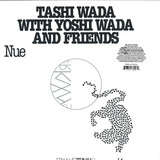
Composer Tashi Wada has performed for years with his father Yoshi Wada—artist, composer, and early member of the Fluxus movement. However, they have rarely appeared together in studio settings. Nue, the fourteenth entry in RVNG Intl.'s intergenerational FRKWYS series, finally brings Tashi and Yoshi, along with an eclectic group of close friends and extended family, together on tape.
Nue draws on aspects of Tashi's background for his widest vision to date—among them the minimalist bagpipe music of Yoshi, who co-composed three of the tracks, the psychoacoustic and perceptual explorations of his mentor, composer James Tenney, and reimagined forms of ancient and devotional music. The album, however, is not a tribute to the past or a recapitulation of familiar sounds. Instead, Nue is an intertwining of people and ideas as a means of growing, of looking inward to move outward, and of looking back to move forward.
To achieve this growth, Tashi assembled a core group of fellow travelers, including Yoshi, composer Julia Holter, producer Cole MGN, and percussionist Corey Fogel, to give life to this multifaceted suite. As an experience, Nue subtly navigates the interactions, intimacy and spaciousness of this group.
The album's title itself is a nod to Tashi's abiding interest in duality and the unknown: nue is a mythological Japanese chimera with the face of a monkey, the legs of a tiger, and a snake for a tail, a composite form, at once disturbing and otherworldly. But, as the composer points out, nue is also French for naked—stripped of complexity, bare and exposed, but also raw and essential.
From the doubling of tones—and the world of harmonic nuances such an action produces—to the rich interplay between individual musicians, all baring their own personalities and experiences through shared performance, Tashi's compositions allow space for these elements to join and grow. The multipartite creature that is an ensemble melds in the simplicity and purity of the music itself.
As explained by Tashi, each part was written with an individual in mind, not simply an instrument. And each individual performer makes their mark, from Holter's vocal performances on the cresting, oceanic 'Mutable Signs' and 'Ondine' with guest vocalists Simone Forti, Jessika Kenney and Laura Steenberge, to Fogel's resonant, precise percussion on 'Bottom of the Sky.' Producer Cole MGN, who has worked extensively with artists like Beck and Ariel Pink, helped to create a world of sound with minimal yet multi-dimensional materials. Like many of its influences, Nue uses deceivingly simple means to create complex, coherent worlds and narratives.
Tashi notes the influence of legendary Brazilian writer Clarice Lispector, whose work looked inward, investigating memory and emotion and dream, to understand the often overwhelming world outside the self. Like Lispector's classic novel Near to the Wild Heart, Nue cleaves these archetypal dualities—world/self, old/new, complex/simple—to create a work that allows them to coalesce into something singular.
As Tashi states in his liner notes: 'My desire was to create something both old and new sounding—ancient and futuristic—and ultimately something of its own world and other. Nue is a vision, an endless night of dreams, and a personal history of sorts, full of joys and demons.'
By now, the story of how Jlin went from working in a steel factory in Gary, Indiana to being one of the most widely appreciated electronic musicians is well known. 'Black Origami' was one of the most reviewed and lauded albums last year. Seriously prolific and seriously hard-working, she has toured constantly since its May 2017 release and despite being involved in a wide range of projects, still manages to find a balance and 'do some personal healing and growing.'
Here we are over a year later with 'Autobiography,' the score for her collaboration with renowned British choreographer Wayne McGregor arranged by Unsound. This isn't technically her third album (that's due to arrive in 2019 or 2020), but the soundtrack stands up on its own with all the emotional peaks and troughs of a well-sequenced longplayer.
For Jlin, making music for dance is the fulfillment of one of her lifelong dreams - and remarkably, Company Wayne McGregor's performance was the first show she'd ever seen. She describes the process of working with Wayne: 'We first met face to face in October 2016 in a downtown Chicago hotel, talking for about a solid two hours. Immediately, I saw Wayne was very friendly and energetic. He's brilliant, witty, and knows exactly what he wants; an absolute gem to work with. Before I even started composing for Autobiography, Wayne told me so gently that he trusts me completely with my direction of creating the score. That was the best feeling in the world. I would wake up at two in the morning and work until six in the evening until I completed all the pieces. We were both very happy with the outcome. Creating the score for an impeccable piece of work such as Autobiography changed my life as an artist.'
'Autobiography' is a highlight in an evolving and growing career. During the last year, Jlin has also become an in-demand remixer, securing her place among a roster of music heavyweights. Unsurprisingly, given her positive and outgoing nature, she also developed friendships with the artists she has remixed such as Björk, Max Richter and Ben Frost.
Jlin will be touring with Company Wayne McGregor performing 'Autobiography' this year in addition to completing a commission for the Kronos Quartet titled 'Little Black Book.' She still approaches every performance 'with the same attitude of doing my best to execute a good show, no more, no less. Doing my best is what's most important to me.' She also still lives in Gary, Indiana, which keeps her grounded. She notes with her typical humility, 'The local community is a little more knowledgeable of me now. But I don't mind my community taking its time.'
Scored for Maurice Béjart's choreography to the 'Orphée Ballet', based on the Greek god Orpheus, this is one of Pierre Henry's finest works of musique concrète, the genre in which Henry was an early innovator and to which he devoted his career. After years working for the French national radio (RTF) and honing his studio chops on radio spots and editing/composition, Henry formed his own studio in 1958 and began working on modern dance and ballet and soundtrack work. Incorporating percussion, industrial soundscapes, nature sounds, spoken French narrative, and synthesized tones, 'Orphée Ballet' is a beautiful piece that, while less known than what is perhaps his most famous work, also for Béjart's ballet production, 1967's 'Les Jerks Électroniques De La Messe Pour Le Temps Présent Et Musiques Concrètes Pour Maurice Béjart', is equally compelling and groundbreaking. Following his passing in 2017 at age 89, Henry's work has found renewed interest, and this is a welcome reissue of one of his rarest and finest works. Truly brilliant.
In 1996, Gavin and Scott Hardkiss entered the San Francisco Tenderloin studio frequented by the Grateful Dead and Fleetwood Mac and made Acid Funk and various remixes. It's a funny song that references Frankie Bones' This Is Techno and Maurices' This Is Acid and says a lot about a couple of guys drunk on funk who wanted to flip their own sounds. Raw house featuring 808s, 303s and Space Echo churned easy in a whimsical psychedelic cauldron.
Unavailable for 20 years, these remaining copies of the original pressing feature various versions by bothe Hardkiss brothers and an acapella.
New Orleans Based Artist Hirakish Is A Vanguard Visionary And A Show-stealing Hba Catwalk Star. His Evolving Practice Spans Music, Acting And Performance. Active In New Orleans, New York And La, He Recently Performed Live At Moma Ps1 For The Premiere Of "the Mean Of Life" A Film By Shane J Smith And Is Currently Working On A Project With Yves Tumor. 'black Velvet' Is A Look Inwards, At One's Own Struggle With Paradoxes Of Love, Sorrow, And Desire. The Four Tracks Move Effortlessly Through Romanticism, Suffering And Ecstasy. Awash With Blistering Guitars, Synths And Hard Hitting Vocals Laced With Fragile & Reckless Lyrics, Together Yield A Spiritual And Subtle Hallucinogenic Air. Hirakish And Co Have Created A Soulful Antidote With A Razor-sharp Sound Scape That Reincarnate The Soul. Hirakish Will Premiere A New Live Performance 'velvet Cafe' In London At Cafe Oto This Coming Fall With Nyx Unchained.
After 5 years of silence, Dadub are summoning their magic spell on BAS006. - Rituals of Resistance" makes use of tribal drums, ghostly echoing samples taken from the collective consciousness. Emotive techno in it's dubbiest prime evokes scenes of territories uncharted by global repression. Dadub present their very own vision of techno politics. Not shy to tap into a glitch, familiar sounds emerge from a well orchestrated chaos. An acutely bass driven sense for rhythm combines with the inevitable esoteric beauty of hand-crafted Italian techno. This is the sound track for all those who yearn for an inner revolution.
After a string of acclaimed EPs on Heist, Dirt Crew and Quartet Series, Amsterdam's Nachtbraker presents 'When You Find a Stranger in the Alps', his first longplayer on his own Quartet Series imprint. The good-humoured Dutchman - tongue always firmly in cheek - has always refused to stick to the 'sound du jour' and the industry's conventions, following his own path instead, continually willing to step out of his comfort zone. 'When You Find a Stranger in the Alps', a nod to his favourite Coen Brothers' movie, is testament to Nachtbraker's studio prowess and drive to explore new sonic pastures and styles. The album consists of thirteen tracks, made over the course of 2,5 years in his studio at Volkshotel Amsterdam. Constantly shifting through different settings and moods, the album feels like a deep dream, with vivid details, blurry edges and a warped sense of time. The word 'stranger' in the title references to this dream state in which you sometimes can be a stranger to yourself. Album opener 'The Dream Sequence' sets the mood with a lo-slung hip-house groove that relies heavily on field recordings, like the sound of one of the capital's trams. 'Flambo', a delectable slice of up-tempo French filtered house, is aimed straight at the dance floor. Nachtbraker dims the lights on 'NSFW', cleverly manipulating samples from adult oriented flicks, and turns in a hilarious skit with 'LOL'. Flip over for 'Randy', a quintessential Nac
out of Stock
Last delivered 6 years ago available to reorder, subject to availability
If you check the credits of The Rolling Stones' Goats Head Soup LP from 1973 you'll find a certain "Pascal" listed on the percussion section. That is none other than Los Angeles based artist Nicolas Pascal Raicevik (1933-1994), aka 107-34-8933, aka Head, aka Nik Pascal, aka Nik Raicevic. Besides his hitting the bongoes on the Stones album, Nik was a great artist on his own, both as a painter and as a musician. As a musician, he was a pioneer in the use of synthesizers, preceeding the Berlin school by some years when his Head LP was released on on Buddah in 1970. Buddah probably saw in Head the opportunity to cash in some money from the remains of the psychedelic scene - the three tracks on the LP are named after drugs used in the late sixties. The sounds, however, are accomplished works that show Raicevic as one of the most interesting pioneers in the use of synths. The album probably didn't do too well, since Buddah didn't renew the contract with Raicevic, who instead took his own way releasing his works on his very own Narco Records and Tapes label. Between 1968 and 1975 Narco would issue 4 LPs credited either to Nik Raicevic (Beyond The End... Eternity) or Nik Pascal (The Sixth Ear, Magnetic Web and Zero Gravity) plus one credited to 107-34-8933 (Numbers, which is in fact the same LP as Buddah's Head, albeit with different cover art). Copies of these LPs came with an ironic sticker over the shrinkwrap that read "Do not listen to this LP if you are stoned".
1972 saw the release of The Sixth Ear (Narco NR666), this time credited to Nik Pascal. A more complex work than Beyond The End..., it adds consistent rhythmic patterns to the mix with the addition of bongoes and also explores some interesting chord progressions.
Besides his musical explorations, Nik was also an interesting painter. His paintings are auctioned from time to time, and are consciousness expanding works influenced by abstract cubism and surrealism, some kind of Salvador Dalí on drugs exploring the outter and inner space. All the artwork on the sleeves of his LPs is done by himself. Spacey landscapes and psychedelic colours that fit perfectly to the music they contain.
"Nik Raicevic's music is at the intersection of radical psycho-electronic weirdness and kraut kosmische music (in particular the scifi-hypno-minimal modules of Conrad Schnitzler in Grun, Rot and Blau). It presents mega epic & tripped out electronic improvisations.
"This is an absolute must for collectors and fans of visceral, neurotic soundscapes." (progarchives)
"As far as late-60s / early-70s American Bedroom' Electronic Music goes, these LPS have to be among the first transmissions from this sector, made all the more attractive when coupled with Raicevic's alien topographIes - the covers are high-color portrayals of Venusian lanes, knotted growths, & future-past architecture in a style you might equate with Vintage' sci-fi pulp-novel covers - & copious Downer' sentiment. This music is imbued with a sort of lonely, anti-social sensibility that's about as far as you can get from the Academic' Early Electronic vector. I will say that if the Steve Birchall, Cellutron & the Invisible, and/or Pythagoron™ seed your garden, this will likely do the same." (twoheadeddog)
Never reissued before on vinyl format, the Wah Wah reissue features original sleeve artwork made of paintings and drawings by Nik himself and reproduction of the famous ironic "Do not listen if you are stoned" sticker. Limited edition, 500 copies only.
If you check the credits of The Rolling Stones' Goats Head Soup LP from 1973 you'll find a certain "Pascal" listed on the percussion section. That is none other than Los Angeles based artist Nicolas Pascal Raicevik (1933-1994), aka 107-34-8933, aka Head, aka Nik Pascal, aka Nik Raicevic. Besides his hitting the bongoes on the Stones album, Nik was a great artist on his own, both as a painter and as a musician. As a musician, he was a pioneer in the use of synthesizers, preceeding the Berlin school by some years when his Head LP was released on on Buddah in 1970. Buddah probably saw in Head the opportunity to cash in some money from the remains of the psychedelic scene - the three tracks on the LP are named after drugs used in the late sixties. The sounds, however, are accomplished works that show Raicevic as one of the most interesting pioneers in the use of synths. The album probably didn't do too well, since Buddah didn't renew the contract with Raicevic, who instead took his own way releasing his works on his very own Narco Records and Tapes label. Between 1968 and 1975 Narco would issue 4 LPs credited either to Nik Raicevic (Beyond The End... Eternity) or Nik Pascal (The Sixth Ear, Magnetic Web and Zero Gravity) plus one credited to 107-34-8933 (Numbers, which is in fact the same LP as Buddah's Head, albeit with different cover art). Copies of these LPs came with an ironic sticker over the shrinkwrap that read "Do not listen to this LP if you are stoned".
Magnetic Web was released in 1973. It appeared under the Nik Pascal monicker and showed a clear evolution in sound, favoured by the addition of an Arp 2600 and some rhythm boxes. It also included percussions and cymbals. The Two Headed Dog site thinks "this is his masterpiece in all of its acid-laced glory."
Besides his musical explorations, Nik was also an interesting painter. His paintings are auctioned from time to time, and are consciousness expanding works influenced by abstract cubism and surrealism, some kind of Salvador Dalí on drugs exploring the outter and inner space. All the artwork on the sleeves of his LPs is done by himself. Spacey landscapes and psychedelic colours that fit perfectly to the music they contain.
"Nik Raicevic's music is at the intersection of radical psycho-electronic weirdness and kraut kosmische music (in particular the scifi-hypno-minimal modules of Conrad Schnitzler in Grun, Rot and Blau). It presents mega epic & tripped out electronic improvisations.
"This is an absolute must for collectors and fans of visceral, neurotic soundscapes."
"As far as late-60s / early-70s American Bedroom' Electronic Music goes, these LPS have to be among the first transmissions from this sector, made all the more attractive when coupled with Raicevic's alien topographIes - the covers are high-color portrayals of Venusian lanes, knotted growths, & future-past architecture in a style you might equate with Vintage' sci-fi pulp-novel covers - & copious Downer' sentiment. This music is imbued with a sort of lonely, anti-social sensibility that's about as far as you can get from the Academic' Early Electronic vector. I will say that if the Steve Birchall, Cellutron & the Invisible, and/or Pythagoron™ seed your garden, this will likely do the same."
Never reissued before on vinyl format, the Wah Wah reissue features original sleeve artwork made of paintings and drawings by Nik himself, and reproduction of the famous ironic "Do not listen if you are stoned" sticker. Limited edition, 500 copies only.
If you check the credits of The Rolling Stones' Goats Head Soup LP from 1973 you'll find a certain "Pascal" listed on the percussion section. That is none other than Los Angeles based artist Nicolas Pascal Raicevik (1933-1994), aka 107-34-8933, aka Head, aka Nik Pascal, aka Nik Raicevic. Besides his hitting the bongoes on the Stones album, Nik was a great artist on his own, both as a painter and as a musician. As a musician, he was a pioneer in the use of synthesizers, preceeding the Berlin school by some years when his Head LP was released on on Buddah in 1970. Buddah probably saw in Head the opportunity to cash in some money from the remains of the psychedelic scene - the three tracks on the LP are named after drugs used in the late sixties. The sounds, however, are accomplished works that show Raicevic as one of the most interesting pioneers in the use of synths. The album probably didn't do too well, since Buddah didn't renew the contract with Raicevic, who instead took his own way releasing his works on his very own Narco Records and Tapes label. Between 1968 and 1975 Narco would issue 4 LPs credited either to Nik Raicevic (Beyond The End... Eternity) or Nik Pascal (The Sixth Ear, Magnetic Web and Zero Gravity) plus one credited to 107-34-8933 (Numbers, which is in fact the same LP as Buddah's Head, albeit with different cover art). Copies of these LPs came with an ironic sticker over the shrinkwrap that read "Do not listen to this LP if you are stoned".
Nik's last album, Zero Gravity (Narco NR123) came under the Nik Pascal name and had a fantastic side long piece on the title track which reminisces of the works of Cluster. B side features four tracks that also bear some Conrad Schnitzler reminiscences. This was to be Nik's last LP before he would sell all his synths to ex car racer and future electronic/ambient music star Steve Roach.
Besides his musical explorations, Nik was also an interesting painter. His paintings are auctioned from time to time, and are consciousness expanding works influenced by abstract cubism and surrealism, some kind of Salvador Dalí on drugs exploring the outter and inner space. All the artwork on the sleeves of his LPs is done by himself. Spacey landscapes and psychedelic colours that fit perfectly to the music they contain.
"Nik Raicevic's music is at the intersection of radical psycho-electronic weirdness and kraut kosmische music (in particular the scifi-hypno-minimal modules of Conrad Schnitzler in Grun, Rot and Blau). It presents mega epic & tripped out electronic improvisations.
"This is an absolute must for collectors and fans of visceral, neurotic soundscapes."
"As far as late-60s / early-70s American Bedroom' Electronic Music goes, these LPS have to be among the first transmissions from this sector, made all the more attractive when coupled with Raicevic's alien topographIes - the covers are high-color portrayals of Venusian lanes, knotted growths, & future-past architecture in a style you might equate with Vintage' sci-fi pulp-novel covers - & copious Downer' sentiment. This music is imbued with a sort of lonely, anti-social sensibility that's about as far as you can get from the Academic' Early Electronic vector. I will say that if the Steve Birchall, Cellutron & the Invisible, and/or Pythagoron™ seed your garden, this will likely do the same."
Never reissued before on vinyl format, the Wah Wah reissue features original sleeve artwork made of paintings and drawings by Nik himself, and reproduction of the famous ironic "Do not listen if you are stoned" sticker. Limited edition, 500 copies only.
An Invitation To Disappear is the debut LP by British electronic musician Inland aka Ed Davenport - and his first release for A-TON. Based on his soundtrack for a video installation by conceptual artist Julian Charrière, Davenport has recast the material and field recordings into eight tracks of rhythmically intricate electronics and spectral, ambient techno, inspired by Charrière's visually striking, 76-minute tracking shot through a palm plantation toward a totemic soundsystem on full blast.
Both the album and original soundtrack were created in response to the 200th anniversary of the eruption of Indonesia's Tambora volcano in 1815, which plunged the world into darkness and caused a series of extreme weather conditions. At the time, the natural climate change crisis resulted in numerous global famines and is known throughout the northern hemisphere as 'The Year Without Summer', with global communities forced to adapt to sudden radical changes in temperature and weather.
An Invitation To Disappear offers a contemporary parallel, leading viewers - and listeners - down a seemingly endless direct path of gridded palms from dawn to dusk; a bio-commercial monoculture where ancient jungle once flourished. Light flickers between rows of fruit-laden trees and a distant fire burns in the undergrowth where the border between natural image and computer simulation breaks down. At the same time, formerly incoherent rumblings of sub-frequencies begin to transform into the contours of rhythm. This is reflected sonically in eight perspectives on the lush, synthetic jungle, made of myriad buzzing fauna, morphing melody and colossal bassweight. All paths lead toward an apocalyptic dancefloor, though speeds vary widely; rhythms dissolve from straight to broken, synth tempos operate by their own internal clocks (and logic). Juxtaposing industrial agriculture with rave culture, the album explores the industrialization and refinement of nature, and the new strange forms emerging from the synthetic grids of both.
As Inland, Davenport has previously contributed soundtracks to other installations by the Swiss-born Charrière, whose artistic practice focuses on bridging environmental science and cultural history, often taking place in remote geophysical locations, including ice fields, volcanos and radioactive sites.
Julian Charrière is a French-Swiss artist based in Berlin. A former student of Olafur Eliasson at the Institut für Raumexperimente, Charrière's art explores post-romantic constructions of nature, staging tensions between deep or geological timescales and those relating to mankind. His work has previously been shown across the globe, including at the main exhibition of the Venice Biennale in 2017, a solo show at Kunsthalle Mainz this past Spring and an upcoming solo show at the Berlinische Galerie opening September 26.
Inland (real name Ed Davenport) is a British producer, DJ and founder of Counterchange Records based in Berlin. Known for his detailed and explorative house and techno releases on his own label, Infrastructure, Naïf and more, Davenport has recently gravitated toward the contemporary art world, finding inspiration in the cross-pollination between Berlin's art and music scenes. Previous sound design collaborations with Charrière have been exhibited in institutions such as the Musée des Beaux-Arts de Lausanne in 2014 and Thyssen- Bornemisza Contemporary in Vienna in 2017.
The gallery version of An Invitation To Disappear premiered this past April at the Kunsthalle Mainz and will be on display at the Berlinische Galerie as part of Charrière's solo exhibition As We Used to Float, opening September 26, 2018. The LP will premier live together with the video installation during a special presentation in Berghain the same day for Berlin Art Week.
'Me Me Me is two... and in keeping with the name it seemed that I had no choice but to put out what is only my second ever release on my own label since launching with the debut release 'Tachyon' back in 2016.
(It's also the labels 13th release too. Spooooooky)
So here it is, a double A Side...
Side A is 'Valhalla' which attempts to be as majestic as the name suggests.
Side AA has 'Fidelity", which is me channelling big room house as much as I can, while trying to keep ahold of whatever heart strings I can tug on.
I'll let you judge if I've achieved what I'd set to do with either.
Past those brief descriptions, I still find talking about music to be mildly redundant when you can most likely listen while you're reading this, so instead I'd like to use this sales blurb to issue a massive heartfelt thanks to everybody who has supported the label in the last 2 years, as well as every artists who has trusted us with their music.
Big love to, Dj Tennis, Last Waltz, Red Axes, James Hadfield & Danny Linton, Axel Boman, Bird of Paradise, Pale Blue, Pional, Frank Butters / Cult of Glamour, Andrew Weatherall, Ess O Ess, Desert Sound Colony, Elliot Adamson, Rex The Dog, Forriner, Shit Robot, Raj Pannu, Cosmin TRG, Edmondson, Dauwd, ASOK, Vyvyvan, Paul Woolford, Christophe, Ian Blevins, Dharma, Jana, Pink Skull, Medlar, Ben Caldwell, Dos Attack, Force Majeure, Club Tularosa, Juan Maclean and AWOL!'
Previously on All City via The Smoke Clears, West 2 West & Night Christ John Daly a six 6 track edition of his 10 track digital album 'We Will Live Again'.
.
According to John:
"This music was made over a year and a half period, while i was losing my father to cancer. I don't usually work with concepts, and certainly didnt have one in mind making this, but with something this heavy as the backdrop it had to be an influence, especially since my musical gift came from him. This I am only truly realising now.
The drums and vocals were added later. Dan Walsh from Fixity and others in Cork played the drums. The vocals are by an Italian singer based in Galway, Barbara Vulso.
This is the third album under my own name, having worked with aliases for albums since 2012. It was always going to be so, and again I now realise that given the personal nature of the project it could only be that way, though i didn't know or question why at the time"
Flevans returns with a killer 45 for the funky dancefloor! Leading the way is 'Who's Got Me' - an up tempo disco/boogie cut with more slap bass than a clone army of Larry Grahams... It's a tasty dancefloor number with a BIG top line from none other than Laura Vane (MJ Cole, Gnarls Barkley, Laura Vane and the Vipertones) who absolutely owns the vocal duties as anyone who is familiar with her work would expect. Oooh Weee!
Over on the other side we have more classic-sounding Flevans material with the party starting funk breaks of 'Take Your Money'. His signature jazzy keyboard and guitar licks converse with cheeky vocal samples all flying in and out of this slick production in a delightful fashion. It's all about the beats on this one - it's a guaranteed foot mover!
Composer, filmmaker and photographer Phill Niblock is a true pillar of the New York avant-garde. In the past 50 years, he has curated over 1,000 performances at his Centre Street loft and steadfastly built a massive, multidisciplinary body of work. While his earliest musical compositions date back to 1968, Niblock waited until the early '80s to release any recordings. Nothin To Look At Just A Record, a powerful debut with densely layered trombones, would be the first to unfurl his unique approach to sound.
The second album and perhaps the most rare in Niblock's vast catalogue, 1984's Niblock For Celli / Celli Plays Niblock is a meeting of two great minds. Working with reed player Joseph Celli (a composer in his own right, who has collaborated with John Cage, Pauline Oliveros and Ornette Coleman), Niblock nimbly removes the breathing pauses from Celli's oboe and English horn to create seamless, enchanting drones.
Niblock insists that his music be played loud: only in this way can one experience the visceral ringing of these long instrumental tones through the speakers and their natural overtones generated by the room. Niblock For Celli remains deeply absorbing.
This first-time reissue is recommended for fans of Alvin Lucier, Yoshi Wada and Dome.
Cassegrain announce collaborative EP. The Berlin based duo of Alex Tsiridis & Hüseyin Evirgen will release new work recorded alongside DJ Nobu, Tensal & Lady Starlight via their own Arcing Seas imprint in September. Leaning towards the more heady, high octane end of the genre - the three track EP showcases the duo's natural affinity for collaboration, maintaining Evirgen & Tsiridis' characteristic finish and atten-tion to detail, whilst providing ample space for the guests to properly colour the work. CT01, alongside Tensal, marries caustic drones with a potent lead sequence to produce a perfect peak time roller; whilst CN01, with DJ Nobu, riffs on a more melodic, stepping approach - maintaining that same rousing energy, but with a more psychedelic bent. CLS01, the duo's collaboration with La-dy Starlight comes in at almost 11 minutes, an ambient Techno journey that warps and shifts organi-cally across it's extended run time - complete with beat-less intro and multiple segues that work to bind the piece and it's different sections into one, cohesive narrative. Effective and impeccably produced - but with a keen ear for new & exciting sonics within the genre - this first collaborative outing proves an enviable addition to the duo's already impressive discogra-phy.
»sichten« refers both to »opinions« as well as the »examination of material«. in lose sequence, we will invite friends and colleagues, but especially music lovers to share their opinions on music with us or to look through their collected materials in order to present music that tends to be out of the focus of current media channels. as a label for electronic music our focus is on examining exactly this genre. but in the context of the series, we are rather looking for more hidden, unknown, perhaps forgotten music. we want to present the yet undiscovered, and also offer a platform for other cultural environments with different musical approaches. each issue will be supervised and compiled by a curator. an introductory text shall explain the ar- tistic approach of the respective curator. in this sense, the format of a double lp can only provide a first insight and wants to invite to a more in-depth research. for the first issue of the series, »sichten 1«, we asked frank bretschneider to compile his own, very personal selection of current electronic music. his choice fell on six artists, whose different styles me- ander between accessible music on the one hand and very abstract compositions on the other hand.
"sichten" bezieht sich sowohl auf "Meinungen" als auch auf die "Auseinandersetzung mit dem Material". In loser Folge laden wir Freunde und Kollegen, vor allem aber Musikliebhaber ein, ihre Meinung zur Musik mit uns zu teilen oder ihre gesammelten Materialien durchzusehen, um Musik zu präsentieren, die nicht im Fokus der aktuellen Medienkanäle steht. als label für elektronische musik liegt unser schwerpunkt auf der untersuchung genau dieses genres. im rahmen der serie suchen wir aber eher nach verborgener, unbekannter, vielleicht vergessener musik. wir wollen das noch unentdeckte präsentieren und auch eine plattform für andere kulturelle umgebungen mit unterschiedlichen musikalischen ansätzen bieten. Jede Ausgabe wird von einem Kurator betreut und zusammengestellt. Ein einleitender Text soll den künstlerischen Ansatz des jeweiligen Kurators erläutern. In diesem Sinne kann das Format einer Doppel-LP nur einen ersten Einblick geben und will zu einer vertieften Recherche einladen. für die erste ausgabe der serie "sichten 1" haben wir frank bretschneider gebeten, seine eigene, sehr persönliche auswahl aktueller elektronischer musik zusammenzustellen. seine auswahl fiel auf sechs künstler, deren unterschiedliche stilrichtungen ich zwischen zugänglicher musik einerseits und sehr abstrakten kompositionen andererseits unterscheiden.
out of Stock
Last delivered 13 months ago available to reorder, subject to availability
Here at Death & Leisure we are on a continuing mission to surprise and experiment, and so with our new release we present something very special, Blackmoon1348 and The Tibetan Monks of The Tashi Lhunpo Monastary. This project sounds like nothing else, it fuses heavy drone guitar sounds with traditional tibetan throat singing and live instrumentation.
BlackMoon1348 in collaboration with the Tibetan Monks of the Tashi Lhunpo Monastery (Tibet/ India). 2017 BlackMoon1348 embarked on a cultural experimentation of cultural diversity in the arts, forming a collaboration of ancient Tibetan ceremonial practises and instrumentation with sub-harmonic drones and industrial soundscapes. The music amalgamates sacred mantras that date back to the early teachings of Tibetan Buddhism practised in the Tashi Lhunpo Monastery, with heavy detuned western instruments, synths, and electronic music for the first time in recorded history. The Tashi Lhunpo monastery was once home to the Panchen Lama who subsequently 'disappeared' under the oppressive Chinese rule of Tibet. A handful of the Tashi Lhunpo monks were fortunate to escape into exile and have since re-built the monastery in Mysore, South India - now flourishing with over 400 monks practising within the monastery. Tibetan Buddhism is an outlawed ancient tradition within Tibet - monks, nuns, and Tibetans cannot openly practise their heritage and traditions, forcing Tibetans to inhabitable plateaus, with such areas are now under 'Chinese Re-development', the land being stripped of natural resources for China's ever growing economy and totalitarian rule. Tibetans face persecution for as little as owning a Tibetan flag, or picture of the Dali Lama, with such actions landing you in jail, tortured, poised, and/or being released just before the point of death. It is important for us to remember and celebrate the traditions of the Himalayas and its sacred, peaceful practises.
The music was recorded live in one take at Flesh and Bone studio in Hackney for NTS Radio's Black Impulse show. Engineered, mixed, and mastered by Oliver and Owen at Flesh and Bone, capturing the raw, ethereal essence of the collaboration and ceremonial sounds buried deep within the Himalayas. This was the first time in history for such collaboration of tradition, ideology from Adeline Rozario and orchestrated by David Kerry of BlackMoon1348 who created this music to diversify and bring together ceremonial instruments, diversifying the metaphysics of transcendence through ceremonial Tibetan practises.
It is important to understand that BlackMoon1348 are not attempting to change the fundamental meaning or belief of the Tashi Lhunpo Monks, or assume to have a deep-rooted understanding of the ancient traditions of Tibetan Buddhism, This is our understanding of Tibetan culture and practices as truly and honestly as we see and feel it, and our attempt to spread this beautiful, sacred, culture, and keep it alive within today's society.