Mark Du Mosch is a master of electronics. Gracing a glut of labels in a career spanning more than a decade, he arrives at Schrödinger’s Box with a very special release. Presence is a fiver tracker of enviable quality. Set in the canon of warm techno, Du Mosch focuses on melody and texture. “Studio M Uno” is bright and unassuming, “Koriander” both assured and fragile. The tracks on offer feel like the musical accompaniment to a Summer’s day, a time where cares are in the present and future worries do not exist. The unseen complexities of the everyday are an audio focus, the intertwined interplay of drum patterns in “Mrk I Utilities” and the mechanical dawn of the title piece throb with a human pulse. Always present, but never imposed, is the techno composition that brought this dutchman to the attention of so many. This is plain to hear in the diverse threads that are collected to produce the rich and varied closer, “Too Much.”
out of Stock
Last delivered 4 years ago available to reorder, subject to availability
After making waves and receiving coverage from a wide range of outlets such as Complex and Coindesk for being the first artist in history to accept a $1M advance in Bitcoin, Money Man drops off the aptly titled crypto-inspired album, Blockchain. The album coincides with the release of his first NFT which saw fans clamoring to snatch up the limited amount of tokens available to mint within a matter of days. Money Man flexes his knowledge of cryptocurrency and financial gains across 13 tracks, enlisting help from Moneybagg Yo, Jackboy, & Yung Bleu as we see his star power headed to the moon.
out of Stock
Last delivered 4 years ago available to reorder, subject to availability
A totally obscure release from Youngstown, Ohio's Tony Lavorgna and his late 70's early 1980's band: The St. Thomas Quartet. Like many private press album's it's an ad for their set list, recorded on the cusp of cassettes and definitely pre-cd so strictly vinyl it is. A mixed bag of tunes and influences but two of the tunes absolutely leap into your ears.
A Hammond led Soul Jazz version of Herbie Hancock's "Chameleon" at nearly ten minutes that seems to just get more drivingly funky and intense and David Thomas on the B3 is absolutely inspired on this monster of a track. It makes you wonder why on earth more Hammond players didn't make a feature of this tune?
The other inspired choice is War's "The World Is A Ghetto" which just has to be one of the funkiest versions of this much covered tune. Some soulful sax from leader Lavorgna signposts the way for the rest of the bands soulful and jazzy contributions with again Hammond man David Thomas underpinning with his funk drenched riffs.
Tony Lavorgna is a one off too, his life story is available in Comic Book form under the title "Bebopman" by American Splendor writer Harvey Pekar.
out of Stock
Last delivered 4 years ago available to reorder, subject to availability
Eddie C descends out of the clouds with a real fun EP to mark the 16th release from Lips & Rhythm Records.
The Canadian producer and edit wizard was last seen at the helm of his seaplane en route to the island of Madeira for surfing and sunshine.
Before he took off he left us some heat we are ready to share with you all.
The title track 'Infinite Wait' is a smooth & rolling mid-tempo flute-laced groove, while EverybodyEverybodyEverybody is a thick and chugging "acid-lite" cut that's going to thump across dance floors.
With the runway cleared for landing the 'wait' is finally over for this party record.
out of Stock
Last delivered 2 years ago available to reorder, subject to availability
Alex the Fairy is an artist based in Berlin producing music with an emphasis on electronic and concrete methods. Alex the Fairy is also part of the 3Ddancer trio, a live act focusing on improvisation and expression using electronics.
Alex The Fairy writes: "I had sent The Tapeworm tracks before, but I was being difficult so was asked to send a new bunch, with a deadline. I sent the new bunch, a fairly odd collection expecting perhaps some of them to be combined with the older stuff but not seeing any coherence in them. I figured The Tapeworm would find at least something. To my surprise the suggestion that came back was exclusively the tracks I had sent the second time, and, re-listening through the tracks in this new order after returning from a Christmas dinner lying on the floor of my nephews bedroom gave them a completely new context. Despite them being quite varied in terms of age (one had been flung together a few days earlier on the train while another was approaching Schulreife) they seemed to meld together in such a way that I hardly recognised them…
Last year my grandmother died. My last grandparent. I had put off seeing her during corona, as I thought it best not to put her at risk and had almost left to visit her days before her death but had delayed my departure because of a medical appointment. My failure to her weighs heavy on my mind - fates grimacing grin: too little, too late. The approaching march of death, one generation closer was a confrontation I wasn't prepared for.
While clearing out her flat in the following weeks I had kept some of my grandfathers cassettes, live recordings of jazz greats, Pink Floyd, Sade and some classical among them, none originals, several presumably from the radio e.g. a church organ rendition of Bach. At the time I wasn't sure why I was hanging on to them, other than the urge to hoard, and that it felt wrong not at least to keep some. Half a year later, half way through mixing this cassette, suffering from my first bout of COVID, I had the insatiable urge to hook up the cassette player I had received from my grandfather after his death around nineteen years earlier and had been dragging along with me since. I stuck a cassette in only to immediately return to the safety of my covers. I began to work my way into what I had saved, hearing the fruits of my grandfathers labour decades before. It felt like quite an intimate interaction with someone I had long lost contact to/was long gone. Quite a wonderful thing, these time traveling cassettes.
I returned to the tracks to mix them shortly before my corona/cassette experience, with a new mixing console at hand. I had been looking for one for several years, but nothing had ever clicked, until I found this old broadcast desk 30 minutes from my place (it also coincided with a payment from a job the sum of which matched the price identically… fates return). Installing became a massive hassle and I doubted my decision continuously, but the further it was implemented the more it made sense. The first track I recorded with the mixer is on this cassette. Shortly before the mixing I was introduced to an Effektgerät by a friend, Rapha. Another good friend Art lent me their one, and I ended up using copious amounts of it throughout mixing, alongside my usual space creators. All the tracks on this release were mixed again on this mixer and are in a sense all a bit of a dub of the originals. I wouldn't have worked this way without the mixer, and the effect gave me a dimension I hadn't had before, so, from a technical perspective, the mixer and this effect define this release, giving it a coherence, at least for me. Emotionally of course the chaos and turbulence of the preceding year and my newfound appreciation for the medium give it a meaning I will struggle to formulate." – Alex The Fairy, Berlin, 9 May 2022
out of Stock
Last delivered 4 years ago available to reorder, subject to availability
Grönland Records announce a revised, remastered reissue of “Sleepwalkers” by DAVID SYLVIAN. Available as a gatefold 2LP with exclusive art print and as a gatefold digipack CD, this new edition also features the previously unreleased track “Modern Interiors”.
in the 00s, DAVID SYLVIAN produced two of his strongest and most solitary statements, BLEMISH and MANAFON. but those records don’t tell the whole story. during that the same period, SYLVIAN created an alternate body of work: a series of collaborations and side projects with leading talents of pop and improv, electronic and contemporary classical music. the best of these recordings are gathered here on SLEEPWALKERS, meticulously sequenced and remixed: the fruits of one-off meetings and lifelong partnerships, they jump from bliss to intrigue, romance to sensuality, as arch experiments lead into the lushest pop.
the single ‘world citizen – i won’t be disappointed,’ written with RYUICHI SAKAMOTO, is a sublime example, with an impeccable melody and lyric warmed by SYLVIAN’S gorgeous tenor. SYLVIAN has worked with SAKAMOTO for close to three decades. by contrast, on ‘pure genius,’ a collaboration with CHRIS VRENNA aka tweaker, he sounds like he’s walked into a heist flick, singing the part of a delusional, dangerous bedroom genius. as sylvian explains, tracks like this ‘give me a chance to write in a way that’s completely non-personal, playful. it’s an exercise of some kind, working within the parameters of a given assignment.’
intrigue of a different kind drives ‘sugarfuel,’ with music by JEAN-PHILIPPE VERDIN, aka READYMADE FC. the lyrics offered ‘an opportunity to grapple with a more overt sexual theme than anything i’d previously attempted, as suggested by a vocal sample in the original track provided, a threateningly insistent ‘i’m on your side.’ so i took that as my point of entry and ran with it. i would love to write more on this subject should i find the right context. you’re always aware of walking a thin line exploring sexuality with language alone. the failings of the great and the good are strewn all around.’
NINE HORSES’ ‘wonderful world’ strolls in on a black tie bassline and the echoing coos of swedish chanteuse STINA NORDENSTAM, whose high chirps brush hands with SYLVIAN’S lead; there’s the blistering ‘money for all’ by FRIEDMAN and SYLVIAN, an oblique response to the fallout of 9/11 and the war on iraq. this is followed by the last known recording of SYLVIAN’S singing voice in over a decade, ‘do you know me now?’, a live studio recording later augmented by JAN BANG, EIVIND AARSET and ERIK HONORÉ. it’s certainly a title that’s become more relevant over time as SYLVIAN, in the latter stages of his career, repeatedly comes face to face with a new generation of admirers fixated on the life and times of the band formed by his younger self. SYLVIAN is one of only a handful of musicians to have successfully moved on from overt pop beginnings into a domain all his own but is consistently plagued by the misguided desires or expectations of some unfamiliar with his evolution to do a u-turn, pick up where he left off in the late 90s. although this compilation, as well as his writing for NINE HORSES, adequately shows SYLVIAN’S traditional love of melody is
intact, that it’s consistently remained part of his output, there’s no denying his focus has shifted, evolved.
the refusal to embrace complacency, the need to cover new ground ‘as older generations of popular musicians have a moral duty to explore despite, or because of, the greater possibility of failure’ will, i believe, lead to a reassessment of his later work that embraces a sightly more complex relationship with what we’re referring to as ‘melodic’, accompanied by an exploration of improvisation without dogma or beholden to any ‘givens’ for which he’s not infrequently been castigated. for SYLVIAN, there are no such boundaries. it’s obvious that different facets of his work co-exist without conflict but not necessarily for the majority of his audience. again, this places SYLVIAN in the odd, rare, unenviable(?) position of moving forwards leaving many in his devoted audience behind as, should he decide to return to music, it’s unlikely he’ll be aiming to placate an audience in love with work that preceded the 00s. in fact we’ve no idea where new work, should it surface, may lead.
SLEEPWALKERS also spotlights the innovators who contributed to MANAFON and BLEMISH. CHRISTIAN FENNESZ hangs a crackling, shimmering curtain behind the vocal on ‘transit,’ matching his signature mass of sui generis sounds to sylvian’s stately performance. and the title track began with an instrumental handed to SYLVIAN by MARTIN BRANDLMAYR of POLWECHSEL, soon after the first recording session for MANAFON. spite crackles in the gaps between the percussion, and onkyo artists TOSHIMARU NAKAMURA and SACHIKO M set the stage for the scathing lyrics in the chorus.
it cuts close to the bone and so do the two spoken word cuts, ‘angel’ and ‘thermal,’ produced by SAMADHISOUND recording artists JAN BANG and ERIK HONORÉ (and featuring ARVE HENRIKSEN on trumpet). SYLVIAN describes the latter work as a ‘love poem’ to his daughter. ‘‘thermal’ reflects on a period when our time in sonoma, ca was coming to an end. we’d stayed in temporary accommodation which had lulled us into a false sense of security. we had pear, apple, lemon, and figs trees growing in the yard. a small but exotic paradise. a cocoon. but the cracks were beginning to show in the relationship between ex-wife INGRID CHAVEZ and i which is where i think this underlying sense of anxiety, which runs throughout the poem, is derived from, coupled with the need to provide physical and spiritual stability to the children, the youngest of whom was just under two at the time. the poem is addressed to her. our world was dissipating, coming apart at the seams, but we were an island unto ourselves.’
‘five lines’ marked the start of a new partnership with acclaimed young composer DAI FUJIKURA, who at the time of recording was also working on remixes of MANAFON for what became DIED IN THE WOOL. the string quartet was performed by the celebrated ICE ENSEMBLE and written for SYLVIAN, who FUJIKURA cites as an early influence. says SYLVIAN, ‘the composition moves through numerous changes in time signature but as i had no knowledge of what these were i just relied on my gut instinct, and responded, as i always do, with what felt right to me, composing an entirely new melody in the process. some months later i was working in a studio in london and dai dropped by. i rather tentatively asked if he’d like to hear a rough mix of the song as it stood, painfully aware that my contribution might make no sense to him at all but, to my relief he loved the result.’
there’s one further new addition to this collection, the first official release of a track composed in response to the tsunami in fukushma, ‘modern interiors’, featuring SYLVIAN once again in collaboration with BANG and AARSET.
like 2000s EVERYTHING AND NOTHING, SLEEPWALKERS is a retrospective of a particular decade when SYLVIAN was free of major label interference and could follow his own instincts without having to explaining himself – but it’s also an eye-opening complement to his solo releases. as SYLVIAN explains, ‘some collaborations seem to be a one-off exchange but you can never be too certain of that fact. others have been long term. in this respect, RYUICHI comes to mind. there’s others with whom you hope to continue working as you feel you’ve barely scratched the surface. other times offers come out of the blue, welcome, inspired. regardless, it’s wonderfully explorative to have so many possibilities to juggle with. each collaboration seems timely. it’s as if there’s a rightness to the exchange at a given moment in time.’
in the meantime, we hope you enjoy the work presented here, personally selected, remixed and sequenced and entirely remastered. these are the orphans, abused, estranged, exotic, migrating from diverse corners of the globe, brought together under one roof which they're learning to share despite their differences.
‘as many of you will already be aware, despite relatively continuous work on solo albums, i’ve maintained strong ties with a number of musicians throughout my life in one context or another. on this new collection, let’s call it SLEEPWALKERS 2.0, a selection of collaborative work produced over the period encompassing blemish through to manafon, i’ve included compositions by nine horses as well as more fleeting flirtations and one-offs. neglected offspring. represented also is long term friend and writing partner, RYUICHI SAKAMOTO, as well as more recent but potentially equally productive partnerships such as CHRISTIAN FENNESZ, ARVE HENRIKSEN and contemporary classical composer DAI FUJIKURA.
i hope you enjoy the work presented here, personally selected, remixed and sequenced and entirely remastered. these are the orphans, abused, estranged, exotic, migrating from diverse corners of the globe, brought together under one roof which they're learning to share despite their differences.
we contain multitudes. we’re nothing if not contradictory.’
DAVID SYLVIAN, 2010
(consistency is contrary to nature, contrary to life: aldous huxley)
out of Stock
Last delivered 4 years ago available to reorder, subject to availability
Rarely do two types of music meet on a level where they threaten to cancel each other out - let alone create something even more meaningful in their mutual vanishing. But the music created within the seminal Murder Ballads (Drift) by Martyn Bates (Eyeless in Gaza, & parallel solo career) and Mick Harris (Napalm Death, Lull, Painkiller, Scorn) creates just such a world. Murder Ballads (Drift) evolves Martyn Bates vocalisations / storytelling song-voices, by turns expressed as labyrinthine layers, calls and responses, muted and distant echoes, sung whispers and counter-melodies, ultimately resulting in a mesmeric conversation of musical inferences and correspondences. Murder Ballads (Drift) created the post-isolationist frame of reference, innovating and extemporising into a truly original dazzlingly unique form.
Mick Harris traffics in the isolationist ambience of Lull, while Martyn Bates is the emotive voice of literate cult-pop duo Eyeless in Gaza. The unlikely pair - one given to terminally frigid drone, the other to impassioned, bittersweet voicings - finds common ground in folk music's most macabre tradition, the murder ballad. These ghoulish parables are awash in blood and tears, the strands of love, hate, birth, death, sin, and salvation entwined within like the roots of an ancient tree. Mothers callously kill their children; suitors slay their maidens without remorse; and fate exacts its cruel price from all.
The archaic murder ballads that leak from Bates' vocal cords are intensely sad and carnal. They tend to leap off cliffs of hollow effects or drone darkly, offering neither a robust delivery nor an element of irony to take the edge off. The archetypal characters that live and die in them give life's full tragedy back to Harris' electronically numbed "post-isolationist" dreaming.
Drift (originally released in 1994) plays out an unbreakable and timeless cycle of bloody folklore (people) and hypnotic soundscapes (the god who watches). The effect is chilling yet engrossing. Where most ambient music has barely enough courage to ring the doorbell and run, Murder Ballads slips through the cracks of the unconscious and does its work with remarkable ease.
All the more reason to listen thoughtfully.
In 2021 - re-emerging nearly twenty years after its initial inception, and first time on vinyl - somewhat surprisingly, Murder Ballads (Drift) still remains/exists in an area overlooked by other artists, an area that truly still remains the sole province of M.J. Harris / Martyn Bates.
Rarely do two types of music meet on a level where they threaten to cancel each other out - let alone create something even more meaningful in their mutual vanishing. But the music created within the seminal Murder Ballads (Drift) by Martyn Bates (Eyeless in Gaza, & parallel solo career) and Mick Harris (Napalm Death, Lull, Painkiller, Scorn) creates just such a world. Murder Ballads (Drift) evolves Martyn Bates vocalisations / storytelling song-voices, by turns expressed as labyrinthine layers, calls and responses, muted and distant echoes, sung whispers and counter-melodies, ultimately resulting in a mesmeric conversation of musical inferences and correspondences. Murder Ballads (Drift) created the post-isolationist frame of reference, innovating and extemporising into a truly original dazzlingly unique form.
Mick Harris traffics in the isolationist ambience of Lull, while Martyn Bates is the emotive voice of literate cult-pop duo Eyeless in Gaza. The unlikely pair - one given to terminally frigid drone, the other to impassioned, bittersweet voicings - finds common ground in folk music's most macabre tradition, the murder ballad. These ghoulish parables are awash in blood and tears, the strands of love, hate, birth, death, sin, and salvation entwined within like the roots of an ancient tree. Mothers callously kill their children; suitors slay their maidens without remorse; and fate exacts its cruel price from all.
The archaic murder ballads that leak from Bates' vocal cords are intensely sad and carnal. They tend to leap off cliffs of hollow effects or drone darkly, offering neither a robust delivery nor an element of irony to take the edge off. The archetypal characters that live and die in them give life's full tragedy back to Harris' electronically numbed "post-isolationist" dreaming.
Passages (originally released in 1997) plays out an unbreakable and timeless cycle of bloody folklore (people) and hypnotic soundscapes (the god who watches). The effect is chilling yet engrossing. Where most ambient music has barely enough courage to ring the doorbell and run, Murder Ballads slips through the cracks of the unconscious and does its work with remarkable ease.
"Released in May 1986 on SST Records and Blast First! in the UK, EVOL was the third studio album by Sonic Youth and showed the first signs of the band transforming their No Wave past into a greater alt-rock sensibility. “EVOL … marks the true departure point of Sonic Youth’s musical evolution,” noted Pitchfork, “In measured increments, Thurston Moore and Lee Ranaldo … bring form to the formless, tune to the tuneless, and with the help of Steve Shelley’s drums…, impose melody and composition on their trademark dissonance.” ""If Daydream Nation is Sonic Youth’s opus, EVOL was crucial research. There’s a directness that makes everything feel close. It is pure tension with little release. The entire record is a shadow." Stereogum likewise praised the album as one, “full of suspense…, the cornerstone [Nico-evoking] monotone [by Kim Gordon]. ‘In The Kingdom #19,’ featuring Mike Watt on bass and … vocals [by Ranaldo]…, is a harrowing story of a highway wreck over a suitably edgy instrumental backing punctuated by … live firecrackers in the vocal booth.” For Popstache, “EVOL slithers into the unconscious. Once the....detuned melodies and haunting riffs and final whispers of feedback depart from the speakers… the music [leaves] a faded footprint, forever reeling the listener back for another strange trip.” // “The seeds of greatness…” Pitchfork (who placed the album #31 of the Top 100 Albums of The 1980s) // “A near-masterpiece.” Trouser Press // “A stunningly fluent mixture of avant-garde instrumentation and subversions of rock’n’roll.” All Music Guide"
Since his debut with the "Darling Darling Darling"track, immediately spotted by the media as well as by electronic music lovers, Louis Warynski has continued to evolve a world that belongs to him alone, over the last ten years and eight albums.Like Lewis Caroll's universe, Chapelier Fou's music is multiple, simple and complex, serious and light, classic and modern. Louis Warynski's work is woven on a classical basis, but it is constantly disrupted by subtle electronic arrangements and rhythms, thus taking the tracks outside of all convention.We find in Chapelier Fou the facetiousness of French composers such as Erik Satie, François de Roubaix or Robert Cohen Solal, not hesitating to blend pop and concrete music, but also this formidable capacity to make serious what is not serious, and vice versa of course. His music, very much at home on screen as well as on stage, has everything that makes up the trait of genius composers: accessible in appearance and adaptable in all forms. This is how Chapelier Fou has performed on stage as a soloist, juggling between violin, guitar, keyboards and pedals, in trio, quartet and even in orchestral formation with the Orchestre National of Metz. Often described as "electronic chamber music", it was expected that one day Chapelier Fou would offer us a version of his music without a single electronic or electrified part. It is now done with this Ensemb7e who performed on the stage of L'Arsenal de Metz, broadcasted by Arte Concert. Chapelier Fou Ensemb7e has received direct support from a wide audience, but also from venues programmers where the septet has been performing since June 2021. Ensemb7e stands for a mainly wooden septet: violin, viola, cello, piano, clarinet and drums accompany the multi-instrumentalist composer. It's hard to resist such musical enthusiasm! The magic happens immediately because the re-reading of these little jewels in pop format gives a touching and fulfilling dimension to Chapelier Fou's work: even more dreamy versions, sometimes more mischievous, but the richness of the classical instruments and the obvious pleasure of the musicians in interpreting them give a new life to all these titles that have filled us with wonder. It therefore seemed obvious to us after listening to his Ensemb7e concerts that there was more than a concert to be recorded, but a real album to offer. A studio album, but with the energy and vitality of a live one, produced with the care and generosity of Thomas Poli (who has collaborated with Dominique A, Yann Tiersen and many others).
The other well known 7” from STARFIRE, titled “Almost Insane”, was initially meant to be the “flagship” single for the Long Player “Get Off With Us” released in 1976 on the Dynamic Artists label. Almost no one was aware of the existence of this ultra rare biscuit, once simply thought to be just an LP track. Soon after being unearthed, the luxurious Funk infused seventies soul arrangement and high audio fidelity of “Make The Most of It” backed by the insanely good “Out of The Ghetto” made it one of the most sought after 45 in the rare soul community soon becoming a firm play of a handful spinners to include Dave Ripolles and Yours Truly. Hard work to track the guys down, all well in their seventies, all in the name of spreading the love. Enjoy and support the venture, and if you like the Spice of Ice too, please bundle up and spare something. One in every home!
out of Stock
Last delivered 3 years ago available to reorder, subject to availability
In Trux We Pux is an editorial project organized by the Porto based label and collective Favela Discos. Focusing on the city’s thriving experimental and improvised music scene, it sets out to portrait in a series of four volumes some of the characteristic sounds and collaborative practices that have been in development in Porto during the last few years.
In Trux We Pux 01, the first record of the collection, is focused on the electronic side of the eclectic but characteristic experimental and improvised scene in Porto, and contains a selection of 23 musicians that have been developing their own take on whatever niche genre they dwell in. Among the list of musicians are Filipe Silva (HHY & The Macumbas), Crónica Electrónica’s heads @c, ocp, coletivo vandalismo and several others that populate a thriving scene that spans a wide gamut of sounds, from delicate to abrasive.
As the tracks themselves, the different approaches to composition and production add to this compilation’s schizophrenia. The first side of the record offers us a spacious and abstract scenery, starting with a collage of field recordings, banjos, and fans, narrated by google translate’s voice. The following two tracks flow along the granular tide of ambient spaces and atmospheres slowing down a bit before the second side turns around 180º and heads towards more rhythmic fields.
Coletivo vandalismo & querido lider present us with their exploration of half balearic, half german-synth-music pulsing away at the beat of broken down dancehallish drums and reggae breaks. Challenger & Lorr No’s track is a trainwreck heading down a break driven jungle that lead us to the album’s closing arguments: MOSCXS’ sludged beat goth-step exploration around the poem “Poema Agreste” by Glória de Sant’Anna.
The clandescent Federico Sutera and Laurent Schmidhäusler form the insidious duo Rotkeller, known for their excursions into ponderous and maundering interpretations of electronic music. Their last release on Thrènes was an experimental and perplexing delight that perpetuated their virtuosity. The Swiss pair has returned to release a pressing technoid sound on the Thrènes imprint entitled Antimatter.
The project kicks off the track 'Antimatter'. It has distinctive and emphatic patterned percussions and a wandering pad that wistfully saunders in and out. There are clever uses of claps, crisp hats and insisted clicks. The track lays the foundation of the sound to expect from the EP with comprehensive yet wonderous beats.
'DipK' follows the opening track, which has a bit more body and sways. It was made for the waning hours of a club when it might be getting bright outside, but the crowd doesn't want to leave. It has a captivating synth that runs throughout and an infectious bassline; the sound allows the mind to roam free but rhythmic drums, hits and snares make the body move.
Midway through is the Kangding Ray remix of 'Tetra4'. The French-born but Berlin-based artist is known for his mastery in blurring the lines between techno and experimental, and this track is a testament to his talents. The cut has a classic underground club feel as it simply keeps up the tempo. The oscillating synth is compounded with spacy fluttering stabs with a kick drum that adds resounding velocity to the track.
The penultimate track, 'Skpp Skpp', features B.Skupin. It has an enchanting heavy breath prominent throughout the cut, accompanied by ethereal choir chants and a deep repetitive voice before being replaced by a siren-like synth. The beats fluctuate by dropping in and out, enhanced by the catalyst of deep drums and luring drops.
The final cut is the original mix of 'Tetra4', which keeps the same modus operandi of the remix. The telling differences come in the pensive drops and ability to slow tempo momentarily with hypnotic synths and drifting rhythms.
out of Stock
Last delivered 3 years ago available to reorder, subject to availability
Hermione FRANK aka rRoxymore has spent the past decade cherry picking the labels she works with whilst building up a totally unique signature sound - DBA, Timedance and recently Ideophone.
Hermione's Aus EP sounds soft and intricate yet punchy and powerful. Beautiful synth licks and crunchy drums melded together with plenty of UK attitude. A daydreamer’s delight, it offers restrained weight and it’s the perfect elixir for any morning
dance floor.
out of Stock
Last delivered 3 years ago available to reorder, subject to availability
In 1997 and 1998, the late great Japanese composer, producer, and DJ Susumu Yokota released two of the most eclectic albums of his decades-long career, Fruits of The Room and Greenpeace. Recorded under his Stevia alias for Tokyo Techno pioneer DJ Miku’s Newstage Records/NS-COM, they were Yokota-san’s homage to the foundational days of club music in Japan.
This year, Glossy Mistakes are proud to present the first official vinyl editions of Fruits of The Room and Greenpeace, originally released on CD during the golden days of the format. Packaged in reimagined cover artwork created by the celebrated Japanese visual artist Masaho Anotani, these two albums perfectly capture the diversity at the heart of Yokota-san’s oeuvre. Across Greenpeace sees Yokota-san conjuring up a heady concoction of dusty loops, sampledelic breaks, kraut-rock and psychedelic downbeat. A remarkable listening experience based on the inspired era of a genius.
When Yokota-san wrote and produced the music on Fruits of The Room and Greenpeace in 1997, he was reflecting on the broader culture that surrounded dance music in Japan in the early to mid-nineties. It was an era when the psychedelic culture of late sixties America, the afterglow of UK acid house/rave, the new age movement and cyberpunk dovetailed together. Within DJ Miku and Yokota-san’s social circles, the thinking of Timothy Leary, Ram Dass, Allen Ginsberg, Jack Kerouac and William S. Burroughs electrified the air.
By 1996, the moment, brilliant and blinding as it was, was over. “We all felt that the rave scene fizzled out,” DJ Miku says. As he puts it, there was a collective feeling around him that it had all become too much. From the calm that followed, DJ Miku, Yokota-san and their open-eared peers made the decision to switch tracks and start from scratch. DJ Miku believes that with his Stevia releases, Fruits of The Room and Greenpeace, Yokota-san wanted to express the sweet and sour nature of the passing of those wild early days and his wish for true peace. “At the time, we saw eye-to-eye, with an implicit understanding of each other,” he explains. “Even now, twenty-five years later, I am confident it was like that.”
out of Stock
Last delivered 3 years ago available to reorder, subject to availability
Wick Records is proud to present Michael Rault, the eponymous new album from one of the most talented songwriters in the game. A remarkable re-imagination of '70s pop perfection, the album began to take shape during a time of endings. Michael, on the cusp of turning 30 and freshly off the road promoting 2018's A New Day Tonight, had just ended a romantic relationship, and cut ties with his management and touring band. Returning home to Montreal where his van was already buried in six feet of snow, he hunkered down in his bedroom studio and began writing. Over the span of five months he penned most of the album. From the drug-fueled, dance floor slow-stepper, "Neither Love Nor Money", to the introspective "Inside Your Heart", to the tongue-in-cheek playfulness of "Champagne", the body of work he created in this epoch of uncertainty is proof of just how crucial that time of endings really was. Bruised but certainly not beaten, Michael delivers a lush, timeless collection of songs - continuing his increasingly profound exploration into the worlds of progressive pop, psych folk, yacht rock and beyond. Trust us...you're gonna love it!
Key Selling Points
• Sophomore album on Wick Records.
• Indie Only Blue Galaxy vinyl Covered by Paste, Pitchfork, Stereogum and many others.
• “Hook after hook after hook” - PASTE
Wick Records is proud to present Michael Rault, the eponymous new album from one of the most talented songwriters in the game. A remarkable re-imagination of '70s pop perfection, the album began to take shape during a time of endings. Michael, on the cusp of turning 30 and freshly off the road promoting 2018's A New Day Tonight, had just ended a romantic relationship, and cut ties with his management and touring band. Returning home to Montreal where his van was already buried in six feet of snow, he hunkered down in his bedroom studio and began writing. Over the span of five months he penned most of the album. From the drug-fueled, dance floor slow-stepper, "Neither Love Nor Money", to the introspective "Inside Your Heart", to the tongue-in-cheek playfulness of "Champagne", the body of work he created in this epoch of uncertainty is proof of just how crucial that time of endings really was. Bruised but certainly not beaten, Michael delivers a lush, timeless collection of songs - continuing his increasingly profound exploration into the worlds of progressive pop, psych folk, yacht rock and beyond. Trust us...you're gonna love it!
Key Selling Points
• Sophomore album on Wick Records.
• Indie Only Blue Galaxy vinyl Covered by Paste, Pitchfork, Stereogum and many others.
• “Hook after hook after hook” - PASTE
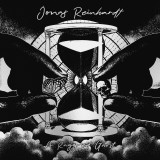
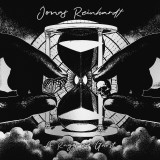
"A Ragged Ghost" is the eighth full-length album from electronic producer Jonas Reinhardt. Following albums on Kranky, Not Not Fun, Constellation Tatsu, and more, his debut release for Trouble In Mind brings together 11 new pieces that explore themes of life & death, netherworlds, and the liminal spaces in between. Taken together as a single narrative, the album offers a stirring exploration of mortality and immortality in what Reinhardt describes as 'a dance of religious syncretism, navigating spaces between the living and the dead'. "A Ragged Ghost" finds him synthesizing influences organically from familiar teutonic strains to the intense austerity of early 21st century electronic pioneers such as Biosphere and Susumu Yokota. A whisper of the Italo-disco-esque romps of Jonas' 2012's "Foam Fangs" EP & 2013's "Mask of The Maker" LP merge with his more kosmische leanings into a sinister, slightly funky, but also studious suite that at times feels like a lost sound library record from the KPM archives. Openers "Ape & The Universal Axis" and "In Lotto Commodore" decidedly sound like a selection from a lost film score while others like the bubbling "Sly Tomb" recall the works of Roedelius or Vangelis' serene soundscapes. Meanwhile, fans of the electro-ambience of Manuel Göttsching's strobe-light, proto-house (on his seminal "E2-E4") or the pulsing insistence of John Carpenter's visceral non-horror scores (i.e. "Escape From New York" or "Assault on Precinct 13") will find a lot to love about songs like "Tumb Tumb" and "Wretched Orchestra of Armistice".
"A Ragged Ghost" is the eighth full-length album from electronic producer Jonas Reinhardt. Following albums on Kranky, Not Not Fun, Constellation Tatsu, and more, his debut release for Trouble In Mind brings together 11 new pieces that explore themes of life & death, netherworlds, and the liminal spaces in between. Taken together as a single narrative, the album offers a stirring exploration of mortality and immortality in what Reinhardt describes as 'a dance of religious syncretism, navigating spaces between the living and the dead'. "A Ragged Ghost" finds him synthesizing influences organically from familiar teutonic strains to the intense austerity of early 21st century electronic pioneers such as Biosphere and Susumu Yokota. A whisper of the Italo-disco-esque romps of Jonas' 2012's "Foam Fangs" EP & 2013's "Mask of The Maker" LP merge with his more kosmische leanings into a sinister, slightly funky, but also studious suite that at times feels like a lost sound library record from the KPM archives. Openers "Ape & The Universal Axis" and "In Lotto Commodore" decidedly sound like a selection from a lost film score while others like the bubbling "Sly Tomb" recall the works of Roedelius or Vangelis' serene soundscapes. Meanwhile, fans of the electro-ambience of Manuel Göttsching's strobe-light, proto-house (on his seminal "E2-E4") or the pulsing insistence of John Carpenter's visceral non-horror scores (i.e. "Escape From New York" or "Assault on Precinct 13") will find a lot to love about songs like "Tumb Tumb" and "Wretched Orchestra of Armistice".
Fuchs is a band that never was. It vanished as quickly as it appeared in the picture, much like the animal that can be seen on this album and after whom it was named. In 2005, Kante singer and guitarist Peter Thiessen travelled to Weilheim to visit Markus and Micha Acher in their studio, where they were joined, among others, by Notwist-affiliated musicians like Cico Beck, Robert Klinger, Carl Oesterhelt and Stefan Schreiber. Spirits were high, but schedules were full: after a week of improvised sessions, everyone went their own way. The recordings gathered dust until Markus Acher found them again in 2021 while cleaning out his studio. After carefully re-evaluating the rough mixes, the musicians decided to finally release them. The resulting album comprises six tracks that musically draw on jazz, aesthetically lean on dub techniques and ideologically pick up on krautrock: there’s no solos to be heard on this record, just a few equally skilled and open-minded musicians listening to each other carefully, providing each other with space in which to unfold. »Fuchs« is a document of egos dissolving in a collective spirit.
Thiessen and the Acher brothers met in the 1990s and bonded not only over their shared background in hardcore music and the DIY ethos in which it was rooted, but also over their love for jazz. »If you look at those two things combined, you will eventually become convinced that you don’t have to be formally trained to make music that at least resembles jazz«, says Thiessen today. He invited Micha Acher to join his band Kante on flügelhorn in 2004 for a tour that saw the expanded group play unusual encores after the official concert was over. »Micha had taught us some dixie pieces, so night after night we would play a freestyle dixieland ska set in front of the remaining audience!« Naturally, the Acher brothers didn’t have to ask twice when they invited him for a visit in Weilheim to further explore their mutual interests in a studio setting. »I got on my way immediately and took two or three loose ideas, a tape echo and a guitar on whose headplate you could create fantastic sounds with me«, says Thiessen.
Between immersing themselves in books by the photographer Leonore Mau, cooking together and drinking the occasional fruit schnapps, the trio went into the studio. Says Thiessen, »Micha brought his flügelhorn and some wonderful ideas with him, Markus an Indian harmonium and a plan, Carl Oesterhelt came with a glockenspiel and a Chinese zither and a bunch of amazing jazz musicians joined in, too.« He considers the resulting recording sessions to be a kind of attempt at musically translating their conversations during those days. They discussed different approaches to jazz, whether sampling and musical miscitations can unlock ecstatic potentials and the possible parallels between syncretistic religions and pop music. »There’s traces of glossolalia, it's like a blurry séance«, adds Thiessen in regard to the sessions.
It is especially this spirit that managed to live on even though the recordings themselves were abandoned. »What we all liked most when listening back to the recordings is probably their marginal and fragmentary character, the empty spaces—the moments in which the virtuoso solo never comes, in which the centre remains empty.« The six pieces on »Fuchs« are chock-full of exactly these moments. When at one instant, the players seem to disperse and improvise freely, they always meet again on common ground a short time later, continuing on their way together. There are no conventions or even previous agreements that guide them, just a shared will to explore a vast range of curious sounds and unusual rhythms together as a truly unified constellation of very different musicians. Fuchs is a band that never was. Its ideas still reverberate vividly even 17 years later.
The album, which features some incredibly exciting and varied names including neo soul up-and-comer Greentea Peng, American jazz & soul vocalist Lady Blackbird (on ‘Sunlight’) and British blues vocalist Natalie Duncan, shows off both the rich history and calibre of Goldie and James Davidson’s individually but also how they can create something together that’s so cohesive and forward thinking. The sound the duo have been able to create is also partly due to their geographical locations over the past 18 months, bouncing ideas between Davidson’s studio in Bournemouth on the south coast and Goldie’s house in Phuket, Thailand; showing two songwriters and producers at the top of their game responding to a year and a half in very different atmospheres but similar trying circumstances.
Lead single from the album ‘Dassai Menace’ (released with double A-side ‘Fathoms’) was picked up by Virgil Abloh who used it to soundtrack his Louis Vuitton SS22 fashion film ‘Amen Break’ (watch here), with Goldie walking in the accompanying catwalk show. Goldie will also be in residence throughout the month of February 2022 on BBC Radio 1 alongside the likes of world renown DJ’s Sama' Abdulhadi, Folamour, Or:la, LCY and Scratcha DVA.
out of Stock
Last delivered 4 years ago available to reorder, subject to availability
BLEEP was the hype par excellence at the beginning of the techno movement in 1990/91. BLEEP – inspired by the beeping sound of small toy robots – stood for a phase of good mood and sounds that had never existed before. LFO with their groundbreaking track of the same name and Tricky Disco were two protagonists of those happy days.
More than 30 years later, Jürgen Laarmann (editor of the legendary Frontpage Magazine 89-97, promoter of Love Parade and Mayday 91-97, Bash Rec. 91-94) had the thought that nothing is missing in current electronic dance music as much as bleep.
The idea came about when discussing how to create a soundtrack for the art and techno hype of the day and the crypto art moving currenting stirring up the art market. The comeback of bleeps in a new guise is surely a tried and true remedy: the Bleep Gigaverse makes the blockchain shake.
With his old friend and Bash Records buddy Mijk van Dijk, Laarmann developed the NFT anthem with the striking Fazer bullet intro and a fat 2022 bleep that has been extensively tested on post-Corona dancefloors. Club legend Justus Köhncke (Whirlpool Productions among others) himself a big Bleep fan and Laarmann’s neighbor, contributed a house mix. Most recently, they managed to bring the great Michael Wells – the Godfather of Bleep into the Bleep Gigaverse. He contributes as Tricky Disco with all new bleeps and also with a Hardstyle mix, so the EP offers a spectrum with really different mixes.
May it bleep forever now!
By Mijk van Dijk & Jürgen Laarmann
BLEEP war für wenige Monate zum Beginn des Technomovements in 1990/91 der Hype schlechthin. BLEEP – angelehnt an das fiependen Sound von kleinen Spielzeugrobotern – stand für eine Phase guter Laune und Klängen, die es nie zuvor gegeben hatte. LFO mit ihrem bahnbrechenden gleichnamigen Track und Tricky Disco waren zwei Protagonisten jener glücklichen Tage.
Mehr als 30 Jahre später hatte Jürgen Laarmann (Editor des legendären Frontpage Magazins 89-97, Veranstalter von Love Parade und Mayday 91-97, Bash Rec. 91-94) den Gedanken, dass nichts der aktuellen elektronischen Dance Musik so sehr fehlt wie der Bleep.
Die Idee entstand, als man darüber diskutierte, wie man einen Soundtrack für den Kunst- und Technohype dieser Tage erschaffen könnte, jene Kryptokunst, die den Kunstmarkt aufwirbelte. Das Comeback der Bleeps in neuem Gewand ist das probate Mittel: das Bleep Gigaverse lässt die Blockchain erbeben.
Mit seinem alten Freund und Bash Records Kumpel Mijk van Dijk entwickelte Laarmann die NFT Hymne mit dem markanten Fazer-Geschoss Intro und einem fetten 2022er Bleep, der auf den Post-Corona Dancefloors ausgiebig getestet wurde. Club Legende Justus Köhncke (u.a. Whirlpool Productions), selbst großer Bleep Fan und Laarmann‘s Nachbar, steuerte einen housigen Mix bei. Zuletzt gelang es ihnen, mit dem großen Michael Wells den Godfather of Bleep ins Bleep Gigaverse zu holen. Er steuert einen NFT Tricky Disco mit ganz neuen Bleeps und einen Hardstyle Mix bei, so dass die EP ein Spektrum mit wirklich unterschiedlichen Mixen bietet.
May it bleep forever now!
By Mijk van Dijk & Jürgen Laarmann
out of Stock
Last delivered 3 years ago available to reorder, subject to availability
The austrian musician and Live-Act / DJ Lukas Poellauer has been establishing a distinct production style with recent releases and remixes on Luv Shack Records, Fine Coincidence, Fortunea Records and Schönbrunner Perlen, melting classic house with airy, catchy melodies and mature songwriting.
“I Don’t Care” is the name of his first single for an upcoming release on Luv Shack Records and features the austrian funk Band Mary Jane´s Soundgarden and the piano player Valentin Zopp. The vastly featured musical talent of the Band makes the track oscillate between tight, club ready production and earthy, live-jazz café vibes, with the hazy voice of singer Tanja Peinsipp at its core.
For his second track Lukas Poellauer teams up with legendary singer Hubert Tubbs of "Tower of Power" fame. Tubb´s remarkable vocal timbre perfectly contrasts the light footed instrumental, as he sings about "When A Groove Is In Control". The actual groove itself is reduced and rather laid back, but Lukas Poellauer manages to bring in both dramatic and quirky overtones with a plethora of mallet, brass and string melodies.
On the flip, Patrick Pulsinger & Sam Irl deliver a fabulous dub rendition of “I Don’t Care” with a mad wobble bassline and classic reggae stabs, sitting comfortably between Grace Jones’ electronic tango and the hazy studio wizardry of dub emperor Lee Perry.
Luv Shack´s very own Space Echo put their spin on “When A Groove Is In Control”, opting for a cold and eerie vibe with the help of digital bell pads and a tight, stripped down four to the floor groove.
Rounding off the package, we have the Pulsinger & Irl Dub Instrumental which really makes the fantastic arrangement and mix shine even more.
out of Stock
Last delivered 2 years ago available to reorder, subject to availability
Strictly limited to 10,000 numbered copies, pressed on MoFi SuperVinyl at RTI, and mastered from the original master tapes, Mobile Fidelity's ultra-hi-fi UltraDisc One-Step 180g 45RPM 2LP collector's edition enhances the blockbuster work for today – and the ages to come. Surpassing the sonics of any prior version, it peels away any remaining limitations to provide a transparent, lively, ultra-nuanced presentation of a record that won six Grammy Awards – including prizes for Album of the Year, Best Male Rock Vocal Performance, and Best Rock Song. The expanse and depth of the soundstage, fullness of tones, natural snap and extension of the guitar strings, realistic rise and decay of individual notes, and roll of Clapton's vocals all attain demonstration-grade levels.
Housed in a deluxe box, the UD1S Unplugged pressing features special foil-stamped jackets and faithful-to-the-original graphics that illuminate the splendor of the recording and the reissue's premium quality. No expense has been spared. Aurally and visually, this UD1S reissue exists as a curatorial artifact meant to be preserved, touched, and examined. It is made for discerning listeners that prize sound quality and production, and who desire to fully immerse themselves in the art – and everything involved with the album, from the images to the finishes.
Truly, everything about Unplugged matters. Having sold more than 10 million copies in the U.S. and more than 26 million copies worldwide, the 1992 work resonates with listeners of all generations and speaks a universal language. Recorded for MTV before a very small audience on January 16, 1992, the 14-track set became the signpost for future acoustic-based endeavours that witnessed artists of all stripes re-examining their catalogues and, in many instances, as Clapton does here, placing familiar originals in fresh contexts and unveiling spirited versions of cover material. Needless to say, Clapton's session turned MTV's series into can't-miss programming for which the likes of Rod Stewart, Tony Bennett, Nirvana, Pearl Jam, and more would soon participate.
Kicking off his performance with a spirited instrumental to establish the mood, Clapton immediately wades into the style that originally caught his attention as a British teenager in the early 1960s: American blues. Backed by a superb band that includes guitarist Andy Fairweather Low, pianist Chuck Leavell, bassist Nathan East, and drummer Steve Ferrone, Slowhand delivers a rhythmic, toe-tapping rendition of Bo Diddley's "Before You Accuse Me" that announces he's come to reconnect with his muse. What follows over the course of nearly the next hour stirs the heart, shakes the soul, moves the mind, and invigorates the senses.
Of course, there's no talking about Unplugged without keying in on "Tears in Heaven," the striking ballad Clapton penned about the death of his four-year-old son. More emotional, direct, spare, and healing than the studio version released a year prior, it crackles with an intimacy, maturity, poignancy, honesty, sweetness, and integrity that inform the entire concert. Indeed, how Clapton frames other favorites here – transforming "Layla" into a relaxed, comfortable stroll and ruminating on the seasoned ripples flowing throughout "Old Love," for example – indicate both a creative rebirth and gleeful acceptance of the next phase of his career.
And that very direction (two of Clapton's next three albums would be all-blues projects) is what really makes Unplugged so indispensable. Equivalent in mastery if not in volume to the output that earned him his "God" nickname, interpretations of Jesse Fuller's "San Francisco Bay Blues" (complete with kazoo!), Big Bill Broonzy's "Hey Hey," Robert Johnson's "Walkin' Blues" and "Malted Milk," and Muddy Waters' "Rollin' & Tumblin'" showcase a learned professor in his element and all the wheels turning.
In every regard, Clapton's Unplugged session was appointment listening when it came out in August 1992. With the arrival of MoFi's UD1S pressing, that sensation is more urgent than before.
More About Mobile Fidelity UltraDisc One-Step and Why It Is Superior
Instead of utilizing the industry-standard three-step lacquer process, Mobile Fidelity Sound Lab's new UltraDisc One-Step (UD1S) uses only one step, bypassing two processes of generational loss. While three-step processing is designed for optimum yield and efficiency, UD1S is created for the ultimate in sound quality. Just as Mobile Fidelity pioneered the UHQR (Ultra High-Quality Record) with JVC in the 1980s, UD1S again represents another state-of-the-art advance in the record-manufacturing process. MFSL engineers begin with the original master tapes and meticulously cut a set of lacquers. These lacquers are used to create a very fragile, pristine UD1S stamper called a "convert." Delicate "converts" are then formed into the actual record stampers, producing a final product that literally and figuratively brings you closer to the music. By skipping the additional steps of pulling another positive and an additional negative, as done in the three-step process used in standard pressings, UD1S produces a final LP with the lowest noise floor possible today. The removal of the additional two steps of generational loss in the plating process reveals tremendous amounts of extra musical detail and dynamics, which are otherwise lost due to the standard copying process. The exclusive nature of these very limited pressings guarantees that every UD1S pressing serves as an immaculate replica of the lacquer sourced directly from the original master tape. Every conceivable aspect of vinyl production is optimized to produce the most perfect record album available today.
MoFi SuperVinyl
Developed by NEOTECH and RTI, MoFi SuperVinyl is the most exacting-to-specification vinyl compound ever devised. Analog lovers have never seen (or heard) anything like it. Extraordinarily expensive and extremely painstaking to produce, the special proprietary compound addresses two specific areas of improvement: noise floor reduction and enhanced groove definition. The vinyl composition features a new carbonless dye (hold the disc up to the light and see) and produces the world's quietest surfaces. This high-definition formula also allows for the creation of cleaner grooves that are indistinguishable from the original lacquer. MoFi SuperVinyl provides the closest approximation of what the label's engineers hear in the mastering lab.
SACD
Mastered from the original master tapes, Mobile Fidelity's numbered hybrid SACD enhances the blockbuster work for today – and the ages to come. Peeling away remaining sonic limitations to provide a transparent, lively, ultra-nuanced presentation of a record that won six Grammy Awards (including prizes for Album of the Year, Best Male Rock Vocal Performance, and Best Rock Song), it places Clapton and company in your room. The expanse and depth of the soundstage, fullness of tones, natural snap and extension of the guitar strings, realistic rise and decay of individual notes, and roll of Clapton's vocals all attain demonstration-grade levels. A perennial audiophile favourite, Unplugged now tosses its hat into the ring as a demonstration disc.
We welcome back Stockholm house stalwart Viggo Dyst for his second contribution to our Classic Cuts series: an uplifting cut of five melodic tracks, including a remix from SNF mainstay, Earth Trax.
Tech-house banger 'These Knits' kicks off proceedings, with cosmic undertones that imbue it with a sense of buoyancy and playfulness. On the flip, Earth Trax teases out the track's cooler elements, introducing a more definitive pulse and replacing the melody's warmth with a greater sense of unease: catch this one reverberating around a cavernous warehouse. 'Promises' maintains the driving propulsion, introducing an acid melody which lends it anthemic grandeur before the sultry whisper of cymbals and female vocals on the modest deep house track 'CAT' strip things right back. Finally, the ambient closer 'Bubble Wrap' pays testament to Viggo Dyst's musical ambidexterity and his capacity for creating atmosphere with a full-bodied soundscape and rich tonal depth.
These Knits EP drops 10th June 2022 via Shall Not Fade
out of Stock
Last delivered 4 years ago available to reorder, subject to availability
For his very first solo and vinyl EP, the Parisian DJ and producer NTBR offers three energetic, melodic and banging tracks, the whole embellished by a remix from Julian Muller. This EP is also a milestone for Raise Records, the production of its first vinyl, after five projects released in less than a year and a half. With Raise 001, the label launches a new series of solo EPs in order to showcase
Raise Agency artists.
Mastering duality, NTBRs productions balance between two sides, ravy and melodic, raw and subtle. Recognized and played by several artists and promoters in the biggest festivals, NTBR has already been able to perform in many of the leading venues of the European techno scene such as Griessmuehle, Fold, Rex Club and many others.
out of Stock
Last delivered 2 years ago available to reorder, subject to availability
The music world is most fortunate that the past two decades have witnessed the rediscovery of mind-opening music that went under-recognized when originally released, and the wellspring of musical content produced by a generation of brilliant musicians. One such musician was the late great drummer Steve Reid, whose reissued eclectic recordings on his own Mustevic Sound label gave his career a second wind.
Though teased on a well-received compilation, one Mustevic release never saw reissue: New Life Trio’s Visions Of The Third Eye, a tremendous collaborative effort between Reid, guitarist Brandon Ross and bassist David Wertman.
Due to overwhelming demand, Early Future Records and Finders Keepers Records are proud to announce a second limited edition pressing of the classic and final Mustevic recording. The release also includes a 20-page written zine featuring an in-depth testimonial and interview with Brandon Ross, and an explorative essay by Finders Keepers’ Andy Votel, as well as a wealth of archival photos, scores and reviews.
Reid’s long and varied career began in his native New York City, where he was involved early on as a member of the Apollo Theater House Band and the R&B scene of the 1960s, including recordings with Martha Reeves and James Brown. In the late 1960s, Reid spent three years in West Africa absorbing musical traditions and experimenting with artists such as Fela Kuti, Guy Warren and Randy Weston. After a stint in prison for dodging the draft as a conscientious objector, the drummer came out swinging in the 1970s. He worked regularly as a session and Broadway musician even while immersing himself into the jazz world, from the straight-ahead styles of Freddie Hubbard and Horace Silver to the otherworldly sounds of Sun Ra and Charles Tyler.
The do-it-yourself ethos of the New York Loft Scene inspired Reid to create his own label, Mustevic Sound, on which he began releasing his own recordings and those of a couple of friends. One of these trusted friends was David Wertman, a young bassist from New York who released his own Kara Suite on Mustevic in 1976.
New Life Trio’s story began when Wertman moved from New York to the more sedate but creatively vibrant town of Northampton, Massachusetts. Here Wertman met Brandon Ross, a young guitarist from New Jersey who had relocated there with his brother to join a coterie of New York expats who had found a comfortable, collaborative environment amidst the liberal college towns in the area, including avant-garde legends Archie Shepp and Marion Brown. Wertman and Ross became friends and began to perform together regularly, both formally and informally.
A string trio of Wertman, Ross and violinist Terry Jenoure was set to record, but Jenoure dropped out just prior to the date. This led Wertman to call his friend Steve Reid to come join the two at the Tin Pan Hollow Studios in Vermont to record what would become Visions Of The Third Eye on December 6, 1978. Originally conceived as an all-acoustic date, the recording would morph slightly when Ross added electric guitar muscle on a number of pieces. Reid would then take the helm and release the recording in 1980, giving a very auspicious birth to what has now become a classic spiritual jazz recording.
Fast forward to 1995…..New Life Trio gets a belated second wind from Stuart Baker’s inclusion of the Ross-voiced “Empty Streets” on his Universal Sounds of America compilation. The brief, haunting lead track just hinted at what the full Visions Of The Third Eye album had to offer. Audience awareness resulted in the pursuit of out-of-print original LPs, thus the rarity of Visions Of The Third Eye led to it becoming a kind of “holy grail” record for collectors of jazz and creative music. The album’s cover image was even incorporated into the cover of Freedom, Rhythm & Sound (SJB, 2009), a wonderful coffee table book presenting album covers from those revolutionary decades in Black creative music. The recording’s legend was cemented.
New Life Trio’s legend continues to grow partly due to the brevity of its existence. The triumvirate of Reid, Ross and Wertman would never work together again. Each member would continue along his own path, finding success in numerous projects. Reid’s career was reinvigorated with the reissue of the bulk of his Mustevic Sound recordings in the early 2000s, which led him to a rewarding partnership with Four Tet’s Kieran Hebden until Reid’s untimely passing in 2010. Wertman balanced life between Florida and Massachusetts as a regular in the local jazz scene, recording numerous projects with his wife, Lynne Meryl, before passing away in 2013. The fantastically creative Ross has remained active in the New York creative music scene with a number of projects, most notably with Henry Threadgill, Cassandra Wilson and Harriet Tubman, a wildly eclectic co-led band with underpinnings of rock, dub and free jazz.
Label favourites Balearic Ensemble return to the fore following last summer's spectacular 'Cachonda' EP, this time with a 12" treasury of wonderful, eclectic dancing music of the highest balearic order. They're joined by Das Komplex, notable for recent excursions on DJ Harvey's Mercury Rising, to round out their five-track excursion for the label: this is the Mediterráneo EP.
Opener 'Pitiusas First' sets the tone with dizzy, downbeat percussions as a bass guitar skates and glissades underfoot; soaring, starry-eyed synth work and Latin organ stabs in concerto. This homage to the islands and islets of Ibiza comes with a note of melancholy, or nostalgia: waking up to find that your best years might have evaded you - and celebrating the fact. It's a maturing of the Residentes sound in a way we haven't heard before; a gorgeous moonlight serenade, the last tango on Formentera, and a tip for orange-tinted sunsets all summer long.
Second track 'Almendros y Drones' takes us deeper into the throes of that distinctive Mediterranean sound with dizzying arpeggios and analogue bass over teetering hihats and fizzing synths; it's an eruptive, volcanic beast of a track that will take liberties with your dancefloor. Over-the-top filter action and driving piano perforations, crashing snares and resonant howls, Almendros, Drones.
The third offering is 'Mojada', taking cues from classic deep house with its deep-set bassline and modular squeaks. It's a slow burner, an aquaplane on Eivissa, cueing 303 squelches and 90s drum machine riffing before its eventual, explosive peak.
After Mojada we enter the chugging, gritty realm of Das Komplex's remixes. He refashions the heady throes of 'Mojada' into a driving, churning unit; percussions, distorted into infinity; basslines bent and buckled into submission; slabs of piano lathered with space echo delay. Wonky late-nite dancing music at its very best.
Extra treat: Das Komplex also left us his 'Pineapple Bonus Mix' of Mojada, which is a more sunset-suited affair altogether. This special mix lasers in on that exuberant piano part, then plays with percussions and dynamics to create a full-on dub version of the original track.
out of Stock
Last delivered 3 years ago available to reorder, subject to availability
Markus Acher (best known as singer of The Notwist) typically produces his own music under the name Rayon – this time, however, is a different story. Using his real name, he sends a signal re: the circumstances he recorded the music in - at home in his old apartment in Munich, in a private setting, in a time when there was hardly anything else available. Accordingly, and rather fittingly, the four songs represent a bridge to the outside world: Acher tore the doors to his balcony wide open, inviting the outside in, capturing its sound on tape: rain falling, engine noise of passing cars. And at the same time the songs pushed outward, into that sphere that remained off-limits to us for some time (“Like a plane they can go everywhere”).
The four tracks - arranged for harmonium, acoustic guitar, banjo, glockenspiel, percussion, a children's harp and vocals - were released digitally in 2021 via the Japanese independent platform Minna Kikeru, run by Saya (member of the duo Tenniscoats and Markus Acher's bandmate in Spirit Fest), among others. For two songs of »Like A Plane«, Saya contributed vocal tracks as well.
»Like A Plane« now sees its vinyl release via Morr Music.
Available for the first time as a Picture Disc! While Edan’s critically acclaimed debut, ‘Primitive Plus’, was a celebration of hip-hop’s golden age and a true throwback, his sophomore album, ‘Beauty And The Beat’, is a vast musical collage that contains many different influences; hip-hop, rock, pop, dusty breaks, hazy loops, luxurious off-kilter samples and curveball tempo changes that are all crafted into one cohesive piece of art. In 2015, FACT placed it at number 30 on the "100 Best Indie Hip-Hop Records of All Time" list. In 2013 NME placed it at number 392 on the "500 Greatest Albums of All Time" list.
“A Psychedelic gem. It’s like ‘The Grey Album’ in technicolour” – Vice
“This is a record that exults in the joy of musical creation. It should prove impossible not to love” - The Times
“Perhaps one of the greatest US hip-hop album you’ll hear” – DJ
NME 8/10
Available for the first time as a Picture Disc! While Edan’s critically acclaimed debut, ‘Primitive Plus’, was a celebration of hip-hop’s golden age and a true throwback, his sophomore album, ‘Beauty And The Beat’, is a vast musical collage that contains many different influences; hip-hop, rock, pop, dusty breaks, hazy loops, luxurious off-kilter samples and curveball tempo changes that are all crafted into one cohesive piece of art. In 2015, FACT placed it at number 30 on the "100 Best Indie Hip-Hop Records of All Time" list. In 2013 NME placed it at number 392 on the "500 Greatest Albums of All Time" list.
“A Psychedelic gem. It’s like ‘The Grey Album’ in technicolour” – Vice
“This is a record that exults in the joy of musical creation. It should prove impossible not to love” - The Times
“Perhaps one of the greatest US hip-hop album you’ll hear” – DJ
NME 8/10
Numbered and limited to 1000 copies each worldwide. Recorded in Berlin & remotely between 2020 & 2021, the opening track “The Real” is from the forthcoming album “Fire Doesn’t Grow On Trees” the second track “Where Do We Go From Here?” is exclusive to this release. With Anton Newcombe (Vocals/ Guitars), Ryan Carlson Van Kriedt (keyboards), Hakon Adalsteinsson (guitar), Hallberg Daði Hallbergsson (bass), & Uri Rennert (drums) playing on this offering. It is 30 years since the release of their first single She Made Me / Evergreen. Released in 1992, the band continue to deliver the sound of the Brian Jonestown Massacre. Cover artwork by Anthony Ausgang.
Numbered and limited to 1000 copies each worldwide. Recorded in Berlin & remotely between 2020 & 2021, the opening track “The Real” is from the forthcoming album “Fire Doesn’t Grow On Trees” the second track “Where Do We Go From Here?” is exclusive to this release. With Anton Newcombe (Vocals/ Guitars), Ryan Carlson Van Kriedt (keyboards), Hakon Adalsteinsson (guitar), Hallberg Daði Hallbergsson (bass), & Uri Rennert (drums) playing on this offering. It is 30 years since the release of their first single She Made Me / Evergreen. Released in 1992, the band continue to deliver the sound of the Brian Jonestown Massacre. Cover artwork by Anthony Ausgang.
Having initially met more than a decade ago at a local community radio station, sometimes doing guest slots on each other’s live, improvised noise shows, Cormac Culkeen and Dave Grenon knew they had a mutual interest in working with sonic textures. They listened to each other’s bands for a handful of years, and in 2017, “made good on a threat” that they’d been making for quite a long time: to start a band. At Cormac’s gentle but clear urging—declaring that they’d gone ahead and booked a space in which to record a video—the two wrote their first song, “Sebaldus,” an ambitious 12-minute trip, which also serves as the fireworks finale to their self-titled debut album. With surges of pathos that smooth out into something more soothing in turn, Cormac goes: “The hunter, you’ve seen him / The archer, his arrows are strong / And hunger, you’ve known her / I know the winter is long.” The track is as much about enduring a Canadian winter as it is about the eponymous 8th century hermit, shot through with sublimated desire. As Cormac put it, Joyful Joyful’s songs are “a little bit outside of time.” But while the lyrics beg close, oblique reading unto themselves, there’s also a distinct sense that they’re only one of many more ways that the duo shapes sound. Cormac, whose voice is like a sea with irregular tides, lights up about an idea in traditional sean-nós Irish music that songs already exist and are out there; it’s up to the singer to become the conduit. This belief in music as something to be channelled, and something more than sound, resonates with the singer’s fundamentalist religious past. To paraphrase: lots of group singing, harmonies, no instrumentation, totally unmediated, no priest, congregational—not choral, not a performance, not about talent, the spirit moves through people. “Of course that informs how I think about singing,” Cormac says. So, when they were exiled from the church because of their queerness, they took the music with them, dislocating it from its dogmatic bounds but not from its transcendent potential. This record might be thought of, then, as a kind of queering of sacred, devotional traditions—or at the very least, a space where all of these things can be held at once. Perhaps perceivable by some as contradictions, these intersecting influences create the conditions for an incredibly singular sound. Dave is steady and exploratory in his handling of this multiplicity, arranging sounds as they’re revealed, corralling them, coaxing them into form. “Because Dave is there,” Cormac says, “I get to sing three times higher, and three times lower, and faster, and backwards, and all of these sounds! That are there. They’re all there.” When asked about early musical memories, Cormac recalled an immediate fascination with harmony: from demanding that the first person they ever heard singing it explain what they were doing, to always (still, to this day) singing in harmony with their twin sister around the house, to being part of a children’s choir that sang soprano in Handel’s Messiah—not realizing until they entered the room with all the other ranges that their learned melody was but one part of the whole. Just as tellingly, Dave reflects on his early attraction to “abstraction and becoming abstract,” describing childhood afternoons messing with microphone and speaker feedback loops, producing long, enduring sounds with almost undetectable variations. In a way unique to the coalescing of these two listeners, notions of harmony are central to their output. Dave samples field recordings, old keyboards and synths, and vocal drones, running the live singing through four or five parallel effects chains, sampling and treating everything again in the moment. “Another way to put it is that Cormac’s voice comes into the board and then comes back out shifted, delayed, and shattered; Cormac and I hear it, live with it, and respond,” Dave says. This work is contingent not only on a deep intuition (neither of them read sheet music) of polyphony and due proportion (something St Thomas Aquinas famously listed as an attribute of beauty) but also on their connection to each other and ability to read subtle cues. Dave says they’d hold each other’s hands while performing if it was more convenient to do so, riffing on something else Cormac mentioned about traditional Irish singing: that someone would always hold the singer’s hand, for fear that without a tether to the ground they might find themselves utterly lost, unsure how to return. Joyful Joyful doesn’t shy away from offering such experiences of departure; they’re willing to unsettle their audiences because they themselves are unsettled. Their shared penchant for spooky, heavy music, and self-described “omnivorous” listening practices equip them with an array of sonic concepts that support this effort; Diamanda Galás, The Rankin Family, Pan Sonic, Pauline Oliveros, Keith Fullerton Whitman, Yma Sumac, and Catholic hymnody were just a few that came up. Observing their audience gives them insight about the effect of each song—something they considered while arranging the album. Its arc is marked by soft, sometimes sudden oscillations between cacophony and euphony, day and night (listen for insects), and from sexual, visceral entanglements to more ephemeral, celestial ones. Front to back, it arouses expansion, unraveling. Of lightning, Vicki Kirby writes: “quite curious initiation rites precede these electrical encounters. An intriguing communication, a sort of stuttering chatter between the ground and the sky, appears to anticipate the actual stroke.” By all accounts, something similar seems to happen at Joyful Joyful shows, between those on the stage and those off it, between what’s earthly and what’s beyond. “A lightning bolt is not a straightforward resolution of the buildup of a charge difference between the earth and a cloud … there is, as it were, some kind of nonlocal communication effected between the two,” writes Karen Barad, extrapolating on Kirby’s thought. Cormac acknowledges that while they and Dave play a role in this mysterious charge that comes about, they’re not solely responsible. However ineffable it may be, it’s undoubtedly a form of communion—and a sensuously shocking one at that
"Body and Soul must be a contender for that "finest album" spot. It catches her at
a time when the melodic invention and rhythmic suppleness of earlier days has
given way to a more deliberate, almost speech-derived style which places greater
emphasis on the lyric than on the harmonies." Penguin Guide To Jazz
The Library Steps is a new pairing of an old rapper named Jesse
Dangerously and a young producer named Ambition
The duo is named in remembrance of the now demolished stone stairs of the
Halifax Memorial Library entrance, where among a loose and ragtag assortment
of the city's rappers they would gather across generations every Friday as the
doors locked, to freestyle, beatbox, and play tapes in a cipher called Public Rhyme
Distribution. Jesse and Ambition have been members of the Canada- wide
collective Backburner since 2001 and 2009 respectively, but only started making
songs as a rapper/producer duo in the spring of 2017. It took them more than a
decade of intention to pair off as a team. All of the beats and rhymes for Rap Dad,
Real Dad were created in the next few months as a time capsule of that season's
preoccupations. The beats are jazzy, soulful, and moody, with a prominent nod
factor, and the rhymes are confessional and witty, vulnerable and boastful,
intimate and intimidating. Under their fingernails, no microscope is needed to
detect the DNA of golden era rapper/producer teams like Pete Rock & CL Smooth,
Gang Starr, a gentler Beatnuts, or any group that was part of Native Tongues or
Hieroglyphics. Just as present are the influences of turn- of- the- century
underground boundary pushers like Sage Francis, Aesop Rock, MF DOOM, and
Buck 65, and for that matter, just about everyone who was on Roc-A-Fella at its
peak. Refracted here, those chosen ancestors and more recombinate into a hiphop that challenges, from unexpected angles, traditional modes and narratives of
masculinity. They are your rap dads, and they just may be your real dads, too.
Joris Feiertag is a Dutch producer and drummer from the historic and culturally rich city of Utrecht. Having signed to Sonar Kollektiv in 2018, and released his debut long- playing record Time To Recover, and its subsequent remixes, two years later, he now brings us another side to his sound in the shape of the Dive mini LP. This new project sees the producer return to something like his musical roots, delving deeper into the use of synths and embracing more offbeat melodies.
out of Stock
Last delivered 4 years ago available to reorder, subject to availability
Australian musician, composer and producer Ex Ponto aka Ivan Mašić has self-released dozens of albums with improvisation collective, Council of Elders, and experimental no-wave band, Wunderlust.
For his Offen Music debut Ex Ponto is constructing an alternative civilization of grace, post-sarcasm and intuitive response.
„In A Quarry...Far, Far Away“ is a 15 minutes long wandering with Joseph and August Norster around The Quarry, Beech Forest, Victoria, Australia, January 27, 2020.
Life affirming „Golden Hours“ is an alternative to the general wait for extinction and completition of a suicide program out there. An ode to the moments when sunlight turns magical.
„Shed 14“ is a personal reminiscence of the legendary club in Melbourne.
out of Stock
Last delivered 4 years ago available to reorder, subject to availability
First ever reissue of one of the most sought after titles in the catalogue of Peruvian's label MAG, in high demand not only among Latin music collectors but also among those interested in the most exotic and experimental psychedelic sounds around. - It includes 'Astronautas a Mercurio', a cosmic descarga full of electronic effects, filtered voices and fierce guitars with wah wah and raw distortion, as well as guarachas, cumbias and descargas. - Details: Hugo Macedo was a member of the first sonora in Peru, directed by his brother: the Sonora de Lucho Macedo. His brothers were the singers of the band while he performed as a timbalero. After nine years he founded the Sonora Casino of Hugo Macedo in 1964, later incorporating his wife, Lucía "Pochita" Rivera as a vocalist. "Trompeteros" was released on the Peruvian record label MAG in 1972. Previously, the Sonora Casino had already recorded several albums for Philips since the mid-60s. At the time their repertoire was fed by rhythms such as cha cha cha, bolero, guaracha... Their MAG period would start in 1970 with the album "Pochita y la Sonora Casino de Hugo Macedo" in which Hugo Macedo's wife was granted with an important visual presence on the front cover, with a similar follow-up on "Trompeteros", creating some confusion since vocalist Pachito Nalmy was the actual main singer on the record. The vocalist, who hails from Callao, demonstrates here a great vocal versatility as captured on songs like 'Guajira del amor', with a heavy rhythm that will surely delight boogaloo lovers, or the bolero number 'Pasa, pasa', being both songs own compositions of the multitalented Nalmy. Guarachas, descargas and cumbias complete the offering of this fantastic album, one of the strongest tropical LPs in the MAG catalogue. But the real banger here is the almost magical 'Astronauts to Mercury', a cosmic descarga full of electronic effects, filtered voices and fierce guitars with wah wah and raw distortion, closer to the sound of any psychedelic recording than the classic tropical sound of La Sonora Casino, and right next to those elements, an impressive brass section that boosts the intensity of the song to the highest levels. It is not surprising that "Trompeteros" has become in recent years a highly sought-after album not only by Latin music collectors but also by those after the most exotic and experimental psychedelic sounds around... Pablo Iglesias aka DJ Bongohead
out of Stock
Last delivered 4 years ago available to reorder, subject to availability
During the late 2010s, music lovers around the world began obsessively listening to increasingly esoteric albums on Youtube. More often than not, they’d leave the browser on autoplay. This was how Facundo Arena, the composer and producer behind The Kyoto Connection, discovered the technonaturalistic pleasures of Kankyō Ongaku (environmental music), a distinctly Japanese interpretation of European, British and American minimalist composition and ambient music. “It was a kind of algorithmic magic,” he says.
Upload by upload, the utopian music of Hiroshi Yoshimura and his 80s Japanese contemporaries transported Facundo back to his childhood. When he was five, his father placed him in karate lessons and began watching martial arts movies with him. From those early experiences, Facundo became fascinated Japanese history, tradition, and culture, particularly that of Kyoto - the cultural capital of Japan. Kankyō Ongaku reminded him of hearing the sounds of Japanese folkloric instruments as a young boy, and suddenly, the way the influence of Japan had manifested in his music made sense. “I had the sensation that for many years, I’d been doing something similar to the style,” he explains.
Inspired, Facundo used an iPad and an old Akai cassette deck to record Postcards, his homage to Japanese minimalism and Kankyō Ongaku. By this stage, he was twelve years deep with The Kyoto Connection, the musical project he launched in 2005 in his hometown of Buenos Aires, Argentina. Over that late 2000s and 2010s, Facundo, later on joined by collaborators Rodrigo Trado (drums), Jesica Rubino (violin) and Marian Benitez (vocals, now his wife), released numerous D.I.Y albums. Project by project, they followed the threads between 80s synth-pop, ambient, new age, house, techno and acoustic composition.
Postcards introduced The Kyoto Connection to listeners around the world and brought Facundo into our orbit. During Argentina’s covid lockdown, Facundo received a set of soundscapes recorded in Kyoto by the Japanese musician and sound designer Masafumi Komatsu. Over several insular months, he decorated them with synthesisers, samples and subtle rhythms, creating The Kyoto Connection’s next album, The Flower, The Bird and the Mountain to be released via Isle Of Jura offshoot Temples Of Jura.
Ostensibly made up of twelve distinct tracks, listening to The Flower, The Bird and the Mountain feels more akin to spending calm, meditative time in twelve specific environments. Although the foundations they rest on are recordings made in geographic locations around Kyoto, Facundo has yet to visit Japan. As a result, the landscapes he paints sit somewhere between fiction and fact, richly pictorial sonic imagination juxtaposed with echoes of reality. Regardless, as his bubbling melodies and glistening synthesisers glide against Masafumi Komatsu's recordings, Facundo guides us into a blissful zone of tranquillity well worth spending time within.
out of Stock
Last delivered 5 months ago available to reorder, subject to availability


![Mick Harris / Martyn Bates - Murder Ballads [Drift] 2x12"](https://www.deejay.de/images/l/3/1/978331.jpg)
![Mick Harris / Martyn Bates: - Murder Ballads [Passages]](https://www.deejay.de/images/l/0/0/999100.jpg)