Spanish techno titan Andres Campo is the latest artist to join the DCLTD ranks with his ‘Domaine’ four tracker. Conte Bleu: Full-on high speed techno attack with occasional industrial stabs, alternating with mysterious snatches of melody and echoing vocal heard as if through distant space, especially in the breakdown. Nuit Blanche: Fast breaksy beats with fluttering metal motifs and otherworldly vocal FX, all with a jazzy feel, and a long breakdown with a compulsive vocal riff crescendo. Ligne Jaune: Merciless beat with rattling, hissing percussive layers, with a muffled monotone processed vocal strand dominating the breakdown echoing, reverberating, up to the massive drop - before insane techno bombardment takes over once more. Pois Gris: merciless techno beats create a dystopian soundscape of spacey stabs and a repeated vocal ululation. Radio signal FX punctuate the invincible stomping percussion. Something dark is happening
DJ Sotofett presents a double 12inch with 8 strictly underground & classic Techno tracks. The album features regular collaborators LNS, L.A. 2000, Ronny Nyheim and Zarate_Fix while scanning through a set of tracks designed for DJ Sotofett's resident nights at Berlin's Tresor club. Energy driven Dub-Techno, overtonal and percussive Acid, pumping bassline-riding power Dubs and Deep Techno wraps up this DJ friendly but versatile double pack. The programming, mixing, mastering and cutting on "WANIA mk1" has been perfected for an attempt to resurrect real undeground & no-bullshit club music, strictly for real DJ's and clubbers who passionately loves the core of true Techno music. Includes the bombastically percussive "Preparation" and 909-vocoder driven "My Spirit Is In Techno Music" as well as alternative mixes from the previously released "WANIA mk2".
THIS 2x12" SET IS CUT WITH LOUD VOLUME FOR EXCELLENT CLUB USE!
Scottish techno thunderbolt Mha Iri returns to Adam Beyer’s Drumcode with her explosive new futurist three tracker EP ‘Neon Storm’. A Drumcode veteran warrior, Mha Iri boasts standout bestselling tracks on DC’s debut Elevate compilation, A-Sides Vol. 12 (‘Bell’), her debut EP ‘The Unexpected’ and 2024’s ‘Bombay’ EP. A YOZE remix of ‘Bell’ also featured on Elevate Vol II.
Now ‘Neon Storm’ launches another rip-roaring year for the Edinburgh artist, following early 2025 shows at fabric and Gashouder for Awakenings New Year, and an incredible 2024: an Australian tour inc. Carl Cox’s Eat The Beat festival alongside Lilly Palmer and Chris Liebing; her EP debut for PIAS Électronique supported by Mixmag, Clash, DJ Mag, Jaguar/BBC Dance; plus releases on Filth on Acid and TRICK.
‘Neon Storm’: the title track juxtaposes rampaging techno beats of pure primitive power, with futurist dystopian elements – fuzzy hoover growls and stabs, doppler builds, and an unsettling robot girl’s vocal riffs. A mysterious operatic choir surprisingly dovetails with the resulting soundscape as the dark sounds become increasingly ominous.
‘Moving Machines’ keeps up the energy with galloping techno, metallic stabs and a chopped melody with a 90s vibe as a rising doppler siren you can feel in your teeth spans a gargantuan breakdown… another shot of dance dynamite.
‘No Return’: similarly powerful, its resistless onslaught of thudding beats, bass snarls and regiments of rattling hi-hats herald spacey FX and an alien-like melodic vocal, alongside a suitably almost-Scottish-influenced melody.
'Neon Storm' is an apt description to this colourful yet chaotic set of tracks that have been making serious impact in my sets across the last months of touring. I wanted to create an EP that represented my energy but drew from the best Drumcode groove style and I’ve been so happy to watch how they go down in Adam’s peak time sets too.’
After a highly acclaimed first volume featuring pioneers of the new Euro-Jazz movement such as ECHT!, Lander & Adriaan, Triorität, Ishkero, La Récré amongst others, we are proud to present the second volume of Groove Dingueries, our compilation series aiming to shine a light on the new hybrid and constantly evolving sound of jazz and groove. This time, we’ve expanded research further into western Europe with new bands and solo acts such as Divorce From New York, Louis Fontaine, Bombataz, Namas, Opek and many others. This selection of outsider grooves infused with rock, soul, electronica, hip-hop, dub, library and world music will please any groove head looking for something fresh and new.
Oversized custom cut LP jackets (13” / 33.02 cm width)
Silkscreened with bespoke iridescent citrus green ink by Mark Rice
Short story by Natalia Zuluaga
Flexi 7”:
steaming mescaline (extended mix by bad lsd trips)
Citrus green metallic foil stamp
Pressed in full stereo
Edition of 150
I.
bad lsd trips is the collaborative duo of makers doris dana and domingo castillo flores. Respectively the two have fostered practices that have sprawled out through various approaches and, whether in the lanes of the musical or the contemporary arts, the phenomenology of the social and inclusive prevails. On ultrafest, this motif continues through the psychedelia of its eight time-defying recordings, welcoming the listener into an open temporal architecture of the stereo field as a signifier of environment. It is worth noting that the group began collaborating in Miami, Florida with longer form improvisations recorded to a stereo cassette deck. In these recordings, the paved geographical sprawl and oceanic view permeated the approach to amassing long swaths of sound material. Listening back on that work at the time of this writing, each track feels as though one is walking into an active space, arriving to an event already in full swing and finding your place inside of it. On ultrafest (this album) something different occurs. The space and events are built around you as you move through the record.
II.
The name of the album is ultrafest, which should effectively provoke your mind's eye the imagery of young people dancing, salivating, grinding, and imbibing chemical compounds to the perversely formalized musical genres of “Electronic Dance Music” and latter-era Dubstep often heard in European Uber rides and energy drink commercials. A far distance from the icy and machinic reverie of Techno’s finest rave eras or the notable historical contributions of Miami’s cerebral producers to IDM’s global output, ultrafest is a libidinal catharsis as festival scaled to a multinational corporation of hedonistic excess. The festival has been a hallmark of Miami cultural industry production and optical enticement for tourism, purportedly bringing in nearly a billion dollars in revenue to the city since 2012. Scores of documentation exist wherein this decadent escapism leaves the concertgoer, usually in some neon garment on a near nude body potentially adorned with fluffy faux fur leg warmers, facing a comedown from the combination of volume, sun, dehydration, and methylenedioxy-methylamphetamine. This MDMA experience characterizes an aspect of the way bad lsd trips employs vocals and pitch on this album. The detached, high octaved longing of a high pitched vocal is decoupled from its typical auditory body of song. High-pass clicks and pops touch the (h)air on the back of the neck, promising goosebumps and teasing towards euphoric rushes of dopamine, yet also exist decoupled from the body of song. As the dopamine depletes and the sun imposes itself, Miami’s downtown of skeleton real estate is your company as you meander towards your parked vehicle to rest your fatigued senses, elevated heart rate, and quench the need for air conditioning on your skin. The immediacy of bombastic social immersion to architectural alienation palpable here.
Der Einstieg in die Musik von Q Lazzarus erfolgte für fast alle über „Goodbye Horses“. Der Song tauchte erstmals 1988 in Jonathan Demmes „Married to the Mob“ auf, aber er sollte sich erst dann vollständig im Bewusstsein der Menschen verankern, als er 1991 in Demmes „The Silence of the Lambs“ wieder auftauchte. „Goodbye Horses“ fühlte sich an wie ein in sich geschlossenes Universum - traumhaft und völlig ungewöhnlich, ein sofortiger Klassiker, der die Zuhörer fesselte und neugierig auf die geheimnisvolle Stimme dahinter machte. Diese Stimme gehörte Diane Luckey, einer einzigartig talentierten Künstlerin, deren Musik ihrer Zeit voraus war und die letztlich zu Lebzeiten weitgehend unerkannt bleiben sollte. In Verbindung mit der Veröffentlichung des Dokumentarfilms „Goodbye Horses: The Many Lives of Q Lazzarus“ von Aridjis Fuentes veröffentlicht Sacred Bones eine Sammlung von Songs, die die gesamte Karriere von Q abdecken und die verschiedenen Epochen ihres Schaffens und die ganze Bandbreite ihrer Persönlichkeit zeigen. „Goodbye Horses“ ist die erste Musiksammlung, die den Segen von Qs verbliebener Familie erhalten hat, und hat die Besonderheit, ihre erste und einzige Albumveröffentlichung in voller Länge zu sein. Aufgenommen zwischen 1985 und 1995, spiegelt diese Fundgrube bisher unveröffentlichter Musik einige der interessantesten Facetten der Popmusik der letzten vier Jahrzehnte auf eine Weise wider, die sowohl versiert als auch wild eklektisch wirkt Das titelgebende „Goodbye Horses“ bleibt ein einzigartiges Stück gespenstischer New-Wave-Perfektion, und man könnte sich ein ganzes Q-Lazzarus-Album vorstellen, das sich um diese Ästhetik dreht, aber ähnlich den Gesangsikonen Alison Moyet, Annie Lennox oder Lisa Gerrard eignet sich Qs chamäleonhafte Stimme perfekt für eine Vielzahl von Stilen und Settings. Ihre Coverversion von Talking aHeads' „Heaven“ verwandelt den Song in eine aus voller Kehle gesungene Power-Ballade mit klimpernden Klavierverzierungen, während ihre Interpretation von Gershwins „Summertime“ wie eine dubbige Club-Reduktion klingt, die zu einem Grace Jones Stück der Nightclubbing-Ära hätte passen können. Tracks wie „My Mistake“ und „Hellfire“ flirten mit House-Musik und zeigen, wie frech und glockig Qs Stimme sein kann, wenn sie sich richtig austobt, während „Don't Let Go“ wie eine bombastische Radiosingle klingt, die Cher vor einigen Jahrzehnten hätte veröffentlichen können. Andere Songs wie „Bang Bang“ und „I See Your Eyes“ sind von einer gitarrenbetonten Alt-Rock-Sensibilität, die in einem Paralleluniversum auch auf MTVs 120 Minutes Show hätte laufen können. „Goodbye Horses“ verkörpert das Potenzial für so viele verschiedene Arten von Karrieren, die, aus welchen Gründen auch immer, nie vollständig verwirklicht wurden. Dass wir jetzt diese Songs in der Welt haben und ein klareres Bild von der Person dahinter, ist nichts weniger als ein Segen.
Livy Ekemezie’s Friday Night is widely recognised by DJs and afro-funk aficionados as a UFO (Unidentified Flying Object) grail record. It is one of those rare dance music albums that sounds like a record of its’ time but also has a timeless quality that makes each listen an immensely rewarding experience.
Fueled by teen spirit, every track slaps leaving little or no opportunity to skip. The song concepts circle around sweaty, afropolitan nightly excursions into the nightclubs of Aba, Port Harcourt and Lagos. But they could easily have been the soundtrack to Basquiat and Grace Jones grooving to DJ Larry Levan at Studio 54.
Digital Multitrack Sound Production combined with 80s synths and keyboards ushered in a new era. But what made this different is the bombastic but never overbearing "mélange" of slapping, funky bass lines, choppy synths, crazy, carefree vocals contributing to an intense dance-driven musical experience.
Livy and his friend Franklin Izuora teamed up with Jules Elong a seasoned keyboardist to create the LP in 1982, Franklin was a student in the US and already the experience of producing an album (Be Nice To The People, 1977, EMI) with the soundmaster, Odion Iruoje in the teenage afro-rock band, Question Mark. This gave Livy the confidence to leave most of the creative direction to him.
Livy had completed his secondary school cursus and was waiting to attend college. Jules Elong’s role was to make the record sound professional. The Quincy Jones influence created a reference point, Goddy Oku’s studio, Godiac was the mother ship for this 80s dance music masterpiece.
Superb new Berlin Invasion anniversary album...
The meeting between many many oldschool superb artists in the middle of Tribe and Techno skillz... The exact rare speed (140/150 BPM) needed to complete the bridge between Techno and Tekno !
For a double pack we have here a perfect : all bombastic tunes !! wich is rare !!!
The EP delves into spooky-dooky electro that squelches along with broken soles, warm breaky-bombastic fun and angular electro haus that evokes mid 2000s fringe attitudes. All in all it is UK music at its very best, a melange of styles mashed together tightly under the pressure cooker environment of Britannia's broken promises. There's even a bonus remix from Klasse Wrecks' regular Omega III who takes the original track on a joyride along the M62 in his broken Vauxhall Astra.
On their debut EP 'Trainwrecks at the Seaside', Gos Rosling delves deeper into harsh and ironic songwriting. These songs showcase everyday joy, the cruel pain life throws at you once in a while and the irony of being good to the people around you.
With their singles 'Caroline (I should've known better)' and 'Somehow/Somewhere', Gos Rosling managed to show people that feeling blue but wanting to jump from excitement are emotions that are not contradictory at all, they go hand in hand.
'Trainwrecks at the Seaside' throws you around the room with upbeat indie bangers like 'Caroline (i should've known better)' and songs like '(Not) A Slow Song' that will get you to your knees, making sure you'll feel what you need to feel.
Produced and recorded by Koenraad Foesters (Jupiter Studios), this EP combines UK upbeat indie nuances with melancholic and 'to the bone' lyrics. Gos Rosling delves deep into that sound, tearing their hearts open and treating you with a real emotional rollercoaster.
Danny Blackburn has mastered their EP at The Nave (Leeds, UK) who also worked with Snarky Puppy, Bill Laurence, Adult DVD and many more.
Catchy indie pop for fans of Bombay Bicycle Club and Two Door Cinema Club.
Somewhere between Solid State Survivor, Force Majeure and Danzindan-Pojidon you’ll find Shinichi Omata’s Boku ・ Neko ・ Platanus. Or rather you won’t – throughout his captivating debut from 1984, reissued by chOOn!! in 2022, you’ll hear connections to other music but its unique unbridled will keeps pushing those references out of mind.
Shinichi Omata is a fascinating figure – an unsung hero of early Japanese electronic music who between 1981–84 recorded three albums of incredible DIY techno-pop while studying as a student in Tokyo. At University, Omata worked and collaborated as a sitar player and keyboardist with artists such as Hiroko Yoshihara, Takami, DEA and various members of the LLE music circle, where he developed an expressive fusion of minimal synth and psychedelia.
This selection, lovingly extracted from Omata’s unreleased early recorded output, dating from 1981’s Neo Modernism through to 1983's With My Dog Ricky, demonstrates just how closely he clung to the original abstract ideal of moulding 8-bit bleeps and ungainly drum patterns into lo-fi triumphalism. On paper you wouldn’t give this aesthetic clash a pass were it not for the aural evidence of a unique sensibility, precociously openminded and visionary, charmingly transparent in respect of its influences yet possessed of a need for individuality.
Throughout this kaleidoscopic collection, all the ghost plastic in Omata’s head, Kosmische synthesis, synth-funk squiggles, arcade games and early Ambient is thrown together, reimagined and regarded affectionately – through a glass lightly, so to speak. Beneath the pulsing arpeggiated bleeps, Omata’s compositions show a remarkable economy and poise hinting at European classical influences - like a reimagining of Erik Satie’s piano miniatures that swaps 19th century Parisian boulevards for Tokyo’s 1980s technopolis. The music is sheer skin- puckering delight throughout, a delirious, mesmeric collage of dark disco bubblegum and eccentrically enchanting atmospheres that you cannot quite believe you’ve never heard before.
Available for the first time on vinyl, With My Dog Ricky: The Early Works of Shinichi Omata 1981-1983 is a vivid selection of synth miniatures lovingly extracted from Omata’s unreleased early recorded output.
Produced in cooperation with the artist for chOOn!!.
Mastered for vinyl/digital by Josh Bonati. Artwork by the acclaimed book designer Luke Bird
Kheper Wax is the second solo album of Imhotep, artist known for have being the sound architecht of IAM, a very popular hip hop group from Marseille (South of France) in the 90’s and the early 00’s.
The 100% instrumental album is a blend of Dub and Trip-Hop, infused with oriental music samples.
It was self-released by the artist in 2013 and since, the album price has increased a lot on Internet.
Since 2008 our Spiritual Jazz series has presented unlimited horizons. Each album celebrates the rich tradition of African-American songs based on the belief in a higher force than oneself and has also focused on geographical areas, such as Europe or Japan, thus recognizing that these territories have immense cultural riches. Religions, like Islam, whose musical traditions have vivid Arabic and North African resonances, have also been highlighted. The stylistic range of all the above is wide.
Yet historic record labels, from Blue Note and Impulse! to Prestige and Steeplechase, have also featured because their catalogues are musical treasure troves that could not be more relevant to Spiritual Jazz, even though they issued vast amounts of music between the late '30s and present day, that have not been confined to any one school.
Spiritual Jazz 16 is a focus on Riverside and its associated sister labels. Riverside itself was founded in 1953 by Orrin Keepnews and Bill Grauer, and became an important purveyor in that decade and beyond of what would be marketed as of modern jazz. That coinage was itself an amorphous, umbrella term that essentially created a demarcation from the vocabulary of pre-war classic jazz and inter-war big band swing, thus recognizing that improvising artists were breaking new creative ground that would subsequently give rise to a flurry of sub-genres, for example bebop, hard bop, cool, modal and Latin jazz. And it's from this multiplicity of sub-genres that we choose the deepest, most vibrant selections that the vast, pan-generational catalogue of Keepnews & Grauer has to offer
Louise van den Heuvel is a dynamic Dutch bass player and composer. She's known for blending modern music technologies and effect pedals in her compositions rooted in the contemporary electronic/jazz scene. Louise founded the up-and-coming Belgian electronic jazztrio Dishwasher_, collaborated with renowned artists on stage such as Zwangere Guy & Lander Gyselinck and Bruno Vansina Orchestra, and is part of Stéphane Gallands' The Rhythm Hunters, The Gallands, and the neo-soul group STACE.
For her latest project, Sonic Hug, Louise composed the whole repertoire by herself. The self-titled album, supported by JazzLab and W.E.R.F. Records, features a stellar line-up of some of the leading figures in the Benelux (jazz) scene: Hendrik Lasure on keys, Daniel Jonkers on drums and Daniel Comerford on reets (live replaced by Werend Van Den Bossche). The band is set to tour in April and May 2024 after its release on 5th of April 2024.
Her own creations expose themselves as elaborated melancholic songs filled with elegant grooves, crystalline vocals and experimental jazz excursions. She's brilliantly using her own musical voice - even literally, since you will also hear her sing on some of the tracks.
?Surrounded by three equally inevitable peer musicians in the front of the new Belgian jazz generation (known from acts such as schntzl, Bombataz, Profound Observer, Otto Kintet, Dishwasher_, Kin Gajo, ...) Sonic Hug becamea very personal, unique new project. Influenced by the sounds of Scandinavia and artists such as ADHD, Nala Sinephro, Floating Points, Y Otis and Joni Mitchell, the vibe of Sonic Hug is etheric, elegant, melodically narrative, and always searching for a grasping groove.
«The almighty golden vhs tape has been stolen !!!"
An enigmatic lady contacts our heroes, claiming she saw the tape
At an illegal auction in istanbul. The adventure begins, and will lead them through Egypt, India, UK, to run against the evil ancestral cult before it uses the golden tape to summon dark forces... »
3 years ago, Videoclub concept album was released, using 70s movie soundtracks memories as an inspiration to create original compositions. It met warm reception all around the world. Beatsqueeze records is proud to announce Videoclub II this year, an ambitious sequel full of rich dusty theatrical arrangements. Take some pop-corn and enjoy the musical narration.
Yann Kornowicz, composer.
Starting from classical music by learning violin in his childhood, he began his film music obsession during the 90s, and used the piano as a tool to decompose the scores airing on tv. Many years later he continues his mono-maniac exploration through his albums and through works for tv, platforms, documentaries or advertising.
Dan Amozig, multi-instrumentalist.
After learning guitar in his teenage years , he graduated the cim jazz school in paris in the 2010s. He is touring with several projects since then, and focuses on live music. He recently added horns to his scope
To enrich his beloved musical territories : jazz and hip hop.
The Stallions compilations have become a benchmark of Bosconi's position as one of the leading house and techno labels operating out of Italy. This third instalment marks a shift in sound which also comes full circle to the music that first inspired founder Fabio Della Torre as a DJ and producer around the turn of the millennium, when punchy electro production was driving European house and techno into new zones.
All the artists featured on Vol. III are Italian, holding true to Bosconi's commitment to supporting local talent from Florence and across the country. Amongst the familiar faces is Della Torre's own Minimono collaboration with Ennio Colaci, which indulges a proudly manic palette of tweaked bleeps and dirty low-end. Elsewhere, recent additions to the Bosconi fold include veritable legends Alexander Robotnick and Marco Passarani, who infuse their unpredictable approaches to electro-techno and italo disco with ear-snagging synth-pop and driving analogue box jams respectively to create vibrant, impassioned dancefloor monsters.
The Mechanical Man is an alias from Nicola Altieri, who leans in on a classic Italo arpeggio to create a seductive club sound which builds on his recent Bosconi EXV EP, while Cixxx J switches from the mood of his own Bosconi appearance for a new alias Queen Of Coins and a pivot towards heads-down electro-techno-trance with a whiff of International Deejay Gigolos. Lapucci builds on the promise of his 2021 Bosconi 12" with a sentimental fusion track which lands somewhere between old school Italo house, the snappy pulse of EBM and crisp 00s-era electro house. Meanwhile modern day Italian techno legend Lucretio of The Analogue Cops makes his first appearance on Bosconi with the playful video game stylings of 'Gradius'.
A great deal of space on Vol. III is given over to emergent talent, ranging from Miguel Herr's twitchy detroitian synth-pop braindance and Twovi's vocoder-charged electro funk to DJ Rou's jacking ghetto house flavour. Giammarco Orsini and Jacopo Latini appear as Data Memory Access and deliver an emotive, punchy strain of machine soul. Feel Fly rounds the compilation off in bombastic style with an epic, cinematic workout which draws on Moroder-inspired drama without losing the forthright peak-time focus which binds the whole collection together.
Even the artwork on Vol. III serves as an opportunity to celebrate Italian creativity, as pioneering crypto artist Niro Perrone builds on his accomplished work in the field of NFTs and a background in music production to respond intuitively to the vibrant, synthetic sound of the compilation. For all the futurism in the music though, there remains a strong sense of human feeling which has marked Bosconi out since the beginning. The label remains as inspired and inspiring as ever, celebrating the fertile crossover when people manipulate technology to express themselves in an honest, playful way. Independent of wider trends or fashions, Bosconi remains true to its own idiosyncratic passions, and so Bosconi Stallions Vol. III stands proud as a compilation like no other.
The 1973 album “El Violento” was the fifth full-length salsa LP led by Julio Ernesto Estrada Rincón, aka Fruko, and the second credited to Fruko Y Sus Tesos. Though it did not contain hits like ‘A la memoria del muerto’ or ‘El Preso’, it’s a collector’s item today in places like the US, Europe and Japan, perhaps precisely because it is obscure yet full to the brim with unrelentingly hard and heavy salsa bangers that never let up from start to finish (hence the title, which translates as “The Violent One”). A mix of originals and interesting covers, the LP is “all killer and no filler”, purposely designed to set the dance floor ablaze. It features Fruko’s two main vocalists that took over from the first pair of Humberto “Huango” Muriel and “Píper Pimienta” Díaz, namely the beloved duo of Álvaro “Joe” Arroyo and Wilson “Saoko” Manyoma. Los Tesos were a talented “wild bunch” who listened to their fearless leader, with Fruko holding down the bottom end on electric bass, Hernán Gutiérrez in the piano chair, the Villegas brothers on hand percussion (Jesús tickling the bongos and Fernando slapping the congas), augmented by Rafael Benítez on timbales and an ace horn section of Freddy Ferrer and Gonzálo Gómez (trombones) and Jorge Gaviria and Salvador Pasos (trumpets). The super aggressive sound comes directly from the South Bronx playbook of Willie Colón. The snarling trombones and soaring trumpet are somewhat sweetened by a nice little Puerto Rican cuatro guitar solo. Sonically lightening the mood somewhat, ‘Nadando’ (‘Swimming’) is a bouncy tune in the ‘Mercy’ genre (basically a hybrid of pop, funky soul, cumbia and salsa, in the style of Nelson y Sus Estrellas), gleefully sung by Joe Arroyo. The beats are complex and ever changing, with a little bit of mozambique, conga, bomba, jala jala and of course salsa thrown in for good measure. The side closes out with a brilliant, uptempo salsa reworking of the venerable ranchera chestnut, ‘Tú, sólo tú’. Side two explodes with the frenetic descarga jam session ‘Salsa na’ ma’—which is exactly that: nothing more than the hottest “sauce” to make the dancers go crazy. Fruko’s tune is dedicated to the Latin community in New York that listens to salsa from everywhere and dances to it so fervently on the weekend. The relentless percussion propels the listener along at breakneck speed as if hurtling down the Bronx Expressway, demonstrating that Fruko y Sus Tesos have mastered the ‘violent’ form of urban salsa that was having its transnational moment in the early 1970s. While “El Violento” may not be as well known as some Fruko records, it certainly deserves a new look and should be assessed on its own merits as a very powerful, confident entry in the historical evolution of Colombian salsa dura.Sleeve
Chromium Dioxide brought Leitstrahl’s sound to world. The three man group of Stoff, Paul Raal and Boogaloo Steve return alongside Alberto Melloni with Azimuth. Bordello A Parigi’s own Furór Exotica are drafted in to help with the Dee D. Jackson inspired “Automaton Lover”. Disco infused and bombastic, this powerful piece employs bold synthlines and breathy vocals to devastating effect. The title work follows. An addictive melody is cut by a crisp beat in this bright and inviting instrumental.
Thick basslines and a mirrorball groove introduce “Spectral Fantasy”. Featuring the smoky lyrics of Vongold, a tale of unexpected encounters and possibilities unfurl amidst warbling analogue strings. Slung back basslines and a low throb are central in “Light Years”, a smooth longue affair to finish this diverse 12”.
*MILKY CLEAR VINYL - 300 COPIES ONLY FOR WORLD!!* Technology + Teamwork’s fizzling synths, interweaving textures and punchy rhythms are beguiling on their long-awaited debut album We Used To Be Friends. However, at the heart of it all it’s the connection between the group’s two members, Anthony Silvester and Sarah Jones, the friendship the much-travelled duo have managed to maintain for nearly 15 years and a showcase of the slow-burning construction of the electronic world that they’ve surrounded themselves with. We Used To Be Friends is ultimately the tale of two storied artists in their own right, holding onto each other through personal and career twists and turns, relocations and broader movements through respective phases of their lives. Silvester and Jones first met and then collaborated as part of biting post-punk five-piece XX Teens in 2008, eventually breaking off to forge their own path together even as the latter’s demand as a drummer grew. Performing with everyone from Hot Chip, Harry Styles and Bloc Party among many others, Jones has been a constant percussive presence across the sphere of alternative UK pop music – she’s also found time for her own solo project Pillow Person and played on records by the likes of Puscifer and Kurt Vile. Silvester meanwhile has performed in art galleries across Europe including: Fridericianum in Kassel, Kölnischer Kunstverein in Cologne, and Vleeshal in Middelburg, as well as providing sound design and composing work for several art films. Technology + Teamwork is the constant throughout all of that though. “Technology + Teamwork's name perfectly describes how we work” Silvester explains. “Sometimes the teamwork is between each other and sometimes it’s between us and the technology.” Although going by the name Technology + Teamwork as far back as 2014, two events conspired that pulled the project into focus for the pair of them: firstly, Silvester spent a year constructing a soundproof studio shed on the border of London and Essex where he lives. Secondly, inevitably, the pandemic brought the globe-trotting Jones back home to just seven miles away from her long-time collaborator and friend. “We probably hung out more than we had for a few years” says Silvester. “Also, after all her Pillow Person releases Sarah had gotten really good with recording vocals and knowing what did and didn’t work and had a really good home studio set up. We still worked separately though, exchanging ideas via email and WhatsApp.” As with many artists through 2020 and early 2021, working separately was a new necessity that they were forced to adapt to. However, it became clear that there were creative benefits to it. “It really changed our sound and our sounds became a lot more focused as a result” Jones says. “I wanted to use the same ideas of improvisation that I might use while playing the drums for myself and apply that to melodies and lyrics.” The album bristles with hyperpop modernity. You can hear it in the manipulated vocals most prominently on Big Blue’s disco strut and on Moving Too’s heady mix of pitched up voice and burrowing sub bass. However, the pair also looked to San Francisco and the West Coast synthesis movement of the 60s, Silvester inspired by the likes of Suzanne Ciani and Don Buchla. The plaintive lo-fi and melancholy of Amsterdam incorporates Mutable Instrument’s Marbles by Émilie Gillet which – inspired by Buchla’s own synthesis work – outputs random voltages to give the track an air of unpredictability. It’s something that occurs throughout the album, the duo revelling in the happy accidents that disrupt the flow of their hook-laden pop. “The ‘Buchlian’ ideas of music having randomness and uncertainty, completely freed us up” Silvester explains. “It felt a bit like having more members in the band, machines that didn't do what you expected or intended.” Perhaps more subtly, is the influence of 17th and 18th century Baroque music, with Silvester drawing a line between it and the 90’s R’n’B he and Jones both love – exemplified perhaps best on K+B’s percussive claps and sultry grooves. The portentous juddering synthpop of the title track, meanwhile, alludes specifically to Handel’s Sarabande. It’s typical of an album that only needs a scratch of its seemingly glossy surface to unearth a myriad of contorted touchstones and reference points that’ve fermented beneath it. Thematically there’s an anxious sense to the record, with tracks often balancing above a quiet sense of unerring tension even at their most bombastic. Moving Too is the result of an existential doubt that hit Silvester while out cycling, with the outro refrain "it's not enough to die you also have to be forgotten" a take on something Samuel Beckett once said. These worries are echoed on the album’s closing track What A Year, which borrows a lot of lines from the late drag performer and fashion designer Dorian Corey including the grimly defiant "you're gonna leave your mark somewhere in this world just by getting through it”. Those clouds offer a counter point to We Used To Be Friends, but then isn’t that what great pop albums do? Technology + Teamwork undoubtedly love the craft of the hook and the song, but they always position themselves left of centre, prepared to scuff things up, pull something out of shape or manipulate something to leave it sounding warped. Much like their friendship, nothing here is particularly linear – and it’s all the better for it. Bio: Anthony Silvester & Sarah Jones first collaborated as part of biting post-punk five piece XX Teens in 2008, eventually breaking off to forge their own path together even as the latter's demand as a drummer grew. Performing with everyone from Hot Chip, Bat for Lashes, Harry Styles and Bloc Party (among many others), Jones has been a constant percussive presence across the sphere of alternative UK pop music - she's also found time for her own solo project Pillow Person and played on records by the likes of Puscifer and Kurt Vile. Silvester meanwhile has performed in art galleries across Europe including Fridericianum in Kassel, Kölnischer Kunstverein in Cologne, and Wleeshal in Middelburg, as well as providing sound design and composing work for several art films. Technology & Teamwork is the constant throughout all of that though. "We Used To Be Friends" proves that Technology & Teamwork undoubtedly love the craft of the hook and the song, but they always position themselves left of centre, prepared to scuff things up, pull something out of shape or manipulate something to leave it sounding warped. Much like their friendship, nothing hear is particularly linear - and it's all the better for it.
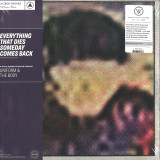
On the heels of their monolithic collaborative LP Mental Wounds Not Healing, the collaboration between industrial-noise post-everything bands Uniform & The Body returns with a second entry, Everything That Dies Someday Comes Back. Comprised of an amalgam of abrasive influence that spans Swans-y dirge and purge, Whitehouse’s clenched-jaw noise, middle-period Ministry’s penchant for metallic post-industrial everything, New Order’s nose for melodic emotionality, and Juicy J-inspired beats, Uniform & The Body’s approach delves deeper down the rabbit hole than before, igniting a sonic world of terror and bliss poised to grip the throats of fans yet again. Prepare for a record that the band self-describes as “the middle ground between Robyn and Corrupted, but weirder.”
Much like the collective’s bombastic debut, Everything was built over a series of collaborative sessions with Seth Manchester at Machines with Magnets in Rhode Island, mixing industrial-influenced synths, squalls of harsh noise, manipulated guitar, oodles of samples along with hard rock-inspired riffs, saccharine pop, and the alternately antagonistic and harrowing vocals of Michael Berdan
Following a first successful 2020 instalment and a contribution to our VA series, Blame The Mono are back on the Taapion mothership to deliver their second household EP. This 4-tracker stays true to the beloved influences of the duo by showcasing multiple genres and heavily using vocals, while keeping a dancefloor-focused essence. ''Sustain The Rigour'' translates the hard disciplined work Blame The Mono put in the studio switching over the techno recipe while keeping its original ingredients. Throughout the coldwave sonic explorations of Forlorn, endless vocal looping drive of Front Left Rodeo, bombastic Moog bassline of Conepusher or the spaced -out garagey vocal chops of Caledonian Woofers, this EP keeps both pace and inventivity rigorously high.
ANNA drops a triple dose of heat to mark her first EP on Drumcode. ANNA first debuted on Drumcode with the irresistable groover ‘Portable Paradise’, which highlighted last year’s A-Sides Vol.7 and set up a busy year playing DC events in 2019.
There was the memorable morning set at Space during WMC, two fiery gigs at Drumcode Festival and typically strong performances at the DC takeover at Resistance in Ibiza and Sonar.
Fresh from her collaboration with Kittin ‘Forever Ravers’, she steps up for a maiden EP on Adam Beyer’s flaghship label. ‘Galactic Highways’ is propelled by an arresting peak-time riff and bombastic drums and was a storming addition to Beyer’s set at Drumcode Halloween recently.
‘Dimensions’ is the powerful brain scrambler, as a blistering wall of acid rubs shoulders with undulating bass notes for an dramatic finish. ‘Phase Two’ is a stirring, pad-laden beauty, driven by lustrous melody lines that cascade over the Brazilian’s punchy percussion.
"Guitarize the World" lässt die außergewöhnliche Erfolgsgeschichte des genreübergreifenden Gitarrenduos Café del Mundo erstmals auf einem Album erklingen und versammelt einen Querschnitt der mitreißenden Arrangements aus Klassik, Filmmusik und Pop, mit denen Jan Pascal und Alexander Kilian ihr Publikum weltweit bei ihren spektakulären Live-Auftritten begeistern. Aufgenommen in legendären Studios wie Abbey Road und in Zusammenarbeit mit renommierten Ensembles wie dem Royal Philharmonic Orchestra oder dem Deutschen Filmorchester Babelsberg, präsentiert "Guitarize the World" den unverwechselbaren Sound des Duos in mehr als 20 Tracks. Von reduzierten Gitarren-Miniaturen bis hin zu opulenten Orchesterarrangements umfasst das Album eigene Kompositionen wie "Dance of Joy", "Space Gitanos" und "Smile", Adaptionen klassischer Titel wie "Clair de Lune" und "Air on a G-String", Arrangements von Filmmusiktiteln aus "Interstellar", "Cinema Paradiso" oder "Forrest Gump" sowie bombastische Cover von Pop-Hymnen wie "Viva la Vida", "With or Without You" und "Smooth Criminal". Darüber hinaus enthält das Album exklusiv ein Arrangement von Beethovens Klavierkonzert Nr. 5 für zwei Gitarren. Die 180-g-Color-Vinyl-Edition beinhaltet 23 Titel auf 2 Schallplatten in Grün und Pink im hochwertigen Gatefold. Exklusiv in diesem Format enthalten sind die Aufnahmen von "Blessing", "Easy" und "Smooth Criminal". Die limitierte 2-CD-Edition enthält die 20 Titel des Albums sowie als Bonus-CD "80s Unplugged" mit 13 Gitarrenarrangements legendärer Klassiker der 1980er-Jahre, darunter "Everybody Wants to Rule the World", "Time After Time" und "I Still Haven't Found What I'm Looking For".
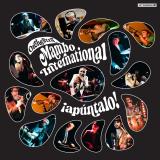
Orchestra Mambo International ist ein britisches Orchester für Mambo, Salsa und Afro-Cuban Jazz, 2022 von DJ Lubi und Jonny Enright (Grupo X) gegründet. Inspiriert von Größen wie Tito Puente, Eddie Palmieri und den Fania All-Stars, verbindet es klassische Traditionen aus New York und Kuba mit frischer Energie aus dem UK. Die generationsübergreifende, internationale Besetzung vereint Musiker aus Venezuela, Kolumbien, Kuba, Brasilien, Spanien und Großbritannien sowie Altersgruppen von Zwanzigern bis Siebzigern. Das Debütalbum "¡Apúntalo!" enthält Kompositionen von Jonny Enright sowie Beiträge von Carlos 'Pachanga' Peña und Timbales-Spieler Jimmy Le Messurier. Ein besonderes Highlight ist der Gastauftritt des renommierten Musikers Chip Wickham (Gondwana Records). Musikalisch bewegt sich "¡Apúntalo!" zwischen Mambo, Salsa Dura, Pachanga, kubanischem Son Montuno, puerto-ricanischer Bomba und Latin Jazz und verbindet den klassischen afro-karibischen Dancefloor-Spirit mit originellem Songwriting, facettenreichen Arrangements und der Energie einer Big Band.
A very classic, auditorily both honest and skillful, techno mini-album by US producers D-Knox and Tim Xavier of Black Nation, 773 Tekno, Limited 400serie, and Sonic Mind fame. The duo's six-tracker nods to old-school US 'multitrack' underground techno EPs, but is bombastically engineered for club systems. Stunningly starting with "Soul Kraft Intro", a hymn for the Detroit techno legacy, only to slip into the tracky club rider "Stream Of Consciousness" with short stabs and alarming strings. Ripping acidic riffs and multifaceted hi-hat programming are signatures throughout, particularly highlighted by the teeth-grinding Chicago-styled (almost 'French Touch' compressed) "Dead Star Grinder", and not the least by the ultimately classic "Tomorrow Is A Rainy Day" with its broken beat and deep-standing forward-driving chordal beauty.
out of Stock
Last delivered 27 days ago available to reorder, subject to availability
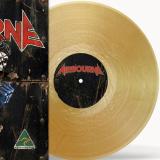
Die australischen Rockband Airbourne war noch nie dafür bekannt, klein zu denken. Auf ihrem
sechsten Studioalbum, der nach der Band selbst benannt ist, hat sie sich allerdings noch mal selbst übertroffen. Airbourne – ein Name, der zum Synonym für bombastischen, biergetränkten, gefährlichen und sexy Rock’n’Roll geworden ist. „Dieses Album vereint alles, wofür wir stehen, in einem einzigen Werk“, erklärt Ryan den Titel. „Es ist das beste Album, das wir überhaupt machen konnten.“
Zusammen mit dem starken Produktionsteam aus Brian Howes (der 2013 "Black Dog Barking" produziert hat) und dem Toningenieur Mike Fraser (der an „Breakin’ Outta Hell“ von 2016 und „No Guts. No Glory.“ von 2010 mitgearbeitet hat), machte sich die Band im Music Farm Studio im „Dschungel“ außerhalb von Byron Bay an die Arbeit. Der Komplex verfügt über das originale Neve-Mischpult aus den Alberts Studios, auf dem Bands wie AC/DC, Rose Tattoo und The Angels ihre wegweisenden frühen Alben aufgenommen haben.
Das Ganze präsentiert sich in einem sorgfältig gestalteten Paket, gemischt von Zakk Cervini (BMTH, Architects), das die Leidenschaft, das Feuer und die schweißgetränkte Gefahr einer Band auf dem Höhepunkt ihrer Kräfte einfängt, komplett mit Schlagzeug, das wie Kanonen knallt, und Gitarren, die wie Kreissägen schneiden.
„Alive After Death“ und „Send Me To Rock’N’Roll Heaven“ sind eine Hommage an die verstorbenen Idole der Band; letzterer Titel bezieht sich auf Lemmy, Doc Neeson von The Angels, John Bonham, Bon Scott, Little Richard und weitere. Joel schrieb den Text zum mitreißenden „Alive After Death“ eines Abends im Tourbus, als er darüber nachdachte, wie die Musik dieser Legenden sie unsterblich macht. An anderer Stelle gibt es Geschichten von unterwegs („Bogota“), Songs über Trotz und Nicht-Aufgeben („Last Man Standing“, „Hell’s Got No Vacancy“, „Gutsy“) und noch mehr Sex („Sky High“). Jetzt müssen Airbourne nur noch auf die Bühne zurückkehren, in der Gewissheit, dass sie ihr bestes Album aller Zeiten mitbringen.
The West Coast's contribution to hardcore punk is undeniable. That tradition of aggression, passion, and scrappy melodicism continues with The Barbarians Of California, an engaging new manifestation of iconoclastic spirit and true bombast. Born from the shared passion of Aaron Bruno (AWOLNATION) and his longtime engineer Eric Stenman - who cut his teeth in the same Sacramento community that eventually launched diverse and disparate acts like Deftones, Far, Will Haven, Team Sleep, Hella, Dance Gavin Dance, Death Grips, and Trash Talk - the spirit of the underground and the personal catharsis delivered through metallic hardcore never left either of them. So, when Aaron learned that Eric crafted a batch of throwback bangers combining impassioned angst with modern sensibilities, he wanted in immediately. The Barbarians of California was born.
In 2024, the band released their debut album, And Now I'm Just Gnashing My Teeth, and celebrated with a high-energy show at the iconic Troubadour in Los Angeles, cementing their place in the hardcore scene's next chapter. Since then, they've continued to build momentum with headline shows across LA, a summer 2025 arena tour with Deftones and other festival appearances that brought their explosive live presence to a wider audience. Dropping two new singles in 2025 including a collaboration with Keith Buckley (Every Time I Die/Many Eyes), The Barbarians Of California are gearing up in 2026 for the release of their sophomore album, MEGATONS. With their second full length, The Barbarians of California are unleashing fresh chaos straight from the sun-soaked, teeth-gnashing heart of the Golden State. Blending raw hardcore energy, razor-sharp riffs, and that signature mix of ferocity and tongue-in-cheek humor, these new songs hit like a caffeine-fueled fever dream.
Released in 2011, Komba is Buraka Som Sistema"s second studio album - their fusion of Angolan kuduro and bass music reaching further across the globe, absorbing new rhythms along the way. Among the standout tracks: "(We Stay) Up All Night" and "Hangover (Bababa)". This limited vinyl reissue - pressed on coloured wax for the first time - remains faithful to the original release, including the bonus track "Burakaton" featuring Colombian outfit Bomba Estéreo.
out of Stock
Last delivered 34 days ago available to reorder, subject to availability
The second Jai Alai album takes its name from a track on Winners (1979) by New York band Kleeer, who evolved from Pipeline via The Universal Robot Band before becoming a major force on the soul and boogie scene; their full-length “Open Your Mind” is simply sublime.
Two originally unreleased tracks will delight completists of Aretha Franklin and Dionne Warwick. Aretha co-produced “The Boy From Bombay” with Quincy Jones — perhaps a little too quirky at the time — while Warwick’s Ashford & Simpson-produced “Someone Else Gets The Price” has all the hallmarks of a missed hit.
Philadelphia’s Pieces Of A Dream, discovered by Grover Washington Jr., were fêted across Europe throughout the 80s. Their Elektra album Imagine This (1983) yielded the wonderfully moody “It’s Time For Love”. Further mining of the Elektra vaults yields a highly collectable Phat Phili Mix of Teddy’s “Believe In Love”, alongside a jewel from Leon Ware’s Rockin’ You Eternally (1981). I was lucky to know this genius, still underappreciated as a master of sensuous soul; “Got To Be Loved” ranks among his finest.
There’s not enough space here to fully cover Gerald Levert’s “What About Me”, but my liner notes to the Jai Alai release JAR14 “Top Of My Head” detail just how talented he was — and this is further proof.
The two least-known artists make a strong impression. Andy Bey’s “I Know This Love Can’t Be Wrong” recalls Jon Lucien at his best, while Phajja — a promising Warner Bros. signing in 1997 — disappeared after just two albums; their Cutfather & Joe production here is as polished as The Emotions.
By the time Etta James recorded “Evening Of Love”, she was four decades into her career, delivering this beautiful ballad with total assurance. Truly epic Southern soul.
Lifeforce is the 1985 sci-fi horror cult film directed by Tobe Hooper, responsible for the 1974 horror classic The Texas Chain Saw Massacre. Based on Colin Wilson's 1976 novel The Space Vampires, the film is about the remnants of a race of intergalactic vampires who are brought to London, where they soon begin to infect its population.
Legendary composer Henry Mancini has soundtracked this apocalyptic descent into chaos. He is widely regarded as one of the greatest composers in film history exemplified by his impressive trophy wall: he won four Oscars, a Golden Globe, and twenty Grammy Awards, plus a posthumous Grammy Lifetime Achievement Award. He is most famous for "Moon River" performed by Audrey Hepburn in Breakfast at Tiffany's and of course The Pink Panther.
James Horner was first asked to compose the score, but Mancini was brought in instead and crafted a piece of music both bombastic and ambient (and sometimes even atonal), employing the London Symphony Orchestra. Sit back and feel the fear...
The soundtrack of Lifeforce is available as a limited edition of 500 individually numbered copies on purple marble vinyl, and includes a 4-page booklet containing an alternate cover, film stills, and a fold-out movie poster replica.
Kheper Wax is the second solo album of Imhotep, artist known for have being the sound architecht of IAM, a very popular hip hop group from Marseille (South of France) in the 90’s and the early 00’s.
The 100% instrumental album is a blend of Dub and Trip-Hop, infused with oriental music samples.
It was self-released by the artist in 2013 and since, the album price has increased a lot on Interne
RAWAX proudly presents the 6th release by Fresh & Low on their own RAWAX TREASURES series!
This time we have the honor to re-issue "Interact/ Get Up" formerly released on Bomba Records in 1996!
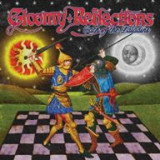
Alchemical amalgamations abound on Gloomy Reflection's Debut LP. The combining of two explosive musical forces in Lord Gordith (Quest Master, Steröid) and Will Spectre (Crypt Vapor, Dracula, Tarot, The Wizar'd) is in and of itself an act of strong and dangerous magick yielding the potent chemical reaction that has brought forth The Oath of the Paladins.
These seven tracks of synth drenched hard rock/heavy metal are each the product of significant symbiosis. Wrenching together lofi basement blackened heavy metal, with bombastic fist pumping progressive hard rock. The fusion of these ever so unstable elements has resulted in one of the most electric albums of 2025.
out of Stock
Last delivered 5 months ago available to reorder, subject to availability
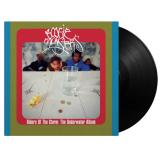
Boogiemonsters were an American hip hop group composed of Bronx‑born rapper Mondo McCann, Alaskan native Vex Da Vortex (Sean Pollard), and Jamaican‑born brothers Myntric (Sean Myers) and Yodared (Ivor “Al” Myers). The members met while attending Virginia State University, quickly connected, and began recording demos and performing at campus events. Their early momentum led them to win first place at Howard University’s Hip‑Hop Convention.
Pendulum/EMI record label signed the four MCs and released their debut album Riders Of The Storm: The Underwater Album in 1994. The first single, “Recognized Thresholds of Negative Stress,” introduced their thoughtful, alternative approach to hip hop. It was followed by “Honeydips in Gotham,” a smooth tribute to the fly sistas of the city, and “Strange,” built around a slick Cameo sample. Another standout track, “Salt Water Taffy (Slo Jam),” is noted as one of the earliest non‑Roots session appearances by future producer Scott Storch.
Riders Of the Storm: The Underwater Album delivers a focused blend of rugged beats, sharp lyricism, and atmospheric production that stands apart in the 90s hip hop landscape. Its mix of conscious themes and deep grooves makes it essential for fans of underground hip hop. The album’s mellow, funky, alternative sound sits comfortably alongside groups like A Tribe Called Quest and De La Soul, giving it a timeless place in the era’s most creative and forward‑thinking releases.
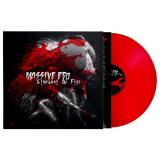
In 2025, we celebrate 30 years Out Of Line - Three decades of chaos, passion and 0 Years in - Still defiant, still evolving…2026 marks the 30th Anniversary of Massive Ego, and the release of a brand new album: “Symphony Of Flies” is revealed on May 8th, 2026 and marks the band’s first ever vinyl release. Available as Digipak CD and Limited Red Vinyl. Symphony Of Flies is a powerful, defining statement in Massive Ego’s long and uncompromising career, marking not only the band’s 30th anniversary, but also a moment of reckoning, survival and renewal. Across ten tracks, Massive Ego transform personal collapse, recovery and resistance into one of their darkest, most personal and emotional works to date. Musically, the album moves effortlessly between darkwave, electronic rock, EBM, glam-infused bombast and confrontational pop, pairing club-ready intensity with deeply introspective lyricism. Singles such as “In Your Own Darkness”, “Hit The Kerb Running”, “(My) Death Song”, “Man Become Monster”, and “Broken Tomorrow” showcase the band at their most fearless, culminating in a standout collaboration with Boy George, whose presence underscores the album’s themes of endurance, reinvention and personal growth. Lyrically, Symphony Of Flies reads like a confession and a journal. Frontman Marc Massive confronts mental health, betrayal, isolation, and the long climb back from the brink, reframing darkness not as something to romanticise, but something to fight through. The album’s central metaphor, the “Symphony Of Flies,” evokes surveillance, toxicity, decay and transformation: the unseen forces that drain, observe, and attempt to undermine, until they are finally confronted and dispersed. “The worst things that happen to you are the best things that happen to you”
Grand Theft war eine einmalige Explosion von Heavy-Rock-Wahnsinn aus Seattle im Jahr 1972. Was als augenzwinkernder Seitenhieb auf die Bombastik von Bands wie Grand Funk Railroad begann, entwickelte sich schnell zu etwas Rohes, Echtem und ganz Eigenem. Dave Barohs knurrende Gitarrenriffs, Kevin Marins donnernder Bass und Phil Klitgaards ursprüngliches, aber präzises Schlagzeugspiel schnitten wie eine knallende Peitsche in einer stürmischen Nacht durch die Luft. Ihre einzige LP, die in einer einzigen chaotischen Session aufgenommen wurde, fängt einen Moment ungefilterter Energie ein. Tracks wie ,Scream (It's Eating Me Alive)" und ,Closer to Herfy's" entstanden aus koffeinreichen langen Nächten, Insiderwitzen, scharfem Verstand und einer neuen Hingabe an die Aggressivität. Mit Radio-DJ/Manager Burl Barer, der das Chaos lenkte, erlangte das Album regionale Bekanntheit, einen ,Dream Date"-Promo-Wettbewerb und sogar Lob von Lester Bangs. Live-Auftritte waren selten - spontane, ohrenbetäubende Blitzauftritte -, aber die Legende von Grand Theft wuchs noch lange nach der Auflösung der Band weiter. Was als flüchtiger Scherz begann, wurde zu einer Proto-Metal-Kuriosität, einer Wildcard im Deck des frühen 70er-Jahre-Rock. Grand Theft bleibt ein Zeugnis des ungezähmten Geistes des Rock und ein Urschrei angesichts der Konvention.
long content, you may need to expand row to see all... Mutant freut sich, in Zusammenarbeit mit Milan Records das offizielle Soundtrack-Album zu Edgar Wrights Sci-Fi-Action-Thriller The Running Man zu veröffentlichen.Das Album enthält die Original-Filmmusik des Oscar-Preisträgers Steven Price (Gravity, Last Night in Soho, Baby Driver). The Running Man, bei dem Wright als Co-Autor und Regisseur fungierte, handelt von einem Vater aus der Arbeiterklasse, der alles daran setzt, seine kranke Tochter zu retten. Er nimmt an einer tödlichen TV-Gameshow teil, in der die Kandidaten 30 Tage lang überleben müssen, während sie von Profikillern gejagt werden. Durch seinen Instinkt, seinen Widerstand und seine Entschlossenheit wird er zum unerwarteten Publikumsliebling – und zu einer Bedrohung für das gesamte System.Wir sind große Fans von Edgar und Steven und freuen uns sehr, dass sie uns erneut ein fantastisches Kinoerlebnis bescheren. Steven Prices Score für The Running Man ist eine schillernde Mischung aus treibenden Beats, brodelnden Synthesizern und traditionellen orchestralen Elementen, die vor Einfallsreichtum und Stil nur so sprühen. Das Hauptthema besitzt eine elegante, zeitlose Qualität mit üppigen, beruhigenden Streichern, die eine hypnotische Melodie weben. Im Gegensatz dazu stehen die Titel der Gameshow-Sequenzen, die wirklich unterhaltsam, bombastisch und im Retro-Stil gehalten sind – was wiederum einen Kontrast zu den düstereren, dystopischen Stücken bildet, die im gesamten Werk verteilt sind. Im Film wirkt die Musik wie ein weiterer Charakter, der die Geschichte vorantreibt. Als eigenständiges Hörerlebnis ist sie fesselnd, dynamisch, macht großen Spaß und fängt die vielen Facetten und Stimmungen des Films perfekt ein.Die Vinyl-Edition mit dem Artwork von Luke Preece ist auf zwei farbige 140g-LPs gepresst. Sie enthält ein „The Truth“-Zine als Replika aus dem Film mit exklusiven Liner Notes von Edgar Wright und Komponist Steven Price.Ebenfalls auf CD erhältlich.