Crying Outcast returns with its third release, landing close to home with legendary dub innovator The Rootsman. Bradford’s own and a true pioneering force in experimental dub since the 90s, The Rootsman’s influence runs quietly but deeply through the underground. Roots Return gathers three essential works from his catalogue, including collaborations with Celtarabia and Russ (The Disciples) as Pachakuti, alongside a light-headed reinterpretation from label head Miles J Paralysis. Spiritual and subtly psychedelic, yet deeply rooted in dub tradition throughout, drawing on influences from Pakistani devotional hymns and Celtic folk traditions. An essential modern day EP, displaying a meeting point between the heritage and the future sound of dub music.
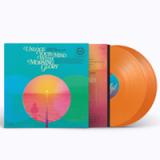
Crate digger and music enthusiast James Endeacott compiles ‘Unlock Your Mind With Morning Glory’ for Two-Piers Records – A glorious heady mix of the weird and wonderful eclectic music from his radio show ‘Morning Glory’
“One weekday afternoon towards the end of 2017 I sat in The Lyric pub on Great Windmill Street, Soho with my dear friend Raf. I’d just finished another of my weekly Soho Radio shows and was starting to think about the next one. Raf had been on as a guest playing some of his favourite tunes of the day. We had a few drinks, told a few stories and started to plot and scheme. It was always a dream of mine to have a daily radio show. Radio had always informed and excited me from my early teens listening to John Peel under the blanket when I should’ve been either sleeping or revising right up to the present-day musical excursions of NTS, WFMU and numerous internet based stations.
We decided to speak to Adrian and Dan who ran Soho Radio to see if they’d be up for us doing a daily morning show. To our surprise they were into the idea and within 5 minutes Adrain came up with the name Morning Glory. We all liked it. We were all excited. It was all systems go. In December 2017 Raf and myself started a daily 2 hour show. We did the show together, got guests in and the musical policy was whatever we felt like that day. After several months Raf found the mornings too much. Off he went into the distance occasionally coming back with a smile, and a bag of new music. I carried on alone and then suddenly in March 2020 the world stopped, and we went into lockdown.
We set up in my house in Catford, Southeast London and carried on. The show became 3 hours a day and I started to invite friends, record labels, record shops, bands etc.. to supply me with hour long mixes that I played every day. The show took off during this time. My musical tastes expanded as I spent all day long searching for new sounds from around the globe. People started to send me more and more music. I became obsessed with the show. The audience started to take to social media and ask for certain tracks or artists to be played. I got listeners to make me mixes to play on the show and I did several phone interviews with musicians while playing some of their favourite tunes.
I was grateful that Soho Radio left me to my own devices. They never told me what to do or what to play – they trusted ma and I trusted my instincts.
The music on this compilation is not a ‘best of’ it’s just how I felt when I compiled it at the start of 2025. Apart from a couple of tracks they are all things I’ve come across since the show started in December 2017. If I did a list of tracks now I’m sure it would be completely different. Surely that’s the point. We never stick in one place. We are always moving and searching. Always trying to unlock our minds. Put it on. Take your time and let it take you somewhere” James Endeacott 2025
Daniele Baldelli
Considered one of the first DJs in Italy, Daniele Baldelli began his career in 1969 mixing vinyl at the Tana Club in Cattolica (his hometown),
predating the birth of the modern DJ by several years. In the following years, he solidified his talent and technique at histor such as the Tabù Club, Baia degli Angeli, and Cosmic. From 1979 to 1984, Baldelli created his unique and eclectic style, blendi ic clubs ng seemingly distant sounds and musical styles, complementing them with tempo adjustments (bpm) and deliberately extreme equalization,
creating a truly distinctive sound, known as "Afro Disco." Soundscapes and tribal percussion blend with early electronic music experiments, and Baldelli's sets become truly mystical experiences, where, for the first time, the temples are replaced by the dance floor.
The documentary film "A Cosmic Life" has just been released, starring Daniele Baldelli alongside other illustrious guests from the nightclub scene, recounting the history and formation of this movement from the 1970s to the present.
Gaudi
A producer/musician among the most highly regarded on the international dub/electronic scene, over the past 30 years Gaudi, from his
London studio, has contributed significantly to expanding the boundaries of musical genres with high-profile releases and innovative
music production techniques. Recently nominated for a Grammy Award with 'Mass Manipulation', the album he produced for the reggae
band Steel Pulse, and also nominated for a World Music Award with his album 'Dub Qawwali' with Pakistani singer Nusrat Fateh Ali
Khan, Gaudi has collected a series of number 1s on the international charts: Billboard - with the album 'Heavy Rain' by Lee "Scratch"
Perry, 'Vessel of Love' by singer Hollie Cook and with 'Mass Manipulation' by Steel Pulse -, UK Chart n.1 with the album 'Prism' by the
band The Orb (with whom he has collaborated as a producer and keyboardist since 2008), with 'Blue Monday' - by Gaudi himself with
the band Dub Pistols -, UK Dance Chart n.1 with 'Jus Come rmx' produced with DJ Angelino for Cool Jack. He also reached no. 41 the UK charts with the album ‘Midnight Rocker’ by reggae singer Horace Andy (known to the general public for his hits with Massive in
Attack), no. 13 with the album ‘Dubwise 2’ by the band Dreadzone and no. 5 in the Italian charts with the song ‘Lasciala Andare’, written
by him for Irene Grandi. With 19 solo albums and 350 remixes and productions under his belt, Gaudi, with his artistic versatility, has
worked with Groove Armada, UB40, Simple Minds, Brian Ferry, Devo, Big Audio Dynamite, Damian Marley, Seun Kuti, Mad Professor,
Trentemøller, Grandmaster Flash ft KRS-One, Lamb, Don Letts, The Beat, Deep Forest, African Head Charge (in which Gaudi is a keyboardist and dubmaster), Elisa, Scientist, Dub FX, Roedelius, Caparezza, Caravan Palace, EMF, Sizzla, Jovanotti, Sly & Robbie, Piero Pelù, Youth of Killing Joke, and Maxi Priest, to name just a few. Capleton,
Daniele Baldelli & Gaudi
DJ Daniele Baldelli and producer Gaudi first met three years ago at the Jazz Cafe in London. Mutual respect and an innate need to
create new stylistic fusions were the catalysts for Baldelli and Gaudi, leading to a series of subsequent meetings that inevitably culminated in the need to create music together. The project began at Gaudi's Metatron Studio in London using analog equipment and later
moved to Baldelli's studio in Cattolica, where the two organically defined their sound, also inspired by Baldelli's precious record collection. The duo consolidated a powerful compositional symbiosis, and the project, born from a simple initial groove, later transformed
into an entire EP consisting of four original tracks and a highly innovative sound, featuring fusions of psychedelic-funk, tribal-dub,
electronic-disco, and, of course, "Afro-Cosmic"! Daniele Baldelli and Gaudi began their sonic collaboration without setting any stylistic
direction and with the intention of not creating pre-established goals to achieve; it is a project of pure artistic freedom guided by their
compositional instinct and their experience. Constantly active with their evenings and live concerts, Baldelli and Gaudi have performed
individually in many of the best international clubs and festivals.
Mood Child Presents 'Various Moods Vol. 2' VA; six multi-mood tracks from artists including DJ Sneak, Antss, Marian (BR), and more.
Mood Child, the brainchild of Manda Moor and Sirus Hood, is back with ‘Various Moods Vol. 2’, a captivating collection of six tunes, each possessing its own distinct mood and power.
The VA kicks off with ‘Pakit Ban’ a timeless percussive and funky anthem. Brazilian talents Marian (BR) and Freenzy join forces to create this highly requested track, which has graced not only Manda and Sirus’ sets but also those of Jamie Jones and The Martinez Brothers.
House legend DJ Sneak returns to Mood Child with ‘Wemen’s Groove’. Prepare to be hooked by Sneak’s bouncy rhythms and to feel a masterclass with the massive buildup and incomparable vibe. Making his debut on the label, Barcelona-based artist Dafgal delivers ‘Gozando’. This high-energy tune features a universal groove and a captivating female vocal that will undoubtedly get anyone in a good mood.
UK rising star Antss drops ‘La La Lala’, a simple yet immensely effective track. Its powerful bassline, combined with playful voices, is tailor-made for electrifying crowds.
Brazilian duo Rokke & Techin present ‘Diamonds’, a shiny gem. Its addictive bass-led loop is complemented by an unforgettable bubbly synth, leading to a drop that etches memories.
Riffel & Jack Baron’s ‘Flute’ boasts an irresistible groove, complete with wonderful flute melodies. It’s auditory candy for discerning listeners.
сбор заказов
Заказать сейчас – как только наберется необходимое количество заказов, продукт будет отштампован.
Kaijupop is conceived as a record created by an international
supergroup operating under the umbrella of Soft-Bodied Humans. Over the past decade, UK producer David McNamee has curated an impressive series of releases under the Blue Tapes label that highlight various aspects of minimal music, ranging from grime to gugak, American primitivism to Japanese ambient, and released his own longform minimal music under the name Cut A Lonely Figure
McNamee now unveils on vinyl his latest project, Soft-Bodied Humans, a supergroup that transcends boundaries, drawing inspiration from grime, minimalism and industrial alike. Soft-Bodied Humans brings together an eclectic ensemble of like-minded producers, vocalists, and performers, resulting in a diverse and mesmerizing album.
Collaborators on this spellbinding album include L.A. avant-garde
artist Anna Homler, rising Ugandan MC Swordman Kitala, Brazilian
artist and musician Cadu Tenorio, Japanese grime artist PAKIN,
throat-singer and doom metal auteur Abysmal Growls of Despair, and
Chicago-based producer Fire-Toolz.
This groundbreaking album explores a dynamic range, effortlessly
transitioning from abstract moments to intense sonic experiences.
While grime-inflected beats form its core, Kaijupop fearlessly mutates
and diverts this foundation into uncharted territories. The result is
an immersive sonic journey that pushes the boundaries of the genre.
With each track, the album offers a fresh perspective and an
adventurous exploration of sound.
Soft-Bodied Humans stands as a testament to the power of collaboration and experimentation. This international supergroup definitely breaks the mould of traditional music-making, delivering a groundbreaking and boundary-pushing album that will leave listeners eager for more.
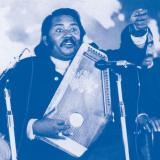
Black Truffle is thrilled to announce a second volume of unheard concert performances from legendary Pakistani kyhal singer Salamat Ali Khan, recorded at Berlin’s Neue Nationalgalerie as part of the MetaMusik festival in 1974. Like the first volume, the immaculate recording by Michael Hönig (of krautrock legends Agitation Free) captures Khan performing a single extended raag in the company of Shaukat Hussein Khan on tabla and Hussein Bux Khan on harmonium. In addition to his stunningly inventive and moving vocal performance, Khan is heard accompanying himself on a specially tuned alpine zither (in place of the traditional swarmandal, an Indian style of zither). The lack of an underlying tanpura drone gives the music its characteristic floating quality, with the three instruments and voice masterfully dancing around one another as they sketch the outlines of this grand, 40-minute Raag Chandrakauns.
If anything, this epic performance of the late-night Raag Chandrakauns is even more seductively spacious and psychedelic than the music heard on the first volume. Obeying the traditional shape of Hindustani classical vocal music performance, a gradual rise in both pitch and rhythmic activity, the music hovers for twenty minutes in a reflective calm, the pulse only gently stated by the tabla while harmonium ornamentation and zither strums float by. In this meditative space, Khan gradually orients us to the contours of the raag, beginning with long notes at the bottom of his register. His improvisation at once builds with a stunningly firm sense of internal logic and seems liberated to explore every melodic and ornamental byway that comes up along the way. By the time we turn to the record’s second side, the music has grown into something far more frenetic, with virtuoso tabla passages at times occupying centre stage between Khan’s increasingly rhythmic melodic variations. Concluding with a sequence of unison tabla and voice passages of breathtaking complexity, the performance is met with rapturous applause. Arriving in a blue-toned variant of the first volume’s sleeve, with acclaimed musicologist Peter Pannke’s liner notes in the original German, Metamusik Festival Berlin ’74 Volume II is not to be missed. Essential listening not just for Hidustanti classic aficionados, but for anyone who needs reminding of the magic of collective music making in the moment.
South Asian super-producers Lapgan and Baalti – the former a Madlib-disciple spinning hip-hop grooves out of dusty desi samples, the latter duo purveyors of intricately tapestried dance music – holed up in the California desert in early 2024 for a songwriting session to blend their complimentary styles. They ended up with several albums worth of club material built upon decades of Indian music history – floor fillers that move like early Four Tet meets The Avalanches. They’ve been teasing this material around the world during live sets – from Paris Fashion Week to Glastonbury, London Clubs to BK Warehouse parties, sessions at Lot Radio and Karachi Community Radio, and anywhere else they find an aux. The result has been endless ID requests for unreleased gems like “Ipa Ma” and “Lime Tikka”, calls which should finally be answered with the release of Threads.
Lapgan Bio
Chicago-based archivist and producer Lapgan has become renowned for his signature style: unearthing rare and forgotten Indian & Pakistani sounds and recontextualizing them into hip-hop and dance beats that evoke J Dilla and Madlib. He has cultivated a reputation for quietly revolutionary sample-work across his beloved solo projects History and Duniya Kya Hai, as well as LAFANDAR, his critically acclaimed team up with Heems (of Das Racist / Swet Shop Boys). He has worked with a range of artists from both the West (Your Old Droog, Saul Williams, Cool Calm Pete, Kool Keith, Open Mike Eagle, Blue, Quelle Chris) and the East (EXCISE DEPT, Baalti, Sid Sriram, Sid Vashi, Dynoman), and has been featured in global media including Pitchfork, FADER, Stereogum, Passion of the Weiss, Mixmag, Homegrown, and Vinyl Me, Please. Over the past year he has headlined clubs and performed at festivals across the world from Chicago and New York to London and India, and was personally invited to soundtrack back to back Paris Fashion Week shows for the similarly norm-shifting designer Kartik Research. In 2026 he will soundtrack his third Kartik Research runway show, as well as reissue Duniya Kya Hai for its five-year anniversary alongside a companion EP featuring remixes from peers and supporters Arushi Jain, Loris, Mera Bhai, Malkfunktion, and Maral.
Baalti Bio
Baalti makes electronic music built around rhythm, pressure, and collective release – weaving through leftfield bass, dusty hip hop, tripped out dub and raw house all while maintaining a throughline rooted in South Asian culture seen through the lens of a sweaty dancefloor. In the last year they have experienced a whirlwind rise and growing global recognition: from their EP Mela vividly evoking West Bengal’s sound system culture to their Tamil-cinema-infused filter-house project with Anish Kumar Stunt Doubles, in addition to wide-ranging collabs and remixes alongside DJ ADHD, Naya Beat, and A.R. RahmanThey have also built a reputation for their frenetic live show, with appearances at international festivals like Glastonbury and MELT, headlining shows across Australia and Europe and supporting influences turned peers like Four Tet and Disclosure across North America. Their explosive, percussion-heavy sets have been platformed by Rinse FM, NTS, The Lot Radio, Beats In Space, and Refuge Worldwide, and their music has been renowned by publications including Pitchfork, Bandcamp Daily, RA, and MixMag. Their forward momentum continues into 2026 with slated headline tours in India, Australia, and Asia along with appearances at Coachella, Party in the Paddock, Fvded in the Park, and We Out Here festivals.
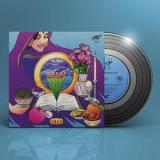
In celebration of the Persianate new year usually taking place on March 21st Afghan-German producer artist Farhot announces his follow up project "Nowroz 1401" which translates into "New Year 1401" - the number marking the year according to the solar calendar which is used in countries like Afghanistan and Iran. While Nowroz is being celebrated in several additional regions like Azerbaijan, Kazakhstan or Kirgizstan and partly also in Pakistan, Syria, Tajikistan, Georgia and Turkey - this 4-Track EP pays tribute to Afghan contemporary artists like singer-songwriter Calid, London based Elaha Saroor and rapper Khan all while referencing the golden era of Afghan psychedelic pop most prominently represented by Ahmad Zahir samples - and with that marking this special release as a contribution to preserving Afghan culture and tradition while Afghanistan"s recent brutal occupation by the Taliban continue to threaten and erase Afghan artistic tradition. Further "Nowroz 1401" was born out of the urgent feeling to uphold and celebrate an essential tradition of Persianate cultures so that the following generations of diaspora children don"t lose access to their cultural heritage while not being able to live or visit their countries of origin, where such holidays are institutionalized and therefore experienced as a community festivity.
Iqnovara is a band to watch: their debut album, Onderstroom (2024), was immediately picked up and praised by Belgian public radio broadcast Klara. On May 29th, their follow-up album, O Innocent Heart, will be released by W.E.R.F. records. This album explores the boundaries between jazz and North Indian classical music. For three years, they refined this music in close collaboration with Pakistani sarod maestro Asad Qizilbash. Bandleader, guitarist, and composer Haroun Iqbal deepened his understanding of the North Indian tradition during this period, including a study trip to New Delhi to learn from Shubhendra Rao, aprotégé of Ravi Shankar. O Innocent Heart connects both musical worlds in each piece in its own way, always seeking how each musician can shine.
"What if, alongside the mainstream history of music, with careers and discographies spanning ten or fifty years from album to album, there was an underground, minority history, that of artists and projects with only one record? A flash, a burst of brilliance, a gem, but no follow-up, no repetitions, no decline.
"This will most likely be the case for this album by Amarante-Cerisier, a duo formed by Mauricio Amarante (RadikalSatan, Équipage, travelling companion of Canan Domurcakli and Austin Townsend) and Marine Debilly Cerisier (dancer, performer, writer, co-founder of alternative cultural venues in Marseille and Brussels), with these eight poetic songs in French having more in common with the visionary essence of certain songs from the early 1970s (Brigitte Fontaine-Areski, for example) than with the post-modernism of the ‘nouvelle chanson française’ of the1990s and 2000s.
"But – and this is undoubtedly no coincidence – this is also the case for two unique albums, which had no immediate follow-ups but which, 50 and 20 years after their release, inspired Mauricio and Marine's album and discreetly found their way into it:
"At the very end of the 1960s, Tchékov Minosa (Marine's grandfather) embarked on a journey to the East with his partner Brigitte de Saint-Preux, during which they were married ten times, in ten different traditions (in Kurdistan, among the Kuchi people of northern Afghanistan, among the Kalash people of north-eastern Pakistan, in Rajasthan,etc.). This three-year journey was documented in numerous articles in the European press, in documentaries, in a book... and on a double LP of traditional music recordings released in 1973 by Le Chant du Monde. And sampled today by Mauricio Amarante at the end of the track ‘Parfois’.
"In the early 2000s, Austin Townsend, a tall, bony figure, washed up on the banks of the Garonne River near Bordeaux, arriving from New Zealand. With a voice that was sometimes very Bob Dylan-esque, at other times buried in the gravelly depths of the low frequencies, he strung together contemporary blues songs on his only album, Introvenus (Potagers natures, 2007), beautifully accompanied in subtle tones on banjo and double bass by Mauricio and Cesar Amarante (alias Radikal Satan). Beyond this unique record, Mauricio played extensively with Austin in concert. And when his friend died in the spring of 2024, he received his guitar, used the instrument for some of the tracks on the upcoming Okraïna record, and decided to dedicate the album to him.
"In our conception of music, fleeting appearances, unexpected reunions, and timeless records outside the dictates of current musical trends thrill us more than overly well-planned career paths."
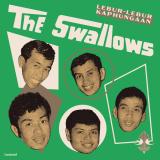
The Swallows were one of Singapore’s standout bands of the 1960s, rising from the explosive Pop Yeh-Yeh movement, the regional response to the global beat-band wave, with strong garage-rock roots. Fusing surf rock, early Beatles-inspired pop, and gritty, fuzz-laden guitars with a distinctly local sensibility, they became youth icons of the era. Defined by sharp suits, infectious melodies, and a rebellious spark, The Swallows captured the restless energy of post-independence Singapore, securing their place in the island’s golden age of bands and in the wider story of Southeast Asian rock.
66 pages, 175 x 129mm paperback w/ litho printed cover & french flaps.
The second outing for our short run book publishing imprint, The End books, takes the form of a reprint of Spanish Cante Jondo and Its Origin in Sindhi Music, originally published in Spanish in 1955 under the name Cante Jondo: Su Origen y Evolución and later in this English translation.
Aziz Balouch here presents his theory on the roots of flamenco's 'deep song' in modern-day Pakistan, a cultural journey that mimics the routes of his own life, having been brought up among the Islamic mysticism and devotional songs of Sindh before travelling to Gibraltar in the early 1930s and becoming transfixed with the cante jondo across the border in southern Spain. Positing this concept through personal accounts rather than solid theoretical backing, this text provides a valuable account of an extraordinary existence that crossed remarkable geographical, musical, and spiritual boundaries. Issued here with a new introduction from anthropologist of sound, the senses and Islam, Stefan Williamson Fa.
"It would be easy to place Balouch on the fringes, as an eccentric footnote in flamenco history. But that misses the shape of his life and work. He was a figure who moved intuitively across boundaries that our present categories of nation, genre, discipline tend to fix in place. His work predates the founding of the academic discipline of ethnomusicology, the global circuits of world music, and the marketplace logic of fusion projects by decades. He was not an ethnographer or a proto–world musician, but someone for whom the deep song of Andalusia and the devotional song of the subcontinent resonated along the same fault lines of feeling, and who spent his life trying to trace them.
This book is one of the few surviving traces of that attempt. To read it now is to encounter a perspective that resists tidy narratives of influence or origin, despite its title and what he claims to do. It stands instead as evidence of an idiosyncratic musical imagination, one that relied less on proof than on listening, and on the belief that certain echoes carry farther than history can easily explain."
Here comes the first appearance on vinyl of Elf Bagatellen, a 1990 FMP classic from the legendary Schlippenbach Trio where the group achieved fever-dream beauty through self-imposed temporal limitations. The trio deliberately shaped the music, opting for more concise pieces rather than concert-length performances that had become standard practice. Those durational limitations clearly inspired them, bringing a jewel-like, compositional flow to many of the works, although even when the trio seems to be playing a tune in a piece like "Analogue: Scaled" the performance moves so rapidly into the next event any such notion is banished. And yet some of Schlippenbach's older themes resurface in abstracted ways, whether it's Pakistani Pomade's "Sun-Luck Night-Rain" appearing as quicksilver line in "Sun-Luck: Revisited" or Globe Unity's "The Forge" sneaking into "The Forge: Rebellowed." The concision of shorter pieces, including several solo works, arrive as a kind of fever dream in the usual context of free jazz. Schlippenbach Trio soon snapped back into its working methodology on its follow up album, Physics, in 1993, which further elevates the singularity of Elf Bagatellen. The album captured a different side of the trio and helped inform the modern classical tilt in European improvised music. Cien Fuegos is delighted to reissue this undeniable classic, making it available on vinyl for the first time ever, freshly remastered by Martin Siewert. Evan Parker - soprano & tenor saxophone - Alexander von Schlippenbach - piano - Paul Lovens - selected drums and cymbals This album was released as a cd on FMP 1990, remastering for vinyl by Martin Siewert 2025
Chris Menist pares his sound right back for A book of imaginary beings, his fourth Awkward Corners outing with a project of electronic and abstracted global grooves. Experimenting with simple melodies and uncluttered arrangements, as well as taking inspiration from the Borges' short stories alluded to in the title, the project took shape in the early part of 2025, in the shorter days and dark evenings of January.
The initial challenge was to knock a basic track into shape each evening after work, then refine it later. There's a melancholy in the air in late winter, compounded by the creeping threat of national and geopolitical instability. Ulla, Natural Information Society, Jabu, Torso and Dawuna formed some of the background soundtrack as each tune took shape.
The track titles came after sitting with the sounds for a while, giving shape to images of people, creatures and their stories for a book that is yet to be written.
Two former friends sets the tone for the album perfectly as a minimal electronic piece with a slowly simmering synth bassline underpinning the groove whilst the trademark Awkward sound of the Shahi Baaja enters drenched in effects. It's the first demonstration of Chris' unique ability to create a world from apparently very little.
Dance of the silver beetles is completely unique in that we can hear chopped up Illimba samples seemingly playing backwards and forewords sometimes alone, sometimes together in duet with Chris' conga rhythms. Add to that a more conventional Illimba melody and added shaker percussion and you have one of A book of imaginary beings most curious chapters.
Anxious shadow puppets is closer to the Awkward Corners sound from previous albums as electronic pulses move around the arrangement with the urgency that the track title suggests. Chris' percussive roots move to the fore with the congas that tie down the Paradise Bangkok Molam International Band's sound. Here, the bassline is more playful and works together with one of Chris' many African Illimbas.
Fans of Chris' adventures on his Roland 808 will dig A leopard with no spots, although the minimal mood continues to flow through on this track. The lolloping, but hard-hitting rhythm track provides the grounding for strange and twisting feedback-sounding tones to work the soundscape.
Abandoned boy (left in charge of the family business) is Awkward Corners at his atmospheric best. Drift off to the sublime sounds of Chris exploring the Shahi Baaja, whilst a soft, repetitive synth line and abstracted pads give the listener that feeling of meditation and peace.
Flamingo with bandaged neck is A book of imaginary beings' perfect coda and is exclusively Shahi Baaja draped in reverbs and delays. It feels like the resolution and the closing of a book that – as of yet – remains unwritten.
Awkward Corners is Chris Menist, a musician, DJ and writer. It started life as a small project in Islamabad, where Chris was living at the time. Initial recordings were made with local musicians in Pakistan and then subsequently in Thailand. This culminated in the Sweet Decay LP that came out on Finders Keepers' Disposable Music in 2014, and in turn led to a limited tape release on Boomkat/Reel Torque of original compositions and re-edits of Thai 45s the same year. Chris released – Dislocation Songs – his second LP proper with Shapes of Rhythm in May 2020, collaborating on many of the tracks with award-winning performer Sarathy Korwar. The LP was picked up by many radio stations including NTS, Resonance FM, BBC 6 Music, Balamii and many more. It made Tom Ravenscroft's LPs of 2020. Amateur Dramatics, Chris' second LP arrived just a year later in 2021 and was a more ambitious project featuring more jazz-focussed compositions and featuring Tamar Osborn and Kitty Whitelaw. Shortly after that came another pivot with the heavier, dancefloor-friendly EP Somebody Somewhere. Somebody Somewhere is Dancing in a Field brought the House (yes House!) vibes, whilst Hector Plimmer turned in a remix of No Words in the same club mood.
As one of NTS Radio's longest-standing presenters, Chris continues to hold down the Paradise Bangkok show. Playing drums and percussion since he was a kid, Chris is the percussionist for The Paradise Bangkok Molam International Band as well as co-founding the record label of the same name. Chris has curated compilations for labels such as Finders Keepers, Soundway and Dust-To-Digital. He has been featured on the Boiler Room, Vinyl Factory Collections, played at the Four Tet curated Nuits Sonores festival, and has put together an edition of Volumes which featured unreleased Awkward Corners compositions.
[d] 04: All the Goodbyes (You Tried to Defer) [Original]
[j] 10: Abandoned Boy (Left in Charge of the Family Business) [Original]
"It may surprise some that, after two decades of silent films, when Alam Ara broke the silence in 1931, it and every South Asian talkie that followed was what we in the West think of as a "musical." Music had been integral to the culture's staged drama going back to the Gupta Dynasty — sometime between the 4 th and 6 th Century CE. Since its inception, South Asian cinema drew heavily from Marathi, Parsi, and Bengali musical theatre and silent film screenings were often accompanied by live music to mimic a live staged experience.
When sound films arrived, actors with serious singing skills became the next wave of stars. Songs were performed live while shooting, with musicians hidden off-camera, to the side or sometimes even in trees. Playback singing — the practice of dubbing a real singer's voice over a lip-syncing actor — didn't become standard until the 1940s.
Thus, the biggest stars of the 1930s were also the greatest singers, with some, like Govindrao Tembe and Pankaj Mullick, excelling as both composers and vocalists. None, however, were more beloved than K.L. Saigal, whose emotional, untrained crooning captivated audiences across the subcontinent. Saigal's voice inspired a young Lata Mangeshkar, who vowed to become India's greatest filmi singer to win his heart. Sadly, Saigal grew increasingly addicted to alcohol, unable to perform without it, and passed away at age 42, seven months before the Partition. Lata never married.
This collection features some of the earliest songs from South Asian cinema, sourced from CDs and LPs found in Jackson Heights, Queens, Coney Island Avenue in Brooklyn, Lexington Avenue in Manhattan, and Oak Tree Road in Iselin, New Jersey — areas home to vibrant immigrant communities. South Asian immigration to New York and New Jersey surged after the 1965 Immigration and Nationality Act, which lifted non-European quotas. By the 1990s and 2000s, the region's Indian, Pakistani, and Bangladeshi media outlets flourished, especially in Jackson Heights, where such stores outnumbered the total number of regular record shops throughout the five boroughs.
The nascent period of sound film featured a limited palette of musical styles, predominantly Marathi Bhagveet, like the Ghazal, but with greater flexibility of subject matter and rhythm, and Rabindra Sangeet, the approximately 2,000 songs and poems composed by Bengali Nobel laureate Rabindranath Tagore. But there was some evolution as well, with the success of South Asian cinema's first woman composer, the classically trained Saraswati Devi, and the introduction of Western instruments including the piano and Hawaiian guitar.
While much of the music was dark and brooding, perhaps exemplified best by Devika Rani's interpretation of Saraswati Devi's "Udi Hawa Mein" from 1936's Achhut Kannya (Untouchable Maiden), there were moments of brightness, such as R.C. Boral's "Lachhmi Murat Daras Dikhaye" sung by Kanan Devi in Street Singer, an otherwise thoroughly depressing film from 1938 that cemented Devi's and co-star K.L. Saigal's superstardom.
This selection was chosen to emphasise a range of expressivity, instrumentation and style achieved even within the decade's relatively limited scope, setting the listener up for the relative explosion of possibility in the 1940s, to be covered in the next installment of this series."
нет на складе
Последняя поставка 11 месяцев назад доступно для дозаказа без гарантии
Crate digger and music enthusiast James Endeacott compiles ‘Unlock Your Mind With Morning Glory’ for Two-Piers Records – A glorious heady mix of the weird and wonderful eclectic music from his radio show ‘Morning Glory’
“One weekday afternoon towards the end of 2017 I sat in The Lyric pub on Great Windmill Street, Soho with my dear friend Raf. I’d just finished another of my weekly Soho Radio shows and was starting to think about the next one. Raf had been on as a guest playing some of his favourite tunes of the day. We had a few drinks, told a few stories and started to plot and scheme. It was always a dream of mine to have a daily radio show. Radio had always informed and excited me from my early teens listening to John Peel under the blanket when I should’ve been either sleeping or revising right up to the present-day musical excursions of NTS, WFMU and numerous internet based stations.
We decided to speak to Adrian and Dan who ran Soho Radio to see if they’d be up for us doing a daily morning show. To our surprise they were into the idea and within 5 minutes Adrain came up with the name Morning Glory. We all liked it. We were all excited. It was all systems go. In December 2017 Raf and myself started a daily 2 hour show. We did the show together, got guests in and the musical policy was whatever we felt like that day. After several months Raf found the mornings too much. Off he went into the distance occasionally coming back with a smile, and a bag of new music. I carried on alone and then suddenly in March 2020 the world stopped, and we went into lockdown.
We set up in my house in Catford, Southeast London and carried on. The show became 3 hours a day and I started to invite friends, record labels, record shops, bands etc.. to supply me with hour long mixes that I played every day. The show took off during this time. My musical tastes expanded as I spent all day long searching for new sounds from around the globe. People started to send me more and more music. I became obsessed with the show. The audience started to take to social media and ask for certain tracks or artists to be played. I got listeners to make me mixes to play on the show and I did several phone interviews with musicians while playing some of their favourite tunes.
I was grateful that Soho Radio left me to my own devices. They never told me what to do or what to play – they trusted ma and I trusted my instincts.
The music on this compilation is not a ‘best of’ it’s just how I felt when I compiled it at the start of 2025. Apart from a couple of tracks they are all things I’ve come across since the show started in December 2017. If I did a list of tracks now I’m sure it would be completely different. Surely that’s the point. We never stick in one place. We are always moving and searching. Always trying to unlock our minds. Put it on. Take your time and let it take you somewhere” James Endeacott 2025
нет на складе
Последняя поставка 11 месяцев назад доступно для дозаказа без гарантии
Death Is Not The End release a second part collecting pre-partition film music, compiled by Gary Sullivan of Bodega Pop.
As the 1940s began, South Asian cinema entered a transformative phase. Playback singing, still a new idea in the previous decade, quickly became standard practice. Actors no longer had to sing, and singers no longer had to act, opening the door to a wave of dedicated vocal talent that redefined the sound of the industry.
Voices like Noor Jehan, Shamshad Begum, and Suraiya rose to prominence, becoming household names across the subcontinent. Behind them, composers like Naushad, Anil Biswas, and Ghulam Haider were expanding the sonic palette of film music, blending ragas with Western orchestration, folk tunes with jazz-era instrumentation. Harmoniums, sarangis, violins, accordions, and clarinets filled out increasingly complex arrangements, while ghazals and qawwalis continued to influence mood and structure.
Although the post-Partition years are often considered to be Bollywood's "Golden Age," thanks to filmmakers like Raj Kapoor, Bimal Roy, and Guru Dutt, the music started its peak just before the divide. By 1947, Naushad and others were producing some of the most emotionally rich and musically intricate work in the industry's history, compositions that would prove challenging to surpass in the decades that followed.
Yet this high point came during a time of immense upheaval. The Second World War, the Bengal famine, and the crumbling of colonial rule all loomed large. Film songs often reflected the uncertainty, sometimes mournful, sometimes romantic, sometimes defiant. And when the Partition finally came, it fractured the world that had created this music. Artists became refugees, studios were split, and careers were thrown into flux. Noor Jehan, who would go on to become Pakistan's most iconic singer, recorded many of her most beloved songs in Bombay. Khursheed, another major star, faded from public life after migrating. K.L. Saigal, a towering figure of the 1930s and '40s, died in Lahore just months before the split.
This collection spans those final years before Partition, a time of creative flowering and looming catastrophe. Like Part 1, these songs were sourced from immigrant-run music shops in New York and New Jersey. They are fragments of a vanishing world, each one a snapshot of the art, longing, and resilience that defined this extraordinary era.
нет на складе
Последняя поставка 11 месяцев назад доступно для дозаказа без гарантии
Frisch mit dem Grammy in der Kategorie BEST GLOBAL MUSIC PERFORMANCE ausgezeichnet und neu auf Verve: die junge pakistanische Sängerin und Komponistin Arooj Aftab, die kunstvoll, melodisch und außerordentlich erfolgreich die Musik ihrer Heimat mit westlichen Klängen wie Minimal Music, elektronischer Musik und Jazz verbindet.
Mit ihrer stimmungsvollen, meditativen Musik hat sich die seit 2005 in den USA lebende Künstlerin bereits ein großes Publikum erarbeitet. Ihr drittes Album „Vulture Prince”, mit dem sie ihren internationalen
Durchbruch feierte, erscheint jetzt neu als erweiterte Edition bei Verve. Auf der LP befinden sich zwei und auf dem digitalen Album ein Bonustrack.
нет на складе
Последняя поставка 3 года назад доступно для дозаказа без гарантии
Carrying on from recent archival releases from masters of Indian classical tradition such as Kamalesh Maitra and the Dagar Brothers, Black Truffle is pleased to present a previously unheard recording of a concert by Pakistani vocalist Salamat Ali Khan. Born to a musician family in Hoshiarpur in the northwestern state of Punjab, Khan moved with his family to Lahore in Pakistan after the 1947 partition of India, becoming a child musical prodigy. Khan was a master of the kyhal form of Hindustani classical vocal music, a style integrating influences from Middle Eastern musical traditions that gives the singer a great deal of improvisational freedom. Travelling widely across the globe from the 1960s until his death in 2001, Khan approached ragas performed in the kyhal style as expressive forums for risk-taking improvisation, enlivened by ceaseless ornamental invention.
This remarkable recording was captured by Michael Hönig (of krautrock legends Agitation Free) in concert at Berlin’s Neue Nationalgalerie as part of the MetaMusik festival in 1974 (which also featured Nico, Tangerine Dream, and Roberto Laneri’s Prima Materia, among many others). Khan, who is also heard accompanying himself on a specially tuned alpine zither (in place of the traditional swarmandal, an Indian style of zither), is joined by Shaukat Hussein Khan on tabla and Hussein Bux Khan on harmonium. The lack of a familiar underlying tanpura drone gives this performance a weightless, floating quality, with all three of the musicians playing masterfully with the interaction between silence and the pulse propelling each section of the raag.
As Khan explains in his opening remarks, this performance of the rainy season Raag Megh is divided into three parts, each with its own tempo and rhythmic scheme (tala). The opening vilambit, in a twelve-beat tala, stretches out for over twenty minutes, lingering for a long time in a space of meditative calm, Khan lightly strumming the zither while exploring the lower end of his range in languorously extended notes. Virtuoso tabla interjections at first barely state the tempo, and the interplay between musicians is so spacious that we hear scraps of audience noise and the squeak of the harmonium’s mechanism in between the notes. Gradually picking up rhythmic definition and melodic complexity, after around fifteen minutes the music builds dramatically, with Khan letting out emotive yelps and swooping scalar shapes ranging across his full vocal range. This flows seamlessly into the following jhaptal, at a faster tempo in ten beats, which then makes way for the concluding teental, very fast in sixteen beats, which becomes a frantic improvisational exchange of daring rhythmic disruptions from the tabla, flowing harmonium melodies, and a stunning variety of vocal approaches from Khan, ranging from rapid-fire staccato consonants to guttural growls.
Accompanied by stunning black and white concert photographs, the LP also contains a moving and entertaining recollection from acclaimed German musicologist Peter Pannke, looking back on his experience assisting Khan and his musicians in Berlin at the Metamusik festival (including a mouth-watering description of a feast cooked by the maestro himself). As Pannke describes in his account of attending the concert, the beauty and spiritual intensity of this music leaves the listener speechless.
нет на складе
Последняя поставка 16 месяцев назад доступно для дозаказа без гарантии
An endling is the final member of a species. When an endling dies, the species is extinct. Pakistani-American composer Qasim Naqvi returns with Endling. Written as a modular synth prequel to his 2023 BBC Concert Orchestral work, God Docks at Death Harbor, Endling takes the listener on a 43-minute odyssey through an intense and beautiful landscape, set hundreds of years into the future. On the album"s centrepiece "Power Down the Heart," featuring Moor Mother, our character stumbles upon an A.I. being that is in the final moments of its life. As a kind of last rites, this ancient artificial consciousness describes the beauty, sadness and horror it has observed for hundreds of years. Qasim Naqvi is a percussionist, composer and synthesist. Along with being the drummer of lauded cult minimalist trio, Dawn of Midi, Naqvi is an accomplished solo artist and his passion for multidisciplinary work has brought him into the world of film, dance, installation art, and the stage of orchestral and chamber music. His concert music has been commissioned and performed by The London Contemporary Orchestra, The BBC Concert Orchestra, Crash Ensemble, Bang on a Can All Stars, Jennifer Koh, Stargaze, The Cello Octet of Amsterdam, The Helsinki Chamber Choir and others.
Der Zauber der Nacht ist in der Musik seit jeher ein Thema, von den Nocturnes der Klassik über Late-NightJazz bis hin zu Max Richters Erfolgsprojekt “Sleep”. Auf ihrem neuen Album hat sich nun auch Sängerin und Songschreiberin Arooj Aftab, die für ihr Album “Vulture Prince” 2022 als erste pakistanischstämmige Künstlerin mit einem Grammy ausgezeichnet wurde, dieses faszinierenden Themas angenommen.
Arooj versteht es Songs zu schreiben und mit sanfter, tiefer Stimme zu singen, die sich entspannt in die Gehörgänge schmiegen. Ihre Lieder sind einzigartig, weil sie in der Tradition ihres pakistanischen Musikerbes wurzeln, aber zugleich elektronisch-modern und auf subtile Weise grooven.
Mit “Night Reign” ist Arooj ihr betörendstes und vielfältigstes Werk gelungen. Unterstützung erhielt sie dabei von so unterschiedlichen kreativen Partnern wie Vijay Iyer, Maeve Gilchrist, Moor Mother, Joel Ross, Cautious Clay, Kaki King, James Francies und Chocolate Genius, Inc
нет на складе
Последняя поставка 5 месяцев назад доступно для дозаказа без гарантии
2023 was a breakthrough year for EABS in many ways. It was all thanks to the well received, fully self-produced album entitled In Search of a Better Tomorrow, recorded in collaboration with the Pakistani band Jaubi. EABS' forthcoming sixth album is a return to their roots – literally and figuratively. It is an in-depth study on rhythm, which materialised in the form of the album titled Reflections of Purple Sun.
The back to the roots part not only manifests itself in the lack of guest instrumentalists, but also in a renewed focus on the history of Polish jazz. The band's debut album Repetitions... was dedicated to Krzysztof Komeda. This time, the band picked up the entire Purple Sun album, which Tomasz Stańko recorded half a century ago. From the POV of Purple Sun fans, a hard-to-find and somewhat forgotten album, it may seem like a doomed undertaking. However, in order to pay tribute to one of the most iconic figures of Polish jazz, it was worth embarking on this mission and attempting to engage in a non-verbal conversation with the Slavic spirit that Master Tomasz Stańko undoubtedly was.
You can learn more about Reflections of Purple Sun through the comprehensive booklet accompanying the record. The cover art was created by the label's regular collaborator, Animisiewasz, whose design pays tribute to Pia Burri's original Purple Sun concept. Release date is 10 May 2024.
нет на складе
Последняя поставка 2 года назад доступно для дозаказа без гарантии
Der Zauber der Nacht ist in der Musik seit jeher ein Thema, von den Nocturnes der Klassik über Late-NightJazz bis hin zu Max Richters Erfolgsprojekt “Sleep”. Auf ihrem neuen Album hat sich nun auch Sängerin und Songschreiberin Arooj Aftab, die für ihr Album “Vulture Prince” 2022 als erste pakistanischstämmige Künstlerin mit einem Grammy ausgezeichnet wurde, dieses faszinierenden Themas angenommen.
Arooj versteht es Songs zu schreiben und mit sanfter, tiefer Stimme zu singen, die sich entspannt in die Gehörgänge schmiegen. Ihre Lieder sind einzigartig, weil sie in der Tradition ihres pakistanischen Musikerbes wurzeln, aber zugleich elektronisch-modern und auf subtile Weise grooven.
Mit “Night Reign” ist Arooj ihr betörendstes und vielfältigstes Werk gelungen. Unterstützung erhielt sie dabei von so unterschiedlichen kreativen Partnern wie Vijay Iyer, Maeve Gilchrist, Moor Mother, Joel Ross, Cautious Clay, Kaki King, James Francies und Chocolate Genius, Inc
нет на складе
Последняя поставка 15 месяцев назад доступно для дозаказа без гарантии
Sheherazaad ist eine US-amerikanische Komponistin und Sängerin, derenzeitgenössische Folk-Pop-Synthese, produziertvon Arooj Aftab, einer neuen Welle der klanglichen Innovation aus der Diaspora Teil wird. In der modernen Welt ist Migration omnipräsent. Sie durchzieht sämtliche Lebens- und Alltagsbereiche, steckt oftmals verschlüsselt in unseren Gewohnheiten. Während unzählige Menschen sowohl mental als auch körperlich mit nie da gewesener Aggressivität die Globalisierung vorantreiben, werden einst stabile "Genres" und Identitäten jeder Art zerlegt - aufgespalten und abgeschafft, überflüssig gemacht und wieder neu geboren. Alles migriert, alles ist in Bewegung. In genau diesem fluktuierenden Feld findet Sheherazaad Inspirationen für ihre Songs. Ihr Minialbum Qasr entstand während einer Phase der familiären Entfremdung. Auch die Trauer über einen Todesfall in der Familie und die rassistische Polarisierung ihres Landes, das plötzlich kaum wieder zu erkennen war, prägten die Aufnahmen. Der Titel des Albums bedeutet auf Urdu (der Nationalsprache in Pakistan und einigen indischen Bundesstaaten) so viel wie "Burg" oder "Festung". Und tatsächlich ist Qasr ein Monument: Es verkörpert die Last der Vertreibung, die widersprüchlichen Sog- und Anziehungskräfte der Diaspora - und das schreckliche Problem der Auslöschung, des Vergessens der eigenen Wurzeln. Um genau diese Art der Erfahrung geht es, um die Gewalt, die Hysterie, auch um die Romantisierungen, die damit einhergehen, wenn Sheherazaad klanglich eintaucht in jenes In-Between - ins Reich des Dazwischen. Die Aufnahmen fanden im Herzen von Brooklyn im Glass Wall Studio statt. Die unbeschreibliche Energie der nächtlichen Sessions speiste sich dabei vor allem aus der einzigartigen (und einzigartig internationalen) Konstellation der Mitwirkenden: u.a. mit dabei waren auch Basma Edrees (Ägypten), Gilbert Mansour (Libanon) und Firas Zreik (Palästina); gemastert von Heba Kadry (Björk, Ryuichi Sakamoto). Auf Qasr lädt uns Sheherazaad in eine betörende und vollkommen neue Klangwelt ein: in ein Reich der Musik, das genau genommen noch gar nicht von dieser Welt zu sein scheint. Zugleich lässt sie die Fackel der nomadischen Erfahrung auflodern, gibt auch diesem Feuer einen sehr viel prominenteren Platz. Insgesamt entwirft die Künstlerin mit diesem betörenden Album ihre eigene Festung. Denn sie will auch uns dazu ermutigen, unsere eigenen Festungen, unsere eigenen klanglichen König:innen-Reiche und unmöglichen Traumwelten zu entwerfen
нет на складе
Последняя поставка 2 года назад доступно для дозаказа без гарантии
Sheherazaad ist eine US-amerikanische Komponistin und Sängerin, derenzeitgenössische Folk-Pop-Synthese, produziertvon Arooj Aftab, einer neuen Welle der klanglichen Innovation aus der Diaspora Teil wird. In der modernen Welt ist Migration omnipräsent. Sie durchzieht sämtliche Lebens- und Alltagsbereiche, steckt oftmals verschlüsselt in unseren Gewohnheiten. Während unzählige Menschen sowohl mental als auch körperlich mit nie da gewesener Aggressivität die Globalisierung vorantreiben, werden einst stabile "Genres" und Identitäten jeder Art zerlegt - aufgespalten und abgeschafft, überflüssig gemacht und wieder neu geboren. Alles migriert, alles ist in Bewegung. In genau diesem fluktuierenden Feld findet Sheherazaad Inspirationen für ihre Songs. Ihr Minialbum Qasr entstand während einer Phase der familiären Entfremdung. Auch die Trauer über einen Todesfall in der Familie und die rassistische Polarisierung ihres Landes, das plötzlich kaum wieder zu erkennen war, prägten die Aufnahmen. Der Titel des Albums bedeutet auf Urdu (der Nationalsprache in Pakistan und einigen indischen Bundesstaaten) so viel wie "Burg" oder "Festung". Und tatsächlich ist Qasr ein Monument: Es verkörpert die Last der Vertreibung, die widersprüchlichen Sog- und Anziehungskräfte der Diaspora - und das schreckliche Problem der Auslöschung, des Vergessens der eigenen Wurzeln. Um genau diese Art der Erfahrung geht es, um die Gewalt, die Hysterie, auch um die Romantisierungen, die damit einhergehen, wenn Sheherazaad klanglich eintaucht in jenes In-Between - ins Reich des Dazwischen. Die Aufnahmen fanden im Herzen von Brooklyn im Glass Wall Studio statt. Die unbeschreibliche Energie der nächtlichen Sessions speiste sich dabei vor allem aus der einzigartigen (und einzigartig internationalen) Konstellation der Mitwirkenden: u.a. mit dabei waren auch Basma Edrees (Ägypten), Gilbert Mansour (Libanon) und Firas Zreik (Palästina); gemastert von Heba Kadry (Björk, Ryuichi Sakamoto). Auf Qasr lädt uns Sheherazaad in eine betörende und vollkommen neue Klangwelt ein: in ein Reich der Musik, das genau genommen noch gar nicht von dieser Welt zu sein scheint. Zugleich lässt sie die Fackel der nomadischen Erfahrung auflodern, gibt auch diesem Feuer einen sehr viel prominenteren Platz. Insgesamt entwirft die Künstlerin mit diesem betörenden Album ihre eigene Festung. Denn sie will auch uns dazu ermutigen, unsere eigenen Festungen, unsere eigenen klanglichen König:innen-Reiche und unmöglichen Traumwelten zu entwerfen
Singer, songwriter and author Ali Sethi had been entranced by Jaar's music long before they began collaborating. He'd absorbed the sounds over a number of years, listening casually and taking in their subtleties in bars and rooftop parties across Lahore and London. "It felt familiar to me, that sense of adventure you have when you hear his music, like a tale that teases you and plays with your expectations as it unfolds," says Sethi. "In that sense it resembled the leisurely improvised ghazals and qawwalis I grew up hearing in Pakistan." So when the two were finally introduced by Indian visual artist Somnath Bhatt, a regular Jaar collaborator who also handled the album's artwork, Sethi was well prepared. He began to sketch out voice notes using loops snipped from Jaar's acclaimed 2020 album 'Telas', improvising vocalizations and seductive Urdu poems over Jaar's weightless, time-bending productions. Jaar was astonished by the result; "It was what 'Telas' had been missing," he explains.
Improvisation has been important to the Chilean artist for many years. Before he had even started making electronic music, Jaar jammed on accordion with friends on the street in New York City. It's at the core of his practice, "a moment in time," in his own words. 'Intiha', the opening track on the album, is the first they finished together, and positions Sethi's evocative phrases over Jaar's faded, metallic percussion. It's a perfect proof of concept, re- imagining the world of 'Telas' and augmenting it with a sense of ancestral melancholy and giddy euphoria that's truly transformational.
Sethi is best known globally for his attempts to revive the ghazal, an ancient poetic form that was taken by Sufi mystics from the Arab world to Persia and throughout the Indian subcontinent, where it captivated the royal court. It's been unfashionable in the last few decades, a mannered style associated with decadence, and Sethi offers it a new lease of life through his playfully revisionist covers and renditions. (His most popular single 'Pasoori' is a global phenomenon, one of the most Googled songs of 2022, with hundreds of millions of listeners tuning into its timeless message of forbidden love.) Sethi updates the ghazal form by using his years of training in raga music, lifting metaphors that reflect his journey as an out-of- place queer kid in Pakistan who became a US citizen and now lives in New York City.
нет на складе
Последняя поставка 2 года назад доступно для дозаказа без гарантии
Last summer the idea came up that the material of the Chillum Trio live act, which had been matured for years by then, would deserve a release on its own. The concept was to try to reproduce the experience of the live performances as close as possible, so a semi-mixed album was created, on which the seven tracks work separately, but the effect is best when listening to the record in its entirety. The musical world of Random Rituals is crazy dense and colorful, similar to Chillum Trio's previous releases, an exotic mix of contemporary electronics, world music and club sounds;s still, it has a unified character, which is due to the fact that it has grown from a live set that has been constantly developing over the years. Genre-wise, it is characterized by low-tempo, organic desert house, tropical acid drops, deep dub, hypnotic tribal beats and psychedelic episodes. Just like genres, eras and cultures are mixed as well: from the jazz-funk of the 70s, via tribal trance of the 90s to modern deep house, from Peru to Pakistan, from Sudan to Senegal: a real musical journey through space and time.
Géza Szekeres, the heart and soul of Chillum Trio, summed up the essence of the record as follows:
"Random Rituals shows me the paradox that recharges can be planned and ad-hoc at the same time. Rituals are characterized by a predictable scenario, but the effect can also be unexpected, so that events spin without a score. You don't walk into the ritual, but it comes to you, creating the same state that then fills you up."
нет на складе
Последняя поставка 23 месяца назад доступно для дозаказа без гарантии
'Capital Punishment is the debut studio album by Puerto Rican rapper Big Pun, released by RCA Records, Loud Records and Fat Joe's Terror Squad Productions. Released on April 28, 1998, it is the only album released during his lifetime and was regarded as "super groundbreaking" upon release. The album peaked at number five on the Billboard 200 charts and number one on the Top R&B Albums chart for two weeks. It was nominated for Best Rap Album at the 1999 Grammy Awards. Ltd double Black LP Vinyl
Zum 25-jährigen Jubiläum von Big Puns legendärem Debütalbum "Capital Punishment" erscheint diese 2xLP-Edition auf schwarzem Vinyl. Das ursprünglich 1998 veröffentlichte Album etablierte Big Pun als einen der begabtesten Songschreiber in der Geschichte des Hip-Hop und zeigt seinen unglaublichen Flow und seinen brillanten Wortwitz. Durch die Zusammenarbeit mit Hip-Hop Schwergewichten wie Fat Joe, Inspectah Deck und Busta Rhymes enthält "Capital Punishment" einige der kultigsten Hip-Hop Tracks, darunter "I'm Not A Player", "Twinz (Deep Cover 98)" und "You Came Up".
нет на складе
Последняя поставка 3 года назад доступно для дозаказа без гарантии
Acoustic Bass, Bass Fender – Buster Williams
Composed By – Harold Land (tracks: A1 to A3, B2)
Design Cover – MPI*
Drums – Ndugu (Leon Chancler)*
Electric Piano, Piano – Bill Henderson*
Flugelhorn, Trumpet – Oscar Brashear
Oboe, Tenor Saxophone – Harold Land
Photography By – David Shepard
Producer – Bob Shad
Supervised By – Ernie Wilkins
A few years ago, a very interesting relationship began to develop. A bridge was built out of Jaubi's releases on Astigmatic Records and the increasingly frequent collaborations between musicians from Europe and Asia - out of Latarnik's trip to Pakistan resulting in the widely acclaimed album Nafs at Peace and Zohaib, Dhani and Ali's revisit to Poland, which has been recorded as the EABS meets Jaubi In Search of a Better Tomorrow longplay.
Wrocław and Lahore are almost 7,000 kilometers apart. And despite this immense distance that separates the EABS and Jaubi musicians,
the two bands find a surprising amount of common ground that determines their musical explorations. These include both a strong attachment to locality and respect for tradition, a penchant for weaving in some hip-hop elements, and the basis of a love of improvisation and spiritual jazz. It was therefore only a matter of time before they joined forces. And so, they proceeded to build a (cross)cultural bridge between Poland and Pakistan.
A bridge whose pillars are Hindustani ragas, polish jazz understood in a variety of ways, and brotherhood in sound. This merger's finale is surprising to such an extent that it is difficult to pigeonhole this collaboration in any way.
нет на складе
Последняя поставка 2 года назад доступно для дозаказа без гарантии
Von den Produzenten von Notting Hill und Bridget Jones’s Diary kommt eine kulturübergreifende romantische Komödie über die Suche nach der Liebe in der modernen Welt. Die unterschiedlichen Kulturen und Traditionen Londons und Lahores prallen in ”What’s Love Got To Do With It?” aufeinander - ein lustiges und bewegendes Fest der Liebe und Familie in all ihren Formen.
Zusätzlich zur Filmmusik hat Sawhney mit dem britisch-pakistanischen Grammy-Preisträger, Plattenproduzenten, DJ, Songwriter und Musiker Naughty Boy zusammengearbeitet, um drei Originalsongs für den Film zu schreiben. Nachho Gaao” und ”Apni Suno”, mit Musik und Text von Sawhney, sowie die Leadsingle des Soundtracks ”Mahi Sona” (auch bekannt als ”The Wedding Song”) mit dem legendären pakistanischen Sänger Rahat Fateh Ali Khan, der indischen Superstar-Sängerin Kanika Kapoor und der Emmy-nominierten Schauspielerin und Sängerin Lily James.
нет на складе
Последняя поставка 3 года назад доступно для дозаказа без гарантии
Travel, the 19th studio album by Australian improvisational trio The Necks, documents their recent practice of starting each day in the studio with a 20-minute trio improvisation.
The recordings offer some of their most ecstatic and captivating music cut to tape. As bassist Lloyd Swanton puts it: "It's a really nice communal activity to bring us together in focus each day, and some lovely music has resulted from it." Although a straight "live" improvisation has never been recorded in the studio by the band, these tracks (save for some light overdubs/post-production) feel closest to what they've been doing live for more than 30 years now.
In 2017 Stephen O'Malley's Ideologic Organ label released the band's lauded Unfold, which first offered up this uncharacteristic studio work: four sub-20-minute pieces - instead of the typical 60+ minute arc for which the band is known - along with an obfuscated track list which leaves play order to the listener's hand. The album quickly sold out, and persists as a treasure in collections or as a high-priced 'Want' on Discogs. Travel marks a return to this double-LP format, offered in a beautiful gatefold package that features photography by Traianos Pakioufakis and impeccable mastering by Doug Henderson.
нет на складе
Последняя поставка 3 года назад доступно для дозаказа без гарантии
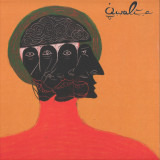
New London based quartet Qwalia, led by drummer Yusuf Ahmed, offer a plethora of influences whilst remaining resolutely itself. Assembled from musicians who play with David Byrne, Joy Crookes, Nubiyan Twist, Frank Ocean, Jordan Rakei, Sampha, Cat Stevens and more; Yusuf is joined by Tal Janes on guitars and vocals, Ben Reed on bass and keyboardist Joseph Costi. Qwalia’s debut album ‘Sound And Reason’ is set for release by Alberts Favourites on 24th March 2023.
The name Qwalia stems from the same sounding word Qualia, a philosophy of mind with the property of being an ineffable experience. Qwalia’s music is an instinctive aural expression of how things seemed in the moment of creation.
In April ‘21, Qwalia spent two days recording completely improvised music at the Fish Factory in North West London. There was no plan or preconceived idea of what the music should sound like or what was going to happen.
“We set up altogether in one room, dimmed the lights, pressed record and just played,” says Yusuf. “We came away with over 13 hours of music, which was consolidated into three albums worth of material. The final record is mainly a result of pulling faders up or down to create space and structure out of what was already there from the live recording. The production process felt akin to a sculptor chipping away excess stone to reveal a statue that was already there, and occasionally putting some makeup on it!”
The band members are Pakistani, Italian, Venezuelan, Jewish and English. A reflection of the fact that cultural categories are infinite; Qwalia’s music unconsciously explores identity, exposing what this can mean. Or perhaps that it doesn’t mean anything at all.
Early support from Mary Anne Hobbs and Gilles Peterson, support to come from Huey Morgan, Cerys Matthews.
нет на складе
Последняя поставка 3 года назад доступно для дозаказа без гарантии
AMRA, the collaborative project between Paul Purgas (Emptyset) and artist and filmmaker Imran Perretta, continue their excavations into syncretic mythologies, diasporic echoes and ancient rhythmic talas. hills/demons ruminates on spectral landscapes whilst bringing together a wider group of collaborators, forming a collection of dense percussive polyrhythms alongside sitar improvisations from British-Pakistani multi-instrumentalist Nabihah Iqbal and guest vocals from Bangladeshi singer Sohini Alam. Developed for a performance with the London based commissioning platform Artnight, the release expands on AMRA's exploration of archival traces and the struggles that marked South Asia's partition, summoning alternative histories and the echo of ancestral voices.
The first album of Web Web is very uncut, raw, live and direct. Oracle is the first output of a German Supergroup. Check the musician credits below and you'll get the score. The initial idea was to record a spiritual-jazz type of album, with all its imperfection as far as intonation, sound, influences of tunes... just like from their big jazz-heroes in the 70ies (e.g. Strata East, Black Jazz).
Web Web's idea was to record a jazz jam session while to found and proclaim being a fictive band, a formation, which did not exist, while telling people, it would be a secret jam session recording of the Seventies. The prompt problem they were facing: Oh, we never would be able to play concerts, doing interviews, or placing photos on sleeves or post likeness images online. So they decided to reveal their real identities:
Web Web are: Roberto Di Gioia (Piano, Synth, Percussion), Tony Lakatos (Tenor- and Sopranosaxophone), Christian von Kaphengst (Upright Bass) and Peter Gall (Drums).
Roberto Di Gioia (Mastermind of Web Web): - The four of us set up very close in a big room, so we could hear and feel each other the best way. The music became more intensive, improvisations became more dynamic and it was impulsive .
The album Oracle' was recorded on one day, only first takes were used!
We want to keep the burning spirit and the loose vibe we had during the recording session. And we play concerts the wild and free way we recorded this album. Web Web will be on tour 2018, but playing a few concerts in 2017.
Furthermore, one main decision to blab their real identities was: The second Web Web album is recorded in June (with guests like the famous and unique Gembri-player and multiinstrumentalist and singer Majid Bekkas from Morocco).
Both albums were engineered, recorded and mixed by Jan Krause (Beanfield, Poets Of Rhythm).
Roberto Di Gioia: - Tony was tuning his Soprano too high, and his (overdubbed) tenor way too flat!
My synthesizers were somewhere in between...HA! We exactly had the sound we had in our minds, we had it exactly there were we wanted it: a bit of Sun Ra here, a bit of Horace Tapscott there. On some tunes Tony's soprano just sounds like a trumpet, since due to his weird tuning the soprano develops different frequencies in relation to other instruments.
Oracle' is the first live jazz release on Compost. Produced by Roberto Di Gioia and Michael Reinboth.
Roberto Di Gioia has been working with numerous jazz-legends, such as Woody Shaw, Art Farmer, James Moody, Johnny Griffin, Charlie Rouse, Clifford Jordan, Clark Terry, Roy Ayers, Gregory Porter and many more.
From 1990 to 2008: member Klaus Doldingers Passport. As a pianist he made recordings with Udo Lindenberg (MTV-Unplugged, 2011), Charlie Watts ( Music Of The Rolling Stones , 2005), Console ( Reset The Preset , 2003), The Notwist ( Shrink 1998, Neon Golden , 2002). Since 2007 he is working together with Samon Kawamura and Max Herre as KAHEDI: Max Herre ( Hallo Welt , 2012), Joy Denalane ( Gleisdreieck , 2017), u.v.m...His own group MARSMOBIL (produced by Peter Kruder) will release his fourth studioalbum in winter 2017.
Tony Lakatos originates from the world famous Lakatos-familiy from Budapest, Hungary. His father was a famous violinist, as well as his younger brother Roby. He started playing saxophone when he was 15 years old. Tony studied at the Bela-Bartok-Conservatory in Budapest, and made his degree in 1979. Since then he played on over 350 jazz albums (!!), to name a few: Al Foster, Kirk Lightsey, Randy Brecker, George Mraz, David Witham, Terri Lyne Carrington, Anthony Jackson. Tony was a member of Jasper Van´t Hofs PILI PILI. Since 1993 he is working with the HR Radio-Bigband as a soloist.
Christian von Kaphengst learned the piano at the Peter-Cornelius-Conservatory in Mainz when he was 6 years old. From 1988 to 1995 he studied upright-bass at the - Musikhochschule in Cologne. He was touring with his own Jazzquartett - Cafe du Sport to Pakistan, India, Turkey and West-Africa. Since 1999 he regularly plays with Patti Austin and The New York Voices in Europe. Von Kaphengst played with the greatest musicians, such as Randy Brecker, Nat Adderley, Roy Hargrove, Joe Sample, Charlie Mariano, Katja Ebstein, Xavier Naidoo, Roachford, Yvonne Catterfeld.
Peter Gall won some important German awards already when he was a youngster, like - Jugend Jazzt . He was touring with the famous - Bundesjazzorchester conducted by German jazz legend Peter Herbholzheimer. He studied at the Berlin University Of Fine Arts and at the Jazz Institute Berlin with John Hollenbeck. Gall made a masterclass at the Manhattan School Of Music with John Riley. He has been working with Seamus Blake, Ben Street, Gabriel Rios, Jasmin Tabatabai, Thomas Quasthoff, Peter Fessler.
Japanese experimental group Les Rallizes Denudes are the ultimate rock ‘n’ roll enigma. Sometimes referred to as Hadaka no Rallizes or even as Hadaka no Rarizu, each appellation a variant of the name “Fucked Up and Naked” which equates to being high on hard drugs, they are seen as noise-rock pioneers, yet sifting fact from fiction isn’t easy with their oddball tale. Emerging from the radical hippie communes of Kyoto during the late 1960s, the band was formed in November 1967 by university student Takashi Mizutani, taking the overamplified, distorted guitar of the Velvet Underground as a starting point. Early demo recordings apparently suffered from poor sound quality, leading the perfectionist Mizutani to retreat from the studio environment, meaning that most of the group’s output has appeared as live bootlegs, with the occasional studio demo surfacing as well. Performances were initially staged as part of avant-garde theatre, though the band’s propensity for super-loud noise soon put paid to such collaboration; the ever-changing membership saw Mizutani the only permanent force, despite his embroilment in the 1970 Red Army hijacking of a civilian Japan Airlines flight, enacted partly through bass player, Moriaki Wakabayashi, who defected to North Korea in its aftermath. Though perhaps not quite as notorious, fellow improvisational group, Taj Mahal Travellers, has a backstory of random international travels that is almost as intriguing as that of Les Rallizes; formed in 1969 by six experimental musicians and an electronic engineer, they embarked on a series of improvisational gigs across Japan, notably including an all-day marathon held at a Kanagawa beach, and made their way to Europe in 1971, where they crossed paths with Don Cherry and other likeminded practitioners. They later drove from Holland to the Pakistan border, acquiring santoors in Iran on the way to help broaden their already unpredictable repertoire. The Oz Days Live release is culled from the Oz Last Days festival held in the autumn of 1973, to benefit Tokyo’s Oz Rock Café, which had been closed following repeated drug busts. Here the Taj Mahal Travellers are suitably cosmic, their echoing jams featuring looped vocal chants, disjointed string instruments and sparse, off-kilter percussion; in contrast, the contributions from Les Rallizes are more standard examples of instrumental psychedelic rock, which veers more towards the acid rock end of the spectrum as the performance progresses.