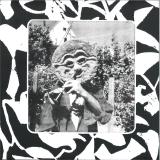
In 1956 "I Put A Spell On You" was released on the Okeh label, this release was what really changed Hawkin's fortunes.
According to legend, Hawkins intended it as a refined ballad, but he and his band were all somewhat the worse for alcoho
when they finally entered the studio. The result was intense and mesmerizing.
Although never a chart hit, the record had a massive impact. Covered by Nina Simone, Marilyn Manson and literally
dozens of others, it became a modern standard. Enjoy it once again on glorious vinyl, along with "Yellow Coat", "Hong
Kong" and "Ol' Man River".
Do you know what time it is? It’s Prime Time, the new EP on Punctuality from mischievous French duo Pureblast . Marking the label’s twelfth release, the record serves as a bold statement of intent from the Parisian pair and demonstrates why they’re quickly earning a reputation as one of France’s most exciting live acts.
Across the EP’s five tracks, Pureblast weave together a broad spectrum of influences while remaining deeply rooted in the duo’s singular vision. Every cut is fat, pumping, gritty and playful, ready to turn heads and hips on the dancefloor.
Side-stepping easy genre classifications, Prime Time is modern rolling prog at its most energetic. Tightly wound low-end, pummelling drums and restless basslines drive each track forward with purpose, while sa+ga’s vocals are manipulated and distorted to humanoid perfection. The result is something distinctly personal beneath the machine funk: robotic yet seductive, gritty yet playful.
Deep listeners will spot nods to tranced up breakbeats, Ray of Light-era big beat, Detroit electro and contemporary UK techno with psy-fluenced synth swirls and texture. Far from pastiche, these influences are absorbed into the Pureblast machine and transformed into something entirely their own.
Gritty, pumping, sexy and playful. It’s Pureblast, it’s Prime Time.
credits
On Rent Due, Chattanooga’s BbyMutha turns the pressure, exhaustion and absurdity of everyday life into a distinctly Southern rap record that could only come from her world. Raw, funny, confrontational and deeply personal, the album finds Bbymutha operating completely outside of the conventions of mainstream rap, filtering Southern tradition through the DIY spirit and fractured energy of the internet underground.
Across 15 tracks, Rent Due pairs heavy low-end and stripped-back drums with eerie, spacious production that draws from the darker lineage of Memphis and Southern rap without ever becoming nostalgic. BbyMutha's unmistakable delivery sits at the center of it all: deadpan one moment and explosive the next, moving effortlessly between money problems, motherhood, relationships, sex, frustration and survival with the same unfiltered humor that has defined her music from the beginning.
Production comes largely from Rock Floyd alongside Foisey, Paris Aden, Vile and Popstar Benny, while Lisha G, Vayda and Fly Anakin make guest appearances throughout the record.
Originally released digitally in April 2026, Rent Due captures BbyMutha at her most focused while retaining everything that has made her one of the most singular voices to emerge from the American underground: uncompromising, unpredictable and completely herself. Now available on limited edition vinyl!
Half a century after its original release, legendary Lebanese musician and singer Marcel Khalife—renowned oud player and global icon of both music and activism—returns with a new recording. On this album, he reinterprets four of the five tracks from his debut, Promises of the Storm. A bold defiance of time and history.
Why revisit the same album, 50 years later? The reasons are many, but one stands above the rest: history itself seems to be repeating. The narrative unfolds once more in the same dire circumstances as half a century ago, as if time has folded in on itself, returning everything to its starting point. The urgency, the necessity—it all remains, pressing and inescapable. We must begin again.
In 1976, a young Marcel Khalife found himself exiled in Paris, fleeing the Lebanese Civil War and his family’s Christian village, where his progressive, left-wing ideas had placed him under a kind of house arrest. He was one of the few to openly and unwaveringly champion the Palestinian cause. The situation quickly became untenable, especially since, just a month before the war began in March 1975, Khalife—fresh out of the conservatory—had given his first public concert to great acclaim. Then, everything collapsed. What does one do when trapped at home? Read books, play the oud, and turn those readings into songs. In his family’s de facto prison, Khalife began setting the poetry of the great Palestinian poet Mahmoud Darwish to music. These songs, born of confinement, he carried with him into exile, driving to Paris where a producer offered him the chance to record an album. Naturally, the tracks were the ones he had been improvising at home from Darwish’s poems. The album’s title, Promises of the Storm, echoed the war that was just beginning. Khalife recalls that the album became a hit after a concert at the Fête de l’Huma, where 500 copies were sold in a single day. “Everything started there, and it never stopped,” he remembers. He would meet Mahmoud Darwish shortly after, at a dinner organized by mutual friends. From that moment, a deep friendship blossomed between the two men.
With Darwish’s words and Khalife’s music, the songs of Promises of the Storm are imbued with a powerful evocative force—melancholy, tenderness, and poetic resistance in the face of violence. The album catapulted Khalife to international stardom, leading to endless tours and recordings, yet he never abandoned his commitments.
Now, 50 years later, Promises of the Storm returns in a fresh recording, because history is repeating itself. After the Israeli bombings in Lebanon at the end of 2024, Khalife, who was on tour, found himself stranded in Paris. He remembered a recurring request from his son, musician Bachar Mar-Khalife, who had often urged him to re-record his now-classic debut album. One morning, oud in hand, Marcel knocked on his son’s door and said, “Shall we? I’m ready to record.”
These new versions are stripped down, raw, and intimate—just the solitary strings of the oud. Khalife sings as never before, his voice no longer marked by the fragility of youth but imbued with something deeper, freer, unshackled. It soars high yet resonates low, always clear, as if to escape sadness, to evoke love and violence, desire and exile. In just four songs, Khalife encapsulates a lifetime, and a philosophy of life. Rita tells of a love of Darwish’s, with the haunting line (translated from Arabic): “Between Rita’s eyes and mine, a rifle.” Oummi invokes the figure of the mother as a metaphor for the lost land. Promises of the Storm is a meditation on revolution, the hope for change, the melancholy of defeat, and the power of thought. Passport captures, through poetry, the feeling of being stateless—a citizen of everywhere and nowhere.
Time has only strengthened these texts and this music. History never repeats itself without a valid, indispensable reason for the present. That reason is fully contained in Marcel Khalife’s new interpretations, which have never sounded so clear, so right, so essential.
“IRIE” is where the Paris-based artist Yasmin Regisford's next era begins. Built on echoes of reggae vocals, warm low-end pressure and slow-building psychedelic tension, the track blurs nostalgia and euphoria until they become impossible to tell apart. More than a collision of genres, “IRIE” is about coexistence: different influences and origins moving together without losing themselves. It mirrors Regisford’s own relationship to cultural hybridity — existing between worlds, and feeling fully at home inside the blend. The single sets the tone for Zentraï, a four-track EP that unfolds like a shifting ritual — morphing between groove-led hypnosis, psy-infused tension and percussion rooted in movement and memory. Across the EP, Yasmin Regisford maps a world where rhythms, textures and identities intertwine: fluid, layered and constantly evolving.
The fourteenth release on Early Morning brings Roy Rosenfeld back to the label for the first time since its second. The two years in between have not had a quiet stretch in them: new singles every few months across 2025 and 2026, and a touring year running from Mexico City and New York through Paris, Barcelona, Ibiza and Amsterdam to Montreal, Santiago and Buenos Aires. He is back in New York on the day this record goes global, and in Amsterdam for ADE later the same month. What arrives here is two long-form pieces, 15 minutes and 15 seconds together, both built on patience and both written for rooms where there is time to stretch out.
New Life takes its time. A full minute passes in suspended texture before the groove arrives, and when it does it carries the weight of everything that was withheld. The track moves in patient cycles, stepping away briefly at its midpoint before opening into an extended central passage where the rhythm withdraws and the harmony is left exposed. The return is the payoff, and Rosenfeld holds it to the final bar rather than letting it fade.
Seven Three Eight begins where New Life arrives. It is in motion from the first bar, with no preamble and no easing in. The low end breathes in long swells beneath a top layer that keeps shifting, and two breakdowns punctuate the arc without ever surrendering the momentum. It closes at full stride, running the seven minutes and thirty-eight seconds its title names.
Two tracks, near identical in length and opposite in approach. EARLY014 is a record about pacing, and about a producer who trusts the long form to do the work.
Since 2020, 12 Inch Lovers have been releasing new samplers every year, eagerly anticipated by collectors. These samplers have now become a staple and are easily added to vinyl collections across Europe. They offer timeless classics and rare tracks that are often hard to find elsewhere.
With Samplers 11 & 12, they surprise again with a mix of modern classics and tracks that have never been released on vinyl or are difficult to find. By adding unique and exclusive tracks, the 12 Inch Lovers samplers remain innovative and high-quality. They are a must-have for DJs, collectors, and fans of contemporary classics!
SAMPLER 12
A1) Borai & Denham Audio - Make Me (original release 2023)
Released in 2023 on the British label Room Two Records (catalogue R212001) on twelve inch vinyl, Make Me combines breakbeat, house and speed garage with high energy, featuring clear use of Amen breaks, rumbling sub bass and sharp rave sounds. At the heart of the track lies an instantly recognisable vocal hook from the mid eighties, a sample taken from Donna Allen - Serious (1986). The result feels like a long forgotten rave anthem from the nineties wrapped in a modern sound.
The original twelve inch pressing quickly became a highly sought after collector's item and received a limited pink vinyl repress in 2025. This track, first issued only on orange vinyl in 2023, was officially re released once all samples were cleared. It has every ingredient of a future classic, a true underground anthem for fans of modern UK rave and jungle energy.
A2) Smoke City - Mr. Gorgeous (and Miss Curvaceous) (Mood II Swing Vocal Mix) (original release 1997)
Originally released in 1997 on the album Flying Away by Smoke City. The Mood II Swing Remix, produced by New York house duo John Ciafone and Lem Springsteen (also the producers behind Ultra Naté - Free), takes the song straight to the dance floor with a smooth groove, soulful vocals and a deep, hypnotic flow.
The iconic line "Cool and calm, Mr Gorgeous..." remains untouched, while the remix enriches the original Latin and trip hop influences of the band with that distinctive late nineties house atmosphere. The result is a timeless club favourite, almost nine minutes of pure vibe (the Mood II Swing Vocal Mix runs 9minutes and 20 seconds), adored by DJs who like to bring a touch of soul to their house sets.
Released on Jive Records, the track received great praise. Music Week highlighted its "tight ay ay ay hook" and noted that the Mood II Swing and Hyperspace mixes made it a real standout. The original version reached number one in Italy in 1997, and the Mood II Swing Remix has since gained cult status in the Belgian club scene and beyond as the perfect marriage between soul and dance floor energy.
B1) Chris Raven - I Know You Love Me Too (Bruce Norris Remix) (original release 1997)
Christian Raabe, better known as Chris Raven, is a German producer who made his name in the late nineties progressive trance scene.
The Bruce Norris Remix of I Know You Love Me Too (Additive Records, catalogue 12AD 027) first appeared in late 1997 and was officially released in early 1998. The remix builds an euphoric atmosphere witha beautiful melody, dreamy pads and powerful drums, all typical of the progressive trance sound of that period.
The track gained extra attention when it appeared on Northern Exposure 3: Expeditions by Sasha and John Digweed in 1999. Many fans first discovered it there (especially the Van Bellen Remix version), helping to cement the cult status of I Know You Love Me Too within the progressive and trance community.
B2) Grooveyard - Mary Go Wild (original release 1996)
One of the most recognisable and iconic club tracks in Belgian and Dutch underground house history is without a doubt Mary Go Wild, released in 1996 on EC Records. The track quickly became the defining anthem of the rave scene in the Low Countries.
With a raw groove around 133 BPM, pumping four to the floor drums and the hypnotic vocal sample "Mary... go wild!", the record set dance floors ablaze in the nineties. Producer Jeroen Verheij, also known as Secret Cinema (from the classic Timeless Attitude), perfectly captured the raw energy of the European house movement of that era.
To this day Mary Go Wild stands as a symbol of pure rave power, a timeless anthem that, as one Discogs collector put it, "still works on any dance floor." Original twelve inch pressings on EC Records and later issues on Blanco Y Negro are highly sought after, and the track remains a staple in retro house and classic DJ sets.
C1) Dave Swayze - Last Flight To Paris (original release 2000)
Dave Swayze, best known for his classic Goldwave, has several hidden gems to his name, and Last Flight To Paris is certainly one of them. Released in November 2000 on the Belgian label Yeti Records, the track is a subtle blend of trance and progressive house. It is known for its emotional melody, dreamy build up and strong percussion, built on the foundation of progressive trance but with thewarmth and groove of house.
At the time, Last Flight To Paris was frequently played by progressive trance DJs and soon became a cult favourite among vinyl collectors within the genre. Original pressings on Yeti Records are now extremely rare and much sought after. The mix of emotion, euphoria and timeless club energy makes Last Flight To Paris a hidden treasure from the late trance era of 1999 and 2000.
C2) Joe Goddard - Music Is The Answer (Hot Since 82 Remix) (original release 2017)
This remix by Hot Since 82 (Daley Padley, from Barnsley in the north of England) for Music Is The Answer by Joe Goddard is partly based on the original classic Celeda - Music Is The Answer (in the Danny Tenaglia Remix). It was released in February 2017 as a digital exclusive through Domino Records.
Hot Since 82 reworked the original, a vocal house track by Hot Chip member Joe Goddard, into a deep, grooving house track with a warm rolling bass line. The soulful vocals of Joe Goddard (featuring SLO) take on a subtle melancholic tone in his remix, creating a modern house classic filled with emotion and drive.
The remix became a major club favourite in 2017 and 2018, supported by leading names in the tech house scene and heard at festivals around the world. Interestingly, this popular version had never been released on vinyl, which only increased its cult status among collectors. Music Is The Answer (Hot Since 82 Remix) remained a digital classic for years, until now, finally available in this long awaited vinyl edition.
D1) Just A Man - I'm Sorry (Original Club Mix) (original release early 2000s)
The French project Just A Man consists of brothers Hervé and Nicolas Subrechicot. Their track I'm Sorry is an emotionally charged house record that perfectly captures the early 2000s club atmosphere.
Released in 2003, the song combines soulful male vocals with a warm, rhythmic production that blends UK garage and classic club house influences. The Original Club Mix (6 minutes and 14 seconds) builds gradually towards a powerful, uplifting climax, carried by rich chords and an irresistible groove.
Although I'm Sorry stayed somewhat under the radar at the time, it is regarded by connoisseurs as a hidden gem, a perfect balance of melody and groove. The twelve inch vinyl release (on RKG / Motor Music, 2003) is now hard to find and highly prized among vinyl and house collectors, which only adds to its appeal.
I'm Sorry embodies the pure sound of early 2000s vocal house: sincere, funky and danceable, with that unmistakable UK garage touch, even more evident in the G Box Garage Club Remix on the same EP. An unfairly overlooked track that has always remained a true timeless classic since the very beginning of 12 Inch Lovers.
D2) Teddy Pendergrass -Life Is A Song Worth Singing (Jamie Jones Remix) (original release 2019)
In 2019 Jamie Jones breathed new life into the classic soul song by Teddy Pendergrass with a contemporary house rework. The remix was released in March 2019 as part of the digital EP Mixmag Presents: Teddy Pendergrass - The Remixes, issued in honour of the documentary If You Don't Know Me, a film about the rise of Teddy Pendergrass, the first African American male artist to achieve five consecutive platinum albums in the United States during the seventies.
Jamie Jones stayed true to the feel good essence of the 1978 original but wrapped it in a modern club sound, with pulsing synths, a warm rolling groove and a tight four to the floor beat providing the perfect base for Teddy's powerful and instantly recognisable voice.
The result is a captivating, soulful house track that effortlessly bridges past and present without losing the emotional power of Pendergrass's vocal delivery.
Despite its widespread popularity in the international club scene, where it became a favourite among DJs who love to blend soul with house, this remix never had a physical vinyl release. Until now, with its long awaited appearance on 12 Inch Lovers Sampler 12.
The electronic producer Franz Kirmann returns to Bytes for his eighth solo album. The “Almadies” are long wooden boats used by Senegalese fishermen. It is also the name of the neighborhood where Kirmann grew up, in the suburbs of Dakar, Senegal, near the Atlantic Ocean. "These new compositions are the result of sound experiments conducted over the past few months and reflections on the concept of mind-constructed geographies," Kirmann explains. "The way memories and souvenirs shape an image of a place or country that is part reality, part fantasy, part cliché, yet also deeply personal. This experience is influenced by education, social background, history, and other socio-economic factors. " The ten tracks are crafted from collages of electronic sounds blended with field recordings from various places Kirmann has visited — from Dakar to the Caribbean, as well as London and Paris. His aim is to blur the line between electronically generated sounds and real soundscapes, creating music where it becomes difficult to distinguish the real from the constructed. All the sounds on the album were produced using synthesizers and field recordings. No drum machines, percussion or traditional acoustic instruments were used. Influences include Brian Eno and John Hassell’s Fourth World, Vol. 1: Possible Musics (1980), described by Hassell as "a unified primitive/futuristic sound combining features of world ethnic styles with advanced electronic techniques" , which also works in the context of Almadies. Another big influence was Ariel Kalma’s Le Temps Des Moissons (1975) as well as artists including O Yuki Conjugate and Robert Aiki Aubrey Lowe to Susumu Yokota and Michael Banabila.
A Bristol x Paris link-up between SSSLIP and Bamao Yendé delivers with BP028. A label debut for both artists on the BPR original series. All killer no filler ear worms from across the spectrum. “On The Dial” and vinyl only cut “Don Plz” offer something for those sillier hours, while “Brek Stance” and “Kalypso” host the artists' deeper servings. A balanced collection of functional low end tools for the dance.
Bristol-based producer SSSLIP, known for their experimental club hybrid productions and a growing back catalogue of strong outings on No dice, ec2a and their own imprint SSS Audio. Sharing the EP with Parisian DJ and producer, Bamao Yendé, head of Boukan Records, blending inspirations through garage, broken beat, and Kuduro.
Belgian iconic label USA IMPORT gets relaunch. First release: REISSUE by HARDCORE producer Liza N’ Eliaz.
Nicknamed “The Queen of Terror”, Liza N’ Eliaz was a well respected DJ, producer and label owner born in Ostend in 1958 and sadly passed away in Antwerp in 2001.
Growing up in a family of musicians, she studied classical music and learned to play the piano four hands with her grandfather, a conductor at the local municipal orchestra. Later she discovered the synthesizer and cassette recorder and joined new wave and industrial bands in the recording studio and on tour. During a concert in France in 1985 she met Yvette Neliaz, who became her companion, muse and partner and whose surname inspired her pseudonym. Liza was added as a reference to the byname given to transsexuals in Flanders.
In Amsterdam the couple became enthralled with the burgeoning acid house, new beat and techno scene centered around the club Roxy. Soon Liza N’ Eliaz started to make a name for herself, among others in the Parisian underground scene and as a regular guest at French Radio FG. As a DJ she mastered an incredible technique simultaneously mixing on three or four turntables. As a music producer she had an impeccable ear for sound, pushing up the pace to staggering heights and as a result taking part in changing the rules of electronic dance music in a new and booming global scene in the mid nineties: hardcore and speedcore.
Liza N’ Eliaz was a prolific producer working solo and with artists such as DJ Dano, Laurent Hô and The Prophet, releasing on labels such as Atom, Mokum and Bonzai. In 1997 she founded her own label in collaboration with USA Import Records dubbed Provision Records.
USA Import Records is proud to present the reissue of Initial Gain, the EP previously released on its sublabel Atom Records in 1992, the second in the Molecules of Music series. Adding two new interpretations by Toulouse Low Trax to three original tracks, a nothing else but logical connection is set between Liza N’ Eliaz’ early work and today’s genre bending electronic music scene.
For the record: Liza N’ Eliaz didn’t like her nickname “the queen of terror”. She didn’t intend on terrorizing anyone, commented Yvette Neliaz after her unfortunate passing away.
Plying refracted rhythms with an exacting poise, Aerae arrives on Samurai Music with a fully formed sound that plumbs the depths between techno immersion and D&B beat science.
An accomplished, palpable tension runs throughout Nefanda, Aerae's second solo release. Following up on the meditative pulse of her debut album on Annulled Music last year, the Paris-based artist digs deeper into ominous atmospheres filled with evocative reverb decays and taut, dynamic drum work - tools she wields to Redner tracks with specific meaning, coded by the Latin framing that runs through all aspects of her musical output. Contemplating the ancient language as an inescapable part of her European roots, on Nefanda Aerae ruminates on external trials and inner impulses, and conjures a jaw-clenching soundtrack to match.
'Mons' (translation: 'Mountain') speaks to challenges, strength and spiritual ascent, marked out by an urgent thrum of conga slaps and a 4/4 kick around the 170 BPM mark that finds power in minimalism even at the relatively high tempo.
The title track opts for a more broken framework, pivoting pointed percussion around a deft sub pulse while turning up the intensity with an exacting poise.
'Nefanda' translates as 'unspeakable,' or 'too horrific to name,' and the fraught, synthetic wraiths contorting through the track convey the dread the title implies.
'Fovea' (translation: 'pit') burrows deeper into spatial design with a looming low end rumble and subliminal sound sculpture, shaping out a dark, introspective chasm tipped towards disassociation. It's a powerful statement in any setting, but the all-consuming bass feels especially crafted for full, physical sound system immersion.
'Phrenesis' (translation: 'frenzy') rounds the EP out in fierce form, building up a high-pressure arrangement from ambient beginnings with ruthless control. There's a sense of duality in motion between half-time and double-time rhythmic elements, every incremental shift adding to the intensity of the track with the elegant, impactful touch that has fast become Aerae's calling card.
Finding her own language within the dialogue between techno, D&B and dark ambient, Aerae's music makes a vivid impression thanks to the ideas and intention that drive her in the studio. Nefanda confirms her status as a leading light in deep, psychedelic dance music, making something extremely personal that also reaches out beyond notions of the self like all the best transcendental music.
Getting You Back to the Game of Life Records’ opening release, ‘Comme des mots’ LP is a journey through diverse sonic textures and energies from label-founder Lil Ronin.
Getting you back to the game of life is the headline of a physical and mental health therapy center. Casually popped in your conscience from an advertising board and let you in a strange place. But what is the game of life?
This label could be that space to get you back, to forget and perhaps find a form of youthful innocence again.
As a first solo project Lil Ronin freely experimented between different influences and genres that present his intimate universes, juggling with abstract, ballad and more dancefloor music, mostly recorded in Parisian suburb Alfortville between 2022 and 2024.
‘Comme des mots’ means ‘like words’ and evokes the ambiguous presence of his voice in the album, hidden in different characters, sometimes raving other times being conscious. Finally becoming a schizophrenic presence guiding you for the trip.
The cover follows the same ambivalence showing a typography with a distinct message that loses its readability in abstraction. The record also includes an insert with a childhood photo of Lil Ronin.
The LP was mastered in Paris by artist and engineer Krikor KOUCHIAN,
(past works for Simo Cell, Maoupa Mazzocchetti, Tolouse Low Trax…);
The design was created by sculptor artist and designer Marie-Mam-Sai BELLIER,
(past works for Erwan Sene’s JUnQ LP - PAN record, Zulu’s Hear The Sound Of My Feet - Association fatale etc.); The handmade drawings are by Vincent BENTOLILA (associated with the ‘Isengard’ label and parties in Brussels) ; The cover was handmade through silk-screen printing by the Lyon-based printer Olivier BRAL (whose past projects include Brigade Cynophile, Ateliers Dénudés, and Megabasse).
Life In Patterns returns with Symmetry of Chaos, a six-track EP by SLV. This EP embodies the Paris based label's signature aesthetic-where dub-chord depth, organic textures, and high-impact rhythms converge into a hypnotic, immersive club experience.
SLV crafts a sonic narrative that balances atmospheric tension with raw, driving energy. Deep, resonant chords intertwine with pulsating low-end grooves, while intricate percussions and evolving textures create a sense of controlled chaos on the dancefloor. Designed for both peak-time intensity and deeper explorations, Symmetry of Chaos is a bold statement in contemporary techno.
Meet Kitchen Plug, the Parisian trio that somehow combines the rebellious energy of punk, the synth-driven chaos of electro, and the charisma of a boy band... except, they don’t really dance (yet).
With their new EP "Nice To Meet You," these self-proclaimed nerds have served up an unpredictable, colorful mix of electronic anthems and rock-infused vibes. It's like if your favorite computer-generated juice suddenly turned into an unstoppable emotional rollercoaster.
Expect cheeky melodies, emotional highs (and occasional lows), and enough playful swagger to make you question why you’re not already in their inner circle of "copains" (that’s French for friends, by the way). Kitchen Plug isn’t just making music; they’re creating a sound so lively and full of attitude that you’ll probably feel like you're getting a bear hug from your favorite nerdy best friend — just with more synths and less homework.
"Nice To Meet You" is the kind of EP that doesn't take itself too seriously, but it’ll still make you feel something. So, what are you waiting for? Plug in, and let's see if they can live up to their own hype. (Spoiler alert: They will.)
Next up on Toolroom’s 4-track vinyl sampler series is 4 killer cuts from our latest repertoire.
Kicking off with another straight up, dance floor weapon, Essel lands back on the label with brand-new single, ‘Sweat’. Her toughest sounding record to date that captures the post-rave moment, cementing herself as one of the hottest new talents to emerge in the electronic music scene.
Next up, Parisian born and US based tech house producer Shiba San debuts on Toolroom with a seriously wonky affair alongside studio buddy, Ayarez, aptly titled ‘Twist It’.
Up next on the sampler, is the return of longstanding label favourite Friend Within with his rolling tech house banger ‘Pilka’. Having landed 2 of the hottest tracks on Toolroom last year with ‘Monkey Bars’ and ‘Bring It Down’ which saw sweeping support flood in from across the scene, including Paul Woolford (Special Request) Salute, LF System, Dom Dolla and many more, friend within is officially back for 2023!
Completing the EP, we welcome sola regulars and one of the freshest, most exciting dance music duos to come out of the UK in recent years, Maur who lock horns with chart topping US based Westend, for a label debut set to become 2023’s festival anthem - ‘Over’.
DJ support from Danny Howard, Annie Mac, Mistajam, Pete Tong, Charlie Hedges, Kraak & Smaak, Maxinne, Todd Terry, Alex Preston, Full Intention, Gw Harrison, Dj Rae, Rudimental, Alaia & Gallo, Illyus & Barrientos, Johan S, David Penn, Sam Divine, Riva Starr, Claptone, Nice7, Dario D’attis, Mousse T, S-Man, Huxley, Kc Lights, Friend Within, Dombresky, Gorgon City, Chris Lake, Format:B, Pirupa, Tcts, Alan Fitzpatrick, Low Steppa, Mat.Joe, Raumakustik, Eskuche
Bingo Club demands no rules for entry. Everyone knows your name. The hours are endless and the dress code remains
unspoken.
Martin Rousselot opened the doors to the Bingo Club at the dawn of the 2020's. Joined by Neysa Barnett, Vassili
Yatchinovsky, Marie-Paule Bargès and Emile Larroche, Bingo Club puts down its signature sound-stamp and juggles with
styles of different kinds; if five songs throb to the clank-clank of New York trains, five more drift lazily like Marseille's sailspotted waves.
Group signifiers and visual tropes are reduced to a molten wash of melodies and images that, whether heard or seen, unite
kindred spirits.
Whether as a duo or as a soloist, in English or in French, a warm mix of soothing voices is blanketed by soft rock
instrumentation. The videos are filmed with an analogue camera across the four corners of the globe.
A first EP, "Separated," released in 2020, sees a collaboration with Al Carson (Weyes Blood, Ariel Pink, Jessica Pratt...). In
2021 the single "Someday," featuring Annie Lime & Jonas San, comes out. In 2022, Bingo Club presents its debut album «
Better Lucky Than Beautiful », produced and mixed in Paris at Studio CBE by David Mestre (Sebastien Tellier, Chassol, ...).
The album is a collection of ten songs, written in different times and places, like a musical travel diary or sound-postcards.
marta is a Paris-based live electronic duo pushing the boundaries of techno through a fully performed live setup combining processed violin, acoustic and electronic drums. Blending the intensity of club music with the spontaneity of live performance, the duo has developed a distinctive, physical sound that stands apart in today's electronic landscape. Following the acclaimed singles LINE and RAW, their EP PUSH confirms their artistic vision while supporting a rapidly growing international trajectory, with more than 120 shows scheduled through the end of 2026, strong editorial support and an expanding global audience.
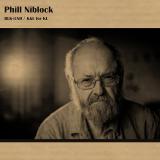
Phill Niblock completed BLK+LND in late November 2023. It is one of Phill Niblock's final compositions and was commissioned by bassist Robert Black (who passed away in the summer of 2023). The piece is based on recordings of acoustic bass and bass clarinet performed by Neil Leonard and Robert Black under Niblock's direction in 2021.
Phill Niblock (1933-2024) as an artist whose fifty-year career spanned minimalist and experimental music, film and photography. He has been a maverick presence on the fringes of the avant-garde. In the history books he is the forgotten Minimalist. Since 1985, he served as director of Experimental Intermedia, a foundation for avant-garde music based in New York with a branch in Ghent, and curator of the foundation's record label XI. Known for his thick, loud drones of music, his signature sound is filled with microtones of instrumental timbres that generate many other tones in the performance space. He said: 'What I am doing with my music is to produce something without rhythm or melody, by using many microtones that cause movements very, very slowly.' In 2013, his diverse artistic career was the subject of a retrospective realized in partnership between Circuit (Centre d'art contemporain Lausanne) and Musée de l'Elysée (Paris). The following year he was honored with the prestigious Foundation for Contemporary Arts John Cage Award. Since 1968 he also put on over 1000 concerts in his loft space in New York.
"On January 6, 2024, two days before his passing, Phill called me to discuss the premiere and tour of BLK+LND. To distract him from his rapid decline, I engaged in his touring plan, only for him to reveal that all the details were still in his head and none of the events had been confirmed. He was entrusting the project to me. Phill would have been thrilled and honored by this concert at the Donaueschinger Musiktage. The thought of one more performance with Robert Black, whom he greatly admired, presenting his new work for low-pitched instruments that he was particularly fond of, andreconnecting with old and new friends in Donaueschingen would have meant the world to him." - Neil Leonard, Berklee College of Music, Boston
Remastered limited edition double vinyl with double-sided screenprinted poster-cover (sleeve folds out to be one huge poster). A real collectors item!
When Off Off came out around June 1984, one couldn’t speak of an independent music scene in Portugal. Warm Records’ vague existence didn’t have any impact and Dansa do Som’s inaugural release appeared only in December. 10 years after the revolution, after two IMF interventions, a lot of political instability (not to say turmoil, in the first couple of years) and the natural excesses of a sudden burst of freedom, the Portuguese consumer had more choices but a generally poor standard of living. There was no entrepreneurial culture and serious second thoughts about investing private money in risky ventures.
After many complaints about the whole music scene (institutions, critics and record label executives, popular and classical music alike), something that would continue well beyond the end of the decade, Telectu decided to finance, record, produce, release and sell an album with complete independence from outside structures. Their karmic reward was profit. According to Vítor Rua, Off Off was the only album fully payed by the duo and the only one that really payed off. Not an easy accomplishment for a double LP housed in a large (also double-sided) screenprint with complicated cuts and folds. The artwork was conceived by António Palolo, a friend and multidisciplinary artist. It was based on a collage of heavily saturated and xeroxed polaroids framed in shocking pink and green. Palolo was considered the third member of Telectu, regularly producing slides, video and other visual support for their shows. The inspiration for the type of cover came from GRM’s Gramme series.
Off Off is divided in four distinct sides, each one corresponding to a “theme” or “function” related to Telectu’s manifold artistic interests and interactions. The titles are also gateways to influences and a small portion of Portuguese cultural life:
- Side 1 / “Diagonale” is dedicated to Egídio Álvaro, art critic and gallery director (he opened Diagonale in Paris). Performance art was arguably his main artistic concern over the years, so the music on this side is suggested for use by one or more performers in live or playback situations. The three tracks segue into each other, linked by a synth arpeggio much in the same way as Telectu’s previous “Belzebu” álbum (1983);
- Side 2 / “Anarké” is dedicated to the composer Filipe Pires, one of Jorge Lima Barreto’s recurring invocations when asked about worthwhile contemporary music in Portugal. It is subtitled “concert music”, proposing «a new form of listening». Three tracks also, and these are separated by “clap interludes”, which basically consisted in the following: JLB and VR each had a pair of headphones on, and they clapped their hands according to the rhythm of the music each one was listening. Both musicians were interacting with a different Steve Reich piece: Vítor with “Music for Mallet Instruments”, Jorge with “Six Pianos”. The result is disjointed clapping, an awkwardly deliberate celebration of their own music. Telectu applauded themselves.
- Side 3 / “Cornucópia” is subtitled “music for theatre” and dedicated to Luís Miguel Cintra and Luís Lima Barreto (JLB’s brother), both connected to the Cornucópia theatre company. The side consists of several short pieces previously used as interludes in the Cornucópia staging of “Mariana Espera Casamento” (1983). Field recordings, mood pieces, ambience and a numeric poem (“Soneto Soma 14x”, by E.M. de Melo e Castro) read by João Perry, a quite well-known stage actor. His voice is treated with a flanger effect;
- Side 4 / “Palolo” is “video music”. It’s a one-take mix recorded from cassette sources (Telectu studio experiences) and done live while watching António Palolo’s Om film (1978) projected on the living room wall. It’s a deep, immersive, quasi-mystical 20-minute piece perfectly suiting the meditative, abstract, fluid images created by Palolo by mixing paint and water inside a bathtub. One imagines the Cosmos, hardly suspecting the technique. The film is 90 minutes long, so the music on the LP is of course edited.
The six titles on sides 1 and 2 evoke demons, all of them with conflicting symbolism, since it varies from culture to culture, religion to religion. No explanation is given and Vítor Rua has no idea where this imagery comes from. During virtually the whole stretch of the 1980s, Jorge was the one in charge of titles and concepts, and Vítor didn’t bother too much even reading the liner notes :) In any case, when you synchronize the listening experience with the imagery, a powerful impression emerges, a feeling of being in the presence of these entities while placing yourself inside the sonic narrative.
Off Off is undoubtedly a seminal album in the history of electronic music, as much Heldon as Fripp & Eno, jazz and American minimalism, cosmic out-thereness, mantric miniatures. Telectu at the height of their powers, still very early on, delivering an album-manifesto advocating intermedia art and the fierce independence of Portuguese musicians «from the scum of capitalist music industry monopolies. It’s a path to follow, albeit one that requires enduring hardships and retaliation from music industry gangsters.» Despite a few journalists deemed «capable of being free», the media are «enslaved by the dominant and fascist imbecility of the speculators of light music.» Off Off is addressed to those journalists «and to an audience angry at the cultural misery imposed upon us ..., certain that this music will open new horizons of musical pleasure in the conception of Portuguese avant-garde music, and in the open consciousness of us all. OFF OFF repeats Freedom.»
Those two words are a direct lift from Alberto Arbasino’s 1968 book Off Off, the basis of which is a critical analysis of Theodor Adorno’s and Dwight MacDonald’s ideas concerning the stratification of culture in different levels (high, mid and low) and the pervasiveness of mass culture in the form of a culture industry. In very simplistic terms, and that is precisely the point that inspired Jorge, Arbasino argued that it was possible and desirable to effect a revolution from below, cultivating alternative circuits completely cut-off from what he termed the in-in reality. Telectu’s record was a deliberate demonstration that it could be done, displaying Freedom in the face of all the gatekeepers and other human obstacles.
"The electroclash genre sure has been having a bit of a renaissance moment. During its first coming an odd 25 years ago the French act Sweetlight was a favorite over here. Originally active between 2002 and 2010, they quickly positioned themselves within a refined strand of the global underground scene: inspired by 90s acid house club culture, they rose to prominence by releasing a sparse selection of original tracks and a multitude of remixes that were both dancefloor-effective and immediately recognizable. After the EPs stopped coming, the project seemed to have faded. But their tracks never left our bag: they combined minimalism with ambiguous elegance and retained a distinct, timeless quality, easily transcending the turn-of-the-century style they were most closely associated with. We are delighted, in what we consider nothing less than a full-circle moment, to release "Selected Recordings: 2004 - 2006" and shed light on an underrated yet, in our eyes, absolutely essential project. ALT022 is an anthology release featuring four extensive, remastered cuts. Abusator, arguably the act's hallmark track and a crossover hit, kicks off the EP. It is joined by Mecaniques Remontees, which opened the milestone Suck My Deck mix by Ivan Smagghe, and Too Shy, both initially part of the same EP back in 2004. Noir Comme Le Beat, an unreleased curiosity from the same era, closes the record. You will find dark, endless, ever-modulating arpeggiator basses, Detroit-via-Paris chord progressions, and spartan drums. The work is, in the artists' own words, low-profile, detail-oriented, and built for late hours. It's an ideal compilation or - depending on the case - introduction, especially now that new work is rumored to be finally on its way."
nicht am Lager
Zuletzt vor 43 Tagen geliefert unverbindlich nachbestellbar
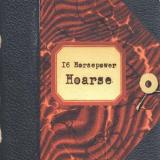
Mit "Hoarse" legten 16 Horsepower 2000 ein Live-Album der Extraklasse vor. Die elf Songs, aufgenommen 1998 in Denver und Paris, zeigen die Band auf der Höhe ihres Schaffens, mehr noch, die hier zu hörenden Versionen der Songs ihrer Studioklassiker "Low Estate" und "Sackloth"n"Ashes" sind nahe der Perfektion. Was für eine Kraft, was für eine Wucht! Von dem von David Eugene Edwards" Akkordeon dominierten Intro des Openers "American Wheeze" braucht es keine zwei Minuten, bis die Band die Hölle losbrechen lässt. 16 Horsepower waren anno 1998 eine Maschine, die alles niederwalzte - nicht brutal, aber immer gewaltig. Dabei blieben sie stets filigran, beherrschten auch die leisen Töne (man höre nur "Bad Moon Risin""!) in gleicher Souveränität wie das volle Brett. Neben dem CCR-Cover gibt es Gun Clubs "Fire Spirit" sowie ein fulminante Version von Joy Divisions "Day Of The Lords". Wer die Band jemals live erlebt hat, weiß um die Magie solcher Momente.
Another Taste is back with their follow up album: Another Taste II delivers eight new cuts of boogie, funk, and obscure disco influenced productions, recorded live to tape. Comes with Download code.
After lighting up renowned clubs like KOKO London, Jazz Café London,Tresor Berlin, New Morning Paris, and festivals like Love Supreme (UK), Lost Village (UK), Nuits Sonores (FR), Hamburg Jazz (DE), Lowlands (NL), ADE Amsterdam - the band has surfaced from the studio anew, mixing myth with music.
If their debut record in 2024 was an introduction to their musical range, Another Taste II is the full immersion. The two-sided album plays like a neon-lit cab ride where the radio is set to groove. Expanding their palette with sharper songwriting, denser arrangements, and a fictional universe.
The album showcases Another Taste’s collective at full strength: Barend Lippens, Bobby van Putten, Bob Roche, Teun van Zoggel, Sarina Voorn, Diogo Carvalho, and Florian Verhagen. Together they summon a sound that is electrifying, communal, and unmistakably theirs, joined on “Peace Call” by Arp Frique and the Perpetual Singers, and bolstered throughout by a dedicated brass section.
Another Taste II is engineered and mixed by Bobby van Putten, mastered at The Carvery by Frank Merritt, with artwork and design by Timo ter Braak, Walt van der Veen and Robert Reinartz.
The new album presents a collaborative creation that’s both timeless and unpredictable, pulling listeners deeper into the band’s universe with every spin.
nicht am Lager
Zuletzt vor 71 Tagen geliefert unverbindlich nachbestellbar
Even in these most turbulent of times, dub musician and fatigued onlooker Elijah Minnelli remains an inexplicable stalwart on the lower rungs of the Breadminster County Council.
His latest record ‘Clams As A Main Meal’ continues his astute siphoning of council funds, this time with help from the Breadminster Board of Abstinence. As a further mark of respect, the original head of the Board, Dr. K'houldoux, graces the cover art in his infamous ‘Looming Moon of Desire’ guise.*
As fine a backdrop as any for Minneli’s off-brand dub experiments, and ‘Clams...’ is the truest representation of his varied wheelhouse yet...
We find vocal appearances from dub goliath Dennis Bovell and Welsh-language singer Carwyn Ellis. A pair of tracks which build on 2024’s acclaimed ‘Perpetual Musket’, a collection of folk songs reworked alongside reggae vocalists, released by FatCat Records. It garnered glowing reviews, with nods from The Guardian and The Quietus concluding with prominent appearances on their respective yearly round-up lists.
Elsewhere, the album finds Minnelli in a more experimental mode, all wheezing contraptions and cockeyed bass, creaking with the weight of creation, a satisfying tactility laid seam-side up.
As well as ‘Perpetual Musket’, the new album follows years of sold out 7" singles, handmade and self-released. Online, the tracks have amassed global streams numbering in the millions. His tracks have found play across an eclectic range of radio mixes and dance floors, most notably the likes of Andrew Weatherall, Batu, Optimo and Zakia Sewell (BBC6Music).
It is perhaps worth mentioning that this everbuilding interest in his work is at great odds with the growing suspicions amongst his fellow townsfolk, who see his Breadminster County Council Music Initiative as nothing more than an empty cash-grab.
Further Reading on the Breadminster Board of Abstinence
In the late 70s, Breadminster was awash with the last vestiges of the hippy era. Though the flared silhouette of the lower leg remained, the utopian ideals that had once flowed merrily around the youth's shaded ankles had begun to wane. LSD and free love had led to a sharp spike in population and a generation of children raised by air-headed psychonauts unprepared for the bleary-eyed strictures of parenthood.
Aware of the crisis, the County Council entrusted Dr. Paulinque K'houldoux to spearhead a pushback, and it was his pro-abstinence movement - a mixture of education initiatives and radical renutrition campaigns - that came to impact Breadminster's census deep into the new millennium.
Being a pseudo-archipelago Breadminster has fundamentally limited resources, however deep-seated ties to distant coastal villages meant that oysters were a regular part of the local diet. K'houldoux pinpointed this as a factor in the town's overpopulation, and believed that simply replacing these with clams (a “lesser mollusk”) would help lower the erotic urges of the people. It was his “anti-aphrodesia” movement that first championed the idea of “Clams As A Main Meal,” and the slogan “Consider Abstinence” carried the message yet further.
The Breadminster Board of Abstinence soon became involved in all cultural happenings in the area, with K'houldoux MCing at prominent festivals and performances, sometimes dressed as the “Looming Moon of Desire” - an idea of his relating to the tide, seafood, menstrual cycles, and his privately held celestial predilections.
It was in 1981 that it was revealed Dr. K'houldoux had never fully qualified as a doctor and was seeking exile in Breadminster due to a series of botched bracelet heists in which he had previously been involved. K'houldoux was subsequently extradited to Basingstoke, where he served 3 of a 12-year sentence, owing to the lunar-oriented prisoner health campaigns he helped implement.
It has been a strange twist of bureaucratic fate that the Breadminster Board of Abstinence has never stopped receiving public funding, despite its lack of clear utility. And while its roots are tied to a rose-tinted past, the Board continues to sponsor cultural events and projects to this day.
An extract from: Eugeniq Schooner's article in Sydney Parishioner: “Clams, Breadminster and Countercultural Abstinence Trends” (2008)
nicht am Lager
Zuletzt vor 4 Monaten geliefert unverbindlich nachbestellbar
Back on Planet Sneaker with his infectious, raw-as-sushi take on UK funky, French MPC maverick Kaval presents another four-strong salvo of wavey 4/4 workouts heavy on the drums and loaded with ear-snagging hooks. The past year saw the Toulouse scene stalwart launch his own KVLDUBS 12” series and appear on Parisian label Nowadays.
Kaval certainly sounds in fine fettle as he bowls back our way, kicking off proceedings with the air horn x bass squelch firestarter ‘Lavawheel’. It’s loaded with such hefty squarewave low end it feels like it could fall out the bottom of the speaker at any minute, all the while stamped down by a bouncy UKF thump. ‘Basement Woi’ twists up a knottier rhythm, but the cheeky vocal samples keep flying out of the mix to keep the vibe infectious.
On the B side, ‘Sonic Boom’ has a slightly more techno-spirited demeanour to the production, albeit never at the expense of the hefty subs. That leaves it to ‘Tek Talk’ to mop up with a twitchy construction dancing on the edge of electro in the tweaked-out, early 00s spirit of the word. With bags of personality and equal amounts swagger and fun, on SNKR066 Kaval maintains his position as a free thinker for the possibilities springing from the UK funky formula.
nicht am Lager
Zuletzt vor 4 Monaten geliefert unverbindlich nachbestellbar
Alex Wann & JUNO combine for ‘Allo’ on Crosstown Rebels.
Out on 8th May 2026, the two in-demand talents combine for a cinematic label debut on Damian Lazarus’ imprint. Parisian DJ/producer Alex Wann joins forces with German talent JUNO for a brooding two-track EP arriving via Crosstown Rebels on 8th May. Alex has become a formidable force within the melodic house landscape, performing at festivals and venues from Tomorrowland to Pacha Ibiza, while holding a Las Vegas residency at Wynn’s XS Nightclub. His reach extends far beyond the booth, with multiple Beatport chart-topping releases on renowned imprints and notable support from Keinemusik, Diplo, John Summit, BLOND:ISH, and more. Here he collaborates with JUNO, who comes off a breakout 2025 marked by his standout hit ‘Last Dance’ on Magnifik Music and a Hot Mix for Pete Tong on BBC Radio 1, delivering an impressive label debut for the pair.
Title track ‘Allo’ sees the pair lock into a deep, groove-led collaboration that balances warmth and intensity, built around a driving low end and a steadily rising sense of pressure as its growling basslines, echoing synth textures, and razor-sharp percussion slowly unfold. On the fl ip, ‘IDONE’ fi nds Alex Wann stepping out solo with an introspective fi nish, featuring pulsing riff s and pensive, elongated piano chords, threaded by a winding, gritty synth line that gradually builds toward a powerful climax.
nicht am Lager
Zuletzt vor 4 Tagen geliefert unverbindlich nachbestellbar
The new EP from the UK's fastest rising Death Metal band (who are here to Party). Formed in 2010, Party Cannon quickly gained attention for pairing uncompromising brutality with an irreverent, high-energy aesthetic. What began as a no-rules take on extreme metal evolved into one of the genre's most recognizable and entertaining acts. Armed with the upcoming Subjected To A Partying, Party Cannon are ready to unload their most refined and aggressive material to-date this March: an EP chock-full of crushing slam riffs and their signature sense of fun. Shortly after release, Party Cannon will also co-headline the 2026 "UK/IE VOMITOUR" with Internal Bleeding, which will feature headline-length sets and rotating slots each night
Grady Steele (Formant Soundsystem) debuts on FELT with the tender spectre of Nausea, poignant patterns captured through the dusk-hued window pane.
Co-founder of the Formant Soundsystem, a travelling rig that’s powered forward-thinking dances in London and Paris, Grady Steele has championed both experimental and club music at the cutting edge. Concurrently to this, he debuted his own productions back in 2024 for Archaic Vaults. Uniquely intimate, his music shone lowkey and warm with an assured glow. It’s no surprise then to find his inimitable sounds land neatly on Fergus Jones’ FELT imprint.
Nausea extends across seven movements, narrating sentimental parallels of familiarity. Grady posits concentrated pangs of post-rave nostalgia with rich melodic sustenance, a vivid introspection tempered with field recordings and live instrumentation. Strummed guitars and aching pads move purposefully with the suspended pace, an immersive beatless vista from its opening quiet moments through to the guttural noise-laden finale. It’s a brief, beautiful collection from Grady Steele and another string to FELT’s unpredictable bow.
Death Is Not The End present a further volume of Arja Kastinen's eerie amalgamations of 110 year old wax cylinders with her own meticulously transcribed takes, this time focussing in on Armas Otto Väisänen's field recordings of kantele player Iivana Mišukka (b. 1861 d.1919).
"Ivana Mišukka (1861–1919) was one of the Karelian kantele players recorded by the folk music researcher Armas Otto Väisänen on wax cylinders in 1916 and 1917. In the early 20th century, the remote areas of Border Karelia were undergoing the final phase of a transformation in musical culture, with the ancient runo song tradition giving way to newer forms of music. This transition is reflected in Mišukka's repertoire and choice of instrument. The ancient small kantele, hollowed out of a single piece of wood, was already rare at the turn of the century. Mišukka's kantele was a new type of instrument with 26 strings, constructed of several parts, but he played it using the traditional plucking technique. Like other Border Karelian kantele players, his repertoire consisted of music rooted in runosong culture, as well as newer dances and songs from the east and west. Most of the recorded material falls into the latter category.
Ivan Bogdanov Mišukka was born out of wedlock in Suursara village, Suistamo, on 1 May 1861. He began playing the kantele at the age of five or six, quickly mastering the instrument. In adulthood, he was considered one of the area's best master players. Mišukka was landless for most of his life and lived in different parts of the Suistamo parish. His first wife, Tekla Markintytär, died in 1897 at the age of 40, and his second wife, Jevdokia Filipintytär Jeminen, died in 1907 at the age of 50. Seven children were born from the first marriage, two of whom died young. The third wife, Maria Ignatintytär Gurnan (Kuurnanen), was a well-known master of lamentations. Together with Maria, Iivana Mišukka worked as a tenant farmer in the village of Suursara. Mišukka suffered from rheumatism, which prevented him from participating in physical work like Maria. This was apparently partly the reason why Iivana Mišukka went to earn extra money by playing the kantele on gig trips. He often had other traditional artists from Suistamo as his travelling companions, such as the runosingers Konstantin Kuokka and Iivana Onoila. Iivana Mišukka died in Leppäsyrjä village, Suistamo, on 18 May 1919 at the age of 58, and his kantele was donated to Teppana Jänis.
Mišukka only used 14 of the 26 strings on his kantele, playing the same tunes either a fourth higher or lower. He tuned his kantele to the major scale using fifths, except for a low seventh scale degree on the upper strings, but not below the fundamental. Since he did not use the seventh note of the scale on the upper strings at all, he could use the major scale both lower and a fourth higher with this tuning. According to Mišukka, the sound of higher, or 'finer', strings is 'more beautiful', while that of lower ones is 'greater'. Among runosingers, the size of the thirds varied, ranging from major to minor to neutral. A similar phenomenon can be observed in kantele tunings, where the third, sixth and seventh scale degrees vary in a comparable way.
During a meeting, Väisänen suggested that Mišukka play the smaller kantele belonging to Konstantin Kuokka. The idea was to bring it closer to the horn to improve the recording quality. However, the kantele was completely out of tune, and now Mišukka tuned it to the Lydian scale (track 18).
Using the old plucking technique, Mišukka placed his right middle finger on the fundamental tone, his right index finger on the second scale degree, his left middle finger on the third scale degree and his left index finger on the fourth scale degree, and his right thumb on the fifth. The thumb also played the notes above the fifth note of the scale. As Mišukka remarked to Väisänen: 'Peigaloll' tuloo enemb ruadoa' (the thumb has to do more work). However, he did not use the seventh note of the scale on the upper strings at all. Below the fundamental note, he played the seventh and sixth notes of the scale with his right middle finger of and the fifth note of the scale with his right ring finger. This fifth scale degree below the fundamental is almost always used as a drone. Sometimes, when the melody required it, Mišukka, like other players, also varied the fingering. He would also occasionally strike the same string with the side of his fingernail after plucking it.
The wax cylinder recordings of Karelian kantele players are kept in the archives of the Finnish Literature Society in Helsinki, Finland. Copies were made of them onto reel-to-reel tapes in both the 1960s and 1980s. The 1960s copies are mono and the 1980s copies are stereo. However, not all kantele recordings from these decades have survived.
The sound of the kantele is difficult to hear in wax cylinder recordings due to its low volume, and it occasionally becomes completely obscured by noise. During the copying process, the cylinder sometimes rotates unevenly, resulting in breaks or jumps in the music. Additionally, the rotation speed of the cylinder in the copies does not correspond to the performance speed of the original music, which alters the pitch. However, since Väisänen's precise notes are available in the archive, it is possible to deduce the melodies, their speed, and the tuning level of the kantele in the recordings. Of the copies of the original recordings from the 1960s and 1980s, I have selected the one that best met the requirements of this publication and adjusted the speed of the recording to align with Väisänen's notes. To enhance the listening experience, I have replayed the songs, which now partly overlap the old recordings on this release."
Death Is Not The End present a further volume of Arja Kastinen's eerie amalgamations of 110 year old wax cylinders with her own meticulously transcribed takes, this time focussing in on Armas Otto Väisänen's field recordings of kantele player Iivana Mišukka (b. 1861 d.1919).
"Ivana Mišukka (1861–1919) was one of the Karelian kantele players recorded by the folk music researcher Armas Otto Väisänen on wax cylinders in 1916 and 1917. In the early 20th century, the remote areas of Border Karelia were undergoing the final phase of a transformation in musical culture, with the ancient runo song tradition giving way to newer forms of music. This transition is reflected in Mišukka's repertoire and choice of instrument. The ancient small kantele, hollowed out of a single piece of wood, was already rare at the turn of the century. Mišukka's kantele was a new type of instrument with 26 strings, constructed of several parts, but he played it using the traditional plucking technique. Like other Border Karelian kantele players, his repertoire consisted of music rooted in runosong culture, as well as newer dances and songs from the east and west. Most of the recorded material falls into the latter category.
Ivan Bogdanov Mišukka was born out of wedlock in Suursara village, Suistamo, on 1 May 1861. He began playing the kantele at the age of five or six, quickly mastering the instrument. In adulthood, he was considered one of the area's best master players. Mišukka was landless for most of his life and lived in different parts of the Suistamo parish. His first wife, Tekla Markintytär, died in 1897 at the age of 40, and his second wife, Jevdokia Filipintytär Jeminen, died in 1907 at the age of 50. Seven children were born from the first marriage, two of whom died young. The third wife, Maria Ignatintytär Gurnan (Kuurnanen), was a well-known master of lamentations. Together with Maria, Iivana Mišukka worked as a tenant farmer in the village of Suursara. Mišukka suffered from rheumatism, which prevented him from participating in physical work like Maria. This was apparently partly the reason why Iivana Mišukka went to earn extra money by playing the kantele on gig trips. He often had other traditional artists from Suistamo as his travelling companions, such as the runosingers Konstantin Kuokka and Iivana Onoila. Iivana Mišukka died in Leppäsyrjä village, Suistamo, on 18 May 1919 at the age of 58, and his kantele was donated to Teppana Jänis.
Mišukka only used 14 of the 26 strings on his kantele, playing the same tunes either a fourth higher or lower. He tuned his kantele to the major scale using fifths, except for a low seventh scale degree on the upper strings, but not below the fundamental. Since he did not use the seventh note of the scale on the upper strings at all, he could use the major scale both lower and a fourth higher with this tuning. According to Mišukka, the sound of higher, or 'finer', strings is 'more beautiful', while that of lower ones is 'greater'. Among runosingers, the size of the thirds varied, ranging from major to minor to neutral. A similar phenomenon can be observed in kantele tunings, where the third, sixth and seventh scale degrees vary in a comparable way.
During a meeting, Väisänen suggested that Mišukka play the smaller kantele belonging to Konstantin Kuokka. The idea was to bring it closer to the horn to improve the recording quality. However, the kantele was completely out of tune, and now Mišukka tuned it to the Lydian scale (track 18).
Using the old plucking technique, Mišukka placed his right middle finger on the fundamental tone, his right index finger on the second scale degree, his left middle finger on the third scale degree and his left index finger on the fourth scale degree, and his right thumb on the fifth. The thumb also played the notes above the fifth note of the scale. As Mišukka remarked to Väisänen: 'Peigaloll' tuloo enemb ruadoa' (the thumb has to do more work). However, he did not use the seventh note of the scale on the upper strings at all. Below the fundamental note, he played the seventh and sixth notes of the scale with his right middle finger of and the fifth note of the scale with his right ring finger. This fifth scale degree below the fundamental is almost always used as a drone. Sometimes, when the melody required it, Mišukka, like other players, also varied the fingering. He would also occasionally strike the same string with the side of his fingernail after plucking it.
The wax cylinder recordings of Karelian kantele players are kept in the archives of the Finnish Literature Society in Helsinki, Finland. Copies were made of them onto reel-to-reel tapes in both the 1960s and 1980s. The 1960s copies are mono and the 1980s copies are stereo. However, not all kantele recordings from these decades have survived.
The sound of the kantele is difficult to hear in wax cylinder recordings due to its low volume, and it occasionally becomes completely obscured by noise. During the copying process, the cylinder sometimes rotates unevenly, resulting in breaks or jumps in the music. Additionally, the rotation speed of the cylinder in the copies does not correspond to the performance speed of the original music, which alters the pitch. However, since Väisänen's precise notes are available in the archive, it is possible to deduce the melodies, their speed, and the tuning level of the kantele in the recordings. Of the copies of the original recordings from the 1960s and 1980s, I have selected the one that best met the requirements of this publication and adjusted the speed of the recording to align with Väisänen's notes. To enhance the listening experience, I have replayed the songs, which now partly overlap the old recordings on this release."
Manfredi Romano, founder and A&R of Life and Death Records, has been a pivotal figure in electronic music for over two decades. This year marks an important milestone as he is invited to curate the upcoming fabric presents mix for fabric Records, a release that highlights his instinctive storytelling and the distinct musical identity he has cultivated throughout his career.
Manfredi’s journey began in Italy around the turn of the millennium, tour-managing punk bands and organizing left-field music events before completing his studies in computer science at the University of Pisa. He went on to form DAZE, Italy’s first booking agency dedicated exclusively to electronic music, laying the groundwork for what would become a globally influential presence in the scene.
In 2010, he shifted focus to his own artistic project, DJ Tennis, which quickly gained international recognition for its emotive blend of house, techno, and disco. Renowned for creating intimate atmospheres in even the largest spaces, DJ Tennis has performed at leading clubs such as Circoloco Ibiza, Fabric London, and Panorama Bar Berlin, and at major festivals including Sonar, Timewarp, Primavera Sound, and Coachella. His 2022 residency at Phonox in London further showcased his ability to shape dancefloors with nuance and depth. Since 2017, he has also co-founded and curated Rakastella, the celebrated Art Basel Miami festival created in partnership with Life and Death and Innervisions.
As a producer, DJ Tennis draws from early relationships with post-rock pioneers such as Godspeed You! Black Emperor, Tortoise, and Fugazi, channelling their influence into intricately layered electronic compositions. His work has appeared on respected labels including Kompakt, Rhythm Assault, Running Back, !K7, Cercle Records, Aus Music, and Circoloco Records, alongside frequent releases on Life and Death. His remix portfolio includes collaborations with Diplo, Boys Noize, Loco Dice, WhoMadeWho, and Acid Pauli, among many others. He has also previously contributed a DJ-Kicks mix, bringing his eclectic sensibilities to one of electronic music’s most beloved series.
After extended periods living in Miami, Berlin, and Barcelona, DJ Tennis now resides in Paris. Outside the studio and club environment, Manfredi is a passionate chef who has curated menus for charity events and collaborated with Beatport at ADE, Pioneer, and Resident Advisor. He is also an avid collector of bicycles, vintage action figures, and vinyl — his record collection now surpasses eleven thousand pieces.
With the forthcoming fabric presents DJ Tennis release, he offers a deeply personal, narrative-driven statement that reflects decades of crate-digging, boundary-pushing selections, and a lifelong devotion to sound. It marks a new chapter in his artistic evolution and stands as one of the year’s most anticipated entries in the iconic series.
The first single from DJ Tennis is a collaboration with long-time studio partner Ashee, and it immediately sets the tone for the mix: warm, seductive, rhythm-driven, and emotionally charged.
“I Wanna Know” is a sleek club track built around a pulsing groove and a steady, hypnotic rhythm. The low end is rounded and warm, giving the track a driving but understated momentum. Percussion is crisp and minimal, allowing the bassline and vocal elements to take center stage. The repeating, robotic earworm of a vocal hook, “I wanna know’ is the lynchpin to the track and will remain in your head long after the track has finished.
It’s the kind of record that warms up a room early in the night, sets the tone for a sunset beach set, or adds a lush, emotional peak during a more leftfield club moment.
nicht am Lager
Zuletzt vor 3 Monaten geliefert unverbindlich nachbestellbar
Detroit's Big Strick for his 7 Days Entertainment label has assembled of collection of Motor City leaning sounds from local and international artists here across four vital sides of wax. Generation Next opens with taught, pinging kicks and tinny melodies on deep house gem 'Senza Via D'Uscita' then Flabaire from Paris brings more bleeping sci-fi synths to a churning and dubbed out low end. Big Strick himself layers in electrically charged, fizzing synths and ticking hi-hats to his raw and gritty 'Bang My Shit' and Ron Cook ups the pace with the blissed out bumps of heady hymn, 'Again And Again.' Pegasvs from London also stands out with his great drum programming on '808 Jazz'.
nicht am Lager
Zuletzt vor 6 Monaten geliefert unverbindlich nachbestellbar
Introducing the 4th instalment of the Pacific Coast House rebirth. We bring back another much sought-after 12” from The Coastal Commission & Jesse Outlaw. “Bring down the Walls” was a nod to Raze’s “Break for Love”, Robert Owens “Bring Down the Walls” and Ritchie Hawtin’s use of the Roland 606 throughout “Sheet One”. Long out of reach and fetching $100+ on Discogs, Atjazz’s freshly remastered editions are finally available .. “Let it Go” was never mastered & only ever cut to dub-plate. It has now been mastered & available in all it’s glory.
Coastal Commission “Bring Down the Walls” “Bring down the Walls” was a nod to Raze’s “Break for Love”, Robert Owens “Bring Down the Walls” and Ritchie Hawtin’s use of the Roland 606 throughout “Sheet One.” We gave the tune a Californian psychedelic twist with conga laden drums, a moody synth, low pulsing 303 patterns + Benjamin Zephaniahs patois call to “Move the Body Rhythmwize!” The first PCH releases had dropped Worldwide to International acclaim from DJ’s far and wide across the Globe with support in London, Paris & New York. However the local scene here in L.A that preached “Love, inclusion & Unity” was anything but that. L.A at that time was very tribal & divided up into 3 camps. If you weren’t affiliated with any of them (aka independent) then you were pretty much locked out of getting any kind of gig support or the Dj’s from those camps actually playing the music. The local feedback from Dj’s was that what we were making wasn’t “house,” but “Techno” which was absurd to me. “Bring Down the Walls” was a mantra to “move the bod”y and in doing so “bring down the walls” of separation not just in L.A but throughout society in general. Thank goodness for support from people like Terry Francis, Eddie Richards, DJ Deep & Philly Stalwart King Britt. After years of copies going for upward of $100+ on Discogs the now freshly remastered copies by At Jazz’s Martin Iveson are finally hitting the platters this Spring.
Jesse Outlaw “Let it Go” I met Jesse at Beatnonstop Records on Melrose Ave with Miguel Placencia in the late 90’s. Miguel (RIP) was a mainstay in the Underground scene and had always been very supportive of my endeavors. He had had success with a huge release on Yellow Orange and was working with Jesse under the moniker “When Worlds Collide.” I signed “Brighter Days” & “Set you Free” from them and released the tracks on my Seductive imprint. They told me that they were making the tracks on a Sony Playstation “Music Now” program and I was like FFS “What.s more Underground than that!?” Later Jesse gave me some of his solo work. The track “Let it Go” was never mastered & only ever cut to Dub-plate and featured on my 1st PCH mix “Pacific Coast House Sounds.” It has now been mastered by Martin Iveson and is available in all it’s glory. The dreamy vocal “You need to let it go” beckons over the top of driving percussive Latin beats and church organ which is a great compliment to the flip side of “Bring down the Walls.” All in all two West Coast stompers now finally available remastered on PCH in Orange vinyl.
nicht am Lager
Zuletzt vor 4 Tagen geliefert unverbindlich nachbestellbar
While Toronto producer Demuir regularly features on a wide variety of house labels, it's always worth keeping an eye on his Purveyor Underground label and its' limited-edition offshoot. He's back on the latter label for this outing, where he shares vinyl space with long-serving Parisian producer (and Robsoul founder) Phil Weeks. Demuir handles side A, delivering two passes on 'The Spark': the lightly funk-fuelled original mix, where woozy jazz samples dance atop a rubbery bassline and vintage Masters at Work style beats, and the more bumpin', cut-up and sub-heavy swing of the 'Some Too Suspect remix'. On side B, Weeks delivers 'Party Time', a typically low-slung and analogue-rich deep house number where classic boogie-era vocal samples and occasional chords wrap around loose-limbed machine drums and a killer TB-303 acid bassline.
nicht am Lager
Zuletzt vor 4 Monaten geliefert unverbindlich nachbestellbar
Interdimensional exotica in the form of eccentric space jazz, sonic experimentation, Afro-centric rhythms, and ostinato electronic freakouts! Includes three platters worth of tunes pressed on orange vinyl, all curated by Irwin Chusid - who also co-wrote the liners with Brother Cleve - for all those with cocktail in hand and ready for a slice of Ra’s jetpack jetset recorded legacy!
If you've been following the Payfone story over the last 13 years, you'll know that Phil Passera and Jimmy Day's long-running collaborative project has specialised in one-off musical morsels - sublime songs cooked up in cahoots with all manner of guest musicians and vocalists. Never ones to rest on their laurels, Day and Passera have now delivered a full six-track tasting menu in the shape of Lunch, their hotly anticipated debut album.
Recorded over an 18-month period at Passera's Barcelona studio and Day's studio in Brighton, Lunch is an unsurprisingly assured and musically detailed affair that's entirely made up of previously unheard songs. Unlike acid-flecked recent single 'Volt To Volt', which delivered a tweaked take on late 1980s house music, the album's six tracks showcase the trademark sound the duo has been developing since first joining forces 13 years ago.
Trawl back through Passera and Day's high-quality catalogue, which includes outings on Leng, Golf Channel Recordings and Defected as well as their own OTIS imprint, and that distinctive musical recipe becomes clear. Rooted in their love of classic drum machines and their trusty JUNO-60 synthesiser, the Payfone sound combines equal amounts of electronic and organic instrumentation, warm and inviting downtempo and mid-tempo grooves, and pertinent and thoughtful lyrics delivered with panache by an impressive roll call of guest vocalists.
Lunch, then, is a standalone sonic statement - an initially vinyl only album on their own OTIS imprint - that continues this impressive lineage. Like all Passera and Day's collaborative work, it is free of samples, with the pair preferring to create their own sounds from scratch. Opener 'Movin' On', featuring the honeyed vocals of former XL Recordings artist Willis Earl Beal AKA Nobody and slap-bass from Jo Gabriel Harris (who also features on three other songs across the album), is a deep and effortlessly evocative mid-tempo delight that perfectly sets the tone for what's to come.
Brooklyn-born April Pittman and Russian/Armenian vocalist Zara Kian lend their talents to woozy, sun-baked shuffler 'Paperman' before regular Payfone collaborator Ludmilla Rodriguez headlines 'Joan of Arc', a veritable Mediterranean breeze rich in tumbling analogue synth synths, elastic bass and tumbling guitar solos. Those yearning for a touch of lightly disco-flecked dancefloor heat will savour 'Spend The Night', where Los Angeles singer Collette Tibbetts AKA Carmella The Balls, accompanied by virtuoso keys courtesy of Parisian pianist Gabriel Cazes, rises above a sweet, melodious, dub disco-adjacent backing track. In contrast, 'Pamela' is low-slung and hypnotic, with 'Sofian' vocalist Barbara Alcindor ushering us through a deep, heady groove-scape.
Fittingly, Passera and Day round off Lunch via a vibrant and potent sweet treat, 'Pony Bar'. Headed up by the J.J Cale-esque lead vocals of man of mystery Leon Lace, the pedal steel-sporting song joins the dots between dusty Americana, kaleidoscopic Balearic beats and lilting, slow-motion disco. Like the rest of the album, you'll be thinking about it long after you've washed down the last few musical mouthfuls.
nicht am Lager
Zuletzt vor 3 Monaten geliefert unverbindlich nachbestellbar
Marking the return of one of house music’s most revered compilation series, Defected In The House Ibiza 2025 arrives to showcase the label’s sonic identity in full. This definitive 12-track release spans three LPs, shining a spotlight on iconic must-haves, tastemaker originals and Ibiza favourites from Defected Records and its associated imprints.
Reconnecting with the importance of curation, a longstanding cornerstone of the Defected ethos, this expansive collection celebrates the label’s role as a trusted voice in house music. Echoing the spirit of its flagship ITH series, which featured the likes of Gilles Peterson, Louie Vega, and Dimitri From Paris, this special 2025 edition continues its legacy by offering a cohesive snapshot of house music now.
Defected In The House Ibiza 2025 bridges the London label’s impressive catalogue with artists old and new, from new summer club anthems ‘Got The Funk’ by Low Steppa & Capri and Nic Fanciulli’s ‘Hold On’ with Marc E. Bassy, to Tripolism’s transformative reimagining of The Shapeshifter’s ‘Lola’s Theme’ and Dennis Ferrer’s fresh remix of Girls of the Internet’s ‘Affirmations’ featuring Anelisa Lamola.
Capturing the energy and emotional pull of the label’s events; Defected’s brand new residency at Pacha Ibiza in 2025 serves as inspiration for the collection. As such, the three volume collection also contains standout records from definitive artists of today’s Ibiza scene including Keinemusik, The Martinez Brothers, Peggy Gou, Armand Van Helden & A-Track as Duck Sauce, Mau P plus many more.
nicht am Lager
Zuletzt vor 40 Tagen geliefert unverbindlich nachbestellbar
Step into the world of Parisian flair and lyrical finesse with Clovis Ochin's latest masterpiece: "Sans Souffrance (R)ajoutée", once again entirely produced by Camoflauge Monk.
Picture this: a seamless fusion of hip-hop vibes and the exquisite taste of fine natural wines, served with a side of haute couture swagger. Clovis Ochin, the enigmatic rapper and vintner extraordinaire, invites you on a sensory journey unlike any other.
Following the success of their 2022 debut album "Sans Souffrance Ajoutée," Clovis Ochin returns with a sophomore sensation that transcends boundaries. Produced by the renowned Camoflauge Monk, the sonic architect behind Griselda Records' iconic sound, this album is a testament to musical innovation and artistic evolution.
Known for his captivating presence on "F*ck That's Delicious" alongside Action Bronson, Clovis embodies the essence of a modern-day bon vivant. His passion for hip-hop, natural wines, food, and fashion pulsates through every track, creating a symphony of flavors and rhythms that captivate the senses.
But that's not all. "Sans Souffrance (R)ajoutée" boasts electrifying guest appearances from the likes of Billie Essco and SonnyJim, adding layers of depth and dimension to an already stellar lineup.
So, whether you're a connoisseur of hip-hop or a devotee of fine wine, prepare to be swept away by the intoxicating blend of sound and style that is Clovis Ochin's latest offering. "Sans Souffrance (R)ajoutée" is more than just an album—it's a cultural phenomenon, a celebration of life's pleasures, and a testament to the enduring power of artistic expression. Don't miss your chance to experience the magic firsthand. Cheers to Clovis Ochin, where hip-hop meets the love of natural wine in perfect harmony.
Step into the world of Parisian flair and lyrical finesse with Clovis Ochin's latest masterpiece: "Sans Souffrance (R)ajoutée", once again entirely produced by Camoflauge Monk.
Picture this: a seamless fusion of hip-hop vibes and the exquisite taste of fine natural wines, served with a side of haute couture swagger. Clovis Ochin, the enigmatic rapper and vintner extraordinaire, invites you on a sensory journey unlike any other.
Following the success of their 2022 debut album "Sans Souffrance Ajoutée," Clovis Ochin returns with a sophomore sensation that transcends boundaries. Produced by the renowned Camoflauge Monk, the sonic architect behind Griselda Records' iconic sound, this album is a testament to musical innovation and artistic evolution.
Known for his captivating presence on "F*ck That's Delicious" alongside Action Bronson, Clovis embodies the essence of a modern-day bon vivant. His passion for hip-hop, natural wines, food, and fashion pulsates through every track, creating a symphony of flavors and rhythms that captivate the senses.
But that's not all. "Sans Souffrance (R)ajoutée" boasts electrifying guest appearances from the likes of Billie Essco and SonnyJim, adding layers of depth and dimension to an already stellar lineup.
So, whether you're a connoisseur of hip-hop or a devotee of fine wine, prepare to be swept away by the intoxicating blend of sound and style that is Clovis Ochin's latest offering. "Sans Souffrance (R)ajoutée" is more than just an album—it's a cultural phenomenon, a celebration of life's pleasures, and a testament to the enduring power of artistic expression. Don't miss your chance to experience the magic firsthand. Cheers to Clovis Ochin, where hip-hop meets the love of natural wine in perfect harmony.