While the sterile “professionalism” of some heavy bands can be like a clinical drone strike, Texas-based Judiciary feels personal. Like close combat with a knife. And it’s all in their chemistry. Judiciary is an amalgamation of four guys raised in the intersection of metal and hardcore—all devoted to pushing their craft further. Across two esteemed LPs, the band has proven their worth as a crucial entity in the crowded heavy music scene by evolving their sound further and further with each release. And now with the band’s latest Stalagmite Angels, due on September 4th via the venerable Closed Casket Activities, Judiciary can further showcase their status as a crucial, one-of-a-kind part of the evolution of hardcore in 2026. Life changes can bring about chaos and seismic shifts, but if Stalagmite Angels is any indication, then it’s all for the better. In the wake of the release of Judiciary’s second LP Flesh + Blood, the band called upon Juan Vazquez to pick up guitar duties, thereby changing the internal framework of the band for good, and unknowingly for the better. It’s this pivot in personnel that resulted in the band’s latest EP. “The goal with this EP was a hard reset, but we also wanted to chill the f— out a bit, have fun, and do something that felt true to the four of us,” recalls drummer Austin Looney. “We wanted time to reconfigure things and let the music come naturally–temper this new mindset that we've adopted post-Flesh + Blood.” Judiciary’s greatest strength lies in their musical singularity. Though Stalagmite Angels represents the collision of influences from across well-worn territories like metallic hardcore, death metal, black metal, d-beat and more, it’s the Lubbock-born band’s approach that makes it distinctly their own. Stalagmite Angels is a wholly new document that resembles a horde of bands ranging from Hatebreed to Carcass to Slayer to Iron Age, yet never aping any single band nor even revealing any single influence. It’s all familiar but none of it is specific. “90s hardcore and hardcore in general is always gonna be our natural inclination, but it manifests with different elements not only from song to song but within each song,” says vocalist Jake Collinson emphatically, who learned guitar specifically to help with writing new material. “Whether that’s Dying Breed or Cannibal Corpse or Crowbar or Machine Head or any number of other influences that any one of us may have, it all manifests in our work, and through our individual and collective lenses. With this EP, we transformed those ideas into the Judiciary approach.” Stalagmite Angels is an EP about anger at the world, belief in yourself, and how harnessing both in the pursuit of growth is necessary to achieve. But furthermore, it’s a concept record that envisions a subterranean world in both a literal and metaphorical sense—where hidden beauty lurks in the shadows (and in the eye of the beholder) and where triumph manifests in the ability to rise from the depths and into the world above.
In a world increasingly shaped by disposable content, Chat Pile answer with something defiantly real and organic, a mentality that permeates Who Loves The Sun, their third full-length record. Since the band’s formation just over six years ago, the Oklahoma City-based quartet Chat Pile has grown from a scrappy passion project into one of the defining heavy acts to emerge from the 2020s underground. Ray B. (vocals), L. Manhole (guitar), Stin (bass), and Cap’n Ron (drums) create a crushing, crass, and cathartic take on noise rock that captures a raw, undeniably human essence in an age marked by technological overreach and the cold state of society. Nothing about Who Loves The Sun feels synthetic.
Whereas their debut album God’s Country depicted a particularly American flavor of dread, and the follow up Cool World showed a cruel planet defined by global systemic violence, Who Loves The Sun peels the skin back on how collective indifference defines this new century. Spanning imagery of coastlines devouring cities, dead-end jobs, and submission to data-driven inauthenticity, the album dissects the apathy-bloated state of 21st-century existence as a slow-motion apocalypse. As with much of Chat Pile’s work, Oklahoma City itself looms over the album like a character, its sprawling isolation, economic contradictions, and underlying sense of decay embedded in the fabric of the record. The perfect allegory for the thematic essence of Who Loves The Sun is the photo embossed on the record’s cover, where Devon Tower, a glassy, largely vacant monolith, looms high above the Oklahoma City skyline while a burnt-out home or storefront envelops the foreground. The album remains lyrically and sonically confrontational, but Chat Pile approached the songwriting with hooks in mind, drawing on melodic tones of pre-2000s indie rock, alt-rock, and new wave. From the blood-soaked vocal passages of “Christabel ’26” to the eerie trip-hop pulse of “Same Rules,” Who Loves The Sun is deeply human despite its allusions to a dying, divided .
In a world increasingly shaped by disposable content, Chat Pile answer with something defiantly real and organic, a mentality that permeates Who Loves The Sun, their third full-length record. Since the band’s formation just over six years ago, the Oklahoma City-based quartet Chat Pile has grown from a scrappy passion project into one of the defining heavy acts to emerge from the 2020s underground. Ray B. (vocals), L. Manhole (guitar), Stin (bass), and Cap’n Ron (drums) create a crushing, crass, and cathartic take on noise rock that captures a raw, undeniably human essence in an age marked by technological overreach and the cold state of society. Nothing about Who Loves The Sun feels synthetic.
Whereas their debut album God’s Country depicted a particularly American flavor of dread, and the follow up Cool World showed a cruel planet defined by global systemic violence, Who Loves The Sun peels the skin back on how collective indifference defines this new century. Spanning imagery of coastlines devouring cities, dead-end jobs, and submission to data-driven inauthenticity, the album dissects the apathy-bloated state of 21st-century existence as a slow-motion apocalypse. As with much of Chat Pile’s work, Oklahoma City itself looms over the album like a character, its sprawling isolation, economic contradictions, and underlying sense of decay embedded in the fabric of the record. The perfect allegory for the thematic essence of Who Loves The Sun is the photo embossed on the record’s cover, where Devon Tower, a glassy, largely vacant monolith, looms high above the Oklahoma City skyline while a burnt-out home or storefront envelops the foreground. The album remains lyrically and sonically confrontational, but Chat Pile approached the songwriting with hooks in mind, drawing on melodic tones of pre-2000s indie rock, alt-rock, and new wave. From the blood-soaked vocal passages of “Christabel ’26” to the eerie trip-hop pulse of “Same Rules,” Who Loves The Sun is deeply human despite its allusions to a dying, divided .
In a world increasingly shaped by disposable content, Chat Pile answer with something defiantly real and organic, a mentality that permeates Who Loves The Sun, their third full-length record. Since the band’s formation just over six years ago, the Oklahoma City-based quartet Chat Pile has grown from a scrappy passion project into one of the defining heavy acts to emerge from the 2020s underground. Ray B. (vocals), L. Manhole (guitar), Stin (bass), and Cap’n Ron (drums) create a crushing, crass, and cathartic take on noise rock that captures a raw, undeniably human essence in an age marked by technological overreach and the cold state of society. Nothing about Who Loves The Sun feels synthetic.
Whereas their debut album God’s Country depicted a particularly American flavor of dread, and the follow up Cool World showed a cruel planet defined by global systemic violence, Who Loves The Sun peels the skin back on how collective indifference defines this new century. Spanning imagery of coastlines devouring cities, dead-end jobs, and submission to data-driven inauthenticity, the album dissects the apathy-bloated state of 21st-century existence as a slow-motion apocalypse. As with much of Chat Pile’s work, Oklahoma City itself looms over the album like a character, its sprawling isolation, economic contradictions, and underlying sense of decay embedded in the fabric of the record. The perfect allegory for the thematic essence of Who Loves The Sun is the photo embossed on the record’s cover, where Devon Tower, a glassy, largely vacant monolith, looms high above the Oklahoma City skyline while a burnt-out home or storefront envelops the foreground. The album remains lyrically and sonically confrontational, but Chat Pile approached the songwriting with hooks in mind, drawing on melodic tones of pre-2000s indie rock, alt-rock, and new wave. From the blood-soaked vocal passages of “Christabel ’26” to the eerie trip-hop pulse of “Same Rules,” Who Loves The Sun is deeply human despite its allusions to a dying, divided .
In a world increasingly shaped by disposable content, Chat Pile answer with something defiantly real and organic, a mentality that permeates Who Loves The Sun, their third full-length record. Since the band’s formation just over six years ago, the Oklahoma City-based quartet Chat Pile has grown from a scrappy passion project into one of the defining heavy acts to emerge from the 2020s underground. Ray B. (vocals), L. Manhole (guitar), Stin (bass), and Cap’n Ron (drums) create a crushing, crass, and cathartic take on noise rock that captures a raw, undeniably human essence in an age marked by technological overreach and the cold state of society. Nothing about Who Loves The Sun feels synthetic.
Whereas their debut album God’s Country depicted a particularly American flavor of dread, and the follow up Cool World showed a cruel planet defined by global systemic violence, Who Loves The Sun peels the skin back on how collective indifference defines this new century. Spanning imagery of coastlines devouring cities, dead-end jobs, and submission to data-driven inauthenticity, the album dissects the apathy-bloated state of 21st-century existence as a slow-motion apocalypse. As with much of Chat Pile’s work, Oklahoma City itself looms over the album like a character, its sprawling isolation, economic contradictions, and underlying sense of decay embedded in the fabric of the record. The perfect allegory for the thematic essence of Who Loves The Sun is the photo embossed on the record’s cover, where Devon Tower, a glassy, largely vacant monolith, looms high above the Oklahoma City skyline while a burnt-out home or storefront envelops the foreground. The album remains lyrically and sonically confrontational, but Chat Pile approached the songwriting with hooks in mind, drawing on melodic tones of pre-2000s indie rock, alt-rock, and new wave. From the blood-soaked vocal passages of “Christabel ’26” to the eerie trip-hop pulse of “Same Rules,” Who Loves The Sun is deeply human despite its allusions to a dying, divided .
Kerri Chandler begins a brand-new chapter with the launch of his self-titled label, Kerri Chandler, and its debut release; the Downtown EP Pt. 1.
The release includes four tracks reconnecting with the spirit of Kerri’s iconic Downtown Records era while offering something fresh for the next generation of listeners. 3 of the tracks come straight from that timeless catalogue and firm favourites among Kerri’s community, now beautifully presented on vinyl once again.
Part 1 also features one brand-new, exclusive track, giving fans something truly special: a glimpse of Kerri’s sound, and an invitation to join him on a journey through his remarkable catalogue. This release marks the start of an ongoing celebration of Kerri’s music, his evolution, and the sound that continues to inspire house music lovers around the world. Every detail, from the sleek new sleeve design to the thoughtful presentation, reflects Kerri’s care and respect for his music and the people who’ve supported it. It marks the beginning of something bigger; it’s a series of reworks, reissues, and rediscoveries that will guide listeners through the depth of Kerri’s catalogue and his lifelong love for house music. For long-time followers and new listeners alike, Downtown EP Pt. 1 captures everything Kerri Chandler represents, soulful, honest, and made with nothing but heart.
out of Stock
Last delivered 6 days ago available to reorder, subject to availability
Mikkel Rev returns to A Strangely Isolated Place with Evocation, his third full-length album shaped deep within the forests of Norway.
Since Mikkel’s debut, The Art of Levitation first arrived on ASIP in 2023, Mikkel has been quietly building his own corner of the label’s catalog. Last year's Journey Beyond expanded that vision further, revealing an artist increasingly comfortable balancing the emotional pull of early trance with a more reflective, ambient-leaning approach. While his work elsewhere naturally gravitates towards the dance floor through his own collective, Ute Recordings and other club-focused outlets, his ASIP releases have always evolved differently. Beginning with a larger body of material that’s gradually shaped together, each album seeks to find a narrative without a dancefloor in place; one that moves naturally between momentum and stillness, carrying something of the spirit found in those early-'90s records that drifted effortlessly between peak-time energy and the quiet hours in room two.
Long-form compositions like "Step Inside" and "MRI" favor gradual development over immediate impact, while "Dream Sand" introduces shimmering rhythms that subtly shift the album's momentum and pace. The piano-led "The Infinite" offers a definitive nod to the enduring emotional pull of classic trance before "Sanitorium" closes the record with one of Mikkel's most restrained and affecting pieces to date.
Evocation continues Mikkel Rev's remarkable run on ASIP, extending a catalog where echoes of trance's formative years find new expression through the communal energy and natural surroundings of the Nordic forest gatherings that have become an integral part of his world.
Ventral Is Golden returns on artwork duties, with Lupo handling the mastering and cut. Released on August 28th as a gatefold double LP on dusty purple smoke and digital.
out of Stock
Last delivered 40 days ago available to reorder, subject to availability
"The electroclash genre sure has been having a bit of a renaissance moment. During its first coming an odd 25 years ago the French act Sweetlight was a favorite over here. Originally active between 2002 and 2010, they quickly positioned themselves within a refined strand of the global underground scene: inspired by 90s acid house club culture, they rose to prominence by releasing a sparse selection of original tracks and a multitude of remixes that were both dancefloor-effective and immediately recognizable. After the EPs stopped coming, the project seemed to have faded. But their tracks never left our bag: they combined minimalism with ambiguous elegance and retained a distinct, timeless quality, easily transcending the turn-of-the-century style they were most closely associated with. We are delighted, in what we consider nothing less than a full-circle moment, to release "Selected Recordings: 2004 - 2006" and shed light on an underrated yet, in our eyes, absolutely essential project. ALT022 is an anthology release featuring four extensive, remastered cuts. Abusator, arguably the act's hallmark track and a crossover hit, kicks off the EP. It is joined by Mecaniques Remontees, which opened the milestone Suck My Deck mix by Ivan Smagghe, and Too Shy, both initially part of the same EP back in 2004. Noir Comme Le Beat, an unreleased curiosity from the same era, closes the record. You will find dark, endless, ever-modulating arpeggiator basses, Detroit-via-Paris chord progressions, and spartan drums. The work is, in the artists' own words, low-profile, detail-oriented, and built for late hours. It's an ideal compilation or - depending on the case - introduction, especially now that new work is rumored to be finally on its way."
out of Stock
Last delivered 40 days ago available to reorder, subject to availability
When Leon Michels and El Michels Affair released their rst record, Sounding Out The City, in 2005, it was hard to guess what was next for Michels and his then-introduced, now-patented "cinematic soul" sound. Now, four EMA studio albums and scores of tribute and remix projects later - all while producing for some of the biggest names in the industry - Michels has trademarked his sound, with each project taking audiences somewhere new and pushing the boundaries of what he is known for. The man is a river, not a lake and this time he takes his golden touch into the realm of hip-hop laying down a musical bed for one of the greatest to ever rhyme into a microphone: Black Thought of The Roots crew. Releasing on Big Crown Records, the LP is called Glorious Game and it is a remarkable debut partnership in more ways than one. Michels provides his bottom-heavy, soul-tinged production for Black Thought who gives us some of the more personal and transparent verses we've ever heard from him. Michels and Black Thought have been in each other's orbit for a while now. The two first met in the 2000s when Thought was first getting familiar with the contemporary soul scene. "Out of that whole world, Menahan Street Band was probably my favorite," recalling the funk and soul group Michels was a founding member of back in 2007. Fast forward a few years and musicians from that collective - Dave Guy on trumpet and Ian Hendrickson-Smith on sax - are now full time players with The Roots. This connection eventually led Leon and Thought to doing a few fundraising events around NYC and Philly together. "Before long, Black Thought was coming around the studio and would jam with us from time to time," Michels explains. "Then, fast forward to 2020 and COVID lockdowns, he just hit me up out of the blue, wanting me to send him stuff to write to. We both were looking to stay busy" Being that Black Thought is the co-founder and emcee for, hands down, the best live-band group in hip-hop. Michels took a decidedly different approach to this project and instead of sending recorded tracks of live compositions, he pulled out the sampler and sampled himself and some records from his collection. "I'm a big fan of soul music," as if Michels has to remind us. "And part of hip-hop's appeal to me has always been the sample-based production" For Glorious Game, Michels would make wholly composed and recorded soul songs in his studio, sample himself, then chop and/or loop up his sounds and create instrumentals for Black Thought. On some tracks he took a more traditional hip-hop approach, starting from samples of other people's music but then adding live instrumentation on top. But for the most part, it's him reinterpreting his own compositions into something new. The result is an organic feel of loop-based tracks that breathe and uctuate enough for Black Thought to ex on. "What I write about is determined by the equation of the producer's energy and my energy," Black Thought says. "It's about where we meet." So armed with Michels sampled and re-sampled soul cinematics, Black Thought rhymes through personal memories.
out of Stock
Last delivered 42 days ago available to reorder, subject to availability
“Ruins are the style of our future cities, future cities are themselves ruins.” - Izosaki Arata
A note from Lawrence English: Nostalgia is not an ideology, though in this moment, we could be mistaken for thinking it might be just that. Over the past years, the idea of nostalgia has been filtered through various political and technological lenses and has become a tool used for forgetting, rather than remembering. Instead of embracing histories’ complexities and inconsistencies, this version of nostalgia seeks only singular recollection. This contemporary phenomenon of nostalgia has become a methodology at best, and a weapon at worst, used to erode the past and project forward a collapsed and unimaginably sanitised version of things, places, and ways of being from former times. It’s this projection that sees it playing a mounting role in a social pathology associated with reducing the imagined possibilities of future.
The Rest Is My Ghost is a record that interrogates the manifestations of this reductive futuring and celebrates those that have tried (and failed), and those who continue to push back against decayed and revisionist positions. It’s a record that considers the weaponisation of nostalgia for the purposes of cloaking possible futures.
In recent times, I’ve proposed a term for this weaponised use of nostalgia, something I have called Acid Nostalgia. I offer it as a shorthand to describe the de-contouring of the future through a corrosive fixation on a flatten rendering of the preceding times. It is, in part, a certain type of lazy cultural scripting where tropes of the past are presented in the absolute, as empty pictorials; photocopies without any original from which to draw actual meaning, or useful detail.
Acid Nostalgia describes an increasingly common political projection of nostalgia that exists without any subjective connection to the memory surrounding and contained within it. Like acid poured onto a surface, this use of nostalgia seeks to erodes and smooth out the complexity and texture of lived connection and longing, which has until recently guided contemplations of nostalgia. Acid Nostalgia instead erases the texture of histories and de-contours the past, and in doing so dematerialises the horizon of possibility, which by its very nature marks the beginning point for any (and all) imaginable futures. Acid Nostalgia is a dreamless screen, where uncertainty, restlessness and aspiration are subjected to corrosion, breaking down and neutralising the wellspring of futures which are birthed from within the ambiguously charged, complex and at times chaotic atmospheres of the present.
The Rest Is My Ghost is not however some universal reading of these things and happenings. Rather it draws its breath from a very personal pathway carved through my own fraught experiences of nostalgia and framed through a disparate collage of chance encounters, situations, places and provocations. It takes oblique notes from civic and architectural references such as Japan’s Metabolist movement, Hong Kong’s ‘one line sky’ and Los Angeles’s vanished Sodium Vapour lights. It interpolates texts – factual and fictional – by authors such as Franco Berardi, Kate Crawford, JG Ballard, Katsuhiro Otomo, Mark Fisher and Alexei Yurchak who have each so wonderfully sought to rupture the familiarity of now, and push us towards other ways of imaging ourselves, our surroundings and our very ways of being in this world.
I also owe a debt of thanks to Adam Curtis in helping launch what has become this edition. It was his provocation, in a conversation we shared about an overwhelming and profound sense of uncertainty around being able to predict the immediate future and how to respond to that, which sparked the earliest inklings of this edition.
The Rest Is My Ghost is ultimately a record about the promise of constructions and connections to come, material, social and political. It's a record that accepts the fragility of failure as a source of ultimate potential, and a position from which the deepest freedom of imagination might be sought and summoned forth to conjure even the most unimaginable, (but) possible futures.
out of Stock
Last delivered 42 days ago available to reorder, subject to availability
Fresh off of their 2020 offering Adult Themes, El Michels Affair is back with a new full-length release. Titled Yeti Season, this newest album has everything we've come to expect from EMA's patented cinematic style of instrumental soul music. Where Adult Themes inspired a soundtrack to an imaginary film, Yeti Season brings us to a different place in time_with new inspirations. Taken with Turkish-styled funk and an almost Mumbai-esque take on soul, El Michels Affair offers us a different kind of drama and imagination with Yeti Season. If you've been following along, this shouldn't be viewed as too far a departure for El Michels Affair. The first single off of Yeti Season showed their hand back in 2018. A double-sided banger, that release brought the musical textures to the fore that dominate this record. The first song, titled "Unathi," is fully realized with the beautifully haunting-yet-hopeful vocals of Piya Malik, formally of 79.5_another Big Crown artist. Singing in Hindi, Piya's ethereal voice is telling us to work and strive together toward progress. Even if you don't understand her language, you can still hear the urgency of purpose, creating a lasting vibe that sits on top of it all. Leon Michels explains that Piya had a vital influence on this record: "When Piya started singing in Hindi, she had a different voice, a different tone. I knew we had to do something together." And so Piya appears on three other songs on Yeti Season: "Zaharila," "Murkit Gem," and "Dhuaan." Each providing particular signatures to the album. "Zaharila" is a building and changing love song punctuated by blaring trumpets, driving drums, and Piya's pleading lyrics. While the more upbeat "Murkit Gem" opens with a fuzzed out, Wu-Tang-esque baseline that buoys Piya's stylings. The psychedelic guitar and Piya's changing tones and textures singing about an all-consuming love are what pushed "Dhuaan" on to the second single from Yeti Season. There is also a vocal appearance from Shannon Wise of The Shacks, yet another Big Crown artist. Her song called "Sha Na Na," lies more in the familiar EMA vein: melodic, hypnotic, soulfully visual. But between Shannon's airy singing, the jumpy baseline, moody vibes, the active drum lines, it sounds like a pensive walk home after a strangely dramatic night. So what is Yeti Season? It could be more of a feeling than an actual place or time of year. It's a heavy album_as evidenced by the signature musicianship and dramatic vocal expressions. But it's also a hopeful record, with phrasings, textures, and chord changes that hint at something better_or fuller_coming our way. You hear it in songs like "Ala Vida," with its stabby, pulsing chords laying a bedrock for EMA's bright, atmospheric horn lines. Or even in "Fazed Out," which leaves you with a feeling of determination, a striving for resolution even though the driving, march-like song structure should accompany some conquering army. This persistence has to come from the fact that Leon Michels and company finished this record during the lockdown. It was a tough and troublesome time. But look at what has come of it: Yeti Season_a record of high and heavy drama, but also one of hope and promise. It may take a year like 2020 behind us to find hope in a winter big footed creature like a Yeti, but that's where we are.
out of Stock
Last delivered 42 days ago available to reorder, subject to availability
To celebrate the launch of the 4th and last DLC of Atomic Heart, Kid Katana Records teamed up with Mundfish to bring you this high quality album for the first time on an exclusive double vinyl.
With over 10 million players since its release, and a nomination at the 14th Hollywood Music in Media Awards, Atomic Heart has kept on bringing new content in the game, enriching the players’ experience with new Stories, Threats and Music to pursue the fight for freedom and progress.
The physical edition is a premium 2LP designed in close relationship with the game's creative team: Track selection handpicked by Atomic Heart team, including tracks from Mick Gordon, GeoffPlaysGuitar and Boogrov, and 1 new track (DLC #4 trailer exclusive) 2-colored vinyls with unique red and black “corona” effect: handmade vinyl effect melting red and black colors to shape a unique vinyl color on each product, mirroring the cover art.
Exclusive cover art with mat finishing and glossy effect on the Twin and motorcycle
out of Stock
Last delivered 5 days ago available to reorder, subject to availability
A refined and deeply immersive vinyl release that captures the essence of timeless underground electronic music. Akbal Music celebrates a very special moment in its history with the addition of renowned Romanian artist Barac, a key figure within the international minimal and rominimal scene. As part of this collaboration, Akbal Music presents I Close My Eyes In Order To See EP. This release will be presented exclusively on a limited 180g audiophile vinyl edition as part of Akbal Music’s official 20 Years Anniversary Pressing series, reinforcing the label’s commitment to music collecting culture, analog sound, and the unique sensory experience that vinyl continues to represent within the underground electronic music community. More than a release, this EP symbolizes a meeting point between generations, visions, and sonic identities, honoring Akbal Music’s past while projecting its future through a carefully curated, elegant, and deeply emotional musical journey.
out of Stock
Last delivered 13 days ago available to reorder, subject to availability
If It Aint Jazz, is about quality over quantity, inviting world class musicians and producers to bring a modern edge to jazz and soul roots...
Back for Volume 5 of their vinyl only series, this time they invite young Australian artists Close Counters. The duo effortless blends jazz, disco and soul with house and broken vibes for yet another killer 12".
On the A side, 'Sunshine' flips a classic gospel cut into a euphoric anthem with a raw shuffling groove that will work for the house heads and broken beat and garage fans.
'Soul to Soul' features a catchy bassline, vocal chops and added synth parts that build into a peak time disco weapon.
On the flip side, 'House of Lucien' and 'Bruk of Lucien' gives us two electric grooves that have already been setting dancefloors on fire !
out of Stock
Last delivered 43 days ago available to reorder, subject to availability
Manonmars’ 3rd album sees him at his most amorphous and psychedelic, at points sharper and laser focused, and at others more blurred and impressionistic than his previous records. Many of the core players remain the same, all of the production is once again handled by O$VMV$M (the duo of Neek and Amos Childs of Jabu) while Paulina Korobkiewicz (also of Young Echo) makes a return handling both the album’s cover artwork and contributing a series of diaristic field recordings and voice notes.
‘The project references movies, cartoons, fictional characters and video games, among other things. The album title is open to interpretation but all of these elements are forms of visual entertainment which have their own unique ability to transcend things like language barriers and cultural divides. The visual element is key because those details bridge the gap on a communicative level.’ - Manonmars
The album blends abstract, blurred braggadocio with more immediate personal details such as on ‘Volcanic Shield’ a posse cut of sorts featuring Bristol improv luminary Dali de Saint Paul and Franco Franco (½ of cyborg rap duo Kinlaw & Franco Franco) - where Mars recalls;
‘Memories of brighter days, happy meal hit the spot
Mum was spinning vinyl playing Super Ape or Pressure Drop
I would spend the weekend with the Turkish mandem on the block
single parent household, mum was studying or on the job
money came and went always was an on and off
made it back from school time to see what’s on the box’
The beat fades away to leave one of Korobkiewicz’s recordings of Mars’ mum talking about her life in London in the 80s, spending her money on reggae records as an ambient chord fades in like an echo of a jungle intro – stretching out as a link between generations of UK music.
The production by and large is brighter and more kinetic than earlier Manonmars records – with O$VMV$M drawing on everything from modern underground rap and drill through to jazz and acid ambient passages.
London is also a central character here, bustling and constantly shifting, either when bleeding in through field recordings, or as an ever-present backdrop in the lyrics;
‘I’m a fusion of Tippa Irie and Topper Harley
Hit the target like the black Atari
I dropped a tab now shit’s A Scanner Darkly
Got the munchies, Imma yam a sarnie
Pour the Wray and Ting like man at Carni
Exit Peckham Rye and turn left, walk past Hannah Barry
Get your (w)raps up like its January’
‘I've always considered London my home, despite spending some time in the South West of England too. My mum had been living in London for 25 years (...) That was a pretty big deal in some ways because it removed us from multicultural society during the period which overlapped with my teenage years. (...) I never got used to how quiet it was in the countryside (...) Bristol was the closest city to where we lived and it was through travelling there and making connections that I became involved in making music and playing gigs.’ - Manonmars
Mars’ practice as a painter (under his given name Jack Martyn Richardson) and photographer also loom heavy over the album, he cites Paul Verhoeven, Abdul Mati Klariwein and H.R Giger as influences – as well as Miles Davis, Drakeo the Ruler and DJ Rashad.
As with much of Richardson’s work the raps at times feel blurred to a point of almost inscrutability, creating a distance between the audience and himself. A process that ties into his visual work and the way he experiences the world as mainly abstract colour without his glasses. He explores this further in an ongoing visual collaboration with Korobkiewicz, ‘Fun and Games’ which serves as a visual archive of one of London's largest and oldest travelling fairgrounds.
‘I was diagnosed with very severe short-sightedness at the age of seven. I remember my early formative years as visually blurred. Some of my photography reflects this experience of partial vision and uncertainty, referencing memory and perception rather than fixed representation.’
Manonmars’ first public outing as a rapper was at a Young Echo radio event, broadcast shambolically from a practice room just off Jamaica street, Bristol in 2011, as much as things have moved on both stylistically and in terms of focus - strong links back to the city remain a key foundation throughout the collaborations and guest appearances.
‘I have no problem with being an outsider looking in. One of the things I enjoy about London is the anonymity (...) it's easy to be a stranger here when so much is happening. I feel like thats more valuable than people may realise.’
In these cold days we're pleased to present a potion to warm the soul as Feral finally release his 5th Hypnus record. This is the first release of our 6th year which introduces a new, custom made sleeve design that further articulates the adventurous and cinematic philosophy of our music.
Most of you will be acquainted with Feral by now as he's been an essential part of our guild for quite some time. Those of you who enjoyed his last two EP's will be pleased to find the sound of "Court of Light" to be a solid evolution of his inimitable dubbed out deep techno sound.
Early support from Claudio PRC, Deepbass, Ness, Svreca & TM404 to name a few.
In 2021, Golden Earring announced their parting after more than 60-years as a group. This meant that their last live show, held at the Rotterdam Ahoy on 16th November 2019, was also their final performance as a band. With this knowledge, the excellent audio recordings of this tremendous concert were unshelved in close cooperation with the band and John Sonneveld – the band’s long-time technical assistant and producer. The result: You Know We Love You!
It's the ultimate goodbye of this legendary Dutch rock band and available as a limited edition of 500 individually numbered copies on transparent vinyl. This 3LP is packlaged in a deluxe trifold sleeve featuring a collage of photos that fans of Golden Earring submitted, plus a 4-page booklet including a replica of the original concert poster.
Der Mann hinter der Maske, Jonathan Bree, kehrt mit seinem sechsten Studioalbum "Don't Call It Love" zurück. "Don't Call It Love" kommt als Doppelalbum mit 17 Songs und ist ein erotisches Konzeptalbum, das sich mit Sexualität auseinandersetzt und Kollaborationen mit Frauen aus den Bereichen Musik, Film, Fotografie und Tanz enthält. "Don't Call It Love" klingt wie der düstere Soundtrack zu einer versteckten, mit Samt ausgekleideten Bar in einem schummrigen Keller - mal verspielt und verführerisch, mal beunruhigend und provokativ. Brees neue Songs setzen sich mit dem gesamten Spektrum der Sexualität und ihrer emotionalen Last auseinander - ein Album, das sich weigert, wegzuschauen, und sein Herz buchstäblich auf der Zunge trägt. Fans haben diesen neuen Sound bereits mit den düster-nostalgischen Klängen von New Order und Siouxsie & The Banshees verglichen, wobei Brees musikalische Entwicklung über die Jahrzehnte hinweg endlich ihr von den 80ern durchtränktes, melancholisches Ziel erreicht hat: ein melodramatisches Meisterwerk raffinierter Sleaze-Musik. Jonathans charakteristische Orchesterarrangements sind nach wie vor vorhanden und verbinden diesmal eine karge, düster angehauchte Noir-Ästhetik mit filmischer Instrumentierung und seinem grüblerischen Bariton. "Don't Call It Love ist zudem Jonathans bisher kollaborativstes Album, auf dem eine außergewöhnliche internationale Riege von Frauen einige der entscheidenden Momente des Albums mit ihren einzigartigen Stimmen bereichert. Die bei den Fans beliebte Princess Chelsea kehrt für drei beeindruckende Songs zurück ("Live To Dance", "Part Time Love", "Slow"); Neuseelands bestgehütetes Musikgeheimnis Rachel Clarke bewegt sich bei "Savour My Love" von intimer Zurückhaltung zu schwindelerregender Intensität; die französische Fotografin und Künstlerin Eloïse Labarbe-Lafon liefert auf "Chameleon" eine charaktervolle Gesangsdarbietung, die an die Tradition von Jane Birkin anknüpft; während die französische Musikerin und Schauspielerin Adah Dylan auf dem Titeltrack zu hören ist und den Leadgesang mit direkter, schnörkelloser Klarheit trägt: "don't call it love_ when we fuck." Für einen Künstler, der bereits sechs Alben veröffentlicht hat, gibt es hier eine Reihe von Premieren - sein erstes Doppelalbum, sein gitarrenlastigstes Album, sein kollaborativstes und sein bisher kompromisslosestes konzeptionelles Werk. Es wird nicht jedem gefallen, und es ist klar, dass Bree kein Interesse daran hat, es abzuschwächen. Wie er es ausdrückt: "Als ich meiner Mutter davon erzählte, schlug ich ihr vor, dieses Album vielleicht lieber auszulassen."
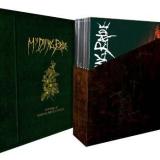
After a career spanning over thirty five years, from UK underground upstarts and outliers, to major success on the international stage - including tours with UK icons Iron Maiden and genre legends Dio - My Dying Bride have themselves become a firmly established pillar of metal history with a refined and influential brand of Death/Doom metal. With enduring popularity across subsequent decades, My Dying Bride remains a productive and captivating vessel for tragedy and despair, with their studio output spanning fourteen full-length albums to date.
As part of the “Peaceville Three”, along with fellow countrymen Paradise Lost and Anathema, My Dying Bride truly became a primary force in highlighting Britain as an epicentre of this Doom revolution of the time, creating a highly distinguishable sound assisted by the inclusion of violin & a more poetic approach to the delivery of morbid and salacious topics, lending an additional air of eccentricity and eloquence to the darkness.
Anthology of Sombre Reflections is an expansive and comprehensive collection of the early and much-celebrated works of the Doom Gods, from the formative deathly rawness of the revered Towards the Sinister demo, ‘God is Alone’ 7” tracks and subsequent debut album, As the Flower Withers, through to the gothic-tinged funereal seductive delights of 1996’s highlight, Like Gods of the Sun.
With the addition of all-time genre classic opuses Turn Loose the Swans, and The Angel and the Dark River also representing My Dying Bride’s much-loved early to 90’s period, the band’s three cult EPs are also featured in this deluxe eight-vinyl boxset, with each record presented on 180gm heavyweight black vinyl. The four studio albums themselves have also been treated to new half-speed masters courtesy of Air Studios.
Accompanying the audio is a 48-page book featuring photographs and artwork, plus new interviews with Andrew Craighan and Aaron Stainthorpe exploring some of the influences and thought-processes behind the creation of such cherished works of the 90s, as well as reflections of their output over this period.
Anthology of Sombre Reflections also contains 2 large posters depicting the Turn Loose the Swans CD artwork image, plus the original poster included in As the Flower Withers. A selection of photo prints of the band from this era are also included.
John Tchicai (1936 – 2012) was one of the most important free improvising saxophonists of the 20th Century: an artist of rare vision and aptitude whose lines soared and stood out even in the most hallowed company, and whose body of work as a leader / composer is among the most singular and distinct within the entire canon of that music. But Tchicai’s importance doesn’t end there. Born in Copenhagen, Denmark, to a Danish mother and a Congolese father, his life and career represent a crucial bridge between the European and American traditions of free jazz. Initially trained on violin as a child, Tchicai shifted his focus to the clarinet and alto saxophone during his mid-teens, and began touring Europe as a professional musician by his early 20s, which landed him at a socialist youth festival in Helsinki, Finland, where he met the trumpeter Bill Dixon and saxophonist Archie Shepp. Impressed by what they heard, Dixon and Shepp encouraged the young saxophonist to move to New York, and in so doing changed the history of jazz forever.
Tchicai’s arrival in New York marks the rare occurrence of a European player joining the intimate circle that was first wave of American free jazz. Following his landing in the city in November of 1962, in addition to regularly sitting in with Don Cherry’s group, Tchicai began playing with Bill Dixon's band alongside Archie Shepp and Roswell Rudd, forming the nucleus of the foundation of the New York Contemporary Five - one of the most important groups of the era - which counted Tchicai, Shepp, Cherry, Don Moore, and J. C. Moses as its members. From the ashes of this group, Tchicai would go on to found the legendary ensemble, New York Art Quartet, with Roswell Rudd, Milford Graves, and Lewis Worrell, as well as working within Albert Ayler's band, recording “New York Eye and Ear Control”, Shepp’s band, recording “Four for Trane”, the ensemble that recorded John Coltrane's “Ascension”, and the Jazz Composer's “Orchestra”.
By the time he decided to return to Denmark in 1966, had Tchicai chosen to record little else, his legacy within the history of music would have been ensured. Incredibly ambitious, his arrival home marked the beginning of an incredible period of activity which saw him radically expanding his creative explorations, which by the end of the decade would include becoming a founding member of Amsterdam's Instant Composers Pool and helping to record John Lennon and Yoko Ono's “Unfinished Music No.2: Life with the Lions”. This, however, was proceeded the formation of a new orchestra, Cadentia Nova Danica, led by Tchicai, dedicated to radical cross-disciplinary exploration. Remaining together between 1966 and 1971, the group and its shifting membership regularly fell into collaboration with artists and composers, notably Musica Elettronica Viva, who existed beyond the realms of jazz, as well as participating within multi-media events that incorporated the visual realms.
Cadentia Nova Danica’s only two LPs - “Cadentia Nova Danica” (Polydor, 1968), and “Afrodisiaca” (MPS, 1969) - are effectively Tchicai recorded efforts as a leader, and are legendary. There’s little mystery, once heard, why the later landed on Thurston Moore’s iconic “Top Ten from the Free Jazz Underground”, published by Grand Royal in 1996. Sadly, despite playing extensively during their five year run, with exception of a CD documenting a performance at Jazzhus Montmartre, in 1966, until now there has been no other publicly available recordings that allow us to capture a glimpse of this astounding band at work. Alga Marghen / Formalibera’s vinyl pressing of a never before released body of recordings, made in Copenhagen between 1969 and 1970, changes that in the most exciting of ways.
Comprising three pieces - “Mc Gub Gub, (I–VIII)”; “Ode to Skt. John”; and “Pladepip” - the material on this stunning LP comes from two specific events. The first, which encompasses the first side, “Mc Gub Gub, (I–VIII)” was recorded by Cadentia Nova Danica - in this instance, Tchicai, Sune Weimar, Theo Rahbek, Christian Kyhl, Niels Holt, Jørgen Thorup, Michael Schou, Morgens Bollerup, Allan Gregersen, Ole Matthiessen, Pierre Dørge, Willy Jaegert, Anthony Barnett, and Jon Finsen - on May 29th, 1969, at the ABC-Theatre in Copenhagen. Penned by Tchicai, the piece is a sprawling, evolutionary composition at the outer reaches of free jazz, rooted in large blocks of colliding tonality and rhythm - a sound only accessible to larger ensembles - that push territories explored by Charles Mingus to previously unimagined heights, threaded by moments of hard blown fire. Writhing like a stormy sea - skronking and devilish - “Mc Gub Gub, (I–VIII)” is a work of profound complexity that singlehandedly illuminates not only Tchicai’s singular vision as a composer, but also the power and uniqueness of Cadentia Nova Danica during the band’s most vital period.
The two pieces - “Ode to Skt. John” and “Pladepip” - taking up the flip side, were recorded on February 21st, 1970, at the Danish Broadcasting Corporation’s Radio House, and are the outcome of Cadentia Nova Danica’s extended residency there between 1969 and 1970. In many ways, these two recordings offer some of the best insights into the broad collaborative approaches that defined the band, in this case encountering them working with Danish experimental composer, Svend Erik Werner, who was among the earliest in his country to embrace stylistic pluralism and the use historical forms within a modern context. “Ode to Skt. John” - based on aspects of Gregorian music - was penned by Werner, incorporating heady improvisation by the members of Cadentia Nova Danica, this time made up by Tchicai, Sune Weimar, Hugh Steinmetz, Theo Rahbek, Christian Kyhl, Michael Schou, Morgens Bollerup, Ole Kühl, Torben Enghoff, Mauritz Tchikai, Kjeld Ipsen, Willy Jaegert, Ole Matthiessen, Ole Thilo, Pierre Dørge, Steffen Andersen, Jon Finse, and Clause Bøje. The piece is a fascinating binary of the composed and improvised, utilising the band’s large scale to introduce a remarkable sound within its slow progressions and furious, driving free moments, in this incredible meeting of worlds.
The album’s final piece, “Pladepip”, is arguably its most historically significant: an entirely singular piece, unlike anything in Tchicai’s recorded canon as his foray into musique concréte. Drawing upon two recordings of full-band improvisations by Cadentia Nova Danica, for its creation Tchicai also gouged the surfaces of 78rpm records in his collection to skip and create repeated phrases and patterns, creating a stunning sound collage of hard angles and abrupt phrase, that creates a striking counterpoint to the band’s flowing improvisations that bookend those passages. The result is an engrossing listen and easily one of the most unique and culturally important gestures in the entire history of musique concréte.
Truly incredible, Alga Marghen / Formalibera’s vinyl pressing of this never before released body of recordings, made by John Tchicai’s Cadentia Nova Danica, in Copenhagen between 1969 and 1970, offers an unprecedented window into one of the most important groups working in Europe during that period, significantly expanding their rare and slim discography to date. Accompanied by extensive exploratory liner notes by veteran jazz writer, Ed Hazell, this is easily one of the most historically important archival releases of the year and is impossible to recommend enough. Absolutely essential on every count.
When everything around is racing blindly toward ruin, change direction and spin as fast as you can until you defy gravity and rise above the ground into blissful madness. "K-drone", the debut album by three renegades—Jakub Šimanský, Michal Vaľko, and Ján Podracký—is like a hallucinatory Calvary with five stations. Each station is a time-loop capsule, a tiny utopia sneering at the phantom progress of the world outside.
The opening track, "Speedrone", is pure vertigo; for seven long minutes, there's nothing to hold onto. Šimanský’s banjo cuts through the air, Vaľko’s hurdy-gurdy sounds like someone scraping a rusted sheet of metal with a handful of nails, and Podracký’s bass recorder hums like a slowly intensifying migraine. "Sine" is like a train journey through a barren wasteland, where the images outside the window constantly repeat like a bad trip. "Pro DJ" starts like a gig in a bar at the end of the line—a gig that never actually goes anywhere. It’s as if all three are locked in a spasm, their repeated motifs turning into haunting earworms. "Alien Radigue" shifts into a strange idyll in a clearing in the middle of the forest, where an unknown bird species trills in the background. The end and definitive dissolution come in "Slush", where everything suddenly slows down. Šimanský plucks a simple guitar melody, Podracký’s harmonica drifts from side to side like a boat gently rocking by the shore, and Vaľko’s hurdy-gurdy drones like a drunken mosquito buzzing around.
"K-drone" sounds like an acid anti-western movie recorded in a tucked-away burrow, like smoke-soaked folk and experimental campfire songs echoing through a deep forest. It evokes Third Ear Band's "Alchemy", it screeches and repeats like some of Henry Flynt's experiments, and you could easily imagine hearing it drifting from one of the windows on the cover of Hala Strana's eponymous album.
Jakub Šimanský is the bard of Czechoslovak guitar primitivism, an earthy folk sommelier whose fingerpicking you may also know from the duo Šimanský Niesner. Michal Vaľko, aka Line Gate, needs no introduction to fans. He has released three albums on mappa, and his hurdy-gurdy meditations hold an important place in the drone and minimalist music scene. "Den", "Apex", and "Trap" have become essential listening. Ján Podracký is a self-taught composer and musician whom you might know from various participatory music projects, such as an orchestra where all the players play diatonic harmonicas. Besides harmonicas, he has long explored a wide range of flutes. In short, a pied piper who will guide you through other worlds.
Released for the first time ever on vinyl, the original Bare Bones release was recorded entirely in the Spring of 2010, this album is a collection of acoustically arranged songs culled from concerts recorded during the "Bare Bones Tour", featuring pianist Gary Breit. For this latest version, a newer recording of "Here I Am" has been added that was recorded in Melbourne, Australia in 2025. Featuring special live versions of many songs from Adams" extensive and well loved catalogue, including "Cloud Number 9" and "Heaven" as well as rarities like "The Right Place" and "The Way You Make Me Feel". Originally released in 2010, this newly packaged version features new cover art and design, created especially for Bad Records (Adams" own label). The album contains 19 songs across 2X LPs packaged in a gatefold sleeve with printed inner sleeves, obi and shrink wrap.
Released for the first time ever on vinyl, the original Bare Bones release was recorded entirely in the Spring of 2010, this album is a collection of acoustically arranged songs culled from concerts recorded during the "Bare Bones Tour", featuring pianist Gary Breit. For this latest version, a newer recording of "Here I Am" has been added that was recorded in Melbourne, Australia in 2025. Featuring special live versions of many songs from Adams" extensive and well loved catalogue, including "Cloud Number 9" and "Heaven" as well as rarities like "The Right Place" and "The Way You Make Me Feel". Originally released in 2010, this newly packaged version features new cover art and design, created especially for Bad Records (Adams" own label). The album contains 19 songs across 2X LPs packaged in a gatefold sleeve with printed inner sleeves, obi and shrink wrap.
American experimental composer Stephen O’Malley releases Avaeken, two sides of immense, immersive, self-annihilating music via Dais Records.
The record preserves site-specific work: O’Malley installed Avaeken as part of Wish You Were Here, the exhibition by renowned American artist Banks Violette, underscoring the tension between presence and absence, life and loss.
O’Malley and Violette have developed a distinct language of sound, space, and sculpture over the past two decades, reverberating through the walls of world-class institutions from The Guggenheim and Centre Pompidou to prominent galleries such as Maureen Paley in London, Gladstone Gallery in NYC, and Antwerp’s TICK TACK, the brutalist space where Wish You Were Here unfolded in early 2026.
Emerging now as an LP, Avaeken presents power and phenomena: low-frequency vibrations, deep oscillations, and phase cancellations that translate as innately effective in any environment. Violette’s visual expression — the impossibility of locating yourself within the loss of a friend and the broader decay of culture — now fills the LP sleeve and feels inextricable from O’Malley’s sound, both still without resolution.
“Natural harmonic tone coloured by the valves of the amplification is the one desired characteristic,” reads the initial notes.
“At first I asked, why would I write for another guitar player?” he says. “I realized how amazing it is to be a listener on the other side of the music; together we were able to try all these precisions with intonation, harmonics, specific microtonal ideas.”
The quartet performed Avaeken several times before O’Malley joined them for a recording session at Muziekcentrum De Bijloke, a 13th-century former hospital with modern acoustics in Ghent.
Purple & Translucent Orange Vinyl. Raw Fury and Black Screen Records are outta space to announce Cameron Paxton's game soundtrack masterpiece Dome Keeper on vinyl. The double LP set includes both volumes, "Vol 1: The Engineer" and "Vol 2: The Assessor", in their entirety pressed on beautifully coloured wax and packed in a sleeve that is featuring the iconic artwork of the game. Composed by Cameron Paxton, Dome Keeper features an enchanting original soundtrack that combines a mysterious atmosphere with an adventurous sense of wonder. Paxton got into the project early on and saw the game become reality right from the start: "Dome Keeper began life as a game jam title called Dome Romantik. So originally the scope was much smaller. Because I was there at the beginning of development, I had a long time to spend experimenting and coming up with the vibe before the game ever got picked up."
This Summer has never looked so bleak. Along with news of the album, Kulk have also released their new video single 'An Endless Kife': "An Endless Knife is about growing up. When we're younger, sometimes it feels like we're invincible. Like everyone we know and love are constant parts of the universe. When that reality is shattered, it changes how we see the world. You come to realise we are all just a couple of bad days from the worst. At the same time, it feels devastating. It reminds us to look after each other" - Kulk The band have toured across the UK extensively the past few years, playing amongst bands such as Part Chimp, Hey Colossus, Crowbar, Melt Banana, Iress, Big Brave, Gnoomes, Conan and Portrayal of Guilt... to name a few! They have toured twice with PigsX7, including shows at Electric Ballroom (London) and Rock City (Nottingham) and have appeared at the renowned UK festivals Arctangent and Desertfest
Originally released in 2016, 'Your Wilderness' marked a pivotal moment in The Pineapple Thief's evolution, expanding the band's sonic palette & establishing a creative partnership with renowned drummer Gavin Harrison that would help define the group's next chapter. Widely regarded as one of the band's most ambitious & emotionally resonant works, the album remains a landmark release in modern progressive rock. Now, to celebrate its 10th anniversary, Kscope presents a newly remastered edition of 'Your Wilderness' on clear double vinyl, featuring a 2026 remaster by Steve Kitch &, for the first time on vinyl, the companion album '8 Years Later'. Previously only available as part of the sold- out 'Your Wilderness' Earbook, '8 Years Later' collects material written during the same creative period, offering a deeper insight into one of the most fertile eras in The Pineapple Thief's catalogue.
Orange County"s Social Distortion returns with its first album in 15 years with Born to Kill. Armed with 11 urgent songs, Mike Ness continues to build on the mystique that Social Distortion is more than just a punk band. Throughout the collection, Ness revisits the sounds of the 1970s, his formative adolescent years. Born to Kill is a continuation of the bar of excellence that Social Distortion and, in turn, Ness has long been praised for. Born to Kill is a body of work that will live long in the Social Distortion catalog. Songs like the hard-charging title track that serves as the album"s mission statement, along with the riff-laden "Partners in Crime," the nostalgic "The Way Things Were," and rollicking "Tonight" are songs that fit in across any of Social Distortion"s various eras. Now nearly five decades into its career and with a remarkable catalog spanning nearly three generations, Social Distortion has no intention of slowing down any time soon.
out of Stock
Last delivered 50 days ago available to reorder, subject to availability
T-Spoon is a Dutch Eurodance project founded in 1991 by rapper Shalamon Baskin (known as Shamrock) and producer Remy de Groot (known as Prince Peration). They had multiple hits in the UK, Australia, Canada, Israel, Ireland, Scandinavia, South America, and, of course, their home country, the Netherlands.
The group released its debut single, “No Time To Waste,” in 1993, which became a European top‑10 hit. In the years that followed, T‑Spoon scored a series of international successes with tracks such as “A Part of My Life,” “Where R U Now" and “Take Me 2 the Limit.”
In 1997, they became known for the summer hit "Sex on the Beach" which reached the charts in the Netherlands as well as Belgium, Germany, Ireland, Scandinavia and the United Kingdom.
This brand new Greatest Hits collection is now available on vinyl and features all of T‑Spoon’s biggest successes, plus an exclusive bonus mix of “Sex on the Beach.”
T-Spoon's Greatest Hits is available as a limited edition of 1000 copies on white marble vinyl.
It’s no disrespect to the man to not believe, in part or in whole, every word that Ray Wylie Hubbard writes, sings, or speaks — and frankly, he’d probably respect you a little less if you did. As celebrated songwriters of the outlaw poet/down-home-country-blues persuasion go, Hubbard’s credibility is unimpeachable. And to be fair, even as a somewhat notorious raconteur, his overall truthiness is a lot more bankable than your average politician or fundamentalist grifter.
But fold your cards every time he goes all in across a table from you, or swallow as fact every nugget of wisdom he sharpens into verse or stretches into a yarn without catching the gleam in his eye or wry tell between the lines, and odds are you’ve been played. But honestly, that’s all just part of what makes Hubbard so damn fun. “You know, a lot of artists when they put out a record, they go, ‘This is the best record I’ve done up to this point,’” the Americana legend considers sagely after a pause when asked how to best sum up Reel 2 Reel 4 Real, his 20th album in a recording career stretching back to the mid-70s. “But I’m not going to say this is the best record I’ve done. I’ll say it’s the best record I’ve ever heard.” No matter how many awards and Hall of Fame inductions others might honor him with (he’s a member of both the Austin Music HOF and the Texas Heritage Songwriters HOF), Hubbard never swaggers or sings his own praises without keeping his tongue planted firmly in cheek.
But after brushing aside his bluff with a chuckle, Hubbard gets real. “I am very proud of it,” he answers sincerely. “Everybody that played on it put a lot of work into it, and it just felt right doing it. I’m very grateful.” Set for release August 21, 2026 (with the first taste, “Cassette Mix Tape,” dropping May 29, followed later this summer by a second single, “Dog or Wolf”), Reel 2 Reel 4 Real marks Hubbard’s return after a two-album major-label joyride on Nashville’s Big Machine Records. “They treated me great, and did everything they could,” he says, “but it was kind of limited because I’m an old guy. I’m no longer a country hunk, you know?”
Coming in hazy and heady, an end-of-summer cosmic jammer from Nick Mitchell Maiato, full of big choruses, blazing guitars, country honk, and deep grooves—replete with funky horn section. It’s been four years since Poolside, the last release by One Eleven Heavy (Mitchell Maiato’s sometimes-band with James “Wooden Wand” Toth), and that time has clearly been used for some serious woodshedding on the auteur’s part. On Náquera, named after the Spanish pueblo in which he resides, Mitchell Maiato’s songwriting, vocals, and guitar playing all come into sharp focus as he mans the wheel on an ocean drive of interwoven electric guitar dueling, funky multi-movement jams, bittersweet odes to uncomplicatedness, and rolling rockers. Featuring an effortlessly graceful preface by Macon, GA piano prodigy Gavin Rushing, “Riki Rachtman” is a cosmic americana ballad examining the state of heavy metal in contemporary pop culture from the perspective of a disgruntled first-person narrator. “Critical Mass” is a soaring, two-chord ode to dropping out, with an opening organ salvo by Grateful Dead midi-tech Bob Bralove, a monster, key-changing guitar duel at its core, and a fat, snaking bass groove by Otto Wilberg (Mitchell Maiato’s former colleague in Desmadrados Soldados De Ventura).“Flamebait” is one of the record’s big surprises with its almost Lennon-esque rock-and soul slab of technocracy bashing, its woozy, three-part horn section, and its improvised, sun-scorched guitar solo slap-dab in the middle.And, on “The Angle,” we get an homage to rock-and-roll pool hustler narratives framed within an expansive country-funk jam that nods to Mitchell-Maiato’s love of Parliament and Grateful Dead in equal measure.
Blue vinyl. Hailing from Wiltshire, forming in 1982, Tokyo Blade was initially considered part of the NWOBHM scene but quickly outgrew the tag, enduring over the course of 14 studio albums and five EPs. Producing genuine early classics such as their self-titled debut and follow-up 'Night Of The Blade', the band went through multiple line-up changes over the years, yet continued to enjoy the support of the metal community and die-hard fans across the globe.
With her new album Trespasser, Grace Potter introduces a beautifully unruly cast of characters who step into forbidden spaces with absolute abandon. As the spiritual sequel to 2023’s Mother Road, the four-time Grammy nominee’s seventh studio LP continues the kaleidoscopic storyline shaped by her many road trips from her Topanga Canyon home to her part-time residence in her native Vermont (a journey she’s made eight times in the last five years, usually on her own). But while Mother Road was born from a desperate need for solace in the midst of emotional freefall, Trespasser reveals an artist firmly anchored in her singular vision.
The latest chapter in a career marked by endless transformation and elite recognition—including sharing stages with rock & roll icons like the Rolling Stones & Robert Plant and earning praise from legends like Bob Dylan and Bonnie Raitt—Trespasser ultimately lights the way toward a more unbound and expansive means of moving through the world. Produced by her husband and frequent collaborator Eric Valentine (Queens of the Stone Age, Weezer, Slash) and recorded in a cross-country journey beginning at her home in Topanga with Benmont Tench, continuing in Nashville with Mother Road session players (members of Cage the Elephant, Kings of Leon, and Train), and completed in Vermont with members of her longtime live band, the album echoes its origins with a wayward sound that spans from stripped-bare soul to cosmic country to hellraising rock & roll—all while orbiting Potter’s force- of-nature voice and lavishly imagined storytelling. “We’ve always been taught that the trespassers are the bad guys, but to me it’s not about reckless rebellion,” says Potter. “It’s about exploring, physically and mentally and emotionally, and being willing to step outside the narratives we’ve accepted. Because in my experience, the places we’re told not to go are exactly the ones that show us who we really are.”
With her new album Trespasser, Grace Potter introduces a beautifully unruly cast of characters who step into forbidden spaces with absolute abandon. As the spiritual sequel to 2023’s Mother Road, the four-time Grammy nominee’s seventh studio LP continues the kaleidoscopic storyline shaped by her many road trips from her Topanga Canyon home to her part-time residence in her native Vermont (a journey she’s made eight times in the last five years, usually on her own).
But while Mother Road was born from a desperate need for solace in the midst of emotional freefall, Trespasser reveals an artist firmly anchored in her singular vision. The latest chapter in a career marked by endless transformation and elite recognition—including sharing stages with rock & roll icons like the Rolling Stones & Robert Plant and earning praise from legends like Bob Dylan and Bonnie Raitt—Trespasser ultimately lights the way toward a more unbound and expansive means of moving through the world. Produced by her husband and frequent collaborator Eric Valentine (Queens of the Stone Age, Weezer, Slash) and recorded in a cross-country journey beginning at her home in Topanga with Benmont Tench, continuing in Nashville with Mother Road session players (members of Cage the Elephant, Kings of Leon, and Train), and completed in Vermont with members of her longtime live band, the album echoes its origins with a wayward sound that spans from stripped-bare soul to cosmic country to hellraising rock & roll—all while orbiting Potter’s force- of-nature voice and lavishly imagined storytelling. “We’ve always been taught that the trespassers are the bad guys, but to me it’s not about reckless rebellion,” says Potter. “It’s about exploring, physically and mentally and emotionally, and being willing to step outside the narratives we’ve accepted. Because in my experience, the places we’re told not to go are exactly the ones that show us who we really are.”
OUR ENDLESS WAR zeigt eindrucksvoll wie moderner Death Metal zu klingen hat!" Metal Hammer (Florian Krapp, 6 von 7 Punkten)
Info:
Wer es brutal will, kommt an diesem Koloss nicht vorbei!
Auch auf dem fünften Album in ihrer beeindruckenden Karriere kennen WHITECHAPEL kein Halten. Our Endless War bündelt alle Stärken, die das Sextett aus Knoxville in Tennessee seit seiner Gründung entwickelt hat. Das Album wurde penibel ausgefeilt und geht partout keine Kompromisse in Sachen Brutalität ein, ist aber zugleich das bisher geradlinigste, atmosphärischste und emotional packendste Album der Bandgeschichte und hievt jeden Aspekt ihres Sounds auf ein neues Niveau.
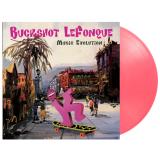
Music Evolution is the second and last album by the all-star jazz/hip-hop/R&B fusion project Buckshot LeFonque. Led by none other than jazz saxophonist Branford Marsalis and DJ Premier, the project was named after Buckshot La Funke, a one-time pseudonym used by alto sax legend Cannonball Adderley for contractual reasons.
The album features guest performances by rapper Guru, Matrix actor Laurence Fishburne, and the highly regarded session musician David Sanborn. While his brother Wynton holds conservative views regarding jazz, Branford is quite the opposite. On Music Evolution, he effortlessly embraces and fuses hip-hop, R&B, and rock into a sonic explosion infused with the joy of playing. The track "Another Day", featuring the soulful voice of Frank McComb, was especially popular in the Netherlands, reaching number 4 in the Dutch singles chart.
Music Evolution is available as a limited edition of 1000 copies on pink vinyl and includes an insert.
The latest album in the series of "Beats and Knowledge" from Marc Mac. This episode focusing on the thousands of Black soldiers who fought in the Second World War, their efforts and stories hidden and forgotten for a lifetime. Marc's style of soulful Hip Hop beats are woven through the dialogue setting the scene for this mixtape style long player. Part six in the series of albums and limited to 400 vinyl copies worldwide.
out of Stock
Last delivered 6 years ago available to reorder, subject to availability
"Nido de Espinas" is the fourteenth studio album by Buitres. Uruguayan Punk Rock band formed in 1989, heirs to the legacy of the iconic Post Punk band "Los Estómagos" It began to be composed in 2022 and was recorded in early 2024. The texts are inspired by the Diary of a Desperate Heart, an arbitrary overflow of feelings written disorderedly with an improvised rein, which demanded exhaustive work from the band to reach maximum expression in each track. Artistic production was handled by Ale Vázquez (Spinetta, Intoxicados and more) and Sebastián Teysera (La Vela Puerca), who landed the runaway chariot set on fire. buitres formed in late 1989, following the dissolution of the group Los Estómagos, a band that sparked a new era of Uruguayan rock in 1983. José "Pepe" Rambao, a close friend since childhood, joined the Parodi-Peluffo duo. Buitres has toured extensively throughout the entire Uruguayan territory and has participated in massive international shows both in Uruguay and abroad. Additionally, they have completed six tours across Spain, where the album En la Vuelta (CD and DVD) was released. Their discography features 14 studio albums. They have released three live albums, two documentary DVDs, and three live DVDs. Three books have been published about the band. The band has received numerous acolytes and awards, but most importantly, after more than thirty years, they continue to maintain a close and emotional relationship with their audience - one that has endured throughout their history and grows over time. For this reason, the band dedicates their absolute best effort to every new work and every performance. "Nido de Espinas" is their new Studio album. These are wild and excessive times. Perhaps this statement applies to our life history just as it did to ordinary people in bygone eras. However, we assimilate the changes, adapt, and move forward. Nothing new under the sun. We grew up assuming static realities without trying to understand that they were newborn and would not last forever. The "forever" was declining into premature obsolescence. Every accessory is fleeting in the dizzying change of language.
Their follow up to the acclaimed ‘Anda Jaleo’. A document of Josephine Foster's magical partnership with Victor Herrero breathing new life into timeless traditional melodies, drawing from the Spanish-folk traditions of Castile, the Basque, Santander and the Costa Brava. ‘Perlas’ is debonair, contemporary and redolent of that old seductive charge.” The Wire. Elemental themes of love bind the collection together, with a melancholy joy that casts a shadow of desire and loss. “The alt-folk fixture returns to more traditional material.” Pitchfork.
Severed Heads reattach themselves to Dark Entries for an expanded reissue of their 1991 opus Cuisine (With Piscatorial). As originary Aussie industrial legends – although founder Tom Ellard would balk at being branded as such – Severed Heads shaped the continental subcultural sound with their kitchen electronics, chaotic tape loops, and infectious nursery-rhyme-esque melodies. Cuisine (With Piscatorial) was the long-running project’s ninth album, and is a commentary on the state of music. Ellard explains: “The whole food joke is really about what music's about and how disposable it is; people have records like they have cups of coffee.” The album also presents a turn away from the dancefloor formalism of the era, which Ellard dismissed as already sufficiently explored. Cuisine brings us punchy pop kernels of the prime Heads variety, all clocking in around three minutes. Cuts like “Pilot in Hell” and “Ugly Twenties” rank among the band’s best through their deadly skewering of synth pop tropes. But the album also offers us a Piscatorial section, where Ellard felt free to “go fishing for ideas.” Here we get a taste of the project’s demented cut-up sensibilities, like on the “Quest for Oom Pa Pa” suite, where vintage jazz records are collaged into an angular nightmare. This double-LP reissue is the first time that Cuisine (With Piscatorial) will appear on vinyl, with a previously unreleased early version of “Seven of Oceans.” Also included is a 6-page booklet with liner notes, lyrics, and press clippings.
Few contemporary labels even come close to the output and influence of Lempuyang in terms of dub techno. Albums, 12"s and EPs come thick and fast and the latest is the first part of the fourth in the Pura Lempuyang series, which offers a glimpse at what they do best. Upwellings begins with Maurizio-style, smoky dub techno before Rothchord ups the drive with a more forceful kick. Paul Simmons's 'Burial (Natty Haffi Dread)' reflects the traditional roots of dub with a more 70s style cut, Another Channel slows to a crawl with an eerily empty arrangement and Inner Echo drives things home with a timeless fusion of molten dub chords and cuddly kicks.
out of Stock
Last delivered 22 days ago available to reorder, subject to availability
Sometimes an album title arrives like a voice from across time. For Johanna Samuels, Sorry, Kid began as a message to her younger self, part apology and part recognition. Gathering songs written as far back as 2007 alongside newer work, the album bridges nearly two decades of lived experience.
The record holds 70s tones without leaning on them, drawing from a lineage of melody and restraint while staying fully alive in its own time. It feels lived in, steady, and quietly powerful, like something finally understood without needing to be explained. The result is intimate and fully realized, songs that began as questions now settling into something like resolution.
Scum rock low-lives Louse return with their Sophomore LP, Buyer’s Remorse - an unrefined but levelled-up dip back into the murk, keeping it in the family one more time on Riot Season records (a label which now, fittingly, features genre luminaries Brainbombs).
More cohesive, more negative but no less disgusting than debut record Creep Call, the band have further enhanced their pummelling, single-riff ritual M.O. with even more strop-razor guitars, crank-fuelled slide-bass, strangled sax and sinister missives from the void.
Buyer’s Remorse includes unspeakable meditations on an unmatched litany of losers, including: inept hitmen/serial killers, snuff-flick refund naivety, disturbing fellatio lessons, burying yourself alive to escape the law (“you’ll never get me in the slammer”) and having a damn good time being chopped into luncheon (take a ride on the meat slide!)
Snubbed from all but the best festivals, Louse continue to eke out a steady stream of shows, with highlights such as glorious sweat-boxes in our beloved Torino, Monza and beyond in the EU with BRAK, being the first band to play Mickey Zogg’s Basement in Bristol with Beau Wanzer and multiple distinguished appearances at Café Oto with legend and fellow RS label-mate Shit & Shine.
Right-thinking taste-makers have decreed that Louse “exist in an alternate reality where The Fall and The Birthday Party are one and the same band”, and that their songs are “all at once unsettling, loose, filthy, untamed, distorted and fucked up, but most of all rocking, creative and unique”.
Buyer’s Remorse is no exception, having been wrangled into perfection by long-time collaborator James Atkinson (The Stationhouse Studio) and none other than Rectal Hygienics’ Matt Ibarra (STR Mastering) this is truly scum rock at its finest - all at once punishing, ugly and brutal; but listen to that groove (oh my!)
Louse are
The Captain - Vocals, Septic Pete - Guitar, The King of Sting - Guitar , Uncle Brutus - Guitar Mister P. - Drums, Dieta Di Patate - Slide Bass
One of the early breed of US death metal acts, Autopsy formed in 1987 in San Francisco. Drummer/vocalist Chris Reifert had gained initial recognition with Floridian genre pioneers Death & his participation on the classic debut, ‘Scream Bloody Gore’ before this new morbid creation was birthed. Autopsy released 4 albums on Peaceville Records in the early part of their career - beginning with the legendary debut, ‘Severed Survival’, in 1989 - before disbanding in 1995, with members going on to become the stalwarts of sickodelia in Abscess.
Autopsy triumphantly & officially returned from the grave after a 15 year hiatus with the 2010 EP, ‘The Tomb Within’. This was followed by the release of the band’s fifth studio album, ‘Macabre Eternal’ in 2011, as the group celebrated a new era of popularity & creativity. This reverence continues to this day as Autopsy itself nears its 40th anniversary, & still features the longstanding core trio of Chris Reifert, Eric Cutler, & Danny Coralles.
‘Mental Funeral’ was Autopsy’s second studio album, originally released back in 1991, & is rightly hailed as one of the greatest death metal albums of all time with its unhinged & uncompromising collection of odes to brutality & depravity, wrapped up in its highly distinctive raw, organic production.
‘Mental Funeral’ was recorded at Different Fur Studios in late 1990, with engineering work conducted by Ron Rigler. The iconic artwork appeared courtesy of Kev Walker, who had already provided the (at the time) controversial cover for Autopsy’s debut, ‘Severed Survival’.
This special 35th anniversary pressing of ‘Mental Funeral’ is presented on a limited red/green ink spot vinyl, featuring newly remastered audio courtesy of current Autopsy bassist Greg Wilkinson at his Earhammer Studios.
There is an ecstatic melancholy in Dent May’s music. The bedroom pop auteur’s songs are both bittersweet and exuberant, breaking your heart while you can’t help but sing along.
Over six albums, May has built a wildly diverse discography spanning 17 years. He has typically worked alone, assembling perfect pop gems on his laptop, playing nearly every instrument himself. But when he began preparations for his new album, May’s tried and true process suddenly felt stale.
The Big One brings together both the scrappy DIY ethos of Elephant 6 Collective and early The Magnetic Fields with May’s lifelong affinity for the great ’70s singer-songwriters like Harry Nilsson and Ram-era Paul McCartney. The songs balance a clear-eyed view of the world with a cautious optimism, looking at the everyday experiences of disappointment and heartbreak with a sense of possibility for the good that may still come. Things might seem bleak, May tells us, but that doesn’t mean we can’t be thankful for our brief time here on Planet Earth.
The title track is the beating heart of the record. Over a steady drumbeat, piano, and accordion, a melancholy May sings, “The big one’s coming, the big one’s on its way,” promising disaster. But May won’t wallow in the misery: “Thank the Lord for all my friends/We can make it ’til the end/No we can’t stop now/Who knows? Tomorrow it all could turn around.” For May, hope comes in the form of others.
It’s with this joyful melancholy Dent May draws in the world. Everything might be ending, the planet could be careening off into chaos, but tonight there’s a party down the block and you’re invited. Be sure and bring your friends.
After the wild Afro-jazz fusion of Trancedance (reissued as BT118) and the meditative solo Christer Bothén Donso n’goni (BT133), legendary Swedish multi-instrumentalist Christer Bothén returns to Black Truffle as part of a dream quartet completed by the three members of Ghosted: Oren Ambarchi (guitar), Johan Berthling (bass) and Andreas Werliin (drums). Recorded at a rustic studio built by Werliin and Hans Fredriksson in the sylvan surrounds of Hamburgsund, Sweden across a few days in September 2023, Serpentine offers up four generous slices of hypnotic repetition and shimmering resonance, cut through with wild bursts of Bothén’s bass clarinet.
The depth and ease of the quartet’s rapport is evident from the first moments of the opening title-track. Berthling’s resonant upright bass locks into a head-nodding ostinato that makes sensitive use of a prominent end-of-phrase rest, opening spaces through which Werliin’s continually shifting statements of the pulse shine through. Having worked together in various groups for many years, Berthling and Werliin are masters at playing subtle games of difference and repetition, creating a driving rhythmic flow animated by perpetually changing details: here, you can never step in the same groove twice. Weaving through it all is Ambarchi’s now-signature Leslie-cabinet guitar tone, sounding out long chords at times strikingly close to a Hammond, while also creating intricate cross-rhythms through the play of his tremolo modulations against the bass and drums. When Bothén enters five minutes in, the growl of his bass clarinet at first works deep in the collective brew, carving off brief staccato phrases and twisting them into fragmented melodies. As he moves into the instrument’s higher registers, Bothén’s playing becomes wilder, twinning with Ambarchi’s guitar in shimmering arcs like a 21st century update of the Garbarek-Rypdal pairing immortalised on Sart.
Each of the four pieces explore different possibilities of a shared language. On ‘Antigorite’, another hypnotic bass riff emerges gradually from an atmospheric haze, eventually developing into a frenetic rhythmic workout propelled by Werliin’s cowbell. Berthling sits out for ‘Lizardite’, while Bothén moves from bass clarinet to the Donso n’goni, the sacred Wassoulou hunter’s harp he has studied for half a century; the resulting performance streamlines the approach heard on other tracks into pure modal propulsion, sparkling with harp-like arpeggios from Ambarchi’s guitar. On the closing ‘Chrysotile’, the bottom drops out, leaving a swampy, churning mass of wavering organ-like chords, roaming bass runs, and distant toms, over which Bothén floats bass clarinet figures by turns bluesy and abstract, the whole thing landing somewhere between classic ECM and the most blasted freeform moments of early Amon Düül II. Bearing a delicate calligraphic abstraction by Bothén on its cover and beautiful documentation of the recording sessions on its inner sleeve, Serpentine is a powerful reminder of the magic that can happen when inventive musicians just get together and play.
* A UK Dub outing from 1996 from The Rootsman, originally appearing on his debut album on Third Eye Music - `In Dub We Trust’.
* A mid-paced steppers piece with more than enough weight to cause distress at any sound system gathering.
* This is the first time `African Style’ has been unleashed as a single.
out of Stock
Last delivered 4 years ago available to reorder, subject to availability
A decade after its original release, Be Nothing. still stands as the breakout record that launched Boston Manor from the UK underground onto the global alternative scene. Blending emo vulnerability, pop-punk energy, and sharp post-hardcore intensity, the album became a defining release of the 2010s with fan-favorite tracks like “Lead Feet,” “Burn You Up,” and the massive “Halo.” Now, this 10 Year Anniversary Edition celebrates the legacy of Be Nothing. with newly recorded acoustic versions of the band’s biggest songs, reimagining the album’s most emotional moments with a raw, stripped-back approach. Equal parts nostalgic and refreshed, it’s a tribute to the record that changed everything for Boston Manor while showcasing how timeless these songs have become.
Das Talent von The Script, Songs voller berauschender Emotionen und immer monumentalerer Melodien
zu schreiben, hat Fans auf der ganzen Welt in seinen Bann gezogen – ein Erfolg, der zu einem Katalog
weltweiter Hits wie „Hall of Fame“, „The Man Who Can’t Be Moved“ und „Breakeven“ führte. Auf
ihrem nunmehr achten Studioalbum arbeitet Danny O’Donoghue wieder mit seinen Songwriting-Partnern
Andrew Frampton und Steve Kipner zusammen – jenen Hit-Garanten, mit denen er und Mark Sheehan
eine ganze Reihe der bekanntesten Songs von The Script schufen, darunter „Breakeven“ und „The Man
Who Can’t Be Moved“. Ebenfalls mit von der Partie ist Produzent und Songwriter Jimbo Barry („Hall
of Fame“, „Superheroes“, „The Last Time“). Die Lead-Single „Man In The Arena“ ist eine mitreißende,
trotzige Hymne – untermalt von packenden, martialischen Trommelrhythmen –, die all die Erfahrungen und
weltweiten Erfolge der Band aus den letzten zwei Jahrzehnten aufgreift und ihren Status als unumstrittene
Pop-Rock-Giganten festigt. Wie ihre leidenschaftliche und treue Fangemeinde nur zu gut weiß, besitzen
The Script zudem jene entscheidende Qualität: eine echte, emotionale und tief in der Seele verankerte
Verbindung. Genau diese belebende und verbindende Idee bildet das Herzstück von *The User’s Guide to
Being Human* – jenes Element, das in der Musik, im Leben und bei The Script über allem anderen steht.
Denn schließlich gilt: „Sag mir, was zur Hölle wir eigentlich tun, wenn wir als Menschen nicht einfach nur
menschlich sind.“
15 pop songs about animals by 15 of the best indiepop bands in the world: Pets Sounds is as simple as that. Ranging from the playful (Sassyhiya, Gay Skeleton Club) to the heartbreaking (Caleb Nichols, Jetstream Pony) to the enigmatic (Railcard, Oh Hippo) to the satiric (The Magnetic Fields, Brian Bilston and The Catenary Wires), there's more diversity on this album than you can shake a stick at. Or throw a bone at. The LP comes with a full colour insert and the CD comes with a booklet featuring artwork by Elodie Ginsbourg. Musicians spend a lot of time working at home, with their pets for company. The pets sit around, happy in their own worlds, sublimely indifferent to their humans' endeavours. As familiar as family members, but as unknowable as aliens, pets are the perfect muse. They can be treated as objects of adoration - `Rufus' by Tugboat Captain is an expression of pure joy - or they can be treated as metaphors. More reliable than lovers but less dangerous than heroin, pets are a great vehicle for singing obliquely about something else. Swansea Sound's `I Don't Like Men In Uniform' is about an ageing, irascible terrier, but it's also about men striving to maintain their potency as territorial aggressors. The Magnetic Fields' `Fido, Your Leash Is too Long' is a libidinous and unreliable partner, as well as a dog that likes sniffing other dogs' private parts. For the most part, animals come off better than humans on this album. In `Kings Of The Animal Kingdom', The Burning Hell dramatise our indulgent love of pets in order to expose our cruelty to other human beings. In `Bo's New Haircut', The Cords express the injustice and unfairness of an innocent animal having to submit to human demands. In `Crayon Potato' by Sassyhiya, the magnificent Crayon contemptuously rejects the gifts offered by her besotted human owners. In `Lola', the opening track, Lande Hekt tries to put this enigmatic human-animal relationship into words. And concludes that however much we love our animals, and no matter how much we manage to communicate with them, we can never really know them. A melancholy conclusion maybe, but the music - as with all the songs on this album - is expressive of the wonderment and the joy that comes from sharing your life with a member of another species. The tracks by Brian Bilston and The Catenary Wires, Jetstream Pony and Railcard are previously unreleased. These three bands are also playing a launch show at The Water Rats, London, on 9th July 2026.
Stanley Brinks is renowned for his unique anti-folk style: both playful and suggestive, insightful and entertaining. Brinks was born in Paris, France, in 1973. He studied a bit of biology and worked as a nurse for a while. Half Swedish, half Moroccan, strongly inclined to travel the world, he soon began spending most of his life on the road and developed a strong relationship with New York.
By the late 90s he’d become a full time singer-songwriter – André Herman Düne – as part of three piece indie-rock band, Herman Düne alongside his brother, David-Ivar. Several albums and Peel sessions later and after a decade of touring Europe, mostly with American songwriters such as Jeffrey Lewis, Calvin Johnson and early Arcade Fire he settled in Berlin. The early carnival music of Trinidad became a passion, and in the early 21st century he became the unquestioned master of European calypso, changing his name to Stanley Brinks.
Under this moniker he has recorded well in excess of 100 albums, collaborated with the New York Antifolk scene on numerous occasions, recorded and toured with traditional Norwegian musicians, and played a lot with The Wave Pictures.
Freschard grew up in a farm in French Burgundy. Aged 18 she moved to Paris, where she baked pies and cakes in a cafe. There, a local musician and regular customer called Stanley Brinks wrote a few songs for her to sing. Homeless in Paris, she saved up just enough money to get herself a ticket to New York. There she found an old electric guitar and started writing her own songs. In 2004 she moved to Berlin, where she recorded her first LP, "Alien Duck". Her second album, "Click Click", recorded in 2006, features electric guitar by Stanley Brinks. On her third album, she plays the drums herself. On her fourth “Shh...” she also plays the flute, and she breaks out the washboard on her fifth “Boom Biddy Boom”. Press for Stanley Brinks and Freschard.
“an absolute joy.” Q.
“...a set that’s as wistful and charming as it is playful and self-concious.” Uncut.
“quietly charming” Pitchfork.
Stanley Brinks is renowned for his unique anti-folk style: both playful and suggestive, insightful and entertaining. Brinks was born in Paris, France, in 1973. He studied a bit of biology and worked as a nurse for a while. Half Swedish, half Moroccan, strongly inclined to travel the world, he soon began spending most of his life on the road and developed a strong relationship with New York.
By the late 90s he’d become a full time singer-songwriter – André Herman Düne – as part of three piece indie-rock band, Herman Düne alongside his brother, David-Ivar. Several albums and Peel sessions later and after a decade of touring Europe, mostly with American songwriters such as Jeffrey Lewis, Calvin Johnson and early Arcade Fire he settled in Berlin. The early carnival music of Trinidad became a passion, and in the early 21st century he became the unquestioned master of European calypso, changing his name to Stanley Brinks.
Under this moniker he has recorded well in excess of 100 albums, collaborated with the New York Antifolk scene on numerous occasions, recorded and toured with traditional Norwegian musicians, and played a lot with The Wave Pictures.
Freschard grew up in a farm in French Burgundy. Aged 18 she moved to Paris, where she baked pies and cakes in a cafe. There, a local musician and regular customer called Stanley Brinks wrote a few songs for her to sing. Homeless in Paris, she saved up just enough money to get herself a ticket to New York. There she found an old electric guitar and started writing her own songs. In 2004 she moved to Berlin, where she recorded her first LP, "Alien Duck". Her second album, "Click Click", recorded in 2006, features electric guitar by Stanley Brinks. On her third album, she plays the drums herself. On her fourth “Shh...” she also plays the flute, and she breaks out the washboard on her fifth “Boom Biddy Boom”. Press for Stanley Brinks and Freschard.
“an absolute joy.” Q.
“...a set that’s as wistful and charming as it is playful and self-concious.” Uncut.
“quietly charming” Pitchfork.
Recorded April 17 and 18, 1993, at the Union Grove Baptist Church, Ozark, Alabama.
The Wiregrass Singers' Dewey Williams began learning the shape-note tradition in his childhood. He studied under Judge Jackson, who authored the landmark 1934 hymnbook The Colored Sacred Harp. In 1971, Williams formally organized The Wiregrass Sacred Harp Singers to preserve the music full-time. This unified troupe began touring nationally and leading workshops, which ultimately launched them onto stages at the Smithsonian and Newport folk festivals up until Williams' passing in 1995 when the group disbanded. The African-American Sacred Harp tradition in the Wiregrass region has steeply declined since the start of the 21st century, due to an aging generation of singers, and today it is largely sustained through archival preservation and occasional multi-book singing meetups.
This raw recording, made at the Union Grove Baptist Church, Ozark in mid-April 1993 finds the group singing from B. F. White’s The Sacred Harp (1844), which together with his brother-in-law William Walker’s Southern Harmony (1835) formed the musical backbone of generations of Southern music and Southern musical styles.
"On almost any Sunday between the months of March and October, the season most conducive to travel and outdoor dinner-on-the- grounds, Sacred Harp devotés join with fellow songsters at the County Line Church in Slocomb, or the Mount Sinai Church in Henry County, or the Union Grove Baptist Church in Dale County, or at any one of a dozen or so churches in the southeast Alabama counties of Barbour, Coffee, Dale, Geneva, Houston and Pike, to form the square and sing fa-sol-la. Approximately fifteen African-American Sacred Harp singings occur annually in the Wiregrass region of southeast Alabama. A singing tradition characteristically associated with white culture in the Deep South, southeast Alabama has enjoyed a vibrant African-American Sacred Harp tradition for well over a century.
On a day of a typical African-American Sacred Harp Singing, the participants arrive casually in the late morning, seat themselves in the square according to voice part, and begin to sing. A dinner break occurs in the early afternoon, and the singers enjoy a covered-dish "dinner-on-the-grounds" (or in the church basement) prepared by the women. The most intense and emotional singing typically occurs after the dinner break. Each singer takes a turn leading the song of his choice. He walks to the middle of the square, calls out the song's page number and waits for the designated tuner to key the song. Singers are discouraged by the other singers from repeating a song that has already been sung, or "used." This proscription is often dispensed with, however, if the singer is particularly young, particularly old, or if the song has special significance to the individual song leader (perhaps the favorite song of a recently deceased relative).
Every singer is given an opportunity to lead a song. Often, older or more infirm singers will request younger singers to lead their songs for them. The motions of the song leaders are highly stylistic and often emotional. Young children are taught in singing school to mark time with their right arm while holding the book in their left. Typically, a singer will stand in place at the center of the square while leading the singing of the notes. When he begins to lead the lyrics portion of the song, he will often begin to "walk time," rhythmically pacing from one side of the square to the other, being careful never to turn his back on the tenor section. This "walking time" is unique to the African-American tradition. As a singer grows more confident he develops his own distinctive leading style. During fuguing songs in particular, he may gesture to each section of the square as its part joins in. Skilled song leaders often elicit applause or other emotional responses from the group. Occasionally a singer may fall into a state of spiritual ecstasy and "get happy." The episode might include a personal testimonial followed by a repeat of the last verse or refrain from the previous song. The singings break up around 5 P.M."
—Henry Willett, 1997 credits
This is Partisan Records' black vinyl repress of Cymande's 1974 classic Second Time Round. This album features the stunning singles “Crayshaw,”“Fug” & “Genvieve”. Their self-titled debut was the first UK soul album to land on the Billboard Top 200 charts, and Second Time Round placed them back on the US charts. And in another first while touring on this album they became the first British band to ever headline the legendary Apollo Theater in Harlem.
Mit "Knackered PunkMod" veröffentlichen The Wörmwood Scrubs ihr Debütalbum. Eine kompromisslose Sammlung aus den ersten beiden EPs Part 1 und Part 2 sowie dem Bonustrack "Cope". Alle Songs entstanden zwischen 2024 und 2026 in Eigenregie im Proberaum-Keller - entsprechend roh, direkt und ohne Studio-Politur. Musikalisch bewegt sich die Band zwischen klassischem Punkrock und Mod-Revival-Einflüssen der 70er Jahre. Das Ergebnis: 12 Tracks voller eingängiger Hooks, treibender Energie und bewusst reduzierter Produktion. Kein Schnickschnack, kein Overthinking - einfach Punk. 12 Track 12inch 180 gr. red transp. Vinyl 300 Stück handnummeriert mit Einleger Smith & Miller SMR LP056
Future Sounds Of Jazz Vol. 14 - Compiled By Permanent Vacation Benjamin Fröhlich & Tom Bioly!
28 Tracks By Move D, Roman Flügel, Slowdive, Isolée, Cobblestone Jazz, Luke Abbott, Remixes By Avalon Emerson, Russ Gabriel, Kassem Mosse, I:cube A.m.o. Including 3 Exclusive And Previously Unreleased
Wow, A New Chapter Of This Legendary Series. This And The Very First Time It's Not Compiled By Michael Reinboth, Rather By Benjamin Fröhlich And Tom Bioly, The Founders And Masterminds Behind Permanent Vacation.
Why Simply Because They Both Are Very Close Friends Of The Compost Famlee, With An Amazing Musical And Dj-like Tastefulness, With The Knowledge-based Trust Of Music In The Vein Of Vibrant, Jazzy Electronica Hybrids. And They Are From Compost Records' Hometown Munich, Too.
Maybe Volume 14 Differs Slightly To What The Previous 13 Brought Up Music-wise, But That's The Score, Idea And Open Mindedness Of This Series, As It Was By The Compilers, And Last But Not Least A Great Time For A Change, Too. So We Welcome This, We Very Much Appreciate And Like Their Selection. We Are Sure, This Will Convince You.
28 Tracks, 3 Exclusive Tracks. Enjoy!
The Exciting Package Comes As 2-cd / 4-lp Vinyl
Cd 1 Is Bit More Clubby, Cd 2 Is Bit More Sublime Downbeat/electronica Or Relaxed Feel, Well Both Are True Listening Pleasure Anyway.
Several Magazines Voted Fsoj As One Of The Best Compilation Series Of All Time. With This Series, Starting In 1995, The Term Future Jazz Became A Genre Landmark.
Gilles Peterson presents Norma Winstone Live at Maida Vale is a live album that comes as part of an amazing collaboration between BBE Music and UK DJ and radio legend Gilles Peterson. Pre-empting the future release of Gilles' compilation BBC Sessions Vol 2 – Maida Vale: the end of an era on BBE Music, this Norma Winstone concert is an absolute must have for anyone who is part of the Jazz fanbase. Released as a vinyl LP this recording captures vocalist and composer Norma Winstone with a group of contemporary and emerging musicians that include her sons Leo and Alex Taylor on drums and vocals respectively, the world renowned tuba player Oren Marshall, pianist and composer Elliot Galvin (Shabaka Hutchins, Emma-Jean Thackray) and saxophonist Mark Lockheart (Polar Bear, Radiohead, Robert Wyatt). As BBE Music celebrates 30 years as one of the UK's (and the world's) pre-eminent and innovative Black music record labels this collaboration with Gilles Peterson is an apt partnership to curate, release and highlight some of the music from Gilles' groundbreaking BBC Sessions recorded at the globally famous Maida Vale studios. To feature a concert by a legend such as Norma Winstone, who has worked with everyone from Joe Harriot to Michael Garrick to Ian Carr's Nucleus in her over 50 year career, is clearly a highly personal moment for Gilles as he described the Maida Vale gig as 'possibly the biggest highlight of all my years at the BBC'. Released on BBE Music as a five track vinyl LP, Gilles Peterson presents Norma Winstone Live at Maida Vale comes in a gatefold sleeve which features photographs from the session and sleeve notes by the excellent music and culture writer Emma Warren.
Within the broad church of metal and its many offshoots – rock, doom, stoner and all the rest – it remains a minor thrill to stumble across a group who seem to exist at a slight tangent to everything else. Crumbling Ghost is one such anomaly. Crumbling Ghost are not newcomers. They've been operating for some time, releasing records sporadically, Four' is in fact their fourth release. Along the way they've accumulated a fervent coterie of followers, not to mention the occasional nod of approval from tastemakers such as Stuart Maconie, Stewart Lee and Tom Ravenscroft. And though they've appeared at Roadburn, shared stages with Hawkwind and even Damo Suzuki, they remain (possibly by design) curiously under the radar.
The group's core idea is deceptively simple: traditional folk material refracted through the haze and heft of heavy, fuzzy stoner rock with a chunk of psyche and a smattering of doom. But crucially, this is done without the costumery and theatrical tics that often accompany such collisions. No mock pagan pageantry, no graveyard cosplay, no cartoon Satanism.
What Crumbling Ghost latch onto is not folk as a museum piece, but as a lived experience, the dramas rooted in the culture, stories, and daily lives of ordinary people, the folklore, the tales of love and death, murder and adultery, freedom and oppression. Singer Katie Harnett says. "Doting mothers, possessive, violent partners, vulnerable women, seasonal workers and Royal scandals this album is our representation of the trials and tribulations of human existence and universal experiences that still feel relevant today.
Guitarist John adds. "Themes of murder, betrayal, loss, jealousy, and love are found across the record. In particular, the songs of Martin Carthy have been a particular source of inspiration".
The result is a set of murder ballads, supernatural reckonings and cautionary tales, all wrapped in slabs of heavy, thumping fuzz and atmospheric sonics. Harnett's voice sits at the centre: unmistakably folk rooted, but shorn of prettification, melodic yet capable of real bite.
The album opener 'Bows Of London' is a murder ballad of sisterly hatred and grim sibling rivalry, centred on a haunted fiddle fashioned from a dead sister's bones. The loping relentless, hypnotic backing chillingly and perfectly accompanies the narrative. Of course, the story doesn't end well. 'Bill Norrie' follows, a hooky melody propelled by an insistent bassline and a haunting psych tinged haze punctured with sheets of noise.. The story of young Bill Norrie who sends a token to a married woman, whose jealous husband beheads him, without knowing he was his wife's son from an earlier affair. An instrumental palate cleanser arrives in the shape of 'Valtz Efter Tor Lohne' a Norwegian traditional the band jokingly describe as a "banger".
Then we have 'Lovely Joan' which offers a rare note of sly triumph: a quick witted woman outmanoeuvres a predatory nobleman, escaping with his ring and his horse. Muscular riffs give this tale of empowerment a welcome sense of teeth. 'Gower Wassail' is a traditional Welsh folk tune that captures the raucous spirit of communal ritual, noise making and drink fuelled hope for a good harvest. Captured perfectly here by CG complete with wah wah guitar and a drunken groove catching the song's celebratory chaos. Then we have a little gem in 'Last Of All Sleep' , an original band composition and a genuine highlight: a heavy lidded, shoegaze tinged folk reverie, equal parts distortion and delicacy. It's a drop-dead gorgeous shoegaze-tastic psychedelic grunge mini epic. The album closer 'The Unquiet Grave' is a very apt place to finish. It's about a young man whose constant grief at the death of his true love disturbs her eternal sleep so she cannot rest. Even though the playout on this track, complete with a demonic repeated riff and feedback feels suitably bleak, even this song allows a glimmer of release ... we think.
And there we have it, 7 songs, 7 worlds, all honed to perfection by producer Wayne Adams (Green Lung/Big Lad) that will reward every repeated listen.
Folk and metal/heavy rock do have a connection of course, just look at Green Lung and their 'folk horror' infused musical universe, but Crumbling Ghost are a very different beast.
'Four' amply and beautifully demonstrates that when it comes to 'folk horror' there's nothing quite as horrible as folk ... Here, the horror such as it is, and it must be said, the moments of light, comes not from theatrics, but from the songs themselves – which, after all, is where it's always lived.
Crumbling Ghost are John Mosley – Guitar / Donny Hopkins – Guitar / Ruth O’Loughlin – Bass / Katie Harnett – Vocals / Matthew Atkins- Drums.
A new chapter unfolds on Cécille Records as Naples-based duo Shokë step forward with their first full solo EP for the label.
Following a string of standout appearances on Cécille, Shokë now deliver the “Chiamami EP” – their most complete statement on the label to date.
Now firmly part of both the Cécille Records and Cécille Events roster, this EP feels long overdue. After consistently delivering every time, Shokë have more than earned their own full release on the label. Leading the EP is “After You”, a warm and uplifting house record with all the ingredients of a true Ibiza summer anthem. Built around an infectious groove and feel-good atmosphere, it’s one of those tracks that instantly creates memories of sunsets, terraces and open-air dancefloors. The rest of the EP follows suit, packed with the timeless house grooves and understated musicality that have become a trademark of the Shokë sound.
A strong release from two artists who continue to establish themselves as an important part of the ever-growing Cécille family.
out of Stock
Last delivered 77 days ago available to reorder, subject to availability
Nothing have always been rule-breakers. Shoegaze renegades who've rebuilt the stereotypically lightweight genre in their own bloodyknuckled American image. Outlaw poets spilling existential dread on mile-wide canvasses of fuzz and reverb. Beginning as a Philly-born bedroom solo project in 2010, Nothing's music has always captured the full scale of the human condition, both the blaring anger and the whispering sadness. a short history of decay, Nothing's fifth solo album and first for Run For Cover Records, widens that aperture even further, providing the most hi-def rendering of Nothing to date. The band have never sounded this colossal, never felt this intimate, never been this honest. With the strongest arsenal in Nothing's ever-shifting lineup locked in -- guitarist Doyle Martin (Cloakroom), bassist Bobb Bruno (Best Coast), drummer Zachary Jones (MSC, Manslaughter 777), and third guitarist Cam Smith (Ladder To God, also of Cloakroom) -- singer-songwriter Domenic "Nicky" Palermo knew he had the manpower to make the band's most ambitious record yet. Co-written and produced with Whirr guitarist Nicholas Bassett, and with additional production and mixing work from Sonny Diperri (DIIV, Julie), a short history of decay, is the most evolved musical statement in Nothing's catalog. Songs like "Cannibal World" and "Toothless Coal" are cataclysmic lashings of mechanized industrial-gaze that sound like My Bloody Valentine -- except more extreme. On the other end of the spectrum, the ornately morose "Purple Strings" boasts a beautiful string arrangement that includes harpist -- and two-time Nothing contributor -- Mary Lattimore. That baroque delicacy permeates other a short history of decay, highlights, particularly "The Rain Don't Care," a lilting ballad that channels the worn-down elegance of Mojave 3, and also "Nerve Scales," a pattering bop that resembles Radiohead in its marriage of otherworldly atmosphere and mortal precision. Palermo calls the new record "a final chapter." Not the end of Nothing, but the conclusion of a story that began with Nothing's 2014 debut, Guilty of Everything -- another album about time, regret, and confronting uncomfortable truths -- and now resolves with a short history of decay,. As much a snapshot of Palermo's past as it is a leap into Nothing's future.
The world is ending, and rent is due. The empire is crumbling, and you’re late refilling your meds. War is ceaseless, pandemics go unchecked, billionaires poison the well water and cops abduct neighbors while wildfires burn… but here at the hot dog stand, relief and joy are yours for five buck ninety-nine.
This is PEASANTS REVOLT, the latest album from trans folksinger Creekbed Carter Hogan. Playing the part of court jester in the halls of a dying empire, Hogan croons, hollers, and grins in the face of despair as we feast together on one last humble supper before everything falls apart.
A rollicking medieval-Americana manuscript, Hogan’s new work anchors itself in transitions. PEASANTS REVOLT was written living and moving between the North and the South; sung by a body both pre- and post-trans affirming healthcare; and recorded during a time of genocide, federal occupation, and workers’ uprisings. Decorating its margins are influences spanning time and medium. Here, 14th century king-killer ballads sit next to Appalachian strike songs. Labor and union songs find kinship with Ethiopian jazz records. Hogan’s work echoes with historical struggle, too, from the Haitian Revolution to the struggle for trans rights to the surreal futurism of Rio Grande Valley writer Fernando A. Flores. This album takes the entwinement of the personal and the political seriously, a path often walked by everyone from Hazel Dickens and John Prine to ANOHNI. The 10 tracks of PEASANTS REVOLT are themselves endlessly transitioning, hinging on mid-song shifts and building into wildfires that crackle and sputter with the courage of momentum and catchy hooks. By centering this work so deeply in the tumult of change, Hogan illuminates all of capitalism’s attempts to isolate us — and the power that we regain when we refuse to face our lives and our selves alone.
Demon Records as part of our ongoing catalogue initiative are pleased to be making ‘Ten More Turnips from the Tip’, the fourth and final album to be released by Ian Dury & The Blockheads widely available on vinyl, pressed for the first time ever on classic black vinyl and featuring the singles 'Dance Little Rude Boy' & 'One Love'.
In 1993 the French funk rock collective FFF (short for Fédération Française de Fonck) followed up their debut album with Free For Fever. The band went to the UK to record the album. This time there was significantly more rock and metal influenced compared to its predecessor, but the funk (or rather, the Fonck) is still ever present.
For production they got help from Mark Wallis who worked with Talking Heads, R.E.M. and The Smiths. Especially in France the album was a great success.
After being out of print for over a decade, Free For Fever is finally back on vinyl, as a limited edition of 1000 copies on white vinyl, Included in the package is a 4-page booklet.
This limited vinyl edition of Brain Invaders offers another chance to experience the album in
its most iconic format. Faithful to the original release, it features high-quality pressing andpackaging, making it a must-have for collectors and fans alike. Part of Be the Change, a project conceived and developed by Rude Cares to raise awareness about climate change and environmental sustainability within the music
community, this exclusive eco-friendly variant is more than just a vinyl release. Created in collaboration with artists who share this vision, each edition supports a more sustainable future: a donation is made to Green Future Project for every release, and 100 new trees are planted to fully offset the project's residual environmental footprint. A timeless album with the same energy and impact that made it a fan favorite, Brain
Invaders remains an essential addition to any punk rock vinyl collection—now with a positive
impact beyond the music.
Universal Language is the second release on Magic Hollow and an exploration of the voice before song and before speech. Written and recorded during pregnancy and early motherhood, Rose Keeler-Schaffeler's album draws inspiration from the earliest forms of human communication: coos, cries, sighs and instinctive vocalisations that precede language yet already contain the seeds of music.
Best known as Keel Her, the cult DIY songwriter, producer and NTS Radio DJ whose fiercely independent body of work helped define a generation of bedroom pop, Rose reveals a strikingly different side of her musical practice here. Produced by Daniel O'Sullivan, Universal Language places the human voice at its centre, treating it not as a vehicle for lyrics but as the raw material from which music, language and relationships emerge.
With the exception of a handful of bass vocal parts performed by O'Sullivan, every voice heard on the album is Rose's own.
Across twelve meticulously composed pieces, layered vocal arrangements intertwine with subtle electronics, tape manipulation, synthesizers and understated drum machines. At times the music evokes the luminous purity of medieval sacred music; elsewhere voices dissolve into hazy ambient textures or unfold through hypnotic loops that blur the distinction between singer, choir and atmosphere.
The album was recorded during the first year of her son’s life. Many of its melodic contours and vocal gestures were inspired directly by his earliest sounds. His pre-linguistic attempts at communication became compositional material, guiding Rose towards a deeper exploration of the voice at its point of origin.
Deeply personal yet reaching towards something universal, Universal Language is a meditation on the human voice: our first instrument, our first language and our first experience of belonging.
Edena Gardens unleash their most expansive work to date. Quintessence is structured in 4 parts as a Magnum Opus—the ancient alchemical process of transformation. But this is not a work of high fantasy. It is a seismic meditation. A study of deep time, weighted matter, and the crushing gravity of change. Quintessence is massive. 79+ minutes of tethered magnitude, carved into six sprawling tracks. The trio pushes further down into the void, discovering new dimensions. Each piece allow the form to stretch. To break its own boundaries. Shifting terrains and unpredictable geometry. The core remains unhurried: A slow, relentless, unabridged crawl. This sort of alchemy demands patience, allowing every sonic mutation to breathe, shift, and solidify in a new atmosphere.
Recorded by Jonas Munk (Causa Sui), the sound is rooted in a natural, anchored production, as if the band is right in front of you: Causa Sui drummer Jakob Skøtt drives the pulse and adds ghostly, sparse treatment to the mix. Nicklas Sørensen (Papir) weaves angular guitar geometry over the deep sediment of Martin Rude’s bass and baritone strings. Martin also supplies the original artwork, spreading across 4 panels (one for each vinyl side), coloured by Jakob Skøtt: A work in its own right. The final work is a massive, physical expanse: Their Quintessence.
Leo Mas is a true icon, who was there at the start of the Ibiza revolution in the 80s, he is the protagonist and witness of the birth of Ibiza as the World Capital of Clubbing alongside Dj Alfredo Fiorito at Amnesia (Ibiza) during the years of 1985, 1986, 1987, 1988 and 1990, thanks to his unique sound and innovative set he is as one of the Pioneers of House and Techno music and one of the Balearic Beat Originators.
Leo Mas - The Dark Side (Irreverent Mix)
Amnesia was the club that changed the European and later the global club scene in 1987, thanks in part to the support of London DJs Paul Oakenfold, Danny Rampling, Nicky Holloway, Johnny Walker, and Nancy Noise, who came to Amnesia for the first time that year. At the time, Amnesia was still an open-air club, and the group was amazed by the unique, eclectic, and irreverent style of Alfredo and Leo, who played the new House Music imported from the United States along with a genre-blending sound that would later become known as Balearic Beat. When he returned to London, Paul Oakenfold bought all the records that were being played at Amnesia, with the help of Nancy Noise, and together with his friend Ian St. Paul opened the one-night event Future, “The Original and Only Balearic Club.” This later became Spectrum on Mondays, and eventually evolved into Land of Oz, where in the VIP chillout room, the White Room, the DJ was Alex Paterson, later known as The Orb. Danny Rampling and his wife Jenny wanted to recreate their Ibiza experience by opening Shoom, while Nicky Holloway would go on to open The Trip. All of these clubs transformed the London club scene and, in turn, had a worldwide influence. During the second half of the 1980s, Amnesia was also the favorite club of Sven Väth, who was a regular customer there.
This one-hour long recording is an essential snapshot of a pivotal point in dance music history. The records’ selection was, deliberately a mix of Indie Rock, Gothic Synth-Pop, Subversive Electro, Industrial, Belgium New Beat, Techno with Poetry, EBM. A magical moment in time that could never truly be repeated, yet lives on through this tape, now finally available to music lovers everywhere, including those who only ever dreamed of experiencing it firsthand.
The release comes with liner notes by Robert Harris (Dr. Rob), DJ, music writer and author of the well-known book, IBIZA DJ 1976 - 1988, released in 2019, during his collaboration with Paul Byrne (Test Pressing)
Ri-tape & ELSI Berlin produced a very limited run of 50 tapes, be quick!
out of Stock
Last delivered 70 days ago available to reorder, subject to availability
For the very first time, the energy of So W'Happy Festival is captured on vinyl with the So W'Happy – Vinyl Sampler 2025.
Produced in collaboration with Babaorum Records, this release brings together a selection of the festival's most iconic anthems, including the official So W'Happy Festival anthems from 2022 to 2025.
Featuring tracks by Frontliner, Rayzen, DRS, Sandy Warez, Unsyn, D-Charged, JNXD and Carola, the sampler reflects the evolution of the festival through the artists and productions that have helped shape its identity. From euphoric hardstyle melodies to uncompromising hardcore and uptempo energy, every track captures the passion, intensity and atmosphere that define the So W'Happy experience.
More than just a compilation, this first vinyl edition celebrates the music that has become the soundtrack of one of Belgium's leading harder styles festivals.
French
Pour la toute première fois, l'univers du So W'Happy Festival est immortalisé sur vinyle avec le So W'Happy – Vinyl Sampler 2025.
Réalisée en partenariat avec Babaorum Records, cette sortie réunit une sélection des hymnes les plus emblématiques du festival, dont les anthems officiels des éditions 2022 à 2025.
Avec des titres de Frontliner, Rayzen, DRS, Sandy Warez, Unsyn, D-Charged, JNXD et Carola, cette compilation retrace l'évolution du festival à travers les artistes et les productions qui ont forgé son
identité. Des mélodies hardstyle aux sonorités hardcore et uptempo les plus explosives, chaque morceau retranscrit l'énergie, la passion et l'ambiance qui font aujourd'hui du So W'Happy un rendez-vous incontournable de la scène hard music.
Bien plus qu'une simple compilation, ce premier vinyle célèbre la musique qui accompagne l'histoire d'un festival devenu une référence de la scène harder styles en Belgique
out of Stock
Last delivered 42 days ago available to reorder, subject to availability
Following the success of its debut vinyl release, So W'Happy Festival returns with the So W'Happy – Vinyl Sampler 2026, once again in collaboration with Babaorum Records.
Bringing together an explosive selection of artists from across the harder styles spectrum, this new edition perfectly captures the intensity and diversity that define the festival. Featuring tracks by The Dark Horror, Chicago Zone, Binum, K-Style, Jumpkiller, DJ HS, DJ Adolphe, DJ Furax, Pat B, G Sayz and many more, the sampler delivers everything from hardstyle and jump to hardcore and uptempo.
The release also includes The Dark Horror's Official So W'Happy Festival Anthem 2025, alongside exclusive reinterpretations and festival favourites, including Hysta's explosive remix of the timeless classic The Age Of Love.
Powerful kicks, unforgettable melodies and uncompromising energy make this vinyl a true reflection of the So W'Happy experience. Whether you're reliving unforgettable moments from the festival or discovering its unique atmosphere for the first time, the So W'Happy – Vinyl Sampler 2026 brings the spirit of the harder styles straight to your turntable.
French
Après le succès de son premier vinyle, le So W'Happy Festival poursuit l'aventure avec le So W'Happy – Vinyl Sampler 2026, une nouvelle fois réalisé en partenariat avec Babaorum Records.
Cette nouvelle édition rassemble une sélection explosive d'artistes emblématiques des harder styles et reflète toute la richesse musicale du festival. Avec des titres de The Dark Horror, Chicago Zone, Binum, K-Style, Jumpkiller, DJ HS, DJ Adolphe, DJ Furax, Pat B, G Sayz et bien d'autres, cette compilation navigue entre hardstyle, jump, hardcore et uptempo avec la même énergie qui anime les scènes du So W'Happy.
Le vinyle comprend notamment l'Official So W'Happy Festival Anthem signé The Dark Horror, ainsi que plusieurs morceaux incontournables et des relectures marquantes, dont le puissant remix de The Age Of Love par Hysta, véritable rencontre entre un classique intemporel et la nouvelle génération des harder styles.
Entre kicks ravageurs, mélodies fédératrices et énergie sans compromis, ce nouveau sampler retranscrit toute la puissance et l'atmosphère du So W'Happy Festival. Une sortie incontournable pour prolonger l'expérience du festival et retrouver chez soi l'esprit unique du So W'Happy.
out of Stock
Last delivered 42 days ago available to reorder, subject to availability
In a world currently defined by unrest, uncertainty, and cultural fracture, acclaimed saxophonist, composer, and bandleader Isaiah Collier returns with Joy, a 5-track EP that reframes one of humanity’s most nuanced emotions both as a devotional grounding and political act.
Collier’s deeply personal compositions present joy as an act that isn’t rooted in escapism or abstraction, but rather, as something hard-won rooted in lived experience, shaped by transformation, and sustained through connection. Throughout the album’s five compositions, Collier positions joy as a guiding light during challenging times, an expression of challenging yourself to utilize your gifts, an affirmation of love and discovery, and as an affirmative source of reassurance.
“We are in a paradoxical time, where so much is being revealed to us,” Collier shares. “Everything feels political from every scope… our collective hearts feel the heaviness in the air. Yet I say to you all—don’t despair. For right now, the most political thing we can do is share joy.”
That ethos is made clear in the opening title track and lead single “Joy.” A pulsing rhythmic motif anchors the melody with a sense of both searching and certainty. Collier conceived the piece around 3 years ago reflecting on a time where many people in his life were experiencing loss of family and friends and experiencing profound life transitions. “Everything just felt like it was falling apart with no aim in sight,” he reflects. “Yet, there is a light at the end of it all.”
As he played the chords with a sense of urgency, he could feel the vibration of yellow in the piece. That initial triplet motif serves as the guiding light on the piano and the only word Collier could hear was Joy. In addition to Collier at the helm singing and playing piano and tenor sax on the track, it features an expansive 11-piece ensemble with a full horn and string section allowing Collier’s propensity for composition and arrangement to shine with an eclectic sonic palette.
“Landscape of Dreams” finds Collier serendipitously leaning into utilizing his gifts as a multi-instrumentalist. While he had a sketch of the piece going into the studio, a traffic delay caused musicians to be late arriving at the studio. Never one to waste time in the studio environment, Collier stepped into new creative territory and took up the challenge of executing playing all instruments himself as an act of trust and experimentation. “I’ve never done this before, and so it was a leap of faith for me,” he asserts. “I always dream of doing stuff like this, and being part of the small percentage of people who can do it like Prince, Steve Lacy, Frank Zappa, and Stevie Wonder. The end result finds Collier immersed in a hypnotic soundscape playing layered flutes, drums, Metatron, Wurlitzer, and auxiliary percussion.
Another layer of joy is revealed in “Where I’m Loved” that serves as a love letter and leaning into the process of stepping into the willingness to explore life and love with a partner. On the intimate meditation of vulnerability and connection, Collier's vocal prowess is on full display, exerting effortless falsetto reminiscent of D’Angelo over soulful Wurlitzer and guitar as he crosses over into more R&B-inspired realms. “I believe everyone deserves this feeling or to honor the memories of it. Furthermore, I believe you should also go where you’re celebrated and not tolerated.”
“When the Dust Settles” captures the electricity of live collaboration and Collier further steps out of being confined to any specific genre. He had just gotten a microKORG keyboard from co-producer Sonny Daze and was exploring the vast array of sounds on the instrument. Collier plays synth bass on the microKORG joined by the electrifying improvisation of Cole Runge on guitar and the combustible rhythm of his brother Jeremiah Collier on drums with additional post-production work from Sonny Daze.
The album’s final track “God’s By Your Side” reflects on perseverance and artistic legacy, directly inspired from the passing of D’Angelo, whose life’s work was a huge part of Collier’s childhood growing up in the late 90s and early 00s. With gospel flavor and direct influence both from D’Angelo’s vocal and instrumental arrangements, the track speaks to resilience and persistence in the face of obstacles—an affirmation of source and reassurance. “And what’s better than having God by your side, right?” asserts Collier.
Joy is a through-and-through expression of the arc of joy in its truest form. Joy transcends fleeting happiness and is conscious gratitude shaped by taking chances, leaning into your gifts, fostering community, and lived experiences.
“Joy is partially happiness,” Collier explains. “But to me it means happily being grateful for family, friends, lovers, teachers, and good times. These are the things that anchor us.”
The release of Joy comes off the heels of significant momentum for Collier, whose work continues to garner accolades and resonate across cultural spheres. He was featured on the cover of DownBeat’s April 2025 issue, where he was named “The Next Sax Giant,” and profiled on NPR’s Jazz Night in America for his ambitious 13-movement interdisciplinary suite The Story of 400 Years, that traces 400 years of Black American History. He released two full-length albums in 2024 with The World Is on Fire highlighted in The New York Times’ Fall Arts Preview and The Almighty named among the publication’s Best Jazz Albums of the year.
Beyond performance and recoding, Collier’s influence is recognized in broader cultural and intellectual spaces as he was the recipient of the Jazz Journalists Association’s 2025 Up and Coming Artist of the Year Award, the 2024 Chicagoan of the Year in Jazz, and was named a Steve Jobs Archive Fellow joining an elite cohort of the next generation of artistic visionaries through a yearlong program.
In addition to the release of Joy, Collier is touring his “Collier Plays Coltrane” program throughout 2026 in honor of John Coltrane’s centennial. Rather than presenting Coltrane’s expansive catalog as repertory, Collier approaches this music as something living, reshaping it in real-time with a sense of space and improvisational dialog reflecting both reverence to the past and present times.
out of Stock
Last delivered 65 days ago available to reorder, subject to availability
The recordings on Volume II were captured in Copenhagen, Denmark on January 18, 2020. Guided as much by human instinct as by musical intention, the ensemble moved through the evening with a shared sensitivity…listening, responding, and trusting the moment as it unfolded. Though Morten McCoy admits to having felt quite ill that evening, nothing in the music suggests restraint. Instead, what remains is a vivid, playful exchange, where McCoy and Johannes Wamberg carry both Part I and Part II as a flowing conversation, speaking through sound rather than words.
Part I begins abruptly, almost throwing the listener back in time to the exact moment the improvisation was born. Jonathan Bremer steps to the forefront, providing a solid, melodic bassline as Kristoffer and Eliel, perfectly in sync, lay down a steady foundation for whichever voice chooses to rise above the rhythm.
This is also one of the few I Am An Instrument recordings to feature two guitarists. Johannes Wamberg leads the way, shaping the harmonic direction, while Steven Jess Borth II adds subtle rhythmic textures through muted palm work, deepening the groove without ever stepping into the foreground.
Part II unfolds with Morten McCoy on his Moog One, delivering a beautiful, expansive solo. Using a carefully chosen patch, the sound pulses through the rhythm, moving with the groove rather than above it, riding the beat like a wave through the ocean.
Shaped by trust, presence, and collective improvisation, Volume II captures a group deeply attuned to one another, allowing intuition and momentum to guide the unfolding form.
——
Volume III was recorded in Copenhagen on March 5, 2020. Little did anyone know that only days later, the world would be placed on pause for years. Captured just before that moment of global stillness, this session carries a heightened sense of presence, a final gathering before silence reshaped everything. Recorded in a space more commonly associated with a club atmosphere, the music draws on a different kind of energy and immediacy. With Eliel Lazo unable to attend, the group invited Victor Dybbroe of Girls In Airports to join on percussion, subtly reshaping the ensemble while preserving its core spirit. Part I opens with Steven Jess Borth II calling out on tenor saxophone, answered by Morten McCoy on Wurlitzer electric piano. The piece gradually unfolds into a meditative groove, patient and expansive, carrying the listener through an eight-minute journey of layered rhythm and restraint.
Part II begins with Jonathan Bremer on stand up bass, slowly joined by the rest of the ensemble as each voice enters with intention. Midway through, an unexpected vocal melody from Borth emerges, drenched in reverb and delay, later reappearing as a melodic line on the tenor saxophone.
Part III is led by Morten McCoy on Wurlitzer electric piano. His signature melodic language sets the direction, guiding the ensemble while leaving ample space for the music to breathe and evolve through collective improvisation. Reprise returns to the closing moments of Part II, its title reflecting its origin. The familiar groove reappears, transformed into a distinctly Jamaican-influenced rhythm, over which Borth delivers a final tenor saxophone solo, bringing the conversation to rest.
Any questions about any of these products feel free to get in touch and we'll help you out!
a a1. Part I [Vol.2]
[b] a2. Part II [Vol.2]
[c] a3. Part I [Vol.3]
[d] b1. Part II [Vol.3]
[e] b2. Part III [Vol.3]
[f] b3. Reprise [Vol.3]
out of Stock
Last delivered 75 days ago available to reorder, subject to availability
For nearly a decade, Lucia has been carving out her place as an artist in the UK indie scene. Her latest record, Picking Petals, is the culmination of that hard graft and bold vision — an album rooted in her Scottish upbringing and shaped by the creative community she has built around her in Glasgow and beyond, featuring collaborations with Lauren Mayberry of CHVRCHES and Abigail Morris of The Last Dinner Party. Lucia’s debut, Burning Castles, was streamlined and statuesque, built on metronomic beats and synth-led pop. The intention behind Picking Petals sharpened into focus in the face of this. This time, it was crucial to capture the essence of Lucia & The Best Boys’ live shows— loud and electric. In recent years, Fairfull has shared bills with a new wave of women in alternative music: joining Wolf Alice on their Blue Weekend tour in 2022 and, more recently, opening for the aforementioned The Last Dinner Party. In summer 2024, she toured alongside fellow Scottish icon Shirley Manson on the UK and European leg of Garbage’s live shows. The Scottish synchronicity feels poignant. This rich and historical landscape is where Picking Petals came to be, Lucia heading north to write in weather-beaten bothies alongside the band or in solitude. Likewise, the songwriter was insistent that acclaimed alt-pop producer Yves Rothman experience her stomping ground rather than sun-drenched LA, hunkering down in Mogwai’s Castle of Doom studios, a Glasgow townhouse transformed into a citadel of sound. For some people, Picking Petals will be a coming-of-age album. For Lucia & The Best Boys, it’s just coming home.
Timehri family D-Dubz enters the fold with The Return To Source EP. 3 Ultra deep underground Garage and Breakbeat cuts paying homage to the original sound ina 2026 style.
out of Stock
Last delivered 75 days ago available to reorder, subject to availability
Futurismo are proud to present the iconic 1982 debut album, Only Theatre of Pain, by gothic legends CHRISTIAN DEATH. Available on deluxe 2xLP, CD digipak.
Hailed as a masterpiece of it’s genre, and considered by many as ground zero for Deathrock, Only Theatre of Pain is a seminal work of unholy power and pitch black emotion. Whilst this record may have it’s roots in punk - the origins of this true original version of Christian Death took place in Southern California during the early 80’s hardcore explosion - it cannot be overstated how important this record was in shaping the subsequent landscape. Emerging like an adrenaline shot into the heart of darkness, this unrestrained and mysterious recording still remains unclassifiable.
Featuring the late visionary Rozz Williams (then only in his teens) alongside punk luminary Rikk Agnew (guiding light in the Adolescents), James McGearty and George Belanger, Only Theatre of Pain’s musical exploration is adorned with psychosexual lyricism and an innate struggle with faith. Rozz’s vocals creep and possess, demonic and haunting, against the captivating, unmistakable guitar work of trailblazer Agnew. It’s a performance, but also a truth, perhaps Only Theatre of Pain is an art show, as much as it is an era defining record.
Aside from their spellbinding sound, it may have also been the lore of Christian Death that set them apart from other LA goth bands of the time. A near-nude Rozz Williams nailed to a cross at the Whiskey a Go Go may have played a part, but what it is apparent when you listen to the unhallowed musical stages on Only Theatre Of Pain is a depth of vision and orchestration that goes beyond the simple stance of brooding many of their contemporaries emulated, delving into the realms of pure unadulterated catharsis. The result is an eradefining statement that remains as unsettling, innovative, and resonant today as it was over four decades ago.
Only Theatre Of Pain is presented here in a new remastered deluxe pressing with a second disk containing early demo’s and rare material, further demonstrating why Christian Death stood alone in their sound and approach. This journey of religious depravity, recorded by the legendary producer Thom Wilson in a matter of days, harnesses the huge concepts of band projecting older than their years. Ahead of the curve in sonic artistry and visual aesthetics, this slab of sacrilegious American punk is nothing short of essential listening for the gothic inclined. A must for fans of The Misfits, Bauhaus and The Cramps.
This classic LP comes in deluxe super limited edition ‘California Hell’ coloured vinyl and contains a second disk of bonus material. It is packaged in a gloss laminated sleeve with metallic ink, containing printed inner sleeves, a large fold out poster, redux artwork featuring the photography of Edward Colver, and liner notes by Lisa Fancher of Frontier. Also available as CD digipak
Geese veröffentlichen ihr zweites Album '3D Country', den Nachfolger ihres Debüts 'Projector'. Im Sommer 2021 tauchte die Band wie aus dem Nichts auf und obwohl die 5 Jungs aus Brooklyn eigentlich vorhatten, nur ein paar Songs vor dem College zu veröffentlichen, wurde schnell ein Album draus, dass u.a. von der NY Times, Stereogum, Rolling Stone gefeiert wurde und ihnen Auftritte im TV bei Colbert und im Vorprogramm von Jack White einbrachte. '3D Country', von der Band und James Ford (Arctic Monkeys, Depeche Mode, Shame) co-produziert, entpuppt sich als ein abgefahrener, wilder und unvorhersehbarer Ritt, der eine Welt unter die Lupe nimmt, die nicht mehr so ganz die alte zu sein scheint.
born (literally) in fire, soma flared briefly as the alchemical pairing of two unique and dynamic musicians. david thrussell and pieter bourke met through mutual friends in the artistic melting-pot of early 1990s elwood, melbourne, australia. bourke was an integral member of the gothically ambient eden, thrussell frontman of anarchic industrial combo snog. both admired each others work, and though some considered them an unlikely combination, something rather potent was brewing which drew them inexorably together.
initially bourke joined snog live and then in the studio, contributing mightily to their epic second album ‘dear valued customer’. as a natural result of their friendship and muse, thrussell and bourke instituted their own project, soma, to explore the intersections of arcane and mysterious technologies. the first soma album “hollow earth” was released to acclaim.
soon after, thrussell was awoken by a 3am knock on his door. bourke was now homeless - the result of a devastating fire that had just torn through his apartment and studio - and he needed somewhere to sleep. this is when work on ‘the inner cinema’ began, with bourke and thrussell ensconced in the same dwelling, able to write and record around the clock (often only leaving to plan the next session while dining at local vegan eateries).
at the time thrussell was obsessed by the testosterone bravado and haunting alienation of ‘spaghetti-western’ theme songs, while bourke brought his love of all things percussive and the other-worldly atmospherics of arvo pärt (with the outer-space dub of king tubby) to the mix. together, on a diet of blood-plum sago, fortean times and lingering smoke fumes, they concocted their dadaist brew.
magical and unforgettable, ‘the inner cinema’ stands apart and outside of the musical mainstream. since its 1996 release the album has developed a mythical reputation and is spoken of in hushed and adulating tones among acolytes of atmospheric and electronic music. you hold in your hands a lovingly remastered deluxe reissue of this sonorous gem.
time marches on, and after a few more sporadic soma recordings bourke and thrussell moved on to other pastures. bourke would work with dead can dance, lisa gerrard and hollywood auteur michael mann, as thrussell toured regularly with snog and black lung, cut some interesting soundtracks and birthed the idiosyncratic omni recording corporation.
expelled from its fiery crucible, this dark jewel of sound, this soundtrack of the mind, has lain in the soft earth awaiting rediscovery. fluid metabolic rhythms and breathy washes of timeless melancholy pulsing, inviting, in the warm soil. now is your chance.
Dirty Electro club Techno. Bad trip party time mental groove... A french touch undergound techntonik style...
Juliette Dragon and Les filles de Joie for the visual.
'As I Slip Into the Sky reflects a particularly small sliver of time compared to Where the Smoke Goes, with recordings taking place in early 2025, while Johnny was bed-bound in an assisted living facility with multiple sclerosis. Alabama born, Portland based artist Joel Nelson helms the nearly entirely electronic backdrop, posing a new canvas for Johnny, with Buchla Music Easel bubbling up between Johnny’s lines. This album captures Johnny in a remarkably tender and emotive form. Love and all its permutations. The tangled, but caring nature of familial love, (“But you and me, we can talk on the phone every day. I would never leave you behind”), to the anguish and euphoria of romantic connection. Johnny has a remarkable ability to pose questions, ("What is real love like?), and provide answers that reflect the truest of realities, absent cliche ("I don't know. His curly hair, short on his head, his smile, his smile, his smile...that is what real love is like").
'Joel Nelson's nimble work across a small array of analog synthesizers creates a flowing backdrop to Johnny's stream of consciousness. At times, Broadcast's fuzzed out ballads come to mind, while at others, early Oneohtrix Point Never's gauzy, distant drones anchor beneath Johnny's slippery syntax.
'Johnny recorded his poems while confined to a hospital bed, through an iPhone laid gently on his chest. Assisted by the caring presence of friends John Albea and Lauren Jones, we can hear through these recordings Johnny immersed in his world of words, taking in the world of sounds Joel had provided for him. We hear his breath, at times we hear the harsh sibilance captured by the iPhone microphone, but more than anything, we hear the tenderness and poetic resolve of his caring soul. He was incredibly grateful for the past years of connecting with the small cohort of Birmingham-affiliated musicians and artists who upheld him as the unofficial poet laureate of "The Magic City", Birmingham, AL. Perhaps most appropriately, Johnny closes the album out in a state of gratitude:'
"My funeral was perfect
I was buried wearing a very charming jacket
A very charming jacket I just happened to have on when i died
He was always the lucky one, Mary-Ellen said
I've been looking for a nice casual jacket like that I could wear to casual little outdoor parties and to my funeral all my life
But Johnny just had one
Probably someone left it in his car
He was so lucky
It doesn't even make sense
But its true
He really was that lucky"
Bidule 2.0 is an unique reinterpretation of Pierre Henry’s little-known sound heritage combined with ErikM’s original composition. The album explores previously unused raw materials, transformed through ErikM’s highly digital approach, balancing fixed composition and unexpected sonic events, a singular sonic experience where where historical archives and contemporary creation converge.
"Bidule 2.0 is a composition by ErikM that revisits a selection of the unused sonic heritage of composer Pierre Henry, covering the period from 1950 to 1974, sourced from the Son/Ré studio and digitized by the BnF (Bibliothèque nationale de France). Over the decades, Pierre Henry and his team accumulated a vast collection of sonic materials from their studio research.This sound library, recorded on analog tape, is a testimony to the recording techniques of that era — including the quality of microphones and recording media, as well as the acoustics of the recording spaces — all of which define the sound of a time. Not wanting to create a remix from the composer’s iconic sounds, I chose instead to work with selections of raw material from unused recording sessions, 168 sequences ranging from one to twenty-two minutes each. Isabelle Warnier and Bernadette Mangin provided me with sessions of prepared piano, series of electronic sounds, feedbacks, and voice recordings. Pierre Henry’s analog sounds were, for the most part, processed through successive stages (up to five generations of transformation), using a custom electronic device: Idiosyncrasie 9.3, built on Max/MSP and Lemur." - ErikM
Ancient Infinity Orchestra return with their third album, It’s Always About Liberation, a new record that deepens the vision of their acclaimed recent work while moving into darker, more searching emotional territory.
Conceived as a partner to It’s Always About Love, this new body of work shares its predecessor’s generosity and spiritual openness, but carries a different charge. Where the previous album focused on healing and warmth, It’s Always About Liberation is largely animated by struggle, perseverance and the desire for transformation while still offering a path to betterment. It is music made in full awareness of a fractured world, yet unwilling to surrender to it.
Like It’s Always About Love the album title draws inspiration from words spoken by Moor Mother during their 2024 We Out Here festival performance that deeply affected bandleader Ozzy Moysey: “It’s always about love / It’s always about liberation.” Those twin ideas became a framework for the two albums Ancient Infinity Orchestra were creating. If one album explored love as repair, this one explores liberation as movement, continually striving toward freedom, clarity and deeper connection.
The 16-member ensemble is led by double bassist and composer Ozzy, with a distinctive line-up that explains their sound better than any artificial genre divisions: two double basses, harp, saxophones, clarinets, violin, viola, cello, oboe, flutes, mandolin, congas, piano, drum kit, with bells, shakers and other percussion instruments scattered on the floor of live sets and recording sessions, ready for members to use whenever the spirit takes them.
This orchestration, and the overlap between membership and friendship, gives Ancient Infinity Orchestra a sound that is at once expansive and intimate, earthy, and cosmic, constantly shifting yet grounded in shared intention. The attention to intention and the inviting sonic world connects the music to artists ranging from Alabaster dePlume to Gondwana label boss Matthew Halsall.
Gradually, the Orchestra became a grounding force in the emerging jazz scene in Leeds, bringing together individuals from different musical backgrounds co-founding the Café Oto-inspired Limpet Club or co-hosting the monthly Sonic Plunge (‘a platform for adventurous experimentation’) and co-founding the Leeds Improvisers Orchestra. Additionally, the ensemble acted as a bridge between musicians in Brighton and Leeds, after Ozzy spent a stint back on the south coast between 2020 and 2022.
Their debut, River of Light, was a vibrant celebration of togetherness recorded in three days and released on Gondwana in 2023. A Maida Vale session for Jamie Cullum’s BBC Radio 2 show brought them to a broader audience, as did bookings at North Sea Jazz Festival and Gretchen, Berlin. Since then, Ancient Infinity Orchestra has become a by-word for music that could be framed as ‘spiritual jazz’. Whilst Ozzy avoids the phrase when describing his music, he’s crystal clear that his heroes are associated with those words – citing Art Ensemble of Chicago, Pharoah Saunders, Coltrane (Alice and John), and Don Cherry as major influences.
Across trance-like meditations, rising grooves, moments of grief and collective uplift, It’s Always About Liberation speaks to the battle within the mind as much as the inequalities of the wider world. It acknowledges the darkness but lets connection and creativity have the last word Ancient Infinity Orchestra is a gathering of voices, traditions, and energies converging into something timeless. Their music is a journey inward and outward, always reaching toward the universal.
out of Stock
Last delivered 76 days ago available to reorder, subject to availability
Jennifer Touch release her next LP 'Aging at Airports' on Fabrika Records. The idea for the record title came before the music even existed as Touch was spending an increasing amount of time in airports while touring. In her own words: "It felt like I waste a large part of my life waiting for the next show to come, to entertain and perform my music and build timeless moments with others. This waiting, the slowly ticking time at the gate, was in complete contrast to what I want to do as an artist: to be in flux, to create things that will last forever. The airport, as a busy hub, was like a symbol of this ambivalence. And a reminder: every second, whether waiting or on the move, I have to accept that I am fading, that my creative power, my face, and my body are fading. As a (performing) artist, everything feels like a strange contrast. While you want to stay true to yourself and speak authentically from the soul, you are also expected to appear forever young, and powerful. Artists are often wanted to distract people, but creating this art forces me to confront my own transience. I feel the struggle to fit into this powerful artificial framework that the world has set and the desire to break free from it."
out of Stock
Last delivered 78 days ago available to reorder, subject to availability
Truth Manifest Records is honored and delighted to release Beyond Jazz Volume 3, the third volume in this superb, innovative four-part series! This exceptional vinyl release on Truth Manifest Records is from executive producer Malik Alston, with distribution from Mother Tongue.
Dive into the delightful beauty of Beyond Jazz Volume 3, in a sonic world of love, intuition, discovery and adventure. Let it take you to a place where you can’t get enough in a universe of electrified transformation and elevation, on a galactic ride to the space where good people, lovely people live forever.
This vibrant collection has special new remixes and edits based on Malik’s current radio show, Beyond Jazz, on motionfm.
Travel to the edge of your senses, further than your dreams can take you….Beyond Jazz.
out of Stock
Last delivered 37 days ago available to reorder, subject to availability
Thoma Bulwer delivers a solo EP and part of his soul in this diverse 4 tracker with titles conceived in his studios at different points in his life and studio engineering career, all revamped or freshly written to this ‘mini-album’. The A1 kicks off with ‘Work It’ a 4×4 house n techno roller you’d be familiar hearing at Starlane Pizza Bar, something like Hackney Wick meets Perlon. A2 ‘Bit’s n Bobs, is an electro, 2Step garage deep roller inspired by his time at Freerotation festival and digging their at Template of Vinyl. B1 ‘Situation Escalation’ is exactly what is says on the tin and captures at intense night and time in his life. The EP rounds off with B2 ‘Home Wrecker’, a wonky garage and breaks track with dental vocal clicks from the past fused in to nasty UK bass n drums and write raw to the floor.
out of Stock
Last delivered 5 days ago available to reorder, subject to availability
New York’s Ma Sha brings wigged-out rhythms to Nerve Collect with an explosive, future-facing new EP. The six tracks prove she is bound by no rules but knows exactly how to energise the club.
Ma Sha deals in sounds that operate outside the usual boundaries and demand full-bodied, physical reactions. She has become a driving force in the New York underground with Kindergarten, which is both a much-loved party and a much hyped label. Though built on global techno foundations, Sha’s grooves range from peak-time brain melters to more twisted and rugged, always at high tempo and with plenty of invention on labels like Steel City Dance Discs and Rhythm Section International.
‘Salpa’ opens with a clipped rhythm drenched in neon and psychedelic swirls as oversized bass cocoons from below with glitchy vocal fragments and hard but bouncy techno momentum. ‘Gillz’ swallows you in waves of bass and rubber kicks while screwy synths spray across the mix while a syncopated broken beat brings irresistible funk to a post-human world. ‘Shots’, a collab track with Hodge, works in overdrive with rising tones and liquid metal textures that trap you in a hall of mirrors. Intense club pressure builds with pristine percussion and hyperreal vocals.
‘Spinmachine’ is a freaky sound world of fuzzy synths, cantering drums and static electricity that is full of threat and never lets go. ‘Total Energy’ locks into rolling drums and hyping swing with descending leads and a sense of future rave chaos designed for sheer dance floor release.
Ma Sha’s sound designs feel beamed back from the future to rewire familiar rhythms that tickle the brain as they make their way through your entire body.
out of Stock
Last delivered 47 days ago available to reorder, subject to availability
The late, great J Dilla is one of the greatest hip-hop producers of all time, in part because his ear for music
was so diverse and expansive. As Dilla's mother Ma Dukes explains, "He didn't come with a limited capacity, and real producers produce, produce, and produce. There are no formats for genius workers…just non-stop creations."
Now, a fresh batch of those creations is available to the world, in the form of the official J Dilla release Dillatronic. This 2LP edition from Ma Dukes and Vintage Vibez Music Group includes the full Dillatronic collection – over 40 rare instrumentals that showcase Dilla's undeniable electronic influences.
out of Stock
Last delivered 79 days ago available to reorder, subject to availability
Complete Body Talk ist die definitive Vinyl-Kompilation von Robyns bahnbrechender Body Talk-Trilogie. Persönlich von Robyn kuratiert, vereint dieses 2LP-Set Body Talk Parts 1, 2 und 3 zu einer durchgehenden Sammlung und enthält Fan-Favoriten wie Dancing On My Own, Call Your Girlfriend, Hang With Me und mehr. Gepresst auf Coke-Bottle-Vinyl, befindet sich das Set in einer hochwertigen Hülle mit silbermetallischem, reflektierendem Frontcover. Ein komplettes und ikonisches Package, das eines der einflussreichsten Pop-Albumprojekte der modernen Musik feiert.
out of Stock
Last delivered 79 days ago available to reorder, subject to availability
Danny Clay is a composer who often utilizes classical instruments, open forms, found objects, analog media, and digital errata in his work. He has collaborated with musicians and ensembles throughout the US, including Kronos Quartet, Eighth Blackbird, Third Coast Percussion, Volti, the San Francisco Girls Chorus, Wu Man, Sarah Cahill, Phyllis Chen, the International Contemporary Ensemble (ICE), Ensemble Dal Niente, the St. Louis Symphony Orchestra, and others.
10 years after his last solo release on IIKKI ("Stills" IIKKI001), Danny Clay comes back with "A Moment Beyond". A new intimate and out-of-time piece evolving between ambient, chamber music and contemporary music.
DYING VICTIMS PRODUCTIONS is proud to present the highly anticipated debut album of Poland’s TORPOR, Ɖungeon Ɖescent, on CD and vinyl LP formats. TORPOR were formed in Warsaw by three school friends and music fans under the huge influence of Bathory. While recording their first release, Burning Realms / Behold the Spell of Black Fortress, in dusk of 2017, the band were laying their music foundations inspired by the epic side of black and the haunted / melancholic side of early ‘80s heavy metal. Since their last release – 2021’s The Ancient Tales EP, which was actually recorded in 2019 – TORPOR parted ways with their drummer, who alongside Mike Magister I.V. and Franciszek Archont, was a founding member of the trio. Upon the arrival of a new drummer and long-time friend, Bloodhammer, they recorded their debut album. It marks the result of their work and path undertaken. "We knew it was our direction to follow and polish, so now, after some time, we can happily present our debut album, Ɖungeon Ɖescent,” the band state. “It is our first real record that pictures our vision exactly how we liked to. After years of wandering around basement rehearsal rooms and two self-released demos, we are finally coming out of our lairs with this LP under the banners of DYING VICTIMS." Their past connections with fellow labelmates ARMAGH and FUKKIN’ VENGEANCE somewhat explains TORPOR’s link to the idiosyncratic side of ancient heavy metal, which has taken far more prominence on Ɖungeon Ɖescent over the first-wave black metal side – but that’s only part of the picture. Some might call it “cleaning up,” others might liken it to a harnessing of feral energies, but TORPOR’s emphatic-yet-stoic strut conveys equal amounts of energy and mystery, finesse and fine-tuning. Of course, the power-trio can kick into high gear when they want to, be it heroic gallop or even hypnotic blast, but their sense of movement from one moody segment to the next imparts a narrative flow that’s part and parcel of their lyrical imagery. Or, perhaps it’s true swords & sorcery metal without belaboring the point – no “COOL IMAGERY DUDE” without the music & atmosphere to back it up, more specifically – that harkens to a glorious, sadly bygone era. However you approach this Ɖungeon Ɖescent, TORPOR have surely delivered a cult classic in the making. Passion, authenticity, the reverberating ring of truth…ancient powers arise from time immemorial
SHDW's label Mutual Rytm rounds out another year with 'Symbiosis' - an excellent split EP from Greek artists ANNE & Sera J, featuring six fresh cuts and four digital bonuses.
The release title comes from the Greek word 'Symbiosis', which means living closely together for a significant period and can be used to speak of a mutually beneficial interaction between individuals. And that is precisely what can be said of ANNE and Sera J, who have grown through life as partners and, more recently, as musical peers. This split EP is their first release alongside one another, and one that presents the story of their innermost feelings, with their full label debut following fine contributions to the label's 'Federation Of Rytm II' compilation back in March.
ANNE has had a busy few years making her mark with potent techno on labels such as Soma, Hardgroove, and Life In Patterns, while Sera J is just as revered for his tunes on the likes of Out Of Place, DifferentSound and more.
ANNE takes the A-side, firstly with the fiery diva vocals and thumping techno drums of 'Heal My Soul' and then the more physical and banging drum programming of 'Turn Back Time'. It's a big, metallic cut with rumbling bass and sleek synths peeling off the groove, while her final track 'Zephyrus' has plenty of infectious bounce and eerie pads to keep dancers on their toes.
On the flip, Sera J kicks off with the electrifying synth stabs and cantering techno power of 'Blue Dancers' and then offers up 'Common People' as twisted leads and slamming drums all run through with alien sound effects and bright stabs. To close, 'Delusion' is a psychedelic cut with roaming leads that bring plenty of cosmic energy to the unrelenting kicks.
In addition, each artist serves up a pair of digital bonuses: ANNE with the hurried funk of 'Serene' and loopy intensity of 'Victor', and Sera J with the liquid, dubby dynamics of the hard-hitting 'Intensity' and monstrous energy of 'Bodies Don't Lie.'
out of Stock
Last delivered 21 days ago available to reorder, subject to availability
By the time Mayday Parade began work on Sugar, the closing installment of their three-part album series, they had pushed themselves further than ever before.Following Sweet (April 2025) and Sad (October 2025), the pop-rock quintet committed to a relentless cycle—write, record, tour, repeat—building a body of work that captures the full scope of their sound across nearly 30 songs.
Sugar brings the trilogy to a close in powerful fashion, emphasizing both reflection and forward momentum through the driving emo pulse of first single “Blame It on the Youth,” the hypnotic piano ballad “What Happens Next,” the glossy melodic groove of “Two Hearts,” and the nostalgic energy of “Sweet Sad Sugar,” which reflects on the Tallahassee roots that shaped the band.
Just as importantly, the project marks the beginning of a new era defined by autonomy. Released independently, the set sees Mayday Parade taking full control of their creative output—a full-circle moment for a group that first built its audience by selling CDs in Warped Tour parking lots and quickly became a leading voice of the late-2000s emo wave thanks to gold- and platinum-certified singles like Jamie All Over and Miserable at Best.
It's this willingness to chase something ambitious, no matter how daunting, that has defined them from the very beginning. Now, with the trilogy complete, Mayday Parade find themselves in a position few of their peers can claim: still creatively restless, still evolving, and still finding new ways to win.
American trumpeter Chet Baker was a major innovator in cool jazz, leading him to be nicknamed “the prince of cool”. He earned much attention and praise through the Fifties, partic- ularly for albums featuring his vocals. This included his 1954 album Chet Baker Sings and its follow-up Chet Baker Sings Again in 1985. The latter he released on the Dutch jazz label Timeless Records. He recorded the album with bassist Ricardo Del Fra, drummer John Engels and pianist Michel Graillier.
With Fuck, Marry, Kill, Tink delivers her most provocative and conceptually sharp body of work to date, firmly reclaiming her position as a premier storyteller in the modern R&B landscape. Moving beyond the diary-entry style of her earlier years, this project utilizes the titular game as a brutal yet honest framework for the complexities of modern intimacy. Tink navigates the chaos of the dating world with a dual-threat precision that few can match, seamlessly blending the grit of her Chicago rap roots with the velvet textures of contemporary soul. Under the executive production of Hitmaka, the album finds its heartbeat in the friction between high-gloss production and raw, unfiltered lyricism.
The album is meticulously structured to mirror the chaotic cycle of urban romance: the adrenaline of fleeting lust, the heavy stakes of long-term commitment, and the inevitable coldness of a bridge burned. In the "Fuck" segment, Tink radiates a lethal confidence, delivering anthems of autonomy and physical desire that demand space in the club and on the charts. As the project transitions into "Marry," she peels back the armor, offering a vulnerable look at the desire for stability and the terrifying leap of faith required to trust a partner. However, it is in the "Kill" section where Tink’s songwriting truly bites; here, she chronicles the aftermath of betrayal and the empowerment that comes from cutting ties, transforming her heartbreak into a weapon of self-preservation.
Ultimately, Fuck, Marry, Kill is a masterclass in "Toxic R&B" that refuses to settle for easy answers. Tink captures the specific anxiety of a generation trying to distinguish between a temporary thrill and a permanent soulmate, all while navigating a world of ghosting and digital infidelity. By leaning into her flaws and her triumphs with equal intensity, she creates a sonic space where listeners feel both seen and vindicated. This isn't just an album about love—it's a survival guide for the heart, narrated by an artist who has seen every side of the game and lived to write the definitive soundtrack for it.
High Roller Records, reissue 2022, black vinyl, ltd 250, lyric sheet, poster, mastered for vinyl by Patrick W. Engel/ Temple of Disharmony
“Urm the Mad” was Protector’s sophomore album, recorded in the summer of 1989 at the Phönix Studio in Bochum, where the four-piece from Wolfsburg had already recorded their killer full-length debut “Golem”. Urm the Mad” was to become the last album before the split in 2003 that features Martin Missy; he should be replaced by Olly Wiebel in December 1989. Protector did not change too much about their style – genre-defining early thrash/death – but one of the most notable things about “Urm the Mad” was the sound: The album is famous for its heavy, noisy, dirty sound, for its raw production that makes the music all the more evil and menacing, with guitars in the front and Martin’s unmistakeable vocals lying on the riffs like poisonous mould. “Urm the Mad” is thrash metal walking the path of death. Protector’s special blend of thrash and death metal has always set them apart from their compatriots and even inspired German metal tabloid Rock Hard to declare Protector to be “Germany’s hardest band” – and this in 1989, the year both Kreator’s “Extreme Aggression” and Sodom’s “Agent Orange” were released! Protector, too, play fast and energetic thrash, but the overall feel of the album is that of creeping, lurking evil – crawling along on frequently slowed down, heavy riffs and Martin Missy’s sick death-like growls which seem to come straight from the charnel house. “Urm the Mad” does not sport that “positive” aggression usually found in 80’s thrash; on the contrary, the album is grim, dark and desperate, but nonetheless brutal and extreme. Back in the days, Protector’s contribution to the then-proliferating Teutonic thrash was mainly recognized within the underground scene, and the metal press played its own part in keeping Protector a bit below the radar: “We got pretty much the same response as we got for ‘Golem’: Good, positive feedback from our fans and ‘ok’-reviews from the bigger metal magazines.” Time to make up for that.
Following the solid showing of global love and support for the collective Point Winona Sound Library Vol 1, LA’s Elbow Grease label runs it back with a sultry summer scene LP entry from one of the compilation’s most promising new talents.
Nashville-born/LA-bred Michael Griffin aka Gryph’s aptly-titled debut album Nash Angeles is a rare and refreshing example of true musical worlds colliding, that never loses focus of keeping the big fun in funky. The Tennessee-raised rock and blues guitarist/singer-songwriter’s newfound passion for dance music roots and devotion to the sonic feels of his current Cali home base are on full display here. Along with the studio-ace touches of co-producer Dave Aju and a cast of brilliant feature vocalists and live session musicians, the LP offers up only the most adventurous twists on contemporary genre fusion - from disco to dub, modern soul to post-punk, italo to r&b, and jazz-funk to classic house music, all while firing loved-up arrows straight through the hearts of any dance floors or fellow party animals, just in time for open-air bbq season
Already in heavy support rotation by legends such as: Glenn Underground, Francois K, Bill Brewster, Daniele Baldelli, Pete Herbert, Louise Chen, Graeme Park, Felix Joy, DJ Rocca, Massimiliano Pagliara, and many more..
out of Stock
Last delivered 37 days ago available to reorder, subject to availability
MAR 004 continues the evolving catalogue of Moozikeh Analog Room, a label imprint emerging from the broader Analog Room ecosystem. Over time, Analog Room has developed into distributed creative structure spanning, bridging club culture, archival releases, and experimental instrument design. MAR 004 extends this trajectory, reinforcing the label’s position as a long-form documentation platform for contemporary electronic music practices rooted in both regional and international dialogue.
From The Label:
"The relationship with Roman Flugel started with us listening to his music and be fascinated by the simplicity but bold sound. The sound design and the story telling was inline with how we enjoyed music. After inviting Roman for a few times to perform at Analog Room, the relationship led to the point that when it was time for us to think of the MAR releases, we could not miss on asking Roman to join the label and the rest is what you are going to experience with this thick, deep and rhythmic EP that represents what the world need at the moment, some SOLUTIONS. Analog Room has always tried to bypass the issues in the South West Asia region through music and art and show how we are all the same and connected."
From Roman:
"My record for Analog Room is essentially a long-term project that was sparked by multiple invitations to the Analog Room club in Dubai over the course of several years. The club held a special place for me—a sanctuary for the underground music scene in a city otherwise defined by a very different ethos. I am delighted to now be part of the Analog Room label family. The record blends various moods and directions within my personal musical landscape, and "Solutions," in particular, has created euphoric moments during my DJ sets over the past few months."
out of Stock
Last delivered 28 days ago available to reorder, subject to availability
Relapse presents a remastered reissue from the undisputed king of Japanese noise-MERZBOW. "Pulse Demon" is one of the most celebrated releases of Masami Akita's storied 4 decade long career. Composed entirely by live noise concrete and the use of a fuzz box, "Pulse Demon" eschews all overdubs and studio trickery, laying MERZBOW bare. What follows in these recordings is the pure essence of unfettered noise. The rawness in "Pulse Demon" is palpable; praised as "genuinely extreme, downright torturous sounds that are strangely compelling in their shredding intensity." (A.V. Club) upon its original release in 1996. Remastered by James Plotkin (ISIS, ELECTRIC WIZARD, FULL OF HELL, and more,) the "Pulse Demon" reissues features "Extract 1", a never-before released track that was recorded as part of the original "Pulse Demon" sessions.
out of Stock
Last delivered 83 days ago available to reorder, subject to availability
A new solo album from Seu Jorge reveals his 'other side' on this new solo album featuring Beck and Maria Rita. Produced by Mario Caldato Jr. (Beastie Boys), the album moves between jazz and bossa nova and is the result of a 16-year musical journey.
Seu Jorge is ready to present to the world the most ambitious project of his international career. After 16 years in the making, “The Other Side” finally arrives on streaming platforms in May. A departure from the soul and samba that defined his solo career, the new album is a sophisticated orchestral celebration of Brazilian music, moving between jazz and bossa nova.
The seed for this meeting between the Brazilian soul and orchestral sophistication was planted by a longtime friend and admirer: the legendary producer Mario Caldato Jr., known for his work with the Beastie Boys and Jack Johnson. The partnership, however, goes back further. “It’s not often that you find a voice and talent as vibrant and powerful as Seu Jorge’s. That’s what I felt in 1999, when I met him in Los Angeles,” recalls Caldato. “Since then, our friendship and admiration have only grown, allowing us to create music together with total freedom.”
The spark for “The Other Side” came from a moment of pure sensitivity. “This album was born when I recorded Jorge playing a simple version of ‘Girl You Move Me,’ by the band Cane and Able, on a nylon-string guitar. The performance was very sensitive and dynamic, which moved me deeply,” says the producer.
It was then that Caldato had the idea to invite multi-instrumentalist and arranger Miguel Atwood-Ferguson to orchestrate that demo. The partnership, which began in 2009, blossomed organically. “I shared some ideas with Miguel, and he understood perfectly, creating a beautiful arrangement that elevated the song to a much more luxurious and sophisticated dimension. That experience planted the seed for this orchestral adventure. "
With his characteristically deep, velvety voice, Seu Jorge guides the listener through a repertoire that revives gems of MPB. The artist cites as references the catalog of the German label ECM Records and the arrangements of Claus Ogerman, a conductor who worked with Tom Jobim and João Gilberto.
Recorded in stages between 2009 and 2018, the album is a true work of musical
craftsmanship, created with calm and friendship. The live rhythmic foundations were
provided by Seu Jorge’s band. “Jorge has a lot of confidence in and pride for his musicians, allowing them to express themselves freely. Each one brings a special flavor to every song; this was their album too, ” notes Caldato Jr.
“It was a week of pure joy for me and for all of us, recording and capturing that magical spirit and vibe,” adds the producer, who saw the work come together with arrangements by Miguel Atwood-Ferguson. “When it came time for mixing, everything felt very natural. The album revealed itself and came together magnificently. For me, it’s a timeless album.”
The album features covers of songs such as “Crença” by Milton Nascimento (from his 1969 debut album); “Caboclo” by Arthur Verocai, in a version with psychedelic guitars; and, of course, “Girl You Move Me” by the Canadian band Cane & Able, which inspired the project. Among the tracks featuring guest artists, “Vento de Maio” by Márcio Borges (a hit with Lô Borges and Elis Regina) features an intense duet with Maria Rita. Another major collaboration is with American singer Beck, a self-proclaimed fan of Brazilian music and Grammy winner. Together, they perform “River Man” by the revered British singer Nick Drake.
out of Stock
Last delivered 86 days ago available to reorder, subject to availability
Following the first two singles by Freiwillige Selbstkontrolle (later F.S.K) from 1980 and 1981, as well as their debut LP “Stürmer” and the 1982 EP “Magic Moments”, A-Musik is now releasing “Ça c’est le Blues,” another of their early works, all of which were released on Alfred Hilsberg’s legendary ZickZack label and have long since become rarities. “Ça c’est le Blues” was originally released in 1984 and marks nothing less than a milestone in F.S.K.’s already impressive discography. While numerous bands from the West German underground of the early 1980s, following the “Summer of Pop” of 1982 and the associated breakthrough of the “Neue Deutsche Welle,” either moved toward the mainstream or began singing in English, Justin Hoffmann, Thomas Meinecke, Michaela Melián, and Wilfried Petzi took a different path.
The songs became more elaborate, the production – influenced by bands like Gang of Four and Dexys Midnight Runners – more opulent, and the instrumentation now included wind instruments for the first time, which have since become an integral part of F.S.K.’s sound. At the same time, the Munich-based band’s music-historically motivated focus was directed more toward the US than was typical of the bands in the West German scene of that era. To their signature blend of post-punk and experimental music, as already evident on “Stürmer,” they now incorporated funk (on the opener “Faire Le Chicken”) and jazz (on the heartbreaking cover version of “My Funny Valentine”). From then on, this “transatlantic feedback” was an essential component of F.S.K.’s musical practice. The discursive twists and turns, the incorporation of references, and the insistence on German lyrics would influence bands in the coming decades, not just those of the “Hamburg School.” At the same time, the album features legendary hits by Freiwillige Selbstkontrolle – such as “Move Ahead” and “Fragen der Philosophie (Völkerball)”– which are still played at every concert to this day.
With the reissue of “Ça c’est le Blues,” one of the most impressive releases in 20th-century German avant-pop history is finally available again. The reissue includes a comprehensive booklet featuring an in-depth interview about the album with all band members, as well as numerous previously unpublished photos.
One of the finest singing brother duos of all time, The Everly Brothers ' close harmonies became one of the most identifiable sounds of the early rock & roll era of the late 1950s and early 1960s. Presented here are the very best of The Everly Brothers' pop charting-singles from the peak of their career. "There have been some wonderful harmony pairings in popular music: John Lennon and Paul McCartney, Michael Stipe and Mike Mills, Marvin Gaye and Tammy Terrell, everyone will pick their own; but there is something very special about family and especially sibling harmony. A modern group like The Proclaimers took their inspiration directly from the Everleys, who borrowed something in turn from The Louvin Brothers and other acts of the time. The voices were not just in tune but shared a very particular timbre. The brothers fell out in time, as brothers do, but when they sang - and there's no need to list the songs; they're stitched into the history of rock'n'roll - they didn't sound like two men, but like one." - Brian Morton "Phil and Don were the most beautiful sounding duo I ever heard. Both voices pristine and soulful." - Paul Simon
Jon Schaffer's Sons of Liberty - Thought Crimes (Volumes 1 & 2) is a bold new mix that fuses the raw essence of the "Brush-fires of the Mind" LP (2009) and the "Spirit of the Times" EP (2011), breathing fresh life into a message that has proven eerily prophetic in an era of escalating world challenges. " Thought Crimes (Volumes 1 & 2) " is out now on all streaming platforms, inviting listeners everywhere, old or new, to discover its urgency. For collectors, a special physical rollout will arrive via The Circle Music on July 4, 2026 , marking the 250th anniversary of the signing of the Declaration of Independence. At its core, Sons of Liberty's music exposed the machinations of a fraudulent financial system and the insidious creep of authoritarianism, serving as a stark warning to humanity. Today, with those shadows cast longer than ever, this music stands as a timeless testament to truth, unfiltered and unapologetic.
What sets Sons of Liberty - Thought Crimes (Volumes 1 & 2) apart is its transcendence of partisan divides. This is not an echo chamber of political agendas; it's a universal wake- up call, championing freedom as the bedrock of peace and prosperity for every person on the planet. In a world fractured by division, Schaffer's lyrics rally for pro-freedom/pro-humanity ideals: anti-authoritarian, non-partisan, and rooted in the unyielding principles of liberty. It's a reminder that true empowerment comes from questioning and resisting systems that promote aggression and erode our shared dignity, fostering unity through principles of liberty, individual sovereignty, and collective resilience. Elevating the original material to new heights, this release features thunderous, newly recorded drums by longtime friend Mark Prator , whose precision and groove has powered classics from Iced Earth ( The Dark Saga , Something Wicked This Way Comes ), Demons & Wizards (Self- Titled Debut), and Jon Schaffer's Purgatory (EP 2018).
Paired with a cutting- edge modern mix by Jim Morris , the result is a sonic powerhouse that has matured like a fine wine - delivering an intensity and honesty that's all too rare in today's pop culture landscape. In an age where ideas can be silenced, this stands as the most censored and cancelled heavy metal music in history. It begs the question: Why? Are thought crimes an inevitable reality in a world that fears unbridled truth? Dive in, reflect, and educate yourself-- because freedom isn't a spectator sport; it is difficult, it requires action, and it's the only path to a better world for all of us
Jon Schaffer's Sons of Liberty - Thought Crimes (Volumes 1 & 2) is a bold new mix that fuses the raw essence of the "Brush-fires of the Mind" LP (2009) and the "Spirit of the Times" EP (2011), breathing fresh life into a message that has proven eerily prophetic in an era of escalating world challenges. " Thought Crimes (Volumes 1 & 2) " is out now on all streaming platforms, inviting listeners everywhere, old or new, to discover its urgency. For collectors, a special physical rollout will arrive via The Circle Music on July 4, 2026 , marking the 250th anniversary of the signing of the Declaration of Independence. At its core, Sons of Liberty's music exposed the machinations of a fraudulent financial system and the insidious creep of authoritarianism, serving as a stark warning to humanity. Today, with those shadows cast longer than ever, this music stands as a timeless testament to truth, unfiltered and unapologetic.
What sets Sons of Liberty - Thought Crimes (Volumes 1 & 2) apart is its transcendence of partisan divides. This is not an echo chamber of political agendas; it's a universal wake- up call, championing freedom as the bedrock of peace and prosperity for every person on the planet. In a world fractured by division, Schaffer's lyrics rally for pro-freedom/pro-humanity ideals: anti-authoritarian, non-partisan, and rooted in the unyielding principles of liberty. It's a reminder that true empowerment comes from questioning and resisting systems that promote aggression and erode our shared dignity, fostering unity through principles of liberty, individual sovereignty, and collective resilience. Elevating the original material to new heights, this release features thunderous, newly recorded drums by longtime friend Mark Prator , whose precision and groove has powered classics from Iced Earth ( The Dark Saga , Something Wicked This Way Comes ), Demons & Wizards (Self- Titled Debut), and Jon Schaffer's Purgatory (EP 2018).
Paired with a cutting- edge modern mix by Jim Morris , the result is a sonic powerhouse that has matured like a fine wine - delivering an intensity and honesty that's all too rare in today's pop culture landscape. In an age where ideas can be silenced, this stands as the most censored and cancelled heavy metal music in history. It begs the question: Why? Are thought crimes an inevitable reality in a world that fears unbridled truth? Dive in, reflect, and educate yourself-- because freedom isn't a spectator sport; it is difficult, it requires action, and it's the only path to a better world for all of us
Jon Schaffer's Sons of Liberty - Thought Crimes (Volumes 1 & 2) is a bold new mix that fuses the raw essence of the "Brush-fires of the Mind" LP (2009) and the "Spirit of the Times" EP (2011), breathing fresh life into a message that has proven eerily prophetic in an era of escalating world challenges. " Thought Crimes (Volumes 1 & 2) " is out now on all streaming platforms, inviting listeners everywhere, old or new, to discover its urgency. For collectors, a special physical rollout will arrive via The Circle Music on July 4, 2026 , marking the 250th anniversary of the signing of the Declaration of Independence. At its core, Sons of Liberty's music exposed the machinations of a fraudulent financial system and the insidious creep of authoritarianism, serving as a stark warning to humanity. Today, with those shadows cast longer than ever, this music stands as a timeless testament to truth, unfiltered and unapologetic.
What sets Sons of Liberty - Thought Crimes (Volumes 1 & 2) apart is its transcendence of partisan divides. This is not an echo chamber of political agendas; it's a universal wake- up call, championing freedom as the bedrock of peace and prosperity for every person on the planet. In a world fractured by division, Schaffer's lyrics rally for pro-freedom/pro-humanity ideals: anti-authoritarian, non-partisan, and rooted in the unyielding principles of liberty. It's a reminder that true empowerment comes from questioning and resisting systems that promote aggression and erode our shared dignity, fostering unity through principles of liberty, individual sovereignty, and collective resilience. Elevating the original material to new heights, this release features thunderous, newly recorded drums by longtime friend Mark Prator , whose precision and groove has powered classics from Iced Earth ( The Dark Saga , Something Wicked This Way Comes ), Demons & Wizards (Self- Titled Debut), and Jon Schaffer's Purgatory (EP 2018).
Paired with a cutting- edge modern mix by Jim Morris , the result is a sonic powerhouse that has matured like a fine wine - delivering an intensity and honesty that's all too rare in today's pop culture landscape. In an age where ideas can be silenced, this stands as the most censored and cancelled heavy metal music in history. It begs the question: Why? Are thought crimes an inevitable reality in a world that fears unbridled truth? Dive in, reflect, and educate yourself-- because freedom isn't a spectator sport; it is difficult, it requires action, and it's the only path to a better world for all of us
Jon Schaffer's Sons of Liberty - Thought Crimes (Volumes 1 & 2) is a bold new mix that fuses the raw essence of the "Brush-fires of the Mind" LP (2009) and the "Spirit of the Times" EP (2011), breathing fresh life into a message that has proven eerily prophetic in an era of escalating world challenges. " Thought Crimes (Volumes 1 & 2) " is out now on all streaming platforms, inviting listeners everywhere, old or new, to discover its urgency. For collectors, a special physical rollout will arrive via The Circle Music on July 4, 2026 , marking the 250th anniversary of the signing of the Declaration of Independence. At its core, Sons of Liberty's music exposed the machinations of a fraudulent financial system and the insidious creep of authoritarianism, serving as a stark warning to humanity. Today, with those shadows cast longer than ever, this music stands as a timeless testament to truth, unfiltered and unapologetic.
What sets Sons of Liberty - Thought Crimes (Volumes 1 & 2) apart is its transcendence of partisan divides. This is not an echo chamber of political agendas; it's a universal wake- up call, championing freedom as the bedrock of peace and prosperity for every person on the planet. In a world fractured by division, Schaffer's lyrics rally for pro-freedom/pro-humanity ideals: anti-authoritarian, non-partisan, and rooted in the unyielding principles of liberty. It's a reminder that true empowerment comes from questioning and resisting systems that promote aggression and erode our shared dignity, fostering unity through principles of liberty, individual sovereignty, and collective resilience. Elevating the original material to new heights, this release features thunderous, newly recorded drums by longtime friend Mark Prator , whose precision and groove has powered classics from Iced Earth ( The Dark Saga , Something Wicked This Way Comes ), Demons & Wizards (Self- Titled Debut), and Jon Schaffer's Purgatory (EP 2018).
Paired with a cutting- edge modern mix by Jim Morris , the result is a sonic powerhouse that has matured like a fine wine - delivering an intensity and honesty that's all too rare in today's pop culture landscape. In an age where ideas can be silenced, this stands as the most censored and cancelled heavy metal music in history. It begs the question: Why? Are thought crimes an inevitable reality in a world that fears unbridled truth? Dive in, reflect, and educate yourself-- because freedom isn't a spectator sport; it is difficult, it requires action, and it's the only path to a better world for all of us
Everything I Ever Saw finds THE MENZINGERS entering a new era in what"s already been a storied career. The Philadelphia punk legends" eighth album chronicles moments of significant change-the personal, the political, and the universal-while returning to the core creative principles that first put them on the map with listeners the world over. Twenty years in, the Menzingers have discovered that the wisdom gained with time"s passing is even stronger than the emotional armor they once wore in their youth, and Everything I Ever Saw captures the quartet embracing the here and now while strengthening the bonds that have held them together. THE MENZINGERS have always created as a four-headed unit, with all members (vocalist/ guitarist Greg Barnett, vocalist/guitarist Tom May, bassist Eric Keen, drummer Joe Godino) throwing in their respective talents as part of the craft-but for Everything I Ever Saw, the group worked in creative symbiosis more than ever before. "The way we made this record feels the most like how the band was in the very beginning: Me and Tom coming to the band with the most basic element of a song, and the four of us shaping that," Barnett says. Instrumental in building that excitement was locally centered and nationally renowned production legend Will Yip, who threw in with the Menzingers on 2017"s After the Party and their sonically expansive 2019 record Hello Exile. This time around, Yip once again became an unofficial Menzinger while the band crafted these 11 songs in their South Philly space. "Working with Will was like a homecoming," May beams while talking about Yip"s contributions. "We"ve grown up together over these years, and we"re still incredibly close friends. He"s the best at gassing you up and making sure everybody"s on the right page, but he"s also so good at pointing out stuff that might not fit the vision without being a fucking prick. He"s the hardest working person that we"ve come across in the music industry, and he"s incredibly inspiring."
Everything I Ever Saw finds THE MENZINGERS entering a new era in what"s already been a storied career. The Philadelphia punk legends" eighth album chronicles moments of significant change-the personal, the political, and the universal-while returning to the core creative principles that first put them on the map with listeners the world over. Twenty years in, the Menzingers have discovered that the wisdom gained with time"s passing is even stronger than the emotional armor they once wore in their youth, and Everything I Ever Saw captures the quartet embracing the here and now while strengthening the bonds that have held them together. THE MENZINGERS have always created as a four-headed unit, with all members (vocalist/ guitarist Greg Barnett, vocalist/guitarist Tom May, bassist Eric Keen, drummer Joe Godino) throwing in their respective talents as part of the craft-but for Everything I Ever Saw, the group worked in creative symbiosis more than ever before. "The way we made this record feels the most like how the band was in the very beginning: Me and Tom coming to the band with the most basic element of a song, and the four of us shaping that," Barnett says. Instrumental in building that excitement was locally centered and nationally renowned production legend Will Yip, who threw in with the Menzingers on 2017"s After the Party and their sonically expansive 2019 record Hello Exile. This time around, Yip once again became an unofficial Menzinger while the band crafted these 11 songs in their South Philly space. "Working with Will was like a homecoming," May beams while talking about Yip"s contributions. "We"ve grown up together over these years, and we"re still incredibly close friends. He"s the best at gassing you up and making sure everybody"s on the right page, but he"s also so good at pointing out stuff that might not fit the vision without being a fucking prick. He"s the hardest working person that we"ve come across in the music industry, and he"s incredibly inspiring."
Known for his signature positive vibes and the triple-platinum single “GOOD TIME,” country star Niko Moon digs into his own origin story on his new 15-track album, ROOTS. Following his 2025 tropical album AMERICAN PALM, ROOTS shifts the scenery to the verdant hills of Georgia where Moon grew up, balancing his trademark optimism with unprecedented transparency about his journey. On the track “AMERICAN DREAMIN’,” he reflects on a lean childhood moving between trailers and motels, inspired by the resilient optimism of his truck-driver dad and waitress mom. He fast-forwards to his current life in Nashville on the ballad “RICH MAN,” celebrating his wife and two children as his true source of wealth, while tracks like “GET COUNTRY” deliver a trap-beat party anthem designed for pure escapism. The album's centerpiece, “GEORGIA (ROOTS),” interpolates the classic "Georgia on My Mind" to celebrate his home state with a feature from his own daughter. Beyond the music, Moon channels his pay-it-forward mentality into his Happy Cowboy Foundation, which provides affordable therapy, proving that his signature smile isn't from a lack of hardship, but a conscious choice to spread encouragement.
For over a decade, fans around the world have screamed their lyrics back at AS IT IS across the UK, USA, Europe, Japan, and Australia. They’ve lit up festival stages and toured alongside scene legends like Neck Deep, Sum 41, Against The Current, Silverstein, Mayday Parade, Set It Off, and so many more - building a community that has only gotten louder, prouder, and more connected with time. Fans have seen AS IT IS honoured with multiple Rock Sound Magazine awards, including the 2025 Icon Award and 2019’s Power of Music Award, and celebrated on the covers of Rock Sound, Upset, Kerrang, and Alternative Press. Their voice has even echoed into The New York Times and GQ, where their honesty and emotional transparency helped shape a bigger conversation about what music can mean to people. With their self-titled fifth studio album at the forefront, AS IT IS aren’t just reflecting on their journey - they’re welcoming fans into a new chapter. One defined by growth, resilience, and the unbreakable connection between the band and the people who have stood with them every step of the way.
Lido Pimienta is unafraid to explore the depths of her creativity. After last year"s La Belleza, a transcendent new album created in conversation with European classical music and her personal life - Lido steps into a new revolt rhythm. The trailblazing GRAMMY-nominee and Polaris-Prize winning multidisciplinary returns with a brand-new album Caribenya. The new album"s title is a playful portmanteau of the word "Caribe" and "Enya", a nod to the mysterious Irish singer Pimienta is a fan of. The esoteric figure of Enya has loomed over Pimienta, who listens to her music to concentrate while writing. Often compared to Björk and Natalia Lafourcade in part due to her scope, generation, and ambition of her work, Pimienta prefers to align herself with the legendarily reclusive ambient diva before anyone else. On Caribenya, Lido is a modern master of, is sharpened by her soaring vocals. It is an album that relies on joyous resistance, on the moments of escape on the dancefloors and beaches and living rooms of our loved ones as the world burns. An iconoclast who creates music and fine art drawn from her experience as a Caribbean woman from Colombia. Caribenya on vinyl and CD brings together the symphonic beauty of La Belleza and the hypnotic propulsion of Caribenya available together for the first time exclusively on physical formats.
Lockhart is a new melodic rock/AOR band from Canada, fusing synthesizer-fueled eighties arena rock with classic hard rock. The trio consists of Devon Kerr (vocals, guitars, keyboards), Jason Junop (bass) and Fabio Alessandrini (drums). Jason is best known for his work in Cauldron and Goat Horn. Devon’s main band is Axxion, and Fabio plays or has played in Bonfire, Enforcer, Annihilator, Hardline and many others. Lockhart issued their debut EP »No Chance« in 2022, followed by the single “City Pulse” in 2025. The band has signed with High Roller Records, and their first full-length album »City Pulse« is now ready to be unleashed to the public. It's hard to describe the specific sound of Lockhart in all its details but on »City Pulse« you will certainly hear a lot of Journey, Boston, Toto, Foreigner, REO Speedwagon, and maybe even some Starcastle. “The influences are endless,” comments the vocalist, guitarist and keyboard player Devon Kerr, “and they go deep. I appreciate the comparisons. These bands are monumental. Lockhart has a sound of its own though. Bands that existed during the times you mentioned definitely provide influence! However, if you look past the surface (overdriven guitars and old synthesizers), you’ll hear influences from 50s doo wop, legends like Brian Wilson, and straight up choral music, too.” Compositions such as “The Dose That Made You Poison”, “Under Fire”, “Before The Fall’” or “Together As One” are very well constructed and flawlessly performed. “For me, songwriting is a deliberate process,” explains Kerr. “I set out a time and carve out the songs. Lyrics are written last. Once the song is ready, it undergoes hours of polishing to mold the perfect choir parts, guitar leads, and so on. Everything is very deliberate and carefully selected. Nothing was written by accident.” You can clearly hear that on »City Pulse«. With their melodic, at times even poppy approach Lockhart may stand out a bit on High Roller Records. Devon Kerr: “Our music has so many elements that traditional metal fans value, but with something very different, too. Something that might be new for some of the High Roller Records fanbase. I mean for those unsure, we’ve got Nick from Municipal Waste shredding guitar leads on ‘You Wouldn’t Know Love’, and Ian from Cauldron on ‘Can’t Shake It’ …”
Joseph Tholl is widely known as a Swedish multi-instrumentalist, singer and songwriter. He gained international recognition as a founding member and guitarist for the speed metal band Enforcer (officially leaving in 2019). Following his time with Enforcer, he formed Black Trip (later Vojd) and is currently playing guitar for Tribulation. Following 2019’s »Devil’s Drum«, »It Might Be Art« is his second solo album (and the second for High Roller Records). It was recorded and mixed at Humbucker Studio, which he co-owns with Robert Pehrsson (who’s also on High Roller Records). On »It Might Be Art« Joseph Tholl is singing, playing guitar and most of the bass, he also handles piano and synthesizer parts. Robert Eriksson (The Hellacopters) and Jakob Ljungberg (Second Sun) share drum duties on this album. Besides that, there’s a few guest appearances by musicians such as Johannes Andersson (Tribulation), Tobias Lindkvist (Tyrann), Pia Stjärnvind (Serpent Omega), Adam Zaars (Tribulation) and Robert Pehrsson (Dundertåget, Robert Pehrsson’s Humbucker). Joseph Tholl thinks that despite its broad variety »It Might Be Art« is still suitable for heavy metal fans: “I couldn’t see why not. I mean it’s not heavy metal. But I hope people will like it for what it is, a very honest and well-crafted melodic rock album.” “»It Might Be Art« is both darker and brighter than »Devil’s Drum«,” compares the Swede both his solo albums. “Musically it probably sounds a little brighter and poppy overall. But then there’s songs like ”I’m In A Darkness” or ‘The Burial’, which are very dark.” At times, influences of Sisters Of Mercy, The Cure, New Model Army and Midnight Oil can be detected on »It Might Be Art«, leading Joseph Tholl to ponder: “It’s incredibly hard to name a few bands as influences, there’s just too many. Besides those bands you mentioned, there’s a mix of grunge, heavy metal, Swedish pop/rock, AOR etc., that I mold into my own kind of rock n roll.”
If you have kept a keen eye on what is going on in German thrash these days, you cannot have missed the comeback of Protector, legendary thrash/death outfit from Wolfsburg, Lower Saxony. Formed in 1986, Protector first called it a day in 2003, only to return in 2011 and releasing their “Reanimated Homunculus” on High Roller Records in 2013. Protector are widely regarded as one of the most underrated outfits from the prolific German thrash/death scene of the Eighties. Their debut-EP “Misanthropy” from 1987 is a thorny gem of uncompromising thrash metal, raw and fast, and with a strong feel of evil blackness. This first official release laid the base for Protector's reputation as “Germany’s most brutal band”, as some people called them. Protector? Really? Some band from some far out place in Lower Saxony? It’s true, Protector never rose to the same heights of fame as Kreator, Sodom and the likes, but back in the days, they made a name for themselves by playing not only fierce and sharp thrash metal, but always being extremely harsh, brutal and very very evil. “Misanthropy” is a perfect testimony for this: In its six-tracks-brevity, Protector’s debut-EP is a violent attack on the listener, giving you six razor sharp cuts and leaving you behind, crushed and bleeding. “Misanthropy” was recorded in the summer of 1987 at the White Lines Studio in Braunschweig. While the band's main influences at that time were Slayer’s “Reign in Blood”, Possessed’s “Seven Churches” and Exodus' “Bonded by Blood”, “Misanthropy” actually sounds like none of these albums – but very unique; In part this is due to Martin Missy's extraordinary extreme vocal performance, which always bordered on the verge of death metal growls and thus added a lot to Protector’s very own way of evil. The reactions to “Misanthropy” were mixed: Fans and the underground media celebrated the release, while the bigger magazines were sceptical about Protector's brutal and aggressive style and sound. Anyway: “Misanthropy” made people aware of this four-piece who lived in the shadow of the then still intact German Wall, far away from the Ruhr-Area, the heart of Teutonic thrash. For the High Roller re-release, nothing will be changed about the sound, which makes total sense, given that “Misanthropy” is great just as it is. Instead, “Misanthropy” comes with a very special feature: To make the release as complete as possible, High Roller includes the two songs from the demo from 1986, “Protector of Death” and “Apocalyptic Revolution”, something Martin Missy totally appreciates: “I think this is a great thing to do. That way the fans get an idea about what Protector sounded like before the EP was recorded.” One thing is already clear: Protector never got any more aggressive, sharp and shattering than on „Misanthropy”.
Equal parts grit and glamour ITVLO finds Boys Noize channeling the spirit of latenight machine music through an unmistakably Italo-tinted lens. Tough enough for the peak-time push yet melodic enough to leave a lasting imprint long after the
out of Stock
Last delivered 44 days ago available to reorder, subject to availability
CROWD welcomes Gina Demarchi with 'Other Side', a driving 4-track EP that adds a new voice to the label's growing roster. Born and raised in Buenos Aires, Gina Demarchi has spent the last nine years refining her signature hypnotic blend of tribal-infused grooves, rolling percussion and emotionally charged energy, showcasing a sound rooted in 2000s techno and dubbed chords. As a resident at the event series Fungi and founder of her own label Seduction, she has built a strong reputation through performances all across South America, Europe, Australia, Asia and beyond. Opening track 'Never Enough' immediately sets the tone. Powered by a tom-driven bassline, huge open hats and uplifting chord melodies, it moves with a propulsive forward energy that plants the listener firmly on the dancefloor from the first bar. Next up on the A-side is 'I'm In Love', where endlessly echoing warm chords churn above a pulsing low end while marching claps and driving percussion lock the track into pure peak-time territory, serving as a reliable anchor for any uncompromising techno set. The title track 'Other Side' leans deeper and groovier, combining a gliding bassline with swinging chord stabs and crisp percussion that give full focus to the track's powerful low-end movement. Sitting somewhere between hypnotic and relentless, it is perhaps the clearest expression of what makes Gina Demarchi's sound so compelling. Closing cut 'Lonely' strips things back but lands with maximum impact: fast-paced chord repetitions, tight closed hats and sub-heavy drums generate a sense of momentum, creating a track that feels explosive and intense without relying on excessive speed. With 'Other Side', Gina Demarchi delivers a high-impact debut that reflects both the raw spirit of her unmistakable sound and the identity of the CROWD universe. The 11th release of the label is another statement from a label that has consistently refused to follow trends, instead carving out a singular identity rooted in raw energy. Join us for a high energy release party on July 5th 2026 al Le Sucre in Lyon!
out of Stock
Last delivered 79 days ago available to reorder, subject to availability
Folk-Musik hat die schlechte Angewohnheit, als eine todernste Angelegenheit dargestellt zu werden. Sie ist etwas, zu dem man weint, sie ist übermäßig heilig, sie ist feierlich von Kritikern und Historikern betrachtet. Aber das Folk Bitch Trio, die ehemaligen Highschool-Freundinnen Heide Peverelle ("they/them"), Jeanie Pilkington ("she/her") und Gracie Sinclair ("she/her"), haben einen gemeinsamen Sinn für Humor , der tief in ihre Musik eingebettet ist und sie zum Leuchten bringt, sicher vor den selbsternsten Fallen des Genres. "Now Would Be A Good Time", ihr Debütalbum, erzählt lebendige, viszerale Geschichten und ist witzig und dunkel-ironisch in der Art von Schriftstellerinnen wie Mary Gaitskill oder Otessa Moshfegh. Ihre Musik klingt vertraut, aber die Songs sind modern, jugendlich, singen akut durch dissoziative Tagträume und ärgerliche Trennungen, sexuelle Fantasien und Medienüberflutung, über all die belanglosen Ressentiments und kleinen Demütigungen, die man als Anfang Zwanzigjährige in den 2020er Jahren erlebt. "Cathode Ray" beginnt mit Vorsicht, seine ersten Harmonien kommen in großen, schleifenden Seufzern an. Es ist verletzlich, aber auch ein wenig bedrohlich, mit , einem weit offenen Refrain und einem geräumigen, luftigen Beat, der alles verankert. "Moth Song", ein Song über unerwiderte Liebe und ,von so durchgedreht zu sein, dass man sich wie im Wahn fühlt und verrückte Dinge halluziniert", bildet das sparsame Herzstück des Albums, wobei Anita Clarks wogende Geigenstimme wie in einem Traum in den Fokus hinein- und wieder herausdriftet. Andere Songs sind nicht so schräg, sondern schildern brutal vertraute Momente am Ende von Beziehungen: Der spannungsgeladene, emotional flüchtige Torch-Song "The Actor" handelt laut Peverelle davon, "zur One-Woman-Show deines Partners zu gehen und dann Schluss zu machen". In "Hotel TV", einer hypnotischen, nächtlichen Träumerei, geht es darum, ,einen Sextraum über zu haben, während man neben seinem Partner sitzt, und der Partner ist ein Lügner", erklärt Pilkington. Die stärkste Verbindung zwischen dem Trio, abgesehen von der Freundschaft, ist Musik. "Wir haben alle darüber gesprochen, dass wir Musik liebten, als wir aufwuchsen, und dass wir wussten, dass Musik ein großer Teil unseres Lebens sein sollte", sagt Pilkington. Dieses Gefühl, dass Musik eine angeborene Berufung ist, im Gegensatz zu Hobby oder Torheit, war berechtigt: Das Folk Bitch Trio tourte bereits durch Australien, Europa und die USA und unterstützte dabei so unterschiedliche Bands wie King Gizzard, Alex G und Julia Jacklin. Sie sind bei Jagjaguwar unter Vertrag, einer Heimat für einzigartige Ikonen und Ikonoklasten (Bon Iver, Angel Olsen, Sharon Van Etten, Unknown Mortal Orchestra und andere), und sie haben ihre ersten eingefleischten Fans mit schillernden Harmonien und bissiger Lyrik gefunden, die über Genreerwartungen und Publikumsgrenzen hinausgehen. Das sind die Herausforderungen: Es geht darum zu lernen, wie man ein Leben ohne Liebeskummer und Verlierer-Ex lebt, wann man im zeitgenössischen Nihilismus versinkt und wann man mit seinen Freunden lacht, und warum sich das Leben so flüchtig und unwirklich anfühlen kann. In diesem Sinne fühlt sich "Now Would Be A Good Time" wie ein Handbuch für das moderne Leben an: eine Botschaft dreier stolzer Folk Bitches, die gemeinsam Schönheit und Weisheit finden, wo sie können.
out of Stock
Last delivered 3 months ago available to reorder, subject to availability
Originally released in 2008. Although this album invites aesthetic comparisons to works by the likes of Philip Jeck, William Basinski, and Janek Schaefer – draped as it is in an obfuscating, soupy crackle – there’s a very specific conceptual agenda at work here.
Part of the success of »Persistent Repetition of Phrases« comes from the attention it pays to the function of »the loop«, not only as a narrative ordering system in modern music, but as a means by which the brain itself recalls and interprets information; it’s as old as recorded sound itself, but in this context the repetition of small shards of auditory information becomes an elegy to fading memory and the worn-out synapses of old age. The track titles offer signposts through Kirby’s labyrinth of faulty remembrances, pointing their way towards the peculiarities dictating the manner by which the mind stores and attempts to recover information: »Lacunar Amnesia« references a condition that leaves a specific event absent from the sufferer’s memory, and Kirby’s music sounds suitably stuck on a prelude to something that never happens.
Bathed in gusts of crackle, the piece gets stuck on what might be a start of something, but we never get to hear what. Many of the pieces refer to different ways the memory might find itself caught in a holding pattern: »Von Restorff Effect«, »Rosy Retrospection«, and the title track itself are all suggestive of reliving a single event or point in time – here, both music and memory are united by the notion of »glitch«, whereby a fault or fissure causes the replaying of the same pocket of data over and over again, but what distinguishes Kirby from so many other musicians operating within the field of loops and broken recordings is the unnerving, ghostly sentimentality that courses through this process. »Long Term (remote)« is particularly explicit in its reaching back through the first half of the 20th century, exhuming snatches of music hall romance, now warped into a sinister new form by the erosions of time. It’s like watching John Carpenter’s »The Fog« only to find that instead of vengeful phantoms emerging from the mist, it’s The Glenn Miller Band. Which is infinitely more disturbing. More eerie still is the detachment from authorship endemic to this sound – at no point do you really sense the presence of a composer’s hand; this album just... is. A remarkable thing that only seems to have improved with age (which is either highly appropriate or highly inappropriate, I can’t quite decide which), »Persistent Repetition of Phrases« is an even better fit on vinyl, a medium which itself wears and fades just as the memory does.
out of Stock
Last delivered 3 months ago available to reorder, subject to availability
Following a huge wave of global support since its digital debut, ‘Edge Of Desire’ from Jonas Blue & Malive finally lands on 12" vinyl. A fitting format for one of the most talked-about house records of the past twelve months.
Since its release in July 2025, ‘Edge Of Desire’ has become a genuine streaming and club phenomenon. The sun-drenched house cut built on shimmering guitar riffs, bubbling synths and an irresistible vocal hook quickly took on a life of its own, topping Beatport Overall Chart and spending weeks in the Top 10 while racking up 100 million streams worldwide and over 100,000 global radio plays. From major playlists to festival stages, the track’s uplifting energy has made it a staple for selectors and listeners alike, with early DJ support from tastemakers including Adriatique, Adam Ten and Carlita.
Now, ahead of summer 2026, the record arrives on a special 12" vinyl edition bringing together the original alongside standout reinterpretations from some of house music’s most respected names. Dutch favourite Franky Rizardo delivers a groove-heavy club workout, Florida legends Jazz-N-Groove add their unmistakable soulful house touch, while Grigoré & Serve Cold transform the track into a deep, rolling dancefloor weapon.
With the original continuing to dominate playlists and dancefloors around the world, the vinyl release of ‘Edge Of Desire’ feels perfectly timed. Ready to soundtrack open-air sets, beach parties and late-night club moments throughout the season. For DJs, collectors and house music fans alike, this pressing captures the record at the peak of its momentum: a modern Defected anthem finally given the wax treatment it deserves.
out of Stock
Last delivered 57 days ago available to reorder, subject to availability
In spring 2025, Abul Mogard and Rafael Anton Irisarri created the source material for their second album, Where Light Pauses in the Silence of the Sun, during a three-day residency at Morphine Raum in Berlin. Functioning as both recording studio and performance venue, the space has no stage, with the audience gathered around the performers. Working within an open framework, the duo reshaped the music each evening while recording the performances live to multitrack. Rotary speakers, modular synthesizers and bowed guitar formed the core of their sonic language, captured through a 1970s mixing console and microphones placed around the room.
Back in Mogard’s studio in Rome, the material was further crafted as motifs were stretched, fragments isolated, and tempos dissolved. Irisarri recorded additional guitar textures and treatments in New York, while passages recorded by Martina Bertoni and Andrea Burelli in Berlin reinforced the harmonic centres and brought breath, refinement and a new sensibility to their compositions. The process continued as Mogard’s layering and subtraction reassembled everyone’s parts into the final arrangement.
The album opens with “In the Eastern Wild,” building from a sparse outline into a monumental formation of low-frequency weight, its internal motion shaped by the rotating Leslie speaker. “Over the Domes” widens into a broader acoustic field, where sustained modular tones meet waves of softly plucked guitar. The music then turns inward with “A Blue Descent,” centred on Bertoni’s cello, whose growling timbre introduces a melancholic depth.
At the album’s centre, “In a Quiet Radiance” unfolds around a slow guitar ostinato, its luminous stillness opening into a more expansive and reflective state. Across its ten-minute span, Burelli’s violin lines and Bertoni’s lower cello phrases gradually surface, weaving through the harmonic field. Mogard brings Burelli’s processed voice to the fore, its emotive, operatic presence becoming one of the record’s pivotal moments. “Of Blessed Ages” suspends the sonic flow, shifting between parallel major and minor chords as lingering, slowly decaying melodies shape the music’s internal drift. The closing “Among Shadows” settles into a darker resonance as layered textures recede.
Mogard and Irisarri’s shared language balances restraint and maximalism. UK magazine Crack describes the music as “a tidal wave held in suspension,” while Dutch newspaper de Volkskrant writes, “What a colossal sound, and how this music strikes at the emotions.” Reflecting on the residency sessions, Irisarri recalls: “At moments I genuinely couldn’t tell if a sound was coming from me or from Abul. It stopped feeling like two people making decisions and began to feel like we were inside a system moving on its own."
Marja de Sanctis’ cover artwork revisits the vessel sculpture from the duo’s first album, Impossibly Distant, Impossibly Close. There it appeared as raw, unfired clay. Here it has been fired in the kiln and finished with a glaze. Light gathers on its polished surface and spills into the surrounding space. As she explains, “I wanted to convey the idea of continuity within the duo, and the vessel became a kind of container for that idea. However, their music felt different this time, and with the collaboration of Martina and Andrea, I felt it should have a sleeker, softer, more glamorous look, very distant from the first raw appearance.” The transformation of the vessel from raw clay to fired form suggests a passage from immediacy toward permanence, mirroring the music’s gradual expansion.
out of Stock
Last delivered 3 months ago available to reorder, subject to availability
In spring 2025, Abul Mogard and Rafael Anton Irisarri created the source material for their second album, Where Light Pauses in the Silence of the Sun, during a three-day residency at Morphine Raum in Berlin. Functioning as both recording studio and performance venue, the space has no stage, with the audience gathered around the performers. Working within an open framework, the duo reshaped the music each evening while recording the performances live to multitrack. Rotary speakers, modular synthesizers and bowed guitar formed the core of their sonic language, captured through a 1970s mixing console and microphones placed around the room.
Back in Mogard’s studio in Rome, the material was further crafted as motifs were stretched, fragments isolated, and tempos dissolved. Irisarri recorded additional guitar textures and treatments in New York, while passages recorded by Martina Bertoni and Andrea Burelli in Berlin reinforced the harmonic centres and brought breath, refinement and a new sensibility to their compositions. The process continued as Mogard’s layering and subtraction reassembled everyone’s parts into the final arrangement.
The album opens with “In the Eastern Wild,” building from a sparse outline into a monumental formation of low-frequency weight, its internal motion shaped by the rotating Leslie speaker. “Over the Domes” widens into a broader acoustic field, where sustained modular tones meet waves of softly plucked guitar. The music then turns inward with “A Blue Descent,” centred on Bertoni’s cello, whose growling timbre introduces a melancholic depth.
At the album’s centre, “In a Quiet Radiance” unfolds around a slow guitar ostinato, its luminous stillness opening into a more expansive and reflective state. Across its ten-minute span, Burelli’s violin lines and Bertoni’s lower cello phrases gradually surface, weaving through the harmonic field. Mogard brings Burelli’s processed voice to the fore, its emotive, operatic presence becoming one of the record’s pivotal moments. “Of Blessed Ages” suspends the sonic flow, shifting between parallel major and minor chords as lingering, slowly decaying melodies shape the music’s internal drift. The closing “Among Shadows” settles into a darker resonance as layered textures recede.
Mogard and Irisarri’s shared language balances restraint and maximalism. UK magazine Crack describes the music as “a tidal wave held in suspension,” while Dutch newspaper de Volkskrant writes, “What a colossal sound, and how this music strikes at the emotions.” Reflecting on the residency sessions, Irisarri recalls: “At moments I genuinely couldn’t tell if a sound was coming from me or from Abul. It stopped feeling like two people making decisions and began to feel like we were inside a system moving on its own."
Marja de Sanctis’ cover artwork revisits the vessel sculpture from the duo’s first album, Impossibly Distant, Impossibly Close. There it appeared as raw, unfired clay. Here it has been fired in the kiln and finished with a glaze. Light gathers on its polished surface and spills into the surrounding space. As she explains, “I wanted to convey the idea of continuity within the duo, and the vessel became a kind of container for that idea. However, their music felt different this time, and with the collaboration of Martina and Andrea, I felt it should have a sleeker, softer, more glamorous look, very distant from the first raw appearance.” The transformation of the vessel from raw clay to fired form suggests a passage from immediacy toward permanence, mirroring the music’s gradual expansion.
out of Stock
Last delivered 3 months ago available to reorder, subject to availability