Entitas, is the second instalment of Jay Clarke's BLACKAXON imprint, and sees the label boss bring out the big guns in the form of three distinct and diverse cuts. First up is Entity, an autonomic monster which has sweat soaked energy written all over it. It's auspiciously one part deep, and more than double just as twisted. Things are far from linear with Entity, it's mercilessly the sum of it's own parts, and has the hallmarks of a true big room pleaser written all over it. A truly authentic demonstration of the old adage 'It's not where you are going, it's how you get there'. Entity is certain to be reached for by all of the major players on the Techno circuit for a long time to come.
On the flip, Ghosts Of Acid is the Yin to Entity's Yang. A plangent and introspective groove opens up with wispy cymbals, cleverly placed rims, hats and claps. Exploratory and evolving subaqueous acidic forays dare the listener to dive in a little deeper, with the reward being a very proficient and efficient take on the now classic Acid sound.
Existence Through Perception seeks to carry on where the previous two tracks left off. A driving groove and sinister hook lets up briefly midway to a near triumphant fanfare, only to be brought back to it's mischievous overture. A perfect late night/peak time track for DJ's looking to elevate the bar of their set just one more rung higher.
Support From:
(Phase), DVS1, Ben Klock, Answer Code Request, Luke Slater, Norman Nodge, Chris Liebing, Lucy, Oscar Mulero, Speedy J, DJ Deep, Tommy Four Seven, Cassegrain, Inigo Kennedy, Slam, Brendon Moeller, Nihad Tule, Kr!z, Psyk, Jonas Kopp, Truncate, Samuli Kemppi, Juho Kusti, Anthony Parasole, Eric Cloutier, Jereon Search, Moerbeck, Truss, Distant Echoes, Yac (I/Y), Philippe Petit, Thomas Hessler, Randomer, Volte-Face, Fundamental Interaction, Arnaud Le Texier, Ame, Angel Molina, Tensal, Kwartz, Stacey Pullen.
Credits
The stage is set from minute one on Clay Wilson's new 4-track EP, "Skandha," his second release for The Bunker New York.
The eponymous first track begins with a familiar techno throb, but is quickly overcome by a blooming swirl of coruscating synthesizer pulses that seem to gather inside the listener's head, a phenomenon Wilson seems particularly interested in: "I've never been into really straightforward club techno that works in neat 8- and 16-bar sequences," he says. "I'm always looking for things that have forward momentum, ways to escape that 'block-y,' downbeat-centric feeling that you find in so much contemporary techno. For me, it's the drone—what's going on in the background—that serves to hold my interest."
Nowhere is this more apparent than on the record's second track, "Cataleptic." The meat of the track is its tightly-wound techno core built from insistent, hypnotic percussion, but it's what's happening in the background that keeps you coming back for more: The sound of a babbling brook and a plaintive, meandering bird call ("the only actual recorded animal sounds on the record," notes Wilson) gently give way to the tintinnabulation of a distant bell, whose meditative timbre brings to mind a Tibetan singing bowl. It turns out that the naturalistic, organic sounds in many of Wilson's tracks are often just that: "I make field recordings all the time, actually—on my phone," he says. "I've found field recordings have been a great way to pull things along, never repeating themselves, but also never being so upfront as to draw your attention away from the synths and drums."
That's a key point, and make no mistake—for all the flora and fauna lurking in the background of Wilson's productions, they're designed for the dancefloor through and through. "Feres," the EP's third track, slows down the pace a little bit, keeping time with a static kick-hat pattern while chunky, stepped percussion laid on top makes the track feel remarkably dynamic. The final cut, "Pict," seems to slowly unfurl like flowers at dawn, while a ghostly vocal sample (or merely something approaching it) repeats itself underneath it all.
While at times the drawn-out shimmering tones in Wilson's work may recall modern minimalism, "getting into techno, and more specifically techno production, was kind of a way for me to get away from (formal, classical musical) training," he recalls. "I had been headed down an open-minded, anything-goes path with a compositionally-geared approach, and ... all those paths led to techno." And for that, we're glad.
There used to be a time when ring tones were important. You were easily recognizable as one of the few people actually owning one of these new gadgets called ›mobile phone‹ (or ›handy‹ as the Germans say). Later you could make an important distinction by choosing a ›cool‹ ring tone...
In May 2014 the Festival »Doofe Musik« (»Stupid Music - Songs for Dreaming, Sedation and Forgetting«) took place at Haus der Kulturen der Welt (HKW) in Berlin. As part of the »Anthropocene Project« the festival focussed on escapism and the special function of music when retreating from reality. Detlef Diederichsen, curator at HKW, and Holger Schulze, Head of Sound-Studies-Lab Berlin, decided to not only focus on music which music lovers usually hate, e.g. ›Schlager‹, German folk music, Light Jazz, but also on ring tones.
The audio logo of Deutsche Telekom has been part of Germany's mobile phone culture from the very beginning so it acted as a starting point to question the usual concepts for ring tones. Using Christian Kellersmann's idea of the »Pocket Symphony« ten artists were invited to come up with adaptations of Telekom's audio logo. The results were performed for the first time during »Stupid Music« and once again in October of the same year when most of the recordings you can find on the album were made.
As you will hear: The short motif, as simple and unforgettable as it is, is ideal musical material.Everyone knows it, everyone has some sort of connection to it and these ten different versions, these ten different positions, open up the most varied possibilities for associations.
It is time that we take the ring tone seriously again. As the most reduced musical form that is the most-widely available in the whole world it contains enormous and unrealised potential!
Over the past few decades, there has been a seismic shift in Brazil's musical landscape. A plethora of varying musical undergrounds has developed across the nation. While Rio and São Paulo have been overwhelmed with networks of talented musicians for a long time, creative life is now bursting all over the country. Amplificador exists to document and propagate the wonderfully diverse music currently blossoming from Brazil's vivacious and geographically varied musical undergrounds. Presenting an up-to date insight into Brazilian music, this compilation draws together some of the components of 'Novíssima Música Brasileira' (brand new Brazilian music), ranging from afro-grooves to rock, to modern samba and MPB. The music reaches back across Brazil's incredibly rich musical and cultural traditions, while also taking in influence from other movements around the globe.
Having begun life in 2012 as a Brazilian music blog run by Marcelo Monteiro, Eduardo Rodrigues, Mateus Campos, and Ricardo Calazans, the aim of Amplificador is to document and propel to wider audiences, Brazilian music of the '00s and '10s generation. This is a task made more significant by obvious changes in the way music is consumed. 'People are no longer obliged to listen to what the radio and TV are presenting. There is a whole new generation that wants to listen to new bands and new sounds and we try to connect those bands with other bands, producers, fans and even the mainstream.' These changes in technology and the way music is discovered and shared have developed parallel to the proliferation of these emerging scenes. The ostensible decentralization of the music industry means the promoting and filtering work of journalists and blogs, like Amplificador, have become increasingly important, as people try to keep up with the tsunami of new music and media flooding the country on a daily basis.
Marcelo uses the example of the Mangue Beat movement to explain a trend in contemporary Brazilian music that looks both inwards, to Brazil's own musical traditions and outwards, to movements around the world to create a novel, localised identity: 'The 90's Pernambuco art-social movement was inspired by Coco, Maracatu and Forró all mixed with modern riffs and grooves. The mythical
revolutionary Chico Science, his Nação Zumbi, Mundo Livre, Siba, and many others do this blend perfectly. There are also the references to the older generations and masters - Gil, Caetano, Luiz Gonzaga, João Gilberto, Tim Maia, Jorge Benjor - as a constant inspiration for all bands.' This is very much the case for the Brazilian artists of today.
Music is unquestionably informed by place. Brazil has always been famed for its regional differences in this sense. Indeed there are still pronounced variations between the scenes of Rio, Sao Paulo, Natal, Goiânia, Belo Horizonte and Belém for example, there are also great divergences within cities and while technology has brought changes to the way musical influences are shared, there are cultural differences, rooted in folkloric traditions, that aren't going away. Expressing his appreciation for this fact, while highlighting the potential of Brazil's spread of musical flavours, Marcelo explains that 'what we have now is new ingredients to make an even better mixture.'
This compilation heavily features music from a scene in Brazil's current musical make-up, which draws inspiration from African music, particularly Afro-beat music. Abayomy Afrobeat Orchestra from Rio formed because of their shared love of the music of Fela Kuti, uniting initially in 2009 for a jam session in his honour. But what sets Abayomy apart from other groups of a similar nature, is the fact that their sound also brings with it the songs and rhythms of candomblé. In this sense, Abayomy was the first band of its kind. The thirteen members of the orchestra have a palpable current of Rio's musical heritage - its rhythms and culture - running through them. So while their sound is distinctly African, it is also inherently Brazilian. Similarly, Zebrabeat Afro-Amazônia Orquestra draw upon traditional guitarradas and carimbos from the state of Pará and fuse these with the poly-rhythms of Afrobeat to create another regional hybrid, which stays true to both its Amazonian and African roots, yet which results in a very fresh, Brazilian sound. From Belo Horizonte (capital of Minas Gerais), Iconilli are another key band on Brazil's Afro-groove scene. With influences as varied as funk, jazz and psychedelic rock, congado, mining harmonies, maracatu, coco, ijexá, carimbó, Iconilli somehow manage to balance all of these sounds in such a way that makes it impossible to pin them down. From the Northeastern city of Joao Pessao, Parayba, Burro Morto's pshychadelic afro sound leans more towards rock and funk influences, with hint of regional Brazilian rhythms such as frevo and forro. They add another flavour to the Brazilian afro-groove scene: just one of the many exciting facets of Novíssima Música Brasileira.
While African-inspired music features heavily on the compilation, it is just one of the many styles within. Ive Seixas has a fresh approach to MPB, based on traditional rhythms and instrumentation, punctuated by a pop sensibility, coupled with a powerful female vocal. As an artist she is a product of a 'Do It Yourself' outlook to creativity, taken from her love of rock growing up. In 2013 she embarked on a project of street performance: wandering, like a lonely troubadour with just her guitar. Ive and her project began to gain notoriety and shortly after, her first EP was recorded, featuring some important names of South Rio's underground scene. 'Cervejas Populares' taken from the EP, is a beautiful, sombre piece of modern Brazilian pop, with a traditional samba rhythm. Another artist of the new MPB scene is Fabricio, from the city of Vitoria, who's 'Feito Tamborim' melds rock and funk and is also clearly reminiscent of the old Brazilian masters. It's an appreciation for the national musical heritage, alongside a keen ear for melody and an acceptance of foreign influences that results in these promising new sounds of Brazilian MPB.
Sao Paulo's super group of the underground 'Passo Torto' have been at the helm of an emerging scene in the city: an innovative approach to samba which draws in and experiments with afro grooves, jazz melodies and rock structures. Their sound is naturally very Brazilian, but the nylon twang of Faira Lima Pra Ca, interspersed with ominous strings and light rolling percussion, seems reminiscent of Captain Beefheart or Tom Waits, as the band lament their frustrations with their native city through their music.
The Future of Novíssima Música Brasileira looks very bright. The main challenge (and purpose of this album) is to get the music beyond Brazil's underground and into view of international audiences. In the last 10 years this goal has become somewhat more attainable, as the Brazilian government has begun to see the internationalisation of the nation's culture as a strategic objective, with public projects gaining increased investment and backing. The continuing project of Amplificador is to reinforce this international bridge by writing, filtering and promoting the scene as a whole. There is a wealth of great music currently blooming in Brazil and using new media tools, Marcelo and the team, alongside many others, will passionately continue to get the voices of Brazil's underground heard.
The final part of the SchleiBen series brings the contrast of heavyweights for a special collaborative release featuring Colin Potter (Nurse With Wound), Alessio Natalizia (Walls/Not Waving) and Guido Zen (Brain Machine), backed up on the flp by a rising name, the (another) world ambience of Cass. Emotional Response completes the SchleiBen series, bringing together the legendary Colin Potter with two of Italy's best experimental / drone / industrial producers in Alessio Natalizia and Guido Zen for a one off special recording, plus again highlighting one last Dusseldorf affiiated project, with the Osnabruck based, beautiful ambient touches of producer Niklas Rehme-Schluter aka Cass. When the idea of the split series was born, one of the aims was to get producers who have worked with the label to come together and record special pieces. However, it was not until the fial release that this fially occurred and who better in which to do this. Having seen a number of reissues come out in the last 18 months - one of which on the distant relative label, Sacred Summits, Colin Potter has brought him in to the orbit of two
artists closely associated with Emotional Response in Mr Natalizia and Mr Zen. The assimilated Parts 1 and 2 provide a perfect marriage of methods. Percussion hinting at Industial and Techno is explored, while the constant Drone inflx and disintegration grab your attention, overlapping with rhythmic repetition deeper and deeper. To end is the ambience of Cass. Taken from the limited 'Hiding Place' cassette only album, the pieces here are the perfect completion. Found sounds, loops, piano, synthesis, all intertwine and overlap to bathe you in pause, a one last time call to stop and (un)listen.
With a magnificent compilation Dial Records celebrate their 15th anniversary! ALL offers a collection of exclusive works by long related label artists and friends. Part 1 of the Viny 12Inch Edition features contributions by Stefan Tcherepnin, Dj Richard, Christian Naukoks, Pantha Du Prince and Queens.
Following up his debut on the label, JC Laurent successfully returns with this memorbable four tracker, Southside' EP. Using his influences from deep within Berlin and detroit, he resumes where he left off, continually blurring the lines between techno and house with an uncanny ability to make it look easy.
similar to 2013's From Nice to Berlin', we have been fortunate to cast an extremely well respected, and in-demand producer to join forces on this release. last time it was Fred P, and now Uk's Tom Dicicco provides a heady, seductive remix of the title track. Tom has been busy releasing on labels such as Run Out Run, Stockholm LTD, Ear to Ground, Inner Surface and The Corner. additionally, his globetrotting dJ skills have found him inside Berghain and also a standout appearance at Boiler room in london. we love his work and glad he's a part of it.
Hidden Recordings again focuses on quality over quantity with another master- fully curated vinyl. southside' ep looks to be the next classic in the already well stocked and established history of the imprint.
The enigmatic Amara Touré from Guinée Conakry finally getting a well deserved compilation showcasing all of the 10 songs ever released between 1973 and 1980. Cuban influenced music of a different kind featuring amazing spaced-out guitar works!! Analog Africa compiles a complete collection of Amara Touré's Afro-Cuban compositions, originally released between 1973 and 1980."Lamento Cubana and Temedy are the two finest Afro-Cuban compositions ever recorded. As if they were played in a smokey, poorly lit ballroom where dark rum was sipped ever so slowly" - Vikram Sohonie - Ostinato Records
Analog Africa to release a compilation by Amara Toure, the enigmatic Afro-Cuban musician from Guinea-Conakry, showcasing all of the 10 songs he ever released between 1973 and 1980.
"Latin music, is it really foreign to us Africans I don't think so. Listen to the drums, to the rhythm. It all seems very close to us - it feels like it's our own culture," declared enigmatic singer Amara Toure. It is the late 50s, and Senegal is going crazy to the groove of Son Montuno and Patchanga. Brought to West Africa by Cuban sailors in the early 40s, these styles were immediately adopted by a flourishing music scene that did not hesitate to embrace the Caribbean sound, mixed it with their own Folklore, and, in the process, created something new. Through the unique cultural fusion of West African and Caribbean influences, Latin music took on a new and unique sound - the format was reinvented. Producer Ibra Kasseì and his Miami nightclub acted as the spearheads of this movement. They brought a breath of fresh air into Dakar's nightlife, further energising one of West Africa's most exciting cities. The demand for ballroom parties and live acts exploded, attracting numerous musicians from surrounding countries. One of the musicians who answered this call was percussionist and singer Amara Toureì, from Guinea-Conakry. Spotted by Kasseì while performing with Dexter Johnson, Toureì was asked if he would like to be part of a new project. Little did he know that this project would become a phenomenon.Immensely important for the development of Senegalese modern music, Le Star Band de Dakar, led by Mady Konate, became a sort of musical incubator and workshop, where many musicians learned and practiced their trade before moving on to become stars in their own right. Toureì's talent on percussion was undeniable, but it was his powerful and raw voice that captivated the producer. The fascinating way Toure interpreted Cuban music was unparalleled, and it was this feature that encouraged Kasse to recruit the unknown artist.
Although already brimming with incredible talent, Amara Toure's joining of Le Star Band de Dakar in 1958 began the band's meteoric rise to the top. The band quickly became Dakar's number one orchestra, and it cemented the reputation of the Miami nightclub as the hottest spot in the country. The place was packed nightly, and Dakar was boiling.
Amara Toure's Senegalese adventure lasted for ten years when he received an irrefutable offer and in 1968, joined by a few talented Senegalese musicians, headed to Cameroon and immediately formed the Black and White ensemble. Many live gigs later and it was time for the first songs to be recorded. A total of three singles were produced between 1973 and 1976. These singles, representing the first six songs on this compilation, fully epitomise and distill the essence of what Toureì had learned during his career. His Mandingue roots fused with the Senegalese sound that he had mastered - the perfect foundation for the Toureì's Cuban interpretations.
If Toure's intention was to create the most sensual music ever recorded in Africa, he might very well have reached this goal. The musicians on the recording sound like they are playing in a smokey, poorly lit juke joint, where dark rum was sipped ever so slowly, and the pulse of the music took up a life of its own. How many couples have danced, swayed, and melted together to the distinct sound of Amara Toure Nobody can say for sure ...
Amara Toureì's success poured across the borders of Cameroon, and in 1980 he went to Libreville, Gabon, to team up with the powerful Orchestre Massako. Toureì recorded an LP at that time which is hailed by many music aficionados as one of the very best African albums. The songs from that LP are the last four on this compilation. It took only ten songs for Amara Toureì to become a legend. These ten treasures, representing Toure ìs complete discography, have been carefully re-mastered from original session tapes and vinyl records, and will be released by Analog Africa on 22 June 2015. After the release of his LP in 1980, Toureì seems to have disappeared. Apparently he was last seen in Cameroon but it is unknown if he is still alive today. His music though is definitely alive.
Following up his appearance on Part 4 of our Strength In Numbers compilation, we are ecstatic to present some fresh material from no other than DJ Slip. A name that has been on the tongue of anyone entrenched in the US techno scene since the early 90's, DJ Slip has entranced audiences for years with his brilliantly bizarre take on sonics. Remix duties this time around come from Berghain resident DJ and all around musical powerhouse, Answer Code Request.
Planting the listener on some foreign stratospheres has always been DJ Slip's expertise, and 'Highland' comes as no exception. Echoed synth stabs detune into the dark while a barrage of claps and clangs provide an onslaught of percussive cleverness that is a signature of the Slip sound. 'Aerial' comes at you like a plane colliding with the earth, a kamikaze of dissonance spiraling downwards and then
in reverse. It's driving tempo, surreal drones, and thudding toms cascade into an intense peak time experience. Answer Code Request provides the perfect counter as a remix, smoothing out the edges into a refined, psychedelic expedition that breathes and shifts as it tunnels deeper. All three tracks together create a diverse and gripping package with something suitable for all times of the night.
Collecting Eddie Ruscha's cassette recordings over two compilation albums has been one of the highlights of the
label, so it seemed right to hand over the choice tracks to a set of his contemporaries from the City of Angels.First up is rising star Suzanne Kraft. The alias of Diego Herrara, very much a young man to watch. With releases for Running Back, Young Adults and Noise In My Head, as well as possibly EP of the year already as Dude Energy, while holding down being a member of The Pharoahs (ESP Institute / Not Not Fun) and not forgetting, one half of Blase with Mr Ruscha himself, he's a busy man so getting this remix took some effort! However, it was all worth
it, as Diego takes the crazy afro-stylings of Afrobotics and pulls it towards the danceflor, adding percussion and sirens, forging the originals vibes in to a ethno-beat club jam that is all about that heads down moment. Next up is the quirksum individuality of The Samps. The project of one of LAs fiest, but hidden musicians,
Cole M.G.N. Working with Nite Jewel, Ariel Pink and Puro Instinct is cool enough, but his solo Samps project is another level, with a mind-altering exploration of funk warped electronics. Sure enough then, his take on Shockers is just that, a mash of beats, bass and sample cut ups. This is pyschedelic dance music for the mind.
Flipping things completely is LA's Mr Funk himself, Tom Noble. Taking the laid back grooves of Underdogs, Tom does his trademark good time, party vibes with a killer boogie style remix. Letting the groove do the work, keys and a good deal of wiggle just led it all ride home. Finally then is something Emotional Response is all about, highlighting producers the label is fans of, but letting them explore alternate spheres. While Cameron Stallones' Sun Araw project has become one of the names in
modern psychedelic experimentation, little is known of the alter-ego Aristrocrat P. Child. With just one cassette of warped disco edits to his name, here he closes the EP with exactly that, a re-edit of cut up irreverance, twisted and looped to distraction - an ethereal experimental and modern musical genius...just like Mr
Ruscha.
The second part in the Hudd Traxx 10th Anniversary 'Now & Then' compilation sees tracks from Luna City Express, Sek, Iz & Diz and Rick Wade. Berlin duo Luna City Express serve up a lush deep house groove that builds throughout the track, and will bring a smile to the faces of those who follow them on their beloved Moon Habour Recordings. Sek uses slick beats, trippy leads, a driving bassline and some 'Thug life' vocals to ensure this one has 'future classic' written all over it. Go back in time (to 2006 to be precise) on the 'Then' side to find Iz & Diz's 'Happy'. The words 'epic' & 'journey' are often misused in music but both can be mentioned about this track. It had devastating effect on first release and is set to do the same again nearly 10 years later. Rick Wade closes things out in fine style to fly the Detroit flag on an all Chicago / Detroit side.
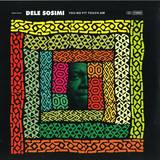
Wah Wah 45s are very proud to present the first full-length album in almost a decade from vocalist, keyboard player, Fela Kuti collaborator and afrobeat legend, Dele Sosimi!
You No Fit Touch Am represents where Dele is today - something of an untouchable force in the music scene that he has always been such a vital part of. The title is an uncompromising message that this man means business, and with his mammoth afrobeat orchestra on board that is definitely the case. Recorded at the Fish Market Studios in North-West London by Benedic Lamdin (AKA Nostalgia 77) the album provides a musical representation of Dele's strong socio-political opinions, as well as delivering classic song-writing that could have come straight out of 1970s Lagos!
Born in Hackney, East London, but soon to return to his parents' native Nigeria at the age of four, Dele Sosimi was schooled and raised in Fela Anikulapo Kuti's shadow at the height of early 70s afrobeat. Having been chosen by Fela to join his band at somewhat of a tender age, he was still a young man when sharing Fela's Glastonbury stage in 1984, and became both Musical Director for both Fela's Egypt 80 and Femi Kuti's Positive Force.
After Fela's passing in 1997, Dele went on to concentrate on his own solo career and, with diligent patience, carved out his own afrobeat crown. In London, where he now resides, his Afrobeat Vibration all-nighters are charged with his passion, labours and his unrelenting spirit.
Following on from his first two studio albums, Turbulent Times and Identity, this third long-player is sure to cement Dele Sosimi's position as a major player within afrobeat and beyond!
out of Stock
Last delivered 3 years ago available to reorder, subject to availability
Young East London producer Sam 'Palace' Walker has been part of DJ Haus's trusted inner circle for some time, having released on both Unknown 2 The Unknown and Hot Haus Records. Here he unreleased two more retro-futurist house gems - the kind of kaleidoscopic, rave-inspired tracks that evoke memories of early '90s pirate radio stations and illegal parties full of smiling dancers in bad long sleeve t-shirts. Choose between the bouncy stabs, hazy vocal cuts, bleep-era bass and snappy, cheap-sounding beats of "Codex", and "NRG", a piano-laden banger that makes great use of some familiar samples that were once a staple of breakbeat hardcore and bouncy house records. Oh, and the unmistakable rhythmic swing of UK garage.
This is the story of C POWERS. To understand OYSTERS, you must understand the man behind it all...
THE UNITED STATES TERRITORY OF GUAM, ca. 1989
Abandoned at the island nation's only beachfront techno club as an infant, young Christoph (C POWERS) was adopted by the club's owner, Geraldo Powers. During Geraldo's time as a naval officer, he traveled the world throughout rave's formative years, secretly going to the underground parties when arriving to European ports after having originally fallen in love with early house music as a teenager in his native Chicago via roller-rink parties and the legendary Music Box headed by Ron Hardy. Rear Admiral Geraldo, outed as a gay homosexual during the discriminatory days of Ronald Reagan's U.S. military, was forced to retire, but spared a dishonorable discharge thanks to his roster of medals earning during his exemplary leadership for the invasion of Grenada in 1983.
Throughout his three year stay at the local naval base, the now 30-something Gerry Powers had been struck by the natural beauty and unsettling mysticism of Guam and its peoples and made the choice to permanently set up shop on the island after his unexpected retirement. Taking his partner and newly-crowned Supreme Butch Queen of the New York vogue circuit--Amadeus Lector--with him and financed with $6669.69 in prize money, the new era of DAS POUNDHAUS LTD. was to begin.
In 1990, Gerry founded the notorious Guamanian club DAS POUNDHAUS (the name of which was strongly influenced by a two-week long ecstasy and Polish speed-fueled bender during 1989's inaugural Love Parade in West Berlin). Located inside a decrepit lighthouse originally built during Spain's reign over the island, the club played host to a steady stream of closeted, Pacific-touring U.S. military personnel and later, the party-craving barons of the dot com bubble. Outed in private usenet circles for its off-the-charts hedonism, the club's infamous parties would inevitably lead to its perilous demise, and the eventual deportation of Gerry Powers and his family to the mainland.
But there was one thing that could never be taken away from them...
...synesthesia...
You see, young Christoph was diagnosed with the "disorder" as a pre-teen after having been exposed to nearly a decade of DAS POUNDHAUS first-hand and at such a young age. The youngster was like a fish in water during his childhood in Guam, but when the family was deported in 1999, he began to show signs of anxiety and depression. His ability to hear colors and see sounds had simply turned into a stream of incomprehensible, uncontrolled static. He was now a pariah among his peers. Shunned and admonished. Assigned to sit by himself during school lunch. One of "those" kids.
By this time, his two dads' relationship was on the rocks and would quickly unravel. Amadeus, frustrated with Gerry's incessant ramblings about bunkering in Montana because of the Clinton-Illuminati conspiracy to enslave the middle-class, decided to leave Gerry in an attempt to become a backup dancer for Madonna during her "Drowned World Tour" in 2001 (which would have provided a significant sum of financial security to the family, considering their life savings had been destroyed thanks to the toppling of the NASDAQ from its peak of 5048 in March of 2000--and thanks to those dot com baron stock tips, the Powers were all-in). However, Amadeus' unflinchingly "authentic" vogue style was considered obsolete, and he would go to die in a Reno Motel 6, a victim of drug abuse and that kind of thing apparently.
>>>>Fast-forward to the year2012ish>>>>
Four years since they released Dring, Nôze are making a very welcome return to Circus Company with their fifth album Come With Us, and once again the pairing of Nicolas Sfintescu and Ezechiel Pailhes has yielded a collection of captivating and curious songs that could only come from the unique sound world they inhabit. As has been evident throughout their career from their early experimental house days through to the more recent song-based material for Get Physical, the Parisian duo have always moved on from album to album, maturing their sound to deliver a new experience for themselves and their listeners every time. On this occasion, Come With Us finds Nicolas and Ezechiel in a particularly introspective mood. Even as their work has naturally turned more to home-listening craft over the years, here they revel even more in personal reflection both musically and lyrically. Tracks such as Saint' conjure up the romanticism of dustbowl blues with its vagabond guitar tones (played by long time collaborator Thibault Frisoni), while Nicolas's voice reaches new distinctive heights in spellbinding tales like Apache". Emiliano Turi also lends a new sense of natural groove to the Nôze sound with his live drumming, and as ever, Nicolas and Ezechiel are keen to bring their friends into the fold for guest vocal spots. Dani Siciliano spars beautifully with Nicolas on the disco-inflected album opener I Need To Know". dOP vocalist JAW, fresh from his Midtown project, joins in for the bittersweet balladry of Come With Me".
Six years on from his debut album on Cadenza, Swiss DJ/producer Mirko Loko comes with the follow up to 2009's 'Seventynine' as he catapults us into the techno and electronica galaxy with 'Comet Plan'. 'Un voyage entre toute mes influences,' Mirko Loko shares, breaking into his mother tongue to describe the essence of his sophomore longplayer that was conceived in Berlin and later birthed in his hometown of Lausanne after a two-year gestation period. Literally translated as 'to travel between my influences', it's a fitting summation of an artist whose work has respectfully mined early inspiration from Detroit and Chicago that laid the foundations of the emotion-filled productions that we know of him from today. In addition to this, Mirko sees his connection with Luciano's Cadenza Music, a relationship that's been in existence since dot one and saw the likes of Ricardo Villalobos, Melchoir, Pedro and Rahdoo make up one of the most innovative crews in dance music, as leaving an indelible imprint on his musical DNA to this day. It's Mirko's strong sense of musical identity that is at the core of 'Comet Plan', a work that's equally informed by the artist's spiritual connection with the Motor City as his halcyon Cadenza roots. And one thing's for sure; he knows how to captivate: take 'Venus' whose trickles of melody and syncopated drum rhythms increases in intensity with each bar towards an eerie crescendo. Then there's 'U Special' that builds the kind of subtle party vibes you could imagine Luciano dropping to create one of those moments to a heaving blissed out dancefloor. 'Kolor' - the album's early single (also remixed by Carl Craig as part of an excellent EP package) is sprinkled with a dusting of xylophones, chimes and other bells as the melody is driven forward for a heady trip across the electronic galaxy.
A1, "Capitulo 4". We find Gregor surprisingly accepting of his new reality: far from going crazy, he has serenely discovered in his new self everything he didn't know and didn't perceive as a human being. "Capitulo 4" is an incredibly precise description of the awakening of the new Gregor. Shadows, fog, sinuous silhouettes that are impossible to identify. In one word: confusion.
B1, "Capitulo 5". Vertigo starts to ease, we can hardly feel the anguish and the heartbeat is gone. We are in a new reality and although it seems a done deal, every movement he makes tells Gregor that understanding this new world and his perception of it will not be easy. Chapter 5 demands our everything while we listen: our full dedication and attention to the last minute detail that reveals a new horizon and its new colour, or lack of it. A horizon that, nevertheless, is more perceptible for Gregor, because he can now capture all sorts of colours and emanations.
B2, "Capitulo 6". Light. Gregor still ignores that most domestic insects have a strong aversion to intense light, but his human conscience is still intact and it will take him a long time to reprogramme certain habits, instincts and automatic behaviours, like a preference for lit environments. The painfully intense sensation that his antennae convey to his tiny brain when faced with light is an effective path to learning: little shocks that Reeko reproduces in this track, surrounded by an oscillating and changing ambience that redefines itself each time we listen to it.
Revered Belgian DJ and producer Mugwump proudly presents his longawaited debut album on his Subfield imprint. An impeccable nine track LP, informed by two decades as a globe-trotting DJ, producing tracks that have inspired everyone from Andrew Weatherall to Mr. Scruff. A mainstay from the Belgian club scene, on the ground in Ibiza in the early 90's, behind the cult Food Club in the late 90's, now running his own Leftorium clubnight in Brussels, with releases on the highly influential Kompakt label but also on R&S, Gigolo, Cocoon, Gigolo, Eskimo, Permanent Vacation or Throne of Blood... Mugwump has the CV to deliver one of the year's most eclectic and inventive studio albums, a timeless excursion into modern-day, leftfield dance-pop and mutant disco with heavy New-Beat influences. Produced with his partner Olivier Grégoire, it also gathers a solid list of collaborators : Circlesquare's Jeremy Shaw (!K7/Output), Brussels guitar wizard Raphael Lee (aka Spookhuisje), Luke Jenner (ex-The Rapture), Norway 's cosmic disco lords Päl Nyhus of Mungolian Jet Set and Tore Gjedrem from Ost & Kjex, Belgian multi-instrumentalist Stephan Fedele, Philip Janzen (frontman of Cologne's Krautrock-Disco band Von Spar) and Sami « Morpheus » Birnbach from 80's cult punkfunk/new-wave band Minimal Compact.
KEY POINTS
-Mugwump's SF001 and SF002 releases have been supported by Pachanga Boys, Ivan Smagghe, Horse Meat Disco, A Love from Outer Space, Huxley, Jack Savidge (Friendly Fires), Sasha, Ben Pearce, Groove Armada, Andrew Weatherall, Erol Alkan and featured in Mixmag, Clash, Ransom Note, Resident Advisor, DJ Mag, Phuturelabs, Insomniac and repeatedly in France's prime-time news show Le Petit Journal (Canal +)
-This album will be supported by a 4/5 piece live band, with SF002 collaborator DC Salas plus Raphael Lee (Spookhuisje), Stephan Fedele and Mugwump, plus a live drummer when possible. Early tryout dates already scheduled in Brussels (23.01 Maison du Peuple/20.02 Central)
-Freeman PR will be handling the full album UK campaign targeting all the major blogs, webzines, specialist and mainstream print medias with also tba UK plugger targeting radios. Two original videos are being finished right now.
-Mugwump co-runs and resides at the highly-rated Leftorium clubnight in Brussels and has a weekly radio show on FM Brussel, running for 10 years now.
This EP was made during a period where my whole outlook on everything was transforming. The Voidloss project started as an investigation, I was conducting a lot of research and study on the mind, the occult, on different thought modes, and the Voidloss project represented this. The idea was about a leap in to the void. A leap of abandonment into the dark, with total acceptance, total commitment. The idea was to lose myself to the void. This was mainly a spiritual journey for me, and could be best explained by 3 things, the void of Miyamoto Musashi from Go Rin No Sho, The concept of the Tao from the writings of Lao Tzu, and the concept of the abyss from the works of Aleister Crowley. Part of this journey deep inside the self was frightening and horrific, the total loss of self, of all identity and ego, and part of it was beautiful and enlightening. I wanted the music to reflect this, and I wanted the music to change as I changed, as I went to and through all these interesting places. In essence this was about freedom. So fast forward some years and I felt I had sharpened my mind quite effectively, the music had twisted and changed and flowed with me. At the point I began making the music for this EP, I had grown quite angry with the amount of conformity I was perceiving in life. Politically, socially, musically, there was this drive of conformity in the world. I think part of it, and only a part, comes from the prevalence of social media, the need to belong and to be liked, the idea of judging yourself and your works through the perception of others. Musically I felt that within techno there was a tendency for the music to fit within a set of confines dictated by fashion and hype, and this was reducing the diversity of the music, it seemed also that the practices of commercial music were seeping in to techno as the music became more popular. Hype and business driven decisions, brand building and so on. I always felt techno was more about art, and I began to get frustrated. Equally I felt that politically there was less and less choice, as all decisions seemed to lead to the same outcomes. I became more interested in the concept of anarchism, of the idea that government was no longer needed. I have always in my life had a drive to question everything. I've always been 'naughty' and rebellious and done things my way, to my advantage or my disadvantage, I could never accept being anything other than myself all the way. If everyone walks in one direction, I will walk the other way, even if it takes me over the edge of a precipice, just to see what is there. All this stuff influences my music, and during the period of making this EP I was angry, kicking against the things I no longer liked or wanted, screaming dissent. There is a lot of anger and rage, and of course rebellion. I wanted the music to capture that unbridled fury you have when you are in your late teens, when you just start learning about yourself and you start rebelling and questioning things around the time the world is really pushing you to conform. I was soundtracking my own philosophical riot. Previous to this my Voidloss stuff had been more introverted, more pensive and melancholy, more self destructive, more cerebral. For this new music I wanted something more immediate but without being too obvious. In terms of the choices I made I still leaned more towards broken rhythms for beat structure. I find it very difficult to do anything interesting with 4x4 kicks any more, it's too rigid for me, it limits my freedom. I like the looseness you get from more 'drummer' like beats, I guess probably because I have been playing drums all my life. The challenge is to get the same rolling power from broken rhythms as you get from 4 to the floor. It's not easy, there is a ridiculous amount of trial and error and the rejection percentage is high. I also was trying to use less 'synthy' sounds. I wanted to try to take a more acousmatic approach to sound design. With the current modular synth revival in techno I was hearing a lot of 'old' synth sounds re-emerging, and this didn't seem like a progression to me. I wanted to make sounds that were hard to source for the listener, where they weren't sure if it was synth or real world sample, digital or analogue. This involved a lot of experimentation. My process involved a lot of field recording, especially with contact microphones, which open up a whole new world of interesting sounds. You are effectively recording sounds through objects in the environment, 'hearing' the world as these objects hear them, I was using guitars, feedback loops, handmade instruments as well. So I was combining this with different synthesis, granular synthesis, sample synthesis, physical modelling, FM synthesis and of course analogue. Everything was reprocessed and re-synthesised, I tried hard to obscure the source and make something new as much as possible. The stuff on this EP was part of my live PA for some time, so as I learned how the music worked live I could go back and make changes, sometimes the environment I was playing in transformed the sound as well, and so I would try to go back an incorporate this in to the music. For remixes I wanted to choose artists that I respected for their vision as well as for their output, so my list of people I wanted was extremely short. Inigo Kennedy has always been an artist I have respected greatly. His music has always been unique to himself, he remains outside of fashions and trends even though his name has become very big recently. He takes risks with his work, experimenting and exploring, yet remaining relevant to the club, and just tirelessly forging ahead, seemingly for the sake of art above all else. And he's just a really nice guy to deal with. His remix is everything I expected it to be in that it is the unexpected. Regis is another artist who forges his own path in music, you cant really even begin to discuss the avantgarde in techno without including his name, he is one of the foundation stones for artistry and the outsider mentality in techno. His music is always unique to his own vision, and along with it comes an interesting artistic philosophy taking in situationism, post punk and industrial ideology and a good dose of tricksterism ala PT Barnum, all of which comes out in his music and the way it is presented. The man is a truly singular force and it is an honour to have him on this record. Overall the concept here is that of rebellion and dissent. Of asking questions, following your own path, of maintaining some place in yourself that burns like a forest fire.
Whether or not I have succeeded I guess is down to the listener, I'm never happy with my music, I keep wanting to move forwards, or somewhere else, and am constantly trying and failing to capture some essence of perfection. But like Bukowski said
'It's the only good fight there is'
Future Brown greifen auf Themen wie digitale Interkonnektivität, globale Reisen und eine vitale weltweite Künstlergemeinschaft als Inspiration zurück. Von regionalen US Rap-Varianten zum UK Grime, von Dancehall bis Reggaeton - Future Brown spinnen eine zutiefst durchdachte Ästhetik, die intuitive Verbindungen zwischen diesen eigentümlichen Sounds aufbaut, um dann den individuellen Kollaborateuren eine Stimme zu geben. Kollaborationen wie mit Shawnna, Kelela, Johnny May Cash oder Sicko Mob schlagen Brücken über musikalische Grenzen und Klüfte hinweg, während Future Brown zur selben Zeit den eigentlich geographischen Abstand zwischen den einzelnen Künstlern bewusst machen wollen.
Imagined as a sharp contrast and complement to Funn City's trashy vintage vibes, Darshan Jesrani's new Cylinder moniker sets out to explore the more streamlined, forward-facing side of Startree's vision, while sacrificing none of the warmth or funk of its classic influences. 'Disco Engine' is a futuristic joyride which draws upon late 80s and early 90s techno vibes as much as it does disco and R&B to produce a groove which is warmly insistent, buoyant, sexy and a little menacing. Ruthless, detuned 808 toms and a punchy, round analog bass synth provide a floor you can push the gas pedal to. A greasy, giddy synth rhythm holds the middle down like a session guitarist when rent is due, and ecstatic choral synth pads and vocals by Chelsea Adewunmi soar just above the horizon. Underground dance music with the top way down. Side B's '4-Stroke Dub' works a more DJ-oriented angle around that 808 and juxtaposes parts which do not play together in the original, creating a track which is subtly driving and every bit as engaging. The gorgeous, understated vocal refrain in the middle is a destination you will have been happy to go the extra distance to reach. Startree is happy to present its second release as a continuing statement of its musical intentions and its simple desire for all to have a really good time.
Part 1 of Slam's Reverse Proceed Interpretations with reworks from Planetary Assault Systems, Flug, Edit Select & Slam themselves.
Confirmed Press & Promo:
Press - * DJ Mag, Mixmag, Tilllate, Raveline, Groove, Daily Record, Edinburgh Evening News, TopDJ Ua, Nightshade Mag, Nitebeat, Posivision, DJ Times, Time Out NY. Sound Effect Magazine
Radio - * Carl Cox Global, Laurent Garnier Radio, Kiss 100, Ministry of Sound, Galaxy Network, Radio Scotland, Dinamo FM, Acik Radio, BBC Radio Ulster, Future Radio, Reconwarriors, The Beat Delivery, Anton Banks, XM Satellite Radio, RTE. Dance Under The Blue Moon (Anja Schneider), WHCR, KVRX, Power FM, Dinamo FM, Rise, Pulse Radio, Proton Radio, BBC Radio Cardiff, The Radio Dept, Fresh FM (Holland), Mystic Vibes (NYC), Show B, An Taobh Tuathail, RTE RnaG, Untitled Music, Ibiza Sonica, 88.1FM WESU (USA), Sutil Sensations. Global Dance Sessions
Online - * Soundwall.IT, Ibiza Voice, Radio Magnetic, Mixxradio.fr, CHRY, WESU, Untitledmusic, Ibiza Global Radio, Paris_One Reverse, Doce Pulgadas Spain, Ibiza Sonica, Andres Aguirre - KVRX student radio, FACT, Little White Earbuds, mnml ssgs, Gridface.
out of Stock
Last delivered 11 months ago available to reorder, subject to availability
Soma mainstay Deepchord returns with part 2 of the Luxury Series. This Double A release feature Deepchord's signature atmosphere rich tones and lush environments and also mark a slight upturn in terms of pressing on a more Techno vibe.
Luxury 3 opens as spacious as can be as the dynamic Modell crafts otherworldly pads and haunting tones, driven by muted kicks and driving subs. His effective use of delay and reverb knows no bounds as he subtly shifts synth stabs and background noise through the dimensional barrier, creating rhythms so refined they defy the natural law. His usual percussive wizardry is at work here that, whilst vigorous, retains a light atmospheric feeling keeping fully in line with the melancholic tones of the track. Clocking in around 14minutes, this is Modell as his most immersive.
Luxury 4 has a distinct Detroit heart to it. Those almost instantly recognisable saw waves, moulded by layers upon layers of processing, swirls and evolve and Deepchord slowly works in various elements of the track to unparalleled levels. Fairly reminiscent of earlier, more stripped work, subtle percussion brings things to life fairly quickly as Modell allows the layers of ethereal synths and processing to blend and fuse naturally, creating a cohesive background to which the listener can easily spend hours listening to, every time finding ever so slight nuances to each cycle of the track.
Deepchord never fails to impress with every release and can easily change his style up from previous incarnations based in pure atmospherics to his own unique brand of legendary Dub Techno.
Our 14thDubplate in the series sees young recruit Bopperson step up to the plate for the very first time. His unique approach, recording 45s at 33 RPM and then editing from there, delivers dance floor friendly results.
Side A sees Harry Coade's version of Michael Jackson's Remember The Time get the slow & synthy treatment. While on the flip, chesty country legend Dolly Parton gets deep as her voice and those strings are slowed and stretched by Bopperson for a cunning take on the heart wrenching Jolene.
Hubie Davison returns to Leisure System December 1st, 2014 with the Khayyam Grey EP, his second release for the Berlin-based label and one that marks both his and Leisure System's funkiest output to date.Following on his 2013 debut of pastoral electronics and muffled house, Khayyam Grey highlights Davison's vivid production skills, drawing from a deep well of influences varying from Werkdiscs and Sound Signature to Bill Withers and Otis Redding. The three tracks here are also the strongest representative document yet of the 26-year-old Davison's DJing, which incorporates all manner of memorable house and assorted wonkiness and has seen him play in Panorama Bar, Corsica Studios, and Gaité Lyrique in Paris amongst numerous others.The title track takes cues from Daphni's stand-up-and-shout, sample-heavy house, while "Get On" is a comparatively restrained yet incredibly funky mid-tempo number. "Vowels", which first appeared as the opening track on the LSR-LSD1 compilation, appears here in extended and altered form, breaking down vocals on a syllabic level from smooth to percussive.These three tracks of addictive house have been on constant rotation at Leisure System for the past few months - it's high time everyone else joined the party
Listen to this if you like: anything that we've put out last year, wrapped together in a lovely double pack of a 12 and 10. The Roundup part 1 is the first part of an annual recurring event: the big Heist family remix EP, where all artist names get put in a big bowl, and by luck of the draw, find themselves remixing (and remixed by) another Heist artist. We've got Max Graef remixing Detroit Swindle and turning the break up into a full on Graef-affair. The label heads themselves take 'The Organ Grinder"'s 'Change all the time' and turn into a deep Chicago-esque tune and completing the 12, there's Frits Wentink's take on Bluebottle, experimenting with his trademark shuffle. On the 10, Standout track of the first year of Heist 'Jungle' gets a lovely rework by Nachtbraker, giving it a more 4x4 feel than the original and The Organ Grinder who turns Frits Wentink's Schrewd into a full on Filter house cut. The artwork is handmade and photographed by Baster. Sincerely yours, Lars & Maarten
out of Stock
Last delivered 8 months ago available to reorder, subject to availability
Reminiscent of a time where we were releasing 4-tracks sampler every month (remember the Secret Gems From The Vault) It is naturally that we thought about a various artists sampler in order to introduce the new wild bunch.
I said new but some of them are pretty familiar, which is the case with the almighty D'julz or Raw District for an incredible update on 2007 « Fast Forward » which deserves its title, Do I need to introduce D'Julz I don't think so, one of the most sought-after French dj and producer, he never disappoints.
Then we are pleased to welcome Accatone, having several EP's and remixes released since 2008 and a full album in 2012 on labels like Dabit, Apparel, Piston Recordings, Roots & Wings, One to One, to name some, and having his work remixed by legendary Matthew Herbert or Jay Tripwire (Poker Flat, Tonality), Piek, (Cadenza, Paulatine, diynamic), Accatone is becoming a full-grown producer by conquering the likes of Dj Sneak, Laurent Garnier, Stacey Pullen, Slam, Timo Maas, Danny Tennaglia, Olderic, David Labeij, Mirco Violi, Severino Panzeta (Horse Meat Disco), Paco Osuna and many others !
Scan Mode aka Alberto Sánchez began his career in the year 1998 and has since traveled throughout the Spanish territory, performing in major venues and festivals alongside the likes of Jeff Mills, Sven Väth, Dubfire, Marco Carola and Richie Hawtin to name a few. He is regarded as an eclectic artist who has taken different professional profiles during his musical career. His music is on the edge of House and Techno with brilliant melodies and rhytmic, Kike Henriquez began editing in Alex Flatner's labels, Later released on labels like BluFin, Greenhorn and with some of the best artists from the tech-house & deep-house scene, Introduced to David Duriez by Something Different(s head honcho Jesus Pablo, Kike soon joined the task force behind this new BR100 release, Another artist to watch out.
Early Support from:
Raresh / Nathan Coles / Dan Ghenacia / Claudio Coccoluto / Fred Everything / Tiger Stripes / Doc Martin / Shur-i-kan / Luke Solomon & more
Reminiscent of a time where we were releasing 4-tracks sampler every month (remember the Secret Gems From The Vault) It is naturally that we thought about a various artists sampler in order to introduce the new wild bunch,
Julian M, is french and is taking over right now, releasing here his first track on Briquerouge, But the man is no beginner, having released on Catwash, Homecoming, Denote, to name but a few and of course recently on our own RZ Muzik, His music is deep, acid, techy and ready to please any crowd, Ange Siddhar is working for Laboratory Records and works with legendary artists such as Ron Carroll, Paul Johnson or Chris Count and now teams up with Illan Nicciani on several House project, They have a strong vinyl lovers community following their releases and just joined the label with 'The Show'
Jepe was one half of John Waynes who already release on Brique Rouge and is now one of the most respected producer from Portugal, Actually living in Berlin, he has released on Get Physical, Blossom Kollektiv or MuleMuziq, Jepe's tracks have a very high level of quality, True House Music,
And last but not least, our good friend from Switzerland, mr Salvatore Freda, With the machine-driven futurism of Detroit in his step, and the bounce of Chicago in his shadow, Salvatore Freda is a pure vinyl DJ from Lausanne, Switzerland. With a production career that began in 1997, Freda has built up an impressive discography over the years. His music has touched some of techno and house's most respected labels including Trapez, Music Man Records, Liebe Detail, Freerange, Area Remote, Push Communications, Dessous, Nightvision, and Cadenza.
Early Support:
Dubfire / Nacho Marco / Matthias Vogt / Tyree Cooper / Ame / Clive Henry / Renato Cohen / llorca / Blacksoul & many more
New York City-based DJ, producer and The Corner label owner Anthony Parasole makes his debut on Ostgut Ton with three new percussive-heavy Techno tracks on the My Block EP.
"Percussive music, that's my ground, my foundation but I am missing the feeling of tribalism in Techno today. I've been using a lot of different drum techniques over the past years, implementing them to Techno. The record 'Quickstrike', that I've released on my own label The Corner, was an edit record of an old sample-based house release. To me this was a test if people would gravitate to this sound and it was the biggest record on The Corner so far. From there I knew I could do this and two tracks off my new EP on Ostgut Ton work like this: 'Typhoon' features bongos, congas and all kinds of skin percussion, 'My Block' uses a different kind of percussive color.
HipHop in general and the Cut-up technique in particular have also heavily inspired me as a producer. During the 1990s music seemed really profound - a little bit tougher too. I listened to a lot of HipHop when I was writing the music for this new release and applied its methods to my own music. Many producers at that time were very forward-thinking. Wu-Tang Clan's RZA uses a sixteenth note technique that made me realize that I wanted this kind of hypnotizing sound to work in a Techno format. Another big influence were late 1970s Horror movie trailers. I was watching them while I was working on 'Bizarre' in the studio, I was inspired to capture the eerie tones and textures of those short clips in 'Bizarre'.
At the end of the day I work within certain parameters. Everytime I make a sample, I drop it into my personal folder - so all my music has a similarity of up to 50 or 60%. Maybe I'll use the same drumkit or kickdrum. I apply limitations to myself, but doing this also gives me my own voice. When I was learning how to produce, Levon Vincent taught me to make my own drum kit, to make my own synth kit and to work within this. Sample-based music is inspiring, and creating something out of found sound is very interesting to me. I think a sound signature is something that will always refine ones sonic pallet and skill set."
*More classic UK roots gets revived from Partial Records, this time in the shape of a pair
of hot shots from the vaults of the Jah Works stable and roots daughter Donette Forte.
* `Homeward Bound' is taken from the now long-deleted Donette Forte LP from 1991 `Wilderness', and this welcome reissue comes backed with previously unreleased dub cut `Dub Train'
* Mixed and produced by Rej 'Jah Rej' Forte at Channel One UK studio.
* Donette is recently back on the road touring with her new band Urban Lions after an absence of 20 years
Bell Gardens combines the musical visions of Kenneth James Gibson (formerly of Furry Things, now recording as
*Bell Gardens' origins began arguably as more of an experiment than the duo's current 'experimental' projects - McBride's drone- and string-laden ambient symphonies, and Gibson's ventures in dub and minimalist techno - as they sought to manifest their mutual reverence for folk, psychedelia and chamber pop in a traditional band structure without cannibalising any particular past genre. Bell Gardens' sound is less reliant on effects and studio trickery than the pairs' independent guises, laying bare as it does vocals and live instruments with emotional sincerity, and presenting songs imbued with an almost pastoral or gospel simplicity and timelessness.
Slow Dawns for Lost Conclusions was again recorded mostly at home studios, but additionally the band made use of a friend's desert cabin in Wonder Valley, California, and it seems this willingness to retreat from the city has lent an expansiveness to the tracks, in particular the spacious, ceremonial 'Silent Prayer' (written in a snowbound mountain cabin in Idyllwild, C.A.) and the crepuscular 'She's Stuck in an Endless Loop of Her Decline' (mapped out under the stars in the desert).
While the addition of strings (contributed by Lauren Chipman of The Rentals and The Section Quartet) and trumpet (Stewart Cole of Edward Sharpe and The Magnetic Zeros) provides a double rainbow of tonal textures throughout, the nine tracks of Slow Dawns for Lost Conclusions are united by an understated elegance belying the newly expanded, communal effort in the studio: each instrument earns its place, nothing is overwrought or conspicuous. Moreover, it is McBride and Gibson's artistry in building stirring soundscapes from the barest of materials in their other guises that lends such assurance and sophistication to these arrangements.
The band is a result of the complimentary cross-pollination of Gibson and McBride's musical tastes - borne from a late-night conversation between the two that grew wings - and it is the universality of the sentiments and their restrained, reflective approach to writing and recording that allows the music to simultaneously straddle the past and the present. The music avoids pastiche, its pedal steel, sleigh bells and harmonies giving a nod to the ghosts of musical genres past, but never overriding or distracting from the emotional content of the sum of its parts.
The album ends with the glorious 'Take Us Away' - one of the first demos Gibson gave McBride when he was on tour with Stars of the Lid - neatly bringing their work to date full circle and exemplifying the band's mindfulness of their own serendipitous beginnings: the dawning of an auspicious, unique musical force.
Bell Gardens - Take Us Away -
Harmonies alert!! Actually, this is rather lovely. Slow-tempo, just the right side of 'twee' and packed full of strings, as if Air and Midlake had been taking balloon trips over the mid-West and sprinkling good-vibes dust across the land. From L.A. and subconsciously plugged into the '60s dream-pop scene, taking in a little bit of Mercury Rev and Brendan Perry en route, stopping off at Pearls Before Swine and Big Star's house for inspiration, before getting stoned with '70s era Brian Eno and Harold Budd.
Erlend Øye is a skinny nerd, but maybe that's what makes him a pop star. His huge thick spectacle-lenses act as an interface between his inner life and his numerous collaborators and fans. Erlend Øye is a travelling singer-songwriter, who has been making music in various constellations since the late nineties. He sang for Röyksopp, while his own bands are Kings of Convenience and The Whitest Boy Alive, who recently split up. A laid back, everyday vibe runs through Erlend Øye's music. Erlend is not larger than life, at the most his songs may be. The pop star from next-door doesn't make any drama, but leaves that to life itself. His relaxed, laid back sound opens your eyes and ears for places, situations and encounters. A certain mournfulness runs through the songs, although they deal with a longing for self-fulfilment. Erlend sings of loneliness, and in doing so, he creates a 'we'. Until now Erlend's projects have often been based on simple concepts - two guitars and two vocals with Kings of Convenience, and four instruments with The Whitest Boy Alive. With his new solo album he frees himself of these parameters; for the first time everything is possible, for the first time Erlend Øye stands alone. The songs on 'Legao' were arranged and recorded with the Icelandic reggae band Hjálmar.
The magic of 'Legao' lies in the fact that Erlend's vulnerable vocals and his sincere lyrics are supported by the elegance and consistency of the band. Today roughness is often used to counterbalance roughness, whereas on Legao a equilibrium is sought - and found. A simplicity, clarity and minimalism is created that is rarely found in pop music. Erlend Øye has grown up. He accomplishes nothing less than the step towards an independent, free-standing solo musician, who can perform in any constellation - with a band, orchestra or alone with a guitar.
PAULINE MURRAY , LEGENDARY VOCALIST OF MUCH LOVED PUNK BAND PENETRATION.
GUEST MUSICIANS JOHN MAHER (BUZZCOCKS) and VINI REILLY (DURUTTI COLUMN).
PRODUCED BY THE GOD-LIKE MARTIN HANNETT.
ARTWORK BY PETER SAVILLE AND TREVOR KEY
LINER NOTES BY JON SAVAGE
The double vinyl edition also includes a bonus CD featuring instrumental versions of all the album tracks (a must for students of Hannett's unique production sound), along with alternate takes of key singles.
Les Disques du Crepuscule presents a deluxe remastered edition of Pauline Murray and the Invisible Girls, the debut album by post/punk icon Pauline Murray, produced by revered sonic architect Martin 'Zero' Hannett.
Recorded at the famous Strawberry Studios in July 1980, the album offered epic electronic pop written by Pauline and partner Robert Blamire and marked a radical departure from their shared past in pioneering punk band Penetration. 'This is sophistication,' enthused Paul Morley in NME. 'Lovely songs of anxiety, malaise and self-doubt.' According to Melody Maker the album was 'unquestionably a musical highpoint of this year or any other.'
As well producer/arrangers Martin Hannett and Steve Hopkins (aka the Invisible Girls), the album features a stellar cast of guest musicians including John Maher (Buzzcocks) and Vini Reilly (Durutti Column). Indeed Pauline Murray and the Invisible Girls presents almost a Factory record, exquisitely sleeved by Peter Saville and Trevor Key. Stand-out tracks include the popular singles Dream Sequence and Mr X, with the newly remastered Hannett tracks now augmented on CD by a wealth of bonus material including non-album singles, live recordings (from tours in 1980 and 1981) and a John Peel session (1980). The liner note is by Jon Savage.
'It's a bit of a missing link album,' says Pauline today. 'Written and recorded after punk, but before Martin Rushent and the Human League made airy pop respectable again. We chose the other Martin in 1980 because we wanted the incredible sounds he achieved for Joy Division and Magazine. Thundertunes, basically.'
Driving weirdo techno, warm melodic acid and daring sound experiments - Killekill welcomes a new duo on board: SKEW & SATIRIST are Max Cooper and Gareth Williams who met in the Not- tingham, UK club scene in the early 00s, living together for a number of years, leading to an effec- tive collaboration.
Max learnt production from sitting and watching Gareth in the studio, Max helped show Gareth the way with his DJing. Both became successful in their solo projects, Max as a regular guest
on stages all over the world, Gareth starting a music technology business with partners such as Richie Hawtin, John Acquaviva or Daniel Miller.
Over the years the musical collaboration between the two friends has continued in the background and they've finally found the time to bring it to fruition and start this project for their darker, more extreme and twisted techno which has been lying dormant over the years.
out of Stock
Last delivered 18 months ago available to reorder, subject to availability
"Teilstueck" (German for part or segment) is the next excerpt of Jacob Stoy's ongoing attempt to translate his surroundings into music. It's his second EP for Uncanny Valley and is even more multifaceted than his debut "Redenswart" from 2012. With "OMG" you'll get the feeling that something sublime will happen right from the beginning. It's one of those tracks whereby time stands still until a mighty synth-line unfolds in all its glory. "CFM" comes in the same musical vein with a similar and slightly melancholic bass-synth dominating the drumming. By far more cheerful is "MKM". Based on a catchy bass line foundation, Jacob Stoy showcases wonderful synth-effects and sound with the beautifully oscillated pad making the cut. This is House music for machine lovers. The flipside starts with "HIM" and probably the most floor-friendly track on the record. The slowly but steadily rising organ chords prepare things and when the carefully targeted percussion elements come in, it feels like summer will never end. In contrast, "QFL" lives from its mysterious atmosphere and is very good example for Jacob Stoy's preference to use Electronica-like sounds for his House Music. The record is rounded up with "HHM" and a little nod towards past times when he used to play in a Jazz band. With its Delay effects, a fuzzy guitar and a great bass melody it's not far away from Krautrock either. For the artwork Jacob Stoy teams up with fellow student Chris Dietzel.
The unsung hero of melodic techno prepares to step up to the Poker Flat plate for a second time, continuing the partnership that began with the epic 'Planet Funk EP' earlier this year. Vince Watson is a stalwart of the scene and truly in a league of his own: an unparalleled discography, a singular flair for arrangement, and a signature sound of lush layers and deep irresistible grooves. 'Rock It' is another complete chapter written in Watson's unique vocabulary. The EP's title track's swift pacing and bright multi chords-create a constant state of uplift and progression, movement and light. Subtle changes and hypnotic building loops drive this number towards a state of blissful contradiction: slow-burn euphoria. 'Sonar' contains all the scale, emotion and colour that the title may suggest; a prominent chord progression is sustained throughout, running through the track like a shot of neon, ensuring its future a peak time anthem. 'Feel It' is the yin to the yang of the previous tracks, easing into a looser, deeper tech house tempo, and unravelling tight melodic harmonies for breezy watercolour washes of pads.
After the success of the first A-sides compilation in 2012, Adam Beyer has decided its time to release another. With Adam's stature steadily growing as one of the leading talents in the Techno scene and the rise of Drumcode, the standard of demo's that have been sent to Adam have been top notch. Adam has now decided to release two compilations with 10 tracks each, consisting of tracks that Adam has tried and tested.
There are also new artists that have been invited to release on Drumcode for this compilation and others who are a staple in Drumcode's core family. Combining both old and new talents Drumcode have come up with something unique and distinctive to make this two-part compilation something extra special.
Slo -mo house at it's best deep shape, including the rare, sought after Maurice Fulton remix for Alice Smith 'Love Endeavour'. Compiled by Rainer Trüby.
We live in hectic, turbulent times. It seems season- and reasonable to slow things bit down. In fact: slow house down to what we calling now: SLOUSE. Implying down to earth club music, with a tapping foot under 116 beats per minute.
House music and its many sliding genres have ruled the clubs and charts, well, a special focus on the slo-mo house is well-deserved.
Rainer Trueby become a guarantee for vanguard soulful dance music and club tunes with such special vibe, which he had formidable approved not only as a DJ but also with sucessful compilations like - Glücklich', - Maiden Voyage' on Compost, DJ Kicks (K7) or compilations for Nuphonic, King Street, Talkin' Loud and other labels.
Rainer Trueby, an artist who spreads love like in the good old days, selected some of the best tunes on the planet, some rare, sought after like the rare Maurice Fulton Remix for Alison Smith - Love Endeavor', in demand tunes like S3A - Deep Mood Act2' or Ron Deacon's - Untitled', amazing discoveries like the Moonstarr tune, or a Laid Back remix, few underrated tracks, well all tracks are worth the grab and get played again & again. It's a full palette of slo-mo house flavors and moods as Rainer Trueby takes us on a magical trip into his imagination of Slouse.
The result is a future classic compilation with melodic and groovy masterpieces, made for your home-, garden-, car- , club listening pleasure. It works for the happy hour as well as the after hour.
After the success of the first A-sides compilation in 2012, Adam Beyer has decided its time to release another. With Adam's stature steadily growing as one of the leading talents in the Techno scene and the rise of Drumcode, the standard of demo's that have been sent to Adam have been top notch.
Adam has now decided to release two compilations with 10 tracks each, consisting of tracks that Adam has tried and tested. There are also new artists that have been invited to release on Drumcode for this compilation and others who are a staple in Drumcode's core family.
Combining both old and new talents Drumcode have come up with something unique and distinctive to make this two-part compilation something extra special.