DaRand Land, who hails from the post industrial confines of Buffalo, NY was one of the leading figures of Deep4Life, a cult label known for submersible oriented, yet dancefloor-friendly productions. With ambient synth-driven tones and heavy funk basslines being at the center of his sound, DaRand Land’s music often evokes an introspective quality, without losing its groove fundamental. DaRand’s works, which span decades on deep house labels such as Downbeat, Confluence and Pulp have been described as “uncompromising” and has afforded him a passionate following of listeners who seek a more emotive, thought-provoking brand of underground music.
Teaming up once again with Scissors and Thread - the perfect fit for his sound - DaRand Land drops an album full of crafty, trippy house for the heads. Wander Being contains 10 tracks on the double vinyl release with a pair of additional tracks for the digital release. The vibe is deep and sleek, with a rough, bumping edge. The title track sets the tone, a smattering of percussion accompanying a thick, round kick drum and Rhodes chords, giving off a classic Detroit feel. Tracks like Turn to The Music ramp up the energy somewhat, but overall the tracks sit in the sweet spot between dancefloor burners and soulful, jazzy, deep cuts. Noticeable is the space given to each element across the tracks - the hi-hats sparkle, the snare snaps, and the basslines roll and rumble. Add to this the magic melodic flourishes provided by the pads and synths, reminiscent of the late Mike Huckaby in places, made this whole album a thoughtful, joyful experience.
„The genesis for the Wander Being LP”, says DaRand “was a desire to return to the essence of some of my original Deep4Life productions. How was this accomplished? Principally, through the exclusive use of hardware components, minimalist arrangement, and a minds-eye approach to source the musical elements. In particular, the single, The Nature of Reality was written to convey a sense of what it feels like to be in a state of suspended animation. There is a natural tension introduced via the organic, swirling pad progression juxtaposed against endless vocal echoes and the low-end groove of the bassline. Thematically, I wanted to carry this forward through the entirety of the album.
balancing subdued keys and strings with ethereal tones and atmospheres
out of Stock
Last delivered 6 months ago available to reorder, subject to availability
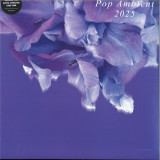
In recent years, the introductory texts for the Pop Ambient compilation series, which is released every year on Kompakt as the last release before the Christmas break, often began with the sentence "Every year again...".
“Every year again”, a quiet, almost unnoticed maxim of self-evidentness. Because this is already the 25th issue to be published this year.
25 years in increasingly fast-moving times in the even faster-moving music business is an eternity that doesn't just feel like it. It is all the more remarkable how I, as someone who is always restless and often driven by this fast pace himself, pleasantly almost haven’t realised how - in pop-ambient contexts - time does not pass (or passes differently) in the best sense.
When compiling the 25th edition I was asked, among other things, what it was like that I was still doing this and whether I had a favorite track. In the spirit of bringing all the tracks together I don't have a favorite track, or all of them. But I have a favorite part (moment) that I played. In this case it was a broad chord in a change of key at minute 2:55 in the piece Circles by Max Würden. A moment of majesty and familiarity that, at that moment, contains the entire Pop Ambient cosmos, that just works and doesn't explain anything - and I said: “...that's the reason why I'm still doing this.. .”
Pop Ambient is a statement without demands. Is promise without expectation. Is a path without a destination. Every year again.
The intercontinental collaboration between the two long-standing Pop Ambient artists Leandro Fresco from Argentina and Thore Pfeiffer from Mainz is a regular part of the series. They open this year's anniversary edition with the usual filigree.
02. Pass Into Silence – Mirage
The Japanese artist Tetsuo Sakae aka Pass into Silence returns to Kompakt 20 years after his legendary album “Calm Like A Millpond”. A master of tones that are as fine as they are stoic and crystal clear.
03. Tamarma & Sebastian Mullaert – Follow Me
For the first time, the well-known Swedish producer and DJ Sebastian Mullaert will be performing on Pop Ambient in cooperation with the Georgian sound artist Tamara Davitashvili. Their piece “Follow Me” fits confidently into the intimate, familiar sound cosmos.
04. Sono Kollektiv feat. Nathalie Brum – Periadriatische Naht
Sono Kollektiv is now a fixture on Pop Ambient, this time with Nathalie Brum. In particular, Luis Reich's characteristic flugelhorn always gives their sound that special jazzy touch.
05. Thore Pfeiffer – Phase Locked Loop 1
Thore Pfeiffer is a master of shimmering surfaces and hypnotically meandering loops.
06. Andrew Thomas feat. Julia Parr – Sunshine Night
An old friend from New Zealand is back with spherical sounds. Andrew Thomas, in collaboration with Julia Parr, sprinkles finely placed piano tones into distant soundscapes and even more distant voices.
07. Segensklang – Artifacts of Synthesis
We are pleased that Segensklang will be there again this year after his brilliant Pop Ambient debut last year. Deep and beautiful.
08. Ümit Han – Im Delirium
The Cologne producer Ümit Han is back for the third time. While he has so far explored the more emotional, soundscape aspects of the Pop Ambient universe, this year's piece "Im Delirium" rises to a pulsating mountain of sound with pearly, clear, effervescent sound crystals.
09. Würden & Schäfer – Analysis Of Variance II
In their track Analysis Of Variance II, Max Würden and Lukas Schäfer embed a finely placed beat impulse in a soft bed of modulating soundscapes and pleasant psychedelic spaceyness.
10. Max Würden– Circles
Max Würden once again shows his special feeling for one of the core statements of the Pop Ambient style spectrum. The abstract chord and soundscape movement between formal construction and emotional touchability, which seems like “pop music” under the microscope.
11. Blank Gloss – Jennifer’s Convertible
The Californian guitar-ambient duo takes us into their sublimely beautiful sound cosmos with their usual aplomb. Maximum condensed transparency. Lightness - heavy as gold.
12. Hendrik Meyer – Grün War Die Klamm
Another new addition is Hendrik Meyer. The versatile musician, also known for his MYR project distributed by Kompakt, leads us with a glistening, beautiful “wall of sound” determination into the eternity of a sunset that is only ended by the following track. Filmy Music.
13. Triola – Zum Renngraben
Jörg Burger aka Triola combines his typical “handmade” impulses and accents with a multi-dimensional, digital sound scenario in a pleasantly smoky, blurred stonewashed aesthetic.
As always, the indispensable final mastering by Jörg Burger ensures that everything is brought together and the sound is fine-tuned.
And like every year, the 25th edition is of course wrapped in an abstract, floral magic creation by Veronika Unland. Over the years, the grace of her imagery has increasingly merged with the musical aura to form an unmistakable magical symbiosis.
Hallo Leute,
In den vergangenen Jahren begannen die Anmoderationstexte zur Pop Ambient Kompilation-Reihe, die jedes Jahr als letzte Veröffentlichung vor der Weihnachtspause auf Kompakt erscheint, sinnigerweise immer mal wieder mit dem Satz “Alle Jahre wieder...".
„Alle Jahre wieder”, eine leise, fast unbemerkt zur Formel gewordene Maxime der Selbstverständlichkeit. Denn in diesem Jahr erscheint bereits die 25ste Ausgabe.
25 Jahre in zunehmend schnelllebigen Zeiten im noch schnelllebigeren Musikgeschäft, sind gerne mal eine nicht nur gefühlte Ewigkeit. Umso bemerkenswerter wie mir, als ewig Rastlosem und oft selbst von dieser Schnelllebigkeit Getriebenem, auf angenehme Weise fast entgangen ist wie sehr, in pop ambienten Zusammenhängen (gedacht), die Zeit im besten Sinne nicht (oder anders) vergeht.
Beim Kompilieren der 25sten Ausgabe wurde ich u.a. gefragt, wie es ist, dass ich das immer noch mache und ob ich ein Lieblingsstück hätte. Im Sinne des Zusammenbringens von allen Stücken habe ich kein Lieblingsstück, oder alle. Aber ich habe eine Lieblingsstelle, die ich dann gespielt habe. In dem Fall war es ein breit gesetzter Akkord in einen Tonartwechsel bei Minute 2:55 im Stück Circles von Max Würden. Ein Moment der Erhabenheit und Vertrautheit, der in diesem Moment den gesamten Pop Ambient Kosmos in sich trägt, der einfach nur wirkt und nichts erklärt - und ich habe gesagt: „...das ist der Grund, warum ich das immer noch mache...“
Pop Ambient ist Statement ohne Forderung. Ist Verheißung ohne Erwartung. Ist Weg ohne Ziel. Alle Jahre wieder.
Die interkontinentale Kollaboration der beiden langjährigen Pop Ambient Stamm-Künstler Leandro Fresco aus Argentinien und Thore Pfeiffer aus Mainz, ist regelmäßiger Bestandteil der Serie. Gewohnt filigran eröffnen sie die diesjährige Jubiläumsausgabe.
02. Pass Into Silence – Mirage
Der japanische Künstler Tetsuo Sakae aka Pass into Silence meldet sich 20 Jahre nach seinem sagenhaften Album „Calm Like A Millpond“ auf Kompakt zurück. Ein Meister der ebenso feinen wie stoisch-glasklaren Töne.
03. Tamarma & Sebastian Mullaert – Follow Me
Zum ersten Mal gibt sich der bekannte, schwedische Produzent und DJ Sebastian Mullaert in Kooperation mit der georgischen Klangkünstlerin Tamara Davitashvili auf Pop Ambient die Ehre. Ihr Stück „Follow Me“ fügt sich souverän in den intim-vertrauten Klangkosmos ein.
04. Sono Kollektiv feat. Nathalie Brum – Periadriatische Naht
Mittlerweile eine feste Größe auf Pop Ambient ist das Sono Kollektiv, diesmal mit Nathalie Brum. Insbesondere das charakteristische Flügelhorn von Luis Reich gibt ihrem Sound immer wieder diesen besonderen jazzigen Touch.
05. Thore Pfeiffer – Phase Locked Loop 1 Thore Pfeiffer ist ein Meister der flirrenden Flächen und hypnotisch mäandernden Loops.
06. Andrew Thomas feat. Julia Parr – Sunshine Night
Ein alter Bekannter aus Neuseeland meldet sich mit sphärischen Klängen zurück. Andrew Thomas, in Kooperation mit Julia Parr, sprenkelt fein gesetzte Klaviertöne in weit entfernte Flächen und noch entferntere Stimmen.
07. Segensklang – Artifacts of Synthese
Wir freuen uns, dass auch Segensklang nach seinem fulminanten Pop Ambient Debut im letzten Jahr auch dieses Jahr wieder mit dabei ist. Deep and beautiful.
08. Ümit Han – Im Delirium
Zum dritten Mal dabei ist der Kölner Produzent Ümit Han. Hat er bisher eher die emotional-flächigen Aspekte des Pop Ambienten Universums ausgelotet, schwingt sich sein diesjähriges Stück „Im Delirium“ mit perlend-klaren, sprudelnden Soundkristallen zu einem pulsierenden Klanggebirge auf.
09. Würden & Schäfer – Analysis Of Variance II
Max Würden und Lukas Schäfer betten in ihrem Stück Analysis Of Variance II einen fein gesetzten Beat-Impuls in ein weiches Bett aus modulierenden Flächen und angenehmer psychedelischer Spaceyness.
10. Max Würden – Circles
Max Würden zeigt einmal mehr sein besonderes Gefühl für eine der Kernaussagen des Pop Ambient Stilspektrums. Die wie „Popmusik“ unter dem Mikroskop anmutende, abstrakte Akkord- und Flächenbewegung zwischen formaler Konstruktion und emotionaler Berührbarkeit.
11. Blank Gloss – Jennifer’s Convertible
Das kalifornische Gitarren-Ambient Duo entführt uns mit gewohnter Souveränität in ihren erhaben-schönen Soundkosmos. Maximal verdichtete Transparenz. Leichtigkeit - schwer wie Gold.
12. Hendrik Meyer – Grün War Die Klamm
Ein weiterer Neuzugang ist Hendrik Meyer. Der vielseitige Musiker, u.a. auch bekannt durch sein über Kompakt vertriebenes MYR Projekt, führt uns mit gleißend-schöner „wall of sound“ Entschlossenheit in die Ewigkeit eines nur vom nachfolgenden Stück beendeten Sonnenuntergang. Film(Musik)reif.
13. Triola – Zum Renngraben
Jörg Burger aka Triola kombiniert die für ihn typischen „handmade“ Impulse und Akzente mit mehrdimensionalem, digitalen Soundszenario in angenehm rauchig-verwischter Stonewashed Ästhetik.
Für den alles zusammenführenden, klanglichen Feinschliff sorgt, wie immer, das unverzichtbare, finale Mastering von Jörg Burger.
Und wie in jedem Jahr ist auch die 25ste Ausgabe natürlich in ein abstrakt-florales Zaubergebilde von Veronika Unland gehüllt. Die Anmut ihrer Bildsprache ist über die Jahre immer mehr mit der musikalischen Aura zu einer unverkennbaren magischen Symbiose verschmolzen.
out of Stock
Last delivered 17 months ago available to reorder, subject to availability
AFTER OVER 50 YEARS SINCE THE RELEASE OF THE FIRST LP “DEDICATO A FRAZZ” THE SECOND AND HIGHLY SEMIRAMIS’ ALBUM “LA FINE NON ESISTE” IS FINALLY RELEASED!
Thanks to the determination of founder Paolo Faenza, intent on continuing the reunion experience already shared since 2014 with his lifelong companions, in particular Maurizio Zarrillo and Giampiero Artegiani, the new work was recorded by a renewed lineup, made up of talented musicians coming from Rome’s progressive rock scene.
“La fine non esiste” (The End Does Not Exist) consists of 6 unreleased tracks, sung in Italian, characterized by a modern sound but still in continuity with the debut album. In fact, all the instruments that characterize Semiramis’ background are present, such as keyboards, moog, flute, acoustic and electric guitars, vibraphone, leading to wide-ranging compositions, supported by rich and lively arrangements, definitely “prog rock”.
In 1972 Garybaldi released the legendary “Nuda”, an album in which the typical sounds of progressive rock was mixed with Fossati’s typical ‘guitarism’, giving birth to a unique and very important work in the Italian prog scene.
1973 sees the release of “Astrolabio”, a very particular record made up of two long pieces, one for each side, with a lot of space left for improvisation. Another unique work that closes the first phase of the band’s history, who would continue their music activities in alternate phases up to the present day.
Blues & Roots is not only a cornerstone in Charles Mingus' body of work but also a testament to the enduring power of the blues as a foundation for jazz
Mingus managed to both honor tradition and push the boundaries of jazz, all while making a deeply personal and politically charged musical statement. The album remains one of the most vital and influential recordings in the history of jazz music. Released in 1960 this album stands out in Mingus' discography as a raw, vibrant homage to the roots of blues and gospel traditions in jazz. Mingus sought to return to his musical roots, drawing from blues and gospel traditions he grew up with, particularly from the African American church music of his youth. The album is a powerful statement of how deeply the blues tradition influenced modern jazz. It combines the unfiltered emotional intensity of the blues with Mingus' forward-thinking and often unconventional compositional techniques. The album's tracks are imbued with a strong sense of the blues, which is especially apparent in songs like "Wednesday Night Prayer Meeting" and "Moanin'." The album carries a loose, jamsession feel, reflecting the church and street-based roots of blues music. The use of call- and- response patterns in several tracks also hints at gospel traditions. Blues & Roots is often cited as a critical album in the development of jazz as a genre that embraced both its past and future. Mingus' ability to integrate traditional musical forms (such as blues and gospel) with more modern, experimental elements opened up new possibilities for jazz. His compositional style, which juxtaposed tightly arranged sections with freewheeling solos, influenced generations of musicians, from avant-garde jazz artists to rock musicians and composers in other genres
In 1962, Gordon relocated to Paris, where he became part of a vibrant jazz community
He was already a well-established figure in the jazz world due to his groundbreaking work in the 1940s and 1950s. His decision to live in Europe revitalized his career, allowing him to continue evolving as a musician away from the struggles in the USA: he enjoyed enormous respect in Europe, which allowed him to perform freely, often in clubs and on tours, without the burdens of American racism. Paris had long been a haven for jazz musicians: artists like Miles Davis, Thelonious Monk, and John Coltrane were celebrated in Europe, and the French jazz scene, in particular, became a hotspot for both American expatriates and European musicians. Dexter Gordon quickly became one of the leading figures in that scene. Our Man in Paris is a celebrated jazz album and it is widely regarded as one of Gordon's best works. It is considered one of Gordon's finest albums due to its blend of bebop virtuosity, lyrical improvisation, and the tight interplay between world-class musicians: a classic jazz record, beloved for its authenticity and the inspired performances of Dexter Gordon and his ensemble. This album is now considered a classic in the jazz canon that's not only a remarkable album because of its flawless execution and historical significance, but it also captures a pivotal moment in jazz history where American jazz musicians were embracing new experiences and sounds in Europe and captures the essence of Gordon's bebop roots while showcasing the influence of his time in Europe.
Workout features a mix of original compositions and jazz standards, highlighting Mobley's ability to blend sophisticated harmonies with rhythmic complexity and received critical acclaim upon release and is regarded as one of Mobley's finest works
The album has been praised for its engaging arrangements and the strong interplay between the musicians, the tracks often feature rhythmic grooves and vibrant solos, which became characteristic of the hard bop movement. Released in 1962, it is considered a classic in the jazz genre, particularly within the hard bop substyle and it's often recommended for both jazz enthusiasts and newcomers to the genre and showcases Hank Mobley's lyrical approach to the saxophone and is frequently included in lists of essential jazz albums. The album continues to influence contemporary jazz musicians celebrated for its artistry and innovation, making it a significant contribution to the jazz landscape of the 1960s. So Workout stands as a significant milestone in jazz history, exemplifying the creativity and musicianship of its time: with its engaging compositions and stellar performances, the album remains a beloved classic, inviting listeners to explore the depth and beauty of hard bop jazz, a treasure that continues to resonate within the jazz community.
The Blues and the Abstract Truth is not just a landmark album in Oliver Nelson's career but in the history of jazz itself
The album features an incredible ensemble of top-tier jazz musicians, often referred to as a "supergroup": Oliver Nelson (alto saxophone, tenor saxophone), Freddie Hubbard (trumpet), Eric Dolphy (alto saxophone, flute), George Barrow (baritone saxophone), Bill Evans (piano), Paul Chambers (bass), Roy Haynes (drums). The early 1960s were marked by a shift from the hard bop of the 1950s to more experimental forms, including modal jazz, free jazz, and the incorporation of avant-garde elements. Musicians like John Coltrane, Ornette Coleman, and Charles Mingus were all pushing the boundaries of jazz, and Oliver Nelson's work fits within this broader movement: in this album there's a perfect combination of modern compositional techniques, virtuosic performances, and emotional depth make it an essential listening experience for any jazz fan. It captures the moment when jazz was evolving into new, exciting directions while staying connected to its roots in the blues. The Blues and the Abstract Truth is considered one of the essential albums in modern jazz where Oliver Nelson's compositional style blends hard bop, modal jazz, and blues influences with sophisticated harmonic structures and striking arrangements. The album is noted for ts rich orchestration despite having a relatively small ensemble with use of textures and colours, particularly in tracks like "Stolen Moments," created a new standard in azz arranging.
Released in 1956 this album is a compilation of recordings from different sessions held between 1953 and 1954
Thelonious Monk and Sonny Rollins were both giants of jazz, each known for their individual approaches. Monk, with his unorthodox approach to rhythm and harmony, was one of jazz's most original composers and pianists. Rollins, one of the greatest saxophonists in jazz history, was known for his inventive and bold improvisations. Thelonious Monk was still establishing his reputation during this time. Though considered a genius by some, Monk's highly original style, marked by dissonant harmonies, abrupt rhythmic shifts, and a percussive attack on the piano, was still divisive among critics and audiences in the early '50s. It wasn't until later in the decade, when he started working with Columbia Records and gained wider recognition, that he achieved broader commercial success. Sonny Rollins, though younger, was already a notable figure in the jazz scene by this point, having played with Miles Davis, Charlie Parker, and Bud Powell. He was known for his inventive and bold improvisational style. In these recordings, Rollins was solidifying his status as one of the major voices on tenor saxophone. The album shows both musicians in their prime, experimenting with harmonies and extended forms. Even though the sessions were recorded at different times, there is a strong synergy between them, particularly in how Monk's percussive piano style complements Rollins' flowing saxophone. A record that captures a moment in jazz history, a testament to the artistic brilliance of both musicians and a significant piece of jazz history, blending the freewheeling spirit of jam sessions with complex, forwardthinking compositions.
Almost exactly a year since since ‘Felt Cute’ debuted on Kalahari and Blu:sh is back in the building. But this time around, it’s with a record evoking the muggy closeness of a dancefloor suspended somewhere between peak-time elation and wide-eyed vision quest.
Tweaking the blueprint to rapturous ends, the latest offering from this Blu:sh project propels itself forward with a muscle-bound groove. Six robust, deadly club trax replicate the breathy seduction of its predecessor, but this time, with added velocity.
Pinky Promise is full frontal and deadly while channelled through the same explorative prism characterising Benoit’s best work. Probably the toughest material the prolific shapeshifter has put out to date.
Nods to Eurocentric styles shine through with particular emphasis on the sexy and trance-inducing. It goes straight out the traps with a big dose of fractal fuel and stays murkily psychedelic to the very end.
out of Stock
Last delivered 16 months ago available to reorder, subject to availability
“Music is my forever cove,” writes Portland, Oregon’s Luke Wyland of the ideas that give shape to Kuma Cove, his latest album under his own name. Though named after a real place on the Oregon coast, Kuma Cove casts its gaze far beyond the sightseer’s line of vision. Recorded live in the studio and blurring obvious lines between computer-based composition and electro-acoustic instrumentation, it is an album about flow, borders, transitory states, and shelter. Composed of discontinuous ripples and repetitions (“I’m forever searching for a better descriptor than looping, which feels too simple and flattened by overuse,” Wyland says), shaped into richly emotive arcs, and informed by his experience as a person who stutters, it is also an album about identity, self-expression, and the energies that sluice through and across what we perceive as linear time—like floodwaters seeking an exit, like streams running into the sea.
Artist’s Statement:
I made this record while spending significant time in the woods by the Sandy River in Corbett, Oregon,
where I've had my studio for the last five years. It is a diary of spontaneous live recordings edited to highlight the moments of clarity that emerge from long-form improvisations. These compositions express a slowing internal rhythm. An unwinding. A somatic recalibration as I enter middle age. A newly empowered vulnerability.
Here are the internalized cadences of my stutter, flowing freely from my fingers. The musicality of my disfluency is revealed in its frictions, elongations, and foreshortenings. Disruptions in linear time, where the bubbling cadences of my stutter find unexpected pathways, reveal the elasticity of the present moment. This is my idiosyncratic language, shaped and inspired by my disability. Subliminally mirroring internal processes, neural firings, cognitive entanglements...
The title, Kuma Cove, refers to a beloved cove on the coast of Oregon my wife and I return to yearly. There has always been something so magnetic about coves. The way they cradle one from the overwhelming enormity of the ocean beyond, muting a primordial fear. I experience these improvisations as ecosystems I'm able to inhabit for stretches of time, embodying the particular rhythms and sensorial textures within each. Music is my forever cove. Everything you hear is created live in Ableton on a setup I've been honing for 15 years. I celebrate MIDI and computer music as an extension of self and strive to make it as expressive as any analog instrument. I was a visual artist for the first half of my life and quickly adapted those skills to composing and producing on a computer. The transition felt natural within the landscape of DAW's interfaces, especially as a synesthete. Ableton and its community of Max creators continue to surprise me with its expansiveness.
I'm forever searching for a better descriptor than looping, which feels too simple and flattened by overuse. I envision sonic loops as tangled masses of time, three-dimensional knots spinning on tilted axes, or overlapping wreaths refracting out a myriad of colors. My practice is continually refocusing my ear to what is revealed in the repetitions, searching for the fingerprint of each. I find it incredible how technology lets us manipulate time like this. Nothing on this record is quantized or locked to a universal bpm. Experiencing numerous tempos at once feels important. Recordings as mirrors. Freedom from expected (conversational) flow as we hold time for each other.
-Luke Wyland, August 2024
Artist Bio:
Luke Wyland is an interdisciplinary artist, composer, and performer based in Portland, OR (USA). Wyland has been releasing critically acclaimed records for the past 20 years in the groups AU and Methods Body, as LWW, and under his own name, working with such labels as New Amsterdam, Beacon Sound, Balmat, The Leaf Label, and Aagoo Records. As a person who stutters, Wyland’s approach to music is informed by his idiosyncratic relationship with language. Wyland believes deeply in the cathartic power of live performance as a means for collective healing. Through an interdisciplinary art practice that focuses on improvisation, somatic embodiment, bespoke tuning systems, the cadences of disfluent speech, and time manipulation technologies, he’s collaborated with choreographers, high-school choirs, filmmakers, sound designers, and renowned musicians such as John Niekrasz, Holland Andrews, Colin Stetson, and Abraham Gomez-Delgado. He’s also the co-creator of the “It’s A Fucking Miracle” dance class with Tahni Holt.
Wyland has toured nationally and internationally and performed at the Whitney Museum, Ecstatic Music Festival, Issue Project Room, PICA’s Time-Based Arts Festival, End of the Road Festival, and Les Nuits Botanique, among others.
out of Stock
Last delivered 20 months ago available to reorder, subject to availability
»Nuts of Ay«, the thirteenth album by the Berlin-based electronic pop duo Tarwater (Ronald Lippok and Bernd Jestram), is their first in a decade, since 2014’s »Adrift«. Beautifully poised and smartly dressed, it's an album that draws Tarwater’s various pasts into a high-definition present, while bringing the duo, yet again, into productive dialogue with all kinds of fellow travellers.
Tarwater’s music has always been marked by a hypnotic pop-ness, but that’s particularly evident on »Nuts of Ay«, where a song like »Hideous Kiss« weaves together jangling guitar, pastoral flute, and flittering electronics into a gem-like construction. While the lyrics of »Hideous Kiss« are written by the duo, »Nuts of Ay« also continues a longstanding Tarwater tradition of recasting the words of others in their own mould. This time, their remit is broad: poetry from Derek Jarman (»All Nuns«) and Millner Place (»Trapdoor Spider«); lyrics from Jean Kenbrovin (»I’m Forever Blowing Bubbles«), the late Shane MacGowan (»USA«) and, again, John Lennon (»Everybody Had a Hard Year«).
This cast of found and borrowed lyricists also finds collaborative echo in the guest musicians dotted throughout »Nuts of Ay«. Schneider TM turns up on the lovely, Felt-like »Spirit of Flux«, where guitars channel the tangled reveries of Vini Reilly and Maurice Deebank into lush pop. Carsten Nicolai joins, as Alva Noto, dappling »On Waves and Years« with intimate glitching textures; he also provides the album cover art. Elsewhere, Masha Qrella appears on »Down Comes the Goose«, and actor Lars Rudolph pitches in for »USA«.
It may have been ten years since the album's predecessor, but Lippok and Jestram have kept active with other projects. They’ve collaborated with Masha Qrella, Immersion, and Iggy Pop; worked on radio plays with Kai Grehn, some based on the writing of Nick Cave (»The Sick Bag Song«, featuring Tilda Swinton, Paula Beer and Alexander Fehling) and William S. Burroughs (»The Cat Inside«); and made music for several radio-tatorts (radio plays based on »Tatort«, a long-running German police TV series) by playwright Tom Peuckert.
Both voracious and committed in their creative energies, Jestram and Lippok report back from these experiments with »Nuts of Ay«, one of their most compelling, deeply lustrous, dreamlike albums yet. They say there was no concept for the album, which is surprising, perhaps, given its holistic mood, explaining it »grew together like a coral reef in the studio over a period of several years«. There’s something to be said for letting an album gather and mutate naturally, without an overarching framework in place, and »Nuts of Ay« certainly feels like an unforced collection of material that nonetheless inhabits a similar space, one where guitars twist like driftwood next to amorphous, aqueous electronics, Lippok’s droll yet completely convincing vocal delivery riding songs that pulse and plume with curious, unpredictable rhythms.
But you can also hear elements – submerged but still present – of other music that’s inspired the duo: they’ve drawn some connections for us with psychedelic folk, Bowie in Berlin, Burial, and the film music of Popol Vuh and Krzysztof Komeda. This music shares a strong sense of place – whether in the world, or the mind – and the twelve songs on »Nuts of Ay« have such similar presence; a shared mood, a shared world, a shared sense of the possibilities of what electronic pop music could, and should, be. A bold and brave pop experiment.
Artwork by Carsten Nicolai
Mastering by Bo Kondren, Calyx Berlin
»Trapdoor Spider«, »On Waves and Years« & »Breaking Day«: lyrics by Milner Place
»All Nuns«: lyrics by Derek Jarman
»USA«: lyrics by Shane MacGowan
»Down Comes the Goose«: lyrics from a traditional song
»Forever Blowing Bubbles«: lyrics by Jaan Kenbrovin
»Everybody Had a Hard Year«: lyrics by John Lennon
out of Stock
Last delivered 2 years ago available to reorder, subject to availability
Not at all dangerous, but no less powerful and devoted to one another, the Coppola family have loomed large in film and the arts for decades.
The head of this particular family was not a Don lurking in the shadows, but a brilliant composer arranger and conductor: Carmine Coppola.
On the face of it, this album is a bit of a curiosity, though it was surely the first recording to bring together music from both Godfather films in this way.
Its original release coincided with a high-profile television event called The Godfather: A Novel for Television (also known as The Godfather Saga).
The extended cut necessarily featured additional music and arrangements, which were overseen by Carmine Coppola.
We can safely assume that at least some of that forms part of what is included in The Godfather Suite. For it, Coppola selected and re-arranged musical highlights from the two films,
including all of Rota’s main themes and his own source music pieces, creating what is essentially a 14-part symphonic suite.
It’s all rather beautifully executed, with great romantic flourishes, and it’s a fitting tribute to Carmine Coppola’s talent, not to mention his contribution to two legendary films.
Carmine Coppola himself passed away just months after the release of The Godfather Part III. A highlight of that final score is the ‘Love Theme’,
which was the basis of Carmine Coppola and lyricist John Bettis’s Oscar-nominated original song ‘Promise Me You’ll Remember’. The instrumental arrangement is included here in addition to the Suite.
It's a pleasure to see MOY back on AF. Sure, Jonny doesn't invent anything, but everything he does sounds incredible and his tracks have the ability to grab you and never let go. He seems to say: "I know what you're here for". The particular way he executes hyperactive beats, acid basslines and melodies, makes the material very emotive and timeless, walking his influences around and elevating the machine's rhythms to new emotional levels. Jonny Moy always delivers, in fact, the brilliantly titled 'Supermassive EP' is not just a title but a statement of intent. These four tracks will stick in your head for a long time, for the club, nightdriving or home. What are you waiting for? Go on!
out of Stock
Last delivered 22 months ago available to reorder, subject to availability
The making of a maiden album can be a capricious process. One moment of outright musical flow paired with another period of sustained creative struggle are feats experienced by seasoned producers the world over. So when Miraclis was forced to hole away in his makeshift studio - in the midst of a global pandemic - the stage was set for something magical. Now it will see the light of day for the very first time.
Having released two singles on Secret Teachings to critical acclaim already this year, Chilean talent Miraclis will accomplish a milestone achievement in July with the release of his debut album: Origin Of Truth.
Difficult experiences were fundamental to the creation of such work, as were Miraclis’ inherent musical interests. He explains: “Origin Of Truth had its birth during the pandemic. I created it as a way of communicating to myself the sensations and feelings that were spinning around my head at the time. I've always been inspired by Bristol trip hop, as well as classical rock, and these genres definitely contributed to the making of these melancholic tracks. In a way I wanted to fuse all the musical influences that were part of my childhood, up until this point now, so this album really means a lot to me. It was my way of communicating, when there was a lack of social contact and communication itself was hard to come by.”
It's this meditative quality that initially drew Damian Lazarus to the project. “It’s a record that has its roots in electronic music, but it’s a very alternative, very deep, melancholic album. I find it both soothing and stirring at the same time, and that’s a quite interesting juxtaposition in that it feels edgy but delicious at the same time,” says Lazarus. “The fact that this was written in this place surrounded by the most incredible desert landscapes makes this a very important piece of work to me. It doesn’t sit in any particular genre, which is why it feels right for a Secret Teachings release. It hints at so many genres that I as a DJ am quite into, and it feels like a first as it’s unique and unclassifiable. That mystical, esoteric, edgy feel makes this a perfect release for the label.”
Sonnet opens proceedings, with ghostly vocals residing next to raw instrumental elements throughout. Miraclis’ signature guitar riffs soon converge on saddened keys, paving the way for Scienter. It takes the form of an instrument-based, electronic-inspired cut, building slowly before reaching a crescendo midway through via an enrapturing acoustic solo.
Floating Child comes next, brimming with a darker intensity courtesy of broody synth pulses and rhythmic hi-hats, as Shiver arrives next. There’s a rock-leaning sensibility to the piece that gives way to earnest lyrical offerings, opening swiftly into the breakbeat-esque world of Perceptions. Hard-hitting drums act as the focal point, with electric chords adding depth and intrigue, whilst Bright continues in a similarly heartfelt vein.
Introspective pads leave us feeling pensive, ahead of Interstellar taking us on a celestial journey through warped bass tones. Acting as the LP’s penultimate number, it’s a four-and-a-half minute showcase of guitar-based musical goodness and one that perfectly sets the stage for Trapped, a closing saga of suitably emotive proportions.
Miraclis earned his stripes as a DJ under the name Max Clementi in his native Chile, as well as Spain after a stint at the Barcelona SAE Institute. Playing and writing music since his parents gave him his first guitar at age twelve, he found himself inspired by synth wave, electronic pop, trip hop, and psychedelic rock of the ‘80s and ‘90s, drenching himself in music by the likes of Massive Attack, Tricky, Depeche Mode, and Nine Inch Nails. However, it wasn’t until he had to move back to Pucón to take care of his father during the pandemic that he began working on what would become Origin Of Truth.
Serendipity seems to play a large part in Crosstown Rebels’ new label Secret Teachings. Just look at the story of how Damian met Miraclis in the first place. It involved a chance midnight encounter in Pucón, Chile at a woodland campfire after the DJ was locked out of his hotel room. This meeting of minds was the start of a remarkable friendship, where Miraclis invited Lazarus to stay at his house and break bread with his family. The two kept in touch, exchanging music and ideas as a result.
out of Stock
Last delivered 4 years ago available to reorder, subject to availability
Finding herself in different emotional and physical spaces over the past years, The Hague-based Seina creates four ambiguous tracks for Juni, her debut EP out on Präsens Editionen. The material, which comfortably sits between ambient, glitch and noise, feels like a long-overdue update of Mille Plateaux and Raster-Noton's golden days. The result, however, is much richer in texture and much more sensual than these dinosaurs of electronic music.
On Juni, Seina, who has a background in electroacoustic music and live performance, layers a range of source material created with different means and techniques—from Supercollider-generated elements, to field recordings gathered in Finland, France and The Netherlands, to analog electronic instruments, digital feedback and manipulated human voices.
The EP, which is partly composed and partly improvised, does not point in one particular direction but in many at the same time, making it an immersive experience and, at the same, a bold debut.
* Edition of 100 copies
* Special artwork by Paris-based visual artist Caroline Ventura in custom snapbox
* Designed by Swiss graphic designers Denise Häberli & Alina Scharnhorst of INTR
out of Stock
Last delivered 22 months ago available to reorder, subject to availability
Continuing our quest to get all of the classic early AMT albums released on vinyl, we turn to 2004’s 'Mantra Of Love’, and with the help of Makoto Kawabata’s studio wizardry, we’ve made it possible.
This latest instalment in the ‘Acid Mothers Temple Vinyl Archives - First Time On Vinyl’ series (as with the three previous SOLD OUT releases in the series) have all been meticulously put together with the help of Makoto Kawabata with the original CD artwork recreated for these vinyl editions from archive photos stored in the vaults at the Acid Mothers Temple in Osaka, Japan and the original audio remastered by James Plotkin.
Here’s what others had to say upon it’s original CD only release back in 2004 …
“Acid Mothers are strong folk. You'd think they'd tire quickly, all tucked away on their island, strewn about on tree roots while baking their lungs and throats to a knotty green tinge. But instead of waltzing through life like hippies, they manage to not only tour and put out records every year, but also to fill those albums with 30-minute jams and assorted freakouts. And while evil jam bands would fill that space with guitar work taken from the Classic Rock Manual of Clichés, Makoto Kawabata and company assault listeners with frighteningly dense walls of white noise, psychedelic swirl effects and, yes, even guitar solos-- albeit ones that are more Merzbow or Keiji Haino than Gary Rossington. Truly, AMT's endurance and threshold for cosmic lashings are both worthy of admiration.
But how much AMT can you take in one sitting? If there's anything this band has taught us-- via records such as 2002's Electric Heavyland and the ferocious Acid Mothers Temple & the Melting Paraiso U.F.O-- it's that they're not afraid to reach for the upper regions of consciousness. On Mantra of Love, they offer two titles over the course of one hour, never faltering along the way, and it's as if we listeners are just brief visitors passing through a never-ending, spontaneous group trip. For all I know, Kawabata has hundreds of hours of this stuff on his hard drive-- at any single moment, this record's sheer volume of sound is a clamor to behold. However, if you aren't dialed into that the particular space AMT inhabits (for me, it's the mystical fire-baptism standby), you might not hear their glorious noise for all the, well, glorious noise.
"La Le Lo" begins as a lengthy psychedelic ballad sung by Cotton Casino (who doubles on "beer & cigarettes"), who is accompanied by her own ghostly backing vocals. The band is playing a mantra as Casino waxes earth-mother stylings to the moon. The serenity is broken by a patented AMT rave led by Kawabata's electric sitar (!) solo. Ace rhythm section Tsuyama Atsushi ("monster bass") and Koizumi Hajime hold things together, as does the generally decent recording quality (not a given for these guys), but the real money is in effects-- lots and lots effects. Much like France's Richard Pinhas or AMT's countrymen in Les Rallizes Denudes and High Rise, the band understands the collaborative power of solo + overdriven Moog sirens and screams. And, also like those artists, Acid Mothers can go on all night if need be. About 25 minutes into this piece, any hell that hadn't already broken loose gets its due, and the band speeds to a fiery climax before winding down into glimmering astro-ambience.
The second track, "L'Ambition dans le Miroir", also begins as a minor ballad featuring Casino's haunting solo vocal. The Mothers set her up with a faux-blues drag and a thick buffer of synth-rays; when Casino actually enters, she fights for airtime with an array of falling stars and cosmic dust. However, this time there is no overwhelming solo to power the comedown. Casino intermittently coos in the background while droning horns keep the auxiliary pixie haze from evaporating. As they showed on In C and La Novia, AMT are more than adept at creating calmer storms-- listeners just have to catch them in the right light. Mantra of Love doesn't necessarily capture the most inspired moments in their canon but as usual with this band's records, it's rarely at a loss for moments of horror or grandeur.”
Here we have the third LP by the excellent Guy Hamper Trio, featuring James Taylor on Hamond organ, and Guy Hamper on guitar (sometimes called Childish) and what a first-class LP this is! 'Instrument of Evil' in particular has a very eerie vibe. We asked the man himself what was the inspiration for it? G.H. The track is the sequel to '7% Solution', which featured on the last Guy Hamper Trio LP (with Thee Headcoats standing in as rhythm section). A 7% Solution being the amount of morphine Dr Watson administered to Sherlock Holmes. For 'Instrument of Evil' I took Sherlock Holmes' later designation of his syringe as "an Instrument of Evil". This is originally a quote from the bible- "Wicked men do at times reject God's purpose for the state, transforming the good of civil government into an instrument of evil." Point of interest: Morphine addiction happens to tie in with another aspect of the song. In the section that nods to Elmer Bernstein's main title theme to the film of the book The Man With the Golden Arm, in which the main character is also a morphine addict. Another ingredient - we added six-string bass to that section in tribute to Jet Harris - he formerly of top group The Shadows, who recorded a great version of Bernstein's classic. To top it all off the record sleeve references the fine graphics of the great Saul Bass. The track also features contributions from Tom Morley (trumpet) and Anna Jordanous (sax) . Both Were a pleasure to work with. My job at the wheel is to basically make a playground and let Jamie, Anna and Tom loose in it with very little direction, apart from pointing out the swings and location of the roundabout. I told Tom "you're a Spanish trumpeter stood on a hill in Spain." For Anna, I think we said "go low and nasty." Other titles are taken from early poetry chapbooks I made in my youth. 'The First Creature is Jealousy' and 'Dog Jaw Woman' being examples. The title 'Incense Rising From a Censer' comes from Dostoevsky's The Brothers Karamazov, a book I really recommend. Prayer rises to God on the smoke of the incense burning in the censer. I imagine this track being some kind of antidote to 'Instrument of Evil'. They are all excellent tracks. I imagine film companies will be queuing up to use many of them.
Indignation Meeting are punky rail fans from Leeds. 15-year-old Peter is the driver - he's the drummer and lead singer, writes most of the songs, and also plays bass and trumpet on the album. The rest of the crew is his dad Michael on guitar, Hugo on bass, and with Keith, Heather and Sally often along for the ride when they play out. Here at DGHQ we loved listening to their self-released debut album Trouble In The Shed so much we eventually released it on vinyl for the first time. They now have a second album! Vocalist/drummer Peter very kindly talks us through the (train) tracks_ * "The Trainspotting Song" - Now, as a train geek, I go out filming trains an awful lot, and one thing you can't help noticing whilst out in the wilds of Staffordshire or the moors of Lancashire are a whole load of unnecessary 'Private Land' signs. This song is my response_ * "The Talyllyn Railway" - The history of the Talyllyn Railway is a fascinating one that I've long since wanted to explore, due to its unique nature as the first railway to ever be taken over by volunteers. This is the result! * "The Middleton Railway" - As a volunteer at the Middleton Railway, I had felt that a song needed to be written for quite a while. However, our guitarist Michael, ended up beating me to it! * "A Model World" - It was late one night, and I was lying on my sofa, trying my hardest to gain an ounce of enjoyment from 'Hornby; A Model World.' It was proving quite hard, due to the alarming lack of substance in the programme, so instead I decided that its name was rather good, and could be the basis of a song explaining my 'model world.' And, well, here it is! * "The Fifth Black Five" - This song is dedicated to the railway preservationists of old, who spent countless hours in cold, damp, dreary sidings, all to make sure us future generations would be able to enjoy the smell of a steam train. Thanks guys! * "Case Study" - This song is a commentary on the sensationalisation of disasters, when there's a massive tragedy and people at home just sit in their comfy sofas, watching the news and drinking tea. We know what's going on, but we can just choose to turn off the TV and forget it ever happened and continue with our lives. It also relates to the dehumanisation of those disasters you experience in school, where you have to write essays on someone who's just become homeless. It seems quite heartless sometimes_ * "Loco Motives" - This song is a fictional story of a man's personal struggle with a railway company, and the drastic measures he took to fix them_ * "That Would Never Suit His Grace" - With model railways, you always seem to get a few people who can never be satisfied with a layout or a model - no matter how hard someone's tried, there's always something to improve on, and they're never nice about it either. This song is a reality check for them_ * "Small Black Shunter" - This is our second homage to Zounds - Electrification would never be truly complete without its B-side. And this B-side is the story of a little loco who wanted to see the world. * "Rhydyronen" - Slowly but surely, we're going to pick off all of the stations on the Talyllyn Railway. Starting where Abergynolwyn left off, this is the story of our second favourite station on the TR. * "Typically English Day" - This is an homage to Mark Astronaut, a true punk genius who was gone before his time. Although there were many songs we could've picked to cover, it only seemed right to punk up one of his most popular tracks, and one of the main ones that got me into the Astronauts in the first place - Typically English Day, a heart-wrenching tale of an elderly couple trapped in the middle of a nuclear war, following their last moments before their inevitable demise. * "Just For The Record" - There is too much misinformation in the media these days, and one case I found particularly egregious was the gross misrepresentation of the strikers, who aren't so evil as the media want you to believe_
Lily Seabird is a perceptive songwriter who can channel moments when everything feels raw and overwhelming into something healing and galvanizing. With Alas, the Burlington, VT-based artist's sophomore album, she confronts grief with palpable clarity on tracks that careen from delicate folk to blistering indie rock. While it's her second LP, it serves as a proper introduction to an undeniable and idiosyncratic voice. "Alas, sounds way more like me," she says. "This is the album I wanted to make in the first place." Though Seabird is now known as a solo artist and collaborator in Burlington's vibrant music community as the bassist for Greg Freeman and other acts, her journey started in Pennsylvania when she picked up the saxophone as a kid. At 14, she learned guitar and started performing as Lily Seabird. After a brief stint in New York City playing in bands, she moved to Vermont, which has been her home since 2018. "When I came to Vermont, I was playing solo a lot but then I started a band with Greg Freeman," she says. "Since 2018, it's been me and Greg and a bunch of different casts of characters have been in the band since then it's an ever-evolving thing. It's just us playing my songs."The songs on Alas, came from a particularly unmoored period for Seabird. "I wrote this album in 2021 and 2022 on the road, trying to figure out who I am," she says. "A lot of them also deal with the time when my close friend passed away. The title Alas, meant a lot to her." Even if the songs don't always directly tackle this specific loss, there's a sense of mourning in how relationships change and dissolve. Take "Grace," a reflection on female friendship, which features the lines, "I hope she's happy now she should be 25 / She taught me something that I thought I'd always hide." Elsewhere, the knotty and unpredictable "Dirge" finds her singing, "I don't know if I believe in god / I don't know if I know how to go on." Seabird and Benny Yurco produced Alas, which was recorded at Burlington's Little Jamaica Studios with Freeman and drummer Zack James (Benny Yurco). It's a quietly expansive album full of subdued, organic textures and moods. Songs like "Cavity" are lush and inviting with silky guitar and Seabird's expressive saxophone playing. The 10 songs on Alas, stretch out and leave space for introspection and deep listening with some tracks taking nearly seven minutes to mesmerizingly unfold. It's a remarkably assured and vital statement from one of the most promising new songwriters alongside peers Merce Lemon, Squirrel Flower, and Allegra Krieger."The album is about loss, coming of age, and sadness but there are also all these moments where happiness takes over," says Seabird. "It can be two things at once: life isn't just pain and sadness, there's also joy. They can all exist at the same time. Alas, is an expression of grief but it's also for letting go."
"When you wish upon a star… that turns out to be Saturn.
Previously unheard Ra culled from the archives and compiled based on their association to that children's film corporation with the cartoon rodent.
Jazz aficionados and Disney nerds alike will marvel at how seamlessly Sun Ra and his Arkestra put their own unique twist on both well-known and overlooked Disney songs. Pink Elephants on Parade takes nine songs from Disney’s storied catalog and recontextualizes them as beautiful, fun, and sometimes terrifying pieces of Afrofuturist jazz. The collection also shows further proof of how Ra was always willing to transcend conventions of jazz. Listen to the full album and you will likely never look at the Disney music catalog the same way ever again.
Originally known for accompanying Dumbo and Timothy’s colorful alcohol-induced hallucinations, this song is given a whole new life by Ra and the Arkestra in more ways than one. It also feels faithful to the original at the same time, with the cacophony of horns, drums, percussion, and cowbell resembling that of a marching band. However, the demented grandeur of the song is turned up to eleven with zany vocal lines (hence the high-pitched “What’ll I do” inflections) and other performances that somehow sound more evil and gruff here than they did on Oliver Wallace and Ned Washington’s version. Though the Sportsmen’s vocals from that particular arrangement had a certain creepiness to it, the Arkestra takes a previously innocent sounding song and makes Pink Elephants On Parade sound even more terrifying."
The title of this 2004 classic is an apt one; Of Malice and the Magnum Heart brought melody and emotion to the metalcore genre like few albums before and since, particularly on the devastating “The Year Summer Ended in June,” which commemorates the deaths of Jordan Wodehouse and Daniel Langlois of the Misery Signals precursor band Compromise, killed by a drunk driver in Heflin, Alabama. For its 20th anniversary, and for its FIRST release on vinyl at American retail, we’re pressing this one in “orange crush” vinyl, complete with a lyric insert. Complex time signatures, complementary dual guitar parts, and experimental interludes (e.g. the instrumental “Worlds & Dreams”) make for a thinking and feeling man’s metal album… recommended!
How wild did things get in 1967? So wild that a label (Audio Fidelity) not particularly known for its hipness put out a record with an insert to send away for “psychedelic ornaments” so you, too, could throw an acid party! And the back cover offered “instructions” referencing everybody from Emmett Grogan of the Diggers to Albert Hofmann, the discoverer of LSD. But perhaps the most amazing thing about this album was that, despite its almost comical (though well- informed) attempt to cash in on the psychedelic craze, How to Blow Your Mind and Have a Freak-Out Party wound up being a charming and even entrancing psych-pop gem of a record, albeit one with its requisite share of Eastern-influenced mumbo-jumbo. For its first-ever American vinyl reissue, we’re pressing up just 500 copies in “orange sunshine” vinyl, complete with the insert (you can try sending it in, but don’t get your hopes up). Groovy, man!
Recorded at the same Feb. 12, 1964 New York concert that yielded the more balladic album My Funny Valentine, Four & More
showcases the Miles Davis quintet at their blistering best. The great trumpeter and bandleader (1926-1991), and his stellar group, which was less than a year old at the time of this recording, mostly essayed tempos that ranged from Indianapolis 500 to Bonneville Salt Flats.
Offering a well-balanced, albeit reconfigured, repertoire featuring the familiar hard-bop strains of “Four” and “Walkin’,” newer, original free bop compositions like “Joshua” and “Seven Steps To Heaven,” and the standard “There Is No Greater Love,” which the ensemble
performed relatively infrequently and is the only tune herein not taken at a supersonic pace, the quintet electrified a sold out Philharmonic Hall.
Spurred on consistently by the mercurial rhythm section of pianist Herbie Hancock (23 years old at the time), bassist Ron Carter (then 26), and especially by the cross rhythms of 18-year old genius drummer Tony Williams, Davis’ work, particularly in the upper register, was seldom more commanding. As for his front line partner, tenor saxophonist George Coleman, Davis would write in his autobiography that he “played better that night than I ever heard him play.”
Four & More is available on black vinyl and comes in a sleeve finished with linen laminate.
For Caleb Klauder & Reeb Willms, country music is soul music. Just as soul music resonates the mind, body, and spirit with powerful rhythms and expressive vocals, so too does the reflective storytelling and crooning country music on their latest record, Gold In Your Pocket. Blending classic country, bluegrass, old-time, and Cajun influences, Caleb & Reeb offer a refreshing departure from the often sorrowful themes found in traditional music. In fact, love–particularly remembering, giving, and receiving it–is the thematic glue connecting all 13 tracks. Celebrated for their charismatic performances and deeply-rooted musical style, the duo’s pared-down approach is supplemented by pedal steel and electric guitar, channeling classic country duos of old. Legendary Cajun musician and engineer Joel Savoy, along with Nashville session savant Chris Scruggs, added tasteful performances to Gold In Your Pocket at sessions in Louisiana and Nashville. As a vocally-led band, Caleb & Reeb focus on the art of harmony, capturing listeners with the joy of telling a universal story through song. Their creations also honor the communal side of country and honky-tonk music. These longtime leaders of the vibrant Pacific Northwest underground country scene prove that getting us to dance and sing together is more important than ever.
Intrinsic Rhythm is happy to announce a new EP "Is This The End" by label owner and Irish artist Tr One.
The title takes influence on the struggle provided by modern day electronic music and the thoughts on continuing and this EP tries to provide solace in the love and richness that techno and house sounds particularly deeper strains can provide.
The record kicks off with "Conversion" which is an ode to higher tempo Detroit and European techno by working an uplifting string pattern alongside an offbeat loop and MPC workout.
Next up is "Is This Love" where a whimsical vocal sample is built around an acid and bass undercurrent combined with an emotional chord structure.
Starting off the B side is "Sunrise On Juliet" which is an electro and ghettotech influenced rhodes driven house track which takes the listener on a funk driven journey.
Next is "Steroid" where classic Detroit sounds meets UK influenced house music driven by a hypnotic string and bass pattern.
Finally "Phone Voice" finishes the EP with a murky and hypnotic 909 driven house track which aims to transport the listener to a dream like state.
Limited to 125 vinyl copies with no repress"
out of Stock
Last delivered 23 months ago available to reorder, subject to availability
Double insert using an original photo by JP Leloir from 1955.
Each record has been visually checked to prevent defects.
Recorded December 27 and 29, 1955 at the Pathé Magellan studio, Paris.
Original LP issue: Barclay 84.023.
After hitting Paris in 1950, saxophonist Bobby Jaspar enthralled jazz fans and jazzmen alike with his smooth, elegant playing, with the lyricism of his tranquil phrases heavily influenced by Stan Getz in particular. So when Jaspar began regularly performing with a small ensemble at the Club St-Germain five years later, he adopted the same instrumentation as that of his idol’s illustrious quintet, with Sacha Distel on guitar and René Urtreger on piano in the roles of Jimmy Raney and Al Haig, respectively.
Contrary to what its title might suggest, ‘Modern Jazz au Club St-Germain’ was actually recorded in the studio. It features compositions by Milt Jackson, Dizzy Gillespie and Miles Davis along with a handful of standards, in which the angular aridity of bebop gives way to the generous and yet sensitive idiom of cool jazz.
Jaspar’s premature death in 1963 robbed the jazz world of a promising talent; this record is among his best efforts as a leader. Bobby Jaspar is in top form here !!!
Text – Pierre de Chocqueuse
Bobby Jaspar (Tenor Saxophone & Flute)
Sacha Distel (Guitar)
René Urtreger (Piano)
Benoit Quersin (Bass)
Jean-Louis Viale (Drums)
“For fans old and new, they can expect to be reintroduced to some raw, authentic, classic Detroit Hip-Hop from beginning to end.”-Phat Kat on the Deluxe Edition re-release of “Carte Blanche”.
Phat Kat’s phenomenal sophomore solo LP, “Carte Blanche”, first released in ’07 via Look Records, is the sound of Detroit. It’s gritty, soulful, and raw, three key ingredients in bringing the blue-collar city’s vibe to life in music form. It’s also a modern classic that is getting the deluxe edition re-release it deserves, Below System Records is adding two rare bonus tracks produced by late Detroit legend, J Dilla.
Anyone familiar with Kat or Dilla’s work knows the two shared a special bond. In fact, Dilla would often go to the gruff-voiced emcee whenever he was looking to create a particularly tough track. This friendship led to them forming the group 1st Down, and this re-release’s two bonus cuts, “World Premiere” and “It Don’t Get No Liver Than This (feat. La Peace),” which were recording in 1996 and ’97, respectively. Despite 1st Down never taking off due to label issues, Kat and Dilla remained close and recorded a number of underground classics. Those include several joints off “Carte Blanche”, such as the stirring “Don’t Nobody Care About Us”, “Game Time”, and the Elzhi-featured “Cold Steel”. It’s actually that last track that Kat picks as his favorite cut off the record.
“If I gotta choose one, it would have to be ‘Cold Steel’ because it makes you wanna wild out as soon as the beat drops”, he says, adding that this was the first time he got to choose a Dilla beat to rap over. “He would never let me rock over beat tape beats-he use to say ‘Nah Kat, just write to them cause I’m gonna make all ya shit from scratch.’ ”
The album also boasts collaborations with other Detroit rap heavy-hitters, such as Black Milk, Guilty Simpson, Nick Speed, and T3 & Young RJ (of Slum Village). With Kat as their host, they were able to not only capture the sound of the Motor city in 2007 (when the album was originally released), but also cement its place in the greater canon of hip-hop as we know it today.
Water ripples all around, and echoing sounds stretch out into a shady sub aquatic habitat. Its dark corners slowly burst into view as cresting noises reveal fresh caverns teeming with liquid life. This is Sueños acuáticos, the latest sonic exploration from Lamina, a musical project by French artist, Clarice Calvo-Pinsolle. Built from years of carefully gathered field recordings, the album constructs immersive, detailed soundscapes where watery environments, caves, and forests intertwine with digital manipulations.
Rooted in the myth of the ‘Lamina’, a creature from Basque folklore, the project blends this oral tradition with technology to build a geological myth. The Lamina’s world—a nocturnal ecosystem of water and stone—serves as the foundation for the album’s sound design. Lamina reshapes these natural recordings into something new: stretching, pitching, and layering them to build intricate sound environments that feel simultaneously organic and synthetic. “I transform these sounds much like I would sculpt in ceramics,” explains Calvo-Pinsolle, “by adding, removing material, and imagining landscapes.
Drawing from hydrofeminist and posthuman ideas, particularly those in Astrida Neimanis’ Bodies of Water, the album treats sound like water—shifting, flowing, connecting, and buoying life. Tracks flow into one another without clear boundaries, much like the natural currents they represent. The result is a continuous listening experience, inviting deep focus on texture above melody.
Lamina is exploring the potential of the field recording as a compositional tool. Natural sounds, like trickling water or wind through trees, are processed out of recognition—or cliché. A sense of weightless immersion takes hold as Lamins’a music unfolds, and listeners float freely and choose their own adventure in the Lamina’s home. Less a set of songs than its own evolving environment, Sueños acuáticos (‘Aquatic Dreams’ in English) is a meticulously constructed work in which we can freely float.
Camelot, the legendary seat of King Arthur's court in Early Middle Ages Britain, was probably not a real place. A corruption of the name of a real Romano-Briton city, the word "Camelot" accumulated symbolic, mythic resonances over centuries, until achieving its present usage as a near-synonym of "utopia." In the mid-20th century alone, Camelot inspired an explosion of representations and appropriations, among them the violent, affectless Arthurian court of Robert Bresson's 1974 film Lancelot du Lac and the absurdist iteration of Monty Python's 1975 Holy Grail, both of which feature armored knights erupting into fountains of blood; the mystical Welsh world of novelist John Cowper Powys's profoundly weird 1951 novel Porius, with its Roman cults, wizards and witches, and wanton giants; and the nationalist nostalgia of President John F. Kennedy's White House. Unsurprisingly there are fewer Camelots in more recent memory. Camelot, Canadian songwriter Jennifer Castle's extraordinary, moving 2024 chronicle of the artist in early middle age, charts a realer, more rooted, and more metaphorical place than the fabled Camelot of the Early Middle Ages (or its myriad depictions), but it too is a space more psychic than physical. In Castle's Camelot, the fantastic interpenetrates the mundane, and the Grail, if there is one, distills everyday experience into art and art into faith, subliming terrestrial concerns into sublime celestial prayers to Mother Nature, and to the unfolding process of perfecting imperfection in one's own nature. Co-produced by Jennifer and longtime collaborator Jeff McMurrich, her seventh record is at once her most monumental and unguarded to date, demonstrating a mastery of rendering her verse and melodies alike with crisply poignant economy. For all their pointedly plainspoken lyrical detail and exhilarating full-band musical flourishes, these songs sound inevitable, eternal as morning devotions. "Back in Camelot," she sings on the lilting, vulnerable title track, "I really learned a lot / circles in the crops and / sky-high geometry." The album opens with a candid admission of sleeping "in the unfinished basement," an embarrassing joke that comes true. But the dreamer is redeemed by dreaming, setting sail in her airborne bed above "sirens and desert deities." If she questions her own agency_whether she is "wishing stones were standing" or just "pissing in the wind"_it does not diminish the ineffable existential jolt of such signs and wonders. This abiding tension between belief and doubt, magic and pragmatism, self and other, sacred and profane, and even, arguably, paganism and monotheism, suffuses these ten songs, which limn an interior landscape shot through with sunstriped shadows of "multi-felt dimensions" both mystical and quotidian. The epic scale and transport of "Camelot," with its swooning strings, gives way dramatically to "Some Friends," an acoustic-guitar-and-vocals meditation in miniature on Janus-faced friends and the lunar and solar temperatures of their promises_"bright and beaming verses" versus hot curses_which recalls her minimalist last album, 2020's achingly intimate Monarch Season. (In a symmetrical sequencing gesture, the penultimate track, the incantatory "Earthsong," bookends the central six with a similarly spare solo performance and coiled chord progression, this time an ambiguous appeal to _ a wounded lover? a wounded saint? our wounded planet?) Those whom "Trust" accuses of treacherous oaths spit through "gilded and golden tooth"_cynics, critics, hypocrites, gurus, scientists, doctors, lovers, government, the so-called entertainment industry_sow uncertainty that can infect the artist, as in "Louis": "What's that dance / and can it be done? What's that song / and can it be sung?" Answering affirmatively are "Lucky #8," an irrepressible ode to dancing as a bulwark against the "tidal pools of pain" and the "theory of collapse," and "Full Moon in Leo," which finds the narrator dancing around the house with a broom, wearing nothing but her underwear and "big hair." But the central question remains: who can we trust, and at what cost faith, in art or angels or otherwise? Castle's confidence in her collaborators is the cornerstone of Camelot. Carl Didur (piano and keys), Evan Cartwright (drums and percussion), and steadfast sideman Mike Smith (bass) comprise a rhythm section of exquisite delicacy and depth. This fundamental trio anchors the airiness of regular backing vocalists Victoria Cheong and Isla Craig and frames the guitars of Castle, McMurrich, and Paul Mortimer (and on "Lucky #8," special guest Cass McCombs). Reprising his decennial role on Castle's beloved 2014 Pink City, Owen Pallett arranged the strings for Estonia's FAMES Skopje Studio Orchestra. On the ravishing country-soul ballad "Blowing Kisses"_Pallett's crowning achievement here, which can be heard in its entirety in the penultimate episode of the third season of FX's The Bear_Jennifer contemplates time and presence, love and prayer_and how songwriting and poetry both manifest and limit all four dimensions: "No words to fumble with / I'm not a beggar to language any longer." Such rare moments of speechlessness_"I'm so fucking honoured," she bluntly proclaims_suggest a state "only a god could come up with." (If Camelot affirms Castle as one of the great song-poets of her generation, she is not immune to the despairing linguistic beggary that plagues all writers.) Camelot evinces a thoroughgoing faith not only in the natural world_including human bodies, which can, miraculously, dance and swim and bleed and embrace and birth_but also in our interpretations of and interventions in it: the "charts and diagrams" of "Lucky #8," a daydreamt billboard on Fairfax Ave. in LA in "Full Moon in Leo," the bloody invocations of the organ-stained "Mary Miracle," and all manner of water worship, rivers in particular. (Notably, Jennifer has worked as a farmer and a doula.) The album ends with "Fractal Canyon"'s repeated, exalted insistence that she's "not alone here." But where is here? The word "utopia" itself constitutes a pun, indicating in its ambiguous first syllable both the Greek "eutopia," or "good-place"_the facet most remembered today_and "outopia," or "no-place," a negative, impossible geography of the mind. Utopia, like its metonym Camelot, is imaginary. Or as fellow Canadian songwriter Neil Young once sang, "Everyone knows this is nowhere." "Can you see how I'd be tempted," Castle asks out of nowhere, held in the mystery, "to pretend I'm not alone and let the memory bend?"
With his 9th album, Housemeister invites you on a fascinating journey through electronic music. This work combines influences from techno, electro, synthesizer music, melodic house and synthpop, and shows the artists diversity and creativity. Driving rhythms, optimistic sounds, life-affirming vibes and less nervousness than in previous releases make this album more mature and an incomparable listening experience. The album captivates with its varied mix of different styles that magically come together in harmony. Beautiful melodies that stay in the ear and a successful balance of slow and fast tracks make it a work that constantly reveals new facets. A particular highlight of the album is the track Love is a Killer, in which Joy Tyson provides goosebump moments with her incredible voice. This alternative synthpop song is an emotional highlight and shows Housemeisters ability to create deep and moving music. This album is a must-have for all electronic music lovers and a versatile companion for any playlist. Whether in the club, on the radio or in a personal playlist, Housemeisters new album will set dance floors ablaze and hearts melting. And like always, the artwork is made by Housemeister himself.
out of Stock
Last delivered 22 months ago available to reorder, subject to availability
“Commencement/Mineral Blend” delivers a fusion of rough and ready dub-adjacent bass music compositions from the London based trio Damos Room. Also featured are eclectic remixes from artists Gonjasufi, Lewi Boome, Dome Zero, and Nudibranch residents Polyop.
The bulk of the EP came from a rare in-person collaboration at Elijah Minnelli’s loft. The Horse Militia laid belly to the ground, endlessly feeding an effects chain like a battery hen with noises from multiple contrasting sources. It was particularly hot that day and the windows were wide open, so if you listen closely you can hear the humid Selhurst skyline bleeding into the recordings. This long weekend was punctuated by visits to the local swamp and an outing to see Channel One Soundsystem.
"Commencement," the EP's inaugural offering, unfolds with a hypnotic, droning bass groove, providing the floor for a paranoid stream of consciousness.
"Mineral Blend" takes a lazier dancehall-esque approach. Littered with unloved sounds from previous sessions and repurposing the lyrics ("I want to be a vessel") from Damos Room's DR Viewings #2 release with Polyop, this track weaves in and out of consciousness without ever truly bubbling over.
Remixers Lewi Boome and Dome Zero contribute imaginative 150bpm takes on both "Commencement" and "Mineral Blend” respectively, drawing inspiration from their backgrounds in bass, techno and experimental electronic music.
Polyop's remix of "Mineral Blend" leans further into dub techno stylings, infusing a refreshing and spacious perspective that echoes their acid roots.
The LA-based artist Gonjasufi transforms "Commencement" into a foggy and mysterious rendition, using his unique production techniques to transcend the dancefloor and immerse listeners in a misty sonic landscape.
. For Fans Of: The Weather Station, Weyes Blood, Adrianne Lenker, Phoebe Bridgers, Joan Shelley, Lana Del Rey, Cass McCombs, Angel Olsen & Neil Young. Camelot, the legendary seat of King Arthur’s court in Early Middle Ages Britain, was probably not a real place. A corruption of the name of a real Romano-Briton city, the word “Camelot” accumulated symbolic, mythic resonances over centuries, until achieving its present usage as a near-synonym of “utopia.” In the mid-20th century alone, Camelot inspired an explosion of representations and appropriations, among them the violent, affectless Arthurian court of Robert Bresson’s 1974 film Lancelot du Lac and the absurdist iteration of Monty Python’s 1975 Holy Grail, both of which feature armoured knights erupting into fountains of blood; the mystical Welsh world of novelist John Cowper Powys’s profoundly weird 1951 novel Porius, with its Roman cults, wizards and witches, and wanton giants; and the nationalist nostalgia of President John F. Kennedy’s White House. Unsurprisingly there are fewer Camelots in more recent memory. Camelot, Canadian songwriter Jennifer Castle’s extraordinary, moving 2024 chronicle of the artist in early middle age, charts a realer, more rooted, and more metaphorical place than the fabled Camelot of the Early Middle Ages (or its myriad depictions), but it too is a space more psychic than physical. In Castle’s Camelot, the fantastic interpenetrates the mundane, and the Grail, if there is one, distills everyday experience into art and art into faith, subliming terrestrial concerns into sublime celestial prayers to Mother Nature, and to the unfolding process of perfecting imperfection in one’s own nature. Co-produced by Jennifer and longtime collaborator Jeff McMurrich, her seventh record is at once her most monumental and unguarded to date, demonstrating a mastery of rendering her verse and melodies alike with crisply poignant economy. For all their pointedly plainspoken lyrical detail and exhilarating full-band musical flourishes, these songs sound inevitable, eternal as morning devotions. “Back in Camelot,” she sings on the lilting, vulnerable title track, “I really learned a lot / circles in the crops and / sky-high geometry.” The album opens with a candid admission of sleeping “in the unfinished basement,” an embarrassing joke that comes true. But the dreamer is redeemed by dreaming, setting sail in her airborne bed above “sirens and desert deities.” If she questions her own agency whether she is “wishing stones were standing” or just “pissing in the wind” it does not diminish the ineffable existential jolt of such signs and wonders. This abiding tension between belief and doubt, magic and pragmatism, self and other, sacred and profane, and even, arguably, paganism and monotheism, suffuses these ten songs, which limn an interior landscape shot through with sunstriped shadows of “multi-felt dimensions” both mystical and quotidian. The epic scale and transport of “Camelot,” with its swooning strings, gives way dramatically to “Some Friends,” an acoustic-guitar-and-vocals meditation in miniature on Janus-faced friends and the lunar and solar temperatures of their promises—“bright and beaming verses” versus hot curses which recalls her minimalist last album, 2020’s achingly intimate Monarch Season. (In a symmetrical sequencing gesture, the penultimate track, the incantatory “Earthsong,” bookends the central six with a similarly spare solo performance and coiled chord progression, this time an ambiguous appeal to … a wounded lover? a wounded saint? our wounded planet?). Those whom “Trust” accuses of treacherous oaths spit through “gilded and golden tooth” cynics, critics, hypocrites, gurus, scientists, doctors, lovers, government, the so-called entertainment industry sow uncertainty that can infect the artist, as in “Louis”: “What’s that dance / and can it be done? What’s that song / and can it be sung?” Answering affirmatively are “Lucky #8,” an irrepressible ode to dancing as a bulwark against the “tidal pools of pain” and the “theory of collapse,” and “Full Moon in Leo,” which finds the narrator dancing around the house with a broom, wearing nothing but her underwear and “big hair.” But the central question remains: who can we trust, and at what cost faith, in art or angels or otherwise? Castle’s confidence in her collaborators is the cornerstone of Camelot. Carl Didur (piano and keys), Evan Cartwright (drums and percussion), and steadfast sideman Mike Smith (bass) comprise a rhythm section of exquisite delicacy and depth. This fundamental trio anchors the airiness of regular backing vocalists Victoria Cheong and Isla Craig and frames the guitars of Castle, McMurrich, and Paul Mortimer (and on “Lucky #8,” special guest Cass McCombs). Reprising his decennial role on Castle’s beloved 2014 Pink City, Owen Pallett arranged the strings for Estonia’s FAMES Skopje Studio Orchestra. On the ravishing country-soul ballad “Blowing Kisses” Pallett’s crowning achievement here, which can be heard in its entirety in the penultimate episode of the third season of FX’s The Bear Jennifer contemplates time and presence, love and prayer and how songwriting and poetry both manifest and limit all four dimensions: “No words to fumble with / I’m not a beggar to language any longer.” Such rare moments of speechlessness “I’m so fucking honoured,” she bluntly proclaims suggest a state “only a god could come up with.” (If Camelot affirms Castle as one of the great song-poets of her generation, she is not immune to the despairing linguistic beggary that plagues all writers.) Camelot evinces a thoroughgoing faith not only in the natural world including human bodies, which can, miraculously, dance and swim and bleed and embrace and birth but also in our interpretations of and interventions in it: the “charts and diagrams” of “Lucky #8,” a daydreamt billboard on Fairfax Ave. in LA in “Full Moon in Leo,” the bloody invocations of the organ-stained “Mary Miracle,” and all manner of water worship, rivers in particular. (Notably, Jennifer has worked as a farmer and a doula.) The album ends with “Fractal Canyon”s repeated, exalted insistence that she’s “not alone here.” But where is here? The word “utopia” itself constitutes a pun, indicating in its ambiguous first syllable both the Greek “eutopia,” or “good-place” the facet most remembered today and “outopia,” or “no-place,” a negative, impossible geography of the mind. Utopia, like its metonym Camelot, is imaginary
Alternative Jazz. This is a 5 track EP of brand new, previously unreleased material from The Near Jazz Experience (Terry Edwards, Mark Bedford and Simon Charterton). Whilst recording the new album Terry asked pianist Mike Garson (best known for his work with David Bowie, Nine Inch Nails, Smashing Pumpkins) - whom Terry has toured with if he'd like to play on a track. Mike said yes, recorded a stupendous solo for Character Actor at his home studio and sent it over. All in the space of 24 hours! On hearing the piano part NJE bassist Mark Bedford came up with the idea of having the piano mixed with the original track (as intended) but also using it as the basis for a completely new recording with the piano leading rather than complementing the band. Side 1 of the EP has these two very different versions from the same seed. Unidentical twins indeed. Side 2 of the EP contains 4 outliers from the album sessions. These aren't out-takes or unfinished pieces. They simply couldn't find a place for themselves within the album - along the lines of the tunes Tom Waits put together for his Orphans compilation of 2006. They are standalone tunes which have found a home together on this EP because in some way they all have filmic qualities. Side 1 contains 2 takes on Character Actor (the title being a nod to Cracked Actor, a tune on Aladdin Sane, the album that introduced Bowie fans to Mike Garson), and Side 2 has The Loping Four; Projector; MacGuffin and Lockstep, all titles which contain strong cinematic elements, MacGuffin in particular. It was Alfred Hitchcock's favourite word for a red herring in the plot. The musical cast on this release has a remarkable pedigree. The NJE consists of Terry Edwards (solo artist and session player with PJ Harvey, Franz Ferdinand, Siouxsie, Jimi Tenor, Piroshka, Tindersticks etc); Mark Bedford (Madness, Robert Wyatt, Robyn Hitchcock, Nightingales etc); Simon Charterton (The Higsons, Alex Harvey, Zook, Serious Drinking etc). Alongside featured guest Mike Garson there is an appearance by Oliver Cherer (Aircooled, Miki Berenyi Band) on keys and synth. This is an RSD exclusive, 500 copies on black vinyl in full colour sleeve which reflects the filmic quality of the recorded material. No download. The title track will appear on the next Near Jazz Experience studio album. The 4 additional tracks, however, will remain exclusive to Record Store Day.
Robert Sotelo is a bedroom pop songsmith who lives in Glasgow. Sotelo has released six albums since 2017, three of which came out on Upset The Rhythm. He also performs in Order of the Toad, Dancer and Nightshift. Mary Currie is best known as half of touchstone DIY experimentalists Flaming Tunes, alongside Gareth Williams (of This Heat). Currie also performed in Officer! with Mick Hobbs amongst others.
Introduced via a mutual friend, Sotelo approached Currie last year about collaborating on four songs he was constructing with producer/electronic guru Joe Howe. This resulted in the ‘Dream Songs’ 7” EP (out October 4th on Upset The Rhythm).
Not only does the title capture the hazy, reflective nature of the music it also expounds on the origin of tracks. Sotelo experienced several lucid dreams in the first half of 2023 that left him in a state of confusion. He recalled visiting parts of London vividly, including a disused theatre of great familiarity, yet it slowly transpired that these places and circumstances were not real, much to Sotelo's disbelief.
These reveries informed the lyrical narrative of the four songs from the forthcoming EP. Currie took a similar approach with her lyrics, focusing on memory and time for her passages on the record. Currie recorded her parts in London (assisted by her good friend Alison Craig) and then sent them to Howe, alongside additional location recordings to consolidate into the mixes. These four tracks flutter with a minimalist bass, drum machine and keys dynamic, allowing Sotelo and Currie’s vocals to speak deeply into the back of your mind. ‘Expectations’ is a pensive triumph of whirled moments and momentum with Currie’s final words lending much gravity “the outcome of my days is always the same, a void that must be filled, a battle against time that drags us along; mutating, spinning, ebbing, flowing. Begin again, we work to give value to time.” ‘Telegraph Hill’ boasts a glossy fluidity, as it plays with images of motorways, ancient citadels, crows, paralysis and emanations. ‘Lady Fortune’ meanwhile is a tranquil treatise on fate, imbued with finessed electronic embellishments and clarinet flourishes. You can't quite trust where these songs will take you, they feel particularly mercurial. Dreams indeed.
‘Dream Songs’ by Robert Sotelo & Mary Currie will be released on October 4th, followed by some live performances from the band. These will include the aforementioned EP tracks, as well as recreated cuts from the Flaming Tunes era, leaning into happenstance rather aptly.
out of Stock
Last delivered 23 months ago available to reorder, subject to availability
Nearly a decade after the release of his breakthrough debut album 'Sunday', Swedish producer HNNY (aka Johan Cederberg) returns with the album Light Shines Through, released independently via HNNY's own imprint.
For his first album in almost a decade, HNNY has returned to the electronic soundscapes that inspired his earliest releases. It's made for the quiet, brain-tingling moments of solitude at home and contains a consistent thread throughout, not just in the ambient sounds used, but also more conceptually with what the songs evoke and what they are about: the album lands at a particularly pivotal moment of HNNY's life after the birth of his two daughters which have given him a new perspective on life.
HNNY's melodies are a gentle alternative to the more complicated corners of dance music. Debuting on Studio Barnhus in 2011, HNNY aka Johan Cederberg quickly became one of house music's most talked about artists with a signature sample driven style. He has won a Swedish Grammy in the electronic music category, toured the world globally and created a following both in and outside of the dance music community for his bittersweet strain of dance music.
Shortly after the release of his critically acclaimed debut album Sunday, the producer stopped touring solely focusing on production. Since then, HNNY has racked up hundreds of millions of streams, released a number of singles and EPs on the likes of Let's Play House, Puss and Omena and he is now finally ready to return to the LP format for the first time in nearly a decade with the album Light Shines Through.
out of Stock
Last delivered 10 months ago available to reorder, subject to availability
Since first bonding over Slowdive at a Texas karaoke bar six years ago, musicians Uriel Avila and Jonathan Perez have grown trauma ray into Fort Worth's foremost flag bearer of crushing shoegaze. A five-piece rounded out by bassist Darren Baun, drummer Nicholas Bobotas, and guitarist Coleman Pruitt, the band's debut album, Chameleon, captures their evolving sound at an apex of majestic devastation. A fusion of downer hooks, gauzy melancholia, and bulldozer riffs, the album heaves and crashes across 50 minutes of stacked amplifier alchemy. Lyrically the songs trace similarly lofty and brooding terrain; Avila says "The theme is death. And a chameleon, like death, can shape-shift in and out our lives in different forms." Chameleon opens with "Ember," dreamy and distant, alternately anthemic and apocalyptic, defeated and deafening. Lead single "Bishop" perfectly encapsulates trauma ray's depth and dimension, ripping out of the gate with "the biggest, baddest, saddest wall of sound." Lyrics about being burnt at the stake and "tossed in the flame" float above a stop-start assault of precision distortion, eventually expanding into a lush, heavy, sorrowful end coda. "Spectre" is a mysterious, introspective dirge, envisioned as a "mellow, slowcore, Duster-thing," all feeling and heavy fuzz chords (with no lead guitar). Avila wrote it, "to be a hymnal" from the perspective of someone who won't let go - a ghost, an ex, a shadow self. Although the album is rich with subtleties, graceful lulls, and "breaths of air," the band's three guitar attack is its defining force, a power flexed to its peak on "Bardo." Perez's intentions were blunt: "I wanted to write a riff that was hard as fuck." The result is alternately mean and eerie, veering between noisy one string bends and surging headbang, mapping a middle ground between Unwound and early-Deftones. One of trauma ray's greatest gifts is their ability to make doomy, sledgehammer heaviness sound like an earworm, without production tricks or gimmicks: "Riff, verse, chorus, three guitar parts - that's all you need." This quality is particularly apparent on the title track, a churning slab of amplifier worship, swirling chords, and heavenly, defeated vocals about not belonging, shape-shifting, and death ("A twisted face / Void of attention / An empty space / In your reflection"). "U.S.D.D.O.S" closes the album, swaying across seven minutes of grey skied guitar and haunted voice, subtly thickening as it deepens. Feedback and shrapnel gradually begin raining down, like a satellite disintegrating in the atmosphere. Titled as an acronym after a poem by Chilean writer Roberto Bolaño that loosely translates to "a dream within a dream," the melody softens, smears, and then disappears, slowly swallowed by the gravity of eternal descent. Chameleon is a masterpiece of craft, balance, melody, lyricism, and gravity, flexing a fresh vision of loud-quiet-loud architectures and the vertigo depths of blasted harmonics. From Slowdive to Nothing, to Hum and beyond, the band absorb and expand on their influences into a rare and dedicated alchemy. trauma ray's cinematic tempest is a gathering storm only just taking flight.
Since first bonding over Slowdive at a Texas karaoke bar six years ago, musicians Uriel Avila and Jonathan Perez have grown trauma ray into Fort Worth's foremost flag bearer of crushing shoegaze. A five-piece rounded out by bassist Darren Baun, drummer Nicholas Bobotas, and guitarist Coleman Pruitt, the band's debut album, Chameleon, captures their evolving sound at an apex of majestic devastation. A fusion of downer hooks, gauzy melancholia, and bulldozer riffs, the album heaves and crashes across 50 minutes of stacked amplifier alchemy. Lyrically the songs trace similarly lofty and brooding terrain; Avila says "The theme is death. And a chameleon, like death, can shape-shift in and out our lives in different forms." Chameleon opens with "Ember," dreamy and distant, alternately anthemic and apocalyptic, defeated and deafening. Lead single "Bishop" perfectly encapsulates trauma ray's depth and dimension, ripping out of the gate with "the biggest, baddest, saddest wall of sound." Lyrics about being burnt at the stake and "tossed in the flame" float above a stop-start assault of precision distortion, eventually expanding into a lush, heavy, sorrowful end coda. "Spectre" is a mysterious, introspective dirge, envisioned as a "mellow, slowcore, Duster-thing," all feeling and heavy fuzz chords (with no lead guitar). Avila wrote it, "to be a hymnal" from the perspective of someone who won't let go - a ghost, an ex, a shadow self. Although the album is rich with subtleties, graceful lulls, and "breaths of air," the band's three guitar attack is its defining force, a power flexed to its peak on "Bardo." Perez's intentions were blunt: "I wanted to write a riff that was hard as fuck." The result is alternately mean and eerie, veering between noisy one string bends and surging headbang, mapping a middle ground between Unwound and early-Deftones. One of trauma ray's greatest gifts is their ability to make doomy, sledgehammer heaviness sound like an earworm, without production tricks or gimmicks: "Riff, verse, chorus, three guitar parts - that's all you need." This quality is particularly apparent on the title track, a churning slab of amplifier worship, swirling chords, and heavenly, defeated vocals about not belonging, shape-shifting, and death ("A twisted face / Void of attention / An empty space / In your reflection"). "U.S.D.D.O.S" closes the album, swaying across seven minutes of grey skied guitar and haunted voice, subtly thickening as it deepens. Feedback and shrapnel gradually begin raining down, like a satellite disintegrating in the atmosphere. Titled as an acronym after a poem by Chilean writer Roberto Bolaño that loosely translates to "a dream within a dream," the melody softens, smears, and then disappears, slowly swallowed by the gravity of eternal descent. Chameleon is a masterpiece of craft, balance, melody, lyricism, and gravity, flexing a fresh vision of loud-quiet-loud architectures and the vertigo depths of blasted harmonics. From Slowdive to Nothing, to Hum and beyond, the band absorb and expand on their influences into a rare and dedicated alchemy. trauma ray's cinematic tempest is a gathering storm only just taking flight.
Strange Power!, the fifth record from Durham, NC-based songwriter and poet Anne Malin Ringwalt, emerges from the darkest waters of the self into a world remade. Releasing in conjunction with her second book of poetry, What Floods (Inside the Castle, Oct. 2024), Strange Power! overflows with Ringwalt's teeming and sensuous personal symbolry: glowing lilacs and gentle queens, dolphins wild and girls who grew up brave _ T.S. Eliot sung by Cat Power, backed by Mount Eerie. She sings: "I rose up from water." Ringwalt writes and performs with the authority of a lifetime spent harnessing the alchemy of storytelling; her belief in the power of words to heal and transform is palpable in each achingly- delivered lyric. Made amidst profound inner and outer change, Strange Power! also sees Ringwalt taking up the role of self-producer for the first time, mirroring and supporting the record's Orphic quest by gathering contributions from a coterie of friends wielding an electric range of American instruments. Violins, vibraphones, drum machines, electric guitars dappled with spring reverb, wind-blown shells, and a host of other numinous sounds form an unfurling and shadowy world which was then carefully honed during the mixing process (shepherded by Michael Cormier-O'Leary and Lucas Knapp) _ settling the final record in an eerie meridian between spareness and verdancy. The result is a beguiling and darkly blooming realm: the sound of a personal cosmos being remade, piece by piece. Ringwalt is at the height of her spirit as both songwriter-poet and singer, her willowy voice by turns conjuring and keening as she reckons with her deep past and the stories told since. Opening track "The Pines" sets the stage for a record of truly life-long scope: "I was a child, now I hold her / I was asleep for many years." Some songs, like the gorgeous "North Carolina" and "The Saint," were written as early as 2013 but, Ringwalt says, "insisted upon being remembered" as the record took shape; in its final form, they serve as inciting moments of self-discovery before the journey to come. "The Visionary" recalls one of Ringwalt's earliest musical breakthroughs _ her re-rendering of an Emily Brontë poem into a song at age 15 _ and, she says, "`cites' the melody of that song in the context of this new one _ a holding of the past and present and every layer in between/beyond, in utter solitude _ a solitude that reflects certain aspects of abandon as a child and an adult..." This unusually lengthy time-scale lends Strange Power! a deeply moving sense of narrative fullness. Stretches of the record _ particularly the "Judgment Day" ? "River" ? "Lilac Bloom" trifecta that form the black heart of Side 1 _ may recall familiar wanderings of personal underworlds such as Mount Eerie's Lost Wisdom Pt. 2 or Neil Young's Ditch Trilogy. Yet this hollowed landscape is in turn exorcized by the a capella "I Know," in which Ringwalt sings "I won't be gutted by you / For giving and trying to heal / I won't be gutted, I am not a fool / I deserve a love that is new" before the song concludes with a piano passage that recalls hymnal music _ suggesting a faith in life itself to offer new beginnings. Side 2 features some of Ringwalt's most powerfully introspective writing to date, as the songwriter casts off myth after myth in her search for personal transformation. By the final song, "Stories," the energy that has been gathering all throughout the record breaks loose as Ringwalt reflects: "I wrote so many stories, not knowing what the end was." But at this stage in the journey, we know there is no such thing as an ending; if the healing process is never complete, the storyteller's strange power is what finally offers liberation.
In what feels almost like an annual autumn tradition now, we’re mighty excited to announce the next release on our label, “Candor“ by Hett.
Working with friends has an especially rewarding quality which is why we’re particularly happy for Hett to join the AWK label family. Having known about his excellent production skills for a while, we were quite eager to unearth this hidden gem. It took a moment to put together but everyone’s patience paid off and we can proudly present you this beautiful 5 track record.
The Wearside raised and Berlin based artist provides the perfect formula for a club ready yet emotively aware package, making it hard to believe that this is only his debut EP. A work of music that embodies the refreshing candor of a forward thinking attitude whilst also giving a respectful nod to the past.
AWK 006, “Candor“ by Hett will be out on October 24th 2024. We hope you enjoy it as much as we do!
out of Stock
Last delivered 23 months ago available to reorder, subject to availability