Wildly acclaimed Grammy-winning artist Flume returns with a
new album, ‘Palaces’, on Transgressive Records.
‘Palaces’ began to take shape when Flume returned to his
native Australia after struggling to write music in Los Angeles at
the beginning of the pandemic. Settling in a coastal town in the
Northern Rivers region of New South Wales, Flume quickly
found the inspiration he needed through reconnecting with the
nature around him - the rolling hills, walking around barefoot,
the green colour the sky turns before a big storm, growing and
eating his own vegetables, the smell of rain.
He and his neighbour and long-time collaborator, the visual
artist Jonathan Zawada, became fascinated by the local wildlife,
in particular the birds, collecting field recordings that ultimately
worked their way in to the album. As Flume continued to forge a
strong connection to his surroundings, the album he wanted to
make started to form, eventually adopting a title to properly
highlight the luxury and magic of the natural world.
‘Palaces’ is his most confident, mature and uncompromising
work to date, a true testament to nurturing the relationships that
make us whole and bring us peace.
The album features a host of vocalists and collaborators, its
cast list spanning new and household names from around the
world - breakout US star Caroline Polachek, British polymath
icon Damon Albarn, Spain’s Vergen Maria, France’s Oklou and
fellow Australian Kučka, who returns following her standout turn
on ‘Skin’.
Deluxe CD including two exclusive bonus tracks in 6-panel
heavyweight board digipack with tube pocket and 8-page
booklet. Matte finish on digipak board with glossy spot UV
finish.
CD digipack with poster insert.
Black 180G double vinyl in widespine jacket with full colour
centre labels and digital download card.
out of Stock
Last delivered 2 years ago available to reorder, subject to availability
Album packaging features 24pt reverse board jackets and illustrated inner board sleeves, with silver printed center labels. All artwork created by acclaimed designer, Håvard Gjelseth. Ol’ Burger Beats’s new opus, 74: Out of Time, is a multifaceted and stunning exploration of sounds and eras. In addition to every track being produced at 74 beats per minute, the album harks back to the year 1974; particularly the music, the records, the activism, the artwork, and the aesthetics. But it’s also incredibly current, as the Out of Time portion of the title very much refers to the present. It promotes a sense of urgency in the face of current affairs such as the COVID-19 pandemic, climate change, as well as contentious politics sweeping across the US and Europe. Beyond those deeply resonating elements to the record, 74: Out of Time is a truly gorgeous representation of hip-hop through the lens of the Norwegian composer, which is undoubtedly his most ambitious undertaking to date. Using 74bpm as his basis, he constructs sublime, jazzy instrumentals that feature some of hip-hop’s finest emcees and vocalists. And to say they all gel perfectly together is an understatement—and it would be underselling OBB’s meticulous approach here. Each song blends seamlessly from one to the next spread across the album’s 17 tracks, with the help from a standout supporting cast that includes Fly Anakin, Awon, Quelle Chris, Pink Siifu, Yungmorpheus, Lojii, billy woods, Tha God Fahim, Vic Spencer and Vuyo, among several others. “An avid record collector, the producer's first release was 2014's High Rhodes which led to comparisons to his heroes such as J Dilla, Madlib and Pete Rock.” Okayafrica // “With music teachers for parents, it was perhaps inevitable that Ole-Birger Neergård would follow their path and become a student of the game.” Passion of the Weiss
out of Stock
Last delivered 2 years ago available to reorder, subject to availability
Black Truffle is thrilled to present a Song for two Mothers / Occam IX the first ever solo release from Laetitia Sonami. Born in France in 1957, Sonami studied with Éliane Radigue in Paris before moving to California in 1978 to study electronic music at Mills College, going on to make important innovations in the field of live electronics interfaces and multi-media performance. Sonami is perhaps most closely associated with one of her inventions, the Lady’s Glove, an arm-length tailored glove fitted with movement sensors allowing the performer fluidly to control digital sound parameters and processing, as well as motors, lights and video playback. Having performed with the Lady’s Glove for 25 years, Sonami retired it in 2016, turning her attention to the interface/instrument heard and pictured here, the Spring Sprye.
In Sonami’s own description, “The Spring Spyre is composed of three thin springs that are attached to reverb tank pickups, mounted on a metal ring. The audio generated when the springs are touched, rubbed or struck is analyzed in Max/MSP. The extracted features are then used to train machine learning models in Wekinator and Rapidmax and control the audio synthesis in real time. We never actually hear the springs.” After decades of aversion to documenting her work on recordings, a Song for two Mothers / Occam IX treats listeners to two side-long performances with the Spring Spyre: the very first piece developed for the instrument and the most recent, the two contrasting remarkably in sound palette, energy and form. A Song for two Mothers (2023) spins an intricate web of rippling synthetic burbles, rapid sweeps and fizzing textures. Performed in real time with the sensitive and partly uncontrollable Spring Sprye ("a bit tyrannical," Sonami calls it), the music is delicate yet chaotic. Abrupt gestures hover against a backdrop of silence, "devoid of spatial or temporal direction". After several minutes, the sound-world becomes metallic and percussive, tapping and ticking in pointillistic flurries before a wavering harmonic cloud emerges, sprinkled with resonant drips and pops.
Occam IX is a radically different proposition. At the outset of Sonami’s exploration of the Spring Sprye, she asked her former teacher Éliane Radigue to compose a piece for it—and her: like all of Radigue’s work since she ceased working with analogue electronics at the beginning of the 21st century, Occam IX is written not only for an instrument but also for a particular performer. These scores are developed verbally, through meetings and conversations between performer and composer; each is grounded in an image (usually kept from listeners, to avoid influencing their experience); all magnify the subtlest acoustic phenomena and require great commitment and patience from the performer. Sonami’s is one of the few Occam pieces to make use of electronics, bringing it closer to Radigue’s famous longform pieces for ARP 2500. Beginning from a rumbling low tone, the listener is gradually immersed in slowly lapping waves of synthetic tones, eventually thinning out into delicate bell-like pings against a background of white noise, reminiscent of one of the most beautiful sections of Kyema from the Trilogie de la Morte.
Accompanied by notes from Sonami, her longtime collaborator Paul DeMarinis, and Radigue, and illustrated with scores, photographs and images of the Spring Spyre, a Song for two Mothers / Occam IX is an essential document celebrating an under-recognised pioneer of electronic music and performance.
out of Stock
Last delivered 2 years ago available to reorder, subject to availability
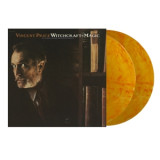
This is going to be the scariest spoken word record you’ve ever heard. We’re not joking…and neither is Vincent Price. The star of such horror classics as House of Wax, The Abominable Dr. Phibes, and Theatre of Blood (and, of course, narrator of Michael Jackson’s Thriller video) can barely hide his delight while he takes his audience through a graphic and occasionally grisly history lesson in witchcraft from the Bible through the Middle Ages, the Spanish Inquisition, and Nazi Germany. Then, accompanied by occasional eerie, abstract electronic music, Price’s sinister satisfaction only mounts as he provides instruction in the dark arts, with such tracks as “How to Make a Pact with the Devil” and “Curses, Spells, Charms.” It’s all in good fun, of course…or is it? The mysterious writer of the script, one Terry d’Oberoff, has only one other credit to his name: as the “mascot” of an early ‘70s band called…wait for it…Black Magic. This 1969 double-LP release has long been coveted by collectors of the curious and macabre, and for its first reissue in over 50 years, we are giving it the Real Gone treatment, reproducing the gatefold jacket and the full-size, 8-page booklet that accompanied some copies. It’s a combination history textbook and how-to manual in witchcraft, with a title page depicting a particularly unsettling spell called “The Hand of Glory” involving the severed, salted, and dried hand of a convicted felon. We are releasing this one-of-a-kind album on clear with orange “pumpkin” swirl vinyl…Happy Halloween.
UFC presents Cybernetic Implant, its seventh release, an EP where electro and cyberpunk go hand in hand with hardware equipment for a trip to an unpromising future. The Ep consists of six tracks, three originals mixes produced by Ático Corp. and three remixes by producers Hd Substance, 7053M4R14 and Robot City.
In the three original tracks we find three different visions of electro where broken and sharp rhythms are mixed with bursts of synthesizers, atmospheres and samples that refer directly to less optimistic science fiction.
On the other side we have the three remixes where each artist contributes their particular vision by reimagining the tracks in their studios directly from their hardware gear. Synthesizers, drum machines and hardware effects are once again invited to the journey. Welcome this time not to a credible future, but to a dystopian future.
out of Stock
Last delivered 13 months ago available to reorder, subject to availability
The impact, influence, and importance of Run-D.M.C.'s self-titled debut – the album that invented hardcore hip-hop and bridged rap, rock, and funk in then-unparalleled ways – cannot be measured. The first full-length record released by Profile Records, the 1984 set permanently changed the sound of music, broadcast streetwise wisdom to every corner of the country, and made the notion of a one-man band a distinct reality. Bolstered by an incendiary blend of staccato deliveries, stark beats, aggressive exchanges, evocative hooks, and socially conscious messages, Run-D.M.C. still hits listeners in the jaw with the same intensity it did nearly 40 years ago when it could be heard booming from ghetto blasters carried around city blocks nationwide.
Sourced from the original master tapes, pressed on MoFi SuperVinyl, and strictly limited to 3,000 numbered copies, Mobile Fidelity's 180g SuperVinyl 33RPM LP is the definitive-sounding version of the groundbreaking work cited by Rolling Stone as the 378th Greatest Album of All Time. This reissue also represents the first time this gold-certified effort has been presented in audiophile quality. Benefitting from the ultra-low noise floor, superb groove definition, and dead-quiet surfaces of SuperVinyl, Run-D.M.C. now plays with a clarity, immediacy, punchiness, and directness worthy of the artistry, urgency, and intellect of the trio's material.
The brilliance of Russell Simmons and Larry Smith's production comes into view as if the music is being broadcast on a giant system in a small club — only more focused, lively, and unlimited. Free of dynamic constraints and fatiguing harshness, this LP invites you to turn up the volume and experience the raw, rough, invigorating songs that changed the look, sound, and feel of hip-hop overnight. Think the trio’s sparse framework of drum machines, tag-team rhymes, keyboard accents, and turntable scratches is stuck in the mid-80s? Spin MoFi’s SuperVinyl LP and gain new appreciation for the music, messages, and production on display on Run-D.M.C.
Recorded in the wake of two successful and pioneering singles, both included on the album, Run-D.M.C. effectively took a sheet of coarse-grit sandpaper to the polish, sheen, and linear presentation of all the hip-hop that preceded it. Stripped to bare-bones foundations, the songs grab your attention and shake you by the collar with a combination of industrial-leaning rhythms, staggered deliveries, dance drama, and hard, minimalist percussion. Then there are the lyrics.
The LP broadcasts a smart mix of boots-on-the-ground reports, uplifting advice, and then-nascent b-boy culture. In one fell swoop, its narratives and music rendered the scene’s proclivity toward glamor and softness passé. Run-D.M.C.’s tough, cool-minded fashion sense showed the trio walked its talk and gave fans — particularly those living in long-ignored urban areas — heroes which with they could identify. Kangol hats, black jeans, leather jackets, Adidas sneaks, and gold chains were the new currency.
In every regard, Run-D.M.C. signifies the birth of modern hip-hop. Never more obviously than on the groundbreaking “Rock Box,” where rap and rock were first fused. As the first hip-hop video to receive regular rotation on MTV, the track eviscerated racial and social boundaries, awakened musicians and listeners to new possibilities, and redefined both popular music and, ultimately, popular culture. As the Roots’ Questlove has stated, it “ knocked down many obstacles, enabling hip-hop to become the new gospel."
Such teaching includes the real-world scripture of “Hard Times,” utopian hopefulness of “Wake Up,” and observational truths of “It’s Like That.” Released as the group’s debut single well before its eponymous album, the latter tune established themes and outlooks Run-D.M.C. would embrace during its career. Namely, the keen awareness of various prejudices, economic ills, and disruptive violence as well as the knowledge that education, self-motivation, and hard work were the ways to escape disadvantages and disillusionment.
Inspired and inspirational, the song reflects the spirit and shrewdness that courses throughout Run-D.M.C. That includes a detailed account of the trio’s not-so secret weapon (“Jam-Master Jay”), purpose statement (“Hollis Crew (Krush-Groove 2)”), and a revolutionary hybrid autobiographical narrative-dis track (“Sucker M.C.’s (Krush-Groove 1)”) widely regarded as one of the best hip-hop songs ever created. The same can be said for every moment on Run-D.M.C.
MoFi SuperVinyl
Developed by NEOTECH and RTI, MoFi SuperVinyl is the most exacting-to-specification vinyl compound ever devised. Analog lovers have never seen (or heard) anything like it. Extraordinarily expensive and extremely painstaking to produce, the special proprietary compound addresses two specific areas of improvement: noise floor reduction and enhanced groove definition. The vinyl composition features a new carbonless dye (hold the disc up to the light and see) and produces the world's quietest surfaces. This high-definition formula also allows for the creation of cleaner grooves that are virtually indistinguishable from the original lacquer. MoFi SuperVinyl provides the closest approximation of what the label's engineers hear in the mastering lab.
out of Stock
Last delivered 2 years ago available to reorder, subject to availability
Dark Entries and Honey Soundsystem Records have teamed up once more to release the final volume of gay porn soundtracks by San Francisco-based musician and producer, Patrick Cowley. One of the most revolutionary and influential figures in the canon of disco, Cowley created his own brand of Hi-NRG dance music, The San Francisco Sound.' Born in Buffalo, NY on October 19, 1950, Patrick moved to San Francisco in 1971 to study at the City College of San Francisco. He founded the Electronic Music Lab at the school, where he would make experimental soundtracks by blending various types of music and adapting them to the synthesizer.
By the mid-70's, Patrick's synthesis techniques landed him a job composing and producing songs for disco superstar Sylvester, including hits like You Make Me Feel (Mighty Real)', Dance Disco Heat' and Stars.' This helped Patrick obtain more work as a remixer and producer. His 18-minute long remix of Donna Summer's I Feel Love' and his production work with edgy New Wave band Indoor Life were both of particular note. By 1981, Patrick had released a string of dance 12 singles, like Menergy' and Megatron Man'. He also had founded Megatone Records, the label upon which he released his debut album, Menergy'. Around this time Patrick was hospitalized and diagnosed with an unknown illness: that which would later be called AIDS. Throughout 1982, he recorded two more Hi-NRG hits, Do You Wanna Funk' for Sylvester, and Right On Target' for Paul Parker, as well as a second solo album Mind Warp'. On November 12, 1982, he passed away.
In 1979 Patrick was contacted by John Coletti, owner of famed gay porn company Fox Studio in Los Angeles. Patrick jumped on this offer and sent reels of his college compositions from the 70s to John in LA. Coletti then used a variable speed oscillator to adjust the pitch and speed of Patrick's songs in-sync with the film scenes. The result was the VHS collections Muscle Up' and School Daze' released in 1979 and 1980. Afternooners' is the third collection of Cowley's instrumental songs, recorded in May 1982. These recordings were culled from two 23-minute reels in the Fox Studio vaults. All songs were originally untitled, so we've used the titles from Fox Studio's 8mm film loops. This compilation also includes three bonus tracks found in the archives of fellow Megatone Records recording artist Paul Parker and the attic of teenage friend Lily Bartels. Influenced by Tomita, Wendy Carlos, and Giorgio Moroder, Patrick crafted a singular sound from his collection of synthesizers, percussion, modified guitars, and hand-built equipment. The listener enters a world of forbidden vices, evocative of Patrick's time spent in the bathhouses of San Francisco. The songs on Afternooners' reflect the advances of the equipment available at the onset of the 1980s. Cowley's unadulterated electronic forms are stripped down and dubbed up. Lush electronic percussion, soaring synthesizer riffs and low slung funk grooves comingle on these magnificent soundscapes.
Featuring 70 minutes of music never before released on vinyl. All songs have been remastered by George Horn at Fantasy Studios in Berkeley, CA. The vinyl is housed in a gatefold jacket designed by Berlin-based artist Gwenael Rattke, featuring black and white photos of Patrick in his studio that opens to a full color array of x-rated scenes from the Fox Studio vaults. Included is a fold-out poster featuring a handmade collage using photography and xeroxed graphics of classic gay porn imagery and an essay from Drew Daniel of Matmos. For Patrick's 67th birthday, Dark Entries and Honey Soundsystem Records present a glimpse into the futuristic world of a young genius. These recordings shed a new light on the experimental side of a disco legend who was taken too soon.
“En este varios artistas no existe la posibilidad de respiro hasta el final”
La segunda referencia del sello DIALECTO PERIFERICO ya esta disponible en formato físico 12”.
Esta referencia abre sus brazos a Dagga y Manao, Lord Jalapeños, Saigg, PromisingYoungster, Korrupted brothers y Vema-Diodes.
1- Dagga X Manao - Cuidao
-Estos dos Colombianos afincados en Berlin, revientan la pista con este track de patron reinventado, haciendo que el tecno y el electro sean uno solo para que las suelas de las zapatillas se desgasten hasta llegar al hueso.
2- Vema-Diodes - Trois
-Sin duda la energía industrial mezclada con el sampleo funk de este tema no te dejara indiferente, las trompetas punzantes de este track son la clave, el sazonador principal la distorsión y para acompañar un chupiito de acido.
3- Saigg - Perfect Result
-Track extraído del recopilatorio solidario “ELECTRO U.N.I.T.Y 2”, donde si o si tanta potencia tenia que reflejarse en vinilo. Voces de ultratumba y bajos punzantes como una navaja hacen que este track funcione en todas las pistas de baile.
4- Lord Jalapeños - Cosmic Microwave Background
-Este joven francés con un estilo muy particular, uno de los mejores en el manejo de lo oscuro y la distorsión.Un diseño sonoro que hará que leas esta historia de terror se lea hasta el final.
5- Korrupted Brothers - Dark Holes
-Como no ivamos a contar con este grupo de la vieja guardia de Iruña; responsables de la escena electro de Navarra y compañeros en el sello “GENTE SERIA VISTE CHANDAL”.
Verdaderamente nos llevan a un agujero oscuro con esa pregunta respuesta que los bajos y los sintes tienen en este ritmo que parece sacado de los 80´s.
6- PromisingYoungster - Signals
-Y como todo final tenia que llegar la claridad, La Luz.
Este leones últimamente lo encontramos en los mejores sellos nacionales, desde “Analogical forcé” hasta “Util récords”, Electro-Brain-dance es nuestra definición para este track, el cual nos da ganas de cerrar los ojos y sentir la energía del sol.
out of Stock
Last delivered 15 months ago available to reorder, subject to availability
It’s abundantly clear from the first bars of their 5th studio album Through Other Reflection, that this is, and could only ever be, The Soundcarriers. From the enchanting vocal duets of folk-bidden Chanteuses Leonore Wheatley and Dorian Conway; to the precise bass lines of Paul Isherwood and the limber, jazz-cool, Hal Blaine-esque drums of his his co-songwriter Adam Cann; from the fairy-like flutes, 60s-garage guitars and organ sounds pilfered from the archives of exotica - listening to the Soundcarriers resembles a rediscovery of all the most prized, esoteric corners of the 1960s, all bundled up, warped and refracted through the quartet’s astutely modern cultural lens. Channelling Tropicalia, Middle Eastern psychedelic Jazz/Funk, The French Library sounds of Nino Nardini, and a whole host of lavish obscurites beside, Through Other Reflection delivers another sonic adventure from one of the most unique and distinctive voices of British Psychedelia. After an 8 year wait for their album 4 - 2022’s Wilds - it thankfully didn’t take so long for the follow-up this time round. In many ways, this feels like a companion to Wilds; recording again at their Nottingham warehouse studio, Through Other Reflection retains that same organic glow, all the passions and imperfections of a tightly clipped unit jamming out these living, breathing pop-art nuggets as if straight onto the acetate.”We wanted to keep an air of spontaneity with this album and not get too bogged with the recording process”, explains Cann, “It was more a case of getting the songs as tightly written and arranged as possible first so we could get them down quickly in the studio. It always takes longer than you think” Less packed with strident pop hooks as its predecessor however, the music of Through… has been given extra licence to breathe, stretch out, and wander more uncharted terrains. While gleaming psych-pop of tracks like ‘The City Was’, or ‘Already Over’ confidently carry on from where they left off, from the album’s 2nd track ‘Always’, the trip becomes a little less predictable. Starting out as a smoky Procol Harum-meets-French-Psych organ ballad, the music drifts, as if of its own accord into an eerie, garage trance that lingers, cycles, and hypnotises, growing ever stranger, reaching ever-further away from its point of conception. And almost every track on Through Other Reflections holds that outer-body moment, where the band fix themselves on a limber, lysergic groove, lose all grip on time and reality, and melt themselves away into a liquid state of blind euphoria. There are sequences on this record that feel more like rituals than songs, built upon a single hypnotic rhythm which, like the centre of a vortex, pulling everything under its beatific command. Take the finale to ‘What We Found’ for instance, sounding like a ghostly march across the psychedelic moors, or ‘Feel The Way’, where a single athletic drum-loop rises and rises, growing ever more urgent and suspenseful underneath its frantic harpsichords and rasping flutes. Full of such rich stylisms as these, The Soundcarriers showcase themselves as abstract storytellers par excellence by virtue of their textures and arrangements alone. Resembling Romantic composer Maurice Ravel, but if he had just a four-piece rock band at his disposal, Through Other Reflects is rich with detail; there’s shakers, rattles, clarinets, booming drums; there’s synthesiser swarms, chiming xylophones, vintage organs and experimental Cluster & Eno-esque ambiences. Within all this nuance the music flows like some undisclosed narrative swathed in a magnetic secrecy. “It almost comes across like a story in some ways”, says Cann of the album, “the music is quite sectional with elements of exotica and cinematic type layers, it's a good balance of grooves, tunes and weirdness”. No more is this “epic cinematic feel” heard more proudly than on short instrumental ‘Sonya’s Lament” - its innate, hauntological atmospheres befitting a Peter Strickland soundtrack, or the classics of Lex Baxter, the so-called ‘Founder of Exotica’ himself. On the other hand, providing a greasier undercurrent to all these bucolic sounds is a leaning towards a more “direct” lyricism referencing more “external concerns. Laying down the first tracks for the album in the wintry gloom of pre-lockdown 2020, and drawing inspiration from time spent in Berlin, Through Other Reflections returns to some of the post-apocalyptic futurism explored in 2014’s Entropicalia - a loose concept album inspired by J.G Ballard’s The Drowned World. “The songs explore a disillusionment with the way things are going particularly after 40 years of neoliberalism”, says Cann, “They follow that folk-song tradition of wanting to escape to an imagined time, but here it’s more urban than pastoral. The first couple of ideas I came up with when doing some music in Berlin and had some time to wander aimlessly. And think the atmosphere seeped in, particularly on The City Was and Already Over. He continues, “One aspect of the title, ‘Through Other Reflections’ is about synthesis and layers of influence. How things can be filtered through other things and change the perspective. This is something you get in cities as well.” Though, as with everything The Soundcarriers make, “It can mean anything. It also just sounds kind of cool.”
It’s abundantly clear from the first bars of their 5th studio album Through Other Reflection, that this is, and could only ever be, The Soundcarriers. From the enchanting vocal duets of folk-bidden Chanteuses Leonore Wheatley and Dorian Conway; to the precise bass lines of Paul Isherwood and the limber, jazz-cool, Hal Blaine-esque drums of his his co-songwriter Adam Cann; from the fairy-like flutes, 60s-garage guitars and organ sounds pilfered from the archives of exotica - listening to the Soundcarriers resembles a rediscovery of all the most prized, esoteric corners of the 1960s, all bundled up, warped and refracted through the quartet’s astutely modern cultural lens. Channelling Tropicalia, Middle Eastern psychedelic Jazz/Funk, The French Library sounds of Nino Nardini, and a whole host of lavish obscurites beside, Through Other Reflection delivers another sonic adventure from one of the most unique and distinctive voices of British Psychedelia. After an 8 year wait for their album 4 - 2022’s Wilds - it thankfully didn’t take so long for the follow-up this time round. In many ways, this feels like a companion to Wilds; recording again at their Nottingham warehouse studio, Through Other Reflection retains that same organic glow, all the passions and imperfections of a tightly clipped unit jamming out these living, breathing pop-art nuggets as if straight onto the acetate.”We wanted to keep an air of spontaneity with this album and not get too bogged with the recording process”, explains Cann, “It was more a case of getting the songs as tightly written and arranged as possible first so we could get them down quickly in the studio. It always takes longer than you think” Less packed with strident pop hooks as its predecessor however, the music of Through… has been given extra licence to breathe, stretch out, and wander more uncharted terrains. While gleaming psych-pop of tracks like ‘The City Was’, or ‘Already Over’ confidently carry on from where they left off, from the album’s 2nd track ‘Always’, the trip becomes a little less predictable. Starting out as a smoky Procol Harum-meets-French-Psych organ ballad, the music drifts, as if of its own accord into an eerie, garage trance that lingers, cycles, and hypnotises, growing ever stranger, reaching ever-further away from its point of conception. And almost every track on Through Other Reflections holds that outer-body moment, where the band fix themselves on a limber, lysergic groove, lose all grip on time and reality, and melt themselves away into a liquid state of blind euphoria. There are sequences on this record that feel more like rituals than songs, built upon a single hypnotic rhythm which, like the centre of a vortex, pulling everything under its beatific command. Take the finale to ‘What We Found’ for instance, sounding like a ghostly march across the psychedelic moors, or ‘Feel The Way’, where a single athletic drum-loop rises and rises, growing ever more urgent and suspenseful underneath its frantic harpsichords and rasping flutes. Full of such rich stylisms as these, The Soundcarriers showcase themselves as abstract storytellers par excellence by virtue of their textures and arrangements alone. Resembling Romantic composer Maurice Ravel, but if he had just a four-piece rock band at his disposal, Through Other Reflects is rich with detail; there’s shakers, rattles, clarinets, booming drums; there’s synthesiser swarms, chiming xylophones, vintage organs and experimental Cluster & Eno-esque ambiences. Within all this nuance the music flows like some undisclosed narrative swathed in a magnetic secrecy. “It almost comes across like a story in some ways”, says Cann of the album, “the music is quite sectional with elements of exotica and cinematic type layers, it's a good balance of grooves, tunes and weirdness”. No more is this “epic cinematic feel” heard more proudly than on short instrumental ‘Sonya’s Lament” - its innate, hauntological atmospheres befitting a Peter Strickland soundtrack, or the classics of Lex Baxter, the so-called ‘Founder of Exotica’ himself. On the other hand, providing a greasier undercurrent to all these bucolic sounds is a leaning towards a more “direct” lyricism referencing more “external concerns. Laying down the first tracks for the album in the wintry gloom of pre-lockdown 2020, and drawing inspiration from time spent in Berlin, Through Other Reflections returns to some of the post-apocalyptic futurism explored in 2014’s Entropicalia - a loose concept album inspired by J.G Ballard’s The Drowned World. “The songs explore a disillusionment with the way things are going particularly after 40 years of neoliberalism”, says Cann, “They follow that folk-song tradition of wanting to escape to an imagined time, but here it’s more urban than pastoral. The first couple of ideas I came up with when doing some music in Berlin and had some time to wander aimlessly. And think the atmosphere seeped in, particularly on The City Was and Already Over. He continues, “One aspect of the title, ‘Through Other Reflections’ is about synthesis and layers of influence. How things can be filtered through other things and change the perspective. This is something you get in cities as well.” Though, as with everything The Soundcarriers make, “It can mean anything. It also just sounds kind of cool.”
Steve Moore returns to the library music fold and it's a total doozy: Cursed Objects is truly sensational prog-synth-wave. Featuring epic electronic explorations with chamber music and symphonic flourishes, it's our favourite thing Steve has ever done. In keeping with the horror heat of the music contained within, this vinyl release is frighteningly limited, with just 500 pressed for the world.
New York-based multi-instrumentalist/producer/film composer Steve Moore is probably best known for his synthesizer and bass guitar work as Zombi, together with Anthony Paterra. But he is also part of Miracle and Titan as well as being a prolific solo artist releasing music as Gianni Rossi, Lovelock and under his own name. Steve’s music has found a home across hallowed labels like Future Times, Mexican Summer, LIES, Static Caravan, Kompakt, Death Waltz, Ghost Box and, of course, Be With Records.
Steve released Cursed Objects for fresh library label Fold. Run by ex-KPM head Paul Sandell, it's a library with values we can all get behind. It's the first production music platform working exclusively with independent labels, publishers and artists to create a truly authentic artist-led sound, at production music rates. Here's what Steve had to say: "I had worked with Paul before, at KPM. After he left, he mentioned that he had started a new library - Fold - and I was very interested in being a part. And I happened to be working on a bunch of music at the time that I thought could fit." So here we are!
The LP opens by letting in "The Uninvited One". Calm and relaxed arpeggiated synths build around sweeping strings and plucked harp to create a mystical and hopeful feel. The title track sees dark synths merge and swell with a piano, string and harp melody that is dark, mysterious and brooding. "Evolutionary Steps" is an electro synthwave track that builds with epic strings and beats, offering an expansive and dreamy approach with a mystical and driving rhythm. Next up, "The Icarus Feather" is daring, pulsing and cinematic synthwave that builds with arpeggiated synths to a hopeful end. "Daily Affirmations" offers calm and meditative ambient synths with plucked harp and strings for a reflective, peaceful, daydreamy feel.
“Mesmer's Bauble” ushers in side two, its dark synth backing builds with plucked harp and strings building with a sense of unknown and dread; it's introspective and heartfelt. "Quiet Springs" is all mystical synths, harps and strings, building to an epic panoramic scope with a hopeful and poignant atmosphere. "Festival Of Samhain" presents a dark and brooding piano melody which builds with synths and strings to create a slow and desolate feel. "The Icarus Feather (Revisited)" is epic building synthwave with arpeggiated synths and strings and a driving rhythm - the beat builds with the strings entering a forceful and marching mood. To close, "Shard Of Medusa" rides a serious and dark piano melody and, in concert with harp and strings, it creates a suspenseful and solemn atmosphere.
Steve recorded Cursed Objects, as always, at his home studio in Albany, NY. For synths, he mostly used his trusty Prophet 6, as well as his Moog Minitaur and lots of Korg Polysix too. But he also utilised a lot of virtual instruments - he doesn't have the budget for a full string section, or a harpist, alas.
The album’s cover was designed by Chris Stevenson. The artwork is a nod to first wave cyberpunk and in particular Neal Stephenson’s Snow Crash and the idea of mind viruses and cursed data. Mastering for this vinyl edition was overseen by Be With regular Simon Francis, and it was cut by the esteemed Cicely Balston at AIR Studios to be pressed in the Netherlands by Record Industry. Far from being cursed, this is another future classic library LP.
out of Stock
Last delivered 2 years ago available to reorder, subject to availability
This is the repeated call and the rallying chorus of the nearly 40-minute centerpiece to composer and percussionist Asher Gamedze’s new album Constitution. The expansive double album, a minoritarian fellowship in breath, is Gamedze’s follow-up to 2023’s Turbulence and Pulse (IARC0057), and his first with The Black Lungs. The album – recorded in one day at Cape Town’s Sound and Motion Studios – is an elaboration of the possibilities of autonomous constitution in and through polyrhythmic, modal, large ensemble music.
On Constitution, the power of the question, the possibility of an improvised answer and the celebration of being together exists not in the solo but in the group, the ensemble. Here The Black Lungs collectively explore and deconstruct the conceptual, tonal, and atonal possibilities of themes which are at once of old and new dreams - curious and instantiative, melancholic and emergent.
“The Black Lungs is inspired by the revolutionary thought and practice of the Black Consciousness Movement. In particular, the relationship between antagonism – constituting a united front of all the oppressed against white supremacy and racial capitalism – and the possibilities for resistance and elaboration - the creative militant capacities of those assembled – enabled and unleashed by that process of constitution.”
Trying to define what it is that makes Dr. John special is much like trying to define the word "soul'—you can surround it. But nailing it down is a whole ‘nother smoke. You can point to his sense of history, how he's never forgotten from whence he came, how his music always returns to his roots, even honoring the proud heritage of his native New Orleans. You can dissect his technique, marveling at the adroitness of the hands right and left; admiring the strong second line; respecting the tributes to his inspiration, Professor Longhair, apparent at every turn. And you can note how his peers consider his presence at a session as lending instant credibility to that particular project. "Upon the release of The Brightest Smile in Town, the reviews were effusive. Chicago critic Bill Knight’s comparisons to Fats Waller and James P. Johnson were high compliments indeed. Downbeat’s Jim Roberts called the playing 'graceful'; noting that the LP had a broader scope than its predecessor. Jazz Times’ Rhodes Spedale summarized: 'He’s never been in better form than here.' We kept in touch over the years. Mac was always generous and encouraging. Little did we know when The Brightest Smile in Town was released, what accolades lay ahead for Mac Rebennack and Dr. John. From the innovative guitar triumph 'Storm Warning' on the Rex label in 1959, to his 2012 Grammy-winning Locked Down album, Mac’s musical light shone brightly for seven decades. We were fortunate he chose to play for us. I’m sure he’d say that he was lucky too." - Jack Heyrman, Clean Cuts Producer
In 2004, California-based indie band Golden Shoulders followed up their highly acclaimed debut with their second album, Friendship Is Deep. Now, on the twentieth anniversary of its release, the album most requested by their fans for a vinyl release is finally set for one on Unspun Heroes. Described as “one of the great semi-lost albums of the 21st Century”, the album showcases singer, songwriter, and band mainstay, Adam Kline’s knack for lyrical hooks and penchant for catchy melodies. But, like friendship, this is deeper than its pop sensibilities might suggest.
From the moment the opening track I Will Light You On Fire opens with its simple piano refrain and vocal harmonies you know you’re listening to something worthy of further exploration. From this building of tension between its temporary aural chaos and the beauty that ultimately emerges, you’ll be hooked. Yet, scratch beneath the surface and you’ll find this is an album that carries with it a political, pro-peace, and pro-humanity message, albeit somewhat more satirical than you might expect of a band hailing from America’s West Coast. This is particularly notable on tracks such as Golden Soldiers and the Committee, where Kline’s turn of phrase and wit shines through, cleverly weaving words so they create detailed poetic mosaics.
Golden Shoulders is a loose and ever-changing lineup of international talent, with Kline as the kingpin and sole songwriter. Given the pedigree of those whose talents grace the album – among them, Todd Roper and Greg Brown (Cake), Josh Klinghoffer (PJ Harvey, RHCP, Pearl Jam), Neal Morgan (Joanna Newsom, Fleet Foxes), and Dan Elkan (Broken Bells) – it’s no surprise the compositions and attention to detail present in each and every one of the 14 songs is top notch. It’s this pleasing mix of accomplished individuals, and their mishmash of influences, which lend a pinball effect to the set of stylistically diverse songs on Friendship Is Deep. Collectively though, the music you’ll hear has a focus, one that channels late 90’s Brendan Benson, the poppier side of 80’s Violent Femmes, and even the mid-60’s flair of the Beatles’ Rubber Soul.
The Circus is a place of lights and colors, but also of shadows, even darkness. Admittedly, it delights children and makes adults laugh. But you only need one rainy autumn evening near a circus tent and the smell of fodder to think of the sadness of the clowns, the endless training of the animals and the freaks who are hidden in some caravan... cinema, the essence of the circus – movement, light, danger and burlesque – will have been admirably rendered in Notes on the circus by Jonas Mekas (1966), one of the inventors of the filmed diary. With Cirque, Michèle Bokanowski does similar work, entirely dedicated to spinning, in the musical field.
She distinguished herself in particular in the composition of musique concrète, among others Tabou and Trois chambres d'inquiétudes, after having studied with Pierre Schaeffer and Éliane Radigue. The latter, great lady of drone and minimalism, fell under the spell of Cirque and wrote the booklet for the piece as a poem.
The piece, divided into five movements, is based on the handling and editing of recordings captured within one or more circuses (this is not specified and is of no importance) between 1988 and 1993. The initial allegro reveals the gallop of a horse joined gradually by other images. The idea of the circular space of the circus tent is immediatly and magnificently rendered and will be constantly recalled by an insistent use of the loop technique. Children's laughter, applause and drum rolls are thus sheared, repeated before being brutally interrupted. Accordion interludes and the distortion of sounds create a dreamlike atmosphere. This beautiful nightmare reminds us, to quote Éliane Radigue, the "Magic of childhood still living in the heart of man even beyond its abrupt end."
Words by Alexandre Galand, from the book “Field Recording – L’usage sonore du monde en 100 albums” (ed. Le mot et le reste, 2012)
Major member of the french musique concrète scene, Michèle Bokanowski was born on August 9, 1943 in Cannes, FR, to a musician mother and a writer father. She now lives and works in Paris.
Music lover since adolescence, it was relatively late, at the age of 22, that Michèle Bokanowski decided to study composition. Reading In Search of a Concrete Music by Pierre Schaeffer was decisive. After classical training on harmony, she met Michel Puig, a student of René Leibowitz, who taught her writing and analysis based on the Treatise of Schönberg. In September 1970 she began a two-year internship in the ORTF Research Department under the direction of Pierre Schaeffer. She takes part in the same time in a research group on sound synthesis, studies musical computing at the Faculty of Vincennes and electronic music with Éliane Radigue.
Her main works are intended for concert: Pour un pianiste, Trois chambres d’inquiétude, Tabou, Phone Variations, Cirque, L’étoile Absinthe, Chant d’Ombre, Enfance, Rhapsodia, Cadence, Elsewhere. She has also composed for theater (with Catherine Dasté), dance (with choreographers Hideyuki Yano, Marceline Lartigue, Bernardo Montet) and cinema: music for the short films of Patrick Bokanowski and his two feature films L'Ange ( 1982) and A Solar Dream (2016).
Bubblegum XX features features members of Queens of the Stone Age, PJ Harvey, Greg Dulli, Izzy and Duff from Guns & Roses/Velvet Revolver, among other assorted rock luminaries. When Bubblegum was released, Mark chose to let it speak for itself and didn"t have much to say aside from within the small handful of interviews he did at the time. In 2017, he released a book of lyrics and writings called I Am The Wolf and wrote about the album then. Shared here are some of his words about the record. Song favorites include "When Your Number Isn"t Up," and "Strange Religion," a love song I wrote in a Tokyo hotel room. While many of the songs came from a place of dejection and ennui at the end of a tempestuous relationship, "Bombed" in particular came about when, after I had written and recorded it in just a few minutes, I put a microphone in front of Wendy Rae Fowler, my soon-to-be-ex-wife, and had her sing along while simultaneously hearing it for the first time. I loved the result as it reminded me of Royal Trux, a band I liked. When I insisted on using the first and only take of the song, it made her slightly unhappy, but to be fair, that was just one of many things I did that had that effect.
Last Summer, Daniel Foggin, guitarist, writer and chief architect of Smote, uprooted himself from his usual home in Newcastle to live and work in a farmhouse in Kelso, near the Scottish border. “Through the summer when I was working up there, myself and Rob (Smote drummer) would finish work and go sit by a small river and have a couple of beers in the sun, and it was the best thing ever” he relates “So I guess the philosophy is that to some people it looks like any other stream, but to us it was supreme happiness.” Hence came the title of the fourth Smote album proper, one largely recorded in this same farmhouse – A Grand Stream. It’s an album that’s the truest incarnation thus far of his vision for this band – a full-scale psychic voyage into the ether and a drone-and-repetition-fuelled series of incantations that takes simple, primal ingredients and utilises them for the purposes of aural sorcery, summoning spectres and revelations aplenty in its wake. Whilst the folk-tinged, ceremonial ambience that Smote have made their trademark is present and correct here, utilising Swedish classic psych heaviness and Swans textures as fuel for the ominous rhythms of ‘Coming Out Of A Hedge Backwards’ and the uplifting cadences of opener ‘Sitting Stone Part 1’, Foggin and his cohorts also waste little time exploring new more eerie and ethereal textures and dimensions. The meditative ‘Chantry’ in particular sees them gravitate towards a headspace akin to the drone-based epiphanies of Kali Malone’s ‘Does Spring Hide Its Joy’ filtered through the transcendent amplifier worship of ‘Earth 2’. A Grand Steam takes this band – one who’ve always eschewed the cliches and stumbling blocks of all contemporary psych rock in favour of their own unique and wyrd vision – into a realm in which they transcend through willpower and skill alike into something preternaturally thrilling, mapping out their own crepuscular new territory Question is; dare you step over the threshold?
Next up on Aris is a particularly special one - Ireland's first electronic music 12''- Carrier Frequency's Telecaster Man, a particularly Irish take on the acid house sounds of the late 80's, that still does the job 35 years later. ''A nine minute tune with two chords, it's just f-ckin' madness mostly - distortion and drum machines.'' simply put by one of the artist himself, but it's much more really. The record originally released in 1989 was a collaborative effort featuring the talents of Mr. Spring, Leo O'Kelly of 70's folk heroes Tir Na nOg, and Trevor Knight of 80s synth pop band Auto Da Fe, Mr. Spring, a veteran of pirate radio since his early teens and the local go to studio guy for dreamers and the Depeche Mode and Talk Talk clones of the time, spearheaded the project. Drawing from his extensive experience and technical prowess, Spring had already established his own studio in 1987, equipped with state-of-the-art gear including an Atari sequencer and an Akai s900 sampler. They decided to work together on it as Spring says ''We wanted to get a Cabaret Voltaire sound to it and have a bit of fun.'' Fueled by a shared passion for experimentation and sonic exploration and inspired by the dynamic energy of the club scene and the rapidly evolving sounds of electronic music, the late-night recording sessions in Spring's studio characterized by spontaneity and innovation. The result of their collaboration was ''Telecaster Man,'' a nine-minute tour de force combining distorted guitars, hypnotic rhythms, and pulsating synthesizers. The 12 inch comes with the original and Sinewave mixes plus a new Mr. Spring remix from the original multi tracks rounding it out with the replication remix and a bonus acapella. Full colour sleeve and comes with extended liner notes.
out of Stock
Last delivered 22 months ago available to reorder, subject to availability
From the furnaces of Stoke-On-Trent comes the super-limited debut EP from Formal Sppeedwear, a wonky new wave teacup ready to be sipped.
Taking creative cues from Brian Eno’s Oblique Strategies and Conny Plank’s experimental recording techniques to flesh out synthpop-oriented melodies, the EP stomps along with Scary Monsters-era Bowie guitar lines, early 80s Numan basslines and surreal lyrics - “Ready, set on my mark: Tesco Extra, Marks and Sparks” cries Clewlow on 6 Lofty Ash. There’s a versatility to the tracks; with the jolting staccato of The Line counter punched by EP closer and highlight Dismount’s soaring synth slow burn.
Defying the seas of young musicians moving to London and Manchester to find their path, Beck Clewlow (Bass, Vocals, Synthesisers) Charlie Ball (Guitar, synthesisers), and Connor Wells (Drums, Guitar, Synthesisers) stuck it out in Stoke, using the city as a blank canvas - devoting their spare time to writing and experimenting, building their own studio out of charity shop finds and cash-converter synths and recording equipment.
Out in the creative wilderness of Staffordshire there’s a healthy DIY scene brewing with bands waiting to make their mark; fly posting their own shows, making one-off merch for each gig, sharing lineups with one another. “There is no sense of geographical confinement here, there’s a wealth of talent who act indifferently to their surroundings. It’s particularly nice that some of our friends from here are starting to receive attention from elsewhere” say the band. As fellow locals University and Christian Music start to garner attention from the rest of the UK, it’s time for Formal Sppeedwear to follow suit.
Stoke-on-Trent might not be the first place you’d look to find your favourite new band - The Bootleg Beatles are one of its finest exports if you ask Google - but Formal Sppeedwear are here to show you the kilns are alright.
out of Stock
Last delivered 2 years ago available to reorder, subject to availability
In late October 2019, following a successful UK tour ending in a sold-out concert at the mythical Roundhouse in London, SUNN O))) entered studio 4 of the BBC Maida Vale. On invitation to record a live session for Mary Anne Hobbs to be broadcast on Samhain via her excellent radio show on BBC6. To enter the legendary John Peel studios was to enter a temple of music and experimentation, liberty in ideas and sound. The band was nearing the end of a long touring year around the Life Metal and Pyroclast albums. SUNN O))) had developed the compositions extensively, embracing the formative concepts of the Life Metal album conceptually and emotionally, but actualised and evolved into vast, open and bright hypersaturated arrangements. Particularly the pieces the band chose to perform on this recording: Troubled Air and Pyroclasts. The former enriched into a total aspect of the band's ethos and form in many ways, and Pyroclasts had evolved to become all-inclusive radiation of O))). The radiation embraces collaboration and freedom of interpretation by each player, within a structural format of the massive monuments of sound and distortion which define SUNN O))). Anna Von Hausswolf and her band had accompanied SUNN O))) on the UK leg, and Anna joined SUNN O))) in the studio on synths and with her tremendous voice on the Pyroclasts pieces.
out of Stock
Last delivered 85 days ago available to reorder, subject to availability
Salétile return to the Keroxen tenfold with their second long play of 60’s inspired psychedelia and neo shoegaze tunes.
With its members hailing from a particular area of northern Tenerife with its ever present “panza de burro” —a layer of insistent low clouds overcasting the region—, the tone and feel of Salétile’s music had to be naturally clouded and sombre. A periphery sound from the periphery then, a local approach of a popular sound with a calm and serene atti-tude.
While their first album, Humanoides del abismo (Humanoids of the Abyss), evoked an underwater journey, for their second outing Salétile emerge swiftly into the surface to continue their peculiar sound explorations of their precious surroundings, adding different layers of pressurisation.
A more pronounced melodic intention is present but without abandoning the care for textures and atmospheres that defined their debut, as well as the use of contemporary techniques such as looping and real-time processing, encom-passing influences as diverse and timeless as classical music, 1950s R&B, 1960s pop, hip-hop, dub, 1990s English shoegaze, concrete music, slowcore or math rock.
A loopy pot of sources from a hermetic band that is not afraid of pushing their many influences to the foreground. Emerge!
Salétile are Daniel García, Elsa Mateu and Ruymán García
Mastered by Daniel García Artwork by Gustavo García
Vinyl pressed in Spain
out of Stock
Last delivered 2 years ago available to reorder, subject to availability
"The Blues is a unique sound that comes from particular times, places, and people. However, that sound is universal in that it can be used to articulate every human emotion. In this album, I invite listeners from all walks of life to the world of The Blues as it is in 2024. I invite people to engage with the ups and downs we all experience, through this music.
The blues was a black-American innovation in our history that had many facets to it. There are technical components to the blues - standards and vocal phrasing. There are also components to the blues that are more abstract, such as history, geography, even intellectual movements. In this album, I endeavored to use those building blocks to articulate the humanity I see around me - past, present, and future - without compromising the quality, the foundation that the blues provides.
These fifteen original songs are my invitation to everyone out there - whether you’re a blues aficionado or just passing through the genre, I hope you find plenty to engage with."
"The Blues is a unique sound that comes from particular times, places, and people. However, that sound is universal in that it can be used to articulate every human emotion. In this album, I invite listeners from all walks of life to the world of The Blues as it is in 2024. I invite people to engage with the ups and downs we all experience, through this music.
The blues was a black-American innovation in our history that had many facets to it. There are technical components to the blues - standards and vocal phrasing. There are also components to the blues that are more abstract, such as history, geography, even intellectual movements. In this album, I endeavored to use those building blocks to articulate the humanity I see around me - past, present, and future - without compromising the quality, the foundation that the blues provides.
These fifteen original songs are my invitation to everyone out there - whether you’re a blues aficionado or just passing through the genre, I hope you find plenty to engage with."
American trumpeter Chet Baker was a major innovator in cool jazz, leading him to be nicknamed “the prince of cool”. He earned much attention and praise through the Fifties, particularly for albums featuring his vocals. This included his 1954 album Chet Baker Sings and its follow-up Chet Baker Sings Again in 1985. The latter he released on the Dutch jazz label Timeless Records. He recorded the album with bassist Ricardo Del Fra, drummer John Engels and pianist Michel Graillier. Chet Baker's Sings Again is available as a limited edition of 500 copies on yellow coloured vinyl.
Specially prepared liner notes by renowned music writer Brian Morton.
Canadian pianist Glenn Gould (1932-1982) became one of the best- known and
most celebrated classical pianists of the 20th century and particularly renowned
as an interpreter of the keyboard music of Johann Sebastian Bach. Gould's
playing was distinguished by his remarkable technical proficiency and his
capacity to articulate the polyphonic texture of Bach's music.
This release presents Gould's complete original 1955 rendition of Bach's Goldberg
Variations (Columbia, ML-5060). The work launched the pianist's career as a
renowned international player and became one of the most well- known piano
recordings. Sales were astonishing for a classical album at that time - 40,000
copies by 1960, and more than 100,000 by the time of Gould's death in 1982.
The album, produced by Andrew Holdsworth, is Damian's first full-length solo album in 5 years
Known for his exploration into different genres, the songs on the album range
from folk-rock to power pop, with the occasional Floydian guitar solo. The title,
Limehouse to Lechlade, refers to the navigable length of the River Thames
heading upstream from central London to the Cotswolds. Damian loved his many
years living on river boats, and traveling the River Thames is particularly special
to him. The album has an underlying concept throughout that represents our
ourney through life.
The album is mastered by Tony Lindgren (Billie Eilish, Opeth, Katatonia) and
features a wide range of musicians, 17 in total, including Alex Reeves (Elbow),
Lee Pomeroy (ELO), Michael Buckley (Glen Hansard) and Chris Hill (Jamie
Cullum).
Marking its first decade of activity, Blume returns with the first ever vinyl reissue of the seminal “New Music for Electronic and Recorded Media”, from 1977, the third and final instalment in a suite of releases that includes James Tenney’s “Postal Pieces” and Ben Vida’s “Vocal Trio”. Unquestionably among the most important collections of experimental music to emerge during the 20th Century, “New Music for Electronic and Recorded Media” is the original feminist presentation in its context, releasing the work of Johanna M. Beyer, Annea Lockwood, Pauline Oliveros, Laurie Spiegel, Megan Roberts, Ruth Anderson, and Laurie Anderson under its collective banner. Includes newly commissioned liner notes by Jennifer Lucy Allen and Bradford Bailey.
Since its founding back in 2014, Blume has carved a unique place in cultural landscape, issuing free standing works, spanning the historical and contemporary, that represent singular gestures of creativity within the field of experimental sound. Joining their broad efforts in building networks of context and understanding that already includes the efforts of efforts of Werner Durand, Sarah Hennies, Bruce Nauman, John Butcher, Jocy de Oliveira, Mary Jane Leach, Valentina Magaletti, Alvin Curran, Julius Eastman, Alvin Lucier, and others, Blume delivers their third release in their first suite of releases for 2024, the fist ever vinyl reissue of the seminal “New Music for Electronic and Recorded Media” compilation, originally issued by Thomas Buckner's 1750 Arch Records in 1977. Out of print for decades on vinyl and arguably the most important feminist statement in the history of experimental music, illuminating the work of Johanna M. Beyer, Annea Lockwood, Pauline Oliveros, Laurie Spiegel, Megan Robert, Ruth Anderson, and Laurie Anderson - in a number of cases representing their recording debuts - during a crucial moment in the history of experimental music. Blume’s brand new edition - complete with newly commissioned liner notes by Jennifer Lucy Allen and Bradford Bailey, as well as reproducing Charles Amirkhanian’s original accompanying text - radically shifts perceptions of the past and present day with its truly revolutionary sounds.
Issued by Thomas Buckner's 1750 Arch Records in 1977, and out of print nearly the entire time since, “New Music for Electronic and Recorded Media” can be understood within two simple frameworks. On one hand, it is an astounding document of the landscape of experimental music toward the end of the 1970s. On the other, it is a historically significant feminist statement, being the first collection of experimental music entirely dedicated to female composers, a number of whom were grossly under-celebrated at the time, but have since gone on to be regarded as among the most important composers of their generation.
The eight pieces gathered by “New Music for Electronic and Recorded Media” - Johanna M. Beyer’s “Music of the Spheres”, Annea Lockwood’s “World Rhythms”, Pauline Oliveros’ “Bye Bye Butterfly”, Laurie Spiegel’s “Appalachian Grove I”, Megan Roberts’ “I Could Sit Here All Day”, Ruth Anderson’s “Points”, and Laurie Anderson’s “New York Social Life” and “Time To Go (For Diego)” - might be regarded as the first cohesive vision of alternate proximity or expression of experimental music to what has always been a frustratingly male dominated environment, and to the tropes, temperaments, and sensibilities that have been historically perceived to define it. It is an expanded vision of truth. While the presence of feminine sensibilities and temperaments in experimental music, however they may present themselves, were anything but new in 1977, “New Music for Electronic and Recorded Media” was the first opportunity, beyond the temporal limitations of live performance, to view them collectively, rather than as individualised expressions within a larger body of similar gestures (as was the case of Oliveros’ inclusion in Odyssey’s 1967 “New Sounds In Electronic Music” and “Extended Voices” compilations) where they might be confused for something else; to regard and celebrate a radical notion of feminine sonority for its unique characteristics and through its interrelations.
While its historical significance and groundbreaking nature can not be debated in its totality, nearly half a century on “New Music for Electronic and Recorded Media” remains compelling in both its musicality and the palpable sense of its lasting influence. Every composition across the album’s two sides is not only engrossing and deeply compelling - feeling as fresh and relevant as the day it was laid to tape - but clearly tangible in their lasting influence. Viewed in context, the album’s eight works feel like breath of fresh air when compared to much of what came before, and laid the groundwork for much of what was to come, introducing a new, often more holistic temperament and more sensitive and inclusive sensibility into the landscape of experimental music.
Particularly in the case of Annea Lockwood, Pauline Oliveros, Laurie Spiegel, Ruth Anderson, and Laurie Anderson, it's hard to throw ourselves back in time and imagine a moment when these composers rested in a fairly marginalised corner of the creative landscape. Blume’s brand new edition of “New Music for Electronic and Recorded Media” - complete with newly commissioned liner notes by Jennifer Lucy Allen and Bradford Bailey, as well as reproducing Charles Amirkhanian’s original accompanying text - brings us back to this confounding moment and points us toward a crucial moment of change set forth by these incredible composers and their sounds. Absolutely seminal and not to be missed.
Sumer Is Icumen In is Quentin Thirionet's (Dhavali Giri, Pairi Daeza) debut album. Still, his musical escapades are vast and varied, based almost entirely on improvisation and live recordings, of which he occasionally distributes tapes without further information. Elusive to categorization and identification, unwilling to fix his musical activity under a stable pseudonym, his projects have ranged from gypsy jazz guitar swings, French traditional songs from Auvergne, and various experimental collaborations. Increasingly closer to electronic instrumentation, he crafted what Belgian label KRAAK presents here as Maibaum, his first ever solo output. As the title goes, this may be a maypole on which his multicolored sonic visions spring about.
Former rope access worker and currently a farmer of organic greens, Thirionet lives up to these lines of work as a musician. He assembles precisely what seems like a subtle balance between high manmade structures and soft fertilized soils; a high voltage pylon placed in a biotic landscape. It's all an even blend, spontaneous and steady, but this contraption comes from profound considerations. "I chose these tracks among many others," says Quentin, "because I heard the melodies all the time in my mind, and because I cried while playing them without really understanding why."
Armed with nothing more than a blackbox, a sequencer, a freeze pedal, and a tape player, Thirionet orchestrates a vivid rite of polished futures. At times reminiscent of Hans-Joachim Roedelius' enveloping arrangements, Maibaum's ambiances rely on mild repetitive patterns subsequently textured by prickling sprouts, mechanic dislocations and revamps that stoke and brighten the stirring motions. Jim O'Rourke's I'm Happy and I'm Singing comes to mind in terms of its detailed and prismatic nature, but Sumer Is Incumen In has its particular narrative. It's a tale of regeneration, of spring's delicate procedures and allure, a celebration of gracious and fortunate junctions between nature and machinery.
The album unfolds like a massive engine being made flesh to drift along the ether of a sultry land. The terrain turns pleasant and fertile in the title track; the colors and melodies of May start to unravel. Chromatic columns rise and define the scenery's depth of field breeding a synesthetic stream between crystal lights and warbling organisms. Grande Albero Buono Magico Uoma's brisk kaleidoscopic arpeggios sound like scanning a tree's litmus foliage. Then Ciguri takes us back to the foggy swamp of the beginning but is suddenly lit by an insect’s labyrinthine roundabout. The Jeweled Grid is a poem Quanta Qualia's lustrous metallic voice recites as a report of the album's phenomena. "Shiny revelations jump out. Pearls of thought flicker about." Images from within that distill to swirl around among us. The thicket dissolves as the album concludes calmly in Le Concept De Chien N'aboie Pas. Swaying under sieved solar light, leaves and branches tingle until the winds grow weak. All the warm creatures gathered along the way, and all those who danced around the maypole's splendid equilibrium now withdraw, folding up small to foster rebirth once again.
The opening track to the Alan Parsons Project’s Eye in the Sky remains the most recognized instrumental in sports—fanfare inseparably tied with introducing NBA legend Michael Jordan and his six-time world-champion Chicago Bulls mates before games, and still used by many teams as an energy-raising prelude. Indeed, the subdued grandiosity, cosmic bluster, and lights-out wonder of “Sirius” sets the table for the band’s smash 1982 album, whose hallmark smoothness, lushness, and balance extend to the music’s exquisite song writing, dreamy emotions, and underlying orchestral scope. Credit for the record’s craft, cohesiveness, and accessibility also falls to Alan Parsons and creative partner Eric Woolfson’s knack for recruiting session pros that translate their visions with unquestioned feeling—particularly, vocalists who include former Zombie leader Colin Blunstone and soul singer Lenny Zakatek.
Mastered from the original master tapes, Mobile Fidelity’s RTI pressed 180g 45RPM 2LP version of Eye in the Sky features succulent warmth, magnificent balance, low-end heft, and see-through transparency that take you into the studio with Parsons at Abbey Road Studios. Each note seems perfectly placed, every sequence painstakingly considered. Boasting front-to- back depth, concert-hall-level separation, realistic presence, and bang-on accuracy. This release will test the capabilities of the world’s finest stereo systems. There’s more information, more texture, more nuance— more of everything to be experienced. British progressive rock would never again sound so sophisticated, suave, or steady.
out of Stock
Last delivered 2 years ago available to reorder, subject to availability
This work has become more popular in recent years because of its gentle style. Of particular note is the masterpiece "Walk The Way Of The New World," which is beautiful to the core due to the balance between the mellow electric piano melody, light flute, a flowing track with female scat, and Madhubuti's heroic poetry. The plaintive and mystical tone of the song is ear-catching. The funky, high-speed jazz of "Talking Stick" and the fast-paced title track "Rise, Vision, Comin" are also superb. This is a masterpiece of an album that is even better than "Medasi".
Cardinal Fuzz / Feeding Tube Records in collaboration with Deep Water Acres and in tribute to Sunrise Ocean Bender Records bring to you: Elkhorn – ‘Other Worlds.’ Drew Gardner and Jesse Sheppard, the two-guitar duo of Elkhorn, share a musical brotherhood that spans several decades. From their nascent high school socialist-realist post-punk band Mayfirst, to teenage scavenger trips to the Princeton Record Exchange and City Gardens, the two came of age goofing along to the Dead Kennedys, the Butthole Surfers, and Sonic Youth in the dank Jersey/Philly-scene music holes. Elkhorn has long traversed the valleys between fried cosmic psychedelia and American Primitive, particularly the latter style’s reverence for a wide range of folk and blues idioms ranging from County Records compilations to the Mississippi Sheiks. While the pair is best known for their acoustic guitar explorations, ‘Other Worlds’ continues their recent experiments with other instrumental possibilities. For instance, on the previous Elkhorn release ‘On the Whole Universe in All Directions,’ Drew switched to vibraphone and drums, with Jesse playing 12-string guitar. ‘Other Worlds,’ on the other hand, finds them in a recognizable ‘rock trio’ format (in improvisational mode)—Drew is on electric guitar, with Jesse playing bass, and they are again joined by Ian McColm on drums, with the free-flowing groove he brings. On the opening track ‘Watching the Skies’ you can feel the forward propulsion this—dare I say—power trio sets up, a cosmic widescreen which Elkhorn proceed to rock and groove across the whole of ‘Other Worlds.’ Three flawless musicians in their own right, together they form a telepathic psychic link that taps into the otherworldly flow that is ‘Other Worlds,’ as the synergy created by Jesse and Ian leaves Drew plenty of space to take off on exhilarating and soaring flights of fuzzy haze fire that results in a musical journey toward transcendence. Elkhorn demonstrate again and again that there is no height they won't scale, no direction they won't travel. Have Elkhorn ever sounded as heavy or as on fire as the recordings laid down here? You be the judge. The trio is multitudes. The trio is one. Mastering - Chris Hardman Artwork - Brett Savage
Sweet soul and sentimental music has never really gone out of style, and in the particular cases of the innovative wave of 1950's filin era Cuban boleros, or 1960's Nuyorican street soul, they both remain a thriving beacon of timelessness and universality, capturing a particular style of breezy Caribbean romantic music that has stubbornly thrived in the tough concrete landscape of New York City.
Perhaps there is some love in the heart of the city, as the new ensemble La Triunfadora has managed to tap into something of significant substance on their debut recording, Clasicos Sentimentales Para Una Nueva Generación. Co-produced by band leader Benjamin R. Juliá and renowned talent William Holland aka Quantic (recorded and mixed at the latter's Selva Recording studio in Brooklyn), the group has managed to capture the essence of this reemerging style of classic music, while further injecting their own inspired vision of experimental and psychedelic arrangements.
On A-side display for this debut 7-inch release on Names You Can Trust are two canonized Cuban boleros from maestro composer and guitarist Cesar Portillo De La Luz, stacked together in an old school continuous medley, and transformed with lush orchestration that has the talented musicians sparkling behind the duet of lead vocalists Candace Camacho and bandleader Juliá.
The B-side jumps from 1950's filin into Ralfi Pagan's iconic 1969 latin soul masterpiece "Hijo De Mama." Once again La Triunfadora peppers in just enough exquisite arrangements and musicianship to transform the original into something fresh, yet still guided from an analog sensibility, and ultimately performed with a familiar romanticism that these classic lovers' songs have managed to express over the decades to different generations.
out of Stock
Last delivered 2 years ago available to reorder, subject to availability
*REMASTERED ROUGH TRADE DEBUT LP LIMITED TO JUST 500 COPIES WITH EMBOSSED OUTER SLEEVE AND ORIGINAL INNER SLEEVE ON BLACK VINYL*
Dream POP, they called it. Given AR Kane’s Alex Ayuli once worked for advertising agency Saatchi & Saatchi, it’s no surprise that he and collaborator Rudy Tambala invented their own genre before critics could stick their oar in. It was a canny move, but more importantly, it was accurate: the music of AR Kane was made for dreamers, by dreamers, and its languor and longing made it particularly bewitching listening; their music is often smeared and blurry, happily lost in its own indefinable pleasures. “We wanted dream pop,” Tambala says, “that feeling of a dream where the rules are different. Dream logic.”
-UNCUT REISSUE OF THE MONTH
"A.R. Kane carved out a unique musical path, welding elements of pop, psych, dub, electronica, funk, noise, jazz, ambient and more in a way that had never been done before. Or since. Their debut in particular is a work of unbridled brilliance."
*Electronic Sound*
‘Sixty Nine’ the group’s debut LP that emerged in 1988 had critics and listeners struggling to fit language around A.R. Kane’s sound. As a title it was telling - the year of ‘Bitches Brew’, the year of ‘In A Silent Way’, the erotic möbius between two lovers - and as originally coined by the band themselves, ‘dream pop’ (before it became a free-floating signifier of vague import) was entirely apposite for the music A.R. Kane were making. Crafted in a dark small basement studio in which Tambala recalls the duo had “complete freedom - We wanted to go as far out as we could, and in doing so we discovered the point where it stops being music”. There was an irresistibly dreamy, somnambulant, sensual and almost surreal flow to ‘sixty nine’s sound, but also real darkness/dankness, the ruptures of the primordial and the reverberations of the subconscious, within the grooves of remarkable songs like ‘Dizzy’ and ‘Crazy Blue’. Alex’s plangent vocals floated and surged amidst exquisite peals of refracted feedback but crucially there was BASS here, lugubrious and funky and full of dread, sonic pleasure and sonic disturbance crushed together to make music with a center so deep it felt subcutaneous, music constructed from both the accidental and the deliberate, generous enough to dance with both serendipity and chaos. ‘sixty nine’ remains - especially in this remastered iteration - ravishing, revolutionary – Neil Kulkarni
"A.R. Kane made some of the most exciting, forward-thinking, and science fictional music of their era".s*
out of Stock
Last delivered 2 years ago available to reorder, subject to availability
Reflection is also-ran late-'60s British blues-rock, with more rock-oriented takes on the kind of approach used by heroes Freddie King and B.B. King. B.B. King's "You'll Never Know," in fact, is covered here, though most of the material was penned by the band. Steamhammer doesn't put much of an original spin on its sources, or on the British blues-rock form, though this is competent and does generally have a moodier, more downbeat feel than most of the band's competition in the genre. The expressive qualities of Kieran White's voice, though, are limited, as though he's being pinched by something that keeps him from letting go too much. The best moments come when they venture just a little outside of the ordinary U.K. blues-rock model, particularly when Harold McNair adds some jazzy flute; "Down the Highway" sounds a little close to some of early Jethro Tull. Future Jefferson Starship member Pete Sears plays session piano. The 2002 CD reissue on Akarma adds two bonus tracks from 1969 singles, "Windmill" and "Autumn Song," which are more explicit forays into the more melodic jazz-blues-rock direction mined by the likes of Jethro Tull, Colosseum, and Davy Graham in the late '60s, again with prominent flute. ~ Richie Unterberger
An extremely rare and in-demand record from the disco-funk group has been unearthed and restored. The Movers enjoyed huge success in the 1970s, releasing album after album of ground-breaking sounds, including fusions of South African marabi jazz, funk, disco and jive. The line up of the band shifted throughout its existence - however this particular album produced by David Thekwane features musicians Jabu Sibumbe, L Rhikoti, Lloyd Lelosa and Sankie Chounyane.
Straight out of the depths of East London, Hoxton Square to be precise. A location before gentrification, the area around Old Street in 1995 was full of young artists, musicians and record labels. Law & Auder were one of those bands, with a studio in the next road to the legendary Blue Note club. This is where these two tracks were created, two cuts that encapsulate the raw sound of the London jungle scene at this time.
This particular 12” is a bit of a cult release, with prices on Discogs for an original copy at a VG+ rating going for a £150 a copy, that’s if you can ever find one.
This is the second release from the group that we have repressed ON Vinyl Fanatiks, with Martin from the group also being a part of Utomica, another group that we repressed a few years ago.
Straight from the East London vaults.
out of Stock
Last delivered 22 months ago available to reorder, subject to availability
MANOWAR is an American heavy metal band from Auburn, New York. Formed in 1980, the band is known for lyrics based on fantasy and mythology . The band is also known for a Loud and Bombastic sound. In 1984 the band was included in the Guinness Book of World Records for delivering the loudest performance, a record which they have since broken on two occasions. They also hold the world record for the longest heavy metal concert after playing for five hours and 1 minute in Bulgaria (at Kavarna Rock Fest) in 2008. MANOWAR have also been known for their slogan "Death to false metal » and have maintained a very strong following with dedicated fans worldwide as referred to by the band as "Metal Warriors", "Manowarriors", "Immortals" or "Brothers of Metal". The band signed with Atlantic Records in 1987. Via Atlantic, they released 'Fighting the World', which enjoyed more extensive distribution and increased the band's prominence in the international heavy metal scene. Album art was designed by Ken Kelly. In 1988, MANOWAR released the album 'Kings of Metal', which is the band's best known work. Songs like "Heart of Steel", "Kings of Metal" and "Hail and Kill" are performed regularly in concerts. 'Kings of Metal' is MANOWAR's highest-selling album worldwide. A new musical unit after the recent changes, MANOWAR released The Triumph of Steel in 1992. It gained some great success and was particularly famous for the presence of a suite lasting no less than 28 minutes entitled "Achilles, Agony and Ecstasy in Eight Parts", inspired by the events of the Iliad and the hero Achilles. After this release, the band went on a world tour for two years. Those MANOWAR’s album have become legendary and are still must have in any metal fan record collection . Vinyls formats Having been very rare and reaching high prices online, those three albums are now being made available again in quality coloured vinyls; Grab them now while you can !!
Year is 2020, in the middle of the pandemic outbreak, “En el fin del mundo, hasta el fin del mundo” (In the end of the world, until the end of the world) is the first production of the Chilean label EMA Records, including local and international artists, active in different musical fields (improv, post rock, electronica, ambient, etc).
The structure and artist selection of “En el fin del mundo, hasta el fin del mundo” has the intention of capturing/expressing the Chilean geography from a soundscape perspective, related to the country's remote geophysical location, submerged in a new gloomy reality, the pandemics. This little exercise was somehow the starting point for each artist to develop their tracks, without any particular disclaimer or artistic restriction. All tracks on the compilation have been previously unreleased by each project, then first came out digitally and now - finally - on vinyl.
The complete compilation (21 tracks) will be released on 3 separate vinyl albums. The first LP is featuring tracks by Pita, Abul Mogard, Pan American and others.
out of Stock
Last delivered 2 years ago available to reorder, subject to availability
Girl On Fire features powerful anthems and intimate ballads, led by Keys' signature soulful voice and personable and relatable lyrics. Keys collaborated with acclaimed and emerging talents, including longtime song writing partner, Krucial, Grammy Award-winner Babyface, renowned writer and vocalist Jeff Bhasker, critically-acclaimed artist Gary Clarke Jr., up and comers, Pop and Oak, as well as emerging talent from the U.K., Emeli Sandé and Jamie XX, among others. The songs on Girl On Fire are anchored by Key's powerful vocals and trademark piano, but are sonically broadened by heavy drums, electric sounds, reggae and future soul, which gives the album an evolved, modern-day feel while simultaneously sounding like a classic body of timeless music. The album features an inspirational mix of the rich sounds Keys discovered while recording and travelling the world, particularly time she spent in London and Jamaica, layered within her New York City roots.
out of Stock
Last delivered 2 years ago available to reorder, subject to availability
Facta returns home to his own Wisdom Teeth imprint with ‘So is the sun’ - a bold EP of artful club reductions that distill his unique and playful approach into some of his most assured and direct works to date. As ever with Facta’s output, there is a moreish push-pull between functionality and creativity on display here. Infectious hooks are sculpted out of warping, plasticine sounds, whilst melodic splashes of colour are painted in broad, bright brushstrokes. Bleeping FM synths fizz into shot before oozing out of frame again, dripping splashes of neon colour over the record’s skipping, nimble rhythms as they go. There are a few key reference points at play here - in particular the light-footed grooves of early 00’s minimal house and the space-age synths of artists like DBX and S-Max - but these influences are totally refracted and subverted to create something fresh, contemporary and of its own. Produced and honed across a year, the tracks took shape slowly alongside regular club play from the label crew and a clutch of trusted DJs who road tested the tunes at various demo stages. The result is one of Facta’s most decisive and focused club records so far. The EP marks the Londoner’s first solo outing in over a year, following on from his acclaimed 2023 EP, ‘Emeline’, which was released on Anthony Naples and DJ’J’s Incienso imprint. It forms part of Wisdom Teeth’s busy schedule of 10 year celebrations, which includes a string of releases from new and existing label members, merch drops, and a global run of live showcase events.
out of Stock
Last delivered 16 months ago available to reorder, subject to availability