»Memorial« grew out of Nate Wooley’s work alongside Annea Lockwood recording the Columbia River, and in particular from a visit to Kettle Falls in northern Washington, once one of the river’s great salmon fishing and meeting grounds and a place of enormous importance to the Sinixt and other Indigenous peoples of the Upper Columbia. The falls disappeared from view following the construction of the Grand Coulee Dam in 1940, submerged beneath what is now Lake Roosevelt, yet beneath the still surface of the reservoir, a fast current continues to move across the buried cliffs. That tension between what remains and what can only be recovered through memory runs throughout »Memorial«.
In the essay accompanying the record, Wooley returns repeatedly to the idea of translation: the attempt to carry an experience from one form into another, from river to recording, memory to sound, landscape to music. He moves between Lockwood’s sound maps, John Ashbery’s rain falling on canal machinery, Ravel’s attempts to make water move through a piano, Christian Wolff’s »Stones«, and the Sinixt First Salmon Ceremony, where rocks struck together recall the sound of salmon once moving through the river in their thousands. These translations cannot restore what has been lost; however, they allow us to revisit what remains beneath in another form.
»Memorial« exists as an uncertainty, concerned with the distance between a place and its recording, between an event and what survives of it, and with the way listening itself becomes entangled with memory. Kettle Falls remains submerged, the river constrained and radically altered, but the water continues to move over the old rock beneath the reservoir. »Memorial« tries to listen for that persisting memory.
Alex Barbu – Paths Lead Inward marks Alex Barbu’s first release on Bosconi Records, following previous releases on Digital Finesse and Maeteria. Across four tracks, Paths Lead Inward explores the space between minimal, techno, deep house and psychedelic trance, combining stripped-back structures with hypnotic rhythms, dubby textures and subtle traces of Goa-inspired psychedelia.
The EP opens with A1. “Tokyo”, a straight-to-the-point dancefloor missile. A rolling bassline, delayed voices and a simple but highly effective rhythmic structure push the track towards trance territory, with hints of Goa psychedelia filtered through a minimal sensibility. Immediate, hypnotic and built to keep the floor moving.
A2. “2006” takes a darker and deeper turn. A dubbed-out minimal techno cut populated by subterranean sounds, blurred textures and distant voices. Its slow-burning atmosphere makes it particularly suited to the deeper, more intense moments of an afterhours set.
On the flip, B1. “Hello Everybody” brings a heavier deep-house pulse into the equation. Hypnotic arpeggios, deep vocal elements and a rolling groove give the track a physical, almost stomping quality, while maintaining the murky and psychedelic character running throughout the EP.
Closing the record, B2. “Blobfish” dives deepest of all. A heavy bassline anchors a strange and unsettling landscape of anxious breathing, dark textures and disorienting sounds. Hypnotic rather than aggressive, it gradually pulls the listener into an upside-down dimension — a proper late-night trip for losing yourself on the dancefloor.
Paths Lead Inward is not only about movement on the dancefloor, but about what happens underneath it. Four tracks that touch you deeper in the soul and make you reconnect with it.
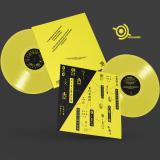
Wewantsounds is proud to present the first official release of a legendary 1977 concert capturing Don Cherry, Collin Walcott, and Leon Thomas in their only documented performance together. Recorded live on March 5, 1977, at Pease Auditorium in Ypsilanti, Michigan, the performance featured the three musicians playing an immersive hypnotic set, joined for part of the evening by the rest of Oregon. Long circulating among a few Don Cherry fans, the full concert is now available as a deluxe, remastered 2-LP gatefold set featuring Moki Cherry artwork and new liner notes by Jason Weiss—licensed by the Don Cherry Estate and producer James Quinlan.
Don Cherry’s huge influence has steadily grown over the years, as fans and new generations of listeners continue to uncover the vast breadth of his global musical vision. Sunrise captures Cherry during a particularly fertile late-1970s period, when the American jazz trumpeter blended global and Eastern spiritual concepts into his "Organic Music" philosophy, drawing deeply from Eastern and African traditions. Moving fluidly between trumpet, the West African doussn'gouni (a traditional hunter's harp from Mali), bamboo flutes, percussion, and vocals, Cherry creates a deeply resonant world music soundscape.
Recorded live on March 5, 1977, at Pease Auditorium in Ypsilanti, Michigan, the show took place just a month after Don Cherry participated in the recording of Collin Walcott's ECM album Grazing Dreams. With Walcott playing alongside Cherry and vocalist Leon Thomas, bringing his unmistakable yodel-style vocal approach—and joined for part of the night by the rest of Oregon (Ralph Towner, Paul McCandless and Glen Moore)—the performance stands as a stunning, hypnotic forerunner to the formation of CODONA. The newly remastered audio is so vivid and intimate that it feels as though you are sitting directly in the room with the musicians.
The release also serves as a vibrant homage to Don and Moki Cherry’s creative partnership, featuring a reproduction of Moki’s striking 1975 Mandala tapestry on the front cover.
The concert was produced by James Quinlan, a central pillar of the U.S. Jazz and World Music scene who worked as a sound engineer for Carla Bley, booked Fela Kuti’s major U.S. tour in the 1980s, and went on to direct the Creative Music Studio and found Miami’s Rhythm Foundation. In the album's liner notes, Quinlan reflects in conversation with writer Jason Weiss on the surprise magic of that night:
"Don brought Leon Thomas with him... as a guest, unannounced. It was not part of the advertisement or contract... I don't know of any other time that they recorded or performed together. So, that was completely unique... The audience had no idea what was coming... It was a sound that was just mesmerizing, almost like a mantra."
Licensed by the Don Cherry Estate and James Quinlan, Sunrise is available as a deluxe 2-LP gatefold set featuring new liner notes by Jason Weiss—an essential document in the rich, ever-evolving Don Cherry musical journey.
With “Rides Again Again And Again” US born and London resident singer, songwriter, producer, arranger und multi-instrumentalist extraordinaire Shawn Lee releases the third part in a series of very personal albums.
“Returning to my ‘Rides Again’ project feels like a home coming of sorts-familiar yet completely different from how I remembered it,” Shawn Lee says. “This time out it felt really fresh and freewheeling. Discovering things which were already there but somehow had remained hidden just out of sight. The genius of JJ Cale provided a lot of inspiration for this album. I had to pay tribute with the song ‘JJ’ in his honour. I also wrote a song for my dad called ‘Helluva Way’ who sadly passed while I was finishing the album. Multiple US tours last year with Young Gun Silver Fox informed lyrics on several tunes particularly ‘Hot Food’ and ‘Plastic Forks and Paper Plates’. The latter features a motley cast of characters on the ‘hell yeahs and the outro sing -a-long. My wife Kiren, Andy ‘Young Gun’ Platts, his wife Jodie and daughter Frankie plus all the live members of YGSF band, Ederlezi, as well as Smith & Liddle and our tour manager Claire Darling all contributed to the cause on ‘Plastic Forks’. Songs about Evel Knievel, my dog Carla, Tacos and Abilene Kansas round out the album as-well as a few instrumentals to boot. Three albums into the ‘Rides Again’ trilogy and I feel like I’m just getting started. So saddle up partners and join me on this musical ride!”
Jozef Van Wissem and Jim Jarmusch’s Bocca di Lupo and Mouth of the Wolf were recorded in July 2025 in Bologna, Italy. The recording sessions took place just after several live dates in New York and Chicago, and a week before they began a short European tour which included Paris, London, Ghent, Porto, and a first date in Bologna.
Below are notes from Jozef and Jim directly.
“With thanks to Gian Luca Farinelli and Rosanna Mordini from the extraordinary Cineteca di Bologna, we were able to secure recording days in the very cool Fonoprint Studios — located on Via Bocca di Lupo in Bologna, hence the titles of these two LPs. (“In bocca al lupo” — in the mouth of the wolf — is the Italian idiom for wishing one good luck; equivalent to “break a leg” in English.)
Bocca di Lupo starts with a new version of our own “Only Lovers Left Alive,” and “Apology” is a new version of a pre-existing piece by Jozef. All other tracks are new originals. We were honored to have guest duet vocals from the iconic Courtney Barnett on “Never Like You Said.” The lyrics of the song arrived spontaneously in a single take in the studio. It’s not directed at a specific person, but more an emotional response to several disingenuous, deceitful people — a closing of the door on their toxic behavior. And a casually recorded conversation (concerning the haunted auras of particular pieces of vintage women’s clothing) between Adriana Coppi and Veronica Mayrr (from Deux Femmes) is woven as a background into the track titled “Pour Deux Femmes.” “Black Roses” is an original poem written in Bologna, and recited from within its own musical setting. All other tracks are instrumentals.
Mouth of the Wolf, the second LP, consists of two longer, darkly ecstatic instrumental studio tracks — “In A” and “Massa Damnata.” Both were created with two electric guitars, and derived from our live performances. We consider it to be a musically separate album, and is therefore presented in its own sleeve and with its own artwork.
Our music has many inspirations — everything from our friends in Sunn O))) and Swans to Terry Riley and Morton Feldman; from Hildegard Von Bingen and WIlliam Lawes to Psychic Ills and Spacemen 3; from Les Rallizes Dénudés and NEU! to Nadja and Glenn Branca; from Ian Svenonius and Dead Skeletons to Son House and Gwenifer Raymond…from sunset to sunrise…full moon to new moon…”
a 01. Only Lovers Left Alive 4:36
b 02. Never Like You Said 5:23
[c] 03. Apology [5:11]
[d] 04. Black Roses [2:44]
[e] 05. On Twofold Nature [9:37]
[f] 06. Pour Deux Femmes [8:09]
[g] 07. In Bocca Al Lupo [5:58]
[h] 01. In A [12:56]
[i] 02. Massa Damnata [17:51]
[a] 01. Only Lovers Left Alive [4:36]
[b] 02. Never Like You Said [5:23]
[c] 03. Apology [5:11]
[d] 04. Black Roses [2:44]
[e] 05. On Twofold Nature [9:37]
[f] 06. Pour Deux Femmes [8:09]
[g] 07. In Bocca Al Lupo [5:58]
[h] 01. In A [12:56]
[i] 02. Massa Damnata [17:51]
[a] 01. Only Lovers Left Alive [4:36]
[b] 02. Never Like You Said [5:23]
[c] 03. Apology [5:11]
[d] 04. Black Roses [2:44]
[e] 05. On Twofold Nature [9:37]
[f] 06. Pour Deux Femmes [8:09]
[g] 07. In Bocca Al Lupo [5:58]
[h] 01. In A [12:56]
[i] 02. Massa Damnata [17:51]
[a] 01. Only Lovers Left Alive [4:36]
[b] 02. Never Like You Said [5:23]
[c] 03. Apology [5:11]
[d] 04. Black Roses [2:44]
[e] 05. On Twofold Nature [9:37]
[f] 06. Pour Deux Femmes [8:09]
[g] 07. In Bocca Al Lupo [5:58]
[h] 01. In A [12:56]
[i] 02. Massa Damnata [17:51]
[a] 01. Only Lovers Left Alive [4:36]
[b] 02. Never Like You Said [5:23]
[c] 03. Apology [5:11]
[d] 04. Black Roses [2:44]
[e] 05. On Twofold Nature [9:37]
[f] 06. Pour Deux Femmes [8:09]
[g] 07. In Bocca Al Lupo [5:58]
[h] 01. In A [12:56]
[i] 02. Massa Damnata [17:51]
MARGOT is a violinist, composer and producer defined by a deeply emotional orchestral language shaped by classical training and a highly personal approach to string writing. She has collaborated with artists including Beyoncé, Lady Gaga and St. Vincent. Trained from the age of four in North Florida, she moved to New York at nineteen, where her musical world expanded through collaborations and exposure to new scenes, alongside the discovery of artists such as Radiohead, Sigur Rós and Björk via their string arrangements. In 2020, she met pianist and composer Juan Villacrez in Colombia, leading to the creation of the instrumental album The Apartment on Third Street (over 13 million streams) and a long-term creative collaboration.
Her new album The Villain presents a major new artistic statement: a cinematic, immersive instrumental work unfolding across ten movements, shaped by profound personal loss and recorded live in Colombia with a minimum of takes and no overproduction. The physical edition of the record is designed by NYC-based artist Bráulio Amado (known for his work with André 3000, Harry Styles, Frank Ocean and Róisín Murphy), reinforcing the album’s position as a complete visual and sonic object. MARGOT’s writing, violin playing and emotional depth resonate throughout, particularly through arrangements in which she layers her own performances, creating a sound world that is at once intimate, restless and constantly evolving.
Anna Records is back with her second release, again displaying two different souls:
on the A side, after more than a decade spent behind the decks and rooted in Stuttgart’s club scene, D.N.V. emerge as a new production alias from the Basement Operations tribe, with two deep and atmospheric cuts produced during the long pause of the pandemic. Moving between progressive drive and darker, dub-infused territory, the two tracks capture their particular take on electronic club music.
A1 ‘48 Points’ sits comfortably in the space after the peak, pushing forward with energetic, progressive movement while deep arpeggiated melodies weave through the groove. A2 ‘Primeval Mind’ heads somewhere more mysterious, with dubby rhythms, shadowy pads and distant vocals creating a hazy, late-night atmosphere.
On side B you will find Matteo Point, fresh talent from northern Italy:
B1, "You Can't Stay in the Disco" is an highly energetic track, lead by a strong kick and progressive touch. As a trademark from the producer, the highly pitched synth will drive you in the depth of your dreams, while the drums keep rolling and guide you straight back to the dancefloor. B2, "Amore futuro", despite the title, is somehow filled with nostalgia with a compelling motive that keeps coming, eliciting deep and sweet thoughts, accompanied by a driving bassline.
UFOs are nothing if not predictable and so it proves as this particular one is back in our orbit after more than two years away. The cult label signs up Mexico's DJ Natas to pilot a new mission to the edges of our solar system and hard-hitting cosmic industrial space tech is his vehicle of choice. 'The Titan Of Terror' is a busy sound laced up with wiry synths and acid prickles and it hits hard. 'F The Pain' rides stomping metallic drums and has eerie pads shimmering in the background while 'Stay Deep' is more sparse and dark with textured acid and spoken word musings, making it a more mental trip then 'Abracadabra' closes with a hint of psychedelic magic.
More good news for fans of Luke Vibert's Plug output. Hot on the heels of the Variety Magic album, released earlier this year, De:tuned returns to the vault with four more previously unreleased Plug tracks.
Following the hugely acclaimed 11-track Variety Magic, which saw Vibert unearth and hand-pick a collection of forgotten jungle and drum & bass gems from his original mid-90s DAT archive, Robotic Futuristic digs even deeper into the same treasure trove. Four more raw, playful and highly distinctive Plug cuts, all previously unheard and finally brought to light.
The EP takes its title from one of the tracks and opens with Luke Vibert's personal favourite: 'Bring A Fuckin' Army'. A full-on jungle workout driven by rolling breaks, heavyweight bass and that unmistakable Plug funk. Put the needle on the record and let it rip. Go 'Head - Do It!
Robotic Futuristic also marks the 17th anniversary of De:tuned, making this a particularly fitting release for the Belgian label.
Visualised by the Variety Magi. Stencil art by Pablo Fiasco and rewired by Openmind. Mastered by Matt Colton at Metropolis. A separate digital release will also be available at the usual digital shops.
More good news for fans of Luke Vibert's Plug output. Hot on the heels of the Variety Magic album, released earlier this year, De:tuned returns to the vault with four more previously unreleased Plug tracks.
Following the hugely acclaimed 11-track Variety Magic, which saw Vibert unearth and hand-pick a collection of forgotten jungle and drum & bass gems from his original mid-90s DAT archive, Robotic Futuristic digs even deeper into the same treasure trove. Four more raw, playful and highly distinctive Plug cuts, all previously unheard and finally brought to light.
The EP takes its title from one of the tracks and opens with Luke Vibert's personal favourite: 'Bring A Fuckin' Army'. A full-on jungle workout driven by rolling breaks, heavyweight bass and that unmistakable Plug funk. Put the needle on the record and let it rip. Go 'Head - Do It!
Robotic Futuristic also marks the 17th anniversary of De:tuned, making this a particularly fitting release for the Belgian label.
Visualised by the Variety Magi. Stencil art by Pablo Fiasco and rewired by Openmind. Mastered by Matt Colton at Metropolis. A separate digital release will also be available at the usual digital shops.
In January of 2004 recording commenced on Loretta Lynn's 42nd solo album. This particular album was poised from the start to be a unique and standalone installment in a long well established, unbelievable, legendary, career already spanning five decades due to the role of producer going to none other than a 28 year old Jack White. White, a long time admirer of Lynn's work, leapt at the chance to conduct this musical experimentation of blended styles and see what fruits the two very separate but cosmically intertwined approaches to writing, playing, and producing music could yield.
The album would go on to win the 2005 Grammy Award for "Country Album Of The Year", with the albums second single "Portland, Oregon" winning "Best Country Collaboration With Vocals". A litany of other accolades were to follow and the record firmly cemented itself in the annals of Country music history as the most successful crossover album of Lorettas historic career. Twenty-two years later, we're still celebrating it.
Third Man Records is proud to announce Van Lear Rose reissued and expanded. Now including the additional track "Just to Have You Back", previously only available to members of The Vault vinyl subscription series, rounding out the already impeccable tracklist. This LP is available in both a standard black and limited edition orange (while supplies last) colorways as well as CD.
In January of 2004 recording commenced on Loretta Lynn's 42nd solo album. This particular album was poised from the start to be a unique and standalone installment in a long well established, unbelievable, legendary, career already spanning five decades due to the role of producer going to none other than a 28 year old Jack White. White, a long time admirer of Lynn's work, leapt at the chance to conduct this musical experimentation of blended styles and see what fruits the two very separate but cosmically intertwined approaches to writing, playing, and producing music could yield.
The album would go on to win the 2005 Grammy Award for "Country Album Of The Year", with the albums second single "Portland, Oregon" winning "Best Country Collaboration With Vocals". A litany of other accolades were to follow and the record firmly cemented itself in the annals of Country music history as the most successful crossover album of Lorettas historic career. Twenty-two years later, we're still celebrating it.
Third Man Records is proud to announce Van Lear Rose reissued and expanded. Now including the additional track "Just to Have You Back", previously only available to members of The Vault vinyl subscription series, rounding out the already impeccable tracklist. This LP is available in both a standard black and limited edition orange (while supplies last) colorways as well as CD.
KR3.022 DEATH/REBIRTH ONE - marks the launch of a new KR3 series built around split EPs, featuring original productions alongside reinterpretations or collaborative works by the selected artists. The first ACT reunites JK FLESH & ORPHX, reviving a collaboration rooted in a long-standing artistic connection. Having shared stages on several occasions, the project draws particular inspiration from their six-handed live performance at Berlin Atonal in 2016. Justin K. Broadrick, under his JK Flesh moniker, and Rich Oddie / Christina Sealey of Orphx, each contribute one exclusive original track, alongside a remix of the other's composition, exploring a very dark form of electronics; a collision of slo-mo, raw industrial power and crushing techno, standing in deliberate opposition to the relentless pace and overstimulation of the modern era, both sonically and culturally. The series will feature a unified visual identity, with each release sharing the same layout while being distinguished by different background colours and volcanic imagery created by longtime KR3 collaborator Federico Gagraglione.
Kraak & Smaak formed in Leiden in pursuit of a particular blend of funk, disco and electronic soul, and over two decades and seven albums, Oscar de Jong, Wim Plug and Mark Kneppers have sharpened a sound that's unmistakably their own: warm, analogue, and always twisting old soul into something new. That sound has carried them from small European clubs to Coachella and American late night TV.
Their 2025 album Velvet Seas was written between Leiden and Los Angeles, and it shows: Californian light and a touch of psychedelia sit easily alongside deep funk and a cinematic reach. The record leaned on a wide circle of guests, among them IVAR, Berenice van Leer, Izo FitzRoy, Butter Bath, The Undercover Dream Lovers, iogi, Kosta G and Kainalu.
Velvet Seas Remixed hands the album's best moments to a curated set of international producers. British disco heritage, classic French touch, Brazilian disco funk, Melbourne club music and homegrown Dutch groove all take a turn, with each producer bending a familiar song toward their own instincts while keeping the album's character intact. Longer, extended versions and alternate mixes round out the full release, letting several of these tracks land in more than one form.
The Comfort enters the double digits of its catalogue with the label’s most ambitious release to date by Saudi Arabian artist Noboot, titled “Call and Pulsate”.
Fluid in genre yet wholeheartedly electro in spirit, Noboot’s creative output shapeshifts across the record: from four-to-the-floor acid-tinged propulsion to time-freezing illuminations, with neon-coloured synths, body-twisting low ends and piercing drum hits mutating throughout the album, and often within the tracks themselves.
Noboot’s capacity for sonic manipulation is on full display here with the pieces moving with a captivating direction and command. Sometimes gentle, sometimes dramatic, but always carried with a particular elegance and poise. To listen to the record from start to finish is to step into Noboot’s own conceptual world, one in which the artist has the confidence to take floor-oriented dance music and elevate it both in spirit and form.
There is composure and ambition in this approach. Tracks move the listener from one emotional state to another in the span of six minutes: not merely teasing transformation, but by fully taking the listener there. To deliver on that ambition requires control and idiosyncratic intuition. If “Desolated Delay” and “Timer Set” are striking examples of Noboot’s capacity for propulsion, “Meter Tired” shows the other side of their talent: the ability to make time feel briefly suspended in a weightless flux of cybernetic psychedelia.
To achieve this once or twice would already be impressive. To sustain it across an album of this scale is rare in electronic dance music, and makes The Comfort’s tenth release a defining moment in the label’s catalogue.
Precious Bloom producer Dea returns on the Rush Hour Store Jams imprint with a fresh four tracker... tip!
The idea for Fairlight began shortly after Aradea Barandana purchased a Yamaha DX1 synthesizer. While exploring its presets, one sound in particular—called Fairlight sparked the initial concept for the EP. From there came the desire to create an Italo wave inspired track that would feel fresh to contemporary ears while still referencing the character of early electronic music.
Rather than following the traditional structure of dance music where drum machines and synthesizers lock into repetitive synchronized patterns the EP approaches composition more like a narrative. The music gradually unfolds, allowing melodies and harmonies to evolve so the listener is encouraged to stay with the piece from beginning to end.
Some of the harmonic ideas draw inspiration from Baroque music, particularly chromatic ascending progressions and voice-leading techniques. In contrast, other moments introduce playful bubblegum-inspired synth lines, adding lightness and color to the overall sound.
The result is a small collection of tracks that sit between nostalgia and experimentation where vintage synthesizers meet a compositional approach that values movement, surprise, and a sense of musical journey.
Following the success of the rework releases of Trip To Your Mind by Delfonic, LTJ Xperience, and DJ Friction, the time has finally come to reissue the original mixes of this essential and still highly sought-after Disco Funk classic.
Both the original Hithouse Mix and the re-mix by Chris Hill & Robbie Vincent were released in 1979. However, newly uncovered evidence has revealed that the track was actually recorded much earlier. After extensive research, including the rediscovery of Reginald Hudson's original flight ticket dated September 7, 1976, from Los Angeles to London, proof has emerged that the recording sessions took place in late 1976.
Due to unfortunate circumstances, the track remained shelved for several years and did not see release until 1979. By that time, the original backing band, Body Heat-a group of U.S. Army musicians stationed in Germany-had already disbanded. As a result, the record was released under the project name Hudson People.
Reg Hudson has since shared additional photographs and previously unknown information, which will be revealed in the coming months. To further celebrate the record's legacy, an official music video is currently in production and is scheduled for release this summer, marking the track's 50th anniversary.
As the original master tapes have unfortunately been lost, the audio has been transferred and restored using highest end equipment from the best available sources. In particular, the original Hithouse Mix now sounds better than ever before.
The 12-inch release will be presented in a faithful reproduction of its rare original "Disco 45" sleeve, believed to have been included only with the earliest pressings.
The Story Behind the Record
For decades, Trip To Your Mind was celebrated as a Brit Funk classic, although its true origins remained largely unknown. While the track was recorded at London's Advision Studios, Hudson People were neither a British group nor a London-based project-a fact first brought to light through the official 2022 reissue on Backatcha Records.
In interviews with label owner DJ Scientist, songwriter and producer Reg Hudson revealed that the musicians behind the recording were actually members of Body Heat, a GI band based in Germany. Like Hudson himself, most of the musicians originally came from the Chicago area.
"The band included Tony Palmer on guitar, Herva Middleton on drums and lead vocals, Charles Walker on saxophone, Harvey Perry on trumpet and trombone, and Rickey on bass-a five-man lineup," Hudson recalls.
Recorded in late 1976, the track remained unreleased for several years. By the time it finally appeared in 1979, Body Heat was already on the verge of breaking up, prompting the decision to release it under the Hudson People name.
Since the late 1990s, Trip To Your Mind has been heavily bootlegged, widely compiled, and continuously championed by DJs and collectors worldwide, cementing its reputation as one of the most enduring and in-demand Disco Funk records of its era.
50 year anniversary edition! Recorded in 1976, first released in 1979.
Gilles Peterson has partnered with Jean-Paul “Bluey” Maunick to reinvigorate the loose, protean energy of the early-80s Brit-funk scene. STR4TA sees them mine new musical possibilities outof that shared formative era. On “Aspects”, they revisit that
important period and the spirit that guided it: self-taught, DIY vitality, and a raucous energy built on live performance. Bringing a fresh slant to a sound first developed by groups like Atmosfear, Hi-Tension, Light of the World and Freeez – with Maunick, it should be noted, also a member of the latter two bands – it’s the first material that Maunick and Peterson have released together in over a decade.
It’s an idea that had been in the works for a while, but which was encouraged by a surprising catalyst: the award acceptance speech by Tyler, the Creator at the 2020 Brit Awards, where he shouted out the influence of “British funk from the 80s”. It was an acknowledgement of the particular sound that Maunick and his peers had honed, where their US influences were reoriented through their own circumstances. “Like everybody else who plays music, we tried to emulate our heroes,” Maunick says. “But we didn’t have the tools, we hadn’t studied music: were all playing by ear, and we were coming off bits and pieces that we liked off certain records.” This record is guided by the same ethos. An array of musical touchpoints have fed into the album’s direct, no-frills entries: each track’s parts are cut back to the bare bone. In writing and recording the album, the pair of them would work together to strike upon the point of departure – more naive, less considered – that had produced that killer Brit-funk sound. Peterson would dig out records that showed particular flashes or moods as jumping off points, and Maunick would then work with collaborators to build new directions out of those prompts or suggestions.
It’s the latest chapter in a story that started with Peterson interviewing Maunick in his parents’ garden shed, the first interview that the former had ever conducted. Later, they would reconnect to put out a string of celebrated Incognito albums on Peterson’s pioneering, now-defunct Talkin’ Loud imprint. Now, linking up once more, they unpick an under-appreciated flashpoint in a vital musical lineage, one which each of them has been instrumental in shaping.
Berlin-based Dutch-Italian composer and musician Aimée Portioli aka Grand River presents the new album Temporary, returning to the renowned Editions Mego label with her most expansive and focused LP yet.
Rooted in existential ideas of impermanence and flux, Temporary is a deeply emotive work centred on the rich interplay between resonant guitar work and innovative electronics. Written in the wake of profound personal grief and loss, the album sees Portioli infuse her music with a raw, expressive intensity anchored in this experience. Across eight strikingly melodic and affecting soundscapes, Portioli powerfully embodies a dramatic encounter with mortality.
Temporary reprises Portioli’s exceptional streak of material across acclaimed labels including Donato Dozzy and Neel’s Spazio Disponibile, Caterina Barbieri's light-years, Ghostly International, Tresor and Umor Rex. The LP represents the latest tour de force in her distinctive electronic practice. Alongside a raft of lauded releases, Portioli has devised visionary multichannel installations which dissolve the boundary between the art gallery and the performance space.
Her new album signifies a culmination of her work, imbued with the depth of Portioli’s artistry. Shaped by a paradigm shift rising from loss, the record reflects a contemplation of the human condition and the ephemeral nature of existence. Ruminating on the thoughts and experiences that have fed into the record, Portioli reveals a consequential recognition underpinning the record:
"Sometimes, when travelling in places far from home that I know I will most likely never return to, or while accompanying someone I loved towards the end of their life, I become intensely aware of the singularity of the moment, and of how precious and sad this feels at the same time. It carries a particular weight because it will never happen again in quite the same way. Through experiences like these, I have gradually come to understand the temporary nature of all things. They taught me that to live is to experience the present while already feeling the trace of its disappearance, something both painful and blissful." - Aimée Portioli, Grand River
The album is invested with a potent mood and momentum from the outset. Establishing an evocative tone with the subtle, pulsating synthesis, rustling undertow, and oceanic low end of 18 circles to heaven, Portioli gradually ascends through the incandescent modular majesty of Come to stay, and the turbulent, brooding guitar figures of The crossing of the body, the crossing of the mind. The album progresses through the rapturous electronic phasing of The little we last into the coruscating synth grandeur of Let me know when you’re pure, before a thrilling endgame.
Closing with the wavering harp runs, heavy percussive thud, and cataclysmic guitar discordance of Maybe I am dead and this is paradise, and the evanescent atmospherics and beautiful acoustic refrains of Work of ending, Portioli takes the listener through vast landscapes of sound and mercurial emotional states. Intimate and immersive in equal measure, the record traces a compelling sensory journey.
Each part of the album is part of a larger poetic sentence, with track titles forming fragments that together articulate a meditation on transience. From 18 circles to heaven and Come to stay through From the other side and Work of ending, they read like quiet statements about being human, about loving, losing, remembering and eventually fading. The record moves through these states as a continuous passage, depicting a poignant soundworld guided by temporality.
The awareness that our time is limited sharpens the value of what remains. Each encounter, each gesture, each fleeting moment becomes more vivid. Temporary lingers in the space where presence and disappearance coexist, where everything is already passing away and therefore becomes infinitely precious. Things matter because they do not last. Mortality does not diminish life; it intensifies it. In confronting these ideas, Temporary feels irrepressibly alive.
Composed, produced and mixed by Aimée Portioli
Production and mixing assistance by Luca Sammartin
Acoustic piano on Maybe I am dead and this is paradise by Andert Tysma
Mastered by Rashad Becker
Cut by Marta De Pascalis at Schnittstelle, Berlin
Artwork by Nicola Tirabasso
Layout by Riccardo Piovesan
Rebolledo is back. And this time, he's bringing his own label: Rated R. What began as a party series — with chapters like Rated R and Wax Upon A Time — now mutates into a record label. Long overdue, if you ask us. Surrounded by talented friends from all corners of the globe, this is the new home for bringing everything back into focus. And yes, on wax too.
Naturally. For the first release, we're kicking things off with something equally overdue: Rub N Tug are back. The track? A certified underground wanderer. Loved, played, and passed around dance floors worldwide for well over a decade, yet somehow never properly released. Or maybe it was. Sort of. It's complicated. Now it returns with a remix of a remix, giving the whole thing a fresh coat of cosmic polish. As if that wasn't enough, Paulor takes things one step further with a particularly special jam of his own. Which means we're now dealing with a remix of a remix of a remix.
Confusing? Maybe.
Necessary? Absolutely.
Makes perfect sense to us.
Acid Pauli's new album "Mystic Meltdown" is hypnotic mystery, textural mastery, all hurtling through your system at peak velocity, unrelenting yet full of mischief and spirit.
The first full-length Acid Pauli album since 2020's MOD, here the artist, Martin Gretschmann, who you might also remember from Console and The Notwist, reaches out to collaborators, unearths new sounds through travel and then brings it all together with one long, sweeping breath - an album to take in as a whole, to ride its compulsive energy to the end and then back to the start, over and over again.
While the album's been brewing for some time, "It took months and months to find the coherency and the story that this album is telling," Gretschmann recalls, "Arranging the pacing, feeling how the tracks come together into one album", it reads as effortless. It draws from Gretschmann's various musical languages, from the techno, house and ambient of Acid Pauli, even reaching back to the electronica of Console, but it places them in new contexts, at new speeds and in rich, giddy contrasts. Mystic Meltdown feels like endless pleasure, unflagging energy.
It's also an album rich with multiplicity. There are many voices that visit us at the Mystic Meltdown, from Hani Mojtahedy's Kurdish vocal on "Goman (Remix)", through to Lhasa de Sela's "Con Toda Palabra" in Spanish. A sample of Kingdom Molongi's voices opens the title track and returns on "Mystic Feedback" - this feels like a particularly profound connection, given the inspiration that Gretschmann has gleaned from the musical community surrounding the Nyege Nyege Tapes label and organisation over the years. He's also appeared at one of their festivals, by all accounts a revelatory experience.
Sometimes Gretschmann reaches back yet further. "Yes, Caroline" hints at an abstract relationship with the Beach Boys' pop masterpiece, Pet Sounds. Yet the way he draws these various influences into his own music always displays more than a touch of transmutation. Releasing the album on his own label All Is Acid which has recently been undertaking a reissue program of some of Acid Pauli's earlier works, "Mystic Meltdown" feels like a complete expression for Gretschmann; from beginning to end, from creation to reflection. "Building up, going into different spheres and emotions," Gretschmann concludes. "Working through some darker shades, trying to find light. Pouring in to get through."
New 3-sided double vinyl edition with bonus tracks. The first album contains the original album, while the second features a collection of bonus tracks originally included on the first bonus cd edition.
This album represents the musical mutation that occurred after the post-punk hangover gave way to more frigid emotional shores, in-line with the synth-wave moment that was sweeping Europe and the white cliffs of Albion. This scene flourished in Italy between 1981-1985, and the musicians that came out of it are still revered today (particularly in the US). Robotic rhythms and intuitions that, besides sharing common ground with the electronic movements that had come before, also knew how to fill up the dancefloor! Featuring four previously unreleased tracks by Der Blaue Reiter, along with tracks by Modo, Actor’s Studio and La Maison, as well as the still fresh sounding contributions by true pioneers of the genre Neon and Naif Orchestra.
Two voices at the frontier of deep, hypnotic and experimental electronic music converge with four-track split EP that moves between first light and subsurface dark.
Lost Few’s productions inhabit the hazy threshold between ambient and dancefloor music - textured, atmospheric productions built around mood and motion. On the A-side, Broken Dawn opens with a sense of slow emergence: layered pads and rhythmic pulse conjuring beauty before sunrise, when sound feels closer to dream than waking. Light Before The Haze deepens the journey; a longing, weightless piece that traces the diffuse glow that precedes full light — melodic, restrained, and deeply felt.
Dino Sabatini needs no introduction; his productions have bolstered the underground electronic music scene while sculpting a new narrative for deep, modern electronic music. On the B-side, Subsurface Light is characteristically Sabatini: a hypnotic descent into pressurised depths, where rhythm becomes ritual and texture carries the weight of ancient resonance. He then reimagines Lost Few's Light Before The Haze as a closing meditation — pulling it further inward, slowing its pulse, and casting it in the particular deep-techno shadow he has made his own.
Together, the four tracks form a coherent arc from the pre-dawn quiet of Lost Few's introspective electronics to the subterranean intensity of Sabatini's world — a release that rewards both patient listening and late-night movement.
Two voices at the frontier of deep, hypnotic and experimental electronic music converge with four-track split EP that moves between first light and subsurface dark.
Lost Few’s productions inhabit the hazy threshold between ambient and dancefloor music - textured, atmospheric productions built around mood and motion. On the A-side, Broken Dawn opens with a sense of slow emergence: layered pads and rhythmic pulse conjuring beauty before sunrise, when sound feels closer to dream than waking. Light Before The Haze deepens the journey; a longing, weightless piece that traces the diffuse glow that precedes full light — melodic, restrained, and deeply felt.
Dino Sabatini needs no introduction; his productions have bolstered the underground electronic music scene while sculpting a new narrative for deep, modern electronic music. On the B-side, Subsurface Light is characteristically Sabatini: a hypnotic descent into pressurised depths, where rhythm becomes ritual and texture carries the weight of ancient resonance. He then reimagines Lost Few's Light Before The Haze as a closing meditation — pulling it further inward, slowing its pulse, and casting it in the particular deep-techno shadow he has made his own.
Together, the four tracks form a coherent arc from the pre-dawn quiet of Lost Few's introspective electronics to the subterranean intensity of Sabatini's world — a release that rewards both patient listening and late-night movement.
Ilija Rudman is marking the 30th release on our musical town of Sakskøbing. The Croatian artist has told this particular story how he wanted with 4 tracks crucially being together on this disc so it would be a complete tale of “Egg of the Sun”. From heavenly pads & guitar riffs he has given birth to this particular disc which is ready to enter into the vast world of music. The artist has been putting out discs since the early 2000’s and has developed a vast discography behind his name that only deserves respect and admiration whether he is working solo or in collaborations with other musical souls. The label is welcoming a true visionary to its roster and it can only yield the feelings of excitement, admiration and proudness. The egg is so close to the sun like Icarus used to be in his time however instead of burning it only shines with brilliance.
Auto-Mirage is the result of an artistic exploration built around the idea of escape.
Many different settings could be associated with this album, without ever having to choose just one. It can feel like a carefree van trip with no particular destination, the start of a relaxed summer evening with friends or even a sleepless night filled with introspection.
Its alternative identity flows between indie and surf pop, with touches of jazz and soul influences. The arrangements are meticulously crafted, adding depth to the compositions as well as authenticity to the voice.
Auto-Mirage brings together recognized talents such as Olefonken (Hubbabubbaklubb) for the mixing part, Brian “Big Bass” Gardner for the mastering, the captivating voice of Swiss singer Sreya and the striking flights of UK harpist Rachel Kitchlew. This album blends visions and influences to create a project that can accompany anyone, in any situation, as long as it brings that sense of escape.
pdqb has been spending an increasing amount of time on the Blue Planet lately. From his perspective, this was never going to end well.
With an intelligence operating several evolutionary levels beyond anything currently available to humanity, pdqb identified the problem almost instantly. Humanity's operating system had developed a number of serious inefficiencies, and the planet was clearly heading in the wrong direction. Even artificial intelligence would not be of much help here: created by humans and trained on human knowledge, it remains, in pdqb's estimation, a rather primitive form of intelligence compared to the cognitive systems he carries within himself.
So pdqb has decided to intervene - personally, and in human form. His identity will remain undisclosed. His intervention, however, will be unmistakable: a brief intelligence boost, followed by approximately 10.000 years of world peace.
It will be fine.
Contact Imminent contains three transmissions from pdqb himself, carrying his characteristic Electro-Cognition signature sound - three pieces of evidence that the future is still worth saving.
For the B-side, pdqb selected two Earthlings whose music he already appreciated, but whose name was particularly appropriate for the occasion: Extrawelt.
Because after the intervention, this planet will no longer be what it was. It will not be the old world, nor simply a new one.
It will be an Extrawelt.
A slightly improved version of reality, with another 10.000 years to get things right.
5. VITAL SALES POINTS:
" transparent vinyl with black dots
" mastered by the infamous Andreas LUPO Lubich
" cover artwork by SUPERFLEX
" two remixes by Extrawelt
Black Truffle is pleased to present Even Colder Spring, the latest release from the mysterious and wildly prolific Cities Aviv (a.k.a. Wilbert Gavin Mays, who also records as African-American Sound Recordings), a rare appearance from the artist outside his own D.O.T. Audio Arts label. For over a decade, Cities Aviv has twisted hip-hop conventions into the most skewed and splayed forms, layering and lacerating twitching loops, extreme production techniques and his mercurial vocal stylings into hermetic décollage. Across 16 tracks, Even Colder Spring charts Mays’ restlessly experimental approach: what sound like fully formed productions are interrupted suddenly after seconds; interjections of field recordings cue unexpected shifts; details drown under layers of fuzz. His vocal delivery takes in rhythmically intricate rap, barely articulate murmurs and freely melodic song, the latter often with a disorientating lack of connection to the track’s harmonies. The lyrical shifts are as paratactical as the musical movements. Apocalyptic visions of social and cultural uniformity alternate with reflections on mortality, glimpses of everyday life and head-scratching one-liners: ‘Maybe Mars is bougie?’ His reference points are as surprising as ever, the Dante quotes of previous releases joined here by a track named after Henri Bergson’s idea of the élan vital. Australian listeners, in particular, might be especially taken aback to hear ‘Closing Door’ open with the phrase ‘the tyranny of distance’.
While Mays’ work can sometimes be claustrophobically bleak, the productions here are often sparkling, at times touching on the shimmer of private-issue New Age sounds and the more playful end of krautrock. The instrumental ‘Martine Drift’ could almost be a snatch of Cluster’s Zuckerzeit caught through dial-up internet. The distant echoing drums of ‘L_area’ cross Persona’s Som with lo-fi IDM, while closer ‘Final Heaven’ dissolves a cloud of loops across almost seven minutes into ecstatic, rippling distortion. The graphic design, at the artist’s request closely modelled on the format of Corwood Industries, offers as good a clue as any to what awaits the listener on Even Colder Spring: a world at once impossibly opaque and intensely personal.
This year marks the 40th anniversary of one of the true cult classics of the Italo Disco universe: Mike Mareen’s “Love Spy.” Released in 1986, the track sounded strikingly different from much of the dance music around it: futuristic, dramatic, playful and instantly recognisable. It quickly found its way into DJ cases across Europe and became one of the records that would define Mike Mareen’s electronic sound.
But the story actually began under a different name. An early incarnation of the song was called “Batman,” with lyrics inspired by the adventures of the famous comic-book hero and the villains surrounding him. A small number of promotional copies circulated before copyright concerns meant that the concept had to be abandoned. The title and lyrics were rewritten and “Love Spy” was born. The early “Batman” version has since become one of the most fascinating curiosities in Mike Mareen’s catalogue.
Four decades later, we felt an anniversary like this deserved something special.
LOVE SPY 40th Anniversary will therefore arrive in two parts, bringing together some of our favourite producers from today’s Italo, synth and electronic scene.
Part One features brand-new remixes by Luca Dell’Orso, Flemming Dalum, Also Playable Mono and Disco Computer. And enthusiasm was never going to be a problem here. “Love Spy” is not simply an ’80s classic, it remains a genuine DJ favourite, loved by old-school collectors and a new generation of Italo-wave selectors alike.
Alongside four killer new interpretations, we are bringing back the original Badman Mix, plus the highly sought-after “MAKE YOUR OWN MIX” material – rare set of individual elements created for DJs to deconstruct, combine and rebuild “Love Spy” themselves. These samples have become particularly desirable among collectors and make the perfect addition to the first chapter of our anniversary edition.
Four new remixes. Two pieces of history. Forty years of LOVE SPY.
And we are only halfway there.
LOVE SPY 40th Anniversary Part Two, featuring another line-up of major names from our scene arrives in November.
Cold, Bold & Together (CBT) CBT was founded in Bellingham, Washington in 1971 by percussionist Tony Gable and musicians Solomon Harris, Keith Hooks and twin brothers TC & Jamar Jenkins. It soon became evident that Bellingham was not a particularly welcoming environment for R&B music, so they moved to Seattle to try their luck and plumb the rich supply of venues, which they successfully did until disbanding in 1978. They spent their early Seattle years playing a combination of covers and originals in clubs, later becoming the "go to" opening act for various nationally known artists, such as Ohio Players, Kool and the Gang and Earth, Wind & Fire. While they were paying their club circuit and opening act dues, they squeezed in recording sessions whenever they could and released their own material, which was well-received and got strong regional airplay. However, because of the feudal nature of the music business at the time, they just couldn't break out, and like a lot of Northwest bands with great potential, they inevitably broke up and went their separate ways. Upon disbanding, they left behind a collection of original recordings at Seattle's legendary Kaye-Smith studios.
Unfortunately for CBT, the studio passed through several owners and at some unknown point in time, one of them did the unforgivable and destroyed the storied studio inventory of two-inch tapes and quarter-inch masters. Unknown to the band, a copy of their masters was smuggled out by their producer who added them to his legacy collection of cloned quarter-inch masters. After several years and many moves, he became concerned about the tendency for magnetic tape to deteriorate over time.
He sent the tapes to a Seattle lab to be restored and digitized, with the hope that perhaps, some day, they might be made available for the listening pleasure of R&B fans. The hoped-for day has finally arrived. Russell Paine and Super Disco Edits has pressed two of the Kaye-Smith CBT tracks: "Go For It", a jazz-influenced instrumental, featuring Kenny G, and "Unity", sung by the group en masse with Tony Gable singing lead. The musicians on these tracks are: Tony Gable, leader, vocals and percussion Harry Alexander, drums Kenny Gorelick (now world-renowned "Kenny G"), sax, flute and horn arrangements Chris Ishi, trumpet Michael Young, Trombone Jamar Jenkins guitar, vocals TC Jenkins bass, vocals 1 Philip Woo, keyboards Footnotes: CBT gave legendary saxophonist Kenny G his start in the music business. Kenny was still in high school when he was recruited to play sax and write horn arrangements. Kenny co-wrote, arranged and played sax and flute on the instrumental "Go For It." He rips a smoking tenor sax solo in the middle, which showcases his already masterful technique and solidifies his R&B bona fides. He went on to have a spectacular career recording for Clive Davis and Arista Records. Before his untimely passing in 2016, Tony Gable went on to found contemporary Jazz group, "Tony Gable and 206" (206 being Seattle's then only area code). With songwriting, performance and production help from Kenny G.
Culoe De Song brings ancestral rhythm to his Crosstown Rebels debut EP, ‘Moonhound’.
The Afro house veteran delivers a three-track excursion, featuring remixes from Manoo. One of South Africa’s most storied house exports, Culoe De Song, lands on Crosstown Rebels for the first time with ‘Moonhound’, a three-track EP fusing organic, electronic textures around a minimal core. His take on deep, Afro-house has carried him from a breakout year in 2008 to an acclaimed run of albums via labels including Innervisions, Mule Musiq and his own De Song Music. With a career spanning more than fi fteen years, he has shared line-ups with the likes of Black Coff ee, Seth Troxler, Louie Vega, Carl Craig, Âme, and, in particular, label boss Damian Lazarus, at some of the world’s most renowned festivals and venues. His arrival this August feels like a natural convergence of two paths that have long run in parallel, less like a debut and more like an overdue reunion that channels percussive rhythms into a stripped-back, hypnotic core.
Title track ‘Moonhound’ eases in slowly, layering organic textures over brooding rhythms as whimsical, drifting elements and soft synth lines pull it into a steady ebb and fl ow. ‘The Spiker’ follows, driven by a punchy bassline and animalistic vocal calls and chants, before crisp percussion builds and breaks down into panning melodies for a blissful close. With releases on MoBlack, Classic Music Company and Deeply Rooted, French house mainstay Manoo brings his instinct for groove to ‘The Spiker’, with his ‘Abstrakt Remix’ showcasing a hypnotic rework that stretches the original’s key elements into a tone-setter for the evening ahead. He then doubles up via his ‘Club Remix’, a digital-only addition that trades the ‘Abstrakt’ interpretation’s slow build for echoing synths and syncopated rhythms, bringing a heads-down, functional cut built squarely for the club.
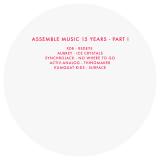
"ASSEMBLE MUSIC 15 YEARS - Part I : Founded in Lisbon in 2011, Assemble Music celebrates its 15th anniversary with a three-part vinyl compilation, bringing together fifteen artists who, in different ways, reflect the label's past, present and future. Released simultaneously in November 2026 and distributed worldwide by Clone Distribution, the three records are less a retrospective than a continuation of what Assemble has been building since the beginning: music with character, made by artists with their own language, away from trends and easy categorisation. Across fifteen years, Assemble has moved freely between house, techno, electro, dub and more experimental forms of electronic music. The catalogue has never been defined by one particular sound, but rather by a certain approach, personal, uncompromising and built to last. Part I opens with XDB, an artist whose relationship with Assemble goes far beyond a single record. His deep, understated approach to house and techno has always been closely connected to the musical identity of the label. Aubrey, one of the enduring figures of the UK underground, follows with decades of experience behind him and a catalogue that stretches back to the early 1990s. Synchrojack connects the compilation to another important lineage: the raw and deeply individual British house music with a track produced and never released in the 90's. Activ-Analog bring their machine-driven, analogue approach back to Assemble after previously releasing on the label, while Kumquat Kids aka Julian Phethean & Steve O'Sullivan with a track originally released in 1999 on the Various Positions EP for UK label Organised Sound. "Surface" is a genuine late-90s underground rarity! Over the years, the original 12" has become increasingly sought-after and notoriously expensive on the second-hand market."
"ASSEMBLE MUSIC 15 YEARS - Part III : Founded in Lisbon in 2011, Assemble Music celebrates its 15th anniversary with a three-part vinyl compilation, bringing together fifteen artists who, in different ways, reflect the label's past, present and future. Released simultaneously in November 2026 and distributed worldwide by Clone Distribution, the three records are less a retrospective than a continuation of what Assemble has been building since the beginning: music with character, made by artists with their own language, away from trends and easy categorisation. Across fifteen years, Assemble has moved freely between house, techno, electro, dub and more experimental forms of electronic music. The catalogue has never been defined by one particular sound, but rather by a certain approach, personal, uncompromising and built to last. Part III brings together another five artists particularly close to Assemble's musical universe. Lowtec has spent decades developing one of the most distinctive languages in European house and techno, both through his own productions and his own label Workshop. His music shares something fundamental with Assemble, restraint, depth and an unwillingness to follow obvious paths and thats exactly what he delivers with "Dutch Angle" exploring the more ambient and abstract side of house. Welsh modular artist Steevio, co-founder of Freerotation, approaches electronic music through improvisation and live interaction with machines. His contribution to the compilation reflects the human, unpredictable side of electronic music that has always fascinated the label. Reedale Rise returns after becoming an important part of Assemble's recent chapter. Moving naturally between electro, techno and house, his music combines precision with an unmistakable melodic and emotional quality. With his track he explores a slightly darker path here, with deeper, more shadowy melodies revealing a different side of his distinctive sound. Lerosa's "Love Money" and Vera's "Take Me" are two very special tracks in our back catalogue, and we felt it was time to bring them back to life for our 15th anniversary. Vera was one of the first artists to collaborate with Assemble, with Lerosa joining not long after. Over the years, both have become an important part of the label's story, through releases, many shared showcases, and above all, a great friendship that has grown along the way."
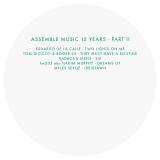
"ASSEMBLE MUSIC 15 YEARS - Part II : Founded in Lisbon in 2011, Assemble Music celebrates its 15th anniversary with a three-part vinyl compilation, bringing together fifteen artists who, in different ways, reflect the label's past, present and future. Released simultaneously in November 2026 and distributed worldwide by Clone Distribution, the three records are less a retrospective than a continuation of what Assemble has been building since the beginning: music with character, made by artists with their own language, away from trends and easy categorisation. Across fifteen years, Assemble has moved freely between house, techno, electro, dub and more experimental forms of electronic music. The catalogue has never been defined by one particular sound, but rather by a certain approach, personal, uncompromising and built to last. Part II begins with Eduardo de la Calle, whose uncompromising approach to techno and electronic music has made him a natural part of Assemble's more recent history. His contribution continues a relationship that has developed through releases and appearances around the label showcases. Tom Dicicco & Roger 23 move into deeper ambient techno territory, bringing together two producers whose work has always pushed beyond the conventional boundaries of house and techno. Radboud Mens is a Dutch sound artist and composer whose work has long explored the space between experimental electronics, minimalism and techno. Active since the early 1990s, his approach is built around repetition, texture and the physical qualities of sound. His contribution to the compilation reflects this perfectly with a deeply minimalist piece, stripped back to its essential elements, where subtle shifts and details gradually shape the track. Chicago's Hakim Murphy represents another long-standing Assemble connection. His relationship with the label goes back years, and his raw, instinctive approach to house and techno embodies much of what Assemble has always looked for in an artist, individuality before formula. Closing the second record, Myles Serge delivers a pure definition of deep techno, hypnotic, atmospheric and deeply immersive, built on subtle movement and timeless Detroit-rooted sensibilities, establishing a new connection with the label."
Mario Batkovic’s music occupies a singular space between composition, performance and sonic experimentation.
Based in Bern, Switzerland, the composer, accordionist and multi-instrumentalist has developed an intensely personal musical language rooted in a radical interrogation of the accordion — its timbre, mechanics, physicality and rhythmic potential. In Batkovic’s hands, the instrument becomes something far beyond its conventional role: a source of intricate, evolving sound in which performer and machine appear to become one.
Batkovic received International critical acclaim when his eponymous debut album was released on Invada Records in 2017, with Rolling Stone listing it in the top 10 avant-garde albums of the year. ‘INTROSPECTIO’ followed, a self-questioning, self-examination of society which featured collaborations with Colin Stetson, James Holden and Clive Deamer (Radiohead / Portishead).
II sees Batkovic venture further into radical, uncompromising and experimental territory, both in the reduction and the expansion of sound. Voices overlap, rhythmic structures develop an almost mechanical force, and layers of sound evoke analogue synthesizers. Then everything falls away: near-total silence, the breath of the bellows, a single frequency. Sounds emerge that can barely be traced back to any particular instrument.
The album is built entirely around the physical relationship between one musician and one instrument. No loops, no electronic layers. Everything you hear comes from an uncompromising exploration of the instrument itself. A primal force of creation and destruction.
With credits that include music for the global hit game 'Red Dead Redemption II’, commissions for AMI Paris, Cartier Fondation, Hugo Boss, Chanel and film scores ‘Mad Heidi’ and ’Shame and Money’ his compositional work has extended into some of the most distinctive fields of contemporary culture.
The project first appeared as an anonymous transmission: a folder sent through the network, containing music, instructions and a name - Transpac. No photograph. No biography. Just the request to use the name and let the music speak.
There have been several transmissions since. Still no interviews, no confirmed identity, no explanation of who - or what - is behind the name.
Some say Transpac is a person. Others insist it is a machine. A few believe it is simply a data packet that escaped the network and somehow learned how to make music.
The name itself offers a possible clue. TRANSPAC was once the name of a French public data network, launched in 1978 and built around X.25 packet switching - breaking information into packets and moving them across a network long before the Internet became what it is today.
Perhaps Transpac has been travelling ever since.
Packet Switching EP is the latest intercepted transmission: six packets of pure machine music, assembled somewhere between circuitry, communication protocols and whatever exists on the other side of the network.
Whilst the packets have been received, the sender remains unknown.
Synaptic Cliffs is particularly pleased to have brought Transpac into its network - a feat made possible, not least, by its principal operative, pdqb. Through communication channels inaccessible to ordinary Earthlings, pdqb was able to locate Transpac with remarkable ease and secure its transmission for the label.
The artwork, rendered in yellow and black and largely composed of binary code, echoes the visual language of the early machine age - a world of geometric systems, electronic signals and human beings beginning to communicate with machines. Created by the legendary Infamous Image Division.
SHORT INFOS
Because Music celebrates the 50th Anniversary of Cerrone's debut album "Love In C Minor (Cerrone I)" .
A record which is one of the mots important of its time. It brought French Disco to the World and established Cerrone as the French King of Disco.
- Pressed in exclusive 2026 Apple Green Crystal Clear vinyl
- Original 1976 artwork - Digitally remastered from original tapes.
BIOG
Cerrone I
Love in C Minor (1976)
The story behind Cerrone's first album could be summarised in the libertarian atmosphere and the creative energy of the 70s, inherited from the 60s revolutions, spiritual, aesthetic or sexual. Looking back now, this record is one of the most important of its time. It helped creating the sound of an era and brought French disco to the world. It is also, and this is fundamental to understand its success, the result of a man's vision: Marc Cerrone, a free spirit inhabited by music, who ended up with a major work of art. With this album, Cerrone accumulated the main elements that make a record timeless, even bigger than its creator: the pure originality, the madness of a vision without compromise, a sense of the market and a great dose of luck too. To some extent, this is the perfect record to start a career, even though Cerrone's one already existed in an implicit way. He actually began in a rather popular band, Kongas, signed by Barclay. Between 1972 and 1974, the band was famous and made it abroad, particularly in Japan, where people loved its sound. Despite this success, probably fed up with the music and not ready to follow the orders of a label that wanted the band to sound more pop, Cerrone disbanded Kongas. He had the sound of his instrument in mind and mostly its central element: the bass drum. The idea of this first solo album came to him after a detour via selling records. Wishing to forget about the studios, he took the head of a small chain of stores, selling records imported from the States. That's when he discovered a daring new sound coming from New York: disco music. This energy inspired him to record again. He then remembered the crazy reaction of the audience when, during the Kongas' concerts, he used to hit his bass drum hard. Cerrone felt like going back into the studio but to make something different. He decided to record a sixteen minutes long track, driven by its beat, that would fit on its own on one side of a LP (during these vinyl days, musicians used to think in terms of sides…), with girls' voices simulating sex. This concept of musical and physical orgasm was recorded at Trident Studios in London (where pop stars used to record at the time… ) with Don Ray, of Kongas, man in the shadows and brilliant arranger who'd follow Cerrone during his whole career. Obviously, like always in pop music (it happened to the Beatles), record companies started by turning this weird track down, convinced that radios would never play sixteen minutes of beats and moaning. Cerrone, a born fighter, decided to trust his instinct (a mix of ego and business sense) and chose to believe that if the radios wouldn't play the track, people would dance to it in the clubs. He released the record himself, with a sexy cover a bit provocative where he wore a black bathrobe, a young short-haired girl leaning on him. Being played here and there, thanks to Cerrone's own network, the record started to work a bit in France. But luckily, things really happened in the States. Due to a mistake, a box of "Love In C Minor" albums were sent to the States via Cerrone's record shop instead of some unsold American LPs. Once in New York, the box was opened and the record with its intriguing cover was instantly loved and passed through the hands of radio and club DJs. All of a sudden, and unknown to its creator, the track that was turned down by every French label, became a hit on the New York disco scene. Casablanca, the US disco label, released a cover recorded by an ad hoc band because nobody knew Cerrone of how to find him. Once he discovered what was happening in the States, Cerrone flew to New York. He realised he had a hit, one of the biggest then, that opened the doors to every record company and especially Atlantic. He was welcome by Ahmet Ertegun, one of the main visionaries of the American music who, among other artists, signed Aretha Franklin and John Coltrane. It's believed that Ertegun understood that the French young musician, like some Atlantic artists, was about to define the sound of his time and that his work would live long after its birth date. "Love In C Minor" was the first step, adamant and successful.
Some records never really disappear. They wait for the right moment to be rediscovered.
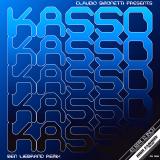
Originally created in 1981 by legendary Italian composer and keyboardist Claudio Simonetti alongside producer Giancarlo Meo, Kasso emerged at a pivotal moment when disco, jazz-funk and electronic music were beginning to collide, and a distinctly Italian dance sound was taking shape.
Built around Simonetti’s unmistakable piano and keyboard work, Kasso developed a significant following across Europe, particularly in France and Italy. The project would produce cult favourites including “Kasso”, “Key West”, “One More Round” and “Walkman”, the latter becoming a major French success, reportedly selling around 500,000 copies.
Kasso’s influence travelled considerably further. Finding its way into the underground clubs of New York and Chicago, with original material receiving the remix and edit treatment from John “Jellybean” Benitez and, later, house music pioneer Frankie Knuckles.
Behind it all is Claudio Simonetti, a musician whose extraordinary career stretches from European disco to some of cinema’s most iconic soundtracks as keyboardist and composer with Goblin, including Deep Red, Suspiria and Dawn of the Dead. Now, more than four decades later, Claudio Simonetti’s Kasso returns.
Unlocking key elements from the original production, including Simonetti’s distinctive piano, the music has been placed in the hands of another European dance music pioneer: Ben Liebrand.
A hugely influential DJ, producer and remixer, Liebrand’s groundbreaking In The Mix radio shows and legendary Grandmix series have helped shape European DJ culture, while his extensive remix catalogue stretches across artists including Bill Withers, Phil Collins, Sting, Salt-N-Pepa and countless others.
His new interpretations of Kasso respect the musicianship and unmistakable character of Simonetti’s original while giving it a fresh, contemporary dancefloor life.
And this is only the beginning.
Kasso launches a series of four new singles, culminating in Kassologie, a definitive collection bringing together the essential Claudio Simonetti recordings alongside new remixes and updates. And all vinyl will be released in a colored-vinyl edition also!
Over forty years after it first emerged from Italy’s extraordinary early-’80s dance scene, Kasso is ready for another round.
Flexout Audio is thrilled to announce the upcoming release of 'Digital Nature,' a brand-new 6-track solo EP from the exceptionally talented Arkaik. This release holds particular significance as it marks a decade of Arkaik's invaluable contributions to the Flexout Audio family, solidifying his status as a true veteran of the label. 'Digital Nature' is not only a celebration of his enduring legacy but also serves as the exciting introduction of his brand-new alias, Peter Outlaw, offering listeners a fresh perspective on his evolving sound.
Born and raised in the birthplace of House Music, Paul Johnson was known for his raw, soulful, and infectious sound, that helped shape Chicago's house scene and inspired generations of DJs worldwide in particular he was a massive inspiration to Daft Punk and the 'French Touch' scene.
Releasing a vast amount of music throughout the 1990s for some of the most consistently underground dance labels including legendary Chicago imprints Cajual, Relief and Dance Mania he finally gained global fame with his 1999 hit “Get Get Down,” a dancefloor anthem that topped charts across Europe. Despite facing physical challenges, including losing both legs in accidents, he remained an unstoppable force in music—touring, producing, and uplifting others with his resilient spirit and signature groove.
Re-pressed for our 35th anniversary, Paul Johnson’s classic 1995 debut album on Peacefrog, Bump Talkin is a timeless showcase of Paul’s signature deep, soulful house sound, blending irresistible peak-time, piano-driven anthems with a playful touch of bouncy Ghetto House energy.
They dont make em like this anymore...
RIP Paul Johnson.







![Plug - Robotic Futuristic [Printed Sleeve]](https://www.deejay.de/images/l/3/7/1267937.jpg)
![Plug - Robotic Futuristic [Printed Sleeve]](https://www.deejay.de/images/l/4/0/1267940.jpg)









![pdqb - CONTACT IMMINENT[with two Extrawelt remixes]](https://www.deejay.de/images/l/1/2/1268612.jpg)