35th Anniversary Edition of Peacefrog - 2LP Smokey Vinyl
Born and raised in the birthplace of House Music, Paul Johnson was known for his raw, soulful, and infectious sound, that helped shape Chicago's house scene and inspired generations of DJs worldwide in particular he was a massive inspiration to Daft Punk and the 'French Touch' scene. Releasing a vast amount of music throughout the 1990s for some of the most consistently underground dance labels including legendary Chicago imprints Cajual, Relief and Dance Mania he finally gained global fame with his 1999 hit “Get Get Down,” a dancefloor anthem that topped charts across Europe. Despite facing physical challenges, including losing both legs in accidents, he remained an unstoppable force in music—touring, producing, and uplifting others with his resilient spirit and signature groove.
Originally released in 1996 Feel The Music was Paul's second album for Peacefrog Records. Containing some of the classiest house music to hail from the Windy City. Classics such A Little Suntin Suntin , Summer Heat and I Wonder Why will have you smiling while you’re jackin’ and the irresistible and infectious Hear The Music was fthe opening track for Daft Punks legendary Radio 1 Essential Mix.
The moment the instantly recognizable intertwined guitar passage on the title track to the Eagles' Hotel California begins, the record's genius becomes obvious all over again. Ranked the 118th Greatest Album of All Time by Rolling Stone, certified by RIAA as the third best-selling LP in history, and considered the foundation on which the Golden State's mid-‘70s music scene was built, the 1976 landmark is a music staple immune to shifts in trends, eras, and styles. Fearlessly addressing the chaos and consequences of American life, its songs remain strikingly prescient and gain creedence with each passing day.
Mastered from the original analogue master tapes, pressed on MoFi SuperVinyl, and limited to 17,500 numbered copies, Mobile Fidelity's UltraDisc One-Step 180g 45RPM 2LP vinyl box set ensures you will want to permanently check into and never leave this particular Hotel California. Up to the herculean task of standing head and shoulders above all prior reissues, this collectible edition plays with extreme clarity, organic richness, tube-like warmth, massive dynamics, and microscopic levels of detail. You'll be able to practically smell the colitas and feel the breeze in your hair. Songs come across with an epic sweep and feature immersive, front-to-back soundstages that allow the music unprecedented air, roominess, and separation. As for the noise floor? It's basically as invisible as the spirits that waft in the corridors of the unforgettable title song.
Aesthetically, the premium packaging and presentation of the UD1S Hotel California pressing befit its esteemed status. Housed in a deluxe box, it features gorgeous foil-stamped jackets and faithful-to-the-original graphics that illuminate the splendour of the recording. From every angle, this UD1S reissue exists as a curatorial artefact meant to be preserved, touched, and examined. It is made for discerning listeners that prize sound quality and production, and who desire to fully immerse themselves in the art – and everything involved with the album, from the renowned cover art to the meticulous finishes.
Indeed, the opportunity to zero in on all the particulars of the 26-million-selling Eagles record dubbed "a legitimate rock masterpiece" by vaunted Los Angeles Times scribe Robert Hilburn has never been better. A global phenomenon that marked the band debut of guitarist-singer Joe Walsh, Hotel California continues to resonate and connect with listeners of all generations taken by its narrative depth, stark directness, picturesque melodies, daring majesty, and ardent emotionalism. Adorned with a breathtaking exterior photograph of the Beverly Hills Hotel that serves as the simultaneously haunting and alluring cover art, and rounded out by a rear-cover shot of the Lido Hotel lobby that reinforces a notion that teeters between permanence and transience, Hotel California is brilliantly tied to a specific place that functions as a universally understood metaphor for the American Dream.
Confronting the darker undercurrents and oft-ignored constructs attached to that romantic notion, the record's songs revolve around a host of shared themes: excess, mobility, stability, illusion, fame, destruction, and idealism included. Notably, Hotel California appeared at a crucial junction in American history: During the country's bicentennial and amid escalating controversies related to the Vietnam War, energy crisis, and governmental corruption. That the Eagles manage to channel such cultural, social, and economical matters into a cohesive, stately, big-picture statement is alone a stupendous feat. That the album's reach, boldness, vitality, accessibility, and understated intensity have never waned make it a marvel.
Reflecting on Hotel California 40 years after its original release, and indirectly explaining its enduring appeal and increasing relevance, singer-songwriter Don Henley confirmed the record pertains to the "loss of innocence, the cost of naiveté...the difficulties of balancing loving relationships and work, trying to square the conflicting relationship between business and art; the corruption in politics, the fading away of the Sixties dream of ‘peace, love and understanding.'"
It can be argued that Henley and company squarely hit on and drove home those ideas in the surreal title track, chart-topping "Life in the Fast Lane," and grand "The Last Resort" alone. But that would miss the forest for the trees. Experienced as an unbroken whole, complete with the pristinely shot imagery and physical grooves, Hotel California unfolds like a geography-conscious saga by James Michener and plays like colour-saturated movie shot on 70mm film by Martin Scorsese. It's about our collective and individual decisions – and the shape of our past, present, and future. And, just like that conjured by our imaginations, Hotel California continues to take on a life of its own.
More About Mobile Fidelity UltraDisc One-Step and Why It Is Superior
Mobile Fidelity Sound Lab's UltraDisc One-Step (UD1S) technique bypasses generational losses inherent to the traditional three-step plating process by removing two steps: the production of father and mother plates, which are created to yield numerous stampers from each lacquer that is cut. For UD1S plating, stampers (also called "converts") are made directly from the lacquers. Since each lacquer yields only one stamper, multiple lacquers need to be cut. Mobile Fidelity's UD1S process produces a final LP with the lowest-possible noise floor. The removal of two steps of the plating process also reveals musical details and dynamics that would otherwise be lost due to the standard multi-step process. With UD1S, every aspect of vinyl production is optimized to produce the best-sounding vinyl album available today.
MoFi SuperVinyl
Developed by NEOTECH and RTI, MoFi SuperVinyl is the most exacting-to-specification vinyl compound ever devised. Analogue lovers have never seen (or heard) anything like it. Extraordinarily expensive and extremely painstaking to produce, the special proprietary compound addresses two specific areas of improvement: noise floor reduction and enhanced groove definition. The vinyl composition features a new carbonless dye (hold the disc up to the light and see) and produces the world's quietest surfaces. This high-definition formula also allows for the creation of cleaner grooves that are indistinguishable from the original lacquer. MoFi SuperVinyl provides the closest approximation of what the label's engineers hear in the mastering lab.
There was nothing in contemporary music like Chris Isaak’s Heart Shaped World when it hit shelves in June 1989. More than three decades later, the singer-songwriter’s third album still sounds unique — and claims a backstory nearly as fascinating as the retro-leaning material and standout performances that propelled it to sales of more than 2.5 million copies. Home to the Top 10 smash “Wicked Game,” the set remains a masterful mood piece that invites you to pour a late-night drink, sit in a dimmed room, and relish Isaak’s elegant albeit raw ruminations on love, relationships, and questionable decisions.
Sourced from the original master tapes, pressed at Fidelity Record Pressing, strictly limited to 3,000 numbered copies, and featuring the bonus track “Diddley Daddy,” Mobile Fidelity's UltraDisc One-Step 180g 45RPM 2LP box set of Heart Shaped World unearths the staggering inner details, saturated tones, and brilliant atmospherics of the crisp production. It brings you up close and personal with Isaak’s spectacular singing — impeccably controlled, tense, brooding, steamy, smoldering, haunted — situated amidst stripped-down backdrops that allow every note to fully bloom and decay.
While Isaak’s ever-steady baritone remains the anchor, the contributions of his trusty backing band, the aptly named Silvertone, come across with just as much cool, command, and realism. The indispensable playing of guitarist James Calvin Wilsey particularly emerges with superb clarity and dimensionality. The character of his 1965 Fender Stratocaster, shivering twang of his spring-coiled fills, and his signature use of reverb, delay, and vibrato seamlessly match Isaak's patient deliveries and the band’s unhurried rhythms. Experienced on UD1S with ultra-black backgrounds and a nearly invisible noise floor, Heart Shaped World is in every regard a demonstration disc.
The premium packaging of this UD1S pressing befits its elevated status. Housed in a deluxe slipcase, it features foil-stamped jackets and faithful-to-the-original graphics. Aurally and visually, this reissue is for discerning listeners who desire to immerse themselves in everything involved with the album, not the least of which is the cover art depicting a lost-in-thought Isaak staring ahead and sitting in what appears to be an efficiency apartment. The image epitomizes the record’s lonesome temperaments and pensive themes.
Of course, if not for director David Lynch hand-picking two cuts from Heart Shaped World for his 1990 film Wild at Heart, the record would’ve probably suffered the same fate as Isaak’s prior efforts and gone unnoticed by the mainstream. Despite receiving raves from outlets such as NME, Chicago Tribune, and Rolling Stone upon its original release, the album stalled in the lower quadrants of the Billboard charts and, after a few weeks, dropped off.
Cue the ear of Lee Chesnut. Then the music director for a large Atlanta radio station, Chesnut heard the instrumental version of “Wicked Game” on Lynch’s soundtrack and started airing the album rendition at all hours of the day. Aided by a sensual video featuring Isaak and supermodel Helena Christensen, the song found its way into the public consciousness by early ‘91 and helped make Isaak a most unlikely mainstream star in an era where his techniques had little to nothing in common with popular tastes.
Despite its vintage vibes and shared DNA with legends such as Roy Orbison, Chet Baker, and Glen Campbell, Heart Shaped World transcends nostalgia, rockabilly, and throwback tropes. For all the melodrama and sadness at hand, Isaak’s gorgeously transparent singing dives deep underneath emotional surfaces. He mines subtleties that indicate his feelings go beyond heartbreak and anguish, and occasionally suggest frustration, menace, and anger. You can hear it in his quivering falsetto, and the slow and methodical ways he allows delicate whispers to break into shadowy phrasing that crosses over to the darker sides of romance and desire.
That approach bolsters the title track, which suggests calm yet moves on ominous currents — its simmering pace and snare-drum snappiness foreshadowing Isaak raising the volume and urgency during the coda. The southwestern-tinged “Wrong to Love You” plays with similar concepts of hesitation, unease, and discord, Isaak careful never to fully erupt and give anything away. His poised deliveries offer a master class in the art of insinuation and hurt on “Nothing’s Changed,” sent up with a wordless backing chorus and crackling guitar lines straight out of a Memphis blues joint.
Heart Shaped World further boosts its merit via its abundant stylistic variations, from the upbeat country-and-western trot of “I’m Not Waiting” and Spanish acoustic shimmer of the jazz-based ballad “Blue Spanish Sky” to the swinging horn-accompanied grooves of “Don’t Make Me Love You” and desert smokiness of the understated “Kings of the Highway.” On the latter, Isaak comes across as resigned and absolute. His singing and pain worm their way into your soul, and echo akin to the way the music prepares to strike when you least expect.
“Trouble going 'round,” Isaak croons right as the album begins. “Trouble going down.” Damn straight.
US outfit Garth only left behind a small trail of records, but this obscure 1980 7" still carries the peculiar charm of disco's stranger back rooms. Recorded between New York and Los Angeles across the late 70s, 'Special Part Of My Life' opens in warm, soulful territory through Henrietta Pam Garth's soft vocal glide, before J. Albert Garth gradually enters the frame and pushes the track somewhere more feverish and floor-facing. There's a lovely looseness to it all: the groove is slightly frayed at the edges in that very particular pre-digital way. On the flip, 'The Groove' heads somewhere far murkier, featuring wiggling synth effects and huge hovering atmospherics drifting over the top of the beat that gives the whole thing this faintly eerie quality which, honestly, makes it all the better.
OLC003 brings another slice of late-90s South London tech house back into circulation, with a repress of Swag Records SWAG003 now brought home to the Online Collective catalogue.
“Takedown” from Dave Ivy opens with a distinctly 90s feel, built around analogue synths, punchy drums and processed movie vocals. Raw, driving and full of character, it’s a proper snapshot of the era.
“Diversion” sees Rob Pearson and Lee Humphreys developing their early collaborative sound, with lush Detroit-tinged chords, analogue drum rhythms and plenty of subtle detail. Even the slightly wonky vinyl noise was recorded by Rob and Lee themselves while miking up a wobbling record — a small touch that sums up the hands-on approach behind the track.
On “Checkout” Rob & Lee head into deeper and slightly cheekier territory, with a few familiar voices from a particularly strange night south of the border weaving through analogue hardware textures, resonant sounds and deep bass. A stripped-back late-night groove with plenty of attitude.
Three tracks from a very particular moment in UK tech house history now back with the original artists on Online Collective.
LP,180g, 2027 REISSUE - REMASTERED FROM ORIGINAL TAPES, CAREFULLY REPRODUCED ORIGINAL ART
When Alan Parker recorded the killer library soul-funk LP The Voice of Soul with session vocalist Madeline Bell in 1976, some bright spark at Themes decided to also release all of the backing tracks as a separate, and equally innocuously title LP called The Sound of Soul. Thank goodness for bright sparks.
Released as a collection of unobtrusive musical backings in various rhythmic styles', the LP's original description dryly explains these tracks have been issued without melody and are therefore particularly suitable for use behind commentary. Female vocal versions of these tracks are issued on TIM 1021 The Voice Of Soul and it is possible to edit from vocal version to instrumental version or vica versa where commentary or scene changes occur'.Madeline Bell was backed by The Rhythm Section, who were for all intents and purposes the Themes International Music house band. So what we end up with here is entire album of instrumental work-outs by a band comprised of the formidable talents of Alan Hawkshaw on keyboards, Alan Parker on guitars, Barry Morgan on drums, Les Hurdle on bass guitar and Frank Ricotti on percussion.
Without Bell's vocals these backing tracks are given all the room they need to breathe. Each one more than stands up on its own.
The Sound of Soul is a real diggers' delight and, unsurprisingly, a must-have counterpart to The Voice of Soul.
As with all ten re-issues, the audio for The Sound of Soul comes from the original analogue tapes and has been remastered for vinyl by Be With regular Simon Francis. We've taken the same care with the sleeves, handing the reproduction duties over to Richard Robinson, the current custodian of KPM's brand identity.
Due to high demand, MEU has revisited two of Mr. K’s classics, previously only available as 12-inch extended mixes, and asked the master editor to pare them down to 7-inch size.
A true top-five peak record at the Garage, Thelma Houston’s “I’m Here Again” was “a highlight whenever Larry played it,” Danny Krivit recalls, “and he played it a lot!” Danny’s edit is a homage to Larry and Frankie Knuckles – in particular a similar private edit that Frankie did back in the day and shared with Krivit. “It was on reel to reel and I didn’t copy it correctly and lost it,” Danny remembers. “Reels were problematic! When I tried to get it again from him, unfortunately he had lost it too.” The song (likely an attempt by Motown to capitalize on the previous year’s monster hit “Don’t Leave Me This Way”) is, in its original form, a virtual retake of Thelma Houston’s breakout single, from the subdued, schmaltzy intro to the “oooh BABY!” leading to the chorus. What sets “I’m Here Again” apart though, is the incredible second half of the song. Naturally, it is here that Mr. K’s edit focuses. Over a vicious groove reminiscent of the Originals’ “Down To Love Town” breakdown (Michael Sutton wrote and produced both “Love Town” and “I’m Here Again”) Houston delivers soul-stirring ad libs as the band crackles with electricity behind her, the piano chasing a descending string riff so eagerly. Pure dancefloor peak energy! And the very first time having all these parts on a 7"!
For our flip, Danny has reached deep into the earliest foundations of his voluminous collection, and come out with a psychedelic pop classic rearranged for today’s sound systems and setlists. Recorded in the Beatles’ Abbey Road studio at the height of the Summer Of Love, the Zombies’ “Time Of The Season” is firmly linked in pop culture to the late ‘60s and the Vietnam era, breaking big in the summer of 1969. Krivit’s edit highlights the parade of lush sonic textures that ornament the hip composition, from the iconic, exquisitely echoed bass-clap-exhale riff that opens the song to the cascading Hammond organ solos of Rod Argent. “It’s a song from my childhood that really struck a chord,” Danny says. “Over the years I often played a rough edit which always seemed to go over great. The song seemed to get better and better, and age like fine wine.” We agree!
These two songs have both appeared on previous (separate) MEU 12-inches, but are presented here in custom new edits for the 7-inch format.
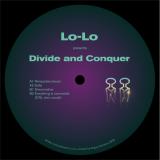
The bells have been rung in our miniature town of Sakskøbing that has been named after the glorious town that has been existing in Denmark, as we push through thirty releases marking down the new milestone. This time the talent that has been present in our ranks, coming from Barcelona and it is Lo-Lo, a man who knows his hardware instruments like his five fingers and has brought this idea came to life. Each track has been crafted with utmost heart and fastidiousness and has a particular way of bouncing off each other in such a manner that can only make “Divide and Conquer” come to life. From driving force of peak dancefloor scorchers to the more lyrical philosophical ways of it being, it has come to what it needs to be. As a wise man said, everything is connected but then may have disappeared into oblivion for the untrained mind, with only a few lessons for us to obtain and hear.
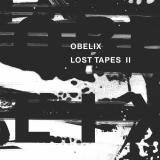
Obelix is the brainchild of UK producers Richard George and Corine Trembath, whose timeless take on house and techno has long been cherished by underground heads and vinyl collectors alike.
With releases on Pacific Records, Mosaic and Stickman, their music occupies a distinctive space between early house and techno, raw, hypnotic and deeply musical, built around rolling 909 rhythms, expertly programmed 303 acid lines and the unmistakable character of analogue hardware.
Following an extensive dive into their DAT archives, Pariter presents The Lost Tapes, a collection of previously unreleased recordings made in the mid-1990s. Carefully restored and curated by Yossi Amoyal, the material retains all the rawness, warmth and analogue
character of the original tapes, offering a rare glimpse into a particularly fertile period of UK underground dance music.
The two part release is completed by Whatever, their sought after classic originally released on Offshoot, a timeless slice that stands alongside the unreleased recordings as an essential piece of the Obelix story.
The Lost Tapes documents a sound that has lost none of its power, raw, hypnotic and unmistakably timeless.
Obelix is the brainchild of UK producers Richard George and Corine Trembath, whose timeless take on house and techno has long been cherished by underground heads and vinyl collectors alike.
With releases on Pacific Records, Mosaic and Stickman, their music occupies a distinctive space between early house and techno, raw, hypnotic and deeply musical, built around rolling 909 rhythms, expertly programmed 303 acid lines and the unmistakable character of analogue hardware.
Following an extensive dive into their DAT archives, Pariter presents The Lost Tapes, a collection of previously unreleased recordings made in the mid-1990s. Carefully restored and curated by Yossi Amoyal, the material retains all the rawness, warmth and analogue
character of the original tapes, offering a rare glimpse into a particularly fertile period of UK underground dance music.
The two part release is completed by Whatever, their sought after classic originally released on Offshoot, a timeless slice that stands alongside the unreleased recordings as an essential piece of the Obelix story.
The Lost Tapes documents a sound that has lost none of its power, raw, hypnotic and unmistakably timeless.
Devo Marries Gritty Guitars with Expansive Keyboard Canvasses on Duty Now for the Future:
Transitional Album Furthers the Band’s Satirical Stance, Includes Cover of “Secret Agent Man”
Hear the 1979 Record in Audiophile-Grade Sound and at 45RPM for the First Time:
Mobile Fidelity’s Numbered-Edition 180g 45RPM 2LP Set
Benefits from Enhanced Definition and Presence
1/4” / 15 IPS Dolby A analogue master to DSD 256 to analogue console to lathe
“Pop music needs a big enema.” Devo created Duty Now for the Future with that mission statement, relayed to the press by co-founding bassist/vocalist Gerald Casale, in mind. Though unfairly pegged by some as an example of the common sophomore slump, the record spurred the group’s interest in electronic instrumentation, extended its penchant for biting social satire, and contained another transformative cover song in the form of “Secret Agent Man.” Above all, the 1979 work proved the Ohio pranksters were anything but a joke even if they would have to wait one more year until for their mainstream breakthrough.
Sourced from the original master tapes, mastered by engineer Krieg Wunderlich, pressed at Fidelity Record Pressing in California, and housed in a Stoughton gatefold jacket, Mobile Fidelity's numbered-edition 180g 45RPM 2LP set presents Duty Now for the Future in audiophile-grade sound. Benefitting from the extra groove space on this first-ever 45RPM version, it plays with enhanced definition, deep-black backgrounds, and ultra-quiet surfaces.
Though certain band members later expressed regret with some of his decisions, the merits of Ken Scott’s production emerge like never before. A lurking edginess serves as a signpost in Devo’s progression before it fully embraced keyboards as a primary tool. Guitars possess punch and grit and, along with the crisp arrangements, are sharpened with an ear toward accuracy and vibrancy. It all helps give Duty Now for the Future a direct immediacy that answers the complaints of listeners who felt the affair too processed or sterilized.
Notably, a majority of the material here stems from the same grab bag of songs Devo banked before Warner Bros. signed it to a deal. The album marks a capstone to Phase One of a career that for all intents and purposes began in 1973. And just like many of the group’s performances of that era, Duty Now for the Future remains just as famous for the critical disdain it inspired as the music itself. A vicious review in Rolling Stone — the very publication that a few decades later would trumpet the band as one of the most important of its age — ended with the writer offering to send readers shards of the LP he planned on smashing to bits.
Perhaps he just needed to experience this new-wave effort with the restored sound that makes everything now feel so explosive and urgent. Whatever the case, the songs hold up and, amid a contemporary period which gives increasing license to artificial intelligence and behemoth conglomerates, seem more apt than ever before.
Consider “Blockhead,” which skewers the predictable appearances and numb-to-the-world actions of a rule follower. Or the similarly themed “Clockout,” an uptempo ditty whose thumbing-its-nose bravado and sardonic lyrics send up corporate culture with an irresistible smirk. As for the wiry, hard-hitting urgency of “Wiggly World” and Mark Mothersbaugh’s loud declaration that “They say the fittest shall survive/Yet the unfit may live”: Evidence these art-school rabble-rousers still had some punk fury to flush out of their system. And the sincere allure of the charged power pop and wishful circumstances of “The Day My Baby Gave Me a Surprize” cannot be denied.
To point to an interesting bit of history that makes Duty Now for the Future all the more intriguing, particularly for the most committed Spuds, more than half its tracks were selected for Greatest Misses — a 1990 anthology that celebrates lesser-known cuts and functions as a rejoinder to a hits compilation from the same year. (The only track from the 1979 album to make the “hits” disc: “Smart Patrol/Mr. DNA.”)
Indeed, tunes like the riff-driven albeit controversial “Pink Pussycat,” atmospherically twitching “S.I.B. (Swelling Itching Brain),” and ceremonial instrumental “Devo Corporate Anthem” may lack the catchy appeal and all-together coherence of what follows on the group’s third and most commercially successful effort, Freedom of Choice. Yet in order to get there, to de-evolve if you will, the band needed the smorgasbord that is Duty Now for the Future.
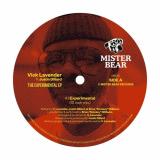
Since launching two years ago, Craig White has used the Mister Bear label as a vehicle for quality, musically expansive deep house from a handful of established artists. Chief among these is Chicago great Vick Lavender, who here once more joins forces with trusted multi-instrumentalist Justin Dillard (and on side B, Will Jackson) for a pair of cuts fronted by honeyed vocalist Brian 'Smokey' Williams. A-side 'Experimental' is particularly special, with Williams seemingly improvising atop a chunky, bass-heavy organic house groove marked out by funky Clavinet licks, Ron Trent style percussion, spacey synths and rich organ chords. The collective goes deeper, smoother and even more intricate on flip-side 'Love Times', which is presented in both full vocal and instrumental forms.
Originally composed by Collage in 1985, Herzschlag returns in a newly recorded cover version by Berlin-based synth-wave duo Bionda e Lupo. Describing themselves as a “boy/girl band like no other,” Lupo recreated the NDW-electro tune from the ground up using an impressive array of vintage instruments and studio equipment, including classic synths such as a Pro-One, a Roland Juno-60, and a Farfisa Syntorchestra. Bionda’s distinctive voice adds a new emotional depth to Katrin A. Kunze’s lyrics while still remaining true to the original spirit of the song.
Lupo of Bionda e Lupo has long been a devoted fan of Mit den Puppen tanzen, Collage's only release at the time, originally issued as a 12" single in 1984. Despite never managing to acquire an original copy, he considers the record unique within the German NDW landscape thanks to its unmistakable "Bravo-breakdance-meets-synth-pop" character. Indeed, Markus Kammann, Jürgen Grah, and Katrin A. Kunze drew significant inspiration from the electro-funk pioneers of the era, particularly Afrika Bambaataa's iconic Planet Rock. When we approached Bionda e Lupo about re-editing a track from the Collage's Motel d'amour release, they instead proposed recording an entirely new cover version.
Work on the project began in spring 2025 in coordination with Markus Kammann, who, together with Jürgen Grah, originally composed the music. Sadly, Kammann, born in 1958, passed away unexpectedly on October 17, 2025. This release is dedicated to his memory.
The liner notes reveal additional details about Kammann's remarkable life and achievements. He was the founder of the legendary Beatbox club in Wuppertal, which was once recognized as the "Best Club in Europe," and a co-founder of the Groove Attack record store. Groove Attack would later grow into one of the world's most influential music distributors, especially for Hip-Hop.
The 12" release is limited to 200 copies. Pressed on transparent red vinyl with black "smoke" effects, it comes housed in a picture-disc sleeve with an accompanying sticker. As an additional highlight, the record includes a previously unreleased NDW bonus track recorded around 1983 by Collage. It features Katrin A. Kunze as well as Thomas Kohl, the vocalist of Schwarze Bewegung.
- Red transparend vinyl with black smoke
- Housed in a picture-disc sleeve with large sticker
- Released in memory of Markus Kammann (1958-2025)
- Contains A4-sheet with liner notes
- 5 tracks, including the vinyl only bonus track "Hallo E.T.",
- Quality lacquer cut by Manmade Mastering
Californian deep house stable Seasons Recordings welcomes Shaka for the first time, with the long-serving Swiss label-hopper popping up on the imprint's 'Limited' vinyl offshoot with a typically strong three-tracker. In keeping with his work for the likes of Local Talk, Yore, Housewax and Vibes & Grooves, we get high-quality deep house warmth peppered with flashes of jazzy instrumentation. This is particularly noticeable on slow-building opener 'Coming Storm', where jammed-out electric piano motifs and dreamy chords ride jazz-flecked house beats and a warm, smooth bassline. Elsewhere, 'Smooth Move' is an even smoother and classier slab of summery deep house headiness, while 'Ticklish Issue' is an ultra-deep, percussion-splashed beatdown shuffler.
Micro Driver III is here back again, from a large period of such as an hybernation status. As previous targets: the combination and compilation from several electronic music producers are shown in this series to enhance and spread the sonic spectrum of the label.
So we are also proud of this release for a particular reason: A nice moment of having on board two of the greatest veteran electronic music activists from Madrid City, Roberto Gemelin with his aka Groof and Luis Rozalén with his HD Substance moniker gives to this 12" an exclusive meeting to show the most electro side of both producers after their long careers producing and creating full of different electronic music alias and stuff.
In the other hand, sharing the vinyl we are pretty excited by the music of Spectrum Data Forces the Electro alias of the well established techno producer C-System, with his high-energy, powerfull and tigh Electro. And the last but no least track of Emulador with a minimal and futuristic Düsseldorf/Detroit vibes to accomplish this compilation.
This four spanish artists are definately full of talent with four different styles and visions of Electro. Micro Driver is a series compilation from several artists of the Electro community.
Two rare recordings from the archives of legendary producer Richard Hewson.
Rising Star (Cosmix) began life in 1984 as a vocal single performed by Debbie Sharp. Hewson reworked the original track into a percussive cosmic disco interpretation, aptly titled the “Cosmix”, experimenting with his newly acquired Bel Delay effects unit, which became central to his studio explorations at the time.
Deep Song dates back even further, to the late-70s Richard Hewson Orchestra period - the creative blueprint that would later evolve into Hewson’s cult studio project, The RAH Band. Written, produced and assembled by Hewson in his home studio before additional strings and vocals were layered in, the track was inspired by his deep admiration for Miles Davis, particularly the landmark album Kind of Blue. Deep Song was originally released as a B-side under a mysterious alias in 1979.
40 years after Dave curated the 'Garage Sound of Deepest New York' series featuring the cream of the crop of American US Garage, the series ran for 4 instalments. Dave re-ignites the torch to bear once more and champion the sound more locally, the leafy area of Crouch End, London, to be precise. This four tracker is a testament to the knowledge and expertise Dave Lee has with this particular soulful sound & genre. First up is 'Everybody Needs Somebody' with its powerhouse gospel vocal performance from Rance backed up with swathing chords, piano & organ work by Matt Cooper and Dave's swinging heavy drums. 'Every Second Every Minute Every Hour' is next from Dave Under, his new Hillman Avenger alias, who takes things in a more jazz funk direction, with masterful piano & brass work and scorching synth solo as the cherry on top. 'Our Love' is an updated rework of a vintage Republic Records track featuring the dynamic vocals of AJ Lewis. Bouncy house drums backbone the syncopated chord stabs before a gear change around the halfway mark signals a big heads down, hands up moment. Before the famous clock tower of Crouch End strikes 12, we have time for one more cut by the name of 'No Excuses' featuring the legend that is Lifford, who does what he does best, soulful yet mighty vocals. This is a peak time, feel-good slab of the Garage house that would have maybe made it onto one of Dave's original comps back in the day.
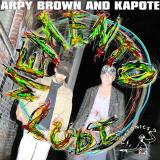
Arpy Brown & Kapote Announce Collaborative Album Memento Ludi via Toy Tonics
A sun-drenched fusion of yacht rock, house and modern indie dance energy – out June 26, 2026
BERLIN, GERMANY — Toy Tonics is proud to announce Memento Ludi, the first collaborative album by label founder Kapote and multi-instrumentalist producer Arpy Brown, arriving June 26, 2026.
The album is a funk-driven journey that bridges the warmth of 1970s analog recordings with the pulse of contemporary dance music. Blending neo-soul grooves, yacht rock harmonies and modern house rhythms, Memento Ludi captures the spirit of classic musicianship within a forward-looking club context.
But Memento Ludi is more than a typical house record. The album moves fluidly between dancefloor tracks and fully developed songs. Every instrument was performed live by the artists themselves: guitars, bass, keyboards and percussion recorded in the studio by Arpy and Kapote. After jamming and recording the basis of every song in a live procedure they carefully resample the parts to create the organic, human touch that defines the Toy Tonics sound.
The title Memento Ludi — Latin for “remember to play” — reflects the album’s philosophy: bringing joy, spontaneity and musicality back into dance music at a time when many club tracks feel increasingly mechanical and formulaic.
The collaboration arrives during a particularly busy moment for both artists. While spending countless hours in the studio, Kapote and Arpy Brown have also maintained intensive international touring schedules with the Toy Tonics crew, road-testing many of the tracks as “secret weapons” in their DJ sets from Melbourne to Los Angeles via their homebase Berlin.
“We wanted to make a record that felt like a lost studio session from 1978 — resampled and synthesised in 2026,” says Kapote.
The incredible story that began with The Most Mysterious Song on the Internet (TMMS) now enters an exciting new chapter: Skyscraper, the debut album by FEX.
Skyscraper features ten original tracks recorded in the early to mid-1980s-carefully re-transferred, remastered, and brought back to life. The album cover, designed by Darius S., brings the story full circle. Darius is the very person who preserved the now-iconic track Subways of Your Mind by recording it from NDR radio in the mid-80s. Without him, FEX may never have been discovered.
FEX's debut opens with its namesake, Skyscraper-a brooding, previously unreleased track the band once described as part of their "psychedelic phase." With haunting synth-helicopter textures and deep guitar riffs, it immediately sets the tone and raises tension.
The release flows naturally into the energetic and fully remastered studio version of Subways of Your Mind. This version of the TMMS - re-discovered on the "yellow label tape" by Reddit user Marijn-was long believed to be from a smaller home studio, but was actually recorded in November 1984 at Hawkeye Studios in Ganderkesee, near Hamburg.
Goldrush, first teased in raw form on FEX's YouTube channel, bends toward mechanical rhythm and shimmering synths, a snapshot of the band's experiments with programmed drum machine sound. Rückwardt's lyrics point to greed and criticizes materialism, and while the music leans toward pop sensibilities, it carries a raw, fractured edge.
Heart in Danger and I've Got My Eyes On You offer contrasting experiences-one rooted in classic post-punk tension, the other floating in melodic synth layers. The latter in particular feels like a fragment from a parallel radio history: a precise and one of a kind synth pop love song with a progressive touch.
From a rehearsal tape comes Dirty Slapstick, its urgency intact. Missing keyboard parts were later reconstructed by Michael Hädrich using his original DX7 synthesizer-recovering lost elements without rewriting the past. The lyrics take a wry look at forced optimism. Also included are the songs Talking Hands, Jenny and Strange Feeling, the latter being a slower blues-tinged cut, revealing yet another facet of the band's reach and Rückwardt's songwriting diversity.
The album closes where the legend began-with the original radio recording of Subways of Your Mind from Darius' cassette. This version of The Most Mysterious Song features alternate vocal effects, contributing to the track's enigmatic aura. Digitally transferred using a high-end Revox machine and carefully remastered, it now has its long-deserved official release.
The cover features a photo of the Eichenberg Bunker in Kiel-one of FEX's original rehearsal spaces and a symbolic monument to their sonic legacy.
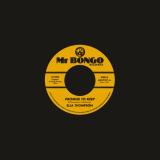
Mr Bongo are thrilled to have one of the leading lights in contemporary soul joining the label. Melbourne-based vocalist, musician, and songwriter Ella Thompson is an artist whose name is being championed by some of the best in the business. She’s been building a reputation as one to watch, with two standout releases on Hopestreet Recordings, Domino EP in 2023 and Ripple On The Wing LP in 2024, alongside a heavy touring schedule and a stacked list of support slots and collaborations.
For this new 7” single, Ella collaborates with a selection of artists at the forefront of Naarm/Melbourne’s soulful DIY community. Featuring members of Surprise Chef and Karate Boogaloo, Liam McGorry from Temporary Blessings (College Of Knowledge) joins Ella as co-writer and co-producer, with go-to Melbourne engineer Henry Jenkins also producing and recording the track.
Bridging the worlds of classic and contemporary soul, Ella’s songwriting is drenched in emotion and personal experience. With a timeless feel that is hard to tie to any particular period, she has crafted a sound that instantly hits deep. It’s warm, tasteful and distinctly Ella. That talent has also seen her tour with Mark Ronson, and support other contemporary greats like Jalen Ngonda, Lee Fields, and Thee Sacred Souls.
‘Promise To Keep’ is the first taste of Ella’s new material on this 7” single. An irrepressible upbeat groover that echoes mid-to-late-sixties vocal groups. That influence though never overpowers Ella’s own unique creative voice or distinct sense of self. She draws from it, but the colour is all her own. The song tells a story of being carried by the current that keeps us moving, giving us courage. A commitment to oneself that speaks to action shaped by vision, and the pull of following what feels correct even when the distance is far.
The flip side finds Ella in a different mood. ‘Change Of Heart’ is a heavy sweet-soul ballad. Rich in drama, Ella’s falsetto vocals build to a stunning climax in the final section, with triumphant horns that signal the release of letting go. The lyrics reflect on temporality and impermanence, and the way moments can be missed or arrive with synchronicity. It’s that bittersweet paradox of triumph and sadness, where everything contains its opposite: absence and presence, innocence and experience. The song is underpinned by a brooding production quality and atmospheric, beat-heavy flavour that Surprise Chef and cinematic soul fans will relish.
Mixed by Wayne Gordon (Daptone, Womack Sisters), ‘Promise to Keep’ and ‘Change of Heart’ are a glimpse of things to come from Ella. Keep an eye open for more new music incoming from this phenomenal artist at the top of her game.
LP,180g, 2027 REISSUE - REMASTERED FROM ORIGINAL TAPES, CAREFULLY REPRODUCED ORIGINAL ART
Hot Wax is an assured KPM masterclass from a dream team line-up of Brian Bennett, Alan Hawkshaw and John Fiddy. Here we're treated to what happens when all three decide to explore the latest trends in production music'. The latest as of 1976, of course.John Fiddy's numbers are sumptuous, string-led and light. Floaty soft-psych underpinned by a solid groove, particularly on Taste For Living' and "Fresh Start". If you're into Koushik and those early Manitoba/Caribou records - and you should be - you'll appreciate these.
For us, the Bennett and Bennett/Hawkshaw stuf is on another level. Capitol City' oscillates between driving funk and downbeat sentiment. Name Of The Game' is tough, smokin' funk, famously sampled in 2007 by Madlib for Percee P's Who With Me'. Bop On The Rocks' knocks hard and Full Throttle' features a guitar solo with some of the nastiest, about-to-explode fuzz you're ever likely to hear.
As with all ten re-issues, the audio for Hot Wax comes from the original analogue tapes and has been remastered for vinyl by Be With regular Simon Francis. We've taken the same care with the sleeves, handing the reproduction duties over to Richard Robinson, the current custodian of KPM's brand identity.
Winter Collection arrives a little late, but it arrives right. Four tracks across two sides, drawing from Chicago, Detroit, Oakland, and Portland, mastered for DMM cut by Lawrie Dunster of Curve Pusher. The vinyl sounds like it means business.
The A-side opens with the Bryan Zentz Remix of Basic Analogue, originally written and produced by Mazi and Joshua Collins. Dunster’s remaster serves the synth work well, keeping the melodic lines clear and the low end present without overcrowding the mix. Zentz built something durable here, and the vinyl pressing confirms it.
Sound Whore by DJ Mes follows, and Mes doesn’t waste any time. The wah-wah guitar arrives early, the trumpet not far behind, and then the Latin percussion and vocal samples start stacking up. It’s a lot, but Mes holds it together with a groove that keeps pulling everything back toward center. You don’t resist it. You just follow.
The B-side belongs to the most requested track in the label’s catalog, and it’s easy to understand why. Mike Huckaby’s remix of Cesar Ramirez’s Congo Fury anchors itself to a conga line and then opens outward, synth lines drifting across the rhythm like smoke. Huckaby had a particular gift for this, the ability to make a moment feel like it could last forever without ever losing tension. Ramirez’s own keyboard solo survives toward the end, a subtle crescendo that feels earned. Dunster captures the whole thing with care.
It’s Time to Jack by Da Outlawz closes the record. 909 drums, cracking snares, chopped vocal fragments. Barebones Chicago house, designed for a sound system that can take the weight. Nothing complicated about it, and that’s the point.
Play it loud.
Track A1 written and produced by Maziar Namvar and Joshua Collins. Remixed by Bryan Zentz.
Track A2 written and produced by Jason Sutton.
Track B1 written and produced by Cesar Ramirez. Remixed by Mike Huckaby.
Track B2 written and produced by Gabriel Palomo & Geto Mark.
Mastered by Lawrie Dunster at Curve Pusher, UK.
Copyright Control
2026 Fresh Meat Records
Shorter Version
Winter Collection arrives a little late, but it arrives right. Four tracks across two sides, drawing from Chicago, Detroit, Oakland, and Portland, mastered for DMM cut by Lawrie Dunster of Curve Pusher. The A-side opens with the Bryan Zentz Remix of Basic Analogue, originally written and produced by Mazi and Joshua Collins. Dunster’s remaster keeps the melodic lines clear and the low end present. Zentz built something durable here, and the vinyl confirms it. Sound Whore by DJ Mes follows. The wah-wah guitar arrives early, the trumpet not far behind, then Latin percussion and vocal samples start stacking up. Mes holds it together with a groove that keeps pulling everything back toward center. You just follow. Mike Huckaby’s remix of Cesar Ramirez’s Congo Fury anchors itself to a conga line and opens outward, synth lines drifting across the rhythm like smoke. Huckaby had a gift for making a moment feel like it could last forever without losing tension. Ramirez’s keyboard solo survives toward the end, a subtle crescendo that feels earned. It’s Time to Jack by Da Outlawz closes the record. 909 drums, cracking snares, chopped vocal fragments. Barebones Chicago house, designed for a sound system that can take the weight. Play it loud.
ORANGE - Limited Edition! SPANDAU20 returns, bridging Berlin and UK lineage, with new material from Mr. G, Elli Acula, FJAAK and Dajusch, continuing to showcase the many shades of contemporary club music through its forward-facing approach. On its 12th release, the Berlin label presents a record that reflects individual artistry as much as the unmistakable identity of the SPANDAU20 sound. Opening the release is Mr. G with 'I Came To See You'. The track is a true embodiment of his distinctive production style, unfolding through bouncing basslines, swinging percussion and hypnotic looping vocals and capturing the raw spirit of old-school dance music with fresh spirit. Sitting somewhere between house and techno, it sets the tone with a particular kind of hypnosis, taking the listeners deep into the endlessly circling groove. Elli Acula follows with 'Take One Higher', a fierce and uncompromising techno track that perfectly reflects the label's hallmark aesthetic. She channels the raw energy of the 90s through a modern lens, pairing rough edged stabs, cavernous kicks and gritty percussion programmed with unfiltered dancefloor intensity in mind. The result is a high-pressure track designed to fully consume the room. On the flip side, FJAAK unleash 'Drip Code', showcasing the duo's signature blend of powerful low-end pressure and analogue grooves. Having spent over a decade shaping Berlin's techno landscape through their machine-driven approach, the pair deliver crisp percussion, huge open hi-hats and teeth-rattling drum machine combinations, while racing chords and looping vocals propel the track forward. It is a direct and highly effective example of the energy that has come to define the SPANDAU20 universe. Closing the release is Dajusch with 'Tongue In Cheek'. Deeply influenced by the foundational sounds of Detroit and Chicago, the classically trained producer leans into warmer, more uplifting territory. The track combines grooving basslines, saturated 909 percussion and piano-led melodies with disco-tinged vocal loops that glide effortlessly across the arrangement. This closer highlights Dajusch's refined understanding of groove, texture and atmosphere, rounding off the release with a distinctly euphoric touch. SPANDAU20 012 is another example of classy production skills merged with genuine dancefloor purpose. As ever, the label lets the music speak for itself. The many shades of sound are on full display, bound together by the singular identity that has made SPANDAU20 one of Berlin's most distinctive voices in the electronic music landscape.
SPANDAU20 returns, bridging Berlin and UK lineage, with new material from Mr. G, Elli Acula, FJAAK and Dajusch, continuing to showcase the many shades of contemporary club music through its forward-facing approach. On its 12th release, the Berlin label presents a record that reflects individual artistry as much as the unmistakable identity of the SPANDAU20 sound. Opening the release is Mr. G with 'I Came To See You'. The track is a true embodiment of his distinctive production style, unfolding through bouncing basslines, swinging percussion and hypnotic looping vocals and capturing the raw spirit of old-school dance music with fresh spirit. Sitting somewhere between house and techno, it sets the tone with a particular kind of hypnosis, taking the listeners deep into the endlessly circling groove. Elli Acula follows with 'Take One Higher', a fierce and uncompromising techno track that perfectly reflects the label's hallmark aesthetic. She channels the raw energy of the 90s through a modern lens, pairing rough edged stabs, cavernous kicks and gritty percussion programmed with unfiltered dancefloor intensity in mind. The result is a high-pressure track designed to fully consume the room. On the flip side, FJAAK unleash 'Drip Code', showcasing the duo's signature blend of powerful low-end pressure and analogue grooves. Having spent over a decade shaping Berlin's techno landscape through their machine-driven approach, the pair deliver crisp percussion, huge open hi-hats and teeth-rattling drum machine combinations, while racing chords and looping vocals propel the track forward. It is a direct and highly effective example of the energy that has come to define the SPANDAU20 universe. Closing the release is Dajusch with 'Tongue In Cheek'. Deeply influenced by the foundational sounds of Detroit and Chicago, the classically trained producer leans into warmer, more uplifting territory. The track combines grooving basslines, saturated 909 percussion and piano-led melodies with disco-tinged vocal loops that glide effortlessly across the arrangement. This closer highlights Dajusch's refined understanding of groove, texture and atmosphere, rounding off the release with a distinctly euphoric touch. SPANDAU20 012 is another example of classy production skills merged with genuine dancefloor purpose. As ever, the label lets the music speak for itself. The many shades of sound are on full display, bound together by the singular identity that has made SPANDAU20 one of Berlin's most distinctive voices in the electronic music landscape.
As WARNING prepares to release Rituals of Shame - their first new music in twenty years,vocalist/guitarist Patrick Walker is self-effacing about what led to this moment. Over the last two decades he continued to write and release music, satisfied that he had achieved what he set out to do with WARNING. In those intervening years, interest in WARNING swelled, organically gathering an ardent fanbase. In particular, the 2006 album, Watching from a Distance, has gained a cult following. In response to a transformative period in his life, Walker turned towards writing new songs, and it soon became apparent that these belonged to WARNING. In early January 2025, he started with a completely blank canvas, and piece by piece, he started to fill it with ideas that evolved to become the songs that make up Rituals of Shame.
His immersion in the project became a full-time pursuit. After successfully demoing the five songs, Walker retreated to a remote house on a hill outside Florence, Italy, to refine the lyrics. Recording took place at The Arch Studio, a 140-year-old former church in Southport, UK. Chris Fullard (Idles, Sunn O))), Ulver) handled the recording and mixing. Walker's lifelong musical inspirations can be traced through Rituals of Shame. The ambitious structural arrangements harken to Marillion’s complex but soaring episodic songs. They retain a sparsity that is reminiscent of June Tabor’s economic arrangements; thick with melody but with a diaphanous air to them. Citing John Brenner of Revelation as an enduring inspiration, Patrick credits him with introducing the idea of how to infuse heavy music with significant emotional depth. Often reluctant to discuss the minutiae of his lyrics, Walker does acknowledge that making this album was a direct response to the immediate concerns of his current life period. Rituals of Shame also echoes the enduring themes and fixations that have marked most of his work: guilt, shame, personal failure, obsession, longing, and separation, but, most of all, he says, love. Short: WARNING return with Rituals of Shame - the pioneering Doom band's first new music in 20 years! FFO: My Dying Bride, Candlemass, YOB, Black Sabbath, 40 Watt Sun, Pallbearer, Pagan Altar
"Conrad Pack returns to SELN Recordings with a three track EP threading the needle between London sonics and
something beyond.
The primary tracks Praise and Guidance were recorded during the height of the Scram events organised by
Leeway (Guy Gormley), and hosted by the late soundsystem luminary Julian Fairshare at Ormside Projects. The
influence of this period, and in particular of Fairshare himself, on the music is clear; both are stepper-esq, leaning
heavily on London’s musical legacy past and present, whilst still pushing a contemporary sound.
Praise is essentially a Dub track. The percussion and bass are of a familiar steppers nature, with the synths
evoking a true Big Smoke feeling. Although the melody itself wouldn’t sound out of place in a UK Drill number, the
song overall still touches on Industrial and DIY sonics, being all the stronger for doing so.
Guidance follows in solid form. Amongst the driving percussion and staunch bassline, droning pads lock in a dense
mood whilst sparse choral melodies echo throughout. Think Shaka meets Muslimgauze, but recorded in a
Woolwich Office Block.
Grotto was originally produced for the group show “The Grotto” held in January 2021 at Ridley Road Project Space.
Restructuring the track from the original stems, Pack presents a new and enchanted “stereo version” for Praise EP.
Angelic atmospheres flow amongst scattered hi-hats as sporadic Freetekno Kicks reverberate across the void.
Most accurately described as “what Curley in a K Hole might have sounded like”. "
Narthex means railed-off western portico or ante-nave in earty Christian churches for women, penitents and catechumens.
Narthex is also a trio featuring (at the beginning) Daniel Denis (Universe Zero, Art Zoyd), Alain Neffe (Pseudocode, Human Flesh, Bene Gesserit) and Nicolas de Villemarqué (Nuwage Music). They had a very different musical background, mostly electric-electronic rock, and decided to work in the field of acoustic music recorded live (two microphones + portable DAT) in churches of their area. After several recording sessions, Nicolas de Villemarqué decides to leave the group. ln order to complete the trio, Daniel Denis and Alain Neffe ask the participation of some of their friends. Anna Homler, Michel Berckmans and Daniel Malempré have accepted the challenge and succeed to fit into their musical universe.
The instruments Church organ, harmonium, sitar, saxophone, oboe, bassoon, zither, valiha, senzas, tarang, voice, percussions, metal clarinet, classical guitar, mew's harp, ongolok, violin, dulcimer, mouth organ, etc.
The music Often dark, sometimes repetitive or experimental, sometimes rhythmical and exotic, always based on emotion inducted by the sound. One could define it as dark age music (as opposite to new age music), a sort of minimal come back to the roots and purity of acoustic sound without the cultural background linked to the 'academic' use of some instruments (for example African senzas are transformed and tuned to sound like Indonesian instruments, sitar or harmonium are used as rhythmical instruments, vahilla is played with a bow).
The places Churches located in an area of 20 kms in the region where Daniel Denis and Alain Neffe live for years and where they feel at home (and feel the vibrations. Every church, place emotionally loaded, has its own specific resonance and sound structure. Every church gave to the musicians a particular inspiration and fill the sound of the instruments with a natural reverberation/echo. The place but also the moment is important. They had the privilege to be allowed to record in the Ecaussines church at night lightened only by candles. lt was one of their most productive recording sessions.
The Dead Mauriacs is the project of French artist Olivier Prieur, "Paravents et miroirs, une cérémonie" is a live soundtrack.
The Dead Mauriacs describe their music as "Exotica Concrete" - their music is composed of field recordings made on a daily basis, as well as a diverse collection of sounds, including piano, Indian harmonium, violin, ukulele, didgeridoo, pieces of wood, glass, paper, and metal plates. The album is a spectacular 40-minute sound collage, assembled by sampling Exotica music represented by musicians and arrangers such as Les Baxter and Arthur Lyman, who were active in the 1950s.
"Exotica is a musical genre or sub-genre that emerged in the 1950s in the United States with musicians and arrangers like Les Baxter or Arthur Lyman. It is an extraordinary music because it is false: bird calls imitate bird songs, you can hear the sound of the waves, it is a Western fantasy, particularly North American, of a world and an imagery that never existed. It is a music associated with mass tourism, mass entertainment, consumerism. Arthur Lyman recorded about 30 records in 10 years in Waikiki. With his band, they played and recorded under a geodesic aluminum dome. The dome belonged to the owner of the hotel he played for every night. They did this at night to avoid noise. It's music that is both profoundly naive and totally flawed. In this, it is seductive and intellectually interesting. It is music that could easily be criticized today, but it is an imaginary in itself, like the Italian film music of the 1960s and 1970s." (Excerpt from the calax's interview)
The Dead Mauriacs are not only involved in music, but also in a wide range of other creative endeavors, including video and painting. He also repsonsible for the artwork of this LP. The inside of the product is also accompanied by an 8-page interview with Mauriacs and compiled his amazing artworks.
The Dead Mauriacs
Paravents et miroirs : une cérémonie / Screens and mirrors: a ceremony
Side A
Courte dérive, une ouverture / Short drift, an opening
Le retour des insectes électriques / The return of the electric insects Les oiseaux étranges / The strange birds Tension, terreur factice / Tension, false terror
Dénouement malais / Malaysian ending
Rituels et vanités 1 / Rituals and vanities 1
Rituels et vanités 2 / Rituals and vanities 2
Italiens dʼHambourg / Italians in Hamburg
Side B
Secrets pour piano / Secrets for piano
La suite Monory, Padoue-Le Caire-Nassau / The Monory Suite, Padua-Cairo-Nassau Hommes à découper / Men to cut out Lassitude moite / Clammy weariness
Le soleil artificiel du pont croisière / The artificial sun on the cruise deck
Pirogues et palmiers, vus de la scène / Pirogues and palm trees, seen from the stage La traversée / The crossing Rideau / Rideau
Fields recordings : Semproniano and Siena, Italy, Figueira, Portugal, Charentes, France. An electrical wire with a frequency shifter gave birth to the insects. Real and fake piano. Everything made with a computer and a midi keyboard.
Music premiered at Hörbar, Hamburg, 28th of December 2017. Music (and video) Olivier Prieur.
Thanks to Thorsten Soltau and all people at Hörbar.
Hello to Felix Kubin & Marie-Pierre Bonniol, Julia & Jan Warnke. Kisses to Hélène.
“Nimm die rosa Brille … sag was Du siehst … alles viel besser”
44 years after its original release, one of the most idiosyncratic DIY minimal electronics / synth / new wave records of the early ’80s returns: the legendary 7” by German group DEUTSCHE SCHÄFERHUNDE (engl. German shepherds)—now remastered and reissued for the first time as a one-sided 12” on Anna Logue Records. Recorded in the winter of 1981/82 between rehearsal space, provincial disco and bar nights, and a humble four-track setup, these tracks capture the raw spirit of a generation that simply started creating—no formal training, but plenty of attitude. Minimalist, uncompromising, and inspired by krautrock, punk, new wave, electronic music and dub, the songs move between raw electronics, percussive noise, new wave experimentation, and sharp social commentary. „Rosa Brille“ (rose coloured glasses) in particular feels as urgent today as it did back then—a track that has lost none of its relevance, „Gasmasken“ tells of gas masks dancing in the woods to the sound of sirens, and a timeless Holger Czukay/Jah Wobble inspired „Mein Herz“ (my heart).
Originally pressed in a small run of just 500 copies and later becoming a sought-after collector’s item now worth 200€, the record now returns in a carefully crafted edition featuring a laser-printed reverse side and additional materials such as original lyric sheets and articles, postcard and poster. DEUTSCHE SCHÄFERHUNDE thrived on paradox—a provocative name paired with a clear stance, and lyrics that still resonate today. Shaped by Cold War tension, political unease, and youthful rebellion, their sound refused to fit into any neat category. Only few other bands, such as Der Musikant, Im Namen des Volkes, Thorax Wach, Klinisch Sauber oder Stephan Eicher spielt Noise Boys come to mind.
This release is more than a reissue—it’s a document of its time that still hits with full force.
12″ features: limited to 400 copies, hand-numbered, one-sided 180g black vinyl, laser-etched B-side, outer sleeve printed on reverse side of the board, printed inner sleeve with original lyrics sheets and original articles, DIN A3 poster, double-sided postcard
Jazz-fusion, disco-funk, Latin jazz and batucada rhythms get the Filipino treatment onAfter Midnight, the sublime second album from keyboardist Boy Katindig. Originally released in 1980, After Midnight draws heavy influence from soul and funk contemporaries in the US as well as Latin America, in particular the famed Brazilian percussionist Paulinho da Costa.
It’s a testament to his musical prowess that Katindig weaves effortlessly between styles and tempos. His reverence for Paulinho da Costa extends far, with covers of several songs from the latter’s 1979 Happy People album. This includes slow-burner ‘Déjà Vu’ written by Isaac Hayes originally for Dionne Warwick; on the Filipino instrumental version, local legends Jun Regalado and Roger Herrera (from Regalado’s ‘Pinoy Funk’ single) are reunited on drums and bass respectively.
But Katindig’s original compositions hold just as much weight and unique personality: title track ‘After Midnight’ opens with a sultry funk serenade reminiscent of The Isley Brothers, and quickly transforms into a catchy, blistering, saxophone chorus that brims with swagger. Hidden B-side gem ‘Got The Need’ is an uptempo tribute to batucada that would not be out of place in a jazzy house set, and boasts increasingly elaborate and psychedelic solos from Katindig on keys and Ben Concepcion on soprano sax.
Meanwhile, ‘Love Till the End of Time’ is a masterclass in instrumental disco funk, penned by the prolific Greg Phillanganes who at that same time was writing for many of the greats including Chaka Khan, George Benson, Stevie Wonder, The Jacksons and Cheryl Lynn.
This album is lovingly reissued by Sama Sama Records, a boutique label from DJ and collector Norsicaa, who ran the esteemed Soundway Records for 8 years and released the compilation Ayo Ke Disco in late 2024.
For his sixth solo album, Ezéchiel Pailhès returns with a new collection of songs infused by a sunny wandering spirit.
Within each of the twelve songs on SOL is a thread of melancholic happiness that has permeated much of Pailhès’ music and songwriting. He addresses love, the passing of time, hope, lost illusions, fleeting moments of grace, the temptation of forgetting, a need to escape, and desire. All this is
insulated by understated orchestrations that blend acoustic and electronic instrumentation with deft confidence.
The Portuguese and Brazilian concept of saudade—a form of melancholic longing and nostalgia— pervades, thanks in part to Pailhès decision to record the album in Rio de Janiero and to reinterpret some of the finest works of Música Popular Brasileira (MPB). In particular, he revisits a handful of
lesser known classics from the mid-century samba and bossa nova era—originally written or performed by talents including Vinícius de Moraes, João Gilberto, Tom Zé, Dorival Caymmi, João Donato, Os Tincoãs, and Ataulfo Alves.
The shift from Brazilian Portuguese to French and the decision to adapt rather than perform a straightforward cover versions, allows Pailhès to invent a form of prosody and euphony (the musicality and harmonious combination of words) that feels vibrant and unlike anything else in today’s French
chanson landscape.
“Some lyrics are simple translations from Portuguese, in what I’d call an expanded version. For others, I started from a single word or a single phrase and embroidered an entirely new text that carried me elsewhere,” explains Pailhès. “I allowed myself great interpretive freedom, while preserving the humanist dimension of the original songs. I’ve always been deeply moved by the way Brazilians transfigure reality through heightened emotion. I love this visceral and spontaneous country, which always seems to live through emotion. And above all, I love its music both popular and unifying,
bringing together all social classes. In that sense, it’s very political music, but even more so utopian, made by the people and for the people.”
On this new album, however, the French artist was keen to avoid cliché. Each song is therefore built around a carefully balanced interplay between Pailhès’ piano and synthesizers, alongside restrained arrangements of percussion, brass, bass, and cavaquinho (a small four-string plucked guitar). These parts were recorded in Rio de Janeiro with two musicians who regularly perform alongside the legendary Caetano Veloso—Kainã Do Jêje and Alberto Continentino—joined by Thomas Harres, Antônio Neves, Eduardo Neves, and Gabriel Loddo.
Since the 1960s, France and Brazil have shared a long-standing cultural and musical relationship. Some Brazilian artists, most famously Gilberto Gil, took refuge in France during the dictatorship years (1964–1985). But above all, French chanson quickly fell in love with the richness and ingenuity of
bossa nova and samba, translating and reinventing them in the language of Molière. Throughout the 1960s and 1970s, albums and hits by Henri Salvador, Georges Moustaki, Pierre Barouh, Pierre Vassiliu, and Claude Nougaro all drew from the MPB repertoire.
Fifty years later, with SOL, Ezéchiel Pailhès reinvents this rich Franco-Brazilian musical legacy, bringing to it a personality and modernity that stand confidently alongside those of his forbears.
As the so-called “Latin boom” becomes a new anchor for hard-swung club sounds, it is crucial to recognize that the region’s musical culture extends far beyond dembow edits and the pop-trap hybrids that have edged into the mainstream. Monterrey-born, New York City-based producer and DJ Delia Beatriz, aka Debit, returns to NAAFI with Potpourri, a generous and kinetic collection of dancefloor-oriented tracks filled with percussive flourishes, squelching 303 basslines, and rhythmic mutations that actively challenge the status quo. Rather than rebuilding “Latin sounds” as a fixed category, the album rethinks their internal logic, tracing the evolution of techno and house in cities like Detroit, Chicago, and New York alongside parallel innovations emerging in Mexico, Colombia, and across the wider Latin world. Positioned on the bridge between Mexico and the US, Potpourri does not seek synthesis as a gesture of smooth fusion, but as a site of disruption.
The album can be heard as a loose follow-up to System (2018), Debit’s NAAFI-released EP that expanded the sonic potential of tribal guarachero through triplet-driven rhythms, industrial pressure, and noisy reconstruction. Potpourri retains guaracha as a structural backbone while drawing further influence from veteran DJ and producer Javier Estrada—who also appeared on System—and particularly from his fast-paced, nonlinear style of mixing. That approach becomes a formal principle here: canonical structures are dismantled, repetition is avoided, and tracks evolve without sacrificing propulsion. Coming after the introspective temporal inquiry of Desaceleradas and the speculative historical acoustics of The Long Count, Potpourri arrives as a deliberate surge of energy. As Beatriz explains: “It’s a manifesto for rethinking form and sound in dance music. By stepping outside traditional structures and embracing the potpourri approach, I’m creating new meaning with familiar rhythms. I’ve also been applying this to my DJ sets, using it as a tool to break free from established norms and explore new narrative possibilities.”
Years in the making, Potpourri imagines an alternate timeline in which the psychedelic squelch of acid—echoing pioneers such as DJ Pierre and Mr. Fingers—and the dub-inflected atmospheres of Basic Channel entered into direct and sustained contact with Latin American club mutations. Those references are legible, but never merely quoted. Instead, they are folded into syncopated hi-hats, overdriven kicks, and unstable arrangements that absorb both the intensity of the parties Beatriz remembers from Monterrey and the abrasive edge she sharpened at DIY noise shows in New England. The result is unmistakably a dancefloor record—heard in tracks as forceful as “Pero like” and the peak-time pressure of “tuvesuerte”—but one saturated with grotesque, psychedelic atmospheres, where sounds dissolve into hoarse croaks, acidic smears, and anxiety-inducing growls. Here, the rave becomes not simply a site of release, but a platform for navigating identity, hybridity, and artistic formation across borders. Moving through peaks and ruptures, Potpourri reveals a party narrative that is not linear but multidimensional.
By folding together the fluidity of DJ culture, the experimental charge of acid, and the rhythmic vitality of guaracha, Potpourri proposes a space of formal and political innovation within Latin America’s rapidly expanding electronic music landscape. It is a record that refuses containment, pushing against the templates through which Latin electronic music is often consumed, and insisting instead on friction, instability, and transformation as generative conditions for the dancefloor.
What began as a career in DIY bands has since evolved into a wholly solo endeavour, with her recent work in particular showcasing her prowess as both songwriter and performer. Through this, she defines a distinctly personal vision of pop creativity -- a "perishable good," as she calls it, meant to be shared when the moment calls for it.Limbo, her most personal and fully realised body of work yet, will be released this year on YEAR0001. A cathartic explosion of emotion through sound and substance alike, it's a record that finds Namasenda at her rawest, most vulnerable state. Limbo has blossomed from a relentless artistry that has been waiting to be unleashed for years.
ISKRA is the debut album by Polish multi-instrumentalist and composer Olga Anna Markowska. Starting at “Dawn” and ending at “Dusk”, it is a journey of melancholic depth and true beauty filled with warm memories from what was & what could be.
Using zither, cello, electronics and occasional wordless voice, Olga weaves together something so affecting and under the skin beautiful that it is hard to shake, bringing to mind classics from artists like Jacaszek and William Basinski, or the films of Kieslowski. However, there’s a personal touch in her playing and compositions that stands out. Olga explains: “the cello pieces, in particular, were born from a desire to reconnect with the instrument I’ve known intimately since childhood. However, I had to step away from it for two years to gain perspective and find a fresh approach when I returned.” She continues : “ISKRA is an album about "ignition" — a gradual shift in how I think about music and a search for new values. It also marks the closing of a chapter, blending archival recordings with the dawn of new ideas.”
The album feels deeply personal from the first note, and bridges the difficult point between classical and ambient music in a truly natural way, leaving any typical tropes far off, instead demanding your full attention. Olga uses plenty of loops throughout, which together with the cello and zither builds a transcendent atmosphere. Standouts contain amongst others the stunning “Train Ride Home” - a 7 minute piece with zither as main focal point; “Fever Dream” - a plunge into warm static noise and deep plucks, as well as the beautiful “Helix”, which sounds like a washed out dream with its minimal tape loops and ambient vocal washes. Overall the album connects very well with Olga’s subjects of identity, memory of the places and human relations with nature. There is a deep humanity burrowed within these 40 minutes of music which feels immensely appropriate in these contemporary times.
ISKRA was recorded in different times and places from 2017 to 2022 and lands with perfection on Miasmah - connecting the dots from the early years while reaching into the stars.
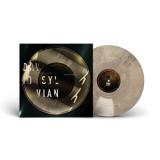
Limited edition LP Marbled coloured vinyl in mirror board sleeve 180g marble coloured vinyl. Packaged in a heavy weight 350gsm CMYK-printed mirror board silver reflective outer sleeve with a 170gsm inner sleeve. High gloss finish on both the outer and inner sleeves. the freshly minted label NANOQ is proud to announce a new album by david sylvian titled 'the distance between the killer and the killing' it's the first album sylvian has released in 15 years. composed of sessions recorded between 2012 - 2025, the album is based on recomposed improvisational sessions with a variety of artists ranging from otomo yoshihide, ryuichi sakamoto, bilianna voutchkova and miako klein, to jamie drouin, lance austin olson and more. the 46min instrumental is unlike anything tackled by sylvian before and is seen by sylvian himself as the official follow up to his 2009 album 'manafon'. in pauline nadrigny's essay on the album, she describes something of the listening experience. '... voices surge that belong to no one in particular. One that hoots and hums across a violin, worked until it loses its voice, becomes mere matter among other matter. A voice inside the breath of a clarinet or a recorder. Grunts, gurgles, distant cries, somewhere between man and bird, woman and nuthatch. Fragments of choirs, far off, snatches of a song long since lost. Too far to be recovered.' 'What a remarkable piece of work. At times it feels like listening to a symphony; at others, as though (sylvian's) voice is speaking through the music. At first, I was trying to find my own sound, but somewhere along the way I completely forgot about that and became utterly absorbed in the music. Hearing Ryuichi's presence emerge here and there throughout the piece also brings a very special feeling for me. Thank you for creating something so extraordinary.' otomo yoshihide 2026
the freshly minted label NANOQ is proud to announce a new album by david sylvian titled 'the distance between the killer and the killing' it's the first album sylvian has released in 15 years. composed of sessions recorded between 2012 - 2025, the album is based on recomposed improvisational sessions with a variety of artists ranging from otomo yoshihide, ryuichi sakamoto, bilianna voutchkova and miako klein, to jamie drouin, lance austin olson and more. the 46min instrumental is unlike anything tackled by sylvian before and is seen by sylvian himself as the official follow up to his 2009 album 'manafon'. in pauline nadrigny's essay on the album, she describes something of the listening experience. '... voices surge that belong to no one in particular. One that hoots and hums across a violin, worked until it loses its voice, becomes mere matter among other matter. A voice inside the breath of a clarinet or a recorder. Grunts, gurgles, distant cries, somewhere between man and bird, woman and nuthatch. Fragments of choirs, far off, snatches of a song long since lost. Too far to be recovered.' 'What a remarkable piece of work. At times it feels like listening to a symphony; at others, as though (sylvian's) voice is speaking through the music. At first, I was trying to find my own sound, but somewhere along the way I completely forgot about that and became utterly absorbed in the music. Hearing Ryuichi's presence emerge here and there throughout the piece also brings a very special feeling for me. Thank you for creating something so extraordinary.' otomo yoshihide 2026
From Wisdom Teeth’s recent compilation nagoyaka na kaze / 和やかな風 (quiet wind)—which cast a spotlight on the Japanese city of Nagoya—emerges “2++”, a new label launched by abentis, who curated the compilation alongside Facta and K-LONE as a central figure in the scene. Conceived as a series introducing facets of Nagoya’s underground electronic music to the world on vinyl, its inaugural release is abentis’ debut album, Dim Grow.
Across the album, intricately designed electronic mallet sounds—created using Ableton Live’s physical-modeling synthesizer—take center stage. Fresh and percussive like marimba or kalimba, yet simultaneously carrying an otherworldly, unreal quality, these tones form the core of the record’s sonic identity. In moments of near-silence, a crystalline resonance poised between glass and metal shimmers with subtle shifts in temperature, giving the album its distinctive texture.
While resonating with the sonic sensibilities of fellow Wisdom Teeth affiliates such as K-LONE, Tristan Arp, and Salamanda, abentis’ uniquely strange palette can be traced back to one of his strongest influences: Haruomi Hosono. In particular, Hosono’s mid-’70s tropical-infused solo albums — Tropical Dandy (1975), Bon Voyage Co. (1976), and Paraiso (1978) — serve as a key reference point. Symbolically reflected in Hosono’s marimba and vocal performance at a 1976 live show in Yokohama Chinatown, the marimba functioned as a central instrument for constructing imagined exotic landscapes inspired by Martin Denny and Hawaiian music.
For abentis—who worked at a local jazz bar before becoming active as a hip-hop beatmaker—the language of “tension chords,” a harmonic vocabulary rooted in jazz and R&B that hovers ambiguously between brightness and darkness, forms a consistent grammar throughout Dim Grow.
Behind the album’s core theme of “mallets + tension chords” lies a broad musical lineage: the harmonic sensibility of Claude Debussy, who anticipated the tensions of jazz; the proto-minimalist spirit of Erik Satie; the marimba-centered structures of Steve Reich; their continuation in Japan through Mkwaju Ensemble (with Midori Takada and production by Joe Hisaishi); and the subsequent branches into post-rock, electronica, and ambient music.
Growing up in Nagoya—an industrial city where creative independence is deeply valued—and being rooted in punk and hip-hop counterculture scenes naturally fostered abentis’ affinity with these predecessors. His practice between genres, combined with an encounter with the highly cross-pollinated musical perspective cultivated around Wisdom Teeth, provided the framework through which his own musical language crystallized. Dim Grow stands as the natural culmination of that journey.
We are pleased to announce the first FEX live album, Don't Look Back. The release features selected recordings from two concerts in Paderborn and Uelzen, both captured in 1985. All tracks on the album are previously unissued, including entirely unheard songs such as It's a Hard Life, Just Get Back, Legend, and Waiting Song, alongside a previously unreleased version of Subways of Your Mind, widely known as "The Most Mysterious Song on the Internet."
One of the most striking aspects of the album is the remarkable sound quality of the live recordings, as well as the strength of the performances themselves - particularly given that FEX were still considered a newcomer band at the time. The four-piece lineup consisted of singer, guitarist, and primary songwriter Ture Rückwardt, Michael Hädrich on keyboards and occasional second guitar, Norbert Ziermann on bass, and Hans-Reimer Sievers on drums. In 1985, the band was preparing for broader exposure through a nationwide tour organized by the small promotion company HBM-Musikbüro.
The album opens with the psychedelic Skyscraper, a track Rückwardt reportedly regarded as a personal favorite to perform. Hädrich contributes dynamic synthesizer layers, while Ziermann underpins the track with a distinctive slap bass groove. This is followed by the energetic rock number It's a Hard Life, which once again demonstrates that the band possessed multiple songs capable of matching the impact of their best known track Subways of Your Mind.
After this energetic opening, the album shifts into a more restrained mood with the synth-pop ballad I Got My Eyes On You. It is followed by Strange Feeling, presented here in a particularly compelling live version that arguably surpasses the previously released studio demo featured on the Skyscraper LP, with Rückwardt delivering one of his most expressive vocal performances. On Goldrush, another fan favorite, it is Hädrich's DX7 synthesizer work that stands out.
Don't Look Back continues to flow seamlessly, moving between styles such as new wave, synth pop, and a blues-influenced form of classic rock. On It's Good To Know, a song addressing the theme of stardom, the band returns to a heavier rock sound. In contrast, the synth-driven Just Get Back reflects on the conflict in Northern Ireland, then ongoing at the time. Lines such as "It's the money, it's the money why they come along" are directed at mercenary soldiers, while "even Sunday's a killing time" directly references Sunday Bloody Sunday by U2.
Previously known songs such as Dirty Slapstick and Heart in Danger lead into We Don't Want It No More, perhaps the band's most striking pop ballad. It is easy to imagine that the track had the potential to achieve radio success in the 1980s. The following piece, the epic Legend, explores themes of loneliness and love simultaneously. With poetic and abstract lines such as "some isolate in the falling rain" and "that's why I count all the reasons they call out for living, sadness is falling inside," it builds an almost eerie atmosphere.
One of the final highlights of the album is Subways of Your Mind, recorded in Uelzen. In this version, Rückwardt's vocal performance is even more on point than on the previously issued recording from Paderborn. Another notable moment is the driving, 1970s-inspired rock 'n' roll track Waiting Song. Both the composition and its live performance carry an energy that could easily stand alongside the repertoire of bands such as AC/DC. It was usually the track that FEX ended their concerts with, calling out each band member at the end of the song.
This leads to a broader reflection: it is striking that FEX did not achieve a wider breakthrough at the time. The performances captured here suggest a band capable of delivering consistently, song by song, note by note. It is not difficult to imagine FEX performing in large venues and engaging sizeable audiences. In reality, however, most performances in 1985 took place in front of relatively small crowds. The recordings featured on this album originate from the Roxy club in Paderborn and a small, unknown venue in Uelzen, likely in front of fewer than fifty attendees.
An essential figure behind these recordings is the engineer known only under his nickname Hase (German for "rabbit"), who was responsible for capturing not only these concerts but many other surviving FEX recordings. Bringing his own mixing desk to performances, he developed a deep familiarity with the band's material and was able to shape the live sound with precision, including the timely use of vocal effects. The original recordings existed only on cassette and required careful and extensive restoration work. Zoey Cairs was finally responsible for bringing them to their present quality.
This album marks the beginning of the Live Waves series, following the rediscovery of additional recordings that have gained international attention since November 2024, when they surfaced through what has been described as the largest "lost wave" music search to date. The title of this first live LP Don't Look Back carries a certain paradox. While the album invites listeners to revisit recordings from forty years ago, FEX themselves were always oriented toward the future. In that spirit, further releases of brand new material are already planned.
The cover artwork is once again based on an image by Magnussen from the Kiel archive, depicting the Prinz-Heinrich-Brücke. The bridge, once located in the northern part of the city, no longer exists. As a symbol, however, it remains fitting: a bridge stands for movement and connection - qualities that FEX sought to embody on tour, bringing their music to different places and audiences.
New repress of the first album "Midnight Walkers". We have used the same vinyl metal works as the first 2012 pressing.
After several releases on 7 and 12inch, Stand High Patrol, the french crew of Pupajim, Rootystep and the legendary Mac gyva is back with a long awaited LP. With strictly brand new killer dubadub, digital and hip hop tracks including crazy echos, “Midnight Walkers” is totally unique! It contains all elements of a Stand High live session and offers an evolving dubadub. With the crazy voice of Pupajim and totally timeless dubs, the first album of the three “dubadub musketeerz” deals with the particular originality that made of Stand High Patrol one of the toughest dub sound system of France. Every bass addict and every dub fan should enter the Stand High experience. If you are ready, fasten your seat belt and run the track! We hope that you will enjoy the flight!
/// First track, Symmetry, debuted on BBC Radio 6 New Music Fix, 10th February: "A beautiful, beautiful album" /// I got my life back. On 17 February 2025, 1024 rays of ultra sound converged at an operation table in Bern, Switzerland, and disconnected a noisy circuit on my brain. 90% of the manifestation ceased – of a disease that I no longer wish to mention by its name. During the same period, I completed my new album: Self Help Manual. I’ve read more current research about the nameless disease than my neurologist, who despite that I didn’t follow his advice on suitable treatment, called me after the successful operation: a brave, brave man. I have composed the music in the same way as in my previous album – Songs for the Nervous System – through layers upon layers of improvisations in dialogue with my synthesizers, most of which are the same age as me. I made the majority of the songs in my studio in the remains of Old Hagalund in Solna. I edited the recordings in my bed during the waking hours of clarity at night. Some songs – NAC, Ketosis, Overkill – were recorded in the basement of my childhood home in Skutskär, in Norduppland, where I’d returned to be nurtured by my retired parents – who during a night when I couldn’t turn over in bed, or pull the blanket over me – made a list of what would happen to my belongings. To my friends who have stood out with me despite my disease, I want to state: you will not inherit me yet. On the new album, the electric bass takes on a leading role. ESG and Liquid Liquid have been important when I reinvented my baselines, limited and liberated by my poor fine motor skills. Plasma is my homage to Summertime Rolls by Jane’s Addiction, that I listened to frequently in my youth. I guess that no one will hear the resemblance. In several songs, the Fender Rhodes plays an important role, a magical instrument that I bought shortly after my diagnosis over a decade ago, and for a long time didn’t dare to touch out of respect for Herbie Hancock and Fela Kuti. A couple of songs draw inspiration from the Horn of Africa – Inner Nile and Delta. At first, subconsciously in the reverb-drenched Inner Nile, then more consciously in Delta. I’m sorry it doesn’t swing the right way, but it was my attempt to return to the cradle of humanity. Longevity is possibly my favourite. The melody is played by an arpeggiator that I controlled by pressing down different keys in an exhilarating sense of freedom. One song in particular, the second track – One – has caused friends to associate freely: one thought it sounded like Patrick Cowley, another like Sly & Robbie meets Kraftwerk, a third like Air – Moonlight Safari. I made one song just before the surgery: opening track Symmetry. It’s the mightiest and most minimal song. I made one song after the surgery: finishing track Self Help Manual. My previous medication pump is heard through the microphone of my Ovation Magnum. It’s the most hopeful song on the album. I took the cover photos with my Hasselblad during walks in Tokyo suburbs of Ōmori and Kamata more than ten years ago. It was something about the faith of the traffic cones that fascinated me – born in the same streamlined form, they had over the years become increasingly individual and lovable. The mixing was finalized by Christoffer Roth in the newly built Studio Dubious in Nacka. Rashad Becker, who in an interview said that he listens as much with his mouth as with his ears, mastered the album at Clunk in Berlin. Right now it feels like anything is possible. My recovery is perhaps a small step for mankind, but a giant leap for me. I hereby leave the music to you. Joakim Forsgren