Chet Baker stands alone among modern Jazzmen in having achieved major success both as a player and as a singer. On three numbers featured here; Do It The Hard Way, Dancing On The Ceiling and It Could Happen To You, Chet introduces his own version of Scat-singing following in the tradition of Louis Armstrong. The numbers selected for this LP are standards of the sort that lend themselves particularly well to what might as well be called the "swinging romantic" approach. Most of them manage to fall into that rare and attractive category of songs that everybody knows and loves but have not, as yet, been done to death by over-frequent performance.
"Every Mile" was recorded during a particularly tumultuous time in the life of the band, and of the band members - There were record deals won and lost, tours that were equal parts triumph and tragedy, and relationships that bit the dust
And, yet, we remained hopeful, we remained friends, and we remained committed to the songs you find here. Jon Nolan once called this record "pain with a hope chaser," which about sums it up. In a quintessential Say ZuZu moment, we recorded "Every Mile" in Memphis because we broke down there mid- tour and
tried to make the best of it. We had more songs than would fit on this record, so we curated 12 songs that belonged together, and we intended to record the others on a follow- up record that never happened. Some of those tracks found their way onto Jon and Cliff's solo records, and some have yet to see the light of
day. Either way, "Every Mile" emerged from a remarkably fruitful chapter in the band's songwriting history, and their treatment here is seasoned with the grit of
our lives at that time.
German musician Mary Yalex debuts on A Strangely Isolated Place depicting a storied transition from our recognizable surroundings, into a vision of the future.
With releases and music styles across a variety of labels over the years, it has been Yalex’s more experimental ambient work that has stood out amongst her catalog, and in Fantasy Zone, we find Mary fine-tuning this sound to reflect the work of a true architect of storytelling, mood and atmosphere.
Drawing influences from her day-to-day surroundings, Fantasy Zone begins with more vivid pieces; softer melodies and clearer instrumentation, represented as much in song titles such as Air, After Rain Comes Sun, and Half Light of Dawn. The second half of the album transitions into a future state, as Yalex draws on darker manifestations - perhaps intrinsically influenced by the state of the world, and in particular her love of nature, we play witness to more storied, haunting atmospheres, distant voices and slowly shifting gravitational chord movements. Dystopian-bound or pure fantasy, Yalex depicts a future that mirrors some of the more poignant, thought-provoking work of great synthesizer soundtracks of the past.
out of Stock
Last delivered 2 years ago available to reorder, subject to availability
Skarra Mucci is a Jamaican Reggae and Dancehall artist born in Kingston. Known as the "Dancehall President", his career counts 7 solo albums, including the essential "Return of the Raggamuffin" (2012) and countless classics and cult collaborations, such as the hit "My Sound" from the album "Greater Than Great" (2014) which exceeds 15 million cumulative Spotify and YouTube streams and the critically acclaimed album "Dancehall President" (2016) with its tour of more than 100 dates around the world, from Mexico to China.
5 years after the release of "Skarra Mucci & The One Love Family" (2018), this essential figure of Jamaican music, with his versatile flow and recognizable voice, announces a new studio album with multiple influences "Perfect Timing", which is scheduled for release on September 29, 2023.
The album opens with a hybrid roots-tinged hip hop riddim. Brass and percussion resonate throughout the track as Skarra Mucci gives way to a mesmerizing voice sample that gives the track “Here I Come” all its depth.
An introduction that sets the tone for an album tinged with a mix of genres by Skarra Mucci and his team of top producers brought together by Undisputed Records. "Perfect Timing" is indeed an ode to Reggae of all eras, full of nods to the Sound System culture, from its beginnings to the present day. From the choice of the featurings to that of the producers, nothing is left to chance to offer us a journey through the highlights of this rich culture which has never ceased to evolve, without any period being left behind.
For his 1st single, it is with a major player in the current Reggae scene that Skarra Mucci has chosen to announce the release of his 8th solo album by inviting the Martiniquais Yaniss Odua on the title "Roots Rock Reggae".
Accustomed to albums teeming with successful collaborations, "Perfect Timing" is obviously no exception to the rule. We find in particular on the title "Street Dance" the essential French producers of L'Entourloop, with whom he released the very successful EP "Golden Nuggets" (2019, 6 titles, 17M cumulative streams Spotify and YouTube) to drop once again a banger between Hip-Hop and Dancehall in line with their huge 2013 hit “Dreader Than Dread” (38M combined Spotify and YouTube streams).
Jamaican legend Johnny Osbourne also takes part in the celebration for a version of his classic of the digital era "What A La La", with Skarra Mucci on the Stalag riddim replayed for the occasion by the beatmaker specialist in the matter: Manudigital.
Skarra Mucci continues his exploration of various styles and influences with the very groovy "Dancehall", produced by the musicians of Dub Akom, in which he lets us perceive all his class and his swing. We also find the massive “Who Fool Them”, a UK stepper track produced by Evidence Music, but also the future Dancehall classic “Rappa Pam Pam”, or the huge “Misty Babylon” in a much more Roots register.
The album "Perfect Timing" ends with the eponymous title, on a riddim and Lovers Rock melodies carried by a joyful piano and a groovy bass. A finale in the form of a declaration of love for Reggae, this music which gave him so much and to which he gave everything.
See you on September 29, 2023 to discover "Perfect Timing", Skarra Mucci's new album.
Wewantsounds is delighted to announce the release of Ryuichi Sakamoto's classic LP "Ongaku Zukan", originally issued in Japan on his own School label in 1984.
The reissue will replicate the original Japanese release which offered two versions: a normal edition featuring the LP with a bonus 2-track 7" EP (WWSLP71), and a limited edition which includes a 3-track 12" EP in place of the 7" (WWSLP72)
Remastered by Saidera Mastering in Tokyo the reissue boasts the original gatefold artwork plus an extra 2-page insert with new liner notes by Andy Beta
The early '80s were a turning point for Japanese musician Ryuichi Sakamoto. As a solo artist, the smash hit soundtrack he had composed for 1983's "Merry Christmas Mr. Lawrence" (a film in which he had also acted), had put him on the verge of becoming a global superstar. Meanwhile he had called a halt to his work with Yellow Magic Orchestra; the influential, globally successful pop trio calling it quits after the release of their 1983 album "Naughty Boys".
Against this backdrop, Sakamoto descended on Tokyo's Onkyo Haus Studio to record his fourth solo album, "Ongaku Zukan" ("Musical Encyclopedia") accompanied by a handful of musicians including his ex-YMO partners Haruomi Hosono and Yukihiro Takahashi, and the prolifically talented Yasuaki Shimizu, Tatsuro Yamashita and Toshinori Kondo. Sakamoto began with no particular plan in mind, recording 30 basic tracks over the best part of 1983. It was on his return to the studio the following year that the album truly began to take shape. Accompanied by a newly acquired Fairlight CMI sampler, the musician made extensive use of the revolutionary equipment to create a wide palette of sound textures which he added to the tracks, a creatively fertile process that was captured on film for the French documentary "Tokyo Melody, A Film about Ryuichi Sakamoto".)
Released in August 1984 the album "Ongaku Zukan" proved a huge success, providing Sakamoto with his first top 5 hit in Japan. Filled with inspired melodies that showcase his unique gift as a composer, it offers up a fascinating mix of styles. Asiatic electro pop nuggets ("Tibetan Dance") share space with futuristic ambient pieces ("Hane no Hayashi de"), and brilliantly creative fusions of jazz, funk, techno and reggae ("Etude" and "Tabi no Kyokuhoki.")
Two simultaneous editions of the album were released in Japan: the regular one featuring a bonus 7" EP with two extra tracks: "Replica" and "Ma Mère l'Oye" while a limited edition added a 12" EP (in lieu of the 7") which included a third track, "Tibetan Dance (Version)." An international version was released two years later in 1986 by 10 Records/Virgin under the title "Illustrated Musical Encyclopedia," but with a very different track list. Five tracks from "Ongaku Zukan" were dropped, namely "Self Portrait," "Tabi no kyokuhoku," "Mori no Hito," "A Tribute to N.J.P" and "Tibetan Dance (Version)", to be replaced by two non-album singles from 1985, "Stepping Into Asia" and "Field Work."
This is the very first time that the two 1984 Japanese editions of Ryuichi Sakamoto's classic album have been released internationally in collaboration with the artist's management and Midi Inc., with remastered audio and the original artwork faithfully reproduced, paying tribute to one of contemporary music's undisputed geniuses.
Wewantsounds is delighted to announce the release of Ryuichi Sakamoto's classic LP "Ongaku Zukan", originally issued in Japan on his own School label in 1984.
The reissue will replicate the original Japanese release which offered two versions: a normal edition featuring the LP with a bonus 2-track 7" EP (WWSLP71), and a limited edition which includes a 3-track 12" EP in place of the 7" (WWSLP72)
Remastered by Saidera Mastering in Tokyo the reissue boasts the original gatefold artwork plus an extra 2-page insert with new liner notes by Andy Beta
The early '80s were a turning point for Japanese musician Ryuichi Sakamoto. As a solo artist, the smash hit soundtrack he had composed for 1983's "Merry Christmas Mr. Lawrence" (a film in which he had also acted), had put him on the verge of becoming a global superstar. Meanwhile he had called a halt to his work with Yellow Magic Orchestra; the influential, globally successful pop trio calling it quits after the release of their 1983 album "Naughty Boys".
Against this backdrop, Sakamoto descended on Tokyo's Onkyo Haus Studio to record his fourth solo album, "Ongaku Zukan" ("Musical Encyclopedia") accompanied by a handful of musicians including his ex-YMO partners Haruomi Hosono and Yukihiro Takahashi, and the prolifically talented Yasuaki Shimizu, Tatsuro Yamashita and Toshinori Kondo. Sakamoto began with no particular plan in mind, recording 30 basic tracks over the best part of 1983. It was on his return to the studio the following year that the album truly began to take shape. Accompanied by a newly acquired Fairlight CMI sampler, the musician made extensive use of the revolutionary equipment to create a wide palette of sound textures which he added to the tracks, a creatively fertile process that was captured on film for the French documentary "Tokyo Melody, A Film about Ryuichi Sakamoto".)
Released in August 1984 the album "Ongaku Zukan" proved a huge success, providing Sakamoto with his first top 5 hit in Japan. Filled with inspired melodies that showcase his unique gift as a composer, it offers up a fascinating mix of styles. Asiatic electro pop nuggets ("Tibetan Dance") share space with futuristic ambient pieces ("Hane no Hayashi de"), and brilliantly creative fusions of jazz, funk, techno and reggae ("Etude" and "Tabi no Kyokuhoki.")
Two simultaneous editions of the album were released in Japan: the regular one featuring a bonus 7" EP with two extra tracks: "Replica" and "Ma Mère l'Oye" while a limited edition added a 12" EP (in lieu of the 7") which included a third track, "Tibetan Dance (Version)." An international version was released two years later in 1986 by 10 Records/Virgin under the title "Illustrated Musical Encyclopedia," but with a very different track list. Five tracks from "Ongaku Zukan" were dropped, namely "Self Portrait," "Tabi no kyokuhoku," "Mori no Hito," "A Tribute to N.J.P" and "Tibetan Dance (Version)", to be replaced by two non-album singles from 1985, "Stepping Into Asia" and "Field Work."
This is the very first time that the two 1984 Japanese editions of Ryuichi Sakamoto's classic album have been released internationally in collaboration with the artist's management and Midi Inc., with remastered audio and the original artwork faithfully reproduced, paying tribute to one of contemporary music's undisputed geniuses.
A pungent ooze emanates from the subway. As a sticky drum machine sequence rolls out like thick dark fog, ice cold synth swirls rise from the depths.
Since the debut album Europe By Night, one of the main references associated with Henrik Stelzer and his Metro Riders project has been that of cinema, and particularly the European genre films of the 1980s. With its seedy subject matters manifesting both in visual style and music, the vibe of that era has crystallized over time. Passed down to us from deteriorating video cassettes, it became an invaluable key to decoding our present day reality.
And this is true for this album as well; Stelzer does not hide the fact that he builds heavily on that vibe; referencing it through track titles and utilizing a particular recording setup consisting of a Fostex and a reel to reel in order to achieve and recreate the feeling of those soundtracks — as heard on magnetic tape rather than vinyl.
The motion picture soundtrack as an arbitrary genre definition becomes, in the hands of Stelzer, a pair of X-ray specs for him to envision a kind of music that deals in grains and contrasts rath- er than hooks and choruses. And like Roddy Piper in John Carpenter's 1988 film They Live, he hands those glasses over for us to see the true face of our times.
On Lost In Reality Metro Riders maps out an emotional geography of the cities at night, wherein the cinematic haze becomes a tool by which we can view the cities with new eyes. Not steering away from the darker alleys nor the harsh realities of modern day politics masquerading as progress. Yet escapism, in the end, seems the only viable option. But not as an endgame, but rather a stepping stone for building a new vocabulary for an utopian language.
SoHaSo keeps finding lost gems in the rich soil of the Dutch electronic underground. You might know P.A. Presents from his epic Entangled EP (1995) or his many releases on U-Trax. When SoHaSo informed if he had any dusty DAT tapes laying around from that particular period in the 90s, Peter Aarsman started digging. And found plenty of goodies. Here's six tracks which will beam you right back the last century, when names like Carl Craig, Drexciya and Bola were household names among the lovers of funky, melancholic electronica. Whether it's moody strings, otherworldly melodies or syncopated break beats, P.A. delivers on his Lost Voices EP. Like on the 4Hero-esque Drum 'n Tech or the mysterious and jumpy electro vibes on Vice. On Drop It and closing track Lost Voices the Dutch producer goes into full club modus. This is techno that used to fill up warehouses in windy harbor neighborhoods. Be sure to check the Drexiyan remix by Proxyan, who masters the art of deduction on his skeleton-like remix of Vice.
out of Stock
Last delivered 2 years ago available to reorder, subject to availability
»This River Only Brings Poison« was released in 2002 as the sixth full-length album of Chris Hooson’s Dakota Suite project. This first-ever vinyl edition of the record includes four bonus pieces and makes it possible for fans to re-evaluate one of the most crucial Dakota Suite albums in the project’s vast discography while also providing new listeners with an entry point into its intricate musical cosmos. With contributions by artists as diverse as steel guitarist Bruce Kaphan and drummer Tim Mooney from American Music Club, Derald Daugherty, and Laura and Chris Donohue as well as long-time collaborators such as David Buxton, Colin Dunkley or Ed Collins, »This River Only Brings Poison« turned out as a sonically rich and stylistically versatile as it is emotionally multi-layered.
»Writing music for me has always been a cathartic exercise,« explains Hooson. While the instrumental pieces generally serve to express a raw sense of his internal struggles, his vocal-led songs communicate them more directly. »Those are the words I cannot say openly. It’s not that I cannot voice them in a conversation, it’s just that they only seem half-formed and not ›true‹ unless they are located within a song,« he says. What makes Dakota Suite unique is that throughout the project’s history, the music and lyrics have always had a single addressee: Hooson’s wife Johanna, whose photographs were used for the album artwork and who is featured on clarinet on »sand fools the shoreline.«
»The title of the record was something that I had said when Johanna and I first met to make her see that the journey she was considering taking would be full of love, but also come at a cost,« explains Hooson. »The songs were written at a time when I was really struggling to think I could be the person that she deserved.« In the end however, »This River Only Brings Poison« marked a turning point in Hooson’s oeuvre after highly productive time with Dakota Suite: it would take another five years until he returned with a new album. »The reason for that was that I needed to accept that she had made her choice to be with me and that was a big thing for me to get my head around,« he says.
Hooson’s highly personal approach to writing songs also has an impact on the ways in which he works with his collaborators when recording them. »The people with whom I play really need to understand how I perceive the world to be able to play what I need,« he says. »My instructions would always be things like, ›This is what the song means to me, this is what I am trying to communicate to Johanna when she hears it, so your cello, for example, needs to sound like you have noticed that the cloud is covering the sun, and the weight of the air on your skin is heavier and it has unsettled you.‹«
For this particular record, he reached out to Mooney and Kaphan as an admirer of their group American Music Club. Expecting to be rejected, he instead found himself on a flight to San Francisco together with multi-instrumentalist Buxton shortly thereafter, about to make what he today calls one of his most cherished recording experiences. After the four musicians finished the basic tracks, overdubs were added in Hooson and Buxton’s respective houses as well as Daugherty’s home studio while Hooson was visiting his old friend in Nashville.
Hooson emphasises that revisiting his older releases can be complicated. »I feel intense feelings, as every record is a diary of who I was in that period and what I was feeling. That is why having to play the songs live is always like having PTSD: I need to re-experience the event that caused me to write the song, and I do not enjoy that.« He remains, however, proud of »This River Only Brings Poison,« pointing especially to the opener »the lepers companion« as what might perhaps be his favourite song of his. »But overall I just hope that Johanna feels it spoke to her,« he says, adding that the two do not discuss his records. »For me it's enough that she is listening to the things I mean to communicate to her.«
ENG The new Will Toledo from Austria? - LAUNDROMAT CHICKS is the music project of TOBIAS HAMMERMÜLLER, who just turned 18 and still goes to school. He recorded most of the songs from his debut on Siluh Records by himself. Live he performs them with his band featuring Lena Pöttinger (drums), Theresa Strohmer (guitar, vocals) and Felix Schnabl (bass). Felix Schnabel, on the other hand, has his own garage punk project called SALAMIRECORDER, with Tobias playing bass. Musically, the whole thing sounds like an exquisite jingle-jangle indie/twee-pop sound. It almost seems like a lost album from early influential labels like Flying Nun, Cherry Red, Postcard Records. The songs from "Trouble" were mostly written at home, in the bedroom, in front of the TV and at his favorite spot at the movies. The basic mood of the songs is mostly melancholic, though that you can still cook or dance to, or listen to on the bus when you're on your way to going out with your friends. Tobias Hammermüller took inspiration from the indie rock sound of the 2010s (Snail Mail, Chastity Belt, The Babies, Best Coast, The Drums) and from many new wave hits (Aztec Camera, Psychedelic Furs, Echo and the Bunnymen, Prefab Sprout). The lines of text are largely based on quotes from films. He is particularly fond of the old strips by Éric Rohmer and Wim Wenders, and from New Hollywood/Nouvelle Vague movies, because they often deal with identity crises and escapism, just like his songs.
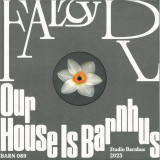
A very special autumnal presentation from FaltyDL & Studio Barnhus, in the form of a perfect little slab of 12'' vinyl, exhibiting the love for the classic house sound that burns within the hearts of the prolific New York producer as well as the Swedish dance music
powerhouse. In particular, “Our House Is Barnhus” honours and updates the deeper side of the French touch – think Pépé Bradock and early St. Germain – fully displaying the state-ofthe-art production skills and emotional depth always present in Drew Lustman's music.
Known for his shapeshifting sound, FaltyDL has been releasing explorative electronic music for over a decade, switching his sound up intuitively across 6 albums, remixes for The xx and Mount Kimbie, executive production credits for Mykki Blanco and a multitude of
singles and EPs, including two previous Studio Barnhus editions in 2021 and 2019.
Our House Is Barnhus (12'' vinyl + digital release) is out on Studio Barnhus on September 29, 2023.
out of Stock
Last delivered 2 years ago available to reorder, subject to availability
When Claude was hunting for tracks to include in his 'Live in Detroit' album, he came across Chambray's 'Evenue' , which ended up making the final mix in his recorded Movement set. When we reached out to him about it, the Berlin artist sent us 4 demos and we signed them all. With an influence from the early stripped down jack sound of the Midwest, Chambray's productions add a polished style and wide range of musical character, both of which are in full display on his 'Where You At' EP. It's not easy to create a 'signature' sound that both crosses boundaries and also appeals to them all, yet Chambray's particular music feels effortless.
Before the Odysee, there was the Iliad; a tale of the golden age of heroes and warriors.'
The idea behind the new Iliads series is to return to the sound of the golden age of Jungle/Drum & Bass, and more specifically the original ‘heroes’ of the Odysee label.
This second in the series pays homage to the unique sound of the Mirage releases. The influence of these releases on the SD sound that followed has often been overlooked, principally because it was assumed that the ‘Mirage’ moniker was simply another pseudonym for Source Direct, when in actual fact it was a lethal combination of the powerful engineering and arrangement skills of Jim Baker (Source Direct) and the sound selection and co-production of Odysee’s founder, Tilla Kemal (T-Mirage).
Face In The Shadows immediately opens with that slightly darker feel, with tracks like Feel My Dreams and Stonekiller in mind. The trademark SD style of break switches (aptly named ‘call & response) are immediately evident, although the Funky Mule gives the track its primary momentum. The sound selection is eerie, focusing on the 70’s Film-Noire, and deep Electro in line with Tilla’s particular preferences. The spoken word quotes are also unmistakably ‘Mirage-esque.’
Regenesis is a classic Odysee B-side track; lighter, more experimental and Jazzy in it’s feel. It showcases intricate and crisp rolling break work, and a beautifully refined selection of real stand- out musical quotes; from the sweet R&B-esque vocal ad-libs to the lush 70’s style sleaze of the Rhodes rolls. The interaction of these elements is the glue that holds this tune together.
The Darkness Within is the final track of the E.P. and it is the arrangement of samples that really emulates the ‘Mirage’ sound. Tilla & Jim were very particular about grouping sounds to work with & answer each other in each section of a tune. Samples were often sourced from obscure Film OST’s or rare electro albums which had sample diggers scratching their heads for many years! This track is dubbed out deeper, with a punching & rolling Soulpride features as the hero break and a repetitive deep chord stab forming the foundation of the tune.
Look out for the final instalment Volume III, where we will be focusing on the dystopian Jazz sound of the Hokusai releases!
out of Stock
Last delivered 2 years ago available to reorder, subject to availability
Discrepant proudly presents the Vinyl edition of Lebanese trio Malayeen. Malayeen is the project of Lebanese musicians Raed Yassin (Keyboards, Turntables & Electronics), Charbel Haber (Electric Guitar & Electronics) and Khaled Yassine (Darbouka, Percussion). Born from Yassin and Haber's love for the music of quintessential Egyptian guitarist Omar Khorshid, Malayeen disassembles and re-configures the work and style of the iconic guitarist innovative take on Arabic music. The final result makes for an original and unique update of Khorshid & belly dancing inspired songs from the past. Over the course of 7 compositions, appropriately named after Khorshid and famous belly dancers from the Arabic diaspora, the three musicians' varied backgrounds and techniques collide and coalesce in an experimental yet magical fashion, not actually playing Khorshid's music, but inspiring themselves from the cult guitarist's genius to create something completely new, modern and unexpected. A unique LP featuring the combined talents by key players of the Lebanese avant-garde. The Malayeen LP edition is released by Discrepant in collaboration with Lebanese exploratory label Annihaya effectively combining East and West musical strains of thought as well as conclusively deconstructing and displacing this particular form of 'popular' music. Design by Studio Safar S.A.L. Comes with full color poster painting by Omar Khouri Special vinyl one time pressing to 500 copies. "Uplifting, beat-driven pieces, often melodic, definitely Arabic, with destabilizing touches from external sounds, sound manipulations, and textural plays. The 17- minute 'Samia' is a roller-coaster ride culminating in a dizzying solo/duo between Yassine's darbouka and a darbouka track from a record played by Yassin. Great stuff. Monsieur Délire
Originally released on Rocket Girl in 2000, Piano Magic’s third album proper heralded a seismic and surprising shift away from its more electronic predecessors, ‘Popular Mechanics’ and ‘Low Birth Weight.’ ‘Artists’ Rifles’ is Piano Magic’s first band-band album and marks their debut, actual recording studio appearance. Improvised on the spot and produced/recorded over just five days by John A. Rivers (Dead Can Dance, Felt), at his Woodbine St Studios in Leamington Spa, stylistically, the record could feasibly be described as the first (only?) baroque post-rock record, utilising as it does, consciously or otherwise, influences as broad as Bach and Codeine.
For ‘Artists’ Rifles’ the core of Glen Johnson (vocals/guitars/keyboards), John Cheves (guitars), Paul Tornbohm (bass) and Miguel Marin (drums/percussion) were augmented by guests Caroline Potter (vocals) and Adrienne Quartly (cello).
The success of ‘Artists’ Rifles,’ particularly in Spain, kickstarted a wealth of touring possibilities and over the next 16 years, the band toured all over Europe. It also caught the attention of 4AD Records, for whom they signed to the following year.
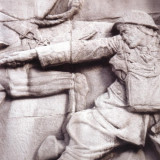
This 2023 vinyl re-pressing honours the original (Matt Dornan) sleeve design and beautiful photography of Royal Artillery Memorial (Hyde Park, London), by John Cheves of the band.
“Classic English folk music for the 21st century” – Record Collector
“Glen Johnson and cohorts explore a doomed English romanticism, boldly linking contemporary romantic mores with the lost generation of 1914 – 18…. strangely it works….” – The Wire
“Another endearingly odd record, drifting along the seawall between the macabre and melancholy. This is the work of 4AD obsessives who have learnt to love electronica.” - Q
Cassy returns with ‘E.T.Ascension’, a mini journey through the sounds of house and techno which she adores. With this release she revisits the simplistic methods she used when making music in previous years when living in Berlin with her then husband, where he helped build her home-studio in the living room. With him being an established sound engineer she learned a lot from him through the process and by using predominantly just an 808 and a PC, the pair produced the main parts of these tracks together, with Cassy finishing them off herself last summer. It reminded her of the weirdness that makes her productions so great, which is what she has pinned on this release, enjoying the feelings of freedom by using the machine again, and revisiting the feelings she had when using the machine for the first time, how fresh, new and particular the sounds were.
out of Stock
Last delivered 2 years ago available to reorder, subject to availability
The last decade has seen a seismic shift in how people buy and play music, vinyl has returned to being the dominant physical format with CDs consigned to second fiddle. Things were very different back in 2012 when we compiled and released the eponymous "Cool Runnings" on CD only. The vinyl revival is a belated opportunity to give the band their first long playing record to complement that earlier CD release. Together for a dozen years, Cool Runnings were one of Bristol's longest lasting bands gigging throughout the 1980s, though their failure to gig beyond the West Country meant they were also one of the City's best kept musical secrets. Originally formed in Weston-Super-Mare by Keyboardist Mark Tuck and Guitarist George Condover, they immediately relocated to Bristol and recruited various local musicians including an experienced and talented singer, Winston Minott. Although "Robin Hoods of The Ghetto" was their solitary release, the band regularly recorded material throughout their career and fortunately thanks to the foresight of George and Mark in holding onto various master tapes, Bristol Archive Records were able to release the band's self-titled debut album "Cool Runnings" in 2012. For this vinyl release we've selected eight tracks recorded between 1983 and 1985 at various local studios, and a solitary live track to give an idea of why the band were so popular in person. Although their music leans towards the more mellow end of the market, Lovers Rock, music ideally suited to Winston's soulful voice, the band were more than capable of writing good roots tunes including the excellent "We Must Go Home", "Children of Zion" and "Robin Hoods of The Ghetto". Winston Minott had spent many years touring all over Europe with soul band The Invaders and many songs showcase his vocal talent, but a particular highlight has to be "Playhouse" an alternative recording of which can be found on "The Bristol Reggae Explosion Volume 3". Perhaps proper management would have seen Cool Runnings achieve the success and wider exposure that their combined talents and unique take on reggae undoubtedly deserved. Now thirty years after the members went their separate ways, Bristol Archive Records are pleased to finally release the vinyl album that if things had worked out differently should have appeared in the 1980s
Call Me By Your Name, the film by Luca Guadagnino, is a sensual and transcendent tale of first love, based on the acclaimed novel by André Aciman.
Summer of 1983, Northern Italy. An American Italian is enamored by an American student who comes to study and live with his family. Together they share an unforgettable summer full of music, food, and romance that will forever change them.
The film received widespread critical acclaim, particularly for Chalamet, Hammer and Stuhlbarg's performances, Guadagnino's direction, and the screenplay. Call Me By Your Name won a variety of awards, including an Academy Award, BAFTA, GLAAD and the 23rd Critics' Choice Award amongst others. Sufjan Stevens' song "Mystery of Love" was also nominated for the Academy Award for Best Original Song.
Luca Guadagnino wanted the film's music to be connected to Elio, a young pianist who likes to transcribe and adapt pieces to get close to Oliver. The music is used to reflect the time, the characters' family, level of education and "the kind of canon they would be a part of."
Guadagnino found himself resonating with Sufjan Stevens' lyricism through his work and initially asked Stevens to record an original song. Eventually, Stevens contributed three songs to the soundtrack: "Visions of Gideon", which was used at the end of the film, "Mystery of Love," which was featured in the film's first trailer, and a new rendition of "Futile Devices" with piano. Stevens penned the songs by using the script, the book, and the conversations with the director about the characters. It marks Sufjan Stevens' first soundtrack for a feature film.
Call Me By Your Name is available as a limited edition of 15.000 copies on "Velvet Purple" coloured vinyl. The 2LP is housed in a deluxe gatefold sleeve with rainbow laminate finish and includes printed innersleeves, an insert with movie stills, and a poster.
Call Me By Your Name, the film by Luca Guadagnino, is a sensual and transcendent tale of first love, based on the acclaimed novel by André Aciman.
Summer of 1983, Northern Italy. An American Italian is enamored by an American student who comes to study and live with his family. Together they share an unforgettable summer full of music, food, and romance that will forever change them.
The film received widespread critical acclaim, particularly for Chalamet, Hammer and Stuhlbarg's performances, Guadagnino's direction, and the screenplay. Call Me By Your Name won a variety of awards, including an Academy Award, BAFTA, GLAAD and the 23rd Critics' Choice Award amongst others. Sufjan Stevens' song "Mystery of Love" was also nominated for the Academy Award for Best Original Song.
Luca Guadagnino wanted the film's music to be connected to Elio, a young pianist who likes to transcribe and adapt pieces to get close to Oliver. The music is used to reflect the time, the characters' family, level of education and "the kind of canon they would be a part of."
Guadagnino found himself resonating with Sufjan Stevens' lyricism through his work and initially asked Stevens to record an original song. Eventually, Stevens contributed three songs to the soundtrack: "Visions of Gideon", which was used at the end of the film, "Mystery of Love," which was featured in the film's first trailer, and a new rendition of "Futile Devices" with piano. Stevens penned the songs by using the script, the book, and the conversations with the director about the characters. It marks Sufjan Stevens' first soundtrack for a feature film.
Call Me By Your Name is available as a limited edition of 15.000 copies on "Velvet Purple" coloured vinyl. The 2LP is housed in a deluxe gatefold sleeve with rainbow laminate finish and includes printed innersleeves, an insert with movie stills, and a poster.
DeForrest Brown Jr., the writer and producer behind Speaker Music, describes Techxodus as "abstracting Blackness through information overload". On the album he explores the intersection of tech, Blackness and resistance via music taken from his archived live shows, which are then edited, ordered and reassembled in the studio. The main line of inquiry that feeds into Techxodus is Drexciya, whose myths have informed much recent afrofuturist creativity. DeForrest researches and reimagines the artifacts and stories of Drexciya with new maps, ideas and music, particularly reflecting on the 'Seven Storms', seven albums that came out in quick succession around the death of Drexciya member James Stinson, which seemed to herald Drexciyans in the attack mode. The artwork by Abu Qadim Haqq, who also created artwork for Drexciya, links the work too, with Deforrest re-orienting charts and timelines familiar from Drexciyan mythology, working up clues to all possible environments where Drexciyans could survive, from the depths of the Atlantic, to oceanic islands or even outer space. Like Sun-Ra, another touchstone of Afrofuturist music, it might be that the Drexciyans wanted to leave the planet they hated. With these elements, DeForrest creates a soundtrack for an alternate history, a sort of sci-fi sonic fiction which threads together the sonic warfare and mythos of the Drexciyan records with ideas and references to Ishmael Reed's 'Mumbo Jumbo', which tracks the story of 'Jes Grew', an audio virus, back to the coastal black cities of Alabama and the American South. Musically the album is as intense as its inspirations. DeForrest skilfully hand-plays rhythms which amalgamate trap and jazz drumming, but feel at times like orca-song as they pulse through the thick waves of digital sound. Equally the music evokes the ocean, with deep cold drones, or as if it's floating through time like in 'Holosonic Rebellion' which mixes in recordings of African Warriors. Sometimes there is an energetic turbulence as on 'Jes Grew', where punched-in passages of jazz brass bounce against DeForrest's drums to create a weird disassembled jazz. Towards the end the album begins to feel like a spaceship taking off, the rushes of ascending noise and distortion, distant Southern Gospel Vocals feel like music that's leaving earth. Listen to it without the references or feed your imagination; this is a powerful and immersive original work from one of electronic music's most unique creators.
out of Stock
Last delivered 3 years ago available to reorder, subject to availability
Join Ryudo and his team on their greatest adventure yet! We're delighted to be collaborating again with Game Arts on this new vinyl edition of the Grandia II soundtrack, composed and arranged by Noriyuki Iwadare and entirely remastered for the vinyl format!
A cult title for the Dreamcast released in Japan in 2000 and acclaimed in particular for its innovative combat system, the game recently benefited from a remastered version in 2019 on Nintendo Switch and PC.
The Grandia II Memorial Soundtrack Edition comes in the form of a luxurious vinyl box set, newly illustrated for the occasion by the game's original character designer, Youshi Kanoe.
It contains 3 yellow color discs inserted in individually illustrated sleeves and a newly designed 16-page booklet with illustrations by Youshi Kanoe and new comments from the team, including Kei Shigema (Scenario Writer), Atsuko Nishida (Designer), Noriyuki Iwadare (Composer) and vocal Kaori Kawasumi.
The Grandia II Original Soundtrack CD Edition comes in the form of a luxurious box set, newly illustrated for the occasion by the game's original character designer, Youshi Kanoe.
It includes 2 CDs and a 16-page booklet with illustrations by Youshi Kanoe and new comments from the team, including Kei Shigema (scriptwriter), Atsuko Nishida (designer), Noriyuki Iwadare (composer) and singer Kaori Kawasumi.
'The double Oscar-nominated and multi-award-winning Icelandic composer Jóhann Jóhannsson (1969-2018), known for his film scores for "Arrival", "Sicario", or "The Theory of Everything", was renowned for his innovative and unique blend of classical and electronic elements. With his original, profound, and moving works for film and stage, he achieved worldwide fame and is considered one of the most celebrated film composers of the last decade.“Jóhannsson’s music gives the impression of having arrived in a time capsule from a distant planet that is a mirror image of our own. His own absence now adds further mystery and magic to his music’s unique sound world.” - Gramophone.The monumental orchestral work "A Prayer to the Dynamo," reminiscent of a lost symphony, was inspired by Jóhannsson's great fascination with technology. In particular, he drew inspiration from recordings of electrical installations and generators that he had made at the Elliðaár Power Station in Iceland, which are deeply intertwined with the orchestral sound. Furthermore, he was also captivated by the works of Edison, Tesla, and especially a chapter in the memoirs of American historian Henry Adams (1838-1918). In that chapter, Adams described his impressions of the 1900 Paris World Exhibition and the hidden power of the enormous machines he had seen there. Deutsche Grammophon now releases the world premiere recording of this outstanding orchestral work performed by the Icelandic Symphony Orchestra, conducted by Daníel Bjarnason. The album also includes two suites from Jóhannsson's soundtracks for "The Theory of Everything" and "Sicario", both of which were nominated for Oscars and various other awards, with the former winning the Golden Globe for Best Original Score.
It’s been nearly eight years since the last Mondo Drag album came out. In that time, the Bay Area psych-prog band toured the US and Europe, performed at major festivals and—once again—reformed their rhythm section. But in the context of the band’s nearly two-decade existence, this period may have been the most fraught. Vocalist and keyboardist John Gamiño lost friends and family members. Meanwhile, humanity suffered the throes of a global pandemic. “It was a dark chapter,” he recalls. “I was going through a lot of stuff personally—there’s been a lot of death, loss of family members, and grief. Plus, the band was inactive. It felt like time was slipping away from me. I felt like I was wasting my opportunities. I felt like I wasn’t participating in my story as much as I could have.” This feeling of time slipping away is the prevailing theme on Mondo Drag’s new album, Through the Hourglass. “For me, Through the Hourglass really encompasses the quarantine/pandemic years,” Gamiño says. “But in a way that includes a couple of years before that for us, because the band was stagnant during that time. Living with that was really impactful on our daily lives. So, the album is reflective. It’s looking at time—past, present, future.” Luckily, Mondo Drag emerged from this dour period reborn. Freshly energized by bassist Conor Riley (formerly of San Diego psych squad Astra, currently of Birth), who joined in 2018, and drummer Jimmy Perez, who joined in 2022, Gamiño and guitarists Jake Sheley and Nolan Girard have triumphed over the seemingly inexorable pull of time’s passage. “Astra was the one contemporary band that we felt was on the same tip as us,” Gamiño says. “We saw the similarities and felt the same vibe. Conor moved to San Francisco in 2018 and heard we were looking for a bassist, so we got in touch. For us, it was like, ‘The synth player from Astra wants to play bass for us?’ We couldn’t think of anybody more perfect.” Perez, meanwhile, brings deep psych-prog knowledge and impeccable skill. “He’s an amazing drummer, and he allowed us to do what we’ve been trying to do,” Gamiño says. “Before he came along, it was like, ‘Where are the drummers who like psych and prog and can play dynamically?’ We ended up trying out metal drummers, but they couldn’t swing. Jimmy was the final piece of the puzzle.” The result is a dazzling and often plaintive rumination on the hours, days, and years—not to mention experiences—that comprise a lifetime. Two-part opener “Burning Daylight” smolders with melancholy, offering a whirl of multi-colored and hallucinatory imagery. “It’s about the California wildfires and a feeling of helplessness,” Gamiño explains. “There’s a juxtaposition between the dark lyricism and upbeat music which is meant to imply a sort of delusional state—and choosing our own delusion to overcome the crushing despair of reality.” Eleven-minute centerpiece “Passages” is a sprawling prog-rock adventure, festooned with lofty guitar melodies, sweeping organ flourishes and a delicately finger-picked outro. But the heaviest song, thematically speaking, might be the mournful and hypnotic “Death in Spring,” which borrows its title from the like-named Catalan novel. “In the novel, people are placed inside opened trees and their mouths filled with cement before they die to prevent their souls from escaping,” Gamiño explains. “The song is about three people I knew who lost their lives to gun violence, addiction, and mental health. It’s my way of cementing their souls in song form.” Mondo Drag fans might be surprised by this blend of hard reality with literary surrealism, but it’s a perfect example of how the last several years have impacted Mondo Drag—and Gamiño in particular. “On all of our previous albums, the lyrical content is more psychedelic and out there,” he acknowledges. “This is the most personal stuff I’ve ever done, so I’m definitely feeling vulnerable on this one.” The title Through the Hourglass comes from the opening of the long-running soap opera Days of Our Lives. It’s less inspired by a predilection for daytime TV than Gamiño’s connection with his late mother, who passed during the time since the last album. “I used to watch Days of Our Lives with her everyday growing up,” he explains. “The song is kind of a reinterpretation of the theme song, although it’s different enough that probably no one will catch it. Now that I’m getting older, I like to put these little Easter eggs in the songs for myself and for archival purposes—for memories.” Through the Hourglass was tracked at El Studio in San Francisco, with an additional ten days of recording at the band’s rehearsal space, which doubles as a hybrid analog-digital recording studio. The album was engineered and mixed by Phil Becker, drummer of space-punk mainstays Pins Of Light. “We’re still here,” Gamiño says. “We’ve been in the studio working on our craft and honing our skills. Now we’re re-emerging for the next stage of our life cycle.”
Piotr Kurek’s new album “Smartwoods” is a sprawling root system of tiny melodic phrases that loop and curl around subtly evolving instrumental thickets. The Warsaw-based producer and composer takes his cues from early music, baroque music and experimental jazz, entangling his influences with filigree traces of contemporary computer music and fueling it with sonic vapors from the near future.
Made up of seven distinct segments, the album blurs its acoustic and electronic elements into an illusory hedge of abstract sound. Harp, saxophone, clarinet, double bass, voices and guitar twist into computerized processes and synthesizer chirps, creating an uncanny dreamworld where the real isn’t always what it seems. Each player is entwined with the other to create a living, breathing whole.
Like Kurek’s painterly 2021 album “World Speaks”, “Smartwoods” is also inspired by visual art - particularly the whimsical work of Algerian-French graphic designer Jean Sariano. The album cover features artwork by Polish painter Tomasz Kowalski, whose shapeshifting creatures and miniature stories aptly reflect the music’s wild fantasy. The first manifestation of “Smartwoods” – a live show at Unsound in Kraków in 2022 – featured animations by Italian artist Francesco Marrello, who put together a visual treatment for the single “Harps”.
Music composed, arranged and produced by Piotr Kurek
Anna Pašic - harp
Tomasz Duda - clarinets, saxophone, flute
Wojtek Traczyk - double bass, electric bass
Piotr Kurek - keyboards, MIDI wind controller, electric guitar
Recorded in June and November 2022 by Piotr Kurek, Piotr Zabrodzki (Studio Pasterka) and Tomasz Duda
The first vinyl release from American artist Sydney Spann, Sending Up A Spiral Of well encapsulates Spann’s body of work thus far. On their music, which reacts to themes of family systems and care work, Sydney writes, “people who have done care work —nannies, sex workers, therapists, nurses— may possess their own musical knowledge, developed over time through particular modes of voicing practiced to achieve a desired outcome in their labor. Attending intimately to these ways of voicing and listening and bringing them into a sound practice could be a way to legitimize a less recognized kind of musical knowledge.”
Sending Up A Spiral Of explores this unarticulated expression through sound and song. The titular piece traces Spann within some quixotic woodland, as if beginning inside of some urban fairy-story. Self-soothing singing quivers under dragging branches, peeling cement and other tactile grit. The work drops into a new proximity half-way through as electronic contours overtake the environment. Sine-tones smolder in a pulsating choreography, perhaps reminiscent of Richard Maxfield’s “Night Music” played at half-speed.
The second section of the record depicts a series of five smaller portraits, expressed (or disguised) as lullabies. An oceanic humming permeates them. “Possession” and “Purposeful Evening” are the most song-like lullabies, with their verse-chorus repetition and melodic simplicity. Innocuous words “baby” and “honey” are encoded with deeper, often painful connotations. Sydney’s voice and vision for this album is ambitious, cloaked in the strains and contradictions of what love means in the nuclear family.
A 16-page artist pamphlet of rubbings, photographs and sheet music accompanies the LP, along with a digital PDF of Spann’s thesis “Sending Up A Spiral Of: A Musical Epistemology Made Through Care Work.”
The contributions of the late Detroit producer James DeWitt Yancey -better known to the world as J Dilla- to the world of hip-hop can't be overstated, and nowhere is his legacy more apparent than his work as a member of Slum Village. A founding member of the trio, (Alongside rappers T3 and Baatin) Dilla provided the group's distinctly esoteric, free-wheeling sound, built around winding basslines, quirky drumbeats, subtle low-end frequencies, and classic jazz & soul samples. Against the backdrop of Dilla's rich production, T3 and Baatin's free-flowing style of rhyming would also earn wide critical praise, leading to comparisons as the successors to A Tribe Called Quest. (A label they themselves have rejected.) After the success of Slum's 1997 studio debut, Fan-Tas-Tic Vol. 1, the group went to work on their follow up. Though the project was completed in '98, label turmoil kept the project on ice until 2000. By the time Fantastic Volume II hit Dilla was well on his way to his status as a hip hop legend having produced cuts for Common, Busta Rhymes, Erykah Badu, A Tribe Called Quest and many more. Later works from Slum Village may have had more of an impact sales-wise (in the immediate) but Fantastic Vol. 2 had fans and many critics saying that Slum Village, and Dilla in particular, may single-handedly save rap music.' Perhaps that statement is hyperbole but many consider Fantastic Volume II to be Slum Village's finest work ever to this day. Ne'Astra Media Group now presents the album reissued on vinyl, for the first time in several years. Every wobbling bass note of J Dilla's production has been preserved to maintain the legacy of this hip hop rap classic and maintain the legend of one of hip-hop's greatest beatsmiths.
out of Stock
Last delivered 3 years ago available to reorder, subject to availability
“Upopo Sanke“ means “Let's sing a song" in the Ainu language. Umeko Ando (1932-2004) was one of the best-known artists of the Ainu, an indigenous, long-suppressed community in northern Japan. She sings their traditional songs together with Oki Kano on the Tonkori harp, who also recorded the album. The two are supported by members of the female vocal group Marewrew as well as Ainu percussionists, a string player and a male singer who provides rhythmic shouts and also throat singing. The call-and-response structure of many of the songs is performed with a mantric quality in a vocal style that is perhaps best described as elastic and breathing. There seems to be a gentle smile in every note and syllable. This music softly hits the heart.
Upopo Sanke was recorded on a farm in Tokachi in the summer of 2003. We hear dogs barking, a distant thunderstorm and voices imitating animals. The liner notes that accompany the 2LP release gather the anecdotal memories of Umeko Ando and Oki Kano about the stories of the 14 songs. Oki Kano is a musical ambassador of the Ainu culture who tours worldwide with his Oki Dub Ainu Band and also gives solo concerts, always playing the Tonkori, the five-stringed Ainu harp.
The Ainu have suffered from the oppression of their culture and language by Japan, especially since the 18th and 19th centuries. Only recently, in 2008, were the Ainu officially recognized again as an indigenous people culturally independent of Japan. As a result of the marginalization, there are now only a few hundred native speakers of the Ainu language left, making it a particularly worthy object of preservation.
"Upopo Sanke" was mixed again in part by Oki Kano, before being mastered and cut to vinyl by Kassian Troyer. The 2LP plays on 45rpm and it sounds fantastic. This album was the second album by Umeko Ando, the follow-up to „Ihunke" and also re-released in 2018 by Pingipung together with Oki Kano.
out of Stock
Last delivered 2 years ago available to reorder, subject to availability
Matching expansive ambience with environmental sound, Chihei Hatakeyama’s new album continues Field Records’ exploration of Japan and the Netherland’s shared approach to water management. As with Sugai Ken’s 2020 album Tone River, a specific project becomes Hatakeyama’s area of focus - in this case the Hachirōgata Lake in Akita Prefecture.
Previously the second largest body of water in Japan, the government ordered extensive drainage work of Hachirōgata Lake after the second world war with the help of Dutch engineers Pieter Jansen and Adriaan Volker. After the project was completed in 1977, reclaimed land took up eighty percent of Hachirōgata Lake’s total size. As a result, a new ecosystem was established as plants spread from surrounding areas, bringing with them a wider variety of birds and other wildlife.
Hatakeyama’s approach to this unique subject matter took in field recordings from particular locations around the lake - the drainage channels, the Ogata bridge, grassland conservation reserves and other key areas. The aquatic subject matter and sonic material is a natural fit for Hatakeyama’s accomplished sound, which has featured on numerous solo works for labels including Kranky, Room40 and his self-run White Paddy Mountain.
From the intimate intricacies of the sampled material to the glacial expanses of droning synthesis and languid guitar, Hatakeyama creates a tangible environment which at once reflects the settings around Hachirōgata Lake, while offering the listener any number of imagined scenes to observe in their mind’s eye.
out of Stock
Last delivered 2 years ago available to reorder, subject to availability
Pierre-Alain Dahan & Slim Pezin's Neo Rythmiques is an absolute KILLER Tele Music library classic from 1976. It's absolutely sensational throughout, all scorching, uptempo jazzy soul funk that Mr James Brown himself would've been envious of. This is serious business with breaks for days. French drummer, percussionist and composer Pierre-Alain Dahan was a key member of the legendary Arpadys, Disco & Co, Voyage, Tumblack (with Wally Badarou, Mallia et al!) and Jef Gilson Septet. With Neo Rhythmiques, he's joined by his eternal guitar colleague Slim Pezin (Voyage, Manu Dibango, Nino Ferrer), so you know this Be With reissue is fundamentally vital.
Opener "Soul Car" is a swaggering, horn-drenched jazz-funk beast whilst the slick JBs funk of "Happy Penalty" is just plain irresistible. Definitely influenced by American funk flavours, it stands alone on its own right as a brilliant piece of music, no question about that. The blazing "Kuzi-Kuza" is again horn-fuelled but has a more exotic, Latino feel, all loose grooves and bastard blues with funky organ and shredding guitars. The stomping, proto-disco of "Mercy Boa" is a guitar-sizzled Bohannon-esque hypno-groove for adventurous dance floors the world over. Outstanding. And if all that wasn't enough from one half of a 70s French library LP, the A side ends with the monumental, stratospheric "Slim Bertha"! I mean, what can you even say about this absolute monster?! Slo-motion, deep drama funk breaks with jazzy guitar and gleaming percussion. Just sensational.
Side B opens with "Country + Country", a rather forgettable slice of piano driven bluegrass funk (?!) Aaaaannyway, "Super Airship" follows and is a driving fuzz-guitar psych-rock workout of the highest order. We're back on track now. The brilliantly titled "Electronic Mutation" is a total highlight, the funk most definitely returning and, indeed, strong in this one with its deep clean breaks (with some particularly ace hi-hats), echoey effects and funky clavs. "Africa Semper" follows, all funky percussion, trippy echo and distorted, psychy guitar licks. To close out the set, "Neo Rythmiques 1 and 2" form a great salvo of top-tier, percussion-heavy synthy-funk-fusion. For our money, the bugged-out echoey space-soul of "N° 2" just about edges it.
One of the very best French drummers ever, Pierre-Alain Dahan began his career at the Blue Note in Paris with Sonny Stitt, Dexter Gordon and Daniel Humair. Some start, eh?! He also participated in the recording of Serge Gainsbourg's cult album 'La Ballade de Melody Nelson' before going on to make countless KILLER library funk records and be a key member - alongside his partner here, Slim Pezin - in the legendary Arpadys, Disco & Co and Voyage. Dahan also featured in Tumblack (with Wally Badarou, Sauveur Mallia et al) and Jef Gilson Septet (alongside Henri Texier), whilst the CCCP Pezin backed, among others, Manu Dibango and Nino Ferrer. Some pedigree.
The audio for Neo Rythmiques has been remastered by Be With regular Simon Francis, ensuring this release sounds better than ever. Cicely Balston's expert skills have made sure nothing is lost in the cut whilst the original, iconic Tele Music house sleeve has been restored here at Be With HQ as the finishing touch to this long overdue re-issue.
out of Stock
Last delivered 3 years ago available to reorder, subject to availability
A Tele Music CLASSIC from 1972, Pierre-Alain Dahan's Continental Pop Sound is of those library albums with something for everyone. Breaks? Check. Fuzz guitar? Check. Slower, jazzy stuff? Double check. It's a stunning collection of psychedelic rock, soulful funk and retro pop stylings that's currently going for over £200 on Discogs. And with good reason. French drummer, percussionist and composer Pierre-Alain Dahan was a key member of the legendary Arpadys, Disco & Co, Voyage, Tumblack (with Wally Badarou and Sauveur Mallia) and Jef Gilson Septet. So, you know this Be With reissue is nailed on essential.
Skip the by-numbers opener "Rock Extra" and head straight to the deeeeeep, minimalist groove of "Slowrama", a humid masterclass in low-slung, creeping crime funk with weighty breaks and beefy bass complimented by hypnotic wah-wah and warm electric piano. Sensational. It was sampled by Prince Po in 2004 for his "Love Thang" track. The galloping "Latin Pop Sound" is a percussive, Santana-esque tour de force featuring fantastic guitar shreds over a bassline to die for. "Morning Melody" is a lightweight amble whereas the brief but deliciously psych-rock heavy "Islam Blues" is a must for your mixes when requiring short segue tracks. The A-Side closes out with "Phasing Drums N° 1, 2 & 3", all completely ace. For us, N° 3 is the pick of the bunch, with particularly slooooow and deliberate drums underpinned by a droning, sinister organ. Hip-hop, before hip-hop, no less.
The genuine monster "Pacific Rock" blasts out the gate to usher in Side B, a thrilling and unrelenting pop-rock instrumental that really drives. "Quasimodo Pop" contains great slow mo funk breaks and scratchy guitars that alternate with pretty heavy riffing to create a compelling base track. "Carmel Beach" is as beautiful as the location it's named after, as insouciant guitars glide over super slo-mo beats and dramatic organ before it breaks down to a laconic, reflective electric piano showcase. Sumptuous. "Auto Moto Rallye" is a brief driving funk gem, as you might expect, complete with revved up guitars tuned and played to emulate the irresistible sound of growling race cars.
The upbeat, piano-led rock stomper "V.S.O.P Rock" is all well and good but, what you might really be here for is the trio of tracks that ensure the LP ends on an almighty high. The three most famous tracks “Rythmiques 1, 2 & 3” all come complete with *ultra*-dope breaks. N° 2 is probably our favourite, with the shuffling bassline and breaks combo augmented by the wonderful cowbell. Though on any other day, it could be N° 3! This album is often considered as the “baby brother” to Tele Music's Rythmiques, and this triptych is all the proof you need. Outstanding.
One of the very best French drummers ever, Pierre-Alain Dahan began his career at the Blue Note in Paris with Sonny Stitt, Dexter Gordon and Daniel Humair. Some start, eh?! He also participated in the recording of Serge Gainsbourg's cult album 'La Ballade de Melody Nelson' before going on to make countless KILLER library funk records and be a key member in the legendary Arpadys, Disco & Co, Voyage, Tumblack (with Wally Badarou, Sauveur Mallia et al), Jef Gilson Septet (alongside Henri Texier) and many more. Some pedigree.
The audio for Continental Pop Sound has been remastered by Be With regular Simon Francis, ensuring this release sounds better than ever. Cicely Balston's expert skills have made sure nothing is lost in the cut whilst the original, iconic Tele Music house sleeve has been restored here at Be With HQ as the finishing touch to this long overdue re-issue.
out of Stock
Last delivered 3 years ago available to reorder, subject to availability
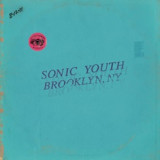
The final U.S. show, a triumphant and blistering bookend to the storied career of one of the most influential bands in rock music, featuring a unique and expansive eighty-five minute set list that spans Sonic Youth’s nearly three decade catalog. Mixed from multitrack by longtime live engineer Aaron Mullan and mastered and cut by Carl Saff. On August 12, 2011 Sonic Youth played their final US show on an outdoor stage overlooking the East River at the Williamsburg Waterfront in Brooklyn. Fitting that their storied career would bookend with a panoramic view of New York City where it all began 30 years before, having left in their wake one of one of the most powerfully influential careers in rock music. Following incredible sets from Kurt Vile and Wild Flag, the band took the stage. As the sun went down over the city, Sonic Youth ripped through a 17 song set that spanned from deep cuts off their first studio album and highlighting many other albums all the way through to their last, like a band with everything to prove. Or as Brooklyn Vegan’s Andrew Sacher said at the time: “While most bands who are thirty years into their career are either fading away or living off of the nostalgia of their older material, Sonic Youth continue to sound and perform as fresh as ever.” Steve Shelley explains the uniquely career spanning set list of Live in Brooklyn 2011 and how it came to be, as well as the importance of outdoor NYC summer shows in Sonic Youth’s legacy: “This show was a culmination of a run of really special outdoor summertime shows in New York City for us, starting in ’92 with Summerstage in Central Park when we played with Sun Ra. For the Williamsburg Waterfront show I wrote out the set list to present to the band and it was a lot of material we hadn’t played in a while, a lot of deep cuts, so I wasn’t sure if everybody would feel like doing it. After worrying about which songs the band might say yes or no to, I threw those concerns out the window and I just made a list of songs that I thought would be a great set. We practiced the week of the show at our space in Hoboken and put the set together. First we’d try and make sure we had a guitar in the song’s tuning, then we’d try to remember the arrangement and try and put it together, sometimes re-learning bar by bar. In the end I think the whole song list made it through. Even as early as ’86 and ’87 we stopped playing ‘Death Valley 69’ and ‘Brave Men Run’ with any regularity. We’d just get excited about new material coming into the set and songs would get ‘retired’ and wouldn’t get played again for years. So on this particular night in Brooklyn a lot of those retired songs and deep cuts got dusted off and played for this show. It turned out to be a pretty special event with a really special song list.” The band would go on to fulfill a contracted festival run in South America a few months later but, by then, the group’s center was severed beyond repair and the festival appearances didn’t hold the same kind of weight. “The stage was facing the East River from the Williamsburg, Brooklyn waterfront, and I recall the sun going down in the west during our set. It was a pretty magical, if kinda weird day. Fitting, somehow, that our ‘last show’ should be in New York City, our home and where it all began…” Lee Ranaldo The Williamsburg Waterfront show would fondly become referred to as ‘The Last Show’ by fans and band alike, equally for its triumphant high energy performance, its unique and expansive set list and locale. Newly remixed and remastered, Live in Brooklyn 2011 is presented for the first time on 2xLP, 2Xcd, August 18, 2023.
Recorded in New York in 1957 (though not released until 1962), 'Tijuana Moods' was, according to Mingus himself, "the best album i ever made." The music is a vigorous stew of Mexican rhythms and sophisticated post-Ellington arrangements, further invigorated by the soloing of trumpeter Clarence Shaw, trombonist Jimmy Knepper, and, particularly, saxophonist Shafi Hadi. Mingus's vision of Tijuana was clearly sensual, the music evoking strippers, frenetic street scenes, and heart-broken lovers. Making use of suite like thematic material and various forms of counterpoint, the group sounds much larger than it is, and points toward Mingus's later experiments with form. the bristling sound and spirit of the music, however, are its primary attractions - a remarkable place where Mexican fantasy and hard bop meet.
Dedicated to Nora Forster, John Lydon's wife of nearly five decades, who passed away on April 5th 2023! Public Image Ltd. (PiL) announce their 11th studio album and first album in 8 years, End of World, to be released on 11th August 2023 on PiL Official via Cargo UK Distribution, followed by a 37-date UK and European Tour. The band began writing and recording End of World in 2018, during their 40th anniversary tour.
After The Great Pause, the band regrouped in the studio and "there was just this massive explosion of ideas," Lydon says. The result finds PiL set to release 13 of the best tracks they have ever written. The announcement comes with the release of new single Penge, which John describes as, "something of a mediaeval Viking epic." Earlier this year, PiL released Hawaii, the most personal piece of songwriting and accompanying artwork that John Lydon has ever shared. The song is a love letter to John's late wife, Nora, who had been living with Alzheimer's since long and sadly passed away on April 5th this year.
A pensive, personal yet universal love song that has resonated with many since its release in January, the song sees John reflecting on their lifetime well spent and in particular one of their happiest moments together in Hawaii. The powerfully emotional ballad is as close as John will ever come to bearing his soul. "It is dedicated to everyone going through tough times on the journey of life, with the person they care for the most," John says. "It's also a message of hope that ultimately love conquers all. As I say in the song, all journeys end and some begin again, but this is the beginning of a new journey with us. And, oddly enough, as bad as Alzheimer's is, there are great moments of tenderness between us. And I tried to capture that in the song." Celebrating their 40-year anniversary in 2018, the band is widely regarded as one of the most innovative and influential bands of all time. PiL's music and vision has earned them 5 UK Top 20 singles and 5 UK Top 20 albums.
With a shifting line-up and unique sound - fusing rock, dance, folk, pop and dub - Lydon guided the band from their debut album First Issue in 1978 through to 1992's That What Is Not, before a 17 year hiatus. Lydon reactivated PiL in 2009, touring extensively worldwide and releasing two critically acclaimed albums This is PiL in 2012 followed by their 10th studio album What The World Needs Now_ in 2015, which peaked at number 29 in the official UK album charts and picked up fantastic acclaim from both press and public. (The album also peaked at number 3 in the official UK indie charts and number 4 in the official UK vinyl charts). What The World Needs Now_ was self-funded by PiL and released on their own label 'PiL Official' via Cargo UK Distribution.
In 2018 PiL celebrated their 40th anniversary with a career-spanning box set and documentary, both called 'The Public Image Is Rotten', and a 32-date UK/Europe tour, plus dates in Japan. John Lydon, Lu Edmonds, Scott Firth and Bruce Smith continue as PiL. They are the longest stable line-up in the band's history and continue to challenge and thrive. PiL will be touring the UK and Europe in September and October 2023.
out of Stock
Last delivered 3 years ago available to reorder, subject to availability
Dedicated to Nora Forster, John Lydon's wife of nearly five decades, who passed away on April 5th 2023! Public Image Ltd. (PiL) announce their 11th studio album and first album in 8 years, End of World, to be released on 11th August 2023 on PiL Official via Cargo UK Distribution, followed by a 37-date UK and European Tour. The band began writing and recording End of World in 2018, during their 40th anniversary tour.
After The Great Pause, the band regrouped in the studio and "there was just this massive explosion of ideas," Lydon says. The result finds PiL set to release 13 of the best tracks they have ever written. The announcement comes with the release of new single Penge, which John describes as, "something of a mediaeval Viking epic." Earlier this year, PiL released Hawaii, the most personal piece of songwriting and accompanying artwork that John Lydon has ever shared. The song is a love letter to John's late wife, Nora, who had been living with Alzheimer's since long and sadly passed away on April 5th this year.
A pensive, personal yet universal love song that has resonated with many since its release in January, the song sees John reflecting on their lifetime well spent and in particular one of their happiest moments together in Hawaii. The powerfully emotional ballad is as close as John will ever come to bearing his soul. "It is dedicated to everyone going through tough times on the journey of life, with the person they care for the most," John says. "It's also a message of hope that ultimately love conquers all. As I say in the song, all journeys end and some begin again, but this is the beginning of a new journey with us. And, oddly enough, as bad as Alzheimer's is, there are great moments of tenderness between us. And I tried to capture that in the song." Celebrating their 40-year anniversary in 2018, the band is widely regarded as one of the most innovative and influential bands of all time. PiL's music and vision has earned them 5 UK Top 20 singles and 5 UK Top 20 albums.
With a shifting line-up and unique sound - fusing rock, dance, folk, pop and dub - Lydon guided the band from their debut album First Issue in 1978 through to 1992's That What Is Not, before a 17 year hiatus. Lydon reactivated PiL in 2009, touring extensively worldwide and releasing two critically acclaimed albums This is PiL in 2012 followed by their 10th studio album What The World Needs Now_ in 2015, which peaked at number 29 in the official UK album charts and picked up fantastic acclaim from both press and public. (The album also peaked at number 3 in the official UK indie charts and number 4 in the official UK vinyl charts). What The World Needs Now_ was self-funded by PiL and released on their own label 'PiL Official' via Cargo UK Distribution.
In 2018 PiL celebrated their 40th anniversary with a career-spanning box set and documentary, both called 'The Public Image Is Rotten', and a 32-date UK/Europe tour, plus dates in Japan. John Lydon, Lu Edmonds, Scott Firth and Bruce Smith continue as PiL. They are the longest stable line-up in the band's history and continue to challenge and thrive. PiL will be touring the UK and Europe in September and October 2023.
out of Stock
Last delivered 3 years ago available to reorder, subject to availability
The anticipation is there in Elizabeth Stokes’ solo guitar riff under the opening lines of “I’m Not Getting Excited”: a frenetic, driving force daring a packed Auckland Town Hall to do exactly the opposite of what the track title suggests.
As the opener of The Beths’ Auckland, New Zealand, 2020 expands to include the full band, the crowd screeches and bellows. It’s a collective exhalation, in one of the few countries where live music is still possible.
The album title, and film of the same name, deliberately include the date and location, lead guitarist Jonathan Pearce says. “That’s the sensational part of what we actually did.” In a mid-pandemic world, playing to a heaving, enraptured home crowd feels miraculous.
In March 2020, everything seemed on track for another huge year for The Beths. Home after an 18-month northern hemisphere tour, they had just finished recording sophomore album Jump Rope Gazers and were primed for more extensive touring. But within days, New Zealand’s lockdown split the band between three separate houses. All touring was cancelled.
“It was existentially bad,” Stokes says. As well as worrying about economic survival, they lost something crucial to the band’s identity: live performance. “It's a huge part of how we see ourselves... What does it mean, if we can't play live?”
The band found an outlet through live-streaming, returning to the do-it-yourself mentality of their early days to connect with a global audience. The album and film have their genesis in that urge to share the now-rare experience of a live show, as widely as possible.
The fuzzy-round-the-edges live-streams pointed the way aesthetically. Native birds, wonkily crafted by the band from tissue paper and wire, festoon the venue’s cavernous ceiling while house plants soften and disguise the imposing pipes of an organ. The presence of the film crew isn’t disguised: much of the camerawork is handheld; full of fast zooms and pans.
With much of the material still fresh, the band was less focused on re-invention than playing “a good, fast rock show”, Pearce says. The tempo is up on crowd favourites “Whatever” and “Future Me Hates Me” (released as a live single on its third anniversary) as both band and audience feed off the mutual energy in the room.
Certain songs have taken on special resonance post-Covid. Pearce has found “Out Of Sight”, a tender rumination on long-distance relationships, hits particularly hard with live audiences.
Album closer “River Run” visibly brings Stokes to tears as a mix of achievement and relief kicks in. “You can finally relax at that point … You play the last note, breathe out a sigh and look up - and you’re in a giant room full of people happy and smiling.”
• Clydene Jackson’s 1975 debut LP for Ray Charles Crossover imprint failed to make much noise on its release. It is largely a smooth jazz-based album, half the tracks of which were written by Clydene. One track, in particular, broke the sophisticated music mould and was picked up by UK DJs on the Modern Soul scene.
• ‘I Need Your Love’ became popular in the UK and eventually Europe, leading to the track’s release on a single-sided 45 in 2001 That pressing did not satisfy demand however and the song’s popularity has continued to grow and grow. Kent are making it available with the excellent ‘We’re In Love’, another self-penned track from the same LP, on the flip.
They drift with phantom ease from spare, intimate, literate alt-country to a nuanced, weighted music bearing the marks of rock'n'roll history..." Classic Rock 8/10 // ”...slow burning, emotional intensity" Mojo **** // ”Alluring and seductive." Uncut **** // Morton Valence’s eighth, and eponymously titled album, comes to you, courtesy of Cow Pie Recordings, featuring 11 new songs, produced by the legendary BJ Cole. Robert ‘Hacker’ Jessett and Anne Gilpin, who form the nucleus of Morton Valence, effortlessly take the country music genre, which is generally considered a uniquely American musical form, and create something uniquely English, without ever compromising their authenticity. The atmosphere that BJ Cole brings to the album is palpable, in both production values, and his unmistakable pedal steel guitar performances, on songs such as the plaintive ‘Together Through the Rain’, where an estranged Anne and Hacker reunite under the shelter of an umbrella, walking through the rain and trading verses along the way. Or the more upbeat country rock of ‘I’ve Been Watching You/You’ve Been Watching Me’, which is almost as if Richard and Linda Thompson had touched down in some Nashville backbar before heading for the bright lights. And of course, the scintillatingly down-beat opener, and instant urban-country classic; ‘Summertime in London’, where Hacker reflects on his home city from afar, through simultaneously tear-stained and rose-tinted glasses. What gives the album its country hallmark, are the narratives in the songs. However, they forego the typical Americana for an altogether more kitchen-sink aesthetic. We see the return of MV alter egos Bob and Veronica in ‘Bob and Veronica’s Big Move’, as they make their way from the big city to what could only be the arcadian blue-collar tranquillity of Hastings, or Skegness perhaps? There’s the bewildered small-town homecoming of a wannabe prodigal son in ‘A Town Called Home’. And a conversation with ‘Jim’, a seemingly old-school kind of bloke, with a penchant for midday drinking and late-night city shenanigans. As well as BJ Cole’s steel guitar, there are other collaborations too. ‘Like a Face that’s Been Starved of a Kiss’, co-written with Band of Holy Joy front man, and lyrical visionary Johny Brown. Flamenco guitar genius, Amir John Haddad, sits in on the urban-cowboy ballad, ‘Me & My Old Guitar’, the skewed violin of Dylan Bates brings something of the vaudeville to songs such as ‘It Isn’t Easy Being an Angel’, Guy Jackson adds his sublime keyboards throughout, and the whole thing is held together by unsung rhythm section heroes Jamie Shaw on drums and Josh De Mita on bass. As with all Morton Valence albums, along with the shade, there is always some light, in particular the escapist cosmic romp of ‘It’s a Brand-New Morning’, or the wryly observant, ‘It Isn’t Easy Being an Angel’, where the protagonist discovers that he’s living in some weird kind of purgatory where even the late Johnny Thunders has quit smoking. This is an ambitious album, formed through a unique symbiosis of musical characters, which is ready to redefine UK country music, put ‘urban country’ centre-stage, and should be heard by everyone
In the past, Mapache recording sessions have been pretty laid-back
affairs, with friends coming and going, the sessions starting and stopping
at the band's discretion--as relaxed a process as the immaculately sunny
vibes that their four albums would suggest - But on their dynamic and
ambitious fifth album of cosmic-folk, Swinging Stars, Sam Blasucci and
Clay Finch decided to take a trip and hunker down somewhere
particularly special
"It's a pretty impactful place," Finch says of the Panoramic House, the artist
retreat where Swinging Stars was recorded. "It's kind of dramatic. It's a castle-y
building on a hill, way up overlooking the Bay."
Located in Stinson Beach in Marin County, California, the Panoramic House has
recently hosted acts like My Morning Jacket, the War on Drugs, and Cate Le Bon,
and was the ideal combination of scenic beauty and self-imposed confinement to
allow Mapache to settle in for their most cohesive album yet.
"That environment yields itself to a higher level of focus because everybody's
together for a week," says Finch, explaining that the band stayed there during the
process, sharing every bit of their time and energy on a shared vision. "We were
all captive. No one could escape," he laughs.
Swinging Stars, an album of calm, second-nature swagger, is the natural result of
a band that's existed in one form or another for its founders' entire adult lives.
Finch and Blasucci first met as students at La Canada High School, just north of
Los Angeles, where they both had a guitar class: "There wasn't much supervision
or anything," remembers Blasucci. "It was really nice. And we got to just play
guitars together."
Earthly Measures' second vinyl release of the year sees them team up with the talented & mystical producer & multi-instrumentalist Sidirum - bringing you Balearic & Downtempo flavours from Argentina - sounds that haven’t always been associated with his style. An EP that fills you with euphoria & nostalgia, trying to find those sounds that can take you to another time just by listening to them - as he puts it, "rhythms from the past".
For Sidirum this release is about the beauty of chance. Samples that he has found from near & far over many years of producing finally find a home. 'Donde' in particular is a special track, he says "it is the track where I found my voice again. I have not used it in a song for almost 10 years." 'Ex-Plane' is heavily influenced by his love for Reggae, which runs throughout the whole track. 'Total Interior' is a perfect dance-floor ready track - with the help of multi-instrumentalist Pedro Alvide, the track builds a musical progression that dives into perfect sunset vibes with uplifting energy - ready for a peak time festival set.
After a number of other releases, 'Iris' is an EP where Sidirum feels that he has finally found himself again musically. In a way it's a summary of the places he’s been in the past, intertwined with his ideas in the present, making for a truly unique & pleasant listening experience.
Nick The Record - This is ruddy bloody gorgeous!!!!!!!!!!!!!!! Only problem is choosing a favourite tune
Dom Servini - Gorgeous White Island moments on here! Beautiful.
GK Machine - Nice reggae vibes on Ex-Plane...Total Interior and Donde up my street too
Bill Brewster - V nice esp. total interior
Paul Cottam - In my head now
Jaye Ward - wow!! what a release! super deep very left of the field. deep AF brilliant thing indeed
Oscar Arroyo - Nice one.
Thomas Jackson - I like Donde!
out of Stock
Last delivered 21 months ago available to reorder, subject to availability
A historic collaboration by two of jazz music's greatest artists on 180g Double LP Set! Impex Records' deluxe production captures the amazing outdoor acoustics with fine detail and wide dynamic range. The beautiful gatefold jacket is coated in a vintage high-gloss lacquer.
The White House Sessions, Live 1962 contains inspired performances of classic tunes "Take Five", "Castilian Blues", "Lullaby of Birdland", and "I Left My Heart In San Francisco".
"Bennett's vocals are particularly natural and present-sounding... Brubeck's group in its prime, with Paul Desmond on Alto, Eugene Wright on bass and Joe Morello on drums... Bennett/Brubeck is nonetheless a record I found myself playing more times than I expected to before sitting down to write this. There's something about a live performance from a time when life was so much simpler, even if more jittery and dangerous because of the cold war, that makes you want to go back in time and enjoy it all again."
This two LP set is beautifully re-mastered and the original artwork has been carefully replicated.
Two remarkable visionaries at the peak of their powers, Dave Brubeck and his quartet and Tony Bennett (both with his group and with Bennett with trio) give hot performances of some of their biggest hits: Brubeck's revved up "Take Five," and Tony Bennett's soulful "I Left My Heart in San Francisco."
Playing the popular White House Sessions concert on the Washington Mall for President John F. Kennedy, these titans of popular jazz have a great time informing, joking and playing the lights out. You'll want to play the grooves out of Impex's impeccably produced issue of this lost treasure. Quiet surfaces, incredible dynamics, full frequency responses and deluxe packaging will provide years of listening and viewing pleasure.