"Welcome to the first of the Masters Series, a cache of limited releases for people who understand that some things, no matter how hard you try, just can't be tamed. (Read: these are scratchier/rougher recordings that are cleaned up as best we can get them - if that's going to not work for you, don't order!)
Already championed by the likes of Michael Robinson (Dig Deeper, NY) and just entering the collective consciousness of the R&B scene worldwide, this release is a double-sided dancefloor destroyer. Both sides rip with tremendous energy.
Those who know will recognize the name Carl Holmes from well established winners like ""Soul Dance No. 3"" and ""Unchain My Heart"". Here he is with an unreleased song called ""Love With A Feeling"", featuring a raucous drum break with his soulful vocals throughout. Not that the tune needs a pedigree, but things like that never hurt.
On the flip is an unknown funky Soul R&B bomb ""Some Of These Days"". This female led tune is perfect for either a Northern Soul or R&B party.
The story behind The Masters Series
In our hunt for unreleased soul, we occasionally find some incredible gems that are just a bit too beaten to restore to the ears of the general public. Rather than return them to the dusty basements from whence they came, we press them in small batches to share with those who love to share."
Enter the dark opium den that is PP005 — a release reminiscent of those pioneers of funk, Parliament and Funkadelic. These found tracks by Bruce Marshall and Bill Thomas were likely recorded around the time of “Osmium” and “Maggot Brain” — in fact, the artists featured here may have been directly influenced by the movement as it was happening, making these discoveries remarkable entries into the history of psych funk.
Where to begin with Bruce Marshall’s Gimme My Wife on the A side? Try to imagine a psychedelic football game, with driving wah wah funk as the halftime show. The frenetic instrumentation is guided by an infectious guitar hook, coupled with a loose chorus of voices and whistle blows. They all come together at the end to chant what sounds like “parrrr-tay,” a foreshadowing of that refrain the Beastie Boys would popularize.
Things get a little more solemn on side B with an instant classic by Bill Thomas, Ease My Mind Pt. 1. A surprising dirge of fuzzy guitar leads into a chorus that sings, like a mantra, “I have seen much trouble...ease my mind.” Things morph into tight horns backed by some prominent organ — in fact, this is one of the tightest horn sections on any of our releases to date.
Funk is alive and well on our fifth release — adding a new dimension to the amazing body of psych funk that’s already out there. Who knows what could have happened had these cuts reached ears during the 70s — but the time for the Marshall-Thomas ship to land is now. Put this on to get your next party going, and it’ll do most of the work for you. Get this special, split 7” on limited-run vinyl while you can.
Search Party is the debut album from pianist, Rupert Cox. Rupert has made a little following for himself already being a respected player for Myele Manzanza, China Moses, Chris Hyson and many more.
His debut album swings between laidback contemporary jazz and swirling electronics. There are mellow and moving moments alongside joyful, uplifting melodies and dancing rhythms.
The record has already won support from people like Deb Grant on BBC Radio 6 Music and is slowly developing an ardent following.
DJ Support:
Deb Grant (BBC Radio 6 Music) and Tony Minvielle (Jazz FM)
Jacob Collier: “Having known Rupert for more than a decade, I can honestly say that this kaleidoscopic beauty of an album does effervescent justice to his magnificent musicianship. It’s a journey for the soul! I can’t wait for the whole world to hear it.”
Brad Mehldau: “Music is all about storytelling for me at its base and it’s got that going on all the tracks… It really holds together as a singular voice.” “It feels like I’ve heard it before, like it has a familiarity, but it doesn’t sound like something or someone else.”
out of Stock
Last delivered 2 years ago available to reorder, subject to availability
For The Nude Party, nearly a decade has flown by in the blink of an eye. In that time, the New
York-based band has released a pair of well-received albums, an EP and played numerous shows.
The band has historically worked with a producer to help them create a distinct sound in their records
but with their latest effort, Rides On, the band decided to handle production duties by themselves. The
hands-on approach allowed the band to have as much fun creating as they ever had at any other point
in their career. They recorded over 20 songs, including some that dabbled in electro-pop and
stripped-down country before settling on the final 14 songs containing the best elements of ‘70s-driven
blues rock. The relaxed vibe of the session also unleashed a diverse sonic texture compared to their
previous releases. Sonically, the album is reminiscent of Sticky Fingers-era Stones, but the lyrics are
mini-vignettes that embody the spirit of what The Nude Party are going for — and their growth as a
band. Rides On, the band confidently says, is their best record. It’s also the most homegrown and
organic record The Nude Party has created to date.
The sophomore album from NYC musician and singer-songwriter Kyle Avallone, is a collection of nostalgic meditations that take you out of the smoky bar and into the gray daylight of a seaside town. It is a cinematic dreamscape steeped in warm vocals, lush synthesizers, and sweeping steel guitars. Throughout the ten songs, tender narratives play like home movies on a living room wall, revealing little worlds and distilled memories.
Recorded at Studio G in Brooklyn with Jeff Berner (Psychic TV), Avallone reaches beyond the lo-fi sleaze of his 2020 debut, Last Minute Man, for a higher fidelity and grander sound palette. “After making a record by myself on an old four-track tape machine, it felt like a natural progression to go into a proper studio and play music with my friends". The core band consists of Mark Perro (The Men) on keys and Russell Hymowitz on bass, who both sing backing vocals, along with David Christian on drums. On several tunes, pedal steel played by Jon “Catfish” DeLorme (The Nude Party) dances around Avallone’s baritone voice, delivering a twang that is distinctively more New York than Nashville.
Inspired by the conversational storytelling of artists like Terry Allen and Lou Reed, Avallone was moved to capture the drama and mystery of his own life experiences. The characters we meet here are flawed. Mistakes are made and lies are told. Love is either lost or on the line. Dreams manifold as both echoes of the past and hopes for the future – the faded glow of childhood impressions in “Down the Hill”; the single mothers’ kitchen table reverie in “Going to the Beach”; the lament for summer’s end in “Vacant Sea”.
The last twelve months have been a whirlwind for Henry Counsell and Louis Curran, the men who make up Joy (Anonymous). Having established themselves during the Covid-19 era by playing impromptu meet-ups on London’s South Bank, they have graduated to bigger venues, travelled to far-flung locales and recorded their second album, Cult Classics, while maintaining the spontaneous energy and irrepressible joy that made their name. Their music revels in the euphoria of being alive and all the feelings, good or bad, that come with it. It invites us into a community, draws us close and promises the night of our lives.
Recorded over the course of a year, the blueprint for Cult Classics was laid down over a two-week span at Imogen Heap’s Round House in east London. Joy (Anonymous) invited friends old and new to visit - they’d record live instruments in jam sessions upstairs and then retreat to a second room to flip and loop and generally mess with the sounds, moulding them into sizzling dance tracks. “Loads of people were coming up to me like ‘I thought this was going to be a dance record?’” Louis says, remembering the quietly beautiful music they’d be recording. “I’d be like, don’t worry about that, just keep playing.” He’d send it back to people later and they’d be floored - “That was my bit and you’ve made it... jungle!”
It was an organic and creatively fulfilling approach, one that didn’t allow any of the music to get stale or stagnate. As they built the tracks from the sounds they’d collected, Joy (Anonymous) would weave the new songs into their famously improvised live sets, testing them, refining them, taking note of the audiences’ reactions. In a year punctuated by a lot of travel, they’d also incorporate the voices of people they met along the way - “Beazley’s Poem”, which opens the record, features the words of a man who was working security at a Fred Again show at New York’s Terminal Five. “He was basically doing the opposite of his job and being a hype man, climbing on the fence and ramping up the crowd - we ended up hanging out with him - like, who’s this legend?” Louis explains. “He just speaks really amazingly about his life, all these amazing thoughts and opinions - he started jumping on the mic when we were playing, preaching these amazing messages to the crowd, like that we all need to be nicer to each other. The first time we played the record in its entirety, he introduced us and that’s the recording we’ve used.”
Joy (Anonymous) remain dedicated to the spirit of spontaneity. They shut a street down with a surprise waterside party in New York. On a trip to Copenhagen they played an impromptu set in a cafe, which turned into a house party and a night-long good time. In Lithuania, they ended up playing in a decommissioned prison. It’s harder, perhaps, to keep that spirit alive now that they are operating more within the confines of the music industry but they will keep lugging their kit to wherever the party calls for as long as they can. “I think if we lose that, we’ve kind of lost what makes us us,” Henry says.
Bursting with multi-genre reference points and disparate influences, Cult Classics is very much a dance album. The samples we made ourselves or we took from music that is quite different to dance music, but we definitely wanted to shout out a lot of the dance influences that we love,” Henry says. They listened to a lot of Daft Punk and Basement Jaxx as well as The Prodigy (“more rage stuff”), taking songwriting tips from their dance forebears, but also recording bits that felt more like jazz and motown (see: A Place I Belong and the lovely album closer, You’re In Or You’re Out). Emir Taha’s gentle classical guitar runs like a thread throughout Cult Classics, washing into the undertones of the record, tying it all together.
The album follows the beat of a night out, from frenetic, sweaty movement to the gentler winding down as the dawn breaks. At times it is euphoric, celebratory and pure, whirling fun, at others it seeks the joy in the darker emotions that life throws our way. 404 is designed to encapsulate everything about the Joy (Anonymous) journey so far. Skittering beats and ghostly vocals give way to vibrating house chords: sirens blare as we approach a dubstep drop. It’s dramatic and wild, ratcheting up, seeming to settle then hitting you with an intense and frantic breakdown before the ghostly vocal returns to lull us back into the world. It has the feel of a hungry cat playing with a mouse, toying with it before letting it get away.
What sounds like someone playing the spoons on playful, housey How We End Up Here is actually Louis’ restless habit of clicking his rings on everything, one of a myriad of calling cards and easter eggs that day one fans will recognise. They rework Miley Cyrus and Swae Lee’s Party Up The Street into a French-electro-inspired future classic, adding a note of melancholy to a tune that you can imagine hearing blaring from every car on a summer drive. The lyrics on Cult Classic are generally reassuring, inspirational, originally drawn from Henry in stream-of-consciousness freestyles. You’re fine the way you are, they seem to say - the repeated “No need to try” of A Place I Belong, the assurance that “It’s in me all the time” on In Me All The Time. Even the summery but regretful Did You Wrong hints at the growth that is possible from less than ideal behaviour. For Joy (Anonymous), joy isn’t about just being “happy” all the time - it’s about relishing every element of your being.
The name ‘Joy (Anonymous)’ is taken from the work Henry did with Alcoholics Anonymous groups: it is a way to build a community around sharing joy. Their impromptu live sets are known as ‘meetings’; they encourage fans to share moments of joy to their website. They care deeply about the scene they’ve come up in and are determined not to leave it behind. Every show is another chance to reach out and connect with people who love to come together and revel in music as loud as it can go.
Support slots for Fred Again and The Streets, wild B2Bs with Fred and Skrillex, and a set at Four Tet’s Finsbury Park all-dayer this summer have given the duo the opportunity to live out childhood dreams and introduced their infectious live shows to new audiences at huge venues.
With an album as assured and joyful as Cult Classics on the horizon (and a killer collab with The Blessed Madonna coming up), they’re only going to reach higher heights. But the essence of Joy (Anonymous) remains on the South Bank. Between shows at Ally Pally in September, they dragged their camping chairs and gear back down to the banks of the Thames: and it just felt right.
Produced by legendary rock historian and Bomp! Label founder GREG SHAW, the Los Angeles all-female combo delivers a neo-60's garage punk classic.
"Paula Pierce refused to play it cute. On the Pandoras' debut album she outsnarled, out- screamed, out- fuzzed and out araged the male- dominated competition--like a well-aimed go-go boot to the jugular." - Mike Stax
The first release of Clinical Records is here! This brand new label combines repressing old gems with newly produced tracks by upcoming producers that are inspired by the sound from back in the day that we all like!
The A side is originally from Sleepwalker, 1 out of 3 from the trio Boom Generation. Both of the tracks were originally release in 1992!
A1 - Saying Hi There is an energetic, upbeat track with a driving bassline that will get any party going.
A2 - Fruitface comes with an infectious groove and old school stabs which are perfect for any warmup set.
B1 - Push Me Up is from new artist Ben Diggins and combines a heavy sub with groovy piano chords and a steady groove, one for the house heads!
B2 - Loosduinseweg is from Boss Priester, an artist that is really making way for himself. He puts a new touch to old school sounds with a groove to die for, a must have!
out of Stock
Last delivered 21 months ago available to reorder, subject to availability
Capra made a name for themselves with the adrenaline jolt that is In Transmission, and return with their riveting sophomore effort Errors. Maintaining all the elements that made their 2021 debut so compelling--raucous energy, frantic riffs, the from-the-gut lyrics and soul-searing delivery of vocalist Crow Lotus—they’ve stepped things up, with stronger songwriting and a determination reach the next level. “We wanted to create something authentic, something real and honest. Nothing more and nothing less,” says Lotus. Adds guitarist Tyler Harper, “I knew that I wanted it to pick up where the first album left off, but that it needed to have an entirely new attitude. If you listen to the last song from In Transmission into the first song on Errors, it’s a continuation. From there the album steers off into a direction that still feels similar, but is new.” Coming primarily from a hardcore background but incorporating elements of metal that complement the overall tone, everything the band do on Errors resonates with emotion; nothing is forced. Kicking off with the vicious “CHSF,” which is pure sonic bile and pounds the listener, they work their way through “Silana,” with its grinding, punishing riff, and the thrashy “Kingslayer.” The LP culminates with the frankly gorgeous “Nora,” showing yet another dimension to their sound. “My main goals going in were to structure the songs to let the vocals shine more often, more breakdowns, and to keep the raw attitude of the first album alive,” says Harper. “This album is a party. A heavy, fast, fun, loud party. The first album was definitely more chaotic but this one brings something to the table for everyone to enjoy.”
Sara Dobbs and Jenny Shore used to work summer stock theater in St. Louis, Missouri. They'd do the hand jive with TV stars past and future; they'd get coldly corrected by the ancient, legendary choreographer Gemze de Lappe. Sara went on to Broadway, including a run as Anybodys in West Side Story. Jenny went on to choreograph in the independent dance scene of early 2000s Chicago. Julie Shore is Jenny's sister. She's always made music_playing Chopin, writing songs, making bands with her friends. She's had the archetypal Millennial journey of entering adulthood in the '08 financial crisis and figuring out what stupid series of jobs you have to take to pay rent while keeping an artistic life alive. Miles Francis grew up in New York City with Backstreet Boys posters covering their walls. An extraordinary drummer since youth, Miles thrives in collaboration_ whether producing artists in their West Village studio, performing with artists like Angelique Kidjo, or powering protests with a big marching drum. These four_Miles, Julie, Jenny, and Sara_are Sister Squares. What made them a musical unit was working with Grammy winner and Oscar nominee Will Butler. They've all just finished a new record together: Will Butler + Sister Squares. "After Generations, I considered making a weird solo record. Me alone in the basement, etc., etc. Mostly I realized that what I wanted was the opposite," says Will. He increasingly turned to the band for feedback on lyrics and song structures. He asked Miles if they'd produce the record. The band played a run of shows in August 2022, airing out studio ideas in live rooms. After coming home, the band regrouped at Figure 8 Studios in Brooklyn. "I had quit my band Arcade Fire very recently, after 20 years_maybe the most complex decision of my life. I had spent the preceding two years at home with my three children. I was 39 years old. I was waking up every morning and reading Emily Dickinson, until I had read every Emily Dickinson poem. I was listening to Morrissey, to Shostakovich, to the Spotify top 50. I had unformed questions with inchoate answers," says Will. "But, honestly, I was feeling great about the record." The album projects widescreen emotional landscapes. Lead-off single "Long Grass" is like a Harry Styles song with 20 more years of life behind it. Standout track "Saturday Night" has a beat, according to Miles, "with that robot-alien-dancing-at-a-haunted- dive-bar feeling that we were going for." The back half of the album is a danceable, weird choral record with harmonies both beautiful and dissonant. Closing song "The Window" is the comedown after the party_Julie playing a Chopin Nocturne on a three-years-out-of-tune piano, slowed to half-speed on tape with Will singing over it in a voice exactly as tired as he was. It's a record with a warm, humane soul.
Sara Dobbs and Jenny Shore used to work summer stock theater in St. Louis, Missouri. They'd do the hand jive with TV stars past and future; they'd get coldly corrected by the ancient, legendary choreographer Gemze de Lappe. Sara went on to Broadway, including a run as Anybodys in West Side Story. Jenny went on to choreograph in the independent dance scene of early 2000s Chicago. Julie Shore is Jenny's sister. She's always made music_playing Chopin, writing songs, making bands with her friends. She's had the archetypal Millennial journey of entering adulthood in the '08 financial crisis and figuring out what stupid series of jobs you have to take to pay rent while keeping an artistic life alive. Miles Francis grew up in New York City with Backstreet Boys posters covering their walls. An extraordinary drummer since youth, Miles thrives in collaboration_ whether producing artists in their West Village studio, performing with artists like Angelique Kidjo, or powering protests with a big marching drum. These four_Miles, Julie, Jenny, and Sara_are Sister Squares. What made them a musical unit was working with Grammy winner and Oscar nominee Will Butler. They've all just finished a new record together: Will Butler + Sister Squares. "After Generations, I considered making a weird solo record. Me alone in the basement, etc., etc. Mostly I realized that what I wanted was the opposite," says Will. He increasingly turned to the band for feedback on lyrics and song structures. He asked Miles if they'd produce the record. The band played a run of shows in August 2022, airing out studio ideas in live rooms. After coming home, the band regrouped at Figure 8 Studios in Brooklyn. "I had quit my band Arcade Fire very recently, after 20 years_maybe the most complex decision of my life. I had spent the preceding two years at home with my three children. I was 39 years old. I was waking up every morning and reading Emily Dickinson, until I had read every Emily Dickinson poem. I was listening to Morrissey, to Shostakovich, to the Spotify top 50. I had unformed questions with inchoate answers," says Will. "But, honestly, I was feeling great about the record." The album projects widescreen emotional landscapes. Lead-off single "Long Grass" is like a Harry Styles song with 20 more years of life behind it. Standout track "Saturday Night" has a beat, according to Miles, "with that robot-alien-dancing-at-a-haunted- dive-bar feeling that we were going for." The back half of the album is a danceable, weird choral record with harmonies both beautiful and dissonant. Closing song "The Window" is the comedown after the party_Julie playing a Chopin Nocturne on a three-years-out-of-tune piano, slowed to half-speed on tape with Will singing over it in a voice exactly as tired as he was. It's a record with a warm, humane soul.
Despite presumably being insanely busy A&Ring for all his many labels, which put out music at a high rate of release, Burnski does also still find time to make his own music. And it's top tackle too, whatever he tries, from garage to ambient. To kick off with here the Northern rock cooks up a super breezy and Balearic-tinged house tune that you can imagine playing at some vibey Ibiza sunset party. That's probably why he called it 'Summer 23' to be honest. On the flip, 'Afters' gets more chunky and tribal, with tight and pinging drums and that sort of wide-eyed, tongues-out energy that gets the freaks going.
out of Stock
Last delivered 81 days ago available to reorder, subject to availability
The story of the invention of the term, 'deepfunk' is probably only known among fans and practitioners of this niche-genre. In short, it all started in the 1990s when DJs like Keb Darge, Mark 'Snowboy' Cotgrove and others began spinning obscure and feral Funk 45 RPM singles from local American bands, ostensibly generating another sub-category branch off of the mighty Northern Soul tree. The dance-club phenomenon inevitably spilled over to contemporary groups on the funk scene which immediately tried to record their music the way their idols did. The 'rare groove' and 'acid jazz' movements had run their course and there was a concerted effort to reinstate primitive idiomatic styles and techniques into the music, most notably by 90s funk collective The Poets of Rhythm. As more years passed by the number of bands steadily increased (although in tiny numbers, compared to the mainstream market). Almost every country had a representative with the majority of them coming from the United Kingdom. The deepfunk sound was still a niche, however a very few bands made it onto the mainstream charts, most notably Sharon Jones & the Dap Kings.
At the height of the retro-soul movement a questionable development took place. As more bands arrived on the scene, the production became more and more polished and pop-ish. Some of that squeaky-clean tidiness began to creep into the recordings, encouraged in part by the signature sounds of the digital recording technology available at that time. Some bands even tried to jump onto the possibility of promoting their music as 'deepfunk' although they were actually playing slick, funky pop music. This way some people who thought they were listening to raw, energetic funk actually felt quite ambushed when hit with real deepfunk. In fact, a certain percentage of funk music produced within the past 20 years does not deserve to be described as 'deepfunk' at all. Fortunately there were (and are) some pleasant exceptions which did not just imitate but actually rendered amazing funk music just like some of the finest funk combos of the 1960s and 70s.
One of those creative minds is without a doubt Joel Ricci aka Lucky Brown. Originally from Seattle, Washington, USA, he has enriched the deepfunk community since the mid-2000s with his stellar abilities. He is not only an amazing musician playing multiple instruments, but also a brilliant composer, arranger, and producer too. But for us here at Tramp he is much more, a close friend and remarkable human being. Whenever we were struggling, whether with the label or in private life, Joel and his musical work helped us to overcome everything and to keep going our path.
So here we are in 2023. The songs you are listening to right now are the complete Space Dream collection, split into two parts, representing the two living-room recording sessions from which his 2011 Tramp Records debut was compiled. Each fully remastered album contains unreleased material and comes with brand new, beautifully reimagined artwork by Ricci himself, housed in an authentic 1960s tip-on cover. A first class product from a first class musician for the discerning funk enthusiast.
out of Stock
Last delivered 3 years ago available to reorder, subject to availability
Australian label Lunatic Music’s second release (LM002) comes from London-based, Tokyo-born producer, DJ Himitsu. The first EP from Himitsu, Three Acid’s A-side offers up percussive dance tracks entangled with solid acid lines – a generous offering perfect for the party’s deepest hours.
When it’s time to relax, the B-side delivers with a balearic track full of looping organic samples. Complementing the release is renowned lunatic, Dexter Gregg, going hard with his take on B3 – Squid Friends (Solid State Remix.)
out of Stock
Last delivered 3 months ago available to reorder, subject to availability
London-based electronic songwriter Ryan Lee West aka Rival Consoles to release his most personal work to date in the form of a mini-album titled ‘Night Melody’ through Erased Tapes on 5th August 2016. During the release of his acclaimed full-length album ‘Howl’ and heavy touring in late 2015, Ryan came out of a 13-year long relationship and found himself making music throughout the winter months. The result of his efforts is a 34-minute, 6-track mini album ‘Night Melody’, born out of and shaped by long hours working into the night. It’s nocturnal in sound; mysterious in the way that the early hours so often are.
“I found myself, in a silent home, with the days getting dark very early. I’ve never before in my life been affected by the lack of light so much. I just remember it always being night time. I would either make music into the night, go out drinking with friends, or go to parties and dance into the early hours, every day, week after week, month after month, until eventually the days became brighter again.” The opening statement ‘Pattern of the North’ starts off with a collage of spliced synth melodies, inspired by anxiety that accompanies going home for Christmas. It’s followed by ‘Johannesburg’, an early sketch gradually filled out during his tour in South Africa.
“After playing it around some of the cities, I got a lot of inspiration to bring it to life and push it into something that really moves me. I think this is one of my most colourful pieces of music, with its driving rhythm and almost a homage to Terry Riley’s ‘In C’ towards the end, with a build of very simple, hypnotic parts. I especially love that for over five minutes the piece is tied to just one note. This makes the ending very dramatic, because all of a sudden there is this harmonic change.” ‘Lone’ started life around the time Ryan was working on his ‘Sonne’ EP in 2014. It’s the result of constant adjustments to find the perfect balance of fragility and assurance. As everything on the album, it’s a carefully considered, emotionally mature piece. “I think, as I get older, I need music to represent something and not just sound interesting, though of course the two are connected.” The closing statement ‘What Sorrow’ is a fitting end to the album, building from gentle melancholia to a joyous crescendo. It’s a sensibility that’s central to the record; joy and sorrow both find their counterpoints.
“This record is very personal to me and I hope it offers something for other people, as it helped me to make it and to listen to it. Almost every synth line was recorded intuitively, without perfection but with a lot of intention and expression. I’m not interested in making something sad or making something happy. I want music to be bittersweet, to be more complex, like life – containing moments of vibrant colour and hope, as much as darkness and sadness.” This summer will see Ryan follow on from his recent North American Tour with the appearance at many festivals including Lovebox, Secret Garden Party, La Route Du Rock, Sea Change and Tale of Us-curated Afterlife party at Space, Ibiza.
out of Stock
Last delivered 3 years ago available to reorder, subject to availability
Before there was Saturday Night Fever there was underground disco. DJs across America went out and found the music to play; dancers went out and found the clubs. At this point, in the early seventies, the disco was the venue and not a genre of music.
By the time Nik Cohn’s short story Tribal Rites of the New Saturday Night was published by New York magazine in June 1976, disco was the biggest genre of music on the charts and was about to get bigger still, becoming an all-enveloping cultural phenomenon. Cohn sold the film rights to Robert Stigwood, and his classic club yarn became Saturday Night Fever.
“Tribal Rites Of The New Saturday Night” is the soundtrack to Cohn’s story, where disco began; a 1975 score for the underground clubs of Brooklyn and Queens that played R&B, soul and Latin beats to people who lived for the weekend.
Bob Stanley has put this collection together, sourcing what was actually played in Brooklyn discos in 1974 and 1975. Only a few specific records were mentioned in Cohn’s feature, but two of them – Ben E King’s ‘Supernatural Thing Part 1’ and Harold Melvin’s ‘Wake Up Everybody’ - were cosmically great and both are included here, alongside underground favourites like Moment Of Truth’s Four Tops-like ‘Helplessly’ and Gloria Scott’s Barry White-produced modern soul classic ‘Just As Long As We’re Together’. Ivano Fossati’s incredible ‘Night Of The Wolf’ has fans in northern soul, disco and prog circles.
Without Cohn’s original story, it’s quite possible that disco would have remained an underground phenomenon – “Tribal Rites Of The New Saturday Night” paints a scene in full flower. Saturday Night Fever would eventually, if unintentionally, wreck the underground nature of this scene, and clubs like Studio 54 would destroy the democracy of the party, but for two or three years the scene was largely undocumented and magical. This album is the sound of disco before it was captured.
Accidental Jnr is one of the pillars of Matthew Herbert's family of labels, serving as a home for the more club focussed releases in the extensive catalogue.
Expect anything from UK Funky, Tech House, Experimental, Leftfield, and so much more that transcends traditional labels. 10 releases are now packaged together, for those with an ear for quality dance music.
out of Stock
Last delivered 2 years ago available to reorder, subject to availability
Dial D for Digitalism. The return of Hamburg’s most prolific and bewitching production duo is a two-sided one. Back To Haus is their second outing for Running Back after Reality 2 in 2020. And on top of that, it does what it says on the tin. Based on the roots of house, which was the sound that Ismail Tuefekci and Jens Moelle started their DJ careers with, their modern day interpretation of it is far from nostalgic, boring or conservative.
Take the title track for instance. Now a track-id favorite, it was meant to be a sound test. It’s recipe is as simple as it is infectious. Mix some Roland drum machines with a few piano chords and expertly arrange the rest with a marathon intro and a corresponding break down. Voilá! Patience might be bitter, but its fruits are sweet.
Chicagostrasse is not only an existing street in the warehouse district of Hamburg’s harbor, but also a nod to all-time heroes Johnny D and Nicky P of Henry Street fame and their samplers-and-beats approach. Heavy hypno house.
4TH Floor sees the duo sampling themselves (again) for a fast paced and open-airy party jam the references one of their favorite New York labels, when they met at Hamburg’s late house music record store institution Underground Solution beginning of this millennium. Happiness is just a state of mind.
Closing it all off, but not winding it down is Warehaus and its convoying beat tool Empty Warehaus. Like Todd Terry visiting a Summer of Love rave in the UK. Descriptive and positively destructive. All in all, a worthy double, a DJ’s delight and a dancer’s delight.
out of Stock
Last delivered 21 months ago available to reorder, subject to availability
Polly Records, the new Hamburg based music imprint kicks of with a 2 Track 7'' record added by 3 digital jams called "Bumpers". On this release, producer Speckman captures a part of his 2020 outlet, which includes a heavy UK influence, driven sound-textures as well as fast and shaking beats. At some point it might feel like you would touch the power supply with wet fingers. The producer and Golden Pudel Club resident Speckman also happens to be a member and co-founder of the Polly Records Crew. Accompanied by his fellows and partners Natalie Andruszkiewicz and Malte von der Lancken, who both are heavily involved in the Hamburg club and art scene, they built the group behind the promissing new label. Andruszkiewicz, graphic-designer and artist, known for her exquisite and unique style in colors, forms and typography evolved in a surrounding of bands and musicians, her talent and high demand led into works such as Booklets, Party-Flyers and Album-Covers for bands like Aroma or Pool. Malte von der Lancken, does bookings for the highly reputed club Uebel & Gefährlich and is responsible for tons of great parties that clearly pushed the landscape of electronic dance music around the city of Hamburg since years.
With forced powers the trio is now setting up Polly Records, a label that is willing to push boundaries and provide a platform to artists that really try to outbreak specific genres or styles, visually and audio vise. Aware of a long-lasting tradition of great hamburg based institutions such as Smallville Records, Dial or the Golden Pudel Club, Polly will certainly continue that road but perhaps in another vehicle for example a sportscar with butterfly doors.
After Speckman's "Bumpers" EP which is going to be released in late summer, the label wants to introduce another hamburg based talent, that been kept hidden for too long. Stay tuned.
out of Stock
Last delivered 3 years ago available to reorder, subject to availability
Received a 7.5 rating from Pitchfork. The debut full length from Melbourne, Australia’s Romero is a burst of hard hitting, punk-laced powerpop. Well informed by the classics and every bit as relevant-as-it-is timeless, Turn It On! is a memorable party. An album that captures the vitality of a young band hitting their stride and doing it on their own terms without a single note of indecision. Much in the way that The Undertones, Blondie, and even Big Star debuted with a sense of purpose, Romero invite us to eleven tracks of soulful powerpop gold. Sharp production across Turn It On! catapults the impressive guitar work of both Adam Johnstone and Fergus Sinclair to the front of the mix alongside Alanna Oliver’s heart-pounding energy and show-stealing vocal prowess. Anchored by the smooth rhythm pocket of Justin “Murry” Tawil and Dave Johnstone, Romero waste no time in showing their hand on the quick-paced album opener ‘Talk About It’—recalling '80s powerpop rhapsodies. The title track beckons bodies to the dancefloor with a rich Runaways-like temper that naturally explodes into a fiery guitar solo. Meanwhile ‘Halfway Out The Door’ and ’White Dress’ show off the band’s adept ballad-writing, boasting truly emotional highs, lows and soaring choruses. Those hip to the incredible debut Romero single—‘Honey’ b/w ‘Neapolitan’ (Cool Death, 2020) will be overjoyed to see these relatable anthems recast in the album’s tracklisting. Turn It On! reveals stories of personal striving, restarting, mulling-over the unsaid, resisting control, deteriorating relationships, the emotional throes of uncertainty and celebrating growth through all such experiences. The rollercoaster of life is mirrored by the sonic and lyrical turns Romero have crafted into their debut album—a hopeful tonic for whatever you’re going through, and a dose of excitement for what’s to come. Includes lyric insert and 11"x17" poster.
Tape
"And we"re coming out of dreams / And we"re coming back to dreams" is the first thing you hear Bill say as you remake your acquaintance on YTILAER. Right out the gate, he"s standing in two places at once: meeting up with old friends behind the scenes and encountering them on the record, finding himself coming round the bend and then again as someone else on down the line. Like the character actor he played on Gold Record, writing stories about other people, telling jokes about everyone, and in singing them, becoming the songs. "You do what you"ve got to do / To see the picture" Bill"s got a full band sound going on this one, with him and Matt Kinsey on guitars, Emmett Kelly on bass and backing vocals, Sarah Ann Phillips on B3, piano and backing vocals and Jim White on drums. Jim and Matt sing on one song, too, and some other singers come in, too. Bill plays some synth here and there, and Carl Smith drifts in and out of the picture with his contra alto clarinet, as do Mike St. Clair and Derek Phelps on brass. Somehow in between them all, you might think you hear the distant sound of a steel guitar. And you might - but you might not, too. In this company, Bill continues his journey, tunneling underneath the weathered exterior of what seems to be and into the more nuanced life everything takes on in the dark. With Bill"s voice making the extraordinary leaps and bounds that measure the lives of the songs, the band follow him through passages that seem to invent themselves; other times playing with deeply soulful grooves and/or desperate intensity, as these moments come and go. There"s nothing they can"t do. "I wrote this song in five and forever / I"m writing it right now" Bill sings on "Natural Information" - an admission of the everyday alchemy he"s forever trafficking in. Time passes, triangulating the encounters that went into any one record with two out of any three others, all of it made flesh, new constitution, in our stereo speakers. If every album is its own life, it stands to reason that they"re invariably passing in the night. Cascading images flowing from the stream of consciousness. Turning like pages from the journal, unspeakably personal, then suddenly become tall tales, like a book pulled off the shelf, completely unbound. Headlines flow through. Mirror images, mirthful ones. Bill"s lyrics strain at the lines on the page, not content to separate the printing of the fact from the myth or be confined to ink on paper. They want to fly free. And they do. "I realize now that dreams are real" On YTILAER"s inner sleeve, alongside his lyrics, Bill celebrates the "exhilaration and dread" of cover artist Paul Ryan"s paintings. Paul"s another one met up with again down the road, his indelible cover imagery on Apocalypse and Dream River now an axis of meaning in the Callahanian world - and in the bright colors found in these new images, a parallel to Bill"s recognitions here. "A breath of exquisite air as we come up from drowning", sounds like the desired hope for those hearing the songs of YTILAER.
out of Stock
Last delivered 3 years ago available to reorder, subject to availability
If you were smart enough to get your grubby paws on the first Scrap Metal compilation, you probably have a pretty good idea of what you’re in for with our second installment. Featuring long-lost gems from ultra-rare 45s and private press singles—plus one previously unreleased banger—Scrap Metal 2 maintains a steady NWOBHM course. Packed with infectious outliers and supremely talented one-and-done metal warriors from the crucial British movement of the late ’70s and early ’80s (and some killer American obscurities inspired by them), this collection delivers all the fist-pumping, riff-mongering and flashy solos of heavy metal’s golden age. As always, every track has been officially licensed and every artist gets paid. As a late entry into the NWOBHM sweepstakes, JJ’s Powerhouse was formed in Merseyside, England, by guitarist Jon “J.J.” Cox with members of his previous band, Quad. Much like the opener to the original Scrap Metal comp, you can hear early Metallica coursing through this legendary ripper. Coincidentally, this ultra-rare 45 was released in ’83, the same year as Kill ’Em All. Taking their name from a 1978 sci-fi novel by Marion Zimmer Bradley, Welsh super troopers Storm Queen reveled in animal-print clothing and flying Vs. The Motörhead-meets-Priest anthem “Raising the Roof” is the flipside to their only single, which the band self-released in 1982. Led by guitarist Dave Morse, Storm Queen’s earliest lineup included bassist Bryn Merrick (RIP), who would go on to join The Damned. Roaring out of Birmingham, England, in 1975, Jameson Raid palled around with fellow Brummies Black Sabbath and named themselves after a failed 19th century attack that helped kick off South Africa’s Second Boer War. Their three-song 1979 debut featured the infectious “It’s a Crime,” which comes across like a deadly hard-glam version of Budgie. Still fronted by vocalist Terry Dark, they’re going strong as of 2022. A.R.C., a punky proto-metal group from the UK, released the boozy single “Home Made Wine” b/w “The Chase” in 1979 and—as far as we know—were never heard from again. They’re not to be confused with a gang of Tolkien enthusiasts also called A.R.C., who released two NWOBHM singles in the early ’80s and actually were heard from again. Nonetheless, the A.R.C. we have here was led by a thirsty lad named Klaus Brunnenkant, who liked to rock n’ roll all night and party every day. Both sides of Metropolis’ sole single bear the legend, “Unauthorized duplication shall result in getting your ass beat.” This San Jose metal squad released their only single in 1986 and dedicated it to Metallica bassist Cliff Burton, who had recently been killed in a bus accident. “The Raven” is the serpentine NWOBHM- and Edgar Allan Poe-influenced flipside to “Time Heals Everything,” and yeah, you can hear the guitars going out of tune on the solo, but that’s part of the charm. Of the two dozen or so metal bands that have called themselves Prowler over the years, we’re pretty sure this particular Prowler is the only one from San Diego. These dudes take a thrashier approach than most of the bands here on Scrap Metal 2: “Temporary Insanity” strikes a deft balance between early Anthrax and early Testament, with just enough hard rock swing to keep it from getting overly staccato. Self-released in ’86 as the band’s only single, the song is the flip to “I Love It.” Not much is known about Christian Steel beyond this: They put out their only single in 1983, which boasted “Need Your Love” as the flip to “I Don’t Want To.” The former, included here, sounds kinda like a dizzy, more metallic version of ’70s Jersey rockers Starz, who famously influenced the likes of Mötley Crüe, Poison and Twisted Sister. Ohio guitarist/vocalist Marty Soski’s career dates back to at least 1969 with the Inside Experience track “Be On My Way,” which we unearthed for our own Brown Acid: The Third Trip. This time, we’ve got a monster Soski cut that he recorded under the name Black Rose. Released in 1982, the absolutely smokin’ “Sidewinder” was the A-side on the band’s sole single. The main riff isn’t far off from Y&T’s major-label banger “Mean Streak,” which was released the following year. When Dark Age titled their 1987 album The Youngest Metal Band in the World, they weren’t even sort of kidding. Legend has it that “Star Trippin’,” which was released as a single a year earlier, was written by guitarist CJ Rininger when he was just 12 years old. His brother Dave, the vocalist, was two years younger. Old photos of the band—complete with pineapple haircuts—seem to bear this story out. Either way, the song is pure flash metal, conjuring Sunset Strip sleaze all the way from Ohio. By now, all you heads know Los Angeles magic men Sorcery from their storied appearance in—and soundtrack for—the death-defying Ozploitation flick Stunt Rock. What we have here in “Whales” is a previously unreleased track from the same 1978 recording sessions. It’s a little bit Zeppelin, a little bit prog, and a whole lotta thundering riffage. Why this languished in the vaults for so long is anyone’s guess. Better late than never!
If you were smart enough to get your grubby paws on the first Scrap Metal compilation, you probably have a pretty good idea of what you’re in for with our second installment. Featuring long-lost gems from ultra-rare 45s and private press singles—plus one previously unreleased banger—Scrap Metal 2 maintains a steady NWOBHM course. Packed with infectious outliers and supremely talented one-and-done metal warriors from the crucial British movement of the late ’70s and early ’80s (and some killer American obscurities inspired by them), this collection delivers all the fist-pumping, riff-mongering and flashy solos of heavy metal’s golden age. As always, every track has been officially licensed and every artist gets paid. As a late entry into the NWOBHM sweepstakes, JJ’s Powerhouse was formed in Merseyside, England, by guitarist Jon “J.J.” Cox with members of his previous band, Quad. Much like the opener to the original Scrap Metal comp, you can hear early Metallica coursing through this legendary ripper. Coincidentally, this ultra-rare 45 was released in ’83, the same year as Kill ’Em All. Taking their name from a 1978 sci-fi novel by Marion Zimmer Bradley, Welsh super troopers Storm Queen reveled in animal-print clothing and flying Vs. The Motörhead-meets-Priest anthem “Raising the Roof” is the flipside to their only single, which the band self-released in 1982. Led by guitarist Dave Morse, Storm Queen’s earliest lineup included bassist Bryn Merrick (RIP), who would go on to join The Damned. Roaring out of Birmingham, England, in 1975, Jameson Raid palled around with fellow Brummies Black Sabbath and named themselves after a failed 19th century attack that helped kick off South Africa’s Second Boer War. Their three-song 1979 debut featured the infectious “It’s a Crime,” which comes across like a deadly hard-glam version of Budgie. Still fronted by vocalist Terry Dark, they’re going strong as of 2022. A.R.C., a punky proto-metal group from the UK, released the boozy single “Home Made Wine” b/w “The Chase” in 1979 and—as far as we know—were never heard from again. They’re not to be confused with a gang of Tolkien enthusiasts also called A.R.C., who released two NWOBHM singles in the early ’80s and actually were heard from again. Nonetheless, the A.R.C. we have here was led by a thirsty lad named Klaus Brunnenkant, who liked to rock n’ roll all night and party every day. Both sides of Metropolis’ sole single bear the legend, “Unauthorized duplication shall result in getting your ass beat.” This San Jose metal squad released their only single in 1986 and dedicated it to Metallica bassist Cliff Burton, who had recently been killed in a bus accident. “The Raven” is the serpentine NWOBHM- and Edgar Allan Poe-influenced flipside to “Time Heals Everything,” and yeah, you can hear the guitars going out of tune on the solo, but that’s part of the charm. Of the two dozen or so metal bands that have called themselves Prowler over the years, we’re pretty sure this particular Prowler is the only one from San Diego. These dudes take a thrashier approach than most of the bands here on Scrap Metal 2: “Temporary Insanity” strikes a deft balance between early Anthrax and early Testament, with just enough hard rock swing to keep it from getting overly staccato. Self-released in ’86 as the band’s only single, the song is the flip to “I Love It.” Not much is known about Christian Steel beyond this: They put out their only single in 1983, which boasted “Need Your Love” as the flip to “I Don’t Want To.” The former, included here, sounds kinda like a dizzy, more metallic version of ’70s Jersey rockers Starz, who famously influenced the likes of Mötley Crüe, Poison and Twisted Sister. Ohio guitarist/vocalist Marty Soski’s career dates back to at least 1969 with the Inside Experience track “Be On My Way,” which we unearthed for our own Brown Acid: The Third Trip. This time, we’ve got a monster Soski cut that he recorded under the name Black Rose. Released in 1982, the absolutely smokin’ “Sidewinder” was the A-side on the band’s sole single. The main riff isn’t far off from Y&T’s major-label banger “Mean Streak,” which was released the following year. When Dark Age titled their 1987 album The Youngest Metal Band in the World, they weren’t even sort of kidding. Legend has it that “Star Trippin’,” which was released as a single a year earlier, was written by guitarist CJ Rininger when he was just 12 years old. His brother Dave, the vocalist, was two years younger. Old photos of the band—complete with pineapple haircuts—seem to bear this story out. Either way, the song is pure flash metal, conjuring Sunset Strip sleaze all the way from Ohio. By now, all you heads know Los Angeles magic men Sorcery from their storied appearance in—and soundtrack for—the death-defying Ozploitation flick Stunt Rock. What we have here in “Whales” is a previously unreleased track from the same 1978 recording sessions. It’s a little bit Zeppelin, a little bit prog, and a whole lotta thundering riffage. Why this languished in the vaults for so long is anyone’s guess. Better late than never!
First things first - you don't need me to tell you about the significance of Australia in the history of punk. I mean, what am I, Jon Savage? Google it yourself, FFS. Instead, let's just agree that the speedy, feral racket thrown together by the likes of The Saints, Radio Birdman and The Scientists in the mid-late '70s is AT LEAST as deliriously entertaining as anything concocted by their UK/US counterparts, sowing the seeds for seemingly endless garage-inflected noisemakers in the land down under. No one likes using words like 'tradition' or 'heritage' here - the punk rock clusterbomb is far too messy for any of that business - but also emerging from Australian rock's primordial soup is the addictive sneer of Stiff Richards. Like their predecessors, the band are a gleefully wracked mess of full throttle energy and barrelling power chords, with songs like 'Kids Out On The Grass' and 'Point of You' proving at least the equal of '(I'm) Stranded' or 'Aloha Steve And Danno'. Nine tracks in less than 30 minutes, all winners and all determined to leave you flipping over couches and smashing your TV set. And let's face it, you may as well; there's nothing good on. It all builds towards frantic closer 'Fill In The Blanks', which rattles around your speakers like the UK Subs trying to play Ed Kuepper riffs at the centre of an earthquake, before grinding to a halt as a voice says, "That's the one." Does it sound self-satisfied? Hey, it's got good reason to - this is the best no-frills garage rock party since Gino & The Goons' 'Do The Get Around', and the only appropriate response is to declare yourself betrothed to Stiff Richards because you can't imagine your life without 'em. Don't believe me? Sort out your ears and get 'State Of Mind' in 'em. Rock'n'roll as it's supposed to be played. Will Fitzpatrick.
Tartelet Records is thrilled to present the debut album from Doc Sleep – 10 tracks of exquisitely rendered melodies and rhythms shaped with grit and beauty in equal measure. Birds (in my mind anyway) is a widescreen vision of electronica as a medium to express your personal situation and respond to your environment – a rave adjacent art form free from the perceived rules of the dancefloor. To date, Melissa Maristuen known as Doc Sleep has established herself in the context of the club – first engaging with the culture in San Francisco before moving to Berlin. She helps run the Room 4 Resistance party, DJs on Refuge Worldwide, co- owns the Jacktone label and has released on Detour, Dark Entries and her own label. But in making Birds (in my mind anyway) she set herself an ultimatum.
“At the time of recording this album, my life, all my routines and priorities had to change – music was no exception. I decided if I couldn't be happy making an album free of the dancefloor, I was finally going to be done with music. Instead, I found a musical voice free of tempo and textural restriction. Eventually, I had a sound, and once I had the sound, the album came pretty quickly. It was a very different process writing music for no one...except myself.”
If the impression given is one of a consistent style across the album, think again. Doc Sleep moves freely between tempos and themes, even if there are some recurring qualities binding the music together. She weaves fluttering arps with poise, lending them an almost choral quality which gives the album a very human touch. But they’re equally emotionally ambiguous or pockmarked with sonic interference – reflections of the collisions and conflicts
that typify the human experience.
Every inch of the album is a personal touch – the title was pulled from Doc Sleep’s mother’s response to hearing the album, while her friend Kiernan Laveaux offered a beautiful text which appears on the back. Those closest to her all fed into the artwork process, which captures the curious dichotomy between urban brutalism and botanical finery often found in the parks of Berlin – a vital place of respite when she was making the album.
out of Stock
Last delivered 3 years ago available to reorder, subject to availability
"And we"re coming out of dreams / And we"re coming back to dreams" is the first thing you hear Bill say as you remake your acquaintance on YTILAER. Right out the gate, he"s standing in two places at once: meeting up with old friends behind the scenes and encountering them on the record, finding himself coming round the bend and then again as someone else on down the line. Like the character actor he played on Gold Record, writing stories about other people, telling jokes about everyone, and in singing them, becoming the songs. "You do what you"ve got to do / To see the picture" Bill"s got a full band sound going on this one, with him and Matt Kinsey on guitars, Emmett Kelly on bass and backing vocals, Sarah Ann Phillips on B3, piano and backing vocals and Jim White on drums. Jim and Matt sing on one song, too, and some other singers come in, too. Bill plays some synth here and there, and Carl Smith drifts in and out of the picture with his contra alto clarinet, as do Mike St. Clair and Derek Phelps on brass. Somehow in between them all, you might think you hear the distant sound of a steel guitar. And you might - but you might not, too. In this company, Bill continues his journey, tunneling underneath the weathered exterior of what seems to be and into the more nuanced life everything takes on in the dark. With Bill"s voice making the extraordinary leaps and bounds that measure the lives of the songs, the band follow him through passages that seem to invent themselves; other times playing with deeply soulful grooves and/or desperate intensity, as these moments come and go. There"s nothing they can"t do. "I wrote this song in five and forever / I"m writing it right now" Bill sings on "Natural Information" - an admission of the everyday alchemy he"s forever trafficking in. Time passes, triangulating the encounters that went into any one record with two out of any three others, all of it made flesh, new constitution, in our stereo speakers. If every album is its own life, it stands to reason that they"re invariably passing in the night. Cascading images flowing from the stream of consciousness. Turning like pages from the journal, unspeakably personal, then suddenly become tall tales, like a book pulled off the shelf, completely unbound. Headlines flow through. Mirror images, mirthful ones. Bill"s lyrics strain at the lines on the page, not content to separate the printing of the fact from the myth or be confined to ink on paper. They want to fly free. And they do. "I realize now that dreams are real" On YTILAER"s inner sleeve, alongside his lyrics, Bill celebrates the "exhilaration and dread" of cover artist Paul Ryan"s paintings. Paul"s another one met up with again down the road, his indelible cover imagery on Apocalypse and Dream River now an axis of meaning in the Callahanian world - and in the bright colors found in these new images, a parallel to Bill"s recognitions here. "A breath of exquisite air as we come up from drowning", sounds like the desired hope for those hearing the songs of YTILAER.
out of Stock
Last delivered 3 years ago available to reorder, subject to availability
The Decades Collected compilations are part of the Collected compilation series, which is a collaboration between Universal Music and Music On Vinyl. The compilations bring together the biggest names of each decade, combined with forgotten hits and less discovered gems, giving the listener an experience of listening to their favourite tunes while uncovering new musical grounds at the same time.
Yung Bae had already proven his capabilities over the past two years, but his album Ba3 really shows off his mastery in making Grade-A funk.
The intro “Back to the Classics” starts off with a vinyl crackle and a groove that acts as a warm-up to the rest of the album. We then get kick-started into the thick funk of “I Want Cha Back” with a burst of horns and bass that’s going to get any party up and dancing.
The undeniably groovy beats continue throughout the album, the only break coming in with the fittingly titled “Mellow (Interlude)” which gives some respite before kicking off into the album’s finale. The album’s closer “Pillow Talk” provides the perfect laid-back jam to serve as the comedown from the high the entire album provides.
This album is a must-listen for anyone who appreciates good funk!
out of Stock
Last delivered 3 years ago available to reorder, subject to availability
Repressed On translucent blue vinyl! Too many people sleep on Tougher Than Leather, Run-DMC’s fourth album. But hear us out as we plead the case for this amazing LP. By 1988 there was a lot more competition in the rap game – Public Enemy, Boogie Down Productions, Eric B. & Rakim, Ice-T and many more had given Hollis, Queens’ prodigal sons lots of competition. But Joe, Darryl and Jay were still at the top of their game, and hip-hop fans should never let this classic – chiefly produced by their Queens neighbor, DJ and multi-instrumentalist Davy DMX – get lost in their crates. For starters, the album’s first single, “Run’s House” b/w “Beats To The Rhyme” is arguably the most powerful one-two punch of the trio’s career, showing contenders to the rap throne that they could still destroy a beat, tag-teaming with power at any speed. Not to be lost in the shuffle, fans were also reminded on both sides that Jam-Master Jay remained one of the world’s best DJs, flexing the pinnacle of what would be called “turntablism” a decade later. Both songs show a musical telepathy between all three that has rarely been equaled. The second single, “Mary, Mary,” driven by an infectious Monkees sample, took a different approach, shrewdly ensuring that pop fans who jumped on the Raising Hell bandwagon had something to chew on. But, like “Walk This Way,” the song wasn’t just bubblegum – there was an edge to it, and the lyrical gymnastics were very real. It wasn’t selling out, it was allowing fans to buy in. “Papa Crazy,” driven in concept and by a sample from the Temptations’ “Papa Was A Rolling Stone,” followed a similar pop-leaning path. Overall, the lyrical content on the album was a step up from the group’s first three LPs. It’s easy to infer, looking back, that they were feeling the heat from their younger competitors in the rap game. The genre was changing fast, and they were up to the challenge. On cuts like “Radio Station” they bring substance to the grooves, by attacking Black Radio for its continual denigration of rap. “Tougher Than Leather” reminds the world that they were still the Kings of Rock, with hard guitars to drive the point home. And “They Call Us Run-DMC” and “Soul To Rock And Roll” both bring things back to their early days, with sure-fire park jam rhymes and killer cuts. Tougher Than Leather, which went platinum up against a lot of competition, perfectly bookends the ‘80s output of one of the decade’s most important groups. It encompasses the full range of the trio’s capabilities, and reminds us that Run-DMC should never be forgotten as both pioneers and party-rockers. And so, we say, long live Joe, Darryl and Jay! A1. Run's House A2. Mary, Mary A3. They Call Us Run DMC A4. Beats To The Rhyme A5. Radio Station A6. Papa Crazy B1. Tougher Than Leather B2. I'm Not Going Out Like That B3. How'd Ya Do It Dee B4. Miss Elaine B5. Soul To Rock And Roll B6. Ragtime
In November of 1982, I went into the studio with Government Issue to record what was to be their first full-length album. Up until that time, they had only released the Legless Bull 7”EP, and the tape they recorded early 1982 would take over a year and a half to be released as the Make An Effort 7”EP. The members of G.I. excelled at driving each other crazy and there was a lot of arguing, but still we had a great session at Inner Ear and we managed to track 20 songs in one day. From the beginning the band had been divided on what to record, and it was only after much debate that they decided to leave off the material they had recorded with the earlier line-ups and only put out 10 new songs.
In early 1983 Dischord was strapped for cash, meaning that we could only work on one release at a time. Since all of our money was tied up with the manufacturing of Minor Threat’s Out of Step 12” EP, the G.I. record would have to wait. A new DC label, Fountain of Youth, expressed an interest in releasing Boycott Stabb, so it was decided to do a ‘split-label’ record. In this case, Fountain of Youth put up the money and we let them use the Dischord Records name to help with context and distribution. It has since been reissued on a number of different labels and formats, but after coming across the master tapes and hearing the songs that had been left off, we thought it would be cool to release the complete session, and to finally release the record on Dischord proper.
In going through the tapes, I discovered that most of the outtake songs were never mixed, so earlier this year I took the recordings back into the studio. Hearing the separated tracks amazed me. Such great playing and songs! With the technological advances in the recording world made multi-tracking and overdubbing so common, it’s easy to forget that studios could also be used as something more akin to a photo-booth, capturing what was happening at that very moment. Most of the early Dischord sessions were essentially ‘live’ recordings, so the bands had to be able to play, and because the budgets were minuscule, they had to get the songs down in short order. G.I. stepped up on both counts. -Ian MacKaye, August 2010
In November of 1982, I went into the studio with Government Issue to record what was to be their first full-length album. Up until that time, they had only released the Legless Bull 7”EP, and the tape they recorded early 1982 would take over a year and a half to be released as the Make An Effort 7”EP. The members of G.I. excelled at driving each other crazy and there was a lot of arguing, but still we had a great session at Inner Ear and we managed to track 20 songs in one day. From the beginning the band had been divided on what to record, and it was only after much debate that they decided to leave off the material they had recorded with the earlier line-ups and only put out 10 new songs.
In early 1983 Dischord was strapped for cash, meaning that we could only work on one release at a time. Since all of our money was tied up with the manufacturing of Minor Threat’s Out of Step 12” EP, the G.I. record would have to wait. A new DC label, Fountain of Youth, expressed an interest in releasing Boycott Stabb, so it was decided to do a ‘split-label’ record. In this case, Fountain of Youth put up the money and we let them use the Dischord Records name to help with context and distribution. It has since been reissued on a number of different labels and formats, but after coming across the master tapes and hearing the songs that had been left off, we thought it would be cool to release the complete session, and to finally release the record on Dischord proper.
In going through the tapes, I discovered that most of the outtake songs were never mixed, so earlier this year I took the recordings back into the studio. Hearing the separated tracks amazed me. Such great playing and songs! With the technological advances in the recording world made multi-tracking and overdubbing so common, it’s easy to forget that studios could also be used as something more akin to a photo-booth, capturing what was happening at that very moment. Most of the early Dischord sessions were essentially ‘live’ recordings, so the bands had to be able to play, and because the budgets were minuscule, they had to get the songs down in short order. G.I. stepped up on both counts. -Ian MacKaye, August 2010
New York’s very own JW Francis announces his brand new album ‘Dream House’ – his third with London based label Sunday Best Recordings. Coinciding with the announcement is the gloriously up-beat new single ‘Casino,’ which offers a glimpse into what to expect on his forthcoming feel-good LP. When JW isn’t writing songs about his own life or surreal imagery, he writes about other people – most notably around the month of February when he writes valentines songs on his fans’ behalf. ‘Dream House’ encapsulates all of this and forms a collection of glorious tracks written for other people: “Every year, about 6 weeks before Valentine’s Day, I make the following post on social media: “If you send me the name of your Valentine, and the reason you love them, I’ll write a song for them on your behalf.” That is how Dream House was born, 3 years ago. Over the past three years, I have received over 300 requests from fans to write songs for their loved ones. All of the songs on Dream House come from this project, some of them have been reworked to speak more to the artist’s life, others have remained exactly as they were first written. Ultimately, this is an album about caring for others, and the way we express it.” Written and recorded at the start of 2021 in NYC, ‘Dream House’ is slightly reminiscent of The Strokes and even has hints of Lou Reed, however the project is still quintessential JW Francis with its blissful melodies and dreamy instrumentation; perfectly fitting given the album’s title. Along with the announcement comes ‘Casino’, a track about pursuing your dreams, as JW explains, “This song is about taking a gamble on myself as a musician, quitting my job, and living the life I want to be living. The video explores the two lives I was living before I got the opportunity to follow my dreams and doing music full time.” ‘Dream House’ follows the hugely well received ‘WANDERKID’ and ‘We Share a Similar Joy’ and once again proves why JW is the king of laid-back and effortlessly cool song-making.
New York’s very own JW Francis announces his brand new album ‘Dream House’ – his third with London based label Sunday Best Recordings. Coinciding with the announcement is the gloriously up-beat new single ‘Casino,’ which offers a glimpse into what to expect on his forthcoming feel-good LP. When JW isn’t writing songs about his own life or surreal imagery, he writes about other people – most notably around the month of February when he writes valentines songs on his fans’ behalf. ‘Dream House’ encapsulates all of this and forms a collection of glorious tracks written for other people: “Every year, about 6 weeks before Valentine’s Day, I make the following post on social media: “If you send me the name of your Valentine, and the reason you love them, I’ll write a song for them on your behalf.” That is how Dream House was born, 3 years ago. Over the past three years, I have received over 300 requests from fans to write songs for their loved ones. All of the songs on Dream House come from this project, some of them have been reworked to speak more to the artist’s life, others have remained exactly as they were first written. Ultimately, this is an album about caring for others, and the way we express it.” Written and recorded at the start of 2021 in NYC, ‘Dream House’ is slightly reminiscent of The Strokes and even has hints of Lou Reed, however the project is still quintessential JW Francis with its blissful melodies and dreamy instrumentation; perfectly fitting given the album’s title. Along with the announcement comes ‘Casino’, a track about pursuing your dreams, as JW explains, “This song is about taking a gamble on myself as a musician, quitting my job, and living the life I want to be living. The video explores the two lives I was living before I got the opportunity to follow my dreams and doing music full time.” ‘Dream House’ follows the hugely well received ‘WANDERKID’ and ‘We Share a Similar Joy’ and once again proves why JW is the king of laid-back and effortlessly cool song-making.
Before Mahjun (of which Souffle Continu reissued, in 2016, the two albums released on Saravah), there was... Maajun. Five musicians (Jean-Pierre Arnoux, Cyril and Jean-Louis Lefebvre, Alain Roux and Roger Scaglia) and three times as many instruments at the service of an electric-poetic guerrilla group moulded from folk and blues. The group’s unique album, “Vivre la Mort du Vieux Monde” evokes an (imaginary) association of Frank Zappa and Jacques Higelin, of Sonny Sharrock and the Art Ensemble Of Chicago. Under these conditions, Long Live Death!
“The most French of all the French groups, determined to take Maurice Chevalier’s place in American hearts.” This was how Rock&Folk presented Mahjun in 1977. So be it. But when “Vivre la Mort du Vieux Monde”, was issued, it was 1971, and the name, though the same group, was still spelled Maajun. So, let’s look back at the story.
At the end of the sixties, five blues fans decided to form a French group ready to break down the barriers: Jean-Pierre Arnoux (drums, vibraphone, saxophone), Cyril Lefebvre (guitar, organ), Jean-Louis Lefebvre (bass, violin, guitar, vocals), Alain Roux (saxophone, flute, harmonica, vocals) and Roger Scaglia (guitar, vocals). This was Maajun, and Vivre la mort du vieux monde would be their only album, but which would (nevertheless) be followed by those of Mahjun created later by Lefebvre (Jean-Louis) and Arnoux.
Recorded for the Vogue label, “Vivre la Mort du Vieux Monde” would disturb a number of people. This is mostly due to the lyrics, many of which were written by Gérald Escot-Bocanegra, who, while summoning the spirit of Lautréamont and Rimbaud, turned the Maajun musicians on to rock and free jazz. Add a bit of politics into the mix, and the release of the album was delayed for several months. But then, wasn’t it worth waiting for?
Because “Vivre la Mort du Vieux Monde”, a real concept-album, is an important and iconoclastic statement made directly in the face of (francophone) dreamers of all countries. Over heavy guitar riffs, psychedelic interludes or fantasy-fuelled digressions, Maajun built mazes on the advice of alchemists known only to themselves before heading off on a long march on the “cracking walls”. It was an ambitious project, but Maajun could handle it, going so far as to proclaim: “Tomorrow will be a huge party!” But as we can see “tomorrow”, is now!
Less than a hundred miles inland from the capital city of Lima lies the great Peruvian jungle, an untamed land of impenetrable forests and endless winding rivers. In its isolated cities, cut off from the fashions of the capital, a unique style of music began to develop, inspired equally by the sounds of the surrounding forests, the roll of the mighty Amazon and Ucayali Rivers, and the rhythms of cumbia picked up from distant stations on transistor radios. With the arrival of electricity, a new generation of young musicians started plugging in their guitars and trading in their accordions for synthesizers: Amazonian cumbia was born.
Powered by fast-paced timbale rhythms, driven by spidery, treble-damaged guitar lines, and drenched in bright splashes of organ, Amazonian cumbia was like a hyperactive distant cousin of surf music crossed with an all-night dance party in the heart of the forest. While many of the genre’s greatest tracks were instrumental, and others were simple celebrations of life in the jungle, the goal of every song was to keep the party going.
Radio stations in Lima remained unaware of the new electric sounds emanating from the jungle, but a handful of pioneering
record producers ventured over the mountain passes to the cities of Tarapoto, Moyobamba, Pucallpa – even Iquitos, a city
reachable only by boat or plane – and lured dozens of bands to the recording studios of the capital to lay down their best
tracks. Although many became local hits, few were ever heard outside the Amazonian region … until now.
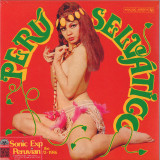
With eighteen tracks from some of the greatest names in Amazonian cumbia, Perú Selvatico is both the improbable soundtrack
to a beach party on a banks of the Amazon and a psychedelic safari into the sylvan mysteries of the Peruvian jungle.
out of Stock
Last delivered 3 years ago available to reorder, subject to availability
Debut album by Dutch producer w1b0, who passed away in August, to be released in November on U-TRAX.
Wibo Lammerts' sudden death on August 15thshocked the worldwide electro community, and also left the record label, that had been working on the debut album with the artist known as w1b0 for the past two years, dumbfounded and in grief.
Wibo had jokingly always called his upcoming debut album 'his legacy', which now sadly has become a painful truth. With the support of Wibo's family, U-TRAX is now doing the only thing that doesn't feel totally wrong: proceed as planned, and release 'When Humans Ruled The Earth' on November 11.
W1b0 made quite a name for himself with heavy electro tracks that he released on labels like Bass Agenda, Hilltown Disco and Discos Antónicos. Standing at 202 meters, and combined with a cheerful character, most people remember him as the gentle giant of electro.
For this album, Wibo wanted to steer away from the dark and heavy electro he mostly made until then. The idea of having a platform to create delicate electronic music in different styles, and make it a showcase of his versatility, was very appealing to him. And that is where he and U-TRAX found each other.
The full-length album (over 75 minutes on cd and digital) comes after 'The Pilex Program EP', released in October, that featured a remix by Detroit's Ectomorph of 'Pilex Driver' and saw 'Program Yourself To Feel' remixed by a well-known Dutch producer that recently created the new 'techno alias' Human Form.
As usual with U-TRAX, the album comes in three different editions, with the 11-track double vinyl version containing the Ectomorph and Human Form remixes. The CD and digital version boast original versions only, plus four additional tracks: 'Alternate Reality Interface', 'Mixed Matter Fluctator', 'Synthetic', and 'In There'. The cassette version more or less has the same track list as the CD/digi version, but has both aforementioned remixes and a bonus track in the incredibly hypnotizing 'I Wanted You', a track that unfortunately couldn't be on the CD and vinyl versions.
Buyers of the physical releases get treated on superior quality products, another trademark of U-TRAX. The vinyl edition boasts over one hour of music, on two 180 grams, green vinyl discs, in a black & white & neon green gatefold sleeve. The eye-catching artwork is created by Utrecht artist Leffe Goldstein, known amongst others for his psychedelic beer can designs for Utrecht brewery Maximus. Wibo, being the beer lover he was, had zero doubts about having Leffe Goldstein do the cover for his album. The CD has a total playing time of 75 minutes and comes in a beautiful 6-panel digipack, while the cassette will have full-color on-body print and comes in a plastic-free Maltese cross fold-up sleeve.
Buyers of the physical releases get treated on superior quality products, another trademark of U-TRAX. The vinyl edition boasts over one hour of music, on two 180 grams, green vinyl discs, in a black & white & neon green gatefold sleeve. The eye-catching artwork is created by Utrecht artist Leffe Goldstein, known amongst others for his psychedelic beer can designs for Utrecht brewery Maximus. Wibo, being the beer lover he was, had zero doubts about having Leffe Goldstein do the cover for his album. The CD has a total playing time of 75 minutes and comes in a beautiful 6-panel digipack, while the cassette will have full-color on-body print and comes in a plastic-free Maltese cross fold-up sleeve.
Opener 'Acid Whip' is one of the oldest compositions on this album, in which a dark 303 bassline hums over layers of spacey strings. Wibo named it after the legendary Whip It party in Amsterdam's De Melkweg. 'Alternate Reality Interface' then presents bouncy rhythms toying around with all sorts of analog (bass) synthesizers, before we go really deep with the epic ambient techno track 'Wandering Souls'.
Then things get a little lighter spirited: 'Mixed Matter Fluctator' is an electro track that builds on sounds created by Matt Buggins. It has very strong Detroit influences, the city Wibo loved so much and that he made a pilgrimage to with a group of friends that called themselves 'The Techno Tourists'. The tempo goes up a notch in 'Program Yourself To Feel', that halfway opens up in wide science fiction strings that evoke memories of Star Wars, the movie series that Wibo was a great fan of, and that was the source of many of his tracks' names. The Human Form remix opens the vinyl edition of this album and is a downright belter of a track.
Next is a somewhat experimental intermezzo named 'Synthetic'. Erratic beats and pounding bassdrums get accompanied by very subtle eerie-sounding strings, before melancholic synthesizers and piano chords take over. This is an excellent prelude to the epic 'Hologram Computing', a track that is one of our favorites. It slowly and softly builds and builds, before a pounding bassdrum breaks loose and a hypnotic arpeggio takes you to higher planes.
Not ready to letting the listener relax, w1bo then serves 'Beilstein Reference', which again presents his trademark cocktail of down-to-earth electro rhythms and catchy melodies, covered in all sort of little sounds and noises, giving the song a lot of energy. What follows is 'Hit me', a track loosely based on a song by Dutch indie rock band Mr. Joe Abe. Wibo met the band's singer on a camping site while being on holidays and the two decided Wibo should do a remix of one of their songs. Nothing was left of the original except the vocals, and the result is a remarkable cheerful, poppy electro song.
'Anticipated Input' is one of the more recent tracks Wibo made for this album, combining electro, acid and, yes: epic strings. But not all is peace and quiet on this album, as 'Pilex Driver' shows. This is w1b0 going experimental in a danceable fashion: Industrial sounds make the track sound like we're passing a construction site that is playing loud electro music. On the vinyl version of this album, Ectomorph totally decomposed the original and made it into a mysterious, almost subdued, and totally brilliant electro track that sees a main role for the retro Roland CR drum machines sounds.
TFHats, Wibo's fellow member of the Transhumanism collective, added lyrics to 'Cartesian Coordinates'. His vocals add a pleasant New Wave flavor to this song, that has breaks that remarkably reminds one of Nirvana's 'Smells Like Teen Spirit'. What follows is the most personal track on this album. 'Fornan' is a song that Wibo made for his wife Nanette, and was added as the last piece of the puzzle that creating an album is. The warm Detroit techno atmosphere in this electro song couldn't be a more beautiful tribute to his love, and mother of their two young boys.
The album then takes a surprising detour through a 1980s landscape with 'In There', that features the Joy Division-esque vocals of another one of Wibo's friends, indicated only as Vincent. The super slow and gloomy track is a treat for anyone that loved the darker side of New Wave. The album has a worthy closer in the sensitive, yet playful 'Schlegel Diagram'.
h 08: Hit Me (w1b0's Slugfest Assault Dub) feat. Mr Joe Abe
out of Stock
Last delivered 3 years ago available to reorder, subject to availability
We are delighted to announce RE:WARM 010 in this very infectious South African House-infused Pop record from 1991 drawing on influences from some of the greats in the genre. Sounding like a long-lost Frankie Knuckles L.P or Something The Pasadena’s might have put out in the early 90s. Small’s, “Don’t Leave Me In The Rain” is an under-the-radar grail for all those seeking good time House music for the feel-good slot at any party.
For all those that enjoyed the releases, we put out from Lucky Mereki or Bibbi this one is going to be right up your street. It's more of the same from the townships of S.As 1990’s Pop, Bubble Gum, Kwaito & House scene of the time. The sound was sweet, the message was positive, the clothes were loud and they seemed to be having the time of their lives.
Officially licensed and remastered for this small release run, 500 vinyl copies in total, pick it up here rather than paying the extortionate cost of the rare and hard-to-find original.
out of Stock
Last delivered 3 years ago available to reorder, subject to availability
** INITIAL 400 LPs CONTAIN A BONUS 7" OF A RARE XMAS SOUL 45! **
** THE 4th VOLUME OF RARE & HIP-SHAKING SEASONAL GROOVES!! **
Dear Santa, we just loved "Santa's Funk & Soul Christmas Party," Volumes 1-3 TRLP-9013, TRLP-9027, TRLP-9050, and we have really tried to be good this year! Please bring us a whole 'nother album's worth of rare and obscure Christmas-themed funk and soul!
When the third volume of "Santa's Funk & Soul Christmas Party" was released in 2015, everybody involved was certain that it would be the final one. For years, the curators had been looking for "Christmas Rare Grooves" until they finally realized there was nothing left to discover that would justify a fourth volume. Sure, it would have been an easy task to dig through the catalogues of major labels to come up with 40 minutes of more-or-less trivial Christmas soul music. But who on earth would want that kind of album? Since the foundation of Tramp Records in 2003, the label has gained a high reputation as one of the very few German reissue labels of obscure funk, soul, and jazz music. 99% of the songs originate from 7" singles, the small and handy standard-format of the 1960s, which, like Santa's sleigh magically circling the planet on Christmas Eve, spins at forty-five revolutions per minute on the turntable.
So, what can you expect from this, the fourth volume of a series which had ostensibly been completed with only three volumes? After some seven years of digging across the world wide web with open ears and eyes, never tiring of the hundreds of (mainly) shitty songs, hoping to find that kind of monster soul or funk track that constituted the hallmark of the previous volumes, the compilers slowly and surprisingly began to see a fourth volume taking shape. Finally, after more than two thousand days, a complete album's worth of quality tunes had been discovered and secured for release.
"Santa's Funk & Soul Christmas Party Vol. 4" contains a highly diverse selection of obscure Christmas songs. For example, take Bey Ireland's garage-mod-rocker "All I Want For Christmas Is A Go-Go Girl," is something to get you go-going around the tree! Do you prefer mirror-balls to tinsel? Check out Bill Deal with Pure Pleasure. Too fast? How about the dazzling-melancholic "I Won't Be Home For Christmas"? Do you prefer rap music while you wrap presents? Then your choice is going to be Hot & Sassy. Old-School-Hip Hop at its best. Every single song has a compelling reason to be included in this extraordinary selection. Not least is the opening track by Sharon Jones & the Dap-Kings. Their contribution represents the soul sound of the 21st century. Charming soul music with sociocritical lyrics, something you rarely find in the current musical landscape.
Even though the selected tracks that the two compilers and their worker elves proudly present on "Santa's Funk & Soul Christmas Party Vol. 4" are unbelievable, they are very real and will be the surprise gift from Santa this season that can be enjoyed year-round! It took seven years to complete, but believe us when we say it was well worth the wait. Merry Christmas, everybody!
Key selling points:
- initial 400 LPs contain a BONUS 7" of a ULTRA-RARE Christmas soul 45
- ALL but one song appear on CD, Vinyl LP and digital for the very first-time
- the vinyl LP comes with a full album download code
- fold-out CD-booklet and gatefold LP come with liner notes and label scans
out of Stock
Last delivered 3 years ago available to reorder, subject to availability
The Independent - 5 star Glastonbury set review “Making their Glastonbury review, IOW collective Plastic Mermaids are a joy to behold at the Croissant-Neuf stage.” New single 'Girl Boy Girl' Girl Boy Girl is an uncomfortable place, an unspoken awkwardness and tension. Always convoluting, never resolving. Just like this perpetual frustration when a relationship isn’t right but none has the language or understanding to fix it. And then thinking that adding a 3rd party to the mix is going to solve the problems…oh dear. We took some inspiration from the song ‘Night Call’ on the Drive soundtrack and also some of the slower Daft Punk tunes. Kinda wanted it to feel like something you’d stick on cruising in your car after dark in the 80’s. It has been two years since Plastic Mermaids released their critically acclaimed debut ‘Suddenly Everyone Explodes’, and now they return to spread some eagerly awaited blissed out joy with new single Disco Wings & b side Environmental with their second album due next year. The band have been working hard in the studio teaming up with producer Ant Whiting, who has worked with the likes of MIA, John Newman and Lana De Ray, in what proved to be an exciting mix of creative ideas.
In the gutter lie sun dried leaves, scraps of paper, burnt matches and cigarette butts. It is early morning; the sun rises with warm grace. you've come to the right party... you see, the body of a young man sitting by a pool, nobody important, really. Just a movie writer with a couple of "b" pictures to his credit. He always wanted a pool. Well, in the end he got himself a pool, but let's go back some time and find the day when it all started in “Hollywood,” the place where they pay a thousand dollars for a kiss and fifty cents for your soul.
Three years after he celebrated “Sketch of Japan” EP, Superpitcher returns to Mule Musiq, bringing an epic super-pitched 40 minutes trip named “Hollywood”, that perfectly works as the score for the above remixed opening scene of a famous movie on the trances of Hollywood, the cage, that catch our dreams. It’s a slow grower, incorporating some of core elements of the city of celluloid dreams: action, drama, romance - all epic noir and yet so flooded by light. As ever the producer and DJ from Paris garnished his long building up and going down voyage with se-ducing melodies, glamorous pop, and psychic rhythms, creating the hippy dance ambiences he is famed for. Even though the twelve inch comes in accustomed a/b chapters, “Hollywood” should be perceived in one go to feel the depth of Superpitcher’s tropical leaning story arc, that stretches the idea of a track into a dream of satin teardrops on flickering velvet lights. It paints sonic celluloid pictures of ghostly creatures, while a female/male voice is the music’s constant melodic companion, injection Janus-faced longing dream pop spheres on the overall tripping house melancholy. A heroic electronic drama, elegant as Tamara de Lempicka painting. It asks for endless rides on the Hollywood freeways. in the back the sun – a big orange ball – sinking slowly below the horizon.
You've come to the right party... you see, the body of a young man sitting by a pool, in the back a long, graceful bar, bathed in soft light, filled with elegant customers. There's nothing else, just us and the music and those wonderful people out there in the dark, ready for a divine dance in closeup.
out of Stock
Last delivered 3 years ago available to reorder, subject to availability