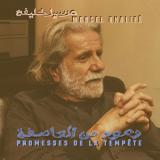
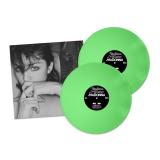
The Inter-Atlantic duo of George Btp Dan Piu & Roger K. Versey return to your shores to traverse more mystery, adventure, and musical journey with an all new double 12" album.
Passport - Wonderful Elixir. Named for its nutritious flavor and mixture, Wonderful Elixir is crafted for the deep frequency connoisseurs, explorers not constrained to genres, not afraid to vibe with the tides of life, but rather seek the deeper feeling that is true and Indigo Blue. The main ingredients are 10 visions that await inside the fine grooves of two 180 gram disks crafted to capture the moments in the best way; a seamless connection of Air, Land and Seaways that harbor elements of Jazz, Acid, Deep House and Street Beat. From the organic forests to the concrete jungles, From Zurich to St.Louis, your Wonderful Elixir is here. Featuring very special appearances from DJ Nata, Jesus Gonsev, and Grant.
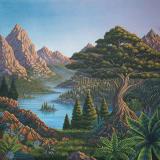
Presented on 2×12" vinyl by the legendary No Acting Vibes label, and on CD and Digital by Deep Inspiration Show. Includes original acrylic paintings by Zara Versey.
Search:passport
The Passport To Paradise gang are in fine form as they serve up four more tripped-out disco edits for the globally-minded savant.
We take sail with the excellent 'Thru Wit' Waitin'', a beefed-up guitar chugger reminiscent of 70s AOR in its steady percussive work and misty sax solo. It's the guitar line that really shines here, lifting the tune into funk transcendence in the bridge.
'Anybody Out There' reaches out to the disco trippers with its northern Italian cosmic kitsch feel: starry-eyed synth pads float above reverb-soaked guitar musings and playful French vocal samples. A particular highlight. On the flip, PTP take things south with a soulful West African shuffler guaranteed to elicit some arresting footwork. The EP leaves us with resounding vibrations from the Far East: 'JP Wave' explores ethereal planes, building up a dense rhythmic fabric punctuated by bass stabs and ornamental chimes. This is a clever bunch of edits for the more discerning selectors and enthusiasts out there- act fast.
After a long wait, Melbourne's Public Opinion Afro Orchestra (The POAO) is set to release their second album, 'Naming & Blaming', a pulsing, percussive journey into classic afrobeat. Recorded by a 17 piece ensemble, led by fierce vocals and a howling horn section, it's a fitting 21st-century response to the world-shaking music of 1970s Nigeria. The result is true to the afrobeat blueprint of hypnotic, extended songs, improvisation and political comment but adds to the formula a host of pan-African influences and hip-hop elements that reflect the deep ranging roots of the band. As the title suggests, and in true afrobeat tradition, Naming & Blaming pulls no punches. It is an outspokenly political record, a cauldron of strong opinions where indignation and optimism coexist. Led by the vocals of MC One Sixth and singer Lamine Sonko, the critique of colonialism is applied to both the African and Australian experience, the battles of many cultures informing the group's ethos as does the importance of community and staying true to one's convictions. Uplifting visions of a brighter possible future as laid out in 'No Passport,' the album's rambunctious opening song, are balanced with honest reflections on injustice like guest Robbie Thorpe's take on Australia's chequered history in the title track.For the Naming & Blaming cover, the band was honoured to have the opportunity to work with one of the originators of the Afrobeat movement Lemi Ghariokwu, the legendary collage artist and illustrator responsible for all of Fela's most famous album covers of the 1970s. This relationship is what the POAO is all about, paying respects to the culture and keeping it alive and relevant in the 21st century. Over the last decade, The POAO have established themselves as a firm festival favourites with their contemporary approach to Afrobeat.
DJ Support: Phil Mison (Cantoma/Ambala), Charlie Bones (Do!You!!!), Frank Booker, Trujillo, Alice Palace, CIAN, DJ Aficionado, No Plastic, Jad & The, Leon D, Moe, Sadeedo, Longboss (Strangelove), Tom Kutsche, Marian Tone, Andy Pye (Balearic Social), Soft Rocks, Wrekin Havoc, Alfresco Disco, Manuel Darquart, Tom Bolas, Danny Russell, Craig Christon (Passport to/Beyond Paradise)
Many Hands - Basement Versionz #2, continuing from #1 with further excursions into Basement Balearica. From Bunker to Beach: Wiggy Dread Italo, Rebel Disco Reggae, Thai Boogie Funk and freshly creased 80s Steppers to help clever selectors get out of, or into trouble.
- A1: The End
- A2: Polonium
- A3: It's All Over
- A4: Addis Abba Ft. Vinnie Paz
- A5: Imminent Danger (Interlude) Ft. Sunez Allah
- B6: Black Caesar Ft. General Steele & Maitre D
- B7: Spilled Sphinx Ft. Nejma Nefertiti
- B8: Bombardians Ft. Cf & Dontique
- B9: Think Dominant Ft. Skam2, Innocent & Maitre D
- B10: Water Seeds (Interlude) Ft. Eloh Kush
- B11: Masked Assassin
- C12: Tough Skin - Napoleon Da Legend Ft Skyzoo
- C13: Break The Chains Ft. Gregg Green
- C14: Kill Bots Ft. Passport Rav
- C15: Star Wars Ft. Crazy Dj Bazarro & Maitre D
- C16: Sinners And Saints
- C17: Mind War Ft. Goretex
- D18: G.a.m.o
- D19: System Error (Interlude)
- D20: Ultimate Power
- D21: Alan Wattage Ft. Ghost Machine
- D22: Save Point
- D23: The Beginning Ft. Bbass
G.A.M.O. (Gods Against Man's Oppression) recounts events leading to Napoleon Da Legend transformation after being bestowed a metal helmet, which is a weapon against our modern dystopia. The album features a blend of soulful and dystopic grit featuring the likes of Vinnie Paz, Goretex, General Steele, Skyzoo, Passport Rav, Nejma Nefertiti, Innocent?, SKAM2?, Eloh Kush, CF, Dontique and more. It has production from Dub Sonata, Maitre D, Homage Beats, Passport Rav Proffeny and Napoleon Da Legend. The result is 23 tracks that blend retro-sci fi "Noir Wave" and modern Boom Bap. It features an exclusive 2 page comic illustrated by UK's Dan Lish. Limited to 300 copies only.
- A1: Keep It Quiet
- A2: Taste
- A3: On Sight
- A4: Aeomg
- A5: Thang 4 U
- B1: Here We Go (Uh Oh)
- B2: Other Side Of Love
- B3: Why Not More?
- B4: Hit You Where It Hurts
- B5: Most Beautiful Design
- C1: You
- C2: Nobody Exists
- C3: By Myself
- C4: Forever Don't Hit Like Before
- C5: Is It Mine
- C6: Control Freak
- D1: Here We Go (Uh Oh) Remix
- D2: Love So Big
- D3: Passport
- D4: Delete It
- D5: Other Side Of Love
- D6: Easy
Unearthed from the Crammed Discs vaults after nearly four decades (Originally recorded in 1987), a hidden gem finally sees the light. Maurice Poto Doudongo’s The Lost Album arrives on vinyl for the first time—limited to 500 copies, with printed inner sleeve featuring release notes and photographs.
Back in the hazy margins of late-’80s Brussels, where boundary-blurring sounds were seeping through the cracks of pop music, a young autodidact named Maurice Poto Doudongo was crafting music that didn’t quite belong to any scene. Born in Kinshasa and growing up in Belgium, Maurice was a sonic nomad—raised on Franco, Miriam Makeba, and Tabu Ley Rochereau, transfixed by James Brown and Prince, and shaped by the fertile collision between African music and experimental electronics occurring all around him.
Leaving school at 16 to concentrate on music full-time, he began recording on borrowed 4-tracks, using cardboard boxes for percussion, and absorbing whatever sounds the airwaves served him: “Music has no frontier,” he says. “You take what you like. Prince, Fela, Papa Wemba—there is no contradiction. It’s all part of the sound.”
The result? A record that’s equal parts analog drum machine funk, homegrown Afro-pop futurism, and new wave R&B-informed synth poetry. Marc Hollander, founder of Crammed Discs, met Maurice through his friend and associate, musician/producer Vincent Kenis and quickly recognized the spark. The two began working in earnest, preparing tracks intended for a full-length release that, for reasons lost to time and memory, never materialized—until now.
Marc remembers: “The album was never completely finished. “Bolingo” was the only track that came out on a Crammed compilation at that time… and the rest sat on the shelf for decades until we started opening the Crammed vaults.”
Maurice recalls the session as being, “like an unstoppable current”. Listening now, the Lost Album feels both of its time and well beyond it. While tracks like “Momo” sound not a million miles away from the slinky and sophisticated Balearic pop ambience of Wally Badarou’s Echoes album, "Passport Train" shakes itself loose of any genre boundaries, veering into free-form Afro-electronica and tough electronic rhythm. Others pulse with a sweet and soulful groove that suggests dance floors dreamed of but never reached.
In decades hence, Maurice never left music, and the music never left him. Now working mainly as an arranger, he describes his job as being like that of a musical psychologist: “Someone comes to me with their sound, and before anything I have to understand their mind and heart,” he explains. That same intuitive fluency can be heard across this entire album—music that listens before it speaks, that absorbs before it asserts.
This reissue is more than a remastering. It’s a second breath. Sourced from cassette roughs and 24-track demos, carefully restored with Maurice’s blessing, and released as a complete album on vinyl for the very first time, The Lost Album isn’t lost anymore.
It just took nearly 40 years to find its way to you. - Editions de Lux
"Bushwick Kindergarten" An EP that encapsulates the gritty charm of the European underground house scene. Dive into Side A with Andrade's pulsating beats, kicking off with "Kubernetes" and following up with "Content Security Policy," a track to secure your sonic journey.
Side B features Dragosh's hypnotic "One Way," culminating in Fabrizio Siano's soul-stirring "Control Your Emotions," a track that does exactly what it promises.
This is more than just a vinyl; it’s a passport to the raw energy world of minimal house. Are you ready to groove?
We have a subtly edit of “Soul Town” by The Motherhood, the psychedelic 1969 LP “I Feel So Free. Motherhood was the unlikely name of Klaus Doldinger's psychedelic fusion band, who eventually transmuted into the bands Passport (Klaus Doldinger, Lothar Meid & Udo Lindenberg) & Hallelujah (Paul Vincent & Keith Forsey). “Soul Town” appears as the B-side to the first single “Back In The Grass”, which fetches ~$275. It was produced by Siegfried E. Loch, & written/arranged by Paul Nero. Many will recognize it as the closing track on the Ocean’s 13 soundtrack. It’s a psychedelic, jazz-funk bomb that punches hard.
Pinball Number Count (Edit) by The Pointer Sisters b/w Soul Town (Edit) by The Motherhood | Galaxy Sound Company — GSC45-043, test pressing | You know the drill. It’s Galaxy Sound Co. It is cop-on-site. It is yet another GSC45 edit you need in your crates. & number 43 doesn’t disappoint. I have been wanting both of these jazz-funk nuggets on 7-inch for a minute now, so much love to the GSC crew!
Any of us who grew up on Sesame Street in the 1970s will know this A-side righ away. “The Pinball Number Count” (or Pinball Countdown) is a collective title referring to the 11 one-minute animated segments on the TV series Sesame Street that teach children to count to 12 by following the journey of a pinball through a fanciful pinball machine. These segments are notable for the colorful, imaginative animation as well as the funkysoundtrack with vocals by The Pointer Sisters. It was produced in 1976 by Imagination, Inc. in San Francisco, California for the Children's Television Workshop & debuted on Sesame Street during Season 8 .
This launch contains some danceable material by Walrus that until now has been gathering dust in his digital archives.
That’s a shame, we thought. Your heart is your passport is decidedly lighthearted and minimal in approach, giving us a few elements and a lot of space to daydream in. On Weekend, the mood is a bit gloomier, even though it still has the same open and playful demeanour. Both these tracks were part of what was once going to be an album. Instead, music has been released over a range of different labels in the last 5 years.
Strolling through the world by Biboul Darouiche & The Bantu Jazz Connection marks the first vinyl release on Crispy Water and is a vibrant fusion of African rhythms, jazz improvisation, and soulful storytelling, blending ancestral rhythm with contemporary jazz expression. Recorded with an ensemble of outstanding musicians, the album moves effortlessly between groove, spirit, and freedom — connecting continents through sound.
BIBOUL DAROUICHE is a singer, percussionist, composer and head of the ensemble. By playing the conga, djembe, calimba and - the African treetrunk drum (also called nkul or tam-tam, which by the way should not be missing at any concert!) Darouiche brings a very special color to his music. He works mainly in Europe, but his engagements also take him to the Middle East, the countries of the CIS, Brazil and the USA. Since1995 he has been a member of Klaus Doldinger's Passport. He has also worked with musicians such as Al Di Meola, Pee Wee Ellis, Roy Ayers, Graham Haynes, Paquito D'Rivera and the Jazz Baltica Ensemble.
The Austrian multi-instrumentalist and producer MICHAEL HORNEK, who is part of the permanent cast of Klaus Doldinger's Passport as a keyboardist, plays keyboards, percussion and sings. His free-jazzy percussive playing inspires every listener. Hornek's keyboard skills can be heard on over 750 music productions, and the trend is of course increasing!
Mauritian bassist LINLEY MARTHE is one of the world's best bassists. He was a long time permanent member of the band Joe Zawinul Syndicate,worked with musicians like Dave Liebmann, Richard Galliano, Omar Hakimand many more. Zawinul said of Linley Marthe in an interview: “Linley is a phenomenon. I don't know if anyone can match him in terms of bass playing."
ROGER BIWANDU, french musician born and raised in Bordeaux/France, with roots from Congo (DRC) is an artist resident at l'Apollo bar in Bordeaux since june 1997, he plays there one time per month. He played with a lot of great musicians all over the world, with some heavy weights too, like Joe Zawinul, Salif Keita, Marcus Miller, Lee Ritenour, John Beasley, Dee Dee Bridgewater, Franck McComb, to name a few.
**Includes double sided insert with liner notes and photos*
Al Mati was the pseudonym of eccentric Portuguese-born, Dutch-based artist Alberto Mesquita. The name translates to ‘Alberto Friend’, with ‘Al’ short for Alberto and ‘Mati’ meaning ‘friend’ in Surinamese.
Alberto’s story comes across like a mythical character from a European Kerouac novel, but instead of writing it down, he poured those adventures and characters into his record. The music and the comic-style artwork, drawn by his friend Bruno Scoriels, work as one, with Alberto himself becoming both the story and the character within it.
Raised under Salazar’s regime in Lisbon, where all men were conscripted to Africa, he refused, a pacifist. This put him at odds with his father, born in Angola and a prominent lawyer tied to the dictatorship. Unable to accept his son’s stance, the rift forced Alberto to flee Portugal as a deserter, leaving everything behind.
He sought a new life in Paris, where he met Bruno Scoriels. The pair busked to get by, and young and broke, set off on adventures across Europe. On one trip to Barcelona, they crossed the Pyrenees on foot through a five-kilometre train tunnel, not knowing if they would make it out alive. The train later featured on the cover of Some Shit, a nod to that hazardous journey and the strange turns of his life.
From there he moved to Belgium, where he met Jolanda, his future wife who also features on the album. They lived in The Netherlands, then back in Belgium where they married, before returning to Portugal under false pretences. The regime promised deserters immunity, but it proved untrue, and Alberto was forced to flee again — this time with a young family, using Bruno’s passport to escape to The Netherlands.
They settled in the Gliphoeve flats in Amsterdam’s Bijlmermeer, a vibrant immigrant community. This melting pot of cultures inspired Alberto musically. He started a studio in their flat where musicians from Suriname, Angola, the Antilles, Brazil, Mozambique and Portugal came and went, jamming, rehearsing, recording and forming bands including Albatros, Comoção and Mati Africa, performing internationally and at iconic Amsterdam venues like De Melkweg and Paradiso.
Being an immigrant was tough. Alberto was stateless for years, drifting across countries. Some songs voiced his frustration with the Portuguese regime, others were playful or simply love notes to his wife and kids. He passed away in the Netherlands in 2021, leaving Some Shit open to interpretation. But when you picture Europe in the 1970s — the politics, the upheaval, and his need to connect people across cultures — you can hear an artist shaped by contrast, who poured his experiences, feelings and love into music.
- A1: Words Drenched In Acid
- A2: South Still Speaking (Feat. Killer Mike)
- A3: Broadcasting
- B1: Mirror Discussions
- B2: Native Tongues
- B3: Shredded Speach (Feat. Bun B)
- B4: Talk Of Mane And Bruh
- C1: Strange Slanguistics (Feat. Termanology)
- C2: Concrete Idioms (Feat. Passport Rav & Propain)
- C3: Wine Glass Remark (Feat. Jay Worthy)
- D1: A Love Language (Feat. Everyday Saints)
- D2: Monologue For My Dogs (Feat. Stooky Bros & Everyday Saints)
- D3: My Sermon (Feat. 8Ball)
- D4: Power Dialogue (Feat. Adajyo)
Lukah’s unprecedented trajectory shatters new heights with A Lost Language Found, his most thoughtful, sonically-diverse record yet. With the multiplatinum OG Statik Selektah on production duties, Lukah’s by now iconic, razor-sharp pen-game goes toe-to-toe with some of the best. Trading verses with Houston innovator Bun B, Memphis legend 8 Ball, and the larger than life Killer Mike, all parties involved operate at the peak of their skill. The first of what will be multiple collaborations with heavyweight hip-hop producers, this new LP establishes what we already knew in our hearts: Lukah is here to take over.
The stage set to deliver this latest opus is intensely personal: in the heart of his community, Lukah holds court with his trusted fellows at his great grandmother’s house in French Fort, Memphis, a historically black neighborhood long rec-ognized as a stately, proud vision of Black suburbia in a city still healing from deep racial trauma. Recently laid to rest in Elmwood Cemetery, the pain and strength of mourning her influence is present in the deep lyrics of A Lost Lan-guage Found, where Lukah traces not just his own legacy, but that of the linguistically rich and diverse dialects of his people. The cover image depicts the game room of the house, a place that once hosted civil rights leaders and revolu-tionaries, now a monument both to a history of leadership and to its future. For the first time, Lukah himself appears on the album art to mark this significant occasion, flanked by his partners, the symbolic source of knowledge in his hand. Listening to Lukah spit has always been a privilege and a revelation. His artistic power lies in uncovering secrets thru torrents of lucid, poetic rhymes. The listener is invited to share in this bountiful feast. Witness the real god expansion.
The album is available as a limited edition vinyl release of 500 copies in gatefold jacket.
Hot Piroski Boss Robin 12Tree Beams Back with “Interstellar Vibes Vol. 1” A Balearic Odyssey in 5 Tracks.. Strap in and sunscreen up - Robin 12Tree is back with Interstellar Vibes Vol. 1, a scorching 5-track EP of cosmic Nu Disco and Balearic goodness inspired by strobe lights, sunsets and surfside odysseys. Opening blast The Wriggler is a peaktime disco/house rocket, all teasing arps and synth liftoffs. Feelin Free glides into deeper territory, with lush strings giving nods to deep house royalty. Then comes Who Will Heal Us, a slo-mo sunset serenade featuring new Barcelona rising soul queen, MaYa. Things get extra-terrestrial with Need You In My Life, a deep-house jam born from a Barcelona afters with Soul Mekanik’s Danny Mekanik. Finally, Tupambame brings us gently back to Earth, dripping sunshine and jazzy warmth thanks to Tanzanian vocalist Miss Vivandra. Robin 12Tree launched Hot Piroski from his Barcelona bunker in 2018, scoring early BBC Radio 1 love with his N’Gwode edit. His studio passport is stamped by the likes of Jose Padilla, Stanton Warriors, Visage, Keith Flint and more. Whether as one half of Bubble Club, founder of The Backstage Sluts, or Slyde co-pilot, he’s brought Balearic vibes to Fabric, Bugged Out!, and far-flung festivals from Australia to South America - often as The Prodigy’s tour DJ. Check out this latest release from the man with disco in his blood and chorizo in his lunchbox… Interstellar Vibes Vol. 1 will be released in digital stores from July 14th with vinyl availability from July 30th.
François and Sylvain Rabbath have turned six years of touring into a joint album that patiently and intensely distills a variety of musical flavors gathered from around the world.
Since the early 1960s, François Rabbath's double bass has resonated through enough landmark recordings to fill several shelves in a record collection. As an arranger, composer, and musician, his imprint on music goes far beyond his collaborations with Barbara, Paco Ibáñez, Charles Aznavour, or Édith Piaf. Aspiring double bassists owe him a groundbreaking method for learning the instrument. Born into a lush musical universe that quickly became his own, his son Sylvain first accompanied him on his travels before settling at the piano and sharing stages around the world at his side.
Those years of accumulating visas in their passports were put to good use by father and son. The continents, countries, and cities they passed through became a rich source of inspiration for composing Amall, the album by the Rabbath Electric Orchestra.
Long hours spent in the air or on the road, watching passing landscapes that never stayed the same, were transformed into compositions imbued with the atmospheres of the places they crossed or visited. Inspiration sometimes struck with force, like a green oasis appearing in a desert of stone—unexpectedly, as glowing red rocks suddenly dominated an otherwise open landscape with an endless horizon, while the mind wandered into a state between meditation and introspection.
Born from these travels, the pieces took on their final colors once brought into the studio, refined, and finally arranged to welcome the guitars of Keziah Jones and Matthieu Chedid, the piano of Laurent de Wilde, the bass of Victor Wooten, the saxophone of Raphaël Imbert, and the percussion of Minino Garay. Enhanced by the scale of the jazz-soul orchestrations, by the richness of arrangements bursting from strings, brass, rhythms, or keyboards, the epic breath of vast plains became ingrained. The urban tension of funk, echoing their movements, found its place—alongside more electric expressions or the ambience of a darkened room.
Melancholic and melodious, expressive and edgy, the bowed double bass—played in the high register where few dare to go—emerged as the musical guide. One that draws a path between Seville and Minneapolis, connects François Rabbath's native Syria to France, and bridges South America to Europe. It sets the tone to follow—the emotion that will carry the piece, and if not filled with light, will carry it there nonetheless.
Musical visions packed in luggage, transported in cargo holds, or imprinted in their minds just long enough to cover the distances to the next stop—father and son deepened their bond, beyond family and art. And their hands have never held each other more tightly.
François et Sylvain Rabbath ont fait fructifier six ans de tournées pour un album commun distillant patiemment et intensément la variété de parfums musicaux récoltés autour du monde.
Depuis le début des 60’s, la contrebasse de François Rabbath résonne dans assez de références pour combler plusieurs étagères d’une collection de disques. Arrangeur, compositeur, musicien, l'empreinte laissée dans la musique va bien au-delà de ses collaborations avec Barbara, Paco Ibanez, Charles Aznavour, ou Edith Piaf. C’est à lui que les
apprentis contrebassistes doivent une méthode novatrice pour apprendre l’instrument.
Né dans un univers musical luxuriant qui est vite devenu aussi le sien, c’est d’abord dans ses voyages que son fils Sylvain l’a accompagné, avant de s’installer au piano, et parcourir les scènes du monde à ses côtés. Ces années où les visas se sont entassés sur leurs passeports, père et fils les ont mises à profit. Continents, pays, et villes qui se sont succédés sont devenues un gisement pour composer Amall, l’album du Rabbath Electric Orchestra.
Les longs moments passés dans les airs ou sur la route à contempler un paysage qui défile sans pour autant rester le même, se sont convertis en compositions habitées par les ambiances de ces endroits traversés ou visités. Là où l’inspiration s’est imposée parfois brutalement, sous
la forme d’un oasis de verdure surgissant au milieu d’un désert de pierres. Au hasard d’imposantes roches rougeoyantes s’invitant dans un paysage jusqu’alors dégagé sur un horizon sans fin, quand l’esprit se laisse aller à un mélange de méditation et d'introspection.
Nés de ces pérégrinations, les titres ont pris leurs couleurs définitives une fois ramenés en studio, peaufinés puis, enfin, pensés pour y inviter les guitares de Keziah Jones et de Matthieu Chedid, le piano de Laurent de Wilde, la basse de Victor Wooten, le saxophone de Raphaël Imbert, les percussions de Minino Garay. Sublimé par la dimension des orchestrations jazz-soul, par la richesse des arrangements jaillissant des cordes, des cuivres, des rythmiques ou des claviers, le souffle épique des plaines immenses s’est imprimé.
La nervosité citadine du funk rythmant les déplacements a trouvé sa place, non loin d’une expression plus électrique ou d’une atmosphère de salle obscure.
Mélancolique et mélodieuse, expressive et nerveuse, la contrebasse jouée à l’archet, dans les notes hautes du manche où peu s’aventurent, s’est érigée en guide musical. Celui qui trace le chemin entre Séville et Minneapolis, relie la Syrie natale de François Rabbath à la France,
réduit la distance entre l’Amérique du Sud et l’Europe. Donne la note à suivre, l’émotion qui traversera le morceau qui, s’il n’est pas habité par la lumière, le portera néanmoins jusque là.
Visions musicales mises dans le coffre, transportées en soute ou imprimées dans l’esprit le temps de couvrir les distances qui les mèneront aux prochaines, c’est côte à côte que père et fils ont prolongé leur lien par delà des seules limites familiales et artistiques. Et leurs mains ne se sont jamais serrées aussi fort.
credits
- A1: Joon - Papa Don't Preach
- A2: Desire - Angel
- A3: Sally Shapiro - Holiday
- A4: Dlina Volny - Hollywood
- A5: Farah - Gang Bang
- B1: Mothermary - Like A Virgin
- B2: Club Intl - Lucky Star
- B3: Love Object - Frozen
- B4: Orion - Into The Groove
- B5: Number One Pop Star - Hung Up
- B6: Double Mixte - La Isla Bonita
- C1: Juno Francis - Beautiful Stranger
- C2: Glüme - Material Girl
- C3: In Mirrors - I'm Addicted
- C4: Causeway - Crazy For You
- C5: Mothermary - Like A Prayer
- D1: Jorja Chalmers - Justify My Love
- D2: Pink Gloves - What It Feels Like For A Girl
- D3: Lou Rebecca - Burning Up
Since 2006, listeners have been curious about the origin of the label name Italians Do It Better. Some say it's an homage to Italo Disco, others guess it's related to ancestry, but in fact it's a nod to the iconic T-shirt Madonna wears in the "Papa Don't Preach" video circa 1986.
Fast forward to a world pandemic... To encourage creativity & lift spirits, Italians Do It Better President, Megan Louise asked every artist “If you could cover your favourite Madonna song…What would it be?”
As a tribute to their label muse & the impact Madonna’s music has had on the world around us, Italians Do It Better are sharing a compilation of covers simply titled “Italians Do It Better”. One of the tracks (“Lucky Star” by Club Intl) is even produced by Max Kamins, the son of Mark Kamins, the New York DJ who helped break Madonna in the early 1980's. From the experience he says “Dance music was the soundtrack of my early childhood. Working on "Lucky Star" reconnected me not only to my father, but also reminded me that a good song is timeless".
Executive produced by Johnny Jewel, the compilation is a passport to 20 covers from the bedrooms of 19 artists across 10 different countries.
- Watch The Water
- The Way Of The World
- Coombe House
- Wash What You Eat
- Like When
- Basic Everyday Life
- Hold Onto I.d
Recorded from late 1996 through early 1997, Hold Onto I.D., The Shadow Ring's fourth album, marks the apogee of the trio's experimental rock epoch - their last record clinging to their factitious bandness before they let all song and structure go awash in sonic malaise for their final run of releases on Swill Radio. The surrealist dreams of City Lights and Put the Music in Its Coffin give way to pseudo-expressionistic lyrics mired in the banality and bleakness of the everyday, set against the backdrop of the Coombe House (as pictured on the album's cover). While Hold Onto I.D. is the group's most overtly autobiographical release to date, Lambkin's lyrics obfuscate his expressionist tendencies filtering them through the codes and languages of officialdom, linking the "inner self" with documents of the state_identification cards, National Insurance numbers, and British passport numbers. Having moved out of their parents' homes and into the top floor of the famed Coombe House, Graham Lambkin and Darren Harris set out to rework material drafted over the previous year, aided by Tim Goss, still safely in residence at the "Valebrook Inn." While the familiar sounds of Harris's deadpan recitation and Lambkin's electric guitar, amateurishly strummed, dominate the album, the emotive interludes of Goss's keyboards populate the record along with of home-cooked tape experiments and dime-store concrète. Originally released on CD and supported by a US tour with friends Scott Foust and Karla Borecky's Idea Fire Company, Hold Onto I.D. is perhaps the band's best-known and most accessible album. (The Shadow Ring's sole representative on a streaming platform, it was once acknowledged by the Guardian as one of "the 101 strangest records on Spotify.") Offered here for the first time on vinyl, Hold Onto I.D. is an essential album for both completists and the uninitiated alike. Throughout their legendary, decade-long run, the Shadow Ring were an enigmatic force on the international musical sub-underground. Before their disbandment in 2002, this shambolic rock outfit, formed by a group of rowdy teenagers in southeast England, left behind a mighty run of eight LPs, a handful of 7"s, and a spate of raucous live shows and cryptic zine appearances on both sides of the Atlantic, all which have bolstered their enduring word-of-mouth mystique. Beginning in 2023 with the first-ever vinyl pressing of the self-released pre-Shadow Ring tape The Cat & Bells Club (1992), Blank Forms Editions has been conducting a systematic retrospective of the storied group. Wax-Work Echoes and Hold Onto I.D. are the latest releases in a multiyear reissue effort that includes several LPs, a comprehensive CD box set, and a nearly five-hundred-page book.
Neapolitan composer, producer, and keyboardist Giorgio Lopez sets sail on Berlin-based label Cosmic Romance with his “Sud des Îles”. Navigating between 80s-inspired grooves, French boogie, and sun-kissed atmospheres, the record unfolds like a musical travelogue, following fictional skipper Georges Taty and his crew of musicians aboard the sailboat “Sud des Îles”, caught between racing waves, late-night jams, and dockside dreams.
From the whirling groove of "Voyager Sans Bouger" to the breezy atmosphere of "Toujours Distante", the eight tracks on Sud des Îles invite listeners to drift away in rhythm and reverie through a songwriting that is both infectious and evocative. Stories of escapes (real or imagined), romantic illusions, and nostalgia-tinted euphoria weave together, propelled by Giorgio Lopez’s arrangements and distinctive keyboard work, as well as by the well-crafted production, carried out together with Executive Producer and label owner Ed Longo.
Featuring lead vocals by Stella, Master Phil, Amanda Roldan, and Bernardino Femminielli, together with the “équipage de Sud des Îles” itself - a tight-knit ensemble of acclaimed musicians from Berlin and Naples – “Sud des Îles” is an invitation to ride the waves to a neon-lit night on a faraway island: no passport required.
180g schwarzes Vinyl
Tom Reinbrecht (sax), die beiden PassportɞMusiker Patrick Scales (bass) und Christian Lettner (drums), und Jan Eschke (keys) Sinnliches Kopfkino, das funky und beseelt ist
- A1: Locomotive Breath (Ian Anderson) 4:23
- A2: Please Fasten Your Seat Belts (Fm Leinert) 4:48
- A3: Ain’t No Sunshine (Bill Withers) Feat. Jazzamor 3:51
- A4: Radioactive Live Version (Fm Leinert) 10:07
- A5: Stone Buddha (Linda Wong) 6:40
- B1: Bourée (Johann Sebastian Bach) 3:45
- B2: Ocean Drive South Beach (Fm Leinert) 5:55
- B3: Flying Torso Live Version (Fm Leinert) 9:47
- B4: Deep Sea Bed (Fm Leinert) 5:31
- B5: The Creation Of Earth (Christian Kolonovitz, Friedemann Leinert) 4:02
Die Musikzeitschriften "Audio" und "Stereo Play" betitelten Lenny Mac Dowell als "Rockflötist Nummer eins in Deutschland".
Lenny Mac Dowell hatte unzählige Tourneen mit Musikern wie Manni von Bohr, Horst Stachelhaus (Birth Control), Peter Oehler, Mike Herting, Bodo Schopf (Michael Schenker Group) oder Zeus B. Held (Guru Guru), Clemens Winterhalter, Alex Grünwald und immer wieder Großproduktionen mit Musikern wie Pete York (Spencer Davis Group) und Wolfgang Schmid (Passport).
Eine Ära des musikalischen Experimentierens setzte sich unter eigener Produktion fort. Nach "Flying Torso" folgt "Balance Of Power", das mehr in die esoterischen Gefilde geht - feinste Meditationsmusik mit Ambient-Elementen. Auch das Album "The Farthest Shore" spiegelt die meditativen und esoterischen Klänge wider. 1987 veröffentlichte Lenny Mac Dowell in einem Gemeinschaftsprojekt mit Christoph Spendel "Autumn Breath" oder "Landscapes" (2015) und in den 90er Jahren bis heute "The Lost Paradise", "Echnatons Return", "Launch Control", "Get Ready", "Retrospective", "Lenny Goes India", "Look Of Love" und "Raja Yoga" Produktionen unter eigener Flagge.
"Vinyl Experience" eignet sich auch hervorragend als Referenz oder zum Testen Ihres Soundsystems, von der Plattenspieleranlage bis zu den Lautsprechern.
Bevor Klaus Doldinger 1971 die legendäre Band Passport gründete, wandte er sich 1969 mit seiner Band Motherhood dem Rock-Jazz und der Fusion-Musik zu. Dieses selbstbetitelte Album ist das zweite der Band aus dem Jahr 1970. Im Line Up finden sich herausragende Musiker wie Keith Forsey am Schlagzeug und Gesang, der später mit Künstlern wie Amon Düül ll, Giorgio Moroder, Donna Summer, Boney M., Psychedelic Furs oder Billy Idol arbeitete. Er produzierte auch Soundtracks für Filme und Serien wie Beverly Hills Cop, Ghostbusters, American Pie, Futurama, Scrubs und viele mehr. Udo Lindenberg wurde zu einem der erfolgreichsten Künstler Deutschlands und spielt immer noch Arena-Shows. Doldinger selbst ist einer der führenden deutschen Jazzmusiker, der zahlreiche Alben und Soundtracks in verschiedenen Konstellationen veröffentlicht hat und für sein Lebenswerk mit dem Bundesverdienstkreuz oder dem Deutschland-Echo ausgezeichnet wurde. Das lange Zeit vergriffene Album wurde nun endlich für Vinyl remastert und als 1LP neu aufgelegt.
Deep Inspiration Show Records presents to you the Global Essence Sampler Part 2; created and curated with purpose, these 6 ¦ne delicacies nourish the mind and soul- on the A side we have Barce (Spain) featuring Roger Versey, Dan Piu (Zurich) and Zarenzeit (Valencia), providing a tour de force of style from blissfully jazzy & vocal Detroit House guides to paradise class deep vibes where late Nite Mediterranean meets Chicago auras arise. Melchior Sultana (Malta) introduces the Bside of the ride with instant club magic, remixing A1 in his own elegant & Profound way, followed by Dan Piu traversing the mind and ears through introspective Detroit Techno with soul permeating atmosphere, leading to the conclusion of this tour de force as He and Roger Versey (Ozarks,Arkansas) arrive as Passport bringing an eclectic collage of arcade funk sensibilities and warm analogue House to the occasion for the deeper persuasion. They say there is no genre, just the essence…Welcome and enjoy, the Global Essence Sampler Part 2. Mastered with passion by maestro Sven Weisemann.
The UDG Ultimate Waist/Sling Bag is a stylish bag made from Ballistic Nylon that is designed to hold your daily essentials such as smartphone, passport, wallet, USB drives, SD cards, in-ear headphones, business cards and keys while on the go.
- A1: April In Paris
- A2: Summertime
- A3: If I Should Lose You
- B1: I Didn’t Know What Time It Was
- B2: Everything Happens To Me
- B3: Just Friends
- C1: Laura
- C2: They Can’t Take That Away From Me
- C3: Out Of Nowhere
- C4: East Of The Sun (& West Of The Moon)
- D1: Dancing In The Dark
- D2: Easy To Love
- D3: I’m In The Mood For Love
- D4: I’ll Remember April
- E1: Bloomdido
- E2: My Melancholy Baby
- E3: Relaxing With Lee
- E4: Passport
- F1: Leap Frog
- F2: An Oscar For Treadwell
- F3: Mohawk
- F4: Visa
- G1: Tico Tico
- G2: Un Poquito De Tu Amor
- H1: Begin The Beguine
- H2: La Paloma
- H3: La Cucuracha
- H3: Mama Inez
- I1: Now’s The Time
- I2: I Remember You
- I3: Confirmation
- I4: Chi Chi
- J1: I Hear Music (A K.a. The Song Is You)
- J2: Laird Baird
- K1: Kim
- K2: Cosmic Rays
- G3: My Little Suede Shoes
- G4: Estrellita
Fünf legendäre Charlie-Parker-Klassiker in einem luxuriösen LP-Set!
Würde man diese Alben als Original-LPs kaufen wollen, müsste man einen Kredit aufnehmen. Deshalb erscheinen die legendären Charlie-Parker-LPs jetzt als Special Collector’s Edition Box-Set! Fünf der größten (und meist-verkauften) Bebop-Alben aller Zeiten als Neuauflage im Original-10-inch-Format.
Neu gemastert von Alex Abrash bei AA Mastering, 180g- Vinylpressungen, originalgetreue Reproduktionen des Original Artworks von David Stone Martin. Im Schuber befindet sich auch ein 10x10-inch großes Buch mit neuen und exklusiven Linernotes von Ethan Iverson, einem neuen Aufsatz von Autor David Ritz und vollständigen Track-by-Track-Notizen.
Die Alben: „Charlie Parker With Strings“ (1950), “Bird & Diz” (1952), “Plays South Of The Border” (1952), “Charlie Parker With Strings Vol. 2” (1953), „Charlie Parker” (1954)
The relationship between Bryn Jones’ music as Muslimgauze and the track/abum titles he would provide (sometimes right on the tapes he would send in for release, but often determined later, sometimes even giving two different pieces months apart the same title, accidentally or not) has always been a little mysterious. Jones himself can no longer be asked, and as we continue to investigate the swathes of material he provided, you hit sources like the DAT or DATs that make up the contents of the new double LP »Turn On Arab American Radio«. Nine tracks, the first LP/four tracks titled »Turn On Arabic American Radio,« and the other LP/five tracks labelled only »Arabic American Radio.« None of them sound particularly radio-esque, although given the simultaneous vastness and ornate focus of Jones’ Muslimgauze work that gap between name and sound is far from atypical.
Instead here the de rigeur percussion loops that underpin this particular set of tracks, while occasionally clipping into the fierce distortion that Jones either loved to use or couldn’t get away from, steer away from both the more consistent application of that distortion as well as the Middle Eastern and Asian influences he often used. It’d be a stretch to call anything here basic boom-bap production but they come closer to it than a lot of Muslimgauze production. And while those loops are, as always prominent, they’re not actually the focus; settling into steady vamps as structures for Jones to pursue an extended and often more gentle exploration of the other sample sources he has here. There are stringed instruments, the sound of water, but most prominently or strikingly the human voice. Nothing is in English but tone and the occasional word ('familia', 'passport') still provide guides. There are ululations, snatches of melody; but most often speech, dialogue, often tense and harried sounding. Is this what Jones was thinking of or referring to with his Arabic American Radio?
As with so many other questions about Muslimgauze, we’ll never know the answer to that one. (Most pertinently in this case we might wonder who appears here, and what the context of these recordings is. But Jones never provided that with his submissions.) Here, even though those inexorable loops pound on, indefatigable, that emphasis on some of the people Jones chooses lends a measured gentleness to much of »Turn On Arabic American Radio«, at least within the context of his body of work. The last thing you hear at the end of the second LP is one last question from one of the many speakers on this peculiar Muslimgauze radio, echoed away into infinity. We may never have answers, but those questions continue to resonate.
If you've been in the club scene for many years like David Dorad, you will one day face the big, essential, serious questions that each of us will ask ourselves sooner or later:
Are marmots pack animals?
Can marmots sign language?
Do marmots plan their lives according to European or Chinese zodiac signs?
Do marmots need a special passport, after all they don't have a thumb to turn the pages?
What happens when a marmot eats Coke and Mentos at the same time?
And with all those questions whistling, hissing and muttering in his head, David grabbed piano, baton and BioBassline to crochet his new EP.
This is called "Marble" and offers 6 different approaches to solve these big questions.
As a source of ideas, he has competent partners at his side in Roman Flügel, Mira, Christopher Schwarzwälder, Canson and Sascha Cawa.
A1 -
Murmeli - original
The marmot tribe awakens. Get up to brush your teeth. Gets your toes tapping. Makes you snap your fingers. Dare to roll your hips. Later rhythmically to turn. To look elegant at the same time. Eyes closed - eyes open.
Murmeli, the regular leader, sits at the piano.
Everyone is dancing, toothpaste in the corners of their mouths and a smile that takes the toothpaste by the hand.
A normal morning in marmot houses.
B1 -
Murmeli - Mira & Christoph Schwarzwald RMX
Mira and Christoph Schwarzwalder take over from Murmeli. They vary, combine and subtract. The first marmots raise their thumbless fists in the air - showing their passports, ready to take off.
B2 -
Murmeli - Canson RMX
Canson also sits next to Murmeli. Caress the theme, tickle the groove.
Murmeli has the best ideas early on: "Boy, let's try Mentos with Cola, we'll definitely take off."
Canon is in!
C1 -
Murmelot - Original
The sun goes down in Murmelhausen too. Then Murmelot is ready. Gives his advanced Pilates class, which the whole tribe takes. The village wants to remain mobile.
Murmelot's motto is "Why not stretch while walking?"
And so shall it be. He sets the rhythm on his wooden Fairtrade 303 and our furry friends shave shaky and obscene messages down each other's backs while impatiently hopping for the drop.
D1 -
Murmelot - Roman Flügel Remix
Roman Flügel and Murmelot are old buddies. Struck while carving the 303.
Roman happily takes over the Pilates class, the dancing crowd. Enchanted until the razor's batteries are empty and only dancing remains, only dancing is important.
D2 -
Murmelot - Sascha Cawa RMX
Sascha Cawa takes his trunk by the hand, wants to motivate her again shortly before the second sunset of the day. Whispers little obscene Pilates positions in their ears. That motivates. Murmelot switched from piano to percussion.
The marmots' sweat feeds the golden orchids in the clearing for the next six months.
The first album of Web Web is very uncut, raw, live and direct. Oracle is the first output of a German Supergroup. Check the musician credits below and you'll get the score. The initial idea was to record a spiritual-jazz type of album, with all its imperfection as far as intonation, sound, influences of tunes... just like from their big jazz-heroes in the 70ies (e.g. Strata East, Black Jazz).
Web Web's idea was to record a jazz jam session while to found and proclaim being a fictive band, a formation, which did not exist, while telling people, it would be a secret jam session recording of the Seventies. The prompt problem they were facing: Oh, we never would be able to play concerts, doing interviews, or placing photos on sleeves or post likeness images online. So they decided to reveal their real identities:
Web Web are: Roberto Di Gioia (Piano, Synth, Percussion), Tony Lakatos (Tenor- and Sopranosaxophone), Christian von Kaphengst (Upright Bass) and Peter Gall (Drums).
Roberto Di Gioia (Mastermind of Web Web): - The four of us set up very close in a big room, so we could hear and feel each other the best way. The music became more intensive, improvisations became more dynamic and it was impulsive .
The album Oracle' was recorded on one day, only first takes were used!
We want to keep the burning spirit and the loose vibe we had during the recording session. And we play concerts the wild and free way we recorded this album. Web Web will be on tour 2018, but playing a few concerts in 2017.
Furthermore, one main decision to blab their real identities was: The second Web Web album is recorded in June (with guests like the famous and unique Gembri-player and multiinstrumentalist and singer Majid Bekkas from Morocco).
Both albums were engineered, recorded and mixed by Jan Krause (Beanfield, Poets Of Rhythm).
Roberto Di Gioia: - Tony was tuning his Soprano too high, and his (overdubbed) tenor way too flat!
My synthesizers were somewhere in between...HA! We exactly had the sound we had in our minds, we had it exactly there were we wanted it: a bit of Sun Ra here, a bit of Horace Tapscott there. On some tunes Tony's soprano just sounds like a trumpet, since due to his weird tuning the soprano develops different frequencies in relation to other instruments.
Oracle' is the first live jazz release on Compost. Produced by Roberto Di Gioia and Michael Reinboth.
Roberto Di Gioia has been working with numerous jazz-legends, such as Woody Shaw, Art Farmer, James Moody, Johnny Griffin, Charlie Rouse, Clifford Jordan, Clark Terry, Roy Ayers, Gregory Porter and many more.
From 1990 to 2008: member Klaus Doldingers Passport. As a pianist he made recordings with Udo Lindenberg (MTV-Unplugged, 2011), Charlie Watts ( Music Of The Rolling Stones , 2005), Console ( Reset The Preset , 2003), The Notwist ( Shrink 1998, Neon Golden , 2002). Since 2007 he is working together with Samon Kawamura and Max Herre as KAHEDI: Max Herre ( Hallo Welt , 2012), Joy Denalane ( Gleisdreieck , 2017), u.v.m...His own group MARSMOBIL (produced by Peter Kruder) will release his fourth studioalbum in winter 2017.
Tony Lakatos originates from the world famous Lakatos-familiy from Budapest, Hungary. His father was a famous violinist, as well as his younger brother Roby. He started playing saxophone when he was 15 years old. Tony studied at the Bela-Bartok-Conservatory in Budapest, and made his degree in 1979. Since then he played on over 350 jazz albums (!!), to name a few: Al Foster, Kirk Lightsey, Randy Brecker, George Mraz, David Witham, Terri Lyne Carrington, Anthony Jackson. Tony was a member of Jasper Van´t Hofs PILI PILI. Since 1993 he is working with the HR Radio-Bigband as a soloist.
Christian von Kaphengst learned the piano at the Peter-Cornelius-Conservatory in Mainz when he was 6 years old. From 1988 to 1995 he studied upright-bass at the - Musikhochschule in Cologne. He was touring with his own Jazzquartett - Cafe du Sport to Pakistan, India, Turkey and West-Africa. Since 1999 he regularly plays with Patti Austin and The New York Voices in Europe. Von Kaphengst played with the greatest musicians, such as Randy Brecker, Nat Adderley, Roy Hargrove, Joe Sample, Charlie Mariano, Katja Ebstein, Xavier Naidoo, Roachford, Yvonne Catterfeld.
Peter Gall won some important German awards already when he was a youngster, like - Jugend Jazzt . He was touring with the famous - Bundesjazzorchester conducted by German jazz legend Peter Herbholzheimer. He studied at the Berlin University Of Fine Arts and at the Jazz Institute Berlin with John Hollenbeck. Gall made a masterclass at the Manhattan School Of Music with John Riley. He has been working with Seamus Blake, Ben Street, Gabriel Rios, Jasmin Tabatabai, Thomas Quasthoff, Peter Fessler.
repressed !
Free your mind and float away, you’re now entering the mode of the Growing Bin. Hamburg’s centre for audio enlightenment is back with another sublime sensory experience, this time from the land of the rising sun. Keen to get another stamp on his passport, Basso reached out to Japanese duo Singu, two open minded cats who just love to jam. Marrying Kiyo’s free drumming with Keta Ra’s melodic mastery of keyboard and guitar, the two-piece fuse free jazz, post-rock, kosmische and ambient into immersive and esoteric improvisations. Free from any compositional concerns, the Hiroshima outfit trade in energy, emotion and expression. The frenetic percussion and ephemeral melodies of opener ‘Aurora Gate’ instantly transport you to the breathless churn of a Tokyo crossroads, where thousands of people rush by but you stand still in the eye of the storm. Though they may be explosive, the drums sit back in the mix, offering a soft intensity behind the shimmering wall of melody. A nimble and nuanced affair, ‘Bop’ brings rapid fire rhythm, slick syncopation and hypnotic piano refrains. Cool bass rolls along like KDJ’s ‘Rectify’, as Singu update the acid jazz template like Toshio Matsuura covering Carl Craig. Singu journey from far out to Furthur on Aside closer ‘Nagebu’, strapping in for psychedelic synth wig out which is heavy on the resonance and free on the filter. Blooming out of the darkness on the B1, Basso favourite ‘Fazaria’ soothes and moves you with its twinkling keys, nebulous wave forms and delicate guitar, leaving you wide eyed in wonder as the drum fills burst like fireworks across a star-filled sky. ‘828’ sweeps into abstraction as Kiyo and Keta Ra combine snapping glitches and aquatic electronics with fractal guitar tones and woozy bass, pushing through a portal to see what’s beyond. An a-grade wal
Nantais by adoption, the Australian Will Guthrie is a discreet star of the international scene of free, experimental and improvised music; over the past fteen years, he has developed an open and personal approach to drums and percussion, skillfully blurring the lines between his brilliant jazz upbringing, his passion for traditional musics, and his inexhaustible interest in experimental and noise creation, with a pronounced taste for a physical and raw approach to sound. With thousands of performances and some fty albums to his credit, the Australian regularly dispenses his vibratory art solo or alongside the best of improvisation; From Oren Ambarchi to Roscoe Mitchell via Jérôme Noetinger, Anthony Pateras, David Maranha, Ava Mendoza, Jean-Luc Guionnet, Keith Rowe or even Mark Fell. In recent months Guthrie has performed with Tunisian singer Ghassen Chiba, toured as part of “All Around”, a performance with Danish dancer choreographer Mette Ingvarsten and founded the Ensemble Nist-Nah, a gamelan orchestra, in the company of eight other percussionists, out of which Black Truf e published an album, with a second on the way. He also found the time to put in shape a second volume of “People Pleaser”, a discographic act between an autographical assessment, the parenthesis and the musical UFO. A singular exercise in Guthrie's discography, “People Pleaser”, a series initiated in 2017, sees the Australian partially put down his drumsticks and wear a producer cap for a result offering a resolutely singular perspective of / on his work with a very personal dimension. On the rst volume, with a cover signed Stephen O'Malley sets the tone by diverting the chamaré Warhol infulenced visual of the album “Unit Structures” by Cecil Taylor. The portrait of the free jazz pianist has been replaced by passport photos of Guthrie. The result is a diversion into a fairly “Pop” aesthetic whose musical content works in a fairly similar way. Four years later, the cover art's undertones are slightly darker and Guthrie hasn't aged a bit on his new passport photo. The twelve tracks of this second “People Pleaser” combine and arrange eld recordings, heady loops, twists, musical quotes stuck on bedside records, recorded moments captured during travels, ghosty voices from low- lands, a police interview tape and imagined exotic sounds ... Guthrie could walk us for hours on his hard drive like looking at a photo album but he chose to build pieces based on this very personal sound material, much like a mixtape, with special care given to how sounds articulate, overlap and collide. He thus invites his heroes and his friends to join him in skilfully chiseled and nely edited imaginary jams. The rst to take pleasure in this “People Pleaser” is undoubtedly its author as some of his nds are enjoyably playful; we are there embarked in an addictive sound patchwork at high speed where a Balinese Squarepusher is propelled via a defective cathode ray tube in a temple where the happy marriage of the saxophone and the gong is celebrated before this too short respite is interrupted by a sustained hip hop rhythm. The multiplicity and variety of sources give the whole a very pop format and the way in which Guthrie combines sounds, textures, rhythms and vocal elements quickly takes on a narrative dimension and poses this exercise between hip hop and a very personal plunderphonic, evoking as much J Dilla or RZA as the irreverent inventiveness of People Like Us or Wobbly. Will Guthrie has never been in as good company as on a solo album, he also lists on the cover the list of friends, heroes, members of his family and countries who inspired him and to whom he pays homage / collage on this new disc; An aesthetic exercise apart in his discography, both in nitely personal and self-centered and resolutely turned towards what animates him, the aptly named “People Pleaser” reveals the music DNA of the Australian and can be listened to on repeat.
- A1: All Ausländer Go To Heaven (Reprise) 05 42
- A2: Deutsche Pässe 02 01
- A3: Professional People 01 53
- A4: The Price Of Teilhabe 03 02
- A5: Automobile Love 02 27
- B1: Bürogebäude In Und Um Frankfurt 04 57
- B2: Dark Boys 01 52
- B3: Freizeit ´20 03 15
- B4: The Good Policeman 03 01
- B5: Proposal For A Worker`s Anthem At Dmu2 Daglfing 02 44
- C1: Doggerland 03 43
- C2: All We'll Ever Need 03 18
- C3: In Every City, In Every Aldi The Blood Of My Brothers And Sisters Taints Your Spargel 03 11
- C4: The Crowd 02 12
- C5: Home 02 59
- D1: Soziokultur 02 10
- D2: Transatlantic Ideology 02 58
- D3: Mjunikcentral Is A Dangerous Place, We Need More Guns To Keep You Safe 3 45
- D4: Wohlfahrt 03 45
In view of the immense Black Lives Matter mobilisation in reaction to the murder of George Floyd and the comparatively meagre societal reaction to the attack in Hanau, the question arises: How come our society does not show the same empathy and solidarity towards its own fellow citizens with Kurdish, Turkish, Bulgarian, Bosnian, Afghan migrant backgrounds or members of the Roma and Sinti?
How limited is our postcolonial discourse if we are unable to address the racist exploitation of those who repair our cars, deliver our parcels or harvest our asparagus?
It’s all a sham. Shake it off like a biometric photograph. Shake off that false consciousness. The Black Diaspora is a transatlantic lie invented by music curators and journalists. Embrace this nuanced return to structures and superstructures, to articulations and historical constellations as analytical tools.
Allow me to dampen your expectations. This is not the sound of decolonisation. This is no compilation of BLM protest songs. This is no celebration of Black emancipatory struggles. You will not be able to play this at your hip post-pandemic house party. This will not go down well with your woke friends. This is music for the square in the room. For that reluctant BAME/Person of Color repelled by your fetishisation of the African-American experience.
This is music for gated communities. This is Fehler Kuti singing of class relations, not of identities and positionalities. This is Fehler Kuti resisting.
Listen to these songs of infrastructure and appraisal of the welfare state. Join me in mourning the broken promises of prosperity for all. Send that “Ausländer“ of your mind to heaven. Colonialism fucked you up. Platform Capitalism is keeping you in chains. Are we to unionise all human and non-human workers at Amazon? Will modernity always have that "forever nigger“? What about those dispossessed field hands harvesting your asparagus?
All is lost. The system is rigged. Because all histories, gestures and identities have been absorbed into this late capitalist apparatus we call diversity. It can integrate anything and anyone. It made me. It is the price of the ticket. And it is unable to challenge its own premise of an atomised society. As if you and I had so little in common.
They will try and help you. They will build a museum for your history and a scholarship program for your future. I warn you. Don‘t let them give you a name. Resist appellation. Don’t get that German passport. Don‘t eat asparagus.
Fehler Kuti, Spring 2021
All songs by Julian Warner. Produced by Markus Acher and Tobias Siegert.
Markus Acher – drums, percussion, backing vocals Micha Acher – sousaphone, trumpet Cico Beck – synthesizer Jenny Bohn – backing vocals Pacifico Boy – vocals Katja Kobolt – spoken word Theresa Loibl – bass clarinet, backing vocals Sascha Schwegeler – steeldrum, kalimba, percussion, backing vocals Tobias Siegert – bass, synthesizers, percussion, backing vocals Julian Warner – piano, memotron, vocals
recorded and mixed by Tobias Siegert at Minga Records, july – december 2020 mastered by Moritz Illner at Duophonic
Cover art and photography by Andreas Neumeister. Layout by Sascha Schwegeler.
Fehler Kuti “Professional People” is part of the same multiverse as “The History of the Federal Republic of Germany as told by Fehler Kuti und die Polizei”. A production by Julian Warner. In cooperation with Münchner Kammerspiele. Funded by the Department of Arts and Culture of the City of Munich. Released by Alien Transistor.
Marillion’s Trailblazing 1999 ‘Marillion.’ Now Available On
Kscope On Vinyl Marillion formed in 1979 and have since sold over 15 million albums worldwide. Rightly regarded as legends of progressive rock, the band have continued to evolve and have been keen to embrace the possibilities of the internet, using innovative ways to interact with listeners resulting in an incredibly loyal legion of fans around the world.
One early example of this type of forward-thinking online fan-engagement was seen in 1999’s Marillion, which was one of these first internet-based promotions whereby the band asked for fans to send them passport pictures of themselves, resulting in 732 pictures being used to make up the artwork for the slipcase for the record.
With most of the album featuring mixing from Steven Wilson of Porcupine Tree and the band taking care of the remaining songs, this was the bands last album of the ‘90’s, but just the beginning of a more direct relationship with fans which has since developed and grown.
The group Magizter formed in Malmö, Sweden in the early 90s, and mainly consisted of former members of the Hungarian industrial band Das Kapital, of which some managed to flee to Sweden from the communist regime before the fall of the Soviet Union.
Gyula Szilagyi, who was the first to make his escape via train through Berlin in 1987, recalls: “it was a few weeks before mandatory military service would begin, and our passports should have been turned over to the authorities”. Risking deportation and prison, he was granted asylum in Sweden after some months in Stockholm.
Szilagyi and the rest of the band were all part of the underground scene in Budapest, of which some had been under surveillance by the secret police since their teens. It was a tight knit community where anti-communist and illegal literature was distributed, and many bands shared mutual members.
The track “Das Kapital” was produced in Malmö in 1993 by Szilagyi and fellow Magizter member Zoltan Lengyel, in a home studio overlooking the Möllevång Square, were Szilagyi had moved after some years working at the glass factory in Orrefors. He had managed to save a few performances by Das Kapital recorded on cassette, of which one served as sample material for the Magizter track; an homage of sorts to a group involuntarily disbanded.
The cassette sampled here was recorded in 1986 during a live concert at the university-affiliated venue Ráday Klub, where Das Kapital performed alongside the British industrial act Left Hand Right Hand (who had formed from the Sheffield band Zahgurim).
On the eve in question, Szilagyi remarks: “we used a guitar that we had made ourselves to resemble a Kalachnikov rifle. During the concert at Ráday Klub the guitar was destroyed using a drill machine. It made a powerful sound effect”
A remix of the remix is offered by Vienna-based Heap, who with his own productions as well as his work with the Neubau label is building a bridge towards the new era of European industrial music.
Favorite Recordings presents an exclusive reissue of the first private press eponymous LP by Sacbé, a Mexican Jazz Fusion masterpiece from 1977. Unique and beautifully recorded, with a breezy feel brought by the synthesizers, Sacbé could be likened to what Azymuth was doing at the same time in Brazil. Available as a vinyl-only limited pressing Deluxe Tip-On LP, coming with its original printed innersleeve, remastered by The Carvery.
Sacbé was composed of Eugenio (keyboards), Enrique (electric bass) & Fernando Toussaint (drums), three brothers hailing from the huge Mexico city, and their friend and sax player Alejandro Campos. Growing up in a family of musicians, they quickly became familiar with jazz music. However they were mostly self-taught, most of them choosing at first to work and study outside the music industry, but somehow, Eugenio had the opportunity to start studies at the Berklee Music University. Before leaving, he deeply wanted to play jazz with his brothers. That’s how Sacbé was created on a hot day of October 1976.
The band then built step by step a challenging repertoire including Chick Corea, Herbie Hancock, Weather Report, Milton Nascimento, Focus, Passport, and many more… Gradually, Eugenio started to compose more tracks, and through a cooperative work of arrangement, Sacbé ended up playing only their own compositions. That was not an easy choice for the band, resulting in a lot fewer opportunities to play in bars and clubs at night, while they were cumulating small jobs during the daytime. But their dedication, tightness, and integrity started to attract a wider audience thanks to their sessions at the Musicafé and helped Sacbé to assert its imprint within Mexico’s creative artistic circles. A group of artists with similar attitudes was created and they began working almost as a team, holding live shows, exhibitions, and dance performances, all with a very unique and creative proposal. It’s at this period that the band met Luis Gil, a young designer and recording engineer, who had access to one of the best studios of the city called LAGAB. Recording at nights and weekends for free, the Toussaint brothers had, therefore, the chance to really put their band quite literally under the microscope.
With tenacity, they explored all the possibilities of interpretations, structures and improvisations, collaborating with great musicians and finding themselves in the position of being their own producers, despite being only around 20 years old! This album is the result of this perfectionism ethics, shared by everyone involved. “Sacbé” means white road in the Mayan culture, it was the name for the roads connecting the main ceremonial centres with the jungle, made of roughly three feet of coral limestone. They were sacred roads used by high priests and warriors, which echoed the musical path of the three brothers. Putting the pieces together, they managed to create their own label and pressed 1000 copies of their reunited recordings in 1977. The artwork was painted by Enrique, inspired by the work of Le Douanier Rousseau and the Mayan jungle. Hopefully, the LP met some success in Mexico and California, opening many radio and TV doors for them. It was the starting point for a whole career of recordings, with a total of seven albums including various guests.
Karaba is the new signing on Kryptox. The Berlin label founded to show what's happening in the German Jazz crossover scene. One of these bands is Karaba from Munich. The band was already featured on the Kryptox Kraut Jazz Futurism Compilation in 2019. Now they deliver their first mini album for Kryptox. Five young guys from Munich. Skilled and tight on their instruments and deeply rooted in the heritage of all kind of wild forms of jazz, krautrock and psychedelic music. The kids began to jam together when starting to study music in 2012. Being from Munich, a town where legendary Krautrock bands like Amon Düül, Guru Guru and Embryo came from, the Karaba guys are obviously influenced by these german kraut and psychedelic sounds. You can hear that in many shades of this album: the complexity of the unusual rhythmical fundaments and percussive patterns. The Prog-Rock parts, with these partly abstract unisono lines and strange melodic figures or unexpected chord changes. Karaba’s album starts with an slightly arabic feel. The repetitive groove of „Der Inder“ gets the listener immediately into a different south-eastern space. Later the music gets more animated, more structured and more uplifting. A whole universe of little influences. Shades of certain Jazz and prog-rock bands: you might think about the canterbury scene of the 1960ies and 70ies. There are textures reminding of Soft Machine, Frank Zappa, Mats and Morgan, Kraan and maybe some Passport influences. (Another band from Munich that left a huge footmark in the worldwide jazz fusion history). The whole Karaba sound has a certain 1970es feel. But not in a pure retro way. The EP sounds more like a modern psychedelic 2020 Lofi Indie Jazz thing - a sound that fits well in these wild times and finds it’s place in the actual scenario of new jazz bands worldwide.
LINER NOTES BY JOHN-PAUL SHIVER:
Reinier Thijs a.k.a. Thijsenterprise's new project Lahringen begins where most of his previous creations have left off. Through reedy skronking sax, no easy listening aesthetics here, we get that passport to the '80s. The intersection between Lou Reed's old New York attitude and the encroaching rhythmic assault about to hit. Post-punk, featuring steady bass lines—peak demon Jaco to cool as fuck Slits era—in transit.
The first track in, bumping new-wave-jazz bravado, immediately covers those grounds the Dutch native likes to dig in on. He pays tribute to Gato Barbieri with "El Arriero", continuing in that off-kilter mash-up of sound textures. This time its beats and machismo.
But "Sketchy", an original arrangement, taps Reinier's dedication to skateboarding. Named for when skate rats land a trick sloppy, non-smooth, or ugly he does in fact match the sound of the bass with the feeling of ‘meh.’ “The drums and percussion in the track carry a driving pulse, and the saxophone plays a light melody, ping-ponging between the groove of the rhythm section, making the track very repetitive, catchy," stated Reinier.