Suche:paulo
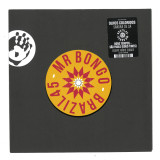
Two 1980s Brazilian boogie bombs from Sandra de Sá and Equipe Rádio Cidade get a remastered reissue as part of Mr Bongo Brazil 45’s series.
Sandra de Sá’s ‘Olhos Coloridos’ is an ‘80s MPB/boogie jam, taken from her self-titled 1982 LP on RGE Brazil, that sits perfectly alongside the likes of Tim Maia, Marcos Valle, Robson Jorge and Lincoln Olivetti. No surprise then that Lincoln Olivetti and Robson Jorge feature on the track, backed by some of the members from Banda Black Rio. A joyous combination of funk basslines and dreamy Rhodes that marry with jubilant horns and Sá’s incredible vocal tones.
On the B side, Equipe Rádio Cidade ‘Bons Tempo Sao Paulo (Good Times)’ was originally released on a rare promo only 7 inch from 1980. Giving a Brazilian boogie makeover to Good Times by Chic / Rapper’s Delight by Sugarhill Gang, the track is voiced by radio DJs from Sao Paulo wishing their listeners a Merry Christmas and Happy New Year.
This replayed version, heavy on the clavinet with a samba-infused, cuica-laced percussion breakdown, gives a true Brazilian spin on one of the most distinctive melodies out there.
Remastered with refreshed artwork.
Turma da Bênção – A Semba Gathering Across Generations
Conjunto Angola 70 & Paulo Flores
The Turma da Bênção project brings together Conjunto Angola 70, a collective dedicated to recreating and preserving the golden-era sound of Angolan music from the 1970s, and Paulo Flores, one of the most important ambassadors of semba worldwide and one of the creators of kizomba. Throughout his career, Flores has built bridges between tradition and modernity, helping shape the global understanding of contemporary Angolan music.
Recorded in Lisbon in 2018 in an intimate “roda de semba” setting, informal jam sessions rooted in collective rhythm and storytelling, Turma da Bênção gathers legendary musicians such as Botto Trindade (guitar), Joãozinho Morgado (congas) and Teddy N’Singui (guitar); mid-generation artists including Galiano Neto (percussion), Paulo Flores (vocals and artistic direction) and Pirika Duia (viola); and younger creators such as Mayo Bass (bass), Jéssica Pina (trumpet) and Armando Gobliss (keys).
The result is a powerful dialogue between eras. Classic Angolan repertoire meets new compositions, all deeply rooted in semba — the rhythmic and poetic foundation from which kizomba later emerged.
The album revisits emblematic songs such as Runfo da Liberdade, Memórias de Gui and Lamento de Duia, while introducing new works including Morgadinho, Catuta 45, Boas Festas Conterrâ and Réveillon, the latter awarded Semba of the Year at the Angola Music Awards in 2020.
Before this LP, Keep On Pushin Records released the singles Turma da Bênção presents: Joãozinho Morgado and Turma da Bênção presents: Botto Trindade, building anticipation for what now becomes the label’s first full-length vinyl release.
Issued on vinyl in the year Angola celebrates 50 years of Independence, Turma da Bênção stands as a symbolic statement, honoring the elders, empowering the present generation, and ensuring that the pulse of semba continues to resonate across borders.
Turma da Bênção is more than an album. It is a rare intergenerational encounter and a living celebration of Angola’s musical heritage.
Stupid Sexy Paulo is a genre-blending odyssey from Paulo and the Problems, bringing together Fogwood Records labelmates for a truly collaborative experience. Fusing indie rock, R&B, jazz, and hip-hop, the album showcases the collective energy of the label, blurring genre lines with effortless cool. A bold and playful statement, Stupid Sexy Paulo captures the spirit of creative freedom and the power of collaboration
LINEAR LABS: Sao Paulo läutet eine neue goldene Ära musikalischer Genialität ein, die durch den Maestro Adrian Younge definiert wird. Eine außergewöhnliche psychedelische und gefühlvolle Erfahrung bietet "Adrian Younge presents Linear Labs: Sao Paulo", eine Zusammenstellung von neuen Songs, die die musikalische Brillanz von Adrian Younge mit Künstlern aus der ganzen Welt präsentiert. Im Wesentlichen enthält das Album jeweils einen unveröffentlichten Song aus einer Reihe von bevorstehenden Alben, die Younge für Linear Labs produziert hat, darunter "Something About April Ill", der dritte Teil von Younge's Meisterwerk-Trilogie, und ein neues Blaxploitation-Abenteuer von Hip-Hop-Legende Snoop Dogg, mit dem Titel "Don't Cry For the Devil".
Dance and drama began for Paulo Alvarado in 1992 when Sabrina Castillo, Bettina Barckhausen, Joam Solo, Xavier Pacheco, and Alfredo Porras invited him to create the music for their choreographic and theatrical productions as an ethereal actor who is not seen but heard; a sound that is not merely an occasion to "musicalize" the stage production; music that does not merely adorn or incidentally accompany the movement and text, but that acts.
This is how he soon had the opportunity to work on the stage production of Sophocles’ OEDIPUS REX (Edipo Rey), the first of several plays for which Alvarado composed music at the request of Luis Tuchán one of the revered theatrical directors from Guatemala. With him, they also worked on Shakespeare’s Macbeth, which carried the subtitle "Asesino del Sueño" (Sleep Murderer). Later, as an example of another area of action, and at the request of Dennis Leder one of Guatemala's leading artists from the past three decades and Ana Asturias who had worked with the Guatemalan Dance Company, he created the music for a dance-installation called, fittingly, "Lederana" mixing both words from their name. Around that time, he also began composing and presenting music for productions by Guatemalan authors, such as the drama by Rubén Nájera, "Sacra Conversación", directed by Joam Solo.
These pieces, contained on Side A of the album, represent only a very brief sample of an era immersed in theatre and other performative projects where more than forty theatrical and choreographic pieces where created in a span of three decades, and consist of his valuable contribution to the soundtrack of dramatic theater and contemporary dance in Guatemala.
Separately, the title piece of this album, ANTIGUA, found on Side B, was designed for the exhibition of
engravings, lithographs, and digital prints by Roberto Godoy, Antigua Estampa de la Vida Mía. It gathers musical extemporizations for the dance we invented at the moment of inaugurating the photographic exhibition by Rocío Villanueva, Los Mutantes de los Apegos; the fifth movement of my String Quartet No. 5 (version for six cellos); Exiliados en Tierra Propia(introduction to my song Púrpura de Vida y Sentimiento); and Las 56 (from the film Después del Fuego), dedicated to the young women wounded and killed on March 8, 2018, in a so-called "safe home" in Guatemala City. This LP unites many of Paulo's most experimental works and serve as a small tribute to his life, trajectory and to all those who, without reservation, dedicated and invested resources in his music catalogued by himself as one of the main ways to celebrate human life: art.
One of the finest Brazilian jazz funk fusion albums ever recorded; thoroughly deserving of its cult status. First official reissue outside of Brazil.
Cesar Camargo Mariano is a celebrated Brazilian jazz pianist, composer and producer, born in Sao Paulo in the 1940's. He has played and worked with the likes of Elis Regina (to whom he was married at one point), Som Tres and Sambalanco Trio and still plays very regularly today.
'Sao Paulo Brasil' saw Mariano and co. step deep into jazz funk/fusion territory - and nail it. Tight, tough drum grooves, intricate arrangements, layers of synthesisers, percussion and FX transport and tell a story from the first beat.
Brazilian-American power trio São Paulo Underground (Rob Mazurek, Mauricio Takara & Guilherme Granado) align their chakras with Tenerife electronic pranksters Tupperwear (Mladen Kurajica & Daniel Garcia) for an anything goes EP session of tropical jazz, Chicago post rock and general head scratching psych chants.
Recorded live in 2016 in a disused kerosene tank in Santa Cruz de Tenerife, Canary Islands after a week long residency. Now recompiled by the Keroxen label and presented here in its ripest form, certified ready for human consumption.
Each member plays multiple roles in creating Saturno Mágico’s unique organic evolving sound. Mazurek plays cornet and modular synths; Takara’s on drums, cavaquinho and electronics, whilst Granado plays keyboards, synthesizers, and sampler. Tupperwear add to the organic flow with Kurajica on various synths and keyboards whilst Garcia excels on electronics, live sampling, guitar and voices.
Another unique document from the Keroxen Label, exponential Island music and insular collaborations spilled out onto the world – so much more to come, blink it and you’ll miss!
"Cande Y Paulo’s debut album, recorded and produced in LA alongside multi-Grammy award winning Larry Klein (Joni Mitchell, Herbie Hancock), is a beautiful collection of re-worked songs including, ‘I Fall In Love Too Easily’, ‘Summertime’, ‘Treaty’ ‘The Thrill Is Gone’, ‘Sugar Mountain’, ‘Tuyo’ and of course, the song that started it all for the duo, ‘Barro Tal Vez’. Media: Clash video premiere, El Dia feature, VENTS magazine feature, Mahogany Sessions (live session), BBCR6 play (Guy Garvey), Tiny Desk, Spindle Magazine. ""The Argentinian duo have a spellbinding approach”
- CLASH. “expect big things from this duo“ – Gregory Porter."
Guitarist Paulo Morello and his three equally talented co-musicians merge jazzy bop and the variety of rhythms, forms and moods of Brazilian music into something new and beautiful.
Paulo Morello has put together an exquisite band for ‘Sambop’, Lula Galvo (born 1962), is the star guest from Brazil on the acoustic guitar and one of the masters of his profession, who has played with Caetano Veloso, Rosa Passos, Ivan Lins and Guinga.
The rhythmic drive is provided by Eduardo ‘’Dudu’’ Penz on electric bass and Mauro Martins on drums - two Brazilians living in Switzerland, for Paulo Morello ‘’the best Brazilian rhythm section in all of Europe’’
’La Macarena’ is one of the brightest lights in Barcelona’s glimmering nightlife, and a landmark of the Spanish techno scene. 17 years in daily business brought thousands of electronic artists behind the decks and countless dancers and electronic music lovers on the floor of the legendary micro club. The new music label ’Macarena Musica’ features musical contributions by ’Macerena’ resident artists and special guests - all of them share a big love for ’La Macarena’ and Barcelona. The passionate crafted releases come as limited vinyl-editions and extended digital packages, complete with expressive black-and-white artworks, capturing the atmosphere of the club and the streets of Barna.
For the debut release, ’Macarena’ longterm-resident Patrick Zigon teamed up with his friend Paulo Olarte for ’Belleza Tropical’ - a declaration of love to the club and the heart warming vibe of Barcelona, which is strongly coloured by the latin way of life. It’s not surprising at all that this beautiful inspiration led Patrick Zigon to a tropical excursion into the deep cosmos of latin-infused Techno and House music. As in many previous collaborations, Paulo Olarte refines the productions of the Berlin-based producer with his naughty vocals, resulting in a poetic and love-driven statement for the latin familia. ’Belleza Tropical’ is the first glimpse into Zigon’s third studio album ’Between The Lines’, coming up in summer on his ’Traumraum’ imprint. Beside the Original and Instrumental versions, the single features remixes by the Spanish master of hypnotic techno, señor Eduardo De La Calle, Paulo Olarte and Blanali (digital only). Desde Barcelona con amor!
The funk king of Sweden is back! After having major success in the 1990s, selling hundreds of thousands of records all over the world and touring with the likes of Tina Turner, Paulo Mendonca returns with 'Does Anybody Wanna Funk'
In the early 1990s Mendonca released three chart-topping albums. Now, his first full length release for eighteen years is easily identifiable by his signature guitar sound and funky grooves, the intense playing and strong melodies topped off with tongue-in-cheek lyrics.
The vinyl version of the album includes two exclusive tracks that are not on the CD version plus a download code for a high resolution 24 bit/96 KHz digital download.
Tracks: BBB / Me and My Friends / Yeah Yeah Yeah / Birds and the Bees / Heaven / Diving In (exclusive to the vinyl version) / 21 Century / On Top / Music is the Power / Honey / Doggystyle / Someone's Lover (exclusive to vinyl version)
restock
RON TRENT follows up his first "SPACES AND PLACES" 12" (FVR017) with this stunning new house single on his own MUSIC AND POWER imprint. The A-side is "SAO PAULO SOUND SYSTEMS" b/w "NEW YORK CITY COUNTRY CITY". Full color labels featuring the tag "There was a time when music meant everything".
- A1: Listen To The Music' - Ft The Doobie Brothers & Ellis Hall
- A2: Everlasting Arms' - Ft Dr. John, Luke Winslow-King, Vasti Jackson & Roots Gospel Voices Of Mississippi
- A3: All Along The Watchtower' - Ft John Cruz, Cyril Neville, Ivan Neville, Louis Mhlanga & Warren Haynes
- A4: Natural Mystic - Just A Little Bit' - Ft Jack Johnson, Paula Fuga, Afro Fiesta, Donald Kinsey & Lee Oskar
- A5: Skin Deep' - Ft Buddy Guy, Tom Morello & The Chicago Children's Choir
- B1: Chan Chan' - Ft Teté García Catulra & Pancho Amat 'Africa Mokili Mobimba' - Ft The Preservation Hall Jazz Band & The Tpok Jazz Band (From Congo To Congo Square Usa)
- B2: Ahoulaguine Akaline' - Ft Bombino & Lee Oskar
- B3: Rasta Children' - Ft Paulo Da Luz & Blue King Brown
- B4: Congo To The Mississippi' - Ft Afro Fiesta, Grandpa Elliott, Vasti Jackson & Leon Mobley
- B5: Bring It On Home To Me' - Ft The Late Roger Ridley (Singer From Pfc's 103M Views: Stand By Me), Alice Tan Ridley (Roger's Sister), Grandpa Elliott (Pfc Star) & Karl Denson
'Listen To The Music' is the fourth star-studded 'Songs Around The World' album and video series from the world-renowned Playing For Change organization. It features audio recordings of hit rock and world-beat songs, along with a compelling series of performance videos in which Playing For Change's unique recording process is documented to great effect. each song is multi-track recorded and videotaped in multiple picturesque locations around the world by visionary producer and hilanthropist Mark Johnson. The full 12 song project features more than 200 Artists and was recorded in 25 different countries. Featured stars include The Doobie Brothers, Ellis Hall, Jack Johnson, Dr. John, Warren Haynes, Cyril and Ivan Neville, John Cruz, Preservation Hall Jazz Band (New Orleans), TP OK Jazz Band from Congo
(Kinshasa), John Densmore, Bombino, Buddy Guy, Waddy Wachtel, Roots Gospel Voices of Mississippi, James Gadson, Reggie McBride, Karl Denson,Roberto Carcasses, Mamadou Diabate, Lee Oskar,Anders Osborne and Pancho Amat.
Now available on vinyl.
- A1: Planet Of The Simius
- A2: Living It Up Feat Enda Gallery
- A3: The Flute Song
- A4: Flashback Feat Kilnamana
- A5: Spanish Footwork Feat Ana Menjibar & Ana Sola
- B1: Discoteca Basica
- B2: Toda La Noche Feat Mnkybssn
- B3: La Hacienda
- B4: Space Jam Feat Kelvyn Colt
- B5: Estrellita Feat Chava Rym
- B6: Good Bye Simius
- C1: The Flute Song (Paul Kalkbrenner Remix)
- C2: Living It Up Feat Enda Gallery (Ada Remix)
- C3: Spanish Footwork Feat Ana Menjibar & Ana Sola (Baal Remix)
- C4: La Hacienda (Paulo Olarte Remezcla Papaya)
- D1: Planet Of The Simius (Dirty Doering Remix)
- D2: Planet Of The Simius (Hidden Empire Remix)
- D3: Spanish Footwork Feat Ana Menjibar & Ana Sola (Magit Cacoon Remix)
Max Loderbauer, who has so far made consistently engaging contributions to the Arjunamusic family, is back to lend his unique interpretive skills to the master recordings for the Brightbird album by João Paulo Esteves da Silva, Mário Franco and Samuel Rohrer. Loderbauer has set himself up for a chal- lenge, since the original album's completely improvised flow of small-ensemble, conversational jazz feels complete enough without outside intervention. However, Loderbauer's role as electronics operator in the similarly attuned Ambiq trio has already shown that, through his mastery of tone color, he has a talent for teasing out the additional hidden details within an apparently 'complete' sonic environment. It's a task he mana- ges to accomplish without ever overriding or contradicting the cohesive message provided by his collaborators.
Adding to the challenge here, Loderbauer chooses to re- mix using only sounds from the original recordings. By doing so, it might seem he is willfully denying himself the chance to use his own signature tools and turn Brightbird's source materi- al into stunningly new electro-acoustic hybrid blooms. Yet Loderbauer succeeds here by becoming something more like a translator than an augmenter - he finds a way to make mea- ningful syntactical changes to the trio's rich and versatile vo- cabulary, and once again unveils a verdant world of hidden details in the process.
The A-side 'Trusting Heart/Cosmos' has an anxious tone introduced by a set of Doppler-effected piano notes that seem to melt in the sun, and is soon complemented by a va- riegated, chattering rhythm line. Here Loderbauer builds up a tactile tension between rhythmic certainty and sharp-angled, de-tuned, and occasionally scrambled instrumentation, framing a disorienting (yet engaging) virtual space where ob- jects' bright hues rapidly change as they contract and expand along multiple dimensions. For the b-side 'Noontide', Lo- derbauer switches to a more focused and streamlined idiom with an uncanny ease, riding along steady waves of sequencer patterning and silvery, resonant shiverings. Reverberating, ho- lographic piano again provides the tonal center here, and the notes ring with a forward-thinking optimism not far removed from classics of the 'Krautrock' era.
Current supporters of all the artists involved will find this to be an invigorating synopsis of their work to date, while newcomers will be treated to a soundworld where skillful fu- sion (the act itself, rather than the music genre with the same name) is constantly on display.
- A1: Black Gold
- A2: Warrior / Sankofa"Feat. Camp Lo, Deion & Mnyykk Shevy
- A3: Trust Me" Feat Sha'leah Nikole & Sir
- A4: Home" Feat Damani Nkosi
- B1: Almost There" Feat Sir
- B2: Live It Up" Feat Iman Omari
- B3: Fight On" Feat Preston Harris Damani Nkosi
- B4: Spider's Jam" Feat Georgia Anne Muldrow - Javonté
- C1: Slip Away" Feat Amaru
- C2: Again" Feat Fernando Pullum Community Arts Center, Ryck (Jane/ Marcus Zgarvey Elementary
- C3: Lighters
- C4: Still A Lady" Feat Tiffanie Cross, Shava'sha Dickerson & Wyann Vaughn
- D1: Duality" Interlude
- D2: São Paulo Feat Punch - Rose Gold
- D3: Few Days Feat Javonté & Marknoxx
- D4: Renewed
ll Camille, LA hip hop's female perspective.
Ill Camille has been a vital member of the LA music scene for some years. Kendrick Lamar used her vocals prominently for the 'good kid, m.A.A.d city' track 'Sing about me', she has been working with other TDE artists occasionally and spend a lot of time writing for different projects Terrance Martin was involved with.
At the same time Camille was developing her own material with her fellow peers such as MNDSGN, Iman Omari, DJ Battlecat, Like (Pac Div) Georgia Anne Muldrow & SIR who are all featured on her album 'Heirloom' just like TDE co-president Punch. 'Heirloom' productions range from smooth, g-funk esque west coast beats to live & organic soulful beats, working as the perfect backdrop for Camille's powerful, intelligent and thought thru lyrics
The album is deeply personal revolving around the issues that mater in her life from friends and family, her role as a woman and the heirloom of her and her surrounding: 'I feel like everyone are heirlooms of our mothers and fathers. An heirloom is just something that's passed down through a family. We get heirlooms in the form of game, encouragement or wise words. I know everyone has an aunt or uncle that's given them some bars about life in general. I have a village around me that have given me heirlooms in the form of conversations'.
"Between Stars" is the debut album from Barcelona based Venezuelan producer and DJ Maurice Aymard. More than two years in the making, 'Between Stars' has been a labour of love for Aymard as he travelled the globe to collaborate with musicians and singers in Barcelona, Berlin, London and Venezuela who could help to bring his vision to life. Released on Aymard's own Galaktika Records (Garnica, James Teej & more), 'Between Stars' was recorded entirely live and features contributions from the likes of Brazilian star Gui Boratto, Columbian singers Andrea and Paulo Olarte, Argentian guitarist Mariano Godoy and many more, the resulting album takes the house music template and expands it to a grandiose level. In an age when anything that isn't packed full of buzzsaw bass and 'sick' drops gets labelled as Deep House, "Between Stars" is the real deal, and from the first bars of the albums opening (and title) track, 'Between Stars' quickly establishes itself as something truly special, a 'house' album that not only works as a coherent whole but sounds as good at home, by the poolside or in a club at 4am. If 'live' house albums have in the past had a tendency to verge on the polite, Aymard's skill as a producer and experience as a DJ keeps things rooted in club culture and nearly every track off 'Between Stars' deserves to find its way into DJ sets over the coming months. Rather than smooth things out the live instrumentation instead adds an energy to the tracks and the subtle touches, that the likes of guitarist David Rondon brings to 'El Final', lift the album up to another level altogether. Since moving from Venezuela to Spain and launching Galaktika Records, Aymard has become an integral part of the European house music scene. With releases on the likes of Berlin's Moodmusic, Hamburg's Einmusika and Denmark's Tic Tac Toe Records, and remix credits for artists such as Mario Basanov, Compuphonic and Combo, Aymard has built a reputation for delivering quality underground house music and with his debut album Aymard looks set to secure his position as one of the scene's most innovative artists.
- A1: Les Masques - Il Faut Tenir (1969)
- A2: Isabelle Aubret - Casa Forte (1971)
- A3: Christianne Legrand - Hlm Et Ciné Roman (1972)
- A4: Jean Constantin - Pas Tant D'chichi Ponpon (1972)
- A5: Billy Nencioli & Baden Powell - Si Rien Ne Va (1969)
- B1-: Marpessa Dawn - Le Petit Cuica (1963)
- B2: Jean-Pierre Sabar - Vai Vai (1974)
- B3: Sophia Loren - De Jour En Jour (1963)
- B4: Isabelle - Jusqu’à La Tombée Du Jour (1969)
- B5: Sylvia Fels - Corto Maltesse (1974)
- C1: Frank Gérard - Comme Une Samba (1972)
- C2: Ann Sorel - La Poupée Des Favellas (1971)
- C3: Charles Level - Un Enfant Café Au Lait (1971)
- C4: Andrea Parisy - Les Mains Qui Font Du Bien (1970)
- C5: Audrey Arno - Quand Jean-Paul Rentrera (1969)
- C6: Aldo Frank - T’as Vu Ce Printemps (1970)
- D1: Christianne Legrand - Cent Mille Poissons Dans Ton Filet (1972)
- D2: Clarinha - Lemenja (1970)
- D3: Hit Parade Des Enfants - Aquarela (1976)
- D4: Jean-Pierre Lang - Tendresse (1965)
- D5: Magalie Noël - Une Énorme Samba (1970)
- D6: Françoise Legrand - La Lune
Ever since the late 1950s bossa-nova revolution, Brazil’s influence on French music has been undeniable. Pierre Barouh, Georges Moustaki and a vast array of lesser known artists, all made the Musica Popular Brasileira (MPB) an axis of promotion at the service of a cool and metaphysical, modern and mixed Brazilian lifestyle. Some were seduced by the poetic languors of the bossa, some were looking for fun, and others just loved the American hybridization of jazz-bossa, jazz-samba.
What is bossa nova? One of its creators, Joao Gilberto said: "Its style, cadence, everything is samba. At the very start, we didn't call it bossa nova, we sang a little samba made up of a single note - Samba de uma nota so .... The discussion around the origins of bossa nova is therefore useless”. It is nevertheless useful to remember that these magnificent Brazilian songs, which the guitarist describes as samba, were shifted and balanced around improbable chords. "I like things that lean, the in-betweens that limp with grace," said Pierre Barrouh, quoting Jean Cocteau.
With emotion, arrangements for violin and supple guitar licks, bossa nova rapidly changed. A transformation that can be heard in the Tchic, tchic, French Bossa Nova 1963-1974 compilation, the result of a cultural reappropriation, which traveled through the United States and supplemented itself in France.
A musical revolution that has remained significant, bossa nova was born in Rio. From 1956 to 1961, Brazil lived through its golden years. In five years, the country had invented its modernist style. Elected president in 1956, Juscelino Kubitschek de Oliveira, an elegant man with a broad forehead, brandished a promising slogan: "Fifty years of progress in five years". He quickly got to work. Not worried about increasing debt, he launched the project for a new federal capital, Brasilia, designed by the communist architect Oscar Niemeyer. Volkswagen opened state-of-the-art factories and created the “fusquinha”, the Beetle. In Rio, the Vespa made its first appearance. The Arpoador Surf Club crew run into the “girl” from Ipanema, Helô Pinheiro - the tanned garota ("chick"), between a flower and mermaid, who at 17 walked by the Veloso bar, where the fiery author and composer, Tom Jobim and Vinicius de Moraes, were getting drunk on whiskey. From then on, bossa symbolized cool.
In 1958, Joao Gilberto recorded Chega de Saudade, which the directors of Philips denied, calling it "music for fagots". The marketing director, who believed in it, secretly pressed 3000 78-inch vinyls and distributed them at schools around Rio, creating a tidal wave.
American jazzmen then took over. In particular, trumpeter Dizzy Gillespie and guitarist Charlie Byrd. In November 1962, the Brazilian Ministry of Foreign Affairs funded a "Bossa-Nova" concert at Carnegie Hall in New York, inviting the genre’s pioneers. Unprepared, the show soon turned to disaster. But the troupe was invited to the White House by Jackie Kennedy. The first lady loved "the new beat" and in particular Maria Ninguem, a song by Carlos Lyra, later covered by Brigitte Bardot.
In Brazil, the 1964 military coup quickly ended this euphoria. The destructive atmosphere that ensued pushed many Brazilian musicians to leave, if not to exile. Thus, Tom Jobim, Sergio Mendes and Joao Gilberto arrived to the United States. In New York, Joao Gilberto met saxophonist Stan Getz. At the time, he was married to the Bahianese Astrud Weinert Gilberto, who had a German father. She had never sung before, but she knew how to speak English. Getz therefore asked her to replace her husband on The Girl From Ipanema. The Getz/Gilberto record with Tom Jobim on piano, was released in March 1964. Phil Ramone, the "pope of pop" was in charge of sound.
Bossa nova arrived in Paris through the classic “guitar-voice” channel (Pierre Barouh, Baden Powell, Moustaki…) But France loved jazz and Paris had already welcomed its American contributors. All these good people were to pass through Saint-Germain-des-Prés. The cabaret l'Escale became the Mecca of Latin American sound where one could find Pierre Barrouh and his friends, such as the Camara Trio, samba-jazz aces, whose only record was published by the Saravah label. With a band strangely called Les Masques (a band that included Nicole Croisille and Pierre Vassiliu, among others), the Camara Trio recorded an interesting Brazilian Sound, including the track Il faut tenir which is present on this tasty compilation of rarities.
Other enlightened musicians can also be found on the compilation, such as Jean-Pierre Sabar (songwriter for Hardy, Auffray, Leforestier ...) and the French pop rock organist Balthazar. In 1975, Sabar recorded Aurinkoinen Musiikkimatka on a Finnish label, which featured the crazy Vai, Vai, included on this record. We are now following the footsteps of Brazilian electronic musicians such as Sergio Mendes, Eumir Deodato or Marcos Valle who created funk and disco sounds on their keyboards and synthesizers. A style that influenced Véronique Sanson when she wrote Jusqu’à la Tombée de la nuit in 1969 for Isabelle de Funès, the niece of Louis and a great friend of Michel Berger - Sanson did end up singing this track on her 1992 Sans Regret record.
The pinnacle of exoticism and travel, Sylvia Fels’ Corto Maltese includes bongos, sea mist and ocean sounds. The title was taken from Jacky Chalard’s concept album written in 1974, Je suis vivant, mais j’ai peur (I am alive, but I am scared), based on Gilbert Deflez’s science fiction novel.
However, bossa nova extended the scope of popularity. "In the 1970s, I was a fan of Sergio Mendes, Getz / Gilberto. I fell in love with this music that I knew because I had been an orchestral singer, " explained Isabelle Aubret, who in 1971 delivered a composite record of covers by the very funky Jorge Ben, Orfeu Negro, Tom Jobim, Vinicius de Morais and Jean Ferrat. "I recorded this album for Meys Records in Paris, far from Brazil, with wonderful musicians, François Raubert, Roland Vincent, Alain Goraguer...". The latter wrote the arrangements for Casa Forte, a very percussive title borrowed from Edu Lobo, one of the initiators of the bossa who spent time in California. "Jazz and bossa came together and produced very rhythmic music. I love singing, it allows me to dream, to have fun, to feel a high on stage, and these songs brought me joy, made me swing, my singing felt like a dance.”
The world tours of French singers and their desire for the tropics, often brought them to Rio with its hills, forests, caipirinhas and tanned bodies. There are surprises though, like this Iemenja (Iemenja is the goddess of the sea in the Afro-Brazilian candomblé religion). Not unlike the composer and musician Jean-Pierre Lang, based in Sao Paulo, Claire Chevalier taught Brazil to Brazil. In 1970, the singer and painter published a 45-inch vinyl, Mon mari et mes amants (My husband and my lovers), under the improbable pseudonym of Clarinha (little Claire). She was then living in Rio, with her husband, Joël Leibovitz, who founded a band called Azimuth, and who owned a record label specialized in "sambas enredos" songs for samba school parades.
For its B side, she asked Pierre Perret to come up with lyrics for a song composed by Carlos Imperial: "Oh goddess of the sea, o goddess Iemenja, I bring a white rose to adorn your long hair ..." . "Perret came to see us, and we had fun, remembers Joël Leibovitz. We wrote Lemenja for fun, we recorded it at the Havaí studio, behind the Central do Brasil the central station. Erlon Chaves, the arranger who worked with Elis Regina, joined us" adding his share of Afro-Brazilian percussions and funky brass to the mix.
There is a common misunderstanding in Franco-Brazilian history: that bossa, admittedly hedonistic, is perceived as funny, even though the poets who wrote the texts are often philosophizing on the human condition. Its French interpreters pull it towards a carnival inspired universe, far removed from its fundamental essence. Thus, Jean Constantin covered the famous Samba da minha terra, an ode to the art of samba written by the classic Bahian composer Dorival Caymmi, renaming it with the enticing title of Pas tant de tchi tchi pompon: "On your pier there is no tchi tchi / when you arch your back, you know everything is alright ”(lyrics by Gérard Calvi). This expedited bossa aims for the absurd, but retains a certain elegance.
Indeed, Jean Constantin was not an idiot, the rather large man had a huge mustache and liked fantasy, (Les pantoufles à papa, Le pacha, inspired by cha-cha-cha-cha, salsa and jazz) but he was also the lyricist of Mon manège à moi interpreted by Edith Piaf, the composer of Mon Truc en plume by Zizi Jeanmaire and the soundtrack of François Truffaut’s 400 Blows. Le Poulpe, published in 1970, from which this bossa is extract, was arranged by Jean-Claude Vannier, an accomplice of Serge Gainsbourg’s Melody Nelson. In short: "There is enough of samba / By looking at the parasol / Because my poor cabeza / Is going to die in the sun".
Even the American actress Marpessa Down, who was at the heart of the bossa nova revolution with her role as Euridyce in Marcel Camus’ film Orfeu Negro, winner of the 1959 Cannes Palme d'or, fed the clichée with Je voudrais parler au petit cuica - "Tell me how you manage to always make people want to dance / It's true, I must admit that I cannot resist your magic" - in consequence, once can hear the cuica, a little drum inherited from the Bantu.
But bossa nova had many angles. Societal, of course, pushing actresses who were symbols of women's liberation like Brigitte Bardot, Jeanne Moreau, or Sophia Loren to engage in the exercise of accelerated bossa. In February of 1963, Sophia Loren made a record in French in Rome, Je ne t'aime plus, featuring the song De jour en jour, a bossa written by two Italians, Armando Trovajoli and Tino Fornai, which was released a little later by Barclay. Bossa accompanied the 1960s, a decade of moral liberation. Ann Sorel, who interpreted La Poupée des favellas, caused a sensation with L’amour à plusieurs, a provocative song written by Frédéric Bottom and Jean-Claude Vannier. As for the actress Andrea Parisy, she displayed her bourgeois cheekiness in Marcel Carné's Les Tricheurs before interpreting Les mains qui font du bien. And Magalie Noël, the friend of Boris Vian, who sung Johnny fais-moi mal, was hired to sing Une énorme Samba, composed by Alain Goraguer (arranger to Gainsbourg, Bobby Lapointe and Jean Ferrat) with lyrics by Frédéric Botton.
But in the end, of what wood is bossa nova made of? The answer is given by Christianne Legrand, daughter of Raymond the conductor, and sister to Michel the composer: "With me, with jà" - jà means "immediately" in Portuguese. In 1972, the singer, an expert in vocal jazz and a member of the Double Six, published Le Brésil de Christianne Legrand. Two songs included on the Tchic Tchic compilation that demonstrate how bossa, jazz, funk, rock, etc. work like a swiss army knife: the music is used to denounce broken systems, or miracles, HLM et ciné roman, Cent mille poissons dans ton filet, two songs from the O Cafona soundtrack, a successful telenovela broadcast, at the time in black and white, on TV Globo. The first was adapted in French by the fighter and friend of the Legrand tribe, Agnès Varda. The second is content with a play on words, jostling them into a summer fun.
Véronique Mortaigne
Renowned Italian jazz master Nicola Conte presents an incandescent limited edition 7" single for Record Store Day 2026. "Terra Em Transe" and "Naquela Base" are brand new tracks from sessions for Conte's forthcoming Far Out Recordings album, drawing deep from early 70s Brazilian jazz and modal hard bossa while underlining the vital role of the arts in social and political struggle.
In Nicola's own words: "Terra Em Transe' is a dedication to visionary director Glauber Rocha and to all free thinkers willing to portray the conflicts, contradictions and lies of those in power around the world." The original composition takes inspiration from Milton Nascimento's vocal harmonies and Tamba 4's sophisticated samba-jazz.
'Naquela Base' is a stunning reinvention of João Donato's classic: pure modal hard bossa recorded entirely live in the studio. Inspired by samba-jazz classics like Tenório Jr.'s "Embalo" and Paulo Moura's "Fibra", the track is carried beautifully by Teppo Mäkynen's masterful drumming, with solos from Gaetano Partipilo on alto saxophone and Pietro Lussu on piano, supported by Ameen Saleem on double bass and Abdissa Assefa on percussion.
Having released music with Blue Note, Impulse! and Schema records, Nicola Conte's relationship with Far Out Recordings has produced his acclaimed Umoja project, his five-part Viagem compilation series, and most recently Viaggio, a compilation exploring Italy's library music renaissance from 1970-79.
'Terra Em Transe / Naquela Base' will be released as a limited edition 7" single for Record Store Day 2026 via Far Out Recordings.
- A1: Panafrican Dub Part1 Feat. Tydal Kamau
- A2: Panafrican Dub Part2 Feat. Tydal Kamau
- A3: Look At You
- A4: Nguê Ghara Feat. Lenna Bahule
- A5: Better Days Feat. Mark Wonder 03 33
- B1: The Government Part 1
- B2: The Government Part 2 Feat. Gengis Don
- B3: The Don Is Coming
- B4: Moto Fire Feat. Vimbai „Vee“ Mukarati
- B5: Kadudu
On "The Afrodub Experience," Umberto Echo takes us on a ride across four continents, exploring 50 years of Afro-Caribbean music history with numerous collaborators.
The inspiration is the Afrobeat of the 1970s, which he discovered through original musicians from Fela Kuti's "Africa 70" band in the Berlin project "Afrobeat Academy" which he began to fuse with dub and reggae.
Mitwirkende
wird veröffentlicht am 17. Oktober 2025
Recorded by Umberto Echo and the musicians in Berlin, Hamburg, Munich, New York, Melbourne,
Kingston Jamaica & São Paulo between 2008 and 2024
Mixed by Umberto Echo & Silvan Strauss, November 2024 at Apollo Studio Berlin
assisted by DJ Tobi Neumann & Robin Ludyga
Produced by Umberto Echo, co-produced by Silvan Strauss
Mastered by Umberto Echo
Artwork by aDUBta
Umberto Echo published by KKBB Publishing/Edition Dubvibes
Drums: Silvan Strauss, Giuseppe Coppola
Drum Programming: Silvan Strauss, Gengis Don, Umberto Echo
Bass: Daniel Stritzke, Oghene Kologbo, Patrick Frankowski, Giorgi Kiknadze
Percussion: Samuel Wootton, Nicholas Ado-Nettey, Umberto Echo, Djakali Kone, Giuseppe Coppola
Guitars: Umberto Echo, Mandjau Fati, Ferdinand Kirner, Oghene Kologbo, Giovanni Agostini
Cora: Sebastian Cuevas, Djakali Kone
Saxes: Ben Abarbanel-Wolff, Florian Riedl, Giovanni Pecorini, I Sax
Trumpets: Benny Brown, Philip Sindy, Sebastian Kölbl
Trombone: Roman Sladek
Keys: Barney McAll, Lionel Wharton, Markus Kuczewski, Umberto Echo, Silvan Strauss, Milo Winter
Vocals: Lenna Bahule, Gengis Don, Vimbai „Vee“ Mukarati, Mark Wonder, Tydal Kamau
Backing Vocals: Runtendo Machiridza, Tariro neGitare, Erica Nevell
Elations Recordings presents "Depois do Silêncio", an intimate, forward-looking acoustic bass, digital keyboard and synthesiser recording by Brazilian avant-garde jazz luminaries Zeca Assumpção and Lelo Nazario. This release celebrates almost fifty years of the duo's friendship and musical affinity, continuing a musical dialogue between long-time collaborators. The duo began working together with Hermeto Pascoal's "Grupo Vice Versa" in the mid 1970s before forging one of Brazil's most adventurous experimental jazz groups "Grupo Um" in 1976; releasing three albums with a shared avant-garde and lateral, exploratory approach to sound fusing jazz and contemporary synthesis with expanded and prepared acoustic playing.
"Depois do Silêncio" reflects the duo's long development of a shared conception of music, resulting in a work that is both timeless and modern. The music on the album was primarily recorded in Nazario's UTOPIA Studio, São Paulo, in 1994, featuring Assumpção on acoustic bass and Nazario on his newly acquired Ensoniq TS-12; these recordings were supplemented with acoustic bass for "Quintal da Memória" in 2018 and completed with an additional layer of rich, complex analog and virtual synthesis following their rediscovery of the material in 2022.
Assumpção's deeply expressive acoustic bass playing forms the backbone of these compositions, augmented by Nazario's expansive and exploratory approach to synthesis, its constantly shifting timbres "making music a living organism, which adapts to situations as they appear." Nazario explains that "although the themes are written, much of the music is improvised based on an organic development of ideas, all intertwined and interrelated exactly as happens in a living organism".
The album title "Depois do Silêncio" (After Silence) references a phrase by the writer Aldous Huxley; "after silence, that which comes nearest to expressing the inexpressible is music". Assumpção and Nazario continue a search for new forms of musical expression, and here they succeed in creating music that "expands the sound of musical instruments, so opening new horizons in the minds of listeners".
Despite immense challenges, SOYUZ have delivered a career-defining album in KROK.
“Krok” means “step” in Belarusian - and for Alex Chumak and his band this word comes with a lot of meaning. It’s the title and theme that ran throughout СОЮЗ (SOYUZ)'s fourth album, reflecting the journeys the band has navigated in recent years, having moved to Warsaw due to political unrest in their homeland of Belarus and the outbreak of war in Ukraine. Embracing the uncertainty became both the inspiration and main lyrical theme for Alex Chumak, SOYUZ’ composer and arranger, who also decided to go a step further and change the language in which he writes songs from Russian, which is used as lingua franca in many post-Soviet countries, to his native Belarusian. The result is nine songs about dreams and outer space, ordinary miracles, things very close and very distant at the same time.
In early 2022, Chumak and original members, Mikita Arlou and Anton Nemahai, joined tens of thousands of Belarusians seeking safety abroad. Resettling in Warsaw, the band released Force of the Wind in October 2022, garnering widespread acclaim, a string of major European gigs, and led to Polish musicians Albert Karch and Igor Wiśniewski joining the band.
Deeper and more melancholic than previous works, KROK is quintessentially SOYUZ, laced with hope, dreams and a celebration of life. Given the difficulties with finding rehearsal and recording spaces in Warsaw and the departure of the drummer Anton Nemahai from the band, Chumak explored alternative options. He reached out to friend and fellow musical collaborator, Sessa, about the possibility of recording the new album in his recently finished studio in São Paulo, with Sessa and Biel Basile coming onboard as recording engineers.
At the tail end of 2024, Chumak and SOYUZ’ new drummer, Albert Karch, made the trip to São Paulo to record the first sessions for KROK. Laid down directly to tape, these sessions featured prominent Brazilian musicians Sessa, Biel Basile, and Marcelo Cabral, with a guest vocal feature by Tim Bernardes recorded at a later date. The final touches were then added back in Europe. Lush string and woodwind arrangements written by Chumak and Karch were recorded at the Polish Radio studio in Warsaw, and Rhodes parts were added by Chumak at Sven Wunder’s studio in Stockholm.
Though primarily recorded in Brazil, KROK is not a Brazilian or MPB album. It blends the band’s Eastern European roots with jazz, folk and global influences. The genre of the music is hardly identifiable: there are folk ballads and jazz-driven pop compositions covered in lush and often dissonant string and woodwind arrangements where each note is placed with care and meaning behind it.
The title track was the first song Chumak wrote in Belarusian as an adult, making for a fitting opener and one of the band’s finest tracks. Darker than most of SOYUZ’ songs, the tensions lift and lighten as the track progresses. The cinematic library jazz of 'Voo Livre', with ghostly vocals sung by Ciça Góes and Ina, feels like a modern twist on the Italian library composer Alessandro Alessandroni through its sublime choir and woodwind orchestration. Elsewhere, the heartfelt 'Lingua Do Mundo', composed, written, and sung by Chumak and the incredible Tim Bernardes, features one of the standout string arrangements from Chumak and Karch. 'Cichi Karahod' is an instant SOYUZ classic, almost Pat Metheny-esque as it opens, with the acoustic guitar and bass riff transitioning into jazzy AOR / pop-folk territory. The record closes with 'Smak žyćcia', a gentle, dreamy spoken-word poetry piece in Japanese by singer-songwriter Manami Kakudo.
- A1: Eu Dei - Ary Barroso
- A2: A Briga - César Costa Filho-Walter Queiroz
- A3: Bom Conselho - Chico Buarque De Holanda
- A4: Mais Cedo Ou Mais Tarde - Osmar Milito-Lilian Knapp
- A5: Morre O Burro, Fica O Homem - Jorge Ben
- A6: Um Jeito Novo De Viver - Mauricio Duboc-Carlos Colla
- B1: Nem Paletó, Nem Gravata - Marcos E Paulo Sérgio Valle
- B2: Dose Prá Leão - César Costa Filho-Walter Queiroz
- B3: Tem Dendê - Reginaldo Bessa-Nei Lopes
- B4: Regra Tres - Toquinho-Vinicius
- B5: Quem Mandou (Pé Na Tábua) - Jorge Ben
- B6: Minhas Razoes - Antonio Carlos E Jocafi
- B7: Chiclete Com Banana - Gordurinha-Almira Castilho
Originally issued on the ATCO/Continental label in 1973, Paleto, Nem Gravata (1973)constitutes a hidden gem from Brazil's golden era of samba-jazz.
Osmar Milito, a master of piano and rhythm, blends breezy Bossa Nova with soulful samba and rich MPB textures.
Backed by lush arrangements and a laid-back vibe, this album captures the effortless cool of 1970s Rio.
Featuring standout tracks like Jorge Ben's "Morre o burro, fica o homem" and
"Quem mandou (Pé na tábua)," Milito's work is both sophisticated and deeply groovy.
A must-listen for fans of Marcos Valle, Azymuth, or Arthur Verocai.
It began with a cassette tape entitled 'Pleased To Meet You' gifted to us at Sessa's Fasching, Stockholm show by Yann Dardenne, the multi-tasking tour manager/sound engineer/producer/merch stall worker and co-owner of Seloki Records. On first listen, the selection of underground Brazilian artists from the Seloki's roster was superb, however, one song stopped us in our tracks. The hauntingly captivating ' GOSTO MEIO DOCE' by Nina Maia and Francisca Barreto, gave us a taste of Nina's ethereal, addictive voice and we knew we needed to hear more. Born in Minas Gerais but now based in Sao Paulo, the 22-year-old has already packed a lot into a relatively short space of time. The singer, songwriter, instrumentalist, and producer, has already collaborated on the soundtracks for six Brazilian feature films, including a track with the vocalists Maria Gadu, Iza, and Liniker. But things enter a new exciting era with this, her remarkable debut album entitled 'INTEIRA', which translates to English as 'whole'.
As much inspired by Billie Eilish and Rosalia, as Milton Nascimento and Toninho Horta and not sounding like other records coming out of Brazil, 'INTEIRA' is unique. Though rich in its Brazilian heritage, inspired by samba cancao, MPB, and the Clube da Esquina movement, it also channels influence from bands such as Portishead and Massive Attack, mixed with jazz, contemporary leftfield and electronic pop artists. Musically, it is not easily pigeonholed, with beautiful, well-crafted songs, sophisticated arrangements, eloquent vocals and intimate lyrics. Each track reflects different moments and stories from Nina's youth but with dialogues, feelings, and questions that span generations and resonate with all. This ambitious debut album is Nina's vision and sound, expressing herself without constraints and making music with her friends. Featuring a lineup of Thalin (drums), Valentim Frateschi (bass), Francisca Barreto (cello and vocals), Thales Hashiguti (viola and violin), Yann Dardenne (acoustic guitar and co-producer) and Nina on piano, Rhodes, guitar and production. The album led to a nomination in Paulista Association of Art Critics (APCA) award's 'Breakthrough Artist' category, who also listed 'INTEIRA' as one of the 50 best albums of 2024.
It also received support from Bandcamp Weekly and Jamz Supernova on BBC 6 Music. Released digitally by Seloki Records in Brazil in 2024, Mr Bongo in partnership with Seloki Records now present this new, deluxe worldwide edition that includes four additional songs. These comprise the brand-new exquisite 'MANHA', as well as an original twist on Vinicius de Moraes' classic 'Serenata Do Adeus'. Elsewhere you'll find a live recording showcasing Nina's remarkable energy on stage courtesy of 'DE DENTRO' and 'GOSTO MEIO DOCE' with the amazing musician/vocalist Francisca Barreto, where our whole story began. Here at Mr Bongo, we are honoured to release music by such a remarkable new talent - one whose musical trajectory is most certainly about to soar.
Zopelar has built a distinguished place in the Brazilian electronic music industry. He is known as a complete and versatile DJ and music producer, and is a key figure in São Paulo’s underground music scene.
With his signature “retro-futuristic-funky-groovy” style, Zopelar has made some celebrated albums and EPs released by labels like Apron Records, Clone Records, Tartelet Records, Soul Clap Records and others.
A prolific producer and sound designer, Zopelar’s work extends beyond music production into the realm of contemporary art and film scoring. His sound pieces have been showcased in prestigious
exhibitions and galleries, including New Museum (NYC) and the Venice Biennale.
Zopelar is now back for his third solo release on Apron Records - LP titled "Call it Love” The first single "We Can Make It" feels nostalgic but with a modern to the future twist which compliments the Apron DNA! It features Brazilian artist Ashira, she lays her beautiful voice over Zopelar classic R&B production..
The second single Je t'aime features French born Brazilian based L’Homme Statue plus Amsterdam’s Retromigration” giving a tropical and very hot Brazilian house for the dance floors and the last single
features US Virgina Beach very own MC “Hernbean5150” With a soulful downtempo smooth production with a perfect complimentary vocal, Some say he reminds them of MF Doom”.
Overall this LP slams in every way and its very well put together, whether at home, driving, in nature or in the clubs, it takes you on a journey for your listening pleasure!
Roundabout is a four-piece collective from Austria that blends influences such as NuJazz, R'n'B and Neo Soul into a sound driven by groove, complexity and emotions.
All songs written, composed and performed by Roundabout: Moritz Lindner, Alexander Danninger, Manú Kreutzer and Henrik Stöllinger.
All tracks produced by Roundabout. Mixed by Paulo Germano. Mastered by Sam Irl. Recorded at Lindner Studios.
Artwork by Leonel Perez Mayoral. Vinyl design by Neue Sachlichkeit.
Featuring:
Timon Grohs - Guitar (1,2,3,4)
Jamie Leeming - Guitar (5)
Matthias Zeindlhofer - Trombone (1,5)
Renato Cohen, the Brazilian techno and house producer and DJ best known for his iconic track *Pontapé*, has been a powerhouse in the electronic music scene since the late '90s. Born in São Paulo in 1974, Cohen's career has spanned nearly three decades, marked by releases on some of the industry's most respected labels, including Carl Cox's Intec, Technasia's Sino, Marc Romboy's Systematic, Pets Recordings, and Defected. Known not only for his studio work but also for his dynamic live P.A. shows, Cohen is a true legend. We had the fortune to connect with him after a Boiler Room set in Brazil where he played *Sting the Floor*, a true floor-filler that electrified the room. Since then, our friendship has flourished, leading to this powerful EP. The EP features « Roaring », an outstanding house track that channels Cohen's heart and soul into every arpeggio and swirling melody, bringing to mind the best of Todd Terje's hypnotic grooves. It's a piece that builds momentum with finesse, crafting a sound both grand and intimate, resonating with every listener. « Roaring » is Cohen's homage to house music—a track that encapsulates his passion and mastery. Accompanying « Roaring » is « Wet Desert », a high-caliber production that's as immersive as it is intense. The track carries a deep, evocative energy, combining Cohen's deft touch with an expansive, desert-inspired soundscape. Through our connection, we've brought in The Floorfillers for an acid remix of « Roaring », putting a fresh twist on Cohen's original with a pulsating acid bassline that's reminiscent of our own « Edit1 ». It's a version that takes « Roaring » to new, harder-hitting heights, perfect for late-night dance floors. To complete this standout release, Skylax's own Maltitz has crafted a stunning Italo-Balearic remix, drawing from the spirit of the late David Mancuso. With its warm, nostalgic vibes, Maltitz's remix adds a lush, sun-soaked dimension to « Roaring », perfect for balmy evenings and open-air gatherings. This EP marks a powerful comeback for Renato Cohen, celebrating his career while pushing forward with new, fresh sounds that honor his legacy.
- A1: Everything Is Real
- A2: Antibodies
- A3: She's On The Radio
- A4: Life In A New Motion
- A5: Tropical Suite São Paulo
- B1: Pretty Tall Girls
- B2: Budapest
- B3: Down On Serpent Street - Alternate
- B4: The Paper Bride
- C1: The Wild
- C2: I Shall Take It Anyway
- C3: The Bird Is On Fire
- C4: Jesus Told Me Too
- D1: Country Leather
- D2: Carrie Ann
- D3: The Word
- D4: The Music Never Dies
Poni Hoax, a French band born in the early 2000s under the impulse of Laurent Bardainne, immediately emerged as the union of converging forces: on one side, the precision of a composer and instrumentalist breaking away from jazz conservatory traditions; on the other, the magnetic presence of Nicolas Ker, a terminal new wave crooner with a sepulchral voice. Surrounded by Arnaud Roulin on keyboards, Vincent Taeger on drums, and Nicolas Villebrun on guitar, they made an instant mark with Budapest—dark and haunting—followed by the unstoppable She’s on the Radio, crafting a unique identity that blended the venomous elegance of Roxy Music, the tension of New Order, and the fervor of Larry Levan. With Images of Sigrid, Poni Hoax achieved the miracle of an instant classic before continuing their journey with A State of War and Tropical Suite, sonic odysseys haunted by memory and distant horizons. On stage, it was either an apocalypse or a revelation—a Formula 1 driven by a gang of Gremlins, a blazing energy leaving only burning embers in its wake. The adventure came to a tragic end with the passing of Nicolas Ker in 2021, as the notes of Laurent Bardainne’s saxophone rose into the gray skies of Père-Lachaise, the final echo of a dazzling odyssey.In 2025, Poni Hoax celebrates its 20th anniversary with the release of Greatest Hits: Everything is Real.
SATYA is thrilled to announce the next chapter in its vinyl-only catalog: an evocative EP by São Paulo-based producer Dru. Scheduled for release on March 21, 2025, this record captures the serene yet dynamic energies of Dru's distinctive sound, blending aquatic themes with dubby textures and grooves.
Dru is a producer and DJ with a passion for minimal and microhouse. He has steadily risen through the scene, earning the support of luminaries such as Mihai Pol, Arapu, and Barac. With previous releases on his own labels, Totoyov and Microdots, Dru has honed a sound that is both personal and universal, reflecting his unique journey.
Rooted in the calming beauty of Brazil’s pristine beaches, Dru explains that the EP emerged during a reflective chapter of his life. "I was looking to produce tracks on a more dubby vibe," he shares. "The aquatic and fresh feel of the tracks reflects my connection to the sea and the tranquility I find there." This theme flows through the EP, offering listeners a refreshing escape into soothing yet intricate soundscapes.
The EP comprises two standout originals:
"Lax" captures a serene moment in Dru’s life, characterized by personal harmony and simplicity. The title itself is an
abbreviation for "Relax," reflecting the calm state of mind during its creation.
"Afterbreak" marks a transitional period post-breakup, yet the track maintains a composed energy, symbolizing growth,
renewal, and forward momentum.
Dru draws on a broad spectrum of influences for this EP, from the African-reggae-inspired percussive touches to the intricate dubby aesthetics of Andrey Pushkarev’s Luck of Access label. These elements intertwine with Dru’s Brazilian roots, creating a fusion of global sounds with a personal twist.
One of the most exciting milestones during the production process was securing remixes from Nicolas Duvoisin and Superlounge, both of whom enthusiastically joined the project early on. With contributions from these respected artists, the EP transcends boundaries, bridging dubby minimalism and deep house groove.
The vinyl-only release marks an exciting new chapter for Dru and SATYA. With its aquatic themes, dubby energy, and heartfelt storytelling, this EP promises to captivate both seasoned collectors and fresh ears alike.
RHZ005 Duc In Altum:
Midnight Sun
Release Notes
The Brazilian-Serbian duo Duc In Altum returns to Rhizome following their 2020 digital mini-album As Above So Below. Our fifth vinyl EP on the label, Midnight Sun, finds Duc In Altum experimenting with dance floor acid rhythms and breakbeat-house grooves. The relentless remixes come from two other music friends, the Romanian icons Priku and Sepp.
“Midnight Sun” demonstrates the duo's acidy reflexes. Clever chords both center and accent the melody. The 303 line expands into the seething bass beneath as the track progresses into a deep dance floor burner.
Priku remixes “Midnight Sun” with his signature groovy, breezy style. Light chords drift above transformed 303, now a monster tech house bassline. The sun beckons.
The second side begins with “Yanomamis” and a journey through the inner worlds of Duc In Altum. The track begins with winding pads, effects, and an initial silvery breakbeat. The center of the track shifts perspectives to unveil a dreamy house groove before the breakbeat returns to call us back.
A remix of “Yanomamis”by Sepp closes out the record as the dance floor psychic yet again crafts the perfect rolling groove. It's a fitting Sunwaves-savvy party track and only gets better each time that glorious groove breaks the tension.
Tracklisting
A1: “Midnight Sun”
A2: “Midnight Sun (Priku Remix)”
B1: “Yanomamis”
B2: “Yanomamis (Sepp Remix)”
written and produced by Eric Frizzo Jonsson and Arjana Vrhovac Jonsson in São Paulo, Brazil;
remixes by Priku and Sepp
mastering by Ednner Soares
Repress!
Techno phenomenon Charlotte de Witte today announces her brand-new EP “Power Of Thought”, out October 19 on her own KNTXT label. The trio begins with the title track “Power Of Thought” - which immediately erupts into a hypnotic techno beat interspersed with spoken mantras of mindfulness. This is followed by “Pria”, a pulsating journey featuring hypnotic, mantra-like vocals. The EP ends with ambient track “Abada”, punctuated with the occasional drum and chanting vocals before it quickly strips away to silence.
“For ‘Power Of Thought’, I wanted to create an EP that touches deeper emotions and captivating the meditative trance you have when you let go on the dance floor,” says de Witte. “‘Pria’ has already brought me a lot of joy over the last few months when I have played it during my sets. It offers a moment of reflection and a chance to catch your breath during the rougher, more peak time tracks I play. ‘Abada’ is a track that I really enjoyed making. I discovered these magical chanting vocals and I just knew I wanted to use them in a track. Though this track is maybe less playable in one of my sets, I feel that Abada found its home on this EP and completes the ‘Power Of Thought’ circle.”
Best known for her “dark and stripped-back” brand of techno and crossover to other sounds of the underground, Charlotte de Witte pushes the boundaries of the electronic genre with music that has a distinct and unforgettable sound that is uniquely her own. De Witte’s innovative ability allows her to seamlessly blend genres and styles that
have won her a dedicated fan base and critical acclaim.
“Power Of Thought” is the followup EP to de Witte’s “Overdrive” EP, campaign and tour, which recently wrapped with a Los Angeles takeover last month and included performances at Brooklyn Mirage, Primavera Sound, Rock Werchter, Super Bock Super Rock, Lowlands and Rock En Seine. The “Power Of Thought” release will include an exclusive apparel drop as well and will coincide with the opening day of KNTXT Turbo Club, de Witte’s epic 3-day pop-up event series taking over Amsterdam Dance Event (ADE) from October 19 - 21, 2023.
With a different “KNTXT” each day, the turbo-charged pop-up will feature a massive lineup of performances, a dedicated KNTXT shop, immersive music experiences and other surprises at an undisclosed location in Amsterdam. Capacity will be very limited and tickets can be purchased now at https://kntxt.be/events/ade.
Following ADE, de Witte will embark upon the KNTXT Latin America Tour on October 26, which will take her to Mexico City, Buenos Aires and São Paulo.
Limited Edition White Vinyl
At the forefront of a rising wave of Brazilian artists captivating international audiences, Nyron Higor brings a quiet yet potent sense of wonder to his new self-titled album. Born in Maceió, Higor’s latest work is rooted in the traditions of Northeastern Brazilian music and golden-era MPB. Within the peaceful surroundings of his home, Higor weaves these roots together with global influences and contemporary production techniques, for a uniquely dreamlike vision of hope.
Following the success of his self-released debut Fio de Lâmina—an instrumental record of delicately balanced rhythmic and harmonic patterns, which earned support from tastemakers like Mr. Scruff, Gilles Peterson, and John Gomez—Higor’s new album is a move towards a more expansive, lyrical exploration of transcendence and triumph. As Higor explains, “This album is a test of resistance and a big event in my life as a young Black man from the Northeast and coming from a humble background, financially speaking, its context is political.”
Taking his demos and unfinished tracks to São Paulo, Higor worked alongside friends and collaborators from Brazil’s vibrant contemporary music scene—including fellow Maceioense artists Bruno Berle, Batata Boy, and New York-based Brazilian vocalist Alici Sol—assembling a rich musical landscape and a cutting edge development on the musical world from which he emerges.
For Higor, the process of recording and producing in close collaboration with Berle and Batata Boy allowed him to fully cultivate the emotive power of his compositions. Album opener "Ciranda" sets the tone with a slow frevo rhythm, as wistful trombone melodies and melancholic acoustic guitar harmonies create an atmosphere both intimate and grand. Lead single "São Só Palavras," featuring Alici Sol and Bruno Berle, captures both the lightness and depth of young love in an all too fleeting minute-and-a-half moment of soaring brilliance.
Building upon the instrumental sound of his debut, “Louro Cantador” with its playful organ, birdlike whistles and elegant acoustic guitar, emanates a kind of rare natural beauty, as each sound dances amidst the gentle pulse of Higor's bass—his main instrument.
Through ten carefully crafted tracks, Higor’s acuity for sound and silence draws listeners into a place that feels both deeply personal and universally resonant. “Above all, I value making music that brings me genuine satisfaction. I’m always looking for depth in the things I create.”
This album is a testament to the timeless themes that define Higor’s artistry, as well as his creative drive to overcome the obstacles he faces. Conveying his feelings of jubilance for his work, Higor notes, “This work is liberating, contemplative and victorious!” Each track invites the listener to experience the raw intimacy, the joy and longing, and the otherworldly ingenuity of Brazilian music, which seems to endlessly keep us coming back for more.
CREDITS
Ciranda (Nyron Higor)
Tico Lima: Trombone, Nyron Higor: Drums, Bass, Synthesizers, Electric Piano, Guitar, Molho de Jatobá, Ganzá, Caxixi, and Indigenous Whistle
Louro Cantador (Nyron Higor)
Nyron Higor: Drums, Bass, Keyboards, Guitar, Percussion, and Direct Sound
Demo Love (Nyron Higor)
Nyron Higor: Drums, Bass Synth, Keyboards, and Synthesizers
São Só Palavras feat. Alici, Bruno Berle (Nyron Higor, Batata Boy, Alici Sol, and Bruno Berle)
Alici Sol: Vocals, Bruno Berle: Vocals and Bass, Nyron Higor: Drums, Guitar, Keyboards, Synthesizers, and Whistles
Estou Pensando Em Você feat. Johanna (João Menezes, Rubens Adati)
Nyron Higor: Vocals, Johanna: Vocals. Bruno Berle: Vocals, Rubens Adati: Piano, Guitar, Programming, Stefan Costilhes: Bass, Batata Boy: Programming
Maravilhamento feat. Nathalia Grilo (Nyron Higor, Nathalia Grilo)
Nathalia Grilo: Vocals, Nyron Higor: Drums, Bass, Guitar, Keyboards, and Synthesizers
Som 24 (Nyron Higor)
Nyron Higor: Sampler, Keyboard, Bass Synth, Vocoder, and Steel Guitar
Pizzicato (Nyron Higor)
Nyron Higor: Double Bass and Keyboards
Eu Te Amo (João Menezes)
Nyron Higor: Vocals and Bass, João Menezes: Guitar, Batata Boy: Rhodes Piano, Bruno Berle: Xylophone
Me Vestir De Você feat. Johanna (Paulo Novaes and João Menezes)
Nyron Higor: Vocals, Johanna: Vocals, Bianca Godoi: Drums, Bruno Berle: Bass, Guitar, Percussion, and Rhodes Piano, Batata Boy: Rhodes Piano and Guitar
===================
Tracks 1, 2, 3, 4, 6, 7, and 8 were recorded by Nyron Higor in Maceió
Track 4: Bass and Synthesizers recorded by Ico dos Anjos. Vocals recorded by Batata Boy at Estúdio Rural
Track 5: Guitars, Bass, Programming, and Pianos recorded at Inhame Estúdio. Coproduced by Rubens Adati
Tracks 9 and 10 Recorded and Co produced by Ico dos Anjos
Mixed by Batata Boy, Ico dos Anjos, Bruno Berle, and Nyron Higor
Mastered by Batata Boy
Produced by Batata Boy, Bruno Berle, and Nyron Higor
Lacquer Cut by Caspar Sutton Jones @ Gearbox Records
Cover photo by Claudio Virginio
Vinyl centre label artwork by Tadáskía
Sleeve design by Alessandro Renaldin
Nomada Records welcomes proudly one of the greatests and finest south america producers; Based in SAO PAULO (BRAZIL); Pedro Zopelar has built a distinguished reputation as a producer in the electronic worldwide scene under his alterego “ZOPELAR” and parallel projects such as “MY GIRLFRIEND” “SPHYNX” and “L’HOMME STATUE”. He has released and edited music on big labels such as APRON, TARTALET RECORDS, SOUL CLAP RECORDS, MOTHER TONGHE, ROYAL OAK, SELVA DISCOS, AXE TRAXX, TECHNO HOUSE CONNOISSEURS and many others.
“HORIZONTE EP” is a five track release where We can enjoy is unique synth funk and deep disco boogie soulful house sound. The A-SIDE starts with “HORIZONTE” an uplifting house track with a flowing chord progression, lush pads and addictive bleep melodies. “LET IT LIVE” is a heavyweight deep House track which is ready to smash dancefloors with its meaningful saxophone solo. On the flip ZOPELAR opens with “PURE HEART” a melancholic and deep synth jazzy house track which is perfect for closing or starting a set at 6 AM. The B-Side Closes with “VENUS” and “SERENA FEAT. PR.A.DO” two surreal balearic summer house tracks where We can experience the musical richness and warmth from zopelar’s compositions
Limited Edition Yellow vinyl repress.
Two huge edits by Gospel Soul music authoritarian Greg Belson & veteran edit crew, Situation member Paulo Fulci.
Greg Belson has been the host of The Divine Chord Gospel Show since 2011, and has shared his record collection to an ever growing worldwide audience.
Over the last 4 years, he's assembled DJ tours around Europe to spread the gospel directly to the dancefloors of more discerning clubs, and it was at Glastonbury Festival specifically the NYC Downlow stage that he met Paulo Fulci. 'Born Again' became a reality and in the Summer of 2017, was road tested on Belson's tour of 50 dates over 3 months.
His work as a compiler of releases on Cultures of Soul & Harmless Records have garnered support from all sides of the music industry from The Guardian to BBC Radio 6 Music.
Now as 'Divine Situation', Belson & Fulci are returning to the underground sound with a slew of edits, starting with these back to back club-tested heavy hitters.
Proudly presenting, ‘Калі ты запытаеш (If You Ask)’, a brand new, blissed-out pop production with a ‘70s AOR touch, by the ever-on-point SOYUZ (СОЮЗ). Coming at a period between albums, the single features guest appearances from the sensational musicians, Biel Basile (O Terno, Sessa) and Anthony Ferraro (Toro Y Moi, Astronauts, Etc.). Friends of the band, they add their signature touch on the drums and synth respectively. To complete the package, SOYUZ back the title track with a short but sweet, Wurlitzer-laden, MPB-tinged number, ‘Tenório’.
‘Калі ты запытаеш (If You Ask)’ tells the story of lost dreams. A track that can be interpreted either as a bittersweet longing for childhood times, or for a native place you can’t return to. For the writer Alex Chumak he suggests, "In my case, as in the case of many Belarusians, it’s both".
For this song, Alex chose to sing in his native Belarusian tongue. As he explains this language "to me feels underrepresented in pop music, also it’s a beautiful legacy and sonority that I wanted to share with the listeners of our project around the world". One of the key inspirations was a Belarusian band “Песняры” (“Pesniary”), who produced a host of great progressive folk, jazz fusion and AOR, from the ‘70s to the ‘90s, predominantly sung in Belarusian.
Another key influence was the music coming out of the Brazilian state of Minas Gerais in the ‘70s, drawing inspiration from the sentimental and harmonious music of Beto Guedes, Lô Borges, Fernando Oly and Wagner Tiso.
Having parted ways with their drummer Anton, SOYUZ needed to find a new way to produce songs. The answer was to go remotely. Alex contacted the brilliant Biel Basile, who had recorded Sessa's contemporary classic ‘Estrela Acesa’, in which Alex also participated. Utilising Biel and Sessa’s newly built studio in São Paulo, SOYUZ had Biel record the drums directly to tape to get the rich sound they were after. Adding the final magic into the mix, California’s Anthony Ferraro provided a beautiful Solina String Ensemble synth arrangement, with drummer/recording engineer Albert Karch expertly assisting with the production.
To capture the essence of the single visually, Alex and the Brazilian one-man-industry visual artist Gabriel Rolim, spent a blazing sunny May day in Berlin shooting film and stills – one of which became the perfect cover image. We hope you enjoy this little nugget of SOYUZ mastery, a sweet taster to savour while the new album is recorded.
Following her breakout debut on the label with the mega-hit Heavyweight Sound, which brought a spark of light to lockdown when it dropped, Nina Girassóis now unveils her first album, Superfluido.
Great music isn’t about having the latest gear—it’s about the vision and creativity behind it. Superfluido is the result of over a decade of lo-fi experimentation at São Paulo’s Rocky Studio, where Nina teamed up with producer Paulera. Their journey is infused with mid-2000s underground sound system sessions, carnival rhythms, and the vibrant energy of the city that never sleeps.
The duo’s creative process flows with the spirit of ‘vida boa’—embracing spontaneity and seizing inspiration wherever it strikes: in the supermarket queue, at the bar, or while wandering the streets. This free-flowing approach defines Nina and Paulera’s work, embodying a distinctly Brazilian way of living in the moment, grounded amidst life’s challenges.
With its minimalist soulful sound, Superfluido radiates an effortless, unpolished beauty. It’s a collection of tracks meant to be shared with those closest to you—a soundtrack for life’s special moments.