Legend has it: every summer in the far west of Lithuania, on a picturesque peninsula of Kurši? nerija, Opium Club tribe gathers for four days and nights of dance rites. The festival is called Ant Bangos, Lithuanian for 'on the wave', and celebrates its 10th anniversary this year.
To mark the occasion, Ant Bangos has teamed up with LTP Records and Green Lakes Pressing plant to deliver a limited edition of coloured and hand-numbered vinyls, featuring four exclusive, previously unreleased tracks. All compositions come from long-standing Opium Club and Ant Bangos residents Manfredas, Pletnev and Roe Deers, as well as the label owner and artistic director of the festival V.
The vinyl was available at the festival and is distributed worldwide by Word And Sound.
Suche:perdu
It's hard not to see the hype around BRUIT= as the next big thing in post-rock. While their 2018 EP Monolith provided a promising indication of their son- ic ambition, it was their debut LP The Machine is Burning and Now Everyone Knows It Could Happen Again which really set off the trig- ger. Receiving rave reviews around the globe and selling out the first vinyl pressing of 3.000 copies within less than a year, BRUIT= have no need to prove themselves beyond what they have already achieved so far. Consisting of three musical meditations, Apologie du Temps Perdu Eng. apology for time wasted sees BRUIT= cut down on their massive sound in favour of a more subtle contem- plation. In contrast with their recent streaming single «Parasite (The Boycott Manifesto)» with its direct message for Spotify CEO Daniel Ek and his listeners, the band have seemingly forgone their activist agenda paring back the grand thematic gestures and poignant spoken-word excerpts. Instead, BRUIT= let the music do the talking, reaching an activism which is more visceral, but all the more personal. "This ambient EP is conceived as a comma between our first album and the next one," explains bass player & violinist Cle'ment Libes about the purpose of this record. "It is an invitation to lose time, a parenthesis in the frantic race of our society." Existing somewhere between the grand genius of soundtrack composers like Hans Zim- mer and Ramin Djawadi, and the experimental prowess of fringe pop artists like Radio- head and Darkside, Apologie du Temps Perdu reveals the hidden power of film scores. We all know that moment in which we cease to be conscious of the musical accompani- ment and we become truly absorbed in the story. The music becomes part of scenery, and in this moment we lose track of time. Talking of his own work Ramin Djawadi (Game of Thrones, Westworld) notes: "If you were to turn the picture off, there is a story there and a connection to the characters and the plots." In the same way, through the sweeping strings of «La Sagesse de Nos Ai"eux», the ethereal tape loops of «Re^veur Lucide» and the undu- lating synths of «Les Temps Perdus», worlds are created to get lost in, and we experience the full power of music with our eyes and ears open. RIYL Hans Zimmer, Nils Frahm, Godspeed You! Black Emperor, Balmorhea, Max Richter, Olafur Arnalds, A Silver Mount Zion, Boards Of Canada
RECUT 2022 !
Hardfloor at the Hardcore frontier, with that crunchy fat kick back in the years...
First track is a masterpiece snorter at 180 BPM...
Second track is a banger with a cool Breakbeat bridge to cross the style frontiers... Soon kicking again !!!
The flip is the "Paranoïa Hallucinatoire" : a full killer of a kind ^^
Record finishes with a must have for dark deep kick : a perfect transition to Hardcore !
Amsterdam based DJ and producer Perdu aka Alain van der Born returns to Live At Robert Johnson for his second release: On his Illusion Of Choice EP, Perdu drives his sound one notch harder, yet retains his trademark 1980s tinged vibe. Perdu has already secured releases on DGTL Records, Heist and Let’s Play House amongst others, and surely is a keen producer to keep your eyes and ears on.
A1 Archi gets into gear with a straight and focused beat arrangement. It’s a trippy uptempo vibe, intertwined by a slightly modulated Arpeggio-Bassline and its transposed twin figure.
A2 Grey Rush features a filtered broken beat, quickly rushing inbetween sprinkled effects and noises, off into a resonating Bass figure and outstanding melodic arrangement, both which dominate the better part of this energetic track.
B1 Sitrao doesn’t hesitate long in letting a pounding Kick Drum escort you right into an uptempo Cosmic vibe. It’s that arpeggiated Bass, catchy melody and silky pads, which might just get those hands in the air again.
B2 Blue Rush is a subtle variation of Grey Rush, omitting the resonating Bass figure. Yet it doesn’t compromise its level of energy, as this keeps the beat stand out contoured, compared to its twin track Grey Rush. credits
Let’s get back to the program. Picking up from where things were left off in July 2020…
Whilst most electronic producers of the dance-floor persuasion dabbled with conducting micro-symphonies for their micro-herbs, locked inside their micro-mansions, Dreems has dusted off his dance-floor accreditations and got back to work creating some serious indoor waves for Le Temps Perdu.
The Blue Water EP has all the stuff that encapsulates the label - raw, fun, powerful and free, yet deep, loving, warm and friendly. The music carries on from the previous Shark Water and Blue Hole EPs, calling all sea monsters with Die Orangen Remix of Shark Water, later emerging in calm waters for mermaid pleasing Iñigo Vontier Remix of The Dolphin Communion, and finally swimming into the salty, acidic tones of the Blue Hole (Break Mix).
Dear water-lily enthusiast, you need fear not, there is a hearty nod to the plant-life in Something Else for Spring that grows and sprouts new life with each turning phrase and finally blossoms with a sprinkle of joy. Label head-gardener V gives it the extra push put on the dance floor with his tougher take.
You grab a copy of the vinyl at some bricks and mortar stores if you are fond of wearing your scuba suit whilst browsing the shelves, otherwise head to the regular online outlets to get this small slice of history. It contains, we feel, the best of the past 2 EPs.
Live At Robert Johnson welcomes Amsterdam-based DJ and Producer Alain van der Born aka Perdu to the Club, who already made his marks with Releases on DGTL Records, Heist, and Let’s Play House amongst others. His contribution is a Four Track EP called Soaring Flights, including a Digital only Bonus Track. On this EP, Perdu champions a full-on 1980s sound, which hits more than one Chord in Live At Robert Johnson’s very own set of Styles.
Dystopia (co-produced by Tjade) is a High Energy Track, in which a raw and stoic Bass Riff slowly working its way into a Break. It’s the first Break in which the Atmosphere heats up significantly and subsequently sustains for the remainder of this quite enjoyable, and not quite dystopian rush on the Dance Floor. Retrograde immediately kicks off with a South American infused Rhythm Loop, joined by a deep and analogue Bass Serpentine, with bubbly Acid sprinkled along the way. Rise Of F5 brings back those 1980s signature pumping Kick and gated reverb Snare Drums, employing melodic and slightly haunting elements, which eventually dissolve in Euphoria and a Melody to hum along with (or shout, if you prefer). Somehow It’s Different Now concludes in a slightly different and quite mellow vein, that lets you leave this EP on the easy side. Available Digital Only is the Bells Mix Version of Perdu and Tjade’s Dystopia, for those inclined to a more melodramatic Dystopia with added playfulness thanks to—you guessed it—Bells (no whistles, we promise) …
Alexander Pletnev started an entirely new journey under his own name two years ago. Release after release on forward thinking and respected labels like Media Fury, KUMP, Fleeting Wax, SZE and Hard Fist, he has built a solid discography of incredible diversity - from percussive DJ tools to viscous synthetic EBM to dreamy weirdness.
His latest EP titled Voranto Bros is a long awaited return to Le Temps Perdu and the prime example of refined musical storytelling. Title track is a cinematic tale, a sound novel about two migrant brothers hitting the shores of USA in the dawn of XXth century to became vicious gangsters, broken souls ruling the night of NYC. Dusty tape hiss, off kilter percussions and melodies all alternate to later sink under the weight of heavy drums. While Hope They Wont Come Back is a severe instrumental ballad with low drums, talking bass lines and noisy guitar riffs - five minutes inside confused man's mind.
On a remix front, Cocktail D'Amore's head honchos Discodromo strip Voranto Bros down to bear bones to deliver EBM style dance floor burner. And Harold Boué aka Abstraxion aka Lion's Drums of Biologic Records fame delivers menacing remix for Hope They Won't Come Back, a dark & mystic journey, which unwinds slowly and builds up to unexpected climax.
STATUE is a mysterious percussion-based structure erected by Tom Gould. With origins behind a drum kit laying down the foundations in cult Melbourne bands NO ZU and World’s End Press, STATUE has become an evolving stand-alone project. With three previous EP’s released on Fort Romeau’s ‘Cin Cin’ and Cut Copy’s ‘Cutters Records’ STATUE has become a peculiar shadow on the dance floor.
Commissioned by Le Temps Perdu, ‘Solidify’ delves further into the hypnotic percussive groove of STATUE. With its feet firmly fixed on the dance floor Solidify manages to cover a lot of ground. With left of center remixes by Zombies in Miami and Christian S, this EP redefines the space, which STATUE occupies.
Heist is first and foremost a label dedicated to quality house music with an eccentric angle. Promoting great music from the Netherlands comes as a close second. After presenting a lot of notable artists from our country, it’s great to showcase another young Dutch talent with our latest release: Perdu.
You might know him from his solo debut on Let’s Play House or the follow up on Optimo Music last year. Perdu’s music gets played by the big ones in the game like Hunee, Optimo and Palms Trax to name a few; and obviously, by us. We’re proud to introduce you to his “Skye EP”. His new release includes 3 varied originals and a rave anthem made by none other than our fun loving Ozzie friend DJ Boring.
The A side kicks off with “Jane’s World” and is the track that made us fall in love with this EP when we heard the demo. It’s a worldly tinged house monster, filled with harmonized drum rolls, a counting Frenchman and a funky arpeggio for good measure.
“Sacramento” takes a more introverted approach, leaning on a broken beat and atmospheric pads. The consistency of the kalimba with the vocal gives it a certain swing that got our ears longing for more.
The B-side starts with “Morbid”, a life-affirming electronic anthem, where Perdu shows his mastery of creating a proper build up. Over the whole course of the track, there’s a lead that slowly but surely opens its filter. There’s bells, harps, hand percussion and rides that all build up towards a lovely climax towards the end, while the track never feels like it’s forcing itself upon you.
Where the 3 originals are all, to some extent, quite introverted and modest, DJ Boring’s remix is anything but that. His version of “Jane’s World” is all about ravey leads, powerful percussion and huge breakdowns, which will do wonders at any festival or club closing set.
We hope to pleasantly surprise some of you, and as always, make a musical impact on your moment in the club, at home, or wherever it is you enjoy the music of our new Heist release.
Yours Sincerely,
Maarten & Lars.
The 'industry' of dance music can be as soul-crushing as any other. Those thrills and spills of late, loud nights come with a best-before expiry date, after which even the most seasoned selector-producer-scenemaker begins to wrinkle their nose. To have experienced it all over 15+ years and seek to see it unfold again through fresh eyes, what sort of lunatic would willingly put themselves through that V would. So it's a new character, but who was the mysterious V in a past life Make your own conclusions. A little digging will lead you toward the origin story, but sometimes the pleasure comes from the unknowing. Opt to enjoy the Silence. Silence, however, is not the focal point for V. In fact, this new form is a way to discard baggage and revitalise the process of music making. Tremors had become to show up in recent years on record labels in Glasgow and London, flickers of subterranean volcanic activity. Yet what proved to be rising was no big bang, nor even a phoenix from the ashes - but closer perhaps to a Nautilus. A relic by some standards but a pretty point of curiosity to others, slowly bobbing to the surface. Something ever-present and familiar to thousands, yet with mysteries left to be revealed. But hey - what does V stand for anyhow For Vilnius By origin and by where the heart lies, yes, although V for Vedett is also an acceptable answer given the artist's transposed second home of Belgium; so too is V for Volkswagen, given the production work put in around Frankfurt as of late. For Vendetta Too strong, although V does bear a grudge match against hobbyists and dilettantes. If you're going to be a new name in town, you may as well be a new name in town with years of hidden history, right For Vishnu Perhaps this is the one. V's tangle of arms extend forward in many directions: some clutching 303s and LinnDrums; others pushing fingers i
- A1: Escalier
- A2: L'ile Perdue
- A3: Le Bal
- A4: Sur Le Chemin De L'école
- A5: L'ile La Nuit
- A6: Holidays(S)
- B1: Robot Rêveur
- B2: Dernier Vol
- B3: Pas De Côté
- B4: Cavalière De L'aube
- B5: Idésia
- B6: Balayeur De L'espace
The duo’s debut album sets off on an airy, groovy odyssey.
Recorded at the legendary La Frette studio (Parcels, Fontaines D.C.), the album follows an extensive period of demo development.
Immersed alongside outstanding musicians, the team worked in a relaxed, old-school spirit: a handful of takes, tape recording, and analog gear. Plenty of space was left for ideas to emerge organically in the studio. The arrangements—synthesizers, flute, backing vocals, percussion—were then carefully refined over many months.
"Idésia" stands out for its delicate production, brought to life by Maxime Kosinetz on recording (Oracle Sisters, Bon Voyage Organisation), Stan Neff on mixing (Andrea Laszlo de Simone, Polo & Pan), and Chab on mastering (Daft Punk, La Femme).
The record unfolds across changing sonic landscapes, with Will’s voice gliding over melodies rooted in a bright, warm groove. A subtle blend of pop and Californian warmth runs throughout the album.
The album explores themes of childhood (Sur le Chemin de l’École, L’Île Perdue), ecstatic escapes (Holiday(s), Pas de Côté, Escalier), and simple pleasures (Le Bal, Cavalière de l’Aube). It also casts a poetic eye on the evolution of the world (Dernier Vol, Robot Rêveur, Balayeur de l’Espace). Will & Paul play with contrasts, shifting perspectives along the way.
"Idésia" is the imaginary world in which Will & Paul gracefully lose themselves - a suspended place between nostalgia and science fiction, as if their silhouettes were drifting from a bright, carefree past toward a place suspended in time.
- A1: Ich Weiss Nicht Mehr
- A2: Watashino Shonen
- A3: Paradis Perdu
- A4: Sakuramochi
- B1: Le Soleil Se Leve
- B2: La Jungle En Folie
- B3: Au Clair De La Lune
- B4: Singin In The Rain
- B5: Bird Island
- C1: Alien Go Home
- C2: Tu Te Fous De Moi
- C3: Time Out
- C4: Drole Doiseau
- D1: Time To Party
- D2: Tabac
- D3: Tale Of A Lizard
- D4: Moonman
Evelyne/Masao bring TESTPATTERN to Dark Entries for the label’s first foray into vintage Japanese electronics. Masao Hiruma and Fumio Ichimura’s project Testpattern is known for their release Apres-Midi, a cult slab of synthpop perfection released by Yukihiro Takahashi and Haruomi Hosono’s legendary Yen Records in 1982. While Hiruma and Ichimura parted ways following Apres-Midi, Hiruma’s musical endeavors would continue after meeting French/American model and vocalist Evelyne Bennu in 1984 at a café bar where she would sit and write poetry. Their collaborative efforts as Evelyne/Masao were fruitful, and the duo first performed together in June 1984 on a television program called TOKYO ROCK TV. The album TESTPATTERN comprises seventeen songs recorded in Hiruma’s home studio, which have never been released previously. The Evelyne/Masao duo continues building on the soundworld of Apres-Midi: lush, sophisticated electronics with intricate yet minimalist production. Tracks like “Sakuramochi” and “Bird Island” bear influence from Hosono most clearly, their soaring melodies revealing a subtly ironic redeployment of East Asian musical tropes. But TESTPATTERN is more than homage to Yellow Magic Orchestra. “Tabac” and “Le Soleil Se Leve” display oddball sensibilities closer to Sky Records icons Asmus Tietchens or Cluster. Elsewhere, the project shows affinity for the punkier ethos of continental DIY electronics, like on the quirky “Alien Go Home” and a positively skewed cover of “Singin’ in the Rain.” Bennu’s vocals provide a common thread through these explorations, as she alternates deftly between New Wave deadpan and unhinged chanson singer—check her waxing maximally Francophone on “Au Clair de Lune,” based on an 18th century French song. TESTPATTERN will be available on both double LP as well as CD, and includes a fold-out poster with liner notes with lyrics. This album is dedicated to Masao Hiruma, who passed away in 2011.
Jimmy Whoo and Muddy Monk have definitely never left each other's side. Since their first - and divine, like the title of the song - collaboration in the summer of 2019, the French producer and the Swiss singer have enjoyed meeting up in the studio to compose four-handed. Their budding friendship has quickly developed into a lasting artistic bond. There's an instant chemistry between them in their joint compositions. After once again inviting Muddy Monk on the track Aqua from his Motel Music trilogy, Jimmy Whoo has come up with a more developed collaboration for a fascinating EP, To the Moon, which will brighten up the autumn.
Gathered in the Ciel Rouge Studio in Paris, the two acolytes bring their instruments and machines, a priori to compose instrumentals, and we know their affinity for contemplative, floating and addictive music. When we work together, we produce sounds that have a common touch," explain Jimmy Whoo and Muddy Monk. We share the same taste for freedom, travel, dreams and the desire to ride in music". As always between them, their circumstantial meeting leads to a healthy emulation, an obvious magnetism. There's a clear cinematic quality to the heady melodies and harmonic patterns, reminiscent of some of the big names in dreamy electronica (Boards of Canada) or retro-futurist pop (Air).
Of the four tracks on the EP, To the Moon and So Close to You sound like potential singles on first listen. Muddy Monk must have written a few lyrics on these instrumental tracks, and you'll immediately recognise his free-spirited style ("Walking on the moon/Let me please come home", co-written with Jimmy Whoo on vocals) and pensive style ("Perdu en terre étrangère/J'éliminais quelques doutes"). Mixed by Stéphane 'Alf' Briat and illustrated by a graphic cover by 22note, this EP brings together two talents for a superb musical journey from the earth to the moon.
Eight years have passed since 8 regards obliques, the album in which Jaumet reinvented his spiritual jazz classics, letting them drift into other dimensions. Since then, an intense tour alongside Thomas de Pourquery and a new recording adventure with Zombie Zombie have taken him on the road. Yet it is in the inspiring calm of his brand-new studio in Bagnolet that he found the material for Du cortex à l’iris, his new album recorded for his label Versatile Records. Du cortex à l’iris continues this delicate balance that defines Jaumet’s signature: a constant tension between hypnotic abstraction and an almost animal groove. "To reduce the distance between my cortex and my senses, in order to compose mental images with sounds," he says. This intention runs through the entire album: a desire to make people dance, yes, but with echoes of EBM, bursts of cinematic landscapes, and that singular way of slowly inducing trance rather than declaring it. Saxophone, synths, analog drum machines: the arsenal remains familiar, but the approach is even more direct. Playing fast, composing in the moment, letting the hand run before the mind corrects. Capturing something primal, spontaneous, almost raw – as if the sound were really passing, this time, directly from the cortex to the iris.
- 01: Le Bleu Du Ciel Central
- 02: Ils Chevauchaient Le Vent
- 03: La Mémoire De La Mer
- 04: Fin De Partie
- 05: Le Dialogue Des Machines
- 06: Autoroute B
- 07: Le Lendemain De L&Apos;Explosion
- 08: Perdus Dans Des Rêves Inutiles
- 09: En Attendant L&Apos;Envahisseur
- 10: Les Contrées Solitaires
- 11: L&Apos;Ancienne Voie Romaine
- 12: L&Apos;Ultime Archipel
Michel Houellebecq is, of course, well-known for his novels, translated into more than 40 languages, and his Goncourt Prize (The Map and the Territory, 2010), but perhaps less so for his debut album, released exactly a quarter of a century ago on Tricatel label. One can sense the influence of Serge Gainsbourg's L'Homme à la Tête de Chou, a disillusioned Procol Harum and a world-weary Burt Bacharach hovering over Houellebecq's poems in Présence Humaine, a now cult classic album orchestrated by Bertrand Burgalat and the musicians of Eiffel. Twelve thousand copies sold and a few concerts later, the writer decided (or so we thought) to bid farewell to the stage, only to generate more media attention though his literary success. Frédéric Lo is, of course, known as an exceptional lyricist, composer, arranger, and producer, author of a sublime fourth solo album (L'Outrebleu, released last March) and a master of collaborative work, notably with Bill Pritchard, Peter Doherty and Daniel Darc. Initially, Michel Houellebecq and Frédéric Lo met for the tribute album that the latter was planning for the tenth anniversary of Daniel Darc's death, but their recording of "Psalm XXIII" was, to their great disappointment, rejected by the label and therefore did not appear on the final version of Cœur Sacré (2023). Fortunately, every cloud has a silver lining, and the two men decided to take their collaboration a step further. Lo decided to set the writer's words to music, in his studio in Pantin. Raw, stripped-down music draped in electronica, adorned with piano and antediluvian drum machines, often minimalist, sometimes repetitive, provides the perfect backdrop for twelve tracks that question and reflect on humanity's past and future (if indeed there is one). Reflections on the human condition, 21st-century style, a work of speculative fiction conceived by two eternally modern "young lads," Souvenez-Vous de l'Homme (Remember Man) is an album that might occasionally evoke The Stranglers' La Folie, and, given the title, that's probably no coincidence. But above all, it's a hypnotic and melancholic album, uncompromising and captivating. Most importantly, it's an album like no other.
- D'ailleurs
- Majesté
- Hymne À La Mort
- Légende
- Nuit Des Limbes
- Civilisation Perdue
- Délire D'un Fou
- Cyclope De L'etang
- Métamorphose
High Roller Records, Picture Disc, limitiert auf 500 Stück, handnummeriert, Deluxe-Plastiktüte, Kartoneinlage. Alle Titel wurden im September 2022 von Patrick W. Engel bei TEMPLE OF DISHARMONY gemastert. Geschnitten von SST Germany auf Neumann-Maschinen für optimale Qualität auf allen Ebenen... Die ultimative audiophile Neuauflage dieses zeitlosen französischen Metal-Klassikers!
With Lentement, Julie Jains presents her debut EP, the result of a writing and composition process focused on repetition and the passage of time. Each track is built on simple phrases that return, evolve, and gradually generate their own intensity.
Julie's voice, at once fragile and assured, becomes part of this interplay of repetition and lends the project a distinctive identity. Rowan van Hoef's productions reinforce this approach with electronic textures that are both dense and precise, highlighting the voice while establishing a coherent, singular atmosphere.
Together, they offer a work that explores the power of slowness and minimalism, inviting attentive listening beyond conventional formats.
Returning with its final instalments, Die Schachtel's Decay Music series extends its explorations of inspired contemporary experimental efforts of the ambient, ethereal, and emotively abstract with Luigi Turra and Elio Martusciello’s “Liminale” and Sergio Armaroli and David Toop’s “And I Entered Into Sleep”, two astounding electroacoustic gestures of blurred space and time, plumbing complexity of meaning bound to sonority. Creatively groundbreaking and inspired, radically rethinking the terms of what ambient music can be perceived to be, they stand among the most striking efforts to appear within the series to date.
Reconfiguring the notion of bridge building on a multitude of terms, it feels fitting that the tenth and final installment of Die Schachtel’s Decay Music series, Sergio Armaroli and David Toop’s “And I Entered Into Sleep”, was co-created by an artist whose work featured in the first suite of LPs issued by Brian Eno’s Obscure Records in 1975, the groundwork toward which Decay Music’s own efforts nod. Since that auspicious debut, “New and Rediscovered Musical Instruments” — his split with Max Eastley — David Toop has been regarded as a pioneer in British experimental and improvised music: a sonic voyager who has continuously challenged the sources and materiality of sound through rigorously thoughtful performances, a vast catalog of recordings, and a steady flow of highly influential texts. Be it as a member of Alterations, his group breaking group with Peter Cusack, Terry Day, and Steve Beresford that ran between 1977 to 1986, or through is noteworthy work with artists like Rie Nakajima, Thurston Moore, Paul Burwell, Rhodri Davies, Lee Patterson, Ryuichi Sakamoto, Akio Suzuki, Elaine Mitchener, and numerous others, collaboration has always played a central role within Toop’s singular practice, but few can claim the sprawling sense of beauty and intimacy that’s achieved by “And I Entered Into Sleep”, his first recorded outing with Sergio Armaroli.
A composer, percussionist, vibraphonist, and multidisciplinary artist, Armaroli has been issuing radical and forward-thinking musical gestures for decades, working as one of Italy’s most noteworthy interpreters of composer’s like Giacinto Scelsi, John Cage, Franco Evangelisti, Giancarlo Schiaffini, and Walter Branchi, as both a solo performer and member of the highly regarded Rib Trio, as well as forging a singular practice as a composer, intertwining his efforts as a painter, concrete percussionist, fragmentary poet and sound artist, within a total art, rooted “within the language of jazz and improvisation” as an “extension of the concept of art”. Like Toop, Armaroli’s career has been populated by many collaborators, notably with Riccardo Sinigaglia, Alvin Curran, and Walter Prati, among others, setting the stage for a remarkable meeting between the pair.
Featuring Armaroli on vibraphone and prepared vibraphone and Toop on electronics, “And I Entered Into Sleep” is “a sonic journey, a Proustian suggestion à la Recherche, into the unconscious between electronic and acoustic sounds”. Using a bell that sounds at the beginning of Proust’s “À la Recherché du Temps Perdu”, which reappears more than 3,000 pages later — signaling a transition of phases, as well an auditory trigger of memory — as a departure point, as an association to the percussive vibraphone pulses that thread the album’s two sides, the pair weave a striking interior world of immersive psychological depth. Feeling almost subaquatic at times, like captured glimpses of rumbling, shadowy ecosystems lost within murky ambiences, before washing ashore in a series of pointillistic, highly detailed alien landscapes of the mind, each artist’s markedly different sound-sources, and treatment of the subsequent material elements, dance in abstract grace, incorporating subtle nods to minimalism, free jazz, and musique concrète within its seamless total form of sparse texture and tone.
Easily one of the most striking and memorable releases by either artist to appear in recent years, Sergio Armaroli and David Toop’s “And I Entered Into Sleep” traverses uncharted realms at the borders of literary reference, sound art, ambience and abstraction through delicately musical sounds, revealing new depths at every turn. Issued as the tenth and final album in Die Schachtel’s Decay Music series, highlighting inspired contemporary experimental efforts of the ambient, ethereal, and emotively abstract.
- A1: Ersatz
- A2: Demain Berlin
- B1: Mauve
- B2: Peine Perdue
First time reissue of this French cold-wave / minimal-synth treasure.
November 1981 – In the heart of autumn, we set off in two cars along the Nationale 1 (!) to reach Choisy-le-Roi, where a 16-track studio was waiting for us—a place where, over the course of a weekend, we would finally be able to carve our own grooves into vinyl. We were quite nervous, as Guerre Froide had already been around for a year and a half. Our elders in Kas Product had already released two EPs—one with four tracks, the other with three—in 1980, even though they’d started only a few months before us. Admittedly, there wasn’t really a sense of urgency—some of us came from the punk movement, where the prevailing mood was still very much No Future, even if we’d long since stopped believing in it... And yet others had truly lost everything, like those from the generation before us. The reasons, ironically, were often the same: heroin and/or love—hard drugs, in both cases.
Speaking of which, I had a terrible stomach ache—due to nerves or some form of tension—which forced us to make a pit stop in the Oise region so I could rush to the toilet of a local café. That same stomach discomfort would hit me again once we arrived at the studio—whose name, incidentally, I’ve since forgotten...
We had gotten there thanks to the generous initiative of a friend, Sylvain S., known as “Perlin” (what a phonetic coincidence!?), who had specifically created the Stechak Products label to produce our record. Stechak because it was consistent with his earlier association called Tchernoziom, and Products as a plural tribute to the trailblazers from Nancy.
Guerre Froide originally consisted of four members: Fabrice Fruchart on guitar-synth (Korg MS-20), Patrick Mallet on bass, and Gilbert Deffais, known as “Bébert”, on Korg drum machine. At the time, I was already singing in a rock/post-punk band called Stress, and that’s how Guerre Froide picked up the bad habit of rehearsing in the same basement in Amiens as Stress. Within a month or two, we had half a dozen songs. We then had the opportunity to record a 4-track demo with a friend from Radio France Picardie, and to perform in October at a festival held at the Amiens municipal circus. Then came the now-legendary concert on November 11 at B.J.’s Club. After that, we self-produced and released 50 completely DIY copies of a cassette titled Cicatrice. A few concerts later—after Jean-Michel Bailleux had joined us on bass and Patrick had switched to guitar, which felt more natural to him—and with more concrete plans starting to take shape, we had to find a new rehearsal space and start renting a room.
Then came the moment when Fabrice told us he was leaving to go study in Lille... After the June 19, 1981 concert, which was naturally dubbed “Farewell to 2F,” Marie-José, Bébert’s wife, offered to take over on synth.
That’s when Perlin, who was a close friend of the Deffais couple and a great fan of our music, offered to fully finance the production of a 4-track 12-inch EP—covering the studio time, mastering, pressing, and artwork. What up-and-coming band would have turned that down? An improvised contract was signed with each member of Guerre Froide. The first step was choosing which four songs we would record. Berlin 81 was an obvious pick, having already become the group’s flagship track. We wanted to avoid reusing songs from Cicatrice, so the focus shifted to new material—some written before, some after Fabrice’s departure. Ersatz, for example, was his composition, but Mauve and Peine Perdue, which were also selected, were both written by Patrick.
- A1: Fragments (Extraits)
- A2: Park Güell
- A3: Disque Raye?
- A4: Valse De L'aiguille Creuse
- A5 4: Rroses Pour Marie
- A6: La Catedral D'escuradents
- A7: Your Labios As Tulips
- A8: Souvenirs De Vernet Les Bains
- B1: Arthur Cravan Was A Flor Fina
- B2: The Skatalan Logicofobism
- B3: Sardana Dels Desemparats
- B4: A Glass Of Gaz
- B5: Les Places De Gra?Cia (1)
- B6: Les Places De Gra?Cia (2)
- B7: Patafisiskal Polska
- C1: I Put A Barbara Steele On You
- C2: Chanson De Charme Pour Faux-Nez
- C3: The Lollobrigidada Fox-Trot
- C4: Third Eye Of A Cubist Guitar
- C5: Le Fakir De La Chapelle
- C6: On Se L'hegel En Enfer
- C7: Un Train Direct Pour Charenton
- C8: Love Too Soon
- D1: L'argot Du Bruit
- D4: Back To Schizo
- E1: To Be Dammit Ornette To Be
- E2: The Blank Invasion Of Schizofonics Bikinis
- E3: Sardana Dels Desemparats
- E4: Sense El Resso? Del Dring
- E5: Contre Le Style
- E6: A Figueres
- F1: The Hallucinogenic Espontex Sinfonia
- F2: La Societat Del Piano-Obstacle
- F3: Ge?Ge?Ne
- F4: Petite Escena Nocturna
- F5: A Farrutx
- F6: Le Soir Du Grand Soir
- F7: Souviens-Toi De Ces Douces Soire?Es
- G1: Stranger In Paradigm
- G2: La Vedette Del Molino
- G3: Jopo De Pojo Not Dead
- G4: The Indian Of The Group
- G5: Il Luna-Park Galactico
- G6: Don't Touch My Blue Oyster Shoes
- G7: Sans Les Mains ! (Zappambarretina)
- H1: El Misteri Del Triangle Del Vermut
- H2: Two Maniaco-Depressive Beatnicks Squabbling Over A Jane Russell Mozzarela's Bikini
- H3: Vals Burlesco
- H4: Flan Sin Nata Inzenight
- H5: Despintura (A) Fo?Nica
- D2: To The Last Of Imaginary Solutions
- H6: Europe Change Bad
- I1: El Bolero Del Raval
- I2: O Dancing Del Gran Fumisme
- I3: Hydropathes Marchant Sur Les Os
- I4: Spinoza Was A Soul Garagist
- I5: El Pianista Del Antifaz (Born In Candolle)
- I6: Portrait De L'artiste Avec Des Lunettes Pour Voir Les Femmes À Poil
- I7: La Bella Dorita
- J1: Deviationist Muzak
- J2: Dancing Le Mômo
- J3: Roll Over Fuzmanchu
- J4: Stigmates De La Ligne Crade
- J5: Evaporisme Sonor
- J6: L'horizon Perdu Du Cornet À Gidouille
- J7: La Filosofia Del Plat Combinat
- K1: Coucher De Soleil Sur L'adriatique
- K2: Unicazzz
- K3: Des Rails En Mou De Veau
- K4: E?Le?Vation De Marie-Madeleine
- K5: No Sympathy For Symphony
- K6: Sardana Meca?Nica
- K7: Ha Passat Un Angel
- L1: Skin Saxo Derivato
- L2: Apparition Du Visage De Bela Lugosi Sur Une Tranche De Salami
- L3: Musique Hypertrophique Des Remontoirs
- L4: Cimetie?Re De La Photographie
- D3: Toti Al Soler
- L5: Alzina Muntanera
his ultimate 6LP Boxset presents the works of Pascal Comelade from 1984 to 2024 and his 40 years producing instrumental music. Each vinyl has been thought as an album in itself , with its own identity, that could be listened as it is. According to the artist, "Improperies- compositions et enregistrements magnétiques (1984-2024)" is a music puzzle which doesn't obey to any rule with the exception of Pascal Comelade's creation and art thoughts that kept moving over the years.
Limited numbered to 500 copies - 6 x Black Vinyl in spineless sleeve, heawyweight cardboard slipcase/custod numbered at the back, includes an insert-photo signed by the artist. The boxset artwork is an original creation by Miquel Barceló.
- Fate Of Man Lies In The Stars
- I Am The Vessel And The Vessel Is Me
- A Discomposite Shell
- Naked In A Naked Sky
- Suurwäut
- En Tüüfus Tümpu
- 06: 00.40U
- Home
TRANSPARENT GREEN VINYL[34,87 €]
Still staged in the gritty atmosphere and philosophical weight of post-metal, sludge, and ambient noise, `idsungwüssä' sees Abraham march even further into dissonant and defiant territory. "The three albums are clearly linked together thematically" comments the band, "although, rather than an additional chapter, idsungwüssä is more like a parallel narrative to 'Débris de mondes perdus'. The latter was a jump in time after 'Look, Here Comes the Dark!, whereas 'idsungwüssä' is a jump in space, a journey away from earth. It should be the final piece of this little jolly ride." This album isn't just heavy, it is absolutely drenched in delicious filth, and yet by embracing even more the melodic interludes and melancholic passages, they create a devastating contrast to the wall of power coming from stacked guitars, catastrophic drums and raging, sharp vocals - delivered in Swiss-German dialect. From the patient grandeur of coming extinction, to the chaos and fevered urgency of the aftermath, in `idsungwüssä' Abraham move forward from prophetic lamentation to an elegiac visceral response. The emotional closure of this expression is felt, something final that will leave you speechless and with only one real option; listen to it again.
- A1: Je M'voyais Déjà
- A2: Pour Faire Une Jam
- A3: Plus Heureux Que Moi
- A4: Prends Le Chorus
- A5: Poker
- A6: J'ai Perdu La Tête
- A7: Je Ne Peux Pas Rentrer Chez Moi
- B1: Tu T'laisses Aller
- B2: Ce Sacré Piano
- B3: Comme Des Étrangers
- B4: Les Comédiens
- B5: Le Feutre Taupé
- B6: Dolores
- B7: Esperanza
Charles Aznavour schuf mit seinem außergewöhnlichen Talent Werke, deren Originalität ein großes Publikum verführten. Seine Einflüsse waren vielfältig – armenische Familie, jüdische Kindheit, Idole, die Jazzmusiker waren und Mentoren des Chansons. Dieser illustrierte Bildband samt LP vereint 14 Highlights seiner Frühzeit, in der er sein Temperament formte, sein Talent verfeinerte und seinen eigenen Weg aus Rhythmus, Sinnlichkeit und Nostalgie fand. Aznavour bleibt mit über 100 Millionen Verkäufen der bekannteste französische Sänger der Welt.
- A1: Patina Shift
- A2: Blistex
- A3: Rust Halo
- A4-: Lesio
- B1: Sightjacker Ft. Visio
- B2: Here Used To Be A Star
- B3: Spume (Formerly An Icefield)
- B4: Hypnoxia
- C1: Astral Trepidation Ft Jiyoung Wi
- C2: Spotshadowsphere
- C3: Cable Eater
- C4: Velvet Myst Ft. Heith
- D1: Nerveghost
- D2: Relaxus
- D3: L’ Inaperçu Nous Traverse Ft. Bernardino Femminielli And Habib Bardi
Corrosiv, the sophomore album from Orchestroll, reveals the duo at their most mature and vulnerable. Originally conceived as a reflection on hybridity and bastardization, the album deploys New Age and ambient compositional tropes as a launchpad, exposing their trite sanctity to the realities of corrosion. Having come of age in the 1970s and 1980s, the New Age movement perdures today as a domain of contradictions; its promise of transcendence riddled with the very commercialized dogma from which its adherents claim to flee. Healing modalities such as reiki, crystal therapy, and sound baths are simultaneously pathways to solace and sites of exploitation; their sonic counterparts—ethereal synth pads, shimmering textures, celestial drones—claim to facilitate meditation and enlightenment while devolving into empty signifiers of vitality. With Corrosiv, Orchestroll displays neither reverence nor disdain toward New Age: they exhume it instead, revealing the saccharine effervescence and commodified murk undergirding its aesthetics. The result is intoxicating—disquieting.
Born from a two-week residency at EMS Studios and expanded through a performance at MUTEK Montreal’s 25th anniversary, Corrosiv has since outgrown its original conceptual nucleus, taking on a broader scope. Its inquiry into New Age ideology’s voided rhetoric and aesthetic mysticism now informs a broader interrogation of cultural mediocrity, anti-authoritarianism, gatekeeping, music industry toxicity, and the crumbling edifice of late capitalism and techno-feudalism—all the mechanisms by which meaning is stripped from ceremony, and once-potent forms of knowledge are subsumed into the machinery of economic extraction, severed from their original essence, and transformed into hollow simulacra. Corrosiv distills these themes through a loose narrative: a soul, fixated on wellness as dictated by cosmetic economism, becomes ensnared in an endless afterlife, unable to transcend and shed its dilapidated consciousness.
Framed as an act of audio dissolution, the album thus engages in an alchemical process, whereby complex waveshaping, morphing synthesis, and distortion enact a ritual of fragmentation. There is also friction: between the rigid, mechanical imposition of systematized order and the untamed, chaotic force of organic metamorphosis. Here corrosion and confinement are not solely conceptual motifs; they are enacted in real time, sculpting the album’s terrain. Scraping, tarnishing, degradation—the languid wear of form and substance—become instruments in their own right: buffing as abrasion, entrapment as transformation, corrosion as a means of reconfiguration. The ‘protagonist,’ if there must be one, is the listener, caught within the throes of structural determinism and the potential for emancipation, unable to pass into something greater as the specters of collapsed futures accumulate in the margins.
Corrosiv extends its reach through collaborations with familiar voices: Heith (PAN), VISIO (Haunter), Femminielli (Drowned by Locals), Habib Bardi (Interzone), and Jiyoung Wi (Enmossed, Psychic Liberation, Doyenne) each leave their imprint on its sprawling landscape. At 1h16m, it is a procession, dense with earworms that burrow into the listener’s unconscious.
Misshapen, broken-down metals leach copper into blood, acid reflux burning through the core. Psyche disaggregates into cosmic turmoil, drifting between planes—tongue on rustline, gullet laced with solvent hymns, molars unlatching, bitcrushed to marrowspill. A spasm of brine, ferrous scripture, venomtext blooming in leaden rivulets, cartilage smoldering in phosphor decomposition, synapses drowning in a quicksilver choir. Crest of bile, churning ore, breath clotting into arsenic mist, vein-thread cinched, a corrosive gospel, limb by limb, oxidized to silence.
Ultimately, as the music exhales its final breath, its residue refuses to dissipate—and stillness alone remains. There are no conclusions here—no resolution, no collapse—only the slow drift outward of a vessel unmoored, lost in the sea of symbolic souring. Corrosiv sings the song of a world barren of prophecy, littered with aesthetic detritus. Whether this magic has been transfigured or simply worn away is unclear: the last breath dissipates, but the oxidation does not stop. The silence, too, will decay.
Conceptualized, composed, performed, recorded, mixed, engineered and produced by Jesse Osborne-Lanthier, and Asaël Richard-Robitaille in 2023 and 2024 at Elektron Musik Studion (EMS) - Stockholm, Sweden and Landsc8pe Studio - Montréal, QC, Canada.
Artwork by Jesse Osborne-Lanthier.
Mastered by Stephan Mathieu @ Schwebung Mastering.
MARTHIAL joins NECHTO with ‘NECH029’, a four-track vinyl release blending tradition and futurism. The record pays homage to a genre central to MARTHIAL’s imagination, drawing on its history to shape a forward-thinking sonic vision. The Milan-born and -based artist describes the EP as “a reflection on change: everything transforms, everything evolves, and we are tasked with finding harmony between what has been and what could be”.
Born Alessandro Vaccari, MARTHIAL is a DJ, producer, and founder of Milan’s independent cultural hub, the Tempio del Futuro Perduto. Through this unique space and his 24/H Records label, MARTHIAL has collaborated with influential artists like Stanislav Tolkachev and Fabrizio Rat. His music evokes ethereal atmospheres and hypnotic rhythms, bridging Detroit-inspired soundscapes with innovative, interstellar journeys.
The EP represents a personal journey for MARTHIAL, who describes the process of revisiting this sonic language as an opportunity to redefine himself and his perspective on the world. By channelling the past as a guide and embracing the future as a responsibility, he crafts a cohesive narrative that combines deep emotional resonance with forward-thinking energy.
‘NECH029’ is a cohesive exploration of these elements, delivering pulsating energy and emotional depth across its four tracks: ‘Don’t Wanna’, ‘Soul Groove’, ‘The Dancer Gift’, and ‘Infinito Imperfetto’.
- A1: Ça, C'est Paris ! Générique Long
- A2: Souvenirs Souvenirs
- A3: Paris 2000
- A4: Grande Épicerie
- A5: Cœur À Cœur
- A6: Pompier Ou Serveur ?
- A7: Les Jeux Sont Faits
- A8: Nuit Bleue
- A9: Paris-Joigny
- A10: Rêverie
- B1: Audition
- B2: Patience…
- B3: Un Ado Complexé
- B4: Allô Agnieszka
- B5: Golden Boys
- B6: C'était Perdu D'avance
- B7: Preshow
- B8: Vue De Dos
- B9: Rer A Station La Défense
- B10: La Femme-Bijou
Tricatel is releasing on gatefold vinyl a selection of tracks composed by Bertrand Burgalat for Ça, c'est Paris! the series directed by Marc Fitoussi, starring Alex Lutz, Nicolas Maury and Monica Bellucci.
Marc Fitoussi - extract from the sleeve notes
After collaborating on my film "Les Apparences", I knew he'd be the ideal man for this series. Someone who could make real revue music, like you'd hear at the Paradis Latin or the Alcazar, and who could also be resolutely contemporary, like when the troupe relaxes and dances in a bar to a hit of the moment.
Stéphane Lerouge - extract from the sleeve notes
It's a genre that dates back to the thirties, that of the backstage musical, a genre with well-defined codes: the struggle of a collective, a troupe of singers and dancers, to put on a show that, despite a tsunami of obstacles, will end in triumph and reveal a new star. A broad spectrum of films can be linked to this, from "Quarante-deuxième rue" to "Tous en scène", from "Chorus line" to "Trois places pour le vingt-six". And today, the original link in this long chain is the series "Ça, c'est Paris!", in which Marc Fitoussi strips away this tradition, reenchanting it, making it crackle with new energy. In the end, his mission is almost the same as that of his main character, Gaspard Berthille (Alex Lutz), heir to a cabaret, the Tout-Paris, for whom he must invent a present, or rather, a future. To carry out this delicate task, Gaspard Berthille needed an accomplice, invisible on screen: Bertrand Burgalat. His freedom, the way he juggles harmony and tonality, shines through in every measure, as if Marc Fitoussi's subject had triggered something decisive and essential in him.
- Moi, Ma Mandoline (Me, My Mandolin)
- Comme Les Enfants Savent Aimer (How Children Know To Love)
- LA 2: Cv Disparaît Au Coin De La Rue (The 2Cv Disappears Around The Corner)
- Perdue Dans La Cité (Lost In The City)
- Il Y Avait Des Éléphants (There Were Elephants)
- À Cause De Mes Problèmes (Because Of My Troubles)
- Une Séance Photo Sous Les Arcades (A Photoshoot Under The Arcades)
- Belle À Pleurer (Beautiful Enough To Cry Over)
- Danse Des Maillots De Bain (Swimsuit Dance)
- Nos Regards Se Sont Croisés (Our Eyes Crossed)
- LA 2: Cv Rouillée (The Rusty 2Cv)
- Un Petit Bout De Verre Cassé (A Small Piece Of Broken Glass)
- Les Feux Arrière De L'ambulance (Ambulance T
Ein verspieltes Album mit klangschönen Träumereien, komponiert für Mandoline und Akkordeon, poetisch und unbändig zugleich. Es ist das erste Mal, dass der stets kreative Komponist speziell für die Mandoline geschrieben hat. Auf dem Album ist auch Vincent Beer-Demander zu hören, dessen Mandoline zu einem Orchester multipliziert wird, um eine einzigartige Klangpalette zu schaffen, die sorgfältig mit dem Akkordeon von Grégory Daltin kombiniert wird.
Mike Patton, der mit Vannier an dem 2019 erschienenen Album 'Corpse Flower' gearbeitet hat, sagt über die Veröffentlichung seines neuen Albums auf Ipecac: „Jean Claude ist ein guter Freund, Mentor und ein wunderbar talentierter und exzellenter Komponist. Eine Legende. Es ist eine große Ehre, mit ihm gearbeitet zu haben. Seine Texte und Arrangements haben eine Vielzahl von Künstlern beeinflusst, und ich kann mich zu den Glücklichen zählen, die seinen Weg gekreuzt haben. Er hat schon bahnbrechende Sachen geschrieben, bevor ich überhaupt geboren wurde. Er hat mich tief beeinflusst und ich bin ihm für immer dankbar und voller Ehrfurcht“.
Jean Claude Vannier, der von der Presse als „the rare bird“ bezeichnet wird, hat in den letzten 60 Jahren unter anderem mit Serge Gainsbourg und Jane Birkin sowie mit Künstlern wie Beck und Sean Lennon zusammengearbeitet. Er hat an unzähligen Soundtracks mitgewirkt, sechs Soloalben veröffentlicht und ist eine Ikone der französischen Popkultur, die für den Eurovision Song Contest komponiert, Videos gedreht, Gemälde ausgestellt, Radiosendungen moderiert und Kurzgeschichten veröffentlicht hat.
- Fragments
- Park Güell
- Séquence
- Logique Du Sens
- Musique Ridicule
- Séquence
- The Curious Sofa
- Moments De Bruits Pendant Le Naufrage
- L'horizon Perdu Du Cornet A Gidouille
- Résumé Du Concert Du Bel Canto Orquestra Du 7 Mai 1992
This is the first ever stand-alone vinyl release of the Bel Canto Orquestra"s legendary concert in Montpellier in 1983. Founded by Pascal Comelade, Pierre Bastien, Cathy Claret and Laurent Churet, the Bel Canto Orquestra was constituted of toy instruments only. During its lifetime from 1983 to 2015, other members included Victor Nubla, Pip Pyle, Jac Berrocal and many more. Includes bonus track "Résumé Du Concert Du Bel Canto Orquestra Du 7 Mai 1992" which is a never before released piano summary of the Orquestra"s 1992 concert.
Brother and sister, Citron Citron is the new revelation of the Geneva underground scene! "Chagrin Bleu" explores the melancholy of the night and the joy of a flight under the sun. Songs with transcendent refrains, and synthetic laments with romantic melodies, carried by groove box-like rhythms.
Discover La Boulangerie - Back Burners on vinyl for the first time!
Part of the famous La Boulangerie series by La Fine Équipe, Back Burners features exclusive tracks specially composed for the 10th anniversary of La Boulangerie. Until now, these tracks were only released as part of a special box set created to celebrate this 10th anniversary, which is now sold out.
Includes the track "Tiramisu Fraise," which has accumulated millions of streams on various platforms.
Tokyo's Ryota OPP, who has released for Meda Fury / R&S, Le Temps Perdu, is going to start his own label Encrypt Nude and release his own sounds.
He has a long experience as a buyer and curator of the 2nd hand record shop "Coconuts Disk Ekoda" in Tokyo.
From this experience, he represents the influences that come from his favourite non-dance music such as Santana, Jaco Pastorius, Herbie Hancock, and managed to implement the mood of jazz, minimal, experimental, ambient, world, psychedelic feeling into his deep house music productions, and his DJ style.
'Palace' on the A takes us to an ambient/electric deep house place, utilising ethnic oriental percussive sounds in combination with cosmic Detroit flavours
On the B-side, a magical, psychedelic sound with chord progressions influenced by Terry Riley or the minimal moments of Jaco Pastorius forms into a deep house progression, equally influenced by the raw machine soul of the motor city.
photography by Julie Sundberg
artwork by Ayako Goka
mastered by Isao Kumano (PHONON Studio)
Directed in 1972 by Romano Scavolini, "Un Bianco Vestito Per Mariale'" features a cast with some familiar faces from the Italian thriller genre like Evelyn Stewart and Ivan Rassimov. The film was scored by a great name of the Italian film music scene, Fiorenzo Carpi, whose music was superbly arranged and conducted with his own and unique great style by Bruno Nicolai. Originally released on vinyl by Gemelli in 1975, three years after the release of the movie, this score is dominated by the Mariale' theme both with Piano and orchestra and Edda Dell'Orso's voice and orchestra versions, and also features several lounge and tensive themes. Long out of print, we are proud to bring this beautiful soundtrack back on vinyl as a limited edition of 500 copies, including the instrumental version of "Mariale'" and an alternative arrangement of "Garden Party", available on vinyl for the first time.
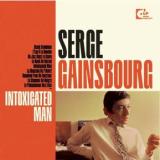
- A1: Le Rock De Nerval
- A2: La Recette De L’amour Fou
- A3: Les Goémons
- A4: La Javanaise
- A5: Le Talkie-Walkie
- A6: Elaeudanla Téïtéïa
- A7: Intoxicated Man
- A8: Ces Petits Riens
- B1: Serge Gainsbourg Répond À Juliette Gréco
- B2: Douze Belles Dans La Peau
- B3: La Bataille De Friedland
- B4: Le Poinçonneur Des Lilas
- B5: La Chanson De Maglia
- B6: Les Amours Perdues
- B7: L'eau À La Bouche
- B8: Valse Op.69 N°1 De Chopin
Andrea has his roots in the independent musical scene in the first decade of the 2000s. In addition to his compositional and live experience as the first Nadàr Solo drummer, he is one half of the Turin duo Anthony Laszlo with Anthony Sasso, ex guitarist and singer of Milena Lovesick. Andrea Laszlo De Simone made his debut in 2012 when he released his first homemade album, Ecce Homo. Recorded at home by makeshift means and accompanied by the following videos: Solo un uomo, 11:43, I nostri piccoli occhi, Perdutamente.
At the beginning of 2014, he met some experienced musicians from Turin’s underground scene that later, after a few months in a rehearsal room, became his band: Damir Nefat (guitar/backing vocals), Dani C (bass guitar/backing vocals), Filippo Cornaglia (drums/backing vocals), Zevi Bordovach (keyboards/backing vocals) and Anthony Sasso (keyboards/backing vocals/percussions).
Anticipated by the individual tracks Uomo Donna, Vieni a salvarmi and La guerra dei baci on June 9, 2017 - for 42Records - Uomo Donna came out. It’s Andrea Laszlo De Simone’s first real album, a well received work by both audience and critics. It also was pointed as one of the best albums of 2017 by several national music magazines.
Uomo Donna is a complex, articulate and vital album that lives in its own time - where past, present and future coexist. It’s a time in which a sonic world takes shape blending classic and modern, Italian songs with psychedelia, Battisti and Radiohead, Modugno and Verdena, the Beatles and Tame Impala, the magical flight of Claudio Rocchi and the earthly flight of IOSONOUNCANE.
The album was self-produced and then post-produced by Andrea in collaboration with Giuseppe Lo Bue, a sound engineer from Bologna. The recordings were made between October 2014 and the end of 2016 with experimental techniques straddling digital and analogic.
After playing in some important Italian festivals as Siren Festival and TOdays -- that earned him a special mention in the live scores by Rolling Stones -- on October 28, 2017 the first Uomo Donna album tour started in the clubs of the major Italian cities.
On November 30th 2017, Andrea Laszlo De Simone presented his video, Sogno l'amore, during the Torino Film Festival as a short film, shot in Sicily and directed by Francesca Noto and Andrea Laszlo De Simone.
On March 15th 2018 the music video of Gli uomini hanno fame was released, the most political song of the album, an overlook through ferocious human emotions, an eleven and fifty minutes trip within human nature portrayed even in its most ferocious instincts. The music video was directed by Andrea Laszlo De Simone and the mysterious duo Sans. The official cycle of Uomo Donna ends on 31 December 2018 with the music video of Sparite Tutti created by the creative collective Irene&Irene.
2019 was a year of new goals for Andrea, in fact, the album Uomo Donna leaves national borders and got a special mention on social media by the famous American band The Lumineers which included Andrea Laszlo De Simone and Uomo Donna among the most interesting discoveries of the international musical underground and inserts Solo un Uomo in the Spotify playlist “Inspirations”. A few days later, Solo un Uomo was broadcasted by KEXP Radio. On November 4th Andrea and his band were chosen to open for The Lumineers’ only Italian show at Alcatraz, in Milan.
On November 8th Andrea released a brand new work, digitally and on vinyl for 42Records, Immensità, a ‘suite’ of four singles: Immensità, Conchiglie, Mistero and La Nostra Fine. Turned into a medium-length film using Immensità as the soundtrack.
Immensità was presented with four special sold out concerts in Rome, Turin, Padua and Milan. For these shows Andrea Laszlo De Simone was accompanied on stage by a mixed orchestra composed of synths, electronics, choirs, strings and woodwinds. Classic and modern instruments that are intertwined in a nine elements formation: an immersive concert, a contemporary version of chamber music.
In March 2020 Immensità was released also in France, UK, Canada, Belgium and the United States with Ekleroshock/ Hamburger Records (Roster: Benjamin Clementine, Polo & Pan, Limousine and many others). The response of the transalpine press and media, sector and not, was unexpected: major French newspapers and magazines - from Le Monde to Liberation, Vanity Fair and Les Inrockuptibles - dedicated entire pages and rave reviews to Immensità and Andrea Laszlo De Simone. The track Immensità entered, after a few days, at the fourteenth rank of Spotify’s Top viral 50 playlist and broadcasted on France Inter and Radio Nova.
“Immensità” is a complex cross media work of music and images. A project divided into four chapters (the songs) for nine tracks (each chapter has a prologue or a conclusion). A true suite, using the classic term that best describes an instrumental composition in several stages, that can be enjoyed in its entirety only by listening to vinyl or digitally in the innovative single track format, without pauses: a single symphony of 25 minutes and 6 seconds.
In September 2020, Dal giorno in cui sei nato tu was released on all italian platforms, a song dedicated to Andrea’s children, a real love letter in the form of a small speech, where he tries to give them the three keys to approaching life: fantasy, music and irony. Martino, 8 years old, replies to his father’s love letter by making the video accompanying the song, created in Super 8. It's the story of the world through the eyes of the child. It is also an homage to the new little girl in family, Lucia.
Le jazz homme is the 2nd album of Black To Comm related entity Mouchoir Ètanche. This time heavily influenced by French Jazz (?) as well as the usual suspects: Nurse With Wound, Luc Ferrari, JG Ballard, Surrealism. The human entity has finally been replaced.
"Program music, instrumental music that carries some extramusical meaning, some “program” of literary idea, legend, scenic description, or personal drama. It is contrasted with so-called absolute, or abstract, music, in which artistic interest is supposedly confined to abstract constructions in sound. It has been stated that the concept of program music does not represent a genre in itself but rather is present in varying degrees in different works of music." (Encyclopædia Britannica)
Prompt 1: Pascal Comelade's toy piano falling down the stairs , Hector Zazou pushing from behind, laughing
Prompt 2: Cool jazz played on antique mellotron, low in fidelity, and sad, Glenn Miller‘s grandma crying silently
Prompt 3: A hippie commune version of jazz as played by a cheap computer fed by Chat GPT with medieval buisine fanfare information and samples, trained on the entire Amon Düül II history, heavily looped yet unsynchronized
Prompt: 4: Same, but flutes and synths and trance and chants
Prompt 5: French female artist philosophizes about Shirley Temple, mysterious atmosphere, insensitive homme laughing nervously, heavily looped, hynotic 18th century orgue de salon underneath
Prompt 6: Cool jazz, Echoplex, strange rhythm, Blue Note daydreaming
Prompt 7: Hammond jazz with fake Cyro Baptista loop, Madagascar indri indri lemurs chanting fake sax solos in Malagasy language, electronic bells
Prompt 8: German jazz and artificial prayers, and Shirley Temple returning, with defect Publison recorded at GRM, destroying the voice recording
Prompt 9: Andrei Tarkovsky's moustache meets Johann Sebastian Bach's wig, a well gently lapping in the background, fifths, car crashing into a poor violent onsen geisha
Marc Richter records as Black To Comm for Thrill Jockey and under the Mouchoir Ètanche and Jemh Circs monikers (and solo) for his own Cellule 75 imprint. He collaborated with visual artists such as Ho Tzu Nyen, Jan van Hasselt and Mike Kelley. He also produces soundtracks and acousmatic multichannel installations for institutions such as INA GRM Paris, ZKM Karlsruhe and Kunstverein Hamburg.
»Other Rooms« is an uncompromisingly adventurous and engaging listen. It manages the rare feat of remaining concise while brimming with detail and inventiveness.
Ten years into a multifaceted career in experimental sound, Belgium’s Adriaan de Roover presents »Other Rooms«, his second solo album and a product of the thoroughly unexpected things we all experience, from societal freeze to the dissolution of individual relationships. Originally recorded for a performance with Fennesz at Église Notre-Dame de Laeken in 2020, »Other Rooms« was reworked into its final form in 2023. De Roover notes an inspiration from »looking at different versions of a life, sitting in a space between them; a constant focus on those alternate things... What if, what if.« It is introspective music informed by a desire for connection to oneself, to others, and to the boundless scale of everything else.
»Other Rooms« is Adriaan’s second outing through the acclaimed Dauw imprint, which is also the home to Midori Hirano, Dylan Henner, H.Takahashi, Lieven Martens and Taylor Deupree. Stepping back from rhythm-oriented motifs, this latest work is a concise but varied collection of weightless melodies and expertly sculpted, computerized soundscapes.
"L'idée nous est venu lors d'une conversation un peu arrosée dans un pub du sud de Londres avec Philippe du label Tapeworm" dixit François Kirmann Gamaury alias Franz Kirmann alias Dj Salinger – producteur français établi à Londres depuis plus d'une vingtaine d'années.
"Voyage voyage voyage" est une mixtape. Mais pas dans le sens traditionnelle du terme. Kirmann l'appelle une mixtape subjective, où les morceaux ne sont pas joués tels quels mais présentés tels qu'ils sont ressentis par l'artiste.
Un peu comme le DJ Vladimir Ivkovic qui ralentit certain morceaux sur ses platines pour en révéler un autre aspect, Kirmann zoom dans l'étoffe même des enregistrements, étire les notes et les sons à l'infini, pour en mettre à jour un sens caché, altérer notre perception de ces chansons qui peuvent parfois sembler un peu désuètes. Ici elles sont transformées en nappes fantomatiques et envoutantes qui évoquent un souvenir d'une période de sa vie, une trace sonore d'une époque un peu naive, qui revient aujourd'hui sous forme d'echo, une musique nostalgique trempée dans la reverb et la distortion.
Kirmann a grandit au Sénégal pendant les années 80 et il se souvient des étés de son enfance passé chez ses grand parents, les chansons à la radio, dans le bus du centre aéré, dans un Prisunic en Dordogne, où une fête de camping en Alsace: Catherine Lara, Elsa, Veronique Jeannot et bien sûr Desireless et son fameux tube "Voyage voyage".
Les chansons sélectionnées pour la cassette ont toutes en commun une incitation au départ, une recherche de l'ailleurs, un amour perdu, un souvenir, les thèmes de predilection d'une certaine pop française que l'on nommait variété.
Ces idées d'évasion sont accentuées ici par le traitement sonore qui leur est appliqué. Les chansons sont paralysés dans le temps, figées dans le son, comme si l'on avait souligné certain passages dans un roman pour les détacher du texte intégral.
Distortion, écho, réverbération et autres effets sont appliqués et donnent à la musique et au son une qualité rêveuse et distante. Certains passages reconnaissables se dévoilent et sortent de la brume sonore, ils se révèlent plus net, d'autres sont noyés dans un brouillard imprécis, une musique proche de l'ambient qui enveloppe l'auditeur.
Kirmann: "Chaque track est basé sur une chanson de variété française des années 80, je voulais re-créer une impression de distance, quelque chose de lointain. Les morceaux deviennent des sortes de tapisseries sonores mais dont l'essence de la chanson originelle est toujours présente. Il y'a un roman de Patrick Modiano où les personnages lancent des avis de recherche pour la France à partir d'une station de radio d'un pays lointain. Le son est brouillé, les voix étouffées. J'avais un peu cette idée en tête de faire quelque chose de similaire, comme si les chansons étaient entendus sur un vieux poste de radio mais émises d'une station lointaine et d'un autre temps."
Le résultat est un voyage nostalgique, une musique ambient et nébuleuse façonnée à partir de tubes synthétiques 80's. Imaginez Fennesz ou My Bloody Valentine jouant des reprises de Laurent Voulzy et vous y êtes presque…
Loveless non, Desireless oui!
DJ Salinger. Voyage Voyage Voyage – Disponible en cassette uniquement. 100 exemplaires sur le label Tapeworm.
—
Franz Kirmann is a French music producer living in London. He has made albums for various labels including Denovali, Bytes, Mercury KX. He also writes music for film and TV and is a lecturer in music production at Point Blank Music school.
Auf ihrem Album "Intermundia" befasst sich die auf dem Land in der ostitalienischen Region Marche lebende Pianistin und Komponistin Olivia Belli mit spirituellen Orten, die eine besondere Verbindung zwischen Himmel und Erde haben sollen. "An diesen heiligen Orten treffen Himmel und Erde zusammen. Sie beruhigen und besänftigen oder betören und verzaubern und eröffnen einen Blick auf das Transzendente", erklärt Olivia Belli. "Hier wird man von allem Unwesentlichen der modernen Welt befreit und es gibt nur dich und deine Seele".Für die Komposition ihres Albums hat Olivia Belli acht spezielle, spirituelle Orte in ganz Mittelitalien besucht. Jedes Stück auf "Intermundia" repräsentiert das besondere, tiefe Gefühl, das sie dort empfunden hat. So ist erste Single "Valadier" von der einmaligen Atmosphäre des in einer Felsengrotte errichteten Tempels "Tempio di Valadier" inspiriert - ein Jahrhunderte altes Heiligtum in den Frasassi-Höhlen in der Provinz Ancona. Olivia Bellis ruhige, wehmütige Miniatur vermittelt die Hoffnung und das Gefühl der Absolution, das sie an diesem Ort erlebte."'Tempio di Valadier' ist mein Zufluchtsort, an dem ich versuche das wahrzunehmen, was real aber unsichtbar ist, um über die physischen Dinge hinaus den Geist zu formen," erörtert Olivia Belli. "Der Tempel vermittelt eine einzigartige Schönheit und eine besondere Atmosphäre, die von seiner Perfektion ausgeht und im Kontrast zum kahlen Felsen steht." Der Titel "Bet Ha Chaim" ist von dem gleichnamigen, alten jüdischen Friedhof in Pesaro inspiriert. Dieser Friedhof gilt seinem hebräischen Namen nach als "Haus des Lebens". In "Pian Perduto" vertont Olivia Belli die auf einer von drei Tälern umschlossenen Hochebene gelegene Landschaft, in der einst das Dorf Castelluccio zu finden war, bevor es durch ein Erdbeben unwiederbringlich zerstört wurde. "Sybil" ist dem Gipfel des Monte Sibyl im italienischen Apennin gewidmet, wo der Legende nach die Hellseherin Sibylle in einer Höhle lebte. "Sibyl" schließt das Album als Höhepunkt von Olivia Bellis musikalischer Pilgerreise ab. Kompositorisch ließ sich Olivia Belli für ihr Album durch das mittelalterliche Modalsystem der Kirchentonarten inspirieren. Sie ordnet die acht bekannten Modi den jeweiligen Stimmungen der von ihr besuchten Orten zu. Die so entstandenen acht Kompositionen unterbricht sie in der Reihenfolge des Albums mit vier nach dem italienischen Begriff für Atem "Respiro" benannten, ruhigen Klavierzwischenspielen. Sechs der Titel werden von einem Streichtrio begleitet. "Die Orte, die ich auf Intermundia vertonte, sind Plätze, an denen Menschen spirituelles Wachstum suchen und wir uns selbst besser wahrnehmen können. Solche Orte können überall sein - wir müssen sie nur finden" so Olivia Belli.
- 01: Adieu Minette
- 02: La Pêche À La Ligne
- 03: Coeur Perdu
- 04: Marchand De Cailloux
- 05: C'est Quand Qu'on Va Où ?
- 06: Ma Gonzesse
- 07: En Cloque (Live)
- 08: Morts Les Enfants
- 09: La Médaille
- 10: Manhattan-Kaboul (Feat. Noée)
- 11: Manu (Live)
- 12: La Teigne
- 13: Son Bleu
- 14: Dans Ton Sac
- 15: Chanson Pour Pierrot
- 16: Dès Que Le Vent Soufflera (Live)
- 17: Morgane De Toi (Live)
- 18: La Ballade Nord-Irlandaise (Live)
Renauds schönste Lieder in bisher unveröffentlichten Versionen von den Streichern eines doppelten weiblichen Streichquartetts. Ein Album, das uns die melodische Kraft seiner seiner größten Hits neu entdecken lässt.
In kraftvollen, zeitgenössischen Arrangements, die eine intensive und bewegende Interpretation der schönsten Lieder des ikonischen Künstlers darstellen, entfaltet sich die volle Pracht seiner Kunst.