Suche:ph project

Styles
Alle
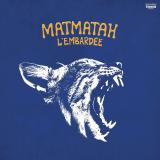
Matmatah - L'Embardée LP 2x12"

Matmatah

L'Embardée LP 2x12"

2x12inchLOP2633004
Upton Park
30.04.2026
  • 1: Pour Moi La Vie Va Commencer
  • 2: Cancion De Jinete
  • 3: Tombé Pour La France
  • 4: Love Will Tear Us Apart (L'amour Nous Séparera)
  • 5: Miss Maggie
  • 6: Eisbär (Feat. Fanny Gillard)
  • 7: Gimme Some Truth
  • 8: Anne, Ma Sœur Anne
  • 9: Goldfinger
  • 10: O Que Faz Falta
  • 11: Ar Miliner (Feat. Patrick Marie)
  • 12: La Pulce D'acqua
  • 13: Putain Putain
  • 14: Boys Don't Cry
  • 15: Sweet Amanite Phalloïde Queen
  • 16: Alison Gross (Feat. Morgane Mercier)
  • 17: Lisa
  • 18: Oh Madeleine
  • 19: The Winner Takes It All
  • 20: Qu'est-Ce Que Sera Demain

After months of working exclusively on his own repertoire, Matmatah is slowly recovering from his 30th birthday by returning to his first love: covering other people’s songs !
Because Matmatah comes from there, from the steamy atmosphere of bars and clubs.
Back in the day, they played loads of covers. Oh yes, they certainly did.
So why not put a few of them together on an album?
It’s a must, isn’t it?
Except that… There are many ways to record an album of covers.
The band could have taken the easy route and covered the songs they loved in their early days. But that would be to misunderstand these lads. They needed to come up with a proper concept to justify such a project.
They came up with two:
To tackle styles that are diametrically opposed to their own, so they could better make them their own.
To broaden their linguistic repertoire and experiment with different sounds.
The result is a rich, joyful and socially conscious collection of 20 songs, written between the 18th and 21st centuries and performed in no fewer than 10 European languages. A fine tribute to the continent’s diversity.
To spice up this project, they’ve brought in the whirlwind that is Fanny Gillard on vocals for ‘Eisbär’ and ‘Putain Putain’, the powerful voice of Morgane Mercier on the eerie ‘Alison Gross’, mentor Patrick Marie for a space-age ‘Kan Ha Diskan’, and the immense Kevin Camus on the uilleann pipes and whistle for ‘The Winner Takes It All’.
Matmatah takes a wild ride, travelling across Europe and through time, having fun and cheekily reworking songs he never imagined he’d play.
Find the lynx!

vorbestellen30.04.2026

erscheint voraussichtlich am 30.04.2026

27,31
Okиho, Łagowski - Malnovnova EP

Eco Edizioni debuts in 2025 as an Italian publishing and recording project dedicated to mapping radical sound aesthetics. The label explores the territories of unconventional electronic music, giving space to forgotten productions that outline complex soundscapes through the experience of expert synthesis producers. The first vinyl release embodies this philosophy through a dialogue between different generations of the European industrial and electronic scene. The dark atmospheres of Okиho meet the analytical and methodic techno of Andrew Lagowski, taken from his 1995 album Prismatic.

The album Malnovnova is the culminating synthesis of this synergy, presenting itself as a manifesto of avant-garde sound engineering. The work pushes the Okиho duo’s research towards a totalising and hyper-technical electronic abstraction, where granular signal processing is mitigated by Lagowski’s atmospheric industrial layers.

vorbestellen30.04.2026

erscheint voraussichtlich am 30.04.2026

13,87
Bergsonist - Depths LP

Bergsonist

Depths LP

12inchDE-348
Dark Entries
30.04.2026

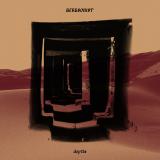
Bergsonist emerges on Dark Entries with Depths, a genre-bending 12-track LP of atmospheric and rhythmic excursions. For more than a decade, Moroccan-born Selwa Abd has been using the Bergsonist moniker to examine postcolonial identity and speculative temporalities across disparate media, including sound, image, video, and installation. She is also a key figure in New York underground music, fostering mutual aid and community support through her platforms Pick up the Flow (PUTF) and BizaarBazaar. On the 2025 album ASL أصل ⴰⵙⵍ, Bergsonist explored her Amazigh heritage using field recordings captured in Morocco. With Depths, her sixth LP, she continues the project of ancestral reconnection through sound. Abd notes: “I really use making music as therapy, not as a precious act, more as an energy release that makes me feel alive.” Depths overflows with this excess of vitality.

Tracks like “Trust the Current”, “Depths”, and “Underwater World Pursuit” showcase her singular take on diasporic techno-futurism, where James Stinson-esque atmospherics meet Moroccan rhythms. Elsewhere, “Again” and “Higher” push into coldwave territory, with icy arpeggios and electroid beats dancing beneath Abd’s ethereal vocals. But the dancefloor is not to be neglected: “Breakthrough” and “Ode to Life” spring forth with the kind of skewed peak-hour energy that only Bergsonist can bring. Artwork for Depths was designed by Eloise Leigh, and incorporates photographs by Abd and Greg Zifcak taken in Morocco. Also included is a protection poster that features an Amazigh symbol used for warding off the evil eye. Depths is an album that achieves a rare balance of elegance and DIY ethics - it is truly an ode to life.

nicht am Lager

Bestelle jetzt und wir bestellen den Artikel für dich beim Lieferanten.

20,13

Last In: vor 11 Tagen
Trick Dice - Trick Dice ‘10th Anniversary Expanded Edition’ (2x12")
  • 1: Oedipus Rex
  • 2: Da Reaper
  • 3: Protein
  • 4: Moonlight
  • 5: Lucid Slowed
  • 6: Paragraph Of My Life
  • 7: Gold Figaro
  • 8: Emu (Neck Mix)
  • 9: D.s.l.s
  • 10: Clusterfuck
  • 11: Cloud 9,999 (Phone Mix)
  • 12: Bathory Motives
  • 13: Da Reaper Alt
  • 14: Protein Alt
  • 15: Lucid Unslowed
  • 16: Floss Thru Ya Town
  • 17: Gilbert’s Grape
  • 18: Intangibles
  • 19: Unknown Trick Dice Track
  • 20: Nickf2 Beat.mp3

Unreleased tracks not available until release date.

Trick Dice is the 2015 collaborative album from Richmond, Virginia rapper Nickelus F and producer Shawn Kemp AKA Lil Ugly Mane, widely regarded as one of the most enduring and understated releases of its era. The album captured a specific moment in underground hip-hop—unpolished, regional, and uncompromising—earning long-term respect from listeners, artists, and tastemakers alike. Over the last decade, Trick Dice has continued to circulate through word of mouth, remaining a reference point for fans of stripped-down, writer-focused rap.

This 10-year anniversary reissue presents Trick Dice in its most complete form to date. The standard edition is expanded into a double LP vinyl release and includes eight previously unreleased tracks recorded during the original sessions. The project has been newly prepared for vinyl to ensure fidelity and balance across the expanded track list.

- Nickelus F is a respected underground hip-hop artist with a decade-plus catalog and long-term credibility among tastemakers and peers

- Trick Dice is a collaborative album with producer Shawn Kemp AKA Lil Ugly Mane, marking a milestone project. It is a cult-favorite release with sustained organic demand.

- Expanded 2×LP vinyl edition including 8 previously unreleased tracks from the original recording era

- Bonus tracks curated and finalized specifically for this reissue

- Strong appeal to collectors and underground hip-hop audiences

vorbestellen27.04.2026

erscheint voraussichtlich am 27.04.2026

43,49
Late Bush - Hoarses

Late Bush

Hoarses

12inchVLEK44
VLEK RECORDS
24.04.2026
  • Blow Mix
  • Fluxstrata
  • Phract Lament
  • Hark Mix
  • First Reflex
  • Mu
  • Drift Lens
  • Tangent Bile
  • Allegria
  • Dull Echo
  • Crabwalk

Late Bush presents “Hoarses” on the label Vlek Records, an original repertoire in which he blends electronic music - power ambient, IDM, avant-pop - and early music, which share the same affective intensity, a taste for ornamentation and a form of sonic excess.

At the heart of this material, AI-cloned voices, both human and spectral, extend the idea that any baroque interpretation is a reconstruction of the unknown. They contrast with organic strings recorded with Echo Collective, in a temporal and radical hybridization, creating a fluid and unstable material, between memory and simulation.

One of the conceptual starting points is essential: we have no sonic trace of baroque music as it was played. Only scores remain, and sometimes contradictory indications, a sensitive archaeology, even an imaginary projection.

Everything that is played today is therefore, in fact, a reconstruction, an interpretation of a vanished material. According to this logic and to pursue this reflection, the cloned voices, transformed by AI, are not a rupture but propose a natural continuation of this chain of reinvention, of this relationship to the invisible, to the indefinite. They do not aim to replace a human voice, but rather to embody the fact that any baroque restitution is already a fiction.

The project does not seek to imitate the real, but to play with the thresholds of the plausible, of the spectral. The music then becomes a fluid material, manipulable, alterable, and the performers, musicians or machines, are its vehicles.

The strings, carried by the sensitive and expressive interpretation of Echo Collective, breathe into the project a vibrant authenticity. Their presence brings an organic and tactile dimension that contrasts with the fluid and intangible aspect of the voices and the electronics.

vorbestellen24.04.2026

erscheint voraussichtlich am 24.04.2026

25,42
Juli Deák - Brisk LP

Brisk is the debut album by Polish-Hungarian flutist Juli Deák (*2000), based in Budapest. Comprised of seven solo flute pieces, the album offers a concentrated snapshot of Deák’s musical world—one shaped by classical training, experimentation, improvisation, and folk influences.

The project began taking shape in 2021, as Deák moved away from the polished ideals of classical performance toward a more personal and exploratory approach. Early fragments only revealed their meaning in front of an audience, whose responses encouraged her to continue developing the material. With over 15 years of musical experience, Deák combines technical precision with a willingness to embrace vulnerability and chance.

Breathing lies at the heart of Brisk. More than a functional necessity, it becomes an expressive and structural force. Through close listening, breath feels tactile and intimate, placing the performer almost within reach. Techniques such as circular breathing, overblowing, harmonics, singing while playing, and wind tones allow the flute to unfold into multiple voices, while percussive key clicks provide a steady rhythmic pulse.

Deák foregrounds sounds often excluded from classical music—breathy tones, unstable pitches, squeaks, and audible inhalations—treating them as essential expressive tools. This focus reflects her long-term exploration of the flute’s physical and expressive limits and connects directly to her ongoing solo practice, The Breathing Project, of which Brisk is a distilled release.

Active across classical, contemporary, jazz, and experimental scenes, Deák has collaborated with ensembles including Konstmusik-systrar and the VENI ensemble, and performed at festivals such as Norbergfestival and Ung Nordisk Musik.

Across its seven pieces, Brisk balances immediacy and rigor, inviting focused listening while remaining open and bodily. It documents a musician in motion, attentive to sound as sensation, gesture, and breath, and committed to honesty

vorbestellen24.04.2026

erscheint voraussichtlich am 24.04.2026

21,22
Niklas Paschburg - L'Ècho De Bretagne LP
  • 01: Paimpol
  • 02: Marché
  • 03: Le Port
  • 04: À La Maison
  • 05: La Vie Lente
  • 06: Bandes
  • 07: Adieu

A century-old grand piano, a secluded house surrounded by the greenery of Brittany, no internet connection, and a reel-to-reel recorder.L'Écho de Bretagne, the new EP by Niklas Paschburg, set for release from fall 2025 via Nettwerk Music Group, is a solo piano record as essential as it is intense. An album made of silences, space, slowness. A music that doesn't chase impact, but truth.

the album release is march 26th - 2026.

If his previous work, Mexican Alps (2025), marked the first time the German composer and producer created an ambient-electronic album without his instrument of choice, the piano, L'Écho de Bretagne emerges as a direct response to that absence. "It was exactly the lack of piano that brought about the need for this new record, which instead puts that instrument, so vital to me, at the very center, stripping everything else away," Niklas explains.

Born in 1994, Paschburg has shaped over the years a musical path deeply connected to travel, nature, and introspection. From his debutTuur Mang Welten(2016) toOceanic(2018),Svalbard(2020),Panta Rhei(2023), and the aforementionedMexican Alps— alongside soundtracks, remixes, and collaborations with artists like RY X, Hania Rani, Ásgeir, and Bryan Senti — his sound bridges neoclassical, electronic, ambient, and pop-driven composition.

WithL'Écho de Bretagne, the Hamburg-born, Berlin-based musician continues his exploration by seeking solitude in nature, much like he did onSvalbard, but this time with an even more radical choice: disconnecting completely from the internet, and switching off both computer and smartphone for a while, in order to fully immerse himself in his new music. "I rented an old cottage in Paimpol, Brittany, where I knew there was a grand piano," he recounts. "When I got there, I discovered that not only was the piano more than a hundred years old, but it was also of an unknown brand, never restored, and quite difficult to play. But that gave it a unique character, and I didn't give up. Sure, it was an instrument left to its own fate, I couldn't play anything too fast. But how fascinating was that? I'm convinced that setting limits, instead of giving yourself total freedom when composing, can become an extraordinary source of inspiration."

As for the decision to temporarily detach from a life that demands we stay constantly connected, Niklas describes it as both a creative and human experiment. "I had my laptop and phone with me, just in case, but I kept them turned off. That choice made me wantL'Écho de Bretagneto be a fully analog work, even in how it was recorded." A way of clearing the mind. "I don't think I've ever been as calm as I was during those days in Paimpol. Even though I was working on a very specific project and didn't have much time, that period was more relaxing than any vacation."

Not that it was free of hiccups. "I'd borrowed a reel-to-reel recorder small enough to travel with me, but after recording a session on the piano, I realized it wasn't working properly, the sound was distorted, full of crackles. I got worried, because I wasn't near any big city where I could find a technician. Luckily, I figured out the problem was the old tape reels I had brought along. That was the only time I had to go online, to order new ones. But it was just for a moment. I shut everything off again right after." At that point, Niklas was waiting for the new tapes to arrive. He found out, completely by chance, from a local UPS courier that they had been delivered to a nearby village. "Since my phone was off, I couldn't track the shipment. So one day I asked this delivery guy, who didn't know anything about it. But from that point on, we'd see each other daily and talk… That's what being disconnected also means: reconnecting with people around you, even strangers. It was thanks to that courier that I found out where the tapes had ended up. And he even helped me get them back, writing directions for me on a scrap of paper."

But there's another element that makes this new EP unique.L'Écho de Bretagnewas recorded entirely live; its tracks are all improvised, complete with their imperfections. This approach leads to a sound that is pure, profoundly organic, and deeply authentic, intentionally preserved to give the listener the feeling of a live performance happening in their own living room. The touch of fingers on the keys, the breath of the wood, the tension of the vibrating string, all become part of the music. There is no construction, only expression. "Even now, when I listen back to it, I feel that moment I gave myself to step away from everything: from reality, from words, from noise." The result is a collection of suspended melodies and atmospheres, reflecting a state of the soul. A refuge from the rush of time. A pause from the world.

vorbestellen24.04.2026

erscheint voraussichtlich am 24.04.2026

25,00
RAZEN - STAINED GLASS STARLING LP

After their recent LP Mirages (Kraak Records, 2025) with French turntablist Guilhem’All, the group continues to explore collaborations with artists and instruments from diverse musical traditions. Building on decades of uncompromising acoustic exploration, Razen delves deeper into their practice with five improvisational pieces that unfold slowly in time and space. The duo’s radical core - Brecht Ameel and Kim Delcour - finds in Van der Harst a longtime kindred spirit, united by the impact of sound, intonation, and the sheer joy of playing.

To be released on April 24 via VIERNULVIER Records, the artwork for Stained Glass Starling was created by American visual artist Robert Beatty (Oneohtrix Point Never, Christina Vantzou, The Weeknd, Tame Impala). The physical release comes with a 16-page booklet including artwork and an interview.

A long-standing artistic kinship lies at the heart of this project, with first encounters dating back to the early 2000s in Belgian musical improv theatre. Van der Harst’s lifelong experience in improvised music and music theatre, spanning back to the 1980s, combined with a vast arsenal of rare and historical instruments, opens new tonal territories within the Razen universe.

These explorations are not incidental: his family roots in the former Dutch East Indies — through his great-grandfather — provide a quiet backdrop to his enduring affinity for Asian musical traditions. Instruments such as erhu, Javanese kacapi, and others introduce timbres
that bring the music its most pronounced Asian inflections to date.

Yet despite this shift in colour, the underlying ethos remains unmistakably Razen. Working from sound rather than form, the ensemble approaches music as painters approach a canvas: adding layers, contrasts and shades with care. There is no soloist’s ego here; all voices are equal, echoing principles found in gamelan traditions.

Over the decades, Razen and Dick Van der Harst have crossed paths repeatedly, notably through cult theatre productions by Belgian theatre maker Eric De Volder, including Zwarte vogels in de bomen (2002) and Huis der Verborgen Muziekjes I–II (2000–2006). Recording an albumtogether had long been a shared aspiration — a wish that crystallised after a 2024 concert at Concertzaal Miry in Ghent, part of the Ruiskamer series by VIERNULVIER Art Centre.

vorbestellen24.04.2026

erscheint voraussichtlich am 24.04.2026

21,64
PPJ - Joker
  • A1: Me Pega
  • A2: Tem Carnaval
  • A3: Sexy Doce
  • B1: Coeur
  • B2: Então Tá Bem
  • B3: Para Ser Feliz
  • B4: Tô Nem Aí

Fresh from releasing projects on Method 808 and Future Classic, landing a huge collaboration with Chloé Caillet, and delivering an official remix for Fatboy Slim, PPJ are entering a new chapter in full force. Their expansive take on global street sounds, ranging from neoperreo to Miami bass, gets a cool re-coating.

Led by the magnetic vocalist Páula, with production from Povoa (individually supported by Four Tet, Ben UFO, and Barry Can't Swim, with recent releases on Live From Earth), the duo operates in maximalist mode: playful, sensual, and slightly unhinged.PPJ’s new era, JOKER, embraces a figure that appears everywhere from card decks to carnival culture as a symbol that mirrors their own DNA: funny, eerie, seductive, unpredictable. The EP leans further into club territory, but rather than polishing their edges, PPJ amplify them.

At the emotional core of the record sits “Coeur,” co-produced with Chloé Caillet. It begins with an MPB-tinged foundation flirting with bossa nova. It’s unmistakably Brazilian, bathed in sunset hues before being sped up and twisted into a dance-floor-ready electronic form. The groove shimmers with tension: warm percussion, elastic basslines, and Páula’s voice hovering between intimacy and tease. It feels like a remix of itself, romantic, but slightly untrustworthy.

If “Coeur” glows, “To Nem Ai” is a slow burner. A very deep and downtempo house cut, it unfolds slowly, almost luxuriously, guided by sensual vocals that feel whispered directly into the ear of the listener. A hypnotizing piano sample that feels like a late-night confession. It’s the kind of record that transforms a dancefloor into something tactile.

Elsewhere, “Me Pega” is a high-energy reinterpretation of the tech-house sounds from Santa Catarina, one of southern Brazil’s most feverish party states, twisted and accelerated for ferocious impact. Drawing direct inspiration from Sarro, a raw and vibrant Brazilian street dance, the track captures physical intensity in its purest form: sweat, bass pressure, collective release.

Its counterpart, “Tem Carnaval” channels Páula’s vivid storytelling into a thunderous ode to Rio’s carnival spirit, euphoric, chaotic, cinematic landed just in time for this year’s celebrations.

On “Sexy Doce,” rugged electroclash melodies collide with unexpected references. “It was inspired by Budots, which is dance music from the streets in the Philippines,” Povoa explains. “Then we mixed it with Páula’s Brazilian vocals. Baile funk is similarly from the streets, so there is a connection.” The result is raw yet futuristic, a cross-continental flirtation that feels both underground and explosive.

With this new EP, PPJ make music like they’re tuning into a dozen pirate frequencies at once. Pirate radio from Rio to Berlin to Manila intercepting fragments of street culture, sensuality, and chaos, and stitching them into something deliriously cohesive.
JOKER doesn’t just nod to club culture. It challenges it, twists expectation and leaves a lasting impression.

vorbestellen24.04.2026

erscheint voraussichtlich am 24.04.2026

20,97
Whirlwind - 1640
  • 1: 640 (Intro)
  • 2: Days Of Doom
  • 3: Rage Of The Conqueror
  • 4: Winds Of Ash And Dust
  • 5: Lese Majesty (Corpus De Sang)
  • 6: Through Fire And Blood
  • 7: Ready To Explode
  • 8: By The Blood In Our Veins
  • 9: Marching To Victory

DYING VICTIMS PRODUCTIONS is proud to present WHIRLWIND’s highly anticipated second album, 1640, on CD and vinyl LP formats. WHIRLWIND was originally conceived as a studio-project by Mark Wild, from Körgull The Exterminator among other extreme metal bands, to satisfy his will to make a classic heavy metal album, a style that changed his life during his childhood – influenced mostly by ‘80s German metal bands like early Running Wild, early Helloween, Accept, Heaven’s Gate, Gravestone, Tyrant, Grave Digger, Steeler, and Stormwitch among others, but also all kinds of classic heavy metal like Mercyful Fate, Manowar, Iron Maiden, and Judas Priest. In 2022, WHIRLWIND released their debut album, 1714, marking the band’s beginning. WHIRLWIND also established a live lineup to bring their songs to life onstage, with musicians from other known bands, like Redshark, joining as permanent members of the band. The album immediately generated a big buzz in the underground scene and led them to perform at some of the best-known festivals in Spain like Pounding Metal Fest and Skulls of Metal, alongside such bands as Visigoth, Attic, Omen, Tentation, Mindless Sinner, Witchtower, IRON CURTAIN, and Phantom Spell. Now arrives WHIRLWIND’s second album, 1640. Like its predecessor, the album is focused on historical and epic episodes of their homeland; specifically, this album revolves around the Thirty Years War that took place around Europe and the inner conflicts within Spain.

Musically, WHIRLWIND deliver a masterclass in cruising, classy Teutonic metal, running from more traditional-minded mid-tempo stompers to surging, up-tempo gallops of glory. Riff and lead form a lethal tandem, balancing both energy and color, while the rhythm section stays locked in no matter the dynamic. The production, too, of 1640 honors the mid ‘80s with authenticity – underground in spirit, Big League in execution. All told, the album is true heavy metal for true heavy metal people: no more, but definitely no less. By the blood in their veins, WHIRLWIND are marching to victory, ready to explode!

vorbestellen24.04.2026

erscheint voraussichtlich am 24.04.2026

22,65
Reimaki - 妖精の通る道 / Yosei no toru michi

妖精の通る道 (The Path Where Fairies Pass) is the debut vinyl release by Reimaki, the duo of Rei Yokoyama (Triggers Flowers, Stakaidan, Lapiz Trio, 新井薬師自警団, and Fujio, Chiko Hige and Rei), and Maki Miura (Tsubamegami, Les Rallizes Dénudés, Shizuka, Fushitsusha, Ohkami No Jikan and Katsurei). The duo has been an understated presence in Tokyo, playing occasional under-the-radar shows and self- releasing a few CD-Rs, but they’ve recently started to break cover, with a recent cassette on UFO Creations, released in support of a late 2024 tour of China. It’s also a welcome reappearance on the scene for both musicians; Miura’s musical history, in particular, is being reevaluated thanks to a recent string of welcome Shizuka reissues.

But the music Reimaki make together is a different thing entirely, much as it shares some psychological and aesthetic interests with both Miura’s and Nokoyama’s other projects. Their sound is split between two main interests – an extension of glacial, deoxygenating psychedelic improvisations, and a deep interest in medieval European music. They’ve also been known to cover compositions by English prog/improv musician Fred Frith. These various elements of the Reimaki aesthetic are all present through 妖精の通る道, from the fragility of the opening “Novel Amor” through to the smeared, hazy textures of the three extended pieces that comprise the album’s flipside.

There’s a beautiful sympathy in these performances, and a generous simplicity, too; you can sense that this music is informed by decades of finding just the right way to say the right thing in the clearest manner possible. Yokoyama and Miura never overstate things; make the statement, play the song, let it hang in the air for a while, and then move on to the next essential expression. The music is unburdened by self- consciousness. Their take on medieval music cuts to the core of melody and melancholy; their psych- improv side is blurred and drifting without ever lapsing into rote generic gestures.

There’s some shared space with other artists who suspend the timeless within the kaleidoscopic possibilities of the psychedelic – Kendra Smith & The Guild of Temporal Adventurers; Emmanuelle Parrenin; Rosina de Peira – and a tangled folksiness that might put listeners in mind of Jan Dukes De Grey, Comus, Current 93, and Tower Recordings. Accompanied by beautiful photography from street photographer Takehiko Nakafuji, who was also personally chosen by Mizutani to document Les Rallizes Dénudés, 妖精の通る道 is a most unique and necessary trip.

vorbestellen

Der Artikel ist noch nicht erschienen. Du kannst den Artikel jetzt vorbestellen, dieser ist nach Wareneingang für dich versandbereit.

33,82
Onna - Onna Last Live 1983 LP 2x12"

Onna Last Live 1983 includes the final performance by the original line-up of Onna, the psych-rock project of revered Japanese manga artist, Keizo Miyanishi. Onna’s legend has largely rested, until now, on one self-released and self-titled seven-inch from 1983. Reissued by Holy Mountain in 2009, its rediscovery, along with several archival live and studio sets that leaked out across the 2000s, signalled to a wider audience the power of Miyanishi’s strikingly hypnotic songwriting. With Onna Last Live 1983, though, we hear the group’s perfect line-up performing at its peak.

While Miyanishi was the core member and conceptualist of Onna, the other members of the group would also go on to make significant contributions to the Japanese underground. Guitarist Michio Kurihara would eventually be known for his membership of YBO2, Ghost and White Heaven, and collaborations with the likes of Boris and Damon & Naomi. Drummer Ken Matsutani formed Marble Sheep & The Run-Down Sun’s Children and The Mickey Guitar Band, while also running the Captain Trip label. Joined by the late bass player Yasui Yutaka, to whom the album is dedicated, this quartet only performed live in 1983; the live set here was recorded at Silver Elephant.

It’s a different line-up to the Onna duo that’s documented on their single. After Miyanishi and fellow manga artist Mafuyu Hiroki recorded that material, Miyanishi decided he wanted to start playing gigs; Hiroki left, and Kurihara, Matsutani and Yutaka joined soon after. This line-up allowed Miyanishi to significantly expand Onna’s powers, leading to a sound that Kurihara once described to Ptolemaic Terrascope magazine as “repetitive and heavy, yet quite orthodox.”

The songs here are simple yet deeply effective in their repetitive power, generally revolving around two or three simply strummed chords for guitar. Bass and drums repeatedly lock into mantra-like grooves as Kurihara’s guitar scales the walls, with Miyanishi’s consumptive moans and sighs sent torquing through FX. The cumulative effect of the seven songs here is very heavy indeed; if the prologue “Always…” drifts beautifully through five minutes of placid, beseeching melancholy, the epilogue, “Never Seen A Light Like This”, spirals out into sixteen minutes of glazed-over psych-rock, completely monomaniacal and thrilling in its slow-motion tumult.

Throughout, you can hear Miyanishi and co. reaching for something ineffable, something beyond and between the notes. It’s a phenomenal performance; it’s also no surprise that the group disintegrated after this show, given its intensity. Matsutani and Yutaka left after the Silver Elephant show, with Miyanishi and Kurihara continuing through the first half of 1984 firstly as a duo, and then a trio with new drummer Yoshiki Ueonyama. Kurihara left soon after. But Onna Last Live 1983 is proof plenty of the powers of the original Onna quartet, sending their Rallizes/Velvets dream-mantras off into darkened, stormy skies.

vorbestellen24.04.2026

erscheint voraussichtlich am 24.04.2026

50,00
Molecule - A:R LP

Molecule

A:R LP

12inchLN066
Diggers Factory
24.04.2026
  • A1: Phantom
  • A2: Y/B
  • A3: Aahh
  • B1: Utah
  • B2: A/R

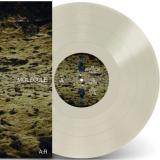
Molécule is a French artist, musician and sound explorer whose radical approach consists in going on expeditions to record nature in situ and transforming these raw materials into music.

On board a fishing trawler in the Atlantic Ocean, he created 60°43' Nord using the brutal sounds of a raging sea and the daily life of sailors. In Greenland, he composed -22.7°C deep within the ice pack, capturing silence, polar winds and the cracking of the ice itself. In Nazaré, he immersed himself in the world of giant waves, translating the ocean's raw energy into sound.
Positioned at the crossroads of technology, environmental concerns and sonic creation, Molécule embraces an innovative and committed artistic vision. Constantly pushing technical boundaries, he designs and experiments with advanced recording and production systems to expand the possibilities of sound capture.
At a time when many artists are shaped by standardized formats, Molécule stands apart through an authentic, immersive practice rooted in real-life experience. His work is built directly in contact with the elements and the places he inhabits, resulting in a singular body of work shaped by the physical reality of the world. This project presents a selection of studio productions developed in parallel with Molécule's soundfield recording expeditions. Here, he unveils five unreleased tracks, revealing his techno DNA in its most rough and raw form.
Designed for the dancefloor, these high-impact productions feature sharp BPMs and stripped-back energy, released on Lumière Noire, the label founded by Chloé.

vorbestellen24.04.2026

erscheint voraussichtlich am 24.04.2026

22,65
Urq - This Dismal Village (LP)

Venturing into “a limbo world between medieval tropes and modern-day decay”, New Orleans musician Urq (half of art punk duo Spllit) returns with a new solo offering. Recorded over a single, intense month, This Dismal Village is a homespun document that sits somewhere between jittery punk, dreary psychedelia, and hooky bedroom pop. Recorded to 4-track, the record embraces limitation as a creative engine, resulting in a sound that is raw, unsettled, and deeply atmospheric.

The album is set not in a fixed point in time or geography, but a liminal environment where dystopic visions and archaic fixtures exist side by side. In the dismal village, kings and witches share space with televisions, skyscrapers, and modern enterprise; organ fanfares echo down streets populated by disgruntled townsfolk and whispered gossip. It is simultaneously the dark ages, 1950s suburbia, and a 21st-century metropolis. Embracing anachronism was central to the project’s identity, an attempt to collapse history into a single, uneasy present.

Sonically and philosophically, the album sits firmly in the tradition of rough and raw cassette rock. Guided By Voices’ Bee Thousand looms large as an influence, particularly its ability to build an entire world through unpolished, first-take recordings. Robert Pollard’s idea of the “four P’s” (psych, punk, prog, and pop) serves as a neat summary of the artist’s musical instincts and each element can be traced right through the heart of This Dismal Village. Further inspiration comes from post-punk’s so-called “Calgary Sound,” a loose movement blending psych pop, post-punk, and math/prog elements with a home-recorded, unpretentious ethos.

The result is an album that unrolls like a place wandered through, uneasy, occasionally familiar, and impossible to pin down in time. All captured on tape before it could disappear like an apparition, like a dream only half-remembered.

vorbestellen24.04.2026

erscheint voraussichtlich am 24.04.2026

26,85
MEITEI - AGATE LP

MEITEI

AGATE LP

12inchKI-050LP
KITCHEN. LABEL
24.04.2026

KITCHEN. LABEL is proud to present AGATE, the latest album by Japanese artist MEITEI, marking a deepening of the world he first shaped through his Kofū trilogy released between 2020 - 2023.

Named after the mineral agate, a stone formed through slow accumulation, pressure, and time, the album reflects MEITEI’s patient approach to sound. AGATE brings together extended and newly rearranged works from across the Kofū cycle alongside new compositions and passages, refining material developed through years of performance and sustained practice.

The album presents seven tracks:

HAŌ (Previously unreleased track)
SHIN-OIRAN (Remodeled from Oiran I, Kofū 2020)
SHIN-SADAYAKKO (Remodeled from Sadayakko, Kofū 2020)
SHIN-WAROSOKU (Remodeled from Wa-rōsoku, Kofū III 2023)
KYŪGEKI (Remodeled from Shinobi and Akira Kurosawa, Kofū II 2021)
SHIN-OIRAN II (Remodeled from Oiran II, Kofū 2020)
SHIN-EDOGAWARANPO (Remodeled from Edogawa Ranpo, Kofū III 2023)
Across these works, MEITEI expands the musical vocabulary first introduced in Kofū, a sound he once described as “lost Japanese mood.” While Kofū drew from fragments of folklore, theatre, ghost stories, and forgotten urban memory, it was never an act of historical reconstruction. Rather, it reflected a sensibility of the past observed from the present. With AGATE, this worldview is clarified as Shinpu, a process of discovery in which historical awareness becomes a foundation for contemporary creation rather than a constraint.

During five years of Kofū tours across Japan, Europe, and Asia, MEITEI performed this material in a wide range of spaces, from underground live houses and listening rooms to culturally significant sites. These environments influenced pacing, dynamics, and structure, shaping how the material evolved over time. AGATE is therefore not only a studio album, but the result of material refined through repeated performance.

If the Kofū albums were windows into forgotten eras, AGATE explores what lies beneath, sediment and strata formed through time and pressure. MEITEI’s approach to sound mirrors the nature of agate itself. Grains become texture. Texture becomes narrative. Voices drift through decaying layers of sound, while ancient instruments are used in non-traditional ways, forming distinctive percussive rhythms and melodies that appear and vanish without fixed resolution.

The album’s visual materials were developed under MEITEI’s direction through physical art-making processes. The cover artwork originates from a letterpress print created by Kamisoe, a Karakami atelier in Nishijin, Kyoto, using Kyo-karakami paper. The original artwork, produced through traditional woodblock techniques on handmade washi, was subsequently reproduced on print for the album edition. Kamisoe continues to reinterpret this historical Kyoto craft with a contemporary sensibility.

The title calligraphy was created by Bio Xie, whom MEITEI personally invited to participate in the project. During his performances abroad, MEITEI encountered in Taiwan a lingering atmosphere reminiscent of “Shitsunihon” — a sense of old Japanese memory that quietly endures beyond time. He was deeply drawn to Bio Xie’s distinctive use of Chinese characters, which resonated with this experience, and asked him to contribute to the visual expression of AGATE.

In parallel, MEITEI continues to reinterpret Japanese sensibility through his concept of “Shitsunihon,” presenting it as a contemporary musical language. The refined Kyoto motifs envisioned by Kamisoe and the distinctive calligraphic expression by Bio Xie intersect with MEITEI’s singular artistic direction, weaving together a newly articulated worldview.

The accompanying visual imagery, including the liner photographs, was created by photographer Hiroshi Okamoto, who was also responsible for the visual direction of MEITEI’s previous work, “Sen'nyū.” It draws from MEITEI’s lived experiences of winter seas, solitary cliffs, and breaking waves. These scenes symbolize the inner conflicts of the ten years he spent living in Hiroshima, and his confrontation with solitude and the sounds he creates.

AGATE will be released on 17 April 2025 via KITCHEN. LABEL on 180g vinyl, CD, and digital formats. The album is mastered by Kelly Hibbert, known for his work with Flying Lotus, Madlib, and J Dilla.

With AGATE, MEITEI returns to the material of Kofū with greater focus and discipline, continuing an ongoing process of working forward with inherited material.

nicht am Lager

Bestelle jetzt und wir bestellen den Artikel für dich beim Lieferanten.

28,15

Last In: vor 17 Tagen
Death At The Derby - Capitano LP

Death At The Derby

Capitano LP

12inchALMN-002-COL
Alumni Records
17.04.2026

Blue Vinyl

After a three year hiatus, the rap trident known as Death At The Derby is back with another full LP, this time entirely produced by Toronto based producer Finn. An 11 track project, “Capitano” is themed behind some of the games most respected & legendary captains to rock the honorary armband.

Inspired by their previous 2020 release “Ballon D’Or”, this latest LP is both the first official drop, yet second installment to their newest series entitled Club & Country. With the third & final season of their celebrates derby series around the way, this record is the next phase in their wave of worldwide work.

Cuts provided by their resident DJ, DJ Dubplates, the project is both a rare & raw blend of potent underground production, cultured sound bites, top flight lyricism & love for the beautiful game. Whether El Salvador, Romania, North Ireland or Argentina, the roster is monster. Centered around a tracklist aligned by the player’s actual jersey numbers, this collection of stars shine bright as any constellation.

vorbestellen17.04.2026

erscheint voraussichtlich am 17.04.2026

27,69
Christina Kubisch - TUNING

Christina Kubisch

TUNING

12inchFAIT-41LP
Faitiche
17.04.2026

Faitiche welcomes a new artist: Christina Kubisch belongs to the first generation of sound artists. Her practice ranges from performances, concerts, to works with video and visual art, but she is best known for her sound installations and electro-acoustic compositions.

TUNING brings together three pieces by Christina Kubisch from different periods of her oeuvre. What they have in common is the way they transform sound phenomena originally considered “non-music” into compositions.

Jan Jelinek: Gaming in Silence (2024) is the most recent work on this compilation. It’s a collage of electromagnetic waves, voice, and abstract sound textures. How did this combination come about?

Christina Kubisch: Gaming was commissioned as a fixed-media composition for the Sound Dome at ZKM Karlsruhe. Since Resonances: The Electromagnetic Bodies Project (2005), I’ve been making recordings in the old and new server rooms at the ZKM and in their permanent collection of historical computer games. Computer games like Asteroids (Atari, 1979) and Poly-Play (VEB Polytechnik, 1986) have specially generated analogue electromagnetic waves that interest me in particular on account of their density, rhythms and textures. I originally studied painting and to me the work of composition often feels like painting an abstract picture. I alter my source material as little as possible, layering and overlapping until a distinctive sound space emerges. In recent pieces, I sometimes combine magnetic waves with field recordings or live instruments. In Gaming it’s my recording of a Chinese song about silence.

JJ: Two persons walking through a street in Madrid (2004) is a recording from your Electrical Walks series. Here we should give a brief explanation of one of your best known works: participants in an Electrical Walk move through public spaces wearing prepared headphones that allow them to receive electromagnetic waves from their surroundings – for example from security gates, ATMs or neon signs. They discover a situation that normally is inaudible to the human ear and they can actively shape it by choreographing their movements. I really admire this piece, not least because there’s no clear dividing line between participants and artist. What exactly do we hear in Two persons walking through a street in Madrid (2004)?

CK: With this early work, I wanted to understand what is heard by people participating in an Electrical Walk in the same place but moving in different ways. The Spanish composer Miguel Alvarez-Fernàndez and I set off from opposite ends of a major shopping street in Madrid, met briefly in the middle, and then continued to the end. We both recorded our walks and I then layered them over one another. You might call it a work of electromagnetic conceptualism.

JJ: Diapason (2009 version) is an installation that plays a composition based on sounds from fifteen tuning forks. This setting is audible in the recording: there’s no dramatic arc, no beginning or end – instead, it recalls a piece of aleatoric music focussing on the decay phase. How did you come to make this work and could you tell us something about your compositional method?

CK: Diapason is part of a series of three pieces that deal with “non-instruments” or instruments that no longer exist: electrical mine bells used to send signals to the workers underground; a historical glass harmonica originally used for medicinal purposes; and tuning forks that were used by doctors to test people’s hearing. All of these methods are no longer in use. The sound of the tuning forks, audible only if held close to the ear, was recorded at the electronic studio at Berlin’s Technical University in such a way that even their decay remained audible. The frequencies range between 64 and 2048 Hertz and they can be adjusted at micro-intervals using small movable weights. The sequence and the duration of the pauses are dictated by chance and were not defined in advance. The 2009 version was created for an installation in the historic Holy Cross Church (Korskirken) in Bergen. Visitors could enter and leave the space at any time, deciding for themselves where and for how long they wished to listen to the sounds played back over an array of small loudspeakers placed on the floor of the apse.

Credits:

Gaming in Silence: commission of the ZKM/Hertzlab, Karlsruhe 2023
elektronic sound processing: Tom Thiel
sound engineering and mixing: Eckehard Güther

Diapason: produced at Elektronisches Studio of TU Berlin
rearrangement: Eckehard Güther

Christina Kubisch, published by Edition Christina Kubisch / Random Musick Publishing

image front: Transitionen 2021 by C. Kubisch, sonagrams of electronic waves (courtesy: Galerie Mazzoli Berlin)
image back: Diapason Tuning Fork, property of Folkmar Hein, Photo: Archiv Christina Kubisch

design by Tim Tetzner
mastered by Giuseppe Ielasi
Thanks to Miguel Álvarez-Fernández, Folkmar Hein, Dominik Kautz and Mario Mazzoli

vorbestellen17.04.2026

erscheint voraussichtlich am 17.04.2026

27,31
Various - Tchic Tchic: French Bossa Nova 1963-1974  Colored Edition LP 2x12"
  • A1: Les Masques - Il Faut Tenir (1969)
  • A2: Isabelle Aubret - Casa Forte (1971)
  • A3: Christianne Legrand - Hlm Et Ciné Roman (1972)
  • A4: Jean Constantin - Pas Tant D'chichi Ponpon (1972)
  • A5: Billy Nencioli & Baden Powell - Si Rien Ne Va (1969)
  • B1-: Marpessa Dawn - Le Petit Cuica (1963)
  • B2: Jean-Pierre Sabar - Vai Vai (1974)
  • B3: Sophia Loren - De Jour En Jour (1963)
  • B4: Isabelle - Jusqu’à La Tombée Du Jour (1969)
  • B5: Sylvia Fels - Corto Maltesse (1974)
  • C1: Frank Gérard - Comme Une Samba (1972)
  • C2: Ann Sorel - La Poupée Des Favellas (1971)
  • C3: Charles Level - Un Enfant Café Au Lait (1971)
  • C4: Andrea Parisy - Les Mains Qui Font Du Bien (1970)
  • C5: Audrey Arno - Quand Jean-Paul Rentrera (1969)
  • C6: Aldo Frank - T’as Vu Ce Printemps (1970)
  • D1: Christianne Legrand - Cent Mille Poissons Dans Ton Filet (1972)
  • D2: Clarinha - Lemenja (1970)
  • D3: Hit Parade Des Enfants - Aquarela (1976)
  • D4: Jean-Pierre Lang - Tendresse (1965)
  • D5: Magalie Noël - Une Énorme Samba (1970)
  • D6: Françoise Legrand - La Lune

Ever since the late 1950s bossa-nova revolution, Brazil’s influence on French music has been undeniable. Pierre Barouh, Georges Moustaki and a vast array of lesser known artists, all made the Musica Popular Brasileira (MPB) an axis of promotion at the service of a cool and metaphysical, modern and mixed Brazilian lifestyle. Some were seduced by the poetic languors of the bossa, some were looking for fun, and others just loved the American hybridization of jazz-bossa, jazz-samba.


What is bossa nova? One of its creators, Joao Gilberto said: "Its style, cadence, everything is samba. At the very start, we didn't call it bossa nova, we sang a little samba made up of a single note - Samba de uma nota so .... The discussion around the origins of bossa nova is therefore useless”. It is nevertheless useful to remember that these magnificent Brazilian songs, which the guitarist describes as samba, were shifted and balanced around improbable chords. "I like things that lean, the in-betweens that limp with grace," said Pierre Barrouh, quoting Jean Cocteau.


With emotion, arrangements for violin and supple guitar licks, bossa nova rapidly changed. A transformation that can be heard in the Tchic, tchic, French Bossa Nova 1963-1974 compilation, the result of a cultural reappropriation, which traveled through the United States and supplemented itself in France.

A musical revolution that has remained significant, bossa nova was born in Rio. From 1956 to 1961, Brazil lived through its golden years. In five years, the country had invented its modernist style. Elected president in 1956, Juscelino Kubitschek de Oliveira, an elegant man with a broad forehead, brandished a promising slogan: "Fifty years of progress in five years". He quickly got to work. Not worried about increasing debt, he launched the project for a new federal capital, Brasilia, designed by the communist architect Oscar Niemeyer. Volkswagen opened state-of-the-art factories and created the “fusquinha”, the Beetle. In Rio, the Vespa made its first appearance. The Arpoador Surf Club crew run into the “girl” from Ipanema, Helô Pinheiro - the tanned garota ("chick"), between a flower and mermaid, who at 17 walked by the Veloso bar, where the fiery author and composer, Tom Jobim and Vinicius de Moraes, were getting drunk on whiskey. From then on, bossa symbolized cool.

In 1958, Joao Gilberto recorded Chega de Saudade, which the directors of Philips denied, calling it "music for fagots". The marketing director, who believed in it, secretly pressed 3000 78-inch vinyls and distributed them at schools around Rio, creating a tidal wave.

American jazzmen then took over. In particular, trumpeter Dizzy Gillespie and guitarist Charlie Byrd. In November 1962, the Brazilian Ministry of Foreign Affairs funded a "Bossa-Nova" concert at Carnegie Hall in New York, inviting the genre’s pioneers. Unprepared, the show soon turned to disaster. But the troupe was invited to the White House by Jackie Kennedy. The first lady loved "the new beat" and in particular Maria Ninguem, a song by Carlos Lyra, later covered by Brigitte Bardot.

In Brazil, the 1964 military coup quickly ended this euphoria. The destructive atmosphere that ensued pushed many Brazilian musicians to leave, if not to exile. Thus, Tom Jobim, Sergio Mendes and Joao Gilberto arrived to the United States. In New York, Joao Gilberto met saxophonist Stan Getz. At the time, he was married to the Bahianese Astrud Weinert Gilberto, who had a German father. She had never sung before, but she knew how to speak English. Getz therefore asked her to replace her husband on The Girl From Ipanema. The Getz/Gilberto record with Tom Jobim on piano, was released in March 1964. Phil Ramone, the "pope of pop" was in charge of sound.

Bossa nova arrived in Paris through the classic “guitar-voice” channel (Pierre Barouh, Baden Powell, Moustaki…) But France loved jazz and Paris had already welcomed its American contributors. All these good people were to pass through Saint-Germain-des-Prés. The cabaret l'Escale became the Mecca of Latin American sound where one could find Pierre Barrouh and his friends, such as the Camara Trio, samba-jazz aces, whose only record was published by the Saravah label. With a band strangely called Les Masques (a band that included Nicole Croisille and Pierre Vassiliu, among others), the Camara Trio recorded an interesting Brazilian Sound, including the track Il faut tenir which is present on this tasty compilation of rarities.

Other enlightened musicians can also be found on the compilation, such as Jean-Pierre Sabar (songwriter for Hardy, Auffray, Leforestier ...) and the French pop rock organist Balthazar. In 1975, Sabar recorded Aurinkoinen Musiikkimatka on a Finnish label, which featured the crazy Vai, Vai, included on this record. We are now following the footsteps of Brazilian electronic musicians such as Sergio Mendes, Eumir Deodato or Marcos Valle who created funk and disco sounds on their keyboards and synthesizers. A style that influenced Véronique Sanson when she wrote Jusqu’à la Tombée de la nuit in 1969 for Isabelle de Funès, the niece of Louis and a great friend of Michel Berger - Sanson did end up singing this track on her 1992 Sans Regret record.


The pinnacle of exoticism and travel, Sylvia Fels’ Corto Maltese includes bongos, sea mist and ocean sounds. The title was taken from Jacky Chalard’s concept album written in 1974, Je suis vivant, mais j’ai peur (I am alive, but I am scared), based on Gilbert Deflez’s science fiction novel.


However, bossa nova extended the scope of popularity. "In the 1970s, I was a fan of Sergio Mendes, Getz / Gilberto. I fell in love with this music that I knew because I had been an orchestral singer, " explained Isabelle Aubret, who in 1971 delivered a composite record of covers by the very funky Jorge Ben, Orfeu Negro, Tom Jobim, Vinicius de Morais and Jean Ferrat. "I recorded this album for Meys Records in Paris, far from Brazil, with wonderful musicians, François Raubert, Roland Vincent, Alain Goraguer...". The latter wrote the arrangements for Casa Forte, a very percussive title borrowed from Edu Lobo, one of the initiators of the bossa who spent time in California. "Jazz and bossa came together and produced very rhythmic music. I love singing, it allows me to dream, to have fun, to feel a high on stage, and these songs brought me joy, made me swing, my singing felt like a dance.”


The world tours of French singers and their desire for the tropics, often brought them to Rio with its hills, forests, caipirinhas and tanned bodies. There are surprises though, like this Iemenja (Iemenja is the goddess of the sea in the Afro-Brazilian candomblé religion). Not unlike the composer and musician Jean-Pierre Lang, based in Sao Paulo, Claire Chevalier taught Brazil to Brazil. In 1970, the singer and painter published a 45-inch vinyl, Mon mari et mes amants (My husband and my lovers), under the improbable pseudonym of Clarinha (little Claire). She was then living in Rio, with her husband, Joël Leibovitz, who founded a band called Azimuth, and who owned a record label specialized in "sambas enredos" songs for samba school parades.


For its B side, she asked Pierre Perret to come up with lyrics for a song composed by Carlos Imperial: "Oh goddess of the sea, o goddess Iemenja, I bring a white rose to adorn your long hair ..." . "Perret came to see us, and we had fun, remembers Joël Leibovitz. We wrote Lemenja for fun, we recorded it at the Havaí studio, behind the Central do Brasil the central station. Erlon Chaves, the arranger who worked with Elis Regina, joined us" adding his share of Afro-Brazilian percussions and funky brass to the mix.

There is a common misunderstanding in Franco-Brazilian history: that bossa, admittedly hedonistic, is perceived as funny, even though the poets who wrote the texts are often philosophizing on the human condition. Its French interpreters pull it towards a carnival inspired universe, far removed from its fundamental essence. Thus, Jean Constantin covered the famous Samba da minha terra, an ode to the art of samba written by the classic Bahian composer Dorival Caymmi, renaming it with the enticing title of Pas tant de tchi tchi pompon: "On your pier there is no tchi tchi / when you arch your back, you know everything is alright ”(lyrics by Gérard Calvi). This expedited bossa aims for the absurd, but retains a certain elegance.

Indeed, Jean Constantin was not an idiot, the rather large man had a huge mustache and liked fantasy, (Les pantoufles à papa, Le pacha, inspired by cha-cha-cha-cha, salsa and jazz) but he was also the lyricist of Mon manège à moi interpreted by Edith Piaf, the composer of Mon Truc en plume by Zizi Jeanmaire and the soundtrack of François Truffaut’s 400 Blows. Le Poulpe, published in 1970, from which this bossa is extract, was arranged by Jean-Claude Vannier, an accomplice of Serge Gainsbourg’s Melody Nelson. In short: "There is enough of samba / By looking at the parasol / Because my poor cabeza / Is going to die in the sun".

Even the American actress Marpessa Down, who was at the heart of the bossa nova revolution with her role as Euridyce in Marcel Camus’ film Orfeu Negro, winner of the 1959 Cannes Palme d'or, fed the clichée with Je voudrais parler au petit cuica - "Tell me how you manage to always make people want to dance / It's true, I must admit that I cannot resist your magic" - in consequence, once can hear the cuica, a little drum inherited from the Bantu.


But bossa nova had many angles. Societal, of course, pushing actresses who were symbols of women's liberation like Brigitte Bardot, Jeanne Moreau, or Sophia Loren to engage in the exercise of accelerated bossa. In February of 1963, Sophia Loren made a record in French in Rome, Je ne t'aime plus, featuring the song De jour en jour, a bossa written by two Italians, Armando Trovajoli and Tino Fornai, which was released a little later by Barclay. Bossa accompanied the 1960s, a decade of moral liberation. Ann Sorel, who interpreted La Poupée des favellas, caused a sensation with L’amour à plusieurs, a provocative song written by Frédéric Bottom and Jean-Claude Vannier. As for the actress Andrea Parisy, she displayed her bourgeois cheekiness in Marcel Carné's Les Tricheurs before interpreting Les mains qui font du bien. And Magalie Noël, the friend of Boris Vian, who sung Johnny fais-moi mal, was hired to sing Une énorme Samba, composed by Alain Goraguer (arranger to Gainsbourg, Bobby Lapointe and Jean Ferrat) with lyrics by Frédéric Botton.

But in the end, of what wood is bossa nova made of? The answer is given by Christianne Legrand, daughter of Raymond the conductor, and sister to Michel the composer: "With me, with jà" - jà means "immediately" in Portuguese. In 1972, the singer, an expert in vocal jazz and a member of the Double Six, published Le Brésil de Christianne Legrand. Two songs included on the Tchic Tchic compilation that demonstrate how bossa, jazz, funk, rock, etc. work like a swiss army knife: the music is used to denounce broken systems, or miracles, HLM et ciné roman, Cent mille poissons dans ton filet, two songs from the O Cafona soundtrack, a successful telenovela broadcast, at the time in black and white, on TV Globo. The first was adapted in French by the fighter and friend of the Legrand tribe, Agnès Varda. The second is content with a play on words, jostling them into a summer fun.


Véronique Mortaigne
vorbestellen17.04.2026

erscheint voraussichtlich am 17.04.2026

27,31
Wired - Kyoto 1970

Wired

Kyoto 1970

12inchMETAPHON028
Metaphon
17.04.2026

Wired was an ephemeral improvisational music project formed by Michael Ranta, Karl-Heinz Böttner, and Mike Lewis. On 28 April 1970, the trio recorded an extended studio session of approximately 140 minutes, in collaboration with Conny Plank, who engineered and mixed the recording in real time, incorporating elements of live electronics. This session was subsequently edited to album length and released in 1974 as part of the Free Improvisation 3LP box set issued by Deutsche Grammophon, alongside recordings by Iskra and New Phonic Art.

Owing to its exploratory electric sound world and Plank’s distinctive spatial production techniques, the Wired recording acquired a degree of underground cult status, particularly among listeners associated with krautrock and psychedelic improvisation.

Shortly after the studio session, Ranta and Böttner travelled to Japan, where they spent approximately six months performing with Karlheinz Stockhausen at Expo ’70 in Osaka. In addition to these activities, they engaged in various independent musical projects and performances.

The present release, sourced from the personal archive of Michael Ranta, documents a live duo performance by Ranta and Böttner, recorded on 27 July 1970 in an outdoor setting in Kyoto (the exact location remains unknown), before an audience of approximately 200 music teachers. The recording exhibits sonic and aesthetic characteristics closely aligned with the previously recorded studio material, retaining the distinctive “Wired” sound while situating it within a live, site-specific context.

Michael Ranta: percussion, voice, home-made instruments, tapes, tape delay, effects Karl-Heinz Böttner: guitar, organ, ocarina, voice, effects

vorbestellen17.04.2026

erscheint voraussichtlich am 17.04.2026

26,68
Kathryn Mohr - Carve LP

Kathryn Mohr

Carve LP

12inchFR191LP
Flenser Records
17.04.2026

Carve is the second full-length by Bay Area artist Kathryn Mohr. Written over the course of five years and recorded over several weeks in a rural singlewide in the Mojave Desert, the album centers on love experienced as a form of grief, not as an aftermath of loss, but as a condition of intimacy itself.

Mohr describes Carve as an album about how memory exists outside the body, embedded in places and landscapes. It is shaped by her first return to the American Southwest since a childhood road trip at age five, and by the experience of moving through terrain that holds emotional weight long after its origins fade. The record considers how intimacy feels after years of isolation, and what it takes to carve out a life that allows for trust, presence, and feeling rather than mere survival. The project took form after a difficult tour that ended in Joshua Tree. Mohr pointed her car into the desert and drove alone, crisscrossing the Mojave on dirt roads. Months later, she returned to record the album, working alone with an acoustic guitar, a field recorder, and limited supplies. Following that period, Mohr began to allow for intimacy and connection. The time she spent recording Carve in the desert did not create isolation so much as mirror it. Working alone out of an old, western-themed jail Airbnb, the physical enclosure reflected the emotional conditions under which much of the record had been written: distance, restraint, and long stretches of stillness. In that context, love was not experienced as escape, but as something inseparable from impermanence and the awareness of loss.

This tension between connection and inevitability sits at the center of Carve. Some of the album’s songs were written earlier, during a prolonged period marked by emotional distance and apathy. Over those four years, Mohr was working through unprocessed childhood memories and their long-term effects on her ability to connect with others. The work was slow and difficult, involving a fundamental reshaping of how she related to herself and to the world. Carve was mixed by Richard Chowenhill of Flenser labelmates Agriculture. Rather than offering resolution, the album documents the act of remaining present within tension. Carve is not about escaping grief, but about accepting it as inseparable from love itself. Kathryn Mohr’s previous effort “Waiting Room” received the coveted ‘Best New Music' designation and a score of 8.4 from Pitchfork.

vorbestellen17.04.2026

erscheint voraussichtlich am 17.04.2026

28,15
Artikel pro Seite:
N/ABPM
Vinyl