Cerca:phil julian

Generi
Tutto
  • 1
Down To The Bone - This Way Forward (2x12")
  • A1: Get Up And Dance - Featuring Hil St Soul
  • A2: Sending You Love (Parts 1 And 2) - Featuring Natasha Watts
  • B1: The Special Branch
  • B2: Feel So Good - Featuring Natasha Watts
  • B3: Shining - Featuring Natasha Watts
  • C1: Hermosa Bump
  • C2: Bird Of Paradise - Featuring Guida De Palma
  • D1: Ella’s Groove - Featuring Natasha Watts
  • D2: You See Me - Featuring Guida De Palma
  • D3: Umph!

After a gap of over ten years, the Grammy nominated Jazz Funk band Down To The Bone are back with their groove laden, Acid Jazz tinged new album “This Way Forward”– here on an ultra-limited, special release of a doublepack vinyl album. Bringing together a good groove fueled album of ten original tracks with a diversity of flavours – from Jazz Funk to Soul to Brazilian tinged delights that are sure to get the musical juices flowing. Packed full of the band’s trademark grooves and bringing together multi talented musicians from the past and the present all culminating into a melting-pot of sounds that together represent Down To The Bone’s essential sounds.

The new album also brings together multi-talented vocalists on no less than seven tracks From the exquisite soul talents of Hil Street Soul, who co-wrote the opening soul infused groove track “Get Up And Dance”, to the equally soulful tones of Natasha Watts and then the Brazillian sounds of Guida De Palma. The pulsing horn section of Tim Smart, Ryan Jacob (Bonobo/Alice Russell) and James Arben (Vibration Black Finger/Mulatu Astatke), together with Piers Green on sax solos, along with the driving bass of both Julian Crampton and Jo Phillpotts to the pumping beats of drummer Davide Giovannini (Snowboy/Jazztronic/Da Lata and Pucho/Lisa Stansfield), to the melodic chords of Neil Angilley (Snowboy/Jazzhino/Maceo Parker) and Anders Olinder (PeeWee Ellis/Courtney Pine), to the chugging guitar of Tony Remy( Dave Lee/The Sunburst Band/Incognito/Omar) and Mark Jaimes (Simply Red) plus Gianni Chiarello – and the icing on the cake with percussion from Joe “Bongo” Becket.

All working together to bring a stellar performance on this cracking new release to show that DTTB are a force to be reckoned with both on stage and on the wheels of steel.

pre-ordina ora05.06.2026

dovrebbe essere pubblicato su 05.06.2026

29,20

Last In: 2026 years ago
Jeb Loy Nichols - The Music Maker (LP 2x12")

“The high priest of country cool” - Rolling Stone

“I like him very much. He’s very special. He’s singing with a voice I never heard before” - Townes Van Zandt

“A conscious, soulful brother” - Horace Andy

“He’s a brother to me - one of the best singer/songwriters I’ve ever met” - Adrian Sherwood

“Unearthed mine of gems from inner Wales - a songbook of ideas - that's Jeb!” - Gilles Peterson

Jeb Loy Nichols is a bonafide Country (Got) Soul legend. The Music Maker presents 21 incredibly deep, grooving and soulful songs from the cream of Jeb's catalogue; from its earliest days to his latest unreleased gems via countless rare and unbelievably good lost-classics. This 2LP set is presented in a gatefold sleeve complete with freshly commissioned artwork courtesy of Jeb himself.

In collecting these uncut, under-heard gems, we hope to do justice to Jeb's jaw-dropping artistic brilliance. A man who, in working with Adrian Sherwood, Dennis Bovell, Dan Penn, Larry Jon Wilson and countless other legendary characters, has crafted some of the most deeply affecting folk, country, soul, funk, blues, dub, reggae, gospel, rap and electronic music, ever heard.

The first music Jeb really felt a connection with was southern soul: "I used to listen to the radio at night and fell in love with Bobby Womack and Al Green, The Staple Singers and Joe Simon – that whole Nashville/Memphis/Muscle Shoals thing.” But Jeb was so much more than a soul boy, Indeed, he "went to bluegrass festivals with my dad and come home and listened to jazz records with my mother.” And, when he was fifteen, he heard his first punk record: "God Save The Queen" by The Sex Pistols. “That and The Ramones completely changed me.” In 1979 he got a scholarship to go to art school in New York: “A great time. Punk was over but hip-hop was starting and I got into that in an obsessive way.”

His first recording, in 1980, was an unreleased rap song called "I’m A Country Boy". If that isn't an insight enough into Jeb's kaleidoscopic path through music, in 1981 he visited friends in London and found himself living in a squat with Adrian Sherwood, Ari Up (from the Slits), and Neneh Cherry. “Adrian put me to work immediately, moving boxes of records all across London. It was Adrian that was and is my biggest influence – in his complete disregard for genre purity.” So, presumably you're getting the picture? A veritable musical magpie with a voracious appetite and unimpeachable taste.

"Mine has always been a meandering career. I've done what I've done, and made the music I've made, due to chance meetings. I'm not particularly ambitious; it's more important to me that I work with friends and like-minded people. I've been a big fan of Be With for years. Everything they release is essential. When they asked about rereleasing "Countrymusicdisco45" I was both pleased and flattered. We began talking about how we'd do it; two years and twenty-one tracks later, here we are. I've always thought of the music I make as Country Music. Music conceived in the country, written in the country, recorded in the country. I left London and moved back to the country so I could live among the trees, the grasses, the animals, those things that don't go to war and get greedy. This compilation is the story of that life. Hand made, lo-fi, ramshackle, stripped down, real deal music. Heartworn and funky. Music made in the kitchen, not in the studio. As the great Skip Mcdonald said, Perfect ain't perfect. It's great to see all these tracks gathered together. It feels like a family reunion. Some older members of the tribe, some newer arrivals."

Opener "countrymusicdisco45" is a song Jeb wrote about how his crew lives, tucked up blissfully in the hills: "House parties full of country folk dancing to disco, reggae, soul, country, hip-hop. All night. I recorded it at home under the influence of Stevie Wonder." It's one of the funkiest records you'll ever hear. "Sometimes Shooting Stars" was recorded in Nashville and mixed by the legendary Dennis Bovell. It's deep, dubby, majestic. A thing of fragile, melodic beauty. The party ramps back up again with the undeniable groove of "Short Cut Home" before the profoundly moving "Disappointment" arrives. One of many songs he's recorded with good buddy Benedic Lamdin (aka Nostalgia 77): "We were going for a Leon Thomas meets Richard Brautigan meets Alice Coltrane kind of thing". We think they nailed it. "Days Are Mighty", like a lot of the tracks on this collection, "started life as a demo, an attempt to get something down while it was fresh. No frills, nothing fancy, just feel." And what feels!

The irrepressibly funky "Don't Dance With Me Tonight" is a deeply moving, slow-mo organ-drenched head-nod-funky country-ballad. Next up, the breezy "You Got It Wrong" was recorded in Wales with some of Jeb's good friends and neighbours, The Westwood All Stars, featuring Clovis Phillips and Will Barnes. Skanking fiddle-flecked gem "Ring The Bells" was the first thing Jeb recorded when he moved to Wales. A combination of all his loves; country, reggae, soul. It's followed by "Let's Make It Up", a truly sumptuous string-drenched emotional groover. "When Did You Stop Loving Me" is another Nashville track, written and recorded during a time Jeb was spending a lot of time with the Muscle Shoals crew, Donnie Fritts, Spooner Oldham, George Soule and Dan Penn: "It shows, I'm sure, their influence." Oh, you bet it does!

The swaggering country-funk of "Just Beginning" should grace many groove-focused DJs' sets whilst "Wintering Of The Year", again made with Clovis, is pastoral, campfire soul. The glacial, gorgeous "Let It Rain" is from an unreleased record Jeb made with the great British jazz bass player Andy Hamill and "We Tell Each Other Who We Are" is freaky country-soul made by a man with a love for strutting, wonky hip-hop stylings. Rounding out the side, "Trip To You" is pure, uncut amphetamine-propelled drum-machine soul.

The spare, beautiful "Dirt" is from an EP Jeb made with Julian Moore in his house in South London: "All first takes, straight to tape." Swoon! "Heaven Right Here" was a very minor league hit in America: "It was produced by the brilliant and much missed Wayne Nunes. It was started in the countryside of Missouri, finished in the countryside of Wales, and recorded in the countryside of Sussex." Double swoon! "If Later Ever Comes" is electronica meets J.J. Cale business whilst "Remember The Season" is truly wonderful and breezy guitar soul. "A Little Love" was made with Wayne Nunes as well, after a night of listening to Studio One and Northern Soul. Bouncy dub closer "Weary Traveller" was written by Bill Monroe, the hero of Jeb's youth: "Monroe's music was heavily influenced by black southern churches; I've tried to keep some of that feral feel." This was the final recording by Jeb's 1990s Country-Dub band, Fellow Travellers.

The name of this compilation comes from a time when Jeb lived in Peckham, south London and he used to DJ and sometimes perform at a local bar: "The owner of the bar, a Jamaican named Count Percy, once asked me what I called my music. I told him I wasn't sure, I guess just pop music. He thought about it for a minute and then said, 'no, more like mom and pop music'. Rather than call me a country singer or a folk singer he always referred to me as The Music Maker."

With the long overdue deluxe overview of his beloved music, we hope to finally shine a light on the unheralded genius of Jeb Loy Nichols. RIYL Larry Jon Wilson, Townes Van Zandt, Bobby Charles, country got soul artists, dub, deep soul, disco, dancing, heartbreak. This deluxe collection, spellbinding from beginning to end, should hopefully go some way to ensuring Jeb reaches an ever bigger, ever more appreciative crowd of followers. Mastering for this special double vinyl edition was overseen by Be With regular Simon Francis and it was cut by the esteemed Cicely Balston at Abbey Road Studios to be pressed in the Netherlands by Record Industry. The artwork has been lovingly put together by The Music Maker, himself, Jeb Loy Nichols. "Be With is the perfect home for this mongrel music. I am forever in their debt." The pleasure is all ours, Jeb.

In Stock

Disponibile in Stock e pronto per la spedizione

28,99
Julianna Barwick & Mary Lattimore - Tragic Magic

The Collaboration - Having toured together over the years, Lattimore and Barwick now join forces to co-write and record this full-length album. Their creative synergy brings together harp, voice, and analog synths in a deeply emotional, immersive sound journey. The album was recorded at the Philharmonie de Paris with co-producer Trevor Spencer (Fleet Foxes, Beach House). This album continues a unique series of collaborations between the label and the Musée de la Musique, featuring historical instruments in contemporary composition. Since 2017, InFiné and the Philharmonie de Paris have co-developed a series of albums designed to highlight the extraordinary instrument collection of the Musée de la Musique. Following the albums InBach by Arandel (2020) and Saturn 63 by Seb Martel (2022), this third release is a meeting of two iconic contemporary ambient voices: Mary Lattimore and Julianna Barwick. The project offers the artists full access to the museum’s playable instruments for recording, sound conservation, and creative reinterpretation.


--


Tragic Magic brings together Julianna Barwick and Mary Lattimore, two of contemporary ambient, experimental and electronic music’s most celebrated composers, for a unique collaboration at the Philharmonie de Paris, with extraordinary access to the Musée de la Musique’s instrument collection, in partnership with the French label InFiné. The album features seven immersive, evocative compositions guided by the human spirit – intimate, grounded in friendship, both earthly and cosmic – and part of a greater continuum, reflecting the solace and transformative power of artistry across generations.

Co-produced by Trevor Spencer (Fleet Foxes, Beach House), Tragic Magic was created in just nine days, a testament to the “musical telepathy” that has developed between Barwick and Lattimore over years of touring and friendship. Arriving in Paris from Los Angeles shortly after the 2025 wildfires, their sessions combined improvisation with the emotions and experiences they carried, in a setting both inspiring and deeply supportive. Lattimore selected harps tracing the instrument’s evolution from 1728 to 1873, while Barwick chose several iconic analog synthesizers, including the Roland JUPITER and Sequential Circuits PROPHET-5. In freeform dialogue between voice and instrument, they create a meditation on tragedy, wonder, and the restorative power of shared experience.

The duo, often joined by Spencer, also explored the city, sharing meals and visiting museums and landmarks, each encounter leaving an impression on their next session. The experience allowed them to work intimately with rare instruments, blending their personal sensibilities with centuries of history, resulting in music that honors the past while remaining a deeply authentic expression of the present.
Throughout Tragic Magic, Barwick and Lattimore find something beyond themselves: a sense that while everything may not be okay, beauty persists. Their approach – transforming life into music, observing, feeling, and creating – continues a lineage of creative expression and visionary invention, embodied in the very instruments they employed for this project.

non in magazzino

Ordina ora e ordineremo l'articolo per te presso il nostro fornitore.

23,11

Last In: 35 days ago
Various - Wizzz! French Psychorama Volume 5 (67-75)

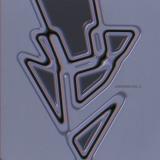
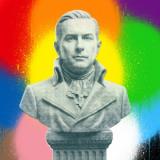
The journey through French-speaking pop archives continues with this fifth volume, packed with fuzz, gimmicks, and dissent. Far from the charts, the selected tracks display a great creative freedom, often backed by corrosive humor. Welcome to the surprising, kaleidoscopic, and colorful world of the late sixties and early seventies, Wizzz!
Born in Montauban, Robert Pico stumbled into music by chance when he met René Vaneste, then artistic director at Pathé-Marconi. René brought him to Paris to record his first 45 RPM EP in 1964. A year later, Pierre Perret introduced him to Vogue, where he recorded his second album with Claude Nougaro’s orchestra. Sylvie Vartan then introduced him to RCA, where he recorded four singles, including the astonishing "Chien Fidèle," a track backed by a hair-rising fuzz guitar. Alongside his solo career, he also composed for other artists like Alain Delon (the song was recorded but remains unreleased), Magali Noël, Bourvil, and Georges Guétary. In the Paris of the sixties, he mingled with Mireille Darc, Elsa Martinelli, Marie Laforêt, France Gall, Françoise Hardy, Petula Clark, Régine, Dani, Serge Gainsbourg, Joe Dassin, Franck Fernandel, Charles Level, and Roland Vincent. Despite his efforts and winning a Grand Prix Sacem for his final record, Robert Pico didn’t achieve the expected success in show business and decided to leave Paris and return to the Southwest, where he devoted himself to writing. He is the author of 23 books (including Delon et Compagnie, Jean-Marc Savary Editions 2025, a memoir about his youth and his many encounters). Today, he is relieved to never have become a celebrity and devotes himself to his work with passion.
In 1969, the Franco-Italian movie Erotissimo was released, directed by Gérard Pirès (who later directed Taxi in 1998, written and produced by Luc Besson). This pop comedy features Annie Girardot, Jean Yanne, Francis Blanche, Serge Gainsbourg, Nicole Croisille, Jacques Martin, and Patrick Topaloff. The soundtrack was written by Michel Polnareff and William Sheller, with lyrics by Jean-Lou Dabadie. "La Femme Faux-cils," performed by Annie Girardot. It recounts the feelings of a rich CEO's wife who seeks to develop her sex appeal under the influence of advertisement and magazines. Groovy, sparkling and light, this track, with ITS lush arrangements humorously critiques consumer society and feminine beauty standards.
“Je suis l’Etat” (1967) is the flagship track of the first EP by singer-songwriter Spauv Georges, aka Georges Larriaga, better known as Jim Larriaga (1941-2022). Born into a family of bakers, the young man was initially planning to become a hairdresser when he discovered English-speaking music through Elvis Presley and the Beatles. After this revelation, he decided he would become a songwriter and gave himself five years to succeed. He recorded his first two EP’s independently for RCA under the pseudonym Spauv Georges; meaning “that poor George”, a nickname given to him by the mother of her friend Jean-Pierre Prévotat (future drummer of the Players, Triangle, or Johnny Hallyday). Portraying a depressed and eccentric young man, Spauv Georges created corrosive and amusing songs that didn’t reach a wide audience, despite a TV appearance with Jean-Christophe Averty.
Supported by his loyal friend and fellow songwriter Jean-Max Rivière, Georges Larriaga met the future singer Carlos in the early '70s, then Sylvie Vartan’s assistant. He wrote songs for Carlos, including the popular "La vie est belle," "Y’a des indiens partout," and "La cantine", which went onto become a huge hit in 1972. He also composed for Claude François (“Anne-Marie”, 1971), Charlotte Julian (“Fleur de province”, 1972), helped launch child singer Roméo (who sold 4 million records), and later wrote the hit "Pas besoin d’éducation sexuelle" (1975) for the young Julie Bataille. In 1971, Jim recorded an album for Disc'Az: “L’univers étrange et fou de Jim Larriaga”, which featured pop gems like “La maison de mon père”.
The story of the song "Zoé" began when Pierre Dorsay, artistic director at Vogue Records, asked Swiss singer and musician Pierre Alain to write a song for a new female singer. The inspiration came when he realized that Zoé (the artist's name) was also the name of France's first atomic battery, created in 1948, which consisted of uranium oxide immersed in heavy water! The lyrics reflect a bubbling energy that must be handled with caution, while the instrumentation echoes this atomic theme, notably with the use of a theremin.
Zoé’s career lasted only as long as a single 45 RPM, but it seems Christine Fontane was the vocalist behind this pseudonym, who is known for several EPs, a good "popcorn" album in 1964, and a handful of children’s singles in the '70s. Regardless, the photograph on the cover is of a different girl entirely.
Later, Pierre Alain continued his career, writing songs for himself, Marie Laforêt, Danièle Licari, Alice Dona, Arlette Zola (3rd place in Eurovision 1982), and achieving multiple gold and platinum records in Canada. Also an inventor with several patents, president of the Romande Academy, and head of the French Alliance in Geneva, he now composes atonal music, books, and poetry. Moreover, he is also the host of "Les Mardis de Pierre Alain" at "Le P'tit Music'Hohl" in Geneva.
Filled with oriental choruses and fuzz guitar, "Fou" is from Jacques Da Sylva's only EP released by Vogue in 1967. Despite the quality of this recording, all traces of this singer disappear after this first effort.
Valentin is a baroque pop singer born in Belgium. He is the songwriter and composer of most of the tracks on his three singles released in the late 60s in Canada. A legend says that he reincarnated himself as Jacky Valentin during the 1970s for a rock'n'roll revival career in Belgium, but his older brother sadly debunked this story. Valentin's first two singles were arranged by Claude Rogen, a Parisian session pianist who had come to Canada to promote the song “Mister A Gogo”, a cover of David Bowie’s “Laughing Gnome”, adapted by singer Delphine, his wife at the time. Far from his usual network, Claude Rogen arranged music for Polydor, including the arrangements for “Je suis un vagabond” in 1969, a jerk tune with string arrangements and a furious optimism.
Jacques Malia wrote, composed, and recorded his only 45 EP for Festival in 1966. “Histoire de gitan” is an incredible beat track with bohemian scat that tells the story of a gypsy musician who came to Paris to make it in the Music-Hall, to no avail. The hero of the song and its author probably shared a similar fate, as Jacques Malia faded into anonymity after this remarkable attempt.
Bernard Jamet recorded two EPs for Barclay in the late sixties and co-wrote several songs with Christine Pilzer, Pascal Danel, and prolific songwriters Michel Delancray and Mya Simile. The track “Raison Légale” (1968), his masterpiece, immerses the listener in a courtroom right when a murderer is being judged, with jerk rhythm and free arrangements. A unique, paranoid, judicial, and psychedelic oddity.
Jean-Pierre Lebrot-Millers started his career in show business in 1967 as a singer and songwriter for the Philips label. After three singles, he wrote several songs of a new kind with his friend Pierre Halioche, in the midst of the sexual liberation movement and the democratization of drugs. With provocative lyrics, “Les filles du hasard” and “Barbara au Chapeau Rose” were released on a Philips singles in 1968. The character of Barbara was inspired by a queen of Parisian nightlife during the psychedelic years: model Charlotte Martin, who dated Eric Clapton from 1965 to 1968, then Jimmy Page from 1970 to 1983. Jean-Claude Petit’s arrangements, with a table-filled intro, soul brass, and Hendrixian guitar, emphasize the flamboyance of a hedonistic and sexy character, whose dog is named Junkie because “Junkie est un nom exquis”! The track was recorded live in three takes with a full orchestra.
Upon its release, the record was censored by Europe 1 and RTL due to its references to drug use. Jean-Pierre Lebrot was then banned from the airwaves and later dismissed by his record label. He changed his artist name to Jean-Pierre Millers, while his companion Pierre Halioche became D. Dolby for a new dreamy composition, “Chilla”, which Jean-Pierre produced himself with arrangements by Jean Musy. Once again, the song was immediately censored everywhere. After this setback, he decided to stop singing and started taking on odd jobs to support his Swedish wife and their son until the day he met Jean-Pierre Martin, then production manager at Decca, who had worked with Manu Dibango. Martin offered Jean-Pierre Lebrot-Millers, then employed at Rank Xerox, the position of artistic director at Decca. He accepted and became, a year later, promotion director (radio, press, TV). He worked on Julio Iglesias’s first album for Decca, which became a massive hit and allowed him to meet Claude Carrère. The latter asked him to write new songs and find their performers, much like a “talent scout.” It’s through him that Jean-Pierre discovered Julie Pietri and Corinne Hermès. He composed “Ma Pompadour” for Ringo, Sheila’s husband, and took the microphone again for the syncope hit “Rendez-Vous” in 1982.
That same year, Jean-Pierre Lebrot-Millers tried to release a track for which he had heavily gone into debt: “Si la vie est un cadeau”. Having recorded it in London, he presented it to numerous professionals, all of whom refused to get involved. The same thing happened with Antenne 2 and the Sacem when he proposed the song as France’s entry for Eurovision. He then met Haïm Saban, who was producing cartoon soundtracks and had just launched the Goldorak theme song. Saban, having listened to the song, declared it had the potential to become a hit. He sent Jean-Pierre and Corinne Hermès to meet the CEO of the Luxembourg radio and television network. The latter received them, asked to hear a verse and chorus a cappella in his office, and immediately hired them to represent Luxembourg at Eurovision 1983. They reworked the arrangements and recorded a new version with Haïm Saban as co-producer. The song ended up winning Eurovision 1983, a great comeback for our hero. He continued producing and hung out with the band Nacash in Belgium when a couple came to introduce their daughter for an impromptu audition in a hotel room. The girl sang “Les démons de minuit” while dancing to a radio cassette. Impressed, he had her take singing lessons for a year and composed a song for her (for which he had the melody and title, but no lyrics). This required him to go on the hunt for a lyricist, who ended up being Guy Carlier. They recorded the song, which was initially a ballad, at Bernard Estardy’s CBE studio, and gave the singer a new name: Melody. They showed the song around their industry network without success. Later, Estardy called Jean-Pierre to suggest changing the rhythm and making it pop-rock. Orlando, Dalida’s brother, liked the result and decided to co-produce the track. “Y’a pas que les grands qui rêvent » became a classic hit. The song has since been covered by Juliette Armanet (as a ballad, like the original) and Valentina.

Born into an aristocratic Breton family, Hervé Mettais-Cartier worked as a DJ at Queen Kiss, a nightclub in Poitiers, where he formed the band Les Concentrés with Michel (an actor) and Christian (a radio technician). Together, they created a repertoire of whimsical songs (“Ma bique est morte”, “J’suis un salaud”, “Fils de dégénéré”...) that they performed on stage dressed in white (in homage to “concentrated milk”). They performed at Bliboquet and Olympia in 1968 for the 10th edition of the “Relais de la chanson Française” organized by L’Humanité-Dimanche and Nous les Garçons et les Filles, sponsored by Pepsi Cola. Winners in the author-composer category, alongside Danish singer Dorte, their visibility allowed them to record a 45, and appear on television in Jean-Christophe Averty’s show. The A-side of the disc features Bruno le ravageur, a casatchok dedicated to Bruno Caquatrix, the director of Olympia, nicknamed in the song “Coq Atroce” or “croque-actrices”. The B-side is dedicated to “Fils de dégénéré”, a quirky tribute to Hervé's aristocratic roots, mixing absurdity with sophisticated vocal harmonies.
After Les Concentrés, Hervé Mettais-Cartier formed the duo La Paire et sa Bêtise with his friend Olivier Robert. They performed in Parisian cabarets and toured with Pierre Vassiliu. In the late 1970s, Hervé began a solo career. He recorded two albums for the Motors label in 1978 and 1979, which did not achieve their anticipated success due to lack of promotion. In 1980, he met Bernadette, with whom he started a family and created a “Chansons à voir” (songs to see) show that he performed until his death at the end of 2024.

Publicité comes from the final EP by the Missiles (Ducretet Thomson, 1966), a disc that also includes “La (nouvelle) guerre de cent ans”, featured on Volume 4 of our Wizzz! series. Please refer to the booklet for the story of the band.

“He’s 1.82 meters tall, 28 years old, weighs 135 kg, is black and Belgian”: this is the description of singer Hegesippe on the back of his sole single (Decca, 1967). He appears on the album cover wearing a Greek toga, like a hippie gag – we are at the end of the year 1967. In “Le crédo d’Hegesippe”, this former bodyguard of Antoine and the Charlots plays the delightful card of the thick brute converted to Flower-Power and non-violence, with arrangements by Jean-Daniel Mercier, aka Paul Mille.
“Ethéro-disco” was released on a promotional record for clients of the Maréchal company (Liège, Belgium) for the New Year 1979. Over a funky rhythm, celebrity impersonations (Brigitte Bardot, Jacques Dutronc, Fernandel…) deliver an enigmatic text about pharmaceutical products like ether, bismuth, and aspartate. The track was composed by Dan Sarravah (responsible for Joanna's “Hold-up inusité” featured on Wizzz! Volume 3) and Tony Talado, who was also a singer (one 45 in 1967), songwriter (with over a dozen credits between 1964 and 1985 in various styles from surf music to disco), author (Devenez Végétarien, Dricot Editions, 1985), ad designer, and psychologist.

Décollez-les is on the A-side of Mamlouk's only single, a pseudonym for Marsel Hurten, who is known for his work on several EPs in the late sixties, as well as composing music for Hervé Vilard’s “Capri, c’est fini”, Claude Channes' “La Haine”, Annie Philippe’s “On m’a toujours dit”, and Nancy Holloway’s “Panne de Cœur”.
This strange song, with Afrobeat horns and absurd dialogues between a chef and his kitchen staff, is the result of a collaboration between Marsel Hurten and one of his neighbors, a photographer from Pavillon-sous-Bois (93), where the musician settled after returning from the Algerian War. A music video was shot to promote the record.
Marsel Hurten was born in Tourcoing (59) into a musical family. At a young age, he joined the brass band founded by his grandfather, playing the piston before studying trumpet at the conservatory, as well as teaching himself how to play the guitar. As an orchestra musician, he toured in France, Belgium, Germany, and England. He released a series of solo 45’s between 1965 and 1968 for the DMF and Az labels before stopping recording to focus on working for other artists (Gilles Olivier, Noëlle Cordier…).
“L’amour nu” (Vogue, 1971) is the work of the short-lived Belgian band Mozaïque. The track, written by singer Jacques Albin, closely resembles another of his compositions, “Carré Blanc”, which he recorded in 1969 for Disc’AZ.
Represented by the Lumi Son micro-label based in Marignane (Côte d'Azur), Jean-Marc Garrigues released two 45 RPMs in the late sixties, defending the French jerk sound. The song “Je dis Non” is a short, joyful ode to youth, pop music, and rebellion.
Songwriter and performer Jacques Penuel released three singles. The first one, “Astronef 328” (Fontana, 1969), features a dizzying series of chords punctuated by sound effects, a sci-fi story, and arrangements by Jean-Claude Vannier.

We would like to sincerely thank Pierre Alain, Moon Blaha, Marsel Hurten, Bastien Larriaga, Jean-Pierre Lebrot-Millers, Bernadette Mettais-Cartier, Robert Pico, Olivier Robert, Claude Rogen, Micky Segura.
non in magazzino

Ordina ora e ordineremo l'articolo per te presso il nostro fornitore.

23,11

Last In: 55 days ago
RITUAL - SONGS FOR THE HAUNTED
  • Head To Your Fist
  • There's Only Us
  • The Silver Lining
  • In The Rain
  • Shadow Of Doubt
  • Perfect Pictures
  • Sleeping Ghosts
  • Violent Minds
  • Trust
  • For The Haunted
  • Bones In The Gears
  • Into The Light
  • Final Hour

Nachdem Ritual aus dem Ruhrgebiet seit 2005 als eine der aktivsten Hardcorebands Europas in jugendlichem Wahnsinn weit über 300 Konzerte in 19 Ländern gespielt und in dieser Zeit drei Alben und 7"-Singles hinterlassen hatten, war die kultisch verehrte Band seit 2012 on hiatus. Nun haben sich Julian Laur de Manos, Deni Pavicic und Philipp Wulf, deren Freundschaft auch ohne Ritual fortbestand, 14 Jahre nach ihrem letzten Album wieder zusammengetan. Mit "Silver Lining" zeigen sie sich in einer ersten Doppelsingle melodisch wie nie zuvor. Die Palette hat sich deutlich erweitert, sind doch trotz starkem Wiedererkennungswert einige auffällige Facetten hinzugekommen. So zeigen sich Ritual hier wiedererweckt als eine Hardcore-Band, die ins Jahr 2025 zu passen scheint.

pre-ordina ora12.09.2025

dovrebbe essere pubblicato su 12.09.2025

18,07

Last In: 2026 years ago
Ash Ra Tempel - Ash Ra Tempel LP

Ash Ra Tempel

Ash Ra Tempel LP

12inchMG.ART611
MG.ART
22.08.2025
 
2
disponibile anche

140g Transparent Vinyl[28,36 €]


2025 Repress


Ash Ra Tempel is the eponymous debut studio album by the Krautrock band Ash Ra Tempel. It features guitarist Manuel Göttsching with drummer Klaus Schulze and bassist Hartmut Enke.
Engineered by Conny Plank it was recorded in March 1971 and released in June 1971 on Ohr Records.

This 50Th Anniversary Album will be Released in Memoriam of all the Musical Contributors to this Release and on Manuel Göttsching´s MG.ART label. It´s the fourth and headlining edition in this series and was finalised, carefully overseen by Manuel Göttsching himself in the late Autumn of 2022.

Much has been written about the record and band.

Having finished a first musical chapter with their Steeple Chase Bluesband and still at very young age of only 17 and 18 years old Manuel Göttsching and Hartmut Enke met Klaus Schulze. Together they started to write and and compose what, to many, became one the holy grails of Psychedelic Rock and early Electronic Music -
the German variant which was later also named "Krautrock":

Ash Ra Tempel´s self-titled first album "Ash Ra Tempel".

"The trio of Klaus Schulze, Manuel Göttsching and Hartmut Enke decided to abandon conventional composition and song writing, in favour of free-form improvising and developing a new musical language. As such, they became notorious for jams that could exceed 30 minutes." Says Discogs. "Some of these recordings can be found on Manuel Göttsching´s "The Private Tapes" releases", which will be re-released on MG.ART as well, following this edition.

"Krautrocksampler" author Julian Cope mentioned it to be "… one of the greatest rock 'n' roll LPs ever made." (Julian Cope Presents Head Heritage | Unsung | Reviews | Ash Ra Tempel - Ash Ra Tempel". 15 March 2000.)

AllMusic called the album "both astonishingly prescient and just flat out good, a logical extension of the space-jam-freakout ethos into rarified realms."

Here we would like the Band to be heard, for what can easily be said as the first time in 50+ years, with the exception of some early Journalists for whom the young Manuel Göttsching wrote a statement of intent (the original text can be found inside this edition) as following:

"Our musical concept is based on a combination of blues rock and delicate collages of electronic sound. These two elements should remain inseparable. And in their complex unity, the different musical philosophies of each musician find a common sweet spot. Our music is a permanently impulsive experience left to develop as it will, starting from a common fixed point of departure. This is where the difficulty of the music begins: No standardized formulation of our music can and should be possible. Only the constant reaction within the band can determine the musical result. And this requires constant listening with full concentration on the part of the creators. The idea of a particular musician will be - if flexible enough - absorbed by the others, transposed to their own instrument, and reflected back into the music as an individual contribution. This reciprocity within the band is then transferred over to the audience. And this process means that their reaction is not only a contribution to the end result; it actually makes them jointly responsible for the creation of the final musical product.

On our album, the track "Amboss" represents the first layer. Conventional instruments communicate familiar music which is in part expanded through electronic means. In the second track of the album - "Traummaschine" - the actual basic sound approach is dissolved into an electronic Nirvana which no longer allows the concrete identification of actual instruments. Innocent, virgin listening, free from any and every association, can finally begin - and the music can be absorbed and processed free from the limitations of categorization. That is the purpose of our music: To convey freedom without any predetermined criteria or traditions.

Thank you for your attention."
(Taken from the original A-R-T Bio 1970)


Hartmut Enke, Manuel Göttsching and Klaus Schulze aka. Ash Ra Tempel travelled to Hamburg in March 1971 to record their debut, with assistance of another Icon, legendary engineer Conny Plank.
The rest is history.

non in magazzino

Ordina ora e ordineremo l'articolo per te presso il nostro fornitore.

28,36

Last In: 7 months ago
Ash Ra Tempel - Ash Ra Tempel LP

Ash Ra Tempel

Ash Ra Tempel LP

12inchMG.ART611TV
MG.ART
22.08.2025
 
2
disponibile anche

black EP[28,36 €]


2025 Repress

Ash Ra Tempel is the eponymous debut studio album by the Krautrock band Ash Ra Tempel. It features guitarist Manuel Göttsching with drummer Klaus Schulze and bassist Hartmut Enke.
Engineered by Conny Plank it was recorded in March 1971 and released in June 1971 on Ohr Records.

This 50Th Anniversary Album will be Released in Memoriam of all the Musical Contributors to this Release and on Manuel Göttsching´s MG.ART label. It´s the fourth and headlining edition in this series and was finalised, carefully overseen by Manuel Göttsching himself in the late Autumn of 2022.

Much has been written about the record and band.

Having finished a first musical chapter with their Steeple Chase Bluesband and still at very young age of only 17 and 18 years old Manuel Göttsching and Hartmut Enke met Klaus Schulze. Together they started to write and and compose what, to many, became one the holy grails of Psychedelic Rock and early Electronic Music -
the German variant which was later also named "Krautrock":

Ash Ra Tempel´s self-titled first album "Ash Ra Tempel".

"The trio of Klaus Schulze, Manuel Göttsching and Hartmut Enke decided to abandon conventional composition and song writing, in favour of free-form improvising and developing a new musical language. As such, they became notorious for jams that could exceed 30 minutes." Says Discogs. "Some of these recordings can be found on Manuel Göttsching´s "The Private Tapes" releases", which will be re-released on MG.ART as well, following this edition.

"Krautrocksampler" author Julian Cope mentioned it to be "… one of the greatest rock 'n' roll LPs ever made." (Julian Cope Presents Head Heritage | Unsung | Reviews | Ash Ra Tempel - Ash Ra Tempel". 15 March 2000.)

AllMusic called the album "both astonishingly prescient and just flat out good, a logical extension of the space-jam-freakout ethos into rarified realms."

Here we would like the Band to be heard, for what can easily be said as the first time in 50+ years, with the exception of some early Journalists for whom the young Manuel Göttsching wrote a statement of intent (the original text can be found inside this edition) as following:

"Our musical concept is based on a combination of blues rock and delicate collages of electronic sound. These two elements should remain inseparable. And in their complex unity, the different musical philosophies of each musician find a common sweet spot. Our music is a permanently impulsive experience left to develop as it will, starting from a common fixed point of departure. This is where the difficulty of the music begins: No standardized formulation of our music can and should be possible. Only the constant reaction within the band can determine the musical result. And this requires constant listening with full concentration on the part of the creators. The idea of a particular musician will be - if flexible enough - absorbed by the others, transposed to their own instrument, and reflected back into the music as an individual contribution. This reciprocity within the band is then transferred over to the audience. And this process means that their reaction is not only a contribution to the end result; it actually makes them jointly responsible for the creation of the final musical product.

On our album, the track "Amboss" represents the first layer. Conventional instruments communicate familiar music which is in part expanded through electronic means. In the second track of the album - "Traummaschine" - the actual basic sound approach is dissolved into an electronic Nirvana which no longer allows the concrete identification of actual instruments. Innocent, virgin listening, free from any and every association, can finally begin - and the music can be absorbed and processed free from the limitations of categorization. That is the purpose of our music: To convey freedom without any predetermined criteria or traditions.

Thank you for your attention."
(Taken from the original A-R-T Bio 1970)


Hartmut Enke, Manuel Göttsching and Klaus Schulze aka. Ash Ra Tempel travelled to Hamburg in March 1971 to record their debut, with assistance of another Icon, legendary engineer Conny Plank.
The rest is history.

non in magazzino

Ordina ora e ordineremo l'articolo per te presso il nostro fornitore.

28,36

Last In: 6 months ago
ZIUR - EYEROLL LP

Ziur

EYEROLL LP

12inchHKLP53
Nyege Nyege Tapes
16.07.2025

Black Vinyl LP. The world has changed, we shouldn't try and pretend otherwise. While we were shut away in isolation our routines shifted, social patterns evolved, and our hopes and dreams were twisted into cobwebs we're still trying to wipe from our fingers. Ziúr tentatively approached this on her last album Antifate, an ambitious and complex hybrid pop fever dream that looked back to a Medieval escapist fantasy as the scent of revolution seemed to hum in the air. But when restrictions were eased, she found herself staring down a discombobulated society that had trapped itself in a spiral of microwaved nostalgia and detached, narcotic repetition. Eyeroll then is Ziúr's musical panacea, a tincture to wake us from our creative slumber and prompt external connection and reflection. It's a polyphonous hex that demands human interaction, and Ziúr's hand-picked alliance of collaborators - Elvin Brandhi, Abdullah Miniawy, Iceboy Violet, Juliana Huxtable, Ledef, and James Ginzburg - each provide distinct voices that together herald a bewildering sonic epoch. Ziúr's palette had to evolve to match the scope of the project, but it was pure necessity that informed the album's defining tone. Recording mostly at night, Ziúr was conscious of the noise she was making so developed a unique way to record organic percussion. Using a set of rototoms - low profile tunable drums - she scratched, scraped and gently tapped the skins to build up the undulating and unstable rhythmic backdrop for each track. It's the first sound we hear on the opener 'Eyeroll', rattling like lost marbles against Elvin Brandhi's primal croaks and screams. And when Brandhi's twisted articulations form words, Ziúr matches the energy with chaotic thuds and serrated blasts of saturated electronics. "I roll the shittiest cigarette," she squeals like she's about to start a mosh pit at Paris's GRM Studios. Without pause, Abdullah Miniawy takes over on 'Malikan', building on the promise of material with Simo Cell, Carl Gari and HVAD with corrosive trumpet blasts and charged, politically incendiary Arabic vocals. Inspired by pre-Islamic poetry and the Qu'ranic chanters he heard growing up in Saudi Arabia and Egypt, he spins labyrinthine stories that cross between the worlds, breaking down physical and spiritual borders simultaneously. Miniawy's scope is expanded even further on his second collaboration, 'If The City Burns I Will Not Run'. "If it rains and the city drowns," he utters over gaseous electronics, "I will not run away, but I will be anxious for the heart of one close to me." After a supple vocal turn from Manchester's Iceboy Violet on 'Move On' and a surreal interlude from poet- DJ-artist-theorist Juliana Huxtable on '99 Favor Taste', Brandhi returns with two more hyperactive collaborations: ,'Nontrivial Differential' and 'Cut Cut Quote'. On the former she slices into Ziúr's skeletal jazz eruptions, screaming and crooning interchangeably, fluxing between the rap battle and the cabaret. The latter is completely different meanwhile, with Brandhi settling into her role as front-woman and groaning dizzying improvised passages that sound like grunge crossed with psychedelic no-wave. Brandhi's spiky musical history has prepared her well for this collaboration; she's a prolific producer and has been using her voice spontaneously since debuting with father-daughter improv duo Yeah You in the mid 2020s. She's found an ideal foil in Ziúr, a producer who matches her restless energy and willingness to bend formality, and leaves an indelible mark on Eyeroll. But the album's most tender moments are from Ziúr herself, who winds the album down on 'Hasty Revisionism', growling over collapsible beats and cascading strings, and comes to an unexpected conclusion with country coda 'Lacrymaturity'. Its feverish amalgamation of country music and euphoric, experimental electronics might seem incongruous at first, but in context with the rest of the album is the only possible conclusion. With Eyeroll Ziúr is making a firm statement about togetherness, humanity, and the renewal of hope when all seems lost. By bringing together such a wide but philosophically harmonic team of collaborators, she's conducted a body of work that speaks to the creative fringe in no uncertain terms. Now's the time to throw away what you think you know, and build bridges you didn't think you need. Now's the time for action. She may have spent her entire career avoiding the solipsistic trappings of "queer art", but by assembling a communal statement that questions so many normative assumptions about music, politics, and beyond, Ziúr has chanced upon her queerest album yet. Cringe? Eyeroll.

non in magazzino

Ordina ora e ordineremo l'articolo per te presso il nostro fornitore.

22,27

Last In: 8 months ago
Sir Karl Jenkins - The Armed Man: A Mass For Peace LP 2x12"

The Armed Man: A Mass for Peace was commissioned by the Royal Armouries to mark the transition from one millennium to another. It reflects on the passing of ‘the most war-torn and destructive century in human history’ and looks forward in hope to a more peaceful future. The Armed Man is dedicated to the victims of the Kosovo conflict, whose tragedy was unfolding as it was being composed. It was first performed in 2000 by the London Philharmonic Orchestra and the National Youth Choir of Great Britain, conducted by Jenkins himself. The 25th anniversary edition includes a cover redesign; a history of the commission by Guy Wilson, Master of the Armouries; updated biographies for contributors; and new notes from Julian Lloyd Webber reflecting on the debut performance, plus a note from Sir Karl himself.

pre-ordina ora06.06.2025

dovrebbe essere pubblicato su 06.06.2025

41,13

Last In: 2026 years ago
Moundabout - Goat Skull Table LP

Rocket Recordings’ new Black Hole Series is a place where the unorthodox, otherworldly and esoteric can flourish, and there could be no more fitting first release for it than the most powerful metaphysical travelogue yet from Moundabout. Journeying still further into and beyond the landscapes from which this duo have unearthed inspiration, ‘Goat Skull Table’ is a transmission to give flight to spectral visions and include trance-states in abundance.The vibrations and manifestations of the duo of Paddy Shine(GNOD) and Phil Langero (Los Langeros, Damp Howl, Bisect) has always resonated within a very specific sense of place, transcending linear narratives and astral planes in a quest to unite timeless spirits with inner space. This third release for Rocket Recordings sees them colluding with
the landscape of their surroundings, transcending linear narratives and astral planes in a quest to unite timeless spirits with inner space.The title track marks a focal point here; a Shamanic rite on which Langero’s charismatically charged mantras collude with an audial landscape somewhere on the map between the abstract spell-casting of Nurse With Wound and the druidic gnosticism of Julian Cope. This is Moundabout at their darkest and most ritualistic. Elsewhere, the hypnotic repetition of the twin ten-minute extrapolations ‘Blood On My Blanket’ and ‘Wagon’, and the potent incantatory chants of ‘Am I Not’ and ‘Brave New World’ glow with a rugged and
charged dynamism redolent of the Swedish Psychedelia of Träd, Gräs & Stenar, uniting a minimal aesthetic with maximal impact.
Dauntless, feverish, and reaching new heights of primal intensity ’Goat Skull Table’ is a formidable field guide to the earthen and other

pre-ordina ora05.05.2025

dovrebbe essere pubblicato su 05.05.2025

25,63

Last In: 2026 years ago
Level 42 - World Machine

Level 42

World Machine

12inchUMCLP097
PROPER RECORDS
30.04.2025
  • World Machine 5:12
  • Physical Presence 5:27
  • Something About You 4:22
  • Leaving Me Now 4:58
  • I Sleep On My Heart 4:05
  • It's Not The Same For Us 4:34
  • Good Man In A Storm 4:35
  • Coup D'etat 3:35
  • Lying Still 5:36

This re-issue of World Machine, Level 42's 1985 breakthrough album, is presented with scrupulous attention to the detail of the original UK first pressings and available in audiophile 180g pink vinyl in celebration of the album's 40th anniversary.

By 1985, Level 42 – bassist and vocalist Mark King, keyboard player/vocalist Mike Lindup, guitarist Boon Gould, drummer/lyricist Phil Gould and studio-only keyboard player Wally Badarou – were on the verge of breaking big - After a string of well-received albums, such as their pioneering jazz-funk 1981 debut or the Ken-Scott produced True Colours, the group decided, rather than work up material through jamming, to sit and write some songs for their forthcoming album.

Producing themselves, with assistance from engineer Julian Mendelsohn, this new approach meant that World Machine was the quantum commercial leap they craved. And most of that was due to the album's towering lead single, the pop-funk of "Something About You". With its expensive video seeing the group styled for the 80s, it set radio alight, becoming a Top 10 hit and charting around the world, importantly in the US. Following up with the tender ballad "Leaving Me Now" and then the bouncy funk of the album's title track as singles, the album's success was guaranteed; it reached No 3 in the UK charts and spent an amazing 72 weeks on the listings.

pre-ordina ora30.04.2025

dovrebbe essere pubblicato su 30.04.2025

30,67

Last In: 2026 years ago
MILES DAVIS - Milestones

"The 1958 Miles Davis group wasn't a quintet but a sextet, with the addition of Julian ""Cannonball"" Adderley on alto sax to John Coltrane on tenor sax, Red GaIrTlaEndMoSn piaMnoA, YPaul NChOamTbersBoEn bass, Philly Joe Jones on drums, and Miles on trumpet. Milestones was the first studio album made by the sextet. It was recorded on February 4 and March 4, 1958, and the rhythm section was the same as the classic 1956 quintet.
THE COMPLETE ALBUM – 180-GRAM COLORED RED VINYL - LIMITED EDITION"

pre-ordina ora11.04.2025

dovrebbe essere pubblicato su 11.04.2025

19,96

Last In: 2026 years ago
Adam F - Colours Revisited LP 3x12"

‘Colours Revisited’, a revision of Adam F’s MOBO Award-winning 1997 debut album is a story of musical rebirth and passion. Adam F, realising that ‘Colours’ had found a new audience—partly thanks to artists like PinkPantheress—decided to recreate the album. Instead of simply remastering the tracks, Adam went all in. Over two years, he meticulously reworked the original music, from restoring vintage instruments like his Fender Rhodes piano to enlisting UK jazz legends like Julian Joseph. Vocalists including Kirsty Hawkshaw and the late MC Conrad re-recorded their parts, while new solos from world-class musicians added fresh life to the tracks.

“Colours holds a special place in my heart because it was not only my first solo album, but also because I had the opportunity to collaborate with diverse talents,” says the seminal producer on his ground-breaking album. “Musicians of a calibre such as Dave Ital (Guitars), The Jazz Great Julian Joseph (Keyboards and Fender Rhodes), MC Conrad (MC/Artist), Roni Jordan (Jazz a guitarist who had a hit with Miles Davis’ “So What”), Tim Philbert/Tim the Bass (Bass), Greg Leicester (Bass), Maurice Capillaire/MC MC (Live MC)…”

Adam continues “We were honoured to be nominated for MOBO “Best album of the year” alongside renowned acts of that time, including Hinda Hicks, Des’ree, Lighthouse Family, and Massive Attack. In fact, I was so convinced that we wouldn't win that I didn't prepare a speech, and that definitely showed in my genuine surprise. Colours also went on to be a top 20 UK National Chart hit which lead to Metropolis winning Tune of the Year at the Underground Awards. Music In My Mind from the same album was inspired from Herbie Hancock ‘Rocket’ and ‘I Thought It Was You’.

“Fast forward to 2020, I never thought of ever revisiting ‘Colours’. But it seems that time has come round full circle, the interest is there.” The revisited album deftly weaves together the energy of new live instrumentation with the 80’s British electronica and jazz fusion inspired sounds of the original.
The result is a project which not only brings the album into the glistening present but somehow manages to add further depth and sense of understanding of the original ‘Colours’, the influences latent within it and how and why it has gone on to influence so many others since it’s inception throughout the world. This is a must have album which pays homage to what has become a cornerstone of British electronic music history.

non in magazzino

Ordina ora e ordineremo l'articolo per te presso il nostro fornitore.

41,98

Last In: 52 days ago
Adam F - Colours Revisited LP 3x12"

‘Colours Revisited’, a revision of Adam F’s MOBO Award-winning 1997 debut album is a story of musical rebirth and passion. Adam F, realising that ‘Colours’ had found a new audience—partly thanks to artists like PinkPantheress—decided to recreate the album. Instead of simply remastering the tracks, Adam went all in. Over two years, he meticulously reworked the original music, from restoring vintage instruments like his Fender Rhodes piano to enlisting UK jazz legends like Julian Joseph. Vocalists including Kirsty Hawkshaw and the late MC Conrad re-recorded their parts, while new solos from world-class musicians added fresh life to the tracks.

“Colours holds a special place in my heart because it was not only my first solo album, but also because I had the opportunity to collaborate with diverse talents,” says the seminal producer on his ground-breaking album. “Musicians of a calibre such as Dave Ital (Guitars), The Jazz Great Julian Joseph (Keyboards and Fender Rhodes), MC Conrad (MC/Artist), Roni Jordan (Jazz a guitarist who had a hit with Miles Davis’ “So What”), Tim Philbert/Tim the Bass (Bass), Greg Leicester (Bass), Maurice Capillaire/MC MC (Live MC)…”

Adam continues “We were honoured to be nominated for MOBO “Best album of the year” alongside renowned acts of that time, including Hinda Hicks, Des’ree, Lighthouse Family, and Massive Attack. In fact, I was so convinced that we wouldn't win that I didn't prepare a speech, and that definitely showed in my genuine surprise. Colours also went on to be a top 20 UK National Chart hit which lead to Metropolis winning Tune of the Year at the Underground Awards. Music In My Mind from the same album was inspired from Herbie Hancock ‘Rocket’ and ‘I Thought It Was You’.

“Fast forward to 2020, I never thought of ever revisiting ‘Colours’. But it seems that time has come round full circle, the interest is there.” The revisited album deftly weaves together the energy of new live instrumentation with the 80’s British electronica and jazz fusion inspired sounds of the original.
The result is a project which not only brings the album into the glistening present but somehow manages to add further depth and sense of understanding of the original ‘Colours’, the influences latent within it and how and why it has gone on to influence so many others since it’s inception throughout the world. This is a must have album which pays homage to what has become a cornerstone of British electronic music history.

non in magazzino

Ordina ora e ordineremo l'articolo per te presso il nostro fornitore.

42,82

Last In: 35 days ago
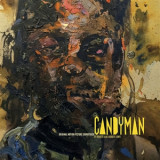
Various - CANDYMAN OST LP 2x12"

Various

CANDYMAN OST LP 2x12"

2x12inchWW142
Waxwork
21.02.2025
  • 1: Prologue
  • 1: 2 The Sweet
  • 1: 3 Music Box - Philip Glass
  • 1: 4 Row Houses
  • 1: 5 Graffiti
  • 1: 6 Rows And Towers
  • 1: 7 What's Candyman?
  • 1: 8 I Thought We Could/The Turn
  • 1: 9 Joke Summoning
  • 1: 0 End Of Clive And Jerrica
  • 1: Brianna Finds Bodies
  • 1: 2 Brianna's Mirror Dream
  • 1: 3 The Library
  • 1: 4 The Elevator
  • 1: 5 Frantic Painting
  • 1: 6 You Should Say It
  • 1: 7 End Of Finley
  • 1: 8 Frantic Cycles
  • 1: 9 The Story Of Daniel Robitaille
  • 1: 20 Brianna In The Studio
  • 1: 2 The End Of The Kids
  • 1: 22 Anthony's Arm
  • 1: 23 Got Taken
  • 1: 24 Called To Row Houses
  • 1: 29 End Of Burke
  • 1: 30 Brianna Says His Name
  • 1: 3 Music Box (Reprised) - Philip Glass
  • 1: 32 Cabrini Walk (Bonus Track)
  • 1: 33 Cabrini Walk Ii (Bonus Track)
  • 1: 34 The Bridge (Bonus Track)
  • 1: 25 The Laundromat
  • 1: 26 Young William
  • 1: 27 Leaves A Stain
  • 1: 28 William Chases Brianna

The Complete Film Music Composed by Robert Aiki Aubrey Lowe - 2xLP 180 Gram Colored Vinyl - Old-Style Tip-On Gatefold Jackets with Satin Coating and a Built-In Booklet Page - Composer Liner Notes - 12 Page Art Gallery Exhibit Catalogue // In partnership with Universal Pictures, Metro Goldwyn Mayer (MGM) and Monkeypaw Productions, Waxwork Records is thrilled to present CANDYMAN Original Motion Picture Soundtrack by Robert Aiki Aubrey Lowe. Directed by Nia DaCosta (next year's The Marvels) from a screenplay by Oscarr winner Jordan Peele, Win Rosenfeld and DaCosta, Candyman, currently in theaters nationwide, is a fresh take on the blood-chilling urban legend and a contemporary incarnation of the 1992 cult horror classic. About Robert Aiki Aubrey Lowe: Robert Aiki Aubrey Lowe (b.1975) is an artist, curator and composer who works primarily with, but not limited to, voice and modular synthesizer for sound in the realm of spontaneous music. Along with analog video synthesis works, he has brought forth an A/V proposal that has been a focus of live performance and installation / exhibition. The marriage of synthesis and the voice has allowed for a heightened physicality in the way of ecstatic music, both in a live setting and recorded. The sensitivity of analogue modular synthesis echoes the organic nature of vocal expression, which in this case is meant to put forth a trancelike state. Lowe's works on paper tend towards human relations to the natural/magical world and the repetition of motifs. The deluxe 2xLP vinyl release features 180-gram colored vinyl, old-style tip-on gatefold jackets with satin coating and a built-in booklet page, liner notes by composer Robert Aiki Aubrey Lowe, a 12-page art gallery exhibition catalogue, artwork by Sherwin Ovid and Julian Williams and puppetry art by Manual Cinema.

pre-ordina ora21.02.2025

dovrebbe essere pubblicato su 21.02.2025

54,20

Last In: 2026 years ago
Don Julian - Savage

Don Julian

Savage

12inchRLGM18601PMI
REAL GONE MUSIC
15.02.2025
  • A1: Title Theme: Savage
  • A2: Lay It On Your Head
  • A3: Where I’m Coming From
  • A4: It’s A Sad Song
  • B1: My Favorite Beer Joint
  • B2: Janitzia
  • B3: Just Kiss Me

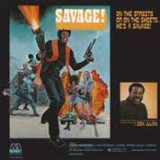
Our 2022 reissue of Don Julian and the Larks’ 1974 LP Super Slick made fans of rare ‘70s soul and funk very happy, and this release is gonna do the same. Bandleader Don Julian followed the lead of Isaac Hayes, Curtis Mayfield et al. in scoring the 1973 blaxploitation film Savage!; the reasons Julian’s score didn’t hit like Superfly or Shaft are, one, the film didn’t do as well, as it was a Philippine-based B-movie funded and distributed by Roger Corman’s New World Pictures, and, two, the soundtrack came out on the lightly-distributed Money Records label. Dig the fantastic flute work from Jimmy Vinson…and the ten-plus minute title theme is just plain funkin’ filthy. Blood orange pressing limited to just 750 copies!

pre-ordina ora15.02.2025

dovrebbe essere pubblicato su 15.02.2025

39,45

Last In: 2026 years ago
Catapilla - Catapilla

Catapilla

Catapilla

12inchTDP54031
Trading Places
01.07.2024

Jazz-infused prog rock act Catapilla began in London in 1970, with saxophonists Robert Calvert (who later worked with Daevid Allen in various Gong spin-off projects) and Hugh Eaglestone, bassist Dave Taylor (of chart-topping pop act Edison Lighthouse, and later active in hard-rock group, Liar), along with drummer Malcolm Frith, guitarist Graham Wilson and clarinet player/flautist, Thierry Rheinhardt; original vocalist ‘Lady’ Jo Meek quit early (to work with the keyboardist, poet and science fiction author, Julian Jay Savarin) and was duly replaced by her sister, Anna, whose gutsy gasps gave the band its noteworthy difference, along with the woodwinds and horns. Former Millionaires’ bassist Cliff Cooper (who had worked with producer Joe Meek before founding Orange Amplifiers), brought Catapilla to the attention of Black Sabbath’s manager, Patrick Meehan, who swiftly got them a contract with Vertigo, Philips’ prog subsidiary; this self-titled debut has four freaky tracks, including the side-long closer, “Embryonic Fusion.”

pre-ordina ora01.07.2024

dovrebbe essere pubblicato su 01.07.2024

21,64

Last In: 2026 years ago
Darwin Five - Steps On the Sun LP

Digipak w/ 12-pg booklet + sticker. Darwin is back! Follow-up to the critically acclaimed epic albums "Origin of Species" ('A prog rock masterpiece' - Classic Rock Magazine) and "A Frozen War" ('A rock tour de force with melody, shredding, and orchestral flourishes' - Prog Rock UK) Darwin, whose production is masterfully driven by Simon Phillips, expands on their trademark sound - adding new levels of depth and melody. The album features a stellar lineup of musicians. Bass sensation Mohini Dey joins the band, bringing her sophisticated and punchy low-end sound. Guitar maestro Greg Howe delivers some of his best playing to date across the album, which also features a beautiful solo appearance by Andy Timmons. Derek Sherinian and Julian Pollack (J3PO) add their keyboard wizardry across the tracks. Vocalist Matt Bissonette provides a rich harmony-filled performance across the various songs. Released on CD, including a special album cover sticker in the package

pre-ordina ora21.06.2024

dovrebbe essere pubblicato su 21.06.2024

37,77

Last In: 2026 years ago
Musique Infinie - Earth LP

Musique Infinie is the collaborative project of Manuel Oberholzer a.k.a. Feldermelder and Noémi Büchi.Their album »Earth«, released through the Hallow Ground label, is based on a spontaneously composed live score for Alexander Dovzhenko’s groundbreaking 1930 silent movie »Zemlya« (»Earth«) created for the 24th edition of the VIDEOEX festival for experimental film.

Frequently cited as a masterpiece of early 20th century filmmaking, the movie deals with the collectivisation of Ukraine’s agriculture. The Swiss duo complemented it with atmospherically rich electronic soundscapes that are both deeply immersive and highly evocative. As a stand-alone music release, the two-piece »Earth« album captures the essence of Büchi and Oberholzer’s collaboration that is marked by mutual trust and musical versatility that puts them in a state of »togetherness trance,« as they call it.

Oberholzer has been highly productive as a composer, musician, sound designer, and installation artist in recent years, releasing a slew of solo albums as well as a variety of collaboration records with artists such as Sara Oswald and Julian Sartorius. Büchi has recently debuted as a solo composer and sound artist working with electroacoustic techniques to create a »symphonic maximalism for the end of the world,« as she dubs it.

Both are prolific and versatile artists with a penchant for working conceptually, however their collaboration as Musique Infinie is an improvisational and thus by design an intuitive one.

Their sessions start with an exchange on emotions and thoughts rather than theoretical questions or aesthetic debates. When they get to work—often for several hours—they rarely talk.

They approached »Earth« the same way, improvising freely together and using only a few select samples from the film’s original score in the process. Their open-ended approach is marked by an aesthetic ambivalence that perfectly corresponds with the movie’s own inherent contradictions.

Dovzhenko approached his socio-political subject with poetic imagery and philosophical rigour, juxtaposing notions of traditionality with the depiction of modernity.

Büchi and Oberholzer accordingly work with motives that at o ce seem anthemic and elegiac, working with sounds and musical motives that evoke a sense of familiarity in one moment before transforming into something futuristic and uncanny in the next. Their score for »Zemlya« is not to be understood as a mere interpretation of the movie, but rather a re-narration or even re-negotiation of its aesthetic and emotional qualities under their very own terms. »Earth« is an album that concisely depicts what is at the core of the duo’s musical partnership

pre-ordina ora19.02.2024

dovrebbe essere pubblicato su 19.02.2024

23,32

Last In: 2026 years ago
Pylar - Límyte LP

Pylar

Límyte LP

12inchCS005LP
Cavsas
23.10.2023

PYLAR, one of the best kept secret of the Spanish underground, is a collective formed in Seville (Spain) by members of Orthodox and Blooming Látigo. With an imaginary that feeds on occult sciences, the sacred (with special attention to pagan themes) or hyperstition, PYLAR navigates the depths of mysticism and cosmic horror evoking interdimensional and abyssal sonic scenarios.
An instrumental training that incorporates percussion, guitars, keyboards, horn, violin or mandolin, to which is added vocals that intone texts by the experimental writer and philosopher Francisco Jota-Pérez, fragments extracted from occult sciences and the cult vanguard grimoire Cyclonopedia. PYLAR moves between experimental doom metal, black metal and psychedelia, creating music of dense textures by superimposing elements in the styles of Blut Aus Nord, Swans or Oranssi Pazuzu. Their first work “Poderoso se alza en my” (2013) was their letter of presentation, praised by the very Julian Cope.

non in magazzino

Ordina ora e ordineremo l'articolo per te presso il nostro fornitore.

18,45

Last In: 2 years ago
House Of Love - Babe Rainbow
  • You Don't Understand
  • Crush Me
  • Cruel
  • High In Your Face
  • Fade Away
  • Feel
  • The Girl With The Loneliest Eyes
  • Burn Down The World
  • Philly Phile
  • Yer Eyes

The House Of Love – guitarist and vocalist Guy Chadwick, lead guitarist
Terry Bickers, bassist Chris Groothuizen and drummer Pete Evans –
formed in London in 1986 - Chadwick had been around the music
industry for several years, but was energised seeing The Jesus And Mary
Chain, inspiring him to form the band - Signing to Creation, The House Of
Love were greeted enthusiastically by the music press and their single,
Shine On and self-titled debut album became indie disco classics - By
1989, the band were big news and had signed to Fontana, part of the
PolyGram group
The touring and promotion for The House Of Love took its toll on the group with
lead guitarist Terry Bickers leaving the group to be replaced with Simon Walker.
Taking its name from a Peter Blake painting, Babe Rainbow was released in July
1992. Overseen by The The and Julian Cope producer Warne Livesey, it has a
tremendous urgency and greater unity than their previous album. Trailed by the
single The Girl With The Loneliest Eyes, Babe Rainbow also contains live favourite
Crush Me, the brooding High In Your Face and Top 50 hits Feel and You Don't
Understand. Simon Walker left the group and was replaced with Simon Mawby,
who himself was to depart by the end of 1992.
This re-issue replicates the original 1992 Fontana UK release with printed inner
sleeve and is pressed onto high quality 180g vinyl.

pre-ordina ora30.09.2023

dovrebbe essere pubblicato su 30.09.2023

28,78

Last In: 2026 years ago
The Malombo Jazz Makers - Down Lucky's Way LP

'Malombo music is an indigenous kind of music. If you listen to it, you can feel that it can heal you, if you’ve got something wrong. It’s healing music.'
Lucky Ranku

"Lucas ‘Lucky’ Madumetja Ranku (1941-2016) was one of the greatest African guitarists of his generation. He first made his name with the Malombo Jazz Makers – the successor group to the legendary Malombo Jazzmen, formed in Mamelodi township by guitarist Philip Tabane, drummer Julian Bahula and flautist Abbey Cindi. When Tabane left the Jazzmen in 1965, Bahula and Cindi called on Lucky to replace him, and the Malombo Jazz Makers were born. Building on the popularity and success of the original Malombo Jazzmen, the Malombo Jazz Makers become immensely popular, touring widely, winning numerous jazz competitions, and recording two successful albums for the Gallo label.

The deep and hypnotic Down Lucky’s Way was their third album. Recorded in 1969, it was the first Malombo Jazz Makers album to feature additional instruments, and the first to feature Abbey Cindi on soprano saxophone as well as flute. But more than anything else, Down Lucky’s Way is a transfixing showcase for Lucky Ranku’s sui generis guitar virtuosity. Quite different from their previous recordings, the album shifted the Jazz Makers’ sound toward hypnotic, extended compositions, layered by organ bass and guitar overdubs. Of all the Malombo Jazz Makers recordings, Down Lucky’s Way is the deepest of mood, and the richest of vision.

However, through one of the erasures that are ubiquitous in South African musical history under apartheid, it seems that the record may not ever have been properly issued. Original copies are outrageously rare – only a few are known among collectors. When we asked Lucky about the album, he was unaware it had ever been released, and had never seen a copy. Perhaps it was pulled; perhaps it was pulped; perhaps Gallo simply took their eye off the ball. Nobody knows, but it is not impossible that the apartheid authorities were involved, for by 1969, the Malombo Jazz Makers were well known to them.

Julian Bahula’s introduction of malopo drums to the music of the original Malombo Jazzmen was a moment of crucial political and cultural radicalism for South African jazz. Traditionally used by BaPedi people for healing, the malopo drums of Malombo music re-centered jazz
around indigenous sounds and culture, and over the next decade, the Malombo Jazz Makers became deeply involved in political opposition to apartheid. Their recovery of indigenous sounds made them the musical standard bearer for the Black Consciousness movement, and they toured South Africa clandestinely with the writer and anti-apartheid activist Steve Biko. They also broke apartheid laws by playing with the white rock group Freedom’s Children, sometimes appearing on stage in masks or made up with UV paint to avoid detection by the authorities; they appeared regularly at the rule-bending Free People’s Concerts organized by David Marks, where Marks’ clever exploitation of a loophole – mixed audiences were prohibited from attending ticketed concerts where anyone was being paid, but the law said nothing about private functions played by artists for free – meant people could come together in defiance of apartheid laws. The notorious Special Branch would raid their concerts; Lucky remembered police storming an auditorium, throwing smoke bombs.

Eventually the political situation became too dangerous, and the band were being actively sought by the police. Though Abbey Cindi remained in South Africa, both Julian Bahula and Lucky Ranku went into political exile in the UK, where Bahula founded the group Jabula with Lucky and former members of Cymande, Steve Scipio and Michael ‘Bami’ Rose. With Jabula, Julian and Lucky worked tirelessly for the anti-apartheid movement, raising funds and awareness all over Europe and in the US. They played with Dudu Pukwana’s Spear in the joint formation Jabula-Spear, and worked together in Bahula’s Jazz Afrika formation, and Bahula organized the first Concert for Mandela in 1984 (it was Jabula that supplied the chorus for The Special A.K.A.’s hit single ‘Nelson Mandela’). Lucky also played and recorded with Chris McGregor’s South African Exiles Thunderbolt group. After the fall of apartheid, they both remained living and working in the UK. In 2012 the South African government awarded Julian Bahula the Gold Order of Ikhamanga for his cultural work during the struggle against apartheid.

Until his death in 2016, Lucky continued to play with countless groups and musicians. putting together the band Township Express with Pinise Saul, and leading his own African Jazz Allstars. The influence of his playing on the international perception of South African township music was immense, and he was held in the highest regard by his peers – ‘Lucky was a guitarist who could bring any house down’, said Michael ‘Bami’ Rose.

But despite his continuous presence on the UK live circuit over four decades, Lucky Ranku never recorded an album as leader. And so as well as restoring an important lost piece of South African musical heritage, Down Lucky’s Way is a precious opportunity to hear one of Africa’s foremost guitarists stretching out, in focus and in his element."

First issue since 1969 of the Malombo Jazz Maker’s unknown third album.
Liner notes featuring interviews with Julian Bahula and Lucky Ranku.
Fully licensed from Julian Bahula.

pre-ordina ora02.06.2023

dovrebbe essere pubblicato su 02.06.2023

25,00

Last In: 2026 years ago
Malombo Jazz Makers - Malompo Jazz Vol. II LP

Formed in Mamelodi township near Pretoria, the group started out as Malombo Jazz Men with Julian Bahula on malombo drums, Abbey Cindi on flute and Philip Tabane on guitar Fusing traditional and improvised rhythms with jazz, Malombo became renowned as one of the first South African bands to fully connect jazz with the African traditions. Despite his undoubted genius, Tabane became erratic on tour and Bahula brought in another Mamelodi-based talent, guitarist Lucas “Lucky” Ranku, renaming the band Malombo Jazz Makers. The group played stadiums and festivals and were soon signed to Gallo. Recording at a studio in Pretoria, the trio debuted with the album ‘Malompo Jazz’ in 1966, showcasing the simple, spacious beauty of the Malombo sound and Abbey Cindi’s compositions, with Mahotella Queens’ Hilda Tloubatla on guest vocals. The partner follow-up album ‘Malombo Jazz Makers Vol. 2’ was recorded a year later, continuing the earthy flow of Malombo’s music. The two albums have since been recognised as unique landmarks of South African jazz through popular tracks like ‘Sibathathu’, ‘Jikeleza’ and ‘Emakhaya’. Alongside full original artwork, the albums feature a new interview with Julian Bahula.

pre-ordina ora26.05.2023

dovrebbe essere pubblicato su 26.05.2023

25,50

Last In: 2026 years ago
Malombo Jazz Makers - Malompo Jazz Vol. I LP

Formed in Mamelodi township near Pretoria, the group started out as Malombo Jazz Men with Julian Bahula on malombo drums, Abbey Cindi on flute and Philip Tabane on guitar Fusing traditional and improvised rhythms with jazz, Malombo became renowned as one of the first South African bands to fully connect jazz with the African traditions. Despite his undoubted genius, Tabane became erratic on tour and Bahula brought in another Mamelodi-based talent, guitarist Lucas “Lucky” Ranku, renaming the band Malombo Jazz Makers. The group played stadiums and festivals and were soon signed to Gallo. Recording at a studio in Pretoria, the trio debuted with the album ‘Malompo Jazz’ in 1966, showcasing the simple, spacious beauty of the Malombo sound and Abbey Cindi’s compositions, with Mahotella Queens’ Hilda Tloubatla on guest vocals. The partner follow-up album ‘Malombo Jazz Makers Vol. 2’ was recorded a year later, continuing the earthy flow of Malombo’s music. The two albums have since been recognised as unique landmarks of South African jazz through popular tracks like ‘Sibathathu’, ‘Jikeleza’ and ‘Emakhaya’. Alongside full original artwork, the albums feature a new interview with Julian Bahula.

pre-ordina ora26.05.2023

dovrebbe essere pubblicato su 26.05.2023

25,50

Last In: 2026 years ago
Ute Wassermann - Strange Songs LP

Multiphonic trills and yodels, loops of ululations, sudden percussive outburst, warbling glissandi. Ute masks her voice with bird whistles creating a hybrid vocal persona with sculptural, oscillating, swirling tone-colours. The vocal sounds seem to be disconnected from the human voice dissolving into the sounds of birds, of machines, of electronics, of fragmented language.

'Ute Wassermann´s vocal practice is so unique and specialized that it seems to challenge our ability to understand it’s sounds as vocal.' - Aaron Cassidy, Noise in and as Music, University of Huddersfield Press, 2013

'Wassermann sings as a bird, rather than like one. And as philosophers Gilles Deleuze and Félix Guattari point out in A Thousand Plateaus, “Becoming is never imitating.” … The Wassermann soundworld takes form within waveflows and fluctuating particles.' - Julian Cowley, Outer Limits Review, CD review radio tweet, The Wire, March 2016 (Issue 385)

pre-ordina ora18.10.2022

dovrebbe essere pubblicato su 18.10.2022

22,65

Last In: 2026 years ago
Philip Glass - The Hours OST 2x12"

Philip Glass

The Hours OST 2x12"

2x12inch0075597910292
Nonesuch
30.09.2022

‘Was there ever a more perfect film for Glass’s lyrical manner? He refers to his own past, but the way in which the material is treated transforms it inevitably into that eternal present. Such a feeling of fragile beauty is a rare achievement.’ – Gramophone

‘Simple and complex by turn, Glass’s score adds dignity and depth to the movie, and to the tragedies and triumphs, big or small, of ordinary life.’
– Guardian

‘Underpinning the anguish at the heart of The Hours a beautiful score. Glass’s motifs capture the passage of time and the universality of human experience.’ – Classic FM’s Best Soundtracks

Nonesuch releases Philip Glass’s award-winning soundtrack to The Hours on vinyl for the first time to coincide with its 20th anniversary and Glass’ 85th birthday concert season. Originally released in December 2002, Glass’s score to the Academy Award-winning film was itself nominated for an Academy Award, as well as a Golden Globe and a Grammy, and went on to win a BAFTA and a Classical BRIT.

Directed by Stephen Daldry, The Hours is the story of three women searching for more potent, meaningful lives. Based on Michael Cunningham’s 1999 Pulitzer Prize–winning novel, with a screenplay by David Hare, the film interweaves the stories of three women – a book editor in New York (Meryl Streep), a young mother in California (Julianne Moore), and the author Virginia Woolf (Nicole Kidman). Their stories intertwine, and finally come together in a surprising, transcendent moment of shared recognition.

Philip Glass’s score was conducted by Nick Ingman, with Michael Reisman on piano and the Lyric Quartet, and recorded at Abbey Road Studios and Air Studios, London. The score was a key element in this acclaimed triptych of dramatic tales. ‘The inter-cutting of personal stories over a wide span of time,’ said NPR, ‘is held together by a single music approach.’

In his original liner note, Michael Cunningham wrote, ‘Each novel I’ve written has developed a soundtrack of sorts; a body of music that subtly but palpably helped shape the book in question. The one constant since I started trying to write novels, however – my only ongoing act of listening fidelity – has been the work of Philip Glass. I love Glass’s music almost as much as I love Woolf’s Mrs. Dalloway. Glass, like Woolf, is more interested in that which continues than he is in that which begins, climaxes, and ends; he insists, as did Woolf, that beauty often resides more squarely in the present than it does in the present’s relationship to past or future. So, when I heard he’d agreed to contribute the music to the film version of The Hours, it seemed both inevitable and too good to be true. I’m not sure if I can offer any higher praise than this: When I saw the movie with the music added, I thought automatically of how I could use the soundtrack, when it came out, to help me finish my next book.’

“This is a movie about art and how art affects life," explains Philip Glass. “The story is very complicated and the music could take on a very important role in the film, as I saw it – to make it viewable, to make it comprehensible, so the stories of the three women in the film didn’t seem separate, that they were tied together. The music had to be the thread that tied the movie together. There’s no question that the emotional point of view is conveyed by the music. Music is the arrow you shoot in the air. Everything follows that.’

Born in Baltimore, Maryland, in 1937, Philip Glass is a graduate of the University of Chicago and the Juilliard School. By 1974, Glass had created a large collection of music for The Philip Glass Ensemble. The period culminated in the landmark opera, Einstein on the Beach. Since Einstein, Glass’s repertoire has grown to include music for opera, dance, theater, orchestra, and film. His scores have received Academy Award nominations (including Kundun and The Hours, both released on Nonesuch, as well as Notes on a Scandal) and a Golden Globe (The Truman Show). Recent works include Glass’s memoir, Words Without Music, Glass’s first Piano Sonata, opera Circus Days and Nights, and Symphony No. 14. Glass received the Praemium Imperiale in 2012, the US National Medal of the Arts from President Barack Obama in 2016, and 41st Kennedy Center Honors in 2018.

Nonesuch’s relationship with Glass began in 1985, with the release of the score for Paul Schrader’s Mishima. In addition to The Hours (2002) and Kundun (1997), over the years other Glass works on Nonesuch have included Einstein on the Beach (1993), Music in Twelve Parts (1996), the soundtracks for Powaqqatsi (1988) and Koyaanisqatsi (1998), Glass Box (2008), and Kronos Quartet’s Performs Philip Glass (1995), amongst others.

pre-ordina ora30.09.2022

dovrebbe essere pubblicato su 30.09.2022

43,66

Last In: 2026 years ago
TOKEDASHITA GARASUBAKO - Tokedashita Garasubako

Hereby a classic japanese acid folk tale, also credited by the wizard master Julian Cope in his ‘Japrocksampler’ top 50 list. Tokedashita Garasu Bako, or Melting Glass Box, was a studio-only project of Nishiokai Takashi (Itsutsu No Akai Fusen), “Singing Philosopher” Tetsuo Saito and Takasuke Kida (of influential psychedelic freaks Jacks). Guest musicians included Kazuhiko Kato (Folk Crusaders, Sadistic Mika Band), Kazuo Takeda (Blues Creation) and mastermind Haruomi Hosono (Apryl Fool, Happy End, YMO).

Their sole release licensed in 1970 on URC (Japanese independent record label specializing in folk, co-founded in February 1969 by Hayakawa Yoshio, guitarist for the psychedelic band Jacks) became soon after a cult record leading the way for the eastern psychedelic renaissance. An authentic lysergic trip filled with mind-blowing electric guitar leads and many studio tricks thrown in! Get lost, now or never !

pre-ordina ora30.06.2021

dovrebbe essere pubblicato su 30.06.2021

23,49

Last In: 2026 years ago
Fitz Gore & The Talismen - Soundmagnificat

Deep spiritual jazz recorded in Germany, performed by Jamaican born saxophone player Fitz Gore and his international group The Talismen, featuring a.o. bassist Gérard Ebbo from Morocco and drummer Philippe Zobda-Quitman from Martinique. This is the first reissue of their second album, released in 1976 by the small private label GorBra from Bonn, including "Delilah" and "Requiem For Julian Cannonball Adderley". The rare LP comes in a newly mastered version with original cover design and sleeve notes. Fitz Gore's music is full of tremendous tension and movement between deep seriousness, inwardness and humility; it affects your life, it liberates and heals.

Original sleeve notes from 1976:

"Soundmagnificat" is the successor to "Soundnitia" (GorBra Records F 665 532), the first release from the Talismen, an international group with Jamaican Tenor saxophonist Fitz Gore (born1935) as founder, spiritual and musical leader, main soloist. "Soundnitia" contained concert performances of June, 1975, including compositions by John Coltrane, Horace Silver and one by Gérard "Prof. Dr. Splüm" Ebbo, bassist of the Talismen.

This second offering from the Talismen is more varied. It has four tracks recorded at four different occasions. It presents Fitz Gore as a singer, a composer, as well as, a tenor saxophonist. The opener, Requiem for Julian "Cannonball" Adderley, is a moving tribute to a great American artist, the late alto saxophonist "Cannonball" Adderley. On this track, Hungarian drummer Janos Sudy is heard with the Talismen, for the first time. The playing by the quartet on this slow lament very adequately illustrates the mood of the composition

For the next piece, a concert performance, Gore selected a gem from the American Negro Song Tradition and he displays a mighty, masculine and soulful voice in Steal Away. An example of a modern artist using an old traditional to express his own inner feelings. Delilah is taken from another concert performance, the same concert as the music on "Soundnitia". It has extensive playing by Gore, a bass solo by Gérard Ebbo, leading into some exciting conga playing by Lamont Hampton.

The final track, A Sinner Kissed An Angel, was recorded by another tenor player, Wardell Gray, in 1950, but this version is all Gore's. After the piano introduction, Gore delivers the melody with authority and with an expressive use especially of the high register of his instrument. In his improvisation, Gore's playing becomes more dissonant. Some of his playing here causes me to think of the way the late Albert Ayler sounded on his first recordings done in Sweden, in the beginning of the 60s. No drums here, but nice accompaniment and solo work of Jochen Paul on vibes.

I met Fitz Gore in Copenhagen in the fall of 1975. We were both listening to the trumpet playing of Harry "Sweets" Edison at the now defunct Café Montmartre. Prior to that time, I did not know Gore and his music, but listening to his playing on this album and the earlier one, has once more widened my musical horizon. His music has struck some chords within me. "Music is communication", John Coltrane once said. I feel sure that as you listen to the music of Fitz Gore and his Talismen, you will get the message.

In these notes, I have mentioned a couple of jazz artists and another one ought to be named primarily, because he has meant a lot to Gore: Sonny Rollins. The two met in Paris in 1966. Gore says of Rollins: "He openend my eyes ...big man … phenomenon … my man". As Sonny Rollins's artistry, the music of Fitz Gore holds many aspects, some being aggressive and even hysterical, others being those of beauty and peace. As life itself … (Roland Baggenaes, June 1976)

The music of Fitz Gore, rooted in the blues, is full of tremendous tension and movement between deep seriousness, inwardness, humility and humor, hardness and tenderness; it affects your life, it liberates and heals - a hopeful, a truly groundbreaking, a timeless, a new music - Newsic!
(Gisela Braasch, 1976)

In memory of Fitz Gore.
Mastered 2020 by Roskow Kretschmann at Audiomoto,
kindly supported by Tom Sky. Vinyl cut at SST.
Producer for reissue: Ekkehart Fleischhammer,
reproduction of original cover design by Gisela Gore:
Patrick Haase aka rab.bit.

non in magazzino

Ordina ora e ordineremo l'articolo per te presso il nostro fornitore.

21,81

Last In: 4 years ago
James Welburn - Sleeper in the Void

Master craftsman James Welburn’s new LP, Sleeper in the Void, marks the 50th Miasmah release.The six years after his monumental debut have bred six tracks Welburn brings to fruition with the help of past co-conspirators from the Norwegian underground scene - Tomas Järmyr (Motorpsycho, Zu, Barchan), Hilde Marie Holsen (Hubro Records), and vocal artist Juliana Venter (W/V, Phil Winter).

On Sleeper in the Void, Welburn expands the domain of his sound, unveiling surprises until the very end of the album’s 36 minute playtime. While the character of the record is unmistakably his own, the tracks veer into many different territories, including a banging foray to the dancefloor.

The LP begins slowly with Raze, where Järmyr’s ritualistic cymbals introduce layers of Welburn’s signature sculpted bass drones and noise, building into a heart-wrenching epic of a track. This is perhaps the closest we ever get to Hold - Welburn’s previous LP. Falling from Time immediately surprises with it’s subdued mechanical techno beat, stark and cold as a glacier. Welburn’s texture-work is the star of the show, creating curious nooks and crannies of drone adorned with eerie melodies straight out of oblivion. This sense of wonder shines through to the album’s title track as well, where Welburn and Järmyr build another patient, echoing, and deeply cinematic piece, the drum patterns slowly shifting around a metallic hum that evokes the vision of church bells, ringing out under tonnes of seawater.

Sleeper in the Void feels like a story in two parts, rising lethargically, but with gargantuan power. The second begins with the momentous In and out of Blue, where Juliana Venter’s disembodied, spectral dirge takes center stage among the furious drums and bassy riffs, reaching a full crescendo with seconds to go. Parallel marks a release - Hilde Marie Holsen’s nostalgic soundscapes, pristine as glass, meeting the distant thunder of Welburn’s strings on the horizon. And finally, Fast Moon ends the record in a most surprising way - a tribal industrialized banger, complete with vile distorted beats and every other spice in demand on a blackened dancefloor.

Welburn’s Sleeper in the Void is a generous shapeshifter. Every inch of its soundwave breathes emotion and imagery - an invitation to take a dive and linger.

non in magazzino

Ordina ora e ordineremo l'articolo per te presso il nostro fornitore.

21,64

Last In: 4 years ago
Alex Bleeker - Heaven On The Faultline

I’ve known Alex Bleeker my entire life. Well, okay, maybe not since I was born, but there’s no doubt that I’ve shared a fair bit of memories with him over the years. We’ve acted in high school productions of Shakespeare together, gone on late-night diner runs, argued about which Weezer album is the band’s best, and swapped mutual appreciation for the music of Yo La Tengo on car rides careening around the snaky suburbia of our hometown. Just like his Real Estate bandmates Martin Courtney and Julian Lynch, we attended high school in the New Jersey enclave of Ridgewood, a place where sticky summer days yielded cool nights with a glow so nocturnal that you can practically hear the fireflies buzzing off of this sentence alone.

Indie rock—a type of music that can easily be made or listened to in someone’s garage—often dominates teenage suburban preoccupations, and both Alex and I were no exception. You can hear this legacy of listening on his new album Heaven on the Faultline, which departs from his last full-band outing as Alex Bleeker and the Freaks, 2015’s Country Agenda. Whereas that album had a more full-bodied explicitly folk-y feel, Heaven on the Faultline finds Bleeker getting back to his homespun roots over the course of its 13 songs, from the jangly guitar pop of New Jersey heroes the Feelies and YLT’s hushed, acoustic reveries to the open-hearted folk rock that marks so much of the Grateful Dead’s early catalog.

Written and recorded over the last several years, Heaven on the Faultline’s songs were initially recorded straight to GarageBand in Bleeker’s bedroom before receiving further studio refinement in co-producer Phil Hartunian’s Tropico Beauty space in Los Angeles. With contributions from Confusing Mix of Nations’ Josh Da Costa, Cameron Stallones of Sun Araw, singer-songwriter Kacey Johansing, and Parting Lines’ Tim Ramsey, Heaven on the Faultline achieves a warm and intimate feel that defines Bleeker’s mission for the album: “I wanted to capture the moment in which I fell in love with making music to begin with. This is music for myself—me getting back to music for music’s sake.”

The unsteady times we live in certainly creep into view on Heaven on the Faultline. The deceptively easygoing “D Plus” was written on the day of President Donald Trump’s inauguration with the cursed event in mind, while the anxiety of climate change hovers just above the lovely guitar loops of “Felty Feel.” “The album is very much about dealing with the anxiety of a sense of impending doom,” Bleeker states while discussing the album’s portentous vibes. “When is the hammer going to fall? How do we go forward in the face of such anxiety and experience the complexity of life?”

Tough questions with few answers, but try not to stress too much. It’s possible to experience such existential doubt while also enjoying the simple pleasures that life has to offer, and that ethos is square at the heart of Heaven on the Faultline. It defines who Alex Bleeker is, too, and is one of many reasons why I’m proud to have known this special person and artist for so long.

Larry Fitzmaurice

pre-ordina ora05.03.2021

dovrebbe essere pubblicato su 05.03.2021

19,29

Last In: 2026 years ago
MILES DAVIS - KIND OF BLUE

This reissue of the all-time best-selling jazz album ‘Kind of Blue’ by the legendary trumpeter Miles Davis includes 4 bonus tracks.
The all-star line-up features Julian “Cannonball” Adderley on alto sax, John Coltrane on tenor sax, Bill Evans and Wynton Kelly on piano, Paul Chambers on bass and Jimmy Cobb on drums. The bonus tracks are ‘Blue in Green’ by the Bill Evans Trio and 3 tracks from a session recorded in 1956 with John Coltrane, Red Garland, Paul Chambers and Philly Joe Jones. The 20-page booklet contains complete information with specially prepared liner notes by Penguin Guide to Jazz’s writer Brian Morton and by France’s prestigious Jazz Magazine.

non in magazzino

Ordina ora e ordineremo l'articolo per te presso il nostro fornitore.

18,45

Last In: 5 years ago
Various - For The Colleagues Of Ubu & Their Authorities

'For The Colleagues Of Ubu & Their Authorities' is the brainchild of Vienna based vinyl enthusiast, DJ & producer The Reboot Joy Confession. What once started as a series of mixes has been expanded into this compilation, on which he brings together diverse genres of music like electronica, modern minimalism, folk, post-rock, avant-garde or modular music, which also reflect his own versatile musical taste. 'As I stopped thinking in genres, my attempt was to merge my musical taste in the most fluent way possible onto one record. There are mesmerizing songs from some of my favourite contemporary artists - I feel a timelessness in their music, I can ´t get tired of. With the compilation I wanted to create a contemplative, fictitious, surreal world, merging those different styles together. Giving it that title, I wanted the listener to be able to imagine a tale that is building up with each song. I am really happy about the outcome of this compilation and hope that many other listeners can feel the magic.' The compilation includes the surreal work of Swiss producer Dim Grimm (also known as Dimlite), as well as a collaboration between Merz & Julian Sartorius Drum Ensemble who radically altered the original version of 'The Hunting Owl' into a monstrous percussive live version. Taken off the debut album from one of Poland ´s most interesting musicians at the moment, Waclaw Zimpel & Kuba Ziolek, 'Wrens' is a fusion of folk, jazz and modern minimal music. Experimental pop musician & filmmaker Tujiko Noriko appears with an emotional piece that challenges the paths between pop and avant-garde. Gerhard Zander, whose musical work started on the outskirts of experimental pop music in the early seventies in Germany, delivers a modular synth masterpiece with unique sounds, textures and a far-out synth choir. Rock and ambient influenced musician Helen Money (also known as Alison Chesley) is a Los Angeles based cellist and composer who appears with a massively dark post-rock song called 'MF', which was recorded at Steve Albini's Electrical Audio studio in Chicago in 2009. Often compared to Frank Zappa and known for their richness of ideas, Liverpool's a.P.A.t.T. contribute the hypnotic 'Young Free & Parasite', with references to British glam, post-punk or synth rock, but in a fresh and obscure sounding outfit. SSELLF, the moniker of New Zealand ´s Christoph El Truento, inspired by post-punk and noise. 'Visitors' is simple and simply in your face, with lo-fi drums, distorted synths and raw vocals by Christoph himself. After a few seclusive years, The Reboot Joy Confession returns with a new, crispy and soulful track. Cinematic strings written by Martin Riedler, arranged by Flip Phillip, and recorded at the established Vienna Konzerthaus, based on a properly arranged drum outfit and played by a villain named Gurlimu. Both strings and drums are guiding through the whole song and culminate in Glockenspiel and Rhodes melodies. Oceaneer aka Japanese pianist Oneechan Nanashi completes the compilation with her beautiful and profound composition 'The Sea, Forever'. She describes her music as 'improvised instrumental underwater music from the bottom of the Pacific Ocean, played with broken instruments, directed by the spirit of drowned people who are talking through the hands of the pianist. It's lonely and bleak music for the dead.'

non in magazzino

Ordina ora e ordineremo l'articolo per te presso il nostro fornitore.

19,62

Last In: 6 years ago
Russian Chandeliers - Worm In / Worm Out

Samo Records is very pleased to introduce the debut EP from Russian Chandeliers, a new project by Julian Grefe (Pink Skull) and Fringe Society (formerly known as Quell). Berliners by way of Philly and Athens (Greece), respectively, the studiomates have perfectly fused the best bits of their signature styles to create a record that's equally suited for headphones and dancefloors.

"Worm In Worm Out" (A1) kicks things off with a chunky, chuggy rhythm that indeed worms its way into your brain, sprinkling vaguely psychedelic echoes throughout.

"Stay In Seattle" (A2) is a slow-burning charmer that layers bleeps and sizzles over a dark and mesmerizing bassline.

Zombies in Miami put a slightly spooky, frantic spin on "Stay In Seattle" for their mix (B1), turning the moody paranoia into a deliciously foreboding frenzy.

MR TC's take on "Worm In Worm Out" (B2) ups the psychedelia, tones down the bass, and gently hypnotizes you into the best kind of euphoric haze.

"Kosmonauten Aceed" (B3) is an immediately captivating slice of industrial-laced acid with just the perfect amount of krautrock drizzled in.

non in magazzino

Ordina ora e ordineremo l'articolo per te presso il nostro fornitore.

7,52

Last In: 4 years ago
Steve Hauschildt - Dissolvi

In search of the sublime, contemporary electronic musician Steve Hauschildt has designed grids and panoramas of sound across multiple releases through the rise and dissolution of his former band, Emeralds, an American touchstone of 2000s home-recorded psychedelic noise music. Consistent with his solo work is Hauschildt's ability to coil his craft in precise, varied, and distinctly physical forms. Gently spinning arpeggios converse with post-industrial decay. Sonic bers sway like pendulums from static melancholy to motorik bliss. Dissolvi, the artist's rst full-length with Ghostly International, engages sublimation from an ontological perspective: by dissociating the self. Hauschildt steps out from the singular path, for the rst time in a traditional studio, to compose and arrange contributions from friends. As a result, his most collaborative work to date extends a vast, vibrating framework in which to consider the state of being.

The album's title — a reference to cupio dissolvi, the Latin phrase meaning "I wish to be dissolved" — needn't be taken one-dimensionally or as purely solipsistic. It does, however, serve an apt reference. Physiological phenomena are of interest to Hauschildt. These back-of-mind ruminations nd their way out. Songs are cerebral in orientation, but beyond explanation, the music is truly visceral.

Involuntary eye movement inspires the serene, sanguine-nearing-suspicious "Saccade." Hauschildt feathers soft percussion beneath the echoed refrains of Los Angeles musician Julianna Barwick, together shaping a svelte suggestion of the anxieties brought about by modern-day surveillance; if everyone is being watched constantly, there is no individual, no self, only a broadly monitored and clumsily cataloged populous. The work of Chicago poet Carl Sandburg comes to mind: 'I am the people—the mob—the crowd—the mass.' The individual dissolves into the taxonomic crowd.

Minimalist techno impulses provide a stylistic through-line for Dissolvi. Understated synth phrases and drum grooves take hold in selective moments, like synchronistic structures onto which nebulous mists, like the rapturous voice of Gabrielle Herbst aka GABI on "Syncope," cling to and cloud, producing a dazzling rift in consciousness. The 7-minute centerpiece "Alienself" reiterates this creative logic, burbling like an amorphous body of water on a low-gravity planet, on the verge of dissolving, but never fully dematerializing.

The album was constructed in Chicago (where Hauschildt now resides) and partially in New York. "Much of it was recorded in a windowless studio which removed elemental or seasonal references to time in the music," says Hauschildt. "The focus this time was on mixing the album and incorporating a broader set of instrumentation. I describe my compositional approach as being quasi-generative." Embracing new methods and philosophical curiosities, and in turn, expanding the range of his repertoire, Hauschildt proposes a fascinating and profoundly rich experience in listening, being, and deliquescing.

non in magazzino

Ordina ora e ordineremo l'articolo per te presso il nostro fornitore.

21,81

Last In: 6 years ago
Ancient Future Now - Remixes 1

It's remix time! We open our vaults to let our favourite producers from 'round the globe play around with our releases. This is the first of 3 remix EPs, with fantastic reworks by the hanseatic hedonism force of RSS DISCO, the Australian psychedelic vibes of DREEMS, the Austrian psychedelic vibes of TIGHT PANTS and the Mexican dreams of SAINTE VIE.Tune in, drop out!

non in magazzino

Ordina ora e ordineremo l'articolo per te presso il nostro fornitore.

9,20

Last In: 4 years ago
Silvia Kastel - Air Lows

Silvia Kastel

Air Lows

12inchBLACKEST069
BLACKEST EVER BLACK
29.01.2018

Air Lows is the debut solo album by Silvia Kastel. The Italian artist has been a fixture of the underground since her precocious teens, clocking up many miles in Control Unit with Ninni Morgia ('It's like Catherine Deneuve dumped two cases of post-Repulsion psychiatric notes over Pere Ubu's Dub Housing, lit the fuse and, ahem, stood well back" - Julian Cope), including collaborations with the likes of Smegma, Factrix, Gary Smith, Aki Onda and Gate (Michael Morley of The Dead C). Both solo and in her work with others, Kastel has explored the outer limits and inner workings of no wave, industrial, dub, extreme electronics, free rock and improvisation. Air Lows is both her fullest and most refined offering to date, a work of vivid, isolationist electronics which draws deeply on her past experience but assuredly breaks new ground. Prompted by a late-flowering interest in techno and club music, Kastel sought to create something which combines a steady rhythmic pulse with the otherworldly sonorities of musique concrete, and avant-garde synth sounds inspired by Japanese minimalism and techno-pop (Haruomi Hosono's Philharmony being a particular favourite). The formal artifice of muzak / elevator music, the intros and outros of generic popular songs, the extreme light-heavy contrasts of jungle, the creative sampling of hardcore, and the very 'human' synths in the jazz of Herbie Hancock's Sextant and Sun Ra: all were touchstones for Air Lows' conception and composition, and all strains of music addressing - or complicating - the relationship between the human and the technological. By extension, visual inspirations also proved important: anime, and the avant-garde fashion of Rei Kawakubo. What does that shirt or dress sound like Though used sparingly, Kastel's voice remains her key instrument, whether subject to dissociative digital manipulations as on 'Bruell', delivering matter-of-fact spoken monologues, or providing splashes of pure tonal colour. Recorded between her expansive Italy studio and a more compact, ersatz set-up in Berlin, Air Lows gradually takes on some of the character of the German capital: you can hear the wide streets and uninhabited spaces, the seepage of never-ending nightlife, the loneliness. Air Lows is The Wizard of Oz in reverse: the glorious technicolour J-pop deconstructions of its first half leading inexorably to the icy noir of 'Spiderwebs' and 'Concrete Void'. These later tracks are reminiscent of 2015's magnificent 39 12', Kastel in the role of numbed, nihilistic chanteuse stalking dank, murky tunnels of reverb and sub-bass. But in fact there is contradiction and emotional ambiguity to Air Lows from the outset, and throughout - a sense of both infinite space and acute claustrophobia; energy and inertia; fluency and restraint.

non in magazzino

Ordina ora e ordineremo l'articolo per te presso il nostro fornitore.

16,77

Last In: 8 years ago
Earth Boys - Trail Remix

In early 2017, Public Release dropped a four-tracker by Brooklyn's Earth Boys, a duo comprisedof Julian Duron and Michael Sherburn, and now it's being followed by a collection of remixes by some formidable names from around the world.
Where the EP of originals fell squarely in the category of vibey, shuffling, laid-back house
grooves, Trail Remix is decidedly made for the after-midnight parts of club sets. The 12-inch begins with a T&P - that's Beats in Space's Tim Sweeney and Phillip Lauer's version of 'Trail Mix'. Acid-flecked and hard-edged, and tongue-in-cheek at heart yet seriously functional, it's the original red-lined and shot down the highway at ninety miles an hour. (Worth noting that this is
the transatlantic unit's first remix to be released.) After that is Earth Boys' own redo of 'Highway
1' a juiced-up re-imagining of the first version, filled out with chunkier kicks and fatter synth washes that completely envelope any sense of direction. The flip leans towards the ethereal, stretchy, abstract, though it, too, is tracky and driven. The B1 slot goes to Canadian wunderkind Khotin, of 1080p and Normals Welcome, who blows some stardust into the tune, enveloping it in a blanket of sharp drums and icy pads. NYC mainstay Mike Simonetti, formerly of Trouble Man and Italians Do It Better, currently of 2MR, caps the record with his beefy overhaul of 'Trail Mix' a compression of industrial percussion, tribal rhythms and sub-bass undulations.

non in magazzino

Ordina ora e ordineremo l'articolo per te presso il nostro fornitore.

9,12

Last In: 8 years ago
Various - Adversario Ep

Various

Adversario Ep

12inchM-AUT005-1
MUSICA AUTONOMICA
14.03.2016

The fifth installment of the munich based label Musica Autonomica, the Adversario EP, is a compilation showcasing various tracks by young and talented producers from Italy, France and Germany.

non in magazzino

Ordina ora e ordineremo l'articolo per te presso il nostro fornitore.

7,35

Last In: 7 years ago
  • 1
Articoli per pagina:
N/ABPM
Vinyl