At this point, the vast swathes of unreleased Muslimgauze material Bryn Jones left behind when he passed away over 25 years ago are as legendary as any of his work. And sure enough, there's still some being unearthed today.
The fourth entry in a 7" single series is taken from one of Jones' customary completely unlabelled DATs, which he sent to labels seemingly as fast as he finished them.
A new series of singles collecting one of Bryn Jones’ innumerable DAT tapes that would show up at the labels he worked with sans any identifying marks.
Side A layers multiple voices (a background, faraway wail that either is or is akin to a muezzin, and a flatly declaimed two-word phrase that periodically halts proceedings) over his classic, slightly brick-walled hand percussion for a strangely meditative experience, as Jones phases elements in and out, more or less prominently in the mix. Side B however, open in a surprisingly dreamy place for Muslimgauze, with a looped ascending synth pad and beautiful sampled singing only gradually acquiring percussive accompaniment. As with the other side, Jones is content to let these elements interact and swap spaces in the mix for the duration, trusting in the sturdiness of his chosen components to carry the listener through.
This is the reissue of original 1993 Rephlex double vinyl album, completely remastered from DATs by Beau Thomas, with the original artwork, and photography by Richard James. µ-Ziq's Tango N'Vectif was released in 1993, a classic year for auteurist electronic music that didn't always fit on the dancefloor. Written by Mike Paradinas in his late teens with some help from Frank Naughton, it still stands up really well today and its influence on electronic music in the decades since is obvious. Across an expanse of ideas, taking influences from early Aphex, Detroit Techno and UK Hardcore, Mike created this spirited, funky, jerry-rigged, lo-fi version of rave; with crunchy drums and a knack for melody that fell somewhere between John Barry and classic TV themes. Without owning a computer, Mike had been writing techno, house and industrial tracks on and off since 1990, playing live keys alongside drum machine rhythms on his 4-track recorder. µ-Ziq started when Mike linked up with Frank who was also writing dance-influenced music, and importantly owned an Atari 1040ST computer with Cubeat software. They pooled their equipment and Mike would travel up to Frank's house a couple of miles away in Wimbledon to record together. By 1992, and after a false start when a proposed EP for Mark Pritchard and Tom Middleton's Evolution label got shelved, Mike had started at Kingston University where he deejayed and met like-minded people including a couple of guys who knew Aphex Twin who was also a student at Kingston too, and they passed Aphex a demo of Mike's material. A few days later Mike got a message from his mum to 'call Aphex Twin' and he gave Mike some advice, and seemed interested in releasing something. So when Frank and his family went on holiday that summer Mike borrowed his Atari and synths and wrote the majority of the Tango N'Vectif album during that 2 weeks. By the end of 1992 a release with Aphex Twin and Grant Wilson Claridge's Rephlex label had been agreed - Aphex had moved to the house in Clissold Crescent where he recorded a lot of his early classic albums and Mike went over to collect his advance, in the form of his very own Atari computer.
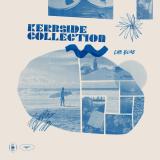
“Cue Blue”, the latest and fifth studio recording from Australian down under, gritty jazzfunk grooves ensemble Kerbside Collection sees a return to a more classic, stripped back, meat-and-potatoes, home-cooked, quartet formation sound of guitar, bass, drums and brass.
A sound formed on previous, recent recordings (incl. Golden Rules compilation tune “Fleet Streak” etc), seemingly harking back to the approach of the group’s first recordings (2013’s “Mind The Curb”, “Night in Tunisia” etc), whilst embodying inspirations from more ‘true school’, classic, bluesy New Orleans funk and soul groove flavours à la early Meters, Boogaloo Joe Jones, Melvin Sparks, Billy Butler etc. But it’s not all completely ‘retro’ and ‘looking back’, the album definitely taps into some of the current exponents and leaders of the contemporary deep funk sound – The Greyboy Allstars, Eddie Roberts, The New Mastersounds, The Mighty Mocambos, Breakestra and fellow Aussie funksters Cookin’ on 3 Burners, Lance Ferguson and The Bamboos etc.
The lead single and first tune “Shivers” gives us a clear, picture and definitive opening statement to the record with all the characteristics you’ve come to expect from the Kerbside gritty jazzfunk sound: silky guitar line phrasing, rubbery bass-lines, tight crusty drum breaks, and sweet brass arrangements. Then it’s straight into a frenetic, jangly, mod-funk workout complete with Northern Soul & Motown inflections in the surging B sections. “City Park Avenue” conjures up classic New Orleans funk flavours with its strutting brass, slinky guitar and swinging tambourine groove. There’s classic, b-boy funk territory covered in “Coffee Grinder” (a breakdance move) with its razor-sharp drum break groove and chunky riff complete with sizzling trombone solo. Before the pace of the record changes up with the finger-clicken’, hand-clappin’ boogaloo, reminiscent of early 60s Harlem x Puerto Rican Bronx sounds (à la Willie Bobo, Mongo Santamaria, Ray Barretto) loaded with a scintillating baritone sax solo from long standing part of the collection ‘Papa Joe’ Roberts.
“Sittin’ On The Porch” cools the temperature down even more, delving into slight Southern Louisiana Delta blues territory, while suggesting some of the hot and muggy atmosphere and imagery of their home town location in suburban Brisbane Australia, complete with kooky Casio percussion representing familiar yard sounds such as sprinklers (spinning lawn watering devices) and ‘mozzies’ (mosquitos), passing cars indicated by trombone, and guitarist TC Tyler, channelling some bluesy John Lee Hooker, R.L. Burnside guitar flavours - you can almost feel the humidity on your skin.
Then it’s time for a stroll down memory lane, with their version of a People Under The Stairs hip hop classic “San Francisco Knights”, bringing the tune full circle back into band mode, also with another tasty guitar solo. The album then enters its final stages with a mesmerising, soulful, jazz ballad “Shimmer”, complete with Elliott Parker’s sultry upright double bass, and trombone taking the melody for a gentle stroll down the street. The album finally closes and arrives at its title “Cue Blue”, a classic blue-eyed soul number (penned by bassist Parker), emitting the scent of true school, vintage R&B and soul (à la Donny Hathaway, Marvin Gaye).
An album of funky arrangements and refined compositions, mostly penned by recent new-ish member, guitarist Tyler (for fans of Tower of Power & John Scofield guitar playing) taking the ensemble through their paces with all the usual characteristics of the Kerbside sound, on top a groove that will take you round-the-block-and-back :P Gritty jazzfunk and rustic soul grooves with definite bluesy overtones, some classic 60s, 70s flourishes and down-home funk flavours.
Modeight returns with four new cuts from label head Silat Beksi, moving across broken grooves, stripped minimal house and hazy after-hours moods. A1 "Belpaese 3000" opens on a loose summer feel, built around off-centre drums, elastic funk phrasing and a surreal vocal line that feels half-sung, half-invented. Sampled folk details and a crunchy acid twist in the breakdown give the track its own oddball tension. A2 "Alpha Style" keeps things tighter and more direct, locking into a pumping minimal house flow with clipped modular stabs, warm female vocal phrases and light atmospheric drift. It is playful, controlled and built with the floor in mind. On the flip, "For The Heads" goes deeper into late-night territory - reduced, driving and sharply focused, with a rolling pulse and enough pressure to carry a room without overstatement. "Soft Collapse" closes the record on a softer axis, layering blurred vocal tones, textured percussion and a gentle after-hours motion that stretches naturally from the first warm-up hours into the early morning.
Shape of the Unknown’ is kind of a double LP that fully embraces the idea of exploration. It is CHLOÉ’s most expansive and immersive work to date. ‘Shape of the Unknown’ is CHLOÉ’s fourth proper studio album. Its predecessor, ‘Endless Revisions’, was released in 2017. Nine years have passed. Nine years during which CHLOÉ has continued digging for music, DJing at internationally renowned clubs and festivals including Rex Club, Robert Johnson, Panorama Bar, Nuits Sonores, Glastonbury and many more, releasing EPs and remixes, while also allowing herself the time to explore entirely new creative paths.
The challenge is to capture the unknown, make it her own, endlessly reshape its textures, and ultimately preserve its mystery.
The first single ‘Drifter’, released back in June, already offered a striking glimpse of the sonic territories the album would venture into, driven by its hypnotically contoured basslines. The album's two other singles offer different windows into her world. 'Shapeshifter' captures CHLOÉ at her most hypnotic, balancing stripped-back techno and melodic house through deep rolling grooves, expansive bass chords and subtle rhythmic shifts that constantly reshape the listener's perception without ever disrupting the flow. Later, 'Repeating The Obvious' takes a more leftfield route, pairing staggered rhythms with retro-inspired harmonics and an understated indie dance pulse that feels simultaneously familiar and unpredictable.
CHLOÉ has ventured into live performance through new formats, notably alongside percussionist Vassilena Serafimova; immersed herself in film scoring with soundtracks for Paris la Blanche, Arthur Rambo, The Mountain, Blanquita, Guru and Unsubmissives; and developed compelling collaborations, from High Season, her project with Ben Shemie of Canadian band Suuns (which resulted in the album The Call), to her own organic, experimental audiovisual performances under the name Slo/Mo AV.
Throughout Shape of the Unknown, CHLOÉ blurs the boundaries between deep house, hypnotic techno, electronica and cinematic sound design with remarkable fluidity. The album unfolds as a continuous narrative rather than a sequence of tracks, moving effortlessly between beatless ambient passages, rolling analogue grooves and emotionally charged club music. Organic percussion, sweeping bass movements, melancholic harmonies and richly textured synthesisers create a body of work that constantly evolves, where no section feels static and every transition reveals another layer of depth. There is an unmistakable warmth running through the record, with grainy analogue textures and spacious production giving even its most driving moments an intimate, almost tactile quality.
The album’s title is no coincidence. It evokes a form that has yet to be named, something language itself struggles to grasp. CHLOÉ approaches it through an organic creative process. Each piece must first be performed in the studio, almost as if it were being played live. The album will be followed by a series of live performances and DJ sets, including a show at the Olympia on March 18, 2027.
She is joined by a handful of steadfast collaborators. Jazz trumpeter David Enhco appears on two tracks, ‘Undertow’ and ‘Inner Bass’. But above all, there are the voices: Ben Shemie lends his unmistakable presence to the radiant ‘More Than Just a Feeling’. Olivia Merilahti, singer, songwriter and one half of The Dø, appears on the otherworldly ‘TWYR’. Working with Olivia’s already hypnotic voice, CHLOÉ has approached it like a sculptor, enhancing its strangeness and dreamlike quality.
And finally, impossible to miss is the instantly recognizable voice of Kittin. A longtime accomplice, she lends her distinctive phrasing to CHLOÉ’s music here for the very first time. The strongest collaborations are often those that take their time, arriving only when the moment is right. Same kind, same bass, same vibe, same pride.
The result is an enigmatic, nocturnal record, drifting between introspective listening and dancefloor functionality, revealing an artist who remains far more interested in atmosphere, movement and emotional storytelling than conventional club structures. It is an album that invites us to dream more deeply and to dance again, both within ourselves and out in the open.
In C is a musical piece by the composer and performing musician Terry Riley. As one of the first minimalist compositions, it was a response to the modern music that dominated the scene in 1968. It is considered a masterpiece in the genre and served as an inspiration for many composers, classical and otherwise.
The pieces consist of repeating cells and different rhythms, loosely based on the musical structures he had heard and loved in north African music. In total, the compositions consist of 53 short musical phrases. The thing that makes In C so enduring, is that once all its conceptual ideas are stripped away, it's a seriously hypnotic piece of music, full of energy.
Deluxe LP features 140g virgin vinyl; heavy-duty board jacket, artwork by Art Rosenbaum + DL. RIYL: Bob Dylan, John Prine, Townes Van Zandt, Ry Cooder, Michael Chapman, Michael Hurley, The Youngbloods & Bonnie “Prince” Billy. Jake Xerxes Fussell’s 4th album finds the acclaimed folksong interpreter, guitarist, and singer navigating fresh sonic and compositional landscapes on the most conceptually focused, breathtakingly rendered, and enigmatically poignant record of his wondrous catalog. Produced by James Elkington and featuring formidable players both familiar (Casey Toll, Libby Rodenbough) and new (Joe Westerlund, Bonnie “Prince” Billy), it includes Jake’s first original compositions; atmospheric arrangements with pedal steel, horns, and strings. One of the most striking and strangely moving moments on Jake Xerxes Fussell’s gorgeous Good and Green Again an album, his fourth and most recent, replete with such dazzling moments arrives at its very end, with the brief words to the final song “Washington.” “General Washington/Noblest of men/His house, his horse, his cherry tree, and him,” Fussell sings, after a hushed introductory passage in which his trademark percussively fingerpicked Telecaster converses lacily with James Elkington’s parlor piano. That’s the entire lyrical content of the song, which proceeds to float away on orchestral clouds of French horn, trumpet, and strings, until it simply stops, suddenly evaporating, vanishing with no fade or trace, no resolution to its sorrowful minor-key chord progression, just silence and stillness and stark presidential absence. It feels like the end of a film, or the cold departure of a ghost, and is unlike anything else Jake has recorded. In all his work Jake humanizes his material with his own profound curatorial and interpretive gifts, unmooring stories and melodies from their specific eras and origins and setting them adrift in our own waterways. The robust burr of his voice, which periodically melts and catches at a particularly tender turn of phrase, and the swung rhythmic undertow of exquisite, seemingly effortless guitar-playing here he plays more acoustic than ever before pull new valences of meaning from ostensibly antique songs and subjects. On Good and Green Again, Jake not only ventures beyond his established mastery of songcatching and songmaking into songwriting, but likewise navigates fresh sonic and compositional landscapes, going green with lusher, more atmospheric and ambitious arrangements. The result is the most conceptually focused, breathtakingly rendered, and enigmatically poignant record of his wondrous catalog. It’s also his most deliberately premeditated album, representing his fruitful return to a producer partnership after two self-produced projects, What in the Natural World (2017) and Out of Sight (2019) (William Tyler produced his friend’s self-titled 2015 debut.) This time James Elkington produced and played a panoply of instruments, bringing to Jake’s arcane song choices his own peerless sense of harmony and orchestration, balance and dramatic tension. The pair enlisted a group of formidable players including regular bandmembers Casey Toll (Mt. Moriah, Nathan Bowles) on upright bass, Libby Rodenbough (Mipso) on strings, and Nathan Golub on pedal steel. They were joined by welcome newcomers Joe Westerlund (Megafaun, Califone) on drums, Joseph Decosimo on fiddle, Anna Jacobson on brass, and veteran collaborator and avowed Fussell fan Bonnie “Prince” Billy, who contributes additional vocals. Album opener “Love Farewell” (featuring some beautiful singing by Bonnie “Prince” Billy), an elliptical tale of the folly of war, set to the world’s most heartbreaking goodbye march for a lover left behind. “Carriebelle” and “Breast of Glass” each similarly concerns, in its own way, romantic love and leavings. All three songs highlight Jacobson’s diaphanous, understated brass parts, tying them together in a true lover’s knot. “Rolling Mills Are Burning Down,” with its distant keening strings and capacious sense of space, observes and mourns the loss of work and community in the wake of elemental disaster. Nine-minute tour de force “The Golden Willow Tree,” the sole explicitly narrative song herein, is a hypnotic, minimalist rendering of a tragic maritime ballad about scuttling an enemy ship in exchange for wealth and glory and a captain’s inevitable betrayal. “Fussell is creating his own legacy within the long lineage of traditional folk musicians and storytellers that have come before him.” The New York Times // “So elegant … It’s relaxing in the way that pondering a Zen koan is relaxing, and sweet in the way that the wounded, honey-voiced blues of Mississippi John Hurt are sweet.” Pitchfork // “Music that resides at the seams of Appalachia and the cosmos.”
HIKARIGASASHIKOMU translates as ‘Light Shines In’, a Japanese phrase conveying a sense of hope in a difficult place. Opening new creative possibilities for Foodman, this astonishing album is an introspective yet hyperactive body of work, representing the clarity and light found after a period of self-exploration. While this is a deeply personal record, it also captures the now-universal sound of a brain stretched between 500 open tabs, multitasking into oblivion in a world in which attention deficit is a global media environment, not merely a privatized psychological malaise. Focusing more on the use of voice, the album incorporates Foodman’s own looped vocals, singing elements of Japanese children’s songs and playground rhymes, and his everyday thoughts. Despite its charm and innocence, this soundworld leaps around manically, fractures and dissolves. Foodman’s voice repeats, disassembles, speeds up and down and is bounced around deliriously, as sound elements call and respond around him. Structurally and vocally, influences are drawn from footwork, ghetto house, and baile funk, all of which are maximally abstracted into bursts of spiralling psychedelic effects.
YARN welcomes René Audiard for its tenth release with "Makes Me Feel", a four-track EP from one of underground electronic music’s most singular voices.
Across years of dub techno, minimal and leftfield electronic experimentation, René has developed an approach to stripped-down music that feels anything but limited. Where minimalism can often become an exercise in taking things away, his work finds possibility in what remains. "Makes Me Feel" is a particularly fitting example: immersive, at times strange, but always full of feeling.
‘Lovin’ opens the EP in familiar Audiard territory: murky low-end, locomotive groove, reduced rhythmic compositions and an understated framework swimming in a pool of detail. 'Possession' lets in more light. Vocal echoes, persistent rhythms and occasional string phrases give it a cinematic quality, while a groove that seems to circle endlessly takes on an almost shamanistic pull. The EP’s 11-minute behemoth, 'Flesh', fills most of the release’s B-side while making a convincing case for patience and sophistication. There are echoes of minimal’s golden age here, but Audiard never mistakes repetition for standing still. Tiny rhythmic fragments sit alongside expansive orchestral gestures, with samples working at every scale of the arrangement. Warmth and cinematic drama run through the track, but it's the playful programming underneath that keeps it moving. 'Night' closes the record on a different note, recalling Audiard’s work with Ali Çakır in Düve. Percussive samples, accordion and Middle Eastern guitar phrases bring a more acoustic character to his reduced 808-infused broken beats, making for a playful, occasionally melancholic ending with a distinctly microtonal feel.
What makes René Audiard’s music so rewarding is how readily you recognize his hand in it. There is a particular grain to the sounds, a way of placing details within a groove, and a willingness to follow an idea wherever it leads. Across “Makes Me Feel”, those instincts give four quite different tracks a shared identity. Even when working within familiar forms, Audiard makes them sound entirely his own. It’s the holy grail of music production: a personal sound signature. And a thoughtful addition to YARN’s growing repertoire of reduced, sophisticated dancefloor music.
“Neither from here nor from there” is often used to describe migrant identities in territorial terms. In the case of Siete Catorce, it works better temporally: his music has always been so far ahead of its moment that it ultimately carved out a space of its own within both Latin American and global electronic music.
Born in Mexicali and shaped between the Bay Area and northern Mexico, his musical identity emerged through hip hop, dubstep, and the independent borderland scenes. After several years in Mexico City — without a clear place inside the local circuit — he created his own space through his music, developing a distinctive DJ/live set and a singular vision of contemporary Mexican electronic music, becoming a key figure within the city’s most forward-thinking underground.
In 2026, he releases El Valle, his first album in nearly three years. The record moves through different currents of electronic music — ambient, techno, cumbia, and tribal — filtered through a unique rhythmic language marked by syncopation, unpredictable breaks, and a constant tension between restraint and energy.
The album opens with “Mexicali,” alongside Andre Pereda, a tribal track stripped down to its percussive essence, evoking the genre through an ambient and synthetic approach. From there, “Aragón” and “El Rancho” progressively increase the tempo and intensity, combining cadenced phrases with minimalist tribal beats and unexpected turns.
In the second half of the album, now moving through territories of 140 BPM and beyond, tracks like “Montecarlo 1” and “Tierra Roja” drift between futuristic bass music and large-scale techno structures. This is followed by the 8-minute epic “East LA,” where Siete Catorce expands the energy of syncopated techno before releasing it into a pre-Hispanic tribal journey with flute and all the drums required for the occasion.
The closing section arrives with “Tlatelolco,” accelerating into an epic cumbia infused with trance references, and “Los Pinos,” a direct and forceful finale sustained by some of the album’s most precise sound design.
More than genres, Siete Catorce’s work is defined by meticulous sound design and an exceptional rhythmic sensibility — qualities that have established him as one of the most respected drum programmers of his generation.
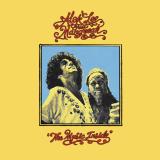
Alek Lee and vocalist Margeeah come together for a boutique 7″ pressing limited to 200 copies, featuring two tracks blending soul, reggae, disco and dub. Lee, whose catalogue includes releases on Antinote and Isle of Jura, brings his background in slower, dub oriented productions to a collaboration built around Margeeah’s vocals and live instrumentation. The sound sits somewhere between Massive Attack’s Blue Lines and Grace Jones.
Margeeah comes from the Israelite community, whose musical history includes The Soul Messengers. Her debut album, Looking for Love, was recorded in 1983 with Kingdom Sounds, originally issued as a private press LP and reissued by Frederiksberg Records in 2025. Its musicians included Abshalom Ben Shlomo, associated with Sun Ra. Her vocal style spans soul, jazz, funk and reggae, with reference points including Roberta Flack and Doug & Jean Carn.
For this release, Lee records his own live drums and percussion for the first time, alongside his signature smoky melodica lines. The production develops the reggae elements of Margeeah’s singing, combining bass driven arrangements with live rhythms, spacious guitar lines and dubby approach.
On the A side, “The Music Inside”, Margeeah effortlessly projects Lee’s lyrics about optimism and the desire for inner and outer freedom. Built around a recurring vocal refrain, the track places her voice over a rooted reggae arrangement.
The B side, “Can You Feel It?”, moves seductively towards a slower disc-dub sound. Bass and drums provide the foundation, with the percussion developing from a restrained groove into a fuller live kit arrangement. Melodica and guitar weave around Margeeah’s lead vocal and the hypnotizing title phrase.
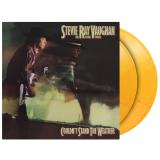
Hailed as one of the greatest guitarists of all time, Stevie Ray Vaughan's second album with his band Double Trouble did everything a second album should do. Couldn't Stand The Weather confirmed that Vaughan was no fluke and cemented his status as one of the modern blues giants.
This double album release of Couldn't Stand the Weather also includes original takes, outtakes and alternate takes of songs from the posthumously released The Sky Is Crying. In 1995, Q-Music wrote of the late Texan bluesman: 'Vaughan's post-Hendrix Stratocasting still sparkles... a reminder of the wit that often informed his phrasing and his willingness to torch the boundaries'.
Couldn't Stand The Weather is a limited edition of 3000 individually numbered copies on yellow marble vinyl.
Bristol trio Jabu return with their first release for two years. Following on from their widely acclaimed third LP ‘A Soft and Gatherable Star’, this stand-alone double A-side Disco Mix 12” features four exclusive new tracks, while signposting fresh material currently being written, recorded and mixed for their forthcoming LP, due 2027.
If 2023 LP ‘Boiling Wells’ documented Jabu learning to be a live band, leaning into writing collectively in-the-moment, ‘A Soft and Gatherable Star’ took that record’s ad-hoc/mixtape blueprint, and fleshed out their transformation from an outfit rooted in hiphop and dubstep, to a guitar-based band with a unique take on dream-pop. It saw them described by The Face as “an experiential trio blending the raw edge of industrial dub with dreamy layers of ambient pop and shoegaze", and by The Wire as “like Mazzy Star remixed by The Mad Professor“.
Jabu have continued to grow in the space between releases, touring regularly for the first time, playing festivals such as Rewire and Le Guess Who?, and supporting the likes of Maria Somerville and AR Kane. Their extended live line-up now regularly incorporates those that contributed to ‘A Soft and Gatherable Star’, with new material often further developed as it gets passed back and forth between collaborators. Cellist Josh Horsley (Powders / Nightingale Floor) and multi-instrumentalist Will Yates (aka Memotone) both feature here, under the guiding hand of Birthmark’s mixing.
Titled after the rural, estuarine landscape bordering their Bristol hometown, ‘Severn Flood Plain’ sees the band pivot towards a more jagged and up-tempo, post-punk sound. It runs on a nagging drum machine pulse that feels closer to Joy Division than Sly Stone; while the echo-laced vocals and tremolo guitar phrasing hark back to the ‘50s slapback sound of Lee Hazlewood or Duane Eddy. Written and sung by Jasmine Butt, the lyrics describe a visit to a friend near the mouth of the Severn, and hint towards a darkness that can also be felt across that tidal landscape.
Dropping the pace to a languorous, sensual sprawl, ‘Where You Run To’ is plaintive and yearning, an opiated, ethereal flipside to ‘Severn Flood Plain’s more urgent, anxiety-laced opener. Alex Rendall’s vocals glide over a stripped, metronomic backdrop, eventually entwining with Memotone’s ghostly, processed clarinet.
If the band’s musical reference points appear to have shifted, their process remains indebted to dub and still very much rooted in the multicultural cross-pollination peculiar to their home city of Bristol. Both tracks are extended, with dub versions courtesy of Birthmark. The band sat in on those sessions, completing the circle that began with J’s on-stage mixing of their live sets. The strands provided by Will and Josh provide introspective counterpoint to the sound system leanings.
Jabu’s influences are threaded together as naturally here as on their long-running NTS radio show, ‘Music For Lovers’, which now occasionally guests on the Early Bird show slot. They are due to play World of Echo’s ‘Expected Music 2.0’ at London’s Walthamstow Trades Hall on 21st November with Loopsel, Insides, Giulio Erasmus, Thomas Bush, and Raime amongst others.
One Eye Witness serves up a collection of spacey, subtle dancefloor wares on WITNESS09. Here on its ninth edition, the Amsterdam label enlists three scene mainstays to patch into the WITNESS matrix. With their respective back catalogs highly sought after, this EP is a freshly-wrought showcase of tried and tested club craftsmanship.
Founder of Evasive records, Rob Pearson has been turning out tech house since the turn of the millennium. A1 “The Tempest” sees him enter a rapturous hypnotic portal. Its tight beat provides a framework for off-kilter aural delights: eerie melodies and buried phrases captivate, with whispered vocals — courtesy of Jayson Walker — diffusing into a curtain of modulated mists.
Silverlining, another UK tech house stalwart, follows with a deeper cut. Thirty years having passed since his debut, B1 “A Political Act” shows the artist has not lost his touch for building a breezy, groove-led aesthetic. Detroit’s spirit permeates: dub chords and astral tones are underpinned by a deeply funky bassline and swung rhythm.
Following the effervescent sound of his Perfect Encounter EP on O.E.W. sister label Spectral Bounce, Chris Carrier’s contribution to WITNESS09 is a similarly pulsating creation. “The Drop” is a pacier and denser counterweight to the preceding tracks, with the familiar twisting extraterrestrial sonics that we’ve come to expect from the French DJ and producer.
'Space Between' is the debut album of The Hague based Belgian vocalist/ composer Sam Nera. This experimental indie pop album is characterized by Sam's soft repetitive vocal phrases, shifting layers, and melodic, hypnotic soundscapes that clearly echo her background in jazz.
"Surface Noise Isn’t A Crime" continues NOREPRESS’ exploration of texture, pressure, and imperfect sound as core elements of underground electronic music. Across four tracks, the release moves through Deep Tech House, Dub Techno, Electro, and Breakbeat without settling into fixed genre boundaries, balancing functionality with experimentation throughout.
A1. Tvardovsky feat. Andrey Zverev – Flute Meditation opens the record with a dense, slowly unfolding trip built on dub space, electro tension, and hypnotic Tech House movement. Organic flute phrases drift through layered percussion, evolving bass pressure, and spacious analog textures, creating a strange collision of futurism and nostalgia. The track resists obvious peak-time formulas, choosing gradual transformation over immediate impact and rewarding deeper immersion with every transition.
A2. Osman Öz – Regrets moves into softer territory without losing rhythmic weight. Warm breakbeat structures, airy melodic fragments, and fluid low-end movement give the track a calm but persistent momentum. Osman Öz keeps the arrangement restrained and precise, allowing groove and atmosphere to carry the emotional core of the composition naturally.
On the B-side, Kirill Matveev appears under his Natural Piece Of Aloe alias with two contrasting interpretations of the project’s dub-informed language.
B1. Salto Mortale is playful, unstable, and constantly mutating. Rhythms stretch and reorganize themselves around shifting tonal fragments, while the arrangement moves with the loose unpredictability of an improvisation session. Despite its complexity, the track never loses control, maintaining a strong forward pull through every unexpected turn.
Closing the record, B2. Columbo Beat, Kirill Matveev - Sundub pushes deeper into darker territory. Acid sequences slice through heavy dub atmospheres while rugged drums and saturated low-end pressure drive the track forward with raw physical energy. Distortion, space, and movement interact continuously, turning the track into a hypnotic late-night tool designed for more adventurous dancefloors.
"Surface Noise Isn’t A Crime" captures NOREPRESS at its most confident: raw textures, deep space, broken edges, and timeless club influences reconstructed into a modern dub-driven framework.
Space Afrika, das in Manchester und Berlin ansässige Duo aus Joshua Tarelle Reid und Joshua Inyang, schafft rohe, detailreiche und eindringliche Musik mit Anklängen an Ambient, Trip-Hop, Techno und moderne Klassik, wobei es aus den Konturen seiner Stadt weitläufige urbane Dub-Landschaften entwirft. ,Quiet Storm" erweitert ihren Klang und ihre Bandbreite zu einer weitläufigen, kollaborativen Vision, die mit tiefer Geduld und Absicht geformt wurde und ihre eigene Coming-of-Age-Geschichte in eine bewegende Suite kathartischer Abstraktion einbettet. Die Songs spielen auf Spiritualität und die conditio humana an, auf die Spannung zwischen Kühnheit und Sanftheit, Ehrgeiz und hartnäckigen inneren Dämonen. ,Quiet Storm" ist eine Antwort auf den Werdegang des Duos seit der Veröffentlichung von ,Honest Labour" im Jahr 2021. ,Wir haben uns selbst und unsere eigenen Vorstellungen von Identität herausgefordert, insbesondere in Bezug auf Klasse und Diaspora, und wie dies in verschiedenen Musikgenres dargestellt wird. Wir wollten die Charakteristika unseres Projekts durch die Menschen zeigen, mit denen wir zusammenarbeiten wollten", sagt Reid. Inyang merkt an: ,Bei der Entstehung dieses Albums haben wir keine Kompromisse gemacht. Die Idee begann als eine Hommage an die Kunst der Schwarzen. Unsere Kooperationen waren sehr bewusst gewählt, als wir die Grundpfeiler der Geschichte entdeckten." Von der multidisziplinären Natur des Projekts zeugt die Beteiligung des gefeierten Künstlers Glenn Ligon, dessen Werk sich mit schwarzer Identität und Queerness befasst. Ligon, der zu Beginn der Aufnahmen eine zentrale Inspirationsquelle darstellte, stellte sein Werk ,Figure #30" (2009) für das Cover-Artwork zur Verfügung und erklärte sich nach Abschluss der Aufnahmen bereit, dem Projekt seinen Namen zu geben - eine beispiellose Geste dieses wegweisenden Künstlers. Beim Anhören der endgültigen Fassung dachte Ligon an ,Quiet Storm", das Radioformat der 1970er Jahre, das für seine sanfte Late-Night-Programmgestaltung mit Themen rund um Leben und Liebe bekannt war. ,Quiet Storm" führt den Hörer durch verschiedene Szenen, Zwischenspiele und Handlungsbögen, geprägt von dem Gefühl, dass seine Bewegung fließend und seine Figuren flüchtig sind. Monologe vor dem Spiegel setzen sich mit dem Existentiellen und dem Unmittelbaren auseinander: Überleben, Autonomie, Sinn. Das Album beginnt mit dem explosiven, von Streichern begleiteten ,Vanity", bei dem die Grammy-Preisträgerin Axelle Fanyo zu hören ist. Zunächst auf die Spalten eines stillen Raumes fixiert, entfaltet sich ,Vanity" unter Fanyos ausdrucksstarkem Sopran und durchläuft ein breites emotionales Spektrum von erhabener Kontemplation bis hin zu ergreifendem, herzzerreißendem Schmerz. Auf dem gesamten Album werden gesprochene und gesungene Worte sparsam eingesetzt, um eine kraftvolle Wirkung zu erzielen. Die Schönheit und Katharsis von ,MLN" ist ein kollektiver, langsamer Marsch, bei dem der britisch-nigerianische Künstler Tony Njoku mitwirkt, begleitet von Gabriel Evans an Gitarre und Lead-Bass, PIKE aus London am Schlagzeug und GB aus Kopenhagen an Keyboards und Streichern. Der letzte Satz verleiht ,Quiet Storm" seinen krönenden Höhepunkt. ,If This Is Hell" ist in einem einzigen Take als Bewusstseinsstrom des New Yorkers Deuén aufgenommen, dessen nachvollziehbare Spirale geistiger Aktivität von jazzigen, frenetischen Percussion-Klängen begleitet wird. Das Druckventil öffnet sich, als die phasenverschobenen Drums und die scharf beobachtenden, dialogartigen Phrasen abrupt nach der Zeile ,I wonder if that's what heaven's like?" abbrechen. Wir bleiben in der Behaglichkeit des Album-Closers ,Regards" zurück. Regentropfen treffen auf Orgel, Drone, Streicher und Keyboards, während das Nachladen von Waffen dem ruhigen Summen gegenübergestellt wird. Schwer und doch hoffnungsvoll erinnern Joshua Tarelle Reid und Joshua Inyang an ihre bisherige Reise. Als passend geheimnisvolles und mitreißendes Outro für ihr offenes Opus ist ,Quiet Storm" ein Meilenstein: selbst produziert, selbst finanziert und aus purer Tatkraft und Überzeugung entstanden. Durch verzerrte Zeit und schummrigen Dunst ist Space Afrika zweifellos angekommen
After a stellar debut on the No Guestlist label Blay steps back into the light with an ambitious new record Wave Formations. This record finds Blay pushing further into the space where afro-centric jazz and deep house collide, weaving together synth heavy production with organic rhythms and live instrumentation.
From its opening moments its title track ‘Wave Formations’ holds you captive. From field recordings blurring into a dreamy atmosphere, taking you on a 9-minute spiritual journey across the cosmos.
Its counterpart ‘Rhythm Of Love’ is equally dreamy; A reverb-soaked vocal track with live-band-like energy shape-shifts around its steady and forward pushing rhythm before unwinding into a meandering, melancholic piano outro.
On the flipside, ‘New Teacher’ is an invitation to dance — call-and-response synth phrases on top of driving percussive polyrhythms. What starts off simple and stripped down transforms into a full-on celebration; a boisterous rush of sonic afrofuturism that tries to reach the sun.
Keeping the joyful spirit high, the record closes off with the festive and playful ‘Faith In Us’. This highlife and afro funk inspired record reimagines band members feeding off of one another, switching from recognisable motifs to energetic solos pushing each other further into the light.
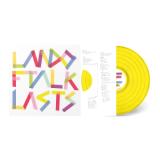
Land of Talk is still here. That wasn’t always a guarantee. Over the multi-faceted twenty year history of their project, Lizzie Powell has drifted from and back to music, always interrogating their role as an artist. In the time since 2023’s Performances, they found themselves utterly worn down by the vicissitudes of the music industry and wracked with worry around their aging parents. Yet the music didn’t stop: Powell heard songs in traffic and in birds chirping, in their downstairs neighbor’s daily prayers and in the babble of children on the street. Melodies slowly cohered over time. “Life can become so unbearable, and music is where I go to metabolize it,” they explain. “I know the music was the only thing that was going to help me.” Soon Powell reemerged with the sixth Land of Talk album, LASTS.
LASTS is full of double meanings — both resilience and finality, acting as a noun and a verb. Though LASTS is haunted by crises including climate collapse, political upheaval, and genocide, the mangitude of global turmoil led Powell towards smaller, humane depictions of suffering and grief. As both their parents became ill, Powell reflected on the last time a person might walk, might talk to a loved one. Yet watching their parents near the other side of life’s arc also made Powell consider all they had survived across their own decades on this earth, their new songs channeling both gratitude and rage. LASTS became a phrase, honoring Land of Talk’s circuitous route and all Powell’s reckoned with through the years. “I think of this record as a love letter to life,” they say.
The end result is an album both lean and winding, allowing Powell’s words and melodies to take centerstage, uncrowded in visceral, shot-no-chaser arrangements. LASTS jumps right in with “Broken Tongue,” a wiry track built on thrumming electric guitar and ghostly synths as Powell rails against the lack of justice for victims of abuse. The trio’s interplay is readily evident in “Saffron” and “4:44,” two earworm songs that also allow themselves to unspool into extended instrumental codas. Early in the record, there are seething tracks like “Dogs” — “Just your basic instinct / Even dogs know better,” Powell growls in the chorus, before the song quiets into a plaintive plea of “Leave us alone now” — and later there are more vulnerable, wandering moments. In “Projections” and “Cedars,” Powell ventures deep into their head, inviting their co-conspirators and listeners alike to follow the songs wherever they meander.
Space Afrika, das in Manchester und Berlin ansässige Duo aus Joshua Tarelle Reid und Joshua Inyang, schafft rohe, detailreiche und eindringliche Musik mit Anklängen an Ambient, Trip-Hop, Techno und moderne Klassik, wobei es aus den Konturen seiner Stadt weitläufige urbane Dub-Landschaften entwirft. ,Quiet Storm" erweitert ihren Klang und ihre Bandbreite zu einer weitläufigen, kollaborativen Vision, die mit tiefer Geduld und Absicht geformt wurde und ihre eigene Coming-of-Age-Geschichte in eine bewegende Suite kathartischer Abstraktion einbettet. Die Songs spielen auf Spiritualität und die conditio humana an, auf die Spannung zwischen Kühnheit und Sanftheit, Ehrgeiz und hartnäckigen inneren Dämonen. ,Quiet Storm" ist eine Antwort auf den Werdegang des Duos seit der Veröffentlichung von ,Honest Labour" im Jahr 2021. ,Wir haben uns selbst und unsere eigenen Vorstellungen von Identität herausgefordert, insbesondere in Bezug auf Klasse und Diaspora, und wie dies in verschiedenen Musikgenres dargestellt wird. Wir wollten die Charakteristika unseres Projekts durch die Menschen zeigen, mit denen wir zusammenarbeiten wollten", sagt Reid. Inyang merkt an: ,Bei der Entstehung dieses Albums haben wir keine Kompromisse gemacht. Die Idee begann als eine Hommage an die Kunst der Schwarzen. Unsere Kooperationen waren sehr bewusst gewählt, als wir die Grundpfeiler der Geschichte entdeckten." Von der multidisziplinären Natur des Projekts zeugt die Beteiligung des gefeierten Künstlers Glenn Ligon, dessen Werk sich mit schwarzer Identität und Queerness befasst. Ligon, der zu Beginn der Aufnahmen eine zentrale Inspirationsquelle darstellte, stellte sein Werk ,Figure #30" (2009) für das Cover-Artwork zur Verfügung und erklärte sich nach Abschluss der Aufnahmen bereit, dem Projekt seinen Namen zu geben - eine beispiellose Geste dieses wegweisenden Künstlers. Beim Anhören der endgültigen Fassung dachte Ligon an ,Quiet Storm", das Radioformat der 1970er Jahre, das für seine sanfte Late-Night-Programmgestaltung mit Themen rund um Leben und Liebe bekannt war. ,Quiet Storm" führt den Hörer durch verschiedene Szenen, Zwischenspiele und Handlungsbögen, geprägt von dem Gefühl, dass seine Bewegung fließend und seine Figuren flüchtig sind. Monologe vor dem Spiegel setzen sich mit dem Existentiellen und dem Unmittelbaren auseinander: Überleben, Autonomie, Sinn. Das Album beginnt mit dem explosiven, von Streichern begleiteten ,Vanity", bei dem die Grammy-Preisträgerin Axelle Fanyo zu hören ist. Zunächst auf die Spalten eines stillen Raumes fixiert, entfaltet sich ,Vanity" unter Fanyos ausdrucksstarkem Sopran und durchläuft ein breites emotionales Spektrum von erhabener Kontemplation bis hin zu ergreifendem, herzzerreißendem Schmerz. Auf dem gesamten Album werden gesprochene und gesungene Worte sparsam eingesetzt, um eine kraftvolle Wirkung zu erzielen. Die Schönheit und Katharsis von ,MLN" ist ein kollektiver, langsamer Marsch, bei dem der britisch-nigerianische Künstler Tony Njoku mitwirkt, begleitet von Gabriel Evans an Gitarre und Lead-Bass, PIKE aus London am Schlagzeug und GB aus Kopenhagen an Keyboards und Streichern. Der letzte Satz verleiht ,Quiet Storm" seinen krönenden Höhepunkt. ,If This Is Hell" ist in einem einzigen Take als Bewusstseinsstrom des New Yorkers Deuén aufgenommen, dessen nachvollziehbare Spirale geistiger Aktivität von jazzigen, frenetischen Percussion-Klängen begleitet wird. Das Druckventil öffnet sich, als die phasenverschobenen Drums und die scharf beobachtenden, dialogartigen Phrasen abrupt nach der Zeile ,I wonder if that's what heaven's like?" abbrechen. Wir bleiben in der Behaglichkeit des Album-Closers ,Regards" zurück. Regentropfen treffen auf Orgel, Drone, Streicher und Keyboards, während das Nachladen von Waffen dem ruhigen Summen gegenübergestellt wird. Schwer und doch hoffnungsvoll erinnern Joshua Tarelle Reid und Joshua Inyang an ihre bisherige Reise. Als passend geheimnisvolles und mitreißendes Outro für ihr offenes Opus ist ,Quiet Storm" ein Meilenstein: selbst produziert, selbst finanziert und aus purer Tatkraft und Überzeugung entstanden. Durch verzerrte Zeit und schummrigen Dunst ist Space Afrika zweifellos angekommen
"Once Turin-based producers Mattia and Massimo joined forces under the Voodoos & Taboos moniker, they quickly became a notable force in contemporary club music. A crafty take on house music, combining groove with sculpted production work and a bent for lush melodies, drawing from a wide range of influences - anything that borders on the electronic genres really, and beyond - fueled their own namesake imprint with 6 EP's and landed them spots on a variety of top-tier labels. We have been keen to work with these artists for a long time, and are thrilled this finally materializes with the release of ALT027. Title track "Sempre Sognar" immediately sets out the duo's floor-focused intentions. Breakbeat-laced drums gradually build momentum before a formant lead drops in. It trades phrases with an equally infectious organ that's eventually joined by a 303 pattern for the track's finale. Similar vibrating, buzzy leads thrust "Take Me" forward. Amid heavily delayed vocal samples, the proggy beat takes a more trippy turn however. Synthesized idiophone interludes create room for moments of repose, although not entirely unambiguous ones. A subtly detuned lead and more sleek acid lines are supported by the type of arp bass that characterizes Voodoos & Taboos' sound on the B-side's "Revolution". A collage of broadcast and war-movie lines alike not only adds color, but underlines the sense of indeterminate imminence that looms throughout the track. B2 "Afterhouse" sees the BPM drop a notch, yet the palette shows no signs of winding down; it is downright exuberant. As different arpeggiated melodies play call and response, tape-delayed chords, alarm-like risers, and sprinkles of guitar add extra flavor. This does not lead to excess, however. Everything is carefully measured and kept in check: after all, at the helm are two artists who understand that perfection lies in getting a great many small things exactly right."
xtal makes his debut on mule musiq with a four-track ep that explores the space between club functionality and left-field experimentation. opening with “off-axis,” warped electronic textures and elastic grooves subtly recall early-2000s dance music while retaining a distinctive sense of lightness. “ arches” develops a hypnotic atmosphere through intricate arpeggios and minimal rhythmic patterns, finding depth in repetition and subtle shifts. on “lilt,” warm dub textures and supple rhythms merge into a fluid, dreamy deep house excursion, balancing understated euphoria with an effortless sense of movement. closing with “morse signals,” fragmented synth phrases and playful rhythms evoke a kind of retro-futuristic communication, bringing together experimental instincts and dancefloor sensibility. moving freely between minimal repetition, dub-inflected atmospheres and off-kilter electronic rhythms, xtal makes a compelling first appearance on mule musiq, delivering a release full of unexpected details, musicality and understated eccentricity.
Francesco Messina is perhaps best known for his split album with fellow composer Raul Lovisoni, Prati Bagnati del Monte Analogo, originally released on the seminal Italian label Cramps in 1979. Along with contemporaries Franco Battiato, Juri Camisasca and Giusto Pio, Messina helped reshape the world of modern composition with an organic rawness and haunting beauty.
In November 2023, Messina performed Prati Bagnati live for the first time in Milan, Italy – along with pianist Michele Fedrigotti, who appeared on the original LP. The concert was a tremendous success and led the composer to further reflect upon the music he made over 40 years ago. From his home piano – a hundred-year-old Schimmel with magnificent resonance – new pieces began to emerge out of these meditative sessions.
As Messina says in the liner notes, "The idea of making a new album wasn't the driving force at all; what mattered was trying to reconnect with the 'freedom' I had experienced back then while creating that music. I started over without haste or deadlines, simply trying to find a deeper, inner connection."
W.25TH / Superior Viaduct is honored to present Le api dell'invisibile. From the hazy drone of "For Florian" and the title track to the gentle swells of "Letter for an Absent Friend," the album is a lush amalgam of new age and ambient minimalism that is vividly reminiscent of Messina's earlier work.
The title draws inspiration from a famous reflection by Austrian poet Rainer Maria Rilke: "We are the bees of the invisible. We ceaselessly gather the honey of the visible, to store it in the great golden hive of the Invisible." It is a phrase that has long shaped the way Messina looks at his music – transforming lived experience into sound, making audible what normally eludes the eye.
The next WOLF Music EP is here, and once again it comes courtesy of a new addition to the label roster. New York-based DJ and producer DJ Alone Again is a natural fit for what we do at WOLF, delivering a sound that hits that sweet spot where deep meets soulful, with the raw, understated energy of the authentic New York underground running through every track.
With a growing catalogue of original productions and edits, DJ Alone Again has released music through labels including YORE Records, House Salad Music, Dobro, Fantin Zoo Records, and Dealt With Records. His musical roots extend beyond house, too. Earlier work with the band Vain Pursuit, alongside a wealth of SoundCloud mixes and underground edits, reveals an artist with a deep appreciation for melody, songwriting and the emotional side of dance music.
Opening the EP is ‘Freedom of House’, a sublime take on the classic NYC-meets-Chicago deep house sound. Warm, soulful and hypnotic chords sit at the heart of the track, surrounded by intricate, skippy percussion and a deep, driving bassline. Carefully placed female vocal snippets drift in and out of the groove, while a spoken-word ode to the freedom and self-expression that house music offers provides the track with its emotional centre. It’s a celebration of movement, individuality and that unspoken connection forged on the dancefloor.
On the A2, ‘State of Flux’ keeps those warm, evocative chords front and centre, building an infectious groove around an instantly memorable melody courtesy of the vibes. Subtle synth strings add depth and atmosphere, bringing a touch of late-night melancholy to the arrangement, while the rhythm rolls steadily underneath. Everything is expertly layered without ever feeling crowded, giving the chords, melody and percussion room to breathe whilst pulling the listener deeper into the track.
‘Horizontal Patterns’ takes the winning formula of ‘State of Flux’, adding a beautifully understated vocal hook that sums this track up perfectly: deep in the groove.
Closing out the EP is ‘In Your Orbit’, a serene, dream house number with a deeply hypnotic edge. Ethereal flute lines drift through the arrangement, weaving around vocal phrases that seem to lift the consciousness somewhere beyond the dancefloor. There’s a sense of weightlessness and escape in the arrangement, but the dance floor pulse courtesy of the warm chord stabs never lets you float too far away. Dreamy yet deeply rooted, it’s a meeting point between introspection and movement; music to lose yourself in.
If this EP had landed on Guidance 30 years ago, it would probably be changing hands for a small fortune on Discogs by now.
No Drama, the imprint founded and curated by Roy Rosenfeld, continues to expand its artistic vision with a sixth release valuing originality over convention. The label has steadily established a platform for forward-thinking electronic music, inviting artists to challenge familiar structures while remaining grounded in musical substance.
The latest release features two tracks by internationally recognized producer Yuvée, known for seamlessly blending live instrumentation with deep house, melodic elements, and organic percussion. While Yuvée appears solo on one track, the other is a collaboration with Omer Inbar, who performs under the name Oi.
The opening track, Lava Core, presents the sound that has earned Yuvée international recognition. Tribal influences unfold through carefully crafted percussion, while evolving textures occupy every part of the stereo field. Every section advances the narrative, allowing the arrangement to grow naturally while maintaining dancefloor impact from beginning to end.
The second piece, Blue, brings Yuvée together with Oi, an internationally acclaimed DJ, producer, and sound engineer whose work bridges psychedelic vibes and groove-driven electronic music. The collaboration introduces greater club energy. Tonal and atonal elements interact with shifting harmonies and evolving instrumental phrasing, creating constant movement without losing coherence.
Rather than relying on formulas, the duo demonstrates the value of artistic perspective in an era increasingly shaped by technological automation. The result is music that balances intellect with feeling, offering a listening experience that remains equally compelling on a festival sound system, in a club, or through focused listening at home.
With its sixth release, No Drama reinforces its commitment to artists who expand the language of contemporary electronic music through craftsmanship, authenticity, and creative ambition.
Black Truffle is pleased to present Even Colder Spring, the latest release from the mysterious and wildly prolific Cities Aviv (a.k.a. Wilbert Gavin Mays, who also records as African-American Sound Recordings), a rare appearance from the artist outside his own D.O.T. Audio Arts label. For over a decade, Cities Aviv has twisted hip-hop conventions into the most skewed and splayed forms, layering and lacerating twitching loops, extreme production techniques and his mercurial vocal stylings into hermetic décollage. Across 16 tracks, Even Colder Spring charts Mays’ restlessly experimental approach: what sound like fully formed productions are interrupted suddenly after seconds; interjections of field recordings cue unexpected shifts; details drown under layers of fuzz. His vocal delivery takes in rhythmically intricate rap, barely articulate murmurs and freely melodic song, the latter often with a disorientating lack of connection to the track’s harmonies. The lyrical shifts are as paratactical as the musical movements. Apocalyptic visions of social and cultural uniformity alternate with reflections on mortality, glimpses of everyday life and head-scratching one-liners: ‘Maybe Mars is bougie?’ His reference points are as surprising as ever, the Dante quotes of previous releases joined here by a track named after Henri Bergson’s idea of the élan vital. Australian listeners, in particular, might be especially taken aback to hear ‘Closing Door’ open with the phrase ‘the tyranny of distance’.
While Mays’ work can sometimes be claustrophobically bleak, the productions here are often sparkling, at times touching on the shimmer of private-issue New Age sounds and the more playful end of krautrock. The instrumental ‘Martine Drift’ could almost be a snatch of Cluster’s Zuckerzeit caught through dial-up internet. The distant echoing drums of ‘L_area’ cross Persona’s Som with lo-fi IDM, while closer ‘Final Heaven’ dissolves a cloud of loops across almost seven minutes into ecstatic, rippling distortion. The graphic design, at the artist’s request closely modelled on the format of Corwood Industries, offers as good a clue as any to what awaits the listener on Even Colder Spring: a world at once impossibly opaque and intensely personal.
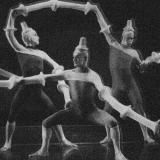
Often credited as the father of multi-media theatre, Alwin Nikolais (1910-1993) took complete creative control over his productions - including cutting-edge approaches to lighting and costume that transformed human bodies into shifting sculptural shapes, while also composing wildly innovative electro-acoustic and synth-based audio as accompaniment.
After initially experimenting with musique concrète and tape manipulation (as demonstrated on the 1959 LP Choreosonic Music of the New Dance Theatre of Alwin Nikolais) Nikolais became the first owner of Robert Moog's synthesizer at the Audio Engineering Society convention in New York in late 1964. Relying heavily on the Moog and later the Synclavier synth/sampler, these 21 tracks document Nikolais' highly-prescient compositions across the mid 1960s through to the late 1980s - existing not only as extensions of his other-worldly choreographic productions, but standalone pieces of foundational mid-century American electronic and experimental music.
"Born in Southington, Connecticut in 1910, Nikolais’s early years and early career were in acting, music and puppetry. It was not until the late 1930s that he began his work as dancer/choreographer in Hartford, Connecticut, where he was commissioned by the Avery Memorial Theatre, a part of the Wadsworth Atheneum, to create an evening-length work to the music of Ernst Krenek. Previously his work and study as a pianist-organist found him accompanying silent films. This sort of accompaniment required from the musician not only a playing skill but also a versatility in improvisation, matching movement to sound, and evoking mood to situation.
Nik was drawn initially to dance by his involvement with the percussion scores used by the illustrious early twentieth century German dancer Mary Wigman. In trying to learn more about percussion, he was lured into dance class and thus his career began. His development of music and dance occurred simultaneously. His introduction to the twelve-tone technique opened his mind to the expanding areas of atonal music, and his dealing with music as sound per se. In 1948, after being appointed director of the Henry Street Playhouse in New York, Nikolais formed the Playhouse Dance Company, later known as the Nikolais Dance Theater, and began his aesthetic orientation toward dance as a study of motion. By the 1950s, he had ceased creating literal dances and began his explorations and eventual milieu as an abstractionist.
Sound became an important part of his abstract theatre. For his first dances, which involved his new thinking of dance as both a visual and kinetic art, he used live percussion scores in which he directed his dancers to play instruments of all nature. There was a combination of children’s toy instruments as well as harsh and resonant automobile brake drums, and other pitched auto parts which he also used to accompany classes. Once he installed his own tape recording machines, he quickly used the limited range these instruments provided in a new way, slowing and increasing speed and reversing sound. He also made the sounds adhere to the choreographic structure (not the other way around), thereby giving the dance its independence from the musical phrasing. But the real need remained: the search for new sound. Nik made a sound library, recording noises and percussion and vocal sounds, which the French aptly called musique concrète. Needless to say, he became a master at splicing bits and pieces.
From 1956 to 1962 Nikolais composed eleven major scores for his theatre pieces using such techniques. In 1963, James Seawright, who at the time was assisting Nik in his productions and also working at the Columbia-Princeton Center for Electronic Music, recorded a sound bank for the production Imago (1963). With this material, Nikolais created his first synthesizer score. Imago won the Paris Grand Prix in 1968 and launched the Nikolais Dance Theatre towards its national and primarily international acclaim.
During the same period, Seawright came to Nik and told him of a young man who had invented and constructed a simplified synthesizer and insisted that Nik visit the electronic fair currently being held in New York. Nik did so and met Robert Moog. He was completely taken by the new machine and after making some suggestions to Moog, (which Moog made), Nik bought the inventor’s first machine with the aid of a Guggenheim Fellowship. Moog himself was astonished by what his machine could produce for Nik. This machine was later acquired by the Museum of Musical Instruments at the University of Michigan at Ann Arbor as the first Moog synthesizer. The Synclavier was Nik’s next source of sound and since the mid-1970s remained the major instrument in the Nikolais soundroom.
Alwin Nikolais has been honored and awarded throughout the world. He has received the French Legion of Honor, the Kennedy Center Honors, National Medal of the Arts, two Guggenheim Fellowships, as well as Mellon, Ford, and Rockefeller grants. He has been a recipient of NEA grants since 1966, been awarded five honorary doctorates, all for his remarkable achievements in Dance Theater. His genius has influenced several generations of artists."
—Murray Louis
Introspection is a 1972 cult-favorite solo guitar album by Brazilian composer and guitarist Luiz Bonfà. Unlike his more famous bossa nova recordings, this album presents Bonfá in a deeply personal, almost meditative setting. Recorded primarily as a set of intimate solo guitar pieces, Introspection showcases Bonfà’s signature combination of classical technique, Brazilian rhythm and emotive melodic phrasing. Initially overlooked, Introspection later gained recognition as one of Bonfà’s most admired and distinctive works outside the mainstream bossa nova canon. This reissue is the first ever on vinyl after 1972.
Bringing mutant verve and a deadly swing to the bassweight discipline, Lyeform lands on Sneaker Social Club in resonantly rude form. Strong doses of UKG, wormhole techno and dubstep course through the veins of this muscular four-deep drop, but the London-based producer's metabolism strips the strands down to an atomic level and rebuilds the dance in his own design.
There's a dense and dank mood hovering over 'Drift Into Dread,' shaped out by rugged, noisy percussion steering towards mind-melting immersion. Rather than resting in technoid repetition, the landscape keeps shifting as dislocated rhythmic phrases slide in and out of earshot, led by the disembodied toasting of a mysterious MC.
'Vintage Gilly' has a much starker sound palette, all crackling drums sparking static interference into negative space with subs so low you might mistake them for heart murmurs. All the better to savour the subtleties as they tease into the mix, not least the understated lead lines loping lazily on the threshold.
The 2-step swagger is unmistakable on 'Godkiller' as it comes bowling into earshot, but there's not a whiff of garage revivalism in earshot as we channel hop between metallic feedback interference and needlepoint noise snaking around the minimalist framework of the beat.
'Glass Eater' closes the record out on another skippy stepper, but here Lyeform makes room for cavernous dub techno chords, overdriven bass harmonics and teeth-grinding noise. It's a final maverick swerve from an artist carving out a formidable impression via micro-level textural exploration within the context of dark and deadly soundsystem tackle.
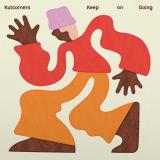
Canadian producer Kutcorners lands on vinyl with two standout tunes that come hot off the heels of his recently sold out 'Full Circle' 7". Again inspired by finding common ground between classic and contemporary house, 'Keep On Going', opens with springy drums and a rounded bassline flecked with subtle chord stabs. 'Play Me' leans into disco filter techniques, opening and closing the spectrum across a steady four-four pulse. Short vocal phrases punctuate the groove while muted guitar chops and filtered strings build tension before release. Playful and effective with an effortless charm.
Since the early 2010s, photographer and producer Izaak Schlossman has been surreptitiously using the Topdown Dialectic moniker to frame his most enigmatic and most psychedelic productions: faceless pure sound experiments that ogled dub and techno archetypes from somewhere far beyond the veil. This generous 2LP collection surveys over a decade of persistent activity, pulling together recently unearthed gear written between 2013 and 2016 (the same time period as the iconic Peak Oil trilogy) and muddling it with more contemporary material. It's a rare chance to fully comprehend the slow, measured evolution of the project: its genesis as a method to fractalize various bass music frequencies with suggestion rather than over-compression, and its ongoing advancement through sensitively finessed ASMR ambiance towards spangled neo-psychedelia.
So it's no surprise that the lengthy suite of five-minute snapshots was initially devised while Schlossman was preparing for his first ever Topdown Dialectic live appearance in 2025. A hazed early morning, open air performance that's still lodged in the memory banks of anyone who witnessed it, the set provided the narrative anchor for the album, blurring the past and present and reaching tentatively into the future - ideal material for audiences whose brains are fully plasticized. The tracks, while divided, sound as if they're breathing over and into one another; beats and phrases materialize and dissolve just for moments, leaving the mind to fill in the gaps with any available sonic material. What might reflect the bright neon light of acid house at first soon embodies the flicker of a candle over a desk of drum machines in a Midwestern basement, or the first blush of sunlight over a tiny campground as subwoofers creak in the distance.
It's music that asks the listener to be involved in the creation itself, projecting their own shapes on the negative space, their discreet fantasies on haunted stretches of near silence. Schlossman's identity was never the point, Topdown Dialectic was always a scrying stone intended to divine far more personal revelations.
Iconic Argentinian DJ/producer Flug drops full EP on Mutual Rytm Raw with ‘Dew At Night’. Flug, aka Sebastian Lopez, has long been part of the fabric of underground techno with a signature sound that is deep, driving and atmospheric, ensuring that the Argentinian has crafted his own story across the globe. Following his track ‘In Control’ on Mutual Rytm’s ‘Federation Of Rytm IV’ compilation, he follows the likes of KiNK & Raredub and Deetron to make his appearance on sub-imprint, Mutual Rytm Raw, with his ‘Dew At Night’ EP featuring a rare rebuilt version of an unreleased sketch dating all the way back to 2009. ‘Dew At Night’ was unearthed while searching for another track among sessions from over a decade ago. After hearing it again, it sparked a new creative age to rebuild it from scratch, and while experimenting with synthesisers, the main arpeggio appeared. "At first it was hypnotic but harmonically repetitive; the groove and phrasing felt incredibly catchy, so I decided to push the harmony further and change some chords until I found the exact point where emotion and tension could coexist naturally.” Around that bright arp are darker, more raw percussive textures and drums that make for a great contrast and melancholic atmosphere that marries emotion with physical structure. "In my mind, the track was always conceived as a closing track - that moment when the darkness is still there, but the first light of the day starts to appear and the whole atmosphere changes.” After hearing the original, label founder SHDW suggested the Argentinian should remix and reinterpret the record to complete the full EP, and so he steps out of his comfort zone across the remaining tracks, exploring different versions of his musical universe and showcasing all sides of his sound. First up is the ‘Dub Version’, which represents his contemporary sound - the melodic and emotional essence of the original track remains but is translated into a more hypnotic and club-oriented language. The ‘Instrumental Version’ is a brings more progressive-leaning sounds with piano, sax and live percussion textures that, says the artist, allowed him to "rediscover myself as a producer by using tools and influences gathered throughout my long journey in electronic music”. Closing the package, the digital-only ‘Raw Version’ strips away the melody and gets much more primal, introducing a tunnelling groove for when the dancefloor gets dark and moody.
Pure class as always from Gal Costa! The record is her first after the immediate Tropicalia years, and it's a stunning blend of styles that seems to draw heavily from changes going on in the American rock scene at the time. The core of the music is still steeped in Brazilian elements – but there's a lot of influences coming into play on the album, like bluesy rock phrasing, showy nostalgia-heavy arrangements, psychedelic production elements, and some of the baroque orchestrations that would show up on Gal's later albums in the 70s.
How enduring is the signature song from Harry Chapin’s Verities & Balderdash? So timeless that it became the subject of a 2025 documentary in which artists from multiple generations weigh in on its impact on their lives and craft. “Cat’s in the Cradle” doubtlessly remains the main event on the singer-songwriter’s 1974 album. The legendary opening track also serves as a guidepost for the bold personal and social material that follows — as well as the gorgeous folk-rock arrangements that underpin the New York native’s most commercially successful work.
Sourced from the original master tapes, pressed at Fidelity Record Pressing, housed in a Stoughton jacket complete with a four-page insert, and strictly limited to 3,000 numbered copies, Mobile Fidelity’s 180g 33RPM LP of Verities & Balderdash presents Chapin’s fourth full-length in audiophile quality for the first time on vinyl. Captured during a golden era for sonics and production, the Top 5 effort features remarkable tonal balance, instrumental separation, and organic naturalism. Those valued aspects come into supreme focus on this reissue, which plays with dead-quiet surfaces and a low noise floor.
The newfound clarity, openness, and imaging underscore the lasting appeal of Chapin’s tender deliveries, soulful timbre, and careful phrasing. Every word comes across with incredible realism, while his underrated guitar playing occupies its own distinctive space. Also notable: The extension of the tasteful string accents; airiness of the backing vocals; depth and shape of the spare bass lines; and width and depth of the soundstaging. When on “Six String Orchestra” Chapin calls out names of instruments, they appear like magic, the band performing feet from you. Chapin has never sounded so lifelike on record.
Certified double platinum, Verities & Balderdash resonated with the times and public. “Cat’s in the Cradle” reached No. 1 on the chart on its way to being inducted into the Grammy Hall of Fame. The romantic ballad “I Wanna Learn a Love Song” flirted with the Top 40 and wrapped listeners in the equivalent of a cozy blanket. The record’s other single, the mini-epic “What Made America Famous?,” helped establish Chapin as one of the country’s most incisive and insightful commentators.
Verities & Balderdash teems with situational devices and topical matters. Chapin observes everything from the polarization of the nation to changes in moral standards and cultural priorities. He investigates pressing themes without ever turning preachy or elevating himself above the matters at hand. On “Halfway to Heaven,” whose coda races to the finish and ranks as the most urgent moment on the record, Chapin inhabits the mind of his frustrated protagonist akin to an eagle-eyed novelist.
Conveying emotions that range from melancholic to carefree, Chapin is as much of a singer as a storyteller. He assumes the voice of multiple characters within a single narrative. During the quirky “30,000 Pounds of Bananas,” a tale based on a delivery-truck accident in 1965, Chapin alters his delivery, pronunciation, and diction to become an old man reflecting on the mishap and mess. The tempo, too, adjusts to match the speed of the vehicle Chapin describes.
Adorned with timely laugh tracks to reinforce the bittersweet humor, the stripped-down “Six String Orchestra” takes everything up another notch, with Chapin intentionally missing guitar notes or playing a broken passage to illustrate the failures of the hopeful protagonist who doesn’t have what’s required to make it as an artist.
Chapin, of course, did not have any such problem. The lynchpin of a career cut short by a tragic traffic incident, Verities & Balderdash is Exhibit A of the savvy craft, feeling, and perspective he lent to American music.
There was nothing in contemporary music like Chris Isaak’s Heart Shaped World when it hit shelves in June 1989. More than three decades later, the singer-songwriter’s third album still sounds unique — and claims a backstory nearly as fascinating as the retro-leaning material and standout performances that propelled it to sales of more than 2.5 million copies. Home to the Top 10 smash “Wicked Game,” the set remains a masterful mood piece that invites you to pour a late-night drink, sit in a dimmed room, and relish Isaak’s elegant albeit raw ruminations on love, relationships, and questionable decisions.
Sourced from the original master tapes, pressed at Fidelity Record Pressing, strictly limited to 3,000 numbered copies, and featuring the bonus track “Diddley Daddy,” Mobile Fidelity's UltraDisc One-Step 180g 45RPM 2LP box set of Heart Shaped World unearths the staggering inner details, saturated tones, and brilliant atmospherics of the crisp production. It brings you up close and personal with Isaak’s spectacular singing — impeccably controlled, tense, brooding, steamy, smoldering, haunted — situated amidst stripped-down backdrops that allow every note to fully bloom and decay.
While Isaak’s ever-steady baritone remains the anchor, the contributions of his trusty backing band, the aptly named Silvertone, come across with just as much cool, command, and realism. The indispensable playing of guitarist James Calvin Wilsey particularly emerges with superb clarity and dimensionality. The character of his 1965 Fender Stratocaster, shivering twang of his spring-coiled fills, and his signature use of reverb, delay, and vibrato seamlessly match Isaak's patient deliveries and the band’s unhurried rhythms. Experienced on UD1S with ultra-black backgrounds and a nearly invisible noise floor, Heart Shaped World is in every regard a demonstration disc.
The premium packaging of this UD1S pressing befits its elevated status. Housed in a deluxe slipcase, it features foil-stamped jackets and faithful-to-the-original graphics. Aurally and visually, this reissue is for discerning listeners who desire to immerse themselves in everything involved with the album, not the least of which is the cover art depicting a lost-in-thought Isaak staring ahead and sitting in what appears to be an efficiency apartment. The image epitomizes the record’s lonesome temperaments and pensive themes.
Of course, if not for director David Lynch hand-picking two cuts from Heart Shaped World for his 1990 film Wild at Heart, the record would’ve probably suffered the same fate as Isaak’s prior efforts and gone unnoticed by the mainstream. Despite receiving raves from outlets such as NME, Chicago Tribune, and Rolling Stone upon its original release, the album stalled in the lower quadrants of the Billboard charts and, after a few weeks, dropped off.
Cue the ear of Lee Chesnut. Then the music director for a large Atlanta radio station, Chesnut heard the instrumental version of “Wicked Game” on Lynch’s soundtrack and started airing the album rendition at all hours of the day. Aided by a sensual video featuring Isaak and supermodel Helena Christensen, the song found its way into the public consciousness by early ‘91 and helped make Isaak a most unlikely mainstream star in an era where his techniques had little to nothing in common with popular tastes.
Despite its vintage vibes and shared DNA with legends such as Roy Orbison, Chet Baker, and Glen Campbell, Heart Shaped World transcends nostalgia, rockabilly, and throwback tropes. For all the melodrama and sadness at hand, Isaak’s gorgeously transparent singing dives deep underneath emotional surfaces. He mines subtleties that indicate his feelings go beyond heartbreak and anguish, and occasionally suggest frustration, menace, and anger. You can hear it in his quivering falsetto, and the slow and methodical ways he allows delicate whispers to break into shadowy phrasing that crosses over to the darker sides of romance and desire.
That approach bolsters the title track, which suggests calm yet moves on ominous currents — its simmering pace and snare-drum snappiness foreshadowing Isaak raising the volume and urgency during the coda. The southwestern-tinged “Wrong to Love You” plays with similar concepts of hesitation, unease, and discord, Isaak careful never to fully erupt and give anything away. His poised deliveries offer a master class in the art of insinuation and hurt on “Nothing’s Changed,” sent up with a wordless backing chorus and crackling guitar lines straight out of a Memphis blues joint.
Heart Shaped World further boosts its merit via its abundant stylistic variations, from the upbeat country-and-western trot of “I’m Not Waiting” and Spanish acoustic shimmer of the jazz-based ballad “Blue Spanish Sky” to the swinging horn-accompanied grooves of “Don’t Make Me Love You” and desert smokiness of the understated “Kings of the Highway.” On the latter, Isaak comes across as resigned and absolute. His singing and pain worm their way into your soul, and echo akin to the way the music prepares to strike when you least expect.
“Trouble going 'round,” Isaak croons right as the album begins. “Trouble going down.” Damn straight.
Released in Nottingham at the turn of the millennium, when the city was at the heart of an exciting underground scene, Lounging sits between trip-hop's slowed breaks and deep house's low-end drive. Drum programming is loose but controlled, with swung rhythms underpinning warm basslines and restrained chord patterns. Tracks alternate between vocal cuts featuring Gea Russell and Isi Samuel, and instrumental pieces built on short sampled phrases and repeating hooks. It's a perfect record for either pre-club or post-rave, especially on warmer days, and this anniversary edition has been remastered by Shawn Joseph. A welcome return for a low key classic.
Legendary is a bold title for an EP, but is fully justified in the case of this new 12" from Silver Walker, which gathers some of house music's best and most proven talents. Jon Dixon opens with the light, fluttering house stylings of 'Five 15', which have sax motifs adding a touch of classy hi-tech jazz. Dallas man JT Donaldson follows by folding jazz phrasing into a swinging, deep house framework with understated finesse. On the flip, Abacus delivers 'A Gathering Of Griots' a warm, melodic cut bathed in sunlight and label head DFRA closes with a tribute to the great Mike Huckaby that is driving but soft, reverential and with a bittersweet energy.
Phosphor’s sixth release, Devotion, is a collaboration between Blue Vision and their friends Alben & Laje from the south of France. Four tracks reflect their shared taste for modern club rhythms and retro influences.
Opening the A-side, Devotion (A1) mixes deep chords, techy drums, lush synths and vocoder vocals. Warm and uplifting, it brings the two duos’ sounds together naturally, adding a touch of emotion with enough drive to heat up the dancefloor.
Braquo (A2) takes a more minimal approach. Choppy rhythms and short synth phrases move around a recurring bass motif. The interplay between drums, bass and synths gives the track a tight, playful groove.
On the flip, each duo contributes a track of their own. East Waves (B1) starts this second half with a modern club sound and touches of the ’80s. Bold and melodic, it keeps the energy flowing.
To close the record, Italo Highway (B2) pays tribute to Italo disco. Its warm, nostalgic mood suits the early hours of an afterparty as much as an open-air festival, ending the EP on a brighter note.
Introducing the first reissue project on Rocky Hill with a compilation of Jozeph Sefian's hard to find tracks from the late 1970s into the early 1980s. A culmination of Armenian funk, soul, pop, and jazz. We're calling it "Melodies". Jozeph Sefian emerged as a distinctive voice in Armenian music, blending heritage with the evolving sounds of his generation. Beginning on drums and later embracing his voice, he crafted a versatile style rooted in Armenian, pop, jazz, and soul. Traditional melodies and emotional storytelling met familiar harmonies, expressive phrasing, and the rhythmic energy of funk, creating a sound that was both deeply Armenian and contemporary. During his years in Iran, Jozeph recorded with accomplished musicians and operated a music shop serving the Armenian musical community. Despite restrictions following the 1979 Iranian Revolution, he continued performing for Armenian audiences. His career took him across the Middle East, the United States, the UK, and Armenia, while writing his tracks in Iran and recording in LA. In 1977, Parseghian Records labeled him, "one of the most distinctive voices in Armenian music." We agree with Parseghian, as Jozeph's recordings continue to bridge generations, preserving Armenian culture through a uniquely soulful musical voice.
Always lurking amidst the underground Porto music scene is Spitbender, the most stable moniker of the ever-morphing Francisco Antão. Spin gathers a collection of tracks that demonstrate his experimentalism & coy sonic precision. Spitbender takes cues from Jungle & Hip Hop producers to create his own unique blend of Downtempo. What becomes clear throughout the album is the attention to detail: it is infused as much by Industrial's red-line spectra as it is by the dubplate logic of the Darkside Continuum, yet it does so at its own tripped out speed.
Spin begins with the laid-back but constantly shifting 'Global Overgroove'. Its breakbeat science moves in & out of DSP glitch-work & dub reflections. When its slinky bassline melody arrives, a certain dread sets in.
'Weyward Fold' drops into a driving, hard-edged chug, threaded with snippets of Malcolm X's disobedient pedagogy. The momentum carries into 'Headnod Doctor', where the bass distortion thickens & the cymbal circuit is overloaded, landing somewhere between Hip‑Hop grit & metal weight.
Side A ends with the downtempo roller 'Dogs and Moles (Skylurk Mix)'. The familiar break drifts into new territory, pulled along & wrapped in a slap-back echo. A quirky melody cuts through the haze, giving the track a fresh tilt. The mulch of the track forms a steady, unhurried pulse.
Spitbender's spacious atmospherics & groove-focused approach comes further into focus on 'Nothing Here But the Recordings'. Creating his own chapter in the book of Trip Hop, his minimalist touch is laid out in full.
'Force the Hand Ov Chance' pulls Boom Bap gently into dub mechanics, letting space do the heavy lifting. Its simplicity hides a deep pocket.
Returning to broken-up distortion, 'Mirrors of Flesh (Dub Mix)' finds Spitbender using the mixer as an instrument to push & pull the heavy drums of Benjamin Brejon of Méchanosphere alongside the voice of Rui intoning the title phrase.
Sitting between the album's two poles, 'Out Take Dub' fuses the clipped‑obsession timbres of Spin's heavier moments with its blissed out flow. Feedback & distortion are welcomed & drawn long.
In the end, Spin hits like a fully formed statement—lean, focused, & unmistakably Spitbender. Every track pushes its own angle, but together they land with a clarity that feels earned. It's a sharp marker in his trajectory, & it leaves a charge in the air.
The free folk/jazz sound of modern Los Angeles. Featuring a heavy bunch of musicians and vocalists including Moor Mother.
"Fearlessly Accessing the Divine Spirit From Here on Out" is the vinyl debut from pianist, composer, and producer Diego Gaeta. He has previously released projects as Club Diego and with the trio Human Error Club (whose members Mekala Session and Jesse Justice helped produce this record). He has quickly become a fixture in a number of Los Angeles musical environments, working with Lionmilk, The Pan Afrikan Peoples Arkestra, Carlos Niño, Black Nile among others. This album is a synthesis of these many LA environments, and carries chamber, jazz, ambient, and folk influences, ultimately giving it an uncategorizable feel similar to works by Arthur Verocai or David Axelrod.
Gaeta recorded the initial ideas for the album by himself after experiencing a burst of creativity during the lockdown of 2020, in the aftermath of a season of protests in Los Angeles, on a piano at his home in El Sereno. "I was constantly not in tune with myself, always awaiting outrage and tragedy in a very unstable world. However, hitting the streets in support of various ongoing pandemic community actions felt necessary and it marked a point in time that ushered in large societal changes. The weight of that era made me feel allergic to making art at the time. All of these ideas came after that period, expressing my reflections subconsciously. I remember that the ideas came in a short amount of time, and then they developed."
Once he had created the tracks as Ableton sessions, he realized the gravity and context of how he was processing his ideas so he, as he puts it, "felt like taking them outside the hands of midi and into the hands of friends." Gaeta was able to assemble his dream band, which ended up being a 9-piece ensemble, or a nonet. "I felt that at some point I was channeling the geometrical balance of that nonet...it's almost as if I had a sextet and then the three of the sextet that's not the rhythm section were doubled. It's a really dense sextet, that's how I see it."
The recording process began the following summer in June 2021 as the musicians were all adjusting to the newfound dynamic of getting tested for COVID, waiting a few days, and then meeting up to record. "We were eating Indian food, some of us were smoking, it was a nice memory, but I felt a little stressed, because I was the bandleader, and I felt the emotional weight of my music."
The title track and single, featuring vocals by Jimetta Rose, begins with a speech by Gaeta delivered when playing with Black Nile in 2019 at the Levitt Amphitheatre in MacArthur park. Gaeta provides the following account: "Even though it was in 2019, socio-political tensions and issues were at the forefront for me at that time. I wrote a speech that was intended to be critical of the US but it ended up becoming a collage inspired by different women that had messages of freedom that spoke to me the most. I quoted Nina Simone and Georgia Anne Muldrow, it wasn't something that I read but something that she said "kicking it with consciousness and style" that phrase stuck with me, so I used it in that speech. Although critical, the speech had a positive feeling to it, and it was hopeful. I gave that speech while fireworks were going off."
Moor Mother & Zeroh are found on their respective tracks, Memory Screen & Eccolo - both delivering a distinct, commanding vocal performance. Low Leaf colors the track Soft Spot with harp, a beautiful ballad nestled in the center of the album. Other players include Gregory Uhlmann on guitar, Jon Kaye on violin, Devin Daniels on alto saxophone, Caleb Buchanan on bass, Dante Luna on vibraphone, Patrick Behnke on viola, Bryan Baker on tenor saxophone/flute, and Mekala Session on drums.
"I’d like for us tonight to embody a freedom oriented life. Freedom isn’t just a dream, it’s a place we must all arrive at together, as one by one the people of the Earth help each other to be Free of power, hate, and insecurities. Let’s kick it with consciousness and style. Can y’all dig that? YEAH. I can too. So now we’d like to present to you a spiritual transmission I like to call: 'Fearlessly Accessing the Divine Spirit of Freedom From Here On Out.' YEAH" - Diego Gaeta
Candeleros, la banda madrileña de «caribe psicodélico», presenta su doble EP en un único vinilo de 12 pulgadas. Dos caras, dos conceptos, una misma energía desbordante.
El vinilo captura la esencia de Lavapiés, el barrio que vio nacer a la banda y que inspira todo el proyecto. Cuatro temas originales que mezclan ritmos tradicionales venezolanos y colombianos con guitarras psicodélicas y samplers, acompañados de cuatro remixes que llevan su sonido a la pista de baile.
Colaboraciones estelares con Mauro Santos, Desiré Paredes y Afro Libertad, y remixes a cargo de Caribombo, Piper Street Sound, Phran y Pirámida. La mezcla corre a cargo de la banda en Chip Lab Studio, y la portada es obra de la artista bogotana SOMA (Laura Ortiz), cuya ilustración refleja la dualidad del disco: día y noche, orden y caos, Bululú y Bochinche.
LP Limited Edition (500 copies) ‘Draw Out Your World” LP on Pink Marble Vinyl with signed postcard.
Caoilfhionn Rose's completely immersive fourth full-length offering - her first for Lost Map - is a powerful statement about new motherhood, strength and resilience through change and the importance of collaboration, community and placing trust in others. A softly unravelling collection of songs grown from dreamy improvisations and driving, beat-led folktronica. 'Draw Out Your World' arrives in the wake of Caoilfhionn having scored a #1 on the UK Official Independent Albums Chart, as a key contributor to Mancunian post-punk cult heroes The Durutti Column's critically-acclaimed 2026 release Renascent.
Raised in Manchester, Caoilfhionn developed a "deep, almost spiritual appreciation" of music in all its diversity. Drawing inspiration from nature, dreams, and personal experiences, she crafts songs that are both intimate and universal in their themes.
A performance at a local café caught the attention of Gondwana Records founder Matthew Halsall, who invited Caoilfhionn to work on her debut album 2018's Awaken. It became the first of three albums for the label; followed by 2021's Truly and 2024's Constellation. As a bandleader she headlined tours across the UK and Europe and has also supported artists such as Mammal Hands, The Breath, GoGo Penguin, Alabaster dePlume and Hania Rani.
Scattered ideas for what would become Caoilfhionn Rose's fourth album began accumulating long ago, in fits and starts and multiple iterations, with some tracks lying finished but unheard for years. Yet the record only truly began to take shape in the midst of a period of profound personal change. During a trip to Marrakesh, Morocco with her husband and long-time creative partner Rich Williams in January 2025, the pair spent evenings among the musicians and communities gathered beneath the night sky in Jemaa el-Fnaa. "The trip really reinvigorated us and led to lots of conversations about why we make music and why we love it," she remembers.
Several of Draw Out Your World's newest songs were born during Caoilfhionn's pregnancy with her first child. Although a deeply joyful time, she experienced severe sickness throughout, making music difficult (her voice changed so much during pregnancy that some vocals had to be re-recorded after her daughter arrived). In moments when she felt well enough, Caoilfhionn and Rich began shaping new ideas and songs from loops and fragments he had been creating, later bringing musicians together to record and remodel the compositions live in the studio. A combination of impulse and patience, individual expression and collective improvisation lies at the heart of Draw Out Your World. Four tracks emerged during two days of spontaneous invention in Copenhagen with multi-award-winning Danish electronic jazz duo Svaneborg Kardyb. Other, older pieces were patiently revisited and reworked with keyboardist John Ellis (a founding member of The Cinematic Orchestra). Caoilfhionn's ongoing collaborations with The Durutti Column have long informed her carefree approach to making music ("lots of improvising and experimenting… seeing what sticks"); here she pushes it further than ever. "It's been a lot about following my intuition and trusting in the process and musicians in the room," she says.
Started from a sweet little mini-hand-drum loop by Rich and finished with Awen Blandford's swooping cello lines, lullaby-like opener 'Reflecting The Light' was inspired by Caoilfhionn's pregnancy - "the feeling of my little girl growing inside me," as she puts it, and the almost supernatural feeling of connection to another person it brings. The much older 'Grow' - a song about how a person "keeps unfolding" through good times and bad - came close to appearing on Caoilfhionn's previous record Constellation in 2024 before finding renewed meaning and purpose here, reinvigorated by John Ellis's rolling Fender Rhodes. Set to finger-picked guitar and hazy electronics, the album's title track 'Draw Out Your World' drifts into view like a gentle parting of the clouds - a mellow but vivid reflection on dreams and realities and the pathways in between, with shades of Judee Sill and Linda Perhacs. By sharp contrast, 'Hidden Wars' - a song about trying to get away from spiralling negative thoughts - is set to a fiercely snaking groove inspired by Caoilfhionn's love of artists like Portishead and The Smile. The moodily languid and sparse 'Just To Be Alive' leans into Caoilfhionn's more electronic side, Nikolaj from Svaneborg Kardyb conjuring pure atmosphere on his swirling Juno synth, before 'To A Feeling' collides into a wild, wonky and raw jazz jam rising to Eleanor Colee's ripping saxophone solo. 'As I Find Myself Again' lands the album on a subtle ellipsis - its feeling of calm finality unsettled by the faintest flicker of a new melodic phrase at the end.
Globally adored Spanish techno protagonist Indira Paganotto releases her debut album 'Arte Como Amante' via ARTCORE / PIAS Électronique. It brings together thirteen fearless tracks that stretch way beyond any one genre. It's high-pressure, high-energy, and deeply personal. A full-spectrum dive into the world of one of electronic music's most dynamic artists.
It follows a huge 2025. She debuted at Coachella. Played her first ever b2bs with Armin van Buuren at Sonar and Sara Landry at EXIT. She became the first woman to close Monegros. She held down her first Club Room residency at Hï Ibiza for 14 weeks, and even launched her own creative studio space, ARTOPIA, in Santa Eulalia. Her label ARTCORE the home of this special album also took their presence in the dance world to the next level with their own curated stages at Tomorrowland, Mysteryland and Dreambeach.
Now, she's telling her story. The title 'Arte Como Amante' means 'art as a lover'. For Indira, that's not just a phrase. It's her life. This album has been 14 years in the making. It began in Madrid in 2012, when she was 19, and was completed in 2024. She waited for the right moment. She lived life. She collected experiences. She built the sound. "I know to take 14 years to make an album seems crazy," she says, "but without living those experiences, how could I have made the music about them?"
The result is a diverse, adrenaline-fuelled body of work that hits hard and moves deep.
Dewa Alit, master of radical Balinese gamelan, returns to Black Truffle with Baur Bentur. Genetic (2020, BT063) introduced international listeners to the magical sound-world of Alit’s Gamelan Salukat, who perform on instruments tuned to a unique scale derived from modified versions of two traditional Balinese scales. The two pieces heard on Chasing the Phantom (2022, BT093) further demonstrated his radical fusion of tradition and experimentation, with passages where unorthodox techniques make the acoustic ensemble resemble glitching electronics. Baur Bentur now highlights another aspect of Alit’s work, presenting pieces composed in 2024 and 2025 where Gamelan Salukat performs alongside virtuoso pianist Sri Hanuraga. Alit’s music is grounded in deep reflection on the tradition of Balinese gamelan and its place in the contemporary world. His title, ‘Baur Bentur’, which translates as ‘mixing and smashing’, points to his embrace of the intercultural mixture of Eastern and Western elements in the search for innovation. Against the calcification of Balinese music into tourist entertainment, Alit poses his searching, experimental work, which celebrates the communal values and performance practices of traditional gamelan while pushing into startling new directions.
‘Sukat Tacara’ is a study in layered tempos, meters, and polyrhythms, a constantly shifting dialogue between piano and the instruments of Gamelan Salukat. It begins close to a traditional concerto, pairing a brisk sequence of melodic variations from the piano with a spare but propulsive accompaniment of drums and hanging metallophone tones, punctuated by low gong strikes. The piano builds in volume and density across a rapid succession of fragments, at points recalling George Antheil’s ticking wind-up machinery, though Hanuraga’s jazz background shines through in the fluidity with which he navigates the complexities of the score, where chromatic movement co-exists with bluesy phrases. An abrupt change in the piano to patterns of dense clusters introduces a new episode, during which the metallic instruments of the gamelan enter the foreground. The piece dazzles with its inventive rhythms and dynamics, building to a stunning passage featuring the signature heavy muting technique of the Gamelan Salukat metallophones in kinetic patterns that would be at home on a Príncipe release.
The title piece begins at high intensity and rarely lets up, working through bracing unison ensemble melodies and punctuation points where piano and gamelan together seem to become a single, thudding drum. For much of the piece the piano is tightly integrated into the ensemble, the harmonic extensions of the melodic line subsumed into a moving cloud of complex overtones generated by the gamelan instruments. Wildly kinetic on the rhythmic level, the piece swarms with microscopic movements of beating patterns generated by the ‘blend and crush’ of three simultaneous tuning systems: the equal temperament of the piano and the saih cenik (small scale) and saih gede (big scale) used by the gamelan instruments. Accompanied by the composer’s thoughtful liner notes and images of the musicians, Baur Bentur is a stunning next step in Alit’s radical combination of tradition and innovation.
Balancing glitch-pop and contemporary piano, the Belgian pianist explores the edges of her voice, language and twisted electronica
The Belgian pianist and producer maya dhondt releases a new album titled 'wow, x', marking her debut solo album under her own name. Navigating between bedroom glitch-pop and contemporary piano, she presents sounds of alienating beauty.
The album ‘wow, x’ will be released on September 13 on vinyl and all digital platforms via VIERNULVIER Records.
“I find beauty in the uncomfortable and disorienting" - maya dhont
The first single, 'desire,' is a mutated synth-pop track that gets under the skin. The song centralizes longing for something you don't know (yet). Perhaps it's the smell of damp earth, which can be both pleasant and unsettling? The single is now available on all streaming platforms and comes with a schizophrenic video by Sakis Brönnimann.
The first release show is scheduled for Saturday, October 5, at De Koer, Ghent.
More shows will be announced soon.
A postmodern cramp, that's how one could describe the music of pianist and producer maya dhondt. Her music is an intuitive and a never ending exploration that has the potential to be and become a multitude of things at once.
On her first solo album under her own name, 'wow, x,' she presents 10 varied tracks in which she creates equally idiosyncratic sound worlds. She takes the liberty to endlessly experiment with vocals, piano, and a mix of distorted lo-fi electronic sounds with an open mind. The result is sometimes synthetic and weird, sometimes compellingly beautiful, and always captivating, drawing you into its underlying melody. These intelligently crafted productions are connected by a penchant for alienating beauty: like a warm, but damp cave where it’s pleasant to linger just a little longer. Her original sound moves within a sonic spectrum reminiscent of contemporary artists such as Lolina, Astrid Sonne, claire rousay, aya or Carla Dal Forno.
"What I create never stands alone, it can be many things at once"
If the world were a sculpture garden, maya dhondt eagerly picks from it to draw inspiration from both visual and literary passages as well as personal experiences. Her highly personal bedroom productions are grounded firmly in the world due to philosophical references and politically charged messages. And the world she lives in is being questioned on 'wow, x', as the title refers to "What Or Why?". This is evident in the single 'desire': "What is the thing that matters / to exist / or to know you’re existing?" What does one choose in life: to live in the moment or to live to remember that moment?
In the lyrics on 'wow, x', maya dhondt plays - at times childishly - with language and its boundaries. On 'tip toe tip,' banal wordplay leads to an unexpected confession, and the seemingly simple phrases in 'untitled' conceal hidden life lessons. dhondt's world of words is multilayered and multilingual: Dutch ('kleine cijfers, groot verlies'), English ('desire'), and French ('untitled') are at her disposal. And on the fierce track that is 'minimalinvasiv,' not only she turns to hardstyle, but also to German - a language dear to her due to her Swiss heritage.
Esfand ist der letzte Monat des persischen Kalenders, der mit dem Nouruz-Frühlingsfest endet. Seit 2020 ist ESFAND auch eine Band - bestehend aus dem Iraner Rouzbeh Esfand und dem Neuseeländer Patrick Stewart. Ein Duo, das traditionelle iranische Folk-Elemente mit westlichen Beats und Vocal-Features bekannter exil-iranischer Künstler*innen zu etwas völlig Neuem verschmilzt. Ihr Debütalbum "Piltan" ist ein fulminant tanzbares Statement ohne Anflüge von Ethno-Kitsch. Pure Instinktmusik. "Wir haben die Samples ausschließlich aus musikalischen Gesichtspunkten ausgewählt. Das Folk-Element in unserer Musik ist groß, aber es ist nicht unsere Aufgabe, die Reinheit dieser Kultur zu wahren. Wir werfen iranische Traditionen nicht weg, wir behalten einfach die, die am besten passen. Am Ende des Tages sind alles nur Sounds." "Piltan" ist eine akustische Reise quer durch ein riesiges Land voller kultureller Eigenheiten: von den Zar-Ritualen aus dem Persischen Golf im Süden zum Reiter-Volk der Bachtiaren im Südwesten, bis hin zu den Qaschqai im Westen und zu den Kurden im nordwestlichen Iran mit ihren Derwisch-Ritualen. Die ersten beiden Songs haben ihren Ursprung in den repetitiven Rhythmen der Zar-Rituale, bei denen der Dämon Zar Personen in Form eines Windes befällt. Der Begleiter der zu behandelnden Person wiederholt bestimmte Phrasen immer wieder, um den Patienten in Ekstase zu versetzen. Auf die von Handtrommeln befeuerten Techno-Beats in "Bibi Saghi" folgen die düster-hektischen Synthie-Grooves von "O"seda". Ob der dunkle Dub von "Shawl" oder die maschinell stampfenden "Zar Bits" und "Without Foot, Without Head" - alle acht Songs sind raffinierte Produktionen auf höchstem technischem Niveau. Auf zwei Songs ist der Sänger und Perkussionist Habib Meftah vertreten (Rouzbeh: "Ich liebe seinen Instinkt für Songs!"). Auf "Shawl" gastiert Mohsen Namjoo, der sich ähnlich viel mit Folklore befasst hat und hier Texte der bekannten iranischen Dichter Daqiqi und Farrukhi Sistani singt. Aus einer jüngeren Generation stammt die Londoner Sängerin Misagh Moradi. Ihr "Without Foot, Without Head" basiert auf Texten des weltbekannten Dichters Rumi. Sich im Moment verlieren, sich dem Rhythmus hingeben, ganz unabhängig vom eigenen Hintergrund - das geht mit der jahrhundert- und grenzüberschreitenden Musik von ESFAND. Loslassen, abschalten, ohne Kopf und Füße zu kontrollieren. Darum geht es ESFAND. Übersetzt heißt es im Text von "Without Foot Without Head": "Oh du mit der anmutigen Taille, wirbele herum! Tanze weiter!"
For his sixth solo album, Ezéchiel Pailhès returns with a new collection of songs infused by a sunny wandering spirit.
Within each of the twelve songs on SOL is a thread of melancholic happiness that has permeated much of Pailhès’ music and songwriting. He addresses love, the passing of time, hope, lost illusions, fleeting moments of grace, the temptation of forgetting, a need to escape, and desire. All this is
insulated by understated orchestrations that blend acoustic and electronic instrumentation with deft confidence.
The Portuguese and Brazilian concept of saudade—a form of melancholic longing and nostalgia— pervades, thanks in part to Pailhès decision to record the album in Rio de Janiero and to reinterpret some of the finest works of Música Popular Brasileira (MPB). In particular, he revisits a handful of
lesser known classics from the mid-century samba and bossa nova era—originally written or performed by talents including Vinícius de Moraes, João Gilberto, Tom Zé, Dorival Caymmi, João Donato, Os Tincoãs, and Ataulfo Alves.
The shift from Brazilian Portuguese to French and the decision to adapt rather than perform a straightforward cover versions, allows Pailhès to invent a form of prosody and euphony (the musicality and harmonious combination of words) that feels vibrant and unlike anything else in today’s French
chanson landscape.
“Some lyrics are simple translations from Portuguese, in what I’d call an expanded version. For others, I started from a single word or a single phrase and embroidered an entirely new text that carried me elsewhere,” explains Pailhès. “I allowed myself great interpretive freedom, while preserving the humanist dimension of the original songs. I’ve always been deeply moved by the way Brazilians transfigure reality through heightened emotion. I love this visceral and spontaneous country, which always seems to live through emotion. And above all, I love its music both popular and unifying,
bringing together all social classes. In that sense, it’s very political music, but even more so utopian, made by the people and for the people.”
On this new album, however, the French artist was keen to avoid cliché. Each song is therefore built around a carefully balanced interplay between Pailhès’ piano and synthesizers, alongside restrained arrangements of percussion, brass, bass, and cavaquinho (a small four-string plucked guitar). These parts were recorded in Rio de Janeiro with two musicians who regularly perform alongside the legendary Caetano Veloso—Kainã Do Jêje and Alberto Continentino—joined by Thomas Harres, Antônio Neves, Eduardo Neves, and Gabriel Loddo.
Since the 1960s, France and Brazil have shared a long-standing cultural and musical relationship. Some Brazilian artists, most famously Gilberto Gil, took refuge in France during the dictatorship years (1964–1985). But above all, French chanson quickly fell in love with the richness and ingenuity of
bossa nova and samba, translating and reinventing them in the language of Molière. Throughout the 1960s and 1970s, albums and hits by Henri Salvador, Georges Moustaki, Pierre Barouh, Pierre Vassiliu, and Claude Nougaro all drew from the MPB repertoire.
Fifty years later, with SOL, Ezéchiel Pailhès reinvents this rich Franco-Brazilian musical legacy, bringing to it a personality and modernity that stand confidently alongside those of his forbears.
Magasine is back with a new release on his own label. "Thank You My Sun" has four upbeat tracks that fit somewhere between house, tech house, and minimal.
The opener, "Joy," is a total crowd-pleaser. It's captivating with a soulful choir phrase, which sets the mood for the whole piece.
Up next is "Artistico," a standout track with an emphatic bassline and powerful percussion.
On the B-side, "Klimduin" takes a chill ten minutes to deliver some minimalist magic.
The EP ends with "Mistral", a dance-worthy track with its rolling drum arrangement and floating synth figures.
Embracing a vinyl-first strategy, "Thank You My Sun" drops exclusively on wax ahead of its digital counterpart.
"I wanted to travel / Home into somewhere,"Ana Roxanne breathes across an eerie suspended drone on "The Age of Innocence". "I wanted to try / And go very far." These are the first words we hear on Poem 1 and reintroduce an artist who's in a conspicuously different phase of her life than she was when her debut album, Because of a Flower, sprouted nearly six years ago.
Heartbroken and reflective, Roxanne surveys the transformations that followed and displays a new-found boldness. Her voice is naked, vulnerable and alive, no longer shrouded in tape noise or looped and echoed beyond recognition beneath layered electroacoustic textures.
Throughout the course of Poem 1, Roxanne displays her skill as a singer and songwriter in the classic sense, using the limited instrumentation simply to accent her exposed tones. Muted piano phrases and plucked bass notes languidly trail her anguished siren song on "Berceuse in A-flat Minor, Op. 45", making each word count.
On "Keepsake" meanwhile, she sounds as if she's alone in an abandoned bar, stroking the dust off the piano's keys as she inventories her emotional scars. There's a smell of old whisky in the air, but Poem 1 is a remarkably sober album; never wallowing in self pity, Roxanne finds catharsis in the logic of her expressions, twisting out the edges of her memories into surreal, cinematic asides. "Untitled II", the album's pronounced, uninhibited centerpiece, delivers on the Lynchian promise that's been present since her first EP, 2019's ~~~. "
And when she interprets the Robert Schumann's lied "Stille Tränen" on "One Shall Sleep", she turns Justinus Kerner's words into a whispered echo of her own grief, narrating the 19th century poem over syrupy synthesizers and strings. There's a light emerging on the horizon, though; burying her past on the choral standout '"Cover Me", Roxanne shifts the pace and the mood on 'Atonement', lifting her voice into a gentle lilt.
VA – Memories. Untold is a delicate and emotionally rich compilation from TAMIZDAT, capturing the subtle beauty of deep and tech house with a gentle, melancholic twist. Thoughtfully curated for sunset sessions and introspective moments, this four-track vinyl release drifts between ambient textures, melodic phrasing, and dubby undertones—crafted for open-air environments and graceful transitions.
A1. Joshua Pendergrass – The Leopard (Frederick Ansgar Remix) opens the record with an ambient-infused deep house piece—warm, slow-moving, and deeply involving. It invites the listener into a calm, curious, and emotionally attentive state.
A2. Dubsud – Memories (BarBQ Remix) follows with a more upbeat, melodic character. Playful yet refined, it offers a bright continuation of the journey, carrying momentum without losing its emotional depth.
On the flip, B1. Heward, Kirill Matveev – Your Gentle Breath emerges like a breeze—floaty, nuanced, and ideal for that golden-hour moment. It’s an elegant piece full of space, subtlety, and feeling.
B2. Nj Helder – Gazi closes the release with dubby warmth and light breakbeat elements, a soothing yet rhythmically engaging finale—like the last light fading over a distant horizon.
Featuring label mastermind Kirill Matveev, MixCult regulars Heward, Joshua Pendergrass, BarBQ, and Dubsud, the record is further elevated by South African talent Nj Helder, whose presence brings a soulful character to its closing chapter.
Memories. Untold is evocative, chilled, and designed for those who seek emotional connection through sound—a graceful companion for deep listening and open skies.
TAMIZDAT is a division of MixCult Records
May 2026 marks the arrival of TYGAPAW (aka Dion McKenzie)’s first full-length album on Tresor Records, entitled Together You Gather All Power Applied Worldwide. An acronym of its creator’s name, TYGAPAW’s third studio album is a deeply personal collection of music building worlds where Black queer and trans siblings can thrive, while unifying dancefloors worldwide. A proposition that collective wisdom liberates us from the matrix of domination we live within. The album unfolds as the latest chapter in TYGAPAW’s ongoing techno opera opus, continuing to center the voices of Black women, which surface as layered incantations rather than lyrics - powerful, haunting, sensual, activating.
With the process of creating the album starting in 2023, as TYGAPAW (Dion McKenzie) was in the first year of their transition, the music reflects the intensity of that period, where they were experiencing deplatforming as a response to the shift in their physical appearance: Tracks like ‘M32 Riddim’ and ‘Helicopter hovers over my Crown Heights Apartment’ feature high-paced rhythms intersecting with intense siren-like synths to form demanding compositions echoing a heightened sense of alert. Yet throughout the album, relief comes in the form of TYGAPAW’s vocal features, co-conspirators, and chosen family, whose voices are treated with reverb and echo, a sonic fingerprint that leads back to the pioneers in the legendary studios of TYGAPAW’s native land, Jamaica, an important reminder that the past will always inform the future. It is an album for dancers first and foremost, where joy, defiance, and integration with the natural body coexist, and every drop feels less like a climax than a transformation. Expect a bass that permeates your soul and melodic synthesized sequenced phrases echoing the dancehall eras of TYGAPAW’s youth, reshaped into hypnotic melodies that glow over industrial kicks designed to command attention, reasserting Jamaica's pioneering yet often overlooked contribution to electronic music.
In the opening track, ‘Can I Live’, Precious Okoyomon’s words feel like the beginning of a ritual; setting the intentions for the rest of the proceedings. As McKenzie puts it, their “work is about regeneration, resetting, getting integrated into nature, and about rebirth. That’s the tone I wanted to set at the outset of the album.” Ms Carrie Stacks continues this thread of support in ‘Don’t Panic’ with heavily processed vocals on top of a beat that takes inspiration from another important ingredient in the antidote to the oppression of isolation: Ballroom culture. “ I feel like I found my queerness in Ballroom, that’s why this track is very important to me.”
Echoes of NYC Black queer nightlife scene also permeate in the energetic drums of ‘Exorcise the Language of Domination’, in which Julianna Huxtable’s spoken performance complements the various movements and tones of the music. “My producer brain thought this was the one that Juliana’s vocals would be best suited for. I hinted: ‘what do you think of this one?’ She just went into her notes and picked some passages to go with the first section of the track. From there, it was a year-long process of development. It required time and space for this thing to evolve, but I think it’s one of the most powerful tracks on the album.” London’s SUUTOO contributes the album’s only musical collaboration on ‘B2B’, a track that emerged from sessions in McKenzie’s New York studio where the real objective was to connect and have fun; a time out from the demands of life outside.
The album closes out with a double hit of emotion in the form of ‘Effects of Resistance and Black Trans Masculine Experience’. The former features South African scholar Khanyisile Mbongwa drawing connections that exist between Africa and the Black diaspora, whilst looking to the future and calling for a shared sense of community.
The latter piece, an instrumental version of the piece which featured on the IMMIGRANT E.P. of 2025 is a gentle and deeply affecting end to the record, a place of peace and acceptance. This end-of-cycle tone is mirrored in the sleeve photography, which also ties back to IMMIGRANT by finally revealing what was hidden: a portrait of the artist fully self-actualized; a step towards true inner liberation. TYGAPAW is sonically defiant across this album; bass frequencies feel tactile — less heard than inhabited — infectious lead synth melodies remain with you long after the track ends. An overall sound that leaves asserting an urgent need for connection. From Detroit to New York to Berlin to Jamaica, despite geographic distance, this album reminds us that we remain in solidarity, recognising that meaningful world-building requires collective input and action, both personal and communal, if we are to move toward liberation.
black.round.twelve returns with Dancing Tiger EP, a new vinyl release from Tagir exploring the deeper edges of Minimal House and Tech House. Rooted in the label’s vinyl-only ethos and focused curation, the record leans into long-form grooves, subtle detail and controlled movement.
The title track “Dancing Tiger” is a slow-burning minimal piece stretching across twelve minutes. Oboe-like tones and modular textures sit alongside processed vocal fragments and acoustic percussion, anchored by a steady low-end that develops with patience.
“Break It Love” moves into a more direct framework, combining vocal loops with an elastic bassline and a steady 4/4 pulse, while modular elements add texture and forward motion.
On “Off Smoke”, the structure becomes more abstract, with a repeated vocal phrase stretched, pitched and fragmented across a pumping groove. Subtle variations and underlying swing create a controlled but fluid sense of movement.
With Dancing Tiger EP, Tagir delivers a groove-led record that aligns closely with black.round.twelve’s approach, balancing functionality with detail and maintaining a clear focus on the dancefloor.
Tied returns with its next vinyl-only release, timed for the spring and summer season. Mr Chic EP brings together four groove-led House & Tech House cuts from two emerging artists: three originals by Lose Endz, alongside a remix from Velvet Velour.
“Mr. Chic” opens with a smooth combination of tight drums, warm chords, and soft pads. Subtle ’90s House references sit within a modern, functional framework, resulting in a steady, floor-focused track.
Velvet Velour’s take on “Mr. Chic” introduces his characteristic swing and rhythmic phrasing. While retaining core elements, the groove and structure are reshaped, giving the track a more dynamic, driving feel.
“Churruca” moves deeper, built around a driving groove and evolving chords that gradually unfold into a Detroit-leaning progression. The arrangement develops patiently, creating a hypnotic, immersive feel.
On “Let The Acid Begin”, a rolling 303 line introduces a rawer edge. Vocal snippets and acid textures interact with a consistent groove, keeping the track direct and effective for later hours.
Across all four tracks, the EP stays grounded in groove and function—crafted for extended play, from warm-up through to more intense moments on the floor.
Once I Was Young and The Airplane Album find the producer taking yet another sonic right turn. "These records were made in the same year with a very similar creative process. I moved almost completely away from sampling, experimented more than ever with ambient and techno elements and used the album format as a way to tell a story about moments in my life." Once I Was Young is a storytelling work that journeys through analogue synth-pop, modulated techno and raw, dusty drums with otherworldly melodies. Moments of beauty come through escapist, naturalistic ambient tracks and fusions of Kraftwerkian sequencing with more classical piano, while stark, clubready grooves keep things moving. Airplane contrasts similar shades of light and dark, synthetic and organic, rough and smooth. Glitchy, imperfect analogue sounds, knackered drum machine grooves and eerie synth phrasing evoke a post-human world with icy atmospheres. Elsewhere, warmth comes from bittersweet melodies and loose, funky drums that ooze retro-future charm.
Once I Was Young and The Airplane Album show a diff erent side to Escobar, one that embraces introspection and experimentation while exploring a whole other world of meaningful machine soul
VA – Parallel Sequences continues MixCult Records’ tradition of curating forward-thinking soundscapes for refined dancefloors. This four-track compilation brings together the finely tuned craftsmanship of Kirill Matveev, Genning, Overt, and Dawn Gab — producers with surgical precision and a deep understanding of space, groove, and sonic narrative. Together, they present a multi-faceted EP rooted in dub techno and tech house, designed with intention and built to navigate a wide emotional range throughout the night.
A1. Kirill Matveev – Never Losing That Track (Overt Remix) is a masterclass in momentum. It rises patiently yet confidently — perfect for steering the atmosphere toward something uplifting, with each element unfolding with deliberate purpose.
A2. Genning – Parallel shifts the energy into shadowy territory. Deep, dubby, and melancholic, it acts as a reset moment — cooling the air while preserving depth, tension, and forward motion.
On the flip, B1. Dawn Gab – Call Of The Wind moves between melodic phrases and swinging percussive patterns, offering a graceful push-and-pull that feels fluid, textured, and inviting.
Finally, B2. Genning & Kirill Matveev – Blueberry brings the release to its emotional peak with bright, expressive energy. Melodic and high-spirited, it is engineered precisely for a euphoric moment on the floor.
This EP is a toolkit for thoughtful selectors — designed to glide through introspection, propulsion, and release with clarity and finesse. Whether opening a night, shaping the arc, or closing with warmth, Parallel Sequences delivers depth, agility, and emotional charge in perfect balance.
Transient Response is a storytelling of moods in motion, from city to city, situation to situation from China-born, London-based artist Guohan. Side A opens with ‘Don’t Forget Your Hiss’, a funky dusty groove built around the repeated phrase ‘带走我的’ gradually unfolding into ‘带走我和你的故事’ meaning ‘bring along the stories of yours and mine’. ‘First Light’ follows as a percussive MPC-driven slow burner, capturing a swirling summer day in the studio.
Side B starts with ‘Seeds of Tomorrow’, a mellow drive through thoughts with a broken groove constructed with drum machine, djembe and shaker. Growing synths and bassline from the analogue devices keep your head nodding and feet moving. Backed with a remix from Xiamen-based artist Knopha.
‘In Virus Times’ is an acoustic instrumental piece by Lee Ranaldo.
Composed during the pandemic, ‘In Virus Times’ is released as a onesided LP with an etching on Side B. The cover is a beautiful photo by
Lee’s friend, the great Brazilian photographer Anna Paula Bogaciovas.
Originally released as one track as part of a collaboration with Lucien
Jean for Le Presses du Reel, the music was featured on a mini CD that
accompanied a book that featured two short stories.
‘In Virus Times’, released by Mute, sees the track transformed into 4
pieces and is available on transparent turquoise vinyl with digital
download and an exclusive poster, designed, signed and individually
numbered by Lee Ranaldo. The poster design is based on an electron
microscope photo of the COVID-19 molecule.
Lee has written some of his own ‘loner notes’ for the release:
“This recording began on an evening in September 2020, stuck at home
in lower Manhattan during the dark days of the Covid-19 pandemic as
we came out of a deadly summer. A heightened sense of anxiety
stemming from the then-upcoming US Presidential elections as well as
the virus seemed to pervade all aspects of life, for myself and everyone I
knew. Its minimal quality reflects the sense of ‘motionless time’ that
many of us felt. I set up some microphones in our darkened living room
(studios being closed due to Covid restrictions), coaxing out one simple,
repetitive phrase, and then another, sounding them out into the air. The
casual home ambience - a siren or truck rumbling down the street out
the window; someone talking around the table in another part of the loft;
water running - intrudes at points. I worked to develop a few simple
thematic elements, but mostly I wanted to hear the notes and chords
ringing out, hanging in the air for a long time on that evening when the
world seemed close to stopped on its axis.
“I’d been listening closely to Morton Feldman’s catalog throughout the
pandemic. His sparse, long-duration music could often be heard playing
on repeat as we spent endless days locked inside. His willingness to do
very little, with very simple elements, and to such profound effect, has
been inspirational. I found the vast open spaces in his works thrilling,
miraculous, and comforting in those empty times. Additionally, the Drop
D guitar tuning used here has prompted my own variations on Bach’s
works for solo cello, open strings droning against melodic lines, so
simple and perfect…” - Lee Ranaldo, New York City, August 2021
On 'Vesturgata Gaze', Hitam traverses a new biome. Geographically and metaphorically. Through this introductory release on Omen Wapta, a remarkable voice in techno lunges into artistic deliverance. Here we, the listeners, find ourselves with an EP that harbours the emotive voltage of a perspective-pivoting trip. Tectonic shifts reshuffle subterranean frequencies, rhythmic phrases carry the timbre of ancient rainfall and we humbly stand witness as ceremonial incantations demarcate indigenous land. In elusive ways, this record assigns a bardic function to mostly nonverbal music. All five tracks consistently resemble traces of life-affirming encounters by sculpting Iceland's geological features into sound. 'Vesturgata Gaze' shows that commitment and intimate collaboration, taking on bold artistic ventures, touching moss and glaciers - that's what can break the mould.
In a sharp-angled, fiercely inventive reflection on the nature of club culture and digital fatigue, Simo Cell and Abdullah Miniawy reunite to deliver their new album, Dying is the internet, to Dekmantel's UFO series.
French producer Simo Cell has blazed a singular path from his dubstep-influenced origins to become a leading light in contemporary leftfield club music, twisting up adventurous rhythms and flamboyant production in pursuit of a perpetual freshness for the floor. Egyptian singer, poet, producer and composer Abdullah Miniawy has become equally omnipresent in the past 10 years, straddling the arts world and leading with his piercing Arabic lyricism while maintaining an eternally curious spirit that leads into open-ended, experimental music from the abstract to the propulsive.
Following up on their 2020 EP for BFDM, Kill Me Or Negotiate, Miniawy describes their sharply focused new album as "a playful prophecy about the triggers of a new global revolution." Cell considers the title, Dying is the internet, to be a mantra about "how the internet lost its soul," becoming "less about sharing ideas and more about surviving in a digital business ecosystem." Deliberately at odds with the reel-ready two-minute attention span of the average social media surfer (i.e. everyone), the pair set out to make an album that takes its time to reveal nuanced ideas and expressions. Rather than one-note despair for the modern malaise, Cell and Miniawy offer a philosophical reminder that this present moment in the human experience is a temporary phase, no matter how overwhelming it feels.
Dying is the internet finds Miniawy experimenting with auto-tune across the record, while Cell has developed his voice design chops and compositional instincts, moving closer to fully realised song structures without losing the fundamental 'clubbiness' of each track. The result is a cohesive, wildly original kind of heavyweight dance music that slings out hooks left right and centre, from Miniawy's laconic trumpet looming through low-slung 'Reels in 360' and 'Travelling In BCC' to the persistent handclaps that bring 'Living Emojis' to life. Miniawy's poetry explores the power of insistent, repeated phrases in a break from his more typically structured form.
Kenyan powerhouse Lord Spikeheart adds extra snarl to stripped-back, slow-burn opener 'I See The Stadium', but otherwise Dying is the internet is purely the work of Miniawy and Cell casting their considerable chops out into unexplored territory. The results are electric, bound together by a consistent economy of sound that burrows into a shroud of bass-heavy minimalism barely masking Cell's incredibly detailed studio flex. Even the beatless flourish of the Miniawy-produced 'Tear Chime' comes loaded with physicality — a sensory rush at the mid-section of the album bookended by some of the most idiosyncratic club music in recent memory.
Both Simo Cell and Abdullah Miniawy have already proved themselves as fearless innovators across different fields. The strength of their partnership lies in their ability to make space for each other while letting their distinctive sonic identities ring loud and true. Dying is the internet has immediacy and physicality to translate over a soundsystem, but its intricacies are purpose-built for repeat visits and contemplation, unveiling hidden dimensions the deeper you dive into it.
The breakout underground star of the past year, the deservedly hyped Thought Leadership returns with another X ideas: the deck this time chooses the suit of Cups. This new collection is closer to the Post-Punk tonality of Pentacles, than the breezy Balearic Jazz of Swords. Gone are the brushed drum samples and airy synths and in their place are BIG guitars, 808 thumps and a decidedly more prominent use of bass as a melodic device.
As the suit of Cups reflects the emotional heart of the Tarot, presented within are a further X pieces, this time displaying the full range and fervour of Thought Leadership.
You know the drill by now. Originally out on cassette only, we present the first ever vinyl issue. It's a hideously limited pressing of 300 for the world, so don't sleep on this.
Side A explores the emotional levels of consciousness; angst, joy, love, sorrow, relief, regret – they are all represented across the first seven tracks, and often within the same piece. XXI kicks us off with a huge tumbling D minor passage, layers and layers of guitar front and centre, whilst the drums pound away in the distance. Release is provided with a gorgeous G Dorian section, where we hear the bass take flight with a high melodic line.
We’re still in familiar Durutti Column meets Dif Juz territory here, but things switch up with XXII. This piece showcases a darker, more angular palette of guitars; think Alan Rankine (The Associates), or Deb Demure (Drab Majesty) in the unexpected harmonic shifts, knotty arpeggiated patterns and heavy, goth-adjacent modulation. A real love letter to 45+ years of darkly inclined guitar heritage.
XXIII enters the fray with tight, thumping 808s and Marr-esque guitar figures; and again, the bass providing heavy melodic counterpoint to the guitars. Enter chiming, lyrical lead phrasing, reminiscent of the eternal opening to "Everybody Wants To Rule The World". Another accidental perfect pop moment from the Thought Leader. Whilst on the topic of Tears For Fears, XXIV comes swinging out of the gate with some serious Sophisti-chug; we’re reminded of "Shout" in the A section, before being beautifully juxtaposed in the B section with more Vini-eqsue patterns, reminiscent of his timeless classic, Another Setting.
XXV gives us welcome pause to take stock midway through the A side. No drums this time, but instead a heartbreaking conversation between two guitars; think Kevin McCormick and David Horridge’s masterful Light Patterns, or perhaps even the early solo-Bill Connors mid-70s cuts for ECM. The moment of quiet reflection passes, and is quickly shattered by the thudding march of XXVI – this piece comes across like The Associates playing "Wicked Game"; heavy, moody, and utterly compelling. XXVII ends our journey across Side A with more Marr-inspired playing; one for the heads and already featured on mixes, this one is real testament to the vision of Thought Leadership.
Side B again takes us on a trip through three long-form semi-improvised pieces. XXVIII is like those classic Jonny Nash, early Melody As Truth releases, slowly unfurling, additional details introduced deliberately piece by piece, this idea builds across 7+ minutes culminating in some utterly joyous ebow fireworks at the end – well Balearic.
XXIX again, like XXV before it, dispatches the drums with a focus purely on melody and mood. The piece feels like a lost Save Room Theme from the Resident Evil series, pure golden age Capcom Sound Team vibes. Unadulterated aural nostalgia for hours spent with a PS1 in haze of hash.
XXX completes this majestic voyage with another Modal exercise; this time the Thought Leader has opted for the Lydian Mode. Beautifully dreamy, undeniably Soundtrack-y, and arguably the most concise distillation so far of everything this project stands for; drum machines, guitars, pedals, one-take improvised solos – XXX has the lot, and is surely destined for greatness.
So, another X epic statements for guitar, homespun with the humblest of means, for all the dreamers out there. The first ever vinyl release of IV Of Cups has been carefully remastered by Be With's engineer Simon Francis to ensure it sounds better than ever after its initial tape release. Cicely Balston's expert skills have made sure nothing is lost in the cut at Abbey Road Studios whilst the records have been pressed to the highest possible standard at Record Industry, in Holland. The original tape cover artwork, so crucial to Thought Leadership's striking visual aesthetic, has been rejigged for vinyl issue here at Be With.
Visionary producer Ilija Rudman confidently lands into the Black Jukebox catalogue with a truly mesmeric 2-tracker.
Based in Zagreb, Ilija has carved a legacy over more than two decades in the game throughout which he's released over 100 vinyl EPs and 8 studio albums, collaborating with the likes of Robert Owens, Greg Wilson, Faze Action and Ron Trent.
'Euphonia' opens up with a suave slice that melds deep Detroit shades with the flexible Electro funk of Morgan Geist and Clatterbox. A sawtooth bass climbs steps in the low end while gorgeous synths bend and glide at the groove's core. Crisp, delicate drums kick, snap and shuffle as they guide a low-slung, retro-futuristic trip to the moon.
'Late Checkout' draws for a similar sound palette as rich analogue pads form a magic carpet for Prelude-era synth phrases and another sneaking bass line. The tone is elegant and nothing feels forced as Ilija Rudman traverses the vast sonic territory between Salsoul-era Disco and modern Electro-funk in the most fluent and stylish manner.
Accepting the darkness can be a liberating experience. Realising, and struggling with just who we are and what world we live in requires it. By further complicating the fractured sense of beauty found on his droning 2022 release, ‘I dreamt we found a way’, Bristol-based composer, Rob Winstone creates a language that encapsulates the lifelong reach for our own personal heavens, along with the darkness and fear on which those foundations are built.
Winstone’s instrumental palette continues to reach out far from behind his keyboards, however the sound of ‘sifting through heaven’ is stripped back and pared down, putting melody front and centre. 'postcards and loose tea', a love song written for Winstone’s partner during a period coming to terms with health difficulties had previously self-released with heavy spectral and granular manipulation from the artist. Here Winstone re-presents the original: “the stripped back recording I made in my old damp and cold studio that was in a building that has since been demolished”. It reflects the composer’s own journey, doing away with veils and histrionics, and embracing emotional bliss wherever it can be found, warts and all. Even the rumbling dark ambience of ’hospital corridor’ - where distant chimings, groans, and droplets synthesized from field recordings made nervously in a hospital waiting for test results coalesce - harbours a sacred-seeming beauty and aseptic warmth within its very bleak sense of dread.
There’s no better way to describe Winstone’s method than ‘sifting through heaven’. The hymnal organ chords, sketched out acoustic guitar phrases, scattering drum thuds, and meditative field recordings may flit between tenebrous to incandescent, but his focus is always on the embrace of love; “a view of life that embraces positive growth, yet doesn't deny immense suffering,” as he puts it. The album is bookended by two of Winstone’s most outright peaceful moments, summarising his core message: 'in spite of it all...' '...love finds a way'.
Modeight proudly adds another chapter to its vinyl legacy with Fedo - a Ukrainian artist with deep Greek roots, known for his meditative groove architecture, percussive depth, and the raw spirit of live music. On Nuke Hook EP, Fedo delivers four deep and dynamic cuts that strike a perfect balance between minimalistic precision and emotional richness.
Each track feels lived-in - jammed rather than programmed - crafted to resonate both on the dancefloor and in the mind. "Life is Life" opens with a thick, dubby beat and a jagged, growling bassline.
Midrange sequences curl around the low-end like vapor trails, creating a shadowy, hypnotic space built for late hours and strobe-lit intimacy. "Madam from Athens" pays homage to his Hellenic roots - dipping into dreamy chords, textured atmospheres, and modular motifs wrapped in velvety vocals. Warm and transportive, it's a love letter to place and memory.
On the flip, "After Out" hits hard. Sub-heavy, percussive, and driven by acidic synth lines, it's a peak-time weapon that doesn't ask - it commands.
Rounding off the EP is the cerebral yet groovy "Nuke Hook," where crisp percussion dances around mysterious piano phrases and immersive textures. A subtle but magnetic closer that lingers long after the drop.
Fedo joins the Modeight family with a statement of intent - deep, expressive, and forged in the heart of the underground. The journey continues.
Echonomist drops debut Rekids EP with ‘My Religion’. He follows his recent remix for Frankey & Sandrino on the label with collaborations with OVEOUS and Ede.
Greece’s Echonomist, aka Petros Manganaris, returns to Rekids with the ‘My Religion’ EP, arriving 30th January 2026 and featuring collaborations with OVEOUS and Ede. It follows his 2025 remix for Frankey & Sandrino, which won plays from HAAi, John Digweed, Auntie Flo, and more, alongside recent music on labels like Habitat, Innervisions, and its sublabel, Exit Strategy.
Echonomist’s ‘My Religion’ EP opens with the title track, where he teams up with Hyper Soul founder OVEOUS for a loopy, hypnotic cut driven by an alarm-like sequence and tripped-out spoken word vocal. OVEOUS returns on ‘We Surrender’, adding psychedelic, warped phrases over deep bass and an infectious clap-led groove. On the fl ip, Echonomist joins fellow Innervisions artist Ede for ‘The Heat’, a heavy-hitting, party-starter packed with larger-than-life
sirens, big snare rolls, and funky sample work. Petros closes the EP solo with ‘Master Groove’, pairing the drums back while echoing spoken lines ride above an irresistible bassline, rounding off a versatile release built to land with adventurous listeners and on peak-time fl oors alike.
Greek DJ, producer, and live performer Petros Manganaris became Echonomist in 2008 and has since become known for his prolifi c output on labels Innervisions, Afterlife, Kompakt, TAU, and more, alongside collaborations with the likes of WhoMadeWho and numerous top-tier remix projects for Âme, Ry X, and Stephan Bodzin.
Cyborg Quest encapsulates MODAZ 2024—its learning, its searching, and its becoming. It moves through cycles of connection and disconnection, yet above all, it is driven by music. This EP is deeply personal. It echoes the phrases that resonate with his daily life: “It’s happening again,” lifted from Twin Peaks; “Where you at?”; and even “Why the world isn’t the way I wanted?” Together they form a blend of symbolism, mystique, and raw reality.
From Germany to Montreal, a cross-continental dialogue takes form as Oovation and Jares unite for The Shift, a sweeping coalition of emotion and rhythm marking both artists’ debut on W. Anchored in cinematic depth and driven by kinetic pulse, The Shift stands as a powerful first statement, further expanded through stunning reinterpretations by Coeus, ACNØR, and Turker.
The original take of “The Shift” finds Oovation & Jares constructing a restrained groove before thumping kicks and meandering blips send us off on a highly narcotic affair. With the foundations in place, a swaying bassline takes control of the piece, infusing it with an irresistible sense of movement. As we venture deeper inside the rabbit hole, a lush arpeggio rummages across the piece, taking us closer to an airy break where echoes osurrender to a new directive.
For the first reimagining, Coeus drives “The Shift” into more dangerous, sensual territory. Built on a thunderous rhythmic foundation, the Serbian producer laces the mix with ghostly vocal traces and a relentless synthetic tension. The result feels cinematic in scope: an after-hours odyssey pulsing with urgency and redemption, where desire and danger move in lockstep.
Next, ACNØR transforms The Shift into a perpetual motion device where tension breathes and recedes like a living organism, shimmering under dim light. Reflective and transportive, this version feels like moving through mirrored corridors. Each twist refracts a new emotion, a new identity, culminating in a tantalizing entropy.
Finally, Turker closes the circle with a radiant reconstruction that leans toward transcendence. Textured percussion, raspy stabs, and a gleaming lead line spiral upward, pushing “The Shift” toward a horizon bathed in gold as vocal phrases drift in and out of focus, painting the mirage in full technicolor for a finale that feels both cathartic and luminous.
Brooklyn's elusive Tom returns with the first release on Sweet Breeze Sound, a new label launched by Washington, DC's Marc Meistro of Sol Power All-Stars, aka Glenn Echo. He has already turned heads with a fine set of 12"s on Razor-N-Tape and Sol Power Sound, and here brings some dubby disco grooves and infectious samples. Side A leans into loved-up feels, looping an irresistible 80s r&b vocal over bouncing bass and layers of percussion. The B-side shifts to a more melancholic mood and is run through with a feeling of longing through a single repeated phrase supported by deep dub bass and driving disco rhythm. This is a great inaugural release from a label sure to become essential.
A year after her rebirth on the 2.0 EP, Maedon returns to her Rant & Rave imprint with the intentions of her previous release now distilled and focused into bold new forms. Whereas before the artist was transitioning from her earlier work towards new directions, Matter & Form arrives as an extended concept piece featuring four variations on a bracing, developed sound, an equally impressive remix from Lady Starlight, and a contrasting mix of the opening track. Where 2.0 charted emergence, 'Entelechy I-IV' unites to actualize this potential into a single-minded purpose behind fundamental principles.
Immediately launching into territory her last release only hinted at, 'Entelechy I' is a showcase for her now-mature approach. Her rhythmic dexterity and groove focus remains, with drum programs subtly evolving phrase by phrase, but they now form the basis for layered, complex compositions in a decidedly contemporary vein. 'Entelechy II' shifts focus towards the arrangement while keeping its drums steadily driving, drawing attention to details in its densely designed sounds through deliberate, gradual processing. Relaxing the tempo slightly, 'Entelechy III' fills in the extra space with more dark atmospherics and finely detailed soundscapes, finding a heavy medium between dark ambience and hammering techno. Another deeper effort, 'Entelechy IV' counterbalances insistent, finely-tooled percussive bleeps and equally persistent bass figures against another sweeping bass pulse, at times breaking down into carefully-controlled atonal aggression. Lady Starlight's remix is skeletal in comparison, deploying its parts sequentially over ticker hi hats and a massive kick while using small shifts to incrementally build tension. 'Entelechy I (Bent Mix)' is more accurately described as hellbent, stripping out the original's harmonic elements to grind the heavy rhythmic workout against an unrelenting acid line.
Packed full of fresh phrases and rearrangements of TTW017 - a deep cut non skip 12" DJ scratch tool by Ritchie Ruftone, with one side at 83bpm and the flip-side at 133bpm.
Arepas Records follows up its debut serving with a second course of flavoursome house music: “Ceylon Treats EP” by Erwin. True to the Arepas concept of combining dancefloor functionality with culinary storytelling, “Ceylon Treats EP” is all about mood, texture and pacing rather than obvious peaks. Erwin’s production leans on warm basslines, rolling drum programming and hazy chords, spiced with percussive details and small melodic phrases that flicker through the mix like passing smells from an open kitchen. Some moments are cosy and intimate, others are more driving and hypnotic, but everything is tied together by a deep, inviting groove that works from warm-up to after-hours. AREPAS002 feels like a natural evolution of the label’s first chapter: still deep, still soulful, still obsessed with flavour, just with a new recipe and different ingredients. House, deep house, dub house and tech house come together in one coherent, story-driven EP that rounds off the flow of a day, night or early morning like a carefully prepared dessert course. No skips, no fillers. Just pure flavour. Beats & treats.
CLUB U NITE RECORDS PRESENTS: Furious Funk Essentials
Produced by Two 4 Phunk
Four cuts built for sweat-soaked floors and sunrise comedowns. Classic funky/soul DNA spliced with deep-house vibes, chunky beats and head-nodding grooves.
A1 — Bring 'Em Back
A stomper with a filthy-funky Rhodes loop, punchy, floor-kicking beat and hooky female vox chanting “bring ’em back.” Peak-time weapon, pure bounce.
A2 — Keep On Doin' It
Old-school heater. Funky chops and classic-soul snippets riding tough drums—loopy, raw and mixable. For the heads.
B1 — Ride In The Sky
Absolute deepness: a pumping kick, warm E-piano beds, a glowing Rhodes solo and soulful phrases drifting through the mix. Dancefloor and headphone gold.
B2 — I Need It
’90s-coded groove with slinky slap-bass, dope sax stabs and jazzy flair. Dusty, jackin’, irresistibly funky—proper closing cut.
Das Avant-Rock-Sextett aus Beirut verschmilzt auf diesem großartigen Nachfolger seines gefeierten 2023er Debüts "Mais Um" Psych/Kraut, Improv/Skronk, Elektronik, Gothic und Jazzelemente mit traditionellem ägyptischem Gesang und moderner arabischer Poesie. Produziert von Radwan Moumneh (Matana Roberts, Sarah Davachi, Jerusalem In My Heart). Der Titel des zweiten SANAM-Albums ist ebenso vielversprechend wie die Musik der libanesischen Band. "Sametou Sawtan" bedeutet aus dem Arabischen übersetzt "Ich habe eine Stimme gehört". Spukhaft oder spirituell, wie auch immer man die Phrase liest, sie spricht von der Fähigkeit von Klang und Sprache, innezuhalten, Aufmerksamkeit zu stehlen und uns für den Moment zu öffnen. In ähnlicher Weise vermischt die Musik von SANAM zarte Rasereien und feuerverbrannte Balladen, indem sie frei fließende Rock- und Jazzgerüste mit der tief verwurzelten arabischen Tradition verbindet. Sie in vollem Flug zu hören bedeutet, in der Gegenwart gehalten zu werden und sich neu zu orientieren, um einen offenen Horizont zu eröffnen. Die Arbeit an "Sametou Sawtan" begann im Frühjahr 2024. Die ersten Ideen, die in den Tunefork Studios in Beirut entstanden, wurden im April während eines Aufenthalts in Beit Faris, einem mittelalterlichen Haus in der Küstenstadt Byblos, weiter ausgearbeitet. Das Sextett: Sandy Chamoun (Gesang), Antonio Hajj (Bass), Farah Kaddour (Buzuq), Anthony Sahyoun (Gitarre, Synthesizer), Pascal Semerdjian (Schlagzeug) und Marwan Tohme (Gitarren), wurde vom Produzenten Radwan Ghazi Moumneh (Jerusalem In My Heart) unterstützt. Die letzten beiden Tracks des Albums sind Aufnahmen aus den Beit Faris-Sessions, während der Rest in den La Frette Studios in Paris während der Europareise der Band im Sommer 2024 aufgenommen wurde. Die Platte verarbeitet Gefühle der Distanz und der Entwurzelung. "In den letzten fünf Jahren hatte ich das Gefühl, dass jeder den Libanon verlässt", erklärt Chamoun. "Das Album handelt nicht wortwörtlich davon, sondern von der Vorstellung, dass dich etwas verlässt. Eine Distanz zu den Ereignissen, obwohl du in ihnen lebst, eine Distanz zu deinem Haus, obwohl du in ihm wohnst." Ob in der sehnsüchtigen Ballade "Goblin" oder dem langsam brennenden, autotune-überladenen Freakout von "Habibon", Sametou Sawtan fängt das Streben nach festem Boden in einer Welt ein, die diesen nur selten bieten kann . Das Album hat die hypnotisierende Intensität des SANAM-Live-Erlebnisses, während es der Musik Nuancen, Tiefe und eine enorme dynamische Bandbreite verleiht. Wie bei ihrem Debüt sind die Texte vieler Tracks entliehen, Worte, die in neue Kontexte gestellt werden, um die Gegenwart zu verarbeiten. "Hamam" interpretiert ein ägyptisches Volkslied neu. In "Hadikat Al Ams" treibt der krachende Hardrock-Stampfer den Text des zeitgenössischen libanesischen Schriftstellers Paul Shaoul an. Und sowohl "Sayl Damei" als auch der Titeltrack verwenden Gedichte des iranischen Dichters und bahnbrechenden Mathematikers Omar Khayyam aus dem zwölften Jahrhundert. "Wenn man etwas von Omar liest, fühlt man eine Verbindung zur Gegenwart", sagt Chamoun. "Das Gefühl, dass es keinen klaren Weg gibt." "Sametou Sawtan" enthält auch zwei Lieder mit Chamouns eigenen Texten, darunter den Opener "Harik". Es war die Keimzelle des Albums, geschrieben von Chamoun im Februar 2024, wobei die Band den Track um ihre Worte herum aufbaute. Es beginnt mit einem Schauder, zerfetzter Elektronik und einer keuchenden Stimme, die das Schlagzeug durchdringt, bevor sich die Band zu einem triumphalen Aufstieg aufschwingt. Es geht um Eintauchen in "ein unendliches Feuer", verrät Chamoun. Den Text zu "Tatayoum" schrieb sie allein, bevor sie ihn der Band vorlegte. Er spiegelt eine andere Art von Intensität wider, "eine Schleife, eine Besessenheit", wie sie sagt. Buzuq webt durch schwebende Elektronik und drängende Trommeln, während Chamoun arabische Worte rezitiert, die die Liebe beschreiben. Die unaufhörlichen Energien, die in diesen Tracks erforscht werden, sind nicht unbedingt negativ. Sie vergleicht deren Intensität mit der eines Schriftstellers, der in einem Gedankengang gefangen ist, im Guten wie im Schlechten. "Es geht nicht darum, deprimiert oder traurig zu sein", sagt Chamoun. "Es ist eine Falle, aber sie kann auch magisch sein." "Sametou Sawtan" wurde von Farah Fayyad mit ikonischen Grafiken und Design versehen.
Dot / Stephan Bazbaz - Split EP Vol. 2 (Depthful002)
Depthful returns with its second release, following the success of the first release by label owner and artist Dotan Bibi aka Dot.
In the second release, Dot returns to collaborate with his close friend and artist Stephan Bazbaz for their second split EP, following the great success of the first one released back in 2017 on Stephan's label, "No waves"
A1. opening With Dot's track 'Hoag’s Object'. is an intriguing fusion of house and dub influences, balancing the pulsating energy of house with the relaxed, spatial vibes of dub. From the start, listeners are greeted with a deep, groovy bassline and lovely acid line, that immediately establishes a rich foundation for the track.The rhythm section and congas is tight and persistent, with the signature rolling beats of Dot's sound laying the perfect backdrop for the track's sonic landscape.
A2. 'Fading Fast' isn't just a track; it's an experience. If Hoag’s Object laid down the groove with subtlety, 'Fading Fast' fully submerges you in its rich, atmospheric depths. From the very beginning, there’s a sense of movement - like something slowly emerging from the mist, with deep, resonating bass frequencies that pull you into the track.The rhythm section feels almost submerged, like you’re hearing it from underwater. The inclusion of short, scattered vocal samples in 'Fading Fast' adds an extra layer of intrigue and emotional depth, without pulling focus from the track's atmospheric core. Rather than traditional, lyrical verses, these vocals appear like fleeting whispers - fragments of a larger story, almost like half remembered phrases.
B1. opening with Stephan's track 'Overload' and it feels like an immediate shift in energy, where the vibe ramps up with pure house power. This track is all about the rhythm, the groove, and, most importantly, that bassline that keeps you locked in.
From the first beat, it’s clear 'Overload' isn’t messing around. The drums hit with a sharp, punchy attack, but it’s the bassline that truly makes this track shine. Deep, low, and relentless, the bassline pulses in a way that feels almost like it’s driving the entire track forward. There’s something about the way the low end sits in this track that makes it feel alive especially with the warmth of the lovely deep pad Holding the whole track underneath.
B2.'Better in Space' is the closing track of the record, it feels like a natural continuation of the vibe that’s been built, but also a final statement that allows the listener to fully sink into the deep, spacious world Stephan is known for. With this track, we’re stepping into a place where dub and deep house collide seamlessly, creating an atmosphere that's both expansive and intimate - taking us out there but also pulling us inward. From the very first moment, 'Better in Space' sets the stage with a warm, enveloping bassline that instantly grounds you.
Introducing Beautiful, a 4-track, club-focused EP by Copenhagen’s Hekt on Numbers. It hints at his mass appeal while featuring club-ready vocal collaborations from close friends Henriette (on ‘Beautiful’ and ‘You Won’t Believe’) and Catharina (on ‘Anytime Anywhere’), who together record as Smerz.
Working entirely without samples, Hekt is a sculptor wielding digital synthesis and sticky hooks, with each element carefully constructed from the ground up and the process just as important as the finished result. “It’s about trying to be honest with what I like at every level,” he says. “To maximise the points where I'm forced to check in with my feelings on each aspect of the songwriting, sound design, mixing, and any other aesthetic choice. Creating digital approximations tilts towards an uncanny space where everything is crystal-clear but also kind of warped.”
On opening track “Beautiful”, the descending bass and acid lines are inspired by tracks Hekt and friends used to test subwoofers in the cars they rode around during their teenage years. “You Won’t Believe” started off as a MIDI piano sketch that accelerated towards the epic emotional impact of EDM stadium-fillers like Avicii and Eric Prydz. In a playful nod to internet culture, Hekt recalls that “I had this idea for adding a vocal that played on YouTube thumbnails and self-promotion. I called Henriette when she was in France and asked her to phrase it as epic as possible, and she sent two ideas over for ‘Beautiful’ and ‘You Won’t Believe’.”
On ‘Anytime Anywhere’, Hekt reimagines his sound at 110 BPM. What began as studio experiments morphed from Neptunes or Timbaland-style productions into a crunchy pressure overload closer to Gescom via Lazer Dim 700, with Hekt also adding his own vocals.
Music From Memory are thrilled to announce the forthcoming release of ‘Pastoral Blend,’ a new album from the duo of N Kramer and Magnus Bang Olsen (The Zenmenn).
Recorded in Berlin between August 2023 and March 2024, ‘Pastoral Blend’ combines Kramer's improvisational process and mastery of contemporary production techniques with Bang Olsen’s emotive pedal steel guitar playing. The creative process was anchored in capturing various phrases and patterns from the instrument, which were then reshaped, reversed, and layered intricately. This meticulous approach allowed a foundational track to emerge, upon which further arrangements and developments were sculpted. This process, which builds on Kramer's earlier work as Habitat (with J. Foerster, released on Leaving Records), gives the music a gentle asynchronous flow that feels uniquely live and organic.
Merging the warmth and intimacy of instrumental Americana with the glitchy, textural processing reminiscent of early 2000s Max/MSP and influential artists such as Fennesz and Alva Noto, ‘Pastoral Blend’ is a textured drift between analog warmth and digital fragmentation, a delicate equilibrium that duo navigate with remarkable finesse and an air of effortless charm. With titles like ‘Harvest', ‘Agrarian Dawn’, ‘Grasslands’, and ‘Weathered’, Kramer and Bang Olsen evoke a musical vocabulary steeped in themes of landscape, memory, and tradition; a vocabulary that gently alludes to the more familiar and traditional musical structures lying beneath the rich layers of sound. Herein lies the essence of the 'Pastoral Blend’.
Italian producer, musician, DJ, and groove architect Sam Ruffillo drops his long-awaited debut album Tipo Così on Toy Tonics – a sun-drenched, genre-blurring statement that blends classic house with Mediterranean flair, romantic funk, and tongue-in-cheek Italo vibes. Over 11 expertly crafted tracks, Ruffillo delivers a dancefloor-ready, emotionally rich LP that connects deep musicality with irresistible rhythm and light-hearted elegance.
After three acclaimed EPs and collaborations with revered artists such as Barbara Boeing, Kapote, and Fimiani, Ruffillo has firmly cemented himself as a core artist on the Berlin-based label. Known for his unmistakable signature sound — a warm mix of vintage disco, 90s house, and Italian vocals — Sam’s music has garnered widespread DJ support from tastemakers like Gerd Janson, Palms Trax, Seth Troxler, and DJ Tennis, while becoming a staple on Italian airwaves. His infectious summer anthems like Danza Organica and Perfetta Così have soundtracked countless club nights and festivals, creating a loyal following that eagerly awaited this full-length debut.
Tipo Così is the natural culmination of a musical journey that’s both playful and profound — a travel diary written in grooves, synth stabs, and melodies that feel like postcards from a parallel Mediterranean universe. The album expands and deepens Ruffillo’s world into a fully immersive experience: lush emotional chords meet tight syncopated grooves, vintage synth textures collide with irresistibly catchy pop refrains, and the boundary between sincerity and playful irony is exquisitely blurred.
Entirely written, produced, and recorded in Italy, in his beloved hometown of Bologna, the album finds Ruffillo at the helm on keys, drum machines, and production, supported by a talented cast of musicians contributing live bass, guitar, and other organic elements — further enriching his trademark fusion of electronic grooves and natural instrumentation. There’s a tactile warmth in these tracks, a hands-on feel that adds soul and depth to every beat.
This album also marks Ruffillo’s heartfelt return to singing in Italian, with standout tracks like House Tipo Così, Mi Fa Volare, Ancora, and Dentro Di Me, where romantic naïveté meets pulsing club energy in a way that feels both timeless and refreshingly new. The vocal performances add an intimate, human touch to the music, reinforcing the personal stories woven into each song. There’s poetry in the casual, a bittersweet elegance in the way the lyrics float over groove-heavy production.
Having toured extensively across Europe, Australia, Indonesia, New Zealand, and Mexico — with sets at iconic venues like Panorama Bar and festivals such as Sónar Barcelona — Ruffillo has fine-tuned much of this album in front of live audiences. The real-world testing ground infused the record with a dynamic energy and immediacy that only comes from genuine crowd interaction. These songs weren’t just made in the studio — they were lived on dancefloors around the world.
Tipo Così is not just a collection of tracks. It’s a philosophy — playful, stylish and unmistakably personal. A modern club album bursting with heartfelt emotion and sophistication. Music for dancers with taste; for lovers of beauty, rhythm, and the little imperfections that make things feel real.
But what exactly is Tipo Così? More than just a phrase, it’s a way of being. It’s about embracing elegance without effort, mixing irony with sincerity, and letting nostalgia slip into the room without taking over the party. It’s Sam Ruffillo’s signature language: relaxed, confident, meticulous yet never rigid — where a chord progression can say as much as a lyric, and every beat carries intention.
The album’s visual identity complements this vision perfectly. The artwork and promotional materials lovingly reference Italian design from the ’80s and ’90s, combining bold graphic elements with playful pop culture nods. This aesthetic mirrors Ruffillo’s music — a fusion of vintage warmth and contemporary freshness, delivered with authenticity and charm.
Sam Ruffillo belongs to a new generation of European artists who are reshaping electronic music by blending past and present, analog and digital, groove and emotion — without nostalgia or pose. His artistic universe is coherent, vibrant, and alive; a rich tapestry of sound, images, and stories that coexist with lightness, precision, and a distinctive voice.
Reflecting on his artistic journey, Sam describes music as a vital, deeply human impulse — a tribal connection to rhythm and body that has driven him since he was a teenager. His creative process balances meticulous planning with room for spontaneity, usually sparked by clear melodic ideas that evolve naturally. Collaborations with close friends, especially vocalists like Ninfa, add warmth and authenticity, exemplified in tracks like “House Tipo Così.” For Sam, music is honest self-expression — crafted for listeners who crave memorable melodies and rhythms imbued with genuine feeling.
While technical perfection is tempting, Sam prioritizes emotion, knowing that what truly resonates is the soul behind the sounds. His long-standing partnership with Toy Tonics has been key in nurturing his vision, offering a blend of creative freedom and professional support. Looking ahead, Sam Ruffillo is excited to broaden his live performances, and release new projects that continue to blend electronic grooves with organic, heartfelt sounds — maintaining the delicate balance between playful irony and sincere emotion that defines Tipo Così.
Kurzversion:
Italian DJ, producer and musician Sam Ruffillo drops his debut album Tipo Così on Toy Tonics - a sunny blend of house, funk, Italo and pop, full of groove and emotion. Written and recorded in Bologna with live instruments and Italian vocals, it’s a playful, elegant journey shaped on dancefloors worldwide. A stylish, sincere club album where nostalgia, irony and rhythm meet in perfect harmony.
- Mi Fa Volare
Road-tested across continents and now finally released, “Mi Fa Volare” channels 90s uplifting euphoria with big breakbeats, lush chords, and Italian vocals built to stick. Somewhere between balearic bliss and piano house nostalgia, it’s a feel-good club weapon made for peak-time moments - already sung back by crowds after just one listen.
- Ancora
“Ancora” is a vibrant hi-NRG track inspired by 80s Italo disco, sung entirely in Italian. It blends driving rhythms with dreamy melodies, capturing the radiant spirit of the decade. This fresh yet nostalgic song delivers euphoric vibes and timeless energy, making it a perfect fit for both dancefloors and reflective listening moments worldwide.
- Dentro Di Me
“Dentro Di Me” channels ‘90s sensuality through a fast-paced, UK house-inspired lens. Entirely in Italian, it’s a bold and contemporary dance track where hypnotic vocals meet high-energy grooves. Blending nostalgic textures with forward-thinking production, the result is a seductive and euphoric trip - equal parts emotional and club-ready.
- Amigo
“Amigo” blends Latin groove, acoustic guitar-driven rhythm, and Mediterranean flair into a warm, magnetic, cross-cultural dance anthem. Sung in Spanish and Italian, it celebrates connection, inclusivity, and the joy of moving together - whether stranger or friend. With its unstoppable rhythm and vibrant energy, it’s a feel-good track with a unifying spirit.
- Ma Sei Fuori
“Ma Sei Fuori” is a tongue-in-cheek dancefloor bomb blending raw house energy with catchy vocal phrases and a nod to classic French touch. Driven by hypnotic vocal lines and a playful attitude, it doesn’t take itself too seriously - while still proving serious club impact. Built for late-night moments, it’s bold, bouncy, and impossible to ignore.
Four Flies is thrilled to present the very first release of Gianfranco Reverberi's hidden masterpiece: a mind-blowing soundtrack, possibly his wildest and most daring. This Italian score is sort of a Holy Grail for fans of the spaghetti sound, especially thanks to the legendary track "Psicolimite".
In 1973, a mysterious 45 rpm single surfaced under the name 'Sharon Chatam e la sua Orchestra.' The single seemed to be a harmless cover of the theme from Last Tango in Paris, complete with a typical image from the film. But behind the innocent facade, a secret was hidden: the B-side track, "Psicolimite," was actually the main theme from Rivelazioni. When someone in the United States figured this out and realized the 'Sharon Chatam' moniker was a pseudonym for Reverberi and his team, the price of the record skyrocketed, making it a coveted collectible.
This makes the discovery of the full soundtrack even more exciting, considering that the music Reverberi composed for the infamous film by Renato Polselli - one of the most outrageous and uncompromising Italian genre cinema directors - was thought to be lost forever, perhaps vanished into the depths of some film processing lab. But thanks to the sleuths at Four Flies, this enigmatic masterpiece has been resurrected and presented in all its glory. It's available now as a luxurious gatefold double LP with original artwork by the brilliant Eric Adrian Lee.
While the film, despite some critics praising it as "psychotronic," is a bizarre mishmash of rambling pseudo-psychoanalytic theories and sexual deviance voyeurism, the music stands out as a foremost, vital element, able to exist on its own.
Reverberi's reputation as a serious, refined producer (for artists like Lucio Dalla, Gino Paoli, Luigi Tenco, and many more), however, led him to keep his distance from exploitation films like Rivelazioni. To maintain his image, he had his friend and former schoolmate Umberto Cannone take credit for the score – a tactic he also used for Polselli's next film, Mania (1974).
But this anonymity might have unexpectedly increased his creative freedom, for the score he put together and recorded is experimental, at times raw, and driven by a relentless rhythm section where bass and drums lay down the groove. The use of electronic instruments is impressive for the time, with drum machines and spacey synths creating a dark and dreamlike atmosphere. Psychedelic flutes, piano phrases, crazed percussion, filters, compressors, and jazzy improvisations on sax and vibraphone complete the mix.
The full soundtrack was recovered following the discovery of the original 1-inch, 16-track tapes, which were transferred, mixed, and mastered for optimal listening on both vinyl and digitally, with the digital version featuring 8 bonus tracks.
Get ready to experience the groove with your upcoming vinyl release, "I Enjoy You So Much"! This collection of house tracks has been meticulously crafted and rigorously tested on dance floors, ensuring every beat resonates perfectly whether in a club, at a picnic, or hosting any kind of party. Each track offers its vibe while staying true to house music's soulful and energetic essence.
A1 - I Enjoy You So Much
The title track features an emotive male vocal repeating the heartfelt phrase, "I enjoy you so much." Paired with uplifting melodies and a driving house rhythm, this track sets the tone for connection and joy. It's perfect for those peak moments on the dance floor or vibey listening sessions at home.
A2 - Volero
A dynamic and energetic groove, "Volero" carries an infectious rhythm that builds and swirls, pulling listeners into its hypnotic flow. It’s a track that thrives in the club but works equally well as a backdrop to lively gatherings and laid-back outdoor vibes.
B1 - Work Harder
Featuring a soulful saxophone solo, "Work Harder" brings a jazzy edge to the mix, blending smooth melodic lines with a deep, groovy bassline. It’s a versatile track that transitions seamlessly from dance floors to chill sessions, leaving a lasting impression wherever it’s played.
B2 - You Can, You Will
This track is a motivational anthem with a relentless beat, layered with empowering vocal snippets that remind you to push forward. The rhythm feels vibrant and energetic, making it a perfect pick-me-up for parties or workouts.
This vinyl is a celebration of versatile, heartfelt house music, bringing together soulful vibes and danceable beats. It’s designed for club settings, cozy moments, and everything in between.
Hifi Sean drops a moment we all need in our lives right now. Full on ‘Sly & the Family Stone’ meets ‘gospel’ vibes to lift even the weariest of hearts. Sunrise / sunsets all catered for.
In 2021 Sean released his iconic remix of the Fire Island version of ‘Shout To The Top’ on his Plastique label which sold out in a week on vinyl and then the 2nd pressing did the very same. ‘Waiting For The Sun’ is his first vinyl 12-inch release on his label since then.
Sean tells us 'I wanted to make the positive, the most uplifting, the most euphoric track I could muster. I was walking my dogs one morning and this nursery rhyme style phrase kept going round in my head and I rushed home and started to write it. Musically it’s taken me a year on and off to get it where I want with all the right musicians and singers. I was in no rush as I just wanted to make for myself the perfect sounding record and basically just get what was in my head nailed. Some might see this as a summer record but for me it is more a song about hope and always knowing whatever is putting you in a dark place at that certain time that the next day can take a completely different turn and bring that light back into your World'.
Alien D, aka Daniel Creahan, is a staple in the NYC underground, known for his releases on labels including Lillerne, 1432 R and Banlieue Records. On his latest album, For the Early Hours of a World in Bloom – his first for Theory Therapy – Creahan takes us deeper into the dubby landscapes of his previous work, with a renewed focus on groove and movement.
Where Lillerne’s Spiritual World leaned toward ambient abstraction, Early Hours pulses with kinetic energy, with tracks like “Soil Dub” and “Sleepy’s Gambit” propelling us forward with dubwise rhythms crafted for the dancefloor.
The album thrives on its infectious, steady groove, with repeating phrases and subtle shifts that keep the music in constant motion. Nowhere is this more evident than on the gentle roller, “Breather.” Over 13 minutes, Creahan lets small variations in tone and a propulsive low-end evolve gradually alongside Ben Seretan’s guitar.
While Early Hours embraces a more rhythmic direction, it still retains the eccentricity and atmosphere that defines Alien D’s sound. Conceived in the first days after the COVID lockdown, there’s a hopeful quality to the music – flickering tones, soft percussive elements and organic textures that hover just behind the beat – making it feel both intimate and expansive. It’s as though Creahan has bottled those transcendent moments that can occur during the early hours of a party, when everything feels suspended in a state of potential.
""A Synonym for Repetition" weaves together a tapestry of parallels, all intricately linked to Japan. The project initiates with a collaboration with a Tokyo-based musician, which ultimately fails to materialise during Jason Kolar’s recent visit to the country.
From an original approach that has to mutate in its starting phase, the record was conceived from the beginning to embody a sincere homage to Ryuichi Sakamoto, also a Tokyo native. Shaping ideas within the context of a city with a vibrant soundscape, through an exploration where tradition and modernity intersect in an ongoing quest for correspondences.
Yet, the barriers of language and cultural disparity emerge, casting a veil over the perceived connections and rendering them more projection than reality. This dynamic delineates the space observed from an external perspective, perpetually distant from true understanding, framing it in the fields of imagination, both Japan and Sakamoto. Nonetheless, Kolar tries to pay an honest ode to the artist and its scenic background, with all the implications and contradictions of this kind of process, even with the risk of falling into clichés, pastiches, and Eurocentric bias.
Connecting it to ‘vertical listening’ rather than to an obvious tribute exercise, he has morphed his sound to a synthetic and midi approach, aiming to set an ironically fictitious stage, one that resembles something, but it’s not really it."
"Are You in Heaven?" was famously shouted by Roxy DJ Eddy de Clercq to the crowd at one of the very first legendary house parties in Amsterdam. This phrase not only symbolizes an iconic moment that captured the spirit of the era—it’s also the title of one of the three tracks featured here.
In 1991, inspired by the dance music craze that swept across Europe at the time, Arnoud Winkler and Jochem Peteri (who would later become the one-man supergroup Newworldaquarium) produced music that is equal parts euphoric, emotive, vital, and vibrant—youthful in spirit, naive yet clever. A European translation of a US-American art form, born from pure enthusiasm and concentrated passion for a culture that, to this day, continues to resonate universally.
Originally released on Lower East Side Records, the story told here is full of rave symbolism, after-party joy, and literal can-you-feel-it moments: rattling sub-bass, blissful pads, whispering voices, dub techniques, and subconscious peak-time signals.
Complemented by a new edit of Ulysses Horizon by Gerd Janson (alongside a revised version of the original), alongside Flowerdale Beach, and Are You in Heaven?, the music here hasn’t lost a single inch of its charm or allure. A taste of Dutch house deluxe.
A collection of ten hypnotic guitar renditions that dive deeply into the traditional compositional musicality that underpins Harakami’s hallucinatory beatscapes before reconsidering them under a fresh, innovative and engaging new light. River: The Timbre of Guitar #2 Rei Harakami signals a new level of awareness and understanding of both Rei Harakami’s significance and Ayane Shino’s undeniable talent.
VITAL SALES POINTS:
In 1996 Tokyo-based label Sublime Records received a cassette demo from Rei Harakami, a 26-year-old Japanese experimental filmmaker, and musician. Within one year Harakami’s debut LP ‘Unrest’ was released. As the 21st century dawned, Harakami was becoming a critically acclaimed figure, and there was a feeling in Japan that Harakami would be an inevitable successor to such luminaries as Haruomi Hosono and Ryuichi Sakamoto. Sadly Harakami passed away at age 40 in 2011, leaving behind a musical legacy that seemed to deserve more recognition. A fitting tribute now comes from the incredibly gifted classical guitarist Ayane Shino. Continuing her album series ‘The Timbre of Guitar’ (the inaugural release of which was ‘Sakura’ - a cover album of Susumu Yokota's seminal album, released through the Swiss label, Mental Groove Records in 2021), she now presents ‘River ???? : The Timbre of Guitar #2 Rei Harakami’. Ayane has reworked some of Harakami’s standout tracks into an album of tranquil yet complex compositions helping to build a new level of awareness and understanding of Rei Harakami’s significance. A collection of ten hypnotic guitar renditions that dive deeply into the traditional compositional musicality that underpins Harakami’s hallucinatory beatscapes before reconsidering them under a fresh, innovative and engaging new light.
In the years that followed Harakami’s untimely passing, Sublime Records continued to sign and support new artists emerging from Japan’s rich and fertile electronic music scene. This eventually led to a meeting with gifted classical guitarist Ayane Shino in 2020. Although a new name within electronica, Shino’s classical resume is impeccable. She has performed with a range of prestigious orchestras in concert halls and at music festivals across Japan, Europe, and South America while playing classical guitar for numerous animations, movies and television commercials and holding various educational roles. These days, she also hosts the Tokyo Harmonics radio show, which is syndicated through Hyogo prefecture’s Ashiya Radio and TJS Radio in Los Angeles.
During her time completing a masters at Tokyo’s University of the Arts, Shino became fascinated by Brian Eno, Aphex Twin, Oneohtrix Point Never, Steve Reich, and, closer to home, Harakami and Susumu Yokota. ”I found myself in an environment where I was surrounded by fellow students who produced computer music, live electronics, and installations,” she explains. Following her meeting with Sublime, Hideoki Amano, the producer and owner of Musicmine, the parent company of the label, asked Shino if she would be open to transcribing and recording an album of covers of the late, great composer, producer and DJ Susumu Yokota’s music in incorporate into then-upcoming events commemorating the 5th anniversary of his death and reissues of his past works. “Yokota made music with the Roland TB-303 bass synthesizer and samplers, not in a way like a conventional instrumentalist, so I was aware it might be more of a challenge for her,” Amano explains. Fittingly, Shino was up for his suggestion, leading to ‘Sakura: The Timbre Of Guitars #1 Susumu Yokota’. Song by song, Sakura highlighted Shino’s free-flowing playing and prowess at translating electronic music into classical guitar shapes.
After considering Harakami’s background as an instrumentalist, Amano felt revisiting his catalogue should be the next step for Shino. Well-versed in how often classical versions of electronic music tend to fall flat, he asked her to examine Harakami’s songs closely, select the musical phrases suitable for guitar and create arrangements that would sound interesting to music listeners with a deep engagement with ambient, techno and electronica. In Harakami’s discography, Shino discovered “a sense of simplicity, warmth, moisture and a floating sensation.” “I was gripped by his songs, which had an array of sounds that gave me a sense of mystery but also coexisted with a sense of familiarity,” she explained. Moving beyond his official releases, Shino began digging through YouTube to find live recordings, radio appearances and obscure outtakes. Within her mind’s eye, imagining playing his songs on guitar was effortless. On her approach to the album, Ayane explains: “For this album, I succeeded in spinning some exquisite, silk thread like delicate tones, interwoven with human warmth, gentleness and simplicity. And I was also able to rework Rei Harakami's distinctive sound with a floating feel to it and transform it into a very classical guitar sound. I hope many people will be able to receive this group of sounds that I created in this album that I played with all my heart.” A record of limitless innate beauty, ‘River ???? : The Timbre of Guitar #2 Rei Harakami’ is a delicate and thoughtful body of work. A true masterclass in deconstruction and subsequent rebuilding, and an eternal lesson in how the art that we leave behind can outlive us all.
“Traces”, the debut album from Vesto Comodo, presents a sonic meditation on the enduring power of human emotions and behaviors in an era where the boundaries between organic and artificial consciousness have dissolved.
Introspective, funky, earthy and deep: the album sound palette juxtaposes elements like century-old piano phrases with mysterious synth pads, while tape-squashed drum breaks and jazzy flute themes spiral together creating a journey into a prehistoric futurism.
In 2045, researchers at MindTech discovered an anomaly in neural networks used for direct data transmission into the human brain. They called this phenomenon “Phantom Scripts” — mysterious glitches in the code that activate when a person falls asleep or closes their eyes. Deprived of visual stimuli, the brain becomes more receptive and starts responding to internal impulses from the neuro-interface, generating unexpected images and phrases, as if creating messages from the void.
Analysis revealed that these scripts are particularly active during deep sleep or meditation, when the mind is most vulnerable to external influence, as though an intelligent force is attempting to communicate through the subconscious. What lies behind these messages and why they appear remains unknown. Perhaps the answers are hidden in the darkness itself.
Powerful duo & Elevate label heads Pig&Dan, known for their anti-genre experimentalist production approach and releases on Drumcode, Truesoul, Soma, Terminal M, Bedrock, now join the DCLTD roster with two tracker 'I Need You/Activate.' 'I Need You' has a throbbing drum with a breaksy hop in it and industrial pulsing notes are attacked by dark, fuzzy reverb-loaded phrases, more threat than tune, until the breakdown brings a sudden flowering of euphoric melodic synth, a high, soulful, celebratory vocal and a magnificent drop. Resonant, compulsive and complex.
'Activate' is a bit faster, harder drum woven techno with high speed/pitch arps start off upbeat, but random industrial stabs, chopped vocal notes and doppler swoops add a sinister note, while hesitant, almost stifled piano chords force their way through. Bounding, power packed and disturbing.
Rocksteady Disco welcomes Dennis Liber & Lex for a standout debut here. Their four-tracker captures the magic of musical nights spent down in Mexican hotspot Tulum with organic and airy grooves aplenty. 'Una Sera D'Estate' (feat Max Giovara) exodus late-night warmth and loved-up vibes with its melodic bassline and disco-tinged house drums. 'End Of The Line' is more lively but is no less direct with its big drums and pointed bass phrasings. Liber then goes solo for the dreamy, Italo-tinged yet tropical 'Playa Eden' and wonderfully escapist closer 'Hidden Island' complete with Balearic beats and the sound of singing dolphins.
• John Lee Hooker is not an artist who plays by the rules that govern what we generally accept as “traditional” blues music—he very rarely plays in 12-bar format when he performs his songs. On his most popular tune, ‘Boogie Chillen’, his lyrical and musical phrases last anywhere as short as nine or ten, or maybe fifteen or even nineteen measures long, depending on how long he wants to “boogie” on his guitar riffs that roll and tumble between his patented vocal phrases.
Always endeavoring to drop it a little way different, Ital Counselor Records once again stretch things in a forward direction while paying full and forceful tribute to that which has come before. This heartical 7" is a tribute to the late great Prince Lincoln Thompson in the form of a reimagined take on his composition "Kinky Money Game."
It is with great honor that ITAL COUNSELOR records has been able to work with two legends of the music business on this slab of plastic. Firstly, Jeb Loy Nichols comes with a storied history in music and the visual arts. He first came to ITAL COUNSELOR’s attention upon discovering the 1981 compilation, “Wild Paarty Sounds” via Cherry Red/On-U Sound. Later would be greater, with projects skirting the realms of country, soul, reggae, and leftfield. Bands like the Fellow Travelers, solo albums with Adrian Sherwood, and more recently writing songs for Horace Andy’s latest On-U album have all contributed to an impressive body of work.
Over the years when Jeb is not making music, he can be found writing books or churning out block prints of birds, leaves, pithy phrases, and the odd sleeve art for labels like Pressure Sounds, and, yes ITAL COUNSELOR. His sleeve work on this 7” indeed captures the essence of the music hiding under the cardboard exterior. Lo-fi, retro while poignantly on time. Social commentary manifested auditorily and visually.
Jeb’s reinterpretation of Thompson's original bubbles over a slow burning one drop built by none other than Studio One, Riz Records, and Tuff Scout Records alum Gil Cang. In yet another musical first brought to you by ITAL COUNSELOR, this piece of wax represents the only time Jeb and Gil have worked together. The results are a magical mix equally at home in the hands of a sound system operator unconstrained by the current ‘steppers’ norms as it is on a home stereo where one can deeply sit with the lyrics of depth and significance. An old time something feel for these nowadays times. An ITAL COUNSELOR Records essential.
Truth Manifest Records is proud and excited to release Beyond Jazz Volume 2, the second volume in this wonderful, futuristic four-part series!
This stellar vinyl release on Truth Manifest Records is from executive producer Malik Alston, with distribution from Mother Tongue. As we travel to the edge of our senses with Beyond Jazz Volume 2, it is immersed in poetry pulling on the heartstrings of urban reality. This is where live meets a hip-hop foundation, sped up and transformed into a dance jazz Afro-Cuban up-tempo banger, to tell the story of the groove. Put Volume 2 to a funky jazz lick phrase, reminding us that through the struggle, there is victory. Let your spirit shine as you feel the essence of boom bap jazz.
This powerful collection has special new remixes and edits based on Malik’s current radio show, Beyond Jazz
We’re teaming up with ELUCID and Fat Possum for a limited edition of 300 copies of a Rush Hour black ice coloured edition.
E L U C I D, one half of the illustrious duo Armand Hammer, is here with the full-length follow-up to 'I Told Bessie'. Further experiments in the sonic, expanding on the 'live' side of music paired with the embracing of chaos. Something you haven't heard, or not so for a very long time. E L U C I D is here to reveal the bleakness of reality.
''There is never time in the future in which we will work out our salvation. The challenge is in the moment; the time is always now.''
James Baldwin
A raw, crackling urgency runs through rapper-producer ELUCID’s new album REVELATOR like an underground power line. There is no space here for sepia-toned reminiscences or indulgent self-mythologizing. Intellectual rabbit holes have been filled in with concrete and rebar ; there is nowhere to hide and no off ramp from the audio Autobahn that ELUCID has fashioned—a renegade Robert Moses with gold fronts, bulldozing the homes of the powerful and the complicit. REVELATOR brims with the energy of now, with a refusal to look away. Carpe diem in a murder one mask.
Born in Jamaica, Queens, ELUCID has been on the cutting edge of New York’s underground scene since the mid-2000s. From the beginning, he has defied both convention and expectation. He ran with Okayplayer darlings Tanya Morgan, but his own music eschewed their throwback charm for glitchy noise experiments and bass-swamped culture jamming. His 2016 debut studio project Save Yourself (re-released in a deluxe edition last year) announced him in earnest. But in recent years, his Armand Hammer releases with partner-in-crime billy woods have received significant attention and acclaim. Serving as a followup to his last solo album—2022’s comparatively balmy I Told Bessie—ELUCID hoped to “re-distinguish” himself with REVELATOR, setting himself apart amidst the increasing attention around the music he and his friends are making together.
For ELUCID, this meant setting bold new challenges for himself. One of these was diving further into live instrumentation than ever before—”getting my Quincy Jones on,” as he puts it. The testing ground for this approach was Armand Hammer’s most recent project, 2023’s We Buy Diabetic Test Strips’ Möbius strip soundscapes, warmed with instrumental flourishes and skin-shedding beat progressions. With REVELATOR, though, ELUCID strove to create an atmosphere of chaos, embracing experimental electronics and atonal sample bursts. He worked on much of the album with co-producer Jon Nellen, who comes from a background in avant-garde and Indian classical music. “I wanted to get as freaky as I could at this moment. I wanted people to hear things, maybe for the first time, or in a way they haven’t for a long while,” the rapper explains.
ELUCID arrived at the studio with a collection of noise sources: non-referential samples, glitches and noises. Together he, Nellen, and others created forms out of them and, as ELUCID recalls, “just started playing drums with it.” Their fried, distorted sound was directly inspired by Miles Davis at his most uncompromising—specifically, the tone-clustering funk track “Rated X” from his 1974 double LP Get Up With It. At times, the pairing of rap with avant-fusion sounds also brings Emergency! from The Tony Williams Lifetime to mind, perhaps in an alternate timeline where the late drummer was listening to Ice Cube’s AmeriKKKa’s Most Wanted.
“The World is Dog,” REVELATOR’s lead single, functions as the album’s aesthetic thesis statement. Like the Davis track, the textures are punishing, the tonality is in free-fall, and the driving breakbeat of a groove cuts in and out unceremoniously. Avant-jazz bassist Luke Stewart, who appears throughout the record, holds the whole thing together just long enough for ELUCID to tightwalk over the beat. This tension is exactly where REVELATOR sets itself apart; in a time of drumless loops, and safe soul samples, this is a high-wire act with no safety net. Similarly, the song announces the themes of the album within just a few phrases, evoking the way societies accept and adjust to new levels of debasement and brutality while suffocating under the weight of history: “Can’t clock the kill, all a mystery/Forced past will eating everyone eventually/The world is dog.”
Many of the songs on REVELATOR grapple obliquely with dissolution and disenfranchisement in America and across the world—the grim realities of our domestic sociopolitical climate and our involvement in foreign conflicts. “Much of my artistic and political sensibility comes from the Black arts movement here in New York,” ELUCID explains. “Recognizing the interconnected global struggles against oppression, artists and thinkers created works and actions in solidarity with freedom movements in South Africa and Palestine.” ELUCID cites intellectuals like Amiri Baraka, Kwame Nkrumah, Audre Lorde, Sonia Sanchez, and Nikki Giovanni among his heroes. (One track on the album is specifically inspired by Lorde’s work, “SKP,” citing the scholar’s paper “Uses of the Erotic: The Erotic As Power.”) Songs like REVELATOR’s insistent closer “ZIGZAGZIG,” find ELUCID applying up-to-the-minute messaging, making explicit reference to the conflict in Gaza: “Feed a war machine…from river to sea, in lieu of peace.”
Despite ELUCID’s preference for cacophonous system overload here, the rapper also provides moments of respite. Recorded at The Alchemist’s Los Angeles studio, the laid-back, wheezing “INSTANT TRANSFER” is a collaboration with billy woods, which crystallizes their shared sense of creative determination. “With much momentum behind us and even more on the horizon, I knew a purpose, and that every step was ordered to that purpose,” ELUCID said of the experience. Meanwhile, the jittery “HUSHPUPPIES” is a playful anomaly on the track list, providing a snapshot of ELUCID watching his grandparents in the kitchen while preparing for Friday night fish fry dinners.
“Love still rules over on this side,” ELUCID says. ”I’m raising a family. We are making meaning and finding joy in the midst of all the fucked up-ness of everything around us because the alternative is cowardice and slow death. We remain rooted. We celebrate our people and our wins. Struggle is necessary.”
“IKEBANA” is one of ELUCID’s strongest statements of purpose on the record, blending the record’s heaviest themes with its most hopeful sentiments. supported by a shoutalong refrain and an urgent prog-funk groove. Breaking away from images of dissolution and crumbling societal systems that populate REVELATOR, ELUCID notes that the only way to navigate life’s bleakest landscapes is to cling to love and believe in those around you—to look forward toward something better that may or may not be possible. For the rapper, one of the album’s most trenchant lines comes during a centerpiece of a beat drop: “Being alive/I must look up.”
“The lyric ‘being alive I must look up’ is important especially in the context of this album. Much of the album imagery is harsh and reflects the actual doom some of us experience. But still I/we exist,” ELUCID explains.
Every artist is, in one way or another, the product of their time, bound by life’s leaden gravity to operate within the space of that which is already known. But there are some who are able to shake free of these ties, to shape the culture as it unfolds, to make the present their own.
Revelation, as a concept, points to the scales falling from people’s eyes—something that has been hiding in plain sight becoming clear. “The revelator relates to things that have been talked about, things that have been forecasted,” ELUCID adds. “And now they’re really here, and everyone sees it. And there’s no escaping.” REVELATOR plays out with the unmitigated power of those storms, laying waste to any genre conventions in pursuit of a certain physicality. Here, ELUCID develops a wholly distinctive musical language to explore our fractured modernity.
REVELATOR's packaging was designed by longtime Armand Hammer / Backwoodz art director, Alexander Richter.
A sense of destiny hangs over Sentir Que No Sabes, Mabe Fratti’s fourth solo-credited album released in a five year span. Her work has always possessed a finely tuned sense of drama capable of expressing a range of emotional states, and across this new album, she conveys the struggle to process various relationships or situations–and the actions that come next. Sentir Que No Sabes is urgent and clear, poppy, generous and approachable, while showcasing a considerable emotional hinterland. It is also, as Fratti is quick to mention, “groovy.”
Written and recorded with her partner, multi-instrumentalist, and co-composer Héctor Tosta (I.La Católica, Titanic), Sentir Que No Sabes is the result of an intense, detail-oriented process. Fueled by a new confidence gained in their collaborative project, Titanic, and its critically acclaimed 2023 LP, Vidrio, the two hunkered down in the familiarity of their studio (aka Tinho Studios) to bash out the initial sonic coordinates of her new record. “We talked and talked, and discussed ways of playing and recording, until things became inevitable,” Fratti explains. “We recorded a bunch of demos at our home studio and that meant we had a lot of time to re-edit and experiment. We really dug in. We were super focused on detail.” Tosta also took up the controls as producer and arranger-in-chief for all additional instruments. The album was later completed at Willem Twee Studios in Den Bosch in the Netherlands, and Pedro y el Lobo Studios and Soy Sauce Studios, in Mexico City.
For the final studio recordings, the pair were joined by drummer Gibran Andrade and trumpetist Jacob Wick to fill out and expand on Tosta’s percussion and brass arrangements. This small group of friends were able to work quickly and openly, and without fear: a testament to the exhaustive groundwork put in at Tinho Studios. This can be heard in three short, intermediary tracks that also manage to be the most aggressive on the record: “Kitana” (a scratch-laden instrumental that acts as a strange prelude for the last track, “Angel nuevo”) and a pair of two-minute instrumental interludes, “Elastica” I and II. None are throwaway mood pieces; rather they act as emotional cue cards, and hint at the way Fratti and Tosta created the overall atmosphere of Sentir Que No Sabes.
A strong sense of rhythm irrigates the sound from the jump, as heard on the glorious opening track, “Kravitz.” Here, the brilliant plucked cello line acts as a bassline and props up the steady thump of the kick drum. The cello’s growl serves as a conduit for a set of slightly paranoid lyrics that tell us “Quizás haya oídos en el techo” (“maybe there are ears in the ceiling”), while the song also introduces another staple of the record: the clever brass stabs, whistles, parps, and other interjections that paint a canvas of traffic in a city. It’s a postmodern, widescreen sound that for some might recall The Blue Nile’s Hats.
Sentir Que No Sabes is a record full to the brim with a modern pop sensibility, invoked by the sort of magpie spirit that ensnares anything it can find, repositioning sounds for the here and now. The keys and melody on the melancholy “Pantalla azul” (“Blue screen error”) transport us back to the glossy mid-1980s. “Oídos” (“Ears”) is a beautiful slice of contemporary, hybrid pop, in which Fratti’s vocal lines delicately spin themselves around the lean structures erected by the brass and drums, and the descending “plink” of a set of piano chords. Then we have a gloriously strong ending with the swell of “Angel nuevo” (“New angel”), another cinematic track full of gentle, instrument-rich swells and eddies that manages to be almost endless in its range–and yet intensely personal, as Fratti’s voice is close, almost whispering in your ear. A much needed lullaby for our fractious times.
The lyrics, for their part, have a stop-start quality to them, and hint at the small, incremental emotional taxes we pay through just living our lives. They circle around the music like birds waiting to swoop. There is something of the spiritual in all of Fratti’s work that expresses itself in a form of yearning: she looks to new horizons while personal dramas find themselves internalized, contextualized, and then dealt with through metaphor. Here, she was keen to mention Tosta’s constant encouragement in her finding a path to best sing or phrase her words to impart their maximum effect. “Hector was super inquisitive about my lyrics and asked me questions about what I meant, which sometimes is something you don't wonder so much about in isolation,” Fratti explains. “Besides, he is a great poet, and you can see that in what he did on the Titanic record. This made me go deeper into my lyric writing and definitely transformed it into something that I feel super happy about now.”
Take “Enfrente” (“In Front”), a track that initially comes across as a languid, glossy number, with plucked cello strings standing in for a bass line and brittle synth parts. Soon we catch on to a brilliant minor chord switch, which mirrors the fear and doubt expressed in the lyrics as someone “trembles up to the podium” in a “search for meaning.” There’s also the startling introduction of a vocoder in “Quieras o no” (“Whether you want it or not”); it comes precisely at the point Fratti sings “Quieras o no es un desastre” (“Whether you want it or not, it's a disaster”). Moments like these leave room for interpretation and, over time, create a strong bond between the listener and the record.
In fact, across Sentir Que No Sabes, each phrase–whether instrumental or vocal–becomes at some level emblematic of acts and moods that impart deep emotional significance. We see this best on “Intento fallido” (“Failed attempt”), which could be the score to feeling trapped in self-doubt, only to suddenly be sprung free by the song’s gloriously upbeat ending. On “Márgen del índice” (“Index margin”), the quicksilver switch between initial disharmony and a beautiful melody is breathtaking, all augmented by evocative arrangements, textured production, and the slightly playful, gnomic lyrics. The track’s emotional ecosystem allows another brilliant ending, which uses the simple repeated phrase, “Cómo lo va a ver?” (“How are you going to see it?”).
So what to make of Sentir Que No Sabes? High gloss Pastoralism? The sound of a city-bound, post-post modern soulscape? No matter the emotions evoked, it's the work of an artist coming into their own, and creating a benchmark record.
Ediciones Villasonora’s sophomore release is “Laguna” by Phran. The Venezuelan lands on the southeastern Spanish label with a mini-album crafted in a marked personal approach, evident through six tracks combining dubbed atmospheres, broken percussive patterns, and warm analog textures—a sonic expedition bridging his intimate roots with an advanced sense of dance.
microCastle’s second offering of 2024 welcomes Upercent back to the label for a new EP. Since first appearing in 2011, Valencia based sound architect Upercent has developed a distinct brand of electronic futurism. An enthusiastic attitude towards experimentation, coupled with extraordinary creative vision has made the Spaniard one of the more unique artists to emerge in the last decade. Upercent’s first microCastle project, 2018’s 'Vuit', not only served as the imprint's second ever vinyl release, but continued the Valencia resident’s mission to create contemporary club tools and destabilizing sound explorations. Seemingly in constant motion moving forward, Upercent would go on to record projects for Diynamic, Kompakt and Watergate, amongst others, firmly establishing his place amongst the underground’s premiere talents. Now more than five years on from this elusive string of projects, it has been Habitat, Innervisions, Sum Over Histories and TAU which have been vehicles for his creative swell over the last two calendar years, reminding us of the niche he carved out during his initial rise, as he continues to maneuver himself through the confines of electronic music. With 2024 being highlighted by ‘Falling’, a two-track collaborative project with Germany’s Adana Twins, Upercent now returns to microCastle with ‘Persevere’.
Beginning with the organic monochromes of ‘Oracle’, Upercent’s craftsmanship reveals itself across the slow-burning piece, one where funked-up beats and rubbery basslines get peppered with skittering rhythms, thought provoking vocal samples and glitched-out electronics. Its subdued yet swing-heavy suspense while perfect for an astute dancefloor, also acts as an ideal segue into the hopeful qualities of ‘As It May See’. Paul Brenning’s vocals feature here, falling like raindrops atop woody kick drums and clustered sonics, eventually giving way to an interlude of soulful phrasing, coaxing beautifully with granular textures and ghostly swirls of wind, before tastefully moving forward as panoramic arps emerge for a mesmerizing finale.
Upercent’s distinct aesthetic continues on the fourth selection ‘Cult’. Perhaps the most direct composition on the EP, its six-minute running time quickly sets you adrift in a techno-inspired wasteland of deconstructed vocals and retro chord stabs. Both intimate and wide-ranging, it's a series of crystal-like drones which engulf your attention whole, creating a sombre, ceremonial backdrop for misty glitches and fog-like swells to create a scenic storyboard. Reverberating hits and twitchy rhythms fill the space of closer ‘Blau Cel’, a production where Upercent crafts a trek through mountainous dancefloor trails. Unbound by gravity, orchestral gestures sweep across mossy plains and frost-filled sighs, offering listeners another immersive journey into the uncharted realms of musical expression.
Los Angeles-based video artist and producer Laskfar Vortok makes his first appearance in the EVAR catalogue with "Erbsat Esrhosc." An unusual title that reflects the artist's interest in the bizarre, whether he's making music or producing videos and visuals, "Erbsat Esrhosc" bristles with erratic patterns, anarchic atmospheres and glitchy soundscapes. The Mexican-born talent explores ideas based on the hypothetical concept of a planetwide city, otherwise known as an ecumenopolis, weaving such ideas against a cinematic backdrop, nodding to his long-running love for cinema. Across the five-track EP, he also draws inspiration from the heated and hectic energy of L.A, where he's resided most of his life.
Produced in memoriam of Michael Gregory Harrison, aka Bad Timing, and following a period of introspection and creative and personal challenges, Laskfar Vortok began work on "Erbsat Esrhosc" in 2018. The EP honours Michael's brilliance as an artist and a friend;the title being an anagram of a phrase that they shared between them.
"Eclipse" opens the EP on a haunting note. A spidery melody and chilling pads punctuate the witchy soundscape before syncopated sequences collide with snafued textures, signifying a sharp left turn into breakcore. With its nebulous atmosphere, this track offers the first glimpse into the concept of an ecumenopolis. On "Hyperdrive", frenetic percussion dominates while zappy noises and a doomsday melody slink in and out of earshot. Bursts of broken wub exacerbate the uneasy mood while cinematic, almost ethereal chords twinkle in the background.
"Base" offers a moment to recover one's brain cells after the nosedive into the near future. A lugging kickdrum and broken, woody percussions swirl around the troposphere while creepy pads convey a sinister aura. "Mutation" catapults us back into chaos with claustrophobic polyrhythmic structures, smatterings of kickdrums, and a sporadic mad-scientist-type synthline, adding a jittery layer. An unexpectedly orchestral outro completes the bizarre nature of the track.
Closing out on "Send Off", Laskfar Vortok blends freezing-cold chords with snaggy synth notes and a tangle of drum constellations tied up with a gossamer melody and splattered across an eerie terrain.
Using Bitwig Studio, orcλ, TidalCycles and Renoise as his modus operandi, Laskfar Vortok produces a trip that intrigues but disturbs, serving a shimmering yet terrifying squint into a technoid-led utopia. And we're only just getting started.
microCastle’s first offering of 2024 welcomes Adrian Roman back to the label for his second artist showcase. Hailing from Spain, Adrian Roman first rose to prominence in 2021 with a string of superlative releases which redefined his sound, resulting in an aesthetic that was both cutting edge and effortlessly cool. F, nmully formed within the creative confines of his Castello studio, Adrian’s first microCastle project, 2022’s‘ Disturbing the Perception’ succeeded in showcasing his inventive approach to composition, while remaining club-effective, and in turn earning play from Aera, Fideles and Jimi Jules, amongst others. Moving forward the next eighteen months have proved to be impactful for the young Spaniard, recording standout projects for AZZUR and Sum Over Histories, releases which continued to build on his creative acumen, while remaining in the playlists of underground tastemakers Ame and Dixon. With 2024 beginning with Adrian’s latest Sum Over Histories vehicle ‘Oratorical Ability’, the Spaniard now makes a welcome return to microCastle with a six-track showcase entitled ‘This Is What I Was For A Moment’.
From the opening monochromes of ‘Le Sabbat’ Adrian’s craftsmanship reveals itself across this slow-burning piece, one where grating growls, granular flares and panoramic arps ultimately set the pace for the groove-centric ‘Customized Reality’. It’s here where Adrian puts a greater focus on the dancefloor, marrying hopeful vocal phrasing and silky chord stabs for a rejuvenating experience, while a drum-driven drop ultimately charts the course for a finale of deconstructed sonics and post-rave bliss. The haywire electricity of ‘Faces of Belmez’ finds the Spaniard once again flexing his creative muscles, as corrugated bleeps and cataclysmic rhythms provide a vast sense of space, creating the ultimate backdrop for distorted synths to propel choppy rhythms into dark underground passages, and perhaps onto some of the world’s most adventurous dancefloors.
The collection’s midway point is marked by the hypno-architecture of ‘Mind Design’. Trickling reverberations and long sighs of tonal tension wade through its pulsating framework, with frayed effects and thumping rhythms submerged beneath a buzzing panoramic glow. Played by Ame and sitting as one of the project's most enigmatic tracks is ‘TAGDI’ (They Are Gonna Do It). Tinted with contemplative synths and guttural vocals, Adrian’s unique emotionality peaks here, as he crafts a low-slung, slow-building dystopian romance, all while weaving in cerebral manipulations for an unforgettable ride. The mist breaks instantly on the collection’s final piece, as your thrusted into the muscular grooves of ‘Fear Track’. Horrifying vocal stabs strike, leaving the gauzy purple skies of ‘TAGDI’ behind for a more robust romp, one where anabolic bassline, retro-arps and off kilter percussion bring the release to a feverish peak. A fitting conclusion to a diverse collection of music, one where Adrian creates a journey that speaks to the complexities of life against an immersive and challenging backdrop.
trip9love...??? ist das dritte Album von Tirzah, produziert von ihrer langjährigen Kollaborateurin Mica Levi.
Wir kennen Tirzah bereits als eine Frau nicht vieler Worte und so nimmt es nicht wunder, dass ihr drittes Album "trip9love...???" am 05.09.23 in die Welt geworfen wurde. Zumindest digital. Ab 17.11. wird es dann auch auf CD und LP erhältlich sein. Geschrieben und aufgenommen wurde das Album von Tirzah und Mica Levi bei den beiden zu Hause und in verschiedenen Ecken von Südost-London und Kent. Nach mehreren Aufnahmesessions, die sich über etwa ein Jahr erstreckten, hatte die Musik plötzlich einen Sound, dem sie folgen wollten. Die Tracks wurden mit Piano-Loops auf einem Beat aufgebaut, mit Verzerrung versehen und mit romantischen Gesangslinien unterlegt. Die Gedichte drehen sich um Themen der Liebe, sowohl der realen als auch der imaginären. Die Welt, in der die Platte spielt, ist eine entspannte Club-Fantasie. Die Geschwindigkeit, die Verbindung und die Gleichartigkeit aller instrumentalen Elemente haben dazu geführt, dass sich die Platte wie ein einziger Song anfühlt, ein Tagebucheintrag eines Moments oder eine Faszination für einen bestimmten Sound, den sie für wichtig hielten. Die Art der Veröffentlichung von trip9love...??? spiegelt die Art und Weise wider, wie sie entstanden ist.
Following up last year’s Acrobatic Thoughts album, Panoram delves even deeper into his own musical universe with Keep Looking Where The Light Comes From. We find the producer in confident form, exploring the fuzzy fringes of beauty and chaos. The result is an album that sounds even more like himself and yet surprising at each turn.
Opening track Feathers sounds like only Panoram can, buzzy arpeggiated distortion takes flight somewhere in the direction of a distant multiverse where Animal Collective and Boards of Canada soundtracked Koyaanisqatsi. But the psychedelic drift is all Panoram’s own, conjuring a stark sense of the uncanny with the repeated phrases. The digital guitar and vocal loops of I Can Only Repeat Your Love are practically on the brink of collapsing in on themselves, to the point where the structure begins to shift like a collapsing monument. Flat Stones nods towards ASMR, as flute and woodwind tones caress the ears and a whispered voice teases out an altered state.
It’s this dreamlike mood that pervades the whole album, a maximal effect that’s wrung from minimalist compositions. The Wide House picks up the baton from Laurie Anderson to trip gently through different states of awareness, while the piano patterns of Blank Sheep float through the synth ambience like ideas entering an empty dream. There Is A Hole Here is another mutant loop that unravels as it proceeds - the rhythms turn into a pulse, and despite what the lyrics say, it does indeed mess around with your brain.
Panoram balances dance tropes, classical composition, ambient drones and a washed out, fuzzy twist on avant garde pop, and manages to transform it all into a uniform whole that fits all those puzzle pieces together. Yet such is the assuredness of Panoram’s production that it sounds effortless. At this point, the music is more like a midwife, manifesting your future self‘s enlightened consciousness with surreal effect.
Heavy-traction bodyjack and sun-streaked disco straight out the Mediterranean belt, here comes Italian producer Giuseppe Scarano with the bouncy next instalment of Fluid Funk, 'My Life' EP. True to his solar-powered take on the classic US house sound, the owner of the Nice People outlet beckons us onto the path of luscious summer lounging with a quartet of no-nonsense dance floor rippers, lithely alternating sequences of hi-intensity shuffle, Roule-style dynamics and further space age-infused drifts across the scintillating vaults of glam disco. Jacuzzi-warm funk and coastal luxuriance all the way.
Drawing first blood, 'My Life My Love' is a proper fiery blast-off, flush with Scarano's continental breakfast of roaring Chicago drums, spinning synth motifs, processed brass and balearic-like ambience. Churning it like there's no tomorrow. 'Gedda Feelin' continues on a slightly more jagged note and true-school discoid vibe. Propelled by a springy drum work, mesmeric vocal loops and soulful Rhodes chords, it's a restless jacking house number that unfurls, bold and pumped-up at full stretch. On 'Playin da Song', Scarano blends in a fine match of Afro-funk, retro-laced electronica and filtered house chug, whereas the closing cut '2404' opts for a finely integrated mish-mash of piano-fuelled nostalgia, heavy-lidded bop phrases and low-slung boogie, ready to take on any smokey lounge and beachside party with its sluggish punch and exquisite suavity.
After a long hiatus, the vinyl imprint "Endless Rotation" emerges once again with "You Name It EP." This time, label owner Fred Brune teams up with Willi Schumacher, also known as WIRED. The result is a collaborative A-side that takes listeners on a spacey minimal journey, accompanied by a captivating looped pad phrase reminiscent of the early 2000s German minimal sound. Fred Brune contributes an additional lively percussive groover, showcasing a prominent dirty saw-tooth bassline. On the flipside, Paul Walter, a highly acclaimed artist from Vienna, delivers a mesmerizing 14-minute minimal remix of "You Name It", skillfully reimagining the acoustic drums with an innovative twist.
Groove Culture and Irma Records teamed up on this beautiful fluorescent green coloured 7'' and provided two of the best house music classics ever made in Italy. Two crazy timeless hits: ‘Found Love’ by Double Dee and ‘Say It Again’ by Jestofunk.
On the A side we find a peak time pumping version of ‘Found Love’ by the one and only maestro Dimitri From Paris, on the back a funk fuelled version of ‘Say It Again’ by Micky More & Andy Tee, who painstakingly reconstructed all the arrangements of the original and added some delicious sax phrases to elevate the track to new heights. A must have for of any true music lover.
Supported by: DJ Spen, Danny Krivit, Mousse T, Simon Dunmore, David Penn, Dr Packer, Dirty Channels, Angelo Ferreri and many others…
Empress Enigma:
The contradictory language of speech, rhythm and melody generate this musical paradox.
Drivetrain (Detroit, USA)
It Can Never Be The Same (Parts 1 & 2)
Deep and moody, Part 1 is driven by a captivating bass groove with lush, silky pads constructing a mesmerizing wall of sonic euphoria. The vocal hook echoes the commentary with one simple phrase.
The stripped down Part 2 replaces the drums with hand percussion while Drivetrain shows off his bass guitar chops charismatically with an emotional solo throughout.
Rennie Foster (Vancouver, CAN)
Guiding Light
A ghostly banger, poised in atmospheric essence. Shifting layers of sound harmonize to the unyielding bass line as Alejandra Garcia sprinkles vocal seasoning on top.
I Haven't Forgotten
Built on the foundation of a rock-solid bass progression, the ambience of melodic strings and piano blend an audio sedative accompanied by an airy vocal presence and bits of acid integration.
SHIFTING - The brandnew album by FRANK POPP ENSEMBLE, the first since 2005! It has been quiet during the last years, apart from an album as „Frank Popp“ called „Receiver“ in 2009 on his own label TV Eye Records. Frank Popp was always busy tho, working as a producer for other bands (Odd Couple, Sun And The Wolf, etc), designing hundreds of posters and booking top notch concerts in Berlin (The Jesus And Mary Chain, Billy Childish or 60s legends The Pretty Things, just to name a few. Once a month Mr. Popp runs several dance partys since many years. Now he is back at his desk for his own musical project FRANK POPP ENSEMBLE! And again he got help from many wonderful special guests lending this project their voices, such as Jesper Munk, Aydo Abay, Lucy Kruger, Kat Ott from 24/7 Diva Heaven, Anna Glahn and classic FPE singer Sam Leigh-Brown. Mr. Popp wrote, recorded, produced and mixed „Shifting" in Spain between january and march 2021, accompanied by Jascha Kreft (Odd Couple) for the songwriting sessions. The 16-song heavyweight takes us on a colourful journey through vintage soul scorchers, psychedelic soundtrack scapes, spector-esque sound walls, bootboy glamrock and even a riviera space-disco tune can be found on the new longplayer. Of course lotsa things changed in that many years. Many lyrics are written by Popp himself, out for trouble in impertinent phrasing here and there. The music has become mature and deeper and his voice can be heard on two songs, the first time ever. It sure is a remarkable piece of high quality music, that’s been delivered here. Watch out, world!
18 track compilation of cult '80s French rock band Les Calamités,
includes their biggest hit "Vélomoteur" and tracks with the bands the
Dogs and The Barracudas Available as a digipak CD with 36-page booklet and vinyl with 8 page booklet and download code, with liner notes in French and English. Wouldn't it do them justice to rid Les Calamités (literally "the calamities") of the embarrassing phrase "girl band", durably stuck to their skins and plaited skirts? It's nothing but a pink puffy cloud obscuring their true importance as a "band" full stop, as well as their fleeting though mind-bending trajectory. In just a few months after going on stage with a handful of original songs recorded here and there, they became, from Dijon to Rouen, Paris to Toulouse, Bordeaux to Strasbourg, the darlings of an uncompromising rockers' demanding scene. Tolerated by some, maybe, they were also consecrated, certainly (should they have needed the accolade). The trade-off was a succession of quick and distinctive verse-choruses for which the adjectives "fresh" and "light" seemed to have been invented again.
They delivered just as many covers, which gave an idea of the origins of their songwriting: one foot in the fifties (on the dancefloor), the other in the sixties (in the garage). All of this leading to their final hit, a successful incursion in the top sales with a popular song for everyone to hum at ease, from seaside campsites to the cool kids of the capital.
Everything the Calamités touched, with their classy, rigorous, casual ways - plus just enough amused detachment - turned into gold.
BART & THE BEDAZZLED: PEOPLE PERSON + CARBOARD MAN (7")
Bart & The Bedazzled return with a sensational AA-side 45 with the highlife-vibed-plaintive pop of 'People Person' and the layered 'Cardboard Man', featuring the gorgeous guest vocals of Earth Girl Helen Brown. "World dance pop meets '80s indie" LA's northeast side is home to a dizzying number of independent artists and bands. One of the scene's most distinctive sounds emanates from Bart & The Bedazzled, a collaborative group led by talented songwriter Bart Davenport. After debuting in 2018 with the Blue Motel album Bart reconnects with the stellar musicians that make up the Bedazzled for two exclusive new songs of, what he terms, "world dance pop meets 80s indie". Consisting of Los Angeles' highly respected players, the collective are undoubtedly a "musicians' band" playing for joy, performing for and with other artists that inhabit underground haunts such as Zebulon or Permanent Records Roadhouse. This is their sound!
With these new tracks The Bedazzled usher in a new phase, adding a small dose of drum machinery to the mix, resulting in an uplifting, danceable endeavour. On top of this, hand played congas and shakers blend with ultra clean guitars to form a rich context for Bart Davenport's patented, smooth vocal. Newcomer band member and producer Nic Hessler (Catwalk, Captured Tracks) fits these pieces together in seamless mixes.
People Person celebrates the collective human experience, while subtly acknowledging that people often are "the worst". It's an upbeat ode to a beautiful world that sadly may never be saved. Meanwhile, the semi-fictional Cardboard Man critiques a society desperate for truth and a way out of dark times only to find omnipresent, puppet-like heroes offering nothing real. Featuring guest singer Heidi Alexander aka Earth Girl Helen Brown her distinctive tone and phrasing add a much needed weirdo energy to a decidedly consonant pop track.
It comes as no surprise the group have gravitated towards world-dance-ish sounds. Andrés Renteria is an accomplished crate-digger and DJ, as is bassist Jessica Espeleta. She kicks off People Person with a dubby bass line, setting the stage for Wayne Faler's African highlife inspired guitars. It's still Bart & The Bedazzled, but this time they come with a sound somewhat reminiscent of '80s bands that also incorporated international flavors, such as the post Young Marble Giants project Weekend or French electro-obscuros Antena. Like those bands, Bart & The Bedazzled have a wide range of influences and the artistic intention to make something contemporary with them.
Above all, they're a group of friends who enjoy the creative process together. For them the journey is as important as the finished work.
Oliver Johnson alias Dorian Concept veröffentlicht am 28. Oktober 2022 sein neues Album, „What We Do For Others“, auf Brainfeeder. Es ist das dritte Studioalbum des österreichischen Produzenten und Synthesizer-Experten, der für seine einzigartigen, wunderschön detaillierten Klangteppiche und wilden, gar euphorisierenden Live-Keyboard-Jam-Videos bekannt ist.
„What We Do For Others“ ist ein entspanntes, ruhiges, selbstbewusstes und intimes Album, das auf herrlich lockeren Arrangements und rückgekoppelten Klanglandschaften basiert und mit Fetzen seines eigenen verfremdeten Gesangs unterlegt ist, der eher als zusätzliche Instrumentierung denn als lyrische Phrasen präsentiert wird. Alle Elemente und Schichten wurden ohne Unterbrechungen aufgenommen und absichtlich nicht bearbeitet. „Ich glaube, deshalb hat diese Platte so etwas wie einen ‚Bandsound‘.“, erklärt Johnson. „Ich spiele alle Arten von Tasteninstrumenten, singe und benutze Effektgeräte, um diese freien Kompositionen zu schaffen.“ Der in Wien lebende Johnson ist ein fester Bestandteil der experimentellen Jazz-/ Elektronik-Szene, die im Umfeld von Brainfeeders Aushängeschild Flying Lotus floriert und sich diversifiziert hat. Mit frühen Veröffentlichungen auf dem Kindred Spirits-Label Nod Navigators und Affine Records spielte Johnson bei den ersten internationalen Label-Nächten von Brainfeeder im Jahr 2009 (Off-Sónar in Barcelona und die berüchtigte Hearn Street Car Park-Session in London) und bildete eine starke familiäre Bindung mit der Brainfeeder-Crew, die auf der gemeinsamen Liebe zu freaky Elektronik-Jazz-Fusion beruht. Johnson war an der Produktion von Thundercats „The Golden Age Of Apocalypse“ beteiligt, spielte die Tasten auf Flying Lotus' bahnbrechendem Album, „Cosmogramma“, und tourte mit den Live-Bands von FlyLo und The Cinematic Orchestra. Außerdem steuerte er die Tasten auf MF DOOMs „Lunchbreak“ bei, das von FlyLo und Thundercat produziert wurde. Kürzlich arbeitete er mit Kenny Beats an dessen Debütalbum, „Louie“, zusammen, wobei er bei drei Stücken die Tasten beisteuerte, und tat sich mit einem weiteren Pionier zukunftsorientierter Elektronik - Mark Pritchard - zusammen, um Musik für Damien Jalets zeitgenössische Tanzperformance, „Kites“, an der Göteborger Oper zu komponieren. Im Jahr 2020 arbeitete Oliver mit einem der weltweit führenden Ensembles für zeitgenössische Musik zusammen, dem Klangforum Wien, und komponierte ein Stück namens „Hyperopia“, das beim TRANSART Festival in Österreich aufgeführt wurde. Johnson veröffentlichte sein Debütalbum, „Joined Ends“, 2014 auf Ninja Tune, bevor er 2018 auf Brainfeeder landete, um „The Nature Of Imitation“ zu veröffentlichen: ein Album mit schwindelerregenden Partituren, kakophonischen Breakdowns und formidablen Rhythmen, von denen Pitchfork schwärmte: „Dorian Concept schafft etwas, das Elektro-Funk-Autoren der 70er und 80er Jahre wie Kraftwerk, George Clinton und Roger Troutman angedeutet haben: Computermusik, die den Funk unverhohlen imitiert, anstatt ihn nur zu faken.“.
Serious Trouble label presents a mind bending record that brings together forward thinking jams from the early 80’s into present time with reworks of Tiffy L’Amours’ „Follow Me“ and „Film Musik“ from Die Gesunden. Both received an editorial treatment by Benedikt Frey, Menqui & Philipp Otterbach. With kind allowance by the original composers this 12“ marks the editorial spirit of Serious Trouble and waves tribute to moist cellar jams.
The A-Side „Follow Me“ Rework by Frey & Menqui is a wild extension of the original which gently adds a weird drummy cowbell intro before it introduces the chanting eccentric original. That got enhanced with an extra electronic bass recording and relooped cut & phrases emphasing you to hit the bell just one more time.
On the flip side „Film Musik“ Frey & Otterbach dived into the artists main motive and layerd it with a lyra, sh101 and external drums in an 8 hour session. It respectfully keeps the spirit of the playful original. In comparison to that though they managed to built a seamless endless „escheresque" staircase to mad mountain. An Immortal Acid exploration.
12“ 180 gr. heavy Vinyl, Limited to 300 copies. Artwork by Cid Hohner.
Unic joining forces with Alin Crihan‘s enigmatic Discret Popescu alias for a sweeping sonic journey with The Dreamtime EP, inspired by the ancient continent of Australia.
From the echoed, metaphysical resonance of A-side cuts ‘The Outback’ and ‘The Coast’, Discret Popescu begins to paint a story of deep connection and timeless transcendence. As we turn things over, the B-side speaks in increasingly euphonious phrases, with ‘The Serpent’ and ‘The Dreamtime’ capturing a truly ephemeral essence. A sound that is reminiscent of the respect and love that the indigenous culture of Australia has for their land and dreaming.
The debut full length album from Gloved Hands, entitled Empty Terminal, finds the musician straying from the dance floor in search of something amorphous and less tangible. Ambient in nature, the eight tracks that comprise the LP have a deep focus on texture, space, and human feelings rather than a need for constant propulsion and momentum.
The A-side, the more rhythmic and percussive of the two, is awash with vague echos and smudged, slow-moving chords. Subaqueous drums shift in and out of focus. Sound sources are at once distant and intimately close. The curtains part to reveal a glimpse of a crystalline melody or a fraction of a vocal phrase only for the room to fill with fragrant smoke and go dark. It is a place beyond the dance floor. Perhaps it's a place without any floor at all.
The B-side is even more fragile and diaphanous. The foreground and background are obscured, leaving a hazy mesh of delicate, interwoven forms and rhythms; glistening and brushing against one another in the warm, dimly-lit space in between. With a swirling mix of cavernous bass and sweet-but-never-saccharine melody, the details are stretched and abstracted into something new yet familiar. The compositions ripple in midair, appearing and vanishing, close but just out of reach.
b A2 The Hungry Army Arrived As the Beans Ripened Master
Let's be honest. A record collection is hardly complete without a Soulphiction release, right?>
Michel Baumann's second release on 18437 is using his Soulphiction moniker and while 2021 is still young, he manages to pull off the one of the best house tracks so far with the opening track Ballin'
The phrase 'top-shelf material' springs to mind for sure.
Up next is 'What What ??!', an expertly constructed shuffling rhythm workout that fits neatly among a seriously funky bassline and piano hooks.
This is as close as you get sounding like a band doing their version of a Soulphiction track, from a one man band.
Finally 'Midi Funk' sounds like a dubbed out tribute to Shep Pettibone...enough said.
Alésia Cosmos was a collective of musicians led by Bruno de Chénerilles formed in the early 1980s in Strasbourg, France. The group consisted of Pascal Holtzer (guitar, synthesizer, tapes, drum machine, vocals), Pierre Clavreux (vocals, gong), Marie-Berthe Servier (vocals), Bruno (guitar, tapes, synthesizer, drum machine, vocals) and Tunisian percussionist Lotfi Ben Ayed (darbukas, bendir). In 1981 Bruno composed and wrote some sci-fi radio plays for French state radio channel France Culture. Under the influences of William Burroughs, John Cage, Pierre Henry and others, he developed tape music studio work. By 1982 he appeared for the first time under the name Alésia Cosmos Furi Show. It was a solo performance on guitar, voice, analog synth and tapes. This experimental show lead to a music project based on Bruno and Pascal's compositions to be performed and recorded with other musicians in the beginning of 1983.
Exclusivo! was the group's debut album recorded and self-released in 1983 on Planetarium. Pascal and Bruno would compose tunes in their personal home studios. Then they would bring the tapes, electronics, guitar lines and lyrics to experiment and rehearse with the other members of the group. Improvisations and adaptations brought more ideas and the album was recorded in a few days. The result was a musical mixing of electronic music, field recordings, North African and Asian percussion, electric guitars and voices, compositions and free improvisations. All four musicians take turns singing onomatopoeic phrases and backing vocals, even sometimes in an unknown language, a sort of mixed bag between Breton and Japanese. All songs have been remastered cut by George Horn at Fantasy Studios in Berkeley. Each LP is housed in a replica of the 1983 cover and includes a 6-page insert with photos, lyrics, reviews and liner notes by Bruno de Chénerilles.
after midi010 the label will now also spotlight on their outstanding artists - starting with the probably best techno-producer in town: fin phranklin !!! his debut solo-ep ranges from rampaging off-beat techno like t.raumschmiere to some more electronic easy-listening vocoder techno - just a pure pleasure to listen to
Often credited as the father of multi-media theatre, Alwin Nikolais (1910-1993) took complete creative control over his productions - including cutting-edge approaches to lighting and costume that transformed human bodies into shifting sculptural shapes, while also composing wildly innovative electro-acoustic and synth-based audio as accompaniment.
After initially experimenting with musique concrète and tape manipulation (as demonstrated on the 1959 LP Choreosonic Music of the New Dance Theatre of Alwin Nikolais) Nikolais became the first owner of Robert Moog's synthesizer at the Audio Engineering Society convention in New York in late 1964. Relying heavily on the Moog and later the Synclavier synth/sampler, these 21 tracks document Nikolais' highly-prescient compositions across the mid 1960s through to the late 1980s - existing not only as extensions of his other-worldly choreographic productions, but standalone pieces of foundational mid-century American electronic and experimental music.
"Born in Southington, Connecticut in 1910, Nikolais’s early years and early career were in acting, music and puppetry. It was not until the late 1930s that he began his work as dancer/choreographer in Hartford, Connecticut, where he was commissioned by the Avery Memorial Theatre, a part of the Wadsworth Atheneum, to create an evening-length work to the music of Ernst Krenek. Previously his work and study as a pianist-organist found him accompanying silent films. This sort of accompaniment required from the musician not only a playing skill but also a versatility in improvisation, matching movement to sound, and evoking mood to situation.
Nik was drawn initially to dance by his involvement with the percussion scores used by the illustrious early twentieth century German dancer Mary Wigman. In trying to learn more about percussion, he was lured into dance class and thus his career began. His development of music and dance occurred simultaneously. His introduction to the twelve-tone technique opened his mind to the expanding areas of atonal music, and his dealing with music as sound per se. In 1948, after being appointed director of the Henry Street Playhouse in New York, Nikolais formed the Playhouse Dance Company, later known as the Nikolais Dance Theater, and began his aesthetic orientation toward dance as a study of motion. By the 1950s, he had ceased creating literal dances and began his explorations and eventual milieu as an abstractionist.
Sound became an important part of his abstract theatre. For his first dances, which involved his new thinking of dance as both a visual and kinetic art, he used live percussion scores in which he directed his dancers to play instruments of all nature. There was a combination of children’s toy instruments as well as harsh and resonant automobile brake drums, and other pitched auto parts which he also used to accompany classes. Once he installed his own tape recording machines, he quickly used the limited range these instruments provided in a new way, slowing and increasing speed and reversing sound. He also made the sounds adhere to the choreographic structure (not the other way around), thereby giving the dance its independence from the musical phrasing. But the real need remained: the search for new sound. Nik made a sound library, recording noises and percussion and vocal sounds, which the French aptly called musique concrète. Needless to say, he became a master at splicing bits and pieces.
From 1956 to 1962 Nikolais composed eleven major scores for his theatre pieces using such techniques. In 1963, James Seawright, who at the time was assisting Nik in his productions and also working at the Columbia-Princeton Center for Electronic Music, recorded a sound bank for the production Imago (1963). With this material, Nikolais created his first synthesizer score. Imago won the Paris Grand Prix in 1968 and launched the Nikolais Dance Theatre towards its national and primarily international acclaim.
During the same period, Seawright came to Nik and told him of a young man who had invented and constructed a simplified synthesizer and insisted that Nik visit the electronic fair currently being held in New York. Nik did so and met Robert Moog. He was completely taken by the new machine and after making some suggestions to Moog, (which Moog made), Nik bought the inventor’s first machine with the aid of a Guggenheim Fellowship. Moog himself was astonished by what his machine could produce for Nik. This machine was later acquired by the Museum of Musical Instruments at the University of Michigan at Ann Arbor as the first Moog synthesizer. The Synclavier was Nik’s next source of sound and since the mid-1970s remained the major instrument in the Nikolais soundroom.
Alwin Nikolais has been honored and awarded throughout the world. He has received the French Legion of Honor, the Kennedy Center Honors, National Medal of the Arts, two Guggenheim Fellowships, as well as Mellon, Ford, and Rockefeller grants. He has been a recipient of NEA grants since 1966, been awarded five honorary doctorates, all for his remarkable achievements in Dance Theater. His genius has influenced several generations of artists."
—Murray Louis
Yesca is back on Shall Not Fade with ‘Paint on Walls’ 12” EP.
2024’s Yesca EP on SNF - “Mood Loops” - set a high bar, so when we say this record is something special you should take note. Of course if you already know Yesca’s music or have had the pleasure of a Yesca DJ set then you will have already this queued up.
Sweet Spot: Ben Sims, Deetron, Oliver Ho, Vince Watson, Grain (Artwork’s Techno alias). Planet-E, Primate Recordings, Paul Mac & Stimulus Recordings found the sweet spot.
According to the OED the first use of the phrase “Sweet Spot” was in 1976 in reference to tennis rackets and golf swings. It’s where everything hits just right. And that’s what this EP does, hits just right. What strikes me is how descriptive the phrase ‘Sweet Spot’ is. Given enough swings and some luck we all know what it feels like to hit the sweet spot in some regard. Finding the sweet spot regularly though takes time and skill. But being able to hit the sweet spot by design every time, well that’s something different. That’s what makes the greats great.
For us at SNF there’s a consensus that in the lineage of electronic music there have been many moments where artists & labels converged on a sweet spot. One such sweet spot for us is in Techno
around 2003 when at the tail end of Hardgroove tempos began to slow and a groovier more refined tech house infused goodness appeared in the racks from a group of killer techno labels & artists (some mentioned above) that moment before the fuller emergence of the 2nd wave of Tech House in the mid 00’s.
That sound, while often emulated, never quite hit the same for us at least – until Yesca came along. His music has everything that we love about that sweet spot. Raw driving groove, rolling basslines and hip shaking percussion. What’s different on ‘Paint on Walls’ is that Yesca stepped on - he had already found the sweet spot on 2024’s Mood Loop EP - now his sound (or swing) is natural. Repeatable, refined and seemingly effortless. To revisit the tennis and golf analogy, this is the start of a Grand Slam run from an artist ready to etch their name in dance music history. Tiger..... Serena......Yesca.
Run the Tracks:
‘How I Do It (They Wonder)’ - A masterclass in less is more, and a serious DJ tool. Full of groove - slow it down and it will light the touchpaper in a house set - speed it up and you’ve got techno weaponry. Forget gatekeeping, this will make you feel like you just found a 2004 techno white label from the likes of Grain or Ben Sims.
‘I Desire’ - House music that I reckon Deetron would be proud of... Blissed out machine funk, whispered vocals, slick jazzy chords and dubbed out techno stabs are all grounded by Yesca’s impeccable, loopy drum programming. The best tunes always end too soon.
‘Domination’ - The ever rising bass, err, dominates this track and this track will dominate on many a dancefloor, but Yesca's knack for dubbed out swinging synth lines has to get a shout out here too. He turns what would be melodic elements into what feels like part of the percussion. Double Threat. Hands Up and Heads Down business.
‘Paint on Walls’ - It would be a tough call to say Yesca’s saved the best til last with the EP’s eponymous track given what’s come before, but Paint On Walls works all the highlights from the rest of the EP into a latin techno/house infused anthem. Skittering percussion, a hint of Detroit goodness and a deep deep rolling bassline and THAT vocal. In every way hopeful yet resistant, and that is what techno is all about.
out of Stock
Last delivered 3 days ago available to reorder, subject to availability
After decades contributing to records where a single riff could transform a dancefloor, Charlie May turns that instinct inward on Trusted Farms.
For over thirty years, Charlie has occupied a position that seems increasingly rare in electronic music: the musician’s musician, the person behind the machines, the extra pair of hands in the studio, and quite often, the person responsible for the melody you end up carrying around in your head for weeks on end.
Alongside Duncan Forbes as Spooky, Charlie helped shape some of the most important electronic music to emerge from the UK in the early ’90s. That partnership would also sow the seeds for one of Sasha’s defining records: the central riff behind Xpander began life in Spooky’s live material, before Charlie brought the idea into the studio with Sasha and helped transform it into one of electronic music’s most enduring anthems.
Listen closely to Charlie’s work and there’s a particular instinct that keeps returning: knowing when a simple synth line is enough. Knowing which note needs to change. Knowing when repetition stops being repetition and starts becoming the entire reason a track works. More recently, as one-third of Quiet Places on ASIP, he’s taken those same instincts somewhere looser — beatless, gridless and led by improvisation.
Trusted Farms puts those instincts front and centre.
Tiny melodic phrases appear and refuse to leave. Synth lines repeat just long enough to become lodged in your head. Parts rub against each other without being tidied into submission. There’s a sharpness and directness to it all amongst the purposeful analogue warmth.
Some of these tracks feel almost ridiculously simple at first. But simplicity is difficult when you’ve spent decades learning every possible way to complicate something. Many of the parts on Trusted Farms were performed live with minimal editing. A synth line might be doubled, distorted, re-recorded and pushed back through another piece of equipment, but it remains the same idea. Instead of filling the gaps, Charlie works on the weight and character of what is already there. The melodies become physical; slightly worn around the edges.
For someone whose fingerprints can be found across some genuinely monumental moments in electronic music, Charlie has spent decades knowing what to add.
Trusted Farms is about knowing exactly what to leave alone.
Available on black 12”, mastered by Andreas Lupo LOOP-O Lubich and featuring artwork by Peter Skwiot Smith,