For the second release from Zen 2000, a new imprint out of L.A. focused on supporting and cultivating sounds made by friends wherever they may reside, we present you with another 7-inch of slow-motion burners that crackle like a sparkler weaving through the brisk night air.
Two tracks appear on the the record—classic A-side and B-side on a 45. The lead, “Promise,” is a psychedelic yet spare star-gaze accompanied by airy vocals and a wiggly 303 that's on downers. The Samo DJ remix takes it to a dubby place, some elements submerged in a deep pool, all torqued and twisted, others placed in an enormous cavern, all echoes and clean-lined drums that ricochet off the walls.
For the digital edition, there are two extras: an extended dub from Samo as well as another cut from Damon, this one a piano-accompanied glide through sun rays high above the fluffy clouds.
Поиск:pia
Все
Kobe JT showcases his sonic malleability on TINWHITE011: a tight 4-track EP which guides its listener assertively around the scene-defining avenues of UKG, from melodic garage house to dark two-step swings.
Blissful piano chords, vocal chops and skipping house rhythm imbue the opening track, "All I Do" with a soulful, uplifting groove. Equally as driven by melody, "Next DJ" makes room for more dynamic lower-ends as Kobe teams up with Northern force, The Phat Controlla, to deliver a club-ready speed garage banger.
The record's second half exposes the darker underbelly of Kobe's sound: hostile sub groans shade the stripped-back stepper "Lost In The Club" whilst the fragmented vocals on "Hope" lends the EP's full-bodied closer with an uneasy intensity.
Pink Marbled Vinyl
Lunatica Borghesia sees emerging Italian producer KOKO come into his powers in a 6-track EP which, at times seems suited to accompany a blissful reverie, and at others a rave in a rainforest. Either way, Lunatica Borghesia is about escaping.
The first two tracks capture deep house in its truest essence: at once meditative, melancholic and serene.The blissed-out piano chords and cymbal strokes "You can't buy luxury" lend the opening track a nocturnal jazz feel which is carried through to "Ego Borghese" where it is heightened by the melodic cries of a saxophone. Instrumentation maintains its primacy in "Listening to Some Impala in Coventry" as staccato flutes guide the subtle bongo-sounding percussion which gives the track its swing.
The next two tracks - "9,99EU" and "Pegasus" - are for the dance floor. Whilst the synth-driven melody and acid undertones of "9,99EU" sees the EP at its most retro, the final track "Tradizione Tradimento" is a brilliantly modern take on garage house which lets the listener settle back into the groove after being rowsed by "Pegasus" driving pulse.
Canadian pianist extraordinaire Jan Lisiecki has chosen to return to the music of Frédéric Chopin. Following on from Works for Piano & Orchestra (2017) and Chopin: Études (2013), Chopin: Complete Nocturnes features profoundly personal interpretations of some of the most beautiful and best-loved pieces ever written for solo piano. Lisiecki is perhaps most celebrated for his masterfully sensitive and refined interpretative approach. His newest release – recorded last October at Berlin’s historic Meistersaal – not only captures the spirit of Chopin’s pianism, but also represents the time and circumstances in which it was made, as the pianist himself explains: “I’m the first to question why we should record something that has been recorded many times before. But music only lives through performance and is different every time we hear it, even when it’s a recording. I think there was something for me to say with this album. It reflects on the last year and my thoughts on that as well as on the escape and understanding that music gives us.”
‘The Syd Barrett of the avant-jazz scene’ British jazz composer, pianist, songwriter, Mike Taylor died tragically young, leaving just two albums as well as co-writes with Ginger Baker for Cream’s Wheels Of Fire album to his name. In 1973, under the direction of Neil Ardley, several of the performers who had worked with him recorded an album of Taylor’s surviving orchestral music, jazz tunes and songs as a memorial to him and to preserve his work as a composer and song writer for posterity. Taken from Ardley’s master tapes, this is their critically-acclaimed tribute to a master of his art by friends and colleagues, themselves representing a cross-section of the cream of modern British jazz talent of the day.
Collective Personnel
Tony Fisher, Greg Bowen, Henry Lowther, Ian Carr (trumpets, flugelhorn) : Chris Pyne, David Horler (trombones) : Ray Premru (bass trombone) : Barbara Thompson (flute, alto flute, soprano sax) : Ray Warleigh (flute, alto sax) : Stan Sulzmann (flute, alto sax, soprano sax) : Bob Efford (oboe, tenor sax, bassoon) : Dave Gelly (bass clarinet, clarinet, tenor sax) : Bunny Gould (bass clarinet, bassoon) : Peter Lemer (piano, electric piano, synthesizer) : Alan Branscombe (vibraphone) : Chris Laurence, Ron Mathewson (bass, bass guitar) : Jon Hiseman (drums, percussion) : Neil Ardley (director) : Norma Winstone (vocal)
Composed by Mike Taylor. Music direction by Neil Ardley. Recorded by Denis Preston at Landsdowne Studios, London, 1973. For publishing credits, contact MCPS London, England.
Mastered by Martin Mitchell at Moorend Studios, February 2007.
He looked like a bank clerk, but acted like a mystic”. Obituary – ‘Melody Maker’, February 15th 1969
“You’ll be returning to this for eons to fully unlock its genius.” Record Collector
“From the eerie opening sounds, like an orchestra tuning up, through a searing chord, and then into the frantic countermelody under long brass on Brown Thursday, and the baleful march-time of Land of Rhyme in Time, Taylor's audacity is plain.” The Guardian
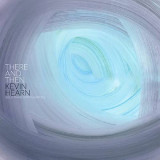
Three locations. Three pianos. Three hours on each. I was told where and when the piano would be ready. I would go, play, and leave. Very little was said. All pieces were improvised. There were no demos, run throughs, re-dos, or edits. At times I was responding to the natural reverb of the spaces, as well as the effects and sound treatments that Mark was adding in tandem with the performances.
What you hear is what happened there and then, at the end of the challenging year that was 2020. Kevin Hearn is best known as a multi-instrumentalist from Barenaked Ladies, the multi-platinum selling band he's played with for almost two decades. One of the most respected Toronto musicians of the past 25 years, Hearn's solo albums take the listener on a journey of boundless creativity often
driven by adventure and experimentation. 'There and Then' is played at 45RPM, and is intended to be enjoyed on the warmth of vinyl, but will also be released digitally.
"It's fun for me to make music that doesn't have to fit a certain criteria, whether it be regarding the style or sound, or who is playing it. When I make my own records, I can follow my heart and curiosity." - Kevin Hearn
The followup to 2019's 'Calm and Cents', which was Juno-nominated for Best instrumental Album of the Year.
Pressed on pink marbled vinyl
Shall Not Fade's garage and breaks sublabel, Time is Now, has been a great success in its first year, and now starts 2021 with the first in a series of hand-stamped white label releases. London via Madrid up-and-comer Tower Block Dreams makes his debut for the label with five killer cuts, backed with a weighty remix from Manchester-based garage maestro and Time Is Now regular Interplanetary Criminal.
The A-side is all reliable garage bangers; the opener, "Wicked Ya No" is a rude wobbler for the early hours, with rave piano stabs and a dirty drop. Track two "Keep Coming" loses none of the pace, chopping up playful R'n'B diva vocals to a hard bassline; and the A-side ends with a sidewinding beast of a track in "Soundboy". Think retro synths paired with timestretched ragga vocals - it's unashamedly filthy.
Onto the B-side with gun fingers out for "Truss We", which plays again with ravey stabs and staccato female vocals for an instant dancefloor banger. Tower Block Dreams' last offering on the record is much darker; a forward stepper that cruises along at half-time, creating an ominous atmosphere on which to lead into Interplanetary Criminal's remix of "Wicked Ya Know". This one reimagines the record opener in the producer's trademark high-octane style, smattering hyper breakbeats across the track and turning up the wobble to end the record with a stinker
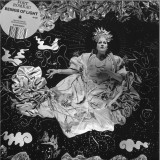
- Followup to 2015's Insides. - RIYL: Jacques Greene, Leon Vynehall, DJ Seinfeld, Project Pablo - Features cover art by Salvador Dalí protégé Steven Arnold. - Silver halide (gray + black marble) vinyl limited to 1,500 copies worldwide - Vinyl is housed in a black dust sleeve inserted in to a matte varnish jacket with metallic silver spot color // After a run of critically-acclaimed singles and EPs, British producer Michael Greene, aka Fort Romeau, returns to the full-length format with Beings of Light, the long-awaited follow-up to 2015's Insides and his second LP on Ghostly International. While a prolific DJ who orients many of his productions for the dancefloor, Greene still sees the album as the ultimate statement of intent, "a space to stretch out, to speak in full paragraphs rather than stunted sentences." He has explored several stylistic fragments in recent years (including the summer 2018 anthem "Pablo," hailed a Best New Track by Pitchfork), but when faced with the extended pause to the dance community in 2020, Greene felt compelled to focus on a larger body of work. Embracing a back-to-basics mentality, he amassed over a dozen hours of sounds, asking himself throughout the sessions: "Does the music move you? Is it honest?" He came out the other end with Beings of Light, an expressive collection traversing rainy day ambient, moonlit disco, and dream-like techno in pursuit of the power found within our subconscious. Album opener "Untitled IV" ushers in a sprinting tempo in its exploration of the human voice, a recurring device in the Fort Romeau project. Greene uses it as a compositional layer, disembodied with its context often opaque or reduced to a single phrase. Here the voice is scattered in percussive twitches, colliding with a kick drum to induce a near state of hypnosis as horns sound off in the distance. Propulsive standout "Spotlights'' is Greene's ode to the romanticised New York City that lives in our hearts, nocturnal and carefree. A vocal snippet repeats the title with a breezy poise, reminiscent of classic house cuts. "Ramona'' honors the beloved Robert Johnson club in Offenbach, Germany. Hazy, spacious, and sustained, Greene designed the beat with their system in mind, "also with a strong nod to the more modern lineage of exceptional minimal house music from Frankfurt," he says. Two ambient pieces surround the track, "(In The) Rain" sets the scene and "Porta Coeli" (a Latin phrase which loosely translates to "heaven's gate") soundtracks the comedown. The album's closer, the title track, is an arc constructed with atmospheric textures, euphoric swings of percussion, and a well-placed piano refrain, "Beings of Light" is adaptive; one could imagine it reverberating from a club, scoring the emotional apex of a film, or radiating through the realm of dreams.
The Madness, originally released in May 1988, is the only album recorded by Suggs, Chas Smash, Chrissy Boy and Lee Thompson of Madness. Calling themselves “The Madness”, the group explored a new direction without Mike Barson, Woody and Mark Bedford. The result was an album bathed in all the new technology the late 1980s had to offer, and features some of this incarnation of Madness’ most experimental work.
Lead vocals were shared between Suggs and Chas Smash, while all members of the group contributed music and lyrics. The album also features a host of other musicians including Steve Nieve (Elvis Costello & The Attractions) on keyboards and The Specials’ Jerry Dammers on piano.
Although short-lived, this version of Madness marked a significant detour from the original band’s trajectory and preceded one of the most extraordinary music comebacks ever witnessed, when the whole band reformed in 1992 for two sold-out “Madstock” shows in London’s Finsbury Park. The fans’ excitement led to a legendary mini-earthquake, and ‘Madstock’ would prove that no members of Madness ever truly leave the band.
This LP reissue is pressed on 180g black vinyl and features brand new liner notes by Chrissy Boy, Chas Smash and Lee Thompson.
Dewey Jeffries was a renowned jazz pianist for 40 years in the Greater Cleveland area as well as cities throughout the United States and Canada.
He frequently played with jazz giants such as Miles Davis, Benny Carter.
Dewey Jeffries was appeared in the early 70s when he released some singles and then in 1981 he released "This Is For You" an incredible piece of rare modern soul funk.
For Motown and Daptone sounds extimators.
- A1: Image-Autumn-Womb (2021 Remaster) 03 09
- A2: In A Notebook (2021 Remaster) 02 16
- A3: Finding It There (2021 Remaster) 03 44
- A4: Subtle The Sum (2021 Remaster) 02 03
- A5: Threnody (2021 Remaster) 04 45
- A6: Now (2021 Remaster) 03 58
- A7: The Winter Of 1539-1540 (2021 Remaster) 02 19
- B1: John Harrington (2021 Remaster) 06 09
- B2: Apalachee (2021 Remaster) 05 00
- B3: Mound Builders (2021 Remaster) 02 55
- B4: Gifts (2021 Remaster) 04 18
- B5: Clement Danes (2021 Remaster) 04 12
Originally released in 2008 on CD and in a very limited vinyl edition, "The Malady Of Elegance" by Goldmund aka Keith Kenniff finally gets its long-deserved vinyl re-release, featuring a new artwork and remastered audio by Taylor Deupree.
Taking cues from 'Corduroy Road' Keith Kenniff (aka Helios) again restricts himself to the piano in conjuring up his humble soundscapes and again we are pulled into a deep, meditative and filmic world as the notes glide to a slow, pensive meter. Keith's precedent release was the challenging 'Two Point Discrimination' EP, released on the Western Vinyl label as part of their portrait series, but where that record was a collection of haunting experiments in form and sound, 'The Malady of Elegance' sees us back into the warming, homespun territory of 'Corduroy Road'. That's not to say these compositions are upbeat, far from it in fact, but there are lines to be drawn to folk music, and while Keith no longer draws on the American Civil War as a primary influence there is still the sense that the ghosts of old America haunt the keys.
On top of these references we see Keith tripping somewhat fittingly into a flickering filmic world somewhat in line with his taste in European film. There is a delicate narrative on show throughout the record from the opening hopefulness of Image-Autumn-Womb through the melancholy of Now to the sensitive romance of the album's closer Evelyn. Listening to the record almost creates its own cinematic accompaniment in the minds eye, and this is simply a testament to Keith's incredible talents as a composer.
Fans of Erik Satie, Sylvain Chauveau and Hauschka need look no further, 'The Malady of Elegance' is a deeply personal meditation which you cannot help but get lost inside.
Joseph Carvell returns to Karaoke Kalk with his sophomore album under the Pink Shabab moniker. »Never Stopped Loving You« was for the most part written between Spring and late Summer 2020 in his Camberwell home and like his 2019 debut »Ema by the Sea« recorded in the South of France together with Emmanuel Mario, better known as Astrobal. It’s a record informed by feelings of nostalgia, love, longing, romance and loss and, much like his previous album, displays Carvell's knack for making introversion sound extroverted. As a bassist, his approach to songwriting is both rhythmic and melodic, making the resulting music just as visceral as it is emotive. Much like the record’s title can be understood as both a lament or an expression of joyful dedication, the music on »Never Stopped Loving You« is profoundly ambiguous.
»I was lucky with the timing for this record,« says Carvell and at first that may sound counterintuitive: managing to play only one show in Zurich in early 2020, he had to cancel his planned European tour and go back to the United Kingdom, which soon went into lockdown. He made the best out of the situation, recording electric and upright bass for Nick Krgovich, Daniel O’Sullivan and Zooey’s new records while also working on tracks and demos by himself. »The world seemed to have stopped and I had more time to think about the past and find the best grooves, the suitable keyboard touches and the right words,« says Carvell. Everything came together slowly before he boarded a train to France with his keyboard: »The pace of life completely dropped and between takes Ema and I were going swimming and taking walks,« he says of the sessions.
»Never Stopped Loving You« is notably more electronic than its predecessor, but also full of the small melodic and harmonic details that made »Ema by the Sea« such an outstanding record. »I was listening to more 1990s dance and house music and 1980s pop and also a healthy amount of ambient music,« explains Carvell. These influences are clearly audible on songs like the Chicago House-esque beats of »Show Your Love« or »Why Did I Leave You that Morning«, the skittish rhythms on »Let Go« and the near-Balearic »San Junipero«. Especially the latter makes it clear that Carvell spent much time devoting himself to movies and TV shows, but also incorporated more piano sounds in his songs—he learnt the instrument by playing along to classic Beatles and Beach Boys songs.
Despite being more upbeat on a rhythmic level than before, Carvell’s use of texture and his peculiar voice add another note to the music. Even an anthemic song like »Run Away«, his first composition to follow a classic verse/chorus structure, is profoundly ambivalent, both overjoyed and deeply melancholic. By the same token however, even a torch song like »You Stepped Out of My Life« is enormously consoling. This, after all, has always been Carvell’s strength: creating music that will cheer you up when you’re down while also injecting a sense of futility into every moment of euphoria. It never shone more brightly than on »Never Stopped Loving You.«
Words have a force of their own: a life generated by their meaning and by the imaginary world they refer to; a power increased by the dynamic interplay with other words. Just put 'Moon' and 'Apollo' together, and you'll be almost inevitably transported to mankind's greatest adventure: the Moon landing and, before that, the space race between the US and USSR, the early missions, and the incredible technological challenges faced at the time by astronauts and engineers.
It is against this imaginative background that beat-maker and bass player Moonbrew and organist and keyboardist Paolo Apollo Negri conceived The LEM Tales project. Their collaboration, too, is the coming together of 'Moon' and 'Apollo', and of their two worlds: a sonic universe where hip hop meets funk, pop merges with jazz, old school interacts with new possibilities, and urban and space blend into something new.
The LEM Tales - Chapter One narrates the space race from the American point of view. This vinyl edition, which includes two exclusive tracks (*) not on the digital release, takes us on a journey from "Project Gemini" - NASA's second human spaceflight program - to "Tranquillity Base" (*) (the site on the Moon where Armstrong and Aldrin landed and walked in July 1969) , through tracks titled "Capsule Communicator" (the individual in the mission control center who maintained communication with the astronauts in space), "EMU" (Extravehicular Mobility Unit, better known as the spacesuit), "Saturn V" (a threestage, liquid-fuelled rocket used between 1967 and 1973), and "Mercury Seven" (*) (the group of seven astronauts chosen for the Mercury Program in 1959).
Inspired by iconic images that are part of our collective visual memory, Moonbrew and Apollo's first collaborative effort tries to provide a contemporary sonic representation of what the past means to us today – and, perhaps, will mean to future generations. It does so through a feast of vintage synthesizers, transistor and tonewheel organs, string machines, electric pianos, tube amplifiers, obscure analogue devices, electric bass, and modern samplers.
An old-school hip hop approach was used in the first stages of writing the album: individual drums hits from old, dusty records were first sampled and then physically played on real instruments to create patterns and build up the rhythm section. Moonbrew then laid down the electric bass grooves and Apollo layered his dreamy, evocative vintage keyboards on top. The result is a combination of different styles, sounds and genres that is fresh, original and contemporary while being clearly influenced by many musical legends of the past.
The LEM Tales - Chapter One is released by Four Flies in partnership with Record Kicks.
Following the 2019 soundtrack release of ‘Matthias & Maxime’, Mercury KX are thrilled to share Jean-Michel Blais’s upcoming LP aubades. The new album from the Montreal-based icon of modern-classical music shows a new side to the artist. The album features some of his best piano moments but also has grand orchestral elements and arrangements which show a new side to the artist – and has a lot of moments in uplifting major as opposed to melancholic minor.In his own words: “With this album, I was definitely responding to certain trends in classical music. For example, the fact that the solo piano tends to always sounds melancholic. That’s good, but I’ve done that already, I wanted to go beyond that. It was also the first time I’ve ever written so much in major, not minor. So much of piano music, especially in this modern classical music world, is in minor. I wanted to go there but without being kitsch.”
Union Records is an afro house music label with contamination of latin sounds, founded by Peppe Citarella in 2017.
Since its start, Union Records, has released many hits involving singers and musicians from all over the world and in particular from the Latin American world.
Now Peppe and Union Records presents the first vinyl release with two different tracks feat. the wellknowed India.
"Tacalacateo" and "Mamafrica" have also two addition version: “Citarella Dub Piano Mix” and “Terry Hunter Club World Remix”.
The Slow Show release their fourth studio album, their first for three years, entitled ‘Still Life’,
via PIAS. The four-piece, who first formed in Manchester, will support the release with a
European tour in February and March 2022, culminating in an already sold-out hometown show
at Manchester’s Hallé St Peters on 4th March.
Lead track ‘Blinking’ is a perfect taster to the new direction ‘Still Life’ offers. Same but different
again. “An ode to love and loyalty. The song is a defiant pledge to never giving up on the
people you love. Musically we wanted the song to have impact, a directness and powerful
punch that we’d previously shied away from.” - Robert Goodwin (vocals)
The making of ‘Still Life’ has been quite the ride. Following their breakthrough album, ‘White
Water’, it was clear The Slow Show were not just ‘another band from Manchester’. The legacy
of The Smiths, Joy Division and all those other great predecessors is not something to be trifled
with, but The Slow Show didn't need to wear their address on their sleeve: this was something
else, fully formed, with a mesmerising sound, rich in atmosphere and melody.
With the band’s desire to push each other outside of their respective comfort zones during the
recording process, ‘Still Life’ subsequently offers a more diverse, rich and interesting sound
than previous albums.
“We did develop our sound,” says Rob Goodwin. “We had to try something else. We felt we
owed that to ourselves, and to the people that come and enjoy the music. We explored a lot of
stuff: different sounds, different feelings, different ideas, different processes as well. Some of
them didn’t work at all, but some did. It was difficult and challenging, but it felt good in the end.”
This experimental side to the creative process allowed the band to introduce new elements to
their work. “Some new approaches and sounds crept in,” keyboardist Frederik ‘T Kindt admits.
“Some were far from our older work. For instance: after some initial encouragement from me,
Rob was keen to sing a bit higher on this record. Chris was encouraged to make his drums a
bit more present; some things almost sound like a breakbeat to my ears.”
Recorded remotely over the course of the past year, with Goodwin recording vocals from
Dusseldorf in Germany and the rest of band recording in the UK, ‘Still Life’, as a concept, takes
inspiration from the experiences of lockdown: “Before the virus arrived, I had a busy life;
spending two weeks in Germany with my girlfriend, and then flying to Manchester to work with
Fred or to a gig.” Goodwin remarks: “And then all of a sudden, life came to a halt. It took a little
getting used to, but I actually had a really nice realisation during that time. I understood that the
slower life got, the more I saw. I spent a lot of time in nature, seeing things in a different
perspective. And that's what you need when you're trying to create. You have to really look,
and then you see things happening everywhere.”
The tracks themselves are brimming with emotion and reverence towards the significant
relationships we encounter in life. Stand-out anthem ‘Blinking’ is a defiant pledge to never
giving up on the people you love. Musically the band wanted the song to have impact, a
directness and powerful punch that they’d previously shied away from. Whilst ‘Woven Blue’
deals with the aftermath of uncoupling. The idea that meaningful relationships are very often
woven and complex, making resolve difficult.
These very personal tracks are counterbalanced with the more topical, ‘Breathe’, which
documents some of the unjust and heart-breaking scenes of 2020 with spoken word references
to John Boyega’s emotional rallying cry in support of Black Lives Matter movement in London’s
Hyde Park.
In all, Still Life marks another evolution of a band that have never tried to fit in any particular
box but have inhabited their own unique universe.
LP pressed on white viny
Sony Classical release - Levit is one of the few pianists who have performed these works live in their entirety. Completed in 1951, Dmitri Shostakovich’s 24 Preludes and Fugues – a summary of all the major and minor tonalities – lasts some two and a half hours in total, while Ronald Stevenson’s Passacaglia on DSCH, which he completed in 1963, is an unbroken set of variations lasting nearly an hour and a half. The album’s artwork is specially created by the internationally renowned graphic artist and book designer Christoph Niemann, who regularly illustrates for The New Yorker and The New York Times. His illustration for 'On DSCH' offers a playfully abstract counterpart to this musical experience. Formats are: 3 disc set presented in deluxe paper packaging and includes a limited edition printed insert of the cryptogram that Shostakovich used as his musical signature. Also a a limited Collector’s Edition of 'On DSCH' Vinyl Part One: Shostakovich 24 Prelude And Fugues Op. 87' presented on 3LP 180g vinyl set in gatefold sleeve including a download code. This is part one of the full 'On DSCH' album - vinyl 'Part Two: Stevenson Passacaglia on DSCH' follows in February 2022.
As the world continues to plunge into a fiery blaze of calamity, the Southern Hemisphere's air warms, its leaves glow green, and the damp earth jolts awake. Springtime is coming to Australia, and it will be ushered in by three sonic shamans who are no strangers to our ears. Gareth Liddiard (Tropical Fuck Storm / The Drones), Jim White (Dirty Three / Xylouris White) and Chris Abrahams (The Necks) are Springtime _ a new endeavor that is as much a tonal experiment as it is a meditation on modern-day absurdity. Springtime's self-titled debut combines free jazz, poignant lyricism crafted alongside renowned Irish poet Ian Duhig -- aka Gareth Liddiard's uncle - and improvisation to craft austere portraits of a world paralyzed by shellshock. It's as monstrously ravishing as it is clumsy in its elegance. Words run into each other with little regard for one another's injuries. There are sounds which come out of nothingness to wallop and brutalize their fellow sounds. The live recording of Will Oldham's "West Palm Beach" is treated with love and respect and would certainly be met with open arms by its author. Across the span of seven tracks, Liddiard incants with wild-eyed fury as White and Abrahams lay down stuttering strings, fizzling electronics, and feathery piano melodies. It is within these raving abstractions that one may find an answer to the enduring question, "What fresh hell will this new season bring?"
- A1: Audiobooks - Dance Your Life Away
- A2: Saint Etienne - Heart Failed (In The Back Of A Taxi) (In The Back Of A Taxi)
- B1: Doves - Compulsion
- B2: Toy - Dead & Gone
- C1: Confidence Man - Out The Window
- C2: Lcmdf - Gandhi (Andy Weatherall Remix Ii)
- D1: Espiritu - Bonita Manana (Sabres Of Paradise Remix)
- D2: Unloved - Devils Angels
Heavenly Recordings announce the release of ‘Heavenly remixes 3&4 - Andrew Weatherall volume 1&2’, a brace of compilation albums collecting together some of the finest remixes from the label’s long-time friend, collaborator and go-to remixer. These compilations follow ‘Heavenly remixes 1 & 2’, which showcases some of the label’s other great remixes.
By the time Heavenly was born in the spring of 1990, Andrew Weatherall was already an inspirational sounding board, as well as a fellow traveller on the bright new road that stretched out ahead, thanks to the massive cultural liberation of acid house. Back then every energised meeting could be turned into a fortuitous opportunity in this burgeoning new underground economy. Bored of your job? Start playing records out! Start a club night! Get in the studio!
Start a label! Just don’t stand still. Commandments Andrew would follow for the rest of his life.
At the start of things, Andrew was a regular visitor to Capersville - the pre-Heavenly press office run by label founder Jeff Barrett (soon to become Andrew’s manager). It was there that he famously picked up a copy of Primal Scream’s unloved second album and singled out a
track that would later become ‘Loaded’, after being given an instruction to “fucking destroy” it by the band’s Andrew Innes; it was there too that the idea to remix the first Heavenly release
came about.
Andrew’s mix of that first Heavenly record is very much a product of its time. ‘The World According To Sly and Lovechild’ is a swirling bass punch topped with a hypnotic marimba line and the kind of ecstatic diva vocal that you’d hear coming out of the speakers all night at postShoom clubs like Yellow Book.
His take on the label’s next release - Saint Etienne’s ‘Only Love Can Break Your Heart (A Mix of Two Halves’) - would set the template for his next three decades of audio exploration. A drawn-out imperial dub, the track builds and builds with a moody intensity (partly down to the
melodica played by Weather Prophets legend Pete Astor) that’s far more Kingston JA at dusk than Kingston-upon-Thames at kicking out time. It’s both a dancefloor record to get lost in and
headphone psychedelia of the highest order - a perfect example of what he did better than anyone else.
Between 1990 and his untimely death in 2020, Andrew fed more Heavenly bands through the mixing desk than those of any other label. Consistently, he returned visionary music to the
office, often in person for (at least) one ceremonial playback - a ritual that would involve the volume cranked up high and Andrew rocking back on his heels, eyes closed, lost in the alchemy of it all.
Each time, he would warp and twist originals into beautiful new shapes - elasticated club records that might evoke Detroit techno one second and Throbbing Gristle the next, before wheel-spinning into something akin to The Fall produced by King Tubby.
Andrew’s studio adventures would always be guided by that early advice to destroy the source material. It’s why he was the first name that came up when remixes were discussed; the first number on the speed dial. Listening back to these remixes now - to thirty years of glorious outsider sounds - it bangs home again just how fucking good Andrew was.