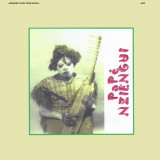
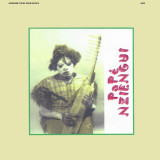
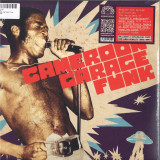
“The year is 1982. Rita Mitsouko has not yet recorded its eponymous debut album. The pile of ashes that once was Disco is still smoking on the field of Comiskey Park. New Wave is a phrase, Post-Punk Rock a thing. In France, young musicians dream of New York City – some with more devotion than others. Lapassenkoff are to early 1980’s downtown New-York what seminal New Wave act Marie Et Les Garçons (who met John Cale on their way to CBGB) are to the city’s musical scene in the late 1970’s: an unexpected cousin from Lyon.
Indeed, going through Shing ‘n’ Tsé! sometimes feel like an impromptu meeting between John Lurie and Tom Tom Club in the basement of some French record store. If we press pause for a minute, a question comes to mind: how on earth such a unique blend of funk, post-punk, jazz fusion & hip hop (!) – more easily associated with, say, The Mudd Club, than with Les pentes de la Croix-Rousse – made its way to the brains of three French musicians?
The answer probably lies in a Swiss chalet, some 40 kilometers away from Zurich. Sent there by the wise people from Mosquito (the label which also gave Ramuntcho Matta and Carte de Séjour the opportunity to record their first album), the band experiences Alpine ennui and mysterious neighbours (a certain Carlos Peron, for instance). That is probably during this stay in Swiss meadows that they opened a Pandora’s box called experimental music, leading them into recording the mind-blowing sample-based – and accidentally proto-everything – M Le Maudit,, that would later grace Belgian airwaves via the famous Liaisons Dangereuses radio show.
But if we’re looking for a bigger picture, M Le Maudit is just an example of how inventive their approach to music was. This compilation is a testimony of a decade-long feverish flirt between the Lyon trio and dance music. From the infectious electric boogie cuts Shing A Ling and Roadie to the somehow euro-house-fuelled Ma Poubelle Angelina, via many unclassifiable yet iconic songs like Bossi Le Bosseman or Fièvres, Frissons, the compilation demonstrates one thing: Lapassenkoff took the road less traveled by and contributed to a different history of French Pop music.”
Pierre-Arthur Michau.
Suche:pierre j
- A1: Eden-Nouba
- A2: Sainte Nitouge
- A3: Blonde Platine
- A4: Chacun Fait (C\\\'Qui Lui Plaît)
- A5: Bonjour (V\\\'Là Les Nouvelles)
- A6: Projet Manhattan
- B1: Fais Le Waou Waou
- B2: S S
- B3: V.a.l.l.i
- B4: Vendredi 13
- B5: Rêve N°9
- B6: Samedi 14
- B7: Jacques A Dit Sic
- B8: Plus Près De Toi - Nan Nan Si Si - Accidentellement
- B9: Au Paradis
- A1: 7"A Chacun_Fait_(C\\\'Qui_Lui_Plait)
- B1: 7"Chacun_Fait_(C\\\'Qui_Lui_Plait)_(Instrumental)
2019 vinyl edition with printed inner-sleeve (with the lyrics). Includes a bonus 7" of original track 'Chacun fait (C' qui lui plaît).
Spring 1982: Grégory Ken and Valli aka Chagrin d'Amour bursts into the scene with 'Chacun fait (C'qui lui plaît)'. The track gets 9 airplays a day on the newly created NRJ radio and 35 000 copies of the 7" are sold every day !
In the blink of an eye, a team of experienced musicians is gathered around prominent sound engineer Dominique Blanc-Francard: Slim Pezin (guitars), Bernard Paganotti (bass), Philippe Drai (drums) and Jean-Pierre Sabar (keyboards). After a few days in New-York with Richard Avedon who shot the cover pictures the album is ready and set to become a cult release over more than three decades.
DJ Pierre’s legendary Jack Trax Records returns with a delicious set of raw acid tracks from Finnish producer Type-303, who made his 12” wax debut on Posthuman’s I Love Acid imprint, with a release on Lobster-distributed ProForm this past fall.
“What is the Time?” kicks things off with a jacking beat reminiscent of the classic Chicago acid house sound, answering the question with “it’s time to jack”.
Next up is “Sound of Future”, alluding to Phuture’s classic “Acid Track” with a tough, driven beat and acid line that builds up to a psychedelic frenzy of claps, snares, and rides.
The title track, “Ghost in the 303”, follows suit with more of Type-303’s punchy percussion, interjected by moments of frenzied 16th claps, paired with an eerie, otherworldly pad taking the listener deep into the soul of the machine, the classic TB-303.
Last is “Control”—filled with dreamy yet slightly dissonant pads and a wispy breakbeat-inspired snare line that provides a deep, introspective conclusion to this acid laced journey.
Spread out over two 12"vinyls - this is the result from a two day recording session in Brussels by the duo of Beau Wanzer & Maoupa Mazzocchetti. 25 minutes of dance floor perversions that tackle an array of rhythmic forms. Sludgy synths, serrated percussion and viscous distortion goops over leviathan rhythms
Beau says, “We hooked everything up and just pushed play. We didn’t really discuss much about the process….it was very ‘spur of the moment’.” The equipment set up included a Roland TR-808, TR-606, SH-101, CR-78, CR-8000, two Syncussions and effects. Each EP contains 25 minutes of dance floor perversions that tackle an array of rhythmic forms. Sludgy synths, serrated percussion and viscous distortion goops over leviathan rhythms
Infuse welcomes Pierre Codarin with an excellent three track release, ‘Pork Chop Express’, featuring a great KOKO remix to boot!
Pierre has been bubbling on the underground surface for few years now, releasing material on respected labels such as Adult Only, LAATE, Tervisio and his self-titled label was launched at the beginning of 2016 and has seen heady plays from the industries peers with each release granting praise from the media, DJ’s and collectors. Pierre brings a very raw and rich sound in both his productions and Performance with a very in-depth knowledge of record selection leaning towards a nostalgic U.S. and U.K. influence.
The title track ‘Pork Chop Express’ is a driving, rib-rattling, pad-infused, triumph of a track causing quite a stir on the floor. On the flip and ‘Lo Pan’ jacks the tempo and gets rough as Pierre drops a smorgasbord of key fills and stabs to keep this beast a grooving! Finally, following on from their brilliant ‘Generation K’ EP on Infuse early this year, KOKO deliver a blistering dance-floor led remix of ‘Pork Chop Express’, perfectly rounding off this great package.
After S3A's 'Deep Love' contribution last year we are stoked to present you this great collection of music! Coming from the French underground S3A aka Max Fader is absolutely no stranger to the scene. With releases on Local Talk, Quartet Series and his own 'Sampling As An Art records' he is deeply rooted in House, Hip Hop, Disco, Soul and Funk serving residencies at Paris clubs 'Concrete' and 'REX' he has become a local favourite as well with his DJ and Live sets. We are more than excited to release this special debut album that showcases some older and recent work, with live acoustic songs from early 2017 recorded at the Paris 'Red Bull Music' studios to new sample based House and Disco infused tracks in the signature 'S3A' style we got to love so much in recent years. 'Fever", 'Friends, 'Joint No. 5 and 'Greed' are all funk fuelled jams composed by Max, re-played and recorded again in several live jams with fellow musicians Nicolas Taite, Raphael Vallade and Pierre Vadon and edited in the studio by S3A afterwards, they breath this special Soul and Funk love Max got into by listening to 'Masters at Work' and old Disco jams. The latter 'Greed' has a special story, it is a cover of an early 'Laurent Garnier' track that got reworked by 'Avril' in the early 00's, here Max wanted to present his own Jazz and Funk perspective on that same track. The club stompers 'First Day With Lucien", 'Lockwood", 'Clarence J. Boddicker' and 'Leaving 19th' are the true party business on this album and range from Deep House to more classic edit style Disco tracks with live improvisations played on top of them.
With a discography held in such high esteem amongst fans of conceptual French pop and soundtrack composition, the likelihood of finding an unturned stone amongst maestro Jean-Claude Vannier’s fertile psychedelic rockery falls somewhere between slim and skeletal. Even the most intrepid explorers of the most fearless and fastidious nature should naturally expect to encounter one or two shadowy characters when braving the oblique corners of the Vannier vault, but few lost souls cast a darker silhouette than the cinematic obscurity known only as La Bête Noire (The Black Beast).
Lost and presumed missing for decades the soundtrack tapes to this lesser-known 1983 French thriller (featuring a cast culled from films such as Alphaville, The Modern Couple and Sweet Movie) captures the revered composer and arranger of Serge Gainsbourg’s Histoire De Melody Nelson embarking on a darker exploration of free jazz, frenzied batucadas and cyclic carousel psychedelia. Counting key players of the French jazz scene within its ranks, The Insolitudes group comprises a crack team of Palm/Futura/Actuel/Saravah regulars such as saxophonist Philippe Mate´ (Acting Trio/Mate´-Vallancien/Tacet) alongside drummer Bernard Labat (Mad Ducks) and legendary Arpadys/Voyage rhythm masters Marc Chantereau and Pierre-Alain Dahan (Brutus Drums) all of whom alongside Michel Zanlonghi (Ensemble De Percussion De Paris) make up this thunderous, tumultuous, four-headed rhythm machine bridging an authentic gap between The Jef Gilson Groups and France’s signature “cosmic” revolution. Naturally these previously unheard compositions are spearheaded by lead pianist and composer Vannier and for devotee’s of his 1972 concept album L’Enfant Assassin Des Mouche there is much to admire and cross-reference herein.
Having been the most loyal and long-running guardians of Jean-Claude’s monster archive over the past two decades Finders Keepers Records are proud to present this first catch of newfound vintage Vannier discoveries on this limited and unlikely free jazz 45 single (which should find a perfect home between coveted Euro jazz 7”s by Krzysztof Komeda, Franc¸ois Tusques and Brussels Art Quintet). Almost 15 years since Finders Keepers once liberated the Mouches it is now time to set free another Black Beast amongst discerning listeners.
Sa Bat' Machines & Tam Ly continuent sur la lancée et proposent un nouveau EP 3 titres electro deep bass.
La Combinaison de Sa Bat' Machines, producteur parisien, musicien, et compositeur de bass music et de Tam Ly, chanteuse auteure, compositrice et caméleon passionné de jazz, de musique classique et de mélopées orientales, avec le guitariste Pierre Maddio fonctionne suavement.
Les influences sont multiples, entre sons concrets, harmonies jazz et riffs de guitares un tantinet rock. La voix est mélancholique et syncopée, expressive ou fantomatique.
Elle invoque des instantanés intimistes, "Strange Fruit" est une interpretation du titre d'Abel Meeropol popularisé par Billie Holliday puis Nina Simone.
Road trip electro, ce vinyle n'est pas dsans nous rappeler la bande original du film "Mulholland Drive".
A écouter tard, ou au réveil.
text: Supa Cosh
" I used to live in rue de Clignancourt, and remember as a kid going to the 14th of July West Indian ball organized by my father rue André Del Sartre in Montmartre every year. There I would meet, among others, saxophonist Robert Mavounzy. Sticking to the area, my older brother had a band and often played at the famous venue La Cigale, where even Henri Salvador joined him for a jam from time to time."Since childhood Serge Fabriano bathed in music, to-ing and fro-ing between his native Guadeloupe and Paris where he grew up. He attended the music conservatory, learnt how to play bass, met and played with many musicians and was ultimately angling for a career as a music teacher. But Serge had wanderlust; he lived to meet new people and was passionate about travel.Thus, it was in a squat located rue de Flandres in the 19th district of Paris that Serge Fabriano met by chance zarb player Djamchid Chemirami, one of Iran's greatest percussionists, who invited him to the Arts Festival of Shiraz-Persepolis. After a month-long motorcycle journey, he and his guitar teacher, Roger Bénichou, arrived in Tehran. Sadly their guitars didn't survive the journey. It was there that he met, among others, Woody Shaw, Max Roach and his wife Abbey Lincoln. Serge also formed a friendship with saxophonist Gary Bartz and stayed on a month playing with the cream of the musicians who'd attended to the Festival.During the mid-70's, he alternated between teaching classes and live gigs, and performed in Germany with a funk band comprised of ex-GIs from the US Army. He also met the members of Chick Corea's group, Return to Forever, and especially Stanley Clarke who became a great source of inspiration to him.From 1978 onwards, Serge Fabriano put aside teaching and devoted more time to music. He became a musician's musician, doing studio recordings with rock bands. He also played with members of the Caribbean diaspora, which included the great drummer Marcel Lollia (known as Velo), Patrick Jean-Marie, Guy Conquette, Winston Berkley, Mino CineluDuring the "Ayatollah Comédie" musical comedy tour organized by the Journal Liberation, Serge met actor Pierre Clémenti (Il Gattopardo, Belle De Jour, The Conformist). This was a game-changer : "I was trying to record my first record. Clémenti suggested the Studio Beaubourg in Paris. "The group Fabriano Fuzion - Fabriano Unit Zion - was born.The band brought together some of the Caribbean's most inspired musicians: Martinican-born Mario Canonge on the piano (his first appearance on an album), Alain-Jean Marie on the synthesizer, Edouard and Pierre Labor on saxophones, Claude Vamur (Kassav ') on the drums, singer/percussionists Marie-Reine Lamoureux and Marie-Céline Lafontaine, percussionists Roger Raspail, Sully Cally and Hector Ficadière (Tumblack, Vent Levé) on Ka percussions.It is precisely the Gwo Ka - this ancestral 'root' music deeply embedded in the heart of the Guadeloupe musician - which constitutes the rhythmic backbone of this first opus. The Gwo Ka, the jazz, the poetry and the spiritual vibe are gathered here to form a splendid album; one of the true masterpieces to emerge from the French West Indies.Rarely will a band have borne its name so well than Fabriano Fuzion - its music is a multiple and collective work in which each element brings its identity and its richness, conferring to this major work a truly fusional dimension.
Third LP of Cabaret Contemporain, French band (featuring Fabrizio Rat on keys) who use acoustic instruments (piano, guitar, bass, drums, contrabass) to produce a « hand-crafted » club music infused with techno. Inspired by Jeff Mills, Robert Hood or Drexciya, the five members already had a career on classical scene; their idea is not to replay classical techno tunes but to create a new path for the electronic music. 2 tracks featuring with the label boss, Arnaud Rebotini.
« Ballaro », which opens Cabaret Contemporain's third album, begins with light percussions, which seem to turn on themselves, while being conveyed by reverberations close to dub. After a few minutes of convolutions, the piece gets out of hand, transporting the listener into a rich form of pulsating trance, irrigated by a soaring melody and punctuated by persistent piano tones. « La selva »; more subdued, has the same energy, the track ending in an even more powerful way, a kind of paroxysm.
Finally, the strangest and most minimal « Cactus », features a singular groove, which evokes the most brutal house from Chicago, or the sometimes obsessive techno from Detroit. Just like other tracks such as « Transistor » or « TGV », fuelled by sweat and trance, Séquence Collective bears all the intensity of a techno cut for clubs' dancefloors. The only difference being that their music is not played with synths, drum machines or software, but with acoustic instruments. Dual curriculum The band is composed of five musicians and a sound engineer: Fabrizio Rat on piano, Giani Caserotto on guitar, Julien Loutelier on drums, Ronan Courty and Simon Drappier on double bass and of course Pierre Favrez on console. They are all in their thirties and met at the prestigious Paris Conservatoire in the late 2000s. However, all the musicians in the band have a double curriculum and navigate freely between the institutional realm and the underground or pop music scenes. Through classical or contemporary music, jazz and improvisation, rock and experimentation, they share a common passion for the original and futuristic techno of the 1990s, that of Jeff Mills, Robert Hood or Drexciya, which they have decided to reinvent and further in their own way. Not as a simple stylistic exercise practiced by virtuoso musicians, but rather as a new path for modern music, and for their generation. « The original idea » they say, « was to make club music by hand, like craftsmen. Like in the early days of jazz, our band managed to transform itself into a kind of dancing machine. Our music is therefore functional because it is danceable, but also mental and abstract, while offering several layers of listening. You can dance and play, have a purely physical and sensory connection to the music. But you can also immerse yourself in its listening, perceive refined harmonies or more complex rhythmic superpositions »
If the tones of Cabaret Contemporain are truly unique it is because each member of the band has developed a very personal approach through the use ''prepared'' instruments. The strings of their piano, guitar or double bass may recall strange machines with literally incredible sounds, obtained using objects such as chopsticks, clothes pegs, foil, hangers, a tiny pie mould or many other utensils from a DIY store. A collective energy
Cabaret Contemporain is first and foremost a live band that has been performing in venues and festivals since its inception in 2012 (Nuits Sonores, Siestes Electroniques, L'Aéronef, Le Trabendo, Philharmonie de Paris, Gaîté Lyrique, Rewire, Dancity, Barcelona Accio Musical...), both at traditional jazz and contemporary music venues, and more often at electro music hubs. When facing the audience, the band, which plays each of its sets in one go, without a break, shows an intense physical presence, which competes with the musical power of DJs who share the stage with them. Their performance, full of tension and repetition, which requires maximum concentration and a state close to trance from the musicians, is sometimes, according to them, « a mental journey and a mystic experience ». A dimension that brings to mind the historical techno culture and its dancers who, communicating on the dancefloor, were carried until the early hours of the morning by the power of the beat. An album inspired by the stage Since their beginnings, their compositions on record have drawn their energy directly from the practice of their concerts, whether referring to Terry Riley (2014) or Moondog (2015), an EP and an album dedicated to the repertoire of the two American artists, the original compositions of Cabaret Contemporain (2016) and Satellite EP (2017), as well as this new album. Séquence collective can be listened to as a condensed transcription of their inventions and their live experiments. The tracks, more than half of which were improvised during sessions held in the former Vogue studios near Paris, were recorded in live conditions, « like an old school rock band » they say. As usual, they invited a new musician to join them in the studio. After collaborating with Étienne Jaumet or Château-Flight, Arnaud Rebotini, César winner for best film music, added a welcome synth touch on two tracks (Pro- One, Prophet 600), which boosted the group's formidable collective energy. The album ends with « October Glide », again performed with Rebotini, a lyrical and lively track, built on a powerful and slow progression of timbres and percussions, which would ideally find its place at the core of a techno party « peak time »
- A1: Vous Et Nous
- A2: Patriarcat
- A3: Mon Enfance
- A4: Vent D'automne
- A5: Le Serveur Du Dôme
- A6: Je Suis Venu Te Voir
- A7: Rien Que Changer
- A8: Le Ciel Est Doux
- B1: Les Épis
- B2: Le Repas Des Dromadaires
- B3: Vous Et Nous
- B4: L'amour Parfait
- B5: Un Soleil
- B6: Dans Ma Rue
- B7: L'orage Est Fini
- B8: Gamme
- C1: Le Brin D'herbe
- C2: La Harpe Jaune
- C3: Je T'aimerai
- C4: Diabolo
- C5: Cher
- C6: Ce N'est Pas Un Ennemi
- C7: Encaustique
- C8: Petit Sapin
- D1: Mon Lit
- D2: Je T'aimerai
- D3: La Déchirure
- D4: Le Petit Cheval Bleu
- D5: Personne
- D6: Les Roses Sont Farouches
- D7: Le Bouc
- D8: Dessin
- D9: Les Muzdus
Art is a matter of different phases and influence. The artists' core reaches out like heat waves. And very rarely do these artists' core merge like Brigitte Fontaine and Arseki Belkacem have. Their Saravah Era lasted ten years (1969 to 1979), ten years of "folle sagesse" (crazy wisdom), above all genres and song limitation.
"Le plaisir secret que donne une chanson, dessin à la craie sur le mur de tes sons" (the personal delight within song, a chalk drawing on your wall of sounds) whispers Areski, right after Brigitte's voice on the penultimate song of the double album "Vous et nous". Released in 1977, this free flowing record contains 33 songs, it's their 6th album after "Comme à la radio", "Brigitte 4", "Je ne connais pas cet homme", "L'incendie" and "Le bonheur", and it continues to spread the wide and generous spectrum of the couple fully blossoming talent. Electronic experiments, North African trance, refined acoustics and medieval drones gracefully blend with the acid and candid tongues of the singers, surprising us each step along the way. The making of this record was also full of twists and turns. It started out as a solo effort by Areski at Jean-Pierre Chambard's studio. Little by little, as Areski was filling tapes with poems and improvised skits, Brigitte would sneak into the studio at nightfall, adding her voice here and there, her whispers then became screams, giving fuel to the fire in a total blaze, a surreal blaze. The solitary work ("je") thrived to become us ("nous") and you ("vous") ...
Benjamin Barouh, June 2018
New York residing DJ/Producers John Barera & Will Martin update their longstanding body of collaborative work with their first 2MR release since last year's exceptional 'Proceed To The Root' sophomore album... And it might just be their best work to date. Continuing the celestial theme of their last EP 'History Of Space'; the EP is the result of a whole new writing technique and heller time spent jamming on Will's Chroma Polaris synth. Comprising four tracks that simply ooze machine soul and loose-limbed groovemanship, 'Life, The Heavens & The Earth' is an ageless document that digs deep into the foundations while staring out into the cosmos. The tone is set by 'The Meaning'. Outer planetary electroid savoir faire; its crisp breaks are countered by the bulbous textured bassline throughout. It's followed by the title track 'Life, The Heavens & The Earth'; a spatial excursion built around a classic break and coloured with poignant arpeggiated cascades. Deeper into the EP we glide to strike warehouse gold on the venomous acid of 'In The Depths Of Madness', a layered analog jam that writhes and slinks dynamically in the spirit of Pierre, before closing with a track the duo feel is their most accomplished composition to date: 'Searching For Time'. Not just a title we can all relate to but a poignant emotional workout that touches your soul in the same way you first heard the instrumental of Information Society's 'Running'. Beautiful emotive electronica from a duo who keep getting better with every release. The journey to the root continues....
The godfather of acid house, DJ Pierre, is back - bringing four heavyweight Chicago cuts to the fore, two of which, 'Pinball Machine' & 'The Spirit' are unreleased, exclusives.
'Sexy Aquarian' showcases Pierre's unique style putting his trademark spin on this classic vocal, combining it with a bumping bass and dizzying acid lines, to trigger old memories whilst giving you something new for your mind, your body and your soul.
Next up 'Pinball Machine' goes in heavy on the percussion - filling those speakers with a barrage of weighty toms, crisp hats and crunched up snares. The frenzied synth line bounces around relentlessly, pinging off the sides of your brain like a sonic arcade.
Take to the flip for a lesson in how to take jackin' house to another level. 'Whats Mine is Mine' delves beyond the beat, mixing sassy vocals and spiritual organ stabs, with a touch of swing reminiscent of an era long gone.
Closing out the EP, 'The Spirit' utilises another treasured vocal layering it behind punchy drum programming, a rumbling bass and atmospheric touches that add an ethereal tinge to the track.
DJ Feedback:
The Black Madonna - We Still Believe / Liaison Artists - Excellent!
Eli Escobar - OH yes.
PBR Streetgang - 20/20 Vision - classic
Andy Caldwell - Nettraxx / Cr2 Records - Ooh so so sublime. Good shit here!
Tony Humphries - The Zanzibar / New York - Nice peak time banger.
Danny Howard - BBC Radio 1 / Nothing Else Matters - Aceeeee. Wicked vocal!!! Love the vibe
Deep late 80's percussion LP created to accompany contemporary jazz-dance classes. African instrumentation meets Western Jazz arrangements and computer technology. TIP!
.
Percussions Pour La Danse was a collaboration between North American born jazz & contemporary-dance instructor Tony Kennybrew and French musician Jean-Pierre Boistel. Tony, a Washington native who had studied, taught and danced professionally since the age of 12, found himself in France in the late 80's. It's here that he linked up with like-minded musician Jean-Pierre; who had recently returned from a 6-month trip to West Africa. A trip that helped refine his craft that begun in the early 70's.
The music was created for Tony to use when teaching contemporary jazz-dance classes and to accompany live performance, allowing students to 'dance slowly, rapidly and change speeds without changing the tempo!'. This work of rhythmic research was based on the 'Balance of The Walk'; in 4 times, in 6 times, in 7 times & in 3 times. In order to reach the spatial possibilities he was striving for, Jean-Pierre would also use computer assisted programming to sample and re-play his own instrumentation. This allowed him to lay down the tempo of the track and then play live over the top, which in turn gave him the freedom to add the desired instruments and effects to each song.
Jean-Pierre's use of instruments such as the Kalimba, Talking Drum & Sanza gives the album a distinctly African feel, while contemporary Jazz-dance time signatures adds a unique perspective to these traditional instrumentations creating an ethereal balance between the old and new.
An Island In The Moon is the perfectly conceived minimal ambient project from Italian composers Pier Luigi Andreoni (Doubling Riders, ATROX) and Silvio Linardi. Andreolina being a mix of the names of the two musicians who were both deeply involved with the label Auf Dem Nil on which the album was originally released in 1990.
The duo stick to a disciplined and simple palette using only two synthesizers and a Roland S50 sampler. They are joined by fellow electronic journeyman Riccardo Sinigaglia who contributes piano and samples on two tracks. Taking influences from Italian minimalism while adding some jazz hints Andreolina sprawls, weightless instrumentals that never stay soporific for too long on this singular rare album.
Auf Dem Nil or ADN was one of the most adventurous Italian record labels of the 80's and early 90's with releases by De Fabriek, Riccardo Sinigaglia and Pierre Bastien. Leaving their mark on the experimental music scene back than and influencing musicians worldwide up until today.
Scored for Maurice Béjart's choreography to the 'Orphée Ballet', based on the Greek god Orpheus, this is one of Pierre Henry's finest works of musique concrète, the genre in which Henry was an early innovator and to which he devoted his career. After years working for the French national radio (RTF) and honing his studio chops on radio spots and editing/composition, Henry formed his own studio in 1958 and began working on modern dance and ballet and soundtrack work. Incorporating percussion, industrial soundscapes, nature sounds, spoken French narrative, and synthesized tones, 'Orphée Ballet' is a beautiful piece that, while less known than what is perhaps his most famous work, also for Béjart's ballet production, 1967's 'Les Jerks Électroniques De La Messe Pour Le Temps Présent Et Musiques Concrètes Pour Maurice Béjart', is equally compelling and groundbreaking. Following his passing in 2017 at age 89, Henry's work has found renewed interest, and this is a welcome reissue of one of his rarest and finest works. Truly brilliant.
First track from Rhythm Storm brings some old school tribe techno, dry kick and some italians samples...
Second track goes more energik, with some electro background and a Pumpin nervous kick "à la LSDF" from Trashwasher.
Third tune is cool Joke of tribecore sampling an old tune from Pierre Bachelet ^^
Last track brings a cool dancefloor tribe sober track... Easy baby !
- A1: Le Cercle Rouge
- A2: Corey Revient Chez Lui
- A3: Final Inédit Version 2
- A4: Sur Les Toits
- A5: Corey Et Mattei
- A6: Vogel S'enfuit
- A7: Quand Les Hommes Ont Rendez-Vous
- A8: Razzia Chez Boucheron
- A9: Barrage Policier (First Time On Vinyl)
- A10: Les Habitants Du Placard
- B1: Avenue Paul-Dourmer
- B2: Avant Le Casse Version 1
- B3: Un Indicateur Scruppuleux
- B4: Corey Et Vogel
- B5: Melvillade
- B6: Avant Le Casse Version 2
- B7: De La Prison Au Train
- B8: Le Voyage De Corey
- B9: Cercke Désincarné
Original Soundtrack - Super Deluxe Version, (including 4 tracks never released on vinyl before, this feature is exclusive to this edition, see the tracklisting), 180g vinyl, mastered at half speed, heavy cardboard old Stoughton tip-on sleeve, obi, gold sticker Info We Release Jazz is delighted to present the official reissue of the original soundtrack of Jean-Pierre Melville's 1970 film noir classic Le Cercle Rouge (starring Alain Delon, Bourvil, Gian Maria Volontè, and Yves Montand) composed by French soundtrack master Eric Demarsan, available on limited edition 180g vinyl LP mastered at half speed and including 4 bonus tracks not available on previous pressings of the album. Eric Demarsan's compositions for Le Cercle Rouge draw from the orchestral spirit of the Modern Jazz Quartet (as requested by Melville who loved John Lewis' work), abstraction and minimalism to create a suspenseful and hypnotizing audio landscape which elegantly underlines the tense atmosphere of unavoidable fate that shrouds the movie and the doleful beauty of its characters. Simply put, it's the finest combination of underworld existentialism, coldblooded chic, and crime jazz! Le Cercle Rouge boasts the participation of celebrated jazz players Guy Pedersen (bass), Daniel Humair (drums), Georges Arvanitas (piano), and Bernard Lubat (vibraphone). Starting as a collaborator of François de Roubaix and Michel Magne in the 60s, Eric Demarsan went on to become a mainstay of French cinema soundtracks, composing for directors such as Jean-Pierre Mocky, Costa-Gavras, and Patrice Leconte among others. He also recorded the cult album Pop Symphony (for Pierre Cardin in 1970) under the Jason Havelock pseudonym.
- A1: La Tuna Club (S. Mantequilla' Font)
- A2: Azul Trompeta (S. Mantequilla' Font)
- A3: Whisky Jazz (S. Mantequilla' Font)
- A4: Jamboree (S. Mantequilla' Font)
- A5: Blue Note (S. Mantequilla' Font)
- A6: Full De Ases (S. Mantequilla' Font)
- B1: Moanin' (Timmons)
- B2: Not Problem (Marray)
- B3: Blues 3/4 (S. Mantequilla' Font)
- B4: Atmosfera (S. Mantequilla' Font)
- B5: Vat 69 (S. Mantequilla' Font)
- B6: Balada (S. Mantequilla' Font)
Salvador Font studied violin, clarinet, composition and harmony at the Conservatori Municipal de Barcelona, but very soon started to gain notoriety as a saxophonist in the rich jazz scene of 1940s Barcelona. Font would soon be playing tenor sax and clarinet in the Orquesta Gran Casino. He was in his early twenties and his hot swing technique was already praised through the citiy's scene, he would grow to be considered the best saxophonist in Spain by playing in many orchestras and combos, among them: José Puertas', Antonio Vilá's Virgina, Bonet de San Pedro's band, Pierre Michel, El Lirio Campestre, Los Marios, Luis Rovira y su orquesta, Orquesta brasileña Fon-Fon, Jaime Camino, Los Embajadores, Italo Leone's... With these and others, Font toured constantly, visiting many countries and even staying on some for long seasons: Mexico, Morocco, Switzerland, Egypt... Hungarian violinst of Turkish ancestry Kurt Dogan gave him the "Mantequilla" surname - he felt "Mantequilla" (which means "butter") fit Font's mellow yet swinging improvisation style.
Mantequilla y su conjunto
In the early sixties, "Mantequilla" had the chance to lead his own combo, Mantequilla y su conjunto, with which he was to record the three splendid EPs that are compiled on the present album. All these 7" have become elusive collector pieces in the record market, with sellers demanding from 200 to as much as 950 euros per copy.
In 1961 "Mantequilla" was at his best moment, his gigs at the Jamboree Jazz Cava had brought him back to the first line of Barcelona's jazzmen after he had been working abroad for a long time, and was approached by the Belter label to record an EP. On the sessions he was accompanied by Manolo Mercedes on trumpet, Pedro Ferré on piano, Rafael Lizandra on double bass and Rafael Verdura on Drums. The material chosen for the disc were four original compositions by Salvador Font which had a high West Coast flavour all over: "La Tuna Club", "Whisky Jazz" and "Jamboree" named after famous jazz clubs and "Azul Trompeta", dedicated to Manolo Mercedes.
In late 1962, after spending some time in Madrid working as members of the Italo Leone combo, "Mantequilla" and pianist Manuel Gas came back to Barcelona for the recording of the second "Mantequilla" EP, also on Belter. We find again Manolo Mercedes on trumpet, Pedro Ferré on piano and Rafael Lizandra on double bass, the drummer this time was José Farreras. Another news is that Manuel Gas also sat on piano and vibraphone. The songs chosen for the occasion were two tunes from the Art Blakey Jazz Messengers repertoire: Bobby Timmons' classic "Moanin'" and the Jacques Marray track "No Problem" from the soundtrack of the Les liaisons dangereuses film (mispelled "Not Problem" on the sleeve and label), plus the Salvador Font penned "Blue Note" and "Full de ases" - on "Full de ases" "Mantequilla" trades his sax for the violin, which he also mastered under high influence from Stephane Grapelli. The record was released on Belter in early 1963 and showed "Mantequilla" adding a certain aggressivity to his sound, in a soloist style which has been compared to that of tenor saxophonists Barney Wilen or Benny Golson.
1965 was the year of release of Mantequilla y su conjunto's third EP, now on the Discophon label. Mercedes and Farreras are again present in the recording sessions, joined by Ricardo Miralles on piano and Enrique Ponsa on double bass. Four original Font compositions make up the fantastic EP: "Blues 3/4", "Atmósfera", "Vat 69" and "Balada".
There would be a further EP on Belter, released in 1971 as Mantequilla Group it was a cash-in operation to take some redits of the ye-yé discothèque phenomenon, it gets quite afar in style from the jazz works of Mantequilla y su conjunto, so we just left it aside for the present edition.
"Mantequilla"'s career would continue, in 1968 he would settle in Majorca and form a swing band with Bonet de San Pedro and Manuel Bolao. He played in local orquestras and also with first class world acts like Gerry Mulligan, Tete Montoliu, Errol Gardner, a.o. He was even approached by Henry Mancini to play sax on The Pink Panther Theme in a gig Mancini did with his orchestra in Palma de Mallorca in 1975, He also joined his son Salvador Font (a demanded drummer himself who has played with Máquina!, Orquestra Mirasol, Música Urbana, Gary Burton Quartet, Georgie Fame, and many others) and his peers Carles Benavent, Emili Baleriola, Josep Mas 'Kitflus' and Jordi Bonell with whom he recorded his acclaimed "Mantequilla" album in 1987.
Now, for the first time ever, the legendary three ultra rare and imposible to find EPs by Mantequilla y su conjunto are compiled in a lavish vinyl LP with remastered sound, featuring liner notes and photos and a fantastic period inspired, three backflaped, front laminated sleeve. It is a stricly limited edition of only 500 copies and they are expected to sell out very soon, do not miss your chance of getting yours - it may be the last chance of chasing the Mantequilla sound on vinyl at a reasonable price!
l
Very nice compilation on this artists work - on the ever excellent Born Bad imprint!
.
For many decades until quite recently, little was known about music from Burkina Faso (which was formerly known as the Upper Volta). It is still one of the lesser known forms of popular music from West Africa. A few years before the country changed its name to Burkina Faso, thanks to Thomas Sankara's dream of a new society, Voltaic music emerged as some kind of true cultural revolution in the wake of the country's independence in 1960. Remote, poor and isolated, Upper Volta musicians coveted the orchestras and artists from abroad while creating a music of their own, based on rich cultural traditions
Popular music that sprung up from Burkina Faso owed much to the music from neighboring countries like Mali, Ghana, Ivory Coast or Benin, and to the longing for cultural authenticity' conveyed through Guinean music. In capital city Ouagadougou, as well as in Bobo-Dioulasso (Burkina's cultural capital until the 1980s), the first two decades of independence saw the upcoming of such orchestras and artists as Amadou Balaké, Georges Ouedraogo, Volta Jazz, l'Harmonie Voltaïque, Les Imbattables Léopards, Abdoulaye Cissé, Tidiane Coulibaly or Pierre Sandwidi.
Nicknamed the troubadour from the bush', Pierre Sandwidi stands as one of the finest Voltaic artists from the 1970s. He belonged to an unsung elite of Francophone artists such as Francis Bebey, G.G. Vickey, Amédée Pierre, André-Marie Tala, Pierre Tchana or Mamo Lagbema. His entire released output consists of less than ten 7 inches, two LPs and a bunch of cassettes. A man from the provinces, he always favored social engagement and carefully crafted lyrics over instant fame. His words and music challenged General Lamizana's dreary presidency, which ruled the country from 1966 to 1980.
On A side, electronic music wizards Kompozyt team up with a Dub Legend Lee 'Scratch' Perry to bring you a heavy-hitting and instant bounce-inducing Dub Techno track 'Hidden Force'. Lee Scratch Perry's amazing and charismatic Dub poetry blends superbly with the neat fusion of spacey and subterranean sounds of Kompozyt productions. The single is not to be missed this summer.
On B side, Kompozyt brings you a 7' version of 'Homesick' - Dub and Trip-hop inspired Experimental Electronica with Olgierd Dokalski on the trumpet. Olgierd's incredible performances of real haunting beauty further reinforce the analog, live and improvisational aspect of Kompozyt's music.
Both tracks come from Kompozyt's debut album: 'Synchronicity' - out everywhere now on CD and DL.
Selected Reviews of Kompozyt's Debut Album and the Single
5/5 Decoded Magazine: 'Incredible album 10/10'
4/5 Lars Berhenrot (Deepershades): 'LOVE THIS .. never-ending deepness ..'
5/5 Pierre Ravan: 'Amazing work from the heart'
5/5 Queensradio.org: 'I'll definitely be playing these guys on air'
4/5 Garth Trinidad (KSRW Radio) 'Exquisite score without a film'
5/5 Hoxton FM (London): 'Incredible release!'
4/5 Stereo MCs: 'Nice vibes refreshing'
4/5 Robert Babicz: 'I love dub. in all forms'
5/5 Adam Hannibal (Balanced) : 'Neat fusion of spacey and subterranean sounds. Reminiscent of the Beyond Recs Ambient Dub compilations with some freshness... Well done'
5/5 Al Bradley (3amrecordings): 'This needs full love because it's excellent :) I can really picture myself just letting this play from the first sound to the last & becoming utterly immersed as it flows through! Gorgeous.'
5/5 Bartlomiej Blesznowski- 'One of the best electronic music albums this year'
4/5 Neil Brown (RMFM; Pro Mobile Magazine): 'Some nice tunes to get your head in gear to.'
5/5 Jorn Kirk (DJ Jay Kay) (Faith Sundays): 'very nice album !!! a joy to listen to'
Only those who read all the credits on record liner notes will know the full details: Areski is of course Brigitte Fontaine's partner in life, but also her creative alter ego, and the composer of the music of most of her songs. Even though it was his wife Brigitte and not him who wrote the lyrics, Areski is a poet in his own right. Furthermore, he is polyvalent: composing, arranging, singing, improvising, playing every possible instrument and even acting! Areski, to sum up, is the perfect mix of the tradition of Munir Bashir with the European sophistication' of someone like Jean-Claude Vannier, one foot permanently in Versailles (where he was born) and the maghreb. Areski, is left bank French songs without the stylistic effects, revised and updated through contact with arab-andalusian music. He is a Living Theatre style happening with a dose of cosmic free jazz, surrealist poetry viewed through the prism of Kabyle culture... All that and a lot more!
Areski honed his talent observing the stars of traditional chaâbi, testing it out in bars and dives before meeting, during military service, the singer Jacques Higelin with whom he would record his first cult album, and who would present him to his wife-to-be, Brigitte Fontaine. Between 1969 and 1980, with her, Areski would contribute an essential chapter to French underground music including classics such as Comme à la radio (with the Art Ensemble of Chicago), Je ne connais pas cet homme, L'Incendie, Le Bonheur and Vous et nous. For all that, Areski has never really tried to have a career under his own name, in spite of the wonderful Un Beau matin first published in 1970, and which it is high time to de (re)discover (better late than never). Those already in the know will not be surprised to see, especially, Jean-Charles Capon, author of the inspired L'Univers-solitude, Brigitte Fontaine of course, or Daniel Vallancien, author of a no-less inspired duo with saxophonist Philippe Maté. All contributing to an acerbic poetic universe, concerned but never militant, and open to worldwide influences long before they became a fashion.
Inspired, poetic, in a word essential: Un Beau Matin is one of the best albums of the French underground produced by Pierre Barouh on his label Saravah, alongside those by Maurice Lemaître, Catharsis, Claude Yvans, Mahjun, Barney Wilen, Cohelmec Ensemble et Michel Roques.
Under the alias of Zanov we find the works of French electronic pioneer Pierre Salkazanov, who had started playing guitar in the 1960s in a Shadows styled band, Les Ambassadors. Instrumental rock was not enough for Salkazanov, he was always looking for evolution, so when a meeting with French synth player Serge Ramses (of "Secret" fame) got him into the world of synthesizers he just dived deep into the bourgeoning world of electronic music. He got himself his first syths and started producing works into a 4-track Teac tape machine. French music was at its best, it was the time of Jean Michel Jarre, Didier Bocquet, Richard Pinhas and Heldon, Alain Meunier... Even Gong's Tim Blake was living in France at that time. And so Zanov soon caught the attention of Polydor, who released Green Ray in 1976. It is a work made with minimal equipment if compared to other French sythetists, not to mention their German peers, he worked on the EMS VCS3 synth and used a 4-track Teac and a Revox A77 Mk IV reel to reel tape recorders obtaining huge sound results. You can appreciate an influence from the Berlin school, Green Ray walks the same path of what artists like Tangerine Dream and the likes were producing at the time, Zanov had felt under the spell of Ricochet, but his head was boiling with ideas which gave the recordings a very personal, unique touch.
Zanov's three albums met with unanimous critical acclaim for the sound quality as well as for the originality of this very personal universe.
Under the alias of Zanov we find the works of French electronic pioneer Pierre Salkazanov, who had started playing guitar in the 1960s in a Shadows styled band, Les Ambassadors. Instrumental rock was not enough for Salkazanov, he was always looking for evolution, so when a meeting with French synth player Serge Ramses (of "Secret" fame) got him into the world of synthesizers he just dived deep into the bourgeoning world of electronic music. He got himself an EMS VCS3 and started producing works into a 4-track Teac tape machine. French music was at its best, it was the time of Jean Michel Jarre, Didier Bocquet, Richard Pinhas and Heldon, Alain Meunier... Even Gong's Tim Blake was living in France at that time. By the time of his second LP, Moebius 256 301, issued also on Polydor in 1977, Zanov had already gathered a small collection of gear, including an ARP 2600 and an ARP sequencer, his old VCS3, an RMI Harmonic and a PS 3300. Again under the influence of both first and second generation of Berlin school musicians the LP will appeal to fans of Klaus Schulze or Tangerine Dream, but they will also find a big deal of Zanov's own personal sound on it, since as the musician himself reckons he had little contact with other peers of his generation, so besides a general love for the electronic gear used and the sounds you could make out of them the creative ideas behind his works were all his own. On his second album a richer sound is found, not only due to the use of the new gear, since some of its tracks where recorded using only his old EMS, but also due to his won experience after having taken his works to the life stages in the Golf Drouot boite, the Lase Olympia venue (on the basement of the famous Olympia), the Paris Planetarium or those for planned one month tour (of which in the end only four dates were accomplished).
Zanov's three albums met with unanimous critical acclaim for the sound quality as well as for the originality of this very personal universe.
- A1: Introduction
- A2: C'était Il Y A Très Très Très Longtemps
- A3: Cosmogol 999 Carburant De La Fusée Gibi
- A4: Au Fond Du Cosmos
- A5: Le Lancinant Voyage Dans L'espace
- A6: Les Humeurs Géophysiques De La Planète Shadok
- A7: Le Devin Plombier Soigne Un Shadok Malade
- A8: La Machine À Pomper Dite Cosmopompe
- A9: Le Professeur Shadoko Parle De Son Invention
- A10: Shadok À Bicyclette Dans Une Route Et Sur Et Sous Et Dans Des Escaliers
- B1: Thème Gibi Classique
- B2: Air Gibi Hot
- B3: Air Gibi Sériel
- B4: Menuet Variation
- B5: Départ Solennel De La Shadokaravelle
- B6: Sérénade À Gégène
- B7: Faux Départ
- B8: Fête Gibi Et Errance Des Shadoks Dans L'espace
- B9: Fuite Dans L'espace
- B10: La Planète À Poissons
- B11: Guerre Musicale
- B12: Ambiance Nouilles
- B13: Difficile De Cuisiner Dans L'espace !
- A1: Bonus 7" Arrivée Des Shadoks Sur Terre
- B1: Bonus 7" Fuite Des Shadoks
Les Shadoks (50th Anniversary Edition) - Collector's VINYL Edition (LP + 7"): High glossy gatefold sleeve, French + English liner notes / poster inlay with Shadok drawing by Robert Cohen-Solal, hype sticker
- Les Shadoks soundtrack by Robert Cohen-Solal available for the first time ever in its entirety, cut and mastered from the original reels, made in cooperation with the artist.
- For fans of musique concrète, electro-acoustic, psychedelic, early electronics, experimental, soundtrack, library, oddities, cartoons, 60s and 70s music, Prospective 21ème Siècle series, Bernard Parmegiani, Jean-Jacques Perrey, Luc Ferrari, Pierre Schaeffer, Pierre Henry, Bruno Spoerri, Groupe de recherches musicales (GRM).
WRWTFWW Records is delighted to announce the release of the complete soundtrack of cult French animated TV series Les Shadoks (1968-1974) by Robert Cohen-Solal, available for the first time ever in its entirety. Right in time to celebrate the 50th anniversary of Jacques Rouxel and René Borg's legendary television cartoon, this collector's item comes in two versions: a limited edition 12" + 7" vinyl album housed in a high glossy gatefold and with an exclusive Shadok drawing by Robert Cohen-Solal, and a digipack CD. Both versions are cut and mastered from the original reels under the supervision of the artist, and contain liner notes in French and English.
Electro-acoustic pioneer and eminent member of the illustrious GRM (Groupe de recherches musicales, the French equivalent of the BBC Radiophonic Workshop), Robert Cohen-Solal has explored music and sound alongside luminaries such as Bernard Parmegiani, Pierre Henry, Luc Ferrari, and Iannis Xenakis, and is responsible for numerous projects in the field of applied music, soundtracks (documentaries, shorts etc.), and experimental recordings. His work on Les Shadoks is simply extraordinary - a fascinating and bizarre collage of wacky electro pop (à la Jean-Jacques Perrey), drones, musique concrète, classical, and dadaist sound experiments seamlessly mixing into a cohesive and cinematic listening experience. The ideal soundtrack for what will remain one of the weirdest animated TV series ever created!
A true literary, cultural and philosophical phenomenon in France, Les Shadoks caused a sensation while airing between 1968 and 1974. Its unique combination of Alfred Jarry-style surrealism, off-centered British humor, and US comic strip inspiration, all brought to life by illustrated bird-like creatures (reminiscent of Paul Klee's La machine à gazouiller), left a lasting mark, making the term Shadok an often-used satirical expression to describe policies and attitudes considered to be absurd.
Celebrating the immortal legacy of the late director Finders Keepers Records compile a detailed and comprehensive music cabinet of some of the finest musical moments from his initial directorial decade between 1968-1979, which provided a m much needed platform for the freak rock and free jazz that mirrored the distorted erotic visions in his own mind's eye. Imagine Gong-gone-wrong meeting the Art Ensembles Of Châteauroux...
.Rising out of the smokey Parisian Mai 68 shrapnel and claiming his stake as the first French vampire movie director, the inimitable father of European Horrortica, Jean Rollin (1938-2010) has smudged the painted face of surrealist cinema for over five decades. Dragging his roots from beneath the Letterist/Situationist movements, avant-garde theatre and Belgian fine art groups and entwining them around the minds of sexual revolutionaries, the European comic book cognoscenti and the Parisian free jazz and rock scenes, Rollin stopped at nothing to bring his macabre phantasies of zygotic vampyrism and backwoods blood cults to Gallic cinematheques and beyond.
[A] A1 | Blind Songbird - Sung by Nicole Romain (Viol Du Vampire)
Moodoïd is a psychedelic rock band founded in 2013 by Pablo Padovani, the project's leader and mastermind. Early nicknamed the 'new prodigy of French pop music", Pablo wrote and conceived a first very peculiar, pop and psychedelic album. They notably toured with Phoenix and played with renowned musician and producer Damon Albarn. Soaked in psychedelic pop and world music, the songs written by Pablo Padovani evoke just as much Os Mutantes tropicalism, Connan Mockasin dreamy atmospheres and Gong progressive liberties. Supported by French lyrics, Moodoïd blasts genres, times and horizons. 'Reptile' EP is a natural evolution of the project towards a more modern sound, without losing its so peculiar synthetic and funky touch. The very composition of the tracks clearly indicated the need for studio musicians, in order to develop every disco/funk aspect of the record. The recording of the album happened in two times : first, Pablo set up the band and directed their recording (with experimented sound engineer Yann Arnaud), and then this 'live' matter was reworked and integrated to Pierre Rousseau more electronic production. The track 'Reptile' is a new proof of Moodoïd's sloughing. Only passion and lust have resisted the project's solitary soul Pablo Padovani's metamorphosis. Moodoïd changes skin, but skins keep on caressing. More erotic than toxic, Moodoïd's new venom progresses through funky guitar and synthetic arpeggios, with Pierre Rousseau and Pablo's producing, and David Wrench (The XX, Hot Chip, LA Priest) mixing.
Alésia Cosmos was a collective of musicians led by Bruno de Chénerilles formed in the early 1980s in Strasbourg, France. The group consisted of Pascal Holtzer (guitar, synthesizer, tapes, drum machine, vocals), Pierre Clavreux (vocals, gong), Marie-Berthe Servier (vocals), Bruno (guitar, tapes, synthesizer, drum machine, vocals) and Tunisian percussionist Lotfi Ben Ayed (darbukas, bendir). In 1981 Bruno composed and wrote some sci-fi radio plays for French state radio channel France Culture. Under the influences of William Burroughs, John Cage, Pierre Henry and others, he developed tape music studio work. By 1982 he appeared for the first time under the name Alésia Cosmos Furi Show. It was a solo performance on guitar, voice, analog synth and tapes. This experimental show lead to a music project based on Bruno and Pascal's compositions to be performed and recorded with other musicians in the beginning of 1983.
Exclusivo! was the group's debut album recorded and self-released in 1983 on Planetarium. Pascal and Bruno would compose tunes in their personal home studios. Then they would bring the tapes, electronics, guitar lines and lyrics to experiment and rehearse with the other members of the group. Improvisations and adaptations brought more ideas and the album was recorded in a few days. The result was a musical mixing of electronic music, field recordings, North African and Asian percussion, electric guitars and voices, compositions and free improvisations. All four musicians take turns singing onomatopoeic phrases and backing vocals, even sometimes in an unknown language, a sort of mixed bag between Breton and Japanese. All songs have been remastered cut by George Horn at Fantasy Studios in Berkeley. Each LP is housed in a replica of the 1983 cover and includes a 6-page insert with photos, lyrics, reviews and liner notes by Bruno de Chénerilles.
- A1: Tachikawa
- A2: Seiko 1
- A3: Seiko 2
- A4: Sen-Nen 1
- A5: Ricoh 1
- A6: Seiko 3
- A7: Boutique Joy
- A8: Seiko 4
- A9: Ricoh 2
- A10: Laox
- A11: Shiseido
- A12: Seiko 5
- A13: Sharp
- A14: Sen-Nen 2
- B1: Honda
- B2: Suntory
- B3: Knorr
- B4: Bridgestone 1
- B5: Bridgestone 2
- B6: Bridgestone 3
- B7: Bridgestone 4
- B8: Bridgestone 5
- B9: Ka-Cho-Fu-Getsu
- B10: Seibu
Remastered vinyl with colour innersleeve + download code card. Originally issued by Crammed in 1987, this is one of the most sought-after releases in their legendary 'Made to Measure' series. Known for his numerous albums, soundtracks, and collaborations with the likes of Ryuichi Sakamoto, Van Dyke Parks, Pierre Barouh, Bjork and Elvin Jones, composer and saxophonist Yasuaki Shimizu wrote and recorded this brilliant and inventive collection of short pieces, initially conceived for Japanese TV commercials (and bearing sweet titles such as "Seiko", "Sharp", "Honda" etc). This album has achieved near-mythical status in the last few years, which have seen artists such as Oneohtrix Point Never sing its praise.
After two hip-hop albums (Got To Get Down in 2016 and Impact in 2017), the unpredictable Afro Latin Vintage Orchestra comes back to its fundamentals with a new instrumental album:
MORPHEUS which repositions the band in the spirit of their previous spatial, almost cosmic albums Last Odyssey (2012) and Pulsion (2015), both released on Ubiquity Records and acclaimed by spiritual and fusion jazz lovers, library music fans, as well as rare grooves diggers (ALVO's first 4 vinyl albums now being out of stock).
Each new ALVO new release is a millesimal which evolved and learned from its predecessors.
Masta Conga, who's still leading the herd, has for main purpose to explore the musical space-time, gaining ground on never before revealed tracks, followed by his now faithful team of atypical and
farseeing musicians.
Compared to Miles Davis and his On The Corner by Wax Poetics, the band dives again in this realm of psychedelia and beyond', in particular with the contribution of Indian musicians. Twirling
around violins, superimposed patchy keyboards and effects, just as if their conductor wasn't already sufficiently influenced by Pierre Boulez and others such as Hiroshi Murakami... The result is however more uncluttered and loaded with multiple vibes than its predecessor Pulsion, which already carried the ceremonial characteristics of cult movie soundtracks. Tracks Moksha',
Air' and Morpheus' are the perfect demonstration, and far beyond their names. Simple grooves, lunar, but terribly efficient, emphasized by a mix that puts focus on these fiddly contributions of ethnic instruments, on percussions and horns on a drip of delay, reverbs and other space-echoes.
On the other side, the very rhythmic Descarga Uno', Descarga Dos' and Super Dopamine' show that the Parisian crew hasn't lost its good habit to look around latin, ternary, and syncopated
rhythms, in the ALVO only style! A new millésime, a Grand Cru maybe, but for sure to taste and appreciate in all weathers including space ones.
In 2005, a new zoo opened in Lausanne, Switzerland. Its wild animals have been going bananas in their quest to create a more dancefloor-friendly world. Now released, the zoo residents can be tracked by their heavy funk smells. Follow their scent past retro-psychedelia and turn left after organic garage.
"Released!" is the debut album by Kind & Kinky Zoo. It is a collection of brand new tracks, early singles as well as remixes and features a guest apperance by rapper Afu-Ra.
Kind & Kinky Zoo are:
Flute : Olivier Bill
Bass & Fuzz: Pierre-Henri Beyrière
Keys : Marc Siegenthaler
Drums & Percussions: Sylvain Rütti
- A1: Par Hasard
- A2: Au Jeu Du Mikado
- A3: Ce Garcon-La
- A4: Les Enfants Du Piree
- A5: Un Naufrage En Hiver
- B1: Attends Ou Vas-T'en
- B2: Anita
- B3: L'exotisme
- B4: Quand Viendras-Tu
- B5: Si Tu M'aimes
- C1: Night Of The Hunter
- C2: D'accord, D'accord
- C3: L'ile Sauvage
- C4: L'amour Est Un Peu Fragile
- C5: En Souriant
- D1: La Fille Du Soleil
- D2: Carnaval
- D3: Emma Et Vienna
- D4: C'est Le Vent
- D5: La Tour Eiffel
- D6: Romance
Hailing from Paris, Mikado featured singer Pascale Borel and instrumentalist Gregori Czerkinsky. As well as cult debut single Par Hasard, issued by Crepuscule in October 1982, the remastered collection includes subsequent singles Naufrage en Hiver, Carnaval and La Fille du Soleil as well as debut album Mikado from 1985, executive produced by Haruomi Hosono of Yellow Magic Orchestra.
Bonus tracks include b-sides, jungles, and several demo songs for an unfinished second album. There is also an English language version of Par Hasard (Romance), Christmas album track Noel Sous le Soleil, plus a previous unreleased cover version of the theme from Night of the Hunter.
Cover photography is by Pierre et Gilles, the famous French artists celebrated for creating a world where painting and photography meet. The 2xCD edition is housed in a 6 panel digipack with a 12 page booklet. The double vinyl set comes in a gatefold sleeve and includes a free digital copy.
De-Bons-en-Pierre is a project from Beau Wanzer & Maoupa Mazzocchetti. Beau Wanzer spends the majority of his days sifting through paraffin embedded animal tissues and reading old issues of Fangoria, occasionally breaking his monotonous routine to record in various fits and bursts. As well as solo material, he is also in numerous projects including Streetwalker, Mutant Beat Dance, Civil Duty, and Corporate Park. He's released on many labels including; Diagonal, L.I.E.S, Cititrax, Nation, Rush Hour, and Light Sounds Dark. Maoupa Mazzocchetti is the pseudonym of Florent Mazzocchetti, a French producer based in Brussels. Florent is strictly devoted to a DIY mentality around music production and his sound revives the electro-industrial aesthetic of the late 70s and early 80s. He's released notable productions on labels such as Unknown Precept, PRR! PRR!, Knekelhuis and Mannequin Records.
While Beau was visiting Brussels he stopped by Maoupa's house to jam for a bit. All songs were recorded on April 4, 2016 between 11:00am and 11:00pm, as single live takes.'Crepes' is a 6-track EP, titled so because they ate crepes the majority of the session. Beau says, "There was a bit of a language barrier. We'd mostly just laugh and nod when something sounded cool to us." The equipment set up included a Roland TR-808, TR-606, SH-101, CR-78, CR-8000, two Syncussions and effects. Over 23 minutes of garbles, sludgy synths and leviathan rhythms. Surfing the slippery slope between industrial and electro, but never quite falling in, just a dip of your pinky toe to to test the temperature.
All songs are mastered by George Horn at Fantasy Studios in Berkeley. Housed in a sewage green/blue jacket featuring a crepe-masked duo reminiscent of pulpy VHS covers. Designed by Eloise Leigh and Florent Mazzocchetti. Each copy includes a 2-sided postcard with a photo taken during the recording session.
We are very happy to present these two gems from the incredible extensive Power Music catalog. In the nineties DJ Duke worked like an one man factory and these two cuts still belong to our favorites today. They also give a hint on the variety of his music, but in the Sex Mania world the step from the Junior Vasquez tribute track "The Factory" to the Wild Pitch monument of DJ Pierre's take on "Throw Ya Hands" was and still is pretty small. MTN.
Pierre Codarin returns to his eponymous imprint with four rhythmic productions dropping on wax in December.
With previous releases commanding respect from the likes of Mr. G, Radio Slave, Raresh, Laurent Garnier, Jackmaster, ItaloJohnson, Apollonia and more.
Ebbing pads initiate the package in 'Think' before teasing in intricate percussion and moody bass throbs. Metallic synths, mesmerising atmospherics and an ominous hook then make up 'Front To Back' before moving on to the soaring chords and trippy nuances of 'Everything You Do'. Tying things together, 'Universal Man' layers a medley of undulating components as ethereal effects operate throughout.
RAWAX is very honoured to welcome a true House legend to the family. Mr. Roy Davis Jr joined forces with us to present some of his greatest releases re-mastered & back on vinyl!
We're starting with "The Wild Life E.P." from 1994.
Added on board the Chicago house production team Phuture, as a replacement for DJ Pierre, Roy Davis Jr. later followed his mentor to New York and worked at Strictly Rhythm, recording his own singles for Force Inc., Big Big Trax and Power Music. Originally born in California, Davis moved to Chicago's south side early in his childhood. After being turned on by legendary acid-house pioneers like Phuture and Lil' Louis, he became a DJ and began producing as well, with his first single, "20 Below," recorded for the Jack Trax label.
Roy describes the music that he makes as "soul electrica"; soul music mixed with electronics. His style has changed and grown up through the years as he has been going back to his spiritual roots in house music, away from the sound that he once was associated with - Phuture's "acid" and "wild pitch." The sound he is working on is expanding more on the soulful side combining an unmistakable deep funk sound of Chicago.
Strut team up for the first time with respected French label Heavenly Sweetness for the brand new album by the inspired poet, novelist and musician, Anthony Joseph.The Caribbean is an influence that runs through Joseph's discography, obliquely or headon, suggested or on full display. It resonates on each of his albums, from the furious trance of 'Bird Head Son' to the more polished 'Time'. On 'Caribbean Roots', he has now decided to turn a guiding thread and a reference point into a communications cable - a powerful bond that makes light of distance and braves the seas to link his island to that of his friends in the Caribbean arc, dancing to the strains of tumbélé and mendé only a few miles
from Port of Spain where people live it up to rapso and soca beats. Caribbean Roots' represents a return to his roots for Anthony Joseph, who has always remained true to a powerful, deep-seated sense of his Caribbean identity. Having started
out as a joint project with the outstanding percussionist Roger Raspail (Cesaria Evora, Papa Wemba, Kassav), 'Caribbean Roots' swiftly grew into a creative force incorporating
the rhythms, sounds and vibes that rock the Caribbean from San Fernando, Scarborough, Kingston and Les Abymes to Port-au-Prince and Havana. Backed by a band made up
of a blend of local musicians, the album attempts to unite the different islands into a single entity whilst ensuring that the identity of each is in no way diluted by the mix instead creating a richer and stronger alloy. The saxophones of Shabaka Hutchings (The
Heliocentrics) and Jason Yarde, the trumpet of Yvon Guillard (Magma), the bass of Mike Clinton (Salif Keita) and the trombone of Pierre Chabrèle (Creole Jazz Orchestra) all combine to form a group of Caribbean All Stars to which Andy Narrell, the master of the steel pans, brings ringing drum beats. The album features bursts of catchy rhythms and slow percussive riff progressions, as on a film soundtrack, incandescent voodoo funk and rhythmic high-speed frenzies shot through with free-jazz sax. This reunion of the Caribbean diaspora was never meant to come up with a formula divisible into eleven separate tracks - its goal was to explore and discover new sounds. And all of this under Anthony Joseph's guidance, as he spins his lyrical blend of afro-futurism and surrealism, commemorating the Caribbean people's sometimes violent resistance to colonialism. Anthony Joseph, one moment a chronicler reciting his text against a background of simple percussion, the next a storyteller possessed by the power of a hypnotic bassline, then an adventurer chanting among mangroves where the rhythm section and the brass have created an impenetrable thicket. At turns, an MC too, strutting to a fat, throbbing groove in vocal tandem with Sly Johnson or David Rudder to pay tribute to Mighty Sparrow, the undisputed and indisputable king of calypso
Pierre Codarin delivers three groove focused house numbers for the second release on his selftitled imprint this June. The British producer has started the year strong, launching his own label as well as producing the third release on Huxley's No Idea's Original imprint. Both releases have seen incredible support from the upper echelons of house and techno, with Radio Slave, Raresh, Mr. G, Laurent Garnier and Jackmaster all showing their support.
Classic Chicago tracks from the golden age of Wild Pitch from the legendary pioneers, DJ Pierre, Roy Davis Jr, Felix Da Housecat and Danell Dixon. The dance stompers are edited by NY House producer, DJ Duke.
Remastered and Repressed in conjunction with Power Music Records.