This record is to be listened to as a moment spent in Laura Lippie's studio-living room with her good friend Martin Vital. This is like a delusional spontaneous and improvised exercice with a special sens of lightess. Created through nights and days of the winter of 2022, La Noce Des Éléments offers 6 singular songs of their complicity mingling both folk, rock and psychedelic electronic or some interspace of spoken word or poetry.
out of Stock
Last delivered 2 years ago available to reorder, subject to availability
Susana Baron Supervielle was born in Buenos Aires in 1910, but she lived in Brazil most of her life. Creation with electroacoustic means represented one more step in her search for renewal and a new articulation of her triple cultural horizon articulated between São Paulo, Buenos Aires and Paris. The results open a new dimension in the interstices of the sound montage. Susana had been a follower of Pierre Schaffer and his peers in the Groupe de Recherche de Musique Concrète from Paris since they began in the early 1950s.
Baron Superveille’s catalogue of works, as selected by the artist herself, shows nine compositions for magnetic tape. With one exception (1977’s Continuo variante), the pieces are in the personal archives of the composer filed in the Archivo del Instituto Nacional de Musicología “Carlos Vega”, in Buenos Aires, which depends on the Ministry of Culture of the Republic of Argentina. This edition on Wah Wah Records is a coproduction with the Instituto Nacional de Musicología “Carlos Vega” and recovers all the available electroacoustic works composed between 1974 and 1980. While most of the collected works premiered in both Buenos Aires and São Paulo on dates close to those of their composition, there are not any previous known releases of these recordings, so this LP is not only an exception, but also a novelty.
out of Stock
Last delivered 2 years ago available to reorder, subject to availability
Gwendoline werden nicht gern in Schubladen gesteckt. Wir tun es dennoch: Nu Wave with wit, Synthwave with edge, Postpunk with Pop. Als wenn Benjamin Biolay Molchat Doma vorstehen würde, ,I'm Not In Love" (Chrystal Castles) auf ,Anyway" (OTO) trifft, Ladytron mit DAF in den Urlaub fahren würden. Seit 2017 verfolgt das social medial scheue Duo Micka (a.k.a. Mikoune) und Pierre (a.k.a. Daniel) im eher verborgenen ihre Cold Wave-Vision. Das Debut wurde in reinster DIY-Manier zu Hause im Keller aufgenommen und ohne Umschweife in kurzer Zeit produziert. Lange Zeit gab es kaum was zu Gwendoline zu googlen, aber an den Kennnern ist es natürlich nicht vorbeigegangen. Das spanische Label Dead Wax Records fand das so super, veröffentlichte digital und sehr limitiert auf Vinyl, ein Reissue gab's auf bandeigenem Label 2022. Nun sind sie bei Born Bad gelandet und dabei in bester Gesellschaft mit Vox Low, Frustration und Bracco. Was macht Gwendoline einzigartig? Sicherlich ihre Wut und gleichzeitige Zurückhaltung, die sie mit Selbstkritik, Ironie und Humor vermischen, was sich in den Texten wie auch im Sound wiederspiegelt. LP-Version in klassich schwarz mit Download Code und Digipack-CD.
Bereits seit 2017 warten die vier Tracks dieser Full-Length-Split LP auf eine Veröffentlichung. Es wurde also Zeit, dass sich die Geschichte einer Freundschaft zweier Bands zum Happy End wendet. Wobei, 'happy' ist hier wenig - neben der Freundschaft verbindet die beiden Bands vor allem das zähflüssige Aufschichten von Riffs: unprätentiös, negativ, kathartisch. Das Ergebnis ist monolitischer Sound und Inhalte, die mehr Fragen stellen, als dieses Leben Antworten geben kann. In den deutschen Texten von Crowskin findet diese Frustration ihre Entsprechung: ohnmächtige Wut, gepaart mit düsterer Melancholie folgen schleppenden Rhythmen und dunkler Emotionalität. Bad Luck Rides On Wheels bespielen mit einem über 15 Minuten langen Track die zweite Seite der Platte und bringen den Hörer schon mit einem repetitiven, an eine dunkle Version von Kraut erinnerndes Intro an die Grenzen, bevor sich der Track in ein von Baudelaires "Blumen des Bösen" inspiriertes groovendes Sludge-Monster steigert. CROWSKIN gibt es seit 2004. Das Doom/Sludge-Quintett aus Potsdam/Magdeburg/Zittau kanalisiert Gefühle wie Wut, Frustration und Angst zu einem finsteren Gemisch aus tiefgestimmten Gitarren, ohrenbetäubenden Feedback und schleppenden Grooves. Das Ziel dabei: maximale Katharsis. CROWSKIN kommen aus dem DIY-Hardcore-Underground. Die Mitglieder spiel(t)en außerdem bei Bands wie CYNESS, MIST, CHAINBREAKER und BRINK OF DESPAIR. Die Bühne teilen sie sich gerne mit gleichgesinnten und befreundeten Geistern, wobei ihnen dabei die Haltung wichtiger ist als musikalische Ähnlichkeiten. BAD LUCK RIDES ON WHEELS aus Rostock gibt es ebenfalls seit 2004, gegründet als Post-Metal-Projekt voller dunkler Endlos-Prog-Jams. Die Musiker spiel(t)en u.a. auch bei WOJCZECH, CONFUSION MASTER und WHO'S MY SAVIOUR. In Jahren endloser Touren, ernsthafter mentaler Zusammenbrüche und Schwierigkeiten ist das Powertrio mittlerweile in der absoluten Finsternis angekommen, mit hypnotischen Soundschleifen, tonnenschweren Drums und undurchdringlichen Gitarren, zwischen denen von irgendwo ganz unten der Gesang hervorgurgelt. Beide Seiten der Platte wurden in Rostock im Studio von BAD LUCK RIDES ON WHEELS-Drummer Pierre aufgenommen, der es verstanden hat, das Individuelle aber auch das Verbindende beider Bands einzufangen. Für Fans von: Neurosis, Melvins, Bellrope, Black Shape Of Nexus.
WRWTFWW Records is happy to announce the first-ever physical release of Louisiana-based composer and producer Jammin’ Sam Miller’s full HD re-creation/restoration of the beloved Super Metroid video game soundtrack. The limited biovinyl double LP is packed with 27 tracks and features an exclusive artwork by French illustrator Pierre Thyss, as well as an obi strip.
Composed by Kenji Yamamoto and Minako Hamano, the soundtrack for 1994 SNES exploration / action-adventure / sci-fi / alien video game Super Metroid has always been a fan-favorite. A true masterclass in music storytelling, it beautifully evokes the epic and eerie adventure of the game’s protagonist Samus Aran with superb use of atmospheric sounds, space-operatic arrangements, rumbling bass, oppressive techno-futurist moods, tribal drums, and airy synth themes, admirably balancing the ominous feel of a dark menace and contemplative, even soothing, ambient soundscapes.
Jammin' Sam Miller assiduously recreated the soundtrack note by note, by finding the original equipment used to create it, translating the MIDI into a modern studio context, adding in keyboard samples, and re-mixing and re-mastering the whole score. He explains: "This was made possible by locating the original instrument samples from workstation keyboards and drum machines before they were put into the game and rebuilding the soundtrack from the ground up, applying some modern mixing techniques along the way to lift the veil of 16bit compression and create an updated listening experience."
Super Metroid is pressed on biovinyl, a sustainable alternative to traditional vinyl. Biovinyl replaces petroleum in S-PVC by recycling used cooking oil or industrial waste gases, resulting in 100% CO2 savings in bio-based S-PVC production. Furthermore, it is 100% recyclable and reusable, embracing the circular economy ideology.
out of Stock
Last delivered 9 months ago available to reorder, subject to availability
Tony Boninsegna: Notes From The Underground 1986-1994 (Volumes 1 and 2) Cold Blow / Musique Pour La Danse
The story of dance music is littered with hidden heroes and underground activists whose immense contributions have been overlooked, ignored and under-documented. Tony Boninsegna, a producer who made and released countless classic cuts and forgotten gems during the acid house and rave era, is one such example.
Melding elements of all that was popular in underground clubs at the time to create his own dancefloor-friendly sound worlds, Boninsegna amassed a huge catalogue between 1986 and '94, while hiding his involvement via an array of oddball aliases and opaque pseudonyms. Boninsegna's story first came to light four years ago when he appeared in Join The Future: Bleep Techno and the Birth of British Bass Music, Matt Anniss's critically acclaimed alternative history of UK dance music in the rave era. Now Cold Blow has joined forces with Musique Pour La Danse to deliver a much-needed anthology of his greatest productions and
co-productions - many rare or hard-to-find - for the first time.
Featuring 24 restored and remastered tracks stretched across two volumes on vinyl and digital, including a handful of previously unreleased tracks and mixes, and accompanied by detailed sleeve notes by Anniss, Notes From The Underground 1986-1994 is a joyful celebration of one of British dance music's most under-appreciated artists. The full breadth and depth of Boninsegna's rave-ready catalogue, as well as an indication of
the sheer volume of aliases he utilised during the period, is explored in detail across the two-part compilation.
Fittingly, volume one features two previously unreleased recordings that mark his earliest explorations of the emerging house sound (both as The Rhythm Squad, with Richard Compton), alongside touchstone releases such as Zeco's 'The Witch Trials' (a 1989 production that marked his first outing on vinyl), celebrated workouts recorded with regular collaborator Mykey Tee (Lab Technicians' bleep-inspired 'We Gave U Life', Big Showdown's epic 'They're Here' and AEK's mind-mangling, bleep & breaks number 'Lick It'), and genuinely overlooked gems (the proto-tribal house of Pierrepoint's acid-smothered 'Tonnerre' and saucer-eyed rush of Estudiantes' 'Let The Music Into Your Mind').
It all adds up to the definitive musical retrospective of a genuine underground, rave-era hero whose time in the spotlight may finally have arrived.
out of Stock
Last delivered 2 years ago available to reorder, subject to availability
Contradictory accounts of Miles Davis’ creation of the soundtrack to Louis Malle’s film noir Ascenseur pour l'Échafaud have all become part of its legend. Rarely has a soundtrack been so decisive. Nearly seventy years on, beyond the myth, this taut, feverish recording, imbued with extreme dramatic tension, remains one of the Miles’ finest records. The basic outline remains: Jean-Paul Rappeneau suggested to Malle asking Miles Davis to create the film's soundtrack who agreed to record the music after attending a private screening. Davis was performing at the Club Saint-Germain in Paris in November 1957 and on December 4, he brought his four sidemen to the recording studio without having had them prepare anything. Davis only gave the musicians a few rudimentary harmonic sequences he had assembled in his hotel room, and, once the plot was explained, the band improvised without any precomposed theme, while edited loops of the musically relevant film sequences were projected in the background. Bassist Pierre Michelot recalled in 1988 that “Miles just asked us to play two chords, D minor and C7, 4 bars of each, ad lib.” Typically, Miles planned very little but know exactly what he wanted. François Leterrier, the film’s Second Assistant Director picks up the story: “The session started at around ten o’clock and went on until dawn. The screen in the auditorium was showing the scenes for which Miles had devised some harmonies, and they were edited into a loop. And that’s what makes this music unique: it was entirely improvised in conditions that went back to the days of silent films, while watching frames shot in black and white by cinematographer Henri Decaë: tracking shots of Jeanne Moreau wandering down the Champs-Elysées at night, passing in front of lit window displays or going into bars, while looking for her lover/murderer alias Maurice Ronet … All of us there in the dark auditorium were aware that something extraordinary was taking place, something that had definitely never happened before. … In the small hours we all met up again at the Pied de Cochon in Les Halles, and Louis was looking at Miles with the disbelieving eyes of a child … as if he couldn’t believe the gift he’d just received. Even in his wildest dreams he had probably never imagined what his film would be like once it had been as if illuminated by the trumpet of Miles, incisive or wrapped softly in cotton.” The music was released on 10” by Fontana and received the Grand Prix from France’s Académie Charles Cros. It was released in the USA on Columbia as the A-side of the 12” LP Jazz Track, which received a 1960 Grammy nomination for Best Jazz Performance, Solo or Small Group. This beautiful re-issue of the original recording is pressed on 180g vinyl at GZ, and packaged in a deluxe gatefold tip-on jacket with Boris Vian’s original liner notes and Jean-Pierre Leloir’s iconic studio photo of Miles and Jeanne Moreau, and an essay on the circumstances that led to this out-of-the ordinary music by Franck Bergerot.
Zum 25-jährigen Jubiläum des Kult-Animes "Cowboy Bebop" erscheint die Doppel-Vinyl "COWBOY BEBOP: The Real Folk Blues Legends" mit liebevollem Design von Icon Toshiaki Uesugi. Die Musik kommt von der Originalkomponistin des Animes Yoko Kanno und enthält Titel aus der gesamtem Cowboy Bebop-Reihe wie Blue, No Disc und Knocking on Heaven's Door, mit dem kultigen "The Real Folk Blues". Mit diesem Release werden erstmals Klassiker wie "Call Me Call Me" und "Blue" auf der Vinyl zu hören sein - ein einzigartiges Klangerlebnis für Fans!Dieses Vinyl-Set umfasst zwei rosa-dunkelblau marmorierte Deluxe-LP Discs, ein Einlegeblatt mit der Tracklist, Song-Credits sowie ein ausführliches Booklet mit Interviews zu Yoko Kanno.
Sdban Records, the renowned independent groove & jazz label behind Funky Chicken, Hip Holland Hip, and Discophilia Belgica, is thrilled to announce the upcoming release of its latest compilation album, "The Belgian Soundtrack: A Musical Connection of Belgium with Cinema." Packed with the finest soundtracks boasting an unmistakable Belgian connection, this compilation takes listeners on a captivating journey through a collection of cinematic hidden gems from the early sixties to the late seventies.
Curated by the passionate duo Robin Broos and Tom 'Pélé' Peeters, known for their profound appreciation of obscure soundtracks, "The Belgian Soundtrack" showcases the exceptional talents of both local and internationally acclaimed composers and musicians. From obscure finds composed by lesser-known artists to Hollywood scores performed by world-renowned musicians, this compilation offers a vibrant blend of tracks, including the occasional contribution from renowned international artists who have lent their musical prowess to Belgian films.
"The Belgian Soundtrack" came into being as a serendipitous adventure. Former film journalist Jan Temmerman reached out to us one day, offering a treasure trove of vintage soundtrack albums discovered in his attic," recounts Robin Broos. "With 650 long players, mostly unheard of titles, we embarked on an extraordinary quest-to listen to every single one of them, totaling a staggering 29,250 minutes. It was like watching the original Star Wars trilogy 78 times!"
What started as a quest soon evolved into an intriguing investigation fueled by curiosity. Along the way, Broos and Peeters unearthed dozens of treasures, delved into the backgrounds of obscure composers and musicians, and witnessed an array of enigmatic films. "We encountered an abundance of (un)necessary nudity that we never could have imagined existed," Tom Peeters laughs. The outcome of their explorations is "The Belgian Soundtrack," a meticulously curated collection of funky, melodic, and uplifting tracks, each crafted exclusively for the silver screen and boasting an unexpected Belgian connection.
out of Stock
Last delivered 2 years ago available to reorder, subject to availability
Dutch lute player and composer Jozef Van Wissem's new album The Night Dwells in the Day out 19th January 2024. “It's like a part of my body,” says Jozef Van Wissem of the relationship he has to his chosen instrument, the lute. “The complexity of it is what keeps me going because you can always find something new.” The ability to constantly extract something different and explore fresh terrain is evident throughout Van Wissem’s sprawling back catalogue and up to his latest album, ‘The Night Dwells in the Day’. Over the years he’s released countless solo albums stretching into double figures, there’s been collaborations with Jim Jarmusch and Tilda Swinton, award-winning computer game soundtracks, along with award-winning film soundtracks, from Jarmusch’s Only Lovers Left Alive to Pierre Creton’s 2023 film A Prince. Since studying the lute in New York with Patrick O'Brien in the 1990s, Van Wissem has gone on to create works equally as rooted in classical Renaissance and Baroque forms of lute music, as contemporary sounds spanning drones, electronics and field recordings. Throw in some of his formative influences from the no wave and industrial scenes, alongside a dedicated approach to minimalism and this has resulted in Van Wissem producing distinct and singular work whose sound is often a marriage of opposites; meditative and intense, forward thinking but with a sense of the arcane. The Quietus has called him “probably the most famous lutenist in the world”. The genesis for his latest album began during lockdown in Warsaw, where Van Wissem splits his time between Rotterdam. “The Call of the Deathbird” was the first song he wrote from the album and is the first to be shared, along with an accompanying video today. Over a hypnotic yet beautifully fluid and plucked melody - captures scenes of deserted streets, death and the intense isolation that gripped us all. One of the relatively rare tracks that Van Wissem sings on - along with some stirring and enveloping guest vocals from Hilary Woods (who will tour with Van Wissem later this year – details below) - his towering voice circles above the music much like the swooping deathbird he sings of. Normally Van Wissem writes all the music for one album within a confined period but this one song from a few years ago stuck around and took on a new lease of life and so joined a bunch of freshly written songs for the album. While one song written during, and about, the pandemic came to be the album’s centerpiece, the rest of the album grapples with the world as it moved on and all the dualism and dichotomies that followed. “It has to do with darkness and light,” Van Wissem says of the album. “The title can mean different things to people but sometimes people say that if I play a happy piece of music that it still sounds sad. So this is why I came up with that title.”
Impulse’ was a band of Milwaukee, Wisconsin musicians whose members included Michael Reese (Rhodes Piano and background vocals), Cedrick Rupert (Lead and Rhythm guitar), Jeffrey Williamson (Drums and background vocals) and Robin Gregory (Bass and background vocals). They would become a group in their own right with the eventual addition of another local artist John Gee, who joined them as their lead singer. The Impulse musicians formed the backing/touring band for another Milwaukee outfit, a vocal quartet, The Quadraphonics who recorded the solitary 45 single “Betcha If You Check It Out/Prove My Love To You” for the Carl Davis/E. Rodney Jones owned ‘Innovation II’ Record label during 1974. This release would later be nationally distributed by the major Warner Brothers label. With import copies of “Innovation II” single finding their way into the UK the record became popular with the devotees of Blackpool Mecca’s Highland Room.
During 1976 the members of Impulse migrated to Oakland California, they had hoped that, The ‘Quadraphonics’ would join them but instead The Quadraphonics chose to remain in Milwaukee and eventually broke up. It was fellow Brewtown producer/recording artist Harvey Scales who was responsible for inviting ‘Impulse’ to the west coast. Under the auspice of Scales, Impulse recorded their self-titled debut album project at Wally Heider’s Studio in San Francisco. The album was initially offered to Casablanca Records but no firm interest was to materialise, a subsequent approach to Jerry “The Ice Man” Butlers newly formed Chicago label, Fountain Records again failed to secure a release of the album, sadly leaving the project unreleased in the can. In the ensuing years, the former group members have continued with their respective careers, the late John Gee embarked on a solo career, recording the 1980 release “Not Enough Love Makin’/ you Are That Man (Why Don’t You Be That Man)” for Leroy Smith’s Oakland C.A, Pashlo label followed by his 1985 modern favourite “So Good To Me/Just Get On” recorded under the artist name of Jon Pierre Gee on his own newly formed Kandi Inc, Record label. Later Kandi projects included the 1995 Jon Pierre Gee & Touch album and the 2005 Ah’VantSoul cd album project, which featured Jon’s business and real-life partner, Kathryn Hannemann (a.k.a the performing artist Kat Webb).Throughout all the aforementioned projects Jon continued to use and enjoy performing with his former fellow ‘Impulse’ musicians of which the two surviving members Robin Gregory and Michael Reese can still be found jamming to this day in the renowned Milwaukee Restaurant/Coffee House by the name of ‘Coffee Makes You Black’. Sadly, drummer Jeffrey Williamson passed away during 2015 with Coley Jackson coming in to pick up the sticks! Lead and Rhythm guitarist Cedrick Rupert left the group in the 1970’s moving to Lake Charles, LA, sadly, he too passed away in 2020.
The Impulse album project having lain dormant since the 1970’s was resurrected during 2018 when Jon Pierre Gee in conjunction with Stephen Chin of Nice Choice Records (USA) and Soul Junction Records (UK) breathed new life into the project. Beginning with the release of the first of two ‘Impulse’ 45 singles on Jon’s Kandi imprint. Firstly “What’s that Sound/You Changed Me” followed in 2020 by a second 45 “I Really Love You/Get The Funk Off my Back” with all four soul and funk tracks receiving worldwide acclaim. Initial plans for the release of the whole album project had been set in place but we’re unfortunately brought to an unexpected halt with the passing of Jon Pierre in November 2020.
Undetered Soul Junction have finally been able to bring this amazing ‘Impulse’ project to life as a limited vinyl press I’m sure once heard, the old adage of “Good Things Come To Those Who Wait” will certainly ring true, enjoy.
out of Stock
Last delivered 2 years ago available to reorder, subject to availability
70's Movie Hits Collected is a compilation of Coloured Vinyl, High Quality, Insert 33 pop tracks released as 2-LP on 15 Dec 2023. 70's Movie Hits Collected includes a.o. the following tracks: “Giorgio Moroder - Chase (from "midnight Express")”, “Mick Jagger - Memo From Turner (from "performance")”, “Mike Oldfield - Tubular Bells (from "the Exorcist")”, “Isaac Hayes - Theme From "shaft" (from "shaft")” and more.
out of Stock
Last delivered 2 years ago available to reorder, subject to availability
Claude Sicre ist einer der Pioniere der Verteidigung und Anerkennung der okzitanischen Kultur, französicher Chansonier, auch bekannt als Mitglied der Fabulous Trobadors, und positiver Mensch. Es ist ein Projekt, das Francis Cabrel sehr am Herzen lag. Er wollte ein Lied als Hymne an seine Stadt, seine Region komponieren. Neben dem musikalischen Aspekt hat Francis auch das Cover gemalt, das Video gezeichnet und produziert. Mit der gleichen Logik wird dieses Sammlerstück natürlich auch in einer unabhängigen Struktur (u.a. Label/Vertriebe) veröffentlicht. Hier ein paar Worte von Francis Cabrel: "Das Wortspiel ist so klein, wie die Figur groß ist. Ein Stück von Sicre (Claude), oder "sucre" (Zucker), also Positivität, Wohlwollen, Humor, Gelehrsamkeit all das in deinem schwarzen Kaffee.....ein Tag in Toulouse beginnt." Es ist eine Hommage an diese Stadt, die mir sehr am Herzen liegt. Zwischen der Rue Caraman und der Rue Matabiau habe ich dort meine ersten Lieder gesungen und aufgenommen. Da der Platz nicht ausreicht, möchte ich ihnen hier danken, insbesondere Richard und Daniel Seff, Jean-Pierre Mader, Michel Art Mengo, Émile, Images und Gold, all denen, die das Chanson aus der Region Toulouse so groß gemacht haben, nach dem großen Claude, dem alle folgen. Einseitig bespielte 7'-Vinyl-Single mit dem Titel Une Morceau De Sicre, die Farbe der Platte hier ist Ozean-Blau.
Claude Sicre ist einer der Pioniere der Verteidigung und Anerkennung der okzitanischen Kultur, französicher Chansonier, auch bekannt als Mitglied der Fabulous Trobadors, und positiver Mensch. Es ist ein Projekt, das Francis Cabrel sehr am Herzen lag. Er wollte ein Lied als Hymne an seine Stadt, seine Region komponieren. Neben dem musikalischen Aspekt hat Francis auch das Cover gemalt, das Video gezeichnet und produziert. Mit der gleichen Logik wird dieses Sammlerstück natürlich auch in einer unabhängigen Struktur (u.a. Label/Vertriebe) veröffentlicht. Hier ein paar Worte von Francis Cabrel: "Das Wortspiel ist so klein, wie die Figur groß ist. Ein Stück von Sicre (Claude), oder "sucre" (Zucker), also Positivität, Wohlwollen, Humor, Gelehrsamkeit all das in deinem schwarzen Kaffee.....ein Tag in Toulouse beginnt." Es ist eine Hommage an diese Stadt, die mir sehr am Herzen liegt. Zwischen der Rue Caraman und der Rue Matabiau habe ich dort meine ersten Lieder gesungen und aufgenommen. Da der Platz nicht ausreicht, möchte ich ihnen hier danken, insbesondere Richard und Daniel Seff, Jean-Pierre Mader, Michel Art Mengo, Émile, Images und Gold, all denen, die das Chanson aus der Region Toulouse so groß gemacht haben, nach dem großen Claude, dem alle folgen. Einseitig bespielte 7'-Vinyl-Single mit dem Titel Une Morceau De Sicre, die Farbe der Platte hier ist Ozean-Blau.
NYC's Sweater on Polo delivers a hammering six track mini lp for L.I.E.S. indebted to the sounds of early-90s psychedelic Chicago house, names like Gherkin and Pierre come to mind but the young producer tastefully and effectively puts his own vision to the forefront with this release.
In the confused world of modern dance music production, Sweater on Polo, throws all trends aside and sticking to the bare essentials...letting the 808s,303s,727s do the job and making this one of the most crucial modern House records to come out of New York City in many years. Many producers these days stake a claim to this music and it falls short, plain and simple, Sweater on Polo is the most promising young producer in the city these days and this record puts it on display. Highly recommended!
out of Stock
Last delivered 2 years ago available to reorder, subject to availability
Tricatel is proud to present, in a limited edition of 777 hand-numbered copies, the superb double vinyl/book dedicated to 7×7, inspired by Bertrand Burgalat.
Seven notes in the scale, seven days in the week, seven colors in the rainbow, seven wonders of the world, seven virtues and seven sins, seven ages of life, seven samurai, seven dwarfs for Snow White… Under the sign of 7, Belgian artist Jean Pierre Müller, in close collaboration with seven music legends (Robert Wyatt, Archie Shepp, Sean O’Hagan, Mulatu Astatke, Kassin, Nile Rodgers, Terry Riley), has conceived a magical project combining visual and sound compositions, in all senses and meanings.
In the summer of 2012, 7×7 was first presented to the public in its entirety at Edinburgh’s Summerhall, the start of a series of high-profile exhibitions and shows that have taken 7×7 from New York to Cannes. Ten years later, Jean Pierre and Tricatel would like to dream again with you, this time of a physical object celebrating 7×7 and offering the general public the opportunity to own a piece of the 7 colors dream.
This art and music object is a Gatefold double-vinyl, comprising two white vinyl records in printed inner sleeves and a 64-page booklet in the center, like a book.
Erste komplett remasterte Neuauflage der Originalversion des Soundtracks von Francis Lai zum französischen Kultfilm 'Un Homme Et Une Femme/Ein Mann und eine Frau' (1966) von Regisseur Claude Lelouch, der von Oscar über Gloden Globe bis zur Goldenen Palme in Cannes die wichtigsten Auszeichnungen 1966-1967 abräumte. Das 'Chabada-bada' des Hauptthemas von Francis Lai und Pierre Barouh ist zum Synonym für französische Romantik und Charme geworden. Eine Hymne, die das universelle Gefühl der Liebe symbolisiert. Purer Kult!
Almighty duo Hyperculte strikes back with a tremendous third album, La Pangée. More than a band, Hyperculte is a superband (!) reuniting two figures of the Geneva subculture scene: Vincent Bertholet (Orchestre Tout Puissant Marcel Duchamp) and Simone Aubert (Tout Bleu, Massicot). If you"re not familiar with the band expect some angry krautrock, high-energy post-punk and etheric voices.
Vinyl reissue of the soundtrack by Francis Lai, Pierre Barouh & Nicole Croisille from the 1966 film “Un Homme Et Une Femme” directed by Claude Lelouch.
out of Stock
Last delivered 2 years ago available to reorder, subject to availability
WRWTFWW Records is proud to announce the first ever release of the long-lost original motion picture soundtrack from the 1988 cult horror comedy sensation Ghoulies II by the incomparable Fuzzbee Morse. Digging deep to uncover a true gem of the VHS era, this limited-edition vinyl release (500 copies worldwide) marks history in the making as a piece of film score lore is resurrected from the depths of oblivion. The LP is packed with 39 tracks and features an exclusive artwork by French illustrator Pierre Thyss, as well an obi and composer notes.
The captivating melodies that once played hauntingly in the background of Ghoulies II were long believed to be lost forever. It took over 30 years and Fuzzbee Morse's unwavering determination to dig out the legendary recordings – and restore them for full audio pleasure!
The superb soundscape of Ghoulies II perfectly captures the chilling and wacky essence of the cult movie, as well as its creepy carnival setting. Morse, citing influences such as Bernard Hermann, Frank Zappa, and Igor Stravinsky, flexes his multi-instrumentalist skills, flowing with ease between magical fairground elements (with brilliant use of calliope, tuba, flutes and sparkly sounding synthesizers), dark atmospheres and frightening attacks (tribal percussion, strings, along with dissonant, atonal gongs, bowed cymbals), and goofy moods (bassoon, bass clarinet, glockenspiel, trumpet, clarinet). It’s big cinematic horror movie music with a lighter comedic touch – the 80s live again!
To complete this collector's edition, French illustrator Pierre Thyss (the man behind the WRWTFWW Records logo) lends his (immense) talent to provide awe-inspiring visuals that flawlessly encapsulate the juxtaposition of horror and comedy.
Ghoulies II follows the release of the full uncut soundtrack of Ghoulies (1985) which was released on vinyl for the first time ever by WRWTFWW Records in 2020 alongside soundtracks for other Richard Band-composed, Empire Pictures-produced classics: TerrorVision and Troll. All these 80s horror favorites are still available – complete the collection now!
French Psych-JAZZ-Soul-FUNK original soundtrack for initial soft erotic drama from 1973, later re-edited into "Sex Revolution" hardcore! "Jeu de Dames, la libération des femmes" (1973), a film by director Christian Lara, is a vaguely subversive charm flick that won't be remembered for a long time. An amusing detail, however, is that Georges de Caunes, father of Antoine de Caunes, the famous French TV personality, plays the lead role alongside Danielle Palmero. It's just one of a number of naïve films that, without being erotic, is sufficiently olé-olé that it failed to find a place in theaters on the traditional circuit. Faced with this commercial failure, the unscrupulous producer at the time, anxious to save his investments, decided to re-edit the film so that it could be screened in the X-rated circuit. He rechristened the film "Sex Revolution" in a more racy style, inserting more hardcore scenes to appeal to fans of the genre. Although Georges de Caunes is no longer credited on the poster or in the credits of "Sex Revolution", he finds himself, in spite of himself, promoted to lead actor in a porn movie, much to the delight of his son Antoine de Caunes, who is still dreaming 50 years later of finally being able to watch this forgotten masterpiece of the 7th art. The film seems to be a dud (pn: the author haven't seen it), but as for the music, Jean Claudric is particularly inspired and offers us one of the best French jazz funk soundtracks, which would not blush at the comparison with the best of the genre, such as Michel Legrand's "Un homme est mort", or Jean-Pierre Mirouze's "Le mariage collectif", previously released by Born Bad. Four short tracks, one with pyschedelic touches, the secomd more funky, the third a bit soul-jazzy, the fourth a French typical melancholic-melodic one makes a hot 7"-EP.
Seit den 1990ern ununterbrochen erfolgreich, ein Superstar in Frankreich, asl Solo-Künstler und auch Songschreiber. Dies ist Pascal Obispo's 14. Album mit bislang nicht veröffentlichten Songs. Aufgenommen in seinen Studios in Paris, Frankreich. Produziert von den beiden New-Wave-Jazzern Fred Nardin und Max Pinto. 17 Titel auf Doppel-Vinyl und 14 auf CD. Auf dem Album sind als Gäste Giordana Angi, ein französisch-italienischer Star, und Alexia Gredy, eine junge französische Liedermacherin, mit dabei. Das Album zum ersten Mal gemeinsam mit Pierre-Dominique Burgaud geschrieben, der jetzt mit Alain Chamfort zusammenarbeitet, aber auch für seine Arbeit an Le Soldat rose und Gaëtan Roussel bekannt ist. Begleitet wird er von berühmten Musikern wie Manu Katché und Laurent Vernerey und einem Gastauftritt von Gautier Capuçon. Es ist ein Album mit Liedern, die sich um das Thema der sublimierten oder demontierten Schönheit drehen. Aufgenommen und gemischt von seinem Partner Youri Benaïs und gemastert von Miles Showell in Abbey Road, ist "Le beau qui pleut" eines der poetischsten Alben von Pascal Obispo.
The group"s second LP for Epitaph finds HUNNY playing in a brand-new musical sandbox, balancing the haze of hindsight with a sun-soaked SoCal summer. From the meditative track "my own age" and breakbeat-backed, late "90s-leaning "all my luck" to the lo-fi punk standout "ring in your ear" (featuring Motion City Soundtrack"s Justin Courtney Pierre) and made-for-dashboard-drumming "89cc" (complete with a searing sax solo) the album is a testament to the band"s musical fluency and dedication to their craft. HUNNY was born out of the tight-knit North LA indie-rock scene of the mid-2010s, sharing stages and even band members with acts like The Neighbourhood and Bad Suns from an early age. The band is well established in the digital space, having racked up over 300+ Million streams to date on their catalog. By the time the band had secured a record deal with legendary Epitaph Records and released their 2019 debut full-length, Yes. Yes. Yes. Yes. Yes., outlets like Alternative Press were hailing HUNNY - vocalist/guitarist Jason Yarger, guitarist Jake Goldstein, bassist Kevin Grimmett and drummer Joey Anderson - for their spin on "perfunctory electronic and new-wave pop, teeming with love, heartbreak, neuroses and impeccably sweet dancing shoes." Now, on the verge of entering their second decade together, it"s clear HUNNY"s greatest asset is their disinterest in doing anything besides what moves them. It"s afforded them great range as a band, the ability to naturally shapeshift on their own albums as well as win over audiences across the entire rock spectrum. Most importantly, it"s propelled them to be unapologetically themselves and trust what"s gotten them this far.
Chuwanaga proudly presents Jasual Cazz's inaugural album "Memory Guard". Delving into the heart of jazz fusion, the French trio bridges the nostalgia of bygone years and the avant-garde essence of tomorrow.
Memory Guard surely brings some flavours of the seventies and eighties era with their vintage synthesizers. "Better Before", the joyful "Double Comète" or even "Tell Tale" re-enact this legacy while keeping it always groovy and thoughtful.
But, as if plucked from the ethereal realm of dreams, "Tell Tale", "Mèches" or "Libellule" sound like hidden places, mysterious pieces of music and time where the memory moves forwards.
In the meantime, "Temple", "Jungle Meat" or "L'Arche" venture into modern sonic realms, embracing post-jungle influences that propel jazz into uncharted territories. Body and mind can now synchronize.
Painting an auditory landscape that unfolds in a myriad of hues and forms, Memory Guard really follows the inventiveness of the actual jazz scene but with the emotional intelligence of the French jazz-funk heritage.
Jasual Cazz is the brainchild of Theo Boero on bass, Pierre-Louis Vanier on keys, and Japhet Boristhene on drums, hailing from the vibrant city of Lyon, France.
out of Stock
Last delivered 2 years ago available to reorder, subject to availability
Already bandmates within IDALG, Jean-Michel Coutu and Yuki Berthiaume-Tremblay have been working on new material for some time, from which a distinct identity emerges: the echoes of exotic post-punk, the polychrome and nervous plot of an art rock space opera. YOCTO, in addition to the name given to this new project, is a micro unit of measurement that reflects well this mini-cyclic and fractional music, drawing its DNA from mid-70s underground rock (Television / Talking Heads / Devo) and sci-fi series opening credits. As a leader of this band, Yuki Berthiaume-Tremblay (Jesuslesfilles, IDALG) sings rebellion anthems alongside Jean-Michel Coutu (IDALG) on guitar, Emmanuel Éthier (Chocolat) on bass, Félix-Antoine Coutu on drums, and Carl Matthieu Neher on v-organ. The first album, Zepta Supernova, co-produced by Emmanuel Éthier (Corridor, Pierre Lapointe, P'tit Belliveau) and Jean- Michel Coutu (Jesuslesfilles, CRABE, PYPY), is released on Canadian label Duprince and French label Requiem pour un Twister. An incisive odyssey where fatal obsession, pernicious pride, chained star, and judgment day are at issue. In this series of science-fiction fables, Yocto speaks to a completely megalomaniacal antagonist. The latter has a predisposition to indulge in his own vices - which Yocto has understood well and will makegood use of: through her cunning and pure ingenuity, she will undermineherrival untilhis lucky starbecomes asupernova
Balishark will be finally out on earth physically, on twelve with a pretty handprinted cover with love. This record is something very special for us, its a bunch of eternal "souvenirs" of smile, light, sun, fun.... with our friend, this beauty man on the back cover, sunbeams filled!! !! ! !
Five songs compose this album, the first one, balishark is a proper "pièce sonore", its a lot of Pierre Sharki's field recordings he did in the wonderland of Balì, they, with Guitos Samba, Jonas Taupe Gun and Grand Matthias fixed a composition from this atmos sound in La Cabane, studio in Lyon. "Jawabarat" is a pure interpretation of west java gamelan rhythm and logic. And the B face are jams only, excerpt from early mornings! A multi world sounds around our friend Guitos Samba :)
out of Stock
Last delivered 3 years ago available to reorder, subject to availability
IF THERE WAS A PLACE WHERE FINO ALL THE BEST EROTIC MUSIC, WHAT ELSE COULD IlBE IF NOT AN "EROTEQUE" ? WELL DEAR FRIENDS, HERE WE HAVE A FANTASTIC DOUBLE VINYL THAT CONTAINS EXACTLY THAT MOOD, WITH A SELECTION OF 15 SONGS THAT WAS CERTAINLY NOT MADE BY CHANCE, BUT WITH A REFINED SELECTION OF COLLECTABLE SONGS.
out of Stock
Last delivered 7 months ago available to reorder, subject to availability
On the occasion of its exceptional evening at the Cabaret Sauvage, Tricatel is releasing a superb vinyl compilation of thirteen tracks, including several previously unreleased ones. It's a collector's item for long-time fans and for those who want to discover the label.
The Tricatel Machine compilation pays tribute to this unique evening, including each artist present at the party. But not only that! Of the thirteen tracks, many are new or unreleased on vinyl.
out of Stock
Last delivered 3 years ago available to reorder, subject to availability
At the end of the 60s and early 70s Brazil was a dream. It was fashionable everywhere in Europe and therefore in France too. One thinks of 'Samba Saravah' from the Un homme et une femme OST, Françoise Hardy and her record produced by Tuca, Isabelle Aubret and her 'Casa Forte' or France Gall with 'Zozoi'. Three Brazilian musicians exiled in France, Edson Lobo (bass), Fernando Martins (piano) and Nelson Serra (drums) form the Trio Camara. They met a group of friends who loved Brazilian music, all professional musicians, but who wanted to remain anonymous, hence the name of the band : Les Masques (The Masks)…
Claude Germain (Les double six), José Bartel, Marie Vassiliu, Pierre Vassiliu … Indeed the singers forming Les Masques are from being unknown. In 1969 they entered Studio Davout with le Trio Camara to record "Brasilian Sound". Composed of 11 tracks, it is a superb album, masterfully produced and recorded, a gripping record to listen in one go and transports us in atmospheres both dreamy and naïve which belong to that period. Produced in 500 copies on CBS, 'Brazilian Sound' was not, unfortunately, a success and it is today impossible to find the original French pressing (which sounds much better than the Canadian pressing released at the same time). This reissue on Le Très Groove Club is welcome, so that 50 years after its release, a larger audience can discover this beautiful record, echo of a once and for all past era.
YMO DRUMMER YUKIHIRO TAKAHASHI'S SOPHISTICATED CITY FUNK CLASSIC FROM 1978 CO-PRODUCED BY RYUICHI SAKAMOTO AND FEATURING HARUOMI HOSONO, MINAKO YOSHIDA AND TATSURO YAMASHITA. RELEASED FOR THE FIRST TIME OUTSIDE OF JAPAN - WITH REMASTERED AUDIO, LP COMES WITH OBI AND FOUR PAGE INSERT
Wewantsounds is delighted to announce the release of Yukihiro Takahashi's debut solo album 'Saravah!'. One of the key Japanese albums of the 70s, it was released in 1978 at a key time when, following his tenure with Sadistic Mika Band, Takahashi had just joined the nascent line up of Yellow Magic Orchestra. A sophisticated mix of Disco Funk, synth Pop, Ambient, French Exotica and Bossa Nova, the album has the stylish feel of a night out clubbing in Paris circa 1978. It’s the missing link between the City Pop scene of the late 70s and the synth sound of YMO which was about to revolutionise the world. Newly remastered by renowned engineer Mitsuo Koike, the LP features original artwork with photos by Masayoshi Sukita (David Bowie's Heroes), a 4-page insert and a new Introduction by Benjamin Barouh (Saravah records).
The month before recording the YMO debut album that would help alter the course of music, Yukihiro Takahashi entered the studio with his fellow band-members Ryuichi Sakamoto and Haruomi Hosono to record 'Saravah!' together with the cream of the Japanese scene. He drew his inspiration from globe-trotting French musician Pierre Barouh who had introduced Bossa Nova in France in 1966 with "Samba Saravah" (featured in soundtrack the Oscar Winner A Man And A Woman which he co-wrote) and subsequently launched Saravah Records.
'Saravah' starts off with a couple of French and Italian exotica classics ('Volare' and 'C'est Si Bon') with delicious touches of synth while 'Saravah!' a nod to Pierre Barouh, is a languid Bossa Nova with beautiful soulful strings arranged by Ryuichi Sakamoto. The album gets hotter with 'La Rosa' a superb mid tempo ambient funk featuring Takahashi's beat backed by Haruomi Hosono's bumping bass line, Sakamoto's Hammond Organ and Shigeru Suzuki's fluid guitar.
The first side ends with an amazing exotica-synth version of the standard 'Mood Indigo', announcing the midi revolution that was to come before things get funkier on Side Two starting with Ryuichi Sakamoto's superb up-tempo Disco instrumental ‘Elastic Dummy’ featuring soulful strings and horns with solos by Sakamoto and guitarist Tsunehide Matsuki. The album then moves on to the ambient synth pop of ‘Sunset’ before switching back to Disco Funk with 'Back Street Midnight Queen’ which. like 'Elastic Dummy' has become a dancefloor cult classic over the years.' Saravah! ends on a perfect note with the beautiful 'Present' a perfectly crafted pop song which Takahashi wanted to do in a City Pop mode, featuring a superb melody and high-class arrangements. The perfect soundtrack to an early morning stroll in the Paris streets as illustrated by Masayoshi Sukita's photos featured on the album cover.
A sophisticated album full of glitz and fun, 'Saravah!' gives a unique insight into the versatility the YMO musicians and how funky they could play under Yukihiro Takahashi's influence. This was a key time when the three musicians were just transitioning to a sound that would be dominated by synthesizers and 'Saravah' catch them just at that fascinating moment.
out of Stock
Last delivered 7 years ago available to reorder, subject to availability
The Bad Guys is a 2022 animation feature film by DreamWorks Animation. Directed by Pierre Perifel, the film stars Sam Rockwell, Richard Ayoade, Zazie Beetz, Alex Borstein and Awkwafina amongst others. The story follows a notorious fun-loving criminal animal crew. After a heist has gone wrong, the pack agree to become model citizens - or at least try to.
The score was composed by Daniel Pemberton who is known for composing the score to Spider-Man: Into the Spider-Verse (2018) and its sequel Spider-Man: Across the Spider-Verse (2023). He has also composed the soundtrack for King Arthur: Legend of the Sword (2017) and The Man From U.N.C.L.E. (2015). Besides the original score, this soundtrack also features the songs "Good Tonight" feat. Anthony Ramos, "Feelin' Alright" by Elle King and "Brand New Day" by The Heavy.
The Bad Guys is available as a limited edition of 500 individually numbered copies on yellow & orange marbled vinyl and includes a 4-page booklet with liner notes by Daniel Pemberton and Pierre Perifel.
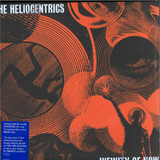
The UK’s cosmic, psychedelic-funk ensemble issue their first album on maverick producer Madlib’s label, Madlib Invazion. The Heliocentrics’ albums are all confounding pieces of work. Drawing equally from the funk universe of James Brown, the disorienting asymmetry of Sun Ra, the cinematic scope of Ennio Morricone, the sublime fusion of David Axelrod, Pierre Henry’s turned-on musique concrète, and Can’s beat-heavy Krautrock, they have – regardless of the label on which they’ve released their music - pointed the way towards a brand new kind of psychedelia, one that could only come from a band of accomplished musicians who were also obsessive music fans. Drummer Malcolm Catto and bassist Jake Ferguson are the Heliocentrics’ masterminds and producers, and they are obsessive weirdos in today’s musical climate, searching, progressive humans who are often out-of-time with current trends. They have been playing together for nearly two decades and their collective drive is to find an individual voice. The Heliocentrics search for it in an alternate galaxy where the orbits of funk, jazz, psychedelic, electronic, avant-garde and “ethnic” music all revolve around “The One.” With Madilb’s label Madlib Invazion for Infinity of Now, the Heliocentrics have returned to develop their epic vision of psychedelic funk, while exploring the possibilities created by their myriad influences, Latin, African, and more.
out of Stock
Last delivered 6 years ago available to reorder, subject to availability
Wewantsounds is delighted to present one of Ennio Morricone's best and least known soundtracks for the 1971 cult French crime film 'Sans Mobile Apparent' directed by Philippe Labro. This superb soundtrack featuring Morricone's classic sound has never been widely available on vinyl save for a small limited edition released under the film's italian title. The set has been remastered from the original tapes with lacquer cut by Frederic Alstadt (Mont Analogue) and gatefold sleeve designed by Eric Adrian Lee. Last but not least Philippe Labro himself has shared his experience in an exclusive interview with Jeremy Allen, discussing the making of the film, working with the Maestro (at only 34 years old) and his amazing career crossing path with Jean Luc Godard, Serge Gainsbourg and Jean-Pierre Melville.
out of Stock
Last delivered 3 years ago available to reorder, subject to availability
Dark Entries has a surprise delivery! Malebox brings us six previously unreleased funk-fueled jams from the archives of the cybernetic disco titan himself, Patrick Cowley. Best known for his chart-topping disco anthems, Cowley left us with an incredible body of work before his tragic death in 1982 due to AIDS-related illness. Since 2009, Dark Entries has been working with Cowley’s friends and family to uncover the singular artist’s lesser-known sides, including his soundtracks for gay pornographic films on compilation albums School Daze, Muscle Up, and Afternooners.
But Malebox gives us more of the Cowley we know and love: churning disco-funk and hi-NRG tracks that are spacey and sleazy, gritty and sublime. Recorded from 1979-1981, these six tracks illuminate what was one of Patrick’s most creatively exciting periods. “If You Feel It” and “Love Me Hot” were both early Paul Parker demos; the former is a peak hour hi-NRG bomb, while the latter dips into Cowley’s zoned-out space disco sound. Jeanie Tracy’s soulful vocals feature on the demo version of “Low Down Dirty Rhythm”, which was later re-recorded by Sarah Dash. The slower, less-varnished rendition here hits with a wild psychedelic edge. Meanwhile, Patrick’s gifts for careful orchestration and infectious melodies shine on “Floating” and “Love and Passion”, which were likely demo tracks for Loverde. The songs on Malebox display the vitality and inventiveness of a brilliant composer taken from us too soon.
Malebox sleeve design was by Gwenaël Rattke, and features a hyper-color retro collage. Also included is an air mail envelope containing a letter from Patrick Cowley to French disco producer Pierre Jaubert as well as liner notes and hand-written lyrics. Malebox will be released on November 12th , which is the 40th anniversary of Patrick’s passing.
out of Stock
Last delivered 11 months ago available to reorder, subject to availability
'The Outer Limits' is the seventh studio album released by Canadian heavy metal legends Voivod. It was issued via Mechanic/MCA Records in 1993. The album features a cover of "The Nile Song", originally by the British progressive rock band Pink Floyd, and Voivod's longest song "Jack Luminous", tracking in at 17 minutes and 26 seconds. When originally issued, the CD came with a miniature pair of 3D glasses in order to view the booklet art. The text in the upper right corner of the album cover reads "Number 8" to represent that it is actually the band's eighth album release overall following the compilation The Best of Voivod. 'The Outer Limits' was the final album to feature vocalist Denis Bélanger until his 2002 return. It was also Voivod's first album without original bassist Blacky, who had left the band before the release of the critically acclaimed but commercially unsuccessful 1991 album Angel Rat. Uncomfortable with the idea of bringing in an immediate replacement for Blacky, Voivod opted to have session musician Pierre St-Jean play bass guitar for the recording of the album. (Text by Wikipedia) The album has become one of the band’s ultimate classic albums and is still very much considered today as one of their very best albums by the fans. VOIVOD : ’The Outer Limits’ is now available in vinyl format with 3D graphic design and including 3D glasses for the very first time. First pressing is in white vinyl, Grab it now while you can !.
Part fantastical historic sonic biopic, part anthropologic
journey into the deep roots of Belgium’s monstrous
cosmic rock sound, this wholly individualistic concept
album combines the lead members of the mighty COS
(Daniel Schell and Pascale Son) with studio genius
Alain Pierre (Ô Sidarta / Des morts) and celebrated
Dutch progressive rock singer Dick Annegarn, for what
many consider to be both the overlooked hiding place
of Belgium’s deepest psychedelic moment and
European prog’s lost map to the ‘Franco-Flemish
Boom’.
Emerging from the wider musical family that counted
Marc Moulin, Placebo and Marc Hollander amongst its
creative kin, Daniel Schell’s most profound conceptual
project ambitiously combines the tale of the heroic
historical figure of Count Egmont (1522–1568), while
simultaneously tracing the evolution of the ud, or oud,
(‘the grandfather of the guitar’) in this multifarious
hallucinogenic epic.
Featuring key members of other collectable groups
such as drummer Felix Simtaine from Solis Lacus and
bass player Jean-Louis Baudoin from the mythical
Classroom (COS predecessor), this best-kept secret
vinyl release also harbours the voices of Dirk Bogaert
(of Belgian hard rockers Waterloo), as well as Catalan
singer Ilona Chale (Marc Hollander / Aksak Maboul)
before her later tenure as the COS front woman.
Initially released in 1978 via Zeuhl school distributors
Free Bird alongside French pressings of Don Cherry,
Jacques Thollot and CAN, it is plain to understand the
niche nature of this maligned ‘lost COS’ LP as it finally
blooms from between the cracked branches of
European jazz-rock-synth-psych-prog-pop history…
and beyond
Marc Richter aka Black To Comm released his debut record 20 years ago. In 2023 he is still busy releasing music under various disguises and is currently signed to the Thrill Jockey label. To celebrate this anniversary his own Cellule 75 label is re-releasing some classic out-of-print vinyl albums that originally came out on the defunct Type and De Stijl labels. The LP will feature a full-colour printed inner sleeve exclusive to this edition.
In 2009 the Type Recordings label run by John Twells had just released seminal records by Grouper, Jóhann Jóhannsson and Yellow Swans when they signed Richter and put out his breakthrough Alphabet 1968 album. The LP sold out within two weeks, receiving a glowing full-page review in The Wire Magazine by the late Mark Fisher (later reprinted in his book Ghosts Of My Life), was selected for Boomkat's Top 10 releases of the year (alongside debut albums by Leyland Kirby, Demdike Stare and Oneohtrix Point Never) and was greeted with universal praise in the underground blog network as well as established magazines such as The New Yorker and Pitchfork.
The music itself played with the notion of nostalgia without being nostalgic itself. It's the sound of half-remembered dreams, a surreal distorted vision of the past, an aural polaroid of long forgotten musics, a ghostly voice from a non-existent era.
From the original Type one-sheet:
"The mission statement for Alphabet 1968 was to write an album of "songs" for want of a better word. Short tracks which represented genre points, the milestones which stuck in Richter's mind when he thought back to his favorite records. What we arrive at is a breathtaking 10-track album which, over the course of 45 minutes, explores world music, techno, noise, avant-garde, ambient music and even exotica. Each track is linked with a loose thread of radio static or environmental sound, dragging you through the album, as if tuning in to a stray broadcast or a particularly adventurous mix. Richter has pieced the album together from hours of recordings made at his studio with home made gamelan, small instruments and loops gathered from a collection of ancient vinyl and 78 records. The scope of the album is admirable, but ignoring this, it is simply a shockingly arresting collection of experimental oddities, with references ranging from Moondog to Basic Channel by way of Bernard Herrmann. It's not hard to fall in love with Alphabet 1968, far harder would be to place exactly where the record should fit into your collection."
Mark Fisher in The Wire:
"But what if we were to take Richter's provocation seriously - what would a song without a singer be like? What would it be like, that is to say, if objects themselves could sing? It’s a question that connects fairy tales with cybernetics, and listening to Alphabet 1968, I’m reminded of a filmic space in which magic and mechanism meet: JF Sebastian’s apartment in Blade Runner. The tracks on the LP are crafted with the same minute attention to detail that the genetic designer and toymaker brought to his miniature automata, with their bizarre mixture of the clockwork and the computerised, the antique and the ultramodern, the playful and the sinister. Richter’s musical pieces have been built from similarly heterogeneous materials - record crackle, shortwave radio, glockenspiels, all manner of samples, mostly of acoustic instruments. ….. JF Sebastian's apartment was itself an update of older spaces in which science and sorcery co-existed: the workshops of ETA Hoffmann's inventor-magicians, or of Pinocchio's creator, Geppetto. I think, too, of Auguste Villiers de l'Isle-Adam's astonishing 1886 tale The Future Eve in which Edison, using the expertise he has recently acquired from inventing the phonograph, sets himself the task of constructing an artificial woman. But if there are songs here, they are sung by the gramophone and other recording and playback machines. Richter so successfully effaces himself as author that it is as if he has snuck into a room and recorded the objects as they played (to) themselves. Rather than simply automating his music, as in the case of Pierre Bastien and his mechanical machines, Richter makes us feel that he has merely recorded the unlife of objects. ….. Indeed, the impression of things winding down is persistent on Alphabet 1968. Entropy has not been excluded from Richter's enchanted soundworld. It feels as if the magic is always about to wear off, that the enchanted objects will slip back into the inanimate again at any moment."
Cult album of Brazilian music finally reissued || Official reissue of this real tour de force of Brazilian creativity, where the mighty Naná Vasconcelos is joined by his friends Nelson Angelo and Novelli (both members of the legendary Clube da Esquina) to create one of the greatest Brazilian albums ever recorded outside of Brazil.
The three musicians grasp here for the kind of musical freedom that could then only be achieved outside of their country. A boundary-pushing experimentation that makes your soul flow and is to be enjoyed at large.
Recorded in 1975 and released in Pierre Barouh's label Saravah. Artwork by the great Belgian artist Jean-Michel Folon.
Cult album of Brazilian music finally reissued || Official reissue of this real tour de force of Brazilian creativity, where the mighty Naná Vasconcelos is joined by his friends Nelson Angelo and Novelli (both members of the legendary Clube da Esquina) to create one of the greatest Brazilian albums ever recorded outside of Brazil.
The three musicians grasp here for the kind of musical freedom that could then only be achieved outside of their country. A boundary-pushing experimentation that makes your soul flow and is to be enjoyed at large.
Recorded in 1975 and released in Pierre Barouh's label Saravah. Artwork by the great Belgian artist Jean-Michel Folon.