“Gallows” is our third solo EP for Artikal Music, and was written over mid-2020 as an intended collection of 140bpm tracks with varied styles, themes and sound palettes, which would still gel together in EP form. The track that got the ball rolling was the title track, “Gallows” a link-up with PAV4N, in which we explored some of the more melodic, experimental corner of our sound for the instrumental, which is beautifully contrasted by Pav’s aggressive and intense delivery, and his lyrics which serve as an observation on political and government hierarchies. The second track, “Understand”, is a more dark, dub-focused outing, with chunky elements and bass that are built for sound system playback. Building this one was really fun, allowing us to dig for drums and elements that we don’t typically use to create a more grungy experience. Track three, “Blinded”, goes darker still, enlisting regular collaborator Jack Flynn-Oakley, who we love working with, to write something with pure, crushing impact and a level of anxiety that increases steadily throughout the track. There’s no dance that this one hasn’t shelled down yet. The final track, “Inner Sanctum”, was the last track to be finished for the release and is a track we’ve been keeping locked down for a while now. It’s an off-kilter mix of wailing vocal cuts, cold bass movement, and percussion that’s bursting with character.
We’re stoked to be back on Artikal, and we hope you guys enjoy the sounds this time around.
Will & Mike
Mystic State
out of Stock
Last delivered 13 days ago available to reorder, subject to availability
Cartridge & Stylus
Frequenzbereich 20 - 18,000 Hz
Kanaltrennung 20 dB at 1kHz
Vertikaler Abtastwinkel 20°
Empfohlene Lastimpedanz 47,000 ohms
Spuleninduktivität 1.0 H (1 kHz)
EN:
AT-XP5
Dual Moving Magnet Stereo Cartridge
The AT-XP5 is specially designed for the needs of DJs. This cartridge features a highly-rigid polyphenylene sulfide (PPS)/glass fiber body and a tracking force of 2 to 4 grams. It also offers a powerful output level of 5.5 mV, and its 0.3 x 0.7 mil elliptical bonded stylus tracks the record groove with high accuracy for outstanding audio reproduction. Plus, the cartridge is specifically designed to provide maximum visibility of the stylus tip.
Durable design for high-quality specialist DJ playback
Cartridges designed for DJ venue applications for their Hi Fi audio Performance
VM dual magnet cartridge with 0.3 x 0.7 mil elliptical bonded stylus
Audiophile experience associated with DJ’ing environment with the signal output level and output impedance characteristics adapted to DJ professional mixing boards
Carbon ABS cantilever
Great visibility of stylus tip for DJ use
High-rigidity and Low-resonance cartridge housing
Durable design for high-quality DJ playback
Replacement Stylus: ATN-XP5
DE:
Dual-Moving-Magnet-Stereotonabnehmer
Der AT-XP5 wurde speziell für den DJ-Einsatz konzipiert und besitzt einen hochsteifen Korpus aus Polyphenylensulfid (PPS) und Glasfaser. Die Auflagekraft beträgt 2 bis 4 g. Außerdem bietet der Tonabnehmer eine hohe Ausgangsspannung von 5,5 mV. Die elliptische, gefasste Nadel (0,3 x 0,7 mil) tastet die Schallplattenrille mit hoher Genauigkeit ab und überzeugt durch eine herausragende Wiedergabequalität. Das spezielle Design des Tonabnehmers garantiert beste Sichtbarkeit der Nadelspitze.
• Robustes System für anspruchsvolle DJ-Einsätze
• Spezieller DJ-Tonabnehmer für den Live-Einsatz mit Hi-Fi-Performance
• VM-Dualmagnetsystem mit elliptischer, gefasster Abtastnadel (0,3 x 0,7 mil)
• Hi-Fi-Sound für DJs – Ausgangspegel und -impedanz speziell auf professionelle DJ-Mischpulte abgestimmt
• Carbonfaser-verstärkter ABS-Nadelträger
• Hervorragende Sichtbarkeit der Nadelspitze im DJ-Einsatz
• Hochsteifer, resonanzarmer Korpus
• Robustes, hochwertiges DJ-System
• Ersatznadel: ATN-XP5
The PLX-500 inherits the layout of the PLX-1000 professional turntable and produces a warm, clear analogue sound. The perfect deck if you want to start playing with vinyl or if you just want to listen to your record collection at home.
Solidly built with excellent vibration damping and precise audio playback, this high-torque deck has a USB out so you can make digital recordings of your vinyl collection in our free rekordbox software. You can also combine the PLX-500 with the rekordbox dvs Plus Pack, a compatible mixer and the RB-VS1-K Control Vinyl to play and scratch with digital files.
Included Accessories:
Slip mat
Dust cover with jacket stand
Adapter for 45 EP records
Head shell (with cartridge)
Balance and shell weights
Audio conversion cord:
1 Stereo pin plug (female)
1 Stereo mini plug (male)
USB cord
Black Truffle is thrilled to present a Song for two Mothers / Occam IX the first ever solo release from Laetitia Sonami. Born in France in 1957, Sonami studied with Éliane Radigue in Paris before moving to California in 1978 to study electronic music at Mills College, going on to make important innovations in the field of live electronics interfaces and multi-media performance. Sonami is perhaps most closely associated with one of her inventions, the Lady’s Glove, an arm-length tailored glove fitted with movement sensors allowing the performer fluidly to control digital sound parameters and processing, as well as motors, lights and video playback. Having performed with the Lady’s Glove for 25 years, Sonami retired it in 2016, turning her attention to the interface/instrument heard and pictured here, the Spring Sprye.
In Sonami’s own description, “The Spring Spyre is composed of three thin springs that are attached to reverb tank pickups, mounted on a metal ring. The audio generated when the springs are touched, rubbed or struck is analyzed in Max/MSP. The extracted features are then used to train machine learning models in Wekinator and Rapidmax and control the audio synthesis in real time. We never actually hear the springs.” After decades of aversion to documenting her work on recordings, a Song for two Mothers / Occam IX treats listeners to two side-long performances with the Spring Spyre: the very first piece developed for the instrument and the most recent, the two contrasting remarkably in sound palette, energy and form. A Song for two Mothers (2023) spins an intricate web of rippling synthetic burbles, rapid sweeps and fizzing textures. Performed in real time with the sensitive and partly uncontrollable Spring Sprye ("a bit tyrannical," Sonami calls it), the music is delicate yet chaotic. Abrupt gestures hover against a backdrop of silence, "devoid of spatial or temporal direction". After several minutes, the sound-world becomes metallic and percussive, tapping and ticking in pointillistic flurries before a wavering harmonic cloud emerges, sprinkled with resonant drips and pops.
Occam IX is a radically different proposition. At the outset of Sonami’s exploration of the Spring Sprye, she asked her former teacher Éliane Radigue to compose a piece for it—and her: like all of Radigue’s work since she ceased working with analogue electronics at the beginning of the 21st century, Occam IX is written not only for an instrument but also for a particular performer. These scores are developed verbally, through meetings and conversations between performer and composer; each is grounded in an image (usually kept from listeners, to avoid influencing their experience); all magnify the subtlest acoustic phenomena and require great commitment and patience from the performer. Sonami’s is one of the few Occam pieces to make use of electronics, bringing it closer to Radigue’s famous longform pieces for ARP 2500. Beginning from a rumbling low tone, the listener is gradually immersed in slowly lapping waves of synthetic tones, eventually thinning out into delicate bell-like pings against a background of white noise, reminiscent of one of the most beautiful sections of Kyema from the Trilogie de la Morte.
Accompanied by notes from Sonami, her longtime collaborator Paul DeMarinis, and Radigue, and illustrated with scores, photographs and images of the Spring Spyre, a Song for two Mothers / Occam IX is an essential document celebrating an under-recognised pioneer of electronic music and performance.
out of Stock
Last delivered 2 years ago available to reorder, subject to availability
Absolutely electrifying and timeless, the 1973 Philly disco anthem is back! Now fully licensed and repressed for 2024 on a premium 12" single, "The Love I Lost" shines brighter than ever. This all-time classic showcases the extraordinary vocals of a young Teddy Pendergrass, who was on the cusp of becoming one of the era's most successful male performers. This full-length LP version, generously spread across an entire side of the 12" single, is an essential addition to any collection. It's one of those formative tracks that laid the foundation for the disco explosion—pure perfection!
Flip the record, and you'll find another landmark tune: "Wake Up Everybody." This 1975 mellow dancer carries a powerful, heartfelt message and stands as another monumental hit in the Blue Notes' impressive catalog. With socially conscious lyrics that resonate even today, this track has solidified its status as a timeless classic, exuding depth and soul. The entire B-side is dedicated to this one track, providing ample room for its message to resonate and ensuring top-quality sonic playback for DJs and dancers alike. If you appreciate soulful sounds, this record is a must-have—peerless and unforgettable!
out of Stock
Last delivered 10 months ago available to reorder, subject to availability
1STEP Process 180g 45rpm 2-LP, Pressed on VR900-Supreme Vinyl!
The ultimate edition of Frank Sinatra’s famed 1950 concept album
Cut Using Original Analogue Mix-down Masters by Chris Bellman and Andreas Meyer! Strictly Limited To 5,000 Numbered Pressings!
Two 45-rpm 1STEP LPs pressed by RTI on VR900 Supreme Vinyl
New lacquers cut after each run of 500 pressings
Distinctive Impex 1STEP packaging featuring a gorgeous tip-in 36-page booklet with exclusive photography and period graphics, an expanded historical essay by Charles L. Granata
A heavy-stock two-sleeve Monster Pack jacket by Stoughton Printing and a luxe colour-matched slip case
We are beyond thrilled to announce the release of a very special limited edition of Frank Sinatra’s historic Sing and Dance with Frank Sinatra on Impex 1STEP! Our all-analogue 2-LP set adds further narrative substance and sonic greatness to The Voice’s first big-band jazz long-play vinyl “concept” album! Our 33.3 release was a landmark reissue, but this is a whole other level!
Like all Impex 1STEPs, this audiophile recording is pressed at 45-RPM on high-definition, VR-900 Supreme vinyl for incredible clarity, immediacy and a tonal depth that virtually mirrors the original monophonic master tape. Additionally, the tapes and discs we mastered from have rarely been used by other labels, delivering the original recording sessions closer than releases whose tapes have gone through mastering chains over and over. Silent, flat surfaces provide for near-perfect audio playback without distracting non-fill issues.
Exclusive to the Impex 1STEP edition are two previously unreleased bonus recordings and an extended version of the “It All Depends On You” Session + Take, where Sinatra capably arranges the musicians in real time!
The luxurious 1STEP packaging includes a gorgeous 36-page full-colour booklet with expanded historical liner notes, unique photos and graphics, and a deluxe slipcase. It provides an excellent listening experience and a “coffee table book” for your living room or den!
Recorded in the mid-80s, a decade after the first advent of UK lovers rock and tailor-made for bass-heavy sound system playback, Christine Lewin’s cover of Tyrone Davis’s ‘In The Mood’ transformed his sensual after-hours classic into a female-led hit that became a staple on Lovers playlists both then and now. Similarly, Tricia Dean’s cover of Jean Carn’s soul favourite ‘Don’t Let It Go To Your Head’ follows the same formula from producers Kpiaye and Smokey, synth-led rhythms reflecting the times rooted firmly in a local London scene. Marvin James's under the radar vocal cover of The Spinners' 'I'll Be Around' gets a reissue on vinyl for the first time backed up by the sought-after Kpiaye instrumental mix aka 'Dub mix by Surgeon McEdit'.
out of Stock
Last delivered 15 months ago available to reorder, subject to availability
These are four historic performances from the Fillmore East and West in 1970, at a time when Miles Davis was single-handedly bringing Jazz into the commercial Rock era. In their unedited form, all selections are previously unissued. The searing white heat of these concerts, originally issued in severely edited form, are now made whole. This set includes several bonus tracks like Wayne Shorter's “Paraphernalia” and “Footprints”, an early version of “Miles Runs The Voodoo Down” plus a rare encore performance of Bitches Brew’s “Spanish Key”.
The visionary Bill Graham had booked Miles on a bill with The Grateful Dead at the Fillmore West and with fellow Columbia artist Laura Nyro in June 1970. The latter recordings are the earliest documented live performances of Miles’s band when he hired two keyboardists--Chick Corea and Keith Jarrett, along with saxophonist Steve Grossman who had replaced Wayne Shorter. The rest of the rhythm section--keyboardist Corea, bassist Dave Holland, drummer Jack DeJohnette and percussionist Airto Moreira--were in the backbone of this band throughout this explosive period.
Curated by Carlos Santana, this set features fascinating firsthand accounts and profound insight into a seismic shift in American society, music, and culture. In a rare, in-depth interview, Miles--while listening to the concert playback--was “so excited about the music that he wanted every set, every note made available to the public...”
With Pere Ubu on hiatus since 1982’s excellent ‘Song Of The Bailing Man’, David Thomas had recorded a` much-praised solo album and the band had now signed to a major label. In a period of rampant world commercialism, what would happen next? Another crucial era for the band unravelled, Pere Ubu’s journey charted new undulating territory and so began a three-album escapade that retooled our understanding of what pop music is. “Solid as the band can be, it's also likely to dissolve songs from the bottom up. For all Pere Ubu's uncertainty, the band isn't arbitrary; its music has the off-the-wall unity of a Marx Brothers routine,” said Jon Pareles of The New York Times. In 1991, ‘Worlds In Collision’ became “the most atmospheric, carefully sculpted recording in the band's 13-album catalog.” (Tom Moon, Spin).
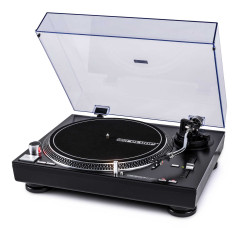
The RP-4000 MK2 is a solid DJ turntable for advanced users. The new MK2 version comes with several improvements, including a newly developed top panel and reworked metallic buttons with enhanced feel as well as a variety of functions. Precise motor control with 3 speeds: The precision-engineered die-cast platter is accelerated by a powerful motor with a high-torque direct drive of more than 1.8 kg/cm. The precise motor control with 3 speeds (33 1/3, 45 & 78 rpm) allows for the RP-4000 MK2 to play back any record. The pitch section with a selectable range of +/-8% and +/-16%, respectively, is suitable for the finest pitch adjustments. Statically balanced s-shaped tone arm: The RP-4000 MK2 features a statically balanced s-shaped tone arm with hydraulic lift and anti-skating mechanism. Via the universal connection for pick-up systems (SME) a large number of pick-up systems can be connected. Reverse function, pitch reset and extendible needle illumination: Additional features, such as reverse play and pitch reset, offer all DJs direct control of their turntable. With the push of a button the aluminium target light can be extended, so that the needle position can be seen in dark surroundings. Newly developed top panel and sturdy housing design: The new deep black metallic top panel construction is equipped with metallic buttons for start/stop, platter speed, pitch control, reverse function and tempo reset. The improved touch upon hit offers a clear haptic feedback. The sturdy construction with optimized damping features and shock-absorbing feet improve isolation from unwanted vibrations. With pick-up and headshell (made by Ortofon in Denmark): The RP-4000 MK2 comes with the high-quality OM Black pick-up, handmade by Ortofon in Denmark, pre-fitted to a headshell ready for immediate playback.
Technical data Turntable:
Type: direct drive turntable
Drive: quartz-driven high-torque direct drive
Motor: 8-pol., 3-phase, brushless DC motor
Turntable speeds: 3 speeds, manual (33 1/3, 45, 78 rpm)
Starting torque: > 1.8 kg/cm
Brake time: 50 dB (DIN-B)
Brake system: electronic brake
Platter:
Material: aluminium die-cast
Diameter: 332 mm
Tone arm:
Type: universal, statically balanced, s-shaped
Effective length: 230.5 mm
Overhang: 16 mm
Tracking angle error: < 3°
Applicable pick-up weight: 3.5 - 8.5 g (incl. headshell 13 - 18 g)
Anti-skating range: 0 - 7 g
Connections:
1x PHONO out (gold-plated), 1x GND
General:
Power supply: AC 115/230 V, 60/50 Hz (EU/US), AC 100 V, 50/60 Hz (JP)
Power consumption: 12 W
Dimensions: 450 (w) x 352 (d) x 144 (h) mm
Weight: appr. 9.8 kg
Included accessories:
Platter, OM Black pick-up system (by Ortofon), headshell, slipmat, counterweight, AC psu, instruction manual
Features
NEW in the MK2 version:
Newly developed top panel and reinforced housing construction
Reworked metallic buttons with improved feel & tactile response
Precision Pitch with selectable ranges of +/-8 % & +/-16 %
Tempo reset (Quartz Lock) feature
Superior finish in deep black metallic
Quartz-driven DJ turntable with high-torque direct drive
Designed for professional use
Powerful brushless DC motor with more than 1.8 kg/cm torque
Precise motor control with 3 speeds selectable (33 1/3, 45 & 78 rpm)
Reverse function: switch for forward/reverse playback
Precision-engineered die-cast aluminium platter with stable rotation
Statically balanced s-shaped tone arm with hydraulic lift and anti-skating mechanism
Universal connection for pick-up systems (SME)
Extendible needle illumination
Shock-absorbing feet for vibration isolation
Sturdy, heavy construction with optimized damping features
Prepared for dust cover (available as optional accessory)
Incl. slipmat, removable headshell and ready-mounted OM Black pick-up made by Ortofon
A collection of mind blowing songs from Hindi films 1958-1984. 12 musical gems from the Bollywood vaults with a wide variety of styles thrown in the mix, from the classic to the rare, a must! An astonishing overview of the magnificent musical talents populating Bollywood films. With a predilection for movies with a strong musical backbone where songs and musical numbers play a pivotal role, the Hindi cinema boom gave birth to a strong and creative music industry where composers, musicians, musical directors, conductors, producers, singing actors, and playback singers (singers who provide vocals for the musical parts of roles played by actors or actresses) found a perfect place to develop their careers. A sample of those incredible talents is included in this compilation, the ideal point to start digging deeper into the lush garden of musical delights that is Bollywood
Kristin Hersh"s celebrated debut album Hips & Makers is getting a first-ever reissue on RSD 24 to coincide with its 30th anniversary. Being spread across two records, the album has been reconfigured for optimum playback seeing the album, three tracks from the Your Ghost EP and a bonus track ("Hysterical Bending") appearing on the first 3 sides and then the full Strings EP (including previously orphaned track "The Key") on the 4th side. Reflecting its original design, this new edition comes in a gatefold sleeve and is being pressed on bottle green vinyl.
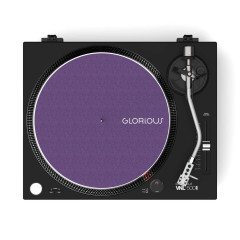
The PLX-500 inherits the layout of the PLX-1000 professional turntable and produces a warm, clear analogue sound. The perfect deck if you want to start playing with vinyl or if you just want to listen to your record collection at home.
Solidly built with excellent vibration damping and precise audio playback, this high-torque deck has a USB out so you can make digital recordings of your vinyl collection in our free rekordbox software. You can also combine the PLX-500 with the rekordbox dvs Plus Pack, a compatible mixer and the RB-VS1-K Control Vinyl to play and scratch with digital files.
Main Features
What's in the box
PLX-500
Power cord
USB cable
Slip mat
Dust cover
Adapter for EP records
Head shell (with cartridge)
Balance and shell weights
Audio adaptor cable:
1 Stereo pin plug (female)
1 Stereo mini plug (male)
Operating instructions
Specifications
Width
450 mm
Height
159 mm
Depth
368 mm
Weight
10.7 kg
Turntables
Drive Method
Servo-type direct drive
Platter
Aluminium, die-casting diameter: 332 mm
Motor
3-phase, brushless DC motor
Braking System
Electronic brake
Rotation Speed
33⅓, 45, 78 rpm
Rotation Adjustment Range
±8 %
Wow and Flutter
1.6 kgf・cm
Start Time
Within 1 sec (at 33⅓ rpm)
Tone Arm
Arm Type
Universal type S-shape tone arm
Gimbal-supported type bearing structure
Static balance type
Overhang
16 mm
Effective Length
230.5 mm
Tracking Error
Within 3°
Height Adjustment Range
6 mm
Stylus Pressure Variable Range
0-4 g (1 scale 0.1 g)
Single Cartridge Weight
1,6 kgf・cm
Anlaufzeit
Innerhalb 1 s (bei 33⅓ Upm)
Tone Arm
Tonarm
Overhang
16 mm
Effective Length
230,5 mm
Trackingfehler
Innerhalb von 3°
Height Adjustment Range
6 mm
Variables Auflagegewicht
0-4 g (1 Teilstrich = 0,1 g)
Cartridgegewicht einzeln
< 9,5 g
Sytem-Typ
VM
Anschlüsse
USB
1 USB Typ B
Ausgänge
1 PHONO/LINE (Cinch)
Although it felt like the world had stopped spinning, at times, it was during these days, months, and years of uncertainty that many of Venice’s “Stained Glass” songs were conceived. Each member of Venice was quietly and privately cataloguing their artistic interpretation of this new reality and uncertainty by recording or writing down little snippets of ideas, like guitar riffs, melodies, or lyrics…all of these came about while looking at life through a new lens.
They set up the writing circle using an electronic drum kit, small tube amps, direct acoustic guitars and bass and the sm58 stage microphones for vocals. This small and simple setup allowed the band to work on ideas at low-volume levels by using headphones or low-level playback through studio monitors without bothering the neighbors with live drums. “Lunches made by Michael’s wife, Danielle, and visits from their dog Sachi, kept us grounded and let us stay in the creative bubble without leaving that space”, says bassist, Mark Harris. Michael and drummer, Andre Kemp, who co-produced Stained Glass, would later re-record the drum tracks with real drums in a friend’s studio.
“The beauty of this approach on Stained Glass was that one person’s idea would be presented to the other 5 musicians and each guy added a different color to that idea”, says Michael. “Whether it was an unexpected drum beat, or a moving guitar line, those simple ideas turned into pieces of art, colored by the different musical and lyrical contributions. That only happens when you are working that idea out, together, and playing as one unit”.
That was the main inspiration for the album title; like a kaleidoscope, each guy's experience and taste in music was bringing a different color to the songs, but together their contributions made one piece of art, one song. Michael concludes, “if you zoom out, each song becomes its own color and all those songs or colors come together to form one big piece of art, one big piece of ‘Stained Glass’”.
Presenting a collection of deep spatial gems mined from the ever impressive TK Disco vaults for your playback listening pleasure!
The TK Disco music empire has blessed our ears and minds with an endless stream of music since it's late 1960's inception. Countless soul and funk sides were produced, cut and released by label founder Henry Stone and his associates, in turn changing the face of contemporary black music in the USA and across the world forever. It is true that the TK story originated on America's 'Space Coast', the modern frontier of lunar exploration and galactic travel, the home of NASA and countless missions beyond the stars nestled on the East Coast of the United States.
'Moon Ride' - The compilation you hold in your hands, is merely one strand of the incredible music that was beamed out of Hialeah, FL over the decades. The focus on this collection is the idea of the 'cosmic' from the Disco era. These are records that emit a spacey vibe, either from their lyrical content or equally from their sonic qualities, imbibing synths and electronics to create otherworldly grooves. These records were big hits on underground music scenes such as Daniele Baldelli's cosmic movement in the 70's and 80's in Lake Garda, they were vehicles of escapism and hedonism on the discerning dancefloors of NYC in the hands of progressive DJs like David Mancuso and Nicky Siano and they were also essential building blocks in the creation of House and Techno music in the Midwestern cities of Chicago and Detroit, inspiring legendary artists such as Mr Fingers and Jeff Mills and countless others. An essential collection of music for listening, dancing, loving and travelling!
TK Disco's influence is still felt today and this carefully curated selection of tracks showcases some absolute classics, overlooked nuggets and rarities from the label's huge output. Mastered with love by Optimum Mastering, Bristol UK. Brought to you by TK Disco / Henry Stone Music & Above Board Distribution 2021.
out of Stock
Last delivered 2 years ago available to reorder, subject to availability
REKORDER is "a kind of retrospective of myself", says M.RUX about his second, long-awaited solo album. For over 10 years, Marten Rux aka M.RUX appears as a DJ, producer, editor, remixer and multi-instrumentalist all over the world and has developed an idiosyncratic sound that opens up subtle fields of tension: M.RUX mixes a sound between experimental sound design and hooklines that stay in your ears forever. Between wild percussion and contemplative harmonies, between ecstasy and meditative calm. In his DJ and live sets, M.RUX usually steps up to the controls with a smile, discreetly bobbing his head, while the audience goes wild. He circumnavigates clichés with trustworthy certainty and develops his very own guiding threads in his selection beyond BPM or genre straitjackets. One constant is his warm, often stoically slow kick drum, which holds all that playfulness together. REKORDER is a manifestation of this typical M.RUX sound. Similar to his concept album "Vermonische Melodien" from 2020 (on the Pingipung label), the artist's curiosity is directed towards the musical visions of the past. When new music technology projected great visions of the future and when new sounds had not yet solidi ed into clichés. REKORDER refers to the recording device, spelled in a German way, because most of the recordings were made in Germany (and in England as well). Phonography is a miracle that has only been around for 150 years: Technology gifts upon us prosthetics for remembering sound. Every recording is a process, and every playback a new performative act. Recordari (Latin) is a beautiful word. It literally means to take something to heart (cor) once again (re-). This doesn't just refer to remembering, but also to a ponderous, loving, sometimes doubtful contemplation. It is a perfect headline for M.RUX’ approach to processing sound. REKORDER draws deeply from its own archive, which has ourished quite splendidly during the pandemic. Multi-instrumentalist M.RUX mixes his own recordings of banjo, guitar, auto-harp, synths, percussion and jews harp with fragments from sessions with friends that have accumulated since 2020. They unfold in the process of re-listening in the mix and transform into a solid musical tapestry. A typical gesture for this album? M.RUX bows deeply to the history of pop music - especially the blues and its melancholy, coolness and shuf ing groove. The harmonic framework of the album is based on blues scales throughout. Instead of conveying blue emotions via lyrics or the tone of the voice, as the original genre does, the synthesizer takes on this role on REKORDER. With his sound design, M.RUX achieves an ecstatic sorrow in his melodies, this gurgling portamento that is reminiscent of R&B (or even the ingenious title melody of the series "Bojack Horseman”). If voices are heard on REKORDER, then as hypnotic fragments that guide us through the groove as conjunctions: "Because...", says the voice in the track of the same name. That's enough. There are no lyrics, no literal weariness, no love-songs or storytelling, REKORDER processes all of this into timbres and groove as vessels for the album’s individual, contemplative melancholy. Never forgetting, with a gentle smile, to swing a leg.
out of Stock
Last delivered 21 months ago available to reorder, subject to availability
LIMITED RED COLOURED VINYL!
REKORDER is "a kind of retrospective of myself", says M.RUX about his second, long-awaited solo album. For over 10 years, Marten Rux aka M.RUX appears as a DJ, producer, editor, remixer and multi-instrumentalist all over the world and has developed an idiosyncratic sound that opens up subtle fields of tension: M.RUX mixes a sound between experimental sound design and hooklines that stay in your ears forever. Between wild percussion and contemplative harmonies, between ecstasy and meditative calm. In his DJ and live sets, M.RUX usually steps up to the controls with a smile, discreetly bobbing his head, while the audience goes wild. He circumnavigates clichés with trustworthy certainty and develops his very own guiding threads in his selection beyond BPM or genre straitjackets. One constant is his warm, often stoically slow kick drum, which holds all that playfulness together. REKORDER is a manifestation of this typical M.RUX sound. Similar to his concept album "Vermonische Melodien" from 2020 (on the Pingipung label), the artist's curiosity is directed towards the musical visions of the past. When new music technology projected great visions of the future and when new sounds had not yet solidi ed into clichés. REKORDER refers to the recording device, spelled in a German way, because most of the recordings were made in Germany (and in England as well). Phonography is a miracle that has only been around for 150 years: Technology gifts upon us prosthetics for remembering sound. Every recording is a process, and every playback a new performative act. Recordari (Latin) is a beautiful word. It literally means to take something to heart (cor) once again (re-). This doesn't just refer to remembering, but also to a ponderous, loving, sometimes doubtful contemplation. It is a perfect headline for M.RUX’ approach to processing sound. REKORDER draws deeply from its own archive, which has ourished quite splendidly during the pandemic. Multi-instrumentalist M.RUX mixes his own recordings of banjo, guitar, auto-harp, synths, percussion and jews harp with fragments from sessions with friends that have accumulated since 2020. They unfold in the process of re-listening in the mix and transform into a solid musical tapestry. A typical gesture for this album? M.RUX bows deeply to the history of pop music - especially the blues and its melancholy, coolness and shuf ing groove. The harmonic framework of the album is based on blues scales throughout. Instead of conveying blue emotions via lyrics or the tone of the voice, as the original genre does, the synthesizer takes on this role on REKORDER. With his sound design, M.RUX achieves an ecstatic sorrow in his melodies, this gurgling portamento that is reminiscent of R&B (or even the ingenious title melody of the series "Bojack Horseman”). If voices are heard on REKORDER, then as hypnotic fragments that guide us through the groove as conjunctions: "Because...", says the voice in the track of the same name. That's enough. There are no lyrics, no literal weariness, no love-songs or storytelling, REKORDER processes all of this into timbres and groove as vessels for the album’s individual, contemplative melancholy. Never forgetting, with a gentle smile, to swing a leg.
out of Stock
Last delivered 2 years ago available to reorder, subject to availability
Epic, grooving, dazzlingly creative, perfectly attuned blends of complex mbalax drumming, field recordings, thumping kick-drum, and cosmic, bubbling, jamming synths and electronics.
The opening is suitably liminal, haunted by a diachronic sense of times past, present, and to come: ancestral ghosts, scratched playback, scraps of old recordings, voices strangulated or just out of range; puttering drums; futuristic, kosmische keys. Part II picks up the pace; III gives the drummers some, and heightens the atmosphere of enchantment. Jon Hassell’s Fourth World music courses through a kind of Dream Theory In Dakar.
Toco SOS, the second side, is a thumping, throbbing, mesmeric future-classic; perfect for fahr’n fahr’n fahr’n on the Autobahn… in a spacecraft. Expert hand percussion, call-and-response singing, bin-trembling foot-drum, spaceways keys. Sleekly funky as prime Popol Vuh.
Both sides range expansively by way of Berlin, where Lamin resided for a few years: you can hear something of T++’s brilliant, landmark HJ record on the A, and elements of Mark Ernestus’ crucial Ndagga project, on the B.
Half an hour of stunning music; in a beautiful sleeve, with mirror lettering, and an intricate spot-gloss rendition of salt crystals, laid over a photograph of the salt mines at Lac Rose, outside Dakar.
out of Stock
Last delivered 2 years ago available to reorder, subject to availability
#40 ON ROLLING STONE'S 500 GREATEST ALBUMS OF ALL TIME: ANTICIPATES LATE 1960S TURBULENCE VIA PROPHETIC SONGS AND DARK THEMES
1/4" / 15 IPS analogue master to DSD 256 to analogue console to lathe
Any discussion about the finest psychedelic rock record ever recorded is incomplete if it doesn't grant consideration to Love's Forever Changes. Ranked by Rolling Stone as the 40th greatest album ever made, and named by Mojo the second-greatest psychedelic set in history, the effort is an internationally recognized seminal work of art. Transcending language and convention, its magnitude and magnificence need to be heard again and again. For here is an effort whose mind-boggling acoustic complexities and kaleidoscopic nuances are tailored for high-fidelity playback.
Nearly unlimited headroom, vast instrumental separation, transparent clarity, artifact-free atmospherics, and faithful balances appear out of jet-black backgrounds. Turn it up as loud as you want; the sole limitation will be your system's potential.
Commercially ignored upon release in November 1967, Forever Changes confronts the alienation, paranoia, violence, and strife that would soon plague the countercultural movement and send the Summer of Love into a tailspin. Apart from its lyrical themes and prescient malaise, the record's enduring nature equally owes to intertwined arrangements sewn together with Latin guitar-picked lines, finessed folk harmonies, mariachi-inspired horn charts, and subdued strings.
The seemingly opposing combination – ominous, dark reflections situated amidst lush, light melodic beds – affords Forever Changes a distinguished tension of claustrophobia and openness, dourness and ecstasy, ugliness and elegance enjoyed by no other record in the rock canon. Much of the contrast owes to leader Arthur Lee's mental state and pertinent observations. Lee, whose suppressed romanticism often surfaces even amidst the blackest shadows and most cynical moments, believed he would soon die, and hence channeled everything from lasting hopes to acid-addled decay to the chilling testimony of a Vietnam veteran in his narratives.
Alternatively sad and beautiful, the album-opening and flamenco-inspired "Alone Again Or" establishes the mood for what follows. Vocals overlap and soar; tempos rise and fall; surrealism trades places with reality.Forever Changes thrives both because of and in spite of a surfeit of labyrinthine chords and difficult notes that never repeat. Its ambitious construction almost forced the already fractured band to cede responsibilities to session musicians, which appear on two tracks. The quintet's resolve to not only complete the album, but to do so with such poignancy and curiosity, further enhances Forever Changes' standing.
No wonder that, in the twilight of his troubled career, Lee performed the record in its entirely during concerts met with overwhelming critical acclaim. It was, and will always be, a personal manifesto of timeless relevance and appeal.
Señor Sapo is a character created based on the Mesoamerican deity Quetzalcoatl:
while capturing Sr. Sapo atop The Pyramid of the Sun at Teotihuacan
in The Valley of Mexico; dawn…
Augie Robles (the photographer) spotted an elementary school class of around 25 children with two teachers suddenly appear scaling the momentous stair case behind our subject!
They shouted;
“Sr. Sapo! Sr. Sapo!”
the name has stuck! they wanted to have their pictures taken with Sr. Sapo? however; they did not want to touch him as they thought his skin might be “viscoso” or “slimy”?
“Q’uq’umatz” (as it is known amongst the K’iche’ Maya) goes back to the Olmec culture and represents the duality of flight to reach the skies; whereas the reptilian (in most cases a snake) represents the ability to mingle amongst other creatures of the Earth;
Among the Aztecs he was related to the gods of wind; of the dawn; of merchants and arts; crafts; knowledge and the planet Venus: as well as their patron god of the priesthood…
THE FUTURE S0UND 0f YESTERDAY is as well a construct of the imagination; a fictitious “orchestra” with many imaginary characters; KENT CHESTERFiElD; LEE NAilZ; PHATTITUDE; EPiPHANY TALEUR; ThE ClARKETTES (they actually exist in the “real” world)…
The titles:
“0de to A Tree”;
is the culmination of a night out in Berlin; “…met a young man in a bar close to the “atelier”; he said he wanted to play something on a piano; we go to the place and he plays this melody over a rhythm though not in rhythm?
…basically edited none of it; then used a series of tone generators and filters to change the sound into all the soundscapes you hear in the final piece; the title was simply a tribute to the trees…” Eric D. Clark
“is it good for Ya’?”;
is a slow pumping House song with a message in the form of a question; “is it good for you?” as in “I could do it; however; should I? you know; look in a mirror and ask the question”…
the Music came about as an experiment at NADEL EiNS Studio in Berlin; Heavy bass at around 116bpm plus Erix’s cheeky vocal stylings weaving in & out of frame (as well key) deliver a unique aural experience!
the final track:
“Elsewhere playback”
is literally the playback of a track Eric did under the guise of KENT CHESTERFIELD for a party series he did in Sacramento CA with AJ Sachs…
it’s really just a tool; the good thing is you can drop -8 (or -16 assuming your tables are tuned) to bring it to a tempo one could easily rap over OR push it up to +8 and have a dry Tech number? Either way it BANGS! Dub Plates & Mastering did a swell job!!
overall a must for any Dance Music aficionado’s collection out on October 10th on SHADDOCK RECORDS !
out of Stock
Last delivered 2 years ago available to reorder, subject to availability
A blistering advancement of the knife-sharp hooks and urgently efficient post-punk structures that they’ve spent over a decade refining since their formation in 2011, the band’s fourth album – and second on Specialist Subject - emerges from a period of flux for the band’s chief songwriting partnership of Emma Wigham (drums/vocals) and Mark Jasper (guitar/vocals). First came a move north to Yorkshire from their native London. “We had decorated a tiny, rented house in Mytholmroyd” Jasper explains. “We setup a practice room in the top of a mill nearby and tried to write music, which we did amid stress about money, and a fear of having made the wrong decision. We had left our jobs, friends and a nice but absolutely tiny flat in London behind, and moved to a small village in West Yorkshire.” Although they found the location to be beautiful, the transition from city life to rural turned out to be an odd fit – too much so, it turned out. From this relatively short stay in West Yorkshire, however, came a more permanent change as the couple welcomed their first child Ivy into the family. Although, they’re hesitant to put too much of Streams and Waterways influence on the shoulders of their young daughter – she arrived a year and a half into the album’s conception – there’s no denying that its themes of loss, birth, and being part of this eternal, momentary life were brought into sharp focus following their new arrival. “Streams and Waterways is about the struggle of looking at the clock, realising it’s actually going pretty damn fast and knowing that really you have no control over anything” Jasper confirms. Perhaps that explains the way that opener The Valley doesn’t even introduce itself before careering into a full-throttled, three-minute scuzzy rager that would approach the descriptor anthemic had it not been kicked and scuffed along the way; it’s maybe why the wiry, ferocious Choice You Make feels like a charge into a storm despite the uncertainty of what you might find. It’s perhaps why even when Witching Waves allow themselves respite on the pared down Open A Hole, there’s a churning anxiety that lies below the acoustic guitar and harmonising vocals: in many ways musically and thematically Witching Waves are relinquishing the control that’s always been a fixture of their music – with all the thrilling and nervous fallout that comes from that. Although the pair have since returned south (having relocated to Exeter), Streams and Waterways also serves as a document of their foray northwards. The surviving artefact from Jasper’s never-to-be-finished studio that he’d began to build in Yorkshire – following the ending of his London-based Sound Savers studio – the record is also the first to feature current bassist Will Fitzpatrick, who joined initially live on their support tour with Australian punks Camp Cope. Fitzpatrick – a key component of Liverpool’s DIY scene for two decades – quickly became a key part of the writing process. Recording sessions were done during periods of lockdown that allowed congregation, Jasper recalling a still unborn Ivy kicking hard during an early mix playback of It’s A Shame’s layered noise rock assault. “The song was about my past, a much harder time. But my future was egging me on” he says. It’s a neat summation of Streams and Waterways and its representation of the discomfort of life amidst the compulsion to ride on its journey regardless. It’s a record that finds Witching Waves looking into the future more than ever before, but still bristles with the rush of being in the moment – because ultimately, despite what may have happened or may yet come, the band’s strongest trait remains being able to keep you feeling in the present.
Some of the earliest works by American composer Phill Niblock, including three never before released pieces: "Index" (1969), "Tenor," and "Boston III" (both from 1972). Until now, it's been impossible to encounter Niblock's compositions from earlier than the 1960s, a reality thankfully rectified by the long overdue publication of this Boston/Tenor/Index LP on Alga Marghen.
"Tenor" (1972) represents the first evolution of Niblock's musical thought towards the aesthetics of microtones, overtones, and drones which the composer would develop in following decades. The piece was recorded by the photographer Martin Bough on tenor saxophone and gradually dubbed back and forth by the composer in his New York studio. "Boston III" (1972) was recorded at the Intermedia Sound studio in Boston with Rhys Chatham (flute, voice), Martin Bough (tenor saxophone), and Gregory Reeve (viola, voice); the composer himself also contributed with his voice. The LP also includes "Index" (1969), an improvised sound performance by the composer himself. Guitar (both its body and strings), fingers and fingering fuse in a vehement action around which barely listenable sounds and resonances vibrate. Considering the extended pulsation as an organic blend of impulse, rhythm, drive, strength, vitality and passion, the end of this sole solo in Niblock's complete oeuvre is not defined by the fixed duration of the piece but as the consequence of the tiredness of the performer. The music changes according to the loudness of playback. The interaction of the upper harmonics changes especially, with much richer overtone patterns being produced at louder levels.
I want to introduce this work ‘Halos of Perception’ to you in the way Lisa introduced me to it, through the sharing of experiences.
Lisa and I met for a walk near South Yarra station to talk about this work, when inclement weather made it too wet to visit the tunnels. Moving almost seamlessly from a world of leisurewear, infinite milk alternatives and blaring neons to stretches of green by the water that brimmed with sounds and life, we saw a few people climbing the Burnley bouldering wall, butterflies suspended in the hot wind and lots of plants I wish I knew the names of. Overhead the cars rumbled like a ceaseless animal as we talked about hidden ecosystems, imagined spaces and networks of care.
Stemming from a serendipitous encounter with an original Cave Clan member that led to many underground adventures, this work explores the worlds that exist outside of our perceptions. By the river, I leafed through a selection of tunnel photos Lisa had printed off at Officeworks, revealing alien textures, tunnels that stretch on into abysses of their own, underground flowing streams. Light is sparse and delicate, something reflected by the flickering and wavering in Lisa’s piano compositions.
As we walked, we noticed the ways in which infrastructure is often designed to keep people out—cut doors into fencing and clipped wires show an active and ongoing defiance of this. We spoke about how her Cave Clan friend used to go down to this painted room and read in solitude, using candles for light. The way sound exists underground, encased in these hollow cement tunnels, a painted room with its own deep hum. How people used to hold underground shows, how there were rules for safety (no exploring after rain, never alone) that was shared with each other. This warmth and absorption of other’s experiences is present in Lisa’s work—it’s immersive, like wading in water.
We paused on the walk to eat berries and talk about how The Caretaker creates transitory worlds with recorded sound, how this technology captures memory, and the exploratory pursuits of Pauline Oliveros’ Deep Listening Band. These citations of memory and deep listening inform Lisa’s use of analogue and classical instruments, playback artefacts and acoustic feedback in her own world-building. When speaking about ‘Halos of Perception’, she describes it as a fascination with timbre and acoustic artefacts.
Ideas of networks and enmeshment are felt deeply in Lisa’s compositions, motifs overlaid over each other evoking the image of many hands interlinking playfully, tenderly, softly. The way her compositions delve into refraction and echo makes me think about the tunnels and the way they splinter off into many possibilities. Manipulated textures reminiscent of the chalky, earthy, moss air that perfumes the tunnels’ subterranean air. Tactile details that gesture towards close attention, verging on obsession.
This work is also about imagining ecosystems of potential. Lisa shared with me that during this project, she has been reimagining subterranean networks in dreams, thinking about oral traditions, and the way water moves—from the sky to the earth, through the ground, connecting all these spheres. Realised in collaboration with hyperreal video artist Tristan Jalleh, Lisa’s dream landscape melds waterfalls, leaks, flower graffiti, and hidden messages lit up by imagined light sources with existing subterranean networks. There’s a real sense of wonder in this world she has built, how the city can reveal itself to you with some patience and care, how the city and its secrets can find its way into your dreams.
The 45rpm double disc Audiophile Analog Collection features a variety of recordings from the world of movies, blues, percussion ensembles, world music and jazz. This is part of a special series of compilations of analog audiophile recordings at their best, with emphasis on execution and great sound.
The 2xHD Fusion Mastering System is an innovation in audio restoration for a virtual audio reality. In the constant evolution of its proprietary mastering process, 2xHD has progressed to a new phase called 2xHD Fusion, integrating the finest state-of-the-art analogue Nagra-T tape recorder modified with high-end tube playback technology, wired with OCC silver cable for better transparency and 3D imaging. 2xHD Vinyl are sourced from first generation analogue recordings without any digital corruption. The cutting is done at Bernie Grundman Mastering Lab on tube cutting equipment.
Blonde on Blonde: A double album that transcends time, defies space, suspends reality, and looks through the human soul and tells the listener characteristics about themselves they didn't know. Professor Sean Wilentz, historian-in-residence for Bob Dylan's Web site, comes as close to summing up its brilliance in his superb Bob Dylan In America as any who've tried: "The songs are rich meditations on desire, frailty, promises, boredom, hurt, envy, connections, missed connections, paranoia, and transcendent beauty – in short, the lures and snare of love, stock themes of rock and pop music, but written with a powerful literary imagination and played out in a pop netherworld." No lie.
As part of its Bob Dylan catalogue restoration series, we are thoroughly humbled to have the privilege of mastering the iconic LP from the master tapes and pressing it on 45RPM LPs at RTI. We feel that the end result is the very finest, most transparent edition of Blonde on Blonde ever produced. Forever renowned for what the Bard deemed "that thin, that wild mercury sound," the album's famed aural character lives and breathes on this superb version, with wider and deeper grooves affording playback of previously buried information and lifelike presentation of the studio sessions.
Prized for a unique sound that cultural critic Greil Marcus tagged "the most glamorous record imaginable; listening you can see the chequered jester's suit Dylan had worn on stage for the nine previous, furious months," Blonde on Blonde is to music, production, prose, and performance as what hydrogen is to water. The secret to its inimitable aural character partially stems from Dylan's request in Nashville to producer Bob Johnston to remove the baffles from the studio room, allowing the musicians to interact as well as the music to assume a more organic quality that drifts from one microphone to another.
The story of Blonde on Blonde is almost as compelling as the music within. Dylan, frustrated with how initial attempts fared in New York, relocating to Tennessee and pairing with Nashville's top session players as well as members of what would become the Band, feverishly chasing perfectionism while also arriving at an on-the-fly feel that remains a reference point for recorded music. The Bard sweated over lyrics, demanded his band get the exact sounds he heard in his head, and limited most takes to a handful at most. A majority of songs were recorded long after midnight, the post-A.M. vibe reflected in the nocturnal aura, woozy optimism, inversion of intervals, and spiritual soulfulness of the playing.
There are different ways to celebrate an anniversary. We can look back and reflect on where we've been and how far we've come. Or we can look forward towards future possibilities. Alternatively, we can simply pause for a moment and be present - right here, right now. Rather like we are aware and mindful of what is happening at this very moment when we're enjoying superb music, excellently recorded and played.
That's how Clearaudio is celebrating its 45th anniversary. To mark the occasion, Clearaudio are delighted to present an album of music that embodies their passion for perfection, for nuanced and detailed sound, and for an intimate marriage of creativity and technical finesse. In other words, an album that reflects the key principles by Clearaudio.
"Take the best, make it better - only then it is just good enough." This well-known quote is as valid today as it was 45 years ago, and has inspired a host of colleagues and collaborators along the way. Ever since the release of Delta and Sigma speakers in 1978 and the development of the first moving coil cartridges, not a day has passed when Clearaudio didn't strive to set new standards for higher fidelity. This mindset continues to underpin their work to this day.
No matter where you've come from or where you are going, if your heart beats to the drum of truly authentic sound, then you'll find Clearaudio spirit, will and drive in every single one of their products - from the most towering turntable to the smallest cable.
While some creators may be content with merely looking closely, Clearaudio has always looked and listened closely. Very closely - and at both ends of the spectrum, from top-quality record engineering to excellent playback. So the early stages of every Clearaudio musical recording begin with questions like: "Does it sound exactly like in a concert hall?" and "Does the music feel as was intended when it was written and composed?"
In addition to their own recordings, a number of their favourite legendary productions from Deutsche Grammophon have also found their way onto this album. So why not take a pause, "take five," and enjoy these moments of exceptional music, lovingly produced? And join Clearaudio in celebrating 45 years of loving music!
Black Truffle is pleased to welcome free jazz legend Joe McPhee back to the fold with Oblique Strategies, a wild trio recorded in Antwerp in 2018 in the company of Mette Rasmussen’s fire-breathing alto saxophone and Dennis Tyfus’s post-Fluxus antics on tape, voice, and percussion. Rasmussen and Tyfus have previously recorded together as Bazuinschal, and some similar strategies are on display here: mysterious metallic scrapes, extended tones in which voice and sax become indistinguishable, comic explosions of varispeed tape. With McPhee on board, however, proceedings are more sumptuous, with the two horns moving fluidly from expeditions into the extremes of their instruments’ registers to pointillistic note-splatter and Ayler-esque folk melodies; we even get to bask in some of the slow-motion free blues that McPhee has now been playing for half a century. McPhee is heard primarily on tenor, Rasmussen mainly on alto, but with Rasmussen doubling on sundry objects, and the whole trio contributing vocals, certainty about who is doing what becomes nigh impossible.
The recording and production add to this hazy unclarity. Where much contemporary improvised music aims at dryly clinical hi-fi, the lively reverberant space of Oblique Strategies calls to mind the less-than-pristine sonics of classic free jazz artefacts like John Tchicai’s Afrodisiaca or McPhee’s own Underground Railroad. A further dimension of oblique unpredictability is added by subtle changes in the sense of space: at times merely a reverb tail glimpsed between phrases, at other points the whole mix seems to be momentarily swallowed up in slap-back, blurring the lines between acoustic instruments and the decayed fidelity of Tyfus’ tape playback. Spread across four pieces ranging from four to nineteen minutes in length, Oblique Strategies moves with anarchic swagger from explosions of clattering cymbals and bellowing horns to near-silent episodes of mysterious rumble and clunk. ‘Death or Dinner?’ opens the record with a lovely duet of climbing melodic patterns shared between the two saxophones, played with a buzzing oboe-like tone. A long, wavering note sung by Tyfus cues the first of countless changes of direction, eventually leading to a crescendo of watery splutters and duelling saxes. At points Tyfus’ keening resemble the signature moves of his friend and collaborator, Ghédelia Tazartès; at others, his tape-sped huffs and puffs possess a rawness reminiscent of Henri Chopin or Gil Wolman. The dialogue between wailing saxophones and vocal cries, punctuated by percussive thuds and crashes, can at times feel less like a musical performance and more like the calls of some mysterious forest creatures, possessing a primordial energy that might remind some listeners of the outdoor antics of Brötzmann and Bennink’s Schwarzwaldfahrt.
Oblique Strategies can also be delicate at times, as on the beautiful third piece, ‘Destilled Edible’, dominated by a slow, microtonal melody played with a breathy tone resembling a shakuhachi. The closing side-long ‘Light My Fire’ ranges across classic improv call and response, skittering trumpet blurts, inept cymbal clatter, mock-operatic vocals, and crude tape manoeuvres. Momentarily pausing at the ten-minute mark for an interlude of ghostly room sound and crackling texture, its closing moments unfurl a glorious dual saxophone finale, the almost epic tone subtly undermined by Tyfus quietly tapping out swing rhythms. Arriving in a striking sleeve adorned with Tyfus’ drawings, Oblique Strategies is an invigoratingly free-spirited blast of improvisation.
Downloads
out of Stock
Last delivered 3 years ago available to reorder, subject to availability
It’s June 2022. After months of rehearsing, Tim Sanpher decided to take the band into Brighton Road Recording Studio for a weekend.
Having yet to play a gig he was interested to hear how they’d respond to being put on the spot and wanted to give them something to focus on. With the very late addition of a second guitarist they set up and recorded nine songs live in one afternoon. Only the vocals would be replaced the following day.
The recording was purely for posterity and there had been no plans to release it yet...on hearing the roughly mixed playback it was already obvious...they’d captured something special. Something more than just the five members combined. It was a true “lightning in the bottle” moment.
It was clear that Shaw’s Trailer Park had its own individual sound and character.
And here are those recordings captured on album for the first time!
Punchy rocking workouts like Don’t Do That and She’s Alright sit alongside live favourites - psych workouts Sun Device and Rainbow Man.
Marc Richter aka Black To Comm released his debut record 20 years ago. In 2023 he is still busy releasing music under various disguises and is currently signed to the Thrill Jockey label. To celebrate this anniversary his own Cellule 75 label is re-releasing some classic out-of-print vinyl albums that originally came out on the defunct Type and De Stijl labels. The LP will feature a full-colour printed inner sleeve exclusive to this edition.
In 2009 the Type Recordings label run by John Twells had just released seminal records by Grouper, Jóhann Jóhannsson and Yellow Swans when they signed Richter and put out his breakthrough Alphabet 1968 album. The LP sold out within two weeks, receiving a glowing full-page review in The Wire Magazine by the late Mark Fisher (later reprinted in his book Ghosts Of My Life), was selected for Boomkat's Top 10 releases of the year (alongside debut albums by Leyland Kirby, Demdike Stare and Oneohtrix Point Never) and was greeted with universal praise in the underground blog network as well as established magazines such as The New Yorker and Pitchfork.
The music itself played with the notion of nostalgia without being nostalgic itself. It's the sound of half-remembered dreams, a surreal distorted vision of the past, an aural polaroid of long forgotten musics, a ghostly voice from a non-existent era.
From the original Type one-sheet:
"The mission statement for Alphabet 1968 was to write an album of "songs" for want of a better word. Short tracks which represented genre points, the milestones which stuck in Richter's mind when he thought back to his favorite records. What we arrive at is a breathtaking 10-track album which, over the course of 45 minutes, explores world music, techno, noise, avant-garde, ambient music and even exotica. Each track is linked with a loose thread of radio static or environmental sound, dragging you through the album, as if tuning in to a stray broadcast or a particularly adventurous mix. Richter has pieced the album together from hours of recordings made at his studio with home made gamelan, small instruments and loops gathered from a collection of ancient vinyl and 78 records. The scope of the album is admirable, but ignoring this, it is simply a shockingly arresting collection of experimental oddities, with references ranging from Moondog to Basic Channel by way of Bernard Herrmann. It's not hard to fall in love with Alphabet 1968, far harder would be to place exactly where the record should fit into your collection."
Mark Fisher in The Wire:
"But what if we were to take Richter's provocation seriously - what would a song without a singer be like? What would it be like, that is to say, if objects themselves could sing? It’s a question that connects fairy tales with cybernetics, and listening to Alphabet 1968, I’m reminded of a filmic space in which magic and mechanism meet: JF Sebastian’s apartment in Blade Runner. The tracks on the LP are crafted with the same minute attention to detail that the genetic designer and toymaker brought to his miniature automata, with their bizarre mixture of the clockwork and the computerised, the antique and the ultramodern, the playful and the sinister. Richter’s musical pieces have been built from similarly heterogeneous materials - record crackle, shortwave radio, glockenspiels, all manner of samples, mostly of acoustic instruments. ….. JF Sebastian's apartment was itself an update of older spaces in which science and sorcery co-existed: the workshops of ETA Hoffmann's inventor-magicians, or of Pinocchio's creator, Geppetto. I think, too, of Auguste Villiers de l'Isle-Adam's astonishing 1886 tale The Future Eve in which Edison, using the expertise he has recently acquired from inventing the phonograph, sets himself the task of constructing an artificial woman. But if there are songs here, they are sung by the gramophone and other recording and playback machines. Richter so successfully effaces himself as author that it is as if he has snuck into a room and recorded the objects as they played (to) themselves. Rather than simply automating his music, as in the case of Pierre Bastien and his mechanical machines, Richter makes us feel that he has merely recorded the unlife of objects. ….. Indeed, the impression of things winding down is persistent on Alphabet 1968. Entropy has not been excluded from Richter's enchanted soundworld. It feels as if the magic is always about to wear off, that the enchanted objects will slip back into the inanimate again at any moment."
WRWTFWW Records is overjoyed to announce Ar Ais Arís, the third album by Irish producer Gareth Quinn Redmond, following his amazing Satoshi Ashikawa-inspired Laistigh Den Ghleo released in 2019 and this year’s ambient-meets-Irish-traditional-music soundscape Umcheol. The 8-track LP comes as a limited edition of 500 copies worldwide with an artwork by Dublin artist Barry Gibbons and liner notes from Gareth Quinn Redmond himself. It is available in digital format as well.
Ar Ais Arís is Gareth Quinn Redmond’s fortuitous love affair with the art of tape loops - a practice he discovered while performing with Ross Chaney and Myles O’Reilly in late November 2020. Fascinated, he spent months experimenting with the technique: "By cracking open the shell of a cassette, cutting the tape and splicing the ends together, I created repeating sound loops of varying lengths. After reassembling and slotting the cassette into the Tascam Portastudio, I recorded and played back the sounds of the tape loop. These sounds were then manipulated using the pitch wheel to make subtle and warbly inflections to the recordings. This is achieved by speeding up or slowing down the playback speed of the tape, which offers dynamic contrasts in both mood and texture."
The result is 8 deliciously enchanting minimalistic tape loops creating a very rare kind of daydreaming environmental music full of accidental miracles and dusty soothing backdrops. It’s a very very very pleasant listening experience inspiring a feeling of enveloping warmth and gentle coziness, with an uncanny touch of spellbinding magic. Press play.
Gareth Quinn Redmond’s previous albums, Laistigh Den Ghleo, an ode to the work of Satoshi Ashikawa, and Umcheol, mixing ambient with traditional Irish music instruments, are still available on WRWTFWW Records - perfect occasion to complete the collection!
out of Stock
Last delivered 3 years ago available to reorder, subject to availability
Future Jazzers, notorious experimentalists and outfield eccentrics stumble onto the dancefloor. In the 90s. In the UK.
From an electronic music perspective, the period 1992 to 1996 in the UK that this compilation celebrates, was one of dizzying sonic diversification.
It was also a particularly turbulent time in the UK, not only politically and economically, but also culturally too. Economic catastrophe in ‘92 was followed by widespread poverty, a cost of living crisis and countless political scandals. Meanwhile, John Major’s Tory government pandered to its political base via unpleasant, authoritarian legislation that seemingly sought to crush rave culture, alternative lifestyles, and traveller communities. The UK was not so much a ‘Happy Land’ – to quote the name of this compilation – as an angry and divided one. Sounds familiar, doesn’t it?
Throughout, the music created by producers based across these Isles remained uniquely British, speeding up a process begun in the late 1980s through the emergence of street soul, bleep & bass and breakbeat hardcore – musical styles whose roots in multicultural inner-city communities made them distinctly different from the Black American sounds that had inspired their creators. It was here, rather than in the indie pubs of Camden, that real musical revolutions were taking place.
This deep diving selection brings together some truly adventurous and original electronic music from this period, much of it very hard to find. Major label outings connect with white label oddities with ease. Perhaps it could even be argued that many of these unearthed gems fit more easily into DJ sets in 2023 than they ever did at the time. The off-kilter swing of Richard D James’ obscure and highly sought after Strider B outing, ‘Bradley’s Robot’ is joined by further rare cuts from Cabaret Voltaire and the Black Dog, and artists as diverse as Ultramarine, Herbert, Fretless AZM, and Radioactive Lamb, amongst others.
This collection has been lovingly selected, compiled and mastered for maximum sonic playback. This very special release boasts sublime pastoral themed artwork, as well as informative and passionate liner notes by celebrated music scribe Matt Anniss (‘Join The Future’).
out of Stock
Last delivered 3 years ago available to reorder, subject to availability
This 40 year anniversary collection traces Brother Culture's career and includes some of his biggest hits, with remastered versions of these classics. The album includes his hits Jump Up Pon It (25 million streams), Supanova (15 million streams), My Selecta (2 million streams), and some of his most listened-to tracks ever released on vinyl.
A composition simply means things being put together. In music, we usually think of composition as a classical idea. But in recent years, the possibilities of what ‘composing’ can be, have dramatically increased. Based in Oslo, Norway, Deathprod (aka Helge Sten) has been making his own forms of music with no compromise since the early 90s. His specialty is a deeply atmospheric, grainy minimalism that slows time down and explores the very particles of sound itself. This music can sound forbidding and alien at first, but compared to his more brutal output, it’s an extraordinarily close and intimate experience. The first new Deathprod studio project since 2019’s OCCULTING DISK, Compositions is the result of an intense period at his legendary Audio Virus Lab studio in central Oslo. All tracks are released in chronological order – in other words, the order in which they were recorded. Helge used a personal, unique combination of obsolete digital audio processors and sound generators, combined with his own secret-sauce tuning system. Like gazing at the wonders revealed by an electron microscope with Helge compositional control directs your attention to a succession of ever more spellbinding details and textures. Helge adopted the Deathprod alias in 1991. A complex array of homemade electronics, samplers, sound processing and analogue effects – cumulatively known as the ‘Audio Virus’ – combined with obsolete samplers and playback devices, to distort and transform sounds into unrecognizable relatives of their former selves. On the new album Compositions, the virus has evolved into even more fascinating and kaleidoscopic new strains. Electronically generated sounds vibrate and tremble like undiscovered metals ringing and resonating together. Sonic forms attract or repel each other as if under the influence of a strange magnetism. None of the tracks are over four minutes, but no way are these ‘miniatures’. Each one contains its own fully-formed galaxy of tones and clusters, while all tracks audibly belong in the same universe. These are 17 compositions in search of a sonic ideal. His off-grid audio control centre created a parallel acoustic universe which he filled with mutated samples and electronic textures. Even the gaps between the tracks are part of that universe. Helge left the almost silent, twitching crackles of his snoozing analogue gear intact, ensuring a smoother transition between them. Helge is continually striving to find new parameters and possibilities for what music can be – what you can affect with the medium of sound. From the intricate homemade miniatures of Treetop Drive to the bonecrushing electronic barrage of Morals and Dogma and OCCULTING DISK, the different sides of Deathprod are all products of the same obsessive focus and self-discipline in pursuit of sonic exploration. His Compositions are private rather than public music: like introspective chamber or solo compositions instead of the more strident, outward-looking tones of a symphony. Helge is a founder of Norwegian improvising group Supersilent and has produced records by Motorpsycho, Susanna, Jenny Hval, Arve Henriksen and others. He recently composed music for Harry Partch’s legendary instruments, which can be heard on Sow Your Gold in the White Foliated Earth, released in 2022 on Smalltown Supersound.
out of Stock
Last delivered 3 years ago available to reorder, subject to availability
Yellow Vinyl
Over their six albums The Go! Team have taken sonic day trips to other lands - musically dipping into other cultures. But now on this, their seventh - they"ve bought a round-the-world ticket.... Benin, Japan, France, India, Texas and Detroit - all stops along the way. Wildly different voices from wildly different cultures side by side but all still sounding unmistakably Go! Team. Setting the course for a kaleidoscopic, cable access, channel hop. On the vocal roll call there"s Star Feminine Band, an all-girl group from West Africa, the Indian Bollywood playback singer Neha Hatwar, Kokubo Chisato from J-Pop indie band Lucie Too, 19 year-old Detroit rapper IndigoYaj, Hilarie Bratset (ex-Apples in Stereo), Brooklyn rapper Nitty Scott, and a whole host of others, alongside Go! Team staple Ninja. Picking up from 2021"s "Get Up Sequences Part One", Part Two continues the feeling of Technicolour overload. It"s a journey spanning Cyclone Tracey wig-outs, chroma key sitar psychedelia, Casiotone anthems, spoken word melodrama and kalimba callouts. Brill building melodies lead into musical handbrake turns, four track into panoramic. Eighteen years after their debut LP The Go! Team are still unlike anyone else and on "Get Up Sequences Part Two" they sound as fresh as a club soda....
Over their six albums The Go! Team have taken sonic day trips to other lands - musically dipping into other cultures. But now on this, their seventh - they"ve bought a round-the-world ticket.... Benin, Japan, France, India, Texas and Detroit - all stops along the way. Wildly different voices from wildly different cultures side by side but all still sounding unmistakably Go! Team. Setting the course for a kaleidoscopic, cable access, channel hop. On the vocal roll call there"s Star Feminine Band, an all-girl group from West Africa, the Indian Bollywood playback singer Neha Hatwar, Kokubo Chisato from J-Pop indie band Lucie Too, 19 year-old Detroit rapper IndigoYaj, Hilarie Bratset (ex-Apples in Stereo), Brooklyn rapper Nitty Scott, and a whole host of others, alongside Go! Team staple Ninja. Picking up from 2021"s "Get Up Sequences Part One", Part Two continues the feeling of Technicolour overload. It"s a journey spanning Cyclone Tracey wig-outs, chroma key sitar psychedelia, Casiotone anthems, spoken word melodrama and kalimba callouts. Brill building melodies lead into musical handbrake turns, four track into panoramic. Eighteen years after their debut LP The Go! Team are still unlike anyone else and on "Get Up Sequences Part Two" they sound as fresh as a club soda....
Over their six albums The Go! Team have taken sonic day trips to other lands - musically dipping into other cultures. But now on this, their seventh - they"ve bought a round-the-world ticket.... Benin, Japan, France, India, Texas and Detroit - all stops along the way. Wildly different voices from wildly different cultures side by side but all still sounding unmistakably Go! Team. Setting the course for a kaleidoscopic, cable access, channel hop. On the vocal roll call there"s Star Feminine Band, an all-girl group from West Africa, the Indian Bollywood playback singer Neha Hatwar, Kokubo Chisato from J-Pop indie band Lucie Too, 19 year-old Detroit rapper IndigoYaj, Hilarie Bratset (ex-Apples in Stereo), Brooklyn rapper Nitty Scott, and a whole host of others, alongside Go! Team staple Ninja. Picking up from 2021"s "Get Up Sequences Part One", Part Two continues the feeling of Technicolour overload. It"s a journey spanning Cyclone Tracey wig-outs, chroma key sitar psychedelia, Casiotone anthems, spoken word melodrama and kalimba callouts. Brill building melodies lead into musical handbrake turns, four track into panoramic. Eighteen years after their debut LP The Go! Team are still unlike anyone else and on "Get Up Sequences Part Two" they sound as fresh as a club soda....
The recordings on this album constitute the material from a June 20th, 1968 studio session recorded by Hans Georg Brunner-Schwer (HGBS) and Joachim-Ernst Brendt in Germany's Black Forest. This is no ordinary recording. This enthralling Bill Evans session was recorded five days after a famous performance at the 1968 Montreux jazz festival by Evans, bassist Eddie Gomez and drummer Jack DeJohnette. Verve's Montreux live recording won a Grammy, but this studio session has been in the vaults ever since.
For the first time this album was mastered in all analogue (AAA), from the original analog master. Mastered by René Laflamme at 2xHD Mastering lab and cut at Bernie Grundman at 45 RPM.
The 2xHD Fusion Mastering System is an innovation in audio restoration for a virtual audio reality. In the constant evolution of its proprietary mastering process, 2xHD has progressed to a new phase called 2xHD Fusion, integrating the finest state-of-the-art analog Nagra-T tape recorder modified with high-end tube playback technology, wired with OCC silver cable for better transparency and 3D imaging. 2xHD Vinyl are sourced from first generation analog recordings without any digital corruption. The cutting is done at Bernie Grundman Mastering Lab on tube cutting equipment.
Featuring what may be his only recordings on the Prophet keyboard,
these once lost performances expand the omniverse of Ra across a
stellar set of lengthy cuts! All recorded in a single day and finally making
their terrestrial debut, pressed on colored vinyl and packaged with a
Prophet keyboard brochure plus notes from Ranthropologist Brother
Cleve!What happens when a Prophet meets a Prophet? The answer lies
within these grooves
Amongst the hundreds of recordings issued by Sun Ra and his Arkestra, under
their various guises, the majority were recorded in concert or in makeshift studios
such as their early 1960s set- up at NYC's Choreographer's Workshop. Beyond
those, roughly 22 albums were recorded at Variety Recording Studio in New
York's Times Square. However, on August 25, 1986, Sun Ra and cohorts entered
Mission Control, a state- of- the- art 24- track studio north of Boston, which was
teeming with electronic keyboards and otherworldly sound generators. Nestled
within that arsenal was a brand- new digital ultra keyboard — the Prophet VS
("Vector Synthesizer").Of all the keyboards Ra played throughout his half-century
career, the Prophet was one of the most sophisticated. There's no evidence that
he had played either of the instrument's earlier incarnations, the Sequential
Circuits Prophet-5 and Prophet-10. Created using microprocessors, a then- new
technological advance, under the auspices of engineer Dave Smith in 1978, the
Prophet-5 revolutionized electronic music as the first polyphonic and, most
importantly, programmable synthesizer.Ra was intrigued by the Prophet (surely by
the instrument as well as by the name). Recorded during a single day, it's about
time that these once lost performances have now been found.It was a joy and a
thrill to be sitting at the console hearing this music for the first time, especially
with my fingers on the faders and knobs of the mixing desk. We watched the
oxide fly off the 2" tapes during playback, making this our one chance to digitize
before they metamorphosed into dust. Welcome to the new Sun Ra album….35+
years after it was recorded. The Omniverse has expanded once again.— Brother
Cleve (1955 - 2022)
Features:
•Quartz-driven turntable with direct drive
•Perfect playback device for your home and for DJ or Studio use
•USB audio output making it easy to digitize your vinyl
•Precise motor control with 2 speed options (33 1/3 & 45 RPM)
•Powerful motor drive with 5.5 kg/cm torque
•Anti-resonant, die-cast aluminium platter with stable rotation
•Stroboscopic platter with speed indicator
•Statically balanced S-shaped tone arm with hydraulic lift and anti-skate control
•Universal connection for pick-up systems (SME)
•Built-in phono pre-amplifier (no grounding necessary)
•Switchable phono and line level output
•Shock-absorbing feet for vibration isolation
•Scratch-resistant finish in matt black
•Incl. removable hinged dust cover, platter, OM Black cartridge system (by Ortofon), headshell, slipmat, counterweight, detachable RCA output cable, power cord, operating instruction manual