Recorded in 1995 and 1996, mostly in John Fahey"s room at a Salem, Oregon boardinghouse, the performances on Proofs and Refutations prefigure the ornery turn of the page that marked Fahey"s final years, drawing another enigmatic rabbit from his seemingly bottomless musical hat. Cloaked in the language of dogma - what is he proving? refuting? - this is Fahey dancing a jig in the Duchampian gap, jester cap bells a-jingling. True believers? He"s got something for you: an uncompromising vision that you can sneer at ("guy can"t play anymore and refuses to concede!") or embrace as evidence of his genius ("the reinventor does it again!"). Skeptics? He"s there with you, too: sending up the fallacy of certitudes altogether. Institutions, systems, accepted wisdoms. Heroes. Alternative facts, indeed. Right out of the gate, Fahey re-materializes before us, somewhere between Oracle of Delphi and Clown Prince at Olympus. Mounting a thundering dialectic from on high, "All the Rains" resembles nothing else in his extensive discography - betraying roots in everything from Dada to Episcopal liturgical chant - and contains nary a plucked guitar note. You can"t fool him! When the lap steel of yore appears on "F for Fake," it serves more as soundbed for an extended sequence of vocal improvisations, running the gamut from wordless Bashoian caterwauling to free-form (but decidedly fake) Tuvan, even revealing a burnished falsetto in the process. Fahey takes on a different kind of provocation in the two acoustic guitar-based tracks closing Side 1 - "Morning" parts 1 and 2 - the first of 4 recordings in this session that have him wrestling with the ghost of Skip James, perhaps Fahey"s effort to wrench the "bitter, hateful old creep" (his words) back into the grave. Anchoring Side 2 is the two-part "Evening, Not Night," the second half of his extended cathexis on James (and the latter"s avowed castration complex - another story for another day, perhaps). Bit of a chill in the air - where"s the impish Fahey from earlier? Unmistakably working through some psychic wounds here, we might think: the unheimlich rendered in glistening viscera. Or is he playing with our notions of authenticity, of his reputation as troubadour of raw emotional states, a pilgrim of the ominous, the simmering unconscious? These cards are kept decidedly close to the vest. The opening and closing pieces again feature Fahey"s guitar as drone soundbed - employing distortion, oscillation, and an altogether absurd quotient of reverb to create texture and harmonics that are - if we wanna go there - not dissimilar to the sustained tonic clusters of Tibetan singing bowls, the hurdy gurdy, Hindustani classical music, or La Monte freaking Young. Portions of this material appeared on obscure late "90s vinyl in the 7" or double-78 rpm format, but as a "session" it has lain dormant more than a quarter century now. Taken together, we can now see these tracks as secret blueprints to latter-day Fahey provocations, several years prior to records like 1997"s City of Refuge and Womblife.
Buscar:playin 4 the city
180g ultra clear vinyl, download card included. Western Mystery Tradition' is the third studio album from Detroit, MI via Brooklyn, NY outfit Moonwalks and is due for via Fuzz Club. A departure from the band's DIY psych-rock roots to a more mature and polished sound, the album was produced by Mattiel's Jonah Swilley and recorded in May 2019 at Detroit's acclaimed (and rumored haunted) Masonic Temple with Bill Skibbe (Jack White, The Kills) in a lodge belonging to the Free Masons' Detroit chapter. "Western Mystery Tradition was conceived in the winter of 2019 amidst a polar vortex in Detroit, Michigan", Moonwalks recall of the record's origins: "At the time and in between touring, we lived together in a house on the west side that lacked a working stove and had no power in half of the building. The band - trapped indoors due to temperatures in the negatives and massive amounts of snow - drew inspiration from our isolated state amidst a bleak Michigan winter." Moonwalks consists of Kerrigan Pearce (drums), Jacob Dean (guitar), and Kate Gutwald (bass). Originating in Detroit's DIY scene, the trio started out playing in warehouses and makeshift venues across the city. Since then, they've gone on to tour extensively throughout North America and Europe supporting acts like The Murlocs, Metric, Julian Casablancas & The Voidz, Thee Oh Sees, The Liminanas, and The Mystery Lights to name a few
Color Vinyl[28,99 €]
"A marvellous piece of lazy rock"n"roll that does for the current American new wave what Teenage Fanclub"s "A Catholic Education" did for British guitar music... Almost unintentionally they"ve forged one of the most refreshing American noises for ages," - NME "Perhaps because one half of Pavement lives in New York City and the other in a sleepy, rural, central California town called Stockton, the spirit of the band"s music is split right down the middle. Simultaneously sophisticated and unpretentious, heartfelt and totally goofy - but always entirely sincere - Pavement exhibits its genius casually. The group"s first full-length album, Slanted and Enchanted, is brimming with beautiful pop songs, soured a bit by the rhythmic clamour of harder guitar rock. You can hear Pavement"s effortless charm in the evocative lyrics of songs like "Loretta"s Scars" ("How can I make my body shed for you?") and, ultimately, in the sheer, clangy joyfulness of the band"s playing. Pavement does lapse occasionally into superdense experimental noise fests, but it more than compensates for these indulgences with 10 cuts of solid songwriting. No matter where Pavement lived, it would be brilliant." - Entertainment Weekly
Black Vinyl[24,16 €]
"A marvellous piece of lazy rock"n"roll that does for the current American new wave what Teenage Fanclub"s "A Catholic Education" did for British guitar music... Almost unintentionally they"ve forged one of the most refreshing American noises for ages," - NME "Perhaps because one half of Pavement lives in New York City and the other in a sleepy, rural, central California town called Stockton, the spirit of the band"s music is split right down the middle. Simultaneously sophisticated and unpretentious, heartfelt and totally goofy - but always entirely sincere - Pavement exhibits its genius casually. The group"s first full-length album, Slanted and Enchanted, is brimming with beautiful pop songs, soured a bit by the rhythmic clamour of harder guitar rock. You can hear Pavement"s effortless charm in the evocative lyrics of songs like "Loretta"s Scars" ("How can I make my body shed for you?") and, ultimately, in the sheer, clangy joyfulness of the band"s playing. Pavement does lapse occasionally into superdense experimental noise fests, but it more than compensates for these indulgences with 10 cuts of solid songwriting. No matter where Pavement lived, it would be brilliant." - Entertainment Weekly
Whispers is the first proper P.G. Six album since 2011"s Starry Mind. Time passes slowly, as they"ve been known to say out in the country, and before you know it, there"s a bunch of it behind you. After five releases in the first decade of P.G. Six, it may seem a bit of a surprise to have not heard something new in the past twelve years - but a cursory listen to Murmurs & Whispers will answer why, as the deep acoustic focus of the tracks imply an investment of the type of compassion and understanding that takes time and concentrated effort to conjure. Additionally, Pat Gubler"s always got a few pots going at once in his ever-expanding musical universe. He"s been active since the mid-90s, first with Memphis Luxure and Tower Recordings, then as P.G. Six, and as a member of Metal Mountains, Wet Tuna, Garcia Peoples and Weeping Bong Band. Additionally, some time was spent making collaborative records with Dan Melchior (in 2019) and Louise Bock (in 2021). Pat"s been playing the harp for more years than he"s been in bands, but when he realized that he was writing a set of songs centered around harp compositions, he spent some time in the woodshed with his instrument, a late 80s model Triplett Celtic 34 String Harp (which replaced a lovely Paraguayan harp he"d played for years previously). After the previous P.G. albums of electric band arrangements, he was in a place of writing songs with more silence in them. He ended up playing a lot of the parts himself on Murmurs & Whispers, adding guitar, bass, keyboards, recorder and hurdy gurdy, in addition to his harp and vocals. Clark Griffin and Wednesday Knudson, who Pat plays with in Weeping Bong Band, played and sang a bit themselves, and the record was recorded piece by piece in houses around upstate New York by Mike Fellows. Returning to the quiet acoustic sound of the first couple of P.G. Six albums, Parlor Tricks and Porch Favorites (which has seen a much-needed reissue in the past year after too many years OOP) and The Well of Memory, Murmurs & Whispers is more straightforward in expressing its vision of rural celestial wonder. Bucolic and comfortably lived in, Murmurs & Whispers nonetheless projects the transcendent heart of P.G. Six once again, and as ever, it is magnificent to hear it passing through us.
2023 Repress Blue Vinyl
- Eagerly anticipated follow up to 2014 debut - number 7 in Mojo's best albums of the year.
- LP jacket is gloss laminate with front & back folds on the outside.The back panel is uncoated/matt varnish - 300 gsm card and 180g vinyl. Digital Download included.
- EU tour coming in April with Summer festivals later in 2017.
Sometimes it can take years to find your calling. Not so, for wanderer Julie Byrne, whose power of lyrical expression and melodic nous seems inborn. But often, what comes naturally demonstrates against speed. Julie's second album Not Even Happiness has taken time to evolve, but as it spans recollections of bustling roadside diners, the stars over the high desert, the aching weariness of change, the wildflowers on the coast of California and the irresolvable mysteries of love. Her new album archives a vivid world that would've otherwise been lost to the road and in doing so, Byrne exhibits her extraordinarily innate musicality.
In fact, some of the album's songs took two years of fine tuning to get where they needed to be. And if you were to ask her why the follow up to 2014's Rooms With Walls And Windows has taken so long, you'd only be greeted with a bemused smile as though it's the strangest question she's ever been asked, Writing comes from a natural process of change and growth. It took me up to this point to have the capacity to express my experience of the time in my life that these songs came from.'
Having counted Buffalo, Pittsburgh, Pennsylvania, Northampton, Massachusetts, Chicago, Illinois, Seattle, New Orleans as her home in recent years. For now, Julie has settled in New York City where she moonlights as a seasonal urban park ranger in Manhattan. Whether witnessing the Pacific Northwest for the first time ('Melting Grid'), the morning sky in Colorado after staying up through the night at a house party in the mountains of Boulder ('Natural Blue'), recording the passage of freight trains on the outskirts of Buffalo, New York ('Interlude'), or a journey fragrant with rose water, reading Frank O'Hara aloud from the passengers seat during a drive through the desert of Utah into the rainforest of Washington State ('All The Land Glimmered Beneath'), Not Even Happiness is Julie's beguilingly ode to the fringes of life.
Self-taught on the guitar after picking it up when her father became ill and could no longer play the instrument himself, Julie readily admits she can't read music and doesn't even listen to it all that much - the first vinyl she owned was indeed, her own. Recorded with producer Eric Littmann (Phantom Posse), Julie laid down the new album in her childhood home in western New York state and offers an altogether bigger picture to its predecessor through a wider, yet subtle, exploration of instruments and atmospherics, Not Even Happiness reveals an artist who has grown in confidence over time.
Byrne's debut album was released back in January 2014 on Chicago based DIY label Orindal after initially being as two separate cassettes releases. Rooms With Walls and Windows went onto become a true modern-day word of mouth success story (it would have to be for an artist who shuns all forms of social media) and ended the year being voted number 7 in Mojo magazine's best albums of the year, with the Huffington Post calling it "2014's Great American Album". A collection of hushed intimate front porch psych-folk songs, that unknowingly recalled the greats, but felt very much for our time. It saw her travel to Europe over two summers playing the Green Man festival and End Of The Road, as well as lesser trodden tour paths around Europe.
Julie Byrne will take the songs from Not Even Happiness (the first release on a new record label Basin Rock, based in the Lancashire / Yorkshire border town of Todmorden) on the road throughout 2017.
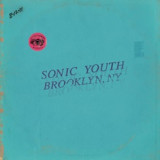
The final U.S. show, a triumphant and blistering bookend to the storied career of one of the most influential bands in rock music, featuring a unique and expansive eighty-five minute set list that spans Sonic Youth’s nearly three decade catalog. Mixed from multitrack by longtime live engineer Aaron Mullan and mastered and cut by Carl Saff. On August 12, 2011 Sonic Youth played their final US show on an outdoor stage overlooking the East River at the Williamsburg Waterfront in Brooklyn. Fitting that their storied career would bookend with a panoramic view of New York City where it all began 30 years before, having left in their wake one of one of the most powerfully influential careers in rock music. Following incredible sets from Kurt Vile and Wild Flag, the band took the stage. As the sun went down over the city, Sonic Youth ripped through a 17 song set that spanned from deep cuts off their first studio album and highlighting many other albums all the way through to their last, like a band with everything to prove. Or as Brooklyn Vegan’s Andrew Sacher said at the time: “While most bands who are thirty years into their career are either fading away or living off of the nostalgia of their older material, Sonic Youth continue to sound and perform as fresh as ever.” Steve Shelley explains the uniquely career spanning set list of Live in Brooklyn 2011 and how it came to be, as well as the importance of outdoor NYC summer shows in Sonic Youth’s legacy: “This show was a culmination of a run of really special outdoor summertime shows in New York City for us, starting in ’92 with Summerstage in Central Park when we played with Sun Ra. For the Williamsburg Waterfront show I wrote out the set list to present to the band and it was a lot of material we hadn’t played in a while, a lot of deep cuts, so I wasn’t sure if everybody would feel like doing it. After worrying about which songs the band might say yes or no to, I threw those concerns out the window and I just made a list of songs that I thought would be a great set. We practiced the week of the show at our space in Hoboken and put the set together. First we’d try and make sure we had a guitar in the song’s tuning, then we’d try to remember the arrangement and try and put it together, sometimes re-learning bar by bar. In the end I think the whole song list made it through. Even as early as ’86 and ’87 we stopped playing ‘Death Valley 69’ and ‘Brave Men Run’ with any regularity. We’d just get excited about new material coming into the set and songs would get ‘retired’ and wouldn’t get played again for years. So on this particular night in Brooklyn a lot of those retired songs and deep cuts got dusted off and played for this show. It turned out to be a pretty special event with a really special song list.” The band would go on to fulfill a contracted festival run in South America a few months later but, by then, the group’s center was severed beyond repair and the festival appearances didn’t hold the same kind of weight. “The stage was facing the East River from the Williamsburg, Brooklyn waterfront, and I recall the sun going down in the west during our set. It was a pretty magical, if kinda weird day. Fitting, somehow, that our ‘last show’ should be in New York City, our home and where it all began…” Lee Ranaldo The Williamsburg Waterfront show would fondly become referred to as ‘The Last Show’ by fans and band alike, equally for its triumphant high energy performance, its unique and expansive set list and locale. Newly remixed and remastered, Live in Brooklyn 2011 is presented for the first time on 2xLP, 2Xcd, August 18, 2023.
- Hold The Building Up
- The Prison Within
- Hold ‘Em Up
- Comin’ Down On Me
- Low Hangin’ Disco Ball
- So Alone
- I Always Get What I Want
- Playin’ Pool With The Planets
- Destroy
- Cookin’ With Heat
Downstate[34,41 €]
Straight outta Rockaway Beach, Queens, New York City, USA, THE WORLD, Prison is a state of mind, an experience, a loose collective, a band, a jam band and a bunch of psychedelic dudes who aren"t your average bunch of jambanders. All that, all at once, ALL THE TIME. You get what you"re dealing with here? No...you don"t. The only way to REALLY get it is to go to Prison -- and if you"re not from greater NYC and haven"t showed at any of the shows, here"s your best bet: their breakout album, Upstate. And whatta breakout! So high, you can"t get under it; so wide, you can"t get over it! How wide? Every song has two titles, that"s how wide. And almost everybody sings, like, all the time. That wide. Sure, you can break down the numbers -- five guys, five songs and four sides of vinyl in one gatefold sleeve -- but that won"t get you Upstate, either. Prison is the sound of everybody in the room figuring out where to go, individually and collectively. As they go through it, the meaning changes, the destination changes, the words mean something different. It"s meaning and no meaning, rising and falling, sinking and flying on the back of something massive cacophonized by three guitars, four vocals, a bass and drums. A lot of information bouncing around and enough time to really get you out of yourself! Take a look at the titles: each one a dichotomous inquest that the assembled Prison-ers march upon with fervor, glee, vengeance -- a whole spectrum of feels and perspectives woven into the jam for you to see. The Prison population changes with the seasons, and during the season this album was recorded, Sarim Al-Rawi, Mike Fellows, Sam Jayne, Matt Lilly and Paul Major were in Prison. Sarim you might know from Liquor Store, Mike"s made a bunch of scenes and records as Mighty Flashlight, Sam, who passed away in 2020 (R.I.P., brother) was in Love as Laughter -- and Paul Major you know from Endless Boogie, who Matt had roadied for -- and despite being "just a skateboarder who loves music" with no previous experience on the drums, he and Sarim inaugurated the Prison experience, like, seven years ago. Since then, it just fell together and it keeps doing so. A free thing called Prison.
Wewantsounds continues its Akiko Yano reissue programme with the release of "Iroha Ni Konpeitou," another superb Akiko Yano album and one of her funkiest, highlighting her unmissable singing and songwriting talents. Recorded in Tokyo and New York City, the album features a superb line up of the best musicians from both cities and sees Yano mixing Japanese pop with funk and a touch of electronics, playing a wide array of keyboards programmed by YMO synth wizard Hideki Matsutake. This is the first time the album is released outside of Japan and this deluxe LP edition includes remastered sound, download card plus the original 4-page insert with poster, lyrics and full line-up.
Death Is Not The End sub-label 333 hit again with a reissue of a rarely encountered piece of prime UK digi, courtesy of Franklyn Bernard aka Frankie B - mixed at Fashion's A Class Studio in Clapham, and released on the Ital Stuff label in early 1986.
Frankie B began his recording career with producer Bert Douglas, first releasing on his Reggae City label in 1984 with the No More Tears 7" under his birth name Franklyn Bernard. In 1985 he then linked up with Ital Stuff - a production team consisting of three brothers who also helmed the Sweet & Bitter Band. Operating a small eight track studio in the basement of their house in Balham, Ital Stuff had recently been responsible for putting together and laying down the backing track to Dixie Peach's classic Pure Worries, released on the Jah Tubbys label in 1985. Upon playing Pure Worries to Frankie he was immediately inspired to lay down his own vocal on the track, which too features Dixie Peach contributing vocal harmonies - it was recorded late 1985 and mixed down along with a ferocious dub side at South London's A Class Studio, eventually seeing release in early 1986.
Toshiko Mariano Quartet is the 1961 album from fourteen time Grammy
Nominated pianist and composer Toshiko Akiyoshi - then known as
Toshiko Mariano
Women have long been denied the credit they deserve in jazz. It must be noted
that as a Japanese women in jazz, Akiyoshi had to battle for acceptance on many
fronts. Jazz has been a patriarchy community from the beginning, and even
critical praise of her playing could not help but take note of her gender. Leonard
Feather, for example, writing at the time in the Encyclopedia of Jazz called out
Akiyoshi's playing as "fiery, powerfully articulated and exceptionally fluent," but
added that there was "nothing delicately feminine." Even today it is still hard for
people to see Jazz in any other way. We are pleased to be a part of shifting the
narrative and shine a spotlight on this talented artist and this wonderful album.
While she was later to compose using themes, harmonies, and instruments
connected to her Japanese heritage, this album captures the pianist early in her
career playing a straight ahead, harp bop style. This was already her 7th album as
a band leader, and it is a shining example of her confidence and mastery of her
instrument and as a band leader. Recorded at the Nola Penthouse Studios in New
Your City in December of 1960, the LP includes extraordinary liner notes by
Candid A&R man and producer Nat Hentoff giving a context and insight that adds
to the experience of hearing these extraordinary performances
REPRESS
Codek is the brainchild of Jean-Marie Salaun who grew up in Paris influenced by the folklore of the inner city. In 1978 he joined art rock group SpionS alongside Gregory Davidow and recorded two singles. Diving into the Paris post punk scene he met Claude Arto and designed the artwork for Claude's single on Celluloid Kwai Systeme / Betty Boop.' Robin Scott (M Pop Music') had produced the SpionS first single and wanted to collaborate further. With Claude, Jean-Marie wrote Me Me Me', intended for a choir, for M. Then SpionS split and Robin was off to Switzerland to record an album to follow-up his hit single. That left Jean-Marie alone in London, where he began working as Codek, a play on the brand name Kodak The Me Me Me' single was released by MCA Records in 1980. Back in Paris, now with some studio experience, Celluloid Records hired Jean-Marie to produce records for Artefact and Les Orphelins. Over the next 2 years he began working on ideas for the next Codek single Closer / Tam Tam'
Closer' started its life as an electric baseline played by Jean-Marie. Claude Arto sequenced the floating synthesizers. Laurent Grangier and Frédéric Lapierre of reggae band Immigration Act played the horns. The lyrics Hard to say. Easy to do. We don't need to say what we do' were a statement on creation as narration expressed Jean-Marie's ennui, I'm tired with it.' Tam Tam' was inspired by Burundi drummers playing on the plaza in front of Beaubourg where the song was recorded. Jean-Marie enlisted one of the drummers from the circle, Georges Atta Dikalo, to lay down percussion for the song. The female singers were from the French Caribbean and added falsetto tribal chants. JM was part of the the African night scene in Paris, remixing Xalam's Kanu' and Touré Kunda's Salaly Muhamed.' Claude achieved complex rhythmic patterns using a modular synthesizer and heavy processing. Jean-Marie recorded himself beating his chest for the thump noises. The recording of Tam Tam' and Closer' spanned over two years. They started on 16-track in Studio d'Auteuil, where JM blew the woofers, before resuming in Studio Centre Georges Pompidou with an added 8-track recorder. Jean-Marie was producing other bands, and a lot of this was recorded on "borrowed" studio time. The single was released in 1981 on West African Music, a tiny label from the Ivory Coast, and was re-released a year later by Island Records in the UK (where the B-side was re-named Tim Toum'). Both tracks were staples in the DJ sets of Beppe Loda and Daniele Baldelli, finding a spiritual home in the Cosmic scene of Italy.
Both songs have been remastered for vinyl by George Horn at Fantasy Studios in Berkeley. The jacket is an exact replica of the 1981 edition with artwork by Angela Boy, inspired by primitive electronics and African paintings. Each copy includes an doubles-sided insert with photos and liner notes by Jean-Marie Salaun.
Codek is the brainchild of Jean-Marie Salaun who grew up in Paris influenced by the folklore of the inner city. In 1978 he joined art rock group SpionS and collaborated with Robin Scott (M 'Pop Music'). He began working as Codek, a play on the brand name Kodak with the 'Me Me Me' single released in 1980. In 1981 the 'Tam Tam'/'Closer' single was released on West African Music, a tiny label from the Ivory Coast, and re-released a year later by Island Records in the UK (where the B-side was re-named 'Tim Toum'). 'Tam Tam' was inspired by Burundi drummers playing in the plaza in front of Beaubourg where the song was recorded. Jean-Marie enlisted one of the drummers from the circle, Georges Atta Dikalo, to lay down percussion for the song. The female singers were from the French Caribbean and added falsetto tribal chants. Claude Arto achieved complex rhythmic patterns using a modular synthesizer and heavy processing. Jean-Marie recorded himself beating his chest for the thump noises. The recording of spanned over two years. They started on 16-track in Studio d'Auteuil, where Jean-Marie blew the woofers, before resuming in Studio Centre Georges Pompidou with an added 8-track recorder.
In 2017 we reissued the 'Tam Tam'/ 'Closer' single and shortly after the 24-track master tapes were discovered in Paris by original engineer Gérard Chiron. We arranged for graphic designer Maycec to pick up the tapes and immediately began to think of remixers for this project. First up is producer and DJ Daniele Baldelli who gave the original single a spiritual home in the Cosmic 80s scene of Italy. Here he's teamed up with Marco Dionigi for two remixes. Remix A goes full on funky disco baseline while Remix B a more balearic affair. We remember Justin sharing a memory of DJing the original Island Records promo at the Mudd Club in 1981 so we had to ask him for remix. He teamed up with his Whatever/Whatever production partner Bryan Mette and delivered an hypnotic pulsing house remix and an extended edit. All songs have been mastered for vinyl by George Horn at Fantasy Studios in Berkeley. The jacket is new twist designed by Eloise Leigh on the 1981 edition artwork by Angela Boy, inspired by primitive electronics and African paintings.
Rare 1986 Funk/Soul From Alabama.
Originally released as a private pressed cassette tape only.
First Time On Vinyl.
Released in collaboration with the Numero Group.
180g BLACK vinyl limited to 500 copies w/obi strip. Non-Returnable.
Armed with little more than his Peavey T-60 guitar and a Jumbo Fuzz pedal, Errol Stubbs and his bar-band cohorts cranked out a self-released tape of funked-up disco soul in 1986. With no label or distribution to speak of, Errol would simply put on his best suit and sell the cassettes by hand. The tape languished into obscurity…until now!
The story of Errol Stubbs begins in Birmingham, Alabama in 1959. The youngest of five, he was surrounded by music as a child–his aunt taught piano at Daniel Payne College while his older brother, Avery Beavers, was an accomplished jazz trumpeter. Under the guidance of Avery, Errol started playing trumpet at the age of nine, though he gravitated toward songwriting and quickly picked up the guitar. Inspired by blues greats the likes of Albert King, Buddy Guy, and Little Milton, 12-year-old Errol began mimicking the sounds that filled southern airwaves. As a teenager, he played at barbecues, fish fries, and dive bars across the Magic City. After a brief stint at Jefferson State studying music, Errol’s passion for songwriting beckoned him away from the classroom.
Stubbs bounced around bar bands before settling on a live lineup and saving enough dough to take his vision to the recording studio. Over the course of two days, his well-rehearsed band recorded Turning it Out mostly live to tape at the Sound Of Birmingham Studio. Located on Birmingham’s east side, the state-of-the-art studio kept the lights on by recording commercial jingles but was more than happy to open their doors to local talent.
Taking notes from guitar god Ernie Isley and funk legend Rick James, the resulting recordings are drenched in cosmic phaser-fuzz guitar work, slapping bass lines, and sexual disco innuendos. Big brother Avery lends a hand on Clavinet for “Sweat,” while studio owner/engineer Don Mosley adds a tasteful dose of Moog synthesizer across a handful of cuts.
Soon after the Sound Of Birmingham sessions, Errol released the private pressed EP “Dancin’ Fancy,” b/w “Spaced Out On Your Love,” the latter of which was featured on Numero Group’s 2019 compilation Visible and Invisible Persons Distributed In Space.
The seven-song cassette Turning It Out was sold in local record stores and from night club stages, but only a few copies made their way out of Birmingham.
A fascinating blend of jazz and contemporary classical influences, How Time Passes is the debut album from the envelope pushing trumpeter and composer Don Ellis Known for his extensive musical experimentation, particularly in the area of time
signatures, Ellis began his long career in the New York City's post bop and avantgarde jazz scenes of late 1950s. Most notably he appeared on Charles Mingus'
Mingus Dynasty, and albums by George Russell and Maynard Feguson. But he
also worked with, among others, the Glenn Miller Orchestra, Lionel Hampton, and
Woody Herman. On subsequent albums, Ellis would take an even wilder direction.
Here, on his first recoding date as a band leader, the experimentation begins. Ellis
stretches the boundaries of bop-based jazz playing with time, tempo and meter. It
is the start of his exploration of Third Stream - a fusion of jazz and contemporary
classical music. The album title itself - How Time Passes - was taken from an
article written by the controversial German composer Karlheinz Stockhausen on
the "function of time." The exceptional section features Ron Carter on bass, the
underrated Jaki Byard on piano and saxophone, and Charlie Persip on drums. The
LP includes extraordinary liner notes by Candid A&R man and producer Nat
Hentoff, and noted musician, historian and writer Gunther Schuller - the originator
of the term "Third Stream" - giving a context and insight that adds to the
experience of hearing these extraordinary performances.
Brilliantly remastered (picture) LP/CD with new stunning artwork!
Lo-Fi India Abuse was recorded in 1998, some tracks are “pure” Muslimgauze and some are re-mixs of tracks from Systemwide’s “Sirius” CD (see also Systemwide meets Muslimgauze “at the City of the Dead” 12″). Nearly all of the tracks have hand percussion in varying tempos and intensities and at least 1/2 make use of electronic noise surges. The sound is very crisp and clean, extremely well produced, recorded and nicely varied throughout the length of the disc. Some track by track comments: “Antalya” is obviously from the same sessions as “Fakir Sind” seeing as it shares the same hand percussion sound, whistles, vocal wailing, cut-ups and delays. “Valencia Flames” sounds like a Systemwide remix. A dub bass line, hi-hat and background vocal of some sort are all obliterated by numerous delays, starts, stops and re-starts with an unpredictable nature in these cut-up tracks. “Al Souk Dub” injects background voices, market sounds and drones into the cut-up mix of slow hand percussion playing. “Catacomb Dub” and the final two tracks make use of twinkling synth waves, presumably a Systemwide sound source. “Dust of Saqqara” has a heavy pulsating electronic sound wave over an old beat box rhythm. “Android Cleaver” is brutal (as is “Nommos’ Afterburn”) hand percussion, jabs of noise and an oft repeated, unintelligible vocal sample. Yes, Lo-Fi India Abuse is yet another great Muslimgauze release, grab it!
All tracks recorded by Muslimgauze 1998
Some tracks are re-mixes from Systemwide’s “Sirius” album
Re-mastered by Višeslav Laboš
Sleeve by Oleg Galay
Originally released in 1999 via BSI Records (BSI 1999-3).
To call Current Affairs a Glasgow band may initially seem misdirection. Though Joan Sweeney (ex-Rose McDowall’s Band, Aggi Doom, The Royal We) is a lifer, Sebastian Ymai (Comidillo Tapes, Pissy, Anxiety) came from Chile via York, recently relocating to Berlin in 2021, and new member Gemma Fleet (The Wharves, Order of the Toad, Dancer) alongside Andrew Milk (Shopping, Pink Pound) were persuaded to leave London for the ‘second city’ after touring through with previous bands. However, Glasgow is the heart and hub of the band’s music, musical life and the place where Off the Tongue was solidified and produced. Their current line up formed in 2020, but the four have been circling each other for years, touring and playing with their previous bands within the close UK network of DIY music. Stalwarts of their respective scenes they finally began working together through the creation of the Spitehouse collective – a project designed to promote Queer and female-fronted music through events mainly held at Transmission Gallery and Glasgow Autonomous Space, putting on many local and international acts (Sneaks, Sacred Paws, Still House Plants and Comfort amongst others). When an opening for a new bassist arrived, Gemma was the obvious compliment, the slogan of Spitehouse being the language of Current Affairs – “Everyone’s welcome, but don’t get it twisted.” Following on from 2019’s singles collection, Object & Subject, the wait for their debut full-length may belie the urgency of its sound. Songs that were written in pieces over a long time and distance, but fully formed in the instant of the recording room across just a few days by producer Ross McGowan at Chime Studio. Current Affairs’ song-writing process has always been collaborative. Songs are developed responsively, with each of the band’s members sending/bringing elements or hooks to each other, but practices being the place where the songs flesh out, structure and are fully realised. These new songs feel a little brighter than their previous offerings, yet still hold true to their propulsive and caterwauling sound. Still embryonic in the most exciting way that that can be. Current Affairs’ music straddles new-wave pop and gothic post-punk in the way that you should expect a Glasgow-Berlin band to do so: with grit and panache. Written from within the world of crumbling services, broken bonds and wounded spirits, Off the Tongue rolls off an ecstatic rage, filled with hope for you, them and everyone else. It’s a rallying cry away from hopelessness, forgiving your fears and laying them to waste. Their album holds a place for you to be angry and to be focussed. In lieu of having anything else, we’ve always got each other, and an uncertain future is open game for us too
From the city of Tampere, Finland, comes Type-303 with a brand new EP ”Näsinpuisto” on a new local label VERRAZZANO. This time we take a detour from his usual acid sounds and head to the park for summer vibes.
Taking inspiration from early 90’s Italo house and balearic scene, ”Näsinpuisto” EP gives four sunny, mysterious and long drink fuelled cuts to cheer up the thirsty crowd.
Opening with a lovely haunting flute melody, ”Is It Magic” asks the question if there is some special magic in northern summer days, and the answer is fairy whistling YES! Part nostalgic and part forward looking, the song is relaxing house par excellence.
Second track ”Sexy Sax” sounds something like it was meant for fashion shows in Milan, or to be played at terraces with international tasteful clientele. With solid bass, sophisticated rhythms, sax melody and sea-breeze sounds, 90’s N.Y. house vibes are evident.
”Garden Of Love” is a playful tune that might be playing in the background when you stumble upon a secret garden in the park. The question is dare you enter in? Because Ecstasy comes to those who dare to step out of their comfort zone.
Lastly ”Summer Nights” is a relaxing late evening tune, ending the summer day journey with reassuring sounds in the after glow. Still with enough punch to work great either as set starter, or when you want to chill the dance floor.
Verrazzano calls you to enjoy summer, love and friendships!
Indonesian City Sound: Panbers’ Psychedelic Rock and Funk 1971-1974
The Pandjaitan Brothers or Panbers came from the North Sumatra minority Christian group, the Bataks, whose ancestry traces back to an island at the center of Lake Toba. As a minority group within Indonesia's Muslim-dominated society, this ethnic minority has produced top military generals, celebrity lawyers, and a legion of pop and rock superstars.
Suffice to say, some of the biggest names in the country's pop history were Bataks. Panbers fit the bill perfectly.
The band's strong Christianity belief looms heavily in the music they produce. The prominent use of the Hammond organ in their early materials is evocative of church music the band members have been around in their whole life. Bandleader Benny Pandjaitan's fills his characteristic wail with existential dread, with many utterances of the word "mengapa" (why).
Guilt is another central theme Pandjaitan repeatedly comes back to in his lyrics. But they balance it with joy, on songs such as "Come on You Dance" "Let's Dance Together" or "Haai" (a play on the word high), where references to recreational substances are plentiful.
Although they modeled themselves after the era's rock bands Beatles and fellow countrymen Koes Plus, Panbers had a unique aversion to the electric guitar. In "Jakarta City Sound," a fiery three-note guitar solo is laid so far down in the mix that they are barely audible. In "Haai" they modify the guitar to sound like a jungle instrument playing traditional North Sumatran music. In "Rock and the Sea," arguably their most well-known song globally, they decided to ditch electric guitar altogether and replace it with a sitar.
In the absence of an electric guitar, Panbers had to rely on Doan's inventive bass playing and Asido's drum works to do the heavy lifting - and boy, do they deliver (Their 1971 debut "Volume 1" saw plenty of drum breaks). In this compilation, listeners will hear recordings from Panbers' fertile four-year period - a time that produced in some of the grooviest and hardest-sounding psychedelic music in Indonesia's rock history.
For those uninitiated on the glory Panbers, consider this compilation an introduction to some of earliest and heaviest rock sound to come out of Indonesia.