Tape
The music of Melati ESP aka Melati Malay is a euphoric vision of megacity rhythm and rainforest escape, club breaks and weightless pop, mapping new dreams from the sound of futures passed: hipernatural.
Drawing on the music era of her teenage years growing up in Jakarta – Javanese radio Dangdut, gamelan cassettes, Moving Shadow-era liquid jungle, Japanese chill-out, etc. – as well as her current work in progressive percussion trio Asa Tone, Malay’s solo debut is boldly borderless, bridging worlds and wavelengths into a richly imagined hybrid synthetic utopia.
hipernatural is momentous linguistically, too, as Malay’s first foray into singing in Indonesian, the language of her youth. She characterizes her lyrical mode as “abstract, and a bit broken,” an intuitive collage of diaristic emotion and oblique poetry (“plant me in fleeting twilight / missing home, where is home? / I am another you”). Her voice serves as its own versatile instrument, alternately intimate and alien, sensual and sacred, shaded with the haze of hidden heavens.
Co-produced with long-time collaborator Kaazi (100% Silk, Asa Tone), the album’s 12 tracks are cohesive but eclectic, threading through temple bass music, cyber siren techno, Stereolab drum n bass, new age downtempo, and dial-up rave reveries, flecked with tactile fragments of offworld dialogue, computer hum, bubbling water, and beyond.
Malay’s technique of sampling and processing her voice into an electronic palette which she then performs on generative instruments gives the songs a bewitching artificial intelligence elegance, exquisite but uncanny. Hers is a hybridity both organic and hypermodern, deeply personal yet globally sourced – YouTube rips, nature tapes, cheap sample packs, club bootlegs. hipernatural champions a dynamic new language at the axis of then and now, of east and west
quête:poet z
In 2012, the two moved to an abandoned funeral home in rural southern Illinois where they founded Rose Raft, an artist residency and analog recording studio. This was done in part to alleviate the financial stress of being an artist in an expensive city, and it has allowed them to remain totally immersed in their craft, not unlike Dead Moon or Low.
“The biggest reason we were motivated to make our own studio is that it was the only conceivable way we could keep things going. We started as a band so trashy and raw and ‘low-fi’ is because that’s what we had access to.” says Jessee. The studio is all analog, and the pair has once again found how to find freedom in constraint, using the limitations of the process to think creatively and to inform their songwriting. Tracked entirely live, the new record celebrates the magic and physicality of analog recording, leaving in raw sounds and charming artifacts, like their dogs Junimo and Joja Cola barking at the tail of the keeper take of “Velvet Cash”.
Glow in the Dark Flowers finds Philip and Jessee reinventing their sound with maturity, grace, and poeticism, but without abandoning the fuzzed out sound and studio adventurousness of their earlier work. The album's intimate opener “Growing Cosmos” is propelled by an unquantized drum machine that stutters in and out of tempo, accompanied by enveloping hard-panned bass guitar. “Still Close To Me” recalls the duo’s effortless and hypnotic pop sensibility that made The Funs such a captivating live band in Chicago’s then thriving DIY scene. The albums closer “When The Leaves Have Fallen”, originally composed for a performance by the artist Lise Haller Baggesen, continually builds on its original theme until the drums drift out and gives way to cascading distorted guitars folding in on each other.
The band's new album represents a new level of their devoted partnership that continually produces raw and beautiful music. Glow in the Dark Flowers is a true representation of their passion and dedication to their drive for creation.
- A1: Captain Clark Welcomes You Aboard
- A2: The Saints Go Marching Through All The Popular Tunes
- A3: Summer Will
- A4: Outside The Pier Prowed Like Electric Turtles
- A5: The Total Taste Is Here - News Cut-Up
- A6: Choral Section, Backwards
- A7: We See The Future Through The Binoculars Of The People
- A8: Just Checking Your Summer Recordings
- B1: Creepy Letter - Cut-Up At The Beat Hotel In Paris
- B2: Inching - Is This Machine Recording
- B3: Handkerchief Masks - News Cut-Up
- B4: Word Falling - Photo Falling
- B5: Throat Microphone Experiment
- B6: It's About Time To Identify Oven Area
- B7: Last Words Of Hassan Sabbah
Clear Vinyl[24,79 €]
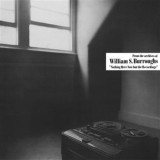
In 1980, Genesis P-Orridge and Peter 'Sleazy' Christopherson (then of Throbbing Gristle renown) travelled to New York City to meet up at the fortified apartment, known as The Bunker, of famed beat writer and cultural pioneer William S. Burroughs and his executor James Grauerholz to starting the daunting task to compile the experimental sounds works of Burroughs, which, up until that point, had never been heard. During those visits, Burroughs would play back his tape recorder experiments featuring his spoken word 'cut-ups', collaged field recordings from his travels and his flirtations with EVP recording techniques, pioneered by Latvian intellectual Konstantins Raudive. Throughout the next year, P-Orridge, Christopherson and Grauerholz would spent countless hours compiling various edits, each collection showcasing Burroughs sensitive ear and keen experimental prowess for audio anomaly within technical limitations. By the time 1981 came through, Burroughs had relocated to Lawrence, KS in which to escape the violence and mania of New York City life. It is in Lawrence that P-Orridge and Christopherson put the finishing touches on the record that would be known as 'Nothing Here Now but the Recordings'. The album would come out in the Spring of 1981 as the final release for the shuttering Industrial Records, brought about by the dissolution of Throbbing Gristle. The album remained out of print until 1998 when John Giorno and the Giorno Poetry Systems included the album on a multi-disc retrospective CD box set compiling the majority of Burroughs seminal recordings.
- A1: Captain Clark Welcomes You Aboard
- A2: The Saints Go Marching Through All The Popular Tunes
- A3: Summer Will
- A4: Outside The Pier Prowed Like Electric Turtles
- A5: The Total Taste Is Here - News Cut-Up
- A6: Choral Section, Backwards
- A7: We See The Future Through The Binoculars Of The People
- A8: Just Checking Your Summer Recordings
- B1: Creepy Letter - Cut-Up At The Beat Hotel In Paris
- B2: Inching - Is This Machine Recording
- B3: Handkerchief Masks - News Cut-Up
- B4: Word Falling - Photo Falling
- B5: Throat Microphone Experiment
- B6: It's About Time To Identify Oven Area
- B7: Last Words Of Hassan Sabbah
Black Vinyl[26,01 €]
In 1980, Genesis P-Orridge and Peter 'Sleazy' Christopherson (then of Throbbing Gristle renown) travelled to New York City to meet up at the fortified apartment, known as The Bunker, of famed beat writer and cultural pioneer William S. Burroughs and his executor James Grauerholz to starting the daunting task to compile the experimental sounds works of Burroughs, which, up until that point, had never been heard. During those visits, Burroughs would play back his tape recorder experiments featuring his spoken word 'cut-ups', collaged field recordings from his travels and his flirtations with EVP recording techniques, pioneered by Latvian intellectual Konstantins Raudive. Throughout the next year, P-Orridge, Christopherson and Grauerholz would spent countless hours compiling various edits, each collection showcasing Burroughs sensitive ear and keen experimental prowess for audio anomaly within technical limitations. By the time 1981 came through, Burroughs had relocated to Lawrence, KS in which to escape the violence and mania of New York City life. It is in Lawrence that P-Orridge and Christopherson put the finishing touches on the record that would be known as 'Nothing Here Now but the Recordings'. The album would come out in the Spring of 1981 as the final release for the shuttering Industrial Records, brought about by the dissolution of Throbbing Gristle. The album remained out of print until 1998 when John Giorno and the Giorno Poetry Systems included the album on a multi-disc retrospective CD box set compiling the majority of Burroughs seminal recordings.
New York painter and musician exploratory industrialist Tor Lundvall initially envisioned his 14th album, Beautiful Illusions, as an entirely instrumental affair, "inspired by memories of sitting in a church or cathedral watching the shifting sunlight through stained glass." Although he ultimately chose to wreath the majority of the tracks with hushed, poetic vocals, his original muse still resonates. These are certainly songs of shadowplay and vaulted skies, the quiet grandeur of dusk deepening on the horizon. Lundvall characterizes the lyrical subject matter, too, in ways both specific and surreal, exploring "the doubts, the anxieties and even the bleak fantasies the mind spirals into during moments of isolation, separation and distance." Tricks of the eye, mind, and ear, magnified by silence and the looming long winter. Shivering pulses and muted bass lines tread the twilight while icicle synths and wiry guitar map the melody until the voice enters, narrating oblique moods of essence and absence, tenderness and truth. Glimpses of dark humor flicker in the wordplay but the greater sonic landscape is one of falling leaves and failing light, small gestures rendered as revelation, cloaked in reverb and spatial fog. Lundvall's mastery of nuance and negative space continues to heighten, whispered brushstrokes of the invisible and the unsaid, what lies beneath and what lies beyond: "Behind the shields and false fronts is usually a sadness. The heartbreaking reflections of what might have been."
Fred und Luna hatten schon immer eine Vorliebe fürs Symmetrische. Das zeigt sich an den Motiven ihrer Albumcover und auf dem aktuellen Album nun auch an der Länge der Musikstücke, die sich allesamt an der Fünfminutengrenze bewegen.
„Im Fünfminutentakt“, so der entsprechende Name ihrer neuen Schöpfung, ist „Fred und Lunas“ vierter Longplayer, eine erlesene Auswahl zeitgemäßer Instrumental- und Gesangsstücke mit einem sensiblen Gespür für repetitive Rhythmen, bezaubernde Melodien und hypnotisierende Klänge.
Besonders hervorzuheben sind das in drei Sprachen gesungene Stück „Es ist so schön“ ? mit seinem sensiblen Gespür für die Freude, seine Liebsten nach Monaten der pandemiebedingten Einsamkeit endlich wiederzusehen ? und das dancefloororientierte „Tanz mit mir“, das erahnen lässt, wie sehr selbst computerhafte Stimmen Sehnsüchte und Träume erwecken können.
Wer sind Fred und Luna?
Fred und Luna wohnen in einem Modehaus in Karlsruhe. Die beiden Mannequins sind die Musen des Musikers, Poeten und Foto- und Filmemachers Rainer Buchmüller.
Von seinen Mannequinfreunden und der Liebe zu deutscher elektronischer Musik der letzten Jahrzehnte inspiriert, produziert Rainer Buchmüller unter dem Namen „Fred und Luna“ moderne musikalische Abenteuerreisen mit einer Kombination aus sich wiederholenden Beats, elektronischen Klanglandschaften und Elementen der Krautrock-Ära. Oder wie er es wahlweise nennt: Elektrokraut beziehungsweise Krautelektro.
Unterwegs mit Fred und Luna (Das Luna-Prinzip)
Weil die beiden Mannequins Fred und Luna ihr Modehaus nie verlassen, übernimmt Rainer Buchmüller unter dem Pseudonym Sugar Ray Buckmiller bei Liveshows die Rolle von FRED.
LUNA hingegen erfindet sich von Konzert zu Konzert neu und wird von einem oder mehreren kurzfristig ausgewählten, wechselnden Musikern vertreten. So wird jeder Auftritt zu einem überraschenden und einmaligen Ereignis für das Publikum und die Musiker selbst.
Achtung: Die nächste Luna könntest du sein!
WRWTFWW Records is proud to present the first official worldwide reissue of the debut album from fabled Japanese folk singer-songwriter/actress/writer Hako Yamasaki, Tobimasu. The limited edition 180g vinyl LP comes in a heavy sleeve with the original artwork, and the digipack CD has one bonus track. Tobimasu is also available in digital formats.
Originally released in 1975 on legendary independent label Elec Records, Tobimasu is a masterpiece of melancholy carried by one of the most beautiful, moving, melodic, and haunting voices in the history of Japanese music. An extraordinary singer and guitar player, Hako Yamasaki wrote the album at only 18 years old, showing incredible emotional maturity and music making skills, and creating, out of nowhere, a downright classic of folk music, brilliantly arranged and sequenced.
Hako Yamasaki’s folk is bluesy, psychedelic, soft, and poetic, perfectly fitting the themes of nostalgia, love, and nature she covers with heartbreaking intensity. Her songs capture sorrow ravishingly, offering glimpses of empowering hope and uplifting wisdom. A unique voice, a unique approach, and nothing less than magnificent music.
Hako Yamasaki, a pioneer in both the creative boom and the rise of feminism in 1970s Japan, went on to release over thirty albums, building an impressive discography and a fascinating career filled with ups and downs. Her work, inimitable and timeless, deserves the utmost recognition and should be celebrated. Again and again and again.
Tobimasu is released in conjunction with Hako Yamasaki’s beautiful follow-up Tsunawatari, also available on WRWTFWW Records.
- A1: Seduced By Each And Every Shiny Object I Became An Infant In A Sea Of Glance
- A2: To What Human Product Precisely Are You Devoting So Much Ingenuity?
- A3: This Song Emanates From The Common Man Claiming His Right To Poetry
- A4: Not Sensing The World, I Should Forget It’s Existence And Be Forgotten By Those Who Live In It
- B1: This Life Can Not Be All They Swear, For How Unpleasant Of It Were
- B2: Soon The Tears In My Eyes Will Be Blinding And Blessing At The Same Time
- B3: Bodies Pressed Against Small Platforms In Institutionally Resolved Postures
- B4: I Will Allow Myself This World Whose Wear And Tear Is Without Cure
- B5: The Annoying Got Interesting Because The Interesting Got Annoying
Sergeant's debut lp is a 9 track trial & error effort. A collection of failed protest songs, dreamy and naive. Playfull & self relativating pop music trying to blow up itself.
Full Tracklisting:
A1 Seduced by Each and Every Shiny Object I
Became an Infant in a Sea of Glance
A2 To What Human Product Precisely Are You
Devoting So Much Ingenuity?
A3 This Song Emanates From the Common Man
Claiming His Right to Poetry
A4 Not Sensing the World, I Should Forget it’s
Existence and Be Forgotten by Those Who Live in it
_____________________________________________________________________________
B1 This Life Can Not Be All They Swear, For
How Unpleasant of it Were
B2 Soon The Tears in My Eyes Will Be Blinding
and Blessing at the Same Time
B3 Bodies Pressed Against Small Platforms in
Institutionally Resolved Postures
B4 I Will Allow Myself This World Whose Wear
and Tear Is Without Cure
B5 The Annoying Got Interesting Because the
Interesting Got Annoying
2023 Repress
it was in february 2015 when japanese producer and sound designer kuniyuki takahashi, sometimes known as koss, releases with the ep 'newwave project '2' a record, that tapped some roots of his musical education: new wave, german electro punk from bands like a daf, ebm from acts like front 242 as well as industrial music.
styles, about kuniyuki claims that they are his 'favourite music'. now, nearly two years after his first newwave project ep, he drops an album that is leaning towards his musical love from the past. compared to his former work, that was rooted in worlds of classic, jazz, house, ambient, and electronic song-writing, his new tunes are full of melodic drifts and rhythmical shifts.
as usual all is loaded with tones and rhythms straight from the heart that filter and modulate human emotions without losing their natural source. to get a sound that is fresh but still leaning to the 1980ees, he used some old synthesisers like a roland jupiter 8, a juno 60, a korg ms 20, an old tape echo machine but also new instruments like the roland aira. furthermore, his modular synthesizers talk too.
instead of having a masterplan, kuniyuki just made sound, drifted on his machines and moved into a territory, that his far away from his former sound. also the use sampled voices and other alienated sound sources of unknown origin inject his new tunes otherworldly atmospheres.
his skills as a fine instrumentalist is evidence as kuniyuki also played the piano, percussions or flute, if he felt their warm sound is needed for his freely grooving tracks. some dance in a house or techno outfits.
other slam like a mix of funk and ebm. tunes like 'puzzle' or 'body signal' are twisted treasures that bemuse deeply. in-between you hear the echoes of cosmic spheres, the darkness of the cold war days and some bewitching tribal jungle vibes. a new, moving, unorthodox and yet catchy side of kuniyuki takahashi.
it is not totally novel to him, as he already released some industrial, ebm and electronic with the project drp in 1990 on the belgium label body records. but for his listeners, that know him for detailed house, jazz and classic or that love him as a man of collaborations who already worked together with artists like innervisions jazz house heavyweight henrik schwarz, the famous japanese pianist fumio itabashi or the british synth-pop protest spoken word icon anne clark, the 'newwave project' sheds a light on a different artistic side of kuniyuki takahashi.
it is diversified, has many rhythmical and atmospheric turns but stays stirring and compelling in all twelve tracks. a true new wave, formed, played in and envisioned with a view on the past that was filtered through the now while feeling the future. the cover art work comes from the swiss artist augustin rebetez - a man who also loves to generate unknown poetic universes in his drawings, sculptures, videos and installations.
The duo WILDES from the south of Germany, consisting of Jana Pantha and Jenny Tulipa, presents a musical mix of electro-synth-pop, post-punk and dark disco influences. After the release of their first EP “RAWWR” in 2021, their debut album entitled “KLISCHEE” will be released on 3 February 2023. Released via the Kommando 84 label, the album features 11 songs and a musical re-interpretation of German-language Neue Deutsche Welle sounds. The songs combine spoken word passages in which the singers combine a certain irony with word-playful rhymes. In addition to world-political, social issues, the songs revolve around the complexity of the new romance in love - between cosmos and stereo. The strong and experimentally avant-garde lyrics accompany the danceable pulse of the drum computer, melodic synth waves and the shimmering solos of the lead guitar.
The album “Klischee” begins with an electro-pop track that combines consistent grooves with atmo- spheric sound arrangements and a lead guitar that accompanies our journey to the moon. With the chorus’ high-pitched words, „Konsum - leg mich auf den Moon“ (“Consumption - put me on the Moon”), WILDES dryly yet humorously allude to a society that couldn’t fly “higher”.
The following cheeky song Leger in Schwarz combines impeccable post punk with influences from the NNDW scene. A short love story led by the electronic beat of the synthesizer makes the hearts of the night beat faster. With casual reduction, a guitar riff leads through the song. The guitar solo finally rounds off the plea about the longing for a good flirt.
Italo disco shimmers and pulsates on the driving song Capri. With lyrics like “Pack the boats - Vai a bordo”, Capri is a homage to the tried and tested Italo feeling with a cappucino on the terrazza, or indeed on the yacht with a view of the rocky walls of the island. An electric charge of sequencers and synth tracks acts here as a lightness of being in contrast to the porosity of the rock.
An electrifying electric guitar solo kicks off the fourth track with a mysterious invitation to Steig ein translated, get in. Hypnotised by the lights of the road, dazzled in the side mirror, a clearly repeating rhythm leads into the chorus and through the coming verses. English spoken-word lyrics add to the stoicism of the German language. The song’s great power ends with the line Lost in the dark, holding open the finale of the “Night Drive” encounter.
Digital and stereo on all channels, the distinctly tight and robust rhythm sounds in the song Apparat. A clear and simple synth melody is heard as a contrast and the electric bass gives the balance of the machine at points. Hiddenly, WILDES points here to the superior power that can control human action beyond all limits. A piece as a laudation to all the science fiction novels that play with the switching of the individual parts.
Side One of the vinyl is finalised by a song called La Grande Bellezza that motivates to dance and sing along. The punky pop craft lives through the recurring beat of the rhythm guitar. Here the focus is on the woman in all her facets. The great beauty, una donna, who can do everything as well as wanting everything and nothing...a strong woman who, however, also staggers and wants to jump off the cliff. Clearly and distinctly, the musical accompaniment of the drum machine and the accompanying synth melody reflect hidden parallel worlds and the ambiguity of character - of life? We get a desire for more and turn the round record.
The B side starts with a powerful guitar riff, complemented by a catchy and strong bassline that runs through the song. In this work, WILDES provocatively describes the West’s lust for the much-cov- eted Schwarzes Gold black gold. The song is reminiscent of the works of the band D.A.F. and thus ties in with the electronic punk sound spate.
The driving guitar riff joins in with the reduced synth bass sequence - the electro-pop song with the title Hitze (Heat) came onto the digital music market as the first single from the LP in the summer of 2022. Pulsatingly, the drum computer lets the beats vibrate to the rhythm of heated air. The duo po- etically describes heat with supercooled voices, a clarity in the sky that makes everything flow, that makes the breath dry. The work ends with a melodic synth solo.
Ich lad dich ein, I invite you - we have all said or heard this sentence before. A chance meeting of two people later leads to the altar in love. A far-reaching question that more or less arises in many love relationships at some point “Do you dare?” positions itself in lyrical contrast to the simple ques- tion in the refrain “Do you need sugar?”. WILDES plays with laconic poetry and, full of irony, makes the listeners think about living together. Krautrock contours are skilfully used in this piece. Reduced to the essentials, the chorus immediately sticks in the ear. A cheerful mix of steel drums and infec- tious solo.
Toccami - touch me! We sit on padded leather chairs - “you’re a rocket! Peng Puff Peng” - this song by the band WILDES joins experimental art-punk-pop, electronically with flowing synth waves we take off immediately. Melodically sung, lyrical layers of lyrics dance loosely light and gracefully in the ears of the viewer. The rhythmic beat visualises the feeling of floating in a spaceship. It’s love in the universe - “I love you, my darling” sounds tipsy in the beat-heavy disco refrain.
Hypnotically, WILDES launches into the final song of the entire LP. The title Zone takes us on a journey through time. Inspired by the film Stalker, we find ourselves in a science fiction setting that couldn’t be more present in today’s European events. The musicality of the electric guitar riffs ac- companied by simple new wave drums drives the listener into unknown realms.
Repetition and electronic synth sounds play a compositional role alongside rocking guitar riffs like their forerunners in the NDW scene. Lyrically, each song varies between pop-romantic and politically critical passages. Listeners start pondering about hedonistic life and its consequences. Sometimes it feels like listening to a Tarantino soundtrack in German, other times it feels like listening to an 80s track by a James Bond. Science fiction fantasies and reality add up in dadaistic theatricality to spir- ited synthpunk of the New German Wave from the South. Discoid beats and driving drums in digital are included.
Dominic Miller wurde von Peter Ruedi in der Weltwoche als ”großer, gelassener Erzähler” bezeichnet, und Vagabond, die dritte Aufnahme des Gitarristen für ECM, könnte sich als sein bisher poetischstes Werk erweisen. Auf dem Album erzeugt er gemeinsam mit Ziv Ravitz am Schlagzeug, seinem langjährigen Begleiter Nicolas Fiszman am Bass und Pianist Jacob Karlzon Texturen besonderer Intensität. Das Quartett – jeder Musiker für sich ein versierter Bandleader – versteht es, tiefe Grooves mit subtilem Zusammenspiel zu untermauern und nuancierte melodische Linien mit zarten Harmonien zu verweben, und zeichnet dabei einen gestalterisch bedachten Weg durch das Programm. Als langjähriger kreativer Begleiter von Sting, versteht Dominic es, den Song als oberste Priorität zu behandeln: ”Es war nie meine Absicht, ein Gitarrenalbum zu machen.
Dank der großartigen Sängerinnen und Sänger, mit denen ich im Laufe der Jahre zusammengearbeitet habe, sehe ich mich eher als instrumentalen Songwriter. Und so wie sie sehe ich es als meine Aufgabe an, mich mit den besten Musikern zu umgeben, die das Narrativ in den ’Songs’ verstehen. Ich bin froh, mit Vagabond die perfekte Besetzung dafür gefunden zu haben.” Das Album wurde
in Südfrankreich aufgenommen und von Manfred Eicher produziert.
DAFNE VICENTE-SANDOVAL - MINOS CIRCUIT (2021)
Minos Circuit is the resonance of a double exploration, that of an instrument, the bassoon - an instrument dear to Dafne Vicente-Sandoval - and that of a listening, of a gaze, almost. The first exploration deconstructs the instrument, tearing it apart, reducing it to an archipelago of sound bodies stimulated by an electro-acoustic device that generates feedback and infiltrates each part of the bassoon, in order to carry out a methodical, systematic examination. The second exploration is the inner one of attention and listening, the one that measures, at each moment, the necessity or not of an intervention in the very act of the musical work, of this subtle balance that is established between composition and observation, between action and contemplation.
(fr) Minos Circuit est la mise en résonance d’une exploration double, celle d’un instrument, le basson — instrument cher à Dafne Vicente-Sandoval — et celle d’une écoute, d’un regard, presque. La première exploration déconstruit l’instrument, le met en pièce, le réduisant en un archipel de corps sonores stimulés par un dispositif électroacoustique générateurs de larsens qui vont s’infiltrer dans chacune des parties du basson, pour en faire l’examen méthodique, systématique. La seconde exploration, c’est celle, intérieure, de l’attention et de l’écoute, celle qui mesure, à chaque instant, la nécessité ou non d’une intervention dans l’agir même de l’œuvre, de cette bascule subtile qui s’établit entre composition et observation, entre action et contemplation.
LARS PETTER HAGEN - TRANSFIGURATION 4 (2018)
Both a “meditation on musical ruins” and “a study of the material of Richard Strauss’s Metamorphoses”, Transfiguration 4 works on the musical fragment as an expressive and poetic possibility that can be deployed below or beyond simple musical syntax, a syntax that is still too often equated with music itself. What Lars Petter Hagen highlights in this remarkable work is that the power of music lies at its fringes, that is, at the edge of its own disappearance. Transfiguration 4 floats in a particularly moving way in these troubled lands, where nothing is ever resolved, and where everything, however, is suspended, like a stream of blurred memories that memory would summon to form an intuition. A musical intuition.
(fr) A la fois « méditation sur les ruines musicales » et « étude du matériau de Metamorfosen de Richard Strauss », Transfiguration 4 travaille le fragment musical comme possibilité expressive, poétique, pouvant se déployer en-deçà ou au-delà de la simple syntaxe musicale, syntaxe encore trop souvent assimilée à la musique même. Ce que met en lumière Lars Petter Hagen dans cette œuvre remarquable, c’est que la puissance de la musique se situe à ses franges, c’est-à-dire aux lisières de sa propre disparition. Transfiguration 4 flotte de manière particulièrement émouvante dans ces contrées troubles, où rien jamais ne se résout, et où tout, pourtant, se suspend, comme un flux de souvenirs flous que la mémoire convoquerait pour former une intuition. Une intuition musicale.
VE ABOULKHEIR - 22/12/2017 GUILIN SYNTHETIC DAYDREAM (2021)
22/12/2017 Guilin Synthetic Daydream is a perceptual trap. Inspired by an experience of intense perceptive disorientation while crossing a market in China, Eve Aboulkheir reinstantiates, in the field of sounds, the swirling and anamorphic universe of thwarted perceptions, surrounding multitudes and shifted sensations. She thus constructs a dreamlike and artificial universe, suspended and hyperactive, which is both an electronic vortex sucking us in and a mechanical ballet developing its arabesques around us, caught and fascinated by these volutes of sound that fracture like a kaleidoscope in which our eyes-ears are immersed. 22/12/2017 Guilin Synthetic Daydream approaches the musical form in the most direct way possible, i.e. through its effects and its empire on our sensorium.
(fr) 22/12/2017 Guilin Synthetic Daydream est un piège à perception. S’inspirant justement d’une expérience de désorientation perceptive intense lors de la traversée d’un marché, en Chine, Eve Aboulkheir réinstancie, dans le champ sonore, l’univers tourbillonnant et anamorphique des perceptions déjouées, des multitudes environnantes, des sensations décalibrées. Elle construit ainsi un univers onirique et artificiel, suspendu et hyperactif, à la fois vortex électronique nous aspirant et ballet mécanique développant ses arabesques autour de nous, piégés et fascinés par ces volutes de sons qui se fractalisent comme un kaléidoscope dans lequel sont plongés nos yeux-oreilles. 22/12/2017 Guilin Synthetic Daydream aborde la forme musicale de la manière la plus directe qui soit, c’est-à-dire à travers ses effets et son empire sur notre sensorium.
LASSE MARHAUG - HOW TO AVOID ANTS (2020)
Using concrète techniques to collect, transform and assemble sounds of various origins (sounds of tree branches, leaves, but also guitars or synthesizers), Lasse Marhaug elaborates a dense and subterranean work, which unfolds through the multiple dimensions induced by the great diversity of its sound material. There is a labyrinthine feeling in this work, a feeling that is better understood when the inspiration for the title of the piece How to avoid ants is revealed, a very practical and then poetic undertaking, that of avoiding the anthills lining the path to the forest camp in the kindergarten to which his little girl, who was then frightened of insects, was going. It is such an activity of circumvention, diversion and byways that Lasse Marhaug uses to create an exploratory and evasive music.
(fr) Utilisant les techniques concrètes pour collecter, transformer et assembler des sons d’origines variés (sons de branches, de feuillages, mais aussi de guitares ou de synthétiseurs), Lasse Marhaug élabore une œuvre dense et souterraine, qui se déploie au travers des multiples dimensions induites par la grande diversité du matériau sonore. Il y a un sentiment labyrinthique dans cette œuvre, sentiment qu’on comprend mieux lorsque se dévoile l’inspiration du titre de la pièce How to avoid ants, entreprise très pratique et devenue poétique, celle d’éviter les fourmilières jalonnant le chemin vers le camp forestier du jardin d’enfant dans lequel se rendait sa petite fille, alors effrayée par les insectes. C’est une telle activité de contournement, de déroute et de chemins de traverse qu’emprunte Lasse Marhaug pour créer une musique exploratoire et évasive.
"The Concert" is the first discographic collaboration between percussionist Alexandre Babel and visual artist Latifa Echakhch. The record is intimately linked to the eponymous exhibition presented at the Swiss Pavilion during the 59th Venice Art Bienniale.
For her exhibition in the Swiss Pavilion, Latifa Echakhch created an orchestrated and enveloping experience, a rhythmic and spatial proposal that allowed the visitor a complete perception of time and of his own body. What is the origin of rhythm? How does the body perceive time? How does the mind rearrange it? Can we substitute one perception for another, the visual for the sound? Can fragments of memory go back in time and recreate a different story?
Her proposal entered a dialogue with the building around it, designed by Bruno Giacometti. The artist revisited its architectural programme as well as the prototypical progression of these exhibition spaces, originally defined for the display of classical art. She appropriated the entirety of the spaces, simultaneously exploring continuity, movement and sequence. Their relationship to light, and the different sounds that emerge from them. Yet the exhibition was entirely silent and the musical composition "The Concert" functions as its sound rendering, by following a similar path.
This one-sided vinyl is a complementary and inseparable partner piece to the exhibition and its eponymous catalogue, the latter having been published in April 2022 by Sternberg Press. The music features field recordings made at the Swiss Pavilion itself as well as pre-recorded percussion sounds and significant contributions by the Berlin-based musicians Jon Heilbronn, Rebecca Lenton, Theo Nabicht, Nikolaus Schlierf.
The record, available only after the closing of Latifa Echakhch’s exhibition offers a concluding phase to the project. The resonance of its sensory score. It reactivates the experience of the physical journey of the installation, without imposing itself as a transcription or an illustration. Through texture, temporality and its totality, the record stands as a resonance of the rhythms that have structured the pavilion, the harmonies that have composed it and the sounds that have inhabited it.
Latifa Echakhch Lives and works in Vevey, Switzerland. She graduated from the École nationale supérieure d’arts in Cergy-Pontoise and the École nationale des beaux-arts in Lyon. Galleries representing her include kamel mennour (Paris and London), kaufmann repetto (Milan and New York), Dvir Gallery (Tel Aviv/Brussels) and Pace (New York). She took part in the main exhibition of the Venice Biennale Arte in 2011 and was awarded the prix Marcel-Duchamp in 2013 and the Zurich Art Prize in 2015. Through her interdisciplinary installations, Latifa Echakhch is recognized for the fine balance between forcefulness and fragility of her visual language, inserting surrealist and conceptual elements, and her use of symbols that–in her own words–are both "political and poetic".
Alexandre Babel Lives and works in Berlin. He is a drummer, composer, and curator. His projects redefine the boundaries of musical convention, confounding listener expectations in the conquest of new contexts. Babel has been the artistic director of the contemporary percussion group Eklekto 2013–2022. In 2020, the monographic Festival Les Amplitudes in La Chaux-de-Fonds focused on Babel’s compositional and curatorial work. He is a laureate of the Swiss Music Prize from the Federal Office of Culture 2021.
Since its beginnings, Hypnótica Colectiva has always shown a special interest in the music recorded and released in the city of Detroit.
A place with which we have both a blood and spiritual bond because of what occurred there socially and artistically during the 20th century.
This love led us to become ambassadors of what was happening there on a musical level, holding cultural events to screen documentaries translated into Spanish, as well as a number of themed sets at our events, dedicated motor city sections in our record shop or recently lectures on the history of the city and its music at the Museum of Illustration and Contemporary Art of Valencia (Muvim).
The time has now come to bring all this history, this musical influence, to the editorial section of our label HC records.
Detroit Legacy was born from the idea of capturing these influences on vinyl. Seeking artists from all over the world who share this passion that inspires them to create their music, what we can define as the universal Neo-Detroit.
For this first edition or first volume, the collective has enlisted in its ranks creators affiliated to the label who have shown us in their careers, this influence and this feeling.
Paul Cignol opens the record with Distance. From Dublin he offers us a track of warm sequences inspired by Deep Techno, with deep pads responding to organ keys and a subtle touch of 303.
Mallorcan LLuis Barcelo Sureda is responsible for the second track Funk Station. With a Techno Soul character that we might hear from Detroitish labels like Acacia or producers like Blake Baxter.
A real eminence in Techno is the Catalan Don Alex Martín, who already released in the mid-90s on Monssieur Garnier's label (France Communications). The Barcelona native brings his wealth of experience and wisdom through Megatech, which transports us to the spectrum of Derrick May’s Transmat who, in his day, was nicknamed "The Innovator". This track provides agile sequences of complex syncopated rhythms, combining with a dreamy Michigan style synth.
The anthem of the album comes from Ghent. The sublime Belgian creator, Mariska Neerman, once again makes our hairs stand on end and our hearts melt with a heavenly composition entitled Stellium.
No one interprets Neo-Detroit quite like Mariska, whom we baptise as a sovereign heiress of the genre in the world. If we have to think of an influence for this piece, we go straight to the genius of Detroit, the one and only Jeff Mills, in his most symphonic and harmonic facet of tracks released on his label Axis Records such as "The March", A Universal Voice That Speaks To All That Will Listen or A New Found Sense Of Being.
Some of these songs have been re-interpreted by world class philharmonic orchestras such as the Montpellier Philharmonic Orchestra at the 2005 Blue Potential (Pont Du Garde). Mariska's score in this song fuses organ keys with harmonic layers and violin - favourite instruments of the Detroitian extraterrestrial - with a harmonic result of strength and hope. An authentic anthem of classic emotional Techno.
Old School electro takes centre stage with the Master from Terrassa Ivan Arnau a.k.a. Dark Vektor. In the influence of Juan Atkins (the creator) as Cybotron or Model 500 and later creators who developed this sound like Aux 88. Metaverso Frik is a great recital of a urban poetry created and interpreted by Ivan, to completely devastating effect.
Croatian Bojan Jascur a.k.a. N-TER, closes the vinyl with We Will Emerge, in a exercise of vindication, a common weapon in the context of Detroit music. Raging, trippy electro in the purest style of Cosmic Force or Dynarec.
This first tribute to 8 Mile doesn't end with the vinyl, as 2 digital bonus tracks are included in the release.
We return to Barcelona with Pastin Futon in another sequence of consecutive oscillated rhythms oscillated much like Kevin Saunderson (The Elevator) in his day and the Techno Groove that we know today.
The most robotic touch of the release is the closer with this synthetic jigsaw puzzle of a track with echoes of the 1967 Detroit Riot, the Detroit Rebellion. Again produced by another Barcelona native, The Bandit (Dj Spy / Util Records). The sequences are very reminiscent of Arpanet and Drexciya.
The idea for the cover comes from Motor City itself by Jon Yowell, first cousin of HC records founder and head of HC records David Verdeguer.
Born, raised and a lifelong resident of Detroit, Jon is an enormously talented musician capable of writing lyrics, performing them on the mic and manipulating a number of stringed instruments as well as the drums, where he is a true master.
The cover is a tribute to the formative backgrounds of many of the city's musicians in every sonic trend. Wayne State University in the capital of Michigan.
Founded in 1868, it has offered didactic teaching to many of the city's musicians.
Not all of Detroit's creators went to university, and even less so when talking about Techno, many artists are self-taught or learned in a non-academic way, but it seems to us a good base to begin to highlight the origins of the city's music in a historic building, where those who have the opportunity to learn about music have been and continue to be educated.
The adapted designs are the work of our image manager Dani Requeni.
Mastering by Steve Voidloss at Black Monolith Studios in London (UK).
Reinhard Lakomy: Mimmelitt, das Stadtkaninchen
Eine poetisch-komische Geschichte darüber, dass nicht alles, was alt ist, auf den Müll gehört. Manchmal fehlt eben nur ein bisschen Schmieröl, ein bisschen Farbe, ein bisschen Hilfe.
Das gewitzte Stadtkaninchen Mimmelitt erfährt, dass sich in der Stadt ein quietschendes Geheimnis aufhalten soll, ein Eisengeist. Die Neugier und trotziger Mut helfen Mimmelitt, dem Geheimnis auf die Spur zu kommen - mitten in der tiefen Nacht: Es ist ein alter geschmiedeter Wetterhahn, der kummervoll durch die Neubauten irrt. Keiner kann ihn mehr gebrauchen. Mimmelitt lädt den "Ritter Adalbert" auf seine Kaninchensuperkiste und braust mit ihm durch die Stadt. Er weiß, wo dem Ritter geholfen werden kann. Am Morgen schließlich hebt der lange Hannes den frischgestrichenen Wetterhahn auf das neue Schulhaus. Nun wird er jeden Morgen die Schulkinder begrüßen.
Ein Geschichtenlieder-Hörspiel für Kinder ab 4 Jahren
Alternative Hip Hop Artist Rebel ACA Channels his Pain in "Migraine" ft. Spragga Benz, Rodney P
LONDON - The word "migraine" can make you twinge, especially if you experience the pounding head, vertigo, and tinnitus associated with migraines. Imagine if you put all those feelings into music - that is what Rebel ACA did with his latest single, "Migraine."
Rebel ACA's new single flows through his twenty-year journey of advising on international tax by day and rapping and producing by night. Perhaps, the ACA stands for his accounting qualification.
Dropping in April, there will be two versions, an original version and a DJ Phantasy Remix of "Migraine" on streaming platforms. Depending on the version, "Migraine" is a musical representation of a severe headache. The drum and bass mix features a funky, constant drone throughout the track, while the original version is a funk-latent hip-hop song.
"I suffer very badly from migraines every week," said Rebel ACA. "To me, it was logical to write a song about migraines. The lyrics talk about what it feels like by using synthesizers to bring out the feeling of a migraine."
Joining Rebel ACA on the single is Spragga Benz and Rodney P. The duo shares their thoughts on using marijuana to cure a migraine. While Rebel ACA acknowledges he is not a medical doctor, studies have shown that smoking weed can reduce migraine pain.
"We talk about smoking weed to fight the migraine," he said. "The lyrics revolve around what it feels like to have one in your head. Doctors have told me that migraines are caused by triggers like alcohol and getting f*cked up. Then you get a migraine and now you get more f*cked up on pills or weed to feel better." This revolving cycle spirals throughout the single.
Born and raised in the UK, Rebel ACA experienced London's musical melting pot from birth. Hailing from northwest London, he was exposed to the rich Caribbean influence and massive underground music scene.
From squat parties to illegal raves, London's music was all mashed up, and Rebel ACA soaked up every genre and cultural influence. As a result, he is a successful singer/songwriter/producer who fuses hip hop, reggae, and indie sounds to create his unique style.
"Where I come from, the UK hip hop is like the 90s hip hop in America," he stated. "There is a hip hop scene that talks about poetry. I'm trying to keep it real with my lyrics and talk about things that are important other than guns, money, and bitches."
Rebel ACA's music is versatile but uniquely his own by utilizing numerous live instruments and coming in hard with a big boom-bap sound. The Rebel ACA sound is born by adding a funk influence on his tracks aligned with funky bass. On "Migraine," he uses some vintage 70s French influence vibes to give the single a flavor of its own. There is nothing out there like "Migraine."
Rebel ACA records under Buttercuts Records, a company he owns and operates. The London-based production company has been "bashing out buttery beats" since 2000. Buttercuts Records is the go-to place for releasing hip hop, reggae, breaks, funk, soul, and folk records with a tongue-in-cheek attitude and marketing that surpasses witty wordplay.
As "Migraine" gains international attention, it is easy to understand how Rebel ACA combines old and new hip hop with effortless flows and brilliant lyrics. Maybe the world is ready for an international tax advisor who drops bars and vibes out to some wicked rhymes.
Make sure to stay connected to Rebel ACA on all platforms for new music, videos, and social posts.
a A1. DJ PHANTASY VOCAL MIXfeat. Rebel ACA
b A2. DJ PHANTASY DUB MIXfeat. Rebel ACA
[c] A3. DJ PHANTASY INSTRUMENTAL MIX [feat. Rebel ACA]
[d] B1. OLD KOOL F U NKY MIX [feat. Rebel ACA]
[e] B2. OLD KOOL F U NKY INSTRUMENTAL [feat. Rebel ACA]
[feat. Rebel ACA]
‘’Ace Todmorden label makes a significant discovery on its own doorstep: a superb cache of ‘loner folk’ songs recorded in the early-70s by Hebden Bridge’s answer to Nick Drake’’ UNCUT PLAYLIST
"This is music that can confidently hold its own with pioneers such as Davey Graham, Michael Chapman, Bert Jansch and Jackson C Frank, as influenced by jazz, blues and steel guitar as any of the old songbook classics from ancient Albion.” Benjamin Myers
"Defiantly Northern and out of this world" Folk Radio
Anti-counter culture loner folk from a teenage attic in the heart of rural Northern hippiedom.
Today the valley town of Hebden Bridge in West Yorkshire is world-renowned as something of a bohemian backwater. It wasn’t like this back in the late 1960s and the early 1970s, when a disparate selection of radicals, drop-outs, heads, musicians, artists and writers started to be attracted to the Calder Valley. Local lad and future poet laureate Ted Hughes called the area “the fouled nest of industrialisation”.
Over time, those seeds of radicalism and collectivism ensured Hebden Bridge evolved into a place where people could be themselves and all shades of individual oddness not only tolerated but actively encouraged. But back at the turn of the dreary 1970s it remained a monochrome world defined by its unforgiving surrounding landscapes, where the old gritstone over-dwellings were stained with soot and rain lashed down for weeks.
It was here that Trevor Beales, who was born in 1953, grew up, and from where he drew musical and lyrical inspiration.
Perhaps it was this dual nationality heritage, unusual in the valley’s largely white working class population at the time, that gave the teenager Trevor Beale’s music an outsider’s perspective. The discovery of Bob Dylan, Django Reinhardt, The Byrds and James Taylor at a young age, lead to him picking up a guitar at the age of ten, and he was soon writing his own originals and performing them at local (though often remote) folk clubs and pubs.
Recorded in the attic of the family home at Ivy Bank in Charlestown on the verdant wooded slopes at the edge of Hebden Bridge between 1971 and 1974, these early recordings are collected here for the first time and mark Trevor Beales long-overdue solo debut.
In these songs is a suffer-no-fools sense of realism that is defiantly Northern, yet also expresses a worldliness that belies Beales’ young years, whilst also showcasing an inherent storyteller’s ear for narrative. Here is a postcard from the past at that crucial musical period of transition, when the idealistic exponents of the 1960s emerged into an austere new decade that was to be shaped by strikes, rising unemployment and economic upheaval.
Two aspects of this music make it remarkable: Beales’ natural ability showcases a sophisticated guitar-picking style that was leagues ahead of many of his (older, more recognised) contemporaries. This is music that can confidently hold its own with pioneers such as Davey Graham, Michael Chapman, Dave Evans, Bert Jansch and Jackson C Frank, as influenced by jazz, blues and steel guitar as any of the old songbook classics from ancient Albion.
Secondly, his lyrics are a far cry from either the naïve bedroom scribblings of a teenager who has barely left his upland home, nor do they fall foul of the type of lazy cliches and sub-Tolkien imagery that was still in abundance in the early 1970s. Most remarkably the earliest songs here were laid down less than a year after he left school (an unearthed report written by his headteacher on July 3rd 1970 noted he had “a considerable ability and interest in music”, though his education ended abruptly when he simply walked out of a science lesson one sunny day while at sixth form, never to return).
Trevor’s music is grounded in reality – his reality. ‘Then I’ll Take You Home’, for example, considers the Guru Marajai, who encouraged his acolytes to give over their worldly possessions, yet who drove a Rolls Royce and lived like a playboy. Unsurprisingly, this latest in a long line of spiritual charlatans found several followers in Hebden Bridge, and Beales casts a disdainful eye over the growing popularity for such false prophets.
With its ancient narratives and propensity for myth-making, folk has certainly produced it’s fair share of cult figures who have enjoyed rediscovery or career resurgence and with this debut compilation of home recordings, rescued from cassette tapes, Trevor Beales might just be the latest addition. Certainly he was the real deal.
Crucially, Beales' music is never jaded or cynical, but instead possesses a poet’s ear, a strong sense of self and some sound critical faculties. And much of it recorded at an age when he could neither vote nor order a pint of heavy.
Trevor Beales died suddenly and unexpectedly on March 29th 1987, aged 33. He left behind Christine and their young child Lydia.
In his South London flat, James Howard gestures apologetically at the mess of books, lined A4 paper and stationary at his desk. “I butcher poetry for a living,” he explains, “It isn’t a pretty job, but someone has to do it.” This being 2022, every emerging musician needs a side-hustle to keep the house warm. In the daytime, our host writes study guides to help teachers teach poetry to pupils who would rather be elsewhere. “I make sure the poems are clinically dead by the time they reach the schools.”
An explanation punctuated by a mildly contrite shrug makes you want to lean forward and remind Howard about some of the stuff other people are doing for a living. And, more to the point, aren’t doing. Which brings us to the real matter at hand. For Howard, foregrounding his own songs hasn’t always come naturally. An enthusiastic collaborator, he made two well-received albums with his previous band Blue House and played with the likes of Rozi Plain, Alabaster dePlume and his wife Dana Gavanski, as well as running his own music night with Sam Tyler in London, Incredible Society. It’s important to mention these creative hook-ups because Howard feels that, in one way or another, they all helped to give form and shape to the lilting lunar lullabies that would ultimately comprise his ravishing solo debut Peek-A-Boo.
A deluxe edition as a 2 x LP on yellow vinyl, features bonus demos, b-sides and live session recordings. The Hidden Cameras burst onto the Toronto music scene in the early 2000"s boasting an irresistible combination of pop and queer sensibilities. Playing self-proclaimed "Gay Church Folk Music" a new genre of their own making and songs ranging from haunted, aching ballads to foot-stomping anthems, the band"s outrageous stage shows packed such disparate venues as sweaty dance bars, art museums, a working porn cinema as well as many churches. Fronted by lead singer-songwriter Joel Gibb, the ensemble continues its musical provocations to this day, with Berlin now as its centre of gravity. The Hidden Cameras had yet to release a note of commercially available music when, in early 2002, they became among the most discussed and celebrated unsigned bands in the history of their native Toronto. By the close of the year, they had been the subject of uncommonly sensational features in The Globe and Mail (Canada"s national newspaper) as well as in every daily and weekly in Toronto. The reasons for the reckless enthusiasm of these usually cautious journals was simple: revelatory live performances that attacked and transcended the staid, dispassionate traditions of rock nightclub culture; and the songs of band front-man and mastermind Joel Gibb, a talent of uncommon melodic and poetic gifts. "The Smell of Our Own", The Hidden Cameras debut album was originally released in April 2003 on Rough Trade to tremendous critical acclaim.