Enjoy The Ride Records proudly presents the Don't Fall In Love With Yourself Soundtrack.
Don't Fall in Love with Yourself is a documentary that explores the life of enigmatic musician and artist, Justin Pearson (The Locust, Swing Kids, Dead Cross, Planet B, Head Wound City, Deaf Club). From childhood tragedy to his rise in the San Diego punk scene, Don't Fall in Love with Yourself takes an in-depth look at a career made of blood, sweat, and spit.
Much of the footage has been sourced from dozens of VHS & Mini-DV tapes recorded over the past three decades. With never-before-seen footage of one of the most interesting and unique musical movements in recent memory. Interviews include Justin Pearson, Dave Lombardo, Eric Paul, Gabe Serbian, Jason Pettigrew, Travis Ryan, Jeremy Bolm, Jon Syverson, Molly Neuman, and more.
Don't Fall in Love with Yourself includes tracks from throughout Justin Pearson's career plus previously unreleased score music by Luke Hensgaw (Planet B), Alex Edkins (Metz) and Graham Walsh (Holy Fuck). It features music by The Locust, Swing Kids, Struggle, Crimson Curse, Retox, Planet B, and Justin Pearson/Gabe Serbian. Remastered by Dave Marino for vinyl.
Don't Fall in Love with Yourself is housed in an embossed silver foil laminated jacket, which includes a full-color double-sided insert.
"Té De Flores Silvestres" is the result of the dialogue between the Belgium photographer Michael Roemers and the Argentinian musician Federico Durand initiated by IIKKI, between February 2023 and May 2024.
Federico Durand’s music is a weave of sound searching introspection and delight through simple melodies, made in the heart of Argentina. Federico likes music, gardens, John Keats’ poetry, collecting stamps and Earl Grey tea. Since 2010 he has been released on some labels such as 12k, Home Normal, IIKKI, Spekk, White Paddy Mountain, LAAPS and more.
Michael Roemers, a child of the borders, was born in 1987 in the Belgian village of Plombières, studying sound at the Institute of Broadcasting Arts in 2008. He discovered the power of the image, and became passionate about photography. He began his photographic career following Belgian underground music bands as they toured Europe, capturing crazy moments on stage and backstage. Then, he decided to devote himself to a personal project, to capture his native Wallonie region, highlighting the richness and a part of these Belgian traditions region while exploring the themes of identity, memory and membership.
Since 2021, Michael Roemers has added a new string to his bow by running the Vice Versa podcast with his partner Sébastien Van Malleghem. This podcast explores the themes of photography, art and culture by giving voice to renowned guests in these fields. Té De Flores Silvestres is his first book.
Fine Art Book, Ltd. to 400 copies:
Hardcover book printed on Glossy Modern Paper 170g/m2 // 80 pages, 19cm x 22.5cm, 50 photos // Front cover points and back cover logo embossed // Selective UV varnish // Hand-numbered.
"Learn To Die is a bold new step for a group of musicians, artists, and writers that has at least nominally been considered a punk band. A stylistic overhaul. For those who have been following along, it’ll carry some surprises. Slender began over a decade ago as a semi-improvisational cassette recording project, a casual collaboration between a few friends that was initially documented by two self-titled cassette-only releases released in 2014 and 2015 respectively, now both unavailable and out of print. Most fans, however, will know Slender for their two most recent releases, Walled Garden (2017) and Time On Earth (2019), both released on the tastemaking London art-punk label La Vida Es Un Mus. "Their prior work has earned them comparisons to anarcho-punks Crass and The Snipers, lo-fi flagbearers Swell Maps and Pink Reason, and artrockers Cromagnon and Amon Düül. Here, however, such comparisons feel largely unfounded and the band feels somewhat peerless. Moments of artpunk brutalism, lo-fi experimentalism, and kosmiche detours grace the fabric of Learn To Die, but the album reaches for more than pastiche. Teasing the rarified worlds of chamber music and musique concrete, Slender manages something intangible and strange. A vocoded voice intones multi-lingual poems alongside tinny guitars and sampled strings and flutes. Three chord janglepunk anthems arise suddenly out of a cosmic mist crafted by analogue synths reciting the poetry of machines. The album moves in ways reminiscent of works by artists as varied and singular as Nobukazu Takemura, Chuquimamani-Condori, Coil, and Robert Wyatt, but it doesn’t necessarily occupy the same realm as any of them.” – Leah B. Levinson
"Although life is hyper-individualised, you rarely go about it alone. This rings especially for RADIOHOP, the 4-man band drawing in everything that derives from Jazz. Aptly titled, ‘All We Do’ sees the band culminating each member’s journey through life as a performer and music head, into one entity. It is a collection of various musical feelings; drawn from all of the widely diverse musical environments they are surrounded by. Their early explorations in Hip-Hop laid the foundation RADIOHOP jetted from. All We Do ventures into Soul, Funk, Jazz, Broken Beat, Brazilian harmony, Fusion and other genres that they see connections with. It engenders a journey through the peaks and troughs of a modern musical spectrum and is an undeniable act of successfully approaching a contemporary Jazz album.
Together, they drew on Jazz as a concept existing outside the walls of formality. In addition to sessions and gigs with like-minded musicians, they explored the Amsterdam nightlife and genre-bending concerts for inspiration. This 3.5-year exploration brought them unconventional writing, producing and performing experiences resulting in All We Do being as much a presentation of the people accompanying them on this exploration, as it is about the journey itself.
RADIOHOP are constantly surrounded by other musicians and creatives from all different genres, disciplines, and spaces. The album is a celebration of the creative, and the ecosystem they operate in. The band likes to root that in the philosophy of Hip-Hop: spoken word, rap, vocals, lyrics, flute solos, photography, digital art, graphic design, tagging and poetry all congregate on the limited vinyl, as they truly believe art should not see any material boundaries. All We Do appreciates the art and the artist's creative endeavour. RADIOHOP gladly shares that with others in a holistic creation that is this album."
out of Stock
Last delivered 2 years ago available to reorder, subject to availability
Siamese Twins embarks on its 10th release milestone with the acclaimed Thai performance artist Tul Waitoonkiat. In หนึ่งคำถาม (One Question), Waitoonkiat's poetry is conjoined into a versatile sonic meeting of minds, created in collaboration with producers Black Merlin, Sapphire Slows, and Sleep D. Aligning seamlessly with Siamese Twins' trademark ethos of cultural reflection and interdisciplinary exploration.
Waitoonkiat, known for his socio-political work "2553," which reflects on the 2010 military crackdown in Thailand, has presented his novel "Silence is Violence" through multidisciplinary art exhibitions across Bangkok. One of these collaborations with Siamese Twins’ Khun Fluff in 2022 established a profound connection and laid this release's foundational recording layer. The recorded poem explores existential themes, pondering the endless cycle of questioning and the dichotomy between silence and imagination, darkness and light, with its contemplative imagination setting the stage.
The A-side unveils George Thompson's universe, known in the terrestrial realm as Black Merlin, with two noirish cinematic explorations that compose Waitoonkiat’s trademark expressive and enigmatic voice into the release's fabric. Showcasing Thompson’s ability to create hypnotic, depth-charged soundscapes that captivatingly feed into a broader story rather than claiming center stage.
The B-side begins with a delicate approach to sound design, crafted through the Buchla synthesizer by Japanese modular artist Sapphire Slows. The charm of this version lies within the sustained notes that gently inhale and exhale between enigmatic vocoder effects and layers of beauty, nature, and technology.
B2 closes with a seven-and-a-half-minute peak timer revolving around a pulsating bassline and driving force of drum energy. One craving for packed warehouses and bush raves by the Australian wizards of OZ and Butter Sessions label owners, Sleep D, aka Corey Kikos and Maryos Syawish.
out of Stock
Last delivered 8 months ago available to reorder, subject to availability
The Gloss is the second album from Cola. From their inception Cola have expanded on the d.i.y. ethic of the Dischord and SST eras, creating potent sounds from a minimal palette of drums/bass/guitar and lacing their songs with winsome one-liners and societal commentary. What’s another word for commentary? Gloss, apparently. Never basic, the lyrics reward repeated listening for deeper meanings. David Berman’s poetry-via-garage light pennings are an inspiration, as equally so are the lighter side of UK first-wave New Wave and the Dunedin sound. The results are in the pudding: at times sparse and poetic, at others a thrilling, hook-laden good time, as with the cheeky romantic sketch of a one-night stand that is so overflowing with innuendo-cum-journalism talk that it almost teeters over into self-parody. But the results are the right combination of lightheartedness and sincerity. Romanticism is never far from laughter, and equally never far from righteous anger in the music of Cola: “Pulling quotes now in the dark/Our outlook is restrained/Your tongue might weaken to be-fit your smile/Til nothing ill remains.” ‘nuff said. It's an album bursting with energy and wit and ideas–filled to the margins.
Since 2002, Rebeka Warrior, poet by night, producer by day, and Carla Pallone, composer, baroque violinist turned multi-instrumentalist, have formed Mansfield.TYA. If we knew until now the sensitive world of Mansfield.TYA: meaning of melody, melancholy and minimalism, today the group returns with a poetic ode New Wave. With Monument Ordinaire, Rebeka and Carla are making their fifth album: 45 minutes of life and death, of poetry carved out of rock, imagined as words by Master Dogen on simple and catchy melodies by Jacno. An album of happy melancholy, an escape to celebrate the furious love of life, like so many cries of the heart. Always guided by emotion and constant attention to words, Mansfield.TYA shares 12 songs that make us dance even when we cry.
out of Stock
Last delivered 5 years ago available to reorder, subject to availability
‘Assassin’s Creed Valhalla’ takes place toward the
end of the Ninth Century, a time when Norse tribes
were leaving their homes in Scandinavia and
sailing to the collection of fractured kingdoms
known as Anglo-Saxon England. It’s here, during
this age of transition, that you’ll take on the role of
Eivor and lead your people to a new land in the
search for a new home. As you embark on
Valhalla’s epic Viking journey you’ll lead deadly
raiding parties, fight in massive battles and build
up a prosperous settlement, all within the historical
backdrop of Ninth Century England.
‘Assassin’s Creed Valhalla’ went Gold weeks
before the launch.
Songs by Norwegian black metal drummer Einar
Selvik (Vikings, Gorgoroth, Wardruna), also known
by his stage name Kvitrafn (white raven).
Lyrics are sung in Old Norse and they mainly
consist of excerpts and edited Old Norse Skaldic
and Eddic poetry, except for the song ‘When Horns
Resound’, which was written by Einar.
Pressed on opaque white vinyl with printed inner
sleeve.
Black Cassette Tape, handmade printed fabric case, riso printed paper cover, DL code.
Limited to 40 copies.
Tot Onyx is a solo project of Tommi Tokyo, who loves to work with sound and body. As the founder
of the experimental live act group A, Tommi has explored her ideas of breaking the preconceptions
of live performance by incorporating use of the body, live-painting, noise and poetry. Adept at
bending expectations, the band’s formative early work echoes the experiential vocabulary in which
Tommi continues to develop today. A practice in the rejection of tradition and cliché, which in Greil
Marcus's words, "Share the principles of negation, rebellion, destruction and détournement”.
Her rst self-released EP T.O.1 is a collection of fragments of Onyx's live performances from recent
years, recorded in her studio as part of her creative process during the preparations. While her
albums (1st album Senno I released in 2022 on iDEAL Recordings, and the forthcoming album in
2024, info tba) are highly conceptual and revolve around speci c subjects, this EP serves more as her
diary, in which she aims to share with the public how her thoughts are shaped by time through the
practice of performing live.
In The Red Records is proud to announce a previously unreleased new album by Brooklyn-born master of minimalism Alan Vega, Insurrection. The eleven songs here showcase the unparalleled vision and uncompromising force from one of the most influential artists of all time. Alan Vega was born in Brooklyn in 1938. He co-founded the legendary New York City punk band Suicide with Martin Rev in 1970. Suicide’s groundbreaking 1977 debut is considered one of the most influential albums of all time. Vega considered his solo records the audio counterpoint to his visual art that reflected the world around him while simultaneously exploring universal themes. It makes his work as relevant today as it was when he created them. It was during his highly experimental period beginning in the late ’80s that he began working with Liz Lamere, who became the most crucial collaborator of his solo career until his death in 2016. Lamere, along with Jared Artaud, resurrected these newly unearthed collection of lost recordings, which they co-produced and mixed. Lamere and Artaud spearhead the Vega Vault project, which aims to bring rare, unreleased and back catalog work spanning Alan Vega and Suicide’s career to the public for the first time. On Insurrection, Lamere says: “Insurrection was created in the time period around 1997/98, after Mutator and prior to Vega’s 1999 release of 2007 and captures the intense energy of NYC in the ’90s rife with crime, killing, hate, fascism, racism, and moral bankruptcy. You can hear the tortured souls floating through this album. Post-Gulf War angst still enveloped Alan. He was having premonitions about a major terror attack in the US, well before 9/11. The upcoming birth of his son raised further awareness of the state of our world. All these emotions are mirrored in the sounds he magnetized. And true to Vega form, there remains hope and empowerment coursing through the tracks. In the almost three decades of going into the studio with Vega, we recorded significantly more material than the seven albums released. Vega’s intention was to experiment with sound which would become the canvas for the poetry that reflected his vision of the universe. Because the goal wasn’t to make albums, he had no timeline or constraints and would freely follow new paths uncovered along the way.”
Reissued for the first time outside of Brazil, this is Tom Zé's first LP on Continental Label and the press release warned: “1972 marks the beginning of a new phase in Tom Ze´’s career. He decided to move into simpler forms of writing and released an album that is a result of that”. Tom Zé is considered the most "paulista" of all Tropicalistas. He came from Bahia, but his wry urban poetry, infused with the uncomfortable sounds of the largest metropolis of South America, is pure São Paulo.
East of Ely is Miracle Mile's first album since 2012 - It was largely written on the Suffolk coast and later recorded between London and Norfolk - Both Trevor and Marcus found bucolic bliss in coastal retreat - The detachment informed the writing process and limited the palette to primary colours - You won't be dancing but we hope that the songs offer some kind of balmy relief to your day.
"Trevor Jones finds the poetry in real life; Marcus Cliffe anchors it in the sweetest pop. Gorgeous as ever. You may cry." - The Sunday Times
"I was in a dream, but now I can see that change is the only law." With a credo adapted from science fiction author Octavia E. Butler, an album title from a collection of metaphysical poetry, and an expansion in consciousness brought on by personal crisis, guitarist and songwriter Shana Cleveland learns to embrace a changing world with unconditional love on News of the Universe, the new full-length from California rock band La Luz. News of the Universe is a record born of calamity, a work of dark, beautiful psychedelia reflecting Cleveland's experience of having her world blown apart by a breast cancer diagnosis just two years after the birth of her son. It's also a portrait of a band in flux, marking the first appearance for drummer Audrey Johnson and the final ones from longtime members bassist Lena Simon and keyboardist Alice Sandahl, whose contributions add a bittersweet edge to a record that is both elegy for an old world and cosmic road map to a strange new one. But is there any band in the world more suited to capturing the chaos of change in all its messy beauty than La Luz? Formed by Cleveland in 2012, La Luz is beloved for their ability to balance bedlam and bliss, each new record another fine-tuning of the band's mix of swaggering riffs with angelic vocals borrowed from doo-wop and folk; a band so reliably great that it makes the huge step forward in confidence and sheer musicality that is News of the Universe all the more formidable. Cleveland, also a writer and painter, has developed into a truly original songwriter with her own canon of haunted psychedelia. Yet if Cleveland has spent years writing songs about ghosts, what lurks in the shadows of News of the Universe is nothing less than death itself. "There are moments on this album that sound to me like the last frantic confession before an asteroid destroys the earth," says Cleveland. The powerful sense of openness that permeates News of the Universe is at least partially due to the fact that it is a record made entirely by women-from the performing, writing, and producing all the way through to the recording, engineering, and mastering. Working with producer Maryam Qudos (Spacemoth), the all-female environment allowed Cleveland to feel safe tapping into difficult places and expressing hard emotions women are socialized to suppress. Unashamedly vulnerable, unabashedly feminine, and undeniably triumphant, News of the Universe is another knockout record from a band so reliably great that it has perhaps led people to overlook how pioneering La Luz really are: women of color in indie music forging their own path by following their own artistic star into galaxies beyond current musical trends, always led by an earnest belief in the cosmic power of love and a great riff. Never is that more true than on News of the Universe, which might be La Luz's most brutal record to date but also their most blissful.
Suffering can be a borderline experience, opening doors to the divine. Canadian black-metal-outfit GIVRE has dedicated its fourth album to this concept, well known throughout Christian history: On "Le Cloitre" (engl. "The Cloister") the band continues its exploration of the atoning side of pain and the austere aspects of faith through music that goes all the way from elegiac elegance to disturbing outbursts. Even the band deals with Christianity, through a historic lense, they should not be understood as religious band in any way!
The group was founded back in 2010 in Rouyn-Noranda by David Caron-Proulx (Composition, guitars, keys), Jean-Lou David (research, vocals), and Mathieu Garon (bass) when they were just 16 years old. They self-produced a demo album, then moved away from their hometowns. David is now a composer for film and mixed media and Jean-Lou is a writer and historian. In October 2020, ten years after their first collaborative endeavors, they reunited and recorded two more albums: "Le Pressoir mystique" and "Destin Messianique".
The creation of "Le Cloitre" was a lengthy process. While most recordings were made right after "Destin Messianique" in 2021, extensive work was done over an extended period of time to add layers and perfect the album's concept. Each of the six songs corresponds to a holy woman from Christian history. The lyrics are taken directly from their writings or hagiography (an idealized biography), delving into their connection to the divine through suffering. The words are sometimes rearranged, but they are all direct citations without anything new added to them, from the symbolic poetry of Hildegard Von Bingen (1098-1179) to the disturbing and factual depictions of Marthe Robin (1902-1981).
The compositions vary to reflect these different perspectives: sometimes dark and eerie, other times blissful or sorrowful. Therefore, a crucial addition to the album's atmosphere was the inclusion of female vocal performances. Additionally, samples from the French film "Le dialogue des Carmelites" from 1959 are incorporated. Excerpts of a piece by Hildegard von Bingen are used in the song dedicated to her. The album was recorded in the band members'home studios. Mixing and mastering were done by long-time-collaborator Gael Poisson-Lemay (Gris, Sombre Forets, Miserere Luminis), who also contributed guitars to the song about Marthe Robin. Vinyl mastering was done by Greg Chandler (Esoteric) at Priory Recording Studios.
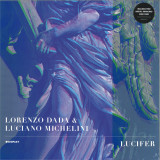
With Lucifer, Kompakt presents an album of rare beauty from two masters of modern music. A family affair, it’s a collaboration between the Italian father-and-son duo of Luciano Michelini and Lorenzo Dada, whose combined histories bring to Lucifer a depth of experience alongside clarity of vision and a finely tuned, neatly developed combined compositional voice. A lovely, beguiling suite of music that combines the electronic and the acoustic, the urban and the pastoral, its gorgeous night-eye vision and tender melancholy sits neatly within the Kompakt universe, while offering the curious listener some rich new perspectives.
There is already plenty to know both artists by. Lorenzo Dada creates across multiple fields – a techno producer and DJ who has already worked with the likes of Jay Haze, Fete, Leo Benassi, and Der, he’s released a small clutch of stylish, smartly designed EPs, and a solo album, Second Life (2018). His complementary background in classical music and composition informs his ensemble project, Tears Of Blue (who appear on Lucifer), where Dada paints with neo-classical tones for a quartet of violin, viola, cello and grand piano, supplemented by electronics for live performance.
Luciano Michelini’s history is yet richer. He may be best known, to many, for his piece “Frolic”, the theme to Larry David’s Curb Your Enthusiasm series; it was also sampled by Snoop Dogg for 2022’s “Crip Ya Enthusiasm”. But there’s much more to Michelini’s story. A successful soundtrack composer, Michelini both studied and taught at the Conservatoro di Santa Cecilia, and worked for RCA from the sixties to the eighties; his soundtracks from this period are gorgeous examples of the form, particularly his work for Il Decamerone Nero (1972), L’Isola Degli Uomini Pesce (1979), and the devastatingly gorgeous Dimensione Donna (1977).
In the eighties, Michelini and his wife Anna Gutling founded the Electronic Music Division studio and academy in Rome, which is where the majority of Lucifer was recorded. Dada reflects on the experience: “We never worked together before, so it was all new for both of us,” with Michelini adding, “I truly love this experience with my son. He’s a talented pianist and composer. I am not very familiar with electronic music nowadays, but we did it fluently.” There’s certainly a familial energy at play through Lucifer, and you can hear how Dada and Michelini, through exploration and experiment, find a shared language, balancing Dada’s tendency toward minimalism, and Michelini’s composerly voice.
Lucifer flows as a suite that interweaves electronic music with acoustic instruments: the lonely sigh of saxophone; Michelini’s lush, verdant piano; the weeping strings of Tears Of Blue (recorded at the studio of Michelini’s friend, the late Maestro, Ennio Morricone). These multiple voices are located within the electronic sighs and swarms from Dada’s kit; there are moments of propulsion, and passages of lambent drift, where the album revels in its tonal sweetness. If it flows so effortlessly, that’s because Lucifer was designed that way, as a suite or a sonata of sorts.
And the title? Dada reflects, “Lucifer was an angel who decided not to be one anymore. The miracle of life is that we can decide what we want to be, even if we are born as angels or vice versa.” This feels somehow apposite: there’s certainly something of the transformative, and the transportive, in Lucifer, a unique family collaboration of rare poetry and sensitivity, where two generations meet in the modern crucible that is the electronic music studio.
out of Stock
Last delivered 21 months ago available to reorder, subject to availability
Drunk Uncle isolated themselves into a cabin on an East Texas farm to write and record the follow up to their debut Look Up in 2022. The result "O, brittle weather!" is a thoughtful, probing album that explores a cacophony of sounds in a playful and whimsical way. The album feels like a telling of a great story- songs like pages colored with splashes of acoustic and electric guitars, floating bass, keys, horns, and percussion that ranges from a whole kit to a single tambourine that succinctly cues up the next chapter. Narrated by melodic vocals belting out emotional poetry, "O, brittle weather!" seems to plead with you to keep listening until the last word. Then, it begs you to listen again. Most bands are content to just collect a handful of songs and group them together as an album. Drunk Uncle strived to make something bigger than themselves. And wouldn't you know it, they succeeded.
Bruno Berle, the young songwriter and poet originally hailing from Maceió, the capital of Brazil’s Alagoas state, crafts songs that are simple, direct, and full of tender nuance. With his first album No Reino Dos Afetos (which translates to "In the Realm of Affections” and was released in 2022), Berle firmly established himself as a unique and important voice in the burgeoning scene of new Brazilian artists making a global impact, including peers like Ana Frango Elétrico, Tim Bernardes, Bala Desejo, Sessa and more. Now back with his second album, No Reino Dos Afetos 2, he stretches that further.
Bruno Berle’s music lives between two worlds – a traditional Brazilian folk talent steeped in history, and a contemporary, dreamy electronic pop; the result is songwriting that’s genre-bending, intentional, iconoclastic and consuming, spacious and sinewy and singular, a striking reflection of its composer while leaving space for the listener to settle in. The album follows Bruno’s relocation to São Paulo, and the songs are a reflection of his past and present. A rebuke of former categorizations of his work in Brazilian music scenes, and an idea of where his music can move, unfettered.
Berle’s music is purposeful in being a true portrait of himself, and a reflection of the music, art, and fashion scenes he personally moves through. Berle aims to provide an entrypoint for Black queer joy in his music, in his storytelling, in his presence and vision as a creative. For him, it feels subversive to be playing MPB laced with dubstep and lo-fi, a sort of intentional sacrilege, capturing a dialogue of modernity in traditional music.
Berle wrote most of the arrangements and co-produced his new album, Reino Dos Afetos 2 with longtime friend and musical partner Batata Boy, who is also from Maceió; the album was recorded in Rio de Janeiro, Maceió, and São Paulo, his new home, and picks up the conversation begun in 2022 on Berle’s debut album No Reino dos Afetos. Both records are the result of a nonlinear but coherent seven-year music creation process culminating in these albums, holding hands across space and time.
“Tirolirole,” the first single from the record, was released at the end of 2023; sun-soaked rhythms and soft voice coat the song, the lilting refrain of “Tirolirole” throughout – hushed, gentle, but somehow almost tactile, a golden-hour moment unlocked in the mind. “Tirolirole” is a triumphant future classic about the temporality of a blossoming love, with Bruno’s stunning vocal soaring over melodies which ebb and flow like the waters on the Atlantic shore. Of the track, Berle explains: “Despite ‘Tirolirole’ being an expression that evokes my childhood, just like the light words about nature, the harmony, and the poetry are epic, carrying a great hope for love.”
In fact, the guiding theme of No Reino dos Afetos 2 is a relationship, unfolding in the arc of a weekend. It traverses the innocence of an early young love, how that can be formative, can stretch on to take new shapes, or shape you. The album happens at the genesis of meeting someone and falling for them, before the relationship is thrown into overdrive – set in a big city, against a backdrop of major life changes, rising energy, the sound of São Paulo.
Something transcendental emerges in “Dizer Adeus,” with an arrangement that echoes a gospel atmosphere (evangelical and Catholic environments were pivotal to Berle’s upbringing). On “É Só Você Chegar,” piano and flute gracefully intertwine, a dance, while “Quando Penso” skews sparser, the voice-and-guitar minimalism somehow cultivating an entirely different shape – somehow both cozy and melancholy, with the background sound of a rainy day. Coupled with the lo-fi aspects that shape much of the album’s personality in the vocals and the production, No Reino Dos Afetos 2 is meticulously elaborated by Berle’s sonic alchemy, like on the mid-album instrumental “Sonho,” which feels like floating. “It’s the apex. It’s when lovers are sleeping together,” Berle explains of the feeling he wanted to encapsulate in the song.
On “Love Comes Back” Berle interprets Arthur Russell, the late Iowa musician who only reached greater visibility after he died in 1992. “His way of making music is similar to mine,” Berle explains. “He sings in a more fragile way, has more of an experimental way of recording, letting ‘chance’ appear in the final work.”
Even so, Berle doesn’t want his music to be buried in sentimentality – and the purposefulness of his craft serves as a sort of north star. The production, the arrangements, his restraint and intentionality in crafting his songs feel just as vital as their emotional cores. His songwriting is amorphous, fluid, an encompassing genre-bending movement in-and-of-itself, quietly daring. The songs are often in conversation with other works – drinking in fountains as diverse as the filmmaking of Ingmar Bergman, the poetry of Walt Whitman, the rhythm of Djavan, and the painting of Maxwell Alexandre. Musically he weaves together a rich tapestry of Brazilian folk, UK 2-step garage/dub, trip hop and sun soaked west coast songwriters; something akin to the worlds of Milton Nascimento, Arthur Russell, James Blake, Feist, and Sade colliding into one. But even then No Reino Dos Afetos 2 floats separately, a romanticism driven by a simplicity and intimacy, an open-ended possibility, Berle’s singularity as an artist at the helm of the ship.
Solo Throat is the first solo LP from vocalist, composer and movement artist Elaine Mitchener. Drawing on the work of African-American and African-Caribbean poets Edward Kamau Brathwaite, Aimé Césaire, Una Marson and N. H. Pritchard, these twelve new vocal compositions disrupt semantic sense, play with the margins of lyrical translation, and give rise to new voicings. Elaine Mitchener is a veteran of vocal expression in the global Black Avant Garde, traversing free improvisation, cross-disciplinary music theatre and contemporary composition with clarity and joy. Most recently, Mitchener has been improvising and composing with the written word as source material - challenging classical ensembles with her piece (“the/e so/ou/nd be/t/ween”), and commissioning composers Matana Roberts, Jason Yarde and George Lewis to respond to the work of Sylvia Wynter (“On Being Human as Praxis”, Donaueschinger Musiktage, 2020). Her performance of Umbra poet N.H Pritchard’s text FR/OG at OTO in 2021 was a revelation - a solo vocal recasting of the powerful visual-material form that Pritchard uses to disrupt semantic ‘sense’. Building on this performance, Solo Throat takes the work of Pritchard alongside poets Edward Kamau Brathwaite, Aimé Césaire and Una Marson as its source material. Its compositions are a loose translation - a carrying from text to voice which holds multiplicity and celebrates the transformative power of literary possibility. Surrendered to the spacing and repetition of consonants and vowels, Michener’s exceptional phonetic freedom gives rise to a sensuous experience which intensifies the roles of rhythm, timbre and breath in expressing meaning. Solo Throat comes together as much through difference as similarity. Mitchener’s own solo improvisations sit alongside the work of Brathwaite, Césaire, Marson and Pritchard, forming a constellation of unlikely alignments which make no aesthetic conclusion. Instead, Solo Throat is a site of encounter, an irreducibly plural de-composition of words into a heterogeneous assemblage of sounds and impulses, emphasising what Anthony Reed calls, “the play on and the surplus of margins of lyrical translation to resituate other pathways of expression”. Just as the poets cited use white space to complicate our act of reading, so Mitchener utilises silence and multiphonics to complicate the act of voicing and the way we listen. Genre: Experimental / Vocal / Poetry
Originally released on tape by SicSic in 2014, Aprilnacht commemorates a decade of music from Brannten Schnüre and marked the spring in a tetralogy of albums about the four seasons when it came out. Back then the Würzburg-based project consisted solely of Christian Schoppik, who later welcomed Katie Rich to take over the vocals. He used to perform as Agnes Beil, but dropped the name when, while making this album realized his music was becoming "much gentler and more fragile". Aprilnacht already captured the particular musical ideas that Schoppik would thoroughly keep exploring, delving deeper and deeper into the use and manipulation of samplers from sources so diverging as to wander between the five continents to post-war German family television and cult cinema. Heir of the ritualistic intensity of Coil, of the intricate sampler assemblies of Ghédalia Tazartès', and of the dusty, dismal old ballads from around the world, Brannten Schnüre manages to make these paths cross in a territory that is as inherent as it is uncanny; sieged by the past and intimate as a hearth. An organic approach to folk, ambient, and sound collage, where ethereal yet thoroughly textured pieces coalesce in enthralling, delicate, and innermost musical rituals.
The album cover paintings reveal the temper: dreary old towns where shadows come to dim the slow passage of crepuscular colors, a soft area of reanimation where wind and light come close and foresee the night of spring. Aprilnacht was inspired by the stories of German philosopher and writer Friedrich Alfred Schmid Noerr, whose work exhaustively examines the conflict between paganism and Christianity, safeguarding myth in a way that Schoppik describes as boldly modern, humorous and unpredictable in its variations of the Germanic folklore motifs. "I wanted to do the same with the music," he states, and the music here could as well be suitable for a night when household deities welcome wandering will-o'-the-wisps, water nymphs, and gyrovagues to discuss Perchta's leadership of The Wild Hunt, but this album is not a folk tale, it's not an elegy to worlds already gone, hidden in years; it's an intersection of routes that open mysteriously before our ears like a congregation of vapors. Aprilnacht is a gathering of voices; "There are too many children, and none of them keeps quiet," reads the last verse of «Requiem für eine Ringelnatter.»
Sensuality drips over the music to celebrate both the voluptuousness and tragic quality of nature; "It's raining on me, urine from your flowers," Schoppik sings in «Urin deiner Blüten» and later on, faced with a snake's erotic features, as if he wanted to be embraced by it: "Your quick, sharp tongue and your warm venom; that's what the pond is missing." Orality is where this profusion of contents thrives. When the voices get closer and condense, the words reveal the saliva employed to pronounce them; we feel the mouth and the tongue, but when breath envelops them in sorrow and softens their edges, they sound distant, diffused in the atmosphere, letting go of the body that held them. These two vocal facets oscillate permanently and interact naturally with the fertile assembly of samplers and instruments that develop throughout the album, which condense and disperse impersonating each other, interweaving to search for a specific syntax. Tangled whisperings of enigmatic phrases, timid voices that stick out to check the scene but hide away quickly, shivering trance chants and monastic ambiances, distant screams and clamors in between chaos and warfare swirl until bursting into subtle songs where even Mother Mary comes forth softly. Soothed by foggy atmospheres and crackling punctuations, these voices shape a vulnerable crowd, an occasion of fragility. Along this swarm of songs thrown into thin air, accordions sound like heavy-breathing lungs; clarinets sigh like curtains shaking; violin solos wander around like bees; Gjallarhorns cries distend like fleeing cattle; glockenspiels evoke remote music boxes and inherited toys; backward emanations emerge like slender waves retreating. On the banks of stretching loops and ember textures is where the songs slowly nest, collecting the words to find their tone.
A poem by Jorge Teillier says, "To talk with the dead you have to choose words that they recognize as easily as their hands recognized the fur of their dogs in the dark. To talk with the dead you have to know how to wait: they are fearful like the first steps of a child. But if we are patient one day they will answer us with a flame that suddenly revives in the fireplace." This may be Brannten Schnüre's main purpose: To find the voice to speak to those of whom we were a vision. Not in mourning, but acknowledging the obscure and volatile nature of spring's regenerative force, searching for the treasure of balance, as evidenced in the lyrics of «Requiem für ein Schwalbennest,» "Its nest was destroyed so many times before it was finished, and despite that, the shallow builds as if it is infatuated." The same idea is here in the words of Schmid Noerr, who made poetry an act of resistance to the horror of Nazism; "Since having seen the ability of a brilliant spirit to die, with a calm mouth that everyone saw, health is true again and we affirm it, even if rivers of blood flow." And as we call for the dusk's kindness, waiting to return home and eat with our kin by the stove, our ears become used to the games of the night. We feel like we're rowing on wetlands, while the "moon musick" keeps us vigilant against the slightest movement of water or sweet moan because eeriness here is imperative for survival. Do not succumb to the insipid howl of death, for nothing may last but mutability. You see, the rock has moved a little during the night; the rest is just wind fleeing from the void.
out of Stock
Last delivered 2 years ago available to reorder, subject to availability
Clock DVA is one of the pivotal groups of industrial music. Founded more than forty years ago, the instrumental outfit has seen a contemporary partnership of electronic experimentation forged between Adi Newton and Maurizio Martinucci since 2010. It is their source material that proves fertile ground for two remixes, remixes by two heavyweights of electronic music. Atom™ delivers his re-imagining of “De-Konstructor.” A lone string is met by snapping snares as an alluring, yet cold, melody unfolds. Newton’s raspy throaty words rise, a stark prescient poetry countered by angular acid-twisted keys before samples buckle and loop. The second stalwart of electronics drafted in is Scanner for his reframing of “Rayonist Refraction #1.” A ghostly female voice haunts a backdrop of electrical fizz and voluminous cracks of shuddering thunder. Guitar strings tremble in this eerie landscape with a smattering of spoken text bringing solace to this hostile environment. Music for an all to immediate reality.
out of Stock
Last delivered 23 months ago available to reorder, subject to availability
“One Day,” the critically acclaimed Bambu Station album now celebrating its 20th Anniversary with this Deluxe Edition Double Vinyl and digital release. Bambu Station believes “Vibes is everything” and their impact on fans and their community activism have been just that. Founded in 1997 by lead singer, songwriter, producer Jalani Horton, of St. Thomas, Virgin Islands, Bambu Station is the culmination of a lifetime of love for music and the quest for sharing and uplifting through sound, poetry, words, and action, which has since grown to a musical force supported by roots fans around the world. The sound of Bambu Station is best described as heavy, natural and
relentlessly captivating. From its conscious roots music to its powerful, insightful and timeless lyrics, Bambu Station's sound is very percussive, profound and inviting.
As the explosion of roots reggae music from Jamaica in the sixties and seventies turned to dancehall, unexpectedly there came a resurgence of roots reggae from the Virgin Islands. Bambu Station was a main progenitor of that resurgence. It would be a band that would create music and write songs that reach into the difficult spaces in the lives of people. It would be a band that would have a positive impact on the lives of people. It would strive to keep a mighty torch lit -- lit by ancestors and musician-prophets alike. On the first release of their breathtaking third album “One Day”, many songs quickly became instant favorites. Fans, writers and industry experts all continue to praise the album as “classic”, “very powerful”, and “one for the ages”. From The Beat Magazine, Reggae Reviews, Urban Ambience Journal and countless others, critics dubbed Bambu Station’s “One Day” as one of the most significant albums of the modern reggae scene. Creation Steppin’ Radio selected “One Day” as its “Album of the Year” for 2003. The D.C. Annual Reggae Awards selected “One Day” as “Album of the Year 2003,” the song “One Day” as “Song of the Year 2003” and Bambu Station as “Producer of the Year 2003.” Terry Wilson ‘Midnight Ravers’ on WBAI FM, NY says, "Bambu Station is the best and most important band in Reggae music." “This is a fabulous album that demands a place of pride in every cultural fan's collection.”
Many of the instant favorites on “One Day” include the provocative opener “Humanity Bawlin’,” “Gunsmoke”, the first single from “One Day”, a very deep, roving and powerful reflection of the rampant gun violence that hit the Virgin Islands hard and haunts us in America and around the world today. "The anthemic “Fya!”, and the mesmerizing “Move On”. "Pass It" captures the passion and spirit of the roots rockers era, while the haunting title track "One Day" is reminiscent of The Specials at their best. The heart wrenching tribute to “Amadou Diallo” is in memory of the brutally slain innocent West African immigrant in New York. “Eyes of Men” is a call for female dignity and homage to Betty Shabazz, Malcolm X’s widow.
Live recording of the final show of SANAM's debut European 2023 tour at London's home for experiemntal music, Cafe Oto.
Beirut's SANAM burst on the scene in 2023 with their debut album Aykathani Malakon, chosen by The Guardian as one of their 5-star albums from 2023: "Aykathani Malakon thoroughly embodies their originating influences, whipping up kosmische, post-punk, psych rock, free jazz and Levantine folklore into an alchemical tour de force delivered with a defiant, DIY disposition".
Under difficult conditions, the band took to the road for a European tour in November 2023 with the final show at Café Oto. From their incendiary European debut earlier that month at LeGuessWho then rapturous, sold out shows in Switzerland, Belgium, Germany and the UK, spirits for the Cafe Oto gig were high and it was destined to be a tour highlight. 'Live at Café Oto' captures the intensity of the shows, a ritual where improvised rock, free jazz and noise underscored an exorcism of traditional Egyptian song and Arabic poetry.
Drummer Pascal Semerdjian adds: "On this tour, I felt the album evolve from being a set of improvised tracks captured spontaneously, into ripe solid songs. Playing these shows back-to-back, our chemistry kept growing, we got closer, and our live sets, at least to me, were an embodiment of this evolution. In a way, this was the real birth of the band"
Vocalist Sandy Chamoun: "We started the tour with a great push at LeGuessWho, and we kept this energy throughout the whole tour. Every gig felt like I was playing the songs for the first time, providing a new and fresh experience for me. We finished the tour with an emotionally intense gig at Cafe Oto, a dream venue. The audience was incredible, as if we had known each other for a long time and the energy was intense and intimate at the same time; it felt like we were in a small circle of fire together, both us and the audience."
"There was definitely magic in the air for our show at cafe oto - an iconic, humble and warm venue and the last show of the tour – it felt like everything was in the right place. It was my favourite show by far, specially that we were also comfortably able to talk about Palestine, the atrocity we have to live with and can't ignore." Pascal Semerdjian
METAL HAMMER - 8/10 review. FOR FANS OF : Lustmord, Om, Sunn O))) . “An exercise in freeform ambience, ritualistic repetition and the rapturous, womb-like power of bass…strange and affecting. We remain lucky to share in the great man’s vision.”
It’s a dream diary narrating a passage through Summer Isle where Flying Saucer Attack are wafting out of a window, a distant Fairport Convention are being remixed by dub master Adrian Sherwood, celestial scanners Tangerine Dream are trying to drown out Bert Jansch and Hawkwind are playing Steeleye Span covers, all prised out of time yet bound to its singularity.
Released periodically on three of 2024’s full moons – April 23rd’s Pink Moon, July 21st’s Buck Moon and October 17th’s Hunter Moon – the three-album cycle, “Triptych”, is (Steve Von Till from Neurosis) Harvestman’s most ambitious undertaking yet.
Guest musicians including Al Cisneros of Sleep / OM who plays bass on one track for each LP, of which he will also mix a dub version on the B-Side of each LP. Dave French of Yob, Sanford Parker and Wayne from Petbrick all make appearances.
Released periodically on three of 2024’s full moons – April 23rd’s Pink Moon, July 21st’s Buck Moon and October 17th’s Hunter Moon – the three-album cycle, “Triptych”, is (Steve Von Till from Neurosis) Harvestman’s most ambitious undertaking yet.
Guest musicians including Al Cisneros of Sleep / OM who plays bass on one track for each LP, of which he will also mix a dub version on the B-Side of each LP. Dave French of Yob, Sanford Parker and Wayne from Petbrick all make appearances.
It’s a dream diary narrating a passage through Summer Isle where Flying Saucer Attack are wafting out of a window, a distant Fairport Convention are being remixed by dub master Adrian Sherwood, celestial scanners Tangerine Dream are trying to drown out Bert Jansch and Hawkwind are playing Steeleye Span covers, all prised out of time yet bound to its singularity.
Bone White opaque + Black Galaxy effect vinyl in dub style jacket (jacket sleeve with centre hole cut out so label shows throug
Drawn to the megaliths, ruins and ancient sites mapped out along the British and European mainland’s geographical and psychic landscapes, the folklore and apocrypha forever resurfacing as portals from a rational world, “Triptych” is a meditation forged from traces and residues, and an hallucinatory recollection of artists who have tapped into that enduring otherworldliness embedded within us all.
Woven together from home studio recordings that span two decades, this fifth outing as Harvestman finds parallels with nature’s cycles not just in its release dates but in the repeated structure that binds each album, like an imprint refracted though three separate strata. “Part One”, as with the forthcoming Parts Two and Three, starts on a collaboration with Om bassist and long-term friend of Steve’s, Al Cisneros, with a dub take opening the B-Side. Here, the opening track “Psilosynth" orbits a grandfather-clock mechanism passing through a nebula haze, all waved on by an acid-fried deity. From there on, “Part One” journeys through the elegiac “Give Your Heart To The Hawk”, with the sampled poetry like a documentary retrieved from a long-lost world, Philip Glass wistfully attending a rescue beacon from the far corner of the universe on Coma, as well as percussion recordings performed by Steve and friend Dave French (drummer of Yob) on a rusted torn open stock tank outside Steve’s barn, treated bagpipes and old reel-to-reel recordings, all reiterated across the next volumes in ever more out-there contexts.
If “Triptych” is a multi- and extra-sensory experience, it extends to the remarkable glyph-style artwork of Henry Hablak, a map of correspondences from a long-forgotten ancient and advanced civilization. As with “Triptych” itself, it’s an echo from another time, an act of binding, a guide to be endlessly reinterpreted, and a signpost to the sacred that might not indicate where to look, but how.
out of Stock
Last delivered 2 years ago available to reorder, subject to availability
Following the force of their introductory singles 'Tabernacl' and 'St Agatha', the band return with an invitation to explore their landscape of violent poetry and gothic propulsion to the fullest extent yet. Prepare to be lulled under their spell once more with the slow-burn of forerunning single, 'Remoter Heaven'.
Produced by long-time collaborator Buzzard Buzzard Buzzard's Tom Rees. It begins in a dream state of hypnotic repetition that mounts in intensity, with vocalist Jack Shephard presiding over it all with his distinctive, poetic drawl. His protagonist is revisiting a memory of the pain inflicted by a thorn as a child; "I was awake with feeling", he confesses, before the song takes on the momentum that feels like a triumph over the numbness attendant to adulthood.
Of the track, Shephard shares: "I liked the idea of writing a very simple narrative to a big, epic song - something as modest as the story of a child playing in some flowers and then bursting into tears when a thorn pricks their leg. The words are an ode to that sensitivity we embrace when we are young. Then, when we become adults, we insist on subjugating all of that wonderful, absurd rage."
'Remoter Heaven' follows on from 'Tabernacl' and 'St Agatha' which earned Slate rave write-ups and support from publications including NME, CLASH, So Young, DIY, Buzz Magazine, The Most Radicalist and more, as well as early radio plays from the likes of Huw Stephens and Steve Lamacq on BBC 6Music, Matt Wilkinson on Apple Music 1, John Kennedy on Radio X and Jack Saunders on BBC Radio 1.
"All our dreamers lose to the light" - from "Angels Go Home" When the pandemic began, and the world shut down, so did the process of creating for Iron & Wine's Sam Beam. In its place was a domesticity that the singer hadn't felt in a long time, and although it was filled with many rewards, making music was not one of them. Reflecting on that time, Beam notes: "I feel blessed and grateful that I and most of my friends and family made it through the pandemic relatively unscathed compared to so many others, but it completely paralyzed the songwriter in me. The last thing I wanted to write about was COVID, and yet every moment I sat with my pen, it lingered around the edges and wouldn't leave. This lasted for over two years." The journey back began with a recording session in Memphis to record a handful of Lori McKenna tracks for the EP Lori with friend and producer Matt Ross-Spang. The cathartic experience reconnected Beam with his love for making music, and soon enough the paralysis had passed, and he was finishing lyrics and booking studio time for what would become Light Verse. Light Verse was recorded with engineer and mixer Dave Way at his studio Waystation high up in Laurel Canyon (with an additional session at Silent Zoo Studio with a 24-piece orchestra), with a host of talented musicians joining Beam: Tyler Chester, Sebastian Steinberg, David Garza, Griffin Goldsmith, Beth Goodfellow, Kyle Crane, and Paul Cartwright. And, Fiona Apple joined Beam on vocals for the duet "All In Good Time." Beam lyrically once again takes focus on a series of both fictional and personal insights, filled with desperate characters and wide-eyed optimists, offering promise and a dose of heartache, tears and laughter, life and love. Taking stock in the album's title, he jokes, "Light verse is a form of poetry about playful themes that often uses nonsense and wordplay, and it's my first official Iron & Wine comedy album!_. Just kidding_." While true this may be Iron & Wine's most playful record, Beam says the title mostly reflects the way the songs were born with joy after the heaviness and anxiety of the pandemic. Where recent records like Beast Epic or Weed Garden gave air to the disquiet of middle-aged frailty and brokenness, these songs trade that for the focus acceptance can bring. Moment by moment, they delight in being pointed or silly (or both) and attempt beauty over prettiness. Light Verse arrives April 26th, and it's Iron & Wine's seventh full-length overall and fifth for Sub Pop Records. Fashioned as an album that should be taken as a whole, it sounds lovingly handmade and self-assured as a secret handshake. Track by track, its equal parts elegy, kaleidoscope, truth, and dare.
Christina Kubisch’s Stromsänger finds this legendary sound artist at the top of her game mixing electromagnetic wave recordings with a score for six voices, creating powerful results. Stromsänger is based on a collaboration with the Norwegian vocal ensemble Trondheim Voices and on a special experience while researching and recording electromagnetic waves in the city of Trondheim.
“The general theme of the composition is the idea of sounds which travel. During a tram ride from the city up to the hills with an old tram I discovered not only stunning views of the surrounding landscape but as well a special soundscape. Wearing a custom made induction headphones, I could hear the normally hidden electromagnetic fields of the tram, which were so impressive and musical to me that I immediately decided to base my piece for Trondheim Voices on this discovery.
As a start, a series of pure vocal recordings were produced by Trondheim Voices while listening to a choice of electromagnetic tram sounds and following score instructions. This material was mixed in my Berlin studio and afterward was played back through a multi-loudspeaker setup into the room of the Elisabeth Church in Berlin and was instantaneously recorded. The emerged recording was played back and recorded again. The process of playing back the previous recording was repeated numerous times, generating numerous “re-recordings”, until the voices sounded aethereal and abstract. The last one of these recordings became the very beginning of the Stromsänger piece.
Part A is based on the electromagnetic sounds of the waiting tram and previously recorded voices. The singers come on stage and start to sing together with their recorded part which slowly fades out while the live singing takes over: a kind of choral for electrical tram waves and voices.
Part B is based on the actual tram ride with strong and intense electromagnetic sounds. The single recordings were treated electronically and were divided into six channels. Each singer has chosen one of these files and improvises with the magnetic sounds as a soloist or in duos or trios.
Part C is based on the itinerary of the tram ride to Lian, where a pilgrim's path starts. The names of the single stops, which have very beautiful and poetic names, are performed together as a kind of "sound poetry". The singers walk around on stage and/or can choose special positions for their performance. The recording of the word "Lian", the final stop, was recorded beforehand and played back and re-recorded several times in the open Norwegian landscape near the final tram stop. The voices slowly disappear and fade out.”
Sleap-e is reclaiming herself. The Italian singer-songwriter’s second album, 8106, captures the spirit of play; the child-like instinct to pursue what you love without compromise - and here it is, that particular magic that rarely survives adulthood, remarkably intact. Each of its eleven songs are vibrant shards which build a mosaic of Asia Martina Morabito’s world: the growing pains of your early twenties, remaining faithful to your dreams despite the hostility of adulthood, places of escape both real and imagined - and the pulse of Bologna, her home and north star. As a student of old-school iconoclasts like The Fall and inspired by the outsider streak of Jimmy Whispers and Daniel Johnston, it was not any particular musical quality of theirs which Asia wanted to channel in Sleap-e, but their confidence to “explode in a raw, free and authentic way.” Though her sound has shifted from the tender bedroom pop of her 2020 EP Mellow and her 2022 debut album Pouty Lips which was bedecked with jubilant brass and Mediterranean rhythms, it’s her self-belief which endures. 8106 is Sleap-e’s most raucous, unpolished and playful offering to date, steeped in the influence of “egg-punk”, an internet-grown genre which seeks to satirise the tropes of punk with its danceable irreverence. There is joy to be found, Asia feels, in refusing to conform, and it has brought her closer to herself than ever before. But to gain her sense of self, first, she had to lose sight of it. Summer of 2023, when the outlines of the record were made, was a difficult time for her. 8106 was the number of the hotel room she felt confined to, alone and adrift from comfort when she was working away from home. Writing this album was her getaway car. “It represents an important choice I made,” she explains. “I chose happiness. I chose myself.” The title represents a kind of mental post-it note reminding herself to stay focused on what she loves; it’s a talisman to protect her from hard times. She returned home, and there she began recording the album in residency at the Bronson Club, a hive of like-minded creatives and mentors who helped it take its final form. At home, her own music was played freely and instinctively. The artwork for 8106 is by Noemi Vola, a prolific Bolognian illustrator and author who specialises in designs for children, which reflects the “funky, fairytale mood” of the record itself.
Noir Brésil is the debut album from Franco-Brazilian artist, composer and producer Yndi. Formerly known as Dream Koala, she decided to retire the moniker back in 2017 and began writing what ultimately became Noir Brésil, a modern pop album where afro-Brazilian percussion meets French and Portuguese poetry to create an immersive soundscape. As Dream Koala, Yndi released EPs Odyssey (2013,) Earth. Home. Destroyed. (2014,) and Exodus (2015,) as well as popular single "We Can't Be Friends", gaining her international success and garnering multi-millions of streams across platforms. In 2020, there were so many images of black people suffering on social media. After that traumatizing year, Yndi needed images showing that being black wasn't only about suffering, she wanted healing images. It's exactly what the Afro-Brazilian culture has been doing for centuries, it conveys a strength that keeps us alive in a dehumanizing society. The title track "Noir Brésil" is a poem for her ancestors. Yndi wrote "Amazona" on an atabaque (Afro-Brazilian percussion) rhythm inspired by the myth of the Amazons, warrior women, and Douanier Rousseau's painting La Guerre. The violence of the lyrics contrasts with the melancholic harmonies. The song pays tribute to the anger and strength required by women to live in the contemporary world. The song "Novo Mundo" and its animated video directed by Nina-Lou Giachettia are a reflection of Brazil, through luminous and colorful landscapes. Here the evocation of the divine, the beauty and the violence of nature reflects perfectly the essence of Yndi'sdebut album.
"Nothing and no one can extinguish this flame within you," sings Emilie Simon from the opening title of Polaris, her first true album in ten years. An apparent long eclipse that the French singer, musician, and producer has nevertheless used to explore new territories, open uncharted paths, and reinvent her musical vocabulary and narrative threads. Like Ariane in a dreamlike world, she stretches these threads along her journey, inviting us to blindly follow.
After composing music for the film "The Jesus Roll" with John Turturro, and a musical journey between Earth and Mars through a series of singles, in 2023, Emilie Simon chose to revisit her debut album, both in the studio and on stage, to definitively close a chapter begun twenty years earlier. She also published "Phoenix," a gothic tale with a "vampiric" theme, sung and spoken in alexandrines. The central character, Lily Mercier, is the same one found at the heart of the Polaris adventure. Clearly, Lily is a projection of Emilie, on a quest for the North Star that symbolizes the never-extinguished desire to find her way. The dazzlement too, when one is a musician always eager to ignite again for the infinite mysteries of sound and to translate its shivers into songs.
This album, sung in both French and English, succeeds in combining the clarity of melodies with the demands of production. It immediately captivates (the irresistible burn of the Sun) and enchants over repeated listens, like a lasting iridescence of a thousand sonic fragments. Recorded in New York (where Emilie lived for a long time), Los Angeles, Montreal, Rome, and Paris (where she returned to settle), Polaris has its own cartography. Its universe is the standard scale, its pulsation inspired by cosmic rhythms, and its unique poetry both disturbs and captivates. A sign that nothing and no one can extinguish this flame within her.
A milestone of the Black music movement, originally released on Vault in 1969. The debut album of Elaine Brown was arranged by piano player amd composer Horace Tapscott, conducting the Californian Pan-Afrikan Peoples Arkestra. A true political manifesto, the album is an accurate meeting between black poetry and spiritual jazz. After her debut Elaine went to release an eponymous second album on Motown. Elaine Brown is an African American activist and a former leader of the Black Panther Party - Minister of Information and Chairman.
Bruno Berle, the young songwriter and poet originally hailing from Maceió, the capital of Brazil’s Alagoas state, crafts songs that are simple, direct, and full of tender nuance. With his first album No Reino Dos Afetos (which translates to "In the Realm of Affections” and was released in 2022), Berle firmly established himself as a unique and important voice in the burgeoning scene of new Brazilian artists making a global impact, including peers like Ana Frango Elétrico, Tim Bernardes, Bala Desejo, Sessa and more. Now back with his second album, No Reino Dos Afetos 2, he stretches that further.
Bruno Berle’s music lives between two worlds – a traditional Brazilian folk talent steeped in history, and a contemporary, dreamy electronic pop; the result is songwriting that’s genre-bending, intentional, iconoclastic and consuming, spacious and sinewy and singular, a striking reflection of its composer while leaving space for the listener to settle in. The album follows Bruno’s relocation to São Paulo, and the songs are a reflection of his past and present. A rebuke of former categorizations of his work in Brazilian music scenes, and an idea of where his music can move, unfettered.
Berle’s music is purposeful in being a true portrait of himself, and a reflection of the music, art, and fashion scenes he personally moves through. Berle aims to provide an entrypoint for Black queer joy in his music, in his storytelling, in his presence and vision as a creative. For him, it feels subversive to be playing MPB laced with dubstep and lo-fi, a sort of intentional sacrilege, capturing a dialogue of modernity in traditional music.
Berle wrote most of the arrangements and co-produced his new album, Reino Dos Afetos 2 with longtime friend and musical partner Batata Boy, who is also from Maceió; the album was recorded in Rio de Janeiro, Maceió, and São Paulo, his new home, and picks up the conversation begun in 2022 on Berle’s debut album No Reino dos Afetos. Both records are the result of a nonlinear but coherent seven-year music creation process culminating in these albums, holding hands across space and time.
“Tirolirole,” the first single from the record, was released at the end of 2023; sun-soaked rhythms and soft voice coat the song, the lilting refrain of “Tirolirole” throughout – hushed, gentle, but somehow almost tactile, a golden-hour moment unlocked in the mind. “Tirolirole” is a triumphant future classic about the temporality of a blossoming love, with Bruno’s stunning vocal soaring over melodies which ebb and flow like the waters on the Atlantic shore. Of the track, Berle explains: “Despite ‘Tirolirole’ being an expression that evokes my childhood, just like the light words about nature, the harmony, and the poetry are epic, carrying a great hope for love.”
In fact, the guiding theme of No Reino dos Afetos 2 is a relationship, unfolding in the arc of a weekend. It traverses the innocence of an early young love, how that can be formative, can stretch on to take new shapes, or shape you. The album happens at the genesis of meeting someone and falling for them, before the relationship is thrown into overdrive – set in a big city, against a backdrop of major life changes, rising energy, the sound of São Paulo.
Something transcendental emerges in “Dizer Adeus,” with an arrangement that echoes a gospel atmosphere (evangelical and Catholic environments were pivotal to Berle’s upbringing). On “É Só Você Chegar,” piano and flute gracefully intertwine, a dance, while “Quando Penso” skews sparser, the voice-and-guitar minimalism somehow cultivating an entirely different shape – somehow both cozy and melancholy, with the background sound of a rainy day. Coupled with the lo-fi aspects that shape much of the album’s personality in the vocals and the production, No Reino Dos Afetos 2 is meticulously elaborated by Berle’s sonic alchemy, like on the mid-album instrumental “Sonho,” which feels like floating. “It’s the apex. It’s when lovers are sleeping together,” Berle explains of the feeling he wanted to encapsulate in the song.
On “Love Comes Back” Berle interprets Arthur Russell, the late Iowa musician who only reached greater visibility after he died in 1992. “His way of making music is similar to mine,” Berle explains. “He sings in a more fragile way, has more of an experimental way of recording, letting ‘chance’ appear in the final work.”
Even so, Berle doesn’t want his music to be buried in sentimentality – and the purposefulness of his craft serves as a sort of north star. The production, the arrangements, his restraint and intentionality in crafting his songs feel just as vital as their emotional cores. His songwriting is amorphous, fluid, an encompassing genre-bending movement in-and-of-itself, quietly daring. The songs are often in conversation with other works – drinking in fountains as diverse as the filmmaking of Ingmar Bergman, the poetry of Walt Whitman, the rhythm of Djavan, and the painting of Maxwell Alexandre. Musically he weaves together a rich tapestry of Brazilian folk, UK 2-step garage/dub, trip hop and sun soaked west coast songwriters; something akin to the worlds of Milton Nascimento, Arthur Russell, James Blake, Feist, and Sade colliding into one. But even then No Reino Dos Afetos 2 floats separately, a romanticism driven by a simplicity and intimacy, an open-ended possibility, Berle’s singularity as an artist at the helm of the ship.
out of Stock
Last delivered 2 years ago available to reorder, subject to availability
A Chaos Of Flowers is an album that builds on their ferocious 2023 album nature morte. BIG|BRAVE"s music has been described as massive minimalism. Their fusillades of textural distortion and feedback emphasize their music"s frayed edges as much as its all-encompassing weight. The potency of the trio"s work is their singular artistry combining elements of traditional folk techniques and a modern deconstruction of guitar music. Gain, feedback, and amplitude are essential. For A Chaos Of Flowers guitarist/vocalist Robin Wattie drew heavily on the poems of artists whom Wattie found kinship in, their words resonant with experiences of those often sidelined by cultural norms. "I discovered that most poems from folk traditions or in the public domain seem to be by men - to which I could not quite relate. In my search, I rediscovered some of my favorite works and poets," says Wattie. Guitarist Mathieu Ball and drummer Tasy Hudson help Wattie shape poetry into pieces as dense and impenetrable as they are vulnerable. BIG|BRAVE achieve their colossal sound through minimalist approaches, a deft understanding of dynamics and an inventive employment of percussion and distortion. The trio reconceptualize what it is to be heavy or minimal, challenging perceptions with their illumination of painfully overlooked perspectives. Guest guitarist Marisa Anderson lends earthen, blues-inflected atmospheres to the album, where guitarist Tashi Dorji and saxophonist Patrick Shiroishi amplify the squall. Working closely with frequent collaborator and producer/engineer Seth Manchester, the internal tumult of Wattie"s voice rings out in warbles, haunting echoes, and unearthly harmonies across bold immense walls of distortion. BIG|BRAVE have collaborated with metal monsters The Body on a previous Thrill Jockey release, Leaving None But Small Birds, and have toured internationally with bands like SUMAC, Godspeed You! Black Emperor, SUNN O))), and Lingua Ignota. As they continue to ascend in their journey as pioneers in the contemporary metal scene, it"s safe to say that BIG|BRAVE are here to stay.
Reissue of Olli Aarni's Dauw debut and the very first release on the label at all: 'Kimalle'. Originally released in 2014 as a super limited cassette edition.
Olli Aarni is a sound artist living in Helsinki. He graduated in the Masters of arts in 2016 while he was already releasing his first work through labels as Sunshine LTD, Cotton Goods, Preservation among others. Throughout the years, Aarni has performed his music worldwide and held residencies at acclaimed places like Q-O2 (Brussels), EMS (Stockholm) and WORM (Rotterdam). Besides music he also makes video’s and writes poetry.
Chaos Emeralds started out as a breezy collection of experimental beats made mainly from natural sounds, synths and vocals. There are sparsely arranged drums, with subtle percussive layers enmeshing
with canopies of found sounds that bounce around excitedly, weaving around pools of melodic poetry that speak deeply in metaphor and sensory images
Delphine Dora is a prolific composer, improviser and musician who has released on a plethora of labels including Recital, Morc, Sloow Tapes, Feeding Tube, Okraïna and more, and ‘Le Grand Passage’ is her Modern Love debut, a stunning set of songs for piano and voice, recorded in one take without overdubs or edits.
In an act of pure expression, Delphine Dora recorded the 8 songs of ‘The Great Passage’ in a single take, succumbing to a whirlwind of inspiration that transported her beyond the material world. Baroque paradigms bleed into fragile, introspective mantras, expressed through a made up language of existential yearning and channeled through piano and voice. It’s music that caresses the sublime, made without any premeditation.
Delphine was nearing the end of a three-day prepared piano residency when an technician stepped in to tune her grand piano for her final performance. He removed the objects from the strings and fixed the pitch, leaving Dora with a freshly tuned instrument. Mesmerised by its new sound, she proceeded to switch on her recorder and pour out her soul, channeling, in her own words, "something greater than myself".
The result is some of the most unusual but elevated material the prolific composer, improviser and multi-instrumentalist has ever recorded, rooted in a deep understanding of European musical history but willing to push at its boundaries, questioning the earthly logic of life and death, asceticism and impiety. Glistening imperfections lash 'The Great Passage' to the physical world, but Dora - seemingly possessed as she quivers in a fictional dialect - lets her fantasies intensify her spirit, lifting the music towards the heavens. It's not sacred music, per se, but it is unashamedly mystical.
On the luxurious, languid opening, Dora dissolves eerily familiar romantic piano motifs into an attentive ceremony, singing with charged emotion. Her words aren't really decipherable, but their resonance vibrates beyond language; it's striking to hear how confident she is in vulnerability. She lets the piano wrap into her voice, connecting us directly to a unique mode of emotional expression by urging us - the listener - to project our own meaning onto her abstracted words.
Dora refers to the act of improvisation itself as a way to indicate "the fragility of being”, and as her words blur in and out of focus, dipping from a hoarse croak to a choking wail, she places herself at the very edge of musical formality, questioning strictures put in place to suffocate self-expression. Her music has often been labeled "outsider", but here she sounds intimate and interconnected, more self-consciously candid than anything traditional might have allowed. She conjures affecting, plainspoken poetry, like a bedside diary written in a hypnagogic, delirious state: a stream-of-unconsciousness, channelling the beyond.
The album title connects to a book dedicated to French philosopher and activist Simone Weil, who famously pored over global religions to ascertain spiritual truths. To Weil, meditation was a passage to access mystical experience, or a bridge between humanity and divinity. In Dora's hands, this idea is a corridor between herself and the listener, a liminal place where she's able to address feelings without making anything explicit. The title, of course, also refers to life, its impermanence, finitude, and fragility, presenting the complex, multi-dimensionality of being through one of the most undiluted, unbridled set of songs imaginable.
Renowned for their boundary-pushing sonic explorations, Klein Zage and Joey G ii join forces to deliver a captivating fusion of spoken word and electronic beats in their latest collaborative EP, ‘From New Cross To Ridgewood’ inspired by their time living together in South London. The EP promises an immersive auditory experience that transcends genre boundaries featuring remixes from Local Artist, DJ Python and Ariel Zetina.
The EP marks a return to the stripped back musical style Sage became known for early in her career on Orphan Records, such as Womanhood EP and the sensational ‘The Sayers’ on the 2022 edition of Shouts.
The record effortlessly blends the ethereal spoken word prowess of Klein Zage with the electronic breaks wizardry of Joey G II. The duo's ability to seamlessly merge spoken word poetry with innovative electronic soundscapes creates a unique and compelling listening journey that captivates from start to finish. Adding to the allure of the EP are the remix contributions from three distinct artists, each bringing their own perspective to the project.
out of Stock
Last delivered 2 years ago available to reorder, subject to availability
Mit ihrer bisher offenherzigsten, direktesten und intimsten Sammlung von Material stellt sie ihre einzigartige Reise durch die britische Musiklandschaft neu auf. Love In Constant Spectacle beschwört spektakuläre Bilder herauf und destilliert die Vision der Künstlerin in ihrer reinsten Form, wodurch ihr unnachahmlicher Sound und ihre poetische Vision zu neuen Höhen aufsteigen. Sie fängt die Melancholie ihrer frühen Arbeiten ein und treibt sie gleichzeitig voran. Sie skizziert Szenen, während wir beobachten, wie neue Farben, Formen und Sprachen auftauchen und den Rahmen füllen. Mit Love In Constant Spectacle geht sie gemessene Schritte in Richtung eines lebendigen, traumhaften Albums, das im Angesicht der Unvermeidlichkeit des Lebens Entschlossenheit bietet. Die Grundlagen von Weavers Sound sind immer noch offensichtlich - üppige motorische Drums, pulsierende Bässe, speziell modifizierte Synthesizer und exotische Fuzz-Pedale - aber der Strom ist überschwemmt mit Scrabble-Poetry und Letraset-Wiegenliedern, die zu üppigem Eskapismus führen, der freien Hingabe, die man mit Free Jazz und der Avantgarde assoziieren würde. Doch so entschlossen und visionär Weaver auch sein mag, Love In Constant Spectacle wurde nicht ohne Hilfe umgesetzt. Hier finden wir eine lange diskutierte Zusammenarbeit mit Janes erstem Produzenten, John Parish (PJ Harvey, Aldous Harding), der Weavers Prozess in der Umgebung der Rockfield Studios und Geoff Barrows Invada-Studio begleitet hat. Love In Constant Spectacle ist jenseitig, intim und doch distanziert, eine surrealistische Interpretation der Grundlagen, die uns menschlich machen - die Geschichten und Landschaften, die es malt, sind eigene Lebensräume. Es ist eine Reise in unbekannte Gefilde, ein von Herzen kommendes Manifest einer Künstlerin, die sich mit jedem Kapitel ihrer Karriere grenzenlos weiterentwickelt. Klassisch schwarzes Vinyl, reverse die cut sleeve artwork, DLC mit dabei!
Mit ihrer bisher offenherzigsten, direktesten und intimsten Sammlung von Material stellt sie ihre einzigartige Reise durch die britische Musiklandschaft neu auf. Love In Constant Spectacle beschwört spektakuläre Bilder herauf und destilliert die Vision der Künstlerin in ihrer reinsten Form, wodurch ihr unnachahmlicher Sound und ihre poetische Vision zu neuen Höhen aufsteigen. Sie fängt die Melancholie ihrer frühen Arbeiten ein und treibt sie gleichzeitig voran. Sie skizziert Szenen, während wir beobachten, wie neue Farben, Formen und Sprachen auftauchen und den Rahmen füllen. Mit Love In Constant Spectacle geht sie gemessene Schritte in Richtung eines lebendigen, traumhaften Albums, das im Angesicht der Unvermeidlichkeit des Lebens Entschlossenheit bietet. Die Grundlagen von Weavers Sound sind immer noch offensichtlich - üppige motorische Drums, pulsierende Bässe, speziell modifizierte Synthesizer und exotische Fuzz-Pedale - aber der Strom ist überschwemmt mit Scrabble-Poetry und Letraset-Wiegenliedern, die zu üppigem Eskapismus führen, der freien Hingabe, die man mit Free Jazz und der Avantgarde assoziieren würde. Doch so entschlossen und visionär Weaver auch sein mag, Love In Constant Spectacle wurde nicht ohne Hilfe umgesetzt. Hier finden wir eine lange diskutierte Zusammenarbeit mit Janes erstem Produzenten, John Parish (PJ Harvey, Aldous Harding), der Weavers Prozess in der Umgebung der Rockfield Studios und Geoff Barrows Invada-Studio begleitet hat. Love In Constant Spectacle ist jenseitig, intim und doch distanziert, eine surrealistische Interpretation der Grundlagen, die uns menschlich machen - die Geschichten und Landschaften, die es malt, sind eigene Lebensräume. Es ist eine Reise in unbekannte Gefilde, ein von Herzen kommendes Manifest einer Künstlerin, die sich mit jedem Kapitel ihrer Karriere grenzenlos weiterentwickelt. Klassisch schwarzes Vinyl, reverse die cut sleeve artwork, DLC mit dabei!
The latest in a prolific string of solo and collaborative releases by James Rushford, Turzets collects a pair of new works primarily created and recorded last year while the Australian composer-performer was in residence at La Becque, an art center on Lake Geneva in Switzerland. The side-length piece "Fallaway Whisk" explores hesitation in its many forms_reticence of speech, sonic restraint_using live, abstracted translations of text from English to German against a lush and swelling soundscape. On the flip side, "Quire" is a work in ten movements influenced by the composer's study of late medieval repertoire on portative organ, weaving the instrument's woodsy interlocking melodies with angelic Yamaha CS-80 synth sweeps and stuttering glitches. The combined effort is somewhat a departure for Rushford, working in traces of Klaus Schulze, concrete poetry, and ars subtilior into a precise and ever-unfolding tapestry. Rushford's work draws from a wide range of collagist and improvisatory musical languages, staking out an idiosyncratic stylistic space that has been variously described as "electro-acoustic experimentation with a beating heart" (Boomkat) and "haunted Jacobean ASMR" (The Wire). Investigating the creases, cracks, and folds in traditions ranging from early music to New Age, Rushford's work subtly exaggerates seemingly liminal aspects such as atmosphere and the bodily presence of the performer until these take on a weight equal to musical elements such as pitch, rhythm, and timbre. In recent years, Rushford's solo work has been guided by his theorization of sonic images, particularly the shadow, which has inspired pieces as diverse as an hour-long companion to Federico Mompou's 1959-67 piano cycle Música Callada (2016) and a sumptuous translation of the play of light across flat surfaces into synthetic sound (The Lake from the Louvers, Shelter Press, 2021). His long-standing performance practice for piano, portative organ, synthesizers, and electroacoustic devices, is constantly infused with a delicacy of touch and a harmonic sensibility in which unorthodox tunings coexist with influences from fin de siècle Impressionism, the twentieth century avant-garde, and popular musical structures. He has worked with a vast range artists including Klaus Lang, Annea Lockwood, David Behrman, Tashi Wada, Haroon Mirza, Dennis Cooper, Ora Clementi, crys cole, Oren Ambarchi, Kassel Jaeger, Will Guthrie, and Graham Lambkin. He has performed as Golden Fur (with Sam Dunscombe and Judith Hamann) and Food Court (with Joe Talia and Francis Plagne).
From her first single "Muscles" in 2012 to her new album Nini, through numerous collaborations (Sabrina Bellaouel, Chassol, Varnish La Piscine, Hubert Lenoir, etc.), singer-songwriter Bonnie Banane crosses the French musical landscape with a pace that's all her own. With alchemical brilliance, she sets out to reconcile the most opposing realities: cold death, burning passion, and all those timid in-betweens to whom few songs are dedicated. Inspired by what surrounds her, her own story and those of others, between the surreal poetry of Brigitte Fontaine and the gospel of D'Angelo, she cultivates the art of being enigmatic, sexy and eccentric. Nourished by life, her music returns to it: on stage, it's between the exuberance of the clown and the dignity of the mourners that she teaches us to dance with doubt, laugh with gloom, forming the unexpected soundtrack of our lives. With her second album, Nini, Bonnie dedicates herself in a new way to the delicate art of doing what she likes. She chooses to extend the spectrum, finding her own signature in the most uninhibited of eclecticisms.