DRIFT. Is British-Italian producer Nathalia Bruno, releasing music under the guise since 2015. Her 'techno-pop' EPs 'Black Devotion' and 'Genderland' released with Avant! records were the first explorations in finding the sound of DRIFT. but as the name suggests, is in constant flux. In 2020 'Symbiosis' the debut record was released on Hamburg's Tapete Records, an assemblage of lo-fi futurism reflecting on the breakdown of communication and interaction Nathalia felt was increasing around her. Channelling classic industrial electronica, haunting melodies, using samples, field recordings and curated sound as a 'canvas to rewire the vision of the future as colourful and old, ceremonial and rust beaten. A shrine like ornament and clinical machine language plaited together.'. In 2022 DRIFT. Self released 'The nature of things', a 30 minute piece entitled 'CTRL/ Algorhythm of love' written and produced for designer Mona Cordes' 'Cellusion' show for London fashion week. "_a journey into the dark heart of the dancefloor. The glimmering bass-heavy trance of its opening section could be classic Underworld, while its ambient center is genuinely Eno-esque. And then it all kicks off again as a Berlin school style banger. It's terrific" says Electronic Sound Magazine. This year, 2023 will give birth to DRIFT.'s second album released with God Unknown records '11 points In Time' written for and based on disappeared artist Rosi Crucci, compiled of sounds/field recordings recorded onto cassettes found in the attic of the home she last lived at, interpreted into song using some of her poetry and journal entries of what was happening in the world around her, attempting to finally give Rosi a voice. PRESS Louder Than War album review 'Symbiosis' (2020) "...blends passion with precision to create a tapestry of machine-made sounds that are bursting with ideas and filled with emotion. "We live in times where nothing means nothing," she sings on Visualise The Invisible. "And nothing is true." Never more so than now...Over the course of its ten tracks, Symbiosis draws from pretty much every strand of electronic music throughout its 50-year history" Shindig Magazine review 'Symbiosis' 2020 "A brilliant, fascinating album" Post Punk Magazine review 'Symbiosis' 2020 "is an exercise in disjointed meditation, a trip through the doors of the spirit lodge and inner workings of the human psyche." Pop Matters Review 'Symbiosis' 2020 "...One track in particular, "In Orbit", speaks to this new disturbing unknown we are creating. A distorted, three-note death knell drives it as repeated knocking seems to come from a dank tunnel. If it sounds bleak, it's likely also to be therapeutic and finds common ground with the entrancing industrial thud of Throbbing Gristle or Third Eye Foundation..."
Circus of Desire is the much anticipated third studio album from Grammy-nominated folk singer-songwriter Olivia Chaney. Worked up over five eventful years, this collection of lovingly wrought songs was recorded in NYC with long-time collaborator, producer and musician Thomas Bartlett (David Byrne, the Magnetic Fields, Sufjan Stevens, The National, St. Vincent, Father John Misty)
Consisting of ten originals and one cover (a revoicing of Dory Previn’s haunting ballad ‘Lady with the Braid’), this album is Olivia set free. Taking their departure from real life experiences, these songs strain towards the universal. The title track blends the carnivalesque and meditations on ancient wisdom with an anthemic, dancy refrain. ‘Calliope’ is a tribute to Olivia’s daughter, named after the Greek muse of music and epic poetry, picturing this little life as part of the ever-revolving cosmos. ‘To the Lighthouse’ tells the story of her sister who left the capital to live on a remote island. Like ‘Mirror, Mirror’ and ‘Why’, a pair of tracks about erotic love, this song reflects upon our capacity to flee and transcend inherited trauma. ‘Zero Sum’ is a setting of a metaphysical number poem by Olivia’s grandfather, a mathematician and poet. ‘I Wish’ - the album closer, is the ultimate breakup song.
Whilst staying true to her folk roots, Olivia enters new musical territories with Circus of Desire, venturing into the realms of pop and dance. The record features cameos from a number of friends, including string arrangements by Nico Muhly and banjo and guitar from Sam Amidon. The result of this rich blend of musical influences is an album that looks honestly, sometimes despairingly, but primarily hopefully at the carnival that is life - ‘we’re in a dance with death, with fire…we’re all in a circus of desire’.
Circus Of Desire by olivia Chaney, released 22 March 2024, includes the following tracks: "Why", "Galop", "Bogeyman", "Mirror, Mirror" and more.
B.O.L.T. Warhead was one of the pioneers in the Norwegian hip hop scene. They grew out of the A-Team crew, and took their music in a rougher and more militant direction. The peace signs and positivity of the A-Team was replaced by black military pants and doomsday poetry. The Re-Enforcement was the only album released by B.O.L.T. Warhead, and it is considered a classic in britcore circles nevertheless, with the CD and the tape going for more than 100 EUR. Now it is available on vinyl for the first time.
From an avid record collector in his home of Brazil to an artist now championing an undisputable position in the upper echelon of D&B's global hierarchy, DJ Marky's 'The Time Is Right' LP sees one of underground music's biggest success stories serve up an incredibly significant album that represents his unwavering passion for both drum and bass culture and his own growth as an artist.
19 years on from the release of his debut album ‘In Rotation’ with XRS, the internationally revered DJ, producer, and label head has found a home for this greatly-awaited album on Shogun Audio, traversing an extensive and beguiling selection of sonic soundscapes across fifteen of the most refined tracks that you'll hear this year.
Capturing both his signature sound and pristine personality in an energetic, bubbly, and vibrant amalgamation of soon-to-be drum and bass anthems, 'The Time Is Right' is an immaculate 175BPM fuelled offering that celebrates one of the scene's most passionate, charismatic, and loved mainstays of the past two decades.
Teaming up with a selection of hugely talented collaborators, including the likes of Pola & Bryson, MC GQ, Makoto, Charli Brix, SOLAH, and many more, 'The Time Is Right' sees DJ Marky serve up a heartfelt, vigorous, and personal sonic journey that undoubtedly presents his most meaningful and complete body of work to date.
As a love letter to his peers, fans, collaborators, and the D&B scene as a whole, this latest album from one of D&B's biggest icons captures the brilliance of his innate ability to intertwine different cultures and music in a mesmerisingly effortless manner.
Through the deeply-personal and emotive feels of 'Colours Of My Mind ft. Pola & Bryson', future anthems such as 'Natural Feeling ft. Charli Brix & Alibi' and 'Back & Forth ft. Melinki, D'Cypher, Harry Shotta & GQ', certified club hits like 'Wrong Hands ft. L-Side, and many other gems embedded throughout the album, DJ Marky further cements his reputation as one of the most unique, talented, and iconic artists to ever grace the drum and bass scene.
Dire Straits never made a big to-do about its final run. In classic understated British fashion, the band simply let its music speak for itself. And how. Originally released in September 1991, On Every Street became the group's swan song – a lasting testament to the influence, musicianship, and integrity of an ensemble whose merit has never been tainted by cash-grab reunions or farewell treks. It remains an essential part of the Dire Straits catalog and a blueprint of the distinctive U.K. roots rock the collective played for its 15-year career.
Sourced from the original master tapes, housed in gatefold packaging, and pressed at RTI, Mobile Fidelity's 180g 45RPM 2LP set of On Every Street presents the album like it has always been meant to be experienced: in reference-grade audiophile sound. Recorded at AIR Studios in London and produced by Dire Straits leader Mark Knopfler, it features all of the band's sonic hallmarks – wide instrumental separation, visceral textures, seemingly limitless air, broad soundstages, atmospherics that you can almost reach out and feel. Each element is made more vibrant, physical, and lifelike on this collectible reissue, which marks the first time this 60-minute work has been available at 45RPM speed.
Afforded generous groove space and black backgrounds, the songs from On Every Street burst with nuanced details and vibrant colors. Dire Straits' playing appears to float, their intricate performances organized amid hypnotic, fluid, three-dimensional arrangements. Mobile Fidelity's definitive-sounding set also brings into transparent view Knopfler's finely sculpted guitar lines, expressive tones, and laid-back vocals – as well as the balanced accompaniment from his band mates. Here's a record on which you can hear the full blossom and decay of individual notes, and imagine the size and shape of the studio. It is in every regard a demonstration disc. And it happens to be filled with timeless fare.
Remarkably, On Every Street almost never came to light. Dire Straits initially dissolved in September 1988 after touring behind its blockbuster Brothers in Arms and suffering the departure of two members. At the time, Knopfler professed his desire to work on solo material; bassist John Illsley also explored side projects. But Knopfler's decision in 1989 to form the country-leaning Notting Hillbillies reignited a spark to reconvene his primary band and craft a fresh batch of songs. Six years removed from Brothers in Arms, Knopfler, Illsley, keyboardist Alan Clark, and keyboardist Guy Fletcher teamed with A-list session pros – steel guitarist Paul Franklin, percussionist Danny Cummings, saxophonist Chris White, guitarist Phil Palmer included – to create what still stands as an unforgettable farewell.
The platinum record brings the band full circle in that it returns Dire Straits to a quartet formation; finds the group refreshingly out of step with the era's prevailing trends; and sees Knopfler and Co. knocking out song after song with the deceptive ease of a punter tossing back a pint at a pub. That subtle cool, clever poise, and innate control – signature traits that no other band ever matched – dominate On Every Street. Knopfler's clean, virtuosic six-string escapades unfurl with dizzying melodicism and economical efficiency. Led by his winding fills and focused solos, Dire Straits traverse a hybrid landscape of rock, jazz, country, boogie, blues, and pop strains with near-faultless prowess.
More than any other entry in the group's oeuvre, On Every Street welcomes quick detours down back alleys and into the depths of human souls. What makes it more brilliant is its staunch refusal to cater to commercial expectations or take advantage of prior successes; every passage feels true, every measure echoed in the service of song. It's evident in the humorous satire of "Heavy Fuel," closeted desperation of the witty "Calling Elvis," and shake-and-bake bounce of "The Bug." It pours from the album's darker corners, as on the high-and-lonesome melancholy of the title track and bruised emotionalism of "When It Comes to You."
Hinting at the open-minded approaches and boundless curiosity he'd embrace as a solo artist, Knopfler doesn't limit himself when it comes to style or subject matter. Look no further than "You and Your Friend," a shuffle whose all-inclusive lyrics encourage an array of interpretative meanings. Another of the album's deep cuts, "Iron Hand," comes on as one of the band's most memorable moments – the narrative addressing the abuses of power at the 1984 Battle of Orgreave during the U.K. miners' strike. Given cinematic heft by the expert production, the true-fiction account puts into perspective the richness, poetry, and depth of On Every Street.
"Every victory has a taste that's bittersweet," sings Knopfler on the title track. At least that bittersweetness seldom sounded so damn good on record.
Debut album by Korean psychedelic fuzz masters and the perfect introduction to Sanullim’s unique world.
Formed in the early 70s by the three Kim brothers while they were still in University, Sanullim managed to release their first album in 1977 despite censorship, misunderstanding from their record company and rudimentary recording techniques problems. Fuelled by piercing psychedelic fuzz guitars, Farfisa styled garage organ, keyboards and sweet melodies, the created a very unique sound, unheard in Korea at the time. Including some of their most iconic songs like “Already Now” and “"Likely Late Summer" (famous for its inclusion on the “Love, Peace & Poetry” series.
*Original artwork in hard cardboard sleeve
*Sourced from the original masters
*Insert with liner notes by Hugh Dellar (Shindig!) and rare photos / memorabilia
“Their debut album featured a blistering fuzz guitar sound that bleeds in and out of the mix as well as what sounds like a tinny Farfisa set behind the sweetest of pop vocal melodies, and the nine tracks stretch out into strangely hypnotic diversions. It’s easy to grasp how psych and garage heads coming to these tracks cold would find much to dig here, and also simple to see how the recordings could be mistaken for something cut many years earlier” – Hugh Dellar (Shindig!)
Debut album by Korean psychedelic fuzz masters and the perfect introduction to Sanullim’s unique world.
Formed in the early 70s by the three Kim brothers while they were still in University, Sanullim managed to release their first album in 1977 despite censorship, misunderstanding from their record company and rudimentary recording techniques problems. Fuelled by piercing psychedelic fuzz guitars, Farfisa styled garage organ, keyboards and sweet melodies, the created a very unique sound, unheard in Korea at the time. Including some of their most iconic songs like “Already Now” and “"Likely Late Summer" (famous for its inclusion on the “Love, Peace & Poetry” series.
*Original artwork in hard cardboard sleeve
*Sourced from the original masters
*Insert with liner notes by Hugh Dellar (Shindig!) and rare photos / memorabilia
“Their debut album featured a blistering fuzz guitar sound that bleeds in and out of the mix as well as what sounds like a tinny Farfisa set behind the sweetest of pop vocal melodies, and the nine tracks stretch out into strangely hypnotic diversions. It’s easy to grasp how psych and garage heads coming to these tracks cold would find much to dig here, and also simple to see how the recordings could be mistaken for something cut many years earlier” – Hugh Dellar (Shindig!)
Bringing to life intensely personal memories of her native County Derry and the
people, places, and customs she holds closest to her heart, Cara reveals a new
found freedom to express herself within the tiniest of details and life's larger
mysteries, leaving a profound impression.
Originally written for entirely personal reasons and without an intention to be
shared publicly, Cara's collection of poetry didn't resist the pull to be set to music
for very long. However, allowing the process of writing and recording to unfold
unconstrained by time and pressure has resulted in the finished album exceeding
expectations.
Comprising ten tracks, "Coming Home" was produced and recorded under the
expert guidance of long time musical partner Sam Lakeman and its sonic
character was brought to life with mixing by multi- Grammy winning producer/
engineer Kevin Killen, known for his work with music legends such as Kate Bush,
David Bowie, U2 and Peter Gabriel. The album marks a return to the singersongwriter style she and Sam first explored on her first solo recordings over 23
years ago, sitting within an original and contemporary soundscape. Significantly,
this is also the first of Cara's releases comprised entirely of original material.
Hailing from an exceptionally strong cultural background in the North of Ireland
and with a profound connection to her home- place and people, Cara's "Coming
Home" succeeds in distilling her reflections and feelings into compelling and
highly emotive pieces.
* Press/Publicity/Highlights:
During the late 1970s, after No Wave pioneer Lydia Lunch met saxophonist James Chance, she began setting her angry and disjointed poetry to anti-music, founding her ground-breaking band Teenage Jesus and The Jerks with Lunch’s shouted lyrics matched by her non-conventional use of electric guitar. The group’s self-titled debut EP is a fast and furious affair, produced by Robert Quine of the Voidoids/Lou Reed, with future Nick Cave drummer Jim Sclavunos on bass and Bradley Field on minimalist percussion; steeped in aggression and audacity, it’s an awesome disc that rebuffs punk’s easy cliches and refuses to be categorized. This reissue also includes the ‘Pre’ EP and the tracks from the legendary No New York compilation.
out of Stock
Last delivered 2 years ago available to reorder, subject to availability
This record is to be listened to as a moment spent in Laura Lippie's studio-living room with her good friend Martin Vital. This is like a delusional spontaneous and improvised exercice with a special sens of lightess. Created through nights and days of the winter of 2022, La Noce Des Éléments offers 6 singular songs of their complicity mingling both folk, rock and psychedelic electronic or some interspace of spoken word or poetry.
out of Stock
Last delivered 2 years ago available to reorder, subject to availability
First compiled as a double CD in 2002, Moon's Milk (in Four Phases) is a suite of four EPs that Coil released seasonally via their in-house Eskaton imprint across 1998. The line-up for these sessions were John Balance, Peter "Sleazy" Christopherson, Drew McDowall, and William Breeze. Recorded primarily at their home studio in Chiswick, London on the eve of a permanent relocation to the small seaside town of Weston-Super-Mare, the collection has long loomed as a pivotal and pinnacle work in the group's discography, but has never been officially reissued, or repressed on vinyl. Time has only ripened its tapestry of regal strangeness. Arranged sequentially in tribute to the equinoxes and solstices, Moon's Milk captures Coil at a revelatory crossroads, leaning deeper into improvisation, spontaneity, and sound design. "Moon's Milk or Under an Unquiet Skull" initiates the proceedings on Spring Equinox, a two-part netherworld organ séance woven from vocal drones, cathedral keys, seasick strings, and opiated undertow. From there, Summer Solstice skews lighter but no less incantational, with Balance embracing his voice-as-instrument across lucid dream torch songs ("Bee Stings"), purgatorial spoken word ("Glowworms/Waveforms"), sultry chamber pieces ("Summer Substructures"), and falsetto ravings ("A Warning From The Sun (For Fritz)"). Autumn Equinox exudes more of a pensive and twilit mood, from the Rose McDowall-sung folk ballad "Rosa Decidua" ("I hear your voice sing near to me / I've put away the poisoned chalice (for now) / And lie down amongst the flowerbeds") to hall-of-lords hallucination "The Auto-Asphyxiating Hierophant" to the liminal string-plucked classic "Amethyst Deceivers," featuring excellent alien guitar by Breeze layered with Balance's oft-quoted couplet: "Pay your respects to the vultures / For they are your future." The album's final chapter, Winter Solstice, is its most swooning, remote, and ceremonial. Opener "A White Rainbow" stirs strings, layered choral vocals, and shivering rhythm into an imploding burial hymn. "North" oscillates bleakly, a ghost in the machine murmuring opaque prophecy ("This black dog has no owner / This black dog has no odour"), while "Magnetic North" is its inverse, a guided meditation of gently flickering software and surreal chakra poetics ("Red rose filling the skull / Yellow cube in the lower pelvis / Silver moon crescent below the navel"). The suite fades to grey with a traditional English carol ("Christmas Is Now Drawing Near"), rendered like an executioner's song by Rose McDowall's doomed, beautiful voice. The Dais box set includes the entirety of the rare Moon's Milk Bonus Disc CD-R / 2019 Threshold Archives Copal CD, which includes three collaborations with Thighpaulsandra. This material is as rich and intoxicating as the previous four phases, ranging from electro-acoustic singing bowl rituals ("Copal") to dissonant electronic recitations of visionary Angus MacLise poetry ("The Coppice Meat") to ominous classical melancholia ("Bankside"). Once again, Coil confirm the vastness of their confounding, infinite alchemy, explored and refined across decades of experimentation - both sonic and bodily. From postindustrial to post-everything, theirs is an art untethered, in the wilds of its own design.
out of Stock
Last delivered 2 years ago available to reorder, subject to availability
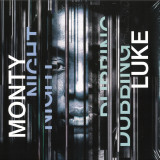
Monty Luke release ‘Nightdubbing’ LP on Rekids.The Black Catalogue bosses' second album explores dub-infused dance music and, following the recent two EP drops on Rekids, will be released on Radio Slave’s imprint on 29 March. Succeeding part two of Monty Luke’s ‘Nightdubbing’ series on Rekids, the US-via-Berlin artist unveils an album of the same name on Radio Slave’s lauded Rekids imprint. ‘Nightdubbing’ encompasses the first two instalments and adds five more tracks of intricate sonic material, completing this gorgeous work of art already supported by Fred P, nd_baumecker, Louise Chen, and Laurent Garnier. Luke’s ‘Nightdubbing’ album starts in the club, with the rave-primed ‘40 Acres And A Terabyte’ utilising the rich melodies of deep house alongside the crushing weight of subs. It is followed by the title track, with ‘Nightdubbing’ taking a more traditional house route, its soothing sounds enveloping the listener while honing in on that reverb sweet spot. Black Catalogue boss and former Planet-E label manager Monty Luke’s timeless ‘Nightdubbing’ effortlessly traverses deep house and techno rife with bass-rattling low-end and experimental rhythms. It is no surprise, then, that the album is heavily inspired by ‘70s and mid-80s dub reggae, seeing Luke incorporate and modernise the genre’s iconic rhythms, spoken word poetry, and spacious bursts of harmony across the LP. ‘Bob Molly’ picks up pace with nods to Caribbean dem bow-like rhythms of old, Monty Luke filling the space between its infectious beat with tumbling percussion and echoing plucks. Tracks like ‘Supernova’, ‘New World / Old Future’ and ‘Starstorms’ return to the modern-day traditions of club music while ‘Future Mystic’ and ‘Avant Garde Dance Hall ‘, again find room in between the dancefloor and sound system listening sessions. Monty Luke spent ten formative years in Detroit, where the city's unique musical spirit influenced him immensely. He has since distilled this experience into the music he has released on labels like Rekids, Planet-E, Hypercolour, and his own Black Catalogue. His raw, dub-infused sound comes with plenty of futuristic designs, and this final complete iteration of ‘Nightdubbing’ continues to push the boundaries of his music.
out of Stock
Last delivered 14 months ago available to reorder, subject to availability
No Wahala Sound Orchestra is a contemporary, London-based collective with members from backgrounds as diverse as Jamaica, Ghana, Bangladesh, Poland, Trinidad, Denmark, Ireland and the UK.Gideon Coe ( 6Music) Neil Luscombe (BBC Radio 3) and Steve Barker ( BBC Radio Lancashire) have all offered their support over the years.
The music takes in elements of electronica, jazz, reggae, dub poetry, Afrobeat, classical Indian music and many other global sounds."On Gossamer Clouds" is a compilation of some key recordings over the last ten years. It features 12 tracks which vary in styles and mood, but form a coherent whole.
“But into my miserable brain, always concerned with looking for noon at two o’clock" - Charles Baudelaire (1869)
The Foreign Department is the second album by Astrel K, the solo project helmed by Stockholm-based British ex-pat, Rhys Edwards. Those already familiar with Edwards’ work will likely know him for fronting the cultishly great Ulrika Spacek, and given he operates as the principal songwriter in both projects, much of the same hallmarks of his cathartic, elliptical songwriting are present in Astrel K. Nonetheless, The Foreign Department feels like a rubicon moment of sorts, and the album that Edwards has unconsciously been working towards his entire creative life.
As a title, The Foreign Department offers an instructive guide for the listener, framing a life-in-transition/artist-in-exile document that maps two impromptu moves in twelve months for its songwriter: the first from London in pursuit of a relationship, the second between homes in Stockholm as that decade long relationship then suddenly dissolved. Indeed, diffusion, dissolution and reconstitution feel like appropriate touchstones for its recurring themes. Written amidst the flux of two states, at once isolated from home and then any established emotional anchor, the resulting eleven tracks came to represent a precognitive search for shifting identity and with it forming an unwittingly biographical record. It's commendable and somewhat telling that during this shake up, Edwards somehow landed upon his most realised and original work.
With a former life stripped away, there emerged an opportunity to reinvent a sense of self through art, now not just as a writer, but a composer also. Developing the confidence to arrange songs in ways he'd previously considered off-limits, while also taking cues from the opulent string and brass arrangements of records like Mercury Rev's Deserters' Songs and Death of A Ladies Man by Leonard Cohen, Edwards enlisted a range of performers to bring to life the mini-symphonies forming in his head. Perhaps it's inevitable that an album written while facing the consequences of being alone would eventually ossify around the process of bringing people together.
For all its troubled origins, The Foreign Department is a remarkably warm sounding collection. Edwards' lyrics are typically knotty and neurotic, dancing around the poetry of quarter-life anxiety, but the music itself is often joyous and even uplifting, the combination expressing that neat duality of melancholic euphoria. Edwards sings variously of crises, "torrid pieces of art", of "houses on fire" and not "having the guts for it", yet these troubling sentiments are framed by seemingly incongruous swelling strings, chirping horns or motorik percussion, creating that sense of pushing forward or floating above, of wrapping your troubles in dreams, a salve for the moments when you get a bit too much for yourself.
Lead single, 'Darkness At Noon', likely captures this all best. Named for the French idiom "midi a quatorze heures", the maddening idea of attempting the impossible for the sake of some greater possibly pointless cause, it directly grapples with the opposing notions of wanting and not wanting, of being here and being there at the same time. The conflicting and impossible self. It’s something Edwards addresses in the song at perhaps his most open, opining, “I know I want to be seen, but I hate most of what comes out of me”. And yet here is, putting it all out in the open and on the line, the dialectics of his enlightenment up on show.
A pioneer of the home recording movement, Linda Smith released several collections of delicate, bewitching solo music on cassette in the 1980s and 90s. The 2021 release of Till Another Time: 1988-1996, Captured Tracks' compilation of Smith's work, has helped bestow rightful critical acclaim to the ahead-of-her-time artist. Now, Captured Tracks dives deeper into Smith's catalog with the release of two full-length companion albums, Nothing Else Matters and I So Liked Spring, available for the first time on vinyl & streaming formats. Recorded at Smith's home in Baltimore in 1995, Nothing Else Matters chronicles the tension between the mundanity of daily life and the creative impulse: Traffic noises on the charmingly boisterous "Little To Be Won" showcase this levity, as does the addition of playful hand claps and a laugh track to her striking cover of Young Marble Giants' "Salad Days." I So Liked Spring, recorded the following year, saw Smith experimenting with the unique challenge of putting another artist's words to music. She'd come across a biography of the English poet Charlotte Mew and found her wistful poetry rife for musical interpretation. The songs on I So Liked Spring are delightfully unpredictable, full of upbeat melodies and spellbinding vocal harmonies. This is perhaps best showcased on the title track, one of Smith's most popular songs to date, a lovelorn anthem that recalls the airy melodies of early dream pop. Both of these albums showcase the mesmerizing charm of Smith's songwriting, often compared to the likes of the Velvet Underground and Laurie Anderson. Home recording technology has come a long way since Smith first began recording demos on her tape machine, but her influence reverberates through the work of today's bedroom artists. The release of these two essential albums seeks to further illuminate this connection, welcoming a new generation of listeners to the work of this trailblazing artist.
A pioneer of the home recording movement, Linda Smith released several collections of delicate, bewitching solo music on cassette in the 1980s and 90s. The 2021 release of Till Another Time: 1988-1996, Captured Tracks' compilation of Smith's work, has helped bestow rightful critical acclaim to the ahead-of-her-time artist. Now, Captured Tracks dives deeper into Smith's catalog with the release of two full-length companion albums, Nothing Else Matters and I So Liked Spring, available for the first time on vinyl & streaming formats. Recorded at Smith's home in Baltimore in 1995, Nothing Else Matters chronicles the tension between the mundanity of daily life and the creative impulse: Traffic noises on the charmingly boisterous "Little To Be Won" showcase this levity, as does the addition of playful hand claps and a laugh track to her striking cover of Young Marble Giants' "Salad Days." I So Liked Spring, recorded the following year, saw Smith experimenting with the unique challenge of putting another artist's words to music. She'd come across a biography of the English poet Charlotte Mew and found her wistful poetry rife for musical interpretation. The songs on I So Liked Spring are delightfully unpredictable, full of upbeat melodies and spellbinding vocal harmonies. This is perhaps best showcased on the title track, one of Smith's most popular songs to date, a lovelorn anthem that recalls the airy melodies of early dream pop. Both of these albums showcase the mesmerizing charm of Smith's songwriting, often compared to the likes of the Velvet Underground and Laurie Anderson. Home recording technology has come a long way since Smith first began recording demos on her tape machine, but her influence reverberates through the work of today's bedroom artists. The release of these two essential albums seeks to further illuminate this connection, welcoming a new generation of listeners to the work of this trailblazing artist.
Chicago hip-hop outfit Angry Blackmen made up of Quentin Branch & Brian Warren (ABM) have been stretching their arms and tapping into different sounds since they smashed onto the scene with their debut single “OK!” in 2017. A prime introduction starring two emcees showing they deserve to wield the microphone and do so with good cause. Then barely a month later ABM released sophomore single ‘Riot!’ a complete shift in sound that still housed the foundation set in ‘OK!’ A few years later the duo would drop their debut project ‘Talkshit!’ which saw them amass the following they have today.
‘The Legend of ABM’ immediately smacks the listener in the eardrum leaving no second wasted and jumping straight to the point. The 11-track adventure truly presents an expression of hip-hop that we haven’t seen before, infusing multiple sounds with the 50-year old genre. To go even deeper, Quentin Branch & Brian Warren are teaching a masterclass in top-notch poetic lyricism, creating both accessible and mind-bending music. “Stanley Kubrick” has both heroes shattering the beat with their braggadocio for what is just the appetizer to prepare the listener for what’s to come in the next ten tracks. ‘Sabotage’ tells the story of two Black men hustling through the trenches of capitalism and the effect that this journey has on them. While the album exudes catchy wordplay and spine-splitting production, if you lift up the hood, ABM is spinning a tale of depression, existentialism and self-reflection that isn’t always pretty. “Dead Men Tell No Lies” is another mutation in sound for the duo, where the industrial sounds clash, violently yet perfectly together with a blistering hook harkening to the end of time. Warren & Branch’s raw poetry educates the listener of the pre-apocalyptic world we’re already living in throughout this project. ‘The Legend of ABM’ is not an excursion for the weak, the production is meant to snap your spine in half, the lyrics from Quentin & Brian are pathos-infused and relatable to anyone simply trying to survive.
From out of nowhere - if nowhere is the febrile, warped and twilit imagination of Julia McFarlane - comes Whoopee, the second album by J.McFarlane’s Reality Guest. Whoopee is an esoteric, kaleidoscopic movie in music form directed by Julia McFarlane and co-conspirator Thomas Kernot. Full of life, breakbeats and smokey vignettes on the fragile nature of interpersonal relationships, Whoopee is a stylistic evolution from everything McFarlane has done before. Surreal, beautiful in parts and replete with the aching wisdom McFarlane’s songwriting has always promised, this Reality Guest pulls back the curtain on a whole scene of naked truth. Recorded in Melbourne in bursts since the release of 2019’s Ta Da, Whoopee features a new sound palette and band member in Kernot. The duo dive deep into electronic pop tropes, mining digital synths, samples, breakbeats and deep bass grooves, largely dispensing with live instrumentation. If Ta Da took twists and turns with your expectations, offering a Dada-ist, monochromatic take on pop music, Whoopee is McFarlane’s subterranean love-sick pinks, reds, greens, purples and blues. Becoming something of a tradition, the album starts with an instrumental intro pilfered from a 90s’ spy film or cinema intro music, puffing up the listener for the heart-squeezing bathos of Full Stops. Over a bleary backdrop of walking bass lines, jazz- inflected keys and smoked-out atmosphere, McFarlane’s poetry narrates the fragile state of a relationship: “You put a full stop where I thought there’d be a comma, I want the story to continue even with all the drama.” Over a palpable pain, the narrator is revelling in the drama of a relationship, addicted to tumult and heightened emotion. On Sensory, a space age bachelor lounge pad ballad, the converse state of the previous song is explored, here the narrator is battling the numbness of being out of the drama, stuck in a sensory-deprivation tank, anaesthesized and battling to emerge from the fog. Wrong Planet explores an otherworldly pop music, hewing a bright hook out of a sense of confusion. A bona-fide, sing-along chorus bursts out of the narrator musing on the absurdity of existing in this reality. It speaks of one of Julia McFarlane’s main talents, her knack of inspecting human relationships and states with a clear perspective, like an alien visiting Earth and realising everything we are is really, really strange. Whoopee is both more accessible than previous Reality Guest work and somehow more obfuscated. Where the production on Ta Da was dry, sharp and strange, this Reality Guest is blurred, almost smeared with the effluvium of 90s+00s culture and existence. Through it all, it’s hard to deny the undeniable pull of the songs. Precious Boy carries on the lounge theme with a whole sampler of cut up sounds fading in and out of the haze as McFarlane’s voice is right up to the speaker cooing and free- associating, maybe in love or maybe in confusion... maybe they’re the same thing? Sometimes the listener is invited to just bathe in the tone of the vocal, as on Apocalypse, where the texture and timbre of the vocal is luxurious, bathing in piano tinkles and double bass throb. On lead single Slinky, a cut up beat reminiscent of Washingtonian Go-Go drum patterns leads, the song slipping through your fingers, elusive and presenting sound as pure pleasure. Closer Caviar jumps back into the broken breakbeats of a surreal funk, fuelled by the sensory pleasure of the music, a hedonistic whirl in rapture, the narrator now living life to the fullest in all its giddy heights and deep troughs. This is the album’s main character fully-actualised and in the terrible, beautiful moment.
out of Stock
Last delivered 2 years ago available to reorder, subject to availability
Das neunte Album der Prog-Metal-Band aus Deutschland, die sich bei den anspruchsvollen Fans des Genres großen Respekt verschafft hat,
unterstreicht das hohe künstlerische Niveau der Kreativität, die sie schon so lange aufrechterhalten. Musikalisch bietet Vanden Plas erneut eine
perfekte Kombination aus hart und melodisch, wobei die orchestralen Arrangements im Vergleich zum letzten Album eher im Hintergrund stehen. Es
finden sich mehr progressive Elemente in den Songs, ähnlich wie man es von früheren Veröffentlichungen kennt. Die sechs, meist langen, Stücke
erzielen eine beeindruckende und faszinierende Wirkung durch ein sehr bandorientiertes Arrangement, so dass die klare und intensive Dringlichkeit
der Songs natürlich und unprätentiös durchscheint und den Hörer von Anfang an in den Bann zieht.
LP black vinyl repress, standard single sleeve printed inner but note no download card. The Time Has Come’ is an absolute master class on words and guitar twisting into one another - the poetry goes beyond simple observation into deeply personal and profound lore. A timeless document of sweet and haunting melodies. My favourite record of all time.’ Ryley Walker. // "I've never written songs, regularly, because I never considered myself a songwriter. I've only ever really considered myself a ballad singer, which is what is most important to me. The stories... the ancient nature of the situations and the human condition. And obviously, it's changed so much over the centuries that those songs have been sung, but it always retains that essence of something that's universal... to humanity, and I've always wanted to touch that. I think I wanted to understand people; I think I wanted to understand myself. It's a way of finding the truth. I felt I belonged to that music.” Anne Briggs // Offering some of her first original compositions, ‘The Time Has Come’ was a break from tradition in more ways than one for Anne Briggs. Where previous recordings displayed the unaccompanied melodies of her voice, this album - originally released by CBS in 1971 - brings additional instrumentation in the form of guitar and bouzouki. The result is that her vocals are not submerged but heightened - the plucked strings providing the perfect foil for her crystalline inflection. ‘The Time Has Come’ is a mix of Anne’s own songs alongside some notable covers (Lal Waterson, Steve Ashley, Stan Ellison, Henry McCulloch). All are graced with the quietly self-assured elegance of Anne’s playing, with sounds ranging from the breezy ‘Clea Caught A Rabbit’ to the terrible beauty of ‘Wishing Well’ - each song typifying the bouzouki or guitar style. To say that Anne was an accomplished picker is to do her something of an disservice - the intricacy of her finger-work rivals - and more often than not eclipses - any number of her contemporaries.
With "Onaida", Natascha Rogers shares a liberating folk spell that draws inspirations from Yoruba spirits, Afro-Latin rhythms and her Native American ancestry. Born in the Netherlands to a Dutch mother and a father with Amerindian origins, Natascha Rogers dares to be intimate and unveils a highly spiritual chiaroscuro record, raising purity, care and reconciliation to the level of the art, through folk enchantments. Sensitive to the ancestral call of the drums, she travelled the Black Atlantic for several years and received the teachings of the greatest Mandingo and Afro-Cuban master percussionists. As a distinguished percussionist and vocalist, she has graced the stage and has accompanied artists around the world, but for Onaida she set out on her own, retreating to a studio to escape the noise, rush and fast information cycles of our modern world. This album marks a rebirth for Natascha Rogers, as it symbolizes her return to the piano, her first instrument. Channelling these inspirations for Onaida, Natascha Rogers, has created a space of her own, where themes of humanity, spirituality, nature and womanhood are centre stage while also paying tribute to her ancestors. Sung in English, Spanish, or Yoruba, the album is a tapestry of intimate ballads and universal prayers, drawing inspiration from dreams, Amerindian poetry (Joy Harjo), and Cuban santería with ritualistic batá drum pulsations. On the powerful folk-tinged song "The West", she invited gifted singer-songwriter Piers Faccini. Onaida is a true initiatory experience, a second birth for Natascha Rogers who finds balance and accuracy with this singular opus. Natascha Rogers headed to the quiet commune of Pommerit-le-Vicomte, to write this new release, accompanied by sound engineer Joachim Olaya and published on acclaimed French imprint No Format!
During the Tang dynasty (around the 9th Century CE), traveling intellectual Li Yuanming would routinely leave home to write and debate poetry with likeminded scholars across China, isolating his wife Cifu for sometimes weeks on end.
Frustrated, she found comfort in the arms of a widowed neighbor, but when Li remained at home for an unexpected stretch of time, Cifu was prompted to develop a method to signal her lover it was safe to approach. She stitched a special green hat that she handed to her husband as he was about to leave town; when Li was wearing the hat, it worked like a traffic signal - green meant go.
But this didn't last for long, during one trip Li returned home early and caught Cifu and their neighbor together, and when the local community caught wind of the story, the green hat became an enduring symbol of infidelity.
On Tzusing's sophomore album the Malaysian-born artist, who lives between Shanghai and Taipei, meditates on China's complicated history of patriarchal heteronormativity, and how these archaic double standards continue to dominate the culture in pervasive, often invisible ways.
out of Stock
Last delivered 2 years ago available to reorder, subject to availability
Sylvain Chauveau has been releasing quiet and minimal compositions on various labels for more than two decades. ultra-minimal marks his debut for Sonic Pieces and takes the minimal approach even further, centring on reduction and limitation.
The album was recorded live at Café Oto, London in March 2022 - one of Sylvain’s rare solo concerts and the first time he performed publicly with only acoustic instruments; no machines, no recorded sounds have been used, only piano, guitar, harmonium and melodica, played one at the time. While some of the compositions are completely new, others are live versions of previously released pieces which have either been performed close to their original or stripped-down, reduced to a single instrument and partly rearranged. This reveals a predilection for repetitions and variations that Sylvain shares with Jim Jarmusch, and at the same time it is a personal attempt to avoid electronic devices as a tool for live music.
The artwork and track titles follow this reductionist idea and an aesthetic of miniaturization that Sylvain has developed for many years. They refer to the minimalist, concrete poetry that he writes regularly. In this context rewriting some of the original titles was a consistent implication to achieve a complete work, an album that perfectly represents Sonic Pieces’ aesthetics, both musically and visually.
out of Stock
Last delivered 2 years ago available to reorder, subject to availability
Alex Deforce & Charlotte Jacobs are overtaking emptyness in shades of silence. Language has something to say here. Voices combined in poetic levels of belgitude. Poetry rewriting days and nights.
'“Nobody Move!”, so says Philippe Doray and his Asociaux Associés (the Antisocial Associates)! Having dynamited the end of the 70s with two radical albums – Ramasse-Miettes Nucléaires in 1976 & Nouveaux Modes Industriels in 1978, both reissued by Souffle Continu – Doray still hadn’t finished singing. Throughout the next decade he began his Composant compositeur which would document the “second period”, as he calls it, of his Asociaux Associés.
The record includes new schizo-electro songs which make the most of his association with Laurence Garcette, who also plays all sorts of keyboards. A prolongation of the first period of the Asociaux Associés, the duo updates Doray’s poetry: in reaction to the current overcast atmosphere, here are some hallucinatory fantasies to the rhythm of an infernal circle dance (« Le petit géant ») or an ecstatic waltz (“Bombés fluo”) or even coded messages stuffed into bottles and thrown into space (“Secoue le flipeur”, “Choc d’amour”).
On the bonus CD there are further iconoclastic examples: rare recordings (unpublished or even “inaudible”) of the Asociaux Associés but also by Crash, a duo that Doray formed with Thierry Müller (Ilitch, Ruth). At the controls of their experiment- bending machine the musicians multiply the possibilities: peripheral rock, arias in orbit, broken swing, industrial mantras and other joyful falsities. Enough to make you lose your mind? No... as Philippe Doray promised: it is the “jackpot qui frissonne” (the shivering jackpot) which is there to excite.'
Mirage is a cosmic collaboration between the Silver Apples and Makoto Kawabata of Japan's Acid Mothers Temple. Packaged in a deluxe jacket printed with metallic silver ink. This album is dedicated to the memory of Simeone Coxe who died September 8, 2020 while this project was being assembled. Dragonfly's First Flight, taking up the full side A, features Simeon Coxe and Kawabata Makoto jamming over familiar Silver Apples hypnotic rhythms. Fans of both groups will delight in the interplay between Simeon's keyboard and Makoto's drone guitar feedback soloing. Side B ranges from free-form freakouts to ambient poetry readings by Simeon with Japanese translation spoken by Makoto. Future Reminiscence, which closes side B, sounds like a long-lost Silver Apples
The new album Northwind was recorded with Adrija Tokic in Nashville with some of the most well-known session musicians in town. Spencer has been a featured ROOTS artist, a Pendleton artist, has toured US and Canada with City and Colour, Daniel Romano, Jenn Grant, and more. He has had press coverage fromAmerican Songwriter, Exclaim!, and Pop Matters Support tours with City and Colour, Old Man Luedecke, Dan Romano, and more
"the north wind really saved me over the past couple of years. It brought to me a new sense of life and a new urgency for it. I had thought my songwriting days were over, but with the help of this little guitar and a strong want for expressing my gratitude towards the north, I found myself writing again. Almost every song on this coming album was written on this guitar and in the north itself. A beautiful breeze it breathes and with every breath a song. I’m thankful for these wild places. I hope they never leave us. I’ll be here until the end of my days"
Amazing floaty modern soul / disco goodness out of late 70s Queens, NY. 'Love Is The Same' two brilliant and different versions, both dancefloor fire…
Mark Beiner met Ben Iverson in 1976 when I was 17 years old, at the time he was a junior at Newtown High School in Elmhurst, Queens. Mark had taken a part time job as a Produce Clerk at Walbaum's Supermarket on Northern Boulevard in Jackson Heights, Queens, where I met Ben Iverson, the "Frozen Food Manager."
Back then Mark remembers, 'I was going to work early just to talk to him about his musical background and his time spent in the 50's and 60's with the Ohio Doo Wop Group, "The Hornets", or better known as, "Ben Iverson and The Hornets."'
In 1978 after Ben and I discussed getting together and composing music, I started writing poetry and expressing in writing my break-up with my college girlfriend, Paula. Ben and Mark went on to writing two albums worth of material, which in turn gave us a lot of time and presence on stage at our live gigs.
The regular Coast to Coast Band members consisted of Ben Iverson on Lead Vocals, Rhythm Guitarist and Co-Executive Producer, Joe Crowley, who is known today as "New York Congressman Joe Crowley." Carl (Woody Wood) Morton on Bass Guitar, Jimmy Johnson on Keyboards. Lead Guitarist, Lou Jimenez, currently owns his own recording studio, Music Labs in Elmont, Long Island. On Drums, Eddie Byam, on Alto Sax, Jay Cohen, who in the 70's used to record for "Gary U.S. Bonds." Gary Pevols on Trumpet. On Bone, Scott Burrows, Trumpet player, Steve Becker, along side Neil Levine, Stan Stockley, Tom Russo.
out of Stock
Last delivered 2 years ago available to reorder, subject to availability
Musician/sound artist Mariske Broeckmeyer (MARIS) and author/poet Astrid Haerens found each other in their shared love of experimental music, improvisation and jazz. They discovered common ground in their artistic work, in their thinking, in their love for art and literature, and started a conversation that has not ceased.
They both make work that focuses on physicality, femininity and (the failure of) the voice, among other things. Their work revolves around the knowledge that a body carries, and how you can start from there instead of just the cerebral and analytical, aspects that are seen as predominantly masculine and often central to literature.
In 2022, the two worked together for the first time on their literary jazz project around the effects of power structures on a woman's body, bringing a breath of fresh air to the predominantly male jazz scene. MARIS and Astrid invited Jasmijn Lootens, a hybrid cellist who combines classical training with electronic music, to dive even deeper into the research and crossover between poetry, spoken word, performance, sound art and music together.
With their profound take on electronic music, Animistic Beliefs have steadily solidified their spot in the global underground. Influenced by cultural concepts such as ancestry, animism and mythology, as well as the languages of political techno, punk, bubbling and IDM, Linh Luu and Marvin Lalihatu consistently translate their visions into sensitive productions as well as high-octane live performances. On MERDEKA, the artists explore and embrace their cultural heritage in all of its pride, pain and complexity. It symbolizes Animistic Beliefs' breaking free, coming to terms with their changing selves and letting go of external expectations. The record rethinks childhood memories, confronts the generational trauma left by (post-)colonialism, and re-connects Linh and Marvin â?? respectively of Vietnamese-Chinese and Dutch-Moluccan descent â?? with their formative cultures. MERDEKA marks their first step in an overall departure from western club music. For its layered sound, Animistic Beliefs once again draw from the past, present and future of global club music, creating a sonic space where fast techno, warped breakbeats and ambient soundscapes make way for the augmented influence of (Southeast Asian) tribal music. The record incorporates Indonesian scales and recordings of the Tahuri (a wind instrument made out of a conch shell), Totobuang (Gamelan-like gongs) and Tifa drums, known as â??the Moluccan heartbeatâ??. In true Animistic Beliefs fashion, MERDEKA will set fire to sweltering clubs and (sleepless) dreams. Yet, for the artists, it is essential to amplify the stories that spark that flame and keep it burning. The release of MERDEKA follows CACHE/SPIRIT, their ongoing collaboration with visual artist Jeisson Drenth, which extensively explores the artistsâ?? intersectional identities. As such, the latest album is the next step within a bigger, introspective investigation. More unapologetic than ever, MERDEKA embodies a turning point on Animistic Beliefsâ?? ongoing journey towards self-acceptance â?? fuelled by the sound of urgency.
out of Stock
Last delivered 2 years ago available to reorder, subject to availability
PETE MOLINARI is a singer-songwriter from the Medway Delta. He was born into a large Maltese/ Italian/ Egyptian family in Chatham, Kent, where he was discovered by Billy Childish.
He’s got five critically-acclaimed albums’ worth of timeless folk, blues, rock and alt- country songs to his credit, plus a bunch more EPs.
He’s often described as a songwriter’s songwriter. Bruce Springsteen once publicly proffered: “Pete Molinari – if you don’t know anything about him, he’s great!”
Rome has a secret heartbeat, an underground and urgent pulsation whose memory is preserved within the walls of old recording studios, in the tales of veterans, and most of all in the grooves of the soundtracks of Cinecittà. Music that has always flirted with poetry.
Pete Molinari is a poet, and that's why his words perfectly blend with this pulsation.
That's why producer Luca Sapio chose to record "Wondrous Afternoon" among his Blind Faith Recordings and Maestro Piero Umiliani's Sound Workshop. The result is an album with a strong cinematic impact. The lesson of Motown applied to the sound of Rome.
Backed by Luca’s crack band better known as the Italian Royal Family, Pete Molinari sings with great expressiveness and soul, embedding his words like precious stones, exposing them in all their fragility and strength to the listener.
An autumnal treasure, East Village’s Drop Out has spent the past thirty years finding new ears to bewitch and new hearts to melt. The only album from this British four-piece, recorded and released in the early nineties, it’s long been considered one of the hidden jewels of its time, and is talked of with hushed reverence by people who know. Bob Stanley of Saint Etienne once called it “an elegy for a particular brand of eighties guitar music, sweet minor chords and Dylanesque lyrics”, which captures what makes it so special; in summarising its era, though, it also effortlessly transcends it.
Like all great guitar gangs, East Village fell together as a four-piece; having relocated from High Wycombe to London in mid ‘80s, brothers Martin and Paul Kelly on bass and guitar, set on forming a group together, were joined by John Wood (guitar) and Spencer Smith (drums). Wood and the Kellys shared writing and vocal duties; it was an ideal combination, and one of the many charms of East Village is their various song writing voices, a tip of the hat, seemingly, to the 60s folk-rock groups who influenced them.
Originally influenced by garage-rock and freakbeat, the band eventually came through via the same scene as groups like Felt, The Go-Betweens, The Weather Prophets, and Primal Scream. They’d formed as Episode Four, releasing an EP, Strike Up Matches, in 1986, which has gone on to become one of most sought after releases of the C86 era. Their first two singles as East Village, ‘Cubans In The Bluefields’ (1987) and ‘Back Between Places’ (1988), were released on Jeff Barrett’s Sub Aqua label.
When it came time to record Drop Out, East Village found a supporter in Bob Stanley, who bankrolled the album sessions until Barrett re-signed the band to his new imprint Heavenly Recordings in 1990. The album that took shape is dusky, heartfelt, lamplit, full of chiming minor chords, close harmonies, rattling organs, all buoyed by a rhythm section that moves as one, steady and elegant. There’s melancholy here, certainly, on songs like ‘What Kind Of Friend Is This’, but also pleasure and freedom, on ‘When I Wake Tomorrow’ and ‘Silver Train’. The group were obsessed with Dylan’s Eat The Document at the time, and the album’s rich with references to the film; Drop Out’s character is also somehow close to the thin wild mercury sound of Blonde On Blonde, and the lambent light of the Byrds’ Notorious Byrd Brothers.
In one of life’s gentler surprises, ‘Silver Train’ became an unexpected radio hit in Australia when released there as a single in 1993. The story of East Village seems marked by such unexpected turns and surprising events. None was more surprising for their fans at the time, though, than their onstage split in 1991, leaving an unreleased album in the can. Encouraged by Jeff Barrett the band revisited the tapes two years on and while mixing the album for its posthumous release in 1993 invited Debsey Wykes (Dolly Mixture, Coming Up Roses, Saint Etienne, Birdie) to sing the quietly devastating album closer, “Everybody Knows”, a perfect, sad-eyed sign-off.
Listening now to Drop Out, its timelessness is clear. It could have been recorded by young folk-pop hopefuls in the late sixties, taking their shot at the big time; but it could just as easily have been recorded yesterday, by a group that’s both reverent to music’s past, but forward looking in spirit and temperament. It’s that kind of album. Drop Out’s pop poetry is fully formed, with a singular charm that takes in wistfulness, romance, and good times, and a clutch of deeply moving songs that are overflowing with melody and gracefulness. It’s pretty much everything you’d want from a guitar pop record.
It's also an album that’s slowly accrued its own legend. From its stunning cover art, photographed by Juergen Teller originally for a Katherine Hammett campaign, to the ten perfectly formed songs within, Drop Out’s significance in the scheme of things is such that, a decade ago, it was given a rare 10/10 rating in Uncut magazine, who called the album “the lost classic of its era”. Drop Out comes round every decade or so, each edition introducing new fans to its understated beauty, and this latest reissue is its most elegant and deluxe yet.
The 30th anniversary edition of Drop Out lands in two formats: an LP with tip-on style jacket and four-page insert, designed to partner with the 2019 vinyl reissue of their singles and rarities compilation, Hot Rod Hotel; and a double CD, featuring an extra disc compiling the group’s early singles and alternative versions. This CD edition previously has only been available in Japan, though it now features a new, superior mix of their second single, ‘Back Between Places’. Both feature new, typically eloquent liner notes from writer Jon Savage.
The members of East Village have all gone on to do inspired things: Martin Kelly joined Jeff Barrett at Heavenly and has managed label mainstays Saint Etienne since 1993; Paul Kelly formed Birdie with Debsey Wykes, and is now a renowned film director and graphic designer; both Paul and Spencer Smith played in Saint Etienne’s live band; John Wood moved to China to teach, and released a lovely, understated folk album, Quiet Storm, in Japan in 2006. But with the hazy perfection of Drop Out, they’ve all already etched their names in the firmament.
SOURCED FROM THE ORIGINAL MASTER TAPES: 2LP SET PRESENTS 1991 ALBUM IN 45RPM SPEED FOR FIRST TIME.
PCM Digital Master to Analog Console to Lathe.
Dire Straits never made a big to-do about its final run. In classic understated British fashion, the band simply let its music speak for itself. And how. Originally released in September 1991, On Every Street became the group’s swan song – a lasting testament to the influence, musicianship, and integrity of an ensemble whose merit has never been tainted by cash-grab reunions or farewell treks. It remains an essential part of the Dire Straits catalog and a blueprint of the distinctive U.K. roots rock the collective played for its 15-year career.
Sourced from the original master tapes, housed in gatefold packaging, and pressed at RTI, Mobile Fidelity’s 180g 45RPM 2LP set of On Every Street presents the album like it has always been meant to be experienced: in reference-grade audiophile sound. Recorded at AIR Studios in London and produced by Dire Straits leader Mark Knopfler, it features all of the band’s sonic hallmarks – wide instrumental separation, visceral textures, seemingly limitless air, broad soundstages, atmospherics that you can almost reach out and feel. Each element is made more vibrant, physical, and lifelike on this collectible reissue, which marks the first time this 60-minute work has been available at 45RPM speed.
Afforded generous groove space and black backgrounds, the songs from On Every Street burst with nuanced details and vibrant colors. Dire Straits’ playing appears to float, their intricate performances organized amid hypnotic, fluid, three-dimensional arrangements. Mobile Fidelity’s definitive-sounding set also brings into transparent view Knopfler’s finely sculpted guitar lines, expressive tones, and laid-back vocals – as well as the balanced accompaniment from his band mates. Here’s a record on which you can hear the full blossom and decay of individual notes, and imagine the size and shape of the studio. It is in every regard a demonstration disc. And it happens to be filled with timeless fare.
Remarkably, On Every Street almost never came to light. Dire Straits initially dissolved in September 1988 after touring behind its blockbuster Brothers in Arms and suffering the departure of two members. At the time, Knopfler professed his desire to work on solo material; bassist John Illsley also explored side projects. But Knopfler’s decision in 1989 to form the country-leaning Notting Hillbillies reignited a spark to reconvene his primary band and craft a fresh batch of songs. Six years removed from Brothers in Arms, Knopfler, Illsley, keyboardist Alan Clark, and keyboardist Guy Fletcher teamed with A-list session pros – steel guitarist Paul Franklin, percussionist Danny Cummings, saxophonist Chris White, guitarist Phil Palmer included – to create what still stands as an unforgettable farewell.
The platinum record brings the band full circle in that it returns Dire Straits to a quartet formation; finds the group refreshingly out of step with the era’s prevailing trends; and sees Knopfler and Co. knocking out song after song with the deceptive ease of a punter tossing back a pint at a pub. That subtle cool, clever poise, and innate control – signature traits that no other band ever matched – dominate On Every Street. Knopfler’s clean, virtuosic six-string escapades unfurl with dizzying melodicism and economical efficiency. Led by his winding fills and focused solos, Dire Straits traverse a hybrid landscape of rock, jazz, country, boogie, blues, and pop strains with near-faultless prowess.
More than any other entry in the group’s oeuvre, On Every Street welcomes quick detours down back alleys and into the depths of human souls. What makes it more brilliant is its staunch refusal to cater to commercial expectations or take advantage of prior successes; every passage feels true, every measure echoed in the service of song. It’s evident in the humorous satire of “Heavy Fuel,” closeted desperation of the witty “Calling Elvis,” and shake-and-bake bounce of “The Bug.” It pours from the album’s darker corners, as on the high-and-lonesome melancholy of the title track and bruised emotionalism of “When It Comes to You.”
Hinting at the open-minded approaches and boundless curiosity he’d embrace as a solo artist, Knopfler doesn’t limit himself when it comes to style or subject matter. Look no further than “You and Your Friend,” a shuffle whose all-inclusive lyrics encourage an array of interpretative meanings. Another of the album’s deep cuts, “Iron Hand,” comes on as one of the band’s most memorable moments – the narrative addressing the abuses of power at the 1984 Battle of Orgreave during the U.K. miners’ strike. Given cinematic heft by the expert production, the true-fiction account puts into perspective the richness, poetry, and depth of On Every Street.
“Every victory has a taste that’s bittersweet,” sings Knopfler on the title track. At least that bittersweetness seldom sounded so damn good on record.
KID FRANCESCOLI, leader of the French Riviera Touch is back with the stellar album SUNSET BLUE out Sept 22nd 2023.
After a first sold-out world tour (over 200 concerts in Europe, USA, Asia...), and successful hits such as Nopalitos, Blow Up or Moon (now certified diamond, with more than 200 millions streams), the Marseille-based producer, crooner and multi-instrumentalist, Mathieu Hocine, is eager to share his most accomplished LP ever. This fine collection of soulful songs honor his Mediterranean roots, with elegant and pop melodies. His most recent success and the creation of his first original soundtrack with AZURO, installed him as one of the best French songwriters of his generation, with a unique signature sound.
"I live in Marseille, I spent my childhood in Corsica, I have Algerian origins, my first vacations with friends were in Barcelona, vacations with my first girlfriend in Roma,... Then, I had the chance to perform in Morocco, Greece, Turkey and Egypt: each time I spent time in the Mediterranean region, the people I met there made me feel like I was part of the same country. This shared multiculturalism is really comforting, it has its own poetry and strength, bringing uniqueness and empathy to the people. It is essential for me. I love my city: it’s the perfect place to feel good with sun, sea, family, friendships, love... It gets me emotional, bringing tears with a smile".
With his new musical gem, Mathieu Hocine unveils 11 elegant tunes of his finest craft: sunbathed French Touch (Run Run, 1986), romantic chillwave (Corsica), uplifting synthpop (You Are Everywhere, Like Magic), electronic-soul (Casino Soul), cinematic disco (Solaris), cosmic R&B (Sweet and Sour, Take Time), … Everything is in this record.
For the first time ever, Kid Francescoli paid tribute to his mixed origins with his collaboration with world-renowned lute and mandolin player Hakim Hamadouche (Rachid Taha, Patti Smith, Brian Eno, Tricky...), whom added Algerian patterns to the introspectives songs Drift in Blue and The Morning After.
"My ambition is to create pictures in people's heads with music, to transport them instantly into a movie"
SUNSET BLUE is an instant-crush album: crystal-clear, strong, personal but universal at the same time.
It's an ecstatic soundtrack for this moment when time is suspended, the golden hour when everything seems possible. It feels like Love is in the air, you're living your best life and you're at the right place at the right time. This album embodies this magic moment where we would like to last forever… Like an epiphany, Kid Francescoli's new album is a moment of pure pleasure, a soothing way to escape reality.
"I see myself as a melodist.I would like my music to feel like velvet. There's something cinematic, classy about it, and yet comforting. It's very simple, popular and synonym of love and passion"
His friend French 79 co-produced the album, while the american rapper Bamby H2O brought his NYC swag (on Sweet & Sour), Stan Neff (Polo & Pan, Kungs, Christine and the Queens...) took care of the mix and Alex Gopher (Daft Punk, The Blaze, Bon Entendeur...) added a final touch of magic when mastering. Nicolas Despis (known for his work with Etienne Daho, Hoshi, Juliette Armanet... and many famous French rappers) later joined this dream-team to craft custom-made artworks. SUNSET BLUE is a deeply personal quest, a human adventure for Mathieu Hocine (whom explores his maghrebian origins, his feminine side, his subconscious space, ...). It's a male's work, but don't get it wrong, this LP would be nothing without women’s touch : Julietta (on Run Run and Take Time), Sarah Gaugler from Turbo Goth (on You Are Everywhere and Like Magic), and iOni (on Drift in Blue).
“Music has this magical power to broaden your vision of the world. It's fascinating because, like dreams, it's the kind of irrational things science can't explain and that makes life exciting."
Planets aligned perfectly on this project and thanks to this five-star cast of collaborators, Kid Francescoli achieved his personal holy grail : he orchestrated a great 21st century pop-music album.SUNSET BLUE is a new turning point between organic and electronic, both a mediterranean travel and a Californian dream, a bridge between Ennio Morriconne and modern electronic music.
Also, while it might be called SUNSET BLUE in honor of the sea and the Portuguese / Brazilian concept called “saudade”, but it is a really optimistic album, whose true colors would rather be "yellow-orange-red" in nod to the sun.
Created in the midst of the world tour, SUNSET BLUE is a direct result of the lives’ energy and fans’ joyful vibes: going back in the studio after smiling, singing and dancing with people all around the world inevitably gave Kid Francescoli the desire to retranscribe this ecstatic feeling in music. This album is a sensitive experience, from sunrise to sunset, from first track to last one. It’s an exploration of an everlasting summer, reaching its climax in the very final seconds of the track Corsica, making us want to press play and dive into this jewel all over again.
A beautiful cosmic trip, whether you like to stay in bed cocooning, to travel far, far away or to dance ‘till dawn, to catch the first rays of light.
Make sure to catch Kid Francescoli on his next world tour to have a good time.
out of Stock
Last delivered 2 years ago available to reorder, subject to availability
After her stunning and well acclaimed debut album 'For Trainspotters Only' Ann Eysermans now releases 'Moonlight Shadoh', a tribute to her dog Shadoh. A record on which she explores the bond between herself and her faithful canine friend, Shadoh, through an extraordinary musical odyssey.
Ann Eysermans masterfully weaves together a tapestry of field recordings, candy-like harmonies,and Shadoh's distinctive houndly expressions. Creating otherworldly compositions that transcend genres which include recorded and integrated snarling feedback sounds. From the hauntingly beautiful melodies to the experimental sonic landscapes, every track tells a story that resonates deep within your soul.
Feel the heartbeat of Shadoh as his barks, whimpers and playful antics merge seamlessly with Ann's soothing vocals,harp and viola da gamba. These evocative arrangements will transport you to a realm where the bond between human and dog is translated into an aural spectrum swaying between desolate harp sounds, recollecting the eerie Jandek spirit lacing with doomy, and catchy as hell, new beat vibes.
Moonlight Shadoh is an exceptional journey blending acoustic instruments, phonic melancholy, analogue tape footage of Ann's personal sound archive and audio poetry.
RIYL:
Cross dressed Jandek in a vegan mood, Claire Rousay on expired XTC, Andy Stott with a hangover, William Bassinski on a happy moment, Kali Malone discovering new beat, Mica Levi in a dog shelter and other excellent music.
out of Stock
Last delivered 11 months ago available to reorder, subject to availability
With its tenth record from Fortunato Durutti Marinetti, Quindi continues to celebrate songwriting and storytelling framed by curious musicality. In keeping with the label's trajectory to date, this is an album which draws on a universal human sentimentality and presents it with an uncommon flair. In the case of Toronto-based Daniel Colussi, the man behind Eight Waves In Search Of An Ocean, his melancholic poetry cuts through with a clarity which calls to mind all-time greats from Anette Peacock through to Lou Reed and Leonard Cohen.
Turin-born Colussi has drifted through various bands, guises and styles over the past 20 years, but since settling into Fortunato Durutti Marinetti as a vehicle for his songs, he's found a strong expressive impetus which transcends genre to become entirely hinged on the power of his words and melodies. The first album under this alias was a 2020 cassette album, Desire, later pressed on vinyl due to demand in tandem with the release of 2022's Memory's Fool. On each record, Colussi has found distinct arrangements of players to set the mood, ranging from gently lilting art and folk rock through to orchestrated balladry, but Eight Waves In Search Of An Ocean widens the palette of Fortunato Durutti Marinetti to create an album in which each song feels like a tale unto itself.
Colussi's renewed approach is instantly apparent as album opener 'Lightning On A Sunny Day' unfurls, informed greatly by producer Sandro Perri's input pursuing a hybrid electro-organic sound. The addition of drum machines and synths to the musical palette bring with them the strong connotations of pop while the sax and violin sounds similarly smooth and silky, and one can't help but think of John Martyn's slide into the digital sound of Sapphire or Kraftwerk's bittersweet synthetic tenderness.
Within this sound, there's still space for the energy to fluctuate according to the whims of songs. 'The Flowers' turns inward with a soft-touch composition as delicate as the petals Colussi describes falling to the floor. 'Misfit Streams' and first single 'Clerk Of Oblivion' savour the fluid, luxuriant tone of fretless bass with all the 80s connotations intact. Colussi remains the central focus whatever happens around him, in possession of the kind of unforced charisma which drives a song deep into the listener's heart. It's at once entirely his own style and yet comforting and familiar. The lyrics might sweep you into the singer's inner world, similarly to the experience listening to late 60s Tim Buckley, or you might well inhale the mellow jazziness of the harmonic movement like you would Joni Mitchell on Hejira.
The emotional direction of each track is never linear - 'Smash Your Head Against The Wall' snarls its rhythm section before the strings sow their aching beauty to cool the song's temper, winding up as a track of distinct halves jabbing at each other. "I Need You More' leaves space for spiralling flute solos and strangely stiff, militaristic drum rolls in the midst of a sweet, slightly sad synth ballad, the final wave receding back into the tidal undulations of Colussi's unique exploration of his muse.
The artist himself dubs his musical expression as "poetic jazz rock" with a sideways glance - it's not exactly poetry, far from trad jazz and it doesn't really rock, yet the tag feels uncannily like it fits, just like the curious music it's used to describe.
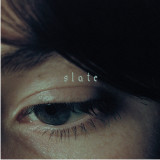
Emerging from the depths of Cardiff’s burgeoning music scene, heirs to their country’s lineage of storytellers, are Slate. Formed by frontman Jack Shephard and drummer Raychi Bryant, the four-piece band are barely touching their twenties, but together, they have command of post-punk which rings with the gravitas of a death knell; a grasp of atmosphere and melody which touches on the ethereal.
With the addition of bassist Lauren Edwards and guitarist Elis Penri who completed the band at the end of 2021, the four bonded over the written word playing poetry games over pints. Together, they found an affinity with the surreal works of Arthur Rimbaud and the Welsh poets R. S. Thomas and Dylan Thomas, whose reverence for their country and its people bleeds into Slate’s own lyrics.
The 7" collects Slate's stunning 1-2 of debut singles 'Tabernacl' and 'St Agatha', which were both produced by Buzzard Buzzard Buzzard's Tom Rees. Both songs come loaded with frontman Jack Shephard's distinctive, poetic drawl, blistering yet gothic and ornate guitars and rollicking, road-ready drums. Together they offer a snapshot of a band born fully-formed and prove a statement of intent that's hard to ignore.
Of the track, Shephard explains: "'St Agatha' is the first song we wrote about being Welsh. Though, living in in the south, we each converge at the forefront of anglicisation. At the time of writing, we were indulging in literature, landscapes as well as each another, in an attempt to re-connect with much of our disregarded national identity. So much was left unrevealed to us in school. We read about a churchyard on the border, where some people are buried with their heads in Wales and their feet in England. It was the perfect place to tell the story of a conflicted protagonist. Severed at St Agatha’s, between there and the homeland
Channelling the rhythm of the poetry of Desnos and also the dinstinctive paintings of Francis Bacon, the band Venera 4 is an original presence in France.
Venera 4 impacted with their first Ep, 'Deaf Hearts', which laid the foundations of their expansive yet intimate sound that evokes the DIY spirit of the post-punk scene.
The intricate vocals are delicately layered over the uncompromising guitars. Eidôlon is a powerful yet introspective album with the icy elegance of Broadcast, melodies worthy of the best of Ride, and a white wall of noise like that of The Jesus & Mary Chain.
Abrasive, violent, delicate and sexual, Eidôlon is a reflection of it's own time: a protean art form.