
6
out of Stock
Order now and we will order the item for you at our supplier.
11,72 €
Last In: 5 months ago
Order now and we will order the item for you at our supplier.

HotWax are a band set on experiencing life at its most intense. In the past two years, the Hastings-via-Brighton trio – comprising Tallulah Sim-Savage (vocals/guitar), Lola Sam (bass) and Alfie Sayers (drums) – have toured the world over, clocking up over 150 dates, including shows with Royal Blood and Frank Carter, and major festival appearances at Reading & Leeds and All Points East. Out of all this comes debut album Hot Shock (due March 7 via Marathon Artists), a record of adrenaline-jolted anthems about abandoning fear and leaping boldly towards the future.
HotWax worked with an all-female production team at the prestigious RAK studios, Catherine Marks (Boygenius, Wolf Alice) and Steph Marziano (Hayley Williams, Let’s Eat Grandma), as well as additional recording with Stella Mozgawa of Warpaint in Joshua Tree, California.
These songs were made to be played to a crowd, loud and with abandon. But there’s also a beating pulse of vulnerability underscoring the album. It’s an honest, moving sentiment sure to propel HotWax towards becoming the UK’s next big crossover rock act – and beyond.
"Britain’s most thrilling and fiercely confident new rockers” - NME “they’re a total inspiration – wicked songwriting, stunning stage presence, and a sheer, raw, couldn’t-give-a-flying attitude that punches you to the gut.” - Clash
expected to be published on 07.03.2025

The very first Grammy winning artist in Reggae history, MYKAL ROSE is the voice of the greatest days of Black Uhuru. He’s responsible for hit songs such as ’Guess Who’s Coming To Dinner’, ‘Sinsemilla’ or ‘Sponji Reggae’. Thanks to Sly & Robbie, Mykal Rose and Black Uhuru have been a turning point into Reggae history, giving to the four corners of world the raw and brutal sound of Jamaica early 80’s violent political crisis, far from Bob Marley refined and sophisticated music.
40 years after he left the group, Mykal Rose returns with ‘Rain And Blood’, a new single that could have been taken from another Sly & Robbie-produced Black Uhuru album. In a 1986 proto- digital reggae style, Swiss reggae powerhouse THE 18TH PARALLEL recorded an early dancehall-roots-reggae riddim with none other than the legendary Robbie Shakespeare himself on bass. Mixed by today’s finest sound engineer from Jamaica, Gregory Morris (Protoje, Lila Ike, Mortimer,...), ‘Rain And Blood’ combines the best of modern reggae sound with an impeccable groovy riddim inspired from back in the days. On top of this, the finest horns section of the new Jamaican music scene, TOPP BRASS, graces us with a timeless instrumental cut called ‘Red Sky’. This is heavyweight reggae at its best!
expected to be published on 07.03.2025

Sopa Boba is a Belgian-Dutch electronic, modern classical project. The idea behind the form is a so-called Oratorio from the present age which unfolds a dramatc tale within a sociopolitcal framework. The compositons incorporate a neo-classical style string quartet, harsh modular sytnhs and spoken word vocals. It features Pavel Tchikov (Ogives) and G.W. Sok (The Ex, Oiseaux-Tempête).
That Moment is an adaptation of the eponymous text by Moldavian writer Nicola Esinencu. The starting point of That Moment takes place in a real fact, which happened in present-time Moldavia, where a father cut his son's finger with an axe, as a punishment for stealing a bit ofmoney from the father's wallet. From there the author combines the tale and its reality with a caustic irony, interrogating an unbridled capitalist society, where everything and everyone is for sale. The total playing-tme is 55 minutes, somewhere in between a hybrid electronic - modern classical oratorio and a concept album, with seven tracks that serve as seven chapters of an ironic and satiric story about the downward spiral of the capitalist society.
expected to be published on 07.03.2025

Metaphon is thrilled to present this collection of 14 phenomenal electronic and electro-acoustic works by French composer Fernand Vandenbogaerde, realized between 1967 and 1984.
After his science studies Fernand Vandenbogaerde (1946) studied at the Conservatoire de Roubaix and did various classes and courses with a.o. Jean-Etienne Marie, Olivier Messiaen, Pierre Schaeffer, György Ligeti, Karlheinz Stockhausen and Bruno Maderna. He wrote analytical essays on mathematic music, in particular the work of Iannis Xenakis. Vandenbogaerde taught electro-acoustic music at various institutions and was director at the National School of Music and Dance in Blanc-Mesnil, near Paris. As a composer he wrote works for orchestra, instrumental and chamber ensembles, sometimes in hybrid form including tape and electro-acoustic configurations. He also recorded numerous tape compositions in Bourges, Paris, Ghent and at his home studio. His works have been presented worldwide on various leading festivals and events.
The compositions included in this edition are primarily tape works, meticulously recorded and produced, radical and most of all timbre oriented which makes his compositions focus mainly on sound while other parameters hardly change. In Vandenbogaerde’s own words: “What determines my pieces, at least all the ones in this collection, is that it’s the material that dictates me, that will predetermine the form”. This particular approach distinguishes him quite a bit from many of his contemporaries within the field of electro-acoustic music.
Another interesting aspect in Vandenbogaerde’s work is the integration of micro tonal scales (conceived by Mexican composer Julian Carrillo), on the compositions 'Modifications III' and the intriguing trilogy 'Drei Nachdenken über Hymnen an die Nacht'. All tracks are previously unreleased except the proto power electronics piece 'Anschlag' which was self-released in 1971 on his own Point Radiant label, as a compilation LP which also included a track by Tristan Murail.
expected to be published on 07.03.2025

expected to be published on 07.03.2025

First things first - you don’t need me to tell you about the significance of Australia in the history of punk. I mean, what am I, Jon Savage? Google it yourself, FFS. Instead, let’s just agree that the speedy, feral racket thrown together by the likes of The Saints, Radio Birdman and The Scientists in the mid-late ‘70s is AT LEAST as deliriously entertaining as anything concocted by their UK/US counterparts, sowing the seeds for seemingly endless garage-inflected noisemakers in the land down under. No one likes using words like ‘tradition’ or ‘heritage’ here - the punk rock clusterbomb is far too messy for any of that business - but also emerging from Australian rock’s primordial soup is the addictive sneer of Stiff Richards. Like their predecessors, the band are a gleefully wracked mess of full throttle energy and barrelling power chords, with songs like ‘Kids Out On The Grass’ and ‘Point of You’ proving at least the equal of ‘(I’m) Stranded’ or ‘Aloha Steve And Danno’. Nine tracks in less than 30 minutes, all winners and all determined to leave you flipping over couches and smashing your TV set. And let’s face it, you may as well; there’s nothing good on. It all builds towards frantic closer ‘Fill In The Blanks’, which rattles around your speakers like the UK Subs trying to play Ed Kuepper riffs at the centre of an earthquake, before grinding to a halt as a voice says, “That’s the one.” Does it sound self-satisfied? Hey, it’s got good reason to - this is the best no-frills garage rock party since Gino & The Goons’ ‘Do The Get Around’, and the only appropriate response is to declare yourself betrothed to Stiff Richards because you can’t imagine your life without ‘em. Don’t believe me? Sort out your ears and get ‘State Of Mind’ in ‘em. Rock’n’roll as it’s supposed to be played.
Order now and we will order the item for you at our supplier.

“Where is this? It looks like the grounds of a shrine. Like a deep, dark, forest. I'm wandering around. I can't get over the feeling that I've been to this place before. The temple and the tower look much bigger than usual, and I feel as if I were lost in a world of immensity. It's very dark with no sky up above, like being in the depths of the Earth. Anyway, it's a world I know.” - Leisure, the Sonorous Dream
For schuttle’s next unearthly contribution, we invite you to slip into the reassuring comforts of the simulated realm. Herein lies an open invitation to all of those tentative travellers willing to join us as we revel in four slices of post-biological optimism.
The world building begins with “Splan”. schuttle’s navigation vessel hovers steadily above a fractal landscape until a divine arp propels us skywards. We burst through the latent cloudsphere to marvel at the boundless synergy of the interlocking polygons. The sunburst gradient barely has time to load before an oscillating wriggle plunges us into a strangely familiar stomping ground. Hedonistic NPCs begin spawning at random, splurging joyful machine funk at each other before walking gleefully into walls. Finally, with a little help from a well known toad, schuttle unleashes the full might of his Mana on the nascent gathering.
We dock next in ‘Melonweed Musick’. Our vessel gently stirring the reeds as we descend into the marshland. The potent aroma of the swamp fills our nostrils, various apparitions seem to wriggle into view. What have we been inhaling? No time to consider, the loose murk of the breakbeat is starting to take effect and it’s all we can do to keep one foot squelching after the other. As we submit wholeheartedly to the sheer depth and clarity of the bassline, a kindly angel sweeps above the sphagnum, spraying a succession of cleansing chords over our slimy bodies. Refreshed with some useful navigation advice we continue.
In ‘Kitchen Sync’ our craft’s speedometer is tickled up to a cruising 120bpm. The world outside our window begins to swim with colour, prickly forms materialise then dissipate around us. The familiar shape of our old friend, the high priest 303 appears before us, steadying the ship. Its resonant flame warming our hearth, and our hearts too. Then begins a beautiful communion of the domestic and the otherworldly, through the interplay of acid under glimmering keys. Provoking within us an uncontrollable desire to open our curtains, to cast off our slippers and embrace the infinite morrow.
Our voyage concludes with ‘Inspo 2000’. Scintillating landing lights guide us toward our destination, our descent beckoned by woody and playful percussion. We tumble through the troposphere, our landing cushioned by the buoyancy of the gated chords, the kicks juicing what's left of our dwindling fuel supply. A luxurious breakdown brings the ground into focus. Perhaps this is home? The simulation is now so accurate that it seems pointless to question it, it is a world we have always known.
Order now and we will order the item for you at our supplier.

(Limited edition to 500 copies, remastered audio, pressed and printed in Indonesia) The 13 tracks contained in this compilation “Begadang: Soneta Group Best Songs, 1975-1980” are some the most innovative music that came out of Indonesia’s music scene in the 1970s, tunes that has cemented Rhoma Irama’s status as the king of the genre.
Dangdut is the biggest musical genre in Indonesia. Dangdut, onomatopoetic name from the sound of hand drums used in this type of music, is what reggae to Jamaicans, country to Americans or skiffle to mid 20th century British people. And in this genre of dang dut, the name Rhoma Irama looms large. He is until today the undisputable king of dangdut and his role as pioneer of the music is already in the history book. In fact, there's one book documenting the outsized role of Rhoma in establishing dangdut as the father of this music. The book is aptly titled Dangdut Story, written by Pittsburgh University music professor Andrew N. Weintraub.
Among Indonesian fans of dangdut, there’s this one misconceptions that dangdut music is that it is an indigenous art form from Indonesia and that it constitutes an amalgamation of local, traditional music of this Southeast Asian nation, with Malay music being the most prominent feature in the mix.
Dangdut pioneer Rhoma Irama is among the first to reject this assertion. “Dangdut music may have originated in Deli (in North Sumatra) but then got the influences from the West and India”, he said.
Indeed, most of Rhoma’s well-known compositions may have been influenced by Indian tunes but some of his best quality works owed much to the West.
Rhoma had long found home in Western pop music. In the early 1960s, after honing his guitar playing skill, Rhoma set up his first band Gayhand to play the tunes of The Beatles, Paul Anka and Tom Jones. In 1972, Rhoma won best singer title in a Southeast Asia singing competition in Singapore playing Tom Jones “I Who Have Nothing.”
Yet, nothing changed Rhoma’s fortune in the music industry, to a point where he decided to leave pop and switched to playing Orkes Melayu (Malay Orchestra) music, first with Orkes Melayu Purnama and later with Soneta Group.
His career soon took off with Soneta, especially after he introduced what ethnomusicologist William H. Frederick considered as “theatre”, through which Rhoma borrows many elements from stage performances of British and American rock bands. These elements, kitsch and pomp, he liberally adopted and became an inseparable part of dangdut itself; tight pants, long hair, platform shoes, glitter and glamour which would not be out of place in Elton John and David Bowie stage show.
And this is actually the contradiction of Rhoma’s brand of Malay music. “One might legitimately ask how imaginative, not to say bizarre, costuming and dancing with abandon could be related to some of the objectives of Rhoma has set for himself and soneta group”, Frederick wrote on his seminal work on the singer, Rhoma Irama and the Dangdut Style: Aspects of Contemporary Indonesian Popular Culture, published in 1982.
From technical point of view, Rhoma not only replaced the acoustic elements from Melayu Music with electric instruments but also created new synthetic sounds that has never been attempted before in Indonesia’s music industry.
Detractors like to point out how much he was indebted to Deep Purple, but a closer inspection reveals how he in fact had mined his influences even deeper.
Notice how Rhoma reproduced funk, which is all the rage in early 1970s, in the song “Santai” (Relax), this album’s closer or “Credit Title (Instrumentalia)” which opens this Darah Muda (Young Blood) soundtrack. The rubbery bass lines that open both songs can easily find home in any Sly and the Family Stone’s or Isaac Hayes’ tunes from that era. Other highlights of the song is the funky guitar licks and the droning Hammond a la George Clinton that stabs deep in the record groove. In the guitar solo, you can also hear the bark of George Harrison’s licks from “Taxman”.
The 13 tracks contained in this compilation “Begadang: Soneta Group Best Songs, 1975-1980” are some the most innovative music that came out of Indonesia’s music scene in the 1970s, tunes that has cemented Rhoma Irama’s status as the king of the genre. Only 500 copies were pressed for this compilation.
expected to be published on 28.02.2025
A second outing by French modular enthusiasts Atomic moog on the Delsin Cameron series. On Blue Scale they present four more works of their quirky noodle experiments. It represents their irresistible grooves in optima forma, while keeping it wonky and alive. 'Blue Scale' and 'Landing Point' got that steady and never ending after-hours flow while 'Data 100f' and 'Impulse' are mesmerizing deep dives exploring a more broken side of the pair.
Order now and we will order the item for you at our supplier.

2x12" Repress
AGE's "The Orion Years" finally reissued to celebrate his 30th Anniversary/Hybride Sentimento invites Thomas P. Heckmann with one of his most prolific project; An ode to 60's German sci-fi TV Serie: "Raumpatrouille Orion". Deluxe Edition with new artwork + bonus tracks.
Order now and we will order the item for you at our supplier.

Ride guitarist and songwriter Andy Bell’s third solo album pinball wanderer is an otherworldly collection of intergalactic wizardry that mixes psychedelic melodies, Can-via-The Stone Roses grooves and Arthur Russell-style experimental textures. With guest appearances from Dot Allison and Neu! legend Michael Rother on a cover of The Passions’ peerless post-punk classic ‘I’m In Love With A German Film Star’, it is perfect for both deep-listening headphones moments and cutting across the coolest, most understated dancefloors. The loose-limbed rhythm tracks were the starting point and were laid down with the help of Andy’s old Oasis bandmate Gem Archer. The rest followed after an intense all-night session last summer, with the completed album being delivered the following morning. It’s Andy’s finest work to date; a quintessential nighttime record where you can slip through the gaps in the notes and revel in the moment.
expected to be published on 28.02.2025

“BLADE N” is the long-awaited new album from Japanese rapper Karavi Roushi, who appeared on the Japanese hip-hop scene with his debut solo album “Kiyosumi Kurokawa”. This, his second solo album, is a collaborative release with Aquadab, the Japanese track maker/sound designer who co-produced “Kiyosumi Kurokawa”. The album showcases the preternatural mind-meld between rapper and track maker.
Karavi Roushi came before the public as a member of Nagoya hip-hop collective Hydro Brain Gang on Nero Imai's album “Return Of Acid King” (2017). He then launched the label Super Lights with Aquadab and released his first solo album “Kiyosumi Kurokawa” in 2019 with graphic design by Takara Ohashi. Although an unknown newcomer, the album reached #15 on the iTunes Hip Hop Japan album chart and received plaudits not only for its music but also for the artwork by Ohashi. After the album, Karavi Roushi dropped his first collaboration tune with Aquadab on “S.D.S =Zero=” (2020), a compilation of Generation Z Japanese underground artists produced during the Covid pandemic. That tune, “Tokyoite”, became a favorite of the participating artists.
"BLADE N” was created by the three-person team of Karavi Roushi, Aquadab & Ohashi. Consciously developing their musical methodology, they intentionally use instrumental tracks to interrupt the rappers' voices and flows, something which has traditionally been avoided, and explore the possibility of creating a style that puts the rapper and track maker on equal footing in complex, woven tracks. On the album, Karavi Roushi's paranormal voice, which sometimes sounds like a mutant synthesizer, adds incisiveness, and in the artwork Ohashi visually extracts the story world hidden in “BLADE N”, giving the cover art the same impact as that of “Kiyosumi Kurokawa”
expected to be published on 28.02.2025

It feels like most every week Burnski starts a new label that is immediately as good as all his others, and here is this week's case in point: Reliance is a super limited new outlet from the super producer and it kicks off with ODF who you may know from a brilliant remix of Special Request. 'Yeah (Uh!)' opens with bubbly basslines and neon melodies and is a timeless garage bumper. '2 Turn' then brings the funk with tight bass and lovely silky drums, 'Rattlesnake' is more dark and menacing thanks to the trippy samples and low end and 'Back To 98' is a stateful shot of garage nostalgia direct to the veins.A
Order now and we will order the item for you at our supplier.
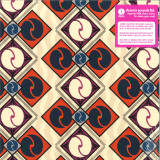
Humphrey Aniakor started Duomo Sounds after a trip to Milan. The idea was to produce a new sound for the emerging generation. A sleek funky but refined, Nigerian disco sound. This compilation captures all of that intention with a broad array of artistes. The music is sometimes sung in local Nigerian languages and sometimes in English but always with an African Accent. Modern grooves for an African market.
After several months spent hanging out at studios in Los Angeles and New York, observing the musicians, producers and engineers at work. He went to nightclubs to study what kind of sonic textures made the crowd move. And when he felt he had gotten the hang of it, he returned to Nigeria to set up his record label. A label that would showcase the au courant, cosmopolitan face of the Nigeria’s emerging young generation. That would encompass the boundlessness of imagination, focus, persistence and craftsmanship. That would deliver music that touched the soul.
There was hardly a shortage of available musical talent by 1980, as Duomo was preparing to launch. The seventies had seen a massive flowering of bands offering a wide array of sounds and styles. But 1980 proved to be the year that would change the topography of the music landscape and its approach to packaging talent. Artistes like Mike Umoh (erstewhile drummer with Bongos Ikwue and the Groovies), Bindiga (Ghanian afrofunk musicians), Christy Ogbah (who worked as a policewoman) bring their personal artistry to create the new sound.
And he would call it—what else?—Duomo. Duomo Sounds Limited.
This combination created high-quality Nigerian music but it also marked the end of bands as the focal point for the popular music marketing. After Okotie’s breakthrough, it became clear that the eighties would be the era of the solo artist. And this would lead to the fracture of established bands as members opted to roll the dice on solo careers.
Order now and we will order the item for you at our supplier.

Soul Station is a masterpiece of melodic improvisation, rhythmic interplay, and emotional depth and showcases Hank Mobley's ability to create music that swings hard but remains accessible and lyrical
The album remains a classic in the jazz canon, essential not only for understanding Mobley's contribution to jazz but also for appreciating the broader hard bop movement of the late 1950s and early 1960s. Released in 1960 it is widely regarded as one of his finest works and a classic in the hard bop genre: Hank Mobley was part of the first wave of musicians who helped shape the hard bop sound, a style that blends bebop with blues, gospel, and R&B influences. Mobley was known for his smooth, melodic playing, and while he didn't receive the same level of fame as contemporaries like John Coltrane or Sonny Rollins, he was respected for his consistency and lyrical improvisation. The album features an exceptional quartet of jazz legends: Hank Mobley, Art Blakey, Wynton Kelly and Paul Chambers: this quartet is especially notable because Mobley recorded with Art Blakey's Jazz Messengers and the rhythm section (Kelly and Chambers) was a part of the classic Miles Davis quintet at the time. Their tight interplay and experience shine throughout the record. "Soul Station" stands out because it encapsulates Mobley's mature, melodic sound and his ability to craft memorable, emotionally resonant music without relying on flash or pyrotechnics. It's a must- listen for any jazz enthusiast, and it's often recommended as a starting point for those exploring Mobley's extensive discography.
Order now and we will order the item for you at our supplier.

Break Out is the tenth studio album by American female vocal group the Pointer Sisters, released on November 1, 1983, on Planet Records. It is the Pointer Sisters’ most successful album to date,
peaking at number eight on the Billboard 200 and earning a triple-platinum certification from the RIAA, with U.S. sales alone totaling 4.5 million copies.
This edition features the hit remix of “I’m So Excited,” contributing to a total of six successful singles from the album, including “Jump (for My Love),” “Automatic,” “Neutron Dance,” “I Need You,” “Baby
Come and Get It,” and “I’m So Excited.” Break Out earned the group two Grammy Awards and two American Music Awards, solidifying its place as a highlight of the Pointer Sisters’ career.
This MOV release comes as a limited edition of 1000 individually numbered copies on purple coloured vinyl.
expected to be published on 21.02.2025

,respite -- levity for the nameless ghost in crisis", aka ,r--L4nGc`, ist Colin Selfs drittes Album, nach dem gefeierten ,Siblings` (2018) und der dazugehörigen EP ,Orphans` (2019).In ,r--L4nGc" bewegt sich die Musik des in Berlin und New York lebenden Künstlers, Komponisten und Puppenspielers nahtlos zwischen schwebenden, unheimlichen Pop-Vocals, immaterieller experimenteller Elektronik und knallharten Dancefloor-Rhythmen. Strahlende, grenzenlose Schönheit und unentrinnbarer Terror sind ein und dasselbe. Unter Einbeziehung von Selfs langjähriger Praxis des Puppenmachens und auf der Grundlage eines bewussten Exils, das es dem Künstler ermöglichte, sich mit verlorenen Seelen auf anderen Existenzebenen zu unterhalten, ist ,rünL4nGc" eine integrierte Vision der eklektischen Praxis des Künstlers. Self singt in Polari, einer vergessenen Form des Slantwise-Englisch, das von queeren Subkulturen seit Jahrhunderten verwendet wird, um sich der Entdeckung zu entziehen, und performt für unsere verstorbenen Lehrer und Freunde und für den Rest von uns, die bereit sind, mit unheimlichen Geistern zu kommunizieren. Für Fans von Perfume Genius, Björk, Holly Herndon, Psychic TV, Oneohtrix Point Never, Lyra Pramuk, Bat For Lashes, SOPHIE, Talk Talk. "respite - levity for the nameless ghost in crisis", aka "r-nL4nGc", is Colin Self's third full length album, following the acclaimed "Siblings" (2018) and its companion EP "Orphans" (2019). In "r-L4nGc" the Berlin and New York based artist, composer, and puppeteer's music travels seamlessly from soaring, uncanny pop vocals to immaterial experimental electronics and hard-hitting dance floor rhythms. Radiant, limitless beauty and boundless, inescapable terror are one and the same. Incorporating Selfü's long standing practice of dollmaking, and drawing upon a conscious exile that allowed the artist to settle into conversation with lost souls on other planes of existence, "r-L4nGc" is an integrated vision of the artist's eclectic practice. Singing in Polari, a forgotten form of slantwise English used by queer subcultures for centuries to evade detection, Self performs for our departed teachers and friends, and for the rest of us, ready to commune with uncanny spirits. For fans of Perfume Genius, Björk, Holly Herndon, Psychic TV, Oneohtrix Point Never, Lyra Pramuk, Bat For Lashes, SOPHIE, Talk Talk.
[f] [CANTING]
expected to be published on 21.02.2025

Coloured Vinyl[29,20 €]
Maud the moth, the solo project of Spanish-born and Scotland-based pianist, singer and songwriter Amaya Lopez-Carromero announces her new album, The Distaff, to be released via The Larvarium (digital +CD) and La Rubia Producciones (vinyl) Amaya has long used the mantle of Maud the moth as an alter-ego, a séance-like conduit to explore themes of rootlessness, identity and trauma. The Distaff in particular refers to the stick or spindle onto which wool or flax is wound for spinning, and an object which has historically been used across multiple cultures as a symbol wielded by the “virtuous woman”, an authoritarian ideal around which much of the trauma surrounding the feminine coalesces. The album takes the form of a sort of self reflective and surreal autobiography. It was in part inspired by the poem of the same name written by the Greek poet Erinna, as she mourns her friend's loss of individuality and agency in exchange for marriage - and therefore safety and acceptance in the eyes of society. The album exists in an ethereal but violent world of aesthetic overlaps where time stands still and fictional and reimagined folk sits at the table with Maud the moth’s usual sonic menagerie. It is the result of a lifetime of obsession with sound and music, where glimpses of musical genre offer insight into Amaya’s artistic interests and her participation in the underground European scene for many years, in bands such as healthyliving. Heavier, darker, and more exposed than any of her previous works it features some highly accomplished artists, such as Seb Rochford (Patti Smith, Polar Bear, Sons of Kemet, Pulled by magnets, etc.) on drums, Alison Chesley (Helen Money) on cello, Fay Guiffo on violin and Scott McLean (Ashenspire, healthyliving, Falloch) on guitar, saxophone and synthesiser. Maud the moth shares the video for "Siphonophores". About the track, Maud the moth says; I wrote "Siphonophores" on guitar, during the first lockdown, a period where I was kind of trapped between an almost empty flat in Edinburgh and Dresden. It was an incredibly harrowing time, but also one of hope and where important new things were being birthed. I felt incredibly sensitive to everything, almost like life was happening in slow motion. I´m not a confident guitarist since I am completely self-taught, but, probably because of this, I feel that this instrument allows me to focus on aspects of the songwriting that I normally overlook when writing on piano, and I think it was a necessary step for this song to exist. Something else which I've been really exploiting lately and features strongly in the album is the percussive capabilities of the piano, and in particular, of the sustain pedal when mic'd up. This can be heard very clearly at the beginning of "Siphonophores". Written and arranged by Amaya, with some contributions in the later role from the aforementioned collaborators, the album presents nine tracks originally written entirely on acoustic piano as accompanied voice pieces, in pure singer-songwriter fashion. The album was co-produced and recorded by Scott and Amaya in different studios across the UK between January and July of 2024, in a process that started shortly after the 2020 pandemic and finished alongside the album recordings in a detailed, organic and at times obsessive process aimed primarily at capturing the natural dynamics and expression of free performance. The Distaff was mixed in its entirety by Scott and mastered at Abbey Road by Alex Wharton (Radiohead, My Bloody Valentine, Aurora, Kathryn Joseph etc.) Despite being born of a very personal point of view, the album lacks a specific narrator and was conceived almost as a sonic trousseau, where the needle point, silks and other family heirlooms have been swapped for out-of-the-corner-of-the-eye memories of rural Spain by the vineyards, family disputes, old tales of wartime pains, generational breaches and finally the conflict of migration and estrangement. The songs paint dystopian pastoral scenes which evolve throughout the span of one fictional day outside of time and coherent locations and where imagination (often the only account surviving from traumatic events and gaslighting) has become indistinguishable from fact. The Distaff attempts to acknowledge past trauma, comprehend and process some of the more difficult aspects which have contributed to our darker self and offer closure and solace through creative catharsis.
expected to be published on 21.02.2025

Maud the moth, the solo project of Spanish-born and Scotland-based pianist, singer and songwriter Amaya Lopez-Carromero announces her new album, The Distaff, to be released via The Larvarium (digital +CD) and La Rubia Producciones (vinyl) Amaya has long used the mantle of Maud the moth as an alter-ego, a séance-like conduit to explore themes of rootlessness, identity and trauma. The Distaff in particular refers to the stick or spindle onto which wool or flax is wound for spinning, and an object which has historically been used across multiple cultures as a symbol wielded by the “virtuous woman”, an authoritarian ideal around which much of the trauma surrounding the feminine coalesces. The album takes the form of a sort of self reflective and surreal autobiography. It was in part inspired by the poem of the same name written by the Greek poet Erinna, as she mourns her friend's loss of individuality and agency in exchange for marriage - and therefore safety and acceptance in the eyes of society. The album exists in an ethereal but violent world of aesthetic overlaps where time stands still and fictional and reimagined folk sits at the table with Maud the moth’s usual sonic menagerie. It is the result of a lifetime of obsession with sound and music, where glimpses of musical genre offer insight into Amaya’s artistic interests and her participation in the underground European scene for many years, in bands such as healthyliving. Heavier, darker, and more exposed than any of her previous works it features some highly accomplished artists, such as Seb Rochford (Patti Smith, Polar Bear, Sons of Kemet, Pulled by magnets, etc.) on drums, Alison Chesley (Helen Money) on cello, Fay Guiffo on violin and Scott McLean (Ashenspire, healthyliving, Falloch) on guitar, saxophone and synthesiser. Maud the moth shares the video for "Siphonophores". About the track, Maud the moth says; I wrote "Siphonophores" on guitar, during the first lockdown, a period where I was kind of trapped between an almost empty flat in Edinburgh and Dresden. It was an incredibly harrowing time, but also one of hope and where important new things were being birthed. I felt incredibly sensitive to everything, almost like life was happening in slow motion. I´m not a confident guitarist since I am completely self-taught, but, probably because of this, I feel that this instrument allows me to focus on aspects of the songwriting that I normally overlook when writing on piano, and I think it was a necessary step for this song to exist. Something else which I've been really exploiting lately and features strongly in the album is the percussive capabilities of the piano, and in particular, of the sustain pedal when mic'd up. This can be heard very clearly at the beginning of "Siphonophores". Written and arranged by Amaya, with some contributions in the later role from the aforementioned collaborators, the album presents nine tracks originally written entirely on acoustic piano as accompanied voice pieces, in pure singer-songwriter fashion. The album was co-produced and recorded by Scott and Amaya in different studios across the UK between January and July of 2024, in a process that started shortly after the 2020 pandemic and finished alongside the album recordings in a detailed, organic and at times obsessive process aimed primarily at capturing the natural dynamics and expression of free performance. The Distaff was mixed in its entirety by Scott and mastered at Abbey Road by Alex Wharton (Radiohead, My Bloody Valentine, Aurora, Kathryn Joseph etc.) Despite being born of a very personal point of view, the album lacks a specific narrator and was conceived almost as a sonic trousseau, where the needle point, silks and other family heirlooms have been swapped for out-of-the-corner-of-the-eye memories of rural Spain by the vineyards, family disputes, old tales of wartime pains, generational breaches and finally the conflict of migration and estrangement. The songs paint dystopian pastoral scenes which evolve throughout the span of one fictional day outside of time and coherent locations and where imagination (often the only account surviving from traumatic events and gaslighting) has become indistinguishable from fact. The Distaff attempts to acknowledge past trauma, comprehend and process some of the more difficult aspects which have contributed to our darker self and offer closure and solace through creative catharsis.
expected to be published on 21.02.2025
