Suche:politics of dancing

Styles
Alle
  • 1
Jnjs - Go Back EP

JNJS are Jay Nortown and Jacobo Saavedra, Ibiza residents and a dynamic duo who have made moves on the likes of Dias De Campo, Nothing But and UVAR. This time out they land on the influential Politics Of Dancing with three crisp, twisted takes on tech house. 'Between Us Two' is an easy to latch onto groove with fleshy bass and lithe chords darting about up top. 'Infection' has a swirling and rapping lead that brings more off-balance movement and 'Go Back' shuts down with some psychedelic leads smudged and smeared across the sky as the fulsome drums work down low. A Terence :Terry: remix brings bigger drums and more swag to this effective EP.

Auf Lager

Bei uns am Lager und sofort versandfertig

13,87
POLITICS OF DANCING - Breaky EP

Politics Of Dancing returns to their self-titled label with more perfect club bait. 'Fonk' is a breezy, smooth tech house pumper with shape-shifting synths and a nice tightly coiled bassline that are perfectly easy to latch onto a cruise along with. 'Little Freak' brings more colour to some psychedlic synth refrains that loop over the bubbly tech house beats and 'Breaky' has a gritty low end and cosmic pads. It's body music with a future edge and last of all is an Arapu remix which ups the pace a little and brings some sci-fi motifs to a fulsome minimal soundscape.

nicht am Lager

Bestelle jetzt und wir bestellen den Artikel für dich beim Lieferanten.

14,08

Last In: vor 4 Monaten
Various - POD Edits #5

The long-running Politics Of Dancing label returns with more dancefloor weaponry from a fine selection of artists who all explore distinctive takes on tech and minimal.

Podjeb's 'Sexy MF' is a lithe, crisp tech cut with a libidinous vocal looped next to balmy pads. Kerouac's 'Poon Tang' is irresistibly fun - a pumping cut with funky bass notes and molten synths that cannot fail to get you locked in. Or24k's 'tO gO' is a more physical jam with old school scratching and rapped vocals, then 2Vilas cruises on a cool house groove, La Nena De Ibiza,' to shut down a characterful EP.

nicht am Lager

Bestelle jetzt und wir bestellen den Artikel für dich beim Lieferanten.

14,08

Last In: vor 10 Monaten
Politics Of Dancing - Never Stop EP

The Politics Of Dancing label hits release number 30 here with a suitably fresh new offering that finds the eponymous label head stepping up with three balmy new tunes. 'Let's Do This' is fresh as you like house music with deep drums and heady pads circling round in cosmic fashion. Boris Werner's Bleep remix is a little more driving and thumping for the later hours and then 'Mamma' again gets its head up amongst the stars with more colourful synth work before the liquid and loopy house pumper 'Never Stop' closes out a lively and vibrant EP.

nicht am Lager

Bestelle jetzt und wir bestellen den Artikel für dich beim Lieferanten.

14,50

Last In: vor 9 Monaten
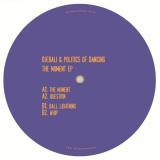
Politics Of Dancing / Djebali - Soul Brothers EP

Politics Of Dancing once again gets our vote here with some balmy deep house propositions from the eponymous production team working alongside French stylist Djebali. 'Close To Gate' layers balmy pads and smeared chords over punchy and dynamic drums with plenty of cosmic effects up top. There is a little more urgency to 'Soul Brothers' which skates and skips along nicely beneath shimmering vocals sounds and wispy melodies. 'Simple Minds' brings more physical drum work and infectious finger clicks while the Franco Cinelli remix gets things on more of a breezy and rolling tip. A useful, heartwarming EP of modern deep house music.

nicht am Lager

Bestelle jetzt und wir bestellen den Artikel für dich beim Lieferanten.

13,40

Last In: vor 2 Jahren
Tommy Vicari Jnr - Look In Your Eyes (Remixes)

The ever wonderful Politics Of Dancing come with four remixes of label stalwart Tommy Vicari Jnr jumping, pumping house stormer 'Look I Your Eyes', each carefully crafted to cover slightly different areas of the dancefloor. The Silverlining Night dub remix takes pride of placer on side A, a mix of two halves for sure - it starts of all full pelt, adds a subtle layer of disco-style strings and then drops to a dramatic breakdown before re-building brick by brick. Josh Baker's version has a slightly 80s feel with its mechanised handclaps and swooping synths wrapped in echoey vocals, the Lowris mix is arguably the most no nonsense, straight ahead thumper and then we're left to luxuriate in the sumptuous ooze of Cosenza's dub house re-reub, taking us all the way back to the days of Guerrilla at their h=eight. Capital!

nicht am Lager

Bestelle jetzt und wir bestellen den Artikel für dich beim Lieferanten.

13,40

Last In: vor 20 Monaten
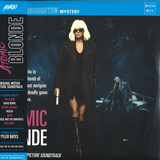
Various - Atomic Blonde - Ost

Various

Atomic Blonde - Ost

2x12inchMOND114
Mondo
09.04.2018

A cool film needs a cool soundtrack, right And none come cooler than ATOMIC BLONDE. A double LP filled to the brim with needledrops of some of the '80s best known cuts, as well as some under the radar gems, and a smattering of brand new tracks recorded especially for the movie.

David Bowie, George Michael, The Clash, Nena, Siouxsie and the Banshees, and A Flock Of Seagulls of course need no introduction, and they all contribute absolutely killer songs here. Rubbing shoulders with these A-listers are lesser known acts such as Re-Flex, whose track 'The Politics of Dancing' was a minor hit in the UK and is a pure '80s synth-pop banger from start to finish. After The Fire went from playing uninspired prog rock to recording the should-have-been classic 'Der Kommissar,' full of funky guitar licks and a chorus so hook-laden it should be illegal. 'Voices Carry' by American new wave band 'Til Tuesday features Aimee Mann on vocals and is an all-timer everyone needs on vinyl.

nicht am Lager

Bestelle jetzt und wir bestellen den Artikel für dich beim Lieferanten.

47,86

Last In: vor 5 Jahren
Various - Bondage Games Part 7 3x12"
Auf Lager

Bei uns am Lager und sofort versandfertig

33,19
Tommy Vicari Jnr - Hosed Sonata

Regularly described as one of the hidden jewels in the industry Tommy Vicari Jnr has been releasing music since 2001. Since then he has been consistently championed by the worlds top DJ's with his tracks regularly featuring in sets from the likes of Ricardo Villalobos, Zip and a:rpia:r soundsystem. His blinding releases over the years on labels back catalogues such as 320KB, AMMO84, Robsoul Recordings, Slapfunk, Politics of Dancing, BienAimer, Discours and Counterculture Records are so highly regarded that they're consistently classed as gold dust to DJ's and vinyl collectors alike. And now the enigmatic producer joins the Johnny Johnny Records roster with JJW004. Our 4th vinyl exclusive release Tommy has conjured up 3 raw original cuts that are packed with Vicari's signature quirky and against the grain sound. Rounding off the record we have our very own founder Modat returning to this particular ethylene & chlorine combo with his own take of a1. Expect raw eclectic house music from start to finnish.

Auf Lager

Bei uns am Lager und sofort versandfertig

11,72
Terrence :Terry: - Vision Of The Futur

FanFar'On: ''After the success of his latest works on international platforms, the French veteran now based in Madrid will be the second release for the FanFar'On catalogue.
It’s the next chapter for Terence and you will recognize his new inspiration & futuristic vibe here. To complete the record, the young prodigy from Tel-Aviv Stephan BazBaz (Politics Of Dancing Records, Djebali) delivers a remix of title-cut 'Vision of the Futur', explosive breakbeat built for the dance floor.
We are really happy to have Terence & Stephan on board for the second ep of the label, Welcome ! and let the FanFare begin.''

Auf Lager

Bei uns am Lager und sofort versandfertig

10,50
M-High - Up The Attic Ep

Sidney Charles welcomes M-High to his leading Heavy House Society imprint and the Dutchman drops a classy four track EP of exceptional high quality laden with groove style and panache.

M-High is known to many within the Minimal and Deep scene through his releases on prominent labels such as Locus, META, Rutilance, Politics of Dancing PIV and more. These releases have been supported by a who’s who including Archie Hamilton, Chris Stussy, Phil Weeks, Jamie Jones, Sam Divine and many others. This support coupled with always fire releases and his highly impressive record selection in his sets has seen him being booked at in demand venues and festivals including Fabric London, BPM Costa Rica, Mint Warehouse Leeds, Thuishaven Amsterdam, Defected Croatia and more, and now Sidney Charles welcomes him to his Heavy House Society imprint and once again the young talented Dutchman does not disappoint.

His ‘Up The Attic EP’ is a luxurious blend of house ranging from the more jackin’ warehouse style of ‘Jackstion’, to the sensuous bassline roller ‘Let J Say’. He then takes you on a powerful deeper journey with ‘That Reminds Me’ and he rounds off the EP with the lofty and effervescent title track ‘Up The Attic’, making this an essential must have for those who like their music, intelligent, understated yet highly danceable and chic.

collecting

Bestelle jetzt. Wir sammeln aktuell Bestellungen für eine Nachpressung.

11,72

Last In: vor 3 Jahren
Various - Cymatics Records 001

Cymatics Records makes his debut on wax and brings a Various Artists for it’s first release, putting together some of the renowned names on the scene nowadays to bring you some quality music

.

On the A1 is Cosenza, Argentinian guy with releases on some huge labels like Locus, Key Records, Hoarder, Talman Records and many more. Presenting ‘Obsession’ he brings a very groovy sound, with a fat and wide bass joined with nice drums.

For the A2 the guest is Mateo Dufour, also Argentinian, a name that is getting more popularity in Europe and rest of the world. With productions in labels such as No Art, Djebali, Politics of Dancing, etc, Mateo knows how to turn the dancefloor on fire! Enjoy Grey Swamp a very housey beats with some beautiful keys, as Mateo is a master on that assign.

On the other side for the B1 is O’Gio, Uruguayan guy, head of this project, his name started hitting the scene lately with productions for Limousine Dream (Nug-Net), Binary Sound and Howl Records. Gio’s productions always try to bring fresh sounds, with nice hooks, thick basses and fine drums.

Last but not Least for B2 we have Cessy, Australian himself, owner of a unique sound which that has led to European Tastemakers getting him to release on such labels as No art and Archie’s Hamilton own label too, becoming one usual name on European nightclubs.

lagernd ab31.03.2026

12,19

Last In: vor 28 Tagen
Kerri Chandler - Lost and Found EP Vol 1 EP

repressed!

Kerri Chandler delivers ‘Lost & Found Vol.1’ this March, a four-track collection of revisited, unreleased archive cuts, including Kerri’s own Grampa, Calvin Reed Sr. as a featuring artist on the opening track.

New Jersey’s Kerri Chandler has been at the forefront of house music since the beginning of his career in the early 90’s. Over the past three decades he’s released an extensive back catalogue of material including several albums on his own Madhouse and Kaoz Theory imprints as well as the likes of DJ Deep’s Deeply Rooted, Apollonia, Jerome Sydenham’s Ibadan and Watergate Records.

Here we see Kerri dig up some never before heard archived material from the 90’s and early 2000’s for this four-track EP. Up first is ‘What Will We Do ft Grampa’, featuring spoken word and vocal lines from Kerri’s Grandfather Calvin Reed St. atop gritty swinging drums, organ lines and rounded subs. ‘Tonight’ follows and tips focus over to airy chord sequences, choppy bass notes, dreamy arpeggio lines and dynamic drums.

‘Into The Night’ opens the b-side next, bringing a raw bass hook, tension building strings and vocal chants of the track’s title into the forefront while bumpy stripped-back drums keep things driving. ‘This and That’ then rounds out the release, bringing twitchy resonant synths and phaser sweeps into the mix alongside stuttering drum programming for a funk-infused, loop driven eight minute workout.

DJ Feedback:

Honey Dijon - Classic
Kerri still has his A Game intact! Great Ep!

Laurent Garnier - Kompakt, MCDE, F Communications
PURE LOOOOOOOOOVE

Jimpster - Freerange, Delusions Of Grandeur
Kerri!!!! Classic tracks with that inimitable groove and production which makes him such an icon. Big ups!!

Terry Farley - Junior Boys Own
BACK 2 DA RAW

Fouk - Heist, House of Disco, Razor N Tape
Super hard to pick a fav as each track has its own vibe! LOVE THIS <3

Enzo Siragusa - Fuse London, InFuse
Quality as always from Kerri!

Harvey Sutherland - MCDE, PPU, This Thing
always.

Roy Davis Jnr
Full support.

Jason Kendig Honey Sound System
Always fire tracks from kerri!

DJ Bone - Subject, Metroplex
Love the entire release!

Politics of Dancing (Guillaume & David)
one love for Kerry as always :)

Joyce Muniz - Exploited Ghetto, 20:20 Vision
Nice Ep!

Massimiliano Pagliara - Panorama Bar, Ostgut Ton
groovy!

Shadow Child
king.

Tobi Neumann - What Came First
Brutally good House Music. This one I wanna have on vinyl. Thanks master Chandler for the music!

Chrissy - Chiwax, The Nite Owl Diner
Very excited for this one

Halo Varga - All Inn Music, Surface, Inmotion Music
Kerri is GOD

Mutiny - Azuli, Skint
Kerri on that deep classic vibe..Love

Alinka - Permanent Vacation, Twirl!
Brilliant as always

Diz - Robsoul
90's freshness!!!

Fish Go Deep - Innervisions, Defected
The long-awaited follow up to She's Crazy! Beautifully done. The other tracks also slamming, packed with dancefloor drive and emotion. Can't wait to play loud.

Art Of Tones, Llorca
Superb EP !

Lupe
The Grampa one, instant cult hit, very endearing! Great stuff

BD1982 - Diskotopia, Tokyo
Classic material from an absolute legend

Johannes Albert - Need Want, Mirau, Berlin Bass
vibes for days!

Joseph G. Bendavid
kerri can't fail, always bomb tracks

Terry Grant
Stone. Cold. Legend.

Harri - Sub Club
Lovely

Severino - Horse Meat Disco
oh yes quality

nicht am Lager

Bestelle jetzt und wir bestellen den Artikel für dich beim Lieferanten.

13,91

Last In: vor 19 Tagen
Various - Various Artists - TRAX 01

We are delighted to announce the first vinyl release on TBX Records that features an eclectic selection of tracks. The TRAX VA showcases the diverse talents of four exceptional artists who have come together to create a mesmerising sonic journey. The a-side track dives you into the world of Rich NxT as he crafts 'Bluefunk', a groovy and hypnotic track that's sure to get your feet moving.

Next up comes Perky Wires who bring a fresh perspective with 'Take the Beat UP'. This track is a masterclass in blending a bouncy bassline with a tight house beat, resulting in a vibey experience that's both energetic and emotionally resonant. B-side is represented by a track called 'Melow' by Politics Of Dancing which invites you to a place of auditory serenity. Djebali closes this compilation by delivering 'Matmata'. This track unfolds like a story, with intricate layers of sound that keep you engaged from start to finish. Get ready to embark on a musical adventure like no other, and join us in celebrating this historic moment as we release our first vinyl record.

lagernd ab26.03.2026

12,19

Last In: vor 7 Tagen
Binofski - Mellow Tone

Binofski

Mellow Tone

12inchNB001G
Natural Bounce
08.12.2023

Natural Bounce Is the Joint Venture of Melbourne Underground Record Stores: Natural Selection & Bounce Audio. the Idea Behind the Label Was to Celebrate Australian Dj's and Producers While Bridging the Gap With Their European Counterparts. for Their First Release, House Groove Master Binofski Delivers 3 Tracks Cut for the Dancefloor and Got Politics of Dancing on Remix Duties! All Stars Line Up for This First, Very Promising, Ep...

nicht am Lager

Bestelle jetzt und wir bestellen den Artikel für dich beim Lieferanten.

11,98

Last In: vor 20 Monaten
Ray Mono - As The World Turns

Ray Mono

As The World Turns

12inchTRMNL004
TRMNL
25.04.2023

Ray Mono steps up for the fourth release on Birmingham-based imprint TRMNL, with Meander boss DeWalta accompanying on remix duties.

With an increasing number of global shows across Europe, Australia, and North and South America, UK-based DJ/producer Ray Mono is crafting his warm and rich sound in one that is steadily becoming his own. Fresh from music on MOXY MUZIK, Politics Of Dancing, LOCUS, and hedZup Records, he makes his first appearance on TRMNL Records with a trio of slick groove-led cuts spanning minimal and house spheres, backed by a hazy and warping late-hours roller provided by DeWalta to close the show.

DJ Support:

Jamie Jones
Archie Hamilton
Raresh
Joseph Capriati
Franky Rizardo
IULY.B
Jean Pierre
Sakro
Ben Jones

nicht am Lager

Bestelle jetzt und wir bestellen den Artikel für dich beim Lieferanten.

16,18

Last In: vor 4 Monaten
Lee Tracy & Isaac Manning - Is it What You Want

As the sun sets on a quaint East Nashville house, a young man bares a piece of his soul. Facing the camera, sporting a silky suit jacket/shirt/slacks/fingerless gloves ensemble that announces "singer" before he's even opened his mouth, Lee Tracy Johnson settles onto his stage, the front yard. He sways to the dirge-like drum machine pulse of a synth-soaked slow jam, extends his arms as if gaining his balance, and croons in affecting, fragile earnest, "I need your love… oh baby…"

Dogs in the yard next door begin barking. A mysterious cardboard robot figure, beamed in from galaxies unknown and affixed to a tree, is less vocal. Lee doesn't acknowledge either's presence. He's busy feeling it, arms and hands gesticulating. His voice rises in falsetto over the now-quiet dogs, over the ambient noise from the street that seeps into the handheld camcorder's microphone, over the recording of his own voice played back from a boombox off-camera. After six minutes the single, continuous shot ends. In this intimate creative universe there are no re-takes. There are many more music videos to shoot, and as Lee later puts it, "The first time you do it is actually the best. Because you can never get that again. You expressing yourself from within."

"I Need Your Love" dates from a lost heyday. From some time in the '80s or early '90s, when Lee Tracy (as he was known in performance) and his music partner/producer/manager Isaac Manning committed hours upon hours of their sonic and visual ideas to tape. Embracing drum machines and synthesizers – electronics that made their personal futurism palpable – they recorded exclusively at home, live in a room into a simple cassette deck. Soul, funk, electro and new wave informed their songs, yet Lee and Isaac eschewed the confinement of conventional categories and genres, preferring to let experimentation guide them.

"Anytime somebody put out a new record they had the same instruments or the same sound," explains Isaac. "So I basically wanted to find something that's really gonna stand out away from all of the rest of 'em." Their ethos meant that every idea they came up with was at least worth trying: echoed out half-rapped exhortations over frantic techno-style beats, gospel synth soul, modal electro-funk, oddball pop reinterpretations, emo AOR balladry, nods to Prince and the Fat Boys, or arrangements that might collapse mid-song into a mess of arcade game-ish blips before rallying to reach the finish line. All of it conjoined by consistent tape hiss, and most vitally, Lee's chameleonic voice, which managed to wildly shape shift and still evoke something sincere – whether toggling between falsetto and tenor exalting Jesus's return, or punctuating a melismatic romantic adlib with a succinct, "We all know how it feels to be alone."

"People think we went to a studio," says Isaac derisively. "We never went to no studio. We didn't have the money to go to no studio! We did this stuff at home. I shot videos in my front yard with whatever we could to get things together." Sometimes Isaac would just put on an instrumental record, be it "Planet Rock" or "Don't Cry For Me Argentina" (from Evita), press "record," and let Lee improvise over it, yielding peculiar love songs, would-be patriotic anthems, or Elvis Presley or Marilyn Monroe tributes. Technical limitations and a lack of professional polish never dissuaded them. They believed they were onto something.

"That struggle," Isaac says, "made that sound sound good to me."

In the parlance of modern music criticism Lee and Isaac's dizzying DIY efforts would inevitably be described as "outsider." But "outsider" carries the burden of untold additional layers of meaning if you're Black and from the South, creating on a budget, and trying to get someone, anyone within the country music capital of the world to take your vision seriously. "What category should we put it in?" Isaac asks rhetorically. "I don't know. All I know is feeling. I ain't gonna name it nothing. It's music. If it grabs your soul and touch your heart that's what it basically is supposed to do."

=

Born in 1963, the baby boy of nine siblings, Lee Tracy spent his earliest years living amidst the shotgun houses on Nashville's south side. "We was poor, man!" he says, recalling the outhouse his family used for a bathroom and the blocks of ice they kept in the kitchen to chill perishables. "But I actually don't think I really realized I was in poverty until I got grown and started thinking about it." Lee's mom worked at the Holiday Inn; his dad did whatever he had to do, from selling fruit from a horse drawn cart to bootlegging. "We didn't have much," Lee continues, "but my mother and my father got us the things we needed, the clothes on our back." By the end of the decade with the city's urban renewal programs razing entire neighborhoods to accommodate construction of the Interstate, the family moved to Edgehill Projects. Lee remembers music and art as a constant source of inspiration for he and his brothers and sisters – especially after seeing the Jackson 5 perform on Ed Sullivan. "As a small child I just knew that was what I wanted to do."

His older brother Don began musically mentoring him, introducing Lee to a variety of instruments and sounds. "He would never play one particular type of music, like R&B," says Lee. "I was surrounded by jazz, hard rock and roll, easy listening, gospel, reggae, country music; I mean I was a sponge absorbing all of that." Lee taught himself to play drums by beating on cardboard boxes, gaining a rep around the way for his timekeeping, and his singing voice. Emulating his favorites, Earth Wind & Fire and Cameo, he formed groups with other kids with era-evocative band names like Concept and TNT Connection, and emerged as the leader of disciplined rehearsals. "I made them practice," says Lee. "We practiced and practiced and practiced. Because I wanted that perfection." By high school the most accomplished of these bands would take top prize in a prominent local talent show. It was a big moment for Lee, and he felt ready to take things to the next level. But his band-mates had other ideas.

"I don't know what happened," he says, still miffed at the memory. "It must have blew they mind after we won and people started showing notice, because it's like everybody quit! I was like, where the hell did everybody go?" Lee had always made a point of interrogating prospective musicians about their intentions before joining his groups: were they really serious or just looking for a way to pick up girls? Now he understood even more the importance of finding a collaborator just as committed to the music as he was.

=

Isaac Manning had spent much of his life immersed in music and the arts – singing in the church choir with his family on Nashville's north side, writing, painting, dancing, and working various gigs within the entertainment industry. After serving in the armed forces, in the early '70s he ran The Teenage Place, a music and performance venue that catered to the local youth. But he was forced out of town when word of one of his recreational routines created a stir beyond the safe haven of his bohemian circles.

"I was growing marijuana," Isaac explains. "It wasn't no business, I was smoking it myself… I would put marijuana in scrambled eggs, cornbread and stuff." His weed use originated as a form of self-medication to combat severe tooth pain. But when he began sharing it with some of the other young people he hung out with, some of who just so happened to be the kids of Nashville politicians, the cops came calling. "When I got busted," he remembers, "they were talking about how they were gonna get rid of me because they didn't want me saying nothing about they children because of the politics and stuff. So I got my family, took two raggedy cars, and left Nashville and went to Vegas."

Out in the desert, Isaac happened to meet Chubby Checker of "The Twist" fame while the singer was gigging at The Flamingo. Impressed by Isaac's zeal, Checker invited him to go on the road with him as his tour manager/roadie/valet. The experience gave Isaac a window into a part of the entertainment world he'd never encountered – a glimpse of what a true pop act's audience looked like. "Chubby Checker, none of his shows were played for Black folks," he remembers. "All his gigs were done at high-class white people areas." Returning home after a few years with Chubby, Isaac was properly motivated to make it in Music City. He began writing songs and scouting around Nashville for local talent anywhere he could find it with an expressed goal: "Find someone who can deliver your songs the way you want 'em delivered and make people feel what you want them to feel."

One day while walking through Edgehill Projects Isaac heard someone playing the drums in a way that made him stop and take notice. "The music was so tight, just the drums made me feel like, oh I'm-a find this person," he recalls. "So I circled through the projects until I found who it was.

"That's how I met him – Lee Tracy. When I found him and he started singing and stuff, I said, ohhh, this is somebody different."

=

Theirs was a true complementary partnership: young Lee possessed the raw talent, the older Isaac the belief. "He's really the only one besides my brother and my family that really seen the potential in me," says Lee. "He made me see that I could do it."

Isaac long being a night owl, his house also made for a fertile collaborative environment – a space where there always seemed to be a new piece of his visual art on display: paintings, illustrations, and dolls and figures (including an enigmatic cardboard robot). Lee and Issac would hang out together and talk, listen to music, conjure ideas, and smoke the herb Isaac had resumed growing in his yard. "It got to where I could trust him, he could trust me," Isaac says of their bond. They also worked together for hours on drawings, spreading larges rolls of paper on the walls and sketching faces with abstract patterns and imagery: alien-like beings, tri-horned horse heads, inverted Janus-like characters where one visage blurred into the other.

Soon it became apparent that they didn't need other collaborators; self-sufficiency was the natural way forward. At Isaac's behest Lee, already fed up with dealing with band musicians, began playing around with a poly-sonic Yamaha keyboard at the local music store. "It had everything on it – trumpet, bass, drums, organ," remembers Lee. "And that's when I started recording my own stuff."

The technology afforded Lee the flexibility and independence he craved, setting him on a path other bedroom musicians and producers around the world were simultaneously following through the '80s into the early '90s. Saving up money from day jobs, he eventually supplemented the Yamaha Isaac had gotten him with Roland and Casio drum machines and a Moog. Lee was living in an apartment in Hillside at that point caring for his dad, who'd been partially paralyzed since early in life. In the evenings up in his second floor room, the music put him in a zone where he could tune out everything and lose himself in his ideas.

"Oh I loved it," he recalls. "I would really experiment with the instruments and use a lot of different sound effects. I was looking for something nobody else had. I wanted something totally different. And once I found the sound I was looking for, I would just smoke me a good joint and just let it go, hit the record button." More potent a creative stimulant than even Isaac's weed was the holistic flow and spontaneity of recording. Between sessions at Isaac's place and Lee's apartment, their volume of output quickly ballooned.

"We was always recording," says Lee. "That's why we have so much music. Even when I went to Isaac's and we start creating, I get home, my mind is racing, I gotta start creating, creating, creating. I remember there were times when I took a 90-minute tape from front to back and just filled it up."

"We never practiced," says Isaac. "See, that was just so odd about the whole thing. I could relate to him, and tell him about the songs I had ideas for and everything and stuff. And then he would bring it back or whatever, and we'd get together and put it down." Once the taskmaster hell bent on rehearsing, Lee had flipped a full 180. Perfection was no longer an aspiration, but the enemy of inspiration.

"I seen where practicing and practicing got me," says Lee. "A lot of musicians you get to playing and they gotta stop, they have to analyze the music. But while you analyzing you losing a lot of the greatness of what you creating. Stop analyzing what you play, just play! And it'll all take shape."

=

"I hope you understood the beginning of the record because this was invented from a dream I had today… (You tell me, I'll tell you, we'll figure it out together)" – Lee Tracy and Isaac Manning, "Hope You Understand"

Lee lets loose a maniacal cackle when he acknowledges that the material that he and Isaac recorded was by anyone's estimation pretty out there. It's the same laugh that commences "Hope You Understand" – a chaotic transmission that encapsulates the duality at the heart of their music: a stated desire to reach people and a compulsion to go as leftfield as they saw fit.

"We just did it," says Lee. "We cut the music on and cut loose. I don't sit around and write. I do it by listening, get a feeling, play the music, and the lyrics and stuff just come out of me."

The approach proved adaptable to interpreting other artists' material. While recording a cover of Whitney Houston's pop ballad "Saving All My Love For You," Lee played Whitney's version in his headphones as he laid down his own vocals – partially following the lyrics, partially using them as a departure point. The end result is barely recognizable compared with the original, Lee and Isaac having switched up the time signature and reinvented the melody along the way towards morphing a slick mainstream radio standard into something that sounds solely their own.

"I really used that song to get me started," says Lee. "Then I said, well I need something else, something is missing. Something just came over me. That's when I came up with 'Is It What You Want.'"

The song would become the centerpiece of Lee and Isaac's repertoire. Pushed along by a percolating metronomic Rhythm King style beat somewhere between a military march and a samba, "Is It What You Want" finds Lee pleading the sincerity of his commitment to a potential love interest embellished by vocal tics and hiccups subtlely reminiscent of his childhood hero MJ. Absent chord changes, only synth riffs gliding in and out like apparitions, the song achieves a lingering lo-fi power that leaves you feeling like it's still playing, somewhere, even after the fade out.

"I don't know, it's like a real spiritual song," Lee reflects. "But it's not just spiritual. To me the more I listen to it it's like about everything that you do in your everyday life, period. Is it what you want? Do you want a car or you don't want a car? Do you want Jesus or do you want the Devil? It's basically asking you the question. Can't nobody answer the question but you yourself."

In 1989 Lee won a lawsuit stemming from injuries sustained from a fight he'd gotten into. He took part of the settlement money and with Isaac pressed up "Saving All My Love For You" b/w "Is It What You Want" as a 45 single. Isaac christened the label One Chance Records. "Because that's all we wanted," he says with a laugh, "one chance."

Isaac sent the record out to radio stations and major labels, hoping for it to make enough noise to get picked up nationally. But the response he and Lee were hoping for never materialized. According to Isaac the closest the single got to getting played on the radio is when a disk jock from a local station made a highly unusual announcement on air: "The dude said on the radio, 107.5 – 'We are not gonna play 'Is It What You Want.' We cracked up! Wow, that's deep.

"It was a whole racist thing that was going on," he reflects. "So we just looked over and kept on going. That was it. That was about the way it goes… If you were Black and you were living in Nashville and stuff, that's the way you got treated." Isaac already knew as much from all the times he'd brought he and Lee's tapes (even their cache of country music tunes) over to Music Row to try to drum up interest to no avail.

"Isaac, he really worked his ass off," says Lee. "He probably been to every record place down on Music Row." Nashville's famed recording and music business corridor wasn't but a few blocks from where Lee grew up. Close enough, he remembers, for him to ride his bike along its back alleys and stumble upon the occasional random treasure, like a discarded box of harmonicas. Getting in through the front door, however, still felt a world away.

"I just don't think at the time our music fell into a category for them," he concedes. "It was before its time."

=

Lee stopped making music some time in the latter part of the '90s, around the time his mom passed away and life became increasingly tough to manage. "When my mother died I had a nervous breakdown," he says, "So I shut down for a long time. I was in such a sadness frame of mind. That's why nobody seen me. I had just disappeared off the map." He fell out of touch with Isaac, and in an indication of just how bad things had gotten for him, lost track of all the recordings they'd made together. Music became a distant memory.

Fortunately, Isaac kept the faith. In a self-published collection of his poetry – paeans to some of his favorite entertainment and public figures entitled Friends and Dick Clark – he'd written that he believed "music has a life of its own." But his prescience and presence of mind were truly manifested in the fact that he kept an archive of he and Lee's work. As perfectly imperfect as "Is It What You Want" now sounds in a post-Personal Space world, Lee and Isaac's lone official release was in fact just a taste. The bulk of the Is It What You Want album is culled from the pair's essentially unheard home recordings – complete songs, half-realized experiments, Isaac's blue monologues and pronouncements et al – compiled, mixed and programmed in the loose and impulsive creative spirit of their regular get-togethers from decades ago. The rest of us, it seems, may have finally caught up to them.

On the prospect of at long last reaching a wider audience, Isaac says simply, "I been trying for a long time, it feels good." Ever the survivor, he adds, "The only way I know how to make it to the top is to keep climbing. If one leg break on the ladder, hey, you gotta fix it and keep on going… That's where I be at. I'll kill death to make it out there."

For Lee it all feels akin to a personal resurrection: "It's like I was in a tomb and the tomb was opened and I'm back… Man, it feels so great. I feel like I'm gonna jump out of my skin." Success at this stage of his life, he realizes, probably means something different than what it did back when he was singing and dancing in Isaac's front yard. "What I really mean by 'making it,'" he explains isn't just the music being heard but, "the story being told."

Occasionally Lee will pull up "Is It What You Want" on YouTube on his phone, put on his headphones, and listen. He remembers the first time he heard his recorded voice. How surreal it was, how he thought to himself, "Is that really me?" What would he say to that younger version of himself now?

"I would probably tell myself, hang in there, don't give up. Keep striving for the goal. And everything will work out."

Despite what's printed on the record label, sometimes you do get more than one chance.

nicht am Lager

Bestelle jetzt und wir bestellen den Artikel für dich beim Lieferanten.

11,72

Last In: vor 3 Jahren
Lee Tracy & Isaac Manning - Is it What You Want LP

As the sun sets on a quaint East Nashville house, a young man bares a piece of his soul. Facing the camera, sporting a silky suit jacket/shirt/slacks/fingerless gloves ensemble that announces "singer" before he's even opened his mouth, Lee Tracy Johnson settles onto his stage, the front yard. He sways to the dirge-like drum machine pulse of a synth-soaked slow jam, extends his arms as if gaining his balance, and croons in affecting, fragile earnest, "I need your love… oh baby…"

Dogs in the yard next door begin barking. A mysterious cardboard robot figure, beamed in from galaxies unknown and affixed to a tree, is less vocal. Lee doesn't acknowledge either's presence. He's busy feeling it, arms and hands gesticulating. His voice rises in falsetto over the now-quiet dogs, over the ambient noise from the street that seeps into the handheld camcorder's microphone, over the recording of his own voice played back from a boombox off-camera. After six minutes the single, continuous shot ends. In this intimate creative universe there are no re-takes. There are many more music videos to shoot, and as Lee later puts it, "The first time you do it is actually the best. Because you can never get that again. You expressing yourself from within."

"I Need Your Love" dates from a lost heyday. From some time in the '80s or early '90s, when Lee Tracy (as he was known in performance) and his music partner/producer/manager Isaac Manning committed hours upon hours of their sonic and visual ideas to tape. Embracing drum machines and synthesizers – electronics that made their personal futurism palpable – they recorded exclusively at home, live in a room into a simple cassette deck. Soul, funk, electro and new wave informed their songs, yet Lee and Isaac eschewed the confinement of conventional categories and genres, preferring to let experimentation guide them.

"Anytime somebody put out a new record they had the same instruments or the same sound," explains Isaac. "So I basically wanted to find something that's really gonna stand out away from all of the rest of 'em." Their ethos meant that every idea they came up with was at least worth trying: echoed out half-rapped exhortations over frantic techno-style beats, gospel synth soul, modal electro-funk, oddball pop reinterpretations, emo AOR balladry, nods to Prince and the Fat Boys, or arrangements that might collapse mid-song into a mess of arcade game-ish blips before rallying to reach the finish line. All of it conjoined by consistent tape hiss, and most vitally, Lee's chameleonic voice, which managed to wildly shape shift and still evoke something sincere – whether toggling between falsetto and tenor exalting Jesus's return, or punctuating a melismatic romantic adlib with a succinct, "We all know how it feels to be alone."

"People think we went to a studio," says Isaac derisively. "We never went to no studio. We didn't have the money to go to no studio! We did this stuff at home. I shot videos in my front yard with whatever we could to get things together." Sometimes Isaac would just put on an instrumental record, be it "Planet Rock" or "Don't Cry For Me Argentina" (from Evita), press "record," and let Lee improvise over it, yielding peculiar love songs, would-be patriotic anthems, or Elvis Presley or Marilyn Monroe tributes. Technical limitations and a lack of professional polish never dissuaded them. They believed they were onto something.

"That struggle," Isaac says, "made that sound sound good to me."

In the parlance of modern music criticism Lee and Isaac's dizzying DIY efforts would inevitably be described as "outsider." But "outsider" carries the burden of untold additional layers of meaning if you're Black and from the South, creating on a budget, and trying to get someone, anyone within the country music capital of the world to take your vision seriously. "What category should we put it in?" Isaac asks rhetorically. "I don't know. All I know is feeling. I ain't gonna name it nothing. It's music. If it grabs your soul and touch your heart that's what it basically is supposed to do."

=

Born in 1963, the baby boy of nine siblings, Lee Tracy spent his earliest years living amidst the shotgun houses on Nashville's south side. "We was poor, man!" he says, recalling the outhouse his family used for a bathroom and the blocks of ice they kept in the kitchen to chill perishables. "But I actually don't think I really realized I was in poverty until I got grown and started thinking about it." Lee's mom worked at the Holiday Inn; his dad did whatever he had to do, from selling fruit from a horse drawn cart to bootlegging. "We didn't have much," Lee continues, "but my mother and my father got us the things we needed, the clothes on our back." By the end of the decade with the city's urban renewal programs razing entire neighborhoods to accommodate construction of the Interstate, the family moved to Edgehill Projects. Lee remembers music and art as a constant source of inspiration for he and his brothers and sisters – especially after seeing the Jackson 5 perform on Ed Sullivan. "As a small child I just knew that was what I wanted to do."

His older brother Don began musically mentoring him, introducing Lee to a variety of instruments and sounds. "He would never play one particular type of music, like R&B," says Lee. "I was surrounded by jazz, hard rock and roll, easy listening, gospel, reggae, country music; I mean I was a sponge absorbing all of that." Lee taught himself to play drums by beating on cardboard boxes, gaining a rep around the way for his timekeeping, and his singing voice. Emulating his favorites, Earth Wind & Fire and Cameo, he formed groups with other kids with era-evocative band names like Concept and TNT Connection, and emerged as the leader of disciplined rehearsals. "I made them practice," says Lee. "We practiced and practiced and practiced. Because I wanted that perfection." By high school the most accomplished of these bands would take top prize in a prominent local talent show. It was a big moment for Lee, and he felt ready to take things to the next level. But his band-mates had other ideas.

"I don't know what happened," he says, still miffed at the memory. "It must have blew they mind after we won and people started showing notice, because it's like everybody quit! I was like, where the hell did everybody go?" Lee had always made a point of interrogating prospective musicians about their intentions before joining his groups: were they really serious or just looking for a way to pick up girls? Now he understood even more the importance of finding a collaborator just as committed to the music as he was.

=

Isaac Manning had spent much of his life immersed in music and the arts – singing in the church choir with his family on Nashville's north side, writing, painting, dancing, and working various gigs within the entertainment industry. After serving in the armed forces, in the early '70s he ran The Teenage Place, a music and performance venue that catered to the local youth. But he was forced out of town when word of one of his recreational routines created a stir beyond the safe haven of his bohemian circles.

"I was growing marijuana," Isaac explains. "It wasn't no business, I was smoking it myself… I would put marijuana in scrambled eggs, cornbread and stuff." His weed use originated as a form of self-medication to combat severe tooth pain. But when he began sharing it with some of the other young people he hung out with, some of who just so happened to be the kids of Nashville politicians, the cops came calling. "When I got busted," he remembers, "they were talking about how they were gonna get rid of me because they didn't want me saying nothing about they children because of the politics and stuff. So I got my family, took two raggedy cars, and left Nashville and went to Vegas."

Out in the desert, Isaac happened to meet Chubby Checker of "The Twist" fame while the singer was gigging at The Flamingo. Impressed by Isaac's zeal, Checker invited him to go on the road with him as his tour manager/roadie/valet. The experience gave Isaac a window into a part of the entertainment world he'd never encountered – a glimpse of what a true pop act's audience looked like. "Chubby Checker, none of his shows were played for Black folks," he remembers. "All his gigs were done at high-class white people areas." Returning home after a few years with Chubby, Isaac was properly motivated to make it in Music City. He began writing songs and scouting around Nashville for local talent anywhere he could find it with an expressed goal: "Find someone who can deliver your songs the way you want 'em delivered and make people feel what you want them to feel."

One day while walking through Edgehill Projects Isaac heard someone playing the drums in a way that made him stop and take notice. "The music was so tight, just the drums made me feel like, oh I'm-a find this person," he recalls. "So I circled through the projects until I found who it was.

"That's how I met him – Lee Tracy. When I found him and he started singing and stuff, I said, ohhh, this is somebody different."

=

Theirs was a true complementary partnership: young Lee possessed the raw talent, the older Isaac the belief. "He's really the only one besides my brother and my family that really seen the potential in me," says Lee. "He made me see that I could do it."

Isaac long being a night owl, his house also made for a fertile collaborative environment – a space where there always seemed to be a new piece of his visual art on display: paintings, illustrations, and dolls and figures (including an enigmatic cardboard robot). Lee and Issac would hang out together and talk, listen to music, conjure ideas, and smoke the herb Isaac had resumed growing in his yard. "It got to where I could trust him, he could trust me," Isaac says of their bond. They also worked together for hours on drawings, spreading larges rolls of paper on the walls and sketching faces with abstract patterns and imagery: alien-like beings, tri-horned horse heads, inverted Janus-like characters where one visage blurred into the other.

Soon it became apparent that they didn't need other collaborators; self-sufficiency was the natural way forward. At Isaac's behest Lee, already fed up with dealing with band musicians, began playing around with a poly-sonic Yamaha keyboard at the local music store. "It had everything on it – trumpet, bass, drums, organ," remembers Lee. "And that's when I started recording my own stuff."

The technology afforded Lee the flexibility and independence he craved, setting him on a path other bedroom musicians and producers around the world were simultaneously following through the '80s into the early '90s. Saving up money from day jobs, he eventually supplemented the Yamaha Isaac had gotten him with Roland and Casio drum machines and a Moog. Lee was living in an apartment in Hillside at that point caring for his dad, who'd been partially paralyzed since early in life. In the evenings up in his second floor room, the music put him in a zone where he could tune out everything and lose himself in his ideas.

"Oh I loved it," he recalls. "I would really experiment with the instruments and use a lot of different sound effects. I was looking for something nobody else had. I wanted something totally different. And once I found the sound I was looking for, I would just smoke me a good joint and just let it go, hit the record button." More potent a creative stimulant than even Isaac's weed was the holistic flow and spontaneity of recording. Between sessions at Isaac's place and Lee's apartment, their volume of output quickly ballooned.

"We was always recording," says Lee. "That's why we have so much music. Even when I went to Isaac's and we start creating, I get home, my mind is racing, I gotta start creating, creating, creating. I remember there were times when I took a 90-minute tape from front to back and just filled it up."

"We never practiced," says Isaac. "See, that was just so odd about the whole thing. I could relate to him, and tell him about the songs I had ideas for and everything and stuff. And then he would bring it back or whatever, and we'd get together and put it down." Once the taskmaster hell bent on rehearsing, Lee had flipped a full 180. Perfection was no longer an aspiration, but the enemy of inspiration.

"I seen where practicing and practicing got me," says Lee. "A lot of musicians you get to playing and they gotta stop, they have to analyze the music. But while you analyzing you losing a lot of the greatness of what you creating. Stop analyzing what you play, just play! And it'll all take shape."

=

"I hope you understood the beginning of the record because this was invented from a dream I had today… (You tell me, I'll tell you, we'll figure it out together)" – Lee Tracy and Isaac Manning, "Hope You Understand"

Lee lets loose a maniacal cackle when he acknowledges that the material that he and Isaac recorded was by anyone's estimation pretty out there. It's the same laugh that commences "Hope You Understand" – a chaotic transmission that encapsulates the duality at the heart of their music: a stated desire to reach people and a compulsion to go as leftfield as they saw fit.

"We just did it," says Lee. "We cut the music on and cut loose. I don't sit around and write. I do it by listening, get a feeling, play the music, and the lyrics and stuff just come out of me."

The approach proved adaptable to interpreting other artists' material. While recording a cover of Whitney Houston's pop ballad "Saving All My Love For You," Lee played Whitney's version in his headphones as he laid down his own vocals – partially following the lyrics, partially using them as a departure point. The end result is barely recognizable compared with the original, Lee and Isaac having switched up the time signature and reinvented the melody along the way towards morphing a slick mainstream radio standard into something that sounds solely their own.

"I really used that song to get me started," says Lee. "Then I said, well I need something else, something is missing. Something just came over me. That's when I came up with 'Is It What You Want.'"

The song would become the centerpiece of Lee and Isaac's repertoire. Pushed along by a percolating metronomic Rhythm King style beat somewhere between a military march and a samba, "Is It What You Want" finds Lee pleading the sincerity of his commitment to a potential love interest embellished by vocal tics and hiccups subtlely reminiscent of his childhood hero MJ. Absent chord changes, only synth riffs gliding in and out like apparitions, the song achieves a lingering lo-fi power that leaves you feeling like it's still playing, somewhere, even after the fade out.

"I don't know, it's like a real spiritual song," Lee reflects. "But it's not just spiritual. To me the more I listen to it it's like about everything that you do in your everyday life, period. Is it what you want? Do you want a car or you don't want a car? Do you want Jesus or do you want the Devil? It's basically asking you the question. Can't nobody answer the question but you yourself."

In 1989 Lee won a lawsuit stemming from injuries sustained from a fight he'd gotten into. He took part of the settlement money and with Isaac pressed up "Saving All My Love For You" b/w "Is It What You Want" as a 45 single. Isaac christened the label One Chance Records. "Because that's all we wanted," he says with a laugh, "one chance."

Isaac sent the record out to radio stations and major labels, hoping for it to make enough noise to get picked up nationally. But the response he and Lee were hoping for never materialized. According to Isaac the closest the single got to getting played on the radio is when a disk jock from a local station made a highly unusual announcement on air: "The dude said on the radio, 107.5 – 'We are not gonna play 'Is It What You Want.' We cracked up! Wow, that's deep.

"It was a whole racist thing that was going on," he reflects. "So we just looked over and kept on going. That was it. That was about the way it goes… If you were Black and you were living in Nashville and stuff, that's the way you got treated." Isaac already knew as much from all the times he'd brought he and Lee's tapes (even their cache of country music tunes) over to Music Row to try to drum up interest to no avail.

"Isaac, he really worked his ass off," says Lee. "He probably been to every record place down on Music Row." Nashville's famed recording and music business corridor wasn't but a few blocks from where Lee grew up. Close enough, he remembers, for him to ride his bike along its back alleys and stumble upon the occasional random treasure, like a discarded box of harmonicas. Getting in through the front door, however, still felt a world away.

"I just don't think at the time our music fell into a category for them," he concedes. "It was before its time."

=

Lee stopped making music some time in the latter part of the '90s, around the time his mom passed away and life became increasingly tough to manage. "When my mother died I had a nervous breakdown," he says, "So I shut down for a long time. I was in such a sadness frame of mind. That's why nobody seen me. I had just disappeared off the map." He fell out of touch with Isaac, and in an indication of just how bad things had gotten for him, lost track of all the recordings they'd made together. Music became a distant memory.

Fortunately, Isaac kept the faith. In a self-published collection of his poetry – paeans to some of his favorite entertainment and public figures entitled Friends and Dick Clark – he'd written that he believed "music has a life of its own." But his prescience and presence of mind were truly manifested in the fact that he kept an archive of he and Lee's work. As perfectly imperfect as "Is It What You Want" now sounds in a post-Personal Space world, Lee and Isaac's lone official release was in fact just a taste. The bulk of the Is It What You Want album is culled from the pair's essentially unheard home recordings – complete songs, half-realized experiments, Isaac's blue monologues and pronouncements et al – compiled, mixed and programmed in the loose and impulsive creative spirit of their regular get-togethers from decades ago. The rest of us, it seems, may have finally caught up to them.

On the prospect of at long last reaching a wider audience, Isaac says simply, "I been trying for a long time, it feels good." Ever the survivor, he adds, "The only way I know how to make it to the top is to keep climbing. If one leg break on the ladder, hey, you gotta fix it and keep on going… That's where I be at. I'll kill death to make it out there."

For Lee it all feels akin to a personal resurrection: "It's like I was in a tomb and the tomb was opened and I'm back… Man, it feels so great. I feel like I'm gonna jump out of my skin." Success at this stage of his life, he realizes, probably means something different than what it did back when he was singing and dancing in Isaac's front yard. "What I really mean by 'making it,'" he explains isn't just the music being heard but, "the story being told."

Occasionally Lee will pull up "Is It What You Want" on YouTube on his phone, put on his headphones, and listen. He remembers the first time he heard his recorded voice. How surreal it was, how he thought to himself, "Is that really me?" What would he say to that younger version of himself now?

"I would probably tell myself, hang in there, don't give up. Keep striving for the goal. And everything will work out."

Despite what's printed on the record label, sometimes you do get more than one chance.

nicht am Lager

Bestelle jetzt und wir bestellen den Artikel für dich beim Lieferanten.

23,49

Last In: vor 3 Jahren
M-High - Enchant Me EP

M-High

Enchant Me EP

12inchLCS017
Locus
19.09.2022

M-High makes his LOCUS debut with his four-track EP, ‘Enchant Me’.

With Amsterdam’s house scene continuing to flourish, M-High has seen his stock surge in recent months. Still young in the game, his releases and remixes via labels such as META, Moxy Muzik and Politics Of Dancing have seen him flying high alongside his fellow compatriots while also evolving from a label regular to A&R duties at PIV alongside founder Prunk. Having featured for the label’s New Year’s Day party in London, the Dutchman touches down on LOCUS for the first time with four fresh productions via his ‘Enchant Me’ EP.

Title cut ‘Enchant Me’ is a slick and classy effort fusing rich chords and skipping drums with zipping acid lines, while ‘Do You Even Groove’ pairs things back as rolling drums and sweeping electronics zig-zag through sparse textures. Next, ‘Endless Whispers’ combines sharp organ stabs with breezy pads and warm basslines, with the low-end heavy ‘Faded Senses’ closing the show and offering up yet more late-night dancefloor grooves.

nicht am Lager

Bestelle jetzt und wir bestellen den Artikel für dich beim Lieferanten.

15,55

Last In: vor 7 Monaten
Lumberob - Language Learner

Lumberob

Language Learner

12inchSHIMMY2010LPC1
SHIMMY DISC
28.02.2022

A genre blur of decorative art punk psych overflow, mixed and mastered by KRAMER on “Blessence Blue” Vinyl LP ltd edition of 500. RIYL: WEEN, Lee “Scratch” Perry, Dat Politics, Prince Buster, Captain Beefheart, Deerhoof, Thinking Fellars Union Local 282, Young Marble Giants, Jad Fair. As an energetic force in the downtown New York perfor1mance art noise scene for over ffteen years, Lumberob is releasing his debut solo LP - Language Learner - on Shimmy-Disc. Having collaborated now for over 23 years, Kramer and Lumberob understand how to make rather majestic messes. This music is urgent madness, overfowingly decorative, lusciously spastic, with an unpredictably eclectic sonic vaudeville energy. Lumberob emerged from a year in Costa Rica with a bag full of pandemic recordings. As a rejuvenated yet still scrappy loop artist expanding his sound with synth bass and drum machines, yet still rooted in improvised vocal phrase looping and skanky guitar, Lumberob insists this album Language Learner to be a bold exercise in genre discovery or genre blur, proudly assuming its position in high contrast to other recent gorgeously crafted Shimmy-Disc releases. It is this contrast that’s reminiscent of the wildly divergent and inventive catalog curated by Kramer from decades past. This debut is an odd blend of ingredients, but the concept is relentlessly pure Lumberob. Participants in Costa Rica include David Mendez playing nylon string, Alicia Cigna singing, Ariel Soto playing partial kit and conga, and Juan Jose Lopez playing bongos. Additional sessions in Brooklyn include Tobin Scroggins playing guitar and Becca Stabile singing. Kramer added bits and pieces throughout during his mixing and mastering of the album. Call it Dada Ska - a skanky electro-bounce. This is dance music for working things out. This is workout music for dancing things, and the live show is truly the dafy psychedelic roughneck business.

vorbestellen28.02.2022

erscheint voraussichtlich am 28.02.2022

27,94

Last In: vor 2026 Jahren
School of X - Dancing Through The Void

“So much has happened since last year.” After the release of his 2020 debut album Armlock, School of X was hurtled into a new life. Having spent most of the past ten years touring and working on music non-stop, SXSW was cancelled just as he was about to make his first trip to the states under his own name and this life was suddenly put on hold for Rasmus Littauer, the man behind the School of X moniker.

While School of X’s self-produced indie-pop has always been revealing and reflective, “these sudden changes thrust me deep into my emotions.” Littauer took off to his childhood home in the countryside to write, capturing these swelling emotions and reflecting on his childhood. And then there was the news of a little one on the way, bringing his thoughts to his soon-to-be son. “I was facing a lot of


things from my life that I want to do differently for him.” Did he want him to grow up in the city or the countryside? What did he want to teach him about politics? Sexuality?

The result is School of X’s sophomore album, to be released in ‘21 via Tambourhinoceros. “It’s about trying to find the meaning in things. Juggling with the different parts of life that make it a full life. Asking why do I do what I do?” Following his ‘20 debut album Armlock, his ‘19 EP Destiny and his ‘17 EP Faded. Dream, School of X’s new album will be a more varied display of styles and emotions. “It makes it easier to create if there are no boundaries,” says Littauer.

vorbestellen24.09.2021

erscheint voraussichtlich am 24.09.2021

23,49

Last In: vor 2026 Jahren
Horace Tapscott - Live At Lobero Vol 2

Re-mastering by: Kevin Gray

This is a reissue of a now out-of-print album from live trio date by the legendary LA-based pianist, composer and multi-bandleader, Horace Tapscott. Pianist Horace Tapscott is always at his best when he is leading a trio. Born in 1934 in Houston, Texas, Horace came from a musical family centered around his mother, Mary Malone Tapscott, who worked professionally as a singer and pianist. When Horace was nine, the family moved to Los Angeles. As a teenager in the late 1940's, Horace was surrounded by the music of Central Avenue: Art Tatum, Charlie Parker, Coleman Hawkins, Dexter Gordon, were among the many cats on the set. Around this time, Horace also began to take music lessons from teachers Dr. Samuel R. Browne and Lloyd Reese, whose other students included Eric Dolphy and Frank Morgan. Horace's musical studies included trombone in addition to piano.

In 1952, Horace graduated from Jefferson High, got married to Cecilia Payne and went into the Air Force. Horace played in an Air Force Band while he was stationed in Wyoming for his term of duty. After mustering out, he returned to Los Angeles where he worked around on various gigs until he joined the Lionel Hampton Big Band as a trombonist.

In 1959, Horace finally went with the Hampton Big Band to New York, where his friend Eric Dolphy introduced him to John Coltrane. A tough winter, a lack of gigs, and too many nights on the floor of a friend's art gallery finally sent Horace packing for sunny Southern California, where a life with wife and family awaited his return.

The sixties saw Horace emerge as a die-hard leader of the Avant Garde. Horace began to gain public notice playing with his own group, that included alto saxophonist Arthur Blythe, bassist David Bryant, and drummer Everett Brown II. Horace also appeared on records for the first time.

Horace was always outspoken about racism, politics, stereotypes, and social ethics. His forward-minded vocal presence on and off the microphone is as much a part of his art as his piano playing. As a result, he was labeled a "dissident," categorized as an "employment risk," and black-listed from the music industry establishment in the early 1970's. None of this slowed Horace down. He began gigging sporadically at Parks and Recreation events and for churches around Watts. This "dark period," with his only regular gig at his friend Doug Weston's Troubadour on Los Angeles' "Restaurant Row", was also a time of intense creativity.

Around 1977, Horace reorganized the Pan-Afrikan Peoples Arkestra with the help of several old friends and many new faces. The Arkestra performances involve singing, dancing, and poetry in addition to the music. Soon after the new group's debut, Horace came to the attention of producer Tom Albach who contracted Horace to record a number of albums for Nimbus Records. Albach also helped introduce Horace to an international audience by arranging several European tours.

The 80's saw Horace emerge as one of jazz's premiere solo pianists. He recorded several solo piano albums for Nimbus.

vorbestellen30.08.2021

erscheint voraussichtlich am 30.08.2021

30,21

Last In: vor 2026 Jahren
Area 51 - Astral & Austral EP

Area 51

Astral & Austral EP

12inchWEIRDLTD002
Weird LTD
16.06.2021

Weird.ltd presents its second reference in the hands of the AREA 51 duo made up of Camilo Gil & Rodrigo Valdivia.

Four fresh house cuts in their deep nuances, and hypnotic cuts of minimalism with a South American flavor.

Plus two remixes, like ASTRAL, by UK legend TOMMY VICARI JNR.
And the Venezuelan based in Berlin, ARGENIS BRITO.

Undoubtedly a must for lovers of dance worship.

Here I leave you the support, and the feedback from the djs, so you can listen, and hopefully these days contact Jordan, to make that possible.
support of Djs such as:

Rick Wade - Dj Aakmael - Dorian Paic - Maher Daniel - Sascha Dive - Jef K - Norm Talley - XDB - Delano Smith - Politics of Dancing - Djebali among others ..

Feedback:
Jorge Caiado: Remix for Argenis its for me.
Dorian Paic: Remix for Vicari Jnr Killer!
Gari Romalis: All the stuff its for me, thanks
Amir Javasoul: A2 and B1 for me, strong stuff.
Mariano: All tracks for me !!!
XDB: argenis brito did a killer remix --- from first listen seems to be a dancefloor weapon,
Norm Talley: World of deep, yeah!
Peter Grummich: Solid Ep, Remix Argenis Brito its for me
Djebali: "Love the Ep, great music with superb remixes! Will play"

nicht am Lager

Bestelle jetzt und wir bestellen den Artikel für dich beim Lieferanten.

12,40

Last In: vor 5 Monaten
St. David - Atmosfear EP

St. David

Atmosfear EP

12inchWXC-ES1-12
Wax Classic
18.05.2021

Davide disanto is an amazing Italian producer born in bari, after multiple releases on excellent labels such as Let's play house, Politics of dancing or even Theory of swing, he delivers us a fabulous 12 inch which borrows as much from the heyday of the purest New-York City 90s deep house as well as the purest techno made in detroit. The 1st track from this EP seems to have come straight from an imaginary collaboration between Boo williams & Ron trent, the violence of the rhythm is counterbalanced by some airy & ultra deep pads, the aptly named Atmosfear. A banger as we rarely hear today. C'Mon, Let Me See on A2 sounds like a modern take on the awesome Jerzzey boy. On the B side, Da Love Feeling (Main Mix) & le (4am Underground Dub) revisits the 90s once again for our greatest pleasure, particularly the latter seems to have come straight out of a lost mix of the great danny tenaglia. And to end this ep in style, davide allows himself the luxury of summoning the spirit of MBG and all the best Italian deep house from the early 90s on the superb Lungomare (Ambient Reprise). ESSENTIAL ITEM !

SKYLAX RECORDS 4 EVER

nicht am Lager

Bestelle jetzt und wir bestellen den Artikel für dich beim Lieferanten.

9,66

Last In: vor 16 Monaten
Unknown Collective - Funktions EP

After the last press by Swoy, we're happy to scream that we've reached the 8th level with a massive release by the Italian crew Unknown Collective made by the mind of Fulvio Ruffert.


Fresh from a lot of vinyl release this year and here we can feel their capacity and flexibility in the studio. First track "Func" is a minimal - deep house influenced track with a cool bassline fit for heating the dancefloor. After the original version we have the remix from the famous French duo: Politics Of Dancing. They put their proper touch into the track by giving a rough sign to the bassline. On the B-side we find another original track; "Zolfo" is a Chicago-House-Acid track that remember us the sound of the big Brian Harden. The last but not the least is the collaboration with mister Earlydub: Loquace. This one is a massive and fresh work bringing you inside a tunnel without any escapes.

nicht am Lager

Bestelle jetzt und wir bestellen den Artikel für dich beim Lieferanten.

9,20

Last In: vor 2 Jahren
Various - Dancing In Darkness

Electronic Body Music, abbreviated as EBM, is a term whose origin stems from the Belgian group Front 242, chosen to describe their electronic music; cold and dancing, free of the dominant influences of the time. Powerful, cold and minimalist electronic rhythms were the hallmarks of this new genre.

The movement quickly garnered followers with the British group Nitzer Ebb but also in the rest of Europe, with the likes of Borghesia and The Neon Judgment, later signed to labels like PIAS, Antler- Subway, Wax Trax!, Mute, Off Beat, Zoth Ommog, Pendragon and Metropolis.

EBM’s popularity grew rapidly in the underground scene during the 1980s and early 1990s, especially in Europe, before breaking through in the rest of the world, also influencing the subsequent electro-industrial scene.
‘Dancing In Darkness: EBM, Black Synth & Dark Beats From The 80s’ - to give it its full title - is a compilation of some of these bands; bands that changed contemporary music in terms of ideology, politics and aesthetics.

CD version in digipack with poster booklet. 2LP version in gatefold sleeve.

nicht am Lager

Bestelle jetzt und wir bestellen den Artikel für dich beim Lieferanten.

30,21

Last In: vor 6 Jahren
Senzala - Phase

Senzala

Phase

12inch432R003
FOUR THIRTY TWO
13.06.2017

Richy Ahmed's Four Thirty Two imprint continues to shine a light on the freshest talent emerging from the house music underground, and on the label's third release, the London based Senzala get to flex their muscle on a fine release, backed with a remix from Ahmed and Jansons AKA Lovehertz.

Having previously released on the French label Mr. KS & Friends, and Politics Of Dancing, the Senzala boys, otherwise known as Jonni Santos & Sam Holland, deliver the goods once more on the 'Phase' EP.

The title track packs rolling 909s and looping filtered disco riffs into its punch; never letting the energy levels drop. Vocal licks and techno-laced stabs drive this club-focused track fantastically, with a glossy production that really shines through. Richy Ahmed and Jansons come correct with a Loveherts remix; a heavyweight analogue bassline dominated the mix and the vocal parts slide down the arpeggiated riff as incessant synth stabs ramp up the heat, taking their remix right to fever pitch.

The Senzala boys grind out more solid house grooves on 'All For You', deploying disco samples and vocals that are filtered and twisted around the tough drums to great effect, whilst on 'Agora', the mood remains unfaltering as feel good riffs and warm keys wrap around Senzala's steady beat to complete a stellar release that's packed with energy and infectious vibes.

nicht am Lager

Bestelle jetzt und wir bestellen den Artikel für dich beim Lieferanten.

8,36

Last In: vor 7 Jahren
  • 1
Artikel pro Seite:
N/ABPM
Vinyl