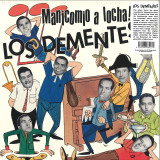
Second VA for ISSUES is a limited copy and special edition yellow vinyl and its big one as all the tracks included on the vinyl are the top selling tracks of the past few months.
First track on the A side is by Detlef. “Back2back” is simple but effective, with a strong kick, subby bassline, technical effects and a massive captivating vocal in the breakdown, creating tension using effects that leads to a massive drop. On the same side Just Jake’s “Sphinx” has a unique Ancient Egyptian vibe, with a funky Sitar and traditional Arabian singing driving the breakdowns, the track has a quick thumping, wobbly bass line groove with solid percussion.
On the B side there is Nicola d’Angella’s “Kill vibe” which is a dancefloor weapon with a quick bass that creates a unique groove and a massive breakdown with full vocals. On the same side there is also Chicks Luv Us with their popular track “Look so fun” which is extremely groovy and catchy with a big bassline and vocals that create a playful groove.
Поиск:pop da funk
Все
Jessica Winter is the queen of sad-bangers, a purveyor of dark glittery synth-pop and a truly unique artist, as well as an acclaimed producer and writer (The Big Moon, Jazmin Bean, Phoebe Green, Walt Disco & more). Growing up on a diet of Nine Inch Nails and Siouxsie and the Banshees, her music is just as likely to channel Madonna, trap, pop, and indie disco. Much of her childhood was spent gazing out of the window from her hospital bed due to hip dysplasia, which led to a very vivid imagination to grow.
Across Jessica Winter’s debut EP ‘Limerence’ for new label Lucky Number, Winter shows her versatility as an artist, from the cinematic-pop aesthetics present in ‘Choreograph’, to a more raucous, dance-heavy approach with ‘Funk This Up’. Grounded within her unique, unmistakable style, Winter delves into everything from synth-pop, punk, and 80’s glam and cements her glimmering pop vision.
“Limerence was written during a time when I was trying to understand my relationship to love and my behaviours around it.” says Jessica; “Love confuses me so much and I think this EP demonstrates that.”
- A1: This Is Your Life
- A2: My Lovin' (You're Never Gonna Get It) (You're Never Gonna Get It)
- A3: Hip Hop Lover
- A4: Free Your Mind
- A5: Desire
- A6: Giving Him Something He Can Feel
- B1: It Ain't Over Till The Fat Lady Sings
- B2: Give It Up, Turn It Loose
- B3: Yesterday
- B4: Hooked On Your Love
- B5: Love Don't Love You
- B6: What Is Love
- B7: Thanks/Prayer
The 1990s were a time when hip-hop infused with R&B became pop music, and at the forefront of this movement was En Vogue. Their most commercially and critically successful album, Funky Divas, stands as one of the best pop/R&B albums to emerge from that time, incorporating soul, hip-hop, pop, dance, and rock to create one of the era’s most diverse, dazzling, and exciting pieces of work. The album scored no less than five hit singles, three of which became Top 10 pop hits. It includes the unstoppable “My Lovin’ (You’re Never Gonna Get It)”, which was one of the biggest hits of 1992 and additionally the remake of “Giving Him Something He Can Feel,” “Give It Up Turn It Loose,” and “Free Your Mind”.
Funky Divas is available as a limited edition of 1500 individually numbered copies on purple coloured vinyl and includes an insert.
Light in the Attic’s Pacific Breeze series has supplied the world’s growing legions of Japanese music fans with an expertly curated selection of the most sought-after City Pop recordings—the mesmerizing and nebulous genre of Japanese bubble-era music of the ‘70s-’80s that encompasses AOR, R&B, jazz fusion, funk, boogie and disco. These familiar sounds are spun through the unique lens of optimistic, cosmopolitan fantasy colored by Japan’s affluence at the time. Much of the music has previously been nearly impossible to acquire outside of Japan and continues to captivate listeners with its unique blend of groove-laden escapism, even birthing wholly new genres such as Vaporwave.
Pacific Breeze 3: Japanese City Pop, AOR & Boogie 1975-1987 marks the latest chapter in the famed series and features holy grails plus under-the-radar rarities. The collection bursts at the seams to reveal some of the greatest Japanese tracks ever laid to tape, pushing towards the edge of City Pop to reveal glimmers of the next waves of styles to spring forth from the country’s creative minds. The appearance of Pizzicato Five hint at the emergence of Shibuya-kei while the influence of hip hop and electro as an emerging global trend are also evident here through the prevalence of heavier programmed drum beats on tracks such as “Heartbeat” by Miho Fujiwara.
This volume of Pacific Breeze, like its predecessors, is a female-forward offering with many tracks being voiced by women who would become household names in Japan as actresses and pop idols. Their songs here subvert the norm and brim with an innovative spirit that shatters gender roles in favor of sonic transcendence. Techno-pop classics from Susan, Miharu Koshi and Chiemi Manabe sit alongside sublime funk from Atsuko Nina and Naomi Akimoto while Teresa Noda slides into the mix with a sultry reggae jam. The genre span is stretched wider with hypnotic jazz fusion by Parachute and Hiroyuki Namba, a synthesizer fantasy from Osamu Shoji, and magnetic pop by Makoto Matsushita and Chu Kosaka.
Although not front and center, the visionary members of Yellow Magic Orchestra are still very present on Pacific Breeze 3, with Haruomi Hosono, Ryuichi Sakamoto, and Yukihiro Takahashi taking up producer and musician roles on many of these tracks. Pacific Breeze 3 serves up a captivating musical journey that adds an essential chapter to the iconic compilation series.
Tracklist:
Naomi Akimoto - Bewitched (Are You Leaving Soon), Atsuko Nina - Tonkachi, Miho Fujiwara - Heartbeat, Miharu Koshi - Scandal Night, Chu Kosaka - Shirakechimauze, Teresa Noda - Tropical Love, Makoto Matsushita - Business Man Pt. 1, Susan - Ah! Soka, Yukako Hayase - Suiyoubi Madeni Shinitaino, Parachute - Kowloon Daily, Hiroyuki Namba - Tropical Exposition (Who Done It? Version), Pizzicato Five - Boy Meets Girl, Mari Iijima - Love Sick, 1986 Omega Tribe - Cosmic Love, Osamu Shoji - Pub Casablanca, Chiemi Manabe - Untotooku
Started as a reggae band, Chequers were formed by the Matthias Brothers, John & Richard, in Aylesbury, Buckinghamshire in 1973. Inititally releasing in the early part of the 1970s (with their first single Rudi's In Love charting in the UK) their sound then developed to also incorporate Philly soul influences in the mid-70s, then releasing a rare but solid LP 'Check Us Out', in 1976. The group eventually evolved into a seven piece funk outfit in the late 70s, playing shows to larger and larger audiences and touring throughout the UK & Europe.
1980 saw the birth of the Matthias brothers' own small independent outlet for the group, Matthias Records. The press release of the new label's first single declared that their "roots in the reggae and soul music of the last mod era" were being brought up to date, now embracing "the music of today and tomorrow...". That 45 (the cheeky pop-punk meets ska cover version of Midnight Hour, backed with the uptempo instrumental funk of Move Up) didn't necessarily come good on that promise. 3 years would then pass until this 45 showcased the throughly-updated & stellar electro-boogie sound of Hard Times and it's equally strong b-side If You Want My Love.
Following this neither Matthias Records nor Chequers as a group ever released anything further - the record's scarcity (and hideously inflated prices on today's secondhand market) hint at low sales and potential distribution problems upon it's original release, perhaps leading to the label and the group calling it a day. Conjecture aside, there's really no denying this record slaps, and with discogs prices reaching beyond ridiculous levels there is only one option - get it before it's gone!
This Autumn, Nicole Willis rolls out with her third album made together with The Soul Investigators "Happiness In Every Style". It is bound to send shivers through backs all around the world. As the name suggests, the new album will offer variety and tilt towards a more positive note after the murky "Tortured Soul" from two years back.
This means Nicole and the boys have made things a bit more soothing for the listener, offering upbeat modern soul and even embrace more sophisticated melodies alongside their highly evolved raw funk sound. To get a taste of this, one only has to put on "Let's Communicate" or "One In a Million" to have their hands clapping and toes tapping in no time, or respectively, witness the dance floor explode. From minor key ballads such as "Thief In The Night" to the unapologetically poppy "Angel", the new album is bound to bring to the hearts of humans in every shade and style.
Whether you know Nicole Willis from before or not does not hold any weight here. After hearing her with The Soul Investigators on this new album, you will know they are for real, and out to offer you everything you need to fill up your soul supply. With Nicole's insightful lyrics and the band's hard-hitting music you are in good care.
Red Vinyl
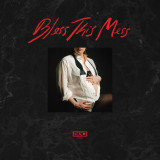
Nachdem Meg Remy, alias U.S. Girls, zuletzt schon in Form der Singles "So Typically Now" und "Bless This Mess" nach zweijähriger Abwesenheit neue Lebenszeichen aussendete, kündigt die kanadische multi-disziplinäre und experimentelle Pop-Künstlerin nun auch ihr neues Album an! "Bless This Mess" erscheint am 24. Februar 2023 bei 4AD und zeugt von der langen künstlerischen Evolution, die Remy unter ihrem musikalischen Alter Ego vollzogen hat: Eigentlich geboren in Illinois, hat sich Remy in den letzten Jahren zu einer der Stimmen und Performer*innen der Torontoer Szene entwickelt. Von den ersten Anfängen in Kellern in Philadelphia und Chicago, als sie durch Delay-Pedals über rohe Loops summte, hin zur selbstbewussten Frontfrau eines achtköpfigen Art-Soul-Orchesters, das die Welt bereist, hat die Vision, sowie das Talent Remys das Projekt über die letzten 15 Jahre zusammengehalten und geprägt. Mit "Half Free" (2015), "In A Poem Unlimited" (2018) und "Heavy Light" (2020) veröffentlichte sie drei Juno Award nominierte Alben (in der Kategorie "Best Alternative Album"), die auch jeweils auf der Shortlist für den Polaris Prize standen. Und das neuste U.S. Girls Album fügt der eh schon ausufernden Palette an Einflüssen, Themen und Sounds noch Bausteine wie Funk, ihre Mutterschaft, griechische Mythologie, langsame Jams, Erwachen und Schmerzen in das lebhafte Hymnen-Treiben hinzu! "Bless This Mess" entstand dabei, während in Remy ihre beiden Zwillings-Jungs heranwuchsen, in Kooperation mit einer ganzen Reihe an Musikern (Alex Frankel von Holy Ghost!, Marker Starling, Ryland Blackinton von Cobra Starship, Basia Bulat, Roger Manning Jr. von Jellyfish und Beck), sowie mithilfe einiger Tontechniker (Neal H Pogue, Ken Sluiter, Steve Chahley, Maximilian Turnbull). Da es weder eine feste Band noch immer gleiches Aufnahme-Personal während der Produktion gab, fühlt sich das neue Album vielmehr wie ein Mixtape an, gleichzeitig befindet sich Remy darauf selbst im stetigen Wandel. Denn während sich ihr Körper der Schwangerschaft anpasst, verändert sich auch ihre Stimme, verlor etwas Raum zum Atmen, bei einigen Gesangsaufnahmen waren ihre Neugeborenen sogar auf ihrem Arm. Keine Überraschung, dass Remy sogar ihre Milchpumpe auf "Pump" sampelte. Und doch beinhaltet das neue Album so viel mehr - mehr Blut, mehr Gefühle, die miteinander verflochtenen Wunder und Wunden des Lebens. Dementsprechend variieren auch die Songs in Tempo, Instrumentierung und geben sich zwischen experimenteller Hingabe, Entdeckungen und Delirium der aktuellen Gefühlslage der Künstlerin hin.
2022 jährt sich die Veröffentlichung der ersten Single
und des ersten Albums der internationalen Supergruppe
des Soul/Funks, die mit ihrem Memphis-Sound die
Soul-Landschaft neu erfunden hat.
"Green Onions", einer der populärsten Instrumentalsongs
aller Zeiten, begann als Band-Jam bei einer
Demo-Aufnahme für den Rock'n'Roll-Sänger Billy Lee
Riley mit der berühmten Stax Records Houseband.
Stax-Labelchef Jim Stewart gefiel, was er hörte, und er
nahm auf, was die Grundlage für das Debütalbum der
Band werden sollte.
Unter dem Namen Booker T. & The M.G.s
veröffentlichten sie "Green Onions" mit den
Originalmitgliedern Booker T. Jones (Orgel, Klavier), Steve
Cropper (Gitarre), Lewie Steinberg (Bass) und Al Jackson
Jr. (Schlagzeug) im Oktober 1962. Der Titelsong wurde
ein weltweiter Hit, der von Dutzenden von Künstlern wie
den Blues Brothers, den Ventures, den Shadows, Deep
Purple, Mongo Santamaria und Count Basie gecovert
wurde.
First time vinyl reissue. Originally released in 1976.
"The human voice is more than just a musical instrument; it is ally to the thought. Vocal art is one of the most beautiful forms of musical expression and an endless resource. It's a shame that so few devote themselves to it in our popular music. I would therefore like to congratulate Aquarius and Continental for the release of this LP and may it be received by all with the same affection and attention than those who dedicated themselves to making it" --Paulinho Tapajos.
These notes, originally printed on the back cover of this 1976 beauty, are a perfect introduction to the vocal harmonies and arrangements and excellent guitar work that are masterfully combined creating a joyful journey that features the undisputed talent of Raymundo Bittencourt, Octávio Burnier, and Paulo Moura. An amazing bit of Brazilian samba funk that also touches on MPB, bossa nova, jazz... This sought-after gem opens with the beautiful version of Burnier & Cartier's "Só Tem Lugar Prá Você" (one of the two B&C versions included on this album, with a pitched-down "Europanema" sparkling on the B-side), building up a mellow, airy vibe that stays throughout the entire album.
- A1: Andrzej Marko - Dhamma (3:33)
- A2: Andre Mikola - Circulation (3:30)
- A3: Andrzej Marko - Magic Scenery (5:12)
- A4: Andre Mikola - Longing For Tomorrow (3:35)
- A5: Andre Mikola - Nocturnal Flowers (3:39)
- B1: Andre Mikola - Fly Me To The Sun (3:46)
- B2: Andre Mikola - Birth Of A Butterfly (3:44)
- B3: Andre Mikola - Riding On A Sunbeam (3:52)
- B4: Andre Mikola - Osmosis (4:33)
- B5: Andre Mikola - Solar Heating (3:36)
Fly Me To The Sun is a breathtaking German library gem from the hallowed Coloursound label. Originally out in 1983 it features two Polish composers, Andrzej Marko and André Mikola. If outré synth-funk is your thing, you need this record.
Almost blindingly luminous with positive vibes and radiant optimism, Fly Me to the Sun is a collection of funky, sun-dappled compositions for synthesizer and live instruments like drums, bass and guitar. A dope blend of beatbox driven future jazz and electro pop.
The wonderfully sleaze-adjacent opener "Dhamma" includes some grandiose piano chords amid floating ambient sounds a la Steve Hillage with slick drums entering the fray at a languid pace. "Circulation" sounds like Bowie ran into Chaz Jankel during an extended stay in Los Angeles, the Thin White Duke emerging out of a studio at 6am, bleary-eyed and clutching this filthy, bleepy instrumental of sonic smut. "Magic Scenery" is as delicate and astounding as the title suggests, a deep ambient movement conjuring halcyon images of rolling fields with abundant fauna and flora; acid-tinged visions of intense colour and natural beauty. Cool, slo-mo breaks adorn the strutting melancholy of “Longing for Tomorrow” and “Nocturnal Flowers” to close out Side A.
Skip the title track, which opens up Side B, and head straight to “Birth of a Butterfly” for a slice of creeping digi-dub-soul niceness. This should've been front and centre of that Personal Space compilation a decade ago. Raising both the tempo and the temperature, “Riding on a Sunbeam” continues in the mesmerising cosmic funk style before "Osmosis", one of the clear stand-outs, presents a fine vintage synth solo over a mellow funky rubberband beat. The closing track, "Solar Heating", warms things up with slapped bass and bold drum machine beats and the synth lends Sci-Fi vibes to the dark dub-funk-reggae rhythm.
As David Hollander, in Unusual Sounds: The Hidden History of Library Music, states, Coloursound was "founded in 1979 by composer, music lawyer, and vibraphonist Gunter Greffenius. A Munich-based library with a reputation for releasing innovative and ambitious music, it catered largely to the market for experimental sounds, its first release was 1980’s Biomechanoid, an abstract synthesizer excursion by Joel Vandroogenbroeck, of the pioneering kosmische band Brainticket. The record — complete with imposing, anonymous title and unearthly H.R. Giger cover art — set the tone for the label’s progressive leanings. The label’s catalogue stands as a tribute to the unfettered creative license that libraries were able to provide to forward-thinking musicians who, frustrated by the whims and constraints of the commercial scene, found complete freedom in the world of production music."
As with all our library music re-issues, the audio for Fly Me To The Sun comes from the original analogue tapes and has been remastered for vinyl by Be With regular Simon Francis. Richard Robinson has brought the original Coloursound sleeve back to life in all its metallic silver glory.
Exclusive and limited 7” with two new recordings by The Phenomenal Handclap Band and Buscabulla, recorded for the new RELATIN project (the reimagining of Latin musical roots from another time for our generations).
The Phenomenal Handclap Band is a dance music trio from NYC, a heady mix of raw soul, vocal harmonies, African percussion, fuzzy guitars and analog synthesizers. They take the first single from the colombian sisters, from 1971… imagine the mix: Sweet sixties soft pop meets funk & club culture.
Buscabulla is the music project of Puerto Rican duo and Brooklyn resident.
Their diverse influences make up a hybrid that combines a mellow Caribbean sensibility. Their particular taste for tropical and unique
chilled sounds now added to Elia y Elizabeth. This version is exclusive to this 7”.
- A1: One Nation Under A Groove (7 28)
- A2: Groovallegiance (6 58)
- A3: Who Says A Funk Band Can't Play Rock?! (6 17)
- B1: Promentalshitbackwashpsychosis Enema Squad (The Doo Doo Chasers) (10 45)
- B2: Into You (5 42)
- B3: Cholly (Funk Getting Ready To Roll!) (4 24)
- C1: Medley Maggot Brain / Chant (Think! It Ain't Illegal Yet!) (7:42)
- C2: Lunchmeataphobia (Think! It Ain't Illegal Yet!) (5 01)
- C3: P E Squad/Doo Doo Chasers (Going All-The-Way-Off Instrumental Version(4 23)
- D1: One Nation Under A Groove (Disco Mix) (11 10)
Red & Green Vinyl[46,01 €]
Regarded by many as the greatest funk album of all time, ‘One Nation Under A Groove’ was recorded at United Sound in Detroit & included a live track from their concert appearance at the Monroe Civic Center in Louisiana in April 1978. The band’s tenth studio album released during September 1978 was also their most commercial & gave the band their first platinum disc. The iconic title track was an international hit and a US R&B No.1. With lead guitarists Michael Hampton & Eddie Hazel dazzling, the personification of funk Bootsy Collins on bass, Bernie Worrell & Walter “Junie” Morrison’s keyboard wizardry & many more, the album was produced by the genius of George Clinton. Regularly ranked at or near the top of various “best album” lists, ‘One Nation Under A Groove’ is mastered for vinyl in a deluxe facsimile gatefold sleeve with booklet & lyric inner sleeves, all housed in a protective PVC sleeve. The albums’ original bonus songs are now included on a second 12-inch “Special EP” which adds the rare 11-minute “Disco Mix” of ‘One Nation Under A Groove’ to replicate the original first UK pressing from 1978. FUNKADELIC Masterminded by the larger-than-life figure of George Clinton, Funkadelic was a key component of his influential P-Funk empire. Funkadelic’s unique combination of Rock, Psychedelia, R&B & Soul led to the band crossing over to the pop mainstream & gaining a vast international following, becoming one of the most important & influential groups in music. On 6 May 1997, Parliament / Funkadelic were inducted into the Rock & Roll Hall Of Fame by Prince. To commemorate six decades of thrilling & delighting fans, George Clinton returned to the stage in 2022 for a series of concerts. To celebrate, Charly have reissued Funkadelic’s classic four albums ‘Hardcore Jollies’; ‘One Nation Under A Groove’; ‘Uncle Jam Wants You’; & ‘The Electric Spanking Of War Babies’ (originally released by Warner Bros during a golden period for the band between 1976-1981). Each album will be available as deluxe gatefold Digi-Sleeve CDs in PVC wallets + obi-strip & facsimile-edition gatefold LPs on 180-gram black vinyl & limited edition 180-gram colored vinyl + 1970s-style obi-strip in a protective PVC sleeve. “They played a HUGE role in creating the future of music.” PRINCE
AMBER ARCADES ist das Pseudonym von Annelotte de Graaf, der niederländischen Singer/Songwriterin, die zwei EPs und einige von der Kritik gefeierte Alben aufgenommen hat, von denen das zweite, "European Heartbreak", durch "hints of Lindi Ortega and early Saint Etienne, breezy, dreamy pop more personal than political" (The Guardian) glänzt. AMBER ARCADES verlor kürzlich für einen Moment den Glauben an die Musik, gewann ihn dann aber wieder zurück und liefert nun ihr bisher atemberaubendstes Album ab: "Barefoot On Diamond Road", das am 10. Februar 2023 erscheinen wird - ihre erste Veröffentlichung auf Fire Records. Die erste Single "Just Like Me" ist ein offenkundig tanzbarer und triumphaler Song, der durch seine Stop/Start-Struktur eine beunruhigende und unvorhersehbare Schärfe in das Geschehen bringt. "There's a clear distinction from my last record ,European Heartbreak', which had a complete narrative. This record is completely the opposite" erklärt die Niederländerin in einem Statement zum neuen Album. Eingetaucht in eine alles verzehrende Wall of Sound ist "Barefoot On Diamond Road" wie MY BLOODY VALENTINE in akustischer Form; es sollte eigentlich nicht funktionieren, aber tut es trotzdem. Es ist eine Gegenüberstellung von Texturen, von sprunghaften, unruhigen Dancefloor-Beats bis hin zu symphonischer Kosmik, ein barocker Pop-Teppich, der mit Celli und Harfen bestückt ist, mit einer klagenden Steelguitar, die in der Ferne widerhallt. Die Schlagzeug- und Perkussions-Arrangements von Matt Chamberlain (PEARL JAM, BOWIE, DYLAN, ADELE, LORDE, SPRINGSTEEN, COHEN...) verleihen dem Ganzen zusätzliche Textur. Es ist ein Album von einnehmender Reife, gefüllt mit Zeitlupen und epischen Steigerungen, die es mit all der Dramatik in schwindelerregende Höhen heben - man denke an THE GUN CLUB, die sich mit PORTISHEAD zurücklehnen, alles könnte passieren, es ist ein imaginärer Film... und PJ HARVEY lauert im Schatten. AMBER ARCADES neues Album "Barefoot On Diamond Road" markiert eindeutig eine neue Phase im Schaffen der hochangesehenen Musikerin. "Wistful, glowing dream pop" The Guardian
WRWTFWW Records is thrilled to announce the first ever release of the soundtrack for the sci-fi Amiga demoscene wonder Odyssey by the Alcatraz group, with music from Greg - and what is possibly the first ever vinyl release for an Amiga demoscene soundtrack, if not the first ever vinyl release for a demoscene soundtrack whatsoever!
The special limited edition vinyl features the complete soundtrack of the demo sourced from the original masters as well as printed innersleeves, a 24x24 inch double-sided poster with extensive liner notes on the fascinating history of the Amiga demoscene on one side and a floppy disk print on the other, and a WRWTFWW sticker sheet. Odyssey is also available in digital format.
Wikipedia says: The demoscene is an international computer art subculture focused on producing demos: self-contained, sometimes extremely small, computer programs that produce audiovisual presentations. The purpose of a demo is to show off programming, visual art, and musical skills. Demos and other demoscene productions (graphics, music, videos, games) are shared at festivals known as demoparties, voted on by those who attend and released online.
In the demoscene galaxy, one era was particularly exciting: the Amiga years during which the demos were created for the Commodore Amiga home computer - a time of intense rivalry between programmers, graphics artists, and computer musicians, testing the limits of the (fixed) Amiga hardware.
The Odyssey demo was one of the largest productions ever released by an Amiga group, a real sci-fi movie on five floppy disks made with 3D sequences. It was presented at a demoscene party in 1991 and won the competition, setting a new standard for Amiga demo possibilities.
One of the highlights of the demo was the funky cosmic music from Swiss composer Greg, a true space opera, the 90s galactic soundscape you didn’t know was missing from your life! And so here it is, available for the first time, 10 tracks of pure video game music joy, adventurous computer pop, pixelated techno-trance, Star Wars gone floppy disk, and interstellar beats for days.
Funkadelic’s eleventh studio LP, released in 1979, was more militant in tone than its predecessor 'One Nation Under A Groove' which described a Funk utopia. In contrast, ‘Uncle Jam Wants You’ stated mandate was to “rescue dance music from the blahs”. The album features a 15-minute version of what was to become the Funkadelic’s last hit single ‘(Not Just) Knee Deep’, an edited version of which made no.1 in the US R&B chart. This was Funkadelic’s first album since 1972 not to feature a cover design by artist Pedro Bell (although he did contribute the interior design). A reference to the “Uncle Sam Wants You!” US Army recruitment poster, the sleeve depicts George Clinton aka Dr Funkenstein in a Huey Newton Black Panthers pose. ‘Uncle Jam Wants You’ and Funkadelic-Parliament had a huge influence on Prince, The Red Hot Chilli Peppers, Bill Laswell, Tupac Shakar, De La Soul and many more across all musical genres. George Clinton’s genius Funk & Style will continue to be an influence for many more years to come... FUNKADELIC Masterminded by the larger-than-life figure of George Clinton, Funkadelic was a key component of his influential P-Funk empire. Funkadelic’s unique combination of Rock, Psychedelia, R&B & Soul led to the band crossing over to the pop mainstream & gaining a vast international following, becoming one of the most important & influential groups in music. On 6 May 1997, Parliament / Funkadelic were inducted into the Rock & Roll Hall Of Fame by Prince. To commemorate six decades of thrilling & delighting fans, George Clinton returned to the stage in 2022 for a series of concerts. To celebrate, Charly have reissued Funkadelic’s classic four albums ‘Hardcore Jollies’; ‘One Nation Under A Groove’; ‘Uncle Jam Wants You’; & ‘The Electric Spanking Of War Babies’ (originally released by Warner Bros during a golden period for the band between 1976-1981). Each album will be available as deluxe gatefold Digi-Sleeve CDs in PVC wallets + obi-strip & facsimile-edition gatefold LPs on 180-gram black vinyl & limited edition 180-gram colored vinyl + 1970s-style obi-strip in a protective PVC sleeve. “They played a HUGE role in creating the future of music.” PRINCE
- A1: Smokin' Cheeba - Cheeba (Feat George Benson/Buddy Pop Lucus/Dave Baby Cortez/Earl Williams/Ann Winley)
- A2: Fed Up (Vocal - Feat George Benson/Willis Jackson/Dave Baby Cortez/Sterling Mcgee/Earl Williams/Ann Winley)
- B1: Finger In It (Feat Ann Winley)
- B2: Ain't No Sunshine (Feat Willis Jackson)
- B3: Fed Up (Feat George Benson/Willis Jackson/Dave Baby Cortez/Sterling Mcgee/Earl Williams)
Featuring a young George Benson, Willis Jackson and Ann Winley the Harlem Underground Band’s first album was released on Paul Winley’s respected label Winley Records in 1976 Legendary street funk record that’s highly sampled by hip-hop artists such as Eric B and Rakim, Genius, Medina Green, Smif-N-Wessun and of course Tone-Loc – listen to the track ‘Smokin' Cheeba-cheeba’ Reissued on 140g black vinyl with original artwork and printed inner sleeve
- A1: Logic System - Unit
- A2: Kraftwerk - Computerwelt (2009 Remastered
- B1: Whodini - Magic's Wand
- B2: Rocker's Revenger - Walking On Sunshine (Feat Donnie Calvin
- C1: Klein & Mbo - Dirty Talk (European Connection
- D1: Liaisons Dangereuses - Los Niños Del Parque
- D2: Yello - Bostich
- E1: The The - Giant
- F1: The Residents - Kaw-Liga
- G1: Clan Of Xymox - Stranger
- G2: A Split - Second - Flesh
- H1: Severed Heads - Dead Eyes Opened
- H2: The Weathermen - Poison!
- I1: New Order - Blue Monday
- J1: Anne Clark - Our Darkness
- J2: 16 Bit - Where Are You?
- K1: Phuture - We Are Phuture
- K2: Model 500 - No Ufo's (Vocal
- L1: Frankie Knuckles Feat Jamie Principle - Your Love
- L2: Quest - Mind Games (Street Mix
- M1: Jasper Van't Hof - Pili Pili
- N1: Guem Et Zaka Percussion - Le Serpent
- N2: Hugh Masekela - Don't Go Lose It Baby
- O1: Sly & Robbie - Make 'Em Move
- Q1: The Ecstasy Club - Jesus Loves The Acid
- R1: Foremost Poets - Reason To Be Dismal?
- S1: Lhasa - The Attic
- S2: A Guy Called Gerald - Voodoo Ray
- T1: M/A/R/R/S - Pump Up The Volume - Usa 12" Mix
- T2: Bobby Konders - Nervous Acid
- U1: Meat Beat Manifesto - Helter Skelter
- V1: Raze - Break 4 Love
- W1: Sueño Latino With Manuel Goettsching Performing E2-E4 - Sueño Latino (Paradise Version
- X1: Off - Electrica Salsa
- O2: Brian Eno - David Byrne - Help Me Somebody
- P1: Primal Scream - Loaded (Andy Weatherall Mix
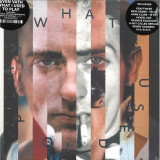
For this uniquely personal retrospective spread over twelve vinyl discs, Sven Väth takes us back to the early days of his DJ career. On What I Used To Play we meet great pioneers of electronic music, gifted percussionists, obscure wave bands, and innovative producers of a bygone 'new electronic' era. Rough beats and irresistible grooves from the identification stage of house, techno, and acid remind us not just how far electronic music has evolved over the past four decades, but how great it was to dance to EBM, techno, and house for the very first time.
If there is one protagonist of the electronic music scene who has remained curious, innovative and at the very cutting edge of music for over four decades, it's Sven Väth. His multi-layered artist albums and Sound of the Season mix compilations have been defining the genre for over two decades, and even today, he is constantly on the lookout for the next top tune to add to the highlights of his next set. At least, that's the case when he's not producing them himself as an artist or remixer. "Actually, it's always been part of my DNA to think ahead," and nothing had been further from his mind than looking back at his past, but when in spring of 2020 the international DJ circuit had to be scaled down to virtually zero, the 'restless traveler' suddenly had time. Time to stop and reflect on "how it actually was back then, at the very beginning of my career..."
"It was a great trip and with every track, beautiful memories came flooding back".
In the London apartment, he had just moved into, Sven has set up a "little music room", where he cocooned himself for several days, "to look way back for the first time and review my musical journey through the eighties, so to speak."
The interim result was six thematically oriented playlists with a grand total of 120 tracks from 'early 80s' to 'Balearic late 80s', together with excursions into afrobeat, European new wave, and EBM sounds and a few epochal techno/house tracks from the USA in between. From these 'Best of Sven Väth's favorites', the project What I Used To Play crystallized. Sven remembers how the Cocoon team reacted to his proposal: "They found the idea of making a compilation out of it MEGA from the beginning and everyone said 'Sven, go for it', but then, of course, the work really started, namely, to clear the rights and to get clean sounding masters of the up to 40-year-old tracks. There was also disappointment, of course. We couldn't clear certain titles because the rights holders in the USA had fallen out with each other or simply disappeared from the scene. In short, it wasn't easy, but now I can safely say we got the most important tracks."
Finally, after two years of research, curation, design, and administrative fine-tuning, the "little retrospective" from 1981 to 1990 is available. The exquisitely packaged, and three-kilo heavy box set is not only physically impressive, WIUTP is also the definitive record of Sven Väth's musical development. On each of the twenty-four sides of vinyl, you can trace track by track, what influenced him during which phase, and how he took off as a DJ from his parents' Queen's Pub straight into the spotlight at Dorian Gray. There and at Vogue (later OMEN), Sven became the style-defining player in the DJ booth that he still is today.
1981 - 1990: Future Sounds of Now
In the early eighties, the crowd in clubs like Vogue and Dorian Gray danced to what nowadays we call 'dance classics' - mainly disco, funk, soul, and chart pop. It was up to a new generation of DJs, including Sven Väth, the youngest protagonist in the Rhine-Main area at the time, to create their own club-ready music mix. Good new tracks and potential floor-fillers were rarities that had to be sought out and found, in order to prove oneself worthy.
Without MP3s, internet streaming, or other digital download possibilities, music didn't just gravitate to the DJ, instead, it had to be tracked down. In well-stocked record stores in Frankfurt and Wiesbaden or even in Amsterdam, London, or New York, Sven and friends sourced the material for countless magical nights. On WIUTP we can follow Sven's very personal journey through this wild, innovative era in which synth-pop, funk, hip-hop, and disco were successively replaced as 'club music' by house, techno, acid, and breakbeat. By the end of the decade, it was clear to see that these once exotic 'fringe' phenomena would soon become 'mass' phenomena.
Early 80s
Dirty Talk by the Italian-American duo Klein & M.B.O. represents the most innovative phase of the Italo-disco genre in the early eighties like no other track. Mario Boncaldo (I) and Tony Carrasco relied entirely on the original synthetic drum and percussion sounds of the Roland TR-808, coupled with the raunchy vocals of Rossana Casale and guitar accents of Davide Piatto. Of course, other tracks from this period were also influential in style, most notably Unit by Logic System, which worked as the perfect soundtrack to the laser lighting system at the legendary Dorian Gray club. With stomping beats and robotic rap interludes, Bostich by Yello also belongs on Sven's eternal playlist - after all, it caught the attention of Afrikaa Bambaataa, who invited the Swiss duo to perform at the Roxy in New York in 1983.
EBM Wave - Mid 80s
From today's point of view, the almost ten-minute-long, downtempo track Giant by Matt Johnson's band project The The, would probably not be considered an obvious club classic. However, a closer (re)listen reveals the rhythmic intricacies of the percussion overdubs by JG Thirlwell (aka Foetus) on Johnson's composition, and it becomes clear why this exceptional piece of music is one of Sven's absolute favorites. Other classics from this phase include Kaw-Liga by the mysterious The Residents, the hypnotic-synthetic Our Darkness by Anne Clark (and David Harrow), and last but not least, the somber, monotonous anthem Where Are You? by 16Bit, one of Sven Väth's projects together with Michael Münzing, Luca Anzilotti from 1986.
US House - Late 80s
You certainly can't talk about Chicago house without mentioning Frankie Knuckles. The resident DJ at the Warehouse not only gave the name to an entire genre, but also produced epochal floor fillers on the Trax label like the timeless Your Love, sung (and moaned) by Jamie Principle. Acid house protagonists Phuture also hail from Chicago, and on We Are Phuture (also released on Trax) we hear the chirping acid sounds of the legendary Roland TB-303 in full effect. Another featured classic is No UFO's by Detroit's Model 500 aka Juan Atkins, who is rightly considered the 'Godfather of Techno' even if the genre-defining track from 1985 still breathes with the spirit of hip-hop and electro from the first breakdance era.
Afrobeat
Le Serpent, by Algerian-born Abdelmadjid Guemguem, is a track that sounds completely different from everything else on WIUTP. Made in 1978, it's a monumental, rousing groove created without bass or synths, just with five congas! Even though Guem sadly passed away in 2021, his immortal, acoustic beats are understood all over the world and will continue to enrich many thousands of DJ sets for years to come. Another classic that not only Sven appreciates beyond measure is Hugh Masekela's Don't Go Lose it, Baby. In addition to being one of the most important jazz pioneers, the trumpeter and freedom fighter from Johannesburg was very experimental, integrating electronic sounds into his music in later years, in a similar vein to Miles Davis and Herbie Hancock. Dutch jazz pianist Jasper van't Hof's afrobeat project Pili Pili has also aged well. The trance-like, almost sixteen-minute-long track of the same name, manages to fill a whole side on the seventh of twelve vinyl discs in the WIUTP box.
UK-US-Euro - Late 80s
Time for a change of scene, in the truest sense of the word, and from a musical perspective, this section is like landing on another planet. First up is Andrew Weatherall's classic remix of Primal Scream's Loaded, featuring the iconic Peter Fonda sample (lifted from the 1966 biker film Wild Angels) that came to personify the mood triggered by the British Second Summer of Love in the late eighties: "We wanna be free to do what we wanna do, and we wanna get loaded...". This period also saw the emergence of M/A/R/R/S whose only single, 1987's Pump Up The Volume, became a club classic with support from DJ legend CJ Mackintosh. In this most eclectic of sections, we also encounter New York house and reggae producer Bobby Konders and his seminal Nervous Acid.
Balearic - Late 80s
Those who know him, know that Sven had already lost his heart to the 'magic island' of Ibiza as a teenager, so with that in mind, the WIUTP project couldn't end without a Balearic chapter. Inspired by Manuel Göttsching's E2-E4, the immortal, eponymously titled Sueño Latino belongs in there without question. Equally popular on the island was, and still is Break 4 Love by Raze, which thinking about it, would also fit perfectly into the house chapter. Last, but not least, there's an overdue reunion with Sven Väth himself, in his role as frontman of the successful Frankfurt trio OFF. Together with Michael Münzing and Luca Anzilotti (later of Snap!) this 'Organization For Fun' created the off-the-wall club hit Electric Salsa in 1986 which incidentally turned into an international chart smash, putting Sven in the enviable position of having to decide between pop stardom and a DJ career. Well, we all know how that decision turned out and the rest, as they say, is history. A not insignificant part of his story is What I Used To Play. Enjoy!
- A1: Hardy's Jet Band – Sorry, Doc! (3 12)
- A2: Hardy's Jet Band – Wind It Up (2 52)
- A3: Hardy's Jet Band – Safari Track (2 58)
- A4: Hardy's Jet Band – Look At Me (2 27)
- A5: Hardy's Jet Band – Blue Butterfly (2 44)
- A6: Hardy's Jet Band – What You Call To Be Free (3 03)
- B1: Orchestra Klaus Wuesthoff – Lady In Space (2 26)
- B2: Orchestra Klaus Wuesthoff – Big Beat (2 45)
- B3: Jan Troysen Band – A Blue Message (3 31)
- B4: Jan Troysen Band – Pop Happening (2 29)
- B5: Orchestra Gary Pacific – Ghetto Gap (2 43)
- B6: Orchestra Gary Pacific – Soft Wind (2 07)
- B7: Orchestra Gary Pacific – So Far (1 38)
Behold! Yes, Blue Butterfly, one of the absolute stunners on the revered Selected Sound, is finally available for all the beat-heads. Heavyweight library funk with a psychedelic touch, the super in-demand Blue Butterfly from *deep breath* Hardy's Jet Band, Orchestra Klaus Wuesthoff, Jan Troysen Band and Orchestra Gary Pacific - was originally released in 1971. Incredibly ahead of its time, it's been rare and sought-after for decades.
For many aficionados, this is the best Selected Sound release. Loaded with fuzzy wah-wah guitar, deep flute-lines atop soulful psych-rock breakbeats and huge organ action, its uncompromising funk will blow you away. Sampled for many hip hop beats and dropped by well known rare groove DJs around the world, one jewel in particular from this glorious German vault needs little introduction. The intro to Orchestra Gary Pacific's mesmeric "Soft Wind" rides the illest, crispest drum break you've perhaps never heard - like, the drum break to end them all - alongside a smooth, deep bass line from the heavens. It featured notoriously on the beloved Dusty Fingers comps of the 90s and was brilliantly sampled by Pacewon for his eternal "Sunroof Top". Just listen and be dazzled.
Beyond this mini-masterpiece, the other killer tracks offer brilliance in abundance. Hardy's Jet Band take control of the full A side, and it's full of dynamic psych-funk bombs. Hard, "big city" industrial groovers. In particular, the initial one-two of "Sorry, Doc!" and "Wind It Up" provide thrilling funky-blues rock instrumentals showcasing relentless guitars, flutes, sax and organ, the latter containing gorgeous, hypnotic breakdowns; these tracks just slay. The title track, "Blue Butterfly" is a real deep strut of a track with fantastic soloing from guitar and flute over crisp drums whilst the highway banger "What You Call To Be Free" certainly sounds a lot like unbridled, rhythmical liberty.
On the flip, the ghost-riding "Lady In Space" is a string-drenched acid-western foxtrot. Yep. “Pop Happening” by Jan Troysen Band is a heavy, druggy psych-fuzz organ groover whilst their slow beat-organ-flute gem "A Blue Message" is a gorgeous psych floater conjuring deeply strange frontier lands. Preceding their monster "Soft Wind", the soulful, uptempo groover “Ghetto Gap” by Orchestra Gary Pacific contains solo piano and flute whilst closing out the set is the free-and-easy samba beat of "So Far".
Founded in the late 60s by German composer and musician Klaus Netzle (who recorded under the alias Claude Larson for Sonoton) Selected Sound began as a production music company specialising in jazz, orchestral and electronic recordings. You can’t miss those early LPs in their iconic glossy metallic copper sleeves with minimal German typography. Serious, classy stuff.
The audio for Blue Butterfly has been remastered for vinyl by Be With regular Simon Francis whilst Richard Robinson has handled reproducing the glossy metallic (iconic) original Selected Sound sleeve. Essential.
RSD vinyl now available for everybody and now slightly cheaper too!! "Unavailable on vinyl for decades, Select Records presents 2 Hype in an opaque white pressing exclusive to RSD Black Friday. For a certain generation of hip hop fans, just the mention of Kid ‘n Play brings on a wave of nostalgia. The group released three full-lengths between 1988 and 1991 with a focus on positive lyrics and pop friendly production. The success of the group’s music lead to countless House Party films, a Saturday morning cartoon show and even a series of comic books for Marvel (so, technically speaking, are Kid ‘n Play are part of the Marvel Universe?). It all started here on the 1988 full-length 2 Hype which features “Do The Kid 'n Play Kick Step”, the musical accompaniment to their trademark dance, “Rollin’ With Kid ‘n Play” which hit number 11 on the Billboard R&B Singles chart and of course Kid's now classic hi-top fade haircut, which measured up to over six inches high at its peak. Producer Hurby “Luv Bug” Azor, instrumental in the success of Salt-N-Pepa, was certainly a factor and the full length went on to chart in the Billboard Top 200 and to RIAA certified gold status."
- A1: Gloria: In Excelsis Deo / Gloria (Version) - Patti Smith
- A2: Survive - The Bags
- A3: Iama Poseur - X-Ray Spex
- A4: I Gave My Punk Jacket To Rickie - Mary Monday & The Bitches
- A5: I Didn’t Have The Nerve To Say No - Blondie
- A6: You’re A Million - The Raincoats
- B1: Popcorn Boy (Waddle Ya Do?) - Essential Logic
- B2: Expert - Pragvec
- B3: My Cherry Is In Sherry - Ludus
- B4: Kray Twins - Mo-Dettes
- B5: Earthbeat - The Slits
- B6: Das Ah Riot - Bush Tetras
- C1: Bitchen Summer (Speedway) - Bangles
- C2: Shakedown - Au Pairs
- C3: It’s About Time - The Pandoras
- C4: Come On Now - The Pussywillows
- C5: Rules And Regulations - We’ve Got A Fuzzbox And We’re Gonna Use It!!
- C6: Her Jazz - Huggy Bear
- C7: Bruise Violet - Babes In Toyland
- D1: Rebel Girl - Bikini Kill
- D2: Pretend We’re Dead - L7
- D3: What’s Wrong With You - Bratmobile
- D4: Let Go Of The Past - The Tuts
- D5: Hot - The Regrettes
- D6: Silver Spoons – Skinny Girl Diet
• “Guerrilla Girls!”, Ace Records’ much-anticipated first release of 2023, takes us on a thrilling ride from punk’s mid-70s origins, via the left-field post-punk groups, jangly female combos, grunge bands and vigilante Riot Grrrls of the 80s and 90s, to the she-punk bands of recent years – a five-decade alternative to the macho hegemony of rock.
• The collection highlights songs that emerged out of a dynamic underculture of female creative expression. What unites the featured artists is a healthy disregard for the way the music industry ties up its female performers into pretty, neo-liberal packages. From Patti Smith, universal mother of the punk movement, to the Bags, Bikini Kill and Skinny Girl Diet, this music is anti-A&R. Including lesser-known names such as San Francisco street punk Mary Monday and London-based experimentalists pragVec, it shows that, rather than being a few novelty bands existing on the margins, these performers represent a stronger, more three-dimensional version of the female experience.
• Glorious resistance was on display in the first wave of UK female-fronted punk bands. Poly Styrene’s charged vocals on X-Ray Spex’s ‘Iama Poseur’, for instance, were a deliberate refusal to be a pretty punkette. With 15 year-old Lora Logic on saxophone, X-Ray Spex epitomised a fearless, self-defined agency that was at odds with the pastel shades and flowery, submissive Laura Ashley version of 1970s girlhood. By the early 80s, there was a hugely vibrant scene propelled by the diverse rhythms and voices of post-punk feminism. Lora Logic had left X-Ray Spex to form the interweaving textures of Essential Logic, the Mo-dettes mangled ska and off-kilter pop, and Birmingham band Au Pairs sliced political rigour into their lyrics and funky guitar work.
• Some female artists took that elemental energy into pop, creating pop-punk with a twist. We’ve Got A Fuzzbox And We’re Gonna Use It!! made a statement on music technology and female power with a cheeky play on words. Their song ‘Rules And Regulations’ shows that what Guerrilla Girls do well is debunking – taking genres of popular song and turning them inside out – like the way the Pandoras and the Pussywillows would amp up the driving beat and high vocals of the 60s girl group style, and subvert it with a DIY garage element.
• In its fanzine culture, use of montage and DIY music, 90s Riot Grrrl bands such as Bikini Kill and Bratmobile drew direct inspiration from 70s punk, articulated through the prism of Third Wave feminism. Too often, Riot Grrrl gigs were invaded by men intent on heckling “the enemy”. Liz Naylor, manager of British Riot Grrrl band Huggy Bear, says that their concerts became war zones. From the US grunge and Riot Grrrl scenes emerged more female instrumentalists, with bands such as L7 and Babes In Toyland proving that it was possible to recruit cutting-edge drummers, bass players and guitarists. Lori Barbero, whose relentless power drumming is a major element of Babes In Toyland, took the one instrument that has been a staple of male rock’n’roll and made it her muse.
• In the 2000s a new generation of girl-punk bands drew on the Riot Grrrl underculture to form their own sound. London trio the Tuts refashioned C86, Riot Grrrl and lush dream pop on songs like the ironically titled ‘Let Go Of The Past’, while the Regrettes injected shots of ska and doo wop into their explosive West Coast pop-punk. What began with Patti Smith and 70s punk has grown into a vast, spikey infrastructure of girl music. Many take inspiration from their foremothers, like Skinny Girl Diet whose vigilante feminism and punk distortion has been championed in return by Viv Albertine of the Slits. As long as these female artists stay aware of their musical vision and what they are trying to express – in a sense, A&R themselves – the underculture will continue to grow and flower. And this “Guerrilla Girls!” compilation is a celebration of that power.
• The back sleeve of the release features a scene-setting introductory essay by Lucy O’Brien (author of She Bop: The Definitive History Of Women In Popular Music). Each of the two discs come in a swanky inner bag containing a track commentary by compiler Mick Patrick (Ace Records’ long-serving champion of female artists of all persuasions) and exclusive interviews with many of the featured artists by Vim Renault and Lene Cortina (founders of the Punk Girl Diaries webzine).
Brown Marbled Vinyl
Instrumental version of the critically acclaimed 2021 album by La Luz. The vocal version was released in October 2021. Limited to 3000 copies worldwide. Description: La Luz - The Instrumentals is a fully instrumental version of La Luz's self-titled 2021 album. Produced by Adrian Younge - renowned for his work with Ghostface Killah, Kendrick Lamar, and many more - The Instrumentals offers a uniquely atmospheric way to re-experience the ghostly electric guitar shimmers, charging fuzz-guitar rock, soulful organ-driven dream-funk, galactic synths, and breezy 0s folk-pop of the album. On aqua/natural-swirl vinyl, and limited to 2200 copies worldwide. "Fun fact: we played at least twice as many instruments on our new album La Luz than we have on any album before! These instrumental mixes pull back the curtain to reveal the sonic landscape of the songs in all their beautiful stereophonic 3-D glory. Each track is its own living realm that we're inviting you to step inside and explore. Hum your own melody, write your own words, lie down in a field of poppies while an orchestra of light dances behind your eyelids" - Shana Cleveland, La Luz "This instrumental album truly represents the core of this incredible trio. Omit the vocal and the listener gets a behind the scenes look into their indelible minds. Such a journey." - Adrian Younge
- A1: Louise Freeman - Mirage
- A2: Mark - Dreamland
- B1: Loukas Thanos - Jazzburger
- B2: Galvanica - Nightlights In Japan
- B3: Santoro - Lover Message
- C1: Jet Set - Love Break
- C2: Silvia Dheve - Night Ranger
- C3: Isamar & Compañia - No Estas
- D1: Robert Sandrini - Occhi Su Di Me
- D2: Tom Hooker - Talk With Your Body (Instrumental)
- D3: I M S. - An English '93
* 2022 Repress ** Profondo Nero compiled by Cinema Royale
Profondo Nero narrates a storyline that goes beyond the borders of Italy’s musical legacy. Cutting across the face of Italo disco’s leftfield musicians between the early and late ‘80s, Profondo Nero champions a multi-faceted sound that nods to the blueprint of Italo disco but tries to dig deeper. The music is unmistakably Italo disco but moves away from the familiar classic sound. Amsterdam based collector Cinema Royale stitches together eleven tracks from 1983 – 1989, celebrating a sound he fittingly describes as ‘leftfield Italo’.
The compilation connects the dots between soulful disco (Louise Freeman – Mirage), synth-pop (Mark – Dreamland), electro-rap (Loukas Thanos – Jazzburger), breaks (Santoro – Lover Message), 80s dub disco (Jet Set – Love Break), Balearic (Isamar & Compañia - No Estas), boogie (Tom Hooker – Talk With Your Body) and proto-house (International Music System - An English ’93).
Profondo Nero’s title salutes the legendary oeuvre of Italian horror director Dario Argento. His Profondo Rosso (1975) is a classic example of exquisite cinematic storytelling, boasting courageous colors, expressionist camera angles and an unforgettable Goblin score forming the ingredients for an intriguing piece of art. Profondo Rosso’s music, created the spark for a new Dekmantel Records endeavor led by Amsterdam based experimental film score connoisseur, record collector and DJ Cinema Royale.
For those in the know of underground Amsterdam music culture, Arne Visser aka Cinema Royale is among the city’s longest standing record collectors. Born to an Italian mother and Dutch father, Arne was brought up on a diet of Italo disco in the 80s. Cinema Royale explains: ‘For Profondo Nero I took a plunge into the lesser known fringes of Italo disco. From there I tried to connect, among others, San Francisco boogie, Balearic, Japanese late era Italo-electro and synth-pop funk. I hope you can hear what I had in mind: an infectious showcase of my take on traditional Italo disco that will hopefully get a lot of listeners itching for a spin. It’s fair to say that lately this particular sound has seen a reappraisal and renewed interest.
As a party-starting collection for entry-level connoisseurs or suave but lazy types, I hope Profondo Nero can be an education. I’m not claiming I’m the first DJ or collector to do so, but I did try do present something special by digging deep.’ It wasn’t my goal to unearth the most obscure tracks, instead I wanted to compose a compilation that takes you on a journey.
‘In my opinion the best DJs create something extraordinary out of illogical selections by combining music against all odds and showing different kind of moods along the way. There’s a certain amount of arrogance involved: you take the music out of its original context. But by doing so in a very conscious way, you might be able to enhance the power of the individual records. Hopefully each song on Profondo Nero provides an intimate and memorable experience.’
Hot release alert!!! For the next release on Best Record, the storied Italo institution delivers its first original artist album in over 40 years, as Raffaele "Whodamanny" Arcella joins forces with Cosimo "Cosmo" Mandorino for a suite of dancefloor dreamspells called 'Fantasy'. Working under the name CHOP - short for Channel Operators - the duo craft colorized confections of magical motion and ecstatic energy, with atmospheres of infectious disco, future-gazing funk, wavey pop balearica, and booty boppin' boogie beat intermingling, and further enhanced by layers of dub sorcery and saxophonic sunshine. It's a celebratory and soaring adventure of warmth, whimsy, and wonderment, one that pays brilliant homage to the deep history of Neapolitan dance music, while ever forging new paths into the uncharted beyond. Limited edition vinyl release!! Future classic.
Credit 00 is back on track with four monsters in his bag that are almost too dangerous to get unleashed. The Uncanny Valley regular from Leipzig sends us down into the electronic vortex while taking some detours to places that haven't been visited in a long time. Thanks to his DIY attitude and an open mindedness for all kinds of music, you can find traces of jungle, garage, trance or even 90s pop and gabber in this hard rocking machine funk. He's juggling with sounds and genres like no one else. It's just so much fun to listen and dance to these tunes. Indeed, there is no other...
Black Vinyl[41,98 €]
Regarded by many as the greatest funk album of all time, ‘One Nation Under A Groove’ was recorded at United Sound in Detroit & included a live track from their concert appearance at the Monroe Civic Center in Louisiana in April 1978. The band’s tenth studio album released during September 1978 was also their most commercial & gave the band their first platinum disc. The iconic title track was an international hit and a US R&B No.1. With lead guitarists Michael Hampton & Eddie Hazel dazzling, the personification of funk Bootsy Collins on bass, Bernie Worrell & Walter “Junie” Morrison’s keyboard wizardry & many more, the album was produced by the genius of George Clinton. Regularly ranked at or near the top of various “best album” lists, ‘One Nation Under A Groove’ is mastered for vinyl in a deluxe facsimile gatefold sleeve with booklet & lyric inner sleeves, all housed in a protective PVC sleeve. The albums’ original bonus songs are now included on a second 12-inch “Special EP” which adds the rare 11-minute “Disco Mix” of ‘One Nation Under A Groove’ to replicate the original first UK pressing from 1978. FUNKADELIC Masterminded by the larger-than-life figure of George Clinton, Funkadelic was a key component of his influential P-Funk empire. Funkadelic’s unique combination of Rock, Psychedelia, R&B & Soul led to the band crossing over to the pop mainstream & gaining a vast international following, becoming one of the most important & influential groups in music. On 6 May 1997, Parliament / Funkadelic were inducted into the Rock & Roll Hall Of Fame by Prince. To commemorate six decades of thrilling & delighting fans, George Clinton returned to the stage in 2022 for a series of concerts. To celebrate, Charly have reissued Funkadelic’s classic four albums ‘Hardcore Jollies’; ‘One Nation Under A Groove’; ‘Uncle Jam Wants You’; & ‘The Electric Spanking Of War Babies’ (originally released by Warner Bros during a golden period for the band between 1976-1981). Each album will be available as deluxe gatefold Digi-Sleeve CDs in PVC wallets + obi-strip & facsimile-edition gatefold LPs on 180-gram black vinyl & limited edition 180-gram colored vinyl + 1970s-style obi-strip in a protective PVC sleeve. “They played a HUGE role in creating the future of music.” PRINCE
The timeless music and expert arrangements are about the only things smoother than the powder-blue suits sported by the Spinners on the cover of their resplendent self-titled 1972 record. The band's first album for Atlantic after departing Motown, Spinners ranks as an all-time soul classic – a filler-free set boasting immaculate harmonies, sweet melodies, and impeccably matched vocals. Thom Bell's flawless production puts it all over the top. Yielding an ideal balance of lushness and grit, the collaboration between the Detroit-based group and studio veteran yielded a record that birthed the celebrated Philadelphia Sound. Now, you can finally experience it in audiophile-grade sonics.
While the career-defining performances within the grooves cannot be overlooked, Spinners remains equally notable for its historical importance. At the dawn of the 70s, Motown still held sway as the dominant soul style. Yet the Spinners' decision to move to Atlantic – prompted by a suggestion by Aretha Franklin – and refashion their approach with Bell signalled a sea change that ushered in a smoother, sweeter variety of R&B punctuated with sweeping strings, jazzy flourishes, brassy replies, and funk rhythms. Few, if any, vocal groups mesh these traits more convincingly, pleasingly, and naturally than the Spinners on this watershed effort.
Anchored by Top 5 smashes like "Could It Be I'm Falling In Love," Spinners signalled the beginning of a partnership with Bell that lasted seven years and elevated the band to stardom. Indeed, even in spite of the four hit singles, the record remains defined by an artistic consistency, watertight focus, and collective unity that make everything here deserving of close attention. Flush with catchy hooks and pop accents, each song is treated as a potential anthem. Laden with depth and richness, Bell's savvy, wide-open arrangements frame the Spinners' satiny singing with sensual class and refined delicacy.
Heaven-sent voices do the rest. Making his first appearance on record as a member, Philippe Wynne treats the carefully honed material as a breakout session for his dulcet tenor on tracks such as "One of a Kind (Love Affair)." Not to be outdone, the equally measured Bobbie Smith mesmerizes with his deft phrasing, reedy timbre, and sparkling clarity, never finer than on the million-selling "I'll Be Around." Solo or paired together, Wynne and Smith's glorious leads run the gamut from upbeat and optimistic to sad and forlorn, forming the backbone of a masterwork that addresses romance ("Just You and Me Baby"), regret ("How Could I Let You Get Away"), and social ills ("Ghetto Child") with consummate passion.
The Belgian minimal synth band's three releases – a cassette and two vinyl EPs – were all titled »Against The Dark Trees Beyond«. This compilation collects the songs from these records.
"They were interesting times, the early eighties. Against a backdrop of cold war and economic crises, the DIY attitude of the earlier punk movement had spawned near countless new genres where artists and bands broke the three-chord guitar mould and experimented with new content matter, singular song structures and – in many cases – new instruments. Synthesizers became affordable and were no longer the sole privilege of rock millionaires. All around the globe, musical creativity boomed as never before, and Belgium was no exception: Digital Dance, Snowy Red, The Names, Pseudocode, Marine, 1000 Ohm, De Kommeniste, M.Bryo & D.M.T., De Brassers, Struggler, Siglo XX are but a few legendary names of bands and artists who started making a name for themselves.
In Leuven, things were happening as well. Until then, the music scene in this rather provincial town had been dominated by straightforward rock and blues acts. Not for much longer, though: in places like Arno'z and (later) The Gladhouse, where young budding artists met with kindred spirits, bands were often formed on the spot and, more importantly, started to make ripples.
Ludo Camberlin and Karel 'Bam' Saelemaekers already had a certain track record in Leuven's burgeoning music microcosm. But what they shared would become the cornerstone of A Blaze Colour (Against The Dark Trees Beyond): a fascination for new forms and instruments, a penchant for sonic adventure and a profound love for gripping songs. The full band name, by the way, was inspired by a phrase from the Irish-American novelist J.P. Donleavy, a writer who belongs in the definitely-worth-checking-out section.
After appearing on the first No Big Business LP (1981) with the instrumental 'Fisk', A Blaze Colour's first proper release, as was so often the case in those days, was a self-produced cassette. The music – which would later be dubbed 'minimal' – was characterized by the use of basic rhythm machines (Boss Dr. 55, mainly) and analog synthesizers (for the synth geeks: Korg Delta and MS20, Roland SH-2 and Jupiter IV, and the infamous Casio VL-1). Camberlin’s vocals, meanwhile, displayed an aloofness totally in sync with the zeitgeist. Equally important, though: all five tracks on this cassette were bona fide songs with a clear sense of structure, aided by a sonic mastery that demonstrated a high level of experience: 'Means To An End' started out as a proto-industrial track before bursting out into a moroderesque finale. The remix of 'Fisk' was as sprightly as the next river salmon, while 'Or Lie Again' proved the perfect soundtrack to a nightly walk through wet deserted streets. On the other hand, 'Through With Life', rife with disturbing sound effects countered by a slow portamento, could have been a prize track on a post punk 'Lamb Lies Down On Broadway'. And in true dramatic fashion, 'Follow The Signs' was the perfect ending of this five-song cycle: a driving sequencer and gripping chord progression coupled with a simple but powerful vocal line. Considering the limited technical means the duo was working with, this was no less than a triumph.
A few months later, the band released a seven-inch single on its own ABLACO label. 'Dark Trees Beyond', a quirky pop song, was coupled with 'Addict Of Time', a dark and brooding spoken word piece. Not the kind of single to storm hit parades, but it didn't go unnoticed. The Minny Pops' Wally van Middendorp, who had founded the Plurex label in 1978, invited A Blaze Colour to his studio in the Netherlands, to record an EP. It would prove to be a massive step forward: recording in a semi-professional studio offered great possibilities, the recently acquired TR-808 drum machine allowed for a broader rhythm palette, and the three new tracks (next to the re-recording of 'Through With Life') showed a band on the top of their game: 'The New Ones' was a wry and haunting song built around a live drum loop and an ominous bass pattern, while 'Nowhere Else' was a near-pop track with very un-minimal vocal harmonies. And it's a mystery why 'Altitude' – another instrumental – was never used in a stylized, high-profile detective soundtrack.
Another song from these sessions, the revved-up 'Cold As Ever' turned up on the high-profile Plurex "Hours" compilation, where it shone brightly, next to songs of a.o. X-Mal Deutschland, Nasmak, Minny Pops and Section XXV.
Meanwhile, Camberlin had already carved out a bit of a reputation for himself as a producer, while Saelemaekers was a respected graphic designer. It remains uncertain if this played a big part in the end of A Blaze Colour, but the fact remains: as studio recordings go, 'The Ultimate Fight' on the "No Big Business 2" compilation, was to be their swan song. What a way to go, though: maybe their best song ever, this was a synthetic bastard funk groove, complete with shout-out chorus and punch-drunk middle-eight. It shut a door, for sure, but it did so with a resounding bang.
So there it is and there it was. Short, sweet, visionary, pioneering and highly influential. And as anybody listening to this first ever compilation will be able to assess probably one of the most colourful electronic acts of its time.
On a more a personal note, A Blaze Colour proved to be instrumental in my own coming of age as a lyric writer, when Ludo and Bam graciously adopted some of my earlier writings, warts and all. To hear them translated into songs was no less than magic, and it certainly gave me the confidence to start our own band a bit later. And the magic continued when Ludo became our producer and Bam designed our record sleeves. But that’s another story, obviously. Because this is the place and the time to dive back into the wondrous world of A Blaze Colour!"
Bart Azijn (Aimless Device)
Funkadelic’s eleventh studio LP, released in 1979, was more militant in tone than its predecessor 'One Nation Under A Groove' which described a Funk utopia. In contrast, ‘Uncle Jam Wants You’ stated mandate was to “rescue dance music from the blahs”. The album features a 15-minute version of what was to become the Funkadelic’s last hit single ‘(Not Just) Knee Deep’, an edited version of which made no.1 in the US R&B chart. This was Funkadelic’s first album since 1972 not to feature a cover design by artist Pedro Bell (although he did contribute the interior design). A reference to the “Uncle Sam Wants You!” US Army recruitment poster, the sleeve depicts George Clinton aka Dr Funkenstein in a Huey Newton Black Panthers pose. ‘Uncle Jam Wants You’ and Funkadelic-Parliament had a huge influence on Prince, The Red Hot Chilli Peppers, Bill Laswell, Tupac Shakar, De La Soul and many more across all musical genres. George Clinton’s genius Funk & Style will continue to be an influence for many more years to come... FUNKADELIC Masterminded by the larger-than-life figure of George Clinton, Funkadelic was a key component of his influential P-Funk empire. Funkadelic’s unique combination of Rock, Psychedelia, R&B & Soul led to the band crossing over to the pop mainstream & gaining a vast international following, becoming one of the most important & influential groups in music. On 6 May 1997, Parliament / Funkadelic were inducted into the Rock & Roll Hall Of Fame by Prince. To commemorate six decades of thrilling & delighting fans, George Clinton returned to the stage in 2022 for a series of concerts. To celebrate, Charly have reissued Funkadelic’s classic four albums ‘Hardcore Jollies’; ‘One Nation Under A Groove’; ‘Uncle Jam Wants You’; & ‘The Electric Spanking Of War Babies’ (originally released by Warner Bros during a golden period for the band between 1976-1981). Each album will be available as deluxe gatefold Digi-Sleeve CDs in PVC wallets + obi-strip & facsimile-edition gatefold LPs on 180-gram black vinyl & limited edition 180-gram colored vinyl + 1970s-style obi-strip in a protective PVC sleeve. “They played a HUGE role in creating the future of music.” PRINCE
James Taylor's best-selling record since 1970's hallmark Sweet Baby James, the triple-platinum JT takes its permanent place as one of the singer's most enduring albums — an affair that gorges on country, blues, and rock styles as well as incisive songwriting. As the pre-eminent singer-songwriter's Columbia debut, it catapulted Taylor back into the limelight and re-established his place as the era's leading-edge folk-rock troubadour.
Sourced from the original analog master tapes and pressed at RTI, Mobile Fidelity's numbered-edition 180g LP possesses a warmth, immediacy, and intimacy absent from other pressings. The singer's comforting voice, breath control, and enchanting guitar lines sound as if they pour right out of the studio control room. Similarly, the splendid array of backing instrumentation is balanced, vivid, and dynamic. Taylor should always sound this realistic, warm, and lively.
More than any other of his records, JT features all sides of Taylor's lyrical persona. Optimistic, content material fills half of the 1977 set while Taylor reveals a darker, moodier identity on a number of songs that keep the 12-track set alternating between shade and light, shadow and sun. He turns romantic and blissful on the touching ballad "There We Are," praises the power of love on "Your Smiling Face," and enchants with the graceful "Secret O'Life."
In addition to channeling domestic bliss, Taylor expresses surprise and cynicism on "Honey Don't Leave L.A.," delves into despair on "Another Grey Morning," and invites sardonic tones on "Bartender's Blues." The result is a complete picture of an extraordinary songwriter and an accurate sketch of the mixed emotions many of us feel when it comes to romance. Taylor's ability to capture deep-seated feelings and set them to lyrical and musical poetry explains why we relate to him on such a meta-level. It's also why his music, including JT, remains timeless.
Taylor doesn't do it all alone. JT benefits from an all-star support cast. Carly Simon and Linda Ronstadt supply background vocals, saxophone great David Sanborn plays the horn, Russ Kunkel mans the percussion, and arranger David Campbell oversees the strings and woodwinds. It's no wonder why many fans consider this gorgeous collection of Laurel Canyon pop-rock Taylor's finest.
Whether you've never heard this record or know it inside and out, this reissue will open your ears to previously hidden details ranging from pedal-steel guitar accents to honky-tonk tonalities. Taylor's funky rhythms, too, gain in stature, as does his command of pace and tempo.
I'm talkin' about Beatmasters, but not the late 80s crew that saw collaborations with the Cookie Crew etc, I'm talking about the legendary Bristol beatmaster Boca 45 who has mastered, honed and polished his creative techniques and his distillation of beat making over the last 25+ years. Born out of hip hop and rooted firmly in the Bristol scene of Massive, Wild Bunch, and Portishead, Boca 45 aka Scott Hendy has successfully navigated an ever changing musical landscape with an unwavering connection and honest adherence to those very roots and ethics. It's what makes Bristol such a special place for art of all forms in the city, a DIY, earthy and passionate sound and vision that runs through all the artists that call Bristol home.
And so it continues with Boca's only 45 release this year in ‘22. It’s strictly Limited to 300 copies on High Quality Yellow wax with each copy stamped & numbered.
On this Bomb Donut he teams up with NYC Native Tongue OG Bam of The Jungle Brothers on hype vocals duties for 2 dancefloor burners.
The A side '(Do It) Fluid' goes straight for the jugular with an immediate phat rubbery bassline that precedes a beat that charges and swings between 4 to the floor and wild breaks. Everything else within the track is supporting that drum & bass, heaping bucket loads of flavour into the mix. And to make it even more tasty, the arrangement is a clear 'DJs Choice', eminently cut-able, mixable, and double up-able! The intention of this (and the flip) is most definitely to stick 'nasty faces' on everyone on the dancefloor.
So if you weren't already bleeding from a torn jugular from the A side, then the B side is going to do some serious damage to what is left of your vascular system. Picking up the tempo with a heavy-duty breakbeat that drives ever forward, 'Another Dimension' is peppered with fuzzed up riffs, Bam's hype vocals, and spacy flourishes. The result is a blistering dancefloor nugget heavily laden with urgency and vigour that DJs, dancers and breakdancers alike will be seriously wigging and poppin' out to. Ultimately these are classic Boca productions, full of the energy and verve we all know and love, honest, funky, raw, they have it all.
Both tracks are a step up from cut-and-paste, yet that ethic is loud and proud throughout (and has been a trademark of Boca's beats over the years).
It's perfectly reasonable to predict that this 45 will be going straight into the play crates of DJs across the world. And you can quote me on that.
- A1: Mirror (Feat Josue Thomas)
- A2: Lava (Feat Ua)
- A3: The Battle Part 1 (Feat. Emilie Chick)
- A4: Sumimasen Suite Part 1(Feat. Emily Capell & Rebel Dread)
- A5: We Need Power Part 1 (Feat. Josh Milan)
- B1: I'm Thinking, I'm Spacing(Feat Afrika Bambaataa)
- B2: Outer Space (Feat Dj Krush)
- B3: Galactic Beats Part 1
- B4: Hear, There (Feat Kan Takagi & Reck)
- B5: New Beginning
Japanese street music icon, Yasushi Ide released new album featuring Don Letts, Josh Milan, Jeff Mills, DJ Krush and more.
"This is a sound track for rude, underground adults! Amazing mixture of reggae, dub, funk, jazz, rock, afro, house. Masterpiece that goes beyond genres of music created by great producer, Yasushi Ide who has relentless motivation and global network of talents." - Shuya Okino (Kyoto Jazz Massive / Kyoto Jazz Sextet)
"Great album! It is amazing to finish such a big project involved many collaborators at this high quality only in a year and 4 months. The magic of Cosmic Suite is there are variety of styles, and it makes you feel deep and spiritual at one point, but at the same time you can feel relaxed. Also, I have to say that the sound quality is great. It sounds very clear and it can only be done with top level recording and mixing professionals." - Ken Ishii
Yasushi Ide is the Japanese street icon. In the 90's he was called "the Guru of Shibuya-kei" which was the movement of Shibuya style of eclectic pop by the artists such as Cornelius, Pizzcato Five, or Original Love who is once again recognized in City Pop revival of recent years. (Yasushi Ide was a manager of Original Love, and also Kenji Ozawa)
Through his works, he has been creating the global network of musicians such as Josh Milan of the Blaze, house music icon, Don Letts, the pioneer of connecting punk rock with reggae, and Jeff Mills, Detroit techno legend, and released a great amount of hi-quality music on his label, Grand Gallery.
The Cosmic Suite project started in 2020, during the pandemic. It started as a project to reconstruct the parts of music Jeff Mills created for Chieko Kinbara, a violinist which Mills produced. However, it turned out to be 36min of spaced themed original track = Cosmic Suite.
(There are few phrases of Jeff Mills music left in the final version) This masterpiece created a buzz in the music scene in Japan and overseas, and became Yasushi Ide's new beginning.
In June, 2022, Ide released "Cosmic Suite 2". Originally, Cosmic Suite was an instrumental. "Cosmic Suite" is the reconstruction of "Cosmic Suite 2" with the element of vocals. In this project, Don Letts, Josh Milan, DJ Krush are featured as guest musicians. Moreover, drums of Tony Allen, the legendary Afrobeat drummer, and Style Scott, a drummer known for his works in early days of ON-U label, and Gota Yashiki, a Japanese drummer known for his works with Soul II Soul are featured in this album. Also, Japanese brightest talents such as Kan Takagi of Major Force, Kaoru Inoue aka Chari Chari, Tomoyuki Tanaka aka Fantastic Plastic Machine and Calm are featured as artists and engineers. This is the true dream team of the Japanese underground music scene.
The artwork is done by Josue Thomas, the founder of popular fashion brand, Gallery Dept. He is also featured as poetry reading artist in track 1 of "Cosmic Suite 2." Ide and him collaborates in various projects under the concept of "Universal Music Connection."
Yasushi Ide's also well received as a dub artist. (beside his wide range of musical styles)
His dub cover of Bill Withers' "Ain't No Sunshine (Space Dub Mix)" is selected for "Late Night Tales mixed by Don Letts" in 2021.
Highlight of "Cosmic 2" is the unique dub sound in tracks such as "Lava" feat. UA, the Japanese singer often described as "Japanese Bjork", and "Sumimasen Suite" feat. Rebel Dread (= Don Letts).
Tokyo is the melting pot of street music from all around the World such as Dub, Jazz, House, Hip Hop, Afrobeat, Punk rock, Techno,,, You can see the influence of all spectrums of rebel music in this album. This unique avant-garde music can only be created by Yasushi Ide, who has been heavily involved in this truly unique music scene for a long time.
Transparent Violet Vinyl[26,43 €]
Die zwölf Songs auf 'UNITY' sind ein wilder Trip durch einen dicht gewebten musikalischen Dschungel, in dem es zirpt und surrt und zwitschert, Western Twang auf spacige Synthie-Flächen und Rock-Pop auf Dub und sexy Slow Funk. Manche Songs erzählen von biblischen Wundern, andere sind flammende politische Kampfreden, und wieder andere sind Cover: von einem Country-Klassiker, einem Sheryl-Crow-Hit, oder sogar von einem Bob-Dylan-Song mit deutschem Text ('Die Antwort weiß ganz allein der Wind', was man sich wirklich nur als eine der ganz großen Liederkünstlerinnen erlauben darf). Vielförmig ist das Spiel mit Texturen, Sample und Alltagsgeräuschen auf 'UNITY'. Und inmitten dieses satten Sound- und Themen-Blattwerks ist da natürlich diese Stimme, die in einem Wimpernschlag von opernhaft zu dämonisch umschwenken kann, von wahnsinnigen Höhen in furchteinflößende Tiefen, als wolle sie die Geschlechter miteinander kurzschließen. Nina Hagen schreit und zischt, schmettert und sprechsingt, reibt und überschlägt sich in elektronischen Verzerrungen. Sie führt musikalische Zwiegespräche. Mit uns und mit sich selbst. Wie aus einer anderen Welt hallt ihre Stimme hinüber in unsere Gegenwart. Kurzum: 'UNITY' ist ein grelles, warmherziges und vielfältiges Nina-Hagen-Spektakel, das belegt, dass sie mit 67 Jahren so produktiv wie eh und je ist.
Black Vinyl[23,07 €]
Die zwölf Songs auf 'UNITY' sind ein wilder Trip durch einen dicht gewebten musikalischen Dschungel, in dem es zirpt und surrt und zwitschert, Western Twang auf spacige Synthie-Flächen und Rock-Pop auf Dub und sexy Slow Funk. Manche Songs erzählen von biblischen Wundern, andere sind flammende politische Kampfreden, und wieder andere sind Cover: von einem Country-Klassiker, einem Sheryl-Crow-Hit, oder sogar von einem Bob-Dylan-Song mit deutschem Text ('Die Antwort weiß ganz allein der Wind', was man sich wirklich nur als eine der ganz großen Liederkünstlerinnen erlauben darf). Vielförmig ist das Spiel mit Texturen, Sample und Alltagsgeräuschen auf 'UNITY'. Und inmitten dieses satten Sound- und Themen-Blattwerks ist da natürlich diese Stimme, die in einem Wimpernschlag von opernhaft zu dämonisch umschwenken kann, von wahnsinnigen Höhen in furchteinflößende Tiefen, als wolle sie die Geschlechter miteinander kurzschließen. Nina Hagen schreit und zischt, schmettert und sprechsingt, reibt und überschlägt sich in elektronischen Verzerrungen. Sie führt musikalische Zwiegespräche. Mit uns und mit sich selbst. Wie aus einer anderen Welt hallt ihre Stimme hinüber in unsere Gegenwart. Kurzum: 'UNITY' ist ein grelles, warmherziges und vielfältiges Nina-Hagen-Spektakel, das belegt, dass sie mit 67 Jahren so produktiv wie eh und je ist.
- A1: Starbow « Voyager Il (12" Version) » (1978)
- A2: The Electronic System « Moog Jealousy » (1973)
- A3: Daniel Vangarde « La Poursuite » (1977)
- A4: Who's Who « Dancin' Machine » (1979)
- A5: Starbow « Intersidereal Message (12" Version) » (1978)
- B1: Soul Iberica Band « I'm Looking For Jeremy » (1977)
- B2: La Boca « Laugh (The Longest Laugh In The Disco History) » (1977)
- B3: The Lovelets « Midemman (Theme Midem 74) » (1974)
- B4: Yamasuki « Kono Samourai » (1971)
- B5: Ami Stewart « Rocky Woman (12" Version) » (1981)
- C1: Who's Who « Palace Palace (12" Version) » (1979)
- C2: The Great Disco Bouzouki Band « Greek Girls » (1978)
- C3: Vicky Edimo « Let Me Love You Tonight » (1980)
- C4: Gibson Brothers « Come To America (Instrumental Disco Version) » (1976)
- C5: Black Blood « A.l.e. (A Mwana) » (1975)
- D1: La Compagnie Créole « La Nuit Des Requins » (1984)
- D2: Ottawan « Qui Va Garder Mon Crocodile Cet Été? (Extended) » (1981)
- D3: Rocky & Vandella « Dès Que T'as Dit Disco T'as Tout Dit (Extended) » (1979)
- D4: François Patrice « Le Contrat » (1973)
- 5: Daniel Vangarde « Une Comète Va Rencontrer La Terre » (197)
Born Bangalter in 1947, Daniel Vangarde is a French songwriter and producer. In 1967, he met Jean Kluger who became his publisher. In the 1970s, their tandem stood out in those fields, for a plethora of popular French artists such as Petula Clark, Claude François, Joe Dassin, Dalida, Régine, Sheila and Ringo. 1975 saw the birth of Vangarde’s label, Zagora, and his first and only solo LP. Later on, Vangarde and Kluger were responsible for a number of hit songs by The Gibson Brothers, Ottawan and La Compagnie Créole. With or without Kluger, Vangarde also wrote and produced songs that remained underground, under several monikers (Starbow, Who’s Who, Soul Iberica Band, Yamasuki, Rocky & Vandella…) and for various artists. Let’s open these incredible cosmic disco funk vaults! Available on Double Vinyl (featuring 2 exclusive tracks) & CD .
- A1: Carlos Cutaia - Operativo
- A2: El Signo - Dimensiones Ocultas (Ric Piccolo Edit)
- A3: Ultimate Warriors - Running Away From You
- B1: Abaddon - No Es Computable
- B2: Toby - Ain’t That Better (Harari Edit)
- B3: The Originals - Vamos A La Playa
- B4: Mike Ribas - Secuencia Sin Consecuencias
- C1: Adalberto Cevasco - Reencuentros N° 2
- C2: Los Músicos Del Centro - Esquirlas
- C3: Divina Gloria - Mediterranée Club
- D1: Mike Ribas - Como Son Los Retratos (Harari Edit)
- D2: Delight - I Wanna Make You Mine
- D3: Gaita - Mueve Tu Cuerpo
- E1: Donald - A Ver, A Ver (Ric Piccolo Edit)
- E2: Bad Girls - Dance To Dance
- E3: Carla Rab - Sexy Films
- F1: Los Músicos Del Centro - Aire De Trópicos
- F2: Jorge López Ruiz - De Mamá Candombe
- F3: Jorge Alfano - Fuego
Soundway’s telescope to forgotten and lesser known musical realms extends to Argentina on a brand new, triple vinyl compilation, Síntesis Moderna: An Alternative Vision Of Argentinian Music 1980-1990.
A digital rewilding of computer and synth powered music, dripping with an impressive variety of influence, from Italo disco, electro-funk, post punk, tango, ambience, jazz-fusion, Afro-folk and techno pop. The record is a cultural document of a musical decade transformed after the lifting of restrictions of English language music post Falklands War, and the end of Argentina’s military dictatorship.
- A1: Raymond Guiot - Quintett Flash
- A2: Herve Roy - Repetition Echo
- A3: Raymond Guiot - Primitive Spirit
- A4: Jean-Pierre Martin - Jelly Roll Dance
- A5: Pierre Dutour - Savage Trumpet
- A6: Pierre-Alain Dahan & Slim Pezin - Slim Bertha
- B1: Jean-Pierre Martin - Sesame
- B2: Sauveur Mallia - All The Bass
- B3: Michel Gonet - Cuica-Racas
- B4: Pierre-Alain Dahan & Mat Camison - Baby Rider
- B5: Pierre Bachelet & Mat Camison - Miami Blues
- B6: Guy Pedersen - Bass Session
- C1: Andre Arpino & Maurice Plessac - Pop Drums
- C2: Guy Pedersen - Indian Pop Bass
- C3: Michel Gonet - Nuclear Tension
- C4: Michel Gonet - Red Sunset
- C5: Pierre-Alain Dahan & Mat Camison - Rythmiques No. 10
- C6: Pierre-Alan Dahan & Slim Pezin - Soul Car
- C7: Pierre-Alain Dahan - Slowrama
- D1: Sauveur Mallia - Double Polygone
- D2: Pierre-Alain Dahan & Mat Camison - Long Time Playing
- D3: Michel Gonet - Devil Dance (Version B)
TELE MUSIC is a label of Éditions Musicales Sforzando now owned by BMG Production Music. It is entirely devoted to the music library, that is to say, music for sound illustration used in audiovisual productions. Created in 1966 by Roger Tokarz,
just before advertising was allowed on French television, Editions Sforzando specialized from the outset in sound illustration for radio and television.
This collection, soberly entitled “Volume 2”, is the sequel to “Volume 1”, produced with equal care, passion and fervour by Lord Funk & DJ L.C. In the mid-90s, Tele Music vinyl was sold at ridiculously low prices. Often disparaged by collectors and record shops, considered by some as lift music or vulgarly called “music by the meter”, the music store was only of interest to fans of instrumental music! But in the 2000's, it had a second life and saw its prices soar on Discogs, thanks to sampling and digging in Hip-Hop mainly. This advent of the library is an era that Lord Funk, curator of this compilation, experienced when he brought several music library collections to New York City (NYC) to his A1 Records stronghold in 1997.
In this 2nd volume, Lord Funk & DJ L.C. have chosen a range of music from 1969 to 1983, from psychedelic jazz to electro funk via rnb, soul and jazz-funk. Most of the titles in this collection were recorded in the magic place that was the famous CBE recording studio set up by Georges Chatelain, Janine Bisson and Bernard Estardy. Bernard, nicknamed the giant, was a sound genius and a mixing perfectionist. Georges Chatelain was an electronic engineer. Together, they brought a sound,
a colour, a trademark. Bernard Estardy was also considered as one of the greatest French sound engineers and an energetic organist for Nino Ferrer or Nancy Holloway. We warmly thank Julie Estardy for her total and unreserved involvement in these reissue and compilation projects.
The combination of all these prodigies has given TELE MUSIC a phenomenal and unique sound colour in the service of a sound repertoire that is now part of the French heritage.
Blue Vinyl
The Outer Edge is proud to present the first ever vinyl release of "No Message" by Art P, a still lesser known and lost masterpiece from the P.A.P. archives. Art P (initially Art Programming) was an electronic music duo consisting of Jens-Markus Wegener and Frank Grotelüschen. On "No Message", originally released in 1985, we hear the band's most profound work, a detailed and unique mixture in between of Electro and the synth-laden edge of New Wave.
We initially discovered Art P on the tape compilation "berlincassette 2-85" a couple of years ago. Their contribution, the title track from their second and last album "No Message", blew us right away: punchy drum machines, heavy synths and cool female vocals delivering a serious, yet slightly ironic view on the meaninglessness in pop music having "no message". A couple of months later, when we finally were lucky to get hold of an original full length tape, we couldn't ask for more: powerful apocalyptic Synth Wave on "A Place To Fear", thrilling vocoder Electro Funk on "Polaroid", uptempo New Wave Synth Pop on "Sounds of the City", dreamy and melodic Electro on "Without Jackets", and other well produced tracks. It was an absolute necessity for us to get in touch with Art P and ask for permission to re-release their music on vinyl.
"No Message" was remastered from the absolute best original tape source and sounds incredibly well. The release is limited to 300 copies and will be pressed on blue vinyl. It contains an insert with lyrics and additional art. We think it is save to say, that this should not be missed!
As a side note it should be mentioned that Wegener later became a key figure in the German music market. He was the founder of companies such as Public Propaganda, Europe's largest and most successful promotion agency in the mid '90s, the publishing company AMV, the distributor PP Sales Forces, among others. As a freelance promoter for SPV and the PIAS label he was also responsible for establishing the term Electronic Body Music as a musical genre. Grotelüschen was active as a music journalist (e.g. for Spex magazine) and later became an important and well known journalist for science.
- 1: Bluthardino - In Space No One Can Hear You Eat Ice Crea
- 2: Bluthardino - Disco Volante
- 3: Bluthardino & Future Franz - Urlaub Auf Dem Autohof
- 4: Bluthardino - Jurassic Gigolo
- 5: Bluthardino - Circuito Cosmico
- 6: Bluthardino - Blue Sunshine
- 7: Bluthardino - Computer Beach Party
- 8: Bluthardino & Yvy Pop - L'amour En Bas (Hommage À Jean
- 9: Bluthardino - Brain Damage Control
- 10: Bluthardino - (Get Some) Fantasie
BLUTHARDINO, Komponist, Arrangeur und Multiinstrumentalist von MONDO SANGUE, erhebt mit DISCO VOLANTE 80 seinen Retro-Sound in völlig neue Sphären und erweitert die filmische Epik seiner Band mit Einflüssen von Soul, Funk und spacigem 80er-Jahre House. Herausgekommen ist ein vorwiegend instrumentales Producer-Debutalbum. Der groovende Retro-Cocktail eines Sound-Wizards, der hier einmal mehr ein enormes Gespür für den Sound der 70er und 80er Jahre beweist. Gesangliche Unterstützung gibt"s von Indie-Ikone FUTURE FRANZ und - erstmals auf französisch - von Bandkollegin YVY POP.
The essential series from the ’80s has been rebuilt, remastered, and carefully portioned onto a five disc set of 7-inch singles, including all the classic vocal bits that became iconic samples, and more than a few new additions to bring things up to date.
Where would dance music be without Acapellas Anonymous? Although many records claim to have changed the game, the arrival of the Acapellas Anonymous series in the mid/late ’80s actually did just that. A hugely popular, multi-volume set of vocal tracks sourced from a wide variety of dance classics, AA was used extensively at the dawn of sampled music to provide hooks for numerous hits. “I’ve Got the Power,” “Ride On Time,” multiple Clivillés and Cole tracks, Pal Joey’s “Party Time,” ’90s Italo house and rave cuts, and untold others all found their choruses among the many acapellas collected on the series. As Ultimate Breaks & Beats was for funk and hip-hop sampling, so was AA for dance music, both for producers and as a must-have for the creative DJ. Sure, before these records came along, DJs had their own choice vocal bits that they used in sets or layered into edits. But suddenly, much like Ultimate Breaks, these carefully guarded secret sources were available easily, and in convenient form, for the first time. And the response, from DJs and a new generation of producers, was immediate.
That part of the story is widely known, and indeed, was widely experienced by anyone paying attention to music of the time. But the questions linger: who was it that found these acapellas, many of them only existing on promo singles, or as tiny fragments buried on obscure B-sides? Who edited and put them together? By now, you may have guessed that once again we owe an enormous debt to the maestro of edits and our hometown hero, Danny Krivit. And it’s to him we must tip our collective caps for this latest release, a carefully revised, fully remastered, and immaculately executed update to the series — this time on 7-inch.
All of the classics are here, rinsed but still powerful: “Let No Man Put Asunder,” “Weekend,” “Don’t Make Me Wait,” “You Don’t Know,” and dozens more. New additions make a few clever appearances as well, with Roland Clark’s “I Get Deep” (used for Fatboy Slim’s “Star 69”), and Rickie Lee Jones’s stoned rambling known as “Little Fluffy Clouds” showing up for the first time. This is no nostalgia trip — Acapellas Anonymous was recently tapped for a Cardi B megahit, and naturally you’ll find that source, Frank-Ski’s “Whores In This House,” included. All in all, an astounding 80 high-quality acapellas and vocal hooks are spread across the five 7-inch, 33RPM singles, which have each been sequenced thematically with attention paid to timings and tempos to provide maximum utility for the working DJ. And if the past is any indicator, we will likely see a new crop of tracks spring up as these find their way into the production toolkits of the world’s track-makers.
Ingredient is the elegant collaboration of Toronto poets, composers, producers and dear friends Ian Daniel Kehoe and Luka Kuplowsky. Their self-titled release is an enigmatic electronic avant-pop record attuned to the micro and macro perspectives of the natural world. Ingredient is an album whose lyrics are more poem than lyric, and whose songs exist in a merger of house music, philosophically-minded lyricism and contemporary R&B. One might recall electronic and art-pop luminaries such as Yukihiro Takahashi, The Blue Nile, and Arthur Russell, or connect it to contemporaries like Nite Jewel, Westerman and Blood Orange. A distinct world of dance, of questions, of secrecy and ultimate softness.
Eight years of friendship forges strange telepathy.
In the summer of 2020, Ian Daniel Kehoe was entrenched in a new feeling of heaviness; psychosomatic symptoms had started to proliferate; stress made new pores across the body, bending sensitivity into pain. His days were met with confusion, detachment, sleeplessness and pain without causation. Disfigured, he felt that what had been central and centering was blown out to the periphery of things. In a moment of self-preservation he reached out to his dear friend Luka Kuplowsky to make an album together. For Kehoe, it was an instinctual grasp for the anchoring truthfulness of deep friendship and the potential for a dedicated creative collaboration. Kuplowsky’s presence was light, supportful and curious, eager to explore musically the sounds they were mutually drawn to: house music, ambient pop, dub. The duality between Kuplowsky and Kehoe – between the Aflight and the Unmoored – is a portrait of a friendship whose exchanges came easy and produced an outpouring of song. Creation and therapy crisscross. In email correspondence that catalogs their process of collaboration, affection abounds: “feels bare without the Luka Licks”, or “Love you so much”, or “Kinda just overwhelmed with deadliness coming in at all angles.” When their voices first come in together on “Wolf,” that harmony arrives in a dramatic avant-pop sound that is bold and wondrous.
Kuplowsky and Kehoe both arrive at Ingredient as established artists whose works are committed to language’s propensity to provoke and mystify. Kuplowsky’s 2020 album Stardust is an idiosyncratic and otherworldly blend of pop and jazz romanticism grounded by Cohen-esque vocals and a stirring philosophical curiosity. Kehoe’s entrance into the new decade has hatched four records of pop experimentation, most recently 2022’s Yes Very So, a euphoric and bold album of poetic synth-pop and meditative ambient instrumentals. Kuplowsky and Kehoe’s union as Ingredient is a beautiful and unusual chemistry that integrates their distinct approaches while bringing forth a newness: a sound that alternates between cinematic technicolor and dubbed out fogginess; a lyricism that exchanges their lucid and clear poetics for a playful and obtuse verse. The album intuitively taps into the opposing emotional states of Kuplowsky and Kehoe during the conception of the record, contrasting the buoyancy of trumpeting keyboards (“Resurface”), angelic synthesized voices (“Come”), and rolling bass (“Photo”) with the record’s underlying darkness of whirring buzzsaw textures (“Transmission”), whooping sirens (“Wolf”) and murky ambience (“Illumination”). Lyrically, this duality arises in the record’s flux between openness (“Variation”, “Raindrop”) and existential dread (“Wolf”). “Illumination” most clearly crystalizes this opposition, reconciling the verses’ neurotic yearning for enlightenment with the chorus’ liberating doctrine of negation: “no more devotion… no more delusion”. Amidst the gradations of light and dark, Kuplowsky and Kehoe trade indelible, lush melodies as though their voices are made of a substance that melts easily one into the other. The harmony of poetry, sound, and texture cuts through your brain fog like a wet diamond.
Ingredient’s self-titled record was assembled by Kuplowsky and Kehoe over the course of six months in a home studio they frequented daily. Amidst synthesizers and drum machines they composed, re-composed, and workshopped a wide array of music, ultimately focusing on a set of eight songs that lived in a shared musical and philosophical world. Recording days often ended in basketball games at a local court or a rooftop commune over a pot of tulsi tea and a crossword puzzle. Kuplowsky brought in the Blue Cliff Record – the classic anthology of Chan Buddhism – whose inscrutable and sublime insights remained constant throughout the recording process as an activator of reorientation and reflection. While Kehoe was frequently rendered physically immobile by bouts of anxiety, a patience and mutual caring governed the pace of their creation; rest, stretching and meditation became equally important as the act of arrangement. Invited into their intimate circle of composition was Thom Gill, whose heavenly voice uplifts “Variation” and “Raindrop,” and Karen Ng, whose alto sax simmers and dances around the funky strut of “Raindrop.”
The lyrics on Ingredient reflect the persistence of change, the infinite variability of nature where randomness and divergence are no accidents. In Daoism, duality, in the form of Yin and Yang, is not contradictory as it is in Western idealist philosophy, but rather composes the eternal and lived paradox of our changeless-changing universe: changeless because all is change, and changing because the dynamism of the Dao makes each moment transformational. Kuplowsky and Kehoe refract this way of seeing the world, as in Variation: “Variation in the natural world / there it is.” Ingredient is an experience of the manifold ways of saying there it is of the transformational world, and there it is, unfolding. Elsewhere, change and ephemerality is addressed through the record’s preoccupation with non-human perspectives, reorienting the listener to the wolf, the mouse, the emerald frog, the centipede, the bird, the fly in the lamp. The album cover visualizes this fascination with the striking image of a reddish-orange frog atop a defamiliarized landscape of dark green leaves. Mirroring the exploratory process of the record’s collaboration, the frog also signals the amphibian’s natural inclination to leap into boundless potential. Kuplowsky and Kehoe’s lyrics manifest philosopher and ecologist Timothy Morton’s concept of “the mesh,” drawing attention to the “vast, entangled web” of interconnectedness that connects all life forms and interweaving the songwriters’ shared wonder into the Animal’s unknowability. As Luka narrates in the breakdown of the dance-floor ready “Photo,” “the closer we observe things, the further they retreat into abstraction.” In Ingredient’s ecosystem, perception is a reversible fractal where the world’s minutest details mirror the shape of the cosmos.
According to the Dao, the path to healing starts by reorienting perception away from the self and toward the self’s subsumption in Totality. For Kehoe, collaborating with Kuplowsky became the reorientation necessary for the self-preservation he was seeking, opening up a shared creative practice to navigate and soften the complexity of his psychological shattering. The album begins with Kuplowsky intoning “colossal faith” which bounces around the stereo field in a cloud of echo, and it is the enormity of “faith” that centers both Kuplowsky and Kehoe’s collaboration and their inquisitiveness in the vast mysteries of our very being. Truth in Ingredient is not an essential nugget, but a bending of the light – it is the equivocal entanglement of how we are in nature as nature, but with a plea or prayer under our breath that marks our felt distance from what we are a part of: “carry me towards the mountains of my birth / returning to the nest / the silence of the earth.”
Zopelar arrives on Tartelet with Charme - an album of effervescent machine funk harking back to a golden era of Brazilian party music, releasing October 21st.
The era of interest for Sao Paulo’s Pedro Zopelar begins in the 1980s in Rio de Janeiro, when a particular phenomenon caught on at suburban parties which became known as Charme. “Charme was like a mix of slow boogie, RnB and new jack swing,” explains Zopelar. “DJ Corello started calling ‘charme’ the moment of the party when he played slow grooves and felt that the people started dancing differently, with sexier synchronized moves. Some years later, charme evolved from an awaited moment of a night to a whole movement of parties just playing that kind of music. On this record I tried to make something that brings this emotional feeling to my music in a modern way.”
Much like the original genre-not-genre he drew inspiration from, Zopelar’s approach across his latest LP spans different moods and tempos. There’s blissful, sultry mystery lingering around ‘Clara’ and ‘Do You Feel?’ while OSAGIE lends some chops to the exquisite, Rompler-powered synth funk of ‘Chain Net’. The lead singles ‘Shibuya’, ‘Charme’ and ‘Passado’ all tap into varying shades of deep house, from slinky City Pop-tinted loungers to peak-time dance pop and Larry Heard-influenced flavours, with the constant being Zopelar’s immaculate production and the unbridled warmth of his compositions.
Continuing the Latin-rooted theme of the album, the artworkconception of Charme was realized by multidisciplinary artist and curator Ode, showcasing a popular style of street paintings made by anonymous artists throughout Latin America. It’s not about graffiti-culture but a popular solution utilized by small restaurants, bars and other establishments to use their own walls for commercial purposes, hiring artists to paint food and drink menus or other information about their products.
With an emotional sincerity stemming from his move to reconnect with the Brazilian dimension of his creative background, Charme arrives as Zopelar’s heartfelt celebration of life and music, of sentimental moments shared and good times enjoyed.
Eugene Lamont Johnson a.k.a E Lamont Johnson or Lamont Johnson holds the distinction of being the first internationally recognized fretless bassist in R&B music. Born April 20th 1955 in Highland Park, Michigan. Lamont rose to prominence as a session musician on Gloster Williams &The King Vision’s 1977 gospel album project “Together” (Gospel Roots -5005). In the same year Lamont featured as part of the celebrated Detroit based band Brainstorm their best-selling 1977 album “Stormin’” for Tabu Records. Brainstorm was initially formed during 1975 by bandleader and saxophonist Charles ‘Chuck’ Overton, and included lead vocalist Belita Woods, Lamont Johnson on Fretless bass, Renell Gonsalves on drums, Trenita ‘Treaty’ Womack on percussion, flute and backing vocals, Bob Ross (a.k.a Professor RJ Ross) on keyboards, Gerald ‘Jerry’ Kent on guitar, Jeryl Bright on trombone and ‘Leaping’ Larry Sims on trumpet and flugelhorn. The album was recorded during 1976 and released the following year. It contained the disco hit “Loving Is Really My Game” the popular “Wake Up And Be Somebody” and the radio hit “This Must Be Heaven” a beautifully crafted ballad featuring the lead vocals of Lamont which still receives continued airplay to this day. Lamont did not feature on the band’s two subsequent album projects “Journey To The Light” (Tabu 35327) in 1978 and “Funky Entertainment” (Tabu 35749) in 1979.
The year1978 was to prove to be one of the most prolific of Lamont’s recording career, playing bass on three studio albums. Firstly, on Hamilton Bohannon’s “On My Way” (Mercury SRM-i-3710), Jimmy McKee’s “First Time Out” (Champion- 8083N5) and Keith Barrows “Physical Attraction” (Columbia JC-35597) albums respectively. The final project of that year would be Lamont’s own album project “Music Of The Sun” (Tabu-35455) featuring Lamont on both bass guitar and vocals, the album also spawned two lead 45’s “Sister Fine/Yours Truly, Discreetly” and “Hey Girl/Differently”.
During 1979 Lamont would feature as a guest bassist on a further two studio album projects, firstly the self-titled debut album of fellow Detroit musicians Chapter 8 (Ariola 50056) followed by another self-titled album “Nightflyte” (Ariola 50060) who’s line-up included Howard Johnson prior to him embarking on a solo career. During 1980 Lamont began work on a second solo album for Tabu. Two lead 45 singles were recorded “Rock You Baby/Something More” (Tabu ZS9-5521) followed by the album’s title song “Rhumba” backed with the modern soul favourite “Masta Luva” (ZS9-5525) for whatever reason CBS/Tabu decided to shelve the remainder of the project. Later recording projects to feature Lamont instrumental talents were Was Not Was ‘s “Tell Me I’m Dreaming and Robert Lowe’s “Double Dip” jazz funk album. Later solo CD album projects from Lamont, “This Must Be Heaven” arrived in 2004 and “Amore’ Dance” in 2001 both on his own Allee Records Label. From the mid 70’s through to the present day, Lamont has been a notable electric bass instructor in the Detroit area and beyond. As well as the previously mentioned projects, Lamont and many of his prot’eg’es work can be found on many other world renown artists recording projects the most notable being, Earth Wind & Fire, The Dramatics, Anita Baker, Lady Gaga, Alicia Keys, Phyllis Hyman, Beyonce, Howard Johnson, David T. Walker, Aretha Franklyn, Stevie Wonder, Herbie Hancock, George Duke, The Temptations, The Winans amongst others.
Fast forward to the present and Soul Junction have licensed two previously unissued dance orientated Lamont Johnson produced compositions for this 45sinlge release with more to come. Under the project/artists name of “Lamont Johnson & Eugene” the recordings feature several different local Detroit musicians and vocalists. The a-side is a male vocally led early 90’s mid-tempo feel good dance number. While the b-side in contrast is a more synthesized bass driven 80’s female dancer which should appeal to the Boogie crowd,
Enjoy.
Extremely rare, under the radar afro-psychedelic LP from South Africa. This mysterious band was produced by African funk master, composer, guitarist and producer Almon Sandisa Memela, who was active since the mid 1950s, first as a musician and guitar teacher and then also as a producer. He is famous for his 1970s Afro funk works Funky Africa and the very sought after Broken Shoes.
Action features a cool mixture of incipient afro-funk and garage pop/psych, with one of its songs having been compiled on the famous Next Stop... Soweto compilation series that helped ignite the current fever for African music.
RIYL: Ofege, Blo, Aktion, The Apostles, SJOB Movement, Soweto and the likes.
First ever vinyl reissue, reproducing the original sleeve artwork and with remastered sound. 500 copies only.
Auf dem dritten Album von Ghost Funk Orchestra klingt jeder Song wie der Soundtrack zu einer Szene aus einem imaginären Film. Die Musik könnte einem romantischen Drama, einem Action-Thriller oder einer modernen Variante eines klassischen Film Noir entstammen. Der sparsame, kaskadenartige Gesang unterstreicht die üppige instrumentale Orchestrierung, komponiert, gespielt, arrangiert und produziert von Multi-Instrumentalist Seth Applebaum. Er nutzt die klanglichen Mittel der Exotica aus der Mitte des vergangenen Jahrhunderts und die der prägnanten Pop-Orchester, die die Hitparaden der 60er und frühen 70er Jahre dominierten. Er vermischt Eindrücke aus dieser vergangenen Ära mit dem Ausdruck seiner aktuellen Erfahrungen als junger Filmemacher im 21. Jahrhundert, wobei er Einflüsse wie Sharon Jones & The Dap Kings und Antibalas aufgreift. A New Kind of Love referenziert die Vergangenheit, ohne zu versuchen, sie nachzubilden. Das 10-köpfige Ghost Funk Orchestra erweckt sein Material zum Leben und läutet mit diesem anspruchsvollen Werk die neue Ära der Band ein.
Hot on the heels of the sold-out limited ep Was It Ever Real?, The Soft Pink Truth releases a super catchy, sexy contemporary disco banger Is It Going To Get Any Deeper Than This?, Throughout the ten songs of the album, the provocation to go "deeper" prompts promiscuous moves across the genres of disco, minimalism, ambient, and jazz, sliding onto and off of the dancefloor, sweeping higher and lower on the scale of frequencies, engaging both philosophical texts re-set as pop lyrics and wordless glossolalia. Throughout, Is It Going To Get Any Deeper Than This? aims for a kind of psychedelic poolside take on disco, using the steady 120 bpm rhythmic chassis of the music as a launchpad for reverie rather than big room EDM bluster. Sidestepping retro kitsch but paying homage to highly personal interpretations of disco such as Arthur Russell, Don Ray, Dr. Buzzard"s Original Savannah Band, and Mandré, or the jazz-funk of Creed Taylor and CTI Records. Its emphasis on slowly morphing deep house grooves will also appeal to fans of DJ Sprinkles, Moodymann, and Theo Parrish. At once catchy and spacey, poppy and perverse, Is It Going To Get Any Deeper Than This? shows a restless musician trying to square the circle of dance music and meditation, repetition, and change.
For over two decades Bjørke has cut his own path, as a solo artist and enthusiastic collaborator. Bjørke’s Copenhagen home may be one of Europe’s great cultural hubs, and he’s certainly added a paragraph or two to that story, but his music is distinctly international. Even a cursory listen exposes an impressive, ever-evolving career. However, few expected him to initiate the collaborative ambient / neo-classical project Kasper Bjørke Quartet. In 2018 The Fifty Eleven Project was released on Kompakt Records, a deeply personal record that musically documents Bjørkes encounter with, and triumph over, cancer. The album topped many critics' lists, and was included among The Guardian’s Best Contemporary Albums of the year.
Mother, which will be released on October 28th, represents a quantum leap forward. Literally, when you consider the terrestrial shifts that informed it. Six compositions explore what the evolution of our planet sounds like. While Holst may have gotten there first, Mother singularly focuses on the orb where we reside, from its formation, to its likely conclusion. Other artists have tackled song cycles that parallel a day, a year, or even a lifetime. Mother spans a timeframe from 4.5 billion years ago up to humankind’s impending demise. It hints at how that may be sooner than we think, as well as the earth’s resilience, and the promise of another chapter.
Additional gravity comes courtesy of evocative choir arrangements - - and marimba recorded at the Copenhagen Opera House. “Formation” condenses 20 million years of runaway accretion into 20 minutes. It is sublimely padded by feature artist Sofie Birch’s gentle synths. “Abiogenesis” intimates a different type of emergence: the first life to inhabit our nascent planet. The entire cosmos is condensed into the layered vocals of Philip|Schneider. Birch returns on “Miocene,” which signals the divergence of proto-humans from primates not with foreboding, but rather cascaded notes and swells adumbrating a pure and curious being, revealing nothing of what the Catch-22 of knowledge will bring. That’s addressed in the diptych of “Anthropocene” and “Tipping Points,” respectively marking the dawn and foreshadowing the probable downfall of homosapians, through wondrous advancements and their climate damaging byproducts. It’s tempting to think the album’s finale, “Requiem,” implies only a dark conclusion, owing to its sparkling verrillon’s coronach, and the return of Philip|Schneider’s empyrean vocals, but its juxtaposition with revolving, enigmatic piano chords infers the earth will enter its next act.
Mother is a staggering achievement, encouraging contemplative thought. The album is released October 28th on Kompakt Records, both digitally and on limited edition double vinyl. The atwork is designed by multidisciplinary artist Trevor Jackson.
Seit mehr als zwei Jahrzehnten folgt Kasper Bjørke seinem ganz eigenen Weg, sowohl als Solokünstler als auch als umtriebiger Kollaborateur, während er gleichzeitig das Beste aus Techno, Pop, Elektro, New Wave, House, Ambient, Italo und klassischer Disco aufgreift und in seinen Produktionen zusammenfügt. Bjørke’s Heimat Kopenhagen gilt als eines der großen kulturellen Zentren Europas, und die Stadt hat dieser Geschichte sicherlich den einen oder anderen Absatz hinzugefügt, aber Kasper’s Musik ist eindeutig international. Schon ein flüchtiges Hineinhören gibt den Blick frei auf eine beeindruckende, sich ständig weiterentwickelnde Karriere. Nur wenige hätten jedoch erwartet, dass dieser Werdegang 2018 in der Gründung eines neoklassischen Quartetts gipfeln würde. In diesem Jahr wurde “The Fifty Eleven Project” auf KOMPAKT veröffentlicht. Ein sehr persönliches Album, das musikalisch dokumentierte, wie Bjørke seinen Kampf gegen den Krebs gewonnen hatte. Es wurde unter anderem in die Liste der besten zeitgenössischen Klassik-Alben des Jahres von The Guardian aufgenommen.
“Mother”, das am 28. Oktober erscheint, ist ein Quantensprung für das Kasper Bjørke Quartett. Im wahrsten Sinne des Wortes, wenn man die tektonischen Bewegungen bedenkt, die dem Album zugrunde liegen. Sechs Kompositionen erforschen, wie sich die Evolution unseres Planeten anhört. Gustav Holst (englischer Komponist, dessen bekanntestes Werk die Orchestersuite “Die Planeten” darstellt; Anm. des Übersetzers) war vielleicht zuerst da, aber “Mother” konzentriert sich ausschließlich auf die Erdkugel, auf der wir uns befinden, von ihrer Entstehung bis zu ihrem wahrscheinlichen Ende. Andere Künstler haben sich mit Songzyklen beschäftigt, die einen Tag, ein Jahr oder sogar ein ganzes Leben abdecken. “Mother” umfasst etwa 4,5 Milliarden Jahre, vom Anfang aller Zeit bis zum bevorstehenden Untergang der Menschheit. Das Werk deutet an, dass dies schneller geschehen könnte, als wir alle denken, aber auch die Widerstandsfähigkeit der Erde und das Versprechen auf ein neues Kapitel.
Für zusätzliche Erdanziehung sorgen stimmungsvolle Chor Arrangements und eine Marimba-Sektion, die im Kopenhagener Opernhaus aufgenommen wurde. "Formation" verdichtet 20 Millionen Jahre unkontrollierter Akkumulation in 20 Minuten, subtil untermalt von den sanften Klängen der Ambient-Künstlerin Sofie Birch. "Abiogenesis" beschreibt das erste Leben, das entsteht und unseren Planeten besiedelt. Der gesamte Kosmos verdichtet sich hier in den vielschichtigen Vocals von Philip|Schneider. Birch taucht erneut im Track "Miocene" auf, in dem das evolutionäre Streben des Proto-Menschen weg vom Primaten noch keine böse Vorahnung enthält, sondern mit kaskadenartigen Sounds und langsam anschwellenden Klängen musikalisch vom reinen und neugierigen Wesen des Menschen erzählt, in dem noch nichts von der Zwickmühle zum Vorschein kommt, in die ihn sein Wissen bringen wird.
Das wird im Diptychon "Anthropocene" und "Tipping Points" thematisiert, die den Anfang vom Ende, den Beginn des wahrscheinlichen Untergangs des Homo sapiens durch die Folgen des Fortschritts und seiner klimaschädlichen Nebenprodukte vorhersagen. Es ist naheliegend zu denken, dass das Finale des Albums, "Requiem", nur das düstere Ende von allem darstellt. Doch as funkelnde Glockenspiel und Philip|Schneiders eindringlicher Gesang in Gegenüberstellung mit sich windenden und erratischen Klavierakkorden deuten an, dass die Geschichte der Erde ein neues Kapitel aufschlagen wird.
Mother ist eine beeindruckende Performance, die zum Nachdenken anregt.
CHIARA CIVELLO'S NEW SINGLE ADDS NEAPOLITAN VIBES TO BRAZILIAN FUNK TO CELEBRATE DIVERSITY AND INCLUSION
Four Flies is proud to present a new, exciting single by internationally acclaimed Italian singer, multi-instrumentalist and songwriter Chiara Civello. Co-produced with Neapolitan pianist, beatmaker and producer Dario Bassolino and with lyrics by Civello and Sicilian artist Kaballà, "Sono Come Sono" is the first Italian adaptation of the Brazilian song "Olhos Coloridos", a celebration of diversity, mixed roots and inclusion written by Macau and made famous by singer Sandra de Sa. To respect the spirit of the original and its soul-funk sound, Civello decided to produce the song in Naples, a city with many similarities to Rio de Janeiro, including its multicultural history. The result is an irresistible eighties-inspired boogie-funk track brimming with positivity and joy.
"Sono Come Sono" comes out on 21 October 2022 as a 12" VINYL MAXI SINGLE containing the song plus three fantastic remixes by eclectic Neapolitan DJ/producer Whodamanny that add groovy and tribal influences to the mix and further enhance its dancefloor potential.
Civello's adaptation has been praised by the writer and singer of the original, as well as by another great name in Brasilian popular music:
"Cada Qual com seu Cada Qual, e muito Respeito pra Liberar Geral…" Chiara has expressed this idea truthfully, beautifully and with dignity. I'm very excited, proud and happy! This is a fantastic version of "Olhos Coloridos". "Limitar…, é humilhar o Infinito…" Thank you, sister" – Sandra de Sá
"Chiara, I couldn't contain my emotion when I listened to your Italian version of "Olhos Coloridos". Beautiful vocals… a beautiful brass arrangement… pure black-Rio! You put colors into my eyes and light into my soul with your magical performance, I have no words. I must really thank you for the joy you gave me. "somos o que somos", Olhos Coloridos, Sarará Crioulo"" – Macau
"Another smooth and super groovy creation by Chiara Civello, this is a perfect Italian version of the classic Rio de Janeiro soul-funk song, "Olhos Coloridos", made famous by Sandra de Sá. It respects the spirit of Black pride contained in the original lyrics but adds to it new sounds and meanings. Well done, Chiara!" – Nelson Motta
Repressed finally. Sometimes a single is released that reaches such dizzying heights of success that it becomes a pinnacle of the decade they're indelibly tied to. "Groove Is In The Heart" by dance-house trio Deee-Lite is one such single. The infectiously quirky, and eminently danceable track is prominently based around samples of "Bring Down The Birds" by Herbie Hancock, and "Get Up" by Vernon Burch, among many others, (Courtesy of dual producers DJs Dmitry and Towa Tei) paired with top-tier guest contributions from JB's veterans Maceo Parker and Fred Wesley, background vocals from Parliament-Funkadelic's own Bootsy Collins, and even a guest rap from Q-Tip, not to mention frontwoman Lady Miss Kier's own siren-like vocals. All disparate and disconnected elements, but ones that would come together to form dancehall greatness, and chart-topping success worldwide for Deee-Lite. "Groove Is In The Heart" managed to reach #4 on the Billboard Hot 100 chart, but excelled at its best on the Hot Dance Club Play chart, where it reached to the #1 spot. On top of its success in America it was a smash internationally, climbing the heights of the charts in the UK, Canada, Australia, and a variety of other countries. It remained in heavy rotation for much of 1990 on MTV as well. As the decades went on, "Groove Is In The Heart" would be ranked among the greatest dance tracks of all time, as well as one of the greatest songs of the 1990s by VH1, Pitchfork, Buzzfeed, and many more. "Groove Is In The Heart" was a potent single for Deee-Lite to lead with, but the album bearing it was nothing to slouch at either. The group's debut record, 1990's World Clique was released to major commercial and critical success, owing just as much to its addictive hybrid of seductive retro aesthetics, modern dancefloor flair, and esoteric, socially conscious messaging, on the back of celebratory club staples like "Power Of Love", "Good Beat", "E.S.P.", and of course "Groove Is In The Heart." World Clique would reach top 20 charts in the US, UK, and Canada in sales, as well as earn rave reviews from NME, Chicago Sun-Times, Rolling Stone, and Slant Magazine, who called it an "essential pop album." A1. Good Beat A2. Power Of Love A3. Try Me On…I’m Very You A4. Smile On A5. What Is Love? B1. World Clique B2. E.S.P. B3. Groove Is In The Heart B4. Who Was That? B5. Deep Ending
As a teen Kim Salmon blew his mind on the fusion of Miles Davis' Bitches Brew, the stellar freakout of Sun Ra's 'Space is the Place' and the generally unhinged groove of Can's Ege Bamyasi. They showed him an alternative to just 'playin the blooze'. Then Punk Rock came along! The earlier inspirations, however, where not idealistically opposed to the free expression espoused by the punk movement. Some of the freeform freakout fusion can be heard in Kim's seminal band the Scientists on tracks like Nitro, Revhead and Human Jukebox, in fact most of what the band played throughout the nineteen eighties. As that band and decade came to a close Kim resolved to give free reign to that avant garde, jazz, in fact, downright weird streak, on his 'solo' venture The Surrealists. Their debut 'Hit Me with the Surreal Feel' is soaked in it all! Alas, as the nineties progressed, so did this band into a highly respected but conventional indie rock band. It did much successful touring around Europe, the USA and Australia on its own and with the likes of, U2, The Bad Seeds, Jon Spencer and the Cramps. It's best known and best selling album was 1993's Sin Factory. With the 2006 reunion of the Surrealists, for the Spanish Azkena Festival, Kim was re-acquainted with the free jazz/noise/ fusion bug and resolved to get the band back together for at least long enough to work through what it started back in the late 1980s. Recorded throughout 2008 and 2009 over a series of live sessions, 'Grand Unifying Theory' has the band given some framework compositions by Kim. The band - Kim, Stu Thomas and Phil Collings - then takes these ideas to the outer limits of punk/jazz/ thrash freakout!. The results are taken by Kim and producer Mike Stranges and assembled into the most far out music Kim Salmon has been responsible for to date! 'Grand Unifying Theory' with its polyrhythmic beats, its atonal keys, its heavy funk/punk grooves, its spaced out use of equipment buzz and Dictaphone.
For Fans Of Temples, Allah-Las, Unknown Mortal Orchestra, Khruangbin, David Axelrod. Each song on Ghost Funk Orchestra's 3rd album, A New Kind of Love, due to be released on Colemine Records … 2022, resonates like the soundtrack to a scene from an imaginary movie. The music could score a romantic drama, an action thriller, or a modern twist on a classic film noir. The spare, cascading vocals accentuate the lush instrumental orchestrations composed, performed, arranged and produced by multi-instrumentalist Seth Applebaum, whose latest brainchild was conceived and conceptualized during The Great Pause of 2020, a time of tension, bewilderment and isolation. Evoking the grooviness of an era which preceded his arrival on earth, Applebaum draws upon sonic devices of mid-century exotica and the succinct but dense arranging style of the leaders of the pop orchestras which dominated the hit parades of the 60s and early 70s. He blends impressions of this bygone era with an expression of his actual experiences as a young filmmaker coming of age in the 21st century, citing influences such as Sharon Jones & The Dap Kings and Antibalas. A New Kind of Love encompasses a reverence for the past without attempting to recreate it. In the tradition of the "production forward" discographies of such record makers as David Axelrod and the Mizell Brothers, it's easy to visualize Applebaum as a "mad doctor" figure, hunkered down in a studio channeling this musical representation of his inner world into the 12 compositions which make up A New Kind of Love. His writing stretches his psyche to explore a terrain in which to capture emotional notes of love going well, love gone sour, manifesting love songs based in ghostly affairs. While the studio is obviously a wondrous happy place of experimentation and creativity for Applebaum, he's a band guy too (having actually fronted punk outfit The Mad Doctors). Applebaum has the wherewithal to bring his dreamy material to the 10 piece all star Ghost Funk Orchestra, leading them to breathe life into this sophisticated body of work which heralds the celebration of a new era for the group. Ghost Funk Orchestra will be touring in concert this summer and fall to celebrate the release of A New Kind of Love, an album which is sure to stand the test of time. Also Available From Ghost Funk Orch: Night Walker/Death Waltz LP/CD, Opaque Red LP, An Ode To Escapism LP/CD, A Song For Paul LP / CD 1. Introduction 2. Your Man's No Good 3. Scatter 4. Prism 5. Quiet Places 6. A New Kind Of Love (pt. 1) 7. Why? 8. Blockhead 9. A Song For Pearl 10. Bluebell 11. Rooted 12. A New Kind Of Love (pt. 2)
- A1: Intro (0 37)
- A2: New Money (Feat 21 Savage) (2 48)
- A3: Potion (Feat Dua Lipa & Young Thug) (3 33)
- A4: Woman Of The Year (Feat Stefflon Don, Chloe & Coi Leray) (3 25)
- A5: Obsessed (Feat Charlie Puth & Shenseea) (3 48)
- A6: New To You (Feat Normani, Tinashe & Offset) (5 00)
- A7: Ready Or Not (Feat Busta Rhymes) (2 44)
- B1: Stay With Me (Feat Justin Timberlake, Halsey & Pharrell Williams) (3 49)
- B2: Stay With Me (Feat Justin Timberlake, Halsey & Pharrell Williams - Part 2) (1 20)
- B3: Somebody Else (Feat Jorja Smith & Lil Durk) (2 59)
- B4: Nothing More To Say (Feat 6Lack & Donae'o) (3 50)
- B5: Live My Best Life (Feat Snoop Dogg & Latto) (2 44)
- B6: Lean On Me (Feat Swae Lee) (3 52)
- B7: Day One (Feat Pharrell Williams & Pusha T) (3 15)
Der Superstar unter den DJ-Produzenten veröffentlicht sein neues Album "Funk Wav Bounces Vol. 2". Die erste Single "Potion" mit Popstar Dua Lipa und dem Rapper Young Thug hat bereits über 70 Millionen Streams erreicht. Die Liste der Featurings ist beeindruckend: Pharrell Williams, 21Savage, Snoop Dogg, Justin Timberlake, Halsey, Charlie Puth, Busta Rhymes, Swae Lee, Pusha T, Jorja Smith, Tinashe, Lil Durk und viele andere. Le DJ producteur superstar au monde présente son nouvel album « Funk Wav Bounces Vol. 2 ». Le premier extrait « Potion » en featuring avec la popstar Dua Lipa et le rappeur Young Thug cartonne déjà et cumule plus de 70 millions de streams. Pour ce second volume, on retrouve une liste de featurings impressionnants, puisque se croiseront Pharrell Williams, 21Savage, Snoop Dogg, Justin Timberlake, Halsey, Charlie Puth, Busta Rhymes, Swae Lee, Pusha T, Jorja Smith, Tinashe, ou encore Lil Durk.
Auf dem dritten Album von Ghost Funk Orchestra klingt jeder Song wie der Soundtrack zu einer Szene aus einem imaginären Film. Die Musik könnte einem romantischen Drama, einem Action-Thriller oder einer modernen Variante eines klassischen Film Noir entstammen. Der sparsame, kaskadenartige Gesang unterstreicht die üppige instrumentale Orchestrierung, komponiert, gespielt, arrangiert und produziert von Multi-Instrumentalist Seth Applebaum. Er nutzt die klanglichen Mittel der Exotica aus der Mitte des vergangenen Jahrhunderts und die der prägnanten Pop-Orchester, die die Hitparaden der 60er und frühen 70er Jahre dominierten. Er vermischt Eindrücke aus dieser vergangenen Ära mit dem Ausdruck seiner aktuellen Erfahrungen als junger Filmemacher im 21. Jahrhundert, wobei er Einflüsse wie Sharon Jones & The Dap Kings und Antibalas aufgreift. A New Kind of Love referenziert die Vergangenheit, ohne zu versuchen, sie nachzubilden. Das 10-köpfige Ghost Funk Orchestra erweckt sein Material zum Leben und läutet mit diesem anspruchsvollen Werk die neue Ära der Band ein.
Repressed !
We are proud to present a set of edits of this long-lost classic from the golden age of African music, from a figure who is still beginning to get his props internationally, Eji Oyewole.
Born to a royal lineage in Ibadan, Prince Eji Oyewole has had a career as a flautist, saxophonist and sometime bandleader spanning well over half a century. He trained both in Nigeria and then at Trinity the prestigious music school in London, and his life as an itinerant musician also saw him living for extensive periods in Geneva, Hamburg and in Lyon.
While for many years Fela Kuti (with whom Eji played) and King Sunny Adé commanded international attention to the exclusion of most other Nigerian musicians, as if there was only room for one Nigerian superstar at a time on the world stage, on the domestic scene things were very different. Eji was part of the huge craze for ‘highlife’, a generic term that in fact subsumed many different styles, united in their fusion of traditional west African forms with jazz influences and electric instruments, and in the bands’ working practices as entertainers at the nation’s numerous hotel / nightclubs. As this cracking album, recorded for EMI Nigeria at the tail end of the ‘70s and now remastered, reveals, Eji’s version of highlife was even more distinctive than most, eschewing the usual emphasis on guitars for a brasher, horn- laden sound, seemingly influenced as much by American funk as it was jazz, and of course with the heavy percussive undertow central to most African music.
This gave Eji a chance to shine, and there are some scorching solos as well as tight ensemble playing across the four lengthy (to ears accustomed to the three-minute pop song) songs. Eji also played piano on the session. The material has an element of social commentary (Oil Boom and Unity In Africa) and should help feed the seemingly insatiable appetites of the many who have been turned onto African music by the enterprising efforts of devoted collectors, labels and fellow fans.
Surely one of the few musicians who has played with Fela, Miles Davis and Bob Marley, Eji Oyewole still plays regularly in Lagos, recently had an album of new material out with his current band The Afrobars, and has been a member of Faaji Agba, a super-group that has toured internationally and been dubbed ‘the Nigerian Buena-Vista Social Club’.
+ 10 Tracks for download
Preceded by the successive releases of lead singles "Sandcastles" and "My Mind", here comes the versatile debut full-length offering from Tel-Aviv-based producer Kadosh on Stil vor Talent, "Unanimously". Bridging the club universe with that of deeper, further immersive off-floor narratives, Kadosh entices us down a compelling path of rhythmic enlightenment and all-embracing togetherness. Casting mutable strains of EBM, house, pop and exotica entangled in one dizzying polyphony throughout the album, the Israeli vibist has us surfing our way across his musical headspace effortlessly.
From the stealth, neo-noir-like opening sequence of "Interstellar" feat. Marc Piñol to the epic Luso-Italo vibrations of "Sandcastles" feat. vocal hoodooist Abra~o, via the exquisite Afro-informed piano house and all-round atmospheric luxuriance of "My Mind" feat. Floyd Lavine and Erika Krall's supremely smooth yet characterful timbre, Kadosh swings the pendulum with constant surprise and bravura. Aside from his compositions' obvious hooking nature, there's also great lots of textural back funk to dive in at every corner. Hauntingly transporting, "From Jaffa to Frederichshain" feat. Upon You's Marco Resmann works a more jagged programming, flush with big-room reverbs and muted drums, while the slo-evolving "Pronto" feat. Emanuel Satie morphs from a low-key DJ tool into a full-fledged, melancholy-charged peak-time burner.
Bearing both Kadosh and David Mayer's signature, "1999" lets the 80s-inherited arsenal of iridescent Casio synths and lashing percussions talk in unhindered fashion, whereas "Volantage" feat. Murat Uncuoglu goes all in on the trampling kicks, sooty claps and prismatic keyboard stabs. Sensual to the fullest, "Moran" in collaboration with Rodriguez Jr. is certainly one of the album's highlights with its impeccably laid-down melange of bassy thunder and shapely Latin rhythmic backbone ushering us down an irresistibly poignant and hypnotic tunnel of sound. A joint effort with Locked Groove, "Far Too Close" is a further loopy discoid affair reminiscent of the French filtered-house scene's heyday, while the album's closer "Think it Over" feat. Stereo MC's is that perfect pop-indebted electro chugger that'll rev up any tired engine with reinvigorated, ecstasy-inducing horsepower.
- A1: Rock This Mother
- A2: Talk To Me Girl
- A3: You Can Find Me
- A4: Check This Out
- A5: Jesus Going To Clean House
- A6: Hope You Understood
- A7: Is It What You Want
- A8: Love Is Everlasting
- A9: This Is Hip-Hop Art
- A10: Opposite Of Love
- A11: Do You Know What I Mean
- B1: Saving All My Love For You
- B2: Look Out Here I Come
- B3: Girl You Always Talking
- B4: Have A Great Day
- B5: Take My Hand
- B6: I Need Your Love
- B7: Your Town
- B8: Talk Around Town
- B9: Booty Head/Take A Little Walk
- B10: I Love My Mama
- B11: I Never Found Anyone Like You
Vinyl LP[23,49 €]
As the sun sets on a quaint East Nashville house, a young man bares a piece of his soul. Facing the camera, sporting a silky suit jacket/shirt/slacks/fingerless gloves ensemble that announces "singer" before he's even opened his mouth, Lee Tracy Johnson settles onto his stage, the front yard. He sways to the dirge-like drum machine pulse of a synth-soaked slow jam, extends his arms as if gaining his balance, and croons in affecting, fragile earnest, "I need your love… oh baby…"
Dogs in the yard next door begin barking. A mysterious cardboard robot figure, beamed in from galaxies unknown and affixed to a tree, is less vocal. Lee doesn't acknowledge either's presence. He's busy feeling it, arms and hands gesticulating. His voice rises in falsetto over the now-quiet dogs, over the ambient noise from the street that seeps into the handheld camcorder's microphone, over the recording of his own voice played back from a boombox off-camera. After six minutes the single, continuous shot ends. In this intimate creative universe there are no re-takes. There are many more music videos to shoot, and as Lee later puts it, "The first time you do it is actually the best. Because you can never get that again. You expressing yourself from within."
"I Need Your Love" dates from a lost heyday. From some time in the '80s or early '90s, when Lee Tracy (as he was known in performance) and his music partner/producer/manager Isaac Manning committed hours upon hours of their sonic and visual ideas to tape. Embracing drum machines and synthesizers – electronics that made their personal futurism palpable – they recorded exclusively at home, live in a room into a simple cassette deck. Soul, funk, electro and new wave informed their songs, yet Lee and Isaac eschewed the confinement of conventional categories and genres, preferring to let experimentation guide them.
"Anytime somebody put out a new record they had the same instruments or the same sound," explains Isaac. "So I basically wanted to find something that's really gonna stand out away from all of the rest of 'em." Their ethos meant that every idea they came up with was at least worth trying: echoed out half-rapped exhortations over frantic techno-style beats, gospel synth soul, modal electro-funk, oddball pop reinterpretations, emo AOR balladry, nods to Prince and the Fat Boys, or arrangements that might collapse mid-song into a mess of arcade game-ish blips before rallying to reach the finish line. All of it conjoined by consistent tape hiss, and most vitally, Lee's chameleonic voice, which managed to wildly shape shift and still evoke something sincere – whether toggling between falsetto and tenor exalting Jesus's return, or punctuating a melismatic romantic adlib with a succinct, "We all know how it feels to be alone."
"People think we went to a studio," says Isaac derisively. "We never went to no studio. We didn't have the money to go to no studio! We did this stuff at home. I shot videos in my front yard with whatever we could to get things together." Sometimes Isaac would just put on an instrumental record, be it "Planet Rock" or "Don't Cry For Me Argentina" (from Evita), press "record," and let Lee improvise over it, yielding peculiar love songs, would-be patriotic anthems, or Elvis Presley or Marilyn Monroe tributes. Technical limitations and a lack of professional polish never dissuaded them. They believed they were onto something.
"That struggle," Isaac says, "made that sound sound good to me."
In the parlance of modern music criticism Lee and Isaac's dizzying DIY efforts would inevitably be described as "outsider." But "outsider" carries the burden of untold additional layers of meaning if you're Black and from the South, creating on a budget, and trying to get someone, anyone within the country music capital of the world to take your vision seriously. "What category should we put it in?" Isaac asks rhetorically. "I don't know. All I know is feeling. I ain't gonna name it nothing. It's music. If it grabs your soul and touch your heart that's what it basically is supposed to do."
=
Born in 1963, the baby boy of nine siblings, Lee Tracy spent his earliest years living amidst the shotgun houses on Nashville's south side. "We was poor, man!" he says, recalling the outhouse his family used for a bathroom and the blocks of ice they kept in the kitchen to chill perishables. "But I actually don't think I really realized I was in poverty until I got grown and started thinking about it." Lee's mom worked at the Holiday Inn; his dad did whatever he had to do, from selling fruit from a horse drawn cart to bootlegging. "We didn't have much," Lee continues, "but my mother and my father got us the things we needed, the clothes on our back." By the end of the decade with the city's urban renewal programs razing entire neighborhoods to accommodate construction of the Interstate, the family moved to Edgehill Projects. Lee remembers music and art as a constant source of inspiration for he and his brothers and sisters – especially after seeing the Jackson 5 perform on Ed Sullivan. "As a small child I just knew that was what I wanted to do."
His older brother Don began musically mentoring him, introducing Lee to a variety of instruments and sounds. "He would never play one particular type of music, like R&B," says Lee. "I was surrounded by jazz, hard rock and roll, easy listening, gospel, reggae, country music; I mean I was a sponge absorbing all of that." Lee taught himself to play drums by beating on cardboard boxes, gaining a rep around the way for his timekeeping, and his singing voice. Emulating his favorites, Earth Wind & Fire and Cameo, he formed groups with other kids with era-evocative band names like Concept and TNT Connection, and emerged as the leader of disciplined rehearsals. "I made them practice," says Lee. "We practiced and practiced and practiced. Because I wanted that perfection." By high school the most accomplished of these bands would take top prize in a prominent local talent show. It was a big moment for Lee, and he felt ready to take things to the next level. But his band-mates had other ideas.
"I don't know what happened," he says, still miffed at the memory. "It must have blew they mind after we won and people started showing notice, because it's like everybody quit! I was like, where the hell did everybody go?" Lee had always made a point of interrogating prospective musicians about their intentions before joining his groups: were they really serious or just looking for a way to pick up girls? Now he understood even more the importance of finding a collaborator just as committed to the music as he was.
=
Isaac Manning had spent much of his life immersed in music and the arts – singing in the church choir with his family on Nashville's north side, writing, painting, dancing, and working various gigs within the entertainment industry. After serving in the armed forces, in the early '70s he ran The Teenage Place, a music and performance venue that catered to the local youth. But he was forced out of town when word of one of his recreational routines created a stir beyond the safe haven of his bohemian circles.
"I was growing marijuana," Isaac explains. "It wasn't no business, I was smoking it myself… I would put marijuana in scrambled eggs, cornbread and stuff." His weed use originated as a form of self-medication to combat severe tooth pain. But when he began sharing it with some of the other young people he hung out with, some of who just so happened to be the kids of Nashville politicians, the cops came calling. "When I got busted," he remembers, "they were talking about how they were gonna get rid of me because they didn't want me saying nothing about they children because of the politics and stuff. So I got my family, took two raggedy cars, and left Nashville and went to Vegas."
Out in the desert, Isaac happened to meet Chubby Checker of "The Twist" fame while the singer was gigging at The Flamingo. Impressed by Isaac's zeal, Checker invited him to go on the road with him as his tour manager/roadie/valet. The experience gave Isaac a window into a part of the entertainment world he'd never encountered – a glimpse of what a true pop act's audience looked like. "Chubby Checker, none of his shows were played for Black folks," he remembers. "All his gigs were done at high-class white people areas." Returning home after a few years with Chubby, Isaac was properly motivated to make it in Music City. He began writing songs and scouting around Nashville for local talent anywhere he could find it with an expressed goal: "Find someone who can deliver your songs the way you want 'em delivered and make people feel what you want them to feel."
One day while walking through Edgehill Projects Isaac heard someone playing the drums in a way that made him stop and take notice. "The music was so tight, just the drums made me feel like, oh I'm-a find this person," he recalls. "So I circled through the projects until I found who it was.
"That's how I met him – Lee Tracy. When I found him and he started singing and stuff, I said, ohhh, this is somebody different."
=
Theirs was a true complementary partnership: young Lee possessed the raw talent, the older Isaac the belief. "He's really the only one besides my brother and my family that really seen the potential in me," says Lee. "He made me see that I could do it."
Isaac long being a night owl, his house also made for a fertile collaborative environment – a space where there always seemed to be a new piece of his visual art on display: paintings, illustrations, and dolls and figures (including an enigmatic cardboard robot). Lee and Issac would hang out together and talk, listen to music, conjure ideas, and smoke the herb Isaac had resumed growing in his yard. "It got to where I could trust him, he could trust me," Isaac says of their bond. They also worked together for hours on drawings, spreading larges rolls of paper on the walls and sketching faces with abstract patterns and imagery: alien-like beings, tri-horned horse heads, inverted Janus-like characters where one visage blurred into the other.
Soon it became apparent that they didn't need other collaborators; self-sufficiency was the natural way forward. At Isaac's behest Lee, already fed up with dealing with band musicians, began playing around with a poly-sonic Yamaha keyboard at the local music store. "It had everything on it – trumpet, bass, drums, organ," remembers Lee. "And that's when I started recording my own stuff."
The technology afforded Lee the flexibility and independence he craved, setting him on a path other bedroom musicians and producers around the world were simultaneously following through the '80s into the early '90s. Saving up money from day jobs, he eventually supplemented the Yamaha Isaac had gotten him with Roland and Casio drum machines and a Moog. Lee was living in an apartment in Hillside at that point caring for his dad, who'd been partially paralyzed since early in life. In the evenings up in his second floor room, the music put him in a zone where he could tune out everything and lose himself in his ideas.
"Oh I loved it," he recalls. "I would really experiment with the instruments and use a lot of different sound effects. I was looking for something nobody else had. I wanted something totally different. And once I found the sound I was looking for, I would just smoke me a good joint and just let it go, hit the record button." More potent a creative stimulant than even Isaac's weed was the holistic flow and spontaneity of recording. Between sessions at Isaac's place and Lee's apartment, their volume of output quickly ballooned.
"We was always recording," says Lee. "That's why we have so much music. Even when I went to Isaac's and we start creating, I get home, my mind is racing, I gotta start creating, creating, creating. I remember there were times when I took a 90-minute tape from front to back and just filled it up."
"We never practiced," says Isaac. "See, that was just so odd about the whole thing. I could relate to him, and tell him about the songs I had ideas for and everything and stuff. And then he would bring it back or whatever, and we'd get together and put it down." Once the taskmaster hell bent on rehearsing, Lee had flipped a full 180. Perfection was no longer an aspiration, but the enemy of inspiration.
"I seen where practicing and practicing got me," says Lee. "A lot of musicians you get to playing and they gotta stop, they have to analyze the music. But while you analyzing you losing a lot of the greatness of what you creating. Stop analyzing what you play, just play! And it'll all take shape."
=
"I hope you understood the beginning of the record because this was invented from a dream I had today… (You tell me, I'll tell you, we'll figure it out together)" – Lee Tracy and Isaac Manning, "Hope You Understand"
Lee lets loose a maniacal cackle when he acknowledges that the material that he and Isaac recorded was by anyone's estimation pretty out there. It's the same laugh that commences "Hope You Understand" – a chaotic transmission that encapsulates the duality at the heart of their music: a stated desire to reach people and a compulsion to go as leftfield as they saw fit.
"We just did it," says Lee. "We cut the music on and cut loose. I don't sit around and write. I do it by listening, get a feeling, play the music, and the lyrics and stuff just come out of me."
The approach proved adaptable to interpreting other artists' material. While recording a cover of Whitney Houston's pop ballad "Saving All My Love For You," Lee played Whitney's version in his headphones as he laid down his own vocals – partially following the lyrics, partially using them as a departure point. The end result is barely recognizable compared with the original, Lee and Isaac having switched up the time signature and reinvented the melody along the way towards morphing a slick mainstream radio standard into something that sounds solely their own.
"I really used that song to get me started," says Lee. "Then I said, well I need something else, something is missing. Something just came over me. That's when I came up with 'Is It What You Want.'"
The song would become the centerpiece of Lee and Isaac's repertoire. Pushed along by a percolating metronomic Rhythm King style beat somewhere between a military march and a samba, "Is It What You Want" finds Lee pleading the sincerity of his commitment to a potential love interest embellished by vocal tics and hiccups subtlely reminiscent of his childhood hero MJ. Absent chord changes, only synth riffs gliding in and out like apparitions, the song achieves a lingering lo-fi power that leaves you feeling like it's still playing, somewhere, even after the fade out.
"I don't know, it's like a real spiritual song," Lee reflects. "But it's not just spiritual. To me the more I listen to it it's like about everything that you do in your everyday life, period. Is it what you want? Do you want a car or you don't want a car? Do you want Jesus or do you want the Devil? It's basically asking you the question. Can't nobody answer the question but you yourself."
In 1989 Lee won a lawsuit stemming from injuries sustained from a fight he'd gotten into. He took part of the settlement money and with Isaac pressed up "Saving All My Love For You" b/w "Is It What You Want" as a 45 single. Isaac christened the label One Chance Records. "Because that's all we wanted," he says with a laugh, "one chance."
Isaac sent the record out to radio stations and major labels, hoping for it to make enough noise to get picked up nationally. But the response he and Lee were hoping for never materialized. According to Isaac the closest the single got to getting played on the radio is when a disk jock from a local station made a highly unusual announcement on air: "The dude said on the radio, 107.5 – 'We are not gonna play 'Is It What You Want.' We cracked up! Wow, that's deep.
"It was a whole racist thing that was going on," he reflects. "So we just looked over and kept on going. That was it. That was about the way it goes… If you were Black and you were living in Nashville and stuff, that's the way you got treated." Isaac already knew as much from all the times he'd brought he and Lee's tapes (even their cache of country music tunes) over to Music Row to try to drum up interest to no avail.
"Isaac, he really worked his ass off," says Lee. "He probably been to every record place down on Music Row." Nashville's famed recording and music business corridor wasn't but a few blocks from where Lee grew up. Close enough, he remembers, for him to ride his bike along its back alleys and stumble upon the occasional random treasure, like a discarded box of harmonicas. Getting in through the front door, however, still felt a world away.
"I just don't think at the time our music fell into a category for them," he concedes. "It was before its time."
=
Lee stopped making music some time in the latter part of the '90s, around the time his mom passed away and life became increasingly tough to manage. "When my mother died I had a nervous breakdown," he says, "So I shut down for a long time. I was in such a sadness frame of mind. That's why nobody seen me. I had just disappeared off the map." He fell out of touch with Isaac, and in an indication of just how bad things had gotten for him, lost track of all the recordings they'd made together. Music became a distant memory.
Fortunately, Isaac kept the faith. In a self-published collection of his poetry – paeans to some of his favorite entertainment and public figures entitled Friends and Dick Clark – he'd written that he believed "music has a life of its own." But his prescience and presence of mind were truly manifested in the fact that he kept an archive of he and Lee's work. As perfectly imperfect as "Is It What You Want" now sounds in a post-Personal Space world, Lee and Isaac's lone official release was in fact just a taste. The bulk of the Is It What You Want album is culled from the pair's essentially unheard home recordings – complete songs, half-realized experiments, Isaac's blue monologues and pronouncements et al – compiled, mixed and programmed in the loose and impulsive creative spirit of their regular get-togethers from decades ago. The rest of us, it seems, may have finally caught up to them.
On the prospect of at long last reaching a wider audience, Isaac says simply, "I been trying for a long time, it feels good." Ever the survivor, he adds, "The only way I know how to make it to the top is to keep climbing. If one leg break on the ladder, hey, you gotta fix it and keep on going… That's where I be at. I'll kill death to make it out there."
For Lee it all feels akin to a personal resurrection: "It's like I was in a tomb and the tomb was opened and I'm back… Man, it feels so great. I feel like I'm gonna jump out of my skin." Success at this stage of his life, he realizes, probably means something different than what it did back when he was singing and dancing in Isaac's front yard. "What I really mean by 'making it,'" he explains isn't just the music being heard but, "the story being told."
Occasionally Lee will pull up "Is It What You Want" on YouTube on his phone, put on his headphones, and listen. He remembers the first time he heard his recorded voice. How surreal it was, how he thought to himself, "Is that really me?" What would he say to that younger version of himself now?
"I would probably tell myself, hang in there, don't give up. Keep striving for the goal. And everything will work out."
Despite what's printed on the record label, sometimes you do get more than one chance.
Growing Bin say sayonara to summer with these bittersweet Balearic gems from Japan’s Nuback. Emotional pop and daydream dub to make you feel younger than yesterday. While the Discogs hipsters hastily hunt down the last, lost street soul OGs, Growing Bin choose instead to indulge in a little Nuback swing. Enlisting the talents of Tokyo’s Dai Nakamura, Hamburg’s home for sensitive sounds provide a much needed vinyl release for the misty-eyed ‘When The Party Is Over’ and ‘Heartbeat Summer’. Largely operating through his own Too Young Records, Nuback trades in textured soul, sympathetic synthesis and forlorn funk - a master at making you move while breaking your heart. Back in 2013, he waved ‘Goodbye To Summer, Again’, giving a digital release to these two tracks, which lurked a little low for the radar until Dai and Basso met somewhere beyond the algorithm, soon bringing this release to bloom. Opening with a fanfare of featherlight pads and full bodied bass, ‘When The Party Is Over’ is pure sonic seduction, holding both Balearic boogie and City Pop in a tender embrace. Delicate guitar and sparkling sequences tug the heartstrings with nostalgic beauty, and Dai’s smooth vocals are made to make you swoon. Emotional pop at its finest folks. On the B-side, ‘Heartbeat Summer’ drops the tempo and soaks up the sun, losing its cares in a haze of loved up dub. As soulful keys sink into spring reverb and steam kettle synths ride a rolling bassline, this downbeat delight lays back in the long grass, making shapes from the clouds and sipping a cool koshu. For summer lovers everywhere; A facemask ruins a first kiss, so start your romance right with Nuback.
- A1: Science (Intro)
- A2: Flashlight
- A3: Birth Night
- A4: Fire
- A5: Darkness Bout Ya (Flashlight Ii)
- A6: Shit Hot
- A7: All John Travolta
- A8: Nuff Imports
- A9: Chillin In The Morning
- A10: Pure Niceness (Flashlight Iii)
- A11: Shockout Business
- A12: Pure Wicked Tune
- A13: Work To Do
- A14: Sweetback (No Poll Tax)
- A15: Canning Town Posse
- A16: Hello Stranger (Flashlight Iv)
- A17: Special Birthday Request (Find A Partner)
- A18: Set Speed Operator
- A19: For All Those Who Never Hear It Proper (Outro Chop)
Pure Wicked Tune is a mixtape-style collection of extracts & cut-ups, taken from DIY cassette recordings featuring rare groove and "soul blues" soundsystems playing at early morning house parties and blues dances - mostly in South & East London - between the mid 1980s & early 90s.
Sounds like Funkadelic, Touch of Class, Latest Edition, JB Crew, Manhattan, 5th Avenue (and the many more featured on this tape) originally began to form in the mid-1980s. With lovers rock dwindling, and the reggae scene becoming dominated by harder digital-style dancehall, these sounds provided a tight but loyal crowd with a potent alternative - playing a mixture of killer rare soul, funk and boogie records in an inimitably reggae soundsystem style, complete with toasting, sirens and effects aplenty.
They were most well-known for playing at house parties and blues dances, typically in small flats or warehouses, with timing of such events generally running from the early morning hours until late the next afternoon. Though the popularity of the sounds faded following the dance music explosion of the early 1990s, there has been continued demand for revival sessions ever since. Whilst the influence of key British reggae & dancehall soundsystems on subsequent UK sounds like hardcore & jungle is relatively well documented, a similar line can just as easily be drawn from these sounds and the aforementioned styles' tendency toward sampling popular rare groove cuts, particularly well evidenced in the work of Tom & Jerry, 4hero, Reinforced & LTJ Bukem among others.
This represents the first outing in a series of collections exploring the sounds of UK soundsystem culture, via extracts from archival DIY cassette recordings of blues parties, dances & clashes made between the late 70s and early 90s. Often duplicated and shared widely, these ruff and ready "sound tapes" provided keen ears with music that wasn't otherwise readily available on the airwaves or in the record shops, and would go on to leave a deeply-rooted but too often overlooked influence on the UK's musical landscape.
Reflecting upon their new album Different Bridges, Nutrients discovered a
time capsule from the dullest days of the pandemic
The 10 hopeful songs manage to sonically sound as optimistic as their lyrics.
Unbeknownst to the band, they were composing an ode to the way life had once
been. Lyrically, Teeple subconsciously penned love letters to everything he had
taken for granted: parties, air travel, even just meeting new people. The band's
sun-drenched guitars continue to jingle and jangle on Different Bridges, yet this
time around, other ingredients are in the spotlight. Sean McKee's basslines
ecstatically bounce around on the album's title track opener, while Iulia Ciobanu's
ghostly harmonies and tense keys soar on the jazzy, lounge pop bop Nauseous.
Ben Fukuzawa's steady cadence and vivacious fills animate tracks like the spritely
closer, Kool Kat '22. Saxophone by guest Emily Steinwall shimmers alongside the
buoyant congas, bongos, and triangle added by percussionist Juan Carlos
Medrano. Still, guitar work on songs like the wordplay-adorned I and the nostalgic
House Fire Painting sturdily underpin Taylor Teeple and Will Hunter's smooth
songwriting. Compositionally, the band has freshened up forgotten cliches from
'70s soft rock and '80s new wave and incorporated them into a signature sound
listeners first discovered on their self- titled debut. Some of the more oblique
noodling may bring to mind bands like Steely Dan, while certain funk-lite grooves
evoke British pop groups like Orange Juice or Haircut 100. Contemporarily,
Different Bridges would likely find fans in listeners of fellow Canadians TOPS,
Video Age, or even Drugdealer. That optimism was perhaps a bit….well optimistic,
the band now recognizes. But they still believe that keeping a positive mindset is
key to creating music you can be proud of, and living a fulfilling life in general.
Finnish Disco and Electronic Music from Private Pressings and Unreleased Tapes 1980–1991
Hot on the sold-out heels of the three previous Svart-issued early 80’s synth pop and underground electronic music compilations (Satan in Love, Dance For Your Life, Cold War On The Rocks comes the last part of the quadrilogy: Black Hole, that reaches the final frontier of collectable cult synth disco music: privately released and completely unreleased music from 40 years ago. Black Hole has been again compiled by Mikko Mattlar, whose encyclopedic knowledge in the field of Finnish electronic music produces 20 cuts of electro-cult has helped him dig up 20 cuts of rare groove from obscure regional compilation records, seven inches of which only a test pressing exists, demo tapes and privately financed singles. Stylistically the compilation moves from 1979 disco funk as performed by Peak Funktion on their unreleased record to homebrewed synth visions by late 80’s bedroom wizards. Interesting curiosities among the 20 tracks include the riveting dance number by Jarkko Väljä, who received some fame back in the day as a Michael Jackson impersonator, and released one 7” single, that has become an expensive rarity. Another thing you wouldn’t believe existed at all if it wasn’t included here is “Israel Is Real” by We, a short-lived gospel vocal quartet, accompanied here by a drum machine and a synthesizer, which makes for an unforgettable and surprisingly catchy four minute piece of underground gospel disco from 1983. The compilation Black Hole – Finnish Disco and Electronic Music From Private Pressings and Unreleased Tapes 1979-1991 will be released by Svart Records on double vinyl and CD on October 14th.
“I’ve been coming a thousand years / you could call me the endless fuck,” goes the memorable opening line of Rubblebucket’s Earth Worship, a dance-forward, joyously layered collection of songs which work to dissolve the imaginary lines between the natural world and its inhabitants. Kalmia Traver and Alex Toth, the group’s front persons and co-writers, first began a friendship as jazz students at the University of Vermont. Soon after, they formed a prolific band that has delved into pop, funk, dance and psychedelia over five records, with performances spanning Bonnaroo to their self-curated Dream Picnic Festival, and collaborations with kindred genre-blenders including Arcade Fire and Questlove. But Traver and Toth initially bonded over another shared passion: the two were part of UVM’s Sustainable Community Development program. Though Toth communes with nature as part of his morning routine, and Traver is adept at foraging in the band’s adopted home of New York, songwriting explicitly about environmentalism in Rubblebucket has felt immaterial—besides, the band has shared its beliefs over the years by inviting anti-fracking, reproductive justice, and other organizations to table at their shows. But Traver was interested in writing love songs for and from the natural world, and both were inspired by their parents’ work in ecology and community facilitation, from which they saw a throughline to music’s communal healing. Traver suggested “earth worship” as a lyrical prompt for their sixth record, and with this concept at its core, the duo began writing Earth Worship: a Rubblebucket album with renewed shimmer, showcasing the group’s intricately sparkling beats, hushed yet hooky vocals and infectious melodic complexity.
Over the past two decades, Dez Mona never ceased to surprise audiences. Less than a year after “Lucy”, a 'worldly oratorio' in collaboration with the Antwerp Baroque Orchestration X, singer Gregory Frateur and his companions now knock on the door with the cosmopolitan “Loose Ends”.
On the group's ninth studio album, rugged funk often alternates with bouncing disco pop. 'After the dark ballads from our previous projects, we consciously chose to make a cheerful, straightforward record', says Frateur. 'This time I didn't want to exhaust myself too much in metaphors: the lyrics had to be simple and 'in your face'.
On a compositional level, Gregory Frateur gave the steering wheel this time to guitarist Sjoerd Bruil and accordionist Roel Van Camp. This contributed to Dez Mona stepping out of their comfort zone on Loose Ends and experimenting with a new sound. On the new album, for example, Van Camp plays the piano more often than the accordion. Leaning towards a more electronic sound, some songs gravitate and take you on a fantastical, abstract journey. ’Indeed, sometimes Sjoerd adds strange angles in his compositions', the singer concludes. 'During performances, they force me to put myself aside as a singer and get completely absorbed in the instrumental trip'.
The emphasis is more than ever on the rhythm and groove. Drummer Karel De Backer, the newcomer in the band, gives the music extra punch, while the absence of a bassist is ingeniously compensated by Bruil and Van Camp. 'On Loose Ends we go 'back to basics', admits Gregory Frateur. “But without losing our recognisability.”
Multi-instrumentalist Tijs Delbeke, who was part of Dez Mona for many years, but has moved to Balthazar, was responsible for the production. Frateur prefers to surround himself with people with whom he feels at ease and who carry the DNA of Dez Mona.
With "To the Westcoast / My Fate (Revisited)" by Ara Pacis we are proud to officially release two of the most exciting AOR tracks hailing from Germany.
Ara Pacis, a group from the island Föhr in the North Sea, was originally founded in 1971. Initially influenced by blues and classic rock by The Rolling Stones, The Who, and the like, they were also inspired by bands such as Steely Dan as well as the German/British group Lake. However, Ara Pacis created a style of their own when their privately pressed and self-distributed "To the Westcoast" LP was released in 1979. The songs were mainly characterized by two-part guitar riffs by Töns Brautlecht-Deppe and Wolfgang Schiffner, who also were the core songwriters of the band.
The freshly remastered single starts with the title track "To the Westcoast". Due to its sunny and yacht-y vibe it is easily amongst the best and most authentic tunes out of the "Westcoast rock" genre recorded in Germany. With family connections in California, lead singer Töns Brautlecht-Deppe was able to create and capture the feeling of the Pacific sea shore just perfectly.
The single is backed with a revised studio version of "My Fate". Here, lead singer Töns Brautlecht tells his story about getting into playing guitar as a young boy. The track is also featured on the album but the version we present on the 7" vinyl is an unreleased, even quite funky and more powerful take. It was recorded in 1981 at the Rüssl studio in Hamburg where Brautlecht had just started to work as an engineer.
As the "To the Westcoast" LP was released during a time when styles like New Wave, Synth Pop and Punk became popular in Germany and the interest in organic and soulful rock declined, Ara Pacis' debut remained relatively unnoticed until today and even the Krautrock collector's scene does not seem to be fully aware of this hard to find gem yet of which only 1000 copies were originally pressed. The band is still kept in good memory by their fans as a quite legendary live act and although they officially split in 1982, the group still served their fan base with revival concerts in 1990 and 2002 plus a website with full band story and lots of images from the early days.
We hope this single sheds new light on this great band. It is limited to 350 copies and released in a beautiful picture sleeve which shows the original LP artwork.
Fabrice Lig has melody running through his veins. On his quest to explore his deep love for the bitter-sweet yearning of Motor City techno, his tracks transcend trends. Over his three-decade spanning career he has refined his blend of soul-infused dance music to striking effect. His gift for a catchy hook is unmatched. His new studio album "The Mental Bandwidth" shows his musical range as a producer once again. On the album's twelve tracks, he effortlessly traverses, cosmic house, funkified techno and electronica, combining his trademark quirky melodies with playful songwriting and dance floor focused beats. The album format is giving Lig enough space to explore his musical ideas from different directions while staying true to the overall atmosphere. "The idea for the album was to go back to the fundamentals of the original Detroit sound and to find new ways of expressing that soul in my music - as I've been doing for years", explains Lig. With Ann Saunderson and the former Kraftwerk-member Wolfgang Flur, the album features two heavy-weight collaborations that connect the "The Mental Bandwidth" to Detroit's musical legacy, too. Slikk Tim aka Garry Grittness also has a cameo in the form of a funky bassline on "Healing", the pop-infused Ann Saunderson collaboration. The title of the album is inspired by Lig's lecture of Sendhil Mullainathan and Eldar Shafir book "Scarcity: Why Having So Little Means So Much" which explores new approaches to reduce poverty. "The authors discovered that the mental bandwidth of poor people is sometimes really low because of short term issues they are facing and are forced to solve", explains Lig. Those issues are reducing the mental bandwidth for long term thinking capacities, which in turn has consequences for the decision making process. An example: before the quality of education of poor kids is increased, the quality of life they have must be increased. This increases the capacities of the kids to learn more than solely better educational programs.
Freestyle dig out another rarity in the form of a DIY brit-funk 7" from Highway Motion aka David Humphrey (a session drummer who played with Sparks, and with PiL on the iconic Metal Box LP & Death Disco 12"). Tinged with raw post-punk edge and 70s library music-style synth leads, this 45 is quite simply massive amounts of fun.
------------
David Humphrey's professional career as a drummer began aged 19 with Public Image Ltd, providing some of the drum tracks on their iconic Metal Box album and Death Disco single. Humphrey would then go on to work with Mike Oldfield and then Sparks, playing with the latter on their Number One Song in Heaven tour, Top of The Pops and recording sessions for Beat the Clock and Tryouts for the Human Race (those sessions were included and featured in Edgar Wright's recent film 'The Sparks Brothers).
In 1980, Clap Hands and Double O One Disco were recorded under the name 'Highway Motion' - intended by Humphrey as "raw experimental tracks" they were both laid down on a 4-track and subsequently released on the DIY Star Records imprint. Rough, grooving, candid and playful; these two tracks seem to somehow simultaneously meld the burgeoning brit-funk sound of the early 80s with a riotous post-punk edge, along with a good dollop of synth-led library music.
Following it's release David formed the group Reflex, recording and releasing the Funny Situation 7" in 1981 - forming the only other title in the Star Records catalogue. A more straight-up brit-funk dancer yet still pressed and sold in small quantities, Funny Situation became a sought-after record on the second hand collector's market, and finally saw reissue last September 2020 on the start-up Paint A Picture label - garnering plays from from Gilles Peterson on BBC 6 Music and Worldwide FM, StreetSounds radio and reaching No 1 in Juno records Chart. David has now started to working on new music using the name Davey H, and released his first new material in decades recently on Six Nine Records.
Contemporary DIY Street Soul, New Jack, Electro Funk studio project from Parisian DJ Raphaël Top-Secret & Antoine Kogut (Syracuse).
For lovers of Loose Ends, Larry Heard, Mad Professor, Strafe or Sade. This EP includes two smash-hit A-side remixes by LA and Vancouver underground celebrities Benedek and Pender Street Steppers (PPU / Mood Hut) that sound like 1986 or 1992 !
Original versions are found on the B-side with “Give It Up”, a smooth and romantic 112 bpm G-Funk jam that is the perfect track for your drive to the coast, while “The Way They Do …”, a 98 bpm dreamy electronic AOR indie-pop dubby, will take you to an island.
Using original vintage gear as the TR-808, Emulator II, DX-7 and Rhodes, electric guitar, studio bass arrangements, the release shows sophisticated skills in the production stages, while being a very refreshing pop and dance release.
A stunning debut for the Cachette label !
- A1: Elias Rahbani - I Love You Lina
- A2: Mustapha Amar - Sehr El Oyoun
- A3: Omar Khorshid - Pop Corn
- A4: Dur-Dur Band - Halelo
- A5: Cheb Zergui - Ana Dellali
- B1: Ahmed Fakroun - Falah
- B2: Elias Rahbani & His Orchestra - Liza Liza
- B3: Raja Zahr - Drum Sequence
- B4: Ouiness - Zina
- B5: Freh Khodja - Nadim (Je Regrette) (Je Regrette)
- C1: Ali Hassan Kuban - Mabruk
- C2: Dahmane El Harrachi - Ya Rayah
- C3: Melhem Barakat - Wahdi Ana
- C4: Freedom - Sabrina
- D1: Ahmed Fakroun - Nisyan
- D2: Raina Rai - Zina
- D3: Ouiness - Ma'a Ibnat
- D4: Raja Zahr - Give Me Disco
Indian Rare Grooves[30,21 €]
Repressed !
The Rare Groove collection is an exploration of the meeting of the funk and the world music thanks to a vintage collection of 70's and 80's tracks. The African Rare Groove and the Oriental Rare Groove album welcome you to the music world of groovy from Ethiopia, Nigeria, Burkina Faso and Libya, Lebanon or Egypt...
- A1: Tenison Stephens - Don&Apos;T Rip Me Off!
- A2: Leontine Dupree - Standing On His Word
- A3: Frankie Staton - Love One Another (Feat Speckled Rainbow)
- A4: Joe Washington &Amp; Wash - Blueberry Hill
- B1: Reno &Amp; The Chosen 3 - Soul Bagg
- B2: Don Patterson Trio - Paddy Wagon
- B3: Bill Cole - Bring It On Back To Me
- B4: Unknown Organist - Untitled
- B5: Roy Long - Mercy Mercy Mercy
- C1: Mckinley Edmonds - Hard Times
- C2: Marva Josie - I&Apos;M Satisfied
- C3: Shirley Wahls - Tell The Truth
- C4: The Echomen - Talk Is Cheap
- C5: Unknown - Damn You Sheriff Black
- D1: Rick Bowen - Snake In The Grass
- D2: 101 Gold Street Band - You Came A Long Way From St Louis
- D3: Bobbi Lane - Black And White
- D4: Dave Stockwell - I Can&Apos;T Get Enough
- D5: Delores Eiler - He Won&Apos;T Love You
** SISTER FUNK, SOUL-JAZZ and BLUE-EYED-SOUL - OBSCURE RARE GROOVES ALL THE WAY THRU! **
- the double vinyl LP comes with a full album download code
- deluxe double-gatefold LP with detailed liner notes & unseen photographs
- ALL songs appear on LP & digital for the very first-time
- sales notes by Joel Ricci (aka Lucky Brown)
When Tramp Records was founded, there really were very few ways in which the music lover could discover new music besides the traditional methods of digging, good luck, and inheritance. First there were torrent sites such as Napster and Limewire where generous collectors might digitize and upload portions of their accessions, and sometimes you could find entire radio show broadcasts of live vinyl curation made by real Disc Jockeys out there, a lot of the Deep Funk I heard for the first time in around 1999 I found this way via Disc Jockeys on radio shows from the UK, tunes were faded and mixed together and of course veiled with that unmistakable Mp3 'whoosh'. And unless you have been living as an off-grid hermit for the past 20 years, you know the rest of the story.
But though our world has changed, and even though everyone from our grandparents to our 5-year old nieces are curating their own internet playlists, I submit that the role of DJ has become even more vital, not less. We as a culture have always relied on our Disc Jockeys to introduce us to sounds that speak to their souls, to control the vibe and most importantly put forth the narrative that speaks to society as a whole. DJs are our tribal storytellers, and the music they bring us are the stories. And when a DJ like Tobias Kirmayer is telling us that story clearly and with conviction, it speaks to our souls as well.
"Countdown to...SOUL" is a compilation series that, much like Tramp Records' other critically-acclaimed comps such as Movements, Feeling Nice, and the Praise Poems Series' examines a unique facet of the Golden Era of Soul, Funk, Jazz and R&B. Perhaps, in this case the dawning of the Soul era, "proto-soul", "primitive soul", or even "pre-soul" if you will. When they were recorded, many of these tunes were still firmly ensconced in the Black Radical Jazz tradition, but there was a change in the air, something happening in the coming years that would revolutionize popular music forever. In fact, Soul had already taken over the world by the time many of these tunes were released on 45, but for various reasons, the artists and their music occupied the fringes of the idiom and therefore remained obscure. Countdown to...SOUL chronicles that beginning, that buildup, those heady moments before the lid blew off and American Black music would explode across the planet, while scouring the outskirts and tide pools for specimens that were emanating in their own respective neighborhoods and communities, so often overlooked by the American pop music machine.
Side A features barrier-breaking pioneer Frankie Staton and her message of "Love One Another" to the world that is as fresh and vital today as it was when it first came out in the late seventies. In that spirit, Tenison Stevens' appeal "Don't Rip Me Off" reminds us to treat each other as brothers and sisters.
Side B meets us at the altar of the formidable Hammond Organ with an Unknown and uncredited Organist found languishing on a one-of-a-kind unreleased acetate and moving on to explore the nexus of Soul, Bebop, and R&B with Don Patterson's "Paddy Wagon".
Side C satisfies our hunger for the blaring horn sections, big beat drums, wailing Hammonds, pleading vocals and gritty guitars of authentic Soul music (both brown and blue-eyed) with Marva Josie, Shirley Wahls and The Echomen, among others, but then takes a hard left turn into undoubtedly uncharted territory with the hybrid folk/country/soul story of Sherrif Black and poor Sally who, though she is tragically met with a terrible fate, thanks to the careful and conscientious mastering of our German engineers, the song itself remains alive and is a genuine addition to the canon.
For the remaining side, I'm gonna just let you discover this music on its own terms, as you won't find these tunes anywhere else, not on Napster, not even on Limewire, or anywhere else. I want to personally thank you for putting your trust in the DJ and for continuing to listen, study, appreciate, and share the work and mission of Tramp Records.
-Joel Ricci (May 2022)
This one is highly recommended for fans of Khruangbin, Lord Echo, Leon Bridges or Fat Freddy's Drop.
Open is the sixth studio album from acclaimed composer, producer, filmmaker and multi-instrumentalist, Kutiman. It is an addictive & irresistible twelve-track trip taking in elements of classic soul, Middle Eastern psychedelia, Afrobeat, Thai funk, jazz fusion, cosmic library soundscapes and more.
The uptempo “Vanishing Point” opens proceedings, recalling both Abstract Orchestra’s 2017 Dilla tribute and the lounge OST/library music flips of Tosca and DJ Vadim fame.
My Everything introduces prominent guest & frequent Kutiman collaborator, Dekel, whose soul-pop vocals coupled with jangly acoustic guitar riffs tip to contemporary indie artists such as Michael Kiwanuka and SAULT. “A Day Off passes through” Anatolian psych and Khruangbin-esque Thai funk whilst the afrobeat/jazz fusion “Confetti” pays tribute to Kutiman’s other namesake, Fela Kuti.
Dekel rejoins for the beatdown, lilting dub-soul “Believe In You” with hints of Lord Echo and the sun-inflected New Zealand dub-soul sound. The Tuareg-leaning guitar lines on “Canoe” travel across the Saharan desert easterly towards Sudan and Ethiopia by the end, whilst meditative and Coltrane-adjacent album closer “Ripples” provides a final moment of reflection from a truly global excursion of soundscapes.
- A1: Patrice Rushen - Hang It Up
- A2: Clarence Reid - Till I Get My Share
- A3: Mad Dog Fire Department - Cosmic Funk
- A4: Tommy Stewart - Bump And Hustle Music
- A5: Asha Puthli - Flying Fish
- B1: Margaret Singana - Why Did You Do It?
- B2: The Sylvers - Handle It
- B3: Beginning Of The End - Come On Baby (Come Down Baby)
- B4: Freddie & The Kinfolk - Mashed Potato, Popcorn
- B5: Blowfly - Nobody's Butt But Yours, Babe
- B6: Wizdom - I'm So In Love With You
Some are looking for gold or oil and others are passionately looking for forgotten music treasures! Those who can be described as "sound gold diggers" criss cross record shops or confidential places to unearth musical nuggets previously kept in the dark. This practice began with sampling in the 80s and has now become a way of safeguarding the world's musical heritage. With our new "Diggin' Collection", we invite you to discover soul, funk or disco gems from the 70s and the 80s available on three nice vinyls for your pleasure.
Add color, reframe, follow the prism, head to the beach. Not sure we’d ever be talking about Grotto Terrazza, the Munich based art/music/life project of Thomas Schamann, in these terms, but here we are, adjusting to his ever evolving collage of life in the form of his new album ‘Kalte Köstlichkeiten’, an ecstatic uptempo, punchy mitteleuropa celebration of punks in the city.
If his 2019 debut ‘Stumpfer Gegenstand’ (also co-released by Cut Surface and Maple Death) introduced us to Grotto Terrazza’s beautiful intimate translucent dark beat poetry set over art-punk ritmik, foggy nightclubs and musk-induced industrial malaise, Kalte Köstlichkeiten sets the record straight by adding a whole new dimension. Cold Delicacies (the literal translation) delivers so much more, 12 melting popsicles that furiously jump from dancefloor post-punk, brazen EBM, funk sleaze and smoked out cold-wave.
Auf ‚Hurt & The Merciless' bannt das britische Soul/Rock Quartett The Heavy den Spirit ihrer gefeierten Liveperformances auf Platte!
The Heavy haben während der Vorbereitungen zu - Hurt & The Merciless', ihrem nunmehr vierten Album, schwere Zeiten durchlebt. Als wollten sie ihrem Bandnamen alle Ehre machen. Scheidung, Trennungen und alles, was der Alltag sonst noch an Steinen ins Flussbett des Lebens wirft, konnte die Band aus dem englischen Bath jedoch nicht davon abhalten, ihr bislang aufgedrehtestes und aufgekratztestes Album einzuspielen. Kelvin Swaby, Gitarrist Dan Taylor, Bassist Spencer Page und Drummer Chris Ellul hatten für das Album ein erklärtes Ziel: Sie wollten endlich den phänomenalen Furor ihrer Liveshows eins zu eins ins Studio übertragen. Tatsächlich lässt es das Quartett richtig krachen und die pure Rock'n'Roll gewordene Lebensfreude dringt hier bei jedem Song, jeder Performance durch die Poren.
Im Jahr 2009 war der Band mit der monströs guten Single - How You Like Me Now' der internationale Durchbruch gelungen. Wie populär der Song schließlich wurde, zeigte sich auch daran, dass er auf etlichen Filmsoundtracks, in Fernsehserien, Games und Werbespots auftauchte. - Hurt & The Merciless' markiert in seiner nahtlos verzahnten Mischung aus Rock'n'Roll-Klassizismen, Funk- und Soul-Grooves sowie feinen Zusätzen experimenteller Klangelemente den vorläufigen Höhepunkt im Schaffen dieser Band. Das Feuer ihrer Liveshows haben sie in ein knappes Dutzend ihrer bis dato besten Songs infiltriert. Sie klingen fürwahr gnadenlos gut. The Heavy dürften mit diesem furiosen Opus mehr denn je schwer angesagt sein.
This album marks the debut recording for Venezuela's Velvet label by pianist Ray Pérez and his trombone-led salsa band Los Dementes. Heavy dance numbers and the distinctive vocals of Perucho Torcat make this historic 1967 rarity a sought-after collector's item. Now the LP has been lovingly restored, mastered from the original tapes, with its original artwork intact, preserving the legacy of Los Dementes for today's generation of salsa lovers everywhere. First time reissue. Salsa pianist, vocalist, composer and arranger Ray Pérez, acquired his nickname "Loco" by being a free, independent spirit, an innovator and iconoclast who was initially branded as "crazy" for the freshness and audacity of his sound. Amazingly, he is not that well known in the US, where he spent some time in the late 1960s and salsa was king during the 1970s. Yet he was quite popular in his home country from the beginning, especially amongst the working class of Caracas and Maracaibo, who adopted Cuban music played by New York Puerto Ricans as their own and called it "salsa" years before the term was employed by US labels like Fania as a marketing tool. Pérez is revered in Venezuela, as well as in Mexico and Colombia, and his storied career, which spans seven decades and thousands of concerts, has yielded more than 35 albums recorded by his various bands, including Los Dementes, Los Kenya, and Los Calvos, all of which are collector's items today. At the start of 1967 Pérez debuted Los Dementes, with vocalists Claudio Zerpa and Perucho Torcat backed by an ace band featuring only trombones in the brass section. Titled "¡Alerta mundo! Llegaron los 'The Crazy Men'" the record was released on the small Venezuelan label Prodansa. Soon after, Prodansa folded and Los Dementes were left without representation or much compensation for their efforts, being paid only in records. In the end of February of that year, Pérez returned to Caracas from a stint in Maracaibo in order to finish his first LP with the well-established and larger Velvet label, entitled "Manicomio a locha". In the first quarter of 1967, Velvet unleashed a trilogy of salsa records in order to compete with rival label Palacio and their recent success with Federico y su Combo Latino: "Porfi '67 Salsa & Boogaloo" by Porfi Jiménez y su Orquesta, "Guasancó" by Sexteto Juventud and lastly "Manicomio a locha". The LP begins appropriately with the boisterous title track, written by the band's conguero Carlos "Nené" Quintero, who would become a legend in coming years. Torcat describes a jam session in mental institution and introduces the band, with tasty solos by trombonist Rufo García followed by Ray on piano. Already you can hear something was different about Ray and his "Crazy Men"-a sound as wild and innovative as what was happening in New York with Eddie Palmieri, but with a more unhinged, raw feeling in line with Willie Colón and other younger Nuyorican bands. Next up is an intriguing track sung in a mix of Italian, English, Spanish and Papiamento by Pérez himself, performed in the complicated rhythm of the mozambique, an Afro-Cuban carnival beat developed in the early 1960s. This is followed by the heavy dancer 'Rico guaguancó', penned by Angelito Pérez, which changes from the guaguancó to the mozambique rhythm mid-way through, proving that Los Dementes were "different from the rest" as the lyrics say. 'Puerto Libre', sung by Torcat, is dedicated to the Venezuelan island of Margarita in the Oriente region, and the independent spirit of its working people. The rhythm changes from guaguancó to guajira and back again but remains danceable all the way through. The side closes out with a "3 in 1" medley inspired by the popular formula of the mosaicos of Billo's Caracas Boys, seamlessly knitting together several different tempos, rhythms, moods and compositions. Side two starts strong with the fierce yet satirical 'Corte e' patas', then 'Alma Cumanesa', a typical folk song refashioned as a guaguancó. This is followed by the funky 'Guajira con Boogaloo'. The tune echoes the sound of young Latin New York, pointing out the connection between Cuban and African American soul music. The pace picks up again with 'Fiesta de trombones', a hot descarga and then the album closes with another medley. Though this marks the end of a rather short album, it also signaled the emerging success of Los Dementes and their involvement with the salsa boom in Venezuela, quickly selling out of its initial run of 1000 records and making for a memorable debut on the Velvet label. Now this rare and sought-after LP has been lovingly restored, mastered from the original tapes, with its original artwork intact, preserving the legacy of Los Dementes for today's generation of salsa lovers everywhere.
- A1: Dee Nasty - Orientic Groove
- A2: Scoop! - Asphalt Zombie
- A3: Vox Populi! & Man - Johnny Pour Toujours
- A4: 3M - The Mark
- A5: Asmus Tietchens - Triumph Des Wilden
- A6: Melsjest - Der Sound Kosten
- A7: Vox Populi! - 1234567
- B1: Randall Kennedy - Enorma Jones
- B2: Dennis Young - Intuition
- B3: Stanalis Noel - Wondercat
- B4: Bene Gesserit - Kidnapping
- B5: Kosa - For Dance
- B6: Capital Funk - The Last Set
- B7: Psyclones - Fall In Time
- B8: Chukk Green - Shoes For Freedom
Volume 1[22,90 €]
repress soon!
"Platform 23 presents the 2nd collection of songs selected from the Alternative Funk series released Vox Man and VP 231 Records. Originally appearing in 1985 across 1 vinyl and 2 cassette albums these cult collections have long been in collectors (and bootleggers) sights and finally see the first official reissue. As with Volume 1 (PLA023) the series covers the weird, wonderful, esoteric, exotic and quirky sound and puts them in a reset context that immediately gives clarity of the original's curation.
This volume opens with some DIY electro stealers, first with Dee Nasty's Orientic Groove, where the early French hip-hop pioneer lays down a battle commence of beats, slapped bass and YMO keys, before the second offering from Scoop! and their rap attack, juxtapositions the past series and leads to label heads Vox Populi! & Man and their continued look at the rudiments of cut up manipulation and scratch techniques. The avant rappears with 3M's percussive marker and legendary Amus Tietchens' is ever challenging, before Melsjest's post-punk meets the Weirmar possibly steals the side as Vox Pop spoken outro joins those (micro)dots.
The cult of Randall Kennedy returns with another garage-fuzz gem. His stories for wackos'n'weirdos end all too soon and are followed by Liquid Liquid's Dennis Young, diving deep with Intuition, before Stanalis returns with another winner. Bene Gesserit is a killer and welcome addition, before Kosa return with more industrial clippings and volume 2 heads to the door with Capital Funk's electro-punk bomb - possibly the series champion - while the slap bass-scratch of California's Psyclones leads to a music hall end in the homage to mum's favourite, Chukk.
What these Volumes again highlight is how the DIY aesthetic of so many independent labels was supplemented and spread via collections of friends, contemporaries and often, literally pen pals, to mail in their offerings that are then picked for wider ears. While some of these artists have become known, just as many are who and whats, but they sit side-by-side as warranted and often killing the scene of what Axel and co sought to be ... the Alternative Funk."
- A1: Rock This Mother
- A2: Talk To Me Girl
- A3: You Can Find Me
- A4: Check This Out
- A5: Jesus Going To Clean House
- A6: Hope You Understood
- A7: Is It What You Want
- A8: Love Is Everlasting
- A9: This Is Hip-Hop Art
- A10: Opposite Of Love
- A11: Do You Know What I Mean
- B1: Saving All My Love For You
- B2: Look Out Here I Come
- B3: Girl You Always Talking
- B4: Have A Great Day
- B5: Take My Hand
- B6: I Need Your Love
- B7: Your Town
- B8: Talk Around Town
- B9: Booty Head/Take A Little Walk
- B10: I Love My Mama
- B11: I Never Found Anyone Like You
Cassette[11,72 €]
As the sun sets on a quaint East Nashville house, a young man bares a piece of his soul. Facing the camera, sporting a silky suit jacket/shirt/slacks/fingerless gloves ensemble that announces "singer" before he's even opened his mouth, Lee Tracy Johnson settles onto his stage, the front yard. He sways to the dirge-like drum machine pulse of a synth-soaked slow jam, extends his arms as if gaining his balance, and croons in affecting, fragile earnest, "I need your love… oh baby…"
Dogs in the yard next door begin barking. A mysterious cardboard robot figure, beamed in from galaxies unknown and affixed to a tree, is less vocal. Lee doesn't acknowledge either's presence. He's busy feeling it, arms and hands gesticulating. His voice rises in falsetto over the now-quiet dogs, over the ambient noise from the street that seeps into the handheld camcorder's microphone, over the recording of his own voice played back from a boombox off-camera. After six minutes the single, continuous shot ends. In this intimate creative universe there are no re-takes. There are many more music videos to shoot, and as Lee later puts it, "The first time you do it is actually the best. Because you can never get that again. You expressing yourself from within."
"I Need Your Love" dates from a lost heyday. From some time in the '80s or early '90s, when Lee Tracy (as he was known in performance) and his music partner/producer/manager Isaac Manning committed hours upon hours of their sonic and visual ideas to tape. Embracing drum machines and synthesizers – electronics that made their personal futurism palpable – they recorded exclusively at home, live in a room into a simple cassette deck. Soul, funk, electro and new wave informed their songs, yet Lee and Isaac eschewed the confinement of conventional categories and genres, preferring to let experimentation guide them.
"Anytime somebody put out a new record they had the same instruments or the same sound," explains Isaac. "So I basically wanted to find something that's really gonna stand out away from all of the rest of 'em." Their ethos meant that every idea they came up with was at least worth trying: echoed out half-rapped exhortations over frantic techno-style beats, gospel synth soul, modal electro-funk, oddball pop reinterpretations, emo AOR balladry, nods to Prince and the Fat Boys, or arrangements that might collapse mid-song into a mess of arcade game-ish blips before rallying to reach the finish line. All of it conjoined by consistent tape hiss, and most vitally, Lee's chameleonic voice, which managed to wildly shape shift and still evoke something sincere – whether toggling between falsetto and tenor exalting Jesus's return, or punctuating a melismatic romantic adlib with a succinct, "We all know how it feels to be alone."
"People think we went to a studio," says Isaac derisively. "We never went to no studio. We didn't have the money to go to no studio! We did this stuff at home. I shot videos in my front yard with whatever we could to get things together." Sometimes Isaac would just put on an instrumental record, be it "Planet Rock" or "Don't Cry For Me Argentina" (from Evita), press "record," and let Lee improvise over it, yielding peculiar love songs, would-be patriotic anthems, or Elvis Presley or Marilyn Monroe tributes. Technical limitations and a lack of professional polish never dissuaded them. They believed they were onto something.
"That struggle," Isaac says, "made that sound sound good to me."
In the parlance of modern music criticism Lee and Isaac's dizzying DIY efforts would inevitably be described as "outsider." But "outsider" carries the burden of untold additional layers of meaning if you're Black and from the South, creating on a budget, and trying to get someone, anyone within the country music capital of the world to take your vision seriously. "What category should we put it in?" Isaac asks rhetorically. "I don't know. All I know is feeling. I ain't gonna name it nothing. It's music. If it grabs your soul and touch your heart that's what it basically is supposed to do."
=
Born in 1963, the baby boy of nine siblings, Lee Tracy spent his earliest years living amidst the shotgun houses on Nashville's south side. "We was poor, man!" he says, recalling the outhouse his family used for a bathroom and the blocks of ice they kept in the kitchen to chill perishables. "But I actually don't think I really realized I was in poverty until I got grown and started thinking about it." Lee's mom worked at the Holiday Inn; his dad did whatever he had to do, from selling fruit from a horse drawn cart to bootlegging. "We didn't have much," Lee continues, "but my mother and my father got us the things we needed, the clothes on our back." By the end of the decade with the city's urban renewal programs razing entire neighborhoods to accommodate construction of the Interstate, the family moved to Edgehill Projects. Lee remembers music and art as a constant source of inspiration for he and his brothers and sisters – especially after seeing the Jackson 5 perform on Ed Sullivan. "As a small child I just knew that was what I wanted to do."
His older brother Don began musically mentoring him, introducing Lee to a variety of instruments and sounds. "He would never play one particular type of music, like R&B," says Lee. "I was surrounded by jazz, hard rock and roll, easy listening, gospel, reggae, country music; I mean I was a sponge absorbing all of that." Lee taught himself to play drums by beating on cardboard boxes, gaining a rep around the way for his timekeeping, and his singing voice. Emulating his favorites, Earth Wind & Fire and Cameo, he formed groups with other kids with era-evocative band names like Concept and TNT Connection, and emerged as the leader of disciplined rehearsals. "I made them practice," says Lee. "We practiced and practiced and practiced. Because I wanted that perfection." By high school the most accomplished of these bands would take top prize in a prominent local talent show. It was a big moment for Lee, and he felt ready to take things to the next level. But his band-mates had other ideas.
"I don't know what happened," he says, still miffed at the memory. "It must have blew they mind after we won and people started showing notice, because it's like everybody quit! I was like, where the hell did everybody go?" Lee had always made a point of interrogating prospective musicians about their intentions before joining his groups: were they really serious or just looking for a way to pick up girls? Now he understood even more the importance of finding a collaborator just as committed to the music as he was.
=
Isaac Manning had spent much of his life immersed in music and the arts – singing in the church choir with his family on Nashville's north side, writing, painting, dancing, and working various gigs within the entertainment industry. After serving in the armed forces, in the early '70s he ran The Teenage Place, a music and performance venue that catered to the local youth. But he was forced out of town when word of one of his recreational routines created a stir beyond the safe haven of his bohemian circles.
"I was growing marijuana," Isaac explains. "It wasn't no business, I was smoking it myself… I would put marijuana in scrambled eggs, cornbread and stuff." His weed use originated as a form of self-medication to combat severe tooth pain. But when he began sharing it with some of the other young people he hung out with, some of who just so happened to be the kids of Nashville politicians, the cops came calling. "When I got busted," he remembers, "they were talking about how they were gonna get rid of me because they didn't want me saying nothing about they children because of the politics and stuff. So I got my family, took two raggedy cars, and left Nashville and went to Vegas."
Out in the desert, Isaac happened to meet Chubby Checker of "The Twist" fame while the singer was gigging at The Flamingo. Impressed by Isaac's zeal, Checker invited him to go on the road with him as his tour manager/roadie/valet. The experience gave Isaac a window into a part of the entertainment world he'd never encountered – a glimpse of what a true pop act's audience looked like. "Chubby Checker, none of his shows were played for Black folks," he remembers. "All his gigs were done at high-class white people areas." Returning home after a few years with Chubby, Isaac was properly motivated to make it in Music City. He began writing songs and scouting around Nashville for local talent anywhere he could find it with an expressed goal: "Find someone who can deliver your songs the way you want 'em delivered and make people feel what you want them to feel."
One day while walking through Edgehill Projects Isaac heard someone playing the drums in a way that made him stop and take notice. "The music was so tight, just the drums made me feel like, oh I'm-a find this person," he recalls. "So I circled through the projects until I found who it was.
"That's how I met him – Lee Tracy. When I found him and he started singing and stuff, I said, ohhh, this is somebody different."
=
Theirs was a true complementary partnership: young Lee possessed the raw talent, the older Isaac the belief. "He's really the only one besides my brother and my family that really seen the potential in me," says Lee. "He made me see that I could do it."
Isaac long being a night owl, his house also made for a fertile collaborative environment – a space where there always seemed to be a new piece of his visual art on display: paintings, illustrations, and dolls and figures (including an enigmatic cardboard robot). Lee and Issac would hang out together and talk, listen to music, conjure ideas, and smoke the herb Isaac had resumed growing in his yard. "It got to where I could trust him, he could trust me," Isaac says of their bond. They also worked together for hours on drawings, spreading larges rolls of paper on the walls and sketching faces with abstract patterns and imagery: alien-like beings, tri-horned horse heads, inverted Janus-like characters where one visage blurred into the other.
Soon it became apparent that they didn't need other collaborators; self-sufficiency was the natural way forward. At Isaac's behest Lee, already fed up with dealing with band musicians, began playing around with a poly-sonic Yamaha keyboard at the local music store. "It had everything on it – trumpet, bass, drums, organ," remembers Lee. "And that's when I started recording my own stuff."
The technology afforded Lee the flexibility and independence he craved, setting him on a path other bedroom musicians and producers around the world were simultaneously following through the '80s into the early '90s. Saving up money from day jobs, he eventually supplemented the Yamaha Isaac had gotten him with Roland and Casio drum machines and a Moog. Lee was living in an apartment in Hillside at that point caring for his dad, who'd been partially paralyzed since early in life. In the evenings up in his second floor room, the music put him in a zone where he could tune out everything and lose himself in his ideas.
"Oh I loved it," he recalls. "I would really experiment with the instruments and use a lot of different sound effects. I was looking for something nobody else had. I wanted something totally different. And once I found the sound I was looking for, I would just smoke me a good joint and just let it go, hit the record button." More potent a creative stimulant than even Isaac's weed was the holistic flow and spontaneity of recording. Between sessions at Isaac's place and Lee's apartment, their volume of output quickly ballooned.
"We was always recording," says Lee. "That's why we have so much music. Even when I went to Isaac's and we start creating, I get home, my mind is racing, I gotta start creating, creating, creating. I remember there were times when I took a 90-minute tape from front to back and just filled it up."
"We never practiced," says Isaac. "See, that was just so odd about the whole thing. I could relate to him, and tell him about the songs I had ideas for and everything and stuff. And then he would bring it back or whatever, and we'd get together and put it down." Once the taskmaster hell bent on rehearsing, Lee had flipped a full 180. Perfection was no longer an aspiration, but the enemy of inspiration.
"I seen where practicing and practicing got me," says Lee. "A lot of musicians you get to playing and they gotta stop, they have to analyze the music. But while you analyzing you losing a lot of the greatness of what you creating. Stop analyzing what you play, just play! And it'll all take shape."
=
"I hope you understood the beginning of the record because this was invented from a dream I had today… (You tell me, I'll tell you, we'll figure it out together)" – Lee Tracy and Isaac Manning, "Hope You Understand"
Lee lets loose a maniacal cackle when he acknowledges that the material that he and Isaac recorded was by anyone's estimation pretty out there. It's the same laugh that commences "Hope You Understand" – a chaotic transmission that encapsulates the duality at the heart of their music: a stated desire to reach people and a compulsion to go as leftfield as they saw fit.
"We just did it," says Lee. "We cut the music on and cut loose. I don't sit around and write. I do it by listening, get a feeling, play the music, and the lyrics and stuff just come out of me."
The approach proved adaptable to interpreting other artists' material. While recording a cover of Whitney Houston's pop ballad "Saving All My Love For You," Lee played Whitney's version in his headphones as he laid down his own vocals – partially following the lyrics, partially using them as a departure point. The end result is barely recognizable compared with the original, Lee and Isaac having switched up the time signature and reinvented the melody along the way towards morphing a slick mainstream radio standard into something that sounds solely their own.
"I really used that song to get me started," says Lee. "Then I said, well I need something else, something is missing. Something just came over me. That's when I came up with 'Is It What You Want.'"
The song would become the centerpiece of Lee and Isaac's repertoire. Pushed along by a percolating metronomic Rhythm King style beat somewhere between a military march and a samba, "Is It What You Want" finds Lee pleading the sincerity of his commitment to a potential love interest embellished by vocal tics and hiccups subtlely reminiscent of his childhood hero MJ. Absent chord changes, only synth riffs gliding in and out like apparitions, the song achieves a lingering lo-fi power that leaves you feeling like it's still playing, somewhere, even after the fade out.
"I don't know, it's like a real spiritual song," Lee reflects. "But it's not just spiritual. To me the more I listen to it it's like about everything that you do in your everyday life, period. Is it what you want? Do you want a car or you don't want a car? Do you want Jesus or do you want the Devil? It's basically asking you the question. Can't nobody answer the question but you yourself."
In 1989 Lee won a lawsuit stemming from injuries sustained from a fight he'd gotten into. He took part of the settlement money and with Isaac pressed up "Saving All My Love For You" b/w "Is It What You Want" as a 45 single. Isaac christened the label One Chance Records. "Because that's all we wanted," he says with a laugh, "one chance."
Isaac sent the record out to radio stations and major labels, hoping for it to make enough noise to get picked up nationally. But the response he and Lee were hoping for never materialized. According to Isaac the closest the single got to getting played on the radio is when a disk jock from a local station made a highly unusual announcement on air: "The dude said on the radio, 107.5 – 'We are not gonna play 'Is It What You Want.' We cracked up! Wow, that's deep.
"It was a whole racist thing that was going on," he reflects. "So we just looked over and kept on going. That was it. That was about the way it goes… If you were Black and you were living in Nashville and stuff, that's the way you got treated." Isaac already knew as much from all the times he'd brought he and Lee's tapes (even their cache of country music tunes) over to Music Row to try to drum up interest to no avail.
"Isaac, he really worked his ass off," says Lee. "He probably been to every record place down on Music Row." Nashville's famed recording and music business corridor wasn't but a few blocks from where Lee grew up. Close enough, he remembers, for him to ride his bike along its back alleys and stumble upon the occasional random treasure, like a discarded box of harmonicas. Getting in through the front door, however, still felt a world away.
"I just don't think at the time our music fell into a category for them," he concedes. "It was before its time."
=
Lee stopped making music some time in the latter part of the '90s, around the time his mom passed away and life became increasingly tough to manage. "When my mother died I had a nervous breakdown," he says, "So I shut down for a long time. I was in such a sadness frame of mind. That's why nobody seen me. I had just disappeared off the map." He fell out of touch with Isaac, and in an indication of just how bad things had gotten for him, lost track of all the recordings they'd made together. Music became a distant memory.
Fortunately, Isaac kept the faith. In a self-published collection of his poetry – paeans to some of his favorite entertainment and public figures entitled Friends and Dick Clark – he'd written that he believed "music has a life of its own." But his prescience and presence of mind were truly manifested in the fact that he kept an archive of he and Lee's work. As perfectly imperfect as "Is It What You Want" now sounds in a post-Personal Space world, Lee and Isaac's lone official release was in fact just a taste. The bulk of the Is It What You Want album is culled from the pair's essentially unheard home recordings – complete songs, half-realized experiments, Isaac's blue monologues and pronouncements et al – compiled, mixed and programmed in the loose and impulsive creative spirit of their regular get-togethers from decades ago. The rest of us, it seems, may have finally caught up to them.
On the prospect of at long last reaching a wider audience, Isaac says simply, "I been trying for a long time, it feels good." Ever the survivor, he adds, "The only way I know how to make it to the top is to keep climbing. If one leg break on the ladder, hey, you gotta fix it and keep on going… That's where I be at. I'll kill death to make it out there."
For Lee it all feels akin to a personal resurrection: "It's like I was in a tomb and the tomb was opened and I'm back… Man, it feels so great. I feel like I'm gonna jump out of my skin." Success at this stage of his life, he realizes, probably means something different than what it did back when he was singing and dancing in Isaac's front yard. "What I really mean by 'making it,'" he explains isn't just the music being heard but, "the story being told."
Occasionally Lee will pull up "Is It What You Want" on YouTube on his phone, put on his headphones, and listen. He remembers the first time he heard his recorded voice. How surreal it was, how he thought to himself, "Is that really me?" What would he say to that younger version of himself now?
"I would probably tell myself, hang in there, don't give up. Keep striving for the goal. And everything will work out."
Despite what's printed on the record label, sometimes you do get more than one chance.
- A1: Enfant La Mouche Les Allumettes
- A2: Enfant Au Royaume Des Mouches
- A3: Danse Des Mouches Noires Gardes Du Roi
- A4: Danse De L Enfant Et Du Roi Des Moushes
- A5: Le Roi Des Mouches Et La Confiture De Rouse
- B1: Enfant Assassin Des Mouches
- B2: Les Garde Volent Au Secours Du Roi
- B3: Mort Du Roi Des Mouches
- B4: Pattes De Mouches
- B5: Le Papier Tue-Enfant
- B6: Petite Agonie De L Enfant Assassin
Within the last ten years the resurgence of sixties Gallic Pop, once known as Ye-Ye music, has escalated beyond an inter-stellar dizzy height. What might have been a waning, embarrassing genre destined for a shelf life/death gathering dust amongst the Eurovisions of yesteryear, the ‘jerk-beat’ psychsploitation records of the latter day French-Disco had soon found new floor space in some of the most credible nightspots in London and Japan.
Without a shadow of doubt, the flagship LP with best odds on becoming a discerning household object was “Histoire de Melody Nelson” by one Serge Gainsbourg. An inimitable, 45-minute concept LP handcrafted by a bass-driven psychedelic rock group and a heaven sent, 1001 piece orchestral and choral symphony. The album left hip hop producers alongside progressive rock aficionados crying out for more and more for years to come. This LP was in a league of its very own… or was it?
The seldom-sung musical arranger for Melody Nelson has become one of the most enigmatic names in French-funk; lorded by many as the “French David Axelrod” Jean-Claude Vannier’s name is the lesser-spotted, tell-tale seal of sample-friendly quality when it comes to crate-digging ‘en Francais’. Suitably, when rumours amongst French record dealers claiming “the band who played Melody Nelson recorded a follow-up lp” became a legend of psychedelic folk-lore. Another unconfirmed rumour about JCV taking the remaining out-takes of the beloved Melody Nelson to create a promo-only experimental rock LP left sample hungry producers and DJs in turmoil…
For those in the know the answers to these mysteries lay flat between the anonymous gatefold sleeve of an undiscovered conceptual album bizarrely entitled “L’Enfant Assassin des Mouches” by a custom-built avant-rock entourage called Insolitudes. The rocking-horse manure treasure hunt began.
So here we have it. The mythical teen-tonic for all those suffering from Melody Nelson withdrawal symptoms. For record collectors looking for that special something, this LP contains the extra-special EVERYTHING. Peruse the following genres: Psychedelic, Classical, Soundtracks, Jazz, Hip Hop, Samples, Avant Garde, Funk. Then place a copy of “L’Enfant Assassin des Mouches” in each section.
History denotes that when ‘our man in Paris’ Msr. Gainsbourg first heard the initial bones of this LP he took his poetic pencil to paper providing bizarre liner notes, thus consummating the most extraordinary concept album of all time. The story “The Child Assassin Of The Flies” was to be included as the only information to grace the LPs highly collectible, concertina gatefold sleeve. The story in full is reproduced in its native-tongue on this very special re-release package. The CD also includes the bonus track “Je M’ Appelle Geraldine”, a beat heavy John Barry-esque track taken from Vannier’s super-rare 7? EP “Point D’Interrogation”.
DJs and Producers such as Jim O’Rourke, Stereolab’s Tim Gane and David Holmes have spent sleepless nights in perusal of original copies of this perfect release and now regard it as ‘One Of The Best’. Recent copies on eBay have commanded ridiculous price-tags, and is now one of the most sought-after articles amongst the vinyl hungry hip-hop community.
Vente (The Danish word for "wait") was released in 2021 and was the sixth album and the latest result, of a long-running collaboration between drummer Emil de Waal, clarinetist Elith "Nulle" Nykjær, multi-musician Gustaf Ljunggren and hammond organist Dan Hemmer. Emil de Waal has played drums with an impressive line-up of names in Danish rock, pop and jazz, ranging from Bagdad Dagblad, over Old News and Maluba Orchestra, to his current band Kalaha, an ensemble known for mixing electronic music with elements of jazz and African music. Elith "Nulle" Nykjær, who is 84 years old, is a living legend in Danish jazz and has had an impressive career as an actor, writer, musician and composer at DR (The Danish Broadcasting Corporation). Since the late '80s, he has toured in both Europe and in the US with his ensemble, Nulle & Verdensorkestret ("Nulle & The World Orchestra") and the repertoire of this very popular group has affected the repertoire on Vente. Gustaf Ljunggren was born in Stockholm, Sweden and lives in Copenhagen, Denmark, where he studied to become a saxophone player at The Rhythmic Music Conservatory. He became a household name in Denmark when he was the bandleader on the Danish talkshow 'Det Nye Talkshow' in the period 2009- 2011. He has performed and recorded with a wide variety of artists, such as Robyn, Teitur and Caroline Henderson. Ljunggren is often referred to as a "multi-instrumentalist" and he masters both wind instruments, strings and keys. Dan Hemmer is known as one half of the duo, Lindberg Hemmer Foundation, with the late, great Danish cult figure, entertainer and bass player, Morten Lindberg aka Master Fatman. Besides that, Hemmer has played with virtually everyone within all genres of music, and over the last decade or so, he and Danish saxophonist Michael Blicher, have been playing with none less than American funk master - drummer Steve Gadd. The four musicians on Vente all come from their individual musical backgrounds, bringing with them elements of their personal history. And when they get together to play, they don't intend for the music to come out in any particular way - it just has to feel right for all of them. This free-spirited approach to playing music, combined with the album's delicate mixture of originals, written by various members of the ensemble, and carefully selected jazz-standards, played with the group's groovy personal touch, gives the music on Vente a nostalgic, yet timeless, quality.
- A1: Laboratorija - Jugoton Express
- A2: Laboratorija - Devica 69
- A3: D'boys - Zaba
- A4: Beograd - Sanjas Li U Boji
- A5: Data - Neka Ti Se Dese Prave Stvari
- A6: Brazil - Gdje Nema Te
- B1: Denis & Denis - Jugoton Express
- B2: Denis & Denis - Ti I Ja
- B3: Du Du A - Romance
- B4: The Master Scratch Band - Pocket
- B5: U Skripcu - Noc Ca, Ca, Ca
- B6: Parlament - Kad Je Kraj Blizu
- C1: Dorian Gray - Jugoton Express
- C2: Dorian Gray - Tonemo U Mrak
- C3: Hc Andersen - Palcica
- C4: Sladana & Neutral Design - Neko Je Tu (Sa Mnom U Sobi) (Sa Mnom U Sobi)
- C5: Amila - Vodi Me Iz Ovog Grada
- C6: Tuzne Usi - Ti Me Uci
- C7: Zana - On
- D1: Oliver Mandic - Jugoton Express
- D2: Oliver Mandic - Dode Mi Da Vrisnem Tvoje Ime
- D3: Hc Andersen - Snjezna Kraljica
- D4: Dubravka - Harakiri
- D5: Milka Lenac - Ponocni Express
- D6: Nicky - Radio Video
- D7: Mladen Kusec - Tonkica Palonkica Frrrrrrr
Synthetic Music From Yugoslavia 1980-1989
"The galloping technical progress in the second half of the last century dominated all spheres of daily life, art and culture. In the music industry machines took over the role of classical instruments and did not stop at RnR, punk nor industrial music. No one could resist the challenge, but also the prevailing trends in the 80s. The music industry was influenced by the electronic virus globally, not sparing even the remotest corners of the planet, producing bands like Depeche Mode, New Order, Soft Cell or lesser known ones like Liquid Liquid, Section 25, The Wake as well as the pioneers of the electronic music Silver Apples, Pierre Henry,etc .
What was going on in the music industry of former Yugoslavia and at Jugoton, the biggest YU music label at that time? The all over answer is given by a new release of Everland Music: Electronic Jugoton - Synthetic music from Yugoslavia 1964. - 1989. Vol. 1
Electronic Jugoton is the first part of two double albums, where the second part will even go back to pre-electronic music from 1964. Both double albums were initially released by Croatia Records (ex-Jugoton) in 2014 on a 2CD set with no less than two and a half hours of material (47 songs, 35 performers), showing the contemporary trend of Jugoton at that time towards avant-garde and provocative directions in electronic music. This untimely compilation is released for the first time on vinyl now on two double LPs, housed in gatefold sleeves by Everland Music, where part 2 will be released in 2023.
The brave and insightful creators of the compilation Electronic Jugoton, veteran crate diggers Višeslav Laboš and Zeljko Luketić, have excelled at reconstructing the musical past of electronic music in Yugoslavia from 1964 – 1989. Jugoton's extensive research included the most exciting and progressive moments of pop and disco music, early rap, electronic responses of new wave, RnR, post punk and industrial bands to the current trend of the 80s, but also pioneers of avant-garde electronic music.
Electronic Jugoton part 1 is officially opened by the band Laboratorija with the song Devica 69, which opens a window to a completely new and experimental world in former Yugoslavia.Laboš and Luketić have boldly chosen the material without reservations, suggesting that for the first time in one place we have a section of forgotten, unique underground bands like Beograd, Data, Brazil, The Master Scratch band, DU DU A and beyond.
Besides the excellent underground bands, we find popular performers of the time performing less well-known songs: Denis & Denis, Oliver Mandić, Slađana & Neutral Design.
Electronic Jugoton part 2 is partly dedicated to unique electronic music in the performance of important Yugoslav punk, new wave, RnR and industrial bands: Zana, Pekinška patka, Električni orgazam and Borghesia, while the second part of the material is focused on avant-garde early electronic music in Yugoslavia, where the works of composers Igor Savin, Branimir Sakac, Igor Kuljerić and Miroslav Miletić were presented. Luketić and Laboš rescued the obscure electronic tune Elektra by Zdenka Kovačiček, who was at that time Jugoslovska Soul and funk diva.
The uniqueness and quality of this compilation are also audio stories for children, which were extremely fertile ground for an experimentation with electronic sounds, as they should be highly imaginative to attract the attention of the childrens. Electronic Jugoton is also the first compilation in which the listener will find fragments of interviews with actors from the time gave for Jugoton Express. This was a series of promo vinyls printed in extremely small quantities in the 80's and intended to be exclusively for radio stations. An average of 30 minutes of promotion material and interviews with musicians were available for the first time through this compilation.
The value of this compilation is time and priceless. The only question is whether you will be fast enough to catch your copy of the limited double vinyl editions!"
"What took you so long?" might be a valid question concerning the ten year gap between Zanshin's new album "In Any Case By Any Chance" and his first album "Rain Are In Clouds".
Of course it is a question that the Viennese musician has asked himself quite startled in his usual self-critical manner, just to realize at a closer look that it has not been a lack of creativity or laziness at least. He used the Zanshin moniker on four EP releases and several remixes, plus a game soundtrack. Not to forget all his output as one half of producer duo Ogris Debris (the album "Constant Spring" from 2016 and roughly two dozen singles and remixes) and the many, partly award-winning audiovisual installations and performances with Leonhard Lass as DEPART (depart.at). Furthermore he has also built two sound installations in 2021, "I Gong" at Elevate Festival and "Cymatic Sands" at Ars Electronica. In addition, Zanshin performs with the Max-Brand-Synthesizer from time to time as part of the compositions by Elisabeth Schimana, and together with label mate Dorian Concept he has also composed and performed the piece "Half Chance/Music for Moogtonium" for this unique instrument, built by Bob Moog himself.
Not spared by certain global developments of recent years, but rather invigorated by exploring his own resilience, Zanshin had a talk with Affine Records Operator Jamal in the beginning of 2021, speaking of future ideas and releases. And what was initially a single release spawned into a whole album in seemingly no time. An old skit ("Polar Polychrome") on the Roland MC-505 groove-box that had never really been forgotten, but was rather waiting patiently somewhere in the back of his mind, suddenly proved to be the initial spark for the album.
The term "Zanshin", roughly translated as un-focussed attention, is in fact more than just a pseudonym but rather a directive in the artists life. Zanshin really likes to go in several directions at once, kind of according to Wittgenstein's claim that "The world is everything that is the case.", to find out where his love for music might lead him this time. He also somehow went back to his roots with this album. Not necessarily in the sense of certain musical influences or genres, because then the album would be even more eclectic than it already is. More like a focus on the core values in the fabrication process of the music itself, the freedom to rather follow the structures and sounds than to shape them in a completely predetermined way. Somebody once called it, "to weave what the music demands."
In this regard, Zanshin often feels more like a sculptor and tries not toadhereto strongly to the rules of specific sub-genres of electronic music. Searching for sounds and designing them is one of the energies that fuels his interest the most, thus at the beginning of a lot of tracks there are small skits and ideas that have the freedom to grow in whatever direction.
Hence this album has no elaborate story to tell, there is no extensive "narrative" or big time "storytelling" at work. "In Any Case By Any Chance" is not a novel but rather a collection of short stories (which are certainly dense and have complex plots nonetheless). The result is a long-player where playful electronica, skillful songwriting, extrovert dance music and symphonic film music enter into a symbiotic relationship. Returning to another Wittgenstein quote, "Whereof one cannot speak, thereof one must be silent", the emotional impact of music is the main focus and the results can be quite solemn at times, but around the corner always lurks the next bone-breaking rhythm pattern and gnarly sound design.
The infamous saying, "writing about music is like dancing about architecture", is another brick in the wall of sound in Zanshin's approach to music. He rarely roots himself in traditions or uses them too overtly, he really likes to agglomerate sounds, to challenge the listeners. It seems like he tries to avoid classification on purpose, because he knows that everyone has their own perception anyway. The only thing that this music demands implicitly is a willingness to listen attentively.
Very dense, at times really heavy and massive, then again airy and playful. "Music for clubs that don't exist.", might be another fitting caption to describe this album, which lasts for a little more than an hour.
The opener "Heatseeker" rushes to a sudden head start with its steel pan extravaganza, tropical vibes meet a bass line drenched in electro funk, and electrified synth stabs support the declaration of love in the lyrics. Kind of Jamie XX meets Electro meets Diva House. The monster that is "Bronteroc Brawl" is up next, a serious test for the speakers and a wild ride with metallic, growling sounds. The aggressive sound design reminds of suspense ridden shark chases, vicious dogs and cunning dinosaurs, in any case a track for people who love a proper bass stomper.
A new approach for the "indie discotheque" brings the emotional roller-coaster "In Gloom" with snappy drums and hypnotic synth motives á la Alessandro Cortini, creating an epic atmosphere together with the multi-layered vocals. A psycho-acoustic treat is position 4, the crisp instrumental "Polar Polychrome", you could even go as far as calling this a Zanshin signature track. Like mentioned before, the roots of this track go back to 2002 and you can hear the unmistakable influence of beat wizards like Photek, a piercing bass line is supported by poly-rhythmic drums, while dense pads try to escape the claustrophobic lockdown mood of winter 2020/21.
Another round of intense pathos waits for the listeners in the ensuing track "In Search Of". Moderat say "Hello", a melancholy piano melody is rushed to a climax by a wild bass arpeggio and forceful drums, the desire for a perfect sunrise at the next after-hour to the max. Initially just an appendix to the preceding track, "Time After Thought" swiftly developed from a mere improvisation to an ambient epic with a croaking alien piano, as if Keith Jarrett were on his way to Alpha Centauri.
Up next is the first single "Because Why", a breakbeat driven, synth-heavy track with winged vocals and a popular film quote. The title refers to the movie "Alphaville" by Jean-Luc Godard, a dystopian science fiction film noir, in which an omniscient computer system named Alpha 60 is ruling society and humans can only say "because" but never "why". As if the gears of a galactic mechanism were spinning into motion sounds "Identity Slices". A raspy chord structure finds its counterbalance in a kind of stumbling, wonky beat, and Zanshin would never deny the huge influence that Autechre's sounds and structures always have had on his music. Micro- and macrocosm meet on the same level and this friction is also a metaphor for questions of identity and self-awareness, without using voices or lyrics.
Off we go into the IDM bubble bath of "Enzyme Enigma", the bass drum is stomping and a fizzy acid-line is twisting in all directions behind rolling dub-techno chords. "Corrosion Creak" is a kind of acoustic degradation process, the rave dogs are finally let loose and everything happens at once, funky synths shred, string sounds wail and then there is this bass that sounds like smashing a rusty metal plate in the junk yard with a vengeance.
Towards the end everything slows down a bit, the beat in "Whatever Words" is Warp school cerebral hop at its best and therefore loads of glittery, creaky sounds swarm out until the synapses are overloaded, cumulating in a mighty bass ending. Last but never least, "Rebus Redux" guides us into the limitless night sky, with long indulgent pads dotted by an aimlessly wandering piano, while a compact net of tamed resonances and meandering sub frequencies unfolds in the background, enticing navel-gazing imagination.
,Four" überrascht mit einem nuancierteren und reiferen Psychedelic-Sound, während gleichzeitig der für Fabienne typische zackige French Pop trifft 60's-Garage Stil beibehalten wird. Es gibt eine Vielzahl von Instrumenten, insbesondere das Mellotron funktioniert als willkommene Ergänzung bei vielen Tracks. Die zeitgenössischen Originalkompositionen ,I'll Never Be Lonely Again" und ,See How They Run" sind meisterhaft für Fabiennes unverwechselbare Art kreiert worden, und beide zeichnen sich durch einen starken 60's Groove aus, der mit ihrem charakteristischen Sound in Einklang steht. Wie bei jeder Fabienne Delsol LP werden sorgfältig ausgewählte Cover von Fabiennes zarter Stimme liebevoll interpretiert: ,Follow Me" von Lyme & Cybelle ist ein wunderbarer Garage-Folk-Ausflug und ,Face", der Eröffnungstrack des zweiten Albums von The Human Beinz, kommt als atemberaubende Interpretation. Fabienne einen ,Spare Parts" Album-Track in Angriff nehmen zu hören ist keine Überraschung, immerhin ist sie ein lebenslanger Status Quo Fan und ,When I Awake" als zurückhaltend funkelnde Fassung gibt es so nur von ihr. Der Höhepunkt ist Francoise Hardys schwelender französischer Klassiker ,J'ai Fait Du Lui Un Reve" der hier üppig ätherisch, mit starker Emotion und langsam aufbauenden Tonschichten neu interpretiert wird.
Brighton sextet Opus Kink share their debut EP ‘‘Til The Stream Runs Dry’,
via Nice Swan Records (Sports Team, Pip Blom, FUR, English Teacher).
• Partnering up with the cult indie label for their first extended release, the
enigmatic collective - comprised of Angus Rogers, Sam Abbo, Fin Abbo, Jed
Morgans, Jazz Pope and Jack Banjo Courtney - lend a blend a dizzying
array of influences in their ever-evolving enigmatic style, producing an
experimental patchwork of explosive material that’s consistently earned
widespread plaudits since bursting onto the scene.
• With EP lead singles ‘I Love You, Baby’, ‘The Unrepentant Soldier’ and ‘Dog
Stay Down’ attracting praise from all corners of the press landscape (NME,
DIY, So Young, Dork, Clash, Gigwise), not to mention countless BBC 6
Music (Steve Lamacq, Lauran Laverne) spins, the six-piece are clearly
primed for a busy summer.
• Having already ticked off live dates alongside labelmates Malady and
Mandrake Handshake, in addition to a sold-out headliner at London’s
legendary 100 Club last month, the band have a slew of festival appearances
lined up in the months to come, as well as shows with FEET and Bull.
• Detailing their EP, Opus Kink stated: “You may begin by dipping one stained
and rancid toe, but you know that once those waters have been tasted
there’s only one way to go - into the stream, away down the valley like
flotsam and windfall. Here lie six songs of bad love, ill winds, possession,
stagnation and earthly delights.”
• “Horn-fuelled filth-funk, where punk & jazz combine in grimy circumstances” -
NME
• “A land where growled-jazz meets the blues in a showdown to end all
perceptions of genre… Opus Kink have succeeded in turning listeners on
their head” - So Young
• “A frenetic groove-filled glimpse of what’s to come” - DIY
• “Intense blast of guitar pop” - Clash
• “There is a sense that they are still only just beginning to hit their stride” - M
Magazine
Tourdates - August 20 Beautiful Days, September 28 Oslo London, 29 Record
Junkee Sheffield, 30 YES (Pink Room), Manchester.
Slyder Smith first swaggered onto the stage as lead guitarist with glam-tinged power popsters, Last Great Dreamers. After releasing four studio albums and one live album on Ray Records & having toured extensively throughout the UK & Europe with LGD, Slyder now takes centre stage leading Slyder Smith & The Oblivion Kids (Tim Emery, Bass and Rik Pratt, Drums) in an honest outpouring of grit, glamour and emotion. Stepping out of the shadows and into the spotlight, the self-confessed ‘frustrated lead singer’ has been forced to delve deep into his own psyche, to carefully craft lyrics and melodies that speak from the heart. Slyder’s emotive vocals are powerful, yet melancholic, the perfect balance of light and shade sitting effortlessly within the sonic landscape of his varied rhythm guitar sounds and highly melodic & anthemic lead lines. “This album has been a real labour of love for me, I’ve really put my heart & soul into it. Over the last year or so I’ve been working very hard developing my guitar playing, music & lyric writing pulling myself in all sorts of directions, really stretching myself. I feel I have accomplished what I set out to do, create songs from the heart in no specific genre & perform them to the best of my ability on the record. I guess for years I have been a frustrated lead singer so I have relished the opportunity to showcase what I can do vocally too.” – Slyder Smith - Stage left, Slyder is joined by Tim Emery, a towering enigma, whose stylish bass lines are the only thing to outshine his impeccable apparel and at the back sits the Oblivion Kids’ powerhouse and beat master, Welshman, Rik Pratt. A man of few words but whose presence is palpable in this rock steady rhythm section. But this is no ordinary guitar-based rock album; together with producer Pete Brown (George Harrison, Siouxsie & the Banshees, Marc Almond, The Smiths and Sam Brown), Slyder has allowed the songs to dictate the direction they have gone in; discovering melodies and hook lines along the way. Making use of Hammond organ and piano with the help of Neil Scully (Richard Davies & the Dissidents), a 1950s Phillicord organ, lap steel guitar & even a bit of banjo. A chocolate box of sonic sensations offering up a little something for everyone - from heavy riffage with walloping drums akin to the brothers Young to the anticipated sleaze rock shades of Hanoi Rocks. However, this band is not afraid to step away from their rock roots, instead, with nods to the likes of The Doors, Velvet Underground, The Stranglers and The Kinks from the past and the alternative rock sound of Manic Street Preachers, The Oblivion Kids have reimagined an 80s synth pop classic and mastered singalong pop, gothic, dark Americana, and dare I say it, funk rock?! There are a few firsts for Slyder on here too in the form of an instrumental track with a western feel and to a duet featuring the ethereal vocals of Nina Courson (Healthy Junkies). The result is an idiosyncratic 14 track album of outstanding versatility. A Charming debut, I’m sure you’ll agree.
- A1: Jadu Jadu, Tambala, Apltn, Makzo - Senzu Bean
- A2: Joe Bae - For Louis
- A3: Suff Daddy - Raki For 600
- A4: Flobama - No Screen
- A5: L.dre - Fool's Gold
- A6: Gnarly - On The Horizon
- A7: Moshun - Evening Loner
- A8: Saaaz - Too Much
- B1: Tenderlonious - Seventh Wonder
- B2: Baro Sura, Silentjay - Goodmorning
- B3: Arrangement Studio - Operator
- B4: Fredfades, Kristoffer Eikrem - Gold
- B5: Kuzich - All These Feelings
- B6: Silentjay - Limerence
- B7: Tropical Hifi - Subtropic (Butter Edit)
Vol. 1[17,52 €]
823 is a multifaceted Perth-based record label, fashion brand, and artistic community, founded by Australian producer and all-around creative, Ta-ku (846k monthly listeners on Spotify). With an ethos of attention to detail and appreciation for the everyday things in life, 823 doesn’t stick to any particular genre. 823’s releases include Cabu’s (800k Monthly Listeners on Spotify) “So Far To Go” EP, Ta-ku and matt mcwaters’s duo project “Black and White,” which featured Masego collaboration “Flight 99” (14 million streams on Spotify), their debut release with Australian producer and instrumentalist Kuzich, and multiple sold out clothing capsules. “All Things Considered Vol. 1” set off a collaborative series of curated compilations, featuring both budding and well-established artists around the world including Idealism, Wun Two, pastels, SwuM, Jinsang, Saltyyyy V, and more. “All Things Considered Vol. 2” sees the continuation of this project, this time in partnership with fellow Perth-based powerhouse, Butter Goods.
Butter Goods is a Perth clothing brand rooted in skating culture and style, but drawing inspiration from hip-hop, jazz, and music at large. Butter Goods has been featured in major publications, including GQ, Complex, and HYPEBEAST. They’ve collaborated on releases with Peanuts and Puma, and have reached international levels of popularity. Butter Goods co-founder Garth Mariano’s deep love for and eclectic tastes in music drive his creativity, and are front and center in his partnership with Ta-ku and 823 on “All Things Considered Vol 2,” where the two team up to curate a wide-ranging compilation.
Arriving on September 2nd, 2022, “All Things Considered Vol. 2” is an exploration of Ta-ku’s and Mariano’s extensive and often overlapping musical palettes in two parts. The record pays homage to the love of instrumental music and hidden gems of new school jazz and funk that act as a source of inspiration and nostalgia for the both of them. The collaboration brings together over a dozen producers and instrumentalists from Sydney to Chicago, including Jadu Jadu, Gnarly, Tenderlonius, silentjay, and more. Side A is curated by Ta-ku and 823. It’s as much a love letter to the past as it is a nod to the future of beat-making. Featuring sample heavy, drum looped beats, sprinkled with the occasional ear candy for the attentive listener, it presents cruisy soundscapes & easy listening. Side B is curated by Garth and Butter Goods. It’s a raw and eclectic companion to Side A, leaning heavily into the texture and grit of multi-layered jazz and funk-driven beats.
As with any 823 release, the project is as visual as it is sonic. The artwork and visualizers are a celebration of Garth’s love of thrift culture and old nature documentaries, fused with 823’s design aesthetic of bringing everyday inspirations to the forefront. CRT style visuals are paired with 90’s spin, slide and fade away transitions. When partnered with the music, each visualizer could easily work as the intro for an episode of a VHS series of nature docos.
1st single, “senzu bean,” arrives on July 7th and kicks off Side A, showcasing Ta-ku’s hip-hop-centric tastes. Sydney producer Jadu Jadu teams up with UK-based TAMBALA, apltn, and Makzo for a vibrant instrumental. From a head-nodding bassline beneath fuzzy synths, to soft horn licks sprinkled over electronic drums, “senzu bean” is sonically rich and multilayered.
2nd single, “Too Much” by UK producer saaaz arrives July 20th. It’s a moody and low-tempo beat that builds itself up over time, complete with cryptic vocal samples and syrupy drums and bass. Also off of 823’s Side A, “Too Much” maintains a laid-back hip-hop theme but with saaaz’s signature and definitive lo-fi twist.
3rd single, “Goodmorning” from Baro Sura and silentjay of Melbourne arrives August 3rd, kicking off Butter Good’s Side B. The track is bright from start to finish and is a sun-filled track perfect for closing out the summer with. Final single, “Fool’s Gold” by Los Angeles producer L.Dre arrives August 17th. The infinitely creative beatmaker layers soft hums and the sounds of crashing waves over crisp drums and an infectious bassline. Together, it makes for a beat that sounds like it was made outside, under the sun, and is best enjoyed in the same way.
Focus track, “Seventh Wonder” by Tenderlonius, comes off of Side B, and is a window into the ideas and palettes on both sides of the compilation. The beat slowly fades in, one sound at a time, until it reaches a full-fledged groove, soaked in synths, bass, and horns, that’s impossible not to move to.
On the whole, “All Things Considered Vol. 2” is a forward-focused, sonic journey into the minds behind two of today’s great creative brands, and is as artistically eclectic and varied as those minds are, and a proud follow-up to its first volume.
LP contains A2 poster on uncoated stock.
The long-running Kompakt imprint will release an EP by German DJ and producer Sascha Funke in September. Sharing five tracks that traverse quirky house and techno, Treets marks Funke’s monumental return to Kompakt since his Zug um Zug two-tracker in 2014.
Speaking about Treets, Funke says he is "very happy to be back on the mothership Kompakt" after an eight-year break. As one would expect with Funke, the EP fits the cosmic world of Kompakt to a tee. The title track conveys a weird, tripped-out atmosphere as an alien-like vocal burbles between an acid bassline and squeaky percussion. It's a tantalising glimpse of Funke's freaky underworld. E_Plus follows a similar wonked-out vein, only this time, the vibe is ominous. Funke pairs an orchestral vocal with bleepy pads and signature acid-drenched melody — a solid offering oddball of energy. On Alles Paletti, a 2-step drum pattern and string of bright claps create a sunny soundscape, complemented by a robust bassline and ethereal synth notes. It's fairytale house music, the kind only Funke can produce. The penultimate track Haus More is subdued, as chugging drums slither between a wobbly melody. The Other Version feels futuristic, as Funke goes full-force electro. Extra-terrestrial vocals return, but the pace is cranked up by strident sound FX and thudding drums. An eccentric end to an eccentric EP.
Sascha Funke is a Berlin-based producer and DJ with two decades' worth of releases building his back catalogue. BPitch Control, Turbo Recordings, Endless Flight, Running Back, and several more esteemed imprints have released his work. Today, he continues to create sleek sounds that weave various genres from house, techno, disco, Krautrock, wave, electro and unclassified anomalies. As a DJ, Funke is just as free-wheeling as his productions. He's played E1 in London, Caos in São Paulo and Renate in Berlin, amongst others, displaying his sweeping sound to a worldwide audience. Having been exposed to euro-dance pop as a youngster, you can hear flashes from the genre stitched throughout his work but blended in a way that's quintessential to Funke. Never one to change his sound according to the latest trend, Funke stays true to his creative vision — one of the most significant challenges for producers today.
Das traditionsreiche Kompakt-Imprint wird im September eine EP des deutschen DJs und Produzenten Sascha Funke veröffentlichen. Mit fünf Tracks, die sich durch schrulligen House und Techno auszeichnen, ist “Treets” Funkes monumentale Rückkehr zu Kompakt seit “ Zug um Zug” im Jahr 2014.
Im Gespräch über Treets sagt Funke, er sei "sehr glücklich, nach acht Jahren Pause wieder auf dem Mutterschiff Kompakt zu sein". Wie bei Funke nicht anders zu erwarten, passt die EP hervorragend in die kosmische Welt von Kompakt. Der Titeltrack vermittelt eine seltsame, abgedrehte Atmosphäre, wenn eine außerirdisch anmutende Stimme zwischen einer Acid-Bassline und quietschenden Perkussionsinstrumenten dahinplätschert. Es ist ein verlockender Einblick in Funkes freakige Unterwelt. “E-Plus” geht in eine ähnliche Richtung, nur dass dieses Mal die Stimmung bedrohlich ist. Funke paart einen orchestralen Gesang mit bleepigen Pads und seiner typischen Acid-getränkten Melodie - ein solides Angebot voller Energie. Auf “Alles Paletti” schaffen ein 2-Step-Drum-Pattern und eine Reihe heller Claps eine sonnige Klanglandschaft, die durch eine robuste Bassline und ätherische Synthesizernoten ergänzt wird. Das ist märchenhafte House-Musik, wie sie nur Funke produzieren kann. Der vorletzte Track Haus More ist zurückhaltend, da tuckernde Drums zwischen einer wackeligen Melodie schlittern. “Treets (The Other Version)” fühlt sich futuristisch an, weil Funke hier voll auf Elektro setzt. Der außerirdische Gesang kehrt zurück, aber das Tempo wird durch schrille Soundeffekte und stampfende Drums angezogen. Ein exzentrisches Ende für eine exzentrische EP.
Sascha Funke ist ein in Berlin ansässiger Produzent und DJ mit einem Backkatalog von zwei Jahrzehnten an Veröffentlichungen. BPitch Control, Turbo Recordings, Endless Flight, Running Back und einige andere angesehene Labels haben seine Arbeiten veröffentlicht. Heute kreiert er weiterhin geschmeidige Sounds, die verschiedene Genres wie House, Techno, Disco, Krautrock, Wave, Electro und unklassifizierte Anomalien miteinander verweben. Als DJ ist Funke genauso freizügig wie seine Produktionen. Er hat unter anderem im E1 in London, im Caos in São Paulo und im Renate in Berlin aufgelegt und seinen mitreißenden Sound einem weltweiten Publikum vorgestellt. Da er schon als Jugendlicher mit Eurodance in Berührung kam, sind in seiner Arbeit immer wieder Anklänge an dieses Genre zu hören, die aber auf eine Art und Weise vermischt werden, die ganz typisch für Funke ist. Niemals verändert Funke seinen Sound nach dem neuesten Trend, sondern bleibt seiner kreativen Vision treu - eine der größten Herausforderungen für Produzenten heutzutage.
A co-founder of the P-Funk movement, Clarence Eugene ""Fuzzy"" Haskins was born in West Virginia in 1941 and started as a singer in the doo-wop vocal group The Parliaments, led by George Clinton in the late 1950s. He was a founding member of the groundbreaking and influential 1970s funk bands PARLIAMENT-FUNKADELIC. Fuzzy Haskins toured and appeared on P-Funk albums as a singer, and occasionally as a guitarist, throughout the 1970s. He is a member of the Rock and Roll Hall of Fame, inducted in 1997. Despite the success of Mothership Connection, Fuzzy Haskins was growing frustrated that his songs were no longer being featured on albums by Funkadelic and Parliament. He also watched as Bootsy Collins, a relative newcomer to the family, embarked upon a solo career. This added to Haskins' frustration and at the height of P-Funk's popularity, Fuzzy left the ensemble to pursue a solo career. Fuzzy Haskins released two landmark solo albums on Westbound Records: `A Whole Nother Thang' in 1976 and `Radio Active' in 1978. With his brand of earthy & heavyweight funk, Fuzzy Haskins' solo works fits right in with many of the other great P-Funk side projects and was sampled by renowned artists and acts from the likes of Prince, The Prodigy, N.W.A and Fatboy Slim.On the album we are presenting you today (Radio Active from 1978) you'll find eight sublime tracks written (or co-written) by Mr. Haskins himself and recorded by Richard Becker at the legendary PAC 3 Recording Studios in Dearborn, Michigan where classic albums from Norman Feels and Dennis Coffey were born. One of the tracks (Woman) was personally mixed for the album by Tom Moulton (the originator of musical revolutions like `the remix', `the breakdown section' and the `12inch single vinyl format').Fuzzy switched between drums and guitar, while taking charge of the lead vocals and production, he was accompanied in the studio by an all-star musician line-up of P-Funk family members such as Jerome `Bigfoot' Brailey (drums), Cordell `Boogie' Mossom (bass), Gary Shider & Michael Hampton (guitars), Glen Goins (piano, drums & guitar)_and of course the fantastic Mr. Bernie Worrell on keyboards. Besides these Parliament/Funkadelic alumni, also present on the recordings are Bruce Nazarian (The Temptations) on Moog and Jazz pianist Gary Schunk (known for his collaborations with Marcus Belgrave & Wendell Harrison).The result of all this musicianship was a record that oozed quality. Despite the quality of the music (and just like with `A Whole Nother Thang') the album didn't sell the vast quantities that were projected and didn't reach the audience it deserved.`Radio Active' is filled with keyboard-driven spacey funk, sharp hooks, popping bass-lines, JB styled soulful (yet sexy) vocals, a hint of disco, fantastic guitar build-ups and breaks that make you shake_a true gem that deserves a place in your record collection (mint vinyl copies are hard to find and pricey these days). If you are a Funkateer_this one's for you! This unique album comes as a deluxe 180g vinyl edition (strictly limited to 500 copies) with obi strip and features the original artwork created by virtuoso Ronald Edwards (known for his graphic work with Parliament-Funkadelic, Bootsy Collins, Fred Wesley, George Clinton, Maceo Parker, Bernie Worrell, Fishbone_and countless others). To top it all off, this release also includes an insert featuring the original liner notes written in 1994 by renowned author and producer Rob Bowman (Otis Redding, Isaac Hayes, Marvin Gaye) who reflects on Fuzzy Haskins' two solo albums.
- A1: The Soul Scratchers - Funky Chimes (Part 1 & 2)
- A2: Alan Tew - The Build Up (Gentle In The Night) (Gentle In The Night)
- A3: The Mystic Moods - Cosmic Sea
- B1: Placebo - Balek
- B2: Etta James - You Give Me What I Want
- B3: The Counts - What's Up Front That - Counts
- C1: The Free Pop Electronic Concept - Chewing Gum Delirium
- C2: Jc Heavy - Mr Deal
- C3: Niebiesko Czarni - Kulawy Wojtek
- D1: The Dave Myers Effect - Silent Screame
- D2: The Funk Revolution - Izzy Come, Izzy Go
- D3: Key & Cleary - A Man
- D4: The Neapolitans - Hakusha
With arrangements and piano by Alfredo Linares, this is a thrilling double-sider sought after by collectors and DJs because of the funky dancefloor cuts 'Enyere Kumbara' (covered by Quantic a few years back) and 'INS-Rock'. Proper Afroantillano party business melting Cuban, Nuyorican and Colombian tropical traditions. First time reissue on 7" vinyl. Julián y su Combo was founded in 1962 by left-handed guitarist Julián Angulo Ponce, who was originally from Guapi, Cauca, Colombia and made his name in Cali and Buenaventura, signing initially with Bogotá's Sello Vergara in 1966. During a 20-year period Julián y su Combo released eight records (with several band name variations). Angulo was part of the first generation of artists from the Colombian Pacific who migrated to Bogotá in the 1970s, and his combo enjoyed popularity in his adopted city as well as in Medellín and Mexico. The band also travelled to Venezuela and the US. Angulo described his sound as Afroantillano, combining Cuban, New York Latin and Puerto Rican elements with Colombia's own tropical traditions. The combo's arrangements were distinguished by the bandleader's funky, jazzy electric guitar work (Angulo played without changing the order of the strings), a hot rhythm section and the potent brass line-up of two saxophones and a trumpet (much like Cortijo y su Combo). At that time Alfredo Linares was musical director at INS and this album -the first one Julián Angulo recorded for the label- bears his influence in the funky 'Mambo Rock' sections (breaks and handclaps galore!) and hot Cuban and Latin jazz piano styles that also graced his own records.
- 1: I'm Waiting For The Man - May 965 Demo
- 2: Men Of Good Fortune - May 1965 Demo
- 3: Heroin - May 1965 Demo
- 4: Too Late - May 1965 Demo
- 5: Buttercup Song - May 196 Demo
- 6: Walk Alone - May 195 Demo
- 7: Buzz Buzz Buzz - May 1965 Demo
- 8: Pale Blue Eyes - May 1965 Demo
- 9: Stockpile - May 165 Demo
- 10: Wrap Your Troubles In Dreams - May 1965 Demo
"Ein Tonband mit ihren frühesten Demos, aufgenommen am 11. Mai 1965 und bis heute unter Verschluss gehalten, zeigt Spuren von Dingen, die selten mit The Velvet Underground in Verbindung gebracht werden: Blues und Folk, erdig und traditionell, unsicher und zögerlich - und doch von diesem rostigen, ätzenden Lou Reed-Geist durchdrungen. Es ist eine Offenbarung." - Will Hodgkinson, MOJO. Light in the Attic Records ist stolz darauf, in Zusammenarbeit mit Laurie Anderson den ersten Titel ihrer fortlaufenden Lou Reed Archive Series vorzustellen: "Words & Music, Mai 1965". Das Album, das anlässlich des 80. Geburtstages des verstorbenen Künstlers erscheint, bietet einen außergewöhnlichen, ungeschminkten und ergreifenden Einblick in einen der wahrlich größten amerikanischen Poeten und Songwriter. Diese bisher unveröffentlichte Sammlung von Songs, die der junge Lou Reed mit Hilfe seines späteren Bandkollegen John Cale aufnahm und sich selbst als "Urheberrecht des armen Mannes" mit der Post zuschickte, wurde fast 50 Jahre lang ungeöffnet in einem Originalumschlag aufbewahrt. Der Inhalt verkörpert einige der wichtigsten und bahnbrechendsten Beiträge zur amerikanischen Popmusik im 20. Jahrhundert. Die fest in der Folk-Tradition verwurzelten Songs belegen Lous nachhaltigen Einfluss auf die Entwicklung der modernen amerikanischen Musik deutlich - vom Punk bis zum Art-Rock und allem, was dazwischen liegt. Diese Aufnahmen sind eine wahre Zeitkapsel und halten nicht nur die ersten Funken dessen fest, was die Keimzelle der unglaublich einflussreichen Velvet Underground werden sollte; sie machen Reed auch zu einem echten Beobachter mit einem angeborenen Talent, die Welt um ihn herum zu synthetisieren und in reine Klangpoesie zu verwandeln. Mit Beiträgen von Reeds zukünftigem Bandkollegen John Cale präsentiert "Words & Music, May 1965" die frühesten bekannten Aufnahmen so historischer Songs wie "Heroin", "I'm Waiting for the Man" und "Pale Blue Eyes", die Reed später mit Velvet Underground aufnehmen und unauslöschlich prägen sollte, in ihrer Gesamtheit. Außerdem sind mehrere bisher unveröffentlichte Kompositionen enthalten, die zusätzliche Einblicke in Reeds kreativen Prozess und seine frühen Einflüsse geben. Das Album wurde von Laurie Anderson, Don Fleming, Jason Stern, Hal Willner und Matt Sullivan produziert und enthält neu gemasterte Tonaufnahmen vom Originalband durch den GRAMMY-nominierten Toningenieur John Baldwin. Abgerundet wird das Paket durch neue Linernotes des renommierten Journalisten und Autors Greil Marcus sowie ausführliche Archivnotizen von Don Fleming und Jason Stern, die das Lou Reed Archiv betreuen, während die Veröffentlichung von dem mehrfach GRAMMY-prämierten Künstler Masaki Koike gestaltet wurde.
- 1: I'm Waiting For The Man - May 965 Demo
- 2: Men Of Good Fortune - May 1965 Demo
- 3: Heroin - May 1965 Demo
- 4: Too Late - May 1965 Demo
- 5: Buttercup Song - May 196 Demo
- 6: Walk Alone - May 195 Demo
- 7: Buzz Buzz Buzz - May 1965 Demo
- 8: Pale Blue Eyes - May 1965 Demo
- 9: S Tockpile - May 165 Demo
- 10: Wrap Your Troubles In Dreams - May 1965 Demo
- 11: I'm Waiting For The Man - May 1965 Alternate Version
- 12: Gee Whiz - 1958 Rehearsal
- 13: Baby, Let Me Follow You Down - 1963/64 Home Recording
- 14: Michael, Row The Boat Ashore - 1963/64 Home Recording
- 15: Don't Think Twice, It's All Right (Partial) - 1963/64 Home Recording
- 16: W & X, Y, Z Blues - 1963/64 Home Recording
- 17: Lou's 12-Bar Instrumental - 1963/64 Home Recording
DELUXE EDITION
Das Herzstück der ersten Lou Reed Archive Series Veröffentlichung von Light In The Attic ist die Deluxe 45-RPM Doppel-LP Edition von "Words & Music, May 1965". Diese auf 7.500 Exemplare weltweit limitierte Sammlung wurde von dem mehrfach mit dem GRAMMY ausgezeichneten Künstler Masaki Koike entworfen und verfügt über einen stilisierten, gestanzten Klappumschlag, der von Stoughton Printing Co. hergestellt wurde, mit fortlaufender Foliennummerierung. Darin enthalten sind zwei 45-RPM 12"-LPs, gepresst auf 180-Gramm-Vinyl in HQ-Audiophil-Qualität bei Record Technology Inc. (RTI), mit der einzigen Vinyl-Veröffentlichung von "I'm Waiting for the Man - May 1965 Alternate Version". Eine Bonus 7" Single, die in einer eigenen, gestanzten Bilderhülle untergebracht ist und bei Third Man Record Pressing hergestellt wurde, enthält die einzige Vinyl-Veröffentlichung von sechs bisher unveröffentlichten Bonustracks, die einen nie zuvor gesehenen Einblick in Reeds prägende Jahre bieten, darunter frühe Demos, eine Coverversion von Bob Dylans "Don't Think Twice, It's All Right" und ein Doo-Wop-Ständchen, das 1958 aufgenommen wurde, als der legendäre Singer-Songwriter gerade 16 Jahre alt war. Ein begleitendes, gestanztes, 28-seitiges Buch mit Texten, Archivfotos und Linernotes enthält eine Archivreproduktion eines selten Briefes, den Reed um 1964 an seinen College-Professor und Dichter Delmore Schwartz schrieb. Das Set enthält eine CD mit dem kompletten Audiomaterial des Pakets in einer gestanzten Hülle. "Ein Tonband mit ihren frühesten Demos, aufgenommen am 11. Mai 1965 und bis heute unter Verschluss gehalten, zeigt Spuren von Dingen, die selten mit The Velvet Underground in Verbindung gebracht werden: Blues und Folk, erdig und traditionell, unsicher und zögerlich - und doch von diesem rostigen, ätzenden Lou Reed-Geist durchdrungen. Es ist eine Offenbarung." - Will Hodgkinson, MOJO. Light in the Attic Records ist stolz darauf, in Zusammenarbeit mit Laurie Anderson den ersten Titel ihrer fortlaufenden Lou Reed Archive Series vorzustellen: "Words & Music, Mai 1965". Das Album, das anlässlich des 80. Geburtstages des verstorbenen Künstlers erscheint, bietet einen außergewöhnlichen, ungeschminkten und ergreifenden Einblick in einen der wahrlich größten amerikanischen Poeten und Songwriter. Diese bisher unveröffentlichte Sammlung von Songs, die der junge Lou Reed mit Hilfe seines späteren Bandkollegen John Cale aufnahm und sich selbst als "Urheberrecht des armen Mannes" mit der Post zuschickte, wurde fast 50 Jahre lang ungeöffnet in einem Originalumschlag aufbewahrt. Der Inhalt verkörpert einige der wichtigsten und bahnbrechendsten Beiträge zur amerikanischen Popmusik im 20. Jahrhundert. Die fest in der Folk-Tradition verwurzelten Songs belegen Lous nachhaltigen Einfluss auf die Entwicklung der modernen amerikanischen Musik deutlich - vom Punk bis zum Art-Rock und allem, was dazwischen liegt. Diese Aufnahmen sind eine wahre Zeitkapsel und halten nicht nur die ersten Funken dessen fest, was die Keimzelle der unglaublich einflussreichen Velvet Underground werden sollte; sie machen Reed auch zu einem echten Beobachter mit einem angeborenen Talent, die Welt um ihn herum zu synthetisieren und in reine Klangpoesie zu verwandeln. Mit Beiträgen von Reeds zukünftigem Bandkollegen John Cale präsentiert "Words & Music, May 1965" die frühesten bekannten Aufnahmen so historischer Songs wie "Heroin", "I'm Waiting for the Man" und "Pale Blue Eyes", die Reed später mit Velvet Underground aufnehmen und unauslöschlich prägen sollte, in ihrer Gesamtheit. Außerdem sind mehrere bisher unveröffentlichte Kompositionen enthalten, die zusätzliche Einblicke in Reeds kreativen Prozess und seine frühen Einflüsse geben. Das Album wurde von Laurie Anderson, Don Fleming, Jason Stern, Hal Willner und Matt Sullivan produziert und enthält neu gemasterte Tonaufnahmen vom Originalband durch den GRAMMY-nominierten Toningenieur John Baldwin. Abgerundet wird das Paket durch neue Linernotes des renommierten Journalisten und Autors Greil Marcus sowie ausführliche Archivnotizen von Don Fleming und Jason Stern, die das Lou Reed Archiv betreuen, während die Veröffentlichung von dem mehrfach GRAMMY-prämierten Künstler Masaki Koike gestaltet wurde.
- 1: I'm Waiting For The Man - May 965 Demo
- 2: Men Of Good Fortune - May 1965 Demo
- 3: Heroin - May 1965 Demo
- 4: Too Late - May 1965 Demo
- 5: Buttercup Song - May 196 Demo
- 6: Walk Alone - May 195 Demo
- 7: Buzz Buzz Buzz - May 1965 Demo
- 8: Pale Blue Eyes - May 1965 Demo
- 9: Stockpile - May 165 Demo
- 10: Wrap Your Troubles In Dreams - May 1965 Demo
"Ein Tonband mit ihren frühesten Demos, aufgenommen am 11. Mai 1965 und bis heute unter Verschluss gehalten, zeigt Spuren von Dingen, die selten mit The Velvet Underground in Verbindung gebracht werden: Blues und Folk, erdig und traditionell, unsicher und zögerlich - und doch von diesem rostigen, ätzenden Lou Reed-Geist durchdrungen. Es ist eine Offenbarung." - Will Hodgkinson, MOJO. Light in the Attic Records ist stolz darauf, in Zusammenarbeit mit Laurie Anderson den ersten Titel ihrer fortlaufenden Lou Reed Archive Series vorzustellen: "Words & Music, Mai 1965". Das Album, das anlässlich des 80. Geburtstages des verstorbenen Künstlers erscheint, bietet einen außergewöhnlichen, ungeschminkten und ergreifenden Einblick in einen der wahrlich größten amerikanischen Poeten und Songwriter. Diese bisher unveröffentlichte Sammlung von Songs, die der junge Lou Reed mit Hilfe seines späteren Bandkollegen John Cale aufnahm und sich selbst als "Urheberrecht des armen Mannes" mit der Post zuschickte, wurde fast 50 Jahre lang ungeöffnet in einem Originalumschlag aufbewahrt. Der Inhalt verkörpert einige der wichtigsten und bahnbrechendsten Beiträge zur amerikanischen Popmusik im 20. Jahrhundert. Die fest in der Folk-Tradition verwurzelten Songs belegen Lous nachhaltigen Einfluss auf die Entwicklung der modernen amerikanischen Musik deutlich - vom Punk bis zum Art-Rock und allem, was dazwischen liegt. Diese Aufnahmen sind eine wahre Zeitkapsel und halten nicht nur die ersten Funken dessen fest, was die Keimzelle der unglaublich einflussreichen Velvet Underground werden sollte; sie machen Reed auch zu einem echten Beobachter mit einem angeborenen Talent, die Welt um ihn herum zu synthetisieren und in reine Klangpoesie zu verwandeln. Mit Beiträgen von Reeds zukünftigem Bandkollegen John Cale präsentiert "Words & Music, May 1965" die frühesten bekannten Aufnahmen so historischer Songs wie "Heroin", "I'm Waiting for the Man" und "Pale Blue Eyes", die Reed später mit Velvet Underground aufnehmen und unauslöschlich prägen sollte, in ihrer Gesamtheit. Außerdem sind mehrere bisher unveröffentlichte Kompositionen enthalten, die zusätzliche Einblicke in Reeds kreativen Prozess und seine frühen Einflüsse geben. Das Album wurde von Laurie Anderson, Don Fleming, Jason Stern, Hal Willner und Matt Sullivan produziert und enthält neu gemasterte Tonaufnahmen vom Originalband durch den GRAMMY-nominierten Toningenieur John Baldwin. Abgerundet wird das Paket durch neue Linernotes des renommierten Journalisten und Autors Greil Marcus sowie ausführliche Archivnotizen von Don Fleming und Jason Stern, die das Lou Reed Archiv betreuen, während die Veröffentlichung von dem mehrfach GRAMMY-prämierten Künstler Masaki Koike gestaltet wurde.
- 1: I'm Waiting For The Man - May 965 Demo
- 2: Men Of Good Fortune - May 1965 Demo
- 3: Heroin - May 1965 Demo
- 4: Too Late - May 1965 Demo
- 5: Buttercup Song - May 196 Demo
- 6: Walk Alone - May 195 Demo
- 7: Buzz Buzz Buzz - May 1965 Demo
- 8: Pale Blue Eyes - May 1965 Demo
- 9: Stockpile - May 165 Demo
- 10: Wrap Your Troubles In Dreams - May 1965 Demo
- 11: I'm Waiting For The Man - May 1965 Alternate Version
- 12: Gee Whiz - 1958 Rehearsal
- 13: Baby, Let Me Follow You Down - 1963/64 Home Recording
- 14: Michael, Row The Boat Ashore - 1963/64 Home Recording
- 15: Don't Think Twice, It's All Right (Partial) - 1963/64 Home Recording
- 16: W & X, Y, Z Blues - 1963/64 Home Recording
- 17: Lou's 12-Bar Instrumental - 1963/64 Home Recording
"Ein Tonband mit ihren frühesten Demos, aufgenommen am 11. Mai 1965 und bis heute unter Verschluss gehalten, zeigt Spuren von Dingen, die selten mit The Velvet Underground in Verbindung gebracht werden: Blues und Folk, erdig und traditionell, unsicher und zögerlich - und doch von diesem rostigen, ätzenden Lou Reed-Geist durchdrungen. Es ist eine Offenbarung." - Will Hodgkinson, MOJO. Light in the Attic Records ist stolz darauf, in Zusammenarbeit mit Laurie Anderson den ersten Titel ihrer fortlaufenden Lou Reed Archive Series vorzustellen: "Words & Music, Mai 1965". Das Album, das anlässlich des 80. Geburtstages des verstorbenen Künstlers erscheint, bietet einen außergewöhnlichen, ungeschminkten und ergreifenden Einblick in einen der wahrlich größten amerikanischen Poeten und Songwriter. Diese bisher unveröffentlichte Sammlung von Songs, die der junge Lou Reed mit Hilfe seines späteren Bandkollegen John Cale aufnahm und sich selbst als "Urheberrecht des armen Mannes" mit der Post zuschickte, wurde fast 50 Jahre lang ungeöffnet in einem Originalumschlag aufbewahrt. Der Inhalt verkörpert einige der wichtigsten und bahnbrechendsten Beiträge zur amerikanischen Popmusik im 20. Jahrhundert. Die fest in der Folk-Tradition verwurzelten Songs belegen Lous nachhaltigen Einfluss auf die Entwicklung der modernen amerikanischen Musik deutlich - vom Punk bis zum Art-Rock und allem, was dazwischen liegt. Diese Aufnahmen sind eine wahre Zeitkapsel und halten nicht nur die ersten Funken dessen fest, was die Keimzelle der unglaublich einflussreichen Velvet Underground werden sollte; sie machen Reed auch zu einem echten Beobachter mit einem angeborenen Talent, die Welt um ihn herum zu synthetisieren und in reine Klangpoesie zu verwandeln. Mit Beiträgen von Reeds zukünftigem Bandkollegen John Cale präsentiert "Words & Music, May 1965" die frühesten bekannten Aufnahmen so historischer Songs wie "Heroin", "I'm Waiting for the Man" und "Pale Blue Eyes", die Reed später mit Velvet Underground aufnehmen und unauslöschlich prägen sollte, in ihrer Gesamtheit. Außerdem sind mehrere bisher unveröffentlichte Kompositionen enthalten, die zusätzliche Einblicke in Reeds kreativen Prozess und seine frühen Einflüsse geben. Das Album wurde von Laurie Anderson, Don Fleming, Jason Stern, Hal Willner und Matt Sullivan produziert und enthält neu gemasterte Tonaufnahmen vom Originalband durch den GRAMMY-nominierten Toningenieur John Baldwin. Abgerundet wird das Paket durch neue Linernotes des renommierten Journalisten und Autors Greil Marcus sowie ausführliche Archivnotizen von Don Fleming und Jason Stern, die das Lou Reed Archiv betreuen, während die Veröffentlichung von dem mehrfach GRAMMY-prämierten Künstler Masaki Koike gestaltet wurde.
Pello Joxepe is in the bar, but this time he's moving his hips to the sound of Curtis Mayfield's Superfly funk-soul Groove. These are the kind of psychedelic visions created by this esoteric "Akelarre Sorta", an unparalleled gem. The African American saxophonist, pianist and composer William S. Fischer, who worked in the 1950s with stars of the stature of Ray Charles, Muddy Waters, Joe Zawinul and Roberta Flack, in 1972 made an album of catchy, funky versions of popular tunes. And that's it, as simple as it is mysterious and surprising. Little more has ever been known about this recording or about the reasons behind William's visit to the Basque Country. So here it is, ready to attract a new audience to join the cult following it has gradually built up over nearly 50 years. Warning: Try it once and you'll be hooked.
Freakout/Release ist das achte Album der britischen Electronic-Pop-Legenden ist ein weiterer Meilenstein in einer mehrere Jahrzehnte andauernden Karriere der Band.
Freakout/Release ist das achte Album der britischen Electronic-Pop-Legenden ist ein weiterer Meilenstein in einer mehrere Jahrzehnte andauernden Karriere, in der Hot Chip immer wieder für Innovationen gesorgt und eine vielseitige, klangstarke Songstruktur entwickelt haben. Und während sie unverändert in Topform unterwegs sind, fühlt sich Freakout/Release wie ein ganz neues Kapitel für die Band an - ein kühnes und selbstbewusstes Album mit Texten voll dunkler Emotionen und dennoch so erbauend, wie es nur eine Hot Chip-Platte sein kann.
Freakout/Release ist das achte Album der britischen Electronic-Pop-Legenden ist ein weiterer Meilenstein in einer mehrere Jahrzehnte andauernden Karriere der Band.
Freakout/Release ist das achte Album der britischen Electronic-Pop-Legenden ist ein weiterer Meilenstein in einer mehrere Jahrzehnte andauernden Karriere, in der Hot Chip immer wieder für Innovationen gesorgt und eine vielseitige, klangstarke Songstruktur entwickelt haben. Und während sie unverändert in Topform unterwegs sind, fühlt sich Freakout/Release wie ein ganz neues Kapitel für die Band an - ein kühnes und selbstbewusstes Album mit Texten voll dunkler Emotionen und dennoch so erbauend, wie es nur eine Hot Chip-Platte sein kann.
Repressed !
Fuzzed out and psychedelic covers of rare and classic tracks performed by San Francisco's Monophonics.
Monophonics are back with a six-song EP that fuses the complimentary and explosive soul, rock and funk influences, proving themselves to be the rightful inheritors of the Bay Area’s impressive psychedelic soul sound. Mirrors is comprised entirely of cover tunes, except that I doubt you’ve ever heard of half the deeply funky and soulful originals that inspired these soulful, tastefully produced, and timeless Monophonics treatments. “We wanted to do a couple songs that were more familiar to people and then shine some light on groups we’re big into,” lead singer, keyboardist and co-producer Kelly Finnigan explains. It takes a lot of guts to cover your favorite songs, your van jams, that song you play as a shot of inspiration to break-up a marathon studio session. “Not only are these great songs, but these are artists that we listen to and are influenced by.”
“It’s not about making records that sound old, it’s about making records that sound cool,” Kelly says. Not that he and the other five members of Monophonics mind if you confuse their albums for classic-era recordings. Even musician friends regular mistake a sweaty and greasy Monophonics original for an unheard Bar-Kays’ side, or a deep soul cover tune might pass for an original to a novice ear, except that Kelly makes sure to give credit where credit is due, which is what they do explicitly on this EP, Mirrors.
Even the familiar tunes, iconic, better said, receive a fresh treatment as instrumentals, despite their ubiquity as vocal songs. The EP opens with a ‘tip of the cap’ to The Main Ingredient’s version of “Summer Breeze” before the band unfolds a hazy, mellow-funk opus worthy of inclusion on a Bob James CTI album. The next four songs, all featuring vocals, range from the lowrider soul ballad, a cover of the The Invicibles’ “My Heart Cries” with a pleading and plaintive vocal by Nicole Smith, to the psychedelic blues stomp, “Lying,” originally by the archetypical psychedelic soul band nearly signed to Motown, Black Merda. Add in Kelly’s monster vocal take on Frankie Valli and the Four Seasons Northern Soul classic, “Beggin” (to be released as a 7” single with an instrumental version on the b-side), and the deep-funk pop-soul of Nu People’s “I’d be Nowhere Without You” with back-up vocals by Jeanine Jones and Veronica Johnson, and you have a highly-entertaining, toe-tapping, backbone-slipping, masterclass in deep funk and soul.
The final tune is the band’s singular take on the Mamas and the Papas hippie standard, “California Dreaming,” as an explicit and heartfelt tribute to their fans in Greece. The discerning music lovers of Greece fell in love with Monophonics after their 2012 hit “Bang Bang” resulting in multiple tours of the Mediterranean, where these native Californians imbibed on the fine ouzo, good vibes, and Grecian hospitality. Gifted a prized bouzouki (a traditional Greek guitar) by a local fan, Monophonics’ guitarist Ian McDonald and band infused this classic pop song with a soulful cinematic air and Mediterranean flavor, evoking a tune from an imagined Fellini film with a soundtrack by David Axelrod.
Catch the band on the road this Spring to hear some of these songs, favorites and new tunes from their forthcoming LP.
(feat. Claire Davis)
300 copies pressed
The A side was released back digitally in March. "Hope To See You Again" Which is an original song with Claire Davis on lead vocals
Better things is coming out digitally 15th July and it will be on a Ltd edition 45 vinyl. The Pre-Orders for the vinyl will be starting soon.
The B side is a killer version of her classic tune, "Better Things" The soulful vocals of Claire Davis are accompanied by jaunty horns and keyboards, and the cool groovebefits the positive lyrics ("I'm a better woman than I have been")
Introducing The HP's. This talent-studded Hamilton-based funk/soul collective is poised to make major moves with the release of their debut 45. The group is the brainchild of drummer/bandleader 'Parkside' Mike Renaud, the founder/owner of noted Canadian music company Hidden Pony Records & Management. A life-long fervent fan of funk and old school soul, Parkside has assembled a crack team of musicians and vocalists dedicated to his vision of breathing vibrant new life into these classic forms. Drawing inspiration from the likes of James Brown and The J.B.'s and Sharon Jones and The Dap Kings. The title pays tribute to Renaud's hometown, Hamilton, and The H.P.'s sound
honours The Hammer's core characteristics of rugged authenticity. Get ready to get Gritty!
— The HP's have partnered with UK based soul label LRK Records for the release of their latest single "Hope To See You Again", featuring Canadian soul singer and LRK alum Claire Davis
— "Hope To See You Again" arrives digitally March 31st, 2022 with the 45" expected summer 2022
— The 45" single will also include a cover of the Sharon Jones & The Dap Kings classic "Better Things"
The HP's.
To the Canadian music industry, 'Parkside' Mike Renaud is best known as the founder and owner of Hidden Pony
Records & Management, now widely recognized as one of Canada's premiere talent-development labels and artist
management companies. Past and present artists on Renaud's roster include Said The Whale, The Elwins, The Dirty
Nil, Hannah Georgas, Imaginary Cities, Jeremy Fisher, Odds, and many more.
Not many are aware that this popular industry power player actually got his start in music as a drummer in a '90s
Montreal soul/funk band called Parkside Jones (the source of his nickname). When he moved over to the business
side of music, beginning with top indie label Aquarius Records, Mike Renaud packed the kit away, launching himself
into the biz with full passion, commitment, and skill.
Mike has now resurrected his kit (after 20 years), honed his chops, and emerged as the driving force behind The
Renaud recalls the spark that reignited his love of playing drums: "The first time I played them in 20 years was at the
memorial for industry comrade Jon Box at The Opera House in Toronto. I was talked into playing with Chris Murphy
Sloan, Terra Lightfoot, and the Dirty Nil guys on a version of 'Handle With Care.'"
This renewed love affair would lead to Mike's vision for The H.P.'s. From his teenage years, his favourite musical
genre has been classic soul and funk, and he has an encyclopedic knowledge of these styles. Heartened to see the
growing international community building around these sounds, Mike decided to make his own creative contribution to
the form. He recruited musical and vocal collaborators from his hometown (plus a couple of Toronto imports) for the
project, and The H.P.'s were born.
The group name, The H.P.'s, pays homage to James Brown's legendary band, The J.B.'s, with these initials
referencing Hidden Pony. The album title is a tribute to Renaud's hometown, Hamilton, and The H.P.'s sound
honours The Hammer's core characteristics of grit and authenticity. Mike actually spent some time co-managing the
current J.B.'s.
The late Sharon Jones, a key inspiration for Renaud, is honoured via a killer version of her classic tune, "Better
Things." The soulful vocals of Claire Davis are accompanied by jaunty horns and keyboards, and the cool groove
befits the positive lyrics ("I'm a better woman than I have been").
Giving this cover extra resonance are the memorable encounters both Davis and Renaud had with Jones back in
2015. A documentary portrait of the soul great, Miss Sharon Jones!, had its world premiere at the Toronto
International Film Festival (TIFF), and Claire Davis was doing a house concert playing DapKings songs that night.
The band came across the party and jammed along, then, when one of the Dap Kings backup singers couldn't cross
the border, Claire got the call to fill in at Sharon Jones' headlining show at Hamilton's Supercrawl fest.
In a cool twist of fate, Mike Renaud was one of the organizers of that show, and was tasked with looking after
Sharon. The two bonded instantly and deeply, as Mike recalls. "While driving her to soundcheck, Sharon confided in
me that her cancer had returned. She didn't want anyone to know, as the documentary was about her conquering it,
and she didn't want people to be bummed out at the news. It was my 40th birthday that day, and Sharon actually
stopped her show to sing me Happy Birthday in a soulful way!"
Shakethehoof added "Hope To See you Again' to their playlist musicto/shake-a-hoof/the-hps-ft-claire-davis-hope-to-see-you-again-the-hoof-chats/
"BETTER THINGS" has gone straight into the UK Soul chart breakers at No 8
Super db is a 4-piece band from London, whose sound is a distinctive mix of Pop, Disco, Funk, Rock and Jazz. The band's name plays on the positive, upbeat nature of their music, as well as encompassing the initials of each band member.
The lineup is composed of twin brothers J-M Sutcliffe (guitars & vocals) and J-P Sutcliffe (drums, vocals, keys & percussion), joined by Lorenzo Bassignani (bass) and Matt Dibble (keys, vocals, sax & clarinet). All four members are recognized as some of the UK's top musicians, most of them multi-instrumentalists offering more than one musical contribution to their band recordings, including rotating lead vocalists.
Following on from two very well-received singles in 2020, "Kool Funk" and "Open Line to Me", which were heavily supported by the BBC and taste making media around UK and Europe; Super db released another single "Wait For Me" on 7th May 2021 working for the first time with an array of successful independent labels including Legere Recordings (GSA), Go Entertainment (Benelux), and P-Vine Records (Japan). The anticipated full album "Ecoute Ca" will follow this summer with its global release in July.
In May 2021, Super db sadly announced the untimely and sudden death of their much loved founding member, Matt Dibble. In Matt's honour, the remaining band members continue to be dedicated to sharing and promoting the music they made together and vitally shall maintain the positive vibes and lust for life that Matt always brought to the project and life in general. "Ecoute Ca" represents everything that 4 piece loved to create as a unit and its release is now as significant as ever.
."Ecoute Ca" as a record, pays homage to 70s and 80s West-coast 'Yacht-rock' music, along with a joyful synthesis of the band's varied song-writing approaches.
The sound encompasses funky bass lines, riffing guitars, smooth sax, and a unique blend of vocal harmonies offering a delicious combination of the familiar and fresh all rolled into one. "Ecoute Ca" is a collection of songs that will provide a feel good, joyful soundtrack to the most needed summer vibes the world has ever wanted for!
Seventh Circle Of Litness is a dizzying collection of rave inspired dance tracks that have no earthly business sitting together on a record. What started as a deep dive into old school rave ended up being the inspiration for a hellish cacophony of styles and themes.
1970 was a time for heady experimentation in popular music, but very few records—and even fewer on major labels—come close to matching the stylistic ground covered by William S. Fischer’s album
Circles.
African American composer/arranger/keyboardist/saxophonist Fischer grew up woodshedding with the likes of Ray Charles, Fats Domino,
Muddy Waters, and Percy Mayfield…and then took a sudden left turn by studying electronic music in Vienna during the mid-‘60s. There, he met Joe Zawinul, and ended up penning five of the six tunes on Zawinul’s groundbreaking 1968 album The Rise and Fall of the Third Stream. Fischer went on to arrange for Herbie Mann, who signed him to his Embryo imprint for Atlantic Records; Circles was Fischer’s one and only release for the label. And he didn’t waste the opportunity; an utterly mindblowing mix of Sly Stone funk, heavy Hendrix-y metal, Southern soul, jazz fusion, and Stockhausen-esque explorations on the Moog synthesizer, Circles enlisted the same band (bassist Ron Carter, guitarists Eric Weissberg and Hugh McCracken) that Fischer had worked with while acting as Musical Director on Eugene Daniels’ underground classic Outlaw, complemented by drummer Billy Cobham and a five-piece cello section. With a line-up like that, it’s little wonder that the artistic reach of Circles is breathtaking, but it somehow manages to cohere according to its own internal, crazy logic; it remains one of the most adventuresome and collectible releases of its day. For this, its first-ever vinyl reissue, we’ve pressed 2000 copies in “black ice” vinyl, preserved the original “circle” cut-out stencil cover, and added liner notes by Peter Relic that feature quotes from Fischer himself. For the intrepid listener!
The Belgians pimp their fourth album's psychedelic pop with disco funk and there fore groove somewhere between TAME IMPALA and PARCELS.On Movements, the Brussels-based rock quintet Great Mountain Fire lavishly enriches its infectious indie-pop songs with soul grooves. The lively sound and dexterous ensemble dance away our inarticulate sense of disquiet. The laidback funky rhythms, often combined with playful falsetto voices, bring out the dextrous ensemble as much as possible. The band discovered Sly & the Family Stone, Larry Graham. the afro rhythms David Byrne famously tried to embrace in his works, Marvin Gaye and "Strawberry Letter 23", a 1971 song by soul singer Shuggie Otis. Still it's an indie-guitar vibe that's ride GREAT MOUNTAIN FIRE.
- A1: Stephen Brown – Level Steps
- B1: Claude Vonstroke – Moody Fuse
- C1: Denis Horvat – Monomono
- D1: Daniel Avery – Your Future Looks Different In The Light
- E1: Jeroen Search – Subversive Elements
- F1: Marco Bailey – Kanai
- G1: Damiano Von Erckert – 500 People, 500 Hearts, 1 Love
- H1: Yokto – Vision99
- I1: Jonathan Kaspar – Ccc
- J1: The Emperor Machine – The Art Of Electronics
- K1: Carl Finlow – Surface Control
- L1: Defekt – Terraform
Cocoon Recordings presents: Cocoon Compilation T
Limited Vinyl Box Set including 6x blue vinyl & download code
Another year, another expertly curated compilation touches down courtesy of Cocoon Recordings. Somehow, the world keeps turning and with it the Cocoon universe keeps expanding, causing subtle yet persuasive shifts in the sonic soundscape that continue to
capture and captivate the imagination. In time-honored tradition the old guard and the new combine with devastating effect, to define the current state of play…
Veteran Techno producer Stephen Brown makes it clear the compilation series is back with a bang, opening things up in epic fashion with the lucid dreamscape ‘Level Steps’ - a true work of art. Another heavy-weight hitter steps straight up in the form of Claude von Stroke, who adds his own unique swagger to proceedings with those trademark shuffling beats and freaky, hypnotic bleeps scuffling for dominance on ‘Moody Fuse’. Denis Horvat then slows things down on ‘Monomono’, with post-raveNew Release Information
abstractions and disobedient synth-patches causing mayhem before the track finally unfolds in all its terrifying beauty.
Motoring on, the collection wastes no time reaching that familiar tipping point as we enter the techno phase of the journey. A very special appearance from Daniel Avery makes it all the more worthwhile amid a dense forest of chiming melodies and blistering electrical surges on ‘Your Future Looks Different In The Light’, before Jeroen Search’s aptly titled ‘Subversive Elements’ lead us deeper and
deeper, into the matrix.
Marco Bailey then kicks off a triptych of trance with some massive filtered piano action on ‘Kanai’ that’s destined to trigger a serotonin smile with everyone it touches. Revisiting the huge,
ever-growing pulsating brain of planet Orb, Damiano van Erckert continues the loved-up vibe on the gorgeously titled ‘500 People 500 Hearts 1 Love’, expertly complimenting the classic ambience with
some slick 909 snare and cymbal interplay. The melodic pull of ‘Vision99’ then signifies that the party is peaking at just the right moment as YOKTO concocts a glistening, psychedelic groove. The
emotional resonance climbs ever higher with brittle melodies endlessly circling a lush, throbbing bass drone to create the sense of something stirring out of reach.
Just when you think the acid sound is done and dusted, up pops a track like Jonathan Kaspar’s ‘CCC’ that somehow manages to offer an entirely new perspective. Riding in on a wave of expectant
arpeggios, the squelching bass and noise filter go toe to toe before Kaspar gets busy with a freaky tempo excursion that’ll be destroying dance floors all year long. ‘The Art of Electronics’ is, as the title
suggests, another superlative example of pure analogue fire, served up by UK legend, Andrew Meecham aka The Emperor Machine. The funk starts to flow as the bass drops, the machines cut loose and a swarm of cascading bleeps ride the trans-europa express to oblivion.
Electro overlord Carl Finlow, has come to define the UK take on the genre over the last couple of decades. Here, he makes his long overdue label debut, taking us into the closing straight with a
nervous sliver of dystopian futurism, complete with molten basslines and a fuzzy logic that underpins the tight, laser-guided groove on ‘Surface Control’. DeFeKT then draws this great adventure to a close
with the deliciously dark robo-disco overtones of ‘Terraform’ creating a dusky landscape that skillfully seduces the listener before the tension finally breaks in a wash of ecstatic chords.
All in all, it’s a supremely ambitious collection of tracks, generously featuring some of the most inspirational and durable artists of their respective generations. In fact, is this perhaps the best Cocoon
Compilation to date
Das Debütalbum des ehemaligen Little Cub Sängers!
Nach der Auflösung des Südlondoner Trios Little Cub hat Gore den elektronischen Synthie-Pop der Band in seinem Solowerk umgestaltet und neu interpretiert, um zusätzliche akustische Instrumente einzubauen, die für einen strukturierteren und gemäßigteren Sound sorgen. "All These Things" überlagert auf gekonnte Weise fantastische dystopische Bilder mit funkelnden Elektronik-Teppichen und treibenden Beats. Es ist eine ähnliche Entwicklung wie bei den Pet Shop Boys zwischen Introspective und Behaviour: von hellem, tanzflächenorientiertem Pop zu melancholischen Mini-Symphonien.
The LP ‘All Welcome on Planet Ree-Vo’ due for release on 29th July could only really have been made in one city steeped as it is in Bristol’s decades of less conventional hip hop and bass music. Tweaked and fine tuned during the summer of 2020 the record punches with a mix of red eyed paranoia to a playful future funk.
The album was all recorded, produced and mixed by Andy at Christchurch Studios, Bristol (home of Mezzanine era Massive Attack) with all vocals written and performed by T. Relly.
During 2021 the first two singles from the LP were released. The first was the juggernaut that is ‘Groove With It’. T. Relly growling out polemic against the relentless cacophony spun by Andy Spaceland, The brutality of the bass and horns is temporarily smoothed with Relly’s soulful, swaggering placation of ‘Turn your speakers on/ Till ya speakers blown baby/ If you’re feeling strong baby/ We can keep it going baby’.
This was followed in April by the 12” release of Combat featuring a thumping remix by Surgeon (Tresor Records) and an extended electro remix by Ree-Vo themselves.
2022 began with the limited red 7” release of remixes by NØISE and Batbirds with stunning original artwork by Shepard Fairey who came to the project via mutual friend Joe Cassidy (Butterfly Child). The release was announced on OBEY’s website
‘Spacebox’ which will be the last single to be released in time with the album is their hookiest, a party throwing chorus spinning tipsy visitors around the intergalactic control booth of mission control.
“Lift off, blast off, shirt off, dance off! Naked in the dancehall SPACE BOX!” is the beamed mantra, Relly transmitting to all occupants of the galaxy.
“We wanted to make a hedonistic and colourful dancehall track, a bold response to the suppressive circumstances of the last two years”.
About Ree-Vo:
T. Relly is pure Bristol hip-hop royalty – known in the community variously for his links to all of the city’s major club nights, his passion and support for the most disadvantaged (through his work with the youth and prison leavers), through to compering stages at St Paul’s Carnival and his seminal 2018 LP with DJ Rogue ‘Let Them Know’. He collaborates with many crews including Innalife and Killer Crab Men.
Andy Spaceland (AKA Andy Jenks) got involved in Bristol bass music as soon as he moved to the city with Static Sound System and a collaborative 12” with Rudy Tambala (AR Kane) as Sugarboat Vs Sufi, before his band Alpha were signed to Massive Attack’s label Melankolic, whilst he also became one of their tour DJ’s. His CV of collaborations range from Smith and Mighty to Madonna. He has released music on Dj Die’s label, Gutterfunk as White Bully and he is also currently releasing music with US producer Butch Vig in the band 5 Billion in Diamonds, whilst working on new tracks with Mark Stewart (The Pop Group) including remixes by Adrian Sherwood. His signature sound can also be heard on this remix for Elizabeth Fraser -
The LP ‘All Welcome on Planet Ree-Vo’ due for release on 29th July could only really have been made in one city steeped as it is in Bristol’s decades of less conventional hip hop and bass music. Tweaked and fine tuned during the summer of 2020 the record punches with a mix of red eyed paranoia to a playful future funk.
The album was all recorded, produced and mixed by Andy at Christchurch Studios, Bristol (home of Mezzanine era Massive Attack) with all vocals written and performed by T. Relly.
During 2021 the first two singles from the LP were released. The first was the juggernaut that is ‘Groove With It’. T. Relly growling out polemic against the relentless cacophony spun by Andy Spaceland, The brutality of the bass and horns is temporarily smoothed with Relly’s soulful, swaggering placation of ‘Turn your speakers on/ Till ya speakers blown baby/ If you’re feeling strong baby/ We can keep it going baby’.
This was followed in April by the 12” release of Combat featuring a thumping remix by Surgeon (Tresor Records) and an extended electro remix by Ree-Vo themselves.
2022 began with the limited red 7” release of remixes by NØISE and Batbirds with stunning original artwork by Shepard Fairey who came to the project via mutual friend Joe Cassidy (Butterfly Child). The release was announced on OBEY’s website
‘Spacebox’ which will be the last single to be released in time with the album is their hookiest, a party throwing chorus spinning tipsy visitors around the intergalactic control booth of mission control.
“Lift off, blast off, shirt off, dance off! Naked in the dancehall SPACE BOX!” is the beamed mantra, Relly transmitting to all occupants of the galaxy.
“We wanted to make a hedonistic and colourful dancehall track, a bold response to the suppressive circumstances of the last two years”.
About Ree-Vo:
T. Relly is pure Bristol hip-hop royalty – known in the community variously for his links to all of the city’s major club nights, his passion and support for the most disadvantaged (through his work with the youth and prison leavers), through to compering stages at St Paul’s Carnival and his seminal 2018 LP with DJ Rogue ‘Let Them Know’. He collaborates with many crews including Innalife and Killer Crab Men.
Andy Spaceland (AKA Andy Jenks) got involved in Bristol bass music as soon as he moved to the city with Static Sound System and a collaborative 12” with Rudy Tambala (AR Kane) as Sugarboat Vs Sufi, before his band Alpha were signed to Massive Attack’s label Melankolic, whilst he also became one of their tour DJ’s. His CV of collaborations range from Smith and Mighty to Madonna. He has released music on Dj Die’s label, Gutterfunk as White Bully and he is also currently releasing music with US producer Butch Vig in the band 5 Billion in Diamonds, whilst working on new tracks with Mark Stewart (The Pop Group) including remixes by Adrian Sherwood. His signature sound can also be heard on this remix for Elizabeth Fraser -
- 1: Zooming
- 2: The Day Before Yesterday
- 3: Trip
- 4: Somewhere Else
- 5: Facing West
- 6: Metropolis
- 7: Shape Of Peace
- 8: Momo's Dance
Kontinuierlich hat sich Wolfgang Haffner weiter in das Vorderfeld der Top-Schlagzeuger gearbeitet. Deutschlands einziger Jazz-Superstar mit Pop-Anklängen, der Trompeter Till Brönner mag genauso wenig auf ihn verzichten wie Nils Landgren, wenn er Abba den Funk verordnet.
Norwegens aufregendste aktuelle Stimme im Jazz, Rebekka Bakken holt ihn immer wieder in ihre Band und selbst die No Angels riefen ihn an, als es an die Produktion ihrer Konzert-DVD ging. Die letzten Veröffentlichungen des Schlagzeugers waren aus den Jazz-Charts vieler Länder nicht wegzudenken.
Neben der Virtuosität des Instrumentalisten Haffner darf man aber nicht vergessen, dass er ein ausgezeichneter Songwriter, Arrangeur und Produzent ist. Auf seinen eigenen Alben hat er diese Fähigkeiten bereits zur Genüge angedeutet, mit dem vorliegenden Album jedoch liefert Haffner sein Meisterstück ab. Durchaus seinen Helden wie Pat Metheny, Esbjörn Svensson oder auch Dhafer Youssef verpflichtet, gelingt es ihm, eine überzeugende Mischung aus innovativen Sounds, tragfähigen Melodien und brillantem Gruppensound zu erzeugen, die erstmals rein europäische Züge hat.
Dabei hat er die Creme de la Creme europäischer Jazz-Musiker wie selbstverständlich zu einem Sound geformt, der das Zeug zum Klassiker hat. Die flirrenden Gitarrensounds von Martin Koller (Rebekka Bakken Band), elektronische Effekte, die an die besten Momente aktueller skandinavischer Produktionen erinnern, hier und da kompromisslose Rocksounds (»Corazon«) und natürlich auch immer wieder Jazz Soli auf höchstem Niveau. Trompeter Till Brönner trägt mit seinem Flügelhorn – Solo dazu bei, dass »Shape Of Peace« zu einem atmosphärischen Highlight gerät.
Der magische Sprechgesang von Rebekka Bakken macht »Somewhere Else« zu einem andachtsvollen Moment des Albums, in »Momo's Dance« werden die Basslinien von Tim Lefebvre spielerisch leicht von Nils Landgren an der Posaune umtanzt, »Seventy Five« glänzt durch Reminiszenzen an Krimis der 70er Jahre. Immer wieder sind es aber auch die elektronisch verfremdeten Sounds z. B. von Saxofonist / Bass Klarinettist Johannes Enders, die »Zooming« so zeitlos und aktuell erscheinen lassen. Andererseits hat noch kein Album des Nürnbergers derart facettenreiche Schlagzeug-Sounds eingefangen, man staune nur über die intelligente Einbettung seines Solos in dem Stück »Metropolis«, die in keiner Weise aufgesetzt sondern einfach nur organisch wirken.
Musikexpress:
"Statt der Zurschaustellung seiner Trommelkünste steht hier das Bemühen um einen homogenen Gesamtsound im Vordergrund. Dabei zeigt sich Haffner hier sowohl als cleverer musikalischer Architekt, der getragene Themen und flächige Strukturen effektvoll mit lebendigen Clubgrooves kontrastiert, als auch als sensibler Klangmaler. Elemente aus Ambient, Elektronik, Fusion, Drum'n'Bass und gelegentliche Worldmusic-Tupfer addieren sich hier zu einem eleganten und sehr europäi- schen Nu-Jazz-Entwurf (…) Wahrlich coole Musik, die dem Hörer ihre Brillanz nicht sofort an den Kopf schmeißt, sondern ihre subtile Kraft und Klasse nach und nach offenbart"
Stereoplay:
"Aktuelle Euro-Sounds statt abgenudelter US-Fusion - so lautet hier das Programm von Deutschlands bestem Allround-Drummer. Mit Tim Lefebvre, Bass, und vier wechselnden Keyboardern legt Wolfgang Haffner eine fabelhafte Basis für Johannes Enders' oft elektronisch verfremdetes Gebläse und die E-Gitarre von Martin Koller. Nils Landgren, Till Brönner und Rebekka Bakken setzen schöne Akzente in den Tracks, die Electro-Jazz mit HipHop poetisch verschmelzen."
* Comes with the original 1985 artworks & obi strip. * All-star line-up featuring Herbie Hancock, Mory Kante & Bernie Worrell. * 180g blue Vinyl repress. Manu Dibango needs little introduction, born in Cameroon in 1933, Manu developed a musical style fusing jazz, funk, and traditional Cameroonian music. He's definitely among the best known African artists outside of Africa. Collaborations were numerous and include top acts like Fela Kuti, Herbie Hancock, Bill Laswell, Sly & Robbie, Don Cherry and Bernie Worrell. In addition to selling hundreds of thousands of copies of the albums he recorded, he played such huge venues as Yankee Stadium and Madison Square Garden. In 1972, at 40 years of age, Manu Dibango did something almost unheard of for an African artist - he had a pop hit. His song "Soul Makossa" became an enormous hit which influenced popular music for decades to follow. First picked up by David Mancuso (The Loft), "Soul Makossa" took New York dance floors by storm & in July 1973 it became the first disco record to enter the Billboard Top 40_an early instance of Western pop experiencing a paradigm shift thanks to Africa. The song's chant of "ma-mako ma-ma-sa mako-mako sa" echoes through the greatest-selling pop album of all-time, Michael Jackson's Thriller, and it's in the DNA of the music of Kanye West, Rihanna, A Tribe Called Quest, Akon and The Fugees. By 1985, Dibango was back in Paris, one of the most successful African artists in the world, to start on the recordings for the Electric Africa album. This album hooked Manu and the Soul Makossa Gang up with New York avant garde producer Bill Laswell, jazz pianist Herbie Hancock, Parliament-Funkadelic keyboard player Bernie Worrell, Pan African synthesist Wally Badarou, New York guitarist Nicky Scopelitis, African drummer Aiyb Dieng and Malian kora virtuoso Mory Kante. This means of working gave Manu and Laswell license to fuse synthesizers and kora, talking drums and samples, ngoni and electric guitar. What it all boils down to is world beat in its truest sense. Electric Africa remains one of Manu's strongest albums. His deep growl of a honey and sandpaper voice and the energetic honk of his saxophone merge with the seamless samples and the myriad hand percussion and overt funkiness of his band. Herbie Hancock plays on three tracks, contributing an amazing electric piano solo on the title track and interacting with Manu's sax while weaving to the warp of Mory Kante's kora during "L'arbre a Palabres." Similarly but more subtly, Laswell, Badarou and Worrell play dueling synthesizers in and around the band throughout "Pata Piya." All of this makes the album an hypnotic & upbeat Afro-Funk classic that will rock every part your body (and mind). Now finally back available as a limited vinyl edition (Blue vinyl, limited to 500 copies) for the first time since 1985.
- 1: Paradise (Stay Forever)
- 2: Go!Go!Style
- 3: Lady Blue
- 4: Midori Eyes
- 5: Breeze With U
- 6: The Lemegeton Bop
- 7: Knife & Crystal
- 8: Ego 24-7
- 9: Last Dance Xx
- 10: Sunset Song
- 11: To The Heart
- 12: 17.00
- 13: House Of Bliss
- 14: Headlights On The Shore
- 15: 8Th Street Rose
- 16: Leaving
- 17: End Of The World
- 18: Welcome
- 19: The Plateau
- 20: The Sarcophagus
- 21: Temple Of Tears
- 22: Idle Lands
- 23: Transit (Empyrean)
- 24: Transit (Predition)
Dritte Auflage, blutrotes Vinyl. In Zusammenarbeit mit dem britischen Entwickler-Studio Kaizen Game Works veröffentlicht das Kölner Soundtrack-Label Black Screen Records im Frühjahr 2021 Barry "Epoch" Toppings funkigen "City-Pop meets Vaporwave"-Soundtrack zu dem von der internationalen Gaming-Presse gefeierten Open World Adventure Game Paradise Killer auf Vinyl. Barrys Toppings Soundtrack erscheint auf limitiertem 180g blutrotem Vinyl und kommt in einem von 80er Animes & City Pop-Alben inspirierten Artwork der deutschen Designerin Mizucat. Zudem enthält das Vinyl ein gefaltetes A2 Poster und einen Download Code. Die Sounds des Paradieses. Die Musik eines kosmischen Traums. Tracks einer anderen Realität. Das Tempo eines Verbrechens, dass alle Verbrechen beendet. Der Beat von lange verlorenen außerirdischen Göttern. Die Playlist des "Investigation Freaks". Lass dich von der Musik ins Paradies führen. Fühle die glühend heiße Sonne auf deiner Haut. Rieche unerträglich heißen Beton. Genieße den süßen Geschmack von Verbrechen, begangen, auf einer tropischen Insel in einer alternativen Realität. Erinnerst du dich daran, wie wir am Strand getanzt haben? Neben den paradiesischen Straßen? Du hast mir dieses Mix-Tape auf dem Dach deines Apartments gemacht. Wir haben den Mond angestarrt. Du sagtest, du würdest den Mond töten. Ich glaubte dir nicht. Wie falsch ich doch lag.
Mudlow have been making trouble and music for over twenty years,
playing stages as far-flung as Minnesota's Deep Blues festival, Belgium's
Muddy Roots festival and Dorset's Dark Holler festival, to name a few -
Their good fortune has led them to play alongside household names such
as Model T Ford, Cedric Burnside, Seasick Steve, Scott H Biram, The
Detroit Cobras, The Jim Jones Review, Daddy Longlegs, The Bonnevilles
and Alabama 3 - Now it is time for Mudlow to become a household name
themselves
.Dangerous and unashamedly funky, Mudlow's world is populated with characters
full of lament and thoroughly committed to their mistakes. Tobias Tester (Guitar/
Vocals), Matt Latcham (Drums, Percussion) and Paul Pascoe (Bass/ Producer)
soundtrack these fables of misfortune with their distinctly scuzzy take on the
blues. Prepare to enter their world as Mudlow take you Lower Than Mud...
· "Wild bluesy rock from Mudlow, who have been going a good twenty years but
never quite got their due. I hope their new album "Bad Turn" will change that" –
Huey Morgan, The Blues Show, BBC Radio 2 · "This is really good" – DJ Andy
Smith · If you have soul, you need this new Mudlow record. If you don't have soul
you need this Mudlow record to help you get some." - Andy McGibbon Jr, The
Bonnevilles · "Mudlow are a swamp dream of a band... You have to hear this
beast" – Folk and Honey
The Ebonettes were a female group Dave Hamilton cut on ‘Side By Side’ aka ‘Just A Mistake’ as issued by the Barrino Brothers on TCB in 1969. The song has a funky mid-tempo groove and is very in-demand. This is the first time on vinyl for this femme version which has been championed by DJ Snowboy over the years. The flip is the popular Northern Soul number ‘Lean Lanky Daddy’ sung by Little Ann about Dave and only previously available on a deleted Kent Select single.
Back In Stock!
‘Cranes In The Sky,’ was originally written by Beyonce’s baby sister Solange alongside Raphael Saadiq, for her album back in 2016 that was cited by Rolling Stone as one of the most important 500 records of all time. The words exploring a fearless journey inward, pulling up the root of a problem, and the first glimpse of blue sky after the storm has passed.
Fast forward to 2022 - Ross Allen and Andy Thompson’s Foundation Music Productions enlist the expertise of Baltimore club legend, Dj Oji, together with Tracy Hamlin (Pieces Of A Dream), to take Solange’s breakout delivery to the dancefloor. Soulful vocals will heal you, while the mid-tempo moments will mellow the masses, and UK Funky grooves will keep the shuffle moving along way into the early hours. Three remixes come in the form of the ethereal DJ Pope Funkhut Reprise, a signature Joe Goddard groover and the Star One. KDA. Meltdown Dub.
DJ Feedback:
FRANCOIS K
Yes! I played the vocal version the other day again.
KAI ALCE
Dope re-interpretation from Baltimore stalwarts OJI, POPE & Tracy!
GREG WILSON
What's not to like? Love the orig Solange jam!
DANNY KRIVIT
Nice, I like a lot of DJ Oji.
SOUL CLAP/ ELI GOLDSTEIN
Fire right here
DAZ I KUE/ BUGZ IN THE ATTIC
Yea I love this one…cool vibes.
THATMANMONKZ
Oh yeah, love the Solange original, and I’m a big Oji fan! That reprise version might come in very useful for the right set!
TERRY FARLEY/ FAITH
Got to be contender for single of the month with that story x
HOT TODDY
Simply beautiful.
CRAIG SMITH/ 6TH BOROUGH PROJECT
Loved the original of this from Solange a few years back, this is a real nice interpretation of it. Liking the reprise and Dub, handy tools
CHARLES WEBSTER
Nice soulful groover. Like this.
FISH GOO DEEP/ GREG DOWLING
Lovely re imagining of one of my favourite tracks of all time
FRANK BOOKER
Love this package. Reprise mix is the one for me. Very cool!
NICK V/ LA MONA
Thanks a lot I actually prefer the dub version :)
JIMPSTER/ FREERANGE
Killer groove on this and really nice to hear a housed up version of Cranes which is such a stunning song in it’s OG form. Def something I’d like to play out.
FELIX JOY/ SWU.FM
Yes ! I flippin love a good reprise mix and this one is doing it for me. Love the original version by Solange and this is a really great rework!
STEVE PARRY / FOR SASHA
Really Smoove love it.
GROOVE ARMADA/ TOM FINDLAY
THIS IS LOVELY!!
RALPH SESSION/ HALF ASSED RECORDS
Wow the dubstrumental really gives it new life.
QUENTIN HARRIS
I love this package.
GRAME PARK/ THE HACIENDA
This is tremendous
HECTOR ROMERO/ DEF MIX
Good to see this one got picked up. I’ve played this a few times since 2018 but will get it back in rotation. Glad to see this song is getting some traction. I look forward to the unreleased versions.
ANDY BUCHAN
What a sun-dappled slice of beauty! Full support on this, what a gorgeous EP. And those drums are ace, really propulsive.
DANIELLE MOORE/ CRAZY P
Yeah I really like this. I mean I love the original but theres something quite interesting about this. Nice yeah x
MARC MEISNERE/ SOL POWER SOUND
Yes please! Can’t wait to play this one!
STEFANO TUCCI/ HELL YEAH
This is one of the best best vocal of recent times, I love It, the crescendo towards half of the track is nothing but gorgeous!
TREVOR FING/ GRAFITTI KINGS
Love these remixes.
MAX P/ HELL YEAH
Yeah, full pack is what I needed !
HORSE MEAT DISCO/ SEVERINO
Really into this!
SEAN JOHNSTON/ ALFOS
I wouldn't play it, but it's a beautiful piece of work
GRAEME PARK/ THE HACIENDA
I’m gonna enjoy playing this its lovely.
NICK V/ LA MONA
Thanks a lot I actually prefer the dub version :)
TREVOR FUNG/ GRAFITTI KINGS
Love this !!
QUENTIN HARRIS
Being a fan of the Original I love everything about this.
ALAN DIXON/ MIDNIGHT MAGIC
Killer!!!!
DAVE JARVIS/ FAITH
This is amazing! Absolutely love xx
NICK V/ LA MONA
This is a fantastic track!
MAX P/ HELL YEAH
Oh yeaahhhh
RICK GILL/ OUTLAWS YACHT CLUB
Beautiful soulful house. Quality production and top draw vocals.
MICKEY JUKES/ 1BTN
Ooof! Such a strong record to step to but i love this. Classy production, vocals are killer. All round winner!
TOMMY TURBO JAZZ/ JAXX MEDICINE
I was a fan of the OG but I really needed this cut!!
RUSSELL FORMAN/ PIKES/ HARRYS KEBABS
This is great .... I'm writing an article on the Coney Island Boardwalk house parties atm.
JIM LISTER/ 1BTN
Loving the reprise and the dub!I'm a big fan of the Solange original, so it's nice to hear a new angle on it
CHRIS DE BEURRE/ THE EAGLE
Gorgeous vocal! And such a deep production - really like this! Infectious x
DAIRMONT/ ROOM WITH A VIEW
Amazing track. Loving it!
STEVE PARRY/ FOR SASHA
Beautiful super smooth.
LES CROASDAILE/ FREIGHT ISLAND
Tune this, reminds of Southport weekender!
Hotly tipped and in demand Remi Wolf releases the LP version of her debut LP "Juno" The Californian artist dabbles in punk, pop, indie, funk and dance – often at the same time. NME described the album as “maximalist pop music that’s stuffed with moreish hooks, gloopy grooves and cartoonish ad libs. While the album pulls sonically from Wolf’s previous EPs and her love for Beck’s welding of hip-hop, R&B and funk on 1999’s ‘Midnite Vultures’, ‘Juno’ hears her dig deeper lyrically – from mania and burnout to breakups.” 4/5 review in Guardian
- A1: Visitors - Visitors
- A2: Sem Studios - Ivresse
- A3: Des Profondeurs Jesus - L'electrocute
- A4: Les Chats - Bizarre
- A5: The Starlights - Mao Mao
- A6: Basile - Itubo Del Anno
- A7: Chico Magnetic Band - Pop Or Not
- A8: Les Maledictus Sound - Kriminal Theme
- A9: Jesus - Songe Mortuaire
- B1: Basile - Engins Bizarres
- B2: Human Egg - Onomatopaeia
- B3: Les Monegasques - Psychose
- B4: Chris Gallbert - Sing Sing
- B5: Hermans Rockets - Space Woman
- B6: Piranhas - La Turbie Pirhanienne
- B7: Human Egg - Egg
- B8: Les Maledictus Sound - Inside My Brain
- B9: After Life - (Le Secret De) La Vieille Dame (Le Secret De)
Eighteen sacred psychedelic suppositories from the laboratory of mad scientist and scalpel-happy pop mutilator Jean-Pierre Massiera. Includes
the rarest and most sought after fuzz funk, spooked surf and
interplanetary prog from ‘The French Joe Meek’ and all his schizoid splitpersonalities and freakish friends - The Maledictus Sound, Chico
Magnetic Band, Visitors, Human Egg, The Pirhana Sound and Jesus
himself.
Let Finders Keepers introduce you to some old friends of theirs - Charlie Mike Sierra, Jean-Pierre Areisam, JPM and Co. Erik, The Horrific Child, Jesus, Les Maledictus Sound, Human Egg... This might sound like they’re flicking through the imaginary LP racks in the record shop from ‘A Clockwork Orange’ or perhaps congratulating the runners up in a
Halloween fancy dress competition but for the previously uninitiated you
have just been ordained into the congregation of the many split
personalities of one Mr. Jean-Pierre Bernard Massiera. Bow down to the
nine-headed monster as he mutates and shape-shifts back through time
to his humble beginnings in a Buenos Aires province ravaging and
pillaging the music of the European people for his own twisted
benediction along the way.
This might, as intended, sound a little bit dramatic but if there is one
single ingredient that gives the eccentric Jean-Pierre Massiera his
distinct flavour it’s a large dollop of drama. Add sprinklings of
schizophrenia, shock, myth and macabre and you are on the way to a Bmovie broth with an acquired taste that has, like all the best cheese,
taken over thirty years to mature to perfection. Like all the best monsters,
his split personality is the key to his infamy and the secret of his blood
sucking success.
This is why Jean-Pierre Massiera is (un)commonly known for two key
periods in his career which, like a worm, can be split down the middle to
thrive and flourish independently. To cut a long story short, Massiera is,
above all, a lover and purveyor of musique fantastique, and is willing and
able to hijack whichever stylistic vehicle that passes him buy in order to
do feed his lust. In the earlier part of his career he honed his sordid craft
amongst psychedelic circles in Nice and Quebec. From late 1972
onwards he moved to Antibes and started a disco revolution and
became an in demand cosmic record producer. For years, prog rock
obsessives and disco aficionados have wondered if there was two
unrelated freak merchants called Jean-Pierre Massiera but, in this rare
instance, exploito-maniacs from both sides of the cosmic coin are united
by the work of this singular, single-handed monstrous music
manufactory.
Remastered and available once again on deluxe black vinyl since the
initial Finders Keepers limited edition 2009 pressing
Mit ihrem 2. Album ”Heile Welt” versuchten Deine Freunde sich 2014 abermals am Spagat zwischen Kinderlied und ausgereifter musikalischer Empfindung. “Heile Welt” ist ein mutiges, humorvolles und intelligentes Stück Musik für Familien und Kinder. Als genaue Beobachter und feinfühlige Verbündete erschließen sich Deine Freunde mit ihren witzig-prägnanten Texten die Lebenswirklichkeit moderner Familien und zeichnen so ein ungeschöntes, aber umso liebevolleres Bild ihres Alltags. “Heile Welt” ist ein originäres
Werk mit Ecken, Kanten, viel Wahrheit und noch viel mehr Spaß.
Mit ihrem 3. Album erneuerten die ”Kindsköpfe” der coolsten Kinderband der Welt 2015 einmal mehr die deutsche Kinderunterhaltung mit dem Ziel, Familien zusammenzubringen. Wollten sie sich anfangs nur mit den Kindern verbünden, besteht ihr Publikum inzwischen zur Hälfte auch aus amüsierwilligen Eltern.
Also mussten auch Elternlieder her. Und so gibt es auf KINDSKÖPFE erstmals einige Tracks aus der Vogelperspektive; doch katapultiert sich die Band auch wieder direkt in den Kosmos der Kindheit und
thematisiert in den 17 Songs so ziemlich alles, was in Kindsköpfen so vor sich geht.
Beide Alben, die nun erstmals auf je 2 weißen bzw. transparentgelben 180g-LPs (+ jeweils beigelegter CD) in mit allen Texten bedruckten Innenhüllen in einer 2LP-Kastentasche erscheinen, verbinden: straighter Rap, lupenreiner Pop, Elektrobretter und cooler Funk.
- 1: Schatz
- 2: Gebt Uns Eure Kinder
- 3: Die Besten Gemeinsten Eltern Der Welt
- 4: Unschuldslamm
- 5: Hausaufgaben
- 6: Lange Ferien
- 7: Das Macht Man Nicht
- 8: Heimweh
- 9: Schlagzeuglied
- 10: Träum Weiter
- 11: Ich Hör Dir Gar Nicht Zu
- 12: Schweinehund
- 13: Der Dummi Mit Dem Flummi (Prädikat: Besonders Dumm)
- 14: 180
- 15: Als Ich So
Mit ihrem 2. Album ”Heile Welt” versuchten Deine Freunde sich 2014 abermals am Spagat zwischen Kinderlied und ausgereifter musikalischer Empfindung. “Heile Welt” ist ein mutiges, humorvolles und intelligentes Stück Musik für Familien und Kinder. Als genaue Beobachter und feinfühlige Verbündete erschließen sich Deine Freunde mit ihren witzig-prägnanten Texten die Lebenswirklichkeit moderner Familien und zeichnen so ein ungeschöntes, aber umso liebevolleres Bild ihres Alltags. “Heile Welt” ist ein originäres
Werk mit Ecken, Kanten, viel Wahrheit und noch viel mehr Spaß.
Mit ihrem 3. Album erneuerten die ”Kindsköpfe” der coolsten Kinderband der Welt 2015 einmal mehr die deutsche Kinderunterhaltung mit dem Ziel, Familien zusammenzubringen. Wollten sie sich anfangs nur mit den Kindern verbünden, besteht ihr Publikum inzwischen zur Hälfte auch aus amüsierwilligen Eltern.
Also mussten auch Elternlieder her. Und so gibt es auf KINDSKÖPFE erstmals einige Tracks aus der Vogelperspektive; doch katapultiert sich die Band auch wieder direkt in den Kosmos der Kindheit und
thematisiert in den 17 Songs so ziemlich alles, was in Kindsköpfen so vor sich geht.
Beide Alben, die nun erstmals auf je 2 weißen bzw. transparentgelben 180g-LPs (+ jeweils beigelegter CD) in mit allen Texten bedruckten Innenhüllen in einer 2LP-Kastentasche erscheinen, verbinden: straighter Rap, lupenreiner Pop, Elektrobretter und cooler Funk.
Yellow Vinyl
Parisian producer DJ Atlance follows up an appearance on Happiness Energy’s various artist compilation late last year with five sun-soaked house cuts on Running Out Of Steam, just in time for January coming to an end.
‘Le Club, La Nuit’ gets things underway with a sample-heavy slice of early evening house music; funk-driven basslines, radiant atmospherics and a distinctive Atlance, hip-house bounce hold the door for the listener as they venture further into the dimly lit room. ‘When I Hear Your Voice’ throws it back to the 00’s with its MTV-pop-dance blend of catchy vocals and murder-on-the-dancefloor energy.
‘Eternal Sunshine’ is as radiant as the title would suggest; a bright sequence ofsaxophones, jazz-keys and feel-good warmth that we wish would never come to an end, before Atlance shows what he would ‘Do For Love’ on a synth-bending, playful cut of coastal house music.
‘After The Storm’ maintains its housey aesthetic, but this time on an electro-tipped 2-step; instantly recognisable vocal samples, dreamscape aesthetics and meditative breaks uniting on a blissed-out trip.
- A1: Money Won't Change You
- A2: It's Bad
- A3: Good Thing
- A4: Best Of Luck To You
- A5: That's What I Get
- A6: That's The Sound Of My Heart
- A7: How Long Must I Wait For You
- B1: Foxy Mama
- B2: Look A Little Higher
- B3: I Take What I Want
- B4: She's Got To Be Loved
- B5: Just A Dream
- B6: To Love Me Like You Do
- B7: There's Gonna Be A Better Day Coming
Perhaps the best Soul / Funk LP Athens of the North has ever released and you know we have high standards, not one filler and mostly unreleased tracks – Essential LP
The Up Tights were formed by Henry Bradley in Forrest City, Arkansas in March of 1967 while most of the band members were attending Lincoln High School.They took their name from the Stevie Wonder song "Uptight - Everything's Alright." Playing at school functions, they quickly branched out to playing bigger shows and headlined the 1968 St. Francis County Fair in Forrest City.
The Up Tights first recorded for Action Records in Memphis as Noble and the Up Tights. The 45 featured an original song by singer, Izear "Ike" Noble Jr. titled "Don't Worry About It."
Henry Bradley was drafted into Vietnam in 1968. He served in the 1st Squadron, 11th Armored Cavalry Regiment. While he was away, the Up Tights continued with Henry's brother, Arthur, taking over all the guitar duties. The band also hired a manager named John Mitchell. In 1968, the band met Joe Lee, who owned Variety recording studio in Jonesboro, Arkansas.
For the band's first recordings at Variety, Lee chose two originals by Noble titled "Look a Little Higher" and an updated version of "Just a Dream" which Lee released on his Alley Records label in 1968. Lee continued to record the band over the next several months. He liked to experiment in the studio and produced many versions of the group's original songs, adjusting the mix and adding elements to each unique take.
For the group's second Alley release, they appeared simply as Ike Noble on the record label. Lee brought in a local songwriter named Charles "Jamie" Holmes, who had previously written for Alley records and Joe Keene's studio in Kennett, Missouri
The resulting 45 from this collaboration was "It's Bad" backed with "That's What I Get," two Holmes originals. Another Holmes original was unreleased at the time, but available here titled "There's Gonna Be a Better Day Coming." Stax Records was interested in signing the group and wanted to re-cut "It's Bad" at their studio, but ultimately the label passed since they generally had a policy of working with Memphis based groups.
As the band grew in popularity, they began appearing with and competing with Memphis legends, the Bar-Kays. The group's biggest show in Arkansas was an opening slot at Barton Coliseum, one of the largest venues in the state, in Little Rock in mid-1969. As a result, the band was offered a spot on George Klein's "Talent Party" television show on WHBQ in Memphis in July of 1969..... Further Sleeve notes on back of the LP
Cabaret Voltaire’s ‘The Covenant, The Sword and The Arm of The Lord’, as originally remastered in 2013, now reissued on White vinyl. Known for being the harder, more experimental album of their “Pop” period, ‘The Covenant, The Sword and The Arm of The Lord’ was originally released in 1985 and includes the classic ‘I Want You’. The album embodys Cabaret Voltaire’s industrial electro-funk sound and their punk ethos.
Cabaret Voltaire were very much ahead of their time, harmonising dance music, techno, dub, house and experimental electronics, making them, without a doubt, one of the most influential acts in electronic music.
“...The Covenant, the Sword and the Arm of the Lord is an exercise in paranoia with anxiety coded into the jittery sample-heavy structures of the music itself.” - Spectrum Culture
In a genre belonging to crooners like Marvin Gaye, Sam Cooke, James Brown and Otis Redding, authenticity is a requirement.
Enter Anduze, a unique vocalis whose riffs evoke the retro sounds of the aforementioned artists, but reverently done his way
– a fresh brand, re-imagines and crefted into a modern depiction of the era.
Anduze was raised on his father’s native land of St. Croix in the US Virgin Islands. His distinctive upbringing still lines the
threading of his creative fabric, which continues to expand into all corners of taday’s musical landscape.
It’s been over a decade since Anduze last released a full album. A lot has changed and progressed since then. He left behind the LA/Hollywood nights in exchange for a better quality of life in Athens, Greece. Also, during this span, he’s been a multi-featured artist on collaborations with producers such as Satin Jackets, Art of Tones, LTJ Xperience, Gramatik, and more…
However, his most noteworthy ascent is as lead singer (and songwriter) of Austrian act, Parov Stelar, with whom he tours
worldwide. Still, with all his accomplishments within the electronic world, it was time for Anduze to get back to his own sound – SOUL.
Using the pandemic as an opportunity, instead of a crutch, Anduze recorded “Aura,” a nine-song album that blurs the lines of
soul, funk, pop, folk, and R&B, with 20 contributing musicians.
If you like Prince, Michael Jackson, Marvin Gaye, Lenny Kravitz, Terence Trent D’arby etc…this album takes influences from
all their best moments and combines them into one mighty explosion that is simply, ANDUZE.
These days he is also living the new life of his song in collaboration with LTJ Xperience entitled Bad Side which has been
included in the new game update for Play Station GTA 'Los Santos' starring the DJ producer Moodyman and in the soundtrack of the new series And Just Like That, a popular follow-up to Sex And The City, which aired worldwide.
Listening pays off. This is evident not least in the debut EP of Golden Pudel Club barman Paul Speckmann.
Long years behind the bar of the Hamburg club pub made him a willing listener to the numerous and diverse events there - from start to finish, something that very few "regular" clubbers can claim.
And these influences, from indie concert to electronica crunch, from jungle breakbeat massacre to dignified house groove, not only led to his varied DJ sets, with which Speckmann also made his house club happy, but certainly also served as inspiration for these wonderful tracks, which skil-fully oscillate between deep-dusty house, angereak indie dance and playful IDM jingling, often varying different elements in one track.
There is, for example, the delicately dreamy house hit "On The Flip", the latenight funk of "Star-ship", which would not be out of place on the Sunday MFOC floor, or the blurred indie ambient tune "Return", which captivates with campfire guitar and Sophia Kennedy on the vocals.
And these are just three of the seven tracks (or eight on the digital release) on the EP, none of which disappoint. Someone has listened carefully and learned his lessons. Chapeau!
An absolutely legendary album from Lebanon by Issam Hajali’s group Ferkat Al Ard, “Oghneya” stands out as one of the great musical gems of the Arab world. A groundbreaking release from 1978 that represents the meeting point of Arab, jazz, folk and Brazilian styles with the talent of Ziad Rahbani, who did the albums arrangements. Filled with a variety of sounds and genres, from Baroque Pop to Psych-Folk to flashes of Bossa Nova, Tropicalia and MPB, “Oghneya” is like if Arthur Verocai took a trip to Beirut in the 70’s to record an album.
In 2015 we heard Ferkat Al Ard’s music for the first time, a Lebanese trio compromised of Issam Hajali, Toufic Farroukh and Elia Saba. It was a stunningly unique release that blends traditional Arabic elements, jazz and Brazilian rhythms hand in hand with poetic-yet-politically engaged lyrics. The band was active in the left-wing movement of Lebanon of the time and they communicated their political ideas candidly through their songwriting.
In our mind the idea was to see whether Issam was interested in re-releasing “Oghneya.” He was not opposed to it, but also made it clear that it was not his priority for a first project. He suggested we start with his first album, before Ferkat Al Ard was formed, “Mouasalat Ila Jacad El Ard,” which was recorded in 1977 in Paris together with his friend Roger Fakhr (whose work we have been privileged to re-release in the meantime as well.) “Mouasalat Ila Jacad El Ard” is melancholic, stripped-down, guitar-based folk intertwined with jazz-fused breaks, and the unique sound of the santour glistens through. While the music is very accessible, some song structures are rather atypical, neglecting common patterns of verse, hook, verse, hook. The lyrics mostly trace back to the poetic work of Palestinian author Samih El Kasem, with one song also written by Issam, who composed the music for the whole album.
We re-released Issam’s “Mouasalat Ila Jacad El Ard” in 2019 to a great reception, with positive reviews all over the place and an ongoing appreciation for the album. This meant it was time for us to undertake an “Oghneya” re-release again!
If you compare “Mouasalat Ila Jacad El Ard” and “Oghneya,” one apparent distinction is the strong Brazilian influence in the music. Issam Hajali explained that you can already hear traces of this influence on his debut, but it’s “Oghneya” where this musical relationship really peaks. Lebanon and Brazil have had a strong connection for nearly a century due to the continuous flow of immigrants from one country to the other. Today, Brazil has the largest Lebanese diaspora in the world, the “Brasilibanês”. The migratory route was not a one-way street, however, and some Lebanese returned to their home country, taking recordings of the music they learned to love in Brazil with them. They were followed by Brazilian musicians who visited primarily Beirut during the 1960’s and the first half of the 1970’s, just like many other musicians from around the world. In these years between the independence and the beginning of the civil war, Beirut became even more of a cultural center and regional hub than it already was.
Bossa Nova, at that time, was one of the defining sounds of Brazilian popular music. Issam Hajali remembers hearing it at a bar in Beirut’s Hamra district in 1974, which hosted musicians from Brazil playing the occasional gig. When Issam had returned from Paris in 1976 he got to know Ziad Rahbani, son of Fairouz, who had a shared passion with Issam for a lot of things, among them Brazilian music. Issam showed him some of the tracks he was working on, and Ziad agreed to help with arranging. The music that evolved from this cooperation between Ferkat Al Ard and Ziad Rahbani’s arrangement is, to put it lightly, outstanding. Issam’s singing is embedded into the uniquely beautiful string arrangements backed by the band’s poignant, swinging groove. The lyrics of the songs on “Oghneya” are based on poems by Mahmoud Darwish, Samih Al Qasem and Tawfiq Ziad, three pillars of Palestinian poetry within the last century, and their influence on “Oghneya” was itself a strong political statement during the Lebanese war.
“Oghneya” was eventually released in 1978 by the band themselves on cassette tapes. Finding a blank tape that fit the playing time proved to be impossible during the war so they needed to open up the case of each cassette to physically cut down the tape and customize it to the playing time. The album was well received, though some cultural critics deemed it too “occidental” in its sound. While the cassette was circulating, Ziad Rahbani started a label called Zida, together with Khatchik Mardirian. They decided to help the band with a re-release on vinyl in 1979, a year after “Oghneya” was originally released on cassette.
Sadly, there are two tracks from the original release of “Oghneya” that did not make it onto the reissue. “Ghfyara Ghaza” was replaced by the song “Juma’a 6 Hziran.” while “Huloul” was taken off without a replacement. This happened as a precondition from the band for this reissue to happen. We would have loved to include all tracks, but the decision ranged between having either a reissue like the one we put out or no reissue at all. Thus, an easy choice for us.
As always both vinyl and CD come with an extensive booklet with an interview with Issam as well as unseen photos from the recording sessions.
Hassan Ideddir’s 1989 single “Atfalouna” sees an expanded repress courtesy of Dark Entries. Born to Berber parents in Morocco, Ideddir began making music at the age of 10 after being discovered singing in the stairwell by his school’s headmaster. Encouraged by his peers, he began playing concerts, and his status grew. In 1987, he played a string of sold-out concerts in Casablanca, Rabat, and Marrakesh, in support of a children’s charity. The success of these concerts secured him a record deal, and he went to Paris to record his debut single “Atfalouna” in 1988.
Released in 1989 on WEA, “Atfalouna” is a dense slab of multi-genre pop. An opening wash of digital synths and reverberant vocals quickly falls away to a cascade of orchestra hits and pulsing electronic drums; the monotone chant-rap of a female chorus collides with Ideddir’s soaring melismatic vocals, pleading against the injustice and hunger in the world. While Hip-Hop and New Beat borrowed tropes from Arabic music, “Atfalouna” inverts the gesture, resituating orchestra hits and sampling techniques within a Moroccan music framework. A shorter instrumental version follows, which preserves the female vocals. Also included are two tracks not on the original 12”. “Ibina” is a moody, downtempo instrumental that sounds like a cult Italo B-side. The record closes with “Ydouchababe”, an electro number driven by funky guitars, electronic claps, huge horn riff. Here, Ideddir sings of a youth festival honoring Hassan II, former king of Morocco.
All songs were remastered by George Horn. The sleeve is a replica of the original 12” cover art, featuring Ideddir set in a cheeky collage of clocks, columns, and camels. Also included is a postcard with a photo of Hassan, as well as lyrics in both Arabic and English. We will be donating 100% of proceeds from this release to Sphere who provide support to the young queer community across Ukraine and the Palestine Children's Relief Fund who help provide urgent humanitarian care for Gaza's children.
- A1: Cool Water (Feat Ivan Conti (Azymuth)
- A2: Cycle Of Many
- A3: Admira (Feat Gigi Masin)
- A4: Flowers (Feat Venecia)
- A5: Melt Into You (Feat Alex Malheiros (Azymuth)
- B1: Flos Potentia (Sugar, Cotton, Tabacco) (Sugar, Cotton, Tabacco)
- B2: Sphere (Feat Jean-Luc Ponty)
- B3: Warm
- B4: On My Way Home
- B5: What Do The Stars Say To You
White Vinyl[31,51 €]
In 1990 Ronald Lee Trent Jr. was the teenage creator of Altered States – a raw, futuristic techno-not-techno anthem, which in retrospect was something of a stylistic anomaly for the young artist. Across subsequent years, with time spent in Chicago, New York and Detroit, came the development of his signature sound, and renown as a world class purveyor of deep, soul infused house/garage. This story has already been told, and on casual inspection, the well-worn platitude ‘house music legend’ is an old shoe that still fits. However, in fact, he’s actually so much more, and has been for quite a while. A genuine musician, songwriter, and ‘producer’ in the proper, old-school sense, the artist today has more in common with Quincy Jones than he does your average journeyman DJ track-hack.
To those in the know, these broader skills haven’t gone unnoticed, which is why on the highly collaborative, career-topping new LP ‘What Do The Stars Say To You’, it took little persuasion to recruit serious star power. Brazilian royalty Ivan Conti and Alex Malheriros from Azymuth, violin maestro Jean Luc Ponty, ambient hero Gigi Masin, hype band Khruangbin and more performed, whilst NY cornerstone François K provided mastering duties. At various points Ron himself played drums, percussion, keys, synths, piano, guitar and electronics.
Harking back to the 70s and 80s boom in adventurous, luxurious albums, WDTSSTY is a love letter to the longplayer, where rich musicality and a liquid smooth, silky flow make seemingly odd genre bedfellows acquiesce harmoniously. Each song its own high-fidelity odyssey, Trent incorporated a broad range of live instruments and electronics into a sophisticated, euphonic whole. Described by him as being “designed for harmonising with spirit, urban life and nature”, this is aural soul food, gently easing you into balmy nights, where everything is alright.
Originally wanting to be an architect, Trent’s views his approach to collaboration and music in general as having the same principles. A firm believer in the nourishing qualities of sound, he sees direct parallels between the two disciplines, being as the purpose of good architecture is to improve quality of life. “With WARM, through sound design, I built frameworks for the musicians, who furnished and occupied these structures beautifully, which was a big compliment for me”, he comments.
The conditions required for a good collab are more than simply structural though, as Trent expounds, “I’m a huge fan of everyone on the record, especially Jean Luc and Azymuth, who’re part of my DNA. Each track was made with that guest in mind – for example, when I started writing ‘Sphere’, I immediately thought ‘this IS Ponty’. I played the keys in his style, and did a guide violin solo using a synth, which he then re-did, amazingly. ‘Cool Water’ is based around Azymuth themes, so when I sent it to Ivan, he could immediately see himself in the piece; He got what I was going for straight away. For ‘Melt Into You’ I hit up Alex on Instagram, sent him the track, he liked it, and within 24 hours he’d sent back six different bass passes!”
“Conversely, Admira began with a sketch sent by Gigi and became something combining Jon Hassell-esque chords and the feel of ‘Aquamarine’ by Carlos Santana, which links back to Masin’s recurrent nautical theme”, he adds.
With community, history and the need for racial equality never far from Ron’s mind, ‘Flos Potentia’ translates from Spanish as flower power, but rather than promoting some hippy idyll, instead it refers to plants which drove the slave trade: tobacco, sugar and cotton. Joined by Khruangbin, together they propel Dinosaur L, Hi-Tension and afrobeat into an ethereal, clear-skyed stratosphere.
Aside from these esteemed guests, other key influences cited by Trent include ‘Gigolos Get Lonely Too’ by Prince, ‘Beyond’ by Herb Alpert, David Mancuso, Jan Hammer, Tangerine Dream, The Cars, Trevor Horn, Alan Parsons Project and pre-Kraftwerk incarnation Organization. A multitude of others are audible too, including George Bension, Vangelis, Loose Ends, Maze, Flora Purim, Weather Report, Atmosphere, Grace Jones, James Mason and Brass Construction.
On the subject of influences, although opposed to the fences erected by genre tags, to understand where Ron is coming from, and where he’s at, it’s important to acknowledge just how big the palette is from which he paints. Traversing jazz funk, quiet storm, sophisti-pop, new age, new wave, kosmische, Balearic, samba, afrobeat, Latin rock, soft rock and yacht rock, his deeply entrenched digger’s knowledge pays off in dividends.
- A1: Cool Water Feat. Ivan Conti (Azymuth) And Lars Bartkuhn
- A2: Cycle Of Many
- A3: Admira Feat. Gigi Masin
- A4: Flowers Feat. Venecia
- A5: Melt Into You Feat. Alex Malheiros (Azymuth)
- B1: Flos Potentia (Sugar, Cotton, Tabacco) Feat. Khruangbin
- B2: Sphere Feat. Jean-Luc Ponty
- B3: Warm
- B4: On My Way Home
- B5: What Do The Stars Say To You
Black Vinyl[24,79 €]
In 1990 Ronald Lee Trent Jr. was the teenage creator of Altered States – a raw, futuristic techno-not-techno anthem, which in retrospect was something of a stylistic anomaly for the young artist. Across subsequent years, with time spent in Chicago, New York and Detroit, came the development of his signature sound, and renown as a world class purveyor of deep, soul infused house/garage. This story has already been told, and on casual inspection, the well-worn platitude ‘house music legend’ is an old shoe that still fits. However, in fact, he’s actually so much more, and has been for quite a while. A genuine musician, songwriter, and ‘producer’ in the proper, old-school sense, the artist today has more in common with Quincy Jones than he does your average journeyman DJ track-hack.
To those in the know, these broader skills haven’t gone unnoticed, which is why on the highly collaborative, career-topping new LP ‘What Do The Stars Say To You’, it took little persuasion to recruit serious star power. Brazilian royalty Ivan Conti and Alex Malheriros from Azymuth, violin maestro Jean Luc Ponty, ambient hero Gigi Masin, hype band Khruangbin and more performed, whilst NY cornerstone François K provided mastering duties. At various points Ron himself played drums, percussion, keys, synths, piano, guitar and electronics.
Harking back to the 70s and 80s boom in adventurous, luxurious albums, WDTSSTY is a love letter to the longplayer, where rich musicality and a liquid smooth, silky flow make seemingly odd genre bedfellows acquiesce harmoniously. Each song its own high-fidelity odyssey, Trent incorporated a broad range of live instruments and electronics into a sophisticated, euphonic whole. Described by him as being “designed for harmonising with spirit, urban life and nature”, this is aural soul food, gently easing you into balmy nights, where everything is alright.
Originally wanting to be an architect, Trent’s views his approach to collaboration and music in general as having the same principles. A firm believer in the nourishing qualities of sound, he sees direct parallels between the two disciplines, being as the purpose of good architecture is to improve quality of life. “With WARM, through sound design, I built frameworks for the musicians, who furnished and occupied these structures beautifully, which was a big compliment for me”, he comments.
The conditions required for a good collab are more than simply structural though, as Trent expounds, “I’m a huge fan of everyone on the record, especially Jean Luc and Azymuth, who’re part of my DNA. Each track was made with that guest in mind – for example, when I started writing ‘Sphere’, I immediately thought ‘this IS Ponty’. I played the keys in his style, and did a guide violin solo using a synth, which he then re-did, amazingly. ‘Cool Water’ is based around Azymuth themes, so when I sent it to Ivan, he could immediately see himself in the piece; He got what I was going for straight away. For ‘Melt Into You’ I hit up Alex on Instagram, sent him the track, he liked it, and within 24 hours he’d sent back six different bass passes!”
“Conversely, Admira began with a sketch sent by Gigi and became something combining Jon Hassell-esque chords and the feel of ‘Aquamarine’ by Carlos Santana, which links back to Masin’s recurrent nautical theme”, he adds.
With community, history and the need for racial equality never far from Ron’s mind, ‘Flos Potentia’ translates from Spanish as flower power, but rather than promoting some hippy idyll, instead it refers to plants which drove the slave trade: tobacco, sugar and cotton. Joined by Khruangbin, together they propel Dinosaur L, Hi-Tension and afrobeat into an ethereal, clear-skyed stratosphere.
Aside from these esteemed guests, other key influences cited by Trent include ‘Gigolos Get Lonely Too’ by Prince, ‘Beyond’ by Herb Alpert, David Mancuso, Jan Hammer, Tangerine Dream, The Cars, Trevor Horn, Alan Parsons Project and pre-Kraftwerk incarnation Organization. A multitude of others are audible too, including George Bension, Vangelis, Loose Ends, Maze, Flora Purim, Weather Report, Atmosphere, Grace Jones, James Mason and Brass Construction.
On the subject of influences, although opposed to the fences erected by genre tags, to understand where Ron is coming from, and where he’s at, it’s important to acknowledge just how big the palette is from which he paints. Traversing jazz funk, quiet storm, sophisti-pop, new age, new wave, kosmische, Balearic, samba, afrobeat, Latin rock, soft rock and yacht rock, his deeply entrenched digger’s knowledge pays off in dividends.
A.B. Crentsil is a heavyweight of Highlife music and the main vocalist of Sweet Talks, one of the most popular Ghanaian bands of the 1970’s. In 1992, musician Charles Amoah and producer Richie Osei Kuffour offered him the opportunity to explore a new popular sound: Bürger Highlife. Little did he know these studio sessions would give birth to the biggest song of his career.
Charles Amoah, who had released his Sweet Vibrations LP in 1984 to great acclaim, extensively toured in Europe with bands such as Black Earth and Saraba, was eager to bring a new sound to Crentsil, an artist he had admired for years. Throughout the 1980’s, Highlife had been changing pretty radically, following the same evolution as Congolese Soukous, Caribbean Zouk and most popular black music
genres of that era: Heavy use of drum machines, synths and digital technology was conveniently replacing big bands and expensive
analog studios and equipments. Mostly recorded, produced or mixed in Germany, this new breed of electric Highlife dubbed ‘Bürger Highlife’ could be defined as a fusion of Disco, Jazz, Funk and Pop with the popular Highlife beats, rhythms and lyrics.
According to A.B. Crentsil, the name was a reference to the ever present American cultural influence on Ghanaian musicians. Charles
Amoah has his own take: “I initially called this particular kind of Highlife ‘Ethno Pop’. Bürger is the German word for citizen, and that’s how Ghanaian musicians living and working in Germany were calling each other”.
The music for both “Obi Baa Wiase'' and “Sika Be Ba” was entirely composed and played by Charles Amoah, using minimal equipment: a
DX7 synth, a Korg M1, a Yamaha RX5 drum machine, and an Akai 1000 sampler. A.B. Crentsil provided the lyrics for both tunes on the spot. Obi Ba Wiase’s message is one of gratitude and faith: it says we should appreciate our life way more and follow the example of people who have a lot less but still praise God all day.
Charles remembers fondly Crentsil’s larger than life personality: "A.B. slept a lot, he really loved sleeping. His lack of punctuality was easily dismissed by his wonderful sense of humour and it wasn't uncommon to find musicians rolling with laughter on the studio floor."
Charles also remembers vividly the "Obi Baa Wiase" session: he could feel the magic in the air while working on the soon to be hit, and
knew something special was happening. A.B. asked for a break in the middle of the session, which Charles adamantly refused until the song was finished and the magic fully captured.
Success was not immediate, and Charles was first a little concerned by the lack of buzz following the immediate release of the Gyae Me
Life Ma Me album. But a few months down the line, the situation took a new turn. "Obi Baa Wiase" was making its way into radio playlists,
weddings and festive celebrations. It was covered by local bands, and soon most of Ghana and its European and American diasporas were hooked. It became A.B. Crentsil’s most requested song at live events for the following decades.
As producer Richie Moore wrote on the album back cover : "A perfect integration of two musical geniuses, the result of which are the
scintillating tracks of music on this record… so all you party fans go onto the floor and dance the body music"
Boogie Butt Records presents its new release: we are happy to find on this one our friend Will The Funkboss that we had presented on our previous compilation Boogie Slice Vol. 1. He comes back with an incredible dancefloor banger with two slices of Electro Funk coming in 7inch limited vinyl.
Willie The Funkboss is one of the French Rap producers we respect. From his beginning as a DJ in 1991 to his sparks in production at the end of the 90's, everything he touched was good.
He began his career as the resident DJ of the only French club dedicated to Soul and Hip-Hop and started to produce remixes and hip-hop instrumentals before leaving for NYC to perfect his productions and DJ's, before returning to Lyon.
Upon his return, he puts his discoveries to good use by founding Le Gang Du Lyonnais with his friend Raf, a group that specialized in producing French rappers and singers, collaborating with the best of French urban artists. In 2003, they went gold with the single of 113 (Mafia K'1 Fry) "Au Summum".
Today, Will The Funkboss produces Hip-Hop, Soul, Nu-Disco and House on quality labels (Plaizir Musik, Smokin Beats, …), still in the groove!
Just pop it!
This HOT double-A side features the 70s Torch dancer 'HERE I GO AGAIN' - with it's crashing backbeat and fabulous 'call-to-the-floor' intro. The song was originally released in the USA by Atlantic Records in 1969, to little acclaim at the time, but later spiraled to No.11 in the UK pop charts in 1972 due to demand from the Northern Soul scene. 'TIGHTEN UP' was one of the first songs to be recorded by Archie Bell & The Drells, in Houston, Texas in 1967. The track had originally been developed by the T.S.U. Toronadoes and, coupled with Bell's unique spoken introduction, caught the imagination of the nation earning the band a gold disc and a No.1 R&B and Pop smash. It would become a UK Mod anthem and spawned future club hits care of Willie & The Mighty Magnificents 'Funky 8 Corners' and Frankie Crocker's floor packin' 'Ton Of Dynamite' (also available from Outta Sight, OSV106).
Nepumuk / Knowsum glides onto the Growing Bin under his given name, living his best life in this lush loungecore fantasy. Eyebrow raised and hips unlocked, Nelson strolls through affluent funk, sun-blushed boogie and slacker soul to deliver a playful pop masterpiece. A Revered MC and renowned beat maker, his syrup-smooth vocals are just the cocktail cherry on top.
40-plus years since its original release, the pop-punk-new wave inventions of Anthony
Moore’s ‘Flying Doesn’t Help’ are freshly remastered, blasting the sparkling, angular
sounds into today with perfect vitality.
After spending the early years of the 1970s making experimental music first as a solo
artist, then with Slapp Happy and Henry Cow, 1976’s ‘OUT’ sessions had reinvigorated
Anthony’s youthful love of the naive pop melodies of pop radio, the undeniable excitement
of songs. While ‘OUT’ ultimately went unreleased at the time, the iconoclasm clouding the
late ’70s air was addictive and transformative for Anthony. England seemed to be roiled
as violently as it had been in counter-cultural days a decade earlier; the UK pop charts
breathlessly reflected the changing spectrum with equal parts aging hippie and prog
delicacies alongside new ascendant sounds: rough-hewn pub and punk rock, plus dub
reggae and disco and ska and Stiff and Krautrock. This proved to be an ideal environment
for Anthony to make records by exploring, as he puts it, the “deep connection between
minimalism, repetition, working with tape and celluloid and forming the modules of a
three-minute pop song.”
Caught up in a no-holds-barred era, Anthony was more than happy to play the out-of-hishead madman, raving through outrageous exchanges with the press, while ‘Judy Get
Down’ received Single Of The Week honours from the NME (with review penned by Brian
Eno). Represented by Blackhill Enterprises, Anthony did production work throughout
1978-1979, on Kevin Ayers’ ‘Rainbow Takeaway’, Manfred Mann’s Earth Band’s ‘Angel
Station’ and the first This Heat album, meanwhile cutting his own songs on a dead time
deal at Workhouse Studio with engineer / producer Laurie Latham. Through the wee
hours of countless nights, the two pieced together ‘Flying Doesn’t Help’, with a little help
from friends (an inspired bunch, including Bob Shilling, Charles Hayward, Chris Slade,
Robert Vogel, Festus, Matt Irving, Sam Harley, Bernie Clark, Edwin Cross and Martine
Moore on the telephone).
Building upon the axis of pop and experimental impulses that distinguished ‘OUT’, and
informed further by the raw sensibilities exploding everywhere, ‘Flying Doesn’t Help’
blasts out of the speakers with its own unique blend of sophistication and aggression,
Anthony’s keyboard flashes between arpeggiations and outright stabs among the noise of
slicing guitars, funk basslines and the reverbed blare of the drumkit. Opening with
Anthony’s greatest hit, ‘Judy Get Down’, and containing a noise-laden remake of the
Slapp Happy/Henry Cow number, ‘War’, among other delightful sweet-and-salty
confections, ‘Flying Doesn’t Help’ never stops moving, fuelled with raw outrage and dark
satirical intent, churning with the energy of next-gen types like Tubeway Army and DEVO,
while shimmering with the elegance of the still-challenging old guard types, like Cale and
Bowie.
Clearly, ‘Flying Doesn’t Help’ was steeped in the time, and the original release reflected a
deep mistrust of the corporation mindset. Information was a dubious concept, and
connections to any recognizable organization were seen as untrustworthy, so facts like
musician credits were left out of the package, and even Anthony’s name was altered (he
was credited as A. More on the album and Tony More on a single release). The label
name QUANGO was conceptual as well, standing for ‘Quasi Autonomous NonGovernmental Organization’; each record was sealed with red tape that the listener was
required to cut through in order to get to the music. Rather than recreate the conditions of
the original release of ‘Flying Doesn’t Help’, this reissue instead embraces the changed
environment of the current time and place: instead of no credits, now they are complete,
with Anthony’s full name restored and even the artwork subtly ‘relocated’ to reflect a new
set of relationships. All of which brings the forward-looking sounds of ‘Flying Doesn’t Help’
into the more independent-minded 21st Century syntax where it belongs.
The Spy from Cairo (aka Moreno "Zeb" Visini) returns with his 5th studio album on Wonderwheel Recordings: "Animamundi" features some special collaborations from his travels & live shows from over the past few years. The album reflects the move from his home in NYC to his mother's home in a quiet village in Italy to take care of her in her older age. It's been a difficult transition with Italy's challenging experience with the pandemic, including some of the strictest measures enforced on the public. He recalls by stating "This album was conceived between 2020 and 2021 in Italy, between lockdowns, restrictions, and various pandemic mandates. Its message is of hope and positivity - a reminder that we are all spiritual beings… Free spiritual beings… and that freedom can't be broken."
"Animamundi" is a reconfirmation that The Spy from Cairo overcomes all obstacles & delivers a diverse progression of his iconic "Arabadub" sound, with the help of collaborators like Andalucian vocalist Carmen Estevez, Mexican vocalist Mambe Rodriguez on the heavy hitting "Criminal," Egyptian vocalist Adii Small on "Beautiful Baraka," and former touring band member, the multi-instrumentalist and vocalist Fatima Gozlan from Hungary. The music can vary from heavy deep electronic synths and live eastern instrumentation with Zeb playing oud, saz, chiftelli, bass, percussion, and other instruments, all along giving it his signature dub mixing style.
The songs take inspiration from a wide range of musical traditions and cultures, including Turkish (on "Cosmic Pasha," "Qanun in Dub" – using the qanun, an instrument popular across the Middle East, with a sound between the European harp and a dulcimer – and "Black Sea," which utilises a typical Dabke melody), Egyptian ("Mizmirized," sampling riffs from a mizmar), Indian ("Seeds of Culture), and Sufi ("Divination," a devotional composition), fusing these reference points with healthy doses of cumbia, funk, reggae, psychedelic, and dub. Thematically, "Animamundi" deals with some of the struggles Zeb – and all of us – have faced the last two years, through the lens of his personal experiences. Yet, the tone of the record manages to remain positive, like an uplifting dance through the world's sounds; after all, "Animamundi" means "soul of the world" in Greek. With album art by Sam Angeli and layout design by Marcial Arts, this beautiful album is a truly well-rounded worldwide collaboration.
"Animamundi" will be released digitally on March 4th, 2022, with the LP to follow shortly after.
- A1: Polite Meeting (Intro)
- A2: Funky Voltron (Feat. Insight)
- A3: I See Colours
- A4: Fumbling Over Words That Rhyme
- A5: Murder Mystery
- A6: Torture Chamber (Feat. Percee P)
- B1: Making Planets (Feat. Mr. Lif)
- B2: Time Outt (Segue)
- B3: Rock And Roll (Feat. Dagha)
- B4: Beauty
- B5: The Science Of Two (Feat. Insight)
- B6: Smile
- B7: Promised Land
Picture Disc[33,82 €]
Available for the first time as a Picture Disc! While Edan’s critically acclaimed debut, ‘Primitive Plus’, was a celebration of hip-hop’s golden age and a true throwback, his sophomore album, ‘Beauty And The Beat’, is a vast musical collage that contains many different influences; hip-hop, rock, pop, dusty breaks, hazy loops, luxurious off-kilter samples and curveball tempo changes that are all crafted into one cohesive piece of art. In 2015, FACT placed it at number 30 on the "100 Best Indie Hip-Hop Records of All Time" list. In 2013 NME placed it at number 392 on the "500 Greatest Albums of All Time" list.
“A Psychedelic gem. It’s like ‘The Grey Album’ in technicolour” – Vice
“This is a record that exults in the joy of musical creation. It should prove impossible not to love” - The Times
“Perhaps one of the greatest US hip-hop album you’ll hear” – DJ
NME 8/10
Pitchfork 8.8/10
MOJO ****
Uncut ****
Stylus A-
HipHopDX 4.5/5
Entertainment Weekly A-
- A1: Polite Meeting (Intro)
- A2: Funky Voltron (Feat. Insight)
- A3: I See Colours
- A4: Fumbling Over Words That Rhyme
- A5: Murder Mystery
- A6: Torture Chamber (Feat. Percee P)
- B1: Making Planets (Feat. Mr. Lif)
- B2: Time Outt (Segue)
- B3: Rock And Roll (Feat. Dagha)
- B4: Beauty
- B5: The Science Of Two (Feat. Insight)
- B6: Smile
- B7: Promised Land
Black Vinyl[28,53 €]
Available for the first time as a Picture Disc! While Edan’s critically acclaimed debut, ‘Primitive Plus’, was a celebration of hip-hop’s golden age and a true throwback, his sophomore album, ‘Beauty And The Beat’, is a vast musical collage that contains many different influences; hip-hop, rock, pop, dusty breaks, hazy loops, luxurious off-kilter samples and curveball tempo changes that are all crafted into one cohesive piece of art. In 2015, FACT placed it at number 30 on the "100 Best Indie Hip-Hop Records of All Time" list. In 2013 NME placed it at number 392 on the "500 Greatest Albums of All Time" list.
“A Psychedelic gem. It’s like ‘The Grey Album’ in technicolour” – Vice
“This is a record that exults in the joy of musical creation. It should prove impossible not to love” - The Times
“Perhaps one of the greatest US hip-hop album you’ll hear” – DJ
NME 8/10
Pitchfork 8.8/10
MOJO ****
Uncut ****
Stylus A-
HipHopDX 4.5/5
Entertainment Weekly A-
For the label’s next release, the team at Leng Records has decided to offer-up something a little bit different: a 12” compilation of little-known and hard-to-find Balearic gems selected by friend of the label Paul Beckett.
Plucked from the dusty corners of his collection, the five tracks on show are quietly colourful, tactile and musically rich excursions that effortlessly blur the boundaries between genres and sound terrific blasting from speakers on a humid Mediterranean or Adriatic afternoon.
First up is Ray & John’s languid, subtly disco-tinged ‘Day By Day (Instrumental)’, which originally featured on the flipside of the Italian duo’s sole single from 1984. Rich in rubbery bass guitar, sequenced synth-bass, sharp disco guitar licks, Fairlight stabs, dreamy chords and occasional chanted vocals, it sounds like Please-era Pet Shop Boys reclining at a Rimini pool party after copious amounts of happy pills.
It’s followed by Angel’o’s ‘Angelo’, a turn-of-the-80s gem picked from the band’s long-forgotten album, Dream Machine. Marked out by warming electric piano motifs, squelchy synth-bass and hazy lead vocals, the track successfully mixes krautrock and space rock sounds with the then fresh sound of synth-pop.
Next up is All Trouvee’s ‘Darling’, a thoroughly overlooked 1987 single whose minimalistic sleeve artwork lists each of the now-classic – and then cutting edge – synthesizers used to make the sun-soaked blend of mid-80s synth disco, AOR pop and sunset-ready jazz-funk piano solos.
Equally as impactful is Angel’s ‘Tomorrow Night’, a classic – if little-known – chunk of glossy, laidback synth-pop from 1980 that sounds like something you’d hear on AM radio stations in the early hours of the morning. Its’ sound – all delay-laden Linn drums, synth-horns, Nile Rodgers style guitar licks and echoing lead lines – was actually far sighted for the time but would become more familiar to listeners as synth-pop boomed in the mid 1980s. Those who buy the digital version of the EP will also have access to a longer, club-style mix as well as the short version featured on the 12”.
Rounding off a fine package is ‘Feeling Action’ by Eggs Time, a deliciously warm and woozy chunk of fretless bass-sporting Italian pop/West Coast jazz-rock fusion plucked from a real since of buried treasure: an Italian compilation called – for reasons that aren’t clear – Moby Dick. There’s certainly a tinge of both yacht rock and blue-eyed soul about the track’s gorgeous blend of FM synth sounds, eyes-closed jazz guitar solos, unfussy beats and sweet female lead vocals. It provides a fittingly horizontal finish to a collection packed to the rafters with long-overlooked, sun-baked treats.
Mint Green is releasing their debut album on Pure Noise Records. “All Girls Go To Heaven” plays with the idea of paradise and perfection, but not in a traditional sense. Rather, it’s about discovering what “paradise” or “heaven” means to the individual. How freedom and peace can be found through introspection. The journey of self-discovery and self-acceptance. How someones idea of safety and wellness can be totally different from your own. In a more literal sense, “All Girls Go To Heaven” means that anyone can achieve this so-called “sacred” destination by simply believing that they belong there. Or rather, creating their own definition of what “heaven” is. The album touches subjects like homophobia, depression, anxiety, isolation, love, heartbreak, family, and religion.“ Expands across genres pop, rock, punk, singer-songwriter, indie, dreamy, 90s alt, funk, electro, dance.
Bernie Worrell was a keyboardist and composer best known as a founding member of Parliament-Funkadelic and for his work with Talking Heads. He is a member of the Rock and Roll Hall of Fame, inducted in 1997 with fifteen other members of Parliament-Funkadelic. Worrell broke genres, not only within funk, but also hip hop and rock. Critics described him as one of the most widly innovative and technically dazzling musicians in pop music history.
In 1978 he released his solo debut album All The Woo In The World, which was produced by George Clinton, who was another mastermind behind Parliament-Funkadelic. The album features several guest performances by P-Funk alumni, including Junie Morrison, Garry Shider, Bootsy Collins and Eddie Hazel.
All The Woo In The World is available as a limited edition of 1500 individually numbered copies on translucent red coloured vinyl.
- 1: La Notte Muore (Orchestra)
- 2: Tallonato
- 3: Ingresso Nel Dramma
- 4: Preludio Al Delitto
- 5: La Notte Muore (Sonata Per Pianoforte)
- 6: Quasi Un Sogno
- 7: Colluttazione
- 8: Eventi Progressivi Rievocazione Ricorrente
- 9: Aggressione
- 10: La Notte Muore (Complesso Pop)
- 11: Tempus Fugit
- 12: Incidente Provocato
- 13: La Notte Muore (Orchestra 2A Versione)
ITALIAN LIBRARY MUSIC MASTERPIECE!
“L’uomo dagli occhiali a specchio” is a 1975 2-part thriller film directed for Rai Television by Mariano Foglietti, former collaborator of Dario Argento in “Quattro mosche di velluto grigio” (Four flies on grey velvet).
The music composed by Sandro Brugnolini for the occasion are exceptional, and in the 14 tracks of the soundtrack it is possible to find all the typical ingredients of a ’70s score: a sublime fusion of rock, pop, jazz, classical and symphonic music, with urban funk sparkles typical of the blaxploitation genre. Brugnolini's taste and skill in dealing with these different elements are still astounding today, starting from the four versions of the main theme “La notte muore” included in this record.
Originally released on Vroommm Records label by Edizioni Leonardi in an LP that is today extremely rare and precious, this soundtrack is exclusively repressed by Redi Edizioni on clear transparent vinyl for Record Store Day 2022. Not to be missed!
After more than two decades flexing his muscles on the local underground scene and gaining a legendary cult status on his Tenerife home turf, the island’s most famous postman, as he’s affectionately known by his consorts, Tomás de la Rosa aka Postman breaks radio silence to bulldoze his way through the canyons surrounding his hometown of Santa Cruz into an unknown and unsuspecting world. We present thus, Postman’s first ever album of original bangers, micro chopped two steppers and rage induced breakbeat anthems.
Constructed over the course of global confinement, Seeds of Light marks a return to creative activity from the man who regularly delivers your post (its not just a random artist name). Postman aka Tomás de la Rosa has taken his time, compiling sketches and unfinished songs, rummaging through the deep ends of his hardrive, stitching early production sketches with recent compositions, revising, reediting and rebuilding with a more mature and concise attitude, eventually completing, almost unintentionally, the perfect self referential retrospective album. Far from being just a compilation album, Tomás managed to create an explosive document, suspended in time, in which styles are intertwined regardless of fashions and fads – letting go of the ‘modern’ or ‘up to date’ burden - so common these days in electronic music.
It is not an easy album, like many of his previous work it demands extra attention to experience the full crystallization of his complex sound structures. We find ourselves in front of a truly surgically precise work of art whose result comes as a waterproof war machine, refined and incisive, resonating deep with soul and groove.
Postman develops his sound palette throughout the album from very basic sound snippets into a concrete dance world of synthetic sounds eventually creating a parallel reality where J. Dilla could be living in Chemnitz instead of Detroit and releasing records for a label called Raster-Throw. Glitch sampladelics!
Incursions into Grime are also abundant with nods to the ineffable East Man, reunions with his beloved Funkstörung or many other stimulating revisions of lifelong genres and breaks populate this multidimensional sound space, see soul, dancehall, breakbeat, two step and the UK hardcore continuum.
Special mention to the magnificent fluid artwork by the very talented Catalan visual artist Alba de Corral. A still photo from one of her kinetic AI systems programmed directly in code, which matches perfectly the essence of Postman's brutalist alien sound.
Vinyl limited to 200 copies
Sugaray Rayford returns with 'In Too Deep', the follow up to his 2020
Grammy® nominated 'Somebody Save Me', an album which also earned
Rayford two major Blues Music Awards for BB King Entertainer and Soul
Blues Male Artist of the Year (2 straight years)
Combining classic soul melodies with funky R & B grooves, raw blues power and
mashed up with modern sensibilities, the album takes on social issues, such as,
PTSD, civil rights and social justice. With vibrantly detailed arrangements tailored
to showcase Rayford's deft portrayals and interpretations, 'In Too Deep' is a
poignant album that seeks to inspire and uplift.
Albumism described Rayford as having "a sound that's undeniably fresh and
inspired," while PopMatters declared it "will appeal to fans of Gary Clark Jr. and
Chicano Batman."
At his core, Sugaray Rayford is a galvanizing uniter. His live shows are a party.
Some conversations may be had, and some self-reflection may occur, but at the
end of the day, people leave feeling a sense of joy and togetherness.
Sugaray Rayford returns with 'In Too Deep', the follow up to his 2020
Grammy® nominated 'Somebody Save Me', an album which also earned
Rayford two major Blues Music Awards for BB King Entertainer and Soul
Blues Male Artist of the Year (2 straight years)
Combining classic soul melodies with funky R & B grooves, raw blues power and
mashed up with modern sensibilities, the album takes on social issues, such as,
PTSD, civil rights and social justice. With vibrantly detailed arrangements tailored
to showcase Rayford's deft portrayals and interpretations, 'In Too Deep' is a
poignant album that seeks to inspire and uplift.
Albumism described Rayford as having "a sound that's undeniably fresh and
inspired," while PopMatters declared it "will appeal to fans of Gary Clark Jr. and
Chicano Batman."
At his core, Sugaray Rayford is a galvanizing uniter. His live shows are a party.
Some conversations may be had, and some self-reflection may occur, but at the
end of the day, people leave feeling a sense of joy and togetherness.
Taken from, Hard Up, the acclaimed 10th studio album from the Melbourne Soul / Funk trailblazers, "Nothing I Wanna Know About" is a crisp funk number with Kylie Auldist delivering her reliably storming vocals plus an absolutely killer percussion breakdown.
Motown styled soul swinger "Bad Line" makes its first viyl appearance on the flip after being released on the expanded Deluxe digital edition of Hard Up in late 2021.
This black vinyl 7" is packaged in a specially designed printed Bamboos logo sleeve.
Both tracks have been supported by Craig Charles on BBC.
The album received great media support across Europe and the UK with glowing reviews in print such as Rockerilla (4 page feature), Rumore, Blow Up (ITA) Stadtkinder, Na Dann (GER), Soul Bag (FRA), Jazzism (4 page feature) (HOL). Radio support from FIP, France Inter, C-Lab Radio, Radio Galere, RDWA, Radio Krimi, Canal B, Radio Capital(FRA),
Radio Popolare, Radio Citta Fujiko, Contatto Radio, Radio Regione 100, Radio Start, Radio Per Passione, Radio Base, RKO (ITA), Radio 3, Saltamontes,Sateli 3 & Sonideros, EITB, Enlace Funk, Onda Local Andalucia, Radio Catalunya (SPA), Deutschlandfunk Kultur, Ego FM, Byte FM, UKW, Radio X (GER)
HIGHLIGHTS Classic Brazilian soul funk from 1976 in the same vein as Tim Maia, Jorge Ben or Carlos Dafé's recordings from that period. All four tracks are stunning and feature dramatic vocals, fat drum beats and sophisticated arrangements, following the tradition of the best funk music coming from the States in the '70s. First time reissue. DESCRIPTION Tony Bizarro was a Brazilian songwriter, producer and singer who worked with most of the greatest soul and funk artists in Brazil. Boogie and disco music were making headway and soon became popular in the Brazilian market. His own discography comprises just one solo album, released at the peak of his career, a bunch of compactos and some later LPs that did not get any bigger than his best-known hit 'Estou Livre'. This 1976 EP has been a long-time dancefloor weapon for DJs in the same vein as Tim Maia, Jorge Ben or Carlos Dafé's recordings from the same period. All four tracks are stunning! The opening song 'Que Se Faz Da Vida' is a downtempo funk joint with some dramatic vocals by Tony Bizarro, fat drum beats and Isaac-Hayesque wah-wah sounds that could have easily been included in the soundtrack of a blaxploitation movie_ The strings and sophisticated arrangements featured on the flipside elevate this record to the top of the best Brazilian funk ever recorded in the '70s. Very hard to find, especially in good condition, this record now gets a proper reissue for the first time.
Two years and one pandemic after his previous release, the Italian, London-based solo project M!R!M is back with a new full- length album.
Inspired by the synth pop classics, as well as from cold and dark waves, multi-instrumentalist Jack Milwaukee has been releasing material on labels such as Fabrika and Manic Depression until his first record on Avant! ”The Visionary” back in 2020.
On April 22 his fourth LP ”Time Traitor” will be released and we’re excited to say this is Milwaukee’s most personal job to date.
If you are familiar with his work, you know the DIY/lo-fi approach of his first recordings was already gone with his previous LP but these new ten recordings dig even deeper, drawing the outlines of a fantasy world lost within the foggy memories of a collective childhood.
Possibly locked in his bedroom for the necessary time, Milwaukee has been able to recreate an imaginative realm of 80’s FM suggestions, scattering a number of acoustic clues from different parts of this parallel, yet so familiar dimension. It’s almost like M!R!M is sending us a message in a bottle with each of these new tracks and each message tells a different story.
Post Fight has a punchy pop-punk riff drove by solid synthwave beats, Faultless Pitch hosts a mellow, funky bass line over a solemn drum gate, Desert Love screams italo like nothing else and it was indeed composed four-handed with fellow artists Nuovo Testamento, Say Nothing features SDH singer Andrea Pérez’s backing vocals to invoke a dream-like scenario.
There is even a Turquoise Days’ Grey Skies cover that is just one more perfect example of Milwaukee’s ability to take a single item from the suitcase of the past and make it extremely current in a handful of minutes.
All this is adorned by semi-instrumental postcards with suggestive names such as Moody Moon, Peninsula and Goodnight Galaxie that will guide you through this journey across M!R!M sound-&-memory experience.
After the 2020 album "Lieder Für Geometrische Stunden", Sankt Otten finally make us happy again with a new release at the beginning of 2022. "Symmetrie Und Wahnsinn" (Symmetry and madness) fits here skillfully, both creatively and musically, in an album series with geometric context.
The album starts unusually buoyant with "Hymne Der Melancholischen Programmierer" (Hymn for sentimental programmers). A Kraut-Pop pearl, which could go on forever with its Motorik swing and with its catchy melody the track doesn't come across as melancholic as the song title predicts. You have to listen twice to not succumb to the illusion that it was composed in Düsseldorf at the end of the seventies. Here (and on the track "Sei Symmetrisch Zu Mir"), Sankt Otten were supported in the studio by drummer friend DIRK PELLMANN.
The drum machine in rumbling funky mode. "Die Glücklichen Unglücklichen", the secret hit of the album? They bend the beat into geometric shapes, let the bass play in circles and cover the song with ghostly choirs. The echo of a spinett-like sound overlays the sound, spitting out a deceptively cuddly dream world.
The 10 minute long "Die Ordnung Des Lärms" could be called an Ambient-Kraut symphony without hesitation. An enormous swelling to ecstasy, a guitar sings distantly in the background. Silence. Synthetic strings pave the way and are supported by choirs. A crackle that suggests a rhythm until it is taken over by a drum computer in the main part of the track. Bombastic mountains of synthesizers pile up and yet a catchy melody finds its way through this mishmash of hypnotic electronics. Fourth movement - Kosmische-choirs in suspension over a bass synth and an Ebow guitar. Is this already Prog-Rock? The question doesn't arise, in the end everything merges into reverb. "Luftspiegelung Der Sentimentalitäten" begins cautiously with a gentle sequence and a discreet kick drum. The mini-Moog sounds like a guitar. Anyway. A surface floats by and returns, layers and shapes build up. At last, everything melts into perfect harmony with a plaintive-sounding synth. This track was composed as a stripped back reprise of the first track from the last album "Sentimentale Sequenzen". A hypnotic Motorik-beat of an 808 that encourages head nodding and could almost be danceable. True to style with warm analog 80s electronic sounds and a loose echo guitar. This is "Angekommen In Der letzten Reihe". Man and machine hand in hand as a homogeneous musical unit and the connection of tradition and vision.
Sankt Otten like images of infinity. In the religious sense of meditative mantras, or also in the mathematical sense of an elongated curve that eventually returns to its starting point. "Bis Das Helle Licht Uns Holt" goes exactly in this direction with its classical use of sequencers and a sound carpet of choirs. Sound worlds that, through a clever repetitiveness, barely noticeably guard the constant changes in the compositional mesh like a secret and only reveal what is to be discovered by listening closely and letting it be seen. Such a thing is probably called Berlin School?
The Osnabrück duo Sankt Otten, founded in 1999, has been releasing on Denovali since 2009. With their now 12th album they give us again a gem of timeless instrumental music. The holy trinity of Krautrock, Ambient and contemporary Electronics, but always stylistically confident and unmistakable Sankt Otten. For the mastering New York based RAFAEL ANTON IRISARRI could be won. Also with the cover layout again good taste is proven. As part two of a cover series, this extraordinary die-cut cover artwork was again created by designer DANIEL CASTREJÓN.
Continuing the label's special 7"s releases that capture the nascent 80s post punk, dub, funk and pop - as examined on releases by The Jellies, Woo, Phantom Band, 4AM and more - here a discovery of unheard demos from Dislocation Dance's Midnight Shift album.
As part of the eighties Manchester scene, the band's pop and jazz sensibilities have continued to garner attention, offering a rightful place in the city's rich music history.
With the closure of Richard Boon's New Hormones label in 1982, they came to the attention of Geoff Travis' Rough Trade. Creating a home studio in the basement of an old rambling farmhouse in Withington, Ian Runacres (guitar, vocals), with lyricist Paul Emmerson (bass), set to work creating demos to garner a deal.
Inspired by the funk-disco of Dr Buzzards Original Savannah Band debut album, Here Comes Love was written using Roland TR-606 drum machine, guitars, bass and (cheap) keyboard, its magical and lo-fi charmed quality melts hearts.
On Mr Zak, the fun Runacres had is evident. Written as an "indie" song, but with Aztec Camera and Burt Bacharrach on his mind, with Andy Diagram (trumpet) and Kathryn Way (vocals), hides a structure matching the album version, but which in its rudimentary instrumentation and production is unique and outshines the later version, to encase a specific period and innocence, of time.
Orange Vinyl
With his second contribution to the Lost Palms catalogue, Swansea-based producer Tom Vernon takes us by the hand and leads us with him on a contemplative journey through Japan's rural landscapes and their urban surroundings.
Following the success of his debut EP released on Shall Not Fade's sub-label Lost Palms, Tom Vernon returns with a blissed-out 5-tracker. Taking its name from the ancient temple district at the foot of the Japanese mountain, Minobu EP sees the emerging producer fuse field recordings with the stylistic tropes of house and broken beat, creating intricately woven tapestries imbued with memory and place.
The wistfully amorphous opening track "Onjuku" captures the stasis of a declining-population seaside town, taking its cue from the futile whine of the tsunami warning system that echoes daily through its empty streets. On "Minobu In The Train", the EP discovers its pulse, translated into the shuffle of maracas, reverberating cymbals and a hypnotic piano melody that New Zealand brothers Chaos in the CBD would be proud of. With instrumental-sounding percussion, a modest, throbbing bassline and the ambient backdrop of Tokyo station, "Unexpected Departure" takes jazz-infused broken beat as its reference point, and sees the EP at its most transportive. Bringing things to a close are the complex drum workouts and acid-tinged melody of "Route E52" and the more upbeat deep house track "Could This Be" with low pass filtered funk-infused melody that oozes sex appeal.
Minobu EP drops 22nd April via Shall Not Fade.
Limited to 1000 copies Pressed on Yellow Vinyl Includes postcard and poster
For two brief years at the dawn of the 1980s Josef K provided iconic Scots indie label Postcard Records with its sharpest cutting edge.
Although outlived - and outsold - by labelmates Orange Juice and Aztec Camera, Josef K perfected a prescient blend of skinny funk and leftfield pop, an artful combination of style and substance that continues to exert an influence out of all proportion to the brevity of their career
When Les Disque Du Crépuscule issued Sorry For Laughing on single in April 1981 it was widely hailed as the group’s best offering to date, and established the definitive Jokay style of looping rhythms paired with incisive, angular guitar.
Like Postcard itself, the best band in Edinburgh might have had the lifespan of a mayfly, yet they remain a revered icon of an indie golden age.
„Zwischen dem, was man sich vornimmt / und dem, was daraus wird / steht viel zu oft ein Leben / das sich dafür nicht interessiert.“ (EMMA6)
Wie kann es weitergehen mit dem Musikmachen, wenn man sein Leben nicht im Dispo oder in tausendfach getaggten Stockbetten des Konzert-Venues sieht? Wie kann man seine Leidenschaft bewahren, auch wenn sich nicht mehr alles um Wochenend-Ausfahrten, Merch und Cola-Rum dreht? Was für Lieder will man schreiben, die anderen aber vor allem einem selbst immer noch aus dem Herzen sprechen? Und natürlich: Wohin im täglichen Leben mit all dem Rock’n’Roll?
Mit ihrem vierten Album, mit „Alles Teil des Plans“ hat das Trio aus der Nähe von Köln Inventur betrieben – und bietet auch für die Hörer*innen den Soundtrack zu einer intensiven Auseinandersetzung mit sich selbst auf. Sehnsuchtsvoller Indie-Pop und Katharsis. Doppelten Boden gibt’s woanders, hier geht’s um alles, Leute.
„Ich liebe es, wenn ein Plan funktioniert“, das war einst die Catchphrase des „A-Teams“, einem ziemlich unsubtilen Ensemble.
EMMA6 sind dagegen eher das A-Team des Zweifelns, sind Honig auf die Wunden, sind Chronisten eines fragilen Erlebnisparks der 1000 Möglichkeiten – und „Alles Teil des Plans“ rettet einem mehr als nur ein bisschen das Leben.
Danke dafür!
About time – Ebbot and I have finally been able to make an album that is largely an extension of all the time we have spent together and all the concerts we have done
You could say it's a kind of fusion of the two of us in music form. A key ingredient was that Reine Fiske (Dungen) wanted to be part of this musical adventure and record with us. His tone and spontaneous playing were absolutely crucial in making this album. Also at the heart of this album, and which made our recording sessions so edgy and good, were the beautiful poppy bass playing by Marcus Holmberg (Komeda), the dynamic and responsive drumming by Nicklas Korsell
and the funky piano playing by Daniel Kurba. And finally, working as both a musician and sound engineer, Ponus Torstensson, aka Tentakel, played a vital role in creating the psychedelic sound on the album
- A1: Tender Leaf - Countryside Beauty
- A2: Aura - Yesterday's Love
- A3: Aina* - Your Light
- A4: Lemuria - Get That Happy Feeling
- B1: Roy & Roe - Just Don't Come Back
- B2: Hawaii - Lady Of My Heart
- B3: Hal Bradbury - Call Me
- B4: Mike Lundy - Love One Another
- C1: Nova - I Feel Like Getting Down
- C2: Nohelani Cypriano - O'kailua
- C3: Brother Noland - Kawaihae
- C4: Marvin Franklin With Kimo And The Guys - Kona Winds
- D1: Greenwood - Sparkle
- D2: Chucky Boy Chock & Mike Kaawa With Brown Co - Papa'a Tita
- D3: Steve & Teresa - Kaho'olawe Song
- D4: Rockwell Fukino - Coast To Coast
‘Aloha Got Soul’ encompasses a vibrant era of contemporary music made in Hawai’i during the 1970s to the mid-1980s as jazz, rock, funk, disco and R&B co-existed alongside Hawaiian folk music. Hawai’i’s identity had undergone huge change: statehood into America in ‘59 and the Vietnam War were the backdrop as Hawai’i’s youth found inspiration in a new wave of international music led initially by The Beatles and Stones and, later, by US R&B bands like Earth Wind & Fire and Tower Of Power. Garage bands flourished during the ‘60s and, by the ‘70s, live music was at its peak. Waikiki was filled with clubs: The Point After, Infinity’s, Hawaiian Hut, Spats and more.
For the ‘70s generation of artists, some came through the talent contest ‘Home Grown’ and its accompanying compilation LP. In 1978, Hawaiian was made the official state language and a huge movement arose to revive hula and traditional music. Steve & Teresa’s ‘Kaho’olawe Song’ longs for an island long gone: the US military had used Kaho’olawe as a bombing range since Pearl Harbor. Nohelani Cypriano sang about the once sleepy town of Kailua, now a popular tourist destination: “Kailua needs no high-rise with her blue skies, not for our eyes. Can you realize?” Leading Hawaiian artists like Aura, Mike Lundy and keyboardist Kirk Thompson’s Lemuria took time in high quality facilities like Broad Recording Studio to make albums. Others grabbed studio time when they could: Tender Leaf’s Murray Compoc worked for the city bus by day and recorded an album during night sessions. Other albums were spontaneous. In 1983, Steve Maii & Teresa Bright recorded an acoustic set in just 3 hours after being invited to a studio following a gig.
For the artists of the ‘70s, the climate for music changed rapidly during the mid-‘80s as DJ culture grew and live venues shut down. Hawai’i’s R&B era shone brightly and relatively briefly but, despite brilliant musicians, regular gigs and LP releases, most of the music barely made it to the mainland. Thanks largely to Aloha Got Soul’s Roger Bong, a new interest in this fertile era of Hawaiian music has grown, culminating in this compilation of overlooked gems. ‘Aloha Got Soul’ is compiled and annotated by Bong and features rare photos and original artwork.
Rare Nigerian Afrobeat-Afropop Album.
First vinyl reissue since 1985.
Solo Album by Ofege Frontman Melvin Ukachi.
First Ever Release Outside Of The African Continent.
180g BLACK vinyl limited to 500 copies (w/obi strip). Non-Returnable.
Melvin Ukachi needs little introduction, the Lagos (Nigeria) based vocalist and bandleader is a living legend. Melvin is known for his fantastic solo albums, his vocals for the afrobeat star-groups M.F.B. and Ozzobia…but his biggest legacy is without a doubt him being the singer and bandleader of Ofege.
Melvin formed Ofege in the early 1970s (when he and the other band members were all still a bunch of teenagers). Due to their vibrant combo of sweet harmonies, hooks & fuzz, Ofege would become one of the most legendary Nigerian groups of all time, with expressive sales and national stardom to follow. At the turn of the century (and because of tracks appearing on various compilations) Ofege would receive international acknowledgment for being the first of their kind and THE ultimate West-African psychedelic funk band!
Melvin Ukachi recorded four milestone albums with Ofege: ‘Try and Love’ (1973) ‘The Last of The Origins’ (1976), ‘Higher Plane Breeze’ (1977) and ‘How Do You Feel’ (1978). When the Ofege story came to an end, Melvin recorded two astonishing solo albums: ‘Evolution-Bring Back The Ofege Beat’ (1981) and ‘I am Ok’ (1985). Both of his solo recordings have now become much sought-after holy grails for collectors and fans alike.
On the album we are presenting you today (I AM OK from 1985) the listener is treated to Ofege’s trademark sound…but we’re also shown a perfect glimpse of the late 70’s afrobeat works combining soul, jazzy rhythms, William Onyeabor style laid back electro funk synths & fluid boogie-danceability. The female backing vocals and handclaps by Princess Bunmi Olajubu (Femi Kuti) also deserve a special mention because they add so much depth and grooves to this amazing record.
Expect some serious local ‘all-star’ guest musicians on this record as well. Next to him playing the synth, Jake Sollo also produced this gem of an album! To top things off the tracks were recorded and mixed at the legendary RAS Studio in Akwa, Nigeria…all slickly engineered by John Malife (Black Children Sledge Funk Band, T-Fire, BLO).
‘I AM OK’ was released on CRS Nigeria in 1985 and is a total Afro-pop-funk classic that begs for a special place in your record collection. It’s tight, funky and Melvin’s soulful vocals are to die for. This record is a monster!
Tracklist:
I'm Ok , I Don't Mind , Come and Dance , We are Fine , Keep on Loving Him , Wanted , I Wanna Hide You
Ben Ritz has released EPs on Sweat Equity and Merge Layers. He's not afraid of the high bpms, but this isn't all blender no tender. This is futuristic, hard yet funky techno that is undeniably for the freaks. Find him in NYC or on his vinyl debut right here.
A1 "Up And Down" opens up with an ear-worm, repetitive melody that bangs and jacks with the hard kick and hi-hats. Freakish manipulation of the melody, tasteful breakdown and build-up, and a good dose of space throughout the track make this an undeniable sweat-dripper, trippy chugger. A2 "Do Make Me Strange" has a similarly catchy diddy that undulates around the drums. Restraint is the key here. Hard but funky, with distorted and drippy acidic takes on the main simplistic melodic line--this is a cerebral come-up, cooling your sweaty skin and leading your body to the nooks and crannies of the Hyper Groove.
The title track "Easily Disturbed" opens up the B side by ushering in the mood of the later hours. This is titillating, popping, syncopated, subtle, but still raucous techno right here. Perfect for mid-peak and when you're in your head, sending forces of rave rhythm telepathically to the rest of the dance floor. "Crystalline" closes out the EP with a boom and bang. Hypnosis overcomes. The ego-death has won out against your anxieties. This is music for the thrill-seekers of metropolitan dystopias worldwide...executed with nuance and style.
- 1: Resurrection
- 2: Driving Beats
- 3: Amnesia
- 4: Elegance In Violence
- 5: Garden Of The Tiger
- 6: Estrada Da Estrela
- 7: Hiten
- 8: Formless Like Water
- 9: Pink Pop
- 10: Into Nirvana
- 11: I'm Here Now" (Sanodg Remix)
- 12: Sparking
- 13: Massive Stunner
- 14: Moonlit Wilderness
- 15: Snow Castle
- 16: Dancing Fate
- 17: Turbo Electric
- 18: Slide
- 19: Lili’s Ending
- 20: Hall Of Fate - Resurrection
- 21: Streets
- 22: Kazuya's Ending
- 23: Poolside
- 24: Call Of The Inferno
- 25: Conclusion
- 26: Ground Zero Funk
- 27: The Finalizer
- 28: Martial Medicine
- 29: Shattered Dreams
- 30: Street Wise" (Asura Mix)
- 31: Stalking Wolves
- 32: Supercharged
- 33: Sunrise
- 34: Twist & Scream
- 35: Tiamat
- 36: Disco Bowl
- 37: Hall Of Fate - Resurrection
- 38: Armor King’s Ending
- 39: Ka-No-En-Mai
- 40: Who's Afraid Of
- 41: Mode Select - Tekkendr
- 42: Antares
- 43: Frozen Paradise
- 44: Orbital Move
- 45: Dragon's Nest - To Those Who Go
- 46: Martial Symphony Opus 5
- 47: Crimson Sunset
- 48: Lee's Ending
- 49: Law's Ending
- 50: One More
- 51: Give Me Your Name
- 52: Martial Symphony Opus 5
- 53: Around The World
- 54: Aurora Australis
- 55: Baby Don’t Stop
- 56: Gold Rush
- 57: Synthetic Pulse
- 58: Jin's Ending
- 59: Neonatal
Detroit/Chicago and odd techno/house sounds influenced French producers Marius Cyrilou and Popodi Venturi to come back with a new banging crossover project called MOTORBREMSEN. Marius and Popodi already had many digital and vinyl releases on various labels like People Potential Unlimited records, Omega Supreme Records, Outrun records and on their own labels, La Maison Venturi, Bazaar Records under the names of Spaced Out Krew, The Ceeofunk Band or
Westbrook (and many others more).
This 5 tracks EP gathers many influences such as Theo Parrish, Moodymann ("So Confused") or Drexciya-n sounds ("Sanctuary"). Some deep and dark bassy house mood concludes this ep ("Human Freaks" , "Riding Over The Darkness"). Besides this, the marvellous voice of Mae Rojas (The Ceeofunk Band) comes with a sensual touch on the track "Tiger Prey (Radio Edit)". This EP gives an instant deep feeling of a happy-to-sad mood, with mysterious and sexy moments.
On A1 "So Confused", Don’t be confused, this is music to drive by in the hood with your low-rider. Gangsta boogie house at his climax for fans of Moodymann, Theo Parrish and all the raw house music mood.
On A2 "Tiger Prey (Radio Edit)", with the help of Mae Rojas (Cee-O-Funk Band) on the mic, Motorbremsen keep pushing their unique vision of house music : soulful but raw, relaxed but not so slow, catchy but weird at the same time.
On A3 "Sanctuary", let’s get on an electro-funk territory here. The guys explore a sound that can be rooted in seminal Arthur Baker’s productions and Drexciya’s mood but this a strong psychedelic feeling that is truly unique. All this comes with the special Motorbremsen’s touch of course. One for the B-Boys on acid...
On B1 "Riding Over The Darkness", get in the D’s train for a cruise. Laidback house with a monstrous bass and this almost G-Funk feeling. Hmmmm… delicious ! One for the lovers.
On B2 "Humanfreaks", let's get a bit darker. What begins like a bumpy beat get you little by little in real moody trip in a hot warehouse. Detroit techno muscular funk-infused inna 2021 style (by two guys who never listen to a Transmat record of their lives).
- A1: Orchestre Poly-Rythmo De Cotonou Dahomey - Minsato Le, Mi Dayihome
- A2: Super Eagles - Love's A Real Thing
- A3: Moussa Doumbia - Keleya
- B1: Manu Dibango - Ceddo End Title
- B2: Sorry Bamba - Porry
- B3: Orchestra Number One De Dakar - Guajira Ven
- C1: William Onyeabor - Better Change Your Mind
- C2: Ofo & The Black Company - Allah Wakbarr
- C3: Gasper Lawal - Awon-Oise-Oluwa
- D1: Bunzu Sounds - Zinabu
- D2: Tunji Oyelana & The Benders - Ifa
- D3: Orchestre Regional De Kayes - Sanjina
Back in 2005, the Luaka Bop and Stones Throw labels jointly issued World Psychedelic Classics 3: Love's A Real Thing - The Funky Fuzzy Sounds Of West Africa with the former releasing the CD edition and the latter a double LP version. As the elongated title suggests, the third edition of Luaka Bop's World Psychedelic Classic series swung the focus to West African music from the seventies and really opened people up to the psychedelic sounds of Manu Dibango, William Onyeabor, Gasper Lawal and a whole other host of artists from West Africa. Luaka Bop have evidently secured the rights for a vinyl reissue of the compilation, and anyone who indulged in their popular fifth volume focused on William Onyeabor will relish the opportunity to pick this up again.
- A1: Ricardo Bomba - Você Vai Se Lembrar
- A2: Vânia Bastos - Tabu (The Sweetest Taboo)
- A3: Rosana Mendes & Grupo Veneno - Reague
- A4: Grupo Controle Digital - A Festa É Nossa
- B1: Villa Box - Break De Rua (Versão Longa)
- B2: Batista Junior - Cheira
- B3: Dado Brazzawilly - Saramandaia
- B4: Anacy Arcanjo - Toque Tambor
- C1: Fogo Baiano - O Fogo Do Sol
- C2: Dodô Da Bahia & As Virgens De Porto Seguro - Africamerica
- C3: Via Negromonte - Love Is All
- C4: Electric Boogies - Electric Boogies
- D1: Os Abelhudos - Contos De Escola (Edit)
- D2: Nanda Rossi - Livre Pra Voar (Edit)
- D3: André Melo - Onda De Amor
- D4: Região Abissal - Feminina Mulher (Instrumental)
Some Crate-digging Compilations Are Often The Result Of Someone Hand-picking Their Choice Favourites From Another Country's Musical History, Perhaps Unaware Or Uninvolved With Its Cultural Lineage In The Process. On Soundway's Latest Release - A Treasure Trove Of Synth Jams, Pop, Samba Boogie, Balearic And Electro From 1980 & '90s Brazil - The Tracks Are Picked By Millos Kaiser, One Half Of The Brazilian Duo Selvagem, Who Are At The Helm Of Throwing Some Of The Country's Best Dance Parties. It's A Rare Compilation That Offers Brazilian Music Actually Picked By A Brazilian.
Whilst Names Such As Ricardo Bomba, Villa Box, Fogo Baiano, Electric Boogies And Batista Junior May Not Be Household Names, They Tell An Untold, Yet Rich And Important Part Of Musical History In Brazil. The Release Also Covers A Decade That Has Been Intentionally Forgotten And Brushed Aside By Many In The Country.
Onda De Amor Is A Release That Is Loaded With Smooth Grooves, Bubbling Bass, Glistening Synthesisers, Funk Strutting Guitar Lines And Sheen Of Production That Undeniably Marks It Of Its Time. For Kaiser This Compilation Is About Reintroducing Music During A Period Of Reappraisal, Catching A New Wave And Hoping Contemporary Listeners Will Ride It With Him. the Idea Is To Do Justice To These Songs. Songs That Combine All The Right Ingredients That Should Have Put Them On
Radio Playlists When I Was Growing Up Or At Least In The Cases Of More Adventurous Djs'.
Millos Kaiser Is A Dj, Digger, Vinyl Junkie/dealer Born In Rio De
Janeiro And Living In São Paulo For The Past 8 Years. He Launched The Dance Party/club Night Selvagem With Partner Trepanado In 2010, Bringing Thousands Of Dancers One Sunday A Month To A Public Square In The Heart Of São Paulo.
Orange Vinyl
WRWTFWW Records is very happy to announce the release of the new album from legendary Deee-Lite member Towa Tei, celebrating the 30th year of his career. It is available on (orange) vinyl for the first time outside of Japan.
The album, simply titled LP features Japanese music icons Haruomi Hosono and Yukihiro Takahashi (Yellow Magic Orchestra), Yasuaki Shimizu (Kakashi), fellow METAFIVE colleagues Tomohiko Gondo and Yoshinori Sunahara, HANA, Wataru Iga, Shunji Mori, Hidefumi Ino and more.
It was mixed by famed engineer Goh Hotoda and the artwork comes from painter Tomoo Gokita.
Poppy, catchy, dancy, and very funky, Towa Tei’s 10th solo album is 100% delirious ride and a testament to the Deee-Lite member’s ever-expanding creativity, combining simplicity and experimentalism in the most feel-good ways. Indoor, outdoor, and every day of the year, this one will make you dance and smile!
This release is a collaboration between legendary Japanese label Nippon Columbia/Better Days and WRWTFWW Records.
In February of 1976 Eddie Carmichael left the group “The Voshays” after catching the bandleader/manager stealing from the band. Derry Shepherd and Duncan Bethel left at that time also. About a week later I asked Derry if he would be interested in starting another band and he said sure. At that point Duncan Bethel agreed to participate and he recruited his friend Flynn Emanuel to play trombone. Derry was the manager of the cafeteria at Sears Department Stores in The Pompano Fashion Square Mall and he met Sandy Ficca who was the manager at Chess King Men’s Clothing Store in the same mall. Sandy also agreed to join the group and we auditioned bass players and chose Dave Segal and only one keyboard player auditioned and that was Bob Groszer. We now had all of the personnel for the group and we commenced rehearsing in the recreation center in Pompano Beach, FL at Westside Park. We did a few “Chitlin’ Circuit“ gigs to fine tune the band and music and then moved over to the beach circuit. While there we would perform spring and summer months at “The Ocean Mist” on the Strip in Fort Lauderdale, FL and for the fall and winter months the Big Daddy’s 8600 Club on Miami Beach. After 18 months of constant gigging I suggested that the band go into the studio and record some original music. Now all we needed was some serious financial support and songs. I met a man by the name of Jerry Bullard and convinced him to back the project. We formed our own independent label “Get Off Records” and publishing company “Situated Music”. At that point Dave Segal and Sandy Ficca left the group and Bruce Saddler who was the drummer for The Voshays joined us on the drums for the first two recordings. Sandy Ficca returned as drummer and brought in his old friend and bandmate Daryl Walker to play Bass on five of the six remaining songs. We recorded the entire album in five days at SRS Studios and Triad Studios both in Fort Lauderdale, FL in August of 1977. The first single “Give It Up (Let Yo Funk Fly Free) was a winner released only in the New York tri state area where in two weeks it reached number 16 in the top 100 and was poised to go number one nationwide on the R&B charts in the next two weeks. Henry Stone, owner of TK Records in Hialeah, FL wanted to sign the group as did many other major record labels including Maurice White of Earth, Wind & Fire. But the usual problems of the music business reared its ugly head and the record was pulled from all radio airplay and the group who became disenfranchised with the business of the industry decided to call it quits. Derry Shephard went into Gospel Music production, Sandy Ficca went on to become the drummer for the Pop/Rock recording artists “Firefall”. Daryl Walker is a session player and music teacher, I did studio sessions and played in several cover bands and toured internationally. Bob Groszer toured with Sly Stone and other legendary recording artists. Dave Segal went on to start New York Bass Works in New York. Flynn Manuel became a music teacher in The Broward County School District and Bruce Saddler and Duncan Bethel left the Music industry completely. We were young and not good business people at that time and did not understand the rules of do’s and don’ts of the music industry. But we had three talented songwriters, a great arranger, a killer band and all the financial support that we needed. Looking back if we only had an experienced manager I truly believe Mirror would have gone on to create some great music over the years that followed.
Peace and love all the time,
Noon Garden is an exotic psych-pop odyssey from one of the founding members of Flamingods. Drawing on worldly sounds from the likes of Francis Bebey and Dur Dur Band to Shintaro Sakamoto, tearing up the sonic rule book and conjuring up a distant land where you find yourself cutting loose to grooves that meander their way through a wide spectrum of African disco, funk, exotica and psychedelia. Noon Garden has received support from the likes of Clash and The Line Of Best Fit and recent single Decca Divine was playlisted on Amazing Radio. The track also picked up love at DSP playlists including Spotify’s ‘Fresh Finds: Indie’ and Apple’s ‘New in Alternative’. British born with Nigerian & Jamaican heritage, Prest spent his childhood living in Bahrain surrounded by people, like himself, who were all living on an island away from their homeland. Seeing the world from a young age and the experience of 10 years of globe-trotting touring with Flamingods are imprinted on his new project and have been a huge influence on shaping Noon Garden’s tropical adventurism. As a talented multi-instrumentalist Charles has written, self-produced and played all the parts on the single himself. Noon Garden says of the album: "This debut was an experiment to get to know myself better. Taken from the name of an area not too far from my family home in Norwood south London, the literal words ‘Beulah Spa’ conjured up imagery of being a place to contemplate in warmth and complete tranquility. Writing music is a therapeutic process for me and it’s taken about eight years on and off to finish this album by myself, to try understand what it was exactly that I wanted to say lyrically and explore sonically. The album’s lyrics have shape-shifted so much with time but they take a curious look at the human experience; in my case growing up and soaking up a lot of cultures from an early age in the Middle East, the UK and briefly in Singapore. It’s a reflection on what’s past and what’s yet to come, my connection with others over the years and how that inevitably shapes your outlook on what’s around you. All of this told through the lens of psychedelia which has always given me a sense of possibility. Beulah Spa is the first marker of where I’ve gotten to so far in my life, channeling it all into a musical odyssey that lays the foundation for a lot more to come.”