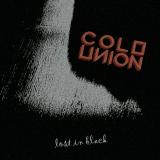
Cold Union emerge with “Lost In Black”, a coldwave signal suspended between haze and motion. An early glimpse of their upcoming album, where restraint becomes atmosphere and every element is reduced to its essential form. Icy guitars drift over deep, driving basslines, while distant, delayed vocals hover in slow, almost spectral, hypnotic atmosphere. There’s a clear understanding of the genre’s lineage here—echoes of classic post-punk codes reinterpreted with patience and intent. Minimal, precise, and emotionally distant, Lost In Black channels the core of post-punk into something colder, sharper, and built for the finest late hours goth parties.
Depeche Mode, Yazoo, Erasure's Vince Clarke, Blancmange's Neil Arthur and the electronic producer-writer-synth-nerd Benge have joined forces to form the new project Doublespeak. Set to be released on May 29th, their self-titled debut album revisits eleven of their favourite songs from the past four decades, each reimagined and renewed in the timeless space of gleaming analogue electronica.
The 'Doublespeak' album is divided between songs from the postpunk netherworld brought blinking into the light (Fad Gadget, The Sound, Young Marble Giants), pop radio monsters ushered back down a dark stairway into the club (ABBA, David Essex, The Carpenters) and buried treasures from the 1990s onwards (The Magnetic Fields, Ed Dowie and Laptop).
Collectively, the album amounts to a shadow autobiography of the three collaborators' continuing musical education. Doublespeak is the great human songbook, synthesised.
Empathic vocals, bold arrangements and glowing analogue electronics turn familiar and forgotten songs into a personal, forward-looking electronic statement.
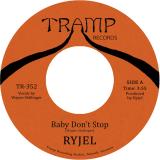
Ryjel was a band from suburban Pittsburgh, PA, that started out in the mid-1970s performing classic rock covers. The band was approached by a local entrepreneur who wanted to cut a single for the disco market, but a lack of financing scuttled the proposal. Nevertheless, the band was able to record a dozen of its original tunes in a professional studio for possible release, and among those songs were "Heart's On Fire" and "Baby Don't Stop."
Both tracks were recorded some 50 years ago having remained unreleased to this day. It needed the investigative work of the Tramp Records crew to discover them. Finally they are available on a strictly limited 45 RPM single release. In addition, the full length version of "Heart's On Fire" will soon be released on the upcoming Tramp Records compilation titled "CAN YOU FEEL IT Vol.5 - Modern Soul, Disco & Boogie 1977-88".
White Mechatronica returns.
Introducing Cold Voltage - a new series wired for tension, circuitry, and raw machine emotion. This first volume sets the tone: cold, direct, and built for dark rooms.
On the A-side, Elena Siziva opens with "The Balls", an experimental descent of bouncing basslines and cavernous synth textures. Filmmaker follows, delivering his unmistakable dark wave electro signature - sharp, shadowed, and hypnotic. Violet Position & Echo Protocol close the side with "Into the Silent Blue", an electro vocal cut designed to ignite the floor.
Flip to the B-side: Jennifer Touch strikes with "Don't", a rolling, snare-driven machine track that hits without warning. Mr. Funghi pushes further into EBM/Techno territory with "Off for the Weekend", a relentless piece built to tear down walls. Closing the release, The Spy delivers "Track Reaper", a dramatic Italo wave finale that lingers long after the last note fades.
As the so-called “Latin boom” becomes a new anchor for hard-swung club sounds, it is crucial to recognize that the region’s musical culture extends far beyond dembow edits and the pop-trap hybrids that have edged into the mainstream. Monterrey-born, New York City-based producer and DJ Delia Beatriz, aka Debit, returns to NAAFI with Potpourri, a generous and kinetic collection of dancefloor-oriented tracks filled with percussive flourishes, squelching 303 basslines, and rhythmic mutations that actively challenge the status quo. Rather than rebuilding “Latin sounds” as a fixed category, the album rethinks their internal logic, tracing the evolution of techno and house in cities like Detroit, Chicago, and New York alongside parallel innovations emerging in Mexico, Colombia, and across the wider Latin world. Positioned on the bridge between Mexico and the US, Potpourri does not seek synthesis as a gesture of smooth fusion, but as a site of disruption.
The album can be heard as a loose follow-up to System (2018), Debit’s NAAFI-released EP that expanded the sonic potential of tribal guarachero through triplet-driven rhythms, industrial pressure, and noisy reconstruction. Potpourri retains guaracha as a structural backbone while drawing further influence from veteran DJ and producer Javier Estrada—who also appeared on System—and particularly from his fast-paced, nonlinear style of mixing. That approach becomes a formal principle here: canonical structures are dismantled, repetition is avoided, and tracks evolve without sacrificing propulsion. Coming after the introspective temporal inquiry of Desaceleradas and the speculative historical acoustics of The Long Count, Potpourri arrives as a deliberate surge of energy. As Beatriz explains: “It’s a manifesto for rethinking form and sound in dance music. By stepping outside traditional structures and embracing the potpourri approach, I’m creating new meaning with familiar rhythms. I’ve also been applying this to my DJ sets, using it as a tool to break free from established norms and explore new narrative possibilities.”
Years in the making, Potpourri imagines an alternate timeline in which the psychedelic squelch of acid—echoing pioneers such as DJ Pierre and Mr. Fingers—and the dub-inflected atmospheres of Basic Channel entered into direct and sustained contact with Latin American club mutations. Those references are legible, but never merely quoted. Instead, they are folded into syncopated hi-hats, overdriven kicks, and unstable arrangements that absorb both the intensity of the parties Beatriz remembers from Monterrey and the abrasive edge she sharpened at DIY noise shows in New England. The result is unmistakably a dancefloor record—heard in tracks as forceful as “Pero like” and the peak-time pressure of “tuvesuerte”—but one saturated with grotesque, psychedelic atmospheres, where sounds dissolve into hoarse croaks, acidic smears, and anxiety-inducing growls. Here, the rave becomes not simply a site of release, but a platform for navigating identity, hybridity, and artistic formation across borders. Moving through peaks and ruptures, Potpourri reveals a party narrative that is not linear but multidimensional.
By folding together the fluidity of DJ culture, the experimental charge of acid, and the rhythmic vitality of guaracha, Potpourri proposes a space of formal and political innovation within Latin America’s rapidly expanding electronic music landscape. It is a record that refuses containment, pushing against the templates through which Latin electronic music is often consumed, and insisting instead on friction, instability, and transformation as generative conditions for the dancefloor.
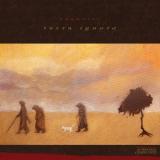
If – in some parallel universe (or perhaps a not-so-distant-future version of the one we’re already sentenced to living in) – the evil overloads of artificial intelligence were actually successful in their attempts to create convincingly enjoyable “original music,” more specifically tasked with wholly encapsulating my own personal tastes by data-chugging some cocktail of – oh, I don’t know – the posters on my wall, the records in my “most listened to” pile, the mixtapes I made for others, intensive physical scans of my auditory cortex, amygdala, hippocampus, heart strings, whatever else they have splayed out on their autopsy table with the intention of generating one all-encompassing “perfect band” based on the fruitful sum of their findings – that band, for me, would be (or would at least sound exactly like) the Tara Clerkin Trio. It is, quite simply, without exception, the music I wish to hear.
Formed in Bristol UK (where none of them are from yet all of whom are deeply engrained) in 2020, the Tara Clerkin Trio – as it somewhat democratically exists today, despite the singular authority implied by its name – consists of the titular Tara Clerkin, her partner Sunny Joe Paradisos, and Sunny’s brother, Patrick Benjamin. I’ll confess, I don’t know what their respective roles are within the operation and there’s only a very small part of me that cares to learn, as one of my favorite qualities in an objective listening experience is the mystery of who is playing what, which sounds are “authentic” versus synthesized, which chunks are performed “live” in a room together versus meticulously Frankenstein’ed from measure to measure, or how exactly the overall sound is so (seemingly) effortlessly achieved. Though, I suspect, if and when I do witness a live performance by this band at any point, my enjoyment of the music will not be lost in my better understanding of it.
With two extraordinary mini-albums – In Spring (2021) and On The Turning Ground (2023) – making a splash on London’s formidable World of Echo label in wake of their self-titled 2020 debut, this upcoming Somewhere Good LP is, in many ways, the band’s most realised work. In running their usual gauntlet of idiosyncratic (*an overused adjective for which here there is regrettably no sufficient alternative) approaches, Clerkin & co. colour in and outside of compositional lines over the course of 40+ celebratory minutes - never wallowing, despite inherently somber subject matters of self-defeat, disease, displacement, restlessness, gentrification - allowing their arrangements and improvisations ample space and time to situate, stretch out, breathe, cross-pollinate, and ultimately take deeper hold on the listener’s imagination – all while somehow sounding more like themselves than ever before.
Of course, there are traceable influences herein, if one felt that such comparisons were necessary to properly examine and enjoy this music (they aren’t)… Being the big dumb American from the small boring town that I am, cornfed on ‘90s alternative radio with the enchantingly exotic sounds of Maxinquaye and Mezzanine emanating from my chunky tube television, I can’t help but to make a blatantly obvious reference to a “Bristol sound”, ie the whole trip-hop trip, the pastoral crooning over the suggestive urban grime of cracked electro/piano treatments, the digitally-yet-primitively reconstructed James Bond soundtrack string-beats, etc.. But the Tara Clerkin Trio is so infinitely much more than that. There are elements of avant-pop, modern classical, kraut-folk, audio verité, dare I say indie rock (and not of the beer guzzling, masturbatory fuzz-flex variety but perhaps more like a Trish Keenan-fronted Faust, Adrian Sherwood at the mixing desk of If You’re Feeling Sinister, or – in expanding on our alternate reality – a world in which High Llamas cut a full-length for Warp Records with Andrew Weatherall on coffee duty).
The hazy, unmappable skyline-mirage of droning harmonium, upright bass, peculiarly accentuated wind instruments, acoustic guitar, hushed yet literally mighty keys combine to hypnotizing effect. The band may make underlying nods to jazz, sure, but it’s not appropriation, it’s that they have the actual chops to build it out. Beneath the janky samples and oddball percussive embellishment lies actually great drumming. Beyond the manipulated vocal witchery and woefully reflective plain-spoke moments are Tara’s subtly inspired melodies, sung with what might honestly be the glue to the whole crazy equation. A calming consistency throughout the otherwise unpredictably dynamic, boldly intuitive, uniquely British exploration of this (their own) universe in song. – Ryan Davis (Chicago, February 2026)
In this new project on Audio Music World, we find an interna onal-renowned Italian trio composed of
DJs/producers Daniele Baldelli, Marco Fra-y, and Marco Flash.
Their sound explores every nuance of Electronic Music, keeping one eye on the past and a steady gaze
toward the future. Following several notable produc ons and successful remixes, this new venture from the
three producers is certainly among their most accomplished.
Factory Floor return to Phantasy with ‘Buzz Saw’, a driving new single that once more re-establishes the trio of Nik Colk Void, Gabe Gurnsey and Joe Ward as amongst the most vital forces in live electronic music.
Following on from 2025’s sold-out vinyl singles ‘Between You’ and ‘Tell Me’, the spacious groove of ‘Buzz Saw’ bridges the sharp, bracing synthesis of the band’s origins in London’s post-industrial warehouse scene. Once again mixed by legendary engineer David Wrench (Daniel Avery, Floating Points), it captures the band’s most dancefloor-forward instincts, recently rejuvenated via appearances at Berghain, festivals such as No Bounds and Simple Things, plus a headlining UK tour.
As before, Gurnsey’s peerless drum work - tracked in the studio by Stephen Morris of New Order - proves forceful and delicate in tandem with Ward’s percussion, encountering suspenseful breakdowns in the space between Voids enveloping basslines. In dreamlike accompaniment, Colk Void’s own voice drifts serenely upwards, itself slowly consumed and obscured into the band’s full-bodied electronic rush, which is also available here as a more minimal, no-less powerful dub version.
In sonic contrast, ‘Guitar_1342’ finds the band experimenting in their starkest terms, stripped back of their luminescent flow and boldly reduced to an abrasive, dissonant guitar feedback.
Factory Floor’s ‘Buzz Saw’ will be released via Phantasy on 29th May 2025, available as a limited-edition vinyl pressing in a risoprint sleeve, as well as digitally.
Post Panic debuts as a label with the release of Dancing Ledge, a specially titled EP featuring five remastered tracks from Delph’s 1998 self titled album. Originally appearing on CD via the Blue Pool label, this new collection breathes fresh life into a hidden gem of the late 90s British electronic scene.
The project of K J Pocock and Steven Smith, Delph captures a unique sonic transition from the rural landscapes of Dorset to the industrial energy of Manchester. While the original album was self titled, this edition takes its name from Dancing Ledge on the Jurassic Coast, paying homage to the duo's roots and the organic, atmospheric nature of their sound.
This debut reissue serves as a definitive statement for Post Panic, unearthing timeless soundscapes that blend ambient, downtempo, and early IDM. An essential discovery for collectors and lovers of evocative electronic music.
This EP is a selection of five re-mastered tracks from the 1998 self-titled Delph album, originally released as a CD on the Blue Pool label. Delph were K J Pocock and Steven Smith. Originally from Dorset in England they moved to Manchester where the album was made.
Slacker continues to deliver the unexpected with ‘Norari Kurari’, a collaboration between St. Petersburg-based former video game soundtrack producer Cable Toy and Japanese rap innovator ONJUICY. Unusual in concept, but flawless in club execution, their link-up connects two Slackers across continents and cultures, turning in an ultra-modern interpretation of hip-house that’s guaranteed to leave dancers spinning on their heads.
‘Norari Kurari’ draws on ONJUICY’s playful, positive and fully Japanese flow, easily locking into Cable Toy’s deep basslines and skipping rhythms, where his determined bars bounce alongside timeless M1 organ sounds.
Stripping things way back, the ‘Warehouse Version’ inverts the US garage warmth found on the flip: rhythm takes control of the rhyme, as CT knocks the dust off his vintage drum machines, even finding room for some pleasurably paranoid bleeps and sweeps.
zzzahara (They/Them) is the solo moniker of Eyedress/Simps/US Velvet
guitarist Zahara Jaime
Plenty of people come to Los Angeles looking to make their California dreams a
reality. But zzzahara has always been here, turning reality into a dream.
Attwood: "A feverish indie rock song drowning in intimate emotion and frenetic
energy, zzzahara's "they don't know" is a vulnerable and raw outpouring from the
heart."
Dummy: "An infectious indie rock number overflowing with emotion and frantic
energy, zzzahara's 'they don't know' is a clear statement of intent from a solo
artist coming into their own."
Paste: "…this single feels like something special."
Guardian: "Cantering through the gloaming with a blend of coldwave and early
Cure, the Los Angeles guitarist and songwriter banishes summer, to cheers from
neo-goths everywhere."
What happens when the mathematical rigor of Johann Sebastian Bach is stripped of its classical facade? With the album SRDNG x LPZG, the duo AMAS, together with double bassist Frithjof-Martin Grabner, delivers a radical answer on May 15th, 2026. The work does not merely translate Bach’s legacy; it consistently reimagines it within the aesthetics of Minimal, Dub-Techno, and Ambient. The creation of this extraordinary abstraction spanned three years and two geographical poles: the raw isolation of Sardinia and the academic precision of Leipzig.
The project found its origin in the seclusion of Pula, at the southernmost tip of Sardinia. There, AMAS extracted and digitally dissected the rhythmic and tonal essence of 14 selected works by Bach. In a temporary local studio, these minimalist sequences fused with field recordings of the surroundings to form a hypnotic framework of electronic structures. Back in Leipzig, this foundation met Frithjof-Martin Grabner. In an intense session held in a hall of the historic HMT Leipzig, spontaneous improvisations emerged that breathe the spirit of Miles Davis’ approach to "Ascenseur pour l’échafaud": free play based on rudimentary sketches, an intuitive reaction to the material—comparable to Davis’ iconic scoring of silent film images. It is a deliberate prioritization of atmosphere over technical perfection. Grabner utilizes the full spectrum of his instrument, creating sounds that, in post-production, often blur the line between analog depth and synthetic texture.
The result is an organic symbiosis: the vastness of Sardinia (SRDNG) meets the intellectual density of Leipzig (LPZG), while the strictness of the Baroque dissolves into the repetitive energy of Minimal Techno. To do justice to this conceptual ambition, the album will be released in an uncompromisingly audiophile edition. Limited to 200 copies worldwide, the double LP is pressed on 180g vinyl and features a front cover with a special 3D effect, continuing the visual tradition of the AMAS series. An album for listeners who understand Bach as a living origin of modern sound art—and for lovers of electronic music seeking a new, organic soul within the repetitive depth of techno.
Following their 2023 LP Presents, Nathan Nelson's American Cream Band bring the Twin City heat back to Quindi with an album rooted in duality. From the yin and yang party-starting A side and meditative B side to the dual-attack boy-girl vocals, the nature of opposites and equals steer the expansive, artful strain of rock n' roll that spill out of this wholly unique Minnesotan export. For the ever intriguing Quindi, it's a strident step into Spring after the frosty introspection of Roudi Vagou & Läuten der Seele's Taghelle Nacht. While the world burns and injustice prevails, Twin is a celebration of unity and radical expression-all the more urgent against the backdrop of authoritarian overreach and righteous protest that has whipped through Minneapolis in recent times.
Twin continues Nelson's drive at the helm of American Cream Band to draw in a colourful cast of players to feed into his orgiastic sound, meshing the trance-induction of krautrock with the irrepressible funk of the post-punk-new-wave explosion. But principal among the cast of characters and forming a central tenet to the identity of this album is Liz Buhmann, lead vocalist and a formidable, playful foil to Nelson's own Midwestern twang. Around the electric spark between Buhmann and Nelson, a heavy duty ensemble wrangle guitar, bass, sax, a cornucopia of synths and a battery of percussion into all manner of sonic forms.
The double-sided concept manifests throughout Twin. On 'Call Me' Buhmann sings in French to contrast Nelson's English, while the strident strut of the NYC disco groove is offset by an inherent dreaminess that turns the track into a more cosmic kind of dancefloor workout. 'Ethical Vampire' is a spiky cut with a garage rock patina that spirals into a psychedelic, synth-soaked get-down. 'Don't Burn The House Down' is a loose and limber roller that captures Can at their funkiest along with the hypnotic vibe of other such esteemed long format jammers, but American Cream Band boils that energy into a hook-laden art pop sensibility before a gentle, drawn out landing.
Even the more pensive moments on Twin find space for friction. For all its tender, smoky temperament, 'Leda and the Swan' lets the electric piano and guitar fray at the edges and bleed into the red while Mat Heinrich's tumbling drums lurch with pent-up intensity on the one. 'No Funeral Necessary' skirts around the mellow pools of new age but prefers to let liberally doused Tape Echo tweak out Alex Meffert's honeyed sax inflections and Buhmann and Nelson's disparate sermons.
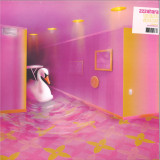
Nelson describes Twin as "an oppositorum coincidentia" - a reference to the mystical Latin concept of the coincidence of opposites that suggests contradictory ideas 'fall together' in a higher reality. Beyond the sound of the album, this idea also manifests in the cover photography by Sho Nikado and the swans on the LP labels by Autumn Garrington. As freewheeling and wide-open as American Cream Band feels, nothing appears by accident. The end result feels like a nourishing whole - rich with substance and nuance, deep enough to be explored and absorbed yet also so brazen and immediate you can't help but feel its surface charms from the first thrusts of 'The Hive Is Pissed' to the last ripples of 'We're Not So Sinister'.
Genning's new EP is a musical journey through four unique tracks, each with its own atmosphere.
Stork brings nostalgia and the feeling of childhood discovery with a steady groove and deep bass. At Home is a smooth, sea-inspired track perfect for closing a set. Clockwork energizes with a blend of electro-trance melodies and powerful tech-house bass. Forget You surprises with processed female vocals and analog synths, inspiring positivity on the dancefloor.
This original album unites soul and positive emotions through long musical journeys and takes your mind to dance.
After the release of the single “Egal” with singer Geraldine—the two Tuscan producers who met in Berlin—Lorenzo Fortino and Francesco Salvadori strengthen their friendship and musical connection in the studio with their first EP, “Friends Above Berlin,” released on the label Connessioni. The record opens with “Heide” (A1), which drops you straight onto the dancefloor with a blend of minimal house and acid that never lets go, a smooth mental trip full of groove. Next comes “Another Club Dimension” (A2), a track balancing house and techno, where a dominant bassline perfectly drives electronic drums, synthesizers, and ethereal vocals, resulting in a warm, elegant, and decisive sound. Side B opens with “Positive Attitude” (B1), a techno track with references to acid/progressive melodies, building continuously in intensity and emotional impact. The record closes with “Flying Through the City” (B2), where electro and acid sounds merge into a melodic journey with dreamy arrangements, making the track feel suspended beyond music itself, somewhere between past and future.
Reissued for the first time on vinyl, the debut album by English post-punk heroes Snake Corps, originally released in 1984 on Midnight Music. The band raised from the ashes of Sad Lovers & Giants, after their official split in 1983. Led by Tristan Garel-Funk and Nigel Pollard (who immediately left the band replaced by Jon Greville of Rudimentary Peni). Often championed by legendary John Peel, The Snake Corps deserve a major recognition for their epic sound often reminiscent of early U2 and Ultravox.
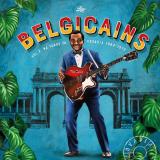
Following the sold-out first volume, the Belgian label Covadia presents a second chapter of Les Belgicains, focusing on the European rumba created by Congolese students in Belgium during the 1960s.
Volume 2 includes 11 rare tracks originally issued on 45 rpm singles or never released before. Highlights include the dancefloor favourite “Guaracha Fredo” by LOS NICKELOS and previously unreleased recordings by the orchestra EBUKA EBUKA, like the swinging “Merengue Soucouss” and the emotional “Mpenzi Niambiye”. The songs unmistakably express a longing for recognition and for a rightful place for a new nation.
From Wisdom Teeth’s recent compilation nagoyaka na kaze / 和やかな風 (quiet wind)—which cast a spotlight on the Japanese city of Nagoya—emerges “2++”, a new label launched by abentis, who curated the compilation alongside Facta and K-LONE as a central figure in the scene. Conceived as a series introducing facets of Nagoya’s underground electronic music to the world on vinyl, its inaugural release is abentis’ debut album, Dim Grow.
Across the album, intricately designed electronic mallet sounds—created using Ableton Live’s physical-modeling synthesizer—take center stage. Fresh and percussive like marimba or kalimba, yet simultaneously carrying an otherworldly, unreal quality, these tones form the core of the record’s sonic identity. In moments of near-silence, a crystalline resonance poised between glass and metal shimmers with subtle shifts in temperature, giving the album its distinctive texture.
While resonating with the sonic sensibilities of fellow Wisdom Teeth affiliates such as K-LONE, Tristan Arp, and Salamanda, abentis’ uniquely strange palette can be traced back to one of his strongest influences: Haruomi Hosono. In particular, Hosono’s mid-’70s tropical-infused solo albums — Tropical Dandy (1975), Bon Voyage Co. (1976), and Paraiso (1978) — serve as a key reference point. Symbolically reflected in Hosono’s marimba and vocal performance at a 1976 live show in Yokohama Chinatown, the marimba functioned as a central instrument for constructing imagined exotic landscapes inspired by Martin Denny and Hawaiian music.
For abentis—who worked at a local jazz bar before becoming active as a hip-hop beatmaker—the language of “tension chords,” a harmonic vocabulary rooted in jazz and R&B that hovers ambiguously between brightness and darkness, forms a consistent grammar throughout Dim Grow.
Behind the album’s core theme of “mallets + tension chords” lies a broad musical lineage: the harmonic sensibility of Claude Debussy, who anticipated the tensions of jazz; the proto-minimalist spirit of Erik Satie; the marimba-centered structures of Steve Reich; their continuation in Japan through Mkwaju Ensemble (with Midori Takada and production by Joe Hisaishi); and the subsequent branches into post-rock, electronica, and ambient music.
Growing up in Nagoya—an industrial city where creative independence is deeply valued—and being rooted in punk and hip-hop counterculture scenes naturally fostered abentis’ affinity with these predecessors. His practice between genres, combined with an encounter with the highly cross-pollinated musical perspective cultivated around Wisdom Teeth, provided the framework through which his own musical language crystallized. Dim Grow stands as the natural culmination of that journey.
Sometimes the title of an album tells you everything you need to know. Laurence Pike’s Possible Utopias for Jazz Quintet is like that: The music within represents a search for freedom, potentiality—liberatory strategies that transcend the ego and the solitary, atomized figure.
But in this case, the album title is also a red herring, because there is no jazz quintet here—just Pike, his drums, and his machines, not so much an ersatz ensemble as a purely notional one, a thought experiment equipped with drumsticks, circuitry, and the desire to go beyond hardwired limits.
And the results, strictly speaking, aren’t really jazz, though they incorporate the vocabulary of jazz, along with that of ambient, electronica, and post-rock. They are some other thing, cognizant of genre but never beholden to it. Again, we’re talking about a search for freedom here.
The Sydney-based musician has a long history of coloring outside the lines, not just in his solo recordings—including four albums for the Leaf label between 2018 and 2024—but also in the trio Pivot (later PVT); Szun Waves (alongside saxophonist Jack Wyllie and Border Community’s Luke Abbott); Triosk, which recorded an album with Jan Jelinek in 2003; and even post-punk titans Liars, whom he joined in late 2018.
Of his first album for Balmat, Pike says, “My loose concept was: What does music sound like when the expectations of late capitalism are removed from it? How might a jazz musician from an idealised culture of the future, or even another world, utilise musical language when the conventions of style and marketing are no longer a factor in music making?”
That inquiry, he says, connects to his “guiding principle: that the purpose of music is to access something bigger than the individual, and reveal a sense of possibility and freedom in the world to the listener. To create an understanding that the future can be something other than what we imagined or expect, even unconsciously.”
Heady ideas, but plug into his stream-of-metaconsciousness flow and you may start to intuit what motivates him. There is a deeply lyrical expression in these pieces—in the ruminative piano of opener “Guardians of Memory,” for example—but also a sense of exploded perspective, of ideas approached from more angles than any one mind could dream up. Of a collectivized consciousness, of mycelial networks branching across tone and rhythm and timbre, of ideas articulated in distributed fashion, nodal points dancing across drum heads.
Pike’s imaginary quintet is hardly without precedent; it’s a continuation of concepts floated across Jan Jelinek’s Loop-Finding-Jazz-Records, Burnt Friedman’s many guises, and much of the recombinant improv of the International Anthem roster, not to mention the far corners of ECM’s catalog in the late 1970s and 1980s, which Pike says have been integral to his development since he was a teenager. Possible Utopias for Jazz Quintet is a point in a continuum, a voice in a conversation, a question with no obvious answer: How can the search for otherness in music manifest something true about ourselves?
Positions is the second collaborative single of Adam Port, Stryv and Malachiii and the follow up to their highly successful Move release. And now, Positions is finally available as a limited vinyl edition. 114
Originally released on the cult V4 Visions label in 1991 & 1994, Ashaye’s 'Dreaming' and 'What’s This World Coming To' showcased the sound of Steet Soul, a genre that emerged in the 1990s, blending elements of soul, R&B, and hip-hop, that could be heard playing across London’s pirate radio stations. As the popularity of UK soul has grown in the last 5 years, DJ’s and tastemakers have put 'Dreaming' and 'What’s This World Coming To' into heavy rotation which has only increased demand & price for the original vinyl considerably. At present this demand is so high that it’s not even possible to purchase 'Dreaming' on the second hand market, while copies for 'What’s This World Coming To' are changing hands for £50+. On this fully licenced, RSD release, two of Ashaye’s biggest tracks are together on one 12 inch for the first time! Don’t sleep on this double header of premium UK street soul on South Street International's debut foray into vinyl!
We are pleased to announce the first FEX live album, Don't Look Back. The release features selected recordings from two concerts in Paderborn and Uelzen, both captured in 1985. All tracks on the album are previously unissued, including entirely unheard songs such as It's a Hard Life, Just Get Back, Legend, and Waiting Song, alongside a previously unreleased version of Subways of Your Mind, widely known as "The Most Mysterious Song on the Internet."
One of the most striking aspects of the album is the remarkable sound quality of the live recordings, as well as the strength of the performances themselves - particularly given that FEX were still considered a newcomer band at the time. The four-piece lineup consisted of singer, guitarist, and primary songwriter Ture Rückwardt, Michael Hädrich on keyboards and occasional second guitar, Norbert Ziermann on bass, and Hans-Reimer Sievers on drums. In 1985, the band was preparing for broader exposure through a nationwide tour organized by the small promotion company HBM-Musikbüro.
The album opens with the psychedelic Skyscraper, a track Rückwardt reportedly regarded as a personal favorite to perform. Hädrich contributes dynamic synthesizer layers, while Ziermann underpins the track with a distinctive slap bass groove. This is followed by the energetic rock number It's a Hard Life, which once again demonstrates that the band possessed multiple songs capable of matching the impact of their best known track Subways of Your Mind.
After this energetic opening, the album shifts into a more restrained mood with the synth-pop ballad I Got My Eyes On You. It is followed by Strange Feeling, presented here in a particularly compelling live version that arguably surpasses the previously released studio demo featured on the Skyscraper LP, with Rückwardt delivering one of his most expressive vocal performances. On Goldrush, another fan favorite, it is Hädrich's DX7 synthesizer work that stands out.
Don't Look Back continues to flow seamlessly, moving between styles such as new wave, synth pop, and a blues-influenced form of classic rock. On It's Good To Know, a song addressing the theme of stardom, the band returns to a heavier rock sound. In contrast, the synth-driven Just Get Back reflects on the conflict in Northern Ireland, then ongoing at the time. Lines such as "It's the money, it's the money why they come along" are directed at mercenary soldiers, while "even Sunday's a killing time" directly references Sunday Bloody Sunday by U2.
Previously known songs such as Dirty Slapstick and Heart in Danger lead into We Don't Want It No More, perhaps the band's most striking pop ballad. It is easy to imagine that the track had the potential to achieve radio success in the 1980s. The following piece, the epic Legend, explores themes of loneliness and love simultaneously. With poetic and abstract lines such as "some isolate in the falling rain" and "that's why I count all the reasons they call out for living, sadness is falling inside," it builds an almost eerie atmosphere.
One of the final highlights of the album is Subways of Your Mind, recorded in Uelzen. In this version, Rückwardt's vocal performance is even more on point than on the previously issued recording from Paderborn. Another notable moment is the driving, 1970s-inspired rock 'n' roll track Waiting Song. Both the composition and its live performance carry an energy that could easily stand alongside the repertoire of bands such as AC/DC. It was usually the track that FEX ended their concerts with, calling out each band member at the end of the song.
This leads to a broader reflection: it is striking that FEX did not achieve a wider breakthrough at the time. The performances captured here suggest a band capable of delivering consistently, song by song, note by note. It is not difficult to imagine FEX performing in large venues and engaging sizeable audiences. In reality, however, most performances in 1985 took place in front of relatively small crowds. The recordings featured on this album originate from the Roxy club in Paderborn and a small, unknown venue in Uelzen, likely in front of fewer than fifty attendees.
An essential figure behind these recordings is the engineer known only under his nickname Hase (German for "rabbit"), who was responsible for capturing not only these concerts but many other surviving FEX recordings. Bringing his own mixing desk to performances, he developed a deep familiarity with the band's material and was able to shape the live sound with precision, including the timely use of vocal effects. The original recordings existed only on cassette and required careful and extensive restoration work. Zoey Cairs was finally responsible for bringing them to their present quality.
This album marks the beginning of the Live Waves series, following the rediscovery of additional recordings that have gained international attention since November 2024, when they surfaced through what has been described as the largest "lost wave" music search to date. The title of this first live LP Don't Look Back carries a certain paradox. While the album invites listeners to revisit recordings from forty years ago, FEX themselves were always oriented toward the future. In that spirit, further releases of brand new material are already planned.
The cover artwork is once again based on an image by Magnussen from the Kiel archive, depicting the Prinz-Heinrich-Brücke. The bridge, once located in the northern part of the city, no longer exists. As a symbol, however, it remains fitting: a bridge stands for movement and connection - qualities that FEX sought to embody on tour, bringing their music to different places and audiences.
Fresh from flexing his scalpel skills via an impressive double 12-inch for Hot Biscuit Recordings, The Mighty Zaf once more joins forces with regular studio buddy Linkwood for two more tried-and-tested reworks. 'Get Another Love' is particularly potent, with the duo combining elements from a vintage disco-soul workout - glistening guitars, bass, vocals, strings - with a vintage-sounding drum machine beat which alternates between sweat-soaked Chicago-house jack and post-electro swing. 'He Made You Mine', meanwhile, is a straight edit of a slow, loved-up, immersive and horn-laden disco-soul gem that switches from loved-up downtempo loveliness to punchy dancefloor excellence midway through.
/// First track, Symmetry, debuted on BBC Radio 6 New Music Fix, 10th February: "A beautiful, beautiful album" /// I got my life back. On 17 February 2025, 1024 rays of ultra sound converged at an operation table in Bern, Switzerland, and disconnected a noisy circuit on my brain. 90% of the manifestation ceased – of a disease that I no longer wish to mention by its name. During the same period, I completed my new album: Self Help Manual. I’ve read more current research about the nameless disease than my neurologist, who despite that I didn’t follow his advice on suitable treatment, called me after the successful operation: a brave, brave man. I have composed the music in the same way as in my previous album – Songs for the Nervous System – through layers upon layers of improvisations in dialogue with my synthesizers, most of which are the same age as me. I made the majority of the songs in my studio in the remains of Old Hagalund in Solna. I edited the recordings in my bed during the waking hours of clarity at night. Some songs – NAC, Ketosis, Overkill – were recorded in the basement of my childhood home in Skutskär, in Norduppland, where I’d returned to be nurtured by my retired parents – who during a night when I couldn’t turn over in bed, or pull the blanket over me – made a list of what would happen to my belongings. To my friends who have stood out with me despite my disease, I want to state: you will not inherit me yet. On the new album, the electric bass takes on a leading role. ESG and Liquid Liquid have been important when I reinvented my baselines, limited and liberated by my poor fine motor skills. Plasma is my homage to Summertime Rolls by Jane’s Addiction, that I listened to frequently in my youth. I guess that no one will hear the resemblance. In several songs, the Fender Rhodes plays an important role, a magical instrument that I bought shortly after my diagnosis over a decade ago, and for a long time didn’t dare to touch out of respect for Herbie Hancock and Fela Kuti. A couple of songs draw inspiration from the Horn of Africa – Inner Nile and Delta. At first, subconsciously in the reverb-drenched Inner Nile, then more consciously in Delta. I’m sorry it doesn’t swing the right way, but it was my attempt to return to the cradle of humanity. Longevity is possibly my favourite. The melody is played by an arpeggiator that I controlled by pressing down different keys in an exhilarating sense of freedom. One song in particular, the second track – One – has caused friends to associate freely: one thought it sounded like Patrick Cowley, another like Sly & Robbie meets Kraftwerk, a third like Air – Moonlight Safari. I made one song just before the surgery: opening track Symmetry. It’s the mightiest and most minimal song. I made one song after the surgery: finishing track Self Help Manual. My previous medication pump is heard through the microphone of my Ovation Magnum. It’s the most hopeful song on the album. I took the cover photos with my Hasselblad during walks in Tokyo suburbs of Ōmori and Kamata more than ten years ago. It was something about the faith of the traffic cones that fascinated me – born in the same streamlined form, they had over the years become increasingly individual and lovable. The mixing was finalized by Christoffer Roth in the newly built Studio Dubious in Nacka. Rashad Becker, who in an interview said that he listens as much with his mouth as with his ears, mastered the album at Clunk in Berlin. Right now it feels like anything is possible. My recovery is perhaps a small step for mankind, but a giant leap for me. I hereby leave the music to you. Joakim Forsgren
The trilogy is finally complete as Deep Dish make their monumental return to Global Underground, following up the seminal Moscow and Toronto mixes with #GU49 Dublin. The legendary duo has delivered a masterclass in mixing. This isn’t just an album, it’s a legacy.
One year on from his first Samurai release, Vardae returns to plunge even deeper into his mesmerising strain of hyper-mobile drum mantras and textural intrigue. Cédric Arnous' prolific run over the past few years has rapidly positioned him at the forefront of a scene between scenes where the rhythmic intrigue of drum & bass collides with modern techno's hypnotic linearity. On The Energy Of Presence he relishes the flexibility afforded by this intersection to deliver four distinct, high-impact workouts made with his ever-evolving live set in mind. 'Grounded Attachment' leads with the sonar strafe and broken beat pulse readily associated with the Vardae sound, threading twitchy percussion and steely brushstrokes around the bedrock of low-end pressure. It's the slowly emerging drone sweeps that round out the character of the track, betraying a warmth encased within the metallic overtones that deepens the emotional weight immeasurably. By contrast, 'Magnetic Flux' swerves towards a more direct thrust with its high-tempo 4/4 undercarriage and a limber, acidic lead line that helps join the dots between Vardae's modernist sheen and the roughneck days of free party tekno. This is still charged, atmospheric dance music, but it has no problem showing its teeth, too. 'Electric Feelings' is similarly sprightly in its tempo, but as ever Vardae runs a tight game with the weight of his drums, finding lightness and dexterity even at 170BPM while the transcendental wormhole opens up around the rhythmic force at the centre. Ensuring there's no space for predictability on this release, 'The Energy Of Presence' plies its own trade in sumptuous dub techno chords and angular groove designed to make you move on a different kind of downbeat. The consummate title track, it's the most roundly melodic offering on the record, served as a crescendo to the whole listening experience comfortably nestled on the B2 of the physical edition. Capitalising on the hypnotic codes etched into the dub techno sound, Vardae dials up the delay feedback for a psychedelic release at the end of a record that covers a lot of ground without losing focus.
Pour Me, My Friend, The Nectar of Dionysus PCM004 is a vibrant four-track exploration of deep tech house, crafted with elegance, groove, and an undeniable sense of joy. Rooted in musicality and designed for the dancefloor, this release blends warm, jazz-tinged elements with modern production finesse, offering a rich and uplifting listening experience from start to finish.
On Side A, A1. Andrey Djackonda – Never Disappear and A2. Deep District – Back Room introduce a welcoming atmosphere built on smooth progressions, refined hi-hat work, and dreamy pad textures. The grooves are fluid and inviting, supported by strong basslines and a playful spirit that sets a positive tone from the very first moments — perfect for drawing people onto the dancefloor with ease and charm.
The B-side raises the intensity. B1. Anirr – Still Trying to Be Perfect and B2. Andrey Djackonda – Refresh shift into a more driving, peak-time energy, where tighter rhythms and increased momentum take control. These tracks carry a confident push, designed for those moments when the room is fully alive and the energy calls for a stronger, more direct connection.
Balancing warmth, groove, and power, PCM004 is a well-rounded and versatile EP — an essential addition for those who appreciate house music in its most expressive, dancefloor-ready form.
Panna Cotta Music is a division of MixCult Records
ICONYC presents the third installment of a compilation series in perpetual bloom, Florilegia III. This new compendium of previously unreleased cuts balances vigor and depth, with unbridled passion and refined elegance for a captivating garland, featuring the sounds of AE:THER; Pole Position; Argia; Max Menaged, matteomie, & Adassiya; ALPHADOG; Marc Gonen & Island Hill; AIKON; Lexer; Still & Bense; Khainz & ZENON; Agustin Giri & Gespona; Deniz Tekin, Aliot & Tolu; Jordan Lev & Nael; and Convolute.
FOIE GRAS, Destroy Boys' fifth album, feels like the record the band has been working toward all along. It's bigger, stranger, and more confident than what came before, without losing the immediacy that got them started. FOIE GRAS was built out of a series of risks that ultimately produced the band's most cohesive, ambitious, and best work yet. Those risks began with the title. Alexia Roditis (vocals/guitar), Violet Mayugba (backing vocals, guitar), Narsai Malik (drums), and David Orozco (bass) landed on FOIE GRAS while touring Europe, passing names around with the same openness that defined the making of the record. Roditis and Mayugba formed the band when they were 15, playing DIY shows around Sacramento while still in high school. Over the past decade, Destroy Boys have grown from those house shows into an international touring band, opening for Blink-182, Pierce the Veil, and Rise Against. Their songs have gotten harder to pin down, too: punk remains the foundation, but alternative, grunge, pop, postpunk, Britpop, bossa nova, and jazz all find their way in. Produced by Zach Tuch (Knocked Loose, Touche Amore), with additional contributions from Frank Iero, FOIE GRAS pushes that restlessness further. It's the sound of a band finally giving itself permission to follow its instincts, no matter the risk-and, in the process, making its best record yet.
FOIE GRAS, Destroy Boys' fifth album, feels like the record the band has been working toward all along. It's bigger, stranger, and more confident than what came before, without losing the immediacy that got them started. FOIE GRAS was built out of a series of risks that ultimately produced the band's most cohesive, ambitious, and best work yet. Those risks began with the title. Alexia Roditis (vocals/guitar), Violet Mayugba (backing vocals, guitar), Narsai Malik (drums), and David Orozco (bass) landed on FOIE GRAS while touring Europe, passing names around with the same openness that defined the making of the record. Roditis and Mayugba formed the band when they were 15, playing DIY shows around Sacramento while still in high school. Over the past decade, Destroy Boys have grown from those house shows into an international touring band, opening for Blink-182, Pierce the Veil, and Rise Against. Their songs have gotten harder to pin down, too: punk remains the foundation, but alternative, grunge, pop, postpunk, Britpop, bossa nova, and jazz all find their way in. Produced by Zach Tuch (Knocked Loose, Touche Amore), with additional contributions from Frank Iero, FOIE GRAS pushes that restlessness further. It's the sound of a band finally giving itself permission to follow its instincts, no matter the risk-and, in the process, making its best record yet.
For two decades, Gun Outfit has been a band defined less by genre than by continuity, patience, and a commitment to making music that reflects their lived experience.
Formed in Olympia, Washington in 2006 but long since rooted in Los Angeles, the group has evolved from a raw duo into a quietly formidable five-piece, their sound growing from scrappy post-punk beginnings into something spacious yet intimate, and always underpinned by an experimental edge.
On Process & Reality, Gun Outfit return with their most ambitious and immersive work to-date, a sprawling 80-minute double album shaped by time, environment, and philosophy. Recorded over the course of a single month in the late summer of 2020, on an 80-acre ranch in Pine Flat, California, while a massive forest fire burned less than ten miles away, the seeds of these songs were stark and strange.
Its title, Process & Reality, draws from the central work of philosopher Alfred North Whitehead, whose philosophy places intuition, experience, creativity, and relationality at the center of existence.
The band’s current lineup reflects both longevity and openness. Sharp and Keith remain the band’s primary architects, joined by longtime drummer Daniel Swire, multi-instrumentalist Henry Barnes, and bassist Kayla Cohen. Additional collaborators include Chris Cohen, Warren Lee, and Danny Sasaki all of whom add further depth, leaving subtle fingerprints across the album.
Musically, the album expands the band’s palette without abandoning its core sensibility. Dulcimer, autoharp, sitar, melodica, keyboards, homemade electronics, and a wide range of acoustic and electric textures appear throughout. The sound is mellow yet expansive, songs move between fragility and hefty atmospheric passages.
Influences surface obliquely rather than overtly. Elements of reggae and dub inform the production’s spatial sensibility. Echoes of long-form European jam bands coexist with sharp post-punk. British folk traditions, American country, and classic West Coast songwriting drift in and out of focus; the band is never afraid to lead or follow.
Long Island Sound's new self-titled 6-track EP captures the Dublin duo at their most dynamic yet.
Following heavy rotation on BBC Radio 1, alongside support from industry heavyweights the likes of Marco Faraone and fka.m4a, the new record brings their trademark blend of energy and emotion to new heights.
Marking a defining moment in their trajectory, the EP is a snapshot of a duo stepping fully into their identity. With growing international attention, a forthcoming Irish tour and a sound that continues to resonate across scenes, this EP positions them firmly at the forefront of Ireland’s electronic music wave.
Elations Recordings presents "Terra Ignota", the long-awaited new full length album from elusive Melbourne-based fusion ensemble Krakatau. "Terra Ignota" marks a return and an epochal shift for the group, a deep exploration of possible sonic spaces and a portent of things to come.
In the years since 2016's cosmic jazz funk-prog-spiritual 12" "Tharsis Montes/Apogean Tide" Krakatau have worked on refining their craft as instrumentalists and writers, expanding further into the world of jazz and fusing influences from world folk musics, contemporary jazz and the European post-minimalist music of the 1980s and early 90s. "Terra Ignota", literally translated as "Unknown Land", takes its name from the cartographer's notation for uncharted territory, the blank spaces on maps where knowledge gives way to imagination and speculation, gesturing towards the group's studio explorations and search for new sonic worlds in the years spent developing the record.
The results are a diverse yet unified combination of sounds and influences across five tracks that see Krakatau drawing closer to the independent underground "world" jazz scene of the 1980s than anything contemporary. The album opens with the digi-minimalism and fourth world atmospherics of title track "Terra ignota", a percussion heavy latin fusion sound in "Birds of Passage", and melancholic ambient saxophone and synthesiser duo "In Memory". Three-part epic "Cosmetic Surgery" journeys through a long, complex post-minimalist arrangement into latin fusion and contemporary jazz, followed by the contemplative ECM-styled acoustic quartet closer "Trial in Absentia".
The album features significant contributions from saxophonist Rob Vincs, former Victorian College of the Arts head of Jazz and Improvisation and a collaborator with Australian musician Brian Brown; layered percussion and wordless vocals from Brazilian percussionist and esteemed songwriter Alcides Neto; and a guest performance from trumpet player Reuben Lewis on the title track.
‘Sustained’ is the new album by Jungstötter, the solo project of Berlin-based songwriter and musician Fabian Altstötter. With sparse, poignant arrangements of piano, strings, electronics, and noise, Jungstötter composes a tender, raw, and poetic song cycle of exquisite romanticism, featuring a cast of close collaborators including the Berlin-based artist Ronja (Roomer). Evoking the fervent vocal versatility of ANOHNI and Scott Walker, Jungstötter adopts the human breath as a central metaphor in a miraculously moving opus of intimacy, vulnerability, and communion.
Across ten tracks of experimental pop songcraft, notes oscillate, soft strings linger, piano ambles, noise billows up and sears back into itself – and all of it is bound by a distinct voice that roams from a remote, warped undertone to an immediate melodic intensity.
Distorting the soft edges of vocal melody with rattling tactile noise, ‘Sustained’ is a mercurial portrait of layered lyric and contracting sound. The third album by Jungstötter, ‘Sustained’ bends away from the more dense, knotted sounds of his last two solo albums, ‘Love Is’ (2019) and ‘One Star’ (2023), toward a particular rawness that reestablishes the strength of poetics, of vocal sound, and the softness of song when reduced, restrained, redirected.
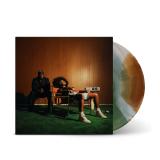
BLK ODYSSY is an Austin-based artist and producer whose boundary-pushing sound blends soul, hip-hop, rock, funk, and pop. Born in Plainfield, New Jersey, and raised in a household steeped in neo-soul, BLK began channeling his voice through music after the unjust killing of his older brother by police at age 12. That life-altering loss and the experience of growing up Black and male in 21st-century America fuels his raw, layered storytelling. His debut album, BLK VINTAGE (2021), written and produced with close collaborators, served as both a celebration and a critique of Black identity in America. It was met with critical acclaim and re-released in 2022 via Empire as BLK VINTAGE: The Reprise, featuring Mereba, Benny the Butcher, George Clinton, and Baby Rose. The project has since amassed over 100 million streams and positioned BLK ODYSSY as a standout voice in modern soul. His 2023 sophomore album, DIAMONDS & FREAKS, continued his ascent, merging surrealism and social commentary with contributions from Rapsody, KIRBY, Bootsy Collins, Cory Henry, and production from The Alchemist. NPR called BLK “a surrealist R&B auteur,” while Pitchfork praised his ability to bend genre into a cinematic sonic experience. In 2024, following a surreal Tiny Desk performance and festival appearances across Europe—including a headline set at North Sea Jazz Festival and Lollapalooza in Chicago—BLK ODYSSY launched a bold new chapter, with his third studio album, 1-800 FANTASY. The first single from the album, “WANT YOU” (co-produced by Tyler Johnson, known for his work with Harry Styles), marked a shift in tone. That was followed by “XXX” featuring Wiz Khalifa, and “STANK ROSE” featuring Joey Bada$$. Now averaging over 1M+ weekly streams, BLK ODYSSY is unleashing his fourth project, MOOD CONTROL, a ten-track album pushing alt-R&B, soul, and funk to new heights. 1xLP, pressed on Green, Brown & White 3 Color A Side B Side Vinyl.
J-Walk return to BiD with a one off single 'Never Go Home' ahead of an album of new works to be released next year...
Recorded in his Stockport studio & channeling the DIY ethos of his previous BiD release Broken Beauty, 'Never Go Home' is a paeon to the mind-altering oeuvre of late 80's indie psychedelia, influenced by artists such as Spacemen 3, Nick Nicely & The Field Mice.
On the flip 'Dub Never Go' expands the vision with a version that wades deeper into dub territory, spacing out the stems & positioning the song in an abstract format.
This limited-edition vinyl release comes in a homemade sleeve which is stamped, numbered & implanted with J-Walks DIY DNA.
Wind of Oirat is the full length debut by Mongolian independent musician and sound artist Ts Bayandalai. Following his acclaimed 2020 EP Kimel, he now presents a further matured, composed and refined version of his signature sound, which combines traditional Mongolian music and instruments with influences from experimental music and post-rock. Deeply rooted in the cultural traditions of his homeland, Ts Bayandalai, who grew up in a nomadic family in the Mongolian steppe, explores nature and its myths, his ancestral roots, and the relationship between humans, animals and nature.
Artist Bio:
Ts Bayandalai is a Mongolian independent musician and sound artist. His childhood on the steppes shaped a deep sensitivity to natural and ethnic sound. To create his individual, deeply rooted yet modern soundscape, he combines traditional Mongolian musical elements with post-rock, experimental and electronic music, as well as from outernational music influences.
Born into a nomadic family on the steppes, Ts Bayandalai grew up wandering the vast grasslands with shepherds, absorbing the resonances of the horse fiddle and guitar — experiences that remain a primordial source of inspiration in his work.
Founder of the avantgarde band Horse Radio (2012) and the experimental project December3AM (2015), his compositions navigate cultural memory and contemporary aesthetics, reconstructing pastoral landscapes, temporal layers, and emotional spaces through sound.
His EP Kimel, released in 2020, manifested a delicate sculpting of sound, space, and cultural motifs, presenting a listening experience that is at once primal and modern.
Ts Bayandalai’s performances span China, Mongolia, and major independent music venues and festivals across Asia. His artistic vitality and creative autonomy have earned him critical acclaim and a devoted following in the international folk music and experimental music communities.
LIMITED TO 350 COPIES! 2 x 12" Gold Vinyl w/ Gold Foil Embossed Cover, shrink wrapped.
‘Elevation’ is album eleven from High Focus Records founder and 1/4 of The Four Owls Fliptrix.
The latest instalment in a formidable run sees the lyricist further his vision of the world in the hope of elevating the collective mind and spirit of both artist and listener across 19-tracks.
Having worked with Forest DLG in some capacity across all of his records over the past fifteen years, from mixing and mastering, but also collaborating on multiple tracks as rapper / producer, it is surprising that it took so long for the pair to come together on a full-length collaborative project.
‘Elevation’ is that record.
Fliptrix reached out to Forest with a view to creating something completely different from his previous boom bap heavy outing ‘Dragonfly’, he is always looking to advance his craft and take things higher, and after Forest responded with a pack of 70+ instrumentals the direction of travel became crystal clear. The result is an album designed to lift the listener into a higher state of consciousness and trigger conversations about the state of the world, in the hope of enacting positive change during tumultuous times.
Fliptrix’s vision and Forest DLG’s style feel perfectly aligned. The album is truly collaborative; Forest going away and creating the artwork inspired by Fliptrix’s otherworldly experiences with the Shipibo tribe in the rainforests of Peru; from the single covers, to the album cover and merchandise as Fliptrix focussed on writing.
Having worked with all the greats in the UK hip hop scene, Fliptrix actively sought out new energies on ‘Elevation’, especially when it comes to the album features. Jungle forefather General Levy on lead single ‘ENERGY! ENERGY! ENERGY!’ Grime legend Frisco on ‘Visionaries’, Ayah Marar on ‘Transform’, Da Flyy Hooligan, Kamakaze, Coops, and a 19-strong HF posse cut in the shape of ‘Dangerous’ make this album a must-listen for anyone looking to elevate.
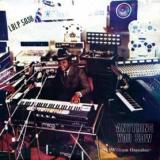
William Onyeabor was born outside Enugu, a small, rural town in Eastern Nigeria, he created his own genre of African electronic funk in the late 70s and early 80s, making music completely unique for his time. Today, he is reaching cult status among a growing list of admirers, including everyone from Damon Albarn and Hot Chip to Carl Craig and Madlib, with some likening him to the Kraftwerk of West Africa, or a precursor to LCD Soundsystem.
Among the crate-digging few that knew of him, he is considered a complete myth. While he has never performed live and almost never given interviews, his fantastical biography is scattered and has to this day not been verified. And, though he is still alive, he refuses to speak about anything regarding the past.
According to various rumors, he left home following the Biafran War and went to study cinematography in the Soviet Union, returning in the mid-70s to start his own film company and record label, Wilfilms. He then self-released eight remarkable records from 1978-1985. He wrote and produced everything on his own, and possibly played every instrument himself. Then, at some point of his life, he became born again and denounced his earlier music, deciding it is something he would never speak about.