In the beginning of the 1970’s, Guinea-Bissau was a country broken up into many ethnic groups and at the heart of a war for independence. By reviving traditional musical genres as Gumbé and singing in guinean Kriol, José Carlos Schwarz & Cobiana Djazz established an immediate affective bond with their audiences. Through its music and politically engaged spirit of the lyrics, the band played a significant role in shaping the social and political consciousness of the masses. As well as influencing local bands like Super Mama Djombo and giving back a deep sense of cultural identity to bissau-guineans.
The explosive birth of Cobiana Djazz brought about other kinds of detonation. Schwarz became involved in urban guerilla activities which resulted in several bombings in the centre of Bissau, leading to his imprisonment and torture. He remained in lockup for a total period of about 2 years, between 1972 and 1974.
The process of decolonisation, in the wake of the Portuguese revolution of 25 April 1974, led to the recognition, during the same year, of the sovereign nation of Guinea-Bissau.
Schwarz, a key figure in the fight for independence, played an important part in the transition to the democratic regime, profiting from his popularity as an artist. Soon, his criticism (underscoring opportunism and irresponsibility in high places) became a thorn in the side of the political elite. Uneasy with the disquieting effects of his work, government officials effectively separated the author from the masses by assigning him to the embassy in Havana.
José Carlos Schwarz met a tragic and untimely death at the age of 27, when his plane crashed on arrival at Cuba's José Martí International Airport, on May 271th 1977.
Hailed by african giants like Orchestra Baobab, Letta Mbulu or Miriam Makeba (with whom he recorded his first and only solo album), “Zé Carlos” and his poetry won a lasting position in the annals of Guinea-Bissau. However, this collection of songs remains relatively unknown outside the country and its diasporas.
We are proud to offer, in close collaboration with the Schwarz family, this first official reissue on vinyl. Remastered and pressed on heavyweight vinyl.
Aaron Coyes (PEAKING LIGHTS, LEISURE CONNECTION, NTS) is back with part 2 of this 3 part series under the EXOTIC GARDENS moniker.
This time, the listener finds themselves sauntering into the post-noon hours with a little more grit: Acid synths, distorted phones ringing, some hungover spoken word samples and even the sounds of a Monchichi if you listen closely enough.
But at the heart of it all remains the same backbone that made his 2024 "MORNING DUBS" a surprise hit for Pinchy and Friends: infectiously deep, perfectly produced psychedelic dub
grooves.
Coyes has had a busy year. He released another Exotic Gardens EP on the Emotional Response label, indulging his more distorted, shoe gaze and post punk passions (and sounding much different to his work with P&F). He also worked with fellow P&F artist COYOTE on the "Love Letters" EP. (2025- Is It Balaeric???)
Now that we are 2/3rds into the day, one can only wonder…what will the EVENING bring???
Curated by Brian d'Souza (aka Auntie Flo), Plants Can Dance is a forthcoming new compilation bringing together a global community of artists, exploring the creative possibilities of biosonification - transforming signals from plants, ecosystems and the natural world into sound. Out June 26th, the project marks the culmination of several years of d'Souza’s work across music, ecology and technology.
The album arrives at a time when more artists are turning toward nature as both subject and collaborator, such as Brian Eno’s Earth Percent, which formally recognises “Nature” as an artist. Plants Can Dance sits within a wider cultural shift, which is redefining the relationship between sound and the living world.
The project builds on several years of work by d'Souza, whose Plants Can Dance events have taken place across the UK, Europe, India and Africa, appearing in institutions including the V&A, Tate and the Design Museum. What began as a series of intimate gatherings has since evolved into a global platform, reflecting a growing appetite for work that reconnects music with the natural world.
The compilation features contributions from leading practitioners including Modern Biology (Tarun Nayar) in collaboration with saxophonist Zekarias Musele Thompson, OMMA (Olga Maximovam founder of Playtronica), Jason Singh, Dr Helen Anahita Wilson, Justin Wiggan in collaboration with celebrated Norwegian jazz musician Arve Henriksen, Lamine Touré, Bit Marten and Balam, alongside new work from d'Souza himself. Using a range of tools - from commercially available devices to bespoke modular systems - artists translate electrical activity, environmental data and organic processes into musical material.
The processes behind each piece differ - from interpreting plant biodata to translating wind patterns into compositional structures - and the results are as varied as they are compelling. The record spans ambient, jazz, electronica and modern classical, yet all pieces are unified by a shared intent: to reimagine music as a space of collaboration between human and more-than-human worlds.
At the core of Plants Can Dance is a question about how we define music, and how we choose to listen. Traditional musical forms, with their fixed tempos and predictable structures, give way here to something more fluid and less easily controlled. The listener is invited to surrender expectation and engage with sound as an evolving environment rather than a linear narrative. In this context, the compositions function as what d'Souza describes as “acoustic ecologies” - sonic systems shaped by biological, environmental and elemental forces unfolding in real time.
Accompanying the release is a printed zine offering reflections from each artist, and deeper insight into the ideas and debates surrounding this practice. Rather than presenting definitive answers, Plants Can Dance positions itself as an artistic exploration grounded in curiosity, experimentation and critical thought.
Ultimately, Plants Can Dance is less concerned with proving whether plants “make music” than with changing how we listen. By inviting audiences to engage with sound shaped by non-humans, it opens up new ways of perceiving the environments we inhabit - not as passive backdrops, but as active, dynamic participants in a shared ecological network. In doing so, it offers a quietly radical proposition: that by listening differently, we might begin to relate to the natural world differently too.
Quantum Vacuum /ˈkwɒn.təm ˈvæk.juːm/ — The fundamental state of a quantum system, corresponding to the lowest possible energy level, in which no real particles are present but fluctuations of quantum fields persist, making the vacuum a dynamic state that is never completely empty.
Abo Abo’s first solo vinyl EP carefully assembles minimalistic techno structures pushed at pace, sci-fi rhythmic mutations and psychedelic pressure that refuse resolution. Synthetic sweeps rise and vanish, environments where form appears only to disappear. Nothing is static. Nothing is empty. Microscopic movements surface continuously from apparent void.
DR018 marks the eighteenth release on DE RIO and the label’s sixth vinyl output.
Written and produced by Daniele Carcassi
Mastered by K.O.P. 32
Artwork by Giuliana Diada
Design by Enrico Caldini
Olindo Records is proud to present the physical edition of Venezuelan drummer, producer and artist Orestes Gómez 2nd solo LP: No Me Fui Porque Quise.
This album is a deeply personal and rhythm-driven project where Orestes explores themes of migration, identity, and emotional resilience. Through a fusion of Afro-Caribbean percussion, jazz, hip-hop, and electronic textures, the album tells the story of leaving home not by choice, but by circumstance.
Featuring a host of exciting guests from his home country and beyond, each track blends organic drums with modern production, creating a sound that is both rooted in tradition and forward-thinking. The music moves between introspective moments and powerful rhythmic expressions, reflecting the complexity of displacement, memory, and cultural identity.
Orestes Gómez is much more than a percussionist; he is an architect of rhythm and a visionary of hybrid production. Originally from Venezuela, he has established himself as a leading Latin American voice by fusing the heritage of Afro-Caribbean drums with the avant-garde of electronic music, jazz, and hip-hop.
In the evolving landscape of modern Southern hip-hop, the pairing of Starlito and Bandplay stands out as a unique bridge between street-level authenticity and refined, calculated musicality. Their collaborative project, Not The Country You Know, functions less like a standard release and more as a manifesto—a masterclass in the chemistry between a seasoned, introspective lyricist and a producer who possesses an intuitive grasp of the region's pulse. It is an exploration of legacy and adaptation, capturing the tension between where they came from and where the culture is currently headed.
Bandplay, long recognized for sculpting the sonic identity of Memphis icons, brings his signature, trunk-rattling 808s to the project, yet he manages to pivot here. The production feels remarkably expansive, masterfully blending the raw, stripped-back aesthetics of classic Tennessee rap with forward-thinking textures that refuse to be confined to a single sub-genre. Complementing this, Starlito operates with his trademark mix of cynical observation and genuine vulnerability. He navigates these beats with the weary grace of an artist who has weathered the music industry's relentless cycles, treating every bar like a necessary piece of a larger, ongoing story.
The album’s title serves as a direct commentary on these shifting tides. Across the tracklist, the duo investigates the growing disparity between the romanticized South and the cold realities of the streets, alongside the inevitable evolution of the music business itself. There is no frantic chasing of streaming-era trends or algorithmic bait here; instead, the project remains a stubborn, confident assertion of artistic identity. By weaving together Starlito’s "voice-of-reason" flow and Bandplay’s evolving, genre-bending sound, Not The Country You Know challenges the listener to abandon their preconceived notions of the region, offering instead a complex, urgent vision of a South that is as haunting as it is vibrant.
Two stone cold classics right here from the Roy Ayers masterminded RAMP, taken from the holy grail album Come Into Knowledge. Sampled the world over, influentially positive and as prized as they get, South Street’s new sub-label South Street Soul couldn’t have picked a more perfect double header to reissue as their inaugural release.
Although the RAMP acronym Roy Ayers Music Productions bared Ayers’ name, he did not perform with the Ohio band instead writing, arranging and producing the tracks alongside Edwin Birdsong and also William Allen. Drafting in some of the best session musicians in the game, from vocalists Sibel Thrasher and Sharon Matthews, The Spinners drummer John Manuel, guitarist Landy Shores and Cincinnati bass maestro Nate White, the result was pure ethereal excellence.
Rare groove at its finest ‘Daylight’ is one of the standout cuts from RAMP’s only album - soulful, sumptuous and laced with a celestial touch that takes this track to another realm of conscious. A track that was famously sampled by A Tribe Called Quest for their hit ‘Bonita Applebum’ and J Dilla’s remix of Common – Come Close.
On the B side, a Roy Ayer’s masterpiece 'Everybody Loves The Sunshine' given the RAMP revamp, an end of the night masterpiece, a hazed-out dreamer - just downright blissful grooves from start to finish. Ready-made to ride out into the sunset with.
Signal Threat is the debut vinyl release of DRUUM aka James Orvis, an exhilarating and boisterous chest pumping collection of electro anthems. Raw and packed with energy, DRUUM’s productions are explosive and have serious bite. His sound is distorted and bold unfiltered, drawing inspiration from the infamous electro punk scene where he has carved out a name for himself. His impeccable use of rap vocals is unique and authentic its rhythmic and aggressive.
DRUUM’s bridging of various styles and use of heavy breakbeats are stunningly edgy. Each sound is carefully modulated and designed purposefully; it’s like a cage fight met a high stakes heist, buzzing with ruggedness. As some who have been following DRUUM are aware, he suffered two strokes in 2025. As DRUUM makes a strong recovery, Dionysian Mysteries felt obligated to get a posse of remixers to help raise money and awareness for this bad ass release. An absolute stellar group of producers are behind this release in support of DRUUM. Featuring remixes from the likes of Umwelt and Ben Pest.
Erasmus Hall's 1980 album Your Love Is My Desire' is one of the most collectable and in fact desired modern soul albums of all time. Copies of the original pressing on Westbound have exchanged hands for over £400. Furthermore in-demand gems including Your Love Is My Desire' and Just Me And You' have never previously been on 7' vinyl, so as part of these Record Store Day release those two tracks are included on the format making this package irresistible. Eramus Hall are in fact a group taking their name from a building George Clinton saw and gave them while he was in Chicago. The group comprise lead vocalists Michael Gatheright and James Wilkerson with musicians Ronald Wright, Marvin Williams, Joe Anderson, Grady Smith, Charmie Currie and William Tillery.
Originally released by Time Capsule in 2021 and long out of print, Stories From Another Time 1982-1988 returns in an upgraded edition following years of demand and rising collector prices on the secondhand market. Widely regarded as a modern cult classic, Mário Rui Silva’s visionary recordings blend acoustic folk, cinematic soul, spiritual jazz and saudade-filled Lusophone rhythm into a deeply timeless and universal work that transcends genre and geography.
This new edition features half-speed mastering cut at Metropolis alongside an expanded 4-page insert with a tribute essay and unseen photographs following Silva’s passing in 2024.
The roots of Angolan popular music explored in the meticulous guitar studies of Mário Rui Silva. For fans of Naná Vasconcelos, John Hassell’s Fourth World ambient, Eduardo Mateo’s psychedelic folk and Cameroonian electronic music visionary Francis Bebey.
Whether on mesmerising acoustic ballads or hypnotic groove-led tracks, the music of Angolan guitarist, researcher and intellectual Mário Rui Silva has a beguiling, melancholy quality, woven into the dynamics of his deft guitar playing.Rhythmically complex yet supremely effortless, the music collected here stems from three albums Mário released in Luanda in the 1980s that reflect his diverse range of influences, from traditional Angolan and West African rhythms to European jazz and classical instrumentation. It is united by a sense of low-key beauty, whether on the chugging opener ‘Kazum-zum-zum’, the jazz-funk keys of ‘Lembrança Dum Velho’, or the twinkling, late-night poly-rhythms of ‘Kizomba Kya Kisanji’.
Born in Luanda, Angola in 1953, Mário dedicated his life to Angolan popular music. His fifty-year career has seen him live between Angola and Europe, rub shoulders with Cameroonian musicians Francis Bebey and Ewanjé, record the seminal album Angola ’72 with fellow Angolan musician Bonga, and draw influence from Brazilian guitarist Baden Powell.
It was the teaching of Angolan legend and Ngola Ritmos co-founder Liceu Vieira Dias that Mário gained a technical, political and spiritual understanding of Angolan musical culture. In the hands of Liceu, the traditional Angolan semba and kazukuta rhythms of the 1940s and ‘50s helped create an emancipatory sense of national pride and collective agency that awakened its listeners to the racism and tyranny of colonial rule, underpinning the country’s push for independence in the process.
What might sound like the intonations of Brazilian influence are what Mário attributes to the “African rhythms taken by the slaves which gave rise to other musical cultures” around the globe. Instead, this music emerged from a collective instinct to assert a cosmopolitan Angolan identity free from the patronising falsehoods of Lusotropicalism.
“There was a need within me to contribute in doing new things,” Mário describes. “In the sense of solidifying the music of Angola that was the result of the meeting of two cultures, and wanting to value the Angolan part whenever possible.”A selection from Mário’s three 1980s albums, Sung’Ali (1982), Tunapenda Afrika (1985) and Koizas dum Outru Tempu (1988) have been compiled here as a 2xLP release by Time Capsule’s Sam Jacob and Kay Suzuki. Together, they provide a snapshot of one man’s journey to the core of his nation’s music, charged with the search for a culture uprooted by colonialism
Irish label Il Corpo returns for its third outing with a hard to pigeon hole 10” from 710 Exit. 2 tracks that sit on the electro end of things but with a generous nod to the sound of Detroit, early UK breakbeat, soul and the deeper realms of electronic music. Close To The Sun feels like more than just a cosmic position. A solid 808 foundation and loose percussion sit beneath a bed of synth lines and soaring pads that are guaranteed to stir the soul. The signal for nostalgia is strong but there are plenty more twists and turns to keep the listener engaged. Warped guitar and soul samples make Strat an infectious workout brimming with experimentation and originality. Effected chords take on an almost vocal quality which talks over the casual, understated funk on offer here. Ever changing tones draw you in and make it hard to distinguish between guitar, synth or human. A unique E.P. which will find its way into the sets of varying selectors at this summer’s gatherings.
Welcome to THE VAULT for 1985. A collection that digs deeper into the year’s musical landscape – uncovering singles that may not have always reached the highest chart positions but remain essential to the rich and diverse pop story of 1985. Some were overshadowed at the time, some were highlights from albums that had already sold huge amounts, some found greater success internationally – but all deserve their place in this continued celebration of 80s pop.
45 tracks across 3-LPs – pressed in gorgeous green vinyl – NOW Yearbook – The Vault: 1985.
LP1 opens with a trio of tracks from huge-selling albums:- Bruce Springsteen’s ‘My Hometown’, the sixth single in the UK from ‘Born in the U.S.A’ - one of the best-selling albums of the decade, followed by Bryan Ferry with the stunning ‘Windswept’ from ‘Boys And Girls’ and Sting’s ‘Love Is The Seventh Wave’, taken from his solo debut ‘The Dream Of The Blue Turtles’. Next up, Go West with a U.S single release ‘Eye To Eye’, Scritti Politti with ‘Perfect Way’ – their biggest hit in America, and ABC with ‘Be Near Me’. The first side closes with two established bands; Heaven 17 and Orchestral Manoeuvres In The Dark… Flip the LP over for Adam Ant with ‘Vive Le Rock’, Midge Ure, Blancmange and the second collaboration between Philip Oakey & Giorgio Moroder with ‘Good-Bye Bad Times’. The Style Council’s ‘Welcome To Milton Keynes’ leads to LP1’s closer’s from Simply Red and Fine Young Cannibals who followed their debut ‘Johnny Come Home’ with ‘Blue’.
LP2 opens with Cocteau Twins and the dream-pop atmospherics of ‘Aikea-Guinea’, ahead of The Jesus And Mary Chain with ‘Just Like Honey’, and The Dream Academy with ‘The Love Parade’.
Brilliant with their cover of James Brown’s ‘It’s A Man’s Man’s Man’s World’ and jazz-influenced pop from Matt Bianco are up next ahead of the sublime ‘Castles In The Air’ from The Colourfield and Elvis Costello & The Attractions, who released the 1979 track ‘Green Shirt’ to promote their ‘Best Of’ collection … and the side closes with The Clash’s ‘This Is England’ which would become their last originally released hit…whilst on the other side…celebrate the dancefloor, with a vibrant mix of Hi-NRG, soul, electro and club-influenced pop:- Opening with Sheryl Lee Ralph’s ‘In The Evening’ and Barbara Pennington’s equally superb ‘On A Crowded Street’, the hi-energy continues with Miquel Brown and Hazell Dean ahead of a US hit from Laura Branigan (‘Spanish Eddie’) and Divine’s cover of ‘Twistin’ The Night Away’. LP2 finishes with a massive U.S. dancefloor smash for Eddie Murphy with ‘Party All The Time’.
The final LP kicks off with a bunch of singles that achieved bigger hit status in the US than here and opens with Billy Joel’s ‘You’re Only Human (Second Wind)’, a track written exclusively for his ‘Greatest Hits – Volume I & II’ compilation, ahead of pop-rock from John Mellencamp plus an anthemic smash from Bon Jovi. Pat Benatar’s ‘Invincible’ features ahead of The Power Station’s third US Top 40 hit…whilst back in the UK Chris Rea enjoyed his biggest chart hit to date with ‘Stainsby Girls’ and the side is completed by Marillion with ‘Heart Of Lothian’ the third hit from their huge ‘Misplaced Childhood’ album… Flip to the final side for the stellar vocals on ‘Act Of War’, the huge collaboration between Elton John & Millie Jackson ahead of dancefloor smash ‘New Attitude’ from Patti Labelle and ‘Show Some Respect’ a U.S. single from Tina Turner. Sophisticated pop-R&B from Michael McDonald and Daryl Hall & John Oates come ahead of the collection’s closers- and two outstanding vocal performances: Chaka Khan’s ‘Through The Fire’ and the U.S. breakthrough hit from Whitney Houston with ‘You Give Good Love’ – signalling the arrival of one of the decade’s brightest new stars.
NOW Yearbook – The Vault: 1985 – A deeper dive into an unforgettable year in pop.
Now, following great acclaim for Volume 1, CTR is proud to unveil another equally eclectic Post-Punk Era Selection Compiled by Jason Boardman ( Before I Die Records) Celebrated Manchester club-night curator & record Label Owner , DJ & digger - supreme.
A second compilation of late 1970s / early 1980s Post-Punk era bedroom & small studio innovations & DIY Inspirations - Featuring more rarely & never heard cuts from that period. Including tracks from the enigmatic Prana, Blank Students, Janet Armstrong & The Native Hipsters ..A rich vein .
Jason Writes Of Volume 2 :
"It was a delightful shock that No Ones Listening Anyway Volume One was so well received - thanks to everyone one who bought & enjoyed it. This led to John asking me to collate Volume Two, so here it is.
This time all the material was recorded & released in the UK between 1978 & 1984.
I was conscious that there was minimal female energy on Volume One so have tried to rectify that here on Volume Two. I have also tried to make it as varied as possible with none hit wonders, oddities, collectables, under the radar B-sides & a couple of previously unreleased on vinyl selections."
Daïf presents Prezi, a new alias exploring a bold, uninhibited vision of electro house. Built for the dancefloor, the record unfolds like a transmission from another dimension. Inspired by the 2000s—echoed in its cover—it blends nostalgic energy with a colder, subtly dystopian edge.
The project arrives like a xenomorphic incursion, driven by raw, mechanical textures: sharp square synths, biting saw waves, and stripped, high-impact arrangements engineered for maximum club efficiency.
Seductive, disembodied vocals drift through the tracks, exploring themes of love beyond the human and shaping a vision of Post Human Desire.
Cristi Cons returns to Amphia with Out of Cycle Part 2, expanding the narrative beyond fixed frameworks.
Cristi Cons continues his exploration of fluid musical identity with Out of Cycle Part 2, released via Amphia, the label which he co-founded and runs alongside Vlad Caia.
Conceived as a continuation of Out of Cycle Part 1 released back in 2021, the new installment deepens the concept of operating outside predefined structures, both in form and in sonic direction. Rather than adhering to a single aesthetic, the album reflects a wide spectrum of influences, capturing an evolving artistic language shaped by intuition, experimentation, and long-term musical curiosity.
The title Out of Cycle acts as both a statement and a method: stepping outside familiar loops, resisting categorization, and allowing the music to exist beyond rigid expectations. This philosophy extends into the production itself, where subtle variations in structure, tone, and pacing reveal a process driven less by formula and more by exploration.
Across the album, rhythmic frameworks shift between hypnotic, club-oriented patterns and more introspective passages, while textures unfold with a focus on depth, movement, and spatial detail. Each track functions as part of a broader continuum, yet maintains its own identity, highlighting a deliberate departure from cyclical repetition in favor of a more open-ended approach.
Released on vinyl and digital formats, Out of Cycle Part 2 marks another chapter in Cristi Cons’ ongoing dialogue between club functionality and deeper listening contexts. While rooted in stereo composition, the project also opens the possibility for further reinterpretation, reflecting an interest in how the same material can evolve across different listening environments.
With this record, Cristi Cons continues to trace a distinct artistic trajectory, one that prioritizes depth, individuality, and an ongoing expansion of his musical language as it evolves beyond established forms.
Dedicated to my dear friend Laurentiu Gavrila (Funk-e).
New 10th anniversary fully remastered special silver-vinyl edition of Soul Jazz Records" ground-breaking Venezuela 70 featuring Vytas Brenner, Pablo Schneider, Angel Rada, Miguel Angel Fuster and many more. Venezuela 70 was the first ever compilation of its kind to take a look at the fascinating music scene created in Venezuela in the 1970s, a stunning blend of Funk, Latin Rock, European electronic experimentalism, Jazz and more! Venezuela during the 1970s was both a modern cultural and economic powerhouse in Latin America, rich from vast oil supplies. Situated at the northern part of South America, with neighbouring Colombia to its west, Brazil to its south and a north coast bordering the Caribbean. The country"s position and wealth led to an explosion in cultural activity during this time. Taking musical influences from all these surroundings as well as healthy doses of American musical sounds, the 1970s saw the evolution of a new generation of creative Venezuelan artists such as Vytas Brenner, Angel Rada, Pablo Schneider and Miguel Angel Fuster, who all explored the possibilities of creating a stunning "melting pot" mix of underground rock, synthetic electronics, funk, jazz and Latin American while simultaneously exploring their links with Venezuelan roots music, creating a new sound.
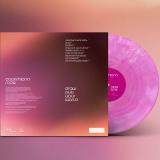
LP Limited Edition (500 copies) ‘Draw Out Your World” LP on Pink Marble Vinyl with signed postcard.
Caoilfhionn Rose's completely immersive fourth full-length offering - her first for Lost Map - is a powerful statement about new motherhood, strength and resilience through change and the importance of collaboration, community and placing trust in others. A softly unravelling collection of songs grown from dreamy improvisations and driving, beat-led folktronica. 'Draw Out Your World' arrives in the wake of Caoilfhionn having scored a #1 on the UK Official Independent Albums Chart, as a key contributor to Mancunian post-punk cult heroes The Durutti Column's critically-acclaimed 2026 release Renascent.
Raised in Manchester, Caoilfhionn developed a "deep, almost spiritual appreciation" of music in all its diversity. Drawing inspiration from nature, dreams, and personal experiences, she crafts songs that are both intimate and universal in their themes.
A performance at a local café caught the attention of Gondwana Records founder Matthew Halsall, who invited Caoilfhionn to work on her debut album 2018's Awaken. It became the first of three albums for the label; followed by 2021's Truly and 2024's Constellation. As a bandleader she headlined tours across the UK and Europe and has also supported artists such as Mammal Hands, The Breath, GoGo Penguin, Alabaster dePlume and Hania Rani.
Scattered ideas for what would become Caoilfhionn Rose's fourth album began accumulating long ago, in fits and starts and multiple iterations, with some tracks lying finished but unheard for years. Yet the record only truly began to take shape in the midst of a period of profound personal change. During a trip to Marrakesh, Morocco with her husband and long-time creative partner Rich Williams in January 2025, the pair spent evenings among the musicians and communities gathered beneath the night sky in Jemaa el-Fnaa. "The trip really reinvigorated us and led to lots of conversations about why we make music and why we love it," she remembers.
Several of Draw Out Your World's newest songs were born during Caoilfhionn's pregnancy with her first child. Although a deeply joyful time, she experienced severe sickness throughout, making music difficult (her voice changed so much during pregnancy that some vocals had to be re-recorded after her daughter arrived). In moments when she felt well enough, Caoilfhionn and Rich began shaping new ideas and songs from loops and fragments he had been creating, later bringing musicians together to record and remodel the compositions live in the studio. A combination of impulse and patience, individual expression and collective improvisation lies at the heart of Draw Out Your World. Four tracks emerged during two days of spontaneous invention in Copenhagen with multi-award-winning Danish electronic jazz duo Svaneborg Kardyb. Other, older pieces were patiently revisited and reworked with keyboardist John Ellis (a founding member of The Cinematic Orchestra). Caoilfhionn's ongoing collaborations with The Durutti Column have long informed her carefree approach to making music ("lots of improvising and experimenting… seeing what sticks"); here she pushes it further than ever. "It's been a lot about following my intuition and trusting in the process and musicians in the room," she says.
Started from a sweet little mini-hand-drum loop by Rich and finished with Awen Blandford's swooping cello lines, lullaby-like opener 'Reflecting The Light' was inspired by Caoilfhionn's pregnancy - "the feeling of my little girl growing inside me," as she puts it, and the almost supernatural feeling of connection to another person it brings. The much older 'Grow' - a song about how a person "keeps unfolding" through good times and bad - came close to appearing on Caoilfhionn's previous record Constellation in 2024 before finding renewed meaning and purpose here, reinvigorated by John Ellis's rolling Fender Rhodes. Set to finger-picked guitar and hazy electronics, the album's title track 'Draw Out Your World' drifts into view like a gentle parting of the clouds - a mellow but vivid reflection on dreams and realities and the pathways in between, with shades of Judee Sill and Linda Perhacs. By sharp contrast, 'Hidden Wars' - a song about trying to get away from spiralling negative thoughts - is set to a fiercely snaking groove inspired by Caoilfhionn's love of artists like Portishead and The Smile. The moodily languid and sparse 'Just To Be Alive' leans into Caoilfhionn's more electronic side, Nikolaj from Svaneborg Kardyb conjuring pure atmosphere on his swirling Juno synth, before 'To A Feeling' collides into a wild, wonky and raw jazz jam rising to Eleanor Colee's ripping saxophone solo. 'As I Find Myself Again' lands the album on a subtle ellipsis - its feeling of calm finality unsettled by the faintest flicker of a new melodic phrase at the end.
ALERT: BIG 90s ITALIAN RAVE COMP - a lot of very in demand tunes on here.
Navigators
Franco Falsini and the Interactive Test Universe
There are musicians who follow their time.
And then there are those who seem to move along a different trajectory—like navigators crossing sonic eras without ever truly belonging to any one of them. The story of Franco Falsini belongs to the latter. It is a story that begins long before raves, before techno, before the word “electronic” had even become a recognizable musical genre. A story that moves across continents, technologies, and sonic visions, eventually arriving at a small creative laboratory born in Italy in the early 1990s: Interactive Test. This compilation is a fragment of that universe. But as often happens with the hidden histories of music, understanding it requires going back. Far back.
The Beginning: Machines, Tape and Space
In the late 1960s Franco Falsini leaves Italy and moves to the United States. It is not merely a geographical journey—it is also a journey into a new idea of music. At the time, synthesizers are only just emerging from research laboratories. Multitrack tape recorders allow musicians to build entire sonic worlds on their own. Technology is still far from standardized: every studio is almost an experimental workshop. In Virginia, Falsini builds one of his own. Among cables, oscillators, electric guitars and reels of magnetic tape, a kind of music begins to take shape that resembles nothing else being made at the time. It is not simply rock, and it is not yet truly electronic. It moves somewhere in the space between the two. Out of these explorations emerges Sensations' Fix, the project through which Falsini releases a series of albums during the 1970s. Records that seem to come from a parallel dimension: cosmic landscapes, electronically treated guitars, synthesizers drifting like satellites. Many years later those albums would be rediscovered as visionary works. But at the time they were simply the result of relentless curiosity. A curiosity that would never fade.
The City That Never Sleeps
In the 1980s Falsini’s trajectory leads him to New York. The city is a sonic organism in constant transformation. In its clubs and recording studios something entirely new is beginning to take shape: music built from drum machines, sequencers, and samplers, created for the body before the living room. It is the dawn of modern dance culture. Falsini works as a sound engineer, producer and experimenter. From close range he observes electronic music transforming into a global language. Machines become more accessible, computers begin entering studios, and rhythm takes on an increasingly central role. Yet even in this phase Falsini does not simply follow what is happening. He absorbs. Observes. Reimagines. When he eventually returns to Italy, he brings back not only technical experience but also a clear vision: the conviction that electronic music is an open space, a territory still waiting to be explored.
Tuscany, Early 1990s
At the beginning of the 1990s something is happening in Italy as well. In clubs, abandoned industrial warehouses and clandestine parties, a new scene is beginning to form. It is rave culture: a spontaneous movement bringing together DJs, producers and listeners in a collective experience driven by rhythm, technology, and creative freedom. It is within this context that Franco Falsini, together with his brother Riccardo, creates Interactive Test.
The name almost sounds like a scientific experiment. In many ways, it is. Interactive Test does not emerge as a traditional record label. It begins as a laboratory—a place where ideas, sounds and musical identities can be tested and explored. Around the Falsini studio in Tuscany a small constellation of artists and DJs begins to gather, helping to shape the sound of Italy’s emerging electronic scene. Among them are Andrea Giuditta, Francesco Farfa, Gabry Fasano, Roby Mastelloni, Roby J and many others. Each brings a different musical sensibility. But they all share the same intuition: electronic music is not a genre. It is a language.
The Laboratory of Identities
One of the most fascinating aspects of the Interactive Test universe is its constant play with identity. Franco Falsini releases music under several different names: Open Space, Youth Wave, Agent Fylfoyt, Man Myth Magic. These are not simply pseudonyms.
They are different sonic perspectives, as if each project were a window opening onto a parallel musical universe. Open Space, for example, explores more atmospheric and visionary territories. Youth Wave moves between electronic groove and club-oriented rhythms. Other projects experiment with digital psychedelia or hypnotic techno textures. Interactive Test becomes something more than a label. it becomes an ecosystem.
Domestic Machines, Infinite Worlds
Looking back today at the technology used in those productions, one might almost smile. Many tracks were created on Amiga computers, MIDI sequencers and analog synthesizers wired together in home studios—tools that appear modest when compared to today’s digital possibilities.
Yet precisely these limitations became a creative force. Every sound had to be built, shaped and reinvented. Sequences developed slowly, almost like living organisms. The tracks did not always follow traditional dance music structures; often they felt like genuine sonic journeys. Music built from space.
A Hidden Constellation
Many of the records released by Interactive Test in the 1990s remained for years almost invisible objects, circulating quietly among DJs, collectors, and devoted listeners. Yet it is precisely this underground existence that helped preserve them. Listening again today, one perceives something rare: the feeling of music that does not fully belong to its own time. Music suspended between different eras. Perhaps because it comes from a vision that both precedes and transcends trends.
Continuing the Journey
Looking at Franco Falsini’s entire path—from the electronic psychedelia of Sensations’ Fix to the rave culture of the 1990s—a surprisingly coherent line emerges.
A line defined by exploration.
Each project, each pseudonym, each record appears as a new route within the same great sonic voyage.
Interactive Test was one of its stations.
A laboratory.
A community.
A creative platform.
This compilation gathers some of its traces.
Not as a simple archive of the past, but as a map of a musical territory that continues to expand even today.
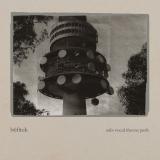
Portal Replica welcomes cult Australian duo, B(if)tek, onto the label with a first-time-on-vinyl release of their debut album ‘Sub-vocal Theme Park’ released in 1996 exclusively onto CD. The 2x12” release includes the original album, plus additional never-heard-before 'lost' tracks from the pair. The album has been mastered by Rashad Becker at Clunk Studios (DE) and pressed to 180g heavyweight vinyl.
Kate Crawford and Nicole Skelty’s pioneering electro-femme outfit ‘B(if)tek’ can be traced back to 1994 in Canberra, where lack of blueprint blossomed their playful and bizarre experimentations in techno — ‘feminism with a wink and a bleep’. Thirty years on, the uniqueness and ingenuity of B(if)tek’s deep analogue exploration endures.
“Monstrous clowns dressed as princes whose role is to laugh at themselves and entertain outlandish beings, suffocated by etiquette, conspiracy and lies, bound by confession and remorse … and beyond that, the auto-da-fe and silence.” – Ferdinand (Pierrot), from the film “Pierrot Le Fou” .
Photography by Kate Crawford.
Design by Jesse Sappell.
Mastered by Rashad Becker at Clunk Studios, DE.
Kercha’s debut album ‘Open The Door’ arrives this April via DNO Records. The Black Sea artist’s mystical, disorienting style has set the tone for the label since he dropped the inaugural release six years ago. Now, across 16 tracks — including collabs with Mystic State, Congi, NST, Khromi and Finnoh — his smoky sampledelic dubstep is tighter, heavier, and more curious than ever, with a new sense of danger and bubbling rage that feels fit for our chaotic times.
Themes of movement and change course through the LP. On the opening gambit ‘A Path Into The Unknown’, twinkling arpeggios emerge from the gloom like stars lighting the way. Tracks like the eponymous ‘Open The Door’ and ‘Mind Extraction’ deliver that classic Kercha sound, where left-field samples dart in at right angles. ‘Dangerous Road’ weaves between the call and response action of grotty stabs and devilish subs. ‘Take A Break’, featuring Mystic State, goes on the attack with searing acid. ‘Can’t Wait For Today’, though lethargic in its pace, sees San Francisco-based rapper Finnoh deliver stream-of-consciousness bars that skewer our present and nudge us to revolution.
Work took place over the course of several years, during which Kercha relocated with his family from Russia to Georgia, where he now resides in the capital, Tbilisi. “Sometimes I wrote music while travelling on a bus, sometimes late at night while my family was asleep, sometimes just sitting on the grass in a park, and of course in my home studio as well,” he says. “By the time the album was finished, it included music from different periods, and it may vary in sound and concept.”
Any major upheaval in life will result in moments of hardship, but also hope. Both can be found throughout ‘Open The Door’. There’s times when the darkness threatens to envelope everything: during the cold, crackling ‘Disclosed’ and the eerie, dystopian ‘Infection Of Lies’; on ‘Trigger Activation’, with its grunting lows and broken glass hook, and ‘Ballistics’, where a wall of sub-bass is pierced by shrapnel stabs.
The balancing light comes on ‘4 AM’, featuring Nottingham duo Congi, when clashing swords and cinematic strings, meet a soft Rhodes piano — the juxtaposition between heavy low-end and floaty keys and vox reflecting those moments of transcendence often found in the early hours. From the injection of garage energy on ‘Bubs’, with Edinburgh’s Khromi. And on with ‘My Feeling’, featuring South Russian vocalist NST, which closes the album on a deep but expansive note, bookending the experience with more starlight synth tones.
“It’s a reflection of my life journey and the changes connected with emigration and overcoming various difficulties,” explains Kercha. “This period means a lot to me, which is why the album includes tracks from the time of preparing to leave up to adapting to a new country.”
Still, he wants listeners to be able to derive their own understanding. “I think the essence lies in the ability to contemplate, not in any predetermined meaning,” he says. “I can only say one thing: thank you for appreciating what I do and for your support. I hope it inspires you to make the same firm decisions to change for the better as it did for me.”
Out via 4 x 12” vinyl, ‘Open The Door’ is a captivating artistic statement, showcasing the journey of an artist with a truly original signature sound — a rarity that should be treasured and celebrated.
Rhythms of postmodern realism at the very bottom of the DNO.
araviglia, the sixth album by Italian percussionist and producer Gabriele Poso, celebrates collective musicianship through a vibrant, groove-driven sound. Inspired by late 70s Italian disco and global rhythms, the record blends Mediterranean warmth, Afro Caribbean percussion and jazz sensibility, with one foot firmly on the dancefloor. Recorded live to tape in an analog studio in southern Italy, with heavy percussion, Rhodes, Hammond and a full brass section, the album delivers an organic, joyful sound built for both deep listening and global dance floors.
araviglia, the sixth album by Italian percussionist and producer Gabriele Poso, celebrates collective musicianship through a vibrant, groove-driven sound. Inspired by late 70s Italian disco and global rhythms, the record blends Mediterranean warmth, Afro Caribbean percussion and jazz sensibility, with one foot firmly on the dancefloor. Recorded live to tape in an analog studio in southern Italy, with heavy percussion, Rhodes, Hammond and a full brass section, the album delivers an organic, joyful sound built for both deep listening and global dance floors.
“Nimm die rosa Brille … sag was Du siehst … alles viel besser”
44 years after its original release, one of the most idiosyncratic DIY minimal electronics / synth / new wave records of the early ’80s returns: the legendary 7” by German group DEUTSCHE SCHÄFERHUNDE (engl. German shepherds)—now remastered and reissued for the first time as a one-sided 12” on Anna Logue Records. Recorded in the winter of 1981/82 between rehearsal space, provincial disco and bar nights, and a humble four-track setup, these tracks capture the raw spirit of a generation that simply started creating—no formal training, but plenty of attitude. Minimalist, uncompromising, and inspired by krautrock, punk, new wave, electronic music and dub, the songs move between raw electronics, percussive noise, new wave experimentation, and sharp social commentary. „Rosa Brille“ (rose coloured glasses) in particular feels as urgent today as it did back then—a track that has lost none of its relevance, „Gasmasken“ tells of gas masks dancing in the woods to the sound of sirens, and a timeless Holger Czukay/Jah Wobble inspired „Mein Herz“ (my heart).
Originally pressed in a small run of just 500 copies and later becoming a sought-after collector’s item now worth 200€, the record now returns in a carefully crafted edition featuring a laser-printed reverse side and additional materials such as original lyric sheets and articles, postcard and poster. DEUTSCHE SCHÄFERHUNDE thrived on paradox—a provocative name paired with a clear stance, and lyrics that still resonate today. Shaped by Cold War tension, political unease, and youthful rebellion, their sound refused to fit into any neat category. Only few other bands, such as Der Musikant, Im Namen des Volkes, Thorax Wach, Klinisch Sauber oder Stephan Eicher spielt Noise Boys come to mind.
This release is more than a reissue—it’s a document of its time that still hits with full force.
12″ features: limited to 400 copies, hand-numbered, one-sided 180g black vinyl, laser-etched B-side, outer sleeve printed on reverse side of the board, printed inner sleeve with original lyrics sheets and original articles, DIN A3 poster, double-sided postcard
As a group, Grand Puba, Sadat X, and Lord Jamar fused politically conscious lyrics with jazzy, sample- heavy production rooted in golden age boom bap. Widely praised by critics, \u2000One for All\u2000remains a cornerstone of early '90s East Coast rap. This box set includes the entire track list as 7" singles, including its most celebrated singles: "Brand Nubian," "Feel So Good," "Slow Down," "Wake Up" and "All For One.
FPTAM01 marks the 10th vinyl output on Futurepast and introduces a new subseries initiated by T.A.M.22.
Conceived as a time-based operation, the project moves between memory and projection, reactivating past structures in a forward, anticipatory mode. The tracklist is inscribed as time codes, each one indexing a separate temporal trajectory.
The core of the project relies on a reduced setup: Jomox Alphabase, a single synthesizer per track, and a one-take recording approach, capturing a specific moment in time. Post-editing is kept minimal to preserve its raw, live character.
Across the EP, transformation unfolds through shifts in perception, dissolving any stable sense of reality. Temporal drift replaces fixed structure. The sonic language focuses on raw drum architecture, low-end pressure, and submerged textures.
TRANSMISSIONS #1 connects four distinct Skylax signals into a single flow. Each track comes from a precise moment, a specific context, and a clear dancefloor function. Together, they form a transmission built on movement, use and continuity. A1. F.T.G – Tribute ’89 (Fuckthegovernment #001 Mix) is a raw drum-machine workout positioned between dark Chicago house and late-’89 European techno. Stripped, direct and uncompromising, Tribute ’89 quickly became an underground staple, heavily played by Ricardo Villalobos and Raresh — a foundational Skylax signal. A2. Nick Beringer – 57th Corner, taken from Second Floor (Wax Classic, 2016), is a tech-leaning deep house cut marked by restraint, precision and late-night tension, capturing Beringer at a pivotal point in his long-standing relationship with Skylax. B1. Floorfillers – Love Is Growing delivers a powerful house-disco statement rooted in old-school foundations, where filtered disco loops, raw drum programming and uplifting swing echo the lineage of DJ Sneak, Paul Johnson, early Roulé / Crydamoure-era French touch and classic Chicago jack — a modern floor-driver with timeless intent. B2. Nicolas Aftalion – Rue des Wallons brings deep, soulful house with a strong Kerri Chandler influence; warm chords, chunky drums and emotional weight firmly grounded in early ’90s US garage tradition. Supported by Cinthie, it closes the transmission with groove, balance and purpose. TRANSMISSIONS #1 — built to move, built to last, signals in motion. Four tracks. Four signals. Still moving.
Vincenzo De Bull follows up his initial 4 Kicks EP with a truly fitting set of 4 smooth grooves on Kicks 4 Life EP.
Kicking off the A Side is the energetic bass workout of The Jaunt. Driving mix of filtered loops and persistent bass carry this along with accented punctuation courtesy of trippy oscillating vocals, pianos before it’s all brought home post-break with a lovely pad driving more tension to add to the effortless progression. B2, Make It Smooth will contain some recognizable elements for most of the selectors out there, before the cut develops into a new context which will immediately remove your previous associations and make way for a fun, new groove – we don’t have to tell you, but Vincenzo does a superb job of ‘Making it smooth.’
Flip to the B Side for smooth R&B style house vibes courtesy of Move Your Body, an ethereal workout grounded by a solid low and a tugging looped groove, interspersed with enough energy via vocals to keep the floor engaged and moving, but at a lower energy level. Perfect to move into later nights. Tatsuro Lovers rounds out the EP with a midtempo chugger perfect for starting the evening, groovy pool parties or just sitting at home, enveloped in the heady, swirling vibes underpinned by crisp drums and deep low end.
Winding Road Records are proud to present the “Last Disco on Earth EP” from the ever-elusive group of “Mar De Novo” which is M & N, Paraiso and Yse Saint Laur’ant. First up on this EP is the title track ‘Last Disco on Earth’ is a monster slab of modern disco. Fat grooves, cheeky melodies and cool glitchy production. Uplifting, positive and energetic - guaranteed to put a smile on the dancefloor. Next up is ‘Over There’ is a twisted slice of bass-heavy undulating house, punctuated by crazy interludes and samples that fly in from nowhere. Starting things off on the B side is ‘Uncanny Valley’ is a sun-kissed downtempo groover, with dreamy strings and wonderful chilled musicality. Following on from that is ‘Reflection’ exudes space, peace, and calm. Guitars and piano intertwine alongside haunting vocals. Soundtrack bliss. Summer vibes. Finally rounding off the EP is ‘Find Love’ rounds off the package with a dreamy balearic sunset vibe.
Dewa Alit, master of radical Balinese gamelan, returns to Black Truffle with Baur Bentur. Genetic (2020, BT063) introduced international listeners to the magical sound-world of Alit’s Gamelan Salukat, who perform on instruments tuned to a unique scale derived from modified versions of two traditional Balinese scales. The two pieces heard on Chasing the Phantom (2022, BT093) further demonstrated his radical fusion of tradition and experimentation, with passages where unorthodox techniques make the acoustic ensemble resemble glitching electronics. Baur Bentur now highlights another aspect of Alit’s work, presenting pieces composed in 2024 and 2025 where Gamelan Salukat performs alongside virtuoso pianist Sri Hanuraga. Alit’s music is grounded in deep reflection on the tradition of Balinese gamelan and its place in the contemporary world. His title, ‘Baur Bentur’, which translates as ‘mixing and smashing’, points to his embrace of the intercultural mixture of Eastern and Western elements in the search for innovation. Against the calcification of Balinese music into tourist entertainment, Alit poses his searching, experimental work, which celebrates the communal values and performance practices of traditional gamelan while pushing into startling new directions.
‘Sukat Tacara’ is a study in layered tempos, meters, and polyrhythms, a constantly shifting dialogue between piano and the instruments of Gamelan Salukat. It begins close to a traditional concerto, pairing a brisk sequence of melodic variations from the piano with a spare but propulsive accompaniment of drums and hanging metallophone tones, punctuated by low gong strikes. The piano builds in volume and density across a rapid succession of fragments, at points recalling George Antheil’s ticking wind-up machinery, though Hanuraga’s jazz background shines through in the fluidity with which he navigates the complexities of the score, where chromatic movement co-exists with bluesy phrases. An abrupt change in the piano to patterns of dense clusters introduces a new episode, during which the metallic instruments of the gamelan enter the foreground. The piece dazzles with its inventive rhythms and dynamics, building to a stunning passage featuring the signature heavy muting technique of the Gamelan Salukat metallophones in kinetic patterns that would be at home on a Príncipe release.
The title piece begins at high intensity and rarely lets up, working through bracing unison ensemble melodies and punctuation points where piano and gamelan together seem to become a single, thudding drum. For much of the piece the piano is tightly integrated into the ensemble, the harmonic extensions of the melodic line subsumed into a moving cloud of complex overtones generated by the gamelan instruments. Wildly kinetic on the rhythmic level, the piece swarms with microscopic movements of beating patterns generated by the ‘blend and crush’ of three simultaneous tuning systems: the equal temperament of the piano and the saih cenik (small scale) and saih gede (big scale) used by the gamelan instruments. Accompanied by the composer’s thoughtful liner notes and images of the musicians, Baur Bentur is a stunning next step in Alit’s radical combination of tradition and innovation.
"Zuhause sterben" by Endstation Altes Krematorium is quite possibly Lux Rec darkest release ever and as such, a perfect closure. This absolute, idle, desperate record will suffocate you, haunt you, certainly annoy you, and all of which is precisely intended. Daniele Cosmo and Florin Buchel gazed long into the abyss, so the abyss gazed back. This recording is what was found down there.
Seven - a number steeped in mystery and meaning, woven into the very fabric of time and space. Throughout history, the number seven has stood as an immutable symbol: from the days of the week to the alchemical metals, from the kings of Rome to its seven hills. An archetype that unites astronomy, myth, and ancient civilizations, finding its deepest expression in Rome.
According to legend, the Eternal City guarded seven sacred relics, the Pignora Imperii, objects whose possession ensured divine protection, prestige, and political authority. Ovid referred to them as the "pledges of power": testimonies of Rome's Trojan heritage and its connection with peoples such as the Sabines, Etruscans, and Greeks. These artifacts, now lost, were:
I. Lo scettro di Priamo
II. Il velo di Iliona
III. Il Palladio
IV. Le ceneri di Oreste
V. Lo scudo ancile
VI. La quadriga di Veio
VII. L'ago di Cibele
From this mythology emerges the new project by Lykos Records: a narrative journey in seven chapters, each dedicated to one of these relics, unfolding through the various artists releases corresponding to catalogue numbers 7, 14, 21... up to LYKOS-XLIX.
Chapter I, "Lo scettro di Priamo" LYKOS-VII, is dedicated to the symbol of Troy's power, brought to Latium by Ilioneus on Aeneas' command as a pledge of alliance and reconciliation. It is said to have been kept on the Palatine Hill.
To inaugurate this journey, seven Roman artists - PixFoil, DJ Red, Brando Lupi, Luigi Tozzi, Feral, Sunday Bath, and Worg - will give life to a sonic mosaic celebrating the musical heritage of the capital. Their tracks will form a collective work that bridges generations and diverse artistic visions.
Each double vinyl will feature an original illustration by Roberto Mulliri, wrapping the entire front and back cover and included inside as a poster.
Within the Pignora Imperii lies the strength and power of Rome, witnesses of the city's epic saga; likewise, Lykos Records weaves its destiny into the history of these sacred Roman objects, becoming a messenger of their enduring legends.
In the early 1990s, at the intersection of New Beat, early techno and EBM, a wave of raw, experimental club music emerged from Germany—dark, mechanical and often strangely playful. Among its most distinctive voices was Scrot, the project of producer Lars Janzik (Base Scan, Decade V, Technoline).
Originally released on ZYX Records, Scrot’s three seminal singles—“Teufelsrhythmus”, “Der Rhythmusmensch” and “Der Amokläufer”—captured a unique moment in early European techno. Built on hypnotic drum machine patterns, lo-fi sequencing and spoken-word German samples, these tracks combined industrial textures and unconventional vocal treatments with early techno production techniques and a peculiar sense of humor.
Limited to 300 copies on black vinyl and 200 copies on orange vinyl, and accompanied by an exclusive postcard, “Teufel & Mensch” brings together some of the project’s most iconic tracks and remixes, alongside the previously unreleased Knauer Remix of “Teufelsrhythmus”.
More than a retrospective, “Teufel & Mensch” stands as a document of a transitional era—when techno was still forming its identity, and artists like Scrot were pushing its boundaries into strange and uncompromising territory.
"I don’t understand Bernardino. He seems to take pleasure in sabotaging himself."
"Or maybe I’m simply refusing to play the game someone else wrote for me?"
Memoirs of Self-Sabotage unfolds as a musical drift: fragments written and recorded on tour between France and Italy, shaped by precariousness, administrative tension, loss, and paranoia. The tracks emerge like scenes from a psychological film noir—a distorted discotheque of monologues, songs, skits, and anachronisms—where the voice oscillates between seduction and rupture.At its core lies a troubling insight: the most insidious exploitation is that of one’s own intimacy. As emotions and desires become commodities, the project resists absorption. Each track becomes a site of desertion—refusing roles, codes, and systems of control, even those posing as critique. Alliances blur, betrayals loom; lucidity tips into paranoia.Warped echoes of nostalgia, cinematic layers, voices in tension: the music becomes an unstable space, a laboratory of drift and survival. Neither record, manifesto, nor autobiography, it unfolds as a mental disco where desire, fear, and self-sabotage coexist.
LIMITED TO 150 COPIES! 2 x 12" Black Vinyl w/ Gold Foil Embossed Cover, shrink wrapped.
‘Elevation’ is album eleven from High Focus Records founder and 1/4 of The Four Owls Fliptrix.
The latest instalment in a formidable run sees the lyricist further his vision of the world in the hope of elevating the collective mind and spirit of both artist and listener across 19-tracks.
Having worked with Forest DLG in some capacity across all of his records over the past fifteen years, from mixing and mastering, but also collaborating on multiple tracks as rapper / producer, it is surprising that it took so long for the pair to come together on a full-length collaborative project.
‘Elevation’ is that record.
Fliptrix reached out to Forest with a view to creating something completely different from his previous boom bap heavy outing ‘Dragonfly’, he is always looking to advance his craft and take things higher, and after Forest responded with a pack of 70+ instrumentals the direction of travel became crystal clear. The result is an album designed to lift the listener into a higher state of consciousness and trigger conversations about the state of the world, in the hope of enacting positive change during tumultuous times.
Fliptrix’s vision and Forest DLG’s style feel perfectly aligned. The album is truly collaborative; Forest going away and creating the artwork inspired by Fliptrix’s otherworldly experiences with the Shipibo tribe in the rainforests of Peru; from the single covers, to the album cover and merchandise as Fliptrix focussed on writing.
Having worked with all the greats in the UK hip hop scene, Fliptrix actively sought out new energies on ‘Elevation’, especially when it comes to the album features. Jungle forefather General Levy on lead single ‘ENERGY! ENERGY! ENERGY!’ Grime legend Frisco on ‘Visionaries’, Ayah Marar on ‘Transform’, Da Flyy Hooligan, Kamakaze, Coops, and a 19-strong HF posse cut in the shape of ‘Dangerous’ make this album a must-listen for anyone looking to elevate.
Balancing glitch-pop and contemporary piano, the Belgian pianist explores the edges of her voice, language and twisted electronica
The Belgian pianist and producer maya dhondt releases a new album titled 'wow, x', marking her debut solo album under her own name. Navigating between bedroom glitch-pop and contemporary piano, she presents sounds of alienating beauty.
The album ‘wow, x’ will be released on September 13 on vinyl and all digital platforms via VIERNULVIER Records.
“I find beauty in the uncomfortable and disorienting" - maya dhont
The first single, 'desire,' is a mutated synth-pop track that gets under the skin. The song centralizes longing for something you don't know (yet). Perhaps it's the smell of damp earth, which can be both pleasant and unsettling? The single is now available on all streaming platforms and comes with a schizophrenic video by Sakis Brönnimann.
The first release show is scheduled for Saturday, October 5, at De Koer, Ghent.
More shows will be announced soon.
A postmodern cramp, that's how one could describe the music of pianist and producer maya dhondt. Her music is an intuitive and a never ending exploration that has the potential to be and become a multitude of things at once.
On her first solo album under her own name, 'wow, x,' she presents 10 varied tracks in which she creates equally idiosyncratic sound worlds. She takes the liberty to endlessly experiment with vocals, piano, and a mix of distorted lo-fi electronic sounds with an open mind. The result is sometimes synthetic and weird, sometimes compellingly beautiful, and always captivating, drawing you into its underlying melody. These intelligently crafted productions are connected by a penchant for alienating beauty: like a warm, but damp cave where it’s pleasant to linger just a little longer. Her original sound moves within a sonic spectrum reminiscent of contemporary artists such as Lolina, Astrid Sonne, claire rousay, aya or Carla Dal Forno.
"What I create never stands alone, it can be many things at once"
If the world were a sculpture garden, maya dhondt eagerly picks from it to draw inspiration from both visual and literary passages as well as personal experiences. Her highly personal bedroom productions are grounded firmly in the world due to philosophical references and politically charged messages. And the world she lives in is being questioned on 'wow, x', as the title refers to "What Or Why?". This is evident in the single 'desire': "What is the thing that matters / to exist / or to know you’re existing?" What does one choose in life: to live in the moment or to live to remember that moment?
In the lyrics on 'wow, x', maya dhondt plays - at times childishly - with language and its boundaries. On 'tip toe tip,' banal wordplay leads to an unexpected confession, and the seemingly simple phrases in 'untitled' conceal hidden life lessons. dhondt's world of words is multilayered and multilingual: Dutch ('kleine cijfers, groot verlies'), English ('desire'), and French ('untitled') are at her disposal. And on the fierce track that is 'minimalinvasiv,' not only she turns to hardstyle, but also to German - a language dear to her due to her Swiss heritage.
Belgian saxophonist, composer, and producer Mattias De Craene (Nordmann, MDCIII) announces a new solo album, ‘A House Where I Dream,’ on VIERNULVIER Records. On his second album, he delivers a highly personal and healing journey, presented as an alternative soundtrack to the 1973 cult film ‘The Holy Mountain.’
The record will be released on October 11 on vinyl LP and through all digital platforms.
"The Holy Mountain" is a surreal Mexican film from 1973 directed, written, and produced by Alejandro Jodorowsky, who also stars in the film. The film holds a prominent place in avant-garde cinema and explores themes such as spirituality, mysticism, and the quest for enlightenment. It is in this vein that ‘A House Where I Dream’ is crafted.
“My mind and soul - and thus my music - come home to this motion picture” - Mattias De Craene
The album will be presented live with the film on October 16 at Videodroom during Film Fest Gent.
ABOUT THE ALBUM
With hypnotic tape loops, grainy textures, and mesmerizing saxophone, Mattias De Craene creates possible worlds that herald a spiritual transformation. From the Scottish Highlands and desolate mountains to the deepest recesses of the soul, this music has the power to create cinematic landscapes that transcend time and space. The sound of these 8 tracks is closely related to the minimalist compositions of Terry Riley, but the work of contemporary artists like KMRU or William Basinski is also drawn from the same material.
Above all, this album is a deeply personal journey and unintentionally serves as a metaphor for De Craene's ascent of his own mountain. For the Videodroom festival by Arts Center VIERNULVIER, the saxophonist began working on a new soundtrack for the film ‘The Holy Mountain’ in 2023, but his body and mind abruptly called him to a halt, forcing him to take a professional break. However, this project never left him, leading to an honest and raw quest to find himself as both a person and an artist, with Jodorowsky as a companion de route and music as an anchor. It initiated a long process of dismantling, searching, healing and back again. The album not only provides a sanctuary for dreaming to all who listen, but for its creator it also serves as both an outcry of despair and a source of comfort during challenging times.
All the tracks on 'A House Where I Dream' share an unfiltered grain of life, as one can almost feel the damp breath of the saxophone blowing.
The album opens with the three-part strong 'Transcention,' where the hypnotic interplay between soprano sax and lo-fi tape loops leads to higher realms of the mind and soul.
Alternating between deep frequencies and farout folk modalities, this mantra-like triptych acquires an alchemical character and ultimately transcends time and space.
In the ethereal 'Away,' one can peer into an abyss of resonance while a saturated tenor sax lends guidance in the spirit of Terry Riley's productions. 'You and Me' also bathes in a similar atmosphere, albeit in the vein of healing 90s ambient as granular sax tones converge with celestial chants. 'Gazing Upwards Towards The Sky,' offers different shades of blue as a slumbering tenor sax is juxtaposed to swift sax patterns. On 'A Stranger That Moved Me,' beauty lands in a soft and subtle manner, while the closing track 'Shepherd's Glow' drifts like a mountain wind flaring up at the darkest hour of the night.
The artwork is created by Gent-based artist Sam Timmerman, who portrays the world of 'A House Where I Dream' with playful repetition and mystique.
Die in Kyoto geborene und heute in Berlin lebende Midori Hirano schafft minimalistische, ätherische Musik, in der akustisches Klavier nahtlos mit elektronischen Texturen verschmilzt. In Anlehnung an Ryuichi Sakamotos spätere Werke (Async, 12) erforscht, dekonstruiert und erfindet Hirano den traditionellen Rahmen der klassischen Musik neu und verwandelt jede Klaviernote in eine introspektive und immersive Reise. Unter ihrem Pseudonym Mimicof produziert sie auch elektronischere, Ambient Techno/IDM-orientierte Werke. Es war daher fast unvermeidlich, dass Midori eines Tages mit Ivan Pavlov zusammentreffen würde. Der russische Künstler, der heute in Frankreich lebt, ist eine Schlüsselfigur der experimentellen elektronischen Musik der letzten 30 Jahre. Als ehemaliger Akustikingenieur der russischen Marine ist COH ein Freigeist mit chirurgischer Präzision. In den späten 1990er Jahren trat er mit avantgardistischem, präzisem Post-Techno hervor, bevor er sich mit Glitch beschäftigte und später akustische und Ambient-Sounds in seine Klangskulpturen einbaute. Seine frühere Zusammenarbeit mit Peter Christopherson (COIL), Cosey Fanni Tutti und Abul Mogard (COH Meets Abul Mogard) sowie Veröffentlichungen auf renommierten Labels wie Raster-Noton und Editions Mego unterstreichen sowohl seinen Einfluss auf die elektronische Avantgarde als auch seine bemerkenswerte Fähigkeit zur Kollaboration. Mit Sudden Fruit liefern COH und Midori Hirano ein immersives und chimärisches Werk ab. Vom ersten Track an, ,Wave to Wave", spürt man das empfindliche Gleichgewicht zwischen dem Organischen und dem Digitalen, dem Fließen der Natur und der Poesie, die es verkörpert.
"This majestic Italo-Disco tune, arranged by Pierluigi Giombini, possesses something magical and mysterious. "On Ice" begins with Natasha King's a cappella vocals and a sweet piano melody by the same composer who wrote "Masterpiece" and "I Like Chopin" for Gazebo. A classic Italo-Disco piece from the mid-1980s, which, more than its sales, achieved success in live performances and on TV shows for the grace and charm exuded by the artist, who was also a dance teacher at the time. The elegance and precision of every move are the foundation upon which Natasha builds her technique. The reissue of "On Ice" was never fully embraced by lyricist Natascia ''Nati'' Maimone, straying from her tastes in soul, blues and jazz. It was also overshadowed by her previous hip-hop track, "AM-FM" - released from Best Record in 1983 - which made the artist world-famous at the age of twenty. This reissue in both original versions was also created to allow new generations to relive, at least in part, the great musical era of the 1980s, a period of incredible musical richness combined with a carefree spirit."
Eight tracks of post-rave melancholy from Lisbon's Goncalo Salgado. The ghost of a dancefloor heard from a great distance. Tape-worn and cold, intimate and aching, VHS Memories is the sound of nostalgia pressed into transparent wax.
01 A. Stantz
02 A. Stantz
03 A. Stantz
04 TAFKAMP
05 TAFKAMP
06 Fractions
07 St Theodore
08 The Sixteen Steps
09 Offset
10 Offset
11 Betek
12 Betek
13 Redray
14 Redray
15 Andrew Red Hand
Mixed RET label surprise pack presented in black label logo tote bag. Comes with some old stock, forgotten Testpresses and long out of print titles. Only 10 available! It's possible you'll find vinyl in your RET PACK from TAFKAMP, A. Stantz, Betek, Exhausted Modern, Crossover Network, Andrew Red Hand, The Sixteen Steps, Fractions, Redray, St Theodore & Larionov and more. Limited stock of 10 available as of today. Shipping will start end of august.