DINTE presents a cassette-only two-part Japanese post-punk, goth & new wave mixtape, the first in a tranche of regionally-focused mixes produced in partnership with Philadelphia's punk archivists World Gone Mad.
" What Are You Going to Do with Your Life?' is the eighth studio album by British post-punk legends Echo & The Bunnymen, released on April 16, 1999. The album saw the band continue a trajectory set with 1997's 'Evergreen', embracing more introspective themes and melodic approach to its arrangements.
" Featuring an inspired selection of collaborators including strings from the London Metropolitan Orchestra and two songs featuring the American rap rock band Fun Loving Criminals, 'What Are You Going to Do with Your Life?' featured two singles, the title track, and the atmospheric fan favourite 'Rust', which would mark the band's final Top 40 UK single.
" Celebrating 25 years of 'What Are You Going to Do with Your Life?', the album is issued on vinyl for the very first time, alongside expansive 34-track 2CD and digital editions (18 tracks previously unreleased!), which feature B-sides, alternative versions and previously unreleased live versions of both tracks from the album and classic Bunnymen tracks.
True Sneaker Social die-hard Etch returns with a monumental new album. Scream of the Butterfly shows the depth and breadth of one of the illest producers operating across the many spheres of club music with a distinct “you ‘kay?” slant.
From the moment the low-end pressure and loaded samples rear their heads on the opening track, Zak Brashill demonstrates his intent to sculpt Scream Of The Butterfly as a proper album — an end-to-end listening experience full of peaks and troughs which focus on sonic storytelling much more than club functionality. Throughout his imperious output to date, the man like Etch has displayed an affinity for sound design to match his instinct for what bangs on the spectrum of dubstep, garage, jungle and hip-hop, but now he’s gone postal on soundworld-building, with a grip of heavyweights drafted in to help set the scene.
Fellow Sneaker alumnus J-Shadow lends his maverick footwork science to ‘Star Fallen’, while UK rap anti-royalty Lee Scott brings his unmistakable Runcorn drawl to dusky head-nodder ‘Not Surprised’. UK bass-synth-ambient enigma E.M.M.A drops in for the moody, meandering midpoint ‘Stepford Lives’, and Killa P and Emz deliver blazing bars to the double dose of ‘Prayer Wheel (Left You Fi Dead)’ and ‘Heat Map’ respectively.
Elsewhere Brashill follows his own razor-sharp instincts into warping stop-start drum science, widescreen downtempo with teeth, seasick synth studies, moody-but-cosy 140 and lots more besides. Nothing comes as standard, but Scream of the Butterfly is ruff when it wants to be, subtle and spacious if the vibe demands it, and consistently packed full of the detail and intrigue that we’ve come to expect from one of the most inventive and reliably sick producers in the contemporary bassweight firmament.
Gospel melts into Soul in this dazzling collection of sides originally released by the Chess subsidiary.
Devised by the same team supporting the likes of Muddy Waters and Etta James at Chess, the vintage of Checker Gospel celebrated here is distinguished by its expertly raw, rugged, live feel — thumping bass and pounding drums, bluesy guitar and horns — and its keen engagement with contemporary realities and politics, with an underlying, unwavering commitment to the Civil Rights movement. Not forgetting its sheer, startling, richly diverse soulfulness.
Key architects of the Chicago Sound and Motown are amongst the scores of contributors: Charles Stepney, Gene Barge, Eddie Kendricks, and Leonard Caston Jr. are in the house… Morris Jennings, drummer on Curtis’ Superfly and Terry Callier’s What Color Is Love… Louis Satterfield from The Pharaohs and Earth Wind & Fire… Ramsey Lewis’ guitarist Byron Gregory… Phil Upchurch… Laura Lee…
Producer Monk Higgins joined Checker in 1967, bringing his experience of R&B and Gospel hit-making for the labels One-derful and Satellite, together with a loyal cohort of musicians. A protege of Willie Dixon, engineer Malcolm Chisholm set up the Ter Mar studio as if preparing for a live gig, carefully teasing measures of bleed into the microphones. With Ralph Bass from King Records running A&R, they knew exactly what they were after. ‘I’m using horns and an R&B sound in gospel recordings,’ said Bass. ‘We have no charts. All the musicians are given the chord changes. I want the cats to think when we’re cutting. I want spontaneity, and that’s what we’re getting.’ And: ‘There is more to gospel than just finding solace in the church. This follows the same message of Martin King, who was fighting for a new way of life. Kids are tired of hearing Jesus Give Us Help. They want a positive message.’
Focussed on the late sixties and early seventies, the twenty-five recordings here are all killer no filler, but try these four, random entry points: the heavy funk ostinato of the Violinaires’ Groovin’ With Jesus, working itself up into a post-James-Brown brass frenzy, sure to knock your socks off; Cleo Jackson Randle’s title track, for those who like their Gospel straight-up and hard-core; Eddie Kendricks’ achingly timely choral call-to-arms, Stand Up America, Don’t Be Afraid; the East St Louis Gospelettes’ heart-stopping, fathoms-deep rendition of Bobby Bland’s I’ll Take Care Of You.
A beautiful gatefold sleeve; a full-colour booklet with excellent notes by Robert Marovich; top-notch sound. Another knockout selection by Greg Belson and David Hill.
Colombian-born artist Juan Carlos Torres Alonso, aka OKRAA, presents his third sonic exploration on A Strangely Isolated Place titled, La Gran Corriente. This album marks a profound shift in Juan's creative journey, where themes of portals, the illusion of time, and the paradoxes of self-discovery converge into a powerful auditory experience.
Following a transformative visit to Bogotá in May 2023, Juan underwent an introspective journey that inspired a new direction in his music. This experience, which he describes as an encounter with "an infinite current behind or inside of everything," led to a complete reimagining of his work. Abandoning previous demos, Juan embraced a liberated creative process that was both challenging and exhilarating.
La Gran Corriente is characterized by its innovative production techniques, eschewing fixed grids and BPMs in favor of fluid, organic structures and combining influences from Juan’s other production alias, ‘Laudrup’. This approach not only opened up new creative possibilities but also led to numerous "happy accidents," resulting in a body of work that is as unpredictable as it is cohesive.
At the heart of the album lies a poem written by Juan during production, a text that echoes the themes woven throughout the music. Translated loosely to English, the poem reflects on the nature of reality and time, with lines like "the land of oblivion is not real" and "the great current reminisces; time is an illusion." These words serve as both a guide and a reflection of the album’s deeper meaning.
La Gran Corriente is a record that invites the listener to unlearn and to immerse themselves in a sonic current that is both infinite and transformative. It’s a testament to the power of creative reinvention and the relentless pursuit of deeper truths through music.
Featuring artwork by Peter Skwiot Smith, La Gran Corriente is available on gatefold colored vinyl 2LP, mastered by Taylor Deupree / 12k Mastering.
Music from Pierre Chindemi archives. Ivrea born and based, founder and member of Drink To Me band.
Under several aliases (One Eye, Vülvá, Low Waves, Sui, Hawaii8, Bitch Volley) he produced more than one hundred tracks between 1999 and 2021.
Some were released on Stupro brucio Records, others online.
Many of them remained unreleased.
Cassettes, multitrack tapes, lost hard disks.
Parsley Sounds was the glorious debut album for Mo Wax by Parsley Sound. The album was one of the iconic label’s final releases before it closed in 2003 and locating a clean copy has been extremely tricky of late, unless you're flush enough to drop 150 notes on it. Mercifully, the Be With reissue, put together with invaluable assistance from the group, should remedy this situation. It's a lo-fi, bass-heavy, blunted beat treat, warped with heat haze and dreamy soft-psych and has been criminally under-heard for far too long.
As with most cult-like records, Parsley Sounds has many influential fans, far and wide. From Four Tet and Caribou to NTS's modern day breakfast hero Flo Dill, its reputation has only grown in stature. At the time, the notoriously hard-to-please Pitchfork garlanded it with a scarcely achievable 8.8 whilst, just recently, the Numero Group's Rob Sevier described it as a "visionary bit of proto-Salvia Palth (or Steve Lacy)" via a Ghostly International missive.
Parsley Sound comprised super-talented duo Preston Mead and Dan Sargassa. They released an early single (the perfect "Twilight Mushrooms", featured here) on Warp Records as Slum, before signing to Mo Wax. Hidden behind a wall of sound - fuzzy layers of beats, bleeps and symphonic synths - they were convinced they made mainstream pop music. And, in many respects, Parsley Sounds really is a beautiful pop album. It overflows with memorable, gorgeous melodies and inspired songcraft. As the contemporaneous Pitchfork review correctly had it: "Parsley Sounds is one of those rare records that manage to sound modest while frequently pushing the sonic envelope."
Killer opener "Ease Yourself And Glide" is a thing of aching, soft-psych, wonky beat-beauty. A melodic masterpiece, part Crosby, Stills & Nash, part proto-Koushik, it presents a melancholy falsetto, surging bass and blunted lead guitar. As it climaxes, gorgeous strings are ushered in to see us out. Sublime. "Twilight Mushrooms" is up next and it's an acid-drenched, strung-out acoustic-led campfire wonder. Amid layers of tape-hiss and beautiful, sun-dappled strings, its understated vocal track provides a haze of wistful innocence.
The breezy "Spring's Near" is a krautrock-inspired chiming instrumental of heavenly excellence, its warm, skipping, motorik groove and dreamy synths completely infectious. Another total highlight, the technicolour "Yo Yo" initially presents itself as a more abstract, bleepy offering but as it organically swells into ever more beautiful places, with the addition of a choppy insistent drum loop, flute bursts, horns and sweeping strings, it puts one in mind of early Manitoba and Four Tet releases. Shimmering, blissed-out greatness.
The celestial harmonies and glistening harps of the wonderfully beatless, serenely sullen "Ocean House" are very much in conversation with late-60s meditative psych whilst, closing out Side A, the jaw-dropping, lushly experimental effort "Find The Heat" comes on like Arthur Russell meets Brian Wilson. Yep, *that* good.
Side B opens with the warped, bleepy "Stevie", a brief but beautifully wonky, soulful and intricate instrumental. The more upfront vocals that propel the fuzzy "Platonic Rate" have a refreshing swagger to them, the heavy bass and neck-snapping in-the-red beats too much for any system to deal with whilst the guitars and strings have a sweeping, cinematic feel which just beguiles. The slow, urbane soul of "Candlemice" will stop you in your tracks, no matter what you're doing. It carries a delicate sadness, as does much of the album in that classic "down lifting" style we so love here at Be With.
The fuzzing, buzzing "Templechurchmansions" is a searing, soulful dubwise detonation. Heavily stoned with slow-burning jazzy snatches and a tense, moody atmosphere, it's a Tricky-adjacent gem. The album rounds out brilliantly with the ominous instrumental "Neon Breeze" before giving way to the propulsive, almost incongruous punk-funk / disco-dub of secret "untitled" track "Caution", a scratchy, smacked-out groove-fuelled workout with a female vocal dripping with 'tude. Just sensational.
Under the watchful eye - and attentive ears! - of Parsley Sound themselves, the audio for Parsley Sounds has been carefully mastered by Be With regular Simon Francis, with a few much needed tweaks here and there, according to the artist's wishes. Cicely Balston's expert skills have made sure nothing is lost in the cut whilst the records have been pressed to the highest possible standard at the always stellar Record Industry in Holland.
Preston and Dan always thought the colours on the first vinyl pressing looked a bit "washed out" vis-a-vis the original artwork which was way more vibrant. We feel we've got it popping back to the original intention with the restoration work here at Be With HQ. So with the audio and artwork now approaching completeness after 20 years, this long overdue re-issue could be considered its definitive vinyl release.
A², the pioneering UK electro, breaks and tech house project of Andy Panayi and Alec Stone release 4 new tracks on R.A.N.D. Muzik Recordings several years after the tragic death of Andy Panayi. This post-humous release is a dedication and farewell from his close friends and family.
Techno, Disco, Italo, Electronics, House, Library, Cosmic and Ambient frequencies - These are the bedrocks of the Midnight Drive ethos and sound. A label shining a light on overlooked or unheralded creations and respectfully reissuing them for the contemporary audience.
A label that respects and understands the connection between these disparate and sometimes forgotten forms of musical expression and celebrates them. Midnight Drive are extremely proud to reintroduce the world to the sublime after-hours, cult downtempo sounds of Belgian duo Pieter Kuyl and Jan Van Den Bergh aka Mappa Mundi.
Mappa Mundi's sole release 'Musaics' was released on Belgium's legendary USA Import label in 1990, riding on the wave of early trance and ambient house sounds and exploring the same sonic terrain and worlds as The Orb, The KLF, Sun Electric and other like minded outfits. A wonderful swirling collage or mosaic of breakbeats, samples and new-age synth stylings, 'Musaics' is indeed a real trip.
A spontaneous late night studio concoction borne of endless takes and experimentation between Kuyl and Van Den Bergh who both display a deep knowledge and a shared love of different sounds from around the world. The end result is a meditative, sprawling journey that touches on many different styles from languid widescreen techno to frantic drum machine driven machine-funk, all while retaining a feeling of post-rave atmospherics and psychedelia.
This is a very special record indeed, and is somewhat of a lost gem from a very fertile and interesting period in sample based music. Undoubtedly the perfect soundtrack to numerous late nights and early mornings to come, remastered and spread across 2 discs for maximum sonic playback.
London-based DJ and producer Steven Julien’s career has always been about contrasts. Across a decade of releases on labels including Eglo and his own Apron Records, as well as club sets around the world, he’s consistently mixed light and dark, soft and heavy, yin and yang. From rough-edged house and techno to laid-back soul and boogie, or meditations on his familial and musical heritage with 2018’s Bloodline LP Julien’s music has always moved between moods, styles and emotions.
That eclecticism also defines Julien’s upcoming instalment in !K7’s iconic DJ-Kicks mix series. Featuring a broad spectrum of artists including Ryuichi Sakamoto, DāM-FunK and Todd Edwards, alongside a selection of his own exclusive productions, Julien takes us on an imagined journey from day to night: from a bucolic afternoon in nature to heady domestic vibes before a big night out, and finally the euphoric embrace of the dancefloor itself.
Julien describes his creative approach to DJing in general, and this mix in particular, as letting his energy and intuition guide him - it’s only on listening back to the finished session that he realised how often he mixes tracks in key, creating smooth transitions from one moment to the next.
That instinctive approach, where seamless mixing becomes second nature, speaks to Julien’s decade of appearances in DJ booths around the world: he cites sets at Ormside Projects in London, Doka and De School in Amsterdam, or Mitsuki in Tokyo as specific inspirations for this mix. Julien describes the feeling he’s tried to capture on tape as an out-of-body energy: just letting loose, and being yourself. “When you get in that position of doing what’s true to you, playing what’s true to you” he says, “people just resonate with that.”
In the world of electronic dance music, Âme stand apart. Since 2003, the duo of Frank Wiedemann and Kristian Beyer have cut a singular path through techno, house, minimal, ambient and more with their anthemic singles and mixes. But 2018 reveals their finest achievement yet, their debut full-length album Dream House. It both sounds unmistakably like Âme and unlike anything you've ever heard from the duo, an evocative home listening journey enacted after 15 years spent crafting dancefloor weapons.
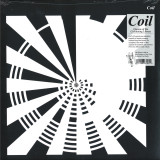
Queens Of The Circulating Library stands alongside Time Machines and Nurse With Wound's Soliloquy For Lilith as a post-industrial pinnacle of sensory-warping long-form drone.
Crafted by the distilled duo of Thighpaulsandra and John Balance, the 49-minute piece unfurls in swirling, cyclical waves, tidal as much as textural, channeling the spirit of levitational minimalism pioneered by La Monte Young. Touted as the first part in "a continually mutating series of circulating musickal compositions" upon its initial release in 2000, the album remains a compelling case study in Coil's exceptional capacity for mutation and extremes. The theatrical introductory monologue delivered by Thighpaulsandra's mother - a career opera singer, in her 80's at the time of recording - sets the stage for a grandiose ascension. Written by Balance, the text is declamatory but dreamlike, refracted through megaphone echo: "Return the book of knowledge / Return the marble index / File under "Paradox" / The forest is a college, each tree a university." As her voice fades, the lulling synthetic infinity deepens, congealing into transient crests of volume and haze, like slow-motion surf misting in moonlight. Thighpaulsandra describes their aesthetic intention as a "bliss out," static but shape-shifting, an amniotic drift towards an eternal vanishing point. A supreme sonic embodiment of the slogan on the sleeve of Time Machines, two years prior: "Persistence is all."
Jónbjörn's 'Gárur' reects the ebb and ow of life, and is a sonic exploration of the nether regions of atmospheric electronic music. Jónbjörn, an Icelandic producer and purveyor of organic textures and soundscapes has just released his debut full-length LP titled ‘Gárur’. Translated to ‘Ripples’ in English, the album is a colourful display of intricately woven electronic grooves and hypnotic atmospheres. The 10-track LP unfolds like a 1-hour mixtape, each song seamlessly blending from one to the next. ‘Þeytt smjör’ sets the scene with a sequence of generative ambience – lush pads and synthesizers atop a backdrop of found sound textures. The album pushes forward into many beat-centric tracks across various genres – everything from Downtempo, Deep House, Electronica, and Electro can be found throughout. While each track borrows inuences from across the dance music spectrum, the album is held together by Jónbjörn’s melodic and harmonic tendencies that encourage you to lose yourself in. Jónbjörn's process is heavily sample-based, often jamming carelessly to unearth new sonic possibilities. He records tracks live, triggering loops and effects spontaneously, and separates the creative process from mixing to maintain a sense of naivety. This approach allows him to capture the purity of initial demos, without falling into the temptation to overly polish the ¬nal product and lose that initial magic. Over the past three years, Jónbjörn has released a string of singles and his last full release on the Helsinki label ‘OO Recordings’, which featuredsix tracks on cassette. He has also been putting out music on his own label, Lagaffe Tales. In March 2020, he released his ¬rst full vinyl EP on his own label series, BROT, at a time when the global pandemic had closed almost all clubs worldwide. Additionally, he has released music on reputable labels such as D.KO Records, Neo Violence, Gestalt Records, Móatún 7, Bitterfeld Musik, Yellow Island Records, and FALK.
Over 1.5m albums sold in the UK and 3 consecutive no 1 albums for Noel Gallagher’s High
Flying Birds – plus a record breaking 10 consecutive chart-topping studio albums in the UK
for Noel.
- Debut eponymous album released 17th Oct 2011, debuted at no 1 with 122.5k sales and
achieved double Platinum status less than 6 months post release
- International Magic DVD release of the 02 Arena gig Feb 2012 certified Gold on shipment
-2011-2012 live schedule saw NG HFB visit 32 countries across 6 continents, playing 150
shows over a 15 month period. 406k headline tickets and 1.2m festival tickets sold
- Chasing Yesterday, released 2nd March 2015, no 1 album on release with 89.1k sales and
certified Platinum
- 2015-2016 18 month world tour covering 122 shows in 28 countries. Almost 400k headline
tickets and 1.25m festival tickets
- Who Built The Moon?’ released on 24th Nov 2017 - no 1 with 77,853 sales (almost 35k sales
ahead of no 2), Silver album after only 4 days and certified Gold 2 weeks post release
- Tour covering 59 shows in 17 countries with 245k headline tickets and 550k festival tickets
- Noel Gallagher’s High Flying Birds released a series of 3 multi-genre EP’s over the course
of 2019 and 2020
- 2019 saw a host of headline festival dates covering 150k tickets sold across the summer
plus tours of the USA and Australia with Smashing Pumpkins and U2 respectively
The ninth vinyl release on the Oslo based Det Gode Selskab label, and you guessed it…more classy, and vintage sounds with an innovative modern take. At the helm of the release is the dynamite German beatmaker Philipp Boss as he explores refined 80s-esque flavours, with retro drum patterns, positive energy synths and charming bass lines. This 12” sees DGS broaden their catalogue with another essential weapon for the artillery of the tastemakers.
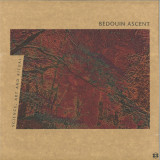
'Science, Art And Ritual' is a story of ‘process'. Growing up in Harrow (a then quiet suburb of London) in the 70’s and 80’s from the age of about 10, Kingsuk Biswas aka Bedouin Ascent's ears opened up to sound as he scanned the airwaves. The undeniable righteousness of 80’s dub via David Rodigan’s Roots Rockers shows was the first prominent influence he received, and with punk roots —and his burgeoning record collection— became exposed to the breathless post punk experimentation that followed in the early 80’s sweeping up free jazz, noise, dub and much more. Throughout though, he maintained his fascination with Indian Classical music which was a mainstay in his parent’s house and spoke with the same infinite space as Joy Division's 'Unknown Pleasures', and King Tubby’s Studio dispatches. Through those teens he assembled and de-assembled, knocking about with fellow travellers —punk bands, garage, space rock, noise. Something was happening. On-U Sound, ECM, Factory Records kept him plugged in and sane.
At that time Kingsuk's core studio setup revolved around his vintage Gretsch, Fender Jazz, Moog, TR-606 and rudimentary FX. He added congas, folk instruments, pipes, hand percussion, gongs, and jammed out shards of funk, noise, jazz fusion, electro and ambience into his hungry Tascam Portastudio. By 1987 these had morphed into what we’d now refer to broadly as techno, but the genre didn't exist beyond the reverberating walls of his bedsit, and he hadn’t yet plugged into the global conversation.
'Science, Art And Ritual' was released in 1994 by Rising High Records and was presented as Bedouin Ascent's debut album, although 'Music for Particles' (released in 1995, again on Rising High) was recorded even before —'SAR' sessions span from 1992-1993, whereas 'Music for Particles' were earlier from 1989-1992, with some older 4-track references from about 1986 too.
Weaved in throughout the album are subconscious references to music that Kingsuk heard in the past that still remained within sight as companions. The opening track "Ancient Ocean III", referencing the extinct ocean Tethis, unapologetically channels Tackhead, Colourbox, Mantronix and Lee Perry. The style was also deliberately juxtaposed to the prevailing sound in techno at the time, which had locked onto a rigid form of symmetrical kicks and light snare drums. Elsewhere 80’s soul and funk are frozen and captured in fragile glass lattices. Electric pianos resound throughout, such as in "He Is She", probably a half-memory of 70’s MOR radio from childhood sleepy night drives. A duel between kick drums from three generations of Roland drum machines —TR-808, TR-707 and R-8— is a central theme in "Transition-R", all in conversation, calling and responding. These were not just machines to Bedouin Ascent, but part of an extended family, with heart and soul.
Three decades after seeing the light, Lapsus is proud to present a special 30th anniversary reissue of this
left-field techno gem in a repackaged and redesigned edition. All pressed on a deluxe 3LP marbled vinyl and including a limited lithographic insert print of the original album cover. All tracks have been restored and remastered directly from the original DAT tapes, and the album also features previously unreleased tracks such as "In the Clouds" and "Thru Water" —regularly performed live at that time and produced in the same period as the album sessions in 1993.
'Science, Art And Ritual’ may refer to esoteric traditions in Indian philosophy, but equally embodies the collision of the science, the art and the ritual that is at the core of being immersed in a deep musical journey.
We’re teaming up with ELUCID and Fat Possum for a limited edition of 300 copies of a Rush Hour black ice coloured edition.
E L U C I D, one half of the illustrious duo Armand Hammer, is here with the full-length follow-up to 'I Told Bessie'. Further experiments in the sonic, expanding on the 'live' side of music paired with the embracing of chaos. Something you haven't heard, or not so for a very long time. E L U C I D is here to reveal the bleakness of reality.
''There is never time in the future in which we will work out our salvation. The challenge is in the moment; the time is always now.''
James Baldwin
A raw, crackling urgency runs through rapper-producer ELUCID’s new album REVELATOR like an underground power line. There is no space here for sepia-toned reminiscences or indulgent self-mythologizing. Intellectual rabbit holes have been filled in with concrete and rebar ; there is nowhere to hide and no off ramp from the audio Autobahn that ELUCID has fashioned—a renegade Robert Moses with gold fronts, bulldozing the homes of the powerful and the complicit. REVELATOR brims with the energy of now, with a refusal to look away. Carpe diem in a murder one mask.
Born in Jamaica, Queens, ELUCID has been on the cutting edge of New York’s underground scene since the mid-2000s. From the beginning, he has defied both convention and expectation. He ran with Okayplayer darlings Tanya Morgan, but his own music eschewed their throwback charm for glitchy noise experiments and bass-swamped culture jamming. His 2016 debut studio project Save Yourself (re-released in a deluxe edition last year) announced him in earnest. But in recent years, his Armand Hammer releases with partner-in-crime billy woods have received significant attention and acclaim. Serving as a followup to his last solo album—2022’s comparatively balmy I Told Bessie—ELUCID hoped to “re-distinguish” himself with REVELATOR, setting himself apart amidst the increasing attention around the music he and his friends are making together.
For ELUCID, this meant setting bold new challenges for himself. One of these was diving further into live instrumentation than ever before—”getting my Quincy Jones on,” as he puts it. The testing ground for this approach was Armand Hammer’s most recent project, 2023’s We Buy Diabetic Test Strips’ Möbius strip soundscapes, warmed with instrumental flourishes and skin-shedding beat progressions. With REVELATOR, though, ELUCID strove to create an atmosphere of chaos, embracing experimental electronics and atonal sample bursts. He worked on much of the album with co-producer Jon Nellen, who comes from a background in avant-garde and Indian classical music. “I wanted to get as freaky as I could at this moment. I wanted people to hear things, maybe for the first time, or in a way they haven’t for a long while,” the rapper explains.
ELUCID arrived at the studio with a collection of noise sources: non-referential samples, glitches and noises. Together he, Nellen, and others created forms out of them and, as ELUCID recalls, “just started playing drums with it.” Their fried, distorted sound was directly inspired by Miles Davis at his most uncompromising—specifically, the tone-clustering funk track “Rated X” from his 1974 double LP Get Up With It. At times, the pairing of rap with avant-fusion sounds also brings Emergency! from The Tony Williams Lifetime to mind, perhaps in an alternate timeline where the late drummer was listening to Ice Cube’s AmeriKKKa’s Most Wanted.
“The World is Dog,” REVELATOR’s lead single, functions as the album’s aesthetic thesis statement. Like the Davis track, the textures are punishing, the tonality is in free-fall, and the driving breakbeat of a groove cuts in and out unceremoniously. Avant-jazz bassist Luke Stewart, who appears throughout the record, holds the whole thing together just long enough for ELUCID to tightwalk over the beat. This tension is exactly where REVELATOR sets itself apart; in a time of drumless loops, and safe soul samples, this is a high-wire act with no safety net. Similarly, the song announces the themes of the album within just a few phrases, evoking the way societies accept and adjust to new levels of debasement and brutality while suffocating under the weight of history: “Can’t clock the kill, all a mystery/Forced past will eating everyone eventually/The world is dog.”
Many of the songs on REVELATOR grapple obliquely with dissolution and disenfranchisement in America and across the world—the grim realities of our domestic sociopolitical climate and our involvement in foreign conflicts. “Much of my artistic and political sensibility comes from the Black arts movement here in New York,” ELUCID explains. “Recognizing the interconnected global struggles against oppression, artists and thinkers created works and actions in solidarity with freedom movements in South Africa and Palestine.” ELUCID cites intellectuals like Amiri Baraka, Kwame Nkrumah, Audre Lorde, Sonia Sanchez, and Nikki Giovanni among his heroes. (One track on the album is specifically inspired by Lorde’s work, “SKP,” citing the scholar’s paper “Uses of the Erotic: The Erotic As Power.”) Songs like REVELATOR’s insistent closer “ZIGZAGZIG,” find ELUCID applying up-to-the-minute messaging, making explicit reference to the conflict in Gaza: “Feed a war machine…from river to sea, in lieu of peace.”
Despite ELUCID’s preference for cacophonous system overload here, the rapper also provides moments of respite. Recorded at The Alchemist’s Los Angeles studio, the laid-back, wheezing “INSTANT TRANSFER” is a collaboration with billy woods, which crystallizes their shared sense of creative determination. “With much momentum behind us and even more on the horizon, I knew a purpose, and that every step was ordered to that purpose,” ELUCID said of the experience. Meanwhile, the jittery “HUSHPUPPIES” is a playful anomaly on the track list, providing a snapshot of ELUCID watching his grandparents in the kitchen while preparing for Friday night fish fry dinners.
“Love still rules over on this side,” ELUCID says. ”I’m raising a family. We are making meaning and finding joy in the midst of all the fucked up-ness of everything around us because the alternative is cowardice and slow death. We remain rooted. We celebrate our people and our wins. Struggle is necessary.”
“IKEBANA” is one of ELUCID’s strongest statements of purpose on the record, blending the record’s heaviest themes with its most hopeful sentiments. supported by a shoutalong refrain and an urgent prog-funk groove. Breaking away from images of dissolution and crumbling societal systems that populate REVELATOR, ELUCID notes that the only way to navigate life’s bleakest landscapes is to cling to love and believe in those around you—to look forward toward something better that may or may not be possible. For the rapper, one of the album’s most trenchant lines comes during a centerpiece of a beat drop: “Being alive/I must look up.”
“The lyric ‘being alive I must look up’ is important especially in the context of this album. Much of the album imagery is harsh and reflects the actual doom some of us experience. But still I/we exist,” ELUCID explains.
Every artist is, in one way or another, the product of their time, bound by life’s leaden gravity to operate within the space of that which is already known. But there are some who are able to shake free of these ties, to shape the culture as it unfolds, to make the present their own.
Revelation, as a concept, points to the scales falling from people’s eyes—something that has been hiding in plain sight becoming clear. “The revelator relates to things that have been talked about, things that have been forecasted,” ELUCID adds. “And now they’re really here, and everyone sees it. And there’s no escaping.” REVELATOR plays out with the unmitigated power of those storms, laying waste to any genre conventions in pursuit of a certain physicality. Here, ELUCID develops a wholly distinctive musical language to explore our fractured modernity.
REVELATOR's packaging was designed by longtime Armand Hammer / Backwoodz art director, Alexander Richter.
Fourth R.A.N.D. Muzik x Echocentric Records collaboration release is an album by DC Salas.
DC Salas' second album, To The Places I Call(ed) Home, is a deeply personal exploration of memories, grief, and the concept of home, blending house, progressive, new beat, acid, goa, and trance.
Crafted over two years in his Brussels studio and on the road, the album served as a healing process following personal losses and reconnects Salas with his father's Peruvian roots. It features collaborations with Curses and Moroccan artist Zaatar, and each track reflects moments that shape his life while honoring fragments of his past.
Despite its themes of loss, the album radiates positivity with bright dancefloor moments and new beginnings.
Following appearances on our first three releases and on Chez Damier's latest label 'House Of Chez', El Kazed is back with his first solo EP !
Over the years, El Kazed's sound has become more refined, but you can still recognise his own touch.
On that matter, the A side is a prime example : DeePulse and Yunni perfectly blends that famous FM bass with dreamy pads and a strong 90s Italian house influence.
On the B-side, The Positive stands out with a more club-friendly vibe. Our friend Lea Lisa did her own version of it, driving it even more in that direction.
Paddan's Sigtryggur Baldursson and Birgir Mogensen are lifelong friends from Kópavogur, Iceland, who started as mates on the local football team, then graduated to making music together as teenagers, and even later as young men doing time in the experimental punk collective KUKL, from 1983 - 1986.
KUKL was populated by survivors of the post-punk scene in Iceland in the early 80s, which is well documented in the film Rock in Reykjavik from 1982. The band was released by the Crass collective in London and featured members, apart from Birgir and Sigtryggur, like Guðlaugur Óttarsson, Einar Melax, Björk and Einar Örn, some of whom would become better known later in outfits like the Sugarcubes and their respective solo work and other collaborations.
Sigtryggur has a long career in music, having worked with among others, Emiliana Torrini, Howie B, Les Negresses Vertes, Tomas R. Einarsson, Petur Ben, KK, Kaktus Einarsson, and many many others. He also produces an award-winning documentary music show for RUV called Hljómskálinn.
Birgir Mogensen is a classically trained classical guitarist and bass player who has worked through the years with artists ranging from KUKL to Killing Joke to Spilafifl and Inferno5.
Birgir and Sigtryggur formed Paddan during the 2010s, and are now preparing to release their EP Fluid Time, which has been inspired by their perception of time and space. Birgir Mogensen says, "As a duo, we trusted our musical intuition and were guided by allowing the first idea to remain unchanged during the recording process"Recorded, produced, and arranged by the pair, Sigtryggur and Birgir play basses and drums along with various other instruments.
All recordings are played on live instruments except a modular synth which is programmed in the background of two tracks The duo is joined by the great harmonica and lap steel player Gaukur Davidsson on "Vaguely" and "Bug," and trumpet player Eirikur Orri Ólafsson on "Splash," not to mention the mixing expertise of Vaccines bassist Arni Hjörvar Árnason on "Bug," "Splash," and "Kokka," and sound-mixer Albert Finnbogason on "Vaguely."
Fresh off a rework of Papa Levi with single Ribena, London’s jungle pioneers 4am Kru drop their highly anticipated debut album Incognito Rhythm featuring all the tracks that have cemented their reputation as the go-to act for raw, live jungle music.
Having already taken the 2024 festival circuit by storm with appearances at Outlook Origins, Boomtown, Boardmasters, Reading+ Leeds, The Blind Tiger, Parklife Waterworks, Boundary and a milestone Saturday night closing set at Glastonbury’s Temple Stage, 4am Kru continue to draw audiences into the madness of their raucous blend of 1993-1994 influenced jungle. First bursting onto the scene post-lockdown, the falling monitors and flying bodies of their shows were particularly thrilling for ravers who had turned 18 in isolation.
Originally developing their live sound in indie bands while sharing a studio in Tottenham, the duo quickly realized that the traditional DJ set couldn’t contain the energy of their act. They have since surrendered to the chaos of their incredibly physical performances, nursing chipped bones and back injuries, deep finger taping, chalking up and wearing shoes designed for skipping rope whilst rewiring what it meant to move their bodies. Their innovation extends to the equipment, with the duo reinventing a way to deliver their signature throbbing basslines with a Roland SPD SX drum pad as thick as a car tire. Their upcoming UK tour this October promises to further showcase their immersive, disruptive sound.
4am Kru’s latest single Ribena breathed new life into Papa Levi’s iconic British reggae classic Militancy following the release of hard-hitting Wutt this past July, setting the stage for their most ambitious project yet. Their debut album draws from a wide range of influences in addition to 4am Kru’s signature blend of 90s jungle flavours, from obscure slow jam R&B like Angela Bofill, Janet Jackson and Prince, early hardcore bands like Hüsker Dü, off kilter Scottish folk, and even classical music. The project is a snapshot of the incognito, nocturnal world that the duo have dwelled in for the past two years, a time capsule of well-worn songs played between midnight and 4am. An extraordinary debut, 4am Kru’s Incognito Rhythm is an immersive, razor sharp, face melting journey through their show-stopping live sound.
Les Imprimés is back in the studio working on their sophomore album and treats us to a smashing two-sider with the first two songs from these sessions. The A side "With You" is an instant hit for the DJs and dance floors. An uptempo, uplifting tune about a eeting encounter that leaves you craving more. Frontman Morten Martens doesn't waste a word over the shuffling drums and dancing piano lines. He sings about the pleasantly surprising impact of a chance encounter with a woman, whom he winds up pining for. Martens longs for her, but joyfully, as if just remembering such a connection is possible is what he really needed. The B side "Only Love" is built over a gritty, punchy drum break with a chorus that is simple yet profound, and the arrangement leans into the message. Martens sings of letting go of inhibition and fear and allowing love to have a chance to thrive. "Only love can set us free_"
Mood Child is back with 'Various Moods Vol. 3', a captivating collection of six tunes, each possessing its own distinct mood and power.
Led by founders Manda Moor and Sirus Hood, this superb album features standout contributions from label favorites Reboot and Marian (BR), while also shining a spotlight on fresh talent, including Crewcutz, Band&Dos, Sterium, Samarone, and Drewski.
Available now on both vinyl and digital formats, *
'Various Moods Vol. 3' continues Mood Child's tradition of delivering innovative, boundary-pushing music.
From London to Ibiza via Berlin, inspired by Chigago and Detroit, Ceri finds her truth in proper house music. ‘Can’t Pay My Bills’ EP provides a message of hope during uncertain times. Acknowledged as a “rising selector” by Crack Magazine, producer, label boss and record digger Ceri steps into 2024 with a brand-new EP ‘Can’t Pay My Bills” via her imprint “Find Your Own Records”.
“The title track is inspired by the current economic situation in the world, and also features a positive message that reflects the values and true origins of house music, reinforcing the belief that we can overcome our circumstances and improve our situation” - Ceri
The new four track EP drips with Chicago, New York and Detroit jackin’ house with garage influence, and a sprinkle of ripping UK breakbeat for good measure. The people’s producer D'Julz steps up, on remix duties, contributing not one but two remixes to the label’s ongoing message of artist authenticity and collaboration. The remixes will be vinyl only, and the originals will see a digital release later in the year.
“I have collected D'Julz music for many years, his label started around the same time I started DJing, and it was and still is, one of the few labels that I buy on sight. I know it will always be quality. Something I aspire to do with my label too.”– Ceri
As an artist led label 'Find Your Own Records’ has become a home for genuine house legends Mr G, Fred P, Alex Arnout, and has rightly gained support from Mixmag, Resident Advisor, BBC Radio 1, BB6Music and BBC1Xtra.
Support for the label so far comes from the likes of:
Midland, Ben UFO, Move D, K-HAND, Fumiya Tanaka, Fred P, Paranoid London, Steve O'Sullivan, Tristan Da Cunha, Ryan Elliot, Lakuti, DJ Deep, Kerri Chandler, Chloe Caillet, Fred P, Jeremy Underground, Cici, D’Julz, Chez Damier and more…
As a DJ Ceri has performed marathon sets at Fabric, Corsica Studios, Pikes Ibiza, Thisishaven, and recently made her debut at the legendary Panorama Bar/Berghain. Confidently sharing the booth with club favourites Ryan Elliot, Jeremy Underground, Paranoid London and Objekt it’s certain the next year of live shows will be ones to remember for the UK artist. Inspiring far beyond the dancefloor, Ceri also regularly steps up as a masterclass host / panelist on creativity, mental health, meditation and wellness with renowned platforms Beatport, ADE, RedBull, Point Blank and Native Instruments, earning her a distinctive reputation as a multifaceted artist and
thought leader.
Ceri – ‘Can’t Pay My Bils’ EP is out on Find Your Own Records. Vinyl end of Feb tbc. The remixes re vinyl only. And the originals will be released digitally in the summer.
Emerging producer Très Mortimer dishes out eight huge heaters on the highly-anticipated ‘M1 City’ release, a dedication to the mighty Korg M1, coming to Seth Troxler’s Slacker 85 on 25th October.
Kicking off ‘M1 City’ is the simplistic, but refined and booth-rattling ‘Work That Body’. A crisp M1 stab is the main character in this, amplified by thunderous and high energy drums.
Then there’s ‘Secrets’, a house jam inspired by the likes of MK that utilises TR-909 drums, a subtle rolling bassline, intimately whispered and soulfully sung vocal shots, and, of course, classic Korg M1 synth stabs. Together with dramatic contemporary builds, a highly danceable house smasher is formed.
‘No More’ is pure gasoline for the dancefloor. Très pairs another barrage of clean M1 stabs with a rousing vocal sample that leads into, with the help of a rolling snare, another highly effective house drop. Following the extremely saucy ‘Big Daddy’ skit, we’re dropped straight into ‘One Of Those Nights’, a show-stopping track complete with cutting, sharp stabs, a bulging bassy synth and a West Coast-esque synth sound.
‘Bitch I’m From Chicago’ feat. Gleebz is, as the title suggests, a dedication to the city where house music found its name. Batting off all the poser cities like LA and Miami in the sassy lyrics, it embodies the spirit of Chicago with hefty kick drums and weighty chord stabs.
At the tail end of the release, ‘Let Me Go’ and ‘Love’ (featuring vocalist 7000 (7K)), bring things to a rousing emotive close. Both tracks see Très put clean vocals over piano riffs, giving off differing moods – the former is euphoric, the latter melancholic. Synths bubble beneath, and each track funnels their own respective house grooves, resulting in two tracks fit for both the dancefloor and headphones.
Très Mortiner explains: “The M1 sound is classic. It automatically transports you back to those timeless house songs that never get old. For me, house music is all about connection. People experiencing a little moment of euphoria together when they hear a riff that they all know on the dance floor. That’s what it’s all about. With this project I wanted to tap into that 90s rave sound and spirit. I wanted it to sound like the OG Chicago rave scene.”
“M1 City is my first project to be released on vinyl. I think vinyl is very much alive. It’s essentially for music connoisseurs now. I don’t expect people to have a vinyl collection when all music is always available to everyone on their phones. Nevertheless, I love the idea of some random DJ finding this record in a shop in 10 years. Who knows what I’ll be producing then?”
Très Mortimer is a key figure in Chicago's house scene, steadily building a strong following with his no-nonsense, dancefloor-driven sound. Drawing inspiration from his Polish roots, Trés has signed with major labels like Mad Decent, Insomniac’s IN/Rotation, and Ministry of Sound, while also launching his own imprint, Optics Records. He made his mark with a clever rework of Zombies' 1968 hit ‘Time Of The Season’ (1M+ streams). Standout releases include his downtempo collaboration with plumpy, "BAMBU," and his latest single, "At Night I Think Of You," which was recently given a remix makeover by Seth Troxler and Nick Morgan.
Slacker 85, launched in 2023, is the record label behind ‘M1 City’. Founded by Seth Troxler, it aims to give a platform to "oddball, esoteric and diverse sounds," positioning itself as a counter to the polished, refined dance artists dominating the scene. Troxler, upon the label’s launch, declared that he wanted to create something for "the anti-hero, the kids who could have done it but didn’t care to try”—essentially, "the slacker." So far, it’s delivered a range of releases from artists like Jackmaster, Danny Daze, Dan McKie, and Andre Salmon, offering tracks rooted in house music's past but evolving within its present boundaries.
‘M1 City’, this ode to a piece of gear that consistently finds itself at the heart of house music history, highlights Très Mortimer’s respect for and knowledge of the scene and its key gear. Trè combines this admiration and inspiration of house music’s greats with a modern sensibility, resulting in eight tracks worthy of today’s dancefloors and today’s ravers.
A sonic portal to a parallel universe where neon-soaked dreamscapes transform the stark realities of a post-pandemic world. Music for a forgotten future, where echoes of the 80s cast long, enigmatic shadows through a rich tapestry of emotion that charts a journey from isolation and fear towards healing and hope. This is the journey of Season One and Season Two, the debut companion albums for the solo project of Italian composer Battaglia, both out this fall on Four Flies Records.
In 2020, as the world retreated onto itself due to the COVID-19 pandemic, Battaglia entered the recording studio. Driven by a desire for experimentation, she decided to focus on the classic synths that have made history to create a sonic and emotional alchemy that reimagines the 80s to resonate with our current experiences and sensibilities.
Drawing inspiration from the cinematic magic of iconic early-80s films, and especially the haunting soundtracks of Tangerine Dream and John Carpenter, she crafted a soundscape that goes beyond nostalgia to capture the spirit of a generation navigating uncertain times.
Season One and Season Two explore the complexities of a world grappling with lethal pandemics, climate catastrophes, and nuclear disasters through themes such as longing, fear, and hope, set against a scenario that blends elements of dystopian and post-apocalyptic science fiction and, at times, horror.
Season One delves deeper into the darker aspects of this new reality, evoking a sense of unease and uncertainty, occasionally interspersed with soothing flashes of light. In Season Two, while darkness still lingers, the sonic landscape is infused with a sense of optimism and determination, offering glimpses of a possible salvation.
With Battaglia's signature blend of dark wave, synth-pop, suspenseful electronica, and cinematic vibes, Season One and Season Two create a sonic world that is at once hauntingly familiar and utterly captivating -- the perfect soundtrack, one is tempted to say, for the countless sci-fi/horror-fantasy series that have been flooding streaming platforms in the last decade.
The covers of both albums were designed by Eric Adrian Lee, who conceived them as two sides of the same image, two versions of a world in crisis but whose ruins contain the potential for rebirth.
Battaglia's Season One and Season Two will be available on black vinyl LP starting from October 25th. Digital versions of both albums will also be released on the same date, featuring five bonus tracks (two on Season One and three on Season Two).
A sonic portal to a parallel universe where neon-soaked dreamscapes transform the stark realities of a post-pandemic world. Music for a forgotten future, where echoes of the 80s cast long, enigmatic shadows through a rich tapestry of emotion that charts a journey from isolation and fear towards healing and hope. This is the journey of Season One and Season Two, the debut companion albums for the solo project of Italian composer Battaglia, both out this fall on Four Flies Records.
In 2020, as the world retreated onto itself due to the COVID-19 pandemic, Battaglia entered the recording studio. Driven by a desire for experimentation, she decided to focus on the classic synths that have made history to create a sonic and emotional alchemy that reimagines the 80s to resonate with our current experiences and sensibilities.
Drawing inspiration from the cinematic magic of iconic early-80s films, and especially the haunting soundtracks of Tangerine Dream and John Carpenter, she crafted a soundscape that goes beyond nostalgia to capture the spirit of a generation navigating uncertain times.
Season One and Season Two explore the complexities of a world grappling with lethal pandemics, climate catastrophes, and nuclear disasters through themes such as longing, fear, and hope, set against a scenario that blends elements of dystopian and post-apocalyptic science fiction and, at times, horror.
Season One delves deeper into the darker aspects of this new reality, evoking a sense of unease and uncertainty, occasionally interspersed with soothing flashes of light. In Season Two, while darkness still lingers, the sonic landscape is infused with a sense of optimism and determination, offering glimpses of a possible salvation.
With Battaglia's signature blend of dark wave, synth-pop, suspenseful electronica, and cinematic vibes, Season One and Season Two create a sonic world that is at once hauntingly familiar and utterly captivating -- the perfect soundtrack, one is tempted to say, for the countless sci-fi/horror-fantasy series that have been flooding streaming platforms in the last decade.
The covers of both albums were designed by Eric Adrian Lee, who conceived them as two sides of the same image, two versions of a world in crisis but whose ruins contain the potential for rebirth.
Battaglia's Season One and Season Two will be available on black vinyl LP starting from October 25th. Digital versions of both albums will also be released on the same date, featuring five bonus tracks (two on Season One and three on Season Two).
Have you ever been to Miyazaki? It’s a prefecture on Japan’s southern island of Kyushu, facing the Pacific. Palm trees. Humid subtropical climate. This is the home of Maple Fyshh, a musical artist whose late-80s/early-90s recordings have been collected and reissued here. Liberated by the advent of 4-track cassette home recording technology, inspired by a love of 60s pop oddball production mavens like Phil Spector and Joe Meek, as well as American hot rod and surf music, these Maple Fyssh songs glow with an outsider’s love of the transformative power of newly-available sound technology, allowing him to pull his inspirations across decades and oceans to his 1990s Miyazaki home studio. The tracks here are a d.i.y. dream-pop wonderland, compiling songs from his first LP “Mariko” and second LP “Dokitto Station!!”, both self-produced, both released in 1995. The A-side of this release features tracks from the concept album “Mariko”, a masterpiece of daydream pop introspection, recorded in 1994-95, inspired by a poem submitted to a manga magazine. The B-side features tracks from “Dokitto Station!!”, slightly earlier recordings that draw inspiration from a range of 60s pop including girl groups, surf music and acid folk. All the music here demonstrates Maple Fyshh’s deep understanding and appreciation 60s pop moves, and also his mastery of the limited technology at his disposal.
Remastered in 2024, the sound of Miyazaki has been reborn for a new audience. Available on Vinyl LP and download, with a DL card, English/Japanese lyrics and entertaining and informative English/Japanese liner notes by the artist.
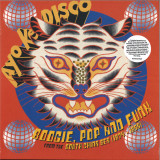
‘Ayo Ke Disco’ (meaning ‘Let’s go to the disco’ in Malay
and Indonesian) celebrates the musical identities
emerging from the newly independent countries in
South-East Asia during the 1970s and 80s.
Soundway general manager Alice Whittington, aka
Norsicaa (DJ), selects 10 deep cuts from local labels,
officially reissued on vinyl for the first time – forming a
snapshot of the vibrant discotheques and live scenes
across Indonesia, Singapore, Thailand, Malaysia, Hong
Kong and the Philippines.
The artists featured here were known for exploring
traditional sounds alongside funk, disco, city-pop and
even political psych-rock, genres that were indicative
of the exciting but often turbulent period. But despite
the post-war backdrop of instability there came
unprecedented levels of economic prosperity. With a
hopeful buzz filling the air, the music scene was helping
lead the way in reshaping the new identities of the
region.
OVERVIEW:
FOR FANS OF:
Sound of Siam compilations, Priscilla Chan, Lovin’ Mighty
Fire compilation, Tanamur City compilation
A1. Album track “Isoma Per Sempre” is a hypnotic deep techno track with an eternal melody dedicated to the producer's own record store.The record continues with “Armonia Solare” (A2) techno loop with an almost irregular progression but that mixes with the drums perfectly. On the B side instead opens “Il Visionario Della Periferia” (B1) with a soft techno mood that slowly rises in a mental growing up where minimalism and psychedelia intersect. The EP closes with “Bangerang” (B2) an ambient piece that unfolds in a hypnotic and positive melody.
(incl 40p fanzine written by Matt Annis with photographs by Simon Pyke and Ian Brodie) Postpunk Theory is a meticulously curated compilation by the legendary Tony Thorpe, known for his work with The Moody Boys, 400 Blows, and The KLF. These classic tracks were played at parties by Thorpe at the time, making them his personal classics. The compilation features 16 rare and sought-after tracks from the post-punk era, including works by Mark Stewart and The Maffia, Basement 5, 23 Skidoo and more.
Defining post-punk is no easy task. While punk was defined by a raw, rebellious simplicity, post-punk (1978-1986) expanded into a diverse array of sounds and ideas. It maintained punk's independent spirit but embraced experimentation, incorporating influences from various musical and cultural traditions, resulting in a movement far more eclectic and fragmented than its predecessor.
At its core, post-punk broke away from traditional rock structures, blending genres like industrial, goth, and punk-funk with emerging dance music cultures. This era's spirit of innovation and defiance against musical norms continues to inspire, making post-punk a pivotal moment in music history that defies easy categorization.
Tony Thorpe presents Postpunk Theory - Alpha ? is a meticulously curated compilation by the legendary Tony Thorpe, known for his work with The Moody Boys, 400 Blows, and The KLF. These classic tracks were played at parties by Thorpe at the time, making them his personal classics. The compilation features 16 rare and sought-after tracks from the post-punk era, including works by Mark Stewart and The Maffia, Basement 5, 23 Skidoo, African Headcharge, and more.
Growing up in a vibrant musical environment in South London, Thorpe was deeply influenced by the eclectic sounds around him, from jazz-funk to Brit-Funk, and later, the post-punk records he discovered. As Thorpe recalls, "Post-punk was a mishmash of different cultures and ideas. Out of post-punk came dance music culture. That period was the most creative time because the culture was in its experimental phase." This compilation captures that innovative spirit, offering a glimpse into the era that shaped Thorpe's musical journey.
The album comes as a limited 2xLP set, accompanied by an extensive 40-page fanzine. The fanzine, written by Matt Annis (Join The Future), dives deep into the post-punk movement, offering insight and context enriched with striking photographs by Simon Pyke and Ian Brodie.
Soul, funk, jazz, Brazilian, Latin music... P-VINE's Groove-Diggers series has unearthed quality records that transcend genres, nationalities and ages since the series was launched in 2006. Now, we have decided to release a compilation album containing a selection of great sound sources from our vast collection. It is no exaggeration to say that this compilation, which includes a wide selection of previously overlooked finds and popular tracks that everyone has probably heard at least once, would not have been possible without the Groove Diggers team.
Limited Edition! The "LaBush - Temple of House" Volume 2 Vinyl Box Set for the 30th Anniversary of the Legendary Club!
Barely six months after the phenomenal success of the first box set, La Bush - Temple of House makes history once again, celebrating its 30th anniversary with the release of Volume 2 in a limited edition 10x12" vinyl box set. A true must-have for collectors and electronic music enthusiasts!
This exclusive box set features no less than 35 tracks, an incredible number for a vinyl collection, offering unparalleled pressing quality that guarantees an exceptional listening experience, perfectly suited for any turntable. Each track has been meticulously remastered, preserving the essence of the original versions while enhancing every sonic detail.
The deluxe packaging of this box set is a work of art in itself, designed to captivate the most discerning vinyl lovers. Moreover, with tracksfrom legendary artists like Paul Kalkbrenner, Paul van Dyk, David Guetta, Tomcraft, Oliver Lieb, Matthew Herbert, and La Bush resident Mr. Sam, this box set is an essential treasure.
For those who already own the first box set, this new volume is the perfect opportunity to complete your collection in the best possible way, adding a new centerpiece to your La Bush ensemble.
Don't miss this unique opportunity to add a masterpiece to your vinyl collection. Order now before it's too late!
Bringing stark dread bass vibes like no one before or since, Mars89 makes a welcome return to Sneaker Social Club with another four-track script flipper.
Since he first surged onto the radar with some incisive moves on Bokeh Versions back in 2017, Masayoshi Anotani has deployed a raw, non-conformist kind of bass music that's minimal in spirit but packing incredible weight where it counts. It draws parallels with weightless grime, but swap the woozy square wave synths out for fierce industrial textures and dystopian bleeps, and maybe you're halfway there.
Following on from 2022's Night Call and a collab LP with Seekersinternational on his own Nocturnal Technology, Mars89 is back with an EP which takes on new sonic dimensions without losing the persistent moodiness that makes his shadowy sonics so compelling.
'No Control' feels the most in line with the earlier Mars89 work, creating a back and forth between an upfront grime-y synth lick and blown out bass notes. The space around the notes is as vital as everything being played, creating a tension that doesn't let up no matter how much the brittle percussion rattles.
'Sonar Breaks' feels distinct as it drags a sticky drum loop through the dirt until it comes out positively caked. That leaves plenty of room for the bleeps up top to cut through the mix with devastating clarity, and Mars89 needs nothing else to make a taut piece of soundsystem Semtex.
'Hydra' continues to draw influence from jungle while taking a sideways approach to breakbeat edits, finding a curious groove in angular drum science before a stark arpeggio locks the track down. It's another hint at the different tools being reached for on this EP, brought into the Mars89 methodology and bent to his particular will.
'Still Dreaming' closes the EP out with an evocative sample from a sci-fi blockbuster and a spiralling sound bed of synth lines and break shards. While the track lands softer than its predecessors, the dense mix whips up a claustrophobic allure comfortably aligned with the overall intensity of the record — an intensity which is wholly unique to Mars89 and his maverick manoeuvres in the field of contemporary bass music.
In July 2019, eleven years after Jay-Z became the first hip-hop artist to headline Glastonbury, Stormzy became the first English rapper to follow suit. Wearing a customised stab-proof vest designed by Banksy, the South London rapper delivered an explosive performance and finished by thanking the “legends for paving the way,” name-checking Wiley, Dizzee Rascal, and Giggs. Despite how unlikely it seemed for decades, UK rap was now firmly a part of pop music and the greater hip-hop canon.
Rich, nuanced, and often misunderstood, the history of UK rap is a story of music that refused to stand still. Factoring in socioeconomics, gender, identity, music industry disruption, and innovation, What Do You Call It? charts the artform’s first four decades, beginning when rap landed on our island in the early 1980s. Shaped by sound system culture, inspired by punk, and accelerated by rave, it has evolved from Britcore, UK hip-hop, and trip-hop of the late twentieth century to garage, grime, and drill.
Through cultural theory, historical research, and original interviews with key figures and collaborators in the UK rap scene, from pioneers like Malcolm McLaren, Soul II Soul, Tricky, Roots Manuva, and Roll Deep to modern artists like Dave, CASISDEAD, Little Simz, Loyle Carner, and Skengdo x AM, adds a rich human dimension to the UK rap story — one that helped change British music and culture forever.
“A long overdue exploration of rap music in the UK and its longstanding – albeit overlooked – legacy and influence. In an era when UK rappers dominate the charts, star in major movies and TV shows and front huge advertising campaigns for multi-national corporations, Kane traces back the arduous journey from maligned sub-culture to celebrated mascot of neoliberal capitalism.” Jehst
“David Kane writes with a deft touch and possesses a disarming and deeply insightful interview style. Sparking life, humour, and sorrow across every page of more than three decades of UK rap history.” Charlie Dark MBE
“Kane builds bridges in a rich musical universe full of heroes and villains—and plot twists. With an inimitable style, he merges culture high and low to bring new meaning to the music. What Do You Call It? is a landmark tome for UK rap music.” Brian DiGenti, Wax Poetics
“A mind rich in ideas” Stanley Ledbetter, The New Yorker
Distant Worlds welcomes Gilbert to the roster with an EP possessed by the ghosts of UK techno past. A broad offering of sonic delights echoing the days when the likes of A13, Pure Plastic and GPR were sharing shelf space.
‘Lost Frequency’ kicks off with eager intent aimed directly at the dancefloor, drum machine funk collides with punchy bass and soaring synths. ‘Quantum Echoes’ offers a meditative take on bass weight accompanied by heart-breaking melodies and enriched by a true master’s attention to detail.
Flip over to ‘Earthscapes’ for a breakbeat infused workout resplendent with percussive flair and melodic deep bass. ‘Particle Drift’ takes us home in style with beautiful acidic flourishes atop emotive harmonies that could easily be an undiscovered gem of 90s techno. Timeless music sure to endure.
The Blessed Madonna began with three magic words, scrawled in shoe polish on a broken - down box and hung on the wall at a small sweaty party: We Still Believe. “I think you have to give up completely to really understand what hope is. It was like 2011? I had spectacularly, monumentally failed. I left the label. I wasn’t DJing. I wasn’t putting out records. I was divorced and living on my Dad’s couch so naturally my friends and I decided to throw an illegal rave. We didn’t have any decorations, so I took a box and wrote, ‘We Still Believe’ on it. I needed to believe that something better was possible and that’s how it all started.” After years of $50 gigs, strung together by gas money and surfed couches, The Blessed Madonna cemented her reputation as a sublime technician behind the decks with a legacy of fluent and dynamic sets, spanning from disco to techno to house and back. One room sweatboxes, circus tents, theatres, massive festival stages and entire city blocks have all served as the canvas for her shows. After a jam packed 2023, from Glastonbury to Sonar to Boiler Room Bali, The Blessed Madonna has been filling the dance floor everywhere she goes and is now releasing her debut album.
Souffle Continu records presents Byard Lancaster – The Complete Palm Recordings 1973-1974, the definitive package of Philadelphia-born jazz wizard Byard Lancaster including his 4 legendary albums released on Jef Gilson’s Palm Records in the 1970s, Us, Mother Africa, Exactement and Funny Funky Rib Crib, along with the first ever standalone edition of Love Always, a fifteen minute modal jazz beauty plus a 20 page booklet with rare photos and in-depth article about Byard Lancaster’s Parisian years by Pierre Crépon.
At the beginning of the 1960s, at the Berklee College of Music, Byard Lancaster met some feisty friends: Sonny Sharrock, Dave Burrell and Ted Daniel. It is easy to see why he rapidly became involved in free jazz. Once he was settled in New York, he appeared on Sunny Murray Quintet, recorded under the leadership of the drum crazy colleague of Albert Ayler.
In 1968, the saxophonist and flutist recorded his first album under his own name: It’s Not Up To Us. The following year he came to Paris in the wake of... Sunny Murray. He would come back to France in 1971 (again with Murray) and in 1973 (without Murray for a change). This is when he met Jef Gilson, the pianist and producer who encouraged him to record under his own name again. On Palm Records (Gilson’s label), he would release four albums: Us, Mother Africa, Exactement and Funny Funky Rib Crib.
“Us”, the first of the four records was recorded on November 24th, 1973 with Sylvin Marc on electric bass (a Fender... Lancaster?) and the evergreen Steve McCall on drums.
On the album, the trio works from the John Coltrane model; free jazz shook up by the timely contributions of the bassist, followed by a mesmerizing atmospheric music. Then, Lancaster delivers a sinuous solo path, which is a reminder of his unique tone. On the album’s companion single, the trio launches into great black music of a different genre which would lead the clairvoyant François Tusques to claim that Byard Lancaster is an “authentic representative of soul/free jazz”, to sum up this is Great Black Music! A few months after recording “Us”, Lancaster recorded “Mother Africa” along with Clint Jackson III, a trumpeter, partner of Khan Jamal or Noah Howard on other recordings.
On march 8th, 1974, Lancaster and Jackson headed up a group composed of Jean-François Catoire (electric and double bass), Keno Speller (percussion) and Jonathan Dickinson (drums). Together, they create an immediate impression. From the first seconds of “We The Blessed”, they develop a free jazz which rapidly abandons any virulence under the effect of blues and soul based interventions. When Gilson’s composition “Mother Africa” begins, listeners are transported into the studio, listening to the musicians setting up: chatting and joking... Then comes the melody: a dozen or so notes of a repeated theme which is accelerated and deformed according to their whims... The jazz played by the association Byard Lancaster / Clint Jackson III is rare: creative AND recreational. “We the blessed”, is apt listening to this again today!
The recording of “Exactement” required two sessions in the studio: February 1st and May 18th 1974 – in between the two dates, Lancaster recorded, alongside Clint Jackson, the excellent Mother Africa.
Two names appear on the cover of “Exactement”: Lancaster (Byard) and Speller (Keno). Byard Lancaster wanted to be precise, moving regularly from one instrument to another: first on piano, which was the first instrument he learned. On “Sweet Evil Miss Kisianga”, his inspiration is first and foremost Coltrane (even if leaning more towards Alice than John), this announces the storm to follow.
It is Lancaster’s horn-playing which really stands out: on alto (the sound of which is transformed by an octavoice on one track, "Dr. Oliver W. Lancaster") or soprano saxophones, as well as on flute or bass clarinet, the musician walks a tightrope making the most of all the risks he takes. Using the full register of his instruments, he has fun with the possibilities.
Then, Lancaster invokes or evokes Ornette Coleman, Eric Dolphy and even Prokofiev, before going into a danse alongside Keno Speller on percussion. Above all, he has a unique sound. Byard Lancaster, on whatever instrument he plays and by continually seeking, always ends up hitting the right note... ends up by playing exactement the note he had to play.
“Funny Funky Rib Crib” is an unforgettable recording (made up of several sessions dating from the middle of 1974) of creative jazz overwhelmed by funk and soul. If Lancaster had already made successful albums in the same genre – notably New Horizons, under the name Sounds Of Liberation which he co-led with Khan Jamal –, this one is an homage to James Brown and Sammy Davis enjoying the company of a host of guests including François Tusques (electric piano), Clint Jackson III (trumpet), François Nyombo (guitar), Joseph Traindl (trombone)...
Funny Funky Rib Crib’s cover is a three-quarter profile portrait of the saxophonist (who can also be heard on flute, piano and even vocals), however, on the record, it is the whole group, inspired and frenetic, that tests the melodies of “Just Test”, “Dogtown” or “Rib Crib” – the two versions of which display leader Lancaster’s art of nuance. On both sides of the album, the group also moves into a calmer groove, infused by blues and soul, “Work And Pray” and “Loving Kindness” are meditative tracks where listeners can lay back and relax before asking for more: Funny Funky Rib Crib!
The magnificent “Love Always” was originally released on the fourth (and last) volume of the Jef Gilson Anthology series released in 1975.
Recorded on 8th March 1974, it is a beautiful 15-minute-long modal jazz piece. Four notes from the bass (the relentless Jean-François Catoire, who makes up the rhythm section alongside drummer Jonathan Dickinson and percussionist Keno Speller), and the group is up and running!
On piano, Gilson shows the subtle tact of a sideman, leaving the lions’ share of the place to the horns. This allows us to hear the trumpet of Clint Jackson III and the alto (which sometimes sounds almost flute-like) of Byard Lancaster each staking their claim in a long hallucinatory march which moves from moments of direct exaltation to profoundly sensitive collective playing. And if further proof was required of the confidence that Byard Lancaster and Jef Gilson inspire, “Love Always” provides it on this one sided release exclusive to the box set.
A sense of destiny hangs over Sentir Que No Sabes, Mabe Fratti’s fourth solo-credited album released in a five year span. Her work has always possessed a finely tuned sense of drama capable of expressing a range of emotional states, and across this new album, she conveys the struggle to process various relationships or situations–and the actions that come next. Sentir Que No Sabes is urgent and clear, poppy, generous and approachable, while showcasing a considerable emotional hinterland. It is also, as Fratti is quick to mention, “groovy.”
Written and recorded with her partner, multi-instrumentalist, and co-composer Héctor Tosta (I.La Católica, Titanic), Sentir Que No Sabes is the result of an intense, detail-oriented process. Fueled by a new confidence gained in their collaborative project, Titanic, and its critically acclaimed 2023 LP, Vidrio, the two hunkered down in the familiarity of their studio (aka Tinho Studios) to bash out the initial sonic coordinates of her new record. “We talked and talked, and discussed ways of playing and recording, until things became inevitable,” Fratti explains. “We recorded a bunch of demos at our home studio and that meant we had a lot of time to re-edit and experiment. We really dug in. We were super focused on detail.” Tosta also took up the controls as producer and arranger-in-chief for all additional instruments. The album was later completed at Willem Twee Studios in Den Bosch in the Netherlands, and Pedro y el Lobo Studios and Soy Sauce Studios, in Mexico City.
For the final studio recordings, the pair were joined by drummer Gibran Andrade and trumpetist Jacob Wick to fill out and expand on Tosta’s percussion and brass arrangements. This small group of friends were able to work quickly and openly, and without fear: a testament to the exhaustive groundwork put in at Tinho Studios. This can be heard in three short, intermediary tracks that also manage to be the most aggressive on the record: “Kitana” (a scratch-laden instrumental that acts as a strange prelude for the last track, “Angel nuevo”) and a pair of two-minute instrumental interludes, “Elastica” I and II. None are throwaway mood pieces; rather they act as emotional cue cards, and hint at the way Fratti and Tosta created the overall atmosphere of Sentir Que No Sabes.
A strong sense of rhythm irrigates the sound from the jump, as heard on the glorious opening track, “Kravitz.” Here, the brilliant plucked cello line acts as a bassline and props up the steady thump of the kick drum. The cello’s growl serves as a conduit for a set of slightly paranoid lyrics that tell us “Quizás haya oídos en el techo” (“maybe there are ears in the ceiling”), while the song also introduces another staple of the record: the clever brass stabs, whistles, parps, and other interjections that paint a canvas of traffic in a city. It’s a postmodern, widescreen sound that for some might recall The Blue Nile’s Hats.
Sentir Que No Sabes is a record full to the brim with a modern pop sensibility, invoked by the sort of magpie spirit that ensnares anything it can find, repositioning sounds for the here and now. The keys and melody on the melancholy “Pantalla azul” (“Blue screen error”) transport us back to the glossy mid-1980s. “Oídos” (“Ears”) is a beautiful slice of contemporary, hybrid pop, in which Fratti’s vocal lines delicately spin themselves around the lean structures erected by the brass and drums, and the descending “plink” of a set of piano chords. Then we have a gloriously strong ending with the swell of “Angel nuevo” (“New angel”), another cinematic track full of gentle, instrument-rich swells and eddies that manages to be almost endless in its range–and yet intensely personal, as Fratti’s voice is close, almost whispering in your ear. A much needed lullaby for our fractious times.
The lyrics, for their part, have a stop-start quality to them, and hint at the small, incremental emotional taxes we pay through just living our lives. They circle around the music like birds waiting to swoop. There is something of the spiritual in all of Fratti’s work that expresses itself in a form of yearning: she looks to new horizons while personal dramas find themselves internalized, contextualized, and then dealt with through metaphor. Here, she was keen to mention Tosta’s constant encouragement in her finding a path to best sing or phrase her words to impart their maximum effect. “Hector was super inquisitive about my lyrics and asked me questions about what I meant, which sometimes is something you don't wonder so much about in isolation,” Fratti explains. “Besides, he is a great poet, and you can see that in what he did on the Titanic record. This made me go deeper into my lyric writing and definitely transformed it into something that I feel super happy about now.”
Take “Enfrente” (“In Front”), a track that initially comes across as a languid, glossy number, with plucked cello strings standing in for a bass line and brittle synth parts. Soon we catch on to a brilliant minor chord switch, which mirrors the fear and doubt expressed in the lyrics as someone “trembles up to the podium” in a “search for meaning.” There’s also the startling introduction of a vocoder in “Quieras o no” (“Whether you want it or not”); it comes precisely at the point Fratti sings “Quieras o no es un desastre” (“Whether you want it or not, it's a disaster”). Moments like these leave room for interpretation and, over time, create a strong bond between the listener and the record.
In fact, across Sentir Que No Sabes, each phrase–whether instrumental or vocal–becomes at some level emblematic of acts and moods that impart deep emotional significance. We see this best on “Intento fallido” (“Failed attempt”), which could be the score to feeling trapped in self-doubt, only to suddenly be sprung free by the song’s gloriously upbeat ending. On “Márgen del índice” (“Index margin”), the quicksilver switch between initial disharmony and a beautiful melody is breathtaking, all augmented by evocative arrangements, textured production, and the slightly playful, gnomic lyrics. The track’s emotional ecosystem allows another brilliant ending, which uses the simple repeated phrase, “Cómo lo va a ver?” (“How are you going to see it?”).
So what to make of Sentir Que No Sabes? High gloss Pastoralism? The sound of a city-bound, post-post modern soulscape? No matter the emotions evoked, it's the work of an artist coming into their own, and creating a benchmark record.
Wellington, New Zealand-based producer, drummer and band leader Cory Champion aka Borrowed CS delivers his second release on Planet Trip Records ~ Rise N Shine EP, expanding the infectious outsider boogie sound he explored on ‘Mystic Shuffle’ (off 2020’s Balance/Ascend EP) into a six-song suite of neon-lit machine funk, mutant post-disco and uptempo future soul. Draped in synthesisers that sparkle and glitter like summer sunlight hitting the harbour waters, the programmed Roland TR-606 drums and keyboard bass on these club tracks absolutely snap, wobble and groove.
From the space-aged melodies and throwback electro bounce of ‘All My People’ (featuring the pioneering British electronic soul vocalist Steve Spacek) to the dialled-in dancefloor weaponry of the title track and ‘Potplant’, the A-side of Rise n Shine unfolds like Friday night at a 1980s roller disco. On the flip, Champion reconnects with the idiosyncratic Māori singer-songwriter Mara TK to pen another golden-voiced chapter in the hi-tek South Pacific future soul story with ‘Hearsay’ before diving into some deep mid-tempo body music on ‘Subsonix’ and ‘Mystic Dream’. One for the dancefloor dreamers, Rise n Shine, will be available in 12” vinyl (limited to 300 copies) and digital versions.