I turned the page and will never forget what I then saw.
The fountain pen scratched against the paper, whistling like fur on an abandoned tire in the
middle of the night at the centre of the universe in the core of whatever it is I’m trying to believe.
I am a patient human and I live and breathe. I know this for sure.
I read about a whispering stillness of the Stadsnacht as my blood levels gradually even out again. Beneath the ink, the words take shape. This is a secret correspondence with the Book of Change – a dialogue not meant for eyes or ears, but for the soul. Are you still with me?
The Snake Rope tightens, its Coils Dive into the deep well of patience, where waiting is an art, a
dance with the unseen. The Scientists Say we should measure, predict, contain—but here, in
the shadow of the deepest of nights, the only truth is the Celebration of Ignorance. Love is the
force that binds as it untangles the invisible thread that refuses to sever. The next page quotes the mystical figure Daim: “Never Dissever Us.”
There, in the dawning light, the Dageraad reveals the Icequeen in her frigid throne, the Topiary Man standing guard in his sculpted silence. In this quiet landscape, I wait. I continue to wait, for I have good fortune on my very hands.
If You Won’t, I Will.
Can we exhibit the power to possess conformity? Can we redeem the benefits of crossing the water? Yes. The choice, the act of breaking through the barrier of convenience, is both a burden and a liberation.The words swirl, abstract and concrete, like action and inaction. The Book of Change is a paradox to puzzle over.
The evening cool rests its shoulders on my fluffy neck. I inhale as my pen lifts itself from the
paper once more, shedding ink as though it were tears of joy. I know that I have touched the
edge of something vast, something that moves beyond the grasp of reason into the heart of the
I Ching, the ever-turning wheel of change. This is the correct orientation. This is the vivid
imagery of clouds falling from the heavens and into our laps. This was never meant for your
ears. This was meant for you to feast on as the seasons bestow upon us
Buscar:pos
Black Truffle is thrilled to announce Spilla, the second album from Nantes-based Ensemble Nist-Nah, 48 minutes of music for Gamelan, drum kits, wood and metal percussion instruments, and plucked strings that will surely count as one of the most electrifying records you hear this year. Founded by the Australian drummer/percussionist Will Guthrie in 2019, continuing the explorations begun in solo form on Nist-Nah (Black Truffle, 2020), the ensemble (eight or nine core members with occasional guests) has been consistently active in the half-decade since: composing, rehearsing, recording and touring Europe (with a mass of equipment in tow) to great acclaim. Spilla tracks the continuing evolution of the project since the recording of their first album, Elders (Black Truffle, 2022). The two sides of this record document two different iterations of the group, and the members' compositional input has increased: each side contains one piece by a member other than Guthrie. It has become clearer than ever that Ensemble Nist-Nah is not an attempt at a European Gamelan ensemble but rather a hybrid percussion ensemble that uses instruments from a Javanese Gamelan alongside other percussion to perform original music informed by a variety of South East Asian music but also by everything from free jazz to contemporary hip-hop: while Nist-Nah and Elders both featured traditional Javanese pieces, on Spilla the only tune not generated by a member of the group is by Guthrie’s long-time musical hero and occasional collaborator Roscoe Mitchell.
The two short pieces that open the record could almost be the two sides of a wild 7” selected to show off what the Ensemble can do. On opener ‘Gerak Maju’, intricately skittering open-snare patterns bounce over clanging metal, chiming bell-like tones and deep gong hits, adapting the rhythm-register connections heard in traditional Gamelan musics—where the lowest pitched sounds are heard least frequently—to a cut-up breakbeat straight off Feed Me Weird Things. ‘Strollabout’ then moves into an entirely different realm of meditative repeating patterns, performed entirely on Chinese, Javanese and Vietnamese gongs. The remaining seven pieces, ranging from three to twelve minutes, offer up a wealth of different percussive, compositional and arrangement possibilities. On ‘Ghostly Klang’, two drumkits mirror each other’s moves, bouncing hats and snares across the stereo field in a way that recalls On the Corner and the jittering hi hat patterns of trap, while slow moving melodies on the tuned instruments add a sense of majesty contrasted by scurrying details in resonant wood. The epic closing track presents a take on Roscoe Mitchell’s ‘Uncle’, performed by the Art Ensemble of Chicago on their classic Urban Bushmen live album. Where the Art Ensemble used Mitchell’s dirge-like melody as a jumping off point for virtuosic improvisational flights, Ensemble Nist-Nah rethink the piece as a near-static dialogue between the monumental, slow-moving sequence of unison tuned percussion notes and a textural cloud that grows in richness and intensity from whispering cymbal rolls into a mass of gong overtones and bowed metal.
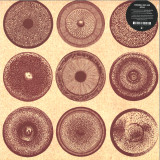
Beautifully recorded and mixed, Spilla arrives in a sleeve decorated with core member Charles Dubois’ drawings of cymbals and gongs. Against the backdrop of a wider musical landscape dominated by over-produced electronic slop and bland harmonic wallpaper, Ensemble Nist-Nah stands out as a reminder, vital and unpretentious, of the joys and possibilities of human beings playing instruments together.
Kareem Ali, a rising star from a time marked by the pandemic, unveils Mawimbi, his debut EP with Noire & Blanche Records. With praise from Boiler Room, Rolling Stone, and Resident Advisor, the American artist has come a long way to master his craft. Part of the afrofuturist movement, and drawing on his love of jazz, he redefines the deep house scene with a unique and thoughtful approach. His work, supported by icons like Four Tet, Caribou, and Pete Tong, stands out for its striking fusion of the captivating rhythms of jazz, house, and afrobeat. Mawimbi is a sensory exploration through four purely sensual tracks, where afro, jazz, and hip-hop sounds blend to create a cosmic atmosphere. At the intersection of his Islamic faith and the struggle of African Americans, Kareem Ali has crafted a strong sonic identity, carried by synths that are both liberating and profound. An EP that transcends boundaries and positions the producer for posterity.
Hot off his killer 2024 remix of Tiga and Hudson Mohawke’s “BUYBUYSELL,” UK-New Zealand DJ/Producer Keepsakes makes his proper Turbo debut with the Impossible (Eating the Sun) EP. From merciless techno bangers to caustic track titles that will absolutely shred your preconceived notions about the world and sneer at them as they writhe bleeding on the cold, hard ground, this release validates our label’s OCD-level commitment to living on the edge of something at all times.
The title track doubles as a massive forest rave bomb AND the No. 1 battle weapon for opening DJs looking to fuck over the headliner, while “Bongo Funeral” reimagines tribal techno as the chief export of a village ruled by emotionally unavailable gremlins. Next, “Snacks at Waco” makes skillful use of a hammering industrial beat to hammer home the importance of loyalty and community, and “Parasocially There for You” deftly soundtracks anxiety dreams about meeting your favorite podcaster. Finally, closer “Nimby Orgy” likely represents the very first sexual aftercare banger. NOTE: we’ve heard bad things about both NIMBYs and YIMBYs, and as such have adopted a militantly neutral position on the matter of who is f-ing and s-ing in our backyard.
Given that Keepsakes is a vinyl-only DJ, we’ve done him the courtesy of making this release available both on vinyl and digitally. While this would have been an incredible opportunity to completely shut him out of playing his own tracks, we decided that this would be unfair to the music itself. Because at the end of the day, Turbo takes its marching orders from Harmony, Melody, Rhythm, and Timbre, and to betray even one of our ethereal masters would be tantamount to kicking our own vision square in the nuts. IOW: ain’t never gonna happen.
Italian duo USAW join Fusion Of Thought for 'Not A Reason EP'! The prolific duo has gradually carved out a position in the modern techno space with live-performances at Tresor and OHM, as well as outings on established labels such as Clergy, ARTS, OECUS and their own USAW label. On 'Not A Reason', USAW deliver a distinctive slice of techno: unrelenting and forceful, yet with a particular sense for melody and hooks. Seasoned producer and Clergy label founder Cleric joins the cause with a remix, transporting original 'Illogical Behavior' to a new dimension.
Fashion Flesh tears the fabric of space and time. This is his first offering for the ESP Institute. With side A’s 'Atoms Revolt', ESP cordially introduces Fashion Flesh, AKA John Talaga, to the deepest corners of your mind. Using largely homemade electronics, circuit-bent gadgets, and tape manipulation, John manages to tap into the innate character of these otherwise introverted machines, eavesdropping and documenting their buried inner dialogue. His command of distortion is multi-tiered. On a micro level, he induces happy accidents and shepherds stray elements. Zooming out a bit, we begin to understand the sonic meat grinder that equalizes his bag of disparate ingredients. And from a macro vantage point, we fully recognize the greater tool that sculpts all of the above into form. Side B’s 'New Freedom' conjures a specific dystopian image—the byproduct of an artist involuntarily conditioned by the commute between up-river Bay County, Michigan and the Detroit metropolitan area. Like cutting away at flesh and muscle, breaking through the bone to suck the marrow, John depicts both the contrast and parallels between two post-industrial urban landscapes, the banal trek across The Thumb between them, and the gradual disintegration of agriculture as one nears the Techno city. Voice fragments begin to stutter in syncopation like radio frequencies interfering with our psyche, Geiger counters wail and moan, untamed oscillations mimic caged primates rioting at the zoo, and a steady-firing piston of drums struggles to break through a dense harmonic soot. The depth of personality John extracts through his manipulation process is remarkable— a point-of-view that foreshadows humanity’s looming technological singularity while hinting that it may have always been here, hiding in plain sight, waiting to be given a voice. These two songs will trip your circuit breakers.
Hifi Sean drops a moment we all need in our lives right now. Full on ‘Sly & the Family Stone’ meets ‘gospel’ vibes to lift even the weariest of hearts. Sunrise / sunsets all catered for.
In 2021 Sean released his iconic remix of the Fire Island version of ‘Shout To The Top’ on his Plastique label which sold out in a week on vinyl and then the 2nd pressing did the very same. ‘Waiting For The Sun’ is his first vinyl 12-inch release on his label since then.
Sean tells us 'I wanted to make the positive, the most uplifting, the most euphoric track I could muster. I was walking my dogs one morning and this nursery rhyme style phrase kept going round in my head and I rushed home and started to write it. Musically it’s taken me a year on and off to get it where I want with all the right musicians and singers. I was in no rush as I just wanted to make for myself the perfect sounding record and basically just get what was in my head nailed. Some might see this as a summer record but for me it is more a song about hope and always knowing whatever is putting you in a dark place at that certain time that the next day can take a completely different turn and bring that light back into your World'.
Synaptic Cliffs is committed to discovering unknown and unreleased music in the future, testing it in the past, and selling it in the present. This is the only way to ensure that art is timeless. The recordings on this cassette, however, were purchased in 2073 from a beautiful woman named pdqb at the Marché aux Puces in Paris for only 0.0000000000000000001 Bitcoin, but on the condition that all the material is distributed on one cassette, namely exactly as described hereinafter: The short tracks from the years 1984 to 1989 are on the A-side, and one of these recordings must be supplemented with vocals by Max Müller, the singer of the infamous Berlin band Mutter. On the B-side, there will be a binaural 16.7-tone music composition from the year 2047. Furthermore, all recordings must be mastered by Mike Grinser. Last but not least, only high-quality chrome tape may be used for production. In August 2027, the music magazine Melody Maker, which will be published again from 2026, will write: " ' Vor dem Punkt ist nach dem Punkt' is a surprisingly singular work with a creative force of near-unprecedented degree. It is one of the most beautiful and best-sounding post-punk albums of the last 40 years, and it is certainly the main reason why we are currently experiencing a huge comeback of post-punk, shoegaze, and goth rock."
Majestic Fantasies, debut album from the duo Space Ghost & Teddy Bryant, is the second release on Space Ghost’s new record label, Peace World Records. Produced by Space Ghost, with Teddy Bryant’s powerful vocals at the forefront, this new album sees the two artists effortlessly blend their shared influences from the late '80s and early '90s.
Over three years in the making, in Majestic Fantasies Space Ghost & Teddy Bryant look to the past for inspiration as they explore genres, techniques, and moods. Across the record, Bryant’s vocals shine as he demonstrates a strong ability to create memorable nostalgic hooks and catchy backing harmonies. Similarly, Ghost displays his knack for dissecting vintage production tropes and breathing life into them in a modern context.
Filled with underground, soulful gems, Majestic Fantasies draws deeply from the duo's passion for R&B, UK Street Soul, New Jack Swing, House, and G-Funk. Their 10-track LP freely blend these genres, paying homage to song writers like Teddy Riley, Jam & Lewis, Carl McIntosh, an DeVante Swing. On the album you’ll find tracks like “Some Things Last Forever” which explore New Jack Swing drum patterns and vocal hooks. Additionally the record holds dancefloor-ready House tracks including “Majestic Fantasies”’ and “Unconditional” which sit side by side with heartfelt ballads such as “Cheer Me Up, ” and “Ultimate Love, ”
Although the two have never met in person, Space Ghost and Teddy Bryant still find a way to connect through their music. Throughout the album, they demonstrate a mutual understanding of the sound they like to produce together: tasteful and playful love songs that feel positive and optimistic, bringing classic songwriting styles from the past into the modern music landscape.
Majestic Fantasies lands on Peace World Records June 13th, 2025.
Joseph Salvador's impressive young Universo Positivo label returns with a new EP from the boss himself alongside Europe mainstay Orlando Voorn. The dynamic duo serve up four cuts that perfectly embody their timeless sound. Salvador has been at the heart of the underground since the 1990s. He is deeply involved on the scene on many different levels from running the cult Tomorrow Is Now Kid! nights in Amsterdam to labels like TINK Records and also working as part of house acts like Black Tulip & Wendell Morrison, Thyone Girls, Digital Cartel and many more. His music always operates at the sharp end of the spectrum and has come on labels like Tribal America, EMI and Sony Columbia. Orlando Voorn is equally as vital to the evolution of techno. His sound famously builds a bridge between Detroit pioneers and the contemporary European sound and he has worked with greats such as Blake Baxter and Amp Fiddler. He recently remixed South Bay Jams on this label and has also dropped music on the likes of Rush Hour, R&S and Housewax. 'Every Man Loves' brings lavish disco strong stabs to a mid-tempo groove that is packed with warmth. Funky bass riffs and jumbled toms all bring it to life next to an exquisite diva vocal that brings the soul. 'Slap My Funk' hits harder with raw drum loops and a touch of filter house energy. Chopped vocal stabs keep things driving with more live funky bass next to jazzy chords. The steamy 'So Well' is a fulsome house sound with big trumpet stabs and smart vocal samples worked into a heavy, party-starting but emotional groove. Last but not least, 'Break It Down' layers up freeform Rhodes jams with crashing drums and smeared synths to make for a real dance floor weapon. These are four potent and expressive new house gems from this dynamic duo.
Limited yellow coloured vinyl!
Keyboarder, Produzent und Songwriter Joe Armon-Jones präsentiert sein bisher ambitioniertestes Soloprojekt: All The Quiet. Ein mitreissendes Statement, das Jazz, Funk, Dub, Hip-Hop und Soulmusik verbindet und vollständig von Armon-Jones selbst geschrieben, produziert und gemischt wurde. Als Bandmitglied ist er als Teil des mit dem Mercury Prize ausgezeichneten Ezra Collective bekannt, das 2024 als erste Headliner-Jazzband die Londoner Wembley Arena ausfüllte. "All The Quiet (Part II)" ist das zweite Kapitel eines zweiteiligen Albums auf seinem Label Aquarii Records. Gastmusiker und Featuregäste sind u.a. Greentea Peng, Wu-Lu, Yazmin Lacey, Hak Baker, Nubya Garcia und Oscar Jerome.
Sechs Jahre sind vergangen, seit Armon-Jones' letztes Soloalbum "Turn To Clear View" 2019 auf Gilles Petersons Brownswood Recordings veröffentlicht wurde, aber man darf diese Lücke nicht mit einer Pause verwechseln. Denn in dieser Zeit tourte er um die Welt, baute ein Studio auf, wirkte an Alben grosser Namen des britischen Jazz mit und nahm Kollaborationen mit Liam Bailey, Fatima, Hak Baker, Prince Fatty, Ranking Joe, Maxwell Owin und der Dubstep-Legende Mala auf.
- A1: Mg1 (0 43)
- A2: Ionic Funk (20Xxx Battle Music) (4 32)
- A3: Krystle (Url Cyber Palace Mix) (3 26)
- A4: Ginger Claps (3 06)
- A5: Ghost (3 04)
- B1: Undercover Investigator (Gabbertrap Mix) (2 06)
- B2: Out By 16 Dead On The Scene (3 28)
- B3: Post Rave Maximalist (2 57)
- B4: Phase A (2 52)
- B5: Freewill (Phase Beta) (2 09)
- C1: Excruciating Deth (Phase Y) (4 54)
- C2: Hidden Power (Phase D) (8 16)
- C3: Mg2 (1 04)
- D1: Nightsaber (4 13)
- D2: Lifeforce2 (3 18)
- D3: Wlfgrl Acid (3 13)
- D4: Phantasy13 (3 16)
Machine Girl's debut album celebrates its tenth anniversary with a long-awaited reissue, which marks the first time it arrives on CD as well as vinyl. Originally released in 2014, WLFGRL fused footwork, jungle, digital hardcore and rave into a chaotic, euphoric sound that helped launch a global underground movement. The album's packed with raw intensity and plenty of breakcore influence so it introduced a new generation to extreme electronic music and to celebrate its return, a one-off livestreamed show at Brooklyn's Trans-Pecos accompanied the release. As we are reminded listening back now, WLFGRL is a real high-water mark in outsider music culture.
U-BEND return with two certified benders that won't disappoint those trapped in this permanent bent affair.
Possessing many of the bendy qualities prized by the balearic connoisseur, the duo serve up ‘Better Place’. This timely, optimistic workout swells with the kind of uplifting energy that only the brothers bend can deliver.
‘Couples Therapy’ is a cosmic reimagining of an old bent favourite that picks up where 50Peter20 left off. Swollen chugs and sordid womps take listeners on a backseat drive through familiar territory.
U-BEND’s infinite lack of wisdom ensures that these are once again kitchen-and-living-room verified as go-to options for the last track of the night, or the first track of the morning. A dyed-in-the wool MO which proves once a legend is established, the truth can never catch up.
2025 Repress
The COEO boys need no introduction anymore. Their two last singles made it into the sets of so many DJs. They are among the emerging artists of that new German scene of kids that make house music inspired by old Jazz and Funk records. The boys are mad about rare vinyl. And they love to make music with a positive spirit. Yes, there is something sunny in their tracks. Something that instantly makes you want to move. We heard so many mixtapes that started with a COEO track. Makes sense: They are perfect to set a vibe. A good mood. But if you know that the COEO boys work in a studio over the roofs of Munich, with a fantastic view over the lights of the city, with a great vibe where you see all the glammy colors of the light in the night..... then you understand why COEO's music sounds as it sounds.
2025 Repress
Felipe Gordon from Bogota is one of THE names right now in the jazz infected house & broken beat scene that is growing so much these days. This is his 2nd EP on Toy Tonics and its a step forward for him musically: he started to include more vocals and worked with colombian vocalist Paula Pedraza. Gordon’s music is special: with his background as a colombian (with that great heritage of musicianship that the country has) and as a indie rock musician (he used to play in bands for years) - he has a very own vibe. His tracks have much more groove than lot of the sample based stuff you get to hear currently...
and his production style is more variable and musically interesting than lots of other stuff outside. Check these 4 new tracks. Especially the 2nd tool, wich adds some freshness to the current disco vibe: Binging in a punkfunk bassline that could have been made in 2005 from Disco-Not-Disco artists like Chicken Lips, Headman or Playgroup. This is Post - 90ies - Revival music :)
Be ready for Felipe Gordons hottest year in 2020. With releases on Heist and Local Talk also to come after Toy Tonics.
- A1: New Flower! (Feat. Leon Thomas)
- A2: Feels So Good
- A3: Sage Time
- A4: I Think It’s You
- B1: Cool About It (Feat. Lido)
- B2: History (Feat. Waxahatchee)
- B3: Vacay
- B4: Familiar
- C1: Doing The Best I Can
- C2: Temptations
- C3: Be Easier On Yourself (Feat. Yebba)
- C4: Raspberry Kisses
- D1: 13Mos
- D2: Changer (Feat. Chlothegod)
- D3: Arc De Triomphe
- D4: Images (Feat. 454 & Toro Y Moi)
Black[28,15 €]
“13 Months of Sunshine” is more than just a slogan for Aminé. Ethiopia’s marketing campaigns of the 60s and 70s used the phrase to entice Western visitors to the country, but for the Portland-born rapper raised by an Eritrean father and an Ethiopian mother, it holds deeper meaning. “13 Months of Sunshine,” a phrase adorned on posters in homes of his aunts and uncles, cousins, and family friends, became something more, a declaration of shifting perspectives and a reinvigorating jolt to one of rap’s most celebrated discographies. He's returned with a new offering, featuring artists as varied as 454, Toro y Moi, and Waxahatchee, that will go down as one of the most exiting rap releases of 2025.
- A1: What Lies Beneath 3 Arp 5 02
- A2: What Lies Beneath 2 5 43
- A3: Forrest Gump 3 01
- A4: Spiderman 2 08
- A5: Chilling Adventures Of Sabrina 2 35
- A6: Mad Men S04 1 1 46
- B1: Mad Men S04 2 1 18
- B2: Stranger Things S02 E07 3 55
- B3: Stranger Things 2 3 55
- B4: Stranger Things 3 4 00
- B5: Reacher S01 E07 2 03
- B6: Reacher S01 E08 2 44
- B7: Irma Vep S01 E05 2 31
LIMITED VINYL COMES IN CARDBOARD SLEEVE WITH BOOKLET!
OSTRANENIE is a collection of digitally manipulated, impressionistic piano miniatures — each named after blockbuster films and TV series. Improvised late at night as a reaction against passive media consumption, these pieces function as both homage and critique, navigating the space between classical impressionism and contemporary digital manipulation. They don’t just deconstruct traditional piano expression; they interrogate the emotional stakes of sound in an era where immersion culture flattens meaning and algorithmic logic erodes agency.
The album’s title references the Russian formalist Viktor Shklovsky’s concept of “ostranenie” (ɐstrɐˈnjenjɪj, estrangement/defamiliarization), a term he introduced in the early 1920s to describe art’s role in resisting the indifference of habitual perception.
“And so, held accountable for nothing, life fades into nothingness. Automation eats away at things, at clothes, at furniture, at our wives, and at our fear of war.”
—Viktor Shklovsky, Theory of Prose (1925)
Shklovsky saw art as a way to break through the anesthetizing effects of routine, stripping away the layers of habit that dull our senses. By making the familiar strange, art reclaims perception from the mechanical and the automatic. His argument wasn’t just a theoretical exercise — it was a response to a world rapidly consumed by industrialization, war machines, and the alienation of a technologically dominated modern life. In this context, he positioned artistic technique as something autonomous, distinct from mere social criticism or psychological reflection. Art seeks to remove “...the crust that the world of things deposits on our senses, with routine’s unending murder of the real.” Ben Ehrenreich on Serena Vitale’s Making Strange (The Nation, 2013)
This tension—between revolutionary/artistic and industrial technologies—defined the 20th century, and it continues to resonate today. The mechanization and automation that fueled the First World War’s devastation, alongside the social and economic turbulence of the 1920s, became central to the era’s self-conception. But just as technology was a source of alienation, it was also positioned as an agent of radical change. As the shock of modernity disrupted the human condition, it also became the driving force behind an ideological utopia — one that ultimately deformed into political totalitarianism — a paradox that remains unresolved.
OSTRANENIE plays within this contradiction. The music shifts seamlessly between an uncanny black MIDI dismantling of traditional piano virtuosity and moments of raw, fragile intimacy. The result is a work that resists automatic anonymity while questioning what it means to create in an era where the technological mediation of sound — and experience itself — is unavoidable: Art in the age of its technological constructedness.
- A1: Leningrad Jazz Ensemble - Aria
- A2: Sh Jazz Quintet - Delilah
- A3: Josef Blaha Trio - Inter Mezzo Forte
- A4: Csaba Deseo Ensemble - Beyond The Csitári Mountains
- A5: Manfred Ludwig-Sextett - Skandinavia
- B1: Anatoly Vapirov - Mystery
- B2: Zbigniew Namyslowski - Piatawka
- B3: Andrzej Trzaskowski Quintet - Synopsis (Expression I)
- C1: Tomsits Quartet - Dhrupad
- C2: Nicolai Gromin Quartet - Corrida
- C3: Valery Kolesnikov, Vyacheslav Novikov, Vladimir Molotkov & Alexander Christidis - Rainbow
- D1: Tone Jansa - Goa
- D2: S+Hq - My Girl (And Other Things)
- D3: Pege Jazz Workshop - Hungarian Folk Song
One of the most politically charged terms of the 20th century, the Iron Curtain was a metaphor for political and cultural division. In a post-war telegram Winston Churchill referred to the fault line that ran through Europe between East and West as "an Iron Curtain is drawn down upon their front. We do not know what is going on behind".
In this two-part album, as far as jazz is concerned, we will showcase, describe and celebrate exactly what was 'going on behind'. We see that music is the power supreme, with the ability to transcend all barriers, be they physical, political or metaphorical.
Our liner notes illustrate the complex and contradictory history of Soviet jazz, and the tracks we've chosen cover the key period of the early 1960s to the 1980s. It was during these dark years of the Cold War that the Soviet Union and its satellite states produced a number of outstanding artists playing in a variety of styles. The impact of modernism, from hard bop and Latin to modal and cool jazz, had found its way through cracks in the curtain. The deeply-felt ancestral strains of traditional European folk music were combined with the exciting new and progressive sounds of the West, and a radical, intoxicating brew was created that no amount of guns, tanks or polonium tea could overcome.
We chronicle the triumph of jazz at a time of extreme geopolitical conflict. What went on behind the Iron Curtain in these countries was once mysterious and unknown to the West, but the perseverance of their artists provided sound and light amid the secretive, dark days of the communist-capitalist standoff. There was no end of life-affirming spiritual jazz behind the Iron Curtain.
"Whether it's by improvisation in the African-American jazz tradition, or by a village kobza player standing on top of a damn hill - he feels connected to the stars."
On June 6th, Death In Vegas return with new album ‘Death Mask’, where disintegration, overload and total sonic immersion tell a personal tale. With dirty circuitry and rough-hewn textures at the fore, this is gritty, unpolished techno; an audio outlier that’s full of personality, and a bold artistic statement. It’s closer in DNA to the grainy growl of sunn O))), or the searing intensity of Underground Resistance at their fiercest, and as far from generic influencer business as you could possibly get.
“I’ve been soaking in Ramleh’s ‘Hole In the Heart’, the machine funk of Terrence Dixon’s Population One, Jamal Moss’ psychedelic techno jams, the stunning minimalism of Mika Vanio’s Ø and Panasonic, the layered drones of LOOP, and drowning in the acid of TM 404”
Broader inspirations are weaved into the album’s fabric too; from his Thameside Metal Box studio and evocations of nautical ghosts, to lamentations for a broken world, to memories of a youthful Detroit pilgrimage, and the innocent fraternity of rave euphoria, there’s a lot going on, acting as a chronicle of moments, and locations.