On its latest album »Music For Air«, the Berlin-based interdisciplinary duo Gamut Inc explores new possibilities of the computer-controlled pipe organ — from hypervirtuoso excess to nuanced automation and rhythms beyond the fixed grid. Composed and recorded during a two-week residency in Toulouse, the pieces move between harmony and noise, conjuring a euphorically intoxicating maelstrom of overlapping, accelerating sound.
Gamut Inc’s work with the computer-controlled organ actually began in 2009 with a commission from ON – Neue Musik Köln for the Kunst-Station Sankt Peter — at a time when few congregations were ready to open their instruments to this kind of work. When the duo of Marion Wörle and Maciej Śledziecki officially founded the ensemble in 2013 as an interdisciplinary project, they first developed their own music machines with instrument builder Gerhard Kern, returning to the organ in 2018 when more churches and venues had opened their doors … and Gamut Inc carried their practice across Europe and beyond, developing AGGREGATE (first a concert series and then an annual festival) into a platform dedicated to organ music of the 21st century.
Sharpening a critique of mechanisation, digitality, and the human in between, the project is conceived around the construction of pre-modern instruments and the control of these instruments by contemporary technologies, resulting in an aesthetic that bridges the very old and the very new. Recent works include the human-machine trilogy »Over The Edge Club« (2021), »Rossum’s Universal Robots« (2022), and »Zeroth Law« (2023, performed at Deutsche Oper Berlin with the RIAS Chamber Choir and the Logos Robot Orchestra), and »Black Square« (2025), a wind-dynamic modular organ built by Tony Decap, inaugurated at CTM Festival and broadcast on Deutschlandfunk Kultur and SWR Kultur. Their organ installation AGGREGAT#10, commissioned by Sónar Festival, was acquired for the permanent collection of Palau Güell Barcelona in 2022.
Gamut Inc’s latest album »Music For Air« was composed and recorded during a two-week residency in Toulouse on the wind-dynamic organ »L’Explorateur«, with individually computer-controlled wind pressure per pipe. The seven pieces move between harmony and noise, conjuring a euphorically intoxicating maelstrom of overlapping, accelerating sound and again exploring new possibilities of the computer-controlled pipe organ — from hypervirtuoso excess to nuanced automation and rhythms beyond the fixed grid. Sensual and ecstatic.
Built with the immediacy that comes from limitation, iPhone Grime is almost exactly what it says on the tape case. Pulled directly from the portable communication device of Front Left Life's Louis Payne, iPhone Grime is the perfect distillation of raw ideas through a simple medium. When producers can drown in the infinite possibilities of the DAW vortex, a simple phone app can steer you swiftly to the sharpest results. Snippets of real world sound captured on the mic ground these quick-fire beats in a time and place, dynamic and street-level like grime and early dubstep was when it was being imagined on PlayStation games and filmed on ropey phone cameras.
Payne is undoubtedly bringing perspective to his sketches, having forged a connection with London's club scene through his part in the widely hailed Front Left Life parties in Catford, at Venue MOT and elsewhere. With a roll call of guests that cuts a sharp line through the best of bassweight club music right now, his taste and knowledge precedes his first steps into the production arena. Rather than puzzling out the path to a thousand likes for a hardware jam reel, he's opted for a direct line between his brain and the beat at the end of it.
You can hear the naivety behind vocal loops like the one nagging away on 'Follow That', calling to mind the first time you ever tried making a Fruity Loops beat. But these are no amateur throwaways — the technology has moved on and Payne's instincts guide him towards legit constructions that could easily do damage in the club. Sometimes they exist as no more than an eight bar loop, while others like 'Wind It Up (Dream Dealers Version)' or 'Extra Dimensional Being' stretch an idea out. Throughout it all, the looming throb of square wave bass glues the record together and anchors the grime dimension of Payne's job lot of phone jams.
Payne's work is all his own, and the snatches of real life around the beats anchor this music in his own London life. But, like previous shifts in technology and accessibility, iPhone Grime also raises an important prospect—that anyone with one of these apps, a Bluetooth speaker and an idea can bring music out of studios and into the world. History has already proven, when that happens the possibilities become thrillingly unpredictable.
Juxtaposing acid-tipped breakbeats with influences of acoustic behaviour in nature, Sully unveils a debut release for Critical Music with two-track 12” ‘Flux’ b/w ‘Chatter’. Sully says: "‘Flux’ and ‘Chatter’ were another attempt to take the groove and feel of the breakbeats I've been previously working with and build them from the ground up. The aim was to find space for the tonal elements to breathe and end up in a place I'd not been to before." Birdsong became an unexpected reference point during the writing process, with Sully using synthesis to analyse and recreate natural calls as compositional material. The resulting dialogue between acoustic behaviour and digital sound generation forms part of the release's underlying methodology rather than a surface aesthetic. "The contrast and contradiction of the organic world captured by digital processes is always a pull for me," Sully explains. "It never fails to inspire." Jack Stevens aka Sully has spent much of the last two decades developing a body of work that sits slightly outside the obvious cycles of revival that have shaped UK bass music. While his records draw from established rhythmic forms, they rarely settle within a single tradition, instead examining the shared characteristics between them. His releases have consistently explored the points where 2-step swing, breakbeat construction, and jungle's rhythmic vocabulary begin to overlap. Sully’s records retain a relevance that extends beyond the moment of their release, continuing to circulate through DJ sets and specialist record collections. This 12” adds another chapter to a catalogue defined by sustained investigation into rhythm, texture and soundsystem music.
Athens-based multi-instrumentalist, songwriter and producer Raphael Meleteas presents "Someone Else", the title track and first single from his forthcoming debut album of the same name.
Written, arranged, performed, recorded and mixed entirely by Meleteas, the recording reflects an organic approach to songwriting, where warm analogue textures, cinematic arrangements and carefully layered instrumentation take precedence over studio polish. Every instrument heard on the track is performed by Meleteas himself.
Drawing from the rich tradition of orchestral pop, cinematic music and library recordings of the late 1960s and 1970s, Someone Else balances intimate songwriting with understated orchestration, creating a sound that feels timeless while remaining unmistakably personal.
Recorded in Athens, Greece, the single introduces the atmosphere that defines the forthcoming album: melodic, reflective and rich in subtle detail, unfolding naturally through live performance rather than digital construction.
"Someone Else" offers the first glimpse of Raphael Meleteas' debut album, also titled Someone Else, which will be released by Veego Records in September 2026.
With 108, Nathan Melja shapes a world built around movement, repetition and presence.
Across four tracks, rhythms unfold with patience. The record opens with “Joe’s Muse”, a playful and deep energetic track, before “Les Planètes” expands into something wider, with the help from New York vocalist Joiah, and more suspended. At the centre, eponymous track “108” draws you into a more hypnotic, ethereal space. “Trippin’” closes the EP with a sharper physical pull, bringing the record back toward the dancefloor without breaking its internal spell.
The release is completed by “Strategic Patterns” as digital bonus, an additional exploration of sounds, repetition and subtle displacement.
108 is a record for the space between attention and abandon, precise in its construction, but always open to wonder. It also offers a faithful portrait of the broad panorama of influences that Nathan Melja incorporates into his music, a sound that can be equally appreciated on the dancefloor and through attentive listening.
The Third Room launches its new curator-led series with Oscar Mulero, one of techno's most uncompromising and influential voices. Through decades of releases, DJ sets and his work with PoleGroup, Mulero has helped shape a sound defined by tension, reduction and depth, leaving a lasting mark on contemporary techno culture. For this first chapter, he brings together artists who reflect that same discipline and sonic clarity. Rather than focusing on solo authorship, Mulero shifts towards dialogue - connecting with producers who operate within a shared language, while bringing their own distinct perspectives to the record. He opens with Sonic Synergy, the only solo track: restrained, dub-influenced and immersive, built on warm low-end and gradual development. The centrepiece of the record follows with Reaction Pair, a collaboration with DVS1. Bringing together two of the scene's most established voices, the track unfolds as a fluid, open construction: a rolling, slightly woobly bassline meets evolving chords that build and dissolve tension in continuous cycles, creating a sense of forward motion without obvious peaks. Seven, with Luigi Tozzi, introduces a more spatial dimension, merging Tozzi's atmospheric depth with Mulero's steady drive. Closing track Between the Stars, with Isabel Soto, leans into a timeless, understated energy - functional without ever becoming forceful. Across all four tracks, the EP remains consistent in tone: spacious, spheric and focused on long-form movement. As the first entry in the series, it sets a clear direction - reduced, hypnotic techno built for longevity. ? 2026 The Third Room A1 Written and Produced by Oscar Mulero | A2 Written and Produced by Oscar Mulero & Zak Khutoretsky | D1 Written and Produced by Oscar Mulero & Luigi Tozzi | B2 Written and Produced by Oscar Mulero & Isabel Soto Mastered by Ahmet Sisman (The Third Room Studios) Artwork by Charlotte Ernst Design by Daniel Bornmann (STUEDIO.XYZ) Distribution by Clone Pressing by Matter Of Fact
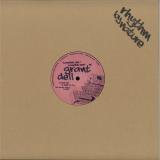
Rhythm by Nature is back with Somefink Old, Somefink New, a three-tracker from seasoned producer Grant Dell that bridges past and present: sketches first laid down in the mid-2000s rediscovered and reworked alongside a brand-new cut, forming a dialogue between memory and renewal.
The EP opens with Feel Me?, a deep tech construction driven by a heavy low-end, its groove unfolding patiently while flashes of disco glimmer through the framework. On Light of Day, Dell shifts into full deep house territory — spacey pads and floating strings suspended across open structures until acidic stabs break through, twisting the track into brighter, playful directions. Closing with Death Disco in Dub, Dell channels the hallmarks of his Tribalation project: dub-infused atmospherics, light percussion and echo-drenched fragments circling around a hypnotic core, equally suited to open or dissolve a night.
With Somefink Old, Somefink New, Rhythm by Nature traces the arc of an artist deeply embedded in the underground, reuniting past forms with present gestures in a release that reaffirms the label’s consistency in quality and commitment to timeless club music.
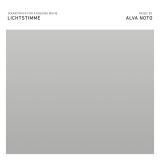
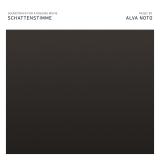
NOTON is pleased to announce the release of LICHTSTIMME and SCHATTENSTIMME by Alva Noto: two soundtracks for a film that never existed.
The starting point is E. T. A. Hoffmann's The Sandman: a world where perception and reality drift apart, and the question of identity remains unresolved. Recognition, in Hoffmann, is never quite secure. The doppelgänger is less a figure than a condition, the point at which the self can no longer vouch for itself.
The first record, LICHTSTIMME begins in an open, almost weightless sonic world. Something still appears untouched. The music carries a sense of proximity, clarity and trust. But this sense of certainty does not remain. Gradually, the proportions begin to shift. Sounds lose their definitiveness; familiar structures become strange. The music begins to question its own surface. What initially appears as light already contains the possibility of its shadow.
With the second record, SCHATTENSTIMME, the instrument enters the sonic space. The pieces were recorded together with percussionist Rainer Römer and the Ensemble Modern. A central role is given to the Sixxen, the extraordinary metallic percussion instrument originally developed by Iannis Xenakis together with Les Percussions de Strasbourg and instrument maker Robert Hébrard for Pléiades. Its resonances, unusual microtonal structure and distinctive timbre make it an instrument that resists being placed within a familiar musical context. Complete Sixxen sets are extremely rare and require highly specialised construction.
The instrument appears only on the second record. Its absence from LICHTSTIMME and its arrival on SCHATTENSTIMME are structural. It behaves like a shadow: present only when something else has already changed. With its appearance, it is not only the sound that changes. The entire musical space seems to shift its character. The Sixxen's metallic sound becomes the unfamiliar. The unfamiliar becomes a counterpart.
The two records follow an inner movement: from light to shadow, from trust to doubt, from identity to doppelgänger, and back to a harmony that is no longer quite the same. What emerges as an independent, personal sonic language has been transformed by the journey. The unfamiliar has not disappeared. It has become part of the self.
LICHTSTIMME and SCHATTENSTIMME are records about the instability of the familiar. Something is always almost recognisable and never quite confirmed, in the story, and in the sound.
Album art designed by Carsten Nicolai & Nibo.
NOTON is pleased to announce the release of LICHTSTIMME and SCHATTENSTIMME by Alva Noto: two soundtracks for a film that never existed.
The starting point is E. T. A. Hoffmann's The Sandman: a world where perception and reality drift apart, and the question of identity remains unresolved. Recognition, in Hoffmann, is never quite secure. The doppelgänger is less a figure than a condition, the point at which the self can no longer vouch for itself.
The first record, LICHTSTIMME begins in an open, almost weightless sonic world. Something still appears untouched. The music carries a sense of proximity, clarity and trust. But this sense of certainty does not remain. Gradually, the proportions begin to shift. Sounds lose their definitiveness; familiar structures become strange. The music begins to question its own surface. What initially appears as light already contains the possibility of its shadow.
With the second record, SCHATTENSTIMME, the instrument enters the sonic space. The pieces were recorded together with percussionist Rainer Römer and the Ensemble Modern. A central role is given to the Sixxen, the extraordinary metallic percussion instrument originally developed by Iannis Xenakis together with Les Percussions de Strasbourg and instrument maker Robert Hébrard for Pléiades. Its resonances, unusual microtonal structure and distinctive timbre make it an instrument that resists being placed within a familiar musical context. Complete Sixxen sets are extremely rare and require highly specialised construction.
The instrument appears only on the second record. Its absence from LICHTSTIMME and its arrival on SCHATTENSTIMME are structural. It behaves like a shadow: present only when something else has already changed. With its appearance, it is not only the sound that changes. The entire musical space seems to shift its character. The Sixxen's metallic sound becomes the unfamiliar. The unfamiliar becomes a counterpart.
The two records follow an inner movement: from light to shadow, from trust to doubt, from identity to doppelgänger, and back to a harmony that is no longer quite the same. What emerges as an independent, personal sonic language has been transformed by the journey. The unfamiliar has not disappeared. It has become part of the self.
LICHTSTIMME and SCHATTENSTIMME are records about the instability of the familiar. Something is always almost recognisable and never quite confirmed, in the story, and in the sound.
Album art designed by Carsten Nicolai & Nibo.
Where LWP001 moved inward, LWP002 moves forward - five artists converging around a shared pull toward the dance floor, each arriving from a different angle. Peryl opens with the precision and restraint his sound is built on, texture held under careful tension. Aöcram follows with something hypnotic and dense, pressure that doesn't let up. APRS and Lask, collaborating for the first time, match that intensity with something lighter in its construction - drive without weight, air without losing grip. nil closes the record in a different register altogether, slower and more introspective.
Compounding a reputation for his unique vision on techno with an uncompromising underground ethos utilising a fusion of deep and energetic electronics, Lee’s sound always creates a myriad of tension and construction which has seen him become one of techno’s elite, appearing in the most prestigious underground venues across the planet. His consistently original and dynamic productions, which have earned him much international ecognition, are frequent and in great demand. Appearing on many impeccable cutting edge and classic imprints over the years, Lee’s music has generated relentless plays and support from the brightest and leading connoisseurs in the underground techno scene.
Continuing with the ‘Limited As Fuck’ series of releases, on our fiercely independent techno label based in Scotland, we’ve got an electronic guardian of such resolute astral belief in how the purest of dance music should be relayed to the occupants of any Celestial City. You will believe in RIOT when we say “The ‘Sentinel’ has awoken.”
Featuring eight tear drops out of the smoke fuelled rain from a distant belt in the galaxy, no ‘Moonrunner’ will be able to surf the ‘Gravitational Waves’ this Motor-City inspired journey takes you on. Book yourself passage on the Starliner ‘Off-World’ for a stargazing extravaganza into ‘The Gates Of Orion’ and witness the brightest of glimmers ........... in the dark.
The full digital release also features one bonus spellbinding track so your mind can melt into the depths of
space and time.
WARNING: YOU WILL OBEY IN ORDER THAT RIOT CAN TAKE YOU ONE STEP BEYOND …………….
Credits:
Written by Lee Holman
Mastered by Joe Farr
Artwork by Alan D. Oldham & Nomad
Alt Dub boss Federsen once again joins forces with cv313 and Echospace Detroit to deliver a second instalment in their ‘Altering Dimension’ series, once again merging hazy textural sonics with delicate dub leaning aesthetics.
Detroit’s dub techno lineage continues to evolve as cv313, Stephen Hitchell of Echospace, teams up with Federsen for Altering Dimensions Part Two, another collaborative EP set to land on Federsen’s Alt Dub imprint.
A defining figure in the genre, cv313 has long shaped its language through seminal works like Seconds to Forever and the Dimensional Space LP, fusing enveloping atmospheres with tactile rhythmic structures. Alongside him here,
Federsen whose music can also be found on Echospace Detroit as well as Grayscale, Synchrophone, Lempuyang and Avant Roots, has carved out a distinct voice rooted in precision and analogue-rich depth. Altering Dimensions Part Two again captures the intersection of these two perspectives, linking Detroit’s enduring sonic heritage with a refined, forward-facing approach to dub techno.
‘First Dimension’ opens the release, laying down heavy doses of sub bass, bubbling percussion and ever evolving, murky dub echoes amidst a crisp, stripped-down rhythm section.
‘Second Dimension’ follows and leans into vacillating atmospherics, a swaying bottom end groove and hypnotic, subtle evolution that’s synonymous with the cv313 sound.
‘Third Dimension’ kicks off the b-side next, further embracing this introspective and immersive style as textural elements shift and mutate atop intricately modulating percussive hits, bubbling synth tones and weighty low-end percussion.
‘Fourth Dimension’ then concludes the release, reducing things down to bare bones of hypntic dub, embracing a beatless construction the composition relies on spatial depth, nuanced delays and an underlying tension that decays
A central figure in Belgian techno, Border One's work has also been an international reference for consistency and direction since his early releases. An artist for artists with true commitment to his sound, Steven Petit's impact in the studio and behind the decks is admired by anyone who has done their homework. His music describes tight pressure under curious, modular-like sequences that stretch through the timeline of each track. The scale of minimalism remains key here, and the Belgian wastes no time when tunneling through his erratic tracks. Jazz-like dissonance drives his tension and although each element is carefully measured, the records truly command dancefloors. 'Inner Radiance' is no different. The Fuse resident takes his game one step further, pushing harmony to hysteria at every turn.
The EP skips foreplay and dives straight into the extremities of Border One's sound. In 'Reducing Valve', sustain is the key ingredient to this chaos. Slowly ripping the synth sequence into chords, Border one maintains a firm hold on the track's tension while remaining playful with the main theme. 'Sensory Reset' is more of a lurker with its shifting pad that spreads across the stereo image. This track is characterized by a grim urgency as opposed to its predecessor's progressive spiral. Keeping things low to the groove, the A2 swings about satisfyingly while Border One tinkers at his 909 constructions. Continuing his work on resonance, 'Transfigured' balances obscurity and surrealism. With a sequencer on the loose and a drum machine to emphasize it, the Fuse resident guides his audience into twists and turns at a constant pace. Here, we explore the dichotomy between the warmth and cold of a modular sound in techno, something frequently done but rarely mastered. Border One puts his years of experience to work to provide a combination of flair and balance to his tracks, something that is clearly translated in this EP. Of course, the final track - the title track - 'Inner Radiance' brings something very special to the table. The power of simplicity can never be underestimated and Petit knows just how to use it. With a strong core to an already sturdy track, the conclusion is spectacular. Emphasizing the electrifying nature of the record, Border One adds vintage chord stabs that fit right in with the sharp lead to create a powerful and memorable dancefloor experience. Not as much of a wind-down more than it is a gripping cliff hanger for his future releases, Border One provides once more an EP that underlines the true ethos of techno music.
A new EP by Extrawelt is always something special, as they continually manage to reinvent themselves while remaining unmistakably true to their sound. The a-side „Moonster“ of their latest record forms a subtle and almost magical bridge to early musical influences such as Immortal Coil, Chris & Cosey, The Cure, and Throbbing Gristle.
In doing so, they reclaim, or rather reintroduce, a powerful, mystical element into their music, one that is integrated so naturally it feels as if it has always been an essential part of Extrawelt’s sonic DNA. Beyond that, the track unfolds through numerous facets, constantly shifting and evolving. Just when you think it is settling into a familiar direction, small variations emerge, keeping the piece remarkably alive and unpredictable.
You can clearly sense how much fun Extrawelt had working on this track. It is bursting with ideas, energy, and vitality, radiating a playful confidence that makes it endlessly engaging.
The b1 track „Bettermaker“ takes a different route, dedicating itself entirely to a single mood. Through subtle pitch bending and a carefully shaped tonal palette, the track unfolds with a slightly eerie, enchanted atmosphere.
From beginning to end, „Bettermaker“ remains focused and unwavering. There are no breaks or dramatic shifts in direction, instead, the piece commits fully to its initial setting. A monolithic, almost mantra like motif forms the core, creating a distinctive ambience, mystical, shadowy and faintly oriental in character.
This atmosphere is carried and reinforced by percussive, ethno inspired drums, which add an organic, ritualistic pulse. The result is a hypnotic soundscape that draws its strength from consistency and depth rather than contrast, inviting the listener into a secluded, otherworldly space.
The final piece of the EP „Popcorn Forever“ reveals another side of Extrawelt’s thinking. The track unfolds like a curious experiment in motion. Instead of building toward a predictable climax, sounds are gradually tossed into an ever running loop fragments, textures and small rhythmic ideas appearing almost casually, as if the piece were assembling itself in real time.
At first the elements seem loosely connected, sometimes abstract, sometimes slightly mischievous in the way they twist and bend. It almost feels like an impossible construction task. But Extrawelt’s experience quietly guides the process. Bit by bit the scattered parts begin to communicate with each other.
Repetition becomes the hidden engine. With every return of the loop new details slip into the structure, and what once appeared random slowly starts forming relationships inside the listener’s mind. The track never forces a clear explanation, yet the brain begins to tie the loose ends together almost automatically.
Popcorn Forever therefore works beautifully as a kind of transit piece within the EP. It moves between ideas, linking moods rather than closing them off. In typical Extrawelt fashion, the result is playful, slightly surreal and full of subtle discoveries that reveal themselves over time.
Clock Poets returns with Get Down, the seventh release on the label and a floor-focused statement from Spanish producer Baltazar, based in Palma de Mallorca and founder of the Sapernika platform. Known for selecting and developing distinct, groove-centred voices from the underground, Clock Poets hands the reins to an artist who understands hypnosis, repetition and tension as tools rather than effects.
The A-side, “Get Down”, is a pumping minimal cut shaped by slightly tribal percussion loops and a locked-in groove that builds momentum through subtle shifts rather than overt peaks. Hypnotic male vocal samples circle like a mantra, weaving ritual into rhythm as the track steadily tightens its grip on the floor. On “Try On Trust Me”, the formula expands: a female vocal, washed in reverb and echo, floats between melodic textures and soft pads, creating a more spacious, emotive framework while maintaining the same disciplined drive and forward motion. Closing the record, “On My Way” dives deeper — a stripped-back 4/4 minimal construction infused with Arabic and double harmonic scale influences. Spatial, meditative and profoundly hypnotic, it stretches time and space, offering a moment of emotional suspension within the dancefloor continuum.
With Get Down, Baltazar doesn’t chase trends — he commits to groove, sophisticated repetition and unique atmospheres. In doing so, he both reinforces Clock Poets’ sonic identity and injects it with a fresh, trance-like intensity, proving once again the label’s consistency without predictability.
Analog Fingerprints Vol. 0 is a compilation bringing together the early 2000s works of Marco Passarani under his Analog Fingerprints alias, collecting key tracks originally released on Rome’s Plasmek and Pigna labels.
For Numbers, the story starts long before the label itself. In their formative years, digging in Glasgow’s Rubadub, Passarani’s records felt like dispatches from a future city. Releases on his own Nature Records and on labels such as Generator and Interr-Ference Communications were mind blowing: rooted in Detroit techno, Chicago house and electro, yet pushing somewhere new. Much like fellow travellers Autechre, who would remix him in 2001, Passarani’s music balanced machine funk with restless experimentation.
Information was scarce, and you would hear these records first on the dancefloor or at listening stations in shops like Rubadub. Print fanzines like Ear and early web outposts such as Forcefield offered only fragments. But there was a palpable axis forming between Detroit techno and a new European wave of record labels including Skam, Rephlex, Clone, Viewlexx and Nature itself. It was the sound that defined Saturday nights at Rubadub’s ‘69’ parties in Paisley, just outside of Glasgow.
Passarani’s records, in particular, were instrumental in bringing together the future Numbers co-founders. Richard had already booked him pre-Numbers; meanwhile Calum (Spencer) and Jack (Jackmaster), then 16/17 year olds working alternate Saturdays in Rubadub, were so enamoured with the Roman sound that they travelled to Rome for the Bitz Festival in 2003 to seek out Passarani and Lory D at their source.
The first Analog Fingerprints release landed as a 12” on Plasmek in 2001, following the fractured, IDM-leaning 6 Katun material. For Passarani, the project marked a recalibration. A DJ first and foremost, he had moved into production via early computer setups, from a Commodore Amiga through primitive PC audio, Cubase and Logic, later experimenting with Ableton. The IDM scene had offered a playground for trial and error, but there was always a tension between abstraction and the dancefloor. Analog Fingerprints became the bridge: still intelligent, but with more dance than distance. After years of broken beats and complex arrangements, he wanted directness without surrendering identity.
Working closely with Francesco de Bellis and Mario Pierro in the Pigneto district, the trio formed Pigna as a vehicle for reclaiming a more accessible dance sound, deliberately steering away from the minimal wave beginning to dominate Europe. Sessions were fast, instinctive, often stretching late into the night with friends dropping by. It was a studio as social space, production as collective energy.
“In that constant search for balance, Analog Fingerprints was my way of expressing something closer to the classic dance floor. The track 'Tribute' - a tribute to my favourite early Detroit techno track of all time, 'First Bass' by Separate Minds - came after I realised I had almost lost my connection with the dance floor. The simplest step was to take inspiration from early Chicago and Detroit and twist it in our Roman ‘Pigna’ way. My goal was to create more accessible dancefloor tracks by mixing my unconscious Italo roots with my teenage love for that early US sound, ensuring the result was as far as possible from the minimal sound that was starting to dominate everywhere.” - Marco Passarani
Technically, the Analog Fingerprints tracks span a transitional era: Roland TR-909, SH-101 and Alpha Juno hardware met early software experiments. A Novation Drumstation rack stood in for the unattainable TR-808, syncing with TB-303 and TR-606. Yet the true secret weapon was Jeskola Buzz, a tracker-style modular environment that allowed step-by-step parameter control and strange melodic constructions, later exported into the audio sequencer. Even the lead on ‘Tribute’ came from an early PPG Wave-style plugin. It was hybrid thinking at a moment when digital tools still felt unstable but full of possibility for technologists like Passarani.
Behind the music sat Finalfrontier, a loose Roman collective orbiting Nature and Plasmek. Distribution and production were intertwined; importing obscure records into Italy built connections with like-minded outsiders across Europe and the US. Expensive phone bills and fax machines forged an “electronix network” that linked Rome to Clone, Viewlexx, Skam, Rephlex, Rubadub and Detroit’s Underground Resistance. There was a shared sense of survival and resistance, of operating against commercial systems.
Passarani recalls “The first time I found a sheet of paper inside an Underground Resistance 12” with info about upcoming releases... and a huge picture of Spock on the back. Imagine that: you love the music, you love Star Trek, and there’s someone on the other side of the ocean sharing those same values and sounds. It was the perfect match. We even gave our original company the suffix ‘Finalfrontier’: that says it all.”
Feedback in that era arrived physically: distributor faxes, conversations with visiting DJs, the experience of playing abroad and meeting kids who had connected with the records. Glasgow became a key node in a scattered outlier network. Passarani personally brought the first two Nature releases to Fat Cat in London, playing them in-store. Shortly after, a fax arrived from Rubadub in Glasgow requesting copies.
“I still remember that phone buzz and the fax paper slowly sliding out, with someone I didn’t know saying they wanted 75 copies of Nature 001. Or like the time we got a fax from the Rephlex crew just saying, “Hello Nature Records, Keep up the good work.” That was how we knew the message was getting through. It was a fantastic feeling; just one piece of thermal fax paper as an analog notification - the mood for the entire week would change.” - Passarani
The connection to Glasgow has since stretched across generations. As Passarani reflects, links often fracture as scenes renew themselves, but in Glasgow something different happened. New and old mixed seamlessly. There was a visible trust in what came before, and a willingness to carry it forward rather than discard it. Observed from Rome, it was deeply encouraging.
Analog Fingerprints Vol. 0 captures that moment of exchange: Rome to Glasgow, Detroit to Europe, experiment to dancefloor. It documents an artist recalibrating his sound and a network of scenes discovering one another in real time, connected by vinyl, faxes and shared intent.
From the depths of the Mexican electronic music scene emerges a new chapter with its first vinyl release. PHONOGENE RECORDS officially opens its own chapter on the international underground map. PHONOGENE EP
The new chapter of PHONOGENE RECORDS comes courtesy of the Italian duo NU SOUL CITY, who deliver an EP that encapsulates the essence of the label: depth, precision, and a groove as subtle as it is powerful. With a sonic language that navigates between minimal, microhouse, and an innate European sensibility, the duo delivers an elegant, functional, and characterful work.
This release is further elevated by two exceptional remixes from Christopher Ledger, one of the most respected producers in the contemporary scene. Ledger brings his unmistakable touch: surgical rhythms, detailed sound design and a progressive construction that turns each reinterpretation into a masterpiece. It is a declaration of principles: a precise, refined and deeply dancefloor-oriented sound, where every element serves a purpose and every texture propels forward with textures of Dub House, Minimal House and Breakbeat.
Continuing his refraction of the rave continuum into pointedly dislocated, delicately bruising sound system meditations, Low End Activist returns to Peak Oil with a second instalment in his Airdrop series. This time around, he channels the ghosts of foundational tech-step and the quantum leaps of late-90s D&B to provide the inspirational fuel for his skeletal, astral constructions. A strong stylistic thread continues to weave through the LEA output from his earlier self-released EPs and Sneaker Social Club albums, where haunted atmospherics, blown out subs and snatches of breaks dart around each other in empty dancehalls, but the finer point of the sound design and synthesis makes very specific references to landmark moments in hardcore's evolution.
By weaving his own autobiography into the music, the Activist maintains a fundamental theme of his work to date. 'Colin's Golf', 'Smithy's Porsche,' 'Merv's Lazy Eye' and 'Brillo's Teeth' are all personal codes harking back to the formative Oxford rave scene. With the framework in place, he uses textures, timbres and studio tricks from scene-leading pioneers and local heroes of the era as ingredients in thoroughly modernist concoctions. None of the reference points are deployed as literal callbacks — they're waymarkers for the creative process and faint triggers bedded deep into Airdrop II's strange formations. Fleeting sonics might trigger latent memories for those who were there. For everyone else, Airdrop II is another step further along rave's eternally unspooling odyssey, guided by decades of precedents on a path into the future.
Pioneer of the electronic scene and co-creator of iconic projects like Age Of Love and BBE, Bruno Sanchioni returns with the fourth installment of his acclaimed series: Capture EP 4.
This new chapter delivers four powerful and hypnotic tracks, each crafted with the precision and flair that define Sanchioni’s legacy. With deep grooves, acid-tinged lines, and a finely tuned sense of progression, the EP invites listeners into an immersive and energetic sonic journey.
Capture EP 4 further cements Sanchioni’s reputation as a master of electronic storytelling—pushing boundaries while staying true to the spirit of the underground. A compelling addition to his ever-evolving discography, and a must-have for those who seek depth and intensity on the dancefloor.
French:
Pionnier de la scène électronique et co-créateur de projets emblématiques tels que Age Of Love et BBE, Bruno Sanchioni revient avec le quatrième volet de sa série acclamée : Capture EP 4.
Ce nouvel opus dévoile quatre titres percutants et hypnotiques, façonnés avec la précision et la sensibilité sonore qui font la marque de Sanchioni. Entre grooves profonds, lignes acidulées et constructions immersives, cet EP embarque l’auditeur dans un voyage aussi intense qu’élégant.
Avec Capture EP 4, Bruno Sanchioni confirme une fois de plus son statut de maître de la narration électronique — explorant de nouveaux territoires tout en restant fidèle à l’ADN de l’underground. Un disque incontournable pour les amateurs de sons authentiques, profonds et puissants.
Bringing together the elder statesman of the Zulu guitar Madala Kunene and internationally acclaimed Sibusile Xaba, kwaNTU pulls two generations of South African guitar mastery into a single point of focus. Under-represented on recordings outside of South Africa, Madala Kunene (b. 1951), the ‘King of the Zulu Guitar’, is revered as the greatest living master of the Zulu guitar tradition. Sibusile Xaba, whose collaboration with Mushroom Hour Half Hour reaches back to his first recording in 2017 (Open Letter To Adoniah/Unlearning), has garnered international acclaim for his unique voice and virtuoso guitar stylings, which bring together multiple South African guitar lineages in an original, spiritualised fusion. Collaborating with Mushroom Hour and New Soil for kwaNTU, the two players come together to weave a filigree sonic fabric which reaches down to the heartwood of Zulu guitar music but moves resolutely outward, building on the past to create a deeply rooted statement about present conditions and future travels. kwaNTU – which can be roughly translated ‘the place of the life-spirit’ – is also conclave of teacher and student, as Xaba has been taught by Kunene for the last decade. Meditative, rich and sonically sui generis, kwaNTU finds these two musicians linking up within the inimitable space of sound and spirit that they share through Kunene’s teaching.
The great masters of South African music have not all had equal exposure. For many years the generation of musicians who were exiled during apartheid took centre stage, as the regime made it very difficult for those at home to be heard. More recently, a new cohort of important voices, especially in jazz, has broken through to international consciousness. But for the generation of musicians in between – those who shone like beacons in the most difficult final years of apartheid and immediately afterward – international recognition has been slow in coming.
Madala Kunene, ‘the King of the Zulu Guitar’, is among this number. A revered figure for current generations of South African musicians, Kunene began his recording career in 1990, at the bitter end of apartheid, with a now classic self-titled LP for David Marks’ storied Third Ear imprint. Born in 1951 in Cato Manor, near Durban, he had determined to be a musician from early childhood, and by the time he first entered a recording studio he had already had a long career as a popular performer. His virtuoso absorption and transformation of the venerable Zulu maskanda guitar tradition and his richly spiritualised approach to music immediately marked him out as someone special, and in the years that followed, Kunene cemented his position as one of South Africa’s musical elders. He is without doubt the grand master of the Zulu guitar tradition, but his sound and sensibility ranges far beyond it into varied sonic terrain, and he has collaborated with a wide range of musicians both at home and abroad. Now in his mid-seventies, he remains a shining light for those that are making music in contemporary South Africa.
‘He is really an amazing person,’ says the guitarist Sibusile Xaba, who has been mentored by Kunene for over a decade, and now invites a collaboration with him on kwaNTU. ‘As a mentor, he's really powerful in showing us the way. For us to have this opportunity to make music together and have a project together is really a blessing to me.’
Xaba himself grew up in Newcastle, KwaZulu-Natal, where his mother had been in a band and his father sang in a church choir, and from early childhood Xaba played homemade tin guitars. He only later realised that music was his calling. ‘I just loved music. I was fortunate. My parents loved music. And when it was time for me to leave home and go to study outside Newcastle, I knew that music was what I wanted to do. There was no second option. It was just music.’ Moving to Pretoria to study music formally, Xaba committed himself to his craft, developing a unique style that draws on both US jazz masters such as Wes Montgomery and Jim Hall, and the rich and varied heritage of the South African guitar, from inspirational jazz players such as Allen Kwela and Enoch Mthalane, to the music of the Malombo groups and Dr. Philip Tabane (Xaba has previously collaborated with Dr. Tabane’s late son, Thabang), and the Zulu guitar tradition embodied by Kunene.
‘I was really in love with the jazz guitar, I really admired it, and I was digging a lot in that direction,’ says Xaba, recalling his first encounter with Kunene’s music, over a decade ago. ‘And then one day on my timeline, Kunene popped up, and I was like – “What's this sound?” I was so connected to it. It really touched me deep. I started checking out his records, and then I found out he's from the same region as I am, which is Zululand.’ After Kunene played a show at the Afrikan Freedom Station in Johannesburg, Xaba make contact with him, and visited him at home in Durban. They struck up a friendship, and Xaba became the elder’s student, as Kunene began to pass on his knowledge and his inimitable way of playing.
kwaNTU is a tribute to this relationship and the deep learning that has defined it. The album was recorded in Zululand in the town of Utrecht, at a cultural centre called Kwantu Village, which gives its name to the album. ‘It's such a broad word,’ Xaba says, ‘but the elders teach us that Ntu is basically an energy, almost chi, an energy, a force that all living beings have within them. It's a living energy, so kwaNTU is like, almost the place of this energy.’ The two men sequestered themselves for five days of jamming, improvising and planning, and then the session was recorded in one take over a single night, with Gontse Makhene joining on percussion and backing vocals and Fakazile on vocals. Other voices and overdubs were later added in the studio in Johannesburg.
The result is a rich and meditative recording that finds two generations in a deeply engaged dialogue. Teaching and passing on his knowledge, the elder Kunene has brought Xaba into a space of sound and knowledge that they now share; Xaba’s own practice of deep communion with nature and his dedication to his musical craft make him the perfect interlocutor for Kunene. The result is an album that foregrounds the two musicians engaged at the highest levels of responsive listening, sympathetic unity, and collaborative concentration. Bringing an elder statesman of South African music to an international listening audience for the first time in decades by pairing him with one of South Africa’s most important new voices, kwaNTU is a meeting of generations and a powerful demonstration of musical lineage and continuity.
‘Before music, there is sound,’ Xaba observes, speaking of Kunene’s unique approach to music. ‘And sound is like a common compartment…it's not restricted to particular people or particular geographic places, you know what I mean? It's sound. Everybody can hear it. So when he constructs that sound into music, I think everybody resonates with the energy behind his construction of sound into song. Here at home, we really love him for preserving our history through the guitar, through his stories as well the music, the songs that he writes. We really, really admire him.’
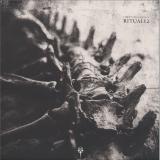
The Rituals series rises again, a fresh strike carved deep into black wax. RITUAL12 summons an international assembly of techno insurgents from the OMEN roster, each delivering their own sonic rite. Across two sides, the intent is absolute: raw, unfiltered power pulled from the shadows and unleashed on the dance floor.
RITUAL12 is not a compilation, it’s a convocation. Forged in analogue heat, drenched in distortion, and aimed directly at the heart of the floor, this record demands full surrender. Step in. There is no turning back.
SIDE A
Swarm Intelligence – Inexorable
Berlin’s Swarm Intelligence ignites the record with precision-tooled percussion and fractured basslines. Polyrhythmic tension winds tighter with every measure, industrial grit locking into a cybernetic march toward total hypnosis.
B.A.R.K – Shikijitsu
A bone-rattling invocation of distorted low-end and ceremonial drums. B.A.R.K drives forward like ancient machinery grinding to life, a Japanese primal energy sharpened to a deadly edge.
Axkan + Duellist – Resilence
Mexico meets Scotland for a brutalist assault: hammering kicks, serrated synth textures, and walls of analogue saturation. No safe passage here, only forward momentum into the heart of chaos.
SIDE B
EAS – Honored One
From Los Angeles, EAS delivers a tense, ritualistic construction where a subterranean EBM bassline pulses through metallic drones. Hypnotic, uneasy, and charged with controlled dissonance.
Ha†elove + Ogmah – Hanged Bodies
A dark ceremonial groove, heavy with ritual percussion and spectral synth chants. The layers rise to a fever pitch, blurring the line between transcendence and collapse.
Crystal Geometry + Axkan – Kratom
France’s Crystal Geometry joins Axkan for a militaristic strike of modular chaos and pummeling drums. EBM infused basslines drive beneath razor-sharp synth fire, rallying the midnight faithful to the front lines.
On point, until it hurts. With a decade-spanning discography, several bands and half of SHXCXCHCXSH this restless creator presents himself. SSTROM embodies the calmly bold. Building a version of the modern disco that nobody asked for. SSTROM is the capsule that shocks and comforts, gathers and spark a new thought. The robust shell acts as a camouflage for the wild and wicked bleakness of the music he produces. If the contemporary club urge could be described as a helmet waiting to brake this experience is what you are after; surprising, uplifting and changing. With 'Avvik' SSTROM carves out 6 somatically clear scenes articulating diverse textures, densities and states of aggregation. The constructions evolves as fractious rhythms strives for another order. Trial and errors bungys droughty, moist, stiff and tensile. Sstrom forces us to flicker in twitches between layers and dimensions beyond the given three.
The latest transmission on Samurai tunes into half-time intensity with a psychedelic edge courtesy of leading French practitioner Vardae. Applying techno hypnotism and cinematic atmospheres to his snaking beat constructions, the Lyon-based artist delivers a pitch-perfect exercise in mystical meditation that follows a natural path from the Ancestral Voices LP.
Since first emerging around 2017, Vardae has been determined to establish a sound unbound by genre restrictions. To date he's successfully moved between cult labels such as Non Series and Ooda while pivoting from linear 4/4 to crooked broken beat without disrupting his immersive, finely sculpted production style.
Alongside his releases, Vardae is also responsible for the ouroboros festival that takes place every year in central France. Last summer, after the dancefloor closed on the final night of the the event, fabled Dutch transcendental ambient group Son Of Chi made an acoustic concert around the campfire that cast a spell over everyone present. This experience formed the inspirational basis for Vardae's new EP, drawing on the instinctive power of insistent rhythm and the spiritual intrigue that lies behind subtly dissonant tones - shadows cast by refined, restrained synthesis flickering in the imagined light of the flames.
From the rattle of timbale on 'The Light Motion' to the laser-focused ripples that charge through 'Voices Of Dispossession', Vardae bends and shapes his drum work with exacting intention across this EP. Treading the line between 85 and 170BPM, he approaches fierce peaks in his tracks with an exacting patience, building to the arp-soaked climax of 'Flaming As A Cloud' and its ecstatic, melodic crescendo.
Proudly individual and drawing from the deepest of musical experiences, Vardae's latest statement promises similarly profound moments when these pieces come into contact with the right souls and the right sound in the right setting.
DJ Quik is a giant of West Coast hip-hop. With 1995’s Safe + Sound, he scaled new levels of musical magnificence with his signature new age P-Funk/laconic G-Funk. A quintessential, sun-scorched LA album, this is pretty much essential. Typical for mid-90s albums the original vinyl copies are now rare so here’s the Be With re-issue, complete with “Tanqueray”, the hidden track from the original CD release.
A preternaturally gifted producer/rapper, DJ Quik has produced scores of LA gangsta rap classics. He’s released platinum and gold records of his own, as well as helped craft them for the likes of Tupac, Snoop Dogg, and Dr Dre. Quik has always been quirkier and more interesting than his gangsta rap peers, both musically and lyrically. An old-school funk producer at heart, he’s also incredibly nice on the mic. His raps often deal in boasts, jokes and good times but also cover his beefs, his trials and his trauma. Partying and pain, all mixed up. DJing and producing hype beat tapes from age 14, Quik’s tracks blended the languid funk and rubbery synths of Zapp and George Clinton with a gangsta aesthetic, creating a more danceable foil to Compton’s more typical nihilistic hedonism. Ultimately, his records sound custom engineered to drift out over sun-soaked barbecues.
By the time of his third album DJ Quik was a household name on the West Coast - California’s premier rapper/producer not named Andre Young. Released on Profile in 1995, Safe + Sound was certified gold. Less reliant on samples and more focused on live instruments, it elevated him from producer to fully-fledged composer. This sound — the quick, winding basslines, tinny high hats, smooth instrumental solos, soulful pipes, and Roger Troutman’s talkbox — defined him. This is an album of full-blown masterpieces. Rich soundscapes and masterfully arranged orchestrations with dense layers of sounds, intricate rhythms, and well-balanced songwriting.
The first track proper, “Get At Me” samples Cameo whilst Quik takes aim at the Judases in his life, the horn-laced chorus providing a triumphant feel. On the horizontal “Diggin’ U Out”, the soulful electric piano of Warryn Campbell lays a relaxed groove for Quik to talk over about one of his favourite topics: sex. Title track “Safe + Sound” chronicles Quik’s formative years over a slick instrumental. The moody bass locks a laidback infectious groove, the hook is catchy and Quik’s delivery is in fine form. On the uber-chilled “Somethin’ 4 Tha Mood”, Quik cooks up a breezy, feel good track of sparkly keyboards, syncopated claps, shuffling hi-hats, woozy synths and a floating two-minute flute solo courtesy of Robert “Fonksta” Bacon. Analysing the highs and lows of an average day in the hood, it echoes Cube’s “It Was a Good Day”.
“It’z Your Fantasy” is a silky smooth soundtrack to Quik’s detailed retelling of a sexcapade with a young lady and whilst “Tha Ho In You” is musically perfect for that midsummer family BBQ, its lyrical content is unsurprisingly decidedly less family-friendly. A real highlight, the infamous “Dollaz + Sense” is one of the most ruthless diss tracks of all time. The brutal lyrics ride a laidback West Coast beat, flipping a sample from Young & Company’s “I Like (What You’re Doing To Me)” as Quik fires lyrical shots at his arch Compton nemesis, MC Eiht. On the loping, hazy “Let You Havit”, Quik is again in gangsta mode, with more bars of barbs aimed at Eiht, rhyming over sun-kissed synthy-rollerskate funk.
Some of the finest tracks on Safe + Sound are those designed to de-stress. The evocative “Summer Breeze” is a classic warm-weather jam, anchored by a twangy funk guitar, breezy string arrangement, and a soulful hook delivered by Dionne Knighton. Quik’s nostalgic lyrics are not far from DJ Jazzy Jeff & The Fresh Prince’s “Summertime”, reminiscing over barbecues at the park, young love, and the brevity of halcyon youth. The relaxed and jazzy “Quik’s Groove III” is another highlight, as bass, guitar, piano and flute combine to create a smooth, soulful instrumental.
The swaggering “Shack Up”-sampling “Sucka Free” features a cameo from Playa Hamm, all funky braggadocio and over much too quikly (pun thoroughly intended). The jazz-flavoured “Keep Tha ‘P’ In It”, again featuring Playa Hamm but this time extending the cameo invitations to Hi-C, 2nd II None and Kam, is pure laidback P-Funk. The deep bass and industrial drums make sure the groove hits hard.
“Tanqueray” was originally a hidden track on the CD version of the album, but it’s too good to hide. This wild party samples Brass Construction’s gigantic “Get Up To Get Down” and soars in its drunk-ebullience. An apt way to close this party-driven set.
This 2022 Be With double LP re-issue has been mastered for vinyl by Simon Francis, cut by Pete Norman and pressed at Record Industry. Unusual for the time, Safe + Sound was originally pressed as a double, so all that was missing was the CD’s hidden bonus track “Tanqueray”, so we’ve fixed that. The original vinyl release never got a picture sleeve, so we’ve recreated the original’s promo-style silver-sticker and plain black jacket. A subtle cover for a wonderfully unsubtle record.
RE-ISSUE / RE-MASTERED / RE-PRESSED
Steve Bicknell - Lost Recordings 1
This is a seminal double LP consisting of 8 tracks by Steve Bicknell (originally released in 1996)
from one of UK's most influential techno / electronic labels Cosmic Records - to introduce the incredible series LOST RECORDINGS
Rich, raw and unpredictable - every single one of these tracks sounds FRESH as ever!
In the 90/00's in London, Steve Bicknell was at the forefront of techno as a producer and DJ but also as a promoter (of the event series LOST)
Completing Kranky's chronologically reverse reissue program of the earlier loscil albums on vinyl, the 2001 debut album is issued on the format for the first time with the addition of three bonus tracks from the same sessions that produced the original release.
‘’Triple Point was my first full length album under the loscil name, and it was my first with kranky - a relationship now 25 years old. This reissue is as much about celebrating that relationship as it is about the music. I am extremely grateful for this journey. Arguably, none of it would have happened without this release.’’
“Pay no mind to the label and pay no mind to the producer's locale (Vancouver isn't Cologne or Detroit); Triple Point is one of the finest—and most varied—ambient techno releases of 2001.”— AllMusic
"Finding itself nestled halfway between the endlessly spacious mechanoid constructions of Berlin's Basic Channel and the drifting expanses of Labradford, Scott Morgan's work as Loscil never ceases to impress with its deft use of technology and percussion.”—Boomkat
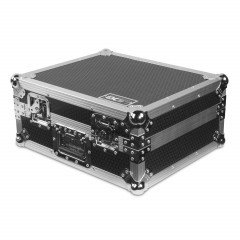
UDG Ultimate Flight Case Multi Format Turntable Silver not only transport your complete set up easily & securely, but also facilitates devices to be setup within minutes. With these premium features incoporated, the UDG Ultimate Flight cases provide premium professional quality in a very stylish modern black/ silver colored combination.
Fits: Technics SL-1200MK7, Reloop RP-8000MK2, Denon DJ VL12 Prime, Pioneer PLX-1000, Audio Technica LP120XUSB, or similar size turntables
Specification
Specification
EAN 8718969211734
Color Black/Silver
Weight 7,80 kg / 17.16 lbs
Outer Dimensions (W x H x D) 51.1 x 42.6 x 23 cm | 20.1 x 16.7 x 9.1 inch
Inner Dimensions (W x H x D) 45.1 x 38.6 x 7.8 cm | 17.7 x 15.2 x 3.1 inch
Material Heavy duty construction of 9 mm thick plywood
Protection Extra-wide silver solid aluminum profiles
Secure stacking due to stackable ball corners
Sturdy construction
Full padded interior keeps controller well-protected
High density diamond embossed EVA foam protective padding
Extra's Laminated in a black finish with a honeycomb/hexagonal "Stage Grip" pattern
Fits Technics SL-1200MK7, SL-1200GR, SL-1200GAE, SL-1210GR
Pioneer PLX-1000
Denon DJ VL12 Prime
Reloop RP-8000MK2, RP-7000MK2, RP-4000MK2, RP-2000MK2, RP-1000MK2
Stanton ST-150, STR8.150, T.52, T.55 USB, T.62, T.92 USB
Vestax PDX-3000
Numark TTX
Audio Technica LP120-USB, LP1240-USB, LP120XUSB, LP1240-USBXP, LP140XP, LP3, LP5, LP7, LPW40WN
American Audio Power Drive 2.2
Mixars LTA, STA
or similar size turntables
And accessories
As Token gears up for its 126th release, the time has come to invite a label favorite - Inigo Kennedy. The Englishman responsible for Token 1 readies us for three tracks of pure grain and warbling melodies packaged as 'The Calling' - a hypnotic yet stomping club record that highlights his unique production style full of character.
Taking up the entirety of the A side, 'Magnitude Seven' pulses itself through the first part of the ep. Melodic yet dissonant as many of Kennedy's best records, the track calls on a stripped down acid line to support a saturated groove and noisy synthwork. Epic in construction, 'Magnitude Seven' comes in waves of unsettling intensity emphasized by a powerful double kick sequence. The B1 takes it up a notch as the title track appropriately named 'The Calling'. A frantic four to the floor rhythm pushes along sustained notes, settling in a certain pressure. Harmonic sections breathe more life in an otherwise nail biting record that defines the Token sound accurately and Kennedy uses this arrangement to distance himself from the classic loop based template used by most producers in his field today, confirming the ongoing relevance of a longstanding career in club music. Ending with a bit of a twist for most, longtime fans will be unsurprised by the choice to wrap things up with 'Out of the Woods' - a fitting electronica closer that departs from 'The Calling' with a focus on introspection. Drifting notes and a shuffled percussion line are reminiscent of his UK roots and fit perfectly as an epilogue to his previous techno tracks. Ethereal as ever, Inigo Kennedy offers us another masterclass in out of the box production techniques in soulful electronic music.
The industry standard Xone:92 is a versatile six channel analogue mixer, renowned for its expansive, involving sound.
With its solid construction and easy to use interface, the 92 is on the riders of most of the world’s top DJs and is a permanent fixture in the booth at many of the biggest superclubs.
The Xone:92 was one of the first professional DJ mixers to incorporate MIDI for control of DJ software or external devices, and the first to include the innovative dual VCF filters.
With its two stereo FX sends, twin Mic/returns, and one of the best EQ sections around, this mixer is a DJ’s dream tool.
Features:
• 6 dual stereo channels – 4 phono/line, 2 mono/mic or stereo return
• 2 independent stereo mix outputs
• 2 aux sends for output to external FX units
• VCF system – 2 independent stereo filters with frequency and resonance controls
• 2 independent LFO’s for filter manipulation
• 4-band EQ – total kill on HF and LF, wide Q for cut, narrow Q for boost
• Booth output – dedicated output on TRS jack
• MIDI values can be output from 6 controls (e.g. crossfader, LFO)
• P&G easy change professional VCA crossfader
• Illuminated lightpipes showing status of performance controls
• Intelligent cue for pre or post EQ monitoring
• Monitor section includes post EQ switch, split cue and mix to cue balance
• 2 headphone outputs (1/4” and 3.5mm)
• Ducking control on mono/mic channel
NEW in the MK2 version:
Newly developed top panel and reinforced housing construction
Reworked metallic buttons with improved feel & tactile response
Precision Pitch with selectable ranges of +/-8 %
Superior finish in deep black metallic
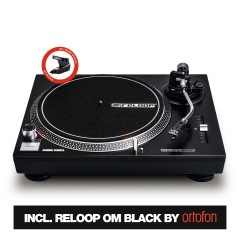
Quartz-driven DJ turntable with direct drive
Perfect for beginners
USB audio output for digitizing your records easily
Precise motor control with 2 speeds selectable (33 1/3 & 45 rpm)
Precision-engineered, die-cast aluminium platter with stable rotation
Statically balanced s-shaped tone arm with hydraulic lift and anti-skating - mechanism
Universal connection for pick-up systems (SME)
Extendible needle illumination
Built-in phono pre-amplifier (no grounding necessary)
Switchable phono and line level output
Shock-absorbing feet for vibration isolation
Sturdy, heavy construction with optimized damping features
Prepared for dust cover (available as optional accessory)
Incl. platter, OM Black pick-up system (by Ortofon), headshell, slipmat, counterweight, power cord, operating instruction manual
Technical Data
Turntable:
Type: direct drive turntable
Drive: quartz-driven direct drive
Motor: 8-pol., 2-phase, brushless DC motor
Turntable speeds: 2 speeds, manual (33 1/3, 45 RPM)
Starting torque: > 1kg/cm
Brake time: 50 dB (DIN-B)
Brake system: electronic brake
Platter:
Material: aluminium die-cast
Diameter: 332 mm
Tone arm:
Type: universal, statically balanced, s-shaped
Effective length: 230.5 mm
Overhang: 16 mm
Tracking angle error: < 3°
Applicable pick-up weight: 3.5 – 8.5 g (incl. headshell 13 – 18 g)
Anti-skating range: 0 - 7 g
Connections:
1x PHONO/LINE out (gold-plated)
General:
Power supply: AC 115/230 V, 60/50 Hz (US/EU)
Power consumption: 13 W
Dimensions: 450 (w) x 352 (d) x 144 (h) mm
Weight: appr. 6.76 kg
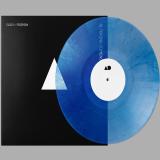
*MILKY CLEAR VINYL - 300 COPIES ONLY FOR WORLD!!* Technology + Teamwork’s fizzling synths, interweaving textures and punchy rhythms are beguiling on their long-awaited debut album We Used To Be Friends. However, at the heart of it all it’s the connection between the group’s two members, Anthony Silvester and Sarah Jones, the friendship the much-travelled duo have managed to maintain for nearly 15 years and a showcase of the slow-burning construction of the electronic world that they’ve surrounded themselves with. We Used To Be Friends is ultimately the tale of two storied artists in their own right, holding onto each other through personal and career twists and turns, relocations and broader movements through respective phases of their lives. Silvester and Jones first met and then collaborated as part of biting post-punk five-piece XX Teens in 2008, eventually breaking off to forge their own path together even as the latter’s demand as a drummer grew. Performing with everyone from Hot Chip, Harry Styles and Bloc Party among many others, Jones has been a constant percussive presence across the sphere of alternative UK pop music – she’s also found time for her own solo project Pillow Person and played on records by the likes of Puscifer and Kurt Vile. Silvester meanwhile has performed in art galleries across Europe including: Fridericianum in Kassel, Kölnischer Kunstverein in Cologne, and Vleeshal in Middelburg, as well as providing sound design and composing work for several art films. Technology + Teamwork is the constant throughout all of that though. “Technology + Teamwork's name perfectly describes how we work” Silvester explains. “Sometimes the teamwork is between each other and sometimes it’s between us and the technology.” Although going by the name Technology + Teamwork as far back as 2014, two events conspired that pulled the project into focus for the pair of them: firstly, Silvester spent a year constructing a soundproof studio shed on the border of London and Essex where he lives. Secondly, inevitably, the pandemic brought the globe-trotting Jones back home to just seven miles away from her long-time collaborator and friend. “We probably hung out more than we had for a few years” says Silvester. “Also, after all her Pillow Person releases Sarah had gotten really good with recording vocals and knowing what did and didn’t work and had a really good home studio set up. We still worked separately though, exchanging ideas via email and WhatsApp.” As with many artists through 2020 and early 2021, working separately was a new necessity that they were forced to adapt to. However, it became clear that there were creative benefits to it. “It really changed our sound and our sounds became a lot more focused as a result” Jones says. “I wanted to use the same ideas of improvisation that I might use while playing the drums for myself and apply that to melodies and lyrics.” The album bristles with hyperpop modernity. You can hear it in the manipulated vocals most prominently on Big Blue’s disco strut and on Moving Too’s heady mix of pitched up voice and burrowing sub bass. However, the pair also looked to San Francisco and the West Coast synthesis movement of the 60s, Silvester inspired by the likes of Suzanne Ciani and Don Buchla. The plaintive lo-fi and melancholy of Amsterdam incorporates Mutable Instrument’s Marbles by Émilie Gillet which – inspired by Buchla’s own synthesis work – outputs random voltages to give the track an air of unpredictability. It’s something that occurs throughout the album, the duo revelling in the happy accidents that disrupt the flow of their hook-laden pop. “The ‘Buchlian’ ideas of music having randomness and uncertainty, completely freed us up” Silvester explains. “It felt a bit like having more members in the band, machines that didn't do what you expected or intended.” Perhaps more subtly, is the influence of 17th and 18th century Baroque music, with Silvester drawing a line between it and the 90’s R’n’B he and Jones both love – exemplified perhaps best on K+B’s percussive claps and sultry grooves. The portentous juddering synthpop of the title track, meanwhile, alludes specifically to Handel’s Sarabande. It’s typical of an album that only needs a scratch of its seemingly glossy surface to unearth a myriad of contorted touchstones and reference points that’ve fermented beneath it. Thematically there’s an anxious sense to the record, with tracks often balancing above a quiet sense of unerring tension even at their most bombastic. Moving Too is the result of an existential doubt that hit Silvester while out cycling, with the outro refrain "it's not enough to die you also have to be forgotten" a take on something Samuel Beckett once said. These worries are echoed on the album’s closing track What A Year, which borrows a lot of lines from the late drag performer and fashion designer Dorian Corey including the grimly defiant "you're gonna leave your mark somewhere in this world just by getting through it”. Those clouds offer a counter point to We Used To Be Friends, but then isn’t that what great pop albums do? Technology + Teamwork undoubtedly love the craft of the hook and the song, but they always position themselves left of centre, prepared to scuff things up, pull something out of shape or manipulate something to leave it sounding warped. Much like their friendship, nothing here is particularly linear – and it’s all the better for it. Bio: Anthony Silvester & Sarah Jones first collaborated as part of biting post-punk five piece XX Teens in 2008, eventually breaking off to forge their own path together even as the latter's demand as a drummer grew. Performing with everyone from Hot Chip, Bat for Lashes, Harry Styles and Bloc Party (among many others), Jones has been a constant percussive presence across the sphere of alternative UK pop music - she's also found time for her own solo project Pillow Person and played on records by the likes of Puscifer and Kurt Vile. Silvester meanwhile has performed in art galleries across Europe including Fridericianum in Kassel, Kölnischer Kunstverein in Cologne, and Wleeshal in Middelburg, as well as providing sound design and composing work for several art films. Technology & Teamwork is the constant throughout all of that though. "We Used To Be Friends" proves that Technology & Teamwork undoubtedly love the craft of the hook and the song, but they always position themselves left of centre, prepared to scuff things up, pull something out of shape or manipulate something to leave it sounding warped. Much like their friendship, nothing hear is particularly linear - and it's all the better for it.
From a research work started in full lockdown three years ago, finally sees the light (or darkness) Echi Senza Fine, a remastered collection of sound material by Tasaday. Inspired by the controversial media story in 1971 of the discovery of a tribe in the Philippines that apparently had technology that had stood still in the Stone Age, the project officially borrows the name Tasaday in 1984 from the evolution of Nulla Perreale, in turn union of Die Form (musical part) & Orgasm Denied (performative part).
To put it in the words of Marcello Ambrosini, the Tasadays find in Die Form the controlled destruction of the form after its careful design and construction, while in Nulla Iperreale the spontaneity free from any possible superstructure. They declare themselves new primitives, not in the perspective of a nostalgic return to a pre-industrial or prehistoric external world, but in the exception of an inner experience in stark contrast to the leviathan of the single utilitarian thought that has dominated the West for centuries.
Their production-action does not allow itself to be tempted by the repetitiveness used by many industrial groups of those years, thus resulting seminal in the evolution of the scene. Their impulse to go further and not remain caged in the format of the new wave is witnessed by their particular sound vocabulary that sees, along with the use of conventional instruments, the use of DIY tools such as Chopper Vox and highly sui generis tools, like the Camolofono, cariole loaded with sheets, stones, tubes, chains and “garbage” of various shapes and sizes.
A discography dotted with primordial electronic experiments that reaches the new millennium through several vinyl records and an endless number of cassettes. From this undefined and mysterious number of tapes that is born Echi Senza Fine: 14 tracks (+ 2 digital bonuses) remastered, collected by Asymmetrical, who also edited the release insert, a collage of visual and textual material from their fanzines. A series of 300 transparent vinyl + Insert.
Two years after the premiere of his debut "Komorebi", Daniel Szlajnda returns with his second album "Order In Chaos", which will be released on November 8 by U Know Me Records. The starting point for "Order In Chaos" was the assumption that even the most complex system consists of simple elements. Even in chaos, order and repeatability can be encountered, and each complex phenomenon can be broken down into a series of smaller, easier to observe. This idea also translated into the way the album was composed. In "Order In Chaos", Szlajnda consciously rejects all the elements that can distract the listener, focusing on the search for beauty in an economical and ascetic sound and hypnotizing repetitiveness. The album was recorded entirely on a modular synthesizer designed around the Sputnik Modular Dual Oscillator, a construction based on Don Buchla's designs from the 1970s.
The Tel-Aviv centered Yotam Avni officially joined forces with Stroboscopic Artefacts last year, turning in a sensual an invigorating entry for the Monad series. Thanks to his personalized fusion of esoteric and worldly sound elements, Avni immediately made a case to deliver more work to the label, and now he has done so with 'Perlude to Dybbuk,' the second in a new series of S.A. releases to feature the Oblique Artefacts visual team's distinct, elegant portrayals of scanned foliage. As with Avni's previous Monad contribution, the new Perlude to Dybbuk makes references - both in title and in sonic content - to the ancient Hebrew folklore of his homeland (a 'dybbuk' being a kind of limbonic spirit attaching itself to the body of a living human until it has successfully reached its final destination). However, the atmospheric, rather than overt, use of these references gives this record a level of dignity and quality as well as a premonitory feeling that hovers over the proceedings.The opening 'Avka (New Life)' opens with the twin stimuli of chthonic, rolling percussion and ambience that has become a modern Stroboscopic tradition, but ever so gradually deviates from the realm of the easily anticipated. Some of the surprises to be found here are sharp, organic drum fills and sighing strings that have an uncanny vocal quality to them. By the time a surgically clipped acid synth sample comes into the mix, the track has reached a simmering level of excitement and the listener's imagination will have license to reside in a virtual world seamlessly combining elements both ancient and futuristic.Dybbuk' temporarily situates listeners back in brutal modernity, with the first sounds heard being something like insistently slicing helicopter blades. Avni merely uses this as the foundation, though, for a genuinely unique construction whose shamanic beats, throttled horn and undertow of frenzied electronics combine to give the feeling of being menaced and eventually overtaken by a spirit entity. This piece shows just what Avni is capable when operating in a more aggressive, 'post-industrial' mode, and the result stands up with some of the best exponents of that genre.The finale 'Modern Matters' is the most readily club-friendly selection from the disc. This potent, floor-shaking and perspiration-inducing number superimposes resonant vocals from traditional Middle Eastern folk song onto this alchemical mixture of machine oil and sweat, and provides a romantic flair without resorting to naïve, touristic 'ethno-techno.' Avni's skillful dedication to counterpoint, and determination to make a finished form is more than the sum of its parts, shines through here and throughout the duration of this record.
Junki Inoue presents the second release on his recently founded label SAISEI from prolific Japanese producer Takuya Sugimoto under his COLOGNe alias. Deep Talk EP features 6 tracks originally released on Japanese CD only label Viola in 1999 and is a snapshot of the elevated warped-techno meets IDM productions Sugimoto is so respected for.
Famous for releasing under many synonyms including COLOGNe, Web and Sammansa it was his EVA EP - the first release on FatCat Records in 1996 that stands out in his recording history. The tracks were in fact licenced from Syzygy Records in Japan, which was one of the main Japanese labels including Viola that homed his work during the 90s era he was most productive in. More recently German label Acido released The Sound There, a mini album of previously unreleased Web material recorded between 1994 and 1995 which was released last year in 2020.
Deep Talk EP presents 6 tracks of intelligent and elevated techno, which show the balanced and intricate approach Sugimoto applies to his output. It has all the warmth and positive essence of the 90s era of electronic music - combining deep and beautiful sounds with headsy and intricate constructions. This is the first time this music has been made available on the vinyl format.
SAISEI is a Japanese word which translates to ‘reproduction’ and ‘to play’ (as in playing records). Japanese culture is widely known for its traditional nature just as much as it is for being forward into the future and this label’s concept does justice to exactly that. Having started digging for records as early as 16 years old, Inoue delved into productions from 1990s Japan to uncover these native gems. SAISEI’s core concept is to recapture and reintroduce unique
pieces of Japanese electronic music onto vinyl, to an audience it never reached before as most of this music was only released in Japan
We are proud to release ‘Fortunate Isolation’ the sophomore album from Borusiade. Born and raised in Bucharest, Romania, Borusiade aka Miruna Boruzescu started DJ-ing in 2002 as one of the very few female DJs in the city’s emerging alternative clubbing scene. Influenced by a classical musical education, a bachelor in film direction and fascinated by raw electronic sounds, Borusiade first combined these universes in the construction of her DJ sets and starting 2005 also in her music production. A sound of her own has slowly crystallized, often dark with poignant bass lines, obsessive themes and by all means melodic. She has released EPs on labels like Pinkman, Unterton, Cititrax, Correspondant and Cómeme, who released her debut album ‘A Body’ in 2018.
‘Fortunate Isolation’ is perhaps Borusiade’s most personal release to date. Eight songs that capture a bystander witnessing the world as it undergoes drastic changes. We have disconnected ourselves from ecology, humanity, preservation, care for what surrounds us, for what is still alive. Borusiade adds, “| know that this place, our home has went through so many other extinctions, but | believe things will find their own way on this planet only once we are gone. Entropy creates a time-line but also a transformation - a new beginning.” The album’s sound is gloomy and powerful mixing sonic film sequences, rhythmic excursions and soothing yet obsessive vocals that touch one’s deepest senses. Lyrically the songs tackle themes of forgotten memories, spirituality, mortality, and destruction. All songs have been mastered by George Horn at Fantasy Studios in Berkeley. Each copy is housed in a jacket designed by Eloise Leigh with decaying daguerreotypes against a rust color palette and includes an insert with lyrics.
Composer and multi-instrumentalist Koen Holtkamp has spent more than two decades shaping a body of work at the intersection of ambient, experimental, and electroacoustic music. Known for his role in the influential duo Mountains, as well as a solo catalog defined by texture and spatial awareness, Holtkamp has long explored how sound interacts with environment and perception. With Nightlife, he enters a new phase of that inquiry, one shaped as much by physical relocation as artistic evolution.
After leaving Brooklyn for the relatively rural setting of New York’s Hudson Valley, Holtkamp found himself immersed in nature and embracing a slower way of life, a shift that directly informed the album’s creation. Rather than rushing into a new project, he allowed the space itself to guide him, focusing on experimentation and play instead of a fixed outcome. Over time, a new instrument emerged from his modular system, built around physical modeling techniques that emulate plucked string sounds. Drawing on a deep affinity for acoustic traditions, from guitar soli to the kora and other chordophones, he began translating those influences into an electronic language, creating music that feels tangible, effusive, and even intimate, despite its synthetic nature. As the pieces took shape, Holtkamp expanded the project into a kind of imagined ensemble. Composed with specific collaborators in mind, the album features extensive contributions from drummer Greg Fox and saxophonist and flutist Matt Bauder, whose performances subtly reshape the material and draw it toward more fluid, song-like forms, alongside a guest appearance from Ben Vida on synth bass. Yet even as Nightlife occasionally resembles a band in motion, its construction resists traditional cohesion. Acoustic and electronic sources coexist to create a hyper-dimensional sense of space, with each element deliberately placed in its own distinct environment, yielding a complex yet inviting setting that feels both otherworldly and completely natural.
Much of the album was created during late-night sessions, which became a kind of personal ritual and ultimately inspired its title. Nightlife unfolds as a series of finely detailed environments, where stillness, texture, and subtle interplay take precedence over momentum. Each piece invites close listening while remaining open and unforced, reflecting both a change in pace and a deepening of focus. The result extends Holtkamp’s ongoing interest in how sound can shape, and be shaped by, the spaces we inhabit.
Dieses Reissue würdigt das 50-jährige Jubiläum eines der wegweisenden Alben des Heavy Metal. Original-Master von 1976, Half-Speed-Mastering, farbiges Vinyl, Original-Artwork, ursprüngliche gewünschte Tracklist. Diese zum 50. Jubiläum erscheinende Ausgabe von Sad Wings of Destiny wurde von den analogen Original-Masterbändern aus dem Jahr 1976 restauriert und stellt die definitive Version des Albums dar. Das ursprünglich 1976 veröffentlichte Album gilt als eines der einflussreichsten Alben in der Geschichte des Heavy Metal und prägte das Genre maßgeblich mit Klassikern wie "Victim of Changes", "The Ripper" und "Tyrant". Die in Zusammenarbeit mit Judas Priest entstandene Ausgabe wurde im Half-Speed-Mastering-Verfahren speziell für Vinyl bearbeitet. Dieses Verfahren bewahrt die Kraft und den Dynamikumfang der analogen Aufnahmen und sorgt zugleich für außergewöhnliche Klarheit und Tiefe. Die Wiedergabe erfolgt in der von der Band vorgesehenen Reihenfolge, beginnend mit "Prelude", wodurch das ursprüngliche Hörerlebnis wiederhergestellt wird. Die LP kommt dabei im ikonischen original Artwork als Galaxy Yellow/Orange Mix Vinyl, auch als klasse klingende CD wieder erhältlich. "Sad Wings of Destiny, ...simultaneously took heavy metal to new depths of darkness and new heights of technical precision. [...] Three songs rank as all-time metal classics, starting with the epic "Victim of Changes," which is blessed with an indelible main riff, a star-making vocal turn from Halford, explosive guitar work, and a tight focus that belies its nearly eight-minute length. "The Ripper" and "Tyrant," with their driving guitar riffs and concise construction, are the first seeds of what would flower into the New Wave of British Heavy Metal movement." -
'Quiet Pieces' initiates Abul Mogard’s personal imprint Soft Echoes with a definitive self-portrait of calm, contemplative, and discreet inner landscapes made audible. It is the first solo album on vinyl in four years. RIYL Alessandro Cortini, William Basinski, The Caretaker.
While sifting through archived material left idle from earlier projects, a chance encounter with a late uncle’s trove of beloved 78rpm classical and opera records prompted the reworking and completion of what would eventually become the album. Spinning dusty records at 33 and 45rpm, Abul Mogard recombined their enduring spectres with unfinished sketches from his archive. The resulting soundscape blurs distinctions between his memories and those of another, exquisitely short-circuiting the senses with its waking, dream-like lucidity.
This was a process I hadn’t explored in my earlier works. I began sampling brief moments from these records, altering them with studio effects and playing them at slower speeds. In many cases, I wasn’t entirely sure how the original music sounded. These fragments, once further processed, became a source of inspiration for my new compositions. Over time, I realised that the old pieces from the archive and the new material derived from the samples naturally complemented each other.”
The resulting pieces hover over a threshold, a liminal space that harmonises the old and older material. Voluminous waves of quiet and loud undulate between consonance and dissonance, conjuring imagery of a decaying grandeur that humanity’s decadence has surrendered to the elements. Abul Mogard’s seemingly abandoned yet vast landscapes are nevertheless intimate with timbral frissons of red-lined distortion. Elusive, yet as tangible as sea spray or smog, they affect the olfactory senses with a rarified, synesthetic quality that modestly engages one’s emotional register – a hypnotic, distinguishing feature long hailed as one of the hallmarks of his work. A fidelity to memory and dream recall is sensitively probed in the journey from the stately symphonic stasis of 'Following a dream' to the almost industrial, untethered brutality evoked by a looming silhouette that’s never fully visible in 'Constantly slipping away', culminating in the foreboding coda of 'Like a bird'. Those pieces appear to shield the album’s sentimental core, where the tempestuous play of light and shadow of 'In a studded procession' escalates to breathtaking, panoramic climax, while 'Through whispers' evokes an out-of-body-like experience encountered with visceral poignancy.
Looking back, Mogard notes an unexpected influence: “I realise being inspired by Phill Niblock, whose work I had barely known at the time but explored after his passing in 2024. His album 'Boston Tenor Index' changed the way I approached dissonance. It encouraged me to push my sound further, to the edge of a space where I began to feel uncomfortable.”
The album artwork, created by longtime collaborator Marja de Sanctis, features a photograph taken at the Temple of Jupiter Anxur, an archaeological site overlooking the Mediterranean Sea. Captured with an iPhone, the image traces the residual presence of construction techniques and architectural forms of the Romans, where material history is transcribed through contemporary tools. The convergence of ancient and modern technology aims to reverberate the site’s lasting spiritual presence – an echo persisting in what is now perceived as a quiet, emptied space. The spiral gestures towards infinity and light. Past and present dissolve into one another, reflecting 'Quiet Pieces' meditation on sound, memory, and time.
RIYL Alessandro Cortini, William Basinski, The Caretaker
нет на складе
Последняя поставка 8 месяцев назад доступно для дозаказа без гарантии