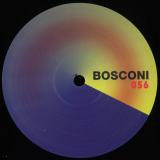
25 years after this cult UK label first emerged, we're very happy to present some of their most sought after releases...
Primitive represented a stripped down and sonically heavyweight series of essential DJ tools, winning wide support from Techno an House DJ's alike & enduring - perhaps due to their raw, basic construction - way beyond their original inception.
This is the first compilation EP, featuring some favourites from the catalogue, remastered & repressed on limited, hand-stamped vinyl...
Despite serious demand, we will only be able to access limited quantities of these special 21st century repress editions, so buy or cry !
out of Stock
Last delivered 8 days ago available to reorder, subject to availability
Leo Gibbon returns to Mudline with barbed, a six-track suite of dust-worn, sample-driven constructions pieced together from a balcony while travelling. Built from fragments that retain the emotional weight of their origins, the EP finds Gibbon paring his sound back to its essentials, letting cracked loops, negative space and tactile percussion carry a quiet sense of intimacy. There's a subtle tension throughout, music suspended between memory and movement, where worn textures and carefully preserved imperfections become part of the composition itself.
James Massiah appears on the record with a characteristically measured performance, his delivery drawing on the cadence and phrasing of archived poet freestyles, less spoken word than an act of excavation, recalling a lineage of recorded voices whose authority comes from rhythm, restraint and lived experience. His presence folds seamlessly into the EP's weathered textures, becoming another fragment in Gibbon's collage rather than a conventional guest appearance.
The first half drifts through reflective, inward-looking terrain before the second side gradually opens towards the dancefloor, never abandoning the emotional pull that defines the record. Even at its most club-focused, barbed favours understated pressure over obvious peaks, allowing atmosphere and texture to carry as much weight as rhythm. Mastered by Miles Whittaker, every grain, scrape and imperfection is left intact, balancing grit with clarity and reinforcing Mudline's instinct for raw, emotionally resonant club music that feels as honest as it does functional.
DESCRIPTION
Lone Bison / Nick Bonell lives by the sea in Ramsgate. Mainly a guitar player and pedal freak, Nick bought a used Korg MS20 and fell in love with synths. As one half of Stuntmen, Nick released the sample-heavy single 'You're the Beat Find' on the groovy Tummy Touch label, which led to him scoring three Ford adverts in the U.S and a few pieces of well-used production music - which paid for more synths and pedals!
An album, 'Transistor Memory' and single 'Drugs' came out via Dom Martin's brilliant Polytechnic Youth records in 2021. "Wave Construction" was released by Castles in Space in Autumn 2023. An album for the CiS Subscription Library entitled "Mechanical and Electrical" was released in late 2024.
Nick Explains: "After recording "Transistor Memory", "Wave Construction" and "Mechanical and Electrical" pretty much back-to-back, I wanted to change my sound palette a little. I started programming my Hydrasynth Explorer in obsessive detail and was also drawn to using my voice, in a sampling kind of way at first. Sampling my voice then shifted into recording more straightforward vocals and writing proper songs again. "Rise Up" started as a field recording in my local park and then some wonky piano loops with a cheap mic – somehow a song arrived. I’ve always really liked really concise records, so I got interested in packing lots of synth textures into a three-minute pop song. As the record progressed, I did less leaning on vocoders and harmonisers and developed the courage to just do more up-front vocal mixes. Things like Maths and Minimal / Maximal are more groove-based and came from recording 20 minute drum tracks then jamming bass guitar over it then editing it all down and adding loads of synths. Oh, and there’s a bit of James Williamson era Stooges at the end of Minimal / Maximal – I was a bit nervous about playing garage rock guitar on a Castles in Space record but Colin told me I would be ‘fucking mental’ if I didn’t end the record with it."
Lone Bison's music is influenced by Krautrock, electronica, post-punk, soundtracks, a splosh of modern classical/minimalism and post-rock. He's a hot genius.
The album is preceded with "The Power" which will be available on streaming platforms as well as on our Bandcamp for those who want to listen or pre-order the album. There's a fantastic remix from MAPS included as well.
Over the course of more than four decades, Andrew Chalk has created one of ambient and experimental music's most distinctive, influential, and enduring bodies of work. Though his recordings have taken many forms—from the raw, post-Industrial sounds of Ferial Confine in the 1980s to the fragile guitar meditations, blurred keyboard studies, and richly textured collages that populate the Faraway Press catalogue—they remain united by a singular sensibility: an uncommon attentiveness to atmosphere, nostalgia, and the power of restraint.
Mystical Obscurant offers a rare opportunity to encounter the expansive character of that oeuvre in miniature. Rather than documenting a single period or methodology, it functions almost like a survey of Chalk's musical language—a collection of new music that illuminates the breadth of his practice while distilling the singular vision that unites it.
“The Sea of Sorrow” and “Peacemaker” feel cut from the same cloth as the sacred guitar minimalism of The River That Flows Into the Sands, while “Against the Tide” would sit naturally alongside the smudged and distant keys of Blue Eyes of the March. Other pieces draw upon environmental sound and loop-based constructions, hallmarks of Chalk's more recent, vignette-like compositions. Though these recordings emerge from different moments in his long creative journey, each inhabits a recognizable world: one where melodies drift in diffuse, unhurried forms and sound gathers with painterly grace.
What is most striking when these pieces are heard together is not their difference but their coherence. Across changing instruments, collaborators, and approaches, Chalk has consistently pursued a subjunctive music of suggestion rather than declaration, creating spaces where memory and imagination are allowed to unfold at their own pace.
“Ruins are the style of our future cities, future cities are themselves ruins.” - Izosaki Arata
A note from Lawrence English: Nostalgia is not an ideology, though in this moment, we could be mistaken for thinking it might be just that. Over the past years, the idea of nostalgia has been filtered through various political and technological lenses and has become a tool used for forgetting, rather than remembering. Instead of embracing histories’ complexities and inconsistencies, this version of nostalgia seeks only singular recollection. This contemporary phenomenon of nostalgia has become a methodology at best, and a weapon at worst, used to erode the past and project forward a collapsed and unimaginably sanitised version of things, places, and ways of being from former times. It’s this projection that sees it playing a mounting role in a social pathology associated with reducing the imagined possibilities of future.
The Rest Is My Ghost is a record that interrogates the manifestations of this reductive futuring and celebrates those that have tried (and failed), and those who continue to push back against decayed and revisionist positions. It’s a record that considers the weaponisation of nostalgia for the purposes of cloaking possible futures.
In recent times, I’ve proposed a term for this weaponised use of nostalgia, something I have called Acid Nostalgia. I offer it as a shorthand to describe the de-contouring of the future through a corrosive fixation on a flatten rendering of the preceding times. It is, in part, a certain type of lazy cultural scripting where tropes of the past are presented in the absolute, as empty pictorials; photocopies without any original from which to draw actual meaning, or useful detail.
Acid Nostalgia describes an increasingly common political projection of nostalgia that exists without any subjective connection to the memory surrounding and contained within it. Like acid poured onto a surface, this use of nostalgia seeks to erodes and smooth out the complexity and texture of lived connection and longing, which has until recently guided contemplations of nostalgia. Acid Nostalgia instead erases the texture of histories and de-contours the past, and in doing so dematerialises the horizon of possibility, which by its very nature marks the beginning point for any (and all) imaginable futures. Acid Nostalgia is a dreamless screen, where uncertainty, restlessness and aspiration are subjected to corrosion, breaking down and neutralising the wellspring of futures which are birthed from within the ambiguously charged, complex and at times chaotic atmospheres of the present.
The Rest Is My Ghost is not however some universal reading of these things and happenings. Rather it draws its breath from a very personal pathway carved through my own fraught experiences of nostalgia and framed through a disparate collage of chance encounters, situations, places and provocations. It takes oblique notes from civic and architectural references such as Japan’s Metabolist movement, Hong Kong’s ‘one line sky’ and Los Angeles’s vanished Sodium Vapour lights. It interpolates texts – factual and fictional – by authors such as Franco Berardi, Kate Crawford, JG Ballard, Katsuhiro Otomo, Mark Fisher and Alexei Yurchak who have each so wonderfully sought to rupture the familiarity of now, and push us towards other ways of imaging ourselves, our surroundings and our very ways of being in this world.
I also owe a debt of thanks to Adam Curtis in helping launch what has become this edition. It was his provocation, in a conversation we shared about an overwhelming and profound sense of uncertainty around being able to predict the immediate future and how to respond to that, which sparked the earliest inklings of this edition.
The Rest Is My Ghost is ultimately a record about the promise of constructions and connections to come, material, social and political. It's a record that accepts the fragility of failure as a source of ultimate potential, and a position from which the deepest freedom of imagination might be sought and summoned forth to conjure even the most unimaginable, (but) possible futures.
out of Stock
Last delivered 42 days ago available to reorder, subject to availability
Dawuna’s latest mixtape is a muted hypnagogic R&B tour de force, pieced together while recovering from a traumatic head injury.
For »African Family Laptop Musick«, I was healing from a traumatic head injury that gave me a later amnesia diagnosis, so I don’t remember more than a couple small flashes of memory from the recording/construction of this project. I know I wanted to make a low-fidelity concept piece about my family life at the time, compositionally simple, but necessarily abstracted. This is the last lil offering from a very personal side of myself before I give y’all something big. Enjoy. – Dawuna
out of Stock
Last delivered 42 days ago available to reorder, subject to availability
This quintessentially Australian rock band is one of the main highlights of Newcastle's music scene. It consists of singer Hugh Westcotta true ball of energy who leaps around the stage like a Peter Garrett on caffeineguitarist Jed Pratten, drummer Nick Worrad, and bassist James Pansini. Following in the footsteps of AC/DC and '70s Aussie punk, Where's Jimmy presents these two EPs combined on a single vinyl record. Written in Orange, New South Wales, back when we were all working our respective jobs in the construction industry. It pokes fun at life at work.Simple, blues-inspired themes, like working for the boss, being broke, or getting dumped by your girlfriend. Add a dash of punk and rock 'n' roll, and you get the EP "Paycheck Blues." EP "Staring at the Wall" - Where's Jimmy's second 5-track EP. The punk rock sound with bluesy undertones is more pronounced on these tracks. Pure, no-frills, high-octane noise that makes you want to get up and move.
For its first release, Neurotrain Records presents a 4-track EP by its co-founder Krijka.
The label grew out of a friendship, a duo that spent years exploring and nurturing the Seoul underground scene.
‘Our Spleen’ EP carries that undefinable, elusive atmosphere and construction that has become Krijka’s signature; reflecting a desire to extend this identity now part of him, while opening doors to new elements and maybe a new era.
out of Stock
Last delivered 3 months ago available to reorder, subject to availability
The shape-shifting sound of Low End Activist continues to pivot around an axis of bassweight pressure with the launch of their self-titled label – the appropriate vessel to take them deeper into sci-fi scented sonics with an ‘ardcore swagger. Previous drops on Sneaker Social Club and Seagrave have seen the shadowy technician mangling grime, jungle and dubstep tropes with all the grit and flair of the most visionary sample sorcerers. At times, they’ve built their beatscapes up around fierce MC spots from such legends as Flowdan and Trim, but while there’s more to come on the vocal tip for the LEA series, this first installment works in a strictly instrumental fashion.
Hi-tech breakbeat de/re-construction is the focus across all three tracks on LEA001, with atmospheres so densely rendered you can feel them sticking to your skin like the sweat of a well-slicked basement session. ‘Engineers Origins’ emits pure darkcore energy and icy stabs of future-shock industrialism, while ‘Look Up’ shivers with off-key orchestrations. ‘Probability 1’ gets deep in the break edit and throws in an iconic low end rumble that should spark intense reveries amongst anyone with even a passing appreciation for bass. Like the most potent foundational jungle, all three tracks swerve regimented structure in favour of moody exploration around a suite of themes and sounds, slipping time in style and setting up the LEA series for further intense sonic treatments to come.
out of Stock
Last delivered 3 months ago available to reorder, subject to availability
This new album compiles several songs made in the years following Black To Comm's classic "Alphabet 1968" album. Originally released on the seminal Type label in 2009 (and to be reissued on Cellule 75 this year) "Alphabet 1968" combined the sound of vintage shellac and vinyl loops with broken electronics and field recordings, the press release mentioning disparate influences "ranging from Moondog to Basic Channel by way of Bernard Herrmann". In a beautiful one-page review in The Wire magazine (later reprinted in his book Ghosts Of My Life) Mark Fisher compared Richter's music to JF Sebastian’s miniature automata in Blade Runner ("with their bizarre mixture of the clockwork and the computerised, the antique and the ultramodern, the playful and the sinister"), ETA Hoffmann's inventor-magicians and Auguste Villiers de l'Isle-Adam's 1886 tale of Thomas Edison's (fictitious) construction of an artificial human.
Now titled "Coh Bâle" (inspired by a strange dream) these recordings were supposed to become a follow-up to said album but for reasons unknown it never materialized and the album seemed forever lost. At the time Richter started to dive deeper into several strains of (so-called) world music aka the folk music of Southeast Asia and Eastern Europe as well as liturgical and medieval music, the Kraut-Electronica of Harmonia and several certain Mediterranean experimentalists from the 1980's who started to merge their mostly electronic and field recording based compositions with traditional musics from all over the world by way of new sampling technology.
Many of the songs for the album were recorded while travelling and at various residencies around Europe: a detuned piano in a Thessaloniki basement (Richter played at a children's birthday party there), vintage synthesizers in the GRM studios in Paris, decaying acoustic instruments found in an old Black Forest mansion, childrens' voices at a workshop in Karlsruhe's ZKM Institute; then mixed on headphones in the ICE trains running between these places and his hometown Hamburg.
"Coh Bâle" is taking inspirations from old Nonesuch Explorer and Ocora LP's, Crammed Records, 80s Mediterranean Ambient (Nuno Canavarro, Roberto Musci) combined with the DIY spirit of Deux Filles and Flaming Tunes and the playfulness of Asa Chang & Junray. The songs are both mysterious and transparent, intricate and frugal, vibrant and patient. One of the album's unexpected climaxes is a gorgeous (artificial) berimbau version of the Welsh traditional "Iechyd o Gylch".
No two songs feature the same instrumentation and many acoustic sources (pianos, flutes, wood percussion, viola, tablas, autoharp) were disassembled and later coalesced into new configurations or used as virtual instruments; later combined with samples, field recordings, electronics and (on a few tracks) autotuned vocals reminding of recent works by the likes of Claire Rousay or More Eaze.
We had to wait for a worldwide pandemic for Richter to dig deep into the vaults and finally bring these recordings to light. This is the 2nd release from his archives after the "Diode, Triode" LP which presented Musique Concrète/Acousmatic recordings made at INA/GRM and ZKM. Another massive Double-CD (MM∞XX Vol. 1 & 2) was released last year featuring collaborations with 33 artists such as Andrew Pekler, Richard Youngs, Eric Chenaux, Maja Ratkje, Radwan Ghazi Moumneh of Jerusalem In my Heart, GRM boss François Bonnet (Kassel Jaeger), Felix Kubin, Timo van Luijk (In Camera, Af Ursin), Luke Fowler and many others, showing Richter's versatility and his willingness to reinvent himself for every new release.
Marc Richter is widely known under his Black To Comm moniker, having released (at least) 12 albums under this alias in the last 20 years. He is currently signed to the Thrill Jockey label. Richter composes soundtracks for film and has worked with visual artists such as Mike Kelley and Ho Tzu Nyen. He also records as Jemh Circs and Mouchoir Étanche for his own Cellule 75 label (named in tribute to the late Luc Ferrari).
out of Stock
Last delivered 3 months ago available to reorder, subject to availability
‘ИМА (Ima)’ is a work by KiMiMi, the solo project of a musician Shin-ya Ohno, which captures the layers of time and the presence of people inhabiting ‘Arimasuton Building’―a self-built structure created over 20 years by architect Keisuke Oka, located in Mita, Tokyo, and reconstructs them into music.
A multi-instrumentalist who masterfully handles a diverse range of instruments, with the gaida (an ancestor of the bagpipes) – which he studied in Bulgaria – at the core of his sound, KiMiMi has previously brought traces of daily life and folk melodies recorded during his travels back to the scale of home recording, weaving fantastical folk soundscapes through cassette tape works and stage music.
Alongside his musical activities, he has participated in the construction work for ‘Arimasuton Building’, recording the sounds of hammers and steel beams echoing on site, lunchtime chatter, the melodies of instruments played by others, and the sound of cars passing by. From the end of 2022, a zine titled ‘Monthly Arimasuton Building Urimasu’, based on this construction project, was launched. KiMiMi incorporates these recordings into the musical works he contributes to each issue, layering sounds from live instruments―including the gaida, accordion, guitar, flute, ukulele, piano, foot-pump organ, melodica and xylophone―alongside a few synthesiser tones, to shape a soundscape imbued with the humidity and breath of the site.
KiMiMi’s creative process is characterised not by planned construction, but by an attitude of entrusting the work to chance, intuition and the passage of time. Fragmented recordings are layered, set aside for a time, and then unearthed again. Through this repetition, the music naturally takes shape. This resonates perfectly with the process of ‘Arimasuton Building’, which was built up improvisationally, layer by layer, without any pre-prepared blueprints.
‘ИМА (Ima)’ marks the current stage of KiMiMi’s sonic journey and represents an attempt to gracefully transcend the boundaries between architecture and music, documentation and creation, and the individual and the community. The clamour of the city, the tranquillity of manual labour, laughter, and every sound resonating at the Arimasuton Building site blend with KiMiMi’s music, reflecting the very passage of time in which people live.
Germany"s producer elite gathers on this new instrumental compilation by Kabul Fire Records and, just in time for the G20 summit in 2017, is sending a powerful signal against nationalist isolationist politics and global exploitation. Label boss Farhot has brought together pretty much everyone that has rank and name in the German hip hop scene: Bazzazian, The Krauts, Dexter, KitschKrieg, Brenk Sinatra, Ghanaian Stallion, Suff Daddy, Samy Deluxe, DJ Desue, and many more. Everything exclusive, everything fire! The proceeds from the project go to a school construction project of the Hamburg association Visions for Children e.V. in Afghanistan. Make beats not borders!
Back on Planet Sneaker with his infectious, raw-as-sushi take on UK funky, French MPC maverick Kaval presents another four-strong salvo of wavey 4/4 workouts heavy on the drums and loaded with ear-snagging hooks. The past year saw the Toulouse scene stalwart launch his own KVLDUBS 12” series and appear on Parisian label Nowadays.
Kaval certainly sounds in fine fettle as he bowls back our way, kicking off proceedings with the air horn x bass squelch firestarter ‘Lavawheel’. It’s loaded with such hefty squarewave low end it feels like it could fall out the bottom of the speaker at any minute, all the while stamped down by a bouncy UKF thump. ‘Basement Woi’ twists up a knottier rhythm, but the cheeky vocal samples keep flying out of the mix to keep the vibe infectious.
On the B side, ‘Sonic Boom’ has a slightly more techno-spirited demeanour to the production, albeit never at the expense of the hefty subs. That leaves it to ‘Tek Talk’ to mop up with a twitchy construction dancing on the edge of electro in the tweaked-out, early 00s spirit of the word. With bags of personality and equal amounts swagger and fun, on SNKR066 Kaval maintains his position as a free thinker for the possibilities springing from the UK funky formula.
out of Stock
Last delivered 4 months ago available to reorder, subject to availability
There are two versions of the record - classic black vinyl and transparent green limited edition (100 numbered copies) - both 180g with printed inner sleeve.
"PORTRETY" (Portraits) is a one-of-a-kind series – it focuses on artists known for their strong connection to the drums. Each person invited to the project is given freedom in their work. Ultimately, the track created for the album must be signed with the real names of our protagonists – that's our sole criterion.
This is how a kaleidoscope of sounds and eight original perspectives on music emerges.
LINER NOTES by Bartek Chaciński:"For part III of the compilation series focusing on Polish drummers, I’d like to start, as per usual, with a one liner…
There are three types of drummers: Those that can count, and those that… can’t.
Ok, but looking past the punchline, it turns out that there is, in fact, a third type: Drummers who can count, and pretty well too, but still struggle with triple rhythms. Amongst those who have ascended the heights of triple rhythm perfection you will certainly find, Piotr Gwader. One of the leaders of the movement, we could call an “Oberek Revival. He even proposed a new form: Footberk - splicing of Polish Folk dance and Chicago Footwork. He performed live with the OG of Footwork - RP Boo (Arpebu), but equally, he could successfully form a footberk duo with Jacek Prościnski, another protagonist from “Portraits 3”. Prościnski has been deeply immersed in the world of electronic dance music for years and offers us yet more proof of those interests here.
Triplets are also no stranger to Ola Rzepca (synonymous with the Drekoty Trio), in whose music there is no shortage of rhythmical complications and tempo changes. The same can be said of the improv-friendly contemporary jazz presented by Patrycja Wybrańczyk. These two Polish drummers show how versatile this discipline is on the Polish jazz scene. These qualities have already been well documented by Marcin „Groh” Grośkiewicz, but never so strongly as here.
Szymon „Pimpon” Gąsiorek is a musician who has made unconventionality the foundation of his individual style. Yet even in the piece by Jan Pieniążek (a dynamic and equally versatile drummer), we find an element of surprise in its melancholic atmosphere and construction, which introduces a triple rhythm while pushing the drum parts into the background. Portraits, on the other hand, does the complete opposite with its protagonists - it positions them in the foreground as the creators of specially commissioned original works. From this perspective, perhaps the most familiar names here may be Emade and Albert Karch, who are known as outstanding music producers and among the most interesting in Poland. “Portraits III” has presumably given them a momentary break from producing other artists, while for the music industry, it’s also a pleasant break in the rhythm and a shift of emphasis."
There are two versions of the record - classic black vinyl and transparent green limited edition (100 numbered copies) - both 180g with printed inner sleeve.
"PORTRETY" (Portraits) is a one-of-a-kind series – it focuses on artists known for their strong connection to the drums. Each person invited to the project is given freedom in their work. Ultimately, the track created for the album must be signed with the real names of our protagonists – that's our sole criterion.
This is how a kaleidoscope of sounds and eight original perspectives on music emerges.
LINER NOTES by Bartek Chaciński:"For part III of the compilation series focusing on Polish drummers, I’d like to start, as per usual, with a one liner…
There are three types of drummers: Those that can count, and those that… can’t.
Ok, but looking past the punchline, it turns out that there is, in fact, a third type: Drummers who can count, and pretty well too, but still struggle with triple rhythms. Amongst those who have ascended the heights of triple rhythm perfection you will certainly find, Piotr Gwader. One of the leaders of the movement, we could call an “Oberek Revival. He even proposed a new form: Footberk - splicing of Polish Folk dance and Chicago Footwork. He performed live with the OG of Footwork - RP Boo (Arpebu), but equally, he could successfully form a footberk duo with Jacek Prościnski, another protagonist from “Portraits 3”. Prościnski has been deeply immersed in the world of electronic dance music for years and offers us yet more proof of those interests here.
Triplets are also no stranger to Ola Rzepca (synonymous with the Drekoty Trio), in whose music there is no shortage of rhythmical complications and tempo changes. The same can be said of the improv-friendly contemporary jazz presented by Patrycja Wybrańczyk. These two Polish drummers show how versatile this discipline is on the Polish jazz scene. These qualities have already been well documented by Marcin „Groh” Grośkiewicz, but never so strongly as here.
Szymon „Pimpon” Gąsiorek is a musician who has made unconventionality the foundation of his individual style. Yet even in the piece by Jan Pieniążek (a dynamic and equally versatile drummer), we find an element of surprise in its melancholic atmosphere and construction, which introduces a triple rhythm while pushing the drum parts into the background. Portraits, on the other hand, does the complete opposite with its protagonists - it positions them in the foreground as the creators of specially commissioned original works. From this perspective, perhaps the most familiar names here may be Emade and Albert Karch, who are known as outstanding music producers and among the most interesting in Poland. “Portraits III” has presumably given them a momentary break from producing other artists, while for the music industry, it’s also a pleasant break in the rhythm and a shift of emphasis."
In Sheep’s Clothing announces the long-awaited vinyl pressing of Marc Leclair’s beloved 2005 album Musique pour 3 femmes enceintes. The album will also be available on streaming for the first time via Community Music Group.
For years after Marc Leclair released Musique pour 3 femmes enceintes, he heard from listeners who had lived with the record in an unusually intimate way. Many described how the music became part of the emotional landscape of the months leading to birth. “I never expected that,” Leclair says. “Many women told me they listened to the record throughout their pregnancies. They said it made a real difference, that it helped them. It became more than just a record.”
First issued on CD in the early 2000s, Musique pour 3 femmes enceintes (Music for Three Pregnant Women) now returns in a new edition from In Sheep’s Clothing Hi-Fi, appearing on vinyl for the first time as a double LP. The record is being pressed in Detroit at Archer Record Pressing, the historic plant behind deep-groove classics by Juan Atkins, Kevin Saunderson, Underground Resistance, UR’s Jeff Mills, and J Dilla.
Listeners who know the Montreal-based Leclair through his better-known work as Akufen might be surprised by the tone here. During the same years he was shaping the intricate micro-sampling tracks that made Akufen a cult figure on labels including Perlon, Force Inc. and Trapez, Leclair was quietly developing this far more personal project. The meticulous craftsmanship remained the same, though the focus shifted from the hyper-detailed cut-up rhythms of his dance records toward something slower and more atmospheric. “I always compare my work to a jeweler,” Leclair says. “It’s really very precise. I’m a bit of a detail freak. I can spend hours or days on just one phrase in one song. Everything has to be perfectly put together.”
The project began almost accidentally. A few members of Leclair’s circle became pregnant nearly simultaneously, including one who had long believed she couldn’t conceive. The first track he recorded for the project wasn’t meant to advance a larger concept, he says. “It was meant to highlight the fact that three of my closest friends became pregnant at exactly the same time.”
Leclair was already a father with a three-year-old daughter, so the emotional terrain of early parenthood was familiar. Gradually the idea expanded. “I began thinking, why not make a whole album that celebrates this and also follows the entire pregnancy, the nine months,” he says. The music developed piece by piece, including a track originally commissioned by the Berlin experimental duo Rechenzentrum that would later become the album’s opening movement.
Nearly seven years passed between the first composition and the finished album, and the music mirrors the strange arithmetic of pregnancy itself. What begins as a single idea multiplies outward, sounds layering and branching until the album feels less like a sequence of compositions than a living process unfolding in time. “I work very slowly,” Leclair says. “Everything has to be something I’m completely behind. I never want to rush anything. I want things to come naturally.” Across its 72 minutes, the album blossoms with the patience of a long meditation on time, growth and emergence.
When Musique pour 3 femmes enceintes first appeared via Mutek, it circulated quietly but steadily. Critics who discovered it later recognized its unusual scope. In a 2006 Pitchfork review, Mark Richardson gave the record an 8.1, calling “150e Jour” “an unfailingly gorgeous and tightly sequenced quilt of guitar and piano samples reminiscent of Tangerine Dream,” and describing “85e Jour” as infused with “viscous pop ambient drift, the gauzy synth pads ebbing and flowing with rhythm.” Boomkat described the album as “a majestic opus from a producer that's always promised so much — here delving into a panoramic construction of almost visibly radiant music that works so beautifully through each and every second of its 72 minute lifespan.”
The new In Sheep’s Clothing Hi-Fi edition finally presents the record in the format Leclair long imagined. “I always thought that record deserved a vinyl edition,” he says. Spread across two LPs, the music now has room to unfold at its natural pace. More than twenty years after it first appeared, Musique pour 3 femmes enceintes remains what it was from the start: a carefully shaped meditation on transformation and the quiet miracle of life beginning.
Shrouded in mystery when it first appeared, Tiger & Woods’ debut album quickly took on a life of its own. With little more than whispers surrounding the project, the music spoke loud enough: a set of extended disco constructions carefully tuned, remixed, over-dubbed, sliced and diced by the elusive duo of Larry Tiger and David Woods. What began as a cult phenomenon soon caused a stir across dance floors and record bags worldwide.
Now, for the first time ever, that legendary debut finally arrives on vinyl. Through the Green captures Tiger & Woods at the moment their distinctive language of groove first took shape. Rooted in the spirit of disco edits but already stretching beyond the format, the album blends loop-driven funk, house-leaning propulsion and the unmistakable bounce that would soon become their signature.
It’s the sound of two producers refining a craft that would later blossom on albums like On The Green Again, where their approach expanded into a wider palette of boogie, electronica, Italo and uptempo house. But here is where the story begins.
Before world tours, live sets and the creation of their own T&W Records imprint, there were these tracks: hypnotic, playful and engineered with a dancer’s instinct for tension and release. Each cut unfolds like a perfectly extended club moment, full of warmth, swing and that unmistakable Tiger & Woods sense of fun and function.
Years after its original digital release, Through the Green remains a cornerstone of modern disco-house culture. Pressed to wax at last, it finally receives the physical format it always deserved: grooves built for the turntable, the dance floor and the crate.
The mystery might be gone. The magic, however, remains very much intact.
out of Stock
Last delivered 4 months ago available to reorder, subject to availability
A century-old grand piano, a secluded house surrounded by the greenery of Brittany, no internet connection, and a reel-to-reel recorder.L'Écho de Bretagne, the new EP by Niklas Paschburg, set for release from fall 2025 via Nettwerk Music Group, is a solo piano record as essential as it is intense. An album made of silences, space, slowness. A music that doesn't chase impact, but truth.
the album release is march 26th - 2026.
If his previous work, Mexican Alps (2025), marked the first time the German composer and producer created an ambient-electronic album without his instrument of choice, the piano, L'Écho de Bretagne emerges as a direct response to that absence. "It was exactly the lack of piano that brought about the need for this new record, which instead puts that instrument, so vital to me, at the very center, stripping everything else away," Niklas explains.
Born in 1994, Paschburg has shaped over the years a musical path deeply connected to travel, nature, and introspection. From his debutTuur Mang Welten(2016) toOceanic(2018),Svalbard(2020),Panta Rhei(2023), and the aforementionedMexican Alps— alongside soundtracks, remixes, and collaborations with artists like RY X, Hania Rani, Ásgeir, and Bryan Senti — his sound bridges neoclassical, electronic, ambient, and pop-driven composition.
WithL'Écho de Bretagne, the Hamburg-born, Berlin-based musician continues his exploration by seeking solitude in nature, much like he did onSvalbard, but this time with an even more radical choice: disconnecting completely from the internet, and switching off both computer and smartphone for a while, in order to fully immerse himself in his new music. "I rented an old cottage in Paimpol, Brittany, where I knew there was a grand piano," he recounts. "When I got there, I discovered that not only was the piano more than a hundred years old, but it was also of an unknown brand, never restored, and quite difficult to play. But that gave it a unique character, and I didn't give up. Sure, it was an instrument left to its own fate, I couldn't play anything too fast. But how fascinating was that? I'm convinced that setting limits, instead of giving yourself total freedom when composing, can become an extraordinary source of inspiration."
As for the decision to temporarily detach from a life that demands we stay constantly connected, Niklas describes it as both a creative and human experiment. "I had my laptop and phone with me, just in case, but I kept them turned off. That choice made me wantL'Écho de Bretagneto be a fully analog work, even in how it was recorded." A way of clearing the mind. "I don't think I've ever been as calm as I was during those days in Paimpol. Even though I was working on a very specific project and didn't have much time, that period was more relaxing than any vacation."
Not that it was free of hiccups. "I'd borrowed a reel-to-reel recorder small enough to travel with me, but after recording a session on the piano, I realized it wasn't working properly, the sound was distorted, full of crackles. I got worried, because I wasn't near any big city where I could find a technician. Luckily, I figured out the problem was the old tape reels I had brought along. That was the only time I had to go online, to order new ones. But it was just for a moment. I shut everything off again right after." At that point, Niklas was waiting for the new tapes to arrive. He found out, completely by chance, from a local UPS courier that they had been delivered to a nearby village. "Since my phone was off, I couldn't track the shipment. So one day I asked this delivery guy, who didn't know anything about it. But from that point on, we'd see each other daily and talk… That's what being disconnected also means: reconnecting with people around you, even strangers. It was thanks to that courier that I found out where the tapes had ended up. And he even helped me get them back, writing directions for me on a scrap of paper."
But there's another element that makes this new EP unique.L'Écho de Bretagnewas recorded entirely live; its tracks are all improvised, complete with their imperfections. This approach leads to a sound that is pure, profoundly organic, and deeply authentic, intentionally preserved to give the listener the feeling of a live performance happening in their own living room. The touch of fingers on the keys, the breath of the wood, the tension of the vibrating string, all become part of the music. There is no construction, only expression. "Even now, when I listen back to it, I feel that moment I gave myself to step away from everything: from reality, from words, from noise." The result is a collection of suspended melodies and atmospheres, reflecting a state of the soul. A refuge from the rush of time. A pause from the world.
Cititrax release Sand Clock, the new full-length album by Men With Secrets, the Italian trio of Donato Dozzy, Lino Monaco, and Nicola Buono (Retina.it). Originally emerging from a shared background in experimental techno under the name Le Officine Di Efesto, the three musicians turned toward classic post-punk, minimal wave, and synth-driven pop with the formation of Men With Secrets. Their debut album Psycho Romance (2020), released on Bunker Records, introduced a meticulously produced body of work that felt like a rediscovered European darkwave recording from the early 1980s—yet was entirely contemporary in its construction.
With Sand Clock, the trio deepen this language. The album leans more directly into the melodic clarity and romantic tension of late-80s and early-90s darkwave and synthpop while maintaining the stark restraint that defines the project. Icy synthesizers, shuddering basslines, and precise drum machine programming frame baritone vocals that are intimate, emotionally exposed, and quietly apocalyptic.
Balancing pop structure with gothic atmosphere, Sand Clock moves between shadowed dance floor momentum and solitary headphone introspection. It is not an exercise in revivalism, but a continuation—an acknowledgment that the emotional architecture of that era remains unresolved and still relevant. Written and produced by Donato Dozzy, Lino Monaco, and Nicola Buono and recorded in Rome and Pompeii.
The vinyl edition is pressed on clear 160-gram vinyl, limited to 500 copies worldwide. Each record is housed in a heavy printed jacket with a printed inner sleeve.
out of Stock
Last delivered 42 days ago available to reorder, subject to availability
Bruno Silva, operating here under his restless Serpente alias, returns with Visita do Fogo — a sharp, stripped-back and incendiary counterpoint to the drifting, dream-jazz abstractions of Dias da Aranha. If that record floated like smoke, this one crackles and snaps like dry wood.
Visita do Fogo finds Silva stepping back into the heat of his beat-driven origins, embracing a raw, forward-leaning approach that feels closer to his live detonation than a studio construction. The record is built on stark materials — drum fragments, percussive jolts, scorched-earth loops — all manipulated with his unmistakable “screw” instincts: micro-cuts, sudden pivots, rhythmic false floors and the sense that the track might turn itself inside-out at any moment.
Rather than smoothing edges or leaning into atmospherics, Serpente doubles down on urgency. Each piece moves through the record with a chop-and-go physicality, a kind of ritual propulsion that never settles into comfort. Silva’s rhythmic language remains entirely his own: crooked but precise, feral yet meticulous, rooted in dance structures but constantly mutating away from them.
Visita do Fogo is less a sequel to Dias da Aranha than a flare shot into the same night sky — brighter, hotter, and designed to leave afterimages. It captures an artist burning forward, shedding everything unnecessary, trusting the flame.
Bosconi Records, the Florence-based imprint run by Fabio Della Torre, is back with something truly special. Over the years, the label has built a reputation for pushing house, funk and electro in all their shades, always keeping a strong link between the local scene and international legends. And when it comes to legends, there are few names that shine brighter than Alexander Robotnick.
The Italian electro pioneer – aka Maurizio Dami – has already collaborated with Bosconi on The Hidden Game and Italcimenti Under Construction. Now he returns with My La(te)st EP, a vinyl-only release that pulls five standout cuts from his 2007 CD My La(te)st Album and finally makes them available on wax. All tracks have been remastered for the vinyl format, enhancing their depth and dynamics to deliver the best possible experience on wax.
The EP opens with “Jette Le Masque (Extended Version)”, driven by a pumping bassline and jagged sawtooth synths, with whispered French vocals by Robotnick himself. Stretched out and more DJ-friendly than the original, this version is tailor-made for the dancefloor. On “We Love The Music” things get fun and funky: vocoder vocals, an electro-funk bounce and that unmistakable Robotnick irony. A killer cut to start a set on the right foot.
Flip the record and you dive into the acidic depths of “I’m Getting Lost In My Brain”. Old-school Chicago vibes, a hypnotic groove and basslines that just don’t quit – a peak-time weapon that feels raw and timeless. Then comes “A Coffee Shop in Rotterdam”, one of those secret gems: melodic, laid-back and warm, built on a slapping bass and dreamy arpeggios. It has that Riviera house touch from the ’90s, but with Robotnick’s unmistakable twist.
Closing the EP is “Addio” – a track that wears its heart on its sleeve. Romantic, emotional, and driven by a bassline that nods back to Robotnick’s all-time classic Problèmes d’Amour. A perfect goodbye track, the kind that leaves a smile on your face as the lights come on.
This is a must-have for vinyl lovers and Robotnick fans alike – five cuts carefully remastered for the vinyl format, pressed exclusively on wax and ready to work the floor from start to finish. Don’t sleep on it: limited copies, vinyl only.
out of Stock
Last delivered 23 days ago available to reorder, subject to availability
Hardcover slipcase box
Celebrate twenty-five years of Ape Escape and thirty years of PlayStation with Ape Escape 3 Originape Soundtracks in a Box!
Saru Get You 3
As with the Ape Escape Originape Soundtrack, composer Soichi Terada has meticulously re-recorded and reconstructed all tracks from the Ape Escape 3 Original soundtrack. Previously only available on CD, this is the complete soundtrack's first time on vinyl. This box set was produced in partnership with Mr. Terada and Far East Recording, and is an officially licensed Sony Interactive Entertainment product.
This release contains eighty tracks, spanning four individually sleeved records, housed in a hardcover box. It is similar in construction to the Ape Escape Originape Soundtracks in a Box release (2024), and the two will look quite nicely next to one another on your shelf!
We are happy to announce that this box set features a definitive edition of the Ape Escape 3 Originape tracklist. This also includes "Swanlake," a track previously unavailable on the CD release. At its core, the Ape Escape 3 soundtrack features much of Soichi Terada's signature sound: lush electronic, jungle, silky smooth synthesizer, humor, and charm.
Ape Escape 3 was originally released in 2005 (Japan), and its moviemaking pipos were unleashed across the rest of the globe in 2006. The game features two new protagonists (Kei and Yumi) who battle the Freaky Monkey Five, underlings of the nefarious Dr. Tomoki and the evil monkey Specter.
Complimenting the game's journey through the TV-verse, the Ape Escape 3 soundtrack also features twists on themes from Wild West Showdowns, Kung-Fu movies, and space operas. Fans of the Ape Escape Originape Soundtrack, as well as newer work like Asakusa Light, will certainly enjoy all elements of Soichi Terada's music present in Ape Escape 3.
The music on this box set was mastered by Justin Perkins of Mystery Room Mastering, who also mastered the original Ape Escape Originape Soundtracks box set (2024). Using Mr. Terada's premastered source files, the music was completely and specifically mastered for vinyl. The box set also features original Ape Escape 3 character renders and key art. All of the design elements have been put together with careful thought, referencing the original Japanese guidebook for inspiration and visual cohesiveness.
It is with great pleasure that we celebrate Soichi Terada's music and the Ape Escape franchise with this four-disc release!
Samurai Music offshoot SAIBAI welcomes legendary producer ASC to expand upon the label's widescreen strain of electronic music plumbing the depths between techno, electronica and broken beat.
ASC is the flagship project for James Clements, a prolific veteran of the scene who started releasing his distinctive twist on drum & bass back in the late 90s. Across a variety of aliases and many different label projects and collaborations, Clements has retained a strong artistic identity defined by steely atmospherics, rhythmic intrigue and precisely sculpted sound design. He brings those qualities to SAIBAI3.
On 'Raijin' the tempo prowls at 90 BPM, all the better to carry the bass snarls and haunted melodies hovering in the middle distance. 'Rasetsu' meanwhile hides its much sprightlier 150 pace behind a half time construction punctuated by a tactile, almost organic set of percussion. 'Kyubi' sinks into a deep, inky well of spatial sound design with just a light smattering of percussion and a weighty kick for guidance. 'Shigure' completes the picture with a mesmeric tapestry of shifting textures and brooding melancholy.
Clements has devoted much time recently to his ambient output, and it shows in the richness of the space he shapes around his needlepoint patterns, while his roots in more propulsive club music show their hand in subtle, understated ways. It's this balance that makes the release the perfect addition to SAIBAI's evolving story.
Limited to 200 copies
out of Stock
Last delivered 7 months ago available to reorder, subject to availability
Siavash Amini is a composer from Tehran, Iran. He Has worked with labels like Room40, Hallow Ground, Opal Tapes and Umor Rex for the better half of the past ten years. He has performed at festivals like CTM & MUTEK and many other well known international events. Apart from it Siavash is a co-founder of the “SET experimental art events” and “SETfest” in Tehran, Iran. His work ranges from fragile ambient pieces and brittle IDM (incorporating his distinctive style of atmospheric guitar playing) to noisy drones and bleak modern classical pieces. His compositions have been inspired by films such as Andrei Tarkovsky's The Mirror as well as novels by Dostoyesvky and poems by T.S. Eliot.
Saffronkeira is the Sardinian sound researcher Eugenio Caria being active in the electronic music scene since almost two decades. His most recent work - a cooperation with the Italian jazz trumpet legend Paolo Fresu - earned a lot of praise from the international music press for the pure timelessness of the album.
"Upon hearing a small snippet of sound an image is conjured, not a memory but not unfamiliar. A shell of a memory, thousand events superimposed on each other. While trying to extract points of a narrative to ease the discomfort of this recollection, I try to separate and unfold the image and with it the points of the spectrum which make up the sound, a shell of a narrative. Here is an album based upon an almost entirely imagined/ synthesized happening upon hearing a snippet of sound. It sounded like of a whole story that never happened but yet I felt myself amongst it’s participants, a sound triggering a false memory. Each sound in Eugenio’s collection of sounds and ideas guided me a to a point in the narrative and it’s construction. He had handed me a portals of some kind to a few scenes of the whole narrative. This is the soundtrack for that false memory from all the perspectives I can think of."
out of Stock
Last delivered 7 months ago available to reorder, subject to availability
To decay is also to transform. Rusting metal is the visible traces of passing time, as the oxidation process accumulates dampness in our atmosphere and imprints it as unpredictable patterns onto hard iron and steel. Working in construction for a year now, Kensho Nakamura sees rust all the time, clambering up ageing chunks of material. Normally discarded as waste, Nakamura began discerning beauty in the phenomenon, organically spiralling around and consuming some of the very hardest of manufacturing stuffs into unique new forms.
‘Electric Rust’ continues the conceptual electronic composition mode of Nakamura’s previous works with a series of fractured musical dioramas. These scurrying notes, sparse hums, and quivering bleeps explore the topics of rust and the accumulation of time. The music ticks like a clock, drips like a tap, and manifests unknowable inorganic shapes. Recognisable musical snippets of bells, pianos, or murmured voices are buried inside counterintuitive synthetic rhythms and tension.
On ‘wet air’ piano notes tinkle and pipes gargle, digital detritus tap dances and arpeggios stumble. On ‘unique faces’, idle marimbas and malfunctioning animalistic squeaks flounder. This is music from the promethean space between being forgotten and being conceived. ‘Electric Rust’ is a topography of a world of rust, where corroding structures evolve into new — and beautiful — patterns of life.
out of Stock
Last delivered 7 months ago available to reorder, subject to availability
Introducing the Headliner R2, a 2-channel rotary DJ mixer that
is perfect for DJ’s looking for precise control and a warm sound,
without breaking the bank. The R2 is packed with features, like an
analog filter and 3-band isolator EQs on each channel, and uses
only high-quality components, including genuine ALPS potentiometers.
Featuring two stereo channels with selectable Line and Phono
RCA inputs, each channel on the Headliner R2 comes equipped
with gain control with a peak LED, a 3-band isolator EQ, a headphone cue selector, a large channel volume control knob, and a
filter activation switch.
The Master channel boasts an analog filter, headphone monitoring,
and output control section. The analog filter features selectable
High Pass / Low Pass Filter modes with Frequency and Resonance
controls, giving you precise control over your sound. Independent
Master and Booth outputs with volume controls, both with balanced
XLR and unbalanced RCA connectors, give you the flexibility to
connect to any sound system.
The Headliner R2 features genuine ALPS potentiometers, and a
sturdy metal enclosure with stained wood side panels for a classic
look that will complement any DJ setup. The modular internal
construction, coupled with the external power supply connected
via locking Mini XLR ensure superior audio performance.
The Headliner R2 is a reliable, high-quality mixer that will give
your DJ performances that classic vibe. Whether you’re spinning
house, techno, or classic funk/soul/disco jams, this fun little mixer
is the perfect addition to your setup.
• Two stereo channels with selectable Line and Phono RCA inputs
• Each channel features Gain control with Peak LED, 3-Band Isolator EQ, Headphones Cue selector with LED, channel
volume control and filter activation switch with LED
• Master channel features analog filter, headphone monitoring and output control section
• Analog filter features selectable High Pass / Low Pass Filter modes with Frequency and Resonance controls
• Genuine ALPS potentiometers
• Headphone Cue control section features volume control, mix control (Cue/Master), and split monitor switch
• High current headphone amplifier with dual 1/4” and 1/8” jacks
• Independent Master and Booth outputs with volume controls, balanced XLR outputs and unbalanced RCA outputs
• Additional Record output with unbalanced RCA jacks
• Dual LED level meters for the Master output
• Microphone input with level control on front panel
• Sturdy metal enclosure with stained wood side panels
• Modular internal construction for superior audio performance
• External split rail power supply connected via locking Mini XLR connector and push-button power switch
• Measurements: 320 x 219 x 106 mm
• Weight: 2.8 kg
After years of shaping the UK underground from behind the scenes, Alex Nut steps out with his first official solo EP, serving up an intoxicating blend of Spiritual Jazz, Deep House, Dub, Hip Hop and analog electronics. The Present Under Construction EP is rooted in a deep musical language and future-facing energy, it captures a moment of creative transformation and exploration.
Built up over a few years from rough sketches made on an old MPC2000XL, the tracks were revisited, reshaped and eventually brought to life in the studio with longtime friend and collaborator Sam Crowe (Cleo Sol, Lianne La Havas). Together, they added a range of analogue sounds using the Dave Smith Prophet Rev 2, a Fender Rhodes, and a Moog Sub 37. Those recordings were then chopped, resampled, and restructured into the versions you hear on the record today. The records lead track 'andthenitstarted' features saxophonist James Mollison (Ezra Collective, Nala Sinephro) and includes remixes from Detroit House legend Patrice Scott and fellow Eglo Records alumni Last Nubian.
Best known as a DJ, broadcaster, curator and co-founder of Eglo Records, Alex has spent over a decade championing soulful underground music, through fabled Radio shows to legendary club nights, his fingerprints are all over a scene that continues to evolve. Initially making noise alongside the likes of Floating Points, Steven Julien, and Fatima, Alex Nut has long been a cornerstone of the UK's soulful underground. His work continues to champion the evolution of Jazz, Soul, House, and Broken Beat — nurturing a generation of artists now reshaping the global soundscape.
out of Stock
Last delivered 7 months ago available to reorder, subject to availability
When people think of Tough Gong they usually think of Bob Marley and rightly so, as he was nicknamed and often called Tough Gong and from this his early releases which came out on the Tough Gong label. But Tough Gong was also the name of a recording complex named after Bob Marley hat included a top level recording studio, pressing plant and distribution centre that would allow reggae music to carry on many years after his sad and too early demise.
Bob Marley had take over the former residence of Island Records boss Chris Blackwell the Island House, 56 Hope Road around 1974. Just before the 'Smile Jamaica' concert on 03rd December the same year the house was ambushed by gunmen. Bob's manager Don Taylor was hit 5 times AND Bob was shot in the arm and his wife Rita Marley was hit in the head by a stray bullet. How no one was fatally injured is staggering. Immediately after the concert Bob Marley started his self imposed exile from Jamaica, settling in London, England. This would lead to the aptly named exodus album being recorded there in the summer of 1977. It would not be until the 'One Love' peace concert in Kingston's national arena on the 22nd April 1978 that would see Bob's return to the island. Marley felt is was important to show his commitment to the people of Jamaica and on his return to 56 Hope Road he began construction of his own recording studio with the help of music mogul Tommy Cowen. Unfortunately Bob Marley's short life would end on the 11th May 1981 from cancer which originated form a football injury. His passing would lead to 56 Hope Road being turned into a museum to the legend of reggae music.
A new location would have to be found to carry on Bob's work which was 220 Marcus Garvey Drive, Kingston 11. The buyer would be Rita Marley and the Tough Gong International Organisation.
Engineers working at the new facility included Errol Browne who had worked at Treasure Isle studios and Hopeton Overton Browne known as 'Scientist', named by the great producer Bunny 'Striker' Lee who worked with him previously at King Tubbie's and Channel One's studios described his ground breaking style as being like that of a scientist.
We focus for this release on the work carried out by the great Scientist on the songs of the Black Solidarity Label run by Ossie Thomas (aka Joe The Boss) recorded at Tough Gong studios. One of the foremost recording, pressing and distribution facilities on the Jamaican island set up from the work of Bob Marley to carry forward reggae music. Hope you enjoy this set......
out of Stock
Last delivered 10 months ago available to reorder, subject to availability
In 2023, k.d.b lived in a crumbling farmhouse on the edge of the River Maas. Each morning, he’d wake at 6:00 and walk along the river’s bank with his dogfriend Miemel, pausing at sunrise for a cup of coffee.
It’s 6:34, and a thick rug of mist rolls out across the river. It’s so dense that k.d.b can’t see the water beneath it. Then comes the sun: a single ray cutting through the mist like a tube of light, landing on Miemel’s face. In her mouth is a CD she’s picked up, and on the CD is the title Instrumental Romance.
'What is Instrumental Romance?' thinks k.d.b. 'Romantic instrumentals? Or a romance used instrumentally? As in, a romance used to get something—like love?'
Miemel drops the CD and turns her attention to a stray purple grape on the path. Grapes are poisonous to dogs, and as she bends toward it, k.d.b. shouts, “NO!” At that precise moment, a large fish rises from the mist. It launches into the air, mouth wide open, and hangs there above the clouds. His shout, having traveled across the river, bounces back towards k.d.b with a “NO,” and in perfect synchrony, it appears the fish is also shouting at Miemel. The timing is so perfect, they can’t be sure it isn’t.
The fish falls back down, entering its watery world with an eerie, splashless silence, leaving k.d.b and Miemel standing open-mouthed on the bank. Before they can register the perfection of this duet, another fish (or maybe the same one again) rises from the mist in the exact same spot and launches into the air. Without thinking, k.d.b shouts again. The word “ROMANCE” comes out. This time, however, he is slightly too late, and the word is too long, so “ROMANCE” lingers on after the fish has already fallen back down.
'What even is romance?' thinks k.d.b. 'The construction of mystery or excitement with dead red flowers and timing?'
A foghorn sounds behind him, and k.d.b turns 180 degrees to see a boat moving freight, right to left, along the River Maas. 'That’s strange', he thinks. 'If the river is there, then what’s that behind me, below the mist?'
Staring at the boat and its shipping containers as they float out of sight, k.d.b imagines a man. The man is standing at the bottom of a small valley, holding a fish. 'Who is this man, and what does he want?'
Nils Frahm has unexpectedly confirmed details of a new collection of solo piano music, his first album since 2022’s three-hour Music For Animals. Day will be released by LEITER on March 1st, 2024, and it will be available on limited edition vinyl as well as via all digital platforms. Recorded in the summer of 2022 in complete solitude and away from his studio at Berlin’s famed Funkhaus complex, it is preceded by a single, ‘Butter Notes’, out on January 19. Day may come as a surprise to those who, over the last decade, have watched Frahm shift slowly away from the piano compositions with which he first made his name in favour of a nonetheless still-distinctive approach that’s considerably more instrumentally complex and intricately arranged. In addition, in 2021, having spent the early part of the pandemic arranging his archives, he released the 80 minute, 23-track Old Friends New Friends, a compilation of previously unreleased piano music intended to enable him to ”start over” with a clean slate. Judging from the extended, ambient nature of Music For Animals, it proved a successful gambit, but Frahm has never been able to resist returning to his first love, and those who enjoyed earlier acclaimed albums like The Bells, Felt and Screws will once again revel in Day’s familiar, personal style. Day, which contains six tracks, three over the six-minute mark, is the first in a pair of albums Frahm has lined up for 2024. In keeping with their nature, however, he won’t be making a song and dance about the release. Instead, he’ll resume his ongoing world tour, which has already included fifteen sold-out dates at Berlin’s Funkhaus as well as a show at Athen’s Acropolis. It will continue with shows all over the world, among them several sold-out dates at London’s Barbican in July 2024, where he previously curated a weekend of music, film and art, Possibly Colliding, in 2016. The album is best enjoyed in the manner in which it was recorded, in the intimacy of a peaceful, cosy room. There are muffled pedal creaks on the cyclical, quietly jazzy ‘You Name It’ and, during the palliative ripples of ‘Butter Notes’’ arpeggios, the sound of dogs barking in the streets outside. The compassionate, hesitant ‘Tuesdays’ and emotionally ambiguous ‘Towards Zero’ linger with the poignant persistence of Harold Budd’s earliest work, while ‘Hands On’ is a sometimes brighter, airier tune that sets its own, deliberate pace, and, as he has on occasions before, ‘Changes’ sees Frahm employing elements of his instrument’s construction in a ‘prepared piano’ fashion. Characterised by its confidential mood, Day confirms that, while Frahm is arguably now best known for elaborate, celebratory concerts calling upon an arsenal of pianos, organs, keyboards, synths, even a glass harmonica, he’s still a prolific master of affecting simplicity, tenderness and romance.
out of Stock
Last delivered 11 months ago available to reorder, subject to availability
Enter DJ Fly’s sonic arsenal with this precision-engineered breakbeat, crafted as a high-performance toolkit for the modern turntablist.
This vinyl delivers a sharp selection of expertly curated sound banks, including signature samples from DJ Fly’s legendary DMC routines, along with exclusive, never-before-heard material. All content is organized into thematically distinct sections to optimize workflow and creative output:
Epic & Orchestral – Acoustic & Electronic Instruments – Modern Textures & One-Shots.
Custom skipless loops (skipproofs) are designed to streamline cueing and enhance performance fluidity across all scratching and beat juggling techniques.
Features one side cut at 45 RPM and the other at 33 1/3 RPM, providing expanded control over pitch, tempo, and phrasing – perfect for hybrid routines and intricate transitions.
Each bank is structured to ensure harmonic, stylistic, or tempo-based coherence (BPM-aligned), supporting seamless layering, real-time improvisation, and the construction of musically cohesive sets.
A precision-cut breakbeat, purpose-built for vinyl technicians and battle-ready routines.
a A1 - The King's Bank Am/90bpm
b A2 - Bass Armor Bank [Fm/180bpm]
[h] A8 - Skip Beat_Crown Drum [90bpm]
[j] B2 - Durandal Bank [133,33bpm]
[k] B3 - La Joyeuse Bank [83,33bpm]
[l] B4 - Excalibur Bank [100bpm]
[n] B6 - Classic Cuts Bank [100bpm]
[83,33bpm]
out of Stock
Last delivered 8 months ago available to reorder, subject to availability
A Walking Contradiction resurfaces with a new release by their friend & collaborator Katatonic Silentio, channeling a collection of tracks submerged in echoes and pressure-shaped pulses. AWC011 traces fluid architectures built from delay, decay, and deep resonance--each composition unfolding like sediment in motion. Sounds sway with tidal pull, suspended in chambers where space thickens and time refracts. Basslines emerge like sonar beneath shifting layers, while percussive elements flicker at the edges, softened by current and drag. Elastic and disorientated, these underwater constructions are tuned to the language of depth and dissolution.
out of Stock
Last delivered 5 months ago available to reorder, subject to availability
Jessica93, prodigal bastard of our glorious french squat scene, relocated on Born Bad : this is no picnic. Geoffroy Laporte, alone against all odds, alternates bass and guitar to build harsh loops with a drum machine spitting pre-Gulf War patterns. That’s where it gets tricky : every musical posse claims him. Grunge, sure, but Jessica doesn’t indulge in necrophilia. His circuit is punk, he doesn’t dress the part though. Cold wave, the atmosphere fits somehow, but the gear does not. The self-confident rock horde saw him playing with hair in his eyes… but he never joined the Party. Metal had something to say but sadly, nobody listened. Maybe it's time to give it a rest and let Jessica93 cook his great misery broth on her own, called « 666 tours de périph’ » (666 laps on the beltway). Witnessing Jessica93 live makes you dread that he'll get up the next morning, drive 200 miles and one nap later kick it again, when it takes us a good week to recover from the bad half of that same evening. Like so many other unknown soldiers during our very own world war of music, he patrols small venues relentlessly.
At the heart of this cultural pentacle painted by french weirdos Bryan's Magic Tears, and Carine Krinator, Jessica93 has built a sound validated by years of chosen vagrancy, birthing bands with joyously stupid monikers, in the humid jungle of small labels. Jessica93's debut album had a track celebrating Omar Little, HBO’s gay bandit from Baltimore. This story begins on the beltway, where Florence Rey, accidental copkiller turned to political icon of the 90’s. Geoffroy offers his brilliant analysis : " C’est la police qui nous tire d’ssus / C’est mon trou d’balle qui leur chie d’ssus « (Police shoots us down / my dripping asshole gets the job done).
A previous album was haunted by bedbugs, this one is essentially about love, a delicious scourge just as hard to eradicate. Two black diamonds peek out of the LP : ’’La colline du crack’’, heartbreak song about the ultimate temptation of violent delights, located on crackhead central in Paris. The brilliant chorus, ‘Take my hand and come with me to Crack Hill’ will put an end to the rumours, almost everything was really false. And Bébé Requin, alternative obituary that’ll make you shiver, where our nice couple states ‘’on kiffe la drogue dure et les ptits chiens’ (‘we love hard drugs and little dogs’). And that is the reason we face the wall of sound jostled by unnecessary shoulder thrusts: those nice fat chunks of charcoal poetry, hidden under light sarcasm.
The rest of the record demonstrates the know-how acquired in loop-by-loop construction of ruins that are pleasant to squat in together. There’s your classic doom delicatessen, with bits of heavy metal inside, crafted with the manic care typical of hard wankers. Arthur Satàn, who produced and mixed the album at home in Bordeaux, helped him get his head out of the reverb safe house. And Jessica93 took the opportunity to switch to the dark side of the language : french at last. Worth the wait ! Sing along : « nique sa mère / nique sa grosse mère » (translate that yourself).
If there is one person, who has been causing a stir on the international club circuit recently, it is Barcelona's John Talabot. Already his debut “My Old School“ (which is meant literally by the way) on Permanent Vacation in 2009 and shortly after that the single “ Sunshine”, which he put out on his own Hivern Disc imprint, made him one of the most promising musicians of the Spanish electronic scene. And those two releases also already set the mark for John Talabot’s unparalleled music: raw, loopy, heavy on the kick drum, sample based, moderate on the tempo, distorted on the drums and light years away from the clean and ever revolving house sound of today. This unique style which also blends influences from afro beat, Detroit techno, Chicago house and cosmic disco, but also northern soul or the energy of Flamenco, immediately turned some heads around. James Murphy, Âme and Aeroplane started including Talabot music in their sets like it was the most natural thing. However - and this is quite rare - he not only gained legions of fans in the house and disco community, but also amongst the leftfield pop and indie rock followers. NME and Resident Advisor both had “Breakthrough“ features on John Talabot and he can be proud of a “Best New Music“ dubbing on
Pitchfork. (Being rather elusive on showing his face in magazines or the web it also came to some funny rumors that John Talabot was the alter ego of a well-known techno producer from Detroit).
At the same time he drew the attention of like-minded artists like James Holden and Luke Abott from Border Community, Blondes or Delorean, which lead to a bunch of fertile collaborations: Luke Abbott and Blondes remixed Talabot’s “Sunshine“ single , John Talabot remixed a track by Delorean and vice versa Delorean’s Ekhi contributed vocals to the track “Journeys “ on John’s album). Another example is the Young Turks Label (home of Jamie XX, Holy Fuck, El Guincho or SBTRKT ) on which he released the “Families“ EP in 2010. It was praised beyond limits. Pitchfork for
instance hailed: “… where pop and house influences sweetly buffer up against one another to provide an unyielding sense of elation“ and even brought Talabot a comparison with artists like Four Tet or Caribou.
While staying true to his sound, John Talabot has nevertheless shown a constant evolution as a producer since his first release. He has traced a solid musical path that has turned him into one of the big references of European House and has made him also a highly in demand Remixer (for the likes of The XX, Francesco Tristano’s “Aufgang” project, Shit Robot on DFA, Thaiti 80, Joakim or Teengirl Fantasy to name just a few ).
A progression that now crystallizes in “ƒin”, his first full-length album for Permanent Vacation. A record, in which the Barcelona mastermind sets aside the danceable immediacy to expand his stylistic palette more than ever. For that purpose, Talabot melts all the elements that have constructed his distinctive sound until now and makes them emerge from a new perspective, in which the construction of complex song structures, intricate rhythms and superpositions of ever-evolving melodies and atmospheres pick up the baton of the “a kick-drum and a sampler” philosophy of his initial productions. The result brings us 11 tracks (we should call them songs really!) dominated by dark ambiances, gaseous textures and bittersweet moods that, above all, reveal a kind of vivacity that’s really hard to find in contemporary electronics. “Fin” is far from being a track collection. From the majestic opener “Depak Ine“ to it’s solemn ending with
“So Will Be Now“ , one of the two tracks that features Talabot’s soul and label mate Pional, each song traces an overall dialogue with the rest, culminating a highly emotional journey through Talabot’s always compelling and unique musical vision.
out of Stock
Last delivered 6 months ago available to reorder, subject to availability
On the cover of 8 Tips for Full Catastrophe Living, the new album by Asher White, The Statue of Liberty is in pieces but not destroyed - in progress, being built, not yet complete. Her torch is on the ground, her head somewhere out of frame. Before she was a symbol, she was metal, and living, sweating people riveted her together. The spirit of de/construction characterizes 8 Tips, White's 16th LP overall and first since signing to Joyful Noise. Like White's previous albums, 8 Tips for Full Catastrophe Living darts boldly among varied musical styles. Doom metal splits open into bossa nova; psychedelic rock and power pop flip into industrial techno. Each song emerges from its composite parts in the studio: White doesn't draft or demo before recording, but builds out her pieces sculpturally, sound by sound. "It's forever collage, forever assemblage," she says of her music. "To me, it has more to do with J Dilla, L.A. beat, and musique concrète than pop songwriting." The record's quick turns and vivid contrasts reflect White's cultural voraciousness. A writer, painter, and sculptor as well as a musician, she gathers materials constantly, always digging for new ideas in every possible form. The films of Claire Denis, the novels of Clarice Lispector, and the memoirs of Eve Babitz all funnel into White's reflection of 21st century disaster capitalism. 8 Tips is also White's first album to have been mixed outside her Providence studio; after recording it herself, she brought tracks to Seth Manchester (Lightning Bolt, Battles, The Body) who gave the album its brawny, unruly charge. "I was interested in making something that serves dually as a self-help book and a chronicle of self-destruction," says White. Overlaying autobiography onto character vignettes, 8 Tips for Full Catastrophe Living wrenches open the idea of apocalypse - an abrupt disaster rained down on uncomplicated innocents - and peers inside at its bursting, devastated particulars. Apocalypse is slow and uneven. Nations falter as do individual people, clinging fast to their old, dilapidated self-preservation strategies. What saved you in the past might destroy you in the future. Flip it around, shake yourself loose, ruin the person you've known yourself to be, and you might get the chance to become something else. "There have been so many end times, many other apocalypses." White says. "People were writing self-help tips, and people were partying." We have survived catastrophe before. Out of the ruins, people made work - art, books, culture. "I was interested in making something that sounds like a self-help book, but it's actually about self-destruction," says White. "In full catastrophe living, you just have to do a bunch of whippets. This album is mostly about doing whippets. I'm not even kidding."
Australian music devotees András and Instant Peterson hold a candle to overlooked avant-pop and electronic works by antipodean artists and outsiders working through the 80s and 90s. Through co-presenting weekly radio show Strange Holiday, the duo slowly upturned their locale for inspiration - archives, country bookstores, private collections and convenience stores, searching for a place to anchor their own identities in the oceans of the island continent. The 10 tracks acknowledge a minor history, passed on via a network of friends, friends of friends, the libraries of radio station 3RRR and more often than not, the artists themselves. Renowned mixed media artist Maria Kozic enters with the mysterious downbeat of Trust Me, her husband Philip Brophy responsible for digital and analogue sonic construction. A recurring character in András and Instant Peterson's investigations, Brophy reappears with a score piece from his divisive feature film Salt, Saliva, Sperm and Sweat, recorded as (pronounced 'Tch Tch Tch"). Other links are thread under the surface. Melbourne inner north experimentalist David Chesworth explores his Australiana songcraft leading Whadya Want. The short lived project also featured Philip Jackson, whose husband-wife duo The Couch is restored from Fast Forward's dance issue - a pioneering cassette fanzine published by early-80s 3RRR personality Bruce Milne.
LP comes with 24 page 8.5x11 full color booklet. In the blurred and memorial hallways of bygone time, to remember is to wander between the rooms of our own experiences, to appear and disappear, like a play of overlapping shadows. In music set drifting through the architecture of his own memories, Moses Brown weaves a story that oscillates between the past and the present, like a mason turning over stones to reconstruct his childhood home in this beautiful and disquieting soundtrack to growing up. On Stone Upon Stone, Moses' first solo LP attributed to his given name after several releases under the brilliant and despondent "Peace de Resistance" moniker, he moves sidelong into the realm of soundtracks with this score to the construction of his childhood home in a story spanning 1993-2023. Laid out in lush and provocative minimalist instrumentals, the album unfolds a story about the planning, partial construction, and dissolution of a home in constant state of becoming through the lens of its only child, coming of age under flux. Influenced by the approach of friends and collaborators Straw Man Army's OST to Charles Darwin's Voyage of the Beagle, Stone Upon Stone was originally intended as a soundtrack to a novel of the same name by Wieslaw Mysliwski, an epic set in Poland about a family's construction of a mausoleum. Struck by the story's parallels with his own family's project, he got the idea to complete the work as a personal narrative. Created from layers of different mellotron voices then separated, re-amplified, and recorded as if they were a sitting chamber orchestra, the music eerily blurs the line between human and synthetic, giving way to something akin to a memory with it's blurriness of fact and fiction. In the same spirit of association, this record is certainly influenced by other minimalists working within the confines of "soundtrack", like Philip Glass' North Star and the film work of Michael Nyman. But Brown's soundtrack works within its own peculiar depth of field, living in the listener's imagination, thriving in its own sense of loneliness, aspiration, and confusion that only childhood can evoke. Listeners will feel the entropy of aging in Stone Upon Stone, like a memoir in cascading tones, that sets it apart from so much else in DIY music, and rewards with repeated listens. For Fans of Philip Glass, Kali Malone, Julius Eastman, Mica Levi, Roedelius.
Buh Records presents "El tiempo quiere cantar" ("Time Wants to Sing") the debut album by Pacha Wakay Munan, a duo formed by Peruvian musicians and researchers Dimitri Manga Chávez and Ricardo López Alcas. This album explores the sonic possibilities of pre-Hispanic instruments in a contemporary musical context. Through their performance, they explore their tonal possibilities, the interaction between their frequencies, and their ability to generate new dialogues. The work of Pacha Wakay Munan aligns with the tradition of sound explorers such as the Peruvians Arturo Ruiz del Pozo and Luis David Aguilar or the Colombians Yaki Kandru. The album's repertoire consists of pieces that explore diverse sonorities and musical concepts. "Pacha Wakay Munanqa" introduces the timbral variety of the instruments used. "El Taki Onkoy" draws inspiration from historical accounts and the meaning of its name ("Sick Song"), based on a Culina chant documented by Rodolfo Holzmann. It features vocals by the experienced singer Ximena Menéndez. "Mundo Posible" is a reinterpretation of an improvisation session with musicologist Chalena Vásquez Rodríguez, where the piano dialogues with ceramic antaras. Other pieces delve into the sonic construction of these instruments in relation to their cultural contexts. "Machu Tara" explores the concept of tara, a rough and vibrant sound quality found in certain Andean musical traditions. "Túpac Huaca" references the Huaca Aliaga in Lima, creating a sound palette where pututos, whistling vessels, and quenas converge. "Agua, Cuarzo y Viento" introduces quartz sikus and bowls tuned to different frequencies, evoking the interaction between natural elements and resonant vibrations. In the piece "Qinray Tema", Camilo Angeles plays the metal transverse flute, creating a contrast with the pre-Hispanic ceramic flutes and pelican bone flutes.
In recent years, Blackploid has come to be one of Central Processing Unit's signature artists. The German producer has averaged more than a record a year for the Sheffield imprint since he first landed on CPU in 2021. This prolific run continues withCosmic Drama, Blackploid's second LP for the label. The album takes the baton from its predecessorEnter Universein style, delivering twelve tracks of top-quality machine-funk that draw down from electro's classic artists while also imbuing proceedings with a playfulness that very much gives things a signature Blackploid-ish flavour.
Cosmic Dramasets its stall out from the off. The opening run of 'Alien', 'World Construction' and 'Virtual State' all deliver piston-snapping beats which anchor pleasing melanges of B-movie synth lines. Alongside this, Blackploid adds little flourishes which add buoyancy to each joint - a syncopated bassline reminiscent of I-f's late-90s classic 'Space Invaders Are Smoking Grass', crackling robo-voiced commands, skittering synth chords which wash across the mix and so on. It's the work of someone completely at ease with their craft, comfortable enough to take risks without upsetting the apple cart of their sound's core appeal.
Blackploid's idiosyncratic approach to synth work is something which distinguishesCosmic Dramafrom the pack. Electro has long been a genre which prides itself on innovation on the keys, but few producers are willing to push their sonics as far as Blackploid does - take the seasick churn of pads and processors on 'Multiverse', for instance, or the way John Carpenter-esque single-note lines dovetail with gurgling synthetic pulses and eerie, spacious chords on 'The Lab', a highlight ofCosmic Drama's midsection.
Cosmic Dramaskips along at club tempo throughout - every one of these joints will get bodies moving in dark rooms across the galaxy. However, even when tracks maintain their single-minded pursuit of machine-funk perfection, they never forget to deliver on the hooks. Blackploid has lead lines (and counter-melodies) to burn here, and each track knots them together in ever-more intriguing ways as they plough onwards. Drexciyan heads will be thrilled by the sci-fi delights of 'Species', for instance, while Blackploid brings melodies as cold as they are catchy on the aptly-named 'Polar Dunes'. By the timeCosmic Dramahits upon the vroom-vrooming bassline line of closer 'Contact', you're fully enthralled to the album's combination of broken-beat heft and synthetic melodiousness.
Central Processing Unit mainstay Blackploid comes through with another delightful dozen of electro heaters for the Sheffield label.
RIYL:Drexciya, I-f, Cygnus, AFX
out of Stock
Last delivered 6 months ago available to reorder, subject to availability
The discovery of Doris Dennison's score represents a genuine musicological breakthrough—what once would have been "a tree falling in the woods" thirty years ago now holds the potential to render "a thunderous clap in our minds." While researching Anna Halprin's lesser-known collaborators, scholar Tom Welsh uncovered the archives of AA Leath, one of Halprin's principal dancers. Buried within these materials was Dennison's handwritten score for Earth Interval, dated May 1956. Born in Saskatchewan, Canada, in 1908, and raised near Seattle, Dennison (1908-2009) encountered John Cage while teaching Dalcroze eurythmics at the Cornish College of the Arts. She joined Cage's earliest percussion quartet—alongside Margaret Jansen, the composer and his wife Xenia—in the group widely regarded as having performed the first complete concert of percussion music in the United States. This historic December 1938 concert was followed by tours and the landmark May 1941 performance at the California Club, comprising Cage and Lou Harrison's Double Music, the premiere of Cage's Third Construction, and Harrison's 13th Simfony.
As Bradford Bailey observes in his extensive liner notes, Earth Interval demonstrates "an extraordinary balance of elements that imbues the piece with a sense of clarity, directness, and constraint that is both distinct and ahead of its time." The work's most remarkable innovation lies in its approach to extended techniques, particularly Dennison's notation for the central movement: "In 2nd movement, 1st player lowers + raises a gong into a tub of water while beating." This technique, absorbed from Cage's experimental vocabulary, generates what Bailey describes as "fields of acoustic abstraction that bend and warp time through sustained resonances, beat, and space." The temporal sophistication of these manipulations anticipated Karlheinz Stockhausen's Mikrophonie I (1964) and Annea Lockwood's water-based sound investigations by over a decade. After joining Mills College as dance accompanist, Dennison maintained crucial connections to the Bay Area's experimental scene, collaborating with figures like Merce Cunningham and programming Cage's music throughout the 1950s.
Comprising three movements—Land Form, Air Tide, and Earth Play—Earth Interval is scored for recorder, drums, gongs, maracas, muted gongs, and bowl gongs. In total, the piece is just under eight minutes: "a fleeting glimmer of moment in time, a life spent at the cutting edge, and a singular creative vision that packs a powerful punch." When viewed in historical context, placed in contrast to roughly contemporaneous avant-garde percussion works by Cage, Harrison, Louis Thomas Hardin (Moondog), and Harry Partch, or important precursors like Edgard Varèse's Ionisation (1931) and Henry Cowell's Ostinato Pianissimo (1934), it's clear that Dennison was following her own path. Earth Interval is not derivative. It is a precursor to what was yet to come, alluding to developments of avant-garde and experimental music that wouldn't begin to appear on the cultural landscape until the 1970s and '80s, with the emergence of Post-Minimalism and more idiosyncratic artists and ensembles like Midori Takada, Ros Bandt, Peter Giger, Frank Perry, Christopher Tree, Michael Ranta, Gamelan Son of Lion, and Niagara.
This recording by Chicago's Third Coast Percussion, captured in March 2022, represents the first complete documentation of this pioneering work. The ensemble's interpretation reveals the piece's remarkable contemporaneity while maintaining its historical specificity. Where Cage, Harrison, and Partch employed "self-consciously off-kilter polyrhythms," Dennison's rhythmic sensibility anticipates minimalist developments by nearly a decade, yet integrates "forceful rests, as well as sharp shifts in sonic character, tempo, and meter, that break the momentum and breathe a sense of life into the piece's structure." This positions her work closer to Post-Minimalism decades before its emergence. The architectural approach demonstrates Dennison's understanding that "the composer almost entirely disappears" in favor of phenomenological listening experience, creating what might be called an egoless music that places its realities and meaning entirely in the ear of the beholder. The present recording, realized by Chicago's distinguished Third Coast Percussion ensemble, represents a significant achievement in experimental music scholarship and performance practice. As specialists in the Cage tradition and contemporary percussion repertoire, Third Coast Percussion approached Earth Interval with the historical sensitivity and technical precision required to illuminate Dennison's subtle compositional innovations. The March 2022 recording sessions, engineered by Colin Campbell, capture both the work's intimate chamber music qualities and its bold exploration of extended techniques. The ensemble's interpretation reveals the piece's remarkable contemporaneity—its ability to speak directly to current musical concerns while maintaining its historical specificity.
This recording serves multiple scholarly functions: it provides the first complete documentation of Dennison's compositional voice, offers insight into the broader network of experimental music practitioners surrounding Cage and Harrison, and demonstrates the sophisticated level of compositional thinking that was occurring within the Bay Area's dance-music collaborations of the 1950s. The work's emphasis on phenomenological listening—what might be called an "egoless" approach to musical experience—places it within a lineage of American experimental music that prioritizes perceptual process over compositional personality. The work's original obscurity—limited to AA Leath's performances at venues like the 1957 Pacific Coast Arts Festival at Reed College—paradoxically allowed it to remain "entirely on its own terms," free from the constraints of historical categorization. Drawing on Jacques Derrida's Archive Fever, the argument emerges that "the archive can acknowledge, celebrate, and resurrect" overlooked voices, transforming our understanding of experimental music history. The present Blume edition, featuring Third Coast Percussion's authoritative interpretation, includes a lavishly illustrated 16-page booklet designed by Bruno Stucchi / dinamomilano, containing complete scholarly apparatus, historical photographs, and detailed production notes. This recording enables "cross-temporal intersectionality," allowing Dennison to "belong to a newly formed and more dynamic understanding of the present and past," demonstrating how forgotten voices can reshape entire historical narratives when given proper scholarly attention and performance advocacy.