In the realm of past-life regression hypnotherapy, there is a concept known as “Life Between Lives,” wherein a sacred exchange of energy occurs between two souls in the spirt world, helping a spirit fully understand and forgive a being who hurt them in a past life. This exchange – called “passing the cup of sorrows” – became the unexpected inspiration for William Basinski’s first new album in six years.
While sinking deeper into the daily abyss of our collective negativity bias, William Basinski stumbled upon a video describing the spiritual hypnotherapy exercise known as “passing the cup of sorrows.” Fixed on the glow of a screen that projected mounting anxiety and cynicism at a seemingly interminable pace, Basinski found the testimonials of this fascinating therapeutic practice to be profoundly moving. He sat at his piano, translating the transformation of those traumatic memories of past lives into cathartic tears of the present day.
Channeling the quiet curiosity and asymmetrical patterns of pioneering 20th Century composer, Morton Feldman, Passing the Cup of Sorrows is a single 40-minute piece that employs a solitary piano and subtle electronics to truly haunting effect. It recalls fragments of traumatic memories and projects them as fractals in a slow-moving soft focus that’s as eerie as it is enlightened.
In the realm of past-life regression hypnotherapy, there is a concept known as “Life Between Lives,” wherein a sacred exchange of energy occurs between two souls in the spirt world, helping a spirit fully understand and forgive a being who hurt them in a past life. This exchange – called “passing the cup of sorrows” – became the unexpected inspiration for William Basinski’s first new album in six years.
While sinking deeper into the daily abyss of our collective negativity bias, William Basinski stumbled upon a video describing the spiritual hypnotherapy exercise known as “passing the cup of sorrows.” Fixed on the glow of a screen that projected mounting anxiety and cynicism at a seemingly interminable pace, Basinski found the testimonials of this fascinating therapeutic practice to be profoundly moving. He sat at his piano, translating the transformation of those traumatic memories of past lives into cathartic tears of the present day.
Channeling the quiet curiosity and asymmetrical patterns of pioneering 20th Century composer, Morton Feldman, Passing the Cup of Sorrows is a single 40-minute piece that employs a solitary piano and subtle electronics to truly haunting effect. It recalls fragments of traumatic memories and projects them as fractals in a slow-moving soft focus that’s as eerie as it is enlightened.
Music From Memory presents ‘Mutualkind’, by Asa Tone, the collaborative project of Melati ESP, Tristan Arp and Kaazi. Written between Indonesia, Mexico City, Berlin and New York, the record unfolds through a process of continual exchange, where distance itself becomes part of the group’s music formation.
At the centre of the album is the idea of a shared language, formed across differences in geography, experience and musical approach. One such process explores Tristan’s electronic hand percussion triggering fragments of Melati’s voice in real time, while a library of spoken words and phonemes are reshaped through chance-based rhythmic processes. Voice becomes percussion, rhythm becomes melody, and the lines between individual contributions begin to dissolve.
Some pieces, including ‘Water Talk’ and ‘Second Language’, were recorded live in a single take, while others were assembled gradually through remote exchange. During the final sessions in Indonesia, Balinese percussionist Putu Septa contributed kendang to two tracks, bringing the instrument into dialogue with modular synthesis, FM textures, electronic drums, MIDI wind instruments and Melati’s shifting vocal forms.
Sounds are slowed, stuttered and reorganised, reflecting a world shaped by illusory borders, vanishing landscapes and glitching ecosystems. Yet the album remains rooted in the act of tending to something shared: a musical field built through listening, improvisation and repeated moments of reunion.
‘Mutualkind’ seeks to blur boundaries without erasing the identities that meet across them, providing a space in which voice and instrument, self and other, separation and togetherness can briefly exist at once.
MFM086 will be released on vinyl and digitally via Music From Memory on October 22nd 2026.
Max Cooper delivers the latest instalment in the acclaimed fabric presents series, marking a landmark release as the first tracks to be presented in Spatial Audio. Fusing his signature blend of emotive electronica, immersive sound design and club-focused energy, the project captures Max’s ability to bridge the gap between cutting-edge technology and deeply human storytelling. Featuring exclusive material alongside carefully curated selections, the mix places him alongside previous fabric presents contributors including Daniel Avery, Overmono, Helena Hauff and Mount Kimbie, while pushing the series into new sonic territory.
Leading the accompanying EP is Flecks, a collaboration with LSB that pairs fast drum & bass breaks with Max Cooper’s unmistakable immersive production. Referencing the iconic Hurt You So break, the track fuses old-school jungle influences with a modern, spatial mix, hypnotic synth lines and subtle vocal fragments draw the listener deeper into its expansive soundscape. Also featured is Bredren’s Hash (Max Cooper Remix), a tension-filled drum & bass track built around distorting basslines and constantly evolving movement.
The EP's focus track, AO, sees Max Cooper reunite with Rival Consoles for a more introspective moment. Swapping high-tempo breaks for a slower electronica and house framework, the track unfolds through beautifully detailed percussion, organic rhythmic textures and sweeping synth melodies, culminating in a soaring central passage that showcases the pair's shared gift for emotionally resonant electronic composition.
Released via fabric Records, fabric presents: Max Cooper represents another evolution of the long-running series, a release that is equally at home on immersive listening systems and the dancefloor.
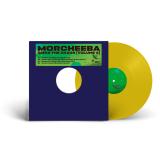
Morcheeba return with the second EP in their Remix The Chaos project - a year long series of releases reworking all the tracks from their 2025 studio album Escape The Chaos. Volume 2 is headlined by London art-rockers Django Django who inject a fresh garage pulse into Hold Me Down and prolific producer Rex The Dog who transforms the Latin subtleties of Dead To Me into an extended electro powerhouse.
Elsewhere, experimental producer Daedelus takes Cooler Heads into leftfield IDM territory, and regular Morcheeba remixer Merther Hum turns the album title track Escape The Chaos into deep, refined dub.
Ready in equal parts for the dancefloor or your sofa late at night, these bold reinterpretations push Morcheeba’s seminal sound further towards electronic music’s outer edges. Presented on rubber duck yellow vinyl in classic disco bag packaging, Remix The Chaos (Volume 2) is just the latest in a series of unmissable releases from the trip-hop titans.
With his last three records all landing within a calendar year (2024-25), enigmatic Swedish producer Civilistjävel! (aka Tomas Bodén) is on a hot streak of releases, his singular vision increasingly ambitious and expansive. There are few artists working at this level so consistently right now, reinventing, revising and continually developing their language. Following on from 2025’s radically re-worked ‘Versions’ (of Mayssa Jallad’s ‘Marjaa…’), Bodén returns to break further fresh ground with his new album, ‘Älvgång’. Featuring contributions from Soccer Committee, Carrier and guest (aka Jabu’s Jasmine Butt), ‘Älvgång’ foregrounds a more brittle and insistent rhythm-based sound, whilst comprising his most broad-ranging collection of material to date.
‘Älvgång’ grew out of a series of sketches made from late ‘24 and throughout the whole of ‘25 at Stockholm’s renowned EMS Studios, which gave Boden free rein to its extensive collection of vintage analogue equipment and rare modular synthesizers such as the Serge and Buchla systems. As a loose framework of tracks began to take shape, so did a reflection of sorts, on family and foundations, underpinned or influenced by sounds that drifted into Tomas consciousness around this time - ancient Swedish pastoral music, Georgian lithurgical chants, gongs, chimes. An idea settled into place, a dedication to his Grandfather, as the earlier release Fyra Platser (tr. ‘Four Places’) was to his Grandmother. Älvgång is grounded with the sense of time and place of an old family photograph, with the tracks over each side bearing one of two names that are more or less the same location - Strinne was the old name for a this loose collection of villages. These days it is more commonly known as Bjärtrå. Metaphorically speaking, the river runs through both.
Civilistjävel! conjures so many adjectives and descriptors, ‘glacial’ and ‘ambient’ frequently among them - but while not altogether untrue, such terms belie the tension and drama so often present in Tomas’ music. Listening to ‘Älvgång’ is not a passive experience. The eight tracks here feel like a patchwork of memories that bathe in the same ethereal, otherworldly glow of Tarkovsky’s polaroids’.
The machine pulses that dominate this landscape are reigned in and tempered by a human hand; lithe, untethered coils, breathing in and out. ‘Strinne Ett’ sets out with purpose, sensing awe and wonder through the murk, but as the final tone unfurls like a question mark, another chapter begins, unfolding/building like a Tarjei Vesaas novel. These lyrical, abstract miniatures combine to reveal a wider context, fragile humanity standing alone against nature.
Guest appearances on Civilistjävel! records have become a regular occurrence (including recent collaborations with Mayssa Jallad, Laila Sakini, Cucina Povera, Thomas Bush, Eldon + Withdrawn), but are used sparingly and with increasing precision. On ‘Strinne Tre’ Mariska Baars’ (Soccer Committee) voice feels like a balm, a clearing. But as her simple, three-word incantation drifts further into fog, the meaning changes, and her words seem to curdle. Carrier’s beats widen the parameters on ‘Strinne Fyra’, a skittering promise that builds tension then refuses to release it; all false starts, Photek gongs, and trinkling modulars. Jabu’s Jasmine Butt pulls all the threads together for the final track, Thomas Tallis’ ghost walking over offset machine impulses, that work against their own symmetry.
Side two begins inquisitively, scanning bleached, alien surroundings, its sparse pads recalling Aphex Twin’s ‘Selected Ambient works Vol 2’. 'Bjärtrå Två’ picks up the baton from ' Strinne Fyra’ with a ruptured Simmons SDS200 analogue drum synth set free from its shackles, the rhythm eventually slotting into the spaces that were hiding in plain sight. What follows seems like an epiphany; ‘Bjärtrå Tre’ is achingly beautiful, a euphoric, winding ascent that leads to devotional plainsong. ‘Bjärtrå Fyra‘s final unheralded shift feels both tragic and haunting.
From the globally acclaimed spiritual jazz album RUSHIN' (Mono Jazz), "PHAROAH'S MESSAGE" channels the spiritual legacy of Pharoah Sanders and John Coltrane into the present day. At its center is Joe Claussell's expansive alternate remix, where Afro-diasporic ritual, deep house, and jazz mysticism converge. Also featuring Didje Doo, with a Balearic sound and WATH with an Eastern Sound, this release reimagines the spirit of jazz for a new generation of listeners, dancers, and seekers.
Non Series marks its 15th anniversary with a special compilation gathering artists from different backgrounds whose music reflects the spirit and musical identity of the label. Most have never released original music on Non Series, but their individual approaches and distinctive sound fit naturally within this compilation.
An eclectic selection of tracks, ranging from hypnotic sequences and intricate percussion to heavy low-end pressure and deep atmospheres, coexists without following a predetermined formula, allowing each contribution to retain its own character.
Rather than presenting a chronological retrospective, the compilation offers a snapshot of the label's ongoing evolution, bringing together artists from different backgrounds and generations whose work finds a natural connection with the Non Series aesthetic.
Fifteen years of releases, collaborations and continuous exploration, brought together in a compilation that looks back without attempting to define the label, leaving its sound open to further evolution.
Tokyo-based producer aus debuts on Squama with his new album Mere Meer.
Grounded in the question of how a specific environment can emerge through voice and memory, rather than through recording of an objective reality, the album stands in the tradition of modern Japanese Ambient and Kankyo Ongaku.
aus is the solo project of composer, producer, and curator Yasuhiko Fukuzono. His music is characterized by a precise combination of cinematic strings, acoustic instrumentation, and concrete sound design derived from everyday life.
In recent years, he released music on EM Records, WRWTFWW and his own flau imprint. As a remixer, he put his touch on tracks by Matthew Herbert, Tenniscoats and Craig Armstrong, among others.
His sonic research also extends beyond traditional formats into spatial sound installations and site-specific works, collaborating with experimental figures like Ulla, Li Yilei, and Hinako Omori for institutions such as the Tokyo National Museum.
Much of the album consists of sketches made with synthesizer and voice. Sampled from social media clips, field recordings or a heavily processed version of Fukuzono's own vocals, the voice became a central element of the record. "I have long been interested in the relationship between words and melody.", aus says. In his former work as a speech therapist, he witnessed patients with severe dementia or aphasia, who all of a sudden could recall lyrics when they were sung with familiar melodies. An experience that left a deep impression on him.
During the Covid years, when hearing voices of friends and family sometimes was the only way to feel connected to the outside world, aus began reflecting on the connection between voice and environment. "Every voice represents an encounter with a person, but it's also an encounter with a place."
Unable to travel as freely as before, that limitation became part of his method: rather than just recording actual field material capturing the real world, he would write and perform melodies that simulate a sense of place - an imagined room, an imagined street.
"My interest lies not in the dichotomy between artificial and environmental sounds, but in how they collectively shape a single perceptual field."
By observing and mapping our world, aus creates his own and his new record is a prime example of that process.
Phenomena begins with two artistic voices that seem to speak different languages. Barcelona-based producer R-010 (Lucas Rojo) approaches composition through rhythm, space and electronic transformation; Madrid-born vocalist and multidisciplinary artist Venerandi through texture, breath and the expressive possibilities of the human voice. By the time the album reaches its final moments, that distinction has quietly disappeared.
Rather than functioning as a meeting point between two individual practices, Phenomena gradually
becomes a third language—one that belongs to neither artist alone. Voice no longer sits above the music
but moves inside it, dissolving into layers of synthesis, percussion and guitar until performance itself
becomes another malleable sound source. Likewise, electronic production never behaves as a fixed
environment; it constantly adapts, absorbs and responds, allowing acoustic gestures and digital
manipulation to reshape one another in real time.
This continuous transformation defines the record more than any particular genre ever could. Echoes of trip hop, bass music, psychedelia and experimental electronics drift across its surface, yet they are never
presented as stylistic markers. Instead, they appear as temporary states within an ecosystem that remains
in constant motion, where dense rhythmic passages collapse into suspended atmospheres and moments
of stillness carry as much weight as those driven by pulse.
The presence of Matteo Caro (guitar and percussion), Pablo Gorostiaga (guitar) and Alessio Rodolico
(percussion) further expands this dialogue. Their contributions are not decorative additions but structural
ones, gradually dissolving the distinction between composition, improvisation and production. Instruments
emerge, mutate and disappear inside the same sonic fabric, making it increasingly difficult to distinguish
what was performed from what was transformed.
With Phenomena, Lapsus Records presents a work that feels less interested in crossing genres than in
questioning the borders between artistic identities themselves. The album never asks the listener to decide
where the human ends and the machine begins. Instead, it quietly suggests that, after enough careful
listening, the question itself may no longer matter.
For more than two decades, Vidmantas ?epkauskas has occupied a singular position within European underground culture. As the driving force behind Opium Club and gallery 1986 in Vilnius, founder of Ant Bangos, Alfavilnius and OLE festivals, curator, label owner, promoter, DJ and artist, he has spent much of his life creating the conditions for other people's music to be heard.
It makes sense then that he has no shortage of friends and collaborators in play. Across ten tracks, V presents shades of Italo, krautrock, post-punk, minimal synth, industrial pop and neon-noir romanticism, arriving somewhere between the dancefloor and a dream-state. The cast of collaborators both contextualize and help sharpen the vision.
First and foremost, much of the album was crafted alongside Frankfurt's Philipp Lauer, whose friendship with V grew through marathon studio sessions. Curses lends his unmistakable blend of dark romance and theatrical energy to "Is This What You Want?", Australian cosmic journeyman Dreems joins for the kaleidoscopic "Blitz Disc," Domenique Dumont brings their unmistakable emotive touch to "Avventura," while Lithuanian artists Noyus and Ruta MUR, both distinctive voices from the country's queer scene, whose vocals add another dimension to the record's emotional palette. As V puts it, "These are the people I've been vibing with."
That he finally delivers a full-length LP with such elusive qualities is more than a clue to his character. The title itself, a nod to Magritte's famous paradox and his years living in Brussels, suggests that any attempt to define V through a single image is destined to fail. At once playful and philosophical, 12:55 (Ceci n'est pas une V) questions ideas of identity and artistic value while marking the closing chapter of the musical persona that followed ?epkauskas' earlier success as Vidis. Neither retrospective nor statement of intent, it feels like a connected set of reflections spanning a lifetime of influences.
Chicago producer and composer Will Miller’s Resavoir has established a strong following at the intersection of jazz, electronic music, and beat-driven production, with more than 9,000 vinyl records sold and 82M+ streams across the project’s first three albums. Resavoir’s 2019 self-titled debut received an 8.2 from Pitchfork alongside broad international critical acclaim, with ongoing support from Gilles Peterson, Lefto, Anthony Valadez, Somewhere Soul, Andrew Jervis and Lovie, plus airplay on BBC 6 Music, KEXP and NPR. Recent recognition includes placements on NPR, KMHD and New Commute’s Best Albums/Songs of 2025, while Resavoir has toured extensively in the UK and Europe and opened for Khruangbin, BADBADNOTGOOD and Kassa Overall.
Above The Clouds finds Resavoir moving further into electronic territory, combining jazz improvisation with dreamy synthesizers, booming drums, smeared samples and electronic instrumentation. Recorded through loose studio sessions with longtime collaborators Lane Beckstrom and Jeremy Cunningham, with contributions from Kenneth Leftridge Jr. and Gregory Uhlmann, the album incorporates wind synthesizers, samplers, guitars, electronic drums and woodwinds into a fluid, groove-oriented sound. The album follows Resavoir’s growing presence across editorial and playlist platforms including Apple Music, Spotify, TIDAL and Delicieuse Musique, with US and EU/UK touring planned for Fall 2026.
Chicago producer and composer Will Miller’s Resavoir has established a strong following at the intersection of jazz, electronic music, and beat-driven production, with more than 9,000 vinyl records sold and 82M+ streams across the project’s first three albums. Resavoir’s 2019 self-titled debut received an 8.2 from Pitchfork alongside broad international critical acclaim, with ongoing support from Gilles Peterson, Lefto, Anthony Valadez, Somewhere Soul, Andrew Jervis and Lovie, plus airplay on BBC 6 Music, KEXP and NPR. Recent recognition includes placements on NPR, KMHD and New Commute’s Best Albums/Songs of 2025, while Resavoir has toured extensively in the UK and Europe and opened for Khruangbin, BADBADNOTGOOD and Kassa Overall.
Above The Clouds finds Resavoir moving further into electronic territory, combining jazz improvisation with dreamy synthesizers, booming drums, smeared samples and electronic instrumentation. Recorded through loose studio sessions with longtime collaborators Lane Beckstrom and Jeremy Cunningham, with contributions from Kenneth Leftridge Jr. and Gregory Uhlmann, the album incorporates wind synthesizers, samplers, guitars, electronic drums and woodwinds into a fluid, groove-oriented sound. The album follows Resavoir’s growing presence across editorial and playlist platforms including Apple Music, Spotify, TIDAL and Delicieuse Musique, with US and EU/UK touring planned for Fall 2026.
UK techno lynchpin James Ruskin celebrates 30 years of Blueprint with a remastered edition of his 'Further Design' LP, releasing 4th September 2026. Founded by Ruskin and Richard Polson in 1996, the infl uential label has spent three decades documenting uncompromising techno through releases from the likes of Rommek, Kr!z, Truncate, and many more, with 'Further Design' originally landing in 1998. The anniversary celebrations have already seen Mark Broom revisit seminal Regis recordings on the 'Power Is Neutral' EP, with further releases from Kerrie, Nastia, and more to follow, alongside a merchandise run later this year.
James Ruskin has been a constant presence in techno for over three decades. He defi ned the sound of British techno through his DJ sets, productions, and the releases on his infl uential Blueprint label. His stripped-back, functional, and forward-thinking sound has remained utterly uncompromising, with performances at clubs and festivals around the world while never straying from underground ideals. Substance over trends has always been his MO, through a catalogue spanning Blueprint, Tresor, and numerous collaborations that remain timeless.
The purposeful titles of the tracks on this essential album hint at the minimalist approach to sound. This is bold, linear techno with 'Enter', 'Below', and 'Indirect World' kicking off with rolling low ends and smart sound designs that even now sound futuristic. The likes of 'The Divide' bring spangled synths and crunchy percussive textures that jerk you into motion, while 'Time And Place' is an immersive cosmic odyssey and 'Unknown Destination' melts the mind with liquid synth work that loops around hypotonic rhythms. 'Work' is another perfectly calibrated cut with meticulous percussive placement and the shimmering of bells that dissolve space and time.
It is testament to Ruskin's original vision that 'Further Design' remains as evocative today as it was upon its release, full of otherworldly imagery and grooves that continue to move dance fl oors around the world.
A Portal To The Unknown – 7 Rotations of Neptune Discs brings together 12 producers across a double LP. Tifra and Match Box return following their own ep’s on the label this year, joined by familiar contributors Wigs, Aiden Francis, Jeku, Cybernet and Mahkina. COZi, Dive Crew and Thurlow Joyce make their first appearances, with Milès Borghese and Biodive completing the four sides.
Run independently by Astro from Edinburgh, Neptune Discs treats the exploratory ideas of ’90s and early-’00s club music as unfinished business. Prog, trance, tech house and dub techno remain reference points rather than templates, with more than 50 releases—and the arrival of Jupiter’s Depth and Pyramid Fields—allowing that identity to keep developing.
Wigs’ “Strangers” and Aiden Francis’ “Uno” bring warped, driving prog. COZi makes his Neptune debut with “Ride The Snake”, a lean, stripped-back tech-house roller that brings early-2000s economy into the present. Jeku follows with “Droop”, a trippy, ozone-soaked slow roller, while Thurlow Joyce closes with the warm, deeply submerged dub techno of “Sundowner”.
Beyond the vinyl, three digital exclusives expand the release: Bert Vesper’s “Babbel Truc”, Azzecca’s “Home” and Foley’s “What Could’ve Been”.
Featuring artwork by theAJM, the release is pressed across two 12-inches, distributed by One Eye Witness and arrives on 23 October 2026.
Ibiza-based Jazz N Palms is back with more musical dispatches from the calmer side of the island that follow on from his Ses Rodes album in 2022. That record was focused on a double album assembled, as if over a Cartesian grid of space-time. While one record was about space/the environment, the other was following the times of the day. This 7" expands that with more music inspired by magical island spaces.
These tracks were recorded in Magrana Studio in Ibiza with three new musicians and, after the post-production, the mixing was made with the help of Ben Westbeech and his beautiful Unfairchild II, an amazing Californian reproduction of the holy grail of tube compressor that has been present in Abbey Road studios since the 60s.
Opener 'El Valle' ('the valley') captures the different shades of light that pass over Ibiza, from early spring light to the arrival of looming clouds and the first thunders of a summer storm. It is the organ which serves as the main character to convey those sensations and the passing from light to dark as a live, loose and dusty groove bounces below. On the flip side, 'La Costa' simulates cruising on the open sea, riding choppy swells as waves lap at the boat and you gaze at the passing landscapes. Only drums and bass have been used to convey the feeling, and the result is a wonderfully uneven, ever-evolving and funky groove full of life.
Pablo Volt and J.G.G. make dub-folktronica the unpolished way: guitar, horns, drums and synths, recorded loose, drenched in echoes and tape saturation. They met in Barcelona over a shared love of experimental beers and even more experimental sessions, determined to see how far their musical chemistry could take them. "Mordida", their 2023 tape, spent months on repeat at the Pingipung office. Now comes the debut LP: Aqui me quedo. It's a record built on the gap between two childhoods. Pablo Volt (aka Pope, as producer) grew up in Mendoza, Argentina; Jordi Gege aka J.G.G. in a suburb of Barcelona. What they share is a language and a curiosity about each other's memories and musical roots - the studio is where they embrace their different origins in improvisations. A ditch from Pablo's childhood becomes "Zanjon". A mountain Jordi used to roam becomes "Emisora". An ice cream shop, a Sunday market, a football club: small doors into a past the other never lived, but somehow recognises. Aqui me quedo, "I'm staying here", is also the name of the Barcelona bar where they toast after a good session. Two friends, tracing their way back through the past, decide the present is where they'd rather be. Handmade, melodic, unashamed of a smile as they greet from the LP sleeve: this is the spirit in which Pingipung was founded 24 years ago and these two guys, muy simpatico, are living proof of it.
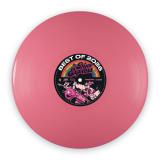
The Disco Express presents Best of 2026 - a deluxe, special edition 12" pink vinyl celebrating six of our favourite records from another landmark year on the label.
Showcasing the breadth of The Disco Express sound, the compilation journeys through funk-fuelled disco, jackin’ house, soulful grooves and peak-time dancefloor energy, bringing together some of the standout moments from our 2026 catalogue.
Featuring music from Make It Disco, Bustin’ Loose, MGR Mike, Ayce & Spirit of House, LEFTI, La Felix and more, Best of 2026 captures a label continuing to push forward while staying firmly rooted in the spirit of disco.
From the feel-good vocal energy of “What You Gonna Say” and the funk-driven swagger of “Less Struggle, More Hustle”, through to the 70's inspired “The Movers”, the soulful lift of “Stronger” and the irresistible drum rhythms of “Muchacho” and “Run It Up”, this is music made first and foremost for the dancefloor.
The music featured on Best of 2026 has already picked up support from some of the world’s most respected selectors, including Roger Sanchez, Danny Rampling, Marco Carola, Jamie Jones, Joseph Capriati, Paco Osuna, Claptone, Danny Krivit, Sam Divine and Arthur Baker, alongside many more.
Pressed on limited edition pink vinyl, Best of 2026 is a snapshot of The Disco Express in full motion.
Italian percussionist Umberto Vitiello takes us on a journey into a vanished world. Mixed by Italian techno master Donato Dozzy, the album draws on memories spanning decades, including Vitiello's years living on Yarakh Beach on the outskirts of Dakar, Senegal. There, the rhythms of daily life flowed with the tides: fishermen launching their pirogues at dawn, griots and vendors gathering beneath three towering palm trees, and the Atlantic Ocean providing a serene soundtrack.
Named after the Lébou people whose fishing culture has shaped the coastline around Dakar for centuries, the record is both a tribute to a community that welcomed Vitiello as one of their own and a reflection on what has been lost.
Those years left a profound mark on both his life and his music. Yet this is not simply a work of remembrance. It is also a meditation on change.
Today, the beach that inspired these recordings has been transformed by pollution and environmental decline. Where fishing boats and palm trees once stood, a sculpture by Senegalese artist Serigne Gorgui Mbaye now depicts two giant ears facing the sea-a reminder of the need to listen: to one another, to nature, and to our own conscience.
Blending percussion, atmosphere and storytelling, the album revisits formative experiences from the 1980s through the perspective of the present day. Featuring vocal contributions from Olympia Ndiaye, Anna Caragnano and Mariangela Morais, and guided by Dozzy's spacious, immersive mix, it unfolds as a deeply personal journey through memory, place and transformation.