
4
Epsie steps up on Secretsundaze’s 9FINITY imprint with ‘Any Colour You Like’, a four-track EP weaving trippy, techy, and subtly progressive elements juxtaposed with darker, electro-orientated moments for a heady dancefloor statement.
Built with a live-first mentality, his productions mirror the fluidity of his sets—intricate rhythms and elastic basslines ground the EP in pace and movement. The release oscillates from the sleek to the abrasive with punchy drums and otherworldly synths existing in tandem with deep tech house grooves. A distinctly European sensibility runs throughout: restrained yet exploratory, minimal yet richly detailed, all landing with understated psychedelia and deep functionality tailored for the heads.

Glenn Underground is the founding member of the Strictly Jaz Unit. He was raised on disco classics and freeform jazz in Chicago's Southside, the place where house music was born. Taking inspiration from Chicago's original pioneers, Larry Heard, Ron Hardy, Lil' Louis, and the like, Glenn has produced many sought after house gems for some of the most well respected deep house labels such as Prescription and Guidance.
The Jerusalem EP's, GU's second album for Peacefrog originally released in 1997 still sounds so fresh, so deep and so soulful. Blending jazz-tinged chord progressions with sax accents, and rolling basslines the album evokes the sound of late-’90s hypnotic Chicago house.
Timeless, quality, underground house music for the mind, the body and especially the soul.

mclusky sind eine Band, die eine Band war, keine Band war und nun wieder eine Band ist. Sie wurde Ende der 90er Jahre gegründet und löste sich 2005 nach drei Alben zum ersten Mal auf. Meinungen zu diesen Alben finden sich im Internet. Der Weg zurück zur Band begann 2014, als die Band sporadische Konzerte spielte, um Geld für einen lokalen Veranstaltungsort zu sammeln, der von der Schließung bedroht war. Nach einigen Rückschlägen, die man als die schönsten Seiten des Lebens bezeichnen kann, veröffentlichten sie 2025 ihr erstes Album seit zwanzig Jahren. sporadische Konzerte gab, um Geld für einen lokalen Veranstaltungsort zu sammeln, der von der Schließung bedroht war. Nach einigen Missgeschicken, die man als Teil des Lebens in seiner schönsten Form bezeichnen kann, veröffentlichte die Band 2025 ihr erstes Album seit zwanzig Jahren. Nun, im Jahr 2026, setzt sie ihre musikalische Reise mit weiterer neuer Musik in Form dieses 6-Song-Mini-Albums fort. Der Zeitpunkt dieser Veröffentlichung fällt mit einer US-Tournee im Frühjahr 2026 zusammen, die nach ihrer Australien-Tournee im Januar und einer Reihe weiterer Tourneen aus dem vergangenen Jahr rund um den Globus stattfindet. Die Rückkehr der Band wurde mit Begeisterung aufgenommen, insbesondere von der Presse, wo Medien wie NPR schwärmten: ,Progressiver, ungewöhnlicher, frecher Post-Punk mit echtem Sinn für Humor und Grandiosität. Diese Musik ist einfach voller Kreativität", und Pitchfork sagte: ,Mclusky, bekannt für ihre explosiven Live-Auftritte, klingen auf ihrem Comeback-Album genauso laut... Viel Spaß dabei." Das Album enthält vier neue Songs, die im Herbst 2025 aufgenommen wurden, sowie einige Songs aus ihrer nur digital erhältlichen Comeback-EP aus dem Jahr 2023.

Presenting the remarkable second album by the Chinese musician, DJ and creative chef Yu Su. An evolution from her 2021 debut LP and two track single released last year, Foundry radiates a fresh, fully-fledged and far-reaching sound.
The nucleus of Foundry began with material penned for live performance at MUTEK in 2025, alongside a move to London which brought about new shifts in perspective. Searching for a style that was true both to her roots and progression as an artist, Yu ventured in a post-orientalist direction, and came upon a language of ‘in-between music’.
Mixing the eclectic influence of her DJ sets with genre-defying collaborators and newfound taste for minimal and ambient techno, a dusky, dub-inflected character began to emerge. This broad palette reiterates Yu’s prior form in making connections across disciplines, which have not only consisted of music, but also multisensory endeavors which incorporate taste and smell.
With cover art featuring hammered metalwork by the artist Brendan Ratzlaff, for Yu the foundry represents a nexus of creation; a shared workspace where collaborators combined their materials and skills. With the input of Seefeel, Dip In The Pool, and Memotone, together their broad spectrum of aural elements underwent a chemical transformation, and were forged into something new.
Well-designed, ergonomic yet occasionally amorphous, the effect is that of meticulous freedom, both controlled and free flowing. Using immersive sound design, Yu creates inspiring spaces to revel in, which are warm yet steeped in shadow, with flashes of silvery light.
Featuring Yu in with duet Miyako Koda of cult Japanese art pop duo Dip In The Pool, the record kicks off in swirling but poised fashion with ‘A Jewel’. The dusky, reverberant underwater minimalism of ‘Sunless’ follows, which features British composer Memotone, and was influenced by Chris Marker’s 1983 film Sans Soleil.
The dubby, sunkissed affirmation on ‘Cul De Sac’ leads to the thumping acid stomp of ‘Foundry’, and onto the hazy glow of ‘One Place After Another’, featuring lauded soundheads Seefeel, where Yu’s voice is joined by Sarah Peacock’s, alongside Mark Clifford’s seductively gauzy fuzz guitar.
Venturing into more ominous territory is the liminal ambient dub of ‘Wanli’, followed by the rich textured flutter of ‘Os Cionn’, which translates from Gaelic as ‘above’. The album ends with the reflective, processional pulse of ‘Ripe Fruits’, which was inspired by Frederic Leighton’s 1892 oil painting The Garden of the Hesperides.
The LP’s visual was art directed by Lucas Dupuy, whose approach perfectly encapsulates Yu’s spatial sonics: “We both think in layers”, she comments. “Not linear layering, but horizontal layering, like weaving metallic threads, where a bigger picture of a grainy sphere will occur at the end.”
Mastered by Miles
Art by Lucas Dupuy & Brendan Ratzlaff

Leinenbezogene, foliengeprägte Tip-on-Gatefold-Hülle mit 24-seitigem Comicbuch im LP-Format.
The 3rd collaborative album between Les Claypool (Primus) & Sean Lennon (the previous sold over 150,000 combined) is an elaborate concept record reflecting on morality, the warnings of A.I., and the slippery slope of optimization without empathy. Told across 14 songs - which ooze with classic psychedelic / progressive rock stylings - and the accompanying comic book by Rich Ragsdale, The Great Parrot-Ox and The Golden Egg of Empathy is a peak for both The Claypool-Lennon Delirium and rock music at large.
Black Vinyl[30,67 €]
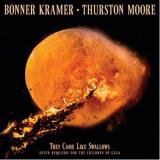
They Came Like Swallows is the first album-length collaboration between Thurston Moore and Kramer (now officially Bonner Kramer), two giants of alternative/ experimental music. The accomplishments and influence of these two artists in the world of independent music cannot be overstated and the result of their artistic union is a startlingly cohesive statement that burns through landscapes of primitive outsider rock, avant-garde composition, progressive ambient and further locales boldly and beautifully unnamable. “Kramer and I reconnected in Miami, Florida, a few years back, many many years after each of us had departed NYC on separate life adventures. It was only a matter of time before Kramer and I started making plans to record together and with his irrepressible due diligence he quickly set up a mobile recording contraption in the pad I was decamped in, the Florida sunshine flowing through the palm leaves, lithe lizards skittering across the windowsills, and we just went for it.
Kramer had the idea to cover a Joy Division tune, a left turn from the improvisations we had been tracking, though wholly in keeping with both our sensibilities of light and dark unifying in transcendent songwriting, both of us devotees of 'the song' as well as 'the freedom.’ What transpired is They Came Like Swallows, a session we immediately felt should exist as a prayer to the war-torn souls of the families of Palestine continually decimated by the brutality of genocide. We agreed beyond words to offer our music as a sonic activism and as a beneficent energy. This album is our duo exchange for human dignity, it is our soul music for any semblance of a peaceful planet.” ~ Thurston Moore “For the first time in our nearly 45 years of friendship, we had identical time windows open to make a record together,” recounts Kramer. After all this time not a moment is wasted as the duo immediately taps into the heightened core of improvisational tension across these seven offerings. Volcanic opener “Urn Burial” notches a similar historic union (John Cale and Terry Riley) to meet the circumstances of the moment, with swirling mists of organ and pounding toms over guitar that thickens the atmosphere with jagged, grimy dissonance.
Solemn strings open the second track, “The Redness In The West,” with Kramer’s cello and viola in dueling bow beneath the high tension drive and sustain of Thurston’s electric guitar, tapping out a Morse code of tension that mounts endlessly into a fog of inevitable war by the end. Moore and Kramer’s sense of experimentalism is in free and full grandeur throughout They Came Like Swallows, though the duo keep a strong and constant sideways eye on melody, composition and architecture, to the ends that any strict lines between song and improvisation are blurred beyond qualification.
As if to punctuate this point, Swallows closes with a nightwork cover of Joy Division’s “Insight,” a doleful coda that breathes out with a solemn inner grace under Thurston’s instantly stylistically recognizable guitar melodies as they weave into he and Kramer’s unison voices. As the lone vocal piece and only traditional ‘song’ form on the album, “Insight” is unique to this set and as a closing statement draws connective lines back to the kind of dynamic, electrified melodicism that wove deep, melancholy patterns into the untamed fire of Sonic Youth’s Sister and Daydream Nation. In the album’s final moments, the two voices repeat the lyric “I’m not afraid anymore” as mantra, underscoring the heavy, unsettled themes and methods that preceded it. Kramer describes the creative process of They Came Like Swallows: “I had composed and recorded a few pieces at my home studio over the course of a couple weeks. Thurston was spending the winter in South Florida, so I flew down and spent a few days recording his guitar parts in his home there. Watching him spontaneously compose his parts was pretty astonishing, to say the least. Once we'd finished working on those pieces, we began improvising and following wherever the music pointed us, and another few pieces were born. We got straight to it, without anything driving us other than the joy of finally working together.
My personal goal was to remain present and catch as many surprises as I could from Thurston's guitar work, and there were plenty during those few days. We had a fucking blast.” Thurston’s contributions here will be readily familiar to any acolytes of his other works, the through-line between his inspired playing, cradled in Kramer’s meticulous, solid arrangements. “If I had to make this record again, I'd do it all exactly the same way,” Kramer says. “It’s like jazz, you don't think about it. You just do it. It was miraculous, and you don't fuck with a miracle.”
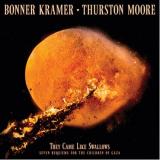
They Came Like Swallows is the first album-length collaboration between Thurston Moore and Kramer (now officially Bonner Kramer), two giants of alternative/ experimental music. The accomplishments and influence of these two artists in the world of independent music cannot be overstated and the result of their artistic union is a startlingly cohesive statement that burns through landscapes of primitive outsider rock, avant-garde composition, progressive ambient and further locales boldly and beautifully unnamable. “Kramer and I reconnected in Miami, Florida, a few years back, many many years after each of us had departed NYC on separate life adventures. It was only a matter of time before Kramer and I started making plans to record together and with his irrepressible due diligence he quickly set up a mobile recording contraption in the pad I was decamped in, the Florida sunshine flowing through the palm leaves, lithe lizards skittering across the windowsills, and we just went for it.
Kramer had the idea to cover a Joy Division tune, a left turn from the improvisations we had been tracking, though wholly in keeping with both our sensibilities of light and dark unifying in transcendent songwriting, both of us devotees of 'the song' as well as 'the freedom.’ What transpired is They Came Like Swallows, a session we immediately felt should exist as a prayer to the war-torn souls of the families of Palestine continually decimated by the brutality of genocide. We agreed beyond words to offer our music as a sonic activism and as a beneficent energy. This album is our duo exchange for human dignity, it is our soul music for any semblance of a peaceful planet.” ~ Thurston Moore “For the first time in our nearly 45 years of friendship, we had identical time windows open to make a record together,” recounts Kramer. After all this time not a moment is wasted as the duo immediately taps into the heightened core of improvisational tension across these seven offerings. Volcanic opener “Urn Burial” notches a similar historic union (John Cale and Terry Riley) to meet the circumstances of the moment, with swirling mists of organ and pounding toms over guitar that thickens the atmosphere with jagged, grimy dissonance.
Solemn strings open the second track, “The Redness In The West,” with Kramer’s cello and viola in dueling bow beneath the high tension drive and sustain of Thurston’s electric guitar, tapping out a Morse code of tension that mounts endlessly into a fog of inevitable war by the end. Moore and Kramer’s sense of experimentalism is in free and full grandeur throughout They Came Like Swallows, though the duo keep a strong and constant sideways eye on melody, composition and architecture, to the ends that any strict lines between song and improvisation are blurred beyond qualification.
As if to punctuate this point, Swallows closes with a nightwork cover of Joy Division’s “Insight,” a doleful coda that breathes out with a solemn inner grace under Thurston’s instantly stylistically recognizable guitar melodies as they weave into he and Kramer’s unison voices. As the lone vocal piece and only traditional ‘song’ form on the album, “Insight” is unique to this set and as a closing statement draws connective lines back to the kind of dynamic, electrified melodicism that wove deep, melancholy patterns into the untamed fire of Sonic Youth’s Sister and Daydream Nation. In the album’s final moments, the two voices repeat the lyric “I’m not afraid anymore” as mantra, underscoring the heavy, unsettled themes and methods that preceded it. Kramer describes the creative process of They Came Like Swallows: “I had composed and recorded a few pieces at my home studio over the course of a couple weeks. Thurston was spending the winter in South Florida, so I flew down and spent a few days recording his guitar parts in his home there. Watching him spontaneously compose his parts was pretty astonishing, to say the least. Once we'd finished working on those pieces, we began improvising and following wherever the music pointed us, and another few pieces were born. We got straight to it, without anything driving us other than the joy of finally working together.
My personal goal was to remain present and catch as many surprises as I could from Thurston's guitar work, and there were plenty during those few days. We had a fucking blast.” Thurston’s contributions here will be readily familiar to any acolytes of his other works, the through-line between his inspired playing, cradled in Kramer’s meticulous, solid arrangements. “If I had to make this record again, I'd do it all exactly the same way,” Kramer says. “It’s like jazz, you don't think about it. You just do it. It was miraculous, and you don't fuck with a miracle.”
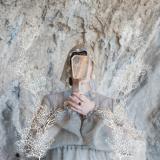
Oceanine, Jolanda Moletta’s third album and her first for Beacon Sound, is a powerful and ethereal statement of artistic community. Expanding on her previous work, each track represents a collaboration with a different female vocalist, with the foundational elements being generated entirely by her own voice. By turns haunting, enchanting, and inspiring, you won’t want to come up for air once you’ve been pulled under. Representing a
musical practice that is distinctly feminist, this is an album with a longer view in mind, to an age when the altars were to goddesses and women were centered as powerful beings representing the earth’s cycles of regeneration and renewal. Oceanine then, in all its beauty, can be viewed as an album of survival. It is deeply transportive, accessing something that lies within all of us. As the late, great Lithuanian folklorist and archaeologist Marija Gimbutas noted, “We must refocus our collective memory. The necessity for this has never been greater as we discover that the path of 'progress' is extinguishing the very conditions for life on earth.”
Jolanda Moletta is a multimedia artist and one-woman electronic choir. She creates wordless compositions through extended vocal techniques, integrating wearable-controlled live processing, alongside symbolic visuals. Moletta considers her performances to be a collective ritual and creates her Sonic & Visual Spells following the cycles of nature and the moon. Jolanda's 2022 critically acclaimed album Nine Spells was released on the Ambientologist label, followed by Night Caves on Whitelabrecs in 2025. Moletta’s artistic practice is a radical and spiritual journey through sound art, ritual, and the symbolic archaeology of the feminine.
Oceanine is inspired by sirens, water nymphs, and the timeless call of the sea. At its core lies Jolanda’s deep, lifelong connection to the Mediterranean Sea and to the ancient and modern myths and folklore that have emerged from its waters. Growing up by the Mar Ligure, Jolanda was surrounded by stories carried by salt, wind, and waves: legends of sirens, echoes of ancient voices, and the sea as both origin and oracle. This intimate relationship with the Mediterranean is not merely a backdrop, but a living source that shapes Oceanine’s emotional, symbolic, and sonic world.
Each track features a different female vocalist, creating a rich tapestry of voices, styles, and perspectives. This artistic choice not only broadens the album’s sonic palette, but also deepens its narrative core: celebrating the power, beauty, and mystique of feminine energy through myth, history, and sound.
The entire album is built exclusively from the human voice, processed and layered, yet always remaining voice, and nothing else. For each piece, Jolanda invited every vocalist involved to contribute a raw stem: a short, unedited melodic fragment of just a few seconds, inspired by the album’s themes. These intimate vocal seeds became the foundation of each track: the guest artists’ voices appear as brief, melodic stems, while the entire surrounding “orchestral” fabric is created solely from Jolanda’s own layered and processed voice. In this way, Jolanda’s voice becomes the Ocean itself, embracing, absorbing, and carrying the sirens’ calls within a vast, immersive soundscape. Every song is a unique expression of the feminine experience, revealing its depth, complexity, and emotional range, echoing the call of the sea and the many faces of the siren archetype.
The figure of the siren has transformed across centuries. In myths of Ancient Greece and Rome, sirens were hybrid beings, part woman, part bird, whose irresistible songs lured sailors to their doom. During the Middle Ages, the image shifted toward the half-woman, half-fish figure, often associated with temptation and danger. Historically, the voice of women has often been feared. Sirens were considered harbingers of misfortune not simply because they seduced or destroyed, but because they were powerful liminal beings.
In Ancient Greek, sirens functioned as psychopomps: figures who existed between worlds and guided souls, especially between life and death. Their songs were believed to carry forbidden knowledge, including prophetic insight and the ability to reveal truths about fate and the future. The danger of the sirens lay in what they revealed: knowledge that humans were not meant, or ready, to hear.
Oceanine confronts this legacy head-on. The voices heard throughout the album are not merely beautiful: they are dark and luminous, wild and enchanting, magical, soothing, dreamy, and at times fractured or distorted. They whisper, lament, beckon, and enchant. Like sirens, they skim the surface of the water and sink into its depths, hovering on the edge between tenderness and danger, vulnerability and power. They rise toward the sky, dissolve into mist, and return as echoes charged with raw, elemental emotion: voices that seduce, warn, mourn, and remember. They refuse to be reduced to decoration.
Alongside the album’s release in May, Oceanine will also unfold as a visual and performative work through a short art film. The film includes a live session recorded inside a sea cave facing the Mar Ligure, the very coastline where Jolanda spent her childhood, dreaming of sirens and listening to the sea as if it were speaking directly to her. This site-specific performance reconnects the music to its place of origin, allowing the voice to resonate within stone, water, and air, and transforming the cave into both a sanctuary and a threshold between myth and reality.
What if the sirens’ songs were considered dangerous because they carried another truth, an ancient truth long forgotten?
Oceanine embraces the idea that we are still deeply woven into myth. Though we may see ourselves as rational and modern beings, our world is saturated with ancient symbols and archetypes, often distorted, simplified, or stripped of their original meaning. And if those symbols are allowed to shift, if the mirror once held by the siren becomes an invitation to look beyond appearances and into what has been obscured, then we may finally uncover a deeper truth and reclaim the voice that was always ours.
Oceanine is not just an album. It is a reclamation, a spell, and a call from the depths.

A central figure in Belgian techno, Border One's work has also been an international reference for consistency and direction since his early releases. An artist for artists with true commitment to his sound, Steven Petit's impact in the studio and behind the decks is admired by anyone who has done their homework. His music describes tight pressure under curious, modular-like sequences that stretch through the timeline of each track. The scale of minimalism remains key here, and the Belgian wastes no time when tunneling through his erratic tracks. Jazz-like dissonance drives his tension and although each element is carefully measured, the records truly command dancefloors. 'Inner Radiance' is no different. The Fuse resident takes his game one step further, pushing harmony to hysteria at every turn.
The EP skips foreplay and dives straight into the extremities of Border One's sound. In 'Reducing Valve', sustain is the key ingredient to this chaos. Slowly ripping the synth sequence into chords, Border one maintains a firm hold on the track's tension while remaining playful with the main theme. 'Sensory Reset' is more of a lurker with its shifting pad that spreads across the stereo image. This track is characterized by a grim urgency as opposed to its predecessor's progressive spiral. Keeping things low to the groove, the A2 swings about satisfyingly while Border One tinkers at his 909 constructions. Continuing his work on resonance, 'Transfigured' balances obscurity and surrealism. With a sequencer on the loose and a drum machine to emphasize it, the Fuse resident guides his audience into twists and turns at a constant pace. Here, we explore the dichotomy between the warmth and cold of a modular sound in techno, something frequently done but rarely mastered. Border One puts his years of experience to work to provide a combination of flair and balance to his tracks, something that is clearly translated in this EP. Of course, the final track - the title track - 'Inner Radiance' brings something very special to the table. The power of simplicity can never be underestimated and Petit knows just how to use it. With a strong core to an already sturdy track, the conclusion is spectacular. Emphasizing the electrifying nature of the record, Border One adds vintage chord stabs that fit right in with the sharp lead to create a powerful and memorable dancefloor experience. Not as much of a wind-down more than it is a gripping cliff hanger for his future releases, Border One provides once more an EP that underlines the true ethos of techno music.
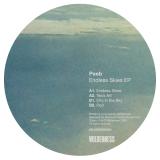
Following recent releases on Over/Shadow, Future Retro, Loop Progression and Bukva Sound, Peeb makes his debut on Wilderness with the Endless Skies EP, showcasing a deep, blissed out and atmospheric angle to his sound across 4 tracks that capture a sense of wonder, flowing from track to track to take you on another journey.

Venom wurde 1979 in Newcastle upon Tyne gegründet. Gegen Ende der New Wave of British Heavy Metal
erlangten sie Bekanntheit. Ihre ersten beiden Alben – „Welcome to Hell“ (1981) und „Black Metal“ (1982)
– gelten als prägend für Thrash Metal und Extreme Metal im Allgemeinen. Das zweite Album war so
einflussreich, dass sein Titel als Name für das Extreme-Metal-Subgenre Black Metal verwendet wurde. Von
Bands wie Metallica, Behemoth, Celtic Frost und Mayhem oft als wichtige Einflüsse genannt, zählen sie zu
den meistverehrten Bands ihrer Generation.
„Into Oblivion“ ist Venoms sechzehntes Studioalbum und präsentiert die langjährige Besetzung mit Cronos
(Bass/Gesang und Gründungsmitglied), Rage (Gitarre) und Dante (Schlagzeug). Es sind ihre ersten neuen
Aufnahmen seit „Storm The Gates“ aus dem Jahr 2018. Ihr neues Album umfasst dreizehn Songs im
typischen Venom-Stil: heavy, düster und eingängig. Es vereint ihren klassischen 80er-Jahre-Sound mit
einem moderneren, progressiveren Ansatz, ohne dabei jedoch die alte Energie und den unbändigen Elan
einzubüßen.
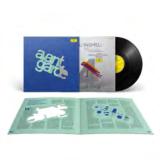
Album #3 der brandneuen Vinyl-Serie mit zukunftsweisenden Aufnahmen der musikalischen Avantgarde.
Tōru Takemitsus Quatrain und A Flock Descends into the Pentagonal Garden sind Beispiele für seine
Synthese aus westlichen Avantgarde-Techniken und japanischer Ästhetik. In Quatrain evoziert Takemitsu
durch fließende Veränderungen von Klangfarbe und Atmosphäre das japanische Konzept von ma – dem
Raum zwischen den Dingen. Er verglich das Werk mit einem Emaki, einer Bildrolle, die Szene für Szene
entfaltet, wobei jede musikalische Idee unabhängig ist, aber dennoch miteinander verwoben ist.
A Flock Descends into the Pentagonal Garden erweitert diese Ideen zu einer zirkulären, nichtlinearen
Klangwelt. Sein „flock”-Motiv, das zuerst in der Oboe zu hören ist, taucht in ein schimmerndes harmonisches Feld ein, das von den Streichern geschaffen wird – den „garden”. Hier wird Takemitsus Zeit- und
Raumgefühl eher immersiv und zyklisch als progressiv.
Gemischt und geschnitten von den originalen analogen 1-Zoll-8-Spur-Masterbändern von Rainer Maillard
und Sidney Claire Meyer in den Emil Berliner Studios.
Limitierte und nummerierte Auflage mit Original-Artwork und einem neu gestalteten, wunderschön gearbeiteten Sammler-Cover mit neuen Liner Notes von Bradford Bailey, gepresst auf 180-g-Vinyl

Long overlooked outside specialist circles, Drammi e Speranze is presented for the first time ever on vinyl reissue, newly remastered to highlight the depth and tonal richness of Umiliani’s arrangements.
Originally released in 1976 on Piero Umiliani’s own Sound Work Shop imprint, Drammi e Speranze—issued under the pseudonym Rovi—stands as a refined example of his late-period library work.
Performed by a compact string ensemble and subtly augmented by piano, Hammond organ, Eminent organ, and Rhodes, the album unfolds through a series of classically-informed compositions where melody takes center stage. Each piece is concise, evocative, and purpose-built—reflecting the functional yet highly expressive nature of Italian library music at its peak.
Conceptually, the record is structured in two contrasting halves: the first side explores themes of optimism and resolution, while the second delves into darker, more introspective territories, mirroring the emotional duality suggested by its title (Tragedies and Hopes).
This release celebrates 100 years since the birth of Piero Umiliani, honoring the enduring legacy of a composer whose work continues to resonate across cinematic, library, and contemporary sample-driven music.
©℗ 1976, Liuto Edizioni Musicali / Licensed to Holy Basil Records by Liuto Edizioni Musicali

Michael Forzza unveils Obscure, a two-track EP navigating the darker edges of atmospheric techno with precision and intent.
A) Obscure is a peak-time weapon built on powerful percussive drive and a commanding groove. The rhythm pushes forward with controlled intensity, locking the dancefloor into motion. As the track evolves, the rhythmic pressure gradually recedes, allowing a shadowed melodic atmosphere to emerge in the final moments, adding depth and contrast without losing its dark identity.
B) Torture ventures into a more industrial realm. Dense textures, mechanical tension and hypnotic repetition shape its core, creating a sustained rhythmic strain. Then, when the pulse finally withdraws, the structure opens into a striking melodic finale, transforming the track into a suspended, almost cinematic closing atmosphere.
With OBSCURE, Michael Forzza explores the fragile line between impact and introspection, pressure and release. A release crafted for intense peak-time moments and the shadows that follow.
Français
Michael Forzza dévoile Obscure, un EP deux titres qui explore les territoires les plus sombres de la techno atmosphérique avec précision et intensité.
A) Obscure est un véritable track peak time, porté par une puissance percussive affirmée et un groove implacable. La tension rythmique s’installe et maintient le dancefloor sous pression, avant de s’effacer progressivement en fin de morceau pour laisser émerger une atmosphère sombre et mélodique, apportant profondeur et contraste.
B) Torture s’aventure dans une dimension plus industrielle. Textures denses, tension mécanique et répétition hypnotique construisent une montée intense. Puis, lorsque la pression rythmique disparaît, le titre bascule vers une finale mélodique surprenante, transformant l’énergie brute en une atmosphère finale plus immersive.
Avec OBSCURE, Michael Forzza joue sur l’équilibre entre impact et relâchement, puissance et émotion. Un EP taillé pour les heures sombres et les dancefloors exigeants.

WARNING: THIS IS FLATCORE AND HAS TO BE PLAYED LOUD !
Let's start by explaining what "FLATCORE" is; which is represented on this 3rd vinyl from this special serie on Flatlife Records: Flatcore is a cross between Hardcore, Progressive Trance, ACID and Hard Trance with a wink to the '90s. A concept from the mind of Jack Wax, who himself is incredibly fascinated and passionate about the more progressive hard trance movements of the '90s.
First track from Jack: "What The World Is Becoming To" is a serious question. AI, robots that do everything for you, wars, the internet; so much that has happening in the past 50 years, and where is it all becoming to?
Jack is supported on this release by "Dysistor"; this artist has also released music as DJ Hidden and Scorch and is also one half of "The Outside Agency." Then there's fresh talent on the B-side: TRIPHAZ from France. A fantastic, dark flatcore banger; he sent it as a demo, and Jack immediately jumped up and started screaming that he wanted it for this project.
So in total; a fantastic flatcore release, limited to 200 copies pressed on white vinyl. If you
like the harder stuff... check this one out.

CRYME lands on Oddysee with 5 club tools designed for maximum dance floor functionality. Titled “7th Element”, the Berlin-based producer finds himself in form with a collection of deep and dubby dance floor grooves, rhythmic programming and sexy vocal-infused house. The record also features a sophisticated slice of steamy, house-laced techno in collaboration with Ben Reymann. Another step in the SEVEN’s co-founder steadily growing repertoire that shows continues upwards progression.

New series for Jodey Kendrick with volume 1, pure 90s Acid sprinkled with funky rhythms like FSOL, Humanoid and 808 State. Exploring an escalation of breaks that are as sexy as they are captivating and progressive already open that this series will become a classic. Just quality music!
Standard[37,61 €]
Washington's Slow Dancing Society aka Drew Sullivan has gone long here: Do We Become Sky? is a deeply immersive 86-minute work that very much rewards being listed to in one sitting. It is "a spiritual successor" to his 2008 album Priest Lake that draws upon feelings of loss, mostly using the tonality of the Korg Wavestation as a foundational instrument through the work. It features well-balanced boiling of tension with subtle moments of release, swelling harmonies, plucked guitars and evocative synth progressions that always keep things moving both physically and emotionally.

Art Bound launches its label with Ghost Signal Theory, a split EP by Brazilian producer Artürst and Georgian producer Toke, exploring a dark, progressive and electro-oriented sound where each track develops its own atmosphere while contributing to the overall flow and cohesion of the project.
Side A features Artürst with two tracks blending progressive grooves with layered textures and subtle acid-infused elements, delivering a hypnotic drive built for peak-time sets.
Side B is a three-tracker exploring Toke’s take on the Tbilisi underground, moving through high-energy electro and trance-infused passages, before closing with a deeper broken rhythm that shifts the pace and brings the journey into a more contemplative space, offering a final moment of suspension.
