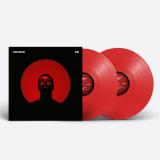
Mr Bongo presents a reissue of one of the rarest releases on the illustrious and now ultra-rare tax scam label TSG Records. A label with a checkered past, operated by Lloyd Price and with alleged ties to boxing promoter Don King. The album in question, Disco Party by Reality, is a stunning journey through ‘70s dancefloor-focussed funk into early proto-disco grooves. Back in mid-‘70s Manhattan, Dr. Otto Gomez and a group of fellow New York musicians including Tony Dixon, Norman Drayton, Tony Dupree, Al Jones and Fred Nanton were brought in for a recording session by songwriter and producer, Billy Nichols. Laying down one of Nichols' songs and a selection of the group's own, they were paid as session musicians and thought little of it. The tapes came to the attention of Lloyd Price who struck a deal with Nichols unbeknownst to Gomez and the rest of the band. Price then pressed the album and put it out in 1976 on a newly formed subsidiary label, TSG Records, that would later be documented as one of the US tax scam labels of the ‘70s. Such labels were created to exploit a loophole in the US tax system, running up inflated production costs / losses that investors or the parent label could write off against their tax bills. Releases on these labels were never intended to have commercial success. They would usually be produced in incredibly limited pressing numbers and have little to no promotion or distribution. As such many of these records instantly fell into obscurity, becoming mythical amongst DJs and record collectors. Sadly, this meant that artists like Dr. Otto Gomez and friends never had the chance for their record and their talents to shine at the time. In fact, it was only when Jazzman reached out for their 2022 reissue that Dr. Otto Gomez became aware that the album had ever been released and heard the story behind it. Disco Party is a time capsule where ‘70s instrumental funk edges and intertwines into an early disco sound. The sessions are for the dancefloor, minimalist and groove-based. The bass and drums are at the forefront, providing the pulse of the album. Driving funky guitar licks, and a brilliant horn section weave their way in and out of the productions. Highlights include the uplifting feel-good ‘Let's Party People’, the early disco swagger of ‘Reality’, and ‘Disco Party (Let's Have A)’ with its wah-wah groove and percussion break, which could easily have found its home on a Blaxploitation film soundtrack of the period. It’s not just rarity that makes this record so sought after, but rather the fact that it is a superb example of dancefloor-focussed mid ‘70s funk and disco.
Belgian saxophonist, composer, and producer Mattias De Craene (Nordmann, MDCIII) announces a new solo album, ‘A House Where I Dream,’ on VIERNULVIER Records. On his second album, he delivers a highly personal and healing journey, presented as an alternative soundtrack to the 1973 cult film ‘The Holy Mountain.’
The record will be released on October 11 on vinyl LP and through all digital platforms.
"The Holy Mountain" is a surreal Mexican film from 1973 directed, written, and produced by Alejandro Jodorowsky, who also stars in the film. The film holds a prominent place in avant-garde cinema and explores themes such as spirituality, mysticism, and the quest for enlightenment. It is in this vein that ‘A House Where I Dream’ is crafted.
“My mind and soul - and thus my music - come home to this motion picture” - Mattias De Craene
The album will be presented live with the film on October 16 at Videodroom during Film Fest Gent.
ABOUT THE ALBUM
With hypnotic tape loops, grainy textures, and mesmerizing saxophone, Mattias De Craene creates possible worlds that herald a spiritual transformation. From the Scottish Highlands and desolate mountains to the deepest recesses of the soul, this music has the power to create cinematic landscapes that transcend time and space. The sound of these 8 tracks is closely related to the minimalist compositions of Terry Riley, but the work of contemporary artists like KMRU or William Basinski is also drawn from the same material.
Above all, this album is a deeply personal journey and unintentionally serves as a metaphor for De Craene's ascent of his own mountain. For the Videodroom festival by Arts Center VIERNULVIER, the saxophonist began working on a new soundtrack for the film ‘The Holy Mountain’ in 2023, but his body and mind abruptly called him to a halt, forcing him to take a professional break. However, this project never left him, leading to an honest and raw quest to find himself as both a person and an artist, with Jodorowsky as a companion de route and music as an anchor. It initiated a long process of dismantling, searching, healing and back again. The album not only provides a sanctuary for dreaming to all who listen, but for its creator it also serves as both an outcry of despair and a source of comfort during challenging times.
All the tracks on 'A House Where I Dream' share an unfiltered grain of life, as one can almost feel the damp breath of the saxophone blowing.
The album opens with the three-part strong 'Transcention,' where the hypnotic interplay between soprano sax and lo-fi tape loops leads to higher realms of the mind and soul.
Alternating between deep frequencies and farout folk modalities, this mantra-like triptych acquires an alchemical character and ultimately transcends time and space.
In the ethereal 'Away,' one can peer into an abyss of resonance while a saturated tenor sax lends guidance in the spirit of Terry Riley's productions. 'You and Me' also bathes in a similar atmosphere, albeit in the vein of healing 90s ambient as granular sax tones converge with celestial chants. 'Gazing Upwards Towards The Sky,' offers different shades of blue as a slumbering tenor sax is juxtaposed to swift sax patterns. On 'A Stranger That Moved Me,' beauty lands in a soft and subtle manner, while the closing track 'Shepherd's Glow' drifts like a mountain wind flaring up at the darkest hour of the night.
The artwork is created by Gent-based artist Sam Timmerman, who portrays the world of 'A House Where I Dream' with playful repetition and mystique.
Shot Caller present 1000 Lamentos, a promising debut without artifice.
Three different cultures and paths converge here for stripped-down songs, unvarnished, where every element feels immediately exposed, the simplicity as its best. There is neither easy nostalgia to lean on—only instinct, balance, and a sensitivity that cuts through the whole listen experience without raising its voice, echoing some of the label’s most defining releases and hinting at a strong path ahead.
The structures are simple, almost primitive. Bass guitar, and rhythm move with quiet urgency, leaving space for what truly lingers: a voice that doesn’t demand attention, yet stays with you. Fragile, intimate, and deeply enveloping—as if each line could break or reveal too much.
1000 Lamentos doesn’t aim for impact—it settles slowly, and refuses to leave. A debut that will leave its mark on the scene.
GiGi FM is going back to her first love, Jungle. It’s one of the defining genres that shaped her journey into music. The DJ, music producer, dancer and poet is releasing her first jungle EP, Shelter Our Time on her label Sea-rène.
Following her 2025 techno EP Virgo Space Acid, GiGi FM turns inward on these 5 deeply personal, pop-infused liquid drum & bass tracks. It also marks the first time GiGi prominently centers her own lyrics and singing at the emotional core that thread the rhythm and movement of the music.
Written during a period of enforced stillness, the record became a form of transportation to imaginary realms; warm sunsets, liquid horizons and underwater dreamscapes that became portals to spaces where GiGi’s mind could still move freely.
Beyond its warmth, Shelter Our Time became a space of processing. The music acted as a catalyst – transforming experience into rhythm, memory into melody. For GiGi, music has always been a form of therapy, a way to metabolize life in real time. As she puts it, “It’s about learning to hold joy and pain in the same body and choosing to keep dancing anyway.”
SUNANDBASS Recordings proudly presents its next release, welcoming rising artist Napes with a brand new single: Hit The Corner / Clamber. This release marks the exciting introduction of a new artist joining the SUNANDBASS Recordings roster, signalling a bright future for both the label and its evolving sound. With previous releases on Shall Not Fade and Alix Perez’s 1985 Music, Napes is a promising name within the modern jungle scene. This release is a clear statement of his pushing boundaries combining grime influences and old school jungle, giving us his fresh sounds and melody-led drum and bass music, reaching new horizons while staying rooted in foundations. On the A-side, Hit The Corner showcases acid-tinged synths that meet a UK grime edge, driven by energetic beats and rolling breaks. In 6:20, Napes lets us travel through all the facets of a SUNANDBASS Recordings journey, with his ever-changing arrangement that evolves from heavy, club-focused energy into a euphoric jungle-inspired middle section, before concluding with driving arpeggiated synths. On the B-side, Clamber offers a deep, darker contrast. Between the atmospheric strings set intro which is dropping into a heavy, bass-driven groove, easily imagined shaking the dancefloor during an Ambra Night indoor session. The track reveals a more introspective side of Napes, blending refined sound selection with classic, weighty basslines built for the dancefloor. We’re honoured to welcome Napes to the SUNANDBASS Recordings family, an artist whose sound reflects our love for all corners of the genre while paying homage to the music that brings us together in Sardinia year after year. SUNANDBASS Recordings continues to push the boundaries of drum & bass, fostering connection through music that transcends borders, unites listeners, and celebrates rhythm, movement, and culture.
The first SOULMEEX label compilation arrives shaped by the core values that unite us all in Europe, featuring music from the very talented Alberto Melloni, Llewellyn, Prom Night, and Storken. DCSIS delivers the artwork, Lopazz adds his magic in the mastering, and the vinyl pressing comes from Mad Vinyl Music. A group of music enthusiasts Made in Europe. Fabricado en Europa.
A brand new repress of this highly sought-after classic deep house/tech house 12" from Da Sunlounge that is currently fetching up to €100 on second-hand markets! This is high-caliber, bumping dancefloor house that's been igniting dance floors since 2003.
Back in the day, it received support from prominent artists such as Ralph Lawson, Silver City, Fred Everything, Inland Knights, and David Duriez. Da Sunlounge has released music on labels including Cajual, Salted Music, King Street, and Mother Recordings, and has remixed well known artists like Mood II Swing and Roland Clark, among others.
Despite the thousands of kilometers between them, Monterrey and Medellín have always seemed to move in parallel. Both cities rise around guardian hills that watch over their people, and if you look closer, even the concrete that forms the backbone of each city traces back to these rugged metropolises.
The list of coincidences could go on—small, almost conspiratorial links that chance has woven between the two places. Adding another chapter to this unlikely connection is Regal86, who had already crossed the bridge once before to dive into the depths of Colombia’s “city of eternal spring.”
Doble Filo, his first full-length cut to vinyl, now becomes his latest calling card. The eighth release on Discos Nutabe’s catalog arrives with six tracks—six sharp-edged pieces that lay bare Regal86’s sonic marginality.
It’s a form of exclusion that isn’t imposed but chosen, a deliberate stance to sidestep the demand for exotica that still shapes much of Latin America’s electronic landscape. This is spicy, rough-edged techno—ruleless and unruly—driven by dense, clipped progressions that plunge you into a vortex masquerading as a rayado ritual.
There’s no overload of concept here, nor any caricature of the extravagant. This album simply delivers music built to tear through any club or dive, without false promises or unnecessary labels. If there’s one thing worth highlighting about Doble Filo as a whole, it’s the way it consistently—and almost implicitly—reasserts its core premise from start to finish: these techno tracks are meant to be played wherever the hell you want.
In a moment when oddities tend to be rewarded more than usual, Doble Filo doubles down on fundamentals, reclaiming the spirit of early electronic music and carrying it into an era where immediacy seems intent on blurring the honesty of those who shape the sound.
For Regal86, sonic hustle is the only thing that keeps his spirit steady.
We are pleased to announce the first FEX live album, Don't Look Back. The release features selected recordings from two concerts in Paderborn and Uelzen, both captured in 1985. All tracks on the album are previously unissued, including entirely unheard songs such as It's a Hard Life, Just Get Back, Legend, and Waiting Song, alongside a previously unreleased version of Subways of Your Mind, widely known as "The Most Mysterious Song on the Internet."
One of the most striking aspects of the album is the remarkable sound quality of the live recordings, as well as the strength of the performances themselves - particularly given that FEX were still considered a newcomer band at the time. The four-piece lineup consisted of singer, guitarist, and primary songwriter Ture Rückwardt, Michael Hädrich on keyboards and occasional second guitar, Norbert Ziermann on bass, and Hans-Reimer Sievers on drums. In 1985, the band was preparing for broader exposure through a nationwide tour organized by the small promotion company HBM-Musikbüro.
The album opens with the psychedelic Skyscraper, a track Rückwardt reportedly regarded as a personal favorite to perform. Hädrich contributes dynamic synthesizer layers, while Ziermann underpins the track with a distinctive slap bass groove. This is followed by the energetic rock number It's a Hard Life, which once again demonstrates that the band possessed multiple songs capable of matching the impact of their best known track Subways of Your Mind.
After this energetic opening, the album shifts into a more restrained mood with the synth-pop ballad I Got My Eyes On You. It is followed by Strange Feeling, presented here in a particularly compelling live version that arguably surpasses the previously released studio demo featured on the Skyscraper LP, with Rückwardt delivering one of his most expressive vocal performances. On Goldrush, another fan favorite, it is Hädrich's DX7 synthesizer work that stands out.
Don't Look Back continues to flow seamlessly, moving between styles such as new wave, synth pop, and a blues-influenced form of classic rock. On It's Good To Know, a song addressing the theme of stardom, the band returns to a heavier rock sound. In contrast, the synth-driven Just Get Back reflects on the conflict in Northern Ireland, then ongoing at the time. Lines such as "It's the money, it's the money why they come along" are directed at mercenary soldiers, while "even Sunday's a killing time" directly references Sunday Bloody Sunday by U2.
Previously known songs such as Dirty Slapstick and Heart in Danger lead into We Don't Want It No More, perhaps the band's most striking pop ballad. It is easy to imagine that the track had the potential to achieve radio success in the 1980s. The following piece, the epic Legend, explores themes of loneliness and love simultaneously. With poetic and abstract lines such as "some isolate in the falling rain" and "that's why I count all the reasons they call out for living, sadness is falling inside," it builds an almost eerie atmosphere.
One of the final highlights of the album is Subways of Your Mind, recorded in Uelzen. In this version, Rückwardt's vocal performance is even more on point than on the previously issued recording from Paderborn. Another notable moment is the driving, 1970s-inspired rock 'n' roll track Waiting Song. Both the composition and its live performance carry an energy that could easily stand alongside the repertoire of bands such as AC/DC. It was usually the track that FEX ended their concerts with, calling out each band member at the end of the song.
This leads to a broader reflection: it is striking that FEX did not achieve a wider breakthrough at the time. The performances captured here suggest a band capable of delivering consistently, song by song, note by note. It is not difficult to imagine FEX performing in large venues and engaging sizeable audiences. In reality, however, most performances in 1985 took place in front of relatively small crowds. The recordings featured on this album originate from the Roxy club in Paderborn and a small, unknown venue in Uelzen, likely in front of fewer than fifty attendees.
An essential figure behind these recordings is the engineer known only under his nickname Hase (German for "rabbit"), who was responsible for capturing not only these concerts but many other surviving FEX recordings. Bringing his own mixing desk to performances, he developed a deep familiarity with the band's material and was able to shape the live sound with precision, including the timely use of vocal effects. The original recordings existed only on cassette and required careful and extensive restoration work. Zoey Cairs was finally responsible for bringing them to their present quality.
This album marks the beginning of the Live Waves series, following the rediscovery of additional recordings that have gained international attention since November 2024, when they surfaced through what has been described as the largest "lost wave" music search to date. The title of this first live LP Don't Look Back carries a certain paradox. While the album invites listeners to revisit recordings from forty years ago, FEX themselves were always oriented toward the future. In that spirit, further releases of brand new material are already planned.
The cover artwork is once again based on an image by Magnussen from the Kiel archive, depicting the Prinz-Heinrich-Brücke. The bridge, once located in the northern part of the city, no longer exists. As a symbol, however, it remains fitting: a bridge stands for movement and connection - qualities that FEX sought to embody on tour, bringing their music to different places and audiences.
"I wanted to travel / Home into somewhere,"Ana Roxanne breathes across an eerie suspended drone on "The Age of Innocence". "I wanted to try / And go very far." These are the first words we hear on Poem 1 and reintroduce an artist who's in a conspicuously different phase of her life than she was when her debut album, Because of a Flower, sprouted nearly six years ago.
Heartbroken and reflective, Roxanne surveys the transformations that followed and displays a new-found boldness. Her voice is naked, vulnerable and alive, no longer shrouded in tape noise or looped and echoed beyond recognition beneath layered electroacoustic textures.
Throughout the course of Poem 1, Roxanne displays her skill as a singer and songwriter in the classic sense, using the limited instrumentation simply to accent her exposed tones. Muted piano phrases and plucked bass notes languidly trail her anguished siren song on "Berceuse in A-flat Minor, Op. 45", making each word count.
On "Keepsake" meanwhile, she sounds as if she's alone in an abandoned bar, stroking the dust off the piano's keys as she inventories her emotional scars. There's a smell of old whisky in the air, but Poem 1 is a remarkably sober album; never wallowing in self pity, Roxanne finds catharsis in the logic of her expressions, twisting out the edges of her memories into surreal, cinematic asides. "Untitled II", the album's pronounced, uninhibited centerpiece, delivers on the Lynchian promise that's been present since her first EP, 2019's ~~~. "
And when she interprets the Robert Schumann's lied "Stille Tränen" on "One Shall Sleep", she turns Justinus Kerner's words into a whispered echo of her own grief, narrating the 19th century poem over syrupy synthesizers and strings. There's a light emerging on the horizon, though; burying her past on the choral standout '"Cover Me", Roxanne shifts the pace and the mood on 'Atonement', lifting her voice into a gentle lilt.
The world of discovering Soul music and artists can lead to sheer moments of jubilation. The thought of igniting a long lost sound, reviving the energy of a once exuberant individual . But not every story that's told is filled with joy. Some are peppered along the way with struggles and heartache. Over time artists have battled with over powering label owners, record executives who just don't back what you do. The story of Tommy Hill is one such story. Tommy along with friend and longtime collaborator Ricky Tarbo had a deal with Motown records back in the early 1980's which turned sour very quickly. His release "Flame"/"Super Star Of Love' was dropped pretty quickly with no promotion and record boss Sylvia Rhône calling the shots within the duo questioning skin colour within the group and even trying to get vocals wiped off the release to sabotage it.
This said the single didn't amount to much and nothing else was recorded for Motown records. The duo did record some 4 demo's in LA before Tommy headed to re-record them again in New York circa 1982.
The A side has never been released until now, which is such a crying shame as the quality is so damn good. It's an uptempo boogie cut called "All My Love" which we gave a sexy 45 mix so you get some slamming synth work half way in. Tommy Hill's vocal range is nothing but astonishing. Just check out the 2 step ballad of "Can't Get Over You", which was recorded and released back in 1980 by The James Simpson penetration Band written by Tommy Hill, who went back into the studio 2 years later to give the song much more depth not only within the production but also to his vocal range. Tommy Hill headed back to LA after not securing a record deal and a few years later tried to get this singing career back on track. Like many of the artists who have moved on to a higher place Tommy succumbed to his own mental health issues and took his life. We hope this record does you proud Tommy Hill
Active for more than a decade within the Geneva scene, DJ Laxxiste A. has established himself as one of the key figures of the local club culture. A DJ digger, musician, producer and experimenter, he moves between rave culture, dub and adventurous electronic music. As one half of Oram Modular, a project that left a mark on Geneva's house and techno landscape, and through several live projects, he has long navigated between soundsystem culture, the dancefloor and free party. This new release, composed of five original tracks and two remixes, offers a synthesis of Laxxiste's musical obsessions. Jungle, acid, breakbeat and dub collide in a dense, textured universe shaped by a distinctly dub-driven mix. The tracks were first tested in a hardware live set, where machines, FX and samples were pushed and reshaped in real time before being refined into finished pieces. The result is an organic and sometimes raw sound, combining lo-fi textures, twisted samples and deep basslines designed for adventurous dancefloors.
The record also features two collaborations. Lateena, a key voice of the Swiss dancehall scene, appears on one track, bringing a distinctive vocal presence. Another piece unfolds through a double transformation, with a remix by Bony Fly later extended into a dub version by dubmaster Androo.
Freerange Records proudly presents SUN, the brand-new album from Crackazat - a radiant, genre-spanning statement and the long-awaited follow-up to his critically acclaimed 2021 LP Evergreen. SUN is Crackazat’s fourth album and his most expansive work to date: a rich blend of jazz, house, hip-hop, soul, and funk that fully steps into his own lane as a musician, bandleader, collaborator, song writer, and producer. Early radio support from 6 Music (Craig Charles), NTS and Jazz FM. Press/online support from Notion, Electronic Groove, Atwood, Earmilk & Magnetic Magazine.
First three releases in Ministry Of Sound's new 'Origins Of' series of vinyl releases. Taking it right back to where it all began, Ministry of Sound’s Origins series charts a selection of pioneering records responsible for shaping the sound of modern day dance music. It’s hard to imagine a world without House; this 2x LP release explores the origins of the genre from its early beginnings in 1980s Chicago presenting some of the key building blocks of a sound that went on to change the world. Featuring, Frankie Knuckles&Jamie Principle, “Steve” Silk Hurley, Marshall Jefferson, Farley “Jackmaster” Funk, Ron Hardy, RalphiRosardo, Joe Smooth and many more.
Sirens" resonate a lot in 2026. "Sirens" are everywhere right now, in the many fields of the human reign, sounding at its highest level ever... Pioneering Swiss DJ and electronic music producer Ripperton joins forces with Berlin-based singer, composer and passionate aural storyteller Joy Frempong (OY) to create a beautiful and deeply moving piece of electronic music. And after three years in the making, “Sirens” finally emerges. The roots of this collaboration however reach back more than a decade. Around 2010, Ripperton first encountered Joy’s first album with Oy after hearing it on Swiss national radio Couleur 3. Shortly after, he saw her playing live — a moment he describes as pure magic. So inspired, Ripperton approached her label with a request to remix her music. The label agreed, and in exchange, Joy promised to feature on one of his future productions. What began as a mutual artistic gesture quietly planted a seed and eventually, pretty much fifteen years later, that seed has fully grown. “Sirens” began as one of Ripperton’s nocturnal modular jams — exploring and playing around with pulsating sequences, pure analogue sound textures and fluid, hypnotic structures. The track was then elevated to an entirely new level by Joy Frempong’s deep, evocative lyrics and her celestial voice, transforming the song into something haunting and profoundly human. The song also grew on a shared work ethos rooted in patience, trust and refinement. A slow process, shaped by intuition and feeling rather than pressure. Listening over noise. The result is an emotionally charged composition that blurs the line between inner reflection and collective awareness — a sonic response to the sirens of our time.
Quotes: Laurent Garnier: “This is lovelyyyyy * “ Aera: “Love it! A brooding masterpiece. Simple yet multilayered, the real action is happening beyond the surface.” Acid Pauli: "This is really special. Like it a lot." Kalabrese: "Wonderful collaboration between two outstanding artists. Fresh sounds, deeper rauschen, beautiful vocals, hypnotic tribe. a bliss!” Vladimir Ivcovic: "Das ist so gut, aufrichtig, rein und kommt zum richtigen Zeitpunkt. Die Abwesenheit von Hysterie. Ich liebe es. Downcast Euphoria of the highest order und gerade. In der Tat wunderschön. Besonders Clouds Mix, gerade."
'We Fell In Turn' is the solo debut from Brooklyn-based trombonist, composer, and quartet leader Kalia Vandever. Vandever, who plays with Harry Styles and Japanese Breakfast, “sculpts her trombone’s golden tones into dazzling compositions” (Pitchfork), writing music that tends to “dip you into a feeling or a pattern or a breathing speed, and keep you there” (The New York Times). In 2022, Vandever released Regrowth, an album that “features the ecstatic, brilliant melodies that have become Vandever’s signature sound” (Bandcamp). This spring, Vandever brings contemplative reflection to We Fell in Turn, a brave and understated work from an ascending voice in American jazz.
Recorded over three days in upstate New York, 'We Fell In Turn' is improvisational — a stark palate of solo trombone, voice, effects, and little more. “My solo process has always been heavily rooted in improvisation,” says Vandever. “I wanted the process to feel similar to the way I perform. Lee Meadvin, who engineered and produced the album, had a heavy hand in the creative process as well. He would dictate prompts before I started improvising and those pieces ended up shaping a lot of the imagery that comes up throughout the record.”
Connecting the dots between Jeff Parker’s 'Forfolks', and early releases from Grouper, 'We Fell In Turn' is a study of space and patience, embracing vulnerability in its sparse adornment. At times, the album is reminiscent of Patrick Shiroishi’s 'Hidemi', both in its familial inspiration and solo instrument study, while sharing the ineffable feel of William Basinski’s 'The Disintegration Loops' — the traces of her trombone folding in on themselves in an organic loop. Emotionally generous throughout, Vandever acts as a torchbearer for jazz’s historical yearning for connection.
On 'We Fell in Turn' Vandever draws inspiration from childhood memories — events that shaped her approach to love, community, and partnership, and her maternal homeland of Hawaii. “We were exploring childhood memories, earliest experiences with disappointment and pain, and my Hawaiian roots,” says Vandever. “We Fell In Turn came after I titled the track "We Wept In Turn". Both come from the intangible feeling of waking up from vivid dreams, particularly the experience of falling right before waking up or waking up in tears.”
Through this exploration into her heritage, Vandever also found guidance. “In Hawaiian mythology, ‘aumākua are known as ancestral spiritual guides that manifest in different forms, whether physical or intangible,” says Vandever. “My ‘aumākua visits me in my dreams, usually with a reassuring hug or a reminder of my past. Memories and early experiences seem to escape me, but find their way back in dreams.” And now they’ve found their way into 'We Fell in Turn', Kalia Vandever’s stunning solo debut.
Jess Sah Bi is well-known as half of the legendary duo Jess Sah Bi & Peter One who brought homegrown Country-Americana to the West African masses with their smash debut Our Garden Needs Its Flowers in the mid-1980s. Touring stadiums and reaching listeners worldwide, their music has racked up millions of spins on YouTube and remains imprinted in the hearts of Ivorians of a certain age. ATFA reissued their album in 2018, garnering critical acclaim from publications including Pitchfork and Rolling Stone and reaching a new generation of listeners outside Ivory Coast (Cote d'Ivoire). Sometime in the early 90s, Die Sahbi - or Jesse, as he known to friends-became gravely ill with an unknown ailment and almost died. He visited various doctors and all kinds of religious healers and nothing helped. One day he went down to an Evangelical Christian revival in his neighborhood. They prayed over him and he was delivered. He says, "Their prayers helped chase out whatever demons and unhealthy spirits were inside me. After that my illness went away. When I went to the United States a few months later on an exchange program I wanted to make music to thank God because I was saved." He recorded an album of music praising God in order to honor a promise he made to himself at the depths of his desperation in the hospital. The album Jesus-Christ Ne Deçoit Pas Jesus Christ Does Not Let Us Down came out in 1991 and sold around 3000 cassettes in Ivory Coast. The master tape was lost along the way so the recording has never been on digital platforms until now. Jesse didn't have much time to record while visiting South Carolina, hence the relatively short album, 6 songs including two reprises for filler. A local pastor connected him with a studio and some American musicians (Robert Fortner and Gary Davis) to help. They added acoustic guitar, percussion and keyboard accompaniment to Jesse's soaring French and Gouro vocals, harmonica and finger-picked acoustic. The resulting recording is deeply soothing and contemplative music that perfectly compliments the songs already embraced by millions. But he had to find the rest of the studio expenses-$600 total-which he secured drawing cartoons for UNICEF. Jesse is Ivory Coast's first political cartoonist, a vocation for which he was widely celebrated at the time. It also made him a few enemies which lead to him leaving the country permanently a few years later. Jesus-Christ Ne Deçoit Pas is Jess Sah Bi's first and only gospel album. Fortunately, fans responded with enthusiasm: widespread radio airplay and concerts followed, along with a growing solo profile in the country. The first big gospel artists in Ivory Coast were the duo Mathieu et Constance, who emerged in 1989. There was a bigger gospel music movement in English-speaking counties like Ghana and Nigeria (Christians make up roughly 40% of the population in Ivory Coast, slightly less than Muslims). Jesse didn't have any intention of working in Christian music but he realized, "You don't make music to make money-you want to send a message." In the years since Jesus-Christ's release, gospel music in Ivory Coast has grown to become a key part of music culture in the country. Spiritual music appears in community actives across the public and private spectrum from religious gatherings and parties to television broadcasts and music festivals. And, as it has evolved and indigenized locally, gospel music has picked up elements of traditional Ivorian music, reggae and soul. The album ultimately precipitated the demise of the duo, who were soon separated geographically as Peter One relocated to Nashville. He went on to become a nurse and release a successful solo album on Verve following the ATFA collaboration. Nowadays Jesse lives in the Bay Area and continues to record and perform music wherever and whenever he has the chance. He is publishing a new book of humorous cartoons in 2025 and his most recent album Never Give Up came out in 2020
‘Test Press’ originally landed with Erol Alkan long before his monumental B2B2B2B with Busy P, Fred Again and Thomas Bangalter of Daft Punk in Paris in October 2025. A few nips and tucks by Alkan later resulted in his own simple yet highly effective battle weapon, and ‘Test Press’ was ready for the Parisian dancers at the now legendary Pompidou Centre’s closing party, as well as thousands locked into the live stream of this unexpected link-up.
Not content with the edit to merely be confined to a series of YouTube rips and Alkan's own USB key, Felix Da Housecat’s ‘Test Press (Aphrohead Remix / Erol Alkan Re-Edit)’ has been pressed onto a limited edition single-sided while label.
Sin Hilo celebrates its 10th anniversary with a special compilation featuring some of the label’s most defining artists.
From melodic and immersive IDM to electro, glitch hop and downtempo, the release captures the essence and evolution of the label through a cohesive yet eclectic journey.
Featuring Imtech, Promising Youngster, Sölna, Jailed Jamie, Lost Twin, Burdeos, SKYGAZE, Strucweird, Atico Corp and Not On Earth.
Ten tracks that celebrate a decade of sound and confirm the strength of Sin Hilo and the electronic scene.
Hekt's debut album Forever is released 1st May 2026 on Numbers, with the first single "Someday" featuring Valeria Litvakov out now.
Made with his friends Henriette Motzfeldt & Catharina Stoltenberg (solo and together as Smerz), Copenhagen-based composer/producer Fine Glindvad (who records as Fine), and Valeria Litvakov, Forever is built around juxtaposition: pop and bass brushing shoulders with dopamine fueled EDM. The record is a funhouse of mirrors where polystyrene arpeggios skitter underneath uplifting chords.
As Hekt describes the record: "Forever is desire and digital synthesis, car rides and lingering perfume. It’s missing someone who was never really there, holding on to something you didn’t want in the first place. The songs you hear when you’re falling in love on the dancefloor, and the songs you hear when you open your eyes and realize it’s just you alone with the DJ, the last one to leave. Songs to make out and break up to. A party so good you get depressed it can’t last forever."
Forever is a continuation of Hekt's work exploring the emotional core of pop music. "Someday" is the soundtrack to a hundred imagined futures with strangers in the club, as pristine arps and heartswelling chords skitter under Valeria Litvakov's ruminations, both lovestruck and terrified. Smerz add a level of fantastic to the slanted otherworldly pop of "Up in the Air, So" and "Forever." On both tracks, the melodies are squishy and impressionistic, the sound of all those memories we make in dance floors, taxis home, and in the blurry morning sunshine as we adjust to reality.
And while guest vocalists abound on Forever, Hekt also takes a turn at the mic himself. On "Without You" he shakes up a perfectly mixed cocktail of melancholy and beauty. And on "Promise" his voice is turned into another melodic accent against the fragile IDM sound design. Elsewhere he turns up the aggro. Dueting with Catharina Stoltenberg on Boys Noize's secret weapon, "Anytime Anywhere," the two trade bars across a compressed field of static and feedback while little hints of sub and wiry synths circle the edge of the stereo.
Hekt's music has always attempted to redefine what club music can and might be. This reimagining of the very basic building blocks of the dance floor is felt across Forever where he leans into the emotions of 2010s EDM. "What I loved about hardstyle and jumpstyle was the emotional intensity that kind of music can bring if you’re in the right setting. And I think that is what has stuck with me from EDM too. Emotional intensity," he explains. "It’s just been the soundtrack to some of the most fun moments in my life." On "But I Can't Really Show You," he compresses the EDM-era into 3-minutes. Vocal catharsis, dubstep womp, and soaring chords make it sound like the entirety of Tomorrowland being processed through MAX/MSP. This Skrillex-meets-Calvin Harris colossus is designed to destroy every sub woofer as it pulls on every last heart string.
And then there are the straight-up club stompers. "Baby" is UK club music reimagined with the steely lines of Danish modernism - think DJ Q going b2b with Errorsmith. It has a bassline made out of flubber with a vocal chopped beyond recognition as it bounces across chromatic synth lines. Even when he strips things down on the slinky garage-esque "Big Things," there are still unexpected twists and turns. The melody sounds like an Ibiza House compilation played in reverse, alongside drums that swing in and out of psilocybin bleeps and bloops. On other tracks like "Dream" and "You Won't Believe," the tropes of dance musics past, present, and future are dissolved in baths of synthesis and polished sound design.
Forever is a record where club music and Scandinavian EDM seamlessly mixes into avant-garde pop. Hekt has crafted singular and unclassifiable love songs alongside effortless bangers, making an ode to those eternal dance floor moments where time stops and you start hoping for something big.