
14

Reissue of this cult 1972 album which featured on the infamous Nurse With Wound List.
During the long, dark hangover of the Summer of Love, the classically-trained Essex prodigy approached CBS Records with demo recordings. A forward-thinking A&R executive must have seen a potential revenue stream in Don Bradshaw-Leather's avant-classical noise. The artist was given an advance to record an album. He used the funds to create a large studio in Sussex with many instruments including an actual church organ. Here, on his own, without the use of any electronic sequencing, he recorded "Distance Between Us" using simply multitrack tape, layering each part of the composition. Upon hearing the product of their financial investment - four side-long tracks of blurry organ drones, frantic piano tinkling, and ritualistic percussion - CBS got cold feet.
The album was self-released on Bradshaw-Leather's own Distance imprint; a vanity label established for the sole purpose of releasing the album. The sleeve art is full of mysteries, from the misspelling of "Bradshaw" ("Bradsham"), to the coal-blackened visage of the bohemian madman on the cover (DBL himself?), to the rear photo collage depicting the same madman accosting a nude woman. The music isn't any less mysterious; shapeless symphonies of smeared-out Mellotron, tribal drums, and wordless vocals. Don Bradshaw-Leather passed away in the 90's.
Presented in a matt-laminate gatefold digisleeve.

Introducing the first volume on the “Aquapelagos" series - a collection of split LPs where selected artists offer their own take into water surrounded cultures and communities. After the initial release of the Anthology compilation Aquapelago in 2022 (Discrepant ,CREP91) this first volume opens up the series with a sound journey inspired by the majestic and sometimes furious Atlantic Ocean. The music was recorded throughout special artists residencies held during the Keroxen Festival in 2020 in Santa Cruz de Tenerife where throughout a week each band recorded their own free vision of an aquapelagic Atlantic culture. Philip Hayward, the Australian researcher who coined the term Aquapelago also joins the proceedings with extensive sleeve notes.
Side 1 is provided by LAGOSS – a band comprised of Tenerife based veteran producers, Gonçalo F. Cardoso, Mladen Kurajica and Daniel García while Side 2 is provided by Banha da Cobra, comprising Lisbon-based musicians Mestre André and Carlos Godinho. Both ensembles have addressed aquatic themes in their prior work, LAGOSS having represented phantom islands on a series of vivid cameo tracks released as Imaginary Island Music Volume 1 (Discrepant, 2020) and Banha da Cobra having staged a performance within the Mãe D'Água reservoir in Lisbon in 2018, drawing on recordings of place and objects within it to conjure the liquid history of the city.

Luke's Anger is someone we've wanted to release for a long time. He's an act whose playful production style has been wiggling our ears for nearly 20 years, through releases on Don't, Uglyfunk, Sneaker Social Club, Tigerbeat 6, his own Bonus Round, and many more. Wearing various influences on his sleeve - like Neil Landstrumm, Paul Johnson (RIP), Daniel Bell, DJ Hyperactive, Thomas Bangalter, Subhead, Jerome Hill - the "Rear Wiggle EP" is Luke's ode to bleep techno at its intersection with swinging '90s Chicago. But it's more than that too. Over 5 tracks he encompasses many elements that modern techno needs more of: shuffle, screaming riffs, phat pumping bass, FUNK, hypnotism, the list goes. No matter what your taste, there's likely to be a dancefloor detonator here to make your night a memorable one. Big release from Luke, which we're very excited to put out.

Dan Shake, Kaidi Tatham, Jamie 3:26 on Toy Tonics! Yes. Toy Tonics lead artist Cody Currie released his debut album on the Berlin label last year and now here come the remixes! Pure dancefloor joy is guaranteed with this release. The names speak for themselves. And they really made effective DJ weapons out of Cody's very organic sounding, warm, soul-driven jazzy house songs.
Cody by now doesn't need a big introduction anymore. He is one of the „hot“ names from London’s new house scene (even if he lives in Berlin) and being the only one who has made a collabo with Eliza Rose created a certain buzz not just in UK. (they recorded the tracks Danger, Moves, Night Sky released on Cody's debut album Lucas).
Since the album release Cody is playing worldwide solo shows but also along with DJs such as Honey Dijon, Parcels or Myd from Ed Banger.
This EP will make his album music more accesible for dancefloors. Amazing remixes...

Buckle up for Dubblack002, this time courtesy of Italian rising star TAGLIABUE. The Milanese DJ & producer is a an ideal ambassador of the label’s ethos, with his deep and mysterious electronic attitude. The opening track ‘Odissea’ lays the groundwork for the record to rise, with a cryptic intro which breaks out in a progressive detonation, referring to a late 90s/early00s sound but interpreting the scenario with a modern, actual twist.
‘Baraka Trance’ keeps the standard high and, as the title suggests, offers the artist’s POV on the Trance matter with a high-tempo, neatly arranged beat and a slightly acid bass-line, both creating a constantly evolving eight minutes-long acoustic journey. ‘A Oltranza’ slows the pulse but doesn’t decrease the pressure with captivating rhythmics perfectly blended with an avant-garde harmonic section; a complex but never baroque arrangement that constantly holds the listener on the rope. Three tracks with unique features, presenting a vast array of musical influences all merging to produce a cohesive, new and unheard record. Music written and composed by Tagliabue, project curated by GNMR.
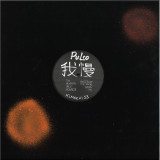
Argentinian producer Joel Pulso has been serving up searing techno for many years and has plenty more to come on the likes of Key Vinyl and Temporal Variation, but this EP on Kimochi marks his first outing on vinyl. The solo wax debut finds him laying down his signature mix of rhythm, texture, and atmosphere. Across various experimental and tonal tunes he brings plenty of raw emotion and deep musical adventures for the dancefloor of the sort that fans of greats like Donato Dozzy, Mika Vainio and Mike Parker will all likely enjoy. The 12" comes with a nice hand-sprayed sleeve, too.

Brains is the first full length by Anton Pieete in 5 years, and the first release under his given name since 2016. A gentle gorgeous journey of an LP on Wake Dream (ran by Orpheu The Wizard). TIP!
Born into a family of sound designers and making his own initial steps into a life of music in the late nineties in trash and hardcore metal bands and via an inherited drumcomputer into techno and minimal in the early 2000’s, Anton switched to the Darling moniker in 2016 with a series of kaleidoscopic retro-futurist releases on Voyage Direct and Safe Trip.
With Brains, Anton Pieete comes full circle and takes the next step, putting a lifetime of musicality, recording experience into a highly musical album, having given himself room for exploration, not being fixed on an end goa. The 11 songs on Brains are filled with emotion, some sweet and hopeful, some gloomy and restless.
Cover illustration by Jorge Velez

Limited Edition COLOR Green Dark mixed Vinyl – 75 units Hand numbered
Mourad started djing in the mid-eighties. His mixing style and musical knowledge have taken him all over Europe and all the way to Asia. Born and raised in Tunis, Tunisia where he sharpened his skills by playing hip hop and electro but also soul, reggae and rare groove. His love for soul and jazz came from an eclectic father who was and still is very serious about his music. As a DJ Mourad plays a blend of Detroit techno and deep house. His sets are known for being diverse and highly loaded with soul and funk. He has played alongside people like Larry Heard, Farley jack master funk, Derrick May, Juan Atkins, Alexi Delano, Dimitri from Amsterdam, Olivier le Castor, BRS, Club Session,Darren Price, Joel Mull , Cari Lekebusch , Subject 13, Alex Reece, Ivan Smaghe , Alton Miller, Jeff Mills , Damon Wilde, 4 Hero , etc. (too many to mention all of them here). Production wise Mourad started producing music during the early 90s and Put out his first release in 1995 as CHRISMOUR Production, in collaboration with his soul brother Calico (svek, deep touch, lace, etc ) The journey continues…

Full Dose is back! Once again exporting their distinctive brand of mutated dub directly from Glasgow's Southside. The label's 13th release is the work of a new name: Brollachan - "a shapeless darkness that craves bodily form".
As the name would suggest, the music itself evokes a certain eeriness. Brollachan fuses this with the metallic textures and airy rhythms commonly heard on Full Dose records. Tracks like "Hall" could well be written by a smoked-out mythical being, with deep subs and spring reverb-laden tones throughout. Quality stuff.
This juxtaposition of influences continues throughout the release. "Graze" has a particular aquatic feel. Sonar-esque synths punch through the haze and sustained synth sounds keeps the track in midwest territory.
Despite the obvious variety on show here, Brollachan of course keeps fans of the Full Dose sound on-side. "Mad Dawg" is a grimey take on this. General MIDI style sounds appear throughout the intro. This is complimented by intricate drum programming and a growling bassline, to give us a track straight from the 22nd century.
13 releases in and the tight-knit crew behind Full Dose continue to promote a sound that is both unique and reliable - Brollachan is no exception!

“Preparing Singularity” is the debut album by Berlin-based EBM act Transhuman Rebirth, currently a one-man side project of renowned German synth-punk artist Ben Bloodygrave.
Already instantly recognizable on the European synth/wave scene and touring circuit with his high octane aggressive minimal synth, Bloodygrave started this new project over the past few years focusing more on classic, first-wave EBM, moulding the nine tracks on “Preparing Singularity” into a sound that’s recognizable to fans of the starting foundations of the genre. While retaining a sound that’s unique and solely its own, elements of minimal wave and synth-punk are fused in these propulsive tracks, with nods to old idols such as Deutsch Amerikanische Freundschaft, Front 242 and Absolute Body Control.
Transhuman Rebirth is subjectually futuristic to dystopian, interspersed with political statements. The lyrics focus on topics that are current and modern, including science, technology, surveillance and artificial intelligence — all delivered through Bloodygrave’s well-known vocal style with a sound that is much rougher and with compositions and sound designs that are more complex than his main Ben Bloodygrave persona.

Junior Jack’s timeless 2004 disco/house fusion ‘Stupidisco’ receives a spread of dynamic remixes from some of the most talented remixers around.
Kicking things off is Spanish DJ and producer David Penn, who takes the stems and gives them an immaculate polish! Taking JJ’s Pointer Sisters sampling goodness and working into a re-sliced, disco-house filter journey with punchy kicks, tremulating basslines and an anthemic piano that is guaranteed to bring the sun out from the clouds.
Next up is Germany's Deeperlove with the toughest mix in the package with it's tech house inspired drums and bassline.
On the flip side, Aussie based Kiwi Jolyon Petch jumps in, delivering 2 killer remixes with his Italo inspired Jolyon Petch Remix and a nu-disco treat under his Elektrik Disko alias.

Repress!
CLUB UNITE RECORDS PRESENTS: BLAK 'N' ORANGE
Old school house music at its best!
This EP gets off to a perfect start with "Keep It All Inside", a straight track with dirty kicks and snares meeting rough chords and melodies. Uhhh!
"Luv The Way" cannot be surpassed in its purity and its efficient minimalism. This track should be played at high volume!
The B-side gets us a little deeper with two versions of "Join The Jam" and rewards us with everything that enchanted us in the 90s: smashin' grooves, deep chords and soulful vocal samples become an incomparable musical and equally danceable highlight. Hypnotizing!

Flautist Johanna Orellana teams up with Carmen Villain for a collection of horizontal, pastoral field recordings and close mic-ed flute sounds that zero in on the instrument’s unstable resonance and levitational magic. There’s no cringe virtuoso business or fourth world firewalking here - just sonic purity, sublime minimalism and the precise capture of time, place and poetry.
You might have come across Johanna Orellana before if you’ve listened to Carmen Villain’s music (or seen her perform live), and Villain appears here in a producer’s role, using her engineering expertise to impart a level of restraint and sonic fidelity that’s quite startling. There are only really two central elements to the album: environmental recordings and flute. There’s no psychedelic delay, no cavernous reverb; no audible treatments at all - Orellana and Villain instead force us to consider the flute and its musical lineage.
‘El Jardín I’ introduces the instrument as a physical conduit; Orellana allows her breath to distort the sound - the padded pat pat of the keys forms a kind of rhythm, closely recorded so it’s amplified and jarring, linking to primal wind instruments like conch shells, bamboo flutes and wooden whistles. Recalling the way in which Debit interfaced with the ancient world using AI- assisted tech on last year’s ‘The Long Count’, Orellana uses a comparatively modern contemporary transverse flute, an instrument with roots that stretch back through the baroque era, into Medieval Europe, back to the Byzantine era and into Asia. The component that connects the instruments and eras is breath, and its amplification and modification through differently shaped pipes and vessels.
Orellana lets the environment sing: insects, rushing water and zephyr-like winds form a stage that presents her mortal energy, suggesting a harmony between our use of breath and its environmental ubiquitousness. Her technique is steeped in folk history and decouples itself from expectation by rooting itself in nature. It allows her to bridge the gap between equal temperament and less ordered (less commercially-focused) microtonality without overstating the concept. Other sounds waft in from the sidelines; what might be an Indian bansuri, stray notes, a gust of air.
There’s a link to the foundational new age recordings that Joanna Brouk made with Maggi Payne back in 1980, but Orelanna also absorbs the outdoor folk magic of Fonal or Stroom, and the improvisational grist of Bendik Giske or legendary US horn duo Nmperign.

Jazz music has more than its fair share of overshadowed figures that whilst contributing much to the music have little presence in its collective conscious. One such musician is the talented multi-reedist, Sahib Shihab. Born Edmond Gregory, as he was known before he adopted the Muslim faith in 1946, Sahib Shihab's music background shows a deep and significant evolution, influenced by Thelonious Monk, Dizzie Gillespie (his experience in Dizzie's band marked Sahib's switch to Baritone, the instrument he became most readily associated with), and above all by Charlie Parker's Bop. Had it not been for the post-war migration of many top American jazz musicians to Europe, it is quite likely that the legendary Clarke-Boland Big Band might never come into existence. Sahib, one of this musicians disillusioned with the politics and racism of the United States, accepted to join the band of Quincy Jones for an European tour in 1959. When the tour ended, Shihab he remained in Europe where he joined, in 1961, the Clarke-Boland Big Band. The collection 'Companionship', whose line up consists of seven elements which derives from this original band, spotlights the consummate musicianship and individuality of Sahib Shihab and is testimony to his special musical gifts - not only as a top-rank flautist and baritone saxophone but also as a composer. Furthermore, it provides a welcome reminder of the high quality of the Clarke-Boland Big Band's rhythm section, the lively style of vibraphonist Fats Sadi and the power and personality of two of the C-BBB's horn-playing stalwarts, Benny Bailey and Ake Persson. Here's a real rarity, surely a desert island disc. This double album has it all from frantic banging percussive workouts to modal numbers to beautiful ballads. It's a staggeringly good piece of music and worth every penny of the price tag it commands. Let's have a look to the most significant pieces. Francy Boland's "Om Mani Padme Hum", taken from a Tibetan prayer, shows Shihab in exuberant mood, playing against a vigorous percussion background and making dramatic use of his special technique of combining voice and flute. Boland contributes an incisive, effervescent solo. "Bohemia After Dark", a classic original by bassist Oscar Pettiford which he first recorded back in August 1955, finds Shihab in exultant form on baritone. "Companionship" has a Bossa Nova beat and features Bailey on flugelhorn and Shihab on flute, playing with a limpid, floating sound. Bailey's minor-key original, "Stoned Ghosts" was, he says, inspired by listening to some music written by Bela Bartok before he emigrated to the United States. The piece has an infectious back-beat pulse and showcases the superb walking technique of Jimmy Woode. In "Con Alma" Shihab's mellow flute set against a churning 12/8 beat in this stylish Boland arrangement. Woode's performance of the superb Mei Torme ballad, "Born To Be Blue", reveals his great affection for the song. "lt is the perfect combination," he says, "a beautiful melody married to a great lyric. I really love that tune." It is a song of rueful resignation, putting a brave face on the blues. "Balafon" is an up-tempo Francy Boland original written for the French mime artist, Marcel Marceau. The rhythm section really cooks on this track with Kenny Clarke's cymbal work outstanding. Boland's solo here is notable for its neat, left hand punctuations. "Calypso Blues" has been written by Nat King Cole and Don George. lt tells the wry and wistful tale of a Trinidadian in New York desperately homesick for the land where everything 5 so much cheaper (in New York "a dollar buy, a cup of coffee and a ham on rye") and the girls more natural than the artificial, painted beauties of New York. Woode's composition, "Sconsolato" is a haunting theme in A minor and it brings to a close a truly fascinating album. This is dynamic music played with vigour, verve and vitality - and it is an enormous pleasure to rediscover it. A shadowy fugitive from his home in the land of jazz, Sahib Shihab remains a true unsung figure, worthy of more attention. With his equally expert technique on Baritone, Flute, Alto and Soprano saxophones and his capacity to adapt easily to a variety of musical settings. His warm, individual, singsong sound in improvisation and his unusual and interesting compositions mark him out as a hidden treasure in the dusty corners of jazz archive.

Omni AM presents the long-awaited reissue of “Can We Get / Keep Doing That.” This timeless record sent dance music in a new direction. Euphoria Record’s vaults are open and finally, for the first time since 1997, this seminal tech-house classic is available to everyone for the very first time in over 25 years. This 1997 indie record was Euphoria Records second release – and their first international record. Whether you agree with it or not, many people consider this one of the pioneering records of American Tech-House. Both sides and several mysterious alternate versions have graced the decks of DJs like Evil Eddie Richards, Terry Francis, Derrick Carter, Tyler Stadius, and Magda. The list goes on.
We were lucky. Curve Pusher lovingly remastered the original four tracks from the 1997 studio masters. Then, he went a step further, and remastered some previously unreleased versions – including a live version in Chicago that encapsulates what Omni AM was back then: ambient house. There’s a bit of Chicago, a bit of London, a bit of New York, and a bit of Tokyo in every second of these classic, genre-defining tracks.
A1.
“Can We Get” happily sits with the finest works of Ron Trent, Chez Damier, and Mood II Swing – and goes further, as Omni AM has never feared genre definitions. It opens with classic deep house chords, floating synth pads, and sparse vocals. The bassline is deep and warm. Marky Star and Adam Collins expertly work the percussive effects but always keep the theme simple and clear. Everyone knows this is a classic house track because it hypnotizes you.
A2.
“Keep Doing That” continues the theme with another classic late-night killer. However, this one is totally different – almost industrial, yet clearly housey and ambient. It drives deep into a tough groove that just builds and builds. The dub-influenced bass line gives way to a more angular synth riff that both offsets and adds to the track's forward thinking sound design. It’s dark and dirty, yet terribly sexxxy at the same time. It was and always will be mesmerizing. Once again, musical magic by Marky Star and Adam Collins.
B-Sides
The flip side features two remixes of “Keep Doing That” by UK tech-house legend Mark Ambrose. His bubbly, psychedelic take on the track pumps up the percussive Chi-town groove while going in a distinctly London afterhours direction. Trippy, for sure. Fun for all, for sure. These remixes are guaranteed to make your afterhours weird.


Far Out Recordings proudly presents the self-titled debut album by Rio de Janeiro born multi-instrumentalist, composer and arranger Tunico. Honing Brazilian roots rhythms like maracatu, xanadu, and samba, to combine with a global contemporary jazz outlook, the newcomer adds a modern classic to the ever rich vein of Brazilian instrumental music.
Consider it a natural evolution from the legacies of greats like Quarteto Novo, Hermeto Pascoal, Banda Black Rio, Tamba Trio, and Dom Um Romão, Tunico’s debut brings together an eye catching ensemble of talents from the Rio jazz community, with whom he performs on a weekly basis at celebrated live sessions and jam’s at venues like Macuna and Comuna Lapa, which often go on all night.
Released in 2022, the album’s rip-roaring lead single “Galope” features the effervescent vocals of Katerina Assef, as well as consummate solos from all over the band, as Sounds & Colours put it “…it exudes distinction and promise”. “Sambola” calls on the signature swagger of Far Out favourite Antonio Neves, indulging us in irresistible swinging samba-funk, undeniably reminiscent of the aforementioned Banda Black Rio in their late 70s heyday.
Born and raised in an artistic Rio household, Antonio Secchin aka Tunico’s father was the painter Guilherme Secchin, whose original work is lovingly repurposed to create the album’s cover. Antonio learned his trade on guitar from a young age, which remains his primary method for composition, but at the age of eighteen he started to gravitate towards the saxophone, and in particular the soprano sax, from which he now leads bands despite being entirely self taught. He would develop his skills busking on curbsides and metro stations before becoming a mainstay player in venues and clubs around the city.
When the pandemic struck, Antonio retreated to his family home in the Rio countryside. With time and space to breathe and reflect in a natural environment, he set to work at fleshing out the compositions he’d written throughout his musical life into full bodied works. His affinity with his rural surroundings is reflected in the luscious, blossoming feel of this groovy, mystical and poignant instrumental debut album.
Tunico will be released on vinyl, CD and digital platf

Dishwasher_ are the latest disciples of yet another new wave of talent in the fertile Belgian groove and jazz scene. It would, however, be a shame to limit them to the constraints of any given musical style. Ever since their formation in 2019, the Ghent-based trio have been experimenting with all possible genres to create a contemporary sound they can now rightfully call their own. With their self-titled debut album, to be released in April 2023 via Sdban Ultra, they are closing off an impressive first chapter, delivering a unique and diverse yet coherent collection of groove-driven cuts.
While labeling Diswasher_ as a jazz band wouldn’t do them enough justice, it is a fact that improvisation and a certain free approach turn out to be key in the creation and performance process of the album’s tracks. Werend, Louise and Arno specifically aim to capture their live energy and synergy on the album by experimenting with structures and textures, playing with song lengths and implementing influences from various other styles — electronic music in the first place, but as well traces from (Middle-)Eastern and Balkan music, next to dance, hip-hop and even metal.
As a result, the record tends to be a pure and honest representation of Diswasher_’s musical identity and artistic quest over the past years — both as individual musicians and as a band. Saxophones drenched in effects, diverse layers of synthesizers, a bass guitar hopping from fingerpicking licks to deep and drone-like bass tones, drums can sometimes sound like drum computers, and sometimes as subtle rhythmic chords: it’s pretty clear how deep this trio have dived to search and find something totally fresh and new.
Members of the band are Arno Grootaers, Werend Van Den Bossche and Louise van den Heuvel. Their debut album is coming out on Sdban Ultra, the innovative label of Black Flower, ECHT! and Compro Oro (among others). In 2023 they will fully focus on new talent, by signing Dishwasher_, but also KAU (formerly KAU trio) and Schroothoop. Apart from that, you can expect debut albums or EPs by LũpḁGangGang, Bandler Ching, KVR trio and Adja coming out this year. Stay tuned.
