Lunatica Borghesia sees emerging Italian producer KOKO come into his powers in a 6-track EP which, at times seems suited to accompany a blissful reverie, and at others a rave in a rainforest. Either way, Lunatica Borghesia is about escaping.
The first two tracks capture deep house in its truest essence: at once meditative, melancholic and serene.The blissed-out piano chords and cymbal strokes "You can't buy luxury" lend the opening track a nocturnal jazz feel which is carried through to "Ego Borghese" where it is heightened by the melodic cries of a saxophone. Instrumentation maintains its primacy in "Listening to Some Impala in Coventry" as staccato flutes guide the subtle bongo-sounding percussion which gives the track its swing.
The next two tracks - "9,99EU" and "Pegasus" - are for the dance floor. Whilst the synth-driven melody and acid undertones of "9,99EU" sees the EP at its most retro, the final track "Tradizione Tradimento" is a brilliantly modern take on garage house which lets the listener settle back into the groove after being rowsed by "Pegasus" driving pulse.
out of Stock
Last delivered 3 years ago available to reorder, subject to availability
Johnossi’s seventh album ’Mad Gone Wild’ is a pulse-pounding psychodrama and intimate portrait of a man slipping into insanity. For guitarist/vocalist John Engelbert and drummer Ossi Bonde, the making of the album involved tapping into their own interior lives while pushing into the furthest reaches of their imagination; “We wanted to explore the dangers of living in your head too much, and ask questions like: ‘Is there an exact point where you go from sane to insane? What is that point? And aren’t we all insane in one way or another?’”
JOHNOSSI HISTORY
Singer/guitarist John Engelbert and drummer Ossi Bonde formed Johnossi in their native Stockholm, Sweden, in 2004. After only three shows they landed their first record deal and with the release of their self titled debut album they instantly became one of the most influential contemporary acts in Sweden, winning a Swedish Grammy Award and a huge fanbase with their explosive live shows.
Johnossi have toured extensively through out their career mainly in Scandinavia / Europe but also in the US and Japan, both headlining and as support to other acts like The Hives, Green Day, Lykke Li and The Soundtrack of Our Lives.
From director George Miller, originator of the post-apocalyptic genre and mastermind behind the legendary Mad Max franchise, comes Mad Max: Fury Road, a return to the world of the Road Warrior, Max Rockatansky. An apocalyptic story set in the furthest reaches of our planet, in a stark desert landscape where humanity is broken and almost everyone is crazed fighting for the necessities of life.
The film’s epic score is written by Tom Holkenborg, aka Junkie XL, a Grammy nominated and multi-Platinum producer, musician and composer. Junkie XL’s versatility puts him on the cutting edge of contemporary music, as well as in the vanguard of exciting film composers. He is able to draw on his extensive knowledge of classical forms and structures while keeping one finger planted firmly on the pulse of popular music. When this eclectic background is paired with his skill as a multi-instrumentalist (he plays keyboards, guitar, drums, violin, and bass) and mastery of studio technology, a portrait emerges of an artist for whom anything is possible.
Second album from The Datsuns now available on vinyl at a cheaper price. The Datsuns lead the adrenalin-charge into the sheer unadulterated stomach-churning joys of rocking and rolling. The same energy and abandon which pulsed through their eponymous 100k plus selling debut album in 2002 is present and amplified but, with ‘Outta Sight/Outta Mind’, The Datsuns’ take you on a wild and unpredictable rock’n’roll rocket-ride, a ringside seat, if you will, for two years of inspirational madness, guitar wielding in the big wide world.
Dohnavur's new album’s (The Flow Across Borders) opening track has been given an enthralling nine and half minute ambient house remix by the godfathers of the scene, The Orb. This leading 12” is released on 7th May and is backed by a staggering Werra Foxma mix of the track by Dohnavùr themselves. The catalogue number for the 12” is CiS080 and it is available as a white vinyl edition.
Following the release of “The Flow Across Borders”, the Dohnavùr journey continues with a remix album which is ready to be released later in the year. The album features incredible remixes from Richard Norris, Concretism, Warrington/ Runcorn, Kieran Mahon, Letters From Mouse and Pulselovers. Dohnavùr have already returned the favour to Richard Norris (of The Grid/Beyond the Wizard’s Sleeve fame) for the group’s first official remix commission, remixing the track ‘Water’, currently available on Richard’s Group Mind label. A further Dohnavùr remix 12” will be released as part of the upcoming Hattie Cooke album campaign.
out of Stock
Last delivered 4 years ago available to reorder, subject to availability
Tender tonkori melodies, meditative dub excursions and hallowed folk vocals combine on Tonkori in the Moonlight, an 11-track collection of mostly traditional songs performed by indigenous Ainu musician OKI. Born on the Japanese island of Hokkaido in 1957, OKI's released his debut album in 1996 and since then he has recorded 11 studio albums both solo and with his Dub Ainu Band and toured internationally - from WOMAD in the UK to the John F.Kennedy Center in Washington DC via festival appearances in Singapore, Australia and across Europe. OKI is one of only a handful of musicians who play the tonkori, a five-stringed Ainu harp, which is both the pulse of this record and the force that unifies the disparate sounds he introduces such as reggae, dub, Irish folk, throat singing, African drumming and music from Central Asia.
Hypernatural, comprises of Dan Whitford, better known as one of the pillars of Melbourne heavyweights Cut Copy, Mirko Vogel, the engineer extraordinaire who has recorded for Modular and Room40, and Mike Gamwell, also known as Knightlife, who’s racked up several releases on Cut Copy’s own Cutters Records. You could say their roots are in Melbourne, Australia, but it seems unfair to pinpoint the trio to any specific location.
That’s because their sound lies somewhere deep in misty forests, or half-remembered dreams and subconscious wells of ancestral emotion. The transformative power of these 7 tracks was no accident however. The music was pieced together during two trips - one to the remote Swedish coast and another to the Scottish highlands. The three producers used a set of guidelines that allowed each of them to compose and arrange tracks separately yet collectively, like a connected Oblique Strategy. They took inspiration from the stark beauty of their natural surroundings, which had a huge effect on the music they were making.
The resulting tracks inhabit a world of their own, full of shimmering arpeggios and drifting pads, taut drums and sound effects. The opening track Longboat cruises into view with white noise washes and galley master rhythms, conjuring Old Norse battleships and a sense of sailing the open sea, destination unknown. The single Stormfront is a depth-charged deep house burner, bristling with atmospheric energy and rolling like thunder. With its cascading synth arpeggios and weighty drops, it swells like moody clouds on the horizon and releases tension like the first rain of a summer storm.
Hypernatural particularly succeeds in its world-building, and there’s a cohesion to the tracks despite their many differences in tempo and style. Spirit Walk joins marimbas with modular pulses, as well as slide guitar and snappy shakers, to bring out some Ry Cooder swagger. Unknown Caller taps into the phone line at the speed of 5G, sending breakbeats down the wire on a cold calling mission to recruit ravers for the next after hours. But there are also tracks nodding to blissed-out comedowns and daydreams. Both Changing Tides and New Dawn slow down time to an introspective moment, a catch of the breath, the witness to a beautiful moment. Album closer Valley harks back to classic rave-era ambient, an avalanche of optimism down a majestic mountainside.
Hypernatural evokes panoramic vistas and serene countryside, and you could certainly imagine it soundtracking a hike along coastal hills, or a field at a festival. But it also resides beyond the pastoral, finding a home in airport departure lounges and autobahn service stations, until it eventually settles down inside us - even without the headphones on.
Stormfront
Hypernatural’s single Stormfront is a depth-charged house-tempo burner, bristling with atmospheric energy and rolling like thunder. With its cascading synth arpeggios, raindance incantation and weighty drops, it swells like moody clouds on the horizon, and releases tension like the first rain of a summer storm.
out of Stock
Last delivered 4 years ago available to reorder, subject to availability
SA015 is a split vinyl taken care of by long term label artist, Pfirter, and by a new voice that's been adding to the SA story across the summer, Kangding Ray. Pfirter's 'Caos y Orden Superior' is a weighty odyssey spread across nine minutes. Its opening is languid but somehow relentless as strange synthesised sounds are interrupted by insistent beats. Across the arc of this track 'chaos' and 'order' lose their static definitions, and played over a large club rig this has the potential to throughly disorientate. From here Kangding Ray takes over duties with 'Wars', a fragmented meditation on the darkest side of human nature. Created from hues saturated by the pain of mistakes and regrets, it pulses, rocking gently, swooning in and out. This stunning slice of electronic music acts as a balm for the very wounds that conflict leaves behind.
out of Stock
Last delivered 9 years ago available to reorder, subject to availability
His partnership with the label has already resulted in a collaboration with Modern Heads, as well as one of the first entries in the Monad series, and now a fascinating new EP that showcases his talent for testing the limits of perception.
Alistair Wells is a producer whose current work is synonymous with a kind of benevolent intensity: he excels at sculpting tonally rich and percussively complex tracks that seem to both enlighten and confront. Under his most well-known alias as Perc, he has established a deep roster on his Perc Trax label to carry out a similar-minded program, and has built up a formidable arsenal of EPs and singles in the wake of enigmatic LPs like 2011's Wicker & Steel. His 'eclectic-yet disciplined' methodology practically guaranteed he would eventually come into the orbit of Stroboscopic Artefacts. His partnership with the label has already resulted in a collaboration with Modern Heads, as well as one of the first entries in the Monad series, and now a fascinating new EP that showcases his talent for testing the limits of perception.
The ominously titled opener "Death of Rebirth" - a title hinting at some form of hellish repetition - starts things off with a sense of dark premonition. Yet, in signature Perc style, that aura of uneasiness beckons listeners to explore further rather than to flee from it: in this context, the reliable 4/4 kick drum throb is the only means of orienting oneself or angling through a glassy and metallic labyrinth where foreign objects conspire to make previously unimagined percussive noises. "Negative Space" is a variation upon this theme of trying to maintain focus within a foreign environment bristling with strange enticements and potential dangers: with the kick pattern from the previous pice still acting as a trusty guide, new sound forms arise at every turn: a novel sort of hybridized piano / gamelan tone, a shuddering assembly line, and snaking delay feedbacks. Like dub music meant to be listened to in a hall of mirrors, "Negative Space" induces a heady feeling of multiplying realities.
The closing "Ma", if translated into Japanese, can mean "space / pause" and thus acts as a nice complement to "Negative Space." However, this massive, side-long audio force field dispenses with the previous tracks' steady pulse, and suggests a rigorous act of ritual contemplation taking place in the midst of phenomenal chaos and challenging blows to the body. "Ma" succeeds in modernizing the industrial-era rhythmic invocations of artists like Z'ev, achieving an almost classical solemnity without sacrificing Perc's usual love for cleverly maniuplated electricity. Altogeher, 'Ma' is an eye-opening, ear-infliltrating statement that will warp your understandings of time and space in a most exquisite way.
The third entry in Lucy's trio of adventurous full-lengths is visually introduced by artwork of a pearl-bearing shell, designed by Stroboscopic Artefacts' resident visual artist (and Lucy's brother) Ignazio Mortellaro. This drops a subtle hint as to the nature of its contents: just as a pearl slowly forms within its enclosing body in response to organic challenges, Lucy's work is also a kind of crystallization of memory and experience into an artifact of great value.
Listeners to this album will be struck immediately by how different it sounds from past Lucy productions, while still retaining the feel of relentless questing that defined his previous two solo LPs Wordplay for Working Bees and Churches, Schools, and Guns (or, as Lucy himself defines the feeling, the equal valuation of precision and exploration'). Initially feeling like Lucy is guiding his listeners on a slow and slightly apprehensive down-river trip through the Amazon, or some similarly thriving but as-of-yet undiscovered terrain, the album is enriched by several layers of ambience and by the wordless, improvisational (yet still somehow narrative) vocals and flute of Jon Jacobs. Without a doubt, it's an album with an initiatory' atmosphere that listeners should commit themselves to hearing in one sitting, with as little interruption as possible. However, unlike many initiatory rites, this is no arduous ordeal at all: great care has gone into connecting each chapter of the album with the same silver thread of entrancing story-telling. On standout pieces like She-Wolf Night Mourning,' electronic arpeggiation and persistent synthetic flutters perfectly merge with the unique tone colors of resonant acoustic percussion and pensive woodwind. Elsewhere, pieces like A Selfless Act' reconcile technoid pulses with melancholic, yet intoxicating echoes of Mediterranean musical traditions.
Interestingly, many of the tracks on Self-Mythology refer to old legends and well-known fairytales (e.g. the opening track which references Baba Yaga's magical hut), or to more broadly defined states of consciousness ( Samsara,' which features an especially strong, sustained choral interplay between glassy synth sequences and earthy flute sonorities). This is where the album is truly unique and relevant in its ambition. The interplay between the graphic design, the vocal and flute performances of Jacobs, and the sound design chosen by Lucy aims to be an intimate audio autobiography of its creators while also referring back to the stories that have shaped human destiny for millennia. This work is a meditation upon the reciprocity between personal hopes and fears and collective dreams and nightmares, an exploration of the endless interplay between the universal and the deeply individual. It is the tale of that uncanny process by which our own conscious experience draws from the pool of archetypal information, while also contributing to it.
Whereas many electronic producers aim at being the most prolific in their genre, or the most extreme, Lucy and Rrose have wisely chosen to be the most consistently curiosity-provoking representatives of their craft.
Whereas many electronic producers aim at being the most prolific in their genre, or the most extreme, Lucy and Rrose have wisely chosen to be the most consistently curiosity-provoking representatives of their craft. Their decision to team up as a production duo for the newest Stroboscopic Artefacts EP may have seemed inevitable, given their shared responsibility for shifting techno's focus towards the facilitation of profound psycho-acoustic effects. And yet, even those who saw this coming will still be in for a wild ride.
Lucy's skill as a studio technician - displayed capably over his trilogy of full-length albums - has always been enhanced by his skill as a storyteller and as an artist with reverence towards myths and the pull of the unknown. This sonic personality is a perfect complement to the scientific severity of Rrose, for whom the electronic pulse beat and subsonic massage permit entry to a febrile psychic landscape whose contents are never entirely what the individual listener might expect or be prepared for.
As with both of the artists' solo offerings, these recordings feel as much like the branching off point for new creative acts rather than as objects to be passively enjoyed. As such, the opening "Chloroform" is a somewhat ironic title for a piece that is anything but anesthetic: at high volumes, its monstrous low-end surge and prickly, scintillating sonic ephemera are very likely to bring attention to otherwise imperceptible phenomena. "Peeling" continues in this style with a more urgent tempo, developing its own cascade of sensory impressions from seemingly unstable deep-bass loops, injections of intentional surface noise, and pitch-shifted / harmonizer-effected phantom phrases.
"Stained Glass," maybe the most straight-ahead piece on the record, is still a potent distortion of the mundane primed with shivering bell tones, tamed feedback and hints of speaker cones fraying. The climactic "Foil Gardens" is an elegant study in harmonics whose time-dissolving ability nods to the works of composers like Charlemagne Palestine or Eliane Radigue, without being a pure homage to either. The undertow of distortion beneath the glistening tone waves, in particular, provides a distinct update to the legacy of so-called
tonal 'minimalism'.
The end result here is a record that feels uncannily lifelike: an organism that always seems on the verge of a heuristic breakthrough, and whose full potential may not even be known by its creators.
Hot on the heels of his preliminary EP on Stroboscopic Artefacts, Embryo, which paved the way to the present album, and two years after the landing of his 2016-released inaugural LP, Montagne Trasparenti, Mannequin helmsman Alessandro Adriani returns with his highly anticipated full-length debut for SA, Morphic Dreams. Throughout eleven cuts painstakingly executed but lacking not an iota of the fresh, spontaneous oomph that made his sound stand out of the crowd of techno producers to have emerged over the past decade, Adriani lays the foundations to a suspended sound imaginarium, governed by its own rules and principles of gravity. Revolving around the notions of sublimation and quest for inner balance, Morphic Dreams is comprised of four distinct sequences, conceived and designed as reflections of four mental states, each of them linked to the four alchemical elements i.e. Water, Earth, Air and Fire here represented by the A, B, C and D-sides. Fluid and enveloping, the A-side bathes the listener in some zero-G uterine vortex, pitching and rolling from the slo-burning exotic sensuality and tribal spell of The Tropical Year to the trunk-bending, arpeggiated fast-track pulse of Storm Trees, through Raindances feverish electro swing. Entering a further abrasive, minerally rich phase, the B-side unleashes Adrianis dark side with optimum conviction. Deeply anchored in earthly materiality, this new evolution stage starts off to the frantic Italo bass of Dissolving Images, rushing headlong into a kaleidoscopic maelstrom of fractured reflections and nasty Giallo-like ambience. The delirious body stretch sequence then rather abruptly swerves onto a calmer flux with Dust/Mist, a much enticingly hip-swaying collaboration with Simon Crab, ex-member of the seminal 80s UK industrial-experimental band Bourbonese Qualk, before Casting The Runes engulfs us into a tormented world of swollen eeriness and disquieting esoterism. Back to a widescreen showcase of droney distortions, nasty acid swashes and other quirky drum programming, Hors De Combat opens a new chapter, shortly followed by the playful bass intricacies and modular jeu-de-piste of Invisible Seekers, featuring Avian affiliate and longtime friend Shawn OSullivan. A further mind-expanding piece, C-side closer Crow deploys its blackened wings wide and high as a chaos of martial percussions and liquefying synths slivers crash past the red-hot skyline. A fluttering melodic interlude, Things About To Disappear blazes a clean trail for Make Words Split And Crack to flourish, slowly but surely blooming into a nonstop grandiose twelve minute-shy finale geared up with the stirring cacophonic force of a Ligetian symphony and something of an epic-scale Kubrickian soundtrack.
out of Stock
Last delivered 3 years ago available to reorder, subject to availability
Brooklyn based drummer/producer Jason Nazary (of Anteloper) makes his We Jazz Records debut with "Spring Collection", released on 25 June. The album sees Nazary crafting some deliciously sparkly solo cuts plus working long disctance with choice collaborators Jaimie Branch, David Leon, Ramon Landolt, Matt Mitchell, Grey McMurray and Michael Coleman. This is essentially a collection of home recordings and the whole operation has an infectious feeling of immediacy to it. The result is improv adjacent electronic music, with modern production aesthetics transposed over spontaneous compositions.
Jason writes:
"With Spring Collection, my aim was to capture the spirit of spontaneity & collaboration lost in the absence of live music. Like most everyone else last spring, I suddenly had a lot of time on my hands and with all my work cancelled, and with an indefinite lockdown in effect, it became immediately apparent that most of my time – save a walk or two a day around the neighborhood – would be spent in the tiny one bedroom apartment I share with my wife and two cats.
What kind of music does one make during lockdown? I would begin my days with a cup of coffee and all the cables of my modest little modular set up in my lap, slowly discovering new sound worlds as I connected one cable after another – these became the beginnings for the pieces in Spring Collection. With these unformed sketches, I would record an improvisation, an exploration of sonics: a small kit of bells, shakers, pans, pots; their resonance captured in fine detail with ultra sensitive microphones. These became, in effect, a conversation first with myself, but later one I knew I had to open up, make social. In the desire not to diminish my collaborative impulses, I felt compelled to involve some of my favorite musicians in the process alongside me."
"Spring Collection" is released by We Jazz Records on 25 June on vinyl (neon orange & black vinyl editions), tape and digital formats. The vinyl edition comes with a booklet including original artwork and poetry by Todd Colby.
Duane Pitre returns to Imprec with Omniscient Voices, an articulate, intense and emotionally resonant set of five pieces for justly tuned piano and electronics.
Omniscient Voices is a uniquely distinct work that follows Pitre's trilogy of releases which culminated with 2015’s Bayou Electric and included the critically acclaimed Feel Free (2012) and Bridges (2013) albums. Where those albums were rooted in long form pieces, Omniscient Voices is a collection of shorter pieces, offering more harmonic variety than previous works, with a unique sound and feel that is still unmistakably the work of Duane Pitre.
In 2019, after a five year period where Pitre did not focus on outward facing music, but instead on his own personal practice, a small idea in the form of a question came to him: would the combination of his latest computer- and electronic-based experiments, used in conjunction with justly tuned piano, produce interesting results; simply put, would it “work”? Concurrently, Pitre was studying a handful of Morton Feldman scores for their focus on tonal clusters, reading a book on Arvo Pärt’s life and work, and contemplating the pulse-based rhythms of Steve Reich and Phillip Glass.
In 2020, with no intention of making a new album, the composer tried to answer this question. The results would spawn five pieces that would become Omniscient Voices. On this new work, Pitre finds himself giving equal priority to both piano and electronics, utilizing his Max/MSP-based generative network to real-time convert precomposed piano motifs, into data, which is then used to communicate with two polyphonic, microtonal hardware synthesizers whose patches Pitre authored; this process generates the electronic component of the album. Pitre also utilizes controlled improvisation to interact with the piano-reactive electronics in a spontaneous and inspired manner, going back and forth between these two pianistic approaches. In all, this approach creates a “musical feedback loop” of sorts.
Despite Omniscient Voices being the culmination of 15 years of hard work and inspiration, this beautiful album somehow materialized in a natural, intuitive and effortless way (like any artist's best work.)
Artist's statement: “When making the pieces that would become Omniscient Voices, I often viewed the piano as human action, a single note becoming a single gesture that has the potential to change the electronic environment, the electronics becoming the environment surrounding that human in the natural world, who then has the power to change their actions based on their surroundings. All actions have consequences. The interconnectedness of everything. Single actions making waves of change.”
RIYL: Arvo Pärt, Morton Feldman, Steve Reich, Phillip Glass
Mastered and cut by Golden and pressed at RTI for maximum fidelity.
Since '66, when the British singer- songwriter emerged as the voice of his
generation with the seminal Family band, through every twist of his four-decade
solo career, Chappo's output has defied music industry protocol, challenged
genre, and held up a mirror to the times. "I've never stopped writing," he reflects,
"and with Life In The Pond, I felt the need to hear what I'd put down in music."
Released in 2021 on Ruf Records and Chappo Music, Life In The Pond draws a
line under a period in which the 79-year-old had been absent from the studio but
privately prolific. Twelve years since 2009's acclaimed rarities collection Hide Go
Seek, "A true lionheart still roars," raved The Mirror, Life In The Pond reconnects
the veteran with faces from his past – including ex-Family multi-instrumentalist
John 'Poli' Palmer as co-writer and producer while taking the pulse of modern life.
"Mostly it's anger at politicians that's kept me fired up," says Chapman of the
lyrics.
As for the music, Life In The Pond connects the dots between Chapman's
founding influences. "It's about nostalgia for the different musical styles that
influenced my life. American rock from the '50s to now. British R'n'B from the '60s,
like Georgie Fame, the Stones, Zoot Money. Folk, Blues, Motown, Stax, Blue Note
jazz, Classical, Americana, and Country. A whole mess of influences…" More than
four decades later, Life In The Pond ties all those threads together, finding
Chapman's voice in vintage form and his musical radar more receptive than ever,
on a tracklisting that roams from hypnotic seven-minute epic "Nightmare #5" to
"Rabbit Got The Gun's" dystopian soul-funk.
The world has turned a few times since '66, but Roger Chapman still has
something to say – and with Life In The Pond, his voice as an artist is more vital
than ever. "I'm very pleased and grateful that Poli gave me the opportunity," he
says, "because I think we came up with the goods on this album."
Brooklyn based drummer/producer Jason Nazary (of Anteloper) makes his We Jazz Records debut with "Spring Collection", released on 25 June. The album sees Nazary crafting some deliciously sparkly solo cuts plus working long disctance with choice collaborators Jaimie Branch, David Leon, Ramon Landolt, Matt Mitchell, Grey McMurray and Michael Coleman. This is essentially a collection of home recordings and the whole operation has an infectious feeling of immediacy to it. The result is improv adjacent electronic music, with modern production aesthetics transposed over spontaneous compositions.
Jason writes:
"With Spring Collection, my aim was to capture the spirit of spontaneity & collaboration lost in the absence of live music. Like most everyone else last spring, I suddenly had a lot of time on my hands and with all my work cancelled, and with an indefinite lockdown in effect, it became immediately apparent that most of my time – save a walk or two a day around the neighborhood – would be spent in the tiny one bedroom apartment I share with my wife and two cats.
What kind of music does one make during lockdown? I would begin my days with a cup of coffee and all the cables of my modest little modular set up in my lap, slowly discovering new sound worlds as I connected one cable after another – these became the beginnings for the pieces in Spring Collection. With these unformed sketches, I would record an improvisation, an exploration of sonics: a small kit of bells, shakers, pans, pots; their resonance captured in fine detail with ultra sensitive microphones. These became, in effect, a conversation first with myself, but later one I knew I had to open up, make social. In the desire not to diminish my collaborative impulses, I felt compelled to involve some of my favorite musicians in the process alongside me."
"Spring Collection" is released by We Jazz Records on 25 June on vinyl (neon orange & black vinyl editions), tape and digital formats. The vinyl edition comes with a booklet including original artwork and poetry by Todd Colby.
out of Stock
Last delivered 4 years ago available to reorder, subject to availability
Acclaimed US DJ and producer Maceo Plex has announced the release of his long awaited studio album ‘Solar’. The climax to a lead up that included last year’s 7-track ‘Journey to Solar’, and 2015’s 2 track ‘Solar Sampler’, ‘Solar’ is due for release on his brand new label Lone Romantic on the 16th June.
Lone Romantic is a new electronica based label; it will focus on albums and will also open its doors to releasing more avant guard and leftfield singles.
Meanwhile, the ‘Solar’ album allows Maceo to utilise the long format to explore and expose his less explicitly club leaning and more reflective side, taking the listener on a journey through shades of electronica, techno, breakbeats, dub and more. Named after his son Solar, the album also chronicles his new found fatherhood; “the ups and downs in the first few years and its effects on life, marriage and more”.
There’s still dancefloor suitable music within the album; opener ‘Sparks of Light’’s propulsive drums make for an attention grabbing first track, just as the driving 4/4 bassline of closing track ‘The Tesseract’ is a memorable climax. ’Polygon Pulse’ also features the hefty low end that Maceo has become known for, yet underneath breakbeat style drums and sighing vocal snippets.
Vocals are a prominent defining feature of ‘Solar’ that mark it out as a departure towards more of a home listening, experimental album. ‘Indigo’ marries Maceo’s characteristic signature sounds with a slower tempo and gritty male vocals for a stirring, downbeat piece of indie electronica, whilst following track ‘Separation’s breathy vocals and subtle DnB cymbals feel more relaxed.
‘Kepler’s Journey’ marks a stylistic break midway through the album, before the vocoded vocals of ‘Solar Wind’ and ‘Wash Away My Tears’ (the 12” mix of which was included in the Solar Sampler) bring to mind a forward thinking, indie take on French touch. Elsewhere, the lilting, dub techno influenced ‘Swan Dive’ sees this effect take on a more eery, thoughtful tone.
The release of ‘Solar’ sees Maceo Plex enter a new, more developed chapter of his long career - taking the sounds that have made him so popular and building upon them to push himself forward artistically, the album is a very personal use of the long format and an education in the producer’s musical influences.
out of Stock
Last delivered 3 years ago available to reorder, subject to availability
**LIMITED BLACK VINYL** Rival Consoles returns with a resonant
and explorative soundscape of original
music, composed for renowned
choreographer Alexander Whitley’s
contemporary dance production
Overflow.
Exploring themes of the human and emotional
consequences of life surrounded by data, the piece
echoes the concept of social media, advertising,
marketing companies and political factions
exploiting our data to gain wealth, political
advantage and sow division. Key reading for the
project was based around the contemporary
philosophical work Psychopolitics: Neoliberalism
and New Technologies of Power by Byung-Chul
Han.
“The piece opens with Monster which has a kind of
drunken madness to it, highly repetitive to mirror the
repetitive nature of how we as humans engage with
technology such as social media. It’s sometimes
edging towards chaos but yet always returning back
to the same starting point, but eventually giving way
to exhaustion. I wanted to create a bold opening
piece for Overflow,” states West.
I Like features the mapping of data from dancer Tia
Hockey’s personal monologue, which allows chords
to be heard - but only based on the activity of her
voice, drawing attention to things happening behind
the curtain, invisible systems, algorithms.
The album also features the previously released
standalone slice of euphoria, Pulses of Information
— described by UK mag Clash as “typically
entrancing, Pulses of Information seems to
encourage a form of internal dialogue, between our
inner and outer selves.”
Overflow was premiered by the Alexander Whitley
Dance Company in May 2021 at the Sadler’s Wells
in London and is scheduled to tour through theatres
in Europe in spring 2022. The score will be released
by Erased Tapes on limited edition vinyl and CD as
well as digital formats on December 3.
out of Stock
Last delivered 9 months ago available to reorder, subject to availability
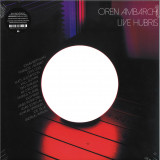
Black Truffle is pleased to announce Live Hubris, documenting the hypnotic and electrifying live performance of Oren Ambarchi’s 2016 LP Hubris by a fifteen-strong band at London’s Café Oto. Over three days in May 2019, Oto toasted Oren Ambarchi at 50/Black Truffle at 10 with Ambarchi and a large group of close friends and collaborators in a series of performances that interspersed existing projects with new collective endeavours, culminating with this: fourteen members of the extended Black Truffle family together on stage, joined by one special virtual guest, to translate the intricately studio-constructed layers of Hubris into a muscular live band workout.
Operating with only the bare minimum of pre-gig preparation after the planned afternoon rehearsal had to be wrapped up prematurely due to noise complaints, the gargantuan group lurches into motion with a 21-minute rendition of ‘Hubris Part 1’, powered by the pulsating electronics of Konrad Sprenger (the ‘ringmaster’ at the ensemble’s core) and no less than seven electric guitars spinning a web of intricately interlocking palm-muted polyrhythms. The layers of closely related but metrically distinct lines create ripples of shifting accents, flickering changes in emphasis that ricochet along the endless central pulse. Gradually building in density, this motorik continuum becomes the backdrop for the haunting tones of Eiko Ishibashi’s processed flute and an extended feature from long-distance guest Jim O’Rourke on guitar synth.
After the brief interlude of the second part, where Albert Marcoeur-esque guitar arpeggios accompany a halting attempt at phone conversation, the full ensemble gears up for the epic side-long rendition of ‘Hubris Part 3’. Now joined by the astonishing triple drum line-up of Joe Talia, Will Guthrie and Andreas Werliin, the layered pulse of the opening piece becomes a burning funk-fusion groove. Beginning on a medium simmer, the ensemble initially stick to its pulsating one-note mantra, over which Ambarchi unfurls a beautiful example of his signature shimmering Leslie-toned guitar harmonics, eventually joined by Ishibashi’s flute and some brooding, distorted dissonance from Julia Reidy’s guitar. Building steadily for the first nine minutes, the heat then rises dramatically with a first, gloriously loose chord change: with the all drummers now rolling and tumbling like a twice-cloned Jack DeJohnette circa 1970, Mats Gustafsson enters on baritone, his tortured roars and shrieks driving the band to peaks of insane intensity. Finally, the exhausted ensemble drops out, leaving only the jagged, skittering fuzz of Ambarchi’s guitar, brought to an abrupt conclusion at the command of crys cole. Arriving on hot pink vinyl with artwork by Lasse Marhaug and an extensive selection of live photos by Ivan Weiss and Fabio Lugaro, Live Hubris brings this ambitious and outrageous evening of music to the safety of the home stereo.
out of Stock
Last delivered 4 years ago available to reorder, subject to availability
Brooklyn based drummer/producer Jason Nazary (of Anteloper) makes his We Jazz Records debut with "Spring Collection", released on 25 June. The album sees Nazary crafting some deliciously sparkly solo cuts plus working long disctance with choice collaborators Jaimie Branch, David Leon, Ramon Landolt, Matt Mitchell, Grey McMurray and Michael Coleman. This is essentially a collection of home recordings and the whole operation has an infectious feeling of immediacy to it. The result is improv adjacent electronic music, with modern production aesthetics transposed over spontaneous compositions.
Jason writes:
"With Spring Collection, my aim was to capture the spirit of spontaneity & collaboration lost in the absence of live music. Like most everyone else last spring, I suddenly had a lot of time on my hands and with all my work cancelled, and with an indefinite lockdown in effect, it became immediately apparent that most of my time – save a walk or two a day around the neighborhood – would be spent in the tiny one bedroom apartment I share with my wife and two cats.
What kind of music does one make during lockdown? I would begin my days with a cup of coffee and all the cables of my modest little modular set up in my lap, slowly discovering new sound worlds as I connected one cable after another – these became the beginnings for the pieces in Spring Collection. With these unformed sketches, I would record an improvisation, an exploration of sonics: a small kit of bells, shakers, pans, pots; their resonance captured in fine detail with ultra sensitive microphones. These became, in effect, a conversation first with myself, but later one I knew I had to open up, make social. In the desire not to diminish my collaborative impulses, I felt compelled to involve some of my favorite musicians in the process alongside me."
"Spring Collection" is released by We Jazz Records on 25 June on vinyl (neon orange & black vinyl editions), tape and digital formats. The vinyl edition comes with a booklet including original artwork and poetry by Todd Colby.
The latest entry from Furanum sees label boss Dominik Muller and repeat contributor Tomohiko Sagae return from remix duties on the label's preceding long play release for a four-track split vinyl treatment of Fu020. On The Other Colours of Poison, acting apart yet seemingly as one, they both dispense with nearly any pretense of an introduction, epilogue, or abstract ambiences, and instead opt for a pure and dancefloor-bound effort of four-to-the-floor industrial relentlessness encapsulated in two compositions to a man.
Sagae notably eschews his signature noise-manifesto driven approach in favour of a compelling centering of groove as a prime determinant of musical force. The results of this approach are on display first in 'Tartrazine,' where a rhythmic mind-worm seemingly burrows it's way in, assimilating and holding the beholder in a frantic dance of oscillatory sway. Likewise, in 'Amaranth' an ineluctable sense of technoid acceleration is achieved, with each of the composition's successive loops driving the sense of propulsive sonic force relentlessly forward,
not unlike the turning of a violent accretion disk tearing matter apart.
As for Muller, he builds on his previous work to construct two reliable aural vehicles for the delivery of unrelenting and thematically oriented vehemence. 'Demut' is like a scene of surrender to an engineered and shifting collosus, overwhelming all attempts at its full apprehension as cogent reverberations puncture the surrounding temporal space. On the flipside, in 'Toxic Environment,' he captures the narratively framed pulse of a phrenetically beating heart, beating on despite all odds through sheer force of will and self-overcoming.
Mastered by Kassian Troyer, The Other Colours of Poison will be available on vinyl
out of Stock
Last delivered 4 years ago available to reorder, subject to availability
It is highly likely that you will have hummed a song by
Charles Trénet at some point in your life. Thus ‘La Mer’
(aka ‘Beyond the Sea’), a song written on a train
between Narbonne and Montpellier in July 1943, is sung
in Tokyo as well as in Los Angeles and its popularity is
universal. And this is not the only one, among the 700 or
so songs that Charles Trénet submitted to Sacem during
a career of exceptional longevity: nearly seventy years.
10 CD box set features 277 tracks, including 11 rarities.
This edition presents the complete studio recordings
1937-1962 plus several bonus titles from 1933-1936.
2LP vinyl format offers a selection of 29 of his most
famous songs.
What they said about Charles Trénet:
“This new pulse, this extraordinary joie de vivre brought
by the songs that this dishevelled boy was throwing by
dozen, were born from the conjuncture of a remarkable
poetic gift and the vitality of jazz fully assimilated by a
fine sensitivity.” - Boris Vian
“The Sun-King of songs” - Henri Salvador
“He’s a giant … someone who brought everything to
French song. The ‘Singing Fool’ was not only a singerpoet, he was someone extraordinary who is part of the
heritage. He will be teached in schools, he will be talked
about in universities around the world” - Charles
Aznavour
“Charles never asked for anything, but he knew exactly
which place was his, which is the first.” - Alain Delon
Whether it be on the banks of the Mississippi River or deep in the heart of the English countryside, rock 'n' roll lives, breathes, and burns on the outskirts. Hailing from Rome, GA, at the foothills of the Appalachian Mountains, The Georgia Thunderbolts rise up with a scorching signature style steeped in soulful southern swagger. On, Can We Get A Witness, their full-length debut for Mascot Records, the quintet—TJ Lyle vocals, harp, piano, Riley Couzzourt [guitar], Logan Tolbert [guitar], Zach Everett [bass, keys], and Bristol Perry [drums]—conjure a tried-and-true spirit through a fresh fire.
“We all grew up on rock music,” Riley says. “Rock ‘n’ roll comes back around, but longevity depends on grinding it out. That’s what we want to do. We try to put in the work our favorite bands did. If I could think of three words to describe us, they would be ‘Hardworking, Determined, and Humble’.”
Gigging tirelessly, they cut their teeth by playing with Black Stone Cherry, The Kentucky Headhunters, Blackberry Smoke, Tyler Bryant & The Shakedown, Atlanta Rhythm Section, Molly Hatchet and The Cadillac Three. The band began when Bristol and Riley initially bonded over rock ‘n’ roll in high school. By sophomore year, they had a regular jam schedule, and eventually joined up Zack, TJ, and Logan to round out the group. They share a wide swath of inspirations, ranging from southern gospel to Hank Williams, Jr., Neil Young, Little Feet, Waylon Jennings, Ray Charles, Merle Haggard to the hard rock of Ozzy Osbourne, Audioslave, Bad Company and of course, The Allman Brothers & Lynyrd Skynyrd.
The band recorded at the iconic Barrick Recording Studio in Glasgow, KY, with producer Richard Young. The album comprises of thirteen undeniable anthems, beginning with opener “Take It Slow.” Distilling whisky-soaked riffs, wild harmonica, and pulse-pounding drums into a simmering groove, it struts out of the gate with confidence and charisma. “There’s a message to what we’re doing,” Bristol leaves off. “It’s okay to be yourself. If you’re going through hard times, the music will always be there. We’d love to remind everyone of that.” The Georgia Thunderbolts embody the blue-collar working man who has put their foot down on the accelerator towards the rock ‘n roll American dream.
On Delta, a dozen artists across four continents freely interpret Fountain across a double LP, again featuring Donna Huanca’s surreal artwork, and the unearthly graphic manipulations of Nufolklore Studios. Remaining faithful to Fountain’s presentation, Lyra’s curation reflects her commitment to stylistic diversity, with the old guard and the next wave alongside each other. Where some artists chose to rework existing works, others composed new material from fragments found across the record. The results showcase the very themes of wordless identity conflict and technological concerns that Lyra and her foremothers have projected.
the limitless highs of Sigur Ros and the steady pulse of The Knife. KMRU cloaks Lyra in a hazy film, soundtracking the depths of space embedded within the ghosts of jungle past. Gabber Modus Operandi expose the realities of artificial nature in a multicoloured rave dystopia. Eris Drew’s double opus takes the tenets of her philosophies into both ambient and peaktime expressions of the trip, the things that lead to the decision before, and the portals that can open up after.
Ben Frost dissolves Cradle’s deep and tremulous hymn in analogue warble, distressed tape spooling out of control and breaking up over the heavens, while remaining oddly serene. Heaven In Stereo conjures up post-rock with trap drums out of Gossip, buried in bass weight and dub space. Nailah Hunter and Tygapaw transform New Moon into an earthbound ode to nature and a pounding trance state induction, while Caterina Barbieri and Hudson Mohawke extract and amplify Tendril’s mind and soul. Vessel takes what feels like the entire album and builds it up to a frantic climax before subsuming into Enoesque pastoralia.
Alongside Delta, Lyra has collaborated with Spitfire Audio to develop Siren Songs, a free plug-in for their LABS series made from playable samples from Fountain, able to work across DAWs in multiple formats. By removing barriers to access, the listener can craft their own responses to the album’s themes, or use its language to express their innermost feelings in their own works.
Life and society emerge where water tessellates over land and provides fertile soil. The chances of evolution that made them interact as they did could have had meaningful environmental consequences had things developed differently. For Lyra Pramuk, that fertile geology provides the ground for her albums. Fountain was that burst of water and swell of energy that propelled her to critical acclaim. Delta is a new take on a traditional remix album, centred on transgenerational dialogue and global storytelling, and will be released again via Iceland’s Bedroom Community label. Projecting Fountain through prisms, wordless songs fractalize into lush creations that blossom with new life.
The ability to have such sheer diversity of material in one place is thanks to the global increase in accessible technologies, fueling an explosion of creativity and genre exploration that was thought of as unthinkable in our lifetimes. Like its namesake, Delta is a point where creative flows meet and triangulate, where global and personal folk histories are presented in novel ways, where transcultural collaboration is celebrated, where many worlds emerge from the depths below.
RIYL: The Knife, Spacetime Continuum, Lorenzo Senni, the soundtrack to Planete Sauvage, 3:45 AM by the front left speaker, 7:45 AM as light pours in and everything winds down.
out of Stock
Last delivered 4 years ago available to reorder, subject to availability
‘Eighteen Movements’ is a collection of recordings captured at live performances between 2017 – 2019. The record’s rich textures combine ambient, tribal rhythms, field recordings, ritualistic vibes, and a meditative feeling that runs through the entire LP. Đ.K. is in full flight mode, illustrating the project’s aptitude for deep transcendence.
Đ.K. is a DJ, composer & producer based in Paris, France. A versatile and prolific artist, D.K. has cultivated an eclectic body of work in recent years, with acclaimed output on renowned labels including Antinote, Melody As Truth, 12th Isle, Good Morning Tapes, Music From Memory’s Second Circle imprint, and L.I.E.S. (as 45 ACP).
Luminous and mesmeric, D.K.’s work combines finetuned traces of house, synth pop, ambient, balearic, minimalism, and fourth world music, creating energies and soundscapes which aim to invoke elevated forms of consciousness.
Prismatic tones exchange space with devotional drums on ‘Clarity’ and ‘Echo Chamber’, as Đ.K. hits a hypnotic stride somewhere between Jon Hassell, HTRK & a Folkways percussion ensemble. With ‘Full Consciousness’ meditation bells ring out across a progression of gleaming new age emanations, conjuring an entrancing spell. Movements of pulse and ether.
On ‘Mirror’, sonorous, elaborate percussive phrases are interwoven with drifting ambient vapours, while ‘The Other Side’ veers into broad, rolling blasts of dub and Antipodean drone, a cavernous trance evoking the early roots of Ras Michael and Yabby You, pared back to resolute drum sequences and infused with esoteric chimes and sultry synthesis.
The finale of ‘Eighteen Movements’ represents one of Đ.K..’s most ambitious recordings. ‘Awakening’ is an epic tone poem of aqueous, outer planetary resonance that completes this mercurial cycle with a poignant, euphoric fadeout. Chronicled in the moment, alternating between rhythm and repose, momentum and aviation, 'Eighteen Movements' sees Đ.K. voyaging further, into vast, uncharted outskirts of sound. A collection of movements for heightened states and new diversions.
Mastered by Jose Guerrero at Plataforma Continental. Graphic Design by Javi Tortosa.
out of Stock
Last delivered 4 years ago available to reorder, subject to availability
Long-standing FUSE mainstay Rich NxT makes a long-awaited return to Hot Creations this October with the Vibewise EP. The three-tracker marks his debut solo release on the label, having featured as remixer on the imprint previously.
The A-side sets off with Roll On and the title signifies the exact nature of the track. A chuggy, groove-paced creeper, borrowing a unique vocal hook from UK hip hop protagonist Einstein. Rich’s hallmark style leaves few prisoners in its wake, as swinging bass tones open into the techy sounds of Papermill. Gritty basslines meld into whirring synth pulses before the title track brings things to a close, with stripped-back percussion residing next to loopy kick-hat combos throughout.
As one of FUSE’s original residents, Rich NxT played a major part in the brand’s evolution, helping take it from a free afterparty to one of the most respected event brands and labels on the planet. Elsewhere, the DJ / producer draws on his strongly identifiable sound to run two vinyl imprints, NxT Records and What NxT.
out of Stock
Last delivered 4 years ago available to reorder, subject to availability
LA based composer/sound designer duoHeliochrysumannounce the release of their visceral, deep and exploratory debut albumWe Become Mist.The album has beenmixed by Ben Frost and mastered by Valgeir Sigurdsson.
Heliochrysumis the world building meeting of Michael Deragon and Daniel Lea
( L A N D, Important Records), in which a collaboration becomes a sculpted journey into new aural and imaginative cosmology.We Become Mistuses analogue and digital processes to mine the depths of industrial and science fictional, psychedelic soundscapes, often cinematic in tone and texture.
Taking their cue from a shared palette of sounds, textures and rhythms,Heliochrysumcreate a unifying score that is at once improvisatory and sonically certain.We Become Mist is nothing short of the progression from a souterrain awakening to the terraformed sound of a new world coming into existence.
These tracks overlay analog sound sources, digital hard wrought processing and visual sound design, constantly morphing and turning on their own searching torque. Mixed by Ben Frost and mastered by Valgeir Sigurdsson, the accumulation of sheer vision and depth is transportative, if not outright mind wrenching. In between this melding of the analogue and digital was mixed another element: the album istinged with psilocybin technology. As a listener you can hear as you move through a psychedelic passage, like out of a state of lockdown into one of alien otherworldliness.
The piano, industrial crescendo of ˜We Remain Beneath is evidence of this, sounds modified into careful, lush arrangements. A Future Unfolds sounds like a burnished unfurling, a resplendent distortion bringing to mind some epic revelation while tracks such as ˜Infinite Dark or ˜Pre Dawn bristle with chrome pulses that burn with alarm and dulcet drama.
Just as they did with their palette of sounds,Heliochrysumtaps into a wide range of emotions from hope to devastation, growth and contagion.
The name Heliochrysum evokes the Latin for sunflower but also a healing tincture: in the overlaid orchestration and distorted lightness, the roiling, life-giving pour of the sun can be heard. Simplicity washed with emotional intensity, the remembered dreams of far-off, science-fictive discoveries.
Electronic musician Xopher Davidson will release ‘Lux Perpetua’ this year via Daydream Library Series. A noted protége of Maryanne Amacher, Xopher recorded these two tracks in 2020 utilizing vintage synths within the beloved music studios of Mills College in Oakland, California. Xopher builds his experiments in electronic sound from a basis in painting, photography, and film, and through an interest in electronic circuits going back to building radios and homemade circuits as a kid. He has built and explored the sound world of a homebrew modular synthesizer comprised of surplus laboratory equipment: various oscillators, pulse generators, filters and an 'analog computer. He has released 4 albums as ANTIMATTER : ‘Transfixion’, ‘Antimatter Vs. Antimatter’, ‘Our Lady of the Skies’, and ‘Reset’. As an audio engineer, Davidson has worked on projects composed / performed by: the League of Automatic Composers, John Cage, Marcel Duchamp, Subtropic, Diamanda Galas, Kid 606, DJ Rupture, Darwin's Bitch, Once 11, Mix MasterMike, Hans Grusel, Phoenecia, Jonah Sharp, We, Zbigniew Karkowski, and Iannis Xenakis
"Free Jazz " - Ornette Coleman (as); Eric Dolphy (b-cl); Don Cherry, Freddie Hubbard (tp); Charlie Haden, Scott LaFaro (b); Billy Higgins, Ed Blackwell (dr)
The term 'free jazz' was already inexistence – but it had a quite different meaning, namely jazz without paying for an entrance ticket. The album "Free Jazz", however, was intended to lend its name to a quite different style of jazz. 'Free' playing – now this meant that no one was bound to conventions, you could let your imagination run loose. Free jazz gave one the chance to find new rules for every new composition. And it was to be the greatest boost to innovation in the world of jazz. Ornette Coleman’s album from December 1960 stands at the beginning of the free jazz era like a massive portal. Coleman thought big: he brought two quartets into the studio at the same time, both with two wind instruments and no piano, and let them play together for 36 minutes without a break – a collective improvisation. There aren’t any precise themes, although short, fanfare-like motifs do exist in which the winds come together. A continuousdense rhythmic beat underlies the music almost throughout – and the pulse is felt rather than heard. One musician after the other comes into the foreground to improvise, almost like at a jam session. First Coleman, then Dolphy, then the two trumpeters. The other winds, however, never remain silent, then make comments and support one another continually – the energy level is immense the whole time (it was cold in the studio ...). Only when it is the turn of the bass and drum players do the winds remain silent for about eleven minutes. This album is not only a historic caesura, but a truly great experience over andover again.
This Speakers Corner LP was remastered using pure analogue components only, from the master tapes through to the cutting head. More information under pure-analogue
All royalties and mechanical rights have been paid.
Recording: December 1961 in A&RStudios, New York City, by Tom Dowd
Portico Quartet announce Monument, the electronic driven follow-up to their acclaimed ambient-minimalist suite Terrain, presenting the band at their most direct
It's rare that a band releases two albums within six months of each other, rarer too that while both are so different, they are both as epochal in terms of the band's output as Terrain and Monument are to Portico Quartet. The irony is that Monument, a stripped-back, intentionally direct album, was the album that the band set out to write in May 2020, before the dream like long-form Terrain came into focus. Briefly they were two halves of the same record, but the band ended up developing these two distinct bodies of work concurrently. And although they were written side-by-side and recorded at the same sessions, they are records best understood as distinct from each other, each with opposing ideas and forms.
Monument is one of Portico Quartet's most accessible, direct records to date. If Terrain addressed the darker side of how Duncan Bellamy and Jack Wyllie made sense of the pandemic, then Monument resonates as an ode to better times. If not quite a dance record, it nonetheless pulses with an energy, radiance and a scalpel sharp focus. Jack Wyllie explains: "It's possibly our most direct album to date. It's melodic, structured and there's an economy to it that is very efficient. There's not much searching or wastage within the music itself, it is all finalised ideas, precisely sculpted and presented as a polished artefact."
Bellamy expands "Monument sits somewhere between our albums Portico Quartet and Art in the Age of Automation. It has perhaps a more overtly electronic edge to its sound – there are more synthesisers and electronic elements than we have used before and the music is often streamlined and rhythmic".
After the ethereal, stage-setting of Opening, the album kicks into overdrive with Impressions, a short energetic track that pairs a club influenced groove with hang drum and close, delicate saxophone. It's the balance between these elements that push and pull the track through a selection of melodic and rhythmic re-configurations, contrasting human touch with a machine-like focus. Ultraviolet is a kaleidoscopic, krautrock inspired track with a haunting introduction and an insistent pulse. The wistful Ever Present builds from a simple piano refrain; a nostalgic melody line floats over the top as drums and bass groove insistently underneath, before reaching a euphoric peak. The title track Monument builds around a looping vocal sample, drums and an enigmatic melody, the ending giving way to a gauzy, weaving synth line. The power here is in its economy and luminosity. AOE flips back and forth, like a dial that's been switched. Mining the tension between a pastoral inflected cello and saxophone melody, with an abrupt shift to jilted live drums, wailing delayed saxophone and a flickering synth line. Warm Data comes straight from the same Portico Quartet tradition as older tracks like Current History and Laker-Boo. It's a marriage of instrumental minimalism with drum machines and synths. Finally, the album closes with On The Light, a track that transmits a sense of suspense and freedom, driven by the twitching drums of Bellamy and evocative sax of Wyllie. It offers the perfect bitter-sweet and evocative ending to Portico Quartet's latest Monument.
out of Stock
Last delivered 4 years ago available to reorder, subject to availability
Zenith Volt/ zēneTH vōlt: 1.Galaxy driven woke melodies for your thoughts and drive 2. Ethereal calibration against gravity burdened life
On TIMEKEEPER, Zenith Volt says: I am so inspired by the thought that at this very moment in time, our heels are stepping out of a past to be left forever in exchange for an unwritten future. The album TIMEKEEPER holds an amalgam of this heaviness and hope throughout. Each instrument, melody, and message has a self-reflective undertone. Speak from the heart, embrace the strange, and keep a clear head. While the past and future are overall inspirational waypoints, they are specifically stylistic ones as well. Timekeeper has a heavy retro/futuristic synthesizer tone and feel. Arpeggiating pulse and forward motion stitch each track together forging ahead through time itself.
Pulling sounds from retro and futuristic palates, Zenith Volt constructs an ethereal reality, attuned to the openness, enormity and unpredictability of the expanding universe; and the unknown that ever lies ahead.
Dublin’s Glimmerman impresses with his debut release on First Second Label. 3 subbed-up modern club weapons b/w a remix from the on-form Sputnik One.
Step Mode gets stuck in, pairing twitching junglisms with a feverish techno dancehall pulse. Proper awe-inspired club music for the now. Oxygen Sum is up next, layering submerged sound design with a heaving broken beat-ed thud. A slippery aquatic stepper.
Cutlass is on the flip, an absolute no-nonsense Dubstep wobbler in the finest modern style. Expect rewinds on this one. Our curtain call is with fellow Dubliner Sputnik One, as he remixes Step Mode in his exquisitely supple psychedelic sub-tech style.
out of Stock
Last delivered 4 years ago available to reorder, subject to availability
After a trilogy of spectacular explorations of relentlessly driving rhythms – Sagittarian Domain (2012), Quixotism (2014) and Hubris (2016) – Simian Angel finds Oren Ambarchi renewing his focus on his singular approach to the electric guitar, returning in part to the spacious canvases of classic releases like Grapes from the Estate while also following his muse down previously unexplored byways. Reflecting Ambarchi's profound love of Brazilian music – an aspect of his omnivorous musical appetite not immediately apparent in his own work until now – Simian Angel features the remarkable percussive talents of the legendary Cyro Baptista, a key part of the Downtown scene who has collaborated with everyone from John Zorn and Derek Bailey to Robert Palmer and Herbie Hancock. Like the music of Nana Vasconcelos and Airto Moreira, Simian Angel places Baptista's dexterous and rhythmically nuanced handling of traditional Brazilian percussion instruments into an unexpected musical context. On the first side, 'Palm Sugar Candy', Baptista's spare and halting rhythms wind their way through a landscape of gliding electronic tones, gently rising up and momentarily subsiding until the piece's final minutes leave Ambarchi's guitar unaccompanied. While the rich, swirling harmonics of Ambarchi's guitar performance are familiar to listeners from his previous recordings, the subtly wavering, synthetic guitar tone we hear is quite new, coming across at times like an abstracted, splayed-out take on the 80s guitar-synth work of Pat Metheny or Bill Frisell. Equally new is the harmonic complexity of Ambarchi's playing, which leaves behind the minimalist simplicity of much of his previous work for a constantly-shifting play between lush consonance and uneasy dissonance. Beginning with a beautiful passage of unaccompanied percussion dominated by the berimbau, the side-long title piece carries on the first side's exploration of subtle, non-linear dynamic arcs, taking the form of a gently episodic suite, in which distinctive moments, like a lyrical passage of guitar-triggered piano, unexpectedly arise from intervals of drifting tones like dream images suddenly cohering. In the piece's second half, the piano tones becomes increasingly more clipped and synthetic, scattering themselves into aleatoric melodies that call to mind an imaginary collaboration between Albert Marcoeur and David Behrman, grounded all the while by the pulse of Baptista's percussion. Subtle yet complex, fleeting yet emotionally affecting, Simian Angel is an essential chapter in Ambarchi's restlessly exploratory oeuvre. --- Oren Ambarchi - guitars & whatnot Cyro Baptista - percussion & voice Recorded by Randall Dunn, Joerg Hiller, Iuri Oriente and Oren Ambarchi. Edited by Joerg Hiller and Oren Ambarchi at Choose Studios, Berlin. Mixed by Joe Talia and Oren Ambarchi at Good Mixture, Tokyo. Cut by Rashad Becker at D&M, Berlin. Executive Producers: Konrad Sprenger & Dick Wolf. Photography by Traianos Pakioufakis. Design by Lasse Marhaug.
out of Stock
Last delivered 7 years ago available to reorder, subject to availability
"More than any other artist to emerge from the fertile black metal scene of the early ‘90s, Ihsahn has firmly established himself as an unpredictable maverick. Frontman and chief composer with the legendary Emperor, he re-wrote the rulebook on epic extreme music across a series of albums that are still widely regarded as classics. From the genre-defining majesty of In The Nightside Eclipse in 1994 to 2001’s wildly progressive tour-de-force Prometheus: The Discipline Of Fire & Demise, Ihsahn’s unique approach and liberated musical ethos ensured that when he embarked on a solo career with 2006’s The Adversary, fans were primed to expect the unexpected. Box includes seven double LP’s, two single LP’s, all on 140g ultra-clear vinyl. Bringing Ihsahn’s core-works in one unique box, including a 36-page booklet. Limited to 1,000 copies – a true collector’s item.
Artwork lovingly restored by Dan Capp design. Vinyl mastered by Jens Borgren (Opeth, Katatonia, Soilwork)."
DENNIS BOVELL, from Barbados, based in London, England, is a legend - a bass player legend (band leader of the legendary Linton Kwesi Johnson Band) - a producer legend (THE SLITS, Fela Kuti, Bananarama, Madness, Joss Stone, a.o.). He produced the soundtrack for the critically highly acclaimed movie Babylon and the hit song "Silly Games" by Janet Kay. In recent years his works regained interest, also due to the recent rerelease of the 80's movie Babylon and his participation in Steve Mc Queens drama series Small Axe about the real-life experiences of London's West Indian community, set btw 1969-82. In 2019 Vienna's Dubblestandart produced a limited selection of reworks of reggae classics of Dennis Bovell's 1980's band Matumbi, Steel Pulse, Burning Spear, Twinkle Brothers, Culture a.o. , focusing on works that have been pivotal for the inspiration of Dubblestandart's bandleader Paul Zasky. Nicolai Beverungen, dub reggae label headman of ECHO BEACH outta Hamburg/Germany, invited DENNIS BOVELL to "REPULSE" the album at Robbie Ost's GoEAST Studio. Dennis felt inspired, loved the idea, re-voiced the songs, added a couple of guitar lines and also re-dubbed the album. "Repulse" Reggae Classics features DENNIS BOVELL on vocals and as a dub producer in co-operation with Robbie Ost from Dubblestandart, mixing on a legendary E - 6000 solid state mixing board (taken over from TEARS FOR FEARS studio in London), using selected vintage outboard Analog equipment, developing a distinctive dub reggae sound for this coming up 2021 release. What do songs like "I'm No Robot", "Babylon The Bandit" or Matumbi's "Hypocrite" have in common? All of them were written during the 1980's of the last century, but never lost their contemporary accuracy, still perfectly criticizing and analysing the "pulse" todays political leaderships and societies controversial points of view, have, while entering the digital age. Re- Pulse 21!
out of Stock
Last delivered 4 years ago available to reorder, subject to availability
Born in Majorca, Marc Melià is a composer/producer, who’s been based in Brussels for over 10 years. First spotted alongside Françoiz Breut, Lonely Drifter Karen or Borja Flames, he released Music for Prophet in 2017. It was issued on Gaspar Claus’s label Les Disques du Festival Permanent, as part of Flavien Berger’s curation.
On that first album, Marc Melià had explored the possibilities of a mythic synth; on Veus, as if sloughing, he applied the process of sound modification to his own voice, until becoming an android. But an android who sings of love and dreams, a sensitive automaton who plays with the tropes of pop music. Through this device, Marc Melià knowingly seeks poetry and beauty within transgenics, in the search of a universe where one can surf though waves of profoundly moving chord patterns, hear voices unconstrained by range limitations, or dance freely, as in zero gravity.
Part of the album has been recorded in Une ferme dans les Vosges, courtesy of Rodolphe Burger. It was recorded with Roméo Poirier, one of the most promising figures of ambient, and the elegant multi-talented Lou Rotzinger. As if progressing in parallel with his own linguistic experience, to add another layer to the sloughing, side A is sung in Catalan, Marc Melià’s mother tongue, and side B in French, his adopted language.
Like an echo to his previous album, Veus opens with an instrumental, “Pulse on a E”, which starts with a sequence created with a single note transposed to its octave, just like “Fata Fou”, the last song on Music for Prophet.
Although the title seems to reference an iconic 80s synth, “DX7” is actually about the seven days of the week. It is a love song, about the temperamental oscillations which make every morning the blank canvas of an unpredictable story. Wednesday, I hate you, Sunday, I love you. With few words and a lot of emotion, a synthetic voice is trying to grow more human each day.
“Dent de Serra” deals with the weight of memory on our relationships, but also with the way we revisit them constantly in order to integrate souvenirs within present relationships. Suddenly, the song stops and enters a new dimension, everything is different, as if what had just happened was now forgotten forever.
Oxytocin (“Oxitocines” in Catalan) is said to be the hormone of love. This song deals in a playful way with the duality between science and faith, between rational and magic, when it comes to sentimental relationships. Love is a universal theme, it is everywhere in the world, and love songs have been written for a very long time. But this particular love song is an ode to an aspect of love that has been less sung about: biology, which makes it possible to feel like you’re floating in space when you fall in love.
“Les étoiles” is a trio with Flavien Berger and Pi Ja Ma. The song is about attraction. What attracts humans to each other, but also the inevitable gravitational attraction. The song is also about accidents, magic moments that take us outside of our daily lives and give us the possibility to imagine a sidereal, infinite love.
“A propos d’une chanson” was born after Marc Melià had dreamed he had written the most beautiful song he’d ever created. When he woke up, he realized that song was actually O Superman by Laurie Anderson.
Aside from these songs, Marc Melià offers a few breaks, instrumental but no less narrative.
“Final d’hivern” conjures these quiet moments between two intense events; sleeping at night between two days; the calm that settles in after a hard winter, right before spring properly starts.
Using a musical language that clearly references Ryuichi Sakamoto, “Romain”, with its theme based on a melancholic chord pattern, could be the soundtrack to a 1970s movie lost in time. Little by little, elements that seem to come from a completely different context find their place, while turning the initial mood into something strange and unexpected.
Finally, “Retorn”, which finishes the album, is a reprise of the theme of “DX7”.
From the chords that make up a song, to the days that make up our lives, existence is but a cycle, and Veus is an exploration of them. Marc Melià keeps on drifting on his personal path, between homage to the past and visions of the future.
What makes a being ? What tends to be, always, and yet remains never achieved ? Jonnnah puts on this set of imagination many parts, many pieces, many elements. In this ninth release on Worst Records, the Lyon based musician gathers all the impressions defining this nebula. « Mental & Physical » is a collection above all things. We talk about a collection of influences. Industrialized trip-hop, dubstep for concrete spaces, new-age-infused ambient daydreams, links are hazy but incarnate. A constant rotation, between extasy and uneasy meditation, shapes this mass of artefacts that seems almost involuntary as they dig so deep into instinctiveness. At the root of this first magmatic opus lies a years long work in progress, a sonic research, the attempt to make live this body of vapour which is the music in becoming. It's a listening with no answer, but the pulse is vivid and vital.
out of Stock
Last delivered 4 years ago available to reorder, subject to availability
Mighty Lord Deathman is the solo project of Mat Colegate (ex Teeth of the Sea). New album LIFEFORCE will be released on the London based Hot Fools Records on 300 black vinyl LPs. Influenced by such diverse inputs as Arthurian myth, the short stories of Laird Barron, the pulse and rattle of Jamaica’s Equiknoxx and the heavily stylised phantasmagorias of the hallucinatory crime/western movie Let the Corpses Tan, Mighty Lord Deathman’s sound has been pushed towards a new, more cinematic, plateau. However, not content with simply being ‘music for an imaginary film’, LIFEFORCE is the thing itself: an unnerving abstractnarrative told in whispers and hieroglyphics, burnt brickwork and full-throated roars. “The scornful gatekeeper. The pissy ferryman who will be paid. The techno noise bastard and his awful fucking machines. The Mighty Lord Deathman.” John Doran, The Quietus.
out of Stock
Last delivered 5 years ago available to reorder, subject to availability
A remix album of Tolerance by Osaka-based electronic musician Junya Tokuda released from remodel, a label established by Yuzuru Agi and Studio Warp.
In addition to performing live and releasing works, Junya Tokuda runs the web label Linesound and organizes the electronic music event "Line".
His previous releases include "map not seen EP" (Linesound, 2011), "A Day In The Alley" (shrine.jp, 2016), "Unleash EP" (LongLongLabel, 2018), and "No Man's Land" (shrine.jp, 2020). jp, 2020).
remodel also released solo album, "Anemic Cinema", in April 2021, prior to this work, and his track was included in a two-disc compilation, "a sign 2", released in May 2020.
This album "VANITY RE-MAKE/RE-MODEL Vol.1" is a remix album using material from the Tokyo-based project Tolerance by Junko Tange from Vanity Records.
The production was done in parallel with "Anemic Cinema" (late August 2020 to mid-December 2020), and the basic musicality, especially the brilliant treatment of sound by dub-like spatial effects, is common to both works.
However, in this album, the material of Tolerance is sometimes vague and fragmented like a torn tape swimming on the surface of the water, and at other times like a tape reel rolling down from the ocean-like sound image created by the skillful blending of pads and moving noises through the manipulation of dub effects.
The tactile sensation of poking and stroking the ears (like ASMR), which was also felt in "Anemic Cinema," is more vividly revealed by the carefully considered incorporation of a foreign object.
In addition, the instrumental aspect of Toleranece's musicianship, especially the effective use of the electric piano sound, is also impressive. Interestingly, in other tracks, the bassline exerts a strong pull and draws out the phrasing aspect of Junya Tokuda's musicianship as if in response to the electric piano.
Junya Tokuda's music, which even creates an organic feel with its deft handling of generated sounds and samples, reveals its caliber and hidden patterns through the inclusion of Tolerance voices, noises, and instruments that seem hard, rough, and axially distorted. It is an exhilarating and magical work.
out of Stock
Last delivered 4 years ago available to reorder, subject to availability
The scottish musician, born in 1953 in Port Glasgow, is one of the most eclectic artist of the so-called minimal wave scene. Alongside german singer Claudia Brücken (vocalist of the hit-makers Propaganda) he formed Act a short-lived synthpop group signed to ZTT Records in the late eighties. Licensed by Cherry Red in 1982, the double album ‘Contradictions’ is the third effort in Leer high and rising career. After the seminal debut on Industrial Records with Robert Rental – The Bridge (1979) – Leer ventured on a solo career with the brave synth wave of ‘Letter From America’ and his personal masterpiece ‘Contradictions’. The latter is such an enigmatic piece of work, with alien melodies as in the case of the ‘Soul Gypsy’ infectious white funk. The whole album was recorded in his living room at home onto 4-track using borrowed equipment ( Korg synth, Ult-sound drum computer & guitars ) from his friend Morgan Fisher. Featuring Leer’s haunting, uncertain vocal – recorded quietly, so as not to wake his girlfriend in their bedsit! – crooning over a minimal bass pulse and discreet whines and washes of primitive Wasp synthesiser, it retains its peculiar lo-fi magic four decades on.