Once again we teamed up with Ubisoft to bring the music of high-tech action game Watch Dogs: Legion to good ol’ fashioned vinyl. This triple LP set features original score tracks by Stephen Barton and tracks “Rainfall (feat. Tiana Major9)” by Brit Award-winning Stormzy and “In the Jungle” by Baby Knoxx.
Watch Dogs: Legion builds on the open-world stealth-action gameplay of its predecessors, delivering a never-before-seen gameplay innovation. Players can recruit and play as anyone they see in the iconic city of London: an MI6 agent, a tough bare-knuckle fighter, or an inconspicuous old lady.
Composer Stephen Barton has amassed an enviable AAA credits list, including co-composition on Call of Duty 4: Modern Warfare (with Harry Gregson-Williams), the Titanfall series, Apex Legends, and Star Wars Jedi: Fallen Order. For Watch Dogs: Legion’s pulse-pounding original score, Barton blends a dizzying array of electronic and percussive elements, with flashes of breakbeat and layers of atmospheric ambience.
25 tracks specially mastered for vinyl will be pressed onto three audiophile-quality, heavyweight 180g discs.
Five sides include music, with the sixth side featuring a custom etching of the iconic DedSec pig mask. LPs will be housed in a deluxe triple gatefold.
We are extremely proud to announce our 32nd compilation from the Analog Africa regular serie, "Cameroon Garage Funk", highlighting Yaounde's 1970's underground music scene. The quest to assemble the puzzle-pieces of what seemed to be a long lost underground scene took us to Camroon, Benin and further on to Togo and it was in the cities of Cotonou, Lome? and Sotouboua that we managed to lay our hands on most of the songs presented in this compilation. Since there were no local labels, no producers, and almost nothing in way of infrastructure in Cameroon at that time, the artists had to be everything: musician, producer, executive producer, arranger, financier, promoter and sometimes even distributor. The sixteen tracks on Cameroon Garage Funk pulse with raw inspiration and sweat DYI mood uniting the featured diverse musicians around their willingness to do everything themselves in order to take a chance in the music scene.
out of Stock
Last delivered 4 years ago available to reorder, subject to availability
The edition that marks the start of the brand-new Comets Coming could not be more suitable: it is that Rodrigo Brandão, like his grandfather Herman Poole Blount, dust of stars that the world knows as Sun Ra, may have his feet on the Earth, but he has definitely a sidereal head.
Brandão arrived recently to Portugal, but already left a strong mark in the most adventurous Lisbon scene, having performed several concerts in which his language has been wrapped in the exploratory sounds of musicians such as Rodrigo Amado, João Valinho, and Hernâni Faustino. The agitator, poet and spoken word artist, brought a vast experience that over the years saw him collaborate with artists as distinct as the members of Metá Metá or Prince Paul (that one!) on BROOKZILL!.
This work, however, came in his luggage, across the ocean, on the rediscovery trip that brought him from Brazil to Lisbon. OUTROS ESPAÇO was recorded in São Paulo in late 2019 with a luxury crew: Tulipa Ruiz and Juçara Marçal added to the microphone, Thiago França played flute and alto & tenor saxophones, Guilherme Granado dealt with the synthesizers and effects, Marcos Gerez measured the overall pulse with his electric bass, Thomas Rohrer played soprano and 'rabeca' (fiddle), and Paulo Santos dealt with the percussion. In addition to the base band, OUTROS ESPAÇO also features some members of Sun Ra Arkestra's current incarnation. Respectively: Danny Thompson (RIP) on baritone and bongo, Elson Nascimento on 'surdo' (tom drum), Knoel Scott on tenor and soprano, with the giant Marshall Allen in a prominent role leading the collective towards the unknown, while playing the alto sax and synthesizer.
In OUTROS ESPAÇO, Brandão reaches for words from different origins, from contrasting times and cultures, all with magnetic resonance imaging: what is not from his furrow comes to him from Candomblé (“Quando Os Orixás Desfilam Sobre A Cracolândia”), from his readings of Sun Ra (“Eu Sou 1 Instrumento” is an adaptation of the poem I Am An Instrument), or from the school's playgrounds (“Jamais Nos Esqueceremos”). And in these words there are teeth and nails ingrained in injustice (“Quantos Coltrane...?, “Todo o Dia Tem +”) and kaleidoscopic delusions that result from the speed of light (“Sol da Meia Noite”).
The crew that travels through these OUTROS ESPAÇO (PT for "Other Spaces") has freedom as the main fuel, jazz as a measure of their reach, and all swings in the world as maps, so they can lose themselves at the end of the cosmos. There is urgency and reflection, craziness and precision, surprise and well-known ancestral raw material, that makes us vibrate inwardly with the same trembling as the comets that are coming.
The visionary and veteran Scotty Hard was responsible for making everything sound like the music of the spheres, dealing with the mixing from his INGUASONIC SOUND studio in Brooklyn, NY.
And lastly, in January, Rob Mazurek, another frequent ally of Brandão, another notorious space traveler, offered a poem that frames this project. Among other things, he writes:
Keplar re-issues the fourth album 'Chessa' by Dan Abrams' project Shuttle358 on vinyl for the first time. The double LP edition includes 3 previously unreleased tracks from the same recording sessions back in 2004, as well as an extended artwork with unseen photographs by Dan Abrams.
While undoubtedly associated with the microsound and 'clicks & cuts' movement around the turn of the millennium, on 'Chessa' Shuttle358 left behind the classical rhythmic patterns of the genre and shifted further towards warmer territories, meandering between modern digital minimalism and the soft tones of ambient music. Counter to his microsound synthesis approach on Frame (2000), Abrams created Chessa by writing software that manipulated samples from his unreleased songs, guitar pieces, and vintage japanese films sampled from video tape. In particular, a special granulating technique was written and performed at intentionally low sample rates that gave the uniquely fragile, yet dense sound to the album. Over fourteen tracks Abrams arranges slowly evolving sonic entities of unfading elegance. Strayed and hazy melodies pulse and cascade, elongated but brittle harmonies shimmer and disappear, echoing far-off in the rounded corners of the mind. The patient and detailed way Abrams combines the broken with the beautiful in creating organic collages of sound that retain the euphonic essence of a song, makes this piece of work so powerful and timeless, sounding just as relevant today, as it did 17 years ago.
Under modern scrutiny in Abrams latest studio, he refocused the original recordings to emphasize the elements most important to the original vision. The final mastering and vinyl preparation was done in collaboration with Stephan Mathieu, vinyl was cut by LUPO.
From the original press release in 2004 by Taylor Deupree:
Without a doubt Shuttle358 has become one of the most admired artists to emerge from modern electronic music’s sea of musicians. From the humble beginnings of a demo CD in 12k’s mailbox to 4 critically acclaimed CDs, Dan Abrams is, to some, the one credited for bringing a warmth and human touch back into what has often been considered a very cold, sterile genre. It began with 1999’s Optimal.lp (12k1005), a groundbreaking debut release that immediately defined the Shuttle358 sound; a hybridization of the then-emerging “microsound” genre with Eno’s true ambient explorations. In 2000 Abrams outdid himself with Frame (12k1011) by honing his sound design and exploring production techniques at rates that made his “now” quite brief and creating what was to become one of the most sought-after CDs in the 12k catalog.
Chessa is the third release from Abrams’ Shuttle358 moniker on 12k and he continues to do what he does best: attempt to move microsound away from the world of theory and towards absolute real life. Like his photographs, Chessa is music about, and to be listened to in, unexpected places. It is a narrative, a simple slice of life that plays out through the incidental photography of the cover artwork. To achieve this Abrams fuses irregular granular sound particles, like the movements of everyday life, with a deliberate melodic base that captures emotion and simplicity.
out of Stock
Last delivered 4 years ago available to reorder, subject to availability
Audiophile 180glp pressing includes eight 12"x12" art print reproductions of analog film stills by renowned experimental filmmaker Daïchi Saïto. The first purely solo record by Jason Sharp - where every sound is created by his saxophone, breath, heartbeat & modular synthesis rig. Sharp's customized electroacoustic biofeedback system utilizes a heart monitor to turn his pulse into signal & tempo responsively synthesized in real time during peformance & recording. Produced by Radwan Ghazi Moumneh (MATANA ROBERTS, SUUNS, BIG | BRAVE, ERIC CHENAUX, JERUSALEM IN MY HEART). For Fans of Fennesz, Christina Vantzou, Tim Hecker, Klaus Schulze, Ben Frost, Gas, Windy & Carl, Colin Stetson. Montréal saxophonist and electroacoustic composer Jason Sharp presents his third album on Constellation. The Turning Centre Of A Still World is Sharp's first purely solo record and his most lucid, poignant, integral work to date. Following two acclaimed albums composed around particular collaborators and guest players, Sharp conceived his third as an interplay strictly bounded by his own body, his acoustic instrument, and his evolving bespoke electronic system. The Turning Centre... is a singular sonic exploration of human machine calibration, interaction, expression and biofeedback. Using saxophones, foot-controlled bass pedals, and his own pulse - patched through a heart monitor routed to variegated signal paths that trigger modular synthesizers and samplers - Sharp paints with organic waves of glistening synthesis, pink noise and digitalia. Melodic strokes and harmonic shapes ripple and crest across ever-shifting seas, through an inclement cycle from dawn to dusk. The album's six main movements navigate a world where placid surfaces are always roiled and disquieted by a deeper inexorable gyre: the gravitational pull and tidal perpetuity of our bodies made of water, buffeted by terrestrial atmospheric pressures, wrung out by emotions, coursing with blood, sustained by breath, inescapably yearning for and returning to ground again and again. Sharp's heartbeat literally courses through these compositions - while only occasionally surfacing as a clearly audible pulse or rhythm, it physically feeds into a spectrum of generative synthetic processes that help constitute and conduct the music.
French wielder of exotic machine music Epsilove debuts a full EP of sensuous, melodic electro on Dekmantel. Formerly one-half of Syracuse, Isabelle Maitre depicts a vision of daring, yet euphoric vocal-led, dreamy electro that oscillates with sturdier, warehouse sounds full of heaving 808s, and experimental qualities.
‘Time is the longest distance’ preaches the qualities that brought Antinote’s Epsilove to the distinguished status she has today. It is the sound of chic dancers, shuffling-together leisurely under neon lights, pressing against each other along to nostalgic acid basslines, interstellar synths, and dreamy, cinematic vocals. Rich with harmony, emotion, and cold-wave sensuality. ’Sea Snakes’ pulses faster under a Drexciyan dream-state, painting kaleidoscopic motifs, as the 808 rattles out multi-paced tempos, driving levels of uncompromising Detroit velocities, through to Lynchian-mirror-world listlessness. It’s an acid-acid test of colourful, pulsing electro.
On the remixes are fellow Parisian’s Ali Bobo (Bruits De La Passion) and Shelter (Bigwax Records), who rework ‘Time is the longest distance’ into something more sinister, reflecting the dystopic IDM aesthetics of early Rephlex Records with playful, darkened electronics. The more elusive pairing of French producer HAJJ (Dawn Records) and Lastrack (BFDM) meanwhile, team up to turn ‘Sea Snakes’ into something that harkens towards the world of Warp-like experimental and progressive contemporary post-trap, and breakbeats.
"À dix mètres sous moi, l'eau invisible. Entre l'eau et la brume, pas de frontière, la brume aussi lourde que l'eau, l'eau aussi irréelle que la brume. Passage dans un autre monde, transition par une osmose où toute forme ancienne est désagrégée et dissoute.” Raymond Abellio, Heureux les Pacifiques (1946)
out of Stock
Last delivered 84 days ago available to reorder, subject to availability
"Medieval Femme", Fatima Al Qadiris neue zehn Stücke umfassende Suite, die von den klassischen Gedichten arabischer Frauen inspiriert ist, beschwört durch die Metapher eines islamischen Gartens einen Tagtraum herauf, an der Grenze zwischen Depression und Sehnsucht, wo sich die Gegenwart vorübergehend auflöst und nur Vergangenheit und Zukunft übrig bleiben. Mit einer Mischung aus Neon-Drones und den schwachen Umrissen einer arabesken Melodie offenbart "Medieval Femme" eine vollendete, traumhafte Szenerie, schattiert mit Farben und subtilen Reibungen. Fatima versucht, den Hörer in einen Zustand melancholischer Sehnsucht zu versetzen und ihn an einen Ort der Träumerei und Trostlosigkeit zu entführen, um die Grenze zwischen zwei scheinbar gegensätzlichen Zuständen zu hinterfragen und sich an himmlischer Trauer zu erfreuen. "Medieval Femme" verwendet Instrumente aus der Musik des Mittelalters, die in einer futuristischen Umgebung neu arrangiert wurden; sanfte Synthesizer-Laute, Orgeln und Pfeifen hallen im Raum, während hauchdünne Pulse als Antwort kräuseln. Fatimas Gesang aus wiederholten, mantraähnlichen Phrasen wird manchmal gepitcht und verändert, um immer intensivere Spitzen, engelsgleiche Refrains und sehnsüchtige Beschwörungen hervorzubringen. Bei "Tasakuba", Kaltham Jassims Rezitation eines Verspaares des Dichters Al-Khansa aus dem 7. Jahrhundert, erhält die Trauer ihrer Worte einen turbulenten, halluzinatorischen Rahmen, bevor sich das Album im letzten Song, dem klaren, luftigen "Zandaq", auflöst.
out of Stock
Last delivered 4 years ago available to reorder, subject to availability
Tomas Nordmark's music operates on multiple, equally thrilling planes. Having cultivated a deep appreciation for conceptual art and the phase-shifting minimalism pioneered by the downtown avant-garde community of NYC in the `60s, Nordmark set out to blend that with his pop-oriented upbringing and unique perspective on electronic music. The Swedish-born, London-based composer's new album pulses with unrelenting energy, waving and cresting around ambient tension and gorgeously realized melodies. Exit Ghosts is partly influenced by the history of film scores and the aesthetics carried by that tradition. As an instrumental album, Nordmark is tasked with conjuring emotions without words, and the way he utilizes specific cues mirrors the process of film scores, in addition to the work of seminal composers such as Tim Hecker, Arthur Russell, and Jóhann Jóhannsson.
out of Stock
Last delivered 5 years ago available to reorder, subject to availability
REPITCH Recordings welcomes VTSS to its ranks. The Polish DJ and producer (real name Martyna Maja) being a proud alumni of Warsaw’s Brutaz club night and Jasna1 club (as well as one of Discwoman’s most recent acquisitions), it is no wonder her style overflows with dark energy and tenacious ravey vibes. Her REPITCH debut channels this same ardor into four heavy-hitting bangers that serve as sonic power conductors and ecstatic stamina enhancers. The industrialized pounding of her drum sounds is always accompanied by a taste for reimagining the classic vestiges of techno, rave, and even hardcore: from hoover sounds and sampled vocal refrains to classic Berlin style staccato synth pulses. Her approach is though far from just piling a set of tokenized references, and the raw urgency that fuels her creative energy keeps her production as fresh as her behind-the-decks manifestations.
out of Stock
Last delivered 22 months ago available to reorder, subject to availability
‘Medieval Femme’, Fatima Al Qadiri’s new ten track suite inspired by the classical poems of Arab women, invokes a daydream through the metaphor of an Islamic garden, at the border between depression and desire, where the present temporarily dissolves, leaving only past and future. Mixing neon drones and the faint outlines of Arabesque melody, ‘Medieval Femme’ reveals a fully-realised, dreamlike setting, shaded with colour and subtle friction. Conveying a thematic state of melancholic longing, Fatima seeks to transport the listener to a place of reverie and desolation, to question the line between two seemingly opposite states and rejoice in celestial sorrow. ‘Medieval Femme’ takes instrumentation from music of the Middle Ages, recast in a futuristic setting; soft-synth lutes, organs and pipes reverberate in space while gauzy pulses ripple in response. Fatima's vocals of repeated, mantra-like phrases are sometimes pitched and altered, drawing out increasingly intense peaks, angelic choruses and yearning incantations. On ‘Tasakuba’, Kaltham Jassim’s recitation of a couplet from the 7th century poet Al-Khansa', the sorrow of her words are given a turbulent, hallucinatory setting, before the album resolves on the final song, the limpid, airy ‘Zandaq’.
out of Stock
Last delivered 4 years ago available to reorder, subject to availability
Robert Hood returns to Rekids with ‘The Blueprint EP’ this July.
Following 2020’s ‘Mirror Man’ LP on Radio Slave’s Rekids, Detroit pioneer Robert Hood returns to the label with a four-track EP of his trailblazing minimal techno. Leading the release, ‘Chroma Light’ opens with cinematic pads and pounding 4/4 patterns as twisted synthesis modulates throughout for a striking start. Followed by ‘The Majestic (Deeper Edit)’, with rattling percussion and fiercely relentless stabs, Hood shows his intent in creating propulsive, dancefloor focussed cuts across the EP.
On the flip, ‘The Majestic’ takes the B1 spot, expanding on the previous track with wild synths and his signature machine-like drums before ‘Ultrasonic Room’ closes out the release with eerie atmospherics and an underlying hypnotic pulse taking centre stage.
A founding member of Underground Resistance alongside Mad Mike Banks and Jeff Mills, Robert Hood is one of techno’s originators, with his decorated career spanning three decades across labels like Tresor, Peacefrog, Music Man Records, and of course, his own M-Plant.
out of Stock
Last delivered 10 days ago available to reorder, subject to availability
Fine Art Book, Ltd. to 400 copies:
Hardcover book printed on Munken Print White 115g/m2 // 108 pages, 24cm x 22cm, 65 photos // Logo, slot and circle embossed // Matt laminate + selective varnish // Hand-numbered, hand-stamped
"Même Soleil" is the result of a dialog between the French photographer Gaël Bonnefon and the French musician Frédéric D. Oberland initiated by IIKKI, between December 2019 and June 2021.
Self-taught multi-instrumentalist & photographer, Frédéric D. Oberland finds himself at the crossroads of image and sound, favoring a synesthetic approach. He articulates different modes of narration, combining the raw character of the documentary form with the transfigured reality of myth and poetry, allowing him to question notions such as the sacred, the monstrous, the fraternity, while at the same time returning to the political news of the present. Attentive to the pulse of the body, his work is willingly itinerant, modulating between the ripples of dreams, watching the points of incandescence and the bursts of electricity that act as revelations of our presence in the world, here and now. He’s the co-founder of leading bands such as Oiseaux-Tempête, FOUDRE!, Le Réveil des Tropiques, FareWell Poetry and is co-curating the label NAHAL Recordings.
"Fueled by travels and their emanations, Frédéric D. Oberland’s music had to build new horizons this year, outlined by the curves of semi-modular synthesizers, the avalanches of effect pedals and the zigzagging paths of electric circuits. Même Soleil, his third solo album, manages to merge mystical visions of the unconscious and the absurdity of an apocalyptic present in a sensory whirlwind, operating an astonishing mutation with tones still unexplored in his previous releases. A visual as well as a musical journey that takes shape in a book and a record of the same title, Même Soleil is the result of a collaboration with the photographer Gaël Bonnefon. Seeking the tension between the blinding light of day and the glittering visions of saturated night skies, the two pieces in dialogue transcend reality to deliver their own truth, as bright as the first light of the sought-after morning." (Alice Butterlin)
Gaël Bonnefon graduated with highest honours from the Fine Arts School of Toulouse (Isdat) in 2008. He has exhibited at Villa Pérochon, at the Eté photographique in Lectoure, at the 104 in Paris during Jeune Création 2012, at Rencontres Internationales de la Photographie d’Arles and at PhotoEspaña, at the Abattoirs Museum in Toulouse in 2014, at the Château d’Eau Gallery in 2012 and 2019 and in the Vitrine of Frac Île-de-France in 2020. His work is part of the collections of Frac Midi-Pyrénées, Château d'Eau gallery, Kulturamt in Dusseldorf and Kiyosato Museum in Japan ; he participated in Temps Zero projects Berlin, Braga, Rome, Bucarest, Groningen and Thessaloniki. He has also been granted artist’s residencies in Germany, France and Israel. His first book Elegy for the Mundane was published by La Main Donne in 2019. He continues his intimate and dense journey and presents his second publishing, Même Soleil with photographic works from 2009 to 2021.
"At first brutal and declining, the substance of Gaël Bonnefon's photography is just like a gaze that fears being one day extinguished and that is always looking to be born again. In photography as in love, recoil and desire, tension and easement, repetition, wandering and rest, flight and pursuit. Here photography allows itself to be traversed by flashes of life, renewed forces, echoes of far-off kindnesses and lost joys. It sings silently, lover of a thousand faces from which the thread of a single and same image is born, followed without relent, from the snowy peaks of childhood to the lost worlds of the present." (Michaël Soyez)
TROJAN JAMAICA / BMG is proud to announce the release of U-ROY’s final full-length, SOLID GOLD U-ROY. The album was originally set to come out in 2020 with plans for a worldwide tour in support, but unfortunately, the pandemic delayed the release. Now, with the heartbreaking loss of U-ROY on February 17, the album has become a celebration of one of the most profoundly influential reggae stars of his generation. An originator of the chatty rhythmic vocal style known as toasting — a key foundational element in the development of rap in its nascent stages in the 1970s — U-ROY left behind an unmatched legacy which is clearly on display on SOLID GOLD U-ROY, with its guest appearances including ZIGGY MARLEY, SHAGGY, MICK JONES of THE CLASH, SANTIGOLD, SLY & ROBBIE, DAVID HINDS of STEEL PULSE, and more. The album arrives on
July 16, 2021.
SOLID GOLD U-ROY is being heralded today by the release of “MAN NEXT DOOR” (Feat. SANTIGOLD). One of the great reggae songs of all time, the track features an indelible guest appearance by the incomparable Santigold. “Man Next Door” is a beloved reggae standard written by John Holt and released in 1968 by his group The Paragons. U-ROY sampled the song in 1982 for “Peace and Love in the Ghetto” on his Original DJ album. Pre-orders of SOLID GOLD U-ROY will come with an instant grat download of “MAN NEXT DOOR”
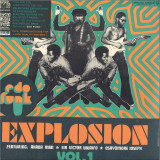
Analog Africa Presents Edo Funk Explosion Vol. 1, available on
2xLP/Gatefold LP with 20-page booklet / CD with 36-page booklet. It was
in Benin City, in the heart of Nigeria, that a new hybrid of intoxicating
highlife music known as Edo Funk was born.
It first emerged in the late 1970s when a group of musicians began to experiment with different ways of integrating elements from their native Edo culture
and fusing them with new sound effects coming from West Africa s night-clubs.
Unlike the rather polished 1980 s Nigerian disco productions coming out of the
international metropolis of Lagos Edo Funk was raw and reduced to its bare
minimum.
Someone was needed to channel this energy into a distinctive sound and Sir
Victor Uwaifo appeared like a mad professor with his Joromi studio. Uwaifo
took the skeletal structure of Edo music and relentless began fusing them with
synthesizers, electric guitars and 80 s effect racks which resulted in some of the
most outstanding Edo recordings ever made. An explosive spiced up brew with
an odd psychedelic note known as Edo Funk.
That’s the sound you’ll be discovering in the first volume of the Edo Funk Explosion series which focusses on the genre’s greatest originators; Osayomore
Joseph, Akaba Man, and Sir Victor Uwaifo: Osayomore Joseph was one of the
first musicians to bring the sound of the flute into the horn-dominated world
of highlife, and his skills as a performer made him a fixture on the Lagos scene.
When he returned to settle in Benin City in the mid 1970s - at the invitation of
the royal family - he devoted himself to the modernisation and electrification
of Edo music, using funk and Afro-beat as the building blocks for songs that
weren’t afraid to call out government corruption or confront the dark legacy of
Nigeria’s colonial past.
Akaba Man was the philosopher king of Edo funk. Less overtly political than Osayomore Joseph and less psychedelic than Victor Uwaifo, he found the perfect
medium for his message in the trance-like grooves of Edo funk. With pulsating
rhythms awash in cosmic synth-fields and lyrics that express a deep personal
vision, he found great success at the dawn of the 1980s as one of Benin City’s
most persuasive ambassadors of funky highlife.
Victor Uwaifo was already a star in Nigeria when he built the legendary Joromi
studios in his hometown of Benin City in 1978. Using his unique guitar style as
the mediating force between West-African highlife and the traditional rhythms
and melodies of Edo music, he had scored several hits in the early seventies,
but once he had his own sixteen-track facility he was able to pursue his obsession with the synesthetic possibilities of pure sound, adding squelchy synths,
swirling organs and studio effects to hypnotic basslines and raw grooves. Between his own records and his production for other musicians, he quickly established himself as the godfather of Edo funk.
What unites these diverse musicians is their ability to strip funk down to its
primal essence and use it as the foundation for their own excursions inward to
the heart of Edo culture and outward to the furthest limits of sonic alchemy.
The twelve tracks on Edo Funk Explosion Volume 1 pulse with raw inspiration,
mixing highlife horns, driving rhythms, day-glo keyboards and tripped-out guitars into a funk experience unlike any other.
out of Stock
Last delivered 5 years ago available to reorder, subject to availability
South London based producer Lxury is a subtle experimentalist, pairing house rhythms with eclectic genre blending and risk-taking. Returning to Shall Not Fade's Lost Palms series for a second record, Smart Digital Life EP shows the maturity and complexity of his production while keeping the energy light and summery.
"1722" opens things up with dreamlike pitched vocals that provide a vaporwave feel, hypnotizing over stuttering synths and a wonky beat. "Spin" has an experimental sound palette, a euphoric pulse and a sweet melody, dance music doused in honey.
This sweetness spills over onto the B side; "Pad Ma" sounds like a pumping club track meets a trip to the fairground - unstoppably buoyant and headsy. The vocals in "When I Wake Up" spin around your head before a muscular beat kicks in, the most stripped back and raw sounding of the record. This one is certain to get heads down and feet moving. "Up High" is an expansive closing track, built around fuzzy drums as the clever use of vocal samples creates a melody with a loved-up feeling; it's a tour-de-force of Lxury's delicate production skills.
out of Stock
Last delivered 4 years ago available to reorder, subject to availability
Hong Kong based hypno-tropicalia duo Blood Wine or Honey are set to release their second album 'DTx2' on 30th June 2021. Made up of seasoned multi-instrumentalists James Banbury (synths, bass, percussion, cello) and Joseph von Hess (vocals, clarinet, sax, percussion), they create a heaving, heady brew of brazen sax themes, lo-fi/hi-tech electronics, densely layered cello inflections and motorik drums.
These explorations start with the dance-floor then go above and beyond, taking notes from post-punk and tropical polyrhythms, always anchored by the bass weight of the sound system. Their distinctive sound is created in the industrial warehouses and hidden rural settlements of Hong Kong, surrounded by the low-end throb of heavy machinery, the lingering scent of hand sanitiser and the humidity of the South China Sea.
Written and recorded during 2020-21, new album 'DTx2' looks ahead to an uncertain future, drawing deep on their experiences and influences and welcoming a host of co-conspirators.
Jean Daval, aka Preservation (credits include Yasiin Bey fka Mos Def, MF Doom, RZA, GZA, Raekwon, KRS-One, Aesop Rock), provided truffle-hunted beats, synths and basses, which, when put through the BWoH mangle, emerged as 'Messenger'.
Superstar and old friend of the band KT Tunstall came to work with BWoH after they contributed a DJ mix for her lockdown 'KTRave' on Instagram. 'Attraction' was the result. Wonky bass, found-bounce beats and Buddy Rich drums smashed out by Tim Weller (Marc Almond, Future Sound of London, Goldfrapp, The Chemical Brothers, David Axelrod) resulted in a bonkers production with passionate vocals and layers of harmony.
'I Shall Rush Out As I Am' is a collaboration with legendary pop provocateur Paul Morley and Janice Lau of Hong Kong band David Boring. The track is based on the words and the spirit of sci-fi writer, satirist, literary critic and radical feminist Joanna Russ and took shape quickly, with tinges of A Certain Ratio and memories of Suicide, provoking Janice to an authentic scream-of-consciousness delivery.
Multi-talented London singer, musician and composer Kamal (Neighbourhood Recordings) took time away from being the Next Big Thing to transform 'Testing Time' with funk-edged keys. A key figure in the extraordinary '90s Hong Kong music scene, Zoë Brewster contributed vocals.
Roughly divided, the album's first set of songs make relatively short statements, punchily self-contained with common threads. The final four tracks, Testing Time, Embers, Embrasure
and Echt Embrace disperse into flights of mantric fantasy, with quicksand time-signature shifts and key-changes emerging into a more introspective zone with a fervent pulse, a shift in energy: stamina over speed.
Over the past decade, Egyptian-born, Barcelona-based DJ and techno producer Raxon, known to friends and family as Ahmed Raxon, has popped out a steady stream of twelve-inch singles, precision-tooled, for labels like Cocoon, Drumcode, Diynamic, Truesoul, and Ellum Audio. An alumni of Kompakt’s Speicher series – check the insistent, vibrating pulses of “The Ancient” and “Dark Light” on 2019’s Speicher 107 – with Sound Of Mind, Raxon has produced a long-awaited debut album that’s ready and aching both for the dancefloor and the boudoir, traversing the heat of the club and the warmth of the home.
“The idea of an album has always floated around in my head for the past few years,” Raxon confirms, “but it was never the right moment in my mind.” Instead, he’s been insistently pursuing his vision of deep, elegant techno, taking him from early DJ gigs in Dubai, including the legendary audio tonic night, then relocating to Europe on the recommendation of Herman Cattaneo, all the while allowing his experiences to inform and transmute his producer’s thumbprint. He’s an architect by training (though he gave architecture up for electronic music), which might explain why Raxon productions are so sturdy and well-designed; but remember also that architecture is a field filled with brave experimentation, something Raxon definitely draws on throughout Sound Of Mind.
Like many albums from the past twelve months, Raxon’s debut developed partly thanks to the unique social situation the planet has found itself caught within. “In the beginning of 2020 I started working on a few tracks with the album in mind,” he recalls, “with no idea of what’s to come in the next few months. As catastrophic as the situation was/is, I found myself in the studio; in a way the lockdown gave me that creative freedom in the studio, to try to tell my story through sound.” And indeed, there is something in the way of ‘life writing’ about Sound Of Mind, particularly in the way Raxon’s productions pay subtle homage, perhaps, to his formative listening experiences in the late nineties.
It’s no retro trip, but there’s plenty of variety here, and a few moments that’ll tickle the collective memory – see the prowling pulsations of the opening “Majestic”, the alien breakbeat action of “Vice” and “Journey Mode”, where the interstellar tones feel like Foul Play or Steve Gurley, the leaking gas and woozy keys that make “Droid Solo” so subtly destabilising, or the strobelight drones that sputter and flare throughout “El Multiverse”, where dappled organ tones fight it out with interdimensional transmissions, all sucked into the vortex of a late-night techno mantra. Beautifully sculpted, Sound Of Mind feels consummate, an elegant set that pulls Raxon’s vision into its sharpest focus. Alive with possibilities, it’s a fever dream of creativity.
In den letzten zehn Jahren hat der in Ägypten geborene und in Barcelona lebende DJ und Techno-Produzent Raxon, der Freunden und Familie auch als Ahmed Raxon bekannt ist, eine ganze Reihe von 12inch-Singles auf Labels wie Cocoon, Drumcode, Diynamic, Truesoul und Ellum Audio veröffentlicht. Wir kennen Raxon außerdem durch seinen Beitrag zur Kompakt Extra/Speicher-Reihe – man höre sich nur mal "The Ancient" und "Dark Light" auf dem 2019 erschienenen Speicher 107 an. Nun hat Raxon mit “Sound Of Mind“ sein lang erwartetes Debütalbum produziert, das sowohl für den Dancefloor als auch für die eigenen vier Wände geeignet ist und dabei sowohl die Hitze des Clubs als auch die Wärme des eigenen Zuhauses durchmisst.
"Die Idee eines Albums schwebte in den letzten Jahren immer in meinem Kopf herum", bestätigt Raxon, "aber es gab nie den richtige Moment." Stattdessen verfolgte er leidenschaftlich seine Vision von tiefem, elegantem Techno, die ihn von frühen DJ-Gigs in Dubai, einschließlich der legendären Audio-Tonic-Nacht, dann auf Empfehlung von Hernan Cattaneo nach Europa führte. Im Laufe dieser Zeit sammelte er unzählige Erfahrungen, die es ihm erlaubten, seinen Stil als Produzent mehr und mehr zu transformieren. Raxon ist gelernter Architekt (obwohl er die Architektur für die elektronische Musik aufgegeben hat), was vielleicht erklärt, warum seine Produktionen so robust und gut durchdacht sind; aber man sollte auch nicht vergessen, dass Architektur bestenfalls immer ein Feld mutiger Experimente ist, etwas, worauf Raxon in “Sound Of Mind“ definitiv zurückgreift.
Wie viele andere Alben der letzten zwölf Monate auch wurde Raxon’s Debüt von der einzigartigen gesellschaftlichen Situation, in der sich der Planet momentan befindet, beeinflusst. "Anfang 2020 habe ich angefangen, an ein paar Tracks für das Album zu arbeiten", erinnert er sich, "ohne zu wissen, was in den nächsten Monaten auf uns zukommen würde. So katastrophal die Situation auch war/ist, ich fand mich im Studio wieder; in gewisser Weise gab mir der Lockdown auch eine kreative Freiheit im Studio, um zu versuchen, eine Geschichte durch meinen Sound zu erzählen." Und in der Tat gibt es auf “Sound Of Mind“ so etwas wie eine "Lebensgeschichte", besonders in der Art und Weise, wie Raxon’s Produktionen eine subtile Hommage an seine prägenden musikalischen Erfahrungen in den späten Neunzigern darstellen.
Es ist fürwahr kein Retro-Trip, aber es gibt hier viel Abwechslung und ein paar Momente, die das kollektive Gedächtnis kitzeln werden - zum Beispiel der sich langsam heran pirschende Pulsschlag im Eröffnungstrack "Majestic", oder die außerirdischen Breakbeats von "Vice" und "Journey Mode", in denen sich die interstellaren Sounds ein wenig wie Foul Play oder Steve Gurley anfühlen. Dann das ausströmende Gas und die wummernden Tasten, die "Droid Solo" subtil destabilisieren, oder die Strobo-Drones, die in "El Multiverse" herum sprudeln und flackern, wo einzelne Töne einer Orgel mit interdimensionalen Transmittern um die Wette strahlen und schließlich in den Strudel eines nächtlichen Techno-Mantras gesogen werden. “Sound Of Mind“ fühlt sich formvollendet an, wie ein elegantes Set, das Raxon’s Vision verstärkt in den Fokus rückt. Ein Fiebertraum voller Kreativität und Möglichkeiten.
out of Stock
Last delivered 3 months ago available to reorder, subject to availability
Unusual times, bring unusual records. So marks 'Hanabi' one of Desroi's most diaphanous works to date. After weaving through deluges of heaviness and penetrating synth lines we are promptly subjected to the ease and effortlessness of tracks such as the title track "Hanabi" or "Stripped From Light . Those tracks stress the fine line between bliss and darkness.
out of Stock
Last delivered 4 years ago available to reorder, subject to availability
Imperium Droop brings two mavericks of sweeping exploration together into new avenues of musical expression. Kid Millions and Jan St. Werner explore a liminal space between improvisation and composition, a fluid yet defined sound-space, founded on the unique chemistry of their friendship and pushing into the future. Kid Millions stands as one of the most sought after drummers and improvisers in NYC, known for his work as the drummer for Oneida, his expansive solo work as Man Forever, as well as collaborations and performances with the likes of Laurie Anderson, Philip Glass, Royal Trux, Boredoms, White Hills, and Spiritualized. Regardless of who he's working with Kid Millions radically redefines the drums as an instrument. Jan St. Werner has consistently remained at the vanguard of electronic music. In his work as one half of the visionary duo Mouse On Mars, as well as his acclaimed solo work both as a composer and sound artist, and in collaborations with The Fall's Mark E Smith, Oval's Markus Popp, Stereolab, and The National St. Werner constantly pushes the limits of recorded sound. Together, Millions and Werner have crafted a monument of unpredictable beauty built on breathless forays into the unknown. Werner's application of a seemingly infinite arsenal of textures unleashes colorful swaths of energy. Mats Gustaffson joins Werner on the maximalist "Color Bagpipes," unleashing torrents of swiveling melody and breathy clicks over the exponential thunder of Millions' drum kit. Pieces like "Dark Tetrad" and "Astral Stare" demonstrate the duo's mastery of space and surprise. Dark flutters flow in slow pulses across "Apotropaic" where erratic swirls of sound twist and mutate on "Sorrows and Compensations," unified as a single force by the overwhelming diversity of sounds. Millions' drums effortlessly rides each wave of Werner's prismatic deluges and channels their energy into dynamic movements. Through his singular prowess, Millions' tireless rhythms and subtle gestures mirror Werner's boundless textural palette and drive each piece towards transcendence. On Imperium Droop, Kid Millions and Jan St. Werner have combined their powers into an incomparable work of gripping and intrepid sonic fluctuations.
Indie Retail Exclusive Water Spirits color vinyl LP More Energy Fields, Current is a definitive new peak in the recorded continuum of prolific producer/percussionist Carlos Niño. Featuring contributions from more than a dozen exciting voices in the creative music constellation of Los Angeles (of which Niño's has been a central force for over 2 decades), including Sam Gendel, Nate Mercereau, Jamael Dean, and Jamire Williams, the album collects 10 pristine gems of collaborative communication helmed by the Southern Californian sage, elegantly presented in his unique "Spiritual, Improvisational, Space Collage" style. The album is ripe with "ambient" passages that function like open portals between moments of consonance and clarity, and epic post-hip hop opuses like the heavy/heady "Thanking the Earth." But even in the occasional absence of drums, there is a powerful pulse implicit in the program's frequency of consciousness. It's a testament to Niño's foundations as a DJ. His distinct ability to craft a kinetic, cinematic sonic experience from dozens of independent, often rhythmically-ambiguous improvisational memories is more fluently displayed on More Energy Fields, Current than anything we've heard from him to date. It resonates, lucidly, with the way Niño's mentor Iasos - who is known to the world as an original founder of New Age music - has described his work: "Real Time Interactive Imagination, Flow Texturization." On More Energy Fields, Current, Niño immerses us in the watery depths of his world, spiriting us like a submarine through exotic nether-leagues of untouched sound. And when we arrive at the final, bookending piece "Please, Wake Up." (an extended version of the opening theme, featuring saxophonist Shabaka Hutchings), it's like a return, safely to shore.
out of Stock
Last delivered 4 years ago available to reorder, subject to availability
Next round for Another Picture. After exploring the highs in electricity and the lows of the deep grounds we go further into things. Sensing vibration of the fire below and turning it into a never-ending evolution of sound and groove. This is what you might know about Losoul tracks - and here you can't go wrong either. There are scattered artefacts of the city bringing vibe and inspiration - the streets, the people, the concrete, the action - it's all in between. Then there's the ever-changing beauty of nature out there on a day to just leave things as they are. Soul, movement and emotion. Again Losoul gives a strong example of experience from his longterm career in house and techno production and performing. Two pieces of music timeless in many ways. See you on the dancefloor. And everywhere else.
Rubyworks are pleased to present a vinyl release of 'Marcata', the much-loved 2011 debut album by Dublin rock-trio The Minutes. To celebrate the 10th anniversary of its release. 'Marcata' will be released on a limited edition fluorescent pink vinyl pressing. 'Black Keys' from the album is currently soundtracking a Jameson Whiskey TV advert. 8/10 - The Goes The Fear An underground classic debut from one of Ireland’s loudest - live4ever One of the Top 30 album releases of 2011 - Hot Press. It is as fine a rock record as you'd expect from Ireland, or any other country for that matter - entertainment.ie Artrocker - The greatest rock 'n' roll band in Dublin. **** A cacophonous, confident and crushing slab of authenticity, steeped in the anarchic history of rock 'n' roll – Hot Press “A thundering combination of old school rock 'n roll with modern guitar music. The Minutes have taken their time in getting here and it was worth every second” 8/10 - State.ie **** “You want to bang your head until it and your neck ache” - Irish Daily Mail **** “Loud, energetic and worth the wait” - News Of The World ***1/2 “A melodic and irresistible strut that makes for compelling listening” - Heineken Music *** “This debut booms, bangs and pulsates from the first note. Boiling over with a sense of urgency” - The Sunday Times *** “Fans of straight up, 'classic' rock will find lots to enjoy here” - The Irish Independent “Marcata certainly cements their status as one of the most exciting sounding bands on the scene at the moment” – Goldenplec “Full of raucous thrills and high-voltage riffage” – The Guardian “Authentically gritty, pulse-quickening rock 'n' roll in the grand style” 7/10 – AU magazine “The Minutes’ debut is a classic rock n’ roll album” – We Are Noise “Heavy riffs, urgent vocals, and pounding beats, the way rock'n'roll should be” – The Herald
Bounding on from the Door to the Cosmos, the label'sexpansive triple vinyl compilation, OnTheCorner has paired up new artists in this series of cosmically twinned EPs. Twinning EPs on a single piece of wax reduces the impact on the environment and wallet friendly. Each brace of cosmically twinned OnTheCorner artists interstellar balearic for the deepspace bound. Each 12" will be split taking over a whole side of black wax. Party wax loaded with Stardust. Get your fix of tomorrow's sound, tonight! Side A is UFFE's 'Not All the Stars EP' - an underground emissary channeling dark bass weight through a prism of jazz-house - dub-tech hitters. A singular talent leading the charge into new frontiers with OnTheCorner. Not All The Stars EP is aprelude to his first LP on the label and follows on from City's Dead and that featured on Door to the Cosmos in 2020. Petwo Evans' 'Bootstrap EP' on the flip side is made of soundsystem-primed, innovative club tracks. Welsh Futurism, celestial electrics and objects of space-junk percussion. CERN loops, cyber kinetic grooves, machine pulses and chugging house kicks converse in the orbit of 'Gyroscope'. Petwo Evansfeeds the tracks compulsion with heady layers awash with dreamy vocal stabs, synths and hazy harmonics.
out of Stock
Last delivered 4 years ago available to reorder, subject to availability
HIDE are an electronic duo based in Chicago. The pair create dark and heavy sample - based compositions using a combination of self - sourced field recordings and various pop culture and media references. Their music is textured, minimal, and powerful, giving raw vulnerability an opportunity to unfurl. Their work is honest, confrontational, powerful and thought - provoking.
HIDE's third album, Interior Terror further abandons traditional concepts of song structure in favor of splintered rhythms and fevered, immediate release. Expanding on previous themes of autonomy and empowerment, Interior Terror addresses and questions the corporeal and immaterial body in a physical and metaphysical sense. Turning to the dread inside, reflecting on the world around us,
HIDE gives voice to the power of destruction as a c atalyst for hope, and to the collective experiences of those who've come before us as a wellspring of our own power. Raw vocal delivery of mantra - like prose issued forth yields a raging, plaintive wail that lulls, mocks, questions, proclaims and decries. A dearth of collected field recordings give way to more fluid arrangements while retaining a scathing urgency. The result is minimal, spacious, and jarring; a distant knocking grown into the pulse of a hypnotic dirge, drones emerge from shards of decomposed sound, bending, seething their way through your body.
"Do Not Bow down" is a self - directed spell for fire and regeneration. “Nightmare” explodes, unrelenting; conflating time and space to the beat of repeated blows to the head. A reflection on perpetual suffering, generational traumas and the transformative action of release. Title track “Interior Terror” belies a new brand of body horror informed by the systemic enforcement of a contemporary Western gender binary, touching on experiences of dysphoria and disassociation . “Fear” answers the question 'Where do cops come from
HIDE are an electronic duo based in Chicago. The pair create dark and heavy sample - based compositions using a combination of self - sourced field recordings and various pop culture and media references. Their music is textured, minimal, and powerful, giving raw vulnerability an opportunity to unfurl. Their work is honest, confrontational, powerful and thought - provoking.
HIDE's third album, Interior Terror further abandons traditional concepts of song structure in favor of splintered rhythms and fevered, immediate release. Expanding on previous themes of autonomy and empowerment, Interior Terror addresses and questions the corporeal and immaterial body in a physical and metaphysical sense. Turning to the dread inside, reflecting on the world around us,
HIDE gives voice to the power of destruction as a c atalyst for hope, and to the collective experiences of those who've come before us as a wellspring of our own power. Raw vocal delivery of mantra - like prose issued forth yields a raging, plaintive wail that lulls, mocks, questions, proclaims and decries. A dearth of collected field recordings give way to more fluid arrangements while retaining a scathing urgency. The result is minimal, spacious, and jarring; a distant knocking grown into the pulse of a hypnotic dirge, drones emerge from shards of decomposed sound, bending, seething their way through your body.
"Do Not Bow down" is a self - directed spell for fire and regeneration. “Nightmare” explodes, unrelenting; conflating time and space to the beat of repeated blows to the head. A reflection on perpetual suffering, generational traumas and the transformative action of release. Title track “Interior Terror” belies a new brand of body horror informed by the systemic enforcement of a contemporary Western gender binary, touching on experiences of dysphoria and disassociation . “Fear” answers the question 'Where do cops come from
Juan Wauters’ fifth solo album, Real Life Situations, is a multifaceted ode to sur- rendering control and taking life as it comes. References to radio abound on its 21 tracks, and with good reason - the album spans genres, narrators, languages, and perspectives with the ease of spinning a rotary knob. Mining older songs, phone notes, new material, and snippets from TV and YouTube, Wauters has crafted an aural document of the year through his eyes.
Despite the circumstances of its creation, Real Life Situations is not a quarantine record. In many ways it’s the opposite of one, taking togetherness as both its subject and its primary medium. Pre-lockdown collaborations with Mac DeMar- co, Peter Sagar (AKA Homeshake), Nick Hakim, Cola Boyy, El David Aguilar, and more playfully offset Wauters’ more pensive solo tracks, and even in its sparest moments the album pulses with life. This is due in part to an impressive array of interludes and samples, most of which are field recordings that Wauters collects on his phone, ranging from the innocuous (“A Peter Pan Donuts Conversation”) to the intense (“Crack Dabbling”).
Under his care, these small moments become coordinates for the peaks and valleys of human experience, coloring the album with Wauters’ unique shade of realism. “Some people think I’m an optimist”, he explains, “but I’m not. I’m always seeing all sides of things.”
Of course, Wauters himself never disappears in the boisterous crowd - he lends his chameleonic songwriting to experiments in hip-hop (“Unity”), lo-fi R&B (“Mon- soon”), and deft indie folk (“Lion Dome”). Themes of loneliness, personal growth, patience, and companionship arise again and again; we can feel Wauters navi- gating a rapidly-changing world in real time. Jubilant choruses and spoken word poetry bleed into city noises and overheard conversations. Real freedom, the album suggests, comes not from gaining control, but from accepting its artifice. Like the programming on a radio station, there’s something here for everyone. All you have to do is listen.
The music of Marriage Material draws from a world of influences and hits with the
force of a sledgehammer.
It is driven by the powerful, precise drumming of Felix Lehrmann, grounded by the unerring pulse of bassist Thomas Stieger and ignited by the “pyrotechnic” solos of vibraphonist/keyboardist Raphael Meinhart and guitarist Arto Makela. The four musicians
belong to the cream of the German music scene. Now they have decided to record an
album together.
And this album has it all: powerful fusion music, reminiscent of Weather Report mixed
with strong rock elements.
The guests include Simon Oslender, Kurt Rosenwinkel, Julian and Roman Wasserfuhr
and many more.
On “Skeleton Elevator”, a hair-tingling, spine-popping, ribcage-rattling slab of twisted tundra boogie, Finland’s Cosmo Jones Beat Machine have their bony fingers on the global pulse of underground rock’n’roll, invoking the spirits of Beefheart, the Fall and Funkadelic. Cosmo Jones Beat Machine have a history that spans over two decades and starts in the woods and the wild in eastern Finland. Over the years the band have lived through five album releases, countless lineup changes and furious live appearances around Scandinavia and Europe that have brought the band a minor cult following. Skeleton Elevator is their sixth album altogether and the first in six years. The six years spent in cultivating the album now at hand have further tempered the band’s trademark sound, which is comprised of primitive but captivating rhythms and a terrifying racket. The vocalist Pharaoh Pirttikangas’ trademark raspy delivery, which has deepened over the years, weaves stories dug up from the Mississippi Delta in the pale moonlight and distilled through an eastern Finnish swamp. The new album’s Beefheartian clatter is at times spiced with influences from unexpected directions such as disco (Minimal Brain Dysfunction Generation) and Funkadelic-style space funk (Transformed). The band recorded the bulk of the album during a 24-hour session without sleep, which only adds to the record’s pleasantly unpolished, frantic edge.
After the exceptional first volume of ‘Rakka’, Vladislav Delay is taken by the wanderlust again for a ravishing 2nd album of elemental electronics inspired by the Finnish wilderness. RIYL Shackleton, Rian Treanor...
Where 2020’s ‘Rakka’ represented some of Sasu Ripatti aka Vladislav Delay’s most intensely noisy textures and rhythmic complexity, as inspired by walks in his native Finnish wilderness, his follow-up further draws on and refines that experience in a beautifully brutalist bouquet of brambling distortion and tempestuous pulses that speak to the chaotic power of nature’s ecological interdependence. In the process ‘Rakka II’ fulminates Delay’s reactive sound even closer to the styles of Shapednoise, but still distinguished by his signature,
freehanded style of percussive tumult that reaches beyond techno and club music into an ecstatic, holistic hybrid of power ambient, black metal, avant-dub, free jazz, and extreme dance musicks.
While still breathlessly busy and densely overgrown, ‘Rakka II’ is intended as the romantic answer to the more hostile first volume. Its seven parts balance a sense of febrile passion with hyper-disciplined logic in more explicitly emotive, optimistic gestures that emerge from its atonal murk and convulsive structures.
Boundaries of discord and harmony are smudged almost into the red, but rendered with the spatial definition that become a hallmark of Delay’s best work for over 20 years, but never heard quite so wild and lushly semi-conscious as on cuts such as the soaring and collapsing ‘Raato’, or the craggy might of ‘Raaha’, and the heart-in-mouth headiness of ‘Rapaa.
out of Stock
Last delivered 5 years ago available to reorder, subject to availability
Crumb’s second album, Ice Melt, takes its name from the coarse blend of salts that you can buy from your local hardware store for $9.99. When sprinkled on your wintry steps, this mixture absorbs water and gives off heat, transforming the ice into a viscous, briney
slush and, eventually, nothing at all. Beginning with the dynamic chaos of “Up & Down,” and ending with Crumb’s closest thing to a lullaby, Ice Melt’ s ten tracks combine, like ice sculptures melting into a glistening puddle.
From the start, the group knew that cohesion was best achieved through plumbing their individual strengths— frontwoman Lila Ramani’s earliest songwriting, which catalyzed the group’s first two EPs; Bri Aronow’s knack for building (dis)affecting soundscapes; the hypnotic grounding of Jonathan Gilad’s drums, a Crumb mainstay; and Jesse Brotter’s distinctive bass playing, which subtly traces Ramani’s vocal melodies while providing an unrelenting pulse. These collective skills make Crumb a project of independent self-discovery, four creative minds converging around an idea that is always shifting and reforming.
Convening in Los Angeles to work with producer Jonathan Rado, Crumb tapped into atmosphere-creation like never before, building experimental compositions that are at turns head-nodding and surrealist, energetic and euphoric. Ramani characterizes the album as a “return back down to earth,” a deeply felt examination of “real substances and beings that live on this planet.” It is also the cultivation of road-worn musicians exploring brand-new sounds and thematic concepts, pushing themselves into territory they could never have anticipated five years ago.
Crumb’s second album, Ice Melt, takes its name from the coarse blend of salts that you can buy from your local hardware store for $9.99. When sprinkled on your wintry steps, this mixture absorbs water and gives off heat, transforming the ice into a viscous, briney
slush and, eventually, nothing at all. Beginning with the dynamic chaos of “Up & Down,” and ending with Crumb’s closest thing to a lullaby, Ice Melt’ s ten tracks combine, like ice sculptures melting into a glistening puddle.
From the start, the group knew that cohesion was best achieved through plumbing their individual strengths— frontwoman Lila Ramani’s earliest songwriting, which catalyzed the group’s first two EPs; Bri Aronow’s knack for building (dis)affecting soundscapes; the hypnotic grounding of Jonathan Gilad’s drums, a Crumb mainstay; and Jesse Brotter’s distinctive bass playing, which subtly traces Ramani’s vocal melodies while providing an unrelenting pulse. These collective skills make Crumb a project of independent self-discovery, four creative minds converging around an idea that is always shifting and reforming.
Convening in Los Angeles to work with producer Jonathan Rado, Crumb tapped into atmosphere-creation like never before, building experimental compositions that are at turns head-nodding and surrealist, energetic and euphoric. Ramani characterizes the album as a “return back down to earth,” a deeply felt examination of “real substances and beings that live on this planet.” It is also the cultivation of road-worn musicians exploring brand-new sounds and thematic concepts, pushing themselves into territory they could never have anticipated five years ago.
Rich in musical associations yet utterly singular in its voice, joyous with an inner tranquility, the music of Natural Information Society is unlike any other being made today. Their sixth album in eleven years for eremite records, descension (Out of Our Constrictions) is the first to be recorded live, featuring a set from London’s Cafe OTO with veteran English free-improv great Evan Parker, & the first to feature just one extended composition. The 75-minute performance, inspired by the galvanizing presence of Parker, is a sustained bacchanalia of collective ecstasy. You could call it their party album.
This was the second time Parker played with NIS. Joshua Abrams: “Both times we played compositions with Evan in mind. I don’t tell Evan anything. He’s a free agent.”
The music is focused & malleable, energized & even-keeled, drawing on concepts of ensemble playing common to musics from many locations & eras without any one specific aesthetic realization completely defining it.
“The rhythms that Mikel plays are not an exact reference to Chicago house, but that’s in there,” Abrams says. “I like to take a cyclic view of music history, can we take that four-on-the-floor, & consider how it connects to swing-era music? Can we articulate a through line? I dee-jayed for years in Chicago & lessons I learned from playing records for dancing inform how I think about the group’s music. The listener can make connections to aspects of soul music, electronic music, minimalism, traditional folk musics, & other musics of the diaspora as well. It’s about these aspects coming together. I don’t need to mimic something, I need to embody it to get to the spirit, to get to the living thing.”
For jazz fans, the sound of Parker’s soprano & Jason Stein’s bass clarinet might evoke Coltrane & Dolphy, even though they didn’t necessarily set out to do that & they play with complete individuality. Abrams sees a bridge to the historical precedent, too. “Since we first met in the 1990s, one of the things that Evan and I connected on was Coltrane’s music,” he says. “I hoped that we would tap into that sound world intuitively. In this case, I think that level of evocation adds another layer of depth, versus a layer of reference.”
Indeed, this is a performance in which the connections among the ensemble & the creative tension between improvisation and composition build into a complex mesh of associations & interactions. While the band confines itself to the territory mapped out by Abrams’ composition, they are remarkably attentive & responsive, making adjustments to Parker’s improvisations. When Parker’s intricate patterns of notes interweave with the band, the parts reinforce one another & the music rockets upward. Sometimes, Parker’s lines are cradled by the group’s gentle pulse & an unearthly lyrical balance is struck.
Drummer Mikel Patrick Avery is locked-in, playing with hellacious long-form discipline, feel & responsiveness. Jason Stein’s animated, vocalized bass clarinet weaves in & out with Lisa Alvarado’s harmonium to state the piece’s thematic material; the pulsing tremolo on the harmonium brings a Spacemen 3 vibe to the party. Abrams ties together melody & rhythm on guimbri, a presence that leads without seeming to. Like his bandmates, he shifts modes of playing frequently, improvising & then returning to the composed structure.
“As specific as the composition is, the goal is to internalize it & mix it up,” Abrams says. “The idea is to get so comfortable that we can make spontaneous changes, find new routes of activity, stasis & byways every gig. It’s like a web we’re spinning. If someone makes a move, we all aim to be aware of it, make room for it. Experiencing & listening is what it’s about, & Evan supercharges that.”
& “supercharged” is the word for this album. With Parker further opening up their music, descension (Out of Our Constrictions) is the sound of Natural Information Society growing both more disciplined and freer, one of the great bands of its time on a deep run.
Aguirre edition: Mastered by Helge Sten, Audio Virus, Oslo. Lacquers by Dubplates & Mastering. Liner Notes by Theaster Gates. LPs pressed on premium audiophile-quality vinyl at Pallas Records. US 2xLP edition available thru Eremite records.
out of Stock
Last delivered 5 years ago available to reorder, subject to availability
Entwickelt über einen Zeitraum von zwei Jahren, in den auch die Veröffentlichung des 2019 erschienenen Albums ,Stray Fantasies" fiel, liefert das Ehepaar Hollie und Keith Kenniff mit ,In A Deep And Dreamless Sleep" nun ein deutlich schemenhafteres Kapitel ihres Technicolor-Pop-Projekts MINT JULEP ab. Wo das erste Album ein kristallines Gitterwerk definierter Pop-Strukturen trug, stumpft das zweite diese Schärfe ab und macht den Glanz weicher, indem es ein Gleichgewicht zwischen Songkunst und Hollies Solomaterial sowie Keiths Output als Goldmund herstellt. ,In A Deep And Dreamless Sleep" nimmt eine luftigere Form an und verströmt einen schweren Nebel von Shoegaze-Sensibilität, obwohl das ansteckende Pop-Know-How seines Vorgängers fest intakt bleibt. Im Gegensatz zu seinem Titel ist ,In A Deep And Dreamless Sleep" voll von Traumwelt-Neigungen, in denen Wachen und Schlafen, Lieben und Verlassen, Leben und Sterben austauschbar sind. Das Album ist durchdrungen von der sanften Betäubung der aufkommenden Liebe - oder vielleicht ist es die Trauer einer Liebe in ihrem Zwielicht. Oder es ist das Gefühl eines Ehepaares, das seine Liebe vor dem Hintergrund seines geschäftigen Lebens pflegt. ,In A Deep And Dreamless Sleep" ist ein Fenster in eine berauschend romantische Parallelwelt, die die Kenniffs aus analogen Synthesizern, meisterhaftem Sounddesign, nektargetränkten Hooks und luftigen Vocals, die weit in ein Meer von Texturen hinauswaten, erschaffen haben. Sie haben es geschafft, den Wert jahrelanger Rendezvous-Nächte in eine 46-minütige Sammlung von phosphoreszierendem Ambient-Pop zu verwandeln, der ein Gefühl von gekonnter Konsistenz vermittelt, das die beiläufige Entstehung des Albums widerlegt.
out of Stock
Last delivered 5 years ago available to reorder, subject to availability
First-ever official re-issue of the Ecuadorian composer's stunning electroacoustic composition "Oeldorf 8" on vinyl and CD. Remastered by KASSIAN TROYER at D&M, Berlin.
MESÍAS MAIGUASHCA (b. December 24th, 1938 in Quito / Ecuador) is a composer of Neue Musik, especially electroacoustic music, who studied at the Conservatorio Nacional de Quito, at the Eastman School of Music in Rochester, NY (1958–65), with ALBERTO GINASTERA at the Instituto di Tella in Buenos Aires, at the Hochschule für Musik in Cologne and, after a short return to Ecuador, attended the Internationale Ferienkurse für Neue Musik in Darmstadt and the Fourth Cologne Courses for New Music in 1966–67 where he studied with KARLHEINZ STOCKHAUSEN. From 1968 to 1972, MAIGUASHCA worked closely with STOCKHAUSEN in the Electronic Music Studio of the Westdeutscher Rundfunk in Cologne and joined STOCKHAUSEN's ensemble for performances at the German Pavilion at the Expo '70 in Osaka. In 1971 he became a founding member of the OELDORF GROUP of composers and performers, and began work at the Centre Européen pour la Recherche Musicale in Metz, at IRCAM in Paris, and at the ZKM in Karlsruhe. From 1990 – 2004 MAIGUASHCA was Professor of Electronic Music at the Musikhochschule of Freiburg im Breisgau where he still lives today.
The OELDORF GROUP, named after the small village 40 km away from Cologne where they lived and worked in a rented farmhouse where they set up their own studio for electronic music and studio productions, was a musicians' collective active during the 1970s. In the adjacent barn, the group held concerts for audiences up to 300 people with an emphasis on live-electronic music and other kinds of new and avant-garde music. Thanks to a long-standing contact with the Westdeutscher Rundfund, the core members of the OELDORF GROUP (PETER EÖTVÖS - electronics and keyboards, the violinist/violist and composer JOACHIM KRIST, electronics specialist and composer MESÍAS MAIGUASHCA, who also played keyboards, and his wife GABY SCHUMACHER – cello) received commissions for compositions, invitations to perform in the Musik der Zeit concert series, as well as having many of their summer concerts recorded for the late-night broadcasts of WDR3.
One of these commissioned compositions is "Oeldorf 8": a retrospective portrait of the OELDORF GROUP consisting of a series of ten short pieces for four instrumentalists (clarinet, violin, cello, electric organ/synthesizer) and tape which may be played either simultaneously or continuously without a break. It premiered in 1974 at the Darmstädter Ferienkurse and was released on LP two years later and turned into a sought-after, but not very well-known rarity achieving collector's prices., and was later unofficially reissued on KEITH FULLERTON-WHITMAN's Creep Pone CDr label.
Conceived as a sonic diary with an edge to encompass radical electronic synthesis, the 48 minute composition proves " … a thing of wonder; from the outset, MAIGUASHCA's spoken introduction of the players & concept gets slowly eroded by errant, pointillist electronic sound … which then lets loose for a good 10 minutes before a swarm of slowly rising held tones c/o the players acoustic arsenal slowly comes to the fore. On the second side, the acoustic sounds - patiently, elegantly state their cases across a good half of the segment until a rising pulse-wave drone essentially annihilates the more nuanced phrasing & slowly builds to an almost ROLAND KAYN-esque climax of raw oscillator gristle" (Soundohm).
44 years after its original release, MAIGUASHCA's stunning album finally sees its deserved and overdue re-release on CD and LP, carefully remastered by KASSIAN TROYER at D&M, Berlin.
"Maiguashca … is part of the first generation of South American maverick sound explorers that in the 1960s paved the way for a tradition of innovation that persists in the present noise and psychedelic scenes of the continent. Along with Edgar Valcárcel, César Bolaños, Beatriz Ferreyra, Mauricio Kagel or José Vicente Asuar, he contributed to expand the possibilities of musical language beyond the dominant Western canon …"
David Jarrin / Kraak Festival
out of Stock
Last delivered 5 years ago available to reorder, subject to availability
Mastered by Denis Blackham at Skye Mastering, June 2020
Cut by Andreas Kauffelt at Schnitstelle, Berlin, June 2020
Johannes Auvinen has been a one man acid king for over a decade producing a wealth of acid and acid house under the moniker Tin Man. For this new release on Editions Mego he navigates an entirely different zone. Drawing on the history of electronic musik Akkosaari is a transcendental journey far from the sensual frenzy of sweaty acid drenched dancefloors we are accustomed to with his work. Akkosaari lies in the middle of the kosmic komische of Ash Ra Temple's Jenseits, the weightless transcendentalism of Eliane Radigue's Trilogie De Morts and the more glacial output of the Sähkö catalogue. The pace is gentle as the listener is drawn further into a world unlike the one we inhabit, these machines are more second life than one's emulating real life. The fantastic potential for audio induced visions are at play in this adventure in music as mind travel. On Kyläläiset Tanssii a measured pulse acts as a means of navigation before Susi spirals out clouds of sound. By the time we get to Kelluminen we are deeply within an unfamiliar state prior to landing in the heavenly plateau of Akkosaari. Throughout Akkosaari we are bathed in enrapturing and enveloping mists of psychedelic haze which take the listener on a vivid mental journey. This is intoxicating head music unfolding like an astral ascension and like any trip warrants repeat visitation.
out of Stock
Last delivered 9 months ago available to reorder, subject to availability
Hannah Peel’s latest work "Fir Wave" contains re-interpretations of the original music of the 1972 KPM series featuring Delia Derbyshire and the Radiophonic Workshop.
The new album, a sonic shimmer of textures and pulses that switches between raw atmospheric edges and environments, arrives with a fascinating history. As Peel explains, “The specialist library label KPM, gave me permission to reinterpret the original music of the celebrated 1972 KPM 1000 series: Electrosonic, the music of Delia Derbyshire and the Radiophonic Workshop.” This process of re-generation and finding fresh inspiration in pioneering, experimental electronics from the early 1970s is at the core of the album. Peel has made connections and new patterns that mirror the Earth’s ecological cycles through music. Peel explains, “I’m drawn to the patterns around us and the cycles in life that will keep on evolving and transforming forever. Fir Wave is defined by its continuous environmental changes and there are so many connections to those patterns echoed in electronic music - it’s always an organic discovery of old and new.” As Delia Derbyshire revealed in 2000 to BBC sound engineer, journalist and academic Jo Hutton: “I like new things that don’t seem new . . . as though they’ve always been there.” Known more recently for curating and presenting on BBC Radio 3’s Night Tracks, the Northern Irish Emmy-nominated composer and producer’s work is ambitious and forward-looking, adapting and re-inventing new genres and hybrid musical forms.
Recent albums include the solo electronic and pop work of Awake But Always Dreaming, which became an ode to her grandmother’s mind as she lived with dementia; the electronic ruralism of Chalk Hill Blue, an album recorded with the poet Will Burns; and the space and the unparalleled vastness of Mary Casio: Journey to Cassiopeia, scored for synthesisers and a 30 piece colliery brass band. In 2019 she composed and recorded the soundtrack for Game of Thrones: The Last Watch which earned her an Emmy nomination for ‘Outstanding Music Composition For A Documentary Series Or Special (Original Dramatic Score)’.
With his new album Rhapsodic, Nicolas Repac gives life to the archives of the hunter-gatherer of sounds: Charles Duvelle Nicolas Repac is pursuing the dreamlike magic of his art of sampling with his new album "Rhapsodic". The musician plunged into musicologist Charles Duvelle's pioneering field recordings, in order to deconstruct and revisit rare music archives gleaned from all over the world. Repac ventures into the craziest sonic and stylistic pileups - adding voices, rhythms and traditional music from "every world". He offers some "Rhapsodies" of multicoloured sounds and instrumentals, revisited through the prism of electronic music. He liberates himself from all ethnomusicological coherence to speak directly to the soul and imagination of his listeners - beyond the frontiers of time and space. Grafting heady grooves of traditional percussion from Benin onto sub-Saharan violin refrains, interweaving them with Mongolian morin khuur on a bed of pygmy mouth-bow, Nicolas Repac leads us on the most captivating of immobile journeys, to the heart of the most intimate impulses, the most human pulse.
out of Stock
Last delivered 5 years ago available to reorder, subject to availability
The first two EPs of rising French-Algerian singer-producer-songwriter Sabrina Bellaouel on InFiné are now available on a single 12" vinyl edition for the first time. At the crossroads of modern electronic production, alternative RnB & North African beats, Sabrina Bellaouel offers her listeners an unprecedented mix of grand emotion of the Pop stage and the cutting-edge underground flair of buzzing nightclubs
Textextext - (add your write up)
2020 saw Sabrina Bellaouel step out of her cocoon a fully formed artist. First, there was "We Don't Need To Be Enemies", a powerful and brave record - directing the limelight away from her talent as a singer and focusing on her honed, meticulous production skill and ingenuity in making demanding, forward thinking music. Bellaouel managed to tell stories of her identity and place in the world almost without a single vocal.
Then, there was "Libra" - fusing her own production with that gorgeous voice - showcasing a fully formed, trailblazing, independent artist. Sabrina jumps effortlessly between empowering trap on "Arab Liquor" to luscious RnB on "Float" and ends the record with "She Don't Care", a peak time house curveball that you can picture heating up the festival dance floors around Europe. The diverse and powerful EP united different sides of the press in its critical acclaim, receiving accolades from Resident Advisor, Mixmag, The Quietus, Metal Magazine and Pan African Music - just to name a few.
Both of these records then, represent a side of the coin - and are now available as a 12" Vinyl combining them to a singular listening experience. And when the clubs slowly open up again, you will surely see this secret weapon make it's way some well assorted DJ bags.
out of Stock
Last delivered 5 years ago available to reorder, subject to availability
In the late ‘80s, a wave of British musicians raised on ‘70s UK pop, Caribbean sound system culture, reggae, lovers rock and Motown/Philly soul music fell in love with synthesisers, drum machines and 8-track recorders. The street soul generation had arrived.
Originally released as a white label 12” in 1989, ‘You’ve Gone’ is the sole release from Bassline, the studio project of Southeast London-raised musician Tony Henry, not to be confused with Tony Henry from Manchester jazz-funk/R&B band 52nd Street. Featuring the singer Lorraine Chambers, it’s one of the true jewels of the UK Street Soul scene. As Lorraine’s heartsick soul vocal glides over sunrise synths, dusty drums, elegant electric piano figures and a reggae indebted bassline, ‘You’ve Gone’ captures the optimism and strength of the era perfectly.
‘You’ve Gone’ was championed by Choice FM UK (now Capital XTRA), Kiss FM, and DJ Trevor Nelson. Tony went from selling white labels out the trunk to booking in Live PAs for Lorraine with London sound systems like Rampage and up north in the street soul loving cities of Manchester and Birmingham. “When Lorraine did PAs up there, she went out on stage like she was Beyoncé.”
The son of a Jamaican father and an English mother, Tony grew up around the London sound system scene. He taught himself bass guitar, keyboards, and production, before playing in the reggae band Chakwanza (Swahili for “the first”). In Chakwanza, Tony rubbed shoulders with Aswad, Barry Boom, Steel Pulse, Maxi Priest, Gregory Issacs, Dennis Brown, Ghettotone and Saxon Sound, before focusing on a career in banking over music. “Music was my first love, but it couldn’t have afforded me the sort of level of - let’s be blunt and pragmatic about it - financial success that would have allowed me to support my family.”
Outside of office hours, Tony continued to work on music at home, sometimes serving as a session bassist with local bands. In the late 80s, a work colleague mentioned her sister Lorraine Chambers was a singer. Tony and Lorraine recorded “You’ve Gone” over two sessions. “Lorraine went into the booth, put her headphones on and got into the song. My daughter turned to me and said, ‘Daddy, she can really sing!’”
Despite the success of ‘You’ve Gone’, they never recorded together again. “The world changed, and for me, it changed as well. My younger kids were born, and work started getting more intense. I got a bit more successful and was living a mad, kind of crazy life.”
Thirty-two years on, ‘You’ve Gone’ finally receives an official reissue comprising the lauded original mix, an alternate version and Tony’s Back to Bass-ics remix. Fittingly, in recent months, Tony and Lorraine have re-connected in the studio writing new material.
out of Stock
Last delivered 6 months ago available to reorder, subject to availability