Jackson C. Frank's eponymous album is the embodiment of folk legend. Issued in late 1965 on the UK Columbia label, it was for many years more famous for its producer (Paul Simon) and the musicians who would go on to cover its songs (Nick Drake, Bert Jansch, Sandy Denny) than for the hauntingly beautiful music contained inside.
Frank's backstory certainly adds to the legacy: born in Buffalo, New York, he used the settlement from a childhood accident to sail to London where he quickly became a fixture of the bustling folk scene. Performing a mix of blues standards and originals, he met fellow ex-pat Paul Simon who would put up the money to record Frank's only LP.
For such a sparsely recorded work, Jackson C. Frank covers a lot of ground. From the rugged, world-weary opener "Blues Run The Game" to the stunning melancholy of "Milk And Honey," Frank's nimble acoustic guitar and passionate howls are all that is needed to power such authentic songwriting. Captured in a single-day session, these ten tracks are stark, gritty and seemingly out-of-place with time. There may be no '60s folk record that is simultaneously as rare and influential as Jackson C. Frank's self-titled debut.
Search:put it on
Fundamental Frequencies teams up once again with the master of the dark arts DJ Fokus for the first-ever reissue of his second mythical 94 jungle scorcher released on his own Suicide Records.
Having broken out with two 12”s on Monroe Production’s Blueprint Records, DJ Fokus quickly followed up at the Monroe Studios, under the watchful eye of legendary engineer Pete Parsons (Voyager), with two self-funded 12”s on his Suicide imprint before putting pen to paper with Lucky Spin Recordings. Now regularly demanding three figure sums both releases have achieved cult status amongst jungliests both young and old.
Available for the first time since its initial 1994 pressing with the lacquer cut by Beau Thomas (Babylon Timewarp/Intense).
Released in 2012, debuting at Number 8 on the Billboard 200, Number 21 on the Canadian Albums Chart, Number 65 in the UK Albums Chart and Number 18 on the Australia Album Chart, ‘Vulnerable’ was the fifth studio album by The Used. Production and mixing was handled by John Feldman. ‘Vulnerable’ is now available on silver vinyl. “There are so many kids out there who are special in their own way, and I want people to understand that this record is for the misfits and for the outcasts and for anyone who’s never really fit in. There’s a place for all of us in this world. We can all find it if we just keep looking,” said frontman Bert McCracken to Alt Press.
Over the course of five albums, Manchester based trumpeter, composer, arranger and band-leader Matthew Halsall has carved out a niche for himself on the UK music scene as one of it's brightest talents. His languid, soulful music has won friends from Jamie Cullum and Gilles Peterson to Jazz FM and Mojo as well as an ever-growing international following. His new album Into Forever, puts the spotlight on Halsall the composer, arranger and producer. Halsall draws on a diverse range of influences from Alice Coltrane, Dorothy Ashby, Phil Cohran and Leon Thomas to the more contemporary sounds of The Cinematic Orchestra, Max Richter and Nils Frahm to deliver his most complete recording to date. Into Forever features renowned Manchester based soul poet Josephine Oniyama and rising star vocalist Bryony Jarman-Pinto (Werkha) as well as regular collaborators, flautist Lisa Mallett, harpist Rachael Gladwin, koto player Keiko Kitamura, pianist Taz Modi, bassist Gavin Barras and drummer Luke Flowers (The Cinematic Orchestra) and two percussionists Sam Bell and Chris Cruiks. The result is arguably Halsall's finest record, asublime melding of stripped back soulful funk and deep, minimalist, spiritual jazz, that will take you on a journey deep into forever!
"Jerskin Fendrix should have tea with Jarvis Cocker" - Iggy Pop on BBC 6 Music "Winterreise has proved his brilliance, but it has also only affirmed his status as an enigma" - The Quietus. Originally billed as the "quasi-godfather of the south London Scene" by The Quietus for his influence on bands like Black Country, New Road, Black Midi and Famous, Jerskin Fendrix has recently made the leap onto the global stage for his Oscar, BAFTA, and Golden Globe-nominated film score for Yorgos Lanthimos' latest film 'Poor Things'. Since this stratospheric rise to red carpet fame, the Shropshire-born musician's debut 'Winterreise' has been put into a fresh perspective; at the time of its release it was lauded as something of an enigma, a collection of errant pop songs that gave little away about the artist behind them. Now, the record that was awarded album of the year in 2020 by Loud & Quiet, can be seen as a prototype for Jerskin's strange blend of baroque, pop, electro, punk - an amalgam that takes the record beyond the referential. Having been out of print for a number of years, untitled (recs) has re-pressed it with its original artwork on a limited run of 1000 copies
Neither Timothy J. Fairplay, nor Norwell are strangers to the Dalmata Daniel family: both of them are trustworthy contributors to DD compilation albums of earlier years, plus Norwell has released his 'ODD' EP and 'Joint Spaceflights' EP back in 2017 and 2019 on the label. So this time, it's a return for Norwell, and a debut for Mr. Fairplay: their DDS09 split EP is here to present 4 tracks full of outer space lights, eerie vibes, mesmerizing beats and cosmic energies.
Timothy J. Fairplay's side A starts with the explicit kicks and ominous basslines of 'Caliber 9'. Slowly and steadily, the laser blasts and relentless drums all add up to define a world of space cadets on the run, where any odd-looking figure can turn out to be a malignant, speedy alien. 'TV Tower' takes us to another planet with an even higher rotation velocity. Fast percussion elements and squished lower frequencies take center stage in this intergalactic episode, but the whistle-like melodies and descending, bubbling robot signals make the journey complete.
Flip to side B, and enter the contemplating, otherworldly atmospheres of Norwell. 'Midnight Rituals' gives you the chills with its breath-like swooshes, grievous sirens and deadly asteroid belts. Yet, there is no need to worry: after an intense ride with your spaceship, eventually you end up in the same spot, where you started: in the stable and steady mid-tempo beats of an expertly-programmed drummachine. The orbital mission comes to an end with 'Natives', a dense and heroic hymn with emotive structures and well-crafted harmonics. The track starts with the bittersweet, lamenting synths of a solo voice, pouring their heart out in the spotlight, all alone on the stage. All of a sudden, a hard-hitting, rhythmic groove commences its last rush of dedicated cadences. It is full of breaks, it is full of 303s, completed with airy echoes and dreamy, light gestures. 'Natives' keeps on building its structure with elegant paces, providing a massive, yet delicate experience of Norwell's defined aesthetics. The track lets the last strokes of its gloomy synths roll out, along with the final round of looping drums, thus putting an end to DDS09.
When Bob Vylan won the first MOBO award for Best Alternative Music Act in 2022, the punk-grime duo took to the stage and used the platform to speak about how they managed to achieve the impossible as independent artists in a genre-defying space. “We released an album this year that we produced entirely, mixed entirely, recorded entirely, all from my bedroom…so everybody that’s here, bigging up Atlantic and bigging up Warner, fuck that, us man did it ourselves”.
It was an acceptance speech that rattled the room and built anticipation for their next projects.
Humble as the Sun, the forthcoming album from Bob Vylan continues with much of the rage and urgency that they have come to be known and loved for, but this latest project shows that they are now stronger and wiser, bolstered by the wins and learnings that they have fought hard for along the way. The resulting tracklist aims to leave the listener feeling power alongside their anger, and brings a fresh and compelling blend of punk, rock, grime and rap together in an experimental way.
Following on from the last album, Bob Vylan Presents the Price of Life, the message woven throughout Humble as the Sun remains dark in places but is high-energy, defiant and unapologetic in its critique of a broken social and political system that so many have fallen victim to, but feel powerless against.
This album is for the underdogs, the ones who come out swinging and those who refuse to be defeated in the face of injustice, and aims to remind listeners that anger is a fire that can be harnessed and put to use. The album creation started from a conversation with the sun, which is, after all, a big ball of fire that sustains life.
From masculinity to myths about the G Spot, the themes and topics explored on Humble As The Sun make for an often humorously empowering celebration of the peoples ability to endure, overcome and bring about change.
The lyricism on this album is even more layered than their previous projects, still darkly humorous, anti-establishment and unforgiving but at times pauses to deliver much-needed words of afrmation to listeners, “You are loved. You are not alone. You are going through hell but keep going.” Bobby assures the listener, ofering an antidote to the state of the world, aiming to give some power and agency to those who hear it. At a time when so little trust or faith exists between the people and the powers that be, Bob Vylan ofers out a hand in the despondent darkness that has overwhelmed so many in the shadow of a burning planet. They guides the listener to a place where they can see some light and feel empowered to do something, to fight back, to continue pushing forwards despite the challenges faced along the way.
Mixing all of the best quintessentially British - and Jamaican - musical elements from punk to drum and bass, grime and rock, Bob Vylan creates a sound that reflects the state of the nation, at once voicing the frustrations that normal people have, while also highlighting one’s ability to persevere, overcome hardship and to change.
After making the rounds as a digital “test press”, and getting support from some pretty heavy hitters, Super Badman Riddim finally gets its vinyl release! Double A goes full house mode, with tribal drums, a cheeky soul sample flip, and some big badman vocals. Heavy descending sub puts the icing on this cake. This one’s been killing it on dance floors for a while now, so grab it while you can! Side AA / James Nasty / Fan Dem Off A seasoned Baltimore Club veteran, we’re thrilled to welcome James Nasty to the Mountain 45s family. Although this previously circulated as a digital-only gem, this is a 7” vinyl debut for this banger. You don’t see much (any?) B-More on 7” so it’s also a bit of a unicorn. Big Dancehall vocal flip, absolutely banging uptempo drums, and a killer buildup makes for some sure shot dance floor ammo. Don’t snooze!
The Stanford Family Band release their debut EP "For Your Listening Pleasure" via Goo Records on 5th April 2024. Fronted by the captivating lead vocals of Elliot Stanford, the EP's six songs captures a vintage pop aura whilst retaining a fresh indie and garage rock edge.
Offering a sound which journeys through bittersweet memories, nostalgia, and the warmth of sunlit days, The Stanford Family Band have started to make a name for their unique sonic approach - drawing inspiration from iconic acts such as The Beach Boys and The Modern Lovers, built around complex four-part harmonies and irresistibly memorable melodic hooks.
Speaking about the EP, Elliot Stanford (lead vocals, piano, guitar and songwriter) said: "When we were first signing with Goo, we really had no idea what we would release or how it would end up looking. We have a lot of songs, old and new, some of which have been floating around for many years. In the end we just really wanted to put out a body of work that really encapsulates everything we are about! We love big dramatic songs and arrangements, but at the same time, a little cheeky country/garage rock beat has always tickled us so we just really wanted to capture everything that we love in one concise record. It’s been an absolute pleasure to work on this with our friend Harry Hayes (Producer) and we are mega proud of how it all came together!"
Having already garnered tastemaker press coverage (Earmilk, Fame Magazine among others), a whole host of radio play (John Kennedy - Radio X, RTE 2XM), The Stanford Family Band have quickly started to gain critical acclaim. This EP showcases the outfit’s uncanny ability as songwriters, creating memorable, charming and beautifully constructed melodic tracks.
For fans of: The Menzingers, Green Day, The Lawrence Ams, Joyce Manor, Teenage Bottlerocket, The Flatliners, Pop-Punk. Broadway Calls begins their 2024 campaign with another big support tour and more new music to go along with it. This time we've packaged it with their other recent singles to make a nifty 4-song 7" EP. These Oregonian lumber-punks live in the woods and probably eat squirrels, so they thought it would be funny to put a mom with a machine gun on the cover. Uhhh, try that in a small town?
Limited To 140 Copies Worldwide*
One of the most imaginative, creative EP’s we have ever put out on Vinyl Fanatiks. Originally released on Three Scar Records in 1993, Silver Fox’s own label, hailing from Wolverhampton. Back in 2019 it was repressed on Vinyl Fanatiks on orange vinyl but sold out before it got to distribution, so grab a copy while you can.
This EP has incredible sample usage and amazing depth and texture for a hardcore release, I do not think there is another release like it from that era. Silver Fox use to rent a flat with Goldie when they lived in the city as they were both on a printing course. Silver Fox stayed in the Wolverhampton and put his printing course to good use, making rave t-shirts which he would sell at Club Kinetic and Quest in Wolverhampton – two rave clubs that were renowned across the UK at that time. He now runs Ricochet Print and does all the merch for Vinyl Fanatiks.
This is an EP you can listen from start to finish and be taken on a trip to a time when Akai samplers were being brutalised and Cubase was the king of the rollers.
Only 140 have been pressed on 180g pink marbled vinyl.
Technically, Yeah. Detroit artists Eddie Logix and Jo Rad Silver alchemize sonic matter on Real, No. The EP emerges from years of creative collaboration and blends each of the artists’ strengths into a deep-house, hi tech jazz, dubby leftfield assemblage straight from the pulse of today’s Detroit.
Since 2017, the pair has been producing tracks and co-curating Technically, Yeah., an influential monthly happening that encourages (Live) electronic musical expression. The duo’s curation is grounded in community, widely genre-diverse and steadfast in commitment to technological experimentation. The Real, No. EP distills this ethos and puts it on wax.
While Jo Rad is known for techno leanings and Eddie for organic jams (recently on Rocksteady Disco,) the two transform beats into substance with a diverse and thoughtfully constructed release. Glued together with attuned mixing from Salar Ansari and cut loud at Archer Pressing in Detroit, the EP’s range puts deep grooves in the bag for every discerning DJ.
AKKA’s Side: “King David” sticks the synthy deep house groove right in gear with a driving, bubbling bassline and floating effervescent vocal chops from and for a special someone. “Mango Strut” offers a slight island twang and dives into a breaky depth of a bracing cathartic arpeggiated, hand drum ecstasy. A vitamin filled chugger.
BEEP’s Side: The duo recorded “June Buggy” the first time they jammed together on a borrowed Juno. This propulsive Italo-ish conga groover is a mechanical piece of action. The record ends by summoning the ancestry of “Callin’ Dybbs,” a textured hi-tech jazz heater. Kasan Belgrave, young-gun horn of known pedigree, lays down the sax. The sultry brass tones lock in with buxom stabs. For those who know and those who don’t yet. This one holds depths!
“Fierce jazz buggin futurism in outerspace” - Luke Una
“Driving and psychedelic and gorgeous hi-tech.” - Peter Croce
“Perfectly crunchy soul squeezed jams begging to be rinsed” - 2Lanes
“Funky, jackin’, atmospheric, groovy, ravey and ethereal”- Father Dukes
“I’m calling dibs on callin’ dybbs!” - DJ Etta
Escape Music are pleased to announce the release date for long awaited Turkish Delight studio album titled “Volume 1" with 500 limited edition double Vinyl “Side A+B Snowy White colour and side C+D Skull Gold colour” all will be numbered 1-500! ‘Turkish Delights Volume One’ celebrates the absolute joy that Escape Music co-owner Khalil Turk has for the kind of music he loves so much and has spent the last thirty and then some years championing. Indeed, his enthusiasm for a new band or a new song today is no different from when I first met him in the mid ‘80’s. I lost count of the number of phone calls he made to me when I was working for ‘Kerrang!’ magazine, where he would excitedly tell me ‘Dave, you just have to listen to this! It’s brilliant! You’ll love it!’ before playing me something over the phone – new and often obscure - he had picked up on his international record buying trips. Nine and a half times out of ten he’d be right!! Khalil’s quality control has been such that the record label he co-founded with fellow melodic rock enthusiast Barrie Kirtley in 1995 remains reliably and solidly in place all these years later. Escape continues to deliver monthly doses of quality hard rock, melodic rock and AOR to a very devoted following. Khalil had first entered the music business in the early ‘90’s, effectively as a talent scout for the German owned Long Island label. However, after the company folded, Turk felt that, rather than look at opportunities with other labels, he had the enthusiasm and now had rather more knowledge of the inner workings of the music business to put something together himself alongside the equally enthusiastic and astute Kirtley. We’ve seen hundreds of solid album releases from a huge variety of acts (including AXE, Steve Walsh (Kansas), John Elefante (Kansas), Lonerider, Shadowman, Alliance, Pinnacle Point, Mass, Heartland, Grand Illusion, Overland, Last Autumn’s Dream, Punky Meadows, ColdSpell, Chris Ousey, Ozone and Touch, to name just a few) as well as reissues (from Aviator, Sugarcreek, Jon Butcher Axis, Franke And The Knockouts, FM, Tantrum and Surrender, Zon, Hanover Fist etc) ever since. So here we are, over twenty-five years since that first Escape Music album appeared hot off the presses (Heartland’s ‘III’ album in November 1995, if you’re asking) and this collection of songs, personally chosen by Khalil, reiterates that pure joy he still possesses for the music he is utterly immersed by. With material from the pens of Steve Overland (FM), Chris Ousey (Heartland), Steve Morris (Export/Ian Gillan/Heartland), Mick Devine (Seven), Steve Newman (Newman/Compass) and Tommy Denander (Radioactive) there’s also a list of musicians culled from Khalil’s contact book that, quite frankly, is VERY impressive. Just a few names appearing on ‘Turkish Delights’ to throw at you include Ronnie Platt (Kansas), Billy Greer (Streets/Kansas), Billy Sheehan (Talas/David Lee Roth/Mr Big), Gary Pihl (Sammy Hagar/Boston/Alliance), Gene Black (Device), Jeff Pilson (Dokken), Jeff Scott Soto, Chris Childs (Thunder), Mike Slamer (City Boy/ Streets/Seventh Keys/ Steelhouse Lane) Joel Hoekstra (Whitesnake/Joel Hoekstra’s 13), Mark Mangold (American Tears/Touch/ Drive, She Said), Mark Stanway (Magnum), Mat Sinner (Sinner), Marco Mendoza (Thin Lizzy/Whitesnake/Journey), Ricky Phillips (The Babys/Bad English/Styx), Robin Beck, Robin Mc Auley (Grand Prix/MSG), James Christian (House Of Lords) Steve Overland (FM), Jerome Mazza (Pinnacle Point/solo), Terry Brock (Strangeways) and Vince DiCola (‘Transformers’/Thread/Storming Heaven). This is a cast of thousands. Well, it at least appears that way! It’s a very interesting package and, as Khalil would surely say, you’ll love it! - Dave Reynolds / August 2022. Produced by Khalil Turk for Turkish Delight Productions / Mixed and Mastered by Stephen DeAcutis at Sound Spa Studio, New Jersey, USA / *Mixed by Andy Zukerman / *Mastered by Fredrik Folkare / **Mixed and Mastered by Brian J Anthony (Vinyl Only) - Artwork Design by Hugh Syme (Rush/Bad English/Elton John) - Turkish Delights: The Musicians are: Ronnie Platt: Lead vocals (Kansas) / Billy Greer: Lead vocals (Kansas/Seventh Keys/Streets) / Jeff Scott Soto: Lead and backing vocals (Talisman/Yngwie Malmsteen/Trans-Siberian Orchestra) / Robin McAuley: Lead and backing vocals (Michael Schenker Group/Grand Prix/solo artist) / Chris Ousey: Lead vocals and Backing vocals (Heartland/Ousey-Mann/Virginia Wolf/Ozone)/ Jerome Mazza: vocals (Pinnacle Point/Steve Walsh) / James Christian: Lead and backing vocals (House Of Lords)Terry Brock: Lead vocals (Strangeways/Kansas) / Lee Small: Lead and backing vocals (Phenomena/Lionheart/Shy) / Mick Devine: Lead and Backing vocals (Devine Intervention/7/solo artist) / Ronnie Romero: Lead and backing vocals (Rainbow/Michael Schenker Group) / Tony Harnell: Lead vocals and backing vocals (TNT/Westworld/Starbreaker/Morning Wood) / Steve Overland: Lead and backing vocals (Lonerider/FM/Shadowman/solo artist) / Robin Beck: Backing vocals (solo artist) / Matt Sinner: Bass (Primal Fear/Sinner) / Joel Hoekstra: Guitars (Whitesnake/Trans-Siberian Orchestra/13) / Mike Slamer: Guitars (City Boy/Streets/Seventh Key/Steelhouse Lane) / Jeff Pilson: Bass (Foreigner/Dokken) / Gary Pihl: Guitars (Sammy Hagar/Boston) / Steve Morris: Guitars and Keyboards (Heartland/Lonerider/Ian Gillan Band/Shadowman) / Gene Black: Lead Guitars (Tina Turner/Rod Stewart/Device) / Billy Sheehan: Bass (Mr Big/The Flood/Talas) / Tracy Ferrie: Bass (Stryper/Boston) / Ricky Phillips: Bass (Baby’s/Styx/Bad English) / Rocky Newton: Bass (Michael Schenker Group/Lionheart) / Josh Devine: Drums (One Direction/Levara/Devine Intervention) / Takeaki Itoh: Bass (Pinnacle Point) / Jim Kirkpatrick: Slide guitar (FM/The Flood/Bernie Marsden Band) / Chris Childs: Bass (Thunder/Lonerider) / Steve Mann: Keyboards (Michael Schenker Group/Lionheart/Ousey/Mann) / Vince DiCola: Keyboards (Rocky4/Staying Alive/Transformers/Storming Heaven/Thread) / Mark Mangold: Keyboards (Touch/American Tears/Drive She Said) / Alessandro Del Vecchio: Keyboards (Revolution Saints/Edge Of Forever/Hardline) / Stevie D: Lead guitar / Marco Mendoza: Bass (Whitesnake/Thin Lizzy/Journey) / Jimmy Nicholas: B3 (Faith Hill/Kenny Loggins/Van Zant/Jim Peterik/Juice Newton) / Tommy Denander: Guitars and keyboards (Radioactive/Steve Walsh/Robert Hart)) / Brain J Anthony: Bass (Steve Walsh/Lonerider/Robert Heart/Robbie LeBlanc) / Brian Tichy: Drums (Whitesnake/Dead Daisies/ Foreigner) / Mark Stanway: Keyboards (Magnum/Grand Slam) / Robin Beck: Backing vocals (solo artist) / Nikolo Kotzev: Lead guitars (Brazen Abbot/Robin Gibb) / Fredrik Folkare: Guitars (Unleashed/Heartwind) / Mikael Rosengren: Keyboards (Heartwind) / Steve Newman: Guitars/keys/backing vocals (Newman/Compass) / Eric Ragno: Keyboards (Baby’s/Joe LynnTurner) / Fredrik Bergh: Keyboards (Talk Of Town/BloodBound) - CD Track listing: Intro; Live Again; Crazy Days; Bad Enough; Never Will Forget; Harder They Fall; Get Out Of Here; Believe; Hangman Blues; State Of Mind; Belly Of The Beast*; Holy Water; Sweet Serenity; Take It Away; Bad To Good. Vinyl Track listing: Intro; Live Again; Crazy Days; Bad Enough; Never Will Forget; Harder They Fall; Get Out Of Here; Believe; Hangman Blues; State Of Mind; Belly Of The Beast*; Holy Water; Sweet Serenity; Take It Away; Bad To Good; The Year 2000; Frozen Rose
Returning from a period of intense and concentrated seclusion in its purest form, WRISTMEETRAZOR make their return in 2024 with their upcoming third album, Degeneration. The US metalcore outfit’s latest full length will be released via Prosthetic Records on March 29. Following the release of their 2021 sophomore effort, Replica of a Strange Love, the WRISTMEETRAZOR’s line-up went through of metamorphosis with Justin Fornhof abdicating his role on bass in favour of lead vocals - bringing Elaine Dalton (bass) and Nate Billmyer (guitar) to the fold in the process. Extensive North American touring soon followed with stints on the road among the likes of Seeyouspacecowboy, Traitors, Eighteen Visions and festival appearances at Furnace Fest and Code Orange’s Code World, respectively. Having solidified and fine-tuned the strengths of their latest incarnation onstage, the newly upgraded quintet found themselves with a renewed focus leading into Degeneration’s gestation period. During this moment of rare quiet for the group, WRISTMEETRAZOR sought the production skills of Randy Lebeouf (The Acacia Strain, Dying Wish, Kublai Khan). Ushering themselves into near total isolation in the woods of New Jersey, the writing and recording process for Degeneration was one of acute solitude, only leaving the studio’s cabin three times during the 30 day lock-in between almost non-stop 12 hour recording sessions. Degeneration’s backdrop of self-imposed seclusion bore fruit as the album’s lyrical focus began to develop. Whilst there are still traces of WRISTMEETRAZOR’s established world of Nietzchian philosophy and twisted romanticism, Fornhof found himself gravitating towards themes of misanthropy, apoplexy, and moral, political and religious hypocrisy within society. With WRISTMEETRAZOR’s ire pointed outwards rather than inwards, societal degeneration is explored through allegorical tales of mechanical decline and system failure that pull together to reveal a larger picture of the band’s disdain for humankind’s more repulsive traits. Songs such as Turn On, Tune In, Drop Dead, DogdayGod and The Greatest Love Offering in the History of the World reference intentional exits from society and sordid real life stories of assassination, against deftly woven industrial and EBM influences with groove based nu-metal flourishes at the fore. Degeneration’s post-apocalyptic production values lend a cold and methodically calculated quality to WRISTMEETRAZOR’s new skin, without losing the visceral core of their identity. Seeking to ensure a fully realised aesthetic to represent the absurdity of seeking justice in an unjust world, the cover was put together by Philadelphia, PA visual artist Alex Eckman-Lawn (END, Dim Mak, Woe).
- 1: Night In Tunisia
- 2: You're My Thrill
- 3: My Reverie
- 4: Stella My Starlight
- 5: Round Midnite
- 6: Jersey Bounce
- 7: Signing Off
- 8: Cry Me A River
- 9: This Year's Kisses
- 10: Good Morning Heartache
- 11: (I Was) Born To Be Blue
- 12: Clap Hands, Here Comes Charlie!
- 13: Spring Can Really Hang You Up The Most
- 14: Music Goes 'Round And 'Round
"Back in the 1990s original Verve pressings of this record were hot items pushed into prominence in great part by write-ups in The Absolute Sound, particularly by my friend Frank Doris. I found a few, and even a few in pretty good condition, but none of them begin to compare to this double 45 RPM set that offers more of everything, particularly transparency and instrumental separation. ...Ella's on a microphone with a slightly rising high end but if it sounds icy, don't blame the recording or the mastering. It's your system. If it's well-balanced and your cartridge is a good tracker, the vocal transparency and clarity are spooky and the sibilant articulation is precise. These double LPs cut at Sterling Sound use the original tapes, not copies of the original tapes and the clarity and transparency coupled with QRP's drop-dead silent pressings are remarkable. The original pre-MGM buyout LP has a pleasingly nostalgic quality and the added warmth produces a bit more room sound, but in my opinion it can't compare to this reissue unless you like hearing things through rose-tinted loudspeakers. Elegantly produced, arranged and recorded and easy to recommend ..." Music = 9/11; Sound = 9/11 - Michael Fremer, February 15, 2013.
Fourteen numbers from the heyday of swing, composed sometime between 1930 and 1945 - played and sung time and time again in ballrooms, or on the radio to advertise biscuits or war bonds, were recorded by Ella in completely new and personal interpretations in 1961. No one should be put off by the rather unfortunate cover. Clap Hands... is absolutely top notch as regards musicality, perfect recording quality, superb accompaniment by a small ensemble, with room for improvisations; it offers a wonderful opportunity to discover something new in these evergreens, despite the occasionally banal lyrics. The songs of this recording conjure up bygone days, with listeners in the 21st century being offered a highly personal homage to one of the most successful periods in the 100-year history of jazz.
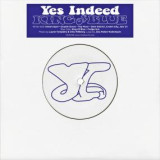
King Of Blue by Yes Indeed sees Laurie Tompkins and Otto Wilberg take their eclectic stance on cosmic jazz and electronics to further uncharted and dreamlike territory, encompassing a unique logic of what is harmoniously absurdist.
King of Blue by Yes Indeed sees members Laurie Tompkins and Otto Willberg further dive into their melismatic take on cosmic jazz and new electronics, by way of their highly eclectic and at times nonsensically sensical modus operandi. Their work is defined by an eloquent flurry of ideas, spheres, and signifiers, creating a musical universe of surprising longevity and depth. Treating musical convention with gentle disdain, Yes Indeed take on a variety of genres and moods and switch them around into a beautifully melismatic and dreamlike state of being. King Of Blue is a mini- album of fragmented beauty and warmth. It puts the illogical center stage and gives space to abruptly miniaturist musical ideas, allowing them to take on a meaning bigger than one would expect. It is cosmic music for modern times. A brazen descent into the execution of a fundamentally diversified musical stance.
'Yes Indeed' are Laurie Tompkins & Otto Willberg. Live, they play keys, bouncy bass and sing over tactile, emotive samples. Their music is epic and also somehow wrong, with space for delicacy, straight-up joy and soaring licks. Since 2022’s ‘Rotten Luck’ - their first proper album, on Bison - YI have played across the UK and Europe. Solo, Laurie co-ran the Slip label and has put out CDs on Entr’acte, 33-33 and Hyperdelia. Otto is a roaming bassist in groups like Historically Fucked and Abstract Concrete and his LP of “wildly singular, wickedly trippy and sensual set of fusion jams” (Boomkat) was recently out on Black Truffle.
White vinyl w/ pink splatter, limited to 500 copies. New Orleans death grind/hardcore group BRAT are the latest addition to the Prosthetic Records roster. Formed in 2021, BRAT deals out blastbeats, bass-laden breakdowns and old school death metal and New York hardcore inspired riffs. Through the melding of their influences the four-piece's sound stands out from the more sludge orientated sounds that the Crescent City is known for, catching the attention of the Los Angeles label in the process. Speaking on the singing announcement, BRAT comments: "We're thrilled to be part of a label that's put out so many quintessential metal albums of the last 25 years. It's an honor to have the opportunity to contribute to that list. Let's rock." "Upon completion of our record we felt Social Grace, the title track, really encompassed a broad snapshot stylistically of the album at large. The song is an environmental commentary on the effects of the wealthy on the state of our planet and further ties to the greater theme of our album that explores the various plights of mankind. In tandem with the single is our music video that draws inspiration from classic murder mysteries and depicts the ugly realities behind the pomp and circumstance of the aristocracy." BRAT's self described yassified look shirks more traditional metal imagery in favor of a pink-pilled Y2K aesthetic, with plenty of nods to their favorite femme pop icons. As the band sets their sights on making strides in the heavy metal and hardcore world, BRAT's end goal is to "put bimboviolence and barbiegrind on the map". Through a consistent live presence that includes touring alongside NOLA legends EYEHATEGOD, Ringworm, labelmates ACxDC, fellow grindsters in No/Mas and contemporaries in Maul and Morbid Visions, BRAT has garnered praise from the likes of Revolver, Metal Injection, Metal Sucks and many more as a new band to watch.
Whitney Houston’s self-titled debut album has few parallels. Viewed solely through the lens of sales numbers, Whitney Houston is a watershed statement on par with the most commercially successful and culturally dominant LPs ever released. Having sold more than 14 million copies in the U.S. and upwards of 25 million units worldwide, the 1985 LP became the equivalent of the television show or blockbuster film that everyone collectively experiences and discusses. Nearly four decades later, it’s lost none of its appeal or magnetism — and its artistic significance and historical import have only grown.
Sourced from the original master tapes, pressed at RTI on MoFi SuperVinyl, and strictly limited to 4,000 numbered copies, Mobile Fidelity's 180g SuperVinyl LP of Whitney Houston presents the breakthrough in audiophile sound for the first time. The signature traits Houston exhibits on every song — her three-octave range, radiant warmth, personal conviction, impossibly controlled register — come across with exceptional clarity, focus, and presence. Free of artificial ceilings and constricted dynamics, this reissue plays with an openness, airiness, and balance that put the singer’s once-in-a-lifetime instrument and immortal artistry into proper perspective.
It does the same for the songs’ cascading melodies and captivating arrangements. Individually produced by one of four renowned industry veterans — Kashif, Micheal Masser, Jermaine Jackson, and Narada Michael Walden — each composition feels grander, closer, more genuine. A vocal spectacular, Whitney Houston benefits from the high-end characteristics of SuperVinyl, which include a nearly inaudible noise floor, superb groove definition, and dead-quiet surfaces. This is how an album that changed the direction of popular music — opening previously inaccessible doors for Black artists; bringing smooth-singing vocalists back into the mainstream; kickstarting a movement that soon included several “divas” who would command the charts through the early 21st century — should look and sound.
Though Houston’s seemingly effortless performances suggest otherwise, creating the record Rolling Stone ranks as the 257th Greatest Album of All Time wasn’t easy. Nearly 18 months were required to identify songs suitable for a still-unknown singer who did not fit into the conventional frameworks of the mid ‘80s. Confident, powerful, and prodigiously talented, Houston would forge her own parameters with Whitney Houston. In the process, she obliterated the stubborn lines between R&B and pop, Black and white radio. She dared to reimagine who could be a superstar and then went out and defined the role. Recorded for nearly $400,000 and released on Valentine’s Day, the LP exceeded the wildest expectations of those most closely associated with it — save for Houston and her family.
Having made her first public appearance at the age of 11 singing at a Baptist church, Houston understood pressure and knew her way around, inside, and through a song. The invaluable guidance and support she received from her mother, Cissy, an accomplished gospel vocalist who backed Aretha Franklin and Elvis Presley, are on display throughout Whitney Houston. They arrive in the types of authoritativeness, discipline, and diction rare for even most seasoned veterans — and unheard-of for a 21-year-old newcomer. Houston brings a soulful elegance, understated glamour, and in-the-moment rapture to every note. Moving up, down, or staying in the middle of the vocal ladder; channelling softness or sweetness; showing restraint or increasing the volume, she is a marvel of emotionalism, a dynamo who can seamlessly transition from one mood to another within a verse.
Though the 10-track LP largely concerns itself with the ballad tradition, Houston covers the bases, getting into an R&B groove on the fleet “Thinking About You,” turning up the heat on the duet “Take Good Care of My Heart,” and investing the contagious dance-pop confection “How Will I Know” with all the anxiety, hope, energy, and enthusiasm its lyrics demand. Featuring her mom on background vocals and Houston’s pitch-perfect tone, uncanny precision, and skyscraper highs (no AutoTune here, friends), the synth-based anthem propelled Whitney Houston into the stratosphere, the vocalist into regular MTV rotation, and the term “crossover” into popular parlance. The double-platinum single reached No. 1 on the Hot 100, Hot R&B, and Adult Contemporary charts — a trifecta that foreshadowed accomplishments that would ultimately crown Houston as the most-awarded female artist of all time.
Whitney Houston became the first album by a Black female performer to top the Billboard charts. It remained there for 14 non-consecutive weeks en route to claiming the title of the best-selling LP of 1986. It stands as the first debut and first album by a solo female artist to spawn three No. Hits, as well as the first album by a Black female artist to top the year-end charts in Australia and Canada. These are just a handful of the accolades — along with four Grammy nominations — that surround a set that also contains the unforgettable ballad “Saving All My Love,” string-accompanied “Greatest Love of All,” and sensual “You Give Good Love.”
As TIME observed in an article written two years after the album took the world by storm: “This is infectious, can't-sit-down music, and her performance dares the listener not to smile right back.” We’re still smiling.
Donovan invited fans to submit their top 5 favourite songs of his to help curate this limited edition Record Store Day exclusive vinyl. With over 680 submissions, the top songs were chosen and became the tracklist. Each fan who submitted their song picks will have their name listed in the liner notes of the record. Description from Donovan Woods: People like vinyl records, you may have heard. So folks are always asking me about when certain songs will be available on vinyl. The problem is, some of these songs were singles. They were never on an album. I’m not gonna make vinyl singles. This ain’t 1952. I was hoping that vinyl’s popularity would wane and I could wait it out, but that doesn’t seem to be happening. So, we had an idea to let fans vote on which songs they’d like on a vinyl release. Not like a greatest hits, because I have no “hits”, but like a compilation. So, you voted (thank you) and these are all of the popular choices that would fit on an album. Do I agree with all of them? No, of course not. But it's not up to me, that's the beauty of it. It’s not a greatest hits, I can’t stress that enough. It’s just a compilation of songs that a certain set of people enjoy and they'd like to hear these songs with a few more vintagey crackley-pops. Canada RSD Exclusive Pressing - 300 Units - Recycled Mixed-Blend Colourway USA RSD Exclusive Pressing - 200 Units - Recycled Mixed-Blend Colourway Merch Store Exclusive Pressing - 200 Units - Pink Colourway (DW Online Sales Only)
Organic, electric, freeform. Pete Jolly's Seasons is comprised of melodies and textures composed live and without pretense—its grooves contain a complete and divine listening experience that surpasses all others of the era in which it was originally released, coming as close to transcendent musical meditation incarnate as one could possibly imagine. Seasons is an unsung masterpiece of ensemble groove and stellar musicianship, equally unsurpassed and inspired in its quiet excellence
While Seasons never had significant commercial success upon its release, it has since amassed a cult following, leading collectors to pay top dollar for copies of the rare record. Out of print since 1971, it has only been reissued once on CD.
In his liner notes accompanying this release, Dave Segal puts the album’s massive demand in perspective: “British label owner Jonny Trunk put up an original pressing of the LP for sale for an undisclosed but large sum on Instagram in January 2023, and it sold in five minutes. With Seasons back in circulation, maybe Pete Jolly will finally gain the broader audience that his phenomenal skills merit,” writes Segal. “If nothing else, it serves as a valuable lesson to artists: venturing outside of your comfort zone can bring the most interesting, enduring results.”
Remastered from the original analog master tapes by Kevin Gray at Coherent Mastering, this record not only foreshadows the roots of hip-hop but manages to embody the richness of a full album listening experience that few records can offer. Its timeless appeal is rare—and its dynamic range sets it apart as an album that straddles both the jazz and pop worlds in a way that almost no others can. Sit back, relax, and enjoy the changing and complex colors of Seasons for the first time ever since its initial release.
Organic, electric, freeform. Pete Jolly's Seasons is comprised of melodies and textures composed live and without pretense—its grooves contain a complete and divine listening experience that surpasses all others of the era in which it was originally released, coming as close to transcendent musical meditation incarnate as one could possibly imagine. Seasons is an unsung masterpiece of ensemble groove and stellar musicianship, equally unsurpassed and inspired in its quiet excellence
While Seasons never had significant commercial success upon its release, it has since amassed a cult following, leading collectors to pay top dollar for copies of the rare record. Out of print since 1971, it has only been reissued once on CD.
In his liner notes accompanying this release, Dave Segal puts the album’s massive demand in perspective: “British label owner Jonny Trunk put up an original pressing of the LP for sale for an undisclosed but large sum on Instagram in January 2023, and it sold in five minutes. With Seasons back in circulation, maybe Pete Jolly will finally gain the broader audience that his phenomenal skills merit,” writes Segal. “If nothing else, it serves as a valuable lesson to artists: venturing outside of your comfort zone can bring the most interesting, enduring results.”
Remastered from the original analog master tapes by Kevin Gray at Coherent Mastering, this record not only foreshadows the roots of hip-hop but manages to embody the richness of a full album listening experience that few records can offer. Its timeless appeal is rare—and its dynamic range sets it apart as an album that straddles both the jazz and pop worlds in a way that almost no others can. Sit back, relax, and enjoy the changing and complex colors of Seasons for the first time ever since its initial release.
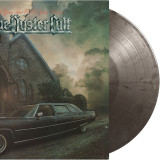
"After releasing three studio albums and lots of touring, Blue Öyster Cult released their first live album On Your Feet or on Your Knees in 197The album is a collection of 12 live recordings from performances that took place in the United States in 197It includes three songs from each of their first three albums, an original instrumental track, and two covers: “I Ain’t Got You” (Billy Boy Arnold, The Yardbirds) and “Born to Be Wild” (Steppenwolf). It was their first gold record in the US and became the band's highest-charting album, which put the band forever on the map as one of the essential rock live bands. On Your Feet or on Your Knees is available as a limited edition of 1500 individually numbered copies on silver & black marbled vinyl, housed in a gatefold sleeve and includes a 4-page booklet. "
On Your Feet Or On Your Knees by Blue Oyster Cult, released 29 March 2024, includes the following tracks: "Hot Rails to Hell", "Seven Screaming Dizbusters" and more.
This version of On Your Feet Or On Your Knees comes as a 2xLP in a(n) Gatefold Sleeve packaging. This release comes with (a) Booklet.
The vinyl is pressed as a marble, silver & black disc. Another vinyl is pressed as a marble, silver & black disc.
Mesmerizing and exuberant Argentinian La Yegros, probably the most magnetic artist on the South American continent, is back with a new album!
The undisputed Queen of "Nu Cumbia" has not rested on her laurels. Surrounded by the same accomplices who have supported her for the last ten years, but eager to renew herself, she has set about recording her fourth album, which stands out from her discography. Although her personal folklore is still rooted in South American folklore, La Yegros is now absorbing contemporary, global music, while tackling intimate, often melancholy and even painful subjects, which she overcomes with the same resilience that drives her in concert. Nothing stands in the way of this Argentinian whirlwind, all the more fascinating for the fact that personal considerations are now surfacing beneath the veneer of the party atmosphere she sets alight.
La Yegros returned to the stage in 2022 to celebrate the 10th anniversary of Viene de Mí, her single hit from the self-titled album, released in 2012 in Argentina and then worldwide in 2013, which catapulted her to international fame. We then discovered a singer who had grown up in the traditions of her country. Her parents come from Misiones, a province bordering Brazil and Paraguay, where balls are filled with the sounds of chamamé (a mix of polka and Guaraní music), Carnavalito (Andean folklore) and Colombian Cumbia. But she herself is a native of Buenos Aires, whose nights are enlivened by the bass of Dancehall and electronic music.
These influences have merged in two further successful albums, Magnetismo (2016) and Suelta (2019), followed by high voltage tours during which La Yegros has been able to display her generous nature, inexhaustible energy, exuberant personality and infectious enthusiasm.
To record her new album entitled 'HAZ', La Yegros has put her faith in the same team that has worked with her since Viene de Mí. On one hand, producer Gaby Kerpel (also known as King Coya), a pioneer of synthetic experimentation applied to traditional music, who has remained her faithful accomplice for over twenty years. On the other hand, composer Daniel Martín, who knows how to come up with melodies to dream about and hymns to sing along to. Inseparable and complementary, the trio continues to concoct this mesmerizing mixture where acoustic instruments meet samples and the rolling of machines. But the new productions don't rely on a tried and tested formula. Generally co-produced between France and Argentina, they break away from over-defined genres. La Yegros knits together new rhythms and incorporates sounds that are unheard of in her country, derived from the latest urban trends, as well as echoes of reggae and funk. As for the lyrics, signed alternately by the trio, they are embodied by La Yegros whose charismatic voice questions a period of her life tossed by waves of love and lovelessness, joy and sorrow, euphoria and anguish, indulgence and resentment.
The album is open to a wealth of musical styles. You'll hear funk guitar and Andean flutes, melancholy accordion and rolling drums, Tuareg blues enhanced by brass, house and electro Cumbia loops, and the bassoons of a chamber orchestra. The folklore 2.0 of La Yegros, nourished by its colorful inspiration, at times tender or exalted, has been imagined as a hymn to love and the contradictory feelings that come with it. As always, it has also been conceived with the stage in mind. Hatching in a storm of overturned emotions, the album is all the more explosive for the strength of the live show that accompanies it. In addition to the usual line-up of guitar, accordion and percussion, a musician handles synthesizers and machines to boost the electronic turboshaft. In any case, you can count on the singer to assert her increasingly clear-cut character with each new project. And, above all, she won't give up. L.a Yegros is back and her batteries are fully charged.
OPAQUE YELLOW VINYL[23,49 €]
For Fans Of... Thee Sacred Souls, Joey Quinones, Durand Jones & The Indications, Thee Midniters, The Altons, Trish Toledo, Sunny & The Sunliners.To say that The Sinseers play oldies would be a misnomer. Fronted by bandleader and son of East Los Angeles Joey Quiniones, the group has quietly chipped away at the sounds of R&B and soul for the last half-decade. Quinones and his crew have continuously created a distinctive vibe that explores all aspects of a timeless genre, bringing together their interpretation of music through an unmistakable modern lens. With their most recent effort, the aptly titled Sinseerly Yours (Colemine 2023), the band recorded most of the album live in the studio. With Quinones on vocals and keys, vocalist Adriana Flores, Christopher Manjarrez on bass, Francisco Floreson on guitar, Bryan Ponce on guitar and vocals, Luis Carpio on drums and vocals, saxophonists Eric Johnson and Steve Surman, and Jose Luis Jimenez on trombone, The Sinseers achieves their most fully realized sound to date. All of the album's stunning tracks were recorded in a converted studio space in Rialto, California, known as Second Hand Sounds. The converted studio space, which used to be a dentist's office, allowed the group to experiment with their sound like never before - this time, the group managed to take a series of big swings, only to emerge with a fuller, more pronounced version of themselves. Despite those new strides, the band remains wholly committed to its sonic aesthetic while injecting its brand of vibrant 21st-century cool. Of course, the group has never been the type to shy away from their influences as they expertly toggle between 60s pop vis-à-vie early Beatles records to obscure dancehall Jamaican tunes - all fully extrapolated and reinterpreted through modern Chicano soul sound that the group has built their everlasting repertoire on. Quinones and bandmates have continued to apply what they've learned from their previous releases and their relentless touring schedule throughout the country. It's clear here that the work is paying off, putting to practice their musical chops thoroughly with all members expertly honing their sound. The melting pot of ideas is showcased with incredibly lush orchestrations and arrangements, married with pitch-perfect harmonies, allowing the group to further solidify themselves in the pantheon of the Southern Californian songbook. Also Available From Thee Sinseers: What's His Name 7”, It Was Only A Dream
- A1: Do It In The Name Of Love
- A2: Darling You're All That I Need
- A3: Blackmail
- A4: In The Ghetto
- A5: Wanted: Lover
- B1: The Best Thing You Ever Had
- B2: Lovin' You, Lovin' Me
- B3: I'll Drop Everything And Come Running
- B4: You Don't Love Me No More
- B5: The Thanks I Get For Loving You
In 1972, Rick Hall moved distribution of his Fame label from Capitol to United Artists. This was to give his label more heft internationally as well as Stateside. The first single from this new agreement was Candi Staton’s ‘In The Ghetto’ which was released in May 1972. Not only did the single do well, but Staton received a personal note from Elvis Presley telling her how much he had enjoyed her version of the song.
Two more successful singles – ‘Lovin’, You, Lovin’ Me’ and ‘Do It In The Name Of Love’ – followed before her third Fame album – “Candi Staton” – became the first LP to be distributed under the new agreement with United Artists.
Containing all three singles and B-sides such as ‘You Don’t Love Me No More’ and ‘The Thanks I Get For Loving You’ “Candi Staton” is a ten track beauty, a fantastic album and a cornerstone of Southern Soul.
Ace have already reissued Staton’s first two Fame albums – “I’m Just A Prisoner” and “Stand By Your Man” – which received rave reviews and put Staton’s classic music on the turntables of an old and new generation. This is the third card in that three card trick to complete the series.
With liner notes by our own Ian Shirley and fantastic photos from the FAME archive, “Candi Staton” looks as good as it sounds.
Diggin In The Crates (D.I.T.C.) was born out of a group of artists who began making noise in the late ‘80s and into the next decade and beyond—namely Lord Finesse, Diamond D, and Fat Joe. After well-received albums, an official, wider collective was founded that also included O.C., Big L, Buckwild, and producer-rapper combo, Show & A.G. (originally known as Showbiz & A.G.).
The crew proceeded to drop a run of sublime records, including Show & A.G.’s Soul Clap EP (1992), their full-length debut Runaway Slave (1992), followed by Goodfellas in 1995. Show & A.G.’s next project, Full Scale, arrived in 1998 and featured appearances from O.C., KRS-One, Big Pun, the Ghetto Dwellas and verses from members of D.I.T.C. including Diamond D, Big L and Lord Finesse.
In 2002 a CD version titled Full Scale LP (using the same artwork) was released with 10 additional tracks which had originally been released on various 12" singles and projects in the late 1990s. The project had never been released on vinyl in its entirety – until now.
Production on Full Scale was handled by Showbiz and A.G. except for "Time To Get This Money" which was produced by long-time collaborator Ahmed, and "Hold Mines" and "Hidden Crates" which were produced by DJ Greyboy.
The assortment of guest features doesn’t detract from A.G., a masterful emcee with a no-nonsense style that is simple but impactful. Full Scale follows the tried and true blueprint from Show & AG’s earlier classics cementing its place in hip hop history.
When Sean Cimino and Isom Innis were getting ready to work on what would become Acid Star, the full-length debut of their syrupy electronic rock group Peel, they started by tapping into the music that they liked as kids. That is, the music they gravitated toward before they had "any taste or judgment," as Innis puts it. The results are an album that swirls dance-music paint onto a rock canvas. Inspired in part by genre-bending Creation Records bands like Primal Scream and Madchester groups like Happy Mondays, Acid Star gives a modern spin on a classic formula.
"This new song "Citizen X" does vibrate with the weird aura of a live show; there's a sense of disorientation and detachment, and Cimino's vocals--which are reminiscent of Paul Banks' in Turn on the Bright Lights--are like a guiding light." FLOOD
Serving up eleven tracks of rhythmic garage-psych goodness, ‘Boots N Cats’ is the third full-length from Melbourne outfit Beans and the first of two albums set for release in 2024. The long-awaited follow-up to 2018’s ‘Babble’ and 2020’s ‘All Together Now’, it’s a record that finds Beans frontman (and The Murlocs drummer) Matt Blach putting percussion at centre-stage. “I’ve always wanted to make a drum-based album, dedicated around the beat first and then everything else follows”, Blach says, explaining his desire to explore “different production approaches, like hip-hop and crunched drums, and show an admiration and appreciation for the likes of The Meters, Wu-Tang and James Brown” as much as the acid-soaked 60s/70s rock you’d expect. What emerges from the beat-first approach on ‘Boots N Cats’ charts mutant garage-rock boogies ('Groove', 'Silhouette') and festival tent psychedelia ('Haunted', 'Dreaming Daisy'), by way of blissed-out funk instrumentals ('One To Four', 'Siamese Blundstone'). The line is constantly skirted between a loose, carefree vibe and interesting, meticulous musicianship – never falling into the trap of taking itself too seriously. It’s a sunny kaleidoscope of chugging guitars, driving basslines, soaring organs and warm, echo-soaked vocals – driven always by the tightly-wound rhythms and grooves that Blach has been in pursuit of since he was a kid: “The title of the album comes from me learning drums from my dad. He had a background of German heritage and during lessons would jokingly say ‘nein, boot’n’cats’n’ like a simple 1,2,3,4
Portland based act Dancing Plague has been a steady presence in the dark/cold electronic music scene for quite a few years now.
Since 2016 Conor Knowles’ solo project has been putting out one constant flow of independent releases on multiple formats such as vinyl LPs, EPs, tapes and CDs, creating one sonic palette rich with Ebm, goth, industrial and synth influences.
On their 5th studio album, Dancing Plague continues to flesh out and perfect their unique brand of crushing darkwave.
Elogium explores themes of loss, regret, rebirth and growth coupled with throbbing basslines, rave synths, and pounding drums. Knowles balances aggressive waves of electronics with enough pop sensibilities and catchy hooks to be inviting to those new to the genre.
His skills can be clearly appreciated on tracks like the first single Fading Forms which explores the somber feeling of the years passing you by. Knowles’ emotive baritone crooning paints a melancholic picture of the slow fading of time as you feel like you’re fading with it. The words fall like snow onto cold fields of pulsing 80s synths and pounding drum machine rhythms that bring forth nostalgic familiarity but feel fresh at the same time.
Fans of classic icons such as Depeche Mode, Ministry, Nine Inch Nails as well as contemporary torchbearers Cold Cave and Kontravoid do not sleep on this.
Plenty of disturbing beauty to be found in the depths of the underground
- 1: Fairy Tale Lullaby (J. Martyn)
- 2: Sandy Grey (R. Fredericks)
- 3: London Conversation (J. Martyn, J. Sundell)
- 4: Ballad Of An Elder Woman (J. Martyn)
- 5: Cocain (Traditional Arranged By J. Martyn)
- 6: Run Honey Run (J. Martyn)
- 7: Back To Stay (J. Martyn)
- 8: Rolling Home (J. Martyn)
- 9: Who’s Grown Up Now (J. Martyn)
- 10: Golden Girl (J. Martyn)
- 11: This Time (J. Martyn)
- 12: Don’t Think Twice (B. Dylan)
John’s debut album was recorded at Tony Pyke’s home studio in Dryburgh Road, Putney in glorious mono and then mastered at Pye Studios, Marble Arch, London for the princely sum of £158. Recording and mastering was completed by 9 August and London Conversation was released when John was just nineteen in October 1967. Theo Johnson took the role of producer under the supervision of Chris Blackwell and the cover photograph of John perched amongst chimney pots was taken on the roof of Blackwell’s apartment. Talking to Music Week magazine in 2007 John recalled that he recorded the whole album in one afternoon in a two-track studio on Putney High Street.
The album is in the folk tradition and contains some excellent lyrics and jazzy instrumentation including the sitar and flute in Rolling Home. As a result it won praise and the instrumentation distinguished John from his contemporaries in the folk scene. Back To Stay is a beautiful love song with a sad and dreamy melody, a sign of things to come.
John took up guitar whilst at school and although he was only nineteen he was already acknowledged locally as an accomplished guitarist. He was influenced by two people in particular, amongst others, that he knew. “Les Brown, who is completely unknown and has never recorded…he plays a kind of American Doc Watson guitar very very well. Lovely voice. Also a friend of mine called Paul Wheeler who is featured on the second album.”
Bite Down, the Merge Records debut of Rosali, finds acclaimed songwriter and guitarist Rosali Middleman in the midst of transition. Written after moving to North Carolina from her longtime home of Philadelphia, Bite Down is a searching, hungry record by an artist who is resolved to bite down on life, in all its horror and joy. She is joined here by Mowed Sound_David Nance (bass, guitar), James Schroeder (guitar, synth), Kevin Donahue (drums, percussion)_and in studio by Destroyer collaborator Ted Bois (keys). Bite Down is Rosali's second album working with Mowed Sound, and there is urgency and ambition in their collaboration_a band pushing each other not just to expand on what they've already done together, but to break through into altogether new territory. Among those joining Rosali and her band there is Dan Bejar of Destroyer, who waxes poetically on where she's been, where she's going, and how thrilling Bite Down is to experience: It's hard to talk about Rosali's music. Songs that reach outward like this, but then constantly disarm with their intimacy. What do you call such inner searching that is hellbent on rollicking? Songs that long for a sense of peace and songs that want romance, all on equal footing in the same plot of earth? Performed wild, but always centered around the incredible lyrical calm that is Rosali's voice. Bite Down makes me think about singers and bands that throw themselves hard into the storm, the way the Rosali quartet does. (Jim captures the tone of this perfectly, again!) The calm of her voice over top of the band's raging_it is the emblem of songs that live to put themselves in harm's way. But it's not harm. It's just that you have to play hard to get at these goods. The calm of Rosali's voice, the straight talk of her inner search vs. the wildness of the band, the sonic storm she rides in on. That's their sound. The Mowed Sound. It's hard to talk about these last couple Rosali albums without talking about them. They play free and wild and relentlessly melodious. They rip and create space and fill it up with what seems like reckless abandon, but listen carefully or listen for a while and you'll find them paying real close attention to each other and exactly what the song demands. Maybe Fairport did this, maybe VU. It's a strange telepathic brew. Breezier songs like "On Tonight" and "Rewind" sound like they've fought their way to get to that sense of ease. Maybe that's the Mowed Sound "sound"_hard-won ease. Then add to that Ted Bois' patented Rhodes sleaze (see sinuous title track "Bite Down") steering the record into late-night corners; the incredible "Hills on Fire" (maybe the centerpiece of the album), the guitar-ripping and the singing taking turns in reaching new levels of intimacy. It feels listened-in on, exposed and invented on the spot. It is also simply a staggeringly beautiful song. There are a few of those on the album. In contrast, "My Kind" is a raucous, hand-delivered classic; the band throws tables over. For the most part, this is a moodier record than No Medium. It has the same sound of "I've traveled through fire to deliver you these songs," but it is also quieter, more nocturnal. The quiet dread of staring down an open road, and the excitement of that. By the final track, "May It Be on Offer," it is the prayer uttered as you hand yourself over to the world.
400 copies purple wax! Fold Out Poster, remastered & remixed by Eroc Welcome to the definitive Vortex. The LP you're holding has been on a journey, and no, not just shipping. Mouth's second after 2009's Rhizome, Vortex was mostly recorded in 2011 and 2012 over five sessions in a small space where the band rehearsed. Material was pieced together intermittently over a period of 11 months with Chris Koller handling guitar, keys and bass and Nick Mavridis on drums. That's where it started. Two construction projects: the studio and a recording that would help define the course of the band in classic and melodic progressive rock, happening almost simultaneously in a creative meta-narrative that could easily stand as analog for the depth of pieces like "Into the Light" or the sprawling "Vortex" itself, which opens the record (new and old editions) in an encompassing display of impulse and fluidity Through experiments in atmosphere like "March of the Cyclopes" and toward the finish of "Epilogue," Mouth married sounds that in other contexts would come up disparate, like finding a hidden magnetism between two north poles. Most of the Vortex songs were created on the spot in the studio.There would be no way to know it at the time, but this process would result in a collection of songs with a broad range, within as well as between the component tracks. "Parade" taps Sly Stone on the shoulder and asks if he wants to party (he does), while the penultimate "Soon After_" resonates with its smoky, mellow-jazz vibe. "Vortex" itself happens over six movements and was put together across different sessions, while "Epilogue" happened in a day. Dissatisfaction with the original mix - and when an album has as much put into its arrangements as Vortex, that balance matters - would lead Mouth to offer Out of the Vortex in 2020 as a collection of alternate versions of pieces like "Mountain" and "Parade," as well as the unreleased "Ready" and "Homagotago's Paddle Boat Trip," the latter an apparent successor to a cut from Floating. But sometimes a thing nestles itself into the back of your head and just won't leave, and Mouth's pursuit of a finished Vortex would lead them into the studio again. Koller handled the remix himself in Oct. 2023, and in addition to helming the new master, krautrock legend Eroc (who drummed in Grobschnitt) brought a gong to mark the beginning of "March of the Cyclopes." Like a lot of the finer touches on this Vortex, be it a hashed-out stretch in the title-track built on a drum/bass jam or just pulling the vocals and Hammond down a bit in "Epilogue," the result is a stylistic flourishing that was there all along throughout the journey and now can finally shine as the band intended. - JJ Koczan / Dec. 2023
Stop. Breathe. Reload. And dive into "El Paso, Elsewhere: The Album". Black Screen Records, Lost In Cult Records and Strange Scaffold are teaming up to bring the original songs of RJ Lake and LAKE SAVAGE to life on glorious vinyl. "El Paso, Elsewhere: The Album" takes aim at the key songs that punctuate the game's dark and introspective journey through haunted hallways - with heavy doses of hip-hop, electronica and Trace-Wave coalescing into a pellucid vision of influences and a deeply entrenched sense of identity, akin to the works of seminal hip-hop artists such as Kendrick Lamar and Open Mike Eagle. All tied together within the beautiful gold foil cover artwork by Bri Neumann. RJ Lake shared some of their thoughts going into the creation of this album: "Months before the first thing I ever started working on with Nelson Dog Airport Game (that's not the actual title, but it might as well be) even came out, he asked me if I knew anyone who could make a horror game. I knew a guy. A few months in, we did a touch-base about the music and mutually agreed that none of it at that point was totally working. It was good (look, I'm not going to put myself down here; even back in 2020, it kicked ass) but it wasn't RIGHT. He gave me a bunch of reference materials and kept pointing to them and saying: 'Okay, but these? These are RIGHT. These have the juice we want.' The thing every single song he showed me had in common, was that every one of them had vocals. After some back and forth, we both agreed: 'El Paso, Elsewhere' had to be a rap record as much as it had to be a game. So, three and a half years later, here we are. This is probably the most lavishly mixed thing I've ever made, full of weird, intricate beats, layered vocals from both myself and Nelson, lyrics that go everywhere from bleak to so-party-that-you'll-die to totally ridiculous, loads and loads of genre switch-ups, and absolutely zero subtlety. For 'El Paso, Elsewhere', I made a full score, but that's not what this is. This vinyl is a fucking album and it's sequenced like one. Play it loud!" Alongside the LP, explore what happens after the events of "El Paso, Elsewhere" within the diaries of James Savage - an exclusive in-world archive of the thoughts and feelings directly from the heart and soul of our protagonist within the liner notes. As well as a 5-page excerpt from the "El Paso, Elsewhere" original script and never before seen concept art by Demente Animation Studio.
“My heart is loud,” Julia Holter sings on her sixth album Something in the Room She Moves, following an inner pulse. The Los Angeles songwriter’s past work has often explored memory and dreamlike future, but her latest album resides more in presence: “There’s a corporeal focus, inspired by the complexity and transformability of our bodies,” Holter says. Her production choices and arrangements form a continuum of fretless electric bass pitches in counterpoint with gliding vocal melodies, while glissing Yamaha CS-60 lines entwine warm winds and reeds. “I was trying to create a world that’s fluid-sounding, waterlike, evoking the body’s internal sound world,” Holter says of her flowing harmonic universe.
“What is delicious and what is omniscient?” she sings on “Spinning”, the album’s incantatory centerpiece. “What is the circular magic I’m visiting?” Or as Holter put it: “It’s about being in the passionate state of making something: being in that moment, and what is that moment?” She found it anew on Something in the Room She Moves, singing in somatic frequencies.
“My heart is loud,” Julia Holter sings on her sixth album Something in the Room She Moves, following an inner pulse. The Los Angeles songwriter’s past work has often explored memory and dreamlike future, but her latest album resides more in presence: “There’s a corporeal focus, inspired by the complexity and transformability of our bodies,” Holter says. Her production choices and arrangements form a continuum of fretless electric bass pitches in counterpoint with gliding vocal melodies, while glissing Yamaha CS-60 lines entwine warm winds and reeds. “I was trying to create a world that’s fluid-sounding, waterlike, evoking the body’s internal sound world,” Holter says of her flowing harmonic universe.
“What is delicious and what is omniscient?” she sings on “Spinning”, the album’s incantatory centerpiece. “What is the circular magic I’m visiting?” Or as Holter put it: “It’s about being in the passionate state of making something: being in that moment, and what is that moment?” She found it anew on Something in the Room She Moves, singing in somatic frequencies.
Williams was one of the greatest jazz pianists of all time, but she was also a victim of geography. Her technical brilliance, complete control of the piano, creative imagination, wit, and constant desire to stretch herself put her at the top of her field although relatively few (beyond her fellow pianists) seemed to realize it during her lifetime. Born and raised in Baltimore, she recorded her first three albums in her hometown. But other than a few lesser-known sets in Europe, a handful of albums for Jazz Focus in Canada and her Red & Blue label in Detroit, and just two projects in New York for the Max Jazz label, all of her recordings were made on the West Coast where she lived starting in 1976. Jessica was reluctant to travel much, particularly in her later years, and her visits to New York were rare so she was largely overlooked by East Coast critics. Listeners who are only familiar with Jessica Williams’ later work where she is generally heard with a trio or as a soloist stretching out mostly on standards (although focusing more on originals on her own small label’s releases) will be surprised by Orgonomic Music. The pianist heads a septet, the largest group on any of her many recordings. While Jessica plays some stunning lines on the piano, the emphasis is as much on her writing as on her playing, and each of the other musicians get opportunities to have their say. Orgonomic Music, which was released by the small Clean Cuts label in 1981, has been out of print for decades. The original eight selections (six of the pianist’s originals, one piece by Stone, and John Coltrane’s “Dear Lord”) are joined by two previously unreleased performances.
Reverberations of Non-Stop Traffic on Redding Road is a duet in ambience by Pan American (Mark K. Nelson) and Kramer. This experimental record is 11 brief sojourns into the dream state, produced by Kramer (of Shimmy-Disc) and co-written with Mark K. Nelson (of Labradford, Anjou).This record is a brotherly and collaborative follow-up to Kramer's 2022 ambient excursions, "Music For Films Edited By Moths".On the making of this collaborative project, Mark K. Nelson said "It was an honor to work with Kramer. That we came out of it with a great friendship and a record that's unique to each of our histories and music that we're proud to share is a privilege and a joy."As Kramer has described, the result of this record is a work that begs listeners, both animal and human, to allow these beautiful landscapes to sing and speak and weep for themselves.Simply put by Kramer, "Please. Forget about words. Just LISTEN."
“Mother”, Logic1000’s debut album. “I felt so much love and inspiration entering into motherhood that I just needed to create something really powerful,” explains Samantha Poulter, the Berlin-based DJ and producer , who grewed up in the Sydney suburbs of Yarrawarrah and Botany Bay and better known to fans as Logic1000. “And with a lot less free time, you really make sure you make the most of any moment you get.” That vitality and renewed sense of purpose is captured on Mother.Preceded by the single ‘Grown On Me’, the 12-track set is a laser-focused “love letter to house music”, written in collaboration with her husband and long-time creative partner Thom McAlister (Cop Envy, Big Ever). Finding Poulter further fine-tuning her inventive, multi-genre approach, it’s a crucial contribution not just to the world of dance but to the canon of art inspired by parenthood. As Poulter herself puts it, a little awed, “I never thought I would be capable of something so powerful.”
Introducing "The Sevens” - A Sonic Revelation from A Place To Bury Strangers Prepare to embark on a transcendent auditory journey with "The Sevens” a series of four 7-inch vinyl records that unveil a treasure trove of previously unreleased tracks from A Place To Bury Strangers' critically acclaimed 6th album, "See Through You." Renowned for their visceral sonic assault and immersive live performances, A Place To Bury Strangers has cemented the end-all-be-all space for over-the-top post-punk / shoegaze destruction. With this special vinyl collection, the band invites listeners to delve deeper into their sonic universe, exploring uncharted territories and hidden gems. 'Chasing Colors/I Can Never Be As Great As You Are' is the second release coming March 22. "When looking back at the recordings that were done around the time of See Through You there were a bunch of great tracks that just captured life back then and really had something incredible going on. Even though they are a bit raw and a bit personal, I thought it would be a mistake if they didn't come out. I thought it would be best to go back to my roots and put out a series of 7"s the way A Place To Bury Strangers started. That strange weird format where the tracks each speak for themselves, no album context to muddy the water. These tracks are such a contrast to the way I am feeling now and the current songs we've been working on so slip back into this moment in time.” says APTBS’ Oliver Ackermann. The vinyl is pressed as a white disc.
Carpet is a band from Germany with huge influences by prog rock, psychedelic music, stoner rock and jazz. It's like putting Motorpsycho, Jaga Jazzist, the Notwist and the Beatles in a studio to create new material together. After their debut "Elysian Pleasures" in 2013, which was highly appreciated by listeners and the press (e.g. album of the month, eclipsed magazine), they widened their musical spectrum on the following two albums "Secret Box" (2017) and "About Rooms and Elephants" (2018) - all released on the Colour Haze Label Elektrohasch. The path to the new album began with a songwriting weekend in a tiny, remote cottage in the Italian Alps and continued in the band's own studio and in the studio of their mixing engineer Maximilian Wörle in their hometown Augsburg. With "Collision", Carpet recorded a strong and powerful album: "Some songs and parts were created in one go, almost from the gut, and are bursting with energy. Others were worked out down to the last detail and developed into sophisticated song structures." It is certainly this perfectly dosed, precise mixture of a heavy rock attitude with sophisticated songwriting and finely balanced arrangements that in a way marks the band's DNA.
Plizzken are back in a big way with their eagerly anticipated second LP, Do You Really Wanna Know? These German punks' debut LP was the first full length where lead singer Sebi sang entirely in English. Since that album's release to great acclaim from the international street punk commu- nity, Sebi suffered the setback of a debilitating workplace accident, but triumphantly rose above all expecta- tions for recovery, making a hard-hit- ting new record with his long-running band Stomper 98 to boot! Returning their focus to Plizzken, Sebi and the crew are locked in and razor tight, crafting 13 brand new tracks of anthemic working class street punk that will thrill their fans while taking them by surprise. What will strike listeners immediately is a renewed focus on melody and hooks. In short, these songs are CATCHY! By the time the handclaps come in on the fourth song, "Memory Lane," you may just find yourself dancing around the room to these tunes. Likewise for the post-punk/new wave influenced groove that drives tracks like "I Don't Wanna. "Without sacrificing the realism and grit with which they face the world and sound the alarms for the working class to rise up, Plizzken sound renewed, positive, and keen to encourage everyone ready "TO FIGHT THE GOOD FIGHT," as the gang vocals on "Mad World" put it. Although they are all punk rock veterans with decades playing music, Do You Really Wanna Know? has the energy of a hungry young band who are not about to waste a new lease on life. Combining street level punk rock 'n roll with a genuine pop sensibility and a rabble-rousing spirit, executed with the chops of seasoned players, Do You Really Wanna Know? is truly a record that will have old fans dancing and singing along with fists in the air, hand in hand with what is certain to be an army of new ones.
- My Life In Subtitles
- Can We Just Get High?
- Open Container Blues
- Of Cliffdiver)
- Crocodile Tears
- Done Paying Taxes
- Kid Icarus
- Me Vs. The Windmill
- No News Is Good News
- I Hate Music
- Car
- Thom Yorke New City
- Every Time I Think Of You I Smile
Carpool have long since achieved and outgrown their initial goal of playing that city’s 200 capacity Bug Jar venue, their hometown is still embedded in their DNA. This record is a wonderful homage to where they’re from – and also serves as a warning to the rest of the world what Rochester has already known for years. Recorded with Jay Zubricky (Every Time I Die, Pentimento and Marigold, among others)My Life In Subtitles is an album with a cohesive thematic and musical narrative. “The way I like to listen to music is to put on an album and listen to it start to finish. I like albums that take me on a journey and that show me what those songwriters were feeling while making you feel the same way,” said Colasanto.
Indies Maroon Vinyl[23,74 €]
New solo album from Seth Avett of the Avett Brothers (his first in 5 years), featuring songs written by lauded folk singer Greg Brown, whose songs have also been performed and recorded by Joan Baez, Willie Nelson, Lucinda Williams, Carlos Santana, Ani DiFranco, Gillian Welch, Mary Chapin Carpenter, and more. For those who may need reminding, Greg Brown is the ultimate songwriter's songwriter. Over a forty-plus-year career, he's occupied the same rarefied air as Loudon Wainwright III and John Prine - a keen-eyed poet and diarist of the human condition. And he's done it mostly on his own. “This is a man who put forty records out because he had to,” Avett says. “He made his own record label. He played the coffee shops, the bars, the little theaters. He built it. He's a world-class artist who did it all under the radar, which is just mind-blowing to me.” As Avett's new solo record makes clear, this collection is an expression of admiration and gratitude for one of his heroes. But it's also a reflection of his own artistry and ability as an interpreter. Though Brown's songs have been a part of his listening diet for decades, Avett gained a more profound appreciation once he put his own voice behind them. And though on the surface it's a covers record, it dovetails seamlessly with the most recent Avett Brothers album The Third Gleam and Seth's solo outing IV, which find him in equally stripped-down settings exploring the light and shadows of his own personal stories.
Further is the brand new label from DJ Bone, who has started it in place of Subject Detroit which after 25 years he recently decided to put to sleep. This second EP lands on the same day as the first but is a new four-track solo outing from the now Amsterdam-based techno innovator himself. 'My Replicant Self' has synths slashing across the face of a sleek techno rhythm with sombre chords draped over the top. 'The Divine Call' ups the ante with spoken word menace and 'My Tribe' then layers up percussion and surging synth warmth. 'Remembering The Future' is a brilliantly quick and urgent track with slapping hits and bouncing drum funk.
Big Crown Records is proud to present the debut full length offering from Les Imprimés, Rêverie. The stirring and ethereal sounds of Les Imprimés have been making fans of anyone who hears them since their first 7" single hit the speakers. Morten Martens is the man behind the band. Born, raised, and working in Kristiansand, Norway, he keeps a low prole while making his heart felt, highly infectious, and unique music. This album is a long time coming for Martens and it is sure to make him a name to be reckoned with. The first thing you notice listening to Les Imprimés is the high level of musician-ship. Martens plays nearly every instrument on the recordings and handles the production and arranging. He has been making records for decades, winning a Spellemann Award (aka, the Norwegian Grammy) in 2006 for producing a HipHop album as well as getting nominations across three other genres. While awards and accolades speak to the level of his talent, this new album really shows who he is an artist on his own terms. Moving away from being a hired gun on the touring scene naturally led him to start doing more studio work. Slowly collecting gear and getting more experi-ence behind the boards he built his own studio on the island of Odderoya and was making a living playing with and recording other people's music. As the story goes, after those sessions would end he would work on his own project into the wee hours of the night. From these late night sessions, Les Imprimés was born and Rêverie began to take shape. However, "it wasn't until COVID, when things locked down, that I was really able to nd the time to focus on Les Imprimés" Morten says about creating and leading his own solo project. "It was a scary time. But I knew I had to do something with it." He took the sum of his inuences, combined them with his own vibe and got busy writing the music, playing the instruments, and singing the songs. "It's soul music, but I don't exactly have the soul voice," Morten explains humbly. "But I do it my own way, in a way that's mine. "It is his sound, his fingerprint, his sensibility, that makes his music hard to put in a box. The album showcases both Martens' range and his ability to make a cohesive album. The lead single "Falling Away" starts with a raw drum break and turns into a lushly arranged tune that paints the picture of love when it slips away. On "Still Here" he professes his resilience through life's twists and turns over a thundering track that puts a new spin on the B side ballad genre. Songs like "You" and "Our Love" mix tones from 60s and 70s Soul with arrangement nods to Doo Wop records while Martens' lyrics and delivery leave you singing the melodies long after they finish. "Love & Flowers" finds Martens in a moment of clarity with a song that ts the niche sub genre of happy break up tunes, the four on the floor track will move the dancefloor or while the message will resonate with anyone who put too much effort into the wrong situation in their lives. However, it is songs like "Muse" and "Chess" that really encapsulate the uniqueness of Les Imprimés as they push the boundaries of genre, one a profession of love for music and the other a cover of an electronic record respectively. Martens' lyrics, emotion, and delivery truly make the whole thing come together and stand out from any of his peers. There's an infectiousness and a pop sensibility in the writing that is done with the utmost class and taste giving Les Imprimés the rare quality of immediate attraction that only deepens the more you listen.
What Do We Do Now is the fifth solo studio LP recorded by J Mascis since 1996. This is obviously not a very aggressive release schedule, but when you figure in the live albums, guest spots, and records done with his various other bands (Dinosaur Jr., The Fog, Heavy Blanket, Witch, Sweet Apple, and so on), well, to paraphrase Lou Reed, "J's week beats your year." What Do We Do Now began to come together during the waning days of the Pandemic. Utilizing his own Bisquiteen Studio, J started working on writing a series of tunes on acoustic with a different dynamic than the stuff he creates for Dino. "When I'm writing for the band," he says, "I'm always trying to think of doing things Lou and Murph would fit into. For myself, I'm thinking more about what I can do with just an acoustic guitar, even for the leads. Of course, this time, I added full drums and electric leads, although the rhythm parts are still all acoustic. Usually, I try to do the solo stuff more simply so I can play it by myself, but I really wanted to add the drums. Once that started, everything else just fell into place. So it ended up sounding a lot more like a band record. I dunno why I did that exactly, but it's just what happened." Two guest musicians are playing this time out; Western Mass local Ken Mauri (of the B52s) plays piano on several tracks. Since J himself has some experience with keys, when asked why he needed a hired gun, he says, "Ken is great, and he plays all the keys. I tried playing some keyboards on the first Fog album, but I'm really only comfortable playing the white notes, so it's kind of limiting. laughs Nowadays, I could just turn the pitch on a mini Mellotron to play different sounds, but black keys just seem hard. For whatever reason, I just like banging on the white ones. Seems like it's harder to figure out how to stretch your fingers around the other ones." Mauri has no such qualms and plays all the keys very damn well. He sounds especially great on "I Can't Find You," where he is Jack Nitzsche to J's Neil Young, creating one of the album's loveliest tunes. The other guest musician, Matthew "Doc" Dunn, is also prominent on this track. Dunn's steel guitar manages to both widen and soften the musical edges of the music, giving it a full classicist profile. Dunn is an Ontario-based polymath who J met through Matt Valentine. After J played on Doc's great 2022 Sub Pop single, "Your Feel," he figured it was time for payback. Both Dunn and Mauri add beautifully to the songs here, helping to transform them from acoustic sketches into full-blown post-core power ballads. What Do We Do Now is the finest set of solo tunes J has yet penned, and the way they're presented is just about perfect. Asked if he would be touring to support the album, J says he'll be doing some weekend dates, but he probably won't be putting a band together. And I'm sure these songs will sound great solo and acoustic, but the arrangements on this album are truly great and put a cool, different spin on Mascis' instantly Recognizable approach to making music. So, what do we do now? Not sure. But apparently, what J does is to make one of his most killer records ever. Hats off to him. - Byron Coley
BVDUB's Fumika Fades is a glorious new double pack that is again stuffed with inspired sonic detail and moving ambient soundscapes. The subtle complexity of his sound is laid bare again here with just eight long and involving pieces that ebb and flow, rise and fall, pull you in and push you out. It follows on from a busy 2022 in which Bay Area dub techno titan Brock van Wey put out several great double packs. This one comes with beautiful artwork, too, and is another great addition to the shelves from this man's ever-more spotless catalogue.
Aural architect Skygaze follows his 2022 ‘Astral Trip EP’ for Flumo Recordings, offering an advanced fusion of house, broken boogie, and future jazz, with five brand new reinterpretations from the extended Flumo family.
Skygaze’s diverse sound, breaking down barriers between house and techno, broken beat, jazz, ambient, hip hop, jungle, and even esoteric IDM, has been showcased across a growing catalogue of releases across Guayaba records, Riverette, Flumo and Thirty Three Circular, and remixes for Ed is Dead and Contours & Yadava; earning the producer support from the likes of Mr. Scruff, Simbad, k15, Bandcamp’s Andrew Jervis, and Gilles Peterson.
Feted singer, musician and producer Alysha Joy, rising producer Divorce From New York, ones-to-watch, Footnote and Karmasound, and Skygaze himself under his Jailed Jamie guise, joined by Lorenzo Soria, put a new spin on ‘Astral Trip’, whilst staying true to the originals’ spirit.
The multi-talented Allysha Joy, of 30/70 Collective & LCSM fame, remixes ‘’Night Heat’’, enhancing the groove with broken beats and her undeniable first-rate vocals.
Jailed Jamie & Lorenzo Soria, reshape ‘’Gimme Five’’ with rough synths and jacking bassline driven “Think” beats.
Divorce From New York boosts the tempo and infuses ‘’Wagwan’’ with Latin rhythms, perfectly balanced by high-energy synth lines.
Italian producers, Footnote and SofaTalk, delve deeper into ‘’Minor Mood’’, adding softer, retro-infused sound structures in a broken boogie mould.
Barcelona’s Karmasound explores the ruminating nature of ‘’City Cathedratics’’ and its counterbalance between broken beat and house.
The diverse but complementary set of remixes is sure to move bodies on sophisticated dance-floors this year and shed further light not only Skygaze’s production but also his talent for melody and song-writing. A feather in his and Flumo’s bow.
DJ Support:
Ashley Beedle (Back To The World Records)
Bolam (Lobster Theremin)
Crazy P (Hot Toddy / 2020 Vision)
Dan Curtin (Mobilee)
Fouk (Heist / Toy Tonics)
Joshua James (XOYO, Glorias, Rinse)
Laurent Garnier (F Communications)
Severino / Horse Meat Disco (Strut / !K7 Records)
Speaking Minds (Circoloco, Italy)
Mr Lee Perry who in no uncertain terms defines the words musical genius, recorded some of the most inspiring, soulful, funny and weird / wild reggae music ever put down on tape. Working through all the manifestations of reggae from Ska to Roots and Dub, where his ground breaking 1973 ‘Blackboard Jungle’ LP, set the standards, he was an innovator. If this was not enough his recordings of THE WAILERS, many believe to be their finest work. Born Rainford Hugh Perry, 28 March 1936, Hanover, Jamaica. He began his career at the grand age of 16, working for Clement ‘Coxone’ Dodd’s sound system, rising quickly to the position of record scout and organising recording sessions during his 3 year period 1963-1966. Restlessness and unsatisfied with credit he felt due to him he moved on to work with Producers J.J. Johnson and Clancy Eccles, the later of which would help him set up his ‘Upsetter’ label in 1968,which would see his first of many recordings telling the injustices done to him by previous employees. ‘The Upsetter’ track itself pointed at Mr Dodd but reflected back to Perry when he inherited it as a nick name along side many others during the coarse of his career, including ‘Scratch’, again taken from one of his recordings ‘Chicken Scratch’ recorded in 1965/1966. Perry’s work in 1968 with producer Joe Gibbs was fruitful and resulted in many successfulreleases, but again lack of credit and itchy feet, it was time to move on. But not without leaving his trademark recording summing up his feelings at the time ‘People Funny Boy’ this time aimed at Mr Gibbs. Still not having a studio of his own, Perry recorded at the various Kingston establishments of the time, Randy’s Studio 17 on North Parade, Dynamics on Bell Road and Harry J’s on Roosevelt Avenue where the bulk of the aforementioned recordings with The Wailers were carried out. During this time and the years that followed Perry has built up a vast catalogue of backing tracks / instrumentals, he had cut over a 100 releases on his ‘Upsetter’ label alone. A library of music that he has an uncanny knack of reutilising to work into something new when put against a new song / singer. This collection of rare and unreleased dubs stems from his 1971-1974 period. We can here on tracks like ‘Perry’s Jump Up’ Ska-ish up tempo chopping guitar cuts leading through to organ laden tracks like ‘Roots Rock Dub’. The sound moving to a slowed down rhythm on ‘Perry in Dub’ which would predominate his sound, when in mid 1974 he’d open his own studio at his home in the Washington Gardens district of Kingston. We hope this selection of lost treasures will add to the jigsaw that makes Mr Perry’s output now spanning over 5 decades so remarkable.
RESPECT.... JAH FLOYD.
Dire Straits never made a big to-do about its final run. In classic understated British fashion, the band simply let its music speak for itself. And how. Originally released in September 1991, On Every Street became the group's swan song – a lasting testament to the influence, musicianship, and integrity of an ensemble whose merit has never been tainted by cash-grab reunions or farewell treks. It remains an essential part of the Dire Straits catalog and a blueprint of the distinctive U.K. roots rock the collective played for its 15-year career.
Sourced from the original master tapes, housed in gatefold packaging, and pressed at RTI, Mobile Fidelity's 180g 45RPM 2LP set of On Every Street presents the album like it has always been meant to be experienced: in reference-grade audiophile sound. Recorded at AIR Studios in London and produced by Dire Straits leader Mark Knopfler, it features all of the band's sonic hallmarks – wide instrumental separation, visceral textures, seemingly limitless air, broad soundstages, atmospherics that you can almost reach out and feel. Each element is made more vibrant, physical, and lifelike on this collectible reissue, which marks the first time this 60-minute work has been available at 45RPM speed.
Afforded generous groove space and black backgrounds, the songs from On Every Street burst with nuanced details and vibrant colors. Dire Straits' playing appears to float, their intricate performances organized amid hypnotic, fluid, three-dimensional arrangements. Mobile Fidelity's definitive-sounding set also brings into transparent view Knopfler's finely sculpted guitar lines, expressive tones, and laid-back vocals – as well as the balanced accompaniment from his band mates. Here's a record on which you can hear the full blossom and decay of individual notes, and imagine the size and shape of the studio. It is in every regard a demonstration disc. And it happens to be filled with timeless fare.
Remarkably, On Every Street almost never came to light. Dire Straits initially dissolved in September 1988 after touring behind its blockbuster Brothers in Arms and suffering the departure of two members. At the time, Knopfler professed his desire to work on solo material; bassist John Illsley also explored side projects. But Knopfler's decision in 1989 to form the country-leaning Notting Hillbillies reignited a spark to reconvene his primary band and craft a fresh batch of songs. Six years removed from Brothers in Arms, Knopfler, Illsley, keyboardist Alan Clark, and keyboardist Guy Fletcher teamed with A-list session pros – steel guitarist Paul Franklin, percussionist Danny Cummings, saxophonist Chris White, guitarist Phil Palmer included – to create what still stands as an unforgettable farewell.
The platinum record brings the band full circle in that it returns Dire Straits to a quartet formation; finds the group refreshingly out of step with the era's prevailing trends; and sees Knopfler and Co. knocking out song after song with the deceptive ease of a punter tossing back a pint at a pub. That subtle cool, clever poise, and innate control – signature traits that no other band ever matched – dominate On Every Street. Knopfler's clean, virtuosic six-string escapades unfurl with dizzying melodicism and economical efficiency. Led by his winding fills and focused solos, Dire Straits traverse a hybrid landscape of rock, jazz, country, boogie, blues, and pop strains with near-faultless prowess.
More than any other entry in the group's oeuvre, On Every Street welcomes quick detours down back alleys and into the depths of human souls. What makes it more brilliant is its staunch refusal to cater to commercial expectations or take advantage of prior successes; every passage feels true, every measure echoed in the service of song. It's evident in the humorous satire of "Heavy Fuel," closeted desperation of the witty "Calling Elvis," and shake-and-bake bounce of "The Bug." It pours from the album's darker corners, as on the high-and-lonesome melancholy of the title track and bruised emotionalism of "When It Comes to You."
Hinting at the open-minded approaches and boundless curiosity he'd embrace as a solo artist, Knopfler doesn't limit himself when it comes to style or subject matter. Look no further than "You and Your Friend," a shuffle whose all-inclusive lyrics encourage an array of interpretative meanings. Another of the album's deep cuts, "Iron Hand," comes on as one of the band's most memorable moments – the narrative addressing the abuses of power at the 1984 Battle of Orgreave during the U.K. miners' strike. Given cinematic heft by the expert production, the true-fiction account puts into perspective the richness, poetry, and depth of On Every Street.
"Every victory has a taste that's bittersweet," sings Knopfler on the title track. At least that bittersweetness seldom sounded so damn good on record.
- A1: There Is No Time (Prelude)
- A2: The Call
- A3: Theme De Crabtree
- A4: Road Of The Lonely Ones
- A5: Loose Goose
- A6: Dirtknock
- A7: Hopprock
- A8: Riddim Chant
- B1: Sound Ancestors
- B2: One For Quartabe/Right Now
- B3: Hang Out (Phone Off) (Phone Off)
- B4: Two For 2 - For Dilla
- B5: Latino Negro
- B6: The New Normal
- B7: Chino
- B8: Duumbiyay
MUSIC BY MADLIB / ARRANGED BY KIEREN HEBDEN (Four Tet)
Gil Evans to Miles Davis…. Holger Czukay to the ensemble known as Can….Jean Claude Vannier to Serge Gainsbourg on Histoire de Melody Nelson. That’s the only way to explain the specificity of Four Tet and Madlib’s collaboration, in this special album that showcases a two-decade long friendship that has resulted in an album that follows Madlib’s classics like Quasimoto’s The Unseen, Madvillainy and his Pinata and Bandana albums with Freddie Gibbs.
“A few months ago I completed work on an album with my friend Madlib that we’d been making for the last few years. He is always making loads of music in all sorts of styles and I was listening to some of his new beats and studio sessions when I had the idea that it would be great to hear some of these ideas made into a Madlib solo album. Not made into beats for vocalists to use but instead arranged into tracks that could all flow together in an album designed to be listened to start to finish. I put this concept to him when we were hanging out eating some nice food one day and we decided to work on this together with him sending me tracks, loops, ideas and experiments that I would arrange, edit, manipulate and combine. I was sent hundreds of pieces of music over a couple of years stretch and during that time I put together this album with all the parts that fitted with my vision.” - Kieren Hebden AKA Four Tet
Miles Davis' A Tribute to Jack Johnson is the best jazz-rock record ever made. Equally inspired by the leader's desire to assemble the "greatest rock and roll band you have ever heard,” his adoration of Johnson, and Black Power politics, Davis created a hard-hitting set that surges with excitement, intensity, majesty, and power. Bridging the electric fusion he'd pursued on earlier efforts with a funkier, dirtier rhythmic approach, Davis zeroes in on concepts of spontaneity, freedom, and identity seldom achieved in the studio — and just as infrequently accepted by the mainstream.
Sourced from the original analog master tapes, pressed on MoFi SuperVinyl, and housed in a Stoughton jacket, Mobile Fidelity's 180g LP reissue brings it all to fore with startling realism. Benefitting from SuperVinyl’s nearly inaudible noise floor, superb groove definition, and clean, ultra-quiet surfaces, this 180g LP showcases everything — from the bold tonality of the headliner's white-hot trumpet solos to the decay of crashing cymbals, carry of wiry guitar notes, and echoes of the studio — in reference fashion.
Bristling with exuberance, Davis' high-register passages explode with authority and commanding presence. Around him, a barrage of urgent backbeats, knifing riffs, and supple bass lines emerge amidst black backgrounds. One of the most prominent differences long-time fans will notice is how much more aggressive, immediate, and vibrant the music sounds, with those aspects central to the composer's original desires.
Utilizing wah-wah and distortion, the go-to instrumentalist of the performances— guitarist John McLaughlin — attacks with a nasty edge, slashing style, and vicious streak that allows A Tribute to Jack Johnson< cross the until-then-impenetrable divide between rock and jazz. Davis puts both feet in the former camp and erases any gap. The stories of the record’s creation are nearly as legendary as the sounds within: Two sessions, multiple jams, different sets of musicians (several uncredited), and near-miraculous production perfectionism that made it all appear cohesive.
The least-well-known masterpiece of Davis' career, the 1971 record — seamlessly assembled and spliced together by producer Teo Macero — was a victim of limited record-label promotion. Audiences also didn’t immediately know what to make of its original cover art — faithfully replicated here. In addition, the powers that be at Columbia Records were directing the public’s attention to Miles at Fillmore, a completely different kind of album guided by two keyboardists. A Tribute to Jack Johnson practically lives in a different universe, one from the future. To many listeners who did manage to hear it — among them critic/musician Robert Quine, Stooges leader Iggy Pop, and renowned critic Robert Christgau — it surpassed everything that came before.
Indeed, Davis treated it as a personal manifesto: An opportunity to salute the Black championship boxer admired for his threatening image to the establishment and impeccable taste in clothes, cars, women and music. Davis explains in the liner notes his affinity for Johnson — a stance mirrored by the defiant music, which hits with a prize fighter's force and reflects the graceful elegance with which a pugilist navigates the ring — and closes the album with a Johnson quote read by Brock Peters.
Inspired not only by Johnson but by Jimi Hendrix and Sly Stone, Davis changed his approach and his band. He surrounds himself with a cadre of musicians in their 20s and, in the case of bassist Michael Henderson, a 19-year-old fresh from touring with Stevie Wonder. Henderson gives Davis what he requested: boogie-based grooves that don’t lose shape or direction. Soprano saxophonist Steve Grossman, drummer Billy Cobham, and organist Herbie Hancock adhere to a similar aesthetic that prizes brazenness, innovation, and energy.
In that vein, during a portion of “Yesternow,” Davis segues into a separate performance (which became known in its entirety as “Willie Nelson”) played by guitarists McLaughlin and Sonny Sharrock, bass clarinetist Bernie Maupin, keyboardist Chick Corea, bassist Dave Holland, and drummer Jack DeJohnette. Dig it!
Talking with jazz scholar Bill Milkowski — who himself noted how McLaughlin’s unrestrained style, decibel-forward volumes, and rapid-fire power chords engendered himself to the rock crowd at the same time that his harmonics and syncopation still definitely made him a jazz player — guitarist Henry Kaiser summed up part of the appeal of A Tribute to Jack Johnson as well as anyone, saying: “It’s a jazz record that way way more open than other jazz records at the time, but still not free jazz. McLaughlin’s rhythm guitar playing on ‘Right Off’ — the use of different chords in a rock shuffle than what anybody had used before — was revolutionary.”
And to think that’s just one aspect of a record that contains multitudes. “Never let them forget it.” Indeed.
For a few years Leo Robinson was the sort of hidden secret you sometimes come across in local music scenes. First in Manchester and now in Glasgow, he’d pop up regularly on DIY bills or as local support to a touring act, quietly blowing them off stage with his rich baritone vocal and homespun lo-fi tales of folklore and animism. With The Temple – his debut on PRAH Recordings – he looks set to cross over from being a cult concern.
“There's a spectrum within the album between fully mythologising or symbolising my lived experience, and just stating it in very matter of fact terms - that push and pull between the need to abstract and the need to break through the abstraction and have an honest moment with oneself” he explains. “This is one of the themes of the album as well as part of the process. The aim was to take all these anecdotal or symbolic elements and merge them into one narrative and one world, in a way that you can find your way through the record as if it were a landscape or language with its own logic.”
The record takes on a pastoral, slightly baroque nature that Robinson partly attributes to a friend screening a lot of ‘70s BBC material in his book shop that they used to hang out at. There are also elements of jazz, flickering to life in “The Spring”’s piano-led finale and coda.
Thematically, Robinson likens it to a Jungian ‘Hero's Journey’, his voice possessing a character who goes through several defined stages of consciousness. From conception and the beginning of an earthly life, the first half of the album recognises the development of the protagonist’s narrative and identity, before “The Pink Light”’s freeform departure from the hitherto more song-based suite devastatingly shatters this. The second half of the album then sees the protagonist witness “the uncontainable” water; learning that true divinity lies not in the individual self or lofty notions of gods and temples, but in the unremarkable nettles, insects and dogs on the roadside riverbank - referenced on tracks “The Cormorant” and “The Spring”.
Although now residing north of the border, The Temple was written while Robinson was finding his feet in Manchester, having moved there to go to art school as a teenager (as a visual artist, he has exhibited at the Tiwani Contemporary in London and Cardiff’s Chapter Arts Centre). As a result, many of the tracks bear out the shadows of his experiences in the northern city – at their most visible and explicit on the beautifully fragile storytelling of “The Pavement”. Written the day after the Manchester Arena Bombings, it recalls Robinson waking up to go to work on a hot summer’s day to discover that his street had been blocked off for terrorism investigations; it then progresses through the rest of his day, amidst the grimly surreal aftermath of the previous night.
Having written the chords, melodies and lyrics to the album, Robinson fleshed out the tunes by scoring out parts for the additional instrumentation, but it was only when a friend sent a demo to PRAH that he was able to fund its full recording. Guitars, vocals, piano and French Horn (the latter recorded by Lauren Reeve-Rawlings) were put down at Green Door Studios in Glasgow. Microphones were placed around the room and the sound of the musicians stepping on creaky floorboards and opening creaky doors were left audible to further the record’s live feel. The harpsichord heard on “The Serpent”, meanwhile, came from University of Glasgow lecturer David McGuinness. Strings were then recorded at PRAH Studios by Francesca Ter-Berg and Raven Bush, the Social Singing Choir adding their choral vocals to “Temple II”.
The result is an album that feels both luscious and yet intimately raw; as grand as Richard Dawson at his most panoramic but containing the rough edges and skeletal looseness of a Calvin Johnson work. At times Robinson lyrically moves towards the surreal, but ultimately this is a record grounded in reality; a true showcase of Robinson’s skill as a lyricist and songwriter.
15 years after their last album of original music, the Robinson Brothers present ‘Happiness Bastards’- their 10th studio album. Some may say the project has been several tumultuous years in the making, but we argue it's arriving at just the right time. Call it brotherly love or music destiny that brought them back together, the highly anticipated record consecrating the reunion of this legendary band just may be the thing that saves rock & roll. In a time where the art form is buried beneath the corporate sheen of its successors, The Black Crowes are biting back with the angst of words left unsaid penned on paper and electrified by guitar strings, revealing stripped, bare-boned rock & roll. No gloss, no glitter, just rhythm and blues at it's very best - gritty, loud, and in your face.
Since The Black Crowes reunited in 2019, they've made a triumphant return to form with over 150 shows spanning 20 countries worldwide, celebrating the 30th anniversary of ‘Shake Your Money Maker’, the album that put them on the map. Upon their return from the road, they knew they needed something new to show for their lost time. The Robinson Brothers and longtime bassist Sven Pipien headed to the studio with producer Jay Joyce in early 2023 and the experiences of years past transcribed themself through the music as the band found their way back to their roots. And it's finally here!
Ivan The Tolerable is the alter ego solo project of Middlesbrough based musical wizard Oli Heffernan. Aside from his solo work as ITT, Oli has played in numerous bands over the years including Year Of Birds, King Champion Sounds with members of the Ex, Detective Instinct, and Shrug, and has collaborated with icons like Mike Watts of the Minutemen, and J Mascis of Dinosaur Jr.
Ivan The Tolerable started by accident in 2013 when Heffernan recorded a bunch of songs for his band at the time (Year Of Birds). These were a bit too left-field for a speedy garage band, so Oli decided to put them out on tape himself, and hasn’t looked back since with releases on Up In Her Room, Stolen Body Records and Library of the Occult to name just a few.
We are delighted to bring you our next entry from the Ivan The Tolerable archive reissue series, 2019’s ‘Wild Nature!’ Originally released on CD by Ack Ack Ack Records back in 2019, the album has now been remastered and repackaged, and will be released on super ltd edition orange wax. Here’s a bit about the album in Oli’s own words.
‘Wild Nature was originally recorded sporadically during the first half of 2019. It started life in one house, then I moved and it was finished in another. I remember screenprinting the original CD artwork on the sly at my old job during my lunch breaks and hand-assembled a small run of about 50 that are all long gone. I also remember walking around Albert Park early one morning in thick fog with a field recorder to capture the sounds that were then processed to form 23 Minutes Over Albert Park (condensed to 4 mins for the reissue due to time constraints). I think this was also the last album I recorded vocals on and also the last one I recorded completely by myself - all instruments, recording, mixing, mastering and artwork done by me at home. I know the first and last tracks were recorded as a birthday present for someone but I cant remember much about the other songs i'm afraid - 4 years is a long time in my speedy world. I've been asked a bunch over the years about a vinyl edition of this one - so here it is. Enjoy - especially everything that went through the delay pedal, which is sadly no longer with us.’
ORANGE VINYL
Daniel Boeckner understands the grit and gravel that accumulates in the heart and that it takes an unwavering courage to crack through that clutter and burrow to the other side. And in Boeckner's hands, that quest comes via post-apocalyptic synth and guitar heroism, a rallying cry for those always coming home through the scorched clouds. Throughout his work with Wolf Parade, Handsome Furs, Divine Fits, Operators, Atlas Strategic, and more, the iconic Canadian indie rocker recognizes that few feelings are more gratifying-more memorable, more generative, more abundant-than hope. But it takes getting the hell out of your own way. A culmination of that deep library of musical reference, Boeckner is set to release his first album under his own name: Boeckner! No matter where his genre exploration has taken him, there's something about growing up in punk and DIY spaces that puts collaboration in Boeckner's blood. Composed of a collection of intimately familiar elements, Boeckner! elicits the same thrill of young passion and discovery. It's a jet-powered chase through a tech-noir cityscape-fueled by a dream and that special someone in the passenger seat. That urgency and passion have always been a trademark of Boeckner's, and writing on his own pushes those feelings further into the center of the scope. But while Boeckner may be the clear driving force behind the album, he's not without collaborators for his solo debut. After meeting producer Randall Dunn while contributing to the soundtrack to the Nicolas Cage-starring psychedelic horror film Mandy, Boeckner knew he'd found the perfect counterpart for his solo debut. "I'd been a fan of his forever, especially the Sunn0))) records he produced," Boeckner says. "Working with Randall really unlocked some suppressed musical urges, things that I enjoy in my private life but don't normally weave into what I'm releasing-like occult synth, pseudo-metal, krautrock, and heavy psych influences." That base allows Boeckner to thoughtfully weave between emotional imagism and more grounded storytelling. Throughout the record, his imagery delves into science fiction, but it's charged first and foremost by experience. The trio of Boeckner, Dunn, and drummer Matt Chamberlain (Pearl Jam, David Bowie, Fiona Apple) formed a sort of dark engine for the album, and Chamberlain's ingenious approach of triggering a vintage Arp synthesizer simultaneously with each drum track helped Boeckner shape the record's atmosphere. That tense futurism was influenced by Boeckner's time staying in Dunn's Circular Ruin studio, a dusky, electronic aura burned into every track. By the end of the album, Boeckner! eases from sci-fi epic into something more akin to a torched VHS copy of a John Cassevetes film, the chemtrails and nuclear fallout fading long in the distance. Like all good sci-fi, the emotion and pain hits home for the author and listener alike, and the genre flourishes bolster the human experience. In revealing more than ever before, Boeckner! ratchets up the musical intensity to unforeseen levels and hopes to find some peace at the end of the journey.
Rock & Roll, indeed. Ruth Brown’s sizzling full-length debut — also known by its eponymous title — symbolizes what was exciting, fresh, invigorating, and raw about the burgeoning style in its halcyon days. Originally released in 1957, and reissued here in audiophile quality for the first time in partnership with Atlantic Records’ 75th anniversary, the set remains a testament to one of the most pioneering and talented vocalists to ever command a stage.
Mastered on Mobile Fidelity Sound Lab's renowned mastering system in California, pressed at RTI, housed in a Stoughton jacket, and strictly limited to 2,000 numbered copies, Mobile Fidelity’s 180g mono LP of Rock & Roll plays with an immediacy, vibrancy, and fullness that showcase the reach, power, and emotionalism of Brown’s voice. The sound of her support musicians — brassy horns, swinging rhythm combos, echoing backing vocalists, rollicking pianists, jaunty guitarists — is made clear and vivid, helping the upbeat fare to jump, juke, and jive with newfound energy and exuberance. In a related manner, Brown’s slower, more understated material crackles with an intimacy and passion that let you know you're in the presence of a woman who has lived what she sings. The longtime Rock and Roll Hall of Fame member deserves nothing less.
In an era dominated by big-throated vocalists, few — if any — came grander than Brown. The singer, whose repeat million-selling ‘50s success with Atlantic Records led many to call the then-indie label “The House That Ruth Built,” charted two dozen R&B hits in the span of a decade for the fledgling imprint. Rightly coined “Miss Rhythm,” the extroverted Brown put Atlantic on the national map, became the best-selling female musician of the ‘50s, and established a precedent that would ultimately lead to Grammy and Tony Awards. Her early works have lost none of their fire or flair.
Akin to many full-length LPs of its era, Rock & Roll doubles as a collection. Its 14 tracks comprise some of the more famous sides Brown recorded for Atlantic, beginning in 1949 with the all-time-great rendition of the ballad “So Long,” and continuing through 1956. After the song caught the public’s ear, the Virginia native briefly became known for her smoldering style with lovelorn material and torch songs, approaching them (see “Oh What a Dream,” “Old Man River”) with a combination of pained sadness and hardened resilience that had no contemporary equal. Encouraged to pursue the style by Atlantic Records co-founder Ahmt Ertegun, her R&B-driven material soon made her a constant chart presence.
Demonstrating what fellow legend Bonnie Raitt deemed “sex with class and dignity,” Brown merges blues and jazz, swing and gospel in electrifying fashion. She dares you not to move, dance, and get on your feet. A majority of Rock & Roll explodes with uptempo runs and jaunty readings of hot-blooded R&B numbers. Sweaty and sultry, bawdy and bold, Brown eclipses the anthemic blare of the saxophones and joyful clatter of the 88s, singing with a slight catch in her voice and hurricane-gale force that threatens to blow the roof off whatever room her voice occupies.
Evidence abounds. Listen to her prod the band and encourage the band members to blow a fuse on a sizzling “Hello Little Boy,” complete with cries and wails; stretch her phrasing to the heavens on the swaying “Wild Wild Young Men,” laden with romp-and-stomp beats; plead and persuade on the snaking “5-10-15 Hours,” which flips the script on the age’s notions of dominance; use her raspy tones, high notes, and breath control to mesmerizing effect on the smash “Mama He Treats Your Daughter Mean,” recorded with a group led by Ray Charles; survey the scene and take charge on the steaming “As Long as I’m Moving”; and tap a classy albeit flirtatious vein on “Lucky Lips,” which dented the pop charts as her first crossover hit.
Throughout Rock & Roll, Brown knows the lyrical connotations and spirited architecture of the songs inside-out. Her assertive voice — never harsh, strident, or false — is the epitome of the passionate desires and sonic strains that turned into nascent rock ’n’ roll. Brown played a pivotal role in helping the style develop, the record a timeless reminder of a lasting legacy that will never be forgotten.
- 01: Désert Culturel - "Peine" (1993)
- 02: Les Have-Nots - "About Some Damned O.e." (1994)
- 03: Mascarade - "La Chanson De Craonne" (2000)
- 04: Les Vermines - "Sometimes" (1999)
- 05: Kochise - "Ils Ne Passeront Pas" (1991)
- 06: Kargol’s - "Pression Dans Les Ghettos" (1996)
- 07: Un Dolor - "Acid Queen" (1995)
- 08: Rachid & Les Ratons - "Figuerolles" (1998)
- 09: Pleûm - "Le Lourd" (1995)
- 10: Abdomens - "A Bad Trip In Vatican" (1997)
- 11: Original Disease - "Hungry’ N’ Angry" (1995)
- 12: Rude Boy System - "Put It On It" (1996)
- 13: Zygomatik Zone - "Pas Assez" (1996)
- 14: Haine Brigade - "Territoire Des Ombres" (1991)
- 15: The Informers - "A President For The Dogs" (1993)
- 16: Les Gigoinces - "Nozeux" (1998)
- 17: Mister Moonlight - "You Dont Wanna Play With Fire" (1994)
- 18: Raymonde & Les Blancs Becs - "Paris Doit Brûler (Live)" (1993)
- 19: Extrême Onction - "Droit A L’avortement" (97)
- 20: Désert Culturel - "Guerre À La Guerre" (1993)
On a faim!" was originally an anarchist music fanzine created in 1984.
An entire network, with no geographical ties, grew up around the fanzine, helping to write articles and distribute them (often by hand). The fanzine's name even began to appear in connection with the organisation of concerts (Ludwig Von 88, Raymonde et les Blancs Becs, les Thugs, Les Ejectés, Kortatu, Yo Pizza Jump, etc.) and the creation of radio programmes.
The On A Faim ! label came into being at the end of the 80s, following the release of a host of live tapes and themed compilations: "A Bas Toutes Les Armées", "Cette Machine Sert A Tuer Tous Les Fascistes", "Ni Jah Ni Maitre", "Pogo Avec Les Loups". Then came the first artistic albums with Désert Culturel, Un Dolor, Have Nots, Kargols, Pleum, Mister Moonlight, Rude Boy System... Here again, the artistic choices were made primarily on the basis of human encounters, the attention paid to the bands' approach and discourse, and their attitude to the public... even before listening to the slightest demo!
Archives de la Zone Mondiale wanted to pay tribute to this inspiring label, which marked the history of independent and committed music for nearly 15 years. With one of its founders, Jean Pierre Levaray, we have cleverly concocted a sort of musical anthology retracing the essential bands that have marked the history of the label and the fanzine.
On A Faim ! - Anarchy & Musik is a double 20-track vinyl compilation in a highly graphic gatefold sleeve, retracing the label's extraordinary trajectory regardless of musical style: punk, of course, but also ska, hardcore and popular chanson...
Last but not least, all the royalties from this double vinyl compilation are donated to the Uzine (Le Havre) and Fanzinarium (Paris) fanzine libraries.
Miles Davis created just one studio album with his original sextet: Milestones. And he made every moment count. Pairing with Cannonball Adderley, John Coltrane, Red Garland, Paul Chambers, and Philly Joe Jones, Davis not only laid the groundwork for the modalism that immediately followed but tailored a genuine modern-jazz masterwork laden with performances among the most explosive of his distinguished career. Sandwiched between the more famous 'Round About Midnight and the epochal Kind of Blue, Milestones remains a seminal work of art.
Sourced from the original master tapes and pressed on dead-quiet SuperVinyl, Mobile Fidelity's numbered-edition 180g LP grants each musician their own space amid broad soundstages. Afforded the benefits of a nearly non-existent noise floor and supreme groove definition, this vinyl reissue doubles as a time machine back to the February-March 1958 recording sessions.
Colors, shapes, and dimensions appear in the manner that resembles what you'd glean from behind a studio control room's window. Davis' burnished trumpet is rendered in three-dimensional perspective and seemingly coaxes the band to play with unburdened zest. Coltrane's trademark saxophone teems with lifelike tonality and images with specificity; his solos work in tandem with and against the driving rhythms. Garland's swaggering piano lines? Visualize the keys as he hits full stride, the chords and fills slithering around skeletal frameworks.
Inducted into the Grammy Hall of Fame and selected as a "Core Collection" record by the Penguin Guide to Jazz, Milestones is as famous for its title track – widely considered ground zero for modalism and bolstered by Jones' hallmark "Philly Lick" rim shot – as the players that produced it. The launching pad for many of Davis' improvisational flights, the album teases the explorations Coltrane would soon chase. Davis' own solo work broaches territories that far exceed what he had done in his bop-rooted past. Every song is a highlight.
Take the bravado "Dr. Jackle," featuring a hot-foot pace and bebop strains, or "Sid's Ahead," which continues the album's blues theme while juggling edgy harmonics and inside-out structures. On "Billy Boy," distinguished with an arco bass solo from Chambers, Garland gets a turn in the spotlight and channels the openness practised by one of his heroes, Ahmad Jamal. Even more instructive is the band's reading of Dizzy Gillespie's "Two Bass Hit." Three years removed from the version Davis and company recorded for the trumpeter's Columbia debut, this interpretation demonstrates the extent to which the group had jelled in a relatively short amount of time.
Then there's "Straight, No Chaser," the definitive rendition of Thelonious Monk's signature piece. Coltrane's marbled playing pulls at the tune's borders, Adderley takes liberty with solos, and Davis dances around his mates, at one point quoting "When the Saints Go Marching In" while demonstrating his knowledge of tradition and casting an eye towards the future.
About that future. Garland already had one foot out the door during the Milestones sessions to the extent Davis spells him on "Sid's Ahead." Jones would stick around for a bit longer but soon plot his exit. History proves Davis navigated the changes with visionary aplomb. Yet the chemistry, excitement, and beauty the sextet achieves on Milestones cannot be overstated. This reissue helps put the album in proper perspective – and presents the music the fidelity it deserves.
- A1: Flexford Forest Community Choir
- A2: Cadence Gardens
- A3: Sightings At Tangmere Close
- A4: Music For The 3Rd Floor Atrium
- A5: Rose Building Improv Group
- B1: Next Door's Granular Band Practice
- B2: Hocombe Astral Projection Society (Abridged) (Abridged)
- B3: New European Optimism
- B4: Derwenthorpe Rainwater Harvest
- B5: Municipal Harmonics
- B6: Near Future Residence
Near Future Residence is music for an imagined place based on real ideas; the soundtrack for an ecologically sustainable housing development somewhere in a not-too-distant future Britain. The eleven instrumental pieces here come from a place of optimism, imagining a future that is based on cooperation, community and ecological urbanism. It's music intended to sit in this imagined environment rather than impose upon it, similar in principle to the function of Kankyō Ongaku (Japanese environmental music). The ideas contained on Near Future Residence laid the groundwork for - and can be seen as a companion piece to - the album Your Wilderness Revisited, released to critical acclaim in 2019. Doyle explains how the pieces “were composed in entirely generative ways using samples of instruments, synthesisers and field recordings I've collected and developed throughout 2018. In generative composition, rules are set and parameters are chosen and then put into motion, the results constantly changing and surprising.”
Kane Pour is a songwriter and multimedia artist who lives in Gainesville, FL, and has been making loop and guitar-based electronic music since 2004. His work often leans into the subtle and murky emotions that dwell beneath the surface, calling forth themes of care, sadness, and tenderness of the human soul. With a wide sonic palette and sense of humor, he puts his love of harmony and space first, slowly dimming through soft landscapes of various textures. The Last Wave is a spiritual successor to Sun People Sleepwalker, an album Kane Pour released as Pospulenn in 2010. The album is a series of ambient guitar meditations on reconciling painful memories, growing, and reclaiming identity. The Last Wave was recorded at the onset of the Covid pandemic when Pour was home isolating. He put together the songs and walked around at night listening to them, feeling intense loneliness in the present, but finding comfort in having time to reflect on his past. The tone and aesthetic of the album evolved over time but Pour named it The Last Wave because he thought it might be his last album or the last living remnant of his soul left after the world fell apart.
- A1: The Deadstock 33S - My Best Dub
- A2: Bottin - Red Onions
- A3: Munk - Violent Love (2024 Version)
- B1: Leroy Hanghofer - Das Pi
- B2: Headman - Whomadewho – Satisfaction
- B3: Mercury - Sweetness
- C1: In Flagranti - In The Silver White Box
- C2: Munk - Kick Out The Chairs (Whomadewho Remix)
- C3: Golden Bug - St Tropez
- D1: Cecile - Sweetness 86
- D2: Hiltmeyer Inc - Chefsong
- D3: Nancy Whang & Bonar Bradberry - Working The Midnight Shift (Disco Version)
12 tracks originally released on the indie dance label GOMMA RECORDS between 2001 and 2010. (Gomma was the label Toy Tonics did before starting Toy Tonics.)
Along with DFA and Output records Gomma released a wild mix of electronic dance music, indie rock, undergound disco, post punk and new wave funk that was big in the 2000s. The Y2K sound!
Gomma released music by artists like Peaches, Whomadewho, The Rammellzee, James Murphy, LCD soundsystem and artists like Nick McCarthy of Franz Ferdinand.
Now it’s 2023 and its feels fresh to put a spotlight on some of these tracks again.
And so here comes a 2nd compilation part of Gomma tracks:
Nancy Whang the singer of LCD Soundsystem, WhoMadeWho (the band started their career on Gomma), Italian disco producer Bottin, UK Indie Disco hero The Deadstock 33s aka Justin Robertson, NY Disco hipsters In Flagranti, German producers Munk and many more on this compilation.
Gomma not only was a record label, but was also a home for cutting edge design, wild T-shirt styles, underground exhibitions with new artists from the Berlin scene and crazy poster and fanzine design.
Many graphic design trends of the last years were preceded by what the artists on Gomma were doing. And many record and street wear labels of today look a bit like Gomma was looking before ... copying the images that Gomma preceeded: ironic cartoons, trash aesthetics, greek symbols, ugly design ideas and lot of ironic things.
The Gomma visuals world was exposed in a couple of exhibitions around the world and at a big exhibition at #hausderkunst München before the label was closed in 2015. (when Toy Tonics took off...)
The music Charles Mingus and his group recorded during his landmark 1960 sessions for Candid Records produced three of the most revered jazz albums of the era. INCARNATIONS is a new masterpiece thoughtfully assembled from rare and unreleased material from those sessions that stands proudly in the Mingus canon of masterworks. All but one of the tracks here are from the November 11th, 1960 sessions Mingus and producer Nate Hentoff put together. The date was split into two halves: one a pure Mingus-led date, featuring a six-piece band that expanded into an octet for two additional tunes, and another, a partial reunion of a collective that had assembled in opposition against George Wein’s Newport Jazz Festival that past July. (That collective, calling themselves The Jazz Artist Guild, would release the album Newport Rebels, on Candid in 1961.) Of special note here is the one track recorded during the Mingus October 20th 1960 sessions. It is a previously unreleased track titled “All The Things You Are (All.)” Found on a tape that contained material from both of these fall 1960 dates, the piece has its roots in an Art Tatum rendition of “All the Things You Are,” which Mingus had recorded before in various settings. Featuring Booker Ervin, Eric Dolphy, Charles McPherson, Ted Curson Lonnie Hillyer, Roy Eldridge, Jimmy Knepper, Britt Woodman, Tommy Flanagan, Paul Bley, Dannie Richmond and Jo Jones. With audio restored and remastered by Bernie Grundman, and liner notes by Pitchfork and New York Times contributor Hank Shteamer, this album is a must have for any Mingus fan.
Deer Jade – Jukurpa
Tired of grey skies and long faces? We’ve got a serious dose of musical vitamin D for you! Deer Jade is hailing from the picturesque Lake of Geneva, an area about which the late Jean Paul Belmondo had to say a thing or two. Her infectious smile and uplifting energy behind the decks already made her a household name in clubs and festivals around the globe. This solo debut is an expression of her strong self confidence and in-syncness with the world surrounding her. “Jukurpa” might be just one of the most flamboyant house tunes you’ll come across this year, readymade for swaying to on an early summer morning dancefloor. “Cosmic Dream” is of a more introspective nature, putting gentle psychedelic synth movements to good use. There’s a lot of heart in Deer Jade’s music. We’re happy to give it a home.
David Hasert & Niconé – Wasting My Time With You
Tired of grey skies and long faces? We’ve got a serious dose of musical vitamin D for you! ?This Cologne – Berlin joint venture is shedding rays of sun galore with this lost in reverie deep house jam. Built around a catchy as hell soul vocal and occasional piano outbursts “Wasting My Time With You” will certainly be one of our favorite tunes to waste our time to in 2024.
Deer Jade – Jukurpa
Hast Du genug von grauem Himmel und langen Gesichtern? Wir haben eine ordentliche Dosis musikalisches Vitamin D für Dich! Deer Jade stammt vom pittoresken Genfer See, einer Gegend, über die der unvergessliche Jean Paul Belmondo so einiges zu sagen hatte. Ihr ansteckendes Lächeln und ihre mitreissende Energie hinter den Decks haben sie bereits zum gerne gesehenen Gast in Clubs und auf Festivals rund um den Globus gemacht. Dieses Solo-Debüt ist Ausdruck ihres starken Selbstbewusstseins und ihrer Verbundenheit mit der Welt, die sie umgibt. “Jukurpa” ist vielleicht einer der extravagantesten House-Tunes, die man in diesem Jahr zu hören bekommt, wie geschaffen zum Mitschunkeln an einem frühen Sommermorgen. “Cosmic Dream” ist von eher introspektiver Natur und holt uns mit sanften psychedelischen Synthesizer-Bewegungen ab. In der Musik von Deer Jade steckt eine Menge Herzblut. Wir freuen uns, dass sie es bei uns verschüttet.
David Hasert & Niconé – Wasting My Time With You
Hast Du genug von grauem Himmel und langen Gesichtern? Wir haben eine ordentliche Dosis musikalisches Vitamin D für Dich! Das Köln-Berliner Joint Venture versprüht mit diesem verträumten Deep-House-Jam jede Menge Sonnenstrahlen. ?”Wasting My Time With You” ist mit seinen ?catchy Soul-? Vocals und gelegentlichen Klavier?-?Kaskaden sicherlich einer unserer Lieblingssongs, mit dem wir im Jahr 2024 unsere Zeit verschwenden werden.
Am 31. Dezember 1973 spielten AC/DC ihre erste Show im Chequers Nightclub in Sydney. Heute, 50 Jahre nach diesem Gig, sind sie veritable Rocklegenden, die Millionen von Tonträgern verkauft haben, aber nicht im Entferntesten daran denken, sich aufs Altenteil zurückzuziehen. Erst vor kurzem hat die Band ihre unzähligen Fans mit der Ankündigung der ‘POWER UP’-Tour, die sie im Sommer 2024 durch Europa führen wird, wieder in einen Freudentaumel versetzt.
Um das 50-jährige Thronjubiläum der Rock’n’Roll-Könige angemessen zu feiern, veröffentlicht Columbia Records/Legacy Recordings den Backkatalog der Band in wahrlich royaler Ausstattung: als goldene, limitierte Vinyl-Edition. Jeder LP dieser Sonderedition liegt ein Druck (30cm*30 cm) mit brandneuem AC/DC-Jubiläums-Artwork bei.
Welcher Rockfan kennt es nicht, das ikonische Cover zu FOR THOSE ABOUT TO ROCK (WE SALUTE YOU)? Die mächtige ‘Twelve-Pound-Cannon’ aus dem 19. Jahrhundert, die darauf zu sehen ist, ist bis heute fester, ohrenbetäubender Bestandteil der AC/DC-Liveshows.
»Sound of Matter« is the debut album by Romanian sound artist and composer Simina Oprescu. The two pieces draw on research conducted with 15 historical church bells at the Märkisches Museum and the Stadtmuseum Berlin. After the artist had presented the results of her studies of the connection between matter and harmony in the form of a multi-channel installation, she has translated the underlying approach of this site-specific work into an album that unfolds slowly, consistently setting in motion subtle tonal changes that continuously change the mood of the two pieces. »Sound of Matter« is both minimalist and maximalist, creating an infinitely rich and multi-layered dronescape that modestly invites its audience to get lost in the sonic experience.
Oprescu has been fascinated by church bells since her childhood spent in Transilvania since the instruments were shrouded in mystery, as she explains in an in-depth essay that accompanies the album. Having received a Bachelor’s degree at UNArte in Bucharest and after studying at the Royal Conservatory of Mons in Belgium, Oprescu enrolled at Berlin’s Universität der Künste for an M.A. in Sound Studies and Sonic Arts. She started working with the archive of the Märkisches Museum, which included 15 historical church bells that were built between the 15th and the early 19th century.
Since every bell sounds different according to its shape, material, and density, Oprescu abstracted these qualities in the formula f = K1t/d^2√E/s(1-m^2). This enabled her to recreate the harmonic tone of the individual bells with Max/MSP. She then composed a piece with semi-overlayed tones, i.e. overlapping frequencies. Naturally, this resulted in a beating effect that provided the music with a sense of urgency, though the five second-long natural reverb of the Märkisches Museum’s Große Halle turned it into a »warm blanket of sound,« as the artist herself puts it. This is perfectly recreated on »Sound of Matter« due to the music being presented in mono, bringing out the intrinsic movement of the beatings with more nuance than a stereo version would.
»Sound of Matter« feels warm and welcoming even when different frequencies seem to create friction between each other or when the subtle beating effects turn into throbbing rhythms, like at the end of the record. It manages to explore both Oprescu’s personal fascination with church bells and psychological and psychoacoustic questions relating to them as well as philosophical issues connected with them. This music is profoundly physical, but also intellectually stimulating—perfectly at home in the catalog of the Swiss Hallow Ground label between records by Kali Malone, Lawrence English, or Siavash Amini.
The booklet features an in-depth essay on church bells by Simina Oprescu.
- A1: Moon's Milk Or Under An Unquiet Skull (Part One)
- A2: Moon's Milk Or Under An Unquiet Skull (Part Two)
- B1: Bee Stings
- B2: Glowworms/Waveforms
- B3: Summer Substructures
- B4: A Warning From The Sun (For Fritz)
- C1: Regel
- C2: Rosa Decidua
- C3: Switches
- C4: The Auto-Asphyxiating Hierophant
- C5: Amethyst Deceivers
- D1: A White Rainbow
- D2: North
- D3: Magnetic North
- D4: Christmas Is Now Drawing Near * Featuring – Robert Lee, Rose Mcdowall
- E1: Copal
- E2: Bankside
- F1: The Coppice Meat
- F2: Ü Pel (Insense Offering)
Red in Clear Vinyl[57,35 €]
First compiled as a double CD in 2002, Moon's Milk (in Four Phases) is a suite of four EPs that Coil released seasonally via their in-house Eskaton imprint across 1998. The line-up for these sessions were John Balance, Peter "Sleazy" Christopherson, Drew McDowall, and William Breeze. Recorded primarily at their home studio in Chiswick, London on the eve of a permanent relocation to the small seaside town of Weston-Super-Mare, the collection has long loomed as a pivotal and pinnacle work in the group's discography, but has never been officially reissued, or repressed on vinyl. Time has only ripened its tapestry of regal strangeness. Arranged sequentially in tribute to the equinoxes and solstices, Moon's Milk captures Coil at a revelatory crossroads, leaning deeper into improvisation, spontaneity, and sound design. "Moon's Milk or Under an Unquiet Skull" initiates the proceedings on Spring Equinox, a two-part netherworld organ séance woven from vocal drones, cathedral keys, seasick strings, and opiated undertow. From there, Summer Solstice skews lighter but no less incantational, with Balance embracing his voice-as-instrument across lucid dream torch songs ("Bee Stings"), purgatorial spoken word ("Glowworms/Waveforms"), sultry chamber pieces ("Summer Substructures"), and falsetto ravings ("A Warning From The Sun (For Fritz)"). Autumn Equinox exudes more of a pensive and twilit mood, from the Rose McDowall-sung folk ballad "Rosa Decidua" ("I hear your voice sing near to me / I've put away the poisoned chalice (for now) / And lie down amongst the flowerbeds") to hall-of-lords hallucination "The Auto-Asphyxiating Hierophant" to the liminal string-plucked classic "Amethyst Deceivers," featuring excellent alien guitar by Breeze layered with Balance's oft-quoted couplet: "Pay your respects to the vultures / For they are your future." The album's final chapter, Winter Solstice, is its most swooning, remote, and ceremonial. Opener "A White Rainbow" stirs strings, layered choral vocals, and shivering rhythm into an imploding burial hymn. "North" oscillates bleakly, a ghost in the machine murmuring opaque prophecy ("This black dog has no owner / This black dog has no odour"), while "Magnetic North" is its inverse, a guided meditation of gently flickering software and surreal chakra poetics ("Red rose filling the skull / Yellow cube in the lower pelvis / Silver moon crescent below the navel"). The suite fades to grey with a traditional English carol ("Christmas Is Now Drawing Near"), rendered like an executioner's song by Rose McDowall's doomed, beautiful voice. The Dais box set includes the entirety of the rare Moon's Milk Bonus Disc CD-R / 2019 Threshold Archives Copal CD, which includes three collaborations with Thighpaulsandra. This material is as rich and intoxicating as the previous four phases, ranging from electro-acoustic singing bowl rituals ("Copal") to dissonant electronic recitations of visionary Angus MacLise poetry ("The Coppice Meat") to ominous classical melancholia ("Bankside"). Once again, Coil confirm the vastness of their confounding, infinite alchemy, explored and refined across decades of experimentation - both sonic and bodily. From postindustrial to post-everything, theirs is an art untethered, in the wilds of its own design.

Tucked away in a corner of northwestern Europe and so small you could drive through it in minutes without noticing you were ever there, Luxembourg is often overlooked. This is also true for Luxembourg’s music scene, and even more so in the early 1980s. Aside from a string of victories at the annual Eurovision song contest or the mighty Radio Luxembourg that had for decades been blasting jazz, rock and other modern music into stolid Western European ears, very little else seemed to be going on. But even in a country of barely 350,000 people, musical adventurers had picked up on the spaced-out jazz-funk of bands like Return to Forever, Herbie Hancock’s Mwandishi, Weather Report, George Duke, and the electric Miles Davis. Under the leadership of trumpet player Gast Waltzing, a handful of them put together a band called “Atmosphere” and used the sound of their inspirations as a launchpad for their own musical exploration.
What you hold in your hands is a “best of” the Atmosphere band, which released two albums and a 7” single between 1981 and 1986. Privately pressed and long out of print, with original copies very hard to come by even in their country of origin, these records have for years been unheard by anyone outside hardcore collector circles. With no master tapes available, it was a real labor of love to track down the best quality vinyl copies and to reissue a selection of our favorite tracks in professionally remastered form.
Editions de Lux is a new label dedicated to unearthing and releasing records we love and believe deserve more attention, with a focus on Luxembourg and the surrounding countries. We are just the latest in a long line of immigrants who have come to work in Luxembourg and who are trying to find our own path into the heart of this mysterious little country that has much more to it than dark forests, medieval castles, rusting steel mills, and shadowy banks.
None More Records are very proud to present 'Fictions', the third album, and debut LP for the label from Twospeak. Twospeak are band leader and saxophonist Ronan Perrett's bold and dynamic four-piece that draw inspiration equally from the world of contemporary jazz, bands like The Bad Plus and ADHD, the early 1970's Canterbury Scene of Soft Machine and Caravan, Hot Rats-era Zappa and Deerhoof-esque indie rock, putting this all together in a heady brew and sounding uniquely themselves.
Fictions is a huge step forward for the band, building on Twoism and Reflector, taking the band to new heights. Each song on their new album is based on a piece of non-musical art which include paintings, sculpture, literature and film. Each track is named after and aims to capture the character and mood of its original inspiration.
This is an absolute mythical hardcore legend of a release. Originally put out in 1993 on Dance Force Records, a record label run out of Norfolk by Les Howlett, a former bouncer for many London raves. But it was his son, Danny, who made the tracks in the backroom of the record shop – at the young age of just 15!
The tracks were never mastered and when doing a deal with Vinyl Fanatiks Danny wanted the tracks remade and finally mixed down – so we put him in touch with Ellis Dee and between them and us, we sourced all the original samples and the EP was remade, with the mixdown that he always wanted!
Originally released on yellow vinyl on Vinyl Fanatiks in 2019 it quickly sold out on the website and no copies ever made it to distribution – until now!
Only 140 have been pressed on 180g pink marbled vinyl.
Aquasky are a trio that formed in Bournemouth in 1995, inspired by the likes of LTJ Bukem, DJ Krust and Roni Size. They were signed to Moving Shadow for a three-single deal by the strength of the first two tracks that they made together. But the label had a heavy release schedule back then, so it took 2 years for the 3 releases to come out. During that time though they wrote more music for R&S and Reinforced as well as untold remixes.
These two tracks were written whilst signed to Moving Shadow but were not released at the time as drum and bass was progressing in style and tempo. So, they were put to DAT and forgotten about until 2015 when the band put out a 20 year compilation, finding the tracks on one of their many DAT tapes.
The music will take you right back to the mid-90’s when the music was deep and rolling and there were no hard and fat rules on how to make drum & bass.
This release has a close connection to Vinyl Fanatiks as the label is run by Brent from Aquasky.
Pressed by the mighty Phil ‘The Vinylman’ East on 180g heavyweight vinyl. This release is a bespoke product as no one record is the same. Designed to look like the planet Mars and part of a 4 vinyl Cosmik series.
Keep em rollin’
“But into my miserable brain, always concerned with looking for noon at two o’clock" - Charles Baudelaire (1869)
The Foreign Department is the second album by Astrel K, the solo project helmed by Stockholm-based British ex-pat, Rhys Edwards. Those already familiar with Edwards’ work will likely know him for fronting the cultishly great Ulrika Spacek, and given he operates as the principal songwriter in both projects, much of the same hallmarks of his cathartic, elliptical songwriting are present in Astrel K. Nonetheless, The Foreign Department feels like a rubicon moment of sorts, and the album that Edwards has unconsciously been working towards his entire creative life.
As a title, The Foreign Department offers an instructive guide for the listener, framing a life-in-transition/artist-in-exile document that maps two impromptu moves in twelve months for its songwriter: the first from London in pursuit of a relationship, the second between homes in Stockholm as that decade long relationship then suddenly dissolved. Indeed, diffusion, dissolution and reconstitution feel like appropriate touchstones for its recurring themes. Written amidst the flux of two states, at once isolated from home and then any established emotional anchor, the resulting eleven tracks came to represent a precognitive search for shifting identity and with it forming an unwittingly biographical record. It's commendable and somewhat telling that during this shake up, Edwards somehow landed upon his most realised and original work.
With a former life stripped away, there emerged an opportunity to reinvent a sense of self through art, now not just as a writer, but a composer also. Developing the confidence to arrange songs in ways he'd previously considered off-limits, while also taking cues from the opulent string and brass arrangements of records like Mercury Rev's Deserters' Songs and Death of A Ladies Man by Leonard Cohen, Edwards enlisted a range of performers to bring to life the mini-symphonies forming in his head. Perhaps it's inevitable that an album written while facing the consequences of being alone would eventually ossify around the process of bringing people together.
For all its troubled origins, The Foreign Department is a remarkably warm sounding collection. Edwards' lyrics are typically knotty and neurotic, dancing around the poetry of quarter-life anxiety, but the music itself is often joyous and even uplifting, the combination expressing that neat duality of melancholic euphoria. Edwards sings variously of crises, "torrid pieces of art", of "houses on fire" and not "having the guts for it", yet these troubling sentiments are framed by seemingly incongruous swelling strings, chirping horns or motorik percussion, creating that sense of pushing forward or floating above, of wrapping your troubles in dreams, a salve for the moments when you get a bit too much for yourself.
Lead single, 'Darkness At Noon', likely captures this all best. Named for the French idiom "midi a quatorze heures", the maddening idea of attempting the impossible for the sake of some greater possibly pointless cause, it directly grapples with the opposing notions of wanting and not wanting, of being here and being there at the same time. The conflicting and impossible self. It’s something Edwards addresses in the song at perhaps his most open, opining, “I know I want to be seen, but I hate most of what comes out of me”. And yet here is, putting it all out in the open and on the line, the dialectics of his enlightenment up on show.
DAWL is one of our new skool producers who is a master of capturing the sound of the early 90’s raves. A genius in the studio who is capable and competent to be able to navigate between genres with skill and finesse.
Returning for his second outing on the Vinyl Fanatiks sister label, Amen Brother, DAWL turns in 4 mega old skool tracks that take you on a trip. Every release we have put out by DAWL sells out (he also released a screaming acid 303 EP for our other label Acid Boom last year) as he has a fanbase that draws in the original ravers along with the younger generation who have embraced this sound with vigour.
Grab a copy, drop it on the deck and go four a journey with a master craftsman!
Pressed on Black & Blue 180g marbled vinyl.
In July of 2022, just one month before jaimie branch"s death sent shockwaves around the world, the trumpet player and composer was in Chicago at International Anthem (IARC) studios putting finishing touches on an album. It was a suite of music she had composed and then recorded with her flagship ensemble, Fly or Die, over the course of a residency at the Bemis Center for Contemporary Arts in Omaha, Nebraska. In her wake, the album was near complete, with only mixing tweaks, final titles, and artwork to be fully realized. In the months following, her family (led by sister Kate Branch), her band (Jason Ajemian, Lester St. Louis, and Chad Taylor), and her collaborators at IARC (engineers Dave Vettraino and David Allen, comrades Alejandro Ayala and Scott McNiece) banded together to gather memories, texts, emails, photographs, artwork and fragments belonging to jaimie to light the path forward. The goal was always to do what jaimie would have done. Packaged in stunning artwork by John Herndon, Damon Locks, and branch herself, Fly or Die Fly or Die Fly or Die ((world war)) is jaimie"s final album with the quartet.
Stunning outernational funk for the psych breaks dancefloor featuring the mesmerizing vocals of Ukrainian jazz singer Mona. Sung in her mother language, "Moya Vode" is about the "ancient ritual to put a spell on water and remove all negativity through its power".
Mona and MC Fame, a well-known Ukrainian hiphop producer and activist, both left their hometown Kyiv last year and found a new home in the Hammerbrook district of Hamburg, Germany, where they quickly connected with the lively funk scene of the city. Together with the Mocambo crew they set off to work out some magic by combining universal funk grooves and Ukrainian folklore.
Mona's mystical soulful vocals are backed by the "Hammerbrook Sound Machine", a group featuring members of Bacao Rhythm & Steel Band and the Mighty Mocambos, with instruments like the Tsymbaly or Drymba added on top. The "folk-funk" continues more electronically on the instrumental flip side when MC Fame takes over the lead on Moog synthesizer. Dive into this spell!
For a long time, the music of Congo-born Bony Bikaye had to be sought in the purgatory of "world music", where diamonds in the rough cohabited with bland nightmares of white dudes who froze rumba like fish sticks. Worse, they did put it on the menu, when so many longed to move on. Take Bikaye, who grew up listening to modern european music, digs Krautrock, struggles with tradition, obviously looking for trouble in the genre. In Brussels, he recorded a few albums with CY1 (Loizillon/Micheli), and brilliant defectors from Aksak Maboul, produced by Hector Zazou. Now it's up to french trio TONN3RR3 to take up the torch and build this project that proudly brags: "It's a bomb". Thought up at home by Guillaume Gilles (compo/keyboards), the album was finished at One Two Pass It studio, with Olivier Viadero and Gae"lle Salomon on percussion, Yoann Dubaud (machines & bass) and Guillaume Loizillon (synth of CY1 fame, and matchmaker of this affair). It's a deeply musical record, crafted by no-attitude reference players with nothing left to prove, and you can hear it. Floats well above the fray. "Keba na butu", beware. Indeed : beyond the simple pleasures of soukouss, or the rumba guitar riff that spins like a merry-go-round that skipped technical inspection, lie lush orchestrations. Freestyle, synthetic : something old, something new, something what-the- fuck-is-that-now. There's straight, there's syncopated, there's 808 and knee-jerk inducing bass patterns_with a vision. BIKAY3 plays his voice more than ever. His crazy vibrato has improved like hard liquor over the years. In "Zela" and "Balobi" in particular, he puts it to good use with flamboyant, Screamin' Jay Hawkins-style antics. He can also resort to pure storytelling : "La fore^t et les dieux", is a French-spoken excursion into the wild, moving along in grasslands of synths and percussion with TONN3RR3. A tale of gods and spirits, plain and simple. Nicole Mitchell brings the occasional flute in "Akei" for this trip in the bush of ghosts where lingala and kikongo rub with English and French. They saved "It's a bomb" for the end, a bastardized rumba, with rimshots that slap like a cool hand on willing skin. We're living in a golden age of reissues coming out in droves and satisfying our desire to catch up on our neighbors' musical heritage, but let's not miss the boat : it's now or never to listen to the music of the living. - Halory Goerger
The cinematic opening track Inthenever starts off as a film >> somewhere on a desolate coast, where everything has already ceased. This is going to be an album with a story and depth, a fearless tour of the barren shores of our days // or is it possibly just a mirage conclusion of their razor-sharp sound brutalism? Tittingur's third album, Epiphany, is here, pounding with waves they had not done before.
It seems as though this dyad has disposed of all the genre confines that had locked them in, and have grasped the sound of new subject matters, for which the moniker of experimental techno is finally too narrow. With utter urgency and candid to their emblematic, thunderous sound, Dominik's and Matus's deafening mallets collide in beats which are now, more than ever, drenched in a mass of palpable gloom and anguish. As though we could touch the rising levels of the oceans, and smell the melting of the glaciers themselves.
In one way or another, the music of Tittingur has always been about nature, its fierce essence, and its stark contrast with the post-era that we have found ourselves living in. However, whereas before, it was the sound of old, weather-stained concrete, and the pounding of abandoned, overgrown buildings, now it is, unavoidably, their most direct and honest return to nature landscapes, and to human, age-old traditions, referenced in the Slovak folk motives, recordings and found sounds.
On Epiphany, Tittingur's sound becomes yet more abstract, in a sound world that is ambiguous but also unified, and works on its own. The duality of nature and technology, of inland human folklore and the trenches of deepest oceans, invite us to come closer and observe the volatile obliteration taking place. Can we even attempt to re-assess our position with nature, or is this whole experiment doomed to fail?
Unsurprisingly, in the echoes, all the ingredients of the classic Tittingur sound are still present, distilled into new forms >> the ever-present over-saturation, the exaggerated, maximalist approach and megalomania >> the sound of impending climate change, doom, and near-apocalyptic visions, the scent of borovička mixed with the wild North Sea, the agony of contemporary urban life, and the adventure of wilderness: ferocious synths, monumental beats, aggressive basslines and crumbling noise-scapes built of a found-sound, music concréte-like, collagist approach.
At moments, it seems the means have changed. Just until you realise that the sentences of this story are spoken in a new language. If you dive deep enough, and listen to the essence that the music of Tittingur articulates, it's surprisingly easy to understand >> although the notions and emotions are difficult to put into words. The profound narrative of Epiphany is that of an endless inner struggle of society, anxiety, crises, and ambiguously easy // difficult solutions in the post-modern global chaos. It is the calm before a storm. It is the storm. Is it the calm. It is all of it, in itself. credits
First ever vinyl release of the album recorded in 1969/70 by UK prog-psych band Misty. Including their terrific mod-psych “Hot Cinnamon” 45.
A dazzling fusion of classically-inspired progressive rock and song-based psychedelic pop with an organ-based sound, in the vein of Procol Harum and The Nice.
“In October 1969, King Crimson released their debut, In The Court Of The Crimson King, Pink Floyd unleashed Ummagumma and Led Zeppelin put out their second LP. At the same time, Misty were in London’s Regent Sound Studios recording what turned out to be the only album of their career with producer, Adrian Ibbetson, who had cut his teeth as an engineer working with everyone from the Beatles to the Equals.
After only a handful of gigs, Misty signed a deal with Parlophone and began to gather momentum with the release of Hot Cinnamon. Although they received a lot of airplay, the single failed to chart and the band’s hopes of releasing their debut album were dashed. Reluctantly, Misty went their separate ways and the Here Again master tapes sat gathering dust on a shelf until Gelardi came across the original acetate and decided it was time for the album to finally see the light of day.
Bridging late psych and early prog, songs like Life Has Just Begun, Witness For The Resurrection and the title track were played with a perfect mix of high-flying experimentation and virtuosic musicianship. Blurring the fine lines between rock, jazz, classical and chamber pop, Here Again is a transcendent kaleidoscope of colour that is beyond definition.
Maybe you can tell an album is truly timeless when it takes half a century for it to be properly appreciated. Misty were a rare bird, a brilliant, truly original band who should have left an indelible mark instead of joining what now seems like the never-ending line of half-remembered and long-forgotten flotsam and jetsam of the psychedelic era.
Both the first and the final statement from a group who never really got their chance to be heard, Here Again is a slice of pristine psychedelic pop that so embodies the dizzying energy and the progressive spirit of the time, it’s astonishing that it stays afloat under the weight of its own intentions. But float it does, like mist in the air - a half-forgotten diaphanous dream slowly coming back to you after 50 years of silence.” – Jonathan Wingate
Witch Trials will release his anticipated new EP CANNIBAL CULTURE on his own label, MYRYRS. The upcoming EP spans genres and journeys between contemporary dance, electronic, house, and breakbeat - showcasing the progression and expansion of a stand out artist continuing to evolve and reinvent his craft.
The new EP from Witch Trials delivers a time-traveling thrust of rave culture, melodic riffs and atmospheric beats that would work the dancefloor as hard as a solitary listener at home– experiencing the tracks in confinement.
“CANNIBAL CULTURE… it’s the voices in your head that guide you, the demons in the night or day I overcome, the time I close curtains to obscure the light. It's the carnivorous force that kills, it’s the kindness of the crowd on the dancefloor, it’s also the power to continue to create. After the madness, anxiety, and constrictions within or outside of my mind, life goeson.” - WITCH TRIALS
London-based, American-born, and Irish-raised artist Witch Trials releases the visual for his new EP CANNIBAL CULTURE. Confusing the lines that bound or bind art and music, the visual captures the fusion of trauma, light after dark, and a chthonic realm of solitude. The photographic concept and the sound world push distinct interpretations of the mediums and work alone or in harmony.
- A1: Joe Bataan - Drug Story
- A2: Joe Bataan - Latin Soul Square Dance
- A3: Joe Bataan - (Goodbye Adios) Roberto Clemente
- B1: Eddie Lebron - My Vows To You
- B2: Eddie Lebron - Sigue Tu Vida
- B3: The Edwards Generation - Someone Like You
- B4: The Edwards Generation - School Is In
- B5: One'sy Mack - Never Listen To Your Heart
- B6: One'sy Mack - A Part Of A Fool
Now-Again Records presents catalog-wide reissues of Latin music propellant Joe Bataan’s legendary Ghetto Records. The series concludes with Drug Story - Rare and unreleased material from Joe Bataan and his Ghetto Records vaults, including an entire side of Bataan’s neverbefore-issued Latin Funk that spans the gamut from Salsa to Soul. Drug Story was inspired by true events and ranks highest among Bataan’s finest achievements as the poet laureate of El Barrio. Ghetto Records was Joe Bataan’s way to get over on “The Man” and out of the ‘hood, a bold move by an artist looking for independence and creative control in an industry that had exploited his talents and treated him like chattel. As Bataan puts it today, “Ghetto Records was part of my journey, a stepping stone to everything else that I’ve done. I learned enough that it enabled me to get out of the box with my thinking, it showed me how to deal with adversity.” Like many dreams and schemes born of the street, this one was audacious, perhaps even reckless to a fault. Hatched from desperation yet full of hope Ghetto Records came crashing down shortly after its inception. The seven albums in its discography languished out of print - until now. These are the definitive reissues of these albums, licensed from Joe Bataan, with his oversight and input into a 16 page oversize book by Pablo Yglesias that details Bataan’s larger-than-imagination life and his little Latin label that could.
Montenegrin born in Istanbul, precocious pianist growing up in an embassy, brilliant musician. Prolific composer speaking eight languages, he arranged music for jazz, pop music, adopting multiple identities.
For one label, he is Andy Loore; for another, Emiliano Orti. For others, he is called Alan Blackwell or Johnny Montevideo, but behind all these aliases, there is only one man: Janko Nilovic.
Exploring the shelves of musical production, venturing into the less-illuminated corners of library music, Janko Nilovic's name lights up dozens of shelves on which his soundtracks, his records for Editions Neuilly or Sforzando, but above all his twenty albums for Editions Montparnasse, are stored. A considerable and imposing work, rich in orchestrations of keyboards, strings and brass instruments, themes, atmospheres and melodies. A repertoire in which the cinema, television and advertising have come to find their delight ...
Subjected to the sharp blades of samplers, reduced to a few effective seconds, joined with rhythmic beats, some of his tracks have infiltrated hip hop for a long time , leading the most curious to go back to the source to get the complete albums from which the precious loops had been taken.
Almost unknown to the general public, Janko Nilovic is a master for the initiated, whether they are at his side in the studio or comfortably seated in their armchair savouring the final result on their turntable. His discretion combined with his long years of silence on the record could lead one to believe that he had cleverly arranged his disappearance from the radar to make Janko Nilovic a mystery that has never been completely solved.
Until this message from The Soul Surfers.
A few miles away, in their studio fired up by analog funk, the Muscovites had been put back on the Nilovic track by multi-instrumentalist Shawn Lee. A few passionate discussions later, and the desire for a joint album was already lighting up the amps, making the bass strings shiver and the drum skins tighten.
Initiated by the coming and going of scores, the collaboration finally continued in studio for a real exchange, instantly bouncing off proposals, developing ideas in a live group dynamic that distance would have made impossible.
To feel the vibrations accumulated for decades at the CBE studio (like Chatelain Bisson Estardy), a mythical place founded in 1966, in which many albums, especially library, were immortalized. A place where consoles, equipment and instruments were kept as they were, accumulating in their wiring, meters and speakers, endless hours of experimentation and recording.
A place that Janko knew well and where an old acquaintance was waiting for him. A Hammond organ with a Leslie booth whose keys he had already flattered in the past and behind which an improvisation and a single take were enough to complete the eponymous title.
Together, Janko Nilovic and The Soul Surfers have built Maze Of Sounds, a musical labyrinth paved by the master's keyboards where the soul-funk groove of the fiery Russians is the listener's thread, his point of reference in this maze of atmospheres and emotions, at once cinematic, nostalgic, dancing, dreamlike and contemplative.
An album where, however, nothing is compartmentalized. Where, blown by the whirlwind strung by a violin quintet, the barriers move preparing the entrance of a Slavic choir, letting a screaming guitar come and go alongside the crystalline liveliness of the Fender Rhodes, organize some rhythmic aerations at the disposal of the samplers.
A fusion between the cleverly blackened scores, between the science of precisely written arrangements and the soul-funk feel of The Soul Surfers. An album such as Janko Nilovic has been dreaming of making for years.
A pioneer of the home recording movement, Linda Smith released several collections of delicate, bewitching solo music on cassette in the 1980s and 90s. The 2021 release of Till Another Time: 1988-1996, Captured Tracks' compilation of Smith's work, has helped bestow rightful critical acclaim to the ahead-of-her-time artist. Now, Captured Tracks dives deeper into Smith's catalog with the release of two full-length companion albums, Nothing Else Matters and I So Liked Spring, available for the first time on vinyl & streaming formats. Recorded at Smith's home in Baltimore in 1995, Nothing Else Matters chronicles the tension between the mundanity of daily life and the creative impulse: Traffic noises on the charmingly boisterous "Little To Be Won" showcase this levity, as does the addition of playful hand claps and a laugh track to her striking cover of Young Marble Giants' "Salad Days." I So Liked Spring, recorded the following year, saw Smith experimenting with the unique challenge of putting another artist's words to music. She'd come across a biography of the English poet Charlotte Mew and found her wistful poetry rife for musical interpretation. The songs on I So Liked Spring are delightfully unpredictable, full of upbeat melodies and spellbinding vocal harmonies. This is perhaps best showcased on the title track, one of Smith's most popular songs to date, a lovelorn anthem that recalls the airy melodies of early dream pop. Both of these albums showcase the mesmerizing charm of Smith's songwriting, often compared to the likes of the Velvet Underground and Laurie Anderson. Home recording technology has come a long way since Smith first began recording demos on her tape machine, but her influence reverberates through the work of today's bedroom artists. The release of these two essential albums seeks to further illuminate this connection, welcoming a new generation of listeners to the work of this trailblazing artist.
Patsy Cline was the first true Queen of Country, putting down markers in a male dominated musical world for the likes of Kitty Wells, Brenda Lee and Loretta Lynn. She is now revered by a new generation of performers. Invited to sing on American television’s Arthur Godfrey Talent Scouts show, the show’s producers insisted she sing Walkin’ After Midnight. The standing ovation it won from the studio audience told its own story, and a Number 12 Pop hit resulted. She came back strongly, recording another crossover hit in Crazy, written by Willie Nelson. It became her biggest seller, reaching Number 9 in the Billboard Pop listing that October. Other 1962-vintage tracks featured here are She’s Got You, When I Get Thru With You (You'll Love Me Too) and So Wrong, show an artist at the top of her game. But while 1962 would bring more acclaim, the story ended for Patsy Cline all too soon. However, her recordings ensure Patsy’s name lives on through her songs Heartaches, You're Stronger Than Me, Lonely Street, Stop, Look And Listen, Why Can't He Be You, You Belong to Me, Strange and the Hank Williams cover Your Cheatin' Heart.
Swart Waling Koolhaas is the new album by jazz pianist Joost Swart, drummer Bjorn Waling and producer Jesse Koolhaas. The music is the result of a two-day session where improvisations were recorded and several well-known guest musicians from the Dutch Jazz scene were invited, like Reinier Baas, Joris Roelofs and Jeroen Vierdag. The recorded improvisations on grand piano, drums, and other instruments, combined with the sounds from Jesse Koolhaas’ vintage synthesizer collection fuses into a type of music you can’t really put your finger on. Straight forward jazz, or electronic music. It is both and neither.
Acclaimed Japan “minyo footwork” duo WaqWaq Kingdom - aka Shigeru Ishihara (DJ Scotch Egg / Seefeel) and Kiki Hitomi (ex-King Midas Sound) - return with feverishly joyous new album Hot Pot Totto, a bubbling hot pot of dance music that responds to ecological anxiety.
“Two words are conjoined: hot pot and ottotto,” vocalist Kiki Hitomi tells us. “Ottotto is the Japanese equivalent of “oops”, or said when someone nearly falls over but manages to get their balance back: “it was dangerous but now we are safe!” Combined with the heady brew of their musical styles (“like a psychedelic Nabe hot pot: melting traditional Japanese Minyo with Jamaican dancehall, footwork, dub, techno, tribal polyrhythms and Super Nintendo soundtracks”), producer Shige Ishihara’s time in East Africa working with local musicians, and the dayglo hallucinogen of the duo’s visual aesthetic, WaqWaq Kingdom’s thumping, thrilling, irresistible third release is a unique ride.
Thematically - despite its ostensibly celebratory impact - Hot Pot Totto addresses the world’s grave ecological state. “Now our earth is on the way to catastrophe, as global warming becomes a serious problem through humanity’s fault. We are on the edge,” Hitomi writes. “We need to get back on the right track.” The ottotto of the album title refers to this experience - the need to get back on track. However, this is not lamenting music: it is fiercely defiant, full of colour and rapture, maintaining an optimism that we can.
Opening single “Hakke Yoi” ties treated voice, a floor-shaking beat, and a dizzying, transforming colour palette to a heart-quickening BPM. The track is named after the traditional cry of a sumo wrestling match, shouted by the referee to maintain tempo, commonly translated as “put some spirit into it!” The lyrics refer to humanity’s sacrifice of our planet for our own material gains. Later, key track “Buri Buri” features Ugandan experimental dance producer Catu Diosis and centres around the lyric “Turn disaster to our advantage / good fortune and happiness will come to those who smile,” offering not regret but encouragement and empowerment with its neon alien sonics and relentless vibrancy.
Kiki Hitomi was formerly a member of Ninja Tune / Hyperdub’s King Midas Sound (along with The Bug and Roger Robinson), and co-founded iconic Japanese dubstep-noise duo Dokkebi Q. She is also a celebrated illustrator and designer, having created artwork for countless record sleeves (including this one) and brands. Shigeru Ishihara - aka DJ Scotch Egg - has been orbiting the dance music galaxy for over a decade, releasing radiantly unpredictable solo records through Lightning Bolt’s Load Records, as a member of Warp Records’ legendary Seefeel, and performing with both projects across the world. He recently undertook a residency at the Nyege Nyege Villa in Uganda, working with Phantom Limb alumnus MC Yallah. More recently, Ishihara has been releasing music under the guise of Scotch Rolex, collaborating with the likes of Shackleton, Swordman Kitala, Lord Spikeheart and more.
Hot Pot Totto is WaqWaq Kingdom’s third release for Phantom Limb, following the rapturously received album Essaka Hoisa in 2019 and follow-up EP Dokkoisho in 2020. The band recently performed at the label’s sold out 5th anniversary event in London, setting an ecstatic venue alight with energy.
f B1 Buri Buri feat. Catu Diosis
After the immense success of ""Sofa Kings EP"", Royel Otis announce their debut album, Pratts & Pain. Produced by Grammy Award winner Dan Carey, the album was meticulously crafted in the cozy confines of South London's Pratts & Payne pub. The duo frequently sought refuge there to finish lyrics, and help bring forward the album's direction.
Pratts & Pain stands as a testament to Royel Otis' musical evolution, nurtured by trust and camaraderie. Musically, the album seamlessly fuses indie and psychedelia, inviting fans on an enchanting journey, celebrating spontaneity.
At its core, Royel Otis remains steadfast in their bond, as Royel puts it, ""We revel in each other's company and creative synergy. Trusting Otis's instincts and actions is second nature, and I wholeheartedly support them. When you support one another, greatness emerges.
- A1: Time (Part 2)
- A2: Interlude One
- A3: How My Man Went Down In The Game
- A4: Interlude Two
- A5: Hellavision
- A6: Interlude Three
- A7: Raise Up
- B1: Interlude Four
- B2: Looking At The Front Door (Uncut)
- B3: Interlude Five
- B4: Fakin' The Funk (Previously Unreleased)
- B5: Interlude Six
- B6: Bootlegging
- B7: Time
- B8: Outro Interlude
- B9: Fakin' The Funk (Soundtrack Version - Bonus Track)
black LP[37,61 €]
Anyone who takes their old-skool hip-hop seriously knows Main Source were the real deal, and their 1991 album Breaking Atoms remains one of the greatest albums in the genre. While there was an eventual follow-up in 1994, hip-hop folklore has often spoken of their shelved 1992 LP The Science.
Bar the odd bootleg single or demo here and there, the album has never been heard but now a major missing piece in the story of early 90s rap is being put back into its rightful place, as P-Vine present the first ever release of The Science, cut from the group's own master tapes and guaranteed to be a new favourite for anyone who values the golden age of beats and rhymes.
...Finally repressed! No more words needed... Classic!
The original version of this gorgeous schlager techno track, released in august 2001 on Kompakt's Total 3, would put a smile on a lot of people's faces. Apart from the reworked original version, you'll get two sensational remixes: The one from Frankfurt's high-aesthete, super hipster, club- and label-owner with a three-letter name: Ata. Since the very beginning, his Playhouse label has always been a guarantee for finest German House music. It's his first (!) remix ever and his first studio work since the legendary first Playhouse release 'Holy Garage' in 1993. The 'Playhouse Mix' turns the original version into a mega-hip, late-night monster and reminds a bit of the great Larry Levan and Metro Area's congenious adaption of early-80s disco music. The 'Robert Johnson' club is going down on its knees. Wonderful. The other remix comes from one of Kompakt's in-house pioneers of pop ambient: it's Olaf Dettinger. Who didn't want to miss this chance and has interrupted his creative pause only for doing this wonderful 'Moonlight Mix'. Dettinger's cosy hi-tech sounds and Sonja Luebke's seraphic voice, both singing a duet to the moon. Very, very beautiful, indeed.
DER SMARTE HIT VON JÜRGEN PAAPE MIT REMIXEN VON PLAYHOUSE'S ATA UND DETTINGER. HERRLICH !
DJ Support: Richard Dorfmeister, Luke Una, Chris Coco, Phil Mison, Mickey Brown, Erki Pruul, Marco
The sweeping poem ‘Cofio’ by the great Welsh poet Waldo Williams has inspired a remarkable collaboration between Ibiza-based record label NuNorthern Soul, Welsh DJ, performer and cultural commentator Gareth Potter, composer and musician Joan Bibiloni, poet and actor Pep Tosar Vaquer, actor Rhys Ifans and musician James Baron aka JIM / Ron Basejam.
1st March is St Davids Day and Balearic Day. St David’s Day honours the death of the patron saint of Wales and the Day of the Balearic Islands the day when islands Ibiza, Mallorca and Menorca became an autonomous region of Spain.
Cofio Recorda Remembrance is made up of two powerful and haunting tracks drenched in NuNorthern Soul’s unique take on the globally popular Balearic Chillout style. Un Adéu features music by Joan remixed by James Baron with Pep reading the poem in Catalan and Spanish. Badia Onírica is a tremendously atmospheric reading of ‘Cofia’ in Welsh and English by Rhys with music again arranged by James.
It connects Wales and Ibiza but, on a more universal level, Cofio Recorda Remembrance links the fundamental aspects of human existence, of, as Waldo Williams puts it ‘earth’s innumerable generations’.
a A1: 'Badia Onírica' Welsh Version
b A2: 'Badia Onírica' [English Version]
[c] A3: 'Un Adéu' [Instrumental Version]
[d] B1: 'Un Adéu' [Catalan Version]
[e] B2: 'Un Adéu' [Spanish Version]
[Instrumental Version]
From out of nowhere - if nowhere is the febrile, warped and twilit imagination of Julia McFarlane - comes Whoopee, the second album by J.McFarlane’s Reality Guest. Whoopee is an esoteric, kaleidoscopic movie in music form directed by Julia McFarlane and co-conspirator Thomas Kernot. Full of life, breakbeats and smokey vignettes on the fragile nature of interpersonal relationships, Whoopee is a stylistic evolution from everything McFarlane has done before. Surreal, beautiful in parts and replete with the aching wisdom McFarlane’s songwriting has always promised, this Reality Guest pulls back the curtain on a whole scene of naked truth. Recorded in Melbourne in bursts since the release of 2019’s Ta Da, Whoopee features a new sound palette and band member in Kernot. The duo dive deep into electronic pop tropes, mining digital synths, samples, breakbeats and deep bass grooves, largely dispensing with live instrumentation. If Ta Da took twists and turns with your expectations, offering a Dada-ist, monochromatic take on pop music, Whoopee is McFarlane’s subterranean love-sick pinks, reds, greens, purples and blues. Becoming something of a tradition, the album starts with an instrumental intro pilfered from a 90s’ spy film or cinema intro music, puffing up the listener for the heart-squeezing bathos of Full Stops. Over a bleary backdrop of walking bass lines, jazz- inflected keys and smoked-out atmosphere, McFarlane’s poetry narrates the fragile state of a relationship: “You put a full stop where I thought there’d be a comma, I want the story to continue even with all the drama.” Over a palpable pain, the narrator is revelling in the drama of a relationship, addicted to tumult and heightened emotion. On Sensory, a space age bachelor lounge pad ballad, the converse state of the previous song is explored, here the narrator is battling the numbness of being out of the drama, stuck in a sensory-deprivation tank, anaesthesized and battling to emerge from the fog. Wrong Planet explores an otherworldly pop music, hewing a bright hook out of a sense of confusion. A bona-fide, sing-along chorus bursts out of the narrator musing on the absurdity of existing in this reality. It speaks of one of Julia McFarlane’s main talents, her knack of inspecting human relationships and states with a clear perspective, like an alien visiting Earth and realising everything we are is really, really strange. Whoopee is both more accessible than previous Reality Guest work and somehow more obfuscated. Where the production on Ta Da was dry, sharp and strange, this Reality Guest is blurred, almost smeared with the effluvium of 90s+00s culture and existence. Through it all, it’s hard to deny the undeniable pull of the songs. Precious Boy carries on the lounge theme with a whole sampler of cut up sounds fading in and out of the haze as McFarlane’s voice is right up to the speaker cooing and free- associating, maybe in love or maybe in confusion... maybe they’re the same thing? Sometimes the listener is invited to just bathe in the tone of the vocal, as on Apocalypse, where the texture and timbre of the vocal is luxurious, bathing in piano tinkles and double bass throb. On lead single Slinky, a cut up beat reminiscent of Washingtonian Go-Go drum patterns leads, the song slipping through your fingers, elusive and presenting sound as pure pleasure. Closer Caviar jumps back into the broken breakbeats of a surreal funk, fuelled by the sensory pleasure of the music, a hedonistic whirl in rapture, the narrator now living life to the fullest in all its giddy heights and deep troughs. This is the album’s main character fully-actualised and in the terrible, beautiful moment.
For the first time, Brandt Brauer Frick’s seminal album Mr. Machine is being reissued on coloured vinyl.
‘Mr. Machine’ is a record that put them alongside names as Steve Reich and Philip Glass, but with considerably more groove. More than anything, Daniel, Jan and Paul are keen that the Brandt Brauer Frick Ensemble are not written off as a curiosity.
“Often people focus a lot on this whole "cross-over" aspect,” says Brauer. “We wish people would simply notice we have good chords, melodies etc. and take the music as it is. Because we make it the way we feel, and not for other, let's say purely conceptual reasons. Some only seem interested in how it’s made. Some reviewers perceive us as minimal techno, some as modern classical, some as nu jazz and so on. But we don’t divide the world into techno and nontechno.”
Happy we can introduce a new addition to our catalog THINNER005, an EP called
“ & . . “
as the title tells, it’s a joint release by our friends, KOOLMFL, Sonic Weapon &. . Lemmi Ash
“& . . “ EP includes three club tracks, which been power played by Powder over these years in many different moment.
Each track can add a distinctive touch to the night, as like completing your cocktail with lemon and/or lime.
_
KOOLMFL, fka K-LINE and Sonic Weapon is our regular suspects from Nagoya, motor city of JAPAN.
Some may know them putting out a shared EP “G” before on Thinner Groove and now they back to it again.
atonbow by KOOLMFL features words of a space traveller in state of peaceful sorrow, seemingly communicating their honest thought to the loved one who might not be hearing, Can you hear me ? … Hi astronaut, at least we can :)
KOOL’s clicky drum work pass the words to the floor, and the party breaks down with sudden synth and take all of us home.
,
On track HOMIE, Sonic Weapon shows his signature fast boogie style again in a new approach with much dubbed out, ear pleasing, filtering, minimalistic, and stylistic way. The texture keeps changing but keeping the groove.
Feels like the beauty of watching a bridge getting slowly collapsing after somehow you made it to the other side.
& . .
We also want to introduce Lemmi Ash, a Swedish duo formed by Samo DJ and Martinou, newly joining the TG spectrum,
The duo previously had a release from ESP institute and each of them countless solo appearance on various releases . . .
Nonetheless, they a good long time friend and perfect fit for this release.
The duo features comfy calming ear tickling electronic sound with some kiddish, animalistic, or primitive humor in their own balance. This track Presence grooves with a leaning forward racing gamey phrase drifting around the mini synth explosion, feels like a joyful cruise during regardless the intense highway.
Available on vinyl LP & CD (with extra tracks). Robin Way has been making psychedelic music for decades under the name Oak Acetator. Mostly home recorded, Oak Acetator’s world of sound encompasses an intoxicating mix of psychedelia, punk, space rock and pop, with the emphasis strongly on hallucinogenic psych. ‘Power Trip’ is Robin’s seventh album, his previous six coming out on the hallowed Dig The Fuzz label, though strangely, none of his work appears on Discogs! Robin wrote, produced and played everything on ‘Power Trip’ in his Folkestone attic studio, and it is a work of crazed brilliance. Respected musician and writer Louis Wiggett summed it up succinctly when he said of Power Trip ‘Oh, that bonkers genius from Folkestone, can’t get enough of it. So good, almost sounds like a cosmic Stooges with synths and deadpan humour. Love it!’ And he’s absolutely right. Robin exudes his unique, very British style from the first moment to the last, sounding at times like Johnny Rotten backed by Hawkwind, but with touches of Gong and Krautrock thrown in for good measure, but really just like himself. It’s a total joy to be able to put this deranged masterpiece out on Blue Matter. We adore it, and we hope you will too
“I’ve been wanting to make a record like this for a long time. The band, Franny and I produced it ourselves in my living room with no adults present. It’s all acoustic, not an electric lick on the album…banjos and mandos and string basses and stripped-down drums. I put a ton of work into the tunes and I’m pretty proud of this batch. Had a little help from my old co-writing pal Jaida Dreyer on a couple, also wrote a good one with my screenwriter buddy, Brian Koppelman. Lots of gambling songs and lots of minor keys. And my band guys absolutely killed it too, they’re all badasses. I’m dedicating the record to my old compadre, Ian Tyson, who passed away a few months back. I’ve named the album for him as well. ‘El Viejo’, or ‘the old one’ is what our mutual friend Tom Russell took to calling him in later years. The title track is a pretty special one for us. We had a blast making this thing, and we hope you enjoy it too.” - Corb Lund
Joyce Harris was born in Kentucky in 1939 and moved to New Orleans with her family when she was 13 years old. Harris learned to play guitar, write songs and was soon performing duets with her younger sister Judy. They released three singles – ‘He’s The One’ / ‘Hey Pretty Baby’, ‘Washboard Sam’ / ‘Nursery Rock (Beedle De Bop)’ and ‘Hey Little Baby’/ ‘Rock And Roll Kittens’ – as Judy and Joyce in 1958. When her sister got married, Harris spent a year singing in restaurants in Mexico and a first solo single ‘It’s You’ / ‘The Boy In School’ was released on New York’s U.T. Records at the end of 1959. A talent spotter saw her in Mexico and was impressed enough to secure her an audition with the Austin, Texas-based Domino label. Harris was soon in the studio with Tommy Kaspar and Don Burch of Domino’s vocal quartet, the Slades, to record ‘I Cheated’ / ‘Do You Know What It’s Like To Be Lonesome?’ (R-903) in October 1960. ‘No Way Out’ / ‘Dreamer’ (R-905) followed in January 1961 and sold strongly enough to be licensed to Infinity Records. On 7 April 1961, Harris performed ‘No Way Out’ live on TV on American Bandstand. Three more singles would be issued on different labels between 1963 and 1966.
Harris’ cover version of ‘I Got My Mojo Working’ – backed by Sonny Rhodes’ group the Daylighters –was recorded at the ‘No Way Out’ session and remained unissued until Ace put it out on our “The Domino Records Story” in 1997 (CDCHD 506). With renewed interest in Harris we are delighted to pair this ‘Trailer’ version of ‘I Got My Mojo Working’ with ‘No Way Out’ as a 7” single.
Drop the needle and shake your stuff.
Vinyl Only Release lim. to 500 copies worldwide!
There are mysterious records. Records hiding and showing something at the same time. This is one of them. It is made from two records that were most probably released in the mid-1970s, most probably primarily by Turkish Roma.
It brings together what Anadolu pop music lovers always dream of: Anatolian geleneksel (traditional folk tunes), disco and funk, jazz and hard rock, psychedelic sounds, hard-hitting drums, Arabesk percussion, and hip-hop friendly breaks. Put together in a careful, smooth production with a warm, relaxed and dance-friendly vibe.
Here you get it: Roma-nized instrumental Turkish pop music in all its facets of the 1970s.
Taking on Medal Headz G.B.D.F., lifted from the recent Brainwaltzera LP Itsame, British drum & bass producer Peshay turns in a driving remix in a classic UK style. Rolling breaks meet a heady reese bassline and wide-angle atmospherics, put together with all the aplomb of a skilled craftsman doing what he does best. It’s music made for the dancefloor, delivered in a timeless style by one of the heads of the early Good Looking Records & Metalheadz years.
On the B1, Brainwaltzera takes the reigns with an extended version of the original album piece – a valuable reminder of the impressive source material, reimagined in a new context. For the B2, the artist offers a previously interconnected phase of Medal Headz G.B.D.F. up as a track in its own right. A spellbinding IDM reduction, it’s wrought with all manner of synth flourishes, elegant drum machine rhythms, and warping synths – a neat closer that offers a new and intriguing approach to an LP highlight.
a Medal Headz G.B.D.F Peshay Remix
b Medal Headz G.B.D.F Extended
[separated]
'Reet' is a lost treasure of late 1960s folk/psych-folk. The only album she ever put to tape, with clear pure voice and guitar. luckily recorded by Andres Raudsepp in 1969.
Reet will be loved in the same breath as ;Sibylle Baier, Vashti Bunyan, Molly Drake, Bridget st John, Reet Hendrikson deserves wider listening and recognition.
Reet Hendrikson was born in Estonia only months before the "great escape" into exile in 1944. Brought up and educated in Sweden, she went to study in the US in 1967 on a Fulbright scholarship, before she made her mark as an Estonian musician in Canada. While her arrangements of Estonian folksongs on the guitar reflected the styles of the sixties, her voice and choice of material sounded authentic and made a connection with ages past.
When Hendrikson arrived in Canada in 1968 via the US, her Estonian was native-like because of the high quality of Estonian schools in Sweden. She was thus able to characterise the identity of young ex-patriate Estonians – especially those born in exile from Soviet occupation – in a new and meaningful way. A formal musical background allowed her to create the arrangements that accompanied her simple but pure singing voice. Having heard her under northern Muskoka pines at an Estonian summer seminar, it didn't takeAndres Raudsepp ( of raindeer records)long to bring her to a recording studio. "Reet – Estonian folksongs" appeared in 1969.
Hendrikson soon found her way to the scholarly atmosphere of Boston where, as a multi-instrumentalist, she joined a group of musicians who favoured traditional folk music. Back in Sweden in the 1980ies, she was invited to join a scholarly society of Estonian young women, which she led during musical sessions. She visited Estonia as frequently as possible, trying in particular to be helpful to Estonian musicians by providing sheet music and much-needed repertoire from the Swedish National Radio Archives, where she worked for a while..
Reet Hendrikson died in Stockholm in the autumn of 2000.
- A1: The Age Of The Hundred Years’ War 04:18
- A2: Domremy On The 6Th Of January 1412 01:47
- A3: Early Signs… From A Longed For Miracle 04:12
- A4: Autumn 1428 At Home 00:55
- A5: The Call 05:51
- A6: Vaucouleurs 04:34
- B1: The Ride By Night… Towards The Predestined Fate 03:29
- B2: Chinon 09:46
- C1: The Prophecy 04:39
- C2: The Sword 05:53 3. Orléans 04:25
- D1: Les Tourelles 07:23
- D2: Why? 05:12
Re-issue as double vinyl in slip sleeve! Frank Bornemann has transformed the story of the French national heroine Jeanne d’Arc to an impressive musical journey into the 15th century. Next to spoken word passages the music primarily captivates with its atmospheric
arrangements that open up a new chapter in the Eloy cosmos. The press puts the work under the same category as Pink Floyd’s “The Wall” and the Who’s “Tommy”, confirming the powerful intensity of the songs and praising the audiophile quality.
Musique Infinie is the collaborative project of Manuel Oberholzer a.k.a. Feldermelder and Noémi Büchi.Their album »Earth«, released through the Hallow Ground label, is based on a spontaneously composed live score for Alexander Dovzhenko’s groundbreaking 1930 silent movie »Zemlya« (»Earth«) created for the 24th edition of the VIDEOEX festival for experimental film.
Frequently cited as a masterpiece of early 20th century filmmaking, the movie deals with the collectivisation of Ukraine’s agriculture. The Swiss duo complemented it with atmospherically rich electronic soundscapes that are both deeply immersive and highly evocative. As a stand-alone music release, the two-piece »Earth« album captures the essence of Büchi and Oberholzer’s collaboration that is marked by mutual trust and musical versatility that puts them in a state of »togetherness trance,« as they call it.
Oberholzer has been highly productive as a composer, musician, sound designer, and installation artist in recent years, releasing a slew of solo albums as well as a variety of collaboration records with artists such as Sara Oswald and Julian Sartorius. Büchi has recently debuted as a solo composer and sound artist working with electroacoustic techniques to create a »symphonic maximalism for the end of the world,« as she dubs it.
Both are prolific and versatile artists with a penchant for working conceptually, however their collaboration as Musique Infinie is an improvisational and thus by design an intuitive one.
Their sessions start with an exchange on emotions and thoughts rather than theoretical questions or aesthetic debates. When they get to work—often for several hours—they rarely talk.
They approached »Earth« the same way, improvising freely together and using only a few select samples from the film’s original score in the process. Their open-ended approach is marked by an aesthetic ambivalence that perfectly corresponds with the movie’s own inherent contradictions.
Dovzhenko approached his socio-political subject with poetic imagery and philosophical rigour, juxtaposing notions of traditionality with the depiction of modernity.
Büchi and Oberholzer accordingly work with motives that at o ce seem anthemic and elegiac, working with sounds and musical motives that evoke a sense of familiarity in one moment before transforming into something futuristic and uncanny in the next. Their score for »Zemlya« is not to be understood as a mere interpretation of the movie, but rather a re-narration or even re-negotiation of its aesthetic and emotional qualities under their very own terms. »Earth« is an album that concisely depicts what is at the core of the duo’s musical partnership
- A1: Darkland (00:39)
- A2: Tulips (02:55)
- A3: Immaculate Conception (00:46)
- A4: Love Theme No 3 (01:23)
- A5: The Owl In Daylight (00:51)
- A6: Innovative Patterns (02:24)
- A7: Osiris (00:58)
- A8: Groove Experiment No 3 (01:49)
- B1: Raincloud (03:57)
- B2: Phonic (00:48)
- B3: Love Theme No 2 (01:58)
- B4: Italian Summer (00:52)
- B5: Endless (02:11)
- B6: Wonder Theme (01:09)
- B7: Willow (01:06)
2023 Repress
Maston’s Darkland is a breezy collection of the material from the Tulips sessions that didn’t make it on to the original LP. Originally a digital-only release for those in the know in the autumn of 2018, after re-issuing Tulips in 2020 it made too much sense for Be With to give Darkland a vinyl release.
Like Tulips, Darkland was recorded mostly in Hoorn, in the Netherlands, between 2015-2017 during downtime from Frank’s touring duties with Jacco Gardner’s band. Bits were also done in Los Angeles on some extended trips back home.
The collection plays like an alternate view of Maston’s instant modern classic Tulips; a companion piece to the LP proper with similar mixture of shorter themes and more full length tracks. As Frank Maston explains: “I think Darkland is the shadow of Tulips in a way… what it might’ve been in a different universe. But the heart of Tulips beats in these songs as well and they evoke the same memories and feelings for me. I see my process playing out across these songs - lots of experimentation and trying out new techniques and sounds and just sort of going for it.”
Frank goes on: “It was all from the same pool of material, like 30+ ideas. I was making a lot of little demos… some would be more fleshed out and become songs and others would just be a cool riff and not go anywhere. When I started trying to form it all into an LP I went through all the sessions and ideas and collected the ones I thought were the most fleshed out and cohesive together as a whole. There were a fair amount of songs that were finished and in hindsight really should have been on Tulips (like what would’ve been the title track). And the rest of these songs are either very early versions of tunes that ended up on Tulips or some cool ideas that just ended up being dead ends. It definitely shows how wide my net was in the beginning before I narrowed the record down stylistically.”
Darkland opens with its ornate 39 second title-track before striding into “Tulips”, that full-length title-track that never was. It’s a real head-nod, percussive-rich electric piano stunner that would’ve been a comfortable standout on the album proper. But now this “downlifting” gem is given ample room to shine on this record.
The funky organ-led bass and drums workout “Immaculate Conception” will keep your neck gently snapping while MPC fiends go reaching for their sampler. And that’s gospel. “Love Theme No 3” cuts a breathtakingly stylish vibra-slapped swathe through the middle of the opening side before we’re startled by the pronounced bass and twinkling percussion of “The Owl In Daylight”. Charming digi-drums underpin the wonky synth (quiet-)banger “Innovative Patterns” which has a lovely melodic switch-up in the final third before the tempo (and hairs on your neck) rise on the faintly creepy yet imminently groovy “Osiris”. The gorgeously soft-focus “Groove Experiment No 3” closes out the first half in slow-mo wonderment.
The lushly melancholic “Raincloud” ushers in side B before the emotionally-stirring “Phonic” taps at the door, coming on like the long lost sister to Pet Sounds’ “Let’s Go Away For A While”. Next up, the swooning beauty “Love Theme No 2” keenly sways in front of you, growing ever more insistent and hypnotic. The too-short “Italian Summer” conjures the same flirtatious imagery as the title hints at whilst “Endless” is a fascinating “piano-pella” alternative version to “Rain Dance” from Tulips. “Wonder Theme” has a nostalgic, exotic 60s swing and album closer “Willow” is a hushed, campfire folk gem. The gently circular strumming is just magical.
Speaking to Aquarium Drunkard back in 2019 about the sessions that became Tulips, Frank noted: “I was really surprised by the lack of sunlight during my first winter in Holland, so I would call it Darkland which then became the name of the first demo I wrote during that time. It was also the working title of the record when I first started writing. Some are full songs that didn’t make the cut (including what would have been the title track), some are just ideas that I never finished.”
Whilst we were working on Darkland’s vinyl release Frank explained more specifically about the music that didn’t make it on to Tulips: “When I was putting together the tracklisting for Tulips I was already thinking that whatever didn’t make it onto the LP would be cool to release eventually somehow. The response to Tulips has been so passionate over the years that it’s nice to be able to offer another piece of that world. And for me personally it’s amazing to have more of my work out there in the world. Most common bit of feedback was that many of these songs should have been on Tulips. The odd friend says it’s much better than Tulips.”
Just like Tulips before it, Simon Francis’s vinyl mastering for Darkland has been cut at 45rpm so you can trip out to this as well at a woozy 33 1/3. The artwork too has been designed by Frank himself as a literal visual continuation of the Tulips cover.
We couldn’t possibly say whether Darkland is better than Tulips, and luckily we don’t have to decide.
London soul star Jordan Mackampa returns with a new album titled Welcome Home, Kid! out 16 February 2024 via AWAL. This new music sees Jordan come back to his love of R&B, soul, funk and gospel with references to Dru Hill and Blackstreet, producing a new sound that nods to his earlier soundcloud works and the nostalgia of his childhood. It's brazen and bold and presents an incredibly assured artist that is no longer afraid to show off their Blackness, queerness, or sexual expression in all their forms. Getting to this place has taken Jordan decades of growth, patience & gruelling lessons to reach this state and now he can stand in his Blackness proudly. This album tells the story of how he got to this place of self-worth and the stories of the varying complex but beautiful perspectives about the Black experience. He is open and honest about sex, intimacy, imposter syndrome and how he navigates healthy love, toxic heartbreak, friendships and forgiveness. The core theme of this record is introspection with Jordan explaining, “This was a big theme for me in writing a lot of these songs because no one else has lived life in my shoes, I really had to take other peoples’ opinions & stories out of the writing and put myself at the forefront of everything. Which in turn, made me put the guitar down more and stand centre stage naked in a way. This new album for me feels even more personal now - I use more self language of “I” over “we” because all of these stories are about me and my life in even more depth than the first record touched upon, whilst covering more bases either through my own first person story telling of something current I’m dealing with or a past situation I’m using music to heal through. The debut was me figuring out shit, this album is me putting the last puzzle piece on the board.”
2024 Repress
Get Up! Time to release this beast on 7".
Breakwater’s earth-shattering “Release The Beast” is unquestionably the standout song from their 1980 funk masterpiece LP Splashdown. It also came out as a now-hen’s-teeth-rare 7" in the same year and when it came to putting it out as a 7" again we just had to do it in a miniature version of the Splashdown sleeve. It’s one of the best album cover shoots of all time.
For the b-side, we’ve backed Breakwater’s biggest track with Be With’s favourite: the quietly majestic gem “Let Love In”, another winner from the same LP.
Possessing a sound and a feel that was lightyears ahead of its time, “Release The Beast” is a showcase for Breakwater’s phenomenal power-funk capabilities. The energy is astounding. It rips out of the grooves on a deep funk tip, with speaker-smashing, room-shaking drums competing with distorted funk-rock guitar, bumping bass and space-age synths. But it’s not without its compellingly haunting elements too. What else can we say? It’s a genius piece of music.
And, yes, of course this is the tune Daft Punk sampled for their 2005 track “Robot Rock”. Let’s be blunt, they lifted the Philly act’s funk-rock vamping pretty much wholesale. But to be fair to them we wouldn’t have messed with the perfection of the original either and those Parisians shone a much-needed spotlight on an innovative band from the halcyon period of post-disco funk.
On the flip, “Let Love In” is a smooth, easy glide that demonstrates Breakwater’s superb, sophisticated musicianship. The tight horn section and irresistible bass make for an undeniable groove. However, it also reveals a depth to their lyricism that’s often overlooked. In these dark days, the sentiment of the opening lines is truly one to we should all take to heart:
“It feels good to be friends with everyone, Walk around and the feeling’s in the air, No more hate can’t you see, This is really for me.”
A feel good hit for the summer if ever there was one.
Remastered for this vinyl reissue, we’re delighted to present this modern soul double-sider. Essential in every way.
Remix package deluxe! Ede & Deckert feat Sargland’s catchy new wave post punk hit Immer gets the special treatment. Their tale of lover’s grief or delight is being put through the mangle by a varied bunch of remixers. Literally taking the advance party its Berlin’s Narciss with two different takes. Known to be without fear of emotional peaks and blessed with the usual sense of delight, they manage to hit the nail on its head. The Venice Remix is a master class in vintage sounds coming through new speakers: primed for the prime time, while the Salford version does exactly what the name implies: for lads and lovers.
Followed up by the simplicity of grass roots house music. Cinthie channels her inner DJ Duke and choreographs the indie dance steps back to basics. The Curses Vocal keeps the instrumental, stays in the original vibe, but switches the vocals – and the language. Finally, Kid Simius takes us on a bumper car ride somewhere between Miami Sound Machine and Yazoo.
Immer works its magic in every way for everyone and now on almost any dance floor.
Open Mics might not always have a great reputation but for Merlin Hydes it brought some good things. On one hand he met his producer Jon Kenzie who is hosting "Bring Your Own Song" in Hamburg and on the other hand playing that Open Mic put him in touch with DevilDuck Records because they are good friends with Jon Kenzie and he told them to check this boy out. A couple of months later the debut album "In Plain Sight" was recorded at Kenzie"s home studio in just three days and is now ready to conquer the world... or at least a little part of it. The idea was to just record the songs in a cosy and easy set up just as in the good old days without thinking too much about it and avoid any perfectionism. "In Plain Sight" describes the balancing act between the peaceful country life, the desire to have a yard and a garden and the supposedly exciting and urban city in which you always might feel a bit strange and as you have chicken poop under your shoes", as Hydes explains....
If Talk Show’s exhilarating full-length debut, Effigy, feels more like a film than an album, that’s no coincidence. The band crafted the collection to soundtrack to a fictional nightclub. “One of the biggest influences on this record was the intro to the movie Blade, where this character’s being dragged through a meatpacking plant and into the vampire rave,” says frontman Harrison Swann. “There’s so much tension and anticipation and intimidation in that scene. We wanted to create the kind of music we’d play if we were performing in that club, to put ourselves into that scene and see how far we could push it.” With Effigy, Talk Show do more than just push their sound; they completely reinvent it. Produced by Remi Kabaka Jr., of Gorillaz, the record offers up a bold and exhilarating showcase for the band’s dramatic evolution, drawing on everything from The Chemical Brothers and The Prodigy to Nine Inch Nails and The KLF as it taps into a raw, primal sound at the intersection of techno, electronic, industrial, and rock music. The songs are dark and gritty, fueled by blistering guitars and explosive drums, and Swann’s vocals are nothing short of hypnotic, leaning on repetition and restraint to reach for transcendence in the midst of swirling sonic chaos. The result is an immersive, multi-sensory experience, one that conjures up a dark, sweaty warehouse packed with moving bodies all radiating heat and desire, anxiety and release, ecstasy and desperation
- A1: Opening (Destruction Of The Space Colony)
- A2: Theme Of Super Metroid
- A3: Spaceship (No Sfx)
- A4: Boss Confrontation 1
- A5: To Planet Zebes
- A6: Planet Zebes (Arrival On Crateria)
- A7: Crateria (The Space Pirates Appear)
- A8: Item Acquisition Fanfare (No Sfx)
- A9: Item Room
- B1: Chozo Statue Awakens
- B2: Brinstar Overgrown With Vegetation Area
- B3: Mini Boss Confrontation
- B4: Brinstar Red Soil Swampy Area
- B5: Norfair Hot Lava Area
- B6: Tension
- B7: Boss Confrontation 2
- C1: Theme Of Samus
- C2: Wrecked Ship
- C3: Maridia Rocky Underwater Area
- C4: Maridia Drifting Sandy Underwater Area
- D1: Norfair Ancient Ruins
- D2: Mysterious Statue Chamber
- D3: Tourian
- D4: Continue
- D6: Mother Brain
- D7: Ending
- D5: Samus Aran's Appearance Fanfare
WRWTFWW Records is happy to announce the first-ever physical release of Louisiana-based composer and producer Jammin’ Sam Miller’s full HD re-creation/restoration of the beloved Super Metroid video game soundtrack. The limited biovinyl double LP is packed with 27 tracks and features an exclusive artwork by French illustrator Pierre Thyss, as well as an obi strip.
Composed by Kenji Yamamoto and Minako Hamano, the soundtrack for 1994 SNES exploration / action-adventure / sci-fi / alien video game Super Metroid has always been a fan-favorite. A true masterclass in music storytelling, it beautifully evokes the epic and eerie adventure of the game’s protagonist Samus Aran with superb use of atmospheric sounds, space-operatic arrangements, rumbling bass, oppressive techno-futurist moods, tribal drums, and airy synth themes, admirably balancing the ominous feel of a dark menace and contemplative, even soothing, ambient soundscapes.
Jammin' Sam Miller assiduously recreated the soundtrack note by note, by finding the original equipment used to create it, translating the MIDI into a modern studio context, adding in keyboard samples, and re-mixing and re-mastering the whole score. He explains: "This was made possible by locating the original instrument samples from workstation keyboards and drum machines before they were put into the game and rebuilding the soundtrack from the ground up, applying some modern mixing techniques along the way to lift the veil of 16bit compression and create an updated listening experience."
Super Metroid is pressed on biovinyl, a sustainable alternative to traditional vinyl. Biovinyl replaces petroleum in S-PVC by recycling used cooking oil or industrial waste gases, resulting in 100% CO2 savings in bio-based S-PVC production. Furthermore, it is 100% recyclable and reusable, embracing the circular economy ideology.
Remastered and first ever vinyl and CD release When it came time to create "What I like to do," GRÓA took advantage of the prolonged standstill of lockdown and spent months on end in a friend’s studio, slowly building up an elaborate sonic world that unequivocally captures the joyful ferocity of their live show. To achieve the album’s glorious unpredictability, the band allowed themselves an even greater level of freedom in the writing and recording process. “All our songs are made in such different ways,” says Fríða. “Sometimes they come from us jamming in the garage, but other times we’ll sit down and draw a song on paper and then try to put the images to music. Another thing we love to do is switch instruments—when I hear Karó play the bass, for example, it gives me new ideas because she looks at the bass in a completely different way than I do. We’re always trying to find a new angle on what we’re creating.” Encompassing everything from the gorgeously ominous sprawl of “Ég skal bíða eftir þér” (“I will wait for you”) to the hypnotically loopy harmonies of “Grannypants,” What I like to do also marks the first GRÓA release to feature one of Karó self-built instruments. “For the last album I made a waterphone, which is a metal instrument that you pour water into and then play with a bow,” explains Karó, who’s currently studying new media compositions at university.
This is a drug record, but not in the way you might think. Chances are, if you’re reading this you’re burnt out. You’re tired, you’re stressed, you’re working. You’re surviving. So what do we do? We consume. Turning to screens, alcohol, substances and transactional relationships for a quick fix of dopamine, a little endorphin rush, a sharp boost of oxytocin. As we move along, our tolerance for all of these things rises, and our capacity to operate without them falls. We block up our neurotransmitters, and need more and more hits just to function and feel human. Put simply, it’s addiction. It’s ruining our brains, taking over our lives, but it’s all so… gratifying. Set in a not-too-distant and - crucially - not-at-all-unrealistic future, Normandie’s fourth album, ‘Dopamine’ finds the band asking and answering two unsettling questions: what if we pushed our brains and bodies far beyond their limits? And what if we already are? “The whole album is about the chase for different highs and natural chemicals: oxytocin, serotonin, dopamine, endorphins, adrenaline…” starts frontman Philip Strand. “What if dopamine had to be clinically provided because we've burned through our receptors?” “Making this album futuristic and dystopian came very naturally when we started discussing the current state of the world. We’re all on overdrive. We’re upping the stakes all the time, and everybody has a higher tolerance now for stress in a way that nobody saw coming,” he explains.
The debut album by one of the originators of American Nu Metal. Originally released in 1997, this album features the hit single "Loco". The album been certified gold by the RIAA in the US. It also features fan favorites like "Big Truck" and "Sway". This is first time on vinyl in a long while, coinciding with the band reuniting for several festivals and a bill with Mudvayne. There is also an autobiography coming out from the amazing lead singer Dez Fafara. Dez has continued as an artist and manager during Coal Chamber's hiatus most notably with the rocking DevilDriver. The album is on Kerrang's list of Greatest Nu-Metal Albums of All Time. It is also on Revolver's list of 20 Essential Nu-Metal Albums.
The Dutch dance project Twenty 4 Seven scored several major hits during the Nineties. The group was founded in 1989 by producer Ruud van Rijen, who is seen as a pioneer in Eurodance. He was one of the first to put together a male rapper and female vocalist. In 1993 he gathered singer Nance Coolen and rapper Stay-C. I Wanna Show You is their third studio album, originally released in 1994. Two singles were released from this album: "Oh Baby" and "Keep on Tryin'". The group received the Dutch Export Award of 1994 for this record. In 1996, the album also received a Golden Award in South Africa. It reached its highest position at #1 in the (RiSA) South African Album Charts. I Wanna Show You is available as a 30th anniversary edition of 500 copies on translucent red coloured vinyl and includes an insert.
All & Nothing has become one of the icons of Spanish underground rock of the 70s and their records are among the most sought-after pieces by collectors. With a short discography consisting of just two singles - one of them was even released in Argentina with an alternative cover- the band All & Nothing has become one of the icons of Spanish underground rock of the 70s and their records are among the most sought-after pieces by collectors. The group was really nothing more than a studio project, put together by journalist and record producer José Luis Alvarez, who never performed in public. Their goal was to record songs in the same style that the emerging Andalusian rock scene was already doing in the south of Spain under the influence of the latest international rock trends -imported through the US military bases- and the local musical idiosyncrasy. Although most of the recorded songs - some of whom remained unreleased for years- succeeded in reflecting the original goal, for this first single of All & Nothing their producer instructed the band to record something similar to Iron Butterfly's classic 'In-a-gadda-da-vida', and 'Underground Vibrations nº 2' seems to be a very accomplished effort. The record has become a very sought-after item for those collecting the lesser-known side of 70s Spanish underground rock. The stunning rhythm section on both sides of the single plus the overwhelming organ solos and firing wah-wah and fuzz guitars explain the high interest on this elusive 45, a must in the top DJs record boxes. We are happy to reissue this amazing All & Nothing debut 7" for the first time, remastered from the original tapes and featuring the 1970 sleeve artwork.
"Chamber Music" is the second studio album from American nu metal band Coal Chamber. It came out originally in 1999. This is the first time on vinyl in quite awhile. The album features the hit cover of Peter Gabriel's "Shock the Monkey" with a guest vocal from Ozzy Osbourne. The cut "Tyler's Song" was featured in the movie Scream 3. Coal Chamber reunited in 2023 playing festivals and touring with Mudvayne. They are also putting out a new autobiography.
repress, yellow viny
When we established Balmat in 2021, neither of us could have imagined that within two years, we’d be putting out an album by one of our musical heroes: Mike Paradinas, aka µ-Ziq. The British producer has been an inspiration to label co-founders Albert Salinas and Philip Sherburne since the 1990s. In fact, his album-length remix project The Auteurs Vs µ-Ziq was one of the very first pieces of electronic music that Philip bought, way back in 1994. To have the opportunity to release his music now feels like a real full-circle moment.
Paradinas, of course, needs no introduction. Under a slew of aliases, chief among them µ-Ziq, the British artist revolutionized leftfield electronic music in the 1990s—coincidentally, this year marks the 30th anniversary of his debut album, Tango N’ Vectif, for his friend and sometime collaborator Aphex Twin’s Rephlex label—and his label Planet Mu has built up a formidable catalog of visionary, forwardlooking records, mapping virtually every corner of the electronic spectrum. With 1977, he turns the clock backward in a sense, and not just with the album’s title: Rooted in classic ambient and electronic sounds, these 15 tracks evoke the anything-goes spirit of the early ’90s, before the tools and tropes had calcified into cut-and-dried styles.
There’s no shortage of familiar sounds on 1977. There are echoes of raves and chillout rooms and transmissions from the fringes of techno; there are detuned synths and glistening reverb tails and, above all, gauzy vox pads, the eerie glue that holds it all together. The title, he says, is meant to invoke a general sense of nostalgia, bookmarking a year in his boyhood when he became more selfaware. More than anything, 1977 sounds like µ-Ziq distilled: Stripped of his signature breakbeats and customary chaos, Paradinas’ first-ever strictly (well, mostly) ambient album presents the essence of his music in a whole new light.
Along the way Paradinas touches on dark-ambient drones (“Marmite”), horror-film themes (“Belt & Carpet”), jungle breaks (“Mesolithic Jungle”), and even house music (“Houzz 13”), which marks the first bona fide dance-floor moment on Balmat to date). Yet the album never—to our ears, anyway— feels expressly retro. Rather, Paradinas plucks timeless sounds out of the ether and gives them a gentle tap, spinning them into unexpected new orbits. At times, 1977 feels like an experience of extended déjà vu: When we first listened to it, we had the sense that we already knew this music. It was as though we had heard it years ago, perhaps on a battered cassette tape lent to us by a friend, and been searching for it ever since. We hope you feel the same.
A snapshot in time...Where all the madness began... Sandwell District. In the summer of 2004 David Sumner (Function), then living in his native New York City, was over in Europe playing some shows. When passing through Berlin to play the old Tresor location at Potsdamer Platz, he stayed with long term friend and collaborator, Karl O'Connor (Regis). One afternoon the two head over to Hardwax and T++ puts on a copy of Sleeparchive Elephant Island. After months of discussions regarding the flavor of the moment ''Minimal'', everything changed in that instant...They looked at each other and said ''now this changes everything!'' Finally, a way forward! Later that night at Tresor - as Function is playing, Regis is behind him organizing a mic...As Dave mixes Regis Guiltless with Elephant Island, Karl starts singing a punk cover version of Buddy Holly Peggy Sue over his set. It's all there in that one moment! Sandwell District. Dave goes back to New York inspired. He sees there's no information on the record apart from an email address. So, he gets in touch...He gets a reply from Roger, the two hit it off and organize the first ever Sleeparchive remix - Regis Asbestos (Sleeparchive Remix). On the B-side comes a cut-up version of Karl and Dave's Portion Reform classic Closing In, where they collaborate with Detroit Underground's Kero to form Re:Group. Adding deep 808 rhythms combined with Kero's signature Max MSP IDM madness, Left provides the perfect counterpart that made this EP the instant classic it became 18 years ago. Now, remastered in all its glory, sounding fresh, massive and better than ever - available on BandCamp for the first time - Infrastructure presents; Regis Asbestos (Sleeparchive Remix) b/w Re:Group Left.
- A1: Soul Syndicate - Mix Up Dub
- A2: Soul Syndicate - Breaking Dub
- A3: Aggrovators Band - She Gone Dub
- A4: High Times Players - Cheater Dub
- A5: Soul Syndicate - Fling Weh Your Guns Dub
- A6: Soul Syndicate - Reggae Music Dub
- B1: Soul Syndicate - Predator Dub
- B2: High Time Players - Emperor Dub
- B3: Aggrovators Band - Roaming Dub
- B4: High Time Players - Love Dub
- B5: Soul Syndicate - Olives Dub
- B6: Soul Syndicate - Short Man Dub
Record Producer/ DJ / Record Plugger and Record Shop Owner Herman Chin-Lay operated out of his Aquarius Record shop at Half Way Three ,Kingston ,Jamaica.
It is from this base that he started his recording studio where he not only put out the first ever Dub album 'Aquarius Dub' but was also responsible for naming future artist Horace Swaby.
By allowing him to use his exotic fictitious working name 'Augustus Pablo' for his own recording career.
Although called 'Aquarius Dub' the tacks that make up this album were cut at Dynamic Sounds, Harry J's and Randy's Studio 17.
It was not long after this release that Herman opened the first ever twenty four track studio Aquarius Studios.
We have compiled this set of Dub tracks that were worked on at Aquarius studio's itself.
Using the legendary studio for some of the recordings and/or it's mixing and voicing facilites.
Hope you enjoy the set...Dubbing at Aquarius Sounds...
Written by veteran journalist Shawn Reynaldo, First Floor is a weekly newsletter that focuses on electronic music, along with the culture and industry that surround it. Over the course of just a few years, it’s become one of electronic music’s most influential platforms, routinely putting many of the genre’s thorniest issues under the microscope while reckoning with changes in the culture during a time of profound transformation.
A collection of Reynaldo’s most thought-provoking essays, First Floor Volume 1 provides a nuanced, wide-ranging look at contemporary electronic music culture, with a particular focus on systemic issues that often go undiscussed.
Topics covered included the evolving nature of electronic music fandom and artistry, value shifts brought on by the current changing of the generational guard, the shortcomings of the modern music press and the growing gap between electronic music’s foundational rhetoric and the genre’s present-day norms.
Incorporating both pieces originally published in the newsletter (all of which have been updated) and exclusive new material from Reynaldo himself, the book also features a foreword by veteran artist and 3024 label founder Martyn.
What Do We Do Now is the fifth solo studio LP recorded by J Mascis since 1996. This is obviously not a very aggressive release schedule, but when you figure in the live albums, guest spots, and records done with his various other bands (Dinosaur Jr., The Fog, Heavy Blanket, Witch, Sweet Apple, and so on), well, to paraphrase Lou Reed, "J's week beats your year." What Do We Do Now began to come together during the waning days of the Pandemic. Utilizing his own Bisquiteen Studio, J started working on writing a series of tunes on acoustic with a different dynamic than the stuff he creates for Dino. "When I'm writing for the band," he says, "I'm always trying to think of doing things Lou and Murph would fit into. For myself, I'm thinking more about what I can do with just an acoustic guitar, even for the leads. Of course, this time, I added full drums and electric leads, although the rhythm parts are still all acoustic. Usually, I try to do the solo stuff more simply so I can play it by myself, but I really wanted to add the drums. Once that started, everything else just fell into place. So it ended up sounding a lot more like a band record. I dunno why I did that exactly, but it's just what happened." Two guest musicians are playing this time out; Western Mass local Ken Mauri (of the B52s) plays piano on several tracks. Since J himself has some experience with keys, when asked why he needed a hired gun, he says, "Ken is great, and he plays all the keys. I tried playing some keyboards on the first Fog album, but I'm really only comfortable playing the white notes, so it's kind of limiting. laughs Nowadays, I could just turn the pitch on a mini Mellotron to play different sounds, but black keys just seem hard. For whatever reason, I just like banging on the white ones. Seems like it's harder to figure out how to stretch your fingers around the other ones." Mauri has no such qualms and plays all the keys very damn well. He sounds especially great on "I Can't Find You," where he is Jack Nitzsche to J's Neil Young, creating one of the album's loveliest tunes. The other guest musician, Matthew "Doc" Dunn, is also prominent on this track. Dunn's steel guitar manages to both widen and soften the musical edges of the music, giving it a full classicist profile. Dunn is an Ontario-based polymath who J met through Matt Valentine. After J played on Doc's great 2022 Sub Pop single, "Your Feel," he figured it was time for payback. Both Dunn and Mauri add beautifully to the songs here, helping to transform them from acoustic sketches into full-blown post-core power ballads. What Do We Do Now is the finest set of solo tunes J has yet penned, and the way they're presented is just about perfect. Asked if he would be touring to support the album, J says he'll be doing some weekend dates, but he probably won't be putting a band together. And I'm sure these songs will sound great solo and acoustic, but the arrangements on this album are truly great and put a cool, different spin on Mascis' instantly Recognizable approach to making music. So, what do we do now? Not sure. But apparently, what J does is to make one of his most killer records ever. Hats off to him. - Byron Coley
- A1: Into
- A2: To Be Lost
- A3: Called Your Bluff
- A4: Beats By The Pound
- A5: Put Your Title To Waste
- A6: The Indiacator
- A7: Mind State
- A8: Down 4 The Kaz (The 1St Take)
- A9: Ox Veterans (Feat Oh No)
- A10: Battle Drills (Feat Med)
- A11: Sleep If You Want (Feat Wildchild)
- A12: Corrections
- A13: Snake Eyes (Feat Med)
- A14: Tha Unstoppable
- A15: Friendly Fire (Feat Declaime)
- A16: Make Yo Ears Bleed
- A17: Battle Drills (Remix)
- A18: Called Your Bluff (Remix)
- A19: Average
Repress!
"Blackmarket Seminar", an album by Kazi and it's entirely produced by Madlib. Guest features by Madlib, MED, Wildchild, Declaime (Dudley Perkins) and Oh No. The album was recorded in 1996, remastered in 2016 and now available on CD and all digital platforms.
Message from Kazi:
We recorded this album in the wee hours at CDP studios back in '96. It was pretty much me, Madlib and Declaime in the lab when this album was recorded.
I learned so much from Lib cadence, rhyme patterns, timing and how to dig for records. What some people don't know is this cat actually took the time to show me how to make beats. I must say working with Lib was an amazing experience. The "Blackmarket Seminar" is a very raw and dark album. We came up with "Black Market" because at the time we were doing Hip Hop that nobody else was doing and to us you could only get it on the "Black Market". When you first play the album you'll hear characters on a skit in search of the black market seminar. We really tried to make it seem like the characters were outside walking around looking for it.
We recorded a new video for the song "To Be Lost" as it is about MCs selling out to remain in the game and still makes perfect sense in the present day.
and the novelty goes on: mule musiq welcomes another fresh producer to its vast catalogue of music from all around. this time andro gogibedashvili aka saphileaum. he is coming from tbilisi, georgia and already released an impressive body of work, considering he just publishes music since 2016. countless eps and albums, digital, on tape, documenting his feverish creative urge on labels like not not fun records, good morning tapes, diffuse reality, or vodkast. they cover a comprehensive stylistic range from ambient and downtempo to tribal, house, and techno nuances. a deeper shade of soul, precisely fashioned, growing from different playgrounds of inspiration. he was born into a musical family. as a kid he studied georgian folk. in his school rock band, he sang, and the guitar was his love. then electronic music called the tune, and techno hit his heart. in the midst of it all the 26-year-old never lost contact with his spiritual home. “i find deep inspiration in georgian myths and legends, occultism and esoteric teachings, lost civilizations, earth, unity, truth, information, and the secrets of the universe. these things, to name a few, inspire me daily and help me create the music I make.” saphileaum reveals. “exploring together”, his debut album for mule, navigates all these elements through a merry-go-round of gentle driven rhythm zones. fourth-world spheres, balearic tropes, field recording zones, tropical downbeat, tribal percussions, trancing sounds, balafon hums, mallet airs, hooky house – it’s all there, circling the eavesdropper into a dreamland of melodic undercurrents. “my loops come from tribal and cosmic inspirations. tribal, as below, and cosmic as above. the combination of these two, is very interesting to me”, he clarifies, while joking “but, to put it super simply, loops are super handy for djing”. which brings us to the final promotion of “exploring together” - it’s playability. its vast. multifunctional. spiritual. made for gatherings, were all dance time away. lost in music actions, only touched by the hand of rhythm and sound. his ten tracks are created for such flashes, wide spreading a musical narration of illuminating durability. “cosmic, relaxing, fun, tribal, and mystic.”, as saphileaum declares.
Dazzle rolled deep. Very deep. In the 1980s, it wasn't unusual for the Milwaukee-based group to show up at various Midwest night clubs in a caravan of 30-40 cars and vans. Their live following was hard won over a career that spanned 20+ years, many line up changes, and a handful of project names. Friends, family, and fans made the journey with them weekend after weekend, a testimony to both the musical prowess of the group and the tight-knit community that they emerged from.
Donald Smith, band leader, was there the whole time - joined by many of his siblings and friends - first as founder of the Ghetto Players, a early 70's nine-piece which also included siblings Michael, Ronald, and Charles. They played hard funk in the style of early Kool and the Gang, and although they sadly left no recordings, the strength of their live act managed to catch the eye of local Milwaukee R&B music entrepreneur Cobie Joe Payne. Cobie had made a couple of records locally in the early/mid 70s as a singer, including the impossibly weird and amazing rare afro-blues-funk 45 "Sweet Thing", but had never enjoyed national success. When the Ghetto Players disbanded in the early-mid 70s, Donald soon put together a new group, C on the Funk (the 'C' referring to lead vocalist and sibling Charles), under Payne's tutelage. Sister Lorrie Smith came in as the drummer, the line-up being fleshed out by brothers David and Melvin Johnson, and friend Robert Mitchell. After a few years as a strictly live attraction, they drove to Chicago and produced a single, "In the Disco" / "A Place" for Payne's small record label Sweet Thang Records in 1980. Lacking the financial backing needed to supply the local R&B disk jockey's "promotional fees" , this single sadly languished in obscurity, gathering dust inside the local tavern jukeboxes and manilla promo envelopes that comprised Payne's DIY distribution network.
C on the Funk were traveling the Mid West extensively at this point, and making some important friends on the road. Ike Wiley Jr. of the Dazz Band/Kinsman Dazz took particular interest and the band was re-christened Dazzle, partially as a tie-in with Dazz, partially to embrace the new sounds that would distinguish the 70s disco scene from what record collectors and DJs would now refer to as the "Boogie" era. There no doubt was a stigma attached to the word "Disco" as the eighties began, and as we see in this collection C On the Funk's "In the Disco" is remixed and transformed into the psychedelic synth instrumental of Dazzle's "Disco's Out", a title which embodies both the next-step approach Smith and company were pushing for, and humorously comments on the state of black dance music in the early 1980s. The Dazzle recording, done in Chicago in 1982, updated the sound and featured an expanded line up, most notably a second synth player (Charles Washington), and a percussionist/second lead vocalist (Greg McDonald). The added synth textures and deep percussive grooves give the Dazzle recordings an elegant late night vibe that resonate just as well in a good pair of headphones as they do on the dance floor. The trance inducing cough syrup-warble of "Explain" may best exemplify this here. Sadly, a pressing flaw in the 12" halted production and promotion, and the EP and the songs within were lost to the ages. The group, having done a much better line in the live music business, followed that path instead all the way to the early 90s. --bio provided by andy noble
The Sex featuring members of Mercenary God and No Suicide. A mixture of different elements with a rock substrate for an uncategorized result. Another Post-Punk gem from the 80's Italian North-Eastern scene.
My adventure buddies? The silent, enigmatic Patti, former singer of the mysterious No Suicide, and the young, faithful Chris, a passionate Police fan, we met on the battlefield and he immediately became my brother. For him, learning to play the bass was a way to get close to Sting, in other words, just one step below Paradise. Patti instead played keyboards as an extension of her mysterious and glacial presence, so still and distant that the audience sometimes wondered if she was real. And then there was my fixation for the drum machine, a futuristic device which could transform the drumming sweat into an invisible, yet physical, dreamlike pulsation. A particular combination of characters and a special astral conjunction, that’s what you need to get a nucleus source of sonic emotions, and in some ways this is what we were. You could clearly feel it during the concerts. When at the end of ‘81 My Mercenary God lost their drummer and had to disband, I felt clearly that the music had already changed.
Our old 70’s rock ‘n’ roll sound was no longer representative of the day. We were like some sort of yesterday’s newspaper. Thus I Sex was born (later The Sex). According to Freudian thought that sees sexual instinct as the driving force behind every (creative or destructive) human act. And in fact we immediately started creating, destroying, assembling and deconstructing our sound. Suddenly “tomorrow became now”. It was an outburst of creative independence in the form of homemade cassettes put together with makeshift tools, at least until the arrival of the legendary 4 track recorder. I was 19 years old, Chris was only 17. Nothing more than kids after all. Yet we were already veterans, veterans of a lost war. Wise, naive, disillusioned dreamers, everything and the opposite of everything. But, above all, we were totally devoted to our creative delirium up to the point of losing touch with reality, crossing limits, breaking down barriers and almost bordering on madness. Perhaps we were just too involved, especially if in relationship with what we could receive in return. We always spread our energies as if there was no future. We unconsciously felt that we had to live in the moment, now or never, and in retrospect it really was like that, and this is why these songs exist now. Songs created with the intent to tell an inner universe that is, now as then, far from any convention.
Now-Again Records presents catalog-wide reissues of Latin music propellant Joe Bataan’s legendary Ghetto Records. Next up in the series - Joseph “Candido” RodrÌguez - Candido was mentored by Tito Punete, and his debut features a fantastic mix of fiery Salsa, Latin Jazz and Sweet Latin Soul. Ghetto Records was Joe Bataan’s way to get over on “The Man” and out of the ‘hood, a bold move by an artist looking for independence and creative control in an industry that had exploited his talents and treated him like chattel. As Bataan puts it today, “Ghetto Records was part of my journey, a stepping stone to everything else that I’ve done. I learned enough that it enabled me to get out of the box with my thinking, it showed me how to deal with adversity.” Like many dreams and schemes born of the street, this one was audacious, perhaps even reckless to a fault. Hatched from desperation yet full of hope Ghetto Records came crashing down shortly after its inception. The seven albums in its discography languished out of print - until now. These are the definitive reissues of these albums, licensed from Joe Bataan, with his oversight and input into a 16 page oversize book by Pablo Yglesias that details Bataan’s larger-than-imagination life and his little Latin label that could.
“Challenge” was released in 1981 on Bootleg, a record label born inside a record store in Pavia with the same name. “Challenge” keeps the original and uncompromising punk attitude alive. 3 groups: No Suicide (from the Udine province), Mercenary God (from Gemona), No Submission (from Treviso), all sick children of the industrious, rich and Christian Democratic north-eastern part of Italy. I read about them in “New Fahrenheit” (a controversial article about local rivalries, common backgrounds and eventually separate roads.) but I don’t know their music. Something tells me that “Challenge” is the record I was looking for, perhaps because of its very powerful cover with no slogans, and a circled “A”. I send the money in a sealed envelope and wait. When the package arrives, I open it, I put the record on the turntable and let the needle go. The first listen is enough to realize that this is a crucial release, a real “challenge”.
The challenge is against an indifferent market. The instrument is a sound that is already changing skin. No Suicide, Mercenary God and No Submission have nothing to do with Great Complotto, they are the other face of the northeastern underground. Punk is their background, (read “hardcore” for No Suicide) but for all of them there is a progressive detachment from the original material, including a common attitude towards the caustic sound coming from the harshest side of British wave. A classic example of “work in progress” able to generate great songs like “The Degraded Men” by No Submission (the band that later evolved into Wax Heroes), one of the peaks of Italian post-punk. Mercenary God will give birth to The Sex, while No Suicide with their tight hypnotic hardcore will disbanded soon. It’s 1981 when the rain clouds on the “Challenge” front cover seem to remind us that the wind is going to change soon.
3 bands, 11 songs, an unearthed piece of history 43 years after its first release. Thanks to this reissue, “Challenge” is now back on track. A different disc, today as then. (Luca Frazzi)
"Along with Black Flag and the Circle Jerks, Fear helped define the sound and style of L.A. hardcore. Even though they formed during the first wave of punk in 1977, they didn’t put out an album until five years later, titled The Record. They used their music to piss off everyone around them, and they achieved that goal with flying colors on this debut album. It remains a punk classic to this day and Record Collector’s Mark Rigby called it “probably the most exciting and impressive, one-dimensional, ill-mannered, distasteful, odious ‘hate’ record ever made.” The album only spawned one single, “I Love Livin in the City”, but includes many more gems, including “We Destroy the Family”, “Let’s Have a War”, and “Beef Boloney”. The Record is available as a limited edition of 1500 individually numbered copies on translucent magenta coloured vinyl."
Daniel Land's new album, "Out of Season", is his most ambitious record to date, a series of reflections on history, memory, and post-Brexit Britain, which was inspired by his return to the landscapes of his youth – the rugged, underpopulated west coast of Somerset. The album was written and partly recorded in Daniel’s studio in a static caravan, overlooking the coast, during the period when the UK was tearing itself apart over its relationship to Europe. "I didn't set out to write about Brexit", Daniel says, "I have a kind of horror of political music. But I couldn’t escape the atmosphere of the time – this strange, distorted version of ‘Englishness’ in the national psyche. I’ve always been interested in memory and nostalgia; Brexit illustrates the dangers of taking seductive, possibly false memories at face value”. Songs like “White Chalk”, “Island of Ghosts”, and the album’s title track, represent a series of attempts to reclaim an older, more peculiar idea of England which, Daniel says has been “Lost in the nationalist mythmaking of the past decades” – the island of misfits and outsiders exemplified by the works of Derek Jarman, for example, whom Daniel was rediscovering while working on the album. “I must have read 'Modern Nature' ten times over the years”, Daniel says. “What I love about Jarman is that he had a deep, abiding love for England, but it was a very complicated, critical and a very queer kind of love. That was very much my mood, going into the making of this album”. Like Jarman’s work, "Out of Season" probes national identity whilst also displaying resolutely queer themes throughout. Daniel’s voice – once described by The Guardian as "The spawn of Elizabeth Fraser and Anthony Hegarty” – is less heavily reverbed than before, bringing to the fore his often-confessional lyrics, inspired by the frankness of modern queer poets like Andrew McMillan, Seán Hewitt, and Ocean Vuong. A lyrical highlight is the gorgeous “Southern Soul”, a deceptively straightforward recounting of a decades-old hookup with a closeted guy from his hometown which, Daniel says, “Serves as a metaphor for everything I’m talking about in the album”. And in keeping with the album’s nods to the heroes of gay literature, Daniel’s self-styling of the album as a “Dream Pop Album on National Themes” deliberately references the full title of Tony Kushner’s era-defining play "Angels in America", whose central character is namechecked in the hook-laden “Lemon Boy” – a song which must surely stand as Daniel’s most deliciously pop moment yet. Lauded by Mark Radcliffe, Guy Garvey, Tom Robinson, and many others, Daniel Land makes music that, in the words of BBC Radio 1, "You can't help but think the late John Peel would have loved".
Roberto Agosta, or just Agosta as he likes to be called, is a Sicilian DJ and producer from Catania active all along the eastern coast of Sicily, a place that proved to be a soulful place and a training ground for a long career, making him an excellent music selector and a reference point in the spread of alternative music.
A soundtrack music enthusiast since he was a child, now a vinyl "serial gathere", Agosta has always put his vast knowledge at the service of a very personal sound that sums many different music styles and contaminations, simple and profound but straightforward and direct at the same time.
Agosta’s eponymous album, released on LP, CD and digital formats, was conceived during the Covid-19 lockdown, thanks to the precious collaboration of friend DJ and producer Massimo Napoli aka Galathea, with whom Roberto has already started another project called AN-AN that will produce a new record for Space Echo at the end of 2022.
This record highlights a typical chill-out aesthetic, thanks to its trip-hop and ambient rhythms and atmospheres, while a deeper exploration reveals the psychedelic essence of the entire work, a daring and exciting journey in the most primitive Sicily, and the energy that sustains all of its ten tracks.
Much of their author and his lifestyle - mainly based on meditation, the search for spiritual elevation, the relationship with nature and the regaining of contact with those particular places and with the people who live there - is revealed by those tracks that constitute a soundtrack for this spiritual but also extremely physical journey.
The song titles are, in fact, intrinsically linked to Roberto’s real life: the Gorna and Ilice mountains at the foot of Etna, the Carricante vineyard and its excellent wine, Unna, Three Chestnuts, Varanni, Don Alfio, Lady G. Each of them represents a pleasant and dreamlike narration and the escape from the complex dynamics of a city like Catania, among echoes of the most dreamy Pink Floyd, the softer side of ’70s krautrock, but also the Massive Attack and Tricky’s Bristol scene.
There’s also an excellent choice of synthesizers and overdubbed guitars, thanks to the talent of the multifaceted musician and producer Salvo Bruno Dub, and of Manuela Amalfitano, Loredana Poidomani and Deran Obika’s voices.
Agosta is an introspective, deep work with a cinematic vocation, perfectly rooted in the territory where it took shape, among sunny landscapes, lush with vegetation but also deserted and arid lands. From Sicily to the cosmos... enjoy!
Southside Movement was a Chicago funk band that was busy during the mid 70s releasing a total of three albums between 1973 and 1975 on Wand and 20th Century Records. They also collaborated with the lush tones of soul singer and fellow Chicagoan Jackie Ross on records for Chess and Brunswick that have long since been forgotten. Until now, that is, because P-VINE has put together this great reissue of the music that was only released in limited test presses back in the day, and has added to it some previously unreleased tracks. The standout here is 'You Are The One That I Need' with its tropical funky vibes.
Ultravillage is a collective and burgeoning community of new age music devotees, private press fanatics and underground ambient, minimal and progressive electronic aficionados. T
Mark Griffey, the man behind Ultravillage, has recently made the venture into releasing albums, with the intention of reissuing forgotten personal masterpieces of 1980s and 90s private press synth culture on new label Mid-Air Museum. MM’s first vinyl record release is a collaboration with Scottish reissue label chOOn!!.
Together, they present Accidental Music 1987-1991 by Charles Esposito, a career retrospective of the experimental composer from Martha’s Vineyard, Massachusetts. The cinematic and the sacred swirl around on Accidental Music, which gives new life to intriguing self-released tapes that Esposito put out in the 1980s and 90s. Heard by few on its original release, the music featured on this compilation ranges from Palace of Lights percussive sonics to an almost minimal techno palette, a meeting of pop and twisted electronics with the hypnotic immediacy of ancient ritual.
Accidental Music 1987-1991 develops a series of resonant harmonic spaces, by adding layers of instruments and played objects. Rather than work as acoustic maps of specific locations, these pieces eddy and gather into positive physical presences. But Esposito’s real strength lies in creating depth of field. The foreground might be dominated by glassy chimes or resonant prayer bowl-like timbres, but beyond it a series of sonic veils seems to recede towards murky imperceptibility. There’s also a kind of surreal decorum at play, passages that sound like an immaculately laid dinner table being shaken by an earth tremor while the tinkling complaints of the silver, glass and muffling linen are scrupulously recorded.
Available for the first time on vinyl, Accidental Music 1987-1991 by Charles Esposito is an exploration into
many inner worlds and dreamscapes, an analogue mirage of avant-garde gems. Produced in cooperation with the artist for Mid-Air Museum and chOOn!!.
Mastered for vinyl and digital and featuring liner notes from Mark Griffey.
On this EP Dutch Thai label Animist Records puts a new genre on the map: Asian Tropical Bass. With elements of molam (Lao folkmusic), Thai music, dub, reggae, jungle, reggaeton, funk, acid, rave, hiphop and electro, the label presents its most diverse release so far.
Hailing from Hawthorne, California, Thee Heart Tones are the newest band to join the Big Crown roster. Just out of high school their music has both the innocence and charm of young love and the intensity of young heartbreak. Their forthcoming debut album was recorded at Diamond West Studio in five days with producers Leon Michels and Tommy Brenneck. This first set of songs on this unstoppable two-sider give a glimpse of what is to come while their album is getting the finishing touches.
The A side “Forever & Ever” is an instant classic that lifts your mood and gets you moving. Lead singer Jazmine Alvarado’s unmistakeable and incredible voice dances over the band’s backing track while she professes her desire for a sincere and lasting love. The groove will get everyone on the floor swaying and the chorus sticks in your head long after the needle bumps up against the label.
The B side is their rendition of the classic “Sabor A Mi” which brought the house down live at the LA Big Crown Showcase when they performed it for the first time. Not an easy tune to take on, Jazmine does it justice and Thee Heart Tones put their version right up there with the best of them.
Repress!
After the roaring success of the Gallery’s launch, stand back, take a swig of that free champers and admire the 2nd exhibition of Art masterpieces to grace these walls.
Exhibit A - an intergalactic acid workout, heavy on the synths and delicately finished with a masterstroke of alluring vocals.
Exhibit B – another rare work of art, restored and rejuvenated, cosmic credentials in check. An extensive palate of pulsating arps and blistering bass mixed with stratospheric keys and a powerful Italo vocal that’s had collectors the world over baying to put in a bid.
Both exhibits are now up for auction. Bid big!
ITALIAN LIBRARY GEM RE-IMAGINED BY BEATMAKER KORALLE AND RAPPER ILLA J
Four Flies is proud to present a new installment in the RELOVED series, 'New Levels / Chartreuse', with an original track from late-70s Italian ensemble Modern Sound Quartet and a rework from producer and beatmaker Koralle featuring iconic rapper Illa J.
In keeping with the aim of the series, which is to put a modern and urban spin on tunes from Italian golden age soundtracks and library music, Koralle has used the unique jazz-funk sound of the original sample to create a smooth and stylish hip-hop beat to which Illa J adds irresistible swag and coolness. More than a remix, 'New Levels' is a new composition that takes 'Chartreuse' into the world of contemporary hip-hop and rap.
Lorenzo Nada, aka Koralle, is a musician, beatmaker and producer from Bologna, Italy. Nada is best known for his project Godblesscomputers, which kicked off a couple of years ago while he was living in Berlin. After releasing four albums/EPs and touring Europe with a four-piece band, Nada is heading into a new direction as Koralle. Firmly rooted in hip-hop, Koralle is taking his jazz crates and field recordings to the studio. Equipped with an array of synths, Rhodes and bass, he creates deeply textured tracks that touch mind, body and soul. "Each beat is like an object found at the bottom of the sea," says Koralle to describe his music. And adds: "The samples emerge from the depths of my record collection and find a new meaning, transformed, like corals from the bottom of the ocean."
Rapping on Koralle's beat is Detroit artist Illa J. Raised in a musical family (his father played piano, his mother sang, and his older brother is the late hip-hop producer J Dilla), he grew up surrounded by jazz, gospel and soul, before building a name for himself as a rapper with a distinctive flow and timbre, but also as a singer and songwriter. Illa J has said of his approach to lyric writing that "the melody comes first, then I bring the words in, even when I'm rapping, you know rhythmically. I'm a singer, so melody comes first, but in terms of the subject matter, the music tells you."
The Modern Sound Quartet was an ensemble led by Milanese pianist and composer Oscar Rocchi. It included Rocchi on keys, Andrea Surdi on drums, Ernesto Verardi on guitars, and Luigi Cappellotto on bass. 'Chartreuse' (written by Cappellotto) comes from their 1976 library LP Cocktail Bar – a collection of jazz-funk/jazz-rock/fusion tunes, each named after a famous spirit. While little known to the general public, Cocktail Bar is highly sought after by diggers, DJs and beatmakers.
'New Levels / Chartreuse' is the fifth release in the RELOVED series, following Jolly Mare's retouch of Piero Umiliani's 'Discomania' (12"), Free The Robots' rework Gianni Safred's 'Autumn 2001' (7"), Dengue Dengue Dengue's remix of Giuliano Sorgini's 'Oasi Nella Giungla' (7"), and Fratelli Malibu's reversioning of Alessandro Alessandroni's 'Tema di Susie' (12"). The 7" releases are co-curated by fellow independent label Little Beat More.
Early Life Forms is a new quartet fronted by Belgian guitarist and sound wizard Vitja Pauwels, and on the 26th January, they are set to release their self-titled debut album via W.E.R.F. Records; a stunning, one-off live show recorded with American guitarist Marc Ribot (Robert Plant, Tom Waits, Wilson Pickett, Marianne Faithfull, The Black Keys, John Zorn).
Having already earned his spurs as a sideman with artists including Naïma Joris, Bombataz and Lara Rosseel, rising Belgian star Pauwels released his debut album 'Day at Half Speed' in 2019, which explored the possibilities of acoustic guitar and live electronics. This experiment became a new artistic path for Pauwels and showcased his musical versatility, with second album 'Drift By, Sink In', released to critical acclaim in 2022.
The same year, Pauwels was invited as special guest by the BRAND! Festival, Mechelen, to showcase new material and he came up with the idea of putting together his 'dream' live band which included his hero Marc Ribot, one of world's most accomplished and acclaimed guitar players. Reaching out to him via videos and early demos for this new recording project, Ribot liked what he heard and agreed to perform with Pauwels and his new project Early Life Forms in what would be the band's first ever live show.
Joined by Frederik Leroux (baritone guitar), Laurens Dierickx (Hammond organ) and Casper Van De Velde (drums), during the lead up to the festival, Pauwels wrote a number of songs he felt would work for the live show, with the only agreement being that there would be no rehearsals ahead of the performance, only a brief soundcheck beforehand with Ribot. The music was stripped down to its essentials - compelling melodies, themes, and clear forms but with the possibility to change direction at any given moment. "The music was played and heard for the first time, and it felt like a birth of something that needed to be alive. We felt connected in the right state of mind - relaxed and focused - and it all happened in a rush of shared energy. No ego's or fear, only connection and the music", states Pauwels.
Drawing on latin, jazz, cuban, and rock with a touch of exoticism and cinematic explorations, 'Early Life Forms' cites Ry Cooder, Henry Mancini, Los Lobos, Ennio Morricone and of course Ribot, as heavy influences. There is something existential, primary, something epic and at the same time youthfully uncomplicated, which is strongly associated with the music. From the mischievous and imaginative 'My Little Renaissance' to the adventurous and hypnotic 'Latin Dancer', 'Early Life Forms' is overflowing with sharp twists and turns, with Ribot's heavily rhythmic, distorted guitar amplifying the cinematic feel to the sound. The on-stage relationship between each member of the band and Ribot is childishly uncomplicated, something primary but always epic. The music is left to the moment and the magic of their first encounter with their hero Ribot. "Marc's commitment in the music was better than I could have hoped for. What he played was with 200% intention, putting the rest of us in a state of hyperfocus. Given the fact that it was a one-time thing and a recording, we took risks without 'overplaying' or overthinking it. Right before the gig, we felt an urge to play, Marc said, "Let's rock!!" and we hit the stage", says Pauwels.
Here it finally is, the first ever official reissue of all recorded material by Zyklome A, and as a bonus one unreleased track plus unreleased live recordings! One of Belgium’s earliest and most primitive hardcore punk bands’ legendary ‘Made In Belgium’ LP has been one of the rarest artifacts in the genre, and although it was bootlegged many times, the reason why an official reissue on vinyl has never been published is complicated. Zyklome A’s story starts in the middle of nowhere: in Bonheiden in early 1980, above a bank office. Brothers Bie and Toon Puttemans started shredding and terrorizing ears and minds with Markus Verbeeck, without any knowledge of anything close to a scene or other people doing what they were doing. Completely isolated, they were struck by lightning with the genius idea of speeding up punk, playing Ramones chords backwards and letting the bank office’s fire alarm go off with their wall of noise. When drummer Bie got to hear other hardcore records through a school mate, he was baffled to hear there were other folks out there doing what they were doing as well. After a fire alarm and family drama too many, the trio moved to a tiny shed in the garden of the Verbeeck family to refine their special blend of primal hardcore. The rest is history! For just 5 years they became one of Belgium’s most active HC bands, befriending many other classic main stays such as The Dirty Scums, Moral Demolition, Vortex, Wulpse Varkens etc., creating pits everywhere, and turning many a nazi skin’s skulls into pulp! When guitarist Toon “forgot” to fulfil his army service, he had to flee Belgium, and as the police harassed the other band members constantly about this, it became next to impossible to maintain Zyklome A. Zyklome A morphed into Ear Damage, with different members. In a later, army free future, a reunion of Zyklome A was not possible due to Toon’s heroin problem. It is strange, and sad to say, that the cards played differently when Toon passed away. Zyklome A played 2 reunion gigs in 2016 with guitarist Pieter Coolen (of Toxic Shock fame) before Markus’ severe back pain sadly also led to his passing. This record is dedicated to Toon and Markus, whose spirits live on through their incredible music. You will find the entire first album plus an extra LP with their part of the split single Moral Demolition, their tracks of the ‘Alle 24 Goed’ compilation LP, their tracks of the ’Second Time Around’ compilation cassette, an unreleased track and a live recording at the height of their game from 1984 in Deventer (which includes covers such as ’These Boots Are Made For Walking’ and ‘Rock ’n Roll Rebel’) and a 76 page book filled with tons of archive material such as flyers, lyrics, drawings, pictures and a lengthy interview with Bie Puttemans on this most possibly last Ultra Eczema release, Zyklome A’s ‘Uitgesproken (1980-1985)’.
- A1: Dat Boy Den
- A2: 4 The High
- A3: Only Fans
- A4: Work It Out
- A5: I'm Like That
- B1: Free Sanchie Free Shiesty (Feat. Big30)
- B2: Country Ass Nigga (Feat. Sauce Woodwinnin)
- B3: Rollin' In (Feat. Sauce Gohan)
- B4: 7 In A Cup
- C1: Steady Poppin It (Feat. 44 Mike Deezy)
- C2: Uh Uh (Feat. Peezy)
- C3: Ptsd (Puttin That Shit Dine) (Feat. Money Man)
- C4: Smashin' & Splashin
- C5: Free The Drippers
- D1: I Just Wanna
- D2: Loud Enuff (Feat. Peso Peso & Sauce Woodwinnin)
- D3: Switches & Ar's (Feat. Freeway)
- D4: Rip Pokey Freestyle (Screwed) (Feat. Sauce Woodwinnin)
Who exactly is Sauce Walka? He is DAT BOY DEN. Often considered one of rap’s biggest enigmas for his larger than life personality yet equally sharp and grandiose pen game, the Houston based rapper aims to put a stamp on his name with his newest studio album, DAT BOY DEN. The 18 track album features appearances from popular artists such as Peezy, BIG30 & Freeway, as well as fellow Houston-based artist Money Man & The Sauce Factory labelmates Peso Peso, Sauce WoodWinnin, Sauce Gohan & 44 Mike Deezy. Previous notable collaborations include artists such as A$AP Rocky, Bun B, Chief Keef, Lil' Keke, Maxo Kream, Migos, Slim Thug, Travis Scott, Trinidad James, and XXXTentacion. pPressed on Red & White Split Vinyl, housed in a widespine jacket.
Key Marketing/Selling:
Sauce Walka is an incredibly versatile rapper and while his image may be more street leaning, he is an incredibly gifted lyricist with an unmatched pen game and can outrap some of the more lyrical rappers
Founder of the popular Houston based label, The Sauce Factory
Popularized the term “Drip”
Made headlines in 2015 for releasing a diss track aimed at Drake called, “Wack 2 Wack,” over appropriating Houston culture
Sauce Walka has over 1.3M monthly listeners on Spotify
Supporting Conway the Machine on the WON’T HE DO IT tour from September-October 2023 and recently collaborated on the standout single, “Dangerous Daringer”
Sauce Walka is an extremely viral personality and very active on social media, and willing to put in the work to support his products
Previous notable collaborations include artists such as A$AP Rocky, Bun B, Chief Keef, Lil' Keke, Maxo Kream, Migos, Slim Thug, Travis Scott, Trinidad James, and XXXTentacion
Produced by legendary dub-master/producer Mad Professor, 'Black Attack' is Mutabaruka's first album in 14 years and will be an event in reggae circles
The 14 tracks feature Mutabaruka's incisive lyrics over hard- hitting reggae rhythms from dub versions, including a tribute to reggae legend Lee "Scratch" Perry.
"Black Attack" by Mutabaruka includes the following tracks: "No Church Today", "Dub Is Black", "Black Man Black Man", "One Of Dem Days" and more
- Reaktor (1983)
- Unser Abv (1983)
- Stehen Bleiben Ist Verrat (1983)
- Warum (1983)
- Can't You See (1983)
- Die Angst Der Allgemeinheit (1983)
- Rosa Beton (1983)
- Wir Glauben (1983)
- Maschinengewehr (1983)
- Scheiss Stadt Berlin (1983)
- 16: Jahre Im Exil (1983)
- Müde (1983)
- Reaktor (2022)
- Unser Abv (2022)
- Stehen Bleiben Ist Verrat (2022)
- Warum (2022)
- Die Angst Der Allgemeinheit (2022)
- Rosa Beton (2022)
- Wir Glauben (2022)
- Maschinengewehr (2022)
- Scheissstadt Berlin (2022)
- 16: Jahre Exil (2022)
- Müde (2022)
A tape with the rather factual title “Rosa Beton – Demo 83” gained currency in 1983, albeit among an inner circle, or as it says in a lexical note on the band: Rosa Beton “achieved beyond-regional fame in and around Berlin”. Unlike some other bands that were merely rumoured to exist, this name was widely recognized in the East Berlin punk scene and the demo tape was received with some delight. It had been made in the suburb of Hönow, or more precisely in music enthusiast Thomas Wagner’s childhood bedroom. The band was less a classic combo than a short-lived pro- ject run, for a brief underground season, by 16-yearold Wagner and Ronald Mausolf, who was known as “Mausi” and had just come of age. An old clunker of a four-track machine served as an impor- tant nutritional supplement for the duo, allowing bass and vocals to be overdubbed separately. For a project without a professional background, especially for an illegal punk band in the East, this conventional procedure was clearly exceptional. Punk bands would usually record vocals and instruments simultaneously and on a cassette recorder. Recording gear was not readily available in the GDR, and it was disproportionately or prohibitively expensive. The adversities that had to be overcome in starting up a punk band were certainly challenging for teenagers. Rooms for rehearsals were few and far between despite wide- spread vacancies, and public space was taboo thanks to the state. Concerts, whether in flats and studios or under the protection of the Protestant church, remained rare events and, moreover, risky; starting with the party-loyal neighbour alerting the People’s Police as if there were a war on, to the ever-present “digging activity” of the Stasi. The only planned appearance by Rosa Beton never materi- alised. Whether it was the goddesses of fate who averted a show or the Stasi who prevented it can no longer be reconstructed. In any case, Rosa Beton never played live and thus joined a long list of GDR punk bands that, in the early 1980s, did not make it out of illegality into a public sphere, not even into a conspiratorial one. ausi compensated for the band’s lack of live performances by at least distributing a few copies of the demo tape. Among others, at the Kult, the Kulturpark Plänterwald, which provided an initiation field for the Berlin punk scene and a hotspot with a pull beyond it. The punks adapted the Kulturpark to their understanding of an amusement park.
They would thrash about to Schlager music and pogo to third-rate Ostrock bands, make fun of overwhelmed provincials, hang out and exchange half-baked ideas as superior knowledge. In between, the punks liked to ride the chain carousel, there was a certain liking for chains. The Kulturpark management made quite a fuss about the riot the punks put on. Initially they were banned from the chain carousel, then, when the punks switched to bumper cars, they were banned from the bumper cars, then from the roller coaster, and finally from the ghost
Liverpool’s acclaimed sensual existentialist Brad stank today announces the release of his resolutely romantic new album In The Midst of You on January 26th via his new label Sunday Best Recordings. He launches the album alongside the quintessentially Brad ‘Natty Wine’ and its accompanying video. The new single ‘Natty Wine’ neatly encapsulates the many charms that emerge throughout the album. With Brad backed by soulful female vocal harmonies, the song’s jazzy psychedelia possesses a touch of twanging Americana, its warm and vibrant live instrumentation making for a song as relaxed as a Sunday afternoon in the sun. It’s also notable for featuring Brad’s favourite percussive instrument deep in the mix: a wooden frog. He adds, “This is a tongue-in-cheek song I wrote after being gifted a bottle of natural wine by a friend. I’m a working class boy who would much rather drink shitty lager at a party, like Stella or Holsten Pils. I’ve got no right to be writing a song about natty wine but I was feeling bougie. It’s a love song in disguise, I liked the imagery of lyrics like, ‘Your sweet loving just keeps dripping from the vine.’” In The Midst of You finds Brad in late night lothario mode, his previous seductive style now taking a more resolutely romantic and perhaps surprisingly spiritual direction. The phrase “in the midst of you” comes from the Bible, Zephaniah 3:17, “the full quote is something along the lines of “God is in the midst of you” - basically meaning that you have to look inward for peace or enlightenment, etc. the album is about that in parts and also, as always, I tried to put a romantic twist on it so that the “in the midst of you” is about being in love with somebody. It’s kind of a juxtaposition but I’ve always enjoyed taking spiritual messages and giving them a double meaning, explains Brad. “Hopefully it’s a positive message of prostrating yourself to somebody, or to spirituality or something - but giving yourself fully to something , being in the midst…”
Studio One was founded by Clement "Coxsone" Dodd1 in 1954, and the first recordings were cut in 1963 on Brentford Road in Kingston.1[2] Amongst its earliest records were "Easy Snappin" by Theophilus Beckford, backed by Clue J & His Blues Blasters, and "This Man is Back" by trombonist Don Drummond. Dodd had previously issued music on a series of other labels, including World Disc, and had run Sir Coxsone the Downbeat, one of the largest and most reputable sound systems in the Kingston ghettos.
In the early 1960s, the house band providing backing for the vocalists were the Skatalites[3] (1964–65), whose members (including Roland Alphonso, Don Drummond, Tommy McCook, Jackie Mittoo, Lester Sterling and Lloyd Brevett) were recruited from the Kingston jazz scene by Dodd. The Skatalites split up in 1965 after Drummond was jailed for murder, and Dodd formed new house band the Soul Brothers (1965–66), later named the Soul Vendors (1967) and Sound Dimension (1967-). From 1965 to 1968 they played 9 a.m. to 5 p.m., 5 days a week, 12 rhythms a day (about 60 rhythms a week) with Jackie Mittoo as music director, Brian Atkinson (1965–1968) on bass, Hux Brown on guitar, Harry Haughton (guitar), Joe Isaacs on drums (1966–1968), Denzel Laing on percussion, and on horns (some initially and some throughout): Roland Alphonso, Dennis 'Ska' Campbell, Bobby Ellis, Lester Sterling, among others on horns during the era of Rock Steady. Headley Bennett, Ernest Ranglin, Vin Gordon and Leroy Sibbles were included among a fluid line-up, to record tracks directed by Jackie Mittoo at Studio One from 1966-1968.
During the night hours at Studio One from 1965-1968, singers like Bob Marley, Burning Spear, The Heptones, The Ethiopians, Ken Boothe, Rita Marley, Marcia Griffiths, Judy Mowatt, Alton Ellis, Delroy Wilson, Bunny Wailer[4] and Johnny Nash, among others, would put on headphones to sing lyrics to original tracks recorded by the Soul Brothers earlier each day. These seminal recordings included "Real Rock" (by Sound Dimension), "Heavy Rock", "Jamaica Underground", "Wakie Wakie", "Lemon Tree", "Hot Shot", "I'm Still In Love With You", "Dancing Mood", and "Creation Rebel".
Jackie Mittoo, Joe Isaacs, and Brian Atkinson left Studio One in 1968, recorded drums and bass for Desmond Dekker's and Toots' biggest hits at other Kingston studios, then moved to Canada. Hux Brown stayed in Jamaica to record on the soundtrack The Harder They Come, The Harder They Fall, and toured in Nigeria with Toots and the Maytals and Fela Kuti. The Soul Brothers (a.k.a. Sound Dimension) formed the basis of reggae music in the late 1960s, being versioned and re-versioned time after time over decades by musicians like Shaggy, Sean Paul, Snoop Lion, The Clash, String Cheese Incident, UB40, Sublime, and countless other Billboard originals and remakes trying to emulate their original Rock Steady sound at Coxsone's Studio One.
The label and studio were closed when Dodd relocated to New York City in the 1980s.
Studio One was founded by Clement "Coxsone" Dodd1 in 1954, and the first recordings were cut in 1963 on Brentford Road in Kingston.1[2] Amongst its earliest records were "Easy Snappin" by Theophilus Beckford, backed by Clue J & His Blues Blasters, and "This Man is Back" by trombonist Don Drummond. Dodd had previously issued music on a series of other labels, including World Disc, and had run Sir Coxsone the Downbeat, one of the largest and most reputable sound systems in the Kingston ghettos.
In the early 1960s, the house band providing backing for the vocalists were the Skatalites[3] (1964–65), whose members (including Roland Alphonso, Don Drummond, Tommy McCook, Jackie Mittoo, Lester Sterling and Lloyd Brevett) were recruited from the Kingston jazz scene by Dodd. The Skatalites split up in 1965 after Drummond was jailed for murder, and Dodd formed new house band the Soul Brothers (1965–66), later named the Soul Vendors (1967) and Sound Dimension (1967-). From 1965 to 1968 they played 9 a.m. to 5 p.m., 5 days a week, 12 rhythms a day (about 60 rhythms a week) with Jackie Mittoo as music director, Brian Atkinson (1965–1968) on bass, Hux Brown on guitar, Harry Haughton (guitar), Joe Isaacs on drums (1966–1968), Denzel Laing on percussion, and on horns (some initially and some throughout): Roland Alphonso, Dennis 'Ska' Campbell, Bobby Ellis, Lester Sterling, among others on horns during the era of Rock Steady. Headley Bennett, Ernest Ranglin, Vin Gordon and Leroy Sibbles were included among a fluid line-up, to record tracks directed by Jackie Mittoo at Studio One from 1966-1968.
During the night hours at Studio One from 1965-1968, singers like Bob Marley, Burning Spear, The Heptones, The Ethiopians, Ken Boothe, Rita Marley, Marcia Griffiths, Judy Mowatt, Alton Ellis, Delroy Wilson, Bunny Wailer[4] and Johnny Nash, among others, would put on headphones to sing lyrics to original tracks recorded by the Soul Brothers earlier each day. These seminal recordings included "Real Rock" (by Sound Dimension), "Heavy Rock", "Jamaica Underground", "Wakie Wakie", "Lemon Tree", "Hot Shot", "I'm Still In Love With You", "Dancing Mood", and "Creation Rebel".
Jackie Mittoo, Joe Isaacs, and Brian Atkinson left Studio One in 1968, recorded drums and bass for Desmond Dekker's and Toots' biggest hits at other Kingston studios, then moved to Canada. Hux Brown stayed in Jamaica to record on the soundtrack The Harder They Come, The Harder They Fall, and toured in Nigeria with Toots and the Maytals and Fela Kuti. The Soul Brothers (a.k.a. Sound Dimension) formed the basis of reggae music in the late 1960s, being versioned and re-versioned time after time over decades by musicians like Shaggy, Sean Paul, Snoop Lion, The Clash, String Cheese Incident, UB40, Sublime, and countless other Billboard originals and remakes trying to emulate their original Rock Steady sound at Coxsone's Studio One.
The label and studio were closed when Dodd relocated to New York City in the 1980s.
Jakes was the commanding voice behind the Lonely The Brave sound. A master of melody, his lyrical talents enthralled audiences across Europe from supporting Neil Young in Belgium, to arenas with Biffy Clyro, to the main stage at Reading and Leeds festival. Jakes has always been uncomfortable with being the centre of attention; when playing live he would stand at the back of the stage, side on, barely saying a word to the audience between songs. A total juxtaposition to the anthemic tunes he wrote-songs that felt like they could move mountains. As Lonely The Brave grew in reputation and audience, so did Jakes' discomfort with attention and adoration. He left the band in March 2018. Fast forward five years and Jakes is back with Interlaker, a new musical project, with a new musical partner, Jack Wrench of Arcane Roots. Wrench, a skilled drummer, but also a multi-instrumentalist, became the perfect partner for Jakes. Jakes says: “Jack and I got chatting about doing some music over Instagram in the spring of2022. I'd seen Jack, a couple to times, playing with Arcane Roots, so I knew what an amazing drummer he was. It was when he started to send over fully instrumental pieces that he'd done-drums, guitar, bass and all-that I realised we could be onto a really good thing. I think the first demo we put down-we did all the demoing together over the airwaves on Logic Pro-was a track called 'Ghost ride'. So we thought we were off to a good start. It certainly wouldn't be for everyone-putting together music without being in the same room together (me in Cambridge and Jack in Brighton) but it worked out really well for the two of us. Around a year later we had 12 tracks ready to go and began the process go beginning to make a record...”
- People In The Street
- Crazy Town
- My Place
- Day And Night
- Shameful Lady
- Janie's Tomb
- It's Raining
- Don't Try To Call Me
- The Other Sidewalk
- What's The Hurry
"Flower power psych pop that’ll blow you away! Exploring the jangly folk and garage sounds of the late ‘60s, the Superfine Dandelion picks a wide variety of colorful folk, country and jug band influences and puts a psychedelic tint on their all-original compositions. Our favored stereo mix, pressed on blue vinyl!
Formed in 1967, this Phoenix, AZ band would only last for a year before parting ways, leaving behind just one album – a fate many Mainstream artists ultimately faced, no matter how quality their style and sound was. The Superfine Dandelion features Mike McFadden (formerly of the garage rockin’ Mile Ends) and Rick Anderson (founding member of the Tubes) showcasing the sound of the Summer of Love – kaleidoscopic, sunny & groovy!
“While the cheeriest cuts have the sunny folk-pop/rock feel of, say, some of the L.A. folk-rock issued by the Dunhill label (‘Don't Try to Call Me’ recalls P.F. Sloan) or the Monkees, their self-titled LP had a good deal of sub-Jefferson Airplane folk-psych-rock, with plenty of minor chords, harmonies, and wistful lyrics. Then ‘Janie's Tomb’ and ‘It's Raining’ have a jokey jug band vibe, like a cross between the Charlatans and the Lovin' Spoonful.” – Richie Unterberger (AllMusic)"
.
The first remix EP of Noema's new album, ONE, contains five exciting tracks reimagined by rising producers Kalabrese, Lauer, Mehmet Aslan, Panthera Krause, and Shubostar. Noema's ONE is a comprehensive art piece that includes music, remixes, interactive performance installations, videos, costumes, and choreography. In ONE, Noema tells the story of his interdimensional space explorations, in which he manifests as four different entities. Because of the energetic state of humanity, these entities became trapped in our dimension and now put on performances to re-power their portal, so that we can all be interdimensional again! During the performances five actors invite up to 120 people from the audience to join the action. Sun Ra meets Steve Reich meets Larry Levan - imagine it as a "happening" from the 70s.
A combination of a classic early 00s hip hop party joint with a deep funk track from Sth East Asia’s most wanted
and funkiest group of the 70s! This original remix brings your weekend hype with strong classic breaks and
reinforced drums to boot, J.Diggs plays the Juno 06 keys to bring in an added boogie feel. Clocking in at 106
BPM, it puts you right in the middle of stepping up your DJ set to get the long weekend started!
Gotta back it up with the B-side! Focusing on heavy beats J.Diggns dives into his resurrected archives and
recordings that blends live recorded drums, funky breaks, 808 kicks with a few Dre and Blaze drums to reinforce
the beat. Combining the flow in melodic vocals that connect with the backing samples in response to the original
lyricism is something only a beat doctor could come up with. Bringing up the tempo from the original to 103 BPM
gives a hip hop feel to a classic 96’ RnB tune that always had a dope verse!
Trystero comprises Scottish/Luxembourgish producer Thomas Lea Clarke (aka MR TC) and Low Bat, otherwise known as one half of the formidable duo Jean-Luc. Their debut album, Sfumare e Vedere, was conceived over three days aboard Urban Boat, a 1960s barge transformed into an arts and performance space. Moored along the river just outside of Paris, the duo embarked on a joint residency, discovering their complementary creative energies and a mutual passion for all things strange and psychedelic.
As frontman, Low Bat is a fire-powered poet, his unparalleled stage presence resonating through Trystero's music. The French native and fluent German speaker has a natural flair for languages. For this project, he sings in a combination of Italian and English about love, loss, and class struggle, constructing surreal wordplay about pelicans and puttanesca. Meanwhile, Clarke's drone-lead electronic accompaniment takes its cues from sizzling acid, 1990s snap rhythms, post-punk, krautrock and shoegaze. Firmly rooted in these tripped-out genres, Trystero journeys to entirely new cosmic dimensions.
In the midst of the pandemic, Enjoy Jazz Festival has developed a musical project whose members will be recruited new every year and then debut at a concert on UNESCO International Jazz Day, April 30. The members come from the jazz scene of the German state of Baden-Württemberg. "We wanted," festival director Rainer Kern stresses, "not only to revitalize the fragile network of outstanding creative minds, but also to rethink it artistically as a rolling system." Two experienced and renowned band leaders, Alexandra Lehmler and Erwin Ditzner, now curate an annually changing ensemble of outstanding artists of the most diverse provenance. As part of a voluntary commitment, the ensemble is to be organized in a sustainable, diverse, and, in three years at the latest, completely gender-equal
and climate-fair manner. Thus, as a commitment to the goals of the "European/Local Green Deal" (and with reference to the jazz standard "On Green Dolphin Street"), the name Green Dolphin Orchestra was created. Another special feature: The renowned Oriental Music Academy Mannheim (OMM), a long-standing partner of the Enjoy Jazz Festival, receives a white card, so that musicians with a migration background or protagonists from other musical cultures are always part of this "orchestra of many" and constantly expand its sound language.
The project has a free improvisation approach with changing personnel. "We actually even thought of drawing lots for the different formats within the band pool," explains saxophonist Alexandra Lehmler. "We decided against it in the case of the first concert and instead put together curated formations." And drummer Erwin Ditzner adds, "In principle, however, this procedure remains an option." It was important to the two of them to also mix the genres represented by the individual musicians in such a way that free space for something truly new could emerge. "We wanted to challenge ourselves," Lehmler sums it up. The only restriction: a time code was assigned to each sub-project. "Each formation was given a time limit, although it was possible to virtually override this limit by spontaneous
reshuffling," says Ditzner, explaining one central of the few rules. "In concrete terms, this meant that after eight minutes, the improvisation in progress was either ended or new musicians simply joined in the ongoing creative process, while others took themselves out of the game."
Alexandra Lehmler summarizes the artistic impact of the ensemble as follows: "We really cross-fertilize each other. In order to push this process even further, we forced ourselves when putting together the ensemble not to fall back on our 'favorite playing partners', i.e. musicians with whom one feels particularly at home. In other words, we consciously wanted to step out of our comfort zone with this project." The present pieces were recorded live in Heidelberg during the ensemble's premiere concert on the occasion of International Jazz Day on April 30, 2022.
Vladislav Delay's complete "Hide Behind The Silence" series. Intuitive and raw music, momentary and reflective, released on Ripatti's own label Rajaton.
Stillness is a myth. Consider concepts such as ”still water”, or ”still air” for that matter. Go to a restaurant, ask them for a glass of still water, hold it against the light and see where we’re at. Even though the water itself has been captured and imprisoned in the glass, it never stops breathing. It’s filled with tiny particles, dancing. Everything can be explained on a molecular level, but since we’re not scientists – and even if you happen to be – it’s the natural world of perception that moves me.
Still air is very similar. A hot summer’s day with zero wind feels completely still. It’s the closest I have felt to complete stillness. Or for a more urban adaptation, imagine the same vibe inside a normal apartment. In those moments, revelations and mind- blowing experiences can be had with experiments in stillness.
Try this: Just sit down for a minute on a sunny day, making sure there’s enough natural light. Do absolutely nothing. Try not to breathe for a bit. (If you need a mental anchor, you can play Cage’s 4’33” in your head but nothing else.) Watch the tiny dots of dust dancing :..’ ̈.:; ́ ́*°.,’:,. ̈ ̈ ̈ ̈:,.’
The movement is crazy, but the feeling of stillness comes from witnessing how subtle it is. In (perceived) complete stillness, every act of microscopic mobility seems to speak volumes. Yet, it feels both reassuring and oddly threatening that the stillness is never complete. What if we would need absolute stillness? Or is it just enough that we can perceive something as such? Extremes attract, so for both water and air, extraordinary movement is equally fascinating. That is also a luxury item of sorts. For us to enjoy a very ”loud” body of water or air, we need to be safe, in enough control of the situation. So when you are, it’s worthwhile to pay attention and take it all in.
A rapid flowing free with extreme strength and just barely in control. Look at that water go! No still water on this one, only ”sparkling”. A windy day when birds seem surprised how hard it is to fly, but in the end they make it. Trees bend but don’t break. The wind shows you its movement but doesn’t hurt you. It feels friendly, like a big clumsy dog that doesn’t quite understand its size.
It’s beautiful to be a guest of the elements, but not at the mercy of them. A new kind of dialogue forms.
Q&A with Sasu Ripatti:
1) Tell us something about the EP series ”Hide Behind the Silence”, what’s the idea and what can we expect?
Exploration of inaction. Of many kinds. In arts and in personal life, or at bigger and more serious levels. Questioning myself as a human being as well as an artist. Acknowledging the growing activism all around, and the very clear need for it, and how it reflects my own inaction.
Musically speaking, after Rakka, Isoviha and Speed Demon, I finally found some relief, but more importantly lost the need to go musically ever more outward and intensive. I felt quite strongly certain periods/moods from the past and they made me revisit some musical ideas or states of mind I was exploring early on.
It’s about live moments being captured, not much premeditation or editing. More intuitive and raw, even though the end result (to me) feels and sounds quite introspective and calm. It’s not very ambitious. Momentary and reflective.
2) Your music doesn’t sound very silent. Does it come from somewhere behind the silence?
Oh, this time to me it sounds quite quiet and playing with space if not silence. I don’t know what’s actually behind silence, but I think silence is the source of everything. We just don’t understand it yet.
3) What kind of thoughts or experiences gave inspiration to this series?
Writing this in Nov ’22, it’s not a stretch to say the world has been really unwell. Sometimes, like Mika Vainio put it, the world eats you up. I feel a bit like that. And I try to hide in my studio and stay away from it all, but it’s getting harder by the day. I’ve been questioning myself and thinking if what us artists are doing is worth anything, and whether it’s just a selfish thing I’ve been doing for the past 25 years, running away from everything. I haven’t come to a conclusion yet.
4) Is it easy for you to be in silence, or around silence?
Absolutely. I not only hide behind silence but I also love silence. It’s only since I started going back to nature as a grown-up person that I sensed and was enveloped by silence, true silence. I have begun to appreciate it a lot. I think all the people should spend more time in silence.
All tracks composed and produced by Sasu Ripatti.
Artwork by Marc Hohmann, photography by Shinnosuke Yoshimori.
Mastering by Stephan Mathieu for Schwebung Mastering.
Vinyl cut by SST Brueggemann.
Publishing by WARP Music Ltd.
Attention Banger Alert! Parissior Is a Spanish Dj Producer Who Has Been Producing Countless Tracks for Many Years Now. His Style Could Be Described as a Mix of Dark Disco, Indie Dance, Italo, Trance but Personally We Think It Goes Much Further. He Has a Total Mastery of the Art of Production (Something We Have Rarely Seen), It Looks More Like Sound Design It Sounds So Huge. His Tracks Are Not Just Dj Tools to Be Played but Bangers to Send in Pick Time. It Is Extremely Powerful, We Have Already Verified This During Our Recent Skylax Evenings (Especially for Our Event &Ldquo;série Noire”) and We Can Tell You That the Effect Is Devastating. for Us, He Managed the Perfect Ep, the One That All the Italian Indie Dance Producers, Even the Biggest Names in the Genre, Failed to Create. There's Nothing Cheesy About It, We've Been Listening to His Music Non-Stop Since We Received It, No Weariness in Sight. This Guy Is Monstrous. the 12 Inch Begins With the Brilliant Antennae, Which Is the Perfect Mix of Italo New Wave & Trance, Followed by Canes Venatici Which Could Have Been Created by Daft Punk if They Had Chosen to Be Less Commercial and Put Their Balls on the Table Instead of Hiding Behind Masks. Ceres and Alpha Apodis Follow the Same Line. We Miss Words So Much This Maxi Is Gigantic. a F%c$ing Masterpiece. to Add a Final Touch, Just Note That Many of His Recent Productions Have Been Recently Played a Lot by Pablo Bozzi & Soft Crash at Hör Berlin....
- You Look Like A Lady
- Tulsa Sunday
- Ten Or 11 Towns Ago
- Toocie And The River
- She Comes Running
- Rosacoke Street
- I Move Around
- And I Loved You Then
- Hej, Me I'm Riding
- Cold Hard Times (Outtake)
- Drums (Outtake)
- The Start (Demo)
- Suzie (Demo)
- You Look Like A Lady (Demo)
- Tulsa Sunday (Demo)
- Ten Or 11 Towns Ago (Demo)
- Toocee And The River (Demo)
- And I Loved Her Then (Demo)
- I'm Riding (Demo)
- Cold Hard Times (Demo)
- Miracle On 19Th Street (Demo)
- Peppermint Morning (Demo)
- You Look Like A Lady
- Tulsa Sunday
- Ten Or 11 Towns Ago
- She Comes Running
- Rosacoke Street
- I Move Around
- And I Loved You Then
- Hej, Me I'm Riding
- Newly Expanded Deluxe Double LP Edition! - Includes the original 1972 album, plus all of Larry Mark's acoustic demos and tracks from his unreleased 1970 LHI LP for the first time on vinyl - Previously unreleased session outtake of "Cold Hard Times" plus demos of obscure Hazlewood compositions "Drums," "The - Start," "Susie," "Miracle on 19th Street," and "Peppermint Morning" - 30 total tracks - Remastered by GRAMMYr-nominated mastering engineer John Baldwin - Liner notes by GRAMMYr-nominated reissue producer Hunter Lea including interviews with Larry Marks, Joe Cannon, Torbjörn Axelman & Suzi Jane Hokom - Lee Hazlewood comic strip, the story of 13 told through original artwork by Jess Rotter - Double LP housed in a gatefold jacket // DESCRIPTION "Pimps_ whores_ pushers_ dopers_ gangsters_ and bottom of the human chain shit-heels. Now you're probably thinking I'm writing about major record companies and their unscrupulous executives_ and lawyers. You could be right_ but this time_ YOU'RE WRONG! I'm describing the characters in my album `13' _Some I knew_ some I invented _ some are true_ some are false_ some I liked_ some I didn't. But they all had a story to tell and I told it_none of `em seem to care_ and I don't either_ have fun_" - Lee Hazlewood "He (Lee) took my voice off the album and put his voice on the album. Now don't forget these were in my keys, it was my charts, it was my everything. Lee Hazlewood was not even remotely going to be considered as an artist for this album and that's the way he wanted it." - Larry Marks The album 13 was never supposed to be a Lee Hazlewood album. It is perhaps the strangest record in one of the most varied discographies in music. The Bombastic brass heavy funk, deep blues and soul paired with Hazlewood's subterranean baritone would be best enjoyed with a tall Chivas in an off-strip seedy Vegas lounge. By 1972 Lee Hazlewood had settled in his new homeland of Sweden. His days were spent carousing, making movies with Torbjörn Axelman and releasing albums. To keep up his prolific recorded output, Lee began to mine the recently defunct LHI Records archives for material. One such gem, was an unreleased album by Larry Marks (LHI producer, artist and the voice of the first Scooby-Doo theme). Larry's concept was to take Hazlewood's strongest compositions and arrange them in a soul vibe. An album was completed, but with no distribution in America and no funding, Lee had no vehicle to release Larry's record. The tapes were taken to Sweden, Larry's voice was wiped and Hazlewood's was dubbed_ 13 was born.
When it comes to wild men of rock, they didn’t come any wilder than Newcastle’s Animals and their larger-than-life frontman Eric Burdon. His distinctive rasp was instrumental in taking the group to the top of the transatlantic charts; 1964’s ‘House Of The Rising Sun’ . followed by ‘I’m Crying’, and covers of Nina Simone’s ‘Don’t Let Me Be Misunderstood’, Sam Cooke’s ‘Bring It On Home To Me’, and Mann & Weil’s ‘We Gotta Get Out Of This Place’.
Despite splitting from his four bandmates in late 1966 and relocating to the USA, Eric retained the group name and put together a different line-up. These New Animals, turned in some searing Acid-Rock in the shape of ‘Spill The Wine’ and ‘San Franciscan Nights’, the latter a paean to Burdon’s adopted home that made the Top Ten Charts on both sides of the Atlantic.
To coincide with The Courettes' first US tour, Damaged Goods put out this special compilation album. Boom! Dynamite includes singles, deep cuts from their studio albums, with B-sides and rarities thrown in for good measure! First pressing on orange vinyl is limited to 1000 copies only! The Courettes are two souls in love with each other and in love with rock 'n' roll. They've been touring nonstop throughout Europe since 2015, bringing their "perfect blend of garage rock, '60s Girl Group, Wall of Sound, surf music and doo wop" to the delight of any audience even remotely interested in rock 'n' roll. Expect excitement, danger, sweat, explosive performances, and most importantly, GREAT tunes! The "hardest working band in showbiz" now venture further away - After visiting the Land of the Rising Sun in 2022, The Courettes are thrilled to tour the USA for the first time in 2023. Described as "The Ronettes meet The Ramones at a wild party at Gold Star Studios echo chamber", The Courettes have released four fantastic albums on the legendary label Damaged Goods Records, each one praised by magazines such as MOJO and Shindig!, most notably the Back In Mono album in 2021, a true milestone in their career. This new compilation, Boom! Dynamite, released exclusively for the US market, guides you through their albums from the very beginning, from the early raw power garage rock onto their present Spector/Levine Wall of Sound Gold Star sound, made using complex recording techniques at StarrSound Studios in Denmark with top producer Soren Christensen and mixing genius Seiki Sato from Japan. Featuring Brazilian Flavia Couri on guitars and vocals, and Danish Martin Couri on drums, The Courettes were born international. For them there are no nations or borders. Their mission is to connect, cherish, and inspire rock 'n' roll souls around the world, including now, in the USA. The Courettes are pure dynamite! Turn up the volume and fuzz out! BOOM!
gold LP[37,40 €]
For PACKS, making a record isn’t a means to an end; the making of the record is a communal experience, bottled up for the public to hear. On third album Melt the Honey PACKS explores a state of contentment, even bliss, long elided. The self-produced record honors the unpretentious disaffection of the grunge movement and the inventive arrangements of Guided By Voices, whose prolific output has inspired PACKS since their inception.
To make Melt the Honey, PACKS traveled to Mexico City, where Madeline Link had spent significant time as an artist-in-residence at Casa Lü. Over the course of 11 days, PACKS practiced new songs in a rented studio space. From there, they took a bus to Xalapa where they worked as artists-in-residence at a house known as Casa pulpo, an architectural feat removed from the bustle of city life. “The house has no straight lines, it puts you in a creative mindset,” Link says. Melt the Honey, is an outward-facing testament to the wonderfully strange details of daily life, vividly rendered by a songwriter who knows they’re worthy of reverence. Out January 19th on Fire Talk.
black LP[37,40 €]
For PACKS, making a record isn’t a means to an end; the making of the record is a communal experience, bottled up for the public to hear. On third album Melt the Honey PACKS explores a state of contentment, even bliss, long elided. The self-produced record honors the unpretentious disaffection of the grunge movement and the inventive arrangements of Guided By Voices, whose prolific output has inspired PACKS since their inception.
To make Melt the Honey, PACKS traveled to Mexico City, where Madeline Link had spent significant time as an artist-in-residence at Casa Lü. Over the course of 11 days, PACKS practiced new songs in a rented studio space. From there, they took a bus to Xalapa where they worked as artists-in-residence at a house known as Casa pulpo, an architectural feat removed from the bustle of city life. “The house has no straight lines, it puts you in a creative mindset,” Link says. Melt the Honey, is an outward-facing testament to the wonderfully strange details of daily life, vividly rendered by a songwriter who knows they’re worthy of reverence. Out January 19th on Fire Talk.
20 years ago Sunburned Hand of the Man released "Headdress" and it
cracked there world open
This is not hyperbole. The album resulted in the band becoming the cover children for a scene / genre-defining story titled "New Weird America" by the Wire and also saw the album given a 9.0 / Best New Music tag from Pitchfork ("...the music flows so readily with complete and utter disdain for trend and fashion that it feels simultaneously primitive and advanced..."). Largely out of print since back then, "Headdress" is back to help put the world back on a better path.
Remastered for this 20th anniversary edition freshly from the original masters and housed within a gatefold bearing archival photos, this is true head music for true heads.
Tune in, shake yr ass and drop out with this ever-providing slab.
The first in a four-volume retrospective of Kuduro and tarraxinha pioneer DJ ZNOBIA. Incoming unto the world for a very long time from the musseke of Rangel, home of Casa da Mé&e Ju, in the Angolan capital o Ldanda, one if not the pivotal visionary of his country’s music electronic and digital modernism DJ Znobia, o/fum/an inventor. Usually considered the first purveyor of the fluency regarding tarraxinha (drinking in its foundational slow shuffle from the city of Benguela), as well as a main player in free thinking, spontaneous, funny, depressive, silly, melancholic, hilarious all encompassing beats within kuduro, batida, techno and beyond, his influence as a producer, DJ, MC and public fiuce has had a great imprint in Angolan culture for the better part of the last three ecades. This venture went through over 700 tracks of his archive (more than double are lost in the meantime between his and the NNT library) in order to collaboratively select a fiercely representative albeit balanced affair from his production, between instrumentals for sung kuduro, instrumental kuduro/batida, sung and instrumental tarraxinha, and other creative styling from the late 90’s to the mid 2000’s. Forms now heard around the world which started here, with Znobia a decisively influential contributor, along with several of his peers and collaborators, which will be also in evidence in this four volume retrospective. His story is way too far flung for this endeavor to try and make a simple narrative out of it. You have to be him, you have to be within this territory, and we ask of the people who will approach to ask him what has happened with the history of this music and what is the current reality at ground zero Luanda, as he is a mirror and visionary of its streets, in a country with such complicated dynamics and brutal treatment of its citizens. To try to put in a clean slate for this conversation, let’s talk to a genius of street music. Your question. First, here's the opening collection of what we have to share with you.
“I wrote these six new pieces with simple French words that a student learning French can understand. It is always intended for fanciful dances and musical fantasies” - Bernard Fevre
Legendary Parisian disco pioneer and producer, Black Devil Disco Club is back and has announced the release of a new album via UK independent imprint Lo Recordings on the 1st December.
‘Etincelles’, which translates as ‘sparks’ in English, is the follow up to 2020’s ‘Lucifer Is A Flower’ and will be digitally available and released on limited edition coloured vinyl wrapped in screen printed sleeves with lazer cut triangles designed by the award winning Non Format team. A truly future perfect and infectious collection of electronic sounds and beats, the new album features six brand new tracks including the lead single ‘L Mer Sur L’enfer’ which was inspired by Salvador Dali and will be available from the 3rd of November.
With a story as deep and strange as the music itself, Black Devil is the alter ego of Bernard Fevre, a French composer of electronic library music with a highly sought after back catalogue that includes the magnificent ‘Strange World Of Bernard Fevre’.
Having grown up and worked in Paris, it was the African clubs and rhythms in the city that inspired him to make his celebrated debut album ‘Black Devil Disco Club’ with only a small arsenal of electronic keyboards, a vocoder and looped conga drums. One of the most enigmatic electronic masterpieces ever made, the record was so ahead of it’s time that no one could believe it was made in 1977 on it’s release in ‘78. When it was re- issued in 2004 on the Rephlex label many thought it was a hoax and that the music was made by Aphex Twin or Luke Vibert but when Lo Recordings put out the ‘28 After’ album in 2006, the truth was finally revealed.
Ladies and Gentlemen, meet Jogo Duro, a collaboration between Ilhan
Ersahin and some outstanding Sao Paulo musicians Guizado, Ze Nigro,
Samuel Fraga, Chicao & Tony Gordin who also happen to be great friends
These are players who will be familiar to those following the careers of Ceu, Otto,
Curumin, Tulipa Ruiz and the late, great Gal Costa. This record is the result of the
amount of time Ilhan has spent in Sao Paulo over the last decade due to putting
on the Nublu Jazz Fest there every year. With all the contacts, connections and
friendships formed over the course of making an annual music festival happen,
musical cross-pollination (usually simply referred to as "jams") was inevitable but
this time it was decided to do it in a studio with tape rolling rather than on stage,
which is certainly a more productive approach than merely talking about it over
beers at a local bar!
Everything happened fairly spontaneously over three days in the studio,
everybody brought songs, ideas and creative energy and before you know it an
album was born, which will be released in November after three singles come out
over the spring and summer