
7
pas en stock
Commandez maintenant et nous commanderons l'article pour vous chez notre fournisseur.
21,22 €
Last In: 17 months ago
Commandez maintenant et nous commanderons l'article pour vous chez notre fournisseur.

Nachdem er 2022 "The Consistent Brutal Bullshit Gong" schrieb, hat sich Nate Mendelsohn immer mehr in seiner Musikgemeinde in Brooklyn, NY, verwurzelt. Er produzierte die letzten FRANKIE COSMOS- und DOUGIE POOLE-Alben, trat bei VAGABON und SAM EVIAN auf und machte Aufnahmen mit YAEJI und LADY LAMB. Diese Erfahrungen mit abenteuerlichen Künstler*innen sind in Mendelsohns Songwriting eingeflossen und haben, zusätzlich zu seinen frühen Jahren in der Jazz- und Avantgarde-Welt, ein Album hervorgebracht, das so manchem wahrscheinlich den Kopf verdrehen wird, wenn man Alben namens "Pet Sounds", "Fantasma", "Insignificance", "Blonde" oder "XO" mag. Wie auf einigen der genannten Alben verschmilzt auch auf "Well I Asked You A Question" das Physische mit dem Synthetischen: gesampelte Orchester duellieren sich mit echten Orchestern ("Fantasy"), die gesprochenen Worte eines Roboters duettieren sich mit einem menschlichen Chor ("Around"), und Geräuschexplosionen üben sich in Soli über traditionelle Rockinstrumente ("Rachel's Getting Married"). Obwohl viele der Sounds auf dem Album erweitert und gebrochen sind, arbeitete Mendelsohn mit der vollen MARKET-Band - Stephen Becker, Natasha Bergman und Duncan Standish - zusammen, um die Songs zu entwickeln. Er wollte "musikalische Unfälle mit ausgefransten Rändern - immer noch eine Gruppe von Leuten, die in einem Raum sind und Songs spielen". Neben der Kernband leisteten Katie von Schleicher, Mike Haldeman (MOSES SUMNEY, ALTO PALO), Justin Felton (L'RAIN, BIG THIEF), Rose Droll (FEIST, ART FEYNMAN) und Helen Newby mit der Technik von Adam Hirsch (Sam Amidon, Stephen Steinbrink) weltumspannende Beiträge.
il devrait être publié sur 01.11.2024

Something About Livingis an album of live recordings by experimental jazz composer/multi-instrumentalist Robert Stillman. The music was captured over the course of Stillman's time as the solo support act for The Smile (Thom Yorke, Jonny Greenwood, Tom Skinner). The album weaves excerpts from various theater and arena shows along the tour's North American routing into a seamless whole, creating a 40-minute program that represents an expanded version of Stillman's ever-transforming live set.
Something About Livingis the product of a steady, on-stage evolution that happened over the course of the nearly 60 shows opening for the Smile across the EU, UK, US, Canada and Mexico. However, the creative origins of the set began in relative isolation during the pandemic, through Stillman's work on projects like his multi-media installationUnseen Forcesand his monthly broadcast for Margate Radio, both of which drew upon solo improvisation using saxophone, cassettes, Yamaha DX7 synthesizer, and effects.
"At the time The Smile asked whether I'd like to open for them on their first tour, I felt like I'd already been preparing without really knowing it," says Stillman. "I'd been doing this music constantly, but always for a hypothetical audience" During the pandemic, Stillman's solo set-up served as the research lab where he worked on all the concepts he was interested in: solo improvisation, creating and manipulating cassettes, FM synthesis, analogue delays chains, no-input mixing, and non-metric rhythmic pulses. So when he was offered the first Smile tour, the idea was to bring "the lab" onto the stage.
What Stillman could not have prepared for was the experience of playing in venues with capacities of up to ten thousand listeners. "The first tour was in summer 2022, so not that long after the worst of the pandemic, when I had pretty much made peace with the idea that I might never be able to perform for an audience again. Then all of a sudden I found myself in front of huge numbers of people, and felt the massive responsibility of being with an audience, of this thing I'd done alone for so longactually being witnessed, and it was completely overwhelming!" On the flip-side, Stillman also recalls, was a new appreciation of how powerful the live performance was as a social phenomenon. "It's a cliche, but also true: the moment of making and hearing music in a shared time and space has a very specific meaning and power; there was a sense that everyone in the venue was necessary to make it real, regardless of what they were doing, or how they felt about it. There was an inevitability about it that I'd never fully appreciated."
Over the course of the tours that followed, Stillman transformed this appreciation of the shared moment into an ethic of spontaneity that guided the development of his live set. "An important reference for this set has always been an Animal Collective show I saw when I first moved to New York, probably in 2001 or so, that has always set the high-water mark for what I wanted to do live- they were improvising a lot, and out of what would seem to be absolute chaos they'd find their way to something structured, and then back out again into the unknown. It was so thrilling to witness".
ThoughSomething About Livingcompiles recordings from different dates along the tour, Stillman has edited and mixed them into a work that seeks to reflect the ebb and flow between 'chaos and control' that characterizes his live set. Among the compositions featured are some from previous album releases ("Time of Waves", "What I Owe", "What Does it Mean to Be American") as well as some new compositions ("The Dream of Waking", "Renaissance 2.0," and the title track, "Something About Living").
The album/track title "Something About Living" is a reference to a line from Stillman's favorite film,My Dinner With André: "André Gregory is explaining the value of life experiences that, as he says, are'to do with living'.That really struck me, the way he articulated it. I strongly believe live music situations can ask these kinds of questions, for performers and audiences. I hope that's reflected in this music."
[a] 01: Time of Waves (Live in Miami FL) [Live]
[b] 02: What Does It Mean to Be American (Live in Forest Hills NY) [Live]
[c] 03: The Dream of Waking (Live in St Augustine FL) [Live]
[d] 04: Something About Living (Live in Richmond VA) [Live]
[e] 05: What I Owe (Live in Chesterfield MO) [Live]
[f] 06: Renaissance 2.0 (Live in Chesterfield MO) [Live]
il devrait être publié sur 25.10.2024

On Still + Bright, her highly-anticipated follow up to, Wary + Strange, Amythyst Kiah shares a dozen songs that mark an evolution in her sound. Kiah says, “With this album, I’ve always been incredibly interested in stories and philosophy. Lots of the songs are inspired by the cosmos, space, meditation, and mindfulness. It’s a way to piece out what it means to be a human being in the modern world. It’s the general idea that we should all have the freedom to decide what path we want to choose.” Still + Bright is produced by Butch Walker (Fall Out Boy, Green Day, Weezer) and features special guests including SG Goodman, Avi Kaplan, and Billy Strings. All of the songs were brought to life by Kiah and co-writers, including Sean McConnell, Avi Kaplan, Sadler Vaden, and Tim Armstrong, among others. Still + Bright is set for release on October 25, 2024. “Years in the making, Still + Bright explores what it means to be a human being in the modern world. Songwriting is my way to marry big, overarching philosophical ideas and questions into a musical, more organized arrangement. Inspired by the cosmos, space, meditation, and mindfulness – this record directly challenges religious and political dogma, stating that we should all have the freedom to decide what path we want to choose.” Recently Kiah featured in Salon talking about her love of country and bluegrass music and was included in a New York Times T Magazine spotlight and documentary: The Next Generation of Black Folk Singers. Her episode of PBS’ The Express Way with Dulé Hill aired nationally on April 30, Kiah is featured in Episode 2: “Appalachia”. She recently appeared on a panel at the Television Critics Association Press Conference which was attended by over 200 television critics around the globe. This June she will be on the road opening for Iron & Wine.
il devrait être publié sur 25.10.2024

. By his early 20s, Kurious was already an in-demand voice on the mic. His 1994 major label debut album, A Constipated Monkey, is a classic of its style, marked by heavy beats and nimble rhymes that are razor-sharp yet frequently hilarious. Despite being hailed as one of hip-hop's most compelling lyricists, he didn't release another solo IP for the rest of that decade, but he continued to be sought after. Rap fans the world over know him for his verse on "?," one of the standout songs from his longtime friend and collaborator MF DOOM's heralded Operation: Doomsday. As he prepares for the release of his new album, Majician-the nickname his peers blessed him with a generation ago-Kurious is well on his way to establishing the legacy he's long deserved. The LP, which was executive produced by MF DOOM before his passing, is a mesmerizing blend of technical wizardry and personal introspection. Take "Eye of Horus," where the pulsing drums convey an urgency that borders on panic; Kurious weaves a complex tapestry of history and insight, but does so while ducking through and under each pocket in the beat. Produced in its entirety by Mono En Stereo, Majician is filled with songs like "Eye of Horus," which dance on the line between confession and confrontation. "Separation Anxiety" is a personal bloodletting in the form of lyrical exercise; "Par For the Course," which features the elusive Mr. Fantastik, makes drum breaks from the early Reagan era sound totally revitalized. Through the radical amount of work Kurious put into the writing and recording of this material, he's removed all ambiguity from the question of whether he can stand as one of the premier MCs of his time.
il devrait être publié sur 18.10.2024

Ever-evolving the mythologies and magic of Dialect's sonic sphere, Andrew PM Hunt returns with Atlas of Green, elegantly molding unexacting details of memory and mistranslation into the framework of the British musician and composer's creative pursuit. The album imagines a young musician named Green working in a future dawning era where lost signals and enduring impulses are unearthed from the sediments of technology and time. Across twelve compositions, Green becomes the compass in an epoch of transition; one shaded with pastoral patinas and studded with the fragments of allegorical ruin. As tattered as it is tender, Atlas of Green is a patchwork of scavenged relics and bygone hues, cast through the iridescent shimmers of a mid-future in flux. Growing up on the Wirral Peninsula in North West England, Hunt was surrounded by stone age landmarks and rock carvings that infused the landscape with legend. It was beside those carvings on a residency at Bidston Artistic Research Center where he began the journey of Atlas of Green, experimenting with tape loops and exploring the center's library of sci-fi. Here Hunt also encountered the work of Italian philosopher Federico Campagna, a writer who believes we're at the end of our current world. This encouraged Hunt's exploration of how the fabric and fantasies of our current era might endure into the future of Green, as they try to make sense of the riddles of the past, utilizing broken electronics and simple acoustic instruments to create new mythic forms. This question of endurance led Hunt to inscribe Atlas of Green with its own lucid markings - sometimes almost anthemic adornments - which unfurl through the album's melancholic air as possible new metaphors for how the human spirit might persist through dark days and regain lost wisdom. As Hunt reflects, "We're not just on an endless procession through constantly better worlds. Our lack of action (on climate and inequality) feels hopeless at times. I find some comfort in the idea that maybe the world needs a new song in order to tell a new story about itself". The image of Green as a journeying adolescent in-between eras developed out of a burgeoning interest in the fantasy writing of Ursula K. Le Guin and Gene Wolfe and occurred at a point in Hunt's life where the question of starting a family was looming. Green became a device for thinking about the future, or futures, putting someone in another world and granting access to a slightly longer timeframe than one's own life. What would this person, in this as-yet-unsung world do with something as powerful as music? As Hunt notes, "I imagined them doing what we've always done with music - using it to build a map of feeling, providing boundaries and tracing the edges of our emotions, defining a space of possibility and giving voice to our intuition. This is an alternative future to the one of endless growth but one which still holds space for hopes and dreams." Mapping new folds in the passage of time, Atlas of Green is traced with an aura of sonic urgency which arises through its process-led construction. Following a series of live shows in early 2023, the record was created with an assemblage of analogue electronics and acoustic instruments, including scratched records and a broken four track, collaging studio work with recorded live recordings featuring work in progress. Where the indeterminate energies of Under~Between (2021) appeared through digital processing, Atlas of Green embraces chance encounters within the malfunctions of physical media and glitching gear. Within these interwoven clusters of organic and blemished sound, Dialect reclaims the joyfulness of the inner amateur and creates a soft landing for new seeds of magical possibility - rooted in the bounds and abundance of realism. "As a planet of people we have to deal one way or another with our finite existence. We have to deal with that loss with hope still in our hearts - our capacity to love cannot be contingent on things lasting forever, and so this image of Green is not a vision of dystopia, nor utopia but an expression of trust and an acceptance of limits."
il devrait être publié sur 20.09.2024

Balancing glitch-pop and contemporary piano, the Belgian pianist explores the edges of her voice, language and twisted electronica
The Belgian pianist and producer maya dhondt releases a new album titled 'wow, x', marking her debut solo album under her own name. Navigating between bedroom glitch-pop and contemporary piano, she presents sounds of alienating beauty.
The album ‘wow, x’ will be released on September 13 on vinyl and all digital platforms via VIERNULVIER Records.
“I find beauty in the uncomfortable and disorienting" - maya dhont
The first single, 'desire,' is a mutated synth-pop track that gets under the skin. The song centralizes longing for something you don't know (yet). Perhaps it's the smell of damp earth, which can be both pleasant and unsettling? The single is now available on all streaming platforms and comes with a schizophrenic video by Sakis Brönnimann.
The first release show is scheduled for Saturday, October 5, at De Koer, Ghent.
More shows will be announced soon.
A postmodern cramp, that's how one could describe the music of pianist and producer maya dhondt. Her music is an intuitive and a never ending exploration that has the potential to be and become a multitude of things at once.
On her first solo album under her own name, 'wow, x,' she presents 10 varied tracks in which she creates equally idiosyncratic sound worlds. She takes the liberty to endlessly experiment with vocals, piano, and a mix of distorted lo-fi electronic sounds with an open mind. The result is sometimes synthetic and weird, sometimes compellingly beautiful, and always captivating, drawing you into its underlying melody. These intelligently crafted productions are connected by a penchant for alienating beauty: like a warm, but damp cave where it’s pleasant to linger just a little longer. Her original sound moves within a sonic spectrum reminiscent of contemporary artists such as Lolina, Astrid Sonne, claire rousay, aya or Carla Dal Forno.
"What I create never stands alone, it can be many things at once"
If the world were a sculpture garden, maya dhondt eagerly picks from it to draw inspiration from both visual and literary passages as well as personal experiences. Her highly personal bedroom productions are grounded firmly in the world due to philosophical references and politically charged messages. And the world she lives in is being questioned on 'wow, x', as the title refers to "What Or Why?". This is evident in the single 'desire': "What is the thing that matters / to exist / or to know you’re existing?" What does one choose in life: to live in the moment or to live to remember that moment?
In the lyrics on 'wow, x', maya dhondt plays - at times childishly - with language and its boundaries. On 'tip toe tip,' banal wordplay leads to an unexpected confession, and the seemingly simple phrases in 'untitled' conceal hidden life lessons. dhondt's world of words is multilayered and multilingual: Dutch ('kleine cijfers, groot verlies'), English ('desire'), and French ('untitled') are at her disposal. And on the fierce track that is 'minimalinvasiv,' not only she turns to hardstyle, but also to German - a language dear to her due to her Swiss heritage.
il devrait être publié sur 13.09.2024

Admittedly, I'm not a great salesperson when it comes to running our little label. I do my best not to give into hyperbole or build something up too intensely if someone has not heard a new artist yet. I prefer to simply present the music and let the listener decide how they feel about it. However, we live in an age when the "story" put together by publicists, labels, and managers are often the driving force of an artist's ascension into the zeitgeist. And for me, that's always felt rather artificial, even when the narrative is genuine. But every once in a while, a project comes along that takes on a life of its own. And I can say without a doubt that the growth of Pale Jay's reach since we first started working with him has little to do with conjured narratives or clever marketing, but more to do with how the music makes the listener feel. It's that simple. In fact, Jay is so enigmatic and without a narrative that the mere absence of a story has become the story. Who is he? Where is he from? What's next? Some questions are better left unanswered in my opinion, my friend. Including the question, "Why does this music make me feel so much?" You're better off just sitting back, disconnecting, and letting Low End Love Songs by Pale Jay wrap you up. Enjoy and spread the good word. - Terry Cole
"Low End Love Songs", more so than previous releases, is a diary in form of song. I knew I just had to wait for the songs to be ready to be picked, like ripe fruit from a tree. Each tune encapsulates a distinct moment in my life, with music serving as my means of processing complex and sometimes conflicting emotions. In this album, I depart from loop-based song structures towards more intricate and lush compositions. Latin influences permeate the music, adding new layers of rhythms and textures to my soul-music roots. - Pale Jay
Commandez maintenant et nous commanderons l'article pour vous chez notre fournisseur.

Admittedly, I'm not a great salesperson when it comes to running our little label. I do my best not to give into hyperbole or build something up too intensely if someone has not heard a new artist yet. I prefer to simply present the music and let the listener decide how they feel about it. However, we live in an age when the "story" put together by publicists, labels, and managers are often the driving force of an artist's ascension into the zeitgeist. And for me, that's always felt rather artificial, even when the narrative is genuine. But every once in a while, a project comes along that takes on a life of its own. And I can say without a doubt that the growth of Pale Jay's reach since we first started working with him has little to do with conjured narratives or clever marketing, but more to do with how the music makes the listener feel. It's that simple. In fact, Jay is so enigmatic and without a narrative that the mere absence of a story has become the story. Who is he? Where is he from? What's next? Some questions are better left unanswered in my opinion, my friend. Including the question, "Why does this music make me feel so much?" You're better off just sitting back, disconnecting, and letting Low End Love Songs by Pale Jay wrap you up. Enjoy and spread the good word. - Terry Cole
"Low End Love Songs", more so than previous releases, is a diary in form of song. I knew I just had to wait for the songs to be ready to be picked, like ripe fruit from a tree. Each tune encapsulates a distinct moment in my life, with music serving as my means of processing complex and sometimes conflicting emotions. In this album, I depart from loop-based song structures towards more intricate and lush compositions. Latin influences permeate the music, adding new layers of rhythms and textures to my soul-music roots. - Pale Jay
il devrait être publié sur 06.09.2024

The very first Buchla synthesiser performance by revolutionary composer Suzanne Ciani finally makes its fifty year journey from its switch-on New York art gallery to its long deserved and discerning global phonographic audience.
With this previously unheard vinyl pressing, Finders Keepers Records are proud to present an archival project of ‘art music’ that not only redefines musical history but lays genuine claim to the overused buzzwords such as pioneering, maverick, experimental, groundbreaking and esoteric, while questioning social politics and the evolution of music technology as we have come to understand it. To describe Italian-American composer Suzanne Ciani’s resurrected Buchla concert records as genuine gamechangers would be a gross understatement. These records represent a musical revolution, an artistic revelation, a scientific benchmark and a trophy in the cabinet of counterculture creativity. This sonic installation album, alongside her recently liberated WBAI/Phill Niblock 1975 sessions (FKR082), are triumphant yardsticks in the synthesiser space race and the untold story of the first woman on the proverbial musical moon. While pondering the early accolades attached to these golden era New York recordings it’s daunting to learn that these records were in fact not even records at all.
What exists on this disc now was a manifesto and a one-time gateway to a new world, which somehow was only partially pushed ajar. Captured here is a genuine live act exploring new territories with a fully performable music instrument. If the unfamiliar, modernistic, melodic pulses, tones and harmonics found on these 1970’s artistic gallery collaborations/ live presentations (then soon to be followed by academic grant applications and educational demonstrations) had been placed in a phonographic context alongside the widely marketed work of Morton Subotnick, Walter Carlos or Tomita, then the name Suzanne Ciani and her infectious influence would have already radically changed the shape, sound and gender of our record.
With the light of Buchla and Ciani’s initial flame Finders Keepers continues the journey through the vaults of this increasingly celebrated music legacy, illuminating these ‘non-records’ that evaded the limelight for almost half a century. You can’t write history when you are too busy making it. With fresh ink in the bottomless well, let’s start at the beginning. Again
il devrait être publié sur 01.09.2024

"Even God Has A Sense Of Humor" is the long-awaited follow up album to Maxo's critically acclaimed 2019 release Lil Big Man. Across the 14-tracks, Even God Has A Sense Of Humor pays tribute to the mercurial nature of life and includes features from Liv.e, keiyaA, LastNameDavid, and Melanie Charles along with the previously released singles "Free!," produced by Dev Morrison and "48," produced by Madlib and featuring Pink Siifu. The FADER recently sat down with Maxo to discuss the album, which they described as having "a defiant glow, like a bronze statue still standing after an intense tornado."
Born Maxamillian Allen, Even God Has A Sense Of Humor finds Maxo earnest, full-hearted, and lyrically agile. His delivery punches as he poetically unpacks the trials and blessings that have marked the last three years since Lil Big Man, his stirring and meditative debut album. “Life is always gonna be life-ing,” Maxo says, speaking to the spiritual lessons that inspired this new project and an album process that has revealed to him the many ways in which he’s divinely protected.
The album’s striking cover features three casted sculptures of Maxo by legendary NYC-based artist artist John Ahearn, photographed by the rapper’s friend Steven Traylor. The image both preceded the music and set the tone for the record’s overall aura. Experiencing the casting process—which required long periods of stillness for form, and breathwork to avoid claustrophobia—became a metaphor about ego death for Maxo. “I had to go to a space where I was just not there,” he says. As the molding was poured over his body and the voices of those in the room became distant, Maxo’s inner world came into focus. “By the time it hardened, it seemed like the sculpture had risen to be 20 feet above where it was first— almost like it grew tall,” he explains. EGHASOH, in its aural ebbs and flows, honest questioning, profound revelations, and elegant verse, is Maxo standing spiritually tall following a period of challenges with family and friends.
Maxo’s writing process has always been rooted in imagery, observation, and capturing moments. Growing up in Southern California, Maxo spent a lot of time combing through old family photo albums, some of whose contents have become the artwork for prior releases. But his fascination with visual memento is less about nostalgia or remembering, and more about exploring concepts of growth, healing, and cycles. His artistry is intentional and deeply sensitive: “If I’m not feeling it, I’m not gonna record.” While his past records openly grappled with emotional turbulence, anger and depression, EGHASOH is Maxo’s acceptance stage: “I can't really judge nothing. I can't sit up and be mad at shit because everything is, everything is kind of coexisting,” he says.
Musically, EGHASOH is an impressive evolution from Maxo’s earlier, unornamented lo-fi projects. With an emphasis on jazzy instrumentalism and soothing, intricate vocals from both the artist and featured chanteueses Liv.e, Melanie Charles, and keiyaA, EGHASOH is a welcome and beautifully complex sonic effort. Its contributors include a range of musicians: Pink Siifu, LastNameDavid, Madlib, GrayMatter, Karriem Riggins, Beat Butcha, Lance Skiiiwalker, and more. The album was executive produced by Mount Kimbie’s Dom Maker.
“Nobody talks about the fact that we’re changing as we get older... Everybody just acts like you supposed to know,” Maxo says on album standout, “Face of Stone”. It's moody bassline meets a cinematic accordion melody that paradoxically both broods and uplifts—a fitting production choice that mirrors the song’s story. “I’m seeing how this world is chipping you and withering your bones,” Maxo says. “I’m talking about myself, talking about my bro. But it’s never nothing you gonna do that’s a one stop shop in this life. You gotta keep staying diligent and consistent.” For Maxo, Even God Has a Sense of Humor is nothing more than another moment on the timeline of his offerings of self-expression as an artist—one whose sole intention is to, in his words, develop as a human being and heal.
il devrait être publié sur 30.08.2024

Acclaimed Canadian electronic producer Francis Latreille, known as Priori, unveils his new singles "Learn To Fly" and “Segue” today, marking the first releases from his upcoming third album, This But More. "Learn To Fly" offers a taste of the album's lush, dubby techno soundscapes, while "Segue" showcases the album's ambient side. Arriving May 24th via NAFF, This But More marks a sonic departure for the artist, exploring a richly textured landscape of electroacoustic compositions inspired by literature, cinema, and the transformative power of nature.
Priori delved into This But More from September 2023 to March 2024, drawing upon archival recordings and fresh ideas. "This album is about healing," Priori explains. "Not necessarily 'music that heals', but about the process in its ups and downs, its beauty and uncertainty." Themes of protection, healing, sleep, and decay naturally emerged during the creative journey.
To craft this immersive world, Priori collaborated extensively. Writer and musician Devon Hansen penned a series of "Suggested Stories" to accompany the album, adding depth to its lore. Musically, Priori teamed up with James K, Ben Bondy, Sabola, Adam Feingold, and Jesse Osborne-Lanthier, infusing the album with diverse instrumentation, including violin, guitar, software instruments, and field recordings.
This collaborative spirit extends to the album's striking visuals. Jesse Orsborne Lanthier designed the main and single artworks, while Ulysse De Lezenne crafted a unique jewel, both pieces seamlessly connected to the album's narrative.
The intricate world-building sets This But More apart. "It's the biggest collaborative project I have tackled so far," Priori notes. This spirit of exploration extends to the second single, “Wake”, featuring Priori's first vocal collaboration with close friend Jamie Krasner (James K).
Priori's artistic process is grounded in self-awareness and intuition, asking vital questions about how each element serves the greater purpose of the music. Swimming sessions between studio work provided clarity and focus throughout the album's creation. These meditative moments reflect in the music, inviting listeners into a contemplative, dreamlike state.
Beyond music, Priori draws inspiration from the literary worlds of Gene Wolfe, Ursula K LeGuin, China Mieville, Brian Caitlin, the evocative games of Hidetaka Miyazaki and Yoko Taro, as well as the ever-evolving beauty of myths and nature.

2024 Repress
Finders Keepers invite you to witness the incredible first ever Buchla synthesiser concerts/demonstrations providing a distinctive feminine alternative to The Silver Apples Of The Moon if they had ever been presented in phonographic form. This is history in the remaking.
This spring Finders Keepers Records are proud to release an archival project that not only redefines musical history but boasts genuine claim to the overused buzzwords such as pioneering, maverick, experimental, groundbreaking and esoteric, while questioning social politics and the evolution of music technology as we've come to understand it. To describe this records as a game-changer is an understatement. This record represents a musical revolution, a scientific benchmark and a trophy in the cabinet of counter culture creativity. This record is a triumphant yardstick in the synthesiser space race and the untold story of the first woman on the proverbial moon. While pondering the early accolades of this record it's daunting to learn that this record was in fact not a record at all... It was a manifesto and a gateway to a new world, that somehow never quite opened. If the unfamiliar, modernistic, melodic, pulses, tones and harmonics found on this 1975 live presentation/grant application/educational demonstration had been placed in a phonographic context alongside the promoted work of Morton Subotnick, Walter Carlos or Tomita then the name Suzanne Ciani and her influence would have already radically changed the shape, sound and gender of our record collections. Hopefully there is still chance.
In short, Suzanne was a self-imposed twenty-year-old employee of the Buchla modular synthesiser company, San Francisco's neck and neck contender to New York's Moog. Buchla was run by a community of festival freaks and academic acid eaters whose roots in new age lifestyles and the reinvention of art and music replaced the business acumen enjoyed by its likeminded East Coasters. In the eyes of the consumer the creative refusal to adopt rudimentary facets like a piano keyboard controller rendered the Buchla synthesiser the more obscure stubborn sister of the synth marathon, steering these incredible units away from the mainstream into the homes and studios of free music aficionados, art house composers and die-hard revolutionaries. Championed and semi-showcased by composer Morton Subotnick on his albums The Bull and Silver Apples Of The Moon, Buchla's versatility began to open the minds of a new generation, but the high-end design features and no-compromise modus operandi was often confused with incompatibility and, in the pulsating shadow of Moog's marketing, the revolution would not be televised nor patronised. Suzanne Ciani, as one of the very few female composers on the frontline (and also providing the back line) did not lose faith.
These concerts' are the epitome of rare music technology historic documents, performed by a real musician whose skills and academic education in classical composition already outweighed her male synthesiser contemporaries of twice her age. At the very start of her fragile career these recordings are nothing short of sacrificial ode to her mentor and machine, sonic pickets of the revolution and love letters to an absolutely genuine vision of and 'alternative' musical future. In denouncing her own precocious polymathmatic past in a bid to persuade the world to sing from a new hymn sheet, Suzanne Ciani created a bi-product of never before heard music that would render the pigeon holes ambient' and futuristic' utterly inadequate. Providing nothing short of an entirely different feminine take on the experimental records' of Morton Subotnick and proving to a small, judgmental audience and jury the true versatility of one of the most radical and idiosyncratic musical instruments of the 20th century. These recordings have not been heard since then.
The importance of these genuinely lost pieces of electronic musics puzzle almost eclipses the glaring detail of Suzanne's gender as a distinct minority in an almost exclusively male dominated, faceless, coldly scientific landscape. Those familiar with Suzanne's work, a vast vault of previously unpublished non-records', will already know how the creative politics in her art of being' simultaneously reshaped the worlds of synth design, advertising and film composition before anyone had even dropped a stylus in her groove. Needless to say this record, finally commanding the archival format of choice, courtesy of the Ciani and Finders Keepers longstanding unison, was not the last first' with which this hugely important composer would gift society, and the future of a wide range of exciting evolving creative disciplines.
You have found a holy grail of electronic music and a female musical pioneer who was too proactive to take the trophies. With the light of Buchla and Ciani's initial flame Finders Keepers continues to take a torch through the vaults of this lesser-celebrated music legacy shining a beam on these non-records' that evaded the limelight for almost half a century. You can't write history when you are too busy making it. With fresh ink in the bottomless well, let's start at the beginning. Again. You, are invited!
Commandez maintenant et nous commanderons l'article pour vous chez notre fournisseur.

The magic and majesty of Holger Czukay’s late career works for Claremont 56 is being celebrated on a new compilation. The former Can bassist – a musical maverick renowned for his freewheeling approach to composition, recording and promotion – released a string of inspired tracks on Paul Murphy’s label between 2009 and 2012, typically delivering hard-to-pigeonhole workouts, bona-fide epics and radical reinventions of some of his most beloved tracks.
The collection has been a labour of love – fitting given the sonic details and inventive musicality that marked out the late artist’s solo career – for Claremont 56 founder Paul Murphy AKA Mudd, who first reached out to Czukay after witnessing his now legendary live performance at the Roundhouse in 2009. As Murphy details in his introductory liner notes, it led to a productive working relationship between the pair that included collaborative recording sessions with Ben Smith in Czukay’s legendary Innerspace Studio – a former cinema in Cologne in which much of Can’s music was recorded.The impact of that Roundhouse gig on Murphy is reflected in the fact that two of the tracks on the collection are based on that celebrated performance. There’s ‘Ode To Perfume’, a languid and solo-laden version of one of Czukay’s most celebrated solo records that ratchets up the original’s inherent dreaminess, and a jaunty take on quirky kraut-pop number ‘Photosong’ featuring a spoken introduction recorded at the concert in question.
Murphy’s ability to coax Czukay into delving into his archives is evident across the compilation. Opener ‘A Perfect World (Remix)’ is an eccentric, ever-building masterpiece originally recorded in 1984 – but later re-imagined for Claremont 56 – featuring vocalist Sheldon Ancel and former Can band-mates Jaki Leibezeit and Michael Karoli, while ‘Fragrance’ is a subtly re-wired slab of picturesque Balearic kraut-dub which was initially recorded as a coda for ‘Ode To Perfume’ but lay unreleased for decades.
Then there’s ‘Let’s Get Cool’, a bright and breezy, French horn-sporting 2009 take on 1979 avant-disco classic ‘Cool In The Pool’; ‘My Persian Love (Remix)’, a 2010 re-take of one of his earliest solos recordings; and the near 18-minute brilliance of ‘Music Is A Miracle’. Originally recorded for his fans in the 1980s – but only released three decades later – this widescreen epic not only features drums by Jaki Leibezeit and a fine spoken word vocal by Czukay, but also numerous nods to some of his most revered tracks.
It's fitting, too, that two of the most potent cuts feature Czukay’s much-missed wife and musical muse Ursa Major: the dense, trippy and fittingly out-there ambient soundscape ‘In Space’, and the mesmerising ‘Music To be Murdered By’. Partially inspired by hearing painfully out of tune violin practice through his studio windows, the track was originally recorded for an unreleased album but finally found a home on Claremont 56’s 10th anniversary box set ion 2017. A genuinely spaced-out and mind-mangling slab of organic dub in Czukay’s distinctive style, it delivers a fine curtain call to the iconic artist’s endlessly inventive career.
Commandez maintenant et nous commanderons l'article pour vous chez notre fournisseur.

“MARK” is the new solo record from acclaimed drummer and composer Mark Guiliana: an auditory manifestation of one of theworld’s most creative and innovative musical minds. Ever since the first day he picked up a pair of drum sticks, Mark Guiliana has been instinctively exploring and absorbing themusic and rhythms that have been ever-present in his life. Fast forward to the present day and he has earned a formidable reputation as a world-class drummer, composer and thinker at the forefront of contemporary jazz and beyond. Guiliana’sartistry defies convention, weaving together a musical output beyond jazz with the ultimate goal of creating compelling musical narratives.
His songs serve as a conduit for his relentless quest for creativity, striving to share his sonic visions withthe world in their most unadulterated form. Guiliana’s new album “MARK”, represents an introspective voyage into his creative depths. On the record, Mark performs soloon a wide array of devices; you can hear his quintessential grooves intermixed with intriguing percussive soundscapes,sublime tapestries of synthesisers and fragments of spoken word. “MARK” is an album that peels back the layers of Guiliana’sexperiences, reflections, and the wisdom gleaned from a life immersed in music. It transcends genres and defiescategorisation, floating in the boundless space of pure expression.
Through music and through life, Mark looks into the mirrorand asks eternal questions of identity and growth: who am I, where am I going and what do I stand for? This album invites listeners to share in Mark’s personal dialogue, offering a sanctuary where they can begin to untangle and examine themselves track by track. “MARK” is an exploration of new and uplifting musical territory, unrestricted by norms andfree from preconceived ideas or satisfying (but ultimately unfulfilling) genre expectations. It embodies the impact of Guiliana’sjourney, marking his evolution as an artist. This record echoes the spirit of freedom, the courage of inquiry, and the beauty of unfettered expression.
Pearlescent White Vinyl with A5 card inserts.
il devrait être publié sur 12.07.2024

The inaugural chapter of a two-part epic. Get ready for an eclectic and unique modern twist fusion of proto- EBM, New Beat, Electro, Rave Breaks and early UK house, weaving together a tapestry of diverse influences. Experience the raw energy pulsating through potent basslines, driving each track forward with unstoppable force.
Meanwhile, deep and thought-provoking lyrical voice samples captivate the mind, inviting listeners to ponder existential questions and explore the depths of consciousness and creating innovative soundscapes leaving an indelible mark on the listener’s psyche. Presented in ONE-OFF truly limited edition of 300 copies lacquered pressed on 180 gr. high quality solid MAGENTA vinyl. All tracks have been specially mastered for vinyl by Daniel Hallhuber at Young and Cold Studios (Germany).
Commandez maintenant et nous commanderons l'article pour vous chez notre fournisseur.

Verrazzano continues with the second issue in our summer EP series! This time Type-303 is really ”Lost In Paradise” with this four-track EP to suit all sophisticated tastes.
The first track hitting your nerves is ”Acid Disco Time”. Have you ever wondered how it feels to go to a disco with a slight ”acidy” taste in your mouth and realize that something is familiar, but at the same time, somehow… out of place? You hear a Seinfeld bass slapping a classic groove, then a bubbling energy starts rising under the surface and now your armpits sweat in your blazer! Add some glitter dust shimmering in smoke, and the whole thing goes off to a spacey gallop! Is this now so-called ”Cosmic-Business” dance music?
The story continues with ”Lost In Paradise”, and takes us to the deep end of turquoise-colored waters. If you found a seashell from the beach and listened to its stories carefully, could you handle the tempting whispers of mermaids, and resist the melodies from those happy days of ancient Minoan Paradise? To get a taste of such delights, this track delivers a glimpse!
How do our ancestors teach us lessons long after their earthly existence? By roaming the Earth in cosmic fashion, of course!
”Spirit Dance”, with its ethereal flute and otherworldly harmonies puts the listener in a place where one is the question mark and the answer too… Deep? It should be.
When the spirits have done their hypnotic dance and the dizziness has vanished, it is time to wander on a field and look at some beautiful ”Wild Horses”. Basking in the evening dawn, you appreciate that some energies are not fully tamed, but are glorious as wild beings and should be kept as such. It’s the same with music, nurture the wild sides of sounds and energies!
Commandez maintenant et nous commanderons l'article pour vous chez notre fournisseur.
The Italian trio Desert Wave was formed in 2016, when Drugo (drums) and Logan (bass) were already playing in a doom metal band and then decided to break away and form their own with a more psychedelic/stoner-style. Guitarist Burton joined them a month later, and their musical influences were quite similar: Black Sabbath, Pink Floyd, Led Zeppelin, 70's hard rock, Seattle grunge, up to the granite desert sound of Kyuss.
With "Deafening Silence" they created a more psychedelic and epic, mostly instrumental, sound than their 2017 debut “Lost In Dunes”, much more like the long jam sessions they play in the rehearsal room. The songs were born during the pandemic that deeply marked the band. Like everyone else, they spent several weeks at home, while the empty streets generated a ghostly and disturbing silence. The lyrics are a bit dark and gloomy and on "Endless Night", Logan's voice carries that ghostly presence that loomed over us all. Drugo designed the artwork, as a tribute to the Blade Runner movies. In both films, as in the songs on the album, there was the same feeling of foreboding that hovered in a dystopian future, in which not all the answers are clear and many questions are still unanswered. Burton's powerful guitar riffs echo in this unreal silence, sometimes increasing the sense of restlessness, other times instead, in the more psychedelic parts, they create a crescendo of impotence and inevitability that totally invades you and from which you cannot escape. Purple edition.
il devrait être publié sur 14.06.2024

Experience the sonic journey that is The Black Dog's latest album, "Other, Like Me," as they delve into the intricacies of the artist's psyche, questioning the very essence of individuality and creative worth. The album invites listeners to confront darker thoughts about self-identity, imposter syndrome, and the relentless pursuit of creative value, all while celebrating the joy found in the act of artistic creation. In this introspective exploration, The Black Dog challenge both themselves and their audience, creating a musical experience that is profoundly personal and open to interpretation. The themes woven throughout the album are a poignant counterpoint between the shadows of self-doubt and the exuberance of creative expression. It's an inward exploration, offering a place of solace for listeners to find comfort amid the chaos of external influences. The album's title, "Other, Like Me", draws inspiration from an interview with Cosey Fanni Tutti in 1999, resonating deeply with The Black Dog's outsider perspective. The phrase encapsulates the essence of the album, reflecting the band's unique identity and shared experiences, while respecting each member's individual passions and interests. Navigating the waters of cognitive dissonance, The Black Dog bring an authenticity to their music that mirrors the internal and external conflicts of the contemporary music scene. With a commitment to stripping back layers and allowing the heart of each song to shine through, "Other, Like Me" offers a raw and unfiltered musical experience that speaks directly to the soul. It's an invitation to introspection, a celebration of independence, and a testament to the power of authentic artistic expression.
Commandez maintenant et nous commanderons l'article pour vous chez notre fournisseur.

The Telescopes Radio Sessions collects together the essence of three live session recordings in 3 different countries over a three year period between 2016-2019. This is the third in a series of radio session releases from Tapete Records that have so far included The Monochrome Set and Comet Gain. More session releases are being lined up for the rest of the year and beyond - enjoy the sonics and stay tuned. Over the years I have read a lot on people’s impressions of The Telescopes. Some folk think it’s a collective, others imagine it used to be a band and feel nostalgia towards what they consider to be the original line-up (even though many had come before, during and since) and some people refer to it as currently a solo career. In a way this is all true and none of it is. When faced with these kind of questions, along with questions about the style of music that The Telescopes make I often say The Telescopes house has many rooms, which explains things perfectly for me but for people on the outside looking in it only serves to increase their confusion. For me, confusion isn’t such a bad thing. Everything is born into confusion, the sense we try and make of that chaos is interesting and excites me. The universe often disorientates, it sends me a jumble of thoughts and impressions coupled with a feeling of something I need to express… if I could only decipher the encryption. This is how The Telescopes music comes to be and it is also how The Telescopes came to me. I regard The Telescopes as an entity of it’s own that introduced itself in my darkest hour and I was chosen as its vessel. From the second it arrived I was obsessed to the point where there was nothing else. A bit like having an imaginary friend. As the obsession grew it began to infect others, everybody loved my imaginary friend and wanted a piece of it. As its success grew however, so did the corruption, until one day the entity fell silent. The silence lasted for years, I tried everything to reconnect but it was having none of it. I had been a bad caretaker, I had let the house become infested and I had lost my way. This epiphany served to remind me of simpler times when anything felt possible with this entity by my side. It had trusted me with something so simplistically profound and I had let it down. The realisation of this was a eureka moment. I am not The Telescopes, I never was and never will be, I am the caretaker, the lighthouse keeper and if a job is worth doing it is worth doing well. With this dawning, I felt a crack open up in the cosmic egg and a familiar confusion in my head. The entity had returned. It was time to start untangling its tangled threads once more, to make sense of what it was saying, this time without corruption. It’s all about listening. I listen to what my cosmic friend sends me and channel this expression into what you hear through your speakers. It may take one person to achieve this, it may take more. There is no set line up or instrumentation that can hold The Telescopes. Whatever it takes to hit the zone, whatever is available, absolute focus is imperative. Sometimes it takes sabotage to keep that line of vision intact, there is no room for preconceptions or complacency in making the music. The Telescopes music is the now
incarnate and a state of total being is necessary to achieve. From the outside looking in... again, it’s all about listening. What comes through your speakers is the only thing that matters. The music either reaches you or it doesn’t. Everything else may seem interesting or confusing but ultimately it is corruption. So if you’ve bought the record, read the sleeve notes and bought a ticket to see a live show, don’t be surprised if the line-up is or isn’t the same as the recording. The only thing that is for sure is that The Telescopes as an entity is speaking to you in its own voice in every scenario.
Of course the difference between albums and live shows is that you can play the record over and over again to the point where you know every line and every note that was played. Whereas with live events you are left with an impression that can only be replayed in your mind. It can be frustrating at times. When you are touring with a great line-up and feel like something exciting is happening, you want everyone to hear it, not just the people at the shows but the people that couldn’t make it on the night as well. There is no guarantee that there will be the same line-up at a live show as there is on the album. This is why live sessions are important, they document a side of things that is often fleeting. Here we have three sessions, all different people transmitting The Telescopes sound on each. Some are regulars, some dip in and out and some were just passing through. In each case The Telescopes chose them as their vessel and as the lighthouse keeper I did everything I could to help them on that journey while trying to be a good caretaker to the house of many rooms. The Telescopes have been invited in for many sessions over the years, the first two were for John Peel on BBC Radio 1. We also recorded a session for Marc Riley and Mark Radcliffe before their
celebrity when they had a show on BBC Radio Manchester. We could have compiled this album from those sessions, it was certainly considered but Tapete and myself believe this selection gives an exciting glimpse into that fleeting side of The Telescopes in a constant state of flux that is left mostly to myth and imagination. For those who listen to the records but have never had the chance to take in the live experience, welcome to the other side. For those that follow us live, here’s a little reminder and a keepsake. Infinite suns. Stephen Lawrie February 2024.
il devrait être publié sur 31.05.2024

How do you follow up a work described in the Independent on Sunday as “the best debut album since Marquee Moon”? That’s the question facing singer-songwriter John Canning Yates, twenty years on from the critically acclaimed ‘The First Album’ by his band Ella Guru.
‘The Quiet Portraits’ will appeal to anyone who loves the beautiful melodic soundscapes woven by Brian Wilson, Burt Bacharach, and Tom Waits, while Yates’s unique vocals evoke the emotional fragility and compelling narrative of Neil Young, Paul Buchanan, Mark Linkous and Elliott Smith.
Mastered by Jason Mitchell (PJ Harvey, Robert Forster), and featuring guest contributions from pedal steel maestro BJ Cole and friend and multi-instrumentalist Andy Frizell (Kevin Ayers, Wizards of Twiddly), those dedicated followers of Ella Guru who stayed the path will find their patience very well rewarded. ‘The Quiet Portraits’ is a remarkable achievement from an unassuming, yet hugely talented artist.
It’s a welcome relief amid the rapidly changing musical landscape to find that all that has changed in John’s world is the number of musicians around him. The beautiful storytelling, the art of finding those magical musical moments that will remain with you for years to come: all of that has survived the passing of time intact.
Happiest with headphones on, working alone in the small hours from his Liverpool home, Yates has created another masterpiece.
He explains: “In the wee small hours, with loved ones safely asleep and the busy day done, there comes a hush. Within it, you can breathe and listen. Listen for the infinite possibilities. From those possibilities emerged these portraits. I have sought to find those precious moments: of love and peace in turbulent times, of truth and hope for calmer days ahead. I hope you find them too.”
Entitled ‘The Quiet Portraits,’ the new solo album from John Canning Yates tells tales of people and places, of time, family, history, belonging, forgetting and remembering.
il devrait être publié sur 19.04.2024

PHANTOM OF THE AFTERS is the 3rd album from Irish rapper Kojaque, out on his very own Soft Boy Records. With landmark projects Deli Daydreams and Town’s Dead, that saw him 2x nominated for Choice Music Prize, receive support from Radio 1, 1xtra, 6Music, support Loyle Carner & Lana Del Rey and headline festivals across Ireland, Kojaque changed the rap landscape (and Irish culture) for good. Collaborations on his latest project include Biig Piig, Wiki, Charlotte Dos Santos and Gotts Street Park. The album traces blurred outlines of childhood trauma, depression, grief and love, interweaving the physical and emotional journey of central character Jackie Dandelion with bigger questions about immigrant identity, homesickness, cultural stereotypes and ultimately the reconciliation of self. Kojaque has created a cinematic-universe that is bigger in scope but also more tender and intimate in approach than ever before. It’s this willingness to be vulnerable - grotesque, even - that’s captured in the album’s iconic artwork, which subverts the bigoted depictions of Irish caricatures in 19th and 20th century Punch Magazine cartoons and sees this particular Phantom of the Opera remove not just those distorted masks, but also his own.
With songs that are cocksure and contemplative, brutally honest but also refreshingly myth-making, PHANTOM OF THE AFTERS marks a new era from Kojaque: one of his generation’s most unique talents. In suitably audio-visual style, the album traces blurred outlines of childhood trauma, depression, grief and love. It interweaves the journey of central character Jackie Dandelion from Dublin to London with bigger questions about immigrant identity, homesickness, cultural stereotypes and ultimately the reconciliation of self. It’s this willingness to be vulnerable - grotesque, even - that’s captured in the iconic artwork, which subverts the bigoted depictions of Irish caricatures in 19th and 20th century Punch Magazine cartoons and sees this particular Phantom of the Opera remove not just those distorted masks, but also his own.
The record drops alongside one of its more brooding moments, ‘WHAT IF?’: a soulful ode to anxiety, and the crippling impact of fear in moving forward in life or your relationships. “I’ve been obsessed with Charlotte Dos Santos ever since I heard her project Cleo,” Kojaque comments. “She’s just got such a distinct voice and sound. I sent the track over hoping she’d be into it and she sent me back a near perfect hook.” A fully independent artist, Kojaque has brought a stellar lineup of guests together on his latest work: from Biig Piig, Charlotte Dos Santos and NY rapper Wiki (who featured on ‘JOHNNY MCENROE’) to Gotts Street Park (‘BAMBI’) plus production credits such as Calvin Valentine (Ryan Beaty), Tony Seltzer (Eartheater, Freddie Gibbs) and Karma Kid (Hak Baker, Shygirl).
PHANTOM OF THE AFTERS will see Kojaque continue to blaze a trail around the world. He first came to prominence with the genre-bending concept record Deli Daydreams: it became the first mixtape to ever be nominated for the Choice Music Prize, and demonstrated his prowess not only as a polymathic artist, but DIY label-head (co-founding Soft Boy Records, which was subject to a Boiler Room documentary) and visual artist (Kojaque has received a prestigious Royal Hibernian Academy Award for his film-making). Even as the rest of the world sat up and paid Irish Art some long-overdue attention, Kojaque’s creative output has remained thrillingly uncompromising. Tour-de-force debut album Town’s Dead examined everything from gentrification, masculinity and mental health to a gnarly love-triangle unfolding on New Year’s Eve, held together by a multi-hyphenate attitude. Once again nominated for the Choice Prize, Kojaque played a sold-out UK & European headline tour around the restrictive local lockdowns, with the album landing additional support across the likes of Radio 1, 1xtra, 6Music, plus shows with Lana Del Rey and Loyle Carner (who also sampled Kojaque on hugo). With his landmark projects to date, Kojaque changed the rap landscape (and Irish culture) for good. On PHANTOM OF THE AFTERS, you sense he’s just getting started.
Commandez maintenant et nous commanderons l'article pour vous chez notre fournisseur.

Every morning when Dent May wakes up, the first thing he says is, “What’s for breakfast?” For the Los Angeles-based songwriter and pop auteur, this question is part inside joke with his girlfriend, part sitcom-style catchphrase, and part mantra about getting up every day and persevering in the face of good or bad is happening around you in your life. It’s also the title of his sixth album, which is out on March 29, 2024 via Carpark Records. What’s For Breakfast? is May’s most immediate, nostalgic, and rollicking LP yet, one that’s concerned with breaking daily routines and rediscovering the joys of songwriting.
Over the past 17 years, May has been a consistently adventurous and prolific bedroom pop pioneer and connoisseur of impeccably crafted melodies. Though his songs are always well-written and comfortable, with What’s For Breakfast?, May has freed himself up to more playfully experiment with new and vintage musical inspirations. “I’ve occupied a lot of different lanes over the years,” says May. “I’ve always been drawn to making kaleidoscopic pop inspired by old soul, disco, country, whatever. This time around, I was tapping into music from my childhood, like The Strokes, Weezer and Elephant 6 Collective bands.” By revisiting the music of his youth—energetic and infectious guitar rock—he found a vibrant palate to explore for this new LP.
Lead single “One Call, That’s All” kickstarts with frenetic guitar-driven intensity. While the track slyly takes its name from the slogan of an ambulance-chasing Mississippi lawyer, May sings of unrequited love and phone-based ennui. “It’s a fast tempo pop-rock song that isn’t like anything I’ve done before,” says May. Elsewhere, opener “You Already Know” showcases May’s goofball lyrical charm with lines about playing chess online and looking like a Dawson’s Creek character. Beyond the jokes in the song, there is a bittersweet recognition of time passing and a call to action when May sings, “Now you already know what time it is / It’s time to live your life / Cuz it’s flying by / No matter the day, week, month or year / It’s time to do a lot / Ready or not.”
What’s For Breakfast? marks another first for Dent in being his most collaborative LP yet. Alongside guest appearances from Jimmy Whispers and co-writes with Paul Cherry, are two standout singles with Jordana and Pearl & The Oysters respectively. Jordana assists on the wistful “Coasting on Fumes,” which captures the feeling of being stuck in a rut while the yearning “Time Flies When You’re Having Fun” guests Pearl and the Oysters. “My first album came out almost 15 years ago, so bringing in others to help out is crucial to keep things interesting,” says May. “I’m constantly falling back in love with music through the eyes of others. This album is about remembering why I like music.”
il devrait être publié sur 29.03.2024

Ivy Falls, the alias of singer-songwriter Fien Deman, will release her first full album in the spring of 2024. 'Sense & Nonsense' sounds mature, with a clear vision and direction. Fien wrote the album after a breakup and leaving her home; she witnessed cracks appearing in her life and found herself in a whirlpool of insecurities. Writing turned out to be the way to reorient herself and discover what she could fill her empty 'house' with. Everything changed: a new life, a new place, new people, and a new view of herself as a musician and writer. Bram Vanparys, aka The Bony King of Nowhere, makes his debutas a producer on Ivy Falls' first release. This unreleased duo impresses with 'the best coda for the confusing time that your twenties can be.'
Sometimes hitting a wall is inevitable. This occurred, partly even literally, in 2020: a broken nose, a painful breakup, and a series of chaotic events shook Fien's foundations. Losing her job, ending her relationship, leaving her home, and returning to her parental home, she hit rock bottom and started her quest to rebuild everything from scratch. After the tumult, Fien decided to shed the oppressive norms and ideas learned as a child and wholeheartedly pursue her own choices and projects.
In the years that followed, each aspect of her life gradually fell into its right place. This extended to her musical identity, themes, and sound. Acquiring some guitars and an upright piano, she endeavored to master them as a self-taught artist. Devoting ample time to her self-made home studio, she returned to the essence, distancing herself from the polished pop sound of her initial work and reconnecting with her first musical love - the singer-songwriters who had colored her teenage years. This rediscovered inspiration marked the first time in her musical career that everything felt perfectly aligned.
The album's artistic approach aligns with a fresh, expansive outlook on life and the future. Fien aims to challenge rigid societal concepts, including the notion of 'golden years.' She questions what and when exactly should be considered the most significant, joyful, and vibrant moments of life. The album delves into topics like the perceived superiority of extroverts, narcotic materialism, and toxic positivity. It's not a lament but rather an ode to what truly matters-the essence, love, and beauty. Fien's perspective encourages finding your inner child and immersing yourself in timeless and profound feelings.
Musically, Fien discovered her perfect match in Bram Vanparys (The Bony King of Nowhere), her newfound love. She wrote the songs, and he took on the role of album producer and co-arranger. Together, they crafted a metaphorical space where every small musical idea has room to flourish, and each insight and effort carries significance. Influenced by indie folk luminaries such as Julia Jacklin, Amen Dunes, Feist, Sharon Van Etten, Sufjan Stevens, and Nick Drake, Ivy Falls has set a high standard for her sound.
The main constant? Fien's distinctive voice commands every song, now revealing greater depth and nuance than ever. In live performances, Ivy Falls is joined by a talented ensemble: Trui Amerlinck (Tsar B, Mayorga), Jasper Morel (Black Box Revelation), Simon Raman (Steiger), and Anton De Boes (Philemon).
In the past, Ivy Falls has launched two EPs, received airplay on Studio Brussels and Radio 1, and shared the stage as supportfor artists like Balthazar, Jessie Ware, Sigrid, and Mabel.
il devrait être publié sur 22.03.2024

Of the countless accolades and analyses that surround Blue, no point is more significant than the fact that the 1971 Joni Mitchell album continues to become more popular, revered, referenced, and relevant with each passing day. Such vitality is not only extremely singular; it is the ultimate measure of great art and, in the context of Blue, indisputable proof of the record's accessibility, integrity, and timelessness. If the most brilliant and everlasting music seeks to find truths shared by all of humanity, Blue can be said to be universal doctrine.
Sourced from the original analogue master tapes, pressed on MoFi SuperVinyl, and strictly limited to 12,000 numbered copies, Mobile Fidelity's UltraDisc One-Step 180g 45RPM 2LP box set presents the landmark album with reference-grade detail, tonality, and directness. Marking the first time the beloved LP has received audiophile-quality treatment, it's one of six iconic 1970s Mitchell records Mobile Fidelity is reissuing on definitive-sounding vinyl and SACD sets.
Everything about Blue sounds more intimate, involving, and inescapable on this transparent pressing, which benefits from a virtually non-existent noise floor and superior groove definition. Mitchell's voice, positioned front and center, and primarily accompanied by minimalist acoustic guitar, piano, and dulcimer playing, comes across clearly and prominently. Suspended notes and radiant chords double as question marks, commas, and phrases. The in-the-room presence and spatial dimensionality make absolute the full-range spectrum of introspective emotions — hurt and distress, self-awareness and joy, difficulty and uncertainty, warmth and desire — Mitchell navigates, queries, and contemplates throughout the record. The defencelessness the singer once spoke about is laid bare here like never before.
The packaging of the Blue UD1S set complements its distinguished status. Housed in a deluxe box, both LPs come in special foil-stamped jackets with faithful-to-the-original graphics that illuminate the splendor of the recording. This UD1S reissue exists as a curatorial artifact for listeners who prize sound quality and production, and who desire to engage themselves in everything involved with the album, including the unforgettable cover photograph of a ruminative Mitchell shot by Tim Considine.
Deemed the third Greatest Album of All Time by Rolling Stone; universally celebrated by critics, fans, artists, and educators; and defined by a spell of disarmingly vulnerable songs that are at once confessional, intense, spare, honest, painful, hopeful, and exquisite, Blue charts love, spiritualism, independence, and loss like no record before or since. Widely considered the album that established the singer-songwriter template, the largely autobiographical LP changed everything shortly after its original release in June 1971. Amazingly, it continues to do so more than five decades later.
An incalculable influence on generations of artists, it stands as the through-line from Carole King, Elton John, James Taylor, Joan Armatrading, and Leonard Cohen to Patti Smith, Carly Simon, Emmylou Harris, and Rosanne Cash to 21st century contemporaries like Brandi Carlile, Taylor Swift, Sharon Van Etten, and Courtney Barnett. Teetering between agony and optimism, it is — to borrow a phrase from Mitchell's eternal "A Case of You" — a bottomless "box of paints."
The beauty of the stripped-down arrangements, intoxicating melodies, and Mitchell's wisdom on Blue didn't go unnoticed. Critical acclaim, coupled with the depth of the material and Mitchell's reputation, propelled the album into the Top 20 in the U.S. and Top 10 in the U.K. Yet while so much pop music diminishes with age, Blue has defied norms and headed in the opposite direction. Its 50th anniversary year witnessed an outpouring of tributes, reflections, and testimonials that helped frame the record's escalating importance and symbolism — apt in an age in which women have become the prominent trailblazers in rock, R&B, and hip-hop.
Perhaps most succinctly, in a 2021 article celebrating the LP, the Los Angeles Times declared: "In 1971, nothing sounded like Joni Mitchell's Blue. 50 years later, it's still a miracle." Nothing, indeed. Yet "miracle" suggests Blue partially owes to a divine agent or inexplicable circumstance. And though Mitchell's bracing conviction and forthright sincerity can appear otherworldly, her musical approach and lyrical storytelling is nothing if not personal and human. What we hear is pure truth — no matter how aching, complicated, or stark.
Much has been written about the circumstances that inspired the songs on Blue: Mitchell's romances; her time overseas; her disdain for celebrity; her lingering sense of loss at having given up her daughter for adoption; her treatment by the very same industry that her music made uncomfortable; her prolonged search for resolution. These situations and experiences pushed Mitchell to question everything — especially big-picture concepts that have always obsessed mankind: fulfilment, autonomy, love, honesty, being.
"I wanna make you feel free," Mitchell sings on the record-opening "All I Want." Mission accomplished. Blue is liberation — and the start of a freedom that continues to impact music, culture, and identity today.
More About Mobile Fidelity UltraDisc One-Step and Why It Is Superior
Mobile Fidelity Sound Lab's UltraDisc One-Step (UD1S) technique bypasses generational losses inherent to the traditional three-step plating process by removing two steps: the production of father and mother plates, which are created to yield numerous stampers from each lacquer that is cut. For UD1S plating, stampers (also called "converts") are made directly from the lacquers. Since each lacquer yields only one stamper, multiple lacquers need to be cut. Mobile Fidelity's UD1S process produces a final LP with the lowest-possible noise floor. The removal of two steps of the plating process also reveals musical details and dynamics that would otherwise be lost due to the standard multi-step process. With UD1S, every aspect of vinyl production is optimized to produce the best-sounding vinyl album available today.
il devrait être publié sur 15.03.2024

Violist, violinist and singer-songwriter Marla Hansen returns to Karaoke Kalk with "Salt", her second full-length album to date. Building upon the sonic palette the Berlin-based musician established with her debut "Dust" in 2020, "Salt" takes the delicate mixture of acoustic instruments such as viola, violin, piano and guitar combined with subtle electronics to the next level. The new album is both a remarkable departure and at the same time sheds a new yet reassuring light on Hansen's work and creativity. "Salt" features numerous collaborations with like-minded musicians and friends, e. g. producer and composer Simon Goff, The Notwist's drummer Andi Haberl and the renowned artist DM Stith.
The "Dust" has settled. After having recorded her solo debut of that name, in 2020 the world came to a grinding halt, leaving Marla Hansen left to her own devices in her adopted home of Berlin. For Hansen, who previously had lent her talent to many creative minds such as The National, Sufjan Stevens, The Hidden Cameras, Jay-Z and Ravi Coltrane, the collaborative aspect of writing and producing music had always played a crucial part in finding her own path as a solo artist.
"I started to explore synthesizers and electronic production myself," she remembers of the time when meeting other musicians in person was out of the question. "I am proud that I accomplished many of the electronic elements of the new album by myself, and otherwise laid the groundwork for the final electronic structures through my own experiments. I always wanted to record a 'big' record, one that has a lot of power and sound, and this one is 'bigger' than anything I have done so far."
"Salt" is big, indeed. The opener "Chains" is driven by a gliding bass line, bobbing 808 snares, deep chords and a mesmerizing chorus doubled by luscious strings, marking the beginning of a new chapter in her creative journey. A stark statement, both musically and lyrically. Meanwhile, the title track of the album is an almost abstract sounding ambient miniature, sketch-like, dark and haunting, showcasing Hansen's voice in a shy, brittle and fragile state. If This Mortal Coil/The Hope Blister were ever to record another album, these songs should be high up on the shortlist of tunes to pick. "The One Time" - a duet with Hansen's long-time friend DM Stith - gently meanders between a Philip Glass-inspired piece for chamber orchestra and a vocal ensemble performing on Top Of The Pops. In this range of styles and approaches, Hansen's vision is more present than ever.
For refining and finishing the songs, Hansen turned to Simon Goff, who produced the album and engineered much of the recording, merging Hansen's newly-found songwriting approach with the artistic delicacy which made her debut album an exceptional piece of work. Features include among others: Alice Dixon (Oriel Quartett) on cello, Kyle Resnick (The National, Beirut) on trumpet, Benjamin Lanz (The National, Beirut) on trombone and tuba, and Miles Perkin on bass. And then there is The Notwist's Andi Haberl, who "crafted perfect drum and percussion parts to move the songs wherever they needed to go, either into their driving grooves, slow-build explosions or gentle swells of feeling."
But what are songs actually about? "The themes revolve around a feeling of being trapped. Having to stay inside during the pandemic, with all the silence and stillness coming with it. Simultaneously, I was caught up in a professional situation that was not working for me, yet it required a lot of energy and time. I was thinking a lot about how to break old habits and patterns. Patterns in my life, patterns I saw my friends and loved-ones stuck in. There are a lot of ways that people can be trapped, and breaking out of that requires a lot of courage and energy - on all levels. The title 'Salt' seemed to fit, ocean themes showed up naturally in some of the songs, and I thought often about the quote: 'The cure for anything is salt water: sweat, tears or the sea.' Maybe I was just dreaming of the ocean, since it was inaccessible for the first time! But I wanted a cure for this feeling of being trapped, in a time of uncertainty and anxiety, salt as a remedy seemed to have some truth in it: sweat, tears or the sea."
Perseverance and the urge for freedom prevailed in the end. "Salt" is a bold artistic achievement, with songs as big as the biggest waves imaginable. With melodies as alluring as the most comfortable breezes. Perfect from start to finish.
il devrait être publié sur 15.03.2024

»Sound of Matter« is the debut album by Romanian sound artist and composer Simina Oprescu. The two pieces draw on research conducted with 15 historical church bells at the Märkisches Museum and the Stadtmuseum Berlin. After the artist had presented the results of her studies of the connection between matter and harmony in the form of a multi-channel installation, she has translated the underlying approach of this site-specific work into an album that unfolds slowly, consistently setting in motion subtle tonal changes that continuously change the mood of the two pieces. »Sound of Matter« is both minimalist and maximalist, creating an infinitely rich and multi-layered dronescape that modestly invites its audience to get lost in the sonic experience.
Oprescu has been fascinated by church bells since her childhood spent in Transilvania since the instruments were shrouded in mystery, as she explains in an in-depth essay that accompanies the album. Having received a Bachelor’s degree at UNArte in Bucharest and after studying at the Royal Conservatory of Mons in Belgium, Oprescu enrolled at Berlin’s Universität der Künste for an M.A. in Sound Studies and Sonic Arts. She started working with the archive of the Märkisches Museum, which included 15 historical church bells that were built between the 15th and the early 19th century.
Since every bell sounds different according to its shape, material, and density, Oprescu abstracted these qualities in the formula f = K1t/d^2√E/s(1-m^2). This enabled her to recreate the harmonic tone of the individual bells with Max/MSP. She then composed a piece with semi-overlayed tones, i.e. overlapping frequencies. Naturally, this resulted in a beating effect that provided the music with a sense of urgency, though the five second-long natural reverb of the Märkisches Museum’s Große Halle turned it into a »warm blanket of sound,« as the artist herself puts it. This is perfectly recreated on »Sound of Matter« due to the music being presented in mono, bringing out the intrinsic movement of the beatings with more nuance than a stereo version would.
»Sound of Matter« feels warm and welcoming even when different frequencies seem to create friction between each other or when the subtle beating effects turn into throbbing rhythms, like at the end of the record. It manages to explore both Oprescu’s personal fascination with church bells and psychological and psychoacoustic questions relating to them as well as philosophical issues connected with them. This music is profoundly physical, but also intellectually stimulating—perfectly at home in the catalog of the Swiss Hallow Ground label between records by Kali Malone, Lawrence English, or Siavash Amini.
The booklet features an in-depth essay on church bells by Simina Oprescu.
Commandez maintenant et nous commanderons l'article pour vous chez notre fournisseur.

Randy Rice mixed accoustic singer-songwriter songs with electrifying acid guitar in his marvellous privately pressed double album from 1974.
Offered here in a much needed reissue so you do not have to spend over a grand for an original copy.
Housed in it's original minimalist hand made artwork with the little upgrade twist of silk-screen printing.
· First ever vinyl reissue of ultra rare privately pressed double LP!
· Remastered sound!
· Reproductions of the two original inserts!
· Plus a new one with liner notes by Randy Rice himself sharing his memories of the recording!
I was between the ages of 18 and 20 when I wrote the 22 songs found on To Anyone Who Ever Laughed at Someone Else. They express the thoughts and frustrations, hopes and fears of a young man coming of age in a world that was full of upheaval and transformation. I was a product of that period in America we call the sixties—those years between the assassination of President John F. Kennedy in November 1963 and the resignation of President Richard Nixon in August 1974. In fact, this record was released that same month Nixon resigned. Over the next five years, I toured the country as an acoustic artist performing at clubs, coffeehouses and colleges. During that time, I watched the idealism and social consciousness of the sixties slowly fade away. In its place emerged a cynicism and materialism that still seems to be with us so many years later. More than anything else, I think To Anyone Who Ever Laughed at Someone Else is a time capsule that speaks to us from a past era. A period when, above all other things, we asked questions. We questioned our country, we questioned our faith, we questioned the very purpose of life itself. I am very excited to bring those questions and these songs to a new generation on a new continent. Special thanks to my friends Jordi Segura of Wah Wah Records who took the initiative to release this 50th Anniversary Re-issue of To Anyone Who Ever Laughed at Someone Else and Michel Veenstra Klinkhamer, who introduced us.
A1.Hello
A2. Mr. Dumpty, Before The Fall
A3.The Song
A4.Mrs.Bitch
A5.Students From Marian Catholic High School
A6.Will You Still Love Me When You're Twenty-One
A7.To Anyone Who's Ever Laughed At Someone Else
B1.The Other Day
B2.SPQR Part 1 - I Wish That Fly Would Land So I Could Swat Him
B3.SPQR Part 2 - Sorry
B4.SPQR Part 3 - My Last Question
B5.SPQR Part 4 - Gosh, Darn, Golly Gee, or Those Canadians Can Sure Tell It Like It Is
B6.SPQR Part 5 - All American Girl
B7.SPQR Part 6 - Let Me Grow
C1.For Me, For You
C2.The New Testament, Or A Good Samaritan Will Never Jew You · Matthew: Love Means Never
Having To Say You're Happy
C3.The New Testament, Or A Good Samaritan Will Never Jew You · Mark: Jesus Was A Capricorn, But
Then So Am I
C4.The New Testament, Or A Good Samaritan Will Never Jew You · Luke: Morning Meditation
C5.The New Testament, Or A Good Samaritan Will Never Jew You · John: Mother Mary, Let Me Be
C6.The New Testament, Or A Good Samaritan Will Never Jew You · Fred: Post-Mortem Dirge
D1.Everyday People Revisited
D2.Filler Song
Out Of Here
D5.The Continuing Story Of A Square Peg In A Round Hole Part 3: Footnote To The Preceding Nineteen Songs, And Is It Really Necessary
D6.The Continuing Story Of A Square Peg In A Round Hole Part 4: I Hope I Always See You
Smiling
D7.The Continuing Story Of A Square Peg In A Round Hole Part 5: My Song
D3.The Continuing Story Of A Square Peg In A Round Hole Part 1: The Ballad Of Uthage
D4. The Continuing Story Of A Square Peg In A Round Hole Part 2: I Think It's Time For Me To Get
Commandez maintenant et nous commanderons l'article pour vous chez notre fournisseur.

When accidents happen, they are normally over in seconds, sometimes minutes; this one has been going on for 20 years. It is two decades since the members of Emile Parisien’s quartet played a jam session together. At the end, they looked at each other in disbelief. They had not just been hit by a collective musical thunderbolt, they also knew they had just brought...well...something...into being. The common ground between them was jazz, but each had all kinds of seeds to sow in it, from classical music and contemporary sounds to rock, electronica and chanson. Saxofonist Emile Parisien, Pianist Julien Touéry, Bassist Ivan Gélugne and drummer Julien Loutelier rip up labels, break down barriers, upset codes, and yet they know exactly where they are headed. There is a shared obsession with narrative. “The central axis of the quartet has always been storytelling,” Parisien emphasizes.
“Let Them Cook” is like a breath of fresh air, and with a band sound now firmly and unmistakably of 2024 rather than 2004. There was a particular turning point: at a concert in Sweden near the end of their “Double Screening” album tour, they had taken a chance and tried out a move from an entirely acoustic sound to incorporate some electronics.It worked, so they stayed with it: they found that these electronic punctuations never polluted the band’s DNA, but rather stimulated it. The electronic apparatus was clearly additive to the stories of these compositions, the way it all fitted together was astounding.
Which brings us back to the ever-present question: how do you get away from the classic jazz quartet of sax, piano, bass and drums? “We’re always trying to find the answer! There’s no point in redoing what the John Coltrane and Wayne Shorter groups did, because in many ways you’ll never reach their level.” “There’s a certain road in life most people walk on,” Wayne Shorter once said, “because it’s familiar, and they can jostle to get in front. I prefer to take a different road that’s less crowded, with many forks, where you get a wider view of life. I call it ‘the road less travelled’. That’s where I want to be.” In the year which marks its 20th anniversary, Emile Parisien’s quartet has never been more in tune with the thinking of one of its main influences.
slide 7 to 10 of 8
Les Égarés
Les Égarés
il devrait être publié sur 08.03.2024
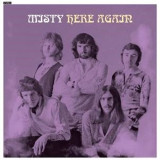
First ever vinyl release of the album recorded in 1969/70 by UK prog-psych band Misty. Including their terrific mod-psych “Hot Cinnamon” 45.
A dazzling fusion of classically-inspired progressive rock and song-based psychedelic pop with an organ-based sound, in the vein of Procol Harum and The Nice.
“In October 1969, King Crimson released their debut, In The Court Of The Crimson King, Pink Floyd unleashed Ummagumma and Led Zeppelin put out their second LP. At the same time, Misty were in London’s Regent Sound Studios recording what turned out to be the only album of their career with producer, Adrian Ibbetson, who had cut his teeth as an engineer working with everyone from the Beatles to the Equals.
After only a handful of gigs, Misty signed a deal with Parlophone and began to gather momentum with the release of Hot Cinnamon. Although they received a lot of airplay, the single failed to chart and the band’s hopes of releasing their debut album were dashed. Reluctantly, Misty went their separate ways and the Here Again master tapes sat gathering dust on a shelf until Gelardi came across the original acetate and decided it was time for the album to finally see the light of day.
Bridging late psych and early prog, songs like Life Has Just Begun, Witness For The Resurrection and the title track were played with a perfect mix of high-flying experimentation and virtuosic musicianship. Blurring the fine lines between rock, jazz, classical and chamber pop, Here Again is a transcendent kaleidoscope of colour that is beyond definition.
Maybe you can tell an album is truly timeless when it takes half a century for it to be properly appreciated. Misty were a rare bird, a brilliant, truly original band who should have left an indelible mark instead of joining what now seems like the never-ending line of half-remembered and long-forgotten flotsam and jetsam of the psychedelic era.
Both the first and the final statement from a group who never really got their chance to be heard, Here Again is a slice of pristine psychedelic pop that so embodies the dizzying energy and the progressive spirit of the time, it’s astonishing that it stays afloat under the weight of its own intentions. But float it does, like mist in the air - a half-forgotten diaphanous dream slowly coming back to you after 50 years of silence.” – Jonathan Wingate
il devrait être publié sur 01.03.2024

Musique Infinie is the collaborative project of Manuel Oberholzer a.k.a. Feldermelder and Noémi Büchi.Their album »Earth«, released through the Hallow Ground label, is based on a spontaneously composed live score for Alexander Dovzhenko’s groundbreaking 1930 silent movie »Zemlya« (»Earth«) created for the 24th edition of the VIDEOEX festival for experimental film.
Frequently cited as a masterpiece of early 20th century filmmaking, the movie deals with the collectivisation of Ukraine’s agriculture. The Swiss duo complemented it with atmospherically rich electronic soundscapes that are both deeply immersive and highly evocative. As a stand-alone music release, the two-piece »Earth« album captures the essence of Büchi and Oberholzer’s collaboration that is marked by mutual trust and musical versatility that puts them in a state of »togetherness trance,« as they call it.
Oberholzer has been highly productive as a composer, musician, sound designer, and installation artist in recent years, releasing a slew of solo albums as well as a variety of collaboration records with artists such as Sara Oswald and Julian Sartorius. Büchi has recently debuted as a solo composer and sound artist working with electroacoustic techniques to create a »symphonic maximalism for the end of the world,« as she dubs it.
Both are prolific and versatile artists with a penchant for working conceptually, however their collaboration as Musique Infinie is an improvisational and thus by design an intuitive one.
Their sessions start with an exchange on emotions and thoughts rather than theoretical questions or aesthetic debates. When they get to work—often for several hours—they rarely talk.
They approached »Earth« the same way, improvising freely together and using only a few select samples from the film’s original score in the process. Their open-ended approach is marked by an aesthetic ambivalence that perfectly corresponds with the movie’s own inherent contradictions.
Dovzhenko approached his socio-political subject with poetic imagery and philosophical rigour, juxtaposing notions of traditionality with the depiction of modernity.
Büchi and Oberholzer accordingly work with motives that at o ce seem anthemic and elegiac, working with sounds and musical motives that evoke a sense of familiarity in one moment before transforming into something futuristic and uncanny in the next. Their score for »Zemlya« is not to be understood as a mere interpretation of the movie, but rather a re-narration or even re-negotiation of its aesthetic and emotional qualities under their very own terms. »Earth« is an album that concisely depicts what is at the core of the duo’s musical partnership
il devrait être publié sur 19.02.2024

Edo.G's latest Album FreEDOm couldn't come at a better time in history as we are in an age where it seems like our freedoms are slowly getting taken away with a corrupt dictator in office.
FreEDOm has a sound that is reminiscent to one of your favorite Hip-Hop albums with songs that touch every part of your life. Edo.G's conscious lyrics over banging beats are bound to resonate and inspire. The song "Smoke" features Masta Ace, marking their first collaboration since the critically acclaimed 2009 "Arts & Entertainment" album. “Boom”, Produced by Sir Williams is the first music video from the album that sheds light on gun violence and the affect it has on victims, families and communities. FreEDOm is Edo.G’s 15th studio album produced by up and coming producers Torchbars, Kelz With Tha Heat, Sir Williams, Geronimo X, DJ Scienz & more.
If the album wasn't enough, the Digipak CD includes a full-length documentary based on the ED O.G & Da Bulldogs hit song "I Got To Have it". This ground-breaking documentary is a true artistic masterpiece on how one song can change your life. This is an in-depth look into Edo.G's journey through the music industry being dropped from a major label to finding his way independently. It highlights his life and career from his early teenage years to the present day. Through touring the world and making a positive impact with his music, Edo.G’s continued relevance in Hip Hop is not to be questioned.
il devrait être publié sur 31.01.2024

London-based producer Otik releases his first album 'Cosmosis' on Martyn's label 3024. The 11-track LP signifies the fourth album on the imprint across its ten-year tenure, showcasing a more introspective side to Otik's musical output.
The album leans into delicate melodies, hazy atmospheres and lush analogue sounds, often evoking blissed-out feels and ripples of brilliant colour. Produced three years ago during lockdown, 'Cosmosis' comes after a period of spiritual struggles, where Otik questioned his faith, religious beliefs, and the concepts of right and wrong. While the pandemic allowed ample time for reflection, Otik translated these thoughts into music from his Peckham-based studio, later finding a home on 3024's evolving discography.
Following Otik's EP 'Soulo' in 2021, 'Cosmosis' marks the second release from the Bristol-born DJ and producer on 3024. This time, his sound stems from a broader palette, touching on slower, aerated ambient notes through to rugged D'n'B, displaying the far-reaching breadth, vision and maturity of Otik's aesthetic.
Keen to release a body of work that explores the journey of enlightenment and the struggles to get there, Otik drew inspiration from the luminary filmmaker Terrence Malick and how Malick portrayed ideas and philosophies in films like The Tree of Life and Voyage of Time. As a result, the record conveys a compelling narrative of rebirth, told through exquisite sound design and a push-pull pace that oscillates across the album.
The lead single 'Cosmosis' binds astral breakbeats with a star-lined melody stitched against a spacious backdrop. Sparse, celestial vocals punctuate the soundscape and add a spiritual feel, culminating in a dazzling trip at just over five minutes.
Commandez maintenant et nous commanderons l'article pour vous chez notre fournisseur.

The BBC’s Third Programme aired four radio broadcasts between January 1964 and September 1965, collectively known as Inventions for Radio.
They were ground-breaking in both form and content, conceived by playwright Barry Bermange and consisting of the voices of the general public answering questions on four themes,
one for each programme: dreams, the existence of God, life after death and ageing. At a time when it was unheard of to give a media platform to anyone perceived as being of
low socio-economic status, the broadcasts generated many complaints for the “rough” voices of its participants.
Delia Derbyshire was assigned by the Radiophonic Workshop to edit and add electronic music/ effects.
The collaborative result is dreamlike and mesmerizing, an audial window to another era.
For many years Derbyshire was not credited for her contribution, nor were the broadcasts available commercially, although they still managed to acquire something of a cult following.
This boxset includes one LP for each broadcast and two further LPs of additional material.
There is a 20-page booklet with extensive notes by Mark Ayres (Producer) and David Butler, (one of the lead researchers and
curators of the Delia Derbyshire Archive and co-founder of Delia Derbyshire Day).
The insight into Derbyshire’s archive, her music and its influences and her collaboration with Bermange is fascinating, providing context for
these extraordinary pieces which have been the most elusive of Twentieth Century classics until now.
il devrait être publié sur 08.12.2023

We are delighted to unveil TrueMendous' sophomore album ‘Great. On
Purpose’. Sporting 15-tracks of evolutionary music, ‘Great. On Purpose’ is without question True's most ambitious body of work to date.
Since sharing the unrelenting lead single 'Talkk' Feat. Mysdiggi,
and after a double serving on follow up 'Really Wanna Love' x
'Still Don't Wanna', the album is a rollercoaster ride. Just listen
to standout single 'Yourself or The World?' featuring the almighty
Skinnyman if you're in need of anymore proof.
Featuring a heavyweight lineup of guest appearances from the
aforementioned Skinnyman and Mysdiggi, but also including Janel
Antoneshia, Vaddy, Princess, Ashley Allen, and DJ Sammy B-Side,
complemented by Illinformed, GhostTown, Pitch 92, Forest DLG,
Muckaniks, Mark Fear and Bear on production duties - ‘Great. On Purpose’ is STACKED from top-to-tail.
a 01 - Womp Uhuh
[So Good]
[a] 01 - Womp [Uhuh]
[So Good]
il devrait être publié sur 02.12.2023

We are delighted to unveil TrueMendous' sophomore album ‘Great. On
Purpose’. Sporting 15-tracks of evolutionary music, ‘Great. On Purpose’ is without question True's most ambitious body of work to date.
Since sharing the unrelenting lead single 'Talkk' Feat. Mysdiggi,
and after a double serving on follow up 'Really Wanna Love' x
'Still Don't Wanna', the album is a rollercoaster ride. Just listen
to standout single 'Yourself or The World?' featuring the almighty
Skinnyman if you're in need of anymore proof.
Featuring a heavyweight lineup of guest appearances from the
aforementioned Skinnyman and Mysdiggi, but also including Janel
Antoneshia, Vaddy, Princess, Ashley Allen, and DJ Sammy B-Side,
complemented by Illinformed, GhostTown, Pitch 92, Forest DLG,
Muckaniks, Mark Fear and Bear on production duties - ‘Great. On Purpose’ is STACKED from top-to-tail.
a 01 - Womp [Uhuh]
[o] 15 - I Feel Good [So Good]
[a] 01 - Womp [Uhuh]
[o] 15 - I Feel Good [So Good]
il devrait être publié sur 02.12.2023

Gombloh’s forgotten masterpiece
What if you have Brian Wilson and Bruce Springsteen rolled into one? And what if he came of age as an poor buskers in in Surabaya, Indonesia, but then summoned enough strength to record six albums that flew in the face of everyone in the country’s rock scene back in the early 1980s?
Genius, be they Brian Wilson or Soedjarwoto “Soemarsono” Gombloh, don’t conform to rules written for us mere mortals. They have their own way of doing things and in the case of Gombloh, writing music, conducting recording session and spending cash from his music, must be conducted on his own terms and his terms only. Studio time was expensive back in the early 1980s, yet Gombloh could be three-hour late for his session, and while engineers, session musicians and producers were jittery about the prospect of another botched session, Gombloh took his time for a nap before the recording begun.
Yet, some of his greatest works came into being in the wake of this napping session. Recording session for Sekar Mayang is no exception, despite the fact there’s foreboding sense of doom with Gombloh being unsure about the possibility of selling enough units to help his label break even. This is, after all, this is his last record with his band Lemon Tree’s. No one knew that Gombloh was operating with all his cylinders running and what came out of this Indra Record session, in the waning days of 1980, were some of the best compositions ever committed to magnetic tapes (to wax, if now you’re holding this on vinyl).
This is Gombloh at the peak of his creative genius. You can argue that his debut album Nadia & Atmospheer (what’s with the spelling mistake?) is the most sprawling and complex album (both sonically and thematically), but Sekar Mayang certainly had the best songs and I can make the argument that this album’s 10 songs are strong contenders for biggest hits in blues, country, psychedelic rock charts. “Prahoro & Prahoro” is one of those impossible song which appears to have sprung from a bottomless well of inspiration, encompassing King Crimson’s sprawling epic, Deep Purple’s deepest blues and Genesis’ most progressive tendencies. Or “Sekaring Jagat”, which begins as Lennon-McCartney lullaby before launching a thousand ships traveling to the end of the rainbow with children choir singing heavenly melodies backed by droning harpsichord and synclavier, while a buzzing Hammond B3 tightly locks with Gombloh’s guitar strumming.
For many of his fans, Gombloh is known as generous man of the people. A Robin Hood type if you please. He spent his royalty checks to buy foods for beggars and buskers and dish out some more to buy undergarments for Surabaya’s prostitutes. In Sekar Mayang, Gombloh went full Springsteen mode in “Mitra Becakan,” a social commentary that cut so deep you can end up with tears in your eyes and lump in your throat (even if you don’t understand any of its Javanese language lyrics). This is one the most devastating social commentary ever recorded for a pop song, and even if you discount the greatness of its musical composition, you chalk this up as a great social-realism poetry. His years of hanging out with pedicab drivers, street vendors and street-bound prostitutes certainly gave him enough insight into their (in)human condition.
Yet, a record this stellar was largely forgotten. First, this record was a flop upon its release in 1981. Indra Records reportedly only did one pressing on cassette tape and be done with it. For those who were lucky enough to have come across one of songs from this album on the radio were likely growing up in East Java, where Gombloh had a massive cult following early in the 1980s. Nothing was heard from this record again.
There were only a handful of cassette tapes from the first pressing found on second-hand market and I recently stumbled upon one online with a price tag of Rp 50 million (US$3,500). It’s no longer available now.
In Sekar Mayang, Gombloh harbours an obsession for a long-lost utopia, Java’s distant past, where farmers have their barn full of rice and corn, where blacksmith working around the clock making tools and children singing and dancing in their seminaries. Or the fact that he opens the song with stanza from Serat Weddhatama, arguably the most monumental poem in neo-classic Javanese literature, could be his pledge of allegiance. The question for him is should a modern-day Indonesia, rife with poverty, corruption and environmental degradation not be an anathema to that utopia?
In the end, you don’t need to be someone fluent in Javanese to enjoy this majestic record. And if this record turns out to be the last in Elevation Records catalogue and we shut down this label tomorrow, we will be very happy. Mission accomplished!
il devrait être publié sur 17.11.2023

Balmat co-founders Philip Sherburne and Albert Salinas have been fans of Shy Layers’ lilting, Balearic pop for years, so when Shy Layers’ JD Walsh asked us to listen to a set of demos he was working up with fellow Atlanta multi-instrumentalist Jeff Crompton, we jumped at the chance. And once we heard their work in progress, the decision was almost immediate: We have to release this.
Together, Walsh and Crompton are Anagrams, and their debut album together, Blue Voices, might initially seem like a departure from Balmat’s habitually electronic terrain. It’s not ambient music, but it’s also not not ambient music, at least to listeners in the right frame of mind. The two musicians, who met when Walsh moved from Brooklyn to Atlanta in 2016 and began collaborating a few years later, see the music in similarly ambiguous terms. “I like it because it’s not jazz,” jokes Crompton, a veteran and credentialed jazz player. “And JD likes it because it’s jazz.”
Crompton is a musician (and former high-school band teacher) with deep roots in Georgia’s improvised and experimental music scenes; his credits include shows with Eugene Chadbourne, a guest appearance with Godspeed You! Black Emperor, and a collaboration with Duet for Theremin and Lap Steel’s 12-hour drone performance at Knoxville’s Big Ears. On Blue Voices he plays alto and tenor saxophone, clarinet, electric piano, and organ. Walsh has been releasing music as Shy Layers since 2015, when he started self-releasing on Bandcamp; the following year, Germany’s Growing Bin packaged his first two EPs as a self-titled album, and in 2018, Tim Sweeney’s Beats in Space label put out Shy Layers’ sophomore album, Midnight Marker. Where those records channeled Walsh’s playful harmonic instincts into wistful songwriting with tropical overtones, on Blue Voices he lets his experimental tendencies take the lead. Playing acoustic and electric guitars, electric lap steel, bass, Moog Matriarch, modular synth, and programmed drums, he concentrates his energies on richly textural layers and abstract assemblages of tone color.
Across the album’s 11 tracks, there are faint echoes of familiar touchstones: the atmospheric twang of Daniel Lanois’ pedal steel on Apollo: Atmospheres and Soundtracks; the mercurial modal runs of Ethio- jazz; the late-summer calm of Fuubutsushi; the versatility of players and composers like Patrick Shiroishi and Sam Gendel, who are asking similar questions about where jazz ends and some other, nameless territory begins. Mostly, though, what Blue Voices captures is the quixotic sound of two restless musical imaginations making it up as they go along, two voices discovering a shared language in a hitherto unexplored shade of blue.
Commandez maintenant et nous commanderons l'article pour vous chez notre fournisseur.

The five members of Sun June spent their early years spread out across the United States, from the boonies of the Hudson Valley to the sprawling outskirts of LA. Having spent their college years within the gloomy, cold winters of the North East, Laura Colwell and Stephen Salisbury found themselves in the vibrant melting-pot of inspiration that is Austin, Texas. Meeting each other while working on Terrence Malick's 'Song to Song', the pair were immediately taken by the city's bustling small clubs and honky-tonk scene, and the fact that there was always an instrument within reach, always someone to play alongside. Coming alive in this newly discovered landscape, Colwell and Salisbury formed Sun June alongside Michael Bain on lead guitar, Sarah Schultz on drums, and Justin Harris on bass and recorded their debut album live to tape, releasing it via the city's esteemed Keeled Scales label in 2018. The band coined the term 'regret pop' to describe the music they made on the 'Years' LP. Though somewhat tongue in cheek, it made perfect sense ~ the gentle sway of their country leaning pop songs seeped in melancholy, as if each subtle turn of phrase was always grasping for something just out of reach. Sun June returns with Somewhere, a brand new album, out February 2021. It's a record that feels distinctly more present than its predecessor. In the time since, Colwell and Salisbury have become a couple, and it's had a profound effect on their work; if Years was about how loss evolves, Somewhere is about how love evolves. "We explore a lot of the same themes across it," Colwell says, "but I think there's a lot more love here." Somewhere is Sun June at their most decadent, a richly diverse album which sees them exploring bright new corners with full hearts and wide eyes. Embracing a more pop-oriented sound the album consists of eleven beautiful new songs and is deliberately more collaborative and fully arranged: Laura played guitar for the first time; band members swapped instruments, and producer Danny Reisch helped flesh out layers of synth and percussion that provides a sweeping undercurrent to the whole thing. Throughout Somewhere you can hear Sun June blossom into a living-and-breathing five-piece, the album formed from an exploratory track building process which results in a more formidable version of the band we once knew. 'Real Thing' is most indicative of this, a fully collaborative effort which encompasses all of the nuances that come to define the album. "Are you the real thing?" Laura Colwell questions in the song's repeated refrain. "Honey I'm the real thing," she answers back. They've called this one their 'prom' record; a sincere, alive-in-the-moment snapshot of the heady rush of love. "The prom idea started as a mood for us to arrange and shape the music to, which we hadn't done before," the band explains. " Prom isn't all rosy and perfect. The songs show you the crying in the bathroom,, the fear of dancing, the joy of a kiss - all the highs and all the lows." It's in both those highs and lows where Somewhere comes alive. Laura Colwell's voice is mesmerising throughout, and while the record is a document of falling in love, there's still room for her to wilt and linger, the vibrancy of the production creating beautiful contrasts for her voice to pull us through. Opening track 'Bad With Time' sets this tone from the outset, both dark and mysterious, sad and sultry as it fascinatingly unrolls. "I didn't mean what I said," Colwell sings. "But I wanted you to think I did." Somewhere showcases a gentle but eminently pronounced maturation of Sun June's sound, a second record full of quiet revelation, eleven songs that bristle with love and longing. It finds a band at the height of their collective potency, a marked stride forward from the band that created that debut record, but also one that once again is able to transport the listener into a fascinating new landscape, one that lies somewhere between the town and the city, between the head and the heart; neither here nor there, but certainly somewhere.
il devrait être publié sur 03.11.2023

Svart Records proudly presents Pekka Pohjola's "Heavy Jazz - Live in Helsinki" for the first time on vinyl! Legendary Finnish composer and bassist Pekka Pohjola, known from his work in Wigwam, Made In Sweden, touring with Mike Oldfield and having a successful solo career, caught live at Tavastia Club, Helsinki, Finland on April 18th 1995. Joining Pohjola (bass) on stage are Seppo Kantonen (keyboards), Markku Kanerva (guitars) and Anssi Nykänen (drums). During his long career that took him from riding the Finnish prog rock wave to the heavy jazz rock heights of the 1990s, Pekka Pohjola tried his hand in many things. Heavy Jazz has previously only been released on CD in 1995 and 2011 by Pohjola Records and will now finally be available on wax as well. Heavy Jazz is presented on a 2LP edition of classic black vinyl. Limited to 500 copies.
il devrait être publié sur 28.10.2023

Rico Friebe is back with the album "Faces Meet" after his recent debut "Word Value" and delivers his personal "deer in the headlight"-moment. What once appeared sparely uncertain and questioning, equalling the fragile try to overcome a state of darkness and forsakenness, now forms into a frenzy of confrontational flashes on "Faces Meet".
Like reflecting on the uncertainties presented on "Word Value", "Faces Meet" reveals some genuinely harrowing findings, creating a wholesome musical moment in time that might never happen like this again.
Besides the uncompromising statements as to find in the opener "Look At Me", refined perceptions in "Nowhere To Run" or "Fifty-One", open-hearted calls in "Do More" and "Let Go", Rico's pivotal confrontation with the irrevocable truth and emotional dissection peaks in his heartbreaking story on "The Best Talk" which marks the crucial lynchpin of the whole album.
Like faces (and therefore people) are constantly meeting everywhere, being faced with the decision how honest and open to meet at all, "Faces Meet" happens to be an even more involved metaphor about surrendering to your true inner self in a mirror-like situation.
Deeply rooted in the seeds of his debut album "Word Value", Rico follows a highly natural and severely plain musical language while implementing new and further ideas and elements throughout his sonic landscape.
"Faces Meet" is an album of insight and self-awareness and the inevitably necessary foundation for his third double LP and magnum opus "Anthems For A Lost Generation" (set to be released in Spring 2024), accelerating a lately unstoppable story into unforeseeable pathways.
il devrait être publié sur 23.10.2023

Rico Friebe is back with the album "Faces Meet" after his recent debut "Word Value" and delivers his personal "deer in the headlight"-moment. What once appeared sparely uncertain and questioning, equalling the fragile try to overcome a state of darkness and forsakenness, now forms into a frenzy of confrontational flashes on "Faces Meet".
Like reflecting on the uncertainties presented on "Word Value", "Faces Meet" reveals some genuinely harrowing findings, creating a wholesome musical moment in time that might never happen like this again.
Besides the uncompromising statements as to find in the opener "Look At Me", refined perceptions in "Nowhere To Run" or "Fifty-One", open-hearted calls in "Do More" and "Let Go", Rico's pivotal confrontation with the irrevocable truth and emotional dissection peaks in his heartbreaking story on "The Best Talk" which marks the crucial lynchpin of the whole album.
Like faces (and therefore people) are constantly meeting everywhere, being faced with the decision how honest and open to meet at all, "Faces Meet" happens to be an even more involved metaphor about surrendering to your true inner self in a mirror-like situation.
Deeply rooted in the seeds of his debut album "Word Value", Rico follows a highly natural and severely plain musical language while implementing new and further ideas and elements throughout his sonic landscape.
"Faces Meet" is an album of insight and self-awareness and the inevitably necessary foundation for his third double LP and magnum opus "Anthems For A Lost Generation" (set to be released in Spring 2024), accelerating a lately unstoppable story into unforeseeable pathways.
il devrait être publié sur 23.10.2023

Rico Friebe is back with the album "Faces Meet" after his recent debut "Word Value" and delivers his personal "deer in the headlight"-moment. What once appeared sparely uncertain and questioning, equalling the fragile try to overcome a state of darkness and forsakenness, now forms into a frenzy of confrontational flashes on "Faces Meet".
Like reflecting on the uncertainties presented on "Word Value", "Faces Meet" reveals some genuinely harrowing findings, creating a wholesome musical moment in time that might never happen like this again.
Besides the uncompromising statements as to find in the opener "Look At Me", refined perceptions in "Nowhere To Run" or "Fifty-One", open-hearted calls in "Do More" and "Let Go", Rico's pivotal confrontation with the irrevocable truth and emotional dissection peaks in his heartbreaking story on "The Best Talk" which marks the crucial lynchpin of the whole album.
Like faces (and therefore people) are constantly meeting everywhere, being faced with the decision how honest and open to meet at all, "Faces Meet" happens to be an even more involved metaphor about surrendering to your true inner self in a mirror-like situation.
Deeply rooted in the seeds of his debut album "Word Value", Rico follows a highly natural and severely plain musical language while implementing new and further ideas and elements throughout his sonic landscape.
"Faces Meet" is an album of insight and self-awareness and the inevitably necessary foundation for his third double LP and magnum opus "Anthems For A Lost Generation" (set to be released in Spring 2024), accelerating a lately unstoppable story into unforeseeable pathways.
il devrait être publié sur 23.10.2023

Tallahassee, FL singer-songwriter Sarah Morrison's debut studio album
Attachment Figure depicts the strangeness of exploring new
relationships with subtle and spacious electronic production - As a
former live keyboardist in Locate S,1, Morrison co-produced Attachment
Figure with fellow bandmates Ross Brand and Clayton Rychlik, both of
whom also play in Of Montreal's backing band
She was motivated to experiment with looser song structures and more
unconventional chord progressions by her collaborators' fondness for avantgarde jazz, as well as Locate S,1 frontwoman Christina Schneider's idiosyncratic
writing style.
Throughout the album, echoing keys, woodwinds, and guitar ripple like a moonlit
lake from which Morrison's voice emerges. Her presence is spectral, yet
conversational, willing to conjure concrete imagery of mango- flavored vitamins
and the warmth of phone chargers alongside ghost stories of mannequin corpses
and epistolary curses, a balance shaped by an obsession with the theatrical
sincerity of Kate Bush and Mark Hollis.
Lyrically, Attachment Figure meditates on questions about identity, personal
growth, and helplessness - whether within a relationship or the oppressive
structures of society itself - often rooted in Morrison's experiences growing up in
the South. "There's a connection between Southern hospitality and femininity and
just allowing things to happen," Morrison says. "I've been in many relationships
with people who have used that 'southern charm' to their advantage. I think a lot
of people, non- men in particular, put on this charm instinctively. It's a defense
mechanism that I was interested in studying."
Attachment Figure is perpetually suspended between states of being, harmony
and dissonance, and contradictory sentiments we all hold as we enter into the
arms of someone new, but ultimately, it's guided by a desire for authentic love--
and a flair for intricate, intuitive songcraft.
il devrait être publié sur 20.10.2023

Previously released on Fabrika Records in 2011 by the band members at the ripe old age of 17, this release marks a milestone in the Goth and Wave revival of the early 2010s. With hits like "Du rennst" or "Raben", Die Selektion blew some very fresh air into the dusty world of dark electronic music, featuring haunting trumpet melodies and German lyrics that question the meaning of life and love once again, encased in brutal sounds that taste like iron and lust. These 11 songs push you straight back into early days of Electronic Body Music.
Die Selektion take you on a wild ride through the suburbs of your soul, joined by Nitzer Ebb, Die Krupps, Cabaret Voltaire and DAF.
il devrait être publié sur 13.10.2023

"I imagine myself playing these songs in a small club that is slowly burning," says A. Savage of his second solo record, Several Songs about Fire. After more than a decade in New York, the co-frontman of Parquet Courts has left the city, marking his exit with a masterpiece of maturity and a worthy corollary to his first solo venture, 2017"s Thawing Dawn. "Fire is something you have to escape from. This album is a burning building, and these songs are things I"d leave behind to save myself." Produced by John Parish on a 1" 16-track in just ten days in Bristol and studded by the support of Cate Le Bon and Jack Cooper (Modern Nature, Ultimate Painting) as well as saxophonist Euan Hinshelwood (Cate Le Bon), drummer Dylan Hadley (Kamikaze Palm Tree, White Fence), and violinist Magdalena McLean (Caroline), Savage"s outsize gifts as a lyricist and observer - a quality Parish calls "an emotional openness guarded by a laconic wit" - shine. Worrying questions of wealth and poverty, self and other, Savage displays the poet"s gift of knowing when to narrate and when to vanish, leaving the listener to their own emotional privacy rather than instructing them how to feel. The end result is tantamount to psychic odyssey, with "Elvis in the Army" placing us in a subterranean venue where the livid, ratifying cymbal raises the room"s blood pressure and "Mountain Time", evoking an austere waltz playing in a desolate house, returning those listening to life. Influenced by Sybille Baier and Townes Van Zandt, Savage joins a canon of songwriters constantly dilating aperture and perspective. In rendering the signage of laundromats and threats of debt collectors as glistering and totemic as the scope of mountains, rivers, seas, and skies, Savage finds hopes and curses in equal measure.
il devrait être publié sur 06.10.2023

"I imagine myself playing these songs in a small club that is slowly burning," says A. Savage of his second solo record, Several Songs about Fire. After more than a decade in New York, the co-frontman of Parquet Courts has left the city, marking his exit with a masterpiece of maturity and a worthy corollary to his first solo venture, 2017"s Thawing Dawn. "Fire is something you have to escape from. This album is a burning building, and these songs are things I"d leave behind to save myself." Produced by John Parish on a 1" 16-track in just ten days in Bristol and studded by the support of Cate Le Bon and Jack Cooper (Modern Nature, Ultimate Painting) as well as saxophonist Euan Hinshelwood (Cate Le Bon), drummer Dylan Hadley (Kamikaze Palm Tree, White Fence), and violinist Magdalena McLean (Caroline), Savage"s outsize gifts as a lyricist and observer - a quality Parish calls "an emotional openness guarded by a laconic wit" - shine. Worrying questions of wealth and poverty, self and other, Savage displays the poet"s gift of knowing when to narrate and when to vanish, leaving the listener to their own emotional privacy rather than instructing them how to feel. The end result is tantamount to psychic odyssey, with "Elvis in the Army" placing us in a subterranean venue where the livid, ratifying cymbal raises the room"s blood pressure and "Mountain Time", evoking an austere waltz playing in a desolate house, returning those listening to life. Influenced by Sybille Baier and Townes Van Zandt, Savage joins a canon of songwriters constantly dilating aperture and perspective. In rendering the signage of laundromats and threats of debt collectors as glistering and totemic as the scope of mountains, rivers, seas, and skies, Savage finds hopes and curses in equal measure.
il devrait être publié sur 06.10.2023

Orange Vinyl[31,05 €]
'Released via Sony CMG - 'Scouting for Girls' unforgettable pop anthems such as 'She's So Lovely', 'This Ain't a Love Song' and 'Heartbeat' set them on a path to phenomenal success which included four Top 10 singles, four Top 10 albums, 2 million sales and more than a billion streams - plus four BRIT Awards and an Ivor Novello. After so many highlights, the trio questioned where to go next as they planned their seventh studio album. The solution? To return to their roots back when they were three unknown musicians in Ruislip, West London and reconnect with the reasons that they started a band in the first place. As a result, Scouting for Girls are back to their best with their new album 'The Place We Used to Meet'. A x12 trk album, available on standard Black LP Vinyl, retail exclusive Orange LP Vinyl, standard CD & Deluxe CD formats. Extensive promo & marketing activity across all media outlets, including mainstream TV, radio, press & online.
il devrait être publié sur 03.10.2023

Black Vinyl[27,31 €]
'Released via Sony CMG - 'Scouting for Girls' unforgettable pop anthems such as 'She's So Lovely', 'This Ain't a Love Song' and 'Heartbeat' set them on a path to phenomenal success which included four Top 10 singles, four Top 10 albums, 2 million sales and more than a billion streams - plus four BRIT Awards and an Ivor Novello. After so many highlights, the trio questioned where to go next as they planned their seventh studio album. The solution? To return to their roots back when they were three unknown musicians in Ruislip, West London and reconnect with the reasons that they started a band in the first place. As a result, Scouting for Girls are back to their best with their new album 'The Place We Used to Meet'. A x12 trk album, available on standard Black LP Vinyl, retail exclusive Orange LP Vinyl, standard CD & Deluxe CD formats. Extensive promo & marketing activity across all media outlets, including mainstream TV, radio, press & online.
il devrait être publié sur 03.10.2023
wAFF makes a triumphant return to Hot Creations after a seven-year hiatus with his three-track, groove-driven ‘Slapfunk EP’.
Since his first outing back in 2012, wAFF has been an integral part of the Hot Creations family, remixing various releases and dropping a total of four EPs - the last being ‘Sick Pleasure’ in 2016, which still stands today as a highlight in the label’s extensive catalogue. Marking a long-awaited return to Jamie Jones and Lee Foss’ beloved imprint after seven years, with material via renowned labels such as Solid Grooves, Cocoon, Desolat and his very own NATURE imprint over that period further establishing him as a leading name, he arrives fresh from his third Paradise show of the season ready to ignite dancefloors with a trio of irresistible beats on ‘Slapfunk’.
Title track ‘Slapfunk’ opens the release with shifting stabs, warping bass patterns and fizzing lead synths, steadily progressing into a menacing club-focused workout. Continuing his signature style, ‘Questions’ showcases a blend of pulsating beats synchronised with a warped vocal topline that enhances the allure. Finally, ‘Next Game’ delivers a punchy trip loaded with subtle minimal-leaning influences, combining chopped vocal snippets with slick, stripped-back percussion.
Commandez maintenant et nous commanderons l'article pour vous chez notre fournisseur.

Four years after they went all the way to Antarctica, Flat Worms are back in gen pop with the rest of us - but, as intoned on the album opener "Sigalert," "back again like I never was." Is this a nod to the way time passes over our sorely vexed synapses? Or are we to believe that there"s hope to be found in this broken world? Kick back with Witness Marks and see what other traces Flat Worms have left us in the dust. The album title alone leaves a foreboding impression. But look closer - "witness marks" aren"t something out of a forensic analysis - they"re actually practical; scratches placed in old clocks designed to aid continued maintenance further in time. Sure, there"s big questions and more on the board; primarily if we"re at all distinct from the absurdity coming down around us, or just another character in the mirror? Flat Worms are looking inward this time, outlining personal space in relation to themselves and others - sometimes even people they barely know. Among the slabs of slategrey outrage, the flowers of compassion are blooming, and the simmering power of their trio grows exponentially. Working once again with Ty Segall, Flat Worms continue to find new answers by digging into themselves and playing their kind of rock: hard and flat, bass and drums thrusting stalwartly forward with conviction, guitar twisting and spinning in outrage, deadpan vocals decrying a dire set of circumstances. The democracy of working together, so often messy and frustrating, was found to be a powerful release for Justin, Tim and Will. Acting as one, Flat Worms navigated challenging times by coming together, finding release in the clockwork repetitions of practice and the shared creative space they occupied together against the encroaching world. In the short century of their existence, Flat Worms have agitated against the status quo with a disquieting lyric bent, to emphasize the psychosis of the times. These are positions taken within songs, sung out to individuals in the world. As evidenced by the lyrics, "But I know I can always see you at the show Even though it"s only temporary and it"s time to go." . . .Witness Marks surveys an evolving sense of community. Flat Worms are dedicated to persevering and using the power of their collective. Come witness!
il devrait être publié sur 22.09.2023

Four years after they went all the way to Antarctica, Flat Worms are back in gen pop with the rest of us - but, as intoned on the album opener "Sigalert," "back again like I never was." Is this a nod to the way time passes over our sorely vexed synapses? Or are we to believe that there"s hope to be found in this broken world? Kick back with Witness Marks and see what other traces Flat Worms have left us in the dust. The album title alone leaves a foreboding impression. But look closer - "witness marks" aren"t something out of a forensic analysis - they"re actually practical; scratches placed in old clocks designed to aid continued maintenance further in time. Sure, there"s big questions and more on the board; primarily if we"re at all distinct from the absurdity coming down around us, or just another character in the mirror? Flat Worms are looking inward this time, outlining personal space in relation to themselves and others - sometimes even people they barely know. Among the slabs of slategrey outrage, the flowers of compassion are blooming, and the simmering power of their trio grows exponentially. Working once again with Ty Segall, Flat Worms continue to find new answers by digging into themselves and playing their kind of rock: hard and flat, bass and drums thrusting stalwartly forward with conviction, guitar twisting and spinning in outrage, deadpan vocals decrying a dire set of circumstances. The democracy of working together, so often messy and frustrating, was found to be a powerful release for Justin, Tim and Will. Acting as one, Flat Worms navigated challenging times by coming together, finding release in the clockwork repetitions of practice and the shared creative space they occupied together against the encroaching world. In the short century of their existence, Flat Worms have agitated against the status quo with a disquieting lyric bent, to emphasize the psychosis of the times. These are positions taken within songs, sung out to individuals in the world. As evidenced by the lyrics, "But I know I can always see you at the show Even though it"s only temporary and it"s time to go." . . .Witness Marks surveys an evolving sense of community. Flat Worms are dedicated to persevering and using the power of their collective. Come witness!
il devrait être publié sur 22.09.2023

The story of the invention of the term, 'deepfunk' is probably only known among fans and practitioners of this niche-genre. In short, it all started in the 1990s when DJs like Keb Darge, Mark 'Snowboy' Cotgrove and others began spinning obscure and feral Funk 45 RPM singles from local American bands, ostensibly generating another sub-category branch off of the mighty Northern Soul tree. The dance-club phenomenon inevitably spilled over to contemporary groups on the funk scene which immediately tried to record their music the way their idols did. The 'rare groove' and 'acid jazz' movements had run their course and there was a concerted effort to reinstate primitive idiomatic styles and techniques into the music, most notably by 90s funk collective The Poets of Rhythm. As more years passed by the number of bands steadily increased (although in tiny numbers, compared to the mainstream market). Almost every country had a representative with the majority of them coming from the United Kingdom. The deepfunk sound was still a niche, however a very few bands made it onto the mainstream charts, most notably Sharon Jones & the Dap Kings.
At the height of the retro-soul movement a questionable development took place. As more bands arrived on the scene, the production became more and more polished and pop-ish. Some of that squeaky-clean tidiness began to creep into the recordings, encouraged in part by the signature sounds of the digital recording technology available at that time. Some bands even tried to jump onto the possibility of promoting their music as 'deepfunk' although they were actually playing slick, funky pop music. This way some people who thought they were listening to raw, energetic funk actually felt quite ambushed when hit with real deepfunk. In fact, a certain percentage of funk music produced within the past 20 years does not deserve to be described as 'deepfunk' at all. Fortunately there were (and are) some pleasant exceptions which did not just imitate but actually rendered amazing funk music just like some of the finest funk combos of the 1960s and 70s.
One of those creative minds is without a doubt Joel Ricci aka Lucky Brown. Originally from Seattle, Washington, USA, he has enriched the deepfunk community since the mid-2000s with his stellar abilities. He is not only an amazing musician playing multiple instruments, but also a brilliant composer, arranger, and producer too. But for us here at Tramp he is much more, a close friend and remarkable human being. Whenever we were struggling, whether with the label or in private life, Joel and his musical work helped us to overcome everything and to keep going our path.
So here we are in 2023. The songs you are listening to right now are the complete Space Dream collection, split into two parts, representing the two living-room recording sessions from which his 2011 Tramp Records debut was compiled. Each fully remastered album contains unreleased material and comes with brand new, beautifully reimagined artwork by Ricci himself, housed in an authentic 1960s tip-on cover. A first class product from a first class musician for the discerning funk enthusiast.
Commandez maintenant et nous commanderons l'article pour vous chez notre fournisseur.

The story of the invention of the term, 'deepfunk' is probably only known among fans and practitioners of this niche-genre. In short, it all started in the 1990s when DJs like Keb Darge, Mark 'Snowboy' Cotgrove and others began spinning obscure and feral Funk 45 RPM singles from local American bands, ostensibly generating another sub-category branch off of the mighty Northern Soul tree. The dance-club phenomenon inevitably spilled over to contemporary groups on the funk scene which immediately tried to record their music the way their idols did. The 'rare groove' and 'acid jazz' movements had run their course and there was a concerted effort to reinstate primitive idiomatic styles and techniques into the music, most notably by 90s funk collective The Poets of Rhythm. As more years passed by the number of bands steadily increased (although in tiny numbers, compared to the mainstream market). Almost every country had a representative with the majority of them coming from the United Kingdom. The deepfunk sound was still a niche, however a very few bands made it onto the mainstream charts, most notably Sharon Jones & the Dap Kings.
At the height of the retro-soul movement a questionable development took place. As more bands arrived on the scene, the production became more and more polished and pop-ish. Some of that squeaky-clean tidiness began to creep into the recordings, encouraged in part by the signature sounds of the digital recording technology available at that time. Some bands even tried to jump onto the possibility of promoting their music as 'deepfunk' although they were actually playing slick, funky pop music. This way some people who thought they were listening to raw, energetic funk actually felt quite ambushed when hit with real deepfunk. In fact, a certain percentage of funk music produced within the past 20 years does not deserve to be described as 'deepfunk' at all. Fortunately there were (and are) some pleasant exceptions which did not just imitate but actually rendered amazing funk music just like some of the finest funk combos of the 1960s and 70s.
One of those creative minds is without a doubt Joel Ricci aka Lucky Brown. Originally from Seattle, Washington, USA, he has enriched the deepfunk community since the mid-2000s with his stellar abilities. He is not only an amazing musician playing multiple instruments, but also a brilliant composer, arranger, and producer too. But for us here at Tramp he is much more, a close friend and remarkable human being. Whenever we were struggling, whether with the label or in private life, Joel and his musical work helped us to overcome everything and to keep going our path.
So here we are in 2023. The songs you are listening to right now are the complete Space Dream collection, split into two parts, representing the two living-room recording sessions from which his 2011 Tramp Records debut was compiled. Each fully remastered album contains unreleased material and comes with brand new, beautifully reimagined artwork by Ricci himself, housed in an authentic 1960s tip-on cover. A first class product from a first class musician for the discerning funk enthusiast.
Commandez maintenant et nous commanderons l'article pour vous chez notre fournisseur.

All vinyl is in a Gatefold jacket w/ two 12pg booklets, printed insert + download card. SH289LPCB // SH289LPIE are both for Indie stores only. CD Packaging: Digipak w/ 12pg lyric poster insert. The Armed return with their new album Perfect Saviors, the first new music since 2021 breakout release ULTRAPOP. Providing a full accounting of album contributors for the first time, Perfect Saviors was produced by the band’s Tony Wolski along with Ben Chisholm and Troy Van Leeuwen, with contributions from Julien Baker, Sarah Tudzin, Mark Guiliana, Justin Meldal-Johnsen, Eric Avery, Stephen Perkins, Josh Klinghoffer, and many more. The album was mixed by Alan Moulder. Vocalist Tony Wolski offered this statement on the album: “Too much information has made us dumb and confused. Too many ways to connect have inadvertently led to isolation. And too much expectation has forced everyone to become a celebrity. Predictable primal dangers have given way to newer social ones. And the result is a world that is confounding and terrifying but ultimately still beautiful. We hope this record is exactly all of that, too. Perfect Saviors is our completely unironic, sincere effort to create the biggest, greatest rock album of the 21st century.” Perfect Saviors is the conclusion of a trilogy of albums examining and dissecting what constitutes “pop culture” in a world of limitless information and access. Using “pop music” loosely as a format in which to express these ideas, each album used composition and presentation as a way to challenge these questions further. Perfect Saviors is the ultimate product of this evolution. Using one of the world’s most well-known mixing engineers to create a beautiful album fully immersed in the language and world of pop through the inherently unique, extreme, and perverse lens, The Armed communicate their art. Perfect Saviors follows 2021’s critically acclaimed album ULTRAPOP which landed on numerous Best of 2021 lists including Pitchfork, New York Times, Stereogum, Revolver, and many more. Album announce along with first single/video "Sport of Form" and which features Julien Baker on vocals and Iggy Pop playing God set for June 27th . Indie Exclusive Sea Blue vinyl in gatefold jacket w/ two 12 page booklets + printed insert Limited to 1500. FADER cover confirmed to run with announce and additional Cover story features confirmed with The Guardian, Revolver and Kerrang! will run. Supporting Queens of the Stone Age on their North America Headline arena tour in August, UK/EU headline tour scheduled for early 2024. An interactive ARG campaign with numerous stages of engagement is underway and will continue through release. A website, media mailings and various social media interactions are leading fans to find easter eggs including songs, album info, videos and much more. Videos for all three focus tracks are completed and will be released along with each song. UK PR handled by Adrian Read at Inside/Ou.
il devrait être publié sur 10.09.2023

There are different ways to celebrate an anniversary. We can look back and reflect on where we've been and how far we've come. Or we can look forward towards future possibilities. Alternatively, we can simply pause for a moment and be present - right here, right now. Rather like we are aware and mindful of what is happening at this very moment when we're enjoying superb music, excellently recorded and played.
That's how Clearaudio is celebrating its 45th anniversary. To mark the occasion, Clearaudio are delighted to present an album of music that embodies their passion for perfection, for nuanced and detailed sound, and for an intimate marriage of creativity and technical finesse. In other words, an album that reflects the key principles by Clearaudio.
"Take the best, make it better - only then it is just good enough." This well-known quote is as valid today as it was 45 years ago, and has inspired a host of colleagues and collaborators along the way. Ever since the release of Delta and Sigma speakers in 1978 and the development of the first moving coil cartridges, not a day has passed when Clearaudio didn't strive to set new standards for higher fidelity. This mindset continues to underpin their work to this day.
No matter where you've come from or where you are going, if your heart beats to the drum of truly authentic sound, then you'll find Clearaudio spirit, will and drive in every single one of their products - from the most towering turntable to the smallest cable.
While some creators may be content with merely looking closely, Clearaudio has always looked and listened closely. Very closely - and at both ends of the spectrum, from top-quality record engineering to excellent playback. So the early stages of every Clearaudio musical recording begin with questions like: "Does it sound exactly like in a concert hall?" and "Does the music feel as was intended when it was written and composed?"
In addition to their own recordings, a number of their favourite legendary productions from Deutsche Grammophon have also found their way onto this album. So why not take a pause, "take five," and enjoy these moments of exceptional music, lovingly produced? And join Clearaudio in celebrating 45 years of loving music!
il devrait être publié sur 31.08.2023

il devrait être publié sur 17.08.2023

How sad, if timely: this stunning reissue of the 1994 live album arrived in the very week that trumpeter Masekela passed away. One of the most successful ambassadors ever for African music, his fusing of the continent's rhythms and instruments with contemporary jazz and rock proved irresistible. Nearly every one of you has heard him, thanks to guess spots with The Byrds and Paul Simon. His breakthough hit from 1968 — the infectious "Grazing In The Grass" — is here, along with another 11 tracks recorded at Blues Alley, the U.S. club that gave us Eva Cassidy. Notably, despite its early-1990s origins, this is all-analogue." — Sound Quality = 90% - Ken Kessler, HiFi News, May 2018
"...Hope is one of those intensely visceral, large as life, and immediately present recordings that will make pretty much any system sound at least very good, and will cause better ones to raise goose bumps." - Wayne Garcia, The Absolute Sound, August 2008
"...The high quality original mix plus Analogue Productions' superb mastering has resulted in a terrific, very transparent sonic with great impact." - John Henry, Audiophile Audition
What more can be captured from the masterpiece that the late trumpet great Hugh Masekela left devoted fans, the effervescent Hope. Now cut at 45 RPM and spread over four 200-gram premium LPs, you're about to discover the answer to that question. The eight sides of vinyl reduce distortion and high frequency loss as the wider-spaced grooves let your stereo cartridge track more accurately. And this set is plated and pressed at Quality Record Pressings, Acoustic Sounds' own industry-lauded LP manufacturer. Virtually silent surfaces coupled with sharp delineation of musical detail are QRP pressing hallmarks.
Two Stoughton Printing old-style tip-on gatefold jackets house the four LPs, which are contained in a custom-designed slipcase reproducing the original artwork.
A longtime audiophile demonstration disc. Hope will show off your system's dynamic range as well as any record ever released. Hugh Masekela, the outstanding South African trumpeter, assembled a seven-piece group and recorded this great set live at Washington, D.C.'s Blues Alley. The songs stretch over a period of nearly five decades and serve as an informal guided tour of Masekela's life. The songs are honest and bare, and as for the sound — WOW!
Unlike a prior 45 RPM version that included seven songs, this 45 RPM reissue contains the full program as originally recorded with all 12 tracks included! Plus, as an added bonus, we've included a special insert — featuring an exclusive interview with Grammy/Emmy Award-winning engineer David Hewitt, who recorded Hope originally.
"Hugh's record is right up near the top for a lot of reasons," Hewitt says.
Hewitt and his team were afforded the time they needed, and they pulled out all the stops to pull off what's now recognized as an all-time great recording. They used better-quality microphones, they were mic-ing the room for ambient sound, and Masekela was performing for a sophisticated and appreciative audience.
"We used stuff from our stash of mics as opposed to what you'd find typically at a jazz club. We actually had control via the record label and producers, so we could take our time. We had the ability to mic the room for abient sound. ... you've got people that actually know and appreciate the music and respond accordingly. What you've got there is all the right stuff at the right time and the right people, and then something magical happens."
Listen to that magic unfold — put on this Analogue Productions 45 RPM 4LP reissue of Hope, and be transported.
il devrait être publié sur 14.08.2023

Marc Richter aka Black To Comm released his debut record 20 years ago. In 2023 he is still busy releasing music under various disguises and is currently signed to the Thrill Jockey label. To celebrate this anniversary his own Cellule 75 label is re-releasing some classic out-of-print vinyl albums that originally came out on the defunct Type and De Stijl labels. The LP will feature a full-colour printed inner sleeve exclusive to this edition.
In 2009 the Type Recordings label run by John Twells had just released seminal records by Grouper, Jóhann Jóhannsson and Yellow Swans when they signed Richter and put out his breakthrough Alphabet 1968 album. The LP sold out within two weeks, receiving a glowing full-page review in The Wire Magazine by the late Mark Fisher (later reprinted in his book Ghosts Of My Life), was selected for Boomkat's Top 10 releases of the year (alongside debut albums by Leyland Kirby, Demdike Stare and Oneohtrix Point Never) and was greeted with universal praise in the underground blog network as well as established magazines such as The New Yorker and Pitchfork.
The music itself played with the notion of nostalgia without being nostalgic itself. It's the sound of half-remembered dreams, a surreal distorted vision of the past, an aural polaroid of long forgotten musics, a ghostly voice from a non-existent era.
From the original Type one-sheet:
"The mission statement for Alphabet 1968 was to write an album of "songs" for want of a better word. Short tracks which represented genre points, the milestones which stuck in Richter's mind when he thought back to his favorite records. What we arrive at is a breathtaking 10-track album which, over the course of 45 minutes, explores world music, techno, noise, avant-garde, ambient music and even exotica. Each track is linked with a loose thread of radio static or environmental sound, dragging you through the album, as if tuning in to a stray broadcast or a particularly adventurous mix. Richter has pieced the album together from hours of recordings made at his studio with home made gamelan, small instruments and loops gathered from a collection of ancient vinyl and 78 records. The scope of the album is admirable, but ignoring this, it is simply a shockingly arresting collection of experimental oddities, with references ranging from Moondog to Basic Channel by way of Bernard Herrmann. It's not hard to fall in love with Alphabet 1968, far harder would be to place exactly where the record should fit into your collection."
Mark Fisher in The Wire:
"But what if we were to take Richter's provocation seriously - what would a song without a singer be like? What would it be like, that is to say, if objects themselves could sing? It’s a question that connects fairy tales with cybernetics, and listening to Alphabet 1968, I’m reminded of a filmic space in which magic and mechanism meet: JF Sebastian’s apartment in Blade Runner. The tracks on the LP are crafted with the same minute attention to detail that the genetic designer and toymaker brought to his miniature automata, with their bizarre mixture of the clockwork and the computerised, the antique and the ultramodern, the playful and the sinister. Richter’s musical pieces have been built from similarly heterogeneous materials - record crackle, shortwave radio, glockenspiels, all manner of samples, mostly of acoustic instruments. ….. JF Sebastian's apartment was itself an update of older spaces in which science and sorcery co-existed: the workshops of ETA Hoffmann's inventor-magicians, or of Pinocchio's creator, Geppetto. I think, too, of Auguste Villiers de l'Isle-Adam's astonishing 1886 tale The Future Eve in which Edison, using the expertise he has recently acquired from inventing the phonograph, sets himself the task of constructing an artificial woman. But if there are songs here, they are sung by the gramophone and other recording and playback machines. Richter so successfully effaces himself as author that it is as if he has snuck into a room and recorded the objects as they played (to) themselves. Rather than simply automating his music, as in the case of Pierre Bastien and his mechanical machines, Richter makes us feel that he has merely recorded the unlife of objects. ….. Indeed, the impression of things winding down is persistent on Alphabet 1968. Entropy has not been excluded from Richter's enchanted soundworld. It feels as if the magic is always about to wear off, that the enchanted objects will slip back into the inanimate again at any moment."
il devrait être publié sur 30.06.2023

American Football (LP3) is the third album from the scene giants - American Football. American Football’s original triumph, on their 1999 self-titled debut, was to reunite two shy siblings: emo and post-rock. It was a pioneering album where lyrical clarity was obscured and complicated by the stealth musical textures surrounding it. Like Slint’s Spiderland, or Codeine’s The White Birch, even Talk Talk’s Laughing Stock, American Football asked far more questions than it cared to answer. But there wasn’t a band around anymore to explain it, anyway. The three young men who made the album – Mike Kinsella, Steve Holmes, and Steve Lamos – split up pretty much on its release. Fifteen years later, American Football reunited (now as a four-piece, with the addition of Nate Kinsella). They played far larger shows than in their original incarnation and recorded their long-anticipated second album, 2016’s American Football (LP2). The release was widely praised, but the band members still felt like their best work was yet to come. ‘I feel like the second album was us figuring it out,’ says Nate. ‘For me, it wasn’t quite done. I knew there was still more.’ Enter American Football (LP3). ‘We put a lot of time and a lot of energy into it,’ says Mike. ‘We were all thoughtful about what we wanted to put out there. Last time, it was figuring out how to use all of our different arms. This time, we were like – Ok we have these arms, let’s use them.’ The band used the same producer, Jason Cupp, and recorded the album at the same studio (Arc Studios in Omaha, Nebraska) as its predecessor – yet they approached it in a markedly different way. There was a determination to let the songs breathe, to trust in ideas finding their own pace. The final result is a definite, and deliberate, stretching of the band.
il devrait être publié sur 30.06.2023

Three years after his last album ‘I Need Space’, Mounika. is back on his favorite playground: electronic music, which arouses his curiosity since his beginnings. He is now ready to unveil ‘Don't Look At Me’, a new opus that takes us, by other paths, to his unique universe. Recorded during the confinement in the intimacy of his home studio, the French artist reveals little by little another facet of his artistic personality, more raw and affirmed, without totally abandoning the cottony sounds already proposed on titles like ‘Cut My Hair’ (diamond single) or ‘Tender Love’ (gold single). We discover sensitive compositions, still inspired by his love for trip-hop, piano and artists who made his musical culture during his youth: Moby, Ratatat, Air or Bonobo. After all, a Mounika. album without a tribute to these figures is not really an album...
But something new was needed to distinguish this opus from the previous ones. From the very first tracks, we can clearly feel this need for exploration that has always guided the French producer. ‘BonXair’ or ‘Nomadics’ take us, for example, in a more straight electronic, more heady than usual. In the same spirit, the rhythms close to the deep house of a track like ‘See You Dancing In The Dark’ offer to the album a new direction, and yet is quite representative of the work undertaken by Mounika. these last years.
In this new record that will also satisfy the fans of the first hour (a sample loop well felt, as on ‘Little Love’ or ‘I Looked Into Her Eyes’, always makes its effect), the French artist has also opened to collaborations of choice. Mounika. works on the heart, and thus wished to welcome those who have particularly marked him during his more or less recent discoveries. The American artist Roland Faunte lends his voice to the effective ‘Little Love’, while Ural Thomas & The Pain (discovered notably on the series ‘It's Bruno’) takes care of the chorus of ‘I Looked Into Her Eyes’. The British rapper Lord Apex delivers a spellbinding performance on ‘Memories’.
Finally, if you listen carefully, you can even hear Mounika. singing on some tracks... like ‘20’ or ‘Don't Smoke’. Put together, these appearances perfectly complement the energy transcribed by Mounika. throughout ‘Don't Look At Me’.
And what could be better than an amazing graphic universe to open the doors of this album like no other? Meet Carl & TJ, two cartoonish characters created in collaboration with Berlin-based artist Joe Taylor, who take care of guiding the listener through this new adventure. One is dreamy and contemplative, the other asks himself a lot of questions... and between them, they form a colorful duet illustrating with tenderness the universal emotions that punctuate this third opus, and that Mounika. will notably defend in the first part of Wax Tailor's French tour starting next April.
The successive pianos composing the productions of ‘When In My Heart In Your Heart’ then ‘Outro’ come, at the end of the record, to conclude the setting in orbit proposed by this ‘Don't Look At Me’. One more step in the sensory journey that Mounika. is committed, from the intimacy of her room to the international success, to build relentlessly.
Commandez maintenant et nous commanderons l'article pour vous chez notre fournisseur.

Lost soul phenomenon Lewis Taylor's Numb finally arrives on double vinyl! One of UK soul’s most fascinating artists, most enigmatic figures and most under-appreciated talents, Andrew Lewis Taylor is a prodigious multi-instrumentalist and eclectic polymath. He enjoys a fiercely loyal following which, over the years, has included celebrity champions like Bowie, Elton and D'Angelo. Numb is Taylor's sixth album, initially released on his own label Slow Reality (an anagram of his name) and licensed to Be With for this long-awaited physical edition. It captures Taylor's wholly unique, intoxicating take on lush, late-night psychedelic soul music.
Lewis wrote and recorded these 10 brand new tracks after a 17 year break from making music, although the album came together over a two-year period. The years away have done nothing to dull Taylor's unique musical vision. He still astounds. The lyrical themes, however, have shifted. Understandably, more than a decade and a half of soul searching and unflinching self-examination cannot fail to influence this most honest of songwriters, and boy does it show. Numb marks a return to the darker, more mysterious side of his output: "Brian Wilson-channels-Smokey Robinson atmospheres", as Mojo put it recently.
After playing a rapturously received gig at the Bowery Ballroom in NYC in 2006, Lewis unceremoniously walked away from music and disappeared completely. An interview in 2016 shed light on some of the reasons for Taylor’s withdrawal from the business, but there was no hint of a return anytime soon. Then in June 2021, news emerged out of the blue that he was readying new music alongside Sabina Smyth with whom he had worked first time around.
On Numb, Lewis deftly balances stark, soul-bearing lyrics with moody mid-tempo pop-soul sheen. He deals candidly with depression, mental turmoil, even thoughts of suicide - clearly more personal than Taylor's earlier songs. The music is rich, warm and layered, with infectious melodies and hooks that stick with you. A true grower of an LP, it really does reward repeated listens. As Jim Irvin in Mojo reflected, "despite the depths these plumb, it's a curiously uplifting experience, unfurling like a concept album about life's challenges with an optimistic beauty at its heart."
Triumphant dubwise horns ring out yet, almost instantly, “Final Hour” takes on a dark, downbeat vibe. With lyrics that confront (and, seemingly, confound) death head-on, Lewis ensures the groove is still there, the beats still swing and your head still nods, strings glissade. Woven around delicate yet insistent piano and subtle strings over a killer bassline, the title track “Numb” is a good example of the lyrical themes throughout the album. As Taylor reflects, "So removed I feel no pain / And for all I know I could be having the time of my life" with a coda that feels very much in conversation with Brian Wilson's finest harmonies. "Feels So Good" is sophisticated 90s-sounding soul of the highest order. The music and vocals feel simultaneously optimistic and despondent. Downlifting. A neat trick, and one Lewis has been so adept at over the years. "Apathy" is a mini-epic, a symphonic-soul gem which builds and glides and, eventually, soars. “Worried Mind" is another slow-builder, creeping out the gate in a sketchy, discordant fashion before climbing to half-crescendo but never quite breaking free of its disorientating restraint.
The brighter "Please" presents a more hopeful mood, with the refrain "I still believe" ringing out as Lewis harmonises with himself. "Brave Heart" quietly struts from step one, as Lewis's falsetto swaggers over a downtempo backdrop with ace echoey drums, beautiful strings and serene electric guitar. Closing out Side C, "Is It Cool" answers its own (non-) question with a spellbinding five and a half minutes of swoonsome deep soul that oscillates between a restrained, barely-there backdrop and a lushly full musical accompaniment of acoustic and electric guitar and organ over bass and slick drums. The penultimate track "Nearer" is a magical, soul-stirring ballad in which Lewis sings of reaching a sweet salvation and achieving a peace of mind. If the hairs on the back of your neck aren't standing up by the midway point, you might need to check your pulse. Album closer and true tear-jerker "Being Broken" places Lewis's gorgeous voice high in the mix and the wordless falsetto and melodies invite you to ponder what Pet Sounds might sound like if it were refashioned as a dubby 21st Century electronic soul album. Astonishing.
Simon Francis’s vinyl mastering spreads out the ten tracks over a double LP so, as ever, nothing is compromised. And as usual, the records have been cut by Cicely Balston at Air Studios and pressed at Record Industry. Turn it up and let the Lewis Taylor sound envelop you.
Commandez maintenant et nous commanderons l'article pour vous chez notre fournisseur.

Ruhig verlief die Karriere von Sieges Even nicht. Nach den ersten beiden Alben verzeichneten sie den ersten Besetzungswechsel auf der Sängerposition, auf den Album „Sophisticated“ (1995) und „Uneven“ (1997) betrieben die Holzwarth Brüder (Bass und Drums) die Band weiter.
Doch man fand sich wieder mit Gitarrist Markus Steffen zusammen
und rekrutierte den Ausnahmesänger Arno Menses, der zuvor als Schlagzeuger aktiv war. Mit diesem Line Up eroberte man die Herzen der Progfans, aber auch die von anspruchsvollen Metalheads. Erneut waren Sieges Even zum richtigen Zeitpunkt am richtigen Ort.
„The Art Of Navigating By The Stars“ wurde in dem Black Solaris Studio von Uwe Lulis (heute auch bekannt als Gitarrist von Accept) aufgenommen und erschien bei InsideOut Music, damals im SPV Vertrieb. Es folgten traumhafte Kritiken, auch für die im Anschluss stattfindende Tournee.
Natürlich war 2005 nicht an Vinyl zu denken, so dass diese Wiederveröffentlichung bereits von vielen Fans erwartet wird.
Aber auch die CD ist seit einigen Jahren „out of print“, so dass auch hier Handlungsbedarf bestand. Die Grafiken der Doppel-LP im Gatefold wurde vom Originalkünstler Thomas Ewerhard erstellt und das Audiomaterial getrennt für Vinyl und CD remastert.
Das Konzept rund um „The Art Of Navigating By The Stars“ begeistert heute noch ebenso wie die sowohl vertrackte und harte, aber eben auch gefühlvolle Musik. Hier waren Sieges Even einfach die deutschen Großmeister.
Sieges Even‘s career has not been quiet. After the first two albums, the band had its first change of singer. On the albums „Sophisticated“ (1995) and „Uneven“ (1997), the Holzwarth brothers (bass and drums) kept the band going. But they ended up with the guitarist Markus Steffen and recruited the outstanding singer Arno Menses, who was previously active as a drummer. With this line up, the band has won the hearts of prog fans, but also of demanding metalheads. Once again, Sieges Even was in the right place at the right time.
„The Art Of Navigating By The Stars“ was recorded in the Black Solaris studio by Uwe Lulis (also known today as Accept‘s guitarist) and released by InsideOut Music, then distributed by SPV. This was followed by dream reviews, also for the tour that followed.
Of course, there was no question of releasing a vinyl in 2005, so this reissue is already expected by many fans. But the CD has also been „out of print“ for a few years, so it was also necessary to act in this context. The graphics of the double LP in gatefold were made by the original artist Thomas Ewerhard and the audio material was remastered separately for the vinyl and the CD.
The concept of „The Art Of Navigating By The Stars“ is still exciting today, as is the music, which is both complicated and hard, but also full of emotion. In this sense, Sieges Even were simply the great German masters.
il devrait être publié sur 09.06.2023

Murmer is the long-standing project for Estonian field recordist and composer Patrick McGinley, and in Tether, The Helen Scarsdale Agency welcomes Murmer back to our roster, over a decade since he graced us with his last production for the Agency. His field recordings often center upon the amplification and activation of resonance from a particular space, landscape, or object. Such sounds emerge from a condition as begin fleeting, inconsequential, or ephemeral and explode into that which alien, sublime, and profound. Here lies the tremendous prowess of the contact microphone, as wielded by an accomplished musician! The source material cited by McGinley includes cables, fences, wires, and vents.
There is a heft to many of these sounds as heard throughout all of "Taevast" with deep throbbing pulsations from arctic wind generating subharmonic patterns upon thick high-tension wires. Elsewhere the subtle dissonance from a rasping cooling fan blooms into a brooding ambience that is sublimely rich in its metallic timbres and complex reverberations. McGingley has long been an exemplary artist in the field of phonography even as he is less prolific than others. On Tether, he has produced a majestic if occasionally foreboding work on par with the mythic wire recordings of Alan Lamb, Jacob Kirkegaard's haunted resonance from Chernobyl, and much of the Touch catalogue for that matter!
Patrick McGingley on Tether:
In 2006, I made a collection of recordings at a mobile phone mast in Mooste, southeast Estonia. It is a guyed tower, 80 meters tall, affixed to 3 support points with heavy cables. I attached my self-made contact microphones to these cables with poster tack, and spent many hours over several weeks recording the various wind and weather variances (it was summer), and the birds that passed or settled on the tower or cables. This was one of my first visits to estonia, where i now live, and one of the things that marked me about that experience was the access: the tower had no fences or protections around it (I have not been back there recently to answer my own question of whether or not this is still the case); it stands in the middle of a field of tall grass along a dirt road in the countryside, just out of view of the few nearby houses, and during all the hours I spent there I was never disturbed or shooed away.
For more than 16 years, I have been thinking about this location and these recordings, and have made several attempts to work with them. I have used the sounds in installations a handful of times, and uploaded one short edit to the Aporee soundmaps, but have never managed to use them in any composed work. They always seemed too big for any structure I could provide them, whether I left them on their own, or partnered them with other sounds. Finally, in 2019, after putting them down and picking them up again repeatedly over so many years, they seemed to allow me in, although it took me another few years before they were happy with what I could offer. They stand now not quite alone - the majority of the layered sounds in the piece come from various edits of those cable recordings, but I added two other contrasting sounds, related to one another: one is snowflakes landing delicately on a plastic cakebox with microphones inside it, and the other is a frosted field of grass thawing on a lightly warming autumn morning (both these recordings can also be heard on their own on the Aporee maps).
Coming back to those cables brought to mind so many other wind-driven sounds that I had spent time with and recorded, but never returned to, that I began digging through my archives looking for them. I ended up with a pool of sounds from resonant wires, cables, fences, poles, fans, and vents, which became the basis for the 2nd work on this release. One of these sounds is among the first sounds I ever recorded, possibly within a month or so of buying my first microphone and minidisc recorder: the rhythmic fan of a beer cooler in a pub where I worked in North London in 1999. Other sounds in the piece include another phone tower, recorded on the northern coast of France in 2008, a telephone pole recorded in the Beaujolais region in 2010, the drone of ventilator fans at a factory in Tezno, Slovenia in 2012, an electric sheep fence in the Scottish borders in 2013, a hanging wire in a storage space in Rovaniemi, Finland in 2016, and, with no relation to cables or wind at all, calcium deposits being cleaned from the inside of an electric kettle here in Estonia in 2019.
I offer these two new pieces as my first solo publication since 2018, the first release on a physical medium since 2016. No one has ever accused me of working too fast, or being too prolific. I have a need, it seems, to leave a physical space of time around my work, before I can consider it 'finished'. Perhaps it is a simple need to forget how I did something, or that I did something; perhaps I have a need to be able to hear a work as a first-time listener would, before I can consider it ready for such an encounter. In some part of my mind I have to forget it before I can let it go. Well, I've just about forgotten that London beer cooler now, and that walk in the Beaujolais (with my father, who has since passed away), and that sheep fence next to our campsite in the borders, and that kettle that is now leaky. So I guess it's time.
il devrait être publié sur 12.05.2023

The duo WILDES from the south of Germany, consisting of Jana Pantha and Jenny Tulipa, presents a musical mix of electro-synth-pop, post-punk and dark disco influences. After the release of their first EP “RAWWR” in 2021, their debut album entitled “KLISCHEE” will be released on 3 February 2023. Released via the Kommando 84 label, the album features 11 songs and a musical re-interpretation of German-language Neue Deutsche Welle sounds. The songs combine spoken word passages in which the singers combine a certain irony with word-playful rhymes. In addition to world-political, social issues, the songs revolve around the complexity of the new romance in love - between cosmos and stereo. The strong and experimentally avant-garde lyrics accompany the danceable pulse of the drum computer, melodic synth waves and the shimmering solos of the lead guitar.
The album “Klischee” begins with an electro-pop track that combines consistent grooves with atmo- spheric sound arrangements and a lead guitar that accompanies our journey to the moon. With the chorus’ high-pitched words, „Konsum - leg mich auf den Moon“ (“Consumption - put me on the Moon”), WILDES dryly yet humorously allude to a society that couldn’t fly “higher”.
The following cheeky song Leger in Schwarz combines impeccable post punk with influences from the NNDW scene. A short love story led by the electronic beat of the synthesizer makes the hearts of the night beat faster. With casual reduction, a guitar riff leads through the song. The guitar solo finally rounds off the plea about the longing for a good flirt.
Italo disco shimmers and pulsates on the driving song Capri. With lyrics like “Pack the boats - Vai a bordo”, Capri is a homage to the tried and tested Italo feeling with a cappucino on the terrazza, or indeed on the yacht with a view of the rocky walls of the island. An electric charge of sequencers and synth tracks acts here as a lightness of being in contrast to the porosity of the rock.
An electrifying electric guitar solo kicks off the fourth track with a mysterious invitation to Steig ein translated, get in. Hypnotised by the lights of the road, dazzled in the side mirror, a clearly repeating rhythm leads into the chorus and through the coming verses. English spoken-word lyrics add to the stoicism of the German language. The song’s great power ends with the line Lost in the dark, holding open the finale of the “Night Drive” encounter.
Digital and stereo on all channels, the distinctly tight and robust rhythm sounds in the song Apparat. A clear and simple synth melody is heard as a contrast and the electric bass gives the balance of the machine at points. Hiddenly, WILDES points here to the superior power that can control human action beyond all limits. A piece as a laudation to all the science fiction novels that play with the switching of the individual parts.
Side One of the vinyl is finalised by a song called La Grande Bellezza that motivates to dance and sing along. The punky pop craft lives through the recurring beat of the rhythm guitar. Here the focus is on the woman in all her facets. The great beauty, una donna, who can do everything as well as wanting everything and nothing...a strong woman who, however, also staggers and wants to jump off the cliff. Clearly and distinctly, the musical accompaniment of the drum machine and the accompanying synth melody reflect hidden parallel worlds and the ambiguity of character - of life? We get a desire for more and turn the round record.
The B side starts with a powerful guitar riff, complemented by a catchy and strong bassline that runs through the song. In this work, WILDES provocatively describes the West’s lust for the much-cov- eted Schwarzes Gold black gold. The song is reminiscent of the works of the band D.A.F. and thus ties in with the electronic punk sound spate.
The driving guitar riff joins in with the reduced synth bass sequence - the electro-pop song with the title Hitze (Heat) came onto the digital music market as the first single from the LP in the summer of 2022. Pulsatingly, the drum computer lets the beats vibrate to the rhythm of heated air. The duo po- etically describes heat with supercooled voices, a clarity in the sky that makes everything flow, that makes the breath dry. The work ends with a melodic synth solo.
Ich lad dich ein, I invite you - we have all said or heard this sentence before. A chance meeting of two people later leads to the altar in love. A far-reaching question that more or less arises in many love relationships at some point “Do you dare?” positions itself in lyrical contrast to the simple ques- tion in the refrain “Do you need sugar?”. WILDES plays with laconic poetry and, full of irony, makes the listeners think about living together. Krautrock contours are skilfully used in this piece. Reduced to the essentials, the chorus immediately sticks in the ear. A cheerful mix of steel drums and infec- tious solo.
Toccami - touch me! We sit on padded leather chairs - “you’re a rocket! Peng Puff Peng” - this song by the band WILDES joins experimental art-punk-pop, electronically with flowing synth waves we take off immediately. Melodically sung, lyrical layers of lyrics dance loosely light and gracefully in the ears of the viewer. The rhythmic beat visualises the feeling of floating in a spaceship. It’s love in the universe - “I love you, my darling” sounds tipsy in the beat-heavy disco refrain.
Hypnotically, WILDES launches into the final song of the entire LP. The title Zone takes us on a journey through time. Inspired by the film Stalker, we find ourselves in a science fiction setting that couldn’t be more present in today’s European events. The musicality of the electric guitar riffs ac- companied by simple new wave drums drives the listener into unknown realms.
Repetition and electronic synth sounds play a compositional role alongside rocking guitar riffs like their forerunners in the NDW scene. Lyrically, each song varies between pop-romantic and politically critical passages. Listeners start pondering about hedonistic life and its consequences. Sometimes it feels like listening to a Tarantino soundtrack in German, other times it feels like listening to an 80s track by a James Bond. Science fiction fantasies and reality add up in dadaistic theatricality to spir- ited synthpunk of the New German Wave from the South. Discoid beats and driving drums in digital are included.
il devrait être publié sur 21.04.2023

The undisputed kings of garage rock are back! It’s been 22 years since the last Headcoats album, but now Billy, Bruce, and Johnny return with a brand-new studio album!
Recorded last year at Ranscombe Studios in Rochester. Billy, Bruce, and Johnny kindly answered some pertinent questions…You got back together recently as Thee Headcoats Sect to make the ‘Tribute to Don Craine’ EP. What was it like working with each other again after all this time? BILLY: It was 'fab' and 'gear.' BRUCE: The weirdest thing for me was how weird it wasn't.
It was like time compressed, but to the 'good old days', early on. I was wary that it 'wouldn't be like Thee Headcoats', but it was. JOHNNY: I'm with Bruce and Billy on that one. I think we were all surprised how it all just worked. If I remember correctly, we kicked off role playing like we detested each other. Then we got started and well, you can hear the result.
What were the first songs you ran through when you got in the studio? BILLY: That’s a very good question. No idea. BRUCE: I can't remember. They all sound the same to me. JOHNNY: Bill had stuff on his phone that went “KSSHHCCCKSSHHHH”! So, we did that first. You’ve also paid tribute to Don with a track on the Irregularis album – ‘Oh Leader We Do Dig Thee’.
He was, along with the other members of Downliners Sect, a big inspiration to Thee Headcoats. When did you first become aware of his music and what was he like to work with? BRUCE: We were given (or possibly lent) a reissue of the Sect's first LP around 1977, marketed as 'Punk From The Vaults', which certainly floated our boats and definitely popped our corks, due to the somewhat aggressive yet carefree nature of the tunes and sound in general. Ollie, our old bassist, found an ad in a trade magazine for them with a contact number for a Michael O'Donnell, which I excitedly called almost immediately.
T'was none other than Don his'self and we managed to convince him into venturing down to Rochester to record some tunes with us which became the first Headcoat Sect EP. We were fairly starstruck and presented him with a brand new 'dearstalker' (or 'Headcoat', as they were now known). He was very accommodating and a great laugh and spent the evening with us, regaling us with tales of yore. I recorded a lot of it on cassette, which I may still have somewhere. Gawd bless Don
il devrait être publié sur 31.03.2023

Created during the dark days of lockdown, Rnbws' debut on Nehza Records is a luminous blend of contemporary breaks, enchanting techno and a flash of house. Each track tells a story of our connexion to Earth and an ongoing glimpse of danger within sight. Rnbws has dubbed each side of the release “Dark” and “Bright'' to represent moody tones and doom-ridden rhythms on Side A, while Side B leans towards spirited melodies to signify hope and restoration.
Side A — the “Dark Side” — opens with ‘Could Happen To Anyone’. Led by a twisted vocal that morphs into a myriad of crispy hi-hats and low-slung basslines, the intro track reflects the theme of the label; consumerism in the Western world and the terrifying consequences inflicted by human behaviour that could indeed, happen to anyone. ‘Modelicious’ follows suit, stepping up the pace with loopy 808 drums and crunchy percussion, kindling Rnbws flair for electro. ‘Untied’ fizzes with a bang of The Prodigy’s early sound thanks to stripped-back drums and a fully charged synth exploding to the fore, which Rnbws intricately reworked for the record.
On the flip, 'Devotion' marks the “Bright Side''. The track is a mesmerizing house groove, layered with uplifting chords and arpeggiated synths to provide a burst of heartfelt rhythm. This is the track made for hazy outdoor settings to welcome festival season as RONI curates each release in tandem with the four seasons.
‘Salvation’ settles the pace with an acid-drenched lead splattered against dreamy pads and smooth bass, hinting that there is still time to take action and salvage the Earth. The ambient-style ‘Stupid’ closes the EP, neatly taking Rnbws' preceding productions and packing them into one short, shimmering departure to end the aural trip. In the style of Nehza Records, the final track title coincides with questioning the warped view of those in power who fuel the destruction of our environment.
Commandez maintenant et nous commanderons l'article pour vous chez notre fournisseur.

Existing somewhere between the post-psychedelic period of Soft Machine and the electric funk of Herbie Hancock's Headhunters, Black And White, the 1976 album from Norway's Vanessa is without question a formidable beast of a jazz-rock record. A potent brew of sonic experimentation and pulsating off-kilter groove. Taking their name from the genus of Nymphalidae butterfly, Vanessa was founded in 1971 by saxophonist Svend Undseth and pianist Frode Holm, the founder of the Oslo record store turned imprint, Compendium Records. Unsurprisingly analogous to the music championed across the Compendium catalogue Black And White is clearly influenced by the UK Canterbury scene, highlighted by Compendium's focus on the recordings of Soft Machine alumni Hugh Hopper and Elton Dean. Vanessa's spirit also lies synonymous with the collective pedigree on the label's roster including British progressive jazz stalwart Keith Tippett and Mirage (a UK group consisting of ex-members of Centipede and The Mike Westbrook Orchestra), together with the avant-rock collective Henry Cow and the experimental synthesiser-jazz of US ex-pat Joe Gallivan (together with Charles Austin).
Often dubbed the 'Compendium house band' owing to Holm's association with the label, the Vanessa sound is inherently familiar yet undeniably original. Each of the album's four long compositions are a meld of complex angular jazz laced with swirling electronic textures - furious rhythms that surge in intoxicating intensity before easing into fluid passages of soulful post-bop. The dichotomy of these styles plants the group firmly into radical new jazz territory alongside their Canterbury contemporaries. Despite their brief existence, the band, alongside the label left an indelible mark on Norwegian jazz-rock and the headier side of European progressive music at large.
Reissue of 1976 Norwegian Jazz-Rock album.
Post-psychedelic period Soft Machine meets the electric funk of Herbie Hancock's Headhunters
Transferred and restored from the original master tape.
il devrait être publié sur 24.03.2023

Serenades returns with the continuation of a series of split-format releases that talk about living, working, creating and interacting with completely different people from different parts of the world.
Odopt and Dolphins have created enchanting and enigmatic pieces for different experiences – whether you’re left alone with your deep thoughts or on the contrary trying not to think about anything on a full dance floor. That’s the magic of music, in its monologue or dialogue with you, it can answer many of your questions.
Things were different when we started preparing this release and we couldn’t imagine what the year 2022 would throw us into, but we still try to remain committed to love, peace and mutual understanding.
No war!
Dolphins: Benedikt Frey, Markus Woernle, Nadia D'Alò.
Odopt: Grigory Nelyubin, Ivan Maslov.
Commandez maintenant et nous commanderons l'article pour vous chez notre fournisseur.

Lovesick – everyone knows it, everyone hates it. Everyone feels alone. Everyone questions the previous relationship and what has been said during it. Everyone tries to numb the pain of this all-encompassing suffering with alcohol and drugs. Everyone calls at four in the morning and leaves embarrassing love confessions on the answering machine that will be never heard. Everyone feels alone and tries to find solace in casual acquaintances in bars, only to be turned away for being pushy. Everyone lays up for weeks stalking the likely reason this relationship ended, oh! It didn’t have to end, it was all so nice and this new one can’t be good and he/she won’t be good if the plans I’ve been making here for nights come true…oh how nice would this be! Oh it can’t be, maybe I just can’t be loved… maybe I just should…
Everybody knows it.
But from now on you never have to go through all that heartbreak alone again because we Herzschmerz Versicherungen have the solution! We are a band from Stuttgart, somehow only classified as dilletantic strange in the genre. We are at your side and take care of you when your heart hurts!
Book one of our numerous insurance packages today, or just listen to our songs – that helps too!
“Denn wenn du dir nicht sicher bist und deine Liebe bald zerbricht: Komm, schöner Mensch und kauf doch eine Versicherung bei mir, Bei Herzschmerz bin ich dann immer da, bei dir!”
Iassen Markov & Jannik Haller
Commandez maintenant et nous commanderons l'article pour vous chez notre fournisseur.

“On this, their second LP, P16.D4 solicited tapes from several artists from Europe, England, the U.S., Canada, and Japan, and mixed that with their own material. Though in the current digital age collaborations from artists thousands of miles apart is quite normal, this was a quite radical approach back in 1982, when work on this LP began – an interesting concept that actually works quite well, since these artists, which include Bladder Flask, DDAA, the Haters, Merzbow, Nocturnal Emissions, Nurse With Wound, and several others – work in a similar free-ranging experimentalism as P16.D4, and their particular elements, usually just vocals or one instrument or noise implement, blend well without diluting P16.D4’s own peculiar brand of avant-garde post-industrialism, but merely give it another facet. One of the best tracks, “Aufmarsch, Heimlich,” consists of a choir submitted anonymously from Eastern Europe phasing in and out of static while a skronky alto sax bleats away. Most of the pieces exist somewhere just beyond the borders of free jazz, industrial, and even classical avant-garde, full of jarring noises and strange transitions and with a heavy overlay of electronics. What started out as an experiment yielded one of P16.D4’s best albums.” - Rolf Semprebon / AMG
“Distruct is organized around sounds provided by the cream of experimental musicians of the early ’80s, from Nurse With Wound to Nocturnal Emissions, via De Fabriek, Die Todliche Doris, The Haters, Merzbow, and others. Obviously, there is no question of remixing here, and at no time do P16.D4 seek to hide its sources, clearly identifying the contribution of each artist in the liner notes. It would be futile to try to find the paw of each artist, the trio operating vis-à-vis its collaborators the same methods as in their own work. Reworked, distorted by various effects, cut, edited, aggregated with other sounds, produced by P16.D4 themselves, reprocessed. Exchange, communication, two other data that will constantly recur in the work of P16.D4, rich in external contributions and encounters of all kinds. Musically, and despite the diversity of sources treated, Distruct escapes the heterogeneous character, which often marks this type of collaboration, to offer a coherent whole: fragments of opera, Soviet speeches, out-of-tune guitar, saxophone, tattered violins, overdriven and metallic noisy attacks, jackhammers, field recordings, battered choirs, and many other less identifiable sounds. In addition to the desired dialogue between the artists, Distruct also offers a real reflection on listening, and on the expectations of the listener.” - Dissolve
P16.D4 was a German electronic noise music collective, active primarily from 1980 to 1988. P16.D4 embraced tape cut-ups, musique concrète, endless recycling and transformation of previously published material, and many long-distance collaborations with like-minded artists such as DDAA, Vortex Campaign, Nurse With Wound, and Merzbow. Their active participation in the international industrial tape scene yielded collaborative output such as their release Distruct, where bands such as Nurse with Wound, Nocturnal Emissions, Die Tödliche Doris, and The Haters provided the source material. The longest-term collaboration was with the installation and conceptual artist Achim Wollscheid, who used P16.D4 sounds as the basis for LPs he recorded under the name SBOTHI. Ralf Wehowsky, the only constant member of the group, later released solo material under the alias RLW.
Members of P16.D4 were also involved with Selektion, a collective of people involved with sound as well as the visual arts. Selektion published LPs, CDs, books, visual art and design.
The collective worked in a strongly improvised, spontaneous and anti-professional way, using acoustic and electronic instruments, using existing sound fragments, duplicating and alienating them, using repetition, distortion, changes in speed and playing direction. For this they used not only sounds of other artists but also their own material from earlier productions. Late works of the collective are associated with musique concrete.
il devrait être publié sur 03.03.2023

Local Action is proud to present Cyclorama, the long-awaited debut album by Ariel Zetina.
A resident DJ at Chicago’s iconic Smartbar, a long-standing Discwoman family member and a key part of the city’s dance music and LGBTQ+ communities, Ariel has established herself as one of the most exciting electronic artists operating today - through releases such as 2020’s acclaimed MUAs at the End of the World and 2017’s Organism, and her meticulous approach to DJ mixes - as recently evidenced on Sestina, her 2020 contribution to Mixtape Club.
Written across 2021 and honed this Spring, Cyclorama is Ariel’s most impressive and all-encompassing work yet, showcasing her as a producer, vocalist and also curator, pulling together an ensemble cast of her peers in Chicago (Cae Monāe, Mia Arevalo, DANNN) and some of the most exciting names in contemporary club music (Violet, Bored Lord).
Conceptually, Cyclorama draws heavily from Ariel’s background as a theater writer and producer. Popularized in 19th century German theater, a cyclorama (or cyc) is a large curtain, placed on the back wall of the stage. This creates an illusion of extra depth in the background, and often is used to represent the sky. In Ariel’s words, “I imagine all the tracks on this as the lights and action projected onto the cyclorama. The whole album is like the cyc, a representation of the sky. Or an imagined sky. An imagined dancefloor. An imagined theatrical production.”
As well as drawing conceptually from Ariel’s background in theater, the album draws on a personal level from Ariel’s journey as a trans woman of color - most directly on Cyclorama’s three vocal tracks, ‘Gemstone’, ‘Slab of Meat’ and lead single ‘Have You Ever’.
On ‘Have You Ever’, Ariel collaborates with Cae Monāe, a dear friend and fellow trans woman of color. “‘Have you ever been with a girl like me before?’ and all the lyrics refers to the fear and anxiety that cis men who are attracted to trans women feel, and also any woman that doesn’t fit the mold of a stereotypical woman”, Ariel explains. “Cae and I - and many trans women - have been in so many situations where society tells cis men they cannot be with trans women and this explores that and gives power to all trans women in this situation. The techno reflects that, as well as the “Spell my name” section at the end, showing the true power of trans women.”
On ‘Slab of Meat’, Ariel delivers a hypnotic solo vocal performance that builds in intensity with each line (“I am treated like a slab of meat both emotionally and sexually sometimes, especially one left in the freezer on the back burner. Why did you bring this meat home from the market? For what? You’re wasting meat!”), while ‘Gemstone’, a collaboration with Mia Arevalo, continues the empowering themes of ‘Have You Ever’ in a different context:
“‘Gemstone’ is a call for trans women to take time with your transition because it will all happen eventually. As two girls who have started our transition almost a decade ago, I think we have both seen that we have always needed to take our time to take our time. Reminders not to rush or compare yourself to other girls. I love the metaphor of gemstone months representing different periods of transition. I’ve been so many different women in recent years, and I'm excited to continue my journey.”
It’s immediately followed by album closer ‘Tropical Depression’, the title of which is a reference to Ariel growing up with tropical depressions, storms and hurricanes affecting her hometown of Jacksonville, Florida as well as her family in Belize City:
“This track for me is about living day to day and continuing while dealing with my really intense clinical depression. The sample comes from “Why can’t you let me go?” but is supposed to be transformative and not necessarily legible. How we hold on to our trauma and depression like a protective shell. This is an attempt to deal with it in a different way.”
The Cyclorama album cover, directed by Dylan Bragassa, stars Ariel alongside Monāe and Arevalo in an imagined theater production. In Ariel’s words, “a theoretical performance starring only trans women of color - I wanted an ensemble shot to represent the ensemble nature of this album! Love how Dylan combines so many ideas to create a very unique image that asks so many questions.”
Commandez maintenant et nous commanderons l'article pour vous chez notre fournisseur.

White Vinyl[33,24 €]
DOUBLE BLACK LP : 2 x 140 G Black Vinyl , Sleeve & 2 x Heavy Weight Printed Inner with UV Gloss Finish
Legendary electronic music duo Orbital return Early 2023 with new album “Optical Delusion”, the Hartnoll brothers first studio album since 2018’s Monster’s Exist. Recorded in Orbital’s Brighton studio, “Optical Delusion” includes contributions from Sleaford Mods, Penelope Isles, Anna B Savage, The Little Pest, Dina Ipavic, Coppe, and perhaps most surprisingly, The Medieval Baebes.
Earlier this year, Orbital celebrated their storied history with “30 Something” which, unlike other Best Of’s, contains reworks, remakes, remixes and re-imaginings of landmark Orbital tracks including “Chime”, “Belfast”, “Halcyon”, “Satan”, and “The Box”
SHORT BIOG:
“A human being experiences himself, his thoughts and feelings as something separate from the rest of humanity – a kind of optical delusion of his consciousness. This delusion is a kind of prison for us, restricting us to our personal desires and to affection for a few persons nearest to us. Our task must be to free ourselves from this prison…”
You many have seen this quote attributed to Albert Einstein on social media, the archetypal Smartest Guy Ever apparently having an out-of-character religious epiphany. It certainly leapt out at Paul Hartnoll of Orbital who spotted it in Michael Pollan’s 2018 book How to Change Your Mind: What the New Science of Psychedelics Teaches Us About Consciousness, Dying, Addiction, Depression and Transcendence.
“As soon as I saw ‘optical delusion’ I thought Oh hey, that’s the album title,” says Paul. “It just seemed to say so much about how people construct their own realities, how we see patterns that aren’t there, how we see what we want to see.
“But it’s actually a misquote. He never quite said that. In the German original what he’s really saying is that human experience is as relative as physics. Wouldn’t it be good if we could accept that, and find a kind of universal theory of everything for the human race? Then you look at everything from history to art to your Twitter feed and you think yeah, that’s what we’re all trying to do all of the time…”
Hence ‘Optical Delusion’, the tenth original Orbital album and the latest in a burst of renewed post-pandemic creativity for two brothers who’ve stayed at the top of their game longer than anyone from the post-1988 Class of Acid House.
Now with ‘Optical Delusion’ the Hartnolls dig deeper into the unquiet psyche of our increasingly surreal and disordered world. Sketched out partly during lockdown but fully recorded in the uncertain After Times, the album summons up conflicting emotions and sometimes beguiling images from years when the science fiction doomsdays that the Hartnolls watched on TV as kids finally came true. There are mesmeric tracks with names like ‘The New Abnormal’ and ‘Requiem For The Pre-Apocalypse’ and ‘Day One’. But there are also straight-up bangers and ethereal cosmic dreams, abstract sound wars and deeply human songs of separation and loss.
And it all starts with a bang. Lead single ‘Dirty Rat’, an outright Fall-meets-Front-242 class rant with vocals by Sleaford Mods mob orator Jason Williamson, harks right back to the Hartnolls’ days of politicised anarcho-squatpunk. It began as a remix swap (Orbital did the Sleafords’ ‘I Don’t Rate You’) and morphed into a comic, brutal, bass-driven harangue not so much against our rulers but at the petty, mean-spirited, frightened, Mail-reading voters who put them there: the people who are “blaming everyone in hospital/blaming everyone at the bottom of the English Channel/blaming everyone who doesn’t look like a fried animal.”
Also key to the album is opening track ‘Ringa Ringa (The Old Pandemic Folk Song)’ which returns to an Orbital truism, that time always becomes a loop. This chugging, cyclical Orbital groove gives way to an unnerving past-meets-present timeslip fit for ‘Sapphire And Steel’ as goth maenads The Mediaeval Baebes materialise to sing ‘Ring O’Roses’ – the innocent nursery rhyme whose roots are in the Black Death.
“I’ve always liked folk music and mediaeval sounds,” says Paul, himself an occasional Morris dancer. “I had the basis of that track and I wanted to spin it off somehow.” Trawling his archives he stumbled on The Mediaeval Baebes’ version of ‘Ring O’Roses’ “and my hackles just went up. I was like, my God, this is the original pandemic folk song.”
?his being Orbital, there are collaborations galore on the album, the roles once played by Alison Goldfrapp, Lady Leshurr or David Gray now filled by new talents. London singer-songwriter Anna B Savage contributes a compellingly fragile, Anohni-like vocal to ‘Home’, in which nature reclaims the scorched and vacant mega-cities. ‘Day One’ is a pulsing techno track featuring the singer Dina Ipavic. Paul got in touch with her after working on a score for a sculpture show of giant robotic installations by his friend Giles Walker during the pandemic. First Paul cut up his own score and Ipavic’s vocals on the track The Crane, which appears on the deluxe version of the album. Then he thought, Why not work with her for real? The result is school of ‘Belfast’, a bassy dreamscape with vocalised clouds billowing above.
The pensive ‘Are You ?live?’ adds to the Orbital product range of existential questions (‘Are We Here?’, ‘Where Is It Going?’) in collaboration Bella Union signings Penelope Isles, AKA brother and sister act Lily and Jack Wolter. “They’re our studio mates, they work upstairs!” says Paul happily. “And they’ve both got amazing voices.”
But Orbital are Orbital and never far from the dancefloor. “Eventually the more abrasive bits came back into the fold…” ‘You Are The Frequency’, first of two tracks to feature mysterious vocalist The Little Pest, surrounds the listener with warped voices ordering you to the dancefloor (Phil: “we wanted the idea that the music is kind of absorbing you”). And the second, the sinister ‘What A Surprise’, traps you in a paranoid electronic hall of mirrors.
In another nod to Orbital’s resurgent past the cover artwork once again comes from fine art painter John Greenwood, creator of fantastical grotesques for the covers of ‘Snivilisation’, ‘In Sides’ and Orbital’s most recent album, 2018’s ‘Monsters Exist’. Orbital had just had a slick Mark Farrow cover for ‘30 Something’ – this is a return to the overripe and bulbous techno-organic constructions that somehow express Orbital’s own uncontrollably fertile sound.
There are gaps in the future that Orbital are desperate to fill too; there will be tours and festivals and rooms and fields full of people. Those long paralysed months when we had little to look forward to but a Zoom DJ set made Paul and Phil appreciate the things that make life worth living.
Commandez maintenant et nous commanderons l'article pour vous chez notre fournisseur.

Black Vinyl[31,05 €]
2 x Solid White LP, 5mm spine Sleeve UV Gloss Finish, 2x Heavy Weight Printed Inner Sleeve UV Gloss finish, marketing sticker.
Legendary electronic music duo Orbital return Early 2023 with new album “Optical Delusion”, the Hartnoll brothers first studio album since 2018’s Monster’s Exist. Recorded in Orbital’s Brighton studio, “Optical Delusion” includes contributions from Sleaford Mods, Penelope Isles, Anna B Savage, The Little Pest, Dina Ipavic, Coppe, and perhaps most surprisingly, The Medieval Baebes.
Earlier this year, Orbital celebrated their storied history with “30 Something” which, unlike other Best Of’s, contains reworks, remakes, remixes and re-imaginings of landmark Orbital tracks including “Chime”, “Belfast”, “Halcyon”, “Satan”, and “The Box”
SHORT BIOG:
“A human being experiences himself, his thoughts and feelings as something separate from the rest of humanity – a kind of optical delusion of his consciousness. This delusion is a kind of prison for us, restricting us to our personal desires and to affection for a few persons nearest to us. Our task must be to free ourselves from this prison…”
You many have seen this quote attributed to Albert Einstein on social media, the archetypal Smartest Guy Ever apparently having an out-of-character religious epiphany. It certainly leapt out at Paul Hartnoll of Orbital who spotted it in Michael Pollan’s 2018 book How to Change Your Mind: What the New Science of Psychedelics Teaches Us About Consciousness, Dying, Addiction, Depression and Transcendence.
“As soon as I saw ‘optical delusion’ I thought Oh hey, that’s the album title,” says Paul. “It just seemed to say so much about how people construct their own realities, how we see patterns that aren’t there, how we see what we want to see.
“But it’s actually a misquote. He never quite said that. In the German original what he’s really saying is that human experience is as relative as physics. Wouldn’t it be good if we could accept that, and find a kind of universal theory of everything for the human race? Then you look at everything from history to art to your Twitter feed and you think yeah, that’s what we’re all trying to do all of the time…”
Hence ‘Optical Delusion’, the tenth original Orbital album and the latest in a burst of renewed post-pandemic creativity for two brothers who’ve stayed at the top of their game longer than anyone from the post-1988 Class of Acid House.
Now with ‘Optical Delusion’ the Hartnolls dig deeper into the unquiet psyche of our increasingly surreal and disordered world. Sketched out partly during lockdown but fully recorded in the uncertain After Times, the album summons up conflicting emotions and sometimes beguiling images from years when the science fiction doomsdays that the Hartnolls watched on TV as kids finally came true. There are mesmeric tracks with names like ‘The New Abnormal’ and ‘Requiem For The Pre-Apocalypse’ and ‘Day One’. But there are also straight-up bangers and ethereal cosmic dreams, abstract sound wars and deeply human songs of separation and loss.
And it all starts with a bang. Lead single ‘Dirty Rat’, an outright Fall-meets-Front-242 class rant with vocals by Sleaford Mods mob orator Jason Williamson, harks right back to the Hartnolls’ days of politicised anarcho-squatpunk. It began as a remix swap (Orbital did the Sleafords’ ‘I Don’t Rate You’) and morphed into a comic, brutal, bass-driven harangue not so much against our rulers but at the petty, mean-spirited, frightened, Mail-reading voters who put them there: the people who are “blaming everyone in hospital/blaming everyone at the bottom of the English Channel/blaming everyone who doesn’t look like a fried animal.”
Also key to the album is opening track ‘Ringa Ringa (The Old Pandemic Folk Song)’ which returns to an Orbital truism, that time always becomes a loop. This chugging, cyclical Orbital groove gives way to an unnerving past-meets-present timeslip fit for ‘Sapphire And Steel’ as goth maenads The Mediaeval Baebes materialise to sing ‘Ring O’Roses’ – the innocent nursery rhyme whose roots are in the Black Death.
“I’ve always liked folk music and mediaeval sounds,” says Paul, himself an occasional Morris dancer. “I had the basis of that track and I wanted to spin it off somehow.” Trawling his archives he stumbled on The Mediaeval Baebes’ version of ‘Ring O’Roses’ “and my hackles just went up. I was like, my God, this is the original pandemic folk song.”
?his being Orbital, there are collaborations galore on the album, the roles once played by Alison Goldfrapp, Lady Leshurr or David Gray now filled by new talents. London singer-songwriter Anna B Savage contributes a compellingly fragile, Anohni-like vocal to ‘Home’, in which nature reclaims the scorched and vacant mega-cities. ‘Day One’ is a pulsing techno track featuring the singer Dina Ipavic. Paul got in touch with her after working on a score for a sculpture show of giant robotic installations by his friend Giles Walker during the pandemic. First Paul cut up his own score and Ipavic’s vocals on the track The Crane, which appears on the deluxe version of the album. Then he thought, Why not work with her for real? The result is school of ‘Belfast’, a bassy dreamscape with vocalised clouds billowing above.
The pensive ‘Are You ?live?’ adds to the Orbital product range of existential questions (‘Are We Here?’, ‘Where Is It Going?’) in collaboration Bella Union signings Penelope Isles, AKA brother and sister act Lily and Jack Wolter. “They’re our studio mates, they work upstairs!” says Paul happily. “And they’ve both got amazing voices.”
But Orbital are Orbital and never far from the dancefloor. “Eventually the more abrasive bits came back into the fold…” ‘You Are The Frequency’, first of two tracks to feature mysterious vocalist The Little Pest, surrounds the listener with warped voices ordering you to the dancefloor (Phil: “we wanted the idea that the music is kind of absorbing you”). And the second, the sinister ‘What A Surprise’, traps you in a paranoid electronic hall of mirrors.
In another nod to Orbital’s resurgent past the cover artwork once again comes from fine art painter John Greenwood, creator of fantastical grotesques for the covers of ‘Snivilisation’, ‘In Sides’ and Orbital’s most recent album, 2018’s ‘Monsters Exist’. Orbital had just had a slick Mark Farrow cover for ‘30 Something’ – this is a return to the overripe and bulbous techno-organic constructions that somehow express Orbital’s own uncontrollably fertile sound.
There are gaps in the future that Orbital are desperate to fill too; there will be tours and festivals and rooms and fields full of people. Those long paralysed months when we had little to look forward to but a Zoom DJ set made Paul and Phil appreciate the things that make life worth living.
Commandez maintenant et nous commanderons l'article pour vous chez notre fournisseur.

Yellow Vinyl[37,52 €]
2023 Repress On Vertigo Days, the first album in seven years for The Notwist, one of Germany’s most iconic independent groups are alive to the possibilities of the moment. Their music has long been open-minded and exploratory, but from its engrossing structure, through its combination of melancholy pop, clangorous electronics, hypnotic Krautrock and driftwork ballads, to its international musical guests, Vertigo Days is both a new step for The Notwist, and a reminder of just how singular they’ve always been. Most importantly, the core trio of Markus and Micha Acher and Cico Beck are reaching out: as Markus reflects, “we wanted to question the concept of a band by adding other voices and ideas, other languages, and also question or blur the idea of national identity.”
It’s been seven years since The Notwist’s last album, Close To The Glass, and in that time the various members of the group have been busy with side projects (Spirit Fest, Hochzeitskapelle, Alien Ensemble, Joasihno), guest appearances, a record label (Alien Transistor), movie scoring, helping organise the Minna Miteru compilation of Japanese indie pop & running a festival (Alien Disko). Those divergent paths feed back into Vertigo Days in surprising ways, from its structure, built from group improvisations, with songs flowing and melting into one another in a collective haze, to its spirit, which feels refreshed and alive. There’s something cinematic about Vertigo Days too, reflective of the group’s time working on soundtracks, and reflected in the rich, moody photographic artwork by Lieko Shiga that adorns the cover.
The first sign of this newfound openness was the album’s lead single, “Ship”, where the group were joined by Saya of Japanese pop duo Tenniscoats, her disarmingly hymnal voice sighing over a propulsive, Krautrocking beat. Elsewhere, American multi-instrumentalist Ben LaMar Gay sings on “Oh Sweet Fire”, also contributing “a love lyric for these times, imagining two lovers in an uprising hand in hand.” American jazz clarinettist and composer Angel Bat Dawid adds clarinet to the spaced-out dream-pop of “Into The Ice Age”, while Argentinian electronica songwriter Juana Molina gifts some gorgeous singing and electronics to “Al Sur”. Saya also reappears as a member of Japanese brass band Zayaendo, who guest on the album. Throughout, The Notwist also capture the openness of their live performances, too, where they mix and link their songs in unexpected ways.
Indeed, what’s most impressive about Vertigo Days is the way it sits together as one long, flowing suite, the album conceptualised as a whole entity – it’s perfect for the long-distance, dedicated listening experience. This is also captured by the album’s lyrics, which Markus states, “feel more like one long poem.” The dimensions of that poem are multi-faceted, something intensified by the geopolitical weirdness of its times: “As the situation changed so dramatically, while we were working on the record, the theme of ‘the impossible can happen anytime,’ more about personal relationships in the beginning, became a global and political story.” But it also works at a level of poetic abstraction, such that each song gestures in multiple directions – the deeply private pans out to the global. The one certainty is that there is no certainty. “It’s maybe mostly about learning and how you never arrive anywhere,” Markus concurs. To sit within uncertainty is brave, but it’s also where we feel most alive, and Vertigo Days is an album that is brimming with life, with enthusiasm and love for music and for community, all wide-eyed and dreaming.
Commandez maintenant et nous commanderons l'article pour vous chez notre fournisseur.

Black Vinyl[26,85 €]
2023 Repress on Yellow Vinyl
On Vertigo Days, the first album in seven years for The Notwist, one of Germany’s most iconic independent groups are alive to the possibilities of the moment. Their music has long been open-minded and exploratory, but from its engrossing structure, through its combination of melancholy pop, clangorous electronics, hypnotic Krautrock and driftwork ballads, to its international musical guests, Vertigo Days is both a new step for The Notwist, and a reminder of just how singular they’ve always been. Most importantly, the core trio of Markus and Micha Acher and Cico Beck are reaching out: as Markus reflects, “we wanted to question the concept of a band by adding other voices and ideas, other languages, and also question or blur the idea of national identity.”
It’s been seven years since The Notwist’s last album, Close To The Glass, and in that time the various members of the group have been busy with side projects (Spirit Fest, Hochzeitskapelle, Alien Ensemble, Joasihno), guest appearances, a record label (Alien Transistor), movie scoring, helping organise the Minna Miteru compilation of Japanese indie pop & running a festival (Alien Disko). Those divergent paths feed back into Vertigo Days in surprising ways, from its structure, built from group improvisations, with songs flowing and melting into one another in a collective haze, to its spirit, which feels refreshed and alive. There’s something cinematic about Vertigo Days too, reflective of the group’s time working on soundtracks, and reflected in the rich, moody photographic artwork by Lieko Shiga that adorns the cover.
The first sign of this newfound openness was the album’s lead single, “Ship”, where the group were joined by Saya of Japanese pop duo Tenniscoats, her disarmingly hymnal voice sighing over a propulsive, Krautrocking beat. Elsewhere, American multi-instrumentalist Ben LaMar Gay sings on “Oh Sweet Fire”, also contributing “a love lyric for these times, imagining two lovers in an uprising hand in hand.” American jazz clarinettist and composer Angel Bat Dawid adds clarinet to the spaced-out dream-pop of “Into The Ice Age”, while Argentinian electronica songwriter Juana Molina gifts some gorgeous singing and electronics to “Al Sur”. Saya also reappears as a member of Japanese brass band Zayaendo, who guest on the album. Throughout, The Notwist also capture the openness of their live performances, too, where they mix and link their songs in unexpected ways.
Indeed, what’s most impressive about Vertigo Days is the way it sits together as one long, flowing suite, the album conceptualised as a whole entity – it’s perfect for the long-distance, dedicated listening experience. This is also captured by the album’s lyrics, which Markus states, “feel more like one long poem.” The dimensions of that poem are multi-faceted, something intensified by the geopolitical weirdness of its times: “As the situation changed so dramatically, while we were working on the record, the theme of ‘the impossible can happen anytime,’ more about personal relationships in the beginning, became a global and political story.” But it also works at a level of poetic abstraction, such that each song gestures in multiple directions – the deeply private pans out to the global. The one certainty is that there is no certainty. “It’s maybe mostly about learning and how you never arrive anywhere,” Markus concurs. To sit within uncertainty is brave, but it’s also where we feel most alive, and Vertigo Days is an album that is brimming with life, with enthusiasm and love for music and for community, all wide-eyed and dreaming.
il devrait être publié sur 10.02.2023

2023 Repress: Limited Transparent Yellow, 3-sided Vinyl, heavy wide-spine outer sleeve, printed inners! On Vertigo Days (Release: 2021), the first album in seven years for The Notwist, one of Germany"s most iconic independent groups are alive to the possibilities of the moment. Their music has long been open-minded and exploratory, but from its engrossing structure, through its combination of melancholy pop, clangorous electronics, hypnotic Krautrock and driftwork ballads, to its international musical guests, Vertigo Days is both a new step for The Notwist, and a reminder of just how singular they"ve always been. Most importantly, the core trio of Markus and Micha Acher and Cico Beck are reaching out: as Markus reflects, "we wanted to question the concept of a band by adding other voices and ideas, other languages, and also question or blur the idea of national identity."
il devrait être publié sur 10.02.2023

Utter presents the extraordinary audio-visual project 'SuperEverything*' by multi-media artists The Light Surgeons.
'SuperEverything*' is a live cinema performance piece that explores identity, ritual and place in relation to Malaysia’s past, present and future. Commissioned by The British Council in 2011, it was created in collaboration with a group of Malaysian audio and visual artists. Over the past decade, the project has toured to various film and new media arts festivals internationally.
'SuperEverything*' is a fusion of music, field recordings, documentary filmmaking and real-time moving image manipulation that together transports its audiences through a series of universal narratives; exploring themes of tradition and modernity, globalisation and development, race and national identity, to consumer culture and belief.
'SuperEverything*' surveys our human condition to reveal what unites and divides us. It weaves together a rich kaleidoscope of stories, sounds, images and smells live on stage. It is a truly immersive, cross disciplinary performative artwork that reflects on how our complex identities are formed through ritual in relation to our rapidly evolving physical and psychological environments.
'SuperEverything*' poses many questions about how people form a sense of identity in a world increasingly dominated by information networks and fast changing social and economic landscapes.
This limited edition vinyl and digital album features the nine original tracks that make up the musical score to this groundbreaking live cinema project, fusing traditional South East Asian instruments with field recordings, electronica and western classical string instruments.
Accompanying the record is a 24 page full colour booklet and double-sided poster, housed in a gatefold sleeve. The booklet contains quotes from the narrative interviewees whose voices are interwoven throughout the performance. These quotes accompany images from the production and performances to help illustrate the musical journey and allow you to contemplate the themes and ideas explored in this work. The poster design features a collection of filmstrips taken from the video material in the show with a single striking album image photo on the reverse.
The release is also accompanied by a previously unavailable film of the full live cinema performance recorded at Hackney Empire in collaboration with The Barbican in 2013.
Commandez maintenant et nous commanderons l'article pour vous chez notre fournisseur.

Following up on reissues of the 2000 compilation »Multila« and 2001’s »Anima,« Sasu Ripatti has thoroughly revisited the classic »Whistleblower« for its first ever vinyl issue on the German Keplar label. Ripatti created entirely new mixes of previously unheard-of alternative versions of the tracks that first appeared on CD through his own Huume imprint in early 2007. He thus shines a new, different light on a record that was as much an expression of reaching a turning point in his life as it also showcased a new, more direct and perhaps more abrasive side of his Vladislav Delay project. »Whistleblower« was marked by the insertion of more noise and disruptive elements into Ripatti’s slowly moving take on intricate electronic music that heavily leaned on dub techniques. Fittingly for an album written at the threshold between one life and the other, »Whisteblower« seems at once melancholic and forward-looking in both tone and style.
»Whisteblower« was the follow-up record to 2005’s »The Four Quarters« and produced in the German capital. »I had quite a hard time in Berlin towards the end and I'm sure the track titles and the music reflect some of that uneasiness,« Ripatti says 15 years later. Changes in his personal life had a profound impact on him when making the record. The fifth track, »Lumi,« was dedicated to his daughter who was born shortly after the album was finished. »I had to reconsider what my life had been,« he recalls this watershed moment in his biography. Having already previously embraced a sober lifestyle—hinted at with the last piece’s title, »Recovery IDea«—Ripatti started questioning his life choices more thoroughly. This is also expressed in »He Lived Deeply,« a track inspired by Miles Davis’s love for Duke Ellington whose title can be read as an implicit question that Ripatti nowadays paraphrases thusly: »Had I been living fully, or fully not living?«
The seven tracks also marked a musical turning point in Ripatti’s work as a producer, not only because it was the last one for which he primarily used analogue and vintage equipment. They are also more straightforward on a music level, more demanding and at times more concerned with subtle rhythms than with the thick textures that were so integral to his earlier work. »Whisteblower« represented the first step in a process of focusing less on sonic abstraction and more on direct (self-)expression. While Ripatti admits that he found working on the album difficult back then, he also points out that he was surprised to hear how »gentle and peaceful« it sounded when he started revisiting the original files he used as a basis for these newly mixed versions. »It probably proves how much more comfortable I had become with sound.«
Commandez maintenant et nous commanderons l'article pour vous chez notre fournisseur.
‘Questionably a hardcore band’ is how Daddy’s Boy describe themselves, and one listen to their discombobulatingly brilliant debut LP should answer all your questions as to what that could possibly mean. Recorded with Steve Albini at Electrical Audio, GREAT NEWS! is the sound of punk folding in on itself and racing through sounds you might have previously identified with dumb genre tags like post-punk and possibly even no-wave - except this isn’t either of those things. It rages smartly and discordantly across a wide terrain of undulating rhythms and coruscating rifferema, eventually settling on something that’s… well, kinda uniquely Daddy’s Boy. So what makes this sound? Specifically, four humans who are too clever to simply follow the ‘three chords, now form a band’ template without trying to fuck up the corners (and work their way into the centre). Members of Split Feet, Retreaters and Fake Limbs pile up together to create this delicious cacophony, and you’ll be glad they did. When vocalist Jes Skolnik intones, “I’m so fucking important,” you know it’s drenched in venomous irony, but it’s difficult not to agree: GREAT NEWS! feels like a record that’ll last way beyond those ‘best of the year’ lists and continue to pulverise your eardrums for years to come. It’s the sort of record that felt like the future when Touch & Go Records pushed hardcore past its knuckleheaded limitations 40 years ago, and still feels like no one ever really caught up. It’s the riffs from Cows’ Cunning Stunts, cribbing notes from Crass’ Feeding Of The 5,000, with vocal delivery pitched to ‘gloriously matter-of-fact’. Oh, and no spoilers, but in Skolnik, Daddy’s Boy might just have one of the smartest lyricists in (questionable) hardcore right now. Mark my words, this is some record. Will Fitzpatrick
il devrait être publié sur 13.01.2023
