ROD MODELL : MUSIC FOR BUS STATIONS
MUSIC FOR BUS STATIONS is an astonishing work that pours into the soul of those allowing themselves to be transported in a dimension where sound turns into background noise. Sound becomes part of us, of our movements, our thoughts, our looks and our silences. There is no reason for resistance. Let's be silent. The noise around us is quite good.
"Generative sonic backdrop for bus stations. Designed to enhance space and portray a mod of progressiveness, grandeur, and ethereal calm. A slowly shifting static backdrop designed to enhance modern architecture, rather than compete with it. Sounding as if the structure itself was resonanting. Hovering sound-fields that utilizes sonic phenomena proven to induce states of calm. Can be presented as a multichannel, polyrhythmic installation with different components of the composition emanating form different areas within the structure, and elements constantly shifting in relationship to other elements, creating an organic sonic-tapestry that never repeats the same way. In essence, the soundscape becoming a living organism with unpredictable behavior. Inspired by avant-garde bus station designs such as Domitianus Arquitectura's station in Rio Maior, Portugal; Bluck & Morgen's Busbahnhof Poppenbuttel in Hamburg, Germany; and Metaraum Architect's bus station in Pzorzheim, Germany."
Rod Modell, January 2024
Buscar:quit
ROD MODELL (Deepchord): MUSIC FOR BUS STATIONS BS (Part 2/2)
MUSIC FOR BUS STATIONS is an astonishing work that pours into the soul of those allowing themselves to be transported in a dimension where sound turns into background noise. Sound becomes part of us, of our movements, our thoughts, our looks and our silences. There is no reason for resistance. Let's be silent. The noise around us is quite good.
"Generative sonic backdrop for bus stations. Designed to enhance space and portray a mod of progressiveness, grandeur, and ethereal calm. A slowly shifting static backdrop designed to enhance modern architecture, rather than compete with it. Sounding as if the structure itself was resonanting. Hovering sound-fields that utilizes sonic phenomena proven to induce states of calm. Can be presented as a multichannel, polyrhythmic installation with different components of the composition emanating form different areas within the structure, and elements constantly shifting in relationship to other elements, creating an organic sonic-tapestry that never repeats the same way. In essence, the soundscape becoming a living organism with unpredictable behavior. Inspired by avant-garde bus station designs such as Domitianus Arquitectura's station in Rio Maior, Portugal; Bluck & Morgen's Busbahnhof Poppenbuttel in Hamburg, Germany; and Metaraum Architect's bus station in Pzorzheim, Germany."
Rod Modell, January 2024
DJ Support: Grant Nelson, Dr Packer, Purple Disco Machine, Cj Mackintosh, Mark Knight, Sam Divine, Jamie Jones, Funkerman, Vanilla Ace, Roog/Hardsoul
Birdee has managed to carve out quite a path for himself, remixing luminaries such as Aeroplane and Michael Gray, collaborating with legendary singers Barbara Tucker and Angela Johnson, as well as releasing on Glitterbox, Big Love, Nervous and of course Tinted. On his latest single Birdee remakes the Jomanda classic 'Don't You Want My Love' (As sampled later by Felix) in true Birdee style, as a complete disco reinventio, crafting an all original backing of dynamic drums, funky bass and some classy synth and string arrangements that glide across this timeless ear-worm.
The Allergies return to their 100% sample-heavy roots, with a reworked slice of dancefloor friendly Southern soul on 'Knock Me Off My Feet'. Flipping a much sought-after 45 from the late-sixties, they take an already pumping Motown-influenced arrangement and bolt on fat drums, beefy bass, percussion and horns, taking it further than the OG band could ever imagine.
'Let Me Hear You Say' on the b-side takes us way back to New York club scene of the early 80s. Re-working old school MC chants over strutting disco loops, this finger-snapping slice of retro realness is packed with sleek and slinky grooves, and a beat that won't quit.
The Subdermic, AKA Lilly Phoenix, is a Cambridge, U.K. based electronic artist of mixed genre disciplines who first appeared on the electronic music scene in 2010 with her highly rated electronic anthem ‘Electric Cabaret’. Since then, she’s went onto release techno, electro, acid and abstract ambient music over numerous renowned labels around the globe.
Continuing with the ‘Limited As Fuck’ series of releases, on our fiercely independent techno label based in Scotland, we’re very squiggly wiggly proud to present our first ever strictly acid release. And who better to have on it than the educator of acid herself, The Subdermic, with her first ever solo vinyl release.
In her alias as The Subdermic, Lilly has limitless skill in manipulating her veritable vicious machines to do her ethereal acid bidding. Her ever so bright mind with accompanying golden feathers and electronic voice, a representative of death and rebirth, and with her powerfully infectious height of the night acid bomb club shenanigans, is what this strictly acid RIOT release is all about. This four tracker features relentless acid abuse from the get go, the first two tracks come screamin’ n’ howlin’ and the third is an overt offering of acid-jack overdose. Then to meld even further into the rising flames, Cruel Diagonals delivers unearthly divine vocals of such piercing emotional clarity, it’s really quite mesmerising, to finish the release off in style, or when the sun goes down, or rises, it’s your choice. Be who you were born to be, rise anew like a Phoenix.
WARNING: YOUR ACID ADVENTURE, SHOULD YOU CHOOSE TO ACCEPT THIS RIOTous MISSION, WILL SELF DESTRUCT IN …………….
Somewhere between Solid State Survivor, Force Majeure and Danzindan-Pojidon you’ll find Shinichi Omata’s Boku ・ Neko ・ Platanus. Or rather you won’t – throughout his captivating debut from 1984, reissued by chOOn!! in 2022, you’ll hear connections to other music but its unique unbridled will keeps pushing those references out of mind.
Shinichi Omata is a fascinating figure – an unsung hero of early Japanese electronic music who between 1981–84 recorded three albums of incredible DIY techno-pop while studying as a student in Tokyo. At University, Omata worked and collaborated as a sitar player and keyboardist with artists such as Hiroko Yoshihara, Takami, DEA and various members of the LLE music circle, where he developed an expressive fusion of minimal synth and psychedelia.
This selection, lovingly extracted from Omata’s unreleased early recorded output, dating from 1981’s Neo Modernism through to 1983's With My Dog Ricky, demonstrates just how closely he clung to the original abstract ideal of moulding 8-bit bleeps and ungainly drum patterns into lo-fi triumphalism. On paper you wouldn’t give this aesthetic clash a pass were it not for the aural evidence of a unique sensibility, precociously openminded and visionary, charmingly transparent in respect of its influences yet possessed of a need for individuality.
Throughout this kaleidoscopic collection, all the ghost plastic in Omata’s head, Kosmische synthesis, synth-funk squiggles, arcade games and early Ambient is thrown together, reimagined and regarded affectionately – through a glass lightly, so to speak. Beneath the pulsing arpeggiated bleeps, Omata’s compositions show a remarkable economy and poise hinting at European classical influences - like a reimagining of Erik Satie’s piano miniatures that swaps 19th century Parisian boulevards for Tokyo’s 1980s technopolis. The music is sheer skin- puckering delight throughout, a delirious, mesmeric collage of dark disco bubblegum and eccentrically enchanting atmospheres that you cannot quite believe you’ve never heard before.
Available for the first time on vinyl, With My Dog Ricky: The Early Works of Shinichi Omata 1981-1983 is a vivid selection of synth miniatures lovingly extracted from Omata’s unreleased early recorded output.
Produced in cooperation with the artist for chOOn!!.
Mastered for vinyl/digital by Josh Bonati. Artwork by the acclaimed book designer Luke Bird
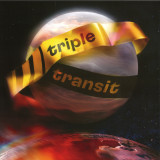
Full of bounce and experimentation in equal measure, ‘Triple Transit,’ Braille’s new album for Hotflush is about leaving his Sepalcure project (with Machinedrum) in the rear mirror, moving back to New York and using its energy to fuel new moves, confronting our hyper layered world and overcoming personal difficulties by being creative.
Focused squarely on utilising modular synthesis in sprawling studio sessions, the album covers a wide stylistic range and draws on the artist’s formidable battery of experience to craft a body of work that packs real emotional punch as well as a dancefloor sensibility.
We had a quick chat with him to wet your appetite…
Praveen Sharma aka Braille:
Moving on from Sepalcure
“That period of time when Sepalcure was at its peak was really inspiring. I’m still really in awe and humbled by the fans. It’s always amazing to hear about how music you’ve made has brightened up other people’s lives in some way, but ‘Triple Transit’ is really about transitioning from that period to something new. I’m intentionally not using many vocal samples on this album. That became quite a crutch for Sepalcure and I wanted to try and find ways to evoke those emotions and connect with the audience in other ways.”
The roots of his Bounce
‘Sour Patch Kiss’ and ‘While We’re Free’ are inspired by classic house and some early Detroit stuff. Songs like ‘Big Fun’ (Inner City), ‘I Wanna Be there’ (Model 500) and slowed down ‘Sex on The Beach’ (DJ Assault) have stuck with me since the beginning. I used to listen to this slowed down and doubled version of ‘Sex on The Beach’ on an early Juan Atkins mix cd on REPEAT when I was in high school.
Getting ambient
Triple Transit slows down and transitions through a bit of sadness and eventually acceptance at the end of the album. A lot of the music I’m making these days is trying to recreate that manic feeling so many of us have in 2024. Between social media, ridiculous hustle culture expectations and depressing global and national political events, it’s hard to not feel overwhelmed. I feel like Triple Transit is kind of a parabolic curve from mania to joy to a sober realization that yeah, actually the world is just fucked but somehow we carry on.
Anonymous British funk studio outfit Ultrafunk was spearheaded by Blues & Soul magazine proprietor John Abbey, who ran a fashionable record shop and label called Contempo in London’s West End during the 1970s; he conceived of the group as the UK counterpart to US studio bands like Mfsb. Arranger Gerry Shury, who had worked with Barry White and Maurice Gibb of the Bee Gees, drafted guitarist Chris Rae and bassist Frank McDonald (who often composed library music together) and future Rubettes drummer John Richardson to form the group, in situ. A lack of band photos, suggestive song titles and a predilection for American cover tunes led many to believe the band was US-based. Their self-titled debut LP is where the myth all begins, with a number of truly atmospheric and cinematic hard funk instrumentals, given added textural depth through full orchestration, including covers of Bill Withers’ “Use Me” and Stevie Wonder’s “Living In The City.” Though not quite as compelling as the better-known follow-up set, Meat Heat, there is still plenty to savour on Ultrafunk, making this debut companion disc a must-have for all true funk aficionados.
2024 Repress
Straight in the wake of their eponymous debut LP released on the label back in 2016, Weval return to Kompakt this year with their sophomore album, 'The Weight', breaking their pop-mellow, nostalgia-friendly facet further out in the open as they arrive "at this place again were everything felt spontaneous, new and exciting, like we had in the beginning". Orbiting around that ever luminous yet wistful melodic halo that surrounds their music, this second full-length effort sweeps an extra-wide and languidly woven palette of emotions and moods, making for a uniquely ambitious and generously coloured mosaic of sound. If the recording sessions "often started grumpy and emotionless" by Harm and Merijn's own admission, the pair was "surprised by the joy it gave us, which can be compared to the emotions we felt back in the first days of making music together"; subsequently reconnecting with that fresh, naïve feeling of "absolute creative freedom" they were after. The album is also the fruit of a whole new working process for them - more playful and unpredictable - which saw them switch from "guitars lying around to piano, onto our own synths and the most cheap quirky toys synths you can imagine", and involved "recording all of our own samples, voice and almost every instrument out of the box - which for us was a totally new way of working". "We've always wanted a narrative for the album, and finding the right order perhaps took the most effort" they explain; "we felt anxious, felt insanely positive, felt heartbroken again, felt in love again, and there was death, and even suicide around us. It was quite chaotic. As a whole, 'The Weight' breathes with that transformative richness, free of limits and rules, except perhaps to "do quick and not think too much". Amidst this collection of songs and instrumentals that live by Weval's singularly positive take on music - one that can "lift you up, and make you feel hopeful without being necessarily straight out 'happy'" as they define it, the title-track and lead single stays true to the duo's dynamic approach, putting on a fine balance of floor and dream inducing adaptability that sound engineer David Wrench (Frank Ocean, The XX, FKA Twigs, Caribou… etc.) subtly made palpable. There's heavy showers of funk drops pouring from endless bars of thunderstorm clouds and laid-back riffs beating a restrained poolside-party kind of pulse, but also sensual vocals rising from beneath the sheets and rueful polaroid-filtered ambiences to soundtrack all possible moments in life - from the most euphoric to those when music seems the only viable healing potion. More on the post-KLF, BoC-inflected electronica side of things, 'Are You Even Real' takes its listener for a round-trip across the star-studded dome and beyond, before songs like 'Someday' and 'Same Little Thing' head back down to a state of pulsating, earthly organicity, tense and mercurial as get. An arpeggiated slice of piano-strewn kosmische, 'Heaven' is another invitation to an epic-scale odyssey from the inner-spheres into the distant fringes of the outer-world. Weightless and airy, yet texturally dense and widely magnetic overall, Weval second LP is a synthesis of the duo's multi-angle take on electronics: blissed-out, heartening and infinitely free.
Nur zweieinhalb Jahre nach der Veröffentlichung ihres selbstbetitelten Debutalbums finden sich WEVAL zurück "an jenem Ort, an dem sich alles spontan, neu und aufregend anfühlt - so wie als wir anfingen zusammen Musik zu schreiben". An diesem Ort entstand "The Weight", ihr zweiter Longplayer, auf dem Weval sich ganz den Pop-verliebten, Nostalgie-freundlichen Facetten ihres Sounds öffnen. Stetig um den sehnsuchtsvollen Strahlenkranz ihrer Melodien tanzend, legt diese Platte noch vielschichtigere, mit feinster Präzision gewobene Gefühlswelten frei.
Obwohl die Aufnahmesessions nach eigenem Bekunden oftmals "miesepetrig und emotionsarm" begannen, so war das Duo überrascht darüber, wie schnell sich bei der Arbeit jene Freude einstellte, die sie aus ihren künstlerischen Anfangstagen kannten, eine Woge des frischen, naiven Gefühls der "absoluten kreativen Freiheit". Dieses Album ist die Frucht eines verspielteren und unvorhersehbareren Arbeitsprozesses innerhalb der Band, in welchem alles zum Einsatz kam, was ihnen in die Finger kam - von der ollen Gitarre, die in der Studioecke stand, über ein Piano und den bandeigenen Sythesizern und den sonderbarsten Spielzeuginstrumenten, die man sich vorstellen kann. All dies sowie zahlreiche Vocalaufnahmen dienten als alleinige Samplequelle - "was für uns eine völlig neue Arbeitsweise war". "Es war uns wichtig für das Album den perfekten Erzählbogen zu spannen. Die richtige Reihenfolge zu finden war ein extrem aufwendiger Vorgang", erklären Harm und Merjin. "Uns war bange, wir fühlten uns total selbstsicher, uns zerbrach das Herz und wir verliebten uns erneut. Wir waren sogar von Tod und Selbstmord umgeben. Alles war Chaos. Insgesamt atmet "The Weight" die Reichhaltigkeit dieser sich ständig verändernden Gefühlslagen, frei von Einschränkungen und Regeln - außer vielleicht "mach es schnell und zerdenke die Dinge nicht." Inmitten dieser Ansammlung von Songs und Instrumentals, die aus Wevals einzigartiger, von Zuversicht geprägter Herangehensweise entstanden sind - "Musik, die dich hochzieht und Hoffnung spendet, ohne dich notwendigerweise happy zu machen. Der Titeltrack "The Weight" steht exemplarisch für Wevals ambivalenten Ansatz, die feine Balance zwischen Dancefloor und Traumzuständen, perfekt in Szene gesetzt von Soundengineer David Wrench (Frank Ocean, The XX, FKA Twigs, Caribou… etc.).
Der schwer aus gewaltigen Gewitterwolken tropfende Funk, die eine verhaltene Poolparty suggerierenden Riffs, die sinnlichen, geisterhaften Vocals und ein verwaschenes Ambiente, das wie ein Album alter Polaroidaufnahmen alle erdenklichen Momente des Lebens festhält - von den euphorischsten bis hin zu jenen, in denen Musik der einzige Trank ist, der Linderung verheißt. Das post-KLF und Boards of Canada evozierende "Are You Even Real" führt den Hörer auf einen imaginären Flug ins Sternenzelt, während organisch-klingende Songs wie "Someday" oder "Same Little Thing" wie Quecksilber am Boden haften. "Heaven" ist eines jener "kosmische" Stücke mit wilden Arpeggios und Pianosprengseln, die Weval in den vergangenen zwei Jahren zu einer Live-Sensation werden liessen. Wevals Musik ist schwerelos und luftig, aber gleichermassen von dichter Struktur und von einer magnetischen Anziehungskraft. Ihr zweites Album "The Weight" ist eine Synthese aus dem multi-perspektivischem, kaleidoskopischen Verständnis von elektronischer Musik: Herzerwärmend, alles umschmeichelnd und unendlich frei.
Yes, *that* Al Hirt record. Featuring the godlike "Harlem Hendoo", looped unforgettably by De La Soul for the legendary Buhloone Mind State cut, "Ego Trippin' (Part Two)"!
Al Hirt's infamous Soul In The Horn is inextricably tangled up in crate-digger lore. Originally released in 1967, the album has been in heavy, heavy demand for over 30 years, entirely down to the majestic soul-jazz fire of "Harlem Hendoo". And it's a song so good, so vital, so timeless, that it will always tower above everything else in its proximity. This one track alone is worth the price of admission - even if the cost of entry were $100 or even $1000.
However, it would be an error to dismiss this record as merely a one tracker, loaded as it is with dope samples for adventurous beat makers. Certainly the funkiest Al Hirt record, it definitely lives up to the "soul" in the title. Thanks to composer Paul Griffin and arranger Teacho Wiltshire, Hirt got uncharacteristically free and groovy throughout. It comes on more like an obscure KPM library funk record than the easy listening Al was notorious for.
A Louisiana trumpeter and band leader who made Allen Toussaint’s “Java” famous, Al Hirt was also known for TV themes, Dixieland, Swing and being a minority owner of the New Orleans Saints. Unlike every other Al Hirt record - and despite most "diggers" claiming otherwise - this here gem is genuinely hard to come across "in the wild". Normally, you can't give Al Hirt records away, except this particular one, which raises pulses in the crate digging community to life-threatening levels. For every owner claiming to have found their copy for a dollar, there's scores more claiming to have *never* unearthed one in the field. So, paradoxically, you can consider this the most tricky-to-pull "thrift store record", ever. This is why we're finally making it available for everyone, not just those with endless hours to spend scouring the global goodwills!
Soul In The Horn represented an expressive detour into authentic soul-jazz for Al Hirt. Throughout, we're struck by a fierce, fiery energy that's otherwise absent from his typically easy listening work. Without question, the slinky, magical "Harlem Hendoo" is the standout, here. It's also the reason why the record is so scarce and commands awe among crate diggers, sounding like something from an obscure and deeply revered spiritual jazz record. As is often the case, the true genius of the song is tricky to do justice to; it's like a minor miracle of songwriting and performance that simply swooned down from the heavens on the back of horns, bells and harpsichord. It's one of the sweetest musical compositions ever recorded inside a studio - it's only failing is that it's just too short. Sampled brilliantly by De La Soul, it has also been used by The Roots for "Stay Cool" and Nightmares On Wax for "Damn".
The rest of the record makes for a mighty fine listen. From the opening cover of Booker T. & The MG's "Honey Pot", to the propulsive, ultra-funky "Mess Around", it's nothing but a good time. Given its title, the elegant stepper "Calypsoul" sounds exactly as you'd hope whilst the melancholic, wistful "Long Gone" hurts so good. Truly, this is just dying to be looped up, Al's muted playing capturing a soulful longing only horns can often achieve. The bluesy, slo-mo swing of "Sweetlips" oscillates between cool disaffection and swelling pride whilst the graceful, low-key funky "Girl" closes out the A-Side in the fine style. Ushering in the B-Side, the brief but brilliant strut of "Love Ya' Baby" shines brightly before the skipping funky-jazz of true highlight "Sunday-Goin' To Meetin' Time" demands both your attention and your dancing shoes. The mellifluous piano-funk of bass and horn-drenched "Snap Back" serves as the sumptuous prelude to "Harlem Hendoo"'s main character energy before the irrepressible, upbeat R&B of "Ludwig" closes out this quite remarkable album. An album deserving of a place in every serious record collection.
The audio for Soul In The Horn has been carefully remastered by Be With regular Simon Francis, ensuring it sounds better than ever. Cicely Balston's expert skills have made sure nothing is lost in the cut whilst the records have been pressed to the highest possible standard at Record Industry in Holland. The original sleeve has been restored here at Be With HQ as the finishing touch to this long overdue re-issue. This is after-hours music. Let it speak for itself. Listen. Listen to the soul in Al Hirt's horn.
"Once again it's quite difficult to pin down exactly what's going on through Herandu's debut album, Ocher Red, but its a little bit like Metalheadz meets Weather Report out on the Siberian steppes...
Herandu are brothers Evgeny and Mikhail Gavrilov from Novosibirsk in Siberia. Mikhail and his brother have played music together since they were very young eventually forming the band FPRF together in the mid 2000's. Eventually the group split as the members dispersed around Russia, but Evgeny and Mikhail continued to make music, Evgeny under the alias Dyad and Mikhail under the name Misha Sultan (some of you may remember his excellent cassette, Roots, which came out on Hive Mind in 2022).
Herandu was born in 2022 during several studio sessions they managed to grab whilst both visiting Siberia. They both quickly realised that together they were making music that didn't quite sound like either of their solo projects but which was influenced by the music of their formative years. Their friend Vladimir Luchansky was invited in to add saxophone and the result is an 'urban music' that's as influenced by the gritty cityscapes of '70s TV cop thrillers as it is by 21st Century urbanism.
The paintings on the album cover are by Italian artist Mauro Reggio, who kindly allowed us to use his work, and whose paintings seem to convey something of the mood of Herandu..."
That true beauty lies in the essentiality and meticulous combination of a few elements is sometimes not just a cliché. The delicate blend of Roland CR-78, acoustic guitar and dissonant organs that intertwine in Open Windows is a vivid demonstration of this. It is these few elements, now distant and hinted at and now close and deafening, that paint the backdrop of melancholic nostalgia where laconic whispers move the listener within the paintings that bear the sonic signature of Human Figures. To Daniel Lewis’ new project, which has seen its springboard through releases on the label of his friends at Frigio Records, perhaps the adjective “new” is already quite tight. He has built a very recognizable sonic tibre, an influence of producers and listeners at different latitudes of the post-punk and wave scene.
In the 8 canvases of Open Windows the folk tradition is repainted in a more contemporary guise: the sweet and sad litanies are alternated with fast and frenetic stornelli in which the combination of tradition and experimentation constitutes the stylistic signature. The open window through which the listener has the opportunity to look out in this album does not, however, give onto a natural external panorama. It projects into an inner world where introspection and silence are the only chance to grasp its sublime beauty.
- A1: Blood In The Water 6 54
- A2: Enigma Of Reason 10 06
- A3: The Wanderer 5 03
- B1: The Big Quit 8 35
- B2: Devil's Encyclopedia 5 47
- B3: A Memory Of My Future 6 26
- C1: I Am Because You Are 4 32
- C2: My Share Of Your Life 7 48
- C3: Age Of Thought 4 38
- D1: Matchbox Racing 6 56
- D2: We Stay Loud 5 25
- D3: Melting Pot 5 51
Über drei Jahrzehnte nach ihrer Gründung durch Leslie Mandoki, setzen Mandoki Soulmates mit ihrem Album "A Memory Of Our Future" nicht nur musikalisch neue Maßstäbe, sondern präsentieren ein produktionstechnisches Meisterwerk: Das gesamte Album wurde analog aufgenommen und produziert - vom ersten Ton bis zum fertigen Vinyl. Die Produktion des rund 80-minütigen Konzeptalbums ist ein seltenes Unterfangen in der heutigen Musiklandschaft. Mit durchgehend analoger Signalverarbeitung vom Mikrofon bis zur Vinylpressung ist die Produktion von "A Memory Of Our Future" ein Manifest von Präzision und Leidenschaft, die in jedem Ton des Albums zu spüren ist. Das Mastering des analogen Magnetbandes durch Greg Calbi im renommierten Sterling Sound Studio in New York und der Vinylschnitt in den Emil Berliner Studios sind ein Symbol für die audiophile Exzellenz des Albums. Mit einem Setup, das in der gegenwärtigen Musikproduktion kaum noch zu finden ist, und mit der die Band eine Wärme und Lebendigkeit in ihrer Musik eingefangen hat, die in digitalen Aufnahmen oft verloren geht, haben die Soulmates ein Werk musikalischer Vielfalt geschaffen, das von Prog bis Jazz Rock reicht, und kompositorische Reife, spielerische Leichtigkeit und kunstvolle Solos mit großen Spannungsbögen und tiefgründigen Texten zu gesellschaftspolitischen Themen verbindet. Die generationsübergreifende Supergroup von Rock- und Fusion-Großmeistern mit Ian Anderson (Jethro Tull), Mike Stern, Al di Meola, Randy Brecker, Till Brönner, Bill Evans, John Helliwell (Supertramp), Cory Henry, Richard Bona, Steve Bailey, Simon Phillips (Toto), Leslie Mandoki, Tony Carey (Rainbow), Nick van Eede (Cutting Crew), Jesse Siebenberg und Mark Hart (beide Supertramp) ruft mit dem Album zum Handeln gegen Spaltung und für Menschlichkeit auf. Mit "A Memory Of Our Future" gelingt den Soulmates eine einzigartige Verschmelzung audiophiler Exzellenz und gesellschaftspolitisch relevanter Musik. Dieses Album ist nicht nur für Fans von Prog und Jazz Rock, sondern für alle, die echte Musik zu schätzen wissen.
For the second release of the Back to Back series of Stolen Goods goes for two stables of the scene: label manager and old school pillar of the Italian scene Lele Sacchi and Italo Spanish beat master Bawrut.
After B2B1 saw the funky deep sound of Rogue D feat Joe Le Groove and the raw house grooves of Ruff Stuff got played by Laurent Garnier on his show and by peeps like Jamie Jones and Oliver Dollar in their sets and chosen by Beatport in most of their weekend picks here we are ready for two bangers for clubbing prime time! Bawrut's fame goes a long way back to in the best of Europe's crossover of electronic dancefloor music and indie and urban flavours. An album on Ransome Note, hits for Life & Death, Correspondant and tracks supported by Dixon, Jennifer Cardini, Ricardo Villalobos Sven Bath and playing B2B with Kink and Skream in festival and clubs like Sonar, Nuits Sonores, Fabric, Sub Club, Nitsa, etc. and now this massive hands in the hair, goosebumps in the back monster of retro future rave piece of music!
Lele Sacchi is known to have an ear for bangers having been behind the decks all over the world for nearly 30 years, so whenever and with various aliases he turns into producer is quite normal to find his music out on labels like Snatch, Soul Clap, Nervous, Internasjonal, Crosstown Rebels, Pokerflat, Rebirth and more and more classic underground dance stables. This time he keeps his know funkier deep groove but adds a kille stab in the breakdown to represent a vein of peaktime monster attitude.
Again a message 'From Clubbers to Clubbers' as we love to say here at Stolen Goods records.
The package, posted from Inglewood in California, dropped through my letter box…
I was looking forward to seeing this, the VHS of the then relatively ‘unknown’ but now legendary live show at the Saenger Theatre in New Orleans by Maze featuring Frankie Beverly. But when I fed it into my VHS player, I was disappointed. I could not quite figure out why. The band were tight, each musician sounded great, the product of being on the road, year after year, club after club in the States, sometimes playing five shows a night, all propped up by one of the best soulful voices we had ever heard, the maestro Frankie Beverly.
It took a second play of the VHS to realise what was missing. It was ‘too comfortable’ an atmosphere. A few wealthy customers sat around coffee tables quaffing champagne. It seemed to me that this audience, somehow, did not fit the band.
Paul Fenn at Asgard promotions received the contract from the band to appear live in London and Manchester. I became more and more convinced that his UK fans were going to be a lot more responsive than those from New Orleans.
We put the word out with just a couple of exclusive ‘shout outs’ by Robbie Vincent on his Radio London Soul programme. Those two plugs were enough to sell out all four shows at London’s premier music venue, the Hammersmith Odeon. The ticket office was rammed and the queue six deep, stretched halfway down Queen Caroline Street.
“I have never seen anything like it” expressed the manager of the theatre as he rolled down the shutters and turned on the “Sorry, SOLD OUT” notice above the theatre box office.
I was curious, so I went up and stood in the wings of the Hammersmith stage on that first show. Frankie, introduced to the stage by his sound engineer, Greg Blockman, sauntered past me, strumming his rhythm guitar, dressed in a casual dark green towelling suit, a brown leather visor and flip flops…and then five seconds later, he suddenly stopped. He seemed suddenly to be aware of the thunderous ’Welcome to London Maze’ roar, circling around the theatre about to engulf him. He slapped every black and white hand offered up to him that night, with a huge smile as he circled the edge of that stage. We wanted to get next to him, even if it meant climbing over rows of seats in front of us to do so.
That was the beginning of our love affair with Maze and Frankie Beverly. It certainly wasn’t New Orleans comfort; it was more like a crazy, but friendly, London riot.
Five albums on from the “Live in New Orleans” LP, Frankie sauntered into the California recording studio, probably with the same swagger as in London, to cut the delightful A-side here, “Somebody Else’s Arms”, from his aptly named ‘Silky Soul’ album. Along with the B-side, ‘Love is’ (from the “Back To Basics” CD, 1993) both are so delicious you might want to relax and pour yourself that London glass of champagne, 1983 vintage. Tell your mates your Maze/Hammersmith story too. You deserve it.
This record was on our radar for quite some time, but we didn’t know who the artist actually was as it was incorrectly credited on Discogs. But as luck would have it, whilst speaking about this release to our artwork guy at the label, Diplomat, he said that he knew them! So, a few emails and phonecalls later and we had arranged this repress.
Originally this only came out as a white label in 1993 on Dance Bass Records out of Essex which was part owned by Battery 03! A highly sought after EP like all releases on Vinyl Fanatiks, these four tracks perfectly encapsulate the sound of the early 90’s Essex scene.
Only 350 pressed on an incredible marbled vinyl.
The Rave Doctor – a pseudonym of Dave Wallace, who had a huge input and impact in the UK rave, hardcore, jungle and drum & bass scenes under numerous names such as Mad Dog, Fugitive as well as Aquasky, plus many, many others!
This is the second EP under his Rave Doctor alias that was originally released in 1993 on the Southampton label Adrenalin Records, that was run by Stu J (who also had a release on Vinyl Fanatiks a few years back). Featuring the track ‘Ruff In The Jungle’ that went on to become an anthem in Tenerife where 10,000 ravers will all throw their hands up and cheer when its dropped at a festival. I am reliably told that the track is bigger than Liquid’s ‘Sweet Harmony’ over there which came as quite a surprise to Dave who only recently found this out.
All four tunes are anthemic party tracks with that Dave Wallace melodic midas touch. If you like this, then grab a copy of The Rave Doctor ‘Lost In Bass’ EP which is still available via Sequence.
Maailma. Ethereal, hypnotic, entrancing - emkay’s release, the third on Espace Noir, is all of the above and more. Gated vocals, deep pads and shimmering stabs, Maailma feels like a memory from another time, a cloudy dream, or a place you’ve never quite been. It’s familiar but foreign, comforting yet thought provoking. And to top it all off? Maailma includes a remix from Finnish partner in crime (and Espace Noir favourite), Sansibar.
Coral Morphologic and Nick León’s Projections of a Coral City marks a series of collisions between distant
worlds: the organic and the artificial, the Eocene and the Anthropocene, sea and cement—and even, perhaps, ambient music and activism.
Coral Morphologic are the Miami duo of marine biologist Colin Foord and musician J.D. McKay; since 2007, they have used a variety of multimedia projects to generate environmental awareness of marine biodiversity—most notably Coral City Camera, an underwater webcam streaming live from an urban reef ecosystem in PortMiami.
Their citymate Nick León is a linchpin of South Florida’s contemporary leftfield electronic scene, with releases for Tra Tra Trax, Future Times, and NAAFI, and credits on records by Rosalía, GAIKA, and Iceboy Violet, among others.
This collaborative project dates back to 2022, when Coral Morphologic mounted a monumental projection-
mapping installation on Biscayne Boulevard. For five nights in late November and early December, macroscopic films of corals played out across the exterior of Knight Concert Hall. The installation was, on the one hand, a glimpse into a possible future, imagining how the city’s skyline might appear if unchecked global warming and rising seas led coral reefs to colonize the built environment. But it also represented a look back into the deep past, a reminder that Miami is literally built from marine limestone mined from the Everglades. Its concrete foundations began life, eons ago, as a marine ecosystem—the same ecosystem that may one day reclaim them. As above, so below.
As an album, Projections of a Coral City is a suite of interconnected movements spread across two sides of vinyl. The tones are watery, the mood elegiac, the colors a washed-out pastel. Forms that appear static on the surface gradually open up to reveal hidden depths teeming with microscopic movement. You might detect resonances with other aquatically minded works—Jürgen Müller’s Science of the Sea, Harold Budd’s liquid piano compositions, even the slow-moving melancholy of Dr. Roger Payne’s Songs of the Humpback Whale. But ultimately Projections of a Coral City creates the impression of a world unto itself—a hauntingly beautiful space at the meeting point between sorrow and hope.
——-
Balmat is a label with a cloudy outline. Jointly shepherded by Albert Salinas and Philip Sherburne, two friends living in Cardedeu, Catalonia, and on the Balearic island of Menorca, Balmat grew out of Lapsus Radio, a weekly show born almost ten years ago. Balmat’s mission is simple: to foster new ideas, expand upon personal obsessions, and put enveloping sounds out into the world.
“Balmat” means “empty” or “void” in Catalan. But quite apart from any negative connotations, we prefer to think of it in terms of possibility: a space waiting to be filled.
In Zeiten, in denen Alle Mainstream sind, ist es nicht leicht ein Underground-Musiker zu sein. Vor allem, wenn man davon leben wollen muss. Der Leipziger Musiker Josen Bach ist so einer. Seit Jahren erfolgreich unter dem Radar!
Er verdient seine Brötchen als Schlagzeuger, als Theatermusiker und jetzt neu: Als Bandleader seiner eigenen Band DIE QUITTUNG. „Einfrieren“, so lautet der Titel des am 24.11. erscheinenden Albums, ist bereits das zweite Album von DIE QUITTUNG, allerdings das erste auf dem Berliner Label staatsakt.
Die Produktion für „Einfrieren“ ging während der Pandemie los und ist nun endlich pfannenfertig gemischt und gemastert. Selbstverständlich wird sein neues Label nun alles dafür tun, DIE QUITTUNG so breit wie möglich im Mainstream zu etablieren! Bald ist es vorbei mit dem Untergrundlegendenstatus. Nur noch mit Sonnenbrille zum Bäcker.