“The group has no niche, it doesn’t fit in anywhere,” explains Necessaries drummer Jesse Chamberlain in a 1980 Melody Maker interview. “We just state the facts about life in America, like The Clash did about England, but we’re not so heavy about it.” The Necessaries rose from the ashes of Harry Toledo & The Rockets, a little-known New York art-rock band playing gigs at Max’s Kansas City during glam’s metamorphosis into punk. —From the liner notes by Michael IQ Jones The Necessaries came together in 1978 and in the too-brief lifespan of the band counted among their members, Ed Tomney (Rage To Live, Luka Bloom), Jesse Chamberlain (Red Crayola), Ernie Brooks (Modern Lovers), Arthur Russell (The Flying Hearts), Randy Gun (Love Of Life Orchestra). First championed by John Cale on the strength of Tomney’s songs, Cale produced their first single for Spy Records (under the I.R.S. umbrella) which was released in 1979. With the forward momentum brought about by the single, the band set about tracking demos intended for Warner Bros., but The Necessaries ultimately would sign to Seymour Stein’s Sire Records. These rough demo basic tracks lacked overdubs, mixes and any finishing touches that would have made them viable for commercial release, but due to tour commitments, the band had to put the sessions on hold to hit the road. While on tour, the band was shocked to discover that Sire had issued the unfinished tracks as their debut album Big Sky (issued in 1981). The band had Big Sky withdrawn and replaced with Event Horizon (issued in 1982) which included half the original tracks from Big Sky and continued to record throughout 1982 aiming for a follow-up. It was not to be and their final studio sessions remained unissued until now. Completely Necessary (Anthology 1978–1982) is the first authorized collection of recordings by The Necessaries and includes 37 tracks, 28 of which are previously unissued. Completely Necessary represents the most accurate musical history of the band laid out across three albums. Disc one is the band-approved first album Event Horizon, followed by Pilots Facing North, a disc collecting studio recordings spanning 1978–1981 and disc three finally sees the release of their final sessions, Songs From The Blue Colony. Album notes by Michael IQ Jones trace the history of the band for this compilation produced by The Necessaries’ Ed Tomney and Cheryl Pawelski (Omnivore Recordings). The audio has been restored and mastered by Michael Graves at Osiris Studio, and both the 3-LP and 2-CD sets feature previously unseen photos across the package. Finally, an essential missing piece of the late ’70s/early ’80s New York scene that was just slightly ahead of the college alt-rock soon to come, is finally available to rediscover—this time it’s authorized and absolutely necessary. BUY! HERE’S WHY! • The first authorized and comprehensive anthology by The Necessaries. • Mid-’70s/early ’80s New York rock/punk/art scene band included members: Ed Tomney, Ernier Brooks, Arthur Russell, Jesse Chamberlain, and Randy Gun. • 37 tracks, 28 previously unissued. • Liner notes by Michael IQ Jones, plus unseen photos.
Between 2023 and 2025, L.F.T. split his time between Hamburg and Berlin, slowly piecing together what would become his most ambitious work to date. The result is Hell Was Boring - a double album that plays like a fever dream, unfolding as a dark, mythical tale about life, death, and the strange spaces in between.
L.F.T. - the alias of German producer and multi-instrumentalist Johannes Haas - has always thrived on tension: between punk urgency and electronic precision, between raw emotion and mechanical repetition. On Hell Was Boring, those tensions are amplified. Drawing on the spectral drama of Bauhaus, the melancholic minimalism of Linear Movement, the futuristic romanticism of Gary Numan, and even the sly swagger of Falco, the album feels at once deeply personal and part of a much older musical lineage.
The sound is stripped down to its bones: drums snap and rattle from a Roland TR-808, TR-707 and Korg KR-55; basslines growl from a Roland SH-101 and Korg MS-20; shards of guitar cut through clouds of tape hiss. Everything was tracked to a Teac Tascam 80-8 reel-to-reel, giving each track a lived-in, imperfect warmth. Nothing is overpolished - L.F.T. wanted the listener to hear the edges, the grit, the moments when the music almost comes apart.
Along the way, he invited friends and long-time collaborators into the fold - Das Kinn, Rosaceae, Felix Kubin, Children Of Leir, and Konstantin Unwohl - each leaving their own fingerprints on the record’s world of shadows and static.
Hell Was Boring isn’t a mere collection of songs; it’s a narrative that drags you into its orbit and doesn’t quite let go. It’s music for the late hours when reality feels porous, and for those moments when you’re not sure if you’re waking up or still dreaming.
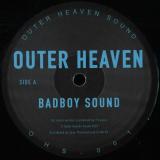
Outer Heaven Sound is a brand new label from Outer Heaven that makes a big impression from the off with Coventry artist going big. His A-side offering 'Badboy Sound' is just that - it has a muscular, rugged low end and freewheeling siren-like sounds with devastating sub bass and rude vocal musings. It taps into jungle roots with unrelenting bass pressure that demands to be played loud. On the flip, 'Droideka' gets even more dark with a minimal take and crushing breaks that are atmospheric and dystopian with real low end broodiness and plenty of smoky atmosphere. A superb first outing.
2026 Repress
DJ Support: Seth Troxler, Marco Carola, Sasha & Digweed, Camelphat, Dennis Cruz and many more
The chances are you've already heard this track being played all over the place this summer; It's been causing some damage on the dancefloor all over, and is now it's finally available on wax for a limited time
The next chapter hits different
FTWD002 — Piaggio Disco Club & DJ Gut on the groove, slicing dusty disco with the MPC into new dancefloor cuts.
Samples straight from the crates, chopped, flipped, and driven by heavy house drums — raw, sweaty, and full of groove.
Old spirit, new story. Built with love and full respect to the originals that made us move.
Pressed loud on limited 12-inch vinyl, cut for selectors, collectors, and the late-night dancers who never stop. Pre-orders open now.
“Feel So” available digitally for everyone to play.
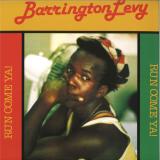
Long requested reissue of this 1981 Barrington album, featuring some tracks not available elsewhere, like "Full Understanding" as played by the great Jah Shaka. The whole LP is heavy stuff from the Radics + Scientist combination of the day, like all Barrington's classic early albums. This album has only been available very briefly a couple of times since its original release, and it's back here pressed from new stampers from the original mothers, which means you're getting a record identical to the original press. An essential album if you love the heavy sound of the early 80s.
2 x catastrophic cosmic chronic compositions from the 2016 psychic mirrors debut album. re-mastered loud for 7" club play. brought to you by Amnisa & PPU records.
Diagonal welcomes Scott Gordon to the fold. Scott has previously released on Editions Mego as one half of Oto Hiax, a collaborative project with Mark Clifford of Seefeel (Warp Records). He's also released a series of EPs and one album under his Loops Haunt alias via the Black Acre imprint. For his Diagonal debut, Scott offers up "Metals", a double EP of sorts: two sides of wax with two separate titles, "And Away" on side one backed with "Tilts" on side two. Each set is a study in using mechanical means to seek tone, rhythm and texture via unexpected objects and instruments. Both sides feature Scott's custom made Spinning Plate Instrument SPI. The SPI is a large, motorised vertical frame that spins a series of metal plates. These can be struck via midi - mechanical 'beaters'. These recordings also feature Scott playing the SPI manually. The results are both gripping and provocative. Mastered by Russell Haswell. Direct Metal Mastering (DMM) to vinyl.
Delta Funktionen returns from a 5-year hiatus with a fiery new EP on his own Radio Matrix label. Four powerful, yet deep and somewhat dubby cuts that perfectly balance techno and stronger house. With this new EP, Delta proves he's a unique voice in the world of electronic music, one who maintains consistent quality in his output while being very diverse in his sound palette. The music is often straightforward, though there's still plenty of depth to be found. It's serious, yet very playful. It's grounded, but also very spacey. And all is presented in very solid mixdowns. All these ingredients combined make this an EP that will fit perfectly into the DJ bags of the true DJ soldiers.
Cat Power marks 20 years since her Memphis-shaped 2006 album The Greatest with 'Redux', a three-track EP cut in Austin with Stuart Sikes and the Dirty Delta Blues band, the same crew who toured that record. Marshall salvages material linked to The Greatest's early sessions, opening with a fresh take on James Brown's 'Try Me', attempted during the original run but never finalised. She then revisits her own 'Could We' in the looser, road-worn arrangement aired on tour. The flip holds her reading of Prince's 'Nothing Compares 2 U', recorded as a nod to Teenie Hodges, the Memphis guitarist whose playing underpinned The Greatest and whose influence threaded her writing.
Beautiful soulful album by George Smallwood - including original material from home sessions prior to George's 1980 self- released LP. The rest, a sampling from the Smallwood mind's library of classic song writers. Huge tip!
"Recorded Live in Hyattsville, MD 1975-2015. George really had no interest in releasing this record. 'Seeing Is believing, they don't need records, trust me I did that, today they getting it live.' So this record is that, live tapes from the house, recorded on a government issued cassette recorder from National Library Service for the Blind. George calls these his practice tapes for songwriting, and performance warm-up, and never beyond his ears were they intended to travel. 'You just got to see me live if you want to really see me.. so when we get there just plug me in, and point me at that crowd' Last time I saw George they had him wired to the club system. He unplugs his Yamaha keyboard, licks the tip of the power cord and taps a beat on it, finally plugging in, synth lights up, tones all at zero, beats at zero. Then he builds from there, counting blind through a preset one hunderd factory tones and rhythm patterns. 'I gotta start off at zero, and go from there.' After the Marshmellow Band disperesed, he got this Yamaha keyboard, same one he's been playing since 1990, endless scrolling over the same presets, trying to make them fit, tempo down, tapping while telling the story and asking if that feels right to you. 'This always gonna be different live.'
Andrew Morgan (Peoples Potential Unlimited)
Fides Records pushes further into its 10-year anniversary journey with X3, the third chapter of the series. Staying true to the label’s decade-long commitment to forward-minded underground techno, this new instalment sharpens the focus with five cuts that move between peak-time impact, melancholic tension, and dubwise pressure—each one a different angle on the Fides aesthetic.
Side A opens with Dustin Zahn’s “Madness”, a no-nonsense peak-time weapon built on stomping momentum, immersive pressure, and relentless drive—proof of why the US veteran remains a constant reference point. Marco Bruno follows with “Aura”, where melancholic leads and detuned synths shape an introspective yet heavy-hitting groove, capturing the Italian producer’s emotional weight and versatility. Closing the side, JANEIN (co-founder of Seelen Records) delivers “Polaris”, a spatial, bleepy roller that leans into darkness while keeping the propulsion locked forward.
Flipping to Side B, Yant’s “Fractured” shifts the palette: playful yet precise, kinetic in motion, with textures that keep mutating as the rhythm snaps into place. DHÆÜR “Sealand” captures the mood of a young Italian artist carving a new lane in minimal, elegant, unapologetic techno—energized and raw, yet defined by clean design, confident restraint, and a sharp personal signature. The record concludes with Hadone’s “No Longer Observed”, a dub-tinged stomper rich in detail and low-end depth; club-weight with an emotional undercurrent, balancing elegance and power in a way that feels unmistakably Fides.
We welcome Orlando Voorn, a bonafide LEGEND of Techno with a career spanning over 3 decades for a brand new 4 track EP. Each track has that 'classic' sound that OV is so good at. Absolute class. 3 out there Techno tracks and one House masterclass, plus the vinyl is a very limited edition (only 250 copies exist) with special technology I've not seen for decades that means playback occurs 'INSIDE OUT' (Plays from the label outwards). DON'T SLEEP !!
Fast-rising Dutch DJ/producer BELLA becomes the first new artist signing to Sally C’s Big Saldo’s Chunkers imprint, with the inspiring ‘Note to Self’ EP – her debut production.
Relationships are key for Sally C. Since the inception of Big Saldo’s Chunkers in 2020, she’s released three carefully chosen EPs, all from her own studio. When she met BELLA while playing a festival in Amsterdam during summer 2022, the click was instantaneous, with the pair going on to play an impromptu b2b that day. Vibing both musically and energetically, they kept in touch, with BELLA sending Sally her maiden productions ‘Note To Self’ and ‘Orchestra Spring’. Sally connected so deeply with the tracks that they’d form the backbone of her debut artist EP on Big Saldo’s Chunkers.
One listen to the final EP and it’s not hard to see why Sally wanted to emboss them as Chunkers. Three fresh originals taking in influence from ‘90s house, acid, electro and prog, all with a unique hard-to-pin-down energy that makes them hit with a special swing.
The title track – also the first production made for the EP - sees BELLA lay down a sonic blueprint – both for her own sound and the full body of work. “This set the vibe and guided me through the creative process. I was really trying to make something that felt my own, that was also unique and not something I’ve heard before,” she shares. ‘Note to Self’ is heavy on attitude and bounce, driven by banging old skool drums, a rapid-fire grime-style vocal and a duo of synth lines – one uplifting, the other mining a slick ‘80s sheen, and the results are memorable. An absolute tune that Sally’s delighted to add to the Chunker catalogue.
‘Orchestra Spring’ is the perky sequel, a wicked one-two punch of kaleidoscopic groovy house with lashings of attitude that loves to scribble outside the lines with lots of retro samples and trippy energy. ‘Odd Symphony’ completes the trio, a blazing late-night cut driven by a gurgling acid underbelly, gritty drums and warm chords, giving the EP a brilliant afterglow.
Real Lies’ new album ‘WE WILL ANNIHILATE OUR ENEMIES’ will arrive on April 16th 2025 via Tonal. The album is about taking the hand of someone you love intensely and running headlong into the chaos and noise and grinding forces that dominate modern life. It follows gilded 2024 collaborations with Mall Grab, Kettama and Drain Gang’s YEAR0001 label. Lyricist Kevin Lee Kharas and producer Patrick King created the record in their studio, hidden away under a railway bridge somewhere in London’s Zone 3. Three pictures stared down at them from the walls throughout, including an image of a young Sasha Shulgin in the relief print style of Che Guevara t-shirts sold at Camden Market, and a photo of an orbiter fairground ride in flight, taken sometime in the early 2000s. Kharas’ lyrical inspiration comes when he steps away from the tsunami of data flooding his consciousness and paces London’s rain-soaked streets late at night. “I wanted the songs on WWAOE to confront modern reality head-on, unflinching,” he explains. “I didn’t want to whine about a lost past. I didn’t want nostalgia. I wanted to learn to love the modern world, with all its horrors and futility.” After a teenhood spent playing in hardcore bands, the duo found ecstasy at a squat party for the first time, and moved to London. Since then, they’ve made music about finding romance and fun when the moon is up, becoming a cult act in the process.
Carolina funk obscurity alert! "Migraine" by North Carolinian musician Dennis Garner, together with Dennis O., is a deep, rare slice of local funk magic. This 45 has always been a bit of a frustration—the cutting engineer accidentally left the lathe test tone running for a few seconds.mid-track, which made it tough to play out. We've finally fixed that issue, and now this killer cut is ready for some proper funtime.
I first found out about Dope On Plastic from a remix they had done of a track by Ontology (who has released previously on this label) & then later found out more about them when they had been sending tunes to Pete Dev/Null, which I would hear him playing on our radio show on Jungletrain.
Soon after that, whilst touring North America, I'd meet Dope On Plastic in person whilst I was in New York, get to hang out with them and visit their home studio. They showed me a tune at the time they were working on (which ended up being Odyssey) and it sounded sick, like something that I would definitely release on Future Retro London.
When they finished it and sent it over to me, along with some other music they had made around that time, there was more than enough to work with for a full EP & Life Energy is a collection of my favourite tracks of theirs of what they had sent me. Big up to Luca (Dope On Plastic) for their work on this EP, keep an eye out for more music from them in the future!
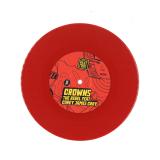
Crowns by The Rebel feat. Corey James Gray is out now on 7’’ via Little Beat More!
The Rebel, aka Tommaso Taroni, producer from Rome and Founder of DJ’s Choice label, delivers a raw, soulful track that opens the door to his debut album. Crowns features the sharp lyrics and smooth, magnetic delivery by Corey James Gray (FKA Ill Spookin), riding over a sturdy groove with crisp drums and deep guitar loops.
On Side B a further explosion comes: Clap! Clap! signs a Power Trio remix of the track that flips everything on its head. With thunderous syncopated riddim and wild brass stabs, this version hits like a futuristic brass band from New Orleans: unrelenting, joyful, and rhythmically overpowering. A bold reimagining by one of Italy’s most visionary electronic producers.
Packaged in a stunning disco bag illustrated by El Moro, this 7” is both a record to play and a piece to keep. A snapshot of a fresh project in the pipeline, ready to go!
Don Cherry, armed with a voracious musical appetite and boundless imagination, first made a name for himself - though not always fully understood - alongside Ornette Coleman, playing trumpet or cornet. In Los Angeles and then New York, he stood at the heart of a revolutionary approach to improvisation based on melody rather than harmony, later baptized "Free Jazz," the final structural development of American jazz. Over time, he became a champion of improbable fusions - gradually integrating into his style a whole array of "exotic" instruments, and more importantly, the cultures from which they originated. Among them: India, Brazil, Africa, Indonesia, and even China. The time had come for the emergence of "world music": in hindsight, a patchwork rich in imagination and seduction, but once the novelty wore off, often lacking in substance.
In Don Cherry's case, however, the commitment ran deep - tied to his personal engagement with a global vision of art and the human condition. Ustad Ahmed Latif Khan, from the Delhi gharana (a musical lineage), was part of a new generation of accompanists - percussionists, sarangi players, flutists, etc. - who had extended both the technical and conceptual possibilities of their predecessors to gain recognition as soloists and soon to venture onto the international scene. Among them, Latif stood out for his taste for irregular, highly syncopated rhythmic patterns - rich in variety and originality. Don and Latif had never met before the recording session, but the two quickly recognised one another as kindred spirits - calm, focused... and full of laughter. Don clearly knew what he wanted to create, and nothing seemed to pose a challenge for Latif, who grasped the American's intentions immediately, warmed up his fingers at astonishing speed, and with his perfect pitch, naturally took on the role of tuning Don's diverse instrument collection to match whatever was found in the studio - from concert piano and Hammond B3 organ to chromatic orchestral timpani.
"Next up in Mr Bongo's Groove Merchant Records reissue series, we present the only solo album saxophonist Ramon Morris recorded as a bandleader. Having cut his teeth playing with the iconic band Art Blakey & The Jazz Messengers and working with other jazz greats, including Reuben Wilson, Shirley Scott, Rashied Ali Quintet, and Woody Shaw, 1973 saw Ramon take the step into solo territory. The resulting album Sweet Sister Funk became a certified classic and a landmark showcase of the cherished ‘70s jazz-funk sound, later sampled by the likes of DJ Premier, The Alchemist and DJ Shadow.
Originally released on Sonny Lester's iconic Groove Merchant record label and produced by Lester himself, Sweet Sister Funk is a jazz-funk masterclass. It features a slick line-up including Cecil Bridgewater on trumpet, Mickey Roker on drums, and Albert Dailey on electric piano. Rich and beautiful, the seven songs ebb and flow in energy, fusing jazz funk and soul jazz with style and swagger. There are bags of groove with Ramon and Cecil trading off on sax and trumpet in an effortless conversation throughout the LP, supplemented by brilliant solos from the rest of the players.
A gold mine of sampling material, the album includes a sublime cover version of The Stylistics' much-loved 'People Make The World Go Round', which was sampled by DJ Shadow on Blackalicious's 'Swan Lake' in 1994. Elsewhere, the percussion and bass intro of the opening track 'First Come, First Serve' is a sampler's delight - a deep, heavy groove with a fine saxophone workout by Ramon. Head to 'Don't Ask Me' and you’ll find the swinging horn intro that formed the basis of 'You Came Up' by Big Pun featuring Noreaga from 1998, whilst 'Wijinia' has echoes of ‘70s indie jazz by labels such as Strata East & Black Jazz.
Here at Mr Bongo, we are proud to be delving into the vaults of Groove Merchant Records once again, reissuing this iconic LP from Ramon Morris."
A gateway to the scene’s halcyon days, “Assembled Vol. 1” is a curated compendium of never-before-released private rarities, edits, and reworks by modern masters of the craft. Of unknown origins, unlisted, and in true underground spirit, “Assembled Vol. 1” embodies the creative and unbridled ethos of a scene built on reinvention, revamping cornerstone classics under a different kind of light, ushering them into an exciting new realm.
Tha Dogg Pound (Daz Dillinger & Kurupt) sind Mitbegründer der West Coast G-Funk-/Gangsta-Rap-Szene. Ihr markanter Rap- und Produktionsstil prägten einen Teil des Death-Row-Sounds der 1990er Jahre. "Dogg Food" ist ihr 1995er Debüt-Studioalbum auf Death Row und ein wichtiger Bestandteil des Labelrosters Mitte der 90er Jahre. Tha Dogg waren stark connected zu Snoop, Nate Dogg, The Lady of Rage und der gesamten Death Row Family-Ästhetik.
From the heart of Tamanrasset in South Algeria, Imarhan transcend Tuareg tradition, weaving hypnotic synths into desert blues. The result is a timeless work—deeply respectful of their roots, yet alive with a stirring sense of modernity.
ESSAM is the band’s fourth album, recorded with the same core lineup, but marks a significant shift in their sound and approach. Musically, it marks a departure from the rocky, bluesy, psychedelic Tuareg guitar-driven sound influenced by Tinariwen’s heritage — moving toward something more open, modern, and exploratory.
For the first time, their long-time sound engineer Maxime Kosinetz stepped in as producer. He travelled to Tamanrasset with Emile Papandreou (of the French duo UTO), a multi-instrumentalist who introduced electronic elements by sampling live instruments and reprocessing them in real time with a modular synthesizer — subtly reshaping the band's sonic identity.
The album was recorded mostly live, in one big room at Aboogi Studio — the band’s own rehearsal and recording space in Tamanrasset. The studio, a converted concert hall, has become a kind of cultural hub for the local youth. Friends dropped by during the sessions to contribute handclaps, vocals, and just be part of the energy. It’s a space where people gather, hang out, play dominoes, smoke chicha — a rare communal spot in a city that doesn’t offer many for young people, somewhat like a youth and community center.
This context — the creative shift, the live recording process, the atmosphere around Aboogi — might be interesting threads to explore in the conversation.
Limited Edition Transparent Black Vinyl Version - 500 Units Only
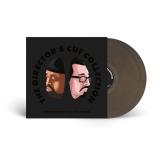
There are few people across the globe, who will have not been touched by the work of Frankie Knuckles. Forever regarded as ‘The Godfather of House’ for his unrivalled contribution to the house music we know today; what started as an underground movement in Chicago has grown to international heights thanks to Frankie. His records earned him recognition on a global scale, allowing him to work with some of the globes biggest names including the likes of Diana Ross, Whitney Houston and Michael Jackson.
Five years ago, Frankie passed away in Chicago on 31st March 2014 leaving behind one of the greatest house music legacies spanning almost four decades. Now he is commemorated by long time writing and production partner Eric Kupper. Eric, himself a seasoned DJ producer and writer, has worked on over 116 Billboard #1 Dance Records and played a pivotal role in a many of Frankie’s productions. Having both worked together for many years they established themselves at ‘Director’s Cut’ from 2011 and set about producing original releases and remixes based on the classic ‘Def Mix’ sound while sharing equal credits for their creations.
Together they re-produced and re-purpose classic cuts for modern dancefloors, with reworks including tracks from Marshall Jefferson, Ashford & Simpson, Artful & Ridney and The Sunburst Band, alongside Frankie Knuckles originals. These releases have now been brought together by Eric to feature on special album called ‘The Directors Cut Collection’ on SoSure Music. It includes the Director’s Cut reworks of Frankie’s classic cuts such as ‘Your Love’ and ‘Take You There’ with Jamie Principle, alongside Frankie’s first #1 single - ‘The Whistle Song’ on which Eric shares writing credits.
Within a multitude of classic reworks, highlights include a previously unreleased version of Ashford & Simpson’s ‘Bourgie Bourgie’ and a huge Director’s Cut Retro Signature mix of Marshall Jefferson’s The House Music Anthem (Move Your Body) featuring Curtis McClain.
The Director’s Cut Collection is a fitting tribute to commemorate the fifth anniversary of Frankie’s passing whilst giving Eric a platform to tell his side of the creative story. This album is to be released in collaboration with The Frankie Knuckles Foundation who work to continuing Frankie’s legacy well into the future.
We are thrilled to welcome back Aldo Cadiz to Beatwax Records with his brand-new EP “Amandorada.”
Years after his highly acclaimed debut album on Beatwax, Aldo returns with a stunning follow-up that once again showcases his unique sound signature — a perfect blend of hypnotic grooves, deep rhythmic precision, and timeless underground energy.
“Amandorada” captures the essence of Cadiz’s refined production style: warm textures, intricate percussion, and that unmistakable Latin-influenced pulse that has made him a favorite among DJs and music lovers worldwide.
This EP marks not only a reunion between Aldo Cadiz and Beatwax Records but also a new chapter in our shared musical journey. We couldn’t be happier to have him back on the label, delivering another powerful statement of cutting-edge electronic music.
Don`t sleep on this. Already making waves and getting hammered by all the big players in the scene.
VIER - IIII, a project by: Machinedrum x Thys x Holly x Salvador Breed.
Across its eleven tracks, 'IIII' dissolves borders between breakbeat, trap-meets-gabber, skippy UK shuffle, halftime, jungle and cinematic electronica, music that shifts from serious voltage to full-colour euphoria. What ties it together is philosophy, not genre.
The group's working method began playfully in the studio with a ten-minute egg timer: each member would sketch for ten minutes, then pass it on. That rule became a ritual, a way to keep things human, spontaneous and shared. In VIER, every track passes through four sets of hands; every decision is a test of trust. What could have been chaos instead became a flow state, a cycle of surrender and discovery thatdefines their sound.
Following singles such as Frankfurt, Control, Where Were You, Solitu and Vai Pulando, 'IIII' stands as VIER's first full statement, a body of work that feels both playful and deeply considered. Moments of quiet bloom into distorted joy; melody drifts through broken percussion; endings turn into new beginnings.
This holiday season, global hip-hop icon Ice Cube makes a powerful return with Man Up — a brand-new album from a cultural trailblazer whose influence spans music, film, and activism. With over 10 million albums sold and six Platinum plaques, Cube’s legacy is undisputed, from his revolutionary work with N.W.A. to timeless solo anthems like “It Was a Good Day.” Now, sharper and more unapologetic than ever, he’s back to deliver a project that fuses his raw lyrical power with a message rooted in resilience and authenticity.
To mark the release, Man Up will be available exclusively as an ultra-limited vinyl drop this holiday season. Each record features a one-of-a-kind hand-crafted cover — a unique blend of artisanal design and proprietary technology (created without A.I.) — alongside city- and country-specific sleeves that pay homage to Cube’s global impact in places like LA, Tokyo, London, and France. The campaign will be amplified through a global social media rollout, city-focused influencer activations, and Ice Cube’s upcoming North American tour. Major press coverage and podcast appearances will further elevate the conversation, making Man Up not just an album, but a collector’s piece and cultural moment fans won’t want to miss.
Flanked by a team of collaborators - including Nick León, more eaze, Ultrafog and Kissen - Ben Bondy captures the Kwia-pop zeitgeist on 'XO Salt Lif3', sluicing down dappled emo and downtempo grooves with log drum thwacks, tempered field recordings and sandblasted shoegaze guitars.
Forget what you think you know about Ben Bondy; like Naemi's fuzzy 'Breathless Shorn', ‘XO Salt Lif3’ is a decisive shift away from the ambient world and towards contemporary underground pop. Last year's amapiano-tinted loosie 'Bend' serves as the album's opener and is the best taster, its slick DSP squelches, granulated drones and sub rumbles immediately swapped out for breezy acoustic guitar riffs, tuned log drum hits and Bondy's own Autotuned vocals. When Bondy turns down the temperature a little, letting the orchestral synth arrangements slip into fuller view on 'Halfmoon', a collaboration with Nick León and Aussie producer Lovefear, it's tempered by low slung emo riffs and mumbled sweet nothings.
By the time we hit 'Dreamseed', Bondy's in full swing, offsetting slow breaks and multi-tracked vocal harmonies with full-spectrum shoegaze power chords that cut into the mix like a chainsaw, with crunchy amp crackle foreshadowing the Bark Psychosis-like drop. Bondy hits a cruise when More Eaze helps out on 'There Is A Place'. Maurice's unmistakable pedal steel draws us in, used by Bondy to add an Americana accent to his euphoric fusion of amapiano and indie pop. It's music that'll make perfect sense if you've caught one of Bondy's notorious DJ sets, where you might hear anything from American Football and Jessica Pratt next to Gwen Stefani, Skinny Puppy or Sneaker Pimps. It’s this chaotic, open-hearted approach - which also plays a part in the Shineteac material - that makes 'XO Salt Lif3' so effortlessly enjoyable.
Seeking out the inspirational intersection between free improvisation, rave and ancient mysticism, Plants Heal deliver an album of kaleidoscopic, organic beatdowns to Quindi.
Plants Heal is a collaborative project between Dan Nicholls on synths, Dave De Rose on drums and Lou Zon (aka Louise Boer) on visuals. The roots of the project are entwined with Dan and Lou's London-based event Free Movements, which began in 2018 to explore how instrumental music could merge with live electronics and DJ sets. Dave and Dan found themselves playing together frequently at the event and as part of Dave's free improv project Agile Experiments, with their accomplished track records as multi-instrumentalists reaching across many layers of music culture. The particular synergy of their partnership taps into the subliminal, surreal and transcendental soundscapes, but they're reliably anchored by instinctive rhythms and driven by a natural flow-state.
From the tentative steps of their first collaborations, Dan and Dave coalesced Plants Heal as a more pronounced project with Lou's live visuals, culminating in a first self-released album in 2021 and since organically fed and watered through continued performances across adventurous festivals and intimate club spaces. Every incremental step along the path of the project yielded new surprises and the deepening sense of a unique, powerful energy. The trio opted to pour this energy into two days of studio sessions at Sonic Playground Studios in Athens, maintaining their unplanned approach and letting the music and visuals unfold in the moment. The end result is Forest Dwellers, a sincere document of truly free music that uses the rhythmic structure of dance and trance music as a springboard into heightened consciousness.
Throughout the album you can hear hints of the familiar - dub techno shimmers, trip hop boom-bap, kosmische momentum, snarling bass modulation, new age ambience and even the odd sizzle of disco. But none of these references are explicit, and they weave in and out of less placeable expressions deeply bedded into Dan and Dave's sonic practices. The end result is a swirling tapestry of unspooling groove, wide open and agile enough to shift gears mid-flow - just as comfortable letting the propulsion melt away as locking into a four-to-the-floor throwdown. From the slippery syncopation of 'Avena Moon' to the angular bait-and-switch of 'Alien Hardware', 'Yarrow's starry-eyed reverie and the rolling, warm-hearted funk of 'Space Ballad', the Plants Heal sound world is expansive and equally enthusiastic for immediate musical motifs as much as wild abstraction.
Lou's visual practice is an intrinsic part of the project. During performances she improvises with analogue footage from her library run through video mixers and synthesisers, focused on medicinal plants such as yarrow, hawthorn, nettle and thistle. All those plants feature in processed form on the cover of the record, which was designed in collaboration with Lou's brother Arthur Boer. Meanwhile, Lou recorded additional footage in Athens during the recording sessions to feed into the continued cycle of the project's live evolution.
Forest Dwellers' meaning honours this cycle and its reflection of the eternal undulations of the natural world. It's also a sincere tribute to the spiritual importance and radical potential of the dancefloor, drawn from the freedom taught by jazz and dedicated to reclaiming lost ideas about community, agency, bodies and the enduring allure of the unknown.
The Éthiopiques series returns! Essential archive recordings from an extremely fruitful period in Ethiopian music.
Before “Swinging Addis” took over the world, there was Moussié Nerses Nalbandian — the Armenian-born composer who shaped modern Ethiopian music. Mentor, arranger, and pioneer, he laid the foundations of Ethio-jazz.
This Éthiopiques volume revives his forgotten legacy, recorded live by Either/ Orchestra First issue ever with new exclusive photos and in depth liner 8-page insert.
“Ethiopian jazzmen are the best musicians that we have seen so far in Africa.
They really are promising handlers of jazz instruments.”
Wilbur De Paris
(1959, after a concert in Addis Ababa)
አዲስ፡ዘመን። *Addis zèmèn* **A new era.**
The time is the mid-1950s and early 1960s, just before "Swinging Addis" bloomed – or rather boomed – onto the scene. Brass instruments are still dominant, but the advent of the electric guitar, and the very first electronic organs, are just around the corner. Rock’n'Roll, R’n’B, Soul and the Twist have not yet barged their way in. Addis Ababa is steeped in the big band atmosphere of the post-war era, with Glenn Miller's *In the* *Mood* as its world-wide theme song, neck and neck with the Latin craze that was in vogue at the same period. Life has become enjoyable once again, with the return of peace after the terrible Italian Fascist invasion of Ethiopia (1935-1941). The redeployment of modern music is part and parcel of the postwar reconstruction. *Addis zèmèn* – a new era – is the watchword of the postwar period, just as it was all across war-torn Europe.
The generation who were the young parents of baby boomers** were the first to enjoy this musical renaissance, before the baby boomers themselves took over and forever super-charged the soundtrack of the final days of imperial reign. Music is Ethiopia's most popular art form, and very often serves as the best barometer for the upsurge of energy that is critical for reconstruction. Whether it be jazz in Saint-Germain-des-Prés or the *zazous* who revolutionised both jazz and French *chanson* after the *Libération*, be it Madrid's post-Franco Movida, or Dada, the Surrealists and *les années folles* that followed World War I, the periods just after mourning and hardship always give rise to brighter and more tuneful tomorrows. Addis Ababa, as the country's capital, and the epicentre of change, was no exception to this vital rule.
**Two generations of Nalbandian musicians**
Nersès Nalbandian belonged to a family of Armenian exiles, who had moved to Ethiopia in the mid-1920s. The uncle Kevork arrived along with the fabled "*Arba Lidjotch*", the** "*40 Kids*", young Armenian orphans and musicians that the Ras Tafari had recruited when he visited Jerusalem in 1924, intending to turn their brass band into the official imperial band. If Kevork Nalbandian was the one who first opened the way of modernism, pushing innovation so far as to invent musical theatre, it was his nephew Nersès who would go on to become, from the 1940s and until his death in 1977, a pivotal figure of modern Ethiopian music and of the heights it. Going all the way back to the 1950s. Nothing less. And it is Nersès who is largely to thank for the brassy colours that so greatly contributed to the international renown of Ethiopian groove. While the younger generations today venture timidly into the genealogy of their country's modern music, often losing their way amidst a distinctly xenophobic historiographical complacency, many survivors of the imperial period are still around to bear witness and pay tribute to the essential role that "Moussié Nersès" played in the rise of Abyssinia's musical modernity.
Given the year of his birth (15 March 1915), no one knows for sure if Nersès Nalbandian was born in Aintab, today Gaziantep (Turkiye/former Ottoman Empire) or on the other side of the border in Alep, Syria... What is certain is that his family, like the entire Armenian community, was amongst the victims of the genocide perpetrated by the Turks. Alep, the place of safety – today in ruins.
Before Nersès then, there was uncle Kevork (1887-1963). For a quarter of a century, he was a whirlwind of activity in music teaching and theatrical innovation. *Guèbrè Mariam le Gondaré* (የጎንደሬ ገብረ ማርያም አጥቶ ማግኘት, 1926 EC=1934) is his most famous creation. This play included "ten Ethiopian songs" — a totally innovative approach. According to his autobiographical notes, preserved by the Nalbandian family, Kevork indicates that he composed some 50 such pieces over the course of his career. This shows just how much he understood, very early on, the critical importance of song as Ethiopia's crowning artistic form. Indeed, for Ethiopian listeners, the most important thing is the lyrics, with all their multifarious mischief, far more than a strong melody, sophisticated arrangements or even an exceptional voice. (This is also why Ethiopians by and large, and beginning with the artists and producers themselves, believed for a long time — and wrongly — that their music could not possibly be exported, and could never win over audiences abroad, who did not speak the country's languages).
Last but not least, one of Kevork's major contributions remains composing Ethiopia's first national anthem – with lyrics by Yoftahé Negussié.
Nersès Nalbandian moved to Ethiopia at the end of the 1930s, at the behest of his ground-breaking uncle. Proficient in many instruments (pretty much everything but the drums), conductor, choir director, composer, arranger, adapter, creator, piano tuner, purveyor of rented pianos,... he was above all an energetic and influential teacher. From 1946 onwards, thanks to Kevork's connexion, Nersès was appointed musical director of the Addis Ababa Municipality Band. In just a few years, Nersès transformed it into the first truly modern ensemble, thanks to the quality of his teaching, his choice of repertoire, and the sophistication of his arrangements. It was this group that would go on to become the orchestra of the Haile Selassie Theatre shortly after its inauguration in 1955, which was a major celebration of the Emperor's jubilee, marking the 25th anniversary of his on-again-off-again reign.
At some point or other in his long career, Nersès Nalbandian had a hand in the creation of just about every institutional band (Municipality Band, Police Orchestra, Imperial Bodyguard Band, Army Band, Yared Music School…), but it was with the Haile Selassie Theatre – today the National Theatre – that his abilities were most on display, up until his death in 1977. To this must be added the development of choral singing in Ethiopia, hitherto unknown, and a sort of secret garden dedicated to the memory of Armenian sacred music, and brought together in two thick, unpublished volumes. Shortly before his death (November 13, 1977), he was appointed to lead the impressive Ethiopian delegation at Festac in Lagos, Nigeria (January-February 1977).
His status as a stateless foreigner regularly excluded him from the most senior positions, in spite of the respect he commanded (and commands to this day) from the musicians of his era. Naturally gifted and largely self-taught, Nerses was tirelessly curious about new musical developments, drawing inspiration from the very first imported records, and especially from listening intensely to the musical programmes broadcast over short-wave radio – BBC *First*. A prolific composer and arranger, he was constantly mindful of formalising and integrating Ethiopian parameters (specific “musical modes”, pentatonic scale, and the dominance of ternary rhythms) into his “modernisation” of the musical culture, rather than trying to over-westernise it. It even seems very probable that *Moussié* Nerses made a decisive contribution to the development of tighter music-teaching methods, in order to revitalise musical education during this period of prodigious cultural ferment. Flying in the face of all the historiographical and musicological evidence, it is taken as sacrosanct dogma that the four musical modes or chords officially recognised today, the *qǝñǝt* or *qiñit* (ቅኝት), are every bit as millennial as Ethiopia itself. It would appear however that some streamlining of these chords actually took place in around 1960. It was only from this time onward that music teaching was structured around these four fundamental musical modes and chords: *Ambassel*, *Bati*, *Tezeta* and *Antchi Hoyé*. A historical and musical “details” that is, apparently, difficult to swallow, especially if that should honour a *foreigner*. Modern Ethiopian music has Nersès to thank for many of its standards and, to this day, it is not unusual for the National Radio to broadcast thunderous oldies that bear unmistakable traces of his outrageously groovy touch.
Ruffiani is the new joint venture between Sam Ruffillo and Fimiani – a playground for edits, sample reworks and cheeky dancefloor tricks. The first release brings together four cuts that go from classic sample-based grooves to refined eighties-inspired proto-house vibes, up to a shamelessly catchy tune built around a very familiar Italian hook… and a final club weapon made to blow the room apart.
The Tuff Fluff EP from Joe Koshin channels the spirit of classic Tech House while pushing it somewhere new. Bouncy and full of groove, each track brims with fresh ideas and details that give the EP its own unique character. Born from a shared musical connection between Joe and label
head A for Alpha, Tuff Fluff began taking shape a few years back. After patiently waiting, the record now arrives feeling more relevant than ever - vibrant, groovy, and timeless all at once.
Marking the first release on Alpha’s Trip in two years, Tuff Fluff also celebrates the label’s relaunch, complete with a fresh new look crafted by the legendary Pointless Illustrations. It’s the start of an exciting new chapter for the imprint, setting the tone for what’s to come. Rounding out
the release is A for Alpha’s remix, a darker, moodier take built around the unmistakable sound of the Roland SH-101 bassline, whilst lifted with floaty, luscious pads - the perfect counterpoint to Joe’s bright and bouncy originals.
(LP, purple cristallo vinyl, continuous mix) Legendary Belgian artist Push returns with a truly special project: an 18-track mini album, presented both on CD digipack and a special vinyl edition in a limited color, where every track connects into a seamless journey.
Each vinyl side plays as one continuous mix and so does the CD, a flowing soundtrack that guides you through deep, cinematic ambient electronica worlds.
Evolving strings, delicate rhythms, and immersive atmospheric layers blend into each other without interruption, creating a unified listening experience that feels more like a film score than a traditional album.
This is Push as you’ve never heard him before — pure emotion, timeless movement, and a full ambient chill out trip for the mind.
Fra Lippo Lippi released six studio albums between 1981 and 1992, two of them on Virgin Records, namely "Songs" in 1986 and "Light And Shade" in 1987. All the original releases were deleted many years ago. There are two previous The Best Of Fra Lippo Lippi releases on CD (1995 and 2003), but this is the first on vinyl. With the limited playing time of vinyl, we had to make some tough decisions, but in the end the song selection very much gave itself. The dark horse here is "Stitches and Burns", an overlooked gem from the final studio album "Dreams" (1992) that didn't make the previous 15 track collection, but in mysterious ways gained new life through organic streaming, with over 70 million streams on Spotify at the time of writing. Included is also the international hit "Shouldn't Have To Be Like That" and "Angel", featuring the late, great Walter Becker on guitar and production duties. The duo is still very popular in various parts of the world and now has 1,2 mill monthly listeners on Spotify. This 2025 reissue is pressed on clear vinyl (500 ww copies).
Chris Stussy makes his long-awaited FUSE debut as he drops the heavily-requested ‘Midtown Playground’, with Huerta joining on remix duties.
It’s rare for an artist to command such intrigue and interest across every single release they line up. Yet, the captivating global gaze around Chris Stussy seems to be snowballing with every unreleased production teased in his ever-impressing sets. Now undeniably one of the scene’s most in-demand names, the humble and hardworking Dutchman has been letting the music do the talking over recent years, with his Up The Stuss project welcoming a new musical focus and providing a platform for him to grow and evolve into an artist at the very top of his game. Not letting up, the surging DJ/producer and label boss now adds another label debut to his catalogue as Enzo Siragusa invites him to his iconic FUSE imprint for the very first time, bringing the release of one of his most requested tracks to date, ‘Midtown Playground’ - with LA-born, Berlin-based DJ, producer and Leisure boss Huerta also making his first appearance on the remix.
From the instantly recognisable synths and lead melody to the skipping percussion and rumbling core bassline, ‘Midtown Playground’ perfectly showcases the sound that Stussy is quickly making his own. The same can be said for ‘From The Delicate Mist Of Morning’, a more subtle but hypnotic offering, while ‘Blueprint’, another unreleased stand-out, offers that commanding yet playful groove he’s become so known and loved for. Delivering his flip of ‘From The Delicate Mist Of Morning’, Huerta dives into a deep, colourful and breezy journey through cosmic spheres, while digital purchasers can enjoy a bonus cut in ‘Mythical Power’ - a warping, jacking and menacing effort built for bustling late hours dancefloors.
Straight from the heart of the 1991 UK rave scene — CUT001, later known as Rabbit City 001, captures the raw underground energy of the era. Originally a short-run white label promo, the record became an instant cult classic.
Produced by Blow alongside Colin Faver (Kiss FM legend RIP), the release was born out of London’s early rave network — record shops packed with weekend ravers, distributors playing new cuts down the phone, and pirate radio pushing the boundaries.
Even before the launch of the Concorde MkII, we have always studied the feedback of our customers and how they utilize our products.
Skilled DJs demand specialized tools that can help them push their creativity to the edge – consistently testing the boundaries in the realm of performance.
Understanding this and reflecting our extensive experience in industrial design and technological know-how, we present the Ortofon VNL cartridge – a model tailored uniquely to the unrelenting demands of modern turntablists and portablists.
The VNL features and improvements
? Extra resistance to hardcore scratching and back spinning
? High tracking performance for both DVS usage and real vinyl
? Optimal balance of output and of sound quality
Technological improvements have been applied for the benefits of all users:
- Ultrasonic welding of the components ensures high rigidity and freedom from resonances.
- Robotic assembly of stylus assembly offers high precision and uniformity of industrial production.
VNL Premounted
Expertly paired and premounted on our popular black SH-4 Headshell, the VNL Single cartridge is compatible with any standard DJ turntable and tonearm.
The quality of the SH-4 headshell is sturdy and rigid, with high quality tonearm terminal connections. One of the standout features of the VNL Premounted cartridge is its versatility. The universal mount fitting allows it to be used with a wide range of S-shaped tonearms, making it a great option for DJs who use multiple setups. The ergonomic design of the headshell includes a long finger lift that is easy to pick up and use, making it ideal for busy DJ sessions. And with its plug and play design, the VNL Premounted cartridge is ready to go right out of the box!
Features:
?Premounted on Ortofon SH-4 Black headshell
?Universal mount fitting a wide range of S-shaped tonearms
?Correct Baerwald alignment with the major part of tonearms with universal mount
The VNL Premounted is supplied with the stylus VNL II premounted on the VNL cartridge body.
3 different feels to fine-tune your performance
To match the multiple applications of modern DJs, the VNL is interchangeable with 3 different styli with suspension types of varying feel and rigidity:
- Stylus VNL I compliance, dynamic lateral 16 μm/m N - Flexible
- Stylus VNL II compliance, dynamic lateral 15 μm/m N - Rigid
- Stylus VNL III compliance, dynamic lateral 14 μm/m N - Firm
DJs can easily identify which stylus type best suits their individual DJ style and enables their absolute best performance capability.
All three VNL styli variants are available separately.
The VNL SINGLE PACK is supplied with the stylus VNL II premounted on the VNL cartridge body.
Output voltage at 1000Hz, 5cm/sec. - 6 mV
Channel separation at 1kHz - 20 dB
Frequency response 20 Hz - 20 kHz -2/+4 dB
Tracking ability at 315 Hz at recommended tracking force:
VNL I 100 μm
VNL II 90 μm
VNL III 90 μm
Compliance, dynamic lateral:
VNL I 16 μm/m N
VNL II 15 μm/m N
VNL III 14 μm/m N
Tracking force range - 3 - 5 g
Tracking force recommended - 4 g
Internal impedance, DC resistance - 750 Ohm
Internal inductance - 450 mH
Recommended load resistance - 47 kOhm
Recommended load capacitance - 200-600 pF
Cartridge weight - 6,5 g
Replacement stylus units: VNL I, VNL II, VNL III
Antiskating: for best backcueing performance use “0”
A cult artifact from the dawn of German techno returns. Cyber Space Tracks Vol. 3 – The Quadrant EP by Jack U. Rebels is a raw, deep dive into the early ‘90s underground.
Originally pressed in 1992 on the seminal techno label Timeplan, this EP has long been a coveted gem among techno purists and collectors. Jack U. Rebels —an alias of key players from the German rave movement—channeled the spirit of rebellion and freedom into a sound that was both cerebral and physical. From hypnotic synth lines to cavernous, dubbed-out drum workouts, The Quadrant EP captures a formative moment in techno history—when genre lines blurred and the rave was still wild.
Lovingly remastered and faithfully reissued, this edition brings back the original energy while giving the tracks the sonic space they always deserved.
Coming From... Returning To... proudly presents this essential reissue— returning it to turntables where it belongs.