Search:re arranged

Styles
All
Temple Rat - Some Leaves Must Fall 聽其自然

From the depth of transient memories comes ‘Some Leaves Must Fall 聽其自然’, Temple Rat’s latest EP and the inaugural release for Martin Gilleshøj’s ‘Buttheads’ label.

Across 6 tracks Temple Rat distills fragments of spatial memory, merging conceptual ambience with the mystic, spatial, and driven edges of deep trance and hypnotic techno. A pensive and functional synthesis, one played out like an ode to the sustained.

Through 2024 while moving between Berlin and Sichuan, Temple Rat conceptualized and finished ‘Some Leaves Must Fall 聽其自然’. At its core, the work is an exploration of how the personal memory of cities and their particular acoustic environments can be transmuted in musical form. For these places, altered by the passing of time and the shifting of contexts, mirror the fluid and generative nature of sound itself.

Creatively this approach was borne out in a kind of archaeology of sound: by sampling and capturing auditory fragments Mei was able to preserve otherwise fleeting moments of experience. Sonics which not only embodied the emotions of the present but served too as a mechanism of recall, pulling memory back into focus even against the erasures of time.

In its method this project seeks to transform the sonic textures of urban and natural environments into high-energy dance tracks, exploring the tension between the certainty of space and the uncertainty of time. A tension operating not only within the structural logic of the sound itself, but so too as an affective experience, extending into the listener’s body and perceptual field.

For we are not the first to note that in a world of pervasive temptation and fragmented information, sustained listening has become rarified. Through this project, Temple Rat hopes to counter this tendency; to encourage a deeper mode of listening that restores attention, re-establishing our essential connection with the present.

All music is written, recorded, arranged, and produced by Temple Rat aka Yuxin Mei
Mastered by Giuseppe Tillieci at Enisslab
Distributed by One Eye Witness


out of Stock

Order now and we will order the item for you at our supplier.

10,71

Last In: 28 days ago
THE THINKING OF THE WORLD BEGAN POUNDING IN OUR EARS THE MOMENT WE HIT SHORE - THE THINKING OF THE WORLD BEGAN POUNDING IN OUR EARS THE MOMENT WE HIT SHORE

"The Thinking of the World Began Pounding in Our Ears the Moment We Hit Shore is a studio-constructed album developed as a project rather than a band.

Created by Florian TM Zeisig between 2022 and 2025, the record draws on sessions and material contributed by a small group of collaborators. Recordings were gathered across different contexts and brought together through an extended studio process, with writing, production, arrangement, and assembly treated as a continuous activity.

The album took shape gradually through selection, editing, and re-placement of material over time. Individual pieces were revisited, reshaped, and recontextualized until they formed a unified body of work.

Contributions to the project include work by Mari Rubio (More Eaze), Róisín Berkeley, Don Lyons, Cal Fish, K, Seán Being, and JQ. All tracks were produced, written, arranged, and mixed by Florian TM Zeisig, with co-songwriting contributions noted per track."

pre-order now15.03.2026

expected to be published on 15.03.2026

23,11
Ąnis - I Swear I'm Not Delusional

Ąnis is a Lithuanian producer and DJ working in the space between broken rhythms and atmospheric weight. His tracks blur the line between club tools and introspective pieces - raw, textured, and unpolished in the best way.

Ąnis’ debut album “I Swear I’m Not Delusional” builds from late-night sketches into fully formed pressure systems. Ambient passages fall into break-driven grooves, each track shifting like a mood swing. It's rooted in tension, repetition, and space - think the grit and movement of early Skee Mask filtered through a more personal, less polished lens. Tracks like “Mountain People” carry warmth without needing to explain themselves, while others feel like they were made at 3am with no lights on. It’s not chasing a scene - just locked into its own pulse. This isn’t background music. It asks you to sit with it - or move to it. Either way, it sticks.

Credits
Original tracks written, produced, arranged and recorded by Jonas Zubavičius in Vilnius. Mastering by Pranas Gudaitis aka audiomastering.lt. Artwork and design by Povilas Baranauskis.

pre-order now13.03.2026

expected to be published on 13.03.2026

23,32
WILL WOOD - THE NORMAL ALBUM

WILL WOOD

THE NORMAL ALBUM

12inchHCDWWV53
HOSTILE CITY
13.03.2026
  • Suburbia Overture
  • 2: Econd Ight Eer
  • Laplace's Angel (Hurt People? Hurt People!)
  • I/Me/Myself
  • Well, Better Than The Alternative
  • Outliars & Hyppocrates: A Fun Fact About Apples
  • Blackboxwarrior Okultra
  • Marsha, Thankk You For The Dialectics, But I Need You To Leave
  • Love, Me Normally (2018 Mix)
  • Memento Mori: The Most Important Thing In The World

In 2023, Wood secretly worked with producer Kevin Antreassian on a new mix of his top-selling release "The Normal Album." Digging into the original 2019 recordings for more muscular takes, smoother edits, and a more nuanced and balanced mix, Antreassian and Wood created a version of the fan favorite that is one of the rare cases where a new mix is widely considered to improve on the original noticeably. "The Normal Album" is yet another turn in Wood's discography, sardonically playing with Americana and doo-wop sounds, strategically restrained but still highly emotive vocals, and lyrics densely packed with scientific and philosophical references. The dark mania of Wood's prior 2016 release, "SELF-iSH," continues on some tracks but is arranged with greater precision with a new band at his command. Like his 2015 debut "Everything is a Lot," the songs whiplash tonally but are brought together through intertwined themes and recurrent musical motifs and an undercurrent of simultaneous obtuseness and vulnerability. After the original mix of "The Normal Album" was released, a live version of the 4th track on the LP, "I/Me/Myself," had an unexpected viral moment, which brought attention to many other songs on the LP. Songs like "2econd 2ight 2eer" and "Laplace's Angel" continued to attract new fans with their dense wordplay and high-energy attitude, and the album became Wood's first major break into larger notoriety, proving that his sudden burst of popularity was not just a fleeting trend. After taking some time away from the public, Wood began to revisit the album with the intent of giving it the production that he had originally envisioned for it. Wood's top-selling album re-edited for a fuller sound and clearer instrumentation, bringing the album to a new level: new Modern Stereo Mix - 2023 Edit

pre-order now13.03.2026

expected to be published on 13.03.2026

25,42
WILL WOOD - THE NORMAL ALBUM  (2023 MIX)
  • Suburbia Overture
  • 2: Econd Ight Eer
  • Laplace's Angel (Hurt People? Hurt People!)
  • I/Me/Myself
  • Well, Better Than The Alternative
  • Outliars & Hyppocrates: A Fun Fact About Apples
  • Blackboxwarrior Okultra
  • Marsha, Thankk You For The Dialectics, But I Need You To Leave
  • Love, Me Normally (2018 Mix)
  • Memento Mori: The Most Important Thing In The World

In 2023, Wood secretly worked with producer Kevin Antreassian on a new mix of his top-selling release "The Normal Album." Digging into the original 2019 recordings for more muscular takes, smoother edits, and a more nuanced and balanced mix, Antreassian and Wood created a version of the fan favorite that is one of the rare cases where a new mix is widely considered to improve on the original noticeably. "The Normal Album" is yet another turn in Wood's discography, sardonically playing with Americana and doo-wop sounds, strategically restrained but still highly emotive vocals, and lyrics densely packed with scientific and philosophical references. The dark mania of Wood's prior 2016 release, "SELF-iSH," continues on some tracks but is arranged with greater precision with a new band at his command. Like his 2015 debut "Everything is a Lot," the songs whiplash tonally but are brought together through intertwined themes and recurrent musical motifs and an undercurrent of simultaneous obtuseness and vulnerability. After the original mix of "The Normal Album" was released, a live version of the 4th track on the LP, "I/Me/Myself," had an unexpected viral moment, which brought attention to many other songs on the LP. Songs like "2econd 2ight 2eer" and "Laplace's Angel" continued to attract new fans with their dense wordplay and high-energy attitude, and the album became Wood's first major break into larger notoriety, proving that his sudden burst of popularity was not just a fleeting trend. After taking some time away from the public, Wood began to revisit the album with the intent of giving it the production that he had originally envisioned for it. Wood's top-selling album re-edited for a fuller sound and clearer instrumentation, bringing the album to a new level: new Modern Stereo Mix - 2023 Edit

pre-order now13.03.2026

expected to be published on 13.03.2026

26,01
Jesper Lindell - 3614 Jackson Highway LP

Jesper Lindell and his band have come a long way in a short time.

Since the release of the acclaimed 2022 album “Twilights”, they played well over 100 shows all over Europe to an ever growing number of fans.
The new album “Before the Sun” will establish Jesper Lindell as a major Swedish and international artist. Ten brilliant songs steeped in a classic, timeless sound!

Press quotes “Twilights”;
“soulful Americana… a roots sensation” - PopMatters
“Can a Swedish ex-soccer player sing soulful roots music with as much warmth, heart and feeling as Van Morrison or The Band? The answer, which will be obvious as soon as you hit play on Jesper Lindell’s second album, is a resounding “oh yeah”.” - Holler
“it’s clear that Lindell is destined for big things” - Glide Magazine
“a near-perfect wedding of deeply affecting, imaginatively arranged Americana/rock material, soulful, raspy vocals, and consummate performances” - BlogCritics

out of Stock

Order now and we will order the item for you at our supplier.

28,15

Last In: 37 days ago
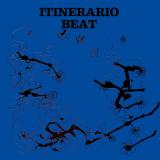
The Blue Sharks - Itinerario Beat (feat. Rigol (Duilio Radici)) LP
  • 01: Uno Dei Due (Feat. Rigol (Duilio Radici))
  • 02: Sembrava Sincera (Feat. Rigol (Duilio Radici))
  • 03: Il Mago (Feat. Rigol (Duilio Radici))
  • 04: Il Campione (Feat. Rigol (Duilio Radici))
  • 05: Itinerario Romantico (Feat. Rigol (Duilio Radici))
  • 06: L&Apos;Ascensore (Feat. Rigol (Duilio Radici))
  • 07: Strane Vacanze (Feat. Rigol (Duilio Radici))
  • 08: Viaggio A Londra (Feat. Rigol (Duilio Radici))
  • 09: Quartiere Residenziale (Feat. Rigol (Duilio Radici))
  • 10: La Baita (Feat. Rigol (Duilio Radici))

First-ever official reissue - Clear blue vinyl edition.

"Itinerario Beat" is as intriguing as it is mysterious. Performed by a group of largely unknown musicians called The Blue Sharks—previously heard on the excellent "It Became Crystal" (reissued by Redi Edizioni in 2021, Cat. No. REDILP001)—the album features ten easy-listening instrumental compositions for bass, drums, piano, and Hammond organ. The tracks are arranged and performed with distinctive taste, blending elements of beat, jazz-funk, and symphonic pop. Officially credited to Rigol, the pseudonym of composer Duilio Radici, the music also appears to include an uncredited contribution from Ugo Fusco, composer of several soundtrack LPs published by Edizioni Leonardi.

Beyond their use in television and film, library music tracks are highly sought after by renowned musicians and DJs and are frequently sampled. A notable example is "Itinerario romantico," included on this LP, which was sampled by rapper Travis Scott in his 2016 track "90210."

pre-order now06.03.2026

expected to be published on 06.03.2026

28,53
KUNDE - LATE BLOOMER LP

KUNDE

LATE BLOOMER LP

12inchWERF282LP
DE W.E.R.F.
06.03.2026

With Late Bloomer, Belgian-Cameroonian rapper, composer and multi-instrumentalist Kunde delivers a work that is both deeply personal and socially charged. The album forms a diptych with his previous release, Dandelion(2024). In Late Bloomer, Kunde pays tribute to his mother, who largely raised him and his sister on her own, using pivotal personal moments as a mirror through which he reveals the world from his perspective.

Composed and arranged entirely by Kunde and brought to life by his live band, Late Bloomer unfolds as a rich, layered universe where jazz, R&B, hip-hop, samba and touches of psychedelic rock intersect. Whereas his first album emerged mostly from the home studio, the new work is driven by live energy, collective interplay and a broader sonic scope. The album is further enriched by guest contributions from Helena Casella, Fred Gata, Okon and Tennishu (US), frontman of the Anderson .Paak-supported jazz-fusion band Butcher Brown.

Late Bloomer cements Kunde's reputation as a storyteller, composer and musical director. The album is both intimate and expansive, rooted in personal history while offering incisive reflections on the human condition. Like his inspirations, ranging from Coltrane and J Dilla to D'Angelo, Don Blackman and Arthur Verocai Kunde crafts a distinctive sound that is at once deeply personal and universally resonant.

pre-order now06.03.2026

expected to be published on 06.03.2026

21,43
Xenosaga Piano Collection - Across the Kosmos LP 2x12"
  • A1: Prologue
  • A2: Shion -Kako No Kioku
  • A3: Battle & Sentô Suru Kos-Mos & Sentô Shûry?
  • A4: Fuan
  • B1: Life Or Death
  • B2: Gnosis
  • B3: Kanashimi
  • B4: Kokoro O Tozashita Shôjo
  • C1: Kookai Foundation
  • C2: Nephilim
  • C3: Nukumori
  • C4: World To Be Born
  • C5: Albedo
  • D1: Kyomu No Hamabe
  • D2: Last Battle
  • D3: Pain
  • D4: Kokoro

Released in February 2002 on PlayStation 2, Xenosaga Episode I marked the beginning of an unforgettable video game saga created by Tetsuya Takahashi, accompanied by a majestic soundtrack composed by Yasunori Mitsuda.

The latter is still considered an essential milestone in video game music. We wanted to pay tribute to these cult classics with Across the Kosmos ~ Xenosaga Piano Collection and Jazz in Kosmos, two albums of officially licensed arrangements featuring the best tracks from the game.


This album was created in collaboration with some of the most talented figures in Japanese video game music. It includes 17 piano tracks arranged by Mariam Abounnasr, Akio Noguchi, Hiroyuki Nakayama, and Benyamin Nuss, carefully recorded on a Steinway D Grand Piano.

pre-order now06.03.2026

expected to be published on 06.03.2026

39,08
Elvis Presley - Elvis Now LP

Elvis Presley

Elvis Now LP

12inchMOVLPM2376
Music On Vinyl
06.03.2026
  • A1: Help Me Make It Through The Night
  • A2: Miracle Of The Rosary
  • A3: Hey Jude
  • A4: Put Your Hand In The Hand
  • A5: Until It's Time For You To Go
  • B1: We Can Make The Morning
  • B2: Early Mornin' Rain
  • B3: Sylvia
  • B4: Fools Rush In (Where Angels Fear To Tread)
  • B5: I Was Born About Ten Thousand Years Ago

After being out of print for a good number of years, we are making 15 titles out of our Elvis Presley back catalogue available again between August 2025 and February 2026. Each title will see two different editions: one on regular-coloured vinyl and one very limited on mix-coloured, marbled vinyl, both housed in deluxe sleeves with a linen look and feel.

Elvis Now was, despite the title, recorded between early 1969 and the summer of 1971 and encompasses different genres including country, gospel, soul and pop. We see for example Kris Kristofferson-penned "Help Me Make It Through the Night" and The Beatles' "Hey Jude", all lavishly arranged keeping in mind the Las Vegas aesthetic of 70s Elvis. The album furthermore only had one single, "Until It's Time for You to Go / We Can Make the Morning", which reached number 9 on the Easy Listening chart in the US in March 1972 and number 5 on the UK Singles Chart in April 1972.

Elvis Now is available as a limited edition of 500 individually numbered copies on light blue marble vinyl and includes an insert.

pre-order now06.03.2026

expected to be published on 06.03.2026

32,98
Andrew Wasylyk - Irreparable Parables

Very limited numbers, orders will need to be confirmed.

For his new album, Irreparable Parables, Andrew Wasylyk felt a strong desire to write a set of songs featuring an element hitherto rare in his work: the human voice. Equally strong was the conviction that he did not want to sing them himself.

The Scottish multi-instrumentalist and composer set about assembling a group of guest singers, sending out the songs to wherever they were in the world. The vocals were recorded remotely and then, like migrating birds, winged their way back to Scotland. The result is an album of great beauty which, perhaps preeminently in Wasylyk’s work, expresses the vulnerability and resilience of the human spirit.

Six singers appear on the record, represented by six songbirds illustrated on the sleeve by Clay Pipe Music’s Frances Castle. The cuckoo is a nod to Belle and Sebastian’s 2004 single ‘I’m A Cuckoo’, that band’s Stuart Murdoch being the first voice you hear on the new album. When the vocal for ‘Private Symphony #2’ arrived, says Wasylyk, “it was everything that I was looking for and more. But this is Stuart Murdoch. Of course he’s going to make something incredibly beautiful and thoughtful.”

The song lyrics were, for the most part, written by the singers. The music is Wasylyk’s creation. He navigates a sound world that lies somewhere beyond the borders of classical and jazz, ambient and abstract. It is difficult to describe, but easy to understand, which is to say to feel. That is the way Wasylyk’s work is experienced: as a feeling. It takes you back to childhood, perhaps, to feelings of comfort and safety, or to memories of walks at sunrise and sunset, or to the way a shadow falls on a particular field in a particular place at a particular time in your life. This is consoling music. That is why, though pretty, it is not merely pretty. These are songs to shore up the soul.

Wasylyk writes in a room, in his native Dundee, full of “half broken” instruments. He picks these up, plays a little, seeking an idea, a feeling, a door that lies ajar. The musical palette of Irreparable Parables includes brass and woodwind, a six-piece string section, guitar, bass, drums, vibraphone, Mellotron, Fender Rhodes, tape loops, synthesisers and percussion. The strings were arranged by the cellist Pete Harvey, a long-term collaborator.

Among the other guest vocalists are Gruff Rhys of the Super Furry Animals, Saya Ueno from Japan’s Tenniscoats and Peter Brewis from Field Music. Wasylyk himself takes the lead vocal on the title track, though a throat infection and touch of pitch-shifting have altered his singing in a way that even he, having fallen out of love with his own voice, finds acceptable.

The heart of the record can, arguably, be found in two tracks, ‘Love Is A Life That Lasts Forever’ and ‘Spectators In The Absence of God’, sung respectively by Molly Linen and Kathryn Joseph. The former, bright with trumpets, was inspired by the writing of Derek Jarman. “I was feeling deeply upset about the world and wanted to try and write some- thing that was obviously hopeful,” Wasylyk says.

‘Spectators …’ offers an emotional counterpoint. It is an “apocalyptic hymn” that seems to grapple with watching human suffering from afar, too distant to be at physical risk, but experiencing the psychological wounding, and feelings of helplessness, even complicity, that come with constant awareness of other people’s pain. “Kathryn’s a pal, I love her dearly, and she’s a brilliant artist who really feels what she writes,” Wasylyk says. “The cracked tenderness of her voice is spellbinding.”

The album closes with an instrumental piece, ‘Soul Enters The Ocean Sun Climbs Out Of The Sea’, all piano and strings, that offers a sense of resolution and ascension. A good moment, too, for Wasylyk to reflect upon the artistic companionship that he enjoyed while making this record – the songbirds that answered his call: “These humans are incredible at what they do. I’m deeply grateful and feel so lucky. It blows my mind.”

pre-order now06.03.2026

expected to be published on 06.03.2026

26,26
Various - Reclaim Everything EP 2x12"

Various

Reclaim Everything EP 2x12"

2x12inchDISTURBO05LP
Disturbo
28.02.2026

Fifth chapter of Disturbo Records, our bigger collaboration so far with great friends and great artists, delivering 8 tracks of pure mayhem. this time out on a double 12" gatefold fully illustrated by our brother in Kota Kinabalu: Mamink aka No Solucion.
All tracks written, arranged and mixed by the artists.
Masters by Exchange.

pre-order now28.02.2026

expected to be published on 28.02.2026

38,03
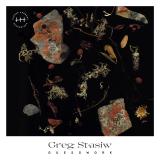
Greg Stasiw - Guesswork

Experimental musician Greg Stasiw presents his debut album of radiant, free-flowing electronics ‘Guesswork’. Music for psychoactive exploration made over a four year period, incorporating ambient, minimalism, intricate sound design & Japanese environmental music. An exceptional listening experience of wonder, tranquility, melancholy & discovery, contemplating the relationship between sound & space.

Greg Stasiw is an experimental musician, visual artist and writer from New England, Northeastern USA. An itinerant polymath, Stasiw has spent time living, working and traveling in New York, Tokyo, Toronto, Paris, Boston, and Bratislava. As well as studying anthropology, animation and illustration, Stasiw has always had a close connection with music.

His earliest musical involvements started with ambient music on Sunday drives, microcassettes, the Windows 98 Sound Recorder and free play with Casio keyboards. Then came a formative procession of piano lessons, orchestras, choirs, taiko, metal, indie rock, tinnitus, and ultimately; the acquisition of music production software.

With his debut album ‘Guesswork’, the aural and visual inspirations that underpin Stasiw's creative life intersect, in a pure, radiant soundworld of space, depth and immaculate clarity. Futuristic, pellucid soundscapes incorporating ambient, minimalism, intricate sound design, and Japanese environmental music are deftly arranged with evanescent chimes, serene tone float, suspended organ notes and curious sci-fi resonances.

Like stepping into some space age meditation garden, if soundtracked by the likes of Hiroshi Yoshimura, Harold Budd, Norman McLaren, and Pauline Anna Strom, the thirteen tracks of ‘Guesswork’ create an exceptional listening experience of wide-eyed wonder, sleek tranquility, gentle melancholy, and singular discovery.

pre-order now27.02.2026

expected to be published on 27.02.2026

24,79
VARIOUS ARTISTS - Mister Ajikko: Manpuku Teishoku - Original Soundtrack LP
  • A1: Ohayo! Voice Cast:minami Takayama, Yoko Kawanami, Miki Narahashi
  • A2: Renaissance Jounetsu Vocalist:wataru Kuniyasu
  • A3: Idainaru Ajio<Bgm>
  • A4: Okazu Yunta Vocalist:minami Takayama, Yoko Kawanami, Miki Narahashi
  • A5: Konishi No Kokuhaku Voice Cast:hirotaka Suzuoki
  • A6: Hisshyoku Ryourinin Vocalist:hirotaka Suzuoki Chorus Singers:minami Takayama, Yoko Kawanami, Miki Narahashi
  • A7: Hinode Syokudo<Bgm>
  • A8: Syokuseikatsu Vocalist:tomohiro Nishimura
  • B1: Eye Catch Voice Cast:minami Takayama, Yoko Kawanami, Miki Narahashi
  • B2: Onabe Wo Mitetene Vocalist:mari Yokote
  • 3: Aji Syobu<Bgm>
  • B4: Ajiou Ryourikai Kaika Vocalist:yuzuru Fujimoto & Ajio Ryouri Kanto Shibu
  • 5: Shimonaka No Kokuhaku
  • B6: Surume No Iji Vocalist:tomohiro Nishimura
  • B7: Yokokuhen Voice Cast:kenyu Horiuchi Narrator:minami Takayama
  • B8: Kokoro No Photograph Vocalist:wataru Kuniyasu

The analog LP reissue of the original soundtrack album from the anime Mr. Ajikko, which aired in 1987. The original LP catalog number is K28G-7379, and the original
CD catalog number is K32X-7125, released on June 21, 1988 (the tracklist differs from the CD released in 2004, which included eight newly added tracks).
The original manga, created by Daisuke Terasawa, was serialized in Weekly Shonen Magazine from autumn 1986 to the end of 1989, and was adapted into an anime
series that aired on TV Tokyo from October 1987 to September 1989.

This is the only soundtrack album for the anime series. It features the opening theme “Renaissance Jounetsu” and the ending theme “Kokoro no Photograph”, both
composed and sung by singer songwriter Wataru Kuniyasu, who is also known for composing Akina Nakamori’s “Gypsy Queen”. Lyrics were written by Ikki Matsumoto,
and arrangements were done by Tatsumi Yano.

The album includes image songs, eyecatch music, and preview tracks, with contributions from renowned comedy song artists Masayuki Yamamoto (Side A tracks 4 and 6)
and Tatsuo Kamon (Side B tracks 1 and 7). The album was structured, scripted, and directed by the anime’s director Yasuhiro Imagawa, making it a variety style album.
The main background music (BGM) was composed and arranged by Daito Fujita (Side A tracks 1, 3, 5, 7; Side B tracks 3, 5). The original manga author Daisuke
Terasawa also contributed lyrics for two songs (Side B tracks 3 and 5). Voice actor Tomohiro Nishimura participated both as a singer (Side A track 8; Side B track 7)
and as an arranger (Side B track 7).

Voice actors Minami Takayama, Yoko Kawanami, Miki Narahashi, Hirotaka Suzuoki, and Kenyu Horiuchi also participated in min dramas and chorus segments.
This album, which comically and dramatically portrays cooking battles, is a “Bravo!” anime soundtrack that closes out the Showa era in style. After 37 years, it is finally
being reissued as an analog LP a long-awaited release for anime connoisseurs!

pre-order now27.02.2026

expected to be published on 27.02.2026

56,26
The Roots - Do You Want More?!!!??!

The Roots

Do You Want More?!!!??!

3x12inch0743911
UMC
20.02.2026

Do You Want More?!!!??! Is the second studio album and the major-label debut from The Legendary Roots Crew. The album, recorded with the original crew, including Scott Storch, was released January 17th, 1995, and was immediately welcomed with open arms by critics, the Chicago Tribune wrote, “This is an impressive display of skills, intelligently arranged and performed.” Do You Want More?!!!??! prepped fans for what The Roots were capable of, and would later show on their magnum opus, Things Fall Apart.

pre-order now20.02.2026

expected to be published on 20.02.2026

56,26
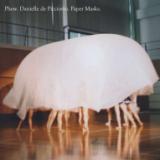
Phew & Danielle De Picciotto - Paper Masks LP
  • 1: The Cat
  • 2: Der Verpasste Kaffee
  • 3: Amnesie
  • 4: Sugar Sprinkles
  • 5: Pixelwissen
  • 6: Iceberg
  • 7: Paper Memories
  • 8: Im Nebel

A unique collaboration between two of the most inquisitive and important artists in modern avant-garde electronic music.

Paper Masks marks a striking new collaboration between visionary Mute labelmates Phew and Danielle de Picciotto. Developed quietly over nearly five years, what began as an experiment between friends gradually evolved into a fulllength album. Phew composed and arranged all the music, weaving in dePicciotto’s voice and freely reshaping it to create something entirely new. Performed in both German and English, the result is an exploratory work that balances electronic minimalism with emotional immediacy.

Described by Pitchfork as “a Japanese underground legend”, Phew - former member of Osaka punk pioneers Aunt Sally - has forged a remarkable solo career, collaborating with Ryuichi Sakamoto, members of Can, and many others. In parallel, Danielle de Picciotto, an American-born interdisciplinary artist based in Berlin, co-founded the Berlin Love Parade and has performed internationally, working with Crime & the City Solution, Gudrun Gut, Space Cowboys, and her partner Alexander Hacke (Einstürzende Neubauten and frequent Phew collaborator) in hackedepicciotto.

Paper Masks stands as a mesmerizing exchange between two singular voices in experimental music - an intimate dialogue across distance, language, and sound, and a compelling addition to both artists’ evolving legacies.

Available on limited edition jellyfish color vinyl, featuring lyrics and poetry, and on CD, housed in an eco card-pack with a lyrics and poetry booklet.

pre-order now20.02.2026

expected to be published on 20.02.2026

24,79
ISAO SUZUKI - My Spare Time LP
  • A1: Wave
  • A2: Solitude
  • A3: A Child Is Born
  • A4: Killing Me Softly With Her Song
  • B1: Black Is The Color Of My True Love's Hair
  • B2: Good Morning Heartache
  • B3: What Are You Doing The Rest Of Your Life

Acoustic Bass: Nobuyoshi Ino
Acoustic Piccolo Bass: Isao Suzuki
Alto Saxophone: Sadao Watanabe
Arranged, Conducted, and Piano: Masahiko Satoh
Drums: Motohiko Hino
Guitar: Sadanori Nakamure

The beautiful new world that master bassist Isao Suzuki built with the support of a diverse group of musicians finally returns to life after nearly 50 years!

With his deep musical insight and collaboration among some of Japan’s finest jazz artists, Isao Suzuki created a work of timeless beauty that now resonates
once again in the modern era.

pre-order now13.02.2026

expected to be published on 13.02.2026

43,49
Christal Zone - Rai Rai / Kanashiyana (7")
  • A1: Rai Rai
  • B1: Kanashiyana

Since 2018, BBE Music’s J Jazz Series of compilations and album reissues has been at the forefront in focussing attention on the hitherto cloistered and rarified world of Japanese jazz. True to the ethos of the series, curators Tony Higgins and Mike Peden have once again dug up a truly rare gem in the form of a 45 from the mysterious Christal Zone, originally released in 1971 only as a promo and reissued here for the very first time. Several years before pianist Tohru Aizawa and brothers Tetsuya and Kyoichiro Morimura formed the now-celebrated Tohru Aizawa Quartet — whose 1975 private- press spiritual jazz LP Tachibana Vol 1 has become a cornerstone of the J Jazz canon and previously reissued by BBE — they were already venturing into bold, experimental territory. Their 1971 single Rai Rai, released as a promotional 7-inch on Liberty Records under the short-lived moniker Christal Zone was written and arranged by koto player and composer Hideakira Sakurai. An almost unclassifiable hybrid of jazz, Japanese folk, Algerian raï, and free improvisation. Sakurai’s visionary approach dominates the track, blending traditional Japanese instrumentation with a dense polyrhythmic groove that evokes not only avant-garde jazz but also the raw street energy of Algerian raï — celebratory, unfiltered, and joyfully unrestrained. The story behind the recording of Rai Rai is as spontaneous as the music itself. While casually rehearsing at Sakurai’s villa, the group was overheard by producer Kunihiko Murai, who was so stunned by what he heard that he arranged a studio session for them the very next day. The resulting 7-inch — Rai Rai / Kanashiyana, released under the one-off Christal Zone name — is now one of the rarest artefacts in Japanese jazz, with original copies fetching astronomical prices among collectors. BBE Music has faithfully reproduced the original artwork and packaging to celebrate this extraordinary and super rare piece of J Jazz history. A piece that bridges the ancient and the future, Japan and North Africa, in under four minutes of controlled chaos. A truly one-of-a-kind artefact, Rai Rai is a manifesto from a generation unafraid to rip up the rulebook and follow their own path.

pre-order now30.01.2026

expected to be published on 30.01.2026

23,49
Various - Wizzz! French Psychorama Volume 5 (67-75)

The journey through French-speaking pop archives continues with this fifth volume, packed with fuzz, gimmicks, and dissent. Far from the charts, the selected tracks display a great creative freedom, often backed by corrosive humor. Welcome to the surprising, kaleidoscopic, and colorful world of the late sixties and early seventies, Wizzz!
Born in Montauban, Robert Pico stumbled into music by chance when he met René Vaneste, then artistic director at Pathé-Marconi. René brought him to Paris to record his first 45 RPM EP in 1964. A year later, Pierre Perret introduced him to Vogue, where he recorded his second album with Claude Nougaro’s orchestra. Sylvie Vartan then introduced him to RCA, where he recorded four singles, including the astonishing "Chien Fidèle," a track backed by a hair-rising fuzz guitar. Alongside his solo career, he also composed for other artists like Alain Delon (the song was recorded but remains unreleased), Magali Noël, Bourvil, and Georges Guétary. In the Paris of the sixties, he mingled with Mireille Darc, Elsa Martinelli, Marie Laforêt, France Gall, Françoise Hardy, Petula Clark, Régine, Dani, Serge Gainsbourg, Joe Dassin, Franck Fernandel, Charles Level, and Roland Vincent. Despite his efforts and winning a Grand Prix Sacem for his final record, Robert Pico didn’t achieve the expected success in show business and decided to leave Paris and return to the Southwest, where he devoted himself to writing. He is the author of 23 books (including Delon et Compagnie, Jean-Marc Savary Editions 2025, a memoir about his youth and his many encounters). Today, he is relieved to never have become a celebrity and devotes himself to his work with passion.
In 1969, the Franco-Italian movie Erotissimo was released, directed by Gérard Pirès (who later directed Taxi in 1998, written and produced by Luc Besson). This pop comedy features Annie Girardot, Jean Yanne, Francis Blanche, Serge Gainsbourg, Nicole Croisille, Jacques Martin, and Patrick Topaloff. The soundtrack was written by Michel Polnareff and William Sheller, with lyrics by Jean-Lou Dabadie. "La Femme Faux-cils," performed by Annie Girardot. It recounts the feelings of a rich CEO's wife who seeks to develop her sex appeal under the influence of advertisement and magazines. Groovy, sparkling and light, this track, with ITS lush arrangements humorously critiques consumer society and feminine beauty standards.
“Je suis l’Etat” (1967) is the flagship track of the first EP by singer-songwriter Spauv Georges, aka Georges Larriaga, better known as Jim Larriaga (1941-2022). Born into a family of bakers, the young man was initially planning to become a hairdresser when he discovered English-speaking music through Elvis Presley and the Beatles. After this revelation, he decided he would become a songwriter and gave himself five years to succeed. He recorded his first two EP’s independently for RCA under the pseudonym Spauv Georges; meaning “that poor George”, a nickname given to him by the mother of her friend Jean-Pierre Prévotat (future drummer of the Players, Triangle, or Johnny Hallyday). Portraying a depressed and eccentric young man, Spauv Georges created corrosive and amusing songs that didn’t reach a wide audience, despite a TV appearance with Jean-Christophe Averty.
Supported by his loyal friend and fellow songwriter Jean-Max Rivière, Georges Larriaga met the future singer Carlos in the early '70s, then Sylvie Vartan’s assistant. He wrote songs for Carlos, including the popular "La vie est belle," "Y’a des indiens partout," and "La cantine", which went onto become a huge hit in 1972. He also composed for Claude François (“Anne-Marie”, 1971), Charlotte Julian (“Fleur de province”, 1972), helped launch child singer Roméo (who sold 4 million records), and later wrote the hit "Pas besoin d’éducation sexuelle" (1975) for the young Julie Bataille. In 1971, Jim recorded an album for Disc'Az: “L’univers étrange et fou de Jim Larriaga”, which featured pop gems like “La maison de mon père”.
The story of the song "Zoé" began when Pierre Dorsay, artistic director at Vogue Records, asked Swiss singer and musician Pierre Alain to write a song for a new female singer. The inspiration came when he realized that Zoé (the artist's name) was also the name of France's first atomic battery, created in 1948, which consisted of uranium oxide immersed in heavy water! The lyrics reflect a bubbling energy that must be handled with caution, while the instrumentation echoes this atomic theme, notably with the use of a theremin.
Zoé’s career lasted only as long as a single 45 RPM, but it seems Christine Fontane was the vocalist behind this pseudonym, who is known for several EPs, a good "popcorn" album in 1964, and a handful of children’s singles in the '70s. Regardless, the photograph on the cover is of a different girl entirely.
Later, Pierre Alain continued his career, writing songs for himself, Marie Laforêt, Danièle Licari, Alice Dona, Arlette Zola (3rd place in Eurovision 1982), and achieving multiple gold and platinum records in Canada. Also an inventor with several patents, president of the Romande Academy, and head of the French Alliance in Geneva, he now composes atonal music, books, and poetry. Moreover, he is also the host of "Les Mardis de Pierre Alain" at "Le P'tit Music'Hohl" in Geneva.
Filled with oriental choruses and fuzz guitar, "Fou" is from Jacques Da Sylva's only EP released by Vogue in 1967. Despite the quality of this recording, all traces of this singer disappear after this first effort.
Valentin is a baroque pop singer born in Belgium. He is the songwriter and composer of most of the tracks on his three singles released in the late 60s in Canada. A legend says that he reincarnated himself as Jacky Valentin during the 1970s for a rock'n'roll revival career in Belgium, but his older brother sadly debunked this story. Valentin's first two singles were arranged by Claude Rogen, a Parisian session pianist who had come to Canada to promote the song “Mister A Gogo”, a cover of David Bowie’s “Laughing Gnome”, adapted by singer Delphine, his wife at the time. Far from his usual network, Claude Rogen arranged music for Polydor, including the arrangements for “Je suis un vagabond” in 1969, a jerk tune with string arrangements and a furious optimism.
Jacques Malia wrote, composed, and recorded his only 45 EP for Festival in 1966. “Histoire de gitan” is an incredible beat track with bohemian scat that tells the story of a gypsy musician who came to Paris to make it in the Music-Hall, to no avail. The hero of the song and its author probably shared a similar fate, as Jacques Malia faded into anonymity after this remarkable attempt.
Bernard Jamet recorded two EPs for Barclay in the late sixties and co-wrote several songs with Christine Pilzer, Pascal Danel, and prolific songwriters Michel Delancray and Mya Simile. The track “Raison Légale” (1968), his masterpiece, immerses the listener in a courtroom right when a murderer is being judged, with jerk rhythm and free arrangements. A unique, paranoid, judicial, and psychedelic oddity.
Jean-Pierre Lebrot-Millers started his career in show business in 1967 as a singer and songwriter for the Philips label. After three singles, he wrote several songs of a new kind with his friend Pierre Halioche, in the midst of the sexual liberation movement and the democratization of drugs. With provocative lyrics, “Les filles du hasard” and “Barbara au Chapeau Rose” were released on a Philips singles in 1968. The character of Barbara was inspired by a queen of Parisian nightlife during the psychedelic years: model Charlotte Martin, who dated Eric Clapton from 1965 to 1968, then Jimmy Page from 1970 to 1983. Jean-Claude Petit’s arrangements, with a table-filled intro, soul brass, and Hendrixian guitar, emphasize the flamboyance of a hedonistic and sexy character, whose dog is named Junkie because “Junkie est un nom exquis”! The track was recorded live in three takes with a full orchestra.
Upon its release, the record was censored by Europe 1 and RTL due to its references to drug use. Jean-Pierre Lebrot was then banned from the airwaves and later dismissed by his record label. He changed his artist name to Jean-Pierre Millers, while his companion Pierre Halioche became D. Dolby for a new dreamy composition, “Chilla”, which Jean-Pierre produced himself with arrangements by Jean Musy. Once again, the song was immediately censored everywhere. After this setback, he decided to stop singing and started taking on odd jobs to support his Swedish wife and their son until the day he met Jean-Pierre Martin, then production manager at Decca, who had worked with Manu Dibango. Martin offered Jean-Pierre Lebrot-Millers, then employed at Rank Xerox, the position of artistic director at Decca. He accepted and became, a year later, promotion director (radio, press, TV). He worked on Julio Iglesias’s first album for Decca, which became a massive hit and allowed him to meet Claude Carrère. The latter asked him to write new songs and find their performers, much like a “talent scout.” It’s through him that Jean-Pierre discovered Julie Pietri and Corinne Hermès. He composed “Ma Pompadour” for Ringo, Sheila’s husband, and took the microphone again for the syncope hit “Rendez-Vous” in 1982.
That same year, Jean-Pierre Lebrot-Millers tried to release a track for which he had heavily gone into debt: “Si la vie est un cadeau”. Having recorded it in London, he presented it to numerous professionals, all of whom refused to get involved. The same thing happened with Antenne 2 and the Sacem when he proposed the song as France’s entry for Eurovision. He then met Haïm Saban, who was producing cartoon soundtracks and had just launched the Goldorak theme song. Saban, having listened to the song, declared it had the potential to become a hit. He sent Jean-Pierre and Corinne Hermès to meet the CEO of the Luxembourg radio and television network. The latter received them, asked to hear a verse and chorus a cappella in his office, and immediately hired them to represent Luxembourg at Eurovision 1983. They reworked the arrangements and recorded a new version with Haïm Saban as co-producer. The song ended up winning Eurovision 1983, a great comeback for our hero. He continued producing and hung out with the band Nacash in Belgium when a couple came to introduce their daughter for an impromptu audition in a hotel room. The girl sang “Les démons de minuit” while dancing to a radio cassette. Impressed, he had her take singing lessons for a year and composed a song for her (for which he had the melody and title, but no lyrics). This required him to go on the hunt for a lyricist, who ended up being Guy Carlier. They recorded the song, which was initially a ballad, at Bernard Estardy’s CBE studio, and gave the singer a new name: Melody. They showed the song around their industry network without success. Later, Estardy called Jean-Pierre to suggest changing the rhythm and making it pop-rock. Orlando, Dalida’s brother, liked the result and decided to co-produce the track. “Y’a pas que les grands qui rêvent » became a classic hit. The song has since been covered by Juliette Armanet (as a ballad, like the original) and Valentina.

Born into an aristocratic Breton family, Hervé Mettais-Cartier worked as a DJ at Queen Kiss, a nightclub in Poitiers, where he formed the band Les Concentrés with Michel (an actor) and Christian (a radio technician). Together, they created a repertoire of whimsical songs (“Ma bique est morte”, “J’suis un salaud”, “Fils de dégénéré”...) that they performed on stage dressed in white (in homage to “concentrated milk”). They performed at Bliboquet and Olympia in 1968 for the 10th edition of the “Relais de la chanson Française” organized by L’Humanité-Dimanche and Nous les Garçons et les Filles, sponsored by Pepsi Cola. Winners in the author-composer category, alongside Danish singer Dorte, their visibility allowed them to record a 45, and appear on television in Jean-Christophe Averty’s show. The A-side of the disc features Bruno le ravageur, a casatchok dedicated to Bruno Caquatrix, the director of Olympia, nicknamed in the song “Coq Atroce” or “croque-actrices”. The B-side is dedicated to “Fils de dégénéré”, a quirky tribute to Hervé's aristocratic roots, mixing absurdity with sophisticated vocal harmonies.
After Les Concentrés, Hervé Mettais-Cartier formed the duo La Paire et sa Bêtise with his friend Olivier Robert. They performed in Parisian cabarets and toured with Pierre Vassiliu. In the late 1970s, Hervé began a solo career. He recorded two albums for the Motors label in 1978 and 1979, which did not achieve their anticipated success due to lack of promotion. In 1980, he met Bernadette, with whom he started a family and created a “Chansons à voir” (songs to see) show that he performed until his death at the end of 2024.

Publicité comes from the final EP by the Missiles (Ducretet Thomson, 1966), a disc that also includes “La (nouvelle) guerre de cent ans”, featured on Volume 4 of our Wizzz! series. Please refer to the booklet for the story of the band.

“He’s 1.82 meters tall, 28 years old, weighs 135 kg, is black and Belgian”: this is the description of singer Hegesippe on the back of his sole single (Decca, 1967). He appears on the album cover wearing a Greek toga, like a hippie gag – we are at the end of the year 1967. In “Le crédo d’Hegesippe”, this former bodyguard of Antoine and the Charlots plays the delightful card of the thick brute converted to Flower-Power and non-violence, with arrangements by Jean-Daniel Mercier, aka Paul Mille.
“Ethéro-disco” was released on a promotional record for clients of the Maréchal company (Liège, Belgium) for the New Year 1979. Over a funky rhythm, celebrity impersonations (Brigitte Bardot, Jacques Dutronc, Fernandel…) deliver an enigmatic text about pharmaceutical products like ether, bismuth, and aspartate. The track was composed by Dan Sarravah (responsible for Joanna's “Hold-up inusité” featured on Wizzz! Volume 3) and Tony Talado, who was also a singer (one 45 in 1967), songwriter (with over a dozen credits between 1964 and 1985 in various styles from surf music to disco), author (Devenez Végétarien, Dricot Editions, 1985), ad designer, and psychologist.

Décollez-les is on the A-side of Mamlouk's only single, a pseudonym for Marsel Hurten, who is known for his work on several EPs in the late sixties, as well as composing music for Hervé Vilard’s “Capri, c’est fini”, Claude Channes' “La Haine”, Annie Philippe’s “On m’a toujours dit”, and Nancy Holloway’s “Panne de Cœur”.
This strange song, with Afrobeat horns and absurd dialogues between a chef and his kitchen staff, is the result of a collaboration between Marsel Hurten and one of his neighbors, a photographer from Pavillon-sous-Bois (93), where the musician settled after returning from the Algerian War. A music video was shot to promote the record.
Marsel Hurten was born in Tourcoing (59) into a musical family. At a young age, he joined the brass band founded by his grandfather, playing the piston before studying trumpet at the conservatory, as well as teaching himself how to play the guitar. As an orchestra musician, he toured in France, Belgium, Germany, and England. He released a series of solo 45’s between 1965 and 1968 for the DMF and Az labels before stopping recording to focus on working for other artists (Gilles Olivier, Noëlle Cordier…).
“L’amour nu” (Vogue, 1971) is the work of the short-lived Belgian band Mozaïque. The track, written by singer Jacques Albin, closely resembles another of his compositions, “Carré Blanc”, which he recorded in 1969 for Disc’AZ.
Represented by the Lumi Son micro-label based in Marignane (Côte d'Azur), Jean-Marc Garrigues released two 45 RPMs in the late sixties, defending the French jerk sound. The song “Je dis Non” is a short, joyful ode to youth, pop music, and rebellion.
Songwriter and performer Jacques Penuel released three singles. The first one, “Astronef 328” (Fontana, 1969), features a dizzying series of chords punctuated by sound effects, a sci-fi story, and arrangements by Jean-Claude Vannier.

We would like to sincerely thank Pierre Alain, Moon Blaha, Marsel Hurten, Bastien Larriaga, Jean-Pierre Lebrot-Millers, Bernadette Mettais-Cartier, Robert Pico, Olivier Robert, Claude Rogen, Micky Segura.
out of Stock

Order now and we will order the item for you at our supplier.

23,11

Last In: 77 days ago
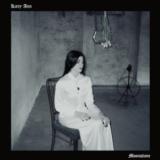
Kaery Ann - Moonstone LP

Kaery Ann

Moonstone LP

12inchSSR0157LP
Subsounds Records
30.01.2026
  • 1: Puritatem Tuam Interiorem Serva
  • 2: Todeslied
  • 3: The Road
  • 4: Hero And Leander
  • 5: Mariner's Song
  • 6: Shores In Flames
  • 7: White Dress
also available

Blue, Grey & Black Marble vinyl[23,49 €]


Through crushing riffs and haunting vocals, it reflects on loss, the forces of nature, and existential struggle. The production balances raw intensity with a deep, immersive atmosphere, enhancing the album's emotional depth. The album opens with a song in Latin, setting the tone with a ritualistic invocation. As its title suggests, it serves as a reminder to preserve one's inner purity in a decaying world, weaving ancient echoes into the album's foundation.

Todeslied follows as a hymn to death, carrying a solemn mood. The record also draws upon literary inspirations: one track is based on The Road by Cormac McCarthy, evoking apocalyptic desolation and the desperate fight for survival, while Dress in flames gives voice to the fury and imprisonment of Bertha Mason, the tormented character in Charlotte Bronte's victorian novel Jane Eyre. Compared to her previous release, which was more personal, Moonstone marks a shift towards greater collaboration within the band, with a more unified approach to songwriting and arrangements. The album, featuring two tracks by bassist Francesca Papi, has been arranged and refined together with Davide Rosa (guitar) and Fabio Orticoni (drums). The release also includes a powerful tribute to Bathory with a reinterpretation of Shores in Flames.

Recorded at Produzione Rumorose, mixed by Maurizio Baggio, and mastered by Giovanni Versari, this record represents a powerful evolution in the band's sound, sharpening their identity and pushing the boundaries of their musical expression.

pre-order now30.01.2026

expected to be published on 30.01.2026

21,81
Items per Page:
N/ABPM
Vinyl